EP4123623A1 - Method of and system for one-engine-inoperative training in aircraft with dissimilar engines - Google Patents
Method of and system for one-engine-inoperative training in aircraft with dissimilar engines Download PDFInfo
- Publication number
- EP4123623A1 EP4123623A1 EP22170814.2A EP22170814A EP4123623A1 EP 4123623 A1 EP4123623 A1 EP 4123623A1 EP 22170814 A EP22170814 A EP 22170814A EP 4123623 A1 EP4123623 A1 EP 4123623A1
- Authority
- EP
- European Patent Office
- Prior art keywords
- spu
- power level
- engine
- primary
- power
- Prior art date
- Legal status (The legal status is an assumption and is not a legal conclusion. Google has not performed a legal analysis and makes no representation as to the accuracy of the status listed.)
- Granted
Links
Images

Classifications
-
- G—PHYSICS
- G09—EDUCATION; CRYPTOGRAPHY; DISPLAY; ADVERTISING; SEALS
- G09B—EDUCATIONAL OR DEMONSTRATION APPLIANCES; APPLIANCES FOR TEACHING, OR COMMUNICATING WITH, THE BLIND, DEAF OR MUTE; MODELS; PLANETARIA; GLOBES; MAPS; DIAGRAMS
- G09B9/00—Simulators for teaching or training purposes
- G09B9/02—Simulators for teaching or training purposes for teaching control of vehicles or other craft
- G09B9/08—Simulators for teaching or training purposes for teaching control of vehicles or other craft for teaching control of aircraft, e.g. Link trainer
-
- B—PERFORMING OPERATIONS; TRANSPORTING
- B64—AIRCRAFT; AVIATION; COSMONAUTICS
- B64C—AEROPLANES; HELICOPTERS
- B64C27/00—Rotorcraft; Rotors peculiar thereto
- B64C27/006—Safety devices
-
- B—PERFORMING OPERATIONS; TRANSPORTING
- B64—AIRCRAFT; AVIATION; COSMONAUTICS
- B64C—AEROPLANES; HELICOPTERS
- B64C27/00—Rotorcraft; Rotors peculiar thereto
- B64C27/04—Helicopters
- B64C27/12—Rotor drives
-
- B—PERFORMING OPERATIONS; TRANSPORTING
- B64—AIRCRAFT; AVIATION; COSMONAUTICS
- B64D—EQUIPMENT FOR FITTING IN OR TO AIRCRAFT; FLIGHT SUITS; PARACHUTES; ARRANGEMENT OR MOUNTING OF POWER PLANTS OR PROPULSION TRANSMISSIONS IN AIRCRAFT
- B64D31/00—Power plant control systems; Arrangement of power plant control systems in aircraft
- B64D31/02—Initiating means
- B64D31/06—Initiating means actuated automatically
- B64D31/12—Initiating means actuated automatically for equalising or synchronising power plants
-
- G—PHYSICS
- G09—EDUCATION; CRYPTOGRAPHY; DISPLAY; ADVERTISING; SEALS
- G09B—EDUCATIONAL OR DEMONSTRATION APPLIANCES; APPLIANCES FOR TEACHING, OR COMMUNICATING WITH, THE BLIND, DEAF OR MUTE; MODELS; PLANETARIA; GLOBES; MAPS; DIAGRAMS
- G09B9/00—Simulators for teaching or training purposes
- G09B9/02—Simulators for teaching or training purposes for teaching control of vehicles or other craft
- G09B9/08—Simulators for teaching or training purposes for teaching control of vehicles or other craft for teaching control of aircraft, e.g. Link trainer
- G09B9/16—Ambient or aircraft conditions simulated or indicated by instrument or alarm
- G09B9/18—Condition of engine or fuel supply
Definitions
- the present disclosure relates generally to one-engine-inoperative (“OEI") training and more particularly, but not by way of limitation, to OEI training in aircraft with dissimilar engines.
- OEI one-engine-inoperative
- engine failure typically is simulated by cutting the engine's throttle.
- failure of one of the engines typically is simulated by both engines spooling to identical reduced power outputs such that a total output power of the two engines in combination equals a contingency power of one of the two engines.
- a method of simulating an aircraft one-engine inoperative (“OEI") event includes operating a supplemental power unit (“SPU”) at a first SPU power level less than an SPU contingency power rating, operating a primary engine at a first primary-engine power level, reducing the primary-engine power level to less than the first primary-engine power level, and maintaining a sum of the primary-engine power level and the SPU power level at a power level substantially equal to the SPU contingency power rating.
- SPU supplemental power unit
- a system for simulating an aircraft one-engine inoperative (“OEI") event includes a supplemental power unit (“SPU”) operable at a first SPU power level less than an SPU contingency power rating, a primary engine operable at a first primary-engine power level, and a flight control system (“FCS”) that controls the SPU and the primary engine.
- the FCS is operable to reduce the primary-engine power level to less than the first primary-engine power level and maintain a sum of the primary-engine power level and the SPU power level at a power level substantially equal to the SPU contingency power rating.
- a computer-program product includes a non-transitory computer-usable medium having computer-readable program code embodied therein.
- the computer-readable program code is adapted to be executed to implement a method.
- the method includes operating a supplemental power unit ("SPU") at a first SPU power level less than an SPU contingency power rating, operating a primary engine at a first primary-engine power level, reducing the primary-engine power level to less than the first primary-engine power level, and maintaining a sum of the primary-engine power level and the SPU power level at a power level substantially equal to the SPU contingency power rating.
- SPU supplemental power unit
- the multi-engine aircraft is a helicopter that utilizes a primary engine capable, for example, of -3,000 hp and a supplemental power unit ("SPU") capable, for example, of ⁇ 500 hp, both of which are operable to power a drivetrain of the multi-engine aircraft.
- a primary-engine failure i.e., degraded performance or complete failure of the primary engine
- the SPU is operable to increase its power to a pre-defined power level that is variable according to performance of the primary engine and design considerations.
- the pre-defined power may be as great as an SPU contingency power rating that is used in the event of a primary-engine failure.
- an OEI training mode is implemented that can be used to simulate degradation of performance, up to complete failure, of the primary engine while reducing the risk of damage to the SPU.
- the SPU operates at a pre-defined power output level under normal conditions (i.e., no actual or simulated OEI condition is present) and the OEI training mode initiates by maintaining the pre-defined power level of the SPU such that a power level of the SPU is either not modulated or is modulated less than during an actual primary-engine failure.
- the pre-defined SPU power level under normal conditions may be a zero or non-zero power level.
- a flight-control system (“FCS") of the aircraft calculates a difference between the SPU contingency power rating and the pre-defined SPU power level.
- the primary engine then spools down and outputs a difference in power between the SPU power level and the SPU contingency power rating in order to simulate the aircraft operating at the SPU contingency power rating.
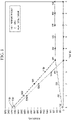
- FIGURE 1 is a graph that illustrates power as a function of time during an OEI event.
- a primary engine is capable of providing about 3,000 hp and a supplemental power unit (“SPU") is capable of producing about 500 hp.
- SPU supplemental power unit
- the aircraft will only need the primary-engine and, under certain high-power-demand flight conditions, the SPU provides additional power to the aircraft for improved performance.
- One of the benefits of the SPU is that, in the event of a failure of the primary engine, the SPU provides additional power in the event of primary-engine degraded performance or outright primary-engine failure.
- Various embodiments utilize an automatic control such that, after a flight control system ("FCS") of the aircraft detects a primary-engine failure (i.e., outright primary-engine failure or degrade performance), the SPU is powered up, for example, to a power level to provide maximal performance, for example, to assist in autorotation of the aircraft in such an emergency situation.
- FCS flight control system
- FIGURE 1 at time 0 s, the primary engine is operating at 3,000 hp and the SPU is operating at 100 hp. Thus, total power output of the primary engine and the SPU in combination is 3,100 hp.
- primary-engine failure occurs such that at time 4 s, the primary engine is supplying no power to the aircraft.
- FIGURE 1 shows a linear decrease in power during a period of 4 seconds, those having skill in the art will appreciate that a primary-engine failure will not necessarily be such that power supplied by the primary engine decreases in a linear manner or decreases on the way to zero.
- the SPU is operating at 100 hp, such that the SPU is supplying a relative nominal amount of power relative to the total power of 3,100 hp.
- the SPU is directed to increases its power up to 500 hp over 4 s, such that total power supplied to the aircraft is 500 hp at 4 s.
- the SPU contingency power rating is 500 hp, which means that SPU should be operated at this power level only in the event of an emergency such as a primary-engine failure.
- the 500 hp power level of the SPU shown in FIGURE 1 is a power level that will in most situations require that the SPU be inspected and overhauled.
- the operational and OEI power levels illustrated herein are only for illustrative purposes and can vary without departing from the principles disclosed herein.
- the SPU can freeze at its current power level when the training mode is initiated or can be adjusted to a level that is not damaging to the SPU (e.g., ⁇ 400 hp).
- a power level of the primary engine is decreased so that the total power provided to the aircraft is the same as an expected power level (e.g., of the SPU operating alone) in an emergency situation such as a primary-engine failure.
- the SPU power level is not frozen at its current power but is instead adjusted to some other non-damaging power level.
- the SPU is operated at power level that would not be expected to damage the SPU.
- the primary engine is operated at a power level such that the pilot and aircraft experience the same amount of power that would be expected in a real-world emergency event.
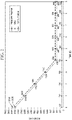
- FIGURE 2 is a graph that illustrates power as a function of time during a simulated OEI event.
- the primary engine is operating at 3,000 hp and the SPU is operating at 100 hp under normal conditions.
- power output of the primary engine is decreased from 3,000 hp to 400 hp from 0 s to 4 s.
- the total power output of FIGURE 2 is identical to that shown in FIGURE 1 , but the power output of the SPU does not exceed 100 hp which, in this example, is not sufficiently high to cause damage to the SPU.
- a pilot undergoing OEI training would experience the same power as the OEI event illustrated in FIGURE 1 and the SPU would not need to be inspected or overhauled as could be the case if the SPU were operated at a potentially damaging power level.
- FIGURE 3 is a flow chart that illustrates a process for OEI training.
- a process flow 300 is shown.
- the process 300 begins at step 302, at which step the SPU is operated at a non-damaging power level (e.g., 400 hp).
- a non-damaging power level e.g. 400 hp.
- the SPU can have its power frozen at a power level at which it was operating under normal (i.e., non-OEI) conditions or it can be increased or decreased to another non-damaging power level in accordance with design considerations.
- step 304 execution proceeds to step 304.
- a power level of the primary engine is decreased in order to simulate a primary-engine failure.
- a primary-engine failure can be either a total failure of the primary engine or degraded performance of the primary engine. From step 304, execution proceeds to step 306.
- the power levels of the SPU and the primary engine are maintained at a level that simulates the SPU operating at the SPU contingency power rating.
- the SPU may be operated at a power level of 100 hp and the primary engine operated at a power level of 400 hp in order to simulate the SPU contingency power rating of 500 hp.
- the aircraft is operated with a total engine power output of 500 hp in order to allow, for example, a pilot to train under OEI conditions without risking damage to the SPU due to operating it at high power levels.
- a computer-readable storage medium encompasses one or more tangible computer-readable storage media possessing structures.
- a computer-readable storage medium may include a semiconductor-based or other integrated circuit (IC) (such as, for example, a field-programmable gate array (FPGA) or an application-specific IC (ASIC)), a hard disk, an HDD, a hybrid hard drive (HHD), an optical disc, an optical disc drive (ODD), a magneto-optical disc, a magneto-optical drive, a floppy disk, a floppy disk drive (FDD), magnetic tape, a holographic storage medium, a solid-state drive (SSD), a RAM-drive, a SECURE DIGITAL card, a SECURE DIGITAL drive, a flash memory card, a flash memory drive, or any other suitable tangible computer-readable storage medium or a combination of two or more of these, where appropriate.
- IC semiconductor-based or other integrated circuit
- Particular embodiments may include one or more computer-readable storage media implementing any suitable storage.
- a computer-readable storage medium implements RAM or ROM.
- a computer-readable storage medium implements volatile or persistent memory.
- one or more computer-readable storage media embody encoded software.
- encoded software may encompass one or more applications, bytecode, one or more computer programs, one or more executables, one or more instructions, logic, machine code, one or more scripts, or source code, and vice versa, where appropriate, that have been stored or encoded in a computer-readable storage medium.
- encoded software includes one or more application programming interfaces (APIs) stored or encoded in a computer-readable storage medium.
- APIs application programming interfaces
- Particular embodiments may use any suitable encoded software written or otherwise expressed in any suitable programming language or combination of programming languages stored or encoded in any suitable type or number of computer-readable storage media.
- encoded software may be expressed as source code or object code.
- encoded software is expressed in a higher-level programming language, such as, for example, C, Python, Java, or a suitable extension thereof.
- encoded software is expressed in a lower-level programming language, such as assembly language (or machine code).
- encoded software is expressed in JAVA.
- encoded software is expressed in Hyper Text Markup Language (HTML), Extensible Markup Language (XML), or other suitable markup language.
- substantially is defined as largely but not necessarily wholly what is specified (and includes what is specified; e.g., substantially 90 degrees includes 90 degrees and substantially parallel includes parallel), as understood by a person of ordinary skill in the art.
- the terms “substantially,” “approximately,” “generally,” and “about” may be substituted with "within 10% of' what is specified.
- acts, events, or functions of any of the algorithms described herein can be performed in a different sequence, can be added, merged, or left out altogether ( e . g ., not all described acts or events are necessary for the practice of the algorithms).
- acts or events can be performed concurrently, e.g., through multi-threaded processing, interrupt processing, or multiple processors or processor cores or on other parallel architectures, rather than sequentially.
- certain computer-implemented tasks are described as being performed by a particular entity, other embodiments are possible in which these tasks are performed by a different entity.
Landscapes
- Engineering & Computer Science (AREA)
- Aviation & Aerospace Engineering (AREA)
- Theoretical Computer Science (AREA)
- Mechanical Engineering (AREA)
- Physics & Mathematics (AREA)
- General Physics & Mathematics (AREA)
- Educational Technology (AREA)
- Educational Administration (AREA)
- Business, Economics & Management (AREA)
- Feedback Control In General (AREA)
- Computer Hardware Design (AREA)
- Evolutionary Computation (AREA)
- Geometry (AREA)
- General Engineering & Computer Science (AREA)
Abstract
Description
- The present disclosure relates generally to one-engine-inoperative ("OEI") training and more particularly, but not by way of limitation, to OEI training in aircraft with dissimilar engines.
- This section provides background information to facilitate a better understanding of the various aspects of the disclosure. It should be understood that the statements in this section of this document are to be read in this light and not as admissions of prior art.
- On a single-engine aircraft, engine failure typically is simulated by cutting the engine's throttle. On twin-engine aircraft, in which two identical engines are used, failure of one of the engines typically is simulated by both engines spooling to identical reduced power outputs such that a total output power of the two engines in combination equals a contingency power of one of the two engines.
- This summary is provided to introduce a selection of concepts that are further described below in the detailed description. This summary is not necessarily intended to identify key or essential features of the claimed subject matter, nor is it intended to be used as an aid in limiting the scope of claimed subject matter.
- A method of simulating an aircraft one-engine inoperative ("OEI") event includes operating a supplemental power unit ("SPU") at a first SPU power level less than an SPU contingency power rating, operating a primary engine at a first primary-engine power level, reducing the primary-engine power level to less than the first primary-engine power level, and maintaining a sum of the primary-engine power level and the SPU power level at a power level substantially equal to the SPU contingency power rating.
- A system for simulating an aircraft one-engine inoperative ("OEI") event includes a supplemental power unit ("SPU") operable at a first SPU power level less than an SPU contingency power rating, a primary engine operable at a first primary-engine power level, and a flight control system ("FCS") that controls the SPU and the primary engine. The FCS is operable to reduce the primary-engine power level to less than the first primary-engine power level and maintain a sum of the primary-engine power level and the SPU power level at a power level substantially equal to the SPU contingency power rating.
- A computer-program product includes a non-transitory computer-usable medium having computer-readable program code embodied therein. The computer-readable program code is adapted to be executed to implement a method. The method includes operating a supplemental power unit ("SPU") at a first SPU power level less than an SPU contingency power rating, operating a primary engine at a first primary-engine power level, reducing the primary-engine power level to less than the first primary-engine power level, and maintaining a sum of the primary-engine power level and the SPU power level at a power level substantially equal to the SPU contingency power rating.
- The disclosure is best understood from the following detailed description when read with the accompanying figures. It is emphasized that, in accordance with standard practice, various features may not be drawn to scale. In fact, the dimensions of various features may be arbitrarily increased or reduced for clarity of discussion.
-
FIGURE 1 is a graph that illustrates power as a function of time during a one-engine-inoperative event; -
FIGURE 2 is a graph that illustrates power as a function of time during a simulated one-engine-inoperative event; and -
FIGURE 3 is a flow chart that illustrates a process for one-engine-inoperative training. - Various embodiments will now be described more fully with reference to the accompanying drawings. The disclosure may, however, be embodied in many different forms and should not be construed as limited to the embodiments set forth herein.
- In a multi-engine aircraft that does not employ identical engines, neither the single-engine nor the dual-identical-engine power-failure simulations described in the Background is feasible from a reliability or repeatability standpoint. Therefore, a new solution that permits one-engine-inoperative ("OEI") simulation is needed.
- In a typical embodiment, the multi-engine aircraft is a helicopter that utilizes a primary engine capable, for example, of -3,000 hp and a supplemental power unit ("SPU") capable, for example, of ~500 hp, both of which are operable to power a drivetrain of the multi-engine aircraft. In the event of a primary-engine failure (i.e., degraded performance or complete failure of the primary engine), the SPU is operable to increase its power to a pre-defined power level that is variable according to performance of the primary engine and design considerations. The pre-defined power may be as great as an SPU contingency power rating that is used in the event of a primary-engine failure.
- In the event, for example, of primary-engine failure and increase by the SPU to the SPU contingency power rating in response thereto, it is likely that the SPU will be damaged. It is therefore undesirable to risk SPU damage by cycling the SPU to high power levels, such as, for example, the SPU contingency power rating, during pilot OEI training. To prevent damage to the SPU, an OEI training mode is implemented that can be used to simulate degradation of performance, up to complete failure, of the primary engine while reducing the risk of damage to the SPU.
- In a typical embodiment, the SPU operates at a pre-defined power output level under normal conditions (i.e., no actual or simulated OEI condition is present) and the OEI training mode initiates by maintaining the pre-defined power level of the SPU such that a power level of the SPU is either not modulated or is modulated less than during an actual primary-engine failure. The pre-defined SPU power level under normal conditions may be a zero or non-zero power level.
- A flight-control system ("FCS") of the aircraft calculates a difference between the SPU contingency power rating and the pre-defined SPU power level. The primary engine then spools down and outputs a difference in power between the SPU power level and the SPU contingency power rating in order to simulate the aircraft operating at the SPU contingency power rating.
-
FIGURE 1 is a graph that illustrates power as a function of time during an OEI event. Some aircraft use two very different engines. In the example shown inFIGURE 1 , a primary engine is capable of providing about 3,000 hp and a supplemental power unit ("SPU") is capable of producing about 500 hp. For a majority of flight conditions, the aircraft will only need the primary-engine and, under certain high-power-demand flight conditions, the SPU provides additional power to the aircraft for improved performance. - One of the benefits of the SPU is that, in the event of a failure of the primary engine, the SPU provides additional power in the event of primary-engine degraded performance or outright primary-engine failure. Various embodiments utilize an automatic control such that, after a flight control system ("FCS") of the aircraft detects a primary-engine failure (i.e., outright primary-engine failure or degrade performance), the SPU is powered up, for example, to a power level to provide maximal performance, for example, to assist in autorotation of the aircraft in such an emergency situation.
- In
FIGURE 1 , at time 0 s, the primary engine is operating at 3,000 hp and the SPU is operating at 100 hp. Thus, total power output of the primary engine and the SPU in combination is 3,100 hp. After time 0 s, primary-engine failure occurs such that at time 4 s, the primary engine is supplying no power to the aircraft. Although the primary-engine failure illustrated byFIGURE 1 shows a linear decrease in power during a period of 4 seconds, those having skill in the art will appreciate that a primary-engine failure will not necessarily be such that power supplied by the primary engine decreases in a linear manner or decreases on the way to zero. - At time 0 s, the SPU is operating at 100 hp, such that the SPU is supplying a relative nominal amount of power relative to the total power of 3,100 hp. In response to detection by the FCS of primary-engine failure after time 0 s, the SPU is directed to increases its power up to 500 hp over 4 s, such that total power supplied to the aircraft is 500 hp at 4 s. In the example shown in
FIGURE 1 , the SPU contingency power rating is 500 hp, which means that SPU should be operated at this power level only in the event of an emergency such as a primary-engine failure. The 500 hp power level of the SPU shown inFIGURE 1 is a power level that will in most situations require that the SPU be inspected and overhauled. The operational and OEI power levels illustrated herein are only for illustrative purposes and can vary without departing from the principles disclosed herein. - In contrast to the above, when a primary-engine failure is being simulated on a prototype aircraft or if pilots are being trained on procedures to follow in the event of a primary-engine failure, it is not desirable for the SPU to operate at such a high power level (e.g., 500 hp) because such high power levels can damage the SPU.
- In an OEI training mode, the SPU can freeze at its current power level when the training mode is initiated or can be adjusted to a level that is not damaging to the SPU (e.g., ~400 hp). In the OEI training mode, a power level of the primary engine is decreased so that the total power provided to the aircraft is the same as an expected power level (e.g., of the SPU operating alone) in an emergency situation such as a primary-engine failure.
- In some embodiments, the SPU power level is not frozen at its current power but is instead adjusted to some other non-damaging power level. In a typical embodiment, the SPU is operated at power level that would not be expected to damage the SPU. The primary engine is operated at a power level such that the pilot and aircraft experience the same amount of power that would be expected in a real-world emergency event.
-
FIGURE 2 is a graph that illustrates power as a function of time during a simulated OEI event. In similar fashion toFIGURE 1 , inFIGURE 2 the primary engine is operating at 3,000 hp and the SPU is operating at 100 hp under normal conditions. In order to simulate a primary-engine failure in which the primary engine experiences a total failure over a period of 4 s as inFIGURE 1 , power output of the primary engine is decreased from 3,000 hp to 400 hp from 0 s to 4 s. - As a result, the total power output of
FIGURE 2 is identical to that shown inFIGURE 1 , but the power output of the SPU does not exceed 100 hp which, in this example, is not sufficiently high to cause damage to the SPU. Thus, for example, a pilot undergoing OEI training would experience the same power as the OEI event illustrated inFIGURE 1 and the SPU would not need to be inspected or overhauled as could be the case if the SPU were operated at a potentially damaging power level. -
FIGURE 3 is a flow chart that illustrates a process for OEI training. InFIGURE 3 , aprocess flow 300 is shown. Theprocess 300 begins atstep 302, at which step the SPU is operated at a non-damaging power level (e.g., 400 hp). As noted above, the SPU can have its power frozen at a power level at which it was operating under normal (i.e., non-OEI) conditions or it can be increased or decreased to another non-damaging power level in accordance with design considerations. Fromstep 302, execution proceeds to step 304. - At
step 304, a power level of the primary engine is decreased in order to simulate a primary-engine failure. As noted above, a primary-engine failure can be either a total failure of the primary engine or degraded performance of the primary engine. Fromstep 304, execution proceeds to step 306. - At
step 306, the power levels of the SPU and the primary engine are maintained at a level that simulates the SPU operating at the SPU contingency power rating. For example, as shown inFIGURES 1 and2 , the SPU may be operated at a power level of 100 hp and the primary engine operated at a power level of 400 hp in order to simulate the SPU contingency power rating of 500 hp. Thus, the aircraft is operated with a total engine power output of 500 hp in order to allow, for example, a pilot to train under OEI conditions without risking damage to the SPU due to operating it at high power levels. - For purposes of this patent application, the term computer-readable storage medium encompasses one or more tangible computer-readable storage media possessing structures. As an example and not by way of limitation, a computer-readable storage medium may include a semiconductor-based or other integrated circuit (IC) (such as, for example, a field-programmable gate array (FPGA) or an application-specific IC (ASIC)), a hard disk, an HDD, a hybrid hard drive (HHD), an optical disc, an optical disc drive (ODD), a magneto-optical disc, a magneto-optical drive, a floppy disk, a floppy disk drive (FDD), magnetic tape, a holographic storage medium, a solid-state drive (SSD), a RAM-drive, a SECURE DIGITAL card, a SECURE DIGITAL drive, a flash memory card, a flash memory drive, or any other suitable tangible computer-readable storage medium or a combination of two or more of these, where appropriate.
- Particular embodiments may include one or more computer-readable storage media implementing any suitable storage. In particular embodiments, a computer-readable storage medium implements RAM or ROM. In particular embodiments, a computer-readable storage medium implements volatile or persistent memory. In particular embodiments, one or more computer-readable storage media embody encoded software.
- In this patent application, reference to encoded software may encompass one or more applications, bytecode, one or more computer programs, one or more executables, one or more instructions, logic, machine code, one or more scripts, or source code, and vice versa, where appropriate, that have been stored or encoded in a computer-readable storage medium. In particular embodiments, encoded software includes one or more application programming interfaces (APIs) stored or encoded in a computer-readable storage medium. Particular embodiments may use any suitable encoded software written or otherwise expressed in any suitable programming language or combination of programming languages stored or encoded in any suitable type or number of computer-readable storage media. In particular embodiments, encoded software may be expressed as source code or object code. In particular embodiments, encoded software is expressed in a higher-level programming language, such as, for example, C, Python, Java, or a suitable extension thereof. In particular embodiments, encoded software is expressed in a lower-level programming language, such as assembly language (or machine code). In particular embodiments, encoded software is expressed in JAVA. In particular embodiments, encoded software is expressed in Hyper Text Markup Language (HTML), Extensible Markup Language (XML), or other suitable markup language.
- The term "substantially" is defined as largely but not necessarily wholly what is specified (and includes what is specified; e.g., substantially 90 degrees includes 90 degrees and substantially parallel includes parallel), as understood by a person of ordinary skill in the art. In any disclosed embodiment, the terms "substantially," "approximately," "generally," and "about" may be substituted with "within 10% of' what is specified.
- Depending on the embodiment, certain acts, events, or functions of any of the algorithms described herein can be performed in a different sequence, can be added, merged, or left out altogether (e.g., not all described acts or events are necessary for the practice of the algorithms). Moreover, in certain embodiments, acts or events can be performed concurrently, e.g., through multi-threaded processing, interrupt processing, or multiple processors or processor cores or on other parallel architectures, rather than sequentially. Although certain computer-implemented tasks are described as being performed by a particular entity, other embodiments are possible in which these tasks are performed by a different entity.
- Conditional language used herein, such as, among others, "can," "might," "may," "e.g.," and the like, unless specifically stated otherwise, or otherwise understood within the context as used, is generally intended to convey that certain embodiments include, while other embodiments do not include, certain features, elements and/or states. Thus, such conditional language is not generally intended to imply that features, elements and/or states are in any way required for one or more embodiments or that one or more embodiments necessarily include logic for deciding, with or without author input or prompting, whether these features, elements and/or states are included or are to be performed in any particular embodiment.
- While the above detailed description has shown, described, and pointed out novel features as applied to various embodiments, it will be understood that various omissions, substitutions, and changes in the form and details of the devices or algorithms illustrated can be made without departing from the spirit of the disclosure. As will be recognized, the processes described herein can be embodied within a form that does not provide all of the features and benefits set forth herein, as some features can be used or practiced separately from others. The scope of protection is defined by the appended claims rather than by the foregoing description. All changes which come within the meaning and range of equivalency of the claims are to be embraced within their scope.
Claims (15)
- A method (300) of simulating an aircraft one-engine inoperative, OEI, event, the method comprising:operating (302) a supplemental power unit, SPU, at a first SPU power level less than an SPU contingency power rating;operating a primary engine at a first primary-engine power level;reducing (304) the primary-engine power level to less than the first primary-engine power level; andmaintaining (306) a sum of the primary-engine power level and the SPU power level at a power level substantially equal to the SPU contingency power rating.
- The method of claim 1, wherein the SPU power level is a power level at which the SPU can be operated continuously without damage.
- The method of claim 1 or claim 2, wherein the SPU power level is a non-zero power level.
- The method of claim 1 or claim 2, wherein the SPU power level is zero.
- The method of any one of claims 1 to 4, wherein the SPU contingency power rating is a power level after which the SPU must be inspected to assess a need for an overhaul of the SPU.
- The method of any one of claims 1 to 5, comprising operating the SPU at a second SPU power level greater than the first SPU power level and less than the SPU contingency power rating.
- The method of any one of claims 1 to 5, comprising operating the SPU at a second SPU power level less than the first SPU power level.
- A system for simulating an aircraft one-engine inoperative, OEI, event, the system comprising:a supplemental power unit, SPU, operable at a first SPU power level less than an SPU contingency power rating;a primary engine operable at a first primary-engine power level;a flight control system, FCS, that controls the SPU and the primary engine, wherein the FCS is operable to:reduce the primary-engine power level to less than the first primary-engine power level; andmaintain a sum of the primary-engine power level and the SPU power level at a power level substantially equal to the SPU contingency power rating.
- The system of claim 8, wherein the SPU power level is a power level at which the SPU can be operated continuously without damage.
- The system of claim 8 or claim 9, wherein the SPU power level is a non-zero power level.
- The system of claim 8 or claim 9, wherein the SPU power level is zero.
- The system of any one of claims 8 to 11, wherein the SPU contingency power rating is a power level after which the SPU must be inspected to assess a need for an overhaul of the SPU.
- The system of any one of claims 8 to 12, wherein the SPU is operable at a second SPU power level greater than the first SPU power level and less than the SPU contingency power rating.
- The system of any one of claims 8 to 12, wherein the SPU is operable at a second SPU power level less than the first SPU power level.
- A computer-program product comprising a non-transitory computer-usable medium having computer-readable program code embodied therein, the computer-readable program code adapted to be executed to implement a method according to any one of claims 1 to 7.
Applications Claiming Priority (1)
| Application Number | Priority Date | Filing Date | Title |
|---|---|---|---|
| US17/378,980 US12488702B2 (en) | 2021-07-19 | 2021-07-19 | Method of and system for one-engine-inoperative training in aircraft with dissimilar engines |
Publications (2)
| Publication Number | Publication Date |
|---|---|
| EP4123623A1 true EP4123623A1 (en) | 2023-01-25 |
| EP4123623B1 EP4123623B1 (en) | 2025-06-18 |
Family
ID=81581265
Family Applications (1)
| Application Number | Title | Priority Date | Filing Date |
|---|---|---|---|
| EP22170814.2A Active EP4123623B1 (en) | 2021-07-19 | 2022-04-29 | Method of and system for one-engine-inoperative training in aircraft with dissimilar engines |
Country Status (2)
| Country | Link |
|---|---|
| US (1) | US12488702B2 (en) |
| EP (1) | EP4123623B1 (en) |
Cited By (1)
| Publication number | Priority date | Publication date | Assignee | Title |
|---|---|---|---|---|
| EP4471747A1 (en) * | 2023-05-31 | 2024-12-04 | Airbus Helicopters | Method for training the piloting of a rotorcraft, associated system and rotorcraft |
Families Citing this family (2)
| Publication number | Priority date | Publication date | Assignee | Title |
|---|---|---|---|---|
| CN116524784A (en) * | 2023-05-10 | 2023-08-01 | 南京航空航天大学 | OEI state training method for helicopter |
| FR3156119B1 (en) | 2023-11-30 | 2025-10-24 | Airbus Helicopters | engine failure training method on a hybrid-powered rotorcraft |
Citations (3)
| Publication number | Priority date | Publication date | Assignee | Title |
|---|---|---|---|---|
| US20130203021A1 (en) * | 2012-02-06 | 2013-08-08 | Eurocopter | Method of simulating a failure on an aircraft |
| US20160237917A1 (en) * | 2013-10-09 | 2016-08-18 | Turbomeca | Method for optimising the specific consumption of a twin helicopter |
| US20170025032A1 (en) * | 2013-04-09 | 2017-01-26 | Airbus Helicopters | Method of driving a main rotor of a rotorcraft in the context of simulating a failure of one of the engnes of the rotorcraft |
Family Cites Families (3)
| Publication number | Priority date | Publication date | Assignee | Title |
|---|---|---|---|---|
| FR2953898B1 (en) * | 2009-12-11 | 2012-03-30 | Eurocopter France | METHOD FOR INCREASING THE SAFETY OF A MOTOR INSTALLATION, AND MOTOR INSTALLATION SUITABLE FOR CARRYING OUT SAID METHOD |
| FR3015428B1 (en) * | 2013-12-20 | 2017-04-28 | Eurocopter France | MOTOR INSTALLATION HAVING SECONDARY MOTOR COMPRISING POWER LOSSES OF MAIN ENGINES FOR ROTARY TURNING AIRCRAFT |
| US10793284B2 (en) * | 2019-02-05 | 2020-10-06 | Bell Textron Inc. | Multimode clutch assemblies for rotorcraft |
-
2021
- 2021-07-19 US US17/378,980 patent/US12488702B2/en active Active
-
2022
- 2022-04-29 EP EP22170814.2A patent/EP4123623B1/en active Active
Patent Citations (3)
| Publication number | Priority date | Publication date | Assignee | Title |
|---|---|---|---|---|
| US20130203021A1 (en) * | 2012-02-06 | 2013-08-08 | Eurocopter | Method of simulating a failure on an aircraft |
| US20170025032A1 (en) * | 2013-04-09 | 2017-01-26 | Airbus Helicopters | Method of driving a main rotor of a rotorcraft in the context of simulating a failure of one of the engnes of the rotorcraft |
| US20160237917A1 (en) * | 2013-10-09 | 2016-08-18 | Turbomeca | Method for optimising the specific consumption of a twin helicopter |
Cited By (2)
| Publication number | Priority date | Publication date | Assignee | Title |
|---|---|---|---|---|
| EP4471747A1 (en) * | 2023-05-31 | 2024-12-04 | Airbus Helicopters | Method for training the piloting of a rotorcraft, associated system and rotorcraft |
| US12437668B2 (en) | 2023-05-31 | 2025-10-07 | Airbus Helicopters | Rotorcraft flight training method, associated system and rotorcraft |
Also Published As
| Publication number | Publication date |
|---|---|
| US12488702B2 (en) | 2025-12-02 |
| US20230019379A1 (en) | 2023-01-19 |
| EP4123623B1 (en) | 2025-06-18 |
Similar Documents
| Publication | Publication Date | Title |
|---|---|---|
| US12488702B2 (en) | Method of and system for one-engine-inoperative training in aircraft with dissimilar engines | |
| EP1563352B1 (en) | High integrity control system architecture using digital computing platforms with rapid recovery | |
| US9500138B1 (en) | Twin-engine rotorcrafts and load power sharing control systems thereof and methods for load power sharing control | |
| CN119878630B (en) | Heterogeneous Control Method and System for Hydraulic Mechanisms of Large Transport Aircraft | |
| CA2424251C (en) | Thrust control malfunction accommodation system and method | |
| CN119900701B (en) | Redundancy control method and system for electric pump and transmission system | |
| CN120541469B (en) | Data-driven EBT training scene generation method and system | |
| CN119825689A (en) | Comprehensive control method and system for electric pump work | |
| CN109703777B (en) | Control surface blocking system for fly test of telex transport type airplane | |
| CN119902456A (en) | A method and system for controlling a redundant automatic electric pump | |
| US11486318B2 (en) | System for confirming shutdown of an aircraft engine | |
| US12340702B2 (en) | Method for managing the longitudinal position of a follower aircraft with respect to a leader aircraft | |
| Orasanu et al. | Temporal factors in aviation decision making | |
| Caliskan et al. | Actuator Fault Diagnosis in a Boeing 747 Model via Adaptive Modified Two‐Stage Kalman Filter | |
| US20250011009A1 (en) | Method for detecting a failure in an aircraft and system configured for executing the method | |
| Sadeghi et al. | Fault tolerant EHA architectures | |
| Myers | Achievable Limits on the Reliability of $ k $-out-of-$ n $: G Systems Subject to Imperfect Fault Coverage | |
| CN109144753A (en) | A kind of Reliability modeling analysis method based on multistage man-machine system | |
| US9081738B2 (en) | Disk array device, disk array control method, and recording medium | |
| Abdellatif | The utilization of STPA techniques for system design safety enhancement | |
| Ternus | User-Centered Design of an Intelligent Pilot Advisory System for Non-Emergency Scenarios: A Case Study | |
| US20220237512A1 (en) | Storage medium, information processing method, and information processing apparatus | |
| Johnson | Suppression of pilot-induced oscillation (PIO) | |
| Litt et al. | Flight Simulator Demonstration of Powertrain Failure Mitigation in a Partial Turboelectric Aircraft | |
| Carle et al. | Safety of unmanned aircraft systems facing multiple breakdowns |
Legal Events
| Date | Code | Title | Description |
|---|---|---|---|
| STAA | Information on the status of an ep patent application or granted ep patent |
Free format text: STATUS: EXAMINATION IS IN PROGRESS |
|
| PUAI | Public reference made under article 153(3) epc to a published international application that has entered the european phase |
Free format text: ORIGINAL CODE: 0009012 |
|
| 17P | Request for examination filed |
Effective date: 20220429 |
|
| AK | Designated contracting states |
Kind code of ref document: A1 Designated state(s): AL AT BE BG CH CY CZ DE DK EE ES FI FR GB GR HR HU IE IS IT LI LT LU LV MC MK MT NL NO PL PT RO RS SE SI SK SM TR |
|
| GRAP | Despatch of communication of intention to grant a patent |
Free format text: ORIGINAL CODE: EPIDOSNIGR1 |
|
| STAA | Information on the status of an ep patent application or granted ep patent |
Free format text: STATUS: GRANT OF PATENT IS INTENDED |
|
| INTG | Intention to grant announced |
Effective date: 20250210 |
|
| RIC1 | Information provided on ipc code assigned before grant |
Ipc: B64D 35/08 20060101ALI20250131BHEP Ipc: B64D 31/12 20060101ALI20250131BHEP Ipc: B64C 27/12 20060101ALI20250131BHEP Ipc: B64C 27/00 20060101ALI20250131BHEP Ipc: G09B 9/18 20060101ALI20250131BHEP Ipc: G09B 9/08 20060101AFI20250131BHEP |
|
| GRAS | Grant fee paid |
Free format text: ORIGINAL CODE: EPIDOSNIGR3 |
|
| GRAA | (expected) grant |
Free format text: ORIGINAL CODE: 0009210 |
|
| STAA | Information on the status of an ep patent application or granted ep patent |
Free format text: STATUS: THE PATENT HAS BEEN GRANTED |
|
| AK | Designated contracting states |
Kind code of ref document: B1 Designated state(s): AL AT BE BG CH CY CZ DE DK EE ES FI FR GB GR HR HU IE IS IT LI LT LU LV MC MK MT NL NO PL PT RO RS SE SI SK SM TR |
|
| REG | Reference to a national code |
Ref country code: GB Ref legal event code: FG4D |
|
| REG | Reference to a national code |
Ref country code: CH Ref legal event code: EP |
|
| REG | Reference to a national code |
Ref country code: DE Ref legal event code: R096 Ref document number: 602022015983 Country of ref document: DE |
|
| REG | Reference to a national code |
Ref country code: CH Ref legal event code: EP |
|
| P01 | Opt-out of the competence of the unified patent court (upc) registered |
Free format text: CASE NUMBER: APP_27285/2025 Effective date: 20250609 |
|
| REG | Reference to a national code |
Ref country code: IE Ref legal event code: FG4D |
|
| PG25 | Lapsed in a contracting state [announced via postgrant information from national office to epo] |
Ref country code: FI Free format text: LAPSE BECAUSE OF FAILURE TO SUBMIT A TRANSLATION OF THE DESCRIPTION OR TO PAY THE FEE WITHIN THE PRESCRIBED TIME-LIMIT Effective date: 20250618 |
|
| REG | Reference to a national code |
Ref country code: LT Ref legal event code: MG9D |
|
| PG25 | Lapsed in a contracting state [announced via postgrant information from national office to epo] |
Ref country code: NO Free format text: LAPSE BECAUSE OF FAILURE TO SUBMIT A TRANSLATION OF THE DESCRIPTION OR TO PAY THE FEE WITHIN THE PRESCRIBED TIME-LIMIT Effective date: 20250918 Ref country code: GR Free format text: LAPSE BECAUSE OF FAILURE TO SUBMIT A TRANSLATION OF THE DESCRIPTION OR TO PAY THE FEE WITHIN THE PRESCRIBED TIME-LIMIT Effective date: 20250919 |
|
| PG25 | Lapsed in a contracting state [announced via postgrant information from national office to epo] |
Ref country code: BG Free format text: LAPSE BECAUSE OF FAILURE TO SUBMIT A TRANSLATION OF THE DESCRIPTION OR TO PAY THE FEE WITHIN THE PRESCRIBED TIME-LIMIT Effective date: 20250618 |
|
| PG25 | Lapsed in a contracting state [announced via postgrant information from national office to epo] |
Ref country code: HR Free format text: LAPSE BECAUSE OF FAILURE TO SUBMIT A TRANSLATION OF THE DESCRIPTION OR TO PAY THE FEE WITHIN THE PRESCRIBED TIME-LIMIT Effective date: 20250618 |
|
| PG25 | Lapsed in a contracting state [announced via postgrant information from national office to epo] |
Ref country code: RS Free format text: LAPSE BECAUSE OF FAILURE TO SUBMIT A TRANSLATION OF THE DESCRIPTION OR TO PAY THE FEE WITHIN THE PRESCRIBED TIME-LIMIT Effective date: 20250918 |
|
| REG | Reference to a national code |
Ref country code: NL Ref legal event code: MP Effective date: 20250618 |
|
| PG25 | Lapsed in a contracting state [announced via postgrant information from national office to epo] |
Ref country code: LV Free format text: LAPSE BECAUSE OF FAILURE TO SUBMIT A TRANSLATION OF THE DESCRIPTION OR TO PAY THE FEE WITHIN THE PRESCRIBED TIME-LIMIT Effective date: 20250618 |
|
| PG25 | Lapsed in a contracting state [announced via postgrant information from national office to epo] |
Ref country code: NL Free format text: LAPSE BECAUSE OF FAILURE TO SUBMIT A TRANSLATION OF THE DESCRIPTION OR TO PAY THE FEE WITHIN THE PRESCRIBED TIME-LIMIT Effective date: 20250618 |
|
| PG25 | Lapsed in a contracting state [announced via postgrant information from national office to epo] |
Ref country code: PT Free format text: LAPSE BECAUSE OF FAILURE TO SUBMIT A TRANSLATION OF THE DESCRIPTION OR TO PAY THE FEE WITHIN THE PRESCRIBED TIME-LIMIT Effective date: 20251020 |
|
| REG | Reference to a national code |
Ref country code: AT Ref legal event code: MK05 Ref document number: 1804957 Country of ref document: AT Kind code of ref document: T Effective date: 20250618 |
|
| PG25 | Lapsed in a contracting state [announced via postgrant information from national office to epo] |
Ref country code: IS Free format text: LAPSE BECAUSE OF FAILURE TO SUBMIT A TRANSLATION OF THE DESCRIPTION OR TO PAY THE FEE WITHIN THE PRESCRIBED TIME-LIMIT Effective date: 20251018 |
|
| PG25 | Lapsed in a contracting state [announced via postgrant information from national office to epo] |
Ref country code: SM Free format text: LAPSE BECAUSE OF FAILURE TO SUBMIT A TRANSLATION OF THE DESCRIPTION OR TO PAY THE FEE WITHIN THE PRESCRIBED TIME-LIMIT Effective date: 20250618 Ref country code: AT Free format text: LAPSE BECAUSE OF FAILURE TO SUBMIT A TRANSLATION OF THE DESCRIPTION OR TO PAY THE FEE WITHIN THE PRESCRIBED TIME-LIMIT Effective date: 20250618 |
|
| PG25 | Lapsed in a contracting state [announced via postgrant information from national office to epo] |
Ref country code: CZ Free format text: LAPSE BECAUSE OF FAILURE TO SUBMIT A TRANSLATION OF THE DESCRIPTION OR TO PAY THE FEE WITHIN THE PRESCRIBED TIME-LIMIT Effective date: 20250618 |
|
| PG25 | Lapsed in a contracting state [announced via postgrant information from national office to epo] |
Ref country code: PL Free format text: LAPSE BECAUSE OF FAILURE TO SUBMIT A TRANSLATION OF THE DESCRIPTION OR TO PAY THE FEE WITHIN THE PRESCRIBED TIME-LIMIT Effective date: 20250618 |
|
| PG25 | Lapsed in a contracting state [announced via postgrant information from national office to epo] |
Ref country code: EE Free format text: LAPSE BECAUSE OF FAILURE TO SUBMIT A TRANSLATION OF THE DESCRIPTION OR TO PAY THE FEE WITHIN THE PRESCRIBED TIME-LIMIT Effective date: 20250618 |
|
| PG25 | Lapsed in a contracting state [announced via postgrant information from national office to epo] |
Ref country code: SK Free format text: LAPSE BECAUSE OF FAILURE TO SUBMIT A TRANSLATION OF THE DESCRIPTION OR TO PAY THE FEE WITHIN THE PRESCRIBED TIME-LIMIT Effective date: 20250618 |
|
| PG25 | Lapsed in a contracting state [announced via postgrant information from national office to epo] |
Ref country code: ES Free format text: LAPSE BECAUSE OF FAILURE TO SUBMIT A TRANSLATION OF THE DESCRIPTION OR TO PAY THE FEE WITHIN THE PRESCRIBED TIME-LIMIT Effective date: 20250618 |
|
| REG | Reference to a national code |
Ref country code: DE Ref legal event code: R097 Ref document number: 602022015983 Country of ref document: DE |
|
| PG25 | Lapsed in a contracting state [announced via postgrant information from national office to epo] |
Ref country code: DK Free format text: LAPSE BECAUSE OF FAILURE TO SUBMIT A TRANSLATION OF THE DESCRIPTION OR TO PAY THE FEE WITHIN THE PRESCRIBED TIME-LIMIT Effective date: 20250618 |
|
| PG25 | Lapsed in a contracting state [announced via postgrant information from national office to epo] |
Ref country code: IT Free format text: LAPSE BECAUSE OF FAILURE TO SUBMIT A TRANSLATION OF THE DESCRIPTION OR TO PAY THE FEE WITHIN THE PRESCRIBED TIME-LIMIT Effective date: 20250618 |
|
| PLBE | No opposition filed within time limit |
Free format text: ORIGINAL CODE: 0009261 |
|
| STAA | Information on the status of an ep patent application or granted ep patent |
Free format text: STATUS: NO OPPOSITION FILED WITHIN TIME LIMIT |
|
| REG | Reference to a national code |
Ref country code: CH Ref legal event code: L10 Free format text: ST27 STATUS EVENT CODE: U-0-0-L10-L00 (AS PROVIDED BY THE NATIONAL OFFICE) Effective date: 20260430 |
|
| 26N | No opposition filed |
Effective date: 20260319 |
|
| PG25 | Lapsed in a contracting state [announced via postgrant information from national office to epo] |
Ref country code: LT Free format text: LAPSE BECAUSE OF FAILURE TO SUBMIT A TRANSLATION OF THE DESCRIPTION OR TO PAY THE FEE WITHIN THE PRESCRIBED TIME-LIMIT Effective date: 20250618 |
|
| PGFP | Annual fee paid to national office [announced via postgrant information from national office to epo] |
Ref country code: GB Payment date: 20260427 Year of fee payment: 5 |
|
| PGFP | Annual fee paid to national office [announced via postgrant information from national office to epo] |
Ref country code: DE Payment date: 20260429 Year of fee payment: 5 |
|
| PGFP | Annual fee paid to national office [announced via postgrant information from national office to epo] |
Ref country code: FR Payment date: 20260427 Year of fee payment: 5 |
|
| PG25 | Lapsed in a contracting state [announced via postgrant information from national office to epo] |
Ref country code: SE Free format text: LAPSE BECAUSE OF FAILURE TO SUBMIT A TRANSLATION OF THE DESCRIPTION OR TO PAY THE FEE WITHIN THE PRESCRIBED TIME-LIMIT Effective date: 20250618 |