EP4123551A1 - An electric battery and vehicle rental system - Google Patents
An electric battery and vehicle rental system Download PDFInfo
- Publication number
- EP4123551A1 EP4123551A1 EP22181408.0A EP22181408A EP4123551A1 EP 4123551 A1 EP4123551 A1 EP 4123551A1 EP 22181408 A EP22181408 A EP 22181408A EP 4123551 A1 EP4123551 A1 EP 4123551A1
- Authority
- EP
- European Patent Office
- Prior art keywords
- user
- information
- vehicle
- charging
- rental
- Prior art date
- Legal status (The legal status is an assumption and is not a legal conclusion. Google has not performed a legal analysis and makes no representation as to the accuracy of the status listed.)
- Withdrawn
Links
Images




Classifications
-
- G—PHYSICS
- G06—COMPUTING OR CALCULATING; COUNTING
- G06Q—INFORMATION AND COMMUNICATION TECHNOLOGY [ICT] SPECIALLY ADAPTED FOR ADMINISTRATIVE, COMMERCIAL, FINANCIAL, MANAGERIAL OR SUPERVISORY PURPOSES; SYSTEMS OR METHODS SPECIALLY ADAPTED FOR ADMINISTRATIVE, COMMERCIAL, FINANCIAL, MANAGERIAL OR SUPERVISORY PURPOSES, NOT OTHERWISE PROVIDED FOR
- G06Q30/00—Commerce
- G06Q30/06—Buying, selling or leasing transactions
- G06Q30/0645—Rental transactions; Leasing transactions
-
- B—PERFORMING OPERATIONS; TRANSPORTING
- B60—VEHICLES IN GENERAL
- B60L—PROPULSION OF ELECTRICALLY-PROPELLED VEHICLES; SUPPLYING ELECTRIC POWER FOR AUXILIARY EQUIPMENT OF ELECTRICALLY-PROPELLED VEHICLES; ELECTRODYNAMIC BRAKE SYSTEMS FOR VEHICLES IN GENERAL; MAGNETIC SUSPENSION OR LEVITATION FOR VEHICLES; MONITORING OPERATING VARIABLES OF ELECTRICALLY-PROPELLED VEHICLES; ELECTRIC SAFETY DEVICES FOR ELECTRICALLY-PROPELLED VEHICLES
- B60L53/00—Methods of charging batteries, specially adapted for electric vehicles; Charging stations or on-board charging equipment therefor; Exchange of energy storage elements in electric vehicles
- B60L53/60—Monitoring or controlling charging stations
- B60L53/62—Monitoring or controlling charging stations in response to charging parameters, e.g. current, voltage or electrical charge
-
- B—PERFORMING OPERATIONS; TRANSPORTING
- B60—VEHICLES IN GENERAL
- B60L—PROPULSION OF ELECTRICALLY-PROPELLED VEHICLES; SUPPLYING ELECTRIC POWER FOR AUXILIARY EQUIPMENT OF ELECTRICALLY-PROPELLED VEHICLES; ELECTRODYNAMIC BRAKE SYSTEMS FOR VEHICLES IN GENERAL; MAGNETIC SUSPENSION OR LEVITATION FOR VEHICLES; MONITORING OPERATING VARIABLES OF ELECTRICALLY-PROPELLED VEHICLES; ELECTRIC SAFETY DEVICES FOR ELECTRICALLY-PROPELLED VEHICLES
- B60L53/00—Methods of charging batteries, specially adapted for electric vehicles; Charging stations or on-board charging equipment therefor; Exchange of energy storage elements in electric vehicles
- B60L53/60—Monitoring or controlling charging stations
- B60L53/65—Monitoring or controlling charging stations involving identification of vehicles or their battery types
-
- B—PERFORMING OPERATIONS; TRANSPORTING
- B60—VEHICLES IN GENERAL
- B60L—PROPULSION OF ELECTRICALLY-PROPELLED VEHICLES; SUPPLYING ELECTRIC POWER FOR AUXILIARY EQUIPMENT OF ELECTRICALLY-PROPELLED VEHICLES; ELECTRODYNAMIC BRAKE SYSTEMS FOR VEHICLES IN GENERAL; MAGNETIC SUSPENSION OR LEVITATION FOR VEHICLES; MONITORING OPERATING VARIABLES OF ELECTRICALLY-PROPELLED VEHICLES; ELECTRIC SAFETY DEVICES FOR ELECTRICALLY-PROPELLED VEHICLES
- B60L53/00—Methods of charging batteries, specially adapted for electric vehicles; Charging stations or on-board charging equipment therefor; Exchange of energy storage elements in electric vehicles
- B60L53/60—Monitoring or controlling charging stations
- B60L53/66—Data transfer between charging stations and vehicles
- B60L53/665—Methods related to measuring, billing or payment
-
- B—PERFORMING OPERATIONS; TRANSPORTING
- B60—VEHICLES IN GENERAL
- B60L—PROPULSION OF ELECTRICALLY-PROPELLED VEHICLES; SUPPLYING ELECTRIC POWER FOR AUXILIARY EQUIPMENT OF ELECTRICALLY-PROPELLED VEHICLES; ELECTRODYNAMIC BRAKE SYSTEMS FOR VEHICLES IN GENERAL; MAGNETIC SUSPENSION OR LEVITATION FOR VEHICLES; MONITORING OPERATING VARIABLES OF ELECTRICALLY-PROPELLED VEHICLES; ELECTRIC SAFETY DEVICES FOR ELECTRICALLY-PROPELLED VEHICLES
- B60L53/00—Methods of charging batteries, specially adapted for electric vehicles; Charging stations or on-board charging equipment therefor; Exchange of energy storage elements in electric vehicles
- B60L53/60—Monitoring or controlling charging stations
- B60L53/67—Controlling two or more charging stations
-
- B—PERFORMING OPERATIONS; TRANSPORTING
- B60—VEHICLES IN GENERAL
- B60L—PROPULSION OF ELECTRICALLY-PROPELLED VEHICLES; SUPPLYING ELECTRIC POWER FOR AUXILIARY EQUIPMENT OF ELECTRICALLY-PROPELLED VEHICLES; ELECTRODYNAMIC BRAKE SYSTEMS FOR VEHICLES IN GENERAL; MAGNETIC SUSPENSION OR LEVITATION FOR VEHICLES; MONITORING OPERATING VARIABLES OF ELECTRICALLY-PROPELLED VEHICLES; ELECTRIC SAFETY DEVICES FOR ELECTRICALLY-PROPELLED VEHICLES
- B60L58/00—Methods or circuit arrangements for monitoring or controlling batteries or fuel cells, specially adapted for electric vehicles
- B60L58/10—Methods or circuit arrangements for monitoring or controlling batteries or fuel cells, specially adapted for electric vehicles for monitoring or controlling batteries
- B60L58/12—Methods or circuit arrangements for monitoring or controlling batteries or fuel cells, specially adapted for electric vehicles for monitoring or controlling batteries responding to state of charge [SoC]
-
- B—PERFORMING OPERATIONS; TRANSPORTING
- B60—VEHICLES IN GENERAL
- B60L—PROPULSION OF ELECTRICALLY-PROPELLED VEHICLES; SUPPLYING ELECTRIC POWER FOR AUXILIARY EQUIPMENT OF ELECTRICALLY-PROPELLED VEHICLES; ELECTRODYNAMIC BRAKE SYSTEMS FOR VEHICLES IN GENERAL; MAGNETIC SUSPENSION OR LEVITATION FOR VEHICLES; MONITORING OPERATING VARIABLES OF ELECTRICALLY-PROPELLED VEHICLES; ELECTRIC SAFETY DEVICES FOR ELECTRICALLY-PROPELLED VEHICLES
- B60L58/00—Methods or circuit arrangements for monitoring or controlling batteries or fuel cells, specially adapted for electric vehicles
- B60L58/10—Methods or circuit arrangements for monitoring or controlling batteries or fuel cells, specially adapted for electric vehicles for monitoring or controlling batteries
- B60L58/12—Methods or circuit arrangements for monitoring or controlling batteries or fuel cells, specially adapted for electric vehicles for monitoring or controlling batteries responding to state of charge [SoC]
- B60L58/13—Maintaining the SoC within a determined range
-
- G—PHYSICS
- G06—COMPUTING OR CALCULATING; COUNTING
- G06Q—INFORMATION AND COMMUNICATION TECHNOLOGY [ICT] SPECIALLY ADAPTED FOR ADMINISTRATIVE, COMMERCIAL, FINANCIAL, MANAGERIAL OR SUPERVISORY PURPOSES; SYSTEMS OR METHODS SPECIALLY ADAPTED FOR ADMINISTRATIVE, COMMERCIAL, FINANCIAL, MANAGERIAL OR SUPERVISORY PURPOSES, NOT OTHERWISE PROVIDED FOR
- G06Q30/00—Commerce
- G06Q30/02—Marketing; Price estimation or determination; Fundraising
- G06Q30/0283—Price estimation or determination
-
- G—PHYSICS
- G06—COMPUTING OR CALCULATING; COUNTING
- G06Q—INFORMATION AND COMMUNICATION TECHNOLOGY [ICT] SPECIALLY ADAPTED FOR ADMINISTRATIVE, COMMERCIAL, FINANCIAL, MANAGERIAL OR SUPERVISORY PURPOSES; SYSTEMS OR METHODS SPECIALLY ADAPTED FOR ADMINISTRATIVE, COMMERCIAL, FINANCIAL, MANAGERIAL OR SUPERVISORY PURPOSES, NOT OTHERWISE PROVIDED FOR
- G06Q30/00—Commerce
- G06Q30/02—Marketing; Price estimation or determination; Fundraising
- G06Q30/0283—Price estimation or determination
- G06Q30/0284—Time or distance, e.g. usage of parking meters or taximeters
-
- G—PHYSICS
- G06—COMPUTING OR CALCULATING; COUNTING
- G06Q—INFORMATION AND COMMUNICATION TECHNOLOGY [ICT] SPECIALLY ADAPTED FOR ADMINISTRATIVE, COMMERCIAL, FINANCIAL, MANAGERIAL OR SUPERVISORY PURPOSES; SYSTEMS OR METHODS SPECIALLY ADAPTED FOR ADMINISTRATIVE, COMMERCIAL, FINANCIAL, MANAGERIAL OR SUPERVISORY PURPOSES, NOT OTHERWISE PROVIDED FOR
- G06Q50/00—Information and communication technology [ICT] specially adapted for implementation of business processes of specific business sectors, e.g. utilities or tourism
- G06Q50/40—Business processes related to the transportation industry
-
- B—PERFORMING OPERATIONS; TRANSPORTING
- B60—VEHICLES IN GENERAL
- B60L—PROPULSION OF ELECTRICALLY-PROPELLED VEHICLES; SUPPLYING ELECTRIC POWER FOR AUXILIARY EQUIPMENT OF ELECTRICALLY-PROPELLED VEHICLES; ELECTRODYNAMIC BRAKE SYSTEMS FOR VEHICLES IN GENERAL; MAGNETIC SUSPENSION OR LEVITATION FOR VEHICLES; MONITORING OPERATING VARIABLES OF ELECTRICALLY-PROPELLED VEHICLES; ELECTRIC SAFETY DEVICES FOR ELECTRICALLY-PROPELLED VEHICLES
- B60L2240/00—Control parameters of input or output; Target parameters
- B60L2240/70—Interactions with external data bases, e.g. traffic centres
-
- B—PERFORMING OPERATIONS; TRANSPORTING
- B60—VEHICLES IN GENERAL
- B60L—PROPULSION OF ELECTRICALLY-PROPELLED VEHICLES; SUPPLYING ELECTRIC POWER FOR AUXILIARY EQUIPMENT OF ELECTRICALLY-PROPELLED VEHICLES; ELECTRODYNAMIC BRAKE SYSTEMS FOR VEHICLES IN GENERAL; MAGNETIC SUSPENSION OR LEVITATION FOR VEHICLES; MONITORING OPERATING VARIABLES OF ELECTRICALLY-PROPELLED VEHICLES; ELECTRIC SAFETY DEVICES FOR ELECTRICALLY-PROPELLED VEHICLES
- B60L2250/00—Driver interactions
- B60L2250/12—Driver interactions by confirmation, e.g. of the input
-
- B—PERFORMING OPERATIONS; TRANSPORTING
- B60—VEHICLES IN GENERAL
- B60L—PROPULSION OF ELECTRICALLY-PROPELLED VEHICLES; SUPPLYING ELECTRIC POWER FOR AUXILIARY EQUIPMENT OF ELECTRICALLY-PROPELLED VEHICLES; ELECTRODYNAMIC BRAKE SYSTEMS FOR VEHICLES IN GENERAL; MAGNETIC SUSPENSION OR LEVITATION FOR VEHICLES; MONITORING OPERATING VARIABLES OF ELECTRICALLY-PROPELLED VEHICLES; ELECTRIC SAFETY DEVICES FOR ELECTRICALLY-PROPELLED VEHICLES
- B60L2250/00—Driver interactions
- B60L2250/14—Driver interactions by input of vehicle departure time
-
- B—PERFORMING OPERATIONS; TRANSPORTING
- B60—VEHICLES IN GENERAL
- B60L—PROPULSION OF ELECTRICALLY-PROPELLED VEHICLES; SUPPLYING ELECTRIC POWER FOR AUXILIARY EQUIPMENT OF ELECTRICALLY-PROPELLED VEHICLES; ELECTRODYNAMIC BRAKE SYSTEMS FOR VEHICLES IN GENERAL; MAGNETIC SUSPENSION OR LEVITATION FOR VEHICLES; MONITORING OPERATING VARIABLES OF ELECTRICALLY-PROPELLED VEHICLES; ELECTRIC SAFETY DEVICES FOR ELECTRICALLY-PROPELLED VEHICLES
- B60L2250/00—Driver interactions
- B60L2250/16—Driver interactions by display
-
- B—PERFORMING OPERATIONS; TRANSPORTING
- B60—VEHICLES IN GENERAL
- B60L—PROPULSION OF ELECTRICALLY-PROPELLED VEHICLES; SUPPLYING ELECTRIC POWER FOR AUXILIARY EQUIPMENT OF ELECTRICALLY-PROPELLED VEHICLES; ELECTRODYNAMIC BRAKE SYSTEMS FOR VEHICLES IN GENERAL; MAGNETIC SUSPENSION OR LEVITATION FOR VEHICLES; MONITORING OPERATING VARIABLES OF ELECTRICALLY-PROPELLED VEHICLES; ELECTRIC SAFETY DEVICES FOR ELECTRICALLY-PROPELLED VEHICLES
- B60L2250/00—Driver interactions
- B60L2250/20—Driver interactions by driver identification
-
- B—PERFORMING OPERATIONS; TRANSPORTING
- B60—VEHICLES IN GENERAL
- B60Y—INDEXING SCHEME RELATING TO ASPECTS CROSS-CUTTING VEHICLE TECHNOLOGY
- B60Y2200/00—Type of vehicle
- B60Y2200/90—Vehicles comprising electric prime movers
- B60Y2200/91—Electric vehicles
-
- Y—GENERAL TAGGING OF NEW TECHNOLOGICAL DEVELOPMENTS; GENERAL TAGGING OF CROSS-SECTIONAL TECHNOLOGIES SPANNING OVER SEVERAL SECTIONS OF THE IPC; TECHNICAL SUBJECTS COVERED BY FORMER USPC CROSS-REFERENCE ART COLLECTIONS [XRACs] AND DIGESTS
- Y02—TECHNOLOGIES OR APPLICATIONS FOR MITIGATION OR ADAPTATION AGAINST CLIMATE CHANGE
- Y02T—CLIMATE CHANGE MITIGATION TECHNOLOGIES RELATED TO TRANSPORTATION
- Y02T10/00—Road transport of goods or passengers
- Y02T10/60—Other road transportation technologies with climate change mitigation effect
- Y02T10/70—Energy storage systems for electromobility, e.g. batteries
-
- Y—GENERAL TAGGING OF NEW TECHNOLOGICAL DEVELOPMENTS; GENERAL TAGGING OF CROSS-SECTIONAL TECHNOLOGIES SPANNING OVER SEVERAL SECTIONS OF THE IPC; TECHNICAL SUBJECTS COVERED BY FORMER USPC CROSS-REFERENCE ART COLLECTIONS [XRACs] AND DIGESTS
- Y02—TECHNOLOGIES OR APPLICATIONS FOR MITIGATION OR ADAPTATION AGAINST CLIMATE CHANGE
- Y02T—CLIMATE CHANGE MITIGATION TECHNOLOGIES RELATED TO TRANSPORTATION
- Y02T10/00—Road transport of goods or passengers
- Y02T10/60—Other road transportation technologies with climate change mitigation effect
- Y02T10/7072—Electromobility specific charging systems or methods for batteries, ultracapacitors, supercapacitors or double-layer capacitors
-
- Y—GENERAL TAGGING OF NEW TECHNOLOGICAL DEVELOPMENTS; GENERAL TAGGING OF CROSS-SECTIONAL TECHNOLOGIES SPANNING OVER SEVERAL SECTIONS OF THE IPC; TECHNICAL SUBJECTS COVERED BY FORMER USPC CROSS-REFERENCE ART COLLECTIONS [XRACs] AND DIGESTS
- Y02—TECHNOLOGIES OR APPLICATIONS FOR MITIGATION OR ADAPTATION AGAINST CLIMATE CHANGE
- Y02T—CLIMATE CHANGE MITIGATION TECHNOLOGIES RELATED TO TRANSPORTATION
- Y02T90/00—Enabling technologies or technologies with a potential or indirect contribution to GHG emissions mitigation
- Y02T90/10—Technologies relating to charging of electric vehicles
- Y02T90/12—Electric charging stations
Definitions
- the present invention relates to proposal systems.
- a management device described in Japanese Unexamined Patent Application Publication No. 2015-87799 selects battery electric vehicles whose state of charge (SOC) is high enough for a trip from a first point to a second point.
- the first and second points are points on a route from a departure point to an arrival point.
- the first point is a point other than the arrival point
- the second point is a point that is located closer to the arrival point than the first point and that is to be reached after the first point.
- the management device performs a selection procedure of selecting battery electric vehicles from a group of battery electric vehicles located at the first point, a setting procedure of setting the recommendation level of each battery electric vehicle selected by the selecting procedure based on how low the SOC of the battery electric vehicle is, and an output procedure of outputting the recommendation levels set by the setting procedure.
- a user typically needs to charge an energy storage device of a battery electric vehicle when the SOC of the battery electric vehicle becomes low. Since it takes time to charge the energy storage device, there are users who desire to make good use of the charging time.
- the present disclosure provides a system that allows a user of a battery electric vehicle to make good use of the charging time of the battery electric vehicle.
- the proposal system includes a processor.
- the processor is configured to propose, to a user of a battery electric vehicle, a rental vehicle the user is able to use during charging of an energy storage device mounted on the battery electric vehicle in order to allow the user to use the battery electric vehicle in a charged state in which the energy storage device has been charged.
- the processor may be configured to propose the rental vehicle based on information on a point to which the user is going during the charging.
- the processor may be configured to propose the rental vehicle based on user-related information on the user.
- the battery electric vehicle may be a vehicle the user is able to use in a vehicle usage service that is available in exchange for a payment of a predetermined fee.
- the user-related information may include contract information of the user in the vehicle usage service.
- the processor may be configured to propose the rental vehicle to the user based on the contract information of the user.
- the rental vehicle may include a plurality of vehicles of different grades.
- Contract information of the user may include rental grade information that defines a grade range of a vehicle to be rented to the user.
- the processor may be configured to propose the rental vehicle to the user based on the rental grade information.
- the proposal system may further include a charging equipment.
- the charging equipment may include a normal charging unit that charges the energy storage device with first charging power and a fast charging unit that charges the energy storage device with second charging power higher than the first charging power.
- the proposal system may further include a user interface configured to be operated by the user.
- the processor may be configured to propose the normal charging unit or the fast charging unit as a charging unit that charges the battery electric vehicle, based on input information entered to the user interface by the user.
- the input information may include model information of the battery electric vehicle, a state of charge of the energy storage device, information on a point to which the user is going during the charging, and user-related information on the user.
- the processor may be configured to set a charging fee for charging the energy storage device using the charging equipment.
- the processor may be configured to calculate the charging fee in such a way that a charging fee for charging with the fast charging unit is higher than a charging fee for charging with the normal charging unit.
- the energy storage device may be charged at least in a period during which the user uses the rental vehicle.
- the charged state may be a state in which a state of charge of the energy storage device is a predetermined value or more.
- the user interface may be a mobile terminal.
- the processor may be mounted on a server configured to communicate with the mobile terminal.
- the user of the battery electric vehicle can make good use of the charging time of the battery electric vehicle.
- a proposal system 1 according to an embodiment will be described with reference to FIGS. 1 to 9 .
- the same or corresponding configurations are denoted with the same signs throughout FIGS. 1 to 9 , and description thereof will not be repeated.
- FIG. 1 schematically shows the proposal system 1 according to the embodiment.
- a service provider 9 provides a vehicle subscription service.
- the service provider 9 provides a battery electric vehicle 7 a user 6 can use to the user 6 in exchange for receiving a payment of a fixed fee from the user 6.
- the service provider 9 also provides a service to provide rental vehicles (hereinafter also referred to as "rental vehicle providing service”). Specifically, the service provider 9 uses the proposal system 1 to charge the battery electric vehicle 7 of the user 6 and rent to the user 6 a rental vehicle 8 the user 6 can use while charging the battery electric vehicle 7. By using the rental vehicle providing service of the service provider 9, the user 6 can use the rental vehicle 8 to run errands etc. When the user 6 returns the rental vehicle 8, the user 6 can pick up the battery electric vehicle 7 that has finished charging, so that the user 6 can use the charged battery electric vehicle 7.
- the user 6 is a user of the vehicle subscription service of the service provider 9. Although a user 6A is not a user of the vehicle subscription service of the service provider 9, the user 6A can also use the rental vehicle providing service of the service provider 9.
- the service provider 9 prepares a plurality of rental vehicles 8 to rent to the users 6, 6A. In the example shown in FIG. 1 , the service provider 9 prepares rental vehicles 8A to 8D.
- the proposal system 1 includes a server (proposal device) 2, charging equipment 3, and a receiving terminal 4.
- the charging equipment 3 includes a normal charging unit 30 and a fast charging unit 31.
- the normal charging unit 30 includes a charging plug 35
- the fast charging unit 31 includes a charging plug 36.
- the receiving terminal 4 includes a display unit 20, a control unit 21, a communication device 22, and a key pickup unit 23.
- the control unit 21 controls driving of the display unit 20, the communication device 22, and the key pickup unit 23.
- the display unit 20 can display various kinds of information to be notified to the user 6.
- the user 6 can enter various kinds of information to an input form displayed on the display unit 20. Since the user 6 can enter various kinds of information via a display screen of the display unit 20, the display unit 20 is an example of a user interface.
- the communication device 22 is configured to communicate with the server 2, the charging equipment 3, and the rental vehicles 8.
- the key pickup unit 23 is a device from which the user 6 picks up a vehicle key of the rental vehicle 8 to be picked up by the user 6 according to a command from the control unit 21.
- the server 2 includes a communication device 10, a control unit 11, and a storage unit 12.
- the communication device 10 is configured to communicate with a user terminal 15 of the user 6 through the Internet 5.
- the control unit 11 includes a processor that performs various arithmetic operations etc.
- the storage unit 12 stores various databases.
- the storage unit 12 stores a user information database DB1, a rental vehicle database DB2, a charging equipment database DB3, and a surroundings information database DB4.
- the storage unit 12 may also store another database DB5 if it is needed.
- Table 1 schematically shows the rental vehicle database DB2.
- Table 1 Rental Vehicle Database DB2 Rental Vehicle Information LCD
- LUD Feature information FVD Vehicle ID Grade information RD Grade b Rental period information LTD Rental user information
- LUD Feature Information FVD Vehicle ID Grade information RD Grade c Rental period information LTD Rental user information
- LUD Feature information FVD Vehicle ID Grade information RD Grade d Rental period information LTD Rental user information LUD Feature information
- FVD Vehicle ID Grade information RD Grade d Rental period information LTD Rental user information LUD Feature information
- the rental vehicle database DB2 stores rental vehicle information LCD of each rental vehicle 8 (8A to 8D).
- the rental vehicle information LCD includes a vehicle identification (ID) identifying the rental vehicle 8, grade information RD indicating the grade of the rental vehicle 8, rental period information LTD, and rental user information LUD.
- ID vehicle identification
- grade information RD indicating the grade of the rental vehicle 8
- rental period information LTD rental user information LUD.
- the grade information RD is information indicating the grade of the rental vehicle 8.
- the rental vehicles 8 are classified into, for example, Grade a, Grade b, Grade c, and Grade d with Grade a being the highest.
- the grades are basically set so that the more luxury the vehicle is, the higher the grade.
- Convenient vehicles that do not need to be parked in a parking lot, such as "TOYOTA i-ROAD,” are also classified as high grade vehicles.
- the rental period information LTD stores a rental period when the rental vehicle 8 is rented.
- the rental user information LUD stores information identifying the user renting the rental vehicle 8 when the rental vehicle 8 is rented.
- the feature information FVD is information indicating various features FV of the rental vehicle 8. Examples of the features FV include trunk volume, quietness, ease of getting into and out of the rental vehicle 8, maximum torque, and seating capacity.
- Table 2 schematically shows the user information database DB1.
- Table 2 User Information Database DB 1
- User information UD1 Contract information C1 Contract period information D1 Fee information D2 Membership level information D3 First level Vehicle information D4 Vehicle grade information D5 Grade A Rental information D6 a, b, c, d Option information D7 Option OP1 User-specific information P1 User ID User password UPW Home location information
- User information UD2 Contract information C1 Contract period information D1 Fee information D2 Membership level information D3 Second level Vehicle information D4 Vehicle grade information D5 Grade C Rental information D6 c, d Option information D7 Option OP2 User-specific information P1 User ID User password UPW Home location information
- the user information database DB1 includes a plurality of pieces of user information UD.
- the user information database DB1 includes user information UD1 and user information UD2.
- the user information UD1 is user information of the user 6.
- the user information UD includes a user ID identifying the user 6, contract information CI, and user-specific information PI.
- the contract information CI is contract information of the vehicle subscription service.
- the contract information CI includes contract period information D1, fee information D2, membership level information D3, vehicle information D4, vehicle grade information D5, rental information D6, and option information D7.
- the contract period information D1 is information indicating a period during which the user 6 can use the battery electric vehicle 7.
- the fee information D2 is a fixed fee to be paid monthly from the user 6 to the service provider 9.
- the user 6 can use the battery electric vehicle 7 in exchange for the payment of the fixed fee, and does not need to pay any other fees such as taxes, insurance, maintenance fees.
- the membership level information D3 is information indicating the membership level of the user 6.
- the membership is classified into a plurality of levels such as first to fifth levels with the first level being the highest. For example, the membership levels are set so that the longer the user has been using the vehicle subscription service, the higher the membership level.
- the vehicle information D4 is information identifying the battery electric vehicle 7 being used by the user 6.
- the vehicle grade information D5 is information indicating the grade of the battery electric vehicle 7 being used by the user 6. For example, the battery electric vehicles 7 are classified into Grade A, Grade B, Grade C, and Grade D with Grade A being the highest.
- the rental information D6 stores the grade range of the rental vehicle 8 to be provided to the user 6. For example, when “a, b, c, d" is stored in the rental information D6, it indicates that this user 6 can rent any of the rental vehicles 8 of Grades a to d. When “d” is stored in the rental information D6, it indicates that this user 6 can rent any of the rental vehicles 8 of Grade d.
- the option information D7 stores information on a special contract selected by the user 6 at the time of contracting the vehicle subscription service.
- option OP1 or option OP2 is stored in the option information D7.
- Option OP1 is a flag indicating that any of the rental vehicles 8 in a grade range larger than the grade range stored in the rental information D6 is to be rented to the user 6. For example, even when "d" is stored in the rental information D6, any of the rental vehicles 8 of Grades c and d is to be rented to the user 6 if option OP1 is stored in the option information D7.
- option OP2 is a flag indicating that any of the rental vehicles 8 in a grade range smaller than the grade range stored in the rental information D6 is to be rented to the user 6. For example, even when “a, b, c, d" is stored in the rental information D6, any of the rental vehicles 8 of Grade d is to be rented to the user 6 if option OP2 is stored in the option information D7.
- the user-specific information PI includes information indicating a user ID, information indicating a user password UPW, and location information of the user 6's house.
- Table 3 schematically shows the charging equipment database DB3.
- the charging equipment database DB3 stores information on the normal charging unit 30 and the fast charging unit 31.
- Table 3 Charging Equipment Database DB3 Charging unit information CD(0) Charging power upper limit information D10 30 kW Available time information D11 Charging unit information CD(1) Charging power upper limit information D10 100 kW Available time information D11
- the charging unit information CD(0) stores information on the normal charging unit 30, and the charging unit information CD(1) stores information on the fast charging unit 31.
- the charging unit information CD includes charging power upper limit information D10 and available time information D11.
- the charging power upper limit information D10 indicates an upper limit of the power that can be output from the charging unit. For example, “30 kW” is stored in the charging power upper limit information D10 of the charging unit information CD(0), and “100 kW” is stored in the charging power upper limit information D10 of the charging unit information CD(1).
- the surroundings information database DB 4 is a database indicating facilities located around the service provider 9 such as supermarkets, train stations, parking lots, and schools, location information of each facility, and features of each facility. Table 4 shows a part of the surroundings information database DB4.
- Table 4 Surroundings Information Database DB4 Facility Name Location Information Feature FV 1 Feature FV2 Feature FV3 Supermarket A ⁇ 1 0 0 Home Improvement Store B ⁇ 5 0 0 School C ⁇ 0 2 0 Hospital D ⁇ 0 2 3
- the feature FV1 indicates the level of necessity for trunk volume.
- the feature FV2 indicates the level of necessity for quietness.
- the feature FV3 indicates the level of necessity for ease of getting into and out of the rental vehicle 8.
- Other features may include features related to the maximum torque and features related to the seating capacity.
- the feature regarding the maximum torque for Supermarket A is set to a large value.
- the server 2 may be configured to communicate with a server of each store such as Supermarket A and Home improvement store B and to collect information of each store. In this case, for example, when the server 2 obtains information such as special sales of furniture at Home improvement store B, the feature FV1 for Home improvement store B may be temporarily increased based on this information.
- FIG. 2 is a schematic block diagram of the battery electric vehicle 7.
- the battery electric vehicle 7 includes an energy storage device 40, a power converter 41, a rotating electrical machine 42, a drive wheel 43, an inlet unit 44, a converter 45, a communication device 46, a terminal device 47, and a control unit 48.
- the energy storage device 40 is a secondary battery such as lithium-ion battery.
- the power converter 41 converts direct current (DC) power output from the energy storage device 40 to alternating current (AC) power, and supplies the AC power to the rotating electrical machine 42.
- the rotating electrical machine 42 is driven by the supplied AC power to rotate the drive wheel 43.
- the charging plugs 35, 36 can be connected to the inlet unit 44.
- the converter 45 converts power supplied through the inlet unit 44 to charge the energy storage device 40.
- the control unit 48 controls driving of the power converter 41, the converter 45, the communication device 46, and the terminal device 47.
- the communication device 46 is configured to communicate with the proposal system 1 and the user terminal 15 through the Internet 5.
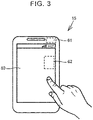
- FIG. 3 is a front view of the user terminal 15.
- the user terminal 15 includes a display unit 60, a communication device 61, and a control unit 62.
- the user terminal 15 is, for example, a smartphone used by the user 6.
- the control unit 62 controls driving of the display unit 60 and the communication device 61.
- the display unit 60 can display various kinds of information to be notified to the user 6.
- the user 6 can enter various kinds of information by operating the display unit 60.
- the communication device 61 is configured to communicate with the server 2, so that the communication device 61 can send and receive various kinds of information to and from the server 2.
- the communication device 61 can access the server 2 to access a web page of the service provider 9, and the display unit 60 can display the web page of the service provider 9.
- the user 6 can enter various kinds of information to a form displayed on the display unit 60.
- the communication device 61 sends various kinds of information entered to the form by the user 6 to the server 2.
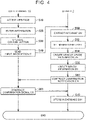
- FIG. 4 is a flowchart showing a flow until the user 6 uses the battery electric vehicle 7 by using the vehicle subscription service provided by the service provider 9.
- the user 6 accesses the web page of the service provider 9 via the user terminal 15 (S10).
- the user 6 enters various kinds of information to an input form displayed on the display unit 60 (S20). Specifically, the user 6 enters the vehicle the user 6 wants to use, usage period, usage start time, option details, user information of the user 6, and service providing store where the user 6 picks up the vehicle.
- the user information includes information such as the address of the user 6.
- the option details are the details on option OP1 or OP2 for using a rental vehicle 8.
- Information such as fixed fee to be paid monthly by the user 6 and payment period is displayed on the input form, based on the vehicle the user 6 wants to use and the usage period.
- the user 6 When the user 6 finishes entering the input form, the user 6 presses a confirm button displayed on the display unit 60 (S30). When the confirm button is pressed, the user terminal 15 sends input information II entered by the user 6 to the server 2 (S40).
- the server 2 When the server 2 receives the input information II, the server 2 extracts contract period information D1, fee information D2, vehicle information D4, and option information D7 based on the input information II (S50).
- the server 2 sets the membership level (S52). Specifically, the control unit 11 determines whether there is a past contract history, based on the user information included in the input information II and the user information database DB1. The control unit 11 sets the membership level of the user 6 based on the sum of the contract period in the input information II and the past contract period(s). The longer the total contract period, the higher the membership level.
- the control unit 11 creates vehicle grade information D5 (S54).
- the storage unit 12 stores a map that associates vehicles with vehicle grades, and the control unit 11 creates the vehicle grade information D5 from the map and the vehicle information D4.
- the control unit 11 creates rental information D6 (S55).
- the storage unit 12 stores a map for setting the rental information D6 from the membership level information D3 and the vehicle grade information D5, and the control unit 11 creates the rental information D6 from the map, the membership level information D3, and the vehicle grade information D5.
- the control unit 11 thus creates contract information CI including the contract period information D1, the fee information D2, the membership level information D3, the vehicle information D4, the vehicle grade information D5, the rental information D6, and the option information D7.
- the control unit 11 sends a contract confirmation notification CM to the user terminal 15 (S60).
- the contract confirmation notification CM includes the contract information CI and information indicating the user ID.
- the server 2 receives a contract confirmation signal CS (S65).
- the contract between the user 6 and the service provider 9 is thus finalized.
- the user 6 goes to the selected service providing store to pick up the battery electric vehicle 7.
- the user 6 can thus use the battery electric vehicle 7 during the contract period.
- the server 2 When the server 2 receives the contract confirmation signal CS, the server 2 stores the contract information CI and the user password UPW in the user information database DB1 in the storage unit 12 (S70).
- the user 6 can use the battery electric vehicle 7 by the vehicle subscription service provided by the service provider 9.
- FIG. 1 there are cases where the user 6 is going from a departure point P1 to a destination point P2 but the SOC of the energy storage device 40 of the battery electric vehicle 7 is low and the battery electric vehicle 7 needs to be charged.
- the user 6 can use the rental vehicle providing service of the service provider 9.
- the user 6A is going from a departure point P1A to the destination point P2 but the battery electric vehicle 7A needs to be charged.
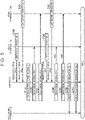
- FIG. 5 is a flowchart of a process that is performed when the user 6, 6A uses the rental vehicle providing service.
- the user 6 accesses a website of the service provider 9 and enters various kinds of information using the user terminal 15 (S100). Specifically, the user 6 enters information on the rental vehicle providing service, information on charging, and information indicating that the user 6 is a user of the vehicle subscription service to an input form on the website, and presses a confirm button.
- the information on the rental vehicle providing service includes information indicating that the user 6 wants to use the rental vehicle providing service, arrival time at a store point P5, rental vehicle usage time, and a destination to which the user 6 is going with a rental vehicle.
- the rental vehicle usage time includes rental start time and rental return time.
- the information on charging includes information on whether the user 6 wants to charge his or her vehicle, a desired charging method, model information of the vehicle to be charged, and information on whether the user 6 is the owner of the vehicle to be charged.
- Entering a destination to which the user 6 is going with a rental vehicle may be optional.
- the information indicating that the user 6 is a user of the vehicle subscription service includes his or her user ID and a user password UPW.
- the desired charging method indicates either fast charging or normal charging.
- the user 6A accesses the website of the service provider 9 and enters various kinds of information using a user terminal 15A (S101).
- the user 6A is not a user of the vehicle subscription service. Therefore, the user 6A enters information on the rental vehicle providing service and information on charging to an input form on the website, and presses a confirm button.
- the server 2 receives a request signal RQ1 regarding the user 6. Similarly, the server 2 receives a request signal RQ2 regarding the user 6A.
- the request signals RQ1, RQ2 include the input information entered by the users 6, 6A, respectively.
- the server 2 When the server 2 receives the request signal RQ1, RQ2, the server 2 produces a response signal (S110).
- FIG. 6 is a flowchart of the step of producing the response signal by the server 2.
- the control unit 11 of the server 2 determines whether the sender of the request signal RQ1, RQ2 is a user of the vehicle subscription service (S200).
- control unit 11 determines that the user is a user of the vehicle subscription service (Yes in S200)
- the control unit 11 sets the grade range of the rental vehicles 8 (S210).
- the server 2 sets the grade range of the rental vehicles 8 that can be selected, based on the rental information D6 and the option information D7 in the user information database DB1.
- the server 2 determines that the sender of the request signal RQ1, RQ2 is not a user of the vehicle subscription service (No in S200), the server 2 sets the grade range of the rental vehicles 8 to the range including all the grades (S211).
- the server 2 roughly selects rental vehicles 8 (S220). Specifically, the server 2 first extracts rental vehicles 8 in the set grade range from the rental vehicle database DB2 (rental vehicle information LCD).
- the server 2 then extracts available rental vehicles 8 based on the information on the rental vehicle usage time included in the request signal RQ1, RQ2 and the rental user information LUD of each of the extracted rental vehicles 8. The server 2 thus completes rough selection of rental vehicles 8.
- the server 2 determines whether a destination to which the user is going with a rental vehicle has been entered (S230).
- the server 2 determines that a destination to which the user is going with a rental vehicle has been entered (Yes in S230), the server 2 sets features based on the destination (S240). When the server 2 determines that a destination to which the user is going with a rental vehicle has not been entered (No in S230), the routine proceeds to S255 that will be described later.
- the server 2 extracts the features FV1 to FV3 of the facility from the surroundings information database DB4.
- the server 2 matches the requested features against the features of the rental vehicles 8 (S250). Specifically, the server 2 extracts rental vehicles 8 satisfying the requested features FV1 to FV3, based on the feature information FVD of each of the rental vehicles 8 roughly selected in S220 and the requested features FV1 to FV3. Matching is performed in this manner. The server 2 then confirms the rental vehicles 8 to be proposed to the user (S255).
- the server 2 determines whether the user wants to charge a vehicle (S260). Specifically, the server 2 makes this determination based on the input information on charging included in the request signals RQ1, RQ2.
- the server 2 determines that the user wants to charge a vehicle (Yes in S260)
- the server 2 selects a charging unit (S270). Specifically, the server 2 selects either the normal charging unit 30 or the fast charging unit 31 the user can use, based on the input information on "desired charging method" and "return time of the rental vehicle 8" included in the request signal RQ1, RQ2, and the charging power upper limit information D10 and the available time information D11 in the charging equipment database DB3.
- the server 2 also confirms the usage time of the selected charging unit. The end time of the usage time is set to before the return time of the rental vehicle 8.
- the server 2 performs fee setting (S280).
- FIG. 7 is a flowchart of the fee setting.
- the server 2 sets the rental fee of the rental vehicles 8 (S400).
- the server 2 sets the rental fee to, for example, zero or a small amount.
- the server 2 sets the rental fee for each rental vehicle 8 to be proposed to the user, based on the rental vehicles 8 to be proposed to the user that have been confirmed in S255 and the rental vehicle usage time.
- the server 2 sets a charging fee. Specifically, the server 2 first determines whether the user is a user of the vehicle subscription service (S410).
- the server sets the charging fee to a fixed amount (S415).
- the fixed fee is a small amount or zero.
- the server 2 determines whether the model of the vehicle to be charged is a predetermined model (S420).
- the predetermined model is, for example, a model of a predetermined vehicle manufacturer when the service provider 9 has an exclusive contract with the predetermined vehicle manufacturer.
- FIG. 8 is a graph schematically showing the first fee model.
- the abscissa represents charging energy (or charging time), and the ordinate represents charging fee.
- a normal charge fee L1 is a charging fee to be charged when the vehicle is charged with the normal charging unit 30.
- a fast charge fee L2 is a charging fee to be charged when the vehicle is charged with the fast charging unit 31.
- FIG. 9 is a graph schematically showing the second fee model.
- the abscissa represents charging energy (or charging time), and the ordinate represents charging fee.
- a normal charge fee L3 is a charging fee to be charged when the vehicle is charged with the normal charging unit 30.
- a fast charge fee L4 is a charging fee to be charged when the vehicle is charged with the fast charging unit 31.
- the normal charge fees L1, L3 are set so that the normal charge fee L3 is higher than the normal charge fee L1 and the fast charge fees L2, L4 are set so that the fast charge fee L4 is higher than the fast charge fee L2.
- the server 2 then confirms the fee setting (S450). Specifically, the server 2 confirms a fee based on the rental fee confirmed in S400 and the charging fee confirmed in S415, S440, or S430.
- the rental fee of the rental vehicles 8 is set to zero or a small amount.
- the charging fee is also a fixed amount.
- the server 2 sets the rental fee for each rental vehicle 8 to be proposed to the user 6A, based on the rental vehicles 8 to be proposed to the user 6A that have been confirmed in S255 and the rental vehicle usage time.
- the first fee model or the second fee model is set for the charging fee.
- the server 2 sends a response signal (S290).
- This response signal includes the vehicles to be proposed as rental vehicles 8 and fee information.
- the response signal includes the information identifying the selected charging unit and the usage time of the selected charging unit.
- the server 2 sends a response signal RS1 to the user terminal 15 (S120), and the server 2 sends a response signal RS2 to the user terminal 15A (S121).
- the user 6 can check the vehicles proposed as the rental vehicles 8 and the fee details that are included in the response signal RS 1.
- the user 6 enters various kinds of information to the user terminal 15 (S130).
- the user 6 selects a vehicle he or she is going to use from the vehicles proposed as the rental vehicles 8, and presses a confirm button.
- the server 2 receives a request signal RQ3.
- the request signal RQ3 includes information indicating the rental vehicle 8 selected by the user 6.
- the server 2 When the server 2 receives the request signal RQ3, the server 2 sends a response signal RS3 to the user terminal 15 (S140).
- the response signal RS3 includes a password PW1 to be entered to the receiving terminal 4 and fee information.
- the server 2 updates various kinds of information in the storage unit 12. For example, regarding the rental vehicle 8 selected by the user 6, the server 2 updates the rental period information LTD and the rental user information LUD in the rental vehicle information LCD. In the case where the user wants to charge a vehicle, the server 2 updates the available time information D11 of the charging unit selected in S270.
- the server 2 When the server 2 receives the request signal RQ3, the server 2 sends a reservation signal RI1 to the receiving terminal 4 (S150).
- the reservation signal RI1 includes information identifying the rental vehicle 8 selected by the user 6 (e.g., rental vehicle 8A), the usage time of the rental vehicle 8, information indicating the password PW1, and fee information.
- the reservation signal RI1 further includes information identifying the charging unit selected in S270 (e.g., normal charging unit 30), and information indicating the usage time of the charging unit.
- the user 6A can check the vehicles proposed as the rental vehicles 8 and the fee details that are included in the response signal RS2.
- the user 6A enters various kinds of information to the user terminal 15A (S 131). On an input form displayed on the display unit 60 of the user terminal 15A, the user 6A selects a vehicle he or she is going to use from the vehicles proposed as the rental vehicles 8, and presses a confirm button.
- the server 2 receives a request signal RQ4.
- the request signal RQ4 includes information indicating the rental vehicle 8 selected by the user 6A (e.g., rental vehicle 8B).
- the server 2 When the server 2 receives the request signal RQ4, the server 2 sends a response signal RS4 to the user terminal 15A (S141).
- the response signal RS4 includes a password PW2 to be entered to the receiving terminal 4 and fee information.
- the server 2 updates various kinds of information in the storage unit 12.
- the server 2 When the server 2 receives the request signal RQ4, the server 2 sends a reservation signal RI2 to the receiving terminal 4 (S151).
- the reservation signal RI2 includes information identifying the rental vehicle 8 selected by the user 6A (e.g., rental vehicle 8B), the usage time of the rental vehicle 8, information indicating the password PW2, and fee information.
- the reservation signal RI2 further includes information identifying the charging unit selected in S270 (e.g., fast charging unit 31), and information indicating the usage time of the charging unit.
- the user 6 then operates the display unit 20 of the receiving terminal 4 to enter the password PW1.
- the receiving terminal 4 checks the password entered to the display unit 20 against the information indicating the password PW1 in the reservation signal RI1 received in advance from the server 2.
- the control unit 21 determines the entered password and the password PW1 in the reservation signal RI1 match, the control unit 21 requests a fee payment when it is necessary to receive the fee.
- the control unit 21 then drives the key pickup unit 23, and the user 6 picks up the vehicle key of the rental vehicle 8A identified by the reservation signal RI1 from the key pickup unit 23.
- the user 6 can thus receive the vehicle key of the rental vehicle 8A from the key pickup unit 23 and use the rental vehicle 8A parked on the premises of the service provider 9.
- the user 6 can drive to, for example, the destination entered in S100.
- the service provider 9 charges the battery electric vehicle 7 with the charging unit specified by the reservation signal RI1 (e.g., normal charging unit 30) within the usage time specified by the reservation signal RI1.
- the reservation signal RI1 e.g., normal charging unit 30
- the energy storage device 40 of the battery electric vehicle 7 will have been charged when the user 6 returns to the store point P5 after, for example, running errands at a destination point P3. Therefore, the user 6 can immediately use the charged battery electric vehicle 7.
- the charging time is set in S270 so that the SOC of the energy storage device 40 becomes 100% (fully charged).
- the charging time is set so that the battery electric vehicle 7 will have been charged to the extent that it can make a round trip between the departure point P1 and the store point P5 at least when the user 6 picks up the battery electric vehicle 7.
- the user 6A can also have similar convenience. Unlike the user 6, the user 6A is not a user of the vehicle subscription service. Therefore, the fee for the user 6A is higher than that for the user 6.
- the vehicle is charged before the user goes to the destination point P3 etc.
- the present disclosure is not limited to this example.
- the present disclosure is also applicable to the case where the user stops by at the store point P5 on the way back from the destination point P2 or P3 to the departure point P1, P1A to charge the vehicle and then returns to the departure point P1, P1A with a rental vehicle 8. For example, this happens when there is no charging facility at the departure point P1, P1A or when a vehicle cannot be reliably charged at the departure points P1, P1A (e.g., an apartment).
- the user stops by at the store point P5 and departs from the store point P5 with the battery electric vehicle the user is using under contract for the vehicle subscription service.
Landscapes
- Engineering & Computer Science (AREA)
- Business, Economics & Management (AREA)
- Accounting & Taxation (AREA)
- Finance (AREA)
- Development Economics (AREA)
- Strategic Management (AREA)
- Power Engineering (AREA)
- Transportation (AREA)
- Mechanical Engineering (AREA)
- Physics & Mathematics (AREA)
- General Business, Economics & Management (AREA)
- Economics (AREA)
- Marketing (AREA)
- Theoretical Computer Science (AREA)
- General Physics & Mathematics (AREA)
- Entrepreneurship & Innovation (AREA)
- Life Sciences & Earth Sciences (AREA)
- Sustainable Development (AREA)
- Sustainable Energy (AREA)
- Game Theory and Decision Science (AREA)
- Tourism & Hospitality (AREA)
- Health & Medical Sciences (AREA)
- General Health & Medical Sciences (AREA)
- Human Resources & Organizations (AREA)
- Primary Health Care (AREA)
- Management, Administration, Business Operations System, And Electronic Commerce (AREA)
- Operations Research (AREA)
- Coin-Freed Apparatuses For Hiring Articles (AREA)
Abstract
A proposal system (1) includes a processor. The processor is configured to propose to a user (6; 6A) of a battery electric vehicle (7; 7A) a rental vehicle (8) the user is able to use during charging of an energy storage device mounted on the battery electric vehicle in order to allow the user to use the battery electric vehicle in a charged state in which the energy storage device has been charged.
Description
- The present invention relates to proposal systems.
- In recent years, battery electric vehicles that run on power from an energy storage device have attracted attention due to growing environmental concerns. However, the battery electric vehicles can no longer run when the power in the energy storage device runs out.
- For example, a management device described in
Japanese Unexamined Patent Application Publication No. 2015-87799 JP 2015-87799 A - A user typically needs to charge an energy storage device of a battery electric vehicle when the SOC of the battery electric vehicle becomes low. Since it takes time to charge the energy storage device, there are users who desire to make good use of the charging time.
- The present disclosure provides a system that allows a user of a battery electric vehicle to make good use of the charging time of the battery electric vehicle.
- An aspect of the present disclosure relates to a proposal system. The proposal system includes a processor. The processor is configured to propose, to a user of a battery electric vehicle, a rental vehicle the user is able to use during charging of an energy storage device mounted on the battery electric vehicle in order to allow the user to use the battery electric vehicle in a charged state in which the energy storage device has been charged.
- In the above aspect, the processor may be configured to propose the rental vehicle based on information on a point to which the user is going during the charging. The processor may be configured to propose the rental vehicle based on user-related information on the user.
- In the above aspect, the battery electric vehicle may be a vehicle the user is able to use in a vehicle usage service that is available in exchange for a payment of a predetermined fee. The user-related information may include contract information of the user in the vehicle usage service. The processor may be configured to propose the rental vehicle to the user based on the contract information of the user.
- In the above aspect, the rental vehicle may include a plurality of vehicles of different grades. Contract information of the user may include rental grade information that defines a grade range of a vehicle to be rented to the user. The processor may be configured to propose the rental vehicle to the user based on the rental grade information.
- The proposal system may further include a charging equipment. The charging equipment may include a normal charging unit that charges the energy storage device with first charging power and a fast charging unit that charges the energy storage device with second charging power higher than the first charging power. The proposal system may further include a user interface configured to be operated by the user. The processor may be configured to propose the normal charging unit or the fast charging unit as a charging unit that charges the battery electric vehicle, based on input information entered to the user interface by the user.
- In the above aspect, the input information may include model information of the battery electric vehicle, a state of charge of the energy storage device, information on a point to which the user is going during the charging, and user-related information on the user. The processor may be configured to set a charging fee for charging the energy storage device using the charging equipment. The processor may be configured to calculate the charging fee in such a way that a charging fee for charging with the fast charging unit is higher than a charging fee for charging with the normal charging unit.
- In the above aspect, the energy storage device may be charged at least in a period during which the user uses the rental vehicle. The charged state may be a state in which a state of charge of the energy storage device is a predetermined value or more. The user interface may be a mobile terminal. The processor may be mounted on a server configured to communicate with the mobile terminal.
- According to the proposal system of the present disclosure, the user of the battery electric vehicle can make good use of the charging time of the battery electric vehicle.
- Features, advantages, and technical and industrial significance of exemplary embodiments of the invention will be described below with reference to the accompanying drawings, in which like signs denote like elements, and wherein:
-
FIG. 1 is a schematic diagram of aproposal system 1 according to an embodiment; -
FIG. 2 is a schematic block diagram of a batteryelectric vehicle 7; -
FIG. 3 is a front view of auser terminal 15; -
FIG. 4 is a flowchart showing a flow until a user uses the batteryelectric vehicle 7 by using a vehicle subscription service provided by aservice provider 9; -
FIG. 5 is a flowchart of a process that is performed when auser 6, 6A uses a service to provide rental vehicles; -
FIG. 6 is a flowchart of the step of producing a response signal by aserver 2; -
FIG. 7 is a flowchart of a fee setting process; -
FIG. 8 is a graph schematically showing a first fee model; and -
FIG. 9 is a graph schematically showing a second fee model. - A
proposal system 1 according to an embodiment will be described with reference toFIGS. 1 to 9 . The same or corresponding configurations are denoted with the same signs throughoutFIGS. 1 to 9 , and description thereof will not be repeated. -
FIG. 1 schematically shows theproposal system 1 according to the embodiment. Aservice provider 9 provides a vehicle subscription service. Theservice provider 9 provides a battery electric vehicle 7 a user 6 can use to the user 6 in exchange for receiving a payment of a fixed fee from the user 6. - The
service provider 9 also provides a service to provide rental vehicles (hereinafter also referred to as "rental vehicle providing service"). Specifically, theservice provider 9 uses theproposal system 1 to charge the batteryelectric vehicle 7 of the user 6 and rent to the user 6 arental vehicle 8 the user 6 can use while charging the batteryelectric vehicle 7. By using the rental vehicle providing service of theservice provider 9, the user 6 can use therental vehicle 8 to run errands etc. When the user 6 returns therental vehicle 8, the user 6 can pick up the batteryelectric vehicle 7 that has finished charging, so that the user 6 can use the charged batteryelectric vehicle 7. - The user 6 is a user of the vehicle subscription service of the
service provider 9. Although auser 6A is not a user of the vehicle subscription service of theservice provider 9, theuser 6A can also use the rental vehicle providing service of theservice provider 9. - The
service provider 9 prepares a plurality ofrental vehicles 8 to rent to theusers 6, 6A. In the example shown inFIG. 1 , theservice provider 9 preparesrental vehicles 8A to 8D. - The
proposal system 1 includes a server (proposal device) 2, charging equipment 3, and areceiving terminal 4. In the example shown inFIG. 1 , the charging equipment 3 includes anormal charging unit 30 and afast charging unit 31. Thenormal charging unit 30 includes a chargingplug 35, and thefast charging unit 31 includes a chargingplug 36. - The receiving
terminal 4 includes adisplay unit 20, acontrol unit 21, a communication device 22, and akey pickup unit 23. Thecontrol unit 21 controls driving of thedisplay unit 20, the communication device 22, and thekey pickup unit 23. Thedisplay unit 20 can display various kinds of information to be notified to the user 6. The user 6 can enter various kinds of information to an input form displayed on thedisplay unit 20. Since the user 6 can enter various kinds of information via a display screen of thedisplay unit 20, thedisplay unit 20 is an example of a user interface. The communication device 22 is configured to communicate with theserver 2, the charging equipment 3, and therental vehicles 8. - The
key pickup unit 23 is a device from which the user 6 picks up a vehicle key of therental vehicle 8 to be picked up by the user 6 according to a command from thecontrol unit 21. - The
server 2 includes acommunication device 10, acontrol unit 11, and a storage unit 12. Thecommunication device 10 is configured to communicate with auser terminal 15 of the user 6 through theInternet 5. - The
control unit 11 includes a processor that performs various arithmetic operations etc. The storage unit 12 stores various databases. - The storage unit 12 stores a user information database DB1, a rental vehicle database DB2, a charging equipment database DB3, and a surroundings information database DB4. The storage unit 12 may also store another database DB5 if it is needed.
- Table 1 schematically shows the rental vehicle database DB2.
Table 1 Rental Vehicle Database DB2 (Rental Vehicle Information LCD) Vehicle ID Grade information RD Grade a Rental period information LTD Rental user information LUD Feature information FVD Vehicle ID Grade information RD Grade b Rental period information LTD Rental user information LUD Feature Information FVD Vehicle ID Grade information RD Grade c Rental period information LTD Rental user information LUD Feature information FVD Vehicle ID Grade information RD Grade d Rental period information LTD Rental user information LUD Feature information FVD - The rental vehicle database DB2 stores rental vehicle information LCD of each rental vehicle 8 (8A to 8D).
- The rental vehicle information LCD includes a vehicle identification (ID) identifying the
rental vehicle 8, grade information RD indicating the grade of therental vehicle 8, rental period information LTD, and rental user information LUD. - The grade information RD is information indicating the grade of the
rental vehicle 8. Therental vehicles 8 are classified into, for example, Grade a, Grade b, Grade c, and Grade d with Grade a being the highest. The grades are basically set so that the more luxury the vehicle is, the higher the grade. Convenient vehicles that do not need to be parked in a parking lot, such as "TOYOTA i-ROAD," are also classified as high grade vehicles. - The rental period information LTD stores a rental period when the
rental vehicle 8 is rented. - The rental user information LUD stores information identifying the user renting the
rental vehicle 8 when therental vehicle 8 is rented. - The feature information FVD is information indicating various features FV of the
rental vehicle 8. Examples of the features FV include trunk volume, quietness, ease of getting into and out of therental vehicle 8, maximum torque, and seating capacity. - Table 2 schematically shows the user information database DB1.
Table 2 User Information Database DB 1User information UD1 Contract information C1 Contract period information D1 Fee information D2 Membership level information D3 First level Vehicle information D4 Vehicle grade information D5 Grade A Rental information D6 a, b, c, d Option information D7 Option OP1 User-specific information P1 User ID User password UPW Home location information User information UD2 Contract information C1 Contract period information D1 Fee information D2 Membership level information D3 Second level Vehicle information D4 Vehicle grade information D5 Grade C Rental information D6 c, d Option information D7 Option OP2 User-specific information P1 User ID User password UPW Home location information - The user information database DB1 includes a plurality of pieces of user information UD. In the example shown in Table 2, the user information database DB1 includes user information UD1 and user information UD2. For example, the user information UD1 is user information of the user 6.
- The user information UD includes a user ID identifying the user 6, contract information CI, and user-specific information PI.
- The contract information CI is contract information of the vehicle subscription service. The contract information CI includes contract period information D1, fee information D2, membership level information D3, vehicle information D4, vehicle grade information D5, rental information D6, and option information D7.
- The contract period information D1 is information indicating a period during which the user 6 can use the battery
electric vehicle 7. - The fee information D2 is a fixed fee to be paid monthly from the user 6 to the
service provider 9. The user 6 can use the batteryelectric vehicle 7 in exchange for the payment of the fixed fee, and does not need to pay any other fees such as taxes, insurance, maintenance fees. - The membership level information D3 is information indicating the membership level of the user 6. The membership is classified into a plurality of levels such as first to fifth levels with the first level being the highest. For example, the membership levels are set so that the longer the user has been using the vehicle subscription service, the higher the membership level.
- The vehicle information D4 is information identifying the battery
electric vehicle 7 being used by the user 6. The vehicle grade information D5 is information indicating the grade of the batteryelectric vehicle 7 being used by the user 6. For example, the batteryelectric vehicles 7 are classified into Grade A, Grade B, Grade C, and Grade D with Grade A being the highest. - The rental information D6 stores the grade range of the
rental vehicle 8 to be provided to the user 6. For example, when "a, b, c, d" is stored in the rental information D6, it indicates that this user 6 can rent any of therental vehicles 8 of Grades a to d. When "d" is stored in the rental information D6, it indicates that this user 6 can rent any of therental vehicles 8 of Grade d. - The option information D7 stores information on a special contract selected by the user 6 at the time of contracting the vehicle subscription service.
- For example, option OP1 or option OP2 is stored in the option information D7. Option OP1 is a flag indicating that any of the
rental vehicles 8 in a grade range larger than the grade range stored in the rental information D6 is to be rented to the user 6. For example, even when "d" is stored in the rental information D6, any of therental vehicles 8 of Grades c and d is to be rented to the user 6 if option OP1 is stored in the option information D7. - On the other hand, option OP2 is a flag indicating that any of the
rental vehicles 8 in a grade range smaller than the grade range stored in the rental information D6 is to be rented to the user 6. For example, even when "a, b, c, d" is stored in the rental information D6, any of therental vehicles 8 of Grade d is to be rented to the user 6 if option OP2 is stored in the option information D7. - The user-specific information PI includes information indicating a user ID, information indicating a user password UPW, and location information of the user 6's house.
- Table 3 schematically shows the charging equipment database DB3. The charging equipment database DB3 stores information on the
normal charging unit 30 and thefast charging unit 31.Table 3 Charging Equipment Database DB3 Charging unit information CD(0) Charging power upper limit information D10 30 kW Available time information D11 Charging unit information CD(1) Charging power upper limit information D10 100 kW Available time information D11 - The charging unit information CD(0) stores information on the
normal charging unit 30, and the charging unit information CD(1) stores information on thefast charging unit 31. The charging unit information CD includes charging power upper limit information D10 and available time information D11. - The charging power upper limit information D10 indicates an upper limit of the power that can be output from the charging unit. For example, "30 kW" is stored in the charging power upper limit information D10 of the charging unit information CD(0), and "100 kW" is stored in the charging power upper limit information D10 of the charging unit information CD(1).
- The surroundings
information database DB 4 is a database indicating facilities located around theservice provider 9 such as supermarkets, train stations, parking lots, and schools, location information of each facility, and features of each facility. Table 4 shows a part of the surroundings information database DB4.Table 4 Surroundings Information Database DB4 Facility Name Location Information Feature FV 1 Feature FV2 Feature FV3 Supermarket A ○○ 1 0 0 Home Improvement Store B ○ Δ 5 0 0 School C Δ○ 0 2 0 Hospital D ΔΔ 0 2 3 - For example, the feature FV1 indicates the level of necessity for trunk volume. The feature FV2 indicates the level of necessity for quietness. The feature FV3 indicates the level of necessity for ease of getting into and out of the
rental vehicle 8. Other features may include features related to the maximum torque and features related to the seating capacity. - For example, in Table 4, Home improvement store B sells materials etc. and it is highly likely that the
rental vehicle 8 may be loaded with large materials when leaving the store. The feature FV1 therefore has a large value. Since it is highly likely that an injured or sick person may get into or out of therental vehicle 8 at Hospital D, the feature FV3 has a large value. - For example, when it is necessary to drive up a steep hill on a route from the position of the
service provider 9 to Supermarket A, the feature regarding the maximum torque for Supermarket A is set to a large value. - The
server 2 may be configured to communicate with a server of each store such as Supermarket A and Home improvement store B and to collect information of each store. In this case, for example, when theserver 2 obtains information such as special sales of furniture at Home improvement store B, the feature FV1 for Home improvement store B may be temporarily increased based on this information. -
FIG. 2 is a schematic block diagram of the batteryelectric vehicle 7. The batteryelectric vehicle 7 includes anenergy storage device 40, apower converter 41, a rotatingelectrical machine 42, adrive wheel 43, aninlet unit 44, aconverter 45, acommunication device 46, aterminal device 47, and acontrol unit 48. Theenergy storage device 40 is a secondary battery such as lithium-ion battery. Thepower converter 41 converts direct current (DC) power output from theenergy storage device 40 to alternating current (AC) power, and supplies the AC power to the rotatingelectrical machine 42. The rotatingelectrical machine 42 is driven by the supplied AC power to rotate thedrive wheel 43. - The charging plugs 35, 36 can be connected to the
inlet unit 44. Theconverter 45 converts power supplied through theinlet unit 44 to charge theenergy storage device 40. - The
control unit 48 controls driving of thepower converter 41, theconverter 45, thecommunication device 46, and theterminal device 47. Thecommunication device 46 is configured to communicate with theproposal system 1 and theuser terminal 15 through theInternet 5. -
FIG. 3 is a front view of theuser terminal 15. Theuser terminal 15 includes adisplay unit 60, acommunication device 61, and acontrol unit 62. Theuser terminal 15 is, for example, a smartphone used by the user 6. Thecontrol unit 62 controls driving of thedisplay unit 60 and thecommunication device 61. - The
display unit 60 can display various kinds of information to be notified to the user 6. The user 6 can enter various kinds of information by operating thedisplay unit 60. - The
communication device 61 is configured to communicate with theserver 2, so that thecommunication device 61 can send and receive various kinds of information to and from theserver 2. - For example, the
communication device 61 can access theserver 2 to access a web page of theservice provider 9, and thedisplay unit 60 can display the web page of theservice provider 9. The user 6 can enter various kinds of information to a form displayed on thedisplay unit 60. Thecommunication device 61 sends various kinds of information entered to the form by the user 6 to theserver 2. -
FIG. 4 is a flowchart showing a flow until the user 6 uses the batteryelectric vehicle 7 by using the vehicle subscription service provided by theservice provider 9. - The user 6 accesses the web page of the
service provider 9 via the user terminal 15 (S10). - The user 6 enters various kinds of information to an input form displayed on the display unit 60 (S20). Specifically, the user 6 enters the vehicle the user 6 wants to use, usage period, usage start time, option details, user information of the user 6, and service providing store where the user 6 picks up the vehicle. The user information includes information such as the address of the user 6.
- The option details are the details on option OP1 or OP2 for using a
rental vehicle 8. - Information such as fixed fee to be paid monthly by the user 6 and payment period is displayed on the input form, based on the vehicle the user 6 wants to use and the usage period.
- When the user 6 finishes entering the input form, the user 6 presses a confirm button displayed on the display unit 60 (S30). When the confirm button is pressed, the
user terminal 15 sends input information II entered by the user 6 to the server 2 (S40). - When the
server 2 receives the input information II, theserver 2 extracts contract period information D1, fee information D2, vehicle information D4, and option information D7 based on the input information II (S50). - The
server 2 sets the membership level (S52). Specifically, thecontrol unit 11 determines whether there is a past contract history, based on the user information included in the input information II and the user information database DB1. Thecontrol unit 11 sets the membership level of the user 6 based on the sum of the contract period in the input information II and the past contract period(s). The longer the total contract period, the higher the membership level. - The
control unit 11 creates vehicle grade information D5 (S54). The storage unit 12 stores a map that associates vehicles with vehicle grades, and thecontrol unit 11 creates the vehicle grade information D5 from the map and the vehicle information D4. - The
control unit 11 creates rental information D6 (S55). The storage unit 12 stores a map for setting the rental information D6 from the membership level information D3 and the vehicle grade information D5, and thecontrol unit 11 creates the rental information D6 from the map, the membership level information D3, and the vehicle grade information D5. - The
control unit 11 thus creates contract information CI including the contract period information D1, the fee information D2, the membership level information D3, the vehicle information D4, the vehicle grade information D5, the rental information D6, and the option information D7. - The
control unit 11 sends a contract confirmation notification CM to the user terminal 15 (S60). The contract confirmation notification CM includes the contract information CI and information indicating the user ID. - When the user 6 sets a user password UPW in a setting form included in the contract confirmation notification CM and presses a confirm button, the
server 2 receives a contract confirmation signal CS (S65). - The contract between the user 6 and the
service provider 9 is thus finalized. The user 6 goes to the selected service providing store to pick up the batteryelectric vehicle 7. The user 6 can thus use the batteryelectric vehicle 7 during the contract period. - When the
server 2 receives the contract confirmation signal CS, theserver 2 stores the contract information CI and the user password UPW in the user information database DB1 in the storage unit 12 (S70). - In this way, the user 6 can use the battery
electric vehicle 7 by the vehicle subscription service provided by theservice provider 9. - In
FIG. 1 , there are cases where the user 6 is going from a departure point P1 to a destination point P2 but the SOC of theenergy storage device 40 of the batteryelectric vehicle 7 is low and the batteryelectric vehicle 7 needs to be charged. - In such cases, the user 6 can use the rental vehicle providing service of the
service provider 9. Similarly, there are also cases where theuser 6A is going from a departure point P1A to the destination point P2 but the batteryelectric vehicle 7A needs to be charged. -
FIG. 5 is a flowchart of a process that is performed when theuser 6, 6A uses the rental vehicle providing service. - The user 6 accesses a website of the
service provider 9 and enters various kinds of information using the user terminal 15 (S100). Specifically, the user 6 enters information on the rental vehicle providing service, information on charging, and information indicating that the user 6 is a user of the vehicle subscription service to an input form on the website, and presses a confirm button. - The information on the rental vehicle providing service includes information indicating that the user 6 wants to use the rental vehicle providing service, arrival time at a store point P5, rental vehicle usage time, and a destination to which the user 6 is going with a rental vehicle. The rental vehicle usage time includes rental start time and rental return time.
- The information on charging includes information on whether the user 6 wants to charge his or her vehicle, a desired charging method, model information of the vehicle to be charged, and information on whether the user 6 is the owner of the vehicle to be charged.
- Entering a destination to which the user 6 is going with a rental vehicle may be optional. The information indicating that the user 6 is a user of the vehicle subscription service includes his or her user ID and a user password UPW. The desired charging method indicates either fast charging or normal charging.
- The
user 6A accesses the website of theservice provider 9 and enters various kinds of information using auser terminal 15A (S101). Theuser 6A is not a user of the vehicle subscription service. Therefore, theuser 6A enters information on the rental vehicle providing service and information on charging to an input form on the website, and presses a confirm button. - The
server 2 receives a request signal RQ1 regarding the user 6. Similarly, theserver 2 receives a request signal RQ2 regarding theuser 6A. The request signals RQ1, RQ2 include the input information entered by theusers 6, 6A, respectively. - When the
server 2 receives the request signal RQ1, RQ2, theserver 2 produces a response signal (S110). -
FIG. 6 is a flowchart of the step of producing the response signal by theserver 2.
Thecontrol unit 11 of theserver 2 determines whether the sender of the request signal RQ1, RQ2 is a user of the vehicle subscription service (S200). - When the
control unit 11 determines that the user is a user of the vehicle subscription service (Yes in S200), thecontrol unit 11 sets the grade range of the rental vehicles 8 (S210). - Specifically, the
server 2 sets the grade range of therental vehicles 8 that can be selected, based on the rental information D6 and the option information D7 in the user information database DB1. - When the
server 2 determines that the sender of the request signal RQ1, RQ2 is not a user of the vehicle subscription service (No in S200), theserver 2 sets the grade range of therental vehicles 8 to the range including all the grades (S211). - The
server 2 roughly selects rental vehicles 8 (S220). Specifically, theserver 2 firstextracts rental vehicles 8 in the set grade range from the rental vehicle database DB2 (rental vehicle information LCD). - The
server 2 then extracts availablerental vehicles 8 based on the information on the rental vehicle usage time included in the request signal RQ1, RQ2 and the rental user information LUD of each of the extractedrental vehicles 8. Theserver 2 thus completes rough selection ofrental vehicles 8. - When the
server 2 completes the rough selection ofrental vehicles 8, theserver 2 determines whether a destination to which the user is going with a rental vehicle has been entered (S230). - When the
server 2 determines that a destination to which the user is going with a rental vehicle has been entered (Yes in S230), theserver 2 sets features based on the destination (S240). When theserver 2 determines that a destination to which the user is going with a rental vehicle has not been entered (No in S230), the routine proceeds to S255 that will be described later. - Specifically, when a destination to which the user is going with a rental vehicle is a facility or near a facility, the
server 2 extracts the features FV1 to FV3 of the facility from the surroundings information database DB4. - The
server 2 matches the requested features against the features of the rental vehicles 8 (S250). Specifically, theserver 2 extractsrental vehicles 8 satisfying the requested features FV1 to FV3, based on the feature information FVD of each of therental vehicles 8 roughly selected in S220 and the requested features FV1 to FV3. Matching is performed in this manner. Theserver 2 then confirms therental vehicles 8 to be proposed to the user (S255). - The
server 2 determines whether the user wants to charge a vehicle (S260). Specifically, theserver 2 makes this determination based on the input information on charging included in the request signals RQ1, RQ2. - When the
server 2 determines that the user wants to charge a vehicle (Yes in S260), theserver 2 selects a charging unit (S270). Specifically, theserver 2 selects either thenormal charging unit 30 or thefast charging unit 31 the user can use, based on the input information on "desired charging method" and "return time of therental vehicle 8" included in the request signal RQ1, RQ2, and the charging power upper limit information D10 and the available time information D11 in the charging equipment database DB3. Theserver 2 also confirms the usage time of the selected charging unit. The end time of the usage time is set to before the return time of therental vehicle 8. - The
server 2 performs fee setting (S280).FIG. 7 is a flowchart of the fee setting. Theserver 2 sets the rental fee of the rental vehicles 8 (S400). - When the user is a user of the vehicle subscription service, the
server 2 sets the rental fee to, for example, zero or a small amount. - When the user is not a user of the vehicle subscription service, the
server 2 sets the rental fee for eachrental vehicle 8 to be proposed to the user, based on therental vehicles 8 to be proposed to the user that have been confirmed in S255 and the rental vehicle usage time. - The
server 2 sets a charging fee. Specifically, theserver 2 first determines whether the user is a user of the vehicle subscription service (S410). - When the user is a user of the vehicle subscription service (Yes in S410), the server sets the charging fee to a fixed amount (S415). The fixed fee is a small amount or zero.
- When the user is not a user of the vehicle subscription service (No in S410), the
server 2 determines whether the model of the vehicle to be charged is a predetermined model (S420). The predetermined model is, for example, a model of a predetermined vehicle manufacturer when theservice provider 9 has an exclusive contract with the predetermined vehicle manufacturer. - When the
server 2 determines that the model of the vehicle to be charged is the predetermined model (Yes in S420), theserver 2 uses a first fee model (S430).FIG. 8 is a graph schematically showing the first fee model. The abscissa represents charging energy (or charging time), and the ordinate represents charging fee. - A normal charge fee L1 is a charging fee to be charged when the vehicle is charged with the
normal charging unit 30. A fast charge fee L2 is a charging fee to be charged when the vehicle is charged with thefast charging unit 31. - When the
server 2 determines that the model of the vehicle to be charged is not the predetermined model (No in S420), theserver 2 uses a second fee model (S440).FIG. 9 is a graph schematically showing the second fee model. The abscissa represents charging energy (or charging time), and the ordinate represents charging fee. A normal charge fee L3 is a charging fee to be charged when the vehicle is charged with thenormal charging unit 30. A fast charge fee L4 is a charging fee to be charged when the vehicle is charged with thefast charging unit 31. - The normal charge fees L1, L3 are set so that the normal charge fee L3 is higher than the normal charge fee L1, and the fast charge fees L2, L4 are set so that the fast charge fee L4 is higher than the fast charge fee L2.
- The
server 2 then confirms the fee setting (S450). Specifically, theserver 2 confirms a fee based on the rental fee confirmed in S400 and the charging fee confirmed in S415, S440, or S430. - Since the user 6 is a user of the vehicle subscription service, the rental fee of the
rental vehicles 8 is set to zero or a small amount. The charging fee is also a fixed amount. - Since the
user 6A is not a user of the vehicle subscription service, theserver 2 sets the rental fee for eachrental vehicle 8 to be proposed to theuser 6A, based on therental vehicles 8 to be proposed to theuser 6A that have been confirmed in S255 and the rental vehicle usage time. The first fee model or the second fee model is set for the charging fee. - Referring back to
FIG. 6 , when the fee is confirmed, theserver 2 sends a response signal (S290). This response signal includes the vehicles to be proposed asrental vehicles 8 and fee information. In the case where the user wants to charge a vehicle, the response signal includes the information identifying the selected charging unit and the usage time of the selected charging unit. - Referring back to
FIG. 5 , theserver 2 sends a response signal RS1 to the user terminal 15 (S120), and theserver 2 sends a response signal RS2 to theuser terminal 15A (S121). - When the
user terminal 15 receives the response signal RS1, the user 6 can check the vehicles proposed as therental vehicles 8 and the fee details that are included in theresponse signal RS 1. - The user 6 enters various kinds of information to the user terminal 15 (S130).
On the input form displayed on thedisplay unit 60 of theuser terminal 15, the user 6 selects a vehicle he or she is going to use from the vehicles proposed as therental vehicles 8, and presses a confirm button. - When the confirm button is pressed, the
server 2 receives a request signal RQ3. The request signal RQ3 includes information indicating therental vehicle 8 selected by the user 6. - When the
server 2 receives the request signal RQ3, theserver 2 sends a response signal RS3 to the user terminal 15 (S140). The response signal RS3 includes a password PW1 to be entered to the receivingterminal 4 and fee information. Theserver 2 updates various kinds of information in the storage unit 12. For example, regarding therental vehicle 8 selected by the user 6, theserver 2 updates the rental period information LTD and the rental user information LUD in the rental vehicle information LCD. In the case where the user wants to charge a vehicle, theserver 2 updates the available time information D11 of the charging unit selected in S270. - When the
server 2 receives the request signal RQ3, theserver 2 sends a reservation signal RI1 to the receiving terminal 4 (S150). The reservation signal RI1 includes information identifying therental vehicle 8 selected by the user 6 (e.g.,rental vehicle 8A), the usage time of therental vehicle 8, information indicating the password PW1, and fee information. - In the case where the user 6 wants to charge a vehicle, the reservation signal RI1 further includes information identifying the charging unit selected in S270 (e.g., normal charging unit 30), and information indicating the usage time of the charging unit.
- When the
user terminal 15A receives the response signal RS2, theuser 6A can check the vehicles proposed as therental vehicles 8 and the fee details that are included in the response signal RS2. - The
user 6A enters various kinds of information to theuser terminal 15A (S 131). On an input form displayed on thedisplay unit 60 of theuser terminal 15A, theuser 6A selects a vehicle he or she is going to use from the vehicles proposed as therental vehicles 8, and presses a confirm button. - When the confirm button is pressed, the
server 2 receives a request signal RQ4. The request signal RQ4 includes information indicating therental vehicle 8 selected by theuser 6A (e.g.,rental vehicle 8B). - When the
server 2 receives the request signal RQ4, theserver 2 sends a response signal RS4 to theuser terminal 15A (S141). The response signal RS4 includes a password PW2 to be entered to the receivingterminal 4 and fee information. Theserver 2 updates various kinds of information in the storage unit 12. - When the
server 2 receives the request signal RQ4, theserver 2 sends a reservation signal RI2 to the receiving terminal 4 (S151). The reservation signal RI2 includes information identifying therental vehicle 8 selected by theuser 6A (e.g.,rental vehicle 8B), the usage time of therental vehicle 8, information indicating the password PW2, and fee information. In the case where theuser 6A wants to charge a vehicle, the reservation signal RI2 further includes information identifying the charging unit selected in S270 (e.g., fast charging unit 31), and information indicating the usage time of the charging unit. - Referring back to
FIG. 1 , when it gets closer to the rental start time of therental vehicle 8A, the user 6 gets on the batteryelectric vehicle 7 and drives to the store point P5. - The user 6 then operates the
display unit 20 of the receivingterminal 4 to enter the password PW1. The receivingterminal 4 checks the password entered to thedisplay unit 20 against the information indicating the password PW1 in the reservation signal RI1 received in advance from theserver 2. When thecontrol unit 21 determines the entered password and the password PW1 in the reservation signal RI1 match, thecontrol unit 21 requests a fee payment when it is necessary to receive the fee. Thecontrol unit 21 then drives thekey pickup unit 23, and the user 6 picks up the vehicle key of therental vehicle 8A identified by the reservation signal RI1 from thekey pickup unit 23. - The user 6 can thus receive the vehicle key of the
rental vehicle 8A from thekey pickup unit 23 and use therental vehicle 8A parked on the premises of theservice provider 9. The user 6 can drive to, for example, the destination entered in S100. - The
service provider 9 charges the batteryelectric vehicle 7 with the charging unit specified by the reservation signal RI1 (e.g., normal charging unit 30) within the usage time specified by the reservation signal RI1. - The
energy storage device 40 of the batteryelectric vehicle 7 will have been charged when the user 6 returns to the store point P5 after, for example, running errands at a destination point P3. Therefore, the user 6 can immediately use the charged batteryelectric vehicle 7. - It is preferable that the
energy storage device 40 be in a fully charged state or have a relatively high SOC when the user 6 picks up the batteryelectric vehicle 7. Therefore, the charging time is set in S270 so that the SOC of theenergy storage device 40 becomes 100% (fully charged). The charging time is set so that the batteryelectric vehicle 7 will have been charged to the extent that it can make a round trip between the departure point P1 and the store point P5 at least when the user 6 picks up the batteryelectric vehicle 7. - The
user 6A can also have similar convenience. Unlike the user 6, theuser 6A is not a user of the vehicle subscription service. Therefore, the fee for theuser 6A is higher than that for the user 6. In the above example, the vehicle is charged before the user goes to the destination point P3 etc. However, the present disclosure is not limited to this example. The present disclosure is also applicable to the case where the user stops by at the store point P5 on the way back from the destination point P2 or P3 to the departure point P1, P1A to charge the vehicle and then returns to the departure point P1, P1A with arental vehicle 8. For example, this happens when there is no charging facility at the departure point P1, P1A or when a vehicle cannot be reliably charged at the departure points P1, P1A (e.g., an apartment). In this case, for the next trip, the user stops by at the store point P5 and departs from the store point P5 with the battery electric vehicle the user is using under contract for the vehicle subscription service. - The embodiment disclosed herein should be considered to be illustrative and not restrictive in all respects. The scope of the present disclosure is shown by the scope of claims, and is intended to include all modifications within the meaning and scope equivalent to the scope of claims.
Claims (10)
- A proposal system (1) comprising a processor, the processor being configured to propose, to a user (6; 6A) of a battery electric vehicle (7; 7A), a rental vehicle (8) the user is able to use during charging of an energy storage device mounted on the battery electric vehicle in order to allow the user to use the battery electric vehicle in a charged state in which the energy storage device has been charged.
- The proposal system (1) according to claim 1, wherein the processor is configured to propose the rental vehicle (8) based on information on a point to which the user (6; 6A) is going during the charging.
- The proposal system (1) according to claim 1 or 2, wherein the processor is configured to propose the rental vehicle (8) based on user-related information on the user (6; 6A).
- The proposal system (1) according to claim 3, wherein:the battery electric vehicle (7; 7A) is a vehicle the user (6; 6A) is able to use in a vehicle usage service that is available in exchange for a payment of a predetermined fee;the user-related information includes contract information of the user in the vehicle usage service; andthe processor is configured to propose the rental vehicle (8) to the user based on the contract information of the user.
- The proposal system (1) according to claim 3, wherein:the rental vehicle (8) includes a plurality of vehicles of different grades;contract information of the user (6; 6A) includes rental grade information that defines a grade range of a vehicle to be rented to the user; andthe processor is configured to propose the rental vehicle to the user based on the rental grade information.
- The proposal system (1) according to any one of claims 1 to 5, further comprising:charging equipment (3), the charging equipment including a normal charging unit (30) configured to charge the energy storage device with first charging power, and a fast charging unit (31) configured to charge the energy storage device with second charging power higher than the first charging power; anda user interface configured to be operated by the user (6; 6A), wherein the processor is configured to propose the normal charging unit or the fast charging unit as a charging unit for charging the battery electric vehicle (7; 7A), based on input information entered to the user interface by the user.
- The proposal system (1) according to claim 6, wherein the input information includes model information of the battery electric vehicle (7; 7A), a state of charge of the energy storage device, information on a point to which the user (6; 6A) is going during the charging, and user-related information on the user.
- The proposal system (1) according to claim 6 or 7, wherein:the processor is configured to set a charging fee for charging the energy storage device using the charging equipment (3); andthe processor is configured to calculate the charging fee in such a way that a charging fee for charging with the fast charging unit (31) is higher than a charging fee for charging with the normal charging unit (30).
- The proposal system (1) according to any one of claims 1 to 8, wherein:the energy storage device is charged at least in a period during which the user (6; 6A) uses the rental vehicle (8); andthe charged state is a state in which a state of charge of the energy storage device is a predetermined value or more.
- The proposal system (1) according to any one of claims 6 to 8, wherein:the user interface is a mobile terminal (15, 15A); andthe processor is mounted on a server (2) configured to communicate with the mobile terminal.
Applications Claiming Priority (1)
| Application Number | Priority Date | Filing Date | Title |
|---|---|---|---|
| JP2021118413A JP7537389B2 (en) | 2021-07-19 | 2021-07-19 | Proposed System |
Publications (1)
| Publication Number | Publication Date |
|---|---|
| EP4123551A1 true EP4123551A1 (en) | 2023-01-25 |
Family
ID=82403861
Family Applications (1)
| Application Number | Title | Priority Date | Filing Date |
|---|---|---|---|
| EP22181408.0A Withdrawn EP4123551A1 (en) | 2021-07-19 | 2022-06-28 | An electric battery and vehicle rental system |
Country Status (6)
| Country | Link |
|---|---|
| US (1) | US20230044824A1 (en) |
| EP (1) | EP4123551A1 (en) |
| JP (1) | JP7537389B2 (en) |
| KR (1) | KR20230013617A (en) |
| CN (1) | CN115701867A (en) |
| BR (1) | BR102022013580A2 (en) |
Citations (4)
| Publication number | Priority date | Publication date | Assignee | Title |
|---|---|---|---|---|
| JP2015087799A (en) | 2013-10-28 | 2015-05-07 | 株式会社日立ソリューションズ | Management device, management method, and management program |
| US20170039631A1 (en) * | 2015-08-04 | 2017-02-09 | Gogoro Inc. | Apparatus, method and article for electric vehicle sharing |
| US20200185929A1 (en) * | 2018-12-05 | 2020-06-11 | Social Bicycles Llc | Rechargeable battery kiosk that dynamically alters a charging rate of rechargeable batteries based on usage data |
| KR20200118696A (en) * | 2019-04-08 | 2020-10-16 | 나준기 | System and method for renting and returning shared auxiliary batteries based on blockchain |
Family Cites Families (12)
| Publication number | Priority date | Publication date | Assignee | Title |
|---|---|---|---|---|
| JP2013118716A (en) * | 2010-03-23 | 2013-06-13 | Panasonic Corp | Vehicle charging device, vehicle charging management system, and vehicle charging accounting system |
| EP2592383B1 (en) * | 2010-07-09 | 2021-02-17 | Toyota Jidosha Kabushiki Kaisha | Information providing apparatus |
| KR101746177B1 (en) * | 2010-12-23 | 2017-06-27 | 한국전자통신연구원 | Charging method and apparatus for electric vehicle |
| JP6064418B2 (en) * | 2012-08-01 | 2017-01-25 | 日産自動車株式会社 | Vehicle allocation management device and vehicle allocation management method |
| JP6358821B2 (en) * | 2013-12-06 | 2018-07-18 | 株式会社テクトム | Information processing apparatus and information processing method |
| CN106355760B (en) * | 2016-08-30 | 2019-02-12 | 杭州元朗智能科技有限公司 | A kind of electric vehicle charging service method and charging service system |
| JP6972956B2 (en) * | 2017-11-21 | 2021-11-24 | トヨタ自動車株式会社 | Rent rate setting device, rental rate setting method and rental rate setting system |
| JP7068852B2 (en) * | 2018-02-22 | 2022-05-17 | 本田技研工業株式会社 | Vehicle selection device and method |
| JP7048546B2 (en) * | 2019-08-20 | 2022-04-05 | 本田技研工業株式会社 | Service provision server, service provision system and service provision method |
| JP7272904B2 (en) * | 2019-08-28 | 2023-05-12 | 本田技研工業株式会社 | Vehicle dispatch service device, vehicle dispatch service method, and program |
| KR102842921B1 (en) * | 2019-09-23 | 2025-08-06 | 현대자동차주식회사 | Apparatus for controlling charging of a electric vehicle, vehicle charging system having the same and method thereof |
| JP7433952B2 (en) * | 2020-02-10 | 2024-02-20 | 本田技研工業株式会社 | Vehicle transfer suggestion device |
-
2021
- 2021-07-19 JP JP2021118413A patent/JP7537389B2/en active Active
-
2022
- 2022-06-22 CN CN202210710727.3A patent/CN115701867A/en active Pending
- 2022-06-24 KR KR1020220077831A patent/KR20230013617A/en not_active Withdrawn
- 2022-06-28 EP EP22181408.0A patent/EP4123551A1/en not_active Withdrawn
- 2022-06-29 US US17/852,868 patent/US20230044824A1/en not_active Abandoned
- 2022-07-07 BR BR102022013580-0A patent/BR102022013580A2/en not_active IP Right Cessation
Patent Citations (4)
| Publication number | Priority date | Publication date | Assignee | Title |
|---|---|---|---|---|
| JP2015087799A (en) | 2013-10-28 | 2015-05-07 | 株式会社日立ソリューションズ | Management device, management method, and management program |
| US20170039631A1 (en) * | 2015-08-04 | 2017-02-09 | Gogoro Inc. | Apparatus, method and article for electric vehicle sharing |
| US20200185929A1 (en) * | 2018-12-05 | 2020-06-11 | Social Bicycles Llc | Rechargeable battery kiosk that dynamically alters a charging rate of rechargeable batteries based on usage data |
| KR20200118696A (en) * | 2019-04-08 | 2020-10-16 | 나준기 | System and method for renting and returning shared auxiliary batteries based on blockchain |
Also Published As
| Publication number | Publication date |
|---|---|
| US20230044824A1 (en) | 2023-02-09 |
| JP7537389B2 (en) | 2024-08-21 |
| BR102022013580A2 (en) | 2023-01-24 |
| CN115701867A (en) | 2023-02-14 |
| JP2023014467A (en) | 2023-01-31 |
| KR20230013617A (en) | 2023-01-26 |
Similar Documents
| Publication | Publication Date | Title |
|---|---|---|
| US20240227620A1 (en) | Methods and systems for charging electric vehicles | |
| JP6992438B2 (en) | Car sharing fee pricing server, pricing system and pricing method | |
| CN102682343B (en) | charging station reservation system and method | |
| KR101211374B1 (en) | Auto parking control system using mobile device | |
| CN107031433A (en) | The identification of acceptable vehicular charging station | |
| CN113056766A (en) | Loan information generation device, secondary battery management device, user terminal device, computer program, and loan information generation method | |
| JP2015001781A (en) | Vehicle information provision system, management device, communication device, and vehicle information provision method | |
| JP2011107929A (en) | Information management device, control method for the same, and program for the same | |
| JP7641778B2 (en) | Power supply management system and on-board device | |
| JP2020046724A (en) | Parking-lot servicing system, parking-lot servicing method, and computer program | |
| KR102276690B1 (en) | Smart electric charging system | |
| US11907978B2 (en) | Subscription-based electric vehicle charging management methods and systems | |
| JP2021021257A (en) | Power feeding management device, power source device, power feeding management method, and computer program | |
| EP4123551A1 (en) | An electric battery and vehicle rental system | |
| JP2003109196A (en) | Parking lot introduction system, parking lot introduction server, parking lot introduction method, and parking lot introduction program | |
| JP2022007162A (en) | Management server for parking lot sharing system | |
| US20230350367A1 (en) | Power management device and power management system | |
| KR102631917B1 (en) | Method For Vehicle Sharing Service provided to elderly derivers | |
| JP4314862B2 (en) | Monthly parking lot management system and monthly parking lot management method | |
| GB2569096A (en) | A method and system for managing a queue for charging stations | |
| JP7846310B2 (en) | Server equipment | |
| US20260062093A1 (en) | Battery holder, mobile supply system, and mobile supply method | |
| JP2024103110A (en) | Charger rental support system | |
| CN115222079A (en) | Network car booking operation management system | |
| JP7768154B2 (en) | Judgment device |
Legal Events
| Date | Code | Title | Description |
|---|---|---|---|
| PUAI | Public reference made under article 153(3) epc to a published international application that has entered the european phase |
Free format text: ORIGINAL CODE: 0009012 |
|
| STAA | Information on the status of an ep patent application or granted ep patent |
Free format text: STATUS: REQUEST FOR EXAMINATION WAS MADE |
|
| 17P | Request for examination filed |
Effective date: 20220628 |
|
| AK | Designated contracting states |
Kind code of ref document: A1 Designated state(s): AL AT BE BG CH CY CZ DE DK EE ES FI FR GB GR HR HU IE IS IT LI LT LU LV MC MK MT NL NO PL PT RO RS SE SI SK SM TR |
|
| STAA | Information on the status of an ep patent application or granted ep patent |
Free format text: STATUS: THE APPLICATION IS DEEMED TO BE WITHDRAWN |
|
| 18D | Application deemed to be withdrawn |
Effective date: 20230726 |