EP4123445B1 - Method and apparatus for keeping application alive, and electronic device - Google Patents
Method and apparatus for keeping application alive, and electronic device Download PDFInfo
- Publication number
- EP4123445B1 EP4123445B1 EP21787837.0A EP21787837A EP4123445B1 EP 4123445 B1 EP4123445 B1 EP 4123445B1 EP 21787837 A EP21787837 A EP 21787837A EP 4123445 B1 EP4123445 B1 EP 4123445B1
- Authority
- EP
- European Patent Office
- Prior art keywords
- application
- foreground
- priority
- electronic device
- keepalive
- Prior art date
- Legal status (The legal status is an assumption and is not a legal conclusion. Google has not performed a legal analysis and makes no representation as to the accuracy of the status listed.)
- Active
Links
Images






Classifications
-
- G—PHYSICS
- G06—COMPUTING OR CALCULATING; COUNTING
- G06F—ELECTRIC DIGITAL DATA PROCESSING
- G06F9/00—Arrangements for program control, e.g. control units
- G06F9/06—Arrangements for program control, e.g. control units using stored programs, i.e. using an internal store of processing equipment to receive or retain programs
- G06F9/44—Arrangements for executing specific programs
- G06F9/445—Program loading or initiating
- G06F9/44594—Unloading
-
- G—PHYSICS
- G06—COMPUTING OR CALCULATING; COUNTING
- G06F—ELECTRIC DIGITAL DATA PROCESSING
- G06F9/00—Arrangements for program control, e.g. control units
- G06F9/06—Arrangements for program control, e.g. control units using stored programs, i.e. using an internal store of processing equipment to receive or retain programs
- G06F9/44—Arrangements for executing specific programs
- G06F9/451—Execution arrangements for user interfaces
-
- G—PHYSICS
- G06—COMPUTING OR CALCULATING; COUNTING
- G06F—ELECTRIC DIGITAL DATA PROCESSING
- G06F9/00—Arrangements for program control, e.g. control units
- G06F9/06—Arrangements for program control, e.g. control units using stored programs, i.e. using an internal store of processing equipment to receive or retain programs
- G06F9/46—Multiprogramming arrangements
- G06F9/48—Program initiating; Program switching, e.g. by interrupt
- G06F9/4806—Task transfer initiation or dispatching
- G06F9/4843—Task transfer initiation or dispatching by program, e.g. task dispatcher, supervisor, operating system
- G06F9/485—Task life-cycle, e.g. stopping, restarting, resuming execution
-
- G—PHYSICS
- G06—COMPUTING OR CALCULATING; COUNTING
- G06F—ELECTRIC DIGITAL DATA PROCESSING
- G06F9/00—Arrangements for program control, e.g. control units
- G06F9/06—Arrangements for program control, e.g. control units using stored programs, i.e. using an internal store of processing equipment to receive or retain programs
- G06F9/46—Multiprogramming arrangements
- G06F9/50—Allocation of resources, e.g. of the central processing unit [CPU]
- G06F9/5005—Allocation of resources, e.g. of the central processing unit [CPU] to service a request
- G06F9/5011—Allocation of resources, e.g. of the central processing unit [CPU] to service a request the resources being hardware resources other than CPUs, Servers and Terminals
- G06F9/5022—Mechanisms to release resources
-
- G—PHYSICS
- G06—COMPUTING OR CALCULATING; COUNTING
- G06F—ELECTRIC DIGITAL DATA PROCESSING
- G06F9/00—Arrangements for program control, e.g. control units
- G06F9/06—Arrangements for program control, e.g. control units using stored programs, i.e. using an internal store of processing equipment to receive or retain programs
- G06F9/46—Multiprogramming arrangements
- G06F9/50—Allocation of resources, e.g. of the central processing unit [CPU]
- G06F9/5005—Allocation of resources, e.g. of the central processing unit [CPU] to service a request
- G06F9/5027—Allocation of resources, e.g. of the central processing unit [CPU] to service a request the resource being a machine, e.g. CPUs, Servers, Terminals
- G06F9/5038—Allocation of resources, e.g. of the central processing unit [CPU] to service a request the resource being a machine, e.g. CPUs, Servers, Terminals considering the execution order of a plurality of tasks, e.g. taking priority or time dependency constraints into consideration
-
- G—PHYSICS
- G06—COMPUTING OR CALCULATING; COUNTING
- G06F—ELECTRIC DIGITAL DATA PROCESSING
- G06F2209/00—Indexing scheme relating to G06F9/00
- G06F2209/48—Indexing scheme relating to G06F9/48
- G06F2209/482—Application
Definitions
- This application relates to the field of computer technologies, and in particular, to an application keepalive method and apparatus, and an electronic device.
- a user When using an electronic device such as an artificial intelligence (artificial intelligence, AI) terminal, a smartphone, a tablet computer, a smartwatch, and a smart band, a user often switches between two applications.
- an electronic device such as an artificial intelligence (artificial intelligence, AI) terminal, a smartphone, a tablet computer, a smartwatch, and a smart band
- AI artificial intelligence
- a smartphone When using an electronic device such as an artificial intelligence (artificial intelligence, AI) terminal, a smartphone, a tablet computer, a smartwatch, and a smart band, a user often switches between two applications.
- AI artificial intelligence
- the electronic device When an application runs in the background, the electronic device sets a relatively low keepalive priority for the application. When system resources are insufficient, to avoid interface freezing and slow response of the foreground application, the electronic device clears a background application in ascending order of keepalive priorities, for example, ends a process of the background application, to release system resources.
- Document US9250958B2 discloses a method, system and an apparatus for launching applications on a device. Data from application launches is gathered, showing launch-related events. Based on received event indicators, out-of-memory values are modified to reflect the importance of terminating background apps when memory is low. When memory is limited, this optimization makes sure user-relevant background apps are kept running improving the user experience.
- Document CN 110489215 A discloses a method for processing a waiting scene application program in an electronic device, including operating the application in the background of the electronic device, detecting the foreground consistent state, and running the application in the background operation.
- Document US 2015/347181 A1 discloses a method for resource management of a data processing system, including determining whether available memory on the data processing system is low and terminating idle application programs and background application programs.
- Document US 2012/324481 A1 discloses a method for adaptively determining processes to be killed during a low memory situation, including selecting an application loaded in cache memory to be killed according to behaviour and certain system state when a system state is detected.
- LI CONG ET AL "Optimizing low memory killers for mobile devices using reinforcement learning"
- 2017 13TH INTERNATIONAL WIRELESS COMMUNICATIONS AND MOBILE COMPUTING CONFERENCE (IWCMC), IEEE, 26 June 2017 (2017-06-26), pages 2169-2174, DOI: 10.1109/IWCMC.2017.7986619, [retrieved on 2017-07-19 ] discloses a memory management mechanism in mobile devices that leverages the use of app caching to accelerate app launch performance. If the cached app process has been killed in the past due to a low memory constraint, the responsiveness of switching back to a recently used app becomes significantly worse. The new approach aims to optimize the low memory killer using reinforcement learning.
- the new low memory killer acts as an autonomous decision maker in an uncertain environment, continuously observing various indicators and metrics for memory management, making the decision to kill the process, and taking the app launch latency as the penalty from the decision environment.
- the killer interacts with the dynamic environment and automatically learns a holistic policy through reinforcement learning, optimizing the expected app launch latency in the long run.
- This application provides an application keepalive method and apparatus, and an electronic device, to optimize a background application scanning and killing mechanism of an electronic device system, and improve use experience when a user performs an application switching operation.
- the invention is defined by the subject matter of the claims.
- first and second mentioned below are merely intended for a purpose of description, and shall not be understood as an indication or implication of relative importance or implicit indication of a quantity of indicated technical features. Therefore, a feature limited by “first” or “second” may explicitly or implicitly include one or more features. In the descriptions of embodiments, unless otherwise specified, "a plurality of" means two or more.
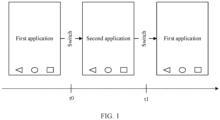
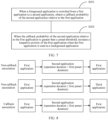
- a possible switching behavior includes: before a moment t0, the first application displays an interface on a screen of an electronic device. In this case, the first application is used as a foreground application. At the moment t0, the electronic device switches the foreground application from the first application to the second application in response to a user operation. In this case, the second application is used as the foreground application, and the first application changes from the foreground application to a background application.
- AI artificial intelligence
- the electronic device switches the foreground application from the second application back to the first application in response to another user operation.
- the first application is used as the foreground application again, and the second application changes from the foreground application to the background application.
- the "user operation" may be a gesture operation, a tap operation, or the like performed by a user on the screen of the electronic device.
- the switching behavior shown in FIG. 1 may occur, for example, in the following scenarios:
- the switching behavior shown in FIG. 1 may alternatively occur in another scenario.
- a user logs in to a non-instant messaging IM application by using an IM account, invokes a Phone application to make a call to a merchant in an application such as a take-out application or a group buying application, views a route map in a map application, shares a route with a friend in a social application, or the like.
- an application such as a take-out application or a group buying application
- views a route map in a map application shares a route with a friend in a social application, or the like.
- Another scenario is not specifically described herein in embodiments of this application. It should be understood that, in a process in which the user uses the electronic device, any scenario in which applications are switched to a foreground application according to "first application ⁇ second application ⁇ first application" falls within the discussion scope of embodiments of this application.
- first application and the second application may be switched in a direct switching manner, or may be switched in an indirect switching manner.
- the direct switching means directly switching from the first application to the second application, or directly switching from the second application to the first application without using any transition application.
- the indirect switching means first switching from the first application to a transition application, and then switching from the transition application to the second application, or first switching from the second application to the transition application, and then switching from the transition application to the first application.
- the transition application may include, for example, a home screen (desktop) application, a multitask window application, and a notification bar application.
- system resources of the electronic device for example, a processor resource and a random access memory (random access memory, RAM) resource.
- RAM random access memory
- system resources of the electronic device are limited, when a background application occupies a relatively large quantity of system resources, the electronic device cannot schedule sufficient system resources for a foreground application. Consequently, interface freezing, slow response, and the like occur in the foreground application.
- a background application competes for system resources with a foreground processor more severely, and the foreground application is more likely to freeze and respond slowly.
- that the system resources of the electronic device are insufficient may include: available memory RAM of the electronic device is insufficient, for example, lower than a preset memory threshold; and/or processor usage of the electronic device is excessively high, for example, higher than a preset usage threshold; and/or power consumption of the electronic device is excessively high, for example, higher than a preset power consumption threshold; and the like.
- this embodiment of this application may also be applied to an electronic device running another operating system, for example, an iOS system, an iPad OS system, a Windows mobile system, a Linux system, a Windows system, or a Harmony OS (Harmony OS) system.
- an iOS system for example, an iPad OS system, a Windows mobile system, a Linux system, a Windows system, or a Harmony OS (Harmony OS) system.
- Table 1 shows a solution for configuring keepalive priorities for different applications and application states.
- Table 1 Keepalive priority Definition Priority value NATIVE_ADJ Native process -1000 SYSTEM_ADJ Indicates only a system_server process -900 PERSISTENT_PROC_ADJ System persistent process -800 PERSISTENT_SERVICE_ADJ Associated with a system or persistent process -700 FOREGROUND_APP_ADJ Foreground process 0 VISIBLE_APP_ADJ Visible process 100 PERCEPTIBLE_APP_ADJ Perceptible process, for example, music playing in the background 200 BACKUP_APP_ADJ Backup process 300 HEAVY_WEIGHT_APP_ADJ Heavyweight process 400 SERVICE_ADJ Service process 500 HOME_APP_ADJ Home screen process 600 PREVIOUS_APP_ADJ Previous process 700 SERVICE_B_ADJ Service process in B List 800 CACHED_APP_MIN_ADJ Minimum adj value of a background process 900 CACHED_APP_MAX_ADJ Maximum adj value of an
- a keepalive priority may be represented by a priority value of the keepalive priority, and a priority value of each keepalive priority may be predefined.
- a smaller priority value indicates a higher keepalive priority
- a larger priority value indicates a lower keepalive priority.
- the foregoing example scenario 1 is used as an example.
- the user wakes up social software B in a game A, and a keepalive priority of the game A is adjusted to PREVIOUS_APP_ADJ. After that, if the user opens some transition applications, the keepalive priority of the game A further decreases to CACHED.
- the LMK mechanism may kill the game A.
- the foregoing example scenario 3 is used as an example. If the bank application is killed by the LMK mechanism in the background, when the foreground application is switched from the Messages application back to the bank application, the bank application needs to be restarted, so that the previously received SMS verification code becomes invalid. As a result, the user cannot complete a login process.
- an embodiment of this application provides an application keepalive method.
- the method may be applied to various electronic devices, for example, an artificial intelligence AI terminal, a smartphone, a tablet computer, a smartwatch, and a smart band.
- the artificial intelligence AI terminal may be, for example, an AI sound box, an AI robot, and an electrical appliance, an industrial device, a vehicle, an airplane, or a ship that has an AI function.
- FIG. 6 is a schematic diagram of a structure of an electronic device 100 according to an embodiment of this application.
- the electronic device 100 may include a processor 110, an external memory interface 120, an internal memory 121, a universal serial bus (universal serial bus, USB) interface 130, a charging management module 140, a power management module 141, a battery 142, an antenna 1, an antenna 2, a mobile communication module 150, a wireless communication module 160, an audio module 170, a speaker 170A, a receiver 170B, a microphone 170C, a headset jack 170D, a sensor module 180, a button 190, a motor 191, an indicator 192, a camera 193, a display 194, a subscriber identification module (subscriber identification module, SIM) card interface 195, and the like.
- SIM subscriber identification module
- the sensor module 180 may include a pressure sensor 180A, a gyroscope sensor 180B, a barometric pressure sensor 180C, a magnetic sensor 180D, an acceleration sensor 180E, a distance sensor 180F, an optical proximity sensor 180G, a fingerprint sensor 180H, a temperature sensor 180J, a touch sensor 180K, an ambient light sensor 180L, a bone conduction sensor 180M, and the like.
- the structure shown in this embodiment does not constitute a specific limitation on the electronic device 100.
- the electronic device 100 may include more or fewer components than those shown in the figure, or some components may be combined, or some components may be split, or different component arrangements may be used.
- the components shown in the figure may be implemented by hardware, software, or a combination of software and hardware.
- the processor 110 may include one or more processing units.
- the processor 110 may include an application processor (application processor, AP), a modem processor, a GPU, an image signal processor (image signal processor, ISP), a controller, a memory, a video codec, a digital signal processor (digital signal processor, DSP), a baseband processor, and/or a neural-network processing unit (neural-network processing unit, NPU).
- application processor application processor, AP
- modem processor image signal processor
- ISP image signal processor
- controller a memory
- video codec digital signal processor
- DSP digital signal processor
- baseband processor baseband processor
- neural-network processing unit neural-network processing unit
- the controller may be a nerve center and a command center of the electronic device 100.
- the controller may generate an operation control signal based on an instruction operation code and a time sequence signal, to complete control of instruction reading and instruction execution.
- a memory may be further disposed in the processor 110, and is configured to store instructions and data.
- the memory in the processor 110 is a cache memory.
- the memory may store instructions or data just used or cyclically used by the processor 110. If the processor 110 needs to use the instructions or the data again, the processor may directly invoke the instructions or the data from the memory. This avoids repeated access, reduces waiting time of the processor 110, and improves system efficiency.
- the processor 110 may include one or more interfaces.
- the interface may include an inter-integrated circuit (inter-integrated circuit, I2C) interface, an inter-integrated circuit sound (inter-integrated circuit sound, I2S) interface, a pulse code modulation (pulse code modulation, PCM) interface, a universal asynchronous receiver/transmitter (universal asynchronous receiver/transmitter, UART) interface, a mobile industry processor interface (mobile industry processor interface, MIPI), a general-purpose input/output (general-purpose input/output, GPIO) interface, a subscriber identity module (subscriber identity module, SIM) interface, a universal serial bus (universal serial bus, USB) interface, and/or the like.
- I2C inter-integrated circuit
- I2S inter-integrated circuit sound
- PCM pulse code modulation
- PCM pulse code modulation
- UART universal asynchronous receiver/transmitter
- MIPI mobile industry processor interface
- GPIO general-purpose input/output
- an interface connection relationship between the modules shown in this embodiment is merely used as an example for description, and does not constitute a limitation on a structure of the electronic device 100.
- the electronic device 100 may alternatively use an interface connection manner different from an interface connection manner in the foregoing embodiment, or use a combination of a plurality of interface connection manners.
- the charging management module 140 is configured to receive a charging input from the charger.
- the charging management module 140 supplies power to the electronic device through the power management module 141 while charging the battery 142.
- the power management module 141 is configured to connect to the battery 142, the charging management module 140, and the processor 110.
- the power management module 141 receives an input of the battery 142 and/or the charging management module 140, to supply power to the processor 110, the internal memory 121, an external memory, the display 194, the camera 193, the wireless communication module 160, and the like.
- the power management module 141 may alternatively be disposed in the processor 110.
- the power management module 141 and the charging management module 140 may alternatively be disposed in a same component.
- a wireless communication function of the electronic device 100 may be implemented through the antenna 1, the antenna 2, the mobile communication module 150, the wireless communication module 160, the modem processor, the baseband processor, and the like.
- the antenna 1 and the antenna 2 are configured to transmit and receive an electromagnetic wave signal.
- Each antenna in the electronic device 100 may be configured to cover one or more communication frequency bands. Different antennas may be further multiplexed, to improve antenna utilization.
- the antenna 1 may be multiplexed as a diversity antenna of a wireless local area network.
- the mobile communication module 150 may provide a wireless communication solution that includes 2G/3G/4G/5G or the like and that is applied to the electronic device 100.
- the mobile communication module 150 may include at least one filter, a switch, a power amplifier, a low noise amplifier (low noise amplifier, LNA), and the like.
- the mobile communication module 150 may receive an electromagnetic wave through the antenna 1, perform processing such as filtering or amplification on the received electromagnetic wave, and transmit the electromagnetic wave to the modem processor for demodulation.
- the mobile communication module 150 may further amplify a signal modulated by the modem processor, and convert the signal into an electromagnetic wave for radiation through the antenna 1.
- the modem processor may include a modulator and a demodulator.
- the modulator is configured to modulate a to-be-sent low-frequency baseband signal into a medium-high frequency signal.
- the demodulator is configured to demodulate a received electromagnetic wave signal into a low-frequency baseband signal. Then, the demodulator transmits the low-frequency baseband signal obtained through demodulation to the baseband processor for processing.
- the low-frequency baseband signal is processed by the baseband processor and then transmitted to the application processor.
- the application processor outputs a sound signal by using an audio device (which is not limited to the speaker 170A, the receiver 170B, or the like), or displays an image or a video by using the display 194.
- the wireless communication module 160 may provide a solution, applied to the electronic device 100, to wireless communication including a wireless local area network (wireless local area network, WLAN) (for example, a wireless fidelity (wireless fidelity, Wi-Fi) network), Bluetooth (Bluetooth, BT), a global navigation satellite system (global navigation satellite system, GNSS), frequency modulation (frequency modulation, FM), a near field communication (near field communication, NFC) technology, an infrared (infrared, IR) technology, and the like.
- the wireless communication module 160 may be one or more components integrating at least one communication processor module.
- the wireless communication module 160 receives an electromagnetic wave through the antenna 2, performs frequency modulation and filtering processing on an electromagnetic wave signal, and sends a processed signal to the processor 110.
- the wireless communication module 160 may further receive a to-be-sent signal from the processor 110, perform frequency modulation and amplification on the signal, and convert the signal into an electromagnetic wave for radiation through the antenna 2.
- the antenna 1 and the mobile communication module 150 are coupled, and the antenna 2 and the wireless communication module 160 are coupled, so that the electronic device 100 can communicate with a network and another device by using a wireless communication technology.
- the wireless communication technology may include a global system for mobile communications (global system for mobile communications, GSM), a general packet radio service (general packet radio service, GPRS), code division multiple access (code division multiple access, CDMA), wideband code division multiple access (wideband code division multiple access, WCDMA), time-division code division multiple access (time-division code division multiple access, TD-SCDMA), long term evolution (long term evolution, LTE), BT, a GNSS, a WLAN, NFC, FM, an IR technology, and/or the like.
- GSM global system for mobile communications
- GPRS general packet radio service
- code division multiple access code division multiple access
- CDMA wideband code division multiple access
- WCDMA wideband code division multiple access
- time-division code division multiple access time-division code
- the GNSS may include a global positioning system (global positioning system, GPS), a global navigation satellite system (global navigation satellite system, GLONASS), a BeiDou navigation satellite system (BeiDou navigation satellite system, BDS), a quasi-zenith satellite system (quasi-zenith satellite system, QZSS), and/or a satellite based augmentation system (satellite based augmentation system, SBAS).
- GPS global positioning system
- GLONASS global navigation satellite system
- BeiDou navigation satellite system BeiDou navigation satellite system
- BDS BeiDou navigation satellite system
- QZSS quasi-zenith satellite system
- SBAS satellite based augmentation system
- the electronic device 100 may implement a display function through the GPU, the display 194, the application processor, and the like.
- the GPU is a microprocessor for image processing, and is connected to the display 194 and the application processor.
- the GPU is configured to: perform mathematical and geometric computation, and render an image.
- the processor 110 may include one or more GPUs, which execute program instructions to generate or change display information.
- the display 194 is configured to display an image, a video, and the like.
- the display 194 includes a display panel.
- the display panel may be a liquid crystal display (liquid crystal display, LCD), an organic light-emitting diode (organic light-emitting diode, OLED), an active-matrix organic light emitting diode (active-matrix organic light emitting diode, AMOLED), a flexible light-emitting diode (flexible light-emitting diode, FLED), a mini-LED, a micro-LED, a micro-OLED, a quantum dot light emitting diode (quantum dot light emitting diode, QLED), or the like.
- the display 194 in this embodiment of this application may be a touchscreen.
- the touch sensor 180K is integrated in the display 194.
- the touch sensor 180K may also be referred to as a "touch panel”.
- the display 194 may include a display panel and a touch panel.
- the touch sensor 180K and the display 194 form a touchscreen, which is also referred to as a "touch screen”.
- the touch sensor 180K is configured to detect a touch operation performed on or near the touch sensor. After the touch sensor 180K detects the touch operation, a driver (for example, a TP driver) at a kernel layer may transfer the touch operation to an upper layer, to determine a touch event type.
- a visual output related to the touch operation may be provided through the display 194.
- the touch sensor 180K may also be disposed on a surface of the electronic device 100 at a location different from that of the display 194.
- the electronic device 100 may implement an image shooting function by using the ISP, the camera 193, the video codec, the GPU, the display 194, the application processor, and the like.
- the ISP is configured to process data fed back by the camera 193.
- the camera 193 is configured to capture a static image or a video.
- the digital signal processor is configured to process a digital signal, and may process another digital signal in addition to the digital image signal.
- the video codec is configured to compress or decompress a digital video.
- the electronic device 100 may support one or more video codecs. In this way, the electronic device 100 may play or record videos in a plurality of coding formats, for example, moving picture experts group (moving picture experts group, MPEG)-1, MPEG-2, MPEG-3, and MPEG-4.
- MPEG moving picture experts group
- the NPU is a neural-network (neural-network, NN) computing processor.
- the NPU quickly processes input information with reference to a structure of a biological neural network, for example, a transfer mode between human brain neurons, and may further continuously perform self-learning.
- Applications such as intelligent cognition of the electronic device 100 may be implemented through the NPU, for example, image recognition, facial recognition, speech recognition, and text understanding.
- the external memory interface 120 may be used to connect to an external storage card, for example, a micro SD card, to extend a storage capability of the electronic device 100.
- the external storage card communicates with the processor 110 through the external memory interface 120, to implement a data storage function.
- files such as music and videos are stored in the external storage card.
- the internal memory 121 may be configured to store computer-executable program code.
- the executable program code includes instructions.
- the processor 110 runs the instructions stored in the internal memory 121, to perform various function applications of the electronic device 100 and data processing.
- the processor 110 may execute the instructions stored in the internal memory 121, and the internal memory 121 may include a program storage area and a data storage area.
- the program storage area may store an operating system, an application required by at least one function (for example, a sound playing function or an image playing function), and the like.
- the data storage area may store data (for example, audio data and a phone book) and the like created during use of the electronic device 100.
- the internal memory 121 may include a high-speed random access memory, or may include a nonvolatile memory such as at least one disk storage device, a flash memory, or a universal flash storage (universal flash storage, UFS).
- the electronic device 100 may implement an audio function, for example, music playing and recording, through the audio module 170, the speaker 170A, the receiver 170B, the microphone 170C, the headset jack 170D, the application processor, and the like.
- an audio function for example, music playing and recording
- the audio module 170 is configured to convert digital audio information into an analog audio signal for output, and is also configured to convert an analog audio input into a digital audio signal.
- the audio module 170 may be further configured to code and decode an audio signal.
- the speaker 170A also referred to as a "loudspeaker” is configured to convert an audio electrical signal into a sound signal.
- the receiver 170B also referred to as an "earpiece”, is configured to convert an electrical audio signal into a sound signal.
- the microphone 170C also referred to as a "mike” or a "mic” is configured to convert a sound signal into an electrical signal.
- the headset jack 170D is configured to connect to a wired headset.
- the pressure sensor 180A is configured to sense a pressure signal, and can convert the pressure signal into an electrical signal.
- the pressure sensor 180A may be disposed on the display 194.
- the capacitive pressure sensor may include at least two parallel plates made of conductive materials.
- the electronic device 100 may also calculate a touch location based on a detection signal of the pressure sensor 180A.
- touch operations that are performed in a same touch position but have different touch operation intensity may correspond to different operation instructions.
- the electronic device 100 may obtain pressure of the touch operation of the user by using the pressure sensor 180A.
- the button 190 includes a power button, a volume button, and the like.
- the button 190 may be a mechanical button, or may be a touch button.
- the electronic device 100 may receive a button input, and generate a button signal input related to a user setting and function control of the electronic device 100.
- the motor 191 may generate a vibration prompt.
- the motor 191 may be configured to provide an incoming call vibration prompt and a touch vibration feedback.
- the indicator 192 may be an indicator light, and may be configured to indicate a charging status and a power change, or may be configured to indicate a message, a missed call, a notification, and the like.
- the SIM card interface 195 is configured to connect to a SIM card.
- the SIM card may be inserted into the SIM card interface 195 or removed from the SIM card interface 195, to implement contact with or separation from the electronic device 100.
- the electronic device 100 may support one or N SIM card interfaces, where N is a positive integer greater than 1.
- the SIM card interface 195 may support a nano-SIM card, a micro-SIM card, a SIM card, and the like.
- FIG. 7 is a flowchart of an application keepalive method according to an embodiment of this application.
- the method may be implemented by the electronic device 100 having the foregoing hardware structure. As shown in FIG. 7 , the method may include the following steps.
- a sequence in which foreground applications are switched and how long each application runs in the foreground are determined based on a user's intent. For example:
- Intent (2) If the user expects to temporarily use the second application after switching the foreground application from the first application to the second application, and immediately switches back to the first application after temporarily using the second application, the second application runs in the foreground for short time.
- the intent (2) may correspond to the foregoing example scenarios shown in this embodiment of this application. For example, in the foregoing example scenario 1, when the user switches from the first application to the second application, the user expects to back to the first application immediately after sharing the game score with a friend to continue the game. Therefore, the second application runs in the foreground for short time, usually within a dozen of seconds.
- duration of running the second application in the foreground may reflect an intent of the user. If the intent of the user is different, the duration of running the second application in the foreground is also different. Therefore, in this embodiment of this application, what is defined is that a concept of "callback association" exists in a process of switching between the first application and the second application. Specifically, as shown in FIG. 8 , if the foreground application is switched back from the second application to the first application within first preset duration after the foreground application is switched from the first application to the second application, it is considered that one callback association occurs between the first application and the second application.
- the first preset duration may be an empirical value, for example, 3 min (minutes) or 5 min.
- callback association if a callback association occurs between the first application and the second application, it may reflect that the user has the intent (2); or if no callback association occurs between the first application and the second application, it may reflect that the user has the intent (1). Therefore, in this embodiment of this application, the intent of the user is associated with the method in this embodiment of this application by using the concept of "callback association".
- this application defines a callback probability of an application relative to another application.
- a callback probability of the second application relative to the first application is a probability that the foreground application is switched from the second application back to the first application within the first preset duration after the foreground application is switched from the first application to the second application.
- the electronic device may collect statistics on switching times of switching the foreground application from the first application to the second application in a historical time period, and collect statistics on callback times of the second application relative to the first application in the historical time period.
- A represents the first application
- B represents the second application
- callback_rate(A, B) represents the callback probability of the second application relative to the first application
- num_callback(A, B) represents the callback times of the second application relative to the first application in the historical time period
- num_total(A, B) represents the switching times of the foreground application from the first application to the second application in the historical time period.
- Step S202 When the callback probability of the second application relative to the first application is greater than a preset threshold, increase a keepalive priority of the first application when the first application is used as a background application.
- a higher callback probability of the second application relative to the first application indicates a higher probability that the foreground application is switched from the second application back to the first application within the first preset duration after the foreground application is switched from the first application to the second application
- a lower callback probability of the second application relative to the first application indicates a lower probability that the foreground application is switched from the second application back to the first application within the first preset duration after the foreground application is switched from the first application to the second application.
- a threshold is preset for the callback probability.
- the threshold may be an empirical value, for example, 30%, or 40%.
- the electronic device increases the keepalive priority of the first application, so that the first application is not likely to be scanned and killed by the LMK mechanism in the background. Therefore, when the user switches the foreground application from the second application back to the first application, the first application can continue to run in the foreground in a state before being switched to the background for running. In this way, operations of the user on the first application can be seamlessly connected, and user experience is improved.
- the electronic device does not specially adjust the keepalive priority of the first application.
- the first application may be scanned and killed by the LMK mechanism, to release system resources, prevent system freezing, and improve user experience.
- a new keepalive priority for example, CALLBACK_APP_ADJ
- the new keepalive priority may be interpreted as a callback process, and corresponds to the first priority in the claims.
- CALLBACK_APP_ADJ is higher than PREVIOUS_APP_ADJ and lower than FOREGROUND_APP_ADJ.
- Table 2 shows a configuration solution including a keepalive priority of CALLBACK_APP_ADJ.
- Table 2 Keepalive priority Definition Priority value NATIVE_ADJ Native process -1000 SYSTEM_ADJ Indicates only a system_server process -900 PERSISTENT_PROC_ADJ System persistent process -800 PERSISTENT_SERVICE_ADJ Associated with a system or persistent process -700 FOREGROUND_APP_ADJ Foreground process 0 VISIBLE_APP_ADJ Visible process 100 PERCEPTIBLE_APP_ADJ Perceptible process, for example, music playing in the background 200 CALLBACK_APP_ADJ Callback process 290 BACKUP_APP_ADJ Backup process 300 HEAVY_WEIGHT_APP_ADJ Heavyweight process 400 SERVICE_ADJ Service process 500 HOME_APP_ADJ Home screen process 600 PREVIOUS_APP_ADJ Previous process 700 SERVICE_B_ADJ Service process in B List 800 CACHED_APP_MIN_ADJ Minimum adj value of a background
- the priority value of CALLBACK_APP_ADJ is set to, for example, 290, which is higher than that of BACKUP _APP_ADJ, HEAVY_WEIGHT_APP_ADJ, SERVICE_ADJ, HOME_APP_ADJ, PREVIOUS_APP_ADJ, and the like.
- the system sets the keepalive priority of the first application to PREVIOUS_APP_ADJ by default, which corresponds to the default priority in the claims.
- the priority value of PREVIOUS_APP_ADJ is only 700, and is only slightly higher than that of SERVICE_B_ADJ and CACHED.
- the electronic device may directly increase the keepalive priority of the first application used as the background application from the default PREVIOUS_APP_ADJ to CALLBACK_APP_ADJ.
- the priority value of CALLBACK_APP_ADJ may be, for example, 290, and is higher than priorities of many processes.
- the LMK mechanism scans and kills, in ascending order of keepalive priority, processes whose keepalive priorities are CACHED_APP_MAX_ADJ, CACHED_APP_MIN_ADJ, SERVICE_B_ADJ, PREVIOUS_APP_ADJ, and the like, until sufficient system resources are released. It can be learned that because a keepalive priority of the second application is higher than that of many other processes such as the backup process, the service process, and the home screen process, the second application is not likely to be killed by the LMK mechanism.
- the electronic device when the user switches the foreground application of the electronic device from the first application to the second application, the electronic device obtains the callback probability of the second application relative to the first application.
- the callback probability of the second application relative to the first application is greater than the preset threshold, the electronic device increases the keepalive priority of the first application when the first application is used as the background application, so that the second application is not killed by the LMK mechanism in the background. Therefore, when the user switches the foreground application from the second application back to the first application, the first application can continue to run in the foreground in a state before being switched to the background for running. In this way, operations of the user on the first application can be seamlessly connected. This meets a user's intent to continue using the first application, and improves user experience.
- the application keepalive method provided in this embodiment of this application may further include the following step: Step S203: When duration for which the second application is currently used as the foreground application is greater than the first preset duration, decrease the keepalive priority of the first application from the first priority to the default priority.
- the electronic device may decrease the keepalive priority of the first application from CALLBACK_APP_ADJ to the default PREVIOUS_APP_ADJ, so that when the system resources are insufficient, the first application is likely to be scanned and killed by the LMK mechanism, to release the system resources.
- the application keepalive method provided in this embodiment of this application may further include the following steps.
- Step S204 When the foreground application is switched from the second application to a transition application, determine whether duration for which the transition application runs in the foreground is greater than second preset duration.
- Step S205 When the duration for which the transition application runs in the foreground is greater than the second preset duration, decrease the keepalive priority of the first application from the first priority to the default priority.
- the transition application may include, for example, a home screen application (a system desktop), a multitask window application, and a notification bar application.
- the foregoing transition application generally belongs to a launcher process and a systemUI process (including a systemUI_navThread subprocess, a systemUI_statusBar subprocess, and the like) of the system.
- a first operation manner may be as follows: The user directly returns the first application from the second application to the foreground by using an application programming interface API provided by the system of the electronic device.
- a second operation manner may be as follows: The user first switches the foreground application from the second application to the transition application, and then switches the foreground application from the transition application to the first application.
- the user may first tap a home screen button (home button) on the display of the electronic device to switch the foreground application from the social application to the home screen application, and then tap an icon of the game application (the first application) on the home screen to switch the foreground application from the home screen application to the game application.
- a home screen button home button
- the foreground application when the user switches the foreground application from the second application to a transition application, if a real intent of the user is to switch the first application back to the foreground by using the transition application for continuous use, the user stays in the transition application for very short time. Therefore, in this embodiment of this application, when the foreground application is switched from the second application to a transition application, it is determined whether duration for which the transition application runs in the foreground is greater than the second preset duration. If the duration for which the transition application runs in the foreground is greater than the second preset duration, it means that the user does not want to switch back to the first application.
- the electronic device may decrease the keepalive priority of the first application from CALLBACK_APP_ADJ to the default PREVIOUS_APP_ADJ, so that when the system resources are insufficient, the first application is more likely to be scanned and killed by the LMK mechanism, to release the system resources.
- the application keepalive method provided in this embodiment of this application may further include the following step: Step S206: When the foreground application is switched from the second application to a third application, decrease the keepalive priority of the first application from the first priority to the default priority, where the third application is not a transition application.
- the electronic device may decrease the keepalive priority of the first application from CALLBACK_APP_ADJ to the default PREVIOUS_APP_ADJ, so that when the system resources are insufficient, the first application is more likely to be scanned and killed by the LMK mechanism, to release the system resources.
- the switching of the foreground application from the second application to the third application may be implemented in a direct switching manner, or may be implemented in an indirect switching manner.
- the application keepalive method provided in this embodiment of this application may further include the following steps.
- Step S207 When the foreground application is switched from the first application to the second application, if the callback probability is not obtained, determine whether the second application directly jumps from the first application to the foreground for running.
- the electronic device may not collect statistics on the callback probability of the second application relative to the first application. In this case, the electronic device determines whether the second application directly jumps from the first application to the foreground for running.
- the direct jumping means that no transition application is used in a process of switching the foreground application from the first application to the second application.
- Step S208 When the second application directly jumps from the first application to the foreground for running, increase the keepalive priority of the first application from a default priority to a first priority.
- the electronic device may directly increase the keepalive priority of the first application from the default PREVIOUS_APP_ADJ to CALLBACK_APP_ADJ, to prevent the first application from being scanned and killed by the LMK mechanism in the background.
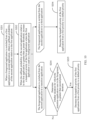
- An embodiment of this application further provides a method for obtaining a callback probability of an application relative to another application. As shown in FIG. 12 , the method may specifically include the following steps.
- the electronic device may start to generate the foreground running record after an operating system of the electronic device is activated, so that in a process in which a user uses the electronic device, the electronic device continuously generates a new foreground running record over time, to track a usage habit of the user.
- the electronic device may further actively delete some foreground running records generated long time ago, so as to track only a recent usage habit of the user, for example, delete a foreground running record generated one month ago, or delete a foreground running record generated three months ago.
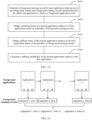
- the electronic device ignores behavior of running transition applications such as the home screen application, the multitask window application, and the notification bar application in the foreground, and does not generate foreground running records of the transition applications such as the home screen application, the multitask window application, and the notification bar application, to avoid interference to calculation of a quantity of callback times between applications, and reduce a quantity of foreground running records.
- a previous foreground application and a current foreground application are a same application, that is, an application continuously runs in the foreground twice
- time of running the application in the foreground twice is accumulated, to generate a foreground running record. For example, if the user switches the foreground application from a social application back to the home screen application, and then immediately returns the social application from the home screen application, it may be considered that the social application continuously runs in the foreground twice.
- the application name appname may be a package name of the application, and a unit of the time (time) may be second (s).
- An Android system is used as an example.
- a package name of the Huawei application store is com.huawei.appmarket. In this case, if the Huawei application store runs in the foreground for 20 seconds at a time, the foreground running record generated by the electronic device for the Huawei application store may be (com.huawei.appmarket, 20).
- Step S302 Obtain switching times of a second application relative to a first application based on the plurality of foreground running records.
- A represents the first application
- B represents the second application
- num_total(A, B) represents switching times of switching the foreground application from the first application A to the second application B
- an initial value of num_total(A, B) is 0.
- Step S303 Obtain callback times of the second application relative to the first application based on the plurality of foreground running records.
- num_callback(A, B) represents the callback times of the second application B relative to the first application A, and an initial value of num_callback(A, B) is 0.
- N is a natural number
- Step S304 Calculate a callback probability of the second application relative to the first application, where the callback probability of the second application relative to the first application is equal to a ratio of the callback times of the second application relative to the first application to the switching times of switching the foreground application from the first application to the second application.
- callback_rate A , B num_callback A B num_total A B
- the electronic device may store all statistics data, including Record(A, B), about switching between applications to a memory of the electronic device.
- the switching statistics data may be used as usage habit data of the user for query and use by the electronic device, or may be used by the electronic device to implement AI optimization based on a usage habit.
- the memory may be, for example, a flash memory (flash memory) inside the electronic device, or may be a cloud memory. This is not limited in this embodiment of this application.
- the electronic device includes a corresponding hardware structure and/or software module for performing each of the functions.
- the electronic device includes a corresponding hardware structure and/or software module for performing each of the functions.
- a person skilled in the art should easily be aware that, in combination with units and algorithm steps of the examples described in embodiments disclosed in this specification, this application may be implemented by hardware or a combination of hardware and computer software. Whether a function is performed by hardware or hardware driven by computer software depends on particular applications and design constraints of the technical solutions. A person skilled in the art may use different methods to implement the described functions for each particular application, but it should not be considered that the implementation goes beyond the scope of this application.
- the foregoing electronic device implements a corresponding function by using a software module.
- an application keepalive apparatus configured to implement the function of the behavior of the electronic device includes: a callback probability obtaining unit 401, configured to: when a foreground application is switched from a first application to a second application, obtain a callback probability of the second application relative to the first application, where the callback probability of the second application relative to the first application is a probability that the foreground application is switched from the second application back to the first application within first preset duration after the foreground application is switched from the first application to the second application; and a keepalive priority adjustment unit 402, configured to: when the callback probability of the second application relative to the first application is greater than a preset threshold, increase a keepalive priority of the first application when the first application is used as a background application.
- a callback probability obtaining unit 401 configured to: when a foreground application is switched from a first application to a second application, obtain a callback probability of the second application relative to the first application, where the callback probability of the second application relative to the first application is
- the application keepalive apparatus further includes: a foreground running record generation unit 403, configured to generate a foreground running record for each application that has run in the foreground.
- Each foreground running record includes duration for which one application is used as a foreground application once.
- the electronic device may calculate the callback probability from the second application to the first application based on the foreground running record.
- the application keepalive apparatus further includes: a switching times calculation unit 404, configured to obtain, based on the plurality of foreground running records, switching times of switching the foreground application from the first application to the second application.
- a switching times calculation unit 404 configured to obtain, based on the plurality of foreground running records, switching times of switching the foreground application from the first application to the second application. For a foreground running record N and a foreground running record N+1 that are generated adjacently, where N is a natural number, when the foreground running record N corresponds to the first application and the foreground running record N+1 corresponds to the second application, the switching times of switching the foreground application from the first application to the second application is increased by 1.
- the application keepalive apparatus further includes: a callback times calculation unit 405, configured to obtain callback times of the second application relative to the first application based on the plurality of foreground running records.
- a callback times calculation unit 405 configured to obtain callback times of the second application relative to the first application based on the plurality of foreground running records.
- N is a natural number
- the callback times of the second application relative to the first application is increased by 1.
- the application keepalive apparatus further includes: a callback probability calculation unit 406, configured to calculate the callback probability of the second application relative to the first application, where the callback probability of the second application relative to the first application is equal to a ratio of the callback times of the second application relative to the first application to the switching times of switching the foreground application from the first application to the second application.
- a callback probability calculation unit 406 configured to calculate the callback probability of the second application relative to the first application, where the callback probability of the second application relative to the first application is equal to a ratio of the callback times of the second application relative to the first application to the switching times of switching the foreground application from the first application to the second application.
- the keepalive priority adjustment unit 402 is specifically configured to: when the callback probability of the second application relative to the first application is greater than a preset threshold, increase the keepalive priority of the first application from a default priority to a first priority, so that the first application is not scanned and killed when running in the background.
- the keepalive priority adjustment unit 402 is further configured to: when duration for which the second application is currently used as the foreground application is greater than the first preset duration, decrease the keepalive priority of the first application from the first priority to the default priority. It should be understood that, when the duration for which the second application is currently used as the foreground application is greater than the first preset duration, there is no callback association between the first application and the second application, which means that the user may need to use the second application as the foreground application for long time. In this case, the electronic device does not perform special protection on the first application.
- the keepalive priority adjustment unit 402 is further configured to: when the foreground application is switched from the second application to a transition application, determine whether duration for which the transition application runs in the foreground is greater than second preset duration; and the keepalive priority adjustment unit 402 is further configured to: when the duration for which the transition application runs in the foreground is greater than the second preset duration, decrease the keepalive priority of the first application from the first priority to the default priority.
- the transition application includes at least a home screen application, a multitask window application, and a notification bar application. It should be understood that, if the duration for which the transition application runs in the foreground is greater than the second preset duration, it means that the user does not want to switch back to the first application. In this case, the electronic device does not perform special protection on the first application.
- the keepalive priority adjustment unit 402 is further configured to: when the foreground application is switched from the second application to a third application, decrease the keepalive priority of the first application from the first priority to the default priority.
- the third application is not a transition application.
- the transition application includes at least a home screen application, a multitask window application, and a notification bar application. It should be understood that, when the foreground application is switched from the second application to the third application, it indicates that there is no callback association between the first application and the second application in the current switching operation. In this case, the electronic device does not perform special protection on the first application.
- the callback probability obtaining unit 401 is further configured to: when the foreground application is switched from the first application to the second application, if the callback probability is not obtained, determine whether the second application directly jumps from the first application to the foreground for running.
- the keepalive priority adjustment unit 402 is further configured to: when the second application directly jumps from the first application to the foreground for running, increase the keepalive priority of the first application from a default priority to a first priority. It should be understood that if the second application directly jumps from the first application to the foreground for running, it indicates that there is a relatively high probability that the first application and the second application have a callback association. In this case, the electronic device increases the keepalive priority of the first application, so that the first application is not killed when running in the background.
- that the system resources of the electronic device are insufficient includes: available memory RAM of the electronic device is lower than a preset memory threshold, and/or processor usage of the electronic device is higher than a preset usage threshold, and/or power consumption of the electronic device is higher than a preset power consumption threshold.
- the foregoing electronic device implements a corresponding function by using a hardware module.
- the electronic device may include, for example, a display 194, a memory 121, and a processor 110.
- the display 194 and the memory 121 are coupled to the processor 110.
- the memory 121 is configured to store computer program code, where the computer program code includes computer instructions.
- the processor 110 executes the computer instructions, the electronic device may perform functions or steps in the foregoing method embodiment.
- the chip system includes a processor 501 and a memory 502.
- the memory 502 stores computer instructions 503.
- an electronic device may perform the steps in the foregoing embodiments.
- the chip system may further include another discrete device. This is not specifically limited in this embodiment of this application.
- An embodiment of this application further provides a computer storage medium.
- the computer storage medium includes computer instructions, and when the computer instructions are run on the foregoing electronic device, the electronic device is enabled to perform functions or steps performed by the electronic device in the foregoing method embodiment.
- An embodiment of this application further provides a computer program product.
- the computer program product runs on a computer, the computer is enabled to perform the functions or steps performed by the electronic device in the foregoing method embodiments.
- the disclosed device and method may be implemented in other manners.
- the described device embodiment is merely an example.
- the module or unit division is merely logical function division and may be other division in actual implementation.
- a plurality of units or components may be combined or integrated into another apparatus, or some features may be ignored or not performed.
- the displayed or discussed mutual couplings or direct couplings or communication connections may be implemented through some interfaces.
- the indirect couplings or communication connections between the devices or units may be implemented in electronic, mechanical, or other forms.
- the units described as separate parts may or may not be physically separate, and parts displayed as units may be one or more physical units, may be located in one place, or may be distributed on different places. Some or all of the units may be selected based on actual requirements to achieve the objectives of the solutions of embodiments.
- function units in embodiments of this application may be integrated into one processing unit, or each of the units may exist alone physically, or two or more units are integrated into one unit.
- the integrated unit may be implemented in a form of hardware, or may be implemented in a form of a software function unit.
- the integrated unit When the integrated unit is implemented in a form of a software function unit and sold or used as an independent product, the integrated unit may be stored in a readable storage medium.
- the software product is stored in a storage medium and includes several instructions for instructing a device (which may be a single-chip microcomputer, a chip, or the like) or a processor (processor) to perform all or some of the steps of the methods described in embodiments of this application.
- the foregoing storage medium includes any medium that can store program code, such as a USB flash drive, a removable hard disk, a read-only memory (read-only memory, ROM), a random access memory (random access memory, RAM), a magnetic disk, or an optical disc.
- program code such as a USB flash drive, a removable hard disk, a read-only memory (read-only memory, ROM), a random access memory (random access memory, RAM), a magnetic disk, or an optical disc.
Landscapes
- Engineering & Computer Science (AREA)
- Software Systems (AREA)
- Theoretical Computer Science (AREA)
- Physics & Mathematics (AREA)
- General Engineering & Computer Science (AREA)
- General Physics & Mathematics (AREA)
- Human Computer Interaction (AREA)
- Telephone Function (AREA)
- Stored Programmes (AREA)
Description
- This application relates to the field of computer technologies, and in particular, to an application keepalive method and apparatus, and an electronic device.
- When using an electronic device such as an artificial intelligence (artificial intelligence, AI) terminal, a smartphone, a tablet computer, a smartwatch, and a smart band, a user often switches between two applications. For example, a common switching scenario is as follows: The user first switches a foreground application from a first application to a second application, and then switches the foreground application from the second application back to the first application after the second application completes a specific operation.
- When an application runs in the background, the electronic device sets a relatively low keepalive priority for the application. When system resources are insufficient, to avoid interface freezing and slow response of the foreground application, the electronic device clears a background application in ascending order of keepalive priorities, for example, ends a process of the background application, to release system resources.
- Document
US9250958B2 - Document
CN 110489215 A discloses a method for processing a waiting scene application program in an electronic device, including operating the application in the background of the electronic device, detecting the foreground consistent state, and running the application in the background operation.
DocumentUS 2015/347181 A1 discloses a method for resource management of a data processing system, including determining whether available memory on the data processing system is low and terminating idle application programs and background application programs.
DocumentUS 2012/324481 A1 discloses a method for adaptively determining processes to be killed during a low memory situation, including selecting an application loaded in cache memory to be killed according to behaviour and certain system state when a system state is detected.
LI CONG ET AL: "Optimizing low memory killers for mobile devices using reinforcement learning", 2017 13TH INTERNATIONAL WIRELESS COMMUNICATIONS AND MOBILE COMPUTING CONFERENCE (IWCMC), IEEE, 26 June 2017 (2017-06-26), pages 2169-2174, DOI: 10.1109/IWCMC.2017.7986619, [retrieved on 2017-07-19] discloses a memory management mechanism in mobile devices that leverages the use of app caching to accelerate app launch performance. If the cached app process has been killed in the past due to a low memory constraint, the responsiveness of switching back to a recently used app becomes significantly worse. The new approach aims to optimize the low memory killer using reinforcement learning. The new low memory killer acts as an autonomous decision maker in an uncertain environment, continuously observing various indicators and metrics for memory management, making the decision to kill the process, and taking the app launch latency as the penalty from the decision environment. Through trial- and-error exploration, the killer interacts with the dynamic environment and automatically learns a holistic policy through reinforcement learning, optimizing the expected app launch latency in the long run. - However, in the foregoing scenario, if the first application is scanned and killed when running in the background, when the user switches the foreground application from the second application back to the first application, the first application needs to be restarted to load interface resources, and a previous running status is lost. This reduces user experience.
- This application provides an application keepalive method and apparatus, and an electronic device, to optimize a background application scanning and killing mechanism of an electronic device system, and improve use experience when a user performs an application switching operation. The invention is defined by the subject matter of the claims.
-
-
FIG. 1 shows an application switching behavior of a user when the user uses an electronic device; -
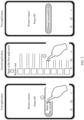
FIG. 2 shows an application switching scenario; -
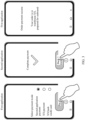
FIG. 3 shows another application switching scenario; -
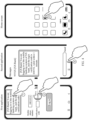
FIG. 4 shows still another application switching scenario; -
FIG. 5 is a schematic diagram of a scenario in which an electronic device kills a background application; -
FIG. 6 is a schematic diagram of a structure of an electronic device according to an embodiment of this application; -
FIG. 7 is a flowchart of an application keepalive method according to an embodiment of this application; -
FIG. 8 is a schematic diagram of a callback association concept according to an embodiment of this application; -
FIG. 9 is another flowchart of an application keepalive method according to an embodiment of this application; -
FIG. 10 is still another flowchart of an application keepalive method according to an embodiment of this application; -
FIG. 11 is yet another flowchart of an application keepalive method according to an embodiment of this application; -
FIG. 12 is a flowchart of obtaining a callback probability of an application relative to another application according to an embodiment of this application; -
FIG. 13 is a schematic diagram in which an electronic device collects statistics on foreground running records of applications in a historical time period; -
FIG. 14 is a schematic diagram of a foreground running record when an application runs in the foreground for two consecutive times; -
FIG. 15 is a schematic diagram in which an electronic device collects statistics on switching times and callback times between applications; -
FIG. 16 is a schematic diagram of storing switching statistics data by an electronic device; -
FIG. 17 is a schematic diagram of an application keepalive apparatus according to an embodiment of this application; and -
FIG. 18 is a schematic diagram of a chip system according to an embodiment of this application. - The terms "first" and "second" mentioned below are merely intended for a purpose of description, and shall not be understood as an indication or implication of relative importance or implicit indication of a quantity of indicated technical features. Therefore, a feature limited by "first" or "second" may explicitly or implicitly include one or more features. In the descriptions of embodiments, unless otherwise specified, "a plurality of" means two or more.
- When using an electronic device such as an artificial intelligence (artificial intelligence, AI) terminal, a smartphone, a tablet computer, a smartwatch, and a smart band, a user often switches between two applications. Refer to
FIG. 1 . Using a first application and a second application as an example, a possible switching behavior includes: before a moment t0, the first application displays an interface on a screen of an electronic device. In this case, the first application is used as a foreground application. At the moment t0, the electronic device switches the foreground application from the first application to the second application in response to a user operation. In this case, the second application is used as the foreground application, and the first application changes from the foreground application to a background application. At a moment t1, the electronic device switches the foreground application from the second application back to the first application in response to another user operation. In this case, the first application is used as the foreground application again, and the second application changes from the foreground application to the background application. The "user operation" may be a gesture operation, a tap operation, or the like performed by a user on the screen of the electronic device. - The switching behavior shown in
FIG. 1 may occur, for example, in the following scenarios: - Example scenario 1: As shown in
FIG. 2 , a first application is a game, and a second application is social software. When a user plays the game (a foreground application is the first application), if the user wants to share a game score with a friend, or wants to invite a friend to play the game together, the user uses a sharing function in the game (the first application). For example, if the user taps "Share the score to the second application" in the game (the first application) ①, the first application immediately switches to the background, and the second application simultaneously wakes up and switches to the foreground (that is, the foreground application switches from the first application to the second application). After the second application is switched to the foreground, a friend list is displayed, and the user may share the game score to a friend by performing an operation such as selecting on thefriend list ②. Then, when the user taps "Back to the first application" in thesecond application ③, the second application immediately switches to the background, and the first application simultaneously wakes up and switches to the foreground (that is, the foreground application switches from the second application back to the first application), so that the user can continue playing the game. - Example scenario 2: As shown in
FIG. 3 , a first application is a shopping application, and a second application is a payment application. When a user uses the first application to place an order for shopping (a foreground application is the first application), if the user selects to use the second application for payment, the first application wakes up the second application and the second application switches to the foreground (that is, the foreground application switches from the first application to the second application) ④. When the user completes a payment operation in the second application and taps "Back to merchant" ⑤, the second application immediately switches to the background, and simultaneously the first application wakes up and switches to the foreground (that is, the foreground application switches from the second application to the first application), so that the user can view the order or continue shopping. - Example scenario 3: As shown in
FIG. 4 , a first application is a bank application that needs to be logged in to by using an SMS verification code, and a second application is a Messages application. After a user enters a mobile phone number on a login interface of the first application and taps "Get a verification code" ⑥, if the user receives an SMS verification code, an electronic device pops up a message on a navigation bar at the top of a display. When the user taps the pop-upmessage ⑦, the electronic device switches a foreground application from the first application to the second application. After recording the SMS verification code, the user may tap a home screen button (or perform a gesture operation) on the display to back to thehome screen ⑧. Then, the user taps an icon of the first application on the home screen to back to thefirst application ⑨. Alternatively, the user may tap a multitask button (or perform a gesture operation) on the display to enter a multitask list, and then taps an icon of the first application in the multitask list to back to the first application. - It should be additionally noted that, in addition to the foregoing scenarios shown in embodiments of this application, the switching behavior shown in
FIG. 1 may alternatively occur in another scenario. For example, a user logs in to a non-instant messaging IM application by using an IM account, invokes a Phone application to make a call to a merchant in an application such as a take-out application or a group buying application, views a route map in a map application, shares a route with a friend in a social application, or the like. Due to space limitation, another scenario is not specifically described herein in embodiments of this application. It should be understood that, in a process in which the user uses the electronic device, any scenario in which applications are switched to a foreground application according to "first application → second application → first application" falls within the discussion scope of embodiments of this application. - It should be additionally noted that, in a switching scenario of "first application → second application → first application", the first application and the second application may be switched in a direct switching manner, or may be switched in an indirect switching manner. The direct switching means directly switching from the first application to the second application, or directly switching from the second application to the first application without using any transition application. The indirect switching means: first switching from the first application to a transition application, and then switching from the transition application to the second application, or first switching from the second application to the transition application, and then switching from the transition application to the first application. The transition application may include, for example, a home screen (desktop) application, a multitask window application, and a notification bar application.
- It may be understood that, regardless of whether an application runs in the foreground or in the background, the application consumes system resources of the electronic device, for example, a processor resource and a random access memory (random access memory, RAM) resource. Because system resources of the electronic device are limited, when a background application occupies a relatively large quantity of system resources, the electronic device cannot schedule sufficient system resources for a foreground application. Consequently, interface freezing, slow response, and the like occur in the foreground application. In an electronic device with low processor performance and a small RAM capacity, a background application competes for system resources with a foreground processor more severely, and the foreground application is more likely to freeze and respond slowly. Therefore, to ensure smooth running of the foreground application, when available system resources are insufficient, the electronic device clears the background application by using some mechanisms, for example, ending a system process of the background application to release system resources, or freezing the background application to prevent an activity behavior of the background application from occupying system resources.
- In this embodiment of this application, that the system resources of the electronic device are insufficient may include: available memory RAM of the electronic device is insufficient, for example, lower than a preset memory threshold; and/or processor usage of the electronic device is excessively high, for example, higher than a preset usage threshold; and/or power consumption of the electronic device is excessively high, for example, higher than a preset power consumption threshold; and the like.
- The following uses an example in which an electronic device runs an Android system to describe a mechanism for clearing a background application by the electronic device.
- It may be understood that this embodiment of this application may also be applied to an electronic device running another operating system, for example, an iOS system, an iPad OS system, a Windows mobile system, a Linux system, a Windows system, or a Harmony OS (Harmony OS) system.
- A low memory killer (low memory killer, LMK) mechanism of the Android system configures different keepalive priorities (adjustments, ADJ) for applications based on different applications and application states. When system resources are insufficient, the system scans and kills background applications in ascending order of keepalive priorities, that is, ends application processes, until sufficient system resources are released for the foreground application to run.
- Table 1 shows a solution for configuring keepalive priorities for different applications and application states.
Table 1 Keepalive priority Definition Priority value NATIVE_ADJ Native process -1000 SYSTEM_ADJ Indicates only a system_server process -900 PERSISTENT_PROC_ADJ System persistent process -800 PERSISTENT_SERVICE_ADJ Associated with a system or persistent process -700 FOREGROUND_APP_ADJ Foreground process 0 VISIBLE_APP_ADJ Visible process 100 PERCEPTIBLE_APP_ADJ Perceptible process, for example, music playing in the background 200 BACKUP_APP_ADJ Backup process 300 HEAVY_WEIGHT_APP_ADJ Heavyweight process 400 SERVICE_ADJ Service process 500 HOME_APP_ADJ Home screen process 600 PREVIOUS_APP_ADJ Previous process 700 SERVICE_B_ADJ Service process in B List 800 CACHED_APP_MIN_ADJ Minimum adj value of a background process 900 CACHED_APP_MAX_ADJ Maximum adj value of an invisible process 906 - As shown in Table 1, a keepalive priority may be represented by a priority value of the keepalive priority, and a priority value of each keepalive priority may be predefined. In an implementation, a smaller priority value indicates a higher keepalive priority, and a larger priority value indicates a lower keepalive priority.
- In the Android system, when the first application is the foreground application, a keepalive priority configured by the system for the foreground application is FOREGROUND _APP_ADJ. When the foreground application is switched from the first application to the second application, the keepalive priority configured by the system for the foreground application is PREVIOUS_APP_ADJ, which is lower than FOREGROUND _APP_ADJ. When the foreground application is switched from the second application to the first application, if the foreground application does not directly switch from the second application to the first application, but experiences a transition application such as a home screen application, a multitask list application, or a notification bar, when the foreground application is switched from the second application to the transition application, the system may adjust the keepalive priority of the first application to a lowest CACHED_APP_MIN_ADJ or CACHED_APP_MAX_ADJ, which is referred to as CACHED below. When the keepalive priority of the first application running in the background is CACHED or PREVIOUS_APP_ADJ, because the priority is very low, the first application is likely to be scanned and killed by the LMK mechanism when system resources are insufficient. As a result, when the foreground application is switched from the second application to the first application, the first application needs to be restarted and load resources, and a previous progress is lost, which severely reduces user experience.
- The foregoing
example scenario 1 is used as an example. As shown inFIG. 5 , after completing a game, the user wakes up social software B in a game A, and a keepalive priority of the game A is adjusted to PREVIOUS_APP_ADJ. After that, if the user opens some transition applications, the keepalive priority of the game A further decreases to CACHED. When the game A runs in the background, if the system resources of the electronic device are insufficient, the LMK mechanism may kill the game A. When the user finishes sharing the game score in the social software B and switches the foreground application back to the game A, if the game A has been killed, the game A restarts, loads game resources, and logs in, and a previous game progress is lost, which severely reduces user experience. - The foregoing
example scenario 3 is used as an example. If the bank application is killed by the LMK mechanism in the background, when the foreground application is switched from the Messages application back to the bank application, the bank application needs to be restarted, so that the previously received SMS verification code becomes invalid. As a result, the user cannot complete a login process. - It can be learned that currently, there is still a disadvantage in a background application scanning and killing mechanism of an electronic device in a system. As a result, a background application that should not be cleared is scanned and killed, and user experience when the user performs an application switching operation is reduced.
- To resolve the foregoing technical problem, an embodiment of this application provides an application keepalive method. The method may be applied to various electronic devices, for example, an artificial intelligence AI terminal, a smartphone, a tablet computer, a smartwatch, and a smart band. The artificial intelligence AI terminal may be, for example, an AI sound box, an AI robot, and an electrical appliance, an industrial device, a vehicle, an airplane, or a ship that has an AI function.
-
FIG. 6 is a schematic diagram of a structure of anelectronic device 100 according to an embodiment of this application. As shown inFIG. 6 , theelectronic device 100 may include aprocessor 110, anexternal memory interface 120, aninternal memory 121, a universal serial bus (universal serial bus, USB) interface 130, acharging management module 140, apower management module 141, abattery 142, anantenna 1, anantenna 2, amobile communication module 150, awireless communication module 160, anaudio module 170, aspeaker 170A, areceiver 170B, amicrophone 170C, aheadset jack 170D, asensor module 180, abutton 190, amotor 191, anindicator 192, acamera 193, adisplay 194, a subscriber identification module (subscriber identification module, SIM)card interface 195, and the like. - The
sensor module 180 may include apressure sensor 180A, agyroscope sensor 180B, a barometric pressure sensor 180C, amagnetic sensor 180D, anacceleration sensor 180E, adistance sensor 180F, anoptical proximity sensor 180G, afingerprint sensor 180H, atemperature sensor 180J, atouch sensor 180K, an ambientlight sensor 180L, abone conduction sensor 180M, and the like. - It may be understood that the structure shown in this embodiment does not constitute a specific limitation on the
electronic device 100. In some other embodiments, theelectronic device 100 may include more or fewer components than those shown in the figure, or some components may be combined, or some components may be split, or different component arrangements may be used. The components shown in the figure may be implemented by hardware, software, or a combination of software and hardware. - The
processor 110 may include one or more processing units. For example, theprocessor 110 may include an application processor (application processor, AP), a modem processor, a GPU, an image signal processor (image signal processor, ISP), a controller, a memory, a video codec, a digital signal processor (digital signal processor, DSP), a baseband processor, and/or a neural-network processing unit (neural-network processing unit, NPU). Different processing units may be independent components, or may be integrated into one or more processors. - The controller may be a nerve center and a command center of the
electronic device 100. The controller may generate an operation control signal based on an instruction operation code and a time sequence signal, to complete control of instruction reading and instruction execution. - A memory may be further disposed in the
processor 110, and is configured to store instructions and data. In some embodiments, the memory in theprocessor 110 is a cache memory. The memory may store instructions or data just used or cyclically used by theprocessor 110. If theprocessor 110 needs to use the instructions or the data again, the processor may directly invoke the instructions or the data from the memory. This avoids repeated access, reduces waiting time of theprocessor 110, and improves system efficiency. - In some embodiments, the
processor 110 may include one or more interfaces. The interface may include an inter-integrated circuit (inter-integrated circuit, I2C) interface, an inter-integrated circuit sound (inter-integrated circuit sound, I2S) interface, a pulse code modulation (pulse code modulation, PCM) interface, a universal asynchronous receiver/transmitter (universal asynchronous receiver/transmitter, UART) interface, a mobile industry processor interface (mobile industry processor interface, MIPI), a general-purpose input/output (general-purpose input/output, GPIO) interface, a subscriber identity module (subscriber identity module, SIM) interface, a universal serial bus (universal serial bus, USB) interface, and/or the like. - It may be understood that an interface connection relationship between the modules shown in this embodiment is merely used as an example for description, and does not constitute a limitation on a structure of the
electronic device 100. In some other embodiments, theelectronic device 100 may alternatively use an interface connection manner different from an interface connection manner in the foregoing embodiment, or use a combination of a plurality of interface connection manners. - The
charging management module 140 is configured to receive a charging input from the charger. Thecharging management module 140 supplies power to the electronic device through thepower management module 141 while charging thebattery 142. - The
power management module 141 is configured to connect to thebattery 142, thecharging management module 140, and theprocessor 110. Thepower management module 141 receives an input of thebattery 142 and/or thecharging management module 140, to supply power to theprocessor 110, theinternal memory 121, an external memory, thedisplay 194, thecamera 193, thewireless communication module 160, and the like. In some other embodiments, thepower management module 141 may alternatively be disposed in theprocessor 110. In some other embodiments, thepower management module 141 and thecharging management module 140 may alternatively be disposed in a same component. - A wireless communication function of the
electronic device 100 may be implemented through theantenna 1, theantenna 2, themobile communication module 150, thewireless communication module 160, the modem processor, the baseband processor, and the like. - The
antenna 1 and theantenna 2 are configured to transmit and receive an electromagnetic wave signal. Each antenna in theelectronic device 100 may be configured to cover one or more communication frequency bands. Different antennas may be further multiplexed, to improve antenna utilization. For example, theantenna 1 may be multiplexed as a diversity antenna of a wireless local area network. - The
mobile communication module 150 may provide a wireless communication solution that includes 2G/3G/4G/5G or the like and that is applied to theelectronic device 100. Themobile communication module 150 may include at least one filter, a switch, a power amplifier, a low noise amplifier (low noise amplifier, LNA), and the like. Themobile communication module 150 may receive an electromagnetic wave through theantenna 1, perform processing such as filtering or amplification on the received electromagnetic wave, and transmit the electromagnetic wave to the modem processor for demodulation. Themobile communication module 150 may further amplify a signal modulated by the modem processor, and convert the signal into an electromagnetic wave for radiation through theantenna 1. - The modem processor may include a modulator and a demodulator. The modulator is configured to modulate a to-be-sent low-frequency baseband signal into a medium-high frequency signal. The demodulator is configured to demodulate a received electromagnetic wave signal into a low-frequency baseband signal. Then, the demodulator transmits the low-frequency baseband signal obtained through demodulation to the baseband processor for processing. The low-frequency baseband signal is processed by the baseband processor and then transmitted to the application processor. The application processor outputs a sound signal by using an audio device (which is not limited to the
speaker 170A, thereceiver 170B, or the like), or displays an image or a video by using thedisplay 194. - The
wireless communication module 160 may provide a solution, applied to theelectronic device 100, to wireless communication including a wireless local area network (wireless local area network, WLAN) (for example, a wireless fidelity (wireless fidelity, Wi-Fi) network), Bluetooth (Bluetooth, BT), a global navigation satellite system (global navigation satellite system, GNSS), frequency modulation (frequency modulation, FM), a near field communication (near field communication, NFC) technology, an infrared (infrared, IR) technology, and the like. Thewireless communication module 160 may be one or more components integrating at least one communication processor module. Thewireless communication module 160 receives an electromagnetic wave through theantenna 2, performs frequency modulation and filtering processing on an electromagnetic wave signal, and sends a processed signal to theprocessor 110. Thewireless communication module 160 may further receive a to-be-sent signal from theprocessor 110, perform frequency modulation and amplification on the signal, and convert the signal into an electromagnetic wave for radiation through theantenna 2. - In some embodiments, in the
electronic device 100, theantenna 1 and themobile communication module 150 are coupled, and theantenna 2 and thewireless communication module 160 are coupled, so that theelectronic device 100 can communicate with a network and another device by using a wireless communication technology. The wireless communication technology may include a global system for mobile communications (global system for mobile communications, GSM), a general packet radio service (general packet radio service, GPRS), code division multiple access (code division multiple access, CDMA), wideband code division multiple access (wideband code division multiple access, WCDMA), time-division code division multiple access (time-division code division multiple access, TD-SCDMA), long term evolution (long term evolution, LTE), BT, a GNSS, a WLAN, NFC, FM, an IR technology, and/or the like. The GNSS may include a global positioning system (global positioning system, GPS), a global navigation satellite system (global navigation satellite system, GLONASS), a BeiDou navigation satellite system (BeiDou navigation satellite system, BDS), a quasi-zenith satellite system (quasi-zenith satellite system, QZSS), and/or a satellite based augmentation system (satellite based augmentation system, SBAS). - The
electronic device 100 may implement a display function through the GPU, thedisplay 194, the application processor, and the like. The GPU is a microprocessor for image processing, and is connected to thedisplay 194 and the application processor. The GPU is configured to: perform mathematical and geometric computation, and render an image. Theprocessor 110 may include one or more GPUs, which execute program instructions to generate or change display information. - The
display 194 is configured to display an image, a video, and the like. Thedisplay 194 includes a display panel. The display panel may be a liquid crystal display (liquid crystal display, LCD), an organic light-emitting diode (organic light-emitting diode, OLED), an active-matrix organic light emitting diode (active-matrix organic light emitting diode, AMOLED), a flexible light-emitting diode (flexible light-emitting diode, FLED), a mini-LED, a micro-LED, a micro-OLED, a quantum dot light emitting diode (quantum dot light emitting diode, QLED), or the like. - The
display 194 in this embodiment of this application may be a touchscreen. In other words, thetouch sensor 180K is integrated in thedisplay 194. Thetouch sensor 180K may also be referred to as a "touch panel". To be specific, thedisplay 194 may include a display panel and a touch panel. Thetouch sensor 180K and thedisplay 194 form a touchscreen, which is also referred to as a "touch screen". Thetouch sensor 180K is configured to detect a touch operation performed on or near the touch sensor. After thetouch sensor 180K detects the touch operation, a driver (for example, a TP driver) at a kernel layer may transfer the touch operation to an upper layer, to determine a touch event type. A visual output related to the touch operation may be provided through thedisplay 194. In some other embodiments, thetouch sensor 180K may also be disposed on a surface of theelectronic device 100 at a location different from that of thedisplay 194. - The
electronic device 100 may implement an image shooting function by using the ISP, thecamera 193, the video codec, the GPU, thedisplay 194, the application processor, and the like. The ISP is configured to process data fed back by thecamera 193. Thecamera 193 is configured to capture a static image or a video. The digital signal processor is configured to process a digital signal, and may process another digital signal in addition to the digital image signal. The video codec is configured to compress or decompress a digital video. Theelectronic device 100 may support one or more video codecs. In this way, theelectronic device 100 may play or record videos in a plurality of coding formats, for example, moving picture experts group (moving picture experts group, MPEG)-1, MPEG-2, MPEG-3, and MPEG-4. - The NPU is a neural-network (neural-network, NN) computing processor. The NPU quickly processes input information with reference to a structure of a biological neural network, for example, a transfer mode between human brain neurons, and may further continuously perform self-learning. Applications such as intelligent cognition of the
electronic device 100 may be implemented through the NPU, for example, image recognition, facial recognition, speech recognition, and text understanding. - The
external memory interface 120 may be used to connect to an external storage card, for example, a micro SD card, to extend a storage capability of theelectronic device 100. The external storage card communicates with theprocessor 110 through theexternal memory interface 120, to implement a data storage function. For example, files such as music and videos are stored in the external storage card. Theinternal memory 121 may be configured to store computer-executable program code. The executable program code includes instructions. Theprocessor 110 runs the instructions stored in theinternal memory 121, to perform various function applications of theelectronic device 100 and data processing. For example, in this embodiment of this application, theprocessor 110 may execute the instructions stored in theinternal memory 121, and theinternal memory 121 may include a program storage area and a data storage area. The program storage area may store an operating system, an application required by at least one function (for example, a sound playing function or an image playing function), and the like. The data storage area may store data (for example, audio data and a phone book) and the like created during use of theelectronic device 100. In addition, theinternal memory 121 may include a high-speed random access memory, or may include a nonvolatile memory such as at least one disk storage device, a flash memory, or a universal flash storage (universal flash storage, UFS). - The
electronic device 100 may implement an audio function, for example, music playing and recording, through theaudio module 170, thespeaker 170A, thereceiver 170B, themicrophone 170C, theheadset jack 170D, the application processor, and the like. - The
audio module 170 is configured to convert digital audio information into an analog audio signal for output, and is also configured to convert an analog audio input into a digital audio signal. Theaudio module 170 may be further configured to code and decode an audio signal. Thespeaker 170A, also referred to as a "loudspeaker", is configured to convert an audio electrical signal into a sound signal. Thereceiver 170B, also referred to as an "earpiece", is configured to convert an electrical audio signal into a sound signal. Themicrophone 170C, also referred to as a "mike" or a "mic", is configured to convert a sound signal into an electrical signal. Theheadset jack 170D is configured to connect to a wired headset. - The
pressure sensor 180A is configured to sense a pressure signal, and can convert the pressure signal into an electrical signal. In some embodiments, thepressure sensor 180A may be disposed on thedisplay 194. There are a plurality of types ofpressure sensors 180A, such as a resistive pressure sensor, an inductive pressure sensor, and a capacitive pressure sensor. The capacitive pressure sensor may include at least two parallel plates made of conductive materials. When a force is applied to thepressure sensor 180A, capacitance between electrodes changes. Theelectronic device 100 determines pressure intensity based on the change in the capacitance. When a touch operation is performed on thedisplay 194, theelectronic device 100 detects intensity of the touch operation through thepressure sensor 180A. Theelectronic device 100 may also calculate a touch location based on a detection signal of thepressure sensor 180A. In some embodiments, touch operations that are performed in a same touch position but have different touch operation intensity may correspond to different operation instructions. In this embodiment of this application, theelectronic device 100 may obtain pressure of the touch operation of the user by using thepressure sensor 180A. - The
button 190 includes a power button, a volume button, and the like. Thebutton 190 may be a mechanical button, or may be a touch button. Theelectronic device 100 may receive a button input, and generate a button signal input related to a user setting and function control of theelectronic device 100. Themotor 191 may generate a vibration prompt. Themotor 191 may be configured to provide an incoming call vibration prompt and a touch vibration feedback. Theindicator 192 may be an indicator light, and may be configured to indicate a charging status and a power change, or may be configured to indicate a message, a missed call, a notification, and the like. TheSIM card interface 195 is configured to connect to a SIM card. The SIM card may be inserted into theSIM card interface 195 or removed from theSIM card interface 195, to implement contact with or separation from theelectronic device 100. Theelectronic device 100 may support one or N SIM card interfaces, where N is a positive integer greater than 1. TheSIM card interface 195 may support a nano-SIM card, a micro-SIM card, a SIM card, and the like. -
FIG. 7 is a flowchart of an application keepalive method according to an embodiment of this application. The method may be implemented by theelectronic device 100 having the foregoing hardware structure. As shown inFIG. 7 , the method may include the following steps. - Step S201: When a foreground application is switched from a first application to a second application, obtain a callback probability of the second application relative to the first application.
- Generally, when an electronic device runs, a sequence in which foreground applications are switched and how long each application runs in the foreground are determined based on a user's intent. For example:
- Intent (1): If a user expects to use the second application for long time after switching the foreground application from the first application to the second application, the second application runs in the foreground for long time.
- Intent (2): If the user expects to temporarily use the second application after switching the foreground application from the first application to the second application, and immediately switches back to the first application after temporarily using the second application, the second application runs in the foreground for short time. The intent (2) may correspond to the foregoing example scenarios shown in this embodiment of this application. For example, in the foregoing
example scenario 1, when the user switches from the first application to the second application, the user expects to back to the first application immediately after sharing the game score with a friend to continue the game. Therefore, the second application runs in the foreground for short time, usually within a dozen of seconds. - It can be learned that, in the foregoing "first application-second application-first application" switching scenario, duration of running the second application in the foreground may reflect an intent of the user. If the intent of the user is different, the duration of running the second application in the foreground is also different. Therefore, in this embodiment of this application, what is defined is that a concept of "callback association" exists in a process of switching between the first application and the second application. Specifically, as shown in
FIG. 8 , if the foreground application is switched back from the second application to the first application within first preset duration after the foreground application is switched from the first application to the second application, it is considered that one callback association occurs between the first application and the second application. If the foreground application is not switched from the second application back to the first application within the first preset duration after the foreground application is switched from the first application to the second application, even if the foreground application is later switched from the second application back to the first application, it is considered that no callback association occurs between the first application and the second application. The first preset duration may be an empirical value, for example, 3 min (minutes) or 5 min. - It can be learned from the foregoing description of the concept of "callback association" that, if a callback association occurs between the first application and the second application, it may reflect that the user has the intent (2); or if no callback association occurs between the first application and the second application, it may reflect that the user has the intent (1). Therefore, in this embodiment of this application, the intent of the user is associated with the method in this embodiment of this application by using the concept of "callback association".
- Based on the foregoing concept of "callback association", this application defines a callback probability of an application relative to another application. A callback probability of the second application relative to the first application is a probability that the foreground application is switched from the second application back to the first application within the first preset duration after the foreground application is switched from the first application to the second application.
- During specific implementation, the electronic device may collect statistics on switching times of switching the foreground application from the first application to the second application in a historical time period, and collect statistics on callback times of the second application relative to the first application in the historical time period. A ratio of the callback times of the second application relative to the first application to the switching times num_total of switching the foreground application from the first application to the second application is used as the callback probability of the second application relative to the first application, that is:

- In the foregoing
formula ①, A represents the first application, B represents the second application, callback_rate(A, B) represents the callback probability of the second application relative to the first application, num_callback(A, B) represents the callback times of the second application relative to the first application in the historical time period, and num_total(A, B) represents the switching times of the foreground application from the first application to the second application in the historical time period. - Step S202: When the callback probability of the second application relative to the first application is greater than a preset threshold, increase a keepalive priority of the first application when the first application is used as a background application.
- It may be understood that a higher callback probability of the second application relative to the first application indicates a higher probability that the foreground application is switched from the second application back to the first application within the first preset duration after the foreground application is switched from the first application to the second application, and a lower callback probability of the second application relative to the first application indicates a lower probability that the foreground application is switched from the second application back to the first application within the first preset duration after the foreground application is switched from the first application to the second application.
- Based on the foregoing understanding, in this embodiment of this application, a threshold is preset for the callback probability. The threshold may be an empirical value, for example, 30%, or 40%. When the callback probability of the second application relative to the first application is greater than the threshold, there is a relatively high probability that the user currently has the intent (2). Therefore, the electronic device increases the keepalive priority of the first application, so that the first application is not likely to be scanned and killed by the LMK mechanism in the background. Therefore, when the user switches the foreground application from the second application back to the first application, the first application can continue to run in the foreground in a state before being switched to the background for running. In this way, operations of the user on the first application can be seamlessly connected, and user experience is improved. When the callback probability of the second application relative to the first application is less than or equal to the threshold, there is a relatively high probability that the user currently has the intent (1). Therefore, the electronic device does not specially adjust the keepalive priority of the first application. When available system resources of the electronic device are relatively low, the first application may be scanned and killed by the LMK mechanism, to release system resources, prevent system freezing, and improve user experience.
- During specific implementation of step S202 in this embodiment of this application, a new keepalive priority, for example, CALLBACK_APP_ADJ, is defined. The new keepalive priority may be interpreted as a callback process, and corresponds to the first priority in the claims. CALLBACK_APP_ADJ is higher than PREVIOUS_APP_ADJ and lower than FOREGROUND_APP_ADJ.
- Table 2 shows a configuration solution including a keepalive priority of CALLBACK_APP_ADJ.
Table 2 Keepalive priority Definition Priority value NATIVE_ADJ Native process -1000 SYSTEM_ADJ Indicates only a system_server process -900 PERSISTENT_PROC_ADJ System persistent process -800 PERSISTENT_SERVICE_ADJ Associated with a system or persistent process -700 FOREGROUND_APP_ADJ Foreground process 0 VISIBLE_APP_ADJ Visible process 100 PERCEPTIBLE_APP_ADJ Perceptible process, for example, music playing in the background 200 CALLBACK_APP_ADJ Callback process 290 BACKUP_APP_ADJ Backup process 300 HEAVY_WEIGHT_APP_ADJ Heavyweight process 400 SERVICE_ADJ Service process 500 HOME_APP_ADJ Home screen process 600 PREVIOUS_APP_ADJ Previous process 700 SERVICE_B_ADJ Service process in B List 800 CACHED_APP_MIN_ADJ Minimum adj value of a background process 900 CACHED_APP_MAX_ADJ Maximum adj value of an invisible process 906 - As shown in Table 2, the priority value of CALLBACK_APP_ADJ is set to, for example, 290, which is higher than that of BACKUP _APP_ADJ, HEAVY_WEIGHT_APP_ADJ, SERVICE_ADJ, HOME_APP_ADJ, PREVIOUS_APP_ADJ, and the like.
- Generally, when the foreground application is switched from the first application to the second application, the system sets the keepalive priority of the first application to PREVIOUS_APP_ADJ by default, which corresponds to the default priority in the claims. The priority value of PREVIOUS_APP_ADJ is only 700, and is only slightly higher than that of SERVICE_B_ADJ and CACHED. When the system resources of the electronic device are insufficient, the first application is likely to be scanned and killed by the LMK mechanism.
- In this embodiment of this application, when the foreground application is switched from the first application to the second application, if the callback probability of the second application relative to the first application is greater than the preset threshold, the electronic device may directly increase the keepalive priority of the first application used as the background application from the default PREVIOUS_APP_ADJ to CALLBACK_APP_ADJ. The priority value of CALLBACK_APP_ADJ may be, for example, 290, and is higher than priorities of many processes. When the system resources are insufficient, the LMK mechanism scans and kills, in ascending order of keepalive priority, processes whose keepalive priorities are CACHED_APP_MAX_ADJ, CACHED_APP_MIN_ADJ, SERVICE_B_ADJ, PREVIOUS_APP_ADJ, and the like, until sufficient system resources are released. It can be learned that because a keepalive priority of the second application is higher than that of many other processes such as the backup process, the service process, and the home screen process, the second application is not likely to be killed by the LMK mechanism.
- According to the foregoing technical solutions, when the user switches the foreground application of the electronic device from the first application to the second application, the electronic device obtains the callback probability of the second application relative to the first application. When the callback probability of the second application relative to the first application is greater than the preset threshold, the electronic device increases the keepalive priority of the first application when the first application is used as the background application, so that the second application is not killed by the LMK mechanism in the background. Therefore, when the user switches the foreground application from the second application back to the first application, the first application can continue to run in the foreground in a state before being switched to the background for running. In this way, operations of the user on the first application can be seamlessly connected. This meets a user's intent to continue using the first application, and improves user experience.
- Refer to
FIG. 9 . In an optional implementation, the application keepalive method provided in this embodiment of this application may further include the following step:
Step S203: When duration for which the second application is currently used as the foreground application is greater than the first preset duration, decrease the keepalive priority of the first application from the first priority to the default priority. - It may be understood that, when the duration for which the second application is currently used as the foreground application is greater than the first preset duration, there is no callback association between the first application and the second application, which means that the user may need to use the second application as the foreground application for long time. In this case, the electronic device does not need to perform additional protection on the first application. Therefore, the electronic device may decrease the keepalive priority of the first application from CALLBACK_APP_ADJ to the default PREVIOUS_APP_ADJ, so that when the system resources are insufficient, the first application is likely to be scanned and killed by the LMK mechanism, to release the system resources.
- Refer to
FIG. 10 . In an optional implementation, the application keepalive method provided in this embodiment of this application may further include the following steps. - Step S204: When the foreground application is switched from the second application to a transition application, determine whether duration for which the transition application runs in the foreground is greater than second preset duration.
- Step S205: When the duration for which the transition application runs in the foreground is greater than the second preset duration, decrease the keepalive priority of the first application from the first priority to the default priority.
- In this embodiment of this application, the transition application may include, for example, a home screen application (a system desktop), a multitask window application, and a notification bar application. In the Android system, the foregoing transition application generally belongs to a launcher process and a systemUI process (including a systemUI_navThread subprocess, a systemUI_statusBar subprocess, and the like) of the system.
- Generally, the user may switch the foreground application from the second application to the first application in two different operation manners. This depends on a usage habit of the user. A first operation manner may be as follows: The user directly returns the first application from the second application to the foreground by using an application programming interface API provided by the system of the electronic device. A second operation manner may be as follows: The user first switches the foreground application from the second application to the transition application, and then switches the foreground application from the transition application to the first application. For example, after sharing the game score in the social application (the second application), the user may first tap a home screen button (home button) on the display of the electronic device to switch the foreground application from the social application to the home screen application, and then tap an icon of the game application (the first application) on the home screen to switch the foreground application from the home screen application to the game application.
- It may be understood that when the user switches the foreground application from the second application to a transition application, if a real intent of the user is to switch the first application back to the foreground by using the transition application for continuous use, the user stays in the transition application for very short time. Therefore, in this embodiment of this application, when the foreground application is switched from the second application to a transition application, it is determined whether duration for which the transition application runs in the foreground is greater than the second preset duration. If the duration for which the transition application runs in the foreground is greater than the second preset duration, it means that the user does not want to switch back to the first application. Therefore, the electronic device may decrease the keepalive priority of the first application from CALLBACK_APP_ADJ to the default PREVIOUS_APP_ADJ, so that when the system resources are insufficient, the first application is more likely to be scanned and killed by the LMK mechanism, to release the system resources.
- Further refer to
FIG. 10 . In an optional implementation, the application keepalive method provided in this embodiment of this application may further include the following step:
Step S206: When the foreground application is switched from the second application to a third application, decrease the keepalive priority of the first application from the first priority to the default priority, where the third application is not a transition application. - When the foreground application is switched from the second application to the third application, it indicates that there is no callback association between the first application and the second application that are switched this time. In this case, the electronic device does not need to perform special protection on the first application. Therefore, the electronic device may decrease the keepalive priority of the first application from CALLBACK_APP_ADJ to the default PREVIOUS_APP_ADJ, so that when the system resources are insufficient, the first application is more likely to be scanned and killed by the LMK mechanism, to release the system resources. The switching of the foreground application from the second application to the third application may be implemented in a direct switching manner, or may be implemented in an indirect switching manner.
- Refer to
FIG. 11 . In an optional implementation, the application keepalive method provided in this embodiment of this application may further include the following steps. - Step S207: When the foreground application is switched from the first application to the second application, if the callback probability is not obtained, determine whether the second application directly jumps from the first application to the foreground for running.
- It may be understood that when the foreground application is switched from the first application to the second application for the first time, the electronic device may not collect statistics on the callback probability of the second application relative to the first application. In this case, the electronic device determines whether the second application directly jumps from the first application to the foreground for running. The direct jumping means that no transition application is used in a process of switching the foreground application from the first application to the second application.
- Step S208: When the second application directly jumps from the first application to the foreground for running, increase the keepalive priority of the first application from a default priority to a first priority.
- If the second application directly jumps from the first application to the foreground for running, it indicates that there is a relatively high probability that the first application and the second application have a callback association. For example, in actual use, the foregoing
example scenario 1 andexample scenario 2 are usually reproduced in a direct jumping manner. Therefore, in this case, when the first application is used as the background application, the electronic device may directly increase the keepalive priority of the first application from the default PREVIOUS_APP_ADJ to CALLBACK_APP_ADJ, to prevent the first application from being scanned and killed by the LMK mechanism in the background. - An embodiment of this application further provides a method for obtaining a callback probability of an application relative to another application. As shown in
FIG. 12 , the method may specifically include the following steps. - Step S301: Generate a foreground running record for each application that has run in the foreground, where each foreground running record includes duration for which one application is used as a foreground application once.
- During specific implementation, as shown in
FIG. 13 , an electronic device may collect, within a historical time period, statistics on duration of each application running in the foreground each time, and then generate, based on statistics data, a foreground running record for each application that has run in the foreground. Each time the application runs in the foreground, the electronic device correspondingly generates a foreground running record. Each foreground running record may include an application name of an application and duration in which the application is used as a foreground application once, for example, (appname, time), where appname is the application name, and time is the duration. When a plurality of foreground running records are generated, the plurality of foreground running records are sorted according to a time sequence of running applications corresponding to the plurality of foreground running records in the foreground, for example, {(appname 1, time 1), (appname 2, time 2), ..., (appname n, time n)}. - In an optional implementation, the electronic device may start to generate the foreground running record after an operating system of the electronic device is activated, so that in a process in which a user uses the electronic device, the electronic device continuously generates a new foreground running record over time, to track a usage habit of the user. In addition, the electronic device may further actively delete some foreground running records generated long time ago, so as to track only a recent usage habit of the user, for example, delete a foreground running record generated one month ago, or delete a foreground running record generated three months ago.
- In an optional implementation, the electronic device ignores behavior of running transition applications such as the home screen application, the multitask window application, and the notification bar application in the foreground, and does not generate foreground running records of the transition applications such as the home screen application, the multitask window application, and the notification bar application, to avoid interference to calculation of a quantity of callback times between applications, and reduce a quantity of foreground running records.
- In an optional implementation, as shown in
FIG. 14 , if a previous foreground application and a current foreground application are a same application, that is, an application continuously runs in the foreground twice, time of running the application in the foreground twice is accumulated, to generate a foreground running record. For example, if the user switches the foreground application from a social application back to the home screen application, and then immediately returns the social application from the home screen application, it may be considered that the social application continuously runs in the foreground twice. - In an optional implementation, the application name appname may be a package name of the application, and a unit of the time (time) may be second (s). An Android system is used as an example. A package name of the Huawei application store is com.huawei.appmarket. In this case, if the Huawei application store runs in the foreground for 20 seconds at a time, the foreground running record generated by the electronic device for the Huawei application store may be (com.huawei.appmarket, 20).
- Step S302: Obtain switching times of a second application relative to a first application based on the plurality of foreground running records.
- During specific implementation, as shown in
FIG. 15 , A represents the first application, B represents the second application, num_total(A, B) represents switching times of switching the foreground application from the first application A to the second application B, and an initial value of num_total(A, B) is 0. In this case, for a foreground running record N and a foreground running record N+1 that are generated adjacently, where N is a natural number, when the foreground running record N corresponds to the first application A and the foreground running record N+1 corresponds to the second application B, it is considered that a foreground task is switched from the first application A to the second application B for once, and therefore the switching times of switching the foreground application from the first application A to the second application B is increased by 1, that is:
- Step S303: Obtain callback times of the second application relative to the first application based on the plurality of foreground running records.
- During specific implementation, as shown in
FIG. 15 , num_callback(A, B) represents the callback times of the second application B relative to the first application A, and an initial value of num_callback(A, B) is 0. In this case, for the foreground running record N, the foreground running record N+1, and a foreground running record N+2 that are generated adjacently, where N is a natural number, when the foreground running record N and the foreground running record N+2 correspond to the first application A, and the foreground running record N+1 corresponds to the second application B, the electronic device determines whether duration time BN+1 for which the second application B runs in the foreground and that is recorded in the foreground running record N+1 is less than or equal to first preset duration T0; and when time N is less than or equal to the first preset duration T0, the callback times of the second application relative to the first application is increased by 1, that is:
- Step S304: Calculate a callback probability of the second application relative to the first application, where the callback probability of the second application relative to the first application is equal to a ratio of the callback times of the second application relative to the first application to the switching times of switching the foreground application from the first application to the second application.
- That is:

- In addition, after calculating num_total(A, B), num_callback(A, B), and callback_rate(A, B), the electronic device may further generate switching statistics data of the first application A relative to the second application B, for example, Record(A, B):

- As shown in
FIG. 16 , the electronic device may store all statistics data, including Record(A, B), about switching between applications to a memory of the electronic device. The switching statistics data may be used as usage habit data of the user for query and use by the electronic device, or may be used by the electronic device to implement AI optimization based on a usage habit. The memory may be, for example, a flash memory (flash memory) inside the electronic device, or may be a cloud memory. This is not limited in this embodiment of this application. - The foregoing embodiment describes the solution of the application keepalive method provided in this application. It may be understood that, to implement the foregoing functions, the electronic device includes a corresponding hardware structure and/or software module for performing each of the functions. A person skilled in the art should easily be aware that, in combination with units and algorithm steps of the examples described in embodiments disclosed in this specification, this application may be implemented by hardware or a combination of hardware and computer software. Whether a function is performed by hardware or hardware driven by computer software depends on particular applications and design constraints of the technical solutions. A person skilled in the art may use different methods to implement the described functions for each particular application, but it should not be considered that the implementation goes beyond the scope of this application.
- For example, the foregoing electronic device implements a corresponding function by using a software module.
- In an embodiment, as shown in
FIG. 17 , an application keepalive apparatus configured to implement the function of the behavior of the electronic device includes: a callbackprobability obtaining unit 401, configured to: when a foreground application is switched from a first application to a second application, obtain a callback probability of the second application relative to the first application, where the callback probability of the second application relative to the first application is a probability that the foreground application is switched from the second application back to the first application within first preset duration after the foreground application is switched from the first application to the second application; and a keepalive priority adjustment unit 402, configured to: when the callback probability of the second application relative to the first application is greater than a preset threshold, increase a keepalive priority of the first application when the first application is used as a background application. When system resources are insufficient, an electronic device ends a process of at least one background application in ascending order of keepalive priorities, to release system resources. - According to the foregoing technical solution, when the callback probability of the second application relative to the first application is relatively high, a background process of the first application is not likely to be scanned and killed by the electronic device, so that when the foreground application is switched from the second application back to the first application, the first application can continue to run in the foreground in a state before being switched to the background for running. In this way, operations of a user on the first application can be seamlessly connected. This meets a user's desire to continue using the first application, and improves user experience.
- Optionally, the application keepalive apparatus further includes: a foreground running
record generation unit 403, configured to generate a foreground running record for each application that has run in the foreground. Each foreground running record includes duration for which one application is used as a foreground application once. When a plurality of foreground running records are generated, the plurality of foreground running records are arranged in a time sequence in which applications corresponding to the plurality of foreground running records run in the foreground. Therefore, the electronic device may calculate the callback probability from the second application to the first application based on the foreground running record. - Optionally, the application keepalive apparatus further includes: a switching
times calculation unit 404, configured to obtain, based on the plurality of foreground running records, switching times of switching the foreground application from the first application to the second application. For a foreground running record N and a foreground running record N+1 that are generated adjacently, where N is a natural number, when the foreground running record N corresponds to the first application and the foreground running record N+1 corresponds to the second application, the switching times of switching the foreground application from the first application to the second application is increased by 1. - Optionally, the application keepalive apparatus further includes: a callback times
calculation unit 405, configured to obtain callback times of the second application relative to the first application based on the plurality of foreground running records. For the foreground running record N, the foreground running record N+1, and a foreground running record N+2 that are generated adjacently, where N is a natural number, when the foreground running record N and the foreground running record N+2 correspond to the first application, and the foreground running record N+1 corresponds to the second application, whether duration recorded in the foreground running record N+1 is less than or equal to the first preset duration is determined. When the duration recorded in the foreground running record N+1 is less than or equal to the first preset duration, the callback times of the second application relative to the first application is increased by 1. - Optionally, the application keepalive apparatus further includes: a callback
probability calculation unit 406, configured to calculate the callback probability of the second application relative to the first application, where the callback probability of the second application relative to the first application is equal to a ratio of the callback times of the second application relative to the first application to the switching times of switching the foreground application from the first application to the second application. - Optionally, the keepalive priority adjustment unit 402 is specifically configured to: when the callback probability of the second application relative to the first application is greater than a preset threshold, increase the keepalive priority of the first application from a default priority to a first priority, so that the first application is not scanned and killed when running in the background.
- Optionally, the keepalive priority adjustment unit 402 is further configured to: when duration for which the second application is currently used as the foreground application is greater than the first preset duration, decrease the keepalive priority of the first application from the first priority to the default priority. It should be understood that, when the duration for which the second application is currently used as the foreground application is greater than the first preset duration, there is no callback association between the first application and the second application, which means that the user may need to use the second application as the foreground application for long time. In this case, the electronic device does not perform special protection on the first application.
- Optionally, the keepalive priority adjustment unit 402 is further configured to: when the foreground application is switched from the second application to a transition application, determine whether duration for which the transition application runs in the foreground is greater than second preset duration; and the keepalive priority adjustment unit 402 is further configured to: when the duration for which the transition application runs in the foreground is greater than the second preset duration, decrease the keepalive priority of the first application from the first priority to the default priority. The transition application includes at least a home screen application, a multitask window application, and a notification bar application. It should be understood that, if the duration for which the transition application runs in the foreground is greater than the second preset duration, it means that the user does not want to switch back to the first application. In this case, the electronic device does not perform special protection on the first application.
- Optionally, the keepalive priority adjustment unit 402 is further configured to: when the foreground application is switched from the second application to a third application, decrease the keepalive priority of the first application from the first priority to the default priority. The third application is not a transition application. The transition application includes at least a home screen application, a multitask window application, and a notification bar application. It should be understood that, when the foreground application is switched from the second application to the third application, it indicates that there is no callback association between the first application and the second application in the current switching operation. In this case, the electronic device does not perform special protection on the first application.
- Optionally, the callback
probability obtaining unit 401 is further configured to: when the foreground application is switched from the first application to the second application, if the callback probability is not obtained, determine whether the second application directly jumps from the first application to the foreground for running. The keepalive priority adjustment unit 402 is further configured to: when the second application directly jumps from the first application to the foreground for running, increase the keepalive priority of the first application from a default priority to a first priority. It should be understood that if the second application directly jumps from the first application to the foreground for running, it indicates that there is a relatively high probability that the first application and the second application have a callback association. In this case, the electronic device increases the keepalive priority of the first application, so that the first application is not killed when running in the background. - Optionally, that the system resources of the electronic device are insufficient includes: available memory RAM of the electronic device is lower than a preset memory threshold, and/or processor usage of the electronic device is higher than a preset usage threshold, and/or power consumption of the electronic device is higher than a preset power consumption threshold.
- In addition, the foregoing electronic device implements a corresponding function by using a hardware module.
- In an embodiment, as shown in
FIG. 1 , the electronic device may include, for example, adisplay 194, amemory 121, and aprocessor 110. Thedisplay 194 and thememory 121 are coupled to theprocessor 110. Thememory 121 is configured to store computer program code, where the computer program code includes computer instructions. When theprocessor 110 executes the computer instructions, the electronic device may perform functions or steps in the foregoing method embodiment. - An embodiment of this application further provides a chip system. As shown in
FIG. 18 , the chip system includes aprocessor 501 and amemory 502. Thememory 502stores computer instructions 503. When thecomputer instructions 503 are executed by theprocessor 501, an electronic device may perform the steps in the foregoing embodiments. Certainly, the chip system may further include another discrete device. This is not specifically limited in this embodiment of this application. - An embodiment of this application further provides a computer storage medium. The computer storage medium includes computer instructions, and when the computer instructions are run on the foregoing electronic device, the electronic device is enabled to perform functions or steps performed by the electronic device in the foregoing method embodiment.
- An embodiment of this application further provides a computer program product. When the computer program product runs on a computer, the computer is enabled to perform the functions or steps performed by the electronic device in the foregoing method embodiments.
- The foregoing descriptions about implementations allow a person skilled in the art to clearly understand that, for the purpose of convenient and brief description, division of the foregoing functional modules is used as an example for illustration. During actual application, the foregoing functions can be allocated to different modules and implemented based on a requirement, that is, an inner structure of an apparatus is divided into different functional modules to implement all or some of the functions described above.
- It is easily understood that, based on the several embodiments provided in this application, a person skilled in the art may obtain other embodiments by combining, splitting, reassembling, and the like embodiments of this application, and none of these embodiments goes beyond the protection scope of this application.
- In the several embodiments provided in this application, it should be understood that the disclosed device and method may be implemented in other manners. For example, the described device embodiment is merely an example. For example, the module or unit division is merely logical function division and may be other division in actual implementation. For example, a plurality of units or components may be combined or integrated into another apparatus, or some features may be ignored or not performed. In addition, the displayed or discussed mutual couplings or direct couplings or communication connections may be implemented through some interfaces. The indirect couplings or communication connections between the devices or units may be implemented in electronic, mechanical, or other forms.
- The units described as separate parts may or may not be physically separate, and parts displayed as units may be one or more physical units, may be located in one place, or may be distributed on different places. Some or all of the units may be selected based on actual requirements to achieve the objectives of the solutions of embodiments.
- In addition, function units in embodiments of this application may be integrated into one processing unit, or each of the units may exist alone physically, or two or more units are integrated into one unit. The integrated unit may be implemented in a form of hardware, or may be implemented in a form of a software function unit.
- When the integrated unit is implemented in a form of a software function unit and sold or used as an independent product, the integrated unit may be stored in a readable storage medium. Based on such an understanding, the technical solutions of embodiments of this application essentially, or the part contributing to the conventional technology, or all or some of the technical solutions may be implemented in a form of a software product. The software product is stored in a storage medium and includes several instructions for instructing a device (which may be a single-chip microcomputer, a chip, or the like) or a processor (processor) to perform all or some of the steps of the methods described in embodiments of this application. The foregoing storage medium includes any medium that can store program code, such as a USB flash drive, a removable hard disk, a read-only memory (read-only memory, ROM), a random access memory (random access memory, RAM), a magnetic disk, or an optical disc.
- The foregoing descriptions are merely specific implementations of this application, but are not intended to limit the protection scope of this application. Any variation or replacement within the technical scope disclosed in this application shall fall within the protection scope of this application. Therefore, the protection scope of this application shall be subject to the protection scope of the claims.
Claims (13)
- An application keepalive method, comprising:when a foreground application is switched from a first application to a second application, obtaining a callback probability of the second application relative to the first application (S201), wherein the callback probability of the second application relative to the first application is a probability that the foreground application is switched from the second application back to the first application within first preset duration after the foreground application is switched from the first application to the second application and;when the callback probability of the second application relative to the first application is greater than a preset threshold, increasing a keepalive priority of the first application when the first application is used as a background application(S202), whereinwhen system resources are insufficient, an electronic device ends a process of at least one background application in ascending order of keepalive priorities, to release system resources; whereinincreasing a keepalive priority of the first application when the first application is used as a background application comprises: increasing the keepalive priority of the first application from a default priority to a first priority, whereinafter increasing the keepalive priority of the first application from a default priority to a first priority, the method further comprises:when the foreground application is switched from the second application to a transition application, determining whether duration for which the transition application runs in the foreground is greater than second preset duration (S204); andwhen the duration for which the transition application runs in the foreground is greater than the second preset duration(S204), decreasing the keepalive priority of the first application from the first priority to the default priority(S205).
- The method according to claim1, wherein the transition application comprises at least a home screen application, a multitask window application, and a notification bar application.
- The method according to claim 1, wherein before obtaining the callback probability from the second application to the first application when the foreground application is switched from the first application to the second application, the method further comprises:
generating a foreground running record for each application that has run in the foreground, wherein each foreground running record comprises duration for which one application is used as a foreground application once (S301) and when a plurality of foreground running records are generated, the plurality of foreground running records are arranged in a time sequence in which applications corresponding to the plurality of foreground running records run in the foreground. - The method according to claim 3, further comprising:
obtaining, based on the plurality of foreground running records, switching times of switching the foreground application from the first application to the second application (S302), wherein for a foreground running record N and a foreground running record N+1 that are generated adjacently, wherein N is a natural number, when the foreground running record N corresponds to the first application and the foreground running record N+1 corresponds to the second application, the switching times of switching the foreground application from the first application to the second application is increased by 1. - The method according to claim 4, further comprising:obtaining callback times of the second application relative to the first application based on the plurality of foreground running records (S303), whereinfor the foreground running record N, the foreground running record N+1, and a foreground running record N+2 that are generated adjacently, wherein N is a natural number, when the foreground running record N and the foreground running record N+2 correspond to the first application, and the foreground running record N+1 corresponds to the second application, whether duration recorded in the foreground running record N+1 is less than or equal to the first preset duration is determined; andwhen the duration recorded in the foreground running record N+1 is less than or equal to the first preset duration, the callback times of the second application relative to the first application is increased by 1.
- The method according to claim 5, further comprising:
calculating the callback probability of the second application relative to the first application (S304), wherein the callback probability of the second application relative to the first application is equal to a ratio of the callback times of the second application relative to the first application to the switching times of switching the foreground application from the first application to the second application. - The method according to claim 1, wherein after the increasing the keepalive priority of the first application from a default priority to a first priority, the method further comprises:
when duration for which the second application is currently used as the foreground application is greater than the first preset duration, decreasing the keepalive priority of the first application from the first priority to the default priority (S203). - The method according to claim 7, wherein after the increasing the keepalive priority of the first application from a default priority to a first priority, the method further comprises:
when the foreground application is switched from the second application to a third application, decreasing the keepalive priority of the first application from the first priority to the default priority, wherein the third application is not a transition application. - The method according to claim 1, wherein that the system resources of the electronic device are insufficient comprises: available memory RAM of the electronic device is lower than a preset memory threshold, and/or processor usage of the electronic device is higher than a preset usage threshold, and/or power consumption of the electronic device is higher than a preset power consumption threshold.
- An electronic device (100), wherein the electronic device (100) comprises a display (194),a memory (121), and one or more processors (110), the display (194) and the memory (121) are coupled to the processor (110), the memory (121) is configured to store computer program code, the computer program code comprises computer instructions, and when the processor (110) executes the computer instructions, the electronic device (100) performs the method according to any one of claims 1 to 9.
- A chip system, wherein the chip system comprises a processor (501) and a memory (502), the memory (502) is coupled to the processor (501), the memory (502) stores computer instructions, and when the processor (501) executes the computer instructions, an electronic device is enabled to perform the method according to any one of claims 1 to 9.
- A computer storage medium, comprising computer instructions, wherein when the computer instructions are run on an electronic device, the electronic device is enabled to perform the method according to any one of claims 1 to 9.
- A computer program product, wherein when the computer program product runs on a computer, the computer is enabled to perform the method according to any one of claims 1 to 9.
Applications Claiming Priority (2)
| Application Number | Priority Date | Filing Date | Title |
|---|---|---|---|
| CN202010284992.0A CN113535250B (en) | 2020-04-13 | 2020-04-13 | Application keep-alive method and device and electronic equipment |
| PCT/CN2021/079030 WO2021208626A1 (en) | 2020-04-13 | 2021-03-04 | Method and apparatus for keeping application alive, and electronic device |
Publications (4)
| Publication Number | Publication Date |
|---|---|
| EP4123445A1 EP4123445A1 (en) | 2023-01-25 |
| EP4123445A4 EP4123445A4 (en) | 2023-09-13 |
| EP4123445B1 true EP4123445B1 (en) | 2025-02-26 |
| EP4123445C0 EP4123445C0 (en) | 2025-02-26 |
Family
ID=78084087
Family Applications (1)
| Application Number | Title | Priority Date | Filing Date |
|---|---|---|---|
| EP21787837.0A Active EP4123445B1 (en) | 2020-04-13 | 2021-03-04 | Method and apparatus for keeping application alive, and electronic device |
Country Status (4)
| Country | Link |
|---|---|
| US (1) | US12536033B2 (en) |
| EP (1) | EP4123445B1 (en) |
| CN (1) | CN113535250B (en) |
| WO (1) | WO2021208626A1 (en) |
Families Citing this family (6)
| Publication number | Priority date | Publication date | Assignee | Title |
|---|---|---|---|---|
| CN115525356A (en) * | 2021-06-26 | 2022-12-27 | 荣耀终端有限公司 | Keep-alive method of video application and electronic equipment |
| CN116055793B (en) * | 2022-06-07 | 2024-04-05 | 荣耀终端有限公司 | Method, equipment and storage medium for managing screen throwing process |
| CN117632393B (en) * | 2022-08-12 | 2025-09-02 | 华为技术有限公司 | Resource management method, electronic device, storage medium and program product |
| CN116027942A (en) * | 2022-09-16 | 2023-04-28 | Oppo广东移动通信有限公司 | Application management method and terminal device |
| CN116366922B (en) * | 2022-12-12 | 2025-11-14 | 深圳创维-Rgb电子有限公司 | Target application protection methods, systems, computer devices and readable storage media |
| CN117453104B (en) * | 2023-11-30 | 2024-05-24 | 荣耀终端有限公司 | Image acquisition method and electronic device |
Family Cites Families (18)
| Publication number | Priority date | Publication date | Assignee | Title |
|---|---|---|---|---|
| US7140022B2 (en) * | 2000-06-02 | 2006-11-21 | Honeywell International Inc. | Method and apparatus for slack stealing with dynamic threads |
| US20120324481A1 (en) * | 2011-06-16 | 2012-12-20 | Samsung Electronics Co. Ltd. | Adaptive termination and pre-launching policy for improving application startup time |
| US9250958B2 (en) | 2012-11-19 | 2016-02-02 | Qualcomm Innovation Center, Inc. | System, method, and apparatus for improving application-launch latencies |
| US10552179B2 (en) | 2014-05-30 | 2020-02-04 | Apple Inc. | Resource management with dynamic resource policies |
| US10289260B2 (en) * | 2014-08-27 | 2019-05-14 | Honda Motor Co., Ltd. | Systems and techniques for application multi-tasking |
| CN105701025B (en) * | 2015-12-31 | 2019-07-23 | 华为技术有限公司 | Method and device for reclaiming memory |
| CN105843650B (en) * | 2016-03-31 | 2020-03-31 | 青岛海信移动通信技术股份有限公司 | Application program management method and device in intelligent terminal |
| CN106201686A (en) * | 2016-06-30 | 2016-12-07 | 北京小米移动软件有限公司 | Management method, device and the terminal of application |
| CN107220076B (en) * | 2016-09-27 | 2018-10-30 | 华为技术有限公司 | A memory recovery method and device |
| US10639550B2 (en) * | 2017-04-18 | 2020-05-05 | Bullguard Ltd | System and method for dynamically allocating resources to a game process |
| CN108874109A (en) * | 2017-05-16 | 2018-11-23 | 复旦大学 | The method for cleaning and device of background application |
| CN111309400A (en) * | 2017-07-31 | 2020-06-19 | Oppo广东移动通信有限公司 | Process control method, device, storage medium and electronic device |
| CN107577522B (en) * | 2017-09-30 | 2020-04-21 | Oppo广东移动通信有限公司 | Application control method, device, storage medium, and electronic device |
| CN110879750B (en) * | 2017-10-13 | 2025-05-02 | 华为技术有限公司 | Resource management method and terminal device |
| CN110046031B (en) * | 2018-01-12 | 2021-11-09 | Oppo广东移动通信有限公司 | Application processing method and device, electronic equipment and computer readable storage medium |
| CN109739634A (en) * | 2019-01-16 | 2019-05-10 | 中国银联股份有限公司 | A kind of atomic task execution method and device |
| CN110489215A (en) * | 2019-06-29 | 2019-11-22 | 华为技术有限公司 | Method and device for processing waiting scene in application program |
| KR102759001B1 (en) * | 2019-11-18 | 2025-01-23 | 삼성전자주식회사 | Method for preloading application and electronic device supporting the same |
-
2020
- 2020-04-13 CN CN202010284992.0A patent/CN113535250B/en active Active
-
2021
- 2021-03-04 US US17/918,360 patent/US12536033B2/en active Active
- 2021-03-04 EP EP21787837.0A patent/EP4123445B1/en active Active
- 2021-03-04 WO PCT/CN2021/079030 patent/WO2021208626A1/en not_active Ceased
Also Published As
| Publication number | Publication date |
|---|---|
| EP4123445A4 (en) | 2023-09-13 |
| WO2021208626A1 (en) | 2021-10-21 |
| US20230147061A1 (en) | 2023-05-11 |
| EP4123445C0 (en) | 2025-02-26 |
| CN113535250B (en) | 2024-06-04 |
| US12536033B2 (en) | 2026-01-27 |
| CN113535250A (en) | 2021-10-22 |
| EP4123445A1 (en) | 2023-01-25 |
Similar Documents
| Publication | Publication Date | Title |
|---|---|---|
| US12536033B2 (en) | Application keepalive method and apparatus, and electronic device | |
| US11921977B2 (en) | Processing method for waiting scenario in application and apparatus | |
| EP3926576B1 (en) | Frequency adjustment method and apparatus applied to terminal, and electronic device | |
| US12328024B2 (en) | Optional terminal charging method, graphical user interface, and electronic device | |
| US12493377B2 (en) | Method for adjusting touch panel sampling rate and electronic device | |
| EP3859576B1 (en) | Application permission management method and electronic device | |
| CN112532145B (en) | Motor vibration control method and electronic device | |
| EP3944083A1 (en) | Card-related processing method and apparatus | |
| CN112397062A (en) | Voice interaction method, device, terminal and storage medium | |
| WO2021043046A1 (en) | Resource management and control method and device | |
| CN115437541A (en) | Electronic equipment and operation method thereof | |
| CN113535340A (en) | Task scheduling method and device and electronic equipment | |
| WO2021190314A1 (en) | Sliding response control method and apparatus of touch screen, and electronic device | |
| CN112445276A (en) | Folding screen display application method and electronic equipment | |
| WO2021052410A1 (en) | Application management method and apparatus | |
| CN110032431A (en) | Application processing method and device, electronic equipment and computer readable storage medium | |
| EP4280596A1 (en) | Video call method and related device | |
| CN117130773A (en) | Resource allocation methods, devices and equipment | |
| WO2022188511A1 (en) | Voice assistant wake-up method and apparatus | |
| CN115705241B (en) | Application scheduling method and electronic equipment | |
| CN113127188A (en) | Performance optimization method and electronic equipment | |
| CN117130458B (en) | Data processing method, electronic device and storage medium | |
| CN119226185A (en) | Data operation method, electronic device and chip system | |
| CN111836226B (en) | Data transmission control method, device and storage medium | |
| CN115904686A (en) | Memory management method, electronic device, computer storage medium and program product |
Legal Events
| Date | Code | Title | Description |
|---|---|---|---|
| STAA | Information on the status of an ep patent application or granted ep patent |
Free format text: STATUS: THE INTERNATIONAL PUBLICATION HAS BEEN MADE |
|
| PUAI | Public reference made under article 153(3) epc to a published international application that has entered the european phase |
Free format text: ORIGINAL CODE: 0009012 |
|
| STAA | Information on the status of an ep patent application or granted ep patent |
Free format text: STATUS: REQUEST FOR EXAMINATION WAS MADE |
|
| 17P | Request for examination filed |
Effective date: 20221017 |
|
| AK | Designated contracting states |
Kind code of ref document: A1 Designated state(s): AL AT BE BG CH CY CZ DE DK EE ES FI FR GB GR HR HU IE IS IT LI LT LU LV MC MK MT NL NO PL PT RO RS SE SI SK SM TR |
|
| DAV | Request for validation of the european patent (deleted) | ||
| DAX | Request for extension of the european patent (deleted) | ||
| REG | Reference to a national code |
Ref country code: DE Ref legal event code: R079 Free format text: PREVIOUS MAIN CLASS: G06F0009445000 Ipc: G06F0009451000 Ref document number: 602021026847 Country of ref document: DE |
|
| A4 | Supplementary search report drawn up and despatched |
Effective date: 20230814 |
|
| RIC1 | Information provided on ipc code assigned before grant |
Ipc: G06F 9/50 20060101ALI20230808BHEP Ipc: G06F 9/48 20060101ALI20230808BHEP Ipc: G06F 9/451 20180101AFI20230808BHEP |
|
| GRAP | Despatch of communication of intention to grant a patent |
Free format text: ORIGINAL CODE: EPIDOSNIGR1 |
|
| STAA | Information on the status of an ep patent application or granted ep patent |
Free format text: STATUS: GRANT OF PATENT IS INTENDED |
|
| RIC1 | Information provided on ipc code assigned before grant |
Ipc: G06F 9/50 20060101ALI20241016BHEP Ipc: G06F 9/48 20060101ALI20241016BHEP Ipc: G06F 9/451 20180101AFI20241016BHEP |
|
| INTG | Intention to grant announced |
Effective date: 20241028 |
|
| GRAS | Grant fee paid |
Free format text: ORIGINAL CODE: EPIDOSNIGR3 |
|
| GRAA | (expected) grant |
Free format text: ORIGINAL CODE: 0009210 |
|
| STAA | Information on the status of an ep patent application or granted ep patent |
Free format text: STATUS: THE PATENT HAS BEEN GRANTED |
|
| AK | Designated contracting states |
Kind code of ref document: B1 Designated state(s): AL AT BE BG CH CY CZ DE DK EE ES FI FR GB GR HR HU IE IS IT LI LT LU LV MC MK MT NL NO PL PT RO RS SE SI SK SM TR |
|
| REG | Reference to a national code |
Ref country code: GB Ref legal event code: FG4D |
|
| REG | Reference to a national code |
Ref country code: CH Ref legal event code: EP |
|
| REG | Reference to a national code |
Ref country code: DE Ref legal event code: R096 Ref document number: 602021026847 Country of ref document: DE |
|
| REG | Reference to a national code |
Ref country code: IE Ref legal event code: FG4D |
|
| U01 | Request for unitary effect filed |
Effective date: 20250226 |
|
| U07 | Unitary effect registered |
Designated state(s): AT BE BG DE DK EE FI FR IT LT LU LV MT NL PT RO SE SI Effective date: 20250306 |
|
| PG25 | Lapsed in a contracting state [announced via postgrant information from national office to epo] |
Ref country code: RS Free format text: LAPSE BECAUSE OF FAILURE TO SUBMIT A TRANSLATION OF THE DESCRIPTION OR TO PAY THE FEE WITHIN THE PRESCRIBED TIME-LIMIT Effective date: 20250526 |
|
| PG25 | Lapsed in a contracting state [announced via postgrant information from national office to epo] |
Ref country code: PL Free format text: LAPSE BECAUSE OF FAILURE TO SUBMIT A TRANSLATION OF THE DESCRIPTION OR TO PAY THE FEE WITHIN THE PRESCRIBED TIME-LIMIT Effective date: 20250226 |
|
| PG25 | Lapsed in a contracting state [announced via postgrant information from national office to epo] |
Ref country code: ES Free format text: LAPSE BECAUSE OF FAILURE TO SUBMIT A TRANSLATION OF THE DESCRIPTION OR TO PAY THE FEE WITHIN THE PRESCRIBED TIME-LIMIT Effective date: 20250226 |
|
| PG25 | Lapsed in a contracting state [announced via postgrant information from national office to epo] |
Ref country code: IS Free format text: LAPSE BECAUSE OF FAILURE TO SUBMIT A TRANSLATION OF THE DESCRIPTION OR TO PAY THE FEE WITHIN THE PRESCRIBED TIME-LIMIT Effective date: 20250626 Ref country code: NO Free format text: LAPSE BECAUSE OF FAILURE TO SUBMIT A TRANSLATION OF THE DESCRIPTION OR TO PAY THE FEE WITHIN THE PRESCRIBED TIME-LIMIT Effective date: 20250526 |
|
| PG25 | Lapsed in a contracting state [announced via postgrant information from national office to epo] |
Ref country code: HR Free format text: LAPSE BECAUSE OF FAILURE TO SUBMIT A TRANSLATION OF THE DESCRIPTION OR TO PAY THE FEE WITHIN THE PRESCRIBED TIME-LIMIT Effective date: 20250226 |
|
| U20 | Renewal fee for the european patent with unitary effect paid |
Year of fee payment: 5 Effective date: 20250606 |
|
| PG25 | Lapsed in a contracting state [announced via postgrant information from national office to epo] |
Ref country code: GR Free format text: LAPSE BECAUSE OF FAILURE TO SUBMIT A TRANSLATION OF THE DESCRIPTION OR TO PAY THE FEE WITHIN THE PRESCRIBED TIME-LIMIT Effective date: 20250527 |
|
| PG25 | Lapsed in a contracting state [announced via postgrant information from national office to epo] |
Ref country code: SM Free format text: LAPSE BECAUSE OF FAILURE TO SUBMIT A TRANSLATION OF THE DESCRIPTION OR TO PAY THE FEE WITHIN THE PRESCRIBED TIME-LIMIT Effective date: 20250226 |
|
| PG25 | Lapsed in a contracting state [announced via postgrant information from national office to epo] |
Ref country code: CZ Free format text: LAPSE BECAUSE OF FAILURE TO SUBMIT A TRANSLATION OF THE DESCRIPTION OR TO PAY THE FEE WITHIN THE PRESCRIBED TIME-LIMIT Effective date: 20250226 |
|
| REG | Reference to a national code |
Ref country code: CH Ref legal event code: H13 Free format text: ST27 STATUS EVENT CODE: U-0-0-H10-H13 (AS PROVIDED BY THE NATIONAL OFFICE) Effective date: 20251024 |
|
| PG25 | Lapsed in a contracting state [announced via postgrant information from national office to epo] |
Ref country code: SK Free format text: LAPSE BECAUSE OF FAILURE TO SUBMIT A TRANSLATION OF THE DESCRIPTION OR TO PAY THE FEE WITHIN THE PRESCRIBED TIME-LIMIT Effective date: 20250226 |
|
| PG25 | Lapsed in a contracting state [announced via postgrant information from national office to epo] |
Ref country code: MC Free format text: LAPSE BECAUSE OF FAILURE TO SUBMIT A TRANSLATION OF THE DESCRIPTION OR TO PAY THE FEE WITHIN THE PRESCRIBED TIME-LIMIT Effective date: 20250226 |
|
| PLBE | No opposition filed within time limit |
Free format text: ORIGINAL CODE: 0009261 |
|
| STAA | Information on the status of an ep patent application or granted ep patent |
Free format text: STATUS: NO OPPOSITION FILED WITHIN TIME LIMIT |
|
| PG25 | Lapsed in a contracting state [announced via postgrant information from national office to epo] |
Ref country code: CH Free format text: LAPSE BECAUSE OF NON-PAYMENT OF DUE FEES Effective date: 20250331 |
|
| PG25 | Lapsed in a contracting state [announced via postgrant information from national office to epo] |
Ref country code: IE Free format text: LAPSE BECAUSE OF NON-PAYMENT OF DUE FEES Effective date: 20250304 |
|
| GBPC | Gb: european patent ceased through non-payment of renewal fee |
Effective date: 20250526 |
|
| 26N | No opposition filed |
Effective date: 20251127 |
|
| PG25 | Lapsed in a contracting state [announced via postgrant information from national office to epo] |
Ref country code: GB Free format text: LAPSE BECAUSE OF NON-PAYMENT OF DUE FEES Effective date: 20250526 |
|
| U20 | Renewal fee for the european patent with unitary effect paid |
Year of fee payment: 6 Effective date: 20260331 |