EP4122778B1 - Initiator for a gas generator of vehicle safety device - Google Patents
Initiator for a gas generator of vehicle safety device Download PDFInfo
- Publication number
- EP4122778B1 EP4122778B1 EP22166648.0A EP22166648A EP4122778B1 EP 4122778 B1 EP4122778 B1 EP 4122778B1 EP 22166648 A EP22166648 A EP 22166648A EP 4122778 B1 EP4122778 B1 EP 4122778B1
- Authority
- EP
- European Patent Office
- Prior art keywords
- initiator
- cup
- adaptor
- pyrotechnic material
- separator member
- Prior art date
- Legal status (The legal status is an assumption and is not a legal conclusion. Google has not performed a legal analysis and makes no representation as to the accuracy of the status listed.)
- Active
Links
Images


Classifications
-
- B—PERFORMING OPERATIONS; TRANSPORTING
- B60—VEHICLES IN GENERAL
- B60R—VEHICLES, VEHICLE FITTINGS, OR VEHICLE PARTS, NOT OTHERWISE PROVIDED FOR
- B60R21/00—Arrangements or fittings on vehicles for protecting or preventing injuries to occupants or pedestrians in case of accidents or other traffic risks
- B60R21/02—Occupant safety arrangements or fittings, e.g. crash pads
- B60R21/16—Inflatable occupant restraints or confinements designed to inflate upon impact or impending impact, e.g. air bags
- B60R21/26—Inflatable occupant restraints or confinements designed to inflate upon impact or impending impact, e.g. air bags characterised by the inflation fluid source or means to control inflation fluid flow
- B60R21/264—Inflatable occupant restraints or confinements designed to inflate upon impact or impending impact, e.g. air bags characterised by the inflation fluid source or means to control inflation fluid flow using instantaneous generation of gas, e.g. pyrotechnic
-
- B—PERFORMING OPERATIONS; TRANSPORTING
- B60—VEHICLES IN GENERAL
- B60R—VEHICLES, VEHICLE FITTINGS, OR VEHICLE PARTS, NOT OTHERWISE PROVIDED FOR
- B60R21/00—Arrangements or fittings on vehicles for protecting or preventing injuries to occupants or pedestrians in case of accidents or other traffic risks
- B60R21/02—Occupant safety arrangements or fittings, e.g. crash pads
- B60R21/16—Inflatable occupant restraints or confinements designed to inflate upon impact or impending impact, e.g. air bags
- B60R21/26—Inflatable occupant restraints or confinements designed to inflate upon impact or impending impact, e.g. air bags characterised by the inflation fluid source or means to control inflation fluid flow
- B60R21/264—Inflatable occupant restraints or confinements designed to inflate upon impact or impending impact, e.g. air bags characterised by the inflation fluid source or means to control inflation fluid flow using instantaneous generation of gas, e.g. pyrotechnic
- B60R21/2644—Inflatable occupant restraints or confinements designed to inflate upon impact or impending impact, e.g. air bags characterised by the inflation fluid source or means to control inflation fluid flow using instantaneous generation of gas, e.g. pyrotechnic using only solid reacting substances, e.g. pellets, powder
-
- B—PERFORMING OPERATIONS; TRANSPORTING
- B60—VEHICLES IN GENERAL
- B60R—VEHICLES, VEHICLE FITTINGS, OR VEHICLE PARTS, NOT OTHERWISE PROVIDED FOR
- B60R22/00—Safety belts or body harnesses in vehicles
- B60R22/18—Anchoring devices
- B60R22/195—Anchoring devices with means to tension the belt in an emergency, e.g. means of the through-anchor or splitted reel type
- B60R22/1954—Anchoring devices with means to tension the belt in an emergency, e.g. means of the through-anchor or splitted reel type characterised by fluid actuators, e.g. pyrotechnic gas generators
-
- F—MECHANICAL ENGINEERING; LIGHTING; HEATING; WEAPONS; BLASTING
- F42—AMMUNITION; BLASTING
- F42B—EXPLOSIVE CHARGES, e.g. FOR BLASTING, FIREWORKS, AMMUNITION
- F42B3/00—Blasting cartridges, i.e. case and explosive
- F42B3/10—Initiators therefor
- F42B3/12—Bridge initiators
-
- F—MECHANICAL ENGINEERING; LIGHTING; HEATING; WEAPONS; BLASTING
- F42—AMMUNITION; BLASTING
- F42C—AMMUNITION FUZES; ARMING OR SAFETY MEANS THEREFOR
- F42C19/00—Details of fuzes
- F42C19/02—Fuze bodies; Fuze housings
-
- B—PERFORMING OPERATIONS; TRANSPORTING
- B60—VEHICLES IN GENERAL
- B60R—VEHICLES, VEHICLE FITTINGS, OR VEHICLE PARTS, NOT OTHERWISE PROVIDED FOR
- B60R21/00—Arrangements or fittings on vehicles for protecting or preventing injuries to occupants or pedestrians in case of accidents or other traffic risks
- B60R21/02—Occupant safety arrangements or fittings, e.g. crash pads
- B60R21/16—Inflatable occupant restraints or confinements designed to inflate upon impact or impending impact, e.g. air bags
- B60R21/26—Inflatable occupant restraints or confinements designed to inflate upon impact or impending impact, e.g. air bags characterised by the inflation fluid source or means to control inflation fluid flow
- B60R2021/26029—Ignitors
-
- B—PERFORMING OPERATIONS; TRANSPORTING
- B60—VEHICLES IN GENERAL
- B60R—VEHICLES, VEHICLE FITTINGS, OR VEHICLE PARTS, NOT OTHERWISE PROVIDED FOR
- B60R21/00—Arrangements or fittings on vehicles for protecting or preventing injuries to occupants or pedestrians in case of accidents or other traffic risks
- B60R21/02—Occupant safety arrangements or fittings, e.g. crash pads
- B60R21/16—Inflatable occupant restraints or confinements designed to inflate upon impact or impending impact, e.g. air bags
- B60R21/26—Inflatable occupant restraints or confinements designed to inflate upon impact or impending impact, e.g. air bags characterised by the inflation fluid source or means to control inflation fluid flow
- B60R2021/26076—Inflatable occupant restraints or confinements designed to inflate upon impact or impending impact, e.g. air bags characterised by the inflation fluid source or means to control inflation fluid flow characterised by casing
-
- B—PERFORMING OPERATIONS; TRANSPORTING
- B60—VEHICLES IN GENERAL
- B60R—VEHICLES, VEHICLE FITTINGS, OR VEHICLE PARTS, NOT OTHERWISE PROVIDED FOR
- B60R21/00—Arrangements or fittings on vehicles for protecting or preventing injuries to occupants or pedestrians in case of accidents or other traffic risks
- B60R21/02—Occupant safety arrangements or fittings, e.g. crash pads
- B60R21/16—Inflatable occupant restraints or confinements designed to inflate upon impact or impending impact, e.g. air bags
- B60R21/26—Inflatable occupant restraints or confinements designed to inflate upon impact or impending impact, e.g. air bags characterised by the inflation fluid source or means to control inflation fluid flow
- B60R21/264—Inflatable occupant restraints or confinements designed to inflate upon impact or impending impact, e.g. air bags characterised by the inflation fluid source or means to control inflation fluid flow using instantaneous generation of gas, e.g. pyrotechnic
- B60R2021/2642—Inflatable occupant restraints or confinements designed to inflate upon impact or impending impact, e.g. air bags characterised by the inflation fluid source or means to control inflation fluid flow using instantaneous generation of gas, e.g. pyrotechnic comprising a plurality of combustion chambers or sub-chambers
Definitions
- the present disclosure generally concerns initiators for gas generators of vehicle safety devices such as inflatable airbags and pretensioned seatbelts. More particularly, the present disclosure relates to an initiator for a gas generator having a primary pyrotechnic material that is hermetically separated from a secondary pyrotechnic material.
- Inflatable occupant restraint systems including airbags, are commonly included on motor vehicles for passive occupant protection.
- Airbags used for frontal impact protection are generally installed in the vehicle steering wheel for the driver and behind the vehicle instrument panel for other front seat occupants.
- inflatable restraints are used for occupant protection from side impacts.
- side curtain airbags are typically mounted along the roof rail of a vehicle and deploy in a downward direction to provide an energy absorbing structure between the head and upper torso of an occupant and the vehicle interior components. Side airbags may also be carried by a vehicle seat.
- Inflator devices are employed to produce or supply inflation gas for inflating an inflatable airbag in the event of a collision.
- the inflator devices for such applications often include a gas generant material stored within the housing of the inflator device and an initiator to actuate the gas generant material when a sensor within the vehicle senses an accident condition (e.g., measures abnormal deceleration). Actuation of the gas generant material triggers inflation of the airbag within a few milliseconds with the produced gas. The inflated airbag cushions the vehicle occupant from impact forces.
- Initiators are also used for the pretensioning of seatbelts.
- Initiators may commonly have a first or primary pyrotechnic material and a second or secondary pyrotechnic material.
- the primary pyrotechnic material is ignited by an electrical signal and in turn ignites the secondary pyrotechnic material. Heat from combustion of the secondary pyrotechnic material ignites gas generant material of the inflator device to produce inflation gases for an airbag.
- the present teachings provide an initiator for a gas generator of a vehicle safety device which includes a cup defining an interior, a primary pyrotechnic material disposed in the interior of the cup, and a secondary pyrotechnic material disposed in the interior of the cup.
- a separator member hermetically separates the primary pyrotechnic material from the secondary pyrotechnic material.
- the present teachings provide an initiator for a gas generator of a vehicle safety device.
- the initiator includes a cup, a base member, and a separator member.
- the cup defines an interior and includes a closed end, an open end, and a cylindrical sidewall extending therebetween.
- the base member is at least partially disposed in the cup.
- the base member includes an axially extending opening having a portion containing a first pyrotechnic material.
- the cylindrical sidewall of the cup is attached to the base member about a circumference of the base member.
- a second pyrotechnic material is disposed in the interior of the cup.
- the separator member is attached to the base member and closes one end of the axially extending opening to hermetically separate the first pyrotechnic material from the second pyrotechnic material.
- connection to refers to any form of interaction between two or more entities, including mechanical, electrical, magnetic, electromagnetic, fluid, and thermal interaction. Two components may be coupled to each other even though they are not in direct contact with each other.
- adjacent refers to items that are in close physical proximity with each other, although the items may not necessarily be in direct contact.
- fluid communication refers to two features that are connected such that a fluid within one feature is able to pass into the other feature.
- Exemplary as used herein means serving as a typical or representative example or instance, and does not necessarily mean special or preferred.
- an initiator for a gas generator of a vehicle safety device in accordance with the present teachings is illustrated and generally identified at reference character 10.
- the initiator 10 may be part of an occupant restraint system of a motor vehicle that includes a gas generator and an inflatable airbag (not particularly shown), for example.
- the particular inflator or pyrotechnical inflator 10 shown in the drawings is particularly adapted for a driver side front airbag of an occupant restraint system. It will be understood, however, that the initiator described herein can be used in many other pyrotechnical devices within the scope of the present teachings. It will be understood, however, that various aspects of the present teachings may be readily adapted for use with other airbags or with seatbelt pretensioners.
- the initiator 10 is generally illustrated to include a cup or case 12, a first or primary pyrotechnic material, and a second or secondary pyrotechnic material 16.
- the primary and secondary materials are disposed or stored in an interior 18 of the cup 12.
- the cup 12 includes a cylindrical sidewall 20 and a circular base.
- the cylindrical sidewall 20 that extends along an axis A of the initiator 10 between a closed end 22 and an open end 24.
- the cup 12 may be formed of metal and may be formed by cold striking.
- the cup 12 may be formed by stamping a sheet of nickeled steel, such as DC04 or DC06 and may have a thickness between 0.3 and 0.6 mm.
- the first pyrotechnic material 14 is distinct from the secondary pyrotechnic material 16.
- the primary pyrotechnic material 14 may be separated from the secondary pyrotechnic material 16 within the interior 18 of the cup 12 by a separator member 28.
- the primary pyrotechnic material 14 may be in the form of a slurry.
- the secondary pyrotechnic material 16 may be a granulated material, including but not limited to a boron based material. It will be understood the particular pyrotechnic materials are outside of the scope of the present teachings and may be selected from various pyrotechnic materials well known in the art.
- the adaptor 30 is at least partially disposed in the cup 12. As shown, the adaptor 30 is completely or substantially completely disposed in the cup 12. The adaptor 30 is sized to be received within the open end 24 of the cup 12. The cylindrical sidewall 20 of the cup 12 may be attached to the adaptor 30 about a circumference of the adaptor 30. In the embodiment illustrated, the first portion 32 of the adaptor 30 may be welded to the cup 12.
- the first portion 32 of the adaptor 30 defines a central opening 36 that receives an ignition device 38.
- the ignition device 38 conventionally includes a pair of electrical connectors or pins 40 and a bridge wire 42.
- the pair of electrical pins 40 are in reaction initiating communication with the first pyrotechnic material 14 through the bridge wire 42. In this regard, an electrical current delivered to the pins 40 will serve to melt the bridge wire 42 and ignite the first pyrotechnic material 14.
- the hermetic seal between the primary pyrotechnic material 14 and the secondary pyrotechnic material 16 provides a mechanical separation that eliminates or substantially eliminates any chemical incompatibility between the primary pyrotechnic material 14 from the secondary pyrotechnic material 16 that may otherwise degrade or shift performance of the initiator 10.
- the separator member 28 includes a cylindrical sidewall 46.
- the cylindrical sidewall 48 extends along the axis A of the initiator 10 between a closed end 48 and an open end 50.
- the closed end 48 defines a disk-shaped portion.
- the separator member 28 may be formed of metal and may be formed by cold striking. In one particular example, the separator member 28 may be formed by stamping a sheet of stainless steel.
- the cylindrical sidewall 46 of the separator member 28 may be welded or otherwise securely attached to the second portion 34 of the adaptor 30. While the separator member 28 is shown and described as being cylindrical, the separator member may alternatively be disk only in shape (i.e., not including the sidewall 46). With such an alternative shape, the separator member 28 may be welded or otherwise suitably attached to the upper axial end of the second portion 34 of the adapter 30.
- the closed end or disk-shaped portion 48 of the separator member 28 may be formed to include a weakened zone 52.
- the weakened zone 52 which may be stamped into the disk-shaped portion 48, is configured to open in response to a pressure in the cavity 44 of the adapter 30 generated by combustion of the first pyrotechnic material 14.
- the weakened zone 52 includes a plurality of radially extending arms 54. The arms 54 are shown to originate from a common point 56 at a radial center of the disk-shaped portion 48.
- the configuration of the weakened zone 52 may vary within the scope of the present teaching.
- an electrical current is delivered to the pins 40 of the ignition device 38.
- the current melts the bridge wire 42 that in turn ignites the primary pyrotechnic material 14.
- Ignition of the primary pyrotechnic material 14 creates a pressure within the chamber 44 of the adaptor 30 which opens the weakened zone 52 of the separator member 28.
- Heat from the ignition of the primary pyrotechnic material 14 is vented through the opened weakened zone and ignites the secondary pyrotechnic material 16.
- Pressure from combustion of the secondary pyrotechnic material 16 opens the weakened zones 26 of the cup 12.
Landscapes
- Engineering & Computer Science (AREA)
- Mechanical Engineering (AREA)
- Physics & Mathematics (AREA)
- Fluid Mechanics (AREA)
- General Engineering & Computer Science (AREA)
- Air Bags (AREA)
- Feeding, Discharge, Calcimining, Fusing, And Gas-Generation Devices (AREA)
Description
- The present disclosure generally concerns initiators for gas generators of vehicle safety devices such as inflatable airbags and pretensioned seatbelts. More particularly, the present disclosure relates to an initiator for a gas generator having a primary pyrotechnic material that is hermetically separated from a secondary pyrotechnic material.
- This section provides background information related to the present disclosure which is not necessarily prior art.
- Inflatable occupant restraint systems, including airbags, are commonly included on motor vehicles for passive occupant protection. Airbags used for frontal impact protection are generally installed in the vehicle steering wheel for the driver and behind the vehicle instrument panel for other front seat occupants. In addition to frontal impact protection, inflatable restraints are used for occupant protection from side impacts. For example, side curtain airbags are typically mounted along the roof rail of a vehicle and deploy in a downward direction to provide an energy absorbing structure between the head and upper torso of an occupant and the vehicle interior components. Side airbags may also be carried by a vehicle seat.
- Inflator devices are employed to produce or supply inflation gas for inflating an inflatable airbag in the event of a collision. The inflator devices for such applications often include a gas generant material stored within the housing of the inflator device and an initiator to actuate the gas generant material when a sensor within the vehicle senses an accident condition (e.g., measures abnormal deceleration). Actuation of the gas generant material triggers inflation of the airbag within a few milliseconds with the produced gas. The inflated airbag cushions the vehicle occupant from impact forces. Initiators are also used for the pretensioning of seatbelts.
- Initiators may commonly have a first or primary pyrotechnic material and a second or secondary pyrotechnic material. The primary pyrotechnic material is ignited by an electrical signal and in turn ignites the secondary pyrotechnic material. Heat from combustion of the secondary pyrotechnic material ignites gas generant material of the inflator device to produce inflation gases for an airbag.
- While known initiators for inflatable occupant restraints have generally proven to be suitable for their intended uses, a continuous need for improvement in the relevant art remains. In these regards, it is desirable to eliminate or minimize performance shifts of an initiator that may result from chemical incompatibility between primary and secondary pyrotechnic materials. Document
US2015107477A1 relates to an igniting unit, especially for an inflator, comprising an electric igniter having a first inner cap which forms a space for being filled with a booster propellant charge with a second outer cap. - This section provides a general summary of the disclosure and is not a comprehensive disclosure of its full scope or all of its features.
- It is one general object of the present teachings to provide an initiator for a gas generator of a vehicle safety device, as in claim 1, that hermetically separates a primary pyrotechnic material from a secondary pyrotechnic material.
- In accordance with one particular aspect, the present teachings provide an initiator for a gas generator of a vehicle safety device which includes a cup defining an interior, a primary pyrotechnic material disposed in the interior of the cup, and a secondary pyrotechnic material disposed in the interior of the cup. A separator member hermetically separates the primary pyrotechnic material from the secondary pyrotechnic material.
- In accordance with another particular aspect, the present teachings provide an initiator for a gas generator of a vehicle safety device. The initiator includes a cup, a base member, and a separator member. The cup defines an interior and includes a closed end, an open end, and a cylindrical sidewall extending therebetween. The base member is at least partially disposed in the cup. The base member includes an axially extending opening having a portion containing a first pyrotechnic material. The cylindrical sidewall of the cup is attached to the base member about a circumference of the base member. A second pyrotechnic material is disposed in the interior of the cup. The separator member is attached to the base member and closes one end of the axially extending opening to hermetically separate the first pyrotechnic material from the second pyrotechnic material.
- Further areas of applicability will become apparent from the description provided herein. The description and specific examples in this summary are intended for purposes of illustration only and are not intended to limit the scope of the present disclosure.
- The drawings described herein are for illustrative purposes only of selected embodiments and not all possible implementations, and are not intended to limit the scope of the present disclosure.
-
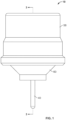
Figure 1 is a side view of an initiator for a gas generator of a vehicle occupant restraint in accordance with the present teachings. -
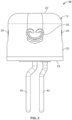
Figure 2 is another side of the initiator for a gas generator in accordance with the present teachings, the initiator shown rotated 90 degrees about its axis and an insulated resistance cover of the initiator shown removed for purposes of illustration. -
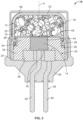
Figure 3 is a cross-sectional view taken along the line 3-3 ofFigure 1 . -
Figure 4 is a top and side perspective view of a separator member of the initiator removed from the initiator for purposes of illustration. -
Figure 5 is a top view of the separator member ofFigure 4 . - One or more example embodiments will now be described more fully with reference to the accompanying drawings. The one or more example embodiments are provided so that this disclosure will be thorough and will fully convey the scope to those who are skilled in the art. Numerous specific details are set forth, such as examples of specific components, devices, and methods, to provide a thorough understanding of embodiments of the present disclosure. It will be apparent to those skilled in the art that specific details need not be employed, and that the example embodiment should not be construed to limit the scope of the present disclosure. Well-known processes, well-known device structures, and well-known technologies are not described herein in detail.
- The phrases "connected to", "coupled to" and "in communication with" refer to any form of interaction between two or more entities, including mechanical, electrical, magnetic, electromagnetic, fluid, and thermal interaction. Two components may be coupled to each other even though they are not in direct contact with each other. The term " adjacent" refers to items that are in close physical proximity with each other, although the items may not necessarily be in direct contact. The phrase "fluid communication" refers to two features that are connected such that a fluid within one feature is able to pass into the other feature. "Exemplary" as used herein means serving as a typical or representative example or instance, and does not necessarily mean special or preferred.
- With reference to drawings, an initiator for a gas generator of a vehicle safety device in accordance with the present teachings is illustrated and generally identified at
reference character 10. Theinitiator 10 may be part of an occupant restraint system of a motor vehicle that includes a gas generator and an inflatable airbag (not particularly shown), for example. The particular inflator orpyrotechnical inflator 10 shown in the drawings is particularly adapted for a driver side front airbag of an occupant restraint system. It will be understood, however, that the initiator described herein can be used in many other pyrotechnical devices within the scope of the present teachings. It will be understood, however, that various aspects of the present teachings may be readily adapted for use with other airbags or with seatbelt pretensioners. - The
initiator 10 is generally illustrated to include a cup orcase 12, a first or primary pyrotechnic material, and a second or secondarypyrotechnic material 16. The primary and secondary materials are disposed or stored in aninterior 18 of thecup 12. Thecup 12 includes acylindrical sidewall 20 and a circular base. Thecylindrical sidewall 20 that extends along an axis A of theinitiator 10 between a closedend 22 and anopen end 24. Thecup 12 may be formed of metal and may be formed by cold striking. In one particular example, thecup 12 may be formed by stamping a sheet of nickeled steel, such as DC04 or DC06 and may have a thickness between 0.3 and 0.6 mm. - The
cup 12 is preferably formed to include a plurality of weakenedzones 26. As will become more fully understood below, the weakenedzones 26 of thecup 12 open in response to a pressure from within thecup 12 generated by combustion of the secondarypyrotechnic material 16. In the embodiment illustrated, thesidewall 20 includes four weakenedzones 26 uniformly distributed around the axis A. The plurality of weakenedzones 26 can be varied in configuration or number within the scope of the present teachings. - In the embodiment illustrated, the first
pyrotechnic material 14 is distinct from the secondarypyrotechnic material 16. The primarypyrotechnic material 14 may be separated from the secondarypyrotechnic material 16 within theinterior 18 of thecup 12 by aseparator member 28. The primarypyrotechnic material 14 may be in the form of a slurry. The secondarypyrotechnic material 16 may be a granulated material, including but not limited to a boron based material. It will be understood the particular pyrotechnic materials are outside of the scope of the present teachings and may be selected from various pyrotechnic materials well known in the art. - The
initiator 10 of the present teachings may further include an adaptor orbase member 30. Theadaptor 30 functions to contain the firstpyrotechnic material 14 and to provide an interface between thecup 12 and theseparator member 28. Theadaptor 30 may be formed of stainless steel or other suitable material. One suitable material is Type 304L stainless steel. Theadaptor 30 is cylindrical in shape and includes a stepped configuration having a first orlower portion 32 and a second orupper portion 34. Thefirst portion 32 has a first diameter and thesecond portion 34 has a smaller, second diameter. - The
adaptor 30 is at least partially disposed in thecup 12. As shown, theadaptor 30 is completely or substantially completely disposed in thecup 12. Theadaptor 30 is sized to be received within theopen end 24 of thecup 12. Thecylindrical sidewall 20 of thecup 12 may be attached to theadaptor 30 about a circumference of theadaptor 30. In the embodiment illustrated, thefirst portion 32 of theadaptor 30 may be welded to thecup 12. - The
first portion 32 of theadaptor 30 defines acentral opening 36 that receives anignition device 38. Theignition device 38 conventionally includes a pair of electrical connectors or pins 40 and abridge wire 42. The pair ofelectrical pins 40 are in reaction initiating communication with the firstpyrotechnic material 14 through thebridge wire 42. In this regard, an electrical current delivered to thepins 40 will serve to melt thebridge wire 42 and ignite the firstpyrotechnic material 14. - The
second portion 34 of theadaptor 30 defines acentral cavity 44. Thecavity 44 contains the primarypyrotechnic material 14. The cavity has an open end that is closed by theseparator member 28. Theseparator member 28 hermetically separates the primarypyrotechnic material 14 from the secondarypyrotechnic material 16. As used herein, the term "hermetically" describing the separation between the primary and secondarypyrotechnic materials secondary materials pyrotechnic material 14 and the secondarypyrotechnic material 16 provides a mechanical separation that eliminates or substantially eliminates any chemical incompatibility between the primarypyrotechnic material 14 from the secondarypyrotechnic material 16 that may otherwise degrade or shift performance of theinitiator 10. - As particularly shown in
Figures 4 and5 , theseparator member 28 includes acylindrical sidewall 46. Thecylindrical sidewall 48 extends along the axis A of theinitiator 10 between aclosed end 48 and anopen end 50. Theclosed end 48 defines a disk-shaped portion. Theseparator member 28 may be formed of metal and may be formed by cold striking. In one particular example, theseparator member 28 may be formed by stamping a sheet of stainless steel. Thecylindrical sidewall 46 of theseparator member 28 may be welded or otherwise securely attached to thesecond portion 34 of theadaptor 30. While theseparator member 28 is shown and described as being cylindrical, the separator member may alternatively be disk only in shape (i.e., not including the sidewall 46). With such an alternative shape, theseparator member 28 may be welded or otherwise suitably attached to the upper axial end of thesecond portion 34 of theadapter 30. - The closed end or disk-shaped
portion 48 of theseparator member 28 may be formed to include a weakenedzone 52. The weakenedzone 52, which may be stamped into the disk-shapedportion 48, is configured to open in response to a pressure in thecavity 44 of theadapter 30 generated by combustion of the firstpyrotechnic material 14. In the embodiment illustrated, the weakenedzone 52 includes a plurality of radially extendingarms 54. Thearms 54 are shown to originate from acommon point 56 at a radial center of the disk-shapedportion 48. The configuration of the weakenedzone 52 may vary within the scope of the present teaching. - The
initiator 28 of the present teachings is shown to further include an insulated resistance cover orstatic cover 58 and an elastomeric overmolding orovermolded member 60. Theseelements overmolded member 60 may be an injection mold of a glass filled nylon 6 material. Thestatic cover 58 may be constructed of nylon 6 or other plastic material. - In use, an electrical current is delivered to the
pins 40 of theignition device 38. The current melts thebridge wire 42 that in turn ignites the primarypyrotechnic material 14. Ignition of the primarypyrotechnic material 14 creates a pressure within thechamber 44 of theadaptor 30 which opens the weakenedzone 52 of theseparator member 28. Heat from the ignition of the primarypyrotechnic material 14 is vented through the opened weakened zone and ignites the secondarypyrotechnic material 16. Pressure from combustion of the secondarypyrotechnic material 16 opens the weakenedzones 26 of thecup 12.
Claims (11)
- An initiator (10) for a gas generator of a vehicle safety device, the initiator (10) comprising:a cup (12) defining an interior;a primary pyrotechnic material (14) disposed in the interior of the cup (12);a secondary pyrotechnic material (16) disposed in the interior of the cup (12);a separator member (28) hermetically separating the primary pyrotechnic material (14) from the secondary pyrotechnic material (16); andan ignition device (38) including a pair of electrical connectors or pins (40) and a bridge wire (42);a static cover (58) covering the cup (12);an overmolded member (60) attaching the static cover (58) and the ignition device (38);wherein the initiator (10) is further comprising an adaptor (30) at least partially disposed in the interior of the cup (12), the adaptor (30) holding the primary pyrotechnic material (14) and being distinct from the ignition device (38), the separator member (28) being connected to the cup (12) through the adaptor (30).
- The initiator (10) of claim 1, wherein the separator member (28) includes a weakened zone (52) configured to open in response to ignition of the primary pyrotechnic material (14).
- The initiator (10) of claim 1, wherein the separator member (28) is constructed of metal.
- The initiator (10) of claim 2, wherein the separator member (28) includes a disk-shaped portion (48) which includes the weakened zone (52).
- The initiator (10) of claim 1, wherein the separator member (28) includes a cylindrical sidewall (46) extending from a disk-shaped portion (48), the cylindrical sidewall (46) circumferentially surrounding a portion of the adaptor (30).
- The initiator (10) of claim 1, wherein the cup (12) includes a closed end and an open end, the cup (12) having a cup (12) sidewall secured to the separator member (28) proximate the open end of the cup (12).
- The initiator (10) of claim 1, wherein the adaptor (30) includes a central opening (36) including a first portion (32) containing the primary pyrotechnic material (14).
- The initiator (10) of claim 7, wherein said pair of electrical connectors (40) extending into the central opening (36) of the adaptor (30) and in reaction initiating communication with the primary pyrotechnic material (14).
- The initiator (10) of claim 1, wherein the adaptor (30), the cup (12) and the separator member (28) are each constructed of metal.
- The initiator (10) of claim 9, wherein the cup (12) is welded to the adaptor (30) and the separator member (28) is welded to the adaptor (30).
- The initiator (10) of claim 10, wherein the adaptor (30) is cylindrical in shape, the cup (12) welded to the adaptor (30) proximate a first axial end of the adaptor (30) and the separator member (28) welded to the adaptor (30) proximate a second axial end of the adaptor (30).
Applications Claiming Priority (1)
| Application Number | Priority Date | Filing Date | Title |
|---|---|---|---|
| US17/233,582 US11760303B2 (en) | 2021-04-19 | 2021-04-19 | Initiator for a gas generator of vehicle safety device |
Publications (2)
| Publication Number | Publication Date |
|---|---|
| EP4122778A1 EP4122778A1 (en) | 2023-01-25 |
| EP4122778B1 true EP4122778B1 (en) | 2025-07-09 |
Family
ID=81325709
Family Applications (1)
| Application Number | Title | Priority Date | Filing Date |
|---|---|---|---|
| EP22166648.0A Active EP4122778B1 (en) | 2021-04-19 | 2022-04-05 | Initiator for a gas generator of vehicle safety device |
Country Status (5)
| Country | Link |
|---|---|
| US (1) | US11760303B2 (en) |
| EP (1) | EP4122778B1 (en) |
| JP (1) | JP7325567B2 (en) |
| KR (1) | KR102677524B1 (en) |
| CN (1) | CN115214521A (en) |
Families Citing this family (4)
| Publication number | Priority date | Publication date | Assignee | Title |
|---|---|---|---|---|
| US11760303B2 (en) | 2021-04-19 | 2023-09-19 | Autoliv Asp, Inc. | Initiator for a gas generator of vehicle safety device |
| DE112023002560T5 (en) * | 2022-06-06 | 2025-04-17 | Daicel Corporation | GAS GENERATOR |
| US12162425B1 (en) * | 2023-12-15 | 2024-12-10 | Autoliv Asp, Inc. | Initiator for a gas generator of a vehicle safety device |
| US12330582B1 (en) | 2023-12-15 | 2025-06-17 | Autoliv Asp, Inc. | Initiator for a gas generator of a vehicle safety device |
Family Cites Families (47)
| Publication number | Priority date | Publication date | Assignee | Title |
|---|---|---|---|---|
| US333655A (en) * | 1886-01-05 | of philadelphia | ||
| US3142253A (en) * | 1962-05-16 | 1964-07-28 | Olin Mathieson | Ignition composition and electric squib containing it |
| US3211097A (en) * | 1964-06-29 | 1965-10-12 | Kenneth R Foote | Pyrogen squib |
| US3971320A (en) * | 1974-04-05 | 1976-07-27 | Ici United States Inc. | Electric initiator |
| US4307663A (en) * | 1979-11-20 | 1981-12-29 | Ici Americas Inc. | Static discharge disc |
| US4402269A (en) * | 1981-06-29 | 1983-09-06 | The United States Of America As Represented By The Secretary Of The Navy | Electric delay detonator |
| US4858951A (en) * | 1988-05-04 | 1989-08-22 | Trw Vehicle Safety Systems, Inc. | Igniter for gas generating material |
| US5005486A (en) * | 1989-02-03 | 1991-04-09 | Trw Vehicle Safety Systems Inc. | Igniter for airbag propellant grains |
| DE4229624C2 (en) * | 1991-09-05 | 2000-12-07 | Trw Inc | Inflator for a vehicle occupant restraint |
| US5140906A (en) * | 1991-11-05 | 1992-08-25 | Ici Americas, Inc. | Airbag igniter having double glass seal |
| US5351989A (en) * | 1992-11-30 | 1994-10-04 | Trw Vehicle Safety Systems Inc. | Inflator assembly |
| US5596163A (en) * | 1993-08-25 | 1997-01-21 | Ems-Patvag Ag | Gas generator igniting capsule |
| DE4338536A1 (en) * | 1993-11-11 | 1995-05-18 | Temic Bayern Chem Airbag Gmbh | Gas generator |
| US5621183A (en) * | 1995-01-12 | 1997-04-15 | Trw Inc. | Initiator for an air bag inflator |
| US5844164A (en) * | 1996-02-23 | 1998-12-01 | Breed Automotive Technologies, Inc. | Gas generating device with specific composition |
| US5988069A (en) * | 1996-11-12 | 1999-11-23 | Universal Propulsion Company, Inc. | Electric initiator having a sealing material forming a ceramic to metal seal |
| US5939660A (en) * | 1997-03-12 | 1999-08-17 | Trw Inc. | Inflator for an inflatable vehicle occupant protection device |
| US6474684B1 (en) * | 1997-04-24 | 2002-11-05 | Talley Defense Systems, Inc. | Dual stage inflator |
| DE19728438A1 (en) * | 1997-07-03 | 1999-01-07 | Temic Bayern Chem Airbag Gmbh | Pyrotechnic gas generator |
| US5951042A (en) * | 1997-11-06 | 1999-09-14 | Trw Inc. | Vehicle occupant protection apparatus |
| US6196584B1 (en) * | 1998-12-01 | 2001-03-06 | Trw Inc. | Initiator for air bag inflator |
| GB2347485A (en) * | 1999-03-05 | 2000-09-06 | Breed Automotive Tech | Pretensioner |
| CA2396863A1 (en) | 2000-01-12 | 2001-07-19 | Nippon Kayaku Kabushiki Kaisha | Gas generator |
| DE20020102U1 (en) * | 2000-11-27 | 2001-04-05 | TRW Airbag Systems GmbH & Co. KG, 84544 Aschau | Pyrotechnic gas generating device |
| US6591752B2 (en) * | 2001-02-12 | 2003-07-15 | Trw Inc. | Ignition material for an igniter |
| US6553914B2 (en) * | 2001-04-10 | 2003-04-29 | Breed Automotive Technology, Inc. | Gas generator |
| US6644206B2 (en) * | 2001-12-21 | 2003-11-11 | Trw Inc. | Electrically actuatable initiator with output charge |
| JP2003285712A (en) * | 2002-03-29 | 2003-10-07 | Toyota Motor Corp | initiator |
| US7007973B2 (en) | 2003-04-22 | 2006-03-07 | Key Safety Systems, Inc. | Tubular dual stage inflator |
| JP2005155968A (en) * | 2003-11-21 | 2005-06-16 | Ricoh Elemex Corp | Two stage type explosive ignitor, and its manufacturing method |
| JP2005212582A (en) * | 2004-01-29 | 2005-08-11 | Honda Motor Co Ltd | Ignition circuit for squib |
| US7607688B2 (en) * | 2004-02-25 | 2009-10-27 | Daicel Chemical Industries, Ltd. | Rupturable member |
| JP4335725B2 (en) * | 2004-03-30 | 2009-09-30 | 日本化薬株式会社 | Gas generator |
| JP2007225160A (en) | 2006-02-22 | 2007-09-06 | Daicel Chem Ind Ltd | Igniter assembly and manufacturing method thereof |
| US7845278B2 (en) * | 2008-01-14 | 2010-12-07 | Autoliv Asp, Inc. | Pyrotechnic cup |
| FR2927291B1 (en) * | 2008-02-07 | 2016-03-04 | Livbag | GAS GENERATOR FOR A SAFETY DEVICE, THE LOAD OF WHICH IS INITIATED BY A HEAT GENERATING MEANS. |
| FR2932136B1 (en) * | 2008-06-06 | 2010-08-20 | Livbag | PYROTECHNIC GAS GENERATOR WITH COMBUSTION AND DIFFUSION CHAMBERS OF DIFFERENT SECTIONS |
| JP5545703B2 (en) * | 2009-04-30 | 2014-07-09 | 日本化薬株式会社 | Gas generator |
| US8893622B2 (en) | 2011-02-24 | 2014-11-25 | Autoliv Asp, Inc. | Tablet-breaking initiator for airbag inflator |
| CZ22999U1 (en) * | 2011-11-02 | 2011-11-28 | Indet Safety Systems A. S. | Powerful initiator for high loads of pyrotechnic composition |
| JP2013166496A (en) | 2012-02-16 | 2013-08-29 | Nippon Kayaku Co Ltd | Gas generator |
| DE102013017383A1 (en) * | 2013-10-21 | 2015-04-23 | Trw Airbag Systems Gmbh | Ignition unit, in particular for a gas generator, gas generator, gas bag module, vehicle safety system and method for producing an ignition unit |
| FR3030715B1 (en) * | 2014-12-22 | 2017-02-03 | Ncs Pyrotechnie Et Tech Sas | LIGHTER CASE |
| US9738245B1 (en) | 2015-03-11 | 2017-08-22 | Tk Holdings Inc. | Gas generator with improved supported burst cup |
| US10760880B2 (en) * | 2017-06-22 | 2020-09-01 | Autoliv Development Ab | Igniter case |
| DE102017130969A1 (en) * | 2017-12-21 | 2019-06-27 | Trw Airbag Systems Gmbh | Ignition unit, gas generator, gas bag module, vehicle safety system and method for producing an ignition unit |
| US11760303B2 (en) | 2021-04-19 | 2023-09-19 | Autoliv Asp, Inc. | Initiator for a gas generator of vehicle safety device |
-
2021
- 2021-04-19 US US17/233,582 patent/US11760303B2/en active Active
-
2022
- 2022-03-24 JP JP2022048514A patent/JP7325567B2/en active Active
- 2022-03-28 CN CN202210315811.5A patent/CN115214521A/en active Pending
- 2022-04-05 EP EP22166648.0A patent/EP4122778B1/en active Active
- 2022-04-14 KR KR1020220046414A patent/KR102677524B1/en active Active
Also Published As
| Publication number | Publication date |
|---|---|
| KR20220144325A (en) | 2022-10-26 |
| JP7325567B2 (en) | 2023-08-14 |
| US11760303B2 (en) | 2023-09-19 |
| CN115214521A (en) | 2022-10-21 |
| US20220332278A1 (en) | 2022-10-20 |
| EP4122778A1 (en) | 2023-01-25 |
| JP2022165390A (en) | 2022-10-31 |
| KR102677524B1 (en) | 2024-06-21 |
Similar Documents
| Publication | Publication Date | Title |
|---|---|---|
| EP4122778B1 (en) | Initiator for a gas generator of vehicle safety device | |
| EP1645017B1 (en) | Electrical connection apparatus and method for an airbag inflator | |
| EP1658204B1 (en) | Pyrotechnique side impact inflator | |
| US5542702A (en) | Pressurized gas inflator for vehicle occupant protection systems | |
| US11718267B1 (en) | Initiator for a gas generator of a vehicle safety device | |
| US20050006887A1 (en) | Airbag initiator cover attachment apparatus and method | |
| US9205802B1 (en) | Hybrid inflator device for a passive restraint air bag system | |
| US20060082113A1 (en) | Inflator device for airbag installations | |
| US5366239A (en) | Air bag inflator assembly | |
| EP1369316B1 (en) | Gas generator for air bag and air bag device | |
| EP4168277B1 (en) | Inflator for a passive vehicle safety device | |
| JPH04334641A (en) | Air bag expansion device | |
| US12162425B1 (en) | Initiator for a gas generator of a vehicle safety device | |
| US20220281405A1 (en) | Dual stage inflator | |
| US12330582B1 (en) | Initiator for a gas generator of a vehicle safety device | |
| EP4308421B1 (en) | Dual stage inflator | |
| WO2021262296A1 (en) | Inflator for a passive vehicle safety device and filter for an inflator of a passive vehicle safety device | |
| US11603072B2 (en) | Dual stage inflator |
Legal Events
| Date | Code | Title | Description |
|---|---|---|---|
| PUAI | Public reference made under article 153(3) epc to a published international application that has entered the european phase |
Free format text: ORIGINAL CODE: 0009012 |
|
| STAA | Information on the status of an ep patent application or granted ep patent |
Free format text: STATUS: REQUEST FOR EXAMINATION WAS MADE |
|
| 17P | Request for examination filed |
Effective date: 20220405 |
|
| AK | Designated contracting states |
Kind code of ref document: A1 Designated state(s): AL AT BE BG CH CY CZ DE DK EE ES FI FR GB GR HR HU IE IS IT LI LT LU LV MC MK MT NL NO PL PT RO RS SE SI SK SM TR |
|
| STAA | Information on the status of an ep patent application or granted ep patent |
Free format text: STATUS: EXAMINATION IS IN PROGRESS |
|
| 17Q | First examination report despatched |
Effective date: 20240516 |
|
| GRAP | Despatch of communication of intention to grant a patent |
Free format text: ORIGINAL CODE: EPIDOSNIGR1 |
|
| STAA | Information on the status of an ep patent application or granted ep patent |
Free format text: STATUS: GRANT OF PATENT IS INTENDED |
|
| INTG | Intention to grant announced |
Effective date: 20250206 |
|
| RIN1 | Information on inventor provided before grant (corrected) |
Inventor name: CARVER, PAUL ROBERT Inventor name: GUYMON, JESSE Inventor name: WAYMENT, MASON Inventor name: HUBBARD, RYAN MARK Inventor name: PEREMARTY, FRANCOIS |
|
| GRAS | Grant fee paid |
Free format text: ORIGINAL CODE: EPIDOSNIGR3 |
|
| GRAA | (expected) grant |
Free format text: ORIGINAL CODE: 0009210 |
|
| STAA | Information on the status of an ep patent application or granted ep patent |
Free format text: STATUS: THE PATENT HAS BEEN GRANTED |
|
| AK | Designated contracting states |
Kind code of ref document: B1 Designated state(s): AL AT BE BG CH CY CZ DE DK EE ES FI FR GB GR HR HU IE IS IT LI LT LU LV MC MK MT NL NO PL PT RO RS SE SI SK SM TR |
|
| REG | Reference to a national code |
Ref country code: GB Ref legal event code: FG4D |
|
| REG | Reference to a national code |
Ref country code: CH Ref legal event code: EP |
|
| REG | Reference to a national code |
Ref country code: IE Ref legal event code: FG4D |
|
| REG | Reference to a national code |
Ref country code: DE Ref legal event code: R096 Ref document number: 602022017172 Country of ref document: DE |
|
| REG | Reference to a national code |
Ref country code: NL Ref legal event code: MP Effective date: 20250709 |
|
| PG25 | Lapsed in a contracting state [announced via postgrant information from national office to epo] |
Ref country code: PT Free format text: LAPSE BECAUSE OF FAILURE TO SUBMIT A TRANSLATION OF THE DESCRIPTION OR TO PAY THE FEE WITHIN THE PRESCRIBED TIME-LIMIT Effective date: 20251110 |
|
| PG25 | Lapsed in a contracting state [announced via postgrant information from national office to epo] |
Ref country code: NL Free format text: LAPSE BECAUSE OF FAILURE TO SUBMIT A TRANSLATION OF THE DESCRIPTION OR TO PAY THE FEE WITHIN THE PRESCRIBED TIME-LIMIT Effective date: 20250709 |
|
| REG | Reference to a national code |
Ref country code: AT Ref legal event code: MK05 Ref document number: 1811597 Country of ref document: AT Kind code of ref document: T Effective date: 20250709 |
|
| PG25 | Lapsed in a contracting state [announced via postgrant information from national office to epo] |
Ref country code: IS Free format text: LAPSE BECAUSE OF FAILURE TO SUBMIT A TRANSLATION OF THE DESCRIPTION OR TO PAY THE FEE WITHIN THE PRESCRIBED TIME-LIMIT Effective date: 20251109 |
|
| PG25 | Lapsed in a contracting state [announced via postgrant information from national office to epo] |
Ref country code: NO Free format text: LAPSE BECAUSE OF FAILURE TO SUBMIT A TRANSLATION OF THE DESCRIPTION OR TO PAY THE FEE WITHIN THE PRESCRIBED TIME-LIMIT Effective date: 20251009 |
|
| REG | Reference to a national code |
Ref country code: LT Ref legal event code: MG9D |
|
| PG25 | Lapsed in a contracting state [announced via postgrant information from national office to epo] |
Ref country code: AT Free format text: LAPSE BECAUSE OF FAILURE TO SUBMIT A TRANSLATION OF THE DESCRIPTION OR TO PAY THE FEE WITHIN THE PRESCRIBED TIME-LIMIT Effective date: 20250709 |
|
| PG25 | Lapsed in a contracting state [announced via postgrant information from national office to epo] |
Ref country code: FI Free format text: LAPSE BECAUSE OF FAILURE TO SUBMIT A TRANSLATION OF THE DESCRIPTION OR TO PAY THE FEE WITHIN THE PRESCRIBED TIME-LIMIT Effective date: 20250709 |
|
| PG25 | Lapsed in a contracting state [announced via postgrant information from national office to epo] |
Ref country code: HR Free format text: LAPSE BECAUSE OF FAILURE TO SUBMIT A TRANSLATION OF THE DESCRIPTION OR TO PAY THE FEE WITHIN THE PRESCRIBED TIME-LIMIT Effective date: 20250709 |
|
| PG25 | Lapsed in a contracting state [announced via postgrant information from national office to epo] |
Ref country code: GR Free format text: LAPSE BECAUSE OF FAILURE TO SUBMIT A TRANSLATION OF THE DESCRIPTION OR TO PAY THE FEE WITHIN THE PRESCRIBED TIME-LIMIT Effective date: 20251010 |
|
| PG25 | Lapsed in a contracting state [announced via postgrant information from national office to epo] |
Ref country code: SE Free format text: LAPSE BECAUSE OF FAILURE TO SUBMIT A TRANSLATION OF THE DESCRIPTION OR TO PAY THE FEE WITHIN THE PRESCRIBED TIME-LIMIT Effective date: 20250709 |
|
| PG25 | Lapsed in a contracting state [announced via postgrant information from national office to epo] |
Ref country code: LV Free format text: LAPSE BECAUSE OF FAILURE TO SUBMIT A TRANSLATION OF THE DESCRIPTION OR TO PAY THE FEE WITHIN THE PRESCRIBED TIME-LIMIT Effective date: 20250709 |
|
| PG25 | Lapsed in a contracting state [announced via postgrant information from national office to epo] |
Ref country code: BG Free format text: LAPSE BECAUSE OF FAILURE TO SUBMIT A TRANSLATION OF THE DESCRIPTION OR TO PAY THE FEE WITHIN THE PRESCRIBED TIME-LIMIT Effective date: 20250709 Ref country code: PL Free format text: LAPSE BECAUSE OF FAILURE TO SUBMIT A TRANSLATION OF THE DESCRIPTION OR TO PAY THE FEE WITHIN THE PRESCRIBED TIME-LIMIT Effective date: 20250709 |
|
| PG25 | Lapsed in a contracting state [announced via postgrant information from national office to epo] |
Ref country code: RS Free format text: LAPSE BECAUSE OF FAILURE TO SUBMIT A TRANSLATION OF THE DESCRIPTION OR TO PAY THE FEE WITHIN THE PRESCRIBED TIME-LIMIT Effective date: 20251009 |
|
| PG25 | Lapsed in a contracting state [announced via postgrant information from national office to epo] |
Ref country code: ES Free format text: LAPSE BECAUSE OF FAILURE TO SUBMIT A TRANSLATION OF THE DESCRIPTION OR TO PAY THE FEE WITHIN THE PRESCRIBED TIME-LIMIT Effective date: 20250709 |
|
| PG25 | Lapsed in a contracting state [announced via postgrant information from national office to epo] |
Ref country code: SM Free format text: LAPSE BECAUSE OF FAILURE TO SUBMIT A TRANSLATION OF THE DESCRIPTION OR TO PAY THE FEE WITHIN THE PRESCRIBED TIME-LIMIT Effective date: 20250709 |
|
| PG25 | Lapsed in a contracting state [announced via postgrant information from national office to epo] |
Ref country code: DK Free format text: LAPSE BECAUSE OF FAILURE TO SUBMIT A TRANSLATION OF THE DESCRIPTION OR TO PAY THE FEE WITHIN THE PRESCRIBED TIME-LIMIT Effective date: 20250709 |
|
| PG25 | Lapsed in a contracting state [announced via postgrant information from national office to epo] |
Ref country code: IT Free format text: LAPSE BECAUSE OF FAILURE TO SUBMIT A TRANSLATION OF THE DESCRIPTION OR TO PAY THE FEE WITHIN THE PRESCRIBED TIME-LIMIT Effective date: 20250709 |
|
| PG25 | Lapsed in a contracting state [announced via postgrant information from national office to epo] |
Ref country code: CZ Free format text: LAPSE BECAUSE OF FAILURE TO SUBMIT A TRANSLATION OF THE DESCRIPTION OR TO PAY THE FEE WITHIN THE PRESCRIBED TIME-LIMIT Effective date: 20250709 |
|
| PG25 | Lapsed in a contracting state [announced via postgrant information from national office to epo] |
Ref country code: EE Free format text: LAPSE BECAUSE OF FAILURE TO SUBMIT A TRANSLATION OF THE DESCRIPTION OR TO PAY THE FEE WITHIN THE PRESCRIBED TIME-LIMIT Effective date: 20250709 Ref country code: SK Free format text: LAPSE BECAUSE OF FAILURE TO SUBMIT A TRANSLATION OF THE DESCRIPTION OR TO PAY THE FEE WITHIN THE PRESCRIBED TIME-LIMIT Effective date: 20250709 |