EP4122500A1 - Thrombus imaging radiopharmaceutical and composition - Google Patents
Thrombus imaging radiopharmaceutical and composition Download PDFInfo
- Publication number
- EP4122500A1 EP4122500A1 EP21779900.6A EP21779900A EP4122500A1 EP 4122500 A1 EP4122500 A1 EP 4122500A1 EP 21779900 A EP21779900 A EP 21779900A EP 4122500 A1 EP4122500 A1 EP 4122500A1
- Authority
- EP
- European Patent Office
- Prior art keywords
- compound
- pharmaceutically acceptable
- acceptable salt
- labeled
- group
- Prior art date
- Legal status (The legal status is an assumption and is not a legal conclusion. Google has not performed a legal analysis and makes no representation as to the accuracy of the status listed.)
- Pending
Links
Images









Classifications
-
- A—HUMAN NECESSITIES
- A61—MEDICAL OR VETERINARY SCIENCE; HYGIENE
- A61K—PREPARATIONS FOR MEDICAL, DENTAL OR TOILETRY PURPOSES
- A61K51/00—Preparations containing radioactive substances for use in therapy or testing in vivo
- A61K51/02—Preparations containing radioactive substances for use in therapy or testing in vivo characterised by the carrier, i.e. characterised by the agent or material covalently linked or complexing the radioactive nucleus
- A61K51/04—Organic compounds
- A61K51/0474—Organic compounds complexes or complex-forming compounds, i.e. wherein a radioactive metal (e.g. 111In3+) is complexed or chelated by, e.g. a N2S2, N3S, NS3, N4 chelating group
-
- A—HUMAN NECESSITIES
- A61—MEDICAL OR VETERINARY SCIENCE; HYGIENE
- A61K—PREPARATIONS FOR MEDICAL, DENTAL OR TOILETRY PURPOSES
- A61K51/00—Preparations containing radioactive substances for use in therapy or testing in vivo
- A61K51/02—Preparations containing radioactive substances for use in therapy or testing in vivo characterised by the carrier, i.e. characterised by the agent or material covalently linked or complexing the radioactive nucleus
- A61K51/04—Organic compounds
- A61K51/0497—Organic compounds conjugates with a carrier being an organic compounds
-
- A—HUMAN NECESSITIES
- A61—MEDICAL OR VETERINARY SCIENCE; HYGIENE
- A61K—PREPARATIONS FOR MEDICAL, DENTAL OR TOILETRY PURPOSES
- A61K47/00—Medicinal preparations characterised by the non-active ingredients used, e.g. carriers or inert additives; Targeting or modifying agents chemically bound to the active ingredient
- A61K47/06—Organic compounds, e.g. natural or synthetic hydrocarbons, polyolefins, mineral oil, petrolatum or ozokerite
- A61K47/20—Organic compounds, e.g. natural or synthetic hydrocarbons, polyolefins, mineral oil, petrolatum or ozokerite containing sulfur, e.g. dimethyl sulfoxide [DMSO], docusate, sodium lauryl sulfate or aminosulfonic acids
-
- A—HUMAN NECESSITIES
- A61—MEDICAL OR VETERINARY SCIENCE; HYGIENE
- A61K—PREPARATIONS FOR MEDICAL, DENTAL OR TOILETRY PURPOSES
- A61K47/00—Medicinal preparations characterised by the non-active ingredients used, e.g. carriers or inert additives; Targeting or modifying agents chemically bound to the active ingredient
- A61K47/06—Organic compounds, e.g. natural or synthetic hydrocarbons, polyolefins, mineral oil, petrolatum or ozokerite
- A61K47/22—Heterocyclic compounds, e.g. ascorbic acid, tocopherol or pyrrolidones
-
- A—HUMAN NECESSITIES
- A61—MEDICAL OR VETERINARY SCIENCE; HYGIENE
- A61K—PREPARATIONS FOR MEDICAL, DENTAL OR TOILETRY PURPOSES
- A61K47/00—Medicinal preparations characterised by the non-active ingredients used, e.g. carriers or inert additives; Targeting or modifying agents chemically bound to the active ingredient
- A61K47/06—Organic compounds, e.g. natural or synthetic hydrocarbons, polyolefins, mineral oil, petrolatum or ozokerite
- A61K47/24—Organic compounds, e.g. natural or synthetic hydrocarbons, polyolefins, mineral oil, petrolatum or ozokerite containing atoms other than carbon, hydrogen, oxygen, halogen, nitrogen or sulfur, e.g. cyclomethicone or phospholipids
-
- A—HUMAN NECESSITIES
- A61—MEDICAL OR VETERINARY SCIENCE; HYGIENE
- A61K—PREPARATIONS FOR MEDICAL, DENTAL OR TOILETRY PURPOSES
- A61K51/00—Preparations containing radioactive substances for use in therapy or testing in vivo
- A61K51/02—Preparations containing radioactive substances for use in therapy or testing in vivo characterised by the carrier, i.e. characterised by the agent or material covalently linked or complexing the radioactive nucleus
- A61K51/04—Organic compounds
- A61K51/041—Heterocyclic compounds
- A61K51/044—Heterocyclic compounds having nitrogen as a ring hetero atom, e.g. guanethidine, rifamycins
- A61K51/0455—Heterocyclic compounds having nitrogen as a ring hetero atom, e.g. guanethidine, rifamycins having six-membered rings with one nitrogen as the only ring hetero atom
-
- A—HUMAN NECESSITIES
- A61—MEDICAL OR VETERINARY SCIENCE; HYGIENE
- A61K—PREPARATIONS FOR MEDICAL, DENTAL OR TOILETRY PURPOSES
- A61K51/00—Preparations containing radioactive substances for use in therapy or testing in vivo
- A61K51/02—Preparations containing radioactive substances for use in therapy or testing in vivo characterised by the carrier, i.e. characterised by the agent or material covalently linked or complexing the radioactive nucleus
- A61K51/04—Organic compounds
- A61K51/0474—Organic compounds complexes or complex-forming compounds, i.e. wherein a radioactive metal (e.g. 111In3+) is complexed or chelated by, e.g. a N2S2, N3S, NS3, N4 chelating group
- A61K51/0482—Organic compounds complexes or complex-forming compounds, i.e. wherein a radioactive metal (e.g. 111In3+) is complexed or chelated by, e.g. a N2S2, N3S, NS3, N4 chelating group chelates from cyclic ligands, e.g. DOTA
-
- A—HUMAN NECESSITIES
- A61—MEDICAL OR VETERINARY SCIENCE; HYGIENE
- A61P—SPECIFIC THERAPEUTIC ACTIVITY OF CHEMICAL COMPOUNDS OR MEDICINAL PREPARATIONS
- A61P7/00—Drugs for disorders of the blood or the extracellular fluid
- A61P7/02—Antithrombotic agents; Anticoagulants; Platelet aggregation inhibitors
-
- A—HUMAN NECESSITIES
- A61—MEDICAL OR VETERINARY SCIENCE; HYGIENE
- A61K—PREPARATIONS FOR MEDICAL, DENTAL OR TOILETRY PURPOSES
- A61K2121/00—Preparations for use in therapy
Definitions
- the present invention relates to a thrombus imaging radiopharmaceutical and composition, and the like.
- Novel highly specific non-peptide glycoprotein IIb/IIIa antagonists are described in the related art (Document [ Damiano et al., Thrombosis Research 2001 104, 113-126 ; Hoekstra, W.J., et al., J. Med. Chem., 1999, 42, 5254-5265 ]). These compounds are known to be effective GPIIb/IIIa antagonists as therapeutic agents with antiplatelet and antithrombotic activity (see WO95/08536 , WO96/29309 , WO97/33869 , WO9701/60813 , and US Patent No. 6,515,130 ). Further, the potential use of glycoprotein IIb/IIIa antagonists as contrast agents has also been proposed. However, the use of thrombus imaging using glycoprotein IIb/IIIa antagonists is unknown.
- the F-18 radioactive labeling method is complicated, needs separate equipment, and has a problem in that the method cannot be applied to emergency patients because it takes about 4 hours to administer the compound to a patient through procedures such as quality control after purification.
- the present inventors have made studies and efforts to develop a radiopharmaceutical capable of simply labeling glycoprotein Ilb/IIIa with a radioisotope while specifically binding to glycoprotein IIb/IIIa, and as a result, developed a radiopharmaceutical that can be immediately used by conveniently labeling glycoprotein Ilb/IIIa using the coupling between a metallic radioisotope and a chelator, and shows high specific binding and low background in vivo, thereby completing the present invention.
- an object of the present invention is to provide a compound characterized by being represented by Chemical Formula 1 or a pharmaceutically acceptable salt thereof.
- Another object of the present invention is to provide a thrombus imaging composition including the compound labeled with a metallic radioisotope or a pharmaceutically acceptable salt thereof as an active ingredient.
- Another object of the present invention is to provide a kit for preparing a metallic radioisotope-labeled radiopharmaceutical including the compound or a pharmaceutically acceptable salt thereof as an active ingredient.
- Still another object of the present invention is to provide a pharmaceutical composition for diagnosing a thrombotic disease, including the thrombus imaging composition as an active ingredient.
- the present invention provides a compound characterized by being represented by the following Chemical Formula 1 or a pharmaceutically acceptable salt thereof.
- R 1 is selected from the group consisting of L is a direct bond, -(CH 2 )n-NHCO-(CH 2 )m-, or -((CH 2 ) 2 O)x-(CH 2 )n-NHCO-(CH 2 )m-, and n, m and x are each independently an integer from 0 to 3.
- the present invention provides a thrombus imaging composition including the compound labeled with a metallic radioisotope or a pharmaceutically acceptable salt thereof as an active ingredient.
- the present invention provides a kit for preparing a metallic radioisotope-labeled radiopharmaceutical including the compound represented by Chemical Formula 1 or a pharmaceutically acceptable salt thereof as an active ingredient.
- the present invention provides a pharmaceutical composition for diagnosing a thrombotic disease, including the thrombus imaging composition as an active ingredient.
- Ri may be characterized by being a chelating agent labeled with a metallic radioisotope, but is not limited thereto.
- the compound represented by Chemical Formula 1 may be selected from the group consisting of the following compounds, but is not limited thereto:
- the metallic radioisotope may be characterized by being selected from the group consisting of Ga-66, Ga-68, Cu-61, Cu-62, Cu-64, Cu-67, Pb-212, Bi-212, Pd-109, Y-86, Co-55, Zr-89, Sr-83, Mn-52, As-72, Sc-44, Ga-67, In-111, and Tc-99m, but is not limited thereto.
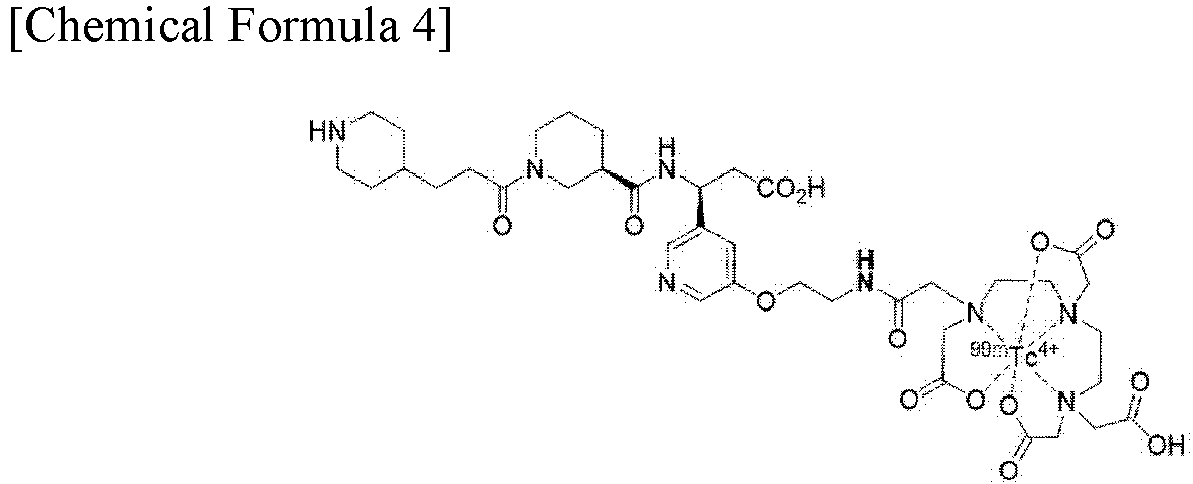
- a compound labeled with the metallic radioisotope may be selected from the group consisting of the following Chemical Formula 2 to Chemical Formula 5, but is not limited thereto:
- the kit may include one or more selected from the group consisting of cysteine, vitamin B1, and vitamin B6, but is not limited thereto.
- the kit may further include a metallic radioisotope, but is not limited thereto.
- the compound or a pharmaceutically acceptable salt thereof may be included in a kit in a state selected from the group consisting of a solution state, a refrigerated state, a frozen state, and a lyophilized state, but is not limited thereto.
- the kit may include one or more selected from the group consisting of an HEPES buffer, an acetate buffer, ethanol, and water for injection, but is not limited thereto.
- the thrombotic disease may be selected from the group consisting of thrombosis, angina pectoris, myocardial infarction, arteriosclerosis, myocardial ischemia, solid tumors and metastatic cancer, but is not limited thereto.
- the present invention provides a use of the compound labeled with a metallic radioisotope or a pharmaceutically acceptable salt thereof for imaging thrombi.
- the present invention provides a use of the compound labeled with a metallic radioisotope or a pharmaceutically acceptable salt thereof for producing or compounding a thrombus imaging agent.
- the present invention provides a thrombus imaging method, the method including administering an effective amount of the compound labeled with a metallic radioisotope or a pharmaceutically acceptable salt thereof to a subject in need.
- the present invention provides a use of the thrombus imaging composition for diagnosing a thrombotic disease.
- the present invention provides a use of the thrombus imaging composition for producing or compounding an agent for diagnosing a thrombotic disease.
- the present invention provides a method for providing information for diagnosing a thrombotic disease, the method including: administering the thrombus imaging composition to a subject in need.
- the present invention provides a method for diagnosing a thrombotic disease, the method including: administering the thrombus imaging composition to a subject in need.
- the radiopharmaceutical of the present invention binds to glycoprotein Ilb/IIIa with high affinity as a radiotracer labeled with a metallic isotope, and can image thrombi in a non-invasive imaging method through PET or SPECT imaging techniques due to its property of quick reduction of background radioactivity.
- the radiopharmaceutical of the present invention can be applied to emergency patients, which has been a challenge for conventional radiopharmaceuticals, through a convenient and quick labeling and non-purification method, and can be directly manufactured or used by manufacturing in most domestic and foreign hospitals that do not have F-18 radiopharmaceutical manufacturing facilities.
- the radiopharmaceutical of the present invention can be applied easily and simply to the characteristics of thrombotic diseases, which are common in emergency patients, and thus is expected to secure the convenience of examinations and improve the medical welfare of patients.
- the present invention provides a compound characterized by being represented by the following Chemical Formula 1 or a pharmaceutically acceptable salt thereof.
- R 1 is selected from the group consisting of L is a direct bond, -(CH 2 )n-NHCO-(CH 2 )m-, or -((CH 2 ) 2 O)x-(CH 2 )n-NHCO-(CH 2 )m-, and n, m and x are each independently an integer from 0 to 3.
- Ri may be characterized by being a chelating agent labeled with a metallic radioisotope, but is not limited thereto.
- the compound represented by Chemical Formula 1 may be selected from the group consisting of the following compounds, but is not limited thereto:
- the compound represented by Chemical Formula 1 may be selected from the group consisting of the following compounds, but is not limited thereto: and
- the compound is used to mean including all of the compound itself, and a racemate, enantiomer, polymorph, hydrate, and solvate thereof.
- the present invention may also include a pharmaceutically acceptable salt of the compound represented by Chemical Formula 1 as an active ingredient.
- pharmaceutically acceptable salt includes a salt derived from a pharmaceutically acceptable inorganic acid, organic acid, or base.
- a suitable acid examples include hydrochloric acid, bromic acid, sulfuric acid, nitric acid, perchloric acid, fumaric acid, maleic acid, phosphoric acid, glycolic acid, lactic acid, salicylic acid, succinic acid, toluene-p-sulfonic acid, tartaric acid, acetic acid, citric acid, methanesulfonic acid, formic acid, benzoic acid, malonic acid, naphthalene-2-sulfonic acid, benzenesulfonic acid, and the like.
- An acid addition salt may be prepared by a typical method, for example, dissolving a compound in an excessive amount of an aqueous acid solution and precipitating the salt using a water-miscible organic solvent such as methanol, ethanol, acetone or acetonitrile.
- the acid addition salt may be prepared by heating the same molar amount of compound and an acid or alcohol in water, subsequently evaporating the mixture to dry the mixture, or suction-filtering the precipitated salt.
- a salt derived from a suitable base may include an alkali metal such as sodium and potassium, an alkaline earth metal such as magnesium, ammonium and the like.
- An alkali metal or alkaline earth metal salt may be obtained by, for example, dissolving the compound in an excessive amount of an alkali metal hydroxide or alkaline earth metal hydroxide solution, filtering a non-soluble compound salt, evaporating the filtrate, and drying the resulting product.
- the present invention provides a thrombus imaging composition including the compound labeled with a metallic radioisotope or a pharmaceutically acceptable salt thereof as an active ingredient.
- thrombus describes all types of blood clots (venous and arterial thrombi).
- Thrombus also includes any terms of phrases “thrombotic deposits” and "thrombus formation sites”.
- a thrombus typically occurs as a result of the blood coagulation stage in hemostasis or pathologically as a result of various causes such as thrombotic disorders.
- all thrombicontaining platelets are included, as well as circulating thrombi (emboli), which have been immobilized anywhere in the vascular system.
- the metallic radioisotope may be characterized by being selected from the group consisting of Ga-66, Ga-68, Cu-61, Cu-62, Cu-64, Cu-67, Pb-212, Bi-212, Pd-109, Y-86, Co-55, Zr-89, Sr-83, Mn-52, As-72, Sc-44, Ga-67, In-111, and Tc-99m, but is not limited thereto.
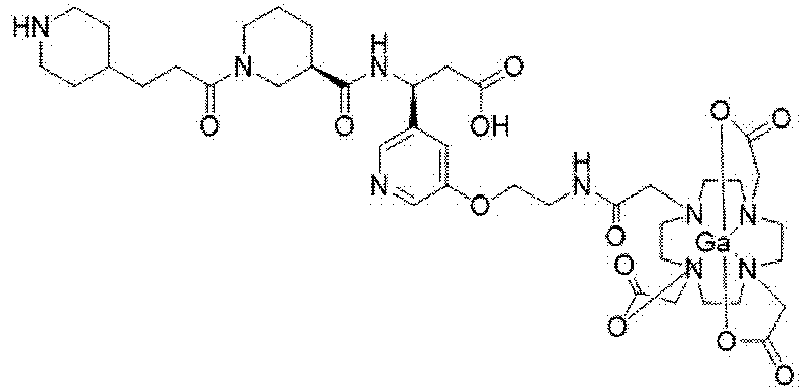
- a compound labeled with the metallic radioisotope may be selected from the group consisting of the following Chemical Formula 2 to Chemical Formula 5, but is not limited thereto:
- the pharmaceutical composition of the present invention may be administered to a subject in need via various routes. All modes of administration may be expected, but the pharmaceutical composition may be administered by, for example, oral administration, subcutaneous injection, peritoneal administration, intravenous injection, intramuscular injection, paraspinal space (intradural) injection, sublingual administration, buccal administration, intrarectal insertion, intravaginal injection, ocular administration, ear administration, nasal administration, inhalation, spraying via the mouth or nose, skin administration, transdermal administration, and the like.
- oral administration subcutaneous injection, peritoneal administration, intravenous injection, intramuscular injection, paraspinal space (intradural) injection, sublingual administration, buccal administration, intrarectal insertion, intravaginal injection, ocular administration, ear administration, nasal administration, inhalation, spraying via the mouth or nose, skin administration, transdermal administration, and the like.
- composition of the present invention is determined by the type of drug that is an active ingredient, as well as various related factors such as the disease to be diagnosed, the route of administration, the age, sex, and body weight of a patient, and the severity of the disease.
- Injectable preparations for example, sterile injectable aqueous or oleaginous suspensions, may be formulated as known in the art using suitable dispersing or wetting agents and suspending agents.
- a sterile injectable preparation may also be a sterile injectable solution, suspension or emulsion in a non-toxic parenterally acceptable diluent or solvent (for example, a solution in 1,3-butanediol).
- a non-toxic parenterally acceptable diluent or solvent for example, a solution in 1,3-butanediol.
- the acceptable vehicles and solvents that may be used are water, Ringer's solution, U.S.P. and an isotonic sodium chloride solution.
- sterile non-volatile oils are typically used as a solvent or suspending medium.
- any bland fatty oil can be used, for example, synthetic mono- or diglycerides.
- fatty acids such as oleic acid are used in the preparation of inj e
- the injectable formulations can be sterilized, for example, by filtration through a bacteria-retaining filter, or by incorporating sterilizing agents in the form of sterile solid compositions which can be dissolved or dispersed in sterile water or other sterile injectable media prior to use.
- the "individual” or “subject” refers to a subject in need of treatment of a disease, and more specifically, refers to a mammal such as a human or a non-human primate, a mouse, a rat, a dog, a cat, a horse, and a cow.
- administration refers to the provision of a predetermined composition of the present invention to a subject in need thereof by any suitable method.
- diagnosis includes determining the susceptibility of a subject for a specific disease or disorder, that is, a subject to be tested, determining whether a subject currently has a specific disease or disorder, determining the prognosis of a subject with a specific disease or disorder (for example, identification of a thrombotic disease or thrombotic disease state, determining the stage of the thrombotic disease, or determining the responsiveness of the thrombotic disease to treatment), or therametrics (for example, monitoring the condition of a subject in order to provide information on therapeutic efficacy).
- the term "method for providing information” refers to a method for providing information regarding the diagnosis of a thrombotic disease, and to a method of obtaining information on the onset or likelihood (risk) of developing a thrombotic disease through imaging of a thrombus, in particular, detection of glycoprotein Ilb/IIIa.
- the term detection refers to a meaning including both measuring and confirming whether a target material (an object to be detected, glycoprotein IIb/IIIa or a thrombus including the same in the present invention) is present (expressed), or measuring and confirming a change in the presence level (expression level) of a target material.
- the present invention provides a kit for preparing a metallic radioisotope-labeled radiopharmaceutical including the compound represented by Chemical Formula 1 or a pharmaceutically acceptable salt thereof as an active ingredient.
- the kit may include one or more selected from the group consisting of cysteine, vitamin B1, and vitamin B6, but is not limited thereto.
- the compound or a pharmaceutically acceptable salt thereof may be included in a kit in a state selected from the group consisting of a solution state, a refrigerated state, a frozen state, and a lyophilized state, but is not limited thereto.
- the kit may include one or more selected from the group consisting of an HEPES buffer, an acetate buffer, ethanol, and water for injection, but is not limited thereto.
- the kit may include a PS-H+ SPE cartridge, but is not limited thereto.
- the kit may be frozen or lyophilized under an inert gas environment in a sterile container.
- the kit may be supplemented with a sterile buffer vial, saline, a syringe, a filter, a column and other auxiliary equipment to prepare an injectable for use by clinical pathologists or technicians. It is widely known to those of ordinary skill in the art that the kit can be varied and modified according to the patient's individual needs or diet or can be varied in the form in which a radioisotope can be provided or obtained.
- a buffer useful in preparing the diagnostic composition and kit of the present invention includes, for example, phosphate, citrate, sulfosalicylate and acetate buffers.
- a lyophilizing aid useful in preparing the diagnostic composition and kit of the present invention includes, for example, mannitol, lactose, sorbitol, dextran, a FICOLL polymer and polyvinylpyrrolidone (PVP).
- a stabilizing aid useful in preparing the contrast agent and kit of the present invention includes, for example, ascorbic acid, cysteine, monothioglycerol, sodium bisulfite, sodium metabisulfite, gentisic acid and inositol.
- a solubilizing aid useful in preparing the diagnostic composition and kit of the present invention includes, for example, ethanol, glycerin, polyethylene glycol, propylene glycol, polyoxyethylene sorbitan monooleate, sorbitan monooleate, polysorbate, a poly(oxyethylene)-poly(oxypropylene)-poly(oxyethylene) block copolymer ("Pluronics") and lecithin.
- examples of the solubilizing aid include polyethylene glycol, cyclodextrin and Pluronics.
- a bacteriostatic agent useful in preparing the diagnostic composition and kit of the present invention includes, for example, benzyl alcohol, benzalkonium chloride, chlorobutanol and methyl, propyl, or butyl paraben.
- kits that contain the components in the kit of the present invention are bottles, vials (for example, vials including septa), ampules or infusion bags, and the like, it will also be appreciated that these containers may include additional indices, for example, typical markings that become discolored when a preparation is autoclaved or sterilized.
- the kit of the present invention may additionally include other components, for example, syringes, labels, vials, tubes, catheters, needles, pots, and the like.
- the present invention provides a pharmaceutical composition for diagnosing a thrombotic disease, including the thrombus imaging composition as an active ingredient.
- the present invention provides a use of the thrombus imaging composition for diagnosing a thrombotic disease.
- the thrombotic disease may be selected from the group consisting of thrombosis, angina pectoris, myocardial infarction, arteriosclerosis, myocardial ischemia, solid tumors and metastatic cancer, but is not limited thereto.
- the imaging method or diagnostic method according to the present invention uses the thrombus imaging composition according to the present invention, and the diagnostic method includes all known diagnostic methods present in the art.
- the present invention provides a method for preparing a compound represented by Chemical Formula 1, the method including: reacting a compound of the following Chemical Formula 6, in the presence of hexafluorophosphate benzotriazole tetramethyl uronium (HBTU) and hydroxybenzotriazole (HOBt), with one compound selected from the group consisting of (m is an integer from 0 to 3.).
- HBTU hexafluorophosphate benzotriazole tetramethyl uronium
- HOBt hydroxybenzotriazole
- Example 1-7 Synthesis of tert-butyl 4-(3-((R)-3-(((S)-3-(tert-butoxy)-1-(5-(2-((tert-butyldimethylsilyl)oxy)ethoxy)pyridin-3-yl)-3-oxopropyl)carbamoyl)piperidin-1-yl)-3-oxopropyl)piperidine-1-carboxylate
- Example 1-8 Synthesis of tert-butyl4-(3-((R)-3-(((S)-3-(tert-butoxy)-1-(5-(2-hydroxyethoxy)pyridin-3-yl)-3 oxopropyl)carbamoyl)piperidin-1-yl)-3-oxopropyl)piperidine-1-carboxylate
- Example 1-9 Synthesis of tert-butyl 4-(3-((R)-3-(((S)-3-(tert-butoxy)-3-oxo-1-(5-(2-(tosyloxy)ethoxy)pyridin-3-yl)propyl)carbamoyl)piperidin-1-yl)-3-oxopropyl)piperidine-1-carboxylate
- Example 1-10 Synthesis of tert-butyl 4-(3-((R)-3-(((S)-1-(5-(2-azidoethoxy)pyridin-3-yl)-3-(tert-butoxy)-3-oxopropyl)carbamoyl)piperidin-1-yl)-3-oxopropyl)piperidine-1-carboxylate
- Example 1-11 Synthesis of tert-butyl 4-(3-((R)-3-(((S)-1-(5-(2-aminoethoxy)pyridin-3-yl)-3-(tert-butoxy)-3-oxopropyl)carbamoyl)piperidin-1-yl)-3-oxopropyl)piperidine-1-carboxylate (GP-101)
- the 1 H-NMR analysis results of the GP-101 compound are as follows: (using pyridine): ⁇ 8.21-8.18(m, 2H), 5.38-5.35(m, 1H), 4.14-3.90(m, 2H), 3.58-3.44(m, 2H), 3.10-3.08(m, 1H), 2.78-2.66(m, 5H), 2.42-2.28(m, 3H), 1.91-1.80(m, 2H), 1.70-1.63(m, 3H), 1.61-1.55(m, 2H), 1.44(s, 11H), 1.35(s, 11H), 1.16-1.07(m, 3H), 1.06-0.84(m, 2H)
- Example 1-12 Synthesis of tri-tert-butyl 2,2',2"-(10-(2-((2-((5-((S)-3-(tert-butoxy)-1-((R)-1-(3-(1-(tert-butoxycarbonyl)piperidin-4-yl)propanoyl)piperidine-3-carboxamido)-3-oxopropyl)pyridin-3-yl)oxy)ethyl)amino)-2-oxoethyl)-1,4,7,10-tetraazacyclododecane-1,4,7-triyl)triacetate
- the reaction mixture was separated into an organic layer and an aqueous layer by adding water (150 mL) and EA (300 mL), respectively, and the organic layer was filtered with MgSO 4 , and then concentrated.
- Example 1-13 Synthesis of 2,2',2"-(10-(2-((2-((5-((S)-2-carboxy-1-((R)-1-(3-(piperidin-4-yl)propanoyl)piperidine-3-carboxamido)ethyl)pyridin-3-yl)oxy)ethyl)amino)-2-oxoethyl)-1,4,7,10-tetraazacyclododecane-1,4,7-triyl)triacetic acid (GP-102)
- Solid GP-102 (10 mg) was dissolved in ACN/water (25 mL/25 mL), and 0.5 mL of the resulting solution was transferred to each of 100 vials, and the vials were lyophilized under the condition of -40°C for 3 hours. Then, after the vacuum was activated, the vials were lyophilized under the condition of -40°C for 1 day, under the condition of 0°C for 1 day, and under the condition of 25°C for 4 hours.
- Example 1-14 Synthesis of di-tert-butyl 2,2'-(7-(1-(tert-butoxy)-5-((2-((5-((S)-3-(tert-butoxy)-1-((R)-1-(3-(1-(tert-butoxycarbonyl)piperidin-4-yl)propanoyl)piperidine-3-carboxamido)-3-oxopropyl)pyridin-3-yl)oxy)ethyl)amino)-1,5-dioxopentan-2-yl)-1,4,7-triazonane-1,4-diyl)diacetate
- the reaction mixture was separated into an organic layer and an aqueous layer by adding water (150 mL) and EA (300 mL), respectively, and the organic layer was filtered with MgSO 4 , and then concentrated.
- Example 1-15 Synthesis of 2,2'-(7-(1-carboxy-4-((2-((5-((S)-2-carboxy-1-((R)-1-(3-(piperidin-4-yl)propanoyl)piperidine-3-carboxamido)ethyl)pyridin-3-yl)oxy)ethyl)amino)-4-oxobutyl)-1,4,7-triazonane-1,4-diyl)diacetic acid (GP-103)
- the reaction mixture was purified with DCM slurry to obtain a solid final compound (20 mg, 39%).
- Solid GP-103 (10 mg) was dissolved in ACN/water (25 mL/25 mL), and 0.5 mL of the resulting solution was transferred to each of 100 vials, and the vials were lyophilized under the condition of -40°C for 3 hours. Then, after the vacuum was activated, the vials were lyophilized under the condition of - 40°C for 1 day, under the condition of 0°C for 1 day, and under the condition of 25°C for 4 hours.
- Example 1-16 Synthesis of tert-butyl 4-(3-((R)-3-(((S)-3-(tert-butoxy)-1-(5-(2-(2-tetra-tert-butyl-DTPA acetamido)ethoxy)pyridin-3-yl)-3-oxopropyl)carbamoyl)piperidin-1-yl)-3-oxopropyl)piperidine-1-carboxylate
- the reaction mixture was separated into an organic layer and an aqueous layer by adding water (150 mL) and EA (300 mL), respectively, and the organic layer was filtered with MgSO 4 , and then concentrated.
- Example 1-18 Synthesis of di-tert-butyl 2,2'-((2-((2-((2-((5-((S)-3-(tert-butoxy)-1-((R)-1-(3-(1-(tert-butoxycarbonyl)piperidin-4-yl)propanoyl)piperidine-3-carboxamido)-3-oxopropyl)pyridin-3-yl)oxy)ethyl)amino)-2-oxoethyl)azanediyl)diacetate
- the reaction mixture was separated into an organic layer and an aqueous layer by adding water (150 mL) and EA (300 mL), respectively, and the organic layer was filtered with MgSO 4 , and then concentrated.
- Solid GP-105 (50 mg) was dissolved in ACN/water (5 mL/5 mL), and 0.5 mL of the resulting solution was transferred to each of 20 vials, and the vials were lyophilized under the condition of -40°C for 3 hours. Then, after the vacuum was activated, the vials were lyophilized under the condition of -40°C for 1 day, under the condition of 0°C for 1 day, and under the condition of 25°C for 4 hours. After the vial mouth was closed with a rubber stopper, the vacuum was released, and dried GP-105 obtained in an amount of 0.1 mg per vial was closed with an aluminum stopper and then stored under the condition of -20°C. Mass spectrometry (Agilent 6120. Single quadrupole) [M+H] 649.3
- Ga-68 was used after purification using a Chromafix (PS-H+) cartridge, and after purification, the purified Ga-68 was mixed with a solution obtained by dissolving 0.05 mg of a GP-102 precursor in a NaCl solution including 132 MBq Ga-68 in a 1 M sodium acetate buffer solution, and the resulting mixture was reacted at 100°C for 10 minutes. It was confirmed that the labeling efficiency of the reaction mixture was 90.1% by HPLC, 92 MBq [Ga-68]GP-102 was obtained with a high yield of 69.7% without SPE purification of the reaction mixture, and the purity confirmed by HPLC in the same manner as in Example 2-1 was 96.9%.
- PS-H+ Chromafix
- Example 3-3 Confirmation of stability of 0.1 mg of GP-104 according to timing of cysteine treatment
- Example 2-8 HCl and NaOH was additionally added dropwise to the solution of Example 2-8 to perform a stability evaluation by adjusting the final pH of the solution to acidic (pH 5.5) and basic (pH 8.5) conditions, and labeling purity was confirmed using HPLC in the same manner as in Example 2-7.
- Example 2-9 HCl and NaOH was additionally added dropwise to the solution of Example 2-9 to perform a stability evaluation by adjusting the final pH of the solution to acidic (pH 5.5) and basic (pH 8.5) conditions, and labeling purity was confirmed using HPLC in the same manner as in Example 2-7.
- Example 2-10 HCl and NaOH was additionally added dropwise to the solution of Example 2-10 to perform a stability evaluation by adjusting the final pH of the solution to acidic (pH 5.5) and basic (pH 8.5) conditions, and labeling purity was confirmed using HPLC in the same manner as in Example 2-7.
- Example 4-3 Confirmation of stability of 0.1 mg of GP-105 according to NaOH treatment method
- GP-105 0.1 mg was dissolved in water for injection, the pH was adjusted to about 3.5 when 10 ⁇ L of SnCh (1.5 mg/mL) and 2 mL of Tc-99m were added thereto, and the resulting mixture was allowed to stand at room temperature for 10 minutes. The reaction was terminated by adjusting the pH to 7 using a NaOH solution and 10 ⁇ L of cysteine (1.0 mg/mL). Labeling purity was confirmed to be 98.1% using HPLC in the same manner as in Example 2-7.
- Example 2-12 HCl and NaOH was additionally added dropwise to the solution of Example 2-12 to perform a stability evaluation by adjusting the final pH of the solution to acidic (pH 5.5) and basic (pH 8.5) conditions, and labeling purity was confirmed using HPLC in the same manner as in Example 2-7.
- Example 2-13 HCl and NaOH was additionally added dropwise to the solution of Example 2-13 to perform a stability evaluation by adjusting the final pH of the solution to acidic (pH 5.5) and basic (pH 8.5) conditions, and labeling purity was confirmed using HPLC in the same manner as in Example 2-7.
- Example 2-14 HCl and NaOH was additionally added dropwise to the solution of Example 2-14 to perform a stability evaluation by adjusting the final pH of the solution to acidic (pH 5.5) and basic (pH 8.5) conditions, and labeling purity was confirmed using HPLC in the same manner as in Example 2-7.
- a solution including cysteine corresponding to half of Example 2-10 and VB6, in the same mole number as in Example 2-10 could maintain a radiochemical purity of 98% or more, which is a high purity, until 4 hours at a pH of 7, maintained a purity of 95% or more until 4 hours even under acidic conditions, and exhibited a radiochemical purity of about 90% or more until 4 hours even under basic conditions.
- Example 5-1 Production of thrombotic disease model
- the carotid artery was secured by opening the skin on the carotid artery side. Then, a filter paper soaked with a 5% ferric chloride solution was exposed on the artery, and then washed three times or more with physiological saline, and the incised skin was sutured again to make a model.
- the corresponding thrombus site and a contralateral healthy blood vessel site were sampled together as a control, the tissues were fixed, and then paraffin blocks were made. After a 4 ⁇ m-thick section for tissue immunochemical staining was prepared, the section was subjected to a deparaffinization process, a process of restoring antigenicity using a citrate buffer (pH 9.0), and a process of suppressing the activity of an endogenous active substance with hydrogen peroxide at each step.
- a CD41 primary antibody 24552-1-AP, Proteintech
- a secondary antibody RRLTM EnVision Detection System, DAKO
- DAB Dako
- glycoprotein IIb/IIIa was overexpressed in the corresponding thrombotic site.
- Example 5-2 Evaluation of glycoprotein IIb/IIIa specific uptake in disease model of GP-102
- the left and right SUV mean max values on day 1 were 0.7 and 2.1, respectively, with a target to non target ratio of 3.0, and on day 3, the left and right SUVmean max values were 0.6 and 2.0, respectively, with a target to non target ratio of 3.3, and high specific uptake for [Ga-68]GP-102 in the disease model was confirmed.
- Example 5-4 Evaluation of glycoprotein IIb/IIIa specific uptake in disease model of GP-103
- Example 5-6 Evaluation of glycoprotein IIb/IIIa specific uptake in disease model of GP-104
- [Tc-99m]GP-104 showed specific uptake for the corresponding disease using a disease model in which a thrombus was formed with glycoprotein IIb/IIIa overexpressed in Example 5-1, and radioactivity values were measured as a gamma counter value by sacrificing rats at the 2nd hour. The value was confirmed at an interval of 1 hour until 4 hours through the microSPECT equipment.
- the counts per minute (CPM)/g values of the left and right arteries were 1.3 and 2.5, respectively, and the target to non target ratio was shown to be 2.0, confirming the high specific uptake of [Tc-99m]GP-104, and therefore, it could be confirmed that [Tc-99m]GP-104 showed a quick background radioactivity excretion effect.
- Example 5-7 Evaluation of glycoprotein IIb/IIIa specific uptake in disease model of GP-105
- [Tc-99m]GP-105 showed specific uptake for the corresponding disease using a disease model in which a thrombus was formed with glycoprotein IIb/IIIa overexpressed in Example 5-1, and radioactivity values were measured as a gamma counter value by sacrificing rats at the 2nd hour. The value was confirmed at an interval of 1 hour until 4 hours through the microSPECT equipment.
- the counts per minute (CPM)/g values of the left and right arteries were 23.5 and 63.9, respectively, and the target to non target ratio was shown to be 2.7, confirming the high specific uptake of [Tc-99m]GP-105, and therefore, it could be confirmed that [Tc-99m]GP-105 showed a quick background radioactivity excretion effect.
- the radiopharmaceutical of the present invention binds to glycoprotein Ilb/IIIa with high affinity as a radiotracer labeled with a metallic isotope, and can image thrombi in a non-invasive imaging method through PET or SPECT imaging techniques due to its property of quick reduction of background radioactivity.
- the radiopharmaceutical of the present invention can be applied to emergency patients, which has been a challenge for conventional radiopharmaceuticals, through a convenient and quick labeling and non-purification method, and can be directly manufactured or used by manufacturing in most domestic and foreign hospitals that do not have F-18 radiopharmaceutical manufacturing facilities.
- the radiopharmaceutical of the present invention can be applied easily and simply to the characteristics of thrombotic diseases, which are common in emergency patients, and thus can secure the convenience of examinations and improve the medical welfare of patients, so it has industrial applicability.
Landscapes
- Health & Medical Sciences (AREA)
- Life Sciences & Earth Sciences (AREA)
- Chemical & Material Sciences (AREA)
- Public Health (AREA)
- Veterinary Medicine (AREA)
- Medicinal Chemistry (AREA)
- Animal Behavior & Ethology (AREA)
- General Health & Medical Sciences (AREA)
- Pharmacology & Pharmacy (AREA)
- Epidemiology (AREA)
- Proteomics, Peptides & Aminoacids (AREA)
- Physics & Mathematics (AREA)
- Optics & Photonics (AREA)
- Chemical Kinetics & Catalysis (AREA)
- General Chemical & Material Sciences (AREA)
- Engineering & Computer Science (AREA)
- Oil, Petroleum & Natural Gas (AREA)
- Organic Chemistry (AREA)
- Nuclear Medicine, Radiotherapy & Molecular Imaging (AREA)
- Biophysics (AREA)
- Molecular Biology (AREA)
- Hematology (AREA)
- Diabetes (AREA)
- Bioinformatics & Cheminformatics (AREA)
- Medicines Containing Antibodies Or Antigens For Use As Internal Diagnostic Agents (AREA)
Abstract
Description
- The present invention relates to a thrombus imaging radiopharmaceutical and composition, and the like.
- This application claims priority to and the benefit of
Korean Patent Application No. 10-2020-0039471 filed in the Korean Intellectual Property Office on March 31, 2020 - Novel highly specific non-peptide glycoprotein IIb/IIIa antagonists are described in the related art (Document [Damiano et al., Thrombosis Research 2001 104, 113-126; Hoekstra, W.J., et al., J. Med. Chem., 1999, 42, 5254-5265]). These compounds are known to be effective GPIIb/IIIa antagonists as therapeutic agents with antiplatelet and antithrombotic activity (see
WO95/08536 WO96/29309 WO97/33869 WO9701/60813 US Patent No. 6,515,130 ). Further, the potential use of glycoprotein IIb/IIIa antagonists as contrast agents has also been proposed. However, the use of thrombus imaging using glycoprotein IIb/IIIa antagonists is unknown. - In addition, current methods of preparing a compound including an imaging moiety include [18F]-fluorochemical techniques, and many methods have focused on nucleophilic [18F]-fluorochemical techniques using potassium fluoride (KF). These methods produce an elemental fluoride supply source via anion exchange between, for example, potassium carbonate (K2CO3) and the [18F]-containing species produced in a cyclotron, and often need to enhance reactivity by adding 4,7,13,16,21,24-hexaoxa-1,10-diazabicyclo[8.8.8]- hexacosanoic acid (Kryptofix 222) which is often an aza-crown ether. Although these methods are suitable for producing clinical amounts, the efficiency, tricky purification and complicated processes are not suitable for extensive commercial application.
- Meanwhile, through an F-18 radiolabeled compound with high affinity and specific binding to glycoprotein IIb/IIIa, non-invasive imaging using a PET imaging technique could be achieved. However, as mentioned above, the F-18 radioactive labeling method is complicated, needs separate equipment, and has a problem in that the method cannot be applied to emergency patients because it takes about 4 hours to administer the compound to a patient through procedures such as quality control after purification.
- Thus, the present inventors have made studies and efforts to develop a radiopharmaceutical capable of simply labeling glycoprotein Ilb/IIIa with a radioisotope while specifically binding to glycoprotein IIb/IIIa, and as a result, developed a radiopharmaceutical that can be immediately used by conveniently labeling glycoprotein Ilb/IIIa using the coupling between a metallic radioisotope and a chelator, and shows high specific binding and low background in vivo, thereby completing the present invention.
- Therefore, an object of the present invention is to provide a compound characterized by being represented by Chemical Formula 1 or a pharmaceutically acceptable salt thereof.
- Another object of the present invention is to provide a thrombus imaging composition including the compound labeled with a metallic radioisotope or a pharmaceutically acceptable salt thereof as an active ingredient.
- Another object of the present invention is to provide a kit for preparing a metallic radioisotope-labeled radiopharmaceutical including the compound or a pharmaceutically acceptable salt thereof as an active ingredient.
- Still another object of the present invention is to provide a pharmaceutical composition for diagnosing a thrombotic disease, including the thrombus imaging composition as an active ingredient.
- However, the technical problems to be achieved by the present invention are not limited to the aforementioned problems, and other problems that are not mentioned may be clearly understood by those skilled in the art from the following description.
- To achieve the objects of the present invention, the present invention provides a compound characterized by being represented by the following Chemical Formula 1 or a pharmaceutically acceptable salt thereof.

R1 is selected from the group consisting of


- Furthermore, the present invention provides a thrombus imaging composition including the compound labeled with a metallic radioisotope or a pharmaceutically acceptable salt thereof as an active ingredient.
- Further, the present invention provides a kit for preparing a metallic radioisotope-labeled radiopharmaceutical including the compound represented by Chemical Formula 1 or a pharmaceutically acceptable salt thereof as an active ingredient.
- In addition, the present invention provides a pharmaceutical composition for diagnosing a thrombotic disease, including the thrombus imaging composition as an active ingredient.
- In an exemplary embodiment of the present invention, Ri may be characterized by being a chelating agent labeled with a metallic radioisotope, but is not limited thereto.
- In another exemplary embodiment of the present invention, the compound represented by Chemical Formula 1 may be selected from the group consisting of the following compounds, but is not limited thereto:
- 2,2',2"-(10-(2-((2-((5-((S)-2-carboxy-1-((R)-1-(3-(piperidin-4-yl)propanoyl)piperidine-3-carboxamido)ethyl)pyridin-3-yl)oxy)ethyl)amino)-2-oxoethyl)-1,4,7,10-tetraazacyclododecane-1,4,7-triyl)triacetic acid (GP-102);
- 2,2'-(7-(1 -carboxy-4-((2-((5-((S)-2-carboxy-1 -((R)-1 -(3 -(piperidin-4-yl)propanoyl)piperidine-3-carboxamido)ethyl)pyridin-3-yl)oxy)ethyl)amino)-4-oxobutyl)-1,4,7-triazonane-1,4-diyl)diacetic acid (GP-103);
- (S)-3-(5-(2-(2-DTPA acetamido)ethoxy)pyridin-3-yl)-3-((R)-1-(3-(piperidin-4-yl)propanoyl)piperidine-3-carboxamido)propanoic acid (GP-104); and
- 2,2'-((2-((2-((5-((S)-2-carboxy-1-((R)-1-(3-(piperidin-4-yl)propanoyl)piperidine-3-carboxamido)ethyl)pyridin-3-yl)oxy)ethyl)amino)-2-oxoethyl)azanediyl)diacetic acid (GP-105).
- In still another exemplary embodiment of the present invention, the metallic radioisotope may be characterized by being selected from the group consisting of Ga-66, Ga-68, Cu-61, Cu-62, Cu-64, Cu-67, Pb-212, Bi-212, Pd-109, Y-86, Co-55, Zr-89, Sr-83, Mn-52, As-72, Sc-44, Ga-67, In-111, and Tc-99m, but is not limited thereto.
- In yet another exemplary embodiment of the present invention, a compound labeled with the metallic radioisotope may be selected from the group consisting of the following Chemical Formula 2 to Chemical Formula 5, but is not limited thereto:



- In yet another exemplary embodiment of the present invention, the kit may include one or more selected from the group consisting of cysteine, vitamin B1, and vitamin B6, but is not limited thereto.
- In yet another exemplary embodiment of the present invention, the kit may further include a metallic radioisotope, but is not limited thereto.
- In yet another exemplary embodiment of the present invention, the compound or a pharmaceutically acceptable salt thereof may be included in a kit in a state selected from the group consisting of a solution state, a refrigerated state, a frozen state, and a lyophilized state, but is not limited thereto.
- In yet another exemplary embodiment of the present invention, the kit may include one or more selected from the group consisting of an HEPES buffer, an acetate buffer, ethanol, and water for injection, but is not limited thereto.
- In yet another exemplary embodiment of the present invention, the thrombotic disease may be selected from the group consisting of thrombosis, angina pectoris, myocardial infarction, arteriosclerosis, myocardial ischemia, solid tumors and metastatic cancer, but is not limited thereto.
- In addition, the present invention provides a use of the compound labeled with a metallic radioisotope or a pharmaceutically acceptable salt thereof for imaging thrombi.
- Furthermore, the present invention provides a use of the compound labeled with a metallic radioisotope or a pharmaceutically acceptable salt thereof for producing or compounding a thrombus imaging agent.
- Further, the present invention provides a thrombus imaging method, the method including administering an effective amount of the compound labeled with a metallic radioisotope or a pharmaceutically acceptable salt thereof to a subject in need.
- In addition, the present invention provides a use of the thrombus imaging composition for diagnosing a thrombotic disease.
- Furthermore, the present invention provides a use of the thrombus imaging composition for producing or compounding an agent for diagnosing a thrombotic disease.
- Further, the present invention provides a method for providing information for diagnosing a thrombotic disease, the method including: administering the thrombus imaging composition to a subject in need.
- In addition, the present invention provides a method for diagnosing a thrombotic disease, the method including: administering the thrombus imaging composition to a subject in need.
- The radiopharmaceutical of the present invention binds to glycoprotein Ilb/IIIa with high affinity as a radiotracer labeled with a metallic isotope, and can image thrombi in a non-invasive imaging method through PET or SPECT imaging techniques due to its property of quick reduction of background radioactivity.
- Further, the radiopharmaceutical of the present invention can be applied to emergency patients, which has been a challenge for conventional radiopharmaceuticals, through a convenient and quick labeling and non-purification method, and can be directly manufactured or used by manufacturing in most domestic and foreign hospitals that do not have F-18 radiopharmaceutical manufacturing facilities.
- Therefore, the radiopharmaceutical of the present invention can be applied easily and simply to the characteristics of thrombotic diseases, which are common in emergency patients, and thus is expected to secure the convenience of examinations and improve the medical welfare of patients.
-
-
FIG. 1 illustrates the results of purifying [Ga-68]GP-102 labeled with Ga-68 using an HEPES buffer with C18 light Sep-Pak. -
FIG. 2 illustrates the results of purifying [Ga-68]GP-102 labeled with Ga-68 using an acetate buffer with C18 light Sep-Pak. -
FIG. 3 illustrates the results of confirming [Ga-68]GP-102 labeled with Ga-68 using Chromafix PS-H+ and an acetate buffer kit without any purification. -
FIG. 4 illustrates the results of purifying [Ga-68]GP-103 labeled with Ga-68 using an HEPES buffer with C18 light Sep-Pak. -
FIG. 5 illustrates the results of purifying [Ga-68]GP-103 labeled with Ga-68 using an acetate buffer with C18 light Sep-Pak. -
FIG. 6 illustrates the results of confirming [Ga-68]GP-103 labeled with Ga-68 using an acetate buffer kit without any purification. -
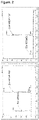
FIG. 7 illustrates the labeling results of [Tc-99m]GP-104 using a lyophilized vial including GP-104, SnCl2, and cysteine. -
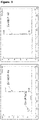
FIG. 8 illustrates the labeling results of [Tc-99m]GP-105 using a lyophilized vial including GP-105 and cysteine. -
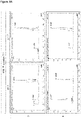
FIG. 9 illustrates the labeling results of [Tc-99m]GP-104 labeled with Tc-99m according to the timing of cysteine addition. -
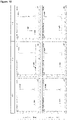
FIG. 10 illustrates the labeling results of [Tc-99m]GP-105 labeled with Tc-99m according to the NaOH addition method. -
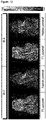
FIG. 11 illustrates MR images (left) and immunohistochemical staining results (right) of the carotid artery of the thrombotic disease model prepared in Example 5-1 of the present invention. -
FIG. 12 illustrates the evaluation results of glycoprotein IIB/IIIa-specific uptake of [Ga-68]GP-102 of Example 5-2 of the present invention as images using microPET/MR. -
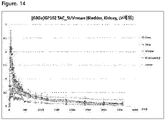
FIG. 13 illustrates a microPET/MR image (left side) and standard uptake value (SUV) levels for each organ over time (sec) to confirm the biodistribution of [Ga-68]GP-102 of Example 5-3 of the present invention. -
FIG. 14 illustrates the SUV levels of each organ over time except for bladder, kidneys, and left ventricle inFIG. 13 to confirm the biodistribution of [Ga-68]GP-102 of Example 5-3 of the present invention. -
FIG. 15 illustrates the evaluation results of glycoprotein IIB/IIIa-specific uptake of [Ga-68]GP-103 of Example 5-4 of the present invention as images using microPET/MR. -
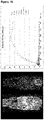
FIG. 16 illustrates a microPET/MR image (left side) and standard uptake value (SUV) levels for each organ over time (sec) to confirm the biodistribution of [Ga-68]GP-103 of Example 5-5 of the present invention. -
FIG. 17 illustrates the SUV levels of each organ over time except for bladder, kidneys, and left ventricle inFIG. 13 to confirm the biodistribution of [Ga-68]GP-103 of Example 5-5 of the present invention. -
FIG. 18 illustrates the evaluation results of glycoprotein IIB/IIIa-specific uptake of [Tc-99m]GP-104 of Example 5-6 of the present invention as images using microSPECT. -
FIG. 19 illustrates the evaluation results of glycoprotein IIB/IIIa-specific uptake of [Tc-99m]GP-105 of Example 5-7 of the present invention as images using microSPECT. - The present invention provides a compound characterized by being represented by the following
Chemical Formula 1 or a pharmaceutically acceptable salt thereof.
Chemical Formula 1,
R1 is selected from the group consisting of


- In the present invention, Ri may be characterized by being a chelating agent labeled with a metallic radioisotope, but is not limited thereto.
- In the present invention, the compound represented by
Chemical Formula 1 may be selected from the group consisting of the following compounds, but is not limited thereto: - 2,2',2"-(10-(2-((2-((5-((S)-2-carboxy-1-((R)-1-(3-(piperidin-4-yl)propanoyl)piperidine-3-carboxamido)ethyl)pyridin-3-yl)oxy)ethyl)amino)-2-oxoethyl)-1,4,7,10-tetraazacyclododecane-1,4,7-triyl)triacetic acid (GP-102);
- 2,2'-(7-(1-carboxy-4-((2-((5-((S)-2-carboxy-1-((R)-1-(3-(piperidin-4-yl)propanoyl)piperidine-3-carboxamido)ethyl)pyridin-3-yl)oxy)ethyl)amino)-4-oxobutyl)-1,4,7-triazonane-1,4-diyl)diacetic acid (GP-103);
- (S)-3-(5-(2-(2-DTPA acetamido)ethoxy)pyridin-3-yl)-3-((R)-1-(3-(piperidin-4-yl)propanoyl)piperidine-3-carboxamido)propanoic acid (GP-104); and
- 2,2'-((2-((2-((5-((S)-2-carboxy-1-((R)-1-(3-(piperidin-4-yl)propanoyl)piperidine-3-carboxamido)ethyl)pyridin-3-yl)oxy)ethyl)amino)-2-oxoethyl)azanediyl)diacetic acid (GP-105).
- In the present invention, the compound represented by
Chemical Formula 1 may be selected from the group consisting of the following compounds, but is not limited thereto:


- In the present invention, the compound is used to mean including all of the compound itself, and a racemate, enantiomer, polymorph, hydrate, and solvate thereof.
- The present invention may also include a pharmaceutically acceptable salt of the compound represented by
Chemical Formula 1 as an active ingredient. In the present invention, the term "pharmaceutically acceptable salt" includes a salt derived from a pharmaceutically acceptable inorganic acid, organic acid, or base. - Examples of a suitable acid include hydrochloric acid, bromic acid, sulfuric acid, nitric acid, perchloric acid, fumaric acid, maleic acid, phosphoric acid, glycolic acid, lactic acid, salicylic acid, succinic acid, toluene-p-sulfonic acid, tartaric acid, acetic acid, citric acid, methanesulfonic acid, formic acid, benzoic acid, malonic acid, naphthalene-2-sulfonic acid, benzenesulfonic acid, and the like. An acid addition salt may be prepared by a typical method, for example, dissolving a compound in an excessive amount of an aqueous acid solution and precipitating the salt using a water-miscible organic solvent such as methanol, ethanol, acetone or acetonitrile. In addition, the acid addition salt may be prepared by heating the same molar amount of compound and an acid or alcohol in water, subsequently evaporating the mixture to dry the mixture, or suction-filtering the precipitated salt.
- A salt derived from a suitable base may include an alkali metal such as sodium and potassium, an alkaline earth metal such as magnesium, ammonium and the like. An alkali metal or alkaline earth metal salt may be obtained by, for example, dissolving the compound in an excessive amount of an alkali metal hydroxide or alkaline earth metal hydroxide solution, filtering a non-soluble compound salt, evaporating the filtrate, and drying the resulting product. In this case, it is particularly suitable to prepare a sodium, potassium or calcium salt as the metal salt from the pharmaceutical perspective, and the corresponding silver salt may also be obtained by reacting an alkali metal or alkaline earth metal salt with a suitable silver salt (for example, silver nitrate).
- As another aspect of the present invention, the present invention provides a thrombus imaging composition including the compound labeled with a metallic radioisotope or a pharmaceutically acceptable salt thereof as an active ingredient.
- In the present invention, "thrombus" describes all types of blood clots (venous and arterial thrombi). "Thrombus" also includes any terms of phrases "thrombotic deposits" and "thrombus formation sites". A thrombus typically occurs as a result of the blood coagulation stage in hemostasis or pathologically as a result of various causes such as thrombotic disorders. In this investigation, all thrombicontaining platelets are included, as well as circulating thrombi (emboli), which have been immobilized anywhere in the vascular system.
- In the present invention, the metallic radioisotope may be characterized by being selected from the group consisting of Ga-66, Ga-68, Cu-61, Cu-62, Cu-64, Cu-67, Pb-212, Bi-212, Pd-109, Y-86, Co-55, Zr-89, Sr-83, Mn-52, As-72, Sc-44, Ga-67, In-111, and Tc-99m, but is not limited thereto.
- In another exemplary embodiment of the present invention, a compound labeled with the metallic radioisotope may be selected from the group consisting of the following
Chemical Formula 2 to Chemical Formula 5, but is not limited thereto:



- The pharmaceutical composition of the present invention may be administered to a subject in need via various routes. All modes of administration may be expected, but the pharmaceutical composition may be administered by, for example, oral administration, subcutaneous injection, peritoneal administration, intravenous injection, intramuscular injection, paraspinal space (intradural) injection, sublingual administration, buccal administration, intrarectal insertion, intravaginal injection, ocular administration, ear administration, nasal administration, inhalation, spraying via the mouth or nose, skin administration, transdermal administration, and the like.
- The composition of the present invention is determined by the type of drug that is an active ingredient, as well as various related factors such as the disease to be diagnosed, the route of administration, the age, sex, and body weight of a patient, and the severity of the disease.
- Injectable preparations, for example, sterile injectable aqueous or oleaginous suspensions, may be formulated as known in the art using suitable dispersing or wetting agents and suspending agents. A sterile injectable preparation may also be a sterile injectable solution, suspension or emulsion in a non-toxic parenterally acceptable diluent or solvent (for example, a solution in 1,3-butanediol). Among the acceptable vehicles and solvents that may be used are water, Ringer's solution, U.S.P. and an isotonic sodium chloride solution. In addition, sterile non-volatile oils are typically used as a solvent or suspending medium. For this purpose, any bland fatty oil can be used, for example, synthetic mono- or diglycerides. In addition, fatty acids such as oleic acid are used in the preparation of inj ectables.
- The injectable formulations can be sterilized, for example, by filtration through a bacteria-retaining filter, or by incorporating sterilizing agents in the form of sterile solid compositions which can be dissolved or dispersed in sterile water or other sterile injectable media prior to use.
- As used herein, the "individual" or "subject" refers to a subject in need of treatment of a disease, and more specifically, refers to a mammal such as a human or a non-human primate, a mouse, a rat, a dog, a cat, a horse, and a cow.
- The "administration" as used herein refers to the provision of a predetermined composition of the present invention to a subject in need thereof by any suitable method.
- In the present invention, diagnosis includes determining the susceptibility of a subject for a specific disease or disorder, that is, a subject to be tested, determining whether a subject currently has a specific disease or disorder, determining the prognosis of a subject with a specific disease or disorder (for example, identification of a thrombotic disease or thrombotic disease state, determining the stage of the thrombotic disease, or determining the responsiveness of the thrombotic disease to treatment), or therametrics (for example, monitoring the condition of a subject in order to provide information on therapeutic efficacy).
- As used herein, the term "method for providing information" refers to a method for providing information regarding the diagnosis of a thrombotic disease, and to a method of obtaining information on the onset or likelihood (risk) of developing a thrombotic disease through imaging of a thrombus, in particular, detection of glycoprotein Ilb/IIIa.
- As used herein, the term detection refers to a meaning including both measuring and confirming whether a target material (an object to be detected, glycoprotein IIb/IIIa or a thrombus including the same in the present invention) is present (expressed), or measuring and confirming a change in the presence level (expression level) of a target material.
- Furthermore, as another aspect of the present invention, the present invention provides a kit for preparing a metallic radioisotope-labeled radiopharmaceutical including the compound represented by
Chemical Formula 1 or a pharmaceutically acceptable salt thereof as an active ingredient. - In the present invention, the kit may include one or more selected from the group consisting of cysteine, vitamin B1, and vitamin B6, but is not limited thereto.
- In the present invention, the compound or a pharmaceutically acceptable salt thereof may be included in a kit in a state selected from the group consisting of a solution state, a refrigerated state, a frozen state, and a lyophilized state, but is not limited thereto.
- In the present invention, the kit may include one or more selected from the group consisting of an HEPES buffer, an acetate buffer, ethanol, and water for injection, but is not limited thereto.
- In the present invention, the kit may include a PS-H+ SPE cartridge, but is not limited thereto.
- In the present invention, the kit may be frozen or lyophilized under an inert gas environment in a sterile container. The kit may be supplemented with a sterile buffer vial, saline, a syringe, a filter, a column and other auxiliary equipment to prepare an injectable for use by clinical pathologists or technicians. It is widely known to those of ordinary skill in the art that the kit can be varied and modified according to the patient's individual needs or diet or can be varied in the form in which a radioisotope can be provided or obtained.
- A buffer useful in preparing the diagnostic composition and kit of the present invention includes, for example, phosphate, citrate, sulfosalicylate and acetate buffers. A lyophilizing aid useful in preparing the diagnostic composition and kit of the present invention includes, for example, mannitol, lactose, sorbitol, dextran, a FICOLL polymer and polyvinylpyrrolidone (PVP). A stabilizing aid useful in preparing the contrast agent and kit of the present invention includes, for example, ascorbic acid, cysteine, monothioglycerol, sodium bisulfite, sodium metabisulfite, gentisic acid and inositol. A solubilizing aid useful in preparing the diagnostic composition and kit of the present invention includes, for example, ethanol, glycerin, polyethylene glycol, propylene glycol, polyoxyethylene sorbitan monooleate, sorbitan monooleate, polysorbate, a poly(oxyethylene)-poly(oxypropylene)-poly(oxyethylene) block copolymer ("Pluronics") and lecithin. In any exemplary embodiment, examples of the solubilizing aid include polyethylene glycol, cyclodextrin and Pluronics. A bacteriostatic agent useful in preparing the diagnostic composition and kit of the present invention includes, for example, benzyl alcohol, benzalkonium chloride, chlorobutanol and methyl, propyl, or butyl paraben.
- Whether the containers that contain the components in the kit of the present invention are bottles, vials (for example, vials including septa), ampules or infusion bags, and the like, it will also be appreciated that these containers may include additional indices, for example, typical markings that become discolored when a preparation is autoclaved or sterilized. The kit of the present invention may additionally include other components, for example, syringes, labels, vials, tubes, catheters, needles, pots, and the like.
- Further, as still another exemplary aspect of the present invention, the present invention provides a pharmaceutical composition for diagnosing a thrombotic disease, including the thrombus imaging composition as an active ingredient.
- In addition, as yet another exemplary aspect of the present invention, the present invention provides a use of the thrombus imaging composition for diagnosing a thrombotic disease.
- In the present invention, the thrombotic disease may be selected from the group consisting of thrombosis, angina pectoris, myocardial infarction, arteriosclerosis, myocardial ischemia, solid tumors and metastatic cancer, but is not limited thereto.
- The imaging method or diagnostic method according to the present invention uses the thrombus imaging composition according to the present invention, and the diagnostic method includes all known diagnostic methods present in the art.
- Furthermore, as yet another exemplary aspect of the present invention, the present invention provides a method for preparing a compound represented by
Chemical Formula 1, the method including: reacting a compound of the following Chemical Formula 6, in the presence of hexafluorophosphate benzotriazole tetramethyl uronium (HBTU) and hydroxybenzotriazole (HOBt), with one compound selected from the group consisting of





- Hereinafter, preferred examples for helping with understanding of the present invention will be suggested. However, the following examples are provided only so that the present invention may be more easily understood, and the content of the present invention is not limited by the following examples.
-

- After 3-(1-(tert-butoxycarbonyl)piperidin-4-yl)propanoic acid (1) (367 mg, 2.3 mmol) dissolved in acetonitrile was put into a mixture of ethyl (R)-piperidine-3-carboxylate (2) (500 mg, 1.9 mmol), HBTU (872 mg, 2.3 mmol), HOBt (311 mg, 2.3 mmol), and DIPEA (0.81 mL, 4.6 mmol) at 0°C, the resulting mixture was reacted at room temperature. After 6 hours, an organic layer and an aqueous layer were separated by adding 100 mL of water and ethyl acetate (EA) thereto, and the organic layer was washed with a 1 M HCl aqueous solution (100 mL) and brine (100 mL), filtered with MgSO4, and then concentrated. After the obtained residue was purified with a silica column (Hexane (Hx) : EA = 1 : 1), a final compound (3) (603 mg, 80%) was obtained.
-

- After Compound (3) (tert-butyl (R)-4-(3-(3-(ethoxycarbonyl)piperidin-1-yl)-3-oxopropyl)piperidine-1-carboxylate, 500 mg, 1.26 mmol) dissolved in tetrahydrofuran (THF, 30 mL) was added to 5 mL of a LiOH (36 mg, 1.51mmol) hydrate at 0°C, the resulting mixture was reacted at room temperature for 3 hours. EA was added to the reacted mixture, and the pH was adjusted to pH=4 by adding a 4 M HCl aqueous solution thereto. The mixture was separated into an organic layer and an aqueous layer by adding water and EA thereto, respectively, and the organic layer was filtered with MgSO4 and then concentrated. A final compound (4) was obtained as a white solid (350 mg, 75%).
-

- After a mixture of (2-bromoethoxy)(tert butyl)dimethylsilane (7.4 mL, 34.49 mmol) and K2CO3 (7.94 g, 57.5 mmol) was added to a solution of 3-bromo-5-hydroxypyridine (5) (5.00 g, 28.74 mmol) dissolved in degassed DMF (30 mL) at room temperature, the resulting mixture was reacted in a sealed reaction tube at 80°C for 15 hours. A reaction product concentrated after the reaction was separated into an organic layer and an aqueous layer by adding water (800 mL) and EA (400 mL x 3), respectively, and the organic layer was filtered with MgSO4, and then concentrated. The residue was purified with a silica column (Hx : EA = 5 : 1) to obtain a final compound (6) as an ivory solid (6.14 g, 64%).
-

- After a mixture of tert-butyl acrylate (2.64 mL, 18.05 mmol), K2CO3 (3.33g, 24 mmol), phenylurea (32.8 mg, 0.24 mmol), and palladium diacetate (134 mg, 0.6 mmol) was added to a solution of 3-bromo-5-(2-((tertbutyldimethylsilyl)oxy)ethoxy)pyridine (6) (4.00 g, 12.04 mmol) dissolved in degassed DMF (30 mL), the resulting mixture was reacted in a sealed reaction tube at 130°C for 12 hours. The mixture concentrated after the reaction was separated into an organic layer and an aqueous layer by adding water (400 mL x 3) and EA (800 mL), respectively, and the organic layer was filtered with MgSO4, and then concentrated. The residue was purified with a silica column (Hx : EA = 5 : 1) to obtain a final compound (7) as an ivory solid (6.14 g, 64%).
-

- A 1.6 M n-BuLi/hexane (15.3 mL, 24.45 mmol) solution was slowly added to a solution of (R)-(+)-N-benzyl-alpha-methylbenzylamine (4.77 mL, 24.45 mmol) dissolved in anhydrous THF (50 mL) at -78°C, the resulting solution was stirred for 15 minutes, and then a solution of tert-butyl (E)-3-(5-(2-((tertbutyldimethylsilyl)oxy)ethoxy)pyridin-3-yl)acrylate (7) (5.6 g, 15.28 mmol) dissolved in anhydrous THF (25 mL) was added thereto, and the resulting mixture was reacted at -78°C for 4 hours. After the reaction was terminated by adding a NH4Cl aqueous solution thereto, the concentrated residue was separated and purified using DCM (1300 mL) and water (600 mL), and then the organic layer was filtered with MgSO4, and then concentrated. The residue was purified with a silica column (Hx : EA = 10 : 1) to obtain a final compound (8) in the form of a brown oil (3.7 g, 54%).
-

- After 20% palladium hydroxide (752 mg, 20 wt%) was added to a solution of (S)-tert-butyl 3-(benzyl((R)-1-phenylethyl)amino)-3-(5-(2-((tert butyldimethylsilyl) oxy)ethoxy)pyridin-3-yl)propanoate (8) (3.7 g, 6.36 mmol) dissolved in MeOH (100 mL) in a H2 (g) environment at room temperature, the resulting mixture was reacted for 72 hours. The reaction mixture was filtered through diatomaceous earth and then concentrated. Thereafter, the concentrated reaction mixture was purified with a silica column (Hx : EA = 1:1 to DCM : MeOH = 6 : 1 containing 2% TEA) to obtain a final compound (9) as a brown solid (1.8 g, 71%).
-

- After HBTU (1.89 g, 4.99 mmol), TEA (0.7 mL, 4.99 mmol), and (R)-1-(3-(1-(tert-butoxycarbonyl)piperidin-4-yl)propanoyl)piperidine-3-carboxylic acid(4) (1.8 g, 4.54 mmol) were added to a solution of (R)-1-(3-(1-(tert-butoxycarbonyl)piperidin-4-yl)propanoyl)piperidine-3-carboxylic acid (9) (2.34 g, 4.99 mmol) dissolved in DMF (40 mL) at room temperature, the resulting mixture was reacted for 12 hours. After the reaction, the mixture was concentrated and separated into an organic layer and an aqueous layer by adding water (300 mL) and EA (150 mL), respectively, and the organic layer was filtered with MgSO4, and then concentrated. The residue was purified with a silica column (DCM : MeOH = 20 : 1) to obtain a final compound (10) in the form of a solid (1.4 g, 76%).
-

-

- After TsCl (7.3 mg, 0.04 mmol) and TEA (6 mg, 0.04 mmol) were added to a solution of tert-butyl 4-(3-((R)-3-(((S)-3-(tert-butoxy)-1-(5-(2-hydroxyethoxy)pyridin-3-yl)-3 oxopropyl)carbamoyl)piperidin-1-yl)-3-oxopropyl)piperidine-1-carboxylate (11) (20 mg, 0.03 mmol) dissolved in DCM (1 mL) at room temperature, the resulting mixture was reacted for 12 hours. After the reaction, the mixture was concentrated and separated by adding water (150 mL) and DCM (300 mL), and an organic layer was filtered with MgSO4, and then concentrated. The residue was purified with a silica column (DCM : MeOH = 20 : 1) to obtain a final compound (12) in the form of a solid (20 mg, 83%).
-

- After sodium azide (12 mg, 0.18 mmol, 3.0 eq) was added to a solution of tert-butyl 4-(3-((R)-3-(((S)-3-(tert-butoxy)-3-oxo-1-(5-(2-(tosyloxy)ethoxy)pyridin-3-yl)propyl)carbamoyl)piperidin-1-yl)-3-oxopropyl)piperidine-1-carboxylate (12) (50 mg, 0.06 mmol) dissolved in DMF (0.5 mL), the resulting mixture was reacted at 80°C for 6 hours. The mixture after the reaction was cooled, then diluted with EA, then purified with water and brine, then filtered with MgSO4 and concentrated to obtain a final compound (13) in the form of a yellow solid (54 mg, 97%).
-

- After 20% palladium hydroxide (752 mg, 20 wt%) was added to a solution of (tert-butyl 4-(3 -((R)-3 -(((S)-1 -(5 -(2-azidoethoxy)pyridin-3 -yl)-3 -(tert-butoxy)-3 - oxopropyl)carbamoyl)piperidin-1-yl)-3-oxopropyl)piperidine-1-carboxlate (13) (50 mg, 0.08 mmol) dissolved in MeOH (1 mL) in a H2 (g) environment at room temperature, the resulting mixture was reacted for 17 hours. The reaction mixture was filtered through diatomaceous earth, then concentrated and purified with a silica column (DCM : MeOH = 6 : 1 containing 2% TEA). An obtained final compound (42 mg, 84%) in the form of a colorless oil was analyzed with 1H-NMR
- The 1H-NMR analysis results of the GP-101 compound are as follows: (using pyridine): δ 8.21-8.18(m, 2H), 5.38-5.35(m, 1H), 4.14-3.90(m, 2H), 3.58-3.44(m, 2H), 3.10-3.08(m, 1H), 2.78-2.66(m, 5H), 2.42-2.28(m, 3H), 1.91-1.80(m, 2H), 1.70-1.63(m, 3H), 1.61-1.55(m, 2H), 1.44(s, 11H), 1.35(s, 11H), 1.16-1.07(m, 3H), 1.06-0.84(m, 2H)
-

- Tert-butyl 4-(3 -((R)-3 -(((S)-1 -(5 -(2-aminoethoxy)pyridin-3 -yl)-3 -(tert-butoxy)-3-oxopropyl)carbamoyl)piperidin-1-yl)-3-oxopropyl)piperidine-1-carboxylate (GP-101) (56 mg, 0.08 mmol), HBTU(40 mg, 0.10 mmol) and HOBt (14 mg, 0.10 mmol) were added to a solution of (2-(4,7,10-tris(2-(tert-butoxy)-2-oxoethyl)-1,4,7,10-tetraazacyclododecan-1-yl)acetic acid (60 mg, 0.10 mmol) dissolved in DMF (1 mL), TEA (30 µL, 0.2 mmol) was added thereto in a N2 (g) environment at room temperature, and the resulting mixture was reacted at room temperature for 4 hours. The reaction mixture was separated into an organic layer and an aqueous layer by adding water (150 mL) and EA (300 mL), respectively, and the organic layer was filtered with MgSO4, and then concentrated. The residue was purified with a silica column (DCM : MeOH = 20 : 1) to obtain a final compound (14) in the form of a solid (70 mg, 67%).
-

- 3 mL of 4N-HCl/1,4-dioxane was added to a solution of tri-tert-
butyl - Solid GP-102 (10 mg) was dissolved in ACN/water (25 mL/25 mL), and 0.5 mL of the resulting solution was transferred to each of 100 vials, and the vials were lyophilized under the condition of -40°C for 3 hours. Then, after the vacuum was activated, the vials were lyophilized under the condition of -40°C for 1 day, under the condition of 0°C for 1 day, and under the condition of 25°C for 4 hours. After the vial mouth was closed with a rubber stopper, the vacuum was released, and dried GP-102 obtained in an amount of 0.1 mg per vial was closed with an aluminum stopper and then stored under the condition of -20°C (Mass spectrometry (Agilent 6120. Single quadrupole) [M+Na] 884.4).
- The 1H-NMR analysis results of GP-102 are as follows: (BRUKER, MeOD, 400MHz NMR): δ 8.58-8.52(m, 2H), 8.32-8.27(m, 1H), 5.44-5.39(m, 1H), 4.41-4.26(m, 4H), 3.95-3.85(m, 4H), 3.85-3.67(m, 6H), 3.67-3.36(m, 11H), 3.20-3.18(m, 4H), 3.05-2.96(m, 7H), 2.83-2.80(m, 2H), 2.61-2.46(m, 3H), 2.04-1.98(m, 3H), 1.73-1.30(m, 10H)
-

- Tert-butyl 4-(3-((R)-3-(((S)-1-(5-(2-aminoethoxy)pyridin-3-yl)-3-(tert-butoxy)-3-oxopropyl)carbamoyl)piperidin-1-yl)-3-oxopropyl)piperidine-1-carboxylate (GP-101) (56 mg, 0.08 mmol), HBTU (40 mg, 0.10 mmol), and HOBt (14 mg, 0.10 mmol) were added to a solution of 4-(4,7-bis(2-(tert-butoxy)-2-oxoethyl)-1,4,7-triazonan-1-yl)-5-(tert-butoxy)-5-oxopentanoic acid (60mg, 0.10mmol) dissolved in DMF (1 mL), TEA (30 µL, 0.2 mmol) was added thereto in a N2 (g) environment at room temperature, and the resulting mixture was reacted at room temperature for 4 hours. The reaction mixture was separated into an organic layer and an aqueous layer by adding water (150 mL) and EA (300 mL), respectively, and the organic layer was filtered with MgSO4, and then concentrated. The residue was purified with a silica column (DCM : MeOH = 20 : 1) to obtain a final compound (15) in the form of a solid (70 mg, 67%).
-

- 3 mL of 4N-HCl/1,4-dioxane was added to a solution of di-tert-
butyl 2,2'-(7-(1-(tert-butoxy)-5-((2-((5-((S)-3-(tert-butoxy)-1-((R)-1-(3-(1-(tert-butoxycarbonyl)piperidin-4-yl)propanoyl)piperidine-3-carboxamido)-3-oxopropyl)pyridin-3-yl)oxy)ethyl)amino)-1,5-dioxopentan-2-yl)-1,4,7-triazonane-1,4-diyl)diacetate (15) (70 mg, 0.059 mmol) dissolved in DCM (1 mL) at room temperature, and the resulting mixture was reacted in the same environment for 48 hours. The reaction mixture was purified with DCM slurry to obtain a solid final compound (20 mg, 39%). Solid GP-103 (10 mg) was dissolved in ACN/water (25 mL/25 mL), and 0.5 mL of the resulting solution was transferred to each of 100 vials, and the vials were lyophilized under the condition of -40°C for 3 hours. Then, after the vacuum was activated, the vials were lyophilized under the condition of - 40°C for 1 day, under the condition of 0°C for 1 day, and under the condition of 25°C for 4 hours. After the vial mouth was closed with a rubber stopper, the vacuum was released, and dried GP-103 obtained in an amount of 0.1 mg per vial was closed with an aluminum stopper and then stored under the condition of -20°C (Mass spectrometry (Agilent 6120. Single quadrupole) [M+Na] 833.4). - The 1H-NMR analysis results of GP-103 are as follows: (BRUKER, MeOD, 400MHz NMR): δ 8.34-8.33 (m, 2H), 8.04-8.03 (m, 1H), 5.32-5.31 (m, 1H), 4.21 (s, 2H), 4.18-3.98 (m, 1H), 3.75 (s, 4H), 3.64 (s, 2H), 3.57-3.54 (m, 2H), 3.47 (t, J = 7.2 Hz, 1H), 3.30 (d, J = 12.8 Hz, 2H), 3.14-3.05 (m, 6H), 2.96-2.83 (m, 7H), 2.40-2.34 (m, 4H), 2.11 (s, 5H), 1.90-1.84 (m, 3H), 1.60-1.44 (m, 5H), 1.33-1.26 (m, 2H)
-

- Tert-butyl 4-(3-((R)-3-(((S)-1-(5-(2-aminoethoxy)pyridin-3-yl)-3-(tert-butoxy)-3-oxopropyl)carbamoyl)piperidin-1-yl)-3-oxopropyl)piperidine-1-carboxylate (GP-101) (200 mg, 0.32 mmol), HBTU (144 mg, 0.38 mmol) and HOBt (51 mg, 0.38 mmol) were added to a solution of 3,6,9-tris(2-(tert-butoxy)-2-oxoethyl)-13,13-dimethyl-11-oxo-12-oxa-3,6,9-triazatetradecanoic acid (235 mg, 0.38mmol) dissolved in DMF (1 mL), DIPEA (132 µL, 0.76 mmol) was added thereto in a N2(g) environment at room temperature, and the resulting mixture was reacted at room temperature for 4 hours. The reaction mixture was separated into an organic layer and an aqueous layer by adding water (150 mL) and EA (300 mL), respectively, and the organic layer was filtered with MgSO4, and then concentrated. The residue was purified with a silica column (DCM : MeOH = 20 : 1) to obtain a final compound (16) in the form of a solid (236 mg, 60%).
-

- 4 mL of 4N-HCl/1,4-dioxane was added to a solution of tert-butyl 4-(3-((R)-3-(((S)-3-(tert-butoxy)-1-(5-(2-(2-tetra-tert-butyl-DTPA acetamido)ethoxy)pyridin-3-yl)-3-oxopropyl)carbamoyl)piperidin-1-yl)-3-oxopropyl)piperidine-1-carboxylate (16) (210 mg, 0.17mmol) dissolved in DCM (1 mL) at room temperature, and the resulting mixture was reacted in the same environment for 48 hours. The reaction mixture was concentrated and purified with DCM slurry to obtain a solid final compound (60 mg, 41%). Mass spectrometry (Agilent 6120. Single quadrupole) [M+H] 851.4
- The 1H-NMR analysis results of GP-104 are as follows: (BRUKER, MeOD, 400MHz NMR): δ 8.59-8.53(m, 2H), 8.39-8.35(m, 1H), 5.46-5.41(m, 1H), 4.40-4.34(m, 7H), 4.31-4.23(m, 6H), 3.85-3.79(m, 2H), 3.75-3.68(m, 6H), 3.68-3.58(m, 4H), 3.42-3.35(m, 3H), 3.29-3.19(m, 4H), 3.07-2.96(m, 3H), 2.89-2.88(m, 1H), 2.61-2.46(m, 2H), 2.04-1.97(m, 3H), 1.84-1.50(m, 5H), 1.50-1.30(m, 2H)
-

- Tert-butyl 4-(3-((R)-3-(((S)-1-(5-(2-aminoethoxy)pyridin-3-yl)-3-(tert-butoxy)-3-oxopropyl)carbamoyl)piperidin-1-yl)-3-oxopropyl)piperidine-1-carboxylate (GP-101) (200 mg, 0.32 mmol), HBTU (144 mg, 0.38mmol) and HOBt (51 mg, 0.38 mmol) were added to a solution of bis(2-(tert-butoxy)-2-oxoethyl)glycine (115 mg, 0.38mmol) dissolved in DMF (1 mL), DIPEA (132 µL, 0.76 mmol) was added thereto in a N2(g) environment, and the resulting mixture was reacted at room temperature for 4 hours. The reaction mixture was separated into an organic layer and an aqueous layer by adding water (150 mL) and EA (300 mL), respectively, and the organic layer was filtered with MgSO4, and then concentrated. The residue was purified with a silica column (DCM : MeOH = 20 : 1) to obtain a final compound (17) in the form of a solid (190 mg, 65%).
-

- 4 mL of 4N-HCl/1,4-dioxane was added to a solution of di-tert-
butyl 2,2'-((2-((2-((5 -((S)-3 -(tert-butoxy)-1-((R)-1-(3 -(1 -(tert-butoxycarb onyl)piperidin-4-yl)propanoyl)piperidine-3-carboxamido)-3-oxopropyl)pyridin-3-yl)oxy)ethyl)amino)-2-oxoethyl)azanediyl)diacetate (17) (180 mg, 0.20 mmol) dissolved in DCM (1 mL) at room temperature, and the resulting mixture was reacted in the same environment for 48 hours. The reaction mixture was concentrated and purified with DCM slurry to obtain a solid final compound (65 mg, 51%). The reaction mixture was concentrated and purified with DCM slurry to obtain a solid final compound (20 mg, 39%). - Solid GP-105 (50 mg) was dissolved in ACN/water (5 mL/5 mL), and 0.5 mL of the resulting solution was transferred to each of 20 vials, and the vials were lyophilized under the condition of -40°C for 3 hours. Then, after the vacuum was activated, the vials were lyophilized under the condition of -40°C for 1 day, under the condition of 0°C for 1 day, and under the condition of 25°C for 4 hours. After the vial mouth was closed with a rubber stopper, the vacuum was released, and dried GP-105 obtained in an amount of 0.1 mg per vial was closed with an aluminum stopper and then stored under the condition of -20°C. Mass spectrometry (Agilent 6120. Single quadrupole) [M+H] 649.3
- The 1H-NMR analysis results of GP-105 are as follows: (BRUKER, MeOD, 400MHz NMR): δ 8.57-8.52(m, 2H), 8.33-8.28(m, 1H), 5.45-5.38(m, 1H), 4.39-4.25(m, 9H), 3.77-3.68(m, 3H), 3.42-3.37(m, 3H), 3.01-2.98(m, 5H), 2.88-2.84(m, 1H), 2.54-2.46(m, 3H), 2.05(s, 1H), 2.04-1.98(m, 3H), 1.72-1.39(m, 9H)
-

- 2 mL of 0.6 N HCl including 205 MBq Ga-68 was neutralized with sodium acetate, and then mixed with a solution obtained by dissolving 0.05 to 0.1 mg of a GP-102 precursor in a 1 M HEPES buffer (pH 4) solution, and the resulting mixture was reacted at 100°C for 10 minutes. The reaction mixture was trapped in a C18 light Sep-Pak to remove unreacted Ga-68 and an HEPES buffer with water for injection and eluted using 50% ethanol to obtain 106 to 451.77 MBq [Ga-68]GP-102 with a yield of 30.53 to 51.71%, and the purity confirmed with HPLC (analysis conditions: Luna C18 250x4.6 mm, an aqueous solution of 0.1% acetic acid and 3% methanol : methanol (100 : 0, 0 to 10 minutes; 80 : 20, 10 to 15 minutes; 80 : 20, 29 minutes; 100 : 0, 19.1 minutes; 100 : 0. 35 minutes), 1.0 mL/min, UV = 254 nm) was 91.6%.
- The results are illustrated in
FIG. 1 . - 2 mL of 0.6 N HCl including 207 MBq Ga-68 was neutralized with sodium acetate, and then mixed with a solution obtained by dissolving 0.05 mg of a GP-102 precursor in a 1 M sodium acetate buffer solution, and the resulting mixture was reacted at 100°C for 10 minutes. It was confirmed that the labeling efficiency of the reaction mixture was 55.7% by HPLC, the reaction mixture was trapped in a C18 light Sep-Pak to remove unreacted Ga-68 with water for injection and eluted using 50% ethanol to obtain 58 MBq [Ga-68]GP-102 with a yield of 28%, and the purity confirmed by HPLC in the same manner as in Example 2-1 was 90.6%.
- The results are illustrated in
FIG. 2 . - Ga-68 was used after purification using a Chromafix (PS-H+) cartridge, and after purification, the purified Ga-68 was mixed with a solution obtained by dissolving 0.05 mg of a GP-102 precursor in a NaCl solution including 132 MBq Ga-68 in a 1 M sodium acetate buffer solution, and the resulting mixture was reacted at 100°C for 10 minutes. It was confirmed that the labeling efficiency of the reaction mixture was 90.1% by HPLC, 92 MBq [Ga-68]GP-102 was obtained with a high yield of 69.7% without SPE purification of the reaction mixture, and the purity confirmed by HPLC in the same manner as in Example 2-1 was 96.9%.
- The results are illustrated in
FIG. 3 . -

- 2 mL of 0.6 N HCl including 194 MBq Ga-68 was neutralized with sodium acetate, and then mixed with a solution obtained by dissolving 0.05 mg of a GP-103 precursor in a 1 M HEPES buffer (pH 4) solution, and the resulting mixture was allowed to stand at room temperature for 10 minutes. The reaction mixture was trapped in a C18 light Sep-Pak to remove unreacted Ga-68 and an HEPES buffer with water for injection and eluted using 50% ethanol to obtain 154 MBq [Ga-68]GP-103 with a yield of 79.71%, and the purity confirmed by HPLC in the same manner as in Example 2-1 was 97.2%.
- The results are illustrated in
FIG. 4 . - 2 mL of 0.6 N HCl including 184 MBq Ga-68 was mixed with a 4.4 M sodium acetate buffer solution in which 0.05 mg of a GP-103 precursor was dissolved, and the resulting mixture was allowed to stand at room temperature for 10 minutes. The reaction mixture was trapped in a C18 light Sep-Pak to remove unreacted Ga-68 and an HEPES buffer with water for injection and eluted using 50% ethanol to obtain 115 MBq [Ga-68]GP-103 with a yield of 62.9%, and the purity confirmed by HPLC in the same manner as in Example 2-1 was 92.9%.
- The results are illustrated in
FIG. 5 . - 2 mL of 0.6 N HCl including 202 MBq Ga-68 was mixed with a 1 M sodium acetate buffer solution in which 0.05 mg of a GP-103 precursor was dissolved, and the resulting mixture was allowed to stand at room temperature for 10 minutes. It was confirmed that the labeling efficiency of the reaction mixture was 93.2% by HPLC, 180 MBq [Ga-68]GP-103 was obtained with a high yield of 96.7%, and the purity confirmed by HPLC in the same manner as in Example 2-1 was 95.7%.
- The results are illustrated in
FIG. 6 . - 2 mL of Tc-99m was added dropwise to a lyophilized vial including 0.1 mg of GP-104, 15 µg of SnCl2, and 10 µg of cysteine, the vial was allowed to stand at room temperature for 10 minutes, and the reaction was terminated by adjusting pH to 7 using a NaOH solution. Labeling purity was confirmed to be 93.21% by HPLC (analysis conditions: Luna C18 250x4.6 mm, phosphate buffer : acetonitrile (100 : 0, 0 to 5 minutes; 80 : 20, 5 to 10 minutes; 80 : 20, 17 minutes; 100 : 0, 17.1 minutes). 100 : 0. 20 min), 1.0 mL/min, UV = 280 nm).
- The results are illustrated in
FIG. 7 . - 2 mL of Tc-99m was added dropwise to a lyophilized vial including 0.1 mg of GP-104, 15 µg of SnCl2, and 20 µg (165 nmol) of cysteine, the vial was allowed to stand at room temperature for 10 minutes, and the reaction was terminated by adjusting pH to 7 using a NaOH solution. Labeling purity was confirmed using HPLC in the same manner as in Example 2-7.
- 2 mL of Tc-99m was added dropwise to a lyophilized vial including 0.1 mg of GP-104, 15 µg of SnCl2, 10 µg (82.5 nmol) of cysteine and 22 µg (82.5 nmol) of VB1, the vial was allowed to stand at room temperature for 10 minutes, and the reaction was terminated by adjusting pH to 7 using a NaOH solution. Labeling purity was confirmed using HPLC in the same manner as in Example 2-7.
- 2 mL of Tc-99m was added dropwise to a lyophilized vial including 0.1 mg of GP-104, 15 µg of SnCl2, 10 µg (82.5 nmol) of cysteine and 17 µg (82.5 nmol) of VB6, the vial was allowed to stand at room temperature for 10 minutes, and the reaction was terminated by adjusting pH to 7 using a NaOH solution. Labeling purity was confirmed using HPLC in the same manner as in Example 2-7.
- 2 mL of Tc-99m was added dropwise to a lyophilized vial including 0.1 mg of GP-105 and 15 µg of SnCl2, the vial was allowed to stand at room temperature for 10 minutes, and the reaction was terminated by adjusting pH to 7 using NaOH and 10 µg of cysteine. Labeling purity was confirmed to be 97.46% using HPLC in the same manner as in Example 2-7.
- The results are illustrated in
FIG. 8 . - 2 mL of Tc-99m was added dropwise to a lyophilized vial including 0.1 mg of GP-105, 15 µg of SnCl2, and 20 µg (165 nmol) of cysteine, the vial was allowed to stand at room temperature for 10 minutes, and the reaction was terminated by adjusting pH to 7 using a NaOH solution. Labeling purity was confirmed using HPLC in the same manner as in Example 2-7.
- 2 mL of Tc-99m was added dropwise to a lyophilized vial including 0.1 mg of GP-105, 15 µg of SnCl2, 10 µg (82.5 nmol) of cysteine and 22 µg (82.5 nmol) of VB1, the vial was allowed to stand at room temperature for 10 minutes, and the reaction was terminated by adjusting pH to 7 using a NaOH solution. Labeling purity was confirmed using HPLC in the same manner as in Example 2-7.
- 2 mL of Tc-99m was added dropwise to a lyophilized vial including 0.1 mg of GP-105, 15 µg of SnCl2, 10 µg (82.5 nmol) of cysteine and 17 µg (82.5 nmol) of VB6, the vial was allowed to stand at room temperature for 10 minutes, and the reaction was terminated by adjusting pH to 7 using a NaOH solution. Labeling purity was confirmed using HPLC in the same manner as in Example 2-7.
- After 2.0 mg of GP-104 was dissolved in 1.8 mL of water for injection and 0.2 mL of ethanol, the resulting solution was allowed to stand with a pH of about 5 at room temperature for 10 minutes when 20 µL of SnCh (15 mg/mL) and 2 mL of Tc-99m were added thereto, and the reaction was terminated by adjusting the pH to 7 using a NaOH solution. Stability up to 4 hours was confirmed by radioTLC under conditions of pH 5 and
pH 7, respectively, and the results are summarized in the following Table 1. (TLC analysis conditions: iTLC was used, Eluent A:methyl ethyl ketone 100%, Eluent B: pyridine : acetic acid : purified water = 3 : 5 : 15, and purity calculation: Eluent A - Eluent B) - As shown in Table 1, it was confirmed that 90% purity was maintained up to 0.5 hours at a pH of 5, and 90% purity was maintained only immediately after the reaction at a pH of 7.
[Table 1] pH 5 pH 7Eluent A Eluent B Purity Eluent A Eluent B Purity 0 hour 95.7 5.42 90.28 98.26 7.67 90.59 0.5 hours 95.42 4.06 91.36 92.82 14.78 78.04 1.0 hour 98.43 16.15 82.28 94.51 16.2 78.31 1.5 hours 85.7 12.91 72.79 96.11 13.41 82.7 2.0 hours 91.79 21.68 70.11 96.22 19.61 76.61 3.0 hours 91.64 23.93 67.71 87.58 9.65 77.93 4.0 hours 80.48 24.55 55.93 73.22 19.08 54.14 - After 2.0 mg of GP-104 was dissolved in 1.8 mL of water for injection and 0.2 mL of ethanol, pH was adjusted to about 5 and the resulting solution was allowed to stand at room temperature for 10 minutes when 20 µL of SnCl2 (15 mg/mL), 20 µL of cysteine (10 mg/mL) and 2 mL of Tc-99m were added thereto, and the reaction was terminated by adjusting the pH to 7 using a NaOH solution. Stability up to 4 hours was confirmed by radioTLC under conditions of pH 5 and
pH 7, respectively, and the results are summarized in the following Table 2. (TLC analysis conditions: iTLC was used, Eluent A:methyl ethyl ketone 100%, Eluent B: pyridine : acetic acid : purified water = 3 : 5 : 15, and purity calculation: Eluent A - Eluent B) - As shown in Table 2, at a pH of 7 upon the addition of cysteine, the purity of [Tc-99m]GP-104 was highly maintained at 90% or more even after 4 hours, so it was confirmed that upon the addition of cysteine, [Tc-99m]GP-104 was maintained in a stable state even after 4 hours only at a pH of 7.
[Table 2] cysteine, pH 5 cysteine, pH 7Eluent A Eluent B Purity Eluent A Eluent B Purity 0 hour 89.51 3.54 85.97 100 3.06 96.94 0.5 hours 93.51 5.62 87.89 98.3 4.94 93.36 1.0 hour 93.61 3.22 90.39 98.27 1.92 96.35 1.5 hours 95.55 2.08 93.47 100 2.31 97.69 2.0 hours 91.17 8.2 82.97 100 2.88 97.12 3.0 hours 89.61 3.55 86.06 100 5.86 94.14 4.0 hours 91.99 4.43 87.56 100 4.24 95.76 - In order to confirm the effect of cysteine addition after the reaction, the following experiment was performed: 0.1 mg of GP-104 was dissolved in water for injection, the pH was adjusted to about 3.5 when 10 µL of SnCh (1.5 mg/mL) and 2 mL of Tc-99m were added thereto, and the resulting mixture was allowed to stand at room temperature for 10 minutes. The reaction was terminated by adjusting the pH to 7 using a NaOH solution and 10 µL of cysteine (1.0 mg/mL). Labeling purity was confirmed to be 91.4% using HPLC in the same manner as in Example 2-7.
- In order to confirm the effect of cysteine addition before the reaction, the following experiment was performed:
After 0.1 mg of GP-104 was dissolved in water for injection, pH was adjusted to about 3.5 and the resulting solution was allowed to stand at room temperature for 10 minutes when 10 µL of SnCh (1.5 mg/mL), 10 µL of cysteine (1.0 mg/mL) and 2 mL of Tc-99m were added thereto, and the reaction was terminated by adjusting the pH to 7 using a NaOH solution. Labeling purity was confirmed to be 94.84% using HPLC in the same manner as in Example 2-7. - The results are shown in Table 3 and
FIG. 7 . - As shown in Table 3, at a pH of 7 regardless of the timing of cysteine addition, the purity of [Tc-99m]GP-104 was highly maintained at 90% or more even after 4 hours, so it was confirmed that [Tc-99m]GP-104 was maintained in a stable state simply by adding cysteine when the pH was adjusted.
[Table 3] Addition of cysteine after reaction Addition of cysteine before reaction pH 3 pH 7pH 3pH 70 hour 82.63 91.4 95.6 94.84 1 hour 70.01 91.42 92.7 94.43 2 hours 52.58 91.1 84.17 97.66 3 hours 42.46 90.3 76.77 98.53 4 hours 30.38 90.19 69.34 97.75 - HCl and NaOH was additionally added dropwise to the solution of Example 2-8 to perform a stability evaluation by adjusting the final pH of the solution to acidic (pH 5.5) and basic (pH 8.5) conditions, and labeling purity was confirmed using HPLC in the same manner as in Example 2-7.
- As shown in Table 4, it was confirmed that a stable state was maintained only at neutrality with cysteine by confirming that [Tc-99m]GP-104 exhibited a purity of 90% or more only under neutral conditions among acidic, basic and neutral conditions in a solution including 165 nmol cysteine even after 4 hours, the purity was reduced to 90% or less after 2 hours under acidic conditions, and the purity of 90% could not be maintained even until 2 hours particularly under basic conditions.
[Table 4] pH 5.5 pH 7pH 8.5 0 hr 95.26 95.26 95.26 2 hr 91.45 91.19 79.83 4 hr 89.28 91.61 51.77 - HCl and NaOH was additionally added dropwise to the solution of Example 2-9 to perform a stability evaluation by adjusting the final pH of the solution to acidic (pH 5.5) and basic (pH 8.5) conditions, and labeling purity was confirmed using HPLC in the same manner as in Example 2-7.
- As shown in Table 5, it was confirmed that a solution including cysteine corresponding to half of Example 2-7 and VB1, in the same mole number as in Example 2-7, could maintain a radiochemical purity of 98% or more until 4 hours at a pH of 7, exhibited a radiochemical purity of 90% or more until 4 hours even under acidic conditions, and exhibited a radiochemical purity of 80% or more until 4 hours even under basic conditions, so it was confirmed that [Tc-99m]GP-104 was more stable under the conditions including cysteine and VB1.
[Table 5] pH 5.5 pH 7pH 8.5 0 hr 100 100 100 2 hr 92.72 98.63 83.08 4 hr 91.20 98.18 80.97 - HCl and NaOH was additionally added dropwise to the solution of Example 2-10 to perform a stability evaluation by adjusting the final pH of the solution to acidic (pH 5.5) and basic (pH 8.5) conditions, and labeling purity was confirmed using HPLC in the same manner as in Example 2-7.
[Table 6] pH 5.5 pH 7pH 8.5 0 hr 97.24 97.24 97.24 2 hr 90.29 95.61 95.61 4 hr 90.65 96.25 91.19 - As shown in Table 6, it was confirmed that a solution including cysteine corresponding to half of Examples 2-7 and 2-8 and VB6, in the same mole number as in Examples 2-7 and 2-8, could maintain a radiochemical purity of 96% or more, which is the highest purity, until 4 hours at a pH of 7, and exhibited a radiochemical purity of 90% or more until 4 hours even under acidic and basic conditions.
- After 2.0 mg of GP-105 was dissolved in 1.8 mL of water for injection and 0.2 mL of ethanol, the pH was adjusted to about 5 and the resulting solution was allowed to stand at room temperature for 10 minutes when 20 µL of SnCl2 (15 mg/mL) and 2 mL of Tc-99m were added thereto, and the reaction was terminated by adjusting the pH to 7 using a NaOH solution. Stability until 4 hours under conditions of pH 5 and
pH 7 was each confirmed by radioTLC. (TLC analysis conditions: iTLC was used, Eluent A:methyl ethyl ketone 100%, Eluent B: pyridine : acetic acid : purified water = 3 : 5 : 15, and purity calculation: Eluent A - Eluent B) - As shown in Table 7, it was confirmed that the maximum purity of [Tc-99m]GP-105 was 82.93% at pH 5 and
pH 7 and the purity decreased over time.[Table 7] pH 5 pH 7Eluent A Eluent B Purity Eluent A Eluent B Purity 0 hour 100 17.07 82.93 100 17.07 82.93 0.5 hours 95.67 23.14 72.53 90.76 25.13 65.63 1.0 hour 97.07 23.94 73.13 85.38 25.01 60.37 1.5 hours 94.54 23.31 71.23 95.97 37.24 58.73 2.0 hours 93.25 32.44 60.81 96.17 41.87 54.3 3.0 hours 80.67 19.68 60.99 94 39.88 54.12 4.0 hours 82.64 25.53 57.11 85.5 45.33 40.17 - After 2.0 mg of GP-105 was dissolved in 1.8 mL of water for injection and 0.2 mL of ethanol, pH was adjusted to about 5 and the resulting solution was allowed to stand at room temperature for 10 minutes when 20 µL of SnCl2 (15 mg/mL), 20 µL of cysteine (10 mg/mL) and 2 mL of Tc-99m were added thereto, and the reaction was terminated by adjusting the pH to 7 using a NaOH solution. Stability until 4 hours under conditions of pH 5 and
pH 7 was each confirmed by radioTLC. (TLC analysis conditions: iTLC was used, Eluent A:methyl ethyl ketone 100%, Eluent B: pyridine : acetic acid : purified water = 3 : 5 : 15, and purity calculation: Eluent A - Eluent B) - As shown in Table 8, it was confirmed that upon the addition of cysteine, the purity of [Tc-99m]GP-105 was maintained at 70% or more at a pH of 5, and the purity was maintained at 90% or more particularly at a pH of 7, indicating that the purity was more stable due to the addition of cysteine.
[Table 8] cysteine, pH 5 cysteine, pH 7Eluent A Eluent B Purity Eluent A Eluent B Purity 0 hour 100 17.07 82.93 100 9.62 90.38 0.5 hours 100 7.63 92.37 98.65 6.37 92.28 1.0 hour 89.07 12.82 76.25 98.4 13.21 85.19 1.5 hours 100 12.26 87.74 97.22 5.59 91.63 2.0 hours 57.3 18.66 38.64 95.62 6.23 89.39 3.0 hours 97.4 19.8 77.6 100 9.91 90.09 4.0 hours 98.31 21.8 76.51 100 3.21 96.79 - 0.1 mg of GP-105 was dissolved in water for injection, the pH was adjusted to about 3.5 when 10 µL of SnCh (1.5 mg/mL) and 2 mL of Tc-99m were added thereto, and the resulting mixture was allowed to stand at room temperature for 10 minutes. The reaction was terminated by adjusting the pH to 7 using a NaOH solution and 10 µL of cysteine (1.0 mg/mL). Labeling purity was confirmed to be 98.1% using HPLC in the same manner as in Example 2-7.
- As shown in Table 9, it was confirmed that when cysteine was added after the reaction, the radiochemical purity of [Tc-99m]GP-105 was improved when NaOH was mixed with cysteine and the resulting mixture was added compared to when NaOH was separately added.
[Table 9] Addition of cysteine after reaction NaOH separately NaOH mixed 0 hour 99.39 98.06 1 hour 99.04 95.17 2 hours 97.02 94.14 3 hours 91.14 91.91 4 hours 66.87 89.00 - HCl and NaOH was additionally added dropwise to the solution of Example 2-12 to perform a stability evaluation by adjusting the final pH of the solution to acidic (pH 5.5) and basic (pH 8.5) conditions, and labeling purity was confirmed using HPLC in the same manner as in Example 2-7.
- As shown in Table 10, it was confirmed that a solution including 165 nmol cysteine could maintain a radiochemical purity of 90% or more until 2 hours at a pH of 7, and exhibited a radiochemical purity of 80% or more until 4 hours even under acidic conditions.
[Table 10] pH 5.5 pH 7pH 8.5 0 hr 100 100 100 2 hr 85.49 94.88 50.64 4 hr 82.11 85.55 23.98 - HCl and NaOH was additionally added dropwise to the solution of Example 2-13 to perform a stability evaluation by adjusting the final pH of the solution to acidic (pH 5.5) and basic (pH 8.5) conditions, and labeling purity was confirmed using HPLC in the same manner as in Example 2-7.
- As shown in Table 11, it was confirmed that a solution including cysteine corresponding to half of Example 2-10 and VB1, in the same mole number as in Example 2-10, could maintain a radiochemical purity of 94% or more until 4 hours at a pH of 7, exhibited a radiochemical purity of 98% or more until 4 hours even under acidic conditions, and exhibited a radiochemical purity of 90% or more until 4 hours even under basic conditions, so it was confirmed that GP-105 was more stable under the conditions including cysteine and VB1.
[Table 11] pH 5.5 pH 7pH 8.5 0 hr 100 100 100 2 hr 100 100 94.13 4 hr 98.63 94.88 90.17 - HCl and NaOH was additionally added dropwise to the solution of Example 2-14 to perform a stability evaluation by adjusting the final pH of the solution to acidic (pH 5.5) and basic (pH 8.5) conditions, and labeling purity was confirmed using HPLC in the same manner as in Example 2-7.
- As shown in Table 12, a solution including cysteine corresponding to half of Example 2-10 and VB6, in the same mole number as in Example 2-10, could maintain a radiochemical purity of 98% or more, which is a high purity, until 4 hours at a pH of 7, maintained a purity of 95% or more until 4 hours even under acidic conditions, and exhibited a radiochemical purity of about 90% or more until 4 hours even under basic conditions.
[Table 12] pH 5.5 pH 7pH 8.5 0 hr 100 100 100 2 hr 97.24 98.56 92.21 4 hr 95.61 98.2 89.62 - After 6-week-old rats were anesthetized to make a thrombotic disease model, the carotid artery was secured by opening the skin on the carotid artery side. Then, a filter paper soaked with a 5% ferric chloride solution was exposed on the artery, and then washed three times or more with physiological saline, and the incised skin was sutured again to make a model.
- As a result, as illustrated in the left view of
FIG. 11 , it was confirmed through MR that thrombi were well formed in the right artery, which is a disease site. - In addition, after the PET/SPECT imaging experiment in the constructed rat thrombus model, the corresponding thrombus site and a contralateral healthy blood vessel site were sampled together as a control, the tissues were fixed, and then paraffin blocks were made. After a 4 µm-thick section for tissue immunochemical staining was prepared, the section was subjected to a deparaffinization process, a process of restoring antigenicity using a citrate buffer (pH 9.0), and a process of suppressing the activity of an endogenous active substance with hydrogen peroxide at each step. Thereafter, a CD41 primary antibody (24552-1-AP, Proteintech) was reacted at 4°C for 12 hours or more, and a secondary antibody (REALTM EnVision Detection System, DAKO) was reacted at room temperature for 30 minutes or more, followed by color development with DAB (Dako). Stained tissue was confirmed under a Vectra (PerkinElmer) microscope.
- As a result, as illustrated in the right view of
FIG. 11 , it was confirmed under the microscope that glycoprotein IIb/IIIa was overexpressed in the corresponding thrombotic site. - It was confirmed through microPET/MR equipment that [Ga-68]GP-102 showed specific uptake in the corresponding disease using a disease model in which a thrombus was formed with glycoprotein IIb/IIIa overexpressed in Example 5-1, and after the model was established, images were acquired on
days - As illustrated in
FIG. 12 , quantitative analysis revealed that the left and right SUV mean max values onday 1 were 0.7 and 2.1, respectively, with a target to non target ratio of 3.0, and onday 3, the left and right SUVmean max values were 0.6 and 2.0, respectively, with a target to non target ratio of 3.3, and high specific uptake for [Ga-68]GP-102 in the disease model was confirmed. - The biodistribution and background radioactivity excretion degree of [Ga-68]GP-102 were evaluated using normal mice.
- As a result, as illustrated in
FIGS. 13 and14 , it was confirmed that after intravenous administration, [Ga-68]GP-102 was quickly taken up by major organs in the body and quickly excreted through the renal/urinary excretion pathway. - Therefore, it could be confirmed that active thrombi distributed throughout the body can be visualized using [Ga-68]GP-102.
- It was confirmed through microPET/MR equipment that [Ga-68]GP-103 showed specific uptake in the corresponding disease using a disease model in which a thrombus was formed with glycoprotein IIb/IIIa overexpressed in Example 5-1, and after the model was established, images acquired on
days FIG 15 . - As illustrated in
FIG. 15 , quantitative analysis revealed that the SUVmean max values of the left and right arteries onday 1 were 0.8 and 2.1, respectively, with a target to non target ratio of 2.6, and onday 3, the SUVmean max values of the left and right arteries were 0.6 and 1.9, respectively, with a target to non target ratio of 3.1, and high specific uptake for [Ga-68]GP-103 in the disease model was confirmed. - The biodistribution and background radioactivity excretion degree of [Ga-68]GP-103 were evaluated using normal mice.
- As a result, as illustrated in
FIGS. 16 and17 , it was confirmed that after intravenous administration, [Ga-68]GP-103 was quickly taken up and removed by major organs in the body and quickly excreted through the renal/urinary excretion pathway. - Therefore, it could be confirmed that active thrombi distributed throughout the body can be visualized using [Ga-68]GP-103.
- [Tc-99m]GP-104 showed specific uptake for the corresponding disease using a disease model in which a thrombus was formed with glycoprotein IIb/IIIa overexpressed in Example 5-1, and radioactivity values were measured as a gamma counter value by sacrificing rats at the 2nd hour. The value was confirmed at an interval of 1 hour until 4 hours through the microSPECT equipment.
- As illustrated in
FIG. 18 , the counts per minute (CPM)/g values of the left and right arteries were 1.3 and 2.5, respectively, and the target to non target ratio was shown to be 2.0, confirming the high specific uptake of [Tc-99m]GP-104, and therefore, it could be confirmed that [Tc-99m]GP-104 showed a quick background radioactivity excretion effect. - [Tc-99m]GP-105 showed specific uptake for the corresponding disease using a disease model in which a thrombus was formed with glycoprotein IIb/IIIa overexpressed in Example 5-1, and radioactivity values were measured as a gamma counter value by sacrificing rats at the 2nd hour. The value was confirmed at an interval of 1 hour until 4 hours through the microSPECT equipment.
- As a result, as illustrated in
FIG. 19 , the counts per minute (CPM)/g values of the left and right arteries were 23.5 and 63.9, respectively, and the target to non target ratio was shown to be 2.7, confirming the high specific uptake of [Tc-99m]GP-105, and therefore, it could be confirmed that [Tc-99m]GP-105 showed a quick background radioactivity excretion effect. - The above-described description of the present invention is provided for illustrative purposes, and those skilled in the art to which the present invention pertains will understand that the present invention can be easily modified into other specific forms without changing the technical spirit or essential features of the present invention. Therefore, it should be understood that the above-described Examples are illustrative only in all aspects and are not restrictive.
- The radiopharmaceutical of the present invention binds to glycoprotein Ilb/IIIa with high affinity as a radiotracer labeled with a metallic isotope, and can image thrombi in a non-invasive imaging method through PET or SPECT imaging techniques due to its property of quick reduction of background radioactivity.
- Further, the radiopharmaceutical of the present invention can be applied to emergency patients, which has been a challenge for conventional radiopharmaceuticals, through a convenient and quick labeling and non-purification method, and can be directly manufactured or used by manufacturing in most domestic and foreign hospitals that do not have F-18 radiopharmaceutical manufacturing facilities.
- Therefore, the radiopharmaceutical of the present invention can be applied easily and simply to the characteristics of thrombotic diseases, which are common in emergency patients, and thus can secure the convenience of examinations and improve the medical welfare of patients, so it has industrial applicability.
Claims (22)
- A compound characterized by being represented by the following Chemical Formula 1 or a pharmaceutically acceptable salt thereof.

R1 is selected from the group consisting of


- The compound or the pharmaceutically acceptable salt thereof of claim 1, wherein Ri is a chelating agent labeled with a metallic radioisotope.
- The compound or the pharmaceutically acceptable salt thereof of claim 2, wherein the metallic radioisotope is selected from the group consisting of Ga-66, Ga-68, Cu-61, Cu-62, Cu-64, Cu-67, Pb-212, Bi-212, Pd-109, Y-86, Co-55, Zr-89, Sr-83, Mn-52, As-72, Sc-44, Ga-67, In-111, and Tc-99m.
- The compound or the pharmaceutically acceptable salt thereof of claim 1, wherein the compound represented by Chemical Formula 1 is selected from the group consisting of the following compounds:2,2',2"-(10-(2-((2-((5-((S)-2-carboxy-1-((R)-1-(3-(piperidin-4-yl)propanoyl)piperidine-3-carboxamido)ethyl)pyridin-3-yl)oxy)ethyl)amino)-2-oxoethyl)-1,4,7,10-tetraazacyclododecane-1,4,7-triyl)triacetic acid;2,2'-(7-(1 -carboxy-4-((2-((5-((S)-2-carboxy-1 -((R)-1 -(3 -(piperidin-4-yl)propanoyl)piperidine-3-carboxamido)ethyl)pyridin-3-yl)oxy)ethyl)amino)-4-oxobutyl)-1,4,7-triazonane-1,4-diyl)diacetic acid;(S)-3-(5-(2-(2-DTPA acetamido)ethoxy)pyridin-3-yl)-3-((R)-1-(3-(piperidin-4-yl)propanoyl)piperidine-3-carboxamido)propanoic acid; and2,2'-((2-((2-((5-((S)-2-carboxy-1-((R)-1-(3-(piperidin-4-yl)propanoyl)piperidine-3-carboxamido)ethyl)pyridin-3-yl)oxy)ethyl)amino)-2-oxoethyl)azanediyl)diacetic acid.
- A thrombus imaging composition comprising the compound of claim 1 labeled with a metallic radioisotope or a pharmaceutically acceptable salt thereof as an active ingredient.
- The thrombus imaging composition of claim 5, wherein the metallic radioisotope is selected from the group consisting of Ga-66, Ga-68, Cu-61, Cu-62, Cu-64, Cu-67, Pb-212, Bi-212, Pd-109, Y-86, Co-55, Zr-89, Sr-83, Mn-52, As-72, Sc-44, Ga-67, In-111, and Tc-99m.
- The thrombus imaging composition of claim 5, wherein the compound of claim 1 labeled with the metallic radioisotope is selected from the group consisting of the following Chemical Formulae 2 to 5.


- The thrombus imaging composition of claim 5, wherein the composition comprises one or more selected from the group consisting of cysteine, vitamin B1, and vitamin B6.
- A kit for preparing a metallic radioisotope-labeled radiopharmaceutical comprising the compound of claim 1 or a pharmaceutically acceptable salt thereof as an active ingredient.
- The kit of claim 9, further comprising a metallic radioisotope.
- The kit of claim 10, wherein the metallic radioisotope is selected from the group consisting of Ga-66, Ga-68, Cu-61, Cu-62, Cu-64, Cu-67, Pb-212, Bi-212, Pd-109, Y-86, Co-55, Zr-89, Sr-83, Mn-52, As-72, Sc-44, Ga-67, In-111, and Tc-99m.
- The kit of claim 9, wherein the compound or the pharmaceutically acceptable salt thereof is comprised in a state selected from the group consisting of a solution state, a refrigerated state, a frozen state, and a lyophilized state.
- The kit of claim 9, wherein the kit comprises one or more selected from the group consisting of cysteine, vitamin B1, and vitamin B6.
- The kit of claim 9, wherein the kit comprises one or more selected from the group consisting of an HEPES buffer, an acetate buffer, ethanol, and water for injection.
- A pharmaceutical composition for diagnosing a thrombotic disease, comprising the thrombus imaging composition of claim 5 as an active ingredient.
- A use of the compound of claim 1 labeled with a metallic radioisotope or a pharmaceutically acceptable salt thereof for imaging thrombi.
- A use of the compound of claim 1 labeled with a metallic radioisotope or a pharmaceutically acceptable salt thereof for producing or compounding a thrombus imaging agent.
- A thrombus imaging method, the method comprising administering an effective amount of the compound of claim 1 labeled with a metallic radioisotope or a pharmaceutically acceptable salt thereof to a subject in need.
- A use of the thrombus imaging composition of claim 5 for diagnosing a thrombotic disease.
- A use of the thrombus imaging composition of claim 5 for producing or compounding an agent for diagnosing a thrombotic disease.
- A method for providing information for diagnosing a thrombotic disease, the method comprising: administering the thrombus imaging composition of claim 5 to a subject in need.
- A method for diagnosing a thrombotic disease, the method comprising: administering the thrombus imaging composition of claim 5 to a subject in need.
Applications Claiming Priority (2)
| Application Number | Priority Date | Filing Date | Title |
|---|---|---|---|
| KR1020200039471A KR102548998B1 (en) | 2020-03-31 | 2020-03-31 | Radiopharmaceuticals and composition for thrombus imaging |
| PCT/KR2021/003629 WO2021201488A1 (en) | 2020-03-31 | 2021-03-24 | Thrombus imaging radiopharmaceutical and composition |
Publications (2)
| Publication Number | Publication Date |
|---|---|
| EP4122500A1 true EP4122500A1 (en) | 2023-01-25 |
| EP4122500A4 EP4122500A4 (en) | 2024-05-15 |
Family
ID=77927645
Family Applications (1)
| Application Number | Title | Priority Date | Filing Date |
|---|---|---|---|
| EP21779900.6A Pending EP4122500A4 (en) | 2020-03-31 | 2021-03-24 | THROMBUS IMAGING RADIOPHARMACEUTICAL AND COMPOSITION |
Country Status (5)
| Country | Link |
|---|---|
| US (1) | US12527886B2 (en) |
| EP (1) | EP4122500A4 (en) |
| KR (1) | KR102548998B1 (en) |
| CN (1) | CN115515647A (en) |
| WO (1) | WO2021201488A1 (en) |
Families Citing this family (1)
| Publication number | Priority date | Publication date | Assignee | Title |
|---|---|---|---|---|
| JPWO2023199723A1 (en) * | 2022-04-14 | 2023-10-19 |
Family Cites Families (10)
| Publication number | Priority date | Publication date | Assignee | Title |
|---|---|---|---|---|
| RU2161155C2 (en) | 1993-09-22 | 2000-12-27 | Фудзисава Фармасьютикал Ко., Лтд | Derivatives of n-(3-piperidinylcarbonyl)-beta-alanine as antagonists of platelet activation factor, method of synthesis, pharmaceutical composition and method of treatment |
| CA2215106A1 (en) | 1995-03-17 | 1996-09-26 | Fujisawa Pharmaceutical Co., Ltd. | N-acylpiperidinylcarbonylaminocarboxylic acids and their use as glycoprotein iib/iiia antagonists and fibrinogen-blood platelets binding inhibitors |
| KR19990087694A (en) | 1996-03-13 | 1999-12-27 | 후지야마 아키라 | N-[(R) -l- {3- (4-piperidyl) propionyl-3-piperidylcarbonyl] -2 (S) -acetylamino-β-alanine as a fibrinogen receptor antagonist |
| ATE295369T1 (en) * | 1998-03-31 | 2005-05-15 | Bristol Myers Squibb Pharma Co | PHARMACEUTICALS FOR IMAGING ANGIOGENIC DISEASES |
| MXPA01009615A (en) | 1999-03-22 | 2003-07-21 | Johnson & Johnson | Process for preparing [s-(r*,s*)] -beta -[[[1-[1-oxo-3- (4-piperidinyl) propyl] -3-piperidinyl] carbonyl] amino] -3- pyridinepropanoic acid and derivatives. |
| US20180078579A1 (en) * | 2008-09-25 | 2018-03-22 | Gerald M. Haase | Micronutrient formulations for environmental exposure applications |
| US9345793B2 (en) * | 2011-08-17 | 2016-05-24 | Piramal Imaging Sa | Compounds for binding to the platelet specific glycoprotein IIB/IIIA and their use for imaging of thrombi |
| CA2900595A1 (en) * | 2013-02-12 | 2014-08-21 | Bayer Pharma Aktiengesellschaft | Metal chelate compounds for binding to the platelet specific glycoprotein iib/iiia |
| EP3101012A1 (en) * | 2015-06-04 | 2016-12-07 | Bayer Pharma Aktiengesellschaft | New gadolinium chelate compounds for use in magnetic resonance imaging |
| KR20200039471A (en) | 2018-10-05 | 2020-04-16 | 백성민 | Safety signal staff for the elderly |
-
2020
- 2020-03-31 KR KR1020200039471A patent/KR102548998B1/en active Active
-
2021
- 2021-03-24 EP EP21779900.6A patent/EP4122500A4/en active Pending
- 2021-03-24 US US17/995,054 patent/US12527886B2/en active Active
- 2021-03-24 WO PCT/KR2021/003629 patent/WO2021201488A1/en not_active Ceased
- 2021-03-24 CN CN202180026422.4A patent/CN115515647A/en active Pending
Also Published As
| Publication number | Publication date |
|---|---|
| EP4122500A4 (en) | 2024-05-15 |
| KR102548998B1 (en) | 2023-06-29 |
| US12527886B2 (en) | 2026-01-20 |
| KR20210121959A (en) | 2021-10-08 |
| WO2021201488A1 (en) | 2021-10-07 |
| US20230142546A1 (en) | 2023-05-11 |
| CN115515647A (en) | 2022-12-23 |
Similar Documents
| Publication | Publication Date | Title |
|---|---|---|
| AU2018200419B2 (en) | Labeled inhibitors of prostate specific membrane antigen (PSMA), their use as imaging agents and pharmaceutical agents for the treatment of prostate cancer | |
| CN108290924B (en) | Peptide thiourea derivative, radioisotope labeled compound containing the same, and pharmaceutical composition for treating or diagnosing prostate cancer containing the compound as active ingredient | |
| EP3856261A1 (en) | Labeled inhibitors of prostate specific membrane antigen (psma), their use as imaging agents and pharmaceutical agents for the treatment of psma-expressing cancers | |
| BR112014003366B1 (en) | COMPOUNDS FOR BINDING GLICOPROTEIN IIB / IIIA SPECIFIC TO PLATELET, ITS USES AND ITS MANUFACTURING METHODS, AND KIT | |
| KR20030045167A (en) | Radiopharmaceuticals for Diagnosing Alzheimer's Disease | |
| JPH07149799A (en) | Novel compound, method for producing the same, and diagnostic agent | |
| JP7213493B2 (en) | Diagnosis, treatment and prevention of neurotensin receptor-related conditions | |
| HUT73665A (en) | Bifunctional-chelating agents braked with calcogene atoms, pharmaceutical compositions containing them , and use of these compositions in radio- diagnosis and radiotherapy | |
| WO2004069365A1 (en) | Diagnostic imaging agents with mmp inhibitory activity | |
| US12527886B2 (en) | Radiopharmaceuticals and composition for thrombus imaging | |
| JP5404405B2 (en) | Weakly basic 2-nitroimidazole for noninvasive detection of tissue hypoxia | |
| JP5557425B2 (en) | Improved N4 chelator conjugate | |
| JPH06507174A (en) | Methods for detecting and localizing tissues with neurokinin 1 receptors | |
| JP6280507B2 (en) | Chelating agent | |
| KR102207372B1 (en) | Stabilizer for Radiopharmaceuticals and Radiopharmaceutical composition comprising the same | |
| KR20250011145A (en) | Prostate-specific membrane antigen (PSMA) ligand with improved renal clearance | |
| HK40120870A (en) | Labeled inhibitors of prostate specific membrane antigen (psma), their use as imaging agents and pharmaceutical agents for the treatment of psma-expressing cancers | |
| JPH11509224A (en) | Cardiotropic radiopharmaceuticals containing transition metal nitride complexes and having rapid myocardial clearance | |
| WO2021026429A1 (en) | Butyrylcholinesterase compounds and use in diseases of the nervous system |
Legal Events
| Date | Code | Title | Description |
|---|---|---|---|
| STAA | Information on the status of an ep patent application or granted ep patent |
Free format text: STATUS: THE INTERNATIONAL PUBLICATION HAS BEEN MADE |
|
| PUAI | Public reference made under article 153(3) epc to a published international application that has entered the european phase |
Free format text: ORIGINAL CODE: 0009012 |
|
| STAA | Information on the status of an ep patent application or granted ep patent |
Free format text: STATUS: REQUEST FOR EXAMINATION WAS MADE |
|
| 17P | Request for examination filed |
Effective date: 20221017 |
|
| AK | Designated contracting states |
Kind code of ref document: A1 Designated state(s): AL AT BE BG CH CY CZ DE DK EE ES FI FR GB GR HR HU IE IS IT LI LT LU LV MC MK MT NL NO PL PT RO RS SE SI SK SM TR |
|
| DAV | Request for validation of the european patent (deleted) | ||
| DAX | Request for extension of the european patent (deleted) | ||
| A4 | Supplementary search report drawn up and despatched |
Effective date: 20240412 |
|
| RIC1 | Information provided on ipc code assigned before grant |
Ipc: A61K 47/24 20060101ALI20240408BHEP Ipc: A61K 47/22 20060101ALI20240408BHEP Ipc: A61K 47/20 20060101ALI20240408BHEP Ipc: A61K 51/04 20060101AFI20240408BHEP |