EP4121876B1 - Verfahren und anordnung zum austauschen eines domain-registrars für das authentifizieren und konfigurieren von digitalen zertifikaten - Google Patents
Verfahren und anordnung zum austauschen eines domain-registrars für das authentifizieren und konfigurieren von digitalen zertifikaten Download PDFInfo
- Publication number
- EP4121876B1 EP4121876B1 EP21708145.4A EP21708145A EP4121876B1 EP 4121876 B1 EP4121876 B1 EP 4121876B1 EP 21708145 A EP21708145 A EP 21708145A EP 4121876 B1 EP4121876 B1 EP 4121876B1
- Authority
- EP
- European Patent Office
- Prior art keywords
- registrar
- domain registrar
- new
- iot
- nearby
- Prior art date
- Legal status (The legal status is an assumption and is not a legal conclusion. Google has not performed a legal analysis and makes no representation as to the accuracy of the status listed.)
- Active
Links
Images


Classifications
-
- G—PHYSICS
- G06—COMPUTING OR CALCULATING; COUNTING
- G06F—ELECTRIC DIGITAL DATA PROCESSING
- G06F21/00—Security arrangements for protecting computers, components thereof, programs or data against unauthorised activity
- G06F21/60—Protecting data
- G06F21/64—Protecting data integrity, e.g. using checksums, certificates or signatures
-
- G—PHYSICS
- G06—COMPUTING OR CALCULATING; COUNTING
- G06F—ELECTRIC DIGITAL DATA PROCESSING
- G06F21/00—Security arrangements for protecting computers, components thereof, programs or data against unauthorised activity
- G06F21/30—Authentication, i.e. establishing the identity or authorisation of security principals
- G06F21/44—Program or device authentication
-
- H—ELECTRICITY
- H04—ELECTRIC COMMUNICATION TECHNIQUE
- H04L—TRANSMISSION OF DIGITAL INFORMATION, e.g. TELEGRAPHIC COMMUNICATION
- H04L63/00—Network architectures or network communication protocols for network security
- H04L63/08—Network architectures or network communication protocols for network security for authentication of entities
- H04L63/0823—Network architectures or network communication protocols for network security for authentication of entities using certificates
Definitions
- the invention relates to a method and an arrangement for replacing a predecessor domain registrar for authenticating and configuring digital certificates of IoT devices with a new domain registrar.
- the Internet of Things refers to information and communication technologies for connecting physical and/or virtual devices via the Internet or Internet-like structures.
- IoT devices for the Internet of Things are devices or components of a system that can be connected wired or wirelessly to a network (e.g. Internet, intranet) and are designed to collect, process, store or transmit data.
- a network e.g. Internet, intranet
- IoT devices are playing an increasingly important role in a wide range of areas (e.g. vehicles, factories, office and residential buildings).
- the increasing number of IoT devices not only indicates the relevance of these devices, but also requires a certain level of security, especially protection against manipulation.
- these devices When commissioning or installing IoT devices in networks, these devices must first be checked to prevent the installation of corrupted devices (e.g. devices infected with malware). This is a manual process and can be a time-consuming and expensive procedure given the increasing number of IoT devices.
- WO 2019/033116 is part of the state of the art
- a first advantageous embodiment of the invention is that the corresponding IoT device accepts a device identification (e.g. IDevID, Initial Device Identifier) issued for it by the new domain registrar, and the new domain registrar writes the new device identification (e.g. LDevID, Local Significant Device Identifiers) to the corresponding IoT device (e.g. according to EST (Enrollment over Secure Transport), specified e.g. in RFC 7030).
- EST Enrollment over Secure Transport
- a further advantageous embodiment of the invention is that the check as to whether the new domain registrar satisfies the defined nearby attestations of the predecessor domain registrar (in particular, whether the defined number (or the required number) of nearby attestations is satisfied) is carried out by a smart contract of the device registry (blockchain).
- the smart contract automatically checks whether defined conditions have been met.
- the smart contract is a computer protocol implemented in blockchain technology, which technically maps the logic of contractual regulations. Blockchain technology links data sets (data blocks) to one another using cryptographic procedures.
- a further advantageous embodiment of the invention is that the respective signatures of the proximity attestations are compared with the public keys of the respective IoT devices, which are still linked to the previous domain registrar in the device register (blockchain). This increases data security.
- a further advantageous embodiment of the invention is that it is further checked whether the new domain registrar has the secret (private key) that matches the registrar public key that is contained in the respective near-attestations. This also increases data security.
- a further advantageous embodiment of the invention is that the issuing of a proximity attestation is based on a physical presence of the IoT device.
- the feature for physical presence can be, for example, a communication channel on the device or a button on the device that must be pressed (preferably at a specific time).
- a further advantageous embodiment of the invention is that the issuing of a near-attestation based on belonging to the same Computer network (e.g. a LAN network in a building) of the new domain registrar and the IoT device. This also increases data security.
- a near-attestation based on belonging to the same Computer network (e.g. a LAN network in a building) of the new domain registrar and the IoT device. This also increases data security.
- a further advantageous embodiment of the invention lies in an arrangement for carrying out the inventive method for replacing a previous domain registrar for authenticating and configuring digital certificates of IoT devices.
- Such an arrangement can be implemented or retrofitted with appropriately configured commercially available components.
- a further advantageous embodiment of the invention lies in a registrar, set up to carry out the inventive method for exchanging a predecessor domain registrar for authenticating and configuring digital certificates of IoT devices.
- one of the existing IoT devices is set up to take over and carry out the tasks of the registrar.
- a further advantageous embodiment of the invention is that the registrar is an appropriately configured IoT device of the system (e.g. a building automation system for a building or a factory). If an existing IoT device is used as a registrar, it is not necessary to provide an additional device.
- an appropriately configured IoT device of the system e.g. a building automation system for a building or a factory. If an existing IoT device is used as a registrar, it is not necessary to provide an additional device.
- Security in a building automation system is a central part of the system. Symmetric and asymmetric cryptographic keys are used for security so that devices (e.g. field devices, sensors, actuators) in a system or building trust each other and exchange information.
- a trusted third party is usually used that can add new devices to a system, e.g. based on the process defined in IETF (Internet Engineering Task Force) BRSKI (Bootstrapping Remote Secure Key Infrastructures).
- the trusted third party can be a registrar that represents a CA (certification authority) with a public and a private key.
- the private key of the certification authority (CA) is used to sign the LDevID (Locally Significant Device Identifier; IEEE 802.1AE).
- the registrar is authorized to change security-relevant settings on the devices, such as configuring a trust relationship with a certification authority (CA).
- the registrar can, for example, be part of a commissioning tool that leaves the system after commissioning.
- the registrar can also be on a device (e.g. an appropriately configured field device) in the system from which the devices obtain or renew their LDevID X.509 certificates.
- the life cycle of a building automation system is normally very long and is not uncommonly longer than 15 years. During this time, devices may break down and need to be replaced, or the system may be expanded and new devices may be added. In order for this to be done, the new devices must obtain their LDevID from a registrar.
- a common problem is that the X.509 certificate or the corresponding private key from the registrar is lost or forgotten. Reasons for this could be that the device with the registrar is defective or the responsible organization or person no longer exists at that time (e.g. after 5 years). This means that no new device can be integrated into the system, e.g. if the functionality of the system is to be expanded or a device is defective and needs to be replaced.
- the corresponding IoT device accepts a device identification issued to it by the new domain registrar, and advantageously the new domain registrar writes the new device identification to the corresponding IoT device.
- the feature for physical presence can be a communication channel on the device.
- One possible communication channel is radio with a limited range, such as WPAN (Bluetooth, WiFi, 802.15.4, etc.) or NFC.
- WPAN Bluetooth, WiFi, 802.15.4, etc.
- NFC non-transitory, persistent flash memory
- it can also be a local IP address space, such as an IPv6 link-local or an IPv6 realm-local address.
- Another feature for physical presence can be a button that must be pressed at a specific time.
- the device When the device is put into operation, it and its associated registrar are written into a private or publicly accessible and subsequently unchangeable database (hereinafter referred to as the database).
- One possible database technology could be distributed ledger technology (DLT), which is often also called blockchain.
- DLT distributed ledger technology
- the devices or their public key are assigned to the registrar or its public key and this information is also written into the database.
- the entries in the database are made by a system-specific registrar.
- the registrar can write a system-specific recovery procedure into the database in the event that the registrar is no longer available (e.g. password or secret lost). This is done in the form of a smart contract or also called chain code. If the registrar is no longer available, a new registrar can take over the devices (IoT devices) from the previous registrar according to the recovery procedure defined in the smart contract.
- the recovery procedure is characterized by the new registrar presenting a defined number of nearby attestation certificates from devices that are assigned to the previous registrar in the database.
- the "nearby attestation" is signed by the device with the private key whose public key is linked to the previous registrar in the database.
- the nearby attestation certificates are only issued by the respective device if the new registrar can prove that he is physically near the respective device.
- the physical presence feature can be defined on a system-specific basis and was signed by the previous registrar. written into the database together with the recovery procedure.
- the physical presence feature can be a communication channel on the device.
- One possible communication channel is radio with a limited range, such as WPAN (Bluetooth, WiFi, 802.15.4 etc.) or NFC.
- WPAN Bluetooth, WiFi, 802.15.4 etc.
- NFC Non-Fi Protected Access
- Another physical presence feature can be a button that must be pressed at a specific time. As soon as the defined physical presence features are met, the device issues a proximity proof for the new registrar.
- the new registrar After the new registrar has received or collected the predefined number of nearby attestations, it can transfer them to the database.
- the database now uses a recovery procedure in the smart contract to check whether the new registrar is authorized to take over the devices from the previous registrar.
- the smart contract checks whether all of the nearby attestations or the devices belong to the corresponding previous registrar and whether the number of nearby attestations is equal to or greater than the predefined number in the smart contract. To do this, the signature of the nearby attestations is checked with the corresponding public key from the device that is in the database and is still linked to the previous registrar at this time. In addition, a check is made to see whether the new registrar has the secret (credential, authorization) that matches the registrar public key that is in the corresponding nearby attestation.
- the normal process can be started to distribute the LDevID (X.509 certificate) to the devices.
- the registrar first receives a voucher request from the device (e.g. RFC8366), which the registrar sends to a server that the device trusts (MASA, Manufacturer Authorized Signing Authority).
- This server checks the database to see if the device really belongs to the registrar that sent the voucher request. If this check is positive, the server issues a voucher.
- the voucher confirms to the device (IoT device) that it can trust the new registrar.
- the registrar then forwards the voucher to the device.
- the device trusts the registrar that is in the voucher if all checks were positive.
- the device accepts an LDevID issued to it by the corresponding registrar and the registrar can, for example, write the LDevID to the device in accordance with EST (RFC7030; Enrollment over Secure Transport)
- the collection of the neighborhood proofs by the registrar can be initiated by the registrar, e.g. by a broadcast message to the devices in the network, which then send the corresponding neighborhood proofs to the registrar (or the new registrar).
- the devices in the network recognize a new registrar independently (e.g. by radio positioning, similar to a WLAN network or Bluetooth reports the presence of a device) and automatically send their proximity credentials to the registrar.
- Figure 2 shows a first diagram for example smart contracts SC1 - SC3.
- Smart contracts SC1 - SC3 technically map the logic and transactions of contractual agreements to a protocol that can be executed on a computer or computer network.
- the blockchain technology Ethereum supports smart contracts.
- the upper section AS1 shows a factory F1, where the activation command AB1 activates (invoke) the intelligent contract SC1 for a device (contract: Device).
- the middle section AS2 shows a first domain registrar R1, where the smart contract SC1 for the registrar R1 (contract: Registrar) is activated (invoke) by the activation command AB2.
- the lower section AS3 shows a next domain registrar (Next Domain Registrar) R2, where the activation command AB3 activates (invoke) the smart contract SC3 for the registrar R2 (contract: Registrar).
- Figure 3 shows a second diagram for example smart contracts SC4 - SC6.
- the smart contracts SC4 - SC6 are each shown in pseudocode.
- the right edge of the exemplary illustration according to Figure 3 shows the respective data structures DS4 to DS6 for a device (also called pledge) after execution of the respective smart contract SC4 - SC6.
- the left edge of the exemplary illustration according to Figure 3 shows an example process scenario for the enrollment of a brand new device as a registrar.
- the manufacturer F2 (factory, manufacturer) delivers the AL (step: 1.ship) to the registrar R3.
- the registrar R3 issues an activation command AB3 (step: 2. invoke) to the intelligent contract SC4.
- the registrar R3 then issues an activation command AB4 (step: 3. invoke) to the intelligent contract SC5.
- VReq step: 4. voucher request
- the registrar R3 requests a voucher from the manufacturer F2.
- the manufacturer F2 issues an activation command AB5 (step: 5. invoke) to the intelligent contract SC6.
- VResp step: 6. voucher response
- the manufacturer F2 delivers the voucher (receipt, certificate) to the registrar R3'.
- the corresponding smart contracts SC4 - SC6 are executed in a computer-implemented manner and mapped accordingly to the ledger implemented in the blockchain technology.
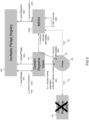
- FIG. 4 shows an example arrangement and a scenario for the registration of factory new IoT devices (Factory New Device Enrollment).
- the example arrangement according to Figure 4 shows a manufacturer F3 for IoT devices G1 (Pledge).
- An IoT device G1 can be, for example, Internet-enabled field devices such as sensors (e.g. temperature sensors, fire detectors) or actuators (e.g. actuators).
- a domain registrar R4 is responsible for adding an IoT device G1 to a network (e.g. LAN network or IP network of a building).
- the domain registrar R4 can be a standalone device.
- the function of the domain registrar R4 can also be taken over by an IoT device G1 of the network.
- the device G1 is set up with the appropriate software and hardware. Furthermore, the example arrangement according to Figure 4 a distributed ledger (blockchain, distributed ledger) VH1, as well as an authorization authority Auth1 (MASA, Manufacturer Authorized Signing Authority).
- the authorization authority Auth1 can be a trustworthy server (e.g. a certification server).
- the distributed ledger (blockchain, distributed ledger) VH1 is set up to carry out transactions based on blockchain technology. From a technological point of view, a blockchain represents a distributed database. The registration of the devices G1 in the network is based on blockchain technology.
- the manufacturer F3 equips a brand new G1 (Pledge) device with a "credential". [1. issue credential (IDevID: IEEE 802.1AR)] S2 The device G1 presents the credential to the domain registrar R4. [2. present credential (IDevID: IEEE 802.1AR)] S3 The registrar R4 checks whether the device G1 is present in the distributed database of the general ledger VH1 is, by making a corresponding request. [3. queryDevice] S4 Notification of the distributed ledger VH1 to the registrar R4 if the device G1 does not have a corresponding entry in the database (blockchain) of the ledger. [4.
- the dashed arrow between the device G1 (Pledge) and the authorization authority Auth1 (MASA) represents a trustworthy relationship (trust or trustworthy certificate) Z1 between the device G1 and the authorization authority Auth1.
- a pledge is an IoT device that wants to join a domain and trusts only a specific MASA.
- a voucher (RFC 8366) is an artifact signed by a pledge or its manufacturer and is required to assign the pledge to a new "owner". It contains certain information such as pledge certificate, domain ID and serial number of the device.
- the MASA authorization authority
- the MASA is responsible for verifying incoming vouchers, as well as signing and returning vouchers for a pledge.
- the audit log is a data structure that contains the device histories (also called “events").
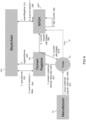
- Figure 5 shows an example arrangement and a scenario for a registrar exchange (recovery procedure). If a registrar is no longer available (e.g. password or secret lost), then a new registrar can take over the devices from the previous registrar, preferably according to a defined recovery procedure defined as a smart contract or in chain code.
- a registrar exchange recovery procedure
- the recovery procedure is characterized by the new registrar presenting a defined number of nearby attestation certificates from devices that are assigned to the previous registrar in the VH2 (blockchain) database.
- a nearby attestation certificate is signed by the device with the private key whose public key is linked to the previous registrar in the VH2 (blockchain) database.
- a nearby attestation certificate is only issued by the device if the new registrar can prove that it is physically nearby.
- the physical presence feature can be defined on a system-specific basis and was written by the previous registrar together with the recovery procedure into the VH2 database (distributed ledger in blockchain technology).
- the exemplary arrangement according to Figure 5 shows an old domain registrar Ro to be replaced, the new domain registrar Rn, which is to replace the old domain registrar Ro.
- Figure 5 the IoT devices (Pledge) G2 - Gn of a network (e.g. IP network) for which a registrar is responsible.
- An IoT device G2 - Gn can be, for example, Internet-enabled field devices such as sensors (e.g. temperature sensors, fire detectors) or actuators (e.g. actuators).
- a domain registrar Ro, Rn is responsible and in charge of the inclusion of an IoT device G2 - Gn in a network (e.g. LAN network or IP network of a building).
- a distributed ledger (blockchain, distributed ledger) VH2, as well as an authorization authority Auth2 (MASA, Manufacturer Authorized Signing Authority).
- the authorization authority Auth2 can be a trustworthy server (e.g. a certification server).
- the distributed ledger (blockchain, distributed ledger) VH2 is set up to carry out transactions based on blockchain technology. From a technological point of view, a blockchain represents a distributed database. The registration of the devices G2 to Gn in the network is based on blockchain technology.
- the solid arrows represent requests or data flows between the corresponding components.
- the dashed arrows represent trustworthy relationships (trust or trustworthy certificate) Z2, Z3.
- One advantage of the present invention is that if the private key from the registrar is no longer available, all devices can be automatically transferred to a new registrar using nearby attestations without returning to the delivery state.
- the database no longer has to be operated by the manufacturer. This means that the costs and the responsibility or risk are no longer with the manufacturer.
- the Manufacturers still have to provide infrastructure. However, this is only a check of the database before the voucher is issued for a specific device. From a security perspective, this function is far less critical than, for example, the database.
- a manufacturer can decide to be part of a distributed database and operate its own node. This can be in a consortium or just internally within the company. This means that the manufacturer always has an up-to-date image of the database. The advantage of a secure database that cannot be subsequently changed remains.
- the present invention enables efficient, secure inclusion and verification (is it a malicious or corrupted IoT device?) of IoT devices in networks (e.g. a network for a building with field devices connected to the network).
- networks e.g. a network for a building with field devices connected to the network.
- BRSKI BitTorrent Remote Secure Key Infrastructure
- a trusted authorization authority (MASA, Manufacturer Authorized Signing Authority) makes the history of a specific IoT device available to a domain registrar (e.g. network admin), which can then verify a device.
- Ethereum blockchain technology for example, can be used as a distributed database.
Landscapes
- Engineering & Computer Science (AREA)
- Computer Security & Cryptography (AREA)
- Theoretical Computer Science (AREA)
- Computer Hardware Design (AREA)
- General Engineering & Computer Science (AREA)
- Software Systems (AREA)
- Physics & Mathematics (AREA)
- General Physics & Mathematics (AREA)
- Bioethics (AREA)
- Health & Medical Sciences (AREA)
- General Health & Medical Sciences (AREA)
- Computer Networks & Wireless Communication (AREA)
- Signal Processing (AREA)
- Computing Systems (AREA)
- Management, Administration, Business Operations System, And Electronic Commerce (AREA)
- Storage Device Security (AREA)
Description
- Die Erfindung betrifft ein Verfahren und eine Anordnung zum Austauschen eines Vorgänger-Domain-Registrars für das Authentifizieren und Konfigurieren von digitalen Zertifikaten von IoT-Geräten durch einen neuen Domain-Registrar.
- Unter dem Internet der Dinge (Internet-of-things, IoT) versteht man Informations- und Kommunikationstechnologien, um physische und/oder virtuelle Geräte über das Internet oder über Internet-ähnliche Strukturen zu verknüpfen.
- IoT-Geräte für das Internet der Dinge (Internet of Things, IoT) sind Geräte oder Komponenten eines Systems, die drahtgebunden oder drahtlos an ein Netzwerk (z.B. Internet, Intranet) anschliessbar sind, und eingerichtet sind, Daten zu erfassen, zu verarbeiten, zu speichern, oder zu übertragen.
- IoT-Geräte spielen eine immer wichtigere Rolle in verschiedensten Bereichen (z.B. Fahrzeuge, Fabriken, Büro- und Wohngebäude). Die steigende Anzahl von IoT-Geräten weist nicht nur auf die Relevanz dieser Geräte hin, sondern fordert auch ein gewisses Mass an Sicherheit, insbesondere Manipulationssicherheit. Bei der Inbetriebnahme bzw. Installation von IoT-Geräten in Netzwerken, müssen diese Geräte zuerst überprüft werden, um den Einbau von korrumpierten (z.B. mit Schadsoftware versehenen Geräten) zu verhindern. Dies ist ein manueller Vorgang und kann bei der steigenden Anzahl von IoT-Geräten ein zeitintensives und teures Verfahren sein.
WO 2019/033116 ist Teil des Standes der Technik - Es ist daher die Aufgabe der vorliegenden Erfindung, ein effektives Verfahren für die Inbetriebnahme vertrauenswürdiger IoT-Geräte bereitzustellen.
- Die Aufgabe wird gelöst durch ein Verfahren zum Austauschen eines Vorgänger-Domain-Registrars für das Authentifizieren und Konfigurieren von digitalen Zertifikaten von IoT-Geräten durch einen neuen Domain-Registrar, wobei der Vorgänger-Domain-Registrar und die IoT-Geräte einer technischen Anlage in einem Geräteregister basierend auf Blockchain-Technologie hinterlegt sind, das Verfahren umfasst die folgenden Schritte:
- Bestimmen (d.h. definieren oder festlegen) der benötigten Anzahl von Nachbarschaftsnachweisen (Nearby-Attestations) durch den Vorgänger-Domain-Registrar;
- Eintragen des neuen Domain-Registrar in das Geräteregister;
- Einsammeln der Nachbarschaftsnachweise der jeweiligen IoT-Geräte durch den neuen Domain-Registrar, wobei ein Nachbarschaftsnachweis durch ein jeweiliges IoT-Gerät bereitgestellt wird;
- Prüfen, ob der neue Domain-Registrar die definierte (d.h. die benötigte bzw. festgelegte) Anzahl von Nachbarschaftsnachweisen (Nearby-Attestations) des Vorgänger-Domain-Registrar erfüllt;
- Übernahme der technischen Anlage durch den neuen Domain-Registrar als Authentifizierungs- und Konfigurationsinstanz von digitalen Zertifikaten für die IoT-Geräte der Anlage;
- Senden von Voucher-Requests durch die IoT-Geräte der Anlage an den neuen Domain-Registrar;
- Weiterleiten der Voucher-Requests durch den neuen Domain-Registrar an eine Autorisierungsstelle (MASA, Manufacturer Authorized Signing Authority, Hersteller-Autorisierungsstelle, vertrauenswürdiger Server);
- Überprüfen durch die Autorisierungsstelle (MASA) im Geräteregister (Blockchain), ob das jeweilige IoT-Gerät zum (anfragenden) neuen Domain-Registrar gehört;
- wobei, wenn die Autorisierungsstelle (MASA) feststellt, dass das entsprechende IoT-Gerät zum neuen Domain-Registrar gehört, die Autorisierungsstelle (MASA) einen Voucher für das entsprechende IoT-Gerät ausstellt und den Voucher an das entsprechende IoT-Gerät sendet.
- Das Verfahren zum Recovery eines Domain-Registrar, bzw. zur Ersetzung eines alten Domain-Registrar durch einen neuen Domain-Registrar.
- Eine erste vorteilhafte Ausgestaltung der Erfindung liegt darin, dass das entsprechende IoT-Gerät eine für ihn ausgestellte Geräteidentifizierung (z.B. IDevID, Initial Device Identifier) vom neuen Domain-Registrar akzeptiert, und wobei der neue Domain-Registrar die neue Geräteidentifizierung (z.B. LDevID, Local Significant Device Identifiers) auf das entsprechende IoT-Gerät schreibt (z.B. gemäss EST (Enrollment over Secure Transport), spezifiziert z.B. in RFC 7030). Dies ermöglicht u.a. eine sichere Geräteauthentifizierung und eine einfache Bereitstellung, sowie Verwaltung sicherer Geräte.
- Eine weitere vorteilhafte Ausgestaltung der Erfindung liegt darin, dass das Prüfen, ob der neue Domain-Registrar die definierten Nachbarschaftsnachweise (Nearby-Attestations) des Vorgänger-Domain-Registrar erfüllt (insbesondere, ob die definierte Anzahl (bzw. die benötigte Anzahl) an Nachbarschaftsnachweisen erfüllt ist), durch einen intelligenten Vertrag (Smart Contract) des Geräteregisters (Blockchain) erfolgt. Das Erfülltsein von definierten Bedingungen wird durch den Smart Contract automatisch geprüft. Der Smart Contract ist ein in Blockchain-Technologie implementiertes Computerprotokoll, welches die Logik vertraglicher Regelungen technisch abbildet. Durch die Blockchain-Technologie werden Datensätze (Datenblöcke) durch kryptographische Verfahren miteinander verbunden.
- Eine weitere vorteilhafte Ausgestaltung der Erfindung liegt darin, dass die jeweiligen Signaturen der Nachbarschaftsnachweise (Nearby-Attestations) mit den öffentlichen Schlüsseln (Public Keys) der jeweiligen IoT-Geräte verglichen werden, die im Geräteregister (Blockchain) noch mit dem Vorgänger-Domain-Registrar verknüpft sind. Dies erhöht die Datensicherheit.
- Eine weitere vorteilhafte Ausgestaltung der Erfindung liegt darin, dass weiterhin geprüft wird, ob der neue Domain-Registrar das Secret (Private Key) besitzt, welches zum Registrar Public Key passt, der in den jeweiligen Nachbarschaftsnachweisen (Nearby-Attestations) steht. Auch dadurch wird die Datensicherheit erhöht.
- Eine weitere vorteilhafte Ausgestaltung der Erfindung liegt darin, dass das Ausstellen eines Nachbarschaftsnachweises (Nearby-Attestation) basierend auf einer physischen Präsenz zum IoT-Gerätes erfolgt. Das Merkmal für physische Präsenz kann z.B. ein Kommunikationskanal auf dem Gerät sein, oder ein Taster am Gerät, der (mit Vorteil zu einer bestimmten Zeit) gedrückt werden muss.
- Eine weitere vorteilhafte Ausgestaltung der Erfindung liegt darin, dass das Ausstellen eines Nachbarschaftsnachweises (Nearby-Attestation) basierend auf der Zugehörigkeit zum gleichen Computer Netzwerk (z.B. ein LAN-Netzwerk in einem Gebäude) des neuen Domain-Registrar und dem IoT-Gerät erfolgt. Auch dadurch wird die Datensicherheit erhöht.
- Eine weitere vorteilhafte Ausgestaltung der Erfindung liegt in einer Anordnung zur Durchführung des erfinderischen Verfahrens zum Austauschen eines Vorgänger-Domain-Registrars für das Authentifizieren und Konfigurieren von digitalen Zertifikaten von IoT-Geräten. Eine solche Anordnung lässt sich mit entsprechend eingerichteten handelsüblichen Komponenten realisieren oder nachrüsten.
- Eine weitere vorteilhafte Ausgestaltung der Erfindung liegt in einem Registrar, eingerichtet zur Durchführung des erfinderischen Verfahrens zum Austauschen eines Vorgänger-Domain-Registrars für das Authentifizieren und Konfigurieren von digitalen Zertifikaten von IoT-Geräten. Mit Vorteil ist eines der vorhandenen IoT-Geräte eingerichtet, um die Aufgaben des Registrars zu übernehmen und auszuführen.
- Eine weitere vorteilhafte Ausgestaltung der Erfindung liegt darin, dass es sich beim Registrar um ein entsprechend eingerichtetes IoT-Gerät der Anlage (z.B. ein Gebäudeautomatisierungssystem für ein Gebäude oder eine Fabrik) handelt. Wenn ein schon vorhandenes IoT-Gerät als Registrar verwendet wird, ist es nicht notwendig ein zusätzliches Gerät bereitzustellen.
- Die Erfindung sowie vorteilhafte Ausführungen der vorliegenden Erfindung werden am Beispiel der nachfolgenden Figur erläutert. Dabei zeigt:
- FIG 1
- ein beispielhaftes Flussdiagramm für ein Verfahren zum Austauschen eines Vorgänger-Domain-Registrars für das Authentifizieren und Konfigurieren von digitalen Zertifikaten von IoT-Geräten durch einen neuen Domain-Registrar,
- FIG 2
- ein erstes Diagramm für beispielhafte intelligente Verträge (smart contracts),
- FIG 3
- ein zweites Diagramm für beispielhafte intelligente Verträge (smart contracts),
- FIG 4
- eine beispielhafte Anordnung und ein Szenario für die Registrierung von fabrikneuen IoT-Geräten, und
- FIG 5
- zeigt eine beispielhafte Anordnung und ein Szenario für einen Registraraustausch.
- Die Sicherheit (Security) in einem Gebäudeautomationssystem ist ein zentraler Teil des Systems. Für die Sicherheit (Security) werden symmetrische und asymmetrische kryptographische Schlüssel verwendet damit sich Geräte (z.B. Feldgeräte, Sensoren, Aktoren) einer Anlage bzw. eines Gebäudes gegenseitig trauen und Informationen austauschen. Damit dieses Vertrauen hergestellt werden kann, wird normalerweise eine vertrauenswürdige Drittpartei verwendet, die neue Geräte einer Anlage hinzufügen kann, z.B. basierend auf dem in IETF (Internet Engineering Task Force, Internettechnik-Arbeitsgruppe) BRSKI (Bootstrapping Remote Secure Key Infrastructures) definierten Ablauf. Die vertrauenswürdige Drittpartei kann ein Registrar sein, der eine CA (Zertifizierungsstelle, Certificate Authority, certification authority) repräsentiert mit einem öffentlichen und einem privaten Schlüssel. Der private Schlüssel der Zertifizierungsstelle (CA) wird dazu verwendet die LDevID (Locally Significant Device Identifier, Lokal bedeutsame Gerätekennung; IEEE 802.1AE) zu signieren. Der Registrar ist berechtigt auf den Geräten sicherheitsrelevante Einstellungen zu verändern, wie z.B. die Konfiguration einer Vertrauensbeziehung zu einer Zertifizierungsstelle (CA). Der Registrar kann z.B. Teil eines Inbetriebnahme Tools sein, das die Anlage nach der Inbetriebnahme wieder verlässt. Alternativ kann der Registrar auch auf einem Gerät (z.B. entsprechend eingerichtetes Feldgerät) der Anlage sein bei dem die Geräte ihre LDevID X.509 Zertifikate beziehen oder erneuern. Der Lebenszyklus von einem Gebäudeautomationssystem ist normalerweise sehr lange und ist nicht selten grösser 15 Jahre. Während dieser Zeit kommt es vor, dass Geräte kaputt gehen und ersetzt werden müssen oder die Anlage wird erweitert und es kommen neue Geräte dazu. Damit das gemacht werden kann, müssen die neuen Geräte ihre LDevID wieder bei einem Registrar beziehen. Ein übliches Problem ist nun, dass das X.509 Zertifikat bzw. der entsprechende private Schlüssel vom Registrar verloren oder vergessen geht. Gründe dafür können sein, dass das Gerät mit dem Registrar defekt ist oder die verantwortliche Organisation oder Person nicht mehr existiert zu diesem Zeitpunkt (z.B. nach 5 Jahren). Das heisst, es kann kein neues Gerät in die Anlage integriert werden, z.B. wenn die Funktionalität auf der Anlage erweitert werden soll oder ein Gerät defekt ist und ausgetauscht werden muss.
- Wenn der private Schlüssel vom Registrar nicht mehr verfügbar ist, dann muss ein neuer Registrar konfiguriert werden und sämtliche Geräte müssen in den Auslieferzustand bevor sie den neuen Registrar wieder akzeptieren. Das heisst, dass anschliessend auch die gesamte Applikation (z.B. Lichtsystem oder HLK System) nochmals in Betrieb genommen und getestet werden muss. Dies ist teuer und aufwändig.
-
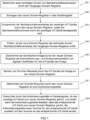
Figur 1 zeigt ein beispielhaftes Flussdiagramm für ein Verfahren zum Austauschen eines Vorgänger-Domain-Registrars für das Authentifizieren und Konfigurieren von digitalen Zertifikaten von IoT-Geräten durch einen neuen Domain-Registrar, wobei der Vorgänger-Domain-Registrar und die IoT-Geräte einer technischen Anlage in einem Geräteregister basierend auf Blockchain-Technologie hinterlegt sind, das Verfahren umfasst die folgenden Schritte: - (VS1) Bestimmen der benötigten Anzahl von Nachbarschaftsnachweisen durch den Vorgänger-Domain-Registrar;
- (VS2) Eintragen des neuen Domain-Registrar in das Geräteregister;
- (VS3) Einsammeln der Nachbarschaftsnachweise der jeweiligen IoT-Geräte durch den neuen Domain-Registrar, wobei ein Nachbarschaftsnachweis durch ein jeweiliges IoT-Gerät bereitgestellt wird;
- (VS4) Prüfen, ob der neue Domain-Registrar die definierte Anzahl Nachbarschaftsnachweise des Vorgänger-Domain-Registrar erfüllt (d.h. die bestimmte benötigte Anzahl von Nachbarschaftsnachweisen des Vorgänger-Domain-Registrar erfüllt);
- (VS5) Übernahme der technischen Anlage durch den neuen Domain-Registrar als Authentifizierungs- und Konfigurationsinstanz von digitalen Zertifikaten für die IoT-Geräte der Anlage;
- (VS6) Senden von Voucher-Requests durch die IoT-Geräte der Anlage an den neuen Domain-Registrar;
- (VS7) Weiterleiten der Voucher-Requests (Gutschein-Anfragen) durch den neuen Domain-Registrar an eine Autorisierungsstelle;
- (VS8) Überprüfen durch die Autorisierungsstelle im Geräteregister, ob das jeweilige IoT-Gerät zum neuen Domain-Registrar gehört,
- wobei, wenn die Autorisierungsstelle feststellt, dass das entsprechende IoT-Gerät zum neuen Domain-Registrar gehört, die Autorisierungsstelle einen Voucher für das entsprechende IoT-Gerät ausstellt und den Voucher an das entsprechende IoT-Gerät sendet. Das Verfahren kann mit handelsüblichen Software- und Hardwarekomponenten als computerimplementiertes Verfahren realisiert werden, mit entsprechend eingerichteten Datenverarbeitungseinrichtungen (Computer, Server, etc.) und entsprechenden Kommunikationsmechanismen (Internet, Intranet, Funkverbindungen, etc.).
- Mit Vorteil akzeptiert das entsprechende IoT-Gerät eine für ihn ausgestellte Geräteidentifizierung vom neuen Domain-Registrar, und mit Vorteil schreibt der neue Domain-Registrar die neue Geräteidentifizierung auf das entsprechende IoT-Gerät.
- Mit Vorteil erfolgt das Überprüfen, ob der neue Domain-Registrar die definierten Nachbarschaftsnachweise des Vorgänger-Domain-Registrar erfüllt, durch einen intelligenten Vertrag (smart contract) des Geräteregisters.
- Mit Vorteil werden die jeweiligen Signaturen der Nachbarschaftsnachweise mit den öffentlichen Schlüsseln der jeweiligen IoT-Geräte verglichen, die im Geräteregister noch mit dem Vorgänger-Domain-Registrar verknüpft sind.
- Mit Vorteil wird weiterhin überprüft, ob der neue Domain-Registrar das Secret (z.B. Credential, Berechtigungsnachweis) besitzt, welches zum Registrar Public Key passt, der in den jeweiligen Nachbarschaftsnachweisen steht.
- Mit Vorteil erfolgt das Ausstellen eines Nachbarschaftsnachweises basierend auf einer physischen Präsenz zum IoT-Gerätes. Das Merkmal für physische Präsenz kann ein Kommunikationskanal auf dem Gerät sein. Ein möglicher Kommunikationskanal ist Funk, dessen Reichweite begrenzt ist, wie z.B. WPAN (Bluetooth, WiFi, 802.15.4 etc.) oder NFC. Alternativ kann es auch ein lokaler IP Adressraum sein, wie z.B. eine IPv6 Link-Lokal oder eine IPv6 Realm-local Adresse. Als weiteres Merkmal für physische Präsenz kann eine Taste verwendet werden, die zu einem bestimmten Zeitpunkt gedrückt werden muss.
- Ein Nachbarschaftsnachweis (nearby attestation) hat z.B. folgenden Dateninhalt:
- { Eindeutige Geräte Identifikation (z.B. Seriennummer)
- Public Key vom Gerät
- Physische Präsenz Typ (z.B. BLE oder Absender IP-Adresse)
- Public Key Information vom Registrar
- } Signatur des Nachbarschaftsnachweises (nearby attestation) mit dem Secret das zum Geräte Public Key (öffentlicher Schlüssel) aus dem Dateninhalt passt.
- Mit Vorteil erfolgt das Ausstellen eines Nachbarschaftsnachweises basierend auf der Zugehörigkeit zum gleichen Computer Netzwerk des neuen Domain-Registrar und dem IoT-Gerät.
- Bei der Inbetriebnahme werden die Geräte und der zugehörige Registrar in eine private oder öffentlich zugängliche und nachträglich nicht veränderbare Datenbank (nachfolgend nur Datenbank genannt) geschrieben. Eine mögliche Datenbank-Technologie könnte die Distributed Ledger Technology (DLT, Verteilte Ledger/Hauptbuch-Technologie) sein, die oft auch Blockchain genannt wird. Die Geräte bzw. deren Public-Key (öffentlicher Schlüssel) werden dem Registrar bzw. dessen Public-Key zugeordnet und diese Information wird ebenfalls in die Datenbank geschrieben. Die Einträge in die Datenbank werden von einem anlagespezifischen Registrar gemacht. Zusätzlich kann der Registrar ein anlagespezifisches Recovery Prozedere in die Datenbank schreiben für den Fall, wenn der Registrar nicht mehr verfügbar ist (z.B. Passwort oder Secret verloren). Das wird gemacht in Form eines Smart Contracts oder ebenfalls Chaincode (Kettencode) genannt. Wenn nun der Registrar (Registrierungsstelle) nicht mehr verfügbar ist, dann kann ein neuer Registrar die Geräte (IoT-Geräte) vom Vorgänger Registrar übernehmen gemäss dem definierten Recovery Prozedere im Smart Contract.
- Das Recovery Prozedere ist dadurch gekennzeichnet, dass der neue Registrar eine definierte Anzahl von Nachbarschaftsnachweisen (nearby attestation) von Geräten präsentiert, die dem Vorgänger-Registrar in der Datenbank zugeordnet sind. Die «nearby attestation» wird vom Gerät mit dem Private-Key signiert, dessen Public-Key in der Datenbank mit dem Vorgänger-Registrar verknüpft ist. Die Nachbarschaftsnachweise werden vom jeweiligen Gerät nur ausgestellt, wenn der neue Registrar beweisen kann, dass er sich physisch in der Nähe des jeweiligen Gerätes aufhält. Das Merkmal für physische Präsenz kann anlagespezifisch definiert werden und wurde vom Vorgänger-Registrar zusammen mit dem Recovery Prozedere in die Datenbank geschrieben.
- Das Merkmal für physische Präsenz kann ein Kommunikationskanal auf dem Gerät sein. Ein möglicher Kommunikationskanal ist Funk, dessen Reichweite begrenzt ist wie z.B. WPAN (Bluetooth, WiFi, 802.15.4 etc.) oder NFC. Alternativ kann es auch ein lokaler IP Adressraum sein wie z.B. eine IPv6 Link-Lokal oder eine IPv6 Realm-local Adresse. Als weiteres Merkmal für physische Präsenz kann eine Taste verwendet werden, die zu einem bestimmten Zeitpunkt gedrückt werden muss. Sobald die definierten Merkmale für die physische Präsenz erfüllt sind, stellt das Gerät einen Nachbarschaftsnachweis für den neuen Registrar aus.
- Nachdem der neue Registrar die vordefinierte Anzahl von Nachbarschaftsnachweisen (nearby attestations) erhalten bzw. eingesammelt hat, kann er diese der Datenbank übergeben. Die Datenbank prüft nun mittels Recovery Prozedere im Smart Contract ob der neue Registrar berechtigt ist die Geräte vom Vorgänger-Registrar zu übernehmen. Dabei prüft der Smart Contract ob alle Nachbarschaftsnachweise bzw. die Geräte zum entsprechenden Vorgänger-Registrar gehören und ob die Anzahl der Nachbarschaftsnachweise gleich oder grösser ist als die vordefinierte Anzahl im Smart Contract (intelligenter Vertrag). Hierfür wird die Signatur der Nachbarschaftsnachweise (nearby attestations) geprüft mit dem entsprechenden Public Key (öffentlicher Schlüssel) vom Gerät, der in der Datenbank steht und zu diesem Zeitpunkt noch mit dem Vorgänger-Registrar verknüpft ist. Zusätzlich wird geprüft, ob der neue Registrar das Secret (Credential, Berechtigung) besitzt, welches zum Registrar Public Key passt, der im entsprechenden Nachbarschaftsnachweis steht.
- Wenn alle Prüfungen erfolgreich waren, werden alle Geräte vom Vorgänger-Registrar zum neuen Registrar transferiert. Das heisst, alle Geräte sind ab diesem Zeitpunkt in der Datenbank nur noch dem neuen Registrar zugeordnet.
- Sobald die Geräte in der Datenbank dem neuen Registrar zugeordnet sind, kann der normale Prozess gestartet werden um die LDevID (X.509 Zertifikat) auf die Geräte zu verteilen. Das heisst, der Registrar bekommt zuerst vom Gerät einen Voucher-Request (z.B. RFC8366), welcher der Registrar zu einem für das Gerät vertrauenswürdigen Server (MASA, Manufacturer Authorized Signing Authority) schickt. Dieser Server prüft die Datenbank ob das Gerät wirklich zum Registrar gehört, der den Voucher-Request geschickt hat. Ist diese Prüfung positiv, dann stellt der Server einen Voucher aus. Der Voucher bestätig dem Gerät (IoT-Gerät), dass es dem neuen Registrar vertrauen kann. Der Registrar leitet den Voucher anschliessend zum Gerät weiter. Ab jetzt vertraut das Gerät dem Registrar welcher im Voucher steht, falls alle Prüfungen positiv waren. Im nächsten Schritt akzeptiert das Gerät eine für ihn ausgestellte LDevID vom entsprechenden Registrar und der Registrar kann z.B. gem. EST (RFC7030; Enrollment over Secure Transport) die LDevID auf das Gerät schreiben
- Das Einsammeln der Nachbarschaftsnachweis durch den Registrar kann durch den Registrar initiiert werden, z.B. durch eine Broadcast-meldung an die Geräte im Netzwerk, die darauf die entsprechenden Nachbarschaftsnachweise an den Registrar (bzw. den neuen Registrar) senden. Es kann aber auch sein, dass die Geräte im Netzwerk einen neuen Registrar selbständig erkennen (z.B. durch Funk-Ortung, ähnlich wie in einem WLAN-Netz oder bei Bluetooth ein anwesendes Gerät gemeldet wird) und ihre Nachbarschaftsnachweise an den Registrar automatisch senden.
-
Figur 2 zeigt ein erstes Diagramm für beispielhafte intelligente Verträge SC1 - SC3 (smart contracts). Intelligente Verträge SC1 - SC3 (smart contracts) bilden eine Logik und Transaktionen vertraglicher Vereinbarungen technisch auf ein auf einem Computer oder Computernetzwerk ausführbares Protokoll ab. Zum Beispiel unterstützt die Blockchain-Technologie Ethereum Smart Contracts. - In der beispielhaften Darstellung gemäss
Figur 2 zeigt der obere Abschnitt AS1 eine Fabrik F1, wobei durch den Aktivierungsbefehl AB1 der intelligente Vertrag SC1 für ein Gerät (contract: Device) aktiviert wird (invoke). - Der intelligente Vertrag SC1 ist in Pseudocode dargestellt:
          contract: Device
          createDevice(IDevId, Timestamp)
          Device {
          IDevId: "<public-key>",
          Timestamp: "1504054225" }
          contract: Registrar
          createRegistrar(Registrar, Timestamp)
          queryDevice(IDevId)
          registerDevice(Registrar, IDevId, Voucher)
          Registrar {
          Registrar: "<public-key>",
          Timestamp: "1504057569",
          devices: [ IDevId: "<public-key>",
                         Voucher: "<hash>" ] }.
          contract: Registrar
          queryRegistrar(Registrar)
          handoverRegistrar(oRegistrar, nRegistrar, Voucher)
          transferRegistrar(oRegistrar, nRegistrar, Vouchers).
          Registrar {
          Registrar: "<public-key-new-registrar>" ,
          Timestamp: "1504057569",
          devices: [ IDevId: "<public-key>",
                         Voucher: "<hash>" ] }.
          contract: PledgeAuditLog
          create(pledge-id, masa-id).
          contract: PledgeAuditLog
          query(pledge-id)
          claim(to-domain-id) .
          contract: PledgeAuditLog
          query(pledge-id)
          transfer(to-domain-id, event-item).
          Pledge {
               id: "<H (pledge-id) >",
               controller: "<H(masa-id)>",
               owner: "none",
               events: [ ]
          }.
           Pledge {
               id: "<H (pledge-id) >",
               controller: "<H(masa-id)>",
               owner: "none",
               claim: "<to-domain-id>",
               events: [ ]
          }.
          Pledge {
               id: "<H (pledge-id) >",
               controller: "<H(masa-id)>",
               owner: "<to-domain-id>",
               claim: "none",
               events: [<event-item>]
          }.
| 51 | Der Hersteller F3 stattet ein fabrikneues Gerät G1 (Pledge) mit einem "credential" (Berechtigungsnachweis) aus. |
| [1. issue credential (IDevID: IEEE 802.1AR)] | |
| S2 | Das Gerät G1 präsentiert den Berechtigungsnachweis (credential) beim Domain Registrar R4. |
| [2. present credential (IDevID: IEEE 802.1AR)] | |
| S3 | Der Registrar R4 prüft, ob das Gerät G1 in der verteilten Datenbank des Hauptbuches VH1 vorhanden |
| ist, durch eine entsprechende Anfrage. | |
| [3. queryDevice] | |
| S4 | Mitteilung des verteilten Hauptbuches VH1 an den Registrar R4, wenn das Gerät G1 keinen entsprechen den Eintrag in der Datenbank (Blockchain) des Hauptbuches hat. |
| [4. proof of insertion = false] | |
| S5 | Registrierung des Gerätes G1 in der Datenbank (Blockchain) durch den Registrar R4, wenn das Gerät G1 einen entsprechen Eintrag in der Datenbank des Hauptbuches VH1 hat. |
| [5. registerDevice] | |
| S6 | Anforderung eines Vouchers (Beleg, Zertifikat) für das Gerät G1 durch den Registrar R4 bei der Autorisierungsstelle Auth1 (MASA, Manufacturer Authorized Signing Authority) . |
| [6. voucher request (RFC8366)] | |
| S7 | Die Autorisierungsstelle Auth1 (MASA) prüft, ob der Registrar R4 in der verteilten Datenbank des Hauptbuches VH1 vorhanden ist, durch eine entsprechende Anfrage. |
| [7. queryRegistrar] | |
| S8 | Das verteilte Hauptbuches VH1 meldet der Autorisierungsstelle Auth1 (MASA), ob der Registrar R4 in der verteilten Datenbank des Hauptbuches VH1 vorhanden ist. |
| [8. proof of insertion = true] | |
| S9 | Wenn der Registrar R4 in der verteilten Datenbank des Hauptbuches VH1 vorhanden ist (8. proof of insertion = true), stellt die Autorisierungsstelle Auth1 (MASA) einen Voucher für das Gerär G1 aus. |
| [9. sign voucher] | |
| S10 | Die Autorisierungsstelle Auth1 (MASA) sendet über den Registrar R4 den Voucher für das Gerät G1 an das Gerät G1. |
| [10. voucher (RFC8366)] |
- Pledge authentifizieren
- Voucher verteilen
| S1' | Der neue Registrar Rn trägt sich in die Datenbank VH2 ein. |
| [1. queryPledge] | |
| S2' | Der neue Registrar Rn prüft ob er wirklich in der Datenbank (verteiltes Hauptbuch) VH2 existiert. |
| [2. proof of insertion = true] | |
| S3' | Der neue Registrar Rn sammelt die Nachbarschaftsnachweise (nearby attestations) ein. |
| [3.n. request nearby attestation (LDevID signed voucher)] | |
| S4' | Der neue Registrar Rn übernimmt die Anlage. |
| [4. registerPledge] | |
| S5' | Der neue Registrar Rn bekommt den Voucher-Request |
| vom Gerät G2 - Gn und schickt diesen zur Autorisierungsstelle Auth2 (MASA). | |
| [5. voucher request (RFC8366)] | |
| S6' | Die Autorisierungsstelle Auth2 (MASA) prüft in der Datenbank (verteiltes Hauptbuch) VH2, ob das Gerät G2 - Gn zum anfragenden Registrar Rn gehört. |
| [6. queryRegistrar] | |
| S7' | Die Datenbank VH2 antwortet entsprechend. |
| [7. proof of insertion = true] | |
| S8' | Die Autorisierungsstelle Auth2 (MASA) stellt einen Voucher für das entsprechende Gerät G2 - Gn aus. |
| [8. sign voucher] | |
| S9' | Der Voucher wird an das Gerät G2 - Gn Zurückgeschickt. |
| [9. voucher (RFC8366)] |
- VS1 - VS8
- Verfahrensschritt
- F1- F3
- Fabrik
- R1 - R3, R3', R4, Rn, Ro
- Registrar
- AB1 - AB5
- Aktivierungsbefehl
- SC1 - SC6
- Intelligenter Vertrag
- DS1 - DS3
- Datenstruktur
- AS1 - AS3
- Abschnitt
- AL
- Auslieferung
- VReq
- Anforderung Voucher
- VResp
- Auslieferung Voucher
- S1 - S10, S1' - S9'
- Schritt
- G1, G2, Gn
- Gerät
- VH1, VH2
- Verteiltes Hauptbuch
- Auth1, Auth2
- Autorisierungsstelle
- Z1 - Z3
- Zertifikat
Claims (10)
- Verfahren zum Austauschen eines Vorgänger-Domain-Registrars (Ro) für das Authentifizieren und Konfigurieren von digitalen Zertifikaten von IoT-Geräten (G1 - Gn) durch einen neuen Domain-Registrar (Rn), wobei der Vorgänger-Domain-Registrar (Ro) und die IoT-Geräte (G1 - Gn) einer technischen Anlage in einem Geräteregister (VH1, VH2) basierend auf Blockchain-Technologie hinterlegt sind, das Verfahren umfasst die folgenden Schritte:(VS1) Bestimmen einer benötigten Anzahl von Nachbarschaftsnachweisen durch den Vorgänger-Domain-Registrar (Ro);(VS2) Eintragen des neuen Domain-Registrar (Rn) in das Geräteregister (VH1, VH2);(VS3) Einsammeln der Nachbarschaftsnachweise der jeweiligen IoT-Geräte (G1 - Gn) durch den neuen Domain-Registrar (Rn), wobei ein Nachbarschaftsnachweis durch ein jeweiliges IoT-Gerät (G1 - Gn) bereitgestellt wird;(VS4) Prüfen, ob der neue Domain-Registrar (Rn) die bestimmte Anzahl Nachbarschaftsnachweise des Vorgänger-Domain-Registrar (Ro) erfüllt;(VS5) Übernahme der technischen Anlage durch den neuen Domain-Registrar (Rn) als Authentifizierungs- und Konfigurationsinstanz von digitalen Zertifikaten für die IoT-Geräte (G1 - Gn) der Anlage;(VS6) Senden von Voucher-Requests durch die IoT-Geräte (G1 - Gn) der Anlage an den neuen Domain-Registrar (Rn);(VS7) Weiterleiten der Voucher-Requests durch den neuen Domain-Registrar (Rn) an eine Autorisierungsstelle (Auth1, Auth2) ;(VS8) Überprüfen durch die Autorisierungsstelle (Auth1, Auth2) im Geräteregister (VH1, VH2), ob das jeweilige IoT-Gerät (G1 - Gn) zum neuen Domain-Registrar (Rn) gehört,wobei, wenn die Autorisierungsstelle (Auth1, Auth2) feststellt, dass das entsprechende IoT-Gerät (G1 - Gn) zum neuen Domain-Registrar (Rn) gehört, die Autorisierungsstelle (Auth1, Auth2) einen Voucher für das entsprechende IoT-Gerät (G1 - Gn) ausstellt und den Voucher an das entsprechende IoT-Gerät (G1 - Gn) sendet;Austauschen des Vorgänger-Domain-Registrars (Ro) für das Authentifizieren und Konfigurieren von digitalen Zertifikaten von IoT-Geräten (G1 - Gn) durch den neuen Domain-Registrar (Rn) .
- Verfahren nach Anspruch 1, wobei das entsprechende IoT-Gerät (G1 - Gn) eine für ihn ausgestellte Geräteidentifizierung vom neuen Domain-Registrar (Rn) akzeptiert, und wobei der neue Domain-Registrar die neue Geräteidentifizierung auf das entsprechende IoT-Gerät (G1 - Gn) schreibt.
- Verfahren nach einem der vorstehenden Ansprüche, wobei das Prüfen, ob der neue Domain-Registrar (Rn) die definierten Nachbarschaftsnachweise des Vorgänger-Domain-Registrar (Ro) erfüllt, durch einen intelligenten Vertrag (SC1 - SC6) des Geräteregisters (VH1, VH2) erfolgt.
- Verfahren nach Anspruch 3, wobei die jeweiligen Signaturen der Nachbarschaftsnachweise mit den öffentlichen Schlüsseln der jeweiligen IoT-Geräte (G1 - Gn) verglichen wird, die im Geräteregister (VH1, VH2) noch mit dem Vorgänger-Domain-Registrar (Ro) verknüpft sind.
- Verfahren nach Anspruch 3 oder 4, wobei weiterhin geprüft wird, ob der neue Domain-Registrar (Rn) das Secret besitzt, welches zum Registrar Public Key passt, der in den jeweiligen Nachbarschaftsnachweisen steht.
- Verfahren nach einem der vorstehenden Ansprüche, wobei das Ausstellen eines Nachbarschaftsnachweises basierend auf einer physischen Präsenz zum IoT-Gerätes (G1 - Gn) erfolgt.
- Verfahren nach einem der vorstehenden Ansprüche, wobei das Ausstellen eines Nachbarschaftsnachweises basierend auf der Zugehörigkeit zum gleichen Computer Netzwerk des neuen Domain-Registrar (Rn) und dem IoT-Gerät (G1 - Gn) erfolgt.
- Anordnung zur Durchführung eines Verfahrens nach einem der Ansprüche 1 bis 7.
- Registrar (R1 - R3, R3', R4, Ro, Rn), eingerichtet zur Durchführung eines Verfahrens nach einem der Ansprüche 1 bis 7.
- Registrar (R1 - R3, R3', R4, Ro, Rn) nach Anspruch 9, wobei es sich beim Registrar (R1 - R3, R3', R4, Ro, Rn) um ein entsprechend eingerichtetes IoT-Gerät (G1 - Gn) der Anlage handelt.
Applications Claiming Priority (2)
| Application Number | Priority Date | Filing Date | Title |
|---|---|---|---|
| DE102020203364.1A DE102020203364A1 (de) | 2020-03-17 | 2020-03-17 | Verfahren und Anordnung zum Austauschen eines Domain-Registrars für das Authentifizieren und Konfigurieren von digitalen Zertifikaten |
| PCT/EP2021/053792 WO2021185520A1 (de) | 2020-03-17 | 2021-02-16 | Verfahren und anordnung zum austauschen eines domain-registrars für das authentifizieren und konfigurieren von digitalen zertifikaten |
Publications (2)
| Publication Number | Publication Date |
|---|---|
| EP4121876A1 EP4121876A1 (de) | 2023-01-25 |
| EP4121876B1 true EP4121876B1 (de) | 2024-05-08 |
Family
ID=74758752
Family Applications (1)
| Application Number | Title | Priority Date | Filing Date |
|---|---|---|---|
| EP21708145.4A Active EP4121876B1 (de) | 2020-03-17 | 2021-02-16 | Verfahren und anordnung zum austauschen eines domain-registrars für das authentifizieren und konfigurieren von digitalen zertifikaten |
Country Status (5)
| Country | Link |
|---|---|
| US (1) | US12271507B2 (de) |
| EP (1) | EP4121876B1 (de) |
| CN (1) | CN115244533A (de) |
| DE (1) | DE102020203364A1 (de) |
| WO (1) | WO2021185520A1 (de) |
Families Citing this family (1)
| Publication number | Priority date | Publication date | Assignee | Title |
|---|---|---|---|---|
| US12197595B2 (en) * | 2023-01-12 | 2025-01-14 | nTropy.io, Inc. | Batch processing of key generation requests |
Family Cites Families (19)
| Publication number | Priority date | Publication date | Assignee | Title |
|---|---|---|---|---|
| ATE426969T1 (de) * | 2005-11-29 | 2009-04-15 | Koninkl Philips Electronics Nv | Beweise der physischen nahe unter verwendung von cpufs |
| WO2015000795A1 (en) * | 2013-07-01 | 2015-01-08 | Thomson Licensing | Method to enroll a certificate to a device using scep and respective management application |
| CN103491129B (zh) * | 2013-07-05 | 2017-07-14 | 华为技术有限公司 | 一种业务节点配置方法、业务节点池注册器及系统 |
| CN105981352B (zh) * | 2014-02-05 | 2018-03-13 | 苹果公司 | 控制器、由控制器控制的附件和通信方法 |
| KR101661930B1 (ko) * | 2015-08-03 | 2016-10-05 | 주식회사 코인플러그 | 블록체인을 기반으로 하는 공인인증서 발급시스템 |
| DE102016215917A1 (de) * | 2016-08-24 | 2018-03-01 | Siemens Aktiengesellschaft | Gesichertes Verarbeiten einer Berechtigungsnachweisanfrage |
| US10615987B2 (en) * | 2017-03-08 | 2020-04-07 | Amazon Technologies, Inc. | Digital certificate usage monitoring systems |
| US10298581B2 (en) * | 2017-04-28 | 2019-05-21 | Cisco Technology, Inc. | Zero-touch IoT device provisioning |
| TWI661331B (zh) * | 2017-07-14 | 2019-06-01 | Chunghwa Telecom Co., Ltd. | 在公開匿名環境驗證身份及保護隱私的系統與方法 |
| WO2019033116A1 (en) | 2017-08-11 | 2019-02-14 | Verimatrix, Inc. | SYSTEMS AND METHODS FOR RIGHTS CONTROL OF NETWORK CONNECTED DEVICES OR IOT DEVICES USING INFORMATION STORED IN A DISTRIBUTED REGISTER |
| EP3534588A1 (de) * | 2018-03-01 | 2019-09-04 | Nokia Technologies Oy | Verfahren und system zum austausch von netzwerkrichtlinien |
| CN108667618B (zh) * | 2018-05-10 | 2020-07-03 | 阿里巴巴集团控股有限公司 | 区块链成员管理的数据处理方法、装置、服务器及系统 |
| US10791462B2 (en) * | 2018-10-15 | 2020-09-29 | Cisco Technology, Inc. | Flexible device onboarding via bootstrap keys |
| US11425111B2 (en) * | 2018-11-14 | 2022-08-23 | Intel Corporation | Attestation token sharing in edge computing environments |
| US10797956B2 (en) * | 2018-11-20 | 2020-10-06 | Cisco Technology, Inc. | Extending center cluster membership to additional compute resources |
| WO2020117903A1 (en) * | 2018-12-06 | 2020-06-11 | Convida Wireless, Llc | Security lifecycle management of devices in a communications network |
| CN109768988B (zh) * | 2019-02-26 | 2021-11-26 | 安捷光通科技成都有限公司 | 去中心化物联网安全认证系统、设备注册和身份认证方法 |
| CN114884689A (zh) * | 2019-07-12 | 2022-08-09 | 华为技术有限公司 | 一种远程证明方法及装置 |
| US11438161B2 (en) * | 2019-10-31 | 2022-09-06 | Hewlett Packard Enterprise Patent Department | Implicit attestation for network access |
-
2020
- 2020-03-17 DE DE102020203364.1A patent/DE102020203364A1/de active Pending
-
2021
- 2021-02-16 EP EP21708145.4A patent/EP4121876B1/de active Active
- 2021-02-16 WO PCT/EP2021/053792 patent/WO2021185520A1/de not_active Ceased
- 2021-02-16 US US17/911,338 patent/US12271507B2/en active Active
- 2021-02-16 CN CN202180021741.6A patent/CN115244533A/zh active Pending
Also Published As
| Publication number | Publication date |
|---|---|
| US20230131803A1 (en) | 2023-04-27 |
| US12271507B2 (en) | 2025-04-08 |
| DE102020203364A1 (de) | 2021-09-23 |
| CN115244533A (zh) | 2022-10-25 |
| WO2021185520A1 (de) | 2021-09-23 |
| EP4121876A1 (de) | 2023-01-25 |
Similar Documents
| Publication | Publication Date | Title |
|---|---|---|
| EP4092958A1 (de) | Ausstellen eines digitalen verifizierbaren credentials | |
| DE102014204252A1 (de) | Sicherheitssystem mit Zugriffskontrolle | |
| EP3576368A1 (de) | Verfahren und system zum steuern einer freigabe einer ressource | |
| WO2009130022A1 (de) | Verteilte datenspeicherungseinrichtung | |
| EP3881486B1 (de) | Verfahren zur bereitstellung eines herkunftsortnachweises für ein digitales schlüsselpaar | |
| DE102017121648B3 (de) | Verfahren zum anmelden eines benutzers an einem endgerät | |
| WO2021185520A1 (de) | Verfahren und anordnung zum austauschen eines domain-registrars für das authentifizieren und konfigurieren von digitalen zertifikaten | |
| EP4143644A1 (de) | Systeme und verfahren zur digitalen beglaubigung von nutzungsdaten einer automatisierungsanlage | |
| EP3254432B1 (de) | Verfahren zur berechtigungsverwaltung in einer anordnung mit mehreren rechensystemen | |
| WO2020200766A1 (de) | Verfahren zum ausstellen einer kryptographisch geschützten authentizitätsbescheinigung für einen benutzer | |
| EP3267619B1 (de) | Verfahren zur herstellung einer ausfallsicherung in einem netzwerk | |
| DE102016223633A1 (de) | Verfahren und Einrichtungen zum Bereitstellen von mindestens einem Dienst, insbesondere im Automotive-Umfeld | |
| DE102004052194A1 (de) | Netzinformations-Einstellverfahren, Netzsystem und Kommunikationsvorrichtung | |
| WO2020011777A1 (de) | Verfahren zur einrichtung eines berechtigungsnachweises für ein erstes gerät | |
| WO2022022997A1 (de) | Kanalbasierte kommunikation in einem iot-netzwerk | |
| EP3901714B1 (de) | Verfahren zur überprüfung der authentizität von elektronischen modulen eines modular aufgebauten feldgeräts der automatisierungstechnik | |
| DE102019130067B4 (de) | Verfahren zur Durchführung einer erlaubnisabhängigen Kommunikation zwischen wenigstens einem Feldgerät der Automatisierungstechnik und einem Bediengerät | |
| EP3832508B1 (de) | Sperrung oder widerruf eines gerätezertifikats | |
| EP3796107A1 (de) | Leitsystem und verfahren zum zertifikatsmanagement | |
| DE102024120251A1 (de) | Verfahren und System zur Anmeldung eines Benutzers an einem oder mehreren Feldgeräten der Automatisierungstechnik | |
| WO2026002646A1 (de) | Verfahren und gerät zur bereitstellung und validierung kryptographisch gesicherter geräteidentitätsinformationen | |
| DE102024120888A1 (de) | Verfahren zur Authentifizierung an einem Feldgerät und entsprechendes System | |
| DE102023133858A1 (de) | Verfahren und Vorrichtung zum Feststellen, ob eine Information zum Zugang zu einem Fach einer Fachanlage berechtigt | |
| EP4258599A1 (de) | Ausbilden einer kryptographisch geschützten verbindung | |
| WO2023094514A1 (de) | Leitsystem für eine verfahrenstechnische anlage und verfahren zum erstellen einer automatisierung für komponenten einer verfahrenstechnischen anlage |
Legal Events
| Date | Code | Title | Description |
|---|---|---|---|
| STAA | Information on the status of an ep patent application or granted ep patent |
Free format text: STATUS: UNKNOWN |
|
| STAA | Information on the status of an ep patent application or granted ep patent |
Free format text: STATUS: THE INTERNATIONAL PUBLICATION HAS BEEN MADE |
|
| PUAI | Public reference made under article 153(3) epc to a published international application that has entered the european phase |
Free format text: ORIGINAL CODE: 0009012 |
|
| STAA | Information on the status of an ep patent application or granted ep patent |
Free format text: STATUS: REQUEST FOR EXAMINATION WAS MADE |
|
| 17P | Request for examination filed |
Effective date: 20220727 |
|
| AK | Designated contracting states |
Kind code of ref document: A1 Designated state(s): AL AT BE BG CH CY CZ DE DK EE ES FI FR GB GR HR HU IE IS IT LI LT LU LV MC MK MT NL NO PL PT RO RS SE SI SK SM TR |
|
| DAV | Request for validation of the european patent (deleted) | ||
| DAX | Request for extension of the european patent (deleted) | ||
| GRAP | Despatch of communication of intention to grant a patent |
Free format text: ORIGINAL CODE: EPIDOSNIGR1 |
|
| STAA | Information on the status of an ep patent application or granted ep patent |
Free format text: STATUS: GRANT OF PATENT IS INTENDED |
|
| RIC1 | Information provided on ipc code assigned before grant |
Ipc: H04L 9/40 20220101ALI20231219BHEP Ipc: G06F 21/44 20130101AFI20231219BHEP |
|
| INTG | Intention to grant announced |
Effective date: 20240110 |
|
| GRAS | Grant fee paid |
Free format text: ORIGINAL CODE: EPIDOSNIGR3 |
|
| GRAA | (expected) grant |
Free format text: ORIGINAL CODE: 0009210 |
|
| STAA | Information on the status of an ep patent application or granted ep patent |
Free format text: STATUS: THE PATENT HAS BEEN GRANTED |
|
| AK | Designated contracting states |
Kind code of ref document: B1 Designated state(s): AL AT BE BG CH CY CZ DE DK EE ES FI FR GB GR HR HU IE IS IT LI LT LU LV MC MK MT NL NO PL PT RO RS SE SI SK SM TR |
|
| REG | Reference to a national code |
Ref country code: GB Ref legal event code: FG4D Free format text: NOT ENGLISH |
|
| REG | Reference to a national code |
Ref country code: CH Ref legal event code: EP |
|
| REG | Reference to a national code |
Ref country code: DE Ref legal event code: R096 Ref document number: 502021003661 Country of ref document: DE |
|
| REG | Reference to a national code |
Ref country code: IE Ref legal event code: FG4D Free format text: LANGUAGE OF EP DOCUMENT: GERMAN |
|
| REG | Reference to a national code |
Ref country code: LT Ref legal event code: MG9D |
|
| REG | Reference to a national code |
Ref country code: NL Ref legal event code: MP Effective date: 20240508 |
|
| PG25 | Lapsed in a contracting state [announced via postgrant information from national office to epo] |
Ref country code: IS Free format text: LAPSE BECAUSE OF FAILURE TO SUBMIT A TRANSLATION OF THE DESCRIPTION OR TO PAY THE FEE WITHIN THE PRESCRIBED TIME-LIMIT Effective date: 20240908 |
|
| PG25 | Lapsed in a contracting state [announced via postgrant information from national office to epo] |
Ref country code: BG Free format text: LAPSE BECAUSE OF FAILURE TO SUBMIT A TRANSLATION OF THE DESCRIPTION OR TO PAY THE FEE WITHIN THE PRESCRIBED TIME-LIMIT Effective date: 20240508 |
|
| PG25 | Lapsed in a contracting state [announced via postgrant information from national office to epo] |
Ref country code: FI Free format text: LAPSE BECAUSE OF FAILURE TO SUBMIT A TRANSLATION OF THE DESCRIPTION OR TO PAY THE FEE WITHIN THE PRESCRIBED TIME-LIMIT Effective date: 20240508 Ref country code: HR Free format text: LAPSE BECAUSE OF FAILURE TO SUBMIT A TRANSLATION OF THE DESCRIPTION OR TO PAY THE FEE WITHIN THE PRESCRIBED TIME-LIMIT Effective date: 20240508 |
|
| PG25 | Lapsed in a contracting state [announced via postgrant information from national office to epo] |
Ref country code: GR Free format text: LAPSE BECAUSE OF FAILURE TO SUBMIT A TRANSLATION OF THE DESCRIPTION OR TO PAY THE FEE WITHIN THE PRESCRIBED TIME-LIMIT Effective date: 20240809 |
|
| PG25 | Lapsed in a contracting state [announced via postgrant information from national office to epo] |
Ref country code: PT Free format text: LAPSE BECAUSE OF FAILURE TO SUBMIT A TRANSLATION OF THE DESCRIPTION OR TO PAY THE FEE WITHIN THE PRESCRIBED TIME-LIMIT Effective date: 20240909 |
|
| PG25 | Lapsed in a contracting state [announced via postgrant information from national office to epo] |
Ref country code: NL Free format text: LAPSE BECAUSE OF FAILURE TO SUBMIT A TRANSLATION OF THE DESCRIPTION OR TO PAY THE FEE WITHIN THE PRESCRIBED TIME-LIMIT Effective date: 20240508 |
|
| PG25 | Lapsed in a contracting state [announced via postgrant information from national office to epo] |
Ref country code: ES Free format text: LAPSE BECAUSE OF FAILURE TO SUBMIT A TRANSLATION OF THE DESCRIPTION OR TO PAY THE FEE WITHIN THE PRESCRIBED TIME-LIMIT Effective date: 20240508 |
|
| PG25 | Lapsed in a contracting state [announced via postgrant information from national office to epo] |
Ref country code: PL Free format text: LAPSE BECAUSE OF FAILURE TO SUBMIT A TRANSLATION OF THE DESCRIPTION OR TO PAY THE FEE WITHIN THE PRESCRIBED TIME-LIMIT Effective date: 20240508 |
|
| PG25 | Lapsed in a contracting state [announced via postgrant information from national office to epo] |
Ref country code: LV Free format text: LAPSE BECAUSE OF FAILURE TO SUBMIT A TRANSLATION OF THE DESCRIPTION OR TO PAY THE FEE WITHIN THE PRESCRIBED TIME-LIMIT Effective date: 20240508 |
|
| PG25 | Lapsed in a contracting state [announced via postgrant information from national office to epo] |
Ref country code: PT Free format text: LAPSE BECAUSE OF FAILURE TO SUBMIT A TRANSLATION OF THE DESCRIPTION OR TO PAY THE FEE WITHIN THE PRESCRIBED TIME-LIMIT Effective date: 20240909 Ref country code: PL Free format text: LAPSE BECAUSE OF FAILURE TO SUBMIT A TRANSLATION OF THE DESCRIPTION OR TO PAY THE FEE WITHIN THE PRESCRIBED TIME-LIMIT Effective date: 20240508 Ref country code: NO Free format text: LAPSE BECAUSE OF FAILURE TO SUBMIT A TRANSLATION OF THE DESCRIPTION OR TO PAY THE FEE WITHIN THE PRESCRIBED TIME-LIMIT Effective date: 20240808 Ref country code: NL Free format text: LAPSE BECAUSE OF FAILURE TO SUBMIT A TRANSLATION OF THE DESCRIPTION OR TO PAY THE FEE WITHIN THE PRESCRIBED TIME-LIMIT Effective date: 20240508 Ref country code: LV Free format text: LAPSE BECAUSE OF FAILURE TO SUBMIT A TRANSLATION OF THE DESCRIPTION OR TO PAY THE FEE WITHIN THE PRESCRIBED TIME-LIMIT Effective date: 20240508 Ref country code: IS Free format text: LAPSE BECAUSE OF FAILURE TO SUBMIT A TRANSLATION OF THE DESCRIPTION OR TO PAY THE FEE WITHIN THE PRESCRIBED TIME-LIMIT Effective date: 20240908 Ref country code: HR Free format text: LAPSE BECAUSE OF FAILURE TO SUBMIT A TRANSLATION OF THE DESCRIPTION OR TO PAY THE FEE WITHIN THE PRESCRIBED TIME-LIMIT Effective date: 20240508 Ref country code: GR Free format text: LAPSE BECAUSE OF FAILURE TO SUBMIT A TRANSLATION OF THE DESCRIPTION OR TO PAY THE FEE WITHIN THE PRESCRIBED TIME-LIMIT Effective date: 20240809 Ref country code: FI Free format text: LAPSE BECAUSE OF FAILURE TO SUBMIT A TRANSLATION OF THE DESCRIPTION OR TO PAY THE FEE WITHIN THE PRESCRIBED TIME-LIMIT Effective date: 20240508 Ref country code: ES Free format text: LAPSE BECAUSE OF FAILURE TO SUBMIT A TRANSLATION OF THE DESCRIPTION OR TO PAY THE FEE WITHIN THE PRESCRIBED TIME-LIMIT Effective date: 20240508 Ref country code: BG Free format text: LAPSE BECAUSE OF FAILURE TO SUBMIT A TRANSLATION OF THE DESCRIPTION OR TO PAY THE FEE WITHIN THE PRESCRIBED TIME-LIMIT Effective date: 20240508 Ref country code: RS Free format text: LAPSE BECAUSE OF FAILURE TO SUBMIT A TRANSLATION OF THE DESCRIPTION OR TO PAY THE FEE WITHIN THE PRESCRIBED TIME-LIMIT Effective date: 20240808 |
|
| PG25 | Lapsed in a contracting state [announced via postgrant information from national office to epo] |
Ref country code: DK Free format text: LAPSE BECAUSE OF FAILURE TO SUBMIT A TRANSLATION OF THE DESCRIPTION OR TO PAY THE FEE WITHIN THE PRESCRIBED TIME-LIMIT Effective date: 20240508 |
|
| PG25 | Lapsed in a contracting state [announced via postgrant information from national office to epo] |
Ref country code: EE Free format text: LAPSE BECAUSE OF FAILURE TO SUBMIT A TRANSLATION OF THE DESCRIPTION OR TO PAY THE FEE WITHIN THE PRESCRIBED TIME-LIMIT Effective date: 20240508 |
|
| PG25 | Lapsed in a contracting state [announced via postgrant information from national office to epo] |
Ref country code: CZ Free format text: LAPSE BECAUSE OF FAILURE TO SUBMIT A TRANSLATION OF THE DESCRIPTION OR TO PAY THE FEE WITHIN THE PRESCRIBED TIME-LIMIT Effective date: 20240508 |
|
| PG25 | Lapsed in a contracting state [announced via postgrant information from national office to epo] |
Ref country code: SK Free format text: LAPSE BECAUSE OF FAILURE TO SUBMIT A TRANSLATION OF THE DESCRIPTION OR TO PAY THE FEE WITHIN THE PRESCRIBED TIME-LIMIT Effective date: 20240508 Ref country code: RO Free format text: LAPSE BECAUSE OF FAILURE TO SUBMIT A TRANSLATION OF THE DESCRIPTION OR TO PAY THE FEE WITHIN THE PRESCRIBED TIME-LIMIT Effective date: 20240508 |
|
| PG25 | Lapsed in a contracting state [announced via postgrant information from national office to epo] |
Ref country code: SM Free format text: LAPSE BECAUSE OF FAILURE TO SUBMIT A TRANSLATION OF THE DESCRIPTION OR TO PAY THE FEE WITHIN THE PRESCRIBED TIME-LIMIT Effective date: 20240508 |
|
| PG25 | Lapsed in a contracting state [announced via postgrant information from national office to epo] |
Ref country code: SM Free format text: LAPSE BECAUSE OF FAILURE TO SUBMIT A TRANSLATION OF THE DESCRIPTION OR TO PAY THE FEE WITHIN THE PRESCRIBED TIME-LIMIT Effective date: 20240508 Ref country code: SK Free format text: LAPSE BECAUSE OF FAILURE TO SUBMIT A TRANSLATION OF THE DESCRIPTION OR TO PAY THE FEE WITHIN THE PRESCRIBED TIME-LIMIT Effective date: 20240508 Ref country code: RO Free format text: LAPSE BECAUSE OF FAILURE TO SUBMIT A TRANSLATION OF THE DESCRIPTION OR TO PAY THE FEE WITHIN THE PRESCRIBED TIME-LIMIT Effective date: 20240508 Ref country code: EE Free format text: LAPSE BECAUSE OF FAILURE TO SUBMIT A TRANSLATION OF THE DESCRIPTION OR TO PAY THE FEE WITHIN THE PRESCRIBED TIME-LIMIT Effective date: 20240508 Ref country code: DK Free format text: LAPSE BECAUSE OF FAILURE TO SUBMIT A TRANSLATION OF THE DESCRIPTION OR TO PAY THE FEE WITHIN THE PRESCRIBED TIME-LIMIT Effective date: 20240508 Ref country code: CZ Free format text: LAPSE BECAUSE OF FAILURE TO SUBMIT A TRANSLATION OF THE DESCRIPTION OR TO PAY THE FEE WITHIN THE PRESCRIBED TIME-LIMIT Effective date: 20240508 |
|
| PG25 | Lapsed in a contracting state [announced via postgrant information from national office to epo] |
Ref country code: IT Free format text: LAPSE BECAUSE OF FAILURE TO SUBMIT A TRANSLATION OF THE DESCRIPTION OR TO PAY THE FEE WITHIN THE PRESCRIBED TIME-LIMIT Effective date: 20240508 |
|
| REG | Reference to a national code |
Ref country code: DE Ref legal event code: R097 Ref document number: 502021003661 Country of ref document: DE |
|
| PLBE | No opposition filed within time limit |
Free format text: ORIGINAL CODE: 0009261 |
|
| STAA | Information on the status of an ep patent application or granted ep patent |
Free format text: STATUS: NO OPPOSITION FILED WITHIN TIME LIMIT |
|
| 26N | No opposition filed |
Effective date: 20250211 |
|
| PG25 | Lapsed in a contracting state [announced via postgrant information from national office to epo] |
Ref country code: SI Free format text: LAPSE BECAUSE OF FAILURE TO SUBMIT A TRANSLATION OF THE DESCRIPTION OR TO PAY THE FEE WITHIN THE PRESCRIBED TIME-LIMIT Effective date: 20240508 |
|
| PGFP | Annual fee paid to national office [announced via postgrant information from national office to epo] |
Ref country code: DE Payment date: 20250417 Year of fee payment: 5 |
|
| PGFP | Annual fee paid to national office [announced via postgrant information from national office to epo] |
Ref country code: CH Payment date: 20250512 Year of fee payment: 5 |
|
| PG25 | Lapsed in a contracting state [announced via postgrant information from national office to epo] |
Ref country code: SE Free format text: LAPSE BECAUSE OF FAILURE TO SUBMIT A TRANSLATION OF THE DESCRIPTION OR TO PAY THE FEE WITHIN THE PRESCRIBED TIME-LIMIT Effective date: 20240508 |
|
| PG25 | Lapsed in a contracting state [announced via postgrant information from national office to epo] |
Ref country code: MC Free format text: LAPSE BECAUSE OF FAILURE TO SUBMIT A TRANSLATION OF THE DESCRIPTION OR TO PAY THE FEE WITHIN THE PRESCRIBED TIME-LIMIT Effective date: 20240508 |
|
| PG25 | Lapsed in a contracting state [announced via postgrant information from national office to epo] |
Ref country code: LU Free format text: LAPSE BECAUSE OF NON-PAYMENT OF DUE FEES Effective date: 20250216 |
|
| GBPC | Gb: european patent ceased through non-payment of renewal fee |
Effective date: 20250216 |
|
| REG | Reference to a national code |
Ref country code: BE Ref legal event code: MM Effective date: 20250228 |
|
| PG25 | Lapsed in a contracting state [announced via postgrant information from national office to epo] |
Ref country code: GB Free format text: LAPSE BECAUSE OF NON-PAYMENT OF DUE FEES Effective date: 20250216 |
|
| PG25 | Lapsed in a contracting state [announced via postgrant information from national office to epo] |
Ref country code: FR Free format text: LAPSE BECAUSE OF NON-PAYMENT OF DUE FEES Effective date: 20250228 |
|
| PG25 | Lapsed in a contracting state [announced via postgrant information from national office to epo] |
Ref country code: BE Free format text: LAPSE BECAUSE OF NON-PAYMENT OF DUE FEES Effective date: 20250228 |
|
| PG25 | Lapsed in a contracting state [announced via postgrant information from national office to epo] |
Ref country code: IE Free format text: LAPSE BECAUSE OF NON-PAYMENT OF DUE FEES Effective date: 20250216 |
|
| PGFP | Annual fee paid to national office [announced via postgrant information from national office to epo] |
Ref country code: AT Payment date: 20260116 Year of fee payment: 6 |
|
| REG | Reference to a national code |
Ref country code: CH Ref legal event code: U11 Free format text: ST27 STATUS EVENT CODE: U-0-0-U10-U11 (AS PROVIDED BY THE NATIONAL OFFICE) Effective date: 20260511 |