EP4120648A1 - Message sending method and apparatus, message receiving method and apparatus, and device and medium - Google Patents
Message sending method and apparatus, message receiving method and apparatus, and device and medium Download PDFInfo
- Publication number
- EP4120648A1 EP4120648A1 EP21809545.3A EP21809545A EP4120648A1 EP 4120648 A1 EP4120648 A1 EP 4120648A1 EP 21809545 A EP21809545 A EP 21809545A EP 4120648 A1 EP4120648 A1 EP 4120648A1
- Authority
- EP
- European Patent Office
- Prior art keywords
- user account
- message
- interaction
- chat interface
- displaying
- Prior art date
- Legal status (The legal status is an assumption and is not a legal conclusion. Google has not performed a legal analysis and makes no representation as to the accuracy of the status listed.)
- Granted
Links
Images







Classifications
-
- G—PHYSICS
- G06—COMPUTING OR CALCULATING; COUNTING
- G06T—IMAGE DATA PROCESSING OR GENERATION, IN GENERAL
- G06T13/00—Animation
- G06T13/80—Two-dimensional [2D] animation, e.g. using sprites
-
- H—ELECTRICITY
- H04—ELECTRIC COMMUNICATION TECHNIQUE
- H04L—TRANSMISSION OF DIGITAL INFORMATION, e.g. TELEGRAPHIC COMMUNICATION
- H04L51/00—User-to-user messaging in packet-switching networks, transmitted according to store-and-forward or real-time protocols, e.g. e-mail
- H04L51/04—Real-time or near real-time messaging, e.g. instant messaging [IM]
-
- G—PHYSICS
- G06—COMPUTING OR CALCULATING; COUNTING
- G06F—ELECTRIC DIGITAL DATA PROCESSING
- G06F3/00—Input arrangements for transferring data to be processed into a form capable of being handled by the computer; Output arrangements for transferring data from processing unit to output unit, e.g. interface arrangements
- G06F3/01—Input arrangements or combined input and output arrangements for interaction between user and computer
- G06F3/048—Interaction techniques based on graphical user interfaces [GUI]
- G06F3/0481—Interaction techniques based on graphical user interfaces [GUI] based on specific properties of the displayed interaction object or a metaphor-based environment, e.g. interaction with desktop elements like windows or icons, or assisted by a cursor's changing behaviour or appearance
-
- G—PHYSICS
- G06—COMPUTING OR CALCULATING; COUNTING
- G06F—ELECTRIC DIGITAL DATA PROCESSING
- G06F3/00—Input arrangements for transferring data to be processed into a form capable of being handled by the computer; Output arrangements for transferring data from processing unit to output unit, e.g. interface arrangements
- G06F3/01—Input arrangements or combined input and output arrangements for interaction between user and computer
- G06F3/048—Interaction techniques based on graphical user interfaces [GUI]
- G06F3/0484—Interaction techniques based on graphical user interfaces [GUI] for the control of specific functions or operations, e.g. selecting or manipulating an object, an image or a displayed text element, setting a parameter value or selecting a range
- G06F3/04842—Selection of displayed objects or displayed text elements
-
- G—PHYSICS
- G06—COMPUTING OR CALCULATING; COUNTING
- G06F—ELECTRIC DIGITAL DATA PROCESSING
- G06F3/00—Input arrangements for transferring data to be processed into a form capable of being handled by the computer; Output arrangements for transferring data from processing unit to output unit, e.g. interface arrangements
- G06F3/01—Input arrangements or combined input and output arrangements for interaction between user and computer
- G06F3/048—Interaction techniques based on graphical user interfaces [GUI]
- G06F3/0484—Interaction techniques based on graphical user interfaces [GUI] for the control of specific functions or operations, e.g. selecting or manipulating an object, an image or a displayed text element, setting a parameter value or selecting a range
- G06F3/0485—Scrolling or panning
-
- G—PHYSICS
- G06—COMPUTING OR CALCULATING; COUNTING
- G06T—IMAGE DATA PROCESSING OR GENERATION, IN GENERAL
- G06T13/00—Animation
-
- G—PHYSICS
- G06—COMPUTING OR CALCULATING; COUNTING
- G06T—IMAGE DATA PROCESSING OR GENERATION, IN GENERAL
- G06T13/00—Animation
- G06T13/20—Three-dimensional [3D] animation
- G06T13/40—Three-dimensional [3D] animation of characters, e.g. humans, animals or virtual beings
-
- H—ELECTRICITY
- H04—ELECTRIC COMMUNICATION TECHNIQUE
- H04L—TRANSMISSION OF DIGITAL INFORMATION, e.g. TELEGRAPHIC COMMUNICATION
- H04L51/00—User-to-user messaging in packet-switching networks, transmitted according to store-and-forward or real-time protocols, e.g. e-mail
- H04L51/04—Real-time or near real-time messaging, e.g. instant messaging [IM]
- H04L51/046—Interoperability with other network applications or services
-
- H—ELECTRICITY
- H04—ELECTRIC COMMUNICATION TECHNIQUE
- H04L—TRANSMISSION OF DIGITAL INFORMATION, e.g. TELEGRAPHIC COMMUNICATION
- H04L51/00—User-to-user messaging in packet-switching networks, transmitted according to store-and-forward or real-time protocols, e.g. e-mail
- H04L51/07—User-to-user messaging in packet-switching networks, transmitted according to store-and-forward or real-time protocols, e.g. e-mail characterised by the inclusion of specific contents
- H04L51/10—Multimedia information
-
- H—ELECTRICITY
- H04—ELECTRIC COMMUNICATION TECHNIQUE
- H04L—TRANSMISSION OF DIGITAL INFORMATION, e.g. TELEGRAPHIC COMMUNICATION
- H04L51/00—User-to-user messaging in packet-switching networks, transmitted according to store-and-forward or real-time protocols, e.g. e-mail
- H04L51/07—User-to-user messaging in packet-switching networks, transmitted according to store-and-forward or real-time protocols, e.g. e-mail characterised by the inclusion of specific contents
- H04L51/18—Commands or executable codes
-
- H—ELECTRICITY
- H04—ELECTRIC COMMUNICATION TECHNIQUE
- H04L—TRANSMISSION OF DIGITAL INFORMATION, e.g. TELEGRAPHIC COMMUNICATION
- H04L51/00—User-to-user messaging in packet-switching networks, transmitted according to store-and-forward or real-time protocols, e.g. e-mail
- H04L51/21—Monitoring or handling of messages
- H04L51/216—Handling conversation history, e.g. grouping of messages in sessions or threads
-
- H—ELECTRICITY
- H04—ELECTRIC COMMUNICATION TECHNIQUE
- H04L—TRANSMISSION OF DIGITAL INFORMATION, e.g. TELEGRAPHIC COMMUNICATION
- H04L51/00—User-to-user messaging in packet-switching networks, transmitted according to store-and-forward or real-time protocols, e.g. e-mail
- H04L51/21—Monitoring or handling of messages
- H04L51/224—Monitoring or handling of messages providing notification on incoming messages, e.g. pushed notifications of received messages
-
- H—ELECTRICITY
- H04—ELECTRIC COMMUNICATION TECHNIQUE
- H04L—TRANSMISSION OF DIGITAL INFORMATION, e.g. TELEGRAPHIC COMMUNICATION
- H04L51/00—User-to-user messaging in packet-switching networks, transmitted according to store-and-forward or real-time protocols, e.g. e-mail
- H04L51/52—User-to-user messaging in packet-switching networks, transmitted according to store-and-forward or real-time protocols, e.g. e-mail for supporting social networking services
Definitions
- Embodiments of the present disclosure relate to the field of instant messaging, and in particular to a message transmitting method and apparatus, a message receiving method and apparatus, a device, and a medium.
- An instant messaging program supports a private chat function and a group chat function.
- the private chat function refers to conducting a chat between two user accounts.
- the group chat function refers to conducting a chat among multiple user accounts.
- a message transmitting method and apparatus a message receiving method and apparatus, a device, and a medium are provided, so as to provide a message interaction mode having a mild reminder function.
- the technical solutions are as follows.
- a message transmitting method applicable to a first client is provided.
- the first client is logged with a first user account, and the method includes:
- a message receiving method applicable to a second client is provided.
- the second client is logged with a second user account, and the method includes:
- the interaction message and a system message are displayed in different manners.
- the message content of the interaction message includes a name of the first user account, a name of the second user account, and a description of an action performed on the second user account by the first user account.
- a message transmitting apparatus is provided.
- the apparatus is logged with a first user account.
- the apparatus includes:
- the generation module is configured to generate the interaction message in response to a double-click operation on the head portrait of the second user account.
- the display module is configured to display the animation of the head portrait of the second user account in the first chat interface in response to the interaction with the head portrait of the second user account.
- multiple head portraits of the second user account are displayed in the first chat interface.
- the display module is configured to display an animation of at least one of the multiple head portraits of the second user account in a head portrait area, in response to the double-click operation on the head portrait.
- the display module is configured to display the interaction message in the first chat interface.
- the display module is configured to display message content of the interaction message in the first chat interface.
- the interaction message and a chat message are displayed in different manners.
- the interaction message and a system message are displayed in different manners.
- the display module is configured to scroll to a last message in the first chat interface automatically in response to displayed content in the first chat interface not including the last message.
- the last message includes the message content of the interaction message.
- the message content includes a name of the first user account, a name of the second user account, and a description of an action performed on the second user account by the first user account.
- the names include at least one of a remark name, a group nickname, and a customized nickname.
- the description of the action includes at least one of: touch, tap, hammer, hit, kick, slash, or kiss.
- the display module is configured to: display an attribute page of the first user account in response to a first interaction with the name of the first user account; or display an attribute page of the second user account in response to a second interaction with the name of the second user account.
- the display module is configured to: display at least one of n consecutive interaction messages in a collapsed form in response to the n interaction messages existing in the first chat interface and the n interaction messages being in a read state; or display at least one of m consecutive interaction messages in a collapsed form in response to the m interaction messages existing in the first chat interface and the m interaction messages being prior to a last non-interaction message, m being an integer greater than 1, and the non-interaction message being a message other than the m interaction messages.
- a message receiving apparatus is provided.
- the apparatus is logged with a second user account.
- the apparatus includes:
- the display module is configured to display the interaction message in the second chat interface, and display an animation of the head portrait of the second user account in the second chat interface.
- the display module is configured to display message content of the interaction message in the second chat interface.
- the interaction message and a chat message are displayed in different manners.
- the display module is configured to display the animation of the head portrait of the second user account in a head portrait area corresponding to a chat message transmitted by the second user account and being closest to the interaction message.
- the display module is configured to: display at least one of n consecutive interaction messages in a collapsed form in response to the n interaction messages existing in the second chat interface and the n interaction messages being in a read state; or display at least one of m consecutive interaction messages in a collapsed form in response to the m interaction messages existing in the second chat interface and the m interaction messages being prior to a last non-interaction message.
- a computer device including a processor and a memory
- the memory stores at least one instruction, at least one program, a code set, or an instruction set.
- the at least one instruction, the at least one program, the code set, or the instruction set is loaded and executed by the processor to implement the message transmitting method or the message receiving method described in the above aspects.
- a computer-readable storage medium stores at least one instruction, at least one program, a code set, or an instruction set.
- the at least one instruction, the at least one program, the code set, or the instruction set is loaded and executed by a processor to implement the message transmitting method or the message receiving method described in the above aspects.
- the interaction message is transmitted to the second user account in response to the interaction with the head portrait of the second user account.
- the interaction message is configured to trigger displaying of the animation of the head portrait of the second user account in the second chat interface by the second client. Therefore, a new interaction mode having a mild reminder function is provided.
- the new interaction mode is applicable to interesting interaction in chat scenarios having relaxed and pleasant atmosphere.
- a user can interact with other user accounts merely by interacting with the head portrait, thereby reducing redundant human-computer interaction operations, simplifying an operation process, and thus improving operation efficiency and interaction efficiency.
- FIG. 1 is a structural block diagram of a computer system according to an exemplary embodiment of the present disclosure.
- the computer system 100 includes a first terminal 110, a server 120, and a second terminal 130.
- a first client 111 supporting instant messaging is installed and run on the first terminal 110.
- the first client 111 is an application or a webpage client having an instant messaging function.
- a user interface (UI) of the first client 111 is displayed on a screen of the first terminal 110.
- the application is any one of an instant messaging application, a microblog application, a voice communication application, a conference application, a network community application, a payment application, a shopping application, a friend-making application, or a match-making application.
- the application is the instant messaging application, as an example.
- the first terminal 110 is a terminal used by a first user 112.
- the first client 111 is logged with a first user account of the first user 112.
- a second client 131 supporting instant messaging is installed and run on the second terminal 130.
- the second client 131 is an application or a webpage client having an instant messaging function.
- a UI of the second client 131 is displayed on a screen of the second terminal 130.
- the application is any one of an instant messaging application, a microblog application, a voice communication application, a conference application, a network community application, a payment application, a shopping application, a friend-making application, a match-making application, or a game application.
- the application is the instant messaging application, as an example.
- the second terminal 130 is a terminal used by a second user 132.
- the second client 131 is logged with a second user account of the second user 132.
- the application installed on the first terminal 110 is same as the application installed on the second terminal 130, or the applications installed on the two terminals are applications of a same type running on different operating system platforms (such as Android or IOS).
- the application is the game program.
- the first user account is used to control a first virtual character.
- the second user account is used to control a second virtual character.
- the first virtual character and the second virtual character are in a same virtual environment.
- the first virtual character and the second virtual character may belong to a same camp, a same team, a same organization, a same lobby, or a same channel, or have a friend relationship.
- the first virtual character and the second virtual character have a temporary communication permission.
- the first virtual character and the second virtual character may belong to different camps, different teams, different organizations, different lobbies, or different channels, or have a hostile relationship.
- the application installed on the first terminal 110 is same as the application installed on the second terminal 130, or the applications installed on the two terminals are applications of a same type running on different operating system platforms (such as Android or IOS).
- the first terminal 110 is one of multiple terminals, and the second terminal 130 is another of the multiple terminals. In this embodiment, only the first terminal 110 and the second terminal 130 are used as an example for description.
- Device types of the first terminal 110 and the second terminal 130 are the same or different.
- the device types include at least one of a smartphone, a tablet computer, an e-book reader, an MP3 player, an MP4 player, a laptop portable computer, or a desktop computer.
- FIG. 1 shows only two terminals.
- multiple other terminals 140 are provided and may be connected to the server 120.
- one or more terminals 140 corresponding to a developer are provided.
- a development and editing platform of a client supporting instant messaging is installed on the terminal 140.
- the developer may edit and update the client on the terminal 140, and transmit an installation package of the updated client to the server 120 over a wired or wireless network.
- the first terminal 110 and the second terminal 130 may download the application installation package from the server 120 to update the clients.
- the first terminal 110, the second terminal 130, and the other terminals 140 are connected to the server 120 over the wired or wireless network.
- the server 120 may be one server, multiple servers, a cloud computing platform, or a virtualization center.
- the server 120 is configured to provide a background service for a client supporting three-dimensional instant messaging.
- the server 120 is configured to perform primary computing, and the terminals are configured to perform secondary computing.
- the server 120 is configured to perform the secondary computing, and the terminals are configured to perform the primary computing.
- the server 120 and the terminal perform collaborative computing based on a distributed computing architecture.
- the server 120 includes a processor 122, a user account database (DB) 123, an instant messaging service module 124, and a user-oriented input/output interface (I/O interface) 125.
- the processor 122 is configured to load an instruction stored in the server 121 to process data in the user account DB 123 and the instant messaging service module 124.
- the user account DB 123 is configured to store data of user accounts used by the first terminal 110, the second terminal 130, and the other terminals 140, for example, head portraits of the user accounts, nicknames of the user accounts, and groups where the user accounts are located.
- the instant messaging service module 124 is configured to provide multiple chat rooms (two-person chat or multi-person chat) for the user to perform instant messaging such as chatting, transmitting emoji, and creating red envelopes.
- the user-oriented I/O interface 125 is configured to establish communication with the first terminal 110 over the wireless network or the wired network to exchange data, or establish communication with the second terminal 130 to exchange data.
- a message transmitting (or receiving) method in the embodiments of the present disclosure is described with reference to the above implementation environment.
- the method is performed by the client run on the terminal shown in FIG. 1 , for example.
- the client is run on the terminal.
- the client is an application supporting instant messaging.
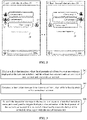
- FIG. 2 shows a first chat interface 10 of the first client 111 and a second chat interface 20 of the second client 131.
- the first client 111 is logged with the first user account
- the second client 131 is logged with the second user account.
- the first user account and the second user account are configured to transmit and receive chat messages during the two-person chat or the multi-person chat.
- a head portrait 12 and chat messages of the first user account and a head portrait 22 and chat messages of the second user account are displayed on the first chat interface 10 and the second chat interface 20.
- an animation of the head portrait 22 of the second user account is displayed.
- an interaction message 30 is displayed in the first chat interface 10 and the second chat interface 20.
- the interaction message 30 is different from the chat message.
- message content of the interaction message 30 is customized by the client.
- content of the interaction message 30 is: you tapped "user account 2".
- the user account 2 is a name of the second user account.
- content of the interaction message 30 is: "user account 1" tapped you.
- the "user account 1" is a name of the first user account.
- FIG. 3 is a flowchart of a message transmitting method according to an exemplary embodiment of the present disclosure.
- the method is performed by the first client shown in FIG. 1 , for example.
- the first client is logged with a first user account.
- the method includes the following steps 302 to 306.
- a first chat interface is displayed. Head portraits of at least two user accounts are displayed in the first chat interface, and the at least two user accounts include a first user account and a second user account.
- the first chat interface is a two-person chat interface or a multi-person chat interface.
- a list of chat messages ranked according to time is displayed in the first chat interface.
- a head portrait of a user account as a transmitter and content of the chat message are displayed.
- a remark name, a group nickname, or a customized nickname of the user account is displayed in each chat message.
- the remark name is a name remarked for a current user account by another user account.
- the group nickname is a nickname customized by the current user account in a group.
- the customized nickname is a nickname customized by the current user account in the client.
- the first chat interface is a multi-person group chat interface.
- the group includes at least two user accounts.
- the at least two user accounts include the first user account, the second user account, and other user accounts.
- step 304 an interaction message is generated in response to an interaction with the head portrait of the second user account.
- the first user performs a trigger operation on the head portrait of the second user account.
- the trigger operation includes at least one of a double-click operation, a click operation, or a long press operation.
- the first client triggers the interaction instruction to generate the interaction message according to the first user account and the second user account.
- the interaction instruction is a double-click, for example.
- the interaction message is different from the chat message.
- the interaction message is implemented as a system message, or is implemented as a customized message.
- the interaction instruction is a light interaction instruction
- the interaction message is a light interaction message.
- step 306 the interaction message is transmitted to the second user account.
- the interaction message is configured to trigger displaying of an animation of the head portrait of the second user account in a second chat interface by a second client, and the second client is logged with the second user account.
- the interaction message not only triggers displaying of the animation of the head portrait of the second user account in the second chat interface by the second client, but also triggers displaying of the interaction message in the second chat interface by the second client.
- the interaction message is transmitted to the second user account in response to the interaction with the head portrait of the second user account.
- the interaction message is configured to trigger displaying of the animation of the head portrait of the second user account in the second chat interface by the second client. Therefore, a new interaction mode having a mild reminder function is provided.
- the new interaction mode is applicable to interesting interaction in chat scenarios having relaxed and pleasant atmosphere.
- the user can interact with other user accounts merely by interacting with the head portrait, thereby reducing redundant human-computer interaction operations, simplifying an operation process, and thus improving operation efficiency and interaction efficiency.
- FIG. 4 is a flowchart of a message receiving method according to an exemplary embodiment of the present disclosure.
- the method is performed by the second client shown in FIG. 1 , for example.
- the second client is logged with a second user account.
- the method includes the following steps 402 to 406.
- a second chat interface is displayed. Head portraits of at least two user accounts are displayed in the second chat interface, and the at least two user accounts include a first user account and the second user account.
- the second chat interface is a two-person chat interface or a multi-person group chat interface.
- a list of chat messages ranked according to time is displayed in the second chat interface.
- a head portrait of a user account as a transmitter and content of the chat message are displayed.
- a remark name, a group nickname, or a customized nickname of the user account is displayed in each chat message.
- the remark name is a name remarked for a current user account by another user account.
- the group nickname is a nickname customized by the current user account in a group.
- the customized nickname is a nickname customized by the current user account in the client.
- the second chat interface is a multi-person group chat interface.
- the group includes at least two user accounts.
- the at least two user accounts include the first user account, the second user account, and other user accounts.
- step 404 an interaction message transmitted by the first user account to the second user account is received.
- the second client receives the interaction message transmitted by the first user account to the second user account.
- the interaction message is different from the chat message.
- the interaction message is implemented as a system message, or is implemented as a customized message.
- the interaction message is a light interaction message.
- the second client receives the interaction message transmitted by a server.
- the first user account transmits the interaction message to the server and requests the server to forward the interaction message to the second user account.
- step 406 the interaction message is displayed in the second chat interface, and an animation of the head portrait of the second user account is displayed.
- the interaction message not only triggers displaying of the animation of the head portrait of the second user account in the second chat interface by the second client, but also triggers displaying of the interaction message in the second chat interface by the second client.
- the second client when receiving the interaction message transmitted by the first user account to the second user account, displays the animation of the head portrait of the second user account and the interaction message in the second chat interface. Therefore, a new interaction mode having a mild reminder function is provided.
- the new interaction mode is applicable to interesting interaction in chat scenarios having relaxed and pleasant atmosphere.
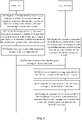
- FIG. 5 is a flowchart of a message transmitting/receiving method according to another exemplary embodiment of the present disclosure.
- the method is performed by the first client and the second client shown in FIG. 1 , for example.
- the method includes the following steps 501 to 508.
- the first client displays a first chat interface. Head portraits of at least two user accounts are displayed in the first chat interface, and the at least two user accounts include a first user account and a second user account.
- the first chat interface is a two-person chat interface or a multi-person group chat interface.
- a list of chat messages ranked according to time is displayed in the first chat interface.
- step 502 the first client generates an interaction message in response to a double-click operation on the head portrait of the second user account, and an animation of the head portrait of the second user account is displayed in the first chat interface.
- a first user performs a double-click operation on the head portrait of the second user account.
- the first client After receiving the double-click operation, the first client generates the double-click instruction.
- the first client generates the interaction message according to the first user account and the second user account in response to the double-click instruction.
- the interaction instruction is a double-click instruction, for example.
- the interaction message is different from the chat message.
- the interaction message is the light interaction message.
- the interaction message is implemented as a system message.
- the system message carries the first user account and the second user account.
- the system message carries the first user account, the second user account, and an interaction identifier.
- the interaction identifier represents that a message type is the interaction message.
- the system message further carries an action identifier.
- the action identifier represents an action performed on the second user account by the first user account.
- the interaction message carries the first user account and the second user account. In an embodiment, the interaction message further carries an interaction identifier. In an embodiment, the interaction message further carries an action identifier.
- the first client further displays the animation of the head portrait of the second user account in the first chat interface.
- the head portrait animation is an animation displayed based on the head portrait of the second user account.
- the head portrait animation includes, but is not limited to, at least one of the following: an animation for shaking the head portrait of the second user account, an animation for rotating the head portrait of the second user account, an animation for superposing a filter to the head portrait of the second user account, an animation for superposing other display elements (for example, a human hand) to the head portrait of the second user account, or an animation for zooming out or zooming in the head portrait of the second user account.
- the head portrait animation is the animation for shaking the head portrait of the second user account, for example.
- the first chat interface includes multiple head portraits of the second user account.
- An animation of at least one of the head portraits of the second user account is displayed in a head portrait area in response to the double-click operation on the head portrait.
- the chat message and the head portrait of the second user account are both displayed in the first chat interface. Therefore, the first user can perform the double-click operation on any one of the head portraits of the second user account. In this way, the double-click instruction is triggered, and the animation of the head portrait is displayed in the head portrait area.
- step 503 the first client displays the interaction message in the first chat interface.
- the first client displays content of the interaction message in the first chat interface.
- the interaction message and the chat message are displayed in different manners.
- content of the interaction message is displayed in a text form.
- Content of the chat message is displayed in a bubble form. That is, the interaction message is not displayed in the bubble form. Instead, the interaction message is displayed in a message display manner of the system message.
- the content of the interaction message is customized by the first client.
- the content of the interaction message is: you tapped "user account 2". Forwarding of the interaction message on a server side is delayed.
- the content of the interaction message is customized and displayed by the first client.
- the interaction message carries the first user account, the second user account, and the action identifier.
- the action identifier represents an action performed on the second user account by the first user account.
- the first client customizes the content of the interaction message according to the first user account, the second user account, and the action identifier in the interaction message.
- the customized content of the interaction message includes a name of the first user account, a name of the second user account, and a description of the action performed on the second user account by the first user account.
- the content of the interaction message is customized by the server.
- the first client transmits the interaction message to the server.
- the server customizes the content of the interaction message after receiving the interaction message, and transmits the content of the interaction message to the first user account of the first client and the second user account of the second client.
- the head portrait of the second user account can be displayed at any position in the chat message list
- the head portrait of the second user account clicked by the first user may be located in the middle of the chat message list.
- the method further includes the following step: scrolling to a last message in the first chat interface automatically in response to displayed content in the first chat interface not including the last message, the last message including the message content of the interaction message.
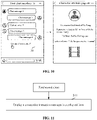
- the first chat interface 10 includes a head portrait 12 of the first user account and a head portrait 22 of the second user account. After the first user performs a double-click operation on the head portrait 22 of the second user account, a shaking animation of the head portrait 22 of the second user account is displayed.
- a chat message 2 is located in the front, and content displayed at a bottom of the chat message list cannot be displayed in the first chat interface 10. Therefore, the first chat interface 10 automatically scrolls to a last message in the first chat interface.
- the last message includes an interaction message 30: you tapped "user account 2".
- the user account 2 is a name of the second user account. In this way, the first user timely learns that the interaction message 30 is successfully triggered, thereby avoiding a case that the user continuously performs double-click operations on the head portrait 22 of the second user account for multiple times.
- the last message is a last message received in the first chat interface. Some of the messages in the chat message list are displayed in the first chat interface. By sliding the chat message list in the first chat interface up and down, the messages in the chat message list displayed in the first chat interface can be changed. The last message is located in a bottom area of the chat message list. If the content displayed in the first chat interface does not include the content in the bottom area of the chat message list, the first chat interface does not include the last message.
- the latest message is displayed in the bottom display area of the first chat interface.
- the content of the interaction message includes the name of the first user account, the name of the second user account, and the description of the action performed on the second user account by the first user account.
- the names include at least one of a remark name, a group nickname, or a customized nickname.
- the description of the action includes, but is not limited to, at least one of the following: touch, tap, hammer, hit, kick, slash, kiss, or push.
- the content of the interaction message may be: "name of the first user account” tapped "name of the second user account", or "name of the first user account” pushed "name of the second user account”.
- a priority of the remark name is superior than a priority of the group nickname, and the priority of the group nickname is superior than a priority of the customized nickname.
- the remark name is preferentially displayed.
- the group nickname in a current group is preferentially displayed.
- the customized nickname is displayed.
- the first user account is an account that is logged in the first client, in the first client, "you" may be used as the remark name of the first user account.
- step 504 the first client transmits the interaction message to the second client.
- the first client transmits the interaction message to the second client through a server.
- the first client transmits the interaction message to the server in a system message format (or a newly defined message format). If the server verifies that the interaction message meets a transmission condition, the server transmits the interaction message to all user accounts in the chat interface.
- the chat interface is a two-person chat interface
- the server transmits the interaction message to the first user account and the second user account.
- the chat interface is a group chat interface
- the server transmits the interaction message to the first user account, the second user account, and the other user accounts.
- the transmission condition includes a condition for limiting a transmission frequency.
- the transmission condition includes, but is not limited to, at least one of the transmission conditions:
- the transmission condition includes: an association relationship exists between the first user account and the second user account.
- the association relationship between the first user account and the second user account indicates that the first user account and the second user account are friends. For example, if the first user account is not a friend of the second user account, the first user account is not allowed to transmit the interaction message to the second user account.
- the server transmits a failure prompt to the first client.
- the failure prompt is "Do not transmit the tap message frequently”.
- step 505 the second client displays a second chat interface. Head portraits of the at least two user accounts are displayed in the second chat interface, and the at least two user accounts include the first user account and the second user account.
- the second chat interface is a two-person chat interface or a multi-person group chat interface.
- a list of chat messages ranked according to time is displayed in the second chat interface.
- the first chat interface and the second chat interface are interfaces presented on two clients logged with different user accounts in a same chat room (a two-person chat or a multi-person group chat).
- the first chat interface and the second chat interface are both interfaces for conducting a chat between the first user account and the second user account.
- a group corresponding to the first chat interface is same as a group corresponding to the second chat interface.
- the first chat interface is an interface in the first client, and the first client is logged with the first user account.
- the first client displays the message transmitted by the first user account on a right side of the first chat interface, and displays, on a left side of the first chat interface, messages transmitted by the user accounts other than the first user account.
- the second chat interface is an interface in the second client, and the second client is logged with the second user account.
- the second client displays the message transmitted by the second user account on a right side of the second chat interface, and displays, on a left side of the second chat interface, messages transmitted by the user accounts other than the second user account.
- step 506 the second client receives the interaction message transmitted by the first user account to the second user account.
- the second client receives the interaction message forwarded by the server.
- the interaction message is encapsulated in the system message format.
- the interaction message includes the first user account, the second user account, and the interaction identifier.
- the interaction identifier represents that the message type is the interaction message.
- content of the interaction message is displayed in a text form.
- the chat message is displayed in a bubble form. That is, the interaction message is not displayed in the bubble form. Instead, the interaction message is displayed in a message display manner of the system message.
- the content of the interaction message is customized by the second client, for example, "user account 1" tapped you.
- the content of the interaction message is customized by the server, and the second client receives the content of the interaction message forwarded by the server.
- the message of the interaction message includes the name of the first user account, the name of the second user account, and the description of the action performed on the second user account by the first user account.
- the names include at least one of a remark name, a group nickname, or a customized nickname.
- the description of the action includes, but is not limited to, at least one of the following: touch, tap, hammer, hit, kick, slash, kiss, or push.
- the content of the interaction message may be: the first user account tapped the second user account, or the first user account pushed the second user account.
- step 507 the second client displays content of the interaction message in the second chat interface.
- the second client displays the content of the interaction message in the second chat interface.
- the interaction message and the chat message are displayed in different manners.
- the second chat interface includes a list of chat messages ranked according to time.
- the second client further displays the content of the interaction message at a bottom of the chat message list in the second chat interface.
- step 508 the second client displays an animation of the head portrait of the second user account in a head portrait area corresponding to a chat message transmitted by the second user account and being closest to the interaction message.
- the head portrait animation is an animation displayed based on the head portrait of the second user account.
- the head portrait animation includes, but is not limited to, at least one of the following: an animation for shaking the head portrait of the second user account, an animation for rotating the head portrait of the second user account, an animation for superposing a filter to the head portrait of the second user account, an animation for superposing other display elements (for example, a human hand) to the head portrait of the second user account, or an animation for zooming out or zooming in the head portrait of the second user account.
- the animation of the head portrait of the second user account is associated with the action description in the content of the interaction message, such as tapping the head portrait of the second user account or touching the head portrait of the second user account.
- the second client Since a distance exists between the message content of the interaction message and the head portrait of the second user account, the second client first determines the chat message in chat messages transmitted by the second user account which is closest to the interaction message, and then displays the animation of a head portrait of the second user account corresponding to the chat message closest to the interaction message.
- the second client displays a shaking animation of the head portrait of the second user account corresponding to the chat message 2.
- the second client displays a shaking animation of the head portrait of the second user account corresponding to the chat message 4.
- the chat message 2 located in the front is preferentially selected.
- a distance between two messages is measured by a quantity of messages between the two messages.
- Step 507 may be performed before step 508, or may be performed after step 508. Alternatively, step 507 and step 508 may be performed simultaneously.
- the user accounts other than the first user account and the second user account also receive the interaction message.
- Other clients logged with the other user accounts voluntarily encapsulate the content of the interaction message for display.
- the other clients may or may not display the shaking animation of the head portrait of the second user account.
- the second user account may be same as the first user account. That is, a user may transmit the interaction message to the user himself, to trigger displaying of the content of the interaction message: you tapped yourself.
- a group chat function is used as an example.
- the user account A may transmit a group chat message: "@user account B".
- the user account B receives a strong reminder and views the group chat message.
- "@user account B” generates a strong reminder.
- such strong reminder function is improper in some scenarios.
- the interaction message is transmitted to the second user account in response to the interaction with the head portrait of the second user account.
- the interaction message is configured to trigger displaying of the animation of the head portrait of the second user account in the second chat interface by the second client. Therefore, a new interaction mode having a mild reminder function is provided.
- the new interaction mode is applicable to interesting interaction in chat scenarios having relaxed and pleasant atmosphere.
- the interaction message is a mild interaction message. Since the mild interaction message is a message simulating a user behavior instead of a message having message content customized by the user. The user may use the mild interaction message to express a slight interaction willingness in some scenarios where the user does not want to say, does not know what to say, or wants to express obscure meanings.
- the user can interact with other user accounts merely by interacting with the head portrait, thereby reducing redundant human-computer interaction operations, simplifying an operation process, and thus improving operation efficiency and interaction efficiency.
- the method further includes step 509 or step 510, as shown in FIG. 9 .
- step 509 the first client displays a character attribute page of the first user account in response to a first trigger instruction on the name of the first user account.
- the interaction message includes the names of the two user accounts.
- the first trigger instruction is triggered on the first client.
- the first client displays an attribute page of the first user account in response to the first trigger instruction.
- the attribute page 40 further includes at least one piece of the following information: a gender, a phone number, a two-dimensional code, a photo album, or a personal zone.
- the attribute page of the first user account includes attribute information of the first user account.
- step 510 the first client displays a character attribute page of the second user account in response to a second trigger instruction on the name of the second user account.
- the second trigger instruction is triggered on the first client.
- the first client displays an attribute page of the second user account in response to the second trigger instruction.
- the attribute page of the second user account includes attribute information of the second user account.
- a chat interface of any client displays an interaction message transmitted by the client itself or other client
- the client displays an attribute page of a user account in response to a trigger instruction on a name of the user account in the interaction message.
- the client displays the character attribute page of the user account in response to the trigger instruction on the name of the user account in the interaction message. Therefore, a human-computer interaction mode enabling quick viewing of the attribute page of the user account can be provided in the chat interface, thereby improving human-computer interaction efficiency.
- the method further includes step 511, as shown in FIG. 11 .
- step 511 n consecutive interaction messages are displayed in a collapsed form.
- n consecutive interaction messages exist in a chat interface of any client, all or some of the n interaction messages may be displayed in a collapsed form according to a collapsing policy.
- the collapsing policy includes at least one of a read collapsing policy or an interruption collapsing policy.
- the first client displays all or some of the n consecutive interaction messages in a collapsed form in response to the n interaction messages existing in the first chat interface and the n interaction messages being in a read state, n being an integer greater than 1.
- the second client displays all or some of the n consecutive interaction messages in a collapsed form in response to the n interaction messages existing in the second chat interface and the n interaction messages being in a read state, n being an integer greater than 1.
- the first client displays the last two of the five interaction messages 32 in a collapsed form.
- An "expand all” button is displayed at the two collapsed interaction messages. When the user clicks the "expand all” button, the two interaction messages are restored and displayed.
- the first client displays all or some of m consecutive interaction messages in a collapsed form in response to the m interaction messages existing in the first chat interface and the m interaction messages being prior to a last non-interaction message.
- the non-interaction message refers to a message other than the interaction message, for example, the non-interaction message being a chat message or a system message, and m is an integer greater than 1.
- the second client displays all or some of the m consecutive interaction messages in a collapsed form in response to the m interaction messages existing in the second chat interface and the m interaction messages being prior to the last non-interaction message, m being an integer greater than 1.
- the first chat interface includes multiple (more than five) consecutive interaction messages 36
- the first three interaction messages are reserved and displayed, and the remaining interaction messages are displayed in a collapsed form.
- An "expand all” button is displayed at the collapsed interaction messages.
- the multiple interaction messages are restored and displayed.
- a system message "passerby B invited passerby C to join the group chat" is inserted among the multiple interaction messages 36. Since multiple interaction messages 38 are consecutive, the multiple interaction messages 38 are not collapsed temporarily.
- the present disclosure includes the following features.
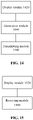
- FIG. 14 is a block diagram of a message transmitting apparatus according to an exemplary embodiment of the present disclosure.
- the apparatus is logged with a first user account.
- the apparatus includes: a display module 1420, a generation module 1440 and a transmitting module 1460.
- the display module 1420 is configured to display a first chat interface. Head portraits of at least two user accounts are displayed in the first chat interface, and the at least two user accounts include the first user account and a second user account.
- the generation module 1440 is configured to generate an interaction message in response to interaction with the head portrait of the second user account.
- the transmitting module 1460 is configured to transmit the interaction message to the second user account.
- the interaction message is configured to trigger displaying of an animation of the head portrait of the second user account in a second chat interface by a second client, and the second client is logged with the second user account.
- the generation module 1440 is configured to generate the interaction message in response to a double-click operation on the head portrait of the second user account.
- the display module 1420 is configured to display the animation of the head portrait of the second user account in the first chat interface in response to the interaction with the head portrait of the second user account.
- the display module 1420 is configured to display the interaction message in the first chat interface.
- the display module 1420 is configured to display content of the interaction message in the first chat interface.
- the interaction message and a chat message are displayed in different manners.
- the interaction message and a system message are displayed in different manners.
- the display module 1420 is configured to scroll to a last message in the first chat interface automatically in response to displayed content in the first chat interface not including the last message.
- the last message includes the content of the interaction message.
- the message content includes a name of the first user account, a name of the second user account, and a description of an action performed on the second user account by the first user account.
- the names include at least one of a remark name, a group nickname, or a customized nickname.
- the description of the action includes, but is not limited to, at least one of the following: touch, tap, hammer, hit, kick, slash, or kiss.
- the display module 1420 is configured to: display an attribute page of the first user account in response to a first interaction with the name of the first user account; or display an attribute page of the second user account in response to a second interaction with the name of the second user account.
- the display module 1420 is configured to: display all or some of n consecutive interaction messages in a collapsed form in response to the n interaction messages existing in the first chat interface and the n interaction messages being in a read state; or display all or some of m consecutive interaction messages in a collapsed form in response to the m interaction messages existing in the first chat interface and the m interaction messages being prior to a last non-interaction message, m being an integer greater than 1, and the non-interaction message being a message other than the m interaction messages.
- FIG. 15 is a block diagram of a message receiving apparatus according to an exemplary embodiment of the present disclosure.
- the apparatus is logged with a second user account.
- the apparatus includes: a display module 1520 and a receiving module 1540.
- the display module 1520 is configured to display a second chat interface. Head portraits of at least two user accounts are displayed in the second chat interface, and the at least two user accounts include a first user account and the second user account.
- the receiving module 1540 is configured to receive an interaction message transmitted by the first user account to the second user account.
- the display module 1520 is configured to display the interaction message in the second chat interface, and display an animation of the head portrait of the second user account in the second chat interface.
- the display module 1520 is configured to display content of the interaction message in the second chat interface.
- the interaction message and a chat message are displayed in different manners.
- the display module 1520 is configured to display the animation of the head portrait of the second user account in a head portrait area corresponding to a chat message transmitted by the second user account and being closest to the interaction message.
- the display module 1520 is configured to: display all or some of n consecutive interaction messages in a collapsed form in response to the n interaction messages existing in the second chat interface and the n interaction messages being in a read state; or display all or some of m consecutive interaction messages in a collapsed form in response to the m interaction messages existing in the second chat interface and the m interaction messages being prior to a last non-interaction message.
- the message transmitting apparatus in the above embodiment only division of the functional modules is illustrated. In actual application, the functions may be assigned to different functional modules for completion as required. In other words, the device is divided into different functional modules to complete all or a part of the functions described above.
- the message transmitting apparatus in the above embodiment shares the same concept as the message transmitting method. For a specific implementation thereof, one may refer to the method embodiment, and the details are not described herein again.
- the message receiving apparatus in the above embodiment only division of the functional modules is illustrated. In actual application, the functions may be assigned to different functional modules for completion as required. In other words, the device is divided into different functional modules to complete all or a part of the functions described above.
- the message receiving apparatus in the above embodiment shares the same concept as the message receiving method. For a specific implementation thereof, one may refer to the method embodiment, and the details are not described herein again.
- a computer device (a terminal or a server) is further provided according to the present disclosure.
- the computer device runs a first client.
- the first client is logged with a first user account.
- the computer device includes a processor and a memory.
- the memory stores at least one instruction.
- the at least one instruction is loaded and executed by the processor to perform the following operations:
- the at least one instruction is loaded and executed by the processor to perform the following operation: generating the interaction message in response to a double-click operation on the head portrait of the second user account.
- the at least one instruction is loaded and executed by the processor to perform the following operation: displaying the animation of the head portrait of the second user account in the first chat interface in response to the interaction with the head portrait of the second user account.
- the at least one instruction is loaded and executed by the processor to perform the following operation: displaying an animation of at least one of the head portraits of the second user account in a head portrait area in response to a double-click operation on the head portrait.
- the at least one instruction is loaded and executed by the processor to perform the following operation: displaying the interaction message in the first chat interface.
- the at least one instruction is loaded and executed by the processor to perform the following operation: displaying content of the interaction message in the first chat interface, where the interaction message and a chat message are displayed in different manners.
- the at least one instruction is loaded and executed by the processor to perform the following operation: scrolling to a last message in the first chat interface automatically in response to displayed content in the first chat interface not including the last message, the last message including the content of the interaction message.
- the message content includes a name of the first user account, a name of the second user account, and a description of an action performed on the second user account by the first user account.
- the names include at least one of a remark name, a group nickname, or a customized nickname.
- the at least one instruction is loaded and executed by the processor to perform the following operation: displaying an attribute page of the first user account in response to a first interaction with the name of the first user account; or displaying an attribute page of the second user account in response to a second interaction with the name of the second user account.
- the at least one instruction is loaded and executed by the processor to perform the following operation: displaying all or some of n consecutive interaction messages in a collapsed form in response to the n interaction messages existing in the first chat interface and the n interaction messages being in a read state, n being an integer greater than 1; or displaying all or some of m consecutive interaction messages in a collapsed form in response to the m interaction messages existing in the first chat interface and the m interaction messages being prior to a last non-interaction message, m being an integer greater than 1, and the non-interaction message being a message other than the m interaction messages.
- a computer device (a terminal or a server) is further provided according to the present disclosure.
- the computer device runs a second client.
- the second client is logged with a second user account.
- the computer device includes a processor and a memory.
- the memory stores at least one instruction.
- the at least one instruction is loaded and executed by the processor to perform the following operations:
- the at least one instruction is loaded and executed by the processor to perform the following operation: displaying content of the interaction message in the second chat interface, where the interaction message and a chat message are displayed in different manners.
- the at least one instruction is loaded and executed by the processor to perform the following operation: displaying the animation of the head portrait of the second user account in a head portrait area corresponding to a chat message transmitted by the second user account and being closest to the interaction message.
- the at least one instruction is loaded and executed by the processor to perform the following operation: displaying all or some of n consecutive interaction messages in a collapsed form in response to the n interaction messages existing in the second chat interface and the n interaction messages being in a read state; or displaying all or some of m consecutive interaction messages in a collapsed form in response to the m interaction messages existing in the second chat interface and the m interaction messages being prior to a last non-interaction message.
- the computer device may be a computer device shown in FIG. 16 .
- FIG. 16 is a structural block diagram of a computer device 1600 according to an exemplary embodiment of the present disclosure.
- the computer device 1600 may be a smartphone, a tablet computer, a moving picture experts group audio layer III (MP3) player, a moving picture experts group audio layer IV (MP4) player, a notebook computer, or a desktop computer.
- MP3 moving picture experts group audio layer III
- MP4 moving picture experts group audio layer IV
- the computer device 1600 may also be referred to as user equipment, a portable computer device, a laptop computer device, or a desktop computer device or the like.
- the computer device 1600 includes a processor 1601 and a memory 1602.
- the processor 1601 may include one or more processing cores, such as a 4-core processor or an 8-core processor.
- the processor 1601 may be implemented as at least one of the following: digital signal processing (DSP), a field-programmable gate array (FPGA), or a programmable logic array (PLA).
- DSP digital signal processing
- FPGA field-programmable gate array
- PDA programmable logic array
- the processor 1601 may include a main processor and a coprocessor.
- the main processor is configured to process data in a wake-up state, which is also referred to as a central processing unit (CPU).
- the coprocessor is a low power consumption processor configured to process data in a standby state.
- a graphics processing unit (GPU) may be integrated in the processor 1601.
- the GPU is configured to render and draw content that needs to be displayed on a display screen.
- the processor 1601 may further include an artificial intelligence (AI) processor.
- the AI processor is configured to process computing operations related to machine learning.
- the memory 1602 may include one or more computer-readable storage media that may be non-transitory.
- the memory 1602 may further include a high-speed random access memory and a non-volatile memory, for example, one or more magnetic disk storage devices and flash memory storage devices.
- the non-transitory computer-readable storage media in the memory 1602 is configured to store at least one instruction. The at least one instruction is executed by the processor 1601 to implement the message transmitting method provided in the method embodiment of the present disclosure.
- the computer device 1600 may include a peripheral interface 1603 and at least one peripheral device.
- the processor 1601, the memory 1602, and the peripheral interface 1603 may be connected via a bus or a signal line.
- Each peripheral device may be connected to the peripheral interface 1603 via a bus, a signal line, or a circuit board.
- the peripheral device includes at least one of a radio frequency (RF) circuit 1604, a display screen 1605, or a power supply 1606.
- RF radio frequency
- the peripheral interface 1603 may be configured to connect at least one peripheral device related to input/output (I/O) to the processor 1601 and the memory 1602.
- the processor 1601, the memory 1602, and the peripheral interface 1603 are integrated on a same chip or a same circuit board.
- any one or two of the processor 1601, the memory 1602, or the peripheral interface 1603 may be implemented on an independent chip or circuit board. Specific configuration is not limited in the embodiment of the present disclosure.
- the RF circuit 1604 is configured to receive and transmit an RF signal that is also referred to as an electromagnetic signal.
- the RF circuit 1604 communicates with a communication network and other communication devices through the electromagnetic signal.
- the RF circuit 1604 converts an electrical signal to an electromagnetic signal for transmission, or converts a received electromagnetic signal to an electrical signal.
- the RF circuit 1604 includes an antenna system, an RF transceiver, one or more amplifiers, a tuner, an oscillator, a digital signal processor, a codec chipset, a user identity module card, and the like.
- the RF circuit 1604 may communicate with other computer devices through at least one wireless communication protocol.
- the wireless communication protocol includes, but is not limited to a world wide web, a metropolitan area network, an intranet, generations of mobile communication networks (2G, 3G, 4G, and 5G), a wireless local area network and/or a wireless fidelity (Wi-Fi) network.
- the RF circuit 1604 may further include a near field communication (NFC)-related circuit. Specific configuration is not limited in the present disclosure.
- the display screen 1605 is configured to display a user interface (UI).
- the UI may include a graph, a text, an icon, a video, and any combination thereof.
- the display screen 1605 can collect touch signals on or above a surface of the display screen 1605.
- the touch signal may be inputted to the processor 1601 as a control signal for processing.
- the display screen 1605 may be further configured to provide a virtual button and or a virtual keyboard that are also referred to as a soft button and/or a soft keyboard.
- the display screen 1605 may be a flexible display screen arranged on a bent surface or a folded surface of the computer device 1600.
- the display screen 1605 may be configured as a non-rectangular irregular figure, that is, an irregular screen.
- the display screen 1605 may be made of materials such as a liquid crystal display (LCD) or an organic light-emitting diode (OLED).
- the power supply 1606 is configured to supply power to components in the computer device 1600.
- the power supply 1606 may be an alternating current, a direct current, a disposable battery, or a rechargeable battery.
- the rechargeable battery may be a wired rechargeable battery or a wireless rechargeable battery.
- the wired rechargeable battery is a battery charged through a wired circuit
- the wireless rechargeable battery is a battery charged through a wireless coil.
- the rechargeable battery may be further configured to support a fast charging technology.
- the computer device 1600 further includes a pressure sensor 1607.
- the pressure sensor 1607 may be arranged at a side frame of the computer device 1600 and/or below the touch display screen 1605.
- a grip signal of a user on the computer device 1600 may be detected, and the processor 1601 may perform left/right hand recognition or a shortcut operation according to the grip signal collected by the pressure sensor 1607.
- the processor 1601 controls an operable control on the UI interface according to a pressure operation performed by the user on the display screen 1605.
- the operable control includes at least one of a button control, a scroll-bar control, an icon control, and a menu control.
- FIG. 16 does not constitute a limitation on the computer device 1600, and the computer device may include more or fewer components than those shown in the figure, some components may be combined, or the components may be arranged in different manners.
- the memory further includes one or more programs.
- the one or more programs are stored in the memory, and include instructions for performing the message transmitting method or the message receiving method provided in the embodiments of the present disclosure.
- a computer-readable storage medium stores at least one instruction.
- the at least one instruction is loaded and executed by a processor to implement the message transmitting method or the message receiving method provided in the above method embodiments.
- a computer program product is further provided according to the present disclosure.
- the computer program product when executed on a computer, causes a computer to perform the message transmitting method or the message receiving method provided in the above method embodiments.
- the program may be stored in a computer-readable storage medium.
- the storage medium may be: a ROM, a magnetic disk, or an optical disc.
Landscapes
- Engineering & Computer Science (AREA)
- Theoretical Computer Science (AREA)
- Computer Networks & Wireless Communication (AREA)
- Signal Processing (AREA)
- Physics & Mathematics (AREA)
- General Physics & Mathematics (AREA)
- General Engineering & Computer Science (AREA)
- Human Computer Interaction (AREA)
- Multimedia (AREA)
- Information Transfer Between Computers (AREA)
- User Interface Of Digital Computer (AREA)
- Management, Administration, Business Operations System, And Electronic Commerce (AREA)
- Processing Or Creating Images (AREA)
Abstract
Description
- This application claims priority to
Chinese Patent Application No. 202010432596.8 filed on May 20, 2020 - Embodiments of the present disclosure relate to the field of instant messaging, and in particular to a message transmitting method and apparatus, a message receiving method and apparatus, a device, and a medium.
- An instant messaging program supports a private chat function and a group chat function. The private chat function refers to conducting a chat between two user accounts. The group chat function refers to conducting a chat among multiple user accounts.
- According to embodiments of the present disclosure, a message transmitting method and apparatus, a message receiving method and apparatus, a device, and a medium are provided, so as to provide a message interaction mode having a mild reminder function. The technical solutions are as follows.
- According to an aspect of the present disclosure, a message transmitting method applicable to a first client is provided. The first client is logged with a first user account, and the method includes:
- displaying a first chat interface, where head portraits of at least two user accounts are displayed in the first chat interface, and the at least two user accounts include the first user account and a second user account;
- generating an interaction message in response to an interaction with the head portrait of the second user account; and
- transmitting the interaction message to the second user account, where the interaction message is configured to trigge displaying of an animation of the head portrait of the second user account in a second chat interface by a second client, and the second client is logged with the second user account.
- According to another aspect of the present disclosure, a message receiving method applicable to a second client is provided. The second client is logged with a second user account, and the method includes:
- displaying a second chat interface, where head portraits of at least two user accounts are displayed in the second chat interface, and the at least two user accounts include a first user account and the second user account;
- receiving an interaction message transmitted by the first user account to the second user account; and
- displaying the interaction message in the second chat interface, and displaying an animation of the head portrait of the second user account in the second chat interface.
- In some embodiments, the interaction message and a system message are displayed in different manners.
- In some embodiments, the message content of the interaction message includes a name of the first user account, a name of the second user account, and a description of an action performed on the second user account by the first user account.
- According to another aspect of the present disclosure, a message transmitting apparatus is provided. The apparatus is logged with a first user account. The apparatus includes:
- a display module, configured to display a first chat interface, where head portraits of at least two user accounts are displayed in the first chat interface, and the at least two user accounts include the first user account and a second user account;
- a generation module, configured to generate an interaction message in response to an interaction with the head portrait of the second user account; and
- a transmitting module, configured to transmit the interaction message to the second user account, where the interaction message is configured to trigger displaying of an animation of the head portrait of the second user account in a second chat interface by a second client, and the second client is logged with the second user account.
- In some embodiments, the generation module is configured to generate the interaction message in response to a double-click operation on the head portrait of the second user account.
- In some embodiments, the display module is configured to display the animation of the head portrait of the second user account in the first chat interface in response to the interaction with the head portrait of the second user account.
- In some embodiments, multiple head portraits of the second user account are displayed in the first chat interface. The display module is configured to display an animation of at least one of the multiple head portraits of the second user account in a head portrait area, in response to the double-click operation on the head portrait.
- In some embodiments, the display module is configured to display the interaction message in the first chat interface.
- In some embodiments, the display module is configured to display message content of the interaction message in the first chat interface. The interaction message and a chat message are displayed in different manners.
- In some embodiments, the interaction message and a system message are displayed in different manners.
- In some embodiments, the display module is configured to scroll to a last message in the first chat interface automatically in response to displayed content in the first chat interface not including the last message. The last message includes the message content of the interaction message.
- In some embodiments, the message content includes a name of the first user account, a name of the second user account, and a description of an action performed on the second user account by the first user account.
- The names include at least one of a remark name, a group nickname, and a customized nickname.
- In some embodiments, the description of the action includes at least one of: touch, tap, hammer, hit, kick, slash, or kiss.
- In some embodiments, the display module is configured to: display an attribute page of the first user account in response to a first interaction with the name of the first user account; or display an attribute page of the second user account in response to a second interaction with the name of the second user account.
- In some embodiments, the display module is configured to: display at least one of n consecutive interaction messages in a collapsed form in response to the n interaction messages existing in the first chat interface and the n interaction messages being in a read state; or display at least one of m consecutive interaction messages in a collapsed form in response to the m interaction messages existing in the first chat interface and the m interaction messages being prior to a last non-interaction message, m being an integer greater than 1, and the non-interaction message being a message other than the m interaction messages.
- According to another aspect of the present disclosure, a message receiving apparatus is provided. The apparatus is logged with a second user account. The apparatus includes:
- a display module, configured to display a second chat interface, where head portraits of at least two user accounts are displayed in the second chat interface, and the at least two user accounts include a first user account and the second user account; and
- a receiving module, configured to receive an interaction message transmitted by the first user account to the second user account.
- The display module is configured to display the interaction message in the second chat interface, and display an animation of the head portrait of the second user account in the second chat interface.
- In some embodiments, the display module is configured to display message content of the interaction message in the second chat interface. The interaction message and a chat message are displayed in different manners.
- In some embodiments, the display module is configured to display the animation of the head portrait of the second user account in a head portrait area corresponding to a chat message transmitted by the second user account and being closest to the interaction message.
- In some embodiments, the display module is configured to: display at least one of n consecutive interaction messages in a collapsed form in response to the n interaction messages existing in the second chat interface and the n interaction messages being in a read state; or display at least one of m consecutive interaction messages in a collapsed form in response to the m interaction messages existing in the second chat interface and the m interaction messages being prior to a last non-interaction message.
- According to another aspect of the present disclosure, a computer device including a processor and a memory is provided. The memory stores at least one instruction, at least one program, a code set, or an instruction set. The at least one instruction, the at least one program, the code set, or the instruction set is loaded and executed by the processor to implement the message transmitting method or the message receiving method described in the above aspects.
- According to another aspect of the present disclosure, a computer-readable storage medium is provided. The computer-readable storage medium stores at least one instruction, at least one program, a code set, or an instruction set. The at least one instruction, the at least one program, the code set, or the instruction set is loaded and executed by a processor to implement the message transmitting method or the message receiving method described in the above aspects.
- The technical solutions provided in the embodiments of the present disclosure generate at least the following beneficial effects.
- The interaction message is transmitted to the second user account in response to the interaction with the head portrait of the second user account. The interaction message is configured to trigger displaying of the animation of the head portrait of the second user account in the second chat interface by the second client. Therefore, a new interaction mode having a mild reminder function is provided. The new interaction mode is applicable to interesting interaction in chat scenarios having relaxed and pleasant atmosphere. In addition, a user can interact with other user accounts merely by interacting with the head portrait, thereby reducing redundant human-computer interaction operations, simplifying an operation process, and thus improving operation efficiency and interaction efficiency.
- To describe the technical solutions in the embodiments of the present disclosure clearer, the accompanying drawings required for describing the embodiments are briefly described hereinafter. Apparently, the accompanying drawings in the following descriptions show merely some embodiments of the present disclosure, and a person of ordinary skill in the art may obtain other accompanying drawings according to these accompanying drawings without creative efforts.
-
FIG. 1 is a structural block diagram of a computer system according to an exemplary embodiment of the present disclosure. -
FIG. 2 is a schematic diagram of an interface of an interaction message according to an exemplary embodiment of the present disclosure. -
FIG. 3 is a method flowchart of a message transmitting method according to another exemplary embodiment of the present disclosure. -
FIG. 4 is a method flowchart of a message receiving method according to another exemplary embodiment of the present disclosure. -
FIG. 5 is a method flowchart of a message transmitting/receiving method according to another exemplary embodiment of the present disclosure. -
FIG. 6 is a schematic diagram of an interface of the message transmitting/receiving method according to another exemplary embodiment of the present disclosure. -
FIG. 7 is a schematic diagram of an interface of the message transmitting/receiving method according to another exemplary embodiment of the present disclosure. -
FIG. 8 is a schematic diagram of an interface of the message transmitting/receiving method according to another exemplary embodiment of the present disclosure. -
FIG. 9 is a flowchart of a message transmitting/receiving method according to another exemplary embodiment of the present disclosure. -
FIG. 10 is a schematic diagram of an interface of a character attribute page according to another exemplary embodiment of the present disclosure. -
FIG. 11 is a flowchart of a message transmitting/receiving method according to another exemplary embodiment of the present disclosure. -
FIG. 12 is a schematic diagram of an interface of a read collapsing policy according to another exemplary embodiment of the present disclosure. -
FIG. 13 is a schematic diagram of an interface of an interruption collapsing policy according to another exemplary embodiment of the present disclosure. -
FIG. 14 is a block diagram of a message transmitting apparatus according to another exemplary embodiment of the present disclosure. -
FIG. 15 is a block diagram of a message receiving apparatus according to another exemplary embodiment of the present disclosure. -
FIG. 16 is a block diagram of a terminal according to another exemplary embodiment of the present disclosure. - To make objectives, technical solutions, and advantages of the present disclosure clearer, implementations of the present disclosure are described in detail with reference to the accompanying drawings.
-
FIG. 1 is a structural block diagram of a computer system according to an exemplary embodiment of the present disclosure. Thecomputer system 100 includes afirst terminal 110, aserver 120, and asecond terminal 130. - A
first client 111 supporting instant messaging is installed and run on thefirst terminal 110. In an embodiment, thefirst client 111 is an application or a webpage client having an instant messaging function. When the first terminal 110 runs thefirst client 111, a user interface (UI) of thefirst client 111 is displayed on a screen of thefirst terminal 110. In an embodiment, the application is any one of an instant messaging application, a microblog application, a voice communication application, a conference application, a network community application, a payment application, a shopping application, a friend-making application, or a match-making application. In the embodiment of the present disclosure, the application is the instant messaging application, as an example. Thefirst terminal 110 is a terminal used by afirst user 112. Thefirst client 111 is logged with a first user account of thefirst user 112. - A
second client 131 supporting instant messaging is installed and run on thesecond terminal 130. In an embodiment, thesecond client 131 is an application or a webpage client having an instant messaging function. When the second terminal 130 runs thesecond client 131, a UI of thesecond client 131 is displayed on a screen of thesecond terminal 130. In an embodiment, the application is any one of an instant messaging application, a microblog application, a voice communication application, a conference application, a network community application, a payment application, a shopping application, a friend-making application, a match-making application, or a game application. In the embodiment of the present disclosure, the application is the instant messaging application, as an example. Thesecond terminal 130 is a terminal used by a second user 132. Thesecond client 131 is logged with a second user account of the second user 132. - In an embodiment, the application installed on the
first terminal 110 is same as the application installed on thesecond terminal 130, or the applications installed on the two terminals are applications of a same type running on different operating system platforms (such as Android or IOS). For example, the application is the game program. The first user account is used to control a first virtual character. The second user account is used to control a second virtual character. The first virtual character and the second virtual character are in a same virtual environment. In an embodiment, the first virtual character and the second virtual character may belong to a same camp, a same team, a same organization, a same lobby, or a same channel, or have a friend relationship. In an embodiment, the first virtual character and the second virtual character have a temporary communication permission. In an embodiment, the first virtual character and the second virtual character may belong to different camps, different teams, different organizations, different lobbies, or different channels, or have a hostile relationship. - In an embodiment, the application installed on the
first terminal 110 is same as the application installed on thesecond terminal 130, or the applications installed on the two terminals are applications of a same type running on different operating system platforms (such as Android or IOS). Thefirst terminal 110 is one of multiple terminals, and thesecond terminal 130 is another of the multiple terminals. In this embodiment, only thefirst terminal 110 and thesecond terminal 130 are used as an example for description. Device types of thefirst terminal 110 and thesecond terminal 130 are the same or different. The device types include at least one of a smartphone, a tablet computer, an e-book reader, an MP3 player, an MP4 player, a laptop portable computer, or a desktop computer. -
FIG. 1 shows only two terminals. In an embodiment, multipleother terminals 140 are provided and may be connected to theserver 120. In an embodiment, one ormore terminals 140 corresponding to a developer are provided. A development and editing platform of a client supporting instant messaging is installed on theterminal 140. The developer may edit and update the client on the terminal 140, and transmit an installation package of the updated client to theserver 120 over a wired or wireless network. Thefirst terminal 110 and thesecond terminal 130 may download the application installation package from theserver 120 to update the clients. - The
first terminal 110, thesecond terminal 130, and theother terminals 140 are connected to theserver 120 over the wired or wireless network. - The
server 120 may be one server, multiple servers, a cloud computing platform, or a virtualization center. Theserver 120 is configured to provide a background service for a client supporting three-dimensional instant messaging. In an embodiment, theserver 120 is configured to perform primary computing, and the terminals are configured to perform secondary computing. In an embodiment, theserver 120 is configured to perform the secondary computing, and the terminals are configured to perform the primary computing. In an embodiment, theserver 120 and the terminal perform collaborative computing based on a distributed computing architecture. - In an exemplary example, the
server 120 includes aprocessor 122, a user account database (DB) 123, an instantmessaging service module 124, and a user-oriented input/output interface (I/O interface) 125. Theprocessor 122 is configured to load an instruction stored in the server 121 to process data in theuser account DB 123 and the instantmessaging service module 124. Theuser account DB 123 is configured to store data of user accounts used by thefirst terminal 110, thesecond terminal 130, and theother terminals 140, for example, head portraits of the user accounts, nicknames of the user accounts, and groups where the user accounts are located. The instantmessaging service module 124 is configured to provide multiple chat rooms (two-person chat or multi-person chat) for the user to perform instant messaging such as chatting, transmitting emoji, and creating red envelopes. The user-oriented I/O interface 125 is configured to establish communication with thefirst terminal 110 over the wireless network or the wired network to exchange data, or establish communication with thesecond terminal 130 to exchange data. - A message transmitting (or receiving) method in the embodiments of the present disclosure is described with reference to the above implementation environment. The method is performed by the client run on the terminal shown in
FIG. 1 , for example. The client is run on the terminal. The client is an application supporting instant messaging. -
FIG. 2 shows afirst chat interface 10 of thefirst client 111 and asecond chat interface 20 of thesecond client 131. Thefirst client 111 is logged with the first user account, and thesecond client 131 is logged with the second user account. The first user account and the second user account are configured to transmit and receive chat messages during the two-person chat or the multi-person chat. Ahead portrait 12 and chat messages of the first user account and ahead portrait 22 and chat messages of the second user account are displayed on thefirst chat interface 10 and thesecond chat interface 20. - When a first user performs a double click operation on the
head portrait 22 of the second user account, an animation of thehead portrait 22 of the second user account is displayed. Meanwhile, aninteraction message 30 is displayed in thefirst chat interface 10 and thesecond chat interface 20. Theinteraction message 30 is different from the chat message. In an embodiment, message content of theinteraction message 30 is customized by the client. In thefirst chat interface 10, content of theinteraction message 30 is: you tapped "user account 2". Theuser account 2 is a name of the second user account. In thesecond chat interface 20, content of theinteraction message 30 is: "user account 1" tapped you. The "user account 1" is a name of the first user account. -
FIG. 3 is a flowchart of a message transmitting method according to an exemplary embodiment of the present disclosure. In the embodiment of the present disclosure, the method is performed by the first client shown inFIG. 1 , for example. The first client is logged with a first user account. The method includes the followingsteps 302 to 306. - In
step 302, a first chat interface is displayed. Head portraits of at least two user accounts are displayed in the first chat interface, and the at least two user accounts include a first user account and a second user account. - The first chat interface is a two-person chat interface or a multi-person chat interface. A list of chat messages ranked according to time is displayed in the first chat interface. In each chat message in the chat message list, a head portrait of a user account as a transmitter and content of the chat message are displayed. In an embodiment, a remark name, a group nickname, or a customized nickname of the user account is displayed in each chat message. The remark name is a name remarked for a current user account by another user account. The group nickname is a nickname customized by the current user account in a group. The customized nickname is a nickname customized by the current user account in the client.
- For example, the first chat interface is a multi-person group chat interface. The group includes at least two user accounts. The at least two user accounts include the first user account, the second user account, and other user accounts.
- In
step 304, an interaction message is generated in response to an interaction with the head portrait of the second user account. - The first user performs a trigger operation on the head portrait of the second user account. The trigger operation includes at least one of a double-click operation, a click operation, or a long press operation. After receiving the triggering operation, the first client triggers the interaction instruction to generate the interaction message according to the first user account and the second user account. In the embodiment of the present disclosure, the interaction instruction is a double-click, for example.
- The interaction message is different from the chat message. In an embodiment, the interaction message is implemented as a system message, or is implemented as a customized message. For example, the interaction instruction is a light interaction instruction, and the interaction message is a light interaction message.
- In
step 306, the interaction message is transmitted to the second user account. The interaction message is configured to trigger displaying of an animation of the head portrait of the second user account in a second chat interface by a second client, and the second client is logged with the second user account. - In an embodiment, the interaction message not only triggers displaying of the animation of the head portrait of the second user account in the second chat interface by the second client, but also triggers displaying of the interaction message in the second chat interface by the second client.
- In conclusion, according to the method provided in the embodiment of the present disclosure, the interaction message is transmitted to the second user account in response to the interaction with the head portrait of the second user account. The interaction message is configured to trigger displaying of the animation of the head portrait of the second user account in the second chat interface by the second client. Therefore, a new interaction mode having a mild reminder function is provided. The new interaction mode is applicable to interesting interaction in chat scenarios having relaxed and pleasant atmosphere. In addition, the user can interact with other user accounts merely by interacting with the head portrait, thereby reducing redundant human-computer interaction operations, simplifying an operation process, and thus improving operation efficiency and interaction efficiency.
-
FIG. 4 is a flowchart of a message receiving method according to an exemplary embodiment of the present disclosure. In the embodiment of the present disclosure, the method is performed by the second client shown inFIG. 1 , for example. The second client is logged with a second user account. The method includes the followingsteps 402 to 406. - In
step 402, a second chat interface is displayed. Head portraits of at least two user accounts are displayed in the second chat interface, and the at least two user accounts include a first user account and the second user account. - The second chat interface is a two-person chat interface or a multi-person group chat interface. A list of chat messages ranked according to time is displayed in the second chat interface. In each chat message in the chat message list, a head portrait of a user account as a transmitter and content of the chat message are displayed. In an embodiment, a remark name, a group nickname, or a customized nickname of the user account is displayed in each chat message. The remark name is a name remarked for a current user account by another user account. The group nickname is a nickname customized by the current user account in a group. The customized nickname is a nickname customized by the current user account in the client.
- For example, the second chat interface is a multi-person group chat interface. The group includes at least two user accounts. The at least two user accounts include the first user account, the second user account, and other user accounts.
- In
step 404, an interaction message transmitted by the first user account to the second user account is received. - The second client receives the interaction message transmitted by the first user account to the second user account. The interaction message is different from the chat message. In an embodiment, the interaction message is implemented as a system message, or is implemented as a customized message. In an embodiment, the interaction message is a light interaction message.
- In an embodiment, the second client receives the interaction message transmitted by a server. The first user account transmits the interaction message to the server and requests the server to forward the interaction message to the second user account.
- In
step 406, the interaction message is displayed in the second chat interface, and an animation of the head portrait of the second user account is displayed. - In an embodiment, the interaction message not only triggers displaying of the animation of the head portrait of the second user account in the second chat interface by the second client, but also triggers displaying of the interaction message in the second chat interface by the second client.
- In conclusion, according to the method provided in the embodiment of the present disclosure, when receiving the interaction message transmitted by the first user account to the second user account, the second client displays the animation of the head portrait of the second user account and the interaction message in the second chat interface. Therefore, a new interaction mode having a mild reminder function is provided. The new interaction mode is applicable to interesting interaction in chat scenarios having relaxed and pleasant atmosphere.
-
FIG. 5 is a flowchart of a message transmitting/receiving method according to another exemplary embodiment of the present disclosure. In the embodiment of the present disclosure, the method is performed by the first client and the second client shown inFIG. 1 , for example. The method includes the following steps 501 to 508. - In step 501, the first client displays a first chat interface. Head portraits of at least two user accounts are displayed in the first chat interface, and the at least two user accounts include a first user account and a second user account.
- The first chat interface is a two-person chat interface or a multi-person group chat interface. A list of chat messages ranked according to time is displayed in the first chat interface.
- In step 502, the first client generates an interaction message in response to a double-click operation on the head portrait of the second user account, and an animation of the head portrait of the second user account is displayed in the first chat interface.
- A first user performs a double-click operation on the head portrait of the second user account. After receiving the double-click operation, the first client generates the double-click instruction. The first client generates the interaction message according to the first user account and the second user account in response to the double-click instruction. In the embodiment of the present disclosure, the interaction instruction is a double-click instruction, for example.
- The interaction message is different from the chat message. For example, the interaction message is the light interaction message. In an embodiment, the interaction message is implemented as a system message. In an embodiment, the system message carries the first user account and the second user account. In an embodiment, the system message carries the first user account, the second user account, and an interaction identifier. The interaction identifier represents that a message type is the interaction message. In an embodiment, the system message further carries an action identifier. The action identifier represents an action performed on the second user account by the first user account.
- In an embodiment, the interaction message carries the first user account and the second user account. In an embodiment, the interaction message further carries an interaction identifier. In an embodiment, the interaction message further carries an action identifier.
- In an embodiment, the first client further displays the animation of the head portrait of the second user account in the first chat interface. The head portrait animation is an animation displayed based on the head portrait of the second user account. Exemplarily, the head portrait animation includes, but is not limited to, at least one of the following: an animation for shaking the head portrait of the second user account, an animation for rotating the head portrait of the second user account, an animation for superposing a filter to the head portrait of the second user account, an animation for superposing other display elements (for example, a human hand) to the head portrait of the second user account, or an animation for zooming out or zooming in the head portrait of the second user account.
- In the embodiment of the present disclosure, the head portrait animation is the animation for shaking the head portrait of the second user account, for example.
- In an embodiment, the first chat interface includes multiple head portraits of the second user account. An animation of at least one of the head portraits of the second user account is displayed in a head portrait area in response to the double-click operation on the head portrait. For example, each time the second user account transmits a chat message, the chat message and the head portrait of the second user account are both displayed in the first chat interface. Therefore, the first user can perform the double-click operation on any one of the head portraits of the second user account. In this way, the double-click instruction is triggered, and the animation of the head portrait is displayed in the head portrait area.
- In
step 503, the first client displays the interaction message in the first chat interface. - In an embodiment, the first client displays content of the interaction message in the first chat interface. The interaction message and the chat message are displayed in different manners. Exemplarily, content of the interaction message is displayed in a text form. Content of the chat message is displayed in a bubble form. That is, the interaction message is not displayed in the bubble form. Instead, the interaction message is displayed in a message display manner of the system message.
- In an embodiment, the content of the interaction message is customized by the first client. For example, the content of the interaction message is: you tapped "
user account 2". Forwarding of the interaction message on a server side is delayed. In order to avoid the delay, the content of the interaction message is customized and displayed by the first client. Exemplarily, the interaction message carries the first user account, the second user account, and the action identifier. The action identifier represents an action performed on the second user account by the first user account. The first client customizes the content of the interaction message according to the first user account, the second user account, and the action identifier in the interaction message. Exemplarily, the customized content of the interaction message includes a name of the first user account, a name of the second user account, and a description of the action performed on the second user account by the first user account. - In an embodiment, the content of the interaction message is customized by the server. The first client transmits the interaction message to the server. The server customizes the content of the interaction message after receiving the interaction message, and transmits the content of the interaction message to the first user account of the first client and the second user account of the second client.
- In an embodiment, since the head portrait of the second user account can be displayed at any position in the chat message list, the head portrait of the second user account clicked by the first user may be located in the middle of the chat message list. In this case, the method further includes the following step:
scrolling to a last message in the first chat interface automatically in response to displayed content in the first chat interface not including the last message, the last message including the message content of the interaction message. As shown inFIG. 6 , thefirst chat interface 10 includes ahead portrait 12 of the first user account and ahead portrait 22 of the second user account. After the first user performs a double-click operation on thehead portrait 22 of the second user account, a shaking animation of thehead portrait 22 of the second user account is displayed. However, achat message 2 is located in the front, and content displayed at a bottom of the chat message list cannot be displayed in thefirst chat interface 10. Therefore, thefirst chat interface 10 automatically scrolls to a last message in the first chat interface. The last message includes an interaction message 30: you tapped "user account 2". Theuser account 2 is a name of the second user account. In this way, the first user timely learns that theinteraction message 30 is successfully triggered, thereby avoiding a case that the user continuously performs double-click operations on thehead portrait 22 of the second user account for multiple times. - The last message is a last message received in the first chat interface. Some of the messages in the chat message list are displayed in the first chat interface. By sliding the chat message list in the first chat interface up and down, the messages in the chat message list displayed in the first chat interface can be changed. The last message is located in a bottom area of the chat message list. If the content displayed in the first chat interface does not include the content in the bottom area of the chat message list, the first chat interface does not include the last message.
- In an embodiment, since the chat messages are ranked according to time, the latest message is displayed in the bottom display area of the first chat interface.
- In an embodiment, the content of the interaction message includes the name of the first user account, the name of the second user account, and the description of the action performed on the second user account by the first user account. The names include at least one of a remark name, a group nickname, or a customized nickname. The description of the action includes, but is not limited to, at least one of the following: touch, tap, hammer, hit, kick, slash, kiss, or push. For example, the content of the interaction message may be: "name of the first user account" tapped "name of the second user account", or "name of the first user account" pushed "name of the second user account".
- Exemplarily, a priority of the remark name is superior than a priority of the group nickname, and the priority of the group nickname is superior than a priority of the customized nickname. When there is a remark name, the remark name is preferentially displayed. When there is no remark name and there is a group nickname, the group nickname in a current group is preferentially displayed. When there is no remark name and group nickname, the customized nickname is displayed.
- Exemplarily, since the first user account is an account that is logged in the first client, in the first client, "you" may be used as the remark name of the first user account.
- In
step 504, the first client transmits the interaction message to the second client. - The first client transmits the interaction message to the second client through a server. In an embodiment, the first client transmits the interaction message to the server in a system message format (or a newly defined message format). If the server verifies that the interaction message meets a transmission condition, the server transmits the interaction message to all user accounts in the chat interface. When the chat interface is a two-person chat interface, the server transmits the interaction message to the first user account and the second user account. When the chat interface is a group chat interface, the server transmits the interaction message to the first user account, the second user account, and the other user accounts.
- In an embodiment, the transmission condition includes a condition for limiting a transmission frequency. The transmission condition includes, but is not limited to, at least one of the transmission conditions:
- Condition 1: a quantity of times of transmitting the interaction message to the second user account by the first user account within a time period A does not exceed x. For example, a quantity of times of transmitting the interaction message to a same account within two seconds does not exceed 1.
- Condition 2: a quantity of times of transmitting the interaction message by all user accounts in a same group within a time period B does not exceed y. For example, a quantity of times of transmitting the interaction message by all of the user accounts in a same group within ten seconds does not exceed 30.
- In an embodiment, the transmission condition includes: an association relationship exists between the first user account and the second user account. The association relationship between the first user account and the second user account indicates that the first user account and the second user account are friends. For example, if the first user account is not a friend of the second user account, the first user account is not allowed to transmit the interaction message to the second user account.
- If the interaction message transmitted by the first client does not meet the transmission condition, the server transmits a failure prompt to the first client. Exemplarily, the failure prompt is "Do not transmit the tap message frequently".
- In step 505, the second client displays a second chat interface. Head portraits of the at least two user accounts are displayed in the second chat interface, and the at least two user accounts include the first user account and the second user account.
- The second chat interface is a two-person chat interface or a multi-person group chat interface. A list of chat messages ranked according to time is displayed in the second chat interface.
- The first chat interface and the second chat interface are interfaces presented on two clients logged with different user accounts in a same chat room (a two-person chat or a multi-person group chat).
- In the two-person chat scenario, the first chat interface and the second chat interface are both interfaces for conducting a chat between the first user account and the second user account. In the multi-person group chat scenario, a group corresponding to the first chat interface is same as a group corresponding to the second chat interface. The first chat interface is an interface in the first client, and the first client is logged with the first user account. In an embodiment, the first client displays the message transmitted by the first user account on a right side of the first chat interface, and displays, on a left side of the first chat interface, messages transmitted by the user accounts other than the first user account. The second chat interface is an interface in the second client, and the second client is logged with the second user account. In an embodiment, the second client displays the message transmitted by the second user account on a right side of the second chat interface, and displays, on a left side of the second chat interface, messages transmitted by the user accounts other than the second user account.
- In step 506, the second client receives the interaction message transmitted by the first user account to the second user account.
- The second client receives the interaction message forwarded by the server. The interaction message is encapsulated in the system message format. In an embodiment, the interaction message includes the first user account, the second user account, and the interaction identifier. The interaction identifier represents that the message type is the interaction message.
- Exemplarily, content of the interaction message is displayed in a text form. The chat message is displayed in a bubble form. That is, the interaction message is not displayed in the bubble form. Instead, the interaction message is displayed in a message display manner of the system message.
- In an embodiment, the content of the interaction message is customized by the second client, for example, "
user account 1" tapped you. In an embodiment, the content of the interaction message is customized by the server, and the second client receives the content of the interaction message forwarded by the server. - In an embodiment, the message of the interaction message includes the name of the first user account, the name of the second user account, and the description of the action performed on the second user account by the first user account. The names include at least one of a remark name, a group nickname, or a customized nickname. The description of the action includes, but is not limited to, at least one of the following: touch, tap, hammer, hit, kick, slash, kiss, or push. For example, the content of the interaction message may be: the first user account tapped the second user account, or the first user account pushed the second user account.
- In
step 507, the second client displays content of the interaction message in the second chat interface. - In an embodiment, the second client displays the content of the interaction message in the second chat interface. The interaction message and the chat message are displayed in different manners. The second chat interface includes a list of chat messages ranked according to time. The second client further displays the content of the interaction message at a bottom of the chat message list in the second chat interface.
- In step 508, the second client displays an animation of the head portrait of the second user account in a head portrait area corresponding to a chat message transmitted by the second user account and being closest to the interaction message.
- The head portrait animation is an animation displayed based on the head portrait of the second user account. Exemplarily, the head portrait animation includes, but is not limited to, at least one of the following: an animation for shaking the head portrait of the second user account, an animation for rotating the head portrait of the second user account, an animation for superposing a filter to the head portrait of the second user account, an animation for superposing other display elements (for example, a human hand) to the head portrait of the second user account, or an animation for zooming out or zooming in the head portrait of the second user account.
- In an embodiment, the animation of the head portrait of the second user account is associated with the action description in the content of the interaction message, such as tapping the head portrait of the second user account or touching the head portrait of the second user account.
- Since a distance exists between the message content of the interaction message and the head portrait of the second user account, the second client first determines the chat message in chat messages transmitted by the second user account which is closest to the interaction message, and then displays the animation of a head portrait of the second user account corresponding to the chat message closest to the interaction message.
- As shown in
FIG. 7 , if it is determined that the chat message in the chat messages transmitted by the second user account being closest to theinteraction message 30 ischat message 2, the second client displays a shaking animation of the head portrait of the second user account corresponding to thechat message 2. - As shown in
FIG. 8 , if it is determined that the chat message in the chat messages transmitted by the second user account being closest to theinteraction message 30 ischat message 4, the second client displays a shaking animation of the head portrait of the second user account corresponding to thechat message 4. - In an embodiment, if a distance between the
chat message 2 and theinteraction message 30 is the same as a distance between thechat message 4 and the interaction message, thechat message 2 located in the front is preferentially selected. A distance between two messages is measured by a quantity of messages between the two messages. - Step 507 may be performed before step 508, or may be performed after step 508. Alternatively,
step 507 and step 508 may be performed simultaneously. - In case of the multi-person group chat, the user accounts other than the first user account and the second user account also receive the interaction message. Other clients logged with the other user accounts voluntarily encapsulate the content of the interaction message for display. The other clients may or may not display the shaking animation of the head portrait of the second user account.
- The second user account may be same as the first user account. That is, a user may transmit the interaction message to the user himself, to trigger displaying of the content of the interaction message: you tapped yourself.
- In the related art, a group chat function is used as an example. When a user account A expects to interact with a user account B, the user account A may transmit a group chat message: "@user account B". In this case, the user account B receives a strong reminder and views the group chat message. "@user account B" generates a strong reminder. However, such strong reminder function is improper in some scenarios.
- In conclusion, according to the method provided in the embodiment of the present disclosure, the interaction message is transmitted to the second user account in response to the interaction with the head portrait of the second user account. The interaction message is configured to trigger displaying of the animation of the head portrait of the second user account in the second chat interface by the second client. Therefore, a new interaction mode having a mild reminder function is provided. The new interaction mode is applicable to interesting interaction in chat scenarios having relaxed and pleasant atmosphere.
- In the embodiment of the present disclosure, the interaction message is a mild interaction message. Since the mild interaction message is a message simulating a user behavior instead of a message having message content customized by the user. The user may use the mild interaction message to express a slight interaction willingness in some scenarios where the user does not want to say, does not know what to say, or wants to express obscure meanings.
- In addition, the user can interact with other user accounts merely by interacting with the head portrait, thereby reducing redundant human-computer interaction operations, simplifying an operation process, and thus improving operation efficiency and interaction efficiency.
- In another embodiment based on
FIG. 5 , the method further includesstep 509 or step 510, as shown inFIG. 9 . - In
step 509, the first client displays a character attribute page of the first user account in response to a first trigger instruction on the name of the first user account. - The interaction message includes the names of the two user accounts. When the user clicks the name of the first user account in the interaction message, the first trigger instruction is triggered on the first client. The first client displays an attribute page of the first user account in response to the first trigger instruction. As shown in
FIG. 10 , if the attribute page of the first user account is acharacter attribute page 40, the head portrait, the nickname, a signature, hobbies, and a latest released video of the first user account are displayed on thecharacter attribute page 40. In an embodiment, theattribute page 40 further includes at least one piece of the following information: a gender, a phone number, a two-dimensional code, a photo album, or a personal zone. In an embodiment, the attribute page of the first user account includes attribute information of the first user account. - In
step 510, the first client displays a character attribute page of the second user account in response to a second trigger instruction on the name of the second user account. - Likewise, when the user clicks the name of the second user account in the interaction message, the second trigger instruction is triggered on the first client. The first client displays an attribute page of the second user account in response to the second trigger instruction. In an embodiment, the attribute page of the second user account includes attribute information of the second user account.
- In an embodiment, when a chat interface of any client displays an interaction message transmitted by the client itself or other client, the client displays an attribute page of a user account in response to a trigger instruction on a name of the user account in the interaction message.
- In conclusion, according to the method provided in the embodiment of the present disclosure, the client displays the character attribute page of the user account in response to the trigger instruction on the name of the user account in the interaction message. Therefore, a human-computer interaction mode enabling quick viewing of the attribute page of the user account can be provided in the chat interface, thereby improving human-computer interaction efficiency.
- In another embodiment based on
FIG. 5 , the method further includesstep 511, as shown inFIG. 11 . - In
step 511, n consecutive interaction messages are displayed in a collapsed form. - When n consecutive interaction messages exist in a chat interface of any client, all or some of the n interaction messages may be displayed in a collapsed form according to a collapsing policy.
- In an embodiment, the collapsing policy includes at least one of a read collapsing policy or an interruption collapsing policy.
- The first client displays all or some of the n consecutive interaction messages in a collapsed form in response to the n interaction messages existing in the first chat interface and the n interaction messages being in a read state, n being an integer greater than 1. Likewise, the second client displays all or some of the n consecutive interaction messages in a collapsed form in response to the n interaction messages existing in the second chat interface and the n interaction messages being in a read state, n being an integer greater than 1.
- As shown in
FIG. 12 , when thefirst chat interface 10 includes fiveconsecutive interaction messages 32 in the read state, the first client displays the last two of the fiveinteraction messages 32 in a collapsed form. An "expand all" button is displayed at the two collapsed interaction messages. When the user clicks the "expand all" button, the two interaction messages are restored and displayed. - If the first four interaction messages in the five
consecutive interaction messages 34 are in the read state and the last one interaction message is in an unread state, the five interaction messages are not collapsed temporarily. - The first client displays all or some of m consecutive interaction messages in a collapsed form in response to the m interaction messages existing in the first chat interface and the m interaction messages being prior to a last non-interaction message. The non-interaction message refers to a message other than the interaction message, for example, the non-interaction message being a chat message or a system message, and m is an integer greater than 1. Likewise, the second client displays all or some of the m consecutive interaction messages in a collapsed form in response to the m interaction messages existing in the second chat interface and the m interaction messages being prior to the last non-interaction message, m being an integer greater than 1.
- As shown in
FIG. 13 , when the first chat interface includes multiple (more than five)consecutive interaction messages 36, the first three interaction messages are reserved and displayed, and the remaining interaction messages are displayed in a collapsed form. An "expand all" button is displayed at the collapsed interaction messages. When the user clicks the "expand all" button, the multiple interaction messages are restored and displayed. A system message "passerby B invited passerby C to join the group chat" is inserted among themultiple interaction messages 36. Sincemultiple interaction messages 38 are consecutive, themultiple interaction messages 38 are not collapsed temporarily. - In view of the above collapsing policy, the present disclosure includes the following features.
- 1. If a non-interaction message (for example, a chat message or a system message) is inserted between two interaction messages, counting is restarted from a first interaction message after the non-interaction message.
- 2. If a time division stamp (for example, 13:20) is displayed between two interaction messages, the time division stamp does not affect the continuous counting between the two interaction messages, and the time division stamp is ignored when messages are expanded for displaying again.
- 3. For multiple consecutive interaction messages among which no non-interaction message is inserted, the multiple consecutive interaction messages are stored in a same database (DB) message. The DB is a DB in the client for storing messages. One DB message includes multiple sub-messages. Each sub-message is configured to store one interaction message. When one interaction message is stored in the DB message, if the client receives another interaction message and no non-interaction message is inserted among the interaction messages, the another interaction message is stored in the DB message by updating message content; if the client receives another interaction message and a non-interaction message is inserted among the interaction messages, the another interaction message is stored by creating a new DB message.
- 4. The read state of the interaction message is updated according to a sliding state of the user on the client, or updated depending on whether the head portrait animation of the second user account is displayed. In an example, when the second client displays the animation of the head portrait of the second user account, a state of the interaction message is set as the read state. In another example, when the interaction message is displayed at a position located below 20% of a screen interface from top to bottom and the animation of the head portrait of the second user account is displayed, the state of the interaction message is set as the read state. The following beneficial effects are realized: (1) The user has indeed read the interaction message. (2) The head portrait of the second user account exists in a small-half screen of the interaction message located in the front, so that displaying of the animation of the head portrait of the second user account is not missed, especially in a scenario of sliding to view the list of chat messages.
-
FIG. 14 is a block diagram of a message transmitting apparatus according to an exemplary embodiment of the present disclosure. The apparatus is logged with a first user account. The apparatus includes: adisplay module 1420, ageneration module 1440 and atransmitting module 1460. - The
display module 1420 is configured to display a first chat interface. Head portraits of at least two user accounts are displayed in the first chat interface, and the at least two user accounts include the first user account and a second user account. - The
generation module 1440 is configured to generate an interaction message in response to interaction with the head portrait of the second user account. - The
transmitting module 1460 is configured to transmit the interaction message to the second user account. The interaction message is configured to trigger displaying of an animation of the head portrait of the second user account in a second chat interface by a second client, and the second client is logged with the second user account. - In an embodiment, the
generation module 1440 is configured to generate the interaction message in response to a double-click operation on the head portrait of the second user account. - In an embodiment, the
display module 1420 is configured to display the animation of the head portrait of the second user account in the first chat interface in response to the interaction with the head portrait of the second user account. - In an embodiment, the
display module 1420 is configured to display the interaction message in the first chat interface. - In an embodiment, the
display module 1420 is configured to display content of the interaction message in the first chat interface. The interaction message and a chat message are displayed in different manners. - In an embodiment, the interaction message and a system message are displayed in different manners.
- In an embodiment, the
display module 1420 is configured to scroll to a last message in the first chat interface automatically in response to displayed content in the first chat interface not including the last message. The last message includes the content of the interaction message. - In an embodiment, the message content includes a name of the first user account, a name of the second user account, and a description of an action performed on the second user account by the first user account.
- The names include at least one of a remark name, a group nickname, or a customized nickname.
- In an embodiment, the description of the action includes, but is not limited to, at least one of the following: touch, tap, hammer, hit, kick, slash, or kiss.
- In an embodiment, the
display module 1420 is configured to: display an attribute page of the first user account in response to a first interaction with the name of the first user account; or display an attribute page of the second user account in response to a second interaction with the name of the second user account. - In an embodiment, the
display module 1420 is configured to: display all or some of n consecutive interaction messages in a collapsed form in response to the n interaction messages existing in the first chat interface and the n interaction messages being in a read state; or display all or some of m consecutive interaction messages in a collapsed form in response to the m interaction messages existing in the first chat interface and the m interaction messages being prior to a last non-interaction message, m being an integer greater than 1, and the non-interaction message being a message other than the m interaction messages. -
FIG. 15 is a block diagram of a message receiving apparatus according to an exemplary embodiment of the present disclosure. The apparatus is logged with a second user account. The apparatus includes: adisplay module 1520 and areceiving module 1540. - The
display module 1520 is configured to display a second chat interface. Head portraits of at least two user accounts are displayed in the second chat interface, and the at least two user accounts include a first user account and the second user account. - The
receiving module 1540 is configured to receive an interaction message transmitted by the first user account to the second user account. - The
display module 1520 is configured to display the interaction message in the second chat interface, and display an animation of the head portrait of the second user account in the second chat interface. - In an embodiment, the
display module 1520 is configured to display content of the interaction message in the second chat interface. The interaction message and a chat message are displayed in different manners. - In an embodiment, the
display module 1520 is configured to display the animation of the head portrait of the second user account in a head portrait area corresponding to a chat message transmitted by the second user account and being closest to the interaction message. - In an embodiment, the
display module 1520 is configured to: display all or some of n consecutive interaction messages in a collapsed form in response to the n interaction messages existing in the second chat interface and the n interaction messages being in a read state; or display all or some of m consecutive interaction messages in a collapsed form in response to the m interaction messages existing in the second chat interface and the m interaction messages being prior to a last non-interaction message. - According to the message transmitting apparatus in the above embodiment, only division of the functional modules is illustrated. In actual application, the functions may be assigned to different functional modules for completion as required. In other words, the device is divided into different functional modules to complete all or a part of the functions described above. In addition, the message transmitting apparatus in the above embodiment shares the same concept as the message transmitting method. For a specific implementation thereof, one may refer to the method embodiment, and the details are not described herein again.
- Likewise, according to the message receiving apparatus in the above embodiment, only division of the functional modules is illustrated. In actual application, the functions may be assigned to different functional modules for completion as required. In other words, the device is divided into different functional modules to complete all or a part of the functions described above. In addition, the message receiving apparatus in the above embodiment shares the same concept as the message receiving method. For a specific implementation thereof, one may refer to the method embodiment, and the details are not described herein again.
- A computer device (a terminal or a server) is further provided according to the present disclosure. The computer device runs a first client. The first client is logged with a first user account. The computer device includes a processor and a memory. The memory stores at least one instruction. The at least one instruction is loaded and executed by the processor to perform the following operations:
- displaying a first chat interface, where head portraits of at least two user accounts are displayed in the first chat interface, and the at least two user accounts include the first user account and a second user account;
- generating an interaction message in response to an interaction with the head portrait of the second user account; and
- transmitting the interaction message to the second user account, where the interaction message is configured to trigger displaying of an animation of the head portrait of the second user account in a second chat interface by a second client, and the second client is logged with the second user account.
- In an implementation, the at least one instruction is loaded and executed by the processor to perform the following operation:
generating the interaction message in response to a double-click operation on the head portrait of the second user account. - In an implementation, the at least one instruction is loaded and executed by the processor to perform the following operation:
displaying the animation of the head portrait of the second user account in the first chat interface in response to the interaction with the head portrait of the second user account. - In an implementation, the at least one instruction is loaded and executed by the processor to perform the following operation:
displaying an animation of at least one of the head portraits of the second user account in a head portrait area in response to a double-click operation on the head portrait. - In an implementation, the at least one instruction is loaded and executed by the processor to perform the following operation:
displaying the interaction message in the first chat interface. - In an implementation, the at least one instruction is loaded and executed by the processor to perform the following operation:
displaying content of the interaction message in the first chat interface, where the interaction message and a chat message are displayed in different manners. - In an implementation, the at least one instruction is loaded and executed by the processor to perform the following operation:
scrolling to a last message in the first chat interface automatically in response to displayed content in the first chat interface not including the last message, the last message including the content of the interaction message. - In an implementation, the message content includes a name of the first user account, a name of the second user account, and a description of an action performed on the second user account by the first user account.
- The names include at least one of a remark name, a group nickname, or a customized nickname.
- In an implementation, the at least one instruction is loaded and executed by the processor to perform the following operation:
displaying an attribute page of the first user account in response to a first interaction with the name of the first user account; or displaying an attribute page of the second user account in response to a second interaction with the name of the second user account. - In an implementation, the at least one instruction is loaded and executed by the processor to perform the following operation:
displaying all or some of n consecutive interaction messages in a collapsed form in response to the n interaction messages existing in the first chat interface and the n interaction messages being in a read state, n being an integer greater than 1; or displaying all or some of m consecutive interaction messages in a collapsed form in response to the m interaction messages existing in the first chat interface and the m interaction messages being prior to a last non-interaction message, m being an integer greater than 1, and the non-interaction message being a message other than the m interaction messages. - A computer device (a terminal or a server) is further provided according to the present disclosure. The computer device runs a second client. The second client is logged with a second user account. The computer device includes a processor and a memory. The memory stores at least one instruction. The at least one instruction is loaded and executed by the processor to perform the following operations:
- displaying a second chat interface, where head portraits of at least two user accounts are displayed in the second chat interface, and the at least two user accounts include a first user account and the second user account;
- receiving an interaction message transmitted by the first user account to the second user account; and
- displaying the interaction message in the second chat interface, and displaying an animation of the head portrait of the second user account in the second chat interface.
- In an implementation, the at least one instruction is loaded and executed by the processor to perform the following operation:
displaying content of the interaction message in the second chat interface, where the interaction message and a chat message are displayed in different manners. - In an implementation, the at least one instruction is loaded and executed by the processor to perform the following operation:
displaying the animation of the head portrait of the second user account in a head portrait area corresponding to a chat message transmitted by the second user account and being closest to the interaction message. - In an implementation, the at least one instruction is loaded and executed by the processor to perform the following operation:
displaying all or some of n consecutive interaction messages in a collapsed form in response to the n interaction messages existing in the second chat interface and the n interaction messages being in a read state; or displaying all or some of m consecutive interaction messages in a collapsed form in response to the m interaction messages existing in the second chat interface and the m interaction messages being prior to a last non-interaction message. - The computer device may be a computer device shown in
FIG. 16 . -
FIG. 16 is a structural block diagram of acomputer device 1600 according to an exemplary embodiment of the present disclosure. Thecomputer device 1600 may be a smartphone, a tablet computer, a moving picture experts group audio layer III (MP3) player, a moving picture experts group audio layer IV (MP4) player, a notebook computer, or a desktop computer. Thecomputer device 1600 may also be referred to as user equipment, a portable computer device, a laptop computer device, or a desktop computer device or the like. - Generally, the
computer device 1600 includes aprocessor 1601 and amemory 1602. - The
processor 1601 may include one or more processing cores, such as a 4-core processor or an 8-core processor. Theprocessor 1601 may be implemented as at least one of the following: digital signal processing (DSP), a field-programmable gate array (FPGA), or a programmable logic array (PLA). Theprocessor 1601 may include a main processor and a coprocessor. The main processor is configured to process data in a wake-up state, which is also referred to as a central processing unit (CPU). The coprocessor is a low power consumption processor configured to process data in a standby state. In some embodiments, a graphics processing unit (GPU) may be integrated in theprocessor 1601. The GPU is configured to render and draw content that needs to be displayed on a display screen. In some embodiments, theprocessor 1601 may further include an artificial intelligence (AI) processor. The AI processor is configured to process computing operations related to machine learning. - The
memory 1602 may include one or more computer-readable storage media that may be non-transitory. Thememory 1602 may further include a high-speed random access memory and a non-volatile memory, for example, one or more magnetic disk storage devices and flash memory storage devices. In some embodiments, the non-transitory computer-readable storage media in thememory 1602 is configured to store at least one instruction. The at least one instruction is executed by theprocessor 1601 to implement the message transmitting method provided in the method embodiment of the present disclosure. - In some embodiments, the
computer device 1600 may include aperipheral interface 1603 and at least one peripheral device. Theprocessor 1601, thememory 1602, and theperipheral interface 1603 may be connected via a bus or a signal line. Each peripheral device may be connected to theperipheral interface 1603 via a bus, a signal line, or a circuit board. Specifically, the peripheral device includes at least one of a radio frequency (RF)circuit 1604, adisplay screen 1605, or apower supply 1606. - The
peripheral interface 1603 may be configured to connect at least one peripheral device related to input/output (I/O) to theprocessor 1601 and thememory 1602. In some embodiments, theprocessor 1601, thememory 1602, and theperipheral interface 1603 are integrated on a same chip or a same circuit board. In some other embodiments, any one or two of theprocessor 1601, thememory 1602, or theperipheral interface 1603 may be implemented on an independent chip or circuit board. Specific configuration is not limited in the embodiment of the present disclosure. - The
RF circuit 1604 is configured to receive and transmit an RF signal that is also referred to as an electromagnetic signal. TheRF circuit 1604 communicates with a communication network and other communication devices through the electromagnetic signal. TheRF circuit 1604 converts an electrical signal to an electromagnetic signal for transmission, or converts a received electromagnetic signal to an electrical signal. In an embodiment, theRF circuit 1604 includes an antenna system, an RF transceiver, one or more amplifiers, a tuner, an oscillator, a digital signal processor, a codec chipset, a user identity module card, and the like. TheRF circuit 1604 may communicate with other computer devices through at least one wireless communication protocol. The wireless communication protocol includes, but is not limited to a world wide web, a metropolitan area network, an intranet, generations of mobile communication networks (2G, 3G, 4G, and 5G), a wireless local area network and/or a wireless fidelity (Wi-Fi) network. In some embodiments, theRF circuit 1604 may further include a near field communication (NFC)-related circuit. Specific configuration is not limited in the present disclosure. - The
display screen 1605 is configured to display a user interface (UI). The UI may include a graph, a text, an icon, a video, and any combination thereof. When thedisplay screen 1605 is a touch display screen, thedisplay screen 1605 can collect touch signals on or above a surface of thedisplay screen 1605. The touch signal may be inputted to theprocessor 1601 as a control signal for processing. In this case, thedisplay screen 1605 may be further configured to provide a virtual button and or a virtual keyboard that are also referred to as a soft button and/or a soft keyboard. In some embodiments, there may be onedisplay screen 1605 arranged on a front panel of thecomputer device 1600. In some other embodiments, there may be at least twodisplay screens 1605 which are arranged on different surfaces of thecomputer device 1600 or folded. In some still other embodiments, thedisplay screen 1605 may be a flexible display screen arranged on a bent surface or a folded surface of thecomputer device 1600. Thedisplay screen 1605 may be configured as a non-rectangular irregular figure, that is, an irregular screen. Thedisplay screen 1605 may be made of materials such as a liquid crystal display (LCD) or an organic light-emitting diode (OLED). - The
power supply 1606 is configured to supply power to components in thecomputer device 1600. Thepower supply 1606 may be an alternating current, a direct current, a disposable battery, or a rechargeable battery. When the power supply 1609 includes the rechargeable battery, the rechargeable battery may be a wired rechargeable battery or a wireless rechargeable battery. The wired rechargeable battery is a battery charged through a wired circuit, and the wireless rechargeable battery is a battery charged through a wireless coil. The rechargeable battery may be further configured to support a fast charging technology. - In some embodiments, the
computer device 1600 further includes apressure sensor 1607. Thepressure sensor 1607 may be arranged at a side frame of thecomputer device 1600 and/or below thetouch display screen 1605. In a case that thepressure sensor 1607 is arranged at the side frame of thecomputer device 1600, a grip signal of a user on thecomputer device 1600 may be detected, and theprocessor 1601 may perform left/right hand recognition or a shortcut operation according to the grip signal collected by thepressure sensor 1607. When thepressure sensor 1607 is arranged below thedisplay screen 1605, theprocessor 1601 controls an operable control on the UI interface according to a pressure operation performed by the user on thedisplay screen 1605. The operable control includes at least one of a button control, a scroll-bar control, an icon control, and a menu control. - A person skilled in the art may understand that the structure shown in
FIG. 16 does not constitute a limitation on thecomputer device 1600, and the computer device may include more or fewer components than those shown in the figure, some components may be combined, or the components may be arranged in different manners. - The memory further includes one or more programs. The one or more programs are stored in the memory, and include instructions for performing the message transmitting method or the message receiving method provided in the embodiments of the present disclosure.
- A computer-readable storage medium is provided according to the present disclosure. The computer-readable storage medium stores at least one instruction. The at least one instruction is loaded and executed by a processor to implement the message transmitting method or the message receiving method provided in the above method embodiments.
- A computer program product is further provided according to the present disclosure. The computer program product, when executed on a computer, causes a computer to perform the message transmitting method or the message receiving method provided in the above method embodiments.
- The sequence numbers of the foregoing embodiments of the present disclosure are merely for description purpose, and are not intended to indicate the preference among the embodiments.
- A person of ordinary skill in the art may understand that all or some of the steps of the foregoing embodiments may be implemented by hardware, or may be implemented by a program instructing related hardware. The program may be stored in a computer-readable storage medium. The storage medium may be: a ROM, a magnetic disk, or an optical disc.
- The embodiments of the present disclosure are described above for illustration, and are not intended to limit the present disclosure. Any modification, equivalent replacement, or improvement made within the spirit and principle of this application shall fall within the protection scope of the present disclosure.
Claims (18)
- A message transmitting method, applicable to a first client, the first client being logged with a first user account, and the method comprising:displaying a first chat interface, wherein head portraits of at least two user accounts are displayed in the first chat interface, and the at least two user accounts comprise the first user account and a second user account;generating an interaction message in response to an interaction with the head portrait of the second user account; andtransmitting the interaction message to the second user account, wherein the interaction message is configured to trigger displaying of an animation of the head portrait of the second user account in a second chat interface by a second client, and the second client is logged with the second user account.
- The method according to claim 1, wherein the generating an interaction message in response to an interaction with the head portrait of the second user account comprises:
generating the interaction message in response to a double-click operation on the head portrait of the second user account. - The method according to claim 1, further comprising:
displaying the animation of the head portrait of the second user account in the first chat interface in response to the interaction with the head portrait of the second user account. - The method according to claim 3, wherein a plurality of head portraits of the second user account are displayed in the first chat interface, and the displaying the animation of the head portrait of the second user account in the first chat interface in response to the interaction with the head portrait of the second user account comprises:
displaying an animation of at least one of the plurality of head portraits of the second user account in a head portrait area in response to a double-click operation on the head portrait. - The method according to any one of claims 1 to 4, further comprising:
displaying the interaction message in the first chat interface. - The method according to claim 5, wherein the displaying the interaction message in the first chat interface comprises:
displaying message content of the interaction message in the first chat interface, wherein the interaction message and a chat message are displayed in different manners. - The method according to claim 6, wherein the displaying message content of the interaction message in the first chat interface comprises:
scrolling, automatically in response to displayed content in the first chat interface not comprising a last message, to the last message in the first chat interface, wherein the last message comprises the message content of the interaction message. - The method according to claim 6, wherein the message content comprises a name of the first user account, a name of the second user account, and a description of an action performed on the second user account by the first user account;
wherein the names comprise at least one of a remark name, a group nickname, or a customized nickname. - The method according to claim 8, further comprising:displaying an attribute page of the first user account in response to a first interaction with the name of the first user account;
ordisplaying an attribute page of the second user account in response to a second interaction with the name of the second user account. - The method according to claim 6, further comprising:displaying at least one of n consecutive interaction messages in a collapsed form in response to the n interaction messages existing in the first chat interface and the n interaction messages being in a read state, n being an integer greater than 1;
ordisplaying at least one of m consecutive interaction messages in a collapsed form in response to the m interaction messages existing in the first chat interface and the m interaction messages being prior to a last non-interaction message, m being an integer greater than 1, and the non-interaction message being a message other than the m interaction messages. - A message receiving method, applicable to a second client, the second client being logged with a second user account, and the method comprising:displaying a second chat interface, wherein head portraits of at least two user accounts are displayed in the second chat interface, and the at least two user accounts comprise a first user account and the second user account;receiving an interaction message transmitted by the first user account to the second user account; anddisplaying the interaction message in the second chat interface, and displaying an animation of the head portrait of the second user account in the second chat interface.
- The method according to claim 11, wherein the displaying the interaction message in the second chat interface comprises:
displaying message content of the interaction message in the second chat interface, wherein the interaction message and a chat message are displayed in different manners. - The method according to claim 11, wherein the displaying an animation of the head portrait of the second user account in the second chat interface comprises:
displaying the animation of the head portrait of the second user account in a head portrait area corresponding to a chat message transmitted by the second user account and being closest to the interaction message. - The method according to any one of claims 11 to 13, further comprising:displaying at least one of n consecutive interaction messages in a collapsed form in response to the n interaction messages existing in the second chat interface and the n interaction messages being in a read state;
ordisplaying at least one of m consecutive interaction messages in a collapsed form in response to the m interaction messages existing in the second chat interface and the m interaction messages being prior to a last non-interaction message. - A message transmitting apparatus, the apparatus being logged with a first user account and the apparatus comprising:a display module, configured to display a first chat interface, wherein head portraits of at least two user accounts are displayed in the first chat interface, and the at least two user accounts comprise the first user account and a second user account;a generation module, configured to generate an interaction message in response to an interaction with the head portrait of the second user account; anda transmitting module, configured to transmit the interaction message to the second user account, wherein the interaction message is configured to trigger displaying of an animation of the head portrait of the second user account in a second chat interface by a second client, and the second client is logged with the second user account.
- A message receiving apparatus, the apparatus being logged with a second user account and the apparatus comprising:a display module, configured to display a second chat interface, wherein head portraits of at least two user accounts are displayed in the second chat interface, and the at least two user accounts comprise a first user account and the second user account; anda receiving module, configured to receive an interaction message transmitted by the first user account to the second user account,wherein the display module is further configured to display the interaction message in the second chat interface, and display an animation of the head portrait of the second user account in the second chat interface.
- A computer device, comprising a processor and a memory, wherein the memory stores at least one instruction, at least one program, a code set, or an instruction set, and the at least one instruction, the at least one program, the code set, or the instruction set are loaded and executed by the processor to implement the message transmitting method according to any one of claims 1 to 10 or the message receiving method according to any one of claims 11 to 14.
- A computer-readable storage medium, storing at least one instruction, at least one program, a code set, or an instruction set, wherein the at least one instruction, the at least one program, the code set, or the instruction set are loaded and executed by a processor to implement the message transmitting method according to any one of claims 1 to 10 or the message receiving method according to any one of claims 11 to 14.
Applications Claiming Priority (2)
| Application Number | Priority Date | Filing Date | Title |
|---|---|---|---|
| CN202010432596.8A CN113709020B (en) | 2020-05-20 | 2020-05-20 | Message sending method, message receiving method, device, equipment and medium |
| PCT/CN2021/088392 WO2021233038A1 (en) | 2020-05-20 | 2021-04-20 | Message sending method and apparatus, message receiving method and apparatus, and device and medium |
Publications (3)
| Publication Number | Publication Date |
|---|---|
| EP4120648A1 true EP4120648A1 (en) | 2023-01-18 |
| EP4120648A4 EP4120648A4 (en) | 2023-08-09 |
| EP4120648B1 EP4120648B1 (en) | 2026-04-29 |
Family
ID=78645882
Family Applications (1)
| Application Number | Title | Priority Date | Filing Date |
|---|---|---|---|
| EP21809545.3A Active EP4120648B1 (en) | 2020-05-20 | 2021-04-20 | Message sending method and apparatus, message receiving method and apparatus, and device and medium |
Country Status (5)
| Country | Link |
|---|---|
| US (1) | US12045448B2 (en) |
| EP (1) | EP4120648B1 (en) |
| JP (2) | JP7657815B2 (en) |
| CN (1) | CN113709020B (en) |
| WO (1) | WO2021233038A1 (en) |
Families Citing this family (3)
| Publication number | Priority date | Publication date | Assignee | Title |
|---|---|---|---|---|
| CN115061609B (en) * | 2022-06-14 | 2024-07-16 | 维沃移动通信有限公司 | Group chat operation processing method, processing device, electronic device and storage medium |
| CN115209205A (en) * | 2022-07-08 | 2022-10-18 | 上海哔哩哔哩科技有限公司 | Interactive animation generation method and device, and animation material processing method and device |
| USD1048075S1 (en) * | 2022-10-21 | 2024-10-22 | Samsung Electronics Co., Ltd. | Display screen or portion thereof with transitional graphical user interface |
Family Cites Families (47)
| Publication number | Priority date | Publication date | Assignee | Title |
|---|---|---|---|---|
| US20070113181A1 (en) * | 2003-03-03 | 2007-05-17 | Blattner Patrick D | Using avatars to communicate real-time information |
| US7908554B1 (en) * | 2003-03-03 | 2011-03-15 | Aol Inc. | Modifying avatar behavior based on user action or mood |
| WO2004079530A2 (en) * | 2003-03-03 | 2004-09-16 | America Online, Inc. | Using avatars to communicate |
| US7251254B2 (en) * | 2003-09-03 | 2007-07-31 | At&T Corp. | Telecommunication network system and method in communication services using session initiation protocol |
| US20070270124A1 (en) * | 2006-05-19 | 2007-11-22 | Asiatone Llc, D/B/A Gorilla Mobile | Systems and methods for adding credit to a wireless telecommunications account |
| US9954996B2 (en) * | 2007-06-28 | 2018-04-24 | Apple Inc. | Portable electronic device with conversation management for incoming instant messages |
| US20090119678A1 (en) * | 2007-11-02 | 2009-05-07 | Jimmy Shih | Systems and methods for supporting downloadable applications on a portable client device |
| US8532637B2 (en) * | 2008-07-02 | 2013-09-10 | T-Mobile Usa, Inc. | System and method for interactive messaging |
| US8588825B2 (en) * | 2010-05-25 | 2013-11-19 | Sony Corporation | Text enhancement |
| US20130031475A1 (en) * | 2010-10-18 | 2013-01-31 | Scene 53 Inc. | Social network based virtual assembly places |
| US9305319B2 (en) * | 2010-10-18 | 2016-04-05 | Yehonatan Rafael Maor | Controlling social network virtual assembly places through probability of interaction methods |
| US9203796B2 (en) * | 2010-11-12 | 2015-12-01 | Facebook, Inc. | Messaging system with multiple messaging channels |
| US8989786B2 (en) * | 2011-04-21 | 2015-03-24 | Walking Thumbs, Llc | System and method for graphical expression during text messaging communications |
| CN104054316B (en) * | 2011-11-15 | 2017-04-12 | 思杰系统有限公司 | Systems and methods for load balancing SMS centers and establishing virtual private networks |
| US10410180B2 (en) * | 2012-11-19 | 2019-09-10 | Oath Inc. | System and method for touch-based communications |
| US10880609B2 (en) * | 2013-03-14 | 2020-12-29 | Comcast Cable Communications, Llc | Content event messaging |
| CN104184760B (en) * | 2013-05-22 | 2018-08-07 | 阿里巴巴集团控股有限公司 | Information interacting method, client in communication process and server |
| US20140359444A1 (en) * | 2013-05-31 | 2014-12-04 | Escape Media Group, Inc. | Streaming live broadcast media |
| US10516636B2 (en) * | 2014-01-01 | 2019-12-24 | SlamAd.com, Inc. | Real-time messaging platform with enhanced privacy |
| CN104780093B (en) * | 2014-01-15 | 2018-05-01 | 阿里巴巴集团控股有限公司 | Expression information processing method and processing device during instant messaging |
| US10250537B2 (en) * | 2014-02-12 | 2019-04-02 | Mark H. Young | Methods and apparatuses for animated messaging between messaging participants represented by avatar |
| US9237426B2 (en) * | 2014-03-25 | 2016-01-12 | Location Labs, Inc. | Device messaging attack detection and control system and method |
| KR101620050B1 (en) * | 2015-03-03 | 2016-05-12 | 주식회사 카카오 | Display method of scenario emoticon using instant message service and user device therefor |
| CN106161176A (en) * | 2015-03-23 | 2016-11-23 | 腾讯科技(深圳)有限公司 | Cluster conversation message treatment method and device |
| EP3292523A1 (en) * | 2015-05-06 | 2018-03-14 | Snap Inc. | Systems and methods for ephemeral group chat |
| CN105162678B (en) * | 2015-07-07 | 2022-03-11 | 腾讯科技(深圳)有限公司 | Voice chat mode self-adaption method and device |
| CN105337844B (en) * | 2015-09-28 | 2019-10-15 | 北京金山安全软件有限公司 | Method and device for displaying message and electronic equipment |
| CN106658137A (en) * | 2015-11-02 | 2017-05-10 | 腾讯科技(深圳)有限公司 | Video playing method and device |
| WO2017081895A1 (en) * | 2015-11-13 | 2017-05-18 | ソニー株式会社 | Communication system and storage medium |
| CN105553834B (en) * | 2016-01-21 | 2020-12-01 | 腾讯科技(深圳)有限公司 | Message sending method and device |
| US11463533B1 (en) * | 2016-03-23 | 2022-10-04 | Amazon Technologies, Inc. | Action-based content filtering |
| US10880322B1 (en) * | 2016-09-26 | 2020-12-29 | Agari Data, Inc. | Automated tracking of interaction with a resource of a message |
| US20180188905A1 (en) * | 2017-01-04 | 2018-07-05 | Google Inc. | Generating messaging streams with animated objects |
| JP6850656B2 (en) * | 2017-03-29 | 2021-03-31 | セコム株式会社 | How to display security systems, mobile devices, programs and security messages |
| US10999237B2 (en) * | 2017-04-10 | 2021-05-04 | Facebook, Inc. | Systems and methods for sharing content |
| US11757914B1 (en) * | 2017-06-07 | 2023-09-12 | Agari Data, Inc. | Automated responsive message to determine a security risk of a message sender |
| CN107566243B (en) * | 2017-07-11 | 2020-07-24 | 阿里巴巴集团控股有限公司 | A method and device for sending pictures based on instant messaging |
| CN109857352A (en) * | 2017-11-30 | 2019-06-07 | 富泰华工业(深圳)有限公司 | Cartoon display method and human-computer interaction device |
| CN110855544B (en) * | 2018-08-20 | 2022-02-18 | 腾讯科技(深圳)有限公司 | Message sending method, device and readable medium |
| CN111183415B (en) * | 2018-09-11 | 2023-10-13 | 乐天集团股份有限公司 | Transmitting apparatus, transmitting method, and recording medium |
| US11245658B2 (en) * | 2018-09-28 | 2022-02-08 | Snap Inc. | System and method of generating private notifications between users in a communication session |
| CN109412934A (en) * | 2018-09-30 | 2019-03-01 | 北京达佳互联信息技术有限公司 | Expression sending method, device, electronic equipment and storage medium |
| US20200249809A1 (en) * | 2019-02-05 | 2020-08-06 | International Business Machines Corporation | Displaying messages based on importance |
| CN109993821B (en) * | 2019-03-29 | 2023-11-17 | 维沃移动通信有限公司 | An emoticon playing method and mobile terminal |
| CN110662085B (en) * | 2019-10-16 | 2021-10-01 | 北京字节跳动网络技术有限公司 | Message sending method, apparatus, readable medium and electronic device |
| US10873647B1 (en) * | 2020-06-25 | 2020-12-22 | Teso Lt, Ltd | Exit node benchmark feature |
| US11811770B2 (en) * | 2020-06-30 | 2023-11-07 | Paypal, Inc. | Systems and methods for data access notification alerts |
-
2020
- 2020-05-20 CN CN202010432596.8A patent/CN113709020B/en active Active
-
2021
- 2021-04-20 EP EP21809545.3A patent/EP4120648B1/en active Active
- 2021-04-20 WO PCT/CN2021/088392 patent/WO2021233038A1/en not_active Ceased
- 2021-04-20 JP JP2022553008A patent/JP7657815B2/en active Active
-
2022
- 2022-06-02 US US17/830,872 patent/US12045448B2/en active Active
-
2025
- 2025-03-26 JP JP2025051128A patent/JP2025094230A/en active Pending
Also Published As
| Publication number | Publication date |
|---|---|
| EP4120648B1 (en) | 2026-04-29 |
| WO2021233038A1 (en) | 2021-11-25 |
| US20220291815A1 (en) | 2022-09-15 |
| CN113709020B (en) | 2024-02-06 |
| JP2023520839A (en) | 2023-05-22 |
| CN113709020A (en) | 2021-11-26 |
| JP2025094230A (en) | 2025-06-24 |
| EP4120648A4 (en) | 2023-08-09 |
| JP7657815B2 (en) | 2025-04-07 |
| US12045448B2 (en) | 2024-07-23 |
Similar Documents
| Publication | Publication Date | Title |
|---|---|---|
| US11962548B2 (en) | Message display method and apparatus, device, and storage medium | |
| JP7344386B2 (en) | Reminder methods, apparatus, devices and computer programs in group sessions | |
| US11855946B2 (en) | Message transmission method, message receiving method, apparatus, device, and medium | |
| KR20230003095A (en) | Information transmission method, information transmission device and electronic device | |
| US12045448B2 (en) | Message transmitting method and apparatus, message receiving method and apparatus, device, and medium | |
| CN113300938B (en) | Message sending method and device and electronic equipment | |
| US20190268294A1 (en) | Screen display method, apparatus, terminal, and storage medium | |
| CN112163406B (en) | Interactive message display method and device, computer equipment and storage medium | |
| CN113709022B (en) | Message interaction method, device, equipment and storage medium | |
| CN111857504A (en) | Information display method, device, electronic device and storage medium | |
| CN113824627B (en) | Group chat message display method and device, electronic equipment and storage medium | |
| CN120123578B (en) | Information recommendation method and device, electronic equipment and storage medium | |
| US20250023770A1 (en) | Electronic red envelope sending method and apparatus, electronic device, and storage medium | |
| US20250032918A1 (en) | Interaction in virtual scene | |
| CN113885746A (en) | Message sending method and device and electronic equipment | |
| CN115766630A (en) | Interaction method and device based on document message, electronic equipment and storage medium | |
| CN115580591A (en) | A user invitation method, device, electronic device and storage medium | |
| CN116567276A (en) | Interaction method, device, equipment and storage medium of live broadcast room | |
| CN112035032A (en) | Expression adding method and device | |
| KR20160031574A (en) | Messaging service method for providing speech bubble effect, storage medium recording program and device therefor | |
| HK40064942B (en) | Message sending method, message receiving method, device, equipment and medium | |
| CN121887763A (en) | Information sharing method and device, electronic equipment and storage medium | |
| HK40064942A (en) | Message sending method, message receiving method, device, equipment and medium | |
| CN115212584A (en) | Method and device for processing messages in game, storage medium and computer equipment | |
| CN116506385A (en) | Method, device, equipment and medium for publishing group notification |
Legal Events
| Date | Code | Title | Description |
|---|---|---|---|
| STAA | Information on the status of an ep patent application or granted ep patent |
Free format text: STATUS: THE INTERNATIONAL PUBLICATION HAS BEEN MADE |
|
| PUAI | Public reference made under article 153(3) epc to a published international application that has entered the european phase |
Free format text: ORIGINAL CODE: 0009012 |
|
| STAA | Information on the status of an ep patent application or granted ep patent |
Free format text: STATUS: REQUEST FOR EXAMINATION WAS MADE |
|
| 17P | Request for examination filed |
Effective date: 20221014 |
|
| AK | Designated contracting states |
Kind code of ref document: A1 Designated state(s): AL AT BE BG CH CY CZ DE DK EE ES FI FR GB GR HR HU IE IS IT LI LT LU LV MC MK MT NL NO PL PT RO RS SE SI SK SM TR |
|
| REG | Reference to a national code |
Ref country code: DE Ref legal event code: R079 Free format text: PREVIOUS MAIN CLASS: H04L0029060000 Ref country code: DE Ref legal event code: R079 Ref document number: 602021053252 Country of ref document: DE Free format text: PREVIOUS MAIN CLASS: H04L0029060000 Ipc: H04L0051040000 |
|
| A4 | Supplementary search report drawn up and despatched |
Effective date: 20230706 |
|
| RIC1 | Information provided on ipc code assigned before grant |
Ipc: H04L 51/10 20220101ALI20230630BHEP Ipc: H04L 51/04 20220101AFI20230630BHEP |
|
| DAV | Request for validation of the european patent (deleted) | ||
| DAX | Request for extension of the european patent (deleted) | ||
| STAA | Information on the status of an ep patent application or granted ep patent |
Free format text: STATUS: EXAMINATION IS IN PROGRESS |
|
| 17Q | First examination report despatched |
Effective date: 20250211 |
|
| GRAP | Despatch of communication of intention to grant a patent |
Free format text: ORIGINAL CODE: EPIDOSNIGR1 |
|
| STAA | Information on the status of an ep patent application or granted ep patent |
Free format text: STATUS: GRANT OF PATENT IS INTENDED |
|
| INTG | Intention to grant announced |
Effective date: 20251222 |
|
| RIC1 | Information provided on ipc code assigned before grant |
Ipc: H04L 51/04 20220101AFI20251215BHEP Ipc: H04L 51/046 20220101ALI20251215BHEP Ipc: H04L 51/10 20220101ALI20251215BHEP Ipc: H04L 51/18 20220101ALI20251215BHEP Ipc: G06T 13/40 20110101ALI20251215BHEP Ipc: G06T 13/80 20110101ALI20251215BHEP Ipc: H04L 51/216 20220101ALN20251215BHEP Ipc: H04L 51/52 20220101ALN20251215BHEP |
|
| GRAS | Grant fee paid |
Free format text: ORIGINAL CODE: EPIDOSNIGR3 |
|
| GRAA | (expected) grant |
Free format text: ORIGINAL CODE: 0009210 |
|
| STAA | Information on the status of an ep patent application or granted ep patent |
Free format text: STATUS: THE PATENT HAS BEEN GRANTED |
|
| AK | Designated contracting states |
Kind code of ref document: B1 Designated state(s): AL AT BE BG CH CY CZ DE DK EE ES FI FR GB GR HR HU IE IS IT LI LT LU LV MC MK MT NL NO PL PT RO RS SE SI SK SM TR |
|
| REG | Reference to a national code |
Ref country code: CH Ref legal event code: F10 Free format text: ST27 STATUS EVENT CODE: U-0-0-F10-F00 (AS PROVIDED BY THE NATIONAL OFFICE) Effective date: 20260429 |