EP4120446B1 - Secondary battery - Google Patents
Secondary battery Download PDFInfo
- Publication number
- EP4120446B1 EP4120446B1 EP21889383.2A EP21889383A EP4120446B1 EP 4120446 B1 EP4120446 B1 EP 4120446B1 EP 21889383 A EP21889383 A EP 21889383A EP 4120446 B1 EP4120446 B1 EP 4120446B1
- Authority
- EP
- European Patent Office
- Prior art keywords
- case
- sealing
- secondary battery
- sealing part
- electrode assembly
- Prior art date
- Legal status (The legal status is an assumption and is not a legal conclusion. Google has not performed a legal analysis and makes no representation as to the accuracy of the status listed.)
- Active
Links
Images




Classifications
-
- H—ELECTRICITY
- H01—ELECTRIC ELEMENTS
- H01M—PROCESSES OR MEANS, e.g. BATTERIES, FOR THE DIRECT CONVERSION OF CHEMICAL ENERGY INTO ELECTRICAL ENERGY
- H01M50/00—Constructional details or processes of manufacture of the non-active parts of electrochemical cells other than fuel cells, e.g. hybrid cells
- H01M50/10—Primary casings; Jackets or wrappings
- H01M50/102—Primary casings; Jackets or wrappings characterised by their shape or physical structure
- H01M50/105—Pouches or flexible bags
-
- H—ELECTRICITY
- H01—ELECTRIC ELEMENTS
- H01M—PROCESSES OR MEANS, e.g. BATTERIES, FOR THE DIRECT CONVERSION OF CHEMICAL ENERGY INTO ELECTRICAL ENERGY
- H01M50/00—Constructional details or processes of manufacture of the non-active parts of electrochemical cells other than fuel cells, e.g. hybrid cells
- H01M50/10—Primary casings; Jackets or wrappings
- H01M50/116—Primary casings; Jackets or wrappings characterised by the material
- H01M50/117—Inorganic material
- H01M50/119—Metals
-
- H—ELECTRICITY
- H01—ELECTRIC ELEMENTS
- H01M—PROCESSES OR MEANS, e.g. BATTERIES, FOR THE DIRECT CONVERSION OF CHEMICAL ENERGY INTO ELECTRICAL ENERGY
- H01M50/00—Constructional details or processes of manufacture of the non-active parts of electrochemical cells other than fuel cells, e.g. hybrid cells
- H01M50/10—Primary casings; Jackets or wrappings
- H01M50/116—Primary casings; Jackets or wrappings characterised by the material
- H01M50/121—Organic material
-
- H—ELECTRICITY
- H01—ELECTRIC ELEMENTS
- H01M—PROCESSES OR MEANS, e.g. BATTERIES, FOR THE DIRECT CONVERSION OF CHEMICAL ENERGY INTO ELECTRICAL ENERGY
- H01M50/00—Constructional details or processes of manufacture of the non-active parts of electrochemical cells other than fuel cells, e.g. hybrid cells
- H01M50/10—Primary casings; Jackets or wrappings
- H01M50/116—Primary casings; Jackets or wrappings characterised by the material
- H01M50/124—Primary casings; Jackets or wrappings characterised by the material having a layered structure
-
- H—ELECTRICITY
- H01—ELECTRIC ELEMENTS
- H01M—PROCESSES OR MEANS, e.g. BATTERIES, FOR THE DIRECT CONVERSION OF CHEMICAL ENERGY INTO ELECTRICAL ENERGY
- H01M50/00—Constructional details or processes of manufacture of the non-active parts of electrochemical cells other than fuel cells, e.g. hybrid cells
- H01M50/10—Primary casings; Jackets or wrappings
- H01M50/116—Primary casings; Jackets or wrappings characterised by the material
- H01M50/124—Primary casings; Jackets or wrappings characterised by the material having a layered structure
- H01M50/126—Primary casings; Jackets or wrappings characterised by the material having a layered structure comprising three or more layers
-
- H—ELECTRICITY
- H01—ELECTRIC ELEMENTS
- H01M—PROCESSES OR MEANS, e.g. BATTERIES, FOR THE DIRECT CONVERSION OF CHEMICAL ENERGY INTO ELECTRICAL ENERGY
- H01M50/00—Constructional details or processes of manufacture of the non-active parts of electrochemical cells other than fuel cells, e.g. hybrid cells
- H01M50/10—Primary casings; Jackets or wrappings
- H01M50/147—Lids or covers
- H01M50/166—Lids or covers characterised by the methods of assembling casings with lids
- H01M50/171—Lids or covers characterised by the methods of assembling casings with lids using adhesives or sealing agents
-
- H—ELECTRICITY
- H01—ELECTRIC ELEMENTS
- H01M—PROCESSES OR MEANS, e.g. BATTERIES, FOR THE DIRECT CONVERSION OF CHEMICAL ENERGY INTO ELECTRICAL ENERGY
- H01M50/00—Constructional details or processes of manufacture of the non-active parts of electrochemical cells other than fuel cells, e.g. hybrid cells
- H01M50/10—Primary casings; Jackets or wrappings
- H01M50/183—Sealing members
- H01M50/184—Sealing members characterised by their shape or structure
-
- H—ELECTRICITY
- H01—ELECTRIC ELEMENTS
- H01M—PROCESSES OR MEANS, e.g. BATTERIES, FOR THE DIRECT CONVERSION OF CHEMICAL ENERGY INTO ELECTRICAL ENERGY
- H01M50/00—Constructional details or processes of manufacture of the non-active parts of electrochemical cells other than fuel cells, e.g. hybrid cells
- H01M50/10—Primary casings; Jackets or wrappings
- H01M50/183—Sealing members
- H01M50/186—Sealing members characterised by the disposition of the sealing members
-
- H—ELECTRICITY
- H01—ELECTRIC ELEMENTS
- H01M—PROCESSES OR MEANS, e.g. BATTERIES, FOR THE DIRECT CONVERSION OF CHEMICAL ENERGY INTO ELECTRICAL ENERGY
- H01M50/00—Constructional details or processes of manufacture of the non-active parts of electrochemical cells other than fuel cells, e.g. hybrid cells
- H01M50/10—Primary casings; Jackets or wrappings
- H01M50/183—Sealing members
- H01M50/19—Sealing members characterised by the material
- H01M50/193—Organic material
-
- H—ELECTRICITY
- H01—ELECTRIC ELEMENTS
- H01M—PROCESSES OR MEANS, e.g. BATTERIES, FOR THE DIRECT CONVERSION OF CHEMICAL ENERGY INTO ELECTRICAL ENERGY
- H01M50/00—Constructional details or processes of manufacture of the non-active parts of electrochemical cells other than fuel cells, e.g. hybrid cells
- H01M50/30—Arrangements for facilitating escape of gases
- H01M50/342—Non-re-sealable arrangements
-
- H—ELECTRICITY
- H01—ELECTRIC ELEMENTS
- H01M—PROCESSES OR MEANS, e.g. BATTERIES, FOR THE DIRECT CONVERSION OF CHEMICAL ENERGY INTO ELECTRICAL ENERGY
- H01M50/00—Constructional details or processes of manufacture of the non-active parts of electrochemical cells other than fuel cells, e.g. hybrid cells
- H01M50/30—Arrangements for facilitating escape of gases
- H01M50/342—Non-re-sealable arrangements
- H01M50/3425—Non-re-sealable arrangements in the form of rupturable membranes or weakened parts, e.g. pierced with the aid of a sharp member
-
- H—ELECTRICITY
- H01—ELECTRIC ELEMENTS
- H01M—PROCESSES OR MEANS, e.g. BATTERIES, FOR THE DIRECT CONVERSION OF CHEMICAL ENERGY INTO ELECTRICAL ENERGY
- H01M2200/00—Safety devices for primary or secondary batteries
- H01M2200/20—Pressure-sensitive devices
-
- Y—GENERAL TAGGING OF NEW TECHNOLOGICAL DEVELOPMENTS; GENERAL TAGGING OF CROSS-SECTIONAL TECHNOLOGIES SPANNING OVER SEVERAL SECTIONS OF THE IPC; TECHNICAL SUBJECTS COVERED BY FORMER USPC CROSS-REFERENCE ART COLLECTIONS [XRACs] AND DIGESTS
- Y02—TECHNOLOGIES OR APPLICATIONS FOR MITIGATION OR ADAPTATION AGAINST CLIMATE CHANGE
- Y02E—REDUCTION OF GREENHOUSE GAS [GHG] EMISSIONS, RELATED TO ENERGY GENERATION, TRANSMISSION OR DISTRIBUTION
- Y02E60/00—Enabling technologies; Technologies with a potential or indirect contribution to GHG emissions mitigation
- Y02E60/10—Energy storage using batteries
Definitions
- the present invention relates to a secondary battery, and more particularly, to a secondary battery which is in a pouch-type and has improved stability.
- Secondary batteries are attracting a lot of attention as an energy source for powerdevices(means of transportation) , such as electric bicycles, electric vehicles, and hybrid electric vehicles, as well as mobile devices, such as mobile phones, digital cameras, and notebook computers.
- a small battery pack in which one battery cell is packed is used for small devices, such as mobile phones and cameras, but a medium-sized or large-sized battery pack in which two or more battery cells connected in parallel and/or in series are packed is used in middle to large-sized devices, such as notebook computers and electric vehicles.
- the secondary battery there is a high demand for a prismatic secondary battery and a pouch-type secondary battery that are applicable to products, such as mobile phones, with a thin thickness in terms of shape.
- a prismatic lithium secondary battery it is advantageous to protect the electrode assembly from external impact, and the liquid injection process is easy, but it is difficult to reduce the volume because the shape is fixed.
- a pouch-type lithium secondary battery there are no restrictions on shape and size, so the pouch-type lithium secondary battery is suitable for manufacturing thin cells, and the pouch-type lithium secondary battery is easily assembled through thermal fusion, and easily releases gas or liquid when abnormal behavior occurs, so that there is a high advantage of high safety.
- decomposition of the electrolyte may occur due to factors, such as overcharging, exposure to high temperature, and internal short circuit, and accordingly, a large amount of gas may be generated, and in this case, a swelling phenomenon in which the battery case swells may occur due to the generation of the gas in the battery case.
- This swelling phenomenon may cause a high pressure inside the sealed battery case and further promote the decomposition of the electrolyte to further lead to explosion of the battery cell.
- the central portion of the battery case swells due to the gas, which causes a shape deformation of the battery cell, thereby having a problem of the occurrence of an electrical short.
- the technical problem of the exemplary embodiments is to provide a secondary battery which is a pouch-type and is capable of preventing explosion by safely discharging gas in an intended direction even if a large amount of gas is generated inside the secondary battery.
- Each of the first case part and the second case part may include a base layer, a metal layer, and a sealing layer, and the sealing part may be a region in which a sealing layer of the first case part and a sealing layer of the second part are thermally fused to each other and integrally formed.
- the second sealing part may act as a vent part of a generated gas.
- a battery module according to another exemplary embodiment of the present invention includes the foregoing secondary battery.
- FIG. 5 is a cross-sectional view along line B-B' of FIG. 2 .
- the first case part 110 includes a first base layer 113, a second metal layer 112, and a first sealing layer 111 sequentially stacked from the outside
- the second case part 120 includes a second base layer 123, a second metal layer 122, and a second sealing layer 121 sequentially stacked from the outside.
- the sealing part 140 includes a first sealing part 141 having a first width W1 and a second sealing part 142 having a second width W2 that is smaller than the first width W1.
- the second sealing part 142 may be formed so that the central portion of the length h2 matches the length h1 of the long side of the electrode assembly 200 accommodated in the first accommodating part 110s and the second accommodating part 120s. That is, in FIG. 3 , the center of the long side of the electrode assembly 200 and the center of the length of the second sealing part 142 are both located on the center line C.
- the second sealing part 142 may act as a vent part for gas generated when the temperature inside the pouch case 100 rises. That is, when exposed to high temperature conditions, the separator inside the electrode assembly 200 contracts, and the battery expands or the electrode is deformed due to vaporization of the electrolyte, thereby causing a short circuit between the positive electrode and the negative electrode. In particular, when the electrode and the current collector come into contact, the battery reaches a thermal runaway state in which heat generation is greater than heat discharge and the battery is ignited. However, in this case, even if a short circuit occurs between the positive electrode and the negative electrode, when all the electrolyte inside the battery is drained, the movement of ions and electrons in the battery is restricted, so that ignition may be prevented. That is, safety may be improved by inducing the electrolyte to be vaporized and escape at a faster time than batteries in the related art.
- the second sealing part 142 may be disposed to be more biased toward the electrode assembly 200 from the center of the first sealing part 141 in the width direction. That is, as illustrated in FIG. 3 , the sealing part 140 includes a first inclined portion 143 which connects the first sealing part 141 and the second sealing part 142 and has a shape inclined toward the electrode assembly 200 from the outside of the pouch case 100, and includes a second inclined portion 144 which connects the first sealing part 141 and the second sealing part 142 and has having a shape inclined toward the outside of the pouch case 100 from the electrode assembly 200. Also, in this case, the length of the first inclined portion 143 may be formed to be longer than the length of the second inclined portion 144.
- the second width W2 of the second sealing part 142 may have a value of 1/4 or less of the first width W1 of the first sealing part 141, but is not particularly limited. When the second width W2 of the second sealing part 142 is too small, sealing performance may be deteriorated, and preferably, the second width W2 of the second sealing part 142 may be 1/8 or more and 1/4 or less of the first width W1 of the first sealing part 141.
- the second sealing part 142 is not a configuration obtained through deformation, such as cutting, of the edge portion 130, but is the configuration obtained by deforming only a pressing form of a corresponding portion, that is, reducing the width of the mold, during the sealing process by thermal fusion. Therefore, the width of the edge portion 130 is the same in the first sealing part 141 and the second sealing part 142, and it is possible to simply obtain the configuration of the second sealing part 142 by changing only the width to be thermally fused, that is, the width of the sealing part 140.
- FIG. 6 is a graph illustrating the results of an experiment conducted for the secondary batteries of the example and the comparative example of the present invention left at a high temperature.
- the second sealing part 142 was formed, and in the secondary battery according to the comparative example, the second sealing part 142 was not formed, and a sealing part of a constant width was formed.
- FIG. 7 is a diagram schematically illustrating the secondary battery according to another exemplary embodiment of the present invention viewed from the front.
- the second sealing part 142 is positioned to correspond to both long sides of the pair of long sides facing each other of the electrode assembly 200. In this case, even when gas is rapidly generated inside the secondary battery 11, vent of the gas may occur at both sides at the same time, so that the electrolyte may be discharged more quickly. Accordingly, it is possible to prevent an explosion at a high temperature, thereby improving safety.
- a plurality of pouch-type secondary batteries according to the exemplary embodiment of the present invention may be assembled to form a battery module, and one or more of the battery modules may be packaged in a pack case to form a battery pack.
- the above-described battery module and battery pack including the same may be applied to various devices.
- transport means such as an electric bicycle, an electric vehicle, and a hybrid vehicle, are applicable, but the present invention is not limited thereto, and the present invention is applicable to various devices capable of using a battery module and a battery pack including the same, which also belongs to the scope of the present invention.
Landscapes
- Chemical & Material Sciences (AREA)
- Chemical Kinetics & Catalysis (AREA)
- Electrochemistry (AREA)
- General Chemical & Material Sciences (AREA)
- Inorganic Chemistry (AREA)
- Sealing Battery Cases Or Jackets (AREA)
- Gas Exhaust Devices For Batteries (AREA)
- Connection Of Batteries Or Terminals (AREA)
Description
- The present invention relates to a secondary battery, and more particularly, to a secondary battery which is in a pouch-type and has improved stability.
- As technology development and demand for mobile devices increase, the demand for secondary batteries as an energy source is rapidly increasing. Accordingly, many studies have been conducted on secondary batteries that can meet various needs.
- Secondary batteries are attracting a lot of attention as an energy source for powerdevices(means of transportation) , such as electric bicycles, electric vehicles, and hybrid electric vehicles, as well as mobile devices, such as mobile phones, digital cameras, and notebook computers.
- A small battery pack in which one battery cell is packed is used for small devices, such as mobile phones and cameras, but a medium-sized or large-sized battery pack in which two or more battery cells connected in parallel and/or in series are packed is used in middle to large-sized devices, such as notebook computers and electric vehicles.
- For the secondary battery, there is a high demand for a prismatic secondary battery and a pouch-type secondary battery that are applicable to products, such as mobile phones, with a thin thickness in terms of shape. In the case of a prismatic lithium secondary battery, it is advantageous to protect the electrode assembly from external impact, and the liquid injection process is easy, but it is difficult to reduce the volume because the shape is fixed. On the other hand, in the case of a pouch-type lithium secondary battery, there are no restrictions on shape and size, so the pouch-type lithium secondary battery is suitable for manufacturing thin cells, and the pouch-type lithium secondary battery is easily assembled through thermal fusion, and easily releases gas or liquid when abnormal behavior occurs, so that there is a high advantage of high safety.
- However, in the pouch-type secondary battery, decomposition of the electrolyte may occur due to factors, such as overcharging, exposure to high temperature, and internal short circuit, and accordingly, a large amount of gas may be generated, and in this case, a swelling phenomenon in which the battery case swells may occur due to the generation of the gas in the battery case.
- This swelling phenomenon may cause a high pressure inside the sealed battery case and further promote the decomposition of the electrolyte to further lead to explosion of the battery cell. In addition, the central portion of the battery case swells due to the gas, which causes a shape deformation of the battery cell, thereby having a problem of the occurrence of an electrical short.
- Therefore, in order to solve this problem, when the swelling phenomenon occurs, it is necessary to efficiently discharge the gas generated inside the battery case to the outside to ensure safety.
- From
EP 2 262 033 A1 there is known a secondary battery as defined by the preamble ofclaim 1. - The technical problem of the exemplary embodiments is to provide a secondary battery which is a pouch-type and is capable of preventing explosion by safely discharging gas in an intended direction even if a large amount of gas is generated inside the secondary battery.
- However, the problem to be solved in the exemplary embodiments of the present invention is not limited to the foregoing problem.
- A secondary battery according to an exemplary embodiment of the present invention includes: an electrode assembly; and a pouch case in which the electrode assembly is embedded, in which the pouch case includes a first case part formed with a first accommodating part in which a part of the electrode assembly is embedded, and a second case part formed with a second accommodating part in which the remaining part of the electrode assembly is accommodated, the first case part and the second case part are in contact with each other in an edge portion surrounding the first and second accommodating parts and are sealed by a sealing part formed in a band shape on at least a part of the edge portion, the sealing part includes a first sealing part having a first width and a second sealing part having a second width smaller than the first width, and a central portion of the second sealing part in a longitudinal direction coincides with a central portion of a long side of the electrode assembly.
- The sealing part further includes a first inclined portion which connects the first sealing part and the second sealing part and has a shape inclined toward the electrode assembly from the outside of the pouch case, and a second inclined portion which connects the first sealing part and the second sealing part and has a shape inclined toward the outside of the pouch case from the electrode assembly.
- A length of the first inclined portion may be larger than a length of the second inclined portion.
- The second width may be 1/4 or less of the first width.
- A width of the edge portion may be maintained constant at a place at which the first sealing part is located and a place at which the second sealing part is located.
- Each of the first case part and the second case part may include a base layer, a metal layer, and a sealing layer, and the sealing part may be a region in which a sealing layer of the first case part and a sealing layer of the second part are thermally fused to each other and integrally formed.
- The sealing layer of the first case part and the sealing layer of the second case part each may include a thermoplastic resin.
- The electrode assembly may include a pair of long sides facing each other, and the second sealing part may be located only to correspond to any one long side of the pair of long sides.
- The electrode assembly may include a pair of long sides facing each other, and the second sealing part may be located to correspond to both long sides of the pair of long sides.
- When thermal runaway occurs inside the pouch case, the second sealing part may act as a vent part of a generated gas.
- A battery module according to another exemplary embodiment of the present invention includes the foregoing secondary battery.
- According to the exemplary embodiments, it is possible to provide the secondary battery with improved safety, which is a pouch type and is capable of preventing explosion by inducing gas to be safely discharged in an intended direction even if a large amount of gas is generated inside the pouch-type secondary battery.
-
-
FIG. 1 is an exploded perspective view illustrating a secondary battery according to an exemplary embodiment of the present invention. -
FIG. 2 is as diagram illustrating an assembling state of the secondary battery ofFIG. 1 . -
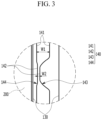
FIG. 3 is an enlarged cross-sectional view of part A ofFIG. 2 . -
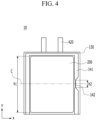
FIG. 4 is a diagram schematically illustrating the secondary battery ofFIG. 2 viewed from the front. -
FIG. 5 is a cross-sectional view taken along line B-B'. -
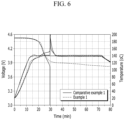
FIG. 6 is a graph illustrating the results of an experiment conducted for the secondary batteries of the example and the comparative example of the present invention left at a high temperature. -
FIG. 7 is a diagram schematically illustrating the secondary battery according to another exemplary embodiment of the present invention viewed from the front. - In the following detailed description, only certain exemplary embodiments of the present invention have been shown and described, simply by way of illustration. However, the present invention can be variously implemented and is not limited to the following embodiments.
- Accordingly, the drawings and description are to be regarded as illustrative in nature and not restrictive. Like reference numerals designate like elements throughout the specification.
- In addition, the size and thickness of each configuration shown in the drawings are arbitrarily shown for understanding and ease of description, but the present invention is not limited thereto. In the drawings, the thickness of layers, films, panels, regions, etc., are exaggerated for clarity. In the drawings, for understanding and ease of description, the thickness of some layers and areas is exaggerated.
- Further, It will be understood that when an element such as a layer, film, region, or substrate is referred to as being "on" another element, it can be directly on the other element or intervening elements may also be present. In contrast, when an element is referred to as being "directly on" another element, there are no intervening elements present. Further, when an element is "on" a reference portion, the element is located above or below the reference portion, and it does not necessarily mean that the element is located "on" in a direction opposite to gravity.
- In addition, unless explicitly described to the contrary, the word "comprise", and variations such as "comprises" or "comprising", will be understood to imply the inclusion of stated elements but not the exclusion of any other elements.
- Further, in the entire specification, when it is referred to as "on a plane" it means when a target part is viewed from above, and when it is referred to as "on a cross-section", it means when the cross-section obtained by cutting a target part vertically is viewed from the side.
-
FIG. 1 is an exploded perspective view illustrating a secondary battery according to an exemplary embodiment of the present invention,FIG. 2 is as diagram illustrating an assembling state of the secondary battery ofFIG. 1 ,FIG. 3 is an enlarged cross-sectional view of part A ofFIG. 2 ,FIG. 4 is a diagram schematically illustrating the secondary battery ofFIG. 2 viewed from the front, andFIG. 5 is a cross-sectional view taken along line B-B'. - First, referring to
FIGS. 1 and2 , asecondary battery 10 according to an exemplary embodiment of the present invention includes apouch case 100 and anelectrode assembly 200. Thepouch case 100 includes afirst case part 110 and asecond case part 120.FIG. 1 illustrates that thefirst case part 110 and thesecond case part 120 are connected to each other and integrally formed, but thefirst case part 110 and thesecond case part 120 may be separated from each other. The shape of thepouch case 100 is not limited to that illustrated inFIG. 1 , and any shape is possible as long as the shape is capable of accommodating and sealing theelectrode assembly 200. - The
electrode assembly 200 may be configured in a form in which a positive electrode plate and a negative electrode plate are disposed with a separator interposed therebetween. In this case, theelectrode assembly 200 may have a structure in which one positive electrode plate and one negative electrode plate are wound with a separator interposed therebetween, or a structure in which a plurality of positive electrode plates and a plurality of negative electrode plates are stacked with a separator interposed therebetween. The positive electrode plate and the negative electrode plate may be formed in a structure in which an active material slurry is applied to an electrode current collector, respectively, and the slurry may be typically formed by stirring an active material, a conductive material, a binder, and a plasticizer in a state in which a solvent is added. - In the
electrode assembly 200, there may be an uncoated region to which the slurry is not applied in the electrode plate, and an electrode tab corresponding to each electrode plate may be formed in the uncoated region. Specifically, as illustrated inFIG. 1 , apositive electrode tab 310 may be attached to the positive electrode plate of theelectrode assembly 200, and anegative electrode tab 410 may be attached to the negative electrode plate of theelectrode assembly 200. Thepositive electrode tab 310 and thenegative electrode tab 410 are electrically connected to apositive electrode lead 320 and anegative electrode lead 420 to formelectrode terminal 300 andelectrode terminal 400 . In this case, as illustrated inFIG. 2 , thepositive electrode lead 320 and thenegative electrode lead 420 may be drawn out of thepouch case 100. - The
first case part 110 and thesecond case part 120 ofFIG. 1 include a firstaccommodating part 110s and a secondaccommodating part 120s each having a concave shape, respectively, and the firstaccommodating part 110s and the secondaccommodating part 120s may accommodate theelectrode assembly 200 and the electrolyte. - The
secondary battery 10 ofFIG. 2 exemplarily illustrates a pouch-type secondary battery in which thefirst case part 110 and thesecond case part 120 illustrated inFIG. 1 are bonded to each other and sealed. -
FIG. 3 is an enlarged cross-sectional view of part A ofFIG. 2 , andFIG. 4 is a diagram illustrating the secondary battery ofFIG. 2 viewed from the front. Referring toFIG. 3 , thefirst case part 110 and thesecond case part 120 configuring thepouch case 100 according to the exemplary embodiment of the present invention include a sealingpart 140 formed on anedge portion 130 of thepouch case 100 surrounding the firstaccommodating part 110s and the secondaccommodating part 120s in which theelectrode assembly 200 ofFIG. 1 is accommodated. The sealingpart 140 is formed in a band shape on at least a part of theedge portion 130 along the edge of thepouch case 100, whereby thefirst case part 110 and thesecond case part 120 may be joined to each other. Thefirst case part 110 and thesecond case part 120 are thermally fused to form the sealingpart 140, so that thepouch case 100 may be sealed. -
FIG. 5 is a cross-sectional view along line B-B' ofFIG. 2 . As illustrated inFIG. 5 , thefirst case part 110 includes afirst base layer 113, a second metal layer 112, and afirst sealing layer 111 sequentially stacked from the outside, and thesecond case part 120 includes asecond base layer 123, asecond metal layer 122, and asecond sealing layer 121 sequentially stacked from the outside. - The
first base layer 113 and thesecond base layer 123 may be made of an insulating material, such as polyethylene terephthalate (PET) resin or nylon resin, to ensure insulation performance between the secondary battery and the outside and moldability. The first metal layer 112 and thesecond metal layer 122 may include one selected from the group consisting of copper, aluminum, nickel, iron, carbon, chromium, manganese, and alloys thereof. Thefirst sealing layer 111 and thesecond sealing layer 121 may include a thermoplastic resin, such as polypropylene (PP). - The
first case part 110 and thesecond case part 120 are bonded so that thefirst sealing layer 111 and thesecond sealing layer 121 are in contact with each other at theedge portion 130. In this state, thefirst sealing layer 111 and thesecond sealing layer 121 are integrally coupled to each other by being pressurized and thermally fused by a heated mold or the like so as to correspond to the sealingpart 140, to form the sealing part140, so that thepouch case 100 may be sealed. - In this case, the sealing
part 140 includes afirst sealing part 141 having a first width W1 and asecond sealing part 142 having a second width W2 that is smaller than the first width W1. In addition, thesecond sealing part 142 may be formed so that the central portion of the length h2 matches the length h1 of the long side of theelectrode assembly 200 accommodated in the firstaccommodating part 110s and the secondaccommodating part 120s. That is, inFIG. 3 , the center of the long side of theelectrode assembly 200 and the center of the length of thesecond sealing part 142 are both located on the center line C. - The
second sealing part 142 may act as a vent part for gas generated when the temperature inside thepouch case 100 rises. That is, when exposed to high temperature conditions, the separator inside theelectrode assembly 200 contracts, and the battery expands or the electrode is deformed due to vaporization of the electrolyte, thereby causing a short circuit between the positive electrode and the negative electrode. In particular, when the electrode and the current collector come into contact, the battery reaches a thermal runaway state in which heat generation is greater than heat discharge and the battery is ignited. However, in this case, even if a short circuit occurs between the positive electrode and the negative electrode, when all the electrolyte inside the battery is drained, the movement of ions and electrons in the battery is restricted, so that ignition may be prevented. That is, safety may be improved by inducing the electrolyte to be vaporized and escape at a faster time than batteries in the related art. - In the exemplary present embodiment, the
second sealing portion 142 having a smaller width than that of another sealing part, that is, thefirst sealing part 141, acts as a vent part, so that the vent of the vaporized electrolyte proceeds quickly, thereby preventing ignition and explosion to improve safety. That is, when the battery expands, the portion where deformation and expansion occurs most is the central portion C in the longitudinal direction of theelectrode assembly 200, and thesecond sealing part 142 is disposed in response to this, the vent through thesecond sealing part 142 may be induced more quickly. - In this case, the
second sealing part 142 may be disposed to be more biased toward theelectrode assembly 200 from the center of thefirst sealing part 141 in the width direction. That is, as illustrated inFIG. 3 , the sealingpart 140 includes a firstinclined portion 143 which connects thefirst sealing part 141 and thesecond sealing part 142 and has a shape inclined toward theelectrode assembly 200 from the outside of thepouch case 100, and includes a secondinclined portion 144 which connects thefirst sealing part 141 and thesecond sealing part 142 and has having a shape inclined toward the outside of thepouch case 100 from theelectrode assembly 200. Also, in this case, the length of the firstinclined portion 143 may be formed to be longer than the length of the secondinclined portion 144. - With such a structure, the
second sealing part 142 is disposed to be relatively close to the inner side, so that even though the width W2 of thesecond sealing part 142 is small, thesecond sealing part 142 may have a sufficient sealing effect. In addition, by including the secondinclined portion 144 inside, the gas generated inside may be more easily induced toward the corresponding portion, that is, the secondinclined portion 144 in the recessed form, so that it is possible to more quickly induce breakage and gas discharge of thesecond sealing part 142. - The second width W2 of the
second sealing part 142 may have a value of 1/4 or less of the first width W1 of thefirst sealing part 141, but is not particularly limited. When the second width W2 of thesecond sealing part 142 is too small, sealing performance may be deteriorated, and preferably, the second width W2 of thesecond sealing part 142 may be 1/8 or more and 1/4 or less of the first width W1 of thefirst sealing part 141. - In addition, as described above, the
second sealing part 142 is not a configuration obtained through deformation, such as cutting, of theedge portion 130, but is the configuration obtained by deforming only a pressing form of a corresponding portion, that is, reducing the width of the mold, during the sealing process by thermal fusion. Therefore, the width of theedge portion 130 is the same in thefirst sealing part 141 and thesecond sealing part 142, and it is possible to simply obtain the configuration of thesecond sealing part 142 by changing only the width to be thermally fused, that is, the width of the sealingpart 140. - As described above, an experiment was conducted in which the
secondary battery 10 according to the example of the present invention and the secondary battery of the comparative example were exposed to high temperatures, and the results are illustrated inFIG. 6 . -
FIG. 6 is a graph illustrating the results of an experiment conducted for the secondary batteries of the example and the comparative example of the present invention left at a high temperature. - In the
secondary battery 10 according to the example, as illustrated inFIGS. 2 to 4 , thesecond sealing part 142 was formed, and in the secondary battery according to the comparative example, thesecond sealing part 142 was not formed, and a sealing part of a constant width was formed. - As a result of leaving the secondary battery at a temperature of 140°C., as illustrated in
FIG. 6 , it was confirmed that an explosion occurred when about 30 minutes had elapsed in the case of the comparative example. On the other hand, in thesecondary battery 10 of the example, no explosion occurred when 80 minutes had elapsed, so it was confirmed that the electrolyte was rapidly discharged even when the battery was exposed to high temperature, thereby improving safety. -
FIG. 7 is a diagram schematically illustrating the secondary battery according to another exemplary embodiment of the present invention viewed from the front. - In the
secondary battery 11 according to another exemplary embodiment of the present invention, only the number ofsecond sealing parts 142 is different and the rest of the configuration is the same as that of thesecondary battery 10 according to the exemplary embodiment, so that the description of overlapping configurations will be omitted. - As illustrated in
FIG. 7 , in thesecondary battery 11 according to another exemplary embodiment, thesecond sealing part 142 is positioned to correspond to both long sides of the pair of long sides facing each other of theelectrode assembly 200. In this case, even when gas is rapidly generated inside thesecondary battery 11, vent of the gas may occur at both sides at the same time, so that the electrolyte may be discharged more quickly. Accordingly, it is possible to prevent an explosion at a high temperature, thereby improving safety. - Meanwhile, a plurality of pouch-type secondary batteries according to the exemplary embodiment of the present invention may be assembled to form a battery module, and one or more of the battery modules may be packaged in a pack case to form a battery pack.
- The above-described battery module and battery pack including the same may be applied to various devices. As the device, transport means, such as an electric bicycle, an electric vehicle, and a hybrid vehicle, are applicable, but the present invention is not limited thereto, and the present invention is applicable to various devices capable of using a battery module and a battery pack including the same, which also belongs to the scope of the present invention.
- Although an exemplary embodiment of the present invention has been described in detail, the scope of the present invention is not limited by the embodiment.
-
- 100: Pouch case
- 200: Electrode assembly
- 130: Edge portion
- 140: Sealing part
- 141: First sealing part
- 142: Second sealing part
Claims (10)
- A secondary battery (10, 11), comprising:an electrode assembly (200); anda pouch case (100) in which the electrode assembly (200) is embedded,wherein the pouch case (100) includes a first case part (110) formed with a first accommodating part (110s) in which a part of the electrode assembly (200) is embedded, and a second case part (120) formed with a second accommodating part (120s) in which the remaining part of the electrode assembly (200) is accommodated,the first case part (110) and the second case part (120) are in contact with each other in an edge portion (130) surrounding the first and second accommodating parts (110s, 120s) and are sealed by a sealing part (140) formed in a band shape on at least a part of the edge portion (130),the sealing part (140) includes a first sealing part (141) having a first width (W1) and a second sealing part (142) having a second width (W2) smaller than the first width (W1), anda central portion of the second sealing part (142) in a longitudinal direction coincides with a central portion of a long side of the electrode assembly (200),wherein:the sealing part (140) further includes a first inclined portion (143) which connects the first sealing part (141) and the second sealing part (142) and has a shape inclined toward the electrode assembly (200) from the outside of the pouch case (100),characterised by a second inclined portion (144) which connects the first sealing part (141) and the second sealing part (142) and has a shape inclined toward the outside of the pouch case (100) from the electrode assembly (200).
- The secondary battery (10, 11) of claim 1, wherein:
a length of the first inclined portion (143) is larger than a length of the second inclined portion (144). - The secondary battery (10, 11) of claim 1, wherein:
the second width (W2) is 1/4 or less of the first width (W1). - The secondary battery (10, 11) of claim 1, wherein:
a width of the edge portion (130) is maintained constant at a place at which the first sealing part (141) is located and a place at which the second sealing part (142) is located. - The secondary battery (10, 11) of claim 1, wherein:each of the first case part (110) and the second case part (120) includes a base layer (113, 123), a metal layer (112, 122), and a sealing layer (111, 121), andthe sealing part (140) is a region in which a sealing layer (111) of the first case part (110) and a sealing layer (121) of the second case part (120) are thermally fused to each other and integrally formed.
- The secondary battery (10, 11) of claim 5, wherein:
the sealing layer (111) of the first case part (110) and the sealing layer (121) of the second case part (120) each includes a thermoplastic resin. - The secondary battery (10) of claim 1, wherein:the electrode assembly (200) includes a pair of long sides facing each other, andthe second sealing part (142) is located only to correspond to any one long side of the pair of long sides.
- The secondary battery (11) of claim 1, wherein:the electrode assembly (200) includes a pair of long sides facing each other, andthe second sealing part (142) is located to correspond to both long sides of the pair of long sides.
- The secondary battery (10, 11) of claim 1, wherein:
the second sealing part (142) is configured to act as a vent part of a generated gas when thermal runaway occurs inside the pouch case (100). - A battery module including the secondary battery (10, 11) of claim 1.
Applications Claiming Priority (2)
| Application Number | Priority Date | Filing Date | Title |
|---|---|---|---|
| KR1020200148820A KR102779619B1 (en) | 2020-11-09 | 2020-11-09 | Secondary battery |
| PCT/KR2021/013266 WO2022097918A1 (en) | 2020-11-09 | 2021-09-28 | Secondary battery |
Publications (3)
| Publication Number | Publication Date |
|---|---|
| EP4120446A1 EP4120446A1 (en) | 2023-01-18 |
| EP4120446A4 EP4120446A4 (en) | 2024-03-06 |
| EP4120446B1 true EP4120446B1 (en) | 2025-07-09 |
Family
ID=81457015
Family Applications (1)
| Application Number | Title | Priority Date | Filing Date |
|---|---|---|---|
| EP21889383.2A Active EP4120446B1 (en) | 2020-11-09 | 2021-09-28 | Secondary battery |
Country Status (8)
| Country | Link |
|---|---|
| US (1) | US20230268590A1 (en) |
| EP (1) | EP4120446B1 (en) |
| JP (1) | JP7666788B2 (en) |
| KR (1) | KR102779619B1 (en) |
| CN (1) | CN115461914A (en) |
| ES (1) | ES3046220T3 (en) |
| HU (1) | HUE073337T2 (en) |
| WO (1) | WO2022097918A1 (en) |
Families Citing this family (4)
| Publication number | Priority date | Publication date | Assignee | Title |
|---|---|---|---|---|
| JP2024042855A (en) * | 2022-09-16 | 2024-03-29 | プライムアースEvエナジー株式会社 | Battery Cell |
| KR20250050488A (en) * | 2023-10-06 | 2025-04-15 | 주식회사 엘지에너지솔루션 | Battery cell and battery assembly including the same |
| KR20250093832A (en) * | 2023-12-18 | 2025-06-25 | 삼성에스디아이 주식회사 | Secondary battery |
| WO2026054477A1 (en) * | 2024-09-04 | 2026-03-12 | 주식회사 엘지에너지솔루션 | Secondary battery |
Family Cites Families (13)
| Publication number | Priority date | Publication date | Assignee | Title |
|---|---|---|---|---|
| JP2003132868A (en) * | 2001-10-25 | 2003-05-09 | Mitsubishi Cable Ind Ltd | Sheet battery |
| JPWO2007043392A1 (en) * | 2005-10-03 | 2009-04-16 | Tdkラムダ株式会社 | Battery pack |
| KR101074022B1 (en) * | 2007-08-10 | 2011-10-17 | 주식회사 엘지화학 | Secondary Battery of Improved Safety |
| KR100944987B1 (en) * | 2007-12-14 | 2010-03-02 | 주식회사 엘지화학 | Secondary battery including novel sealing part structure |
| JP2009146812A (en) | 2007-12-17 | 2009-07-02 | Nissan Motor Co Ltd | Battery case and battery pack |
| JP2010267593A (en) * | 2009-05-18 | 2010-11-25 | Fuji Heavy Ind Ltd | Electricity storage device |
| KR20130052892A (en) | 2011-11-14 | 2013-05-23 | 에스케이이노베이션 주식회사 | Battery cell, and secondary battery |
| KR101294259B1 (en) * | 2012-02-02 | 2013-08-06 | 주식회사 엘지화학 | Secondary battery having zigzag-shaped sealing part |
| JP5909378B2 (en) * | 2012-02-13 | 2016-04-26 | 日産自動車株式会社 | Battery reinforcement method |
| KR101666381B1 (en) * | 2014-02-14 | 2016-10-14 | 주식회사 엘지화학 | Pouch-type Secondary Battery Having Sealing Part with concave parts |
| KR20160111614A (en) * | 2015-03-17 | 2016-09-27 | 주식회사 엘지화학 | A Battery Cell having Venting Part at The Sealing Part |
| KR102268404B1 (en) * | 2018-01-31 | 2021-06-24 | 주식회사 엘지에너지솔루션 | method of manufacturing secondary battery pouch for secondary battery and pouch for secondary battery |
| HUE073149T2 (en) * | 2018-11-13 | 2026-01-28 | Lg Energy Solution Ltd | Pouch case and the method of manufacturing the pouch type secondary battery including the same |
-
2020
- 2020-11-09 KR KR1020200148820A patent/KR102779619B1/en active Active
-
2021
- 2021-09-28 JP JP2022562150A patent/JP7666788B2/en active Active
- 2021-09-28 ES ES21889383T patent/ES3046220T3/en active Active
- 2021-09-28 US US17/922,677 patent/US20230268590A1/en active Pending
- 2021-09-28 CN CN202180028437.4A patent/CN115461914A/en active Pending
- 2021-09-28 EP EP21889383.2A patent/EP4120446B1/en active Active
- 2021-09-28 HU HUE21889383A patent/HUE073337T2/en unknown
- 2021-09-28 WO PCT/KR2021/013266 patent/WO2022097918A1/en not_active Ceased
Also Published As
| Publication number | Publication date |
|---|---|
| HUE073337T2 (en) | 2026-01-28 |
| KR102779619B1 (en) | 2025-03-10 |
| EP4120446A4 (en) | 2024-03-06 |
| ES3046220T3 (en) | 2025-12-01 |
| JP2023521808A (en) | 2023-05-25 |
| CN115461914A (en) | 2022-12-09 |
| JP7666788B2 (en) | 2025-04-22 |
| WO2022097918A1 (en) | 2022-05-12 |
| US20230268590A1 (en) | 2023-08-24 |
| KR20220062995A (en) | 2022-05-17 |
| EP4120446A1 (en) | 2023-01-18 |
Similar Documents
| Publication | Publication Date | Title |
|---|---|---|
| US11177530B2 (en) | Battery pack | |
| EP4120446B1 (en) | Secondary battery | |
| US20230155243A1 (en) | Battery module and battery pack including the same | |
| KR101073010B1 (en) | Secondary battery | |
| EP4131584B1 (en) | Battery module including thermal insulation member | |
| US11165113B2 (en) | Pouch-shaped battery cell having protective film attached thereto | |
| US11258144B2 (en) | Battery cell including shape retention member | |
| EP4250449A1 (en) | Pouch-type battery cell having improved safety, and battery module comprising same | |
| EP4181275B1 (en) | Battery module and battery pack including same | |
| US12381288B2 (en) | Busbar module and method of manufacturing the same | |
| KR20230049453A (en) | Secondary battery and battery module including the same | |
| US20250309419A1 (en) | Battery cell, battery module comprising the battery cell, and battery pack comprising the battery module | |
| US20250379320A1 (en) | Battery Module, and Battery Pack and Vehicle Including the Same | |
| EP4131617B1 (en) | Battery module and battery pack including same | |
| EP4181274A1 (en) | Battery module and battery pack including same | |
| KR20220061660A (en) | Secondary battery and device including the same | |
| JP7601496B2 (en) | Pouch-type battery cell with a safety element between the electrode lead and the lead film | |
| US12620649B2 (en) | Battery module and manufacturing method of the same | |
| US20260011835A1 (en) | Secondary battery | |
| EP4187683A1 (en) | Battery module and manufacturing method thereof | |
| US20260128391A1 (en) | Electrode Assembly and Secondary Battery Including the Same | |
| KR102935762B1 (en) | Battery cell and battery module including the same | |
| CN118104056A (en) | Secondary battery and battery module including the same | |
| KR20220112025A (en) | Battery cell and battery module including the same |
Legal Events
| Date | Code | Title | Description |
|---|---|---|---|
| STAA | Information on the status of an ep patent application or granted ep patent |
Free format text: STATUS: THE INTERNATIONAL PUBLICATION HAS BEEN MADE |
|
| PUAI | Public reference made under article 153(3) epc to a published international application that has entered the european phase |
Free format text: ORIGINAL CODE: 0009012 |
|
| STAA | Information on the status of an ep patent application or granted ep patent |
Free format text: STATUS: REQUEST FOR EXAMINATION WAS MADE |
|
| 17P | Request for examination filed |
Effective date: 20221012 |
|
| AK | Designated contracting states |
Kind code of ref document: A1 Designated state(s): AL AT BE BG CH CY CZ DE DK EE ES FI FR GB GR HR HU IE IS IT LI LT LU LV MC MK MT NL NO PL PT RO RS SE SI SK SM TR |
|
| REG | Reference to a national code |
Ref country code: DE Free format text: PREVIOUS MAIN CLASS: H01M0050116000 Ref legal event code: R079 Ref document number: 602021033975 Country of ref document: DE Ipc: H01M0050342000 |
|
| DAV | Request for validation of the european patent (deleted) | ||
| DAX | Request for extension of the european patent (deleted) | ||
| A4 | Supplementary search report drawn up and despatched |
Effective date: 20240131 |
|
| RIC1 | Information provided on ipc code assigned before grant |
Ipc: H01M 50/121 20210101ALI20240126BHEP Ipc: H01M 50/193 20210101ALI20240126BHEP Ipc: H01M 50/119 20210101ALI20240126BHEP Ipc: H01M 50/184 20210101ALI20240126BHEP Ipc: H01M 50/186 20210101ALI20240126BHEP Ipc: H01M 50/105 20210101ALI20240126BHEP Ipc: H01M 50/171 20210101ALI20240126BHEP Ipc: H01M 50/126 20210101ALI20240126BHEP Ipc: H01M 50/124 20210101ALI20240126BHEP Ipc: H01M 50/342 20210101AFI20240126BHEP |
|
| GRAP | Despatch of communication of intention to grant a patent |
Free format text: ORIGINAL CODE: EPIDOSNIGR1 |
|
| STAA | Information on the status of an ep patent application or granted ep patent |
Free format text: STATUS: GRANT OF PATENT IS INTENDED |
|
| INTG | Intention to grant announced |
Effective date: 20250424 |
|
| GRAS | Grant fee paid |
Free format text: ORIGINAL CODE: EPIDOSNIGR3 |
|
| GRAA | (expected) grant |
Free format text: ORIGINAL CODE: 0009210 |
|
| STAA | Information on the status of an ep patent application or granted ep patent |
Free format text: STATUS: THE PATENT HAS BEEN GRANTED |
|
| P01 | Opt-out of the competence of the unified patent court (upc) registered |
Free format text: CASE NUMBER: APP_22748/2025 Effective date: 20250514 |
|
| AK | Designated contracting states |
Kind code of ref document: B1 Designated state(s): AL AT BE BG CH CY CZ DE DK EE ES FI FR GB GR HR HU IE IS IT LI LT LU LV MC MK MT NL NO PL PT RO RS SE SI SK SM TR |
|
| REG | Reference to a national code |
Ref country code: GB Ref legal event code: FG4D |
|
| REG | Reference to a national code |
Ref country code: CH Ref legal event code: EP |
|
| REG | Reference to a national code |
Ref country code: IE Ref legal event code: FG4D |
|
| REG | Reference to a national code |
Ref country code: DE Ref legal event code: R096 Ref document number: 602021033975 Country of ref document: DE |
|
| PGFP | Annual fee paid to national office [announced via postgrant information from national office to epo] |
Ref country code: DE Payment date: 20250820 Year of fee payment: 5 |
|
| PGFP | Annual fee paid to national office [announced via postgrant information from national office to epo] |
Ref country code: BE Payment date: 20250820 Year of fee payment: 5 Ref country code: GB Payment date: 20250820 Year of fee payment: 5 |
|
| PGFP | Annual fee paid to national office [announced via postgrant information from national office to epo] |
Ref country code: AT Payment date: 20251020 Year of fee payment: 5 Ref country code: FR Payment date: 20250821 Year of fee payment: 5 |
|
| REG | Reference to a national code |
Ref country code: NL Ref legal event code: MP Effective date: 20250709 |
|
| PGFP | Annual fee paid to national office [announced via postgrant information from national office to epo] |
Ref country code: HU Payment date: 20251029 Year of fee payment: 5 |
|
| REG | Reference to a national code |
Ref country code: ES Ref legal event code: FG2A Ref document number: 3046220 Country of ref document: ES Kind code of ref document: T3 Effective date: 20251201 |
|
| PG25 | Lapsed in a contracting state [announced via postgrant information from national office to epo] |
Ref country code: PT Free format text: LAPSE BECAUSE OF FAILURE TO SUBMIT A TRANSLATION OF THE DESCRIPTION OR TO PAY THE FEE WITHIN THE PRESCRIBED TIME-LIMIT Effective date: 20251110 |
|
| PG25 | Lapsed in a contracting state [announced via postgrant information from national office to epo] |
Ref country code: NL Free format text: LAPSE BECAUSE OF FAILURE TO SUBMIT A TRANSLATION OF THE DESCRIPTION OR TO PAY THE FEE WITHIN THE PRESCRIBED TIME-LIMIT Effective date: 20250709 |
|
| REG | Reference to a national code |
Ref country code: AT Ref legal event code: MK05 Ref document number: 1812767 Country of ref document: AT Kind code of ref document: T Effective date: 20250709 |
|
| PG25 | Lapsed in a contracting state [announced via postgrant information from national office to epo] |
Ref country code: IS Free format text: LAPSE BECAUSE OF FAILURE TO SUBMIT A TRANSLATION OF THE DESCRIPTION OR TO PAY THE FEE WITHIN THE PRESCRIBED TIME-LIMIT Effective date: 20251109 |
|
| PG25 | Lapsed in a contracting state [announced via postgrant information from national office to epo] |
Ref country code: NO Free format text: LAPSE BECAUSE OF FAILURE TO SUBMIT A TRANSLATION OF THE DESCRIPTION OR TO PAY THE FEE WITHIN THE PRESCRIBED TIME-LIMIT Effective date: 20251009 |
|
| REG | Reference to a national code |
Ref country code: LT Ref legal event code: MG9D |
|
| PG25 | Lapsed in a contracting state [announced via postgrant information from national office to epo] |
Ref country code: AT Free format text: LAPSE BECAUSE OF FAILURE TO SUBMIT A TRANSLATION OF THE DESCRIPTION OR TO PAY THE FEE WITHIN THE PRESCRIBED TIME-LIMIT Effective date: 20250709 |
|
| PG25 | Lapsed in a contracting state [announced via postgrant information from national office to epo] |
Ref country code: FI Free format text: LAPSE BECAUSE OF FAILURE TO SUBMIT A TRANSLATION OF THE DESCRIPTION OR TO PAY THE FEE WITHIN THE PRESCRIBED TIME-LIMIT Effective date: 20250709 |
|
| PG25 | Lapsed in a contracting state [announced via postgrant information from national office to epo] |
Ref country code: HR Free format text: LAPSE BECAUSE OF FAILURE TO SUBMIT A TRANSLATION OF THE DESCRIPTION OR TO PAY THE FEE WITHIN THE PRESCRIBED TIME-LIMIT Effective date: 20250709 |
|
| PG25 | Lapsed in a contracting state [announced via postgrant information from national office to epo] |
Ref country code: GR Free format text: LAPSE BECAUSE OF FAILURE TO SUBMIT A TRANSLATION OF THE DESCRIPTION OR TO PAY THE FEE WITHIN THE PRESCRIBED TIME-LIMIT Effective date: 20251010 |
|
| PG25 | Lapsed in a contracting state [announced via postgrant information from national office to epo] |
Ref country code: SE Free format text: LAPSE BECAUSE OF FAILURE TO SUBMIT A TRANSLATION OF THE DESCRIPTION OR TO PAY THE FEE WITHIN THE PRESCRIBED TIME-LIMIT Effective date: 20250709 |
|
| PG25 | Lapsed in a contracting state [announced via postgrant information from national office to epo] |
Ref country code: LV Free format text: LAPSE BECAUSE OF FAILURE TO SUBMIT A TRANSLATION OF THE DESCRIPTION OR TO PAY THE FEE WITHIN THE PRESCRIBED TIME-LIMIT Effective date: 20250709 |
|
| PG25 | Lapsed in a contracting state [announced via postgrant information from national office to epo] |
Ref country code: PL Free format text: LAPSE BECAUSE OF FAILURE TO SUBMIT A TRANSLATION OF THE DESCRIPTION OR TO PAY THE FEE WITHIN THE PRESCRIBED TIME-LIMIT Effective date: 20250709 Ref country code: BG Free format text: LAPSE BECAUSE OF FAILURE TO SUBMIT A TRANSLATION OF THE DESCRIPTION OR TO PAY THE FEE WITHIN THE PRESCRIBED TIME-LIMIT Effective date: 20250709 |
|
| PG25 | Lapsed in a contracting state [announced via postgrant information from national office to epo] |
Ref country code: RS Free format text: LAPSE BECAUSE OF FAILURE TO SUBMIT A TRANSLATION OF THE DESCRIPTION OR TO PAY THE FEE WITHIN THE PRESCRIBED TIME-LIMIT Effective date: 20251009 |
|
| REG | Reference to a national code |
Ref country code: HU Ref legal event code: AG4A Ref document number: E073337 Country of ref document: HU |
|
| PGFP | Annual fee paid to national office [announced via postgrant information from national office to epo] |
Ref country code: ES Payment date: 20251007 Year of fee payment: 5 |
|
| PG25 | Lapsed in a contracting state [announced via postgrant information from national office to epo] |
Ref country code: RO Free format text: LAPSE BECAUSE OF FAILURE TO SUBMIT A TRANSLATION OF THE DESCRIPTION OR TO PAY THE FEE WITHIN THE PRESCRIBED TIME-LIMIT Effective date: 20250709 |
|
| PG25 | Lapsed in a contracting state [announced via postgrant information from national office to epo] |
Ref country code: SM Free format text: LAPSE BECAUSE OF FAILURE TO SUBMIT A TRANSLATION OF THE DESCRIPTION OR TO PAY THE FEE WITHIN THE PRESCRIBED TIME-LIMIT Effective date: 20250709 |
|
| PG25 | Lapsed in a contracting state [announced via postgrant information from national office to epo] |
Ref country code: DK Free format text: LAPSE BECAUSE OF FAILURE TO SUBMIT A TRANSLATION OF THE DESCRIPTION OR TO PAY THE FEE WITHIN THE PRESCRIBED TIME-LIMIT Effective date: 20250709 |
|
| PG25 | Lapsed in a contracting state [announced via postgrant information from national office to epo] |
Ref country code: IT Free format text: LAPSE BECAUSE OF FAILURE TO SUBMIT A TRANSLATION OF THE DESCRIPTION OR TO PAY THE FEE WITHIN THE PRESCRIBED TIME-LIMIT Effective date: 20250709 |
|
| PG25 | Lapsed in a contracting state [announced via postgrant information from national office to epo] |
Ref country code: CZ Free format text: LAPSE BECAUSE OF FAILURE TO SUBMIT A TRANSLATION OF THE DESCRIPTION OR TO PAY THE FEE WITHIN THE PRESCRIBED TIME-LIMIT Effective date: 20250709 |
|
| PG25 | Lapsed in a contracting state [announced via postgrant information from national office to epo] |
Ref country code: EE Free format text: LAPSE BECAUSE OF FAILURE TO SUBMIT A TRANSLATION OF THE DESCRIPTION OR TO PAY THE FEE WITHIN THE PRESCRIBED TIME-LIMIT Effective date: 20250709 Ref country code: SK Free format text: LAPSE BECAUSE OF FAILURE TO SUBMIT A TRANSLATION OF THE DESCRIPTION OR TO PAY THE FEE WITHIN THE PRESCRIBED TIME-LIMIT Effective date: 20250709 |