EP4120265A2 - Method and apparatus of processing audio data, electronic device, storage medium and program product - Google Patents
Method and apparatus of processing audio data, electronic device, storage medium and program product Download PDFInfo
- Publication number
- EP4120265A2 EP4120265A2 EP22210430.9A EP22210430A EP4120265A2 EP 4120265 A2 EP4120265 A2 EP 4120265A2 EP 22210430 A EP22210430 A EP 22210430A EP 4120265 A2 EP4120265 A2 EP 4120265A2
- Authority
- EP
- European Patent Office
- Prior art keywords
- information
- fundamental frequency
- audio data
- obtaining
- feature
- Prior art date
- Legal status (The legal status is an assumption and is not a legal conclusion. Google has not performed a legal analysis and makes no representation as to the accuracy of the status listed.)
- Granted
Links
Images





Classifications
-
- G—PHYSICS
- G10—MUSICAL INSTRUMENTS; ACOUSTICS
- G10L—SPEECH ANALYSIS TECHNIQUES OR SPEECH SYNTHESIS; SPEECH RECOGNITION; SPEECH OR VOICE PROCESSING TECHNIQUES; SPEECH OR AUDIO CODING OR DECODING
- G10L25/00—Speech or voice analysis techniques not restricted to a single one of groups G10L15/00 - G10L21/00
- G10L25/48—Speech or voice analysis techniques not restricted to a single one of groups G10L15/00 - G10L21/00 specially adapted for particular use
-
- H—ELECTRICITY
- H04—ELECTRIC COMMUNICATION TECHNIQUE
- H04N—PICTORIAL COMMUNICATION, e.g. TELEVISION
- H04N21/00—Selective content distribution, e.g. interactive television or video on demand [VOD]
- H04N21/40—Client devices specifically adapted for the reception of or interaction with content, e.g. set-top-box [STB]; Operations thereof
- H04N21/43—Processing of content or additional data, e.g. demultiplexing additional data from a digital video stream; Elementary client operations, e.g. monitoring of home network or synchronising decoder's clock; Client middleware
- H04N21/439—Processing of audio elementary streams
-
- G—PHYSICS
- G10—MUSICAL INSTRUMENTS; ACOUSTICS
- G10L—SPEECH ANALYSIS TECHNIQUES OR SPEECH SYNTHESIS; SPEECH RECOGNITION; SPEECH OR VOICE PROCESSING TECHNIQUES; SPEECH OR AUDIO CODING OR DECODING
- G10L25/00—Speech or voice analysis techniques not restricted to a single one of groups G10L15/00 - G10L21/00
- G10L25/03—Speech or voice analysis techniques not restricted to a single one of groups G10L15/00 - G10L21/00 characterised by the type of extracted parameters
- G10L25/18—Speech or voice analysis techniques not restricted to a single one of groups G10L15/00 - G10L21/00 characterised by the type of extracted parameters the extracted parameters being spectral information of each sub-band
-
- G—PHYSICS
- G10—MUSICAL INSTRUMENTS; ACOUSTICS
- G10L—SPEECH ANALYSIS TECHNIQUES OR SPEECH SYNTHESIS; SPEECH RECOGNITION; SPEECH OR VOICE PROCESSING TECHNIQUES; SPEECH OR AUDIO CODING OR DECODING
- G10L25/00—Speech or voice analysis techniques not restricted to a single one of groups G10L15/00 - G10L21/00
- G10L25/03—Speech or voice analysis techniques not restricted to a single one of groups G10L15/00 - G10L21/00 characterised by the type of extracted parameters
- G10L25/24—Speech or voice analysis techniques not restricted to a single one of groups G10L15/00 - G10L21/00 characterised by the type of extracted parameters the extracted parameters being the cepstrum
-
- G—PHYSICS
- G10—MUSICAL INSTRUMENTS; ACOUSTICS
- G10L—SPEECH ANALYSIS TECHNIQUES OR SPEECH SYNTHESIS; SPEECH RECOGNITION; SPEECH OR VOICE PROCESSING TECHNIQUES; SPEECH OR AUDIO CODING OR DECODING
- G10L25/00—Speech or voice analysis techniques not restricted to a single one of groups G10L15/00 - G10L21/00
- G10L25/27—Speech or voice analysis techniques not restricted to a single one of groups G10L15/00 - G10L21/00 characterised by the analysis technique
- G10L25/30—Speech or voice analysis techniques not restricted to a single one of groups G10L15/00 - G10L21/00 characterised by the analysis technique using neural networks
-
- G—PHYSICS
- G10—MUSICAL INSTRUMENTS; ACOUSTICS
- G10L—SPEECH ANALYSIS TECHNIQUES OR SPEECH SYNTHESIS; SPEECH RECOGNITION; SPEECH OR VOICE PROCESSING TECHNIQUES; SPEECH OR AUDIO CODING OR DECODING
- G10L25/00—Speech or voice analysis techniques not restricted to a single one of groups G10L15/00 - G10L21/00
- G10L25/90—Pitch determination of speech signals
-
- Y—GENERAL TAGGING OF NEW TECHNOLOGICAL DEVELOPMENTS; GENERAL TAGGING OF CROSS-SECTIONAL TECHNOLOGIES SPANNING OVER SEVERAL SECTIONS OF THE IPC; TECHNICAL SUBJECTS COVERED BY FORMER USPC CROSS-REFERENCE ART COLLECTIONS [XRACs] AND DIGESTS
- Y02—TECHNOLOGIES OR APPLICATIONS FOR MITIGATION OR ADAPTATION AGAINST CLIMATE CHANGE
- Y02D—CLIMATE CHANGE MITIGATION TECHNOLOGIES IN INFORMATION AND COMMUNICATION TECHNOLOGIES [ICT], I.E. INFORMATION AND COMMUNICATION TECHNOLOGIES AIMING AT THE REDUCTION OF THEIR OWN ENERGY USE
- Y02D30/00—Reducing energy consumption in communication networks
- Y02D30/70—Reducing energy consumption in communication networks in wireless communication networks
Definitions
- the present disclosure relates to a field of artificial intelligence technology, and in particular, to a field of speech processing technology. More specifically, the present disclosure provides a method and an apparatus of processing audio data, an electronic device, a storage medium, and a program product.
- Audio data may be decomposed into periodic data and aperiodic data.
- the periodic data may be harmonic structure information.
- the harmonic structure information is also an important part of audio data.
- the aperiodic data may be a background noise of audio.
- the present disclosure provides a method and an apparatus of processing audio data, an electronic device, a storage medium, and a program product.
- a method of processing audio data includes: processing spectral data of the audio data to obtain a first feature information; obtaining a fundamental frequency indication information according to the first feature information, wherein the fundamental frequency indication information indicates valid audio data of the first feature information and invalid audio data of the first feature information; obtaining a fundamental frequency information and a spectral energy information according to the first feature information and the fundamental frequency indication information; and obtaining a harmonic structure information of the audio data according to the fundamental frequency information and the spectral energy information.
- an apparatus of processing audio data includes: a processing module configured to process spectral data of the audio data to obtain a first feature information; a first obtaining module configured to obtain a fundamental frequency indication information according to the first feature information, wherein the fundamental frequency indication information indicates valid audio data of the first feature information and invalid audio data of the first feature information; a second obtaining module configured to obtain a fundamental frequency information and a spectral energy information according to the first feature information and the fundamental frequency indication information; and a third obtaining module configured to obtain a harmonic structure information of the audio data according to the fundamental frequency information and the spectral energy information.
- an electronic device includes: at least one processor; and a memory communicatively connected to the at least one processor, wherein the memory stores instructions executable by the at least one processor, and the instructions, when executed by the at least one processor, are configured to cause the at least one processor to implement the method provided according to the present disclosure.
- a non-transitory computer-readable storage medium having computer instructions therein wherein the computer instructions are configured to cause a computer system to implement the method provided according to the present disclosure.
- a computer program product containing a computer program is provided, and the computer program, when executed by a processor, is configured to cause the processor to implement the method provided according to the present disclosure.
- Periodic data may be decomposed from audio data.
- a sine wave component equal to a period of the periodic data is referred to as a fundamental wave component.
- a frequency of the fundamental wave component is referred to as a fundamental frequency.
- a sine wave component with a frequency equal to an integral multiple of the fundamental frequency is referred to as a harmonic.
- another periodic data may be obtained, and the another periodic data is a harmonic structure information of the audio data described above.
- a harmonic structure information of audio data may be obtained in a purely mathematical method, for example, the harmonic structure information may be obtained by using a Phase Vocoder.
- this method has a large error, and a process of obtaining the harmonic structure information is non-derivative, so that the process cannot be jointly trained with a neural network model.
- the harmonic structure information of audio data may also be obtained by using a deep learning network. For example, a fundamental frequency information, a global energy distribution information and a harmonic energy distribution information of the audio data may be extracted in parallel, so as to obtain the harmonic structure information.
- This method may effectively obtain the harmonic structure information from the audio data generated by musical instruments.
- the audio data generated by humans is more complex than the audio data generated by musical instruments.
- FIG. 1 shows a flowchart of a method of processing audio data according to an embodiment of the present disclosure.
- the method 100 may include operations S110 to S140.
- spectral data of the audio data is processed to obtain a first feature information.
- the audio data may be emitted by humans.
- audio recording is performed to obtain audio data.
- the spectral data may include Mel spectral data.
- a neural network model may be used to process the spectral data of the audio data to obtain a first feature information.
- the neural network model may be a residual neural network model, such as a Resnet-38 model or a Resnet-64 model.
- a fundamental frequency indication information is obtained according to the first feature information.
- the fundamental frequency indication information indicates valid audio data of the first feature information and invalid audio data of the first feature information.
- the first feature information may be input into a fundamental frequency indication information detection model to obtain the fundamental frequency indication information.
- the fundamental frequency indication information detection model may be a convolution neural network (CNN) model.
- the audio data corresponding to a pause period may be the invalid audio data.
- a fundamental frequency information and a spectral energy information are obtained according to the first feature information and the fundamental frequency indication information.
- a second feature information may be obtained according to the first feature information and the fundamental frequency indication information.
- the first feature information and the fundamental frequency indication information may be combined (fused) to obtain the second feature information.
- the second feature information is input into the fundamental frequency information detection model to obtain the fundamental frequency information.
- the fundamental frequency information detection model may be the neural network model.
- the fundamental frequency information detection model may be the convolution neural network model.
- a third feature information is obtained according to the first feature information, the fundamental frequency indication information and the fundamental frequency information.
- the first feature information, the fundamental frequency indication information and the fundamental frequency information may be combined to obtain the third feature information.
- the spectral energy information is obtained according to the third feature information.
- the spectral energy information includes a global energy information and a harmonic energy distribution information.
- the global energy information is obtained according to the third feature information.
- the third feature information may be input into the global energy information detection model to obtain the global energy information.
- the global energy information detection model may be the convolution neural network model.
- the harmonic energy distribution information is obtained according to the first feature information, the fundamental frequency indication information, the fundamental frequency information and the global energy information.
- the first feature information, the fundamental frequency indication information, the fundamental frequency information and the global energy information may be combined to obtain a fourth feature information.
- the fourth feature information may be input into a harmonic energy distribution information detection model to obtain the harmonic energy distribution information.
- the harmonic energy distribution information detection model may be the convolution neural network model.
- a parameter of the harmonic energy distribution information detection model, a parameter of the above-mentioned global energy information detection model, a parameter of the above-mentioned fundamental frequency information detection model or a parameter of the above-mentioned fundamental frequency indication information detection model may be different from each other.
- the above-mentioned combining process may be a concatenating process.
- the harmonic structure information of the audio data is obtained according to the fundamental frequency information and the spectral energy information.
- the harmonic structure information may be obtained by a superposition of a set of sine waves.
- outputs of the cascaded fundamental frequency indication information detection network, the fundamental frequency information detection network, the global energy information detection network, and the harmonic energy distribution information detection network are fully utilized, and errors of extracting the harmonic structure information from the audio data may be significantly reduced.
- the harmonic structure information may be used to generate audio data, and there is almost no background noise in the harmonic structure information obtained according to the method 100.
- the audio data generated only based on the harmonic structure information is untrue, which is quite different from the real voice.
- the method of processing audio data described above may also include: obtaining a noise information in the audio data according to the first feature information; and obtaining synthetic audio data according to the harmonic structure information and the noise information.
- any filtering model may be used to filter out the periodic data from the first feature information to obtain the noise information in the audio data.
- the synthetic audio data may be obtained in any way.
- the harmonic structure information may be used as an audio without background noise.
- the synthetic audio data obtained by superimposing the harmonic structure information and the noise information is closer to the normal voice.
- FIG. 2A shows a schematic diagram of a method of processing audio data according to an embodiment of the present disclosure.
- the spectral data 211 may be input into a feature extraction model 221 for processing to obtain a first feature information 212.
- the feature extraction model 221 may be a residual neural network model, such as a Resnet-64 model.
- the first feature information 212 may be a 2 ⁇ N feature vector.
- the first feature information 212 may be input into a fundamental frequency indication information detection model 222 to obtain a fundamental frequency indication information 213.
- the fundamental frequency indication information 213 may be a 1 ⁇ N feature vector.
- the fundamental frequency indication information 213 and the first feature information 212 may be concatenated to obtain a second feature information.
- the second feature information is input into a fundamental frequency information detection model 223 to obtain a fundamental frequency information 214.
- the second feature information may be a 3 ⁇ N feature vector, and the fundamental frequency information 214 may be a 2 ⁇ N feature vector.
- the fundamental frequency information 214, the fundamental frequency indication information 213 and the first feature information 212 may be concatenated to obtain a third feature information.
- the third feature information is input into a global energy information detection model 224 to obtain a global energy information 215.
- the third feature information may be a 5 ⁇ N feature vector, and the global energy information 215 may be a 2 ⁇ N feature vector.
- the global energy information 215, the fundamental frequency information 214, the fundamental frequency indication information 213 and the first feature information 212 may be concatenated to obtain a fourth feature information.
- the fourth feature information is input into a harmonic energy distribution information detection model 225 to obtain a harmonic energy distribution information 216.
- the fourth feature information may be a 7 ⁇ N feature vector, and the harmonic energy distribution information 216 may be a 2 ⁇ N feature vector.
- a harmonic structure information 217 may be obtained according to the harmonic energy distribution information 216, the global energy information 215, and the fundamental frequency information 214.
- the harmonic structure information 217 may be obtained by using the above-mentioned equations 1 to 4 according to the harmonic energy distribution information 216, the global energy information 215 and the fundamental frequency information 214.
- FIG. 2B shows a schematic diagram of a method of processing audio data according to another embodiment of the present disclosure.
- the first feature information 212 when or after the first feature information 212 is input into the fundamental frequency indication information detection model 222, the first feature information 212 may be input into a filtering model 226 to obtain a noise information 218.
- the filtering model 226 may filter out the periodic data in the first feature information 212 to obtain an aperiodic feature information.
- the filtering model 226 may also combine the aperiodic feature information with a preset white noise information to obtain the noise information 218.
- the harmonic structure information 217 may be combined with the noise information 218 to obtain synthetic audio data 219.
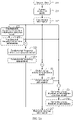
- FIG. 3 shows a flowchart of a method of processing audio data according to another embodiment of the present disclosure.
- the method 300 may include operations S301 to S303.
- the method 300 may be performed before operation S110 of the method 100.
- a reference fundamental frequency information is obtained according to the audio data.
- the reference fundamental frequency information may be extracted from the audio data.
- a function used for interpolating may be a linear polynomial (polynomial of degree one).
- the reference fundamental frequency information after being linear interpolated may become smoother.
- the fundamental frequency information and the interpolated reference fundamental frequency information are used to train the fundamental frequency information detection model.
- the fundamental frequency information detection model is trained, so that a difference between the interpolated reference fundamental frequency information and the fundamental frequency information is less than a predetermined threshold.
- the difference between the interpolated reference fundamental frequency information and the fundamental frequency information may be obtained by using an L1 loss function according to the interpolated reference fundamental frequency information and the fundamental frequency information. According to the difference, a parameter of the fundamental frequency information detection model is adjusted to train the model.
- the fundamental frequency information detection model is trained by using the smoothed and linearly interpolated reference fundamental frequency information, so that the trained fundamental frequency information detection model may be used to extract a smoother fundamental frequency information.
- the difference between the interpolated reference fundamental frequency information and the fundamental frequency information is expressed as a first difference
- the above-mentioned predetermined threshold is expressed as a first predetermined threshold
- the reference fundamental frequency indication information may be obtained according to the audio data. According to the reference fundamental frequency indication information and the fundamental frequency indication information, the fundamental frequency indication information detection model is trained, so that a second difference between the reference fundamental frequency indication information and the fundamental frequency information is less than a second predetermined threshold.
- the above-mentioned second difference may be obtained by the using the L1 loss function according to the reference fundamental frequency indication information and the fundamental frequency indication information.
- the global energy information detection model and/or the harmonic energy distribution information detection model may be trained according to the audio data and the synthetic audio data, so that a third difference between the audio data and the synthetic audio data is less than a third predetermined threshold.
- the above-mentioned third difference may be obtained by using STFT (Short-Time Fourier Transform) loss function according to the audio data and the synthetic audio data.
- STFT Short-Time Fourier Transform
- FIG. 4A shows a schematic diagram of a reference fundamental frequency information according to an embodiment of the present disclosure.
- the reference fundamental frequency information has a non-smoothing problem.
- a depression exists in a region 401
- a protrusion exists in a region 402.
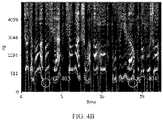
- FIG. 4B shows a schematic diagram of an interpolated reference fundamental frequency information according to an embodiment of the present disclosure.
- the interpolated reference fundamental frequency information is smoother than the reference fundamental frequency information.
- no depression exists in a region 403 and no protrusion exists in a region 404.
- the region 403 corresponds to the region 401 shown in FIG. 4A
- the region 404 corresponds to the region 402 shown in FIG. 4A .
- FIG. 5 shows a schematic diagram of training a fundamental frequency information detection model according to an embodiment of the present disclosure.
- spectral data 511 may be obtained according to the audio data 531.
- the reference fundamental frequency information 532 may be obtained according to the audio data 531.
- the reference fundamental frequency indication information 533 may be obtained according to the audio data 531.
- a linear interpolation is performed on the reference fundamental frequency information 532 to obtain an interpolated reference fundamental frequency information 534.
- the reference fundamental frequency information 532 may be, for example, the reference fundamental frequency information shown in FIG. 4A
- the interpolated reference fundamental frequency information 534 may be, for example, the interpolated reference fundamental frequency information shown in FIG. 4B .
- the spectral data 511 may be input into a feature extraction model 521 for processing to obtain a first feature information 512.
- the feature extraction model 521 may be a residual neural network model, such as a Resnet-64 model.
- the first feature information 512 may be input into the fundamental frequency indication information detection model 522 to obtain the fundamental frequency indication information 513.
- a first difference L ffi 536 may be obtained by using the L1 loss function according to the reference fundamental frequency indication information 533 and the fundamental frequency indication information 513.
- a parameter of the fundamental frequency indication information detection model 522 may be adjusted according to the first difference L ffi 536 to train the fundamental frequency indication information detection model 522.
- the fundamental frequency indication information 513 and the first feature information 512 may be concatenated to obtain a second feature information.
- the second feature information is input into the fundamental frequency information detection model 523 to obtain the fundamental frequency information 514.
- a second difference L ff 535 may be obtained by using the L1 loss function according to the fundamental frequency information 514 and the interpolated reference fundamental frequency information 534.
- a parameter of the fundamental frequency information detection model 523 may be adjusted according to the second difference L ff 535 to train the fundamental frequency information detection model 523.
- the fundamental frequency information 514, the fundamental frequency indication information 513 and the first feature information 512 may be concatenated to obtain a third feature information.
- the third feature information is input into the global energy information detection model 524 to obtain a global energy information 515.
- the global energy information 515, the fundamental frequency information 514, the fundamental frequency indication information 513 and the first feature information 512 may be concatenated to obtain a fourth feature information.
- the fourth feature information is input into a harmonic energy distribution information detection model 525 to obtain a harmonic energy distribution information 516.
- a harmonic structure information 517 may be obtained according to the harmonic energy distribution information 516, the global energy information 515 and the fundamental frequency information 514.
- the harmonic structure information 517 may be obtained by using the above-mentioned equations 1 to 4 according to the harmonic energy distribution information 516, the global energy information 515 and the fundamental frequency information 514.
- the first feature information 512 may be input into a filtering model 526 to obtain a noise information 518.
- the harmonic structure information 517 may be combined with the noise information 518 to obtain synthetic audio data 519.
- a third difference L STFT 537 may be obtained by using the STFT loss function according to the audio data 531 and the synthetic audio data 519.
- a parameter of the global energy information detection model 524 and a parameter of the harmonic energy distribution information detection model 525 may be respectively adjusted according to the third difference L STFT 537 to train the two models.
- dimensions of the first feature information 512, the fundamental frequency indication information 513, the fundamental frequency information 514, the global energy information 515, the second feature information, the third feature information and the fourth feature information may refer to the first feature information 212, the fundamental frequency indication information 213, the fundamental frequency information 214, the global energy information 215, the second feature information, the third feature information and the fourth feature information described above, which will not be repeated here.
- FIG. 6 is a block diagram of an apparatus of processing audio data according to an embodiment of the present disclosure.
- the apparatus 600 may include a processing module 610, a first obtaining module 620, a second obtaining module 630, and a third obtaining module 640.
- the processing module 610 is used to process spectral data of audio data to obtain a first feature information.
- the first obtaining module 620 is used to obtain a fundamental frequency indication information according to the above-mentioned first feature information, and the above-mentioned fundamental frequency indication information indicates valid audio data of the above-mentioned first feature information and invalid audio data of the first feature information.
- the second obtaining module 630 is used to obtain a fundamental frequency information and a spectral energy information according to the above-mentioned first feature information and the fundamental frequency indication information.
- the third obtaining module 640 is used to obtain a harmonic structure information of the above-mentioned audio data according to the above-mentioned fundamental frequency information and the spectral energy information.
- the above-mentioned second obtaining module includes: a first obtaining sub-module used to obtain a second feature information according to the above-mentioned first feature information and the fundamental frequency indication information; and an input sub-module used to input the above-mentioned second feature information into a fundamental frequency information detection model to obtain the fundamental frequency information.
- the apparatus 600 further includes: a fourth obtaining module used to obtain a reference fundamental frequency information according to the above-mentioned audio data; a linear interpolating module used to perform a linear interpolation on the above-mentioned reference fundamental frequency information to obtain an interpolated reference fundamental frequency information; and a training module used to train the above-mentioned fundamental frequency information detection model by using the above-mentioned interpolated reference fundamental frequency information and the above-mentioned fundamental frequency information, so that a difference between the above-mentioned interpolated reference fundamental frequency information and the above-mentioned fundamental frequency information is less than a predetermined threshold.
- a fourth obtaining module used to obtain a reference fundamental frequency information according to the above-mentioned audio data
- a linear interpolating module used to perform a linear interpolation on the above-mentioned reference fundamental frequency information to obtain an interpolated reference fundamental frequency information
- a training module used to train the above-mentioned fundamental frequency information detection model by using the above-
- the above-mentioned second obtaining module further includes: a second obtaining sub-module used to obtain a third feature information according to the above-mentioned first feature information, the fundamental frequency indication information and the fundamental frequency information; and a third obtaining sub-module used to obtain the spectral energy information according to the above-mentioned third feature information.
- the above-mentioned spectral energy information includes a global energy information and a harmonic energy distribution information.
- the above-mentioned third obtaining sub-module includes: a first obtaining unit used to obtain the global energy information according to the above-mentioned third feature information; and a second obtaining unit used to obtain the harmonic energy distribution information according to the first feature information, the fundamental frequency indication information, the fundamental frequency information and the global energy information.
- the apparatus 600 further includes: a fifth obtaining module used to obtain a noise information in the above-mentioned audio data according to the above-mentioned first feature information; and a sixth obtaining module used to obtain synthetic audio data according to the above-mentioned harmonic structure information and the noise information.
- the above-mentioned spectral data includes Mel spectral data.
- the collection, storage, use, processing, transmission, provision, disclosure and application of user speech information involved are all in compliance with the provisions of relevant laws and regulations, and necessary confidentiality measures have been taken, and it does not violate public order and good morals.
- the user's authorization or consent is obtained before obtaining or collecting the user's personal information.
- the present disclosure further provides an electronic device, a readable storage medium, and a computer program product.
- FIG. 7 shows a schematic block diagram of an example electronic device 900 for implementing embodiments of the present disclosure.
- the electronic device is intended to represent various forms of digital computers, such as a laptop computer, a desktop computer, a workstation, a personal digital assistant, a server, a blade server, a mainframe computer, and other suitable computers.
- the electronic device may further represent various forms of mobile devices, such as a personal digital assistant, a cellular phone, a smart phone, a wearable device, and other similar computing devices.
- the components as illustrated herein, and connections, relationships, and functions thereof are merely examples, and are not intended to limit the implementation of the present disclosure described and/or required herein.
- the electronic device 700 may include a computing unit 701, which may perform various appropriate actions and processing based on a computer program stored in a read only memory (ROM) 702 or a computer program loaded from a storage unit 708 into a random access memory (RAM) 703.
- Various programs and data required for the operation of the electronic device 700 may be stored in the RAM 703.
- the computing unit 701, the ROM 702 and the RAM 703 are connected to each other through a bus 704.
- An input/output (I/O) interface 705 is also connected to the bus 704.
- Various components in the electronic device 700 are connected to the I/O interface 705, including an input unit 706, such as a keyboard, a mouse, etc.; an output unit 707, such as various types of displays, speakers, etc.; a storage unit 708, such as a magnetic disk, an optical disk, etc.; and a communication unit 709, such as a network card, a modem, a wireless communication transceiver, etc..
- the communication unit 709 allows the electronic device 700 to exchange information/data with other devices through a computer network such as the Internet and/or various telecommunication networks.
- the computing unit 701 may be various general-purpose and/or dedicated processing components with processing and computing capabilities. Some examples of the computing unit 701 include, but are not limited to, a central processing unit (CPU), a graphics processing unit (GPU), various dedicated artificial intelligence (AI) computing chips, various computing units running machine learning model algorithms, a digital signal processor (DSP), and any appropriate processor, controller, microcontroller, and so on.
- the computing unit 701 may perform the various methods and processes described above, such as the method of processing audio data.
- the method of processing audio data may be implemented as a computer software program that is tangibly contained on a machine-readable medium, such as a storage unit 708.
- part or all of a computer program may be loaded and/or installed on the electronic device 700 via the ROM 702 and/or the communication unit 709.
- the computer program When the computer program is loaded into the RAM 703 and executed by the computing unit 701, one or more steps of the method of processing audio data described above may be performed.
- the computing unit 701 may be configured to perform the method of processing audio data in any other appropriate way (for example, by means of firmware).
- Various embodiments of the systems and technologies described herein may be implemented in a digital electronic circuit system, an integrated circuit system, a field programmable gate array (FPGA), an application specific integrated circuit (ASIC), an application specific standard product (ASSP), a system on chip (SOC), a complex programmable logic device (CPLD), a computer hardware, firmware, software, and/or combinations thereof.
- FPGA field programmable gate array
- ASIC application specific integrated circuit
- ASSP application specific standard product
- SOC system on chip
- CPLD complex programmable logic device
- the programmable processor may be a dedicated or general-purpose programmable processor, which may receive data and instructions from the storage system, the at least one input device and the at least one output device, and may transmit the data and instructions to the storage system, the at least one input device, and the at least one output device.
- Program codes for implementing the method of the present disclosure may be written in any combination of one or more programming languages. These program codes may be provided to a processor or a controller of a general-purpose computer, a special-purpose computer, or other programmable data processing devices, so that when the program codes are executed by the processor or the controller, the functions/operations specified in the flowchart and/or block diagram may be implemented.
- the program codes may be executed completely on the machine, partly on the machine, partly on the machine and partly on the remote machine as an independent software package, or completely on the remote machine or the server.
- the machine readable medium may be a tangible medium that may contain or store programs for use by or in combination with an instruction execution system, device or apparatus.
- the machine readable medium may be a machine-readable signal medium or a machine-readable storage medium.
- the machine readable medium may include, but not be limited to, electronic, magnetic, optical, electromagnetic, infrared or semiconductor systems, devices or apparatuses, or any suitable combination of the above.
- machine readable storage medium may include electrical connections based on one or more wires, portable computer disks, hard disks, random access memory (RAM), read-only memory (ROM), erasable programmable read-only memory (EPROM or flash memory), optical fiber, convenient compact disk read-only memory (CD-ROM), optical storage device, magnetic storage device, or any suitable combination of the above.
- RAM random access memory
- ROM read-only memory
- EPROM or flash memory erasable programmable read-only memory
- CD-ROM compact disk read-only memory
- magnetic storage device magnetic storage device, or any suitable combination of the above.
- a computer including a display device (for example, a CRT (cathode ray tube) or LCD (liquid crystal display) monitor) for displaying information to the user, and a keyboard and a pointing device (for example, a mouse or a trackball) through which the user may provide the input to the computer.
- a display device for example, a CRT (cathode ray tube) or LCD (liquid crystal display) monitor
- a keyboard and a pointing device for example, a mouse or a trackball
- Other types of devices may also be used to provide interaction with users.
- a feedback provided to the user may be any form of sensory feedback (for example, visual feedback, auditory feedback, or tactile feedback), and the input from the user may be received in any form (including acoustic input, voice input or tactile input).
- the systems and technologies described herein may be implemented in a computing system including back-end components (for example, a data server), or a computing system including middleware components (for example, an application server), or a computing system including front-end components (for example, a user computer having a graphical user interface or web browser through which the user may interact with the implementation of the system and technology described herein), or a computing system including any combination of such back-end components, middleware components or front-end components.
- the components of the system may be connected to each other by digital data communication (for example, a communication network) in any form or through any medium. Examples of the communication network include a local area network (LAN), a wide area network (WAN), and Internet.
- LAN local area network
- WAN wide area network
- Internet Internet
- the computer system may include a client and a server.
- the client and the server are generally far away from each other and usually interact through a communication network.
- the relationship between the client and the server is generated through computer programs running on the corresponding computers and having a client-server relationship with each other.
- the server may be a cloud server, a server of a distributed system, or a server combined with a block-chain.
- steps of the processes illustrated above may be reordered, added or deleted in various manners.
- the steps described in the present disclosure may be performed in parallel, sequentially, or in a different order, as long as a desired result of the technical solution of the present disclosure may be achieved. This is not limited in the present disclosure.
Landscapes
- Engineering & Computer Science (AREA)
- Physics & Mathematics (AREA)
- Multimedia (AREA)
- Signal Processing (AREA)
- Human Computer Interaction (AREA)
- Audiology, Speech & Language Pathology (AREA)
- Health & Medical Sciences (AREA)
- Computational Linguistics (AREA)
- Acoustics & Sound (AREA)
- Artificial Intelligence (AREA)
- Evolutionary Computation (AREA)
- Spectroscopy & Molecular Physics (AREA)
- Information Retrieval, Db Structures And Fs Structures Therefor (AREA)
- Management Or Editing Of Information On Record Carriers (AREA)
- Auxiliary Devices For Music (AREA)
Abstract
Description
- The present disclosure relates to a field of artificial intelligence technology, and in particular, to a field of speech processing technology. More specifically, the present disclosure provides a method and an apparatus of processing audio data, an electronic device, a storage medium, and a program product.
- Audio data may be decomposed into periodic data and aperiodic data. The periodic data may be harmonic structure information. The harmonic structure information is also an important part of audio data. The aperiodic data may be a background noise of audio.
- The present disclosure provides a method and an apparatus of processing audio data, an electronic device, a storage medium, and a program product.
- According to a first aspect, a method of processing audio data is provided, and the method includes: processing spectral data of the audio data to obtain a first feature information; obtaining a fundamental frequency indication information according to the first feature information, wherein the fundamental frequency indication information indicates valid audio data of the first feature information and invalid audio data of the first feature information; obtaining a fundamental frequency information and a spectral energy information according to the first feature information and the fundamental frequency indication information; and obtaining a harmonic structure information of the audio data according to the fundamental frequency information and the spectral energy information.
- According to a second aspect, an apparatus of processing audio data is provided, and the apparatus includes: a processing module configured to process spectral data of the audio data to obtain a first feature information; a first obtaining module configured to obtain a fundamental frequency indication information according to the first feature information, wherein the fundamental frequency indication information indicates valid audio data of the first feature information and invalid audio data of the first feature information; a second obtaining module configured to obtain a fundamental frequency information and a spectral energy information according to the first feature information and the fundamental frequency indication information; and a third obtaining module configured to obtain a harmonic structure information of the audio data according to the fundamental frequency information and the spectral energy information.
- According to a third aspect, an electronic device is provided, and the electronic device includes: at least one processor; and a memory communicatively connected to the at least one processor, wherein the memory stores instructions executable by the at least one processor, and the instructions, when executed by the at least one processor, are configured to cause the at least one processor to implement the method provided according to the present disclosure.
- According to a fourth aspect, a non-transitory computer-readable storage medium having computer instructions therein is provided, wherein the computer instructions are configured to cause a computer system to implement the method provided according to the present disclosure.
- According to a fifth aspect, a computer program product containing a computer program is provided, and the computer program, when executed by a processor, is configured to cause the processor to implement the method provided according to the present disclosure.
- It should be understood that content described in this section is not intended to identify key or important features in embodiments of the present disclosure, nor is it intended to limit the scope of the present disclosure. Other features of the present disclosure will be easily understood through the following description.
- The accompanying drawings are used for better understanding of the solution and do not constitute a limitation to the present disclosure, in which:
-
FIG. 1 shows a flowchart of a method of processing audio data according to an embodiment of the present disclosure; -
FIG. 2A shows a schematic diagram of a method of processing audio data according to an embodiment of the present disclosure; -
FIG. 2B shows a schematic diagram of a method of processing audio data according to another embodiment of the present disclosure; -
FIG. 3 shows a flowchart of training a fundamental frequency information detection model according to an embodiment of the present disclosure; -
FIG. 4A shows a schematic diagram of a reference fundamental frequency information according to an embodiment of the present disclosure; -
FIG. 4B shows a schematic diagram of an interpolated reference fundamental frequency information according to an embodiment of the present disclosure; -
FIG. 5 shows a schematic diagram of a method of processing audio data according to another embodiment of the present disclosure; -
FIG. 6 is a block diagram of an apparatus of processing audio data according to an embodiment of the present disclosure; and -
FIG. 7 is a block diagram of an electronic device for implementing a method of processing audio data according to an embodiment of the present disclosure. - Exemplary embodiments of the present disclosure will be described below with reference to accompanying drawings, which include various details of embodiments of the present disclosure to facilitate understanding and should be considered as merely exemplary. Therefore, those of ordinary skilled in the art should realize that various changes and modifications may be made to embodiments described herein without departing from the scope and spirit of the present disclosure. Likewise, for clarity and conciseness, descriptions of well-known functions and structures are omitted in the following description.
- Periodic data may be decomposed from audio data. A sine wave component equal to a period of the periodic data is referred to as a fundamental wave component. A frequency of the fundamental wave component is referred to as a fundamental frequency. A sine wave component with a frequency equal to an integral multiple of the fundamental frequency is referred to as a harmonic. By adding the fundamental frequency and the harmonic, another periodic data may be obtained, and the another periodic data is a harmonic structure information of the audio data described above.
- In related art, a harmonic structure information of audio data may be obtained in a purely mathematical method, for example, the harmonic structure information may be obtained by using a Phase Vocoder. However, this method has a large error, and a process of obtaining the harmonic structure information is non-derivative, so that the process cannot be jointly trained with a neural network model.
- The harmonic structure information of audio data may also be obtained by using a deep learning network. For example, a fundamental frequency information, a global energy distribution information and a harmonic energy distribution information of the audio data may be extracted in parallel, so as to obtain the harmonic structure information. This method may effectively obtain the harmonic structure information from the audio data generated by musical instruments. However, the audio data generated by humans is more complex than the audio data generated by musical instruments. When using this method to obtain the harmonic structure information from the audio data generated by humans, there will be a large error.
-
FIG. 1 shows a flowchart of a method of processing audio data according to an embodiment of the present disclosure. - As shown in
FIG. 1 , themethod 100 may include operations S110 to S140. - In operation S 110, spectral data of the audio data is processed to obtain a first feature information.
- For example, the audio data may be emitted by humans. In an example, when a user recites a specified sentence, audio recording is performed to obtain audio data.
- For example, the spectral data may include Mel spectral data.
- For example, a neural network model may be used to process the spectral data of the audio data to obtain a first feature information. In an example, the neural network model may be a residual neural network model, such as a Resnet-38 model or a Resnet-64 model.
- In operation S120, a fundamental frequency indication information is obtained according to the first feature information.
- In embodiments of the present disclosure, the fundamental frequency indication information indicates valid audio data of the first feature information and invalid audio data of the first feature information.
- For example, the first feature information may be input into a fundamental frequency indication information detection model to obtain the fundamental frequency indication information. In an example, the fundamental frequency indication information detection model may be a convolution neural network (CNN) model.
- Those skilled in the art may understand that, based on a customary habit of reciting, the user will pause when reciting the specified sentence to break the sentence. The audio data corresponding to a pause period may be the invalid audio data.
- In operation S130, a fundamental frequency information and a spectral energy information are obtained according to the first feature information and the fundamental frequency indication information.
- In embodiments of the present disclosure, a second feature information may be obtained according to the first feature information and the fundamental frequency indication information.
- For example, the first feature information and the fundamental frequency indication information may be combined (fused) to obtain the second feature information.
- In embodiments of the present disclosure, the second feature information is input into the fundamental frequency information detection model to obtain the fundamental frequency information.
- For example, the fundamental frequency information detection model may be the neural network model. In an example, the fundamental frequency information detection model may be the convolution neural network model.
- In embodiments of the present disclosure, a third feature information is obtained according to the first feature information, the fundamental frequency indication information and the fundamental frequency information.
- For example, the first feature information, the fundamental frequency indication information and the fundamental frequency information may be combined to obtain the third feature information.
- In embodiments of the present disclosure, the spectral energy information is obtained according to the third feature information.
- For example, the spectral energy information includes a global energy information and a harmonic energy distribution information.
- For example, the global energy information is obtained according to the third feature information. In an example, the third feature information may be input into the global energy information detection model to obtain the global energy information. In an example, the global energy information detection model may be the convolution neural network model.
- For example, the harmonic energy distribution information is obtained according to the first feature information, the fundamental frequency indication information, the fundamental frequency information and the global energy information. In an example, the first feature information, the fundamental frequency indication information, the fundamental frequency information and the global energy information may be combined to obtain a fourth feature information. In an example, after obtaining the fourth feature information, the fourth feature information may be input into a harmonic energy distribution information detection model to obtain the harmonic energy distribution information. In an example, the harmonic energy distribution information detection model may be the convolution neural network model.
- It should be noted that, a parameter of the harmonic energy distribution information detection model, a parameter of the above-mentioned global energy information detection model, a parameter of the above-mentioned fundamental frequency information detection model or a parameter of the above-mentioned fundamental frequency indication information detection model may be different from each other.
- It should be noted that the above-mentioned combining process may be a concatenating process.
- In operation S140, the harmonic structure information of the audio data is obtained according to the fundamental frequency information and the spectral energy information.
- For example, the harmonic structure information may be obtained by a superposition of a set of sine waves.
- For example, at an nth time instant, an energy information Ak (n) of a sine wave may be obtained according to the global energy information and the harmonic energy distribution information by the following equation:

- A frequency fk (n) of each sine wave in the set of sine waves may be obtained according to the fundamental frequency by the following equation:

- A phase Φk (n) of the sine wave may be obtained according to the frequency fk (n) of the sine wave by the following equation:

- The harmonic structure information x(n) may be obtained according to the phase Φk (n) and the energy information Ak (n) by the following equation:

- Through embodiments of the present disclosure, outputs of the cascaded fundamental frequency indication information detection network, the fundamental frequency information detection network, the global energy information detection network, and the harmonic energy distribution information detection network are fully utilized, and errors of extracting the harmonic structure information from the audio data may be significantly reduced.
- The harmonic structure information may be used to generate audio data, and there is almost no background noise in the harmonic structure information obtained according to the
method 100. The audio data generated only based on the harmonic structure information is untrue, which is quite different from the real voice. - In some embodiments, the method of processing audio data described above may also include: obtaining a noise information in the audio data according to the first feature information; and obtaining synthetic audio data according to the harmonic structure information and the noise information.
- For example, any filtering model may be used to filter out the periodic data from the first feature information to obtain the noise information in the audio data.
- For example, according to the harmonic structure information and the noise information, the synthetic audio data may be obtained in any way. In an example, the harmonic structure information may be used as an audio without background noise. The synthetic audio data obtained by superimposing the harmonic structure information and the noise information is closer to the normal voice.
-
FIG. 2A shows a schematic diagram of a method of processing audio data according to an embodiment of the present disclosure. - As shown in
FIG. 2A , thespectral data 211 may be input into afeature extraction model 221 for processing to obtain afirst feature information 212. Thefeature extraction model 221 may be a residual neural network model, such as a Resnet-64 model. Thefirst feature information 212 may be a 2×N feature vector. - The
first feature information 212 may be input into a fundamental frequency indicationinformation detection model 222 to obtain a fundamentalfrequency indication information 213. The fundamentalfrequency indication information 213 may be a 1×N feature vector. - The fundamental
frequency indication information 213 and thefirst feature information 212 may be concatenated to obtain a second feature information. The second feature information is input into a fundamental frequencyinformation detection model 223 to obtain afundamental frequency information 214. The second feature information may be a 3 ×N feature vector, and thefundamental frequency information 214 may be a 2×N feature vector. - The
fundamental frequency information 214, the fundamentalfrequency indication information 213 and thefirst feature information 212 may be concatenated to obtain a third feature information. The third feature information is input into a global energyinformation detection model 224 to obtain aglobal energy information 215. The third feature information may be a 5×N feature vector, and theglobal energy information 215 may be a 2 ×N feature vector. - The
global energy information 215, thefundamental frequency information 214, the fundamentalfrequency indication information 213 and thefirst feature information 212 may be concatenated to obtain a fourth feature information. The fourth feature information is input into a harmonic energy distributioninformation detection model 225 to obtain a harmonicenergy distribution information 216. The fourth feature information may be a 7 ×N feature vector, and the harmonicenergy distribution information 216 may be a 2× N feature vector. - Next, a
harmonic structure information 217 may be obtained according to the harmonicenergy distribution information 216, theglobal energy information 215, and thefundamental frequency information 214. For example, theharmonic structure information 217 may be obtained by using the above-mentionedequations 1 to 4 according to the harmonicenergy distribution information 216, theglobal energy information 215 and thefundamental frequency information 214. -
FIG. 2B shows a schematic diagram of a method of processing audio data according to another embodiment of the present disclosure. - As shown in
FIG. 2B , a difference from that shown inFIG. 2A is that in this example, when or after thefirst feature information 212 is input into the fundamental frequency indicationinformation detection model 222, thefirst feature information 212 may be input into afiltering model 226 to obtain anoise information 218. In an example, thefiltering model 226 may filter out the periodic data in thefirst feature information 212 to obtain an aperiodic feature information. Moreover, thefiltering model 226 may also combine the aperiodic feature information with a preset white noise information to obtain thenoise information 218. - After obtaining the
harmonic structure information 217, theharmonic structure information 217 may be combined with thenoise information 218 to obtain synthetic audio data 219. -
FIG. 3 shows a flowchart of a method of processing audio data according to another embodiment of the present disclosure. - As shown in
FIG. 3 , themethod 300 may include operations S301 to S303. - For example, the
method 300 may be performed before operation S110 of themethod 100. - In operation S301, a reference fundamental frequency information is obtained according to the audio data.
- For example, the reference fundamental frequency information may be extracted from the audio data.
- In operation S302, a linear interpolation is performed on the reference fundamental frequency information to obtain an interpolated reference fundamental frequency information.
- For example, when the linear interpolation is performed, a function used for interpolating may be a linear polynomial (polynomial of degree one). The reference fundamental frequency information after being linear interpolated may become smoother.
- In operation S303, the fundamental frequency information and the interpolated reference fundamental frequency information are used to train the fundamental frequency information detection model.
- In embodiments of the present disclosure, the fundamental frequency information detection model is trained, so that a difference between the interpolated reference fundamental frequency information and the fundamental frequency information is less than a predetermined threshold.
- For example, the difference between the interpolated reference fundamental frequency information and the fundamental frequency information may be obtained by using an L1 loss function according to the interpolated reference fundamental frequency information and the fundamental frequency information. According to the difference, a parameter of the fundamental frequency information detection model is adjusted to train the model.
- Through embodiments of the disclosure, the fundamental frequency information detection model is trained by using the smoothed and linearly interpolated reference fundamental frequency information, so that the trained fundamental frequency information detection model may be used to extract a smoother fundamental frequency information.
- For ease of understanding, the difference between the interpolated reference fundamental frequency information and the fundamental frequency information is expressed as a first difference, and the above-mentioned predetermined threshold is expressed as a first predetermined threshold.
- In some embodiments, the reference fundamental frequency indication information may be obtained according to the audio data. According to the reference fundamental frequency indication information and the fundamental frequency indication information, the fundamental frequency indication information detection model is trained, so that a second difference between the reference fundamental frequency indication information and the fundamental frequency information is less than a second predetermined threshold.
- For example, the above-mentioned second difference may be obtained by the using the L1 loss function according to the reference fundamental frequency indication information and the fundamental frequency indication information.
- In some embodiments, the global energy information detection model and/or the harmonic energy distribution information detection model may be trained according to the audio data and the synthetic audio data, so that a third difference between the audio data and the synthetic audio data is less than a third predetermined threshold.
- For example, the above-mentioned third difference may be obtained by using STFT (Short-Time Fourier Transform) loss function according to the audio data and the synthetic audio data.
-
FIG. 4A shows a schematic diagram of a reference fundamental frequency information according to an embodiment of the present disclosure. - As shown in
FIG. 4A , the reference fundamental frequency information has a non-smoothing problem. For example, a depression exists in aregion 401, and a protrusion exists in aregion 402. -
FIG. 4B shows a schematic diagram of an interpolated reference fundamental frequency information according to an embodiment of the present disclosure. - As shown in
FIG. 4B , the interpolated reference fundamental frequency information is smoother than the reference fundamental frequency information. For example, no depression exists in aregion 403, and no protrusion exists in aregion 404. Theregion 403 corresponds to theregion 401 shown inFIG. 4A , and theregion 404 corresponds to theregion 402 shown inFIG. 4A . -
FIG. 5 shows a schematic diagram of training a fundamental frequency information detection model according to an embodiment of the present disclosure. - As shown in
FIG. 5 ,spectral data 511 may be obtained according to the audio data 531. The referencefundamental frequency information 532 may be obtained according to the audio data 531. The reference fundamentalfrequency indication information 533 may be obtained according to the audio data 531. - A linear interpolation is performed on the reference
fundamental frequency information 532 to obtain an interpolated referencefundamental frequency information 534. In an example, the referencefundamental frequency information 532 may be, for example, the reference fundamental frequency information shown inFIG. 4A , and the interpolated referencefundamental frequency information 534 may be, for example, the interpolated reference fundamental frequency information shown inFIG. 4B . - The
spectral data 511 may be input into afeature extraction model 521 for processing to obtain afirst feature information 512. Thefeature extraction model 521 may be a residual neural network model, such as a Resnet-64 model. - The
first feature information 512 may be input into the fundamental frequency indicationinformation detection model 522 to obtain the fundamental frequency indication information 513. Afirst difference L ffi 536 may be obtained by using the L1 loss function according to the reference fundamentalfrequency indication information 533 and the fundamental frequency indication information 513. A parameter of the fundamental frequency indicationinformation detection model 522 may be adjusted according to thefirst difference L ffi 536 to train the fundamental frequency indicationinformation detection model 522. - The fundamental frequency indication information 513 and the
first feature information 512 may be concatenated to obtain a second feature information. The second feature information is input into the fundamental frequencyinformation detection model 523 to obtain the fundamental frequency information 514. Asecond difference L ff 535 may be obtained by using the L1 loss function according to the fundamental frequency information 514 and the interpolated referencefundamental frequency information 534. A parameter of the fundamental frequencyinformation detection model 523 may be adjusted according to thesecond difference L ff 535 to train the fundamental frequencyinformation detection model 523. - The fundamental frequency information 514, the fundamental frequency indication information 513 and the
first feature information 512 may be concatenated to obtain a third feature information. The third feature information is input into the global energyinformation detection model 524 to obtain aglobal energy information 515. - The
global energy information 515, the fundamental frequency information 514, the fundamental frequency indication information 513 and thefirst feature information 512 may be concatenated to obtain a fourth feature information. The fourth feature information is input into a harmonic energy distributioninformation detection model 525 to obtain a harmonicenergy distribution information 516. - Next, a
harmonic structure information 517 may be obtained according to the harmonicenergy distribution information 516, theglobal energy information 515 and the fundamental frequency information 514. For example, theharmonic structure information 517 may be obtained by using the above-mentionedequations 1 to 4 according to the harmonicenergy distribution information 516, theglobal energy information 515 and the fundamental frequency information 514. - The
first feature information 512 may be input into afiltering model 526 to obtain a noise information 518. Theharmonic structure information 517 may be combined with the noise information 518 to obtainsynthetic audio data 519. - A
third difference L STFT 537 may be obtained by using the STFT loss function according to the audio data 531 and thesynthetic audio data 519. A parameter of the global energyinformation detection model 524 and a parameter of the harmonic energy distributioninformation detection model 525 may be respectively adjusted according to thethird difference L STFT 537 to train the two models. - In this example, dimensions of the
first feature information 512, the fundamental frequency indication information 513, the fundamental frequency information 514, theglobal energy information 515, the second feature information, the third feature information and the fourth feature information may refer to thefirst feature information 212, the fundamentalfrequency indication information 213, thefundamental frequency information 214, theglobal energy information 215, the second feature information, the third feature information and the fourth feature information described above, which will not be repeated here. -
FIG. 6 is a block diagram of an apparatus of processing audio data according to an embodiment of the present disclosure. - As shown in
FIG. 6 , theapparatus 600 may include aprocessing module 610, a first obtainingmodule 620, a second obtainingmodule 630, and a third obtainingmodule 640. - The
processing module 610 is used to process spectral data of audio data to obtain a first feature information. - The first obtaining
module 620 is used to obtain a fundamental frequency indication information according to the above-mentioned first feature information, and the above-mentioned fundamental frequency indication information indicates valid audio data of the above-mentioned first feature information and invalid audio data of the first feature information. - The second obtaining
module 630 is used to obtain a fundamental frequency information and a spectral energy information according to the above-mentioned first feature information and the fundamental frequency indication information. - The third obtaining
module 640 is used to obtain a harmonic structure information of the above-mentioned audio data according to the above-mentioned fundamental frequency information and the spectral energy information. - In some embodiments, the above-mentioned second obtaining module includes: a first obtaining sub-module used to obtain a second feature information according to the above-mentioned first feature information and the fundamental frequency indication information; and an input sub-module used to input the above-mentioned second feature information into a fundamental frequency information detection model to obtain the fundamental frequency information.
- In some embodiments, the
apparatus 600 further includes: a fourth obtaining module used to obtain a reference fundamental frequency information according to the above-mentioned audio data; a linear interpolating module used to perform a linear interpolation on the above-mentioned reference fundamental frequency information to obtain an interpolated reference fundamental frequency information; and a training module used to train the above-mentioned fundamental frequency information detection model by using the above-mentioned interpolated reference fundamental frequency information and the above-mentioned fundamental frequency information, so that a difference between the above-mentioned interpolated reference fundamental frequency information and the above-mentioned fundamental frequency information is less than a predetermined threshold. - In some embodiments, the above-mentioned second obtaining module further includes: a second obtaining sub-module used to obtain a third feature information according to the above-mentioned first feature information, the fundamental frequency indication information and the fundamental frequency information; and a third obtaining sub-module used to obtain the spectral energy information according to the above-mentioned third feature information.
- In some embodiments, the above-mentioned spectral energy information includes a global energy information and a harmonic energy distribution information. And the above-mentioned third obtaining sub-module includes: a first obtaining unit used to obtain the global energy information according to the above-mentioned third feature information; and a second obtaining unit used to obtain the harmonic energy distribution information according to the first feature information, the fundamental frequency indication information, the fundamental frequency information and the global energy information.
- In some embodiments, the
apparatus 600 further includes: a fifth obtaining module used to obtain a noise information in the above-mentioned audio data according to the above-mentioned first feature information; and a sixth obtaining module used to obtain synthetic audio data according to the above-mentioned harmonic structure information and the noise information. - In some embodiments, the above-mentioned spectral data includes Mel spectral data.
- In the technical solution of the present disclosure, the collection, storage, use, processing, transmission, provision, disclosure and application of user speech information involved are all in compliance with the provisions of relevant laws and regulations, and necessary confidentiality measures have been taken, and it does not violate public order and good morals. In the technical solution of the present disclosure, before obtaining or collecting the user's personal information, the user's authorization or consent is obtained.
- According to embodiments of the present disclosure, the present disclosure further provides an electronic device, a readable storage medium, and a computer program product.
-
FIG. 7 shows a schematic block diagram of an example electronic device 900 for implementing embodiments of the present disclosure. The electronic device is intended to represent various forms of digital computers, such as a laptop computer, a desktop computer, a workstation, a personal digital assistant, a server, a blade server, a mainframe computer, and other suitable computers. The electronic device may further represent various forms of mobile devices, such as a personal digital assistant, a cellular phone, a smart phone, a wearable device, and other similar computing devices. The components as illustrated herein, and connections, relationships, and functions thereof are merely examples, and are not intended to limit the implementation of the present disclosure described and/or required herein. - As shown in
FIG. 7 , theelectronic device 700 may include acomputing unit 701, which may perform various appropriate actions and processing based on a computer program stored in a read only memory (ROM) 702 or a computer program loaded from astorage unit 708 into a random access memory (RAM) 703. Various programs and data required for the operation of theelectronic device 700 may be stored in theRAM 703. Thecomputing unit 701, theROM 702 and theRAM 703 are connected to each other through abus 704. An input/output (I/O)interface 705 is also connected to thebus 704. - Various components in the
electronic device 700 are connected to the I/O interface 705, including aninput unit 706, such as a keyboard, a mouse, etc.; anoutput unit 707, such as various types of displays, speakers, etc.; astorage unit 708, such as a magnetic disk, an optical disk, etc.; and acommunication unit 709, such as a network card, a modem, a wireless communication transceiver, etc.. Thecommunication unit 709 allows theelectronic device 700 to exchange information/data with other devices through a computer network such as the Internet and/or various telecommunication networks. - The
computing unit 701 may be various general-purpose and/or dedicated processing components with processing and computing capabilities. Some examples of thecomputing unit 701 include, but are not limited to, a central processing unit (CPU), a graphics processing unit (GPU), various dedicated artificial intelligence (AI) computing chips, various computing units running machine learning model algorithms, a digital signal processor (DSP), and any appropriate processor, controller, microcontroller, and so on. Thecomputing unit 701 may perform the various methods and processes described above, such as the method of processing audio data. For example, in some embodiments, the method of processing audio data may be implemented as a computer software program that is tangibly contained on a machine-readable medium, such as astorage unit 708. In some embodiments, part or all of a computer program may be loaded and/or installed on theelectronic device 700 via theROM 702 and/or thecommunication unit 709. When the computer program is loaded into theRAM 703 and executed by thecomputing unit 701, one or more steps of the method of processing audio data described above may be performed. Alternatively, in other embodiments, thecomputing unit 701 may be configured to perform the method of processing audio data in any other appropriate way (for example, by means of firmware). - Various embodiments of the systems and technologies described herein may be implemented in a digital electronic circuit system, an integrated circuit system, a field programmable gate array (FPGA), an application specific integrated circuit (ASIC), an application specific standard product (ASSP), a system on chip (SOC), a complex programmable logic device (CPLD), a computer hardware, firmware, software, and/or combinations thereof. These various embodiments may be implemented by one or more computer programs executable and/or interpretable on a programmable system including at least one programmable processor. The programmable processor may be a dedicated or general-purpose programmable processor, which may receive data and instructions from the storage system, the at least one input device and the at least one output device, and may transmit the data and instructions to the storage system, the at least one input device, and the at least one output device.
- Program codes for implementing the method of the present disclosure may be written in any combination of one or more programming languages. These program codes may be provided to a processor or a controller of a general-purpose computer, a special-purpose computer, or other programmable data processing devices, so that when the program codes are executed by the processor or the controller, the functions/operations specified in the flowchart and/or block diagram may be implemented. The program codes may be executed completely on the machine, partly on the machine, partly on the machine and partly on the remote machine as an independent software package, or completely on the remote machine or the server.
- In the context of the present disclosure, the machine readable medium may be a tangible medium that may contain or store programs for use by or in combination with an instruction execution system, device or apparatus. The machine readable medium may be a machine-readable signal medium or a machine-readable storage medium. The machine readable medium may include, but not be limited to, electronic, magnetic, optical, electromagnetic, infrared or semiconductor systems, devices or apparatuses, or any suitable combination of the above. More specific examples of the machine readable storage medium may include electrical connections based on one or more wires, portable computer disks, hard disks, random access memory (RAM), read-only memory (ROM), erasable programmable read-only memory (EPROM or flash memory), optical fiber, convenient compact disk read-only memory (CD-ROM), optical storage device, magnetic storage device, or any suitable combination of the above.
- In order to provide interaction with users, the systems and techniques described here may be implemented on a computer including a display device (for example, a CRT (cathode ray tube) or LCD (liquid crystal display) monitor) for displaying information to the user, and a keyboard and a pointing device (for example, a mouse or a trackball) through which the user may provide the input to the computer. Other types of devices may also be used to provide interaction with users. For example, a feedback provided to the user may be any form of sensory feedback (for example, visual feedback, auditory feedback, or tactile feedback), and the input from the user may be received in any form (including acoustic input, voice input or tactile input).
- The systems and technologies described herein may be implemented in a computing system including back-end components (for example, a data server), or a computing system including middleware components (for example, an application server), or a computing system including front-end components (for example, a user computer having a graphical user interface or web browser through which the user may interact with the implementation of the system and technology described herein), or a computing system including any combination of such back-end components, middleware components or front-end components. The components of the system may be connected to each other by digital data communication (for example, a communication network) in any form or through any medium. Examples of the communication network include a local area network (LAN), a wide area network (WAN), and Internet.
- The computer system may include a client and a server. The client and the server are generally far away from each other and usually interact through a communication network. The relationship between the client and the server is generated through computer programs running on the corresponding computers and having a client-server relationship with each other. The server may be a cloud server, a server of a distributed system, or a server combined with a block-chain.
- It should be understood that steps of the processes illustrated above may be reordered, added or deleted in various manners. For example, the steps described in the present disclosure may be performed in parallel, sequentially, or in a different order, as long as a desired result of the technical solution of the present disclosure may be achieved. This is not limited in the present disclosure.
- The above-mentioned specific embodiments do not constitute a limitation on the scope of protection of the present disclosure. Those skilled in the art should understand that various modifications, combinations, sub-combinations and substitutions may be made according to design requirements and other factors. Any modifications, equivalent replacements and improvements made within the spirit and principles of the present disclosure shall be contained in the scope of protection of the present disclosure.
Claims (15)
- A method of processing audio data, comprising:processing (S110) spectral data of the audio data to obtain a first feature information;obtaining (S120) a fundamental frequency indication information according to the first feature information, wherein the fundamental frequency indication information indicates valid audio data of the first feature information and invalid audio data of the first feature information;obtaining (S130) a fundamental frequency information and a spectral energy information according to the first feature information and the fundamental frequency indication information; andobtaining (S140) a harmonic structure information of the audio data according to the fundamental frequency information and the spectral energy information.
- The method of claim 1, wherein the obtaining a fundamental frequency information and a spectral energy information according to the first feature information and the fundamental frequency indication information comprises:obtaining a second feature information according to the first feature information and the fundamental frequency indication information; andinputting the second feature information into a fundamental frequency information detection model to obtain the fundamental frequency information.
- The method of claim 2, further comprising:obtaining (S301) a reference fundamental frequency information according to the audio data;performing (S302) a linear interpolation on the reference fundamental frequency information to obtain an interpolated reference fundamental frequency information; andtraining (S303) the fundamental frequency information detection model by using the fundamental frequency information and the interpolated reference fundamental frequency information, so that a difference between the interpolated reference fundamental frequency information and the fundamental frequency information is less than a predetermined threshold.
- The method of claim 2, wherein the obtaining a fundamental frequency information and a spectral energy information according to the first feature information and the fundamental frequency indication information further comprises:obtaining a third feature information according to the first feature information, the fundamental frequency indication information and the fundamental frequency information; andobtaining the spectral energy information according to the third feature information.
- The method of claim 4, wherein the spectral energy information comprises a global energy information and a harmonic energy distribution information, and the obtaining the spectral energy information according to the third feature information comprises:obtaining the global energy information according to the third feature information; andobtaining the harmonic energy distribution information according to the first feature information, the fundamental frequency indication information, the fundamental frequency information and the global energy information.
- The method of claim 1, further comprising:obtaining a noise information in the audio data according to the first feature information; andobtaining synthetic audio data according to the harmonic structure information and the noise information.
- The method of claim 1, wherein the spectral data comprises Mel spectral data.
- An apparatus (600) of processing audio data, comprising:a processing module (610) configured to process spectral data of the audio data to obtain a first feature information;a first obtaining module (620) configured to obtain a fundamental frequency indication information according to the first feature information, wherein the fundamental frequency indication information indicates valid audio data of the first feature information and invalid audio data of the first feature information;a second obtaining module (630) configured to obtain a fundamental frequency information and a spectral energy information according to the first feature information and the fundamental frequency indication information; anda third obtaining module (640) configured to obtain a harmonic structure information of the audio data according to the fundamental frequency information and the spectral energy information.
- The apparatus (600) of claim 8, wherein the second obtaining module (630) comprises:a first obtaining sub-module configured to obtain a second feature information according to the first feature information and the fundamental frequency indication information; andan input sub-module configured to input the second feature information into a fundamental frequency information detection model to obtain the fundamental frequency information.
- The apparatus (600) of claim 9, further comprising:a fourth obtaining module configured to obtain a reference fundamental frequency information according to the audio data;a linear interpolating module configured to perform a linear interpolation on the reference fundamental frequency information to obtain an interpolated reference fundamental frequency information; anda training module configured to train the fundamental frequency information detection model by using the interpolated reference fundamental frequency information and the fundamental frequency information, so that a difference between the interpolated reference fundamental frequency information and the fundamental frequency information is less than a predetermined threshold.
- The apparatus (600) of claim 9, wherein the second obtaining module (630) further comprises:a second obtaining sub-module configured to obtain a third feature information according to the first feature information, the fundamental frequency indication information and the fundamental frequency information; anda third obtaining sub-module configured to obtain the spectral energy information according to the third feature information, andwherein the spectral energy information comprises a global energy information and a harmonic energy distribution information, and the third obtaining sub-module comprises:a first obtaining unit configured to obtain the global energy information according to the third feature information; anda second obtaining unit configured to obtain the harmonic energy distribution information according to the first feature information, the fundamental frequency indication information, the fundamental frequency information and the global energy information.
- The apparatus (600) of claim 8, further comprising:a fifth obtaining module configured to obtain a noise information in the audio data according to the first feature information; anda sixth obtaining module configured to obtain synthetic audio data according to the harmonic structure information and the noise information; and/orwherein the spectral data comprises Mel spectral data.
- An electronic device (700) comprising:at least one processor; anda memory communicatively connected to the at least one processor,wherein the memory stores instructions executable by the at least one processor, and the instructions, when executed by the at least one processor, are configured to cause the at least one processor to implement the method of any one of claims 1 to 7.
- A non-transitory computer-readable storage medium having computer instructions therein, wherein the computer instructions are configured to cause a computer system to implement the method of any one of claims 1 to 7.
- A computer program product containing a computer program, wherein the computer program, when executed by a processor, is configured to cause the processor to implement the method of any one of claims 1 to 7.
Applications Claiming Priority (1)
| Application Number | Priority Date | Filing Date | Title |
|---|---|---|---|
| CN202111454677.9A CN113938749B (en) | 2021-11-30 | 2021-11-30 | Audio data processing method, device, electronic equipment and storage medium |
Publications (3)
| Publication Number | Publication Date |
|---|---|
| EP4120265A2 true EP4120265A2 (en) | 2023-01-18 |
| EP4120265A3 EP4120265A3 (en) | 2023-05-03 |
| EP4120265B1 EP4120265B1 (en) | 2024-09-18 |
Family
ID=79288654
Family Applications (1)
| Application Number | Title | Priority Date | Filing Date |
|---|---|---|---|
| EP22210430.9A Active EP4120265B1 (en) | 2021-11-30 | 2022-11-30 | Method and apparatus of processing audio data, electronic device, storage medium and program product |
Country Status (3)
| Country | Link |
|---|---|
| US (1) | US11984134B2 (en) |
| EP (1) | EP4120265B1 (en) |
| CN (1) | CN113938749B (en) |
Families Citing this family (1)
| Publication number | Priority date | Publication date | Assignee | Title |
|---|---|---|---|---|
| CN113938749B (en) * | 2021-11-30 | 2023-05-05 | 北京百度网讯科技有限公司 | Audio data processing method, device, electronic equipment and storage medium |
Family Cites Families (19)
| Publication number | Priority date | Publication date | Assignee | Title |
|---|---|---|---|---|
| US4797926A (en) | 1986-09-11 | 1989-01-10 | American Telephone And Telegraph Company, At&T Bell Laboratories | Digital speech vocoder |
| EP1002312B1 (en) * | 1997-07-11 | 2006-10-04 | Philips Electronics N.V. | Transmitter with an improved harmonic speech encoder |
| JP2004212473A (en) * | 2002-12-27 | 2004-07-29 | Matsushita Electric Ind Co Ltd | Karaoke apparatus and karaoke reproducing method |
| US6988064B2 (en) * | 2003-03-31 | 2006-01-17 | Motorola, Inc. | System and method for combined frequency-domain and time-domain pitch extraction for speech signals |
| CN101971251B (en) * | 2008-03-14 | 2012-08-08 | 杜比实验室特许公司 | Multimode coding method and device of speech-like and non-speech-like signals |
| CA2929800C (en) * | 2010-12-29 | 2017-12-19 | Samsung Electronics Co., Ltd. | Apparatus and method for encoding/decoding for high-frequency bandwidth extension |
| WO2014021318A1 (en) * | 2012-08-01 | 2014-02-06 | 独立行政法人産業技術総合研究所 | Spectral envelope and group delay inference system and voice signal synthesis system for voice analysis/synthesis |
| US9536540B2 (en) * | 2013-07-19 | 2017-01-03 | Knowles Electronics, Llc | Speech signal separation and synthesis based on auditory scene analysis and speech modeling |
| CN104538024B (en) * | 2014-12-01 | 2019-03-08 | 百度在线网络技术(北京)有限公司 | Phoneme synthesizing method, device and equipment |
| JP6733644B2 (en) * | 2017-11-29 | 2020-08-05 | ヤマハ株式会社 | Speech synthesis method, speech synthesis system and program |
| CN108417228B (en) * | 2018-02-02 | 2021-03-30 | 福州大学 | A method for measuring the similarity of vocal timbre under the migration of musical instrument timbre |
| CN110085245B (en) * | 2019-04-09 | 2021-06-15 | 武汉大学 | A speech intelligibility enhancement method based on acoustic feature transformation |
| CN110718233B (en) * | 2019-09-29 | 2022-03-01 | 东莞市中光通信科技有限公司 | A psychoacoustics-based acoustic-assisted noise reduction method and device |
| EP3940698A1 (en) * | 2020-07-13 | 2022-01-19 | Zoundream AG | A computer-implemented method of providing data for an automated baby cry assessment |
| CN111833843B (en) * | 2020-07-21 | 2022-05-10 | 思必驰科技股份有限公司 | Speech synthesis method and system |
| CN111986691B (en) * | 2020-09-04 | 2024-02-02 | 腾讯科技(深圳)有限公司 | Audio processing method, device, computer equipment and storage medium |
| CN112634928B (en) * | 2020-12-08 | 2023-09-29 | 北京有竹居网络技术有限公司 | Sound signal processing method and device and electronic equipment |
| CN113763973B (en) * | 2021-04-30 | 2026-02-27 | 腾讯科技(深圳)有限公司 | Audio signal enhancement methods, apparatus, computer equipment, and storage media |
| CN113938749B (en) * | 2021-11-30 | 2023-05-05 | 北京百度网讯科技有限公司 | Audio data processing method, device, electronic equipment and storage medium |
-
2021
- 2021-11-30 CN CN202111454677.9A patent/CN113938749B/en active Active
-
2022
- 2022-11-29 US US18/071,187 patent/US11984134B2/en active Active
- 2022-11-30 EP EP22210430.9A patent/EP4120265B1/en active Active
Also Published As
| Publication number | Publication date |
|---|---|
| CN113938749A (en) | 2022-01-14 |
| CN113938749B (en) | 2023-05-05 |
| US11984134B2 (en) | 2024-05-14 |
| US20230087531A1 (en) | 2023-03-23 |
| EP4120265A3 (en) | 2023-05-03 |
| EP4120265B1 (en) | 2024-09-18 |
Similar Documents
| Publication | Publication Date | Title |
|---|---|---|
| US12591744B2 (en) | Method for training semantic representation model, device and storage medium | |
| US20230178067A1 (en) | Method of training speech synthesis model and method of synthesizing speech | |
| US11355097B2 (en) | Sample-efficient adaptive text-to-speech | |
| US11227393B2 (en) | Video image segmentation method and apparatus, storage medium and electronic device | |
| US11783808B2 (en) | Audio content recognition method and apparatus, and device and computer-readable medium | |
| US20230005466A1 (en) | Speech synthesis method, and electronic device | |
| EP4167226A1 (en) | Audio data processing method and apparatus, and device and storage medium | |
| US20230177326A1 (en) | Method and apparatus for compressing neural network model | |
| US12475909B2 (en) | Method and apparatus for processing speech, electronic device and storage medium | |
| US12554936B2 (en) | Method of training deep learning model and method of processing text data | |
| EP4187404A1 (en) | Method and apparatus for question answering based on table, and electronic device | |
| US20230081543A1 (en) | Method for synthetizing speech and electronic device | |
| US20230004774A1 (en) | Method and apparatus for generating node representation, electronic device and readable storage medium | |
| US11984134B2 (en) | Method of processing audio data, electronic device and storage medium | |
| CN113689868A (en) | Training method and device of voice conversion model, electronic equipment and medium | |
| EP4575909A1 (en) | Method and apparatus for training question solving model, question solving method and apparatus | |
| CN114020918A (en) | Classification model training method, translation device and electronic equipment | |
| CN113468857A (en) | Method and device for training style conversion model, electronic equipment and storage medium | |
| EP4202924A1 (en) | Audio recognizing method, apparatus, device, medium and product | |
| CN115688797A (en) | Text processing method and device, electronic equipment and computer readable storage medium | |
| US11669672B1 (en) | Regression test method, electronic device and storage medium | |
| CN118536519B (en) | Fine-tuning methods for translation models, translation methods, devices and electronic equipment | |
| CN114495895B (en) | Symmetrical audio acquisition method and device, electronic equipment and storage medium | |
| US20250390683A1 (en) | Method for training text question and answer model, and electronic device | |
| CN114819188A (en) | Model training method and device, electronic equipment and readable storage medium |
Legal Events
| Date | Code | Title | Description |
|---|---|---|---|
| PUAI | Public reference made under article 153(3) epc to a published international application that has entered the european phase |
Free format text: ORIGINAL CODE: 0009012 |
|
| STAA | Information on the status of an ep patent application or granted ep patent |
Free format text: STATUS: REQUEST FOR EXAMINATION WAS MADE |
|
| 17P | Request for examination filed |
Effective date: 20221130 |
|
| AK | Designated contracting states |
Kind code of ref document: A2 Designated state(s): AL AT BE BG CH CY CZ DE DK EE ES FI FR GB GR HR HU IE IS IT LI LT LU LV MC ME MK MT NL NO PL PT RO RS SE SI SK SM TR |
|
| REG | Reference to a national code |
Ref legal event code: R079 Free format text: PREVIOUS MAIN CLASS: G10L0025000000 Ipc: G10L0025480000 Ref country code: DE Ref legal event code: R079 Ref document number: 602022006199 Country of ref document: DE Free format text: PREVIOUS MAIN CLASS: G10L0025000000 Ipc: G10L0025480000 |
|
| PUAL | Search report despatched |
Free format text: ORIGINAL CODE: 0009013 |
|
| AK | Designated contracting states |
Kind code of ref document: A3 Designated state(s): AL AT BE BG CH CY CZ DE DK EE ES FI FR GB GR HR HU IE IS IT LI LT LU LV MC ME MK MT NL NO PL PT RO RS SE SI SK SM TR |
|
| RIC1 | Information provided on ipc code assigned before grant |
Ipc: G10L 25/30 20130101ALN20230324BHEP Ipc: G10L 25/24 20130101ALN20230324BHEP Ipc: G10L 25/90 20130101ALN20230324BHEP Ipc: G10L 25/18 20130101ALN20230324BHEP Ipc: G10L 25/48 20130101AFI20230324BHEP |
|
| STAA | Information on the status of an ep patent application or granted ep patent |
Free format text: STATUS: EXAMINATION IS IN PROGRESS |
|
| 17Q | First examination report despatched |
Effective date: 20231130 |
|
| GRAP | Despatch of communication of intention to grant a patent |
Free format text: ORIGINAL CODE: EPIDOSNIGR1 |
|
| STAA | Information on the status of an ep patent application or granted ep patent |
Free format text: STATUS: GRANT OF PATENT IS INTENDED |
|
| RIC1 | Information provided on ipc code assigned before grant |
Ipc: G10L 25/30 20130101ALN20240521BHEP Ipc: G10L 25/24 20130101ALN20240521BHEP Ipc: G10L 25/90 20130101ALN20240521BHEP Ipc: G10L 25/18 20130101ALN20240521BHEP Ipc: G10L 25/48 20130101AFI20240521BHEP |
|
| INTG | Intention to grant announced |
Effective date: 20240606 |
|
| GRAS | Grant fee paid |
Free format text: ORIGINAL CODE: EPIDOSNIGR3 |
|
| GRAA | (expected) grant |
Free format text: ORIGINAL CODE: 0009210 |
|
| STAA | Information on the status of an ep patent application or granted ep patent |
Free format text: STATUS: THE PATENT HAS BEEN GRANTED |
|
| P01 | Opt-out of the competence of the unified patent court (upc) registered |
Free format text: CASE NUMBER: APP_43597/2024 Effective date: 20240725 |
|
| AK | Designated contracting states |
Kind code of ref document: B1 Designated state(s): AL AT BE BG CH CY CZ DE DK EE ES FI FR GB GR HR HU IE IS IT LI LT LU LV MC ME MK MT NL NO PL PT RO RS SE SI SK SM TR |
|
| REG | Reference to a national code |
Ref country code: GB Ref legal event code: FG4D |
|
| REG | Reference to a national code |
Ref country code: CH Ref legal event code: EP |
|
| REG | Reference to a national code |
Ref country code: DE Ref legal event code: R096 Ref document number: 602022006199 Country of ref document: DE |
|
| REG | Reference to a national code |
Ref country code: IE Ref legal event code: FG4D |
|
| REG | Reference to a national code |
Ref country code: LT Ref legal event code: MG9D |
|
| PG25 | Lapsed in a contracting state [announced via postgrant information from national office to epo] |
Ref country code: NO Free format text: LAPSE BECAUSE OF FAILURE TO SUBMIT A TRANSLATION OF THE DESCRIPTION OR TO PAY THE FEE WITHIN THE PRESCRIBED TIME-LIMIT Effective date: 20241218 |
|
| PG25 | Lapsed in a contracting state [announced via postgrant information from national office to epo] |
Ref country code: GR Free format text: LAPSE BECAUSE OF FAILURE TO SUBMIT A TRANSLATION OF THE DESCRIPTION OR TO PAY THE FEE WITHIN THE PRESCRIBED TIME-LIMIT Effective date: 20241219 Ref country code: FI Free format text: LAPSE BECAUSE OF FAILURE TO SUBMIT A TRANSLATION OF THE DESCRIPTION OR TO PAY THE FEE WITHIN THE PRESCRIBED TIME-LIMIT Effective date: 20240918 |
|
| PG25 | Lapsed in a contracting state [announced via postgrant information from national office to epo] |
Ref country code: BG Free format text: LAPSE BECAUSE OF FAILURE TO SUBMIT A TRANSLATION OF THE DESCRIPTION OR TO PAY THE FEE WITHIN THE PRESCRIBED TIME-LIMIT Effective date: 20240918 |
|
| PG25 | Lapsed in a contracting state [announced via postgrant information from national office to epo] |
Ref country code: LV Free format text: LAPSE BECAUSE OF FAILURE TO SUBMIT A TRANSLATION OF THE DESCRIPTION OR TO PAY THE FEE WITHIN THE PRESCRIBED TIME-LIMIT Effective date: 20240918 |
|
| PG25 | Lapsed in a contracting state [announced via postgrant information from national office to epo] |
Ref country code: HR Free format text: LAPSE BECAUSE OF FAILURE TO SUBMIT A TRANSLATION OF THE DESCRIPTION OR TO PAY THE FEE WITHIN THE PRESCRIBED TIME-LIMIT Effective date: 20240918 |
|
| REG | Reference to a national code |
Ref country code: NL Ref legal event code: MP Effective date: 20240918 |
|
| PG25 | Lapsed in a contracting state [announced via postgrant information from national office to epo] |
Ref country code: RS Free format text: LAPSE BECAUSE OF FAILURE TO SUBMIT A TRANSLATION OF THE DESCRIPTION OR TO PAY THE FEE WITHIN THE PRESCRIBED TIME-LIMIT Effective date: 20241218 |
|
| PG25 | Lapsed in a contracting state [announced via postgrant information from national office to epo] |
Ref country code: RS Free format text: LAPSE BECAUSE OF FAILURE TO SUBMIT A TRANSLATION OF THE DESCRIPTION OR TO PAY THE FEE WITHIN THE PRESCRIBED TIME-LIMIT Effective date: 20241218 Ref country code: NO Free format text: LAPSE BECAUSE OF FAILURE TO SUBMIT A TRANSLATION OF THE DESCRIPTION OR TO PAY THE FEE WITHIN THE PRESCRIBED TIME-LIMIT Effective date: 20241218 Ref country code: LV Free format text: LAPSE BECAUSE OF FAILURE TO SUBMIT A TRANSLATION OF THE DESCRIPTION OR TO PAY THE FEE WITHIN THE PRESCRIBED TIME-LIMIT Effective date: 20240918 Ref country code: HR Free format text: LAPSE BECAUSE OF FAILURE TO SUBMIT A TRANSLATION OF THE DESCRIPTION OR TO PAY THE FEE WITHIN THE PRESCRIBED TIME-LIMIT Effective date: 20240918 Ref country code: GR Free format text: LAPSE BECAUSE OF FAILURE TO SUBMIT A TRANSLATION OF THE DESCRIPTION OR TO PAY THE FEE WITHIN THE PRESCRIBED TIME-LIMIT Effective date: 20241219 Ref country code: FI Free format text: LAPSE BECAUSE OF FAILURE TO SUBMIT A TRANSLATION OF THE DESCRIPTION OR TO PAY THE FEE WITHIN THE PRESCRIBED TIME-LIMIT Effective date: 20240918 Ref country code: BG Free format text: LAPSE BECAUSE OF FAILURE TO SUBMIT A TRANSLATION OF THE DESCRIPTION OR TO PAY THE FEE WITHIN THE PRESCRIBED TIME-LIMIT Effective date: 20240918 |
|
| REG | Reference to a national code |
Ref country code: AT Ref legal event code: MK05 Ref document number: 1725391 Country of ref document: AT Kind code of ref document: T Effective date: 20240918 |
|
| PG25 | Lapsed in a contracting state [announced via postgrant information from national office to epo] |
Ref country code: NL Free format text: LAPSE BECAUSE OF FAILURE TO SUBMIT A TRANSLATION OF THE DESCRIPTION OR TO PAY THE FEE WITHIN THE PRESCRIBED TIME-LIMIT Effective date: 20240918 |
|
| PG25 | Lapsed in a contracting state [announced via postgrant information from national office to epo] |
Ref country code: IS Free format text: LAPSE BECAUSE OF FAILURE TO SUBMIT A TRANSLATION OF THE DESCRIPTION OR TO PAY THE FEE WITHIN THE PRESCRIBED TIME-LIMIT Effective date: 20250118 Ref country code: PT Free format text: LAPSE BECAUSE OF FAILURE TO SUBMIT A TRANSLATION OF THE DESCRIPTION OR TO PAY THE FEE WITHIN THE PRESCRIBED TIME-LIMIT Effective date: 20250120 |
|
| PG25 | Lapsed in a contracting state [announced via postgrant information from national office to epo] |
Ref country code: RO Free format text: LAPSE BECAUSE OF FAILURE TO SUBMIT A TRANSLATION OF THE DESCRIPTION OR TO PAY THE FEE WITHIN THE PRESCRIBED TIME-LIMIT Effective date: 20240918 Ref country code: SM Free format text: LAPSE BECAUSE OF FAILURE TO SUBMIT A TRANSLATION OF THE DESCRIPTION OR TO PAY THE FEE WITHIN THE PRESCRIBED TIME-LIMIT Effective date: 20240918 |
|
| PG25 | Lapsed in a contracting state [announced via postgrant information from national office to epo] |
Ref country code: ES Free format text: LAPSE BECAUSE OF FAILURE TO SUBMIT A TRANSLATION OF THE DESCRIPTION OR TO PAY THE FEE WITHIN THE PRESCRIBED TIME-LIMIT Effective date: 20240918 |
|
| PG25 | Lapsed in a contracting state [announced via postgrant information from national office to epo] |
Ref country code: AT Free format text: LAPSE BECAUSE OF FAILURE TO SUBMIT A TRANSLATION OF THE DESCRIPTION OR TO PAY THE FEE WITHIN THE PRESCRIBED TIME-LIMIT Effective date: 20240918 Ref country code: EE Free format text: LAPSE BECAUSE OF FAILURE TO SUBMIT A TRANSLATION OF THE DESCRIPTION OR TO PAY THE FEE WITHIN THE PRESCRIBED TIME-LIMIT Effective date: 20240918 |
|
| PG25 | Lapsed in a contracting state [announced via postgrant information from national office to epo] |
Ref country code: PL Free format text: LAPSE BECAUSE OF FAILURE TO SUBMIT A TRANSLATION OF THE DESCRIPTION OR TO PAY THE FEE WITHIN THE PRESCRIBED TIME-LIMIT Effective date: 20240918 Ref country code: CZ Free format text: LAPSE BECAUSE OF FAILURE TO SUBMIT A TRANSLATION OF THE DESCRIPTION OR TO PAY THE FEE WITHIN THE PRESCRIBED TIME-LIMIT Effective date: 20240918 |
|
| PG25 | Lapsed in a contracting state [announced via postgrant information from national office to epo] |
Ref country code: IT Free format text: LAPSE BECAUSE OF FAILURE TO SUBMIT A TRANSLATION OF THE DESCRIPTION OR TO PAY THE FEE WITHIN THE PRESCRIBED TIME-LIMIT Effective date: 20240918 Ref country code: SK Free format text: LAPSE BECAUSE OF FAILURE TO SUBMIT A TRANSLATION OF THE DESCRIPTION OR TO PAY THE FEE WITHIN THE PRESCRIBED TIME-LIMIT Effective date: 20240918 |
|
| REG | Reference to a national code |
Ref country code: DE Ref legal event code: R097 Ref document number: 602022006199 Country of ref document: DE |
|
| PG25 | Lapsed in a contracting state [announced via postgrant information from national office to epo] |
Ref country code: MC Free format text: LAPSE BECAUSE OF FAILURE TO SUBMIT A TRANSLATION OF THE DESCRIPTION OR TO PAY THE FEE WITHIN THE PRESCRIBED TIME-LIMIT Effective date: 20240918 |
|
| PG25 | Lapsed in a contracting state [announced via postgrant information from national office to epo] |
Ref country code: DK Free format text: LAPSE BECAUSE OF FAILURE TO SUBMIT A TRANSLATION OF THE DESCRIPTION OR TO PAY THE FEE WITHIN THE PRESCRIBED TIME-LIMIT Effective date: 20240918 |
|
| PG25 | Lapsed in a contracting state [announced via postgrant information from national office to epo] |
Ref country code: LU Free format text: LAPSE BECAUSE OF NON-PAYMENT OF DUE FEES Effective date: 20241130 |
|
| PLBE | No opposition filed within time limit |
Free format text: ORIGINAL CODE: 0009261 |
|
| STAA | Information on the status of an ep patent application or granted ep patent |
Free format text: STATUS: NO OPPOSITION FILED WITHIN TIME LIMIT |
|
| 26N | No opposition filed |
Effective date: 20250619 |
|
| REG | Reference to a national code |
Ref country code: BE Ref legal event code: MM Effective date: 20241130 |
|
| PG25 | Lapsed in a contracting state [announced via postgrant information from national office to epo] |
Ref country code: SE Free format text: LAPSE BECAUSE OF FAILURE TO SUBMIT A TRANSLATION OF THE DESCRIPTION OR TO PAY THE FEE WITHIN THE PRESCRIBED TIME-LIMIT Effective date: 20240918 |
|
| PG25 | Lapsed in a contracting state [announced via postgrant information from national office to epo] |
Ref country code: BE Free format text: LAPSE BECAUSE OF NON-PAYMENT OF DUE FEES Effective date: 20241130 |
|
| PG25 | Lapsed in a contracting state [announced via postgrant information from national office to epo] |
Ref country code: IE Free format text: LAPSE BECAUSE OF NON-PAYMENT OF DUE FEES Effective date: 20241130 |
|
| PGFP | Annual fee paid to national office [announced via postgrant information from national office to epo] |
Ref country code: DE Payment date: 20251118 Year of fee payment: 4 |
|
| PGFP | Annual fee paid to national office [announced via postgrant information from national office to epo] |
Ref country code: FR Payment date: 20251020 Year of fee payment: 4 |
|
| PG25 | Lapsed in a contracting state [announced via postgrant information from national office to epo] |
Ref country code: CY Free format text: LAPSE BECAUSE OF FAILURE TO SUBMIT A TRANSLATION OF THE DESCRIPTION OR TO PAY THE FEE WITHIN THE PRESCRIBED TIME-LIMIT; INVALID AB INITIO Effective date: 20221130 |