EP4120175A1 - Reducing sample selection bias in a machine learning-based recommender system - Google Patents
Reducing sample selection bias in a machine learning-based recommender system Download PDFInfo
- Publication number
- EP4120175A1 EP4120175A1 EP22178902.7A EP22178902A EP4120175A1 EP 4120175 A1 EP4120175 A1 EP 4120175A1 EP 22178902 A EP22178902 A EP 22178902A EP 4120175 A1 EP4120175 A1 EP 4120175A1
- Authority
- EP
- European Patent Office
- Prior art keywords
- shop
- user
- item
- dataset
- model
- Prior art date
- Legal status (The legal status is an assumption and is not a legal conclusion. Google has not performed a legal analysis and makes no representation as to the accuracy of the status listed.)
- Pending
Links
Images



Classifications
-
- G—PHYSICS
- G06—COMPUTING OR CALCULATING; COUNTING
- G06Q—INFORMATION AND COMMUNICATION TECHNOLOGY [ICT] SPECIALLY ADAPTED FOR ADMINISTRATIVE, COMMERCIAL, FINANCIAL, MANAGERIAL OR SUPERVISORY PURPOSES; SYSTEMS OR METHODS SPECIALLY ADAPTED FOR ADMINISTRATIVE, COMMERCIAL, FINANCIAL, MANAGERIAL OR SUPERVISORY PURPOSES, NOT OTHERWISE PROVIDED FOR
- G06Q30/00—Commerce
- G06Q30/02—Marketing; Price estimation or determination; Fundraising
- G06Q30/0241—Advertisements
- G06Q30/0277—Online advertisement
-
- G—PHYSICS
- G06—COMPUTING OR CALCULATING; COUNTING
- G06Q—INFORMATION AND COMMUNICATION TECHNOLOGY [ICT] SPECIALLY ADAPTED FOR ADMINISTRATIVE, COMMERCIAL, FINANCIAL, MANAGERIAL OR SUPERVISORY PURPOSES; SYSTEMS OR METHODS SPECIALLY ADAPTED FOR ADMINISTRATIVE, COMMERCIAL, FINANCIAL, MANAGERIAL OR SUPERVISORY PURPOSES, NOT OTHERWISE PROVIDED FOR
- G06Q30/00—Commerce
- G06Q30/06—Buying, selling or leasing transactions
- G06Q30/0601—Electronic shopping [e-shopping]
- G06Q30/0631—Recommending goods or services
-
- G—PHYSICS
- G06—COMPUTING OR CALCULATING; COUNTING
- G06F—ELECTRIC DIGITAL DATA PROCESSING
- G06F18/00—Pattern recognition
- G06F18/20—Analysing
- G06F18/21—Design or setup of recognition systems or techniques; Extraction of features in feature space; Blind source separation
- G06F18/214—Generating training patterns; Bootstrap methods, e.g. bagging or boosting
- G06F18/2148—Generating training patterns; Bootstrap methods, e.g. bagging or boosting characterised by the process organisation or structure, e.g. boosting cascade
-
- G—PHYSICS
- G06—COMPUTING OR CALCULATING; COUNTING
- G06N—COMPUTING ARRANGEMENTS BASED ON SPECIFIC COMPUTATIONAL MODELS
- G06N3/00—Computing arrangements based on biological models
- G06N3/02—Neural networks
- G06N3/04—Architecture, e.g. interconnection topology
- G06N3/045—Combinations of networks
-
- G—PHYSICS
- G06—COMPUTING OR CALCULATING; COUNTING
- G06N—COMPUTING ARRANGEMENTS BASED ON SPECIFIC COMPUTATIONAL MODELS
- G06N3/00—Computing arrangements based on biological models
- G06N3/02—Neural networks
- G06N3/08—Learning methods
- G06N3/09—Supervised learning
-
- G—PHYSICS
- G06—COMPUTING OR CALCULATING; COUNTING
- G06Q—INFORMATION AND COMMUNICATION TECHNOLOGY [ICT] SPECIALLY ADAPTED FOR ADMINISTRATIVE, COMMERCIAL, FINANCIAL, MANAGERIAL OR SUPERVISORY PURPOSES; SYSTEMS OR METHODS SPECIALLY ADAPTED FOR ADMINISTRATIVE, COMMERCIAL, FINANCIAL, MANAGERIAL OR SUPERVISORY PURPOSES, NOT OTHERWISE PROVIDED FOR
- G06Q30/00—Commerce
- G06Q30/02—Marketing; Price estimation or determination; Fundraising
- G06Q30/0201—Market modelling; Market analysis; Collecting market data
-
- G—PHYSICS
- G06—COMPUTING OR CALCULATING; COUNTING
- G06Q—INFORMATION AND COMMUNICATION TECHNOLOGY [ICT] SPECIALLY ADAPTED FOR ADMINISTRATIVE, COMMERCIAL, FINANCIAL, MANAGERIAL OR SUPERVISORY PURPOSES; SYSTEMS OR METHODS SPECIALLY ADAPTED FOR ADMINISTRATIVE, COMMERCIAL, FINANCIAL, MANAGERIAL OR SUPERVISORY PURPOSES, NOT OTHERWISE PROVIDED FOR
- G06Q30/00—Commerce
- G06Q30/02—Marketing; Price estimation or determination; Fundraising
- G06Q30/0201—Market modelling; Market analysis; Collecting market data
- G06Q30/0204—Market segmentation
- G06Q30/0205—Market segmentation based on location or geographical consideration
-
- G—PHYSICS
- G06—COMPUTING OR CALCULATING; COUNTING
- G06Q—INFORMATION AND COMMUNICATION TECHNOLOGY [ICT] SPECIALLY ADAPTED FOR ADMINISTRATIVE, COMMERCIAL, FINANCIAL, MANAGERIAL OR SUPERVISORY PURPOSES; SYSTEMS OR METHODS SPECIALLY ADAPTED FOR ADMINISTRATIVE, COMMERCIAL, FINANCIAL, MANAGERIAL OR SUPERVISORY PURPOSES, NOT OTHERWISE PROVIDED FOR
- G06Q30/00—Commerce
- G06Q30/02—Marketing; Price estimation or determination; Fundraising
- G06Q30/0241—Advertisements
- G06Q30/0251—Targeted advertisements
- G06Q30/0255—Targeted advertisements based on user history
Definitions
- This disclosure relates generally to machine learning-based recommender systems and, more specifically, to an improved recommender system with less sample selection bias and better performance for small shops on an ecommerce platform.
- a recommender system may be used to identify the users most likely to purchase an item for purposes of targeted advertising. It also may be used to recommend items to users. With the explosive growth of e-commerce in the past few decades, there are more product offerings than consumers can process, and recommender systems have become imperative to overcome this overload problem.
- the goal of recommender systems is to take known user feedback and predict unknown user feedback on items, which can be helpful in targeting advertisements for a product or for providing a list of suggested items to a user.
- the feedback often referred to as the interaction, can be implicit ( e.g., purchased/likely to purchase) or explicit ( e.g., a rating between 1 and 5).
- NCF neural collaborative filtering
- the machine learning models used to make predictions for an ecommerce platform are typically trained based on user-items interactions in the ecommerce platform. There is significantly more training data for shops with large sales volumes on the platform than for small shops. As a result, these models are better at making predictions for large shops than for small shops. This is what is known as sample selection bias. In fact, the performance of such models with respect to a new item for a small shop can be poor. Therefore, there is demand for a recommender system with good prediction performance for both small and large shops on an ecommerce platform.
- the present disclosure relates to improving recommendations for small shops on an ecommerce platform while maintaining accuracy for larger shops.
- the improvement is achieved by retraining a machine-learning recommendation model to reduce sample selection bias using a meta-learning process.
- the retraining process comprises identifying a sample subset of shops on the ecommerce platform, and then creating shop-specific versions of the recommendation model for each of the shops in the subset.
- Each shop-specific model is created by optimizing the baseline model to predict user-item interactions for a shop using a first training dataset for the shop.
- Each of the shop-specific models is then tested using a second training dataset for the shop.
- a loss is calculated for each shop-specific model based on the model's predicted user-item interactions for the applicable second training dataset and the actual user-item interactions in the second training dataset.
- a global loss is calculated based on each of the shop-specific losses, and the parameters of the baseline model are updated to minimize the global loss.
- the global model includes small and large-shop weight parameters that are applied to user-item interaction scores, depending on whether the input item is from a small shop or a large shop.
- the weight parameters are learned during the retraining process. In learning the different weight parameters for small and large shops, the system learns the difference between recommendations for small shops and recommendations for large shops. This mitigates the model bias towards large shops, and results in improved recommendation performance for both large and small shops.
- the retraining process comprises the following steps:
- the present disclosure relates to a machine learning-based recommender system and method for predicting user-item interactions on an ecommerce platform that includes shops with different sales volumes. Specifically, the disclosure relates to an improved recommender system with better predictions for small shops while still maintaining prediction accuracy for larger shops. The improvement is achieved by retraining the recommender system to reduce sample selection bias using a meta-learning process.
- the methods disclosed herein are performed by a computer system ("the system").
- small/large shops based on the number of sales on the applicable ecommerce platform during a period of time relative to a threshold.
- small shop and “smaller shop” refers herein to shops with a sales volume below a certain threshold.
- large shop and “largest shops” refers to shops with a sales volume above a certain threshold.
- the invention is not dependent or limited to any particular threshold or range of thresholds.
- the threshold that defines small and large shops may depend on the particular ecommerce platform at issue and may be different for each ecommerce platform. However, as example, the threshold may be the median shop sales volume for all shops on the ecommerce platform during a period of time, such as the past 12 months.
- Figure 1 illustrates an overview of the training phase.
- the system obtains a machine-learning model previously trained to predict user-item interactions on an ecommerce platform (step 110 ).
- This model is referred to herein as the baseline model.
- the baseline model is trained using item data and user data, including user-item interactions on the ecommerce platforms.
- the baseline model may be trained using one of a number of known training methods, and the retraining method disclosed herein is not dependent on the way in which the baseline model is initially trained. As discussed above, there will be more training data for items from larger shops than items for smaller shops, and, therefore, the baseline model will be better and making predictions for items from larger shops. This is referred to as sample selection bias.
- the system retrains the baseline model to reduce the sample selection bias (step 120 ).
- Retraining the model involves identifying a sample batch of shops on the ecommerce platform (step 120a ).
- the sample batch is a subset of shops on the platform, and it includes shops in the small size category and shops in the large size category.
- the system obtains two training datasets, referred to herein as a first training dataset and a second training dataset, for each of the shops in the sample batch (step 120b).
- Each of the first and second training datasets for a shop includes: (1) item data for items in the shop, and (2) user data, including user-item interaction data. Examples of user-item interaction data include user ratings or purchase history (i.e., whether or not a user has purchased an item).
- the system performs the retraining method depicted in Figure 2 with respect to the sample batch of shops and the first and second datasets (step 120c ).
- the system repeats the retraining method depicted in Figure 2 for a number of iterations. This may be a fixed number of iterations, or the system may repeat the retraining method until convergence is achieved (step 120d ).
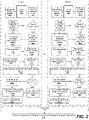
- Figure 2 illustrates the retraining method.
- the retraining steps described in this section are performed for each shop in the sample batch.
- the first part of the method comprises creating a shop-specific version of the model for each of the shops in the sample batch.
- the system applies a global model ( 200 ) to user and item data in the first training dataset ( 210 ) for a shop.
- the global model generates a preliminary user-item interaction score ( 212 ) for each user-item pair in the shop's first training dataset.
- the global model is the machine learning model for all shops on the ecommerce platform as opposed to a shop-specific version of the model.
- the global model is the baseline model. In subsequent iterations, it is an updated version of the baseline model.
- the system determines if the shop is in a small-size category or a large-size category. In response to the shop being in the small-size category, the system applies a global small-shop weight parameter ( 214 ) to the preliminary user-item interaction scores to obtain final user-item interaction scores for the first dataset. In response to the shop being in the large-size category, the system applies a global large-shop weight parameter ( 213 ) to the preliminary user-item interaction scores to obtain final user-item interaction scores for the first dataset. The system generates user-item predictions ( 212 ) using the final user-item interaction scores.
- the system calculates a first shop-specific loss ( 215 ) for the shop based on the predicted user and item interactions and the actual user and item interactions in the first dataset for the shop. In one embodiment, mean square error is used as the loss function.
- the system calculates a shop-specific model update ( 220 ) to minimize the loss. This comprises calculating shop-specific parameter adjustments to the model.
- the system then creates a shop-specific version of the model ( 225 ) by applying the first shop-specific update to the model.
- the system also calculates an adjustment to the small or large weight parameter (whichever is applicable based on the size of the shop) to minimize the shop-specific loss.
- the system also creates a local, shop-specific weight parameter (small or large, whichever is applicable) that will be used in making user-item predictions for the shop's second training dataset.
- the first training dataset is the same size for each of the shops. This puts small shops on par with larger shops for this phase of the training. In other words, using the same size dataset for each shop in this phase prevents overfitting to larger shops that have more sales data than smaller shops and reduces the sample selection bias inherent in the baseline model.
- the next part of the retraining method comprises applying the shop-specific models to the second training datasets and using the corresponding losses to make a global parameter adjustment to the global model.
- the system applies the shop-specific version of the model ( 225 ) to user and item data in the second training dataset ( 230 ) for the shop to obtain preliminary user and item interaction scores ( 235 ) for the second dataset.
- the size of the second dataset corresponds to the sales volume for the shop on the ecommerce platform, up to a maximum number ( e.g ., 100k transactions). This helps to maintain the prediction accuracy of the model for larger shops.
- the system applies the small-shop weight parameter ( 250 ) to the preliminary user-item interaction scores to obtain final user-item interaction scores for the second training dataset. If the shop is in the large size category, then the system applies the large-shop weight parameter ( 240 ) to the preliminary user-item interaction scores to obtain final user-item interaction scores for the second training dataset. In embodiments where a shop-specific weight parameter adjustment was calculated after the first shop-specific loss, the weight parameter applied is a shop-specific (local) weight parameter.
- the system calculates a second shop-specific loss ( 215 ) for the shop based on the predicted user and item interactions and the actual user and item interactions in the second dataset for the shop.
- a second shop-specific loss 215
- the system calculates a global loss ( 260 ) based on all the second shop-specific losses. In one embodiment, the global loss is calculated as an average of the second shop specific losses. The system then calculates a global parameter adjustment ( 270 ) for the model to reduce the global loss. The system creates an updated global model by adjusting the parameters of the model using the global parameter adjustment. In one embodiment, the shop-specific and global parameter adjustments are calculated using gradient descent, and the shop-specific and global parameter adjustments are gradient steps.
- the system also makes adjustments to the global small and large weight parameters to minimize the global loss.
- the system learns the difference between recommendations for small shops and recommendations for large shops. This mitigates the model bias towards large shops, and results in improved recommendation performance for both large and small shops.
- the system repeats the retraining method for a number of iterations, wherein the updated global model in the previous iteration becomes the global model in the next iteration, and the updated global small and large weight parameters are the global small and large weight parameters in the next iteration.
- Figures 4A and 4B which are discussed in more detail below, illustrate examples of the model with parameter ⁇ .
- the retrained model can be used either to recommend users to shops for targeted advertisements or to recommend items to users on the ecommerce platform.
- Figure 3A illustrates a method for recommending users to shops in the prediction phase.
- the system uses the retrained model to obtain user-item interaction value predictions with respect to a test user and item pairs for which no interaction value is known (step 310 ).
- the system recommends one or more test users to a shop based on predicted interaction values for an item sold by the shop on the ecommerce platform and each of a plurality of test users (step 320).
- the better performance of the retrained model with respect to smaller shops means better advertisement performance for small shops, including performance with respect to cold start advertisements.
- Figure 3B illustrates a method for recommending one or more items to test users.
- the system uses the retrained model to obtain user-item interaction value predictions with respect to a test user and item pairs for which no interaction value is known (step 330).
- the system then recommends one or more items to a test user based on predicted interaction values for the test user and each of a plurality of items on the ecommerce platform (step 340 ).
- Figures 4A and 4B illustrate example architectures for a machine-learning recommendation model.
- the model 400a includes a concatenation module 420 and a neural network encoder 430 .
- the concatenation model 420 receives user and item input data and combines the data.
- the neural network encoder 430 receives the combined user and item data as input and outputs a preliminary user-item interaction embedding 432 (which is in the form of a vector) for the input user and item.
- a weight parameter in a weight layer 434 is applied to the preliminary user-item interaction embedding to obtain a final user-item interaction score 436 .
- the small shop weight parameter 434 a is used in the weight layer 434. If the input item is from a small shop, then the small shop weight parameter 434 a is used. If the input item is from a large shop, then large-shop weight parameter 434b is used. The small and large shop weight parameters 434a, 434b may be learned in the retraining process described above.
- the final user-item interaction score is used by a classification module 438 to predict the user-item interaction.
- the classification module 438 is a Softmax classifier.
- the model includes a user neural network encoder 460 and an item neural network encoder 465 .
- the user neural network encoder 460 is applied to input user data 445 to generate a user vector representation.
- the item neural network encoder 465 is applied to input item data 450 to obtain an item vector representation.
- Dot product module 470 takes the dot product of the user and item vectors to create the preliminary user-item interaction score 475 for the input user and item.
- a weight parameter in a weight layer 480 is applied to the preliminary user-item interaction score to obtain a final user-item interaction score 485 . In the weight layer 480 , if the input item is from a small shop, then the small shop weight parameter 480a is used.
- large-shop weight parameter 480b is used.
- the small and large shop weight parameters 480a , 480b may be learned in the retraining process described above.
- the final user-item interaction score is used by a classification module 490 to predict the user-item interaction.
- the classification module 490 is a Softmax classifier.
- the input user data includes user-item interaction data. It may also include "side information" about a user (e.g. , user demographics, such as user age, location, etc.).
- the item data includes item "side information" which is information about the item ( e.g ., product category and subcategories).
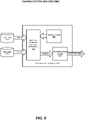
- FIG. 5 illustrates an example recommendation system software architecture.
- the system and methods disclosed herein are not necessarily limited to this architecture.
- the system 500 includes a machine-learning model 530 , a training module 550 , and a recommendation module 540 .
- the machine-learning model 530 is applied to input user and item data 510, 520 to predict user-item interactions.
- the model 530 is trained by training module 550 in accordance with the training methods described herein.
- the recommendation module 540 recommends users to shops or recommends items to users based on the predicted user-item interactions.
- a recommendation system may have other modules that are not relevant to the disclosure herein.
- FIG. 1-5 The methods described with respect to Figures 1-5 are embodied in software and performed by a computer system (comprising one or more computing devices) executing the software.
- a computer system has one or more physical memory units, disks, or other physical, computer-readable storage media for storing software instructions, as well as one or more processors for executing the software instructions.
- a computer system may be stand-alone or connected to a computer network as a server.
Landscapes
- Engineering & Computer Science (AREA)
- Business, Economics & Management (AREA)
- Finance (AREA)
- Accounting & Taxation (AREA)
- Development Economics (AREA)
- Strategic Management (AREA)
- Theoretical Computer Science (AREA)
- Physics & Mathematics (AREA)
- General Physics & Mathematics (AREA)
- Entrepreneurship & Innovation (AREA)
- Data Mining & Analysis (AREA)
- Economics (AREA)
- Marketing (AREA)
- General Business, Economics & Management (AREA)
- Game Theory and Decision Science (AREA)
- Evolutionary Computation (AREA)
- Artificial Intelligence (AREA)
- General Engineering & Computer Science (AREA)
- Life Sciences & Earth Sciences (AREA)
- Molecular Biology (AREA)
- Computational Linguistics (AREA)
- Software Systems (AREA)
- Mathematical Physics (AREA)
- Health & Medical Sciences (AREA)
- Biomedical Technology (AREA)
- Biophysics (AREA)
- Computing Systems (AREA)
- General Health & Medical Sciences (AREA)
- Evolutionary Biology (AREA)
- Bioinformatics & Cheminformatics (AREA)
- Computer Vision & Pattern Recognition (AREA)
- Bioinformatics & Computational Biology (AREA)
- Management, Administration, Business Operations System, And Electronic Commerce (AREA)
- Information Retrieval, Db Structures And Fs Structures Therefor (AREA)
Abstract
The present disclosure relates to improving recommendations for small shops on an ecommerce platform while maintaining accuracy for larger shops. The improvement is achieved by retraining a machine-learning recommendation model to reduce sample selection bias using a meta-learning process. The retraining process comprises identifying a sample subset of shops on the ecommerce platform, and then creating shop-specific versions of the recommendation model for each of the shops in the subset. Each shop-specific model is created by optimizing the baseline model to predict user-item interactions in a first training dataset for the applicable shop. Each of the shop-specific models is then tested using a second training dataset for the shop. A loss is calculated for each shop-specific model based on the model's predicted user-item interactions and the actual user-item interactions in the second training dataset for the shop. A global loss is calculated based on each of the shop-specific losses, and the baseline model is updated to minimize the global loss. The model includes small and large-shop weight parameters that are applied to user-item interaction scores and that are learned during the re-training process.
Description
- This application claims the benefit of
U.S. Provisional Application No. 63/221,872 - This disclosure relates generally to machine learning-based recommender systems and, more specifically, to an improved recommender system with less sample selection bias and better performance for small shops on an ecommerce platform.
- A recommender system may be used to identify the users most likely to purchase an item for purposes of targeted advertising. It also may be used to recommend items to users. With the explosive growth of e-commerce in the past few decades, there are more product offerings than consumers can process, and recommender systems have become imperative to overcome this overload problem. The goal of recommender systems is to take known user feedback and predict unknown user feedback on items, which can be helpful in targeting advertisements for a product or for providing a list of suggested items to a user. The feedback, often referred to as the interaction, can be implicit (e.g., purchased/likely to purchase) or explicit (e.g., a rating between 1 and 5).
- Many recommender systems use machine learning models to make predictions. For example, neural collaborative filtering (NCF) systems apply neural network encoders to user and item data to generate representations of the user and item data, and then use the user and item representations to predict user ratings for the items.
- The machine learning models used to make predictions for an ecommerce platform are typically trained based on user-items interactions in the ecommerce platform. There is significantly more training data for shops with large sales volumes on the platform than for small shops. As a result, these models are better at making predictions for large shops than for small shops. This is what is known as sample selection bias. In fact, the performance of such models with respect to a new item for a small shop can be poor. Therefore, there is demand for a recommender system with good prediction performance for both small and large shops on an ecommerce platform.
- The present disclosure relates to improving recommendations for small shops on an ecommerce platform while maintaining accuracy for larger shops. The improvement is achieved by retraining a machine-learning recommendation model to reduce sample selection bias using a meta-learning process. The retraining process comprises identifying a sample subset of shops on the ecommerce platform, and then creating shop-specific versions of the recommendation model for each of the shops in the subset. Each shop-specific model is created by optimizing the baseline model to predict user-item interactions for a shop using a first training dataset for the shop. Each of the shop-specific models is then tested using a second training dataset for the shop. A loss is calculated for each shop-specific model based on the model's predicted user-item interactions for the applicable second training dataset and the actual user-item interactions in the second training dataset. A global loss is calculated based on each of the shop-specific losses, and the parameters of the baseline model are updated to minimize the global loss.
- The global model includes small and large-shop weight parameters that are applied to user-item interaction scores, depending on whether the input item is from a small shop or a large shop. The weight parameters are learned during the retraining process. In learning the different weight parameters for small and large shops, the system learns the difference between recommendations for small shops and recommendations for large shops. This mitigates the model bias towards large shops, and results in improved recommendation performance for both large and small shops.
- In one embodiment, the retraining process comprises the following steps:
- (a) identifying a sample batch of shops on the ecommerce platform, wherein the sample batch includes shops in a small-shop category and shops in a large-shop category, wherein the small-shop and large-shop categories are defined relative to a sales volume threshold on the ecommerce platform, and wherein shops in the small-shop category have less sales volume on the ecommerce platform than shops in the large-shop category;
- (b) obtaining a first training dataset and a second training dataset for each of the shops in the sample batch, wherein, for each shop, the first and second datasets each have item data for items in the shop and user data, including user-item interaction data for items in the shop;
- (c) for each shop in the sample batch, performing the following:
- determining whether the shop is in the small-shop category or the large-shop category;
- applying the model to user and item data in the first dataset for the shop to obtain preliminary user-item interaction scores for each user-item pair in the first dataset;
- in response to the shop being in the small-shop category, applying a global small-shop weight parameter to the preliminary user-item interaction scores to obtain final user-item interaction scores for the first dataset;
- in response to the shop being in the large-shop category, applying a global large-shop weight parameter to the preliminary user-item interaction scores to obtain final user-item interaction scores for the first dataset;
- predicting user-item interactions for each user-item pair in the first dataset using the final user-item interaction scores;
- calculating a first shop-specific loss between the predicted user and item interactions and the actual user and item interactions in the first dataset for the shop;
- performing the following to reduce the first shop-specific loss:
- calculating a local update to parameters for the model;
- in response to the shop being in the small-shop category, calculating a local update to the small-shop weight parameter for the shop;
- in response to the shop being in the large-shop category, calculating a local update to the large-shop weight parameter for the shop;
- creating a shop-specific version of the model by applying the local parameter update to the model;
- applying the shop-specific version of the model to user and item data in the second dataset for the shop to obtain a preliminary user-item interaction score for each user-item pair in the second dataset;
- in response to the shop being in the small-shop category, applying the local small-shop weight parameter to the preliminary user-item interaction scores to obtain final user-item interaction scores for the second dataset;
- in response to the shop being in the large-shop category, applying the local large-shop weight parameter to the preliminary user-item interaction scores to obtain final user-item interaction scores for the second dataset;
- predicting user-item interactions for each user-item pair in the second dataset using the final user-item interaction scores; and
- calculating a second shop-specific loss between the predicted user and item interactions and the actual user and item interactions in the second dataset for the shop;
- (d) calculating a global loss based on the second shop-specific losses for all the shops in the sample batch;
- (e) calculating a global parameter adjustment for the model to reduce the global loss;
- (f) adjusting the global small-shop and large-shop weight parameters to reduce the global loss;
- (g) creating an updated model by adjusting the parameters of the model using the global parameter adjustment; and
- (h) repeating steps (c)-(g) for a number of iterations, wherein the updated model in a previous iteration becomes the model in the next iteration, and wherein the adjusted global small-shop and large-shop weight parameters are used in the next iteration.
-
-
Figures 1 is a flowchart that illustrates an overview of a training process for a recommendation model according to one embodiment. -
Figures 2 is a flowchart that illustrates a retraining method for a recommendation model according to one embodiment. -
Figures 3A and 3B are flowcharts that illustrate prediction phase methods. -
Figures 4A and 4B are block diagrams of example machine-learning model architectures for a recommendation system. -
Figure 5 is a block diagram of an example recommendation system architecture. - The present disclosure relates to a machine learning-based recommender system and method for predicting user-item interactions on an ecommerce platform that includes shops with different sales volumes. Specifically, the disclosure relates to an improved recommender system with better predictions for small shops while still maintaining prediction accuracy for larger shops. The improvement is achieved by retraining the recommender system to reduce sample selection bias using a meta-learning process. The methods disclosed herein are performed by a computer system ("the system").
- We define small/large shops based on the number of sales on the applicable ecommerce platform during a period of time relative to a threshold. Specifically, the terms "small shop" and "smaller shop" refers herein to shops with a sales volume below a certain threshold. Conversely, the terms "large shop," "larger shop" and "largest shops" refers to shops with a sales volume above a certain threshold. The invention is not dependent or limited to any particular threshold or range of thresholds. The threshold that defines small and large shops may depend on the particular ecommerce platform at issue and may be different for each ecommerce platform. However, as example, the threshold may be the median shop sales volume for all shops on the ecommerce platform during a period of time, such as the past 12 months.
- Both a training phase and a prediction phase are described below for the recommender system.
-
Figure 1 illustrates an overview of the training phase. The system obtains a machine-learning model previously trained to predict user-item interactions on an ecommerce platform (step 110). This model is referred to herein as the baseline model. In one embodiment, the baseline model is trained using item data and user data, including user-item interactions on the ecommerce platforms. The baseline model may be trained using one of a number of known training methods, and the retraining method disclosed herein is not dependent on the way in which the baseline model is initially trained. As discussed above, there will be more training data for items from larger shops than items for smaller shops, and, therefore, the baseline model will be better and making predictions for items from larger shops. This is referred to as sample selection bias. - The system retrains the baseline model to reduce the sample selection bias (step 120). Retraining the model involves identifying a sample batch of shops on the ecommerce platform (
step 120a). The sample batch is a subset of shops on the platform, and it includes shops in the small size category and shops in the large size category. - The system obtains two training datasets, referred to herein as a first training dataset and a second training dataset, for each of the shops in the sample batch (
step 120b). Each of the first and second training datasets for a shop includes: (1) item data for items in the shop, and (2) user data, including user-item interaction data. Examples of user-item interaction data include user ratings or purchase history (i.e., whether or not a user has purchased an item). - The system performs the retraining method depicted in
Figure 2 with respect to the sample batch of shops and the first and second datasets (step 120c). The system repeats the retraining method depicted inFigure 2 for a number of iterations. This may be a fixed number of iterations, or the system may repeat the retraining method until convergence is achieved (step 120d). -
Figure 2 illustrates the retraining method. The retraining steps described in this section are performed for each shop in the sample batch. As discussed in the next section, the first part of the method comprises creating a shop-specific version of the model for each of the shops in the sample batch. - The system applies a global model (200) to user and item data in the first training dataset (210) for a shop. The global model generates a preliminary user-item interaction score (212) for each user-item pair in the shop's first training dataset. The global model is the machine learning model for all shops on the ecommerce platform as opposed to a shop-specific version of the model. During the first iteration of the retraining method, the global model is the baseline model. In subsequent iterations, it is an updated version of the baseline model.
- The system determines if the shop is in a small-size category or a large-size category. In response to the shop being in the small-size category, the system applies a global small-shop weight parameter (214) to the preliminary user-item interaction scores to obtain final user-item interaction scores for the first dataset. In response to the shop being in the large-size category, the system applies a global large-shop weight parameter (213) to the preliminary user-item interaction scores to obtain final user-item interaction scores for the first dataset. The system generates user-item predictions (212) using the final user-item interaction scores.
- The system calculates a first shop-specific loss (215) for the shop based on the predicted user and item interactions and the actual user and item interactions in the first dataset for the shop. In one embodiment, mean square error is used as the loss function. The system calculates a shop-specific model update (220) to minimize the loss. This comprises calculating shop-specific parameter adjustments to the model. The system then creates a shop-specific version of the model (225) by applying the first shop-specific update to the model. In certain embodiments, the system also calculates an adjustment to the small or large weight parameter (whichever is applicable based on the size of the shop) to minimize the shop-specific loss. In other words, in certain embodiments, the system also creates a local, shop-specific weight parameter (small or large, whichever is applicable) that will be used in making user-item predictions for the shop's second training dataset.
- In one embodiment, the first training dataset is the same size for each of the shops. This puts small shops on par with larger shops for this phase of the training. In other words, using the same size dataset for each shop in this phase prevents overfitting to larger shops that have more sales data than smaller shops and reduces the sample selection bias inherent in the baseline model.
- As discussed below, the next part of the retraining method comprises applying the shop-specific models to the second training datasets and using the corresponding losses to make a global parameter adjustment to the global model.
- For each shop in the sample batch, the system applies the shop-specific version of the model (225) to user and item data in the second training dataset (230) for the shop to obtain preliminary user and item interaction scores (235) for the second dataset. In one embodiment, the size of the second dataset corresponds to the sales volume for the shop on the ecommerce platform, up to a maximum number (e.g., 100k transactions). This helps to maintain the prediction accuracy of the model for larger shops.
- If the shop is in the small size category, the system applies the small-shop weight parameter (250) to the preliminary user-item interaction scores to obtain final user-item interaction scores for the second training dataset. If the shop is in the large size category, then the system applies the large-shop weight parameter (240) to the preliminary user-item interaction scores to obtain final user-item interaction scores for the second training dataset. In embodiments where a shop-specific weight parameter adjustment was calculated after the first shop-specific loss, the weight parameter applied is a shop-specific (local) weight parameter.
- The system calculates a second shop-specific loss (215) for the shop based on the predicted user and item interactions and the actual user and item interactions in the second dataset for the shop. In
Figure 2 , there are n shops in the sample batch, which mean that after step 255, there will be n second-shop specific losses calculated. - The system calculates a global loss (260) based on all the second shop-specific losses. In one embodiment, the global loss is calculated as an average of the second shop specific losses. The system then calculates a global parameter adjustment (270) for the model to reduce the global loss. The system creates an updated global model by adjusting the parameters of the model using the global parameter adjustment. In one embodiment, the shop-specific and global parameter adjustments are calculated using gradient descent, and the shop-specific and global parameter adjustments are gradient steps.
- The system also makes adjustments to the global small and large weight parameters to minimize the global loss. In learning the different weight parameters for small and large shops, the system learns the difference between recommendations for small shops and recommendations for large shops. This mitigates the model bias towards large shops, and results in improved recommendation performance for both large and small shops.
- The system repeats the retraining method for a number of iterations, wherein the updated global model in the previous iteration becomes the global model in the next iteration, and the updated global small and large weight parameters are the global small and large weight parameters in the next iteration.
- Below is a mathematical expression of the retraining method, according to one embodiment.

- In the algorithm above:
- θs and θl are the recommendation model's small-shop and large-shop parameters, respectively;
- θp is the shop-specific recommendation model's parameter;
-

-

- α and β are learning rates;
- ∇ is a gradient step; and
- is the loss function

-
Figures 4A and 4B , which are discussed in more detail below, illustrate examples of the model with parameter θ. - In one embodiment, the loss function is defined as(Dp,θ) = loss (y, ŷ), where y is the actual purchase label (0 for not purchase, 1 for purchase) and ŷ = gθ (fu,fi ) is the predicted label, where fu,fi are user feature and item feature, which can be trainable one-hot embeddings or pretrained representations.

- In a prediction phase, the retrained model can be used either to recommend users to shops for targeted advertisements or to recommend items to users on the ecommerce platform.
-
Figure 3A illustrates a method for recommending users to shops in the prediction phase. The system uses the retrained model to obtain user-item interaction value predictions with respect to a test user and item pairs for which no interaction value is known (step 310). The system recommends one or more test users to a shop based on predicted interaction values for an item sold by the shop on the ecommerce platform and each of a plurality of test users (step 320). The better performance of the retrained model with respect to smaller shops means better advertisement performance for small shops, including performance with respect to cold start advertisements. -
Figure 3B illustrates a method for recommending one or more items to test users. The system uses the retrained model to obtain user-item interaction value predictions with respect to a test user and item pairs for which no interaction value is known (step 330). The system then recommends one or more items to a test user based on predicted interaction values for the test user and each of a plurality of items on the ecommerce platform (step 340). -
Figures 4A and 4B illustrate example architectures for a machine-learning recommendation model. InFigure 4A , themodel 400a includes aconcatenation module 420 and aneural network encoder 430. Theconcatenation model 420 receives user and item input data and combines the data. Theneural network encoder 430 receives the combined user and item data as input and outputs a preliminary user-item interaction embedding 432 (which is in the form of a vector) for the input user and item. A weight parameter in aweight layer 434 is applied to the preliminary user-item interaction embedding to obtain a final user-item interaction score 436. In theweight layer 434, if the input item is from a small shop, then the smallshop weight parameter 434a is used. If the input item is from a large shop, then large-shop weight parameter 434b is used. The small and largeshop weight parameters 434a, 434b may be learned in the retraining process described above. The final user-item interaction score is used by aclassification module 438 to predict the user-item interaction. In one embodiment, theclassification module 438 is a Softmax classifier. - In
Figure 4B , the model includes a user neural network encoder 460 and an itemneural network encoder 465. The user neural network encoder 460 is applied to input user data 445 to generate a user vector representation. Likewise, the itemneural network encoder 465 is applied to inputitem data 450 to obtain an item vector representation.Dot product module 470 takes the dot product of the user and item vectors to create the preliminary user-item interaction score 475 for the input user and item. A weight parameter in aweight layer 480 is applied to the preliminary user-item interaction score to obtain a final user-item interaction score 485. In theweight layer 480, if the input item is from a small shop, then the smallshop weight parameter 480a is used. If the input item is from a large shop, then large-shop weight parameter 480b is used. The small and largeshop weight parameters classification module 490 to predict the user-item interaction. In one embodiment, theclassification module 490 is a Softmax classifier. - In one embodiment, the input user data includes user-item interaction data. It may also include "side information" about a user (e.g., user demographics, such as user age, location, etc.). In one embodiment, the item data includes item "side information" which is information about the item (e.g., product category and subcategories).
-
Figure 5 illustrates an example recommendation system software architecture. The system and methods disclosed herein are not necessarily limited to this architecture. Thesystem 500 includes a machine-learning model 530, atraining module 550, and arecommendation module 540. The machine-learning model 530 is applied to input user anditem data 510, 520 to predict user-item interactions. Themodel 530 is trained bytraining module 550 in accordance with the training methods described herein. Therecommendation module 540 recommends users to shops or recommends items to users based on the predicted user-item interactions. Those skilled in the art will appreciate that a recommendation system may have other modules that are not relevant to the disclosure herein. - The methods described with respect to
Figures 1-5 are embodied in software and performed by a computer system (comprising one or more computing devices) executing the software. A person skilled in the art would understand that a computer system has one or more physical memory units, disks, or other physical, computer-readable storage media for storing software instructions, as well as one or more processors for executing the software instructions. A person skilled in the art would also understand that a computer system may be stand-alone or connected to a computer network as a server. - As will be understood by those familiar with the art, the invention may be embodied in other specific forms without departing from the spirit or essential characteristics thereof. Accordingly, the above disclosure is intended to be illustrative, but not limiting, of the scope of a claimed invention.
- Further preferred embodiments of the present invention are defined as E1-E20 below:
- E1. A machine-learning method, performed by a computer system, for predicting user-item interaction values on an ecommerce platform that includes products from different shops with different sales volumes, the method comprising:
performing the following with respect to a training phase:- obtaining a machine-learning model for predicting user-item interactions, wherein the model was previously trained to predict user-item interactions based on user and item data on an ecommerce platform that includes different shops with different sales volumes;
- modifying the model to reduce sample selection bias in favor of shops with larger sales volumes by performing the following:
- (a) identifying a sample batch of shops on the ecommerce platform, wherein the sample batch includes shops in a small-shop category and shops in a large-shop category, wherein the small-shop and large-shop categories are defined relative to a sales volume threshold on the ecommerce platform, and wherein shops in the small-shop category have less sales volume on the ecommerce platform than shops in the large-shop category;
- (b) obtaining a first training dataset and a second training dataset for each of the shops in the sample batch, wherein, for each shop, the first and second datasets each have item data for items in the shop and user data, including user-item interaction data for items in the shop;
- (c) for each shop in the sample batch, performing the following:
- determining whether the shop is in the small-shop category or the large-shop category;
- applying the model to user and item data in the first dataset for the shop to obtain preliminary user-item interaction scores for each user-item pair in the first dataset;
- in response to the shop being in the small-shop category, applying a global small-shop weight parameter to the preliminary user-item interaction scores to obtain final user-item interaction scores for the first dataset;
- in response to the shop being in the large-shop category, applying a global large-shop weight parameter to the preliminary user-item interaction scores to obtain final user-item interaction scores for the first dataset;
- predicting user-item interactions for each user-item pair in the first dataset using the final user-item interaction scores;
- calculating a first shop-specific loss between the predicted user and item interactions and the actual user and item interactions in the first dataset for the shop;
- performing the following to reduce the first shop-specific loss:
- calculating a local update to parameters for the model;
- in response to the shop being in the small-shop category, calculating a local update to the small-shop weight parameter for the shop;
- in response to the shop being in the large-shop category, calculating a local update to the large-shop weight parameter for the shop;
- creating a shop-specific version of the model by applying the local parameter update to the model;
- applying the shop-specific version of the model to user and item data in the second dataset for the shop to obtain a preliminary user-item interaction score for each user-item pair in the second dataset;
- in response to the shop being in the small-shop category, applying the local small-shop weight parameter to the preliminary user-item interaction scores to obtain final user-item interaction scores for the second dataset;
- in response to the shop being in the large-shop category, applying the local large-shop weight parameter to the preliminary user-item interaction scores to obtain final user-item interaction scores for the second dataset;
- predicting user-item interactions for each user-item pair in the second dataset using the final user-item interaction scores; and
- calculating a second shop-specific loss between the predicted user and item interactions and the actual user and item interactions in the second dataset for the shop;
- (d) calculating a global loss based on the second shop-specific losses for all the shops in the sample batch;
- (e) calculating a global parameter adjustment for the model to reduce the global loss;
- (f) adjusting the global small-shop and large-shop weight parameters to reduce the global loss;
- (g) creating an updated model by adjusting the parameters of the model using the global parameter adjustment; and
- (h) repeating steps (c)-(g) for a number of iterations, wherein the updated model in a previous iteration becomes the model in the next iteration, and wherein the adjusted global small-shop and large-shop weight parameters are used in the next iteration;
- performing the following with respect to a prediction phase:
using the updated model to obtain user-item interaction value predictions on the ecommerce platform with respect to user and item pairs for which no interaction value is known.
- E2. The method of embodiment E1, wherein the shop-specific and global parameter adjustments are calculated using gradient descent and the shop-specific and global parameter adjustments are gradient steps.
- E3. The method of embodiment E1, further comprising:
recommending one or more test users to a shop based on predicted interaction values for an item sold by the shop on the ecommerce platform and each of a plurality of test users. - E4. The method of embodiment E1, further comprising:
recommending one or more items to a test user based on predicted interaction values for the test user and each of a plurality of items on the ecommerce platform. - E5. The method of embodiment E1, wherein the first dataset is substantially the same size for each of the shops in the sample batch.
- E6. The method of embodiment E1, wherein the second dataset for a shop corresponds to the size of the sales volume of the shop on the ecommerce platform.
- E7. A method, performed by a computer system, for training a model to predict user-item interaction values on an ecommerce platform that includes products from different shops with different sales volumes, the method comprising:
- obtaining a machine-learning model for predicting user-item interactions, wherein the model was previously trained to predict user-item interactions based on user and item data on an ecommerce platform that includes different shops with different sales volumes;
- modifying the model to reduce sample selection bias in favor of shops with larger sales volumes by performing the following:
- (a) identifying a sample batch of shops on the ecommerce platform, wherein the sample batch includes shops in a small-shop category and shops in a large-shop category, wherein the small-shop and large-shop categories are defined relative to a sales volume threshold on the ecommerce platform, and wherein shops in the small-shop category have less sales volume on the ecommerce platform than shops in the large-shop category;
- (b) obtaining a first training dataset and a second training dataset for each of the shops in the sample batch, wherein, for each shop, the first and second datasets each have item data for items in the shop and user data, including user-item interaction data for items in the shop;
- (c) for each shop in the sample batch, performing the following:
- determining whether the shop is in the small-shop category or the large-shop category;
- applying the model to user and item data in the first dataset for the shop to obtain preliminary user-item interaction scores for each user-item pair in the first dataset;
- in response to the shop being in the small-shop category, applying a global small-shop weight parameter to the preliminary user-item interaction scores to obtain final user-item interaction scores for the first dataset;
- in response to the shop being in the large-shop category, applying a global large-shop weight parameter to the preliminary user-item interaction scores to obtain final user-item interaction scores for the first dataset;
- predicting user-item interactions for each user-item pair in the first dataset using the final user-item interaction scores;
- calculating a first shop-specific loss between the predicted user and item interactions and the actual user and item interactions in the first dataset for the shop;
- performing the following to reduce the first shop-specific loss:
- calculating a local update to parameters for the model;
- in response to the shop being in the small-shop category, calculating a local update to the small-shop weight parameter for the shop;
- in response to the shop being in the large-shop category, calculating a local update to the large-shop weight parameter for the shop;
- creating a shop-specific version of the model by applying the local parameter update to the model;
- applying the shop-specific version of the model to user and item data in the second dataset for the shop to obtain a preliminary user-item interaction score for each user-item pair in the second dataset;
- in response to the shop being in the small-shop category, applying the local small-shop weight parameter to the preliminary user-item interaction scores to obtain final user-item interaction scores for the second dataset;
- in response to the shop being in the large-shop category, applying the local large-shop weight parameter to the preliminary user-item interaction scores to obtain final user-item interaction scores for the second dataset;
- predicting user-item interactions for each user-item pair in the second dataset using the final user-item interaction scores; and
- calculating a second shop-specific loss between the predicted user and item interactions and the actual user and item interactions in the second dataset for the shop;
- (d) calculating a global loss based on the second shop-specific losses for all the shops in the sample batch;
- (e) calculating a global parameter adjustment for the model to reduce the global loss;
- (f) adjusting the global small-shop and large-shop weight parameters to reduce the global loss;
- (g) creating an updated model by adjusting the parameters of the model using the global parameter adjustment; and
- (h) repeating steps (c)-(g) for a number of iterations, wherein the updated model in a previous iteration becomes the model in the next iteration, and wherein the adjusted global small-shop and large-shop weight parameters are used in the next iteration.
- E8. The method of embodiment E7, wherein the shop-specific and global parameter adjustments are calculated using gradient descent and the shop-specific and global parameter adjustments are gradient steps.
- E9. The method of embodiment E7, wherein the first dataset is substantially the same size for each of the shops in the sample batch.
- E10. The method of embodiment E9, wherein the second dataset size for a shop corresponds to the size of the sales volume of the shop on the ecommerce platform.
- E11. A system for predicting user-item interaction values on an ecommerce platform that includes products from different shops with different sales volumes, the system comprising:
- a processor configured to execute instructions programmed using a set of machine codes;
- one or more memory units coupled to the processor; and
- a machine-learning model, stored in the one or more memory units of the system, that takes a user input and an item input and outputs a user-interaction score corresponding to a predicted user-interaction value for users and items on the ecommerce platform, wherein the model includes computational instructions implemented in the machine code for generating the output, and wherein the model is trained according to a method that comprises the following:
- (a) identifying a sample batch of shops on the ecommerce platform, wherein the sample batch includes shops in a small-shop category and shops in a large-shop category, wherein the small-shop and large-shop categories are defined relative to a sales volume threshold on the ecommerce platform, and wherein shops in the small-shop category have less sales volume on the ecommerce platform than shops in the large-shop category;
- (b) obtaining a first training dataset and a second training dataset for each of the shops in the sample batch, wherein, for each shop, the first and second datasets each have item data for items in the shop and user data, including user-item interaction data for items in the shop;
- (c) for each shop in the sample batch, performing the following:
- determining whether the shop is in the small-shop category or the large-shop category;
- applying the model to user and item data in the first dataset for the shop to obtain preliminary user-item interaction scores for each user-item pair in the first dataset;
- in response to the shop being in the small-shop category, applying a global small-shop weight parameter to the preliminary user-item interaction scores to obtain final user-item interaction scores for the first dataset;
- in response to the shop being in the large-shop category, applying a global large-shop weight parameter to the preliminary user-item interaction scores to obtain final user-item interaction scores for the first dataset;
- predicting user-item interactions for each user-item pair in the first dataset using the final user-item interaction scores;
- calculating a first shop-specific loss between the predicted user and item interactions and the actual user and item interactions in the first dataset for the shop;
- performing the following to reduce the first shop-specific loss:
- calculating a local update to parameters for the model;
- in response to the shop being in the small-shop category, calculating a local update to the small-shop weight parameter for the shop;
- in response to the shop being in the large-shop category, calculating a local update to the large-shop weight parameter for the shop;
- creating a shop-specific version of the model by applying the local parameter update to the model;
- applying the shop-specific version of the model to user and item data in the second dataset for the shop to obtain a preliminary user-item interaction score for each user-item pair in the second dataset;
- in response to the shop being in the small-shop category, applying the local small-shop weight parameter to the preliminary user-item interaction scores to obtain final user-item interaction scores for the second dataset;
- in response to the shop being in the large-shop category, applying the local large-shop weight parameter to the preliminary user-item interaction scores to obtain final user-item interaction scores for the second dataset;
- predicting user-item interactions for each user-item pair in the second dataset using the final user-item interaction scores; and
- calculating a second shop-specific loss between the predicted user and item interactions and the actual user and item interactions in the second dataset for the shop;
- (d) calculating a global loss based on the second shop-specific losses for all the shops in the sample batch;
- (e) calculating a global parameter adjustment for the model to reduce the global loss;
- (f) adjusting the global small-shop and large-shop weight parameters to reduce the global loss;
- (g) creating an updated model by adjusting the parameters of the model using the global parameter adjustment; and
- (h) repeating steps (c)-(g) for a number of iterations, wherein the updated model in a previous iteration becomes the model in the next iteration, and wherein the adjusted global small-shop and large-shop weight parameters are used in the next iteration.
- E12. The system of embodiment E11, wherein the model includes the following:
- a concatenation module for receiving the user and item input and concatenating the user and item input;
- a neural network encoder that receives the concatenated user and item input and outputs a preliminary user-item interaction embedding; and
- a weight layer that applies a small-shop or large-shop weight parameter to the preliminary user-item interaction embedding to generate the final user-item interaction score.
- E13. The system of embodiment E11, wherein the model includes the following:
- an item neural network encoder for receiving the item data and outputting an item feature representation; and
- a user neural network encoder for receiving the user data and outputting a user feature representation; wherein the preliminary user-item interaction score is generated by taking the dot product of the user and item feature representations; and
- a weight layer that applies a small-shop or large-shop weight parameter to the preliminary user-item interaction score to generate the final user-item interaction score.
- E14. The system of embodiment E11, wherein the shop-specific and global parameter adjustments are calculated using gradient descent and the shop-specific and global parameter adjustments are gradient steps.
- E15. The system of embodiment E11, wherein the first dataset is substantially the same size for each of the shops in the sample batch.
- E16. The system of embodiment E15, wherein the second dataset for a shop corresponds to the size of the sales volume of the shop on the ecommerce platform.
- E17. A non-transitory computer-readable medium comprising a computer program, that, when executed by a computer system, enables the computer system to perform the following method for predicting user-item interaction values on an ecommerce platform that includes products from different shops with different sales volumes, the method comprising:
performing the following with respect to a training phase:- obtaining a machine-learning model for predicting user-item interactions, wherein the model was previously trained to predict user-item interactions based on user and item data on an ecommerce platform that includes different shops with different sales volumes;
- modifying the model to reduce sample selection bias in favor of shops with larger sales volumes by performing the following:
- (a) identifying a sample batch of shops on the ecommerce platform, wherein the sample batch includes shops in a small-shop category and shops in a large-shop category, wherein the small-shop and large-shop categories are defined relative to a sales volume threshold on the ecommerce platform, and wherein shops in the small-shop category have less sales volume on the ecommerce platform than shops in the large-shop category;
- (b) obtaining a first training dataset and a second training dataset for each of the shops in the sample batch, wherein, for each shop, the first and second datasets each have item data for items in the shop and user data, including user-item interaction data for items in the shop;
- (c) for each shop in the sample batch, performing the following:
- determining whether the shop is in the small-shop category or the large-shop category;
- applying the model to user and item data in the first dataset for the shop to obtain preliminary user-item interaction scores for each user-item pair in the first dataset;
- in response to the shop being in the small-shop category, applying a global small-shop weight parameter to the preliminary user-item interaction scores to obtain final user-item interaction scores for the first dataset;
- in response to the shop being in the large-shop category, applying a global large-shop weight parameter to the preliminary user-item interaction scores to obtain final user-item interaction scores for the first dataset;
- predicting user-item interactions for each user-item pair in the first dataset using the final user-item interaction scores;
- calculating a first shop-specific loss between the predicted user and item interactions and the actual user and item interactions in the first dataset for the shop;
- performing the following to reduce the first shop-specific loss:
- calculating a local update to parameters for the model;
- in response to the shop being in the small-shop category, calculating a local update to the small-shop weight parameter for the shop;
- in response to the shop being in the large-shop category, calculating a local update to the large-shop weight parameter for the shop;
- creating a shop-specific version of the model by applying the local parameter update to the model;
- applying the shop-specific version of the model to user and item data in the second dataset for the shop to obtain a preliminary user-item interaction score for each user-item pair in the second dataset;
- in response to the shop being in the small-shop category, apply the local small-shop weight parameter to the preliminary user-item interaction scores to obtain final user-item interaction scores for the second dataset;
- in response to the shop being in the large-shop category, apply the local large-shop weight parameter to the preliminary user-item interaction scores to obtain final user-item interaction scores for the second dataset;
- predicting user-item interactions for each user-item pair in the second dataset using the final user-item interaction scores; and
- calculating a second shop-specific loss between the predicted user and item interactions and the actual user and item interactions in the second dataset for the shop;
- (d) calculating a global loss based on the second shop-specific losses for all the shops in the sample batch;
- (e) calculating a global parameter adjustment for the model to reduce the global loss;
- (f) making a global adjustment to the small-shop and large-shop weight parameters to reduce the global loss;
- (g) creating an updated model by adjusting the parameters of the model using the global parameter adjustment; and
- (h) repeating steps (c)-(g) for a number of iterations, wherein the updated model in a previous iteration becomes the model in the next iteration, and wherein the globally-adjusted small-shop and large-shop weight parameters are used in the next iteration;
- performing the following with respect to a prediction phase:
using the updated model to obtain user-item interaction value predictions on the ecommerce platform with respect to user and item pairs for which no interaction value is known.
- E18. The non-transitory computer-readable medium of embodiment E17, further comprising:
recommending one or more test users to a shop based on predicted interaction values for an item sold by the shop on the ecommerce platform and each of a plurality of test users. - E19. The non-transitory computer-readable medium of embodiment E17, further comprising:
recommending one or more items to a test user based on predicted interaction values for the test user and each of a plurality of items on the ecommerce platform. - E20. The non-transitory computer-readable medium of embodiment E17, wherein the first dataset is substantially the same size for each of the shops in the sample batch.
Claims (15)
- A machine-learning method, performed by a computer system, for predicting user-item interaction values on an ecommerce platform that includes products from different shops with different sales volumes, the method comprising: performing the following with respect to a training phase:obtaining a machine-learning model for predicting user-item interactions, wherein the model was previously trained to predict user-item interactions based on user and item data on an ecommerce platform that includes different shops with different sales volumes;modifying the model to reduce sample selection bias in favor of shops with larger sales volumes by performing the following:(a) identifying a sample batch of shops on the ecommerce platform, wherein the sample batch includes shops in a small-shop category and shops in a large-shop category, wherein the small-shop and large-shop categories are defined relative to a sales volume threshold on the ecommerce platform, and wherein shops in the small-shop category have less sales volume on the ecommerce platform than shops in the large-shop category;(b) obtaining a first training dataset and a second training dataset for each of the shops in the sample batch, wherein, for each shop, the first and second datasets each have item data for items in the shop and user data, including user-item interaction data for items in the shop;(c) for each shop in the sample batch, performing the following:determining whether the shop is in the small-shop category or the large-shop category;applying the model to user and item data in the first dataset for the shop to obtain preliminary user-item interaction scores for each user-item pair in the first dataset;in response to the shop being in the small-shop category, applying a global small-shop weight parameter to the preliminary user-item interaction scores to obtain final user-item interaction scores for the first dataset;in response to the shop being in the large-shop category, applying a global large-shop weight parameter to the preliminary user-item interaction scores to obtain final user-item interaction scores for the first dataset;predicting user-item interactions for each user-item pair in the first dataset using the final user-item interaction scores;calculating a first shop-specific loss between the predicted user and item interactions and the actual user and item interactions in the first dataset for the shop;performing the following to reduce the first shop-specific loss:calculating a local update to parameters for the model;in response to the shop being in the small-shop category, calculating a local update to the small-shop weight parameter for the shop;in response to the shop being in the large-shop category, calculating a local update to the large-shop weight parameter for the shop;creating a shop-specific version of the model by applying the local parameter update to the model;applying the shop-specific version of the model to user and item data in the second dataset for the shop to obtain a preliminary user-item interaction score for each user-item pair in the second dataset;in response to the shop being in the small-shop category, applying the local small-shop weight parameter to the preliminary user-item interaction scores to obtain final user-item interaction scores for the second dataset;in response to the shop being in the large-shop category, applying the local large-shop weight parameter to the preliminary user-item interaction scores to obtain final user-item interaction scores for the second dataset;predicting user-item interactions for each user-item pair in the second dataset using the final user-item interaction scores; and calculating a second shop-specific loss between the predicted user and item interactions and the actual user and item interactions in the second dataset for the shop;(d) calculating a global loss based on the second shop-specific losses for all the shops in the sample batch;(e) calculating a global parameter adjustment for the model to reduce the global loss;(f) adjusting the global small-shop and large-shop weight parameters to reduce the global loss;(g) creating an updated model by adjusting the parameters of the model using the global parameter adjustment; and(h) repeating steps (c)-(g) for a number of iterations, wherein the updated model in a previous iteration becomes the model in the next iteration, and wherein the adjusted global small-shop and large-shop weight parameters are used in the next iteration;performing the following with respect to a prediction phase:
using the updated model to obtain user-item interaction value predictions on the ecommerce platform with respect to user and item pairs for which no interaction value is known. - The method of claim 1, wherein the shop-specific and global parameter adjustments are calculated using gradient descent and the shop-specific and global parameter adjustments are gradient steps.
- The method of claim 1, further comprising:
recommending one or more test users to a shop based on predicted interaction values for an item sold by the shop on the ecommerce platform and each of a plurality of test users. - The method of claim 1, further comprising:
recommending one or more items to a test user based on predicted interaction values for the test user and each of a plurality of items on the ecommerce platform. - The method of claim 1, wherein the first dataset is substantially the same size for each of the shops in the sample batch.
- The method of claim 1, wherein the second dataset for a shop corresponds to the size of the sales volume of the shop on the ecommerce platform.
- A method, performed by a computer system, for training a model to predict user-item interaction values on an ecommerce platform that includes products from different shops with different sales volumes, the method comprising:obtaining a machine-learning model for predicting user-item interactions, wherein the model was previously trained to predict user-item interactions based on user and item data on an ecommerce platform that includes different shops with different sales volumes;modifying the model to reduce sample selection bias in favor of shops with larger sales volumes by performing the following:(a) identifying a sample batch of shops on the ecommerce platform, wherein the sample batch includes shops in a small-shop category and shops in a large-shop category, wherein the small-shop and large-shop categories are defined relative to a sales volume threshold on the ecommerce platform, and wherein shops in the small-shop category have less sales volume on the ecommerce platform than shops in the large-shop category;(b) obtaining a first training dataset and a second training dataset for each of the shops in the sample batch, wherein, for each shop, the first and second datasets each have item data for items in the shop and user data, including user-item interaction data for items in the shop;(c) for each shop in the sample batch, performing the following:determining whether the shop is in the small-shop category or the large-shop category;applying the model to user and item data in the first dataset for the shop to obtain preliminary user-item interaction scores for each user-item pair in the first dataset;in response to the shop being in the small-shop category, applying a global small-shop weight parameter to the preliminary user-item interaction scores to obtain final user-item interaction scores for the first dataset;in response to the shop being in the large-shop category, applying a global large-shop weight parameter to the preliminary user-item interaction scores to obtain final user-item interaction scores for the first dataset;predicting user-item interactions for each user-item pair in the first dataset using the final user-item interaction scores;calculating a first shop-specific loss between the predicted user and item interactions and the actual user and item interactions in the first dataset for the shop;performing the following to reduce the first shop-specific loss:calculating a local update to parameters for the model;in response to the shop being in the small-shop category, calculating a local update to the small-shop weight parameter for the shop;in response to the shop being in the large-shop category, calculating a local update to the large-shop weight parameter for the shop;creating a shop-specific version of the model by applying the local parameter update to the model;applying the shop-specific version of the model to user and item data in the second dataset for the shop to obtain a preliminary user-item interaction score for each user-item pair in the second dataset;in response to the shop being in the small-shop category, applying the local small-shop weight parameter to the preliminary user-item interaction scores to obtain final user-item interaction scores for the second dataset;in response to the shop being in the large-shop category, applying the local large-shop weight parameter to the preliminary user-item interaction scores to obtain final user-item interaction scores for the second dataset;predicting user-item interactions for each user-item pair in the second dataset using the final user-item interaction scores; andcalculating a second shop-specific loss between the predicted user and item interactions and the actual user and item interactions in the second dataset for the shop;(d) calculating a global loss based on the second shop-specific losses for all the shops in the sample batch;(e) calculating a global parameter adjustment for the model to reduce the global loss;(f) adjusting the global small-shop and large-shop weight parameters to reduce the global loss;(g) creating an updated model by adjusting the parameters of the model using the global parameter adjustment; and(h) repeating steps (c)-(g) for a number of iterations, wherein the updated model in a previous iteration becomes the model in the next iteration, and wherein the adjusted global small-shop and large-shop weight parameters are used in the next iteration.
- The method of claim 7, wherein the second dataset size for a shop corresponds to the size of the sales volume of the shop on the ecommerce platform.
- A system for predicting user-item interaction values on an ecommerce platform that includes products from different shops with different sales volumes, the system comprising:a processor configured to execute instructions programmed using a set of machine codes;one or more memory units coupled to the processor; anda machine-learning model, stored in the one or more memory units of the system, that takes a user input and an item input and outputs a user-interaction score corresponding to a predicted user-interaction value for users and items on the ecommerce platform, wherein the model includes computational instructions implemented in the machine code for generating the output, and wherein the model is trained according to a method that comprises the following:(a) identifying a sample batch of shops on the ecommerce platform, wherein the sample batch includes shops in a small-shop category and shops in a large-shop category, wherein the small-shop and large-shop categories are defined relative to a sales volume threshold on the ecommerce platform, and wherein shops in the small-shop category have less sales volume on the ecommerce platform than shops in the large-shop category;(b) obtaining a first training dataset and a second training dataset for each of the shops in the sample batch, wherein, for each shop, the first and second datasets each have item data for items in the shop and user data, including user-item interaction data for items in the shop;(c) for each shop in the sample batch, performing the following:determining whether the shop is in the small-shop category or the large-shop category;applying the model to user and item data in the first dataset for the shop to obtain preliminary user-item interaction scores for each user-item pair in the first dataset;in response to the shop being in the small-shop category, applying a global small-shop weight parameter to the preliminary user-item interaction scores to obtain final user-item interaction scores for the first dataset;in response to the shop being in the large-shop category, applying a global large-shop weight parameter to the preliminary user-item interaction scores to obtain final user-item interaction scores for the first dataset;predicting user-item interactions for each user-item pair in the first dataset using the final user-item interaction scores;calculating a first shop-specific loss between the predicted user and item interactions and the actual user and item interactions in the first dataset for the shop;performing the following to reduce the first shop-specific loss:calculating a local update to parameters for the model;in response to the shop being in the small-shop category, calculating a local update to the small-shop weight parameter for the shop;in response to the shop being in the large-shop category, calculating a local update to the large-shop weight parameter for the shop;creating a shop-specific version of the model by applying the local parameter update to the model;applying the shop-specific version of the model to user and item data in the second dataset for the shop to obtain a preliminary user-item interaction score for each user-item pair in the second dataset;in response to the shop being in the small-shop category, applying the local small-shop weight parameter to the preliminary user-item interaction scores to obtain final user-item interaction scores for the second dataset;in response to the shop being in the large-shop category, applying the local large-shop weight parameter to the preliminary user-item interaction scores to obtain final user-item interaction scores for the second dataset;predicting user-item interactions for each user-item pair in the second dataset using the final user-item interaction scores; andcalculating a second shop-specific loss between the predicted user and item interactions and the actual user and item interactions in the second dataset for the shop;(d) calculating a global loss based on the second shop-specific losses for all the shops in the sample batch;(e) calculating a global parameter adjustment for the model to reduce the global loss;(f) adjusting the global small-shop and large-shop weight parameters to reduce the global loss;(g) creating an updated model by adjusting the parameters of the model using the global parameter adjustment; and(h) repeating steps (c)-(g) for a number of iterations, wherein the updated model in a previous iteration becomes the model in the next iteration, and wherein the adjusted global small-shop and large-shop weight parameters are used in the next iteration.
- The system of claim 9, wherein the model includes the following:a concatenation module for receiving the user and item input and concatenating the user and item input;a neural network encoder that receives the concatenated user and item input and outputs a preliminary user-item interaction embedding; anda weight layer that applies a small-shop or large-shop weight parameter to the preliminary user-item interaction embedding to generate the final user-item interaction score.
- The system of claim 9, wherein the model includes the following:an item neural network encoder for receiving the item data and outputting an item feature representation; anda user neural network encoder for receiving the user data and outputting a user feature representation; wherein the preliminary user-item interaction score is generated by taking the dot product of the user and item feature representations; anda weight layer that applies a small-shop or large-shop weight parameter to the preliminary user-item interaction score to generate the final user-item interaction score.
- The system of claim 9, wherein the second dataset for a shop corresponds to the size of the sales volume of the shop on the ecommerce platform.
- A non-transitory computer-readable medium comprising a computer program, that, when executed by a computer system, enables the computer system to perform the following method for predicting user-item interaction values on an ecommerce platform that includes products from different shops with different sales volumes, the method comprising:performing the following with respect to a training phase:obtaining a machine-learning model for predicting user-item interactions, wherein the model was previously trained to predict user-item interactions based on user and item data on an ecommerce platform that includes different shops with different sales volumes;modifying the model to reduce sample selection bias in favor of shops with larger sales volumes by performing the following:(a) identifying a sample batch of shops on the ecommerce platform, wherein the sample batch includes shops in a small-shop category and shops in a large-shop category, wherein the small-shop and large-shop categories are defined relative to a sales volume threshold on the ecommerce platform, and wherein shops in the small-shop category have less sales volume on the ecommerce platform than shops in the large-shop category;(b) obtaining a first training dataset and a second training dataset for each of the shops in the sample batch, wherein, for each shop, the first and second datasets each have item data for items in the shop and user data, including user-item interaction data for items in the shop;(c) for each shop in the sample batch, performing the following:determining whether the shop is in the small-shop category or the large-shop category;applying the model to user and item data in the first dataset for the shop to obtain preliminary user-item interaction scores for each user-item pair in the first dataset;in response to the shop being in the small-shop category, applying a global small-shop weight parameter to the preliminary user-item interaction scores to obtain final user-item interaction scores for the first dataset;in response to the shop being in the large-shop category, applying a global large-shop weight parameter to the preliminary user-item interaction scores to obtain final user-item interaction scores for the first dataset;predicting user-item interactions for each user-item pair in the first dataset using the final user-item interaction scores;calculating a first shop-specific loss between the predicted user and item interactions and the actual user and item interactions in the first dataset for the shop;performing the following to reduce the first shop-specific loss:calculating a local update to parameters for the model;in response to the shop being in the small-shop category, calculating a local update to the small-shop weight parameter for the shop;in response to the shop being in the large-shop category, calculating a local update to the large-shop weight parameter for the shop;creating a shop-specific version of the model by applying the local parameter update to the model;applying the shop-specific version of the model to user and item data in the second dataset for the shop to obtain a preliminary user-item interaction score for each user-item pair in the second dataset;in response to the shop being in the small-shop category, apply the local small-shop weight parameter to the preliminary user-item interaction scores to obtain final user-item interaction scores for the second dataset;In response to the shop being in the large-shop category, apply the local large-shop weight parameter to the preliminary user-item interaction scores to obtain final user-item interaction scores for the second dataset;predicting user-item interactions for each user-item pair in the second dataset using the final user-item interaction scores; and calculating a second shop-specific loss between the predicted user and item interactions and the actual user and item interactions in the second dataset for the shop;(d) calculating a global loss based on the second shop-specific losses for all the shops in the sample batch;(e) calculating a global parameter adjustment for the model to reduce the global loss;(f) making a global adjustment to the small-shop and large-shop weight parameters to reduce the global loss;(g) creating an updated model by adjusting the parameters of the model using the global parameter adjustment; and(h) repeating steps (c)-(g) for a number of iterations, wherein the updated model in a previous iteration becomes the model in the next iteration, and wherein the globally-adjusted small-shop and large-shop weight parameters are used in the next iteration;performing the following with respect to a prediction phase:using the updated model to obtain user-item interaction value predictions on the ecommerce platform with respect to user and item pairs for which no interaction value is known.
- The non-transitory computer-readable medium of claim 13, further comprising:
recommending one or more test users to a shop based on predicted interaction values for an item sold by the shop on the ecommerce platform and each of a plurality of test users. - The non-transitory computer-readable medium of claim 13, further comprising:
recommending one or more items to a test user based on predicted interaction values for the test user and each of a plurality of items on the ecommerce platform.
Applications Claiming Priority (2)
| Application Number | Priority Date | Filing Date | Title |
|---|---|---|---|
| US202163221872P | 2021-07-14 | 2021-07-14 | |
| US17/713,855 US12211073B2 (en) | 2021-07-14 | 2022-04-05 | Reducing sample selection bias in a machine learning-based recommender system |
Publications (1)
| Publication Number | Publication Date |
|---|---|
| EP4120175A1 true EP4120175A1 (en) | 2023-01-18 |
Family
ID=82016230
Family Applications (1)
| Application Number | Title | Priority Date | Filing Date |
|---|---|---|---|
| EP22178902.7A Pending EP4120175A1 (en) | 2021-07-14 | 2022-06-14 | Reducing sample selection bias in a machine learning-based recommender system |
Country Status (4)
| Country | Link |
|---|---|
| US (1) | US12211073B2 (en) |
| EP (1) | EP4120175A1 (en) |
| JP (1) | JP7441270B2 (en) |
| TW (1) | TWI877494B (en) |
Cited By (1)
| Publication number | Priority date | Publication date | Assignee | Title |
|---|---|---|---|---|
| CN118332194A (en) * | 2024-06-13 | 2024-07-12 | 材料科学姑苏实验室 | Cross-domain cold start recommendation method, device, equipment and storage medium |
Families Citing this family (7)
| Publication number | Priority date | Publication date | Assignee | Title |
|---|---|---|---|---|
| US11593861B2 (en) * | 2019-10-28 | 2023-02-28 | Fiserv, Inc. | Automated product recommendation |
| US12211073B2 (en) * | 2021-07-14 | 2025-01-28 | Rakuten Group, Inc. | Reducing sample selection bias in a machine learning-based recommender system |
| US12626126B2 (en) | 2021-08-06 | 2026-05-12 | Rakuten Group, Inc. | Cold-start recommendation system using shared neural item representations with fixed weight initialization |
| US12530435B2 (en) | 2022-07-27 | 2026-01-20 | Rakuten Group, Inc. | One-class recommender system with hinge pairwise distance loss and orthogonal representations |
| CN118446330A (en) * | 2023-02-06 | 2024-08-06 | 腾讯科技(深圳)有限公司 | Model training method, device, equipment, storage medium and program product |
| CN116823410B (en) * | 2023-08-29 | 2024-01-12 | 阿里巴巴(成都)软件技术有限公司 | Data processing method, object processing method, recommendation method and computing device |
| US12339915B2 (en) * | 2023-10-27 | 2025-06-24 | Maplebear Inc. | Contextual bandit model for query processing model selection |
Citations (2)
| Publication number | Priority date | Publication date | Assignee | Title |
|---|---|---|---|---|
| US10354184B1 (en) * | 2014-06-24 | 2019-07-16 | Amazon Technologies, Inc. | Joint modeling of user behavior |
| US20210110306A1 (en) * | 2019-10-14 | 2021-04-15 | Visa International Service Association | Meta-transfer learning via contextual invariants for cross-domain recommendation |
Family Cites Families (85)
| Publication number | Priority date | Publication date | Assignee | Title |
|---|---|---|---|---|
| US6317722B1 (en) * | 1998-09-18 | 2001-11-13 | Amazon.Com, Inc. | Use of electronic shopping carts to generate personal recommendations |
| US20050162670A1 (en) * | 2004-01-27 | 2005-07-28 | Shuler Robert L.Jr. | Method for evaluating and recommending digital image print size with ordering and overlapped file upload |
| US10325272B2 (en) * | 2004-02-20 | 2019-06-18 | Information Resources, Inc. | Bias reduction using data fusion of household panel data and transaction data |
| US20090006156A1 (en) * | 2007-01-26 | 2009-01-01 | Herbert Dennis Hunt | Associating a granting matrix with an analytic platform |
| CA2938562A1 (en) * | 2004-02-27 | 2005-09-15 | Accenture Global Services Limited | System for individualized customer interaction |
| US7548936B2 (en) * | 2005-01-12 | 2009-06-16 | Microsoft Corporation | Systems and methods to present web image search results for effective image browsing |
| JP4323472B2 (en) * | 2005-08-31 | 2009-09-02 | 富士通株式会社 | Polygon chart drawing processing method and program |
| US8874477B2 (en) * | 2005-10-04 | 2014-10-28 | Steven Mark Hoffberg | Multifactorial optimization system and method |
| US20080270363A1 (en) * | 2007-01-26 | 2008-10-30 | Herbert Dennis Hunt | Cluster processing of a core information matrix |
| EP2111593A2 (en) * | 2007-01-26 | 2009-10-28 | Information Resources, Inc. | Analytic platform |
| US20080294996A1 (en) * | 2007-01-31 | 2008-11-27 | Herbert Dennis Hunt | Customized retailer portal within an analytic platform |
| US7987188B2 (en) * | 2007-08-23 | 2011-07-26 | Google Inc. | Domain-specific sentiment classification |
| US7778247B2 (en) * | 2007-10-26 | 2010-08-17 | Nokia Siemens Networks Oy | Cross layer network optimization for OFDMA systems using message passing algorithm |
| US8417713B1 (en) * | 2007-12-05 | 2013-04-09 | Google Inc. | Sentiment detection as a ranking signal for reviewable entities |
| US8364528B2 (en) | 2008-05-06 | 2013-01-29 | Richrelevance, Inc. | System and process for improving product recommendations for use in providing personalized advertisements to retail customers |
| US8171043B2 (en) * | 2008-10-24 | 2012-05-01 | Yahoo! Inc. | Methods for improving the diversity of image search results |
| US20100268661A1 (en) * | 2009-04-20 | 2010-10-21 | 4-Tell, Inc | Recommendation Systems |
| US8774526B2 (en) * | 2010-02-08 | 2014-07-08 | Microsoft Corporation | Intelligent image search results summarization and browsing |
| US8386336B1 (en) * | 2011-03-30 | 2013-02-26 | Amazon Technologies, Inc. | Customized solicitations of product suggestions and product recommendations |
| US8458054B1 (en) * | 2011-05-13 | 2013-06-04 | Amazon Technologies, Inc. | Method, medium, and system for suggesting images for items without images in listings data |
| US11074495B2 (en) * | 2013-02-28 | 2021-07-27 | Z Advanced Computing, Inc. (Zac) | System and method for extremely efficient image and pattern recognition and artificial intelligence platform |
| US10123088B2 (en) | 2012-10-12 | 2018-11-06 | Tivo Solutions Inc. | Method and system for channel searching and filtering |
| US10664657B2 (en) * | 2012-12-27 | 2020-05-26 | Touchtype Limited | System and method for inputting images or labels into electronic devices |
| US20140195931A1 (en) * | 2013-01-07 | 2014-07-10 | dotbox, inc. | Validated Product Recommendation System And Methods |
| US10140629B2 (en) * | 2013-03-13 | 2018-11-27 | Eversight, Inc. | Automated behavioral economics patterns in promotion testing and methods therefor |
| US9799041B2 (en) * | 2013-03-15 | 2017-10-24 | The Nielsen Company (Us), Llc | Method and apparatus for interactive evolutionary optimization of concepts |
| US20140351079A1 (en) * | 2013-05-24 | 2014-11-27 | University College Dublin | Method for recommending a commodity |
| US11182821B2 (en) * | 2013-07-26 | 2021-11-23 | Exxcelon Corporation | System and method of saving deal offers to be applied at a point-of-sale (POS) of a retail store |
| CN104679771B (en) * | 2013-11-29 | 2018-09-18 | 阿里巴巴集团控股有限公司 | A kind of individuation data searching method and device |
| US10120879B2 (en) | 2013-11-29 | 2018-11-06 | Canon Kabushiki Kaisha | Scalable attribute-driven image retrieval and re-ranking |
| US9361638B2 (en) * | 2014-03-31 | 2016-06-07 | Monticello Enterprises LLC | System and method for providing a single input field having multiple processing possibilities |
| US9524563B2 (en) * | 2014-06-26 | 2016-12-20 | Amazon Technologies, Inc. | Automatic image-based recommendations using a color palette |
| US9418663B2 (en) * | 2014-07-31 | 2016-08-16 | Google Inc. | Conversational agent with a particular spoken style of speech |
| US20160180248A1 (en) * | 2014-08-21 | 2016-06-23 | Peder Regan | Context based learning |
| US10824941B2 (en) | 2015-12-23 | 2020-11-03 | The Toronto-Dominion Bank | End-to-end deep collaborative filtering |
| US11222064B2 (en) * | 2015-12-31 | 2022-01-11 | Ebay Inc. | Generating structured queries from images |
| US20180040064A1 (en) * | 2016-08-04 | 2018-02-08 | Xero Limited | Network-based automated prediction modeling |
| KR20180024200A (en) * | 2016-08-29 | 2018-03-08 | 오드컨셉 주식회사 | Method, apparatus and computer program for providing search information from video |
| TWI612488B (en) * | 2016-12-05 | 2018-01-21 | 財團法人資訊工業策進會 | Computer device and method for predicting market demand of commodities |
| US10614381B2 (en) | 2016-12-16 | 2020-04-07 | Adobe Inc. | Personalizing user experiences with electronic content based on user representations learned from application usage data |
| CA2998249A1 (en) * | 2017-03-17 | 2018-09-17 | Edatanetworks Inc. | Artificial intelligence engine incenting merchant transaction with consumer affinity |
| US11551244B2 (en) * | 2017-04-22 | 2023-01-10 | Panjiva, Inc. | Nowcasting abstracted census from individual customs transaction records |
| JP2019020777A (en) * | 2017-07-11 | 2019-02-07 | キヤノン株式会社 | Information processing device, control method of information processing device, computer program, and storage medium |
| US20190034875A1 (en) | 2017-07-31 | 2019-01-31 | Walmart Apollo, Llc | System and method for nil pick handling at a warehouse |
| US11004135B1 (en) | 2017-08-18 | 2021-05-11 | Amazon Technologies, Inc. | Artificial intelligence system for balancing relevance and diversity of network-accessible content |
| US10769524B1 (en) | 2017-09-05 | 2020-09-08 | A9.Com, Inc. | Non-binary gender filter |
| US10698967B2 (en) | 2017-12-04 | 2020-06-30 | Oath Inc. | Building user profiles by relevance feedback |
| US20190288927A1 (en) * | 2018-03-14 | 2019-09-19 | Scaled Inference, Inc. | Methods and systems for generating data visualizations and control interfaces to transform computing analytics frameworks into cross-platform real-time decision-making systems |
| US11120070B2 (en) * | 2018-05-21 | 2021-09-14 | Microsoft Technology Licensing, Llc | System and method for attribute-based visual search over a computer communication network |
| US20200005134A1 (en) | 2018-06-28 | 2020-01-02 | Microsoft Technology Licensing, Llc | Generating supervised embeddings using unsupervised embeddings |
| US10795897B2 (en) | 2018-06-28 | 2020-10-06 | Microsoft Technology Licensing, Llc | Techniques for querying user profiles using neural networks |
| US20200005149A1 (en) | 2018-06-28 | 2020-01-02 | Microsoft Technology Licensing, Llc | Applying learning-to-rank for search |
| US20200004886A1 (en) | 2018-06-28 | 2020-01-02 | Microsoft Technology Licensing, Llc | Generating supervised embedding representations for search |
| US11288714B2 (en) * | 2018-06-29 | 2022-03-29 | Capital One Services, Llc | Systems and methods for pre-communicating shoppers communication preferences to retailers |
| DE102018213454A1 (en) * | 2018-08-09 | 2020-02-13 | Robert Bosch Gmbh | Method for operating a sensor for the detection of particles in a measurement gas |
| US11669759B2 (en) | 2018-11-14 | 2023-06-06 | Bank Of America Corporation | Entity resource recommendation system based on interaction vectorization |
| GB201819520D0 (en) | 2018-11-30 | 2019-01-16 | Microsoft Technology Licensing Llc | Data retrieval |
| US11816706B2 (en) * | 2018-12-28 | 2023-11-14 | Paypal, Inc. | Intelligent interface displays based on past data correlations |
| US11093798B2 (en) * | 2018-12-28 | 2021-08-17 | Palo Alto Research Center Incorporated | Agile video query using ensembles of deep neural networks |
| US11361365B2 (en) | 2019-02-25 | 2022-06-14 | Etsy, Inc. | Intuitive entity navigation |
| CN111652364A (en) * | 2019-03-04 | 2020-09-11 | 富士通株式会社 | Apparatus and method for training a meta-learning network |
| CN110019652B (en) | 2019-03-14 | 2022-06-03 | 九江学院 | Cross-modal Hash retrieval method based on deep learning |
| US11080725B2 (en) | 2019-04-17 | 2021-08-03 | Capital One Services, Llc | Behavioral data analytics platform |
| US11604822B2 (en) | 2019-05-30 | 2023-03-14 | Adobe Inc. | Multi-modal differential search with real-time focus adaptation |
| US11308276B2 (en) | 2019-07-01 | 2022-04-19 | Adobe Inc. | Generating message effectiveness predictions and insights |
| CN110309331B (en) | 2019-07-04 | 2021-07-27 | 哈尔滨工业大学(深圳) | A self-supervised cross-modal deep hash retrieval method |
| CN110516085B (en) | 2019-07-11 | 2022-05-17 | 西安电子科技大学 | Image-text mutual retrieval method based on bidirectional attention |
| US12175350B2 (en) * | 2019-09-10 | 2024-12-24 | Nvidia Corporation | Machine-learning-based architecture search method for a neural network |
| US11238103B2 (en) | 2019-09-13 | 2022-02-01 | Ebay Inc. | Binary coding for improved semantic search |
| US11710045B2 (en) | 2019-10-01 | 2023-07-25 | Samsung Display Co., Ltd. | System and method for knowledge distillation |
| US11854022B2 (en) | 2019-10-22 | 2023-12-26 | Sap Se | Proactively predicting transaction dates based on sparse transaction data |
| US11468489B2 (en) | 2019-10-31 | 2022-10-11 | Walmart Apollo, Llc | System, non-transitory computer readable medium, and method for self-attention with functional time representation learning |
| US11494644B2 (en) | 2019-11-20 | 2022-11-08 | Rakuten Group, Inc. | System, method, and computer program for recommending items using a direct neural network structure |
| KR102379653B1 (en) * | 2019-11-27 | 2022-03-28 | 구글 엘엘씨 | Personalized data model using closed data |
| US11651037B2 (en) | 2019-12-20 | 2023-05-16 | Rakuten Group, Inc. | Efficient cross-modal retrieval via deep binary hashing and quantization |
| EP3920100A1 (en) | 2020-06-03 | 2021-12-08 | Naver Corporation | Adaptive pointwise-pairwise learning to rank |
| US12141852B2 (en) | 2020-10-09 | 2024-11-12 | Rakuten Group, Inc. | Methods for simultaneous learning of inputs and parameters on machine learning-based recommender systems |
| US12619341B2 (en) | 2020-11-17 | 2026-05-05 | Amazon Technologies, Inc. | Dynamic collection-based content presentation |
| US11934445B2 (en) | 2020-12-28 | 2024-03-19 | Meta Platforms Technologies, Llc | Automatic memory content item provisioning |
| US11741956B2 (en) | 2021-02-26 | 2023-08-29 | Walmart Apollo, Llc | Methods and apparatus for intent recognition |
| US12236345B2 (en) | 2021-03-22 | 2025-02-25 | Accenture Global Solutions Limited | Few-shot learning for multi-task recommendation systems |
| US20220414531A1 (en) | 2021-06-25 | 2022-12-29 | International Business Machines Corporation | Mitigating adversarial attacks for simultaneous prediction and optimization of models |
| US12277591B2 (en) * | 2021-07-14 | 2025-04-15 | Rakuten Group, Inc. | Reducing sample selection bias in a machine learning-based recommender method, system, and non-transitory computer-readable medium |
| US12211073B2 (en) * | 2021-07-14 | 2025-01-28 | Rakuten Group, Inc. | Reducing sample selection bias in a machine learning-based recommender system |
| US12626126B2 (en) * | 2021-08-06 | 2026-05-12 | Rakuten Group, Inc. | Cold-start recommendation system using shared neural item representations with fixed weight initialization |
-
2022
- 2022-04-05 US US17/713,855 patent/US12211073B2/en active Active
- 2022-06-14 TW TW111121955A patent/TWI877494B/en active
- 2022-06-14 JP JP2022096135A patent/JP7441270B2/en active Active
- 2022-06-14 EP EP22178902.7A patent/EP4120175A1/en active Pending
Patent Citations (2)
| Publication number | Priority date | Publication date | Assignee | Title |
|---|---|---|---|---|
| US10354184B1 (en) * | 2014-06-24 | 2019-07-16 | Amazon Technologies, Inc. | Joint modeling of user behavior |
| US20210110306A1 (en) * | 2019-10-14 | 2021-04-15 | Visa International Service Association | Meta-transfer learning via contextual invariants for cross-domain recommendation |
Non-Patent Citations (3)
| Title |
|---|
| FEDERICO BIANCHI ET AL: "Fantastic Embeddings and How to Align Them: Zero-Shot Inference in a Multi-Shop Scenario", ARXIV.ORG, CORNELL UNIVERSITY LIBRARY, 201 OLIN LIBRARY CORNELL UNIVERSITY ITHACA, NY 14853, 20 July 2020 (2020-07-20), XP081729120 * |
| MA YIFEI YIFEIM@AMAZON COM ET AL: "Temporal-Contextual Recommendation in Real-Time", PROCEEDINGS OF THE 13TH ACM SIGPLAN INTERNATIONAL SYMPOSIUM ON HASKELL, ACMPUB27, NEW YORK, NY, USA, 23 August 2020 (2020-08-23), pages 2291 - 2299, XP058733824, ISBN: 978-1-4503-8050-8, DOI: 10.1145/3394486.3403278 * |
| ZHABIZ GHARIBSHAH ET AL: "User Response Prediction in Online Advertising", ARXIV.ORG, CORNELL UNIVERSITY LIBRARY, 201 OLIN LIBRARY CORNELL UNIVERSITY ITHACA, NY 14853, 23 February 2021 (2021-02-23), XP081883643 * |
Cited By (1)
| Publication number | Priority date | Publication date | Assignee | Title |
|---|---|---|---|---|
| CN118332194A (en) * | 2024-06-13 | 2024-07-12 | 材料科学姑苏实验室 | Cross-domain cold start recommendation method, device, equipment and storage medium |
Also Published As
| Publication number | Publication date |
|---|---|
| US20230036394A1 (en) | 2023-02-02 |
| JP2023017701A (en) | 2023-02-07 |
| TWI877494B (en) | 2025-03-21 |
| US12211073B2 (en) | 2025-01-28 |
| JP7441270B2 (en) | 2024-02-29 |
| TW202309810A (en) | 2023-03-01 |
Similar Documents
| Publication | Publication Date | Title |
|---|---|---|
| JP7441270B2 (en) | Machine learning methods, training methods, prediction systems, and non-transitory computer-readable media | |
| EP4120144A1 (en) | Reducing sample selection bias in a machine learning-based recommender system | |
| JP7460703B2 (en) | Improved recommender system and method using shared neural item representations for cold-start recommendation | |
| CN111008858B (en) | A product sales forecast method and system | |
| EP4120173A1 (en) | Reducing sample selection bias in a machine learning-based recommender system | |
| US20130262478A1 (en) | System, apparatus, and method for recommending items | |
| US20240311192A1 (en) | Methods and systems for indicating resource usage parameter for prompting a large language model (llm) | |
| EP4120174A1 (en) | Reducing sample selection bias in a machine learning-based recommender system | |
| US11797961B2 (en) | Vectorization of transactions | |
| KR20230143405A (en) | Method and apparatus for recommending items for sale and advertising contents on demand | |
| Pathe | Personalized e-commerce experience optimization: A machine learning approach to understanding and enhancing customer engagement patterns | |
| US20220092634A1 (en) | Information processing device and non-transitory computer readable medium | |
| CN110059245B (en) | Method and device for predicting user scoring and displaying object | |
| Kumari et al. | Predicting Size and Fit in Fashion E-Commerce | |
| Claeys et al. | Time Series Clustering for Enhanced Dynamic Allocation in A/B Testing | |
| Wen et al. | Stock Price Prediction in Malaysia Retail Industry with First-Order Linear Difference Equation | |
| CN117710066A (en) | Financial customer recommendation method and system | |
| CN120580024A (en) | A universal large-scale model feedback association training method and system for shoes and clothing | |
| CN118429044A (en) | A model training, information determination method, device, equipment, storage medium and computer program product |
Legal Events
| Date | Code | Title | Description |
|---|---|---|---|
| PUAI | Public reference made under article 153(3) epc to a published international application that has entered the european phase |
Free format text: ORIGINAL CODE: 0009012 |
|
| STAA | Information on the status of an ep patent application or granted ep patent |
Free format text: STATUS: REQUEST FOR EXAMINATION WAS MADE |
|
| 17P | Request for examination filed |
Effective date: 20220614 |
|
| AK | Designated contracting states |
Kind code of ref document: A1 Designated state(s): AL AT BE BG CH CY CZ DE DK EE ES FI FR GB GR HR HU IE IS IT LI LT LU LV MC MK MT NL NO PL PT RO RS SE SI SK SM TR |
|
| STAA | Information on the status of an ep patent application or granted ep patent |
Free format text: STATUS: EXAMINATION IS IN PROGRESS |
|
| 17Q | First examination report despatched |
Effective date: 20260327 |