EP4120159A1 - Method and apparatus for generating risk assessment model and risk assessment method and apparatus - Google Patents
Method and apparatus for generating risk assessment model and risk assessment method and apparatus Download PDFInfo
- Publication number
- EP4120159A1 EP4120159A1 EP21767570.1A EP21767570A EP4120159A1 EP 4120159 A1 EP4120159 A1 EP 4120159A1 EP 21767570 A EP21767570 A EP 21767570A EP 4120159 A1 EP4120159 A1 EP 4120159A1
- Authority
- EP
- European Patent Office
- Prior art keywords
- entries
- result
- risk
- declaration information
- information
- Prior art date
- Legal status (The legal status is an assumption and is not a legal conclusion. Google has not performed a legal analysis and makes no representation as to the accuracy of the status listed.)
- Pending
Links
Images



Classifications
-
- G—PHYSICS
- G06—COMPUTING OR CALCULATING; COUNTING
- G06F—ELECTRIC DIGITAL DATA PROCESSING
- G06F16/00—Information retrieval; Database structures therefor; File system structures therefor
- G06F16/90—Details of database functions independent of the retrieved data types
- G06F16/901—Indexing; Data structures therefor; Storage structures
- G06F16/9024—Graphs; Linked lists
-
- G—PHYSICS
- G06—COMPUTING OR CALCULATING; COUNTING
- G06Q—INFORMATION AND COMMUNICATION TECHNOLOGY [ICT] SPECIALLY ADAPTED FOR ADMINISTRATIVE, COMMERCIAL, FINANCIAL, MANAGERIAL OR SUPERVISORY PURPOSES; SYSTEMS OR METHODS SPECIALLY ADAPTED FOR ADMINISTRATIVE, COMMERCIAL, FINANCIAL, MANAGERIAL OR SUPERVISORY PURPOSES, NOT OTHERWISE PROVIDED FOR
- G06Q10/00—Administration; Management
- G06Q10/06—Resources, workflows, human or project management; Enterprise or organisation planning; Enterprise or organisation modelling
- G06Q10/063—Operations research, analysis or management
- G06Q10/0635—Risk analysis of enterprise or organisation activities
-
- G—PHYSICS
- G06—COMPUTING OR CALCULATING; COUNTING
- G06F—ELECTRIC DIGITAL DATA PROCESSING
- G06F16/00—Information retrieval; Database structures therefor; File system structures therefor
- G06F16/20—Information retrieval; Database structures therefor; File system structures therefor of structured data, e.g. relational data
- G06F16/24—Querying
- G06F16/245—Query processing
- G06F16/2458—Special types of queries, e.g. statistical queries, fuzzy queries or distributed queries
- G06F16/2465—Query processing support for facilitating data mining operations in structured databases
-
- G—PHYSICS
- G06—COMPUTING OR CALCULATING; COUNTING
- G06N—COMPUTING ARRANGEMENTS BASED ON SPECIFIC COMPUTATIONAL MODELS
- G06N3/00—Computing arrangements based on biological models
- G06N3/02—Neural networks
- G06N3/04—Architecture, e.g. interconnection topology
-
- G—PHYSICS
- G06—COMPUTING OR CALCULATING; COUNTING
- G06N—COMPUTING ARRANGEMENTS BASED ON SPECIFIC COMPUTATIONAL MODELS
- G06N3/00—Computing arrangements based on biological models
- G06N3/02—Neural networks
- G06N3/04—Architecture, e.g. interconnection topology
- G06N3/0464—Convolutional networks [CNN, ConvNet]
-
- G—PHYSICS
- G06—COMPUTING OR CALCULATING; COUNTING
- G06N—COMPUTING ARRANGEMENTS BASED ON SPECIFIC COMPUTATIONAL MODELS
- G06N3/00—Computing arrangements based on biological models
- G06N3/02—Neural networks
- G06N3/08—Learning methods
-
- G—PHYSICS
- G06—COMPUTING OR CALCULATING; COUNTING
- G06N—COMPUTING ARRANGEMENTS BASED ON SPECIFIC COMPUTATIONAL MODELS
- G06N3/00—Computing arrangements based on biological models
- G06N3/02—Neural networks
- G06N3/08—Learning methods
- G06N3/09—Supervised learning
Definitions
- the present disclosure relates to a field of data processing technology, and in particular to a method and an apparatus of generating a risk assessing model and a method and an apparatus of assessing a risk.
- a method of generating a risk assessing model including:
- the performing a graph network analysis on information related to the plurality of first entries so as to generate a first result includes:
- the performing a feature engineering processing on the plurality of first entries so as to generate a second result includes: performing the feature engineering processing on the plurality of first entries so as to obtain a plurality of second vectors corresponding to the plurality of first entries as the second result.
- the training a neural network by using the first result and the second result so as to obtain the risk assessing model includes:
- the selecting, from all the first entries included in the plurality of declaration information, first entries in conformity with at least one predefined association category as second entries includes: selecting at least one category as the predefined association category from a plurality of categories to which the plurality of first entries in the plurality of declaration information belong, wherein the at least one category causes the declaration information to correlate and mutually affect a risk prediction probability.
- a method of assessing a risk including:
- the performing a graph network analysis on information related to the plurality of first entries so as to generate a first result includes:
- the performing a feature engineering processing on the plurality of first entries so as to generate a second result includes: performing the feature engineering processing on the plurality of first entries so as to obtain a second vector corresponding to the plurality of first entries as the second result.
- the obtaining a risk assessment result of the declaration information to be assessed by using a risk assessing model according to the first result and the second result includes:
- the selecting, from the plurality of first entries, first entries in conformity with at least one predefined association category as second entries includes: selecting at least one category as the predefined association category from a plurality of categories to which the plurality of first entries belong, wherein the at least one category causes the declaration information to be assessed and another declaration information to correlate and mutually affect a risk prediction probability.
- an apparatus of generating a risk assessing model including:
- the graph network analysis module is further configured to:
- the feature engineering processing module is further configured to: perform the feature engineering processing on the plurality of first entries so as to obtain a plurality of second vectors corresponding to the plurality of first entries as the second result.
- the training module is further configured to:
- the graph network analysis module is further configured to: select at least one category as the predefined association category from a plurality of categories to which the plurality of first entries in the plurality of declaration information belong, wherein the at least one category causes the declaration information to correlate and mutually affect a risk prediction probability.
- an apparatus of assessing a risk including:
- the graph network analysis module is further configured to:
- the feature engineering processing module is further configured to: perform the feature engineering processing on the plurality of first entries so as to obtain a second vector corresponding to the plurality of first entries as the second result.
- the assessment module is further configured to:
- the graph network analysis module is further configured to: select at least one category as the predefined association category from a plurality of categories to which the plurality of first entries belong, wherein the at least one category causes the declaration information to be assessed and another declaration information to correlate and mutually affect a risk prediction probability.
- FIG. 1 shows a flowchart of a method 100 of generating a risk assessing model according to the embodiments of the present disclosure.
- the method 100 of generating a risk assessing model may include the following steps.
- a plurality of declaration information may be preprocessed to obtain a plurality of first entries included in the plurality of declaration information.
- Step S110 may include: performing data cleaning on the plurality of declaration information so as to obtain the plurality of first entries included in the plurality of declaration information. After the preprocessing (e.g., data cleaning, etc.), the number of the first entries included in each declaration information is the same.
- a graph network analysis may be performed on information related to the plurality of first entries so as to generate a first result.
- Step S120 may include: selecting, from all the first entries included in the plurality of declaration information, first entries in conformity with at least one predefined association category as second entries, and inputting the second entries as node information and an association relationship between the second entries as edge information into a graph network so as to generate a plurality of first vectors corresponding to the second entries respectively as the first result.
- the graph network may be a graph convolution, a graph embedding, etc.
- the selecting, from all the first entries included in the plurality of declaration information, first entries in conformity with at least one predefined association category as second entries may include: selecting at least one category as the predefined association category from a plurality of categories to which the plurality of first entries in the plurality of declaration information belong, wherein the at least one category causes the declaration information to correlate and mutually affect a risk prediction probability.
- the predefined association category may include a shipper, a consignee, a logistics party, goods, a customs broker, etc. Taking the category to which the entry belongs including the shipper as an example, the shipper may be selected as an association category, because when a declaration information is risky, other declaration information related to the shipper in the declaration information may be at high risk.
- a feature engineering processing may be performed on the plurality of first entries so as to generate a second result.
- Step S130 may include: performing the feature engineering processing on the plurality of first entries so as to obtain a plurality of second vectors corresponding to the plurality of first entries as the second result.
- a neural network may be trained by using the first result and the second result so as to obtain the risk assessing model.
- Step S140 may include: generating a plurality of third vectors respectively corresponding to the plurality of declaration information according to the plurality of first vectors and the plurality of second vectors, and training the neural network by using the plurality of third vectors so as to obtain the risk assessing model.
- the generating a plurality of third vectors respectively corresponding to the plurality of declaration information according to the plurality of first vectors and the plurality of second vectors may include: determining a first vector and a second vector corresponding to each of the plurality of declaration information according to the plurality of first vectors and the plurality of second vectors; and splicing the first vector and the second vector corresponding to each of the plurality of declaration information so as to generate a third vector corresponding to each of the plurality of declaration information.
- the above-mentioned method of generating a risk assessing model will be described below by taking three declaration information as an example.
- the three declaration information may include a first declaration information, a second declaration information and a third declaration information.
- the first declaration information is that 100 computers of Lenovo are sent from user A to user B
- the second declaration information is that 200 motherboards of Intel are sent from user C to user B
- the third declaration information is that 50 displays of Lenovo are sent from user C to user D.
- the above-mentioned three declaration information are preprocessed (e.g., data cleaning, etc.) so as to obtain a plurality of first entries.
- entries included in the first declaration information are Lenovo, 100, computer, user A and user B
- entries included in the second declaration information are Intel, 200, motherboard, user C and user B
- entries included in the third declaration information are Lenovo, 50, display, user C, and user D.
- the plurality of first entries obtained by preprocessing (e.g., data cleaning, etc.) the above-mentioned three declaration information are Lenovo, 100, computer, user A, user B, Intel, 200, motherboard, user C, 50, display, and user D.
- the second entries in conformity with the predefined association category selected from the first entries included in the three declaration information are Lenovo, Intel, computer, motherboard, display, user A, user B, user C, and user D.
- Lenovo, Intel, computer, motherboard, display, user A, user B, user C and user D as node information and an association relationship between the node information as edge information are input into a graph network (for example, graph convolution, graph embedding etc.) so as to generate a plurality of first vectors respectively corresponding to the second entries.
- a graph network for example, graph convolution, graph embedding etc.
- a first vector corresponding to Lenovo is s1
- a first vector corresponding to Intel is s2
- a first vector corresponding to the computer is s3
- a first vector corresponding to the motherboard is s4
- a first vector corresponding to the display is s5
- a first vector corresponding to user A is s6
- a first vector corresponding to user B is s7
- a first vector corresponding to user C is s8
- a first vector corresponding to user D is s9.
- a feature engineering processing is performed on the plurality of first entries so as to obtain second vectors corresponding to the first entries, respectively.
- a second vector corresponding to the plurality of first entries in the first declaration information is [q 1 1,q 1 2,q 1 3,...,q 1 k], where k is a positive integer
- a second vector corresponding to the plurality of first entries in the second declaration information is [q 2 1,q 2 2,q 2 3,...,q 2 k]
- a second vector corresponding to the plurality of first entries in the third declaration information is [q 3 1,q 3 2,q 3 3,...,q 3 k].
- a plurality of third vectors respectively corresponding to the three declaration information are generated according to the plurality of first vectors and the plurality of second vectors.
- the first vector corresponding to the first declaration information is [s1,s3,s6,s7]
- the second vector corresponding to the first declaration information is [q 1 1,q 1 2,q 1 3,...,q 1 k]
- the third vector corresponding to the first declaration information is [s1,s3,s6,s7,q 1 1,q 1 2,q 1 3,...,q 1 k] through vector splicing
- the first vector corresponding to the second declaration information is [s2,s4,s8,s7]
- the second vector corresponding to the second declaration information is [q 2 1,q 2 2,q 2 3,...,q 2 k]
- the third vector corresponding to the second declaration information is [s2,s4,s8,s7,q 2 1,q 2 2,q 2 3,...,q 2 k] through vector splicing
- the first vector corresponding to the third declaration information is [s1,s5,s8,s9
- a neural network is trained by using three third vectors [s1,s3,s6,s7,q 1 1,q 1 2,q 1 3,...,q 1 k],[s2,s4,s8,s7,q 2 1,q 2 2,q 2 3,...,q 2 k] and [s1,s5,s8,s9,q 3 1,q 3 2,q 3 3,...,q 3 k] so as to obtain the risk assessing model.
- An output of the risk assessing model may be risky and non-risky, or may be a probability of being risky, etc.
- FIG. 2 shows a flowchart of a method 200 of assessing a risk according to the embodiments of the present disclosure.
- the method 200 of assessing a risk may include the following steps.
- a declaration information to be assessed may be preprocessed to obtain a plurality of first entries included in the declaration information to be assessed.
- Step S210 may include: performing data cleaning on the declaration information to be assessed so as to obtain the plurality of first entries included in the declaration information to be assessed.
- a graph network analysis may be performed on information related to the plurality of first entries so as to generate a first result.
- Step S220 may include: selecting, from the plurality of first entries, first entries in conformity with at least one predefined association category as second entries; and inputting the second entries as node information and an association relationship between the second entries as edge information into a graph network so as to generate a first vector corresponding to the second entries as the first result.
- the graph network may be a graph convolution, a graph embedding, etc.
- the selecting, from the plurality of first entries, first entries in conformity with at least one predefined association category as second entries may include: selecting at least one category as the predefined association category from a plurality of categories to which the plurality of first entries belong, wherein the at least one category causes the declaration information to be assessed and another declaration information to correlate and mutually affect a risk prediction probability.
- the predefined association category may include a shipper, a consignee, a logistics party, goods, a customs broker, etc.
- a feature engineering processing may be performed on the plurality of first entries so as to generate a second result.
- Step S230 may include: performing the feature engineering processing on the plurality of first entries so as to obtain a second vector corresponding to the plurality of first entries as the second result.
- a risk assessment result of the declaration information to be assessed may be obtained by using a risk assessing model according to the first result and the second result, wherein the risk assessing model is obtained by using the method 100 of generating a risk assessing model through a plurality of declaration information.
- Step S240 may include: generating a third vector corresponding to the declaration information to be assessed according to the first vector and the second vector, and inputting the third vector into the risk assessing model so as to obtain the risk assessment result of the declaration information to be assessed.
- the generating a third vector corresponding to the declaration information to be assessed according to the first vector and the second vector may include: splicing the first vector and the second vector so as to generate the third vector corresponding to the declaration information to be assessed.
- the present disclosure performs a risk estimation on the declaration information by using a deep learning and graph network.
- entry features are combined through the feature engineering processing and the entry feature combination is input into a deep learning network for deep learning so as to obtain the risk assessing model, thereby providing an intelligent method of assessing a risk.
- the intelligent method integrates human experience and increases completeness of entry feature selection.
- associated entry features take into account an impact of risk diffusion, which is conducive to an analysis of gang crimes and group risks.
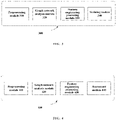
- FIG. 3 shows a schematic diagram of an apparatus 300 of generating a risk assessing model according to the embodiments of the present disclosure.
- the apparatus 300 of generating a risk assessing model may include a preprocessing module 310, a graph network analysis module 320, a feature engineering processing module 330 and a training module 340.
- the preprocessing module 310 may be configured to preprocess a plurality of declaration information to obtain a plurality of first entries included in the plurality of declaration information.
- the preprocessing module 310 may be further configured to: perform data cleaning on the plurality of declaration information so as to obtain the plurality of first entries included in the plurality of declaration information. After the preprocessing (e.g., data cleaning), the number of the first entries included in each declaration information is the same.
- the graph network analysis module 320 may be configured to perform a graph network analysis on information related to the plurality of first entries so as to generate a first result.
- the graph network analysis module 320 is further configured to: select, from all the first entries included in the plurality of declaration information, first entries in conformity with at least one predefined association category as second entries; and input the second entries as node information and an association relationship between the second entries as edge information into a graph network so as to generate a plurality of first vectors corresponding to the second entries respectively as the first result.
- the graph network may be a graph convolution, a graph embedding, etc.
- the graph network analysis module 320 is further configured to: select at least one category as the predefined association category from a plurality of categories to which the plurality of first entries in the plurality of declaration information belong, wherein the at least one category causes the declaration information to correlate and mutually affect a risk prediction probability.
- the predefined association category may include a shipper, a consignee, a logistics party, goods, a customs broker, etc. Taking the category to which the entry belongs including the shipper as an example, the shipper may be selected as an association category, because when one declaration information is risky, other declaration information related to the shipper in the declaration information may be at high risk.
- the feature engineering processing module 330 may be configured to perform a feature engineering processing on the plurality of first entries so as to generate a second result.
- the feature engineering processing module 340 may be further configured to perform the feature engineering processing on the plurality of first entries so as to obtain a plurality of second vectors corresponding to the plurality of first entries as the second result.
- the training module 340 may be configured to train a neural network by using the first result and the second result so as to obtain the risk assessing model.
- the training module 340 may be further configured to: generate a plurality of third vectors respectively corresponding to the plurality of declaration information according to the plurality of first vectors and the plurality of second vectors; and train the neural network by using the plurality of third vectors so as to obtain the risk assessing model.
- the training module 340 may be further configured to: determine a first vector and a second vector corresponding to each of the plurality of declaration information according to the plurality of first vectors and the plurality of second vectors; and splice the first vector and the second vector corresponding to each declaration information so as to generate a third vector corresponding to each declaration information.
- FIG. 4 shows a block diagram of an apparatus 400 of assessing a risk according to the embodiments of the present disclosure.
- the apparatus 400 of assessing a risk may include a preprocessing module 410, a graph network analysis module 420, a feature engineering processing module 430 and an assessment module 440.
- the preprocessing module 410 may be configured to preprocess a declaration information to be assessed to obtain a plurality of first entries included in the declaration information to be assessed.
- the preprocessing module 410 may be further configured to perform data cleaning on the declaration information to be assessed so as to obtain the plurality of first entries included in the declaration information to be assessed.
- the graph network analysis module 420 may be configured to perform a graph network analysis on information related to the plurality of first entries so as to generate a first result.
- the graph network analysis module 420 may be further configured to: select, from the plurality of first entries, first entries in conformity with at least one predefined association category as second entries; and input the second entries as node information and an association relationship between the second entries as edge information into a graph network so as to generate a first vector corresponding to the second entries as the first result.
- the graph network may be a graph convolution, a graph embedding, etc.
- the graph network analysis module 420 may be further configured to: select at least one category as the predefined association category from a plurality of categories to which the plurality of first entries belong, wherein the at least one category causes the declaration information to be assessed and another declaration information to correlate and mutually affect a risk prediction probability.
- the predefined association category may include a shipper, a consignee, a logistics party, goods, a customs broker, etc.
- the feature engineering processing module 430 may be configured to perform a feature engineering processing on the plurality of first entries so as to generate a second result.
- the feature engineering processing module 430 may be further configured to perform the feature engineering processing on the plurality of first entries so as to obtain a second vector corresponding to the plurality of first entries as the second result.
- the assessment module 440 may be configured to obtain a risk assessment result of the declaration information to be assessed by using a risk assessing model according to the first result and the second result, wherein the risk assessing model is obtained by using the method of generating a risk assessing model 100 through a plurality of declaration information.
- the assessment module 440 may be further configured to: generate a third vector corresponding to the declaration information to be assessed according to the first vector and the second vector; and input the third vector into the risk assessing model so as to obtain the risk assessment result of the declaration information to be assessed.
- the assessment module 440 may be further configured to: splice the first vector and the second vector so as to generate the third vector corresponding to the declaration information to be assessed.
- the present disclosure performs a risk estimation on the declaration information by using a deep learning and graph network.
- entry features are combined through the feature engineering processing and the entry feature combination is input into a deep learning network for deep learning so as to obtain the risk assessing model, thereby providing an intelligent method of assessing a risk.
- the intelligent method integrates human experience and increases completeness of entry feature selection.
- associated entry features take into account an impact of risk diffusion, which is conducive to an analysis of gang crimes and group risks.
- FIG. 5 shows a schematic diagram of a computer system according to the embodiments of the present disclosure.
- a system 500 may include a processor 510, for example, a digital signal processor (DSP).
- the processor 510 may be a single device or a plurality of devices for performing different actions of the process described herein.
- the system 500 may also include an input/output (I/O) device 530 for receiving signals from or sending signals to other entities.
- I/O input/output
- the system 500 may include a memory 520.
- the memory 520 may be in a form of non-volatile or volatile memory, for example, an electrically erasable programmable read only memory (EEPROM), a flash memory, etc.
- EEPROM electrically erasable programmable read only memory
- the memory 520 may store computer-readable instructions which, when executed by the processor 510, may cause the processor to perform the actions described herein.
- the techniques of the present disclosure may be implemented in a form of hardware and/or software (including a firmware, a microcode, etc.).
- the techniques of the present disclosure may take a form of a computer program product on a computer-readable medium having stored instructions for use by or in conjunction with an instruction execution system (e.g., one or more processors).
- the computer-readable medium may be any medium that may contain, store, communicate, propagate, or transmit instructions.
- the computer-readable medium may include, but is not limited to, an electrical, magnetic, optical, electromagnetic, infrared, or semiconductor system, apparatus, device, or propagation medium.
- Computer-readable medium examples include: a magnetic storage device, such as a magnetic tape or hard disk (HDD); an optical storage device, such as a compact disk (CD-ROM); a memory, such as a random access memory (RAM) or flash memory; and/or a wired /wireless communication link.
- a magnetic storage device such as a magnetic tape or hard disk (HDD)
- an optical storage device such as a compact disk (CD-ROM)
- a memory such as a random access memory (RAM) or flash memory
- RAM random access memory
- portions of the subject matter described in the embodiments of the present disclosure may be implemented by an application specific integrated circuit (ASIC), a field programmable gate array (FPGA), a digital signal processor (DSP), or other integrated formats.
- ASIC application specific integrated circuit
- FPGA field programmable gate array
- DSP digital signal processor
- Those skilled in the art will recognize, however, that some aspects of the embodiments disclosed herein may equally be implemented, in whole or in part, in an integrated circuit, as one or more computer programs running on one or more computers (e.g., implemented as one or more programs running on one or more computer systems), implemented as one or more programs running on one or more processors (e.g., implemented as one or more programs running on one or more microprocessors), implemented as firmware, or substantially implemented as any combination of the above.
- Examples of the signal bearing medium include, but are not limited to: a recordable-type medium such as a floppy disk, a hard drive, a compact disk (CD), a digital versatile disk (DVD), a digital magnetic tape, a computer memory, etc.; and a transmission-type medium such as a digital and /or analog communication medium (e.g., a fiber optic cable, waveguide, a wired communication link, a wireless communication link, etc.).
- a recordable-type medium such as a floppy disk, a hard drive, a compact disk (CD), a digital versatile disk (DVD), a digital magnetic tape, a computer memory, etc.
- a transmission-type medium such as a digital and /or analog communication medium (e.g., a fiber optic cable, waveguide, a wired communication link, a wireless communication link, etc.).
Landscapes
- Engineering & Computer Science (AREA)
- Theoretical Computer Science (AREA)
- Physics & Mathematics (AREA)
- Business, Economics & Management (AREA)
- Human Resources & Organizations (AREA)
- General Physics & Mathematics (AREA)
- General Engineering & Computer Science (AREA)
- Software Systems (AREA)
- Data Mining & Analysis (AREA)
- Mathematical Physics (AREA)
- Computational Linguistics (AREA)
- Evolutionary Computation (AREA)
- Computing Systems (AREA)
- Molecular Biology (AREA)
- General Health & Medical Sciences (AREA)
- Biophysics (AREA)
- Biomedical Technology (AREA)
- Artificial Intelligence (AREA)
- Life Sciences & Earth Sciences (AREA)
- Health & Medical Sciences (AREA)
- Databases & Information Systems (AREA)
- Economics (AREA)
- Strategic Management (AREA)
- Entrepreneurship & Innovation (AREA)
- Game Theory and Decision Science (AREA)
- Educational Administration (AREA)
- Marketing (AREA)
- Operations Research (AREA)
- Quality & Reliability (AREA)
- Tourism & Hospitality (AREA)
- General Business, Economics & Management (AREA)
- Development Economics (AREA)
- Fuzzy Systems (AREA)
- Probability & Statistics with Applications (AREA)
- Information Retrieval, Db Structures And Fs Structures Therefor (AREA)
- Management, Administration, Business Operations System, And Electronic Commerce (AREA)
Abstract
Description
- This application claims priority to
Chinese patent Application No. 202010168314.8 filed on March 11, 2020 - The present disclosure relates to a field of data processing technology, and in particular to a method and an apparatus of generating a risk assessing model and a method and an apparatus of assessing a risk.
- Under a background of growing international trade, customs clearance data is becoming larger and larger. How to screen out a high-risk declaration information by analyzing declaration information and estimating a risk value is an important direction of intelligent inspection at present. With an in-depth development of computer technology, mining of the high-risk declaration information based on big data is supported by both "software" and "hardware".
- At present, there are not many researches on a risk prediction of the declaration information. In an existing analysis method, feature combinations sensitive to the risk value are screened out through experts and manual experience by mainly building a risk rule model, that is, based on historical data, and the risk value is then derived from a machine learning model. The existing risk rule model has the following drawbacks. First, experts and manual experience are relied on. However, the high-risk declaration information is not static, but evolves in real time. Once the rule model is determined, it is difficult for the model to adapt to a new high-risk model that is evolved. Second, it is difficult to mine a deep-level related information, so it is not easy to capture gang crimes and group risks.
- According to an aspect of the embodiments of the present disclosure, there is provided a method of generating a risk assessing model, including:
- preprocessing a plurality of declaration information to obtain a plurality of first entries included in the plurality of declaration information;
- performing a graph network analysis on information related to the plurality of first entries so as to generate a first result;
- performing a feature engineering processing on the plurality of first entries so as to generate a second result; and
- training a neural network by using the first result and the second result so as to obtain the risk assessing model.
- In an embodiment, the performing a graph network analysis on information related to the plurality of first entries so as to generate a first result includes:
- selecting, from all the first entries included in the plurality of declaration information, first entries in conformity with at least one predefined association category as second entries; and
- inputting the second entries as node information and an association relationship between the second entries as edge information into a graph network so as to generate a plurality of first vectors corresponding to the second entries respectively as the first result.
- In an embodiment, the performing a feature engineering processing on the plurality of first entries so as to generate a second result includes:
performing the feature engineering processing on the plurality of first entries so as to obtain a plurality of second vectors corresponding to the plurality of first entries as the second result. - In an embodiment, the training a neural network by using the first result and the second result so as to obtain the risk assessing model includes:
- generating a plurality of third vectors respectively corresponding to the plurality of declaration information according to the plurality of first vectors and the plurality of second vectors; and
- training the neural network by using the plurality of third vectors so as to obtain the risk assessing model.
- In an embodiment, the selecting, from all the first entries included in the plurality of declaration information, first entries in conformity with at least one predefined association category as second entries includes:
selecting at least one category as the predefined association category from a plurality of categories to which the plurality of first entries in the plurality of declaration information belong, wherein the at least one category causes the declaration information to correlate and mutually affect a risk prediction probability. - According to another aspect of the embodiments of the present disclosure, there is provided a method of assessing a risk, including:
- preprocessing a declaration information to be assessed to obtain a plurality of first entries included in the declaration information to be assessed;
- performing a graph network analysis on information related to the plurality of first entries so as to generate a first result;
- performing a feature engineering processing on the plurality of first entries so as to generate a second result; and
- obtaining a risk assessment result of the declaration information to be assessed by using a risk assessing model according to the first result and the second result,
- wherein the risk assessing model is obtained by using the method of generating a risk assessing model through a plurality of declaration information.
- In an embodiment, the performing a graph network analysis on information related to the plurality of first entries so as to generate a first result includes:
- selecting, from the plurality of first entries, first entries in conformity with at least one predefined association category as second entries; and
- inputting the second entries as node information and an association relationship between the second entries as edge information into a graph network so as to generate a first vector corresponding to the second entries as the first result.
- In an embodiment, the performing a feature engineering processing on the plurality of first entries so as to generate a second result includes:
performing the feature engineering processing on the plurality of first entries so as to obtain a second vector corresponding to the plurality of first entries as the second result. - In an embodiment, the obtaining a risk assessment result of the declaration information to be assessed by using a risk assessing model according to the first result and the second result includes:
- generating a third vector corresponding to the declaration information to be assessed according to the first vector and the second vector; and
- inputting the third vector into the risk assessing model so as to obtain the risk assessment result of the declaration information to be assessed.
- In an embodiment, the selecting, from the plurality of first entries, first entries in conformity with at least one predefined association category as second entries includes:
selecting at least one category as the predefined association category from a plurality of categories to which the plurality of first entries belong, wherein the at least one category causes the declaration information to be assessed and another declaration information to correlate and mutually affect a risk prediction probability. - According to yet another aspect of the embodiments of the present disclosure, there is provided an apparatus of generating a risk assessing model, including:
- a preprocessing module configured to preprocess a plurality of declaration information to obtain a plurality of first entries included in the plurality of declaration information;
- a graph network analysis module configured to perform a graph network analysis on information related to the plurality of first entries so as to generate a first result;
- a feature engineering processing module configured to perform a feature engineering processing on the plurality of first entries so as to generate a second result; and
- a training module configured to train a neural network by using the first result and the second result so as to obtain the risk assessing model.
- In an embodiment, the graph network analysis module is further configured to:
- select, from all the first entries included in the plurality of declaration information, first entries in conformity with at least one predefined association category as second entries; and
- input the second entries as node information and an association relationship between the second entries as edge information into a graph network so as to generate a plurality of first vectors corresponding to the second entries respectively as the first result.
- In an embodiment, the feature engineering processing module is further configured to:
perform the feature engineering processing on the plurality of first entries so as to obtain a plurality of second vectors corresponding to the plurality of first entries as the second result. - In an embodiment, the training module is further configured to:
- generate a plurality of third vectors respectively corresponding to the plurality of declaration information according to the plurality of first vectors and the plurality of second vectors; and
- train the neural network by using the plurality of third vectors so as to obtain the risk assessing model.
- In an embodiment, the graph network analysis module is further configured to:
select at least one category as the predefined association category from a plurality of categories to which the plurality of first entries in the plurality of declaration information belong, wherein the at least one category causes the declaration information to correlate and mutually affect a risk prediction probability. - According to yet another aspect of the embodiments of the present disclosure, there is provided an apparatus of assessing a risk, including:
- a preprocessing module configured to preprocess a declaration information to be assessed to obtain a plurality of first entries included in the declaration information to be assessed;
- a graph network analysis module configured to perform a graph network analysis on information related to the plurality of first entries so as to generate a first result;
- a feature engineering processing module configured to perform a feature engineering processing on the plurality of first entries so as to generate a second result; and
- an assessment module configured to obtain a risk assessment result of the declaration information to be assessed by using a risk assessing model according to the first result and the second result,
- wherein the risk assessing model is obtained by using the method of generating a risk assessing model through a plurality of declaration information.
- In an embodiment, the graph network analysis module is further configured to:
- select, from the plurality of first entries, first entries in conformity with at least one predefined association category as second entries; and
- input the second entries as node information and an association relationship between the second entries as edge information into a graph network so as to generate a first vector corresponding to the second entries as the first result.
- In an embodiment, the feature engineering processing module is further configured to:
perform the feature engineering processing on the plurality of first entries so as to obtain a second vector corresponding to the plurality of first entries as the second result. - In an embodiment, the assessment module is further configured to:
- generate a third vector corresponding to the declaration information to be assessed according to the first vector and the second vector; and
- input the third vector into the risk assessing model so as to obtain the risk assessment result of the declaration information to be assessed.
- In an embodiment, the graph network analysis module is further configured to:
select at least one category as the predefined association category from a plurality of categories to which the plurality of first entries belong, wherein the at least one category causes the declaration information to be assessed and another declaration information to correlate and mutually affect a risk prediction probability. - The above and other objectives, features, and advantages of the present disclosure will be clearer through the following description of embodiments of the present disclosure with reference to the accompanying drawings.
-
FIG. 1 shows a flowchart of a method of generating a risk assessing model according to the embodiments of the present disclosure. -
FIG. 2 shows a flowchart of a method of assessing a risk according to the embodiments of the present disclosure. -
FIG. 3 shows a block diagram of an apparatus of generating a risk assessing model according to the embodiments of the present disclosure. -
FIG. 4 shows a block diagram of an apparatus of assessing a risk according to the embodiments of the present disclosure. -
FIG. 5 shows a schematic diagram of a computer system according to the embodiments of the present disclosure. - Not all circuits or structures of the embodiments are shown in the accompanying drawings. Throughout the accompanying drawings, the same reference numerals indicate the same or similar components or features.
- The embodiments of the present disclosure will be described below with reference to the accompanying drawings. It should be understood, however, that the descriptions are exemplary only, and are not intended to limit the scope of the present disclosure. In addition, in the following description, descriptions of well-known structures and techniques are omitted to avoid unnecessarily obscuring the concepts of the present disclosure.
- The terms used herein are for the purpose of describing specific embodiments only and are not intended to limit the present disclosure. As used herein, the words "a," "an," and "the", etc. shall also include the meanings of "plurality of," "variety of," unless the context clearly dictates otherwise. Furthermore, the terms "including", "containing", etc. used herein indicate the presence of features, steps, operations and/or components, but do not preclude the presence or addition of one or more other features, steps, operations or components.
- All terms (including technical and scientific terms) used herein have the meanings as commonly understood by those skilled in the art, unless otherwise defined. It should be noted that the terms used herein should be construed to have meanings consistent with the context of this specification and should not be construed in an idealized or overly rigid manner.
-
FIG. 1 shows a flowchart of amethod 100 of generating a risk assessing model according to the embodiments of the present disclosure. Themethod 100 of generating a risk assessing model may include the following steps. - In step S110, a plurality of declaration information may be preprocessed to obtain a plurality of first entries included in the plurality of declaration information. Step S110 may include: performing data cleaning on the plurality of declaration information so as to obtain the plurality of first entries included in the plurality of declaration information. After the preprocessing (e.g., data cleaning, etc.), the number of the first entries included in each declaration information is the same.
- In step S120, a graph network analysis may be performed on information related to the plurality of first entries so as to generate a first result. Step S120 may include: selecting, from all the first entries included in the plurality of declaration information, first entries in conformity with at least one predefined association category as second entries, and inputting the second entries as node information and an association relationship between the second entries as edge information into a graph network so as to generate a plurality of first vectors corresponding to the second entries respectively as the first result. The graph network may be a graph convolution, a graph embedding, etc. The selecting, from all the first entries included in the plurality of declaration information, first entries in conformity with at least one predefined association category as second entries may include: selecting at least one category as the predefined association category from a plurality of categories to which the plurality of first entries in the plurality of declaration information belong, wherein the at least one category causes the declaration information to correlate and mutually affect a risk prediction probability. For example, the predefined association category may include a shipper, a consignee, a logistics party, goods, a customs broker, etc. Taking the category to which the entry belongs including the shipper as an example, the shipper may be selected as an association category, because when a declaration information is risky, other declaration information related to the shipper in the declaration information may be at high risk.
- In step S130, a feature engineering processing may be performed on the plurality of first entries so as to generate a second result. Step S130 may include: performing the feature engineering processing on the plurality of first entries so as to obtain a plurality of second vectors corresponding to the plurality of first entries as the second result.
- In step S140, a neural network may be trained by using the first result and the second result so as to obtain the risk assessing model. Step S140 may include: generating a plurality of third vectors respectively corresponding to the plurality of declaration information according to the plurality of first vectors and the plurality of second vectors, and training the neural network by using the plurality of third vectors so as to obtain the risk assessing model. The generating a plurality of third vectors respectively corresponding to the plurality of declaration information according to the plurality of first vectors and the plurality of second vectors may include: determining a first vector and a second vector corresponding to each of the plurality of declaration information according to the plurality of first vectors and the plurality of second vectors; and splicing the first vector and the second vector corresponding to each of the plurality of declaration information so as to generate a third vector corresponding to each of the plurality of declaration information.
- The above-mentioned method of generating a risk assessing model will be described below by taking three declaration information as an example. The three declaration information may include a first declaration information, a second declaration information and a third declaration information. The first declaration information is that 100 computers of Lenovo are sent from user A to user B, the second declaration information is that 200 motherboards of Intel are sent from user C to user B, and the third declaration information is that 50 displays of Lenovo are sent from user C to user D.
- First, the above-mentioned three declaration information are preprocessed (e.g., data cleaning, etc.) so as to obtain a plurality of first entries. For example, entries included in the first declaration information are Lenovo, 100, computer, user A and user B, entries included in the second declaration information are Intel, 200, motherboard, user C and user B, and entries included in the third declaration information are Lenovo, 50, display, user C, and user D. The plurality of first entries obtained by preprocessing (e.g., data cleaning, etc.) the above-mentioned three declaration information are Lenovo, 100, computer, user A, user B, Intel, 200, motherboard, user C, 50, display, and user D.
- Then, assuming that the predefined association categories are a brand, a type of goods, a shipper, and a consignee, the second entries in conformity with the predefined association category selected from the first entries included in the three declaration information are Lenovo, Intel, computer, motherboard, display, user A, user B, user C, and user D. Lenovo, Intel, computer, motherboard, display, user A, user B, user C and user D as node information and an association relationship between the node information as edge information are input into a graph network (for example, graph convolution, graph embedding etc.) so as to generate a plurality of first vectors respectively corresponding to the second entries. For example, a first vector corresponding to Lenovo is s1, a first vector corresponding to Intel is s2, a first vector corresponding to the computer is s3, a first vector corresponding to the motherboard is s4, a first vector corresponding to the display is s5, a first vector corresponding to user A is s6, a first vector corresponding to user B is s7, a first vector corresponding to user C is s8, and a first vector corresponding to user D is s9.
- Next, a feature engineering processing is performed on the plurality of first entries so as to obtain second vectors corresponding to the first entries, respectively. For example, a second vector corresponding to the plurality of first entries in the first declaration information is [q11,q12,q13,...,q1k], where k is a positive integer, a second vector corresponding to the plurality of first entries in the second declaration information is [q21,q22,q23,...,q2k], and a second vector corresponding to the plurality of first entries in the third declaration information is [q31,q32,q33,...,q3k].
- Then, a plurality of third vectors respectively corresponding to the three declaration information are generated according to the plurality of first vectors and the plurality of second vectors. For example, the first vector corresponding to the first declaration information is [s1,s3,s6,s7], and the second vector corresponding to the first declaration information is [q11,q12,q13,...,q1k], so the third vector corresponding to the first declaration information is [s1,s3,s6,s7,q11,q12,q13,...,q1k] through vector splicing; the first vector corresponding to the second declaration information is [s2,s4,s8,s7], and the second vector corresponding to the second declaration information is [q21,q22,q23,...,q2k], so the third vector corresponding to the second declaration information is [s2,s4,s8,s7,q21,q22,q23,...,q2k] through vector splicing; and the first vector corresponding to the third declaration information is [s1,s5,s8,s9], and the second vector corresponding to the third declaration information is [q31,q32,q33,...,q3k], so the third vector corresponding to the third declaration information is [s1,s5,s8,s9,q31,q32,q33,...,q3k] through vector splicing.
- Finally, a neural network is trained by using three third vectors [s1,s3,s6,s7,q11,q12,q13,...,q1k],[s2,s4,s8,s7,q21,q22,q23,...,q2k] and [s1,s5,s8,s9,q31,q32,q33,...,q3k] so as to obtain the risk assessing model. An output of the risk assessing model may be risky and non-risky, or may be a probability of being risky, etc.
- The process of training a neural network to obtain the risk assessing model through the plurality of declaration information has been described above. The process of assessing declaration information to be assessed by using the obtained risk assessing model will be described below.
FIG. 2 shows a flowchart of amethod 200 of assessing a risk according to the embodiments of the present disclosure. Themethod 200 of assessing a risk may include the following steps. - In step S210, a declaration information to be assessed may be preprocessed to obtain a plurality of first entries included in the declaration information to be assessed. Step S210 may include: performing data cleaning on the declaration information to be assessed so as to obtain the plurality of first entries included in the declaration information to be assessed.
- In step S220, a graph network analysis may be performed on information related to the plurality of first entries so as to generate a first result. Step S220 may include: selecting, from the plurality of first entries, first entries in conformity with at least one predefined association category as second entries; and inputting the second entries as node information and an association relationship between the second entries as edge information into a graph network so as to generate a first vector corresponding to the second entries as the first result. The graph network may be a graph convolution, a graph embedding, etc. The selecting, from the plurality of first entries, first entries in conformity with at least one predefined association category as second entries may include: selecting at least one category as the predefined association category from a plurality of categories to which the plurality of first entries belong, wherein the at least one category causes the declaration information to be assessed and another declaration information to correlate and mutually affect a risk prediction probability. For example, the predefined association category may include a shipper, a consignee, a logistics party, goods, a customs broker, etc.
- In step S230, a feature engineering processing may be performed on the plurality of first entries so as to generate a second result. Step S230 may include: performing the feature engineering processing on the plurality of first entries so as to obtain a second vector corresponding to the plurality of first entries as the second result.
- In step S240, a risk assessment result of the declaration information to be assessed may be obtained by using a risk assessing model according to the first result and the second result, wherein the risk assessing model is obtained by using the
method 100 of generating a risk assessing model through a plurality of declaration information. Step S240 may include: generating a third vector corresponding to the declaration information to be assessed according to the first vector and the second vector, and inputting the third vector into the risk assessing model so as to obtain the risk assessment result of the declaration information to be assessed. The generating a third vector corresponding to the declaration information to be assessed according to the first vector and the second vector may include: splicing the first vector and the second vector so as to generate the third vector corresponding to the declaration information to be assessed. - The present disclosure performs a risk estimation on the declaration information by using a deep learning and graph network. Compared with existing technologies, on the one hand, entry features are combined through the feature engineering processing and the entry feature combination is input into a deep learning network for deep learning so as to obtain the risk assessing model, thereby providing an intelligent method of assessing a risk. The intelligent method integrates human experience and increases completeness of entry feature selection. On the other hand, through a graph network analysis, associated entry features take into account an impact of risk diffusion, which is conducive to an analysis of gang crimes and group risks.
-
FIG. 3 shows a schematic diagram of anapparatus 300 of generating a risk assessing model according to the embodiments of the present disclosure. Theapparatus 300 of generating a risk assessing model may include apreprocessing module 310, a graphnetwork analysis module 320, a featureengineering processing module 330 and atraining module 340. - The
preprocessing module 310 may be configured to preprocess a plurality of declaration information to obtain a plurality of first entries included in the plurality of declaration information. Thepreprocessing module 310 may be further configured to: perform data cleaning on the plurality of declaration information so as to obtain the plurality of first entries included in the plurality of declaration information. After the preprocessing (e.g., data cleaning), the number of the first entries included in each declaration information is the same. - The graph
network analysis module 320 may be configured to perform a graph network analysis on information related to the plurality of first entries so as to generate a first result. The graphnetwork analysis module 320 is further configured to: select, from all the first entries included in the plurality of declaration information, first entries in conformity with at least one predefined association category as second entries; and input the second entries as node information and an association relationship between the second entries as edge information into a graph network so as to generate a plurality of first vectors corresponding to the second entries respectively as the first result. The graph network may be a graph convolution, a graph embedding, etc. The graphnetwork analysis module 320 is further configured to: select at least one category as the predefined association category from a plurality of categories to which the plurality of first entries in the plurality of declaration information belong, wherein the at least one category causes the declaration information to correlate and mutually affect a risk prediction probability. For example, the predefined association category may include a shipper, a consignee, a logistics party, goods, a customs broker, etc. Taking the category to which the entry belongs including the shipper as an example, the shipper may be selected as an association category, because when one declaration information is risky, other declaration information related to the shipper in the declaration information may be at high risk. - The feature
engineering processing module 330 may be configured to perform a feature engineering processing on the plurality of first entries so as to generate a second result. The featureengineering processing module 340 may be further configured to perform the feature engineering processing on the plurality of first entries so as to obtain a plurality of second vectors corresponding to the plurality of first entries as the second result. - The
training module 340 may be configured to train a neural network by using the first result and the second result so as to obtain the risk assessing model. Thetraining module 340 may be further configured to: generate a plurality of third vectors respectively corresponding to the plurality of declaration information according to the plurality of first vectors and the plurality of second vectors; and train the neural network by using the plurality of third vectors so as to obtain the risk assessing model. Thetraining module 340 may be further configured to: determine a first vector and a second vector corresponding to each of the plurality of declaration information according to the plurality of first vectors and the plurality of second vectors; and splice the first vector and the second vector corresponding to each declaration information so as to generate a third vector corresponding to each declaration information. -
FIG. 4 shows a block diagram of anapparatus 400 of assessing a risk according to the embodiments of the present disclosure. Theapparatus 400 of assessing a risk may include apreprocessing module 410, a graphnetwork analysis module 420, a featureengineering processing module 430 and anassessment module 440. - The
preprocessing module 410 may be configured to preprocess a declaration information to be assessed to obtain a plurality of first entries included in the declaration information to be assessed. Thepreprocessing module 410 may be further configured to perform data cleaning on the declaration information to be assessed so as to obtain the plurality of first entries included in the declaration information to be assessed. - The graph
network analysis module 420 may be configured to perform a graph network analysis on information related to the plurality of first entries so as to generate a first result. The graphnetwork analysis module 420 may be further configured to: select, from the plurality of first entries, first entries in conformity with at least one predefined association category as second entries; and input the second entries as node information and an association relationship between the second entries as edge information into a graph network so as to generate a first vector corresponding to the second entries as the first result. The graph network may be a graph convolution, a graph embedding, etc. The graphnetwork analysis module 420 may be further configured to: select at least one category as the predefined association category from a plurality of categories to which the plurality of first entries belong, wherein the at least one category causes the declaration information to be assessed and another declaration information to correlate and mutually affect a risk prediction probability. For example, the predefined association category may include a shipper, a consignee, a logistics party, goods, a customs broker, etc. - The feature
engineering processing module 430 may be configured to perform a feature engineering processing on the plurality of first entries so as to generate a second result. The featureengineering processing module 430 may be further configured to perform the feature engineering processing on the plurality of first entries so as to obtain a second vector corresponding to the plurality of first entries as the second result. - The
assessment module 440 may be configured to obtain a risk assessment result of the declaration information to be assessed by using a risk assessing model according to the first result and the second result, wherein the risk assessing model is obtained by using the method of generating arisk assessing model 100 through a plurality of declaration information. Theassessment module 440 may be further configured to: generate a third vector corresponding to the declaration information to be assessed according to the first vector and the second vector; and input the third vector into the risk assessing model so as to obtain the risk assessment result of the declaration information to be assessed. Theassessment module 440 may be further configured to: splice the first vector and the second vector so as to generate the third vector corresponding to the declaration information to be assessed. - The present disclosure performs a risk estimation on the declaration information by using a deep learning and graph network. Compared with the existing technologies, on the one hand, entry features are combined through the feature engineering processing and the entry feature combination is input into a deep learning network for deep learning so as to obtain the risk assessing model, thereby providing an intelligent method of assessing a risk. The intelligent method integrates human experience and increases completeness of entry feature selection. On the other hand, through a graph network analysis, associated entry features take into account an impact of risk diffusion, which is conducive to an analysis of gang crimes and group risks.
-
FIG. 5 shows a schematic diagram of a computer system according to the embodiments of the present disclosure. Asystem 500 may include aprocessor 510, for example, a digital signal processor (DSP). Theprocessor 510 may be a single device or a plurality of devices for performing different actions of the process described herein. Thesystem 500 may also include an input/output (I/O)device 530 for receiving signals from or sending signals to other entities. - In addition, the
system 500 may include amemory 520. Thememory 520 may be in a form of non-volatile or volatile memory, for example, an electrically erasable programmable read only memory (EEPROM), a flash memory, etc. Thememory 520 may store computer-readable instructions which, when executed by theprocessor 510, may cause the processor to perform the actions described herein. - Some block diagrams and/or flow diagrams are shown in the accompanying drawings. It will be understood that some blocks in the block diagrams and/or flowcharts, or combinations thereof, may be implemented by computer program instructions. The computer program instructions may be provided to a processor of a general-purpose computer, a dedicated-purpose computer, or other programmable data processing apparatus, so that the instructions, when executed by the processor, may create means for implementing functions/operations illustrated in the block diagrams and/or flow diagrams.
- Therefore, the techniques of the present disclosure may be implemented in a form of hardware and/or software (including a firmware, a microcode, etc.). In addition, the techniques of the present disclosure may take a form of a computer program product on a computer-readable medium having stored instructions for use by or in conjunction with an instruction execution system (e.g., one or more processors). In the context of the present disclosure, the computer-readable medium may be any medium that may contain, store, communicate, propagate, or transmit instructions. For example, the computer-readable medium may include, but is not limited to, an electrical, magnetic, optical, electromagnetic, infrared, or semiconductor system, apparatus, device, or propagation medium. Specific examples of computer-readable medium include: a magnetic storage device, such as a magnetic tape or hard disk (HDD); an optical storage device, such as a compact disk (CD-ROM); a memory, such as a random access memory (RAM) or flash memory; and/or a wired /wireless communication link.
- The above-mentioned detailed description has set forth many embodiments of a method and apparatus of generating a risk assessing model, a method of assessing a risk and apparatus, and a computer system using schematic diagrams, flowcharts, and/or examples. When the diagrams, flowcharts and/or examples include one or more functions and/or operations, those skilled in the art will understand that each function and/or operation in the diagrams, flowcharts or examples may be implemented individually and/or collectively by various structures, hardware, software, firmware, or virtually any combination thereof. In an embodiment, portions of the subject matter described in the embodiments of the present disclosure may be implemented by an application specific integrated circuit (ASIC), a field programmable gate array (FPGA), a digital signal processor (DSP), or other integrated formats. Those skilled in the art will recognize, however, that some aspects of the embodiments disclosed herein may equally be implemented, in whole or in part, in an integrated circuit, as one or more computer programs running on one or more computers (e.g., implemented as one or more programs running on one or more computer systems), implemented as one or more programs running on one or more processors (e.g., implemented as one or more programs running on one or more microprocessors), implemented as firmware, or substantially implemented as any combination of the above. Those skilled in the art will have the ability to design circuits and/or write software and and/or firmware codes based on the present disclosure. Furthermore, those skilled in the art will recognize that mechanisms of the subject matter of the present disclosure may be distributed as program products in many forms, and that exemplary embodiments of the subject matter of the present disclosure are applicable regardless of the specific type of a signal bearing medium actually used to perform the distribution. Examples of the signal bearing medium include, but are not limited to: a recordable-type medium such as a floppy disk, a hard drive, a compact disk (CD), a digital versatile disk (DVD), a digital magnetic tape, a computer memory, etc.; and a transmission-type medium such as a digital and /or analog communication medium (e.g., a fiber optic cable, waveguide, a wired communication link, a wireless communication link, etc.).
Claims (20)
- A method of generating a risk assessing model, comprising:preprocessing a plurality of declaration information to obtain a plurality of first entries included in the plurality of declaration information;performing a graph network analysis on information related to the plurality of first entries so as to generate a first result;performing a feature engineering processing on the plurality of first entries so as to generate a second result; andtraining a neural network by using the first result and the second result so as to obtain the risk assessing model.
- The method according to claim 1, wherein the performing a graph network analysis on information related to the plurality of first entries so as to generate a first result comprises:selecting, from all the first entries included in the plurality of declaration information, first entries in conformity with at least one predefined association category as second entries; andinputting the second entries as node information and an association relationship between the second entries as edge information into a graph network so as to generate a plurality of first vectors corresponding to the second entries respectively as the first result.
- The method according to claim 2, wherein the performing a feature engineering processing on the plurality of first entries so as to generate a second result comprises:
performing the feature engineering processing on the plurality of first entries so as to obtain a plurality of second vectors corresponding to the plurality of first entries as the second result. - The method according to claim 3, wherein the training a neural network by using the first result and the second result so as to obtain the risk assessing model comprises:generating a plurality of third vectors respectively corresponding to the plurality of declaration information according to the plurality of first vectors and the plurality of second vectors; andtraining the neural network by using the plurality of third vectors so as to obtain the risk assessing model.
- The method according to claim 2, wherein the selecting, from all the first entries included in the plurality of declaration information, first entries in conformity with at least one predefined association category as second entries comprises:
selecting at least one category as the predefined association category from a plurality of categories to which the plurality of first entries in the plurality of declaration information belong, wherein the at least one category causes the declaration information to correlate and mutually affect a risk prediction probability. - A method of assessing a risk, comprising:preprocessing a declaration information to be assessed to obtain a plurality of first entries included in the declaration information to be assessed;performing a graph network analysis on information related to the plurality of first entries so as to generate a first result;performing a feature engineering processing on the plurality of first entries so as to generate a second result; andobtaining a risk assessment result of the declaration information to be assessed by using a risk assessing model according to the first result and the second result,wherein the risk assessing model is obtained by using the method of generating a risk assessing model according to claim 1 through a plurality of declaration information.
- The method according to claim 6, wherein the performing a graph network analysis on information related to the plurality of first entries so as to generate a first result comprises:selecting, from the plurality of first entries, first entries in conformity with at least one predefined association category as second entries; andinputting the second entries as node information and an association relationship between the second entries as edge information into a graph network so as to generate a first vector corresponding to the second entries as the first result.
- The method according to claim 7, wherein the performing a feature engineering processing on the plurality of first entries so as to generate a second result comprises:
performing the feature engineering processing on the plurality of first entries so as to obtain a second vector corresponding to the plurality of first entries as the second result. - The method according to claim 8, wherein the obtaining a risk assessment result of the declaration information to be assessed by using a risk assessing model according to the first result and the second result comprises:generating a third vector corresponding to the declaration information to be assessed according to the first vector and the second vector; andinputting the third vector into the risk assessing model so as to obtain the risk assessment result of the declaration information to be assessed.
- The method of assessing a risk according to claim 7, wherein the selecting, from the plurality of first entries, first entries in conformity with at least one predefined association category as second entries comprises:
selecting at least one category as the predefined association category from a plurality of categories to which the plurality of first entries belong, wherein the at least one category causes the declaration information to be assessed and another declaration information to correlate and mutually affect a risk prediction probability. - An apparatus of generating a risk assessing model, comprising:a preprocessing module configured to preprocess a plurality of declaration information to obtain a plurality of first entries included in the plurality of declaration information;a graph network analysis module configured to perform a graph network analysis on information related to the plurality of first entries so as to generate a first result;a feature engineering processing module configured to perform a feature engineering processing on the plurality of first entries so as to generate a second result; anda training module configured to train a neural network by using the first result and the second result so as to obtain the risk assessing model.
- The apparatus according to claim 11, wherein the graph network analysis module is further configured to:select, from all the first entries included in the plurality of declaration information, first entries in conformity with at least one predefined association category as second entries; andinput the second entries as node information and an association relationship between the second entries as edge information into a graph network so as to generate a plurality of first vectors corresponding to the second entries respectively as the first result.
- The apparatus according to claim 12, wherein the feature engineering processing module is further configured to:
perform the feature engineering processing on the plurality of first entries so as to obtain a plurality of second vectors corresponding to the plurality of first entries as the second result. - The apparatus according to claim 13, wherein the training module is further configured to:generate a plurality of third vectors respectively corresponding to the plurality of declaration information according to the plurality of first vectors and the plurality of second vectors; andtrain the neural network by using the plurality of third vectors so as to obtain the risk assessing model.
- The apparatus according to claim 12, wherein the graph network analysis module is further configured to:
select at least one category as the predefined association category from a plurality of categories to which the plurality of first entries in the plurality of declaration information belong, wherein the at least one category causes the declaration information to correlate and mutually affect a risk prediction probability. - An apparatus of assessing a risk, comprising:a preprocessing module configured to preprocess a declaration information to be assessed to obtain a plurality of first entries included in the declaration information to be assessed;a graph network analysis module configured to perform a graph network analysis on information related to the plurality of first entries so as to generate a first result;a feature engineering processing module configured to perform a feature engineering processing on the plurality of first entries so as to generate a second result; andan assessment module configured to obtain a risk assessment result of the declaration information to be assessed by using a risk assessing model according to the first result and the second result,wherein the risk assessing model is obtained by using the method of generating a risk assessing model according to claim 1 through a plurality of declaration information.
- The apparatus of assessing a risk according to claim 16, wherein the graph network analysis module is further configured to:select, from the plurality of first entries, first entries in conformity with at least one predefined association category as second entries; andinput the second entries as node information and an association relationship between the second entries as edge information into a graph network so as to generate a first vector corresponding to the second entries as the first result.
- The apparatus of assessing a risk according to claim 17, wherein the feature engineering processing module is further configured to:
perform the feature engineering processing on the plurality of first entries so as to obtain a second vector corresponding to the plurality of first entries as the second result. - The apparatus of assessing a risk according to claim 18, wherein the assessment module is further configured to:generate a third vector corresponding to the declaration information to be assessed according to the first vector and the second vector; andinput the third vector into the risk assessing model so as to obtain the risk assessment result of the declaration information to be assessed.
- The apparatus of assessing a risk according to claim 17, wherein the graph network analysis module is further configured to:
select at least one category as the predefined association category from a plurality of categories to which the plurality of first entries belong, wherein the at least one category causes the declaration information to be assessed and another declaration information to correlate and mutually affect a risk prediction probability.
Applications Claiming Priority (2)
| Application Number | Priority Date | Filing Date | Title |
|---|---|---|---|
| CN202010168314.8A CN113393066B (en) | 2020-03-11 | 2020-03-11 | Methods and apparatus for generating risk assessment models, and risk assessment methods and apparatus |
| PCT/CN2021/077487 WO2021179907A1 (en) | 2020-03-11 | 2021-02-23 | Method and apparatus for generating risk assessment model and risk assessment method and apparatus |
Publications (2)
| Publication Number | Publication Date |
|---|---|
| EP4120159A1 true EP4120159A1 (en) | 2023-01-18 |
| EP4120159A4 EP4120159A4 (en) | 2024-05-08 |
Family
ID=77615485
Family Applications (1)
| Application Number | Title | Priority Date | Filing Date |
|---|---|---|---|
| EP21767570.1A Pending EP4120159A4 (en) | 2020-03-11 | 2021-02-23 | METHOD AND APPARATUS FOR GENERATING RISK ASSESSMENT MODEL AND RISK ASSESSMENT METHOD AND APPARATUS |
Country Status (3)
| Country | Link |
|---|---|
| EP (1) | EP4120159A4 (en) |
| CN (1) | CN113393066B (en) |
| WO (1) | WO2021179907A1 (en) |
Family Cites Families (5)
| Publication number | Priority date | Publication date | Assignee | Title |
|---|---|---|---|---|
| TWI578262B (en) * | 2015-08-07 | 2017-04-11 | 緯創資通股份有限公司 | Risk assessment system and data processing method |
| CN107785058A (en) * | 2017-07-24 | 2018-03-09 | 平安科技(深圳)有限公司 | Anti- fraud recognition methods, storage medium and the server for carrying safety brain |
| CN109003089B (en) * | 2018-06-28 | 2022-06-10 | 中国工商银行股份有限公司 | Risk identification method and device |
| CN109657918B (en) * | 2018-11-19 | 2023-07-18 | 平安科技(深圳)有限公司 | Risk early warning method and device for associated evaluation object and computer equipment |
| CN110738564A (en) * | 2019-10-16 | 2020-01-31 | 信雅达系统工程股份有限公司 | Post-loan risk assessment method and device and storage medium |
-
2020
- 2020-03-11 CN CN202010168314.8A patent/CN113393066B/en active Active
-
2021
- 2021-02-23 WO PCT/CN2021/077487 patent/WO2021179907A1/en not_active Ceased
- 2021-02-23 EP EP21767570.1A patent/EP4120159A4/en active Pending
Also Published As
| Publication number | Publication date |
|---|---|
| CN113393066B (en) | 2026-02-17 |
| WO2021179907A1 (en) | 2021-09-16 |
| EP4120159A4 (en) | 2024-05-08 |
| CN113393066A (en) | 2021-09-14 |
Similar Documents
| Publication | Publication Date | Title |
|---|---|---|
| CN114358147B (en) | Training method, recognition method, device and equipment for abnormal account recognition model | |
| CN110070076B (en) | Method and device for selecting training samples | |
| US11263108B2 (en) | Device for testing blockchain network | |
| CN114170479B (en) | Training method and device for disturbance generation model | |
| CN115034596A (en) | Risk conduction prediction method, device, equipment and medium | |
| CN112348615B (en) | Method and apparatus for auditing information | |
| US20170212928A1 (en) | Cognitive decision making based on dynamic model composition | |
| CN113392014B (en) | Test case generation method, device, electronic equipment and medium | |
| CN115936895A (en) | Risk assessment method, device, equipment and storage medium based on artificial intelligence | |
| CN116248412B (en) | Shared data resource abnormality detection method, system, equipment, memory and product | |
| CN119417411A (en) | Supply relationship management method based on artificial intelligence | |
| CN115964701A (en) | Application security detection method and device, storage medium and electronic equipment | |
| CN114692970A (en) | User intention prediction model training method, user intention prediction method and device | |
| US20210049008A1 (en) | Identifying implicit dependencies between code artifacts | |
| CN111626054B (en) | New illegal act descriptor identification method and device, electronic equipment and storage medium | |
| CN114170575A (en) | Flame identification method and device, electronic equipment and storage medium | |
| CN111352840B (en) | Online behavior risk assessment method, device, equipment and readable storage medium | |
| WO2022069991A1 (en) | Outlier detection in deep neural network | |
| CN119719905A (en) | Prompt word processing method, prompt word processing device, electronic equipment and medium | |
| CN109472518B (en) | Block chain-based sales behavior evaluation method and device, medium and electronic equipment | |
| CN119341888A (en) | Security early warning methods, devices, equipment, media and program products | |
| CN117113101B (en) | Processing method and device of open source assembly, electronic equipment and storage medium | |
| CN117952100A (en) | Data processing method, device, electronic equipment and storage medium | |
| US20240168472A1 (en) | Machine learning for detecting and modifying faulty controls | |
| CN111383096A (en) | Fraud detection and model training method and device thereof, electronic equipment and storage medium |
Legal Events
| Date | Code | Title | Description |
|---|---|---|---|
| STAA | Information on the status of an ep patent application or granted ep patent |
Free format text: STATUS: THE INTERNATIONAL PUBLICATION HAS BEEN MADE |
|
| PUAI | Public reference made under article 153(3) epc to a published international application that has entered the european phase |
Free format text: ORIGINAL CODE: 0009012 |
|
| STAA | Information on the status of an ep patent application or granted ep patent |
Free format text: STATUS: REQUEST FOR EXAMINATION WAS MADE |
|
| 17P | Request for examination filed |
Effective date: 20220909 |
|
| AK | Designated contracting states |
Kind code of ref document: A1 Designated state(s): AL AT BE BG CH CY CZ DE DK EE ES FI FR GB GR HR HU IE IS IT LI LT LU LV MC MK MT NL NO PL PT RO RS SE SI SK SM TR |
|
| DAV | Request for validation of the european patent (deleted) | ||
| DAX | Request for extension of the european patent (deleted) | ||
| REG | Reference to a national code |
Ref country code: DE Ref legal event code: R079 Free format text: PREVIOUS MAIN CLASS: G06Q0010060000 Ipc: G06Q0010063500 |
|
| A4 | Supplementary search report drawn up and despatched |
Effective date: 20240410 |
|
| RIC1 | Information provided on ipc code assigned before grant |
Ipc: G06N 3/08 20060101ALI20240404BHEP Ipc: G06N 3/04 20060101ALI20240404BHEP Ipc: G06F 16/901 20190101ALI20240404BHEP Ipc: G06Q 10/0635 20230101AFI20240404BHEP |