EP4118994A1 - Shoe - Google Patents
Shoe Download PDFInfo
- Publication number
- EP4118994A1 EP4118994A1 EP20932159.5A EP20932159A EP4118994A1 EP 4118994 A1 EP4118994 A1 EP 4118994A1 EP 20932159 A EP20932159 A EP 20932159A EP 4118994 A1 EP4118994 A1 EP 4118994A1
- Authority
- EP
- European Patent Office
- Prior art keywords
- breathable
- strength
- portions
- article
- slit
- Prior art date
- Legal status (The legal status is an assumption and is not a legal conclusion. Google has not performed a legal analysis and makes no representation as to the accuracy of the status listed.)
- Granted
Links
Images






Classifications
-
- A—HUMAN NECESSITIES
- A43—FOOTWEAR
- A43B—CHARACTERISTIC FEATURES OF FOOTWEAR; PARTS OF FOOTWEAR
- A43B1/00—Footwear characterised by the material
- A43B1/02—Footwear characterised by the material made of fibres or fabrics made therefrom
- A43B1/04—Footwear characterised by the material made of fibres or fabrics made therefrom braided, knotted, knitted or crocheted
-
- A—HUMAN NECESSITIES
- A43—FOOTWEAR
- A43B—CHARACTERISTIC FEATURES OF FOOTWEAR; PARTS OF FOOTWEAR
- A43B23/00—Uppers; Boot legs; Stiffeners; Other single parts of footwear
- A43B23/02—Uppers; Boot legs
- A43B23/0205—Uppers; Boot legs characterised by the material
- A43B23/0235—Different layers of different material
-
- A—HUMAN NECESSITIES
- A43—FOOTWEAR
- A43B—CHARACTERISTIC FEATURES OF FOOTWEAR; PARTS OF FOOTWEAR
- A43B23/00—Uppers; Boot legs; Stiffeners; Other single parts of footwear
- A43B23/02—Uppers; Boot legs
- A43B23/0245—Uppers; Boot legs characterised by the constructive form
- A43B23/0265—Uppers; Boot legs characterised by the constructive form having different properties in different directions
-
- A—HUMAN NECESSITIES
- A43—FOOTWEAR
- A43B—CHARACTERISTIC FEATURES OF FOOTWEAR; PARTS OF FOOTWEAR
- A43B23/00—Uppers; Boot legs; Stiffeners; Other single parts of footwear
- A43B23/02—Uppers; Boot legs
- A43B23/04—Uppers made of one piece; Uppers with inserted gussets
- A43B23/042—Uppers made of one piece
-
- A—HUMAN NECESSITIES
- A43—FOOTWEAR
- A43B—CHARACTERISTIC FEATURES OF FOOTWEAR; PARTS OF FOOTWEAR
- A43B23/00—Uppers; Boot legs; Stiffeners; Other single parts of footwear
- A43B23/08—Heel stiffeners; Toe stiffeners
- A43B23/081—Toe stiffeners
-
- A—HUMAN NECESSITIES
- A43—FOOTWEAR
- A43B—CHARACTERISTIC FEATURES OF FOOTWEAR; PARTS OF FOOTWEAR
- A43B23/00—Uppers; Boot legs; Stiffeners; Other single parts of footwear
- A43B23/08—Heel stiffeners; Toe stiffeners
- A43B23/088—Heel stiffeners
Definitions
- the present disclosure relates to an article of footwear.
- An upper of an article of footwear as disclosed in Japanese Patent No. 6068775 is required to have various functions.
- a toe region of the upper located at the front end in the longitudinal direction of the article of footwear, and a heel region of the upper located at the rear end in the longitudinal direction may be required to have high rigidity (strength), and an intermediate region of the upper located in a middle portion in the longitudinal direction of the article of footwear may be required to be breathable.
- the upper can be made of a fabric having high breathability and another fabric having relatively high rigidity can be connected by bonding or sewing or the like to the toe region and the heel region of the upper.
- another fabric bonded to the breathable fabric may add the weight of the upper and/or may make the upper partially harder, due to a bonding adhesive.
- Another fabric sewn to the breathable fabric may also add the weight of the upper due to a seam allowance required for the upper.
- An object of the present disclosure is to provide an article of footwear that enables both breathability of the intermediate region and rigidity of the toe region and the heel region to be ensured, without performing bonding or sewing.
- An article of footwear is an article of footwear including a sole and an upper.
- the upper includes a single fabric portion including a base layer having breathability.
- the single fabric portion includes: a strength portion including the base layer, a breathable layer having breathability, and a strength layer made of a single yarn or a plurality of yarns and connecting the base layer and the breathable layer to each other; and a breathable portion including only the base layer or only the base layer and the breathable layer.
- the base layer has a shape extending from a toe region located at a front end in a longitudinal direction of the article of footwear to reach a heel region located at a rear end in the longitudinal direction of the article of footwear.
- the strength portion includes: a toe strength portion disposed in the toe region; and a heel strength portion disposed in the heel region.
- the breathable portion includes an intermediate breathable portion disposed in an intermediate region located between the toe region and the heel region.
- an article of footwear that enables both breathability of the intermediate region and rigidity of the toe region and the heel region to be ensured, without performing bonding or sewing.
- Fig. 1 is a plan view schematically showing an article of footwear according to Embodiment 1 of the present disclosure.
- Fig. 2 is a left side view of the article of footwear shown in Fig. 1 .
- Fig. 3 is a right side view of the article of footwear shown in Fig. 1 .
- Figs. 1 to 3 show the article of footwear 1 for the left foot, the article of footwear 1 is also applicable to the right foot and, in this case, symmetrical to the article of footwear 1 for the left foot.
- the article of footwear 1 according to the present embodiment is applicable for use as a sports shoe or walking shoe, for example, and the use of the article of footwear is not limited to a particular one.
- the article of footwear 1 includes a sole 5 and an upper 10.
- the upper 10 is connected to the sole 5 and forms, together with the sole 5, a space for receiving a foot.
- the upper 10 includes a medial foot covering portion 11, a lateral foot covering portion 12, a topline 10h1, and a slit 10h2.
- the medial foot covering portion 11 is a portion that covers at least a part of the medial foot surface of a foot.
- the medial foot covering portion 11 is formed by a portion of the upper 10 that extends inward (rightward in Fig. 1 ) from a centerline A extending through the center in the width direction of the article of footwear 1.
- the centerline A may be a line in the article of footwear 1 located to correspond to a line connecting the center of the heel bone of a foot of a standard wearer of the article of footwear 1, and a point between the first toe and the second toe of the foot, rather than the centerline in the width direction of the article of footwear 1. While the inner side and the outer side are defined with respect to the centerline in the width direction of the article of footwear 1, this definition is not strict.
- the lateral foot covering portion 12 is a portion that covers at least a part of the lateral foot surface of a foot.
- the lateral foot covering portion 12 is formed by a portion of the upper 10 that extends outward (leftward in Fig. 1 ) from the centerline A.
- the topline 10h1 is located between the medial foot covering portion 11 and the lateral foot covering portion 12 in the width direction of the article of footwear 1, for allowing a foot to be inserted and removed.
- the slit 10h2 is an opening having a shape extending frontward from the topline 10h1 in the longitudinal direction of the article of footwear 1.
- the slit 10h2 is located in an intermediate region R3.
- the intermediate region R3 is a region located between a toe region R1 located at the front end in the longitudinal direction of the article of footwear 1, and a heel region R2 located at the rear end in the longitudinal direction of the article of footwear 1.
- the toe region R1 is a region located across a range of approximately 0% to 4% with respect to the total length of the article of footwear 1 from the front end toward the rear end of the article of footwear 1.
- the intermediate region R3 is a region located across a range of approximately 4% to 80% with respect to the total length of the article of footwear 1 from the front end toward the rear end of the article of footwear 1.
- the heel region R2 is a region located across a range of 80% to 100% with respect to the total length of the article of footwear 1 from the front end toward the rear end of the article of footwear 1.
- the upper 10 has a single fabric portion 100 including a base layer 101 having breathability.
- the base layer 101 has a shape extending from the toe region R1 to reach the heel region R2.
- the base layer 101 is made of a mesh fabric, for example.
- the single fabric portion 100 is made of a knitted material.
- the single fabric portion 100 includes a strength portion 110 and a breathable portion 120.
- the strength portion 110 is depicted in a dot pattern
- the breathable portion 120 is depicted in a mesh pattern.
- the strength portion 110 includes the base layer 101, a breathable layer 102, and a strength layer 103.
- the breathable layer 102 is a layer having breathability.
- the breathable layer 102 is made of a mesh fabric, for example.
- the breathable layer 102 may be made of the same fabric as the base layer 101.
- the strength layer 103 is located between the base layer 101 and the breathable layer 102.
- the strength layer 103 is made of a single fiber or a plurality of fibers.
- the strength layer 103 is made of a twisted yarn(s) (Z-twist yarn(s), for example).
- the strength layer 103 may alternatively be made of a zero-twist yarn(s).
- the strength layer 103 connects the base layer 101 and the breathable layer 102 to each other.
- the strength portion 110 is formed by sewing the base layer 101 and the breathable layer 102 with the strength layer 103.
- the strength portion 110 includes a toe strength portion 111 and a heel strength portion 112.
- the strength portion 110 may be provided with a plurality of through holes h.
- the toe strength portion 111 is located in the toe region R1.
- the outer edge of the toe strength portion 111 has a shape extending along the front end portion of the upper 10.
- the toe strength portion 111 has a shape curved to protrude toward the front end.
- the heel strength portion 112 is located in the heel region R2.
- a rear end portion of the heel strength portion 112 has a shape extending from the sole 5 to reach the topline 10h1.
- the heel strength portion 112 has a shape extending gradually away from the topline 10h1 as it extends toward the toe region R1.
- the breathable portion 120 includes a single layer portion 120A and a double layer portion 120B.
- the single layer portion 120A includes only the base layer 101.
- the double layer portion 120B includes only the base layer 101 and the breathable layer 102.
- the breathable layer 102 of the double layer portion 120B is contiguous with the breathable layer 102 of the strength portion 110 adjacent to this double layer portion 120B.
- the breathable portion 120 includes a toe breathable portion 121, a heel breathable portion 122, and an intermediate breathable portion 123.
- the breathable portion 120 may be provided with a plurality of through holes h.
- the toe breathable portion 121 is located in the toe region R1.
- the heel breathable portion 122 is located in the heel region R2.
- the intermediate breathable portion 123 is located in the intermediate region R3.
- the toe breathable portion 121 and the heel breathable portion 122 may not be provided.
- the toe breathable portion 121, the heel breathable portion 122, and the intermediate breathable portion 123 are formed of only the single layer portion 120A. At least one of the toe breathable portion 121, the heel breathable portion 122, and the intermediate breathable portion 123 may be formed of the double layer portion 120B.
- the ratio of the area of the breathable portion 120 to the area of the strength portion 110 in the intermediate region R3 is higher than the ratio of the area of the breathable portion 120 to the area of the strength portion 110 in each of the toe region R1 and the heel region R2.
- the base layer 101 forming a part of the strength portion 110 and the breathable portion 120 has a shape extending from the toe region R1 to reach the heel region R2, and therefore, breathability of the intermediate region R3 given by the intermediate breathable portion 123, rigidity of the toe region R1 given by the toe strength portion 111, and rigidity of the heel region R2 given by the heel strength portion 112 can be ensured without performing bonding or sewing.
- the upper 10 may be provided with an opening h10 in a region located frontward of the slit 10h2.
- the medial foot covering portion 11 and the lateral foot covering portion 12 of the upper 10 may be provided, in their part around the slit 10h2, with insert holes h20 for inserting a shoelace therein.
- Embodiment 2 an upper 10 of an article of footwear 1 according to Embodiment 2 of the present disclosure is described.
- Embodiment 2 In connection with Embodiment 2, only those parts different from Embodiment 1 are described, and the description of the same structures, functions, and effects as Embodiment 1 is not herein repeated.
- a strength portion 110 further includes a plurality of intermediate strength portions 113 arranged in the intermediate region R3.
- Each intermediate strength portion 113 has a shape extending in the direction from the heel region R2 to toward the toe region R1.
- the plurality of intermediate strength portions 113 are arranged at intervals in the width direction of the article of footwear 1.
- An intermediate breathable portion 123 includes a plurality of longitudinal breathable portions 123a.
- Each longitudinal breathable portion 123a has a shape extending in the direction from the heel region R2 toward the toe region R1.
- the intermediate strength portions 113 and the longitudinal breathable portions 123a are arranged alternately in the width direction.
- the longitudinal breathable portions 123a may extend to reach the toe region R1 and the heel region R2.
- a base layer 101 is disposed to form an outer surface of the upper 10.
- a flow path having a shape extending in the direction from the heel region R2 toward the toe region R1 is formed between a foot in the article of footwear 1 and the base layer 101 of the upper 10 and between a pair of intermediate strength portions 113 adjacent to each other in the width direction, and therefore, breathability of the intermediate region R3 is effectively ensured.
- Embodiment 3 an upper 10 of an article of footwear 1 according to Embodiment 3 of the present disclosure is described.
- Embodiment 3 In connection with Embodiment 3, only those parts different from Embodiment 1 are described, and the description of the same structures, functions, and effects as Embodiment 1 is not herein repeated.
- a strength portion 110 further includes a plurality of inner strength portions 114 and a plurality of outer strength portions 115.
- a plurality of inner strength portions 114 are arranged in the intermediate region R3 of a medial foot covering portion 11.
- Each inner strength portion 114 has a shape inclined gradually toward the toe region R1, as it extends in the direction from the sole 5 toward the slit 10h2.
- a plurality of outer strength portions 115 are arranged in the intermediate region R3 of a lateral foot covering portion 12.
- Each outer strength portion 115 has a shape inclined gradually toward the heel region R2, as it extends in the direction from the sole 5 toward the slit 10h2.
- An intermediate breathable portion 123 includes a plurality of inner inclined breathable portions 123b and a plurality of outer inclined breathable portions 123c.
- Each inner inclined breathable portion 123b is formed in a medial foot covering portion 11. More preferably, each inner inclined breathable portion 123b in the medial foot covering portion 11 is formed frontward of the topline 10h1. Each inner inclined breathable portion 123b has a shape inclined gradually toward the toe region R1 as it extends in the direction from the sole 5 toward the slit 10h2. The inner strength portions 114 and the inner inclined breathable portions 123b are arranged alternately in the longitudinal direction.
- Each outer inclined breathable portion 123c is formed in a lateral foot covering portion 12.
- Each outer inclined breathable portion 123c has a shape inclined gradually toward the heel region R2, as it extends in the direction from the sole 5 toward the slit 10h2.
- the outer strength portions 115 and the outer inclined breathable portions 123c are arranged alternately in the longitudinal direction.
- each inner inclined breathable portion 123b extends in parallel with the air flow direction
- each outer inclined breathable portion 123c extends orthogonally to the air flow direction. The inside of the article of footwear 1 is thus ventilated effectively. Therefore, heat inside the article of footwear 1 is dissipated effectively.
- Embodiment 4 an upper 10 of an article of footwear 1 according to Embodiment 4 of the present disclosure is described.
- Embodiment 4 only those parts different from Embodiment 1 are described, and the description of the same structures, functions, and effects as Embodiment 1 is not herein repeated.
- a strength portion 110 further includes a plurality of strip-like strength portions 116 arranged at a side of a slit 10h2.
- a plurality of strip-like strength portions 116 are arranged in the intermediate region R3 of a medial foot covering portion 11 and the intermediate region R3 of a lateral foot covering portion 12.
- Each strip-like strength portion 116 has a shape extending from the slit 10h2 to reach a sole 5, in the height direction of the article of footwear 1.
- An intermediate breathable portion 123 includes a plurality of strip-like breathable portions 123d arranged at a side of the slit 10h2.
- the plurality of strip-like breathable portions 123d are arranged in the intermediate region R3 of the medial foot covering portion 11 and the intermediate region R3 of the lateral foot covering portion 12.
- Each strip-like breathable portion 123d has a shape extending in the height direction from the slit 10h2 to reach the sole 5.
- the strip-like strength portions 116 and the strip-like breathable portions 123d are arranged alternately in the longitudinal direction.
- the length of each of the strip-like strength portions 116 in the longitudinal direction is longer than the length of each of the strip-like breathable portions 123d in the longitudinal direction.
- each strip-like breathable portion 123d is deformed when shear stress, in the height direction of the article of footwear 1, occurs in the intermediate region R3 of the upper 10 in operation.
- "height direction” includes not only the direction orthogonal to the longitudinal direction of the article of footwear 1 but also a direction inclined with respect to the orthogonal direction.
- Embodiment 5 an upper 10 of an article of footwear 1 according to Embodiment 5 of the present disclosure is described.
- Embodiment 5 only those parts different from Embodiment 1 are described, and the description of the same structures, functions, and effects as Embodiment 1 is not herein repeated.
- an intermediate breathable portion 123 includes an inner breathable portion 123e and an outer breathable portion 123f.
- the inner breathable portion 123e and the outer breathable portion 123f are formed by a single layer portion 120A.
- a breathable portion 120 does not include the toe breathable portion 121 and the heel breathable portion 122.
- the inner breathable portion 123e is disposed in a medial foot covering portion 11.
- the inner breathable portion 123e has a shape extending in the width direction from a rear portion of a slit 10h2 to reach a sole 5.
- the inner breathable portion 123e has a shape gradually increasing in its length in the longitudinal direction, as it extends from the slit 10h2 toward the sole 5.
- a rear-end-side edge of the inner breathable portion 123e has a shape extending gradually toward the heel region R2, as it extends from the slit 10h2 toward the sole 5.
- the outer breathable portion 123f is disposed in a lateral foot covering portion 12.
- the outer breathable portion 123f has a shape extending in the width direction from a front portion of the slit 10h2 to reach the sole 5.
- the outer breathable portion 123f has a shape increasing in its length in the longitudinal direction, as it extends from the slit 10h2 toward the sole 5.
- a front-end-side edge of the outer breathable portion 123f has a shape extending toward the toe region R1, as it extends from the slit 10h2 toward the sole 5.
- a rear-end-side edge of the outer breathable portion 123f has a shape extending toward the heel region R2, as it extends from the slit 10h2 toward the sole 5.
- a strength portion 110 further includes an inner strength portion 114 and an outer strength portion 115.
- the inner strength portion 114 is disposed in the intermediate region R3 of the medial foot covering portion 11. Specifically, the inner strength portion 114 is disposed frontward of the inner breathable portion 123e. The inner strength portion 114 is contiguous with a toe strength portion 111.
- the outer strength portion 115 is disposed in the intermediate region R3 of a lateral foot covering portion 12. Specifically, the outer strength portion 115 is disposed rearward of the outer breathable portion 123f. The outer strength portion 115 is contiguous with a heel strength portion 112.
- the breathable portion 120 may further include a front breathable portion 123g disposed frontward of the slit 10h2.
- the front breathable portion 123g is formed by a double layer portion 120B.
- a strength portion 110 further includes a plurality of front strength portions 117 disposed frontward of a slit 10h2.
- Each front strength portion 117 has a shape extending in the width direction.
- the plurality of front strength portions 117 are arranged at intervals in the longitudinal direction.
- a breathable portion 120 includes a plurality of front breathable portions 123g disposed frontward of the slit 10h2. Each front breathable portion 123g has a shape extending in the width direction. The front strength portions 117 and the front breathable portions 123g are arranged alternately in the longitudinal direction. The length of the front breathable portion 123g in the longitudinal direction is shorter than the length of the front strength portion 117 in the longitudinal direction.
- the front breathable portions 123g may be disposed in the toe region R1.
- the breathable portion 120 does not include the heel breathable portion 122.
- Embodiment 7 an upper 10 of an article of footwear 1 according to Embodiment 7 of the present disclosure is described. In connection with Embodiment 7, only those parts different from Embodiment 1 are described, and the description of the same structures, functions, and effects as Embodiment 1 is not herein repeated.
- a strength portion 110 further includes a front strength portion 117, and a breathable portion 120 includes a plurality of front breathable portions 123g.
- the plurality of front breathable portions 123g are disposed frontward of a slit 10h2.
- the plurality of front breathable portions 123g include a plurality of first inclined breathable portions 123g1 and a plurality of second inclined breathable portions 123g2.
- Each of the first inclined breathable portions 123g1 has a shape inclined inward in the width direction, as it extends frontward in the longitudinal direction.
- Each of the second inclined breathable portions 123g2 has a shape inclined outward in the width direction, as it extends frontward in the longitudinal direction.
- Each front strength portion 117 is formed by a part enclosed by a plurality of first inclined breathable portions 123g1 and a plurality of second inclined breathable portions 123g2. Specifically, each front strength portion 117 is tetragonal.
- the front breathable portion 123g and the front strength portion 117 may be disposed at a side of a front part of the slit 10h2.
- each front strength portion 117 is deformed when a front part of the upper 10 that is located frontward of the slit 10h2 is flexed, and therefore, generation of creases in the above-identified front part is suppressed.
- the slit 10h2 may not be provided and the upper 10 may be formed to have the so-called mono-sock structure.
- respective positions of the portions (opening h10, intermediate breathable portion 123, front breathable portion 123g, inner strength portion 114, and front strength portion 117, for example) located around the slit 10h2 may be identical to those when the slit 10h2 is provided.
- An article of footwear 1 is an article of footwear 1 including a sole 5 and an upper 10.
- the upper 10 includes a single fabric portion 100 including a base layer 101 having breathability.
- the single fabric portion 100 includes: a strength portion 110 including the base layer 101, a breathable layer 102 having breathability, and a strength layer 103 made of a single yarn or a plurality of yarns and connecting the base layer and the breathable layer to each other; and a breathable portion 120 including only the base layer 101 or only the base layer 101 and the breathable layer 102.
- the base layer 101 has a shape extending from a toe region R1 located at a front end in a longitudinal direction of the article of footwear to reach a heel region R2 located at a rear end in the longitudinal direction of the article of footwear.
- the strength portion 110 includes: a toe strength portion 111 disposed in the toe region; and a heel strength portion 112 disposed in the heel region.
- the breathable portion 120 includes an intermediate breathable portion 123 disposed in an intermediate region R3 located between the toe region and the heel region.
- the base layer forming a part of the strength portion and the breathable portion has a shape extending from the toe region to reach the heel region, and therefore, breathability of the intermediate region given by the intermediate breathable portion, rigidity of the toe region given by the toe strength portion, and rigidity of the heel region given by the heel strength portion can be ensured without performing adhesive bonding or sewing.
- a ratio of an area of the breathable portion 120 to an area of the strength portion 110 in the intermediate region R3 is preferably higher than a ratio of an area of the breathable portion 120 to an area of the strength portion 110 in each of the toe region R1 and the heel region R2.
- the area of the breathable portion is relatively larger to ensure the breathability and, in the toe region and the heel region required to have strength, the area of the strength portion is relatively larger to ensure the rigidity.
- the upper 10 may include: a medial foot covering portion 11 covering at least a part of a medial foot surface of a foot; a lateral foot covering portion 12 covering at least a part of a lateral foot surface of the foot; a topline 10h1 that is located between the medial foot covering portion and the lateral foot covering portion in a width direction of the article of footwear, and allows a foot to be inserted and removed; and a slit 10h2 located in the intermediate region and extending frontward from the topline in the longitudinal direction.
- the strength portion 110 may further include a plurality of strip-like strength portions 116 arranged at a side of the slit, each of the plurality of strip-like strength portions 116 may have a shape extending, in a height direction of the article of footwear, from the slit to reach the sole, the intermediate breathable portion 123 may include a plurality of strip-like breathable portions 123d arranged at a side of the slit, each of the plurality of strip-like breathable portions 123d may have a shape extending, in the height direction, from the slit to reach the sole, and the strip-like strength portions and the strip-like breathable portions may be arranged alternately in the longitudinal direction.
- each strip-like breathable portion is configured to deform when shear stress occurs in the intermediate region of the upper in motion, in the height direction of the article of footwear, which thereby allows shear deformation of the intermediate region.
- the "height direction” herein includes not only the direction orthogonal to the longitudinal direction of the article of footwear but also a direction inclines with respect to the orthogonal direction.
- each of the strip-like strength portions is greater than a length, in the longitudinal direction, of each of the strip-like breathable portions.
- the intermediate breathable portion 123 may include: an inner breathable portion 123e disposed in the medial foot covering portion; and an outer breathable portion 123f disposed in the lateral foot covering portion, the inner breathable portion 123e may have a shape extending, in the width direction, from a rear end portion of the slit to reach the sole, and the outer breathable portion 123f may have a shape extending, in the width direction, from a front end portion of the slit to reach the sole.
- the strength portion 110 may include a plurality of front strength portions 117 disposed frontward of the slit, each of the plurality of front strength portions 117 may have a shape extending in the width direction
- the breathable portion 120 may include a plurality of front breathable portions 123g disposed frontward of the slit, each of the plurality of front breathable portions 123g may have a shape extending in the width direction
- the front strength portions and the front breathable portions may be arranged alternately in the longitudinal direction.
- the strength portion 110 may include a plurality of front strength portions 117 disposed frontward of the slit
- the breathable portion 120 may include a plurality of front breathable portions 123g disposed frontward of the slit
- the plurality of front breathable portions 123g may include: a plurality of first inclined breathable portions 123g1 inclined inward in the width direction as the plurality of first inclined breathable portions extend frontward in the longitudinal direction; and a plurality of second inclined breathable portions 123g2 inclined outward in the width direction as the plurality of second inclined breathable portions extend frontward in the longitudinal direction
- each of the plurality of front strength portions 117 may be formed by a part enclosed by the plurality of first inclined breathable portions and the plurality of second inclined breathable portions.
- each front strength portion is deformed when a front part of the upper that is located frontward of the slit is flexed, and therefore, generation of creases in the above-identified front part is suppressed.
- the strength portion 110 may further include a plurality of inner strength portions 114 disposed in the intermediate region of the medial foot covering portion, each of the plurality of inner strength portions 114 may have a shape that is inclined gradually toward the toe region as the inner strength portion extends in a direction from the sole toward the slit, the intermediate breathable portion 123 may include a plurality of inner inclined breathable portions 123b each formed in the medial foot covering portion and having a shape inclined gradually toward the toe region as the inner inclined breathable portion extends in the direction from the sole toward the slit, and the inner strength portions and the inner inclined breathable portions may be arranged alternately in the longitudinal direction.
- the strength portion 110 may further include a plurality of intermediate strength portions 113 disposed in the intermediate region, each of the plurality of intermediate strength portions 113 may have a shape extending in a direction from the heel region toward the toe region, the intermediate breathable portion 123 may include a plurality of longitudinal breathable portions 123a each having a shape extending in the direction from the heel region toward the toe region, the intermediate strength portions and the longitudinal breathable portions may be arranged alternately in the width direction, and the base layer 101 may be disposed to form an outer surface of the upper 10.
- the breathable portion 120 may include: a single layer portion 120A including only the base layer 101; and a double layer portion 120B including only the base layer 101 and the breathable layer 102, and the double layer portion may be disposed frontward of the slit.
Landscapes
- Chemical & Material Sciences (AREA)
- Engineering & Computer Science (AREA)
- Materials Engineering (AREA)
- Footwear And Its Accessory, Manufacturing Method And Apparatuses (AREA)
Abstract
Description
- The present disclosure relates to an article of footwear.
- An article of footwear including a sole and an upper has been known, as found for example in
Japanese Patent No. 6068775 - PTL 1:
Japanese Patent No. 6068775 - An upper of an article of footwear as disclosed in
Japanese Patent No. 6068775 - However, another fabric bonded to the breathable fabric may add the weight of the upper and/or may make the upper partially harder, due to a bonding adhesive. Another fabric sewn to the breathable fabric may also add the weight of the upper due to a seam allowance required for the upper.
- An object of the present disclosure is to provide an article of footwear that enables both breathability of the intermediate region and rigidity of the toe region and the heel region to be ensured, without performing bonding or sewing.
- An article of footwear according to an aspect of the present disclosure is an article of footwear including a sole and an upper. The upper includes a single fabric portion including a base layer having breathability. The single fabric portion includes: a strength portion including the base layer, a breathable layer having breathability, and a strength layer made of a single yarn or a plurality of yarns and connecting the base layer and the breathable layer to each other; and a breathable portion including only the base layer or only the base layer and the breathable layer. The base layer has a shape extending from a toe region located at a front end in a longitudinal direction of the article of footwear to reach a heel region located at a rear end in the longitudinal direction of the article of footwear. The strength portion includes: a toe strength portion disposed in the toe region; and a heel strength portion disposed in the heel region. The breathable portion includes an intermediate breathable portion disposed in an intermediate region located between the toe region and the heel region.
- According to the present disclosure, an article of footwear is provided that enables both breathability of the intermediate region and rigidity of the toe region and the heel region to be ensured, without performing bonding or sewing.
-
-
Fig. 1 is a plan view schematically showing an article of footwear according to Embodiment 1 of the present disclosure. -
Fig. 2 is a left side view of the article of footwear shown inFig. 1 . -
Fig. 3 is a right side view of the article of footwear shown inFig. 1 . -
Fig. 4 is a cross-sectional view schematically showing a configuration of a single fabric portion. -
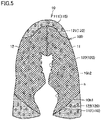
Fig. 5 is a developed view of an upper of the article of footwear shown inFig. 1 . -
Fig. 6 is a plan view showing a modification of the upper shown inFig. 5 . -
Fig. 7 is a plan view showing a modification of the upper shown inFig. 5 . -
Fig. 8 is a developed view of an upper of an article of footwear according to Embodiment 2 of the present disclosure. -
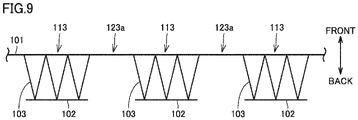
Fig. 9 is a cross-sectional view along a line IX-IX inFig. 8 . -
Fig. 10 is a plan view schematically showing an article of footwear according to Embodiment 3 of the present disclosure. -
Fig. 11 is a developed view of an upper of an article of footwear according to Embodiment 4 of the present disclosure. -
Fig. 12 is a developed view of an upper of an article of footwear according to Embodiment 5 of the present disclosure. -
Fig. 13 is a plan view showing a modification of the upper shown inFig. 12 . -
Fig. 14 is a developed view of an upper of an article of footwear according to Embodiment 6 of the present disclosure. -
Fig. 15 is a developed view of an upper of an article of footwear according to Embodiment 7 of the present disclosure. - Embodiments of the present disclosure are described with reference to the drawings. In the drawings referenced below, the same or corresponding parts are denoted by the same reference numerals. In the following description, terms such as longitudinal direction, width direction, frontward, and rearward are used. Each of these terms representing the direction refers to the direction as seen from a viewpoint of a wearer of an article of
footwear 1 placed on a flat plane such as ground. For example, frontward refers to toward the toe and rearward refers to toward the heel. Moreover, medial foot side refers to the inner side (first-toe side) of a foot in the width direction, and lateral foot side refers to the outer side of the foot in the width direction. -
Fig. 1 is a plan view schematically showing an article of footwear according to Embodiment 1 of the present disclosure.Fig. 2 is a left side view of the article of footwear shown inFig. 1 .Fig. 3 is a right side view of the article of footwear shown inFig. 1 . WhileFigs. 1 to 3 show the article offootwear 1 for the left foot, the article offootwear 1 is also applicable to the right foot and, in this case, symmetrical to the article offootwear 1 for the left foot. The article offootwear 1 according to the present embodiment is applicable for use as a sports shoe or walking shoe, for example, and the use of the article of footwear is not limited to a particular one. - As shown in
Figs. 1 to 3 , the article offootwear 1 includes a sole 5 and an upper 10. - The upper 10 is connected to the sole 5 and forms, together with the sole 5, a space for receiving a foot. The upper 10 includes a medial
foot covering portion 11, a lateralfoot covering portion 12, a topline 10h1, and a slit 10h2. - The medial
foot covering portion 11 is a portion that covers at least a part of the medial foot surface of a foot. The medialfoot covering portion 11 is formed by a portion of the upper 10 that extends inward (rightward inFig. 1 ) from a centerline A extending through the center in the width direction of the article offootwear 1. The centerline A may be a line in the article offootwear 1 located to correspond to a line connecting the center of the heel bone of a foot of a standard wearer of the article offootwear 1, and a point between the first toe and the second toe of the foot, rather than the centerline in the width direction of the article offootwear 1. While the inner side and the outer side are defined with respect to the centerline in the width direction of the article offootwear 1, this definition is not strict. - The lateral
foot covering portion 12 is a portion that covers at least a part of the lateral foot surface of a foot. The lateralfoot covering portion 12 is formed by a portion of the upper 10 that extends outward (leftward inFig. 1 ) from the centerline A. - The topline 10h1 is located between the medial
foot covering portion 11 and the lateralfoot covering portion 12 in the width direction of the article offootwear 1, for allowing a foot to be inserted and removed. - The slit 10h2 is an opening having a shape extending frontward from the topline 10h1 in the longitudinal direction of the article of
footwear 1. The slit 10h2 is located in an intermediate region R3. The intermediate region R3 is a region located between a toe region R1 located at the front end in the longitudinal direction of the article offootwear 1, and a heel region R2 located at the rear end in the longitudinal direction of the article offootwear 1. - The toe region R1 is a region located across a range of approximately 0% to 4% with respect to the total length of the article of
footwear 1 from the front end toward the rear end of the article offootwear 1. The intermediate region R3 is a region located across a range of approximately 4% to 80% with respect to the total length of the article offootwear 1 from the front end toward the rear end of the article offootwear 1. The heel region R2 is a region located across a range of 80% to 100% with respect to the total length of the article offootwear 1 from the front end toward the rear end of the article offootwear 1. - As shown in
Fig. 4 , the upper 10 has asingle fabric portion 100 including abase layer 101 having breathability. Thebase layer 101 has a shape extending from the toe region R1 to reach the heel region R2. Thebase layer 101 is made of a mesh fabric, for example. Thesingle fabric portion 100 is made of a knitted material. - The
single fabric portion 100 includes astrength portion 110 and abreathable portion 120. In each drawing, thestrength portion 110 is depicted in a dot pattern, and thebreathable portion 120 is depicted in a mesh pattern. - The
strength portion 110 includes thebase layer 101, abreathable layer 102, and astrength layer 103. - The
breathable layer 102 is a layer having breathability. Thebreathable layer 102 is made of a mesh fabric, for example. Thebreathable layer 102 may be made of the same fabric as thebase layer 101. - The
strength layer 103 is located between thebase layer 101 and thebreathable layer 102. Thestrength layer 103 is made of a single fiber or a plurality of fibers. In the present embodiment, thestrength layer 103 is made of a twisted yarn(s) (Z-twist yarn(s), for example). Thestrength layer 103 may alternatively be made of a zero-twist yarn(s). Thestrength layer 103 connects thebase layer 101 and thebreathable layer 102 to each other. Specifically, thestrength portion 110 is formed by sewing thebase layer 101 and thebreathable layer 102 with thestrength layer 103. - As shown in
Figs. 1 to 3 and5 , thestrength portion 110 includes atoe strength portion 111 and aheel strength portion 112. Thestrength portion 110 may be provided with a plurality of through holes h. - The
toe strength portion 111 is located in the toe region R1. The outer edge of thetoe strength portion 111 has a shape extending along the front end portion of the upper 10. Thetoe strength portion 111 has a shape curved to protrude toward the front end. - The
heel strength portion 112 is located in the heel region R2. A rear end portion of theheel strength portion 112 has a shape extending from the sole 5 to reach the topline 10h1. Theheel strength portion 112 has a shape extending gradually away from the topline 10h1 as it extends toward the toe region R1. - As shown in
Fig. 4 , thebreathable portion 120 includes asingle layer portion 120A and adouble layer portion 120B. - The
single layer portion 120A includes only thebase layer 101. - The
double layer portion 120B includes only thebase layer 101 and thebreathable layer 102. Thebreathable layer 102 of thedouble layer portion 120B is contiguous with thebreathable layer 102 of thestrength portion 110 adjacent to thisdouble layer portion 120B. - As shown in
Figs. 2 ,3 , and5 , thebreathable portion 120 includes a toebreathable portion 121, a heelbreathable portion 122, and an intermediatebreathable portion 123. Thebreathable portion 120 may be provided with a plurality of through holes h. - The toe
breathable portion 121 is located in the toe region R1. The heelbreathable portion 122 is located in the heel region R2. The intermediatebreathable portion 123 is located in the intermediate region R3. The toebreathable portion 121 and the heelbreathable portion 122 may not be provided. - In the present embodiment, the toe
breathable portion 121, the heelbreathable portion 122, and the intermediatebreathable portion 123 are formed of only thesingle layer portion 120A. At least one of the toebreathable portion 121, the heelbreathable portion 122, and the intermediatebreathable portion 123 may be formed of thedouble layer portion 120B. - The ratio of the area of the
breathable portion 120 to the area of thestrength portion 110 in the intermediate region R3 is higher than the ratio of the area of thebreathable portion 120 to the area of thestrength portion 110 in each of the toe region R1 and the heel region R2. - As set forth above, in the article of
footwear 1 according to the present embodiment, thebase layer 101 forming a part of thestrength portion 110 and thebreathable portion 120 has a shape extending from the toe region R1 to reach the heel region R2, and therefore, breathability of the intermediate region R3 given by the intermediatebreathable portion 123, rigidity of the toe region R1 given by thetoe strength portion 111, and rigidity of the heel region R2 given by theheel strength portion 112 can be ensured without performing bonding or sewing. - In the present embodiment, as shown in
Fig. 6 , the upper 10 may be provided with an opening h10 in a region located frontward of the slit 10h2. - Alternatively, as shown in
Fig. 7 , the medialfoot covering portion 11 and the lateralfoot covering portion 12 of the upper 10 may be provided, in their part around the slit 10h2, with insert holes h20 for inserting a shoelace therein. - Next, with reference to
Figs. 8 and9 , an upper 10 of an article offootwear 1 according to Embodiment 2 of the present disclosure is described. In connection with Embodiment 2, only those parts different fromEmbodiment 1 are described, and the description of the same structures, functions, and effects asEmbodiment 1 is not herein repeated. - In the present embodiment, a
strength portion 110 further includes a plurality ofintermediate strength portions 113 arranged in the intermediate region R3. Eachintermediate strength portion 113 has a shape extending in the direction from the heel region R2 to toward the toe region R1. The plurality ofintermediate strength portions 113 are arranged at intervals in the width direction of the article offootwear 1. - An intermediate
breathable portion 123 includes a plurality of longitudinalbreathable portions 123a. Each longitudinalbreathable portion 123a has a shape extending in the direction from the heel region R2 toward the toe region R1. Theintermediate strength portions 113 and the longitudinalbreathable portions 123a are arranged alternately in the width direction. The longitudinalbreathable portions 123a may extend to reach the toe region R1 and the heel region R2. - As shown in
Fig. 9 , abase layer 101 is disposed to form an outer surface of the upper 10. - In this way, a flow path having a shape extending in the direction from the heel region R2 toward the toe region R1 is formed between a foot in the article of
footwear 1 and thebase layer 101 of the upper 10 and between a pair ofintermediate strength portions 113 adjacent to each other in the width direction, and therefore, breathability of the intermediate region R3 is effectively ensured. - Next, with reference to
Fig. 10 , an upper 10 of an article offootwear 1 according to Embodiment 3 of the present disclosure is described. In connection with Embodiment 3, only those parts different fromEmbodiment 1 are described, and the description of the same structures, functions, and effects asEmbodiment 1 is not herein repeated. - In the present embodiment, a
strength portion 110 further includes a plurality ofinner strength portions 114 and a plurality ofouter strength portions 115. - A plurality of
inner strength portions 114 are arranged in the intermediate region R3 of a medialfoot covering portion 11. Eachinner strength portion 114 has a shape inclined gradually toward the toe region R1, as it extends in the direction from the sole 5 toward the slit 10h2. - A plurality of
outer strength portions 115 are arranged in the intermediate region R3 of a lateralfoot covering portion 12. Eachouter strength portion 115 has a shape inclined gradually toward the heel region R2, as it extends in the direction from the sole 5 toward the slit 10h2. - An intermediate
breathable portion 123 includes a plurality of inner inclinedbreathable portions 123b and a plurality of outer inclinedbreathable portions 123c. - Each inner inclined
breathable portion 123b is formed in a medialfoot covering portion 11. More preferably, each inner inclinedbreathable portion 123b in the medialfoot covering portion 11 is formed frontward of the topline 10h1. Each inner inclinedbreathable portion 123b has a shape inclined gradually toward the toe region R1 as it extends in the direction from the sole 5 toward the slit 10h2. Theinner strength portions 114 and the inner inclinedbreathable portions 123b are arranged alternately in the longitudinal direction. - Each outer inclined
breathable portion 123c is formed in a lateralfoot covering portion 12. Each outer inclinedbreathable portion 123c has a shape inclined gradually toward the heel region R2, as it extends in the direction from the sole 5 toward the slit 10h2. Theouter strength portions 115 and the outer inclinedbreathable portions 123c are arranged alternately in the longitudinal direction. - In this way, the inside of the article of
footwear 1 is ventilated effectively when the leg is swung. More specifically, when the article offootwear 1 is inclined at 45° with respect to the ground in a leg swing phase during running, each inner inclinedbreathable portion 123b extends in parallel with the air flow direction, and each outer inclinedbreathable portion 123c extends orthogonally to the air flow direction. The inside of the article offootwear 1 is thus ventilated effectively. Therefore, heat inside the article offootwear 1 is dissipated effectively. - Next, with reference to
Fig. 11 , an upper 10 of an article offootwear 1 according to Embodiment 4 of the present disclosure is described. In connection with Embodiment 4, only those parts different fromEmbodiment 1 are described, and the description of the same structures, functions, and effects asEmbodiment 1 is not herein repeated. - In the present embodiment, a
strength portion 110 further includes a plurality of strip-like strength portions 116 arranged at a side of a slit 10h2. A plurality of strip-like strength portions 116 are arranged in the intermediate region R3 of a medialfoot covering portion 11 and the intermediate region R3 of a lateralfoot covering portion 12. - Each strip-
like strength portion 116 has a shape extending from the slit 10h2 to reach a sole 5, in the height direction of the article offootwear 1. - An intermediate
breathable portion 123 includes a plurality of strip-likebreathable portions 123d arranged at a side of the slit 10h2. The plurality of strip-likebreathable portions 123d are arranged in the intermediate region R3 of the medialfoot covering portion 11 and the intermediate region R3 of the lateralfoot covering portion 12. Each strip-likebreathable portion 123d has a shape extending in the height direction from the slit 10h2 to reach the sole 5. - The strip-
like strength portions 116 and the strip-likebreathable portions 123d are arranged alternately in the longitudinal direction. The length of each of the strip-like strength portions 116 in the longitudinal direction is longer than the length of each of the strip-likebreathable portions 123d in the longitudinal direction. - In this way, shear deformation of the intermediate region R3 is allowed, because each strip-like
breathable portion 123d is deformed when shear stress, in the height direction of the article offootwear 1, occurs in the intermediate region R3 of the upper 10 in operation. Here, "height direction" includes not only the direction orthogonal to the longitudinal direction of the article offootwear 1 but also a direction inclined with respect to the orthogonal direction. - Next, with reference to
Fig. 12 , an upper 10 of an article offootwear 1 according toEmbodiment 5 of the present disclosure is described. In connection withEmbodiment 5, only those parts different fromEmbodiment 1 are described, and the description of the same structures, functions, and effects asEmbodiment 1 is not herein repeated. - In the present embodiment, an intermediate
breathable portion 123 includes an innerbreathable portion 123e and an outerbreathable portion 123f. The innerbreathable portion 123e and the outerbreathable portion 123f are formed by asingle layer portion 120A. In the present embodiment, abreathable portion 120 does not include the toebreathable portion 121 and the heelbreathable portion 122. - The inner
breathable portion 123e is disposed in a medialfoot covering portion 11. The innerbreathable portion 123e has a shape extending in the width direction from a rear portion of a slit 10h2 to reach a sole 5. The innerbreathable portion 123e has a shape gradually increasing in its length in the longitudinal direction, as it extends from the slit 10h2 toward the sole 5. Specifically, a rear-end-side edge of the innerbreathable portion 123e has a shape extending gradually toward the heel region R2, as it extends from the slit 10h2 toward the sole 5. - The outer
breathable portion 123f is disposed in a lateralfoot covering portion 12. The outerbreathable portion 123f has a shape extending in the width direction from a front portion of the slit 10h2 to reach the sole 5. The outerbreathable portion 123f has a shape increasing in its length in the longitudinal direction, as it extends from the slit 10h2 toward the sole 5. Specifically, a front-end-side edge of the outerbreathable portion 123f has a shape extending toward the toe region R1, as it extends from the slit 10h2 toward the sole 5. A rear-end-side edge of the outerbreathable portion 123f has a shape extending toward the heel region R2, as it extends from the slit 10h2 toward the sole 5. - A
strength portion 110 further includes aninner strength portion 114 and anouter strength portion 115. - The
inner strength portion 114 is disposed in the intermediate region R3 of the medialfoot covering portion 11. Specifically, theinner strength portion 114 is disposed frontward of the innerbreathable portion 123e. Theinner strength portion 114 is contiguous with atoe strength portion 111. - The
outer strength portion 115 is disposed in the intermediate region R3 of a lateralfoot covering portion 12. Specifically, theouter strength portion 115 is disposed rearward of the outerbreathable portion 123f. Theouter strength portion 115 is contiguous with aheel strength portion 112. - In this way, a part that is likely to be creased when the upper 10 is flexed is formed by the
breathable portion 120 with relatively high flexibility, and therefore, generation of creases in the above-referenced part when the upper 10 is flexed is suppressed. Accordingly, the fit to the foot in operation is enhanced. - In the present embodiment, as shown in
Fig. 13 , thebreathable portion 120 may further include a frontbreathable portion 123g disposed frontward of the slit 10h2. The frontbreathable portion 123g is formed by adouble layer portion 120B. - Next, with reference to
Fig. 14 , an upper 10 of an article offootwear 1 according to Embodiment 6 of the present disclosure is described. In connection with Embodiment 6, only those parts different fromEmbodiment 1 are described, and the description of the same structures, functions, and effects asEmbodiment 1 is not herein repeated. - In the present embodiment, a
strength portion 110 further includes a plurality offront strength portions 117 disposed frontward of a slit 10h2. Eachfront strength portion 117 has a shape extending in the width direction. The plurality offront strength portions 117 are arranged at intervals in the longitudinal direction. - A
breathable portion 120 includes a plurality of frontbreathable portions 123g disposed frontward of the slit 10h2. Each frontbreathable portion 123g has a shape extending in the width direction. Thefront strength portions 117 and the frontbreathable portions 123g are arranged alternately in the longitudinal direction. The length of the frontbreathable portion 123g in the longitudinal direction is shorter than the length of thefront strength portion 117 in the longitudinal direction. - The front
breathable portions 123g may be disposed in the toe region R1. In the present embodiment, thebreathable portion 120 does not include the heelbreathable portion 122. - In this way, a part of the upper 10 that is located frontward of the slit 10h2 is easily flexed.
- Next, with reference to
Fig. 15 , an upper 10 of an article offootwear 1 according to Embodiment 7 of the present disclosure is described. In connection with Embodiment 7, only those parts different fromEmbodiment 1 are described, and the description of the same structures, functions, and effects asEmbodiment 1 is not herein repeated. - In the present embodiment, a
strength portion 110 further includes afront strength portion 117, and abreathable portion 120 includes a plurality of frontbreathable portions 123g. - The plurality of front
breathable portions 123g are disposed frontward of a slit 10h2. The plurality of frontbreathable portions 123g include a plurality of first inclined breathable portions 123g1 and a plurality of second inclined breathable portions 123g2. - Each of the first inclined breathable portions 123g1 has a shape inclined inward in the width direction, as it extends frontward in the longitudinal direction.
- Each of the second inclined breathable portions 123g2 has a shape inclined outward in the width direction, as it extends frontward in the longitudinal direction.
- Each
front strength portion 117 is formed by a part enclosed by a plurality of first inclined breathable portions 123g1 and a plurality of second inclined breathable portions 123g2. Specifically, eachfront strength portion 117 is tetragonal. - As shown in
Fig. 15 , the frontbreathable portion 123g and thefront strength portion 117 may be disposed at a side of a front part of the slit 10h2. - In this way, each
front strength portion 117 is deformed when a front part of the upper 10 that is located frontward of the slit 10h2 is flexed, and therefore, generation of creases in the above-identified front part is suppressed. - It should be construed that the embodiments disclosed herein are given by way of illustration in all respects, not by way of limitation. It is intended that the scope of the present invention is defined by claims, not by the above description of the embodiments, and encompasses all modifications and variations equivalent in meaning and scope to the claims.
- For example, in each of the embodiments described above, the slit 10h2 may not be provided and the upper 10 may be formed to have the so-called mono-sock structure. In this case, respective positions of the portions (opening h10, intermediate
breathable portion 123, frontbreathable portion 123g,inner strength portion 114, andfront strength portion 117, for example) located around the slit 10h2 may be identical to those when the slit 10h2 is provided. - It is appreciated by those skilled in the art that a plurality of illustrative embodiments described above are specific examples of the following aspects.
- An article of
footwear 1 according to an aspect of the present disclosure is an article offootwear 1 including a sole 5 and an upper 10. The upper 10 includes asingle fabric portion 100 including abase layer 101 having breathability. Thesingle fabric portion 100 includes: astrength portion 110 including thebase layer 101, abreathable layer 102 having breathability, and astrength layer 103 made of a single yarn or a plurality of yarns and connecting the base layer and the breathable layer to each other; and abreathable portion 120 including only thebase layer 101 or only thebase layer 101 and thebreathable layer 102. Thebase layer 101 has a shape extending from a toe region R1 located at a front end in a longitudinal direction of the article of footwear to reach a heel region R2 located at a rear end in the longitudinal direction of the article of footwear. Thestrength portion 110 includes: atoe strength portion 111 disposed in the toe region; and aheel strength portion 112 disposed in the heel region. Thebreathable portion 120 includes an intermediatebreathable portion 123 disposed in an intermediate region R3 located between the toe region and the heel region. - In this article of footwear, the base layer forming a part of the strength portion and the breathable portion has a shape extending from the toe region to reach the heel region, and therefore, breathability of the intermediate region given by the intermediate breathable portion, rigidity of the toe region given by the toe strength portion, and rigidity of the heel region given by the heel strength portion can be ensured without performing adhesive bonding or sewing.
- Moreover, a ratio of an area of the
breathable portion 120 to an area of thestrength portion 110 in the intermediate region R3 is preferably higher than a ratio of an area of thebreathable portion 120 to an area of thestrength portion 110 in each of the toe region R1 and the heel region R2. - In this way, the above-described advantageous effects are obtained effectively. Specifically, in the intermediate region that is to be in contact with the instep of a foot with a relatively large amount of sweat, the area of the breathable portion is relatively larger to ensure the breathability and, in the toe region and the heel region required to have strength, the area of the strength portion is relatively larger to ensure the rigidity.
- Moreover, the upper 10 may include: a medial
foot covering portion 11 covering at least a part of a medial foot surface of a foot; a lateralfoot covering portion 12 covering at least a part of a lateral foot surface of the foot; a topline 10h1 that is located between the medial foot covering portion and the lateral foot covering portion in a width direction of the article of footwear, and allows a foot to be inserted and removed; and a slit 10h2 located in the intermediate region and extending frontward from the topline in the longitudinal direction. - Moreover, the
strength portion 110 may further include a plurality of strip-like strength portions 116 arranged at a side of the slit, each of the plurality of strip-like strength portions 116 may have a shape extending, in a height direction of the article of footwear, from the slit to reach the sole, the intermediatebreathable portion 123 may include a plurality of strip-likebreathable portions 123d arranged at a side of the slit, each of the plurality of strip-likebreathable portions 123d may have a shape extending, in the height direction, from the slit to reach the sole, and the strip-like strength portions and the strip-like breathable portions may be arranged alternately in the longitudinal direction. - In this way, each strip-like breathable portion is configured to deform when shear stress occurs in the intermediate region of the upper in motion, in the height direction of the article of footwear, which thereby allows shear deformation of the intermediate region. The "height direction" herein includes not only the direction orthogonal to the longitudinal direction of the article of footwear but also a direction inclines with respect to the orthogonal direction.
- In this case, preferably a length, in the longitudinal direction, of each of the strip-like strength portions is greater than a length, in the longitudinal direction, of each of the strip-like breathable portions.
- In this way, the above-described advantageous effects are obtained more effectively.
- Moreover, the intermediate
breathable portion 123 may include: an innerbreathable portion 123e disposed in the medial foot covering portion; and an outerbreathable portion 123f disposed in the lateral foot covering portion, the innerbreathable portion 123e may have a shape extending, in the width direction, from a rear end portion of the slit to reach the sole, and the outerbreathable portion 123f may have a shape extending, in the width direction, from a front end portion of the slit to reach the sole. - In this way, a part that is likely to be creased when the upper is flexed is formed of the breathable portion with relatively high flexibility, and therefore, generation of creases in the above-referenced part when the upper is flexed is suppressed. Accordingly, the fit to the foot in motion is enhanced.
- Moreover, the
strength portion 110 may include a plurality offront strength portions 117 disposed frontward of the slit, each of the plurality offront strength portions 117 may have a shape extending in the width direction, thebreathable portion 120 may include a plurality of frontbreathable portions 123g disposed frontward of the slit, each of the plurality of frontbreathable portions 123g may have a shape extending in the width direction, and the front strength portions and the front breathable portions may be arranged alternately in the longitudinal direction. - In this way, a part of the upper that is located frontward of the slit is easily flexed.
- Moreover, the
strength portion 110 may include a plurality offront strength portions 117 disposed frontward of the slit, thebreathable portion 120 may include a plurality of frontbreathable portions 123g disposed frontward of the slit, the plurality of frontbreathable portions 123g may include: a plurality of first inclined breathable portions 123g1 inclined inward in the width direction as the plurality of first inclined breathable portions extend frontward in the longitudinal direction; and a plurality of second inclined breathable portions 123g2 inclined outward in the width direction as the plurality of second inclined breathable portions extend frontward in the longitudinal direction, and each of the plurality offront strength portions 117 may be formed by a part enclosed by the plurality of first inclined breathable portions and the plurality of second inclined breathable portions. - In this way, each front strength portion is deformed when a front part of the upper that is located frontward of the slit is flexed, and therefore, generation of creases in the above-identified front part is suppressed.
- Moreover, the
strength portion 110 may further include a plurality ofinner strength portions 114 disposed in the intermediate region of the medial foot covering portion, each of the plurality ofinner strength portions 114 may have a shape that is inclined gradually toward the toe region as the inner strength portion extends in a direction from the sole toward the slit, the intermediatebreathable portion 123 may include a plurality of inner inclinedbreathable portions 123b each formed in the medial foot covering portion and having a shape inclined gradually toward the toe region as the inner inclined breathable portion extends in the direction from the sole toward the slit, and the inner strength portions and the inner inclined breathable portions may be arranged alternately in the longitudinal direction. - In this way, the inside of the article of footwear is ventilated effectively when the leg is swung.
- Moreover, the
strength portion 110 may further include a plurality ofintermediate strength portions 113 disposed in the intermediate region, each of the plurality ofintermediate strength portions 113 may have a shape extending in a direction from the heel region toward the toe region, the intermediatebreathable portion 123 may include a plurality of longitudinalbreathable portions 123a each having a shape extending in the direction from the heel region toward the toe region, the intermediate strength portions and the longitudinal breathable portions may be arranged alternately in the width direction, and thebase layer 101 may be disposed to form an outer surface of the upper 10. - In this way, a flow path extending in the direction from the heel region toward the toe region is formed between a foot in the article of footwear and the base layer and between the intermediate strength portions adjacent to each other in the width direction, and therefore, breathability of the intermediate region is effectively ensured.
- Moreover, the
breathable portion 120 may include: asingle layer portion 120A including only thebase layer 101; and adouble layer portion 120B including only thebase layer 101 and thebreathable layer 102, and the double layer portion may be disposed frontward of the slit. - 1 article of footwear; 5 sole; 10 upper; 10h1 topline; 10h2 slit; 11 medial foot covering portion; 12 lateral foot covering portion; 100 single fabric portion ; 101 base layer; 102 breathable layer; 103 intermediate layer; 110 strength portion; 111 toe strength portion; 112 heel strength portion; 113 intermediate strength portion; 114 inner strength portion; 115 outer strength portion; 116 strip-like strength portion; 117 front strength portion; 120 breathable portion; 120A single layer portion; 120B double layer portion; 121 toe breathable portion; 122 heel breathable portion; 123 intermediate breathable portion; 123a longitudinal breathable portion; 123b inner inclined breathable portion; 123c outer inclined breathable portion; 123d strip-like breathable portion; 123e inner breathable portion; 123f outer breathable portion; 123g front breathable portion; 123g1 first inclined breathable portion; 123g2 second inclined breathable portion; h10 opening; h20 insert hole; R1 toe region; R2 heel region; R3 intermediate region
Claims (11)
- An article of footwear comprising a sole and an upper, whereinthe upper comprises a single fabric portion including a base layer having breathability,the single fabric portion comprises:a strength portion including the base layer, a breathable layer having breathability, and a strength layer made of a single yarn or a plurality of yarns and connecting the base layer and the breathable layer to each other; anda breathable portion including only the base layer or only the base layer and the breathable layer,the base layer has a shape extending from a toe region located at a front end in a longitudinal direction of the article of footwear to reach a heel region located at a rear end in the longitudinal direction of the article of footwear,the strength portion comprises:a toe strength portion disposed in the toe region; anda heel strength portion disposed in the heel region, andthe breathable portion comprises an intermediate breathable portion disposed in an intermediate region located between the toe region and the heel region.
- The article of footwear according to claim 1, wherein a ratio of an area of the breathable portion to an area of the strength portion in the intermediate region is higher than a ratio of an area of the breathable portion to an area of the strength portion in each of the toe region and the heel region.
- The article of footwear according to claim 1 or 2, wherein
the upper includes:a medial foot covering portion covering at least a part of a medial foot surface of a foot;a lateral foot covering portion covering at least a part of a lateral foot surface of the foot;a topline that is located between the medial foot covering portion and the lateral foot covering portion in a width direction of the article of footwear, and allows a foot to be inserted and removed; anda slit located in the intermediate region and extending frontward from the topline in the longitudinal direction. - The article of footwear according to claim 3, whereinthe strength portion further comprises a plurality of strip-like strength portions arranged at a side of the slit,each of the plurality of strip-like strength portions has a shape extending, in a height direction of the article of footwear, from the slit to reach the sole,the intermediate breathable portion comprises a plurality of strip-like breathable portions arranged at a side of the slit,each of the plurality of strip-like breathable portions has a shape extending, in the height direction, from the slit to reach the sole, andthe strip-like strength portions and the strip-like breathable portions are arranged alternately in the longitudinal direction.
- The article of footwear according to claim 4, wherein a length, in the longitudinal direction, of each of the strip-like strength portions is greater than a length, in the longitudinal direction, of each of the strip-like breathable portions.
- The article of footwear according to claim 3, wherein
the intermediate breathable portion comprises:an inner breathable portion disposed in the medial foot covering portion; andan outer breathable portion disposed in the lateral foot covering portion, the inner breathable portion has a shape extending, in the width direction, from a rear end portion of the slit to reach the sole, andthe outer breathable portion has a shape extending, in the width direction, from a front end portion of the slit to reach the sole. - The article of footwear according to claim 3, whereinthe strength portion comprises a plurality of front strength portions disposed frontward of the slit,each of the plurality of front strength portions has a shape extending in the width direction,the breathable portion comprises a plurality of front breathable portions disposed frontward of the slit,each of the plurality of front breathable portions has a shape extending in the width direction, andthe front strength portions and the front breathable portions are arranged alternately in the longitudinal direction.
- The article of footwear according to claim 3, whereinthe strength portion comprises a plurality of front strength portions disposed frontward of the slit,the breathable portion comprises a plurality of front breathable portions disposed frontward of the slit,the plurality of front breathable portions comprise:a plurality of first inclined breathable portions inclined inward in the width direction as the plurality of first inclined breathable portions extend frontward in the longitudinal direction; anda plurality of second inclined breathable portions inclined outward in the width direction as the plurality of second inclined breathable portions extend frontward in the longitudinal direction, andeach of the plurality of front strength portions is formed by a part enclosed by the plurality of first inclined breathable portions and the plurality of second inclined breathable portions.
- The article of footwear according to claim 3, whereinthe strength portion further comprises a plurality of inner strength portions disposed in the intermediate region of the medial foot covering portion,each of the plurality of inner strength portions has a shape that is inclined gradually toward the toe region as the inner strength portion extends in a direction from the sole toward the slit,the intermediate breathable portion comprises a plurality of inner inclined breathable portions each formed in the medial foot covering portion and having a shape inclined gradually toward the toe region as the inner inclined breathable portion extends in the direction from the sole toward the slit, andthe inner strength portions and the inner inclined breathable portions are arranged alternately in the longitudinal direction.
- The article of footwear according to claim 3, whereinthe strength portion further comprises a plurality of intermediate strength portions disposed in the intermediate region,each of the plurality of intermediate strength portions has a shape extending in a direction from the heel region toward the toe region,the intermediate breathable portion comprises a plurality of longitudinal breathable portions each having a shape extending in the direction from the heel region toward the toe region,the intermediate strength portions and the longitudinal breathable portions are arranged alternately in the width direction, andthe base layer is disposed to form an outer surface of the upper.
- The article of footwear according to claim 3, wherein the breathable portion comprises:a single layer portion including only the base layer; anda double layer portion including only the base layer and the breathable layer, andthe double layer portion is disposed frontward of the slit.
Applications Claiming Priority (1)
| Application Number | Priority Date | Filing Date | Title |
|---|---|---|---|
| PCT/JP2020/017470 WO2021214938A1 (en) | 2020-04-23 | 2020-04-23 | Shoe |
Publications (3)
| Publication Number | Publication Date |
|---|---|
| EP4118994A1 true EP4118994A1 (en) | 2023-01-18 |
| EP4118994A4 EP4118994A4 (en) | 2023-04-19 |
| EP4118994B1 EP4118994B1 (en) | 2024-06-26 |
Family
ID=78270673
Family Applications (1)
| Application Number | Title | Priority Date | Filing Date |
|---|---|---|---|
| EP20932159.5A Active EP4118994B1 (en) | 2020-04-23 | 2020-04-23 | Shoe comprising a multilayer upper |
Country Status (5)
| Country | Link |
|---|---|
| US (1) | US20230200481A1 (en) |
| EP (1) | EP4118994B1 (en) |
| JP (1) | JP7357775B2 (en) |
| CN (1) | CN115484847B (en) |
| WO (1) | WO2021214938A1 (en) |
Cited By (2)
| Publication number | Priority date | Publication date | Assignee | Title |
|---|---|---|---|---|
| WO2024232983A1 (en) * | 2023-05-07 | 2024-11-14 | Nike Innovate C.V. | Footwear upper having a unitary knit structure and method of manufacturing |
| CN121152911A (en) * | 2023-05-07 | 2025-12-16 | 耐克创新有限合伙公司 | Footwear uppers with an integral knitted structure and manufacturing method |
Families Citing this family (4)
| Publication number | Priority date | Publication date | Assignee | Title |
|---|---|---|---|---|
| EP4520215A4 (en) * | 2022-06-10 | 2025-07-02 | Asics Corp | SHOE |
| US12677903B2 (en) * | 2023-05-25 | 2026-07-14 | Nike, Inc. | Knitted component with cushioning structure |
| US20250344806A1 (en) * | 2024-05-13 | 2025-11-13 | Caleb Arch Bowden | Stealth footwear |
| US20260026575A1 (en) * | 2024-07-24 | 2026-01-29 | Under Armour, Inc. | Article of footwear with improved performance characteristics |
Family Cites Families (29)
| Publication number | Priority date | Publication date | Assignee | Title |
|---|---|---|---|---|
| US6401364B1 (en) * | 2000-06-15 | 2002-06-11 | Salomon S.A. | Ventilated shoe |
| US6990755B2 (en) * | 2003-10-09 | 2006-01-31 | Nike, Inc. | Article of footwear with a stretchable upper and an articulated sole structure |
| US8418380B2 (en) * | 2006-05-25 | 2013-04-16 | Nike, Inc. | Article of footwear having an upper incorporating a tensile strand with a cover layer |
| CN103596459A (en) * | 2011-04-08 | 2014-02-19 | 黛沙美瑞卡D/B/A珀尔伊祖米美国股份有限公司 | Seamless upper for footwear and method for making the same |
| DE102011086742B4 (en) * | 2011-11-21 | 2019-12-19 | Adidas Ag | Shoe and method for producing at least a portion of a shaft of a shoe |
| US9635905B2 (en) * | 2012-12-10 | 2017-05-02 | Nike, Inc. | Upper having bonded differentially-oriented inner and outer reinforcing strips |
| DE102013207155B4 (en) * | 2013-04-19 | 2020-04-23 | Adidas Ag | Shoe upper |
| US10863794B2 (en) * | 2013-06-25 | 2020-12-15 | Nike, Inc. | Article of footwear having multiple braided structures |
| WO2014209596A1 (en) * | 2013-06-25 | 2014-12-31 | Nike Innovate C.V. | Article of footwear with braided upper |
| TWI633851B (en) * | 2013-09-13 | 2018-09-01 | 島精機製作所股份有限公司 | Method for weaving foot cover and foot cover |
| US20170143075A1 (en) * | 2014-03-31 | 2017-05-25 | Asics Corporation | Upper of Shoe |
| JP6068775B2 (en) | 2014-04-11 | 2017-01-25 | 株式会社アシックス | Shoe upper |
| WO2015181928A1 (en) * | 2014-05-29 | 2015-12-03 | 株式会社アシックス | Shoe upper |
| ES2745104T3 (en) * | 2014-12-18 | 2020-02-27 | Puma SE | Shoe, in particular sports shoe |
| US11470918B2 (en) * | 2015-02-05 | 2022-10-18 | Nike, Inc. | Article of footwear with multiple layers |
| US9756901B2 (en) * | 2015-07-07 | 2017-09-12 | Adidas Ag | Articles of footwear comprising a leno woven upper and methods of making the same |
| US10624418B2 (en) * | 2016-01-25 | 2020-04-21 | Cole Haan Llc | Shoe having features for increased flexibility |
| DE102016102792A1 (en) * | 2016-02-17 | 2017-08-17 | Visiotex GmbH | Shoe made of a two-ply textile material |
| JP6581941B2 (en) * | 2016-04-26 | 2019-09-25 | 美津濃株式会社 | Shoe upper and shoes using the same |
| US11324282B2 (en) * | 2016-05-16 | 2022-05-10 | Adidas Ag | Three-dimensionally thermo-molded footwear |
| CN106723611A (en) * | 2017-01-20 | 2017-05-31 | 信泰(福建)科技有限公司 | A kind of seamless three-dimensional flies to knit vamp and preparation method thereof |
| WO2018173094A1 (en) * | 2017-03-20 | 2018-09-27 | 株式会社アシックス | Shoe upper |
| DE102017223746B4 (en) * | 2017-12-22 | 2024-03-14 | Adidas Ag | Circular knit shoe upper |
| CN108851348A (en) * | 2018-06-27 | 2018-11-23 | 安踏(中国)有限公司 | A kind of vamp product, preparation method and its application |
| US10786043B2 (en) * | 2018-07-03 | 2020-09-29 | Under Armour, Inc. | Article with thermally bonded ribbon structure and method of making |
| WO2020018323A1 (en) * | 2018-07-20 | 2020-01-23 | Nike Innovate C.V. | Article of footwear incorporating knitted components and a receiving strap component |
| DE102018212632B4 (en) * | 2018-07-27 | 2024-03-14 | Adidas Ag | Knitted or knitted upper for a shoe and process for making the same |
| JP6582109B2 (en) * | 2018-10-26 | 2019-09-25 | 美津濃株式会社 | Shoe upper and shoes using the same |
| CN209449782U (en) * | 2018-12-18 | 2019-10-01 | 泉州华光职业学院 | A kind of Skidproof ventilated children's footwear of plate armour vehicle |
-
2020
- 2020-04-23 US US17/996,580 patent/US20230200481A1/en active Pending
- 2020-04-23 WO PCT/JP2020/017470 patent/WO2021214938A1/en not_active Ceased
- 2020-04-23 EP EP20932159.5A patent/EP4118994B1/en active Active
- 2020-04-23 JP JP2022516576A patent/JP7357775B2/en active Active
- 2020-04-23 CN CN202080100054.9A patent/CN115484847B/en active Active
Cited By (2)
| Publication number | Priority date | Publication date | Assignee | Title |
|---|---|---|---|---|
| WO2024232983A1 (en) * | 2023-05-07 | 2024-11-14 | Nike Innovate C.V. | Footwear upper having a unitary knit structure and method of manufacturing |
| CN121152911A (en) * | 2023-05-07 | 2025-12-16 | 耐克创新有限合伙公司 | Footwear uppers with an integral knitted structure and manufacturing method |
Also Published As
| Publication number | Publication date |
|---|---|
| CN115484847A (en) | 2022-12-16 |
| EP4118994B1 (en) | 2024-06-26 |
| WO2021214938A1 (en) | 2021-10-28 |
| JP7357775B2 (en) | 2023-10-06 |
| JPWO2021214938A1 (en) | 2021-10-28 |
| EP4118994A4 (en) | 2023-04-19 |
| US20230200481A1 (en) | 2023-06-29 |
| CN115484847B (en) | 2026-07-28 |
Similar Documents
| Publication | Publication Date | Title |
|---|---|---|
| EP4118994B1 (en) | Shoe comprising a multilayer upper | |
| US11844400B2 (en) | Article of apparel with dynamic and lock-out regions | |
| EP3488724B1 (en) | Footwear | |
| CN208573113U (en) | Shoes | |
| US12369682B2 (en) | Shoe sole and shoe | |
| US20150289592A1 (en) | Non-sewing material for a footwear upper, footwear upper and footwear using the same | |
| US20220095742A1 (en) | Shoe Upper With Floating Layer | |
| CN103167812B (en) | Footwear | |
| CN115886401B (en) | Shoe component and shoe | |
| US12440000B2 (en) | Upper and shoe including the same | |
| KR20170096128A (en) | Shoe, in particular a sports shoe | |
| JP7187519B2 (en) | shoes | |
| JP7688117B2 (en) | shoes | |
| US12376649B2 (en) | Article of footwear | |
| EP4159073A1 (en) | Upper and shoe | |
| JP2024148754A (en) | Shoes | |
| CN115769931B (en) | Vamp and shoes | |
| US2724195A (en) | Foot protector and blank therefor | |
| CN116867396A (en) | Uppers and shoes with such uppers | |
| KR200498446Y1 (en) | Fake Sachs fastener | |
| JP3228531U (en) | shoes | |
| CN119866188B (en) | Shoe upper with forefoot airflow characteristics for an article of footwear | |
| JP2023013847A (en) | Shoe | |
| CN110215007A (en) | A kind of shoes |
Legal Events
| Date | Code | Title | Description |
|---|---|---|---|
| STAA | Information on the status of an ep patent application or granted ep patent |
Free format text: STATUS: THE INTERNATIONAL PUBLICATION HAS BEEN MADE |
|
| PUAI | Public reference made under article 153(3) epc to a published international application that has entered the european phase |
Free format text: ORIGINAL CODE: 0009012 |
|
| STAA | Information on the status of an ep patent application or granted ep patent |
Free format text: STATUS: REQUEST FOR EXAMINATION WAS MADE |
|
| 17P | Request for examination filed |
Effective date: 20221013 |
|
| AK | Designated contracting states |
Kind code of ref document: A1 Designated state(s): AL AT BE BG CH CY CZ DE DK EE ES FI FR GB GR HR HU IE IS IT LI LT LU LV MC MK MT NL NO PL PT RO RS SE SI SK SM TR |
|
| A4 | Supplementary search report drawn up and despatched |
Effective date: 20230320 |
|
| RIC1 | Information provided on ipc code assigned before grant |
Ipc: A43B 1/04 20220101ALI20230314BHEP Ipc: A43B 23/04 20060101ALI20230314BHEP Ipc: A43B 23/02 20060101AFI20230314BHEP |
|
| DAV | Request for validation of the european patent (deleted) | ||
| DAX | Request for extension of the european patent (deleted) | ||
| GRAP | Despatch of communication of intention to grant a patent |
Free format text: ORIGINAL CODE: EPIDOSNIGR1 |
|
| STAA | Information on the status of an ep patent application or granted ep patent |
Free format text: STATUS: GRANT OF PATENT IS INTENDED |
|
| RIC1 | Information provided on ipc code assigned before grant |
Ipc: A43B 1/04 20220101ALI20231222BHEP Ipc: A43B 23/04 20060101ALI20231222BHEP Ipc: A43B 23/02 20060101AFI20231222BHEP |
|
| INTG | Intention to grant announced |
Effective date: 20240122 |
|
| GRAS | Grant fee paid |
Free format text: ORIGINAL CODE: EPIDOSNIGR3 |
|
| GRAA | (expected) grant |
Free format text: ORIGINAL CODE: 0009210 |
|
| STAA | Information on the status of an ep patent application or granted ep patent |
Free format text: STATUS: THE PATENT HAS BEEN GRANTED |
|
| AK | Designated contracting states |
Kind code of ref document: B1 Designated state(s): AL AT BE BG CH CY CZ DE DK EE ES FI FR GB GR HR HU IE IS IT LI LT LU LV MC MK MT NL NO PL PT RO RS SE SI SK SM TR |
|
| REG | Reference to a national code |
Ref country code: GB Ref legal event code: FG4D |
|
| REG | Reference to a national code |
Ref country code: CH Ref legal event code: EP |
|
| REG | Reference to a national code |
Ref country code: DE Ref legal event code: R096 Ref document number: 602020033149 Country of ref document: DE |
|
| PG25 | Lapsed in a contracting state [announced via postgrant information from national office to epo] |
Ref country code: BG Free format text: LAPSE BECAUSE OF FAILURE TO SUBMIT A TRANSLATION OF THE DESCRIPTION OR TO PAY THE FEE WITHIN THE PRESCRIBED TIME-LIMIT Effective date: 20240626 |
|
| PG25 | Lapsed in a contracting state [announced via postgrant information from national office to epo] |
Ref country code: HR Free format text: LAPSE BECAUSE OF FAILURE TO SUBMIT A TRANSLATION OF THE DESCRIPTION OR TO PAY THE FEE WITHIN THE PRESCRIBED TIME-LIMIT Effective date: 20240626 Ref country code: FI Free format text: LAPSE BECAUSE OF FAILURE TO SUBMIT A TRANSLATION OF THE DESCRIPTION OR TO PAY THE FEE WITHIN THE PRESCRIBED TIME-LIMIT Effective date: 20240626 |
|
| REG | Reference to a national code |
Ref country code: LT Ref legal event code: MG9D |
|
| PG25 | Lapsed in a contracting state [announced via postgrant information from national office to epo] |
Ref country code: GR Free format text: LAPSE BECAUSE OF FAILURE TO SUBMIT A TRANSLATION OF THE DESCRIPTION OR TO PAY THE FEE WITHIN THE PRESCRIBED TIME-LIMIT Effective date: 20240927 |
|
| PG25 | Lapsed in a contracting state [announced via postgrant information from national office to epo] |
Ref country code: LV Free format text: LAPSE BECAUSE OF FAILURE TO SUBMIT A TRANSLATION OF THE DESCRIPTION OR TO PAY THE FEE WITHIN THE PRESCRIBED TIME-LIMIT Effective date: 20240626 |
|
| REG | Reference to a national code |
Ref country code: NL Ref legal event code: MP Effective date: 20240626 |
|
| PG25 | Lapsed in a contracting state [announced via postgrant information from national office to epo] |
Ref country code: NO Free format text: LAPSE BECAUSE OF FAILURE TO SUBMIT A TRANSLATION OF THE DESCRIPTION OR TO PAY THE FEE WITHIN THE PRESCRIBED TIME-LIMIT Effective date: 20240926 Ref country code: LV Free format text: LAPSE BECAUSE OF FAILURE TO SUBMIT A TRANSLATION OF THE DESCRIPTION OR TO PAY THE FEE WITHIN THE PRESCRIBED TIME-LIMIT Effective date: 20240626 Ref country code: HR Free format text: LAPSE BECAUSE OF FAILURE TO SUBMIT A TRANSLATION OF THE DESCRIPTION OR TO PAY THE FEE WITHIN THE PRESCRIBED TIME-LIMIT Effective date: 20240626 Ref country code: GR Free format text: LAPSE BECAUSE OF FAILURE TO SUBMIT A TRANSLATION OF THE DESCRIPTION OR TO PAY THE FEE WITHIN THE PRESCRIBED TIME-LIMIT Effective date: 20240927 Ref country code: FI Free format text: LAPSE BECAUSE OF FAILURE TO SUBMIT A TRANSLATION OF THE DESCRIPTION OR TO PAY THE FEE WITHIN THE PRESCRIBED TIME-LIMIT Effective date: 20240626 Ref country code: BG Free format text: LAPSE BECAUSE OF FAILURE TO SUBMIT A TRANSLATION OF THE DESCRIPTION OR TO PAY THE FEE WITHIN THE PRESCRIBED TIME-LIMIT Effective date: 20240626 Ref country code: RS Free format text: LAPSE BECAUSE OF FAILURE TO SUBMIT A TRANSLATION OF THE DESCRIPTION OR TO PAY THE FEE WITHIN THE PRESCRIBED TIME-LIMIT Effective date: 20240926 |
|
| PG25 | Lapsed in a contracting state [announced via postgrant information from national office to epo] |
Ref country code: NL Free format text: LAPSE BECAUSE OF FAILURE TO SUBMIT A TRANSLATION OF THE DESCRIPTION OR TO PAY THE FEE WITHIN THE PRESCRIBED TIME-LIMIT Effective date: 20240626 |
|
| REG | Reference to a national code |
Ref country code: AT Ref legal event code: MK05 Ref document number: 1696916 Country of ref document: AT Kind code of ref document: T Effective date: 20240626 |
|
| PG25 | Lapsed in a contracting state [announced via postgrant information from national office to epo] |
Ref country code: NL Free format text: LAPSE BECAUSE OF FAILURE TO SUBMIT A TRANSLATION OF THE DESCRIPTION OR TO PAY THE FEE WITHIN THE PRESCRIBED TIME-LIMIT Effective date: 20240626 |
|
| PG25 | Lapsed in a contracting state [announced via postgrant information from national office to epo] |
Ref country code: PT Free format text: LAPSE BECAUSE OF FAILURE TO SUBMIT A TRANSLATION OF THE DESCRIPTION OR TO PAY THE FEE WITHIN THE PRESCRIBED TIME-LIMIT Effective date: 20241028 |
|
| PG25 | Lapsed in a contracting state [announced via postgrant information from national office to epo] |
Ref country code: PT Free format text: LAPSE BECAUSE OF FAILURE TO SUBMIT A TRANSLATION OF THE DESCRIPTION OR TO PAY THE FEE WITHIN THE PRESCRIBED TIME-LIMIT Effective date: 20241028 |
|
| PG25 | Lapsed in a contracting state [announced via postgrant information from national office to epo] |
Ref country code: PL Free format text: LAPSE BECAUSE OF FAILURE TO SUBMIT A TRANSLATION OF THE DESCRIPTION OR TO PAY THE FEE WITHIN THE PRESCRIBED TIME-LIMIT Effective date: 20240626 |
|
| PG25 | Lapsed in a contracting state [announced via postgrant information from national office to epo] |
Ref country code: EE Free format text: LAPSE BECAUSE OF FAILURE TO SUBMIT A TRANSLATION OF THE DESCRIPTION OR TO PAY THE FEE WITHIN THE PRESCRIBED TIME-LIMIT Effective date: 20240626 |
|
| PG25 | Lapsed in a contracting state [announced via postgrant information from national office to epo] |
Ref country code: IS Free format text: LAPSE BECAUSE OF FAILURE TO SUBMIT A TRANSLATION OF THE DESCRIPTION OR TO PAY THE FEE WITHIN THE PRESCRIBED TIME-LIMIT Effective date: 20241026 Ref country code: AT Free format text: LAPSE BECAUSE OF FAILURE TO SUBMIT A TRANSLATION OF THE DESCRIPTION OR TO PAY THE FEE WITHIN THE PRESCRIBED TIME-LIMIT Effective date: 20240626 |
|
| PG25 | Lapsed in a contracting state [announced via postgrant information from national office to epo] |
Ref country code: CZ Free format text: LAPSE BECAUSE OF FAILURE TO SUBMIT A TRANSLATION OF THE DESCRIPTION OR TO PAY THE FEE WITHIN THE PRESCRIBED TIME-LIMIT Effective date: 20240626 |
|
| PG25 | Lapsed in a contracting state [announced via postgrant information from national office to epo] |
Ref country code: RO Free format text: LAPSE BECAUSE OF FAILURE TO SUBMIT A TRANSLATION OF THE DESCRIPTION OR TO PAY THE FEE WITHIN THE PRESCRIBED TIME-LIMIT Effective date: 20240626 Ref country code: SK Free format text: LAPSE BECAUSE OF FAILURE TO SUBMIT A TRANSLATION OF THE DESCRIPTION OR TO PAY THE FEE WITHIN THE PRESCRIBED TIME-LIMIT Effective date: 20240626 |
|
| PG25 | Lapsed in a contracting state [announced via postgrant information from national office to epo] |
Ref country code: ES Free format text: LAPSE BECAUSE OF FAILURE TO SUBMIT A TRANSLATION OF THE DESCRIPTION OR TO PAY THE FEE WITHIN THE PRESCRIBED TIME-LIMIT Effective date: 20240626 Ref country code: SM Free format text: LAPSE BECAUSE OF FAILURE TO SUBMIT A TRANSLATION OF THE DESCRIPTION OR TO PAY THE FEE WITHIN THE PRESCRIBED TIME-LIMIT Effective date: 20240626 |
|
| PG25 | Lapsed in a contracting state [announced via postgrant information from national office to epo] |
Ref country code: SM Free format text: LAPSE BECAUSE OF FAILURE TO SUBMIT A TRANSLATION OF THE DESCRIPTION OR TO PAY THE FEE WITHIN THE PRESCRIBED TIME-LIMIT Effective date: 20240626 Ref country code: SK Free format text: LAPSE BECAUSE OF FAILURE TO SUBMIT A TRANSLATION OF THE DESCRIPTION OR TO PAY THE FEE WITHIN THE PRESCRIBED TIME-LIMIT Effective date: 20240626 Ref country code: RO Free format text: LAPSE BECAUSE OF FAILURE TO SUBMIT A TRANSLATION OF THE DESCRIPTION OR TO PAY THE FEE WITHIN THE PRESCRIBED TIME-LIMIT Effective date: 20240626 Ref country code: PL Free format text: LAPSE BECAUSE OF FAILURE TO SUBMIT A TRANSLATION OF THE DESCRIPTION OR TO PAY THE FEE WITHIN THE PRESCRIBED TIME-LIMIT Effective date: 20240626 Ref country code: IS Free format text: LAPSE BECAUSE OF FAILURE TO SUBMIT A TRANSLATION OF THE DESCRIPTION OR TO PAY THE FEE WITHIN THE PRESCRIBED TIME-LIMIT Effective date: 20241026 Ref country code: ES Free format text: LAPSE BECAUSE OF FAILURE TO SUBMIT A TRANSLATION OF THE DESCRIPTION OR TO PAY THE FEE WITHIN THE PRESCRIBED TIME-LIMIT Effective date: 20240626 Ref country code: EE Free format text: LAPSE BECAUSE OF FAILURE TO SUBMIT A TRANSLATION OF THE DESCRIPTION OR TO PAY THE FEE WITHIN THE PRESCRIBED TIME-LIMIT Effective date: 20240626 Ref country code: CZ Free format text: LAPSE BECAUSE OF FAILURE TO SUBMIT A TRANSLATION OF THE DESCRIPTION OR TO PAY THE FEE WITHIN THE PRESCRIBED TIME-LIMIT Effective date: 20240626 Ref country code: AT Free format text: LAPSE BECAUSE OF FAILURE TO SUBMIT A TRANSLATION OF THE DESCRIPTION OR TO PAY THE FEE WITHIN THE PRESCRIBED TIME-LIMIT Effective date: 20240626 |
|
| PG25 | Lapsed in a contracting state [announced via postgrant information from national office to epo] |
Ref country code: IT Free format text: LAPSE BECAUSE OF FAILURE TO SUBMIT A TRANSLATION OF THE DESCRIPTION OR TO PAY THE FEE WITHIN THE PRESCRIBED TIME-LIMIT Effective date: 20240626 |
|
| REG | Reference to a national code |
Ref country code: DE Ref legal event code: R097 Ref document number: 602020033149 Country of ref document: DE |
|
| PG25 | Lapsed in a contracting state [announced via postgrant information from national office to epo] |
Ref country code: DK Free format text: LAPSE BECAUSE OF FAILURE TO SUBMIT A TRANSLATION OF THE DESCRIPTION OR TO PAY THE FEE WITHIN THE PRESCRIBED TIME-LIMIT Effective date: 20240626 |
|
| PLBE | No opposition filed within time limit |
Free format text: ORIGINAL CODE: 0009261 |
|
| STAA | Information on the status of an ep patent application or granted ep patent |
Free format text: STATUS: NO OPPOSITION FILED WITHIN TIME LIMIT |
|
| 26N | No opposition filed |
Effective date: 20250327 |
|
| PG25 | Lapsed in a contracting state [announced via postgrant information from national office to epo] |
Ref country code: SE Free format text: LAPSE BECAUSE OF FAILURE TO SUBMIT A TRANSLATION OF THE DESCRIPTION OR TO PAY THE FEE WITHIN THE PRESCRIBED TIME-LIMIT Effective date: 20240626 |
|
| REG | Reference to a national code |
Ref country code: CH Ref legal event code: H13 Free format text: ST27 STATUS EVENT CODE: U-0-0-H10-H13 (AS PROVIDED BY THE NATIONAL OFFICE) Effective date: 20251125 |
|
| PG25 | Lapsed in a contracting state [announced via postgrant information from national office to epo] |
Ref country code: LU Free format text: LAPSE BECAUSE OF NON-PAYMENT OF DUE FEES Effective date: 20250423 |
|
| PG25 | Lapsed in a contracting state [announced via postgrant information from national office to epo] |
Ref country code: MC Free format text: LAPSE BECAUSE OF FAILURE TO SUBMIT A TRANSLATION OF THE DESCRIPTION OR TO PAY THE FEE WITHIN THE PRESCRIBED TIME-LIMIT Effective date: 20240626 |
|
| GBPC | Gb: european patent ceased through non-payment of renewal fee |
Effective date: 20250423 |
|
| REG | Reference to a national code |
Ref country code: BE Ref legal event code: MM Effective date: 20250430 |
|
| PG25 | Lapsed in a contracting state [announced via postgrant information from national office to epo] |
Ref country code: GB Free format text: LAPSE BECAUSE OF NON-PAYMENT OF DUE FEES Effective date: 20250423 |
|
| PG25 | Lapsed in a contracting state [announced via postgrant information from national office to epo] |
Ref country code: FR Free format text: LAPSE BECAUSE OF NON-PAYMENT OF DUE FEES Effective date: 20250430 |
|
| PG25 | Lapsed in a contracting state [announced via postgrant information from national office to epo] |
Ref country code: BE Free format text: LAPSE BECAUSE OF NON-PAYMENT OF DUE FEES Effective date: 20250430 |
|
| PG25 | Lapsed in a contracting state [announced via postgrant information from national office to epo] |
Ref country code: CH Free format text: LAPSE BECAUSE OF NON-PAYMENT OF DUE FEES Effective date: 20250430 |
|
| PG25 | Lapsed in a contracting state [announced via postgrant information from national office to epo] |
Ref country code: IE Free format text: LAPSE BECAUSE OF NON-PAYMENT OF DUE FEES Effective date: 20250423 |
|
| PG25 | Lapsed in a contracting state [announced via postgrant information from national office to epo] |
Ref country code: CY Free format text: LAPSE BECAUSE OF FAILURE TO SUBMIT A TRANSLATION OF THE DESCRIPTION OR TO PAY THE FEE WITHIN THE PRESCRIBED TIME-LIMIT Effective date: 20240626 |
|
| PG25 | Lapsed in a contracting state [announced via postgrant information from national office to epo] |
Ref country code: LT Free format text: LAPSE BECAUSE OF FAILURE TO SUBMIT A TRANSLATION OF THE DESCRIPTION OR TO PAY THE FEE WITHIN THE PRESCRIBED TIME-LIMIT Effective date: 20240626 |
|
| PGFP | Annual fee paid to national office [announced via postgrant information from national office to epo] |
Ref country code: DE Payment date: 20260305 Year of fee payment: 7 |