EP4117235A1 - Application collaboration system and related method - Google Patents
Application collaboration system and related method Download PDFInfo
- Publication number
- EP4117235A1 EP4117235A1 EP21425032.6A EP21425032A EP4117235A1 EP 4117235 A1 EP4117235 A1 EP 4117235A1 EP 21425032 A EP21425032 A EP 21425032A EP 4117235 A1 EP4117235 A1 EP 4117235A1
- Authority
- EP
- European Patent Office
- Prior art keywords
- manager
- communication
- user device
- communication interface
- user
- Prior art date
- Legal status (The legal status is an assumption and is not a legal conclusion. Google has not performed a legal analysis and makes no representation as to the accuracy of the status listed.)
- Granted
Links
Images


Classifications
-
- H—ELECTRICITY
- H04—ELECTRIC COMMUNICATION TECHNIQUE
- H04L—TRANSMISSION OF DIGITAL INFORMATION, e.g. TELEGRAPHIC COMMUNICATION
- H04L12/00—Data switching networks
- H04L12/02—Details
- H04L12/16—Arrangements for providing special services to substations
- H04L12/18—Arrangements for providing special services to substations for broadcast or conference, e.g. multicast
- H04L12/1813—Arrangements for providing special services to substations for broadcast or conference, e.g. multicast for computer conferences, e.g. chat rooms
- H04L12/1822—Conducting the conference, e.g. admission, detection, selection or grouping of participants, correlating users to one or more conference sessions, prioritising transmission
-
- G—PHYSICS
- G06—COMPUTING OR CALCULATING; COUNTING
- G06Q—INFORMATION AND COMMUNICATION TECHNOLOGY [ICT] SPECIALLY ADAPTED FOR ADMINISTRATIVE, COMMERCIAL, FINANCIAL, MANAGERIAL OR SUPERVISORY PURPOSES; SYSTEMS OR METHODS SPECIALLY ADAPTED FOR ADMINISTRATIVE, COMMERCIAL, FINANCIAL, MANAGERIAL OR SUPERVISORY PURPOSES, NOT OTHERWISE PROVIDED FOR
- G06Q10/00—Administration; Management
- G06Q10/10—Office automation; Time management
- G06Q10/103—Workflow collaboration or project management
-
- H—ELECTRICITY
- H04—ELECTRIC COMMUNICATION TECHNIQUE
- H04L—TRANSMISSION OF DIGITAL INFORMATION, e.g. TELEGRAPHIC COMMUNICATION
- H04L12/00—Data switching networks
- H04L12/02—Details
- H04L12/16—Arrangements for providing special services to substations
- H04L12/18—Arrangements for providing special services to substations for broadcast or conference, e.g. multicast
- H04L12/1813—Arrangements for providing special services to substations for broadcast or conference, e.g. multicast for computer conferences, e.g. chat rooms
- H04L12/1827—Network arrangements for conference optimisation or adaptation
-
- H—ELECTRICITY
- H04—ELECTRIC COMMUNICATION TECHNIQUE
- H04L—TRANSMISSION OF DIGITAL INFORMATION, e.g. TELEGRAPHIC COMMUNICATION
- H04L67/00—Network arrangements or protocols for supporting network services or applications
- H04L67/50—Network services
-
- H—ELECTRICITY
- H04—ELECTRIC COMMUNICATION TECHNIQUE
- H04N—PICTORIAL COMMUNICATION, e.g. TELEVISION
- H04N7/00—Television systems
- H04N7/14—Systems for two-way working
- H04N7/15—Conference systems
- H04N7/152—Multipoint control units therefor
Definitions
- the present invention refers to an application collaboration system adapted to carry out an enhanced and customised communication between two users.
- the present invention is applicable in all contexts where a collaboration among users with different functions in the communication is required, in particular, but not limited to, the e-commerce sector, the education sector and the consulting sector.
- the present invention also refers to a related application collaboration method.
- the object is to devise a system and a method that can provide two users with different possibilities of use depending on their role in a collaboration.
- An object of the invention is also to provide a system and a method enabling two users to adopt a common set of information in a coordinated but differentiated manner.
- a further object of the invention is to provide a system and a method which enables two users to be able to keep information for which an exchange is not requested as confidential.
- the object of the invention is to provide a solution suitable for a plurality of applications.
- the solution idea underlying the present invention is to provide a system and a method that use a common collaboration track on which each user can intervene with different options.
- an application collaboration system comprising at least one manager device and at least one user device, the manager device and the user device being connected to a common server, each one through at least one communication channel, with the common server that puts the manager device and the user device in communication.
- the manager device and the user device are enabled to implement shared use functions that are in common with each other and manager use functions and user use functions that are different from each other.
- the manager device comprises a first interface of communication with the common server, and the user device comprises a second interface communication with the common server.
- the first communication interface and the second communication interface can display the shared use functions on the manager device and on the user device respectively, the first communication interface being able to display and operate on the manager use functions on the manager device and the second communication interface being able to display and operate on the user use functions on the user device.
- this solution allows in a collaboration among users to each of them to display their own customised interface, such interfaces containing a set of common options that ensure the collaboration through coordinated tools, but also containing a set of specific options that allow to each of them to fulfil their role without forced display on both devices or the plurality of connected devices.
- the system further comprises an RTC WEB server comprising at least one API library
- the manager device and the user device further comprise reciprocal video and audio communication means associated with the first communication interface and with the second communication interface adapted to carry out a video conference among users simultaneously with the management of the first communication interface and of the second communication interface.
- the general solution underlying the present invention providing for a communication through the respective interfaces can be implemented by superimposing or aggregating an audio and/or video communication among users who can simultaneously view their own interface and hear and/or see via communication means associated with the same interface the other user(s).
- system further comprises a storage database adapted to contain a plurality of first data accessible for the manager device and/or for the user device.
- the system may comprise, for example in the e-commerce context, a database containing a listing or even images relating to a plurality of products that can be viewed and used by both or only by one between the manager device and the user device.
- system according to the invention further comprises a third support device, optionally connected in background only with the manager device.
- the user of the manager device to have a simultaneous communication on the part of a support user via the same interface simultaneously and in one embodiment without that support user to have an interaction with the user of the user device.
- system further comprises network connection means for the common server and the manager device and/or the user device.
- this solution allows connections between devices that are far apart and not connected to a common internal network and to a server that is also remotely connected.
- the present invention provides an application collaboration method comprising the following steps:
- the method according to the invention allows two devices with the respective video interfaces and the related communication options to connect to each other by interposition of the common server and to operate in a coordinated and diversified manner according to the collaboration and communication needs.
- the method further comprises the step of connecting the manager device and the user device to the network.
- the method according to the invention further comprises a step of putting the manager device and the user device in communication via video and audio superimposing the communication with the operations carried out by means of the first communication interface and the second communication interface.
- the method according to the invention further comprises the step of storing a plurality of first data within a storage database.
- the shared use functions comprise accessing the first data within the storage database by means of the manager device and/or the user device, and manipulating the first data to generate one or more customised second data.
- the method according to the invention does not only allow a passive exploitation of the first data with their display but a real exploitation thereof, for example, by means of combinations and aggregations or as pointers for other data in the storage database, so as to define real second data.
- the method according to the invention further comprises a step of storing and analysing the first data and the second customised data to generate third data having assimilation features that are common to the second customised data, assimilation features being features that are linked according to a preset selection criterion.
- the method according to the invention may not stop at the creation of the second data but provides for a subsequent step of analysis in order to extrapolate a number of features that distinguish such second data and generating in a totally new way or by scanning all the data of the database third data that comprise the defined assimilation features.
- the method according to the invention comprises a step of putting a third support device in communication with the manager device and, optionally, the user device.
- an additional communication channel is provided superimposed on the conversation that is shared between one or more users which allows a multiple collaboration with more managers for a single user or, in one embodiment, also a differentiated dedicated collaboration which can also facilitate the role of a user of a manager device who may, for example, still be inexperienced in the use thereof.
- the method according to the invention further comprises a step of realising a return data stream sent to the first communication interface comprising a reconstruction of a portion of the second communication interface.
- the method further comprises a step of interrupting the return data stream under preset confidentiality conditions.
- the method according to the invention comprises a step of training the common server by means of a neural network to automatically steer successive communication sessions between the same manager device and user device.
- the method can therefore learn from the communications between the same devices so as to, if necessary, suggest operating options to speed up operations or to automatically implement improved changes for the collaboration and/or conversation.
- system 1 globally and schematically indicates a first embodiment of an application collaboration system realized in accordance with the present invention, hereinafter referred to for sake of brevity as system 1.
- the system 1 comprises a manager device 2 and a user device 3.
- the manager device 2 and the user device 3 can indifferently be mobile, portable or fixed devices.
- the manager device 2 and the user device 3 are respectively connected to a common server 4.
- the common server 4 orchestrates the actions operated by the manager device 2 and by the user device 3 in a coordinated manner, thus allowing them to be put in communication.
- the present embodiment provides network connection means 5 both for the common server 4 and for the manager device 2 and for the user device 3, which allow a connection between devices even from positions that are distant from one another and the connection to the common server 4 remotely.
- the common server 4 is further configured to be accessible via a dedicated website.
- the manager device 2 and the user device 3 preferably access the common server 4 via a web browser.
- the common server 4 may comprise a plurality of servers in its inside, such as a web server or a server that allows, by implementing standard protocols, such as the STUN (RFC 3489) and TURN (RFC 8656) protocols, the identification of devices and allow the transmission of messages between them, even in the case of devices that do not directly display their own IP address on the network and/or that cannot communicate directly with each other.
- standard protocols such as the STUN (RFC 3489) and TURN (RFC 8656) protocols
- a different user profiling is preferably provided for the different devices, generally after explicit authentication for the manager device 2, and via a link generated ad hoc for the user device 3.
- connection of the manager device 2 and of the user device 3 with the common server is realised via a respective communication channel 6, also referred to as "socket".
- the manager device 2 and the user device 3 are enabled to implement shared use functions that are in common with each other in addition to the manager use functions and user use functions that are different from each other.
- the manager device 2 provides a first communication interface 7 and the user device 3 comprises a second communication interface 8.
- the first interface 7 and the second interface 8 of communication can be managed by a common application implementing the specific functionalities of the system 1, in particular of a responsive type, i.e., automatically adaptable to the device through which the application itself is used.
- a common application can be realised through Software Development Toolkits (or SDKs) that support responsive design.
- the first interface 7 and the second interface 8 of communication can both display and operate with the shared use functions on the manager device 2 and on the user device 3, respectively.
- the manager device 2 is further enabled to display and operate with the manager use functions via the first communication interface 7 while the user device 3 is further enabled to display and operate with the user use functions via the second communication interface 8.
- the first communication interface 7 is an interface of a seller and is therefore different from the second communication interface 8 which is an interface of a potential buyer.
- these communication interfaces are also variable according to the functional need of the various sales phases.
- the common server 4 also comprises a real-time communication server (WEB RTC protocol "Real-Time Communication”) 15, hereinafter referred to as RTC server 15, and video and audio communication means 16.
- RTC server 15 is preferably supported by an API library that allows the application to interact with the common server 4.
- the system 1 enables the exchange of information without transmission delays between the manager device 2 and the user device 3 and the realisation of a videoconference between the devices.
- the system 1 therefore, in the present embodiment, for both the manager device 2 and for the user device 3, superimposes or aggregates to the aforesaid communication channel 6, representing an application collaboration component, a second communication channel 9, representing a video call component.
- the two components are preferably displayed in two superimposed layers, with even more preferably the layer of the video call superimposed on the layer of the application collaboration, as it is generally smaller in size on each device. None prevents, as mentioned above, a real aggregation of the layers in specific portions in the reciprocal first interface 7 and second interface 8 of communication from being provided.
- the layer of the video call occupies only a limited space of an available screen, for example a box where a video of the two interlocutors participating in this video call is displayed.
- the two components interact via an event-driven orchestration mode and therefore the two components intercept the actions performed by the users and behave accordingly.
- each action carried out by a user Since an action carried out by a user has an effect not only on what is displayed by the user, but also on what is displayed by the interlocutor, each action is transmitted as mentioned through the respective communication channels, or sockets, 6, 9 used to transmit information among the users.
- websockets are used as communication channels 6, 9, i.e. two software components that allow the transmission of data between different entities through a network, i.e. between two processes that operate on two separate machines, providing a standard mode, supported by most of the commonly used browsers, for the common server 4 to send contents to the browser without having to be prompted by the devices and allowing messages to come and go while keeping an open connection.
- the websocket allows messages to be sent to a device without being explicitly requested by it, so that not only the effects of the actions carried out by the user operating on the client of that device can be seen on the browser of a device, but also the effects of the actions carried out by another user on another device and vice versa.
- the websockets can be implemented using open source or commercial software libraries or the native functions made available to the programming languages.
- this mode of two-way communication is contrary to what normally occurs in a web application of known type, in which a user interacts with a web application by sending requests to a server via an http transport channel, the communication taking place according to a mechanism of requests from the client to the server-responses of the server to the client, and what is displayed on a client's screen depending on the actions (i.e. requests) made by the user operating on the client itself.
- a websocket is used instead to realise the communication channels 6, 9, thereby allowing messages to be sent to a client without them being explicitly requested by the latter, and thus displaying on the browser of said client the effects of the actions carried out by the user operating on the client itself, but also the effects of the actions carried out by the user on another client.
- a "remote 4-handed" system is provided which is different from that proposed by the prior art which provides for two devices with similar interfaces that can share their own interface or co-browse.
- the system 1 provides differently for the manager device 2 and for the user device 3 and for the respective first interface 7 and second interface 8 of communication a technology such that they are always aligned, following the same stream, but being able to differentiate collaboration and conversation at any time and in every degree of freedom.
- system 1 in the exemplary embodiment depicted comprises a storage database 10 adapted to contain a plurality of first data accessible for the manager device 2 and/or for the user device 3.
- Such first data in a sales application, may for example be represented by a product catalogue, which may only be available from the manager device 2, and thus from a seller for presentation to a potential customer, or also from the user device 3 in a collaborative view, and thus the display of the first data may be included among the manager or user use functions or among the shared use functions, respectively.
- a product catalogue which may only be available from the manager device 2, and thus from a seller for presentation to a potential customer, or also from the user device 3 in a collaborative view, and thus the display of the first data may be included among the manager or user use functions or among the shared use functions, respectively.
- the mentioned shared use functions comprise not only accessing and displaying the first data within the storage database 10 via the manager device 2 and/or the user device 3, but also manipulating them to generate one or more customised second data.
- system 1 allows the manager device 2 and/or the user device 3 to store and analyse both the first data and the second customised data to generate third data having assimilation features that are common to the second customised data.
- Assimilation features are features that are linked according to a preset selection criterion.
- a seller or customer may aggregate two or more products into a single section of the respective first interface 7 and second interface 8 of communication, generating a second customised datum consisting of the aggregation of such first data and displayed on the first interface 7 and/or on the second interface 8 of communication.
- the seller can show the cross-referenced combination also with photos sent by the potential buyer in real time.
- the first interface 7 and the second interface 8 of communication in a preferred embodiment provide, among the mentioned shared use functions, for composing an outfit, i.e., a coherent set of articles such as clothes, footwear and coordinated accessories dedicated to the customer in real-time collaboration and displaying every single step of this aggregation of first data for the composition of the third datum constituted by the final outfit.
- an outfit i.e., a coherent set of articles such as clothes, footwear and coordinated accessories dedicated to the customer in real-time collaboration and displaying every single step of this aggregation of first data for the composition of the third datum constituted by the final outfit.
- the first interface 7 and the second interface 8 of communication allow the selection, the combination, the enlargement and the replacement of the first aggregate data consisting for example of product images.
- the storage database 10 can contain not only single first data such as a listing of catalogue articles but also first data such as predefined sets comprising a series of articles preset as aggregates.
- the user device 3 and thus for the customer via his second communication interface 8, to start from first data represented by sets of articles identified as eligible for a purchase.
- the first interface 7 and the second interface 8 of communication can simultaneously display additional information linked to the first and second customised data generated, such as price and variants.
- the second datum has been composed in the complex of an outfit, through the user device 3 and its second communication interface 8 it is possible to use this second datum in a global or partial way in a subsequent step, for example, of purchase of all or part of the components of the outfit corresponding to this second datum.
- the system 1 also allows, as indicated above, to break down the type of aggregated second data, recognising common features that can be searched for by scanning the storage database 10 and searching for another possible combination of products in line with what has been aggregated.
- This combination and selection can be automatically displayed on the first interface 7 and/or on the second interface 8 of communication, thus generating third data.
- system 1 further comprises a third support device 11, optionally connected in background only with the manager device 2.
- a seller may be joined by another support figure, the management of such further support figure in the present embodiment being part of the manager use functions, and optionally such support figure being visible only on the first communication interface 7 of the seller's device, thus being part of the manager use functions also not visible or implementable by the user device 3.
- a video and/or audio channel associated only with the communication means 6 of the user device 2 is also adopted in this case.
- the first communication interface 7 in a preferred embodiment may further provide a portion 12 intended to display a portion of the second communication interface 8 in real time.
- the seller can know in real time what is displayed on the customer's interface and thus align his explanations and the information he is providing to the customer with what he actually has seen on the screen thanks to his interface.
- the system 1 provides a blocking system 13 adapted to operate a step of interruption of the return data stream under preset confidentiality conditions.
- the user use functions may comprise, in a sales application, a payment portion 14 and a consequent step of entering sensitive data.
- the payment portion 14 in the embodiment shown herein is connected to the blocking system 13.
- the common server 4 is further adapted to track and store the communication sessions between a manager device 2 and a user device 3.
- the system is then able to break them down into a sequence of micro-activities and select those that produced a certain result, e.g., a sale or in another context, e.g., educational, the success of a question test.
- activity sequences are used for training the common server 4 by means of a neural network to automatically steer successive communication sessions between the same manager device 2 and user device 3.
- Figure 3 illustrates, by means of a block diagram, the application collaboration method 100 underlying the present invention and which has been defined above applied to the application collaboration system 1.
- This method first of all includes preparation steps such as making available 101 a manager device 2 comprising a first communication interface 7, making available 102 a user device 3 comprising a second communication interface 8 and making available 103 a common server 4.
- the method 100 therefore comprises interfacing steps, namely accessing 104 the common server 4 via the manager device 2, accessing 105 the common server 4 via the user device 3 and connecting 106 the manager device 2 and the user device 3 via the common server 4.
- the method 100 then provides for the real use steps that comprise coordinating 107 in real time shared use functions that are common to the first communication interface 7 and to the second communication interface 8, managing 108, 109 manager use functions and user use functions that are specific and different for the first communication interface 7 and the second communication interface 8 respectively, the manager use functions and the user use functions being visible and accessible only by the respective interface.
- the method 100 also comprises a step of connecting 110 the manager device 2 and the user device 3 to the network.
- connection respectively between the manager device 2 and the user device 3 with the common server 4 is further implemented with a step of putting the manager device 2 and the user device 3 in communication 111 via video and audio, superimposing the video communication to the operations carried out by the first communication interface 7 and the second communication interface 8.
- the method 100 includes steps of exchanging and manipulating data via the respective first interface 7 and second interface 8 of communication, and specifically includes a step of storing 112 a plurality of first data within a storage database 10, a step of accessing the first data within the storage database 10 via the manager device 2 and/or the user device 3, and manipulating 113 the first data to generate one or more customised second data.
- support steps which specifically comprise putting a third support device in communication 115 with said manager device 2 and, optionally said user device 3 (the management of said input in the communication of the support device being however in the present embodiment the prerogative only of the first communication interface 7), and realising 116 a return data stream sent to the first communication interface 7 comprising a reconstruction of a portion of the second communication interface 8.
- the method 100 further comprises a step of interrupting 117 the return data stream under preset confidentiality conditions.
- the method 100 also comprises a step of training 118 the common server 4 by means of a neural network to automatically steer successive communication sessions between the same manager device 2 and user device 3.
- the application collaboration system and the related method thanks to the superposition of a video call and data channels that guarantee the exchange of information between a manager device and a user device, makes it possible to achieve a sharing of contents to help the user, for example, in a sales negotiation, while guaranteeing the confidentiality of the information exchanged with the manager only.
- appropriate applications are made available, both on the manager side and on the user side, through two distinct components, but which are orchestrated in a coordinated manner: a video call component and an application collaboration component, through which the users of the respective applications interact each with a specific visibility and right to action.
- the two components intercept the actions carried out by users and behave accordingly; in particular, actions carried out by a user have an effect not only on what is viewed by the user himself, but also on what is viewed by the interlocutor, thanks to the use of a websocket type communication channel, i.e. two software components that operate as 'communication channels' and allow the transmission of data between different entities through a network, i.e. between two processes operating on two separate machines, each action carried out by a user during a session being processed and if necessary generating a message that is sent to the interlocutor's application, thus affecting the use of the latter.
- a websocket type communication channel i.e. two software components that operate as 'communication channels'
- the manager-side application may provide for a connection by means of explicit authorisation, while the user-side application may be simplified by an access via a link generated ad hoc for each session.
- these outfits can be easily composed by selecting some articles and bringing the images to a predefined area, where these images can be combined, enlarged, replaced by colour variants available for the articles in a way such as to allow the buyer to verify the combinations.
- these outfits can be composed by choosing indiscriminately among the different sets of articles (for example by selecting an article from the catalogue, one from articles prepared by the seller, one from the articles saved "for later" by the seller for the customer in a previous session and one already in the customer's shopping bag).
- the seller can show the buyer information (e.g., the price, the fact that an article is already in the buyer's shopping bag, the presence of colour variants) to facilitate the buyer's purchasing choices.
- buyer information e.g., the price, the fact that an article is already in the buyer's shopping bag, the presence of colour variants
- the presence of a tutor to assist the manager can also be ensured.
- the system and the method according to the present invention provide for a return stream, which is not a classic screen sharing but an "application” information that the seller has as a feedback to be aware of the status of the buyer's screen and thus be able to adapt the communication with respect to the buyer, for example without having to ask the interlocutor if "the slide has arrived" or "the video has started", thus realising a high quality experience.
- the present invention refers to an application collaboration system and method having the following main features:
- the return stream also ensures confidentiality at appropriate times, e.g., during the payment operations of a possible purchase, often managed by external systems, the display being then prevented in the return stream.
Landscapes
- Engineering & Computer Science (AREA)
- Business, Economics & Management (AREA)
- Signal Processing (AREA)
- Human Resources & Organizations (AREA)
- Strategic Management (AREA)
- Multimedia (AREA)
- Computer Networks & Wireless Communication (AREA)
- Entrepreneurship & Innovation (AREA)
- General Engineering & Computer Science (AREA)
- Economics (AREA)
- Data Mining & Analysis (AREA)
- Marketing (AREA)
- Operations Research (AREA)
- Quality & Reliability (AREA)
- Tourism & Hospitality (AREA)
- Physics & Mathematics (AREA)
- General Business, Economics & Management (AREA)
- General Physics & Mathematics (AREA)
- Theoretical Computer Science (AREA)
- Information Transfer Between Computers (AREA)
Abstract
Description
- The present invention refers to an application collaboration system adapted to carry out an enhanced and customised communication between two users.
- The present invention is applicable in all contexts where a collaboration among users with different functions in the communication is required, in particular, but not limited to, the e-commerce sector, the education sector and the consulting sector.
- The present invention also refers to a related application collaboration method.
- Nowadays, and especially in recent times, the sector relating to all those systems that allow for the establishment of remote communication and/or collaboration has developed overwhelmingly.
- Starting from the strongly felt need to create a type of communication able to replicate as much as possible the possibilities of two users who interface in person, various platforms have been developed to collaborate remotely and to carry out a real videoconference in order to get as close as possible to a face-to-face meeting.
- In this sense, these platforms have also been provided with specific functions that make it possible to carry out a videoconference with a plurality of users that are simultaneously connected to the same collaboration "room", allowing each of them to select their own customised background.
- Further, functions have been developed that allow a user to share with other users of a videoconference a view of the display of his device so as to allow everyone to see what a particular user is doing and understand more immediately something he is possibly explaining.
- All currently available platforms are developed, irrespective of the number of participants in a specific conversation and/or collaboration, on an equal "round table" structure, with all users using the same interface to adopt a plurality of functions that are common to all that allow a conversation and a mutual comparison.
- Although this is the goal, for instance, for a meeting among colleagues, it is also true that there are different types of collaboration and conversation, especially for those cases where the user of the platform has a different function and therefore has specific needs related to his function.
- For example, in the increasingly developed world of e-commerce, where a customer may be in connection with a seller, it is clear that both will have different roles within the conversation and that therefore the current communication platforms are not suitable to realise the most appropriate interaction between the two users.
- The same need may be found in education contexts where a teacher and a student may have different needs to be met in order to optimise the collaboration relationship.
- The technical problem underlying the present invention is therefore that of overcoming the aforementioned drawbacks of the prior art.
- Specifically, the object is to devise a system and a method that can provide two users with different possibilities of use depending on their role in a collaboration.
- An object of the invention is also to provide a system and a method enabling two users to adopt a common set of information in a coordinated but differentiated manner.
- A further object of the invention is to provide a system and a method which enables two users to be able to keep information for which an exchange is not requested as confidential.
- Finally, the object of the invention is to provide a solution suitable for a plurality of applications.
- The solution idea underlying the present invention is to provide a system and a method that use a common collaboration track on which each user can intervene with different options.
- The aforesaid purposes are solved by an application collaboration system comprising at least one manager device and at least one user device, the manager device and the user device being connected to a common server, each one through at least one communication channel, with the common server that puts the manager device and the user device in communication.
- The manager device and the user device are enabled to implement shared use functions that are in common with each other and manager use functions and user use functions that are different from each other.
- The manager device comprises a first interface of communication with the common server, and the user device comprises a second interface communication with the common server.
- The first communication interface and the second communication interface can display the shared use functions on the manager device and on the user device respectively, the first communication interface being able to display and operate on the manager use functions on the manager device and the second communication interface being able to display and operate on the user use functions on the user device.
- Advantageously, this solution allows in a collaboration among users to each of them to display their own customised interface, such interfaces containing a set of common options that ensure the collaboration through coordinated tools, but also containing a set of specific options that allow to each of them to fulfil their role without forced display on both devices or the plurality of connected devices.
- Preferably, the system further comprises an RTC WEB server comprising at least one API library, and the manager device and the user device further comprise reciprocal video and audio communication means associated with the first communication interface and with the second communication interface adapted to carry out a video conference among users simultaneously with the management of the first communication interface and of the second communication interface.
- Advantageously, therefore, the general solution underlying the present invention providing for a communication through the respective interfaces can be implemented by superimposing or aggregating an audio and/or video communication among users who can simultaneously view their own interface and hear and/or see via communication means associated with the same interface the other user(s).
- According to a preferred embodiment, the system according to the invention further comprises a storage database adapted to contain a plurality of first data accessible for the manager device and/or for the user device.
- Advantageously, therefore, the system may comprise, for example in the e-commerce context, a database containing a listing or even images relating to a plurality of products that can be viewed and used by both or only by one between the manager device and the user device.
- Still preferably, the system according to the invention further comprises a third support device, optionally connected in background only with the manager device.
- Advantageously, it is therefore possible for the user of the manager device to have a simultaneous communication on the part of a support user via the same interface simultaneously and in one embodiment without that support user to have an interaction with the user of the user device.
- Preferably, the system further comprises network connection means for the common server and the manager device and/or the user device.
- Advantageously, this solution allows connections between devices that are far apart and not connected to a common internal network and to a server that is also remotely connected.
- According to a further aspect, the present invention provides an application collaboration method comprising the following steps:
- making available a manager device comprising a first communication interface;
- making available a user device comprising a second communication interface;
- making available a common server;
- accessing the common server via the manager device;
- accessing the common server via the user device;
- connecting the manager device and the user device via the common server;
- coordinating in real time shared use functions that are common to the first communication interface and to the second communication interface;
- managing manager use functions and user use functions that are specific and different for the first communication interface and the second communication interface respectively, the manager use functions
- Advantageously, the method according to the invention allows two devices with the respective video interfaces and the related communication options to connect to each other by interposition of the common server and to operate in a coordinated and diversified manner according to the collaboration and communication needs.
- Preferably, the method further comprises the step of connecting the manager device and the user device to the network.
- Advantageously, it is possible to provide for the access to and the use of a plurality of functions available on the network to be exploited via the first communication interface and the second communication interface.
- Still preferably, the method according to the invention further comprises a step of putting the manager device and the user device in communication via video and audio superimposing the communication with the operations carried out by means of the first communication interface and the second communication interface.
- Advantageously, therefore, it is possible to establish a real videoconference between two or more users, who, however, always collaborate through differentiated interfaces, varying and optimising the prerogatives underlying the platforms according to the prior art.
- More preferably, the method according to the invention further comprises the step of storing a plurality of first data within a storage database.
- Advantageously, it is therefore possible to provide a plurality of first data, generally entered in advance through one or more manager devices and which can be accessible either only by a manager-type device or even by a user device, depending on the type of collaboration desired.
- In a preferred embodiment, the shared use functions comprise accessing the first data within the storage database by means of the manager device and/or the user device, and manipulating the first data to generate one or more customised second data.
- Advantageously, therefore, the method according to the invention does not only allow a passive exploitation of the first data with their display but a real exploitation thereof, for example, by means of combinations and aggregations or as pointers for other data in the storage database, so as to define real second data.
- According to an even more preferred embodiment, the method according to the invention further comprises a step of storing and analysing the first data and the second customised data to generate third data having assimilation features that are common to the second customised data, assimilation features being features that are linked according to a preset selection criterion.
- Advantageously, the method according to the invention may not stop at the creation of the second data but provides for a subsequent step of analysis in order to extrapolate a number of features that distinguish such second data and generating in a totally new way or by scanning all the data of the database third data that comprise the defined assimilation features.
- Still preferably, the method according to the invention comprises a step of putting a third support device in communication with the manager device and, optionally, the user device.
- Advantageously, therefore, an additional communication channel is provided superimposed on the conversation that is shared between one or more users which allows a multiple collaboration with more managers for a single user or, in one embodiment, also a differentiated dedicated collaboration which can also facilitate the role of a user of a manager device who may, for example, still be inexperienced in the use thereof.
- According to still a preferred embodiment, the method according to the invention further comprises a step of realising a return data stream sent to the first communication interface comprising a reconstruction of a portion of the second communication interface.
- Advantageously, in order to facilitate the use of its own interface by a user of a user device, it is possible to share a portion of this interface with the user of a manager device so as to allow the steering more quickly for the selection of the desired options.
- Still preferably, the method further comprises a step of interrupting the return data stream under preset confidentiality conditions.
- Advantageously, therefore, it is possible to set a series of conditions that can occur in particular situations of a collaboration and/or conversation, such as, for example, a payment situation with the necessary entry of sensitive data by a user, wherein the method according to the invention guarantees that any communication with the manager device is interrupted and that it is possible to operate in total confidentiality.
- Further preferably, the method according to the invention comprises a step of training the common server by means of a neural network to automatically steer successive communication sessions between the same manager device and user device.
- Advantageously, the method can therefore learn from the communications between the same devices so as to, if necessary, suggest operating options to speed up operations or to automatically implement improved changes for the collaboration and/or conversation.
- Further features and advantages will become more apparent from the detailed description given below of a preferred, but not exclusive, embodiment of the application collaboration system and related method according to the present invention, with reference to the accompanying figures given by way of non-limiting example.
- In such drawings:
-
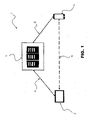
Figure 1 represents an exemplary schematic representation of an application collaboration system according to the present invention; -
Figure 2 represents another exemplary schematic representation of an application collaboration system according to the present invention; -
Figure 3 represents a block diagram of an application collaboration method in an exemplary and non-limiting embodiment according to the present invention. - With reference to the appended figures, the
numeral 1 globally and schematically indicates a first embodiment of an application collaboration system realized in accordance with the present invention, hereinafter referred to for sake of brevity assystem 1. - The
system 1 comprises amanager device 2 and auser device 3. - It is clearly possible to provide for
more manager devices 2 andmore user devices 3. - The
manager device 2 and theuser device 3 can indifferently be mobile, portable or fixed devices. - The
manager device 2 and theuser device 3 are respectively connected to acommon server 4. - The
common server 4 orchestrates the actions operated by themanager device 2 and by theuser device 3 in a coordinated manner, thus allowing them to be put in communication. - Furthermore, the present embodiment provides network connection means 5 both for the
common server 4 and for themanager device 2 and for theuser device 3, which allow a connection between devices even from positions that are distant from one another and the connection to thecommon server 4 remotely. - The
common server 4 is further configured to be accessible via a dedicated website. - In particular, the
manager device 2 and theuser device 3 preferably access thecommon server 4 via a web browser. - The
common server 4 may comprise a plurality of servers in its inside, such as a web server or a server that allows, by implementing standard protocols, such as the STUN (RFC 3489) and TURN (RFC 8656) protocols, the identification of devices and allow the transmission of messages between them, even in the case of devices that do not directly display their own IP address on the network and/or that cannot communicate directly with each other. - With regard to the access to the
common server 4, a different user profiling is preferably provided for the different devices, generally after explicit authentication for themanager device 2, and via a link generated ad hoc for theuser device 3. - The connection of the
manager device 2 and of theuser device 3 with the common server is realised via a respective communication channel 6, also referred to as "socket". - Conveniently, the
manager device 2 and theuser device 3 are enabled to implement shared use functions that are in common with each other in addition to the manager use functions and user use functions that are different from each other. - Additionally, the
manager device 2 provides afirst communication interface 7 and theuser device 3 comprises asecond communication interface 8. - The
first interface 7 and thesecond interface 8 of communication can be managed by a common application implementing the specific functionalities of thesystem 1, in particular of a responsive type, i.e., automatically adaptable to the device through which the application itself is used. Such a common application can be realised through Software Development Toolkits (or SDKs) that support responsive design. - The
first interface 7 and thesecond interface 8 of communication can both display and operate with the shared use functions on themanager device 2 and on theuser device 3, respectively. - The
manager device 2 is further enabled to display and operate with the manager use functions via thefirst communication interface 7 while theuser device 3 is further enabled to display and operate with the user use functions via thesecond communication interface 8. - In an application of the
system 1 within a sales context thefirst communication interface 7 is an interface of a seller and is therefore different from thesecond communication interface 8 which is an interface of a potential buyer. Conveniently, these communication interfaces are also variable according to the functional need of the various sales phases. - In the present embodiment, the
common server 4 also comprises a real-time communication server (WEB RTC protocol "Real-Time Communication") 15, hereinafter referred to asRTC server 15, and video and audio communication means 16. TheRTC server 15 is preferably supported by an API library that allows the application to interact with thecommon server 4. - By means of the
RTC server 15 and the video and audio communication means 16, thesystem 1 enables the exchange of information without transmission delays between themanager device 2 and theuser device 3 and the realisation of a videoconference between the devices. - The
system 1 therefore, in the present embodiment, for both themanager device 2 and for theuser device 3, superimposes or aggregates to the aforesaid communication channel 6, representing an application collaboration component, asecond communication channel 9, representing a video call component. - The two components are preferably displayed in two superimposed layers, with even more preferably the layer of the video call superimposed on the layer of the application collaboration, as it is generally smaller in size on each device. Nothing prevents, as mentioned above, a real aggregation of the layers in specific portions in the reciprocal
first interface 7 andsecond interface 8 of communication from being provided. - In a preferred embodiment, the layer of the video call occupies only a limited space of an available screen, for example a box where a video of the two interlocutors participating in this video call is displayed.
- The two components interact via an event-driven orchestration mode and therefore the two components intercept the actions performed by the users and behave accordingly.
- Since an action carried out by a user has an effect not only on what is displayed by the user, but also on what is displayed by the interlocutor, each action is transmitted as mentioned through the respective communication channels, or sockets, 6, 9 used to transmit information among the users.
- In the present embodiment, by adopting network connection means 5, so-called websockets are used as
communication channels 6, 9, i.e. two software components that allow the transmission of data between different entities through a network, i.e. between two processes that operate on two separate machines, providing a standard mode, supported by most of the commonly used browsers, for thecommon server 4 to send contents to the browser without having to be prompted by the devices and allowing messages to come and go while keeping an open connection. - The websocket allows messages to be sent to a device without being explicitly requested by it, so that not only the effects of the actions carried out by the user operating on the client of that device can be seen on the browser of a device, but also the effects of the actions carried out by another user on another device and vice versa.
- The websockets can be implemented using open source or commercial software libraries or the native functions made available to the programming languages.
- It is pointed out that this mode of two-way communication is contrary to what normally occurs in a web application of known type, in which a user interacts with a web application by sending requests to a server via an http transport channel, the communication taking place according to a mechanism of requests from the client to the server-responses of the server to the client, and what is displayed on a client's screen depending on the actions (i.e. requests) made by the user operating on the client itself. Suitably according to the present invention, a websocket is used instead to realise the
communication channels 6, 9, thereby allowing messages to be sent to a client without them being explicitly requested by the latter, and thus displaying on the browser of said client the effects of the actions carried out by the user operating on the client itself, but also the effects of the actions carried out by the user on another client. - In other words, by means of the present solution a "remote 4-handed" system is provided which is different from that proposed by the prior art which provides for two devices with similar interfaces that can share their own interface or co-browse. In fact, the
system 1 provides differently for themanager device 2 and for theuser device 3 and for the respectivefirst interface 7 andsecond interface 8 of communication a technology such that they are always aligned, following the same stream, but being able to differentiate collaboration and conversation at any time and in every degree of freedom. - Further, the
system 1 in the exemplary embodiment depicted comprises astorage database 10 adapted to contain a plurality of first data accessible for themanager device 2 and/or for theuser device 3. - Such first data, in a sales application, may for example be represented by a product catalogue, which may only be available from the
manager device 2, and thus from a seller for presentation to a potential customer, or also from theuser device 3 in a collaborative view, and thus the display of the first data may be included among the manager or user use functions or among the shared use functions, respectively. - According to a preferred embodiment, the mentioned shared use functions comprise not only accessing and displaying the first data within the
storage database 10 via themanager device 2 and/or theuser device 3, but also manipulating them to generate one or more customised second data. - Additionally, the
system 1 allows themanager device 2 and/or theuser device 3 to store and analyse both the first data and the second customised data to generate third data having assimilation features that are common to the second customised data. - Assimilation features are features that are linked according to a preset selection criterion.
- In the already mentioned sales application, for example, a seller or customer may aggregate two or more products into a single section of the respective
first interface 7 andsecond interface 8 of communication, generating a second customised datum consisting of the aggregation of such first data and displayed on thefirst interface 7 and/or on thesecond interface 8 of communication. - In an even more specific context of selling clothes, for example, the seller can show the cross-referenced combination also with photos sent by the potential buyer in real time.
- The
first interface 7 and thesecond interface 8 of communication in a preferred embodiment provide, among the mentioned shared use functions, for composing an outfit, i.e., a coherent set of articles such as clothes, footwear and coordinated accessories dedicated to the customer in real-time collaboration and displaying every single step of this aggregation of first data for the composition of the third datum constituted by the final outfit. - The
first interface 7 and thesecond interface 8 of communication allow the selection, the combination, the enlargement and the replacement of the first aggregate data consisting for example of product images. - The
storage database 10 can contain not only single first data such as a listing of catalogue articles but also first data such as predefined sets comprising a series of articles preset as aggregates. - Additionally, it is possible for the
user device 3, and thus for the customer via hissecond communication interface 8, to start from first data represented by sets of articles identified as eligible for a purchase. - The
first interface 7 and thesecond interface 8 of communication can simultaneously display additional information linked to the first and second customised data generated, such as price and variants. - Once the second datum has been composed in the complex of an outfit, through the
user device 3 and itssecond communication interface 8 it is possible to use this second datum in a global or partial way in a subsequent step, for example, of purchase of all or part of the components of the outfit corresponding to this second datum. - The
system 1 also allows, as indicated above, to break down the type of aggregated second data, recognising common features that can be searched for by scanning thestorage database 10 and searching for another possible combination of products in line with what has been aggregated. - This combination and selection can be automatically displayed on the
first interface 7 and/or on thesecond interface 8 of communication, thus generating third data. - In a further preferred embodiment, the
system 1 further comprises athird support device 11, optionally connected in background only with themanager device 2. - In particular, in the already mentioned exemplary sales context, a seller may be joined by another support figure, the management of such further support figure in the present embodiment being part of the manager use functions, and optionally such support figure being visible only on the
first communication interface 7 of the seller's device, thus being part of the manager use functions also not visible or implementable by theuser device 3. - A video and/or audio channel associated only with the communication means 6 of the
user device 2 is also adopted in this case. - The
first communication interface 7 in a preferred embodiment may further provide aportion 12 intended to display a portion of thesecond communication interface 8 in real time. - This is not a sharing of such
second interface 8 but a reconstruction of a portion thereof, thus not of other possible views of theuser device 2, so as to ensure that the user of themanager device 2 in a collaboration phase is aligned with the operations performed by the user of theuser device 3 and of thesecond interface 8 and possibly also suggest operations to speed up the use of thesystem 1. - In this way, again in the exemplary case of a system dedicated to sales, the seller can know in real time what is displayed on the customer's interface and thus align his explanations and the information he is providing to the customer with what he actually has seen on the screen thanks to his interface.
- This option can clearly be interrupted.
- In particular, the
system 1 provides ablocking system 13 adapted to operate a step of interruption of the return data stream under preset confidentiality conditions. - For example, the user use functions may comprise, in a sales application, a
payment portion 14 and a consequent step of entering sensitive data. Thepayment portion 14 in the embodiment shown herein is connected to theblocking system 13. - Again, in the embodiment shown, the
common server 4 is further adapted to track and store the communication sessions between amanager device 2 and auser device 3. - The system is then able to break them down into a sequence of micro-activities and select those that produced a certain result, e.g., a sale or in another context, e.g., educational, the success of a question test.
- These activity sequences are used for training the
common server 4 by means of a neural network to automatically steer successive communication sessions between thesame manager device 2 anduser device 3. -
Figure 3 illustrates, by means of a block diagram, the application collaboration method 100 underlying the present invention and which has been defined above applied to theapplication collaboration system 1. - This method first of all includes preparation steps such as making available 101 a
manager device 2 comprising afirst communication interface 7, making available 102 auser device 3 comprising asecond communication interface 8 and making available 103 acommon server 4. - The method 100 therefore comprises interfacing steps, namely accessing 104 the
common server 4 via themanager device 2, accessing 105 thecommon server 4 via theuser device 3 and connecting 106 themanager device 2 and theuser device 3 via thecommon server 4. - The method 100 then provides for the real use steps that comprise coordinating 107 in real time shared use functions that are common to the
first communication interface 7 and to thesecond communication interface 8, managing 108, 109 manager use functions and user use functions that are specific and different for thefirst communication interface 7 and thesecond communication interface 8 respectively, the manager use functions and the user use functions being visible and accessible only by the respective interface. - Furthermore, in the present embodiment the method 100 also comprises a step of connecting 110 the
manager device 2 and theuser device 3 to the network. - The connection respectively between the
manager device 2 and theuser device 3 with thecommon server 4 is further implemented with a step of putting themanager device 2 and theuser device 3 incommunication 111 via video and audio, superimposing the video communication to the operations carried out by thefirst communication interface 7 and thesecond communication interface 8. - At this point, the method 100 includes steps of exchanging and manipulating data via the respective
first interface 7 andsecond interface 8 of communication, and specifically includes a step of storing 112 a plurality of first data within astorage database 10, a step of accessing the first data within thestorage database 10 via themanager device 2 and/or theuser device 3, and manipulating 113 the first data to generate one or more customised second data. - It is further possible to provide a step of storing and analysing 114 the first data and the second customised data to generate third data with assimilation features that are common to the second customised data, assimilation features being understood to mean features that are linked according to a preset selection criterion.
- According to the present embodiment, as mentioned above it is further possible to provide for support steps, which specifically comprise putting a third support device in
communication 115 with saidmanager device 2 and, optionally said user device 3 (the management of said input in the communication of the support device being however in the present embodiment the prerogative only of the first communication interface 7), and realising 116 a return data stream sent to thefirst communication interface 7 comprising a reconstruction of a portion of thesecond communication interface 8. - For security and privacy reasons, the method 100 further comprises a step of interrupting 117 the return data stream under preset confidentiality conditions.
- In order to speed up then a communication and interfacing iteration between the
same manager device 2 anduser device 3 the method 100 also comprises a step oftraining 118 thecommon server 4 by means of a neural network to automatically steer successive communication sessions between thesame manager device 2 anduser device 3. - In conclusion, the application collaboration system and the related method, thanks to the superposition of a video call and data channels that guarantee the exchange of information between a manager device and a user device, makes it possible to achieve a sharing of contents to help the user, for example, in a sales negotiation, while guaranteeing the confidentiality of the information exchanged with the manager only.
- Basically, appropriate applications are made available, both on the manager side and on the user side, through two distinct components, but which are orchestrated in a coordinated manner: a video call component and an application collaboration component, through which the users of the respective applications interact each with a specific visibility and right to action. Conveniently, the two components intercept the actions carried out by users and behave accordingly; in particular, actions carried out by a user have an effect not only on what is viewed by the user himself, but also on what is viewed by the interlocutor, thanks to the use of a websocket type communication channel, i.e. two software components that operate as 'communication channels' and allow the transmission of data between different entities through a network, i.e. between two processes operating on two separate machines, each action carried out by a user during a session being processed and if necessary generating a message that is sent to the interlocutor's application, thus affecting the use of the latter.
- Conveniently, the manager-side application may provide for a connection by means of explicit authorisation, while the user-side application may be simplified by an access via a link generated ad hoc for each session.
- In the particularly preferred field of application of sales, it is evident that the system and the method according to the present invention realise a one-to-one exchange between seller (manager) and buyer (user) and, while guaranteeing a sharing of content, keep the interaction strictly "intimate" and allow the buyer to appreciate the seller's competence and professionalism in a manner that is as similar as possible to a face-to-face sale.
- Conveniently, all the sales phases are carried out thanks to the system and to the method according to the present invention, from the selection from a catalogue to the display of possible outfits up to the payment.
- In addition, the system and the method proposed allow these outfits to be easily composed by selecting some articles and bringing the images to a predefined area, where these images can be combined, enlarged, replaced by colour variants available for the articles in a way such as to allow the buyer to verify the combinations. Conveniently, these outfits can be composed by choosing indiscriminately among the different sets of articles (for example by selecting an article from the catalogue, one from articles prepared by the seller, one from the articles saved "for later" by the seller for the customer in a previous session and one already in the customer's shopping bag).
- When composing the outfit, the seller can show the buyer information (e.g., the price, the fact that an article is already in the buyer's shopping bag, the presence of colour variants) to facilitate the buyer's purchasing choices.
- Once an outfit has been composed, all the articles that compose it or only some of them (always selected collaboratively between seller and buyer) can be brought into the so-called shopping bag so that the customer can reassess them (always having the possibility to modify the content of the shopping bag, therefore without binding it to the activities and the selections made previously) and proceed with the completion of the purchase if necessary.
- It is pointed out that, unlike the current e-commerce platforms already available, the proposed system and method make it possible to achieve:
- a collaborative composition of an outfit, where both parties operate on the same application with specific role-dependent functionalities (seller, buyer);
- a 'realistic' visualisation of the outfit as a whole;
- the possibility of composing the outfit by selecting articles from several sets; and
- the possibility of enabling the display of additional information by the seller only or also by the buyer.
- Conveniently, according to the invention, the presence of a tutor to assist the manager can also be ensured.
- In addition, the system and the method according to the present invention provide for a return stream, which is not a classic screen sharing but an "application" information that the seller has as a feedback to be aware of the status of the buyer's screen and thus be able to adapt the communication with respect to the buyer, for example without having to ask the interlocutor if "the slide has arrived" or "the video has started", thus realising a high quality experience.
- In conclusion, the present invention refers to an application collaboration system and method having the following main features:
- to allow two devices to be put in communication with each other and with a server having a set of information in its inside;
- to have two different interfaces on the two devices with functions that are in common and differentiated functions depending on one's role in the conversation;
- to generally allow a video/audio connection between users to be superimposed on each interface;
- in the case of a sale, for example, of garments to allow the seller and the user to select a number of garments to be displayed all together to create an outfit in a dedicated portion of the interfaces;
- therefore, to allow in this example to choose what to buy and always proceed along differentiated paths given the two interfaces but by mutual agreement until the end of this purchase.
- Clearly, this is only an application example of the present invention and not a limitation thereof.
- Conveniently, the return stream also ensures confidentiality at appropriate times, e.g., during the payment operations of a possible purchase, often managed by external systems, the display being then prevented in the return stream.
- The skilled in the art will understand that the presented embodiment may be subject to further modifications and variations, according to specific and contingent needs, all included within the scope of the invention, as defined by the following claims.
- For example, as mentioned above, nothing prevents the realisation of a videoconference that comprises a plurality of manager devices and a plurality of user devices.
Claims (15)
- Application collaboration system (1) comprising at least one manager device (2) and at least one user device (3),said manager device (2) and said user device (3) being connected to a common server (4), each one through at least one communication channel (6),said common server (4) putting said manager device (2) and said user device (3) in communication,said manager device (2) and said user device (3) being enabled to implement shared use functions that are in common with each other and manager use functions and user use functions that are different from each other,said manager device (2) comprising a first interface (7) of communication with said common server (4), andsaid user device (3) comprising a second interface (8) of communication with said common server (4),said first communication interface (7) and said second communication interface (8) being able to display and operate on said shared use functions on said manager device (2) and said user device (3) respectively, said first communication interface (7) being able to display and operate on said manager use functions on said manager device (2) and said second communication interface (8) being able to display and operate on said user use functions on said user device (3).
- Application collaboration system (1) according to claim 1, further comprising a WEB RTC server (15) comprising at least one API library and wherein said manager device (2) and said user device (3) further comprise reciprocal video and audio communication means (16) associated with said first communication interface (7) and with said second communication interface (8) adapted to carry out a videoconference among users simultaneously with the management of said first communication interface (7) and of said second communication interface (8).
- Application collaboration system (1) according to claim 1 or 2, further comprising a storage database (10) adapted to contain a plurality of first data accessible for said manager device (2) and/or for said user device (3).
- Application collaboration system (1) according to any one of claims 1 to 3, further comprising a third support device (11) optionally connected in background only with said manager device (2).
- Application collaboration system (1) according to any one of claims 1 to 4, further comprising network connection means (5) for said common server (4) and for the manager device (2) and/or for said user device (3).
- Application collaboration method (100) comprising the following steps:- making available (101) a manager device (2) comprising a first communication interface (7);- making available (102) a user device (3) comprising a second communication interface (8);- making available (103) a common server (4);- accessing (104) said common server (4) via said manager device (2);- accessing (105) said common server (4) via said user device (3);- connecting (106) said manager device (2) and said user device (3) via said common server (4);- coordinating (107) in real time shared use functions that are common to said first communication interface (7) and to said second communication interface (8);- managing (108, 109) manager use functions and user use functions that are specific and different for said first communication interface (7) and said second communication interface (8) respectively, said manager use functions and said user use functions being visible and accessible only by the respective interface (7, 8).
- Application collaboration method (100) according to claim 6, further comprising a step of connecting (110) said manager device (2) and said user device (3) to the network.
- Application collaboration method (100) according to claim 6 or 7, further comprising a step of:- putting said manager device (2) and said user device (3) in communication (111) via video and audio, superimposing said communication to the operations carried out through said first communication interface (7) and said second communication interface (8).
- Application collaboration method (100) according to any one of claims 6 to 8, further comprising the step of:- storing (112) a plurality of first data within a storage database (10).
- Application collaboration method (100) according to claim 9, wherein said shared use functions comprise accessing said first data within said storage database (10) by means of said manager device (2) and/or said user device (3), and manipulating said first data to generate (113) one or more customised second data.
- Application collaboration method (100) according to claim 10, further comprising a step of:- storing and analysing (114) said first data and said second customised data to generate third data having assimilation features that are common to said second customised data, assimilation features being features that are linked according to a preset selection criterion.
- Application collaboration method (100) according to any one of claims 6 to 11, further comprising a step of:- putting (115) a third device (11) in communication with said manager device (2) and optionally said user device (3).
- Application collaboration method (100) according to any one of claims 6 to 12, further comprising a step of:- realising (16) a return data stream sent to said first communication interface (7) comprising a reconstruction of a portion of said second communication interface (8).
- Application collaboration method (100) according to claim 13, comprising a step of:- interrupting (117) said return data stream under preset confidentiality conditions.
- Application collaboration method (100) according to any one of claims 6 to 14, further comprising a step of:- training (118) said common server by means of a neural network to automatically steer successive communication sessions between the same manager device (2) and user device (3).
Priority Applications (3)
| Application Number | Priority Date | Filing Date | Title |
|---|---|---|---|
| EP21425032.6A EP4117235B1 (en) | 2021-07-05 | 2021-07-05 | Application collaboration system and related method |
| CA3166113A CA3166113A1 (en) | 2021-07-05 | 2022-06-29 | Application collaboration system and related method |
| US17/857,297 US12260373B2 (en) | 2021-07-05 | 2022-07-05 | Application collaboration system and related method |
Applications Claiming Priority (1)
| Application Number | Priority Date | Filing Date | Title |
|---|---|---|---|
| EP21425032.6A EP4117235B1 (en) | 2021-07-05 | 2021-07-05 | Application collaboration system and related method |
Publications (2)
| Publication Number | Publication Date |
|---|---|
| EP4117235A1 true EP4117235A1 (en) | 2023-01-11 |
| EP4117235B1 EP4117235B1 (en) | 2026-01-21 |
Family
ID=77543457
Family Applications (1)
| Application Number | Title | Priority Date | Filing Date |
|---|---|---|---|
| EP21425032.6A Active EP4117235B1 (en) | 2021-07-05 | 2021-07-05 | Application collaboration system and related method |
Country Status (3)
| Country | Link |
|---|---|
| US (1) | US12260373B2 (en) |
| EP (1) | EP4117235B1 (en) |
| CA (1) | CA3166113A1 (en) |
Citations (2)
| Publication number | Priority date | Publication date | Assignee | Title |
|---|---|---|---|---|
| US20150046280A1 (en) * | 2013-08-12 | 2015-02-12 | Christopher Renwick Alston | Technologies for video-based commerce |
| US20150149565A1 (en) * | 2013-11-27 | 2015-05-28 | General Electric Company | Systems and methods for medical diagnostic collaboration |
Family Cites Families (6)
| Publication number | Priority date | Publication date | Assignee | Title |
|---|---|---|---|---|
| US8464164B2 (en) * | 2006-01-24 | 2013-06-11 | Simulat, Inc. | System and method to create a collaborative web-based multimedia contextual dialogue |
| US9137489B2 (en) * | 2012-12-28 | 2015-09-15 | Ittiam Systems Pte. Ltd. | Platform for end point and digital content centric real-time shared experience for collaboration |
| US10860958B2 (en) * | 2015-04-24 | 2020-12-08 | Delta Pds Co., Ltd | Apparatus for processing work object and method performing the same |
| US9667676B1 (en) * | 2016-01-29 | 2017-05-30 | Dropbox, Inc. | Real time collaboration and document editing by multiple participants in a content management system |
| US11074219B2 (en) * | 2016-06-24 | 2021-07-27 | Yildirim YAZGANARIKAN | Visual file manager |
| US11249715B2 (en) * | 2020-06-23 | 2022-02-15 | Switchboard Visual Technologies, Inc. | Collaborative remote interactive platform |
-
2021
- 2021-07-05 EP EP21425032.6A patent/EP4117235B1/en active Active
-
2022
- 2022-06-29 CA CA3166113A patent/CA3166113A1/en active Pending
- 2022-07-05 US US17/857,297 patent/US12260373B2/en active Active
Patent Citations (2)
| Publication number | Priority date | Publication date | Assignee | Title |
|---|---|---|---|---|
| US20150046280A1 (en) * | 2013-08-12 | 2015-02-12 | Christopher Renwick Alston | Technologies for video-based commerce |
| US20150149565A1 (en) * | 2013-11-27 | 2015-05-28 | General Electric Company | Systems and methods for medical diagnostic collaboration |
Also Published As
| Publication number | Publication date |
|---|---|
| CA3166113A1 (en) | 2023-01-05 |
| US20230004939A1 (en) | 2023-01-05 |
| US12260373B2 (en) | 2025-03-25 |
| EP4117235B1 (en) | 2026-01-21 |
Similar Documents
| Publication | Publication Date | Title |
|---|---|---|
| JP4738455B2 (en) | Server system | |
| AU2018201109B2 (en) | Integrating co-browsing with other forms of information sharing | |
| CA2391542C (en) | System and method for application viewing through collaborative web browsing session | |
| JP7187141B2 (en) | Teleconferencing method using meeting room object | |
| CN112632299B (en) | Document demonstration method, device, equipment and storage medium | |
| US11995787B2 (en) | Systems and methods for the interactive rendering of a virtual environment on a user device with limited computational capacity | |
| US20030041092A1 (en) | System amd method for providing chatting service as well as contents by using network | |
| EP4117235B1 (en) | Application collaboration system and related method | |
| JP7036475B2 (en) | Virtual space exchange system, virtual space exchange method and program | |
| JP3690609B2 (en) | Virtual space providing apparatus and method | |
| JP7578287B2 (en) | Online Communication Management System | |
| Tursunov et al. | A Customizable WebRTC-based Video Conferencing System for Real-time Communication | |
| CN109547811A (en) | Show the method, apparatus and storage medium of interaction content | |
| KR20000024282A (en) | System and method for providing a chatting service with time-variant information | |
| Coleman et al. | Taking advantage of real-time collaboration tools | |
| CN113037517B (en) | Method, system and readable storage medium for multi-device merging and sharing | |
| KR20220118113A (en) | System and method for global community | |
| Sause | Multiuser Support | |
| KR101638227B1 (en) | Method for sharing contents based on point objects | |
| JP2005229208A (en) | Communication system for call center, server system, and communication program |
Legal Events
| Date | Code | Title | Description |
|---|---|---|---|
| PUAI | Public reference made under article 153(3) epc to a published international application that has entered the european phase |
Free format text: ORIGINAL CODE: 0009012 |
|
| STAA | Information on the status of an ep patent application or granted ep patent |
Free format text: STATUS: THE APPLICATION HAS BEEN PUBLISHED |
|
| AK | Designated contracting states |
Kind code of ref document: A1 Designated state(s): AL AT BE BG CH CY CZ DE DK EE ES FI FR GB GR HR HU IE IS IT LI LT LU LV MC MK MT NL NO PL PT RO RS SE SI SK SM TR |
|
| P01 | Opt-out of the competence of the unified patent court (upc) registered |
Effective date: 20230516 |
|
| STAA | Information on the status of an ep patent application or granted ep patent |
Free format text: STATUS: REQUEST FOR EXAMINATION WAS MADE |
|
| 17P | Request for examination filed |
Effective date: 20230626 |
|
| RBV | Designated contracting states (corrected) |
Designated state(s): AL AT BE BG CH CY CZ DE DK EE ES FI FR GB GR HR HU IE IS IT LI LT LU LV MC MK MT NL NO PL PT RO RS SE SI SK SM TR |
|
| STAA | Information on the status of an ep patent application or granted ep patent |
Free format text: STATUS: EXAMINATION IS IN PROGRESS |
|
| 17Q | First examination report despatched |
Effective date: 20240710 |
|
| GRAP | Despatch of communication of intention to grant a patent |
Free format text: ORIGINAL CODE: EPIDOSNIGR1 |
|
| STAA | Information on the status of an ep patent application or granted ep patent |
Free format text: STATUS: GRANT OF PATENT IS INTENDED |
|
| INTG | Intention to grant announced |
Effective date: 20250807 |
|
| GRAS | Grant fee paid |
Free format text: ORIGINAL CODE: EPIDOSNIGR3 |
|
| GRAA | (expected) grant |
Free format text: ORIGINAL CODE: 0009210 |
|
| STAA | Information on the status of an ep patent application or granted ep patent |
Free format text: STATUS: THE PATENT HAS BEEN GRANTED |
|
| AK | Designated contracting states |
Kind code of ref document: B1 Designated state(s): AL AT BE BG CH CY CZ DE DK EE ES FI FR GB GR HR HU IE IS IT LI LT LU LV MC MK MT NL NO PL PT RO RS SE SI SK SM TR |
|
| REG | Reference to a national code |
Ref country code: CH Ref legal event code: F10 Free format text: ST27 STATUS EVENT CODE: U-0-0-F10-F00 (AS PROVIDED BY THE NATIONAL OFFICE) Effective date: 20260121 |
|
| REG | Reference to a national code |
Ref country code: DE Ref legal event code: R096 Ref document number: 602021046314 Country of ref document: DE |
|
| REG | Reference to a national code |
Ref country code: IE Ref legal event code: FG4D |