EP4117104A1 - Composite lithium compensation diaphragm and secondary battery comprising same - Google Patents
Composite lithium compensation diaphragm and secondary battery comprising same Download PDFInfo
- Publication number
- EP4117104A1 EP4117104A1 EP21929822.1A EP21929822A EP4117104A1 EP 4117104 A1 EP4117104 A1 EP 4117104A1 EP 21929822 A EP21929822 A EP 21929822A EP 4117104 A1 EP4117104 A1 EP 4117104A1
- Authority
- EP
- European Patent Office
- Prior art keywords
- lithium
- containing layer
- supplement
- separator
- composite
- Prior art date
- Legal status (The legal status is an assumption and is not a legal conclusion. Google has not performed a legal analysis and makes no representation as to the accuracy of the status listed.)
- Withdrawn
Links
Images
Classifications
-
- H—ELECTRICITY
- H01—ELECTRIC ELEMENTS
- H01M—PROCESSES OR MEANS, e.g. BATTERIES, FOR THE DIRECT CONVERSION OF CHEMICAL ENERGY INTO ELECTRICAL ENERGY
- H01M50/00—Constructional details or processes of manufacture of the non-active parts of electrochemical cells other than fuel cells, e.g. hybrid cells
- H01M50/40—Separators; Membranes; Diaphragms; Spacing elements inside cells
- H01M50/409—Separators, membranes or diaphragms characterised by the material
- H01M50/449—Separators, membranes or diaphragms characterised by the material having a layered structure
- H01M50/451—Separators, membranes or diaphragms characterised by the material having a layered structure comprising layers of only organic material and layers containing inorganic material
-
- H—ELECTRICITY
- H01—ELECTRIC ELEMENTS
- H01M—PROCESSES OR MEANS, e.g. BATTERIES, FOR THE DIRECT CONVERSION OF CHEMICAL ENERGY INTO ELECTRICAL ENERGY
- H01M10/00—Secondary cells; Manufacture thereof
- H01M10/05—Accumulators with non-aqueous electrolyte
- H01M10/052—Li-accumulators
- H01M10/0525—Rocking-chair batteries, i.e. batteries with lithium insertion or intercalation in both electrodes; Lithium-ion batteries
-
- H—ELECTRICITY
- H01—ELECTRIC ELEMENTS
- H01M—PROCESSES OR MEANS, e.g. BATTERIES, FOR THE DIRECT CONVERSION OF CHEMICAL ENERGY INTO ELECTRICAL ENERGY
- H01M10/00—Secondary cells; Manufacture thereof
- H01M10/42—Methods or arrangements for servicing or maintenance of secondary cells or secondary half-cells
- H01M10/4235—Safety or regulating additives or arrangements in electrodes, separators or electrolyte
-
- H—ELECTRICITY
- H01—ELECTRIC ELEMENTS
- H01M—PROCESSES OR MEANS, e.g. BATTERIES, FOR THE DIRECT CONVERSION OF CHEMICAL ENERGY INTO ELECTRICAL ENERGY
- H01M4/00—Electrodes
- H01M4/02—Electrodes composed of, or comprising, active material
- H01M4/04—Processes of manufacture in general
- H01M4/0438—Processes of manufacture in general by electrochemical processing
- H01M4/044—Activating, forming or electrochemical attack of the supporting material
- H01M4/0445—Forming after manufacture of the electrode, e.g. first charge, cycling
- H01M4/0447—Forming after manufacture of the electrode, e.g. first charge, cycling of complete cells or cells stacks
-
- H—ELECTRICITY
- H01—ELECTRIC ELEMENTS
- H01M—PROCESSES OR MEANS, e.g. BATTERIES, FOR THE DIRECT CONVERSION OF CHEMICAL ENERGY INTO ELECTRICAL ENERGY
- H01M50/00—Constructional details or processes of manufacture of the non-active parts of electrochemical cells other than fuel cells, e.g. hybrid cells
- H01M50/40—Separators; Membranes; Diaphragms; Spacing elements inside cells
- H01M50/409—Separators, membranes or diaphragms characterised by the material
- H01M50/411—Organic material
- H01M50/414—Synthetic resins, e.g. thermoplastics or thermosetting resins
-
- H—ELECTRICITY
- H01—ELECTRIC ELEMENTS
- H01M—PROCESSES OR MEANS, e.g. BATTERIES, FOR THE DIRECT CONVERSION OF CHEMICAL ENERGY INTO ELECTRICAL ENERGY
- H01M50/00—Constructional details or processes of manufacture of the non-active parts of electrochemical cells other than fuel cells, e.g. hybrid cells
- H01M50/40—Separators; Membranes; Diaphragms; Spacing elements inside cells
- H01M50/409—Separators, membranes or diaphragms characterised by the material
- H01M50/411—Organic material
- H01M50/414—Synthetic resins, e.g. thermoplastics or thermosetting resins
- H01M50/417—Polyolefins
-
- H—ELECTRICITY
- H01—ELECTRIC ELEMENTS
- H01M—PROCESSES OR MEANS, e.g. BATTERIES, FOR THE DIRECT CONVERSION OF CHEMICAL ENERGY INTO ELECTRICAL ENERGY
- H01M50/00—Constructional details or processes of manufacture of the non-active parts of electrochemical cells other than fuel cells, e.g. hybrid cells
- H01M50/40—Separators; Membranes; Diaphragms; Spacing elements inside cells
- H01M50/409—Separators, membranes or diaphragms characterised by the material
- H01M50/411—Organic material
- H01M50/414—Synthetic resins, e.g. thermoplastics or thermosetting resins
- H01M50/42—Acrylic resins
-
- H—ELECTRICITY
- H01—ELECTRIC ELEMENTS
- H01M—PROCESSES OR MEANS, e.g. BATTERIES, FOR THE DIRECT CONVERSION OF CHEMICAL ENERGY INTO ELECTRICAL ENERGY
- H01M50/00—Constructional details or processes of manufacture of the non-active parts of electrochemical cells other than fuel cells, e.g. hybrid cells
- H01M50/40—Separators; Membranes; Diaphragms; Spacing elements inside cells
- H01M50/409—Separators, membranes or diaphragms characterised by the material
- H01M50/411—Organic material
- H01M50/414—Synthetic resins, e.g. thermoplastics or thermosetting resins
- H01M50/423—Polyamide resins
-
- H—ELECTRICITY
- H01—ELECTRIC ELEMENTS
- H01M—PROCESSES OR MEANS, e.g. BATTERIES, FOR THE DIRECT CONVERSION OF CHEMICAL ENERGY INTO ELECTRICAL ENERGY
- H01M50/00—Constructional details or processes of manufacture of the non-active parts of electrochemical cells other than fuel cells, e.g. hybrid cells
- H01M50/40—Separators; Membranes; Diaphragms; Spacing elements inside cells
- H01M50/409—Separators, membranes or diaphragms characterised by the material
- H01M50/411—Organic material
- H01M50/414—Synthetic resins, e.g. thermoplastics or thermosetting resins
- H01M50/426—Fluorocarbon polymers
-
- H—ELECTRICITY
- H01—ELECTRIC ELEMENTS
- H01M—PROCESSES OR MEANS, e.g. BATTERIES, FOR THE DIRECT CONVERSION OF CHEMICAL ENERGY INTO ELECTRICAL ENERGY
- H01M50/00—Constructional details or processes of manufacture of the non-active parts of electrochemical cells other than fuel cells, e.g. hybrid cells
- H01M50/40—Separators; Membranes; Diaphragms; Spacing elements inside cells
- H01M50/409—Separators, membranes or diaphragms characterised by the material
- H01M50/431—Inorganic material
-
- H—ELECTRICITY
- H01—ELECTRIC ELEMENTS
- H01M—PROCESSES OR MEANS, e.g. BATTERIES, FOR THE DIRECT CONVERSION OF CHEMICAL ENERGY INTO ELECTRICAL ENERGY
- H01M50/00—Constructional details or processes of manufacture of the non-active parts of electrochemical cells other than fuel cells, e.g. hybrid cells
- H01M50/40—Separators; Membranes; Diaphragms; Spacing elements inside cells
- H01M50/409—Separators, membranes or diaphragms characterised by the material
- H01M50/431—Inorganic material
- H01M50/434—Ceramics
-
- H—ELECTRICITY
- H01—ELECTRIC ELEMENTS
- H01M—PROCESSES OR MEANS, e.g. BATTERIES, FOR THE DIRECT CONVERSION OF CHEMICAL ENERGY INTO ELECTRICAL ENERGY
- H01M50/00—Constructional details or processes of manufacture of the non-active parts of electrochemical cells other than fuel cells, e.g. hybrid cells
- H01M50/40—Separators; Membranes; Diaphragms; Spacing elements inside cells
- H01M50/409—Separators, membranes or diaphragms characterised by the material
- H01M50/446—Composite material consisting of a mixture of organic and inorganic materials
-
- Y—GENERAL TAGGING OF NEW TECHNOLOGICAL DEVELOPMENTS; GENERAL TAGGING OF CROSS-SECTIONAL TECHNOLOGIES SPANNING OVER SEVERAL SECTIONS OF THE IPC; TECHNICAL SUBJECTS COVERED BY FORMER USPC CROSS-REFERENCE ART COLLECTIONS [XRACs] AND DIGESTS
- Y02—TECHNOLOGIES OR APPLICATIONS FOR MITIGATION OR ADAPTATION AGAINST CLIMATE CHANGE
- Y02E—REDUCTION OF GREENHOUSE GAS [GHG] EMISSIONS, RELATED TO ENERGY GENERATION, TRANSMISSION OR DISTRIBUTION
- Y02E60/00—Enabling technologies; Technologies with a potential or indirect contribution to GHG emissions mitigation
- Y02E60/10—Energy storage using batteries
-
- Y—GENERAL TAGGING OF NEW TECHNOLOGICAL DEVELOPMENTS; GENERAL TAGGING OF CROSS-SECTIONAL TECHNOLOGIES SPANNING OVER SEVERAL SECTIONS OF THE IPC; TECHNICAL SUBJECTS COVERED BY FORMER USPC CROSS-REFERENCE ART COLLECTIONS [XRACs] AND DIGESTS
- Y02—TECHNOLOGIES OR APPLICATIONS FOR MITIGATION OR ADAPTATION AGAINST CLIMATE CHANGE
- Y02P—CLIMATE CHANGE MITIGATION TECHNOLOGIES IN THE PRODUCTION OR PROCESSING OF GOODS
- Y02P70/00—Climate change mitigation technologies in the production process for final industrial or consumer products
- Y02P70/50—Manufacturing or production processes characterised by the final manufactured product
Definitions
- the present application belongs to the technical field of lithium ion battery, and relates to a composite lithium supplement separator and a secondary battery thereof.
- the lithium ion secondary battery has gradually developed into one of the most promising secondary batteries, and has been applied in various fields, such as mobile phones, laptops, digital cameras, portable devices, electric vehicles and energy storage devices.
- a solid electrolyte interphase (SEI) film will be generated on the surface of negative electrode during the initial charge process, which consumes a large amount of lithium ions that get off the positive electrode material, resulting in an irreversible loss of positive electrode capacity.
- the active lithium is continuously consumed during the long-term cycling and storage of lithium batteries.
- high-capacity materials such as the silicon-carbon are applied to the negative electrode plate by researchers; however, those materials have low initial coulomb efficiency, and have an irreversible capacity loss of up to 40% approximately resulting from the consumption in SEI film-forming during the initial charge and discharge. Therefore, it has become one of research focus currently in the field of lithium ion secondary battery how the active lithium loss of the battery cells can be compensated so as to improve the initial capacity and cycle life of the battery cell.
- Lithium supplement through negative electrode plate lithium foil or lithium powder is loaded on the negative electrode plate to provide an additional source of active lithium. Such method is complex in process and highly requires the production environment.
- Lithium supplement additive for positive electrode a lithium supplement additive that has a high level of irreversible lithium deintercalation is introduced into the positive electrode.
- the method based on introducing lithium supplement layer such as lithium powder, lithium foil or lithium compounds to the positive or negative electrode surface, has a complex process as well as certain safety risks, because the lithium supplement layer has poor thermal stability, and the positive and negative electrode have high reactivity while the baking temperature for electrode plate is relatively high.
- the separator can be added with a lithium-containing coating, and the active lithium of the lithium-containing layer can compensate for the irreversible loss of the negative electrode film formation process.
- the separator has low reactivity and the lithium supplement layer on its surface has simpler treating process than the positive and negative electrode plates, so the introduction of a lithium-containing layer on the separator has certain advantages over the positive and negative electrode plates.
- such coating may affect the lithium ion permeability of the separator, which may cause problems such as deterioration of cycle life and poor kinetic performance.
- CN203574049U discloses a lithium ion battery separator, specifically lithium metal loaded on the surface of a porous matrix membrane, wherein the lithium metal was in the shape of particles, filaments or flakes.
- lithium metal was contact with the porous matrix membrane directly, and due to the soft texture of lithium, lithium was prone to enter the separator's pore and keep remaining, therefor resulting in pore-blocking, and affecting lithium ionic conductivity of the separator.
- CN105932206A discloses a composite lithium supplement separator, in which a ceramic layer was first coated on the surface of the porous matrix membrane, followed by the introduction of a lithium-containing layer.
- the lithium metal layer did not include a protective layer on its surface, and the lithium layer would reacted with the environment under contact, which might lead to deactivation of partial active lithium or even pose a safety risk.
- An object of the present application is to provide a composite lithium supplement separator and a secondary battery thereof, for compensating the active lithium loss of the battery cell and thereby improving the initial capacity and cycle life of the battery cell.
- a composite lithium supplement separator comprises a porous matrix membrane; a lithium-containing layer is arranged on one side of the porous matrix membrane; the lithium-containing layer comprises a lithium source, an inorganic ceramic powder and a binder; the lithium source has a gradient distribution in thickness direction of the lithium-containing layer, and has a relatively low mass proportion on the side close to the surface of the porous matrix membrane and a relatively high mass proportion of the lithium source on the side away from the surface of the porous matrix membrane.
- a protective layer is further arranged on the surface of the lithium-containing layer away from the porous matrix membrane, and the protective layer is continuously distributed on the surface of the lithium-containing layer, and has a porosity of 10% to 50%, optionally 15% to 30%.
- the porosity of less than 10% the transport path of lithium ion can not be smooth, and there will be a relatively large internal resistance of the battery cell and a risk of lithium precipitation;
- the porosity of more than 50% the lithium-containing layer will have a relatively large exposed area, and the inorganic ceramic layer can't provide a significant protection, thereby leading the lithium-containing layer to a relatively low lithium efficiency.
- the protective layer is the inorganic ceramic layer with a thickness of 0.1 ⁇ m to 5 ⁇ m, optionally 0.2 ⁇ m to 2 ⁇ m. If the inorganic ceramic layer had a thickness larger than 5 ⁇ m, the separator would have a relatively large overall thickness, resulting in a decrease in the volumetric energy density of the battery cell; moreover, if the thickness were too large, there would be an increased lithium ion transport path and a risk of increased internal resistance of the battery cell.
- a percentage of the lithium source mass in the total mass of lithium-containing layer is 0 to 80%, optionally 30% to 50%, and a mass ratio of the binder to the inorganic ceramic powder is 1:0.5-10. If the overall lithium source content were too low, there would be no lithium supplement effect; if the overall lithium source content were too high, the lithium source content of the lithium-containing layer close to the matrix membrane would be difficult to control within a small percentage range; the lithium source is entirely, or partially at least, enclosed in the binder and the inorganic ceramic. After enclosed, the lithium source, especially the lithium powder, can be further prevented from contacting with the external environment, thereby avoiding the side reaction between lithium source and the air, and reducing the risk of lithium source to lose reactivity.
- the lithium source is a lithium metal powder, optionally SLMP (Stabilized Lithium Metal Powder).
- the lithium source is a lithium-containing compound, selecting from at least one of Li 2 NiO 2 , Li 2 CuO 2 , Li 6 CoO 4 , LisFeO 4 , Li 6 MnO 4 , Li 2 MoO 3 , Li 3 N, Li 2 O, LiOH and Li 2 CO 3 .
- the porous matrix membrane is selected from any one or a combination of at least two of polyethylene (PE), polypropylene (PP), polyvinylidene difluoride (PVDF), aramid, polyacrylonitrile, polyimide, polyamide, polyester and natural fiber.
- PE polyethylene
- PP polypropylene
- PVDF polyvinylidene difluoride
- aramid polyacrylonitrile
- polyimide polyimide
- polyamide polyamide
- polyester natural fiber
- the inorganic ceramic powder is selected from any one or a combination of at least two of alumina trioxide, silicon dioxide, titanium dioxide, zirconium dioxide, tin dioxide, zinc oxide, calcium oxide, magnesium oxide, magnesium nitride and boehmite.
- the protective layer comprises inorganic ceramic particles and a polymer binder, and the inorganic ceramic particles are selected from any one or a combination of at least two of aluminum oxides, magnesium oxides, calcium oxides and zirconium oxides, and have a particle size of 0.02 ⁇ m to 3 ⁇ m, optionally 0.05 ⁇ m to 1 ⁇ m.
- the selection of inorganic ceramic particles with a small particle size can help to form a thin inorganic coating.
- the lithium-containing layer has a composite layer structure or a multilayer structure of which the lithium source concentration has a continuous and gradient distribution, and the lithium-containing layer with multilayer structure is formed by multiple coating.
- Another object of the present application is to provide a lithium ion secondary battery, comprising a positive electrode plate, a negative electrode plate, a separator arranged between the positive electrode plate and the negative electrode plate at intervals, an electrolyte and a case; the separator is the composite lithium supplement separator according to any one of claims 1 to 9; when a lithium-containing compound is selected as the lithium source, the lithium-containing layer of the composite lithium supplement separator is arranged facing the positive electrode plate; when a lithium powder is selected as the lithium source, the lithium-containing layer of the composite lithium supplement separator is arranged facing the negative electrode plate.
- the composite lithium supplement separator provided in the application has the advantages described below.
- test reagents used in the embodiments described below are conventional biochemical reagents, unless specified otherwise; and the experimental methods are conventional methods, unless specified otherwise.
- the composite lithium supplement separator had a porous matrix membrane (PP film, 9 ⁇ m); a lithium-containing layer 1 was arranged at one side of the matrix membrane, and the lithium-containing layer 1 consisted of a lithium-containing layer 11 and a lithium-containing layer 12.
- the lithium source had a mass proportion of 10% and a thickness of 2 ⁇ m, and in the lithium-containing layer 12 away from the porous matrix membrane, the lithium source had a mass proportion of 50% and a thickness of 2 ⁇ m; an inorganic ceramic protective layer was further arranged on the surface of the lithium-containing layer, with a thickness of 2 ⁇ m and a porosity of 30%.
- the composite lithium supplement separator had a porous matrix membrane (PP film, 9 ⁇ m); a lithium-containing layer 1 was arranged at one side of the matrix membrane, and the lithium-containing layer 1 consisted of a lithium-containing layer 11 and a lithium-containing layer 12.
- the lithium source had a mass proportion of 20% and a thickness of 2 ⁇ m, and in the lithium-containing layer 12 away from the porous matrix membrane, the lithium source had a mass proportion of 60% and a thickness of 3 ⁇ m; an inorganic ceramic protective layer was further arranged on the surface of the lithium-containing layer, with a thickness of 1 ⁇ m and a porosity of 15%.
- NCM622 was the active material for the positive electrode plate
- LiPF 6 /EC+DEC (with a volume ratio of 1:1) was the electrolyte
- the composite lithium supplement separator described above was selected as the separator
- the lithium-containing layer was arranged facing the positive electrode plate.
- the composite lithium supplement separator had a porous matrix membrane (PE film, 12 ⁇ m); a lithium-containing layer 1 was arranged at one side of the matrix membrane, and the lithium-containing layer 1 consisted of a lithium-containing layer 11 and a lithium-containing layer 12.
- the lithium source had a mass proportion of 15% and a thickness of 2 ⁇ m, and in the lithium-containing layer 12 away from the porous matrix membrane, the lithium source had a mass proportion of 45% and a thickness of 2 ⁇ m; an inorganic ceramic protective layer was further arranged on the surface of the lithium-containing layer, with a thickness of 1 ⁇ m and a porosity of 25%.
- NCM811 was the active material for the positive electrode plate
- LiPF 6 /EC+DEC (with a volume ratio of 1:1) was the electrolyte
- the PP matrix membrane (9 ⁇ m) + ceramic coating (2 ⁇ m) + ceramic coating (2 ⁇ m) was selected as the separator.
- the ceramic coating consisted of inorganic boehmite particles, polymethyl methacrylate (the binder) and the styrene-butadiene rubber.
- lithium iron phosphate was the active material for the positive electrode plate
- the artificial graphite was the active material for the negative electrode material
- LiPF 6 /EC+DEC (with a volume ratio of 1:1) was the electrolyte
- the PE matrix membrane (12 ⁇ m) + ceramic coating (2 ⁇ m) + ceramic coating (3 ⁇ m) was selected as the separator.
- the ceramic coating consisted of inorganic boehmite particles, polymethyl methacrylate (the binder) and the styrene-butadiene rubber.
- the composite lithium supplement separator had a porous matrix membrane (PP film, 9 ⁇ m); a lithium-containing layer 1 was arranged at one side of the matrix membrane, and the lithium-containing layer 1 consisted of a lithium-containing layer 11 and a lithium-containing layer 12.
- the lithium source had a mass proportion of 10% and a thickness of 2 ⁇ m, and in the lithium-containing layer 12 away from the porous matrix membrane, the lithium source had a mass proportion of 50% and a thickness of 2 ⁇ m.
- the present application provides a composite lithium supplement separator and a secondary battery thereof, which may effectively compensate for the irreversible active lithium loss during the initial charge without additional lithium supplement on the surface of the positive or negative electrode plate, thereby significantly improving the energy density and cycle life of the lithium ion secondary battery.
- the lithium-containing layer of the composite separator in the present application has the lithium source of gradient distribution, and has a relatively low active lithium content at the side close to the surface of matrix membrane, which may effectively reduce the contact area of lithium metal powder or lithium-containing compounds with the matrix membrane, reduce the risk of possible blockage of the micro-pores of the matrix membrane and thus improve the battery cell performance.
- such lithium-containing layer includes a lithium source, an inorganic ceramic and an organic binder.
- inorganic ceramic may significantly improve the strength of lithium-containing layer, and after the lithium source is consumed, such layer can still be used as a high-temperature resistant layer to improve the safety performance of battery cell.
- the introduction of the inorganic ceramic protective layer, which is continuously distributed, on the lithium-containing surface may greatly avoid direct contact between the lithium metal powder or lithium-containing compounds and the external environment, increasing the availability of lithium source; moreover, when the lithium source is lithium powder, the continuous protective layer can also be used as a transition layer to effectively control the active lithium to be uniformly enclosed in the electrode plate, avoiding the local overheating problem of the battery caused by the too fast reaction rate.
Landscapes
- Chemical & Material Sciences (AREA)
- Chemical Kinetics & Catalysis (AREA)
- Electrochemistry (AREA)
- General Chemical & Material Sciences (AREA)
- Engineering & Computer Science (AREA)
- Manufacturing & Machinery (AREA)
- Inorganic Chemistry (AREA)
- Materials Engineering (AREA)
- Composite Materials (AREA)
- Ceramic Engineering (AREA)
- Cell Separators (AREA)
- Secondary Cells (AREA)
Abstract
Description
- The present application belongs to the technical field of lithium ion battery, and relates to a composite lithium supplement separator and a secondary battery thereof.
- Owing to the advantages of high energy density, long cycle life, environmental protection, no memory effect and the like, the lithium ion secondary battery has gradually developed into one of the most promising secondary batteries, and has been applied in various fields, such as mobile phones, laptops, digital cameras, portable devices, electric vehicles and energy storage devices.
- In lithium secondary batteries, a solid electrolyte interphase (SEI) film will be generated on the surface of negative electrode during the initial charge process, which consumes a large amount of lithium ions that get off the positive electrode material, resulting in an irreversible loss of positive electrode capacity. In addition, the active lithium is continuously consumed during the long-term cycling and storage of lithium batteries. Especially, in order to satisfy the high energy demands, high-capacity materials such as the silicon-carbon are applied to the negative electrode plate by researchers; however, those materials have low initial coulomb efficiency, and have an irreversible capacity loss of up to 40% approximately resulting from the consumption in SEI film-forming during the initial charge and discharge. Therefore, it has become one of research focus currently in the field of lithium ion secondary battery how the active lithium loss of the battery cells can be compensated so as to improve the initial capacity and cycle life of the battery cell.
- Aiming at the problem that how to compensate for the active lithium loss of the battery cells, the current main solutions are: (1) Lithium supplement through negative electrode plate: lithium foil or lithium powder is loaded on the negative electrode plate to provide an additional source of active lithium. Such method is complex in process and highly requires the production environment. (2) Lithium supplement additive for positive electrode: a lithium supplement additive that has a high level of irreversible lithium deintercalation is introduced into the positive electrode. However, with such method, there are irreversible components of positive electrode remaining in the positive electrode plate, which has a negative effect on various performances of the battery cell such as internal resistance. The method, based on introducing lithium supplement layer such as lithium powder, lithium foil or lithium compounds to the positive or negative electrode surface, has a complex process as well as certain safety risks, because the lithium supplement layer has poor thermal stability, and the positive and negative electrode have high reactivity while the baking temperature for electrode plate is relatively high. (3) The separator can be added with a lithium-containing coating, and the active lithium of the lithium-containing layer can compensate for the irreversible loss of the negative electrode film formation process. The separator has low reactivity and the lithium supplement layer on its surface has simpler treating process than the positive and negative electrode plates, so the introduction of a lithium-containing layer on the separator has certain advantages over the positive and negative electrode plates. However, such coating may affect the lithium ion permeability of the separator, which may cause problems such as deterioration of cycle life and poor kinetic performance.
-
CN203574049U discloses a lithium ion battery separator, specifically lithium metal loaded on the surface of a porous matrix membrane, wherein the lithium metal was in the shape of particles, filaments or flakes. In such separator structure, lithium metal was contact with the porous matrix membrane directly, and due to the soft texture of lithium, lithium was prone to enter the separator's pore and keep remaining, therefor resulting in pore-blocking, and affecting lithium ionic conductivity of the separator.CN105932206A discloses a composite lithium supplement separator, in which a ceramic layer was first coated on the surface of the porous matrix membrane, followed by the introduction of a lithium-containing layer. However, the lithium metal layer did not include a protective layer on its surface, and the lithium layer would reacted with the environment under contact, which might lead to deactivation of partial active lithium or even pose a safety risk. - An object of the present application is to provide a composite lithium supplement separator and a secondary battery thereof, for compensating the active lithium loss of the battery cell and thereby improving the initial capacity and cycle life of the battery cell.
- To achieve the object described above, the technical solution of the present application includes the following:
a composite lithium supplement separator comprises a porous matrix membrane; a lithium-containing layer is arranged on one side of the porous matrix membrane; the lithium-containing layer comprises a lithium source, an inorganic ceramic powder and a binder; the lithium source has a gradient distribution in thickness direction of the lithium-containing layer, and has a relatively low mass proportion on the side close to the surface of the porous matrix membrane and a relatively high mass proportion of the lithium source on the side away from the surface of the porous matrix membrane. - Optionally, a protective layer is further arranged on the surface of the lithium-containing layer away from the porous matrix membrane, and the protective layer is continuously distributed on the surface of the lithium-containing layer, and has a porosity of 10% to 50%, optionally 15% to 30%. With the porosity of less than 10%, the transport path of lithium ion can not be smooth, and there will be a relatively large internal resistance of the battery cell and a risk of lithium precipitation; With the porosity of more than 50%, the lithium-containing layer will have a relatively large exposed area, and the inorganic ceramic layer can't provide a significant protection, thereby leading the lithium-containing layer to a relatively low lithium efficiency. The protective layer is the inorganic ceramic layer with a thickness of 0.1 µm to 5 µm, optionally 0.2 µm to 2 µm. If the inorganic ceramic layer had a thickness larger than 5 µm, the separator would have a relatively large overall thickness, resulting in a decrease in the volumetric energy density of the battery cell; moreover, if the thickness were too large, there would be an increased lithium ion transport path and a risk of increased internal resistance of the battery cell.
- Optionally, a percentage of the lithium source mass in the total mass of lithium-containing layer is 0 to 80%, optionally 30% to 50%, and a mass ratio of the binder to the inorganic ceramic powder is 1:0.5-10. If the overall lithium source content were too low, there would be no lithium supplement effect; if the overall lithium source content were too high, the lithium source content of the lithium-containing layer close to the matrix membrane would be difficult to control within a small percentage range; the lithium source is entirely, or partially at least, enclosed in the binder and the inorganic ceramic. After enclosed, the lithium source, especially the lithium powder, can be further prevented from contacting with the external environment, thereby avoiding the side reaction between lithium source and the air, and reducing the risk of lithium source to lose reactivity.
- Optionally, the lithium source is a lithium metal powder, optionally SLMP (Stabilized Lithium Metal Powder).
- Optionally, the lithium source is a lithium-containing compound, selecting from at least one of Li2NiO2, Li2CuO2, Li6CoO4, LisFeO4, Li6MnO4, Li2MoO3, Li3N, Li2O, LiOH and Li2CO3.
- Optionally, the porous matrix membrane is selected from any one or a combination of at least two of polyethylene (PE), polypropylene (PP), polyvinylidene difluoride (PVDF), aramid, polyacrylonitrile, polyimide, polyamide, polyester and natural fiber.
- Optionally, the inorganic ceramic powder is selected from any one or a combination of at least two of alumina trioxide, silicon dioxide, titanium dioxide, zirconium dioxide, tin dioxide, zinc oxide, calcium oxide, magnesium oxide, magnesium nitride and boehmite.
- Optionally, the protective layer comprises inorganic ceramic particles and a polymer binder, and the inorganic ceramic particles are selected from any one or a combination of at least two of aluminum oxides, magnesium oxides, calcium oxides and zirconium oxides, and have a particle size of 0.02 µm to 3 µm, optionally 0.05 µm to 1 µm. The selection of inorganic ceramic particles with a small particle size can help to form a thin inorganic coating.
- Optionally, the lithium-containing layer has a composite layer structure or a multilayer structure of which the lithium source concentration has a continuous and gradient distribution, and the lithium-containing layer with multilayer structure is formed by multiple coating.
- Another object of the present application is to provide a lithium ion secondary battery, comprising a positive electrode plate, a negative electrode plate, a separator arranged between the positive electrode plate and the negative electrode plate at intervals, an electrolyte and a case; the separator is the composite lithium supplement separator according to any one of
claims 1 to 9; when a lithium-containing compound is selected as the lithium source, the lithium-containing layer of the composite lithium supplement separator is arranged facing the positive electrode plate; when a lithium powder is selected as the lithium source, the lithium-containing layer of the composite lithium supplement separator is arranged facing the negative electrode plate. - Compared to the prior art, the composite lithium supplement separator provided in the application has the advantages described below.
- (1) A lithium supplement separator for the lithium ion secondary battery is provided, which can significantly compensate for the irreversible active lithium loss during the initial charge process of a lithium ion battery and for the active lithium consumption during long-term use; there is no need to supply lithium through additional positive and negative electrode plates, which greatly simplifies the process and has lower safety risks during production.
- (2) The lithium-containing layer consists of the inorganic ceramic, lithium source and binder; the introduction of inorganic ceramic improves the strength of lithium-containing layer; after the lithium source is consumed, such layer can still be used as a high-temperature resistant layer to improve the safety performance of battery cell; the lithium source has a gradient distribution in the lithium-containing layer, and has a relatively low lithium source content at the side close to the porous matrix membrane, which may effectively reduce the contact area of lithium metal powder or lithium-containing compounds with the matrix membrane; without an additional ceramic buffer layer arranged between the matrix membrane and the lithium-containing layer, it could be effectively avoided lithium source, such as lithium powder, being embedded in the matrix membrane pores, thus avoiding the degradation of the battery cell performance caused by blocking of the matrix membrane pores.
- (3) A protective layer is added to the surface of the lithium-containing layer, and the protective layer is continuously distributed with a porosity of 10% to 50%, optionally 15% to 30%, which may effectively isolate the lithium source from the atmospheric environment, thereby increasing the availability of lithium source; moreover, when such composite lithium supplement separator is applied to battery, the continuous protective layer can be used as a transition layer to effectively control the speed of the active lithium entering the electrode plate and participating in the reaction, ensuring the reaction is uniform and effectively avoiding the local overheating problem of the battery caused by the too fast reaction rate; in particular, the protective layer is an ultra-thin inorganic coating, which can reduce the overall thickness of the separator and thus increase the energy density of the battery cell.
- The drawings, which form a part of the present application, are intended to provide a further understanding of the present application, and the illustrative embodiments of the present application and the description thereof are intended to explain the present application and should not be considered as improperly limitation to the present application. In the drawings:
-
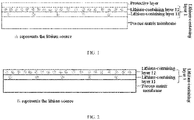
FIG. 1 is a schematic structure diagram of the composite lithium supplement separator in an embodiment of the present application; -
FIG. 2 is a schematic structure diagram of the lithium supplement separator in Comparative Example 4 of the present application. - Unless defined otherwise, the technical terms used in the embodiments described below have the same meaning as those generally understood by those skilled in the art where the present application belongs. The test reagents used in the embodiments described below are conventional biochemical reagents, unless specified otherwise; and the experimental methods are conventional methods, unless specified otherwise.
- The present application is described in detail below by combining with the embodiments and drawings.
- As shown in the
FIG. 1 , the composite lithium supplement separator had a porous matrix membrane (PP film, 9 µm); a lithium-containinglayer 1 was arranged at one side of the matrix membrane, and the lithium-containinglayer 1 consisted of a lithium-containinglayer 11 and a lithium-containinglayer 12. In the lithium-containinglayer 11 close to the matrix membrane, the lithium source had a mass proportion of 10% and a thickness of 2 µm, and in the lithium-containinglayer 12 away from the porous matrix membrane, the lithium source had a mass proportion of 50% and a thickness of 2 µm; an inorganic ceramic protective layer was further arranged on the surface of the lithium-containing layer, with a thickness of 2 µm and a porosity of 30%. - 1) A method for preparing the composite lithium supplement separator includes the following steps.
- a) Preparation and coating of the lithium-containing
layer 11 slurry
The lithium powder SLMP, styrene-butadiene rubber, silicon dioxide and NMP (N-methyl pyrrolidone) were proportioned according to 1:2:7:10, and mixed uniformly to give the lithium supplement slurry; the lithium supplement slurry was coated on the PP porous film (using gravure printing process) to form the lithium-containinglayer 11 with 2 µm thickness at one side of the matrix membrane. - b) Preparation and coating of the lithium-containing
layer 12 slurry
The lithium powder SLMP, styrene-butadiene rubber, boehmite and NMP were proportioned according to 5:1:4:10, and mixed uniformly to obtain the lithium supplement slurry; the lithium supplement slurry was coated on the lithium-containing layer 11 (using gravure printing process) to form the lithium-containinglayer 12 with 2 µm thickness on the surface of the lithium-containinglayer 11. - c) Preparation and coating of the ceramic coating slurry
The styrene-butadiene rubber, boehmite (with an average particle size of 0.05 µm), polymethyl methacrylate and NMP were proportioned according to 1:7:2:10, and mixed uniformly to obtain the inorganic ceramic protective layer slurry; the slurry was coated on the lithium-containing layer 12 (using gravure printing process) to form the inorganic protective layer with 2 µm thickness on the surface of the lithium-containinglayer 12.
- a) Preparation and coating of the lithium-containing
- 2) Preparation of a pouch-type secondary battery with a capacity of 50 Ah: NCM811 was the active material for the positive electrode plate, the graphite: SiOx=8:2 was the active material for the negative electrode material, LiPF6/ethylene carbonate (EC) + diethyl carbonate (DEC) (with a volume ratio of 1:1) was the electrolyte, the composite lithium supplement separator described above was selected as the separator, and the lithium-containing layer was arranged facing the negative electrode plate.
- As shown in
FIG. 1 , the composite lithium supplement separator had a porous matrix membrane (PP film, 9 µm); a lithium-containinglayer 1 was arranged at one side of the matrix membrane, and the lithium-containinglayer 1 consisted of a lithium-containinglayer 11 and a lithium-containinglayer 12. In the lithium-containinglayer 11 close to the matrix membrane, the lithium source had a mass proportion of 20% and a thickness of 2 µm, and in the lithium-containinglayer 12 away from the porous matrix membrane, the lithium source had a mass proportion of 60% and a thickness of 3 µm; an inorganic ceramic protective layer was further arranged on the surface of the lithium-containing layer, with a thickness of 1 µm and a porosity of 15%. - 1) A method for preparing the composite lithium supplement separator includes the following steps.
- a) Preparation and coating of the lithium-containing
layer 11 slurry
The lithium supplement material Li2O, PVDF, Al2O3 and NMP were proportioned according to 2:1:7:10, and mixed uniformly to obtain the lithium supplement slurry; the lithium supplement slurry was coated on the PP porous film (using gravure printing process) to form the lithium-containinglayer 11 with 2 µm thickness at one side of the matrix membrane. - b) Preparation and coating of the lithium-containing
layer 12 slurry
The lithium supplement material Li2O, PVDF, Al2O3 and NMP were proportioned according to 6:1:3:10, and mixed uniformly to obtain the lithium supplement slurry; the lithium supplement slurry was coated on the lithium-containing layer 11 (using gravure printing process) to form the lithium-containinglayer 12 with 2 µm thickness on the surface of the lithium-containinglayer 11. - c) Preparation and coating of the ceramic coating slurry
The styrene-butadiene rubber, boehmite (with an average particle size of 0.05 µm), polymethyl methacrylate and NMP were proportioned according to 1:8:1:10, and mixed uniformly to obtain the inorganic ceramic protective layer slurry; the slurry was coated on the lithium-containing layer 12 (using gravure printing process) to form the inorganic protective layer with 1 µm thickness on the surface of the lithium-containinglayer 12.
- a) Preparation and coating of the lithium-containing
- 3) Preparation of a pouch-type secondary battery with a capacity of 50 Ah: NCM622 was the active material for the positive electrode plate, the graphite: SiOx=9:1 was the active material for the negative electrode material, LiPF6/EC+DEC (with a volume ratio of 1:1) was the electrolyte, the composite lithium supplement separator described above was selected as the separator, and the lithium-containing layer was arranged facing the positive electrode plate.
- As shown in the
FIG. 1 , the composite lithium supplement separator had a porous matrix membrane (PE film, 12 µm); a lithium-containinglayer 1 was arranged at one side of the matrix membrane, and the lithium-containinglayer 1 consisted of a lithium-containinglayer 11 and a lithium-containinglayer 12. In the lithium-containinglayer 11 close to the matrix membrane, the lithium source had a mass proportion of 15% and a thickness of 2 µm, and in the lithium-containinglayer 12 away from the porous matrix membrane, the lithium source had a mass proportion of 45% and a thickness of 2 µm; an inorganic ceramic protective layer was further arranged on the surface of the lithium-containing layer, with a thickness of 1 µm and a porosity of 25%. - 1) A method for preparing the composite lithium supplement separator includes the following steps.
- a) Preparation and coating of the lithium-containing
layer 11 slurry
The lithium powder SLMP, styrene-butadiene rubber, silicon dioxide and NMP were proportioned according to 15:20:65:100, and mixed uniformly to obtain the lithium supplement slurry; the lithium supplement slurry was coated on the PP porous film (using gravure printing process) to form the lithium-containinglayer 11 with 2 µm thickness at one side of the matrix membrane. - b) Preparation and coating of the lithium-containing
layer 12 slurry
The lithium powder SLMP, styrene-butadiene rubber, boehmite and NMP were proportioned according to 45:15:40:100, and mixed uniformly to obtain the lithium supplement slurry; the lithium supplement slurry was coated on the lithium-containing layer 11 (using gravure printing process) to form the lithium-containinglayer 12 with 2 µm thickness on the surface of the lithium-containinglayer 11. - c) Preparation and coating of the ceramic coating slurry
The styrene-butadiene rubber, boehmite (with an average particle size of 0.05 µm), polymethyl methacrylate and NMP were proportioned according to 2:6:2:10, and mixed uniformly to obtain the inorganic ceramic protective layer slurry; the slurry was coated on the lithium-containing layer 12 (using gravure printing process) to form the inorganic protective layer with 1 µm thickness on the surface of the lithium-containinglayer 12.
- a) Preparation and coating of the lithium-containing
- 2) Preparation of a pouch-type secondary battery with a capacity of 50 Ah: lithium iron phosphate was the active material for the positive electrode plate, the artificial graphite was the active material for the negative electrode material, LiPF6/EC+DEC (with a volume ratio of 1:1) was the electrolyte, the composite lithium supplement separator described above was selected as the separator, and the lithium-containing layer was arranged facing the negative electrode plate.
- Preparation of a pouch-type secondary battery with a capacity of 50 Ah: NCM811 was the active material for the positive electrode plate, the graphite: SiOx=8:2 was the active material for the negative electrode material, LiPF6/EC+DEC (with a volume ratio of 1:1) was the electrolyte, the PP matrix membrane (9 µm) + ceramic coating (2 µm) + ceramic coating (2 µm) was selected as the separator. The ceramic coating consisted of inorganic boehmite particles, polymethyl methacrylate (the binder) and the styrene-butadiene rubber.
- Preparation of a pouch-type secondary battery with a capacity of 50 Ah: lithium iron phosphate was the active material for the positive electrode plate, the artificial graphite was the active material for the negative electrode material, LiPF6/EC+DEC (with a volume ratio of 1:1) was the electrolyte, the PE matrix membrane (12 µm) + ceramic coating (2 µm) + ceramic coating (3 µm) was selected as the separator. The ceramic coating consisted of inorganic boehmite particles, polymethyl methacrylate (the binder) and the styrene-butadiene rubber.
- Comparative Example 3
- 1) A method for preparing the composite lithium supplement separator includes the following steps.
The lithium powder SLMP, styrene-butadiene rubber and NMP were proportioned according to 3:7:10, and mixed uniformly to obtain the lithium supplement slurry; the lithium supplement slurry was coated on the PP porous film of 9 µm (using gravure printing process) to form the lithium-containing layer with 4 µm thickness at one side of the matrix membrane, so as to give the lithium supplement separator. - 2) Preparation of a pouch-type secondary battery with a capacity of 50 Ah: NCM811 was the active material for the positive electrode plate, the graphite: SiOx=8:2 was the active material for the negative electrode material, LiPF6/EC+DEC (with a volume ratio of 1:1) was the electrolyte, the composite lithium supplement separator described above was selected as the separator, and the lithium-containing layer was arranged facing the negative electrode plate. The ceramic layer consisted of inorganic boehmite particles, polymethyl methacrylate (the binder) and the styrene-butadiene rubber.
- As shown in the
FIG. 2 , the composite lithium supplement separator had a porous matrix membrane (PP film, 9 µm); a lithium-containinglayer 1 was arranged at one side of the matrix membrane, and the lithium-containinglayer 1 consisted of a lithium-containinglayer 11 and a lithium-containinglayer 12. In the lithium-containinglayer 11 close to the matrix membrane, the lithium source had a mass proportion of 10% and a thickness of 2 µm, and in the lithium-containinglayer 12 away from the porous matrix membrane, the lithium source had a mass proportion of 50% and a thickness of 2 µm. - 1) A method for preparing the composite lithium supplement separator includes the following steps.
- a) Preparation and coating of the lithium-containing
layer 11 slurry
The lithium powder SLMP, styrene-butadiene rubber, silicon dioxide and NMP were proportioned according to 1:2:7:10, and mixed uniformly to obtain the lithium supplement slurry; the lithium supplement slurry was coated on the PP porous film (using gravure printing process) to form the lithium-containinglayer 11 with 2 µm thickness at one side of the matrix membrane. - b) Preparation and coating of the lithium-containing
layer 12 slurry
The lithium powder SLMP, styrene-butadiene rubber, boehmite and NMP were proportioned according to 5:1:4:10, and mixed uniformly to give the lithium supplement slurry; the lithium supplement slurry was coated on the lithium-containing layer 11 (using gravure printing process) to form the lithium-containinglayer 12 with 2 µm thickness on the surface of the lithium-containinglayer 11.
- a) Preparation and coating of the lithium-containing
- 2) Preparation of a pouch-type secondary battery with a capacity of 50 Ah: NCM811 was the active material for the positive electrode plate, the graphite: SiOx=8:2 was the active material for the negative electrode material, LiPF6/EC+DEC (with a volume ratio of 1:1) was the electrolyte, the composite lithium supplement separator described above was selected as the separator, and the lithium-containing layer was arranged facing the negative electrode plate.
- The performance of the examples and comparative examples was tested, and the specific test items, methods and the analysis of test result are described below.
1) Energy density test
The battery cell was charged to 4.2 V at 0.33 C by constant current-constant voltage charging with a cut-off current of 0.05 C; then the battery cell was discharged to 2.5 V at 0.33 C, and the discharge energy was recorded in this step. The battery cell was weighed, and its weight value was recorded. In the end, the energy density of the battery cell = 0.33 C discharge energy / weight of the battery cell.
2) Direct current (DC) internal resistance test - a) State of charge (SOC) adjustment: the battery cell was subjected to standing at 25°C for 2h, and then charged to 4.2 V at 0.33 C by constant current-constant voltage charging with a cut-off current of 0.05 C; then the battery cell was discharged to 2.5 V at 0.33 C, and the discharge capacity (Co) was recorded in this step; then the battery cell was charged to 50% Co at 0.33 C. In the end, the battery cell was subjected to standing for 3 h. The Vo of the final battery cell was recorded.
- b) DC internal resistance test: after SOC adjustment was completed, the battery cell was discharge at 1 C rate for 15 s, and the end voltage Vi was recorded. DC internal resistance = (Vo-Vi)/50∗1000.
- The present application provides a composite lithium supplement separator and a secondary battery thereof, which may effectively compensate for the irreversible active lithium loss during the initial charge without additional lithium supplement on the surface of the positive or negative electrode plate, thereby significantly improving the energy density and cycle life of the lithium ion secondary battery. Secondly, the lithium-containing layer of the composite separator in the present application has the lithium source of gradient distribution, and has a relatively low active lithium content at the side close to the surface of matrix membrane, which may effectively reduce the contact area of lithium metal powder or lithium-containing compounds with the matrix membrane, reduce the risk of possible blockage of the micro-pores of the matrix membrane and thus improve the battery cell performance. Additionally, such lithium-containing layer includes a lithium source, an inorganic ceramic and an organic binder. The addition of inorganic ceramic may significantly improve the strength of lithium-containing layer, and after the lithium source is consumed, such layer can still be used as a high-temperature resistant layer to improve the safety performance of battery cell. Finally, the introduction of the inorganic ceramic protective layer, which is continuously distributed, on the lithium-containing surface may greatly avoid direct contact between the lithium metal powder or lithium-containing compounds and the external environment, increasing the availability of lithium source; moreover, when the lithium source is lithium powder, the continuous protective layer can also be used as a transition layer to effectively control the active lithium to be uniformly enclosed in the electrode plate, avoiding the local overheating problem of the battery caused by the too fast reaction rate.
- The foregoing is only the preferred embodiments of the present application and is not intended to limit the present application. The scope of the present application is limited by the appended claims.
3) Cycle life test
The battery cell was charged to 4.2 V at 0.33 C by constant current-constant voltage charging with a cut-off current of 0.05 C; then the battery cell was discharged to 2.5 V at 0.33 C. The charge-discharge cycles were continuously performed according to the above step until the capacity of the battery cell reduced to 80% of the initial capacity. The actual cycle number of the battery cell was recorded.
4) Analysis of the test result
As can be seen from Table 1, for NCM ternary batteries, by adopting the lithium supplement separator in Example 1 of the present application, rather than the separator without lithium supplement in Comparative Example 1, the lithium supplement separator with non-gradient lithium source in Comparative Example 3 or the lithium supplement separator without protective layer in Comparative Example 4, the energy density of the battery cell was significantly improved, the DC internal resistance of the battery cell was reduced, and the cycle life of the battery cell was also significantly improved. For batteries of lithium iron phosphate system, by adopting the lithium supplement separator in Example 3 of the present application, rather than the separator without lithium supplement in Comparative Example 2, the energy density of the battery cell was significantly improved, the DC internal resistance of the battery cell was reduced, and the cycle life of the battery cell was also significantly improved
| Term | Energy density (Wh/kg) | DC internal resistance (mohm, 50% SOC, 1C, 15s, 25°C) | Cycle number (1C/1C, 25°C reducing to 80% SOH (State of health)) |
| Example 1 | 290 | 2.35 | 1500 |
| Example 2 | 275 | 2.39 | 1500 |
| Example 3 | 200 | 2.48 | >5000 |
| Comparative Example 1 | 270 | 2.68 | 700 |
| Comparative Example 2 | 190 | 2.69 | 3000 |
| Comparative Example 3 | 275 | 2.65 | 800 |
| Comparative Example 4 | 280 | 2.55 | 800 |
Claims (11)
- A composite lithium supplement separator, comprising a porous matrix membrane, wherein a lithium-containing layer is arranged at one side of the porous matrix membrane, and the lithium-containing layer comprises a lithium source, an inorganic ceramic powder and a binder, and the lithium source has a gradient distribution in thickness direction of the lithium-containing layer, and has a relatively low mass proportion on the side close to the surface of the porous matrix membrane and a relatively high mass proportion on the side away from the surface of the porous matrix membrane.
- The composite lithium supplement separator according to claim 1, wherein a percentage of the lithium source mass in the total mass of lithium-containing layer is 0 to 80%, and a mass ratio of the binder to the inorganic ceramic powder is 1:0.5-10; the lithium source is entirely, or partially at least, enclosed in the binder and the inorganic ceramic.
- The composite lithium supplement separator according to claim 1 or 2, wherein a protective layer is further arranged on the surface of the lithium-containing layer away from the porous matrix membrane, and the protective layer is continuously distributed on the surface of the lithium-containing layer, and has a porosity of 10% to 50%, optionally 15% to 30%; the protective layer is an inorganic ceramic layer with a thickness of 0.1 µm to 5 µm,optionally 0.2 µm to 2 µm.
- The composite lithium supplement separator according to claim 3, wherein the protective layer has a porosity of 15% to 30%;
optionally, the protective layer has a thickness of 0.2 µm to 2 µm. - The composite lithium supplement separator according to any one of claims 1 to 4, wherein the lithium source is a lithium metal powder, optionally SLMP
- The composite lithium supplement separator according to any one of claims 1 to 4, wherein the lithium source is a lithium-containing compound, selecting from at least one of Li2NiO2, Li2CuO2, Li6CoO4, Li5FeO4, Li6MnO4, Li2MoO3, Li3N, Li2O, LiOH and Li2CO3.
- The composite lithium supplement separator according to any one of claims 1 to 4, wherein the porous matrix membrane is selected from any one or a combination of at least two of polyethylene, polypropylene, polyvinylidene difluoride, aramid, polyacrylonitrile, polyimide, polyamide, polyester and natural fiber.
- The composite lithium supplement separator according to any one of claims 1 to 4, wherein the inorganic ceramic powder is selected from any one or a combination of at least two of alumina trioxide, silicon dioxide, titanium dioxide, zirconium dioxide, tin dioxide, zinc oxide, calcium oxide, magnesium oxide, magnesium nitride and boehmite.
- The composite lithium supplement separator according to any one of claims 1 to 4, wherein the protective layer comprises inorganic ceramic particles and a polymer binder, and the inorganic ceramic particles are selected from any one or a combination of at least two of aluminum oxides, magnesium oxides, calcium oxides and zirconium oxides, and have a particle size of 0.02 µm to 3 µm, optionally 0.05 µm to 1 µm.
- The composite lithium supplement separator according to any one of claims 1 to 4, wherein the lithium-containing layer has a composite layer structure or a multilayer structure of which the lithium source concentration has a continuous and gradient distribution, and the lithium-containing layer with multilayer structure is formed by multiple coating.
- A lithium ion secondary battery, comprising a positive electrode plate, a negative electrode plate, a separator arranged between the positive electrode plate and the negative electrode plate at intervals, an electrolyte and a case, wherein the separator is the composite lithium supplement separator according to any one of claims 1 to 10, wherein when a lithium-containing compound is selected as the lithium source, the lithium-containing layer of the composite lithium supplement separator is arranged facing the positive electrode plate; when a lithium powder is selected as the lithium source, the lithium-containing layer of the composite lithium supplement separator is arranged facing the negative electrode plate.
Applications Claiming Priority (2)
| Application Number | Priority Date | Filing Date | Title |
|---|---|---|---|
| CN202110271400.6A CN113078417B (en) | 2021-03-12 | 2021-03-12 | A composite lithium supplementing separator and its secondary battery |
| PCT/CN2021/112378 WO2022188355A1 (en) | 2021-03-12 | 2021-08-13 | Composite lithium compensation diaphragm and secondary battery comprising same |
Publications (1)
| Publication Number | Publication Date |
|---|---|
| EP4117104A1 true EP4117104A1 (en) | 2023-01-11 |
Family
ID=76612299
Family Applications (1)
| Application Number | Title | Priority Date | Filing Date |
|---|---|---|---|
| EP21929822.1A Withdrawn EP4117104A1 (en) | 2021-03-12 | 2021-08-13 | Composite lithium compensation diaphragm and secondary battery comprising same |
Country Status (3)
| Country | Link |
|---|---|
| EP (1) | EP4117104A1 (en) |
| CN (1) | CN113078417B (en) |
| WO (1) | WO2022188355A1 (en) |
Cited By (6)
| Publication number | Priority date | Publication date | Assignee | Title |
|---|---|---|---|---|
| US12278344B2 (en) | 2022-12-16 | 2025-04-15 | 24M Technologies, Inc. | Systems and methods for minimizing and preventing dendrite formation in electrochemical cells |
| EP4564575A3 (en) * | 2023-11-30 | 2025-06-18 | BYD Company Limited | Separator and preparation method thereof, battery, and electric device |
| US12401089B2 (en) | 2021-04-29 | 2025-08-26 | 24M Technologies, Inc. | Electrochemical cells with multiple separators, and methods of producing the same |
| US12431545B1 (en) * | 2024-03-26 | 2025-09-30 | 24M Technologies, Inc. | Systems and methods for minimizing and preventing dendrite formation in electrochemical cells |
| WO2025207438A1 (en) * | 2024-03-26 | 2025-10-02 | 24M Technologies, Inc. | Systems and methods for minimizing and preventing dendrite formation in electrochemical cells |
| US12567651B2 (en) | 2013-04-29 | 2026-03-03 | 24M Technologies, Inc. | Nanoporous composite separators with increased thermal conductivity |
Families Citing this family (22)
| Publication number | Priority date | Publication date | Assignee | Title |
|---|---|---|---|---|
| CN113078417B (en) * | 2021-03-12 | 2022-10-18 | 天津市捷威动力工业有限公司 | A composite lithium supplementing separator and its secondary battery |
| CN113871725B (en) * | 2021-09-28 | 2024-09-20 | 洛阳储变电系统有限公司 | Non-negative electrode lithium secondary battery |
| CN114497463A (en) * | 2021-12-20 | 2022-05-13 | 青岛中科赛锂达新能源技术合伙企业(有限合伙) | Method for continuously supplementing lithium to negative electrode of lithium ion battery |
| WO2023137624A1 (en) * | 2022-01-19 | 2023-07-27 | 宁德时代新能源科技股份有限公司 | Secondary battery, battery module, battery pack, and electrical apparatus |
| CN114552125B (en) * | 2022-04-26 | 2022-08-16 | 华中科技大学 | Nondestructive lithium supplement composite diaphragm and preparation method and application thereof |
| CN114725620A (en) * | 2022-04-29 | 2022-07-08 | 欣旺达电动汽车电池有限公司 | Lithium battery lithium supplementing diaphragm, preparation method thereof and lithium battery |
| CN115051110B (en) * | 2022-06-28 | 2023-03-24 | 楚能新能源股份有限公司 | Lithium supplement composite isolation membrane, preparation method thereof, lithium supplement device and application |
| CN115133221B (en) * | 2022-06-28 | 2023-04-07 | 楚能新能源股份有限公司 | Lithium supplement composite isolation membrane, preparation method thereof, lithium supplement device and application |
| CN115117560A (en) * | 2022-06-28 | 2022-09-27 | 楚能新能源股份有限公司 | Lithium-supplementing composite isolating membrane and preparation method and application thereof |
| CN115051109A (en) * | 2022-06-28 | 2022-09-13 | 楚能新能源股份有限公司 | Lithium-supplementing composite isolating membrane and preparation method and application thereof |
| CN115832208B (en) * | 2022-07-08 | 2024-10-11 | 宁德时代新能源科技股份有限公司 | Electrode sheet and preparation method thereof, secondary battery, battery module, battery pack and power-consuming device |
| CN115332725B (en) * | 2022-08-22 | 2024-06-21 | 珠海冠宇动力电池有限公司 | A separator and a battery |
| CN115275522B (en) * | 2022-09-27 | 2023-03-24 | 宁德卓高新材料科技有限公司 | Lithium-supplementing diaphragm and preparation method and application thereof |
| CN115473008B (en) * | 2022-09-28 | 2023-08-01 | 东莞正力新能电池技术有限公司 | Lithium supplementing type isolating film, battery core and secondary battery |
| CN115441045B (en) * | 2022-10-09 | 2025-11-07 | 广东顺德工业设计研究院(广东顺德创新设计研究院) | Organic polymer-inorganic ceramic composite solid electrolyte and preparation method and application thereof |
| CN115632175B (en) * | 2022-11-02 | 2023-12-15 | 江苏正力新能电池技术有限公司 | Negative electrode lithium supplementing quick-charging pole piece and quick-charging battery |
| CN219180543U (en) * | 2023-01-13 | 2023-06-13 | 比亚迪股份有限公司 | Lithium supplementing structure of battery, battery and power utilization device |
| CN118589151A (en) * | 2023-03-03 | 2024-09-03 | 蔚来电池科技(安徽)有限公司 | Electrode assembly and electrochemical device including the same |
| CN116190919A (en) * | 2023-03-22 | 2023-05-30 | 蜂巢能源科技股份有限公司 | A lithium-supplementing composite diaphragm and its preparation method and application |
| CN117691303A (en) * | 2023-12-13 | 2024-03-12 | 重庆太蓝新能源有限公司 | Lithium replenishing layer, separator and preparation method for lithium-ion battery and lithium-ion battery |
| CN120049131B (en) * | 2025-03-11 | 2025-09-16 | 苏州华骞时代新能源科技有限公司 | Lithium battery diaphragm and preparation method thereof |
| CN121355535B (en) * | 2025-12-18 | 2026-03-10 | 阿特斯储能科技有限公司 | Gradient lithium supplementing diaphragm, preparation method thereof and battery |
Family Cites Families (15)
| Publication number | Priority date | Publication date | Assignee | Title |
|---|---|---|---|---|
| CN203574049U (en) | 2013-10-28 | 2014-04-30 | 珠海光宇电池有限公司 | Negative electrode piece and diaphragm of lithium ion battery |
| US20150188109A1 (en) * | 2013-12-30 | 2015-07-02 | Hyundai Motor Company | Separator for lithium-sulfur secondary battery |
| CN105932206B (en) * | 2016-07-13 | 2020-08-28 | 洛阳力容新能源科技有限公司 | Lithium-supplementing composite diaphragm, preparation method and application |
| US20200395585A1 (en) * | 2017-08-07 | 2020-12-17 | Sion Power Corporation | Lithium-coated separators and electrochemical cells comprising the same |
| CN108281664A (en) * | 2018-01-22 | 2018-07-13 | 欣旺达电子股份有限公司 | Negative current collector, lithium ion battery and lithium-ion battery system mend lithium method |
| CN110299496B (en) * | 2018-03-23 | 2021-09-21 | 比亚迪股份有限公司 | Battery diaphragm, power battery and vehicle |
| CN109755448A (en) * | 2018-12-28 | 2019-05-14 | 北京中能东道绿驰科技有限公司 | A kind of lithium battery diaphragm and preparation method thereof with benefit lithium coating |
| CN109950459A (en) * | 2019-03-26 | 2019-06-28 | 广东九州太阳能科技有限公司 | Lithium-rich lithium ion battery diaphragm |
| CN110085792A (en) * | 2019-04-28 | 2019-08-02 | 湖北锂诺新能源科技有限公司 | A kind of novel lithium battery isolation film and the lithium ion battery containing the isolation film |
| CN110676420B (en) * | 2019-10-30 | 2022-04-12 | 复阳固态储能科技(溧阳)有限公司 | Lithium ion battery's lithium diaphragm of mending |
| CN111554911A (en) * | 2020-05-19 | 2020-08-18 | 溧阳天目先导电池材料科技有限公司 | Lithium battery cathode material with gradient distribution of lithium content, preparation method and lithium battery |
| CN111816822B (en) * | 2020-06-18 | 2022-03-01 | 中国科学院化学研究所 | Functional lithium-supplementing diaphragm and preparation method thereof |
| CN111883725A (en) * | 2020-07-14 | 2020-11-03 | 三门峡猛狮新能源科技有限公司 | Lithium ion battery lithium supplement ceramic diaphragm and preparation method thereof |
| CN112133874A (en) * | 2020-10-14 | 2020-12-25 | 昆山宝创新能源科技有限公司 | Lithium battery and application thereof |
| CN113078417B (en) * | 2021-03-12 | 2022-10-18 | 天津市捷威动力工业有限公司 | A composite lithium supplementing separator and its secondary battery |
-
2021
- 2021-03-12 CN CN202110271400.6A patent/CN113078417B/en active Active
- 2021-08-13 WO PCT/CN2021/112378 patent/WO2022188355A1/en not_active Ceased
- 2021-08-13 EP EP21929822.1A patent/EP4117104A1/en not_active Withdrawn
Cited By (16)
| Publication number | Priority date | Publication date | Assignee | Title |
|---|---|---|---|---|
| US12567651B2 (en) | 2013-04-29 | 2026-03-03 | 24M Technologies, Inc. | Nanoporous composite separators with increased thermal conductivity |
| US12401089B2 (en) | 2021-04-29 | 2025-08-26 | 24M Technologies, Inc. | Electrochemical cells with multiple separators, and methods of producing the same |
| US12401088B2 (en) | 2021-04-29 | 2025-08-26 | 24M Technologies, Inc. | Electrochemical cells with multiple separators, and methods of producing the same |
| US12407065B2 (en) | 2021-04-29 | 2025-09-02 | 24M Technologies, Inc. | Electrochemical cells with multiple separators, and methods of producing the same |
| US12456780B2 (en) | 2021-04-29 | 2025-10-28 | 24M Technologies, Inc. | Electrochemical cells with multiple separators, and methods of producing the same |
| US12500278B2 (en) | 2022-12-16 | 2025-12-16 | 24M Technologies, Inc. | Systems and methods for minimizing and preventing dendrite formation in electrochemical cells |
| US12322763B2 (en) | 2022-12-16 | 2025-06-03 | 24M Technologies, Inc. | Systems and methods for minimizing and preventing dendrite formation in electrochemical cells |
| US12322762B2 (en) | 2022-12-16 | 2025-06-03 | 24M Technologies, Inc. | Systems and methods for minimizing and preventing dendrite formation in electrochemical cells |
| US12334518B1 (en) | 2022-12-16 | 2025-06-17 | 24M Technologies, Inc. | Systems and methods for minimizing and preventing dendrite formation in electrochemical cells |
| US12278344B2 (en) | 2022-12-16 | 2025-04-15 | 24M Technologies, Inc. | Systems and methods for minimizing and preventing dendrite formation in electrochemical cells |
| US12580231B2 (en) | 2022-12-16 | 2026-03-17 | 24M Technologies, Inc. | Systems and methods for minimizing and preventing dendrite formation in electrochemical cells |
| US12476288B2 (en) | 2022-12-16 | 2025-11-18 | 24M Technologies, Inc. | Systems and methods for minimizing and preventing dendrite formation in electrochemical cells |
| EP4564575A3 (en) * | 2023-11-30 | 2025-06-18 | BYD Company Limited | Separator and preparation method thereof, battery, and electric device |
| US12542306B2 (en) | 2024-03-26 | 2026-02-03 | 24M Technologies, Inc. | Systems and methods for minimizing and preventing dendrite formation in electrochemical cells |
| WO2025207438A1 (en) * | 2024-03-26 | 2025-10-02 | 24M Technologies, Inc. | Systems and methods for minimizing and preventing dendrite formation in electrochemical cells |
| US12431545B1 (en) * | 2024-03-26 | 2025-09-30 | 24M Technologies, Inc. | Systems and methods for minimizing and preventing dendrite formation in electrochemical cells |
Also Published As
| Publication number | Publication date |
|---|---|
| CN113078417A (en) | 2021-07-06 |
| WO2022188355A1 (en) | 2022-09-15 |
| CN113078417B (en) | 2022-10-18 |
Similar Documents
| Publication | Publication Date | Title |
|---|---|---|
| EP4117104A1 (en) | Composite lithium compensation diaphragm and secondary battery comprising same | |
| JP7254875B2 (en) | Positive electrode active material for lithium secondary battery and lithium secondary battery containing the same | |
| US12300851B2 (en) | Separator, preparation method therefor and related secondary battery, battery module, battery pack and device | |
| US12300850B2 (en) | Separator, secondary battery comprising same and related battery module, battery pack and device | |
| US11990616B2 (en) | Positive electrode active material for lithium secondary battery and lithium secondary battery including the same | |
| EP4131509A1 (en) | Negative pole piece and electrochemical device containing same | |
| WO2023273652A1 (en) | Diaphragm, lithium-ion battery, battery module, battery pack and power device | |
| CN115148960A (en) | Negative pole piece, electrochemical device comprising same and electronic device | |
| US20230017049A1 (en) | Separator, preparation method therefor and related secondary battery, battery module, battery pack and device | |
| KR102886639B1 (en) | Method for preparing secondary battery | |
| CN116097465B (en) | A negative electrode, an electrochemical device, and an electronic device. | |
| EP4550440A1 (en) | Electrochemical device and manufacturing method therefor, and electronic device | |
| US20040234856A1 (en) | Lithium ion secondary battery | |
| KR102918518B1 (en) | Method for manufacturing secondary battery | |
| CN113451586A (en) | Electrode plate of secondary battery, secondary battery and preparation method of secondary battery | |
| CN113161532A (en) | Negative electrode active material, and negative electrode, secondary battery, and electronic device including same | |
| EP3890089A1 (en) | Lithium metal battery | |
| WO2025123962A1 (en) | Secondary battery and device | |
| KR102766500B1 (en) | Battery system, method for using the same, and battery pack comprising the same | |
| EP4084127B1 (en) | Electrochemical device and electronic equipment | |
| WO2023160181A1 (en) | Electrochemical device and electronic device | |
| CN115763746B (en) | Coated ternary positive electrode material, and preparation method and application thereof | |
| EP4322244A1 (en) | Negative electrode sheet, secondary battery, battery module, battery pack, and electric apparatus | |
| CN215644574U (en) | Electrode plate of secondary battery and secondary battery | |
| US20250273664A1 (en) | Negative electrode plate, battery, and electric apparatus |
Legal Events
| Date | Code | Title | Description |
|---|---|---|---|
| STAA | Information on the status of an ep patent application or granted ep patent |
Free format text: STATUS: THE INTERNATIONAL PUBLICATION HAS BEEN MADE |
|
| PUAI | Public reference made under article 153(3) epc to a published international application that has entered the european phase |
Free format text: ORIGINAL CODE: 0009012 |
|
| STAA | Information on the status of an ep patent application or granted ep patent |
Free format text: STATUS: REQUEST FOR EXAMINATION WAS MADE |
|
| 17P | Request for examination filed |
Effective date: 20221004 |
|
| AK | Designated contracting states |
Kind code of ref document: A1 Designated state(s): AL AT BE BG CH CY CZ DE DK EE ES FI FR GB GR HR HU IE IS IT LI LT LU LV MC MK MT NL NO PL PT RO RS SE SI SK SM TR |
|
| DAV | Request for validation of the european patent (deleted) | ||
| DAX | Request for extension of the european patent (deleted) | ||
| STAA | Information on the status of an ep patent application or granted ep patent |
Free format text: STATUS: THE APPLICATION IS DEEMED TO BE WITHDRAWN |
|
| 18D | Application deemed to be withdrawn |
Effective date: 20250301 |