EP4116024A1 - Machine learning device, prediction device, and control device - Google Patents
Machine learning device, prediction device, and control device Download PDFInfo
- Publication number
- EP4116024A1 EP4116024A1 EP21764795.7A EP21764795A EP4116024A1 EP 4116024 A1 EP4116024 A1 EP 4116024A1 EP 21764795 A EP21764795 A EP 21764795A EP 4116024 A1 EP4116024 A1 EP 4116024A1
- Authority
- EP
- European Patent Office
- Prior art keywords
- wire
- electrode line
- electrical discharge
- cut electrical
- machining
- Prior art date
- Legal status (The legal status is an assumption and is not a legal conclusion. Google has not performed a legal analysis and makes no representation as to the accuracy of the status listed.)
- Pending
Links
Images




Classifications
-
- G—PHYSICS
- G05—CONTROLLING; REGULATING
- G05B—CONTROL OR REGULATING SYSTEMS IN GENERAL; FUNCTIONAL ELEMENTS OF SUCH SYSTEMS; MONITORING OR TESTING ARRANGEMENTS FOR SUCH SYSTEMS OR ELEMENTS
- G05B19/00—Program-control systems
- G05B19/02—Program-control systems electric
- G05B19/18—Numerical control [NC], i.e. automatically operating machines, in particular machine tools, e.g. in a manufacturing environment, so as to execute positioning, movement or co-ordinated operations by means of program data in numerical form
- G05B19/406—Numerical control [NC], i.e. automatically operating machines, in particular machine tools, e.g. in a manufacturing environment, so as to execute positioning, movement or co-ordinated operations by means of program data in numerical form characterised by monitoring or safety
- G05B19/4065—Monitoring tool breakage, life or condition
-
- B—PERFORMING OPERATIONS; TRANSPORTING
- B23—MACHINE TOOLS; METAL-WORKING NOT OTHERWISE PROVIDED FOR
- B23H—WORKING OF METAL BY THE ACTION OF A HIGH CONCENTRATION OF ELECTRIC CURRENT ON A WORKPIECE USING AN ELECTRODE WHICH TAKES THE PLACE OF A TOOL; SUCH WORKING COMBINED WITH OTHER FORMS OF WORKING OF METAL
- B23H7/00—Processes or apparatus applicable to both electrical discharge machining and electrochemical machining
- B23H7/14—Electric circuits specially adapted therefor, e.g. power supply
- B23H7/20—Electric circuits specially adapted therefor, e.g. power supply for program control, e.g. adaptive
-
- G—PHYSICS
- G05—CONTROLLING; REGULATING
- G05B—CONTROL OR REGULATING SYSTEMS IN GENERAL; FUNCTIONAL ELEMENTS OF SUCH SYSTEMS; MONITORING OR TESTING ARRANGEMENTS FOR SUCH SYSTEMS OR ELEMENTS
- G05B13/00—Adaptive control systems, i.e. systems automatically adjusting themselves to have a performance which is optimum according to some preassigned criterion
- G05B13/02—Adaptive control systems, i.e. systems automatically adjusting themselves to have a performance which is optimum according to some preassigned criterion electric
- G05B13/0265—Adaptive control systems, i.e. systems automatically adjusting themselves to have a performance which is optimum according to some preassigned criterion electric the criterion being a learning criterion
-
- G—PHYSICS
- G06—COMPUTING OR CALCULATING; COUNTING
- G06N—COMPUTING ARRANGEMENTS BASED ON SPECIFIC COMPUTATIONAL MODELS
- G06N3/00—Computing arrangements based on biological models
- G06N3/02—Neural networks
- G06N3/08—Learning methods
- G06N3/09—Supervised learning
-
- B—PERFORMING OPERATIONS; TRANSPORTING
- B23—MACHINE TOOLS; METAL-WORKING NOT OTHERWISE PROVIDED FOR
- B23H—WORKING OF METAL BY THE ACTION OF A HIGH CONCENTRATION OF ELECTRIC CURRENT ON A WORKPIECE USING AN ELECTRODE WHICH TAKES THE PLACE OF A TOOL; SUCH WORKING COMBINED WITH OTHER FORMS OF WORKING OF METAL
- B23H7/00—Processes or apparatus applicable to both electrical discharge machining and electrochemical machining
- B23H7/02—Wire-cutting
-
- G—PHYSICS
- G05—CONTROLLING; REGULATING
- G05B—CONTROL OR REGULATING SYSTEMS IN GENERAL; FUNCTIONAL ELEMENTS OF SUCH SYSTEMS; MONITORING OR TESTING ARRANGEMENTS FOR SUCH SYSTEMS OR ELEMENTS
- G05B2219/00—Program-control systems
- G05B2219/30—Nc systems
- G05B2219/33—Director till display
- G05B2219/33034—Online learning, training
-
- G—PHYSICS
- G05—CONTROLLING; REGULATING
- G05B—CONTROL OR REGULATING SYSTEMS IN GENERAL; FUNCTIONAL ELEMENTS OF SUCH SYSTEMS; MONITORING OR TESTING ARRANGEMENTS FOR SUCH SYSTEMS OR ELEMENTS
- G05B2219/00—Program-control systems
- G05B2219/30—Nc systems
- G05B2219/33—Director till display
- G05B2219/33044—Supervised learning with second artificial neural network
-
- G—PHYSICS
- G05—CONTROLLING; REGULATING
- G05B—CONTROL OR REGULATING SYSTEMS IN GENERAL; FUNCTIONAL ELEMENTS OF SUCH SYSTEMS; MONITORING OR TESTING ARRANGEMENTS FOR SUCH SYSTEMS OR ELEMENTS
- G05B2219/00—Program-control systems
- G05B2219/30—Nc systems
- G05B2219/37—Measurements
- G05B2219/37256—Wear, tool wear
-
- G—PHYSICS
- G05—CONTROLLING; REGULATING
- G05B—CONTROL OR REGULATING SYSTEMS IN GENERAL; FUNCTIONAL ELEMENTS OF SUCH SYSTEMS; MONITORING OR TESTING ARRANGEMENTS FOR SUCH SYSTEMS OR ELEMENTS
- G05B2219/00—Program-control systems
- G05B2219/30—Nc systems
- G05B2219/45—Nc applications
- G05B2219/45221—Edm, electrical discharge machining, electroerosion, ecm, chemical
-
- G—PHYSICS
- G05—CONTROLLING; REGULATING
- G05B—CONTROL OR REGULATING SYSTEMS IN GENERAL; FUNCTIONAL ELEMENTS OF SUCH SYSTEMS; MONITORING OR TESTING ARRANGEMENTS FOR SUCH SYSTEMS OR ELEMENTS
- G05B2219/00—Program-control systems
- G05B2219/30—Nc systems
- G05B2219/50—Machine tool, machine tool null till machine tool work handling
- G05B2219/50308—Estimate wear from machining data and conditions
-
- Y—GENERAL TAGGING OF NEW TECHNOLOGICAL DEVELOPMENTS; GENERAL TAGGING OF CROSS-SECTIONAL TECHNOLOGIES SPANNING OVER SEVERAL SECTIONS OF THE IPC; TECHNICAL SUBJECTS COVERED BY FORMER USPC CROSS-REFERENCE ART COLLECTIONS [XRACs] AND DIGESTS
- Y02—TECHNOLOGIES OR APPLICATIONS FOR MITIGATION OR ADAPTATION AGAINST CLIMATE CHANGE
- Y02P—CLIMATE CHANGE MITIGATION TECHNOLOGIES IN THE PRODUCTION OR PROCESSING OF GOODS
- Y02P90/00—Enabling technologies with a potential contribution to greenhouse gas [GHG] emissions mitigation
- Y02P90/02—Total factory control, e.g. smart factories, flexible manufacturing systems [FMS] or integrated manufacturing systems [IMS]
Definitions
- the present invention pertains to a machine learning device, a prediction device, and a control device.
- a wire-cut electrical discharge machine passes a wire electrode line strung in a Z axis direction through a machining target workpiece and applies a pulse-shaped voltage between the workpiece and the wire electrode line to thereby cause an electric discharge between the workpiece and the wire electrode line and perform machining such as cutting or opening a hole in the workpiece.
- a component hereinafter, may be referred to as a "consumable" such as an ion exchange resin, a power supply die, an electrode line guide roller, as well as the wire electrode line deteriorates in accordance with usage.
- an amount of time (hereinafter, may be referred to as "life") during which usage is possible is set in advance for each consumable, and consumables for which a cumulative usage time period has reached equal to or greater than a predetermined ratio with respect to the life (for example, 80%) are sequentially exchanged.
- Patent Document 1 Japanese Patent No. 5595559
- a degree of deterioration of a consumable changes due to a machining condition (for example, an electric discharge voltage, a type of machining fluid, a fluid pressure for the machining fluid, a machining plate thickness, etc.) for wire-cut electrical discharge machining.
- a machining condition for example, an electric discharge voltage, a type of machining fluid, a fluid pressure for the machining fluid, a machining plate thickness, etc.
- conventional simulations do not take into consider that the degree of deterioration of a consumable changes due to a machining condition. Accordingly, errors occur in estimating an amount of machining time, and it is difficult to predict an accurate remaining life. There is a problem that, in a case where it is not possible to predict accurate remaining life, machining efficiency and machining accuracy drop due to deterioration of each consumable.
- Fig. 1 is a functional block diagram illustrating an example of a functional configuration of a numerical control system according to one embodiment. As illustrated in Fig. 1 , the numerical control system has a control device 10, a wire-cut electrical discharge machine 20, a prediction device 30, and a machine learning device 40.
- the control device 10, the wire-cut electrical discharge machine 20, the prediction device 30, and the machine learning device 40 may be directly connected to each other via a connection interface (not shown).
- the control device 10, the wire-cut electrical discharge machine 20, the prediction device 30, and the machine learning device 40 may also be mutually connected via a network (not shown) such as a local area network (LAN) or the internet.
- the control device 10, the wire-cut electrical discharge machine 20, the prediction device 30, and the machine learning device 40 are each provided with a communication unit (not shown) for mutually communicating via the corresponding connection.
- the control device 10 may include the prediction device 30 and the machine learning device 40.
- the wire-cut electrical discharge machine 20 may include the control device 10.
- the control device 10 is a numerical control device which is publicly known to a person skilled in the art.
- the control device 10 generates an operation command based on control information, and transmits the generated operation command to the wire-cut electrical discharge machine 20.
- the control device 10 controls operation by the wire-cut electrical discharge machine 20.
- the control device 10 also outputs this control information to the prediction device 30.
- control information may include a machining condition for wire-cut electrical discharge machining.
- the machining condition is inputted by a worker via an input device (not shown) such as a touch panel included in the control device 10.
- a machining condition for wire-cut electrical discharge machining may include at least one selected from an electrical discharge output, an amount of machining time, a type of machining fluid, a fluid pressure for the machining fluid, a wire feeding speed, and a workpiece plate thickness in wire-cut electrical discharge machining that is to be performed.
- control device 10 may, for example, accept, via the input device (not shown) in the control device 10, a selection by a worker of consumables such as a wire electrode line, an ion exchange resin, a power supply die, and an electrode line guide roller, and output information pertaining to the selected consumable to the prediction device 30, which is described below.
- the control device 10 may store a list of identification information (hereinafter, also referred to as a "consumable ID”) pertaining to wire electrode lines, ion exchange resins, power supply dies, and electrode line guide rollers that can be selected for the wire-cut electrical discharge machine 20, the list being stored as a consumables data table in a hard disk drive (HDD), etc.
- the control device 10 may output, to the prediction device 30, the consumable IDs for a wire electrode line, an ion exchange resin, a power supply die, and an electrode line guide roller selected by the worker.
- the wire-cut electrical discharge machine 20 is a wire-cut electrical discharge machine that is publicly known to a person skilled in the art, and, based on an operation command from the control device 10, performs wire-cut electrical discharge machining of a workpiece to be machined.
- the wire-cut electrical discharge machine 20 feeds back, to the control device 10, information indicating an operating state based on the operation command from the control device 10.
- the prediction device 30 may obtain the machining condition, which is for wire-cut electrical discharge machining and is included in the control information from the control device 10.
- the prediction device 30 may, for example, be input with consumable IDs for at least a wire electrode line, an ion exchange resin, a power supply die, and an electrode line guide roller from the control device 10, and, based on consumables management tables 352(1) to 352(4) which are described below, obtain consumables information that includes a degree of deterioration at the current time (in other words, before wire-cut electrical discharge machining) for each consumable.
- the prediction device 30 can input the obtain machining condition and consumables information to a trained model provided from the later-described machine learning device 40 to thereby predict a degree of deterioration after the wire-cut electrical discharge machining for the selected wire electrode line, ion exchange resin, power supply die, electrode line guide roller, etc.
- the consumables information may include, for example, the material and thickness of the wire electrode line, the material of the ion exchange resin, the material of the power supply die, and the material of the electrode line guide roller, in addition to the degrees of deterioration at the current time for the wire electrode line, the ion exchange resin, the power supply die, and the electrode line guide roller.
- the material of the wire electrode line is molybdenum, tungsten, or brass, for example.
- the thickness of the wire electrode line is a diameter in the range of 0.1 mm to 0.3 mm, for example.
- the material of the ion exchange resin is something for which a mixing ratio for a cationic resin and an anionic resin is "1:1", “1.3:1", “1:1.5”, etc. Note that a resin that is not a cationic resin or an anionic resin may be mixed in with the ion exchange resin.
- the material of the power supply die is cemented carbide, cermet, or a silver tungsten alloy, for example.
- the electrode line guide roller is urethane or steel, for example.
- a “degree of deterioration of wire electrode line” indicates the degree of fouling or deformation of a wire electrode line used in wire-cut electrical discharge machining by the wire-cut electrical discharge machine 20.
- a brand-new wire electrode line is in the best state with the cross-section thereof having a circular shape, and thus the "degree of deterioration of wire electrode line” thereof is “0%”.
- the "degree of deterioration of wire electrode line” increases due to, for example, sputter adhering to the wire electrode line or the wire electrode line deforming due to heat at a time of electric discharge.
- the "degree of deterioration of wire electrode line” becomes "100%" when it is necessary to exchange the wire electrode line.
- a “degree of deterioration of ion exchange resin” indicates a degree of fouling in an ion exchange resin used in wire-cut electrical discharge machining by the wire-cut electrical discharge machine 20.
- a brand-new ion exchange resin is in the best state and thus the "degree of deterioration of ion exchange resin" thereof is "0%”.
- the "degree of deterioration of ion exchange resin” increases due to impurities such as sputter being included in machining fluid in accordance with wire-cut electrical discharge machining being repeatedly performed.
- the "degree of deterioration of ion exchange resin” becomes "100%" when it is necessary to exchange the ion exchange resin.
- a “degree of deterioration of power supply die” indicates the degree of fouling or deformation of a power supply die used in wire-cut electrical discharge machining by the wire-cut electrical discharge machine 20.
- a brand-new power supply die is in the best state and thus the "degree of deterioration of power supply die" thereof is "0%”.
- the "degree of deterioration of power supply die” increases due to, for example, deformation accompanying contact with a wire electrode line or sputter adhering to the power supply die.
- the "degree of deterioration of power supply die” becomes “100%" when it is necessary to exchange the power supply die.
- a “degree of deterioration of electrode line guide roller” indicates the degree of fouling or deformation of an electrode line guide roller used in wire-cut electrical discharge machining by the wire-cut electrical discharge machine 20.
- a brand-new electrode line guide roller is in the best state, and thus the "degree of deterioration of electrode line guide roller” thereof is “0%”.
- the "degree of deterioration of electrode line guide roller” increases due to, for example, deformation accompanying friction between the electrode line guide roller and a wire electrode line or sputter adhering to the electrode line guide roller.
- the "degree of deterioration of electrode line guide roller” becomes “100%" when it is necessary to exchange the electrode line guide roller.
- wire electrode line, ion exchange resin, power supply die, and electrode line guide roller degrees of deterioration are given as percentage values in a range of "0%” to “100%", but may be, for example, values in a range from "0" to "1".
- the machine learning device 40 obtains in advance input data that includes a machining condition for arbitrary wire-cut electrical discharge machining with respect to arbitrary workpiece by arbitrary wire-cut electrical discharge machine, and consumables information that includes degrees of deterioration before machining for a wire electrode line, an ion exchange resin, a power supply die, and an electrode line guide roller which were used in the arbitrarily-defined wire-cut electrical discharge machining.
- the machine learning device 40 also obtains, as a label (correct answer), data indicating the degrees of deterioration for the wire electrode line, ion exchange resin, power supply die, and electrode line guide roller after the wire-cut electrical discharge machining in accordance with the machining condition in the obtained input data.
- the machine learning device 40 constructs a trained model, which is described below, by performing supervised learning using training data which is a group of obtained input data and labels.
- the machine learning device 40 can provide the constructed trained model to the prediction device 30.
- the machine learning device 40 will be described in detail.
- the machine learning device 40 has an input data obtaining unit 401, a label obtaining unit 402, a learning unit 403, and a storage unit 404.
- the input data obtaining unit 401 obtains, as input data, a machining condition for arbitrary wire-cut electrical discharge machining with respect to arbitrary workpiece by arbitrary wire-cut electrical discharge machine and consumables information that includes degrees of deterioration for a wire electrode line, etc. before the wire-cut electrical discharge machining in accordance with the machining condition.
- This input data is obtained from the control device 10, etc. via the communication unit (not shown).
- the machining condition includes an electrical discharge output, an amount of machining time, a type of machining fluid, a fluid pressure for the machining fluid, a wire feeding speed, a workpiece plate thickness, etc.
- the consumables information includes, for example, the material of the wire electrode line, the thickness of the wire electrode line, the material of the ion exchange resin, the material of the power supply die, and the material of the electrode line guide roller, in addition to degrees of deterioration for the wire electrode line, the ion exchange resin, the power supply die, and the electrode line guide roller before wire-cut electrical discharge machining.
- the input data obtaining unit 401 outputs obtained input data to the storage unit 404.
- the label obtaining unit 402 obtains, as label data (correct answer data), data indicating the degrees of deterioration for the wire electrode line, ion exchange resin, power supply die, and electrode line guide roller after the wire-cut electrical discharge machining in accordance with the machining condition included the input data.
- the label obtaining unit 402 outputs obtained label data to the storage unit 404.
- a label is a value in the range of "0%” to "100%" as described above.
- the learning unit 403 accepts a group of the above-described input data and a label as training data and uses the accepted training data to perform supervised learning, to thereby construct a trained model 351 that, based on a machining condition for wire-cut electrical discharge machining to be performed on a machining target workpiece and consumables information including degrees of deterioration at the current time for the selected wire electrode line, etc., predicts degrees of deterioration for the wire electrode line, etc. after the wire-cut electrical discharge machining.
- the learning unit 403 provides the constructed trained model 351 to the prediction device 30.
- training data for which the degrees of deterioration for the wire electrode line, ion exchange resin, power supply die, and electrode line guide roller before and after wire-cut electrical discharge machining has been evaluated by an expert, is created for each combination of every possible machining condition for wire-cut electrical discharge machining and every possible wire electrode line, ion exchange resin, power supply die, and electrode line guide roller.
- training data is obtained from each control device 10 at various locations where the control devices 10 are actually operated, such as factories belonging to customers.
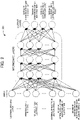
- Fig. 2 is a view that illustrates an example of a trained model 351 provided to the prediction device 30 in Fig. 1 .
- the trained model 351 exemplifies a multi-layer neural network that sets a machining condition for wire-cut electrical discharge machining to be performed and consumables information including degrees of deterioration at the current time for a selected wire electrode line, ion exchange resin, power supply die, and electrode line guide roller as an input layer, and sets data indicating the degrees of deterioration for the wire electrode line, ion exchange resin, power supply die, and electrode line guide roller after the wire-cut electrical discharge machining in accordance with this machining condition as an output layer.
- the machining condition for the wire-cut electrical discharge machining to be performed includes an electrical discharge output, an amount of machining time, a type of machining fluid, a fluid pressure for the machining fluid, a wire feeding speed, a workpiece plate thickness, etc.
- the consumables information includes, for example, the material of the wire electrode line, the thickness of the wire electrode line, the material of the ion exchange resin, the material of the power supply die, and the material of the electrode line guide roller, in addition to degrees of deterioration at the current time for the wire electrode line, the ion exchange resin, the power supply die, and the electrode line guide roller.
- the learning unit 403 may further perform supervised learning with respect to the trained model 351 to thereby update the constructed trained model 351.
- the machine learning device 40 may also perform supervised learning by sharing the trained model 351 with another machine learning device 40. As a result, it becomes possible to perform supervised learning by distributing the trained model 351 to each of a plurality of machine learning devices 40, and it becomes possible to improve the efficiency of the supervised learning.
- the supervised learning described above may be performed by online learning, may be performed by batch learning, or may be performed by mini-batch learning.
- Online learning is a learning method in which wire-cut electrical discharge machining is performed by the wire-cut electrical discharge machine 20, and supervised learning is immediately performed each time training data is created.
- batch learning is a learning method in which wire-cut electrical discharge machining is repeatedly performed at the wire-cut electrical discharge machine 20 and training data is repeatedly created, a plurality of items of training data that correspond to the repetitions are collected, and all of the collected training data is used to perform supervised learning.
- mini-batch learning is a learning method where supervised learning is performed each time a certain amount of training data is accumulated, with the certain amount being between that for online learning and that for batch learning.
- the storage unit 404 is, for example, a random-access memory (RAM), and stores, for example, input data obtained by the input data obtaining unit 401, label data obtained by the label obtaining unit 402, the trained model 351 constructed by the learning unit 403, etc.
- RAM random-access memory
- the prediction device 30 in an operation phase.
- exemplification is given for a case of using the trained model 351 depicted in Fig. 2 as a trained model, in other words using a multi-layer neural network that sets a machining condition for wire-cut electrical discharge machining to be performed and consumables information including degrees of deterioration for a selected wire electrode line, etc. as an input layer, and sets "degree of deterioration of wire electrode line", etc. as an output layer.
- the prediction device 30 in the operation phase is configured by including an input unit 301, a prediction unit 302, a determination unit 303, a notification unit 304, and a storage unit 305.
- the prediction device 30 is provided with an arithmetic processing device (not shown) such as a central processing unit (CPU) for realizing operation of the functional blocks in Fig. 1 .
- the prediction device 30 is provided with an auxiliary storage device (not shown) such as a read-only memory (ROM) or an HDD that stores various control programs, and a main storage device (not shown) such as a RAM that stores data temporarily required for the arithmetic processing device to execute a program.
- arithmetic processing device such as a central processing unit (CPU) for realizing operation of the functional blocks in Fig. 1 .
- the prediction device 30 is provided with an auxiliary storage device (not shown) such as a read-only memory (ROM) or an HDD that stores various control programs, and a main storage device (not shown) such as a RAM that stores data temporarily required for the arithmetic processing device to execute a program.
- ROM read-only memory
- HDD main storage device
- the arithmetic processing device reads an OS or application software from the auxiliary storage apparatus, and while deploying the read OS or application software to the main storage device, performs arithmetic processing based on the OS or application software. Based on a result of the arithmetic processing, the prediction device 30 controls each item of hardware. As a result, processing according to the functional blocks in Fig. 1 is realized. In other words, the prediction device 30 can realize this processing by collaboration between hardware and software.
- the input unit 301 Before wire-cut electrical discharge machining by the wire-cut electrical discharge machine 20, for example, the input unit 301 inputs a machining condition to be carried out in accordance with the wire-cut electrical discharge machining from control information from the control device 10, and consumable IDs indicating a wire electrode line, an ion exchange resin, a power supply die, and an electrode line guide roller selected by a worker. Based on the consumables management tables 352 stored in the later-described storage unit 305 and the inputted consumable IDs, the input unit 301 obtains consumables information that includes the degrees of deterioration at the current time for the wire electrode line, the ion exchange resin, the power supply die, and the electrode line guide roller.
- the input unit 301 outputs to the prediction unit 302 the obtained machining condition to be carried out and the consumables information that includes the degrees of deterioration at the current time for the wire electrode line, etc. selected by the worker.
- the prediction unit 302 inputs, to the trained model 351 in Fig. 2 , the obtained machining condition to be carried out and the consumables information that includes the degrees of deterioration at the current time for the wire electrode line, etc. selected by the worker. Based on “degree of deterioration of wire electrode line”, “degree of deterioration of ion exchange resin”, “degree of deterioration of power supply die”, and “degree of deterioration of electrode line guide roller” which are outputs from the trained model 351, the prediction unit 302 predicts the degrees of deterioration after the wire-cut electrical discharge machining for the selected wire electrode line, ion exchange resin, power supply die, and electrode line guide roller.
- the prediction device 30 can predict whether the state of each of the wire electrode line, the ion exchange resin, the power supply die, and the electrode line guide roller will be good or bad in the case where the wire-cut electrical discharge machining is performed.
- the determination unit 303 determines whether or not the selected wire electrode line, ion exchange resin, power supply die, and electrode line guide roller will be appropriate, based on the degrees of deterioration after the wire-cut electrical discharge machining for the wire electrode line, the ion exchange resin, the power supply die, and the electrode line guide roller, these degrees of deterioration being predicted by the prediction unit 302.
- the determination unit 303 determines whether each will be appropriate, based on a comparison between a degree of deterioration prediction value and a preset threshold. In the case where a consumable will not be appropriate, the determination unit 303 determines to output an alarm. As a result, in a case where wire-cut electrical discharge machining is performed under the inputted machining condition, it is possible to notify a worker that exchange of a consumable, which is a wire electrode line for example, during machining will occur.
- Fig. 3 is a view that illustrates an example of a degree of deterioration of a wire electrode line.
- a threshold for example, 80%, etc.
- the degree of deterioration changes due to sputter adhering to the wire electrode line or erosion (deformation) of the wire electrode line due to heat at a time of electric discharge, in accordance with wire-cut electrical discharge machining.
- the wire electrode line functions appropriately.
- the determination unit 303 determines to output an alarm with an instruction to exchange the wire electrode line or an instruction to adjust a machining condition, and outputs a determination result to the notification unit 304, which is described below.
- the determination unit 303 performs processing similar to the case for a wire electrode line.
- the preset threshold Th may be set for each of a wire electrode line, an ion exchange resin, a power supply die, and an electrode line guide roller.
- the numerical control system can, before wire-cut electrical discharge machining by the wire-cut electrical discharge machine 20, predict a degree of deterioration after machining is performed under a machining condition for wire-cut electrical discharge machining to be performed to thereby be able to easily detect an optimal time at which to exchange a consumable or the necessity of adjusting the machining condition.
- the numerical control system can detect in advance whether it will be necessary to, during the wire-cut electrical discharge machining, exchange a wire electrode line, an ion exchange resin, a power supply die, or an electrode line guide roller, or adjust the machining condition.
- a worker may adjust an amount of machining time with respect to a machining target workpiece, adjust a wire feeding speed, etc., such that the degree of deterioration after wire-cut electrical discharge machining for a consumable, which is a wire electrode line for example, does not exceed the threshold Th.
- the numerical control system enables adjustment to a machining condition at which it is possible to perform the wire-cut electrical discharge machining without exchanging a consumable during the machining, the consumable being a wire electrode line for example.
- the numerical control system may, for example, stop the wire-cut electrical discharge machine 20 so that a consumable, which is a wire electrode line for example, is exchanged.
- the notification unit 304 may, for example, output a determination result by the determination unit 303 on whether a selected consumable is appropriate to an output device (not shown) such as a liquid crystal display included in the control device 10 and/or the wire-cut electrical discharge machine 20, the selected consumable being a wire electrode line for example.
- an output device such as a liquid crystal display included in the control device 10 and/or the wire-cut electrical discharge machine 20, the selected consumable being a wire electrode line for example.
- the control device 10 may cause the wire-cut electrical discharge machine 20 to execute wire-cut electrical discharge machining under an inputted machining condition.
- the notification unit 304 may output an alarm to the output device (not shown) in the control device 10 and/or the wire-cut electrical discharge machine 20.
- the notification unit 304 may make a notification using audio via a speaker (not shown).
- the storage unit 305 is a ROM, an HDD, etc., and stores various control programs as well as the trained model 351 and the consumables management tables 352.
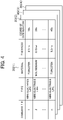
- Fig. 4 is a view that illustrates an example of consumables management tables 352(1) to 352(4).
- the consumables management tables 352(1) to 352(4) are respectively a wire electrode line consumables management table, an ion exchange resin consumables management table, a power supply die consumables management table, and an electrode line guide roller consumables management table.
- the consumables management table 352(1) includes a "consumable ID” for identifying all wire electrode lines which are managed to be usable in wire-cut electrical discharge machining.
- the consumables management table 352(1) also includes a "type”, “material”, “thickness” and “degree of deterioration” for the wire electrode line corresponding to the consumable ID.
- the consumables management tables 352(2) to 352(4) include a "consumable ID” for identifying all ion exchange resin, power supply dies, and electrode line guide rollers that are managed to be usable in wire-cut electrical discharge machining.
- the consumables management tables 352(2) to 352(4) also include a "type”, “material”, and “degree of deterioration” for ion exchange resins, power supply dies, and electrode line guide rollers corresponding to the consumable IDs.
- the "consumable ID" in the consumables management table 352(1) is information for identifying a wire electrode line selected by a worker at the control device 10, and is preset by the worker.
- 1 through n are assigned to respective wire electrode lines as consumable IDs. Note that, a number from 1 to n is set as the "consumable ID", but alphabetical letters, a combination of numbers and alphabetic letters, etc. may be set (n is an integer equal to or greater than 2).
- the "consumable ID” may include type information in addition to identification information.
- type information may be included by assigning "1" to "99” as the “consumable ID” for wire electrode lines, assigning "100” to “199” as the “consumable ID” for ion exchange resins, assigning "200” to “299” as the “consumable ID” for power supply dies, and assigning "300” to “399” as the “consumable ID” for electrode line guide rollers.
- the material of the wire electrode line such as tungsten, is stored for each wire electrode line to which the above-described consumable ID is assigned.
- the thickness of the wire electrode line is stored for each wire electrode line to which the above-described consumable ID is assigned.
- the degree of deterioration for the wire electrode line at the current time determined by a worker after previous wire-cut electrical discharge machining is stored for each wire electrode line to which the above-described consumable ID is assigned.
- the "degree of deterioration" in the consumables management table 352(1) is inputted and updated by a worker after the degree of deterioration of a wire electrode line is determined by the worker each time the wire electrode line is used in wire-cut electrical discharge machining.
- the consumables management tables 352(1) to 352(4) may be collectively referred to as the "consumables management tables 352".
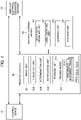
- Fig. 5 is a flow chart for describing prediction processing by the prediction device 30 in an operation phase.
- step S11 before wire-cut electrical discharge machining by the wire-cut electrical discharge machine 20, the input unit 301 obtains a machining condition for wire-cut electrical discharge machining to be performed from the control information from the control device 10 and consumables information that includes a degree of deterioration of a wire electrode line, etc. from the consumables management tables 352, based on a consumable ID for the wire electrode line, etc. which is selected by a worker.
- step S12 the prediction unit 302 inputs the machining condition to be carried out and the consumables information which were obtained in step S11 to the trained model 351, and predicts the degrees of deterioration after the wire-cut electrical discharge machining for the selected consumables such as a wire electrode line and the like.
- step S13 the determination unit 303 determines whether each selected consumable, which is a wire electrode line for example, is appropriate, based on a comparison between the degree of deterioration predicted in step S12 for each consumable, which is a wire electrode line for example, and the preset threshold Th.
- step S14 in a case where there is a consumable, which is a wire electrode line for example, determined to be not appropriate in step S13, the notification unit 304, before the wire-cut electrical discharge machining, outputs an alarm indicating exchange of the consumable or adjustment of the machining condition to the output device (not shown) in the control device 10 and/or the wire-cut electrical discharge machine 20.
- the prediction device 30 inputs to the trained model 351 the machining condition to be carried out according to the wire-cut electrical discharge machining, the machining condition to be carried out being from control information from the control device 10, as well as consumables information including the degree of deterioration of the wire electrode line, etc. selected by the worker, and predicts the degree of deterioration after the wire-cut electrical discharge machining for the selected consumable, which is a wire electrode line for example.
- the prediction device 30 can predict whether the state of a consumable, which is a wire electrode line for example, will be good or bad in a case where the wire-cut electrical discharge machining is performed, while considering a machining condition.
- the prediction device 30 can also compare the predicted degree of deterioration for a consumable, which is a wire electrode line for example, with a preset threshold Th to thereby detect in advance for each consumable, which is a wire electrode line for example, whether the consumable will need to be exchanged during the wire-cut electrical discharge machining.
- the prediction device 30 can, before wire-cut electrical discharge machining, detect an optimal time to replace the consumable, which is a wire electrode line for example, or detect the necessity of adjusting a machining condition, and it is possible to reduce a load for a worker.
- the prediction device 30 can predict whether the state for various consumables, which are wire electrode lines for example, will be good or bad.
- the prediction device 30 and the machine learning device 40 are not limited to the embodiment described above, and include variations, improvements, etc. in a scope that enables the objective to be achieved.
- the machine learning device 40 is exemplified as a device that differs to the control device 10, the wire-cut electrical discharge machine 20, and the prediction device 30, but some or all of the functionality of the machine learning device 40 may be provided in the control device 10, the wire-cut electrical discharge machine 20, or the prediction device 30.
- the prediction device 30 is exemplified as a device that differs to the control device 10 and the wire-cut electrical discharge machine 20, but some or all of the functionality of the prediction device 30 may be provided in the control device 10 or the wire-cut electrical discharge machine 20.
- one, some, or all of the input unit 301, the prediction unit 302, the determination unit 303, the notification unit 304, and the storage unit 305 in the prediction device 30 may be provided in a server, for example.
- each function of the prediction device 30 may be realized using, for example, a cloud-based virtual server function.
- the prediction device 30 may be a distributed processing system in which each function of the prediction device 30 is distributed among a plurality of servers, as appropriate.
- the prediction device 30 uses the trained model 351 provided from the machine learning device 40 to predict the degree of deterioration of a consumable, which is a wire electrode line for example, after machining in accordance with a machining condition for wire-cut electrical discharge machining to be performed, the machining condition being obtained from one control device 10, but there is no limitation to this.
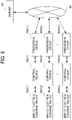
- a server 50 may store the trained model 351 generated by the machine learning device 40, and share the trained model 351 with m prediction devices 30A(1) to 30A(m) connected to a network 60 (m is an integer equal to or greater than 2). As a result, it is possible to employ the trained model 351 even if a new wire-cut electrical discharge machine, control device, and prediction device are disposed.
- prediction devices 30A(1) to 30A(m) are respectively connected to control devices 10A(1) to 10A(m), and the control devices 10A(1) to 10A(m) are respectively connected to wire-cut electrical discharge machines 20A(1) to 20A(m) .
- Each of the control devices 10A(1) to 10A(m) correspond to the control device 10 in Fig. 1 .
- Each of the wire-cut electrical discharge machines 20A(1) to 20A(m) correspond to the wire-cut electrical discharge machine 20 in Fig. 1 , may be the same model as each other, or may be mutually different models.
- Each of the prediction devices 30A(1) to 30A(m) corresponds to the prediction device 30 in Fig. 1 .
- a server 50 may, for example, operate as the prediction device 30, and, for each of control devices 10A(1) to 10A(m) connected to a network 60, predict the degree of deterioration for a consumable, which is a wire electrode line for example, under a machining condition for wire-cut electrical discharge machining to be performed. As a result, it is possible to employ the trained model 351 even if a new wire-cut electrical discharge machine and control device are disposed.
- the consumables management tables 352(1) to 352(4) are respectively constructed for each consumable, such as wire electrode lines, ion exchange resins, power supply dies, and electrode line guide rollers, but there is no limitation to this.
- one consumables management table 352 may manage all wire electrode lines, ion exchange resins, power supply dies, and electrode line guide rollers.
- each function included in the prediction device 30 and the machine learning device 40 according to the one embodiment may each be realized by hardware, software, or a combination of these. Being realized by software means being realized by a computer reading and executing a program.
- Each component included in the prediction device 30 and the machine learning device 40 may be realized by hardware including an electronic circuit, etc., software, or a combination of hardware and software.
- a program that configures the software is installed onto a computer.
- these programs may be recorded onto removable media and distributed to a user, or may be distributed by being downloaded to a user's computer via a network.
- some or all of the functionality of each component included in the devices described above can be configured by an integrated circuit (IC) such as an application-specific integrated circuit (ASIC), a gate array, a field-programmable gate array (FPGA), or a complex programmable logic device (CPLD), for example.
- IC integrated circuit
- ASIC application-specific integrated circuit
- FPGA field-programmable gate array
- CPLD complex programmable logic device
- a program can be stored using various types of non-transitory computer-readable mediums and supplied to a computer.
- a non-transitory computer-readable medium includes various types of tangible storage mediums.
- An example of a non-transitory computer-readable medium includes a magnetic recording medium (for example, a floppy disk, magnetic tape, or a hard disk drive), a magneto-optical recording medium (for example, a magneto-optical disk), a CD-ROM (read-only memory), CD-R, CD-R/W, and a semiconductor memory (for example, a mask ROM, a programmable ROM (PROM), an erasable PROM (EPROM), a flash ROM, or a RAM).
- PROM programmable ROM
- EPROM erasable PROM
- a program may be supplied to a computer by various types of transitory computer-readable mediums.
- An example of a transitory computer-readable medium includes an electrical signal, an optical signal, or electromagnetic waves.
- a transitory computer-readable medium can supply a program to a computer via a wired communication channel such as an electrical wire or an optical fiber, or via a wireless communication channel.
- steps that express a program recorded to a recording medium of course include processing in chronological order following the order of these steps, but also include processing that is executed in parallel or individually, with no necessity for processing to be performed in chronological order.
- the machine learning device, the prediction device, and the control device according to the present disclosure can have various embodiments which have configurations such as the following.
- this machine learning device 40 it is possible to generate a trained model that, before wire-cut electrical discharge machining is performed, can predict a degree of deterioration for a consumable in a case where the wire-cut electrical discharge machining is performed.
- the machining condition may include at least one selected from an electrical discharge output, an amount of machining time, a type of machining fluid, a fluid pressure for the machining fluid, a feeding speed for the electrode line, and a workpiece plate thickness.
- the machine learning device 40 can generate a trained model 351 that can predict with better accuracy the degree of deterioration for a consumable in a case where wire-cut electrical discharge machining is performed.
- the prediction device 30 is provided with: a trained model 351 generated by the machine learning device 40 according to (1) or (2); an input unit 301 configured to input, before wire-cut electrical discharge machining to be performed by a wire-cut electrical discharge machine 20, a machining condition for the wire-cut electrical discharge machining and the consumables information including a degree of deterioration before the wire-cut electrical discharge machining for at least one selected from an electrode line, an ion exchange resin, a power supply die, and an electrode line guide roller; and a prediction unit 302 configured to predict a degree of deterioration after wire-cut electrical discharge machining in accordance with the machining condition and the consumables information inputted by the input unit 301 using the trained model 351 for the at least one selected from the electrode line, the ion exchange resin, the power supply die, and the electrode line guide roller.
- this prediction device 30 it is possible to, before wire-cut electrical discharge machining is performed, predict a degree of deterioration for a consumable in a case where the wire-cut electrical discharge machining is performed.
- the prediction device 30 according to (3) may be further provided with the determination unit 303, which determines output of an alarm in a case where at least one degree of deterioration selected from degrees of deterioration that are for the electrode line, the ion exchange resin, the power supply die, and the electrode line guide roller and are predicted by the prediction unit 302 exceeds the preset threshold Th.
- the prediction device 30 can notify a worker that at least exchange of a consumable during machining will occur.
- the alarm may make an instruction to exchange the electrode line, the ion exchange resin, the power supply die, or the electrode line guide roller for which the predicted degree of deterioration exceeded the threshold Th, or make an instruction to adjust the machining condition.
- the prediction device 30 can easily detect an optimal time to exchange a consumable or the necessity of adjusting the machining condition.
- the prediction device 30 can employ the trained model 351 even if a new control device 10, wire-cut electrical discharge machine 20, and prediction device 30 are disposed.
- the prediction device 30 according to any one of (3) to (6) may be provided with: the machine learning device 40 according to (1) or (2).
- the prediction device 30 can achieve an effect similar to that for any one of (1) to (6) described above.
- the control device 10 may be provided with the prediction device 30 according to any one of (3) to (7).
Landscapes
- Engineering & Computer Science (AREA)
- Physics & Mathematics (AREA)
- Artificial Intelligence (AREA)
- Automation & Control Theory (AREA)
- General Physics & Mathematics (AREA)
- Evolutionary Computation (AREA)
- Health & Medical Sciences (AREA)
- Software Systems (AREA)
- Theoretical Computer Science (AREA)
- Electrochemistry (AREA)
- Chemical & Material Sciences (AREA)
- Medical Informatics (AREA)
- Computer Vision & Pattern Recognition (AREA)
- Mechanical Engineering (AREA)
- Chemical Kinetics & Catalysis (AREA)
- Data Mining & Analysis (AREA)
- General Engineering & Computer Science (AREA)
- Biophysics (AREA)
- Biomedical Technology (AREA)
- Mathematical Physics (AREA)
- General Health & Medical Sciences (AREA)
- Life Sciences & Earth Sciences (AREA)
- Computational Linguistics (AREA)
- Computing Systems (AREA)
- Molecular Biology (AREA)
- Human Computer Interaction (AREA)
- Manufacturing & Machinery (AREA)
- Electrical Discharge Machining, Electrochemical Machining, And Combined Machining (AREA)
- General Factory Administration (AREA)
Abstract
Description
- The present invention pertains to a machine learning device, a prediction device, and a control device.
- As illustrated in
Fig. 8 , a wire-cut electrical discharge machine passes a wire electrode line strung in a Z axis direction through a machining target workpiece and applies a pulse-shaped voltage between the workpiece and the wire electrode line to thereby cause an electric discharge between the workpiece and the wire electrode line and perform machining such as cutting or opening a hole in the workpiece. In such wire-cut electrical discharge machining, a component (hereinafter, may be referred to as a "consumable") such as an ion exchange resin, a power supply die, an electrode line guide roller, as well as the wire electrode line deteriorates in accordance with usage. Accordingly, for example, an amount of time (hereinafter, may be referred to as "life") during which usage is possible is set in advance for each consumable, and consumables for which a cumulative usage time period has reached equal to or greater than a predetermined ratio with respect to the life (for example, 80%) are sequentially exchanged. - On this point, there is a known technique that, instead of a predetermined ratio with respect to life, uses a margin which is a ratio with respect to current remaining life before machining (= life - cumulative usage time) to enable a determination of a time for exchanging a consumable while considering error in an estimate of the actual amount of machining time, and enables the consumable to be used without waste. For example, refer to
Patent Document 1. - Patent Document 1:
Japanese Patent No. 5595559 - Incidentally, a degree of deterioration of a consumable changes due to a machining condition (for example, an electric discharge voltage, a type of machining fluid, a fluid pressure for the machining fluid, a machining plate thickness, etc.) for wire-cut electrical discharge machining. However, conventional simulations do not take into consider that the degree of deterioration of a consumable changes due to a machining condition. Accordingly, errors occur in estimating an amount of machining time, and it is difficult to predict an accurate remaining life. There is a problem that, in a case where it is not possible to predict accurate remaining life, machining efficiency and machining accuracy drop due to deterioration of each consumable.
- In addition, change in the degree of deterioration of a consumable due to a machining condition is still determined using the experience of a worker, and there is a large load on the worker.
- Accordingly, it is desirable to generate a trained model that, before wire-cut electrical discharge machining is performed, can predict a degree of deterioration for a consumable in a case where the wire-cut electrical discharge machining is performed.
-
- (1) One aspect of a machine learning device according to the present disclosure is provided with: an input data obtaining unit configured to obtain input data that includes a machining condition for arbitrary wire-cut electrical discharge machining with respect to arbitrary workpiece by arbitrary wire-cut electrical discharge machine and consumables information including a degree of deterioration before wire-cut electrical discharge machining in accordance with the machining condition for at least one selected from an electrode line, an ion exchange resin, a power supply die, and an electrode line guide roller; a label obtaining unit configured to obtain label data indicating a degree of deterioration after wire-cut electrical discharge machining in accordance with the machining condition included in the input data for the at least one selected from the electrode line, the ion exchange resin, the power supply die, and the electrode line guide roller; and a learning unit configured to use the input data obtained by the input data obtaining unit and the label data obtained by the label obtaining unit to execute supervised learning and generate a trained model.
- (2) One aspect of prediction device according to the present disclosure is provided with: a trained model generated by the machine learning device according to (1); an input unit configured to input, before wire-cut electrical discharge machining to be performed by a wire-cut electrical discharge machine, a machining condition for the wire-cut electrical discharge machining and the consumables information including a degree of deterioration before the wire-cut electrical discharge machining for at least one selected from an electrode line, an ion exchange resin, a power supply die, and an electrode line guide roller; and a prediction unit configured to predict a degree of deterioration after wire-cut electrical discharge machining in accordance with the machining condition and the consumables information inputted by the input unit using the trained model for the at least one selected from the electrode line, the ion exchange resin, the power supply die, and the electrode line guide roller.
- (3) One aspect of a control device according to the present disclosure is provided with a prediction device according to (2).
- By virtue of one aspect, it is possible to generate a trained model that, before wire-cut electrical discharge machining is performed, can predict a degree of deterioration for a consumable in a case where the wire-cut electrical discharge machining is performed.
-
-
Fig. 1 is a functional block diagram illustrating an example of a functional configuration of a numerical control system according to one embodiment; -
Fig. 2 is a view that illustrates an example of a trained model provided to the prediction device inFig. 1 ; -
Fig. 3 is a view that illustrates an example of a degree of deterioration of a wire electrode line; -
Fig. 4 is a view that illustrates an example of consumables management tables; -
Fig. 5 is a flow chart for describing prediction processing by the prediction device in an operation phase; -
Fig. 6 is a view that illustrates an example of a configuration of a numerical control system; -
Fig. 7 is a view that illustrates an example of a configuration of a numerical control system; and -
Fig. 8 is a view of an example of a schematic for a wire-cut electrical discharge machine. - Description is given below regarding one embodiment according to the present disclosure, with reference to the drawings. Exemplification is given here regarding a case where an electrode line can be reused as a wire electrode line and is not disposed after use. Note that the present invention is not limited to a reusable wire electrode line, and can also be applied to a case of wire-cut electrical discharge machining using a disposable wire electrode line.
-
Fig. 1 is a functional block diagram illustrating an example of a functional configuration of a numerical control system according to one embodiment. As illustrated inFig. 1 , the numerical control system has acontrol device 10, a wire-cutelectrical discharge machine 20, aprediction device 30, and amachine learning device 40. - The
control device 10, the wire-cutelectrical discharge machine 20, theprediction device 30, and themachine learning device 40 may be directly connected to each other via a connection interface (not shown). Thecontrol device 10, the wire-cutelectrical discharge machine 20, theprediction device 30, and themachine learning device 40 may also be mutually connected via a network (not shown) such as a local area network (LAN) or the internet. In this case, thecontrol device 10, the wire-cutelectrical discharge machine 20, theprediction device 30, and themachine learning device 40 are each provided with a communication unit (not shown) for mutually communicating via the corresponding connection. Note that, as described below, thecontrol device 10 may include theprediction device 30 and themachine learning device 40. In addition, the wire-cutelectrical discharge machine 20 may include thecontrol device 10. - The
control device 10 is a numerical control device which is publicly known to a person skilled in the art. Thecontrol device 10 generates an operation command based on control information, and transmits the generated operation command to the wire-cutelectrical discharge machine 20. As a result, thecontrol device 10 controls operation by the wire-cutelectrical discharge machine 20. Thecontrol device 10 also outputs this control information to theprediction device 30. - Note that control information, for example, may include a machining condition for wire-cut electrical discharge machining. The machining condition is inputted by a worker via an input device (not shown) such as a touch panel included in the
control device 10. A machining condition for wire-cut electrical discharge machining, for example, may include at least one selected from an electrical discharge output, an amount of machining time, a type of machining fluid, a fluid pressure for the machining fluid, a wire feeding speed, and a workpiece plate thickness in wire-cut electrical discharge machining that is to be performed. - In addition, the
control device 10 may, for example, accept, via the input device (not shown) in thecontrol device 10, a selection by a worker of consumables such as a wire electrode line, an ion exchange resin, a power supply die, and an electrode line guide roller, and output information pertaining to the selected consumable to theprediction device 30, which is described below. In this case, thecontrol device 10 may store a list of identification information (hereinafter, also referred to as a "consumable ID") pertaining to wire electrode lines, ion exchange resins, power supply dies, and electrode line guide rollers that can be selected for the wire-cutelectrical discharge machine 20, the list being stored as a consumables data table in a hard disk drive (HDD), etc. Thecontrol device 10 may output, to theprediction device 30, the consumable IDs for a wire electrode line, an ion exchange resin, a power supply die, and an electrode line guide roller selected by the worker. - As illustrated in
Fig. 8 , the wire-cutelectrical discharge machine 20 is a wire-cut electrical discharge machine that is publicly known to a person skilled in the art, and, based on an operation command from thecontrol device 10, performs wire-cut electrical discharge machining of a workpiece to be machined. The wire-cutelectrical discharge machine 20 feeds back, to thecontrol device 10, information indicating an operating state based on the operation command from thecontrol device 10. - In an operation phase, before wire-cut electrical discharge machining by the wire-cut
electrical discharge machine 20, theprediction device 30 may obtain the machining condition, which is for wire-cut electrical discharge machining and is included in the control information from thecontrol device 10. In addition, theprediction device 30 may, for example, be input with consumable IDs for at least a wire electrode line, an ion exchange resin, a power supply die, and an electrode line guide roller from thecontrol device 10, and, based on consumables management tables 352(1) to 352(4) which are described below, obtain consumables information that includes a degree of deterioration at the current time (in other words, before wire-cut electrical discharge machining) for each consumable. Theprediction device 30 can input the obtain machining condition and consumables information to a trained model provided from the later-describedmachine learning device 40 to thereby predict a degree of deterioration after the wire-cut electrical discharge machining for the selected wire electrode line, ion exchange resin, power supply die, electrode line guide roller, etc. - Note that the consumables information may include, for example, the material and thickness of the wire electrode line, the material of the ion exchange resin, the material of the power supply die, and the material of the electrode line guide roller, in addition to the degrees of deterioration at the current time for the wire electrode line, the ion exchange resin, the power supply die, and the electrode line guide roller.
- The material of the wire electrode line is molybdenum, tungsten, or brass, for example. The thickness of the wire electrode line is a diameter in the range of 0.1 mm to 0.3 mm, for example.
- The material of the ion exchange resin is something for which a mixing ratio for a cationic resin and an anionic resin is "1:1", "1.3:1", "1:1.5", etc. Note that a resin that is not a cationic resin or an anionic resin may be mixed in with the ion exchange resin.
- The material of the power supply die is cemented carbide, cermet, or a silver tungsten alloy, for example.
- The electrode line guide roller is urethane or steel, for example.
- Before describing the
prediction device 30, description is given regarding degrees of deterioration of a wire electrode line, an ion exchange resin, a power supply die, and an electrode line guide roller, and given regarding machine learning for generating a trained model. - A "degree of deterioration of wire electrode line" indicates the degree of fouling or deformation of a wire electrode line used in wire-cut electrical discharge machining by the wire-cut
electrical discharge machine 20. For example, a brand-new wire electrode line is in the best state with the cross-section thereof having a circular shape, and thus the "degree of deterioration of wire electrode line" thereof is "0%". In accordance with the wire electrode line being repeatedly used, the "degree of deterioration of wire electrode line" increases due to, for example, sputter adhering to the wire electrode line or the wire electrode line deforming due to heat at a time of electric discharge. For example, the "degree of deterioration of wire electrode line" becomes "100%" when it is necessary to exchange the wire electrode line. - A "degree of deterioration of ion exchange resin" indicates a degree of fouling in an ion exchange resin used in wire-cut electrical discharge machining by the wire-cut
electrical discharge machine 20. For example, a brand-new ion exchange resin is in the best state and thus the "degree of deterioration of ion exchange resin" thereof is "0%". The "degree of deterioration of ion exchange resin" increases due to impurities such as sputter being included in machining fluid in accordance with wire-cut electrical discharge machining being repeatedly performed. For example, the "degree of deterioration of ion exchange resin" becomes "100%" when it is necessary to exchange the ion exchange resin. - A "degree of deterioration of power supply die" indicates the degree of fouling or deformation of a power supply die used in wire-cut electrical discharge machining by the wire-cut
electrical discharge machine 20. For example, a brand-new power supply die is in the best state and thus the "degree of deterioration of power supply die" thereof is "0%". In accordance with wire-cut electrical discharge machining being repeatedly performed, the "degree of deterioration of power supply die" increases due to, for example, deformation accompanying contact with a wire electrode line or sputter adhering to the power supply die. For example, the "degree of deterioration of power supply die" becomes "100%" when it is necessary to exchange the power supply die. - A "degree of deterioration of electrode line guide roller" indicates the degree of fouling or deformation of an electrode line guide roller used in wire-cut electrical discharge machining by the wire-cut
electrical discharge machine 20. For example, a brand-new electrode line guide roller is in the best state, and thus the "degree of deterioration of electrode line guide roller" thereof is "0%". In accordance with wire-cut electrical discharge machining being repeatedly performed, the "degree of deterioration of electrode line guide roller" increases due to, for example, deformation accompanying friction between the electrode line guide roller and a wire electrode line or sputter adhering to the electrode line guide roller. For example, the "degree of deterioration of electrode line guide roller" becomes "100%" when it is necessary to exchange the electrode line guide roller. - Note that the wire electrode line, ion exchange resin, power supply die, and electrode line guide roller degrees of deterioration are given as percentage values in a range of "0%" to "100%", but may be, for example, values in a range from "0" to "1".
- The
machine learning device 40, for example, obtains in advance input data that includes a machining condition for arbitrary wire-cut electrical discharge machining with respect to arbitrary workpiece by arbitrary wire-cut electrical discharge machine, and consumables information that includes degrees of deterioration before machining for a wire electrode line, an ion exchange resin, a power supply die, and an electrode line guide roller which were used in the arbitrarily-defined wire-cut electrical discharge machining. - The
machine learning device 40 also obtains, as a label (correct answer), data indicating the degrees of deterioration for the wire electrode line, ion exchange resin, power supply die, and electrode line guide roller after the wire-cut electrical discharge machining in accordance with the machining condition in the obtained input data. - The
machine learning device 40 constructs a trained model, which is described below, by performing supervised learning using training data which is a group of obtained input data and labels. - As a result, the
machine learning device 40 can provide the constructed trained model to theprediction device 30. - The
machine learning device 40 will be described in detail. - As illustrated in
Fig. 1 , themachine learning device 40 has an inputdata obtaining unit 401, alabel obtaining unit 402, alearning unit 403, and astorage unit 404. - In a learning phase, the input
data obtaining unit 401 obtains, as input data, a machining condition for arbitrary wire-cut electrical discharge machining with respect to arbitrary workpiece by arbitrary wire-cut electrical discharge machine and consumables information that includes degrees of deterioration for a wire electrode line, etc. before the wire-cut electrical discharge machining in accordance with the machining condition. This input data is obtained from thecontrol device 10, etc. via the communication unit (not shown). - Note that, as described above, the machining condition includes an electrical discharge output, an amount of machining time, a type of machining fluid, a fluid pressure for the machining fluid, a wire feeding speed, a workpiece plate thickness, etc. The consumables information includes, for example, the material of the wire electrode line, the thickness of the wire electrode line, the material of the ion exchange resin, the material of the power supply die, and the material of the electrode line guide roller, in addition to degrees of deterioration for the wire electrode line, the ion exchange resin, the power supply die, and the electrode line guide roller before wire-cut electrical discharge machining.
- The input
data obtaining unit 401 outputs obtained input data to thestorage unit 404. - The
label obtaining unit 402 obtains, as label data (correct answer data), data indicating the degrees of deterioration for the wire electrode line, ion exchange resin, power supply die, and electrode line guide roller after the wire-cut electrical discharge machining in accordance with the machining condition included the input data. Thelabel obtaining unit 402 outputs obtained label data to thestorage unit 404. - Note that a label is a value in the range of "0%" to "100%" as described above.
- The
learning unit 403 accepts a group of the above-described input data and a label as training data and uses the accepted training data to perform supervised learning, to thereby construct a trainedmodel 351 that, based on a machining condition for wire-cut electrical discharge machining to be performed on a machining target workpiece and consumables information including degrees of deterioration at the current time for the selected wire electrode line, etc., predicts degrees of deterioration for the wire electrode line, etc. after the wire-cut electrical discharge machining. - The
learning unit 403 provides the constructed trainedmodel 351 to theprediction device 30. - It is desirable to prepare a large number of items of training data in order to perform the supervised learning. For example, it may be that training data, for which the degrees of deterioration for the wire electrode line, ion exchange resin, power supply die, and electrode line guide roller before and after wire-cut electrical discharge machining has been evaluated by an expert, is created for each combination of every possible machining condition for wire-cut electrical discharge machining and every possible wire electrode line, ion exchange resin, power supply die, and electrode line guide roller. Alternatively, it may be that training data is obtained from each
control device 10 at various locations where thecontrol devices 10 are actually operated, such as factories belonging to customers. -
Fig. 2 is a view that illustrates an example of a trainedmodel 351 provided to theprediction device 30 inFig. 1 . As illustrated inFig. 2 , the trainedmodel 351 exemplifies a multi-layer neural network that sets a machining condition for wire-cut electrical discharge machining to be performed and consumables information including degrees of deterioration at the current time for a selected wire electrode line, ion exchange resin, power supply die, and electrode line guide roller as an input layer, and sets data indicating the degrees of deterioration for the wire electrode line, ion exchange resin, power supply die, and electrode line guide roller after the wire-cut electrical discharge machining in accordance with this machining condition as an output layer. - Note that, the machining condition for the wire-cut electrical discharge machining to be performed includes an electrical discharge output, an amount of machining time, a type of machining fluid, a fluid pressure for the machining fluid, a wire feeding speed, a workpiece plate thickness, etc. The consumables information includes, for example, the material of the wire electrode line, the thickness of the wire electrode line, the material of the ion exchange resin, the material of the power supply die, and the material of the electrode line guide roller, in addition to degrees of deterioration at the current time for the wire electrode line, the ion exchange resin, the power supply die, and the electrode line guide roller.
- In addition, in a case of newly obtaining teaching data after constructing the trained
model 351, thelearning unit 403 may further perform supervised learning with respect to the trainedmodel 351 to thereby update the constructed trainedmodel 351. - The
machine learning device 40 may also perform supervised learning by sharing the trainedmodel 351 with anothermachine learning device 40. As a result, it becomes possible to perform supervised learning by distributing the trainedmodel 351 to each of a plurality ofmachine learning devices 40, and it becomes possible to improve the efficiency of the supervised learning. - The supervised learning described above may be performed by online learning, may be performed by batch learning, or may be performed by mini-batch learning.
- Online learning is a learning method in which wire-cut electrical discharge machining is performed by the wire-cut
electrical discharge machine 20, and supervised learning is immediately performed each time training data is created. In addition, batch learning is a learning method in which wire-cut electrical discharge machining is repeatedly performed at the wire-cutelectrical discharge machine 20 and training data is repeatedly created, a plurality of items of training data that correspond to the repetitions are collected, and all of the collected training data is used to perform supervised learning. Furthermore, mini-batch learning is a learning method where supervised learning is performed each time a certain amount of training data is accumulated, with the certain amount being between that for online learning and that for batch learning. - The
storage unit 404 is, for example, a random-access memory (RAM), and stores, for example, input data obtained by the inputdata obtaining unit 401, label data obtained by thelabel obtaining unit 402, the trainedmodel 351 constructed by thelearning unit 403, etc. - This concludes description of machine learning for generating the trained
model 351 that theprediction device 30 is provided with. - Next, description is given regarding the
prediction device 30 in an operation phase. In the following description, exemplification is given for a case of using the trainedmodel 351 depicted inFig. 2 as a trained model, in other words using a multi-layer neural network that sets a machining condition for wire-cut electrical discharge machining to be performed and consumables information including degrees of deterioration for a selected wire electrode line, etc. as an input layer, and sets "degree of deterioration of wire electrode line", etc. as an output layer. - As illustrated in
Fig. 1 , theprediction device 30 in the operation phase is configured by including aninput unit 301, aprediction unit 302, adetermination unit 303, anotification unit 304, and astorage unit 305. - Note that the
prediction device 30 is provided with an arithmetic processing device (not shown) such as a central processing unit (CPU) for realizing operation of the functional blocks inFig. 1 . In addition, theprediction device 30 is provided with an auxiliary storage device (not shown) such as a read-only memory (ROM) or an HDD that stores various control programs, and a main storage device (not shown) such as a RAM that stores data temporarily required for the arithmetic processing device to execute a program. - In the
prediction device 30, the arithmetic processing device reads an OS or application software from the auxiliary storage apparatus, and while deploying the read OS or application software to the main storage device, performs arithmetic processing based on the OS or application software. Based on a result of the arithmetic processing, theprediction device 30 controls each item of hardware. As a result, processing according to the functional blocks inFig. 1 is realized. In other words, theprediction device 30 can realize this processing by collaboration between hardware and software. - Before wire-cut electrical discharge machining by the wire-cut
electrical discharge machine 20, for example, theinput unit 301 inputs a machining condition to be carried out in accordance with the wire-cut electrical discharge machining from control information from thecontrol device 10, and consumable IDs indicating a wire electrode line, an ion exchange resin, a power supply die, and an electrode line guide roller selected by a worker. Based on the consumables management tables 352 stored in the later-describedstorage unit 305 and the inputted consumable IDs, theinput unit 301 obtains consumables information that includes the degrees of deterioration at the current time for the wire electrode line, the ion exchange resin, the power supply die, and the electrode line guide roller. - The
input unit 301 outputs to theprediction unit 302 the obtained machining condition to be carried out and the consumables information that includes the degrees of deterioration at the current time for the wire electrode line, etc. selected by the worker. - The
prediction unit 302 inputs, to the trainedmodel 351 inFig. 2 , the obtained machining condition to be carried out and the consumables information that includes the degrees of deterioration at the current time for the wire electrode line, etc. selected by the worker. Based on "degree of deterioration of wire electrode line", "degree of deterioration of ion exchange resin", "degree of deterioration of power supply die", and "degree of deterioration of electrode line guide roller" which are outputs from the trainedmodel 351, theprediction unit 302 predicts the degrees of deterioration after the wire-cut electrical discharge machining for the selected wire electrode line, ion exchange resin, power supply die, and electrode line guide roller. - As a result, before wire-cut electrical discharge machining is performed, the
prediction device 30 can predict whether the state of each of the wire electrode line, the ion exchange resin, the power supply die, and the electrode line guide roller will be good or bad in the case where the wire-cut electrical discharge machining is performed. - The
determination unit 303 determines whether or not the selected wire electrode line, ion exchange resin, power supply die, and electrode line guide roller will be appropriate, based on the degrees of deterioration after the wire-cut electrical discharge machining for the wire electrode line, the ion exchange resin, the power supply die, and the electrode line guide roller, these degrees of deterioration being predicted by theprediction unit 302. - More specifically, for each of the wire electrode line, the ion exchange resin, the power supply die, and the electrode line guide roller, the
determination unit 303 determines whether each will be appropriate, based on a comparison between a degree of deterioration prediction value and a preset threshold. In the case where a consumable will not be appropriate, thedetermination unit 303 determines to output an alarm. As a result, in a case where wire-cut electrical discharge machining is performed under the inputted machining condition, it is possible to notify a worker that exchange of a consumable, which is a wire electrode line for example, during machining will occur. -
Fig. 3 is a view that illustrates an example of a degree of deterioration of a wire electrode line. As illustrated inFig. 3 , for example, even if the degree of deterioration before machining for a wire electrode line is equal to or less than a threshold Th (for example, 80%, etc.), the degree of deterioration changes due to sputter adhering to the wire electrode line or erosion (deformation) of the wire electrode line due to heat at a time of electric discharge, in accordance with wire-cut electrical discharge machining. For example, in a case where the degree of deterioration of a wire electrode line is an appropriate value that is equal to or less than the preset threshold Th, the wire electrode line functions appropriately. In contrast, in a case where the degree of deterioration of a wire electrode line exceeds the preset threshold Th, the wire electrode line does not function appropriately. In this case, a worker needs to exchange the wire electrode line with a new wire electrode line or adjust a machining condition (for example, an amount of machining time, a wire feeding speed, etc.). Accordingly, thedetermination unit 303 determines to output an alarm with an instruction to exchange the wire electrode line or an instruction to adjust a machining condition, and outputs a determination result to thenotification unit 304, which is described below. - Note that, in cases for an ion exchange resin, a power supply die, and an electrode line guide roller, the
determination unit 303 performs processing similar to the case for a wire electrode line. However, the preset threshold Th may be set for each of a wire electrode line, an ion exchange resin, a power supply die, and an electrode line guide roller. - As a result, for each consumable selected by a worker, the consumable being a wire electrode line for example, the numerical control system can, before wire-cut electrical discharge machining by the wire-cut
electrical discharge machine 20, predict a degree of deterioration after machining is performed under a machining condition for wire-cut electrical discharge machining to be performed to thereby be able to easily detect an optimal time at which to exchange a consumable or the necessity of adjusting the machining condition. In other words, the numerical control system can detect in advance whether it will be necessary to, during the wire-cut electrical discharge machining, exchange a wire electrode line, an ion exchange resin, a power supply die, or an electrode line guide roller, or adjust the machining condition. - For example, a worker may adjust an amount of machining time with respect to a machining target workpiece, adjust a wire feeding speed, etc., such that the degree of deterioration after wire-cut electrical discharge machining for a consumable, which is a wire electrode line for example, does not exceed the threshold Th. As a result, before wire-cut electrical discharge machining is started, the numerical control system enables adjustment to a machining condition at which it is possible to perform the wire-cut electrical discharge machining without exchanging a consumable during the machining, the consumable being a wire electrode line for example. At a convenient stage for wire-cut electrical discharge machining, the numerical control system may, for example, stop the wire-cut
electrical discharge machine 20 so that a consumable, which is a wire electrode line for example, is exchanged. - The
notification unit 304 may, for example, output a determination result by thedetermination unit 303 on whether a selected consumable is appropriate to an output device (not shown) such as a liquid crystal display included in thecontrol device 10 and/or the wire-cutelectrical discharge machine 20, the selected consumable being a wire electrode line for example. For example, in a case where a selected wire electrode line is appropriate, thecontrol device 10 may cause the wire-cutelectrical discharge machine 20 to execute wire-cut electrical discharge machining under an inputted machining condition. In contrast, in a case where a selected wire electrode line is not appropriate, thenotification unit 304 may output an alarm to the output device (not shown) in thecontrol device 10 and/or the wire-cutelectrical discharge machine 20. Note that thenotification unit 304 may make a notification using audio via a speaker (not shown). - It may be that the
storage unit 305 is a ROM, an HDD, etc., and stores various control programs as well as the trainedmodel 351 and the consumables management tables 352. -
Fig. 4 is a view that illustrates an example of consumables management tables 352(1) to 352(4). InFig. 4 , the consumables management tables 352(1) to 352(4) are respectively a wire electrode line consumables management table, an ion exchange resin consumables management table, a power supply die consumables management table, and an electrode line guide roller consumables management table. - As illustrated in
Fig. 4 , the consumables management table 352(1) includes a "consumable ID" for identifying all wire electrode lines which are managed to be usable in wire-cut electrical discharge machining. The consumables management table 352(1) also includes a "type", "material", "thickness" and "degree of deterioration" for the wire electrode line corresponding to the consumable ID. - Note that, similarly to the case for the consumables management table 352(1), the consumables management tables 352(2) to 352(4) include a "consumable ID" for identifying all ion exchange resin, power supply dies, and electrode line guide rollers that are managed to be usable in wire-cut electrical discharge machining. Similarly to the case for the consumables management table 352(1) excluding "thickness", the consumables management tables 352(2) to 352(4) also include a "type", "material", and "degree of deterioration" for ion exchange resins, power supply dies, and electrode line guide rollers corresponding to the consumable IDs.
- The "consumable ID" in the consumables management table 352(1) is information for identifying a wire electrode line selected by a worker at the
control device 10, and is preset by the worker. InFig. 4 ,1 through n are assigned to respective wire electrode lines as consumable IDs. Note that, a number from 1 to n is set as the "consumable ID", but alphabetical letters, a combination of numbers and alphabetic letters, etc. may be set (n is an integer equal to or greater than 2). - In addition, the "consumable ID" may include type information in addition to identification information. For example, type information may be included by assigning "1" to "99" as the "consumable ID" for wire electrode lines, assigning "100" to "199" as the "consumable ID" for ion exchange resins, assigning "200" to "299" as the "consumable ID" for power supply dies, and assigning "300" to "399" as the "consumable ID" for electrode line guide rollers.
- For "type" in the consumables management table 352(1), "wire electrode line" is stored for each wire electrode line to which the above-described consumable ID is assigned.
- For "material" in the consumables management table 352(1), the material of the wire electrode line, such as tungsten, is stored for each wire electrode line to which the above-described consumable ID is assigned.
- For "thickness" in the consumables management table 352(1), the thickness of the wire electrode line is stored for each wire electrode line to which the above-described consumable ID is assigned.
- For "degree of deterioration" in the consumables management table 352(1), the degree of deterioration for the wire electrode line at the current time determined by a worker after previous wire-cut electrical discharge machining is stored for each wire electrode line to which the above-described consumable ID is assigned. In other words, the "degree of deterioration" in the consumables management table 352(1) is inputted and updated by a worker after the degree of deterioration of a wire electrode line is determined by the worker each time the wire electrode line is used in wire-cut electrical discharge machining.
- In a case below where it is not necessary to individually distinguish each of the consumables management tables 352(1) to 352(4), the consumables management tables 352(1) to 352(4) may be collectively referred to as the "consumables management tables 352".
- Next, description is given regarding operation for prediction processing by the
prediction device 30 according to the present embodiment. -
Fig. 5 is a flow chart for describing prediction processing by theprediction device 30 in an operation phase. - In step S11, before wire-cut electrical discharge machining by the wire-cut
electrical discharge machine 20, theinput unit 301 obtains a machining condition for wire-cut electrical discharge machining to be performed from the control information from thecontrol device 10 and consumables information that includes a degree of deterioration of a wire electrode line, etc. from the consumables management tables 352, based on a consumable ID for the wire electrode line, etc. which is selected by a worker. - In step S12, the
prediction unit 302 inputs the machining condition to be carried out and the consumables information which were obtained in step S11 to the trainedmodel 351, and predicts the degrees of deterioration after the wire-cut electrical discharge machining for the selected consumables such as a wire electrode line and the like. - In step S13, the
determination unit 303 determines whether each selected consumable, which is a wire electrode line for example, is appropriate, based on a comparison between the degree of deterioration predicted in step S12 for each consumable, which is a wire electrode line for example, and the preset threshold Th. - In step S14, in a case where there is a consumable, which is a wire electrode line for example, determined to be not appropriate in step S13, the
notification unit 304, before the wire-cut electrical discharge machining, outputs an alarm indicating exchange of the consumable or adjustment of the machining condition to the output device (not shown) in thecontrol device 10 and/or the wire-cutelectrical discharge machine 20. - By the above, before wire-cut electrical discharge machining by the wire-cut
electrical discharge machine 20, theprediction device 30 according to one embodiment inputs to the trainedmodel 351 the machining condition to be carried out according to the wire-cut electrical discharge machining, the machining condition to be carried out being from control information from thecontrol device 10, as well as consumables information including the degree of deterioration of the wire electrode line, etc. selected by the worker, and predicts the degree of deterioration after the wire-cut electrical discharge machining for the selected consumable, which is a wire electrode line for example. As a result, before wire-cut electrical discharge machining is performed, theprediction device 30 can predict whether the state of a consumable, which is a wire electrode line for example, will be good or bad in a case where the wire-cut electrical discharge machining is performed, while considering a machining condition. Theprediction device 30 can also compare the predicted degree of deterioration for a consumable, which is a wire electrode line for example, with a preset threshold Th to thereby detect in advance for each consumable, which is a wire electrode line for example, whether the consumable will need to be exchanged during the wire-cut electrical discharge machining. - In other words, in a case where the degree of deterioration for a selected consumable, which is a wire electrode line for example, exceeds the threshold Th, the
prediction device 30 can, before wire-cut electrical discharge machining, detect an optimal time to replace the consumable, which is a wire electrode line for example, or detect the necessity of adjusting a machining condition, and it is possible to reduce a load for a worker. - In addition, because the trained
model 351 is generated using teaching data for various consumables, which are wire electrode lines for example, theprediction device 30 can predict whether the state for various consumables, which are wire electrode lines for example, will be good or bad. - This concludes the description regarding one embodiment, but the
prediction device 30 and themachine learning device 40 are not limited to the embodiment described above, and include variations, improvements, etc. in a scope that enables the objective to be achieved. - In the embodiment described above, the
machine learning device 40 is exemplified as a device that differs to thecontrol device 10, the wire-cutelectrical discharge machine 20, and theprediction device 30, but some or all of the functionality of themachine learning device 40 may be provided in thecontrol device 10, the wire-cutelectrical discharge machine 20, or theprediction device 30. - In the embodiment described above, the
prediction device 30 is exemplified as a device that differs to thecontrol device 10 and the wire-cutelectrical discharge machine 20, but some or all of the functionality of theprediction device 30 may be provided in thecontrol device 10 or the wire-cutelectrical discharge machine 20. - Alternatively, one, some, or all of the
input unit 301, theprediction unit 302, thedetermination unit 303, thenotification unit 304, and thestorage unit 305 in theprediction device 30 may be provided in a server, for example. In addition, each function of theprediction device 30 may be realized using, for example, a cloud-based virtual server function. - Furthermore, the
prediction device 30 may be a distributed processing system in which each function of theprediction device 30 is distributed among a plurality of servers, as appropriate. - As another example, in the embodiment described above, the
prediction device 30 uses the trainedmodel 351 provided from themachine learning device 40 to predict the degree of deterioration of a consumable, which is a wire electrode line for example, after machining in accordance with a machining condition for wire-cut electrical discharge machining to be performed, the machining condition being obtained from onecontrol device 10, but there is no limitation to this. For example, as illustrated inFig. 6 , aserver 50 may store the trainedmodel 351 generated by themachine learning device 40, and share the trainedmodel 351 with mprediction devices 30A(1) to 30A(m) connected to a network 60 (m is an integer equal to or greater than 2). As a result, it is possible to employ the trainedmodel 351 even if a new wire-cut electrical discharge machine, control device, and prediction device are disposed. - Note that the
prediction devices 30A(1) to 30A(m) are respectively connected to controldevices 10A(1) to 10A(m), and thecontrol devices 10A(1) to 10A(m) are respectively connected to wire-cutelectrical discharge machines 20A(1) to 20A(m) . - Each of the
control devices 10A(1) to 10A(m) correspond to thecontrol device 10 inFig. 1 . Each of the wire-cutelectrical discharge machines 20A(1) to 20A(m) correspond to the wire-cutelectrical discharge machine 20 inFig. 1 , may be the same model as each other, or may be mutually different models. Each of theprediction devices 30A(1) to 30A(m) corresponds to theprediction device 30 inFig. 1 . - Alternatively, as illustrated in
Fig. 7 , aserver 50 may, for example, operate as theprediction device 30, and, for each ofcontrol devices 10A(1) to 10A(m) connected to anetwork 60, predict the degree of deterioration for a consumable, which is a wire electrode line for example, under a machining condition for wire-cut electrical discharge machining to be performed. As a result, it is possible to employ the trainedmodel 351 even if a new wire-cut electrical discharge machine and control device are disposed. - As another example, in the embodiment described above the consumables management tables 352(1) to 352(4) are respectively constructed for each consumable, such as wire electrode lines, ion exchange resins, power supply dies, and electrode line guide rollers, but there is no limitation to this. For example, one consumables management table 352 may manage all wire electrode lines, ion exchange resins, power supply dies, and electrode line guide rollers.
- Note that each function included in the
prediction device 30 and themachine learning device 40 according to the one embodiment may each be realized by hardware, software, or a combination of these. Being realized by software means being realized by a computer reading and executing a program. - Each component included in the
prediction device 30 and themachine learning device 40 may be realized by hardware including an electronic circuit, etc., software, or a combination of hardware and software. In a case of being realized by software, a program that configures the software is installed onto a computer. Alternatively, these programs may be recorded onto removable media and distributed to a user, or may be distributed by being downloaded to a user's computer via a network. In addition, in the case of being configured by hardware, some or all of the functionality of each component included in the devices described above can be configured by an integrated circuit (IC) such as an application-specific integrated circuit (ASIC), a gate array, a field-programmable gate array (FPGA), or a complex programmable logic device (CPLD), for example. - A program can be stored using various types of non-transitory computer-readable mediums and supplied to a computer. A non-transitory computer-readable medium includes various types of tangible storage mediums. An example of a non-transitory computer-readable medium includes a magnetic recording medium (for example, a floppy disk, magnetic tape, or a hard disk drive), a magneto-optical recording medium (for example, a magneto-optical disk), a CD-ROM (read-only memory), CD-R, CD-R/W, and a semiconductor memory (for example, a mask ROM, a programmable ROM (PROM), an erasable PROM (EPROM), a flash ROM, or a RAM). In addition, a program may be supplied to a computer by various types of transitory computer-readable mediums. An example of a transitory computer-readable medium includes an electrical signal, an optical signal, or electromagnetic waves. A transitory computer-readable medium can supply a program to a computer via a wired communication channel such as an electrical wire or an optical fiber, or via a wireless communication channel.
- Note that steps that express a program recorded to a recording medium of course include processing in chronological order following the order of these steps, but also include processing that is executed in parallel or individually, with no necessity for processing to be performed in chronological order.
- To rephrase, the machine learning device, the prediction device, and the control device according to the present disclosure can have various embodiments which have configurations such as the following.
- (1) The
machine learning device 40 according to the present disclosure is provided with: the inputdata obtaining unit 401 that obtains input data that includes a machining condition for arbitrary wire-cut electrical discharge machining with respect to arbitrary workpiece by arbitrary wire-cutelectrical discharge machine 20 and consumables information including a degree of deterioration before wire-cut electrical discharge machining in accordance with the machining condition for at least one selected from an electrode line, an ion exchange resin, a power supply die, and an electrode line guide roller; thelabel obtaining unit 402 that obtains label data indicating a degree of deterioration after wire-cut electrical discharge machining in accordance with the machining condition included in the input data for the at least one selected from the electrode line, the ion exchange resin, the power supply die, and the electrode line guide roller; and thelearning unit 403 that uses the input data obtained by the inputdata obtaining unit 401 and the label data obtained by thelabel obtaining unit 402 to execute supervised learning and generate a trainedmodel 351. - By virtue of this
machine learning device 40, it is possible to generate a trained model that, before wire-cut electrical discharge machining is performed, can predict a degree of deterioration for a consumable in a case where the wire-cut electrical discharge machining is performed. - (2) In the
machine learning device 40 according to (1), the machining condition may include at least one selected from an electrical discharge output, an amount of machining time, a type of machining fluid, a fluid pressure for the machining fluid, a feeding speed for the electrode line, and a workpiece plate thickness. - As a result, the
machine learning device 40 can generate a trainedmodel 351 that can predict with better accuracy the degree of deterioration for a consumable in a case where wire-cut electrical discharge machining is performed. - (3) The
prediction device 30 according to the present disclosure is provided with: a trainedmodel 351 generated by themachine learning device 40 according to (1) or (2); aninput unit 301 configured to input, before wire-cut electrical discharge machining to be performed by a wire-cutelectrical discharge machine 20, a machining condition for the wire-cut electrical discharge machining and the consumables information including a degree of deterioration before the wire-cut electrical discharge machining for at least one selected from an electrode line, an ion exchange resin, a power supply die, and an electrode line guide roller; and aprediction unit 302 configured to predict a degree of deterioration after wire-cut electrical discharge machining in accordance with the machining condition and the consumables information inputted by theinput unit 301 using the trainedmodel 351 for the at least one selected from the electrode line, the ion exchange resin, the power supply die, and the electrode line guide roller. - By virtue of this
prediction device 30, it is possible to, before wire-cut electrical discharge machining is performed, predict a degree of deterioration for a consumable in a case where the wire-cut electrical discharge machining is performed. - (4) The
prediction device 30 according to (3) may be further provided with thedetermination unit 303, which determines output of an alarm in a case where at least one degree of deterioration selected from degrees of deterioration that are for the electrode line, the ion exchange resin, the power supply die, and the electrode line guide roller and are predicted by theprediction unit 302 exceeds the preset threshold Th. - As a result, in a case where wire-cut electrical discharge machining is performed under the inputted machining condition, the
prediction device 30 can notify a worker that at least exchange of a consumable during machining will occur. - (5) In the
prediction device 30 according to (3), the alarm may make an instruction to exchange the electrode line, the ion exchange resin, the power supply die, or the electrode line guide roller for which the predicted degree of deterioration exceeded the threshold Th, or make an instruction to adjust the machining condition. - As a result, the
prediction device 30 can easily detect an optimal time to exchange a consumable or the necessity of adjusting the machining condition. - (6) The
prediction device 30 according to any one of (3) to (5), wherein the trained model may be provided in theserver 50 connected so as to be accessible from theprediction device 30 via thenetwork 60. - As a result, the
prediction device 30 can employ the trainedmodel 351 even if anew control device 10, wire-cutelectrical discharge machine 20, andprediction device 30 are disposed. - (7) The
prediction device 30 according to any one of (3) to (6) may be provided with: themachine learning device 40 according to (1) or (2). - As a result, the
prediction device 30 can achieve an effect similar to that for any one of (1) to (6) described above. - (8) The
control device 10 according to the present disclosure may be provided with theprediction device 30 according to any one of (3) to (7). - By virtue of this
control device 10, it is possible to achieve effects similar to any one of (1) to (7) described above. -
- 10 Control device
- 20 Wire-cut electrical discharge machine
- 30 Prediction device
- 40 Machine learning device
- 301 Input unit
- 302 Prediction unit
- 303 Determination unit
- 304 Notification unit
- 305 Storage unit
- 351 Trained model
- 352(1) to 352(4) Consumables management table
- 401 Input data obtaining unit
- 402 Label obtaining unit
- 403 Learning unit
- 404 Storage unit
Claims (8)
- A machine learning device, comprising:an input data obtaining unit configured to obtain input data that includes a machining condition for arbitrary wire-cut electrical discharge machining with respect to arbitrary workpiece by arbitrary wire-cut electrical discharge machine and consumables information including a degree of deterioration before wire-cut electrical discharge machining in accordance with the machining condition for at least one selected from an electrode line, an ion exchange resin, a power supply die, and an electrode line guide roller;a label obtaining unit configured to obtain label data indicating a degree of deterioration after wire-cut electrical discharge machining in accordance with the machining condition included in the input data for the at least one selected from the electrode line, the ion exchange resin, the power supply die, and the electrode line guide roller; anda learning unit configured to use the input data obtained by the input data obtaining unit and the label data obtained by the label obtaining unit to execute supervised learning and generate a trained model.
- The machine learning device according to claim 1, wherein the machining condition includes at least one selected from an electrical discharge output, an amount of machining time, a type of machining fluid, a fluid pressure for the machining fluid, a feeding speed for the electrode line, and a workpiece plate thickness.
- A prediction device, comprising:a trained model generated by the machine learning device according to claim 1 or claim 2;an input unit configured to input, before wire-cut electrical discharge machining to be performed by a wire-cut electrical discharge machine, a machining condition for the wire-cut electrical discharge machining and the consumables information including a degree of deterioration before the wire-cut electrical discharge machining for at least one selected from an electrode line, an ion exchange resin, a power supply die, and an electrode line guide roller; anda prediction unit configured to predict a degree of deterioration after wire-cut electrical discharge machining in accordance with the machining condition and the consumables information inputted by the input unit using the trained model for the at least one selected from the electrode line, the ion exchange resin, the power supply die, and the electrode line guide roller.
- The prediction device according to claim 3, further comprising: a determination unit configured to determine output of an alarm in a case where at least one degree of deterioration selected from degrees of deterioration that are for the electrode line, the ion exchange resin, the power supply die, and the electrode line guide roller and are predicted by the prediction unit exceeds a preset threshold.
- The prediction device according to claim 4, wherein the alarm makes an instruction to exchange the electrode line, the ion exchange resin, the power supply die, or the electrode line guide roller for which the predicted degree of deterioration exceeded the threshold, or makes an instruction to adjust the machining condition.
- The prediction device according to any one of claims 3 to 5, wherein
the trained model is provided in a server connected so as to be accessible from the prediction device via a network. - The prediction device according to any one of claims 3 to 6, comprising: the machine learning device according to claim 1 or claim 2.
- A control device comprising: the prediction device according to any one of claims 3 to 7.
Applications Claiming Priority (2)
| Application Number | Priority Date | Filing Date | Title |
|---|---|---|---|
| JP2020037485 | 2020-03-05 | ||
| PCT/JP2021/007732 WO2021177237A1 (en) | 2020-03-05 | 2021-03-01 | Machine learning device, prediction device, and control device |
Publications (2)
| Publication Number | Publication Date |
|---|---|
| EP4116024A1 true EP4116024A1 (en) | 2023-01-11 |
| EP4116024A4 EP4116024A4 (en) | 2024-04-03 |
Family
ID=77614319
Family Applications (1)
| Application Number | Title | Priority Date | Filing Date |
|---|---|---|---|
| EP21764795.7A Pending EP4116024A4 (en) | 2020-03-05 | 2021-03-01 | MACHINE LEARNING DEVICE, PREDICTION DEVICE AND CONTROL DEVICE |
Country Status (5)
| Country | Link |
|---|---|
| US (1) | US20230065699A1 (en) |
| EP (1) | EP4116024A4 (en) |
| JP (1) | JP7372439B2 (en) |
| CN (1) | CN115210024A (en) |
| WO (1) | WO2021177237A1 (en) |
Families Citing this family (1)
| Publication number | Priority date | Publication date | Assignee | Title |
|---|---|---|---|---|
| WO2026004057A1 (en) * | 2024-06-27 | 2026-01-02 | 三菱電機株式会社 | Inference device, machine learning device, and processing system |
Family Cites Families (38)
| Publication number | Priority date | Publication date | Assignee | Title |
|---|---|---|---|---|
| JPH07178622A (en) * | 1993-12-22 | 1995-07-18 | Fanuc Ltd | Wire monitor for wire cut electric discharge machine |
| US6225589B1 (en) * | 1999-03-15 | 2001-05-01 | Stephen Bartok | Electric discharge machining apparatus |
| JP2004358573A (en) * | 2003-06-02 | 2004-12-24 | Fanuc Ltd | Machining fluid treating apparatus for wire cut electric discharge machine |
| US9144882B2 (en) * | 2012-04-04 | 2015-09-29 | Hypertherm, Inc. | Identifying liquid jet cutting system components |
| US9339882B2 (en) * | 2012-07-02 | 2016-05-17 | Mitsubishi Electric Corporation | Cleaning device for electrical-discharge machining fluid and cleaning method for electrical-discharge machining fluid |
| CN103084674B (en) * | 2013-02-17 | 2015-04-01 | 上海交通大学 | Field jet flow micro electrical discharge machining method |
| JP5595559B1 (en) * | 2013-06-19 | 2014-09-24 | 株式会社牧野フライス製作所 | Electric discharge machine |
| US10139311B2 (en) * | 2014-09-26 | 2018-11-27 | Palo Alto Research Center Incorporated | Computer-implemented method and system for machine tool damage assessment, prediction, and planning in manufacturing shop floor |
| JP6017525B2 (en) * | 2014-12-17 | 2016-11-02 | ファナック株式会社 | Control device for wire electric discharge machine with consumable replacement function |
| JP6343245B2 (en) * | 2015-03-25 | 2018-06-13 | 株式会社日立製作所 | Equipment failure prediction system, equipment failure prediction apparatus, and equipment failure prediction method |
| US11161190B2 (en) * | 2015-05-28 | 2021-11-02 | General Electric Company | Electrode for electroerosion machining system |
| CN107530829B (en) * | 2015-05-29 | 2019-07-05 | 株式会社牧野铣床制作所 | The replacement period management method and device of the consumable product of lathe |
| US11347191B2 (en) * | 2015-07-29 | 2022-05-31 | Illinois Tool Works Inc. | System and method to facilitate welding software as a service |
| JP6294268B2 (en) * | 2015-07-31 | 2018-03-14 | ファナック株式会社 | Abnormality diagnosis device for injection molding machine |
| DE102016008987B4 (en) * | 2015-07-31 | 2021-09-16 | Fanuc Corporation | Machine learning method and machine learning apparatus for learning failure conditions, and failure prediction apparatus and failure prediction system including the machine learning apparatus |
| JP6140228B2 (en) * | 2015-08-27 | 2017-05-31 | ファナック株式会社 | Wire electrical discharge machine for machining while adjusting machining conditions |
| JP6619192B2 (en) * | 2015-09-29 | 2019-12-11 | ファナック株式会社 | Wire electrical discharge machine with function to warn of abnormal load on moving axis |
| JP6140331B1 (en) * | 2016-04-08 | 2017-05-31 | ファナック株式会社 | Machine learning device and machine learning method for learning failure prediction of main shaft or motor driving main shaft, and failure prediction device and failure prediction system provided with machine learning device |
| JP6514163B2 (en) * | 2016-09-01 | 2019-05-15 | ファナック株式会社 | Wire electric discharge machine |
| JP6675297B2 (en) | 2016-12-09 | 2020-04-01 | Dmg森精機株式会社 | Information processing method, information processing system, and information processing apparatus |
| JP6386520B2 (en) * | 2016-12-13 | 2018-09-05 | ファナック株式会社 | Numerical control device and machine learning device |
| JP6404893B2 (en) * | 2016-12-22 | 2018-10-17 | ファナック株式会社 | Tool life estimation device |
| JP6453921B2 (en) * | 2017-02-03 | 2019-01-16 | ファナック株式会社 | Learning model construction device and control information optimization device |
| JP6487475B2 (en) * | 2017-02-24 | 2019-03-20 | ファナック株式会社 | Tool state estimation device and machine tool |
| JP6680714B2 (en) * | 2017-03-30 | 2020-04-15 | ファナック株式会社 | Control device and machine learning device for wire electric discharge machine |
| EP3446820B1 (en) * | 2017-08-22 | 2025-05-07 | Agie Charmilles SA | Wire electrical discharge machining methods |
| JP6680748B2 (en) * | 2017-11-17 | 2020-04-15 | ファナック株式会社 | Control device and machine learning device |
| EP3486018B1 (en) * | 2017-11-20 | 2025-06-11 | Agie Charmilles SA | Method and device for machining shapes using electrical machining |
| US11065707B2 (en) * | 2017-11-29 | 2021-07-20 | Lincoln Global, Inc. | Systems and methods supporting predictive and preventative maintenance |
| JP6863930B2 (en) * | 2018-05-29 | 2021-04-21 | ファナック株式会社 | Life prediction device and machine learning device |
| JP7159758B2 (en) * | 2018-09-27 | 2022-10-25 | 株式会社ジェイテクト | Molding condition determination support device and injection molding machine |
| JP2020052821A (en) * | 2018-09-27 | 2020-04-02 | 株式会社ジェイテクト | Deterioration judgment device and deterioration judgment system |
| JP6863951B2 (en) * | 2018-11-08 | 2021-04-21 | ファナック株式会社 | Wire disconnection predictor |
| JP6885975B2 (en) * | 2019-01-31 | 2021-06-16 | ファナック株式会社 | Wire disconnection predictor |
| JP2020190956A (en) * | 2019-05-22 | 2020-11-26 | 株式会社東芝 | Manufacturing condition output device, quality control system and program |
| EP3834977B1 (en) * | 2019-12-10 | 2022-05-25 | Agie Charmilles SA | Method for wire electrical discharge machining |
| US12346094B2 (en) * | 2020-04-21 | 2025-07-01 | Fanuc Corporation | Control device, and control method |
| US20230241698A1 (en) * | 2020-09-10 | 2023-08-03 | Mitsubishi Electric Corporation | Wire spark machining apparatus and method for producing semiconductor wafer |
-
2021
- 2021-03-01 CN CN202180018043.0A patent/CN115210024A/en active Pending
- 2021-03-01 WO PCT/JP2021/007732 patent/WO2021177237A1/en not_active Ceased
- 2021-03-01 US US17/800,973 patent/US20230065699A1/en active Pending
- 2021-03-01 JP JP2022504354A patent/JP7372439B2/en active Active
- 2021-03-01 EP EP21764795.7A patent/EP4116024A4/en active Pending
Also Published As
| Publication number | Publication date |
|---|---|
| JP7372439B2 (en) | 2023-10-31 |
| US20230065699A1 (en) | 2023-03-02 |
| EP4116024A4 (en) | 2024-04-03 |
| JPWO2021177237A1 (en) | 2021-09-10 |
| WO2021177237A1 (en) | 2021-09-10 |
| CN115210024A (en) | 2022-10-18 |
Similar Documents
| Publication | Publication Date | Title |
|---|---|---|
| CN113853275B (en) | Substrate Handling System | |
| EP2490126A1 (en) | System operation management device, system operation management method, and program storage medium | |
| US20160349737A1 (en) | Manufacturing efficiency optimization platform and tool condition monitoring and prediction method | |
| JP2024100928A (en) | Information processing method, information processing device, production system, product manufacturing method, program, and recording medium | |
| US20230103837A1 (en) | Machine learning device, machined state prediction device, and control device | |
| JP2019106476A (en) | Monitoring system, learning device, learning method, monitoring device, and monitoring method | |
| JP2020194320A (en) | Information processing device, predictive discrimination system, and predictive discrimination method | |
| JP7369856B2 (en) | Tool state learning device, tool state estimation device, control device, tool state learning method, and tool state estimation method | |
| US20230065699A1 (en) | Machine learning device, prediction device, and control device | |
| CN112060520B (en) | Machine learning device, prediction device, and control device | |
| CN101346678B (en) | Automated state estimation system for cluster tools and method of operating the system | |
| Kar et al. | An implementation of ANOVA and six-sigma for productivity improvement in printing machines | |
| US10827085B1 (en) | Machine learning device, screen prediction device, and controller | |
| CN119862087A (en) | Power management method and system for embedded equipment, electronic equipment and storage medium | |
| WO2025026964A1 (en) | Method and system for changeover analysis for improving overall equipment effectiveness | |
| US20230297046A1 (en) | Forecasting future laboratory performance | |
| Patil et al. | A generalized model selection framework for multi-state failure data analysis | |
| CN112296460B (en) | Prediction device | |
| EP3287224A2 (en) | Electrical discharge machine | |
| Dixit et al. | Quantifying the influence of FMS on the productivity of a firm | |
| CN119768748A (en) | Manufacturing operation management method, edge device, cloud device and storage medium | |
| CN117042905A (en) | Processing condition adjustment device | |
| JP2009104399A (en) | Product manufacturing support system, product manufacturing system, product manufacturing support method, and product manufacturing method | |
| CN116367958A (en) | Machine learning device, cleaning prediction device and cleaning system | |
| CN113950648A (en) | Control system and information recording method |
Legal Events
| Date | Code | Title | Description |
|---|---|---|---|
| STAA | Information on the status of an ep patent application or granted ep patent |
Free format text: STATUS: THE INTERNATIONAL PUBLICATION HAS BEEN MADE |
|
| PUAI | Public reference made under article 153(3) epc to a published international application that has entered the european phase |
Free format text: ORIGINAL CODE: 0009012 |
|
| STAA | Information on the status of an ep patent application or granted ep patent |
Free format text: STATUS: REQUEST FOR EXAMINATION WAS MADE |
|
| 17P | Request for examination filed |
Effective date: 20220912 |
|
| AK | Designated contracting states |
Kind code of ref document: A1 Designated state(s): AL AT BE BG CH CY CZ DE DK EE ES FI FR GB GR HR HU IE IS IT LI LT LU LV MC MK MT NL NO PL PT RO RS SE SI SK SM TR |
|
| DAV | Request for validation of the european patent (deleted) | ||
| DAX | Request for extension of the european patent (deleted) | ||
| A4 | Supplementary search report drawn up and despatched |
Effective date: 20240229 |
|
| RIC1 | Information provided on ipc code assigned before grant |
Ipc: B23Q 17/09 20060101ALI20240223BHEP Ipc: G05B 19/4065 20060101ALI20240223BHEP Ipc: G06N 20/00 20190101ALI20240223BHEP Ipc: G05B 19/418 20060101ALI20240223BHEP Ipc: B23H 7/02 20060101AFI20240223BHEP |
|
| STAA | Information on the status of an ep patent application or granted ep patent |
Free format text: STATUS: EXAMINATION IS IN PROGRESS |
|
| 17Q | First examination report despatched |
Effective date: 20250425 |