EP4115059B1 - A power generation system - Google Patents
A power generation system Download PDFInfo
- Publication number
- EP4115059B1 EP4115059B1 EP21887125.9A EP21887125A EP4115059B1 EP 4115059 B1 EP4115059 B1 EP 4115059B1 EP 21887125 A EP21887125 A EP 21887125A EP 4115059 B1 EP4115059 B1 EP 4115059B1
- Authority
- EP
- European Patent Office
- Prior art keywords
- rotor
- electric generator
- permanent magnets
- gas turbine
- turbine engine
- Prior art date
- Legal status (The legal status is an assumption and is not a legal conclusion. Google has not performed a legal analysis and makes no representation as to the accuracy of the status listed.)
- Active
Links
Images




Classifications
-
- F—MECHANICAL ENGINEERING; LIGHTING; HEATING; WEAPONS; BLASTING
- F02—COMBUSTION ENGINES; HOT-GAS OR COMBUSTION-PRODUCT ENGINE PLANTS
- F02C—GAS-TURBINE PLANTS; AIR INTAKES FOR JET-PROPULSION PLANTS; CONTROLLING FUEL SUPPLY IN AIR-BREATHING JET-PROPULSION PLANTS
- F02C3/00—Gas-turbine plants characterised by the use of combustion products as the working fluid
- F02C3/04—Gas-turbine plants characterised by the use of combustion products as the working fluid having a turbine driving a compressor
- F02C3/08—Gas-turbine plants characterised by the use of combustion products as the working fluid having a turbine driving a compressor the compressor comprising at least one radial stage
-
- B—PERFORMING OPERATIONS; TRANSPORTING
- B60—VEHICLES IN GENERAL
- B60L—PROPULSION OF ELECTRICALLY-PROPELLED VEHICLES; SUPPLYING ELECTRIC POWER FOR AUXILIARY EQUIPMENT OF ELECTRICALLY-PROPELLED VEHICLES; ELECTRODYNAMIC BRAKE SYSTEMS FOR VEHICLES IN GENERAL; MAGNETIC SUSPENSION OR LEVITATION FOR VEHICLES; MONITORING OPERATING VARIABLES OF ELECTRICALLY-PROPELLED VEHICLES; ELECTRIC SAFETY DEVICES FOR ELECTRICALLY-PROPELLED VEHICLES
- B60L50/00—Electric propulsion with power supplied within the vehicle
- B60L50/10—Electric propulsion with power supplied within the vehicle using propulsion power supplied by engine-driven generators, e.g. generators driven by combustion engines
- B60L50/13—Electric propulsion with power supplied within the vehicle using propulsion power supplied by engine-driven generators, e.g. generators driven by combustion engines using AC generators and AC motors
-
- B—PERFORMING OPERATIONS; TRANSPORTING
- B64—AIRCRAFT; AVIATION; COSMONAUTICS
- B64D—EQUIPMENT FOR FITTING IN OR TO AIRCRAFT; FLIGHT SUITS; PARACHUTES; ARRANGEMENT OR MOUNTING OF POWER PLANTS OR PROPULSION TRANSMISSIONS IN AIRCRAFT
- B64D27/00—Arrangement or mounting of power plants in aircraft; Aircraft characterised by the type or position of power plants
- B64D27/02—Aircraft characterised by the type or position of power plants
- B64D27/16—Aircraft characterised by the type or position of power plants of jet type
-
- B—PERFORMING OPERATIONS; TRANSPORTING
- B64—AIRCRAFT; AVIATION; COSMONAUTICS
- B64D—EQUIPMENT FOR FITTING IN OR TO AIRCRAFT; FLIGHT SUITS; PARACHUTES; ARRANGEMENT OR MOUNTING OF POWER PLANTS OR PROPULSION TRANSMISSIONS IN AIRCRAFT
- B64D33/00—Arrangement in aircraft of power plant parts or auxiliaries not otherwise provided for
-
- B—PERFORMING OPERATIONS; TRANSPORTING
- B64—AIRCRAFT; AVIATION; COSMONAUTICS
- B64D—EQUIPMENT FOR FITTING IN OR TO AIRCRAFT; FLIGHT SUITS; PARACHUTES; ARRANGEMENT OR MOUNTING OF POWER PLANTS OR PROPULSION TRANSMISSIONS IN AIRCRAFT
- B64D35/00—Transmitting power from power plants to propellers or rotors; Arrangements of transmissions
- B64D35/02—Transmitting power from power plants to propellers or rotors; Arrangements of transmissions specially adapted for specific power plants
-
- B—PERFORMING OPERATIONS; TRANSPORTING
- B64—AIRCRAFT; AVIATION; COSMONAUTICS
- B64D—EQUIPMENT FOR FITTING IN OR TO AIRCRAFT; FLIGHT SUITS; PARACHUTES; ARRANGEMENT OR MOUNTING OF POWER PLANTS OR PROPULSION TRANSMISSIONS IN AIRCRAFT
- B64D35/00—Transmitting power from power plants to propellers or rotors; Arrangements of transmissions
- B64D35/02—Transmitting power from power plants to propellers or rotors; Arrangements of transmissions specially adapted for specific power plants
- B64D35/021—Transmitting power from power plants to propellers or rotors; Arrangements of transmissions specially adapted for specific power plants for electric power plants
- B64D35/022—Transmitting power from power plants to propellers or rotors; Arrangements of transmissions specially adapted for specific power plants for electric power plants of hybrid-electric type
- B64D35/023—Transmitting power from power plants to propellers or rotors; Arrangements of transmissions specially adapted for specific power plants for electric power plants of hybrid-electric type of series-parallel type
-
- B—PERFORMING OPERATIONS; TRANSPORTING
- B64—AIRCRAFT; AVIATION; COSMONAUTICS
- B64D—EQUIPMENT FOR FITTING IN OR TO AIRCRAFT; FLIGHT SUITS; PARACHUTES; ARRANGEMENT OR MOUNTING OF POWER PLANTS OR PROPULSION TRANSMISSIONS IN AIRCRAFT
- B64D35/00—Transmitting power from power plants to propellers or rotors; Arrangements of transmissions
- B64D35/02—Transmitting power from power plants to propellers or rotors; Arrangements of transmissions specially adapted for specific power plants
- B64D35/021—Transmitting power from power plants to propellers or rotors; Arrangements of transmissions specially adapted for specific power plants for electric power plants
- B64D35/022—Transmitting power from power plants to propellers or rotors; Arrangements of transmissions specially adapted for specific power plants for electric power plants of hybrid-electric type
- B64D35/024—Transmitting power from power plants to propellers or rotors; Arrangements of transmissions specially adapted for specific power plants for electric power plants of hybrid-electric type of series type
-
- F—MECHANICAL ENGINEERING; LIGHTING; HEATING; WEAPONS; BLASTING
- F01—MACHINES OR ENGINES IN GENERAL; ENGINE PLANTS IN GENERAL; STEAM ENGINES
- F01D—NON-POSITIVE DISPLACEMENT MACHINES OR ENGINES, e.g. STEAM TURBINES
- F01D15/00—Adaptations of machines or engines for special use; Combinations of engines with devices driven thereby
- F01D15/10—Adaptations for driving, or combinations with, electric generators
-
- F—MECHANICAL ENGINEERING; LIGHTING; HEATING; WEAPONS; BLASTING
- F02—COMBUSTION ENGINES; HOT-GAS OR COMBUSTION-PRODUCT ENGINE PLANTS
- F02C—GAS-TURBINE PLANTS; AIR INTAKES FOR JET-PROPULSION PLANTS; CONTROLLING FUEL SUPPLY IN AIR-BREATHING JET-PROPULSION PLANTS
- F02C7/00—Features, components parts, details or accessories, not provided for in, or of interest apart form groups F02C1/00 - F02C6/00; Air intakes for jet-propulsion plants
- F02C7/32—Arrangement, mounting, or driving, of auxiliaries
-
- F—MECHANICAL ENGINEERING; LIGHTING; HEATING; WEAPONS; BLASTING
- F02—COMBUSTION ENGINES; HOT-GAS OR COMBUSTION-PRODUCT ENGINE PLANTS
- F02K—JET-PROPULSION PLANTS
- F02K5/00—Plants including an engine, other than a gas turbine, driving a compressor or a ducted fan
-
- H—ELECTRICITY
- H02—GENERATION; CONVERSION OR DISTRIBUTION OF ELECTRIC POWER
- H02K—DYNAMO-ELECTRIC MACHINES
- H02K1/00—Details of the magnetic circuit
- H02K1/06—Details of the magnetic circuit characterised by the shape, form or construction
- H02K1/22—Rotating parts of the magnetic circuit
- H02K1/27—Rotor cores with permanent magnets
- H02K1/2706—Inner rotors
- H02K1/272—Inner rotors the magnetisation axis of the magnets being perpendicular to the rotor axis
- H02K1/274—Inner rotors the magnetisation axis of the magnets being perpendicular to the rotor axis the rotor consisting of two or more circumferentially positioned magnets
- H02K1/2753—Inner rotors the magnetisation axis of the magnets being perpendicular to the rotor axis the rotor consisting of two or more circumferentially positioned magnets the rotor consisting of magnets or groups of magnets arranged with alternating polarity
- H02K1/278—Surface mounted magnets; Inset magnets
-
- H—ELECTRICITY
- H02—GENERATION; CONVERSION OR DISTRIBUTION OF ELECTRIC POWER
- H02K—DYNAMO-ELECTRIC MACHINES
- H02K7/00—Arrangements for handling mechanical energy structurally associated with dynamo-electric machines, e.g. structural association with mechanical driving motors or auxiliary dynamo-electric machines
- H02K7/18—Structural association of electric generators with mechanical driving motors, e.g. with turbines
- H02K7/1807—Rotary generators
- H02K7/1823—Rotary generators structurally associated with turbines or similar engines
-
- B—PERFORMING OPERATIONS; TRANSPORTING
- B60—VEHICLES IN GENERAL
- B60L—PROPULSION OF ELECTRICALLY-PROPELLED VEHICLES; SUPPLYING ELECTRIC POWER FOR AUXILIARY EQUIPMENT OF ELECTRICALLY-PROPELLED VEHICLES; ELECTRODYNAMIC BRAKE SYSTEMS FOR VEHICLES IN GENERAL; MAGNETIC SUSPENSION OR LEVITATION FOR VEHICLES; MONITORING OPERATING VARIABLES OF ELECTRICALLY-PROPELLED VEHICLES; ELECTRIC SAFETY DEVICES FOR ELECTRICALLY-PROPELLED VEHICLES
- B60L2200/00—Type of vehicles
- B60L2200/10—Air crafts
-
- F—MECHANICAL ENGINEERING; LIGHTING; HEATING; WEAPONS; BLASTING
- F05—INDEXING SCHEMES RELATING TO ENGINES OR PUMPS IN VARIOUS SUBCLASSES OF CLASSES F01-F04
- F05D—INDEXING SCHEME FOR ASPECTS RELATING TO NON-POSITIVE-DISPLACEMENT MACHINES OR ENGINES, GAS-TURBINES OR JET-PROPULSION PLANTS
- F05D2220/00—Application
- F05D2220/70—Application in combination with
- F05D2220/76—Application in combination with an electrical generator
- F05D2220/766—Application in combination with an electrical generator via a direct connection, i.e. a gearless transmission
-
- F—MECHANICAL ENGINEERING; LIGHTING; HEATING; WEAPONS; BLASTING
- F05—INDEXING SCHEMES RELATING TO ENGINES OR PUMPS IN VARIOUS SUBCLASSES OF CLASSES F01-F04
- F05D—INDEXING SCHEME FOR ASPECTS RELATING TO NON-POSITIVE-DISPLACEMENT MACHINES OR ENGINES, GAS-TURBINES OR JET-PROPULSION PLANTS
- F05D2220/00—Application
- F05D2220/70—Application in combination with
- F05D2220/76—Application in combination with an electrical generator
- F05D2220/768—Application in combination with an electrical generator equipped with permanent magnets
-
- F—MECHANICAL ENGINEERING; LIGHTING; HEATING; WEAPONS; BLASTING
- F05—INDEXING SCHEMES RELATING TO ENGINES OR PUMPS IN VARIOUS SUBCLASSES OF CLASSES F01-F04
- F05D—INDEXING SCHEME FOR ASPECTS RELATING TO NON-POSITIVE-DISPLACEMENT MACHINES OR ENGINES, GAS-TURBINES OR JET-PROPULSION PLANTS
- F05D2250/00—Geometry
- F05D2250/30—Arrangement of components
- F05D2250/31—Arrangement of components according to the direction of their main axis or their axis of rotation
- F05D2250/311—Arrangement of components according to the direction of their main axis or their axis of rotation the axes being in line
-
- F—MECHANICAL ENGINEERING; LIGHTING; HEATING; WEAPONS; BLASTING
- F05—INDEXING SCHEMES RELATING TO ENGINES OR PUMPS IN VARIOUS SUBCLASSES OF CLASSES F01-F04
- F05D—INDEXING SCHEME FOR ASPECTS RELATING TO NON-POSITIVE-DISPLACEMENT MACHINES OR ENGINES, GAS-TURBINES OR JET-PROPULSION PLANTS
- F05D2250/00—Geometry
- F05D2250/80—Size or power range of the machines
-
- F—MECHANICAL ENGINEERING; LIGHTING; HEATING; WEAPONS; BLASTING
- F05—INDEXING SCHEMES RELATING TO ENGINES OR PUMPS IN VARIOUS SUBCLASSES OF CLASSES F01-F04
- F05D—INDEXING SCHEME FOR ASPECTS RELATING TO NON-POSITIVE-DISPLACEMENT MACHINES OR ENGINES, GAS-TURBINES OR JET-PROPULSION PLANTS
- F05D2260/00—Function
- F05D2260/98—Lubrication
-
- Y—GENERAL TAGGING OF NEW TECHNOLOGICAL DEVELOPMENTS; GENERAL TAGGING OF CROSS-SECTIONAL TECHNOLOGIES SPANNING OVER SEVERAL SECTIONS OF THE IPC; TECHNICAL SUBJECTS COVERED BY FORMER USPC CROSS-REFERENCE ART COLLECTIONS [XRACs] AND DIGESTS
- Y02—TECHNOLOGIES OR APPLICATIONS FOR MITIGATION OR ADAPTATION AGAINST CLIMATE CHANGE
- Y02T—CLIMATE CHANGE MITIGATION TECHNOLOGIES RELATED TO TRANSPORTATION
- Y02T10/00—Road transport of goods or passengers
- Y02T10/60—Other road transportation technologies with climate change mitigation effect
- Y02T10/64—Electric machine technologies in electromobility
-
- Y—GENERAL TAGGING OF NEW TECHNOLOGICAL DEVELOPMENTS; GENERAL TAGGING OF CROSS-SECTIONAL TECHNOLOGIES SPANNING OVER SEVERAL SECTIONS OF THE IPC; TECHNICAL SUBJECTS COVERED BY FORMER USPC CROSS-REFERENCE ART COLLECTIONS [XRACs] AND DIGESTS
- Y02—TECHNOLOGIES OR APPLICATIONS FOR MITIGATION OR ADAPTATION AGAINST CLIMATE CHANGE
- Y02T—CLIMATE CHANGE MITIGATION TECHNOLOGIES RELATED TO TRANSPORTATION
- Y02T10/00—Road transport of goods or passengers
- Y02T10/60—Other road transportation technologies with climate change mitigation effect
- Y02T10/7072—Electromobility specific charging systems or methods for batteries, ultracapacitors, supercapacitors or double-layer capacitors
-
- Y—GENERAL TAGGING OF NEW TECHNOLOGICAL DEVELOPMENTS; GENERAL TAGGING OF CROSS-SECTIONAL TECHNOLOGIES SPANNING OVER SEVERAL SECTIONS OF THE IPC; TECHNICAL SUBJECTS COVERED BY FORMER USPC CROSS-REFERENCE ART COLLECTIONS [XRACs] AND DIGESTS
- Y02—TECHNOLOGIES OR APPLICATIONS FOR MITIGATION OR ADAPTATION AGAINST CLIMATE CHANGE
- Y02T—CLIMATE CHANGE MITIGATION TECHNOLOGIES RELATED TO TRANSPORTATION
- Y02T50/00—Aeronautics or air transport
- Y02T50/40—Weight reduction
Definitions
- a spool or shaft connects the turbine to a propulsor, such as a propeller or a fan, so that rotation of the turbine drives the propulsor to generate additional thrust.
- the spool or shaft may also connect the turbine to a rotor of an electric generator located inside the fuselage of the aircraft. In this manner, the gas turbine engine may also drive the rotor to produce sufficient electricity to power the hotel loads of the aircraft.
- the electricity produced by the electric generator may be used to power a propulsor, such as a propeller or a fan enclosed by a shroud or cowling.
- the propulsor may be rotationally isolated from the gas turbine engine so that rotation of the propulsor is completely independent from operation of the gas turbine engine.
- rotationally isolated means that no mechanical coupling exists between two components to transfer rotation between the two components, in this case, the gas turbine engine and the propulsor. As a result, rotation of the propulsor is completely independent from operation of the gas turbine engine, allowing each to operate at its most efficient speed independently from the other.
- the reduced weight associated with a single-spool gas turbine engine reduces the need for a separate lube oil system to lubricate and cool the rotating components of the gas turbine engine.
- the gas turbine engine may include non-lubricated bearings and/or an integrally bladed rotor that further reduce manufacturing, maintenance, and repair costs.
- non-lubricated bearings means that the bearings are not supplied external lubrication, such as from a lube oil system, during operation of the gas turbine engine.
- Gas turbine engines are generally more efficient at higher turbine inlet temperatures which may damage the rotating blades in the turbine.
- the rotating blades are often hollow so that cooling may be supplied through the rotor to the hollow rotating blades to prevent damage from the higher turbine inlet temperatures.
- the rotational isolation between the gas turbine engine 12 and the propulsor 18 allows the gas turbine engine 12 to operate at lower turbine inlet temperatures than what may otherwise be preferred to achieve a desired efficiency for the gas turbine engine 12.
- the lower turbine inlet temperatures in turn reduce the need for internal cooling to the rotating blades 40 in the turbine 30.
- the rotor 38 in the turbine 30 may be an integrally bladed rotor 38 or "blisk" in which the rotating blades 40 are solid and integrally formed as a solid piece with the rotor 38.
- the integrally bladed rotor 38 may be manufactured by additive printing, casting, machining from a solid piece of material, or welding individual blades 40 to the rotor 38, as is known in the art.
- the resulting integrally bladed rotor 38 reduces the complexity, weight, and cost of manufacturing and assembly by avoiding the intricacy of hollow blades, dovetail connections to the rotor, and forced cooling through the rotor and blades.
- FIG 3 provides an enlarged front perspective cross-section view of the electric generator 14 shown in Figs. 1 and 2 .
- the electric generator 14 generally includes a rotor 48 and a stator 50, and relative movement between the rotor 48 and the stator 50 disrupts a magnetic field between the two to convert mechanical energy into electrical energy, as is known in the art.
- the rotor 48 includes permanent magnets 52 that create the magnetic field
- the stator 50 includes conductive windings 54 so that relative movement between the permanent magnets 52 on the rotor 48 and the conductive windings 54 on the stator 50 disrupts the magnetic field and induces current flow in the conductive windings 54.
- U.S. Patent 6,962,057 describes a micro gas turbine in which a single-spool gas turbine engine drives a coaxially aligned electric generator to produce 20-100 kW of power.
- the power output of the electric generator may be increased by increasing the strength of the magnetic field, e.g., by incorporating larger permanent magnets on the rotor.
- the additional mass associated with larger permanent magnets produces larger centrifugal forces that tend to separate the permanent magnets from the rotor, particularly at the high rotational speeds associated with a single-spool gas turbine engine that directly drives the electric generator.
- the single spool or shaft 44 connects the turbine rotor 38 to the rotor 48 of the electric generator 14 so that the turbine rotor 38 and the generator rotor 48 rotate at the same speed.
- the electric generator 14 may produce an output of greater than 1 MW, 1.5 MW, or 2 MW.
- the electric generator 14 may further include means for holding the permanent magnets 52 in place on the rotor 48 during operation of the gas turbine engine 12, the turbine 30, and/or the turbine rotor 38.
- Figure 4 provides an axial cross-section view of the rotor 48 of the electric generator 14 taken along line A-A of Fig. 3 according to one embodiment of the present invention.
- the permanent magnets 52 are arranged circumferentially around the rotor 48 and extend longitudinally along the rotor 48 to create the magnetic field.
- the means for holding the permanent magnets 52 in place on the rotor 48 during operation of the gas turbine engine 12, the turbine 30, and/or the turbine rotor 38 includes multiple rails 56 and an overwrap 58.
- the multiple rails 56 extend radially from the rotor 48 and may extend longitudinally along some or all of the rotor 48. As shown in Fig.
- alternate embodiments of the present invention may include rails 56 and recesses 62 having a fir tree shape, an L-shape, a dovetail shape, etc., and the present invention is not limited to any particular shape for the rails 56 and recesses 62 unless specifically recited in the claims.
- inventions shown in Figs 4-7 thus allow larger and heavier permanent magnets 52 to be incorporated into the electric generator 14 to increase the output power of the electric generator 14.
- embodiments in which the single spool or shaft 44 rotates the rotor 48 of the electric generator 14 at the same speed as the turbine rotor 38 may generate an output of more than 1 MW, 1.5 MW, or even 2 MW, depending on the radius of the rotor 48 and the size of the permanent magnets 52.
- This substantial output power may be used for any purpose, such as providing a portable power supply to remote geographic areas or following weather-related catastrophes.
- the electric motor 16 provides the sole driving force for the propulsor 18.
- the electric motor 16 generally includes a rotor 70 and a stator 72, and current flow disrupts a magnetic field between the two to convert electrical energy into mechanical energy, as is known in the art.
- the rotor 70 provides the magnetic field
- the stator 72 includes conductive windings so that current flow through the stator 72 disrupts the magnetic field and induces rotational movement in the rotor 70.
- the stator 72 may generate the magnetic field
- the rotor 70 may include the conductive windings
- the present invention is not limited to the particular configuration of the electric motor 16 unless specifically recited in the claims.
- the sound signature of the gas turbine propulsion system 10 may be minimized by operating the propulsor 18 with the gas turbine engine 12 secured.
- the electric bus 64 may supply electric power from the battery 66 to the electric motor 16 to drive the propulsor 18 to produce a desired amount of thrust.
Landscapes
- Engineering & Computer Science (AREA)
- Mechanical Engineering (AREA)
- Aviation & Aerospace Engineering (AREA)
- General Engineering & Computer Science (AREA)
- Chemical & Material Sciences (AREA)
- Combustion & Propulsion (AREA)
- Power Engineering (AREA)
- Transportation (AREA)
- Connection Of Motors, Electrical Generators, Mechanical Devices, And The Like (AREA)
Description
- The present invention generally involves a power generation system. Particular embodiments of the power generation system may be used as a portable power supply or incorporated into an aircraft propulsion system to generate sufficient electric output to power a turboprop or turbofan engine.
- Conventional aircraft propulsion systems often include a gas turbine engine that produces thrust and mechanical power. The gas turbine engine generally includes a compressor, one or more combustors downstream from the compressor, and a turbine downstream from the combustor(s). Ambient air enters the compressor as a working fluid, and one or more stages of rotating blades and stationary vanes in the compressor progressively increase the pressure of the working fluid. The working fluid exits the compressor and flows to the combustors where it mixes with fuel and ignites to generate combustion gases having a high temperature, pressure, and velocity. The combustion gases flow to the turbine where they produce work by rotating the turbine before exhausting from the turbine to provide thrust. A spool or shaft connects the turbine to a propulsor, such as a propeller or a fan, so that rotation of the turbine drives the propulsor to generate additional thrust. The spool or shaft may also connect the turbine to a rotor of an electric generator located inside the fuselage of the aircraft. In this manner, the gas turbine engine may also drive the rotor to produce sufficient electricity to power the hotel loads of the aircraft.
- The output power of the electric generator is a function of the size of the rotor and the strength of the magnetic field associated with the electric generator. Specifically, increasing the size of the rotor and/or the strength of the magnetic field increases the output power of the electric generator. However, increasing the size of the rotor and/or incorporating larger permanent magnets on the rotor produces larger centrifugal forces that tend to separate the permanent magnets from the rotor, particularly at the high rotational speeds associated with a single-spool gas turbine engine that directly drives the rotor of the electric generator. Although multiple spools or shafts, gears, and/or transmissions may be used to reduce the centrifugal forces by reducing the rotational speed of the rotor, the additional weight and support systems associated with multiple spools or shafts, gears, and/or transmissions may be undesirable, particularly in aircraft applications. Therefore, the need exists for a power generation system that can be driven by a gas turbine engine to generate 1 MW, 1.5 MW, 2 MW, or more of electric power without requiring multiple spools or shafts, gears, and/or transmissions.
-
US 10,794,216 B2 US 10,807,729 B2 US 2006/0254255 A1 describe and illustrate a two-spool gas turbine engine in which a high-speed spool connects a high pressure turbine section to a high pressure compressor section, and a low-speed spool connects a low pressure turbine section to a low pressure compressor section. In addition, bothUS 10,794,216 B2 US 2006/254255 A1 disclose that the generator is located inside the low pressure compressor section. Finally,US 2019/323426 A1 describes a multi-spool gas turbine engine, wherein a motor is located upstream of said gas turbine engine. - Aspects and advantages of the invention are set forth below in the following description, or may be obvious from the description, or may be learned through practice of the invention.
- The invention relates to a power generation system according to claim 1.
- Advantageous embodiments are characterized by the features of the dependent claims.
- Those of ordinary skill in the art will better appreciate the features and aspects of such embodiments, and others, upon review of the specification.
- A full and enabling disclosure of the present invention, including the best mode thereof to one skilled in the art, is set forth more particularly in the remainder of the specification, including reference to the accompanying figures, in which:
-
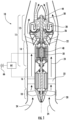
Fig. 1 is side cross-section view of a gas turbine propulsion system that includes a power generation system according to one embodiment of the present invention; -
Fig. 2 is an enlarged side cross-section view of the gas turbine engine and electric generator shown inFig. 1 ; -
Fig. 3 is an enlarged front perspective cross-section view of the electric generator shown inFig. 1 ; -
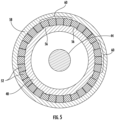
Fig. 4 is an axial cross-section view of the rotor of the electric generator taken along line A-A ofFig. 3 according to one embodiment of the present invention; -
Fig. 5 is an axial cross-section view of the rotor of the electric generator taken along line A-A ofFig. 3 according to an alternate embodiment of the present invention; -
Fig. 6 is an axial cross-section view of the rotor of the electric generator taken along line A-A ofFig. 3 according to an alternate embodiment of the present invention; -
Fig. 7 is an axial cross-section view of the rotor of the electric generator taken along line A-A ofFig. 3 according to an alternate embodiment of the present invention; -
Fig. 8 is an enlarged side cross-section view of the electric motor and propulsor shown inFig. 1 ; and -
Fig. 9 is an enlarged front perspective cross-section view of the electric motor and propulsor shown inFig. 1 . - Reference will now be made in detail to present embodiments of the invention, one or more examples of which are illustrated in the accompanying drawings. The detailed description uses numerical and letter designations to refer to features in the drawings. Like or similar designations in the drawings and description have been used to refer to like or similar parts of the invention. Each example is provided by way of explanation of the invention, not limitation of the invention. In fact, it will be apparent to those skilled in the art that modifications and variations can be made in the present invention without departing from the scope thereof. For instance, features illustrated or described as part of one embodiment may be used on another embodiment to yield a still further embodiment. Thus, it is intended that the present invention covers such modifications and variations as come within the scope of the appended claims.
- As used herein, the terms "first," "second," and "third" may be used interchangeably to distinguish one component from another and are not intended to signify location or importance of the individual components. As used herein, the terms "upstream" and "downstream" refer to the location of items with reference to the direction of fluid flow in a fluid pathway. For example, item A is "upstream" from item B and item B is downstream from item A if fluid normally flows from item A to item B. As used herein, "axial" refers to the direction of the longer axis of a component, "radial" refers to the direction perpendicular to the axial direction, and "circumferential" refers to the direction around a component.
- Embodiments of the present invention include a power generation system that can be driven by a gas turbine engine to generate 1 MW, 1.5 MW, 2 MW, or more of electric power without requiring multiple spools or shafts, gears, and/or transmissions. The power generation system may be incorporated into any vehicle and/or used as a portable power supply for geographically remote areas or following a natural disaster. For example, the power generation system may be housed in a nacelle and attached to the fuselage or wing of an aircraft. The power generation system generally includes a gas turbine engine and an electric generator. The gas turbine engine generally includes a compressor, a combustor, and a turbine, and the gas turbine engine drives the electric generator to produce electricity that may provide a portable power supply. Alternately or in addition, the electricity produced by the electric generator may be used to power a propulsor, such as a propeller or a fan enclosed by a shroud or cowling. In this manner, the propulsor may be rotationally isolated from the gas turbine engine so that rotation of the propulsor is completely independent from operation of the gas turbine engine. As used herein, the phrase "rotationally isolated" means that no mechanical coupling exists between two components to transfer rotation between the two components, in this case, the gas turbine engine and the propulsor. As a result, rotation of the propulsor is completely independent from operation of the gas turbine engine, allowing each to operate at its most efficient speed independently from the other.
- Particular embodiments of the present invention may include additional design features to reduce the weight, manufacturing cost, and/or maintenance associated with the gas turbine engine. For example, the gas turbine engine may be a single-spool gas turbine engine. As used herein, a "single-spool gas turbine engine" means a gas turbine engine in which a single spool or shaft, which may include multiple segments, connects the turbine to the compressor so that the turbine and compressor rotate at the same speed. The single spool or shaft may also connect the gas turbine engine to the electric generator so that the turbine and electric generator rotate at the same speed. The use of a single spool or shaft reduces the weight and parts associated with the gas turbine engine, simplifying manufacture, maintenance, and repairs compared to multi-spool and/or geared systems. In addition, the reduced weight associated with a single-spool gas turbine engine reduces the need for a separate lube oil system to lubricate and cool the rotating components of the gas turbine engine. As a result, in particular embodiments the gas turbine engine may include non-lubricated bearings and/or an integrally bladed rotor that further reduce manufacturing, maintenance, and repair costs. As used herein, "non-lubricated bearings" means that the bearings are not supplied external lubrication, such as from a lube oil system, during operation of the gas turbine engine.
-
Figure 1 provides a side cross-section view of a gasturbine propulsion system 10 that includes apower generation system 11 according to one embodiment of the present invention. In the particular embodiment shown inFig. 1 , the gasturbine propulsion system 10 includes agas turbine engine 12, anelectric generator 14, anelectric motor 16, and apropulsor 18. Thepower generation system 11 generally includes thegas turbine engine 12 and theelectric generator 14. As will be described in more detail, theelectric motor 16 andpropulsor 18 are rotationally isolated from thegas turbine engine 12 so that thepropulsor 18 rotates independently from operation of thegas turbine engine 12 at all times. Ashroud 20 supported bystruts 22 may surround thegas turbine engine 12 andpropulsor 18 to define afluid flow path 24 from thepropulsor 18 to thegas turbine engine 12. If present, theshroud 20 focuses the airflow produced by thepropulsor 18 that enters thegas turbine engine 12, as well as the airflow that bypasses thegas turbine engine 12 and exits theshroud 20 as thrust. -
Fig. 2 provides an enlarged side cross-section view of thegas turbine engine 12 andelectric generator 14 shown inFig. 1 . In the particular embodiment shown inFigs. 1 and2 , thegas turbine engine 12 is located in thefluid flow path 24 downstream from thepropulsor 18. Thegas turbine engine 12 generally includes acompressor 26,combustors 28 downstream from thecompressor 26, and aturbine 30 downstream from thecombustors 28, as is known in the art. Thecompressor 26 includes a rotor 32 with one or more alternating stages ofrotating blades 34 and fixedvanes 36 that progressively increase the pressure of the working fluid entering thecompressor 26. Thecombustors 28 mix the compressed working fluid with fuel and ignite the mixture to generate combustion gases having a high temperature, pressure, and velocity. Theturbine 30 includes arotor 38 with one or more alternating stages ofrotating blades 40 and fixedvanes 42 to extract work from the combustion gases exiting thecombustors 28. In the particular embodiment shown inFigs. 1 and2 , thecompressor 26 is a single stage, axial-flow compressor, and theturbine 30 is a two-stage axial-flow turbine. However, unless specifically recited in the claims, thegas turbine engine 12 included in the present invention is not limited to any particular design or size and may include a multi-stage axial or radial-flow compressor 26, one ormore combustors 28, and an axial or radial-flow turbine 30 with one or more stages. - Gas turbine engines are generally more efficient at higher turbine inlet temperatures which may damage the rotating blades in the turbine. As a result, the rotating blades are often hollow so that cooling may be supplied through the rotor to the hollow rotating blades to prevent damage from the higher turbine inlet temperatures. In the present invention, the rotational isolation between the
gas turbine engine 12 and thepropulsor 18 allows thegas turbine engine 12 to operate at lower turbine inlet temperatures than what may otherwise be preferred to achieve a desired efficiency for thegas turbine engine 12. The lower turbine inlet temperatures in turn reduce the need for internal cooling to therotating blades 40 in theturbine 30. As a result, in particular embodiments of the present invention, therotor 38 in theturbine 30 may be an integrallybladed rotor 38 or "blisk" in which therotating blades 40 are solid and integrally formed as a solid piece with therotor 38. The integrally bladedrotor 38 may be manufactured by additive printing, casting, machining from a solid piece of material, or weldingindividual blades 40 to therotor 38, as is known in the art. The resulting integrally bladedrotor 38 reduces the complexity, weight, and cost of manufacturing and assembly by avoiding the intricacy of hollow blades, dovetail connections to the rotor, and forced cooling through the rotor and blades. - The
gas turbine engine 12 may include one or more spools or shafts that rotationally couple theturbine 30 to thecompressor 26, as is known in the art. In a multi-spool gas turbine engine, for example, the compressor and the turbine may each include a high pressure stage and a low pressure stage, and a first spool may connect the high pressure stage of the turbine to the high pressure stage of the compressor, while a second spool may connect the low pressure stage of the turbine to the low pressure stage of the compressor. In this manner, each turbine stage drives the corresponding compressor stage with a separate spool, with one spool inside the other spool. - In the particular embodiment shown in
Figs. 1 and2 , thegas turbine engine 12 is a single-spoolgas turbine engine 12 in which a single spool orshaft 44 connects theturbine 30 to thecompressor 26. The single spool orshaft 44 may include multiple segments connected together to rotate in unison and transmit rotation of theturbine rotor 38 directly to the compressor rotor 32 without the use of gears. - The single-spool
gas turbine engine 12 shown inFigs. 1 and2 is lighter and generates less heat compared to a similarly-sized gas turbine engine with multiple spools or shafts and/or gears. As a result, bearings that support the rotating components of thegas turbine engine 12 do not require an external source of lube oil to lubricate and cool the bearings, and particular embodiments of the present invention may includenon-lubricated bearings 46 that rotatably support theshaft 44 or single-spoolgas turbine engine 12. As shown most clearly inFig. 2 , for example, thenon-lubricated bearings 46 may support the single spool orshaft 44 at various positions in thegas turbine engine 12 and/orelectric generator 14. Thenon-lubricated bearings 46 may include, for example, air-lubricated bearings or ceramic bearings encapsulated in a casing that allows periodic addition of lubrication to the bearings without the ability to permit lube oil flow through the bearings during operation. Thenon-lubricated bearings 46 thus further reduce the weight, manufacturing cost, maintenance cost, and complexity of thegas turbine engine 12 by obviating the need for a separate lube oil system and associated pumps, sumps, and filters. -
Figure 3 provides an enlarged front perspective cross-section view of theelectric generator 14 shown inFigs. 1 and2 . Theelectric generator 14 generally includes arotor 48 and astator 50, and relative movement between therotor 48 and thestator 50 disrupts a magnetic field between the two to convert mechanical energy into electrical energy, as is known in the art. In the particular embodiment shown inFigs. 2 and3 , therotor 48 includespermanent magnets 52 that create the magnetic field, and thestator 50 includesconductive windings 54 so that relative movement between thepermanent magnets 52 on therotor 48 and theconductive windings 54 on thestator 50 disrupts the magnetic field and induces current flow in theconductive windings 54. One of ordinary skill in the art will readily appreciate that the magnetic field may be created by a current applied to therotor 48 instead of permanent magnets, or thestator 50 may generate the magnetic field, and therotor 48 may include theconductive windings 54, and the present invention is not limited to the particular configuration of theelectric generator 14 unless specifically recited in the claims. - The
electric generator 14 may be located outside of theshroud 20 or remote from thefluid flow path 24, and the present invention is not limited to a particular location for theelectric generator 14 unless specifically recited in the claims. In the particular embodiment shown inFigs. 1-3 , theelectric generator 14 is located in thefluid flow path 24 upstream from thegas turbine engine 12 and downstream from thepropulsor 18. In addition, therotor 48 of theelectric generator 14 is coaxially aligned with thecompressor 26, theturbine 30, and theturbine rotor 38 to avoid the need for gears or universal joints that would otherwise be needed to transfer rotational work from thegas turbine engine 12 to theelectric generator 14. - The use of a gas turbine engine to drive an electric generator is known in the art. For example,
U.S. Patent 6,962,057 describes a micro gas turbine in which a single-spool gas turbine engine drives a coaxially aligned electric generator to produce 20-100 kW of power. The power output of the electric generator may be increased by increasing the strength of the magnetic field, e.g., by incorporating larger permanent magnets on the rotor. However, the additional mass associated with larger permanent magnets produces larger centrifugal forces that tend to separate the permanent magnets from the rotor, particularly at the high rotational speeds associated with a single-spool gas turbine engine that directly drives the electric generator. Therefore, gas turbine engines that drive higher power output generators generally require multiple spools or shafts, gears, and/or transmissions that allow the electric generator to rotate at substantially lower speeds than the turbine in the gas turbine engine to prevent the centrifugal forces from separating the permanent magnets from the rotor. - In the particular embodiment shown in
Figs. 1-3 , the single spool orshaft 44 connects theturbine rotor 38 to therotor 48 of theelectric generator 14 so that theturbine rotor 38 and thegenerator rotor 48 rotate at the same speed. Although the output power of theelectric generator 14 is not a limitation of the present invention unless recited in the claims, in particular embodiments, theelectric generator 14 may produce an output of greater than 1 MW, 1.5 MW, or 2 MW. Inasmuch as theturbine rotor 38 may rotate at 20,000 rpm or more, the incorporation of largerpermanent magnets 52 on therotor 48 to produce output power greater than 1 MW requires additional structure to hold thepermanent magnets 52 in place. Therefore, theelectric generator 14 may further include means for holding thepermanent magnets 52 in place on therotor 48 during operation of thegas turbine engine 12, theturbine 30, and/or theturbine rotor 38. - The function of the means for holding the
permanent magnets 52 in place on therotor 48 during operation of thegas turbine engine 12, theturbine 30, and/or theturbine rotor 38 is to prevent movement between therotor 48 and thepermanent magnets 52 during operations. The structure for performing this function may be any mechanical coupling with thepermanent magnets 52 that prevents thepermanent magnets 52 from moving with respect to therotor 48. For example, the mechanical coupling may be one or more clamps, bolts, screws, or dovetail fittings that mechanically couple some or all of thepermanent magnets 52 to therotor 48. Alternately, the mechanical coupling may be a series of rails or other projections that extend radially from therotor 48 combined with an overwrap that circumferentially surrounds thepermanent magnets 52. The rails or other projections engage with some or all of thepermanent magnets 52 to transfer torque between therotor 48 and thepermanent magnets 52 and prevent thepermanent magnets 52 from moving circumferentially with respect to therotor 48. In particular embodiments, the rails or other projections may be contoured, ribbed, tapered, or flanged to match a complementary recess in thepermanent magnets 52. The overwrap that circumferentially surrounds thepermanent magnets 52 provides sufficient centripetal force against thepermanent magnets 52 to offset the centrifugal forces caused by rotation of therotor 48 to prevent thepermanent magnets 52 from moving radially away from therotor 48. The overwrap may be a fiber or composite material sprayed or wrapped around the outer circumference of thepermanent magnets 52. In combination, the rails or projections and overwrap thus securely hold thepermanent magnets 52 in contact with therotor 48 to prevent circumferential and radial movement between therotor 48 and thepermanent magnets 52 during operations. -
Figure 4 provides an axial cross-section view of therotor 48 of theelectric generator 14 taken along line A-A ofFig. 3 according to one embodiment of the present invention. In this particular embodiment, thepermanent magnets 52 are arranged circumferentially around therotor 48 and extend longitudinally along therotor 48 to create the magnetic field. The means for holding thepermanent magnets 52 in place on therotor 48 during operation of thegas turbine engine 12, theturbine 30, and/or theturbine rotor 38 includesmultiple rails 56 and anoverwrap 58. Themultiple rails 56 extend radially from therotor 48 and may extend longitudinally along some or all of therotor 48. As shown inFig. 4 , thepermanent magnets 52 are arranged in repeatinggroups 60 of fourmagnets 52, and the outer surface of therotor 48 in contact with thepermanent magnets 52 is substantially flat. Threepermanent magnets 52 in eachgroup 60 are sandwiched between or engaged withadjacent rails 56, and onepermanent magnet 52 in eachgroup 60 has a shorter radial dimension and is on top of arail 56. In this manner, therails 56 provide the mechanical coupling between therotor 48 and thepermanent magnets 52 to transfer torque between therotor 48 and thepermanent magnets 52 and prevent thepermanent magnets 52 from moving circumferentially with respect to therotor 48. Theoverwrap 58 circumferentially surrounds thepermanent magnets 52 to provide sufficient centripetal force against thepermanent magnets 52 to offset the centrifugal forces caused by rotation of therotor 48 to prevent thepermanent magnets 52 from moving radially away from therotor 48. Therails 56 andoverwrap 58 thus combine to provide the structure for holding thepermanent magnets 52 in place on therotor 48 during operation of thegas turbine engine 12, theturbine 30, and/or theturbine rotor 38. -
Figure 5 provides an axial cross-section view of therotor 48 of theelectric generator 14 taken along line A-A ofFig. 3 according to an alternate embodiment of the present invention. As shown inFig. 5 , thepermanent magnets 52 are again arranged circumferentially around therotor 48 and extend longitudinally along therotor 48 to create the magnetic field, and the means for holding thepermanent magnets 52 in place on therotor 48 during operation of thegas turbine engine 12, theturbine 30, and/or theturbine rotor 38 again includesmultiple rails 56 and anoverwrap 58 as described with respect toFig. 4 . Thepermanent magnets 52 are again arranged in eight repeatinggroups 60 of fourmagnets 52. In this particular embodiment, however, the outer surface of therotor 48 in contact with thepermanent magnets 52 is curved, with the magnitude of the curve based on the radius of therotor 48. As a result, this particular embodiment only requires fabrication of two different magnet sizes. Specifically, the threepermanent magnets 52 in eachgroup 60 that are sandwiched between or engaged withadjacent rails 56 are identical to one another, and thepermanent magnet 52 in eachgroup 60 on top of arail 56 differs only in its radial dimension. The use of substantially identicalpermanent magnets 52 simplifies construction by reducing the manufacturing and maintenance costs associated with thepermanent magnets 52. -
Figure 6 provides an axial cross-section view of therotor 48 of theelectric generator 14 taken along line A-A ofFig. 3 according to an alternate embodiment of the present invention. As shown inFig. 6 , thepermanent magnets 52 are again arranged circumferentially around therotor 48 and extend longitudinally along therotor 48 to create the magnetic field, and the means for holding thepermanent magnets 52 in place on therotor 48 during operation of thegas turbine engine 12, theturbine 30, and/or theturbine rotor 38 again includesmultiple rails 56 and anoverwrap 58 as described with respect toFig. 4 . In this particular embodiment, the means further includes arecess 62 in some or all of thepermanent magnets 52. Eachrecess 62 may have a shape that is complementary to the shape of therails 56 to allow eachrail 56 to extend into arecess 62 of a differentpermanent magnet 52. The mechanical coupling between therails 56 and recesses 62 prevents thepermanent magnets 52 from moving circumferentially with respect to therotor 48, and theoverwrap 58 prevents thepermanent magnets 52 from moving radially away from therotor 48. Therails 56, recesses 62, andoverwrap 58 thus combine to provide the structure for holding thepermanent magnets 52 in place on therotor 48 during operation of thegas turbine engine 12, theturbine 30, and/or theturbine rotor 38. -
Figure 7 provides an axial cross-section view of therotor 48 of theelectric generator 14 taken along line A-A ofFig. 3 according to an alternate embodiment of the present invention. As shown inFig. 7 , the means for holding thepermanent magnets 52 in place on therotor 48 during operation of thegas turbine engine 12, theturbine 30, and/or theturbine rotor 38 again includesmultiple rails 56 and recesses 62 in thepermanent magnets 52. In this particular embodiment, therails 56 are T-shaped, and therecesses 62 in thepermanent magnets 52 have a complementary shape to receive the T-shapedrails 56. Therails 56 and recesses 62 thus provide the mechanical coupling that prevents thepermanent magnets 52 from moving both circumferentially and radially with respect to therotor 48, and an overwrap is not needed in this embodiment to perform the function of holding thepermanent magnets 52 in place on therotor 48 during operation of thegas turbine engine 12, theturbine 30, and/or theturbine rotor 38. One of ordinary skill in the art will readily appreciate that other shapes for therails 56 and recesses 62 would similarly perform the function of holding thepermanent magnets 52 in place on therotor 48 during operation of thegas turbine engine 12, theturbine 30, and/or theturbine rotor 38 without the need for an overwrap. For example, alternate embodiments of the present invention may includerails 56 and recesses 62 having a fir tree shape, an L-shape, a dovetail shape, etc., and the present invention is not limited to any particular shape for therails 56 and recesses 62 unless specifically recited in the claims. - The embodiments shown in
Figs 4-7 thus allow larger and heavierpermanent magnets 52 to be incorporated into theelectric generator 14 to increase the output power of theelectric generator 14. For example, embodiments in which the single spool orshaft 44 rotates therotor 48 of theelectric generator 14 at the same speed as theturbine rotor 38 may generate an output of more than 1 MW, 1.5 MW, or even 2 MW, depending on the radius of therotor 48 and the size of thepermanent magnets 52. This substantial output power may be used for any purpose, such as providing a portable power supply to remote geographic areas or following weather-related catastrophes. - Alternately, as shown in
Fig. 1 , theelectric generator 14 may be incorporated into the gasturbine propulsion system 10 to provide electric power to drive theelectric motor 16 of thepropulsor 18. As shown by the dashed lines ofFig. 1 , the output from theelectric generator 14 may be routed to anelectric bus 64. In this manner, theelectric bus 64 may supply electric power to theelectric motor 16 to drive thepropulsor 18 or to a storage device, such as abattery 66, for subsequent use by theelectric motor 16 to drive thepropulsor 18 when thegas turbine engine 12 is not operating. -
Figures 8 and9 provide enlarged side and perspective cross-section views of theelectric motor 16 andpropulsor 18 shown inFig. 1 . As shown inFig. 1 , acasing 68 may surround theelectric generator 14 andelectric motor 16 to minimize disruption in thefluid flow path 24 between theelectric generator 14 andelectric motor 16. However, theelectric motor 16 andpropulsor 18 are rotationally isolated from thegas turbine engine 12 so that thepropulsor 18 rotates independently from operation of thegas turbine engine 12 at all times. - The
electric motor 16 provides the sole driving force for thepropulsor 18. Theelectric motor 16 generally includes arotor 70 and astator 72, and current flow disrupts a magnetic field between the two to convert electrical energy into mechanical energy, as is known in the art. In the particular embodiment shown inFigs. 8 and9 , therotor 70 provides the magnetic field, and thestator 72 includes conductive windings so that current flow through thestator 72 disrupts the magnetic field and induces rotational movement in therotor 70. One of ordinary skill in the art will readily appreciate that thestator 72 may generate the magnetic field, and therotor 70 may include the conductive windings, and the present invention is not limited to the particular configuration of theelectric motor 16 unless specifically recited in the claims. - The
electric motor 16 may be located outside of theshroud 20 or remote from thefluid flow path 24, and the present invention is not limited to a particular location for theelectric motor 16 unless specifically recited in the claims. In the particular embodiment shown inFigs. 1 ,8 , and9 , theelectric motor 16 is located in thefluid flow path 24 upstream from thegas turbine engine 12 and downstream from thepropulsor 18. Ashaft 74 couples therotor 70 to thepropulsor 18, and therotor 70 is coaxially aligned with thepropulsor 18 to avoid the need for gears or universal joints that would otherwise be needed to transfer rotational work from theelectric motor 16 to thepropulsor 18. - The
propulsor 18 may be a propeller that rotates outside of theshroud 20 or a fan enclosed by theshroud 20 or cowling. In either event, thepropulsor 18 may be either axially offset from or coaxially aligned with thegas turbine engine 12 and/orelectric motor 16, depending on the particular design. In the particular embodiment shown inFigs. 1 ,8 , and9 , thepropulsor 18 is afan 76 surrounded by theshroud 20 or cowling and coaxially aligned with theelectric motor 16 andgas turbine engine 12. Rotation of thefan 76 increases the pressure and velocity of air in thefluid flow path 24. As a result, air from thefluid flow path 24 entering thecompressor 26 is supercharged, increasing the efficiency of thegas turbine engine 12. In particular embodiments, the increased efficiency on thegas turbine engine 12 may allow for a reduction in the turbine inlet temperature of approximately 150 degrees Fahrenheit or produce an increase of approximately 200 kW for the same turbine inlet temperature. - Referring again to
Fig. 1 , the rotational isolation between thegas turbine engine 12 and thepropulsor 18 allows the gasturbine propulsion system 10 to operate in multiple modes, depending on the particular operational needs. For example, the efficiency of the gasturbine propulsion system 10 may be optimized by operating thegas turbine engine 12 at its most efficient power level and varying the power level or speed of thepropulsor 18 as needed to produce a desired amount of thrust. In this operating mode, thegas turbine engine 12 drives theelectric generator 14 to produce 1 MW, 1.5 MW, 2 MW, or more of electric power which is then supplied through theelectric bus 64 to either theelectric motor 16 to drive thepropulsor 18 or to thebattery 66. As another example, the sound signature of the gasturbine propulsion system 10 may be minimized by operating thepropulsor 18 with thegas turbine engine 12 secured. Theelectric bus 64 may supply electric power from thebattery 66 to theelectric motor 16 to drive thepropulsor 18 to produce a desired amount of thrust. - The embodiments previously described and illustrated with respect to
Figs. 1-7 may also provide a method for starting thegas turbine engine 12 without requiring a separate starter motor. For example, theelectric bus 64 may supply electric power from thebattery 66 or an external source of power to theelectric generator 14, causing theelectric generator 14 to act as an electric motor. The single spool orshaft 44 then transmits rotation from thegenerator rotor 48 to the compressor rotor 32 andturbine rotor 38. Thecombustors 28 may be ignited once the compressor rotor 32 andturbine rotor 38 reach a minimum sustained speed, typically approximately 15% of idle speed. Electric power to theelectric generator 14 and fuel flow to thecombustors 28 may be gradually increased until the combustors can provide sufficient combustion gases to theturbine 30 to achieve a self-sustaining speed for thegas turbine engine 12, typically approximately 50% of idle speed. At the self-sustaining speed, the single spool orshaft 44 again transmits rotation from theturbine rotor 38 to thegenerator rotor 48 as theturbine 30 accelerates to the steady state operating speed of approximately 100%. At this speed, theelectric generator 14 may be connected to a load or power electronics to produce electric output. - This written description uses examples to disclose the invention, including the best mode, and also to enable any person skilled in the art to practice the invention, including making and using any devices or systems and performing any incorporated methods. The patentable scope of the invention is defined by the claims and may include other examples that occur to those skilled in the art.
Claims (8)
- A power generation system (11), comprising:a shroud (20) that defines a fluid flow path (24);a single-spool gas turbine engine (12) in said fluid flow path (24) comprising:a compressor (26),a combustor (28) downstream from said compressor (26), anda turbine (30) downstream from said compressor (26) and said combustor (28);an electric generator (14) in said fluid flow path (24) upstream from said single-spool gas turbine engine (12), wherein said electric generator (14) comprises a rotor (48) coaxially aligned with said turbine (30); anda shaft (44) that connects said turbine (30) to said rotor (48) of said electric generator (14) so that said turbine (30) and said rotor (48) rotate at the same speed.
- The power generation system (11) as in claim 1, wherein said turbine (30) comprises an integrally bladed rotor (38).
- The power generation system (11) as in any of claims 1-2, wherein said electric generator (14) is configured to generate at least 1 megawatt of output power.
- The power generation system as in any of claims 1-3, wherein said electric generator (14) comprises means for holding a plurality of permanent magnets (60) in place on said rotor (48) of said electric generator (14) during operation of said turbine (30).
- The power generation system (11) as in claim 4, wherein said means for holding a plurality of permanent magnets (60) in place on said rotor (48) of said electric generator (14) during operation of said turbine (30) comprises a plurality of rails (56) that extend radially from said rotor (48) of said electric generator (14) and engage with said plurality of permanent magnets (60).
- The power generation system (11) as in any of claims 4-5, wherein said means for holding a plurality of permanent magnets (60) in place on said rotor (48) of said electric generator (14) during operation of said turbine (30) further comprises an overwrap (58) that circumferentially surrounds said plurality of permanent magnets (60).
- The power generation system (11) as in claim 4, wherein said means for holding a plurality of permanent magnets (60) in place on said rotor (48) of said electric generator (14) during operation of said turbine (30) comprises a plurality of rails (56) that extend radially from said rotor (48) of said electric generator (14), a recess (62) in each of said plurality of permanent magnets (60), and each rail (56) of said plurality of rails (56) extends into said recess (62) of a different permanent magnet (60) of said plurality of magnets (60).
- The power generation system as in any of claims 1-7, further comprising a plurality of non-lubricated bearings (46) that rotatably support said shaft (44).
Applications Claiming Priority (2)
| Application Number | Priority Date | Filing Date | Title |
|---|---|---|---|
| US17/080,329 US11002146B1 (en) | 2020-10-26 | 2020-10-26 | Power generation system |
| PCT/US2021/050466 WO2022093414A1 (en) | 2020-10-26 | 2021-09-15 | A power generaton system |
Publications (4)
| Publication Number | Publication Date |
|---|---|
| EP4115059A1 EP4115059A1 (en) | 2023-01-11 |
| EP4115059A4 EP4115059A4 (en) | 2023-08-02 |
| EP4115059B1 true EP4115059B1 (en) | 2025-04-09 |
| EP4115059C0 EP4115059C0 (en) | 2025-04-09 |
Family
ID=75845907
Family Applications (1)
| Application Number | Title | Priority Date | Filing Date |
|---|---|---|---|
| EP21887125.9A Active EP4115059B1 (en) | 2020-10-26 | 2021-09-15 | A power generation system |
Country Status (3)
| Country | Link |
|---|---|
| US (4) | US11002146B1 (en) |
| EP (1) | EP4115059B1 (en) |
| WO (1) | WO2022093414A1 (en) |
Families Citing this family (7)
| Publication number | Priority date | Publication date | Assignee | Title |
|---|---|---|---|---|
| DE102017212798A1 (en) * | 2017-07-26 | 2019-01-31 | Siemens Aktiengesellschaft | Electric motor with cooling device |
| CN111216901A (en) * | 2018-11-26 | 2020-06-02 | 本田技研工业株式会社 | Power supply device and flying object |
| CN113864066B (en) * | 2021-09-28 | 2022-11-22 | 中国航空发动机研究院 | Turbine generator and power system |
| FR3130323B1 (en) * | 2021-12-13 | 2024-08-23 | Safran Aircraft Engines | TURBOMACHINE FOR AIRCRAFT COMPRISING AN ELECTRIC MACHINE |
| US11898458B1 (en) * | 2022-08-10 | 2024-02-13 | Hamilton Sundstrand Corporation | Radial fan with leading edge air injection |
| US12366217B2 (en) * | 2022-12-21 | 2025-07-22 | General Electric Company | Electric machine assembly |
| FR3144847A1 (en) * | 2023-01-10 | 2024-07-12 | Safran | Turbomachine with electric transmission |
Family Cites Families (65)
| Publication number | Priority date | Publication date | Assignee | Title |
|---|---|---|---|---|
| US4064692A (en) * | 1975-06-02 | 1977-12-27 | The United States Of America As Represented By The Administrator Of The National Aeronautics And Space Administration | Variable cycle gas turbine engines |
| US4930201A (en) * | 1985-08-14 | 1990-06-05 | Kollmorgen Corporation | Method for manufacturing a composite sleeve for an electric motor |
| US4855630A (en) * | 1988-05-05 | 1989-08-08 | A. O. Smith Corporation | Permanent magnet rotor with magnet retention band |
| US5169288A (en) * | 1991-09-06 | 1992-12-08 | General Electric Company | Low noise fan assembly |
| DE9215696U1 (en) * | 1992-11-18 | 1994-03-17 | Anton Piller GmbH & Co KG, 37520 Osterode | Power generation plant |
| US5589758A (en) * | 1993-09-07 | 1996-12-31 | Mcdonnell Douglas Corporation | Modular, hybrid power system |
| US5791138A (en) * | 1996-01-11 | 1998-08-11 | Burbank Aeuronautical Corporation Ii | Turbofan engine with reduced noise |
| KR20010108020A (en) * | 1998-12-14 | 2001-12-07 | 리차드 게쯜러 | Low drag ducted ram air turbine generator and cooling system |
| US6388353B1 (en) * | 2000-03-30 | 2002-05-14 | Camco International, Inc. | Elongated permanent magnet synchronous motor |
| US6418707B1 (en) | 2000-09-07 | 2002-07-16 | Marius A. Paul | General advanced power system |
| US6707209B2 (en) * | 2000-12-04 | 2004-03-16 | Emerson Electric Co. | Reduced cogging torque permanent magnet electric machine with rotor having offset sections |
| JP3775328B2 (en) * | 2002-03-27 | 2006-05-17 | 三菱電機株式会社 | Synchronous induction motor rotor, compressor, synchronous induction motor rotor manufacturing method, synchronous induction motor rotor mold |
| US20030192303A1 (en) * | 2002-04-15 | 2003-10-16 | Paul Marius A. | Integrated bypass turbojet engines for aircraft and other vehicles |
| US6966174B2 (en) * | 2002-04-15 | 2005-11-22 | Paul Marius A | Integrated bypass turbojet engines for air craft and other vehicles |
| US6962057B2 (en) | 2002-08-27 | 2005-11-08 | Honda Giken Kogyo Kaisha | Gas turbine power generation system |
| US7574867B2 (en) * | 2003-04-02 | 2009-08-18 | Tma Power, Llc | Hybrid microturbine for generating electricity |
| US6965183B2 (en) * | 2003-05-27 | 2005-11-15 | Pratt & Whitney Canada Corp. | Architecture for electric machine |
| JP4092728B2 (en) * | 2005-01-25 | 2008-05-28 | 独立行政法人 宇宙航空研究開発機構 | Aircraft propulsion system |
| US8181442B2 (en) | 2008-05-05 | 2012-05-22 | Pratt & Whitney Canada Corp. | Gas turbine aircraft engine with power variability |
| US7990534B2 (en) | 2008-07-08 | 2011-08-02 | Tokyo Electron Limited | System and method for azimuth angle calibration |
| EP2361350A1 (en) * | 2008-08-19 | 2011-08-31 | Sonic Blue Aerospace, Inc. | Magnetic advanced generation jet electric turbine |
| US20100108806A1 (en) | 2008-10-08 | 2010-05-06 | Searete Llc, A Limited Liability Corporation Of The State Of Delaware | Hybrid propulsive engine including at least one independently rotatable propeller/fan |
| US20100154380A1 (en) | 2008-12-22 | 2010-06-24 | General Electric Company | Control system for a land-based simple cycle hybrid engine for power generation |
| US8616005B1 (en) | 2009-09-09 | 2013-12-31 | Dennis James Cousino, Sr. | Method and apparatus for boosting gas turbine engine performance |
| US20110146289A1 (en) * | 2009-12-21 | 2011-06-23 | John Lewis Baughman | Power extraction method |
| US20110146228A1 (en) * | 2009-12-21 | 2011-06-23 | John Lewis Baughman | Power extraction system |
| US9238973B2 (en) | 2009-12-29 | 2016-01-19 | Rolls-Royce Corporation | Gas turbine engine and foil bearing system |
| US8024932B1 (en) | 2010-04-07 | 2011-09-27 | General Electric Company | System and method for a combustor nozzle |
| FR2962488B1 (en) | 2010-07-06 | 2014-05-02 | Turbomeca | METHOD AND ARCHITECTURE OF TURBOMACHINE POWER RECOMBINATION |
| US9212625B2 (en) | 2010-11-19 | 2015-12-15 | Rudolph Allen SHELLEY | Hybrid gas turbine propulsion system |
| US20140130500A9 (en) * | 2011-02-18 | 2014-05-15 | Dynamo Micropower | Design and manufacturing of an advanced low cost micro-turbine system |
| US8307660B2 (en) | 2011-04-11 | 2012-11-13 | General Electric Company | Combustor nozzle and method for supplying fuel to a combustor |
| US9296288B2 (en) | 2012-05-07 | 2016-03-29 | Separation Design Group Llc | Hybrid radiant energy aircraft engine |
| US9083212B2 (en) * | 2012-09-11 | 2015-07-14 | Concepts Eti, Inc. | Overhung turbine and generator system with turbine cartridge |
| EP2906806B1 (en) * | 2012-10-09 | 2021-06-16 | Raytheon Technologies Corporation | Geared turbofan engine with optimized diffuser case flange location |
| WO2014130121A1 (en) | 2013-02-24 | 2014-08-28 | Copeland Andrew D | Shaft displacement control |
| US20160069264A1 (en) | 2013-07-22 | 2016-03-10 | Joseph D. Brostmeyer | Gas turbine engine with turbine cooling and combustor air preheating |
| GB2519626B (en) | 2013-08-07 | 2017-08-23 | Energy Tech Inst Llp | Hybrid power generation system |
| US9515528B2 (en) * | 2014-01-06 | 2016-12-06 | Mitsubishi Electric Corporation | Permanent magnet rotary electric machine |
| FR3020410B1 (en) | 2014-04-29 | 2021-09-17 | Snecma | AIRCRAFT TURBOMACHINE WITH IMPROVED MECHANICAL POWER TAKE-OFF |
| US20160023773A1 (en) | 2014-07-23 | 2016-01-28 | Hamilton Sundstrand Corporation | Hybrid electric pulsed-power propulsion system for aircraft |
| EP3253952A2 (en) | 2015-02-06 | 2017-12-13 | Florida Turbine Technologies, Inc. | Apparatus and process of retrofitting a combined cycle power plant |
| US9963981B2 (en) * | 2015-06-10 | 2018-05-08 | General Electric Company | Pitch change mechanism for shrouded fan with low fan pressure ratio |
| US20170175564A1 (en) * | 2015-12-16 | 2017-06-22 | Daniel Schlak | Flywheel with Inner Turbine, Intermediate Compressor, and Outer Array of Magnets |
| US10794282B2 (en) * | 2016-01-25 | 2020-10-06 | Rolls-Royce North American Technologies Inc. | Inlet turbine for high-mach engines |
| US20170298826A1 (en) | 2016-04-18 | 2017-10-19 | John E. Ryznic | Industrial gas turbine engine with turbine airfoil cooling |
| US20170314509A1 (en) | 2016-04-27 | 2017-11-02 | General Electric Company | Turbofan assembly and method of assembling |
| DE102016113030A1 (en) | 2016-07-14 | 2018-01-18 | Rolls-Royce Deutschland Ltd & Co Kg | Gas turbine and method for protecting a gas turbine during shaft breakage |
| US10385774B2 (en) | 2016-09-19 | 2019-08-20 | United Technologies Corporation | Split compressor turbine engine |
| US10807729B2 (en) | 2017-05-17 | 2020-10-20 | General Electric Company | Propulsion system for an aircraft |
| CN107086687B (en) * | 2017-06-16 | 2023-04-07 | 广东威灵电机制造有限公司 | Rotor assembly and motor |
| US10815886B2 (en) | 2017-06-16 | 2020-10-27 | General Electric Company | High tip speed gas turbine engine |
| US20190055991A1 (en) | 2017-08-18 | 2019-02-21 | Rolls-Royce Deutschland Ltd & Co Kg | Mechanical fuse device and method for operating a mechanical fuse device |
| US10954813B2 (en) | 2017-08-18 | 2021-03-23 | Rolls-Royce Deutschland Ltd & Co Kg | Planetary gearbox system and method for operating a planetary gearbox system |
| EP3444495A1 (en) | 2017-08-18 | 2019-02-20 | Rolls-Royce Deutschland Ltd & Co KG | Mechanical clutch device and method for operating a mechanical clutch device |
| GB201721389D0 (en) | 2017-12-20 | 2018-01-31 | Rolls Royce Plc | Methods, computer programs, non-transitory computer readable storage mediums, signals, and apparatus for controlling electrical power supplied to a component |
| US20190323426A1 (en) | 2018-04-19 | 2019-10-24 | The Boeing Company | Supercharging systems for aircraft engines |
| US10968825B2 (en) | 2018-04-19 | 2021-04-06 | The Boeing Company | Flow multiplier systems for aircraft |
| US10981660B2 (en) | 2018-04-19 | 2021-04-20 | The Boeing Company | Hybrid propulsion engines for aircraft |
| US10794216B2 (en) | 2018-06-19 | 2020-10-06 | Raytheon Technologies Corporation | Fan drive gear system DC motor and generator |
| US11788464B2 (en) * | 2019-05-30 | 2023-10-17 | Joseph Michael Teets | Advanced 2-spool turboprop engine |
| US11519289B2 (en) * | 2019-12-06 | 2022-12-06 | Raytheon Technologies Corporation | Systems and methods for hybrid electric turbine engines |
| US11530617B2 (en) * | 2020-10-26 | 2022-12-20 | Antheon Research, Inc. | Gas turbine propulsion system |
| US11859500B2 (en) * | 2021-11-05 | 2024-01-02 | General Electric Company | Gas turbine engine with a fluid conduit system and a method of operating the same |
| US11788425B2 (en) * | 2021-11-05 | 2023-10-17 | General Electric Company | Gas turbine engine with clearance control system |
-
2020
- 2020-10-26 US US17/080,329 patent/US11002146B1/en active Active
-
2021
- 2021-04-27 US US17/241,780 patent/US11448083B2/en active Active
- 2021-09-15 EP EP21887125.9A patent/EP4115059B1/en active Active
- 2021-09-15 WO PCT/US2021/050466 patent/WO2022093414A1/en not_active Ceased
-
2022
- 2022-07-14 US US17/865,042 patent/US11821323B2/en active Active
- 2022-07-14 US US17/865,067 patent/US11970947B2/en active Active
Also Published As
| Publication number | Publication date |
|---|---|
| EP4115059A4 (en) | 2023-08-02 |
| US11970947B2 (en) | 2024-04-30 |
| US11821323B2 (en) | 2023-11-21 |
| CA3174071A1 (en) | 2022-05-05 |
| WO2022093414A1 (en) | 2022-05-05 |
| US11002146B1 (en) | 2021-05-11 |
| US11448083B2 (en) | 2022-09-20 |
| US20220127970A1 (en) | 2022-04-28 |
| US20220356811A1 (en) | 2022-11-10 |
| EP4115059A1 (en) | 2023-01-11 |
| EP4115059C0 (en) | 2025-04-09 |
| US20220356812A1 (en) | 2022-11-10 |
Similar Documents
| Publication | Publication Date | Title |
|---|---|---|
| EP4115059B1 (en) | A power generation system | |
| CA3177120C (en) | A gas turbine propulsion system | |
| EP3763931A1 (en) | Gas turbine engine electrical generator | |
| CN108216546B (en) | Hybrid Electric Drive System | |
| EP2128389B1 (en) | A gas turbine engine arrangement | |
| EP3904657B1 (en) | Hybrid amplification of high spool motoring via low spool power extraction and motoring of a differential geared generator | |
| US12116939B2 (en) | Hybrid transmission on propeller gearbox | |
| CN111089142A (en) | Epicyclic Gearbox | |
| CN114623205B (en) | Gearbox for a gas turbine engine employing a shape memory alloy damper | |
| US12060827B2 (en) | Advanced 2-spool turboprop engine | |
| EP3699414B1 (en) | Gas turbine engine with accessory gearbox | |
| US20240328328A1 (en) | Electric machine assembly for a turbine engine | |
| EP3020942B1 (en) | Gas turbine electrical machine arrangement | |
| EP3693580A1 (en) | Gearbox assembly | |
| CA3174071C (en) | A power generaton system | |
| JP2008519580A (en) | Electromechanical equipment | |
| RU2821119C1 (en) | Turbine generator | |
| CA3249344A1 (en) | Air-cooled electric machine |
Legal Events
| Date | Code | Title | Description |
|---|---|---|---|
| STAA | Information on the status of an ep patent application or granted ep patent |
Free format text: STATUS: THE INTERNATIONAL PUBLICATION HAS BEEN MADE |
|
| PUAI | Public reference made under article 153(3) epc to a published international application that has entered the european phase |
Free format text: ORIGINAL CODE: 0009012 |
|
| STAA | Information on the status of an ep patent application or granted ep patent |
Free format text: STATUS: REQUEST FOR EXAMINATION WAS MADE |
|
| 17P | Request for examination filed |
Effective date: 20221007 |
|
| AK | Designated contracting states |
Kind code of ref document: A1 Designated state(s): AL AT BE BG CH CY CZ DE DK EE ES FI FR GB GR HR HU IE IS IT LI LT LU LV MC MK MT NL NO PL PT RO RS SE SI SK SM TR |
|
| A4 | Supplementary search report drawn up and despatched |
Effective date: 20230630 |
|
| RIC1 | Information provided on ipc code assigned before grant |
Ipc: H02K 1/278 20220101ALI20230626BHEP Ipc: F02K 5/00 20060101ALI20230626BHEP Ipc: F01D 15/10 20060101AFI20230626BHEP |
|
| DAV | Request for validation of the european patent (deleted) | ||
| DAX | Request for extension of the european patent (deleted) | ||
| GRAP | Despatch of communication of intention to grant a patent |
Free format text: ORIGINAL CODE: EPIDOSNIGR1 |
|
| STAA | Information on the status of an ep patent application or granted ep patent |
Free format text: STATUS: GRANT OF PATENT IS INTENDED |
|
| RIC1 | Information provided on ipc code assigned before grant |
Ipc: F02C 3/08 20060101ALI20241003BHEP Ipc: B64D 35/02 20060101ALI20241003BHEP Ipc: B64D 33/00 20060101ALI20241003BHEP Ipc: B64D 27/24 20060101ALI20241003BHEP Ipc: B64D 27/16 20060101ALI20241003BHEP Ipc: B60L 50/13 20190101ALI20241003BHEP Ipc: F02K 5/00 20060101ALI20241003BHEP Ipc: H02K 1/278 20220101ALI20241003BHEP Ipc: F01D 15/10 20060101AFI20241003BHEP |
|
| INTG | Intention to grant announced |
Effective date: 20241030 |
|
| GRAS | Grant fee paid |
Free format text: ORIGINAL CODE: EPIDOSNIGR3 |
|
| GRAA | (expected) grant |
Free format text: ORIGINAL CODE: 0009210 |
|
| STAA | Information on the status of an ep patent application or granted ep patent |
Free format text: STATUS: THE PATENT HAS BEEN GRANTED |
|
| AK | Designated contracting states |
Kind code of ref document: B1 Designated state(s): AL AT BE BG CH CY CZ DE DK EE ES FI FR GB GR HR HU IE IS IT LI LT LU LV MC MK MT NL NO PL PT RO RS SE SI SK SM TR |
|
| REG | Reference to a national code |
Ref country code: GB Ref legal event code: FG4D |
|
| REG | Reference to a national code |
Ref country code: CH Ref legal event code: EP |
|
| REG | Reference to a national code |
Ref country code: DE Ref legal event code: R096 Ref document number: 602021029064 Country of ref document: DE |
|
| REG | Reference to a national code |
Ref country code: IE Ref legal event code: FG4D |
|
| U01 | Request for unitary effect filed |
Effective date: 20250509 |
|
| U07 | Unitary effect registered |
Designated state(s): AT BE BG DE DK EE FI FR IT LT LU LV MT NL PT RO SE SI Effective date: 20250516 |
|
| U20 | Renewal fee for the european patent with unitary effect paid |
Year of fee payment: 5 Effective date: 20250703 |
|
| REG | Reference to a national code |
Ref country code: CH Ref legal event code: U11 Free format text: ST27 STATUS EVENT CODE: U-0-0-U10-U11 (AS PROVIDED BY THE NATIONAL OFFICE) Effective date: 20251001 |
|
| PG25 | Lapsed in a contracting state [announced via postgrant information from national office to epo] |
Ref country code: ES Free format text: LAPSE BECAUSE OF FAILURE TO SUBMIT A TRANSLATION OF THE DESCRIPTION OR TO PAY THE FEE WITHIN THE PRESCRIBED TIME-LIMIT Effective date: 20250409 |
|
| PG25 | Lapsed in a contracting state [announced via postgrant information from national office to epo] |
Ref country code: GR Free format text: LAPSE BECAUSE OF FAILURE TO SUBMIT A TRANSLATION OF THE DESCRIPTION OR TO PAY THE FEE WITHIN THE PRESCRIBED TIME-LIMIT Effective date: 20250710 Ref country code: NO Free format text: LAPSE BECAUSE OF FAILURE TO SUBMIT A TRANSLATION OF THE DESCRIPTION OR TO PAY THE FEE WITHIN THE PRESCRIBED TIME-LIMIT Effective date: 20250709 |
|
| PG25 | Lapsed in a contracting state [announced via postgrant information from national office to epo] |
Ref country code: PL Free format text: LAPSE BECAUSE OF FAILURE TO SUBMIT A TRANSLATION OF THE DESCRIPTION OR TO PAY THE FEE WITHIN THE PRESCRIBED TIME-LIMIT Effective date: 20250409 |
|
| PGFP | Annual fee paid to national office [announced via postgrant information from national office to epo] |
Ref country code: GB Payment date: 20250927 Year of fee payment: 5 |
|
| PG25 | Lapsed in a contracting state [announced via postgrant information from national office to epo] |
Ref country code: HR Free format text: LAPSE BECAUSE OF FAILURE TO SUBMIT A TRANSLATION OF THE DESCRIPTION OR TO PAY THE FEE WITHIN THE PRESCRIBED TIME-LIMIT Effective date: 20250409 |
|
| PG25 | Lapsed in a contracting state [announced via postgrant information from national office to epo] |
Ref country code: RS Free format text: LAPSE BECAUSE OF FAILURE TO SUBMIT A TRANSLATION OF THE DESCRIPTION OR TO PAY THE FEE WITHIN THE PRESCRIBED TIME-LIMIT Effective date: 20250709 |
|
| PG25 | Lapsed in a contracting state [announced via postgrant information from national office to epo] |
Ref country code: IS Free format text: LAPSE BECAUSE OF FAILURE TO SUBMIT A TRANSLATION OF THE DESCRIPTION OR TO PAY THE FEE WITHIN THE PRESCRIBED TIME-LIMIT Effective date: 20250809 |
|
| PG25 | Lapsed in a contracting state [announced via postgrant information from national office to epo] |
Ref country code: SM Free format text: LAPSE BECAUSE OF FAILURE TO SUBMIT A TRANSLATION OF THE DESCRIPTION OR TO PAY THE FEE WITHIN THE PRESCRIBED TIME-LIMIT Effective date: 20250409 |
|
| PGFP | Annual fee paid to national office [announced via postgrant information from national office to epo] |
Ref country code: CH Payment date: 20251001 Year of fee payment: 5 |
|
| PG25 | Lapsed in a contracting state [announced via postgrant information from national office to epo] |
Ref country code: CZ Free format text: LAPSE BECAUSE OF FAILURE TO SUBMIT A TRANSLATION OF THE DESCRIPTION OR TO PAY THE FEE WITHIN THE PRESCRIBED TIME-LIMIT Effective date: 20250409 |
|
| PG25 | Lapsed in a contracting state [announced via postgrant information from national office to epo] |
Ref country code: SK Free format text: LAPSE BECAUSE OF FAILURE TO SUBMIT A TRANSLATION OF THE DESCRIPTION OR TO PAY THE FEE WITHIN THE PRESCRIBED TIME-LIMIT Effective date: 20250409 |
|
| PLBE | No opposition filed within time limit |
Free format text: ORIGINAL CODE: 0009261 |
|
| STAA | Information on the status of an ep patent application or granted ep patent |
Free format text: STATUS: NO OPPOSITION FILED WITHIN TIME LIMIT |
|
| REG | Reference to a national code |
Ref country code: CH Ref legal event code: L10 Free format text: ST27 STATUS EVENT CODE: U-0-0-L10-L00 (AS PROVIDED BY THE NATIONAL OFFICE) Effective date: 20260218 |
|
| 26N | No opposition filed |
Effective date: 20260112 |