EP4114135A1 - Apparatus and method for frequency scan control in sleep mode of vehicle - Google Patents
Apparatus and method for frequency scan control in sleep mode of vehicle Download PDFInfo
- Publication number
- EP4114135A1 EP4114135A1 EP22181259.7A EP22181259A EP4114135A1 EP 4114135 A1 EP4114135 A1 EP 4114135A1 EP 22181259 A EP22181259 A EP 22181259A EP 4114135 A1 EP4114135 A1 EP 4114135A1
- Authority
- EP
- European Patent Office
- Prior art keywords
- vehicle
- sleep mode
- scanning
- frequency scanning
- hplmn
- Prior art date
- Legal status (The legal status is an assumption and is not a legal conclusion. Google has not performed a legal analysis and makes no representation as to the accuracy of the status listed.)
- Granted
Links
Images



Classifications
-
- H—ELECTRICITY
- H04—ELECTRIC COMMUNICATION TECHNIQUE
- H04W—WIRELESS COMMUNICATION NETWORKS
- H04W52/00—Power management, e.g. Transmission Power Control [TPC] or power classes
- H04W52/02—Power saving arrangements
- H04W52/0209—Power saving arrangements in terminal devices
- H04W52/0251—Power saving arrangements in terminal devices using monitoring of local events, e.g. events related to user activity
-
- H—ELECTRICITY
- H04—ELECTRIC COMMUNICATION TECHNIQUE
- H04W—WIRELESS COMMUNICATION NETWORKS
- H04W84/00—Network topologies
- H04W84/005—Moving wireless networks
-
- H—ELECTRICITY
- H04—ELECTRIC COMMUNICATION TECHNIQUE
- H04W—WIRELESS COMMUNICATION NETWORKS
- H04W48/00—Access restriction; Network selection; Access point selection
- H04W48/16—Discovering, processing access restriction or access information
-
- H—ELECTRICITY
- H04—ELECTRIC COMMUNICATION TECHNIQUE
- H04W—WIRELESS COMMUNICATION NETWORKS
- H04W4/00—Services specially adapted for wireless communication networks; Facilities therefor
- H04W4/30—Services specially adapted for particular environments, situations or purposes
- H04W4/40—Services specially adapted for particular environments, situations or purposes for vehicles, e.g. vehicle-to-pedestrians [V2P]
-
- H—ELECTRICITY
- H04—ELECTRIC COMMUNICATION TECHNIQUE
- H04W—WIRELESS COMMUNICATION NETWORKS
- H04W4/00—Services specially adapted for wireless communication networks; Facilities therefor
- H04W4/30—Services specially adapted for particular environments, situations or purposes
- H04W4/40—Services specially adapted for particular environments, situations or purposes for vehicles, e.g. vehicle-to-pedestrians [V2P]
- H04W4/44—Services specially adapted for particular environments, situations or purposes for vehicles, e.g. vehicle-to-pedestrians [V2P] for communication between vehicles and infrastructures, e.g. vehicle-to-cloud [V2C] or vehicle-to-home [V2H]
-
- H—ELECTRICITY
- H04—ELECTRIC COMMUNICATION TECHNIQUE
- H04W—WIRELESS COMMUNICATION NETWORKS
- H04W8/00—Network data management
- H04W8/02—Processing of mobility data, e.g. registration information at HLR [Home Location Register] or VLR [Visitor Location Register]; Transfer of mobility data, e.g. between HLR, VLR or external networks
-
- H—ELECTRICITY
- H04—ELECTRIC COMMUNICATION TECHNIQUE
- H04W—WIRELESS COMMUNICATION NETWORKS
- H04W52/00—Power management, e.g. Transmission Power Control [TPC] or power classes
- H04W52/02—Power saving arrangements
- H04W52/0209—Power saving arrangements in terminal devices
- H04W52/0251—Power saving arrangements in terminal devices using monitoring of local events, e.g. events related to user activity
- H04W52/0254—Power saving arrangements in terminal devices using monitoring of local events, e.g. events related to user activity detecting a user operation or a tactile contact or a motion of the device
-
- Y—GENERAL TAGGING OF NEW TECHNOLOGICAL DEVELOPMENTS; GENERAL TAGGING OF CROSS-SECTIONAL TECHNOLOGIES SPANNING OVER SEVERAL SECTIONS OF THE IPC; TECHNICAL SUBJECTS COVERED BY FORMER USPC CROSS-REFERENCE ART COLLECTIONS [XRACs] AND DIGESTS
- Y02—TECHNOLOGIES OR APPLICATIONS FOR MITIGATION OR ADAPTATION AGAINST CLIMATE CHANGE
- Y02D—CLIMATE CHANGE MITIGATION TECHNOLOGIES IN INFORMATION AND COMMUNICATION TECHNOLOGIES [ICT], I.E. INFORMATION AND COMMUNICATION TECHNOLOGIES AIMING AT THE REDUCTION OF THEIR OWN ENERGY USE
- Y02D30/00—Reducing energy consumption in communication networks
- Y02D30/70—Reducing energy consumption in communication networks in wireless communication networks
Definitions
- the present invention relates to an apparatus for controlling a frequency scanning in a sleep mode of a vehicle and a method thereof.
- RAT radio access technology
- HPLMN home public land mobile network
- this method is basically suitable for a mobile phone having mobility, in case of a car, since mobility is lost in a certain situation (e.g., when an engine is turned off), there is a problem that this method is not suitable to be applied as is.
- the present invention is directed to solving the above problems, and an object of the present invention is to provide an apparatus for controlling a frequency scanning in a sleep mode of a vehicle and a method thereof capable of preventing battery discharge and extending battery life by modifying communication standards according to a characteristic of a connected car for a situation in which there is temporarily no mobility and removing unnecessary frequency scanning operations.
- An apparatus for controlling a frequency scanning in a sleep mode of a vehicle includes an input unit configured to receive vehicle mode information, a memory configured to store a program controlling the frequency scanning according to the vehicle mode information, and a processor configured to execute the program, and the processor stops the frequency scanning when the vehicle mode information is the sleep mode.
- a method of controlling a frequency scanning in a sleep mode of a vehicle includes (a) detecting a movement in a roaming area, (b) performing the frequency scanning according to the movement in the roaming area, and (c) controlling a scanning timer and a scanning operation depending on whether or not the vehicle is in the sleep mode.
- HPLMN home public land mobile network
- a modem using 3GPP standards performs periodic HPLMN searches during roaming.
- This process is performed to return to the HPLMN with guaranteed quality of service, and the modem operates an HPLMN scanning timer and performs a frequency scanning for each band to return to the HPLMN when the timer expires.
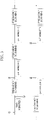
- FIG. 1 shows a frequency scanning process according to a related art.
- a frequency scanning is performed after a specific time (6*T minutes) stored in a Subscriber Identity Module ( SIM) (3).
- SIM Subscriber Identity Module
- This frequency scanning process is repeated continuously until returning to an HPLMN.
- the present invention is directed to solving the above problems, and providing an apparatus for controlling a frequency scanning in a sleep mode of a vehicle and a method thereof capable of minimizing a battery discharge issue and extending battery life by removing unnecessary frequency scanning operations in consideration of a characteristic of a vehicle during sleep without mobility (engine on ⁇ engine off).
- FIG. 2 shows an apparatus for controlling a frequency scanning in a sleep mode of a vehicle according to an exemplary embodiment of the present invention.
- the apparatus for controlling the frequency scanning in the sleep mode of the vehicle distinctively includes an input unit 110 configured to receive vehicle mode information, a memory 120 configured to store a program for controlling the frequency scanning according to the vehicle mode information, and a processor 130 configured to execute the program, and the processor 130 stops the frequency scanning when the vehicle mode information is the sleep mode.
- the input unit 110 receives the vehicle mode information when the vehicle is moving in a roaming area.
- the processor 130 When an engine is turned off, the processor 130 confirms that the vehicle is in the sleep mode and stops an HPLMN scanning timer.
- the processor 130 When the engine is turned on, the processor 130 confirms the end of the sleep mode and resumes the HPLMN scanning timer.
- FIG. 3 shows a frequency scanning process according to an exemplary embodiment of the present invention.
- the frequency scanning is performed after a specific time (6*T minutes) stored in an SIM (3), and this frequency scanning process is repeated continuously until returning to an HPLMN.
- an HPLMN scanning timer is suspended (4) when the vehicle is in the sleep mode, in other words, when an engine is turned off.
- the HPLMN scan timer is resumed, and the frequency scanning is performed after a preset time (6*T minutes) (5).
- a method of controlling a frequency scanning in a vehicle sleep mode includes operations of (a) detecting a movement in a roaming area, (b) performing the frequency scanning according to the movement in the roaming area, and (c) controlling a scanning timer and a scanning operation depending on whether or not the vehicle is in the sleep mode.
- the frequency scanning is performed based on time information stored in an SIM, and the time information is adjusted according to a counting value of an HPLMN regression attempt.
- the frequency scanning is attempted according to the time information (6*T minutes) stored in the SIM, and this frequency scanning is repeated continuously until returning to the HPLMN.
- FIG. 4 shows a method of controlling a frequency scanning in a sleep mode of a vehicle according to an exemplary embodiment of the present invention.
- a frequency scanning is performed after the first two minutes, and the frequency scanning is performed after a specific time (6*T minutes) stored in an SIM.
- a method of controlling a frequency scanning in a sleep mode of a vehicle may be implemented in a computer system or recorded in a recording medium.
- the computer system may include at least one processor, a memory, a user input device, a data communication bus, a user output device, and a storage. Each of the aforementioned components performs data communication through the data communication bus.
- the computer system may further include a network interface coupled to a network.
- the processor may be a central processing unit (CPU) or a semiconductor device that processes instructions stored in the memory and/or the storage.
- the memory and storage may include various types of volatile or non-volatile storage media.
- the memory may include ROM and RAM.
- the method of controlling the frequency scanning in the sleep mode of the vehicle according to an exemplary embodiment of the present invention may be implemented as a computer-executable method.
- computer readable instructions may perform the method of controlling the frequency scanning according to the present invention.
- the method of controlling the frequency scanning in the sleep mode of the vehicle according to the present invention described above may be implemented as a computer readable code on a computer readable recording medium.
- the computer-readable recording medium includes any type of recording medium in which data that can be decoded by a computer system is stored. For example, there may be a read only memory (ROM), a random access memory (RAM), a magnetic tape, a magnetic disk, a flash memory, an optical data storage device, etc.
- the computer-readable recording medium may be distributed in the computer system connected through a computer communication network, and stored and executed as readable codes in a distributed manner.
Landscapes
- Engineering & Computer Science (AREA)
- Computer Networks & Wireless Communication (AREA)
- Signal Processing (AREA)
- Computer Security & Cryptography (AREA)
- Databases & Information Systems (AREA)
- Mobile Radio Communication Systems (AREA)
Abstract
Description
- This application claims priority to and the benefit of
Korean Patent Application No. 10-2021-0084216, filed on Jun 28, 2021 - The present invention relates to an apparatus for controlling a frequency scanning in a sleep mode of a vehicle and a method thereof.
- For mobile communication networks and systems, detailed description can be found in technical specifications published by standardization organizations such as the third-generation partnership project (3GPP) in particular.
- As the number of radio access technology (RAT, communication method for each generation) increases, the number of supporting bands increases, and thus a range of a home public land mobile network (HPLMN) scanning also increases.
- For this reason, when the HPLMN scanning is performed, it is basically necessary to scan for each band supported by GSM/UMTS/LTE.
- However, although this method is basically suitable for a mobile phone having mobility, in case of a car, since mobility is lost in a certain situation (e.g., when an engine is turned off), there is a problem that this method is not suitable to be applied as is.
- The present invention is directed to solving the above problems, and an object of the present invention is to provide an apparatus for controlling a frequency scanning in a sleep mode of a vehicle and a method thereof capable of preventing battery discharge and extending battery life by modifying communication standards according to a characteristic of a connected car for a situation in which there is temporarily no mobility and removing unnecessary frequency scanning operations.
- An apparatus for controlling a frequency scanning in a sleep mode of a vehicle according to the present invention includes an input unit configured to receive vehicle mode information, a memory configured to store a program controlling the frequency scanning according to the vehicle mode information, and a processor configured to execute the program, and the processor stops the frequency scanning when the vehicle mode information is the sleep mode.
- A method of controlling a frequency scanning in a sleep mode of a vehicle according to the present invention includes (a) detecting a movement in a roaming area, (b) performing the frequency scanning according to the movement in the roaming area, and (c) controlling a scanning timer and a scanning operation depending on whether or not the vehicle is in the sleep mode.
- According to an exemplary embodiment of the present invention, it is possible to minimize a battery discharge issue and extend battery life by removing unnecessary frequency scanning operations in consideration of a characteristic of an immobile vehicle during sleep.
- Effects of the present invention are not limited to those mentioned above, and other effects not mentioned will be clearly understood by those of ordinary skill in the art from the following description.
-
-
FIG. 1 shows a frequency scanning process according to a related art; -
FIG. 2 shows an apparatus for controlling a frequency scanning in a sleep mode of a vehicle according to an exemplary embodiment of the present invention; -
FIG. 3 shows a frequency scanning process according to an exemplary embodiment of the present invention; and -
FIG. 4 shows a method of controlling a frequency scanning in a sleep mode of a vehicle according to an exemplary embodiment of the present invention. - The aforementioned object and other objects, advantages and features of the present invention and methods for achieving them will be made clear from exemplary embodiments described in detail below with reference to the accompanying drawings.
- However, the present invention may be embodied in many different forms and should not be construed as being limited to the embodiments set forth herein. Rather, these embodiments are provided so that this disclosure will be thorough and complete and will fully convey the object, structure and effects of the present invention to those of ordinary skill in the technical field to which the present invention pertains. The present invention is defined by the claims.
- Meanwhile, terms used herein are for the purpose of describing the exemplary embodiments and are not intended to limit the present invention. As used herein, the singular forms include the plural forms as well unless the context clearly indicates otherwise. The term "comprises" and/or "comprising" used herein does not preclude the presence or addition of one or more other elements, steps, operations, and/or devices other than stated elements, steps, operations, and/or devices.
- Hereinafter, in order to facilitate the understanding of those of ordinary skill in the art, the background to which the present invention is proposed will be first described, and then, exemplary embodiments of the present invention will be described.
- A home public land mobile network (HPLMN) is a telecommunication service company to which a user is subscribed.
- A modem using 3GPP standards (GSM, UMTS, LTE, 5G) performs periodic HPLMN searches during roaming.
- This process is performed to return to the HPLMN with guaranteed quality of service, and the modem operates an HPLMN scanning timer and performs a frequency scanning for each band to return to the HPLMN when the timer expires.
- As described above, although a method according to a related art is suitable for a mobile phone having mobility, there is a problem that the method is not suitable to be applied as is to a vehicle in which mobility is lost in a certain situation (e.g., when an engine is turned off).
-
FIG. 1 shows a frequency scanning process according to a related art. - When a vehicle enters a roaming area (①), a frequency scanning is performed after first two minutes (②).
- Thereafter, a frequency scanning is performed after a specific time (6*T minutes) stored in a Subscriber Identity Module ( SIM) (③).
- This frequency scanning process is repeated continuously until returning to an HPLMN.
- The present invention is directed to solving the above problems, and providing an apparatus for controlling a frequency scanning in a sleep mode of a vehicle and a method thereof capable of minimizing a battery discharge issue and extending battery life by removing unnecessary frequency scanning operations in consideration of a characteristic of a vehicle during sleep without mobility (engine on → engine off).
-
FIG. 2 shows an apparatus for controlling a frequency scanning in a sleep mode of a vehicle according to an exemplary embodiment of the present invention. - The apparatus for controlling the frequency scanning in the sleep mode of the vehicle according to the present invention distinctively includes an
input unit 110 configured to receive vehicle mode information, amemory 120 configured to store a program for controlling the frequency scanning according to the vehicle mode information, and aprocessor 130 configured to execute the program, and theprocessor 130 stops the frequency scanning when the vehicle mode information is the sleep mode. - The
input unit 110 receives the vehicle mode information when the vehicle is moving in a roaming area. - When an engine is turned off, the
processor 130 confirms that the vehicle is in the sleep mode and stops an HPLMN scanning timer. - When the engine is turned on, the
processor 130 confirms the end of the sleep mode and resumes the HPLMN scanning timer. -
FIG. 3 shows a frequency scanning process according to an exemplary embodiment of the present invention. - When a vehicle enters a roaming area (①), a frequency scanning is performed after first two minutes (②).
- Thereafter, the frequency scanning is performed after a specific time (6*T minutes) stored in an SIM (③), and this frequency scanning process is repeated continuously until returning to an HPLMN.
- According to an exemplary embodiment of the present invention, an HPLMN scanning timer is suspended (④) when the vehicle is in the sleep mode, in other words, when an engine is turned off.
- Subsequently, when the vehicle sleep mode ends, in other words, when the engine is turned on, the HPLMN scan timer is resumed, and the frequency scanning is performed after a preset time (6*T minutes) (⑤).
- A method of controlling a frequency scanning in a vehicle sleep mode according to the present invention includes operations of (a) detecting a movement in a roaming area, (b) performing the frequency scanning according to the movement in the roaming area, and (c) controlling a scanning timer and a scanning operation depending on whether or not the vehicle is in the sleep mode.
- In operation (b), the frequency scanning is performed based on time information stored in an SIM, and the time information is adjusted according to a counting value of an HPLMN regression attempt.
- For example, the frequency scanning is attempted according to the time information (6*T minutes) stored in the SIM, and this frequency scanning is repeated continuously until returning to the HPLMN.
- In operation (b), it is possible to perform a count of the attempts of the frequency scanning for regression until the HPLMN regression, and adjust the period of the frequency scanning by adjusting the time information described above according to the counting value.
- In operation (c), when it is confirmed that the vehicle is in the sleep mode as an engine is turned off (off), an HPLMN scanning timer is stopped (suspended), and when the engine is turned on (on), the end of the vehicle sleep mode is confirmed, and the HPLMN scanning timer is resumed.
-
FIG. 4 shows a method of controlling a frequency scanning in a sleep mode of a vehicle according to an exemplary embodiment of the present invention. - In operation S410, it is detected whether the vehicle moves and enters a roaming area.
- In operation S420, when the vehicle enters the roaming area in operation S410, a frequency scanning is performed after the first two minutes, and the frequency scanning is performed after a specific time (6*T minutes) stored in an SIM.
- In operation S430, it is confirmed whether a first condition which means the vehicle sleep mode is satisfied by turning off an engine.
- When the vehicle sleep mode is confirmed in operation S430, in operation S440, an HPLMN scanning timer is stopped and then the frequency scanning is stopped.
- In operation S450, it is confirmed whether a second condition which means the end of the vehicle sleep mode is satisfied by turning on the engine.
- When the end of the vehicle sleep mode is confirmed in operation S450, in operation S460, the HPLMN scanning timer is resumed and then the frequency scanning is resumed.
- Meanwhile, a method of controlling a frequency scanning in a sleep mode of a vehicle according to an exemplary embodiment of the present invention may be implemented in a computer system or recorded in a recording medium. The computer system may include at least one processor, a memory, a user input device, a data communication bus, a user output device, and a storage. Each of the aforementioned components performs data communication through the data communication bus.
- The computer system may further include a network interface coupled to a network. The processor may be a central processing unit (CPU) or a semiconductor device that processes instructions stored in the memory and/or the storage.
- The memory and storage may include various types of volatile or non-volatile storage media. For example, the memory may include ROM and RAM.
- Accordingly, the method of controlling the frequency scanning in the sleep mode of the vehicle according to an exemplary embodiment of the present invention may be implemented as a computer-executable method. When the method of controlling the frequency scanning in the sleep mode of the vehicle according to an exemplary embodiment of the present invention is performed in a computer device, computer readable instructions may perform the method of controlling the frequency scanning according to the present invention.
- Meanwhile, the method of controlling the frequency scanning in the sleep mode of the vehicle according to the present invention described above may be implemented as a computer readable code on a computer readable recording medium. The computer-readable recording medium includes any type of recording medium in which data that can be decoded by a computer system is stored. For example, there may be a read only memory (ROM), a random access memory (RAM), a magnetic tape, a magnetic disk, a flash memory, an optical data storage device, etc. In addition, the computer-readable recording medium may be distributed in the computer system connected through a computer communication network, and stored and executed as readable codes in a distributed manner.
- So far, the exemplary embodiments of the present invention have been mainly looked at. Those of ordinary skill in the technical field to which the present invention pertains should be able to understand that various modifications and alterations can be made without departing from the technical spirit or essential features of the present invention. Therefore, it should be understood that the disclosed embodiments are not limiting but illustrative in all aspects. The scope of the present invention is defined not by the above description but by the following claims, and it should be understood that all changes or modifications derived from the scope and equivalents of the claims fall within the scope of the present invention.
Claims (7)
- An apparatus for controlling frequency scanning in a sleep mode of a vehicle, the apparatus comprising:an input unit configured to receive vehicle mode information;a memory configured to store a program controlling the frequency scanning according to the vehicle mode information; anda processor configured to execute the program, wherein the processor stops the frequency scanning when the vehicle mode information is the sleep mode.
- The apparatus of claim 1, wherein the input unit receives the vehicle mode information when the vehicle is moving in a roaming area.
- The apparatus of claim 1 or 2, wherein the processor confirms that the vehicle is in the sleep mode when an engine is turned off, and stops a home public land mobile network (HPLMN) scanning timer.
- The apparatus of claim 3, wherein the processor confirms an end of the sleep mode when the engine is turned on, and resumes the HPLMN scanning timer.
- A method of controlling frequency scanning in a sleep mode of a vehicle, the method comprising:(a) detecting movement in a roaming area;(b) performing the frequency scanning according to the movement in the roaming area; and(c) controlling a scanning timer and a scanning operation based on whether or not the vehicle is in the sleep mode.
- The method of claim 5, wherein, in performing the frequency scanning according to the movement in the roaming area, the frequency scanning is performed based on time information stored in a Subscriber Identity Module (SIM), and the time information is adjusted according to a counting value of a home public land mobile network (HPLMN) regression attempt.
- The method of claim 5 or 6, wherein, in controlling the scanning timer and a scanning operation based on whether or not the vehicle is in the sleep mode, a home public land mobile network (HPLMN) scanning timer is stopped when it is confirmed that the vehicle is in the sleep mode as an engine is turned off, and when the engine is turned on, the HPLMN scanning timer is resumed after confirming an end of the vehicle sleep mode.
Applications Claiming Priority (1)
| Application Number | Priority Date | Filing Date | Title |
|---|---|---|---|
| KR1020210084216A KR20230001409A (en) | 2021-06-28 | 2021-06-28 | Apparatus and method for frequency scan control in sleep mode of vehicle |
Publications (2)
| Publication Number | Publication Date |
|---|---|
| EP4114135A1 true EP4114135A1 (en) | 2023-01-04 |
| EP4114135B1 EP4114135B1 (en) | 2025-12-17 |
Family
ID=82850628
Family Applications (1)
| Application Number | Title | Priority Date | Filing Date |
|---|---|---|---|
| EP22181259.7A Active EP4114135B1 (en) | 2021-06-28 | 2022-06-27 | Apparatus and method for frequency scan control in sleep mode of vehicle |
Country Status (3)
| Country | Link |
|---|---|
| US (1) | US12376014B2 (en) |
| EP (1) | EP4114135B1 (en) |
| KR (1) | KR20230001409A (en) |
Families Citing this family (1)
| Publication number | Priority date | Publication date | Assignee | Title |
|---|---|---|---|---|
| CN116639078B (en) * | 2023-06-09 | 2025-12-23 | 浙江极氪智能科技有限公司 | Vehicle control method, device, equipment and storage medium |
Citations (3)
| Publication number | Priority date | Publication date | Assignee | Title |
|---|---|---|---|---|
| EP2510727A1 (en) * | 2009-12-07 | 2012-10-17 | Qualcomm Incorporated | System and method for dynamic cell searching |
| EP3076715A1 (en) * | 2013-11-25 | 2016-10-05 | Clarion Co., Ltd. | Vehicle-mounted communication device, and method of controlling same |
| WO2020110838A1 (en) * | 2018-11-28 | 2020-06-04 | 京セラ株式会社 | Communications device, vehicle, and method |
Family Cites Families (2)
| Publication number | Priority date | Publication date | Assignee | Title |
|---|---|---|---|---|
| US8527014B2 (en) * | 2005-08-08 | 2013-09-03 | Qualcomm Incorporated | Sleep mode for wireless communication device during out of service operation |
| KR102495700B1 (en) | 2018-02-06 | 2023-02-03 | 삼성전자주식회사 | Apparatus and method for frequency scanning in wireless communication system |
-
2021
- 2021-06-28 KR KR1020210084216A patent/KR20230001409A/en active Pending
-
2022
- 2022-06-27 EP EP22181259.7A patent/EP4114135B1/en active Active
- 2022-06-28 US US17/809,522 patent/US12376014B2/en active Active
Patent Citations (4)
| Publication number | Priority date | Publication date | Assignee | Title |
|---|---|---|---|---|
| EP2510727A1 (en) * | 2009-12-07 | 2012-10-17 | Qualcomm Incorporated | System and method for dynamic cell searching |
| EP3076715A1 (en) * | 2013-11-25 | 2016-10-05 | Clarion Co., Ltd. | Vehicle-mounted communication device, and method of controlling same |
| WO2020110838A1 (en) * | 2018-11-28 | 2020-06-04 | 京セラ株式会社 | Communications device, vehicle, and method |
| US20210289431A1 (en) * | 2018-11-28 | 2021-09-16 | Kyocera Corporation | Communication device, vehicle, and method |
Also Published As
| Publication number | Publication date |
|---|---|
| US12376014B2 (en) | 2025-07-29 |
| KR20230001409A (en) | 2023-01-04 |
| EP4114135B1 (en) | 2025-12-17 |
| US20220417836A1 (en) | 2022-12-29 |
Similar Documents
| Publication | Publication Date | Title |
|---|---|---|
| EP2298005B1 (en) | Method and apparatus for channel scanning that improves acquisition probability and power consumption | |
| US9485718B2 (en) | Out-of-service recovery for a multi-SIM wireless device | |
| US9282536B2 (en) | Devices and methods for facilitating paging channel arbitration in multi-SIM architectures | |
| US9468010B2 (en) | Apparatus and methods for facilitating tune-away operations in wireless communications systems | |
| KR20150016997A (en) | Systems and methods for thermal mitigation with multiple processors | |
| EP3468260B1 (en) | Method and device for reducing power consumption of terminal, and smart card | |
| US20220353763A1 (en) | Method and device for measurement relaxation | |
| WO2016033731A1 (en) | Method and apparatus of ue throughput improvement for lte+gsm phone in tdd-lte network with no dtx detection support | |
| US20170208611A1 (en) | Protecting Critical Communication Activity From A Tune-Away | |
| US9008656B2 (en) | Method and apparatus of searching for operator network in a multi-radio access technology environment | |
| US20170353974A1 (en) | Paging performance during inter-frequency cell reselection system information block reads | |
| EP4114135B1 (en) | Apparatus and method for frequency scan control in sleep mode of vehicle | |
| US9380525B2 (en) | Devices and methods for facilitating optimized tune-away operations in multi-subscription communication devices | |
| CN1871778B (en) | Network element, method and device for parameter recoding | |
| US9374797B2 (en) | Mobile communication devices and methods for handling a combined attach or routing area update procedure successful for PS domain services only | |
| US9848369B2 (en) | Managing tune-aways in a multi-subscription multi-standby communication device | |
| US20150094063A1 (en) | Devices and methods for facilitating optimized hand down operations in hybrid access terminals | |
| CN106550431B (en) | UTRAN PLMN searching method | |
| US20250374173A1 (en) | Method and apparatus for accessing hosting network, device, and storage medium | |
| CN115103447B (en) | Method and device for switching partial bandwidth BWP and electronic equipment | |
| US20170064730A1 (en) | Optimization on user equipment side to improve spectral efficiency for voice calls in mobile communication devices | |
| KR20240163131A (en) | Integrated extended discontinuous receive cycle and paging time window | |
| CN106332236B (en) | Method and communication device for improving band support | |
| US10051603B1 (en) | Methods and systems for adjusting page transmission power |
Legal Events
| Date | Code | Title | Description |
|---|---|---|---|
| PUAI | Public reference made under article 153(3) epc to a published international application that has entered the european phase |
Free format text: ORIGINAL CODE: 0009012 |
|
| STAA | Information on the status of an ep patent application or granted ep patent |
Free format text: STATUS: REQUEST FOR EXAMINATION WAS MADE |
|
| 17P | Request for examination filed |
Effective date: 20220627 |
|
| AK | Designated contracting states |
Kind code of ref document: A1 Designated state(s): AL AT BE BG CH CY CZ DE DK EE ES FI FR GB GR HR HU IE IS IT LI LT LU LV MC MK MT NL NO PL PT RO RS SE SI SK SM TR |
|
| GRAP | Despatch of communication of intention to grant a patent |
Free format text: ORIGINAL CODE: EPIDOSNIGR1 |
|
| STAA | Information on the status of an ep patent application or granted ep patent |
Free format text: STATUS: GRANT OF PATENT IS INTENDED |
|
| RIC1 | Information provided on ipc code assigned before grant |
Ipc: H04W 84/00 20090101AFI20250703BHEP Ipc: H04W 48/16 20090101ALI20250703BHEP Ipc: H04W 52/02 20090101ALN20250703BHEP |
|
| INTG | Intention to grant announced |
Effective date: 20250724 |
|
| P01 | Opt-out of the competence of the unified patent court (upc) registered |
Free format text: CASE NUMBER: UPC_APP_7346_4114135/2025 Effective date: 20250917 |
|
| GRAS | Grant fee paid |
Free format text: ORIGINAL CODE: EPIDOSNIGR3 |
|
| GRAA | (expected) grant |
Free format text: ORIGINAL CODE: 0009210 |
|
| STAA | Information on the status of an ep patent application or granted ep patent |
Free format text: STATUS: THE PATENT HAS BEEN GRANTED |
|
| AK | Designated contracting states |
Kind code of ref document: B1 Designated state(s): AL AT BE BG CH CY CZ DE DK EE ES FI FR GB GR HR HU IE IS IT LI LT LU LV MC MK MT NL NO PL PT RO RS SE SI SK SM TR |
|
| REG | Reference to a national code |
Ref country code: CH Ref legal event code: F10 Free format text: ST27 STATUS EVENT CODE: U-0-0-F10-F00 (AS PROVIDED BY THE NATIONAL OFFICE) Effective date: 20251217 Ref country code: GB Ref legal event code: FG4D |
|
| REG | Reference to a national code |
Ref country code: DE Ref legal event code: R096 Ref document number: 602022026886 Country of ref document: DE |
|
| REG | Reference to a national code |
Ref country code: LT Ref legal event code: MG9D |
|
| PG25 | Lapsed in a contracting state [announced via postgrant information from national office to epo] |
Ref country code: NO Free format text: LAPSE BECAUSE OF FAILURE TO SUBMIT A TRANSLATION OF THE DESCRIPTION OR TO PAY THE FEE WITHIN THE PRESCRIBED TIME-LIMIT Effective date: 20260317 |
|
| PG25 | Lapsed in a contracting state [announced via postgrant information from national office to epo] |
Ref country code: FI Free format text: LAPSE BECAUSE OF FAILURE TO SUBMIT A TRANSLATION OF THE DESCRIPTION OR TO PAY THE FEE WITHIN THE PRESCRIBED TIME-LIMIT Effective date: 20251217 Ref country code: HR Free format text: LAPSE BECAUSE OF FAILURE TO SUBMIT A TRANSLATION OF THE DESCRIPTION OR TO PAY THE FEE WITHIN THE PRESCRIBED TIME-LIMIT Effective date: 20251217 |
|
| PG25 | Lapsed in a contracting state [announced via postgrant information from national office to epo] |
Ref country code: RS Free format text: LAPSE BECAUSE OF FAILURE TO SUBMIT A TRANSLATION OF THE DESCRIPTION OR TO PAY THE FEE WITHIN THE PRESCRIBED TIME-LIMIT Effective date: 20260317 |
|
| REG | Reference to a national code |
Ref country code: NL Ref legal event code: MP Effective date: 20251217 |
|
| PG25 | Lapsed in a contracting state [announced via postgrant information from national office to epo] |
Ref country code: LV Free format text: LAPSE BECAUSE OF FAILURE TO SUBMIT A TRANSLATION OF THE DESCRIPTION OR TO PAY THE FEE WITHIN THE PRESCRIBED TIME-LIMIT Effective date: 20251217 |
|
| PG25 | Lapsed in a contracting state [announced via postgrant information from national office to epo] |
Ref country code: BG Free format text: LAPSE BECAUSE OF FAILURE TO SUBMIT A TRANSLATION OF THE DESCRIPTION OR TO PAY THE FEE WITHIN THE PRESCRIBED TIME-LIMIT Effective date: 20251217 |
|
| REG | Reference to a national code |
Ref country code: AT Ref legal event code: MK05 Ref document number: 1869767 Country of ref document: AT Kind code of ref document: T Effective date: 20251217 |
|
| PG25 | Lapsed in a contracting state [announced via postgrant information from national office to epo] |
Ref country code: NL Free format text: LAPSE BECAUSE OF FAILURE TO SUBMIT A TRANSLATION OF THE DESCRIPTION OR TO PAY THE FEE WITHIN THE PRESCRIBED TIME-LIMIT Effective date: 20251217 |
|
| PG25 | Lapsed in a contracting state [announced via postgrant information from national office to epo] |
Ref country code: LT Free format text: LAPSE BECAUSE OF FAILURE TO SUBMIT A TRANSLATION OF THE DESCRIPTION OR TO PAY THE FEE WITHIN THE PRESCRIBED TIME-LIMIT Effective date: 20251217 |
|
| PG25 | Lapsed in a contracting state [announced via postgrant information from national office to epo] |
Ref country code: SM Free format text: LAPSE BECAUSE OF FAILURE TO SUBMIT A TRANSLATION OF THE DESCRIPTION OR TO PAY THE FEE WITHIN THE PRESCRIBED TIME-LIMIT Effective date: 20251217 |
|
| PG25 | Lapsed in a contracting state [announced via postgrant information from national office to epo] |
Ref country code: ES Free format text: LAPSE BECAUSE OF FAILURE TO SUBMIT A TRANSLATION OF THE DESCRIPTION OR TO PAY THE FEE WITHIN THE PRESCRIBED TIME-LIMIT Effective date: 20251217 |
|
| PG25 | Lapsed in a contracting state [announced via postgrant information from national office to epo] |
Ref country code: PL Free format text: LAPSE BECAUSE OF FAILURE TO SUBMIT A TRANSLATION OF THE DESCRIPTION OR TO PAY THE FEE WITHIN THE PRESCRIBED TIME-LIMIT Effective date: 20251217 |
|
| PG25 | Lapsed in a contracting state [announced via postgrant information from national office to epo] |
Ref country code: IT Free format text: LAPSE BECAUSE OF FAILURE TO SUBMIT A TRANSLATION OF THE DESCRIPTION OR TO PAY THE FEE WITHIN THE PRESCRIBED TIME-LIMIT Effective date: 20251217 |
|
| PGFP | Annual fee paid to national office [announced via postgrant information from national office to epo] |
Ref country code: DE Payment date: 20260420 Year of fee payment: 5 |
|
| PG25 | Lapsed in a contracting state [announced via postgrant information from national office to epo] |
Ref country code: AT Free format text: LAPSE BECAUSE OF FAILURE TO SUBMIT A TRANSLATION OF THE DESCRIPTION OR TO PAY THE FEE WITHIN THE PRESCRIBED TIME-LIMIT Effective date: 20251217 |
|
| PG25 | Lapsed in a contracting state [announced via postgrant information from national office to epo] |
Ref country code: EE Free format text: LAPSE BECAUSE OF FAILURE TO SUBMIT A TRANSLATION OF THE DESCRIPTION OR TO PAY THE FEE WITHIN THE PRESCRIBED TIME-LIMIT Effective date: 20251217 |
|
| PG25 | Lapsed in a contracting state [announced via postgrant information from national office to epo] |
Ref country code: IS Free format text: LAPSE BECAUSE OF FAILURE TO SUBMIT A TRANSLATION OF THE DESCRIPTION OR TO PAY THE FEE WITHIN THE PRESCRIBED TIME-LIMIT Effective date: 20260417 Ref country code: PT Free format text: LAPSE BECAUSE OF FAILURE TO SUBMIT A TRANSLATION OF THE DESCRIPTION OR TO PAY THE FEE WITHIN THE PRESCRIBED TIME-LIMIT Effective date: 20260417 |
|
| PG25 | Lapsed in a contracting state [announced via postgrant information from national office to epo] |
Ref country code: CZ Free format text: LAPSE BECAUSE OF FAILURE TO SUBMIT A TRANSLATION OF THE DESCRIPTION OR TO PAY THE FEE WITHIN THE PRESCRIBED TIME-LIMIT Effective date: 20251217 |
|
| PGFP | Annual fee paid to national office [announced via postgrant information from national office to epo] |
Ref country code: FR Payment date: 20260421 Year of fee payment: 5 |
|
| PG25 | Lapsed in a contracting state [announced via postgrant information from national office to epo] |
Ref country code: SK Free format text: LAPSE BECAUSE OF FAILURE TO SUBMIT A TRANSLATION OF THE DESCRIPTION OR TO PAY THE FEE WITHIN THE PRESCRIBED TIME-LIMIT Effective date: 20251217 |
|
| PG25 | Lapsed in a contracting state [announced via postgrant information from national office to epo] |
Ref country code: SE Free format text: LAPSE BECAUSE OF FAILURE TO SUBMIT A TRANSLATION OF THE DESCRIPTION OR TO PAY THE FEE WITHIN THE PRESCRIBED TIME-LIMIT Effective date: 20251217 |