EP4113874A1 - Information detection method, information sending method, terminal and network device - Google Patents
Information detection method, information sending method, terminal and network device Download PDFInfo
- Publication number
- EP4113874A1 EP4113874A1 EP21760103.8A EP21760103A EP4113874A1 EP 4113874 A1 EP4113874 A1 EP 4113874A1 EP 21760103 A EP21760103 A EP 21760103A EP 4113874 A1 EP4113874 A1 EP 4113874A1
- Authority
- EP
- European Patent Office
- Prior art keywords
- candidate pdcch
- search
- candidate
- sub
- pdcch group
- Prior art date
- Legal status (The legal status is an assumption and is not a legal conclusion. Google has not performed a legal analysis and makes no representation as to the accuracy of the status listed.)
- Pending
Links
Images


Classifications
-
- H—ELECTRICITY
- H04—ELECTRIC COMMUNICATION TECHNIQUE
- H04L—TRANSMISSION OF DIGITAL INFORMATION, e.g. TELEGRAPHIC COMMUNICATION
- H04L5/00—Arrangements affording multiple use of the transmission path
- H04L5/003—Arrangements for allocating sub-channels of the transmission path
- H04L5/0053—Allocation of signalling, i.e. of overhead other than pilot signals
-
- H—ELECTRICITY
- H04—ELECTRIC COMMUNICATION TECHNIQUE
- H04L—TRANSMISSION OF DIGITAL INFORMATION, e.g. TELEGRAPHIC COMMUNICATION
- H04L1/00—Arrangements for detecting or preventing errors in the information received
- H04L1/0001—Systems modifying transmission characteristics according to link quality, e.g. power backoff
- H04L1/0036—Systems modifying transmission characteristics according to link quality, e.g. power backoff arrangements specific to the receiver
- H04L1/0038—Blind format detection
-
- H—ELECTRICITY
- H04—ELECTRIC COMMUNICATION TECHNIQUE
- H04L—TRANSMISSION OF DIGITAL INFORMATION, e.g. TELEGRAPHIC COMMUNICATION
- H04L25/00—Baseband systems
- H04L25/02—Details ; arrangements for supplying electrical power along data transmission lines
- H04L25/0202—Channel estimation
- H04L25/0224—Channel estimation using sounding signals
- H04L25/0228—Channel estimation using sounding signals with direct estimation from sounding signals
-
- H—ELECTRICITY
- H04—ELECTRIC COMMUNICATION TECHNIQUE
- H04W—WIRELESS COMMUNICATION NETWORKS
- H04W72/00—Local resource management
- H04W72/20—Control channels or signalling for resource management
- H04W72/23—Control channels or signalling for resource management in the downlink direction of a wireless link, i.e. towards a terminal
-
- H—ELECTRICITY
- H04—ELECTRIC COMMUNICATION TECHNIQUE
- H04W—WIRELESS COMMUNICATION NETWORKS
- H04W72/00—Local resource management
- H04W72/20—Control channels or signalling for resource management
- H04W72/23—Control channels or signalling for resource management in the downlink direction of a wireless link, i.e. towards a terminal
- H04W72/232—Control channels or signalling for resource management in the downlink direction of a wireless link, i.e. towards a terminal the control data signalling from the physical layer, e.g. DCI signalling
-
- H—ELECTRICITY
- H04—ELECTRIC COMMUNICATION TECHNIQUE
- H04L—TRANSMISSION OF DIGITAL INFORMATION, e.g. TELEGRAPHIC COMMUNICATION
- H04L25/00—Baseband systems
- H04L25/02—Details ; arrangements for supplying electrical power along data transmission lines
- H04L25/0202—Channel estimation
Definitions
- PDCCH Physical Downlink Control Channel
- an embodiment of the present invention provides an information detection method, applied to a terminal and including:
- an embodiment of the present invention provides an information sending method, applied to a network device and including:
- an embodiment of the present invention provides a network device, including:
- an embodiment of the present invention provides a communications device, including a processor, a memory, and a computer program that is stored in the memory and executable on the processor, where when the computer program is executed by the processor, steps of the foregoing information detection method are implemented, or steps of the foregoing information sending method are implemented.
- the communications device may be a terminal or a network device.
- an embodiment of the present invention further provides a computer software product, where the computer software product is stored in a non-volatile storage medium, and the software product is configured to be executed by at least one processor to implement the steps of the foregoing information detection method or the steps of the foregoing information sending method.
- an embodiment of the present invention further provides a communications device, where the communications device is configured to performing the foregoing information detection method or the foregoing information sending method.
- a wireless communications system in the embodiments of the present invention includes a terminal and a network device.
- the terminal may also be referred to as a terminal device or a user terminal (User Equipment, UE).
- the terminal may be a terminal side device such as a mobile phone, a tablet personal computer (Tablet Personal Computer), a laptop computer (Laptop Computer), a personal digital assistant (Personal Digital Assistant, PDA), a mobile Internet device (Mobile Internet Device, MID), a wearable device (Wearable Device), or a vehicle-mounted device.
- PDA Personal Digital Assistant
- a mobile Internet device Mobile Internet Device, MID
- Wearable Device wearable Device
- vehicle-mounted device a vehicle-mounted device.
- the network device may be a base station or a core network.
- the base station may be a fifth generation (5th generation, 5G) base station and a base station of a later version (for example, a gNB, a 5G new radio (New Radio, NR) NodeB (NodeB, NB)), or a base station (for example, an eNB, a wireless local area network (Wireless Local Area Network, WLAN) access point, or another access point) in another communications system.
- 5G fifth generation
- a base station of a later version for example, a gNB, a 5G new radio (New Radio, NR) NodeB (NodeB, NB)
- a base station for example, an eNB, a wireless local area network (Wireless Local Area Network, WLAN) access point, or another access point) in another communications system.
- 5G fifth generation
- a base station of a later version for example, a gNB, a 5G new radio (New Radio, NR) NodeB (NodeB, NB)
- the base station may be referred to as a NodeB, an evolved NodeB, an access point, a base transceiver station (Base Transceiver Station, BTS), a radio base station, a radio transceiver, a basic service set (Basic Service Set, BSS), an extended service set (Extended Service Set, ESS), a NodeB, an evolved NodeB (eNB), a home NodeB, a home evolved NodeB, a WLAN access point, a wireless fidelity (Wireless Fidelity, WiFi) node, or another proper term in the art provided that a same technical effect can be achieved. This is not limited to specific technical terms.
- a "number” may also be referred to as an "index”.
- a number of sub-search-space can be called an index of the sub-search-space;
- a number of a CORESET can be called an index of the CORESET;
- a number of a CORESET POOL can be called an index of the CORESET POOL;
- a number of a candidate PDCCH can be called an index of the candidate PDCCH index; and the like.
- FIG. 1 is a flowchart of an information detection method according to an embodiment of the present invention.
- the method is applied to a terminal.
- the method includes the following steps: Step 101: Perform blind detection of information in a candidate PDCCH group set.
- the candidate PDCCH group set may be determined according to a candidate PDCCH set of each of multiple sub-search-spaces configured for the terminal.
- the candidate PDCCH group set may include one or more candidate PDCCH groups.
- the candidate PDCCH group set may include three candidate PDCCH groups, such as candidate PDCCH group 1, candidate PDCCH group 2, and candidate PDCCH group 3; or the candidate PDCCH group set may include two candidate PDCCH groups, such as candidate PDCCH group 4 and candidate PDCCH group 5.
- Candidate PDCCH groups included in the candidate PDCCH group set may include one candidate PDCCH or may include multiple candidate PDCCHs.
- a candidate PDCCH group set includes the candidate PDCCH group 1 and the candidate PDCCH group 2, and the candidate PDCCH group 1 includes three candidate PDCCHs, and the candidate PDCCH group 2 includes one candidate PDCCH.
- the terminal can receive configuration information of multiple sub-search-spaces sent by a network device, determine a candidate PDCCH set of each sub-search-space according to the configuration information, determine the candidate PDCCH group set according to the determined candidate PDCCH set of the each sub-search-space, and perform blind detection of information in the candidate PDCCH group set.
- the terminal can perform blind detection of information in the candidate PDCCH group set, and the candidate PDCCH group set is determined according to a candidate PDCCH set of each of multiple sub-search-spaces configured for the terminal. Therefore, the terminal can perform repeated reception of information on multiple PDCCHs, thereby improving reliability of PDCCH transmission.
- the multiple sub-search-spaces configured for the terminal may include the following conditions.
- a search space is configured to be associated with the multiple CORESETs, and each CORESET and its own corresponding monitoring occasion constitute one sub-search-space (Sub-SS).
- the multiple CORESETs may have a same control resource set pool CORESET POOL identifier or different CORESET POOL identifiers.
- Each sub-search-space is associated with one CORESET.
- the sub-search-space is search space
- the multiple sub-search-spaces are multiple search spaces.
- Each search space is associated with one CORESET, and CORESETs associated with different search spaces can be the same or different.
- a candidate PDCCH set of the each sub-search-space may be determined according to at least one of the following:
- a candidate PDCCH group in the foregoing candidate PDCCH group set may be constituted in at least one of the following manners.
- the preset rule in the foregoing (b) may include at least one of the following:
- candidate PDCCHs with an index of 1 can be selected from candidate PDCCH sets of the three sub-search-spaces (that is, all sub-search-spaces) respectively to constitute the candidate PDCCH group; and alternatively, candidate PDCCHs with an index of 2 may be selected from candidate PDCCH sets of the sub-search-space 1 and sub-search-space 2 (that is, some sub-search-spaces) respectively to constitute the candidate PDCCH group;
- candidate PDCCHs with an aggregation level of 4 can be selected from candidate PDCCH sets of the three sub-search-spaces (that is, all sub-search-spaces) to constitute the candidate PDCCH group; candidate PDCCHs with an aggregation level of 1 are selected from candidate PDCCH sets of the sub-search-space 1 and sub-search-space 3 (that is, some sub-search-spaces
- a candidate PDCCH is selected from candidate PDCCH sets of the four sub-search-spaces (that is, all sub-search-spaces) to constitute the candidate PDCCH group; or based on any combination, a candidate PDCCH can be selected from candidate PDCCH sets of the sub-search-space 1 and the sub-search-space 3 (that is, some sub-search-spaces) to constitute the candidate PDCCH group.
- a candidate PDCCH set of the sub-search-space 1 includes two candidate PDCCHs with an index of 0 and 1 respectively
- a candidate PDCCH set of the sub-search-space 2 includes two candidate PDCCHs with an index of 0 and 1 respectively
- a candidate PDCCH set of the sub-search-space 3 includes four candidate PDCCHs with an index of 0, 1, 2 and 3 respectively, according to the foregoing preset rule (d)
- a candidate PDCCH with an index of 0 can be selected from a candidate PDCCH set of the sub-search-space 1
- a candidate PDCCH with an index of 1 can be selected from a candidate PDCCH set of the sub-search-space 2
- a candidate PDCCH with an index of 2 can be selected from a candidate PDCCH set of the sub-search
- the method may further include: performing channel estimation on a candidate PDCCH group including multiple candidate PDCCHs in a candidate PDCCH group set in at least one of the following manners:
- information decoding with soft combining can be performed.
- DCI decoding with soft combining can be performed when the terminal performs blind detection of a single piece of DCI on a candidate PDCCH group including multiple candidate PDCCHs.
- the terminal when the terminal detects corresponding information on a first candidate PDCCH group of a candidate PDCCH group set, the terminal can stop blind detection on a second candidate PDCCH group.
- the second candidate PDCCH group is a candidate PDCCH group including the first candidate PDCCH group in the candidate PDCCH group set.
- a PDCCH end symbol used in a calculation of transmission timeline for DCI scheduling may be any one of the following:
- the transmission of DCI scheduling may be physical uplink shared channel (Physical Uplink Shared Channel, PUSCH) transmission, or cross-carrier scheduling transmission.
- the transmission timeline for the DCI scheduling can be calculated in an existing manner, which is not limited in this embodiment.
- an index of a referenced control channel element can be any of the following:
- a referenced quantity of CCEs is any one of the following:
- downlink transmission of the DCI scheduling may be PDSCH transmission, and a corresponding feedback resource is a physical uplink control channel (Physical Uplink Control Channel, PDCCH) resource.
- the feedback resource for the downlink transmission of the DCI scheduling can be calculated in an existing manner, which is not limited in this embodiment.
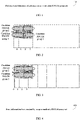
- Embodiments of the present invention will be described below with reference to FIG. 2 and FIG. 3 .
- N CORESETs are associated in configuration of a single search space, and the N CORESETs and configured N monitoring occasions (monitor occasion) constitute N sub-search-spaces.
- a unified aggregation level and a quantity of candidate PDCCHs for each aggregation level are configured for the each sub-search-space, that is, configuration is performed in this search space.
- a candidate PDCCH group independently constituted by candidate PDCCHs of the each sub-search-space and a candidate PDCCH group constituted by candidate PDCCHs with a same index and a same aggregation level of the each sub-search-space are candidate PDCCH groups for transmitting same DCI.
- candidate PDCCH groups whose quantity of candidate PDCCHs is greater than 1 soft information combining is performed to decode DCI.
- a quantity of blind detection performed by the terminal in the search space is (N+1) ⁇ M, where M is a quantity of candidate PDCCHs in the each sub-search-space.
- constituted sub-search-space includes Sub-SS 1 and Sub-SS2, and correspondingly constituted candidate PDCCH groups include candidate PDCCH group 1, candidate PDCCH group 2, and candidate PDCCH group 3: when the terminal detects the DCI on the candidate PDCCH group 1, the terminal does not need to continue performing detection on the candidate PDCCH group 3 which completely includes the candidate PDCCH group 1, that is, the terminal does not need to perform monitoring on the candidate PDCCH group 3.
- an applied PDCCH end symbol is a last symbol of the two sub-search-spaces, that is, Symbol#3.
- the PDCCH end symbol is used in subsequent calculation for a timeline of PUSCH preparation time and calculation for a timeline of cross-carrier scheduling.
- a referenced PDCCH may be a first PDCCH, that is, an associated CCE index and a quantity of CCEs are a first CCE index and a quantity of CCEs of the first PDCCH.
- the associated CCE index and the quantity of CCEs are used in subsequent calculation of a PUCCH resource.
- a candidate PDCCH group constituted by candidate PDCCHs with a same index and a same aggregation level of the each sub-search-space is a candidate PDCCH group for transmitting the same DCI, and soft information combining is performed in these candidate PDCCH groups to decode the DCI.
- a quantity of blind detection performed by the terminal in the search space is M, where M is a quantity of candidate PDCCHs in the each sub-search-space.
- a referenced PDCCH may be a first PDCCH, that is, an associated CCE index and a quantity of CCEs are a first CCE index and a quantity of CCEs of the first PDCCH.
- the associated CCE index and the quantity of CCEs are used in subsequent calculation of a PUCCH resource.
- FIG. 4 is a flowchart of an information sending method according to an embodiment of the present invention. The method is applied to a network device. As shown in FIG. 4 , the method includes the following steps.
- Step 401 Send information to a terminal by using a candidate PDCCH group set.
- the candidate PDCCH group set may be determined according to a candidate PDCCH set of each of multiple sub-search-spaces configured for the terminal.
- the candidate PDCCH group set may include one or more candidate PDCCH groups.
- a candidate PDCCH group included in the candidate PDCCH group set may include one candidate PDCCH, or may include multiple candidate PDCCHs.
- the network device can send information to the terminal by using the candidate PDCCH group set, the candidate PDCCH group set is determined according to a candidate PDCCH set of each of the multiple sub-search-spaces configured for the terminal. Therefore, the network device can perform repeated sending of information on multiple PDCCHs, thereby improving reliability of PDCCH transmission.
- step 401 may include: sending DCI to the terminal by using the candidate PDCCH group set.
- each sub-search-space is constituted by each CORESET of multiple CORESETs and a monitoring occasion corresponding to each CORESET, and the multiple CORESETs are associated with a single search space; or the each sub-search-space is associated with one CORESET.
- the multiple CORESETs have a same TCI status identifier, or the multiple CORESETs have a group of TCI status identifiers; or the multiple CORESETs have a same CORESET POOL identifier or different CORESET POOL identifiers.
- a candidate PDCCH set of the each sub-search-space is determined according to at least one of the following:
- a candidate PDCCH group in the candidate PDCCH group set is constituted in at least one of the following manners:
- the preset rule includes at least one of the following:
- FIG. 5 is a schematic structural diagram of a terminal according to an embodiment of the present invention.
- a terminal 50 includes: a detecting module 51, configured to perform blind detection of information in a candidate PDCCH group set.
- the candidate PDCCH group set is determined according to a candidate PDCCH set of each of multiple sub-search-spaces configured for the terminal 50.
- the detecting module 51 may be configured to perform blind detection of a single piece of DCI in the candidate PDCCH group set.
- each sub-search-space is constituted by each CORESET of multiple CORESETs and a monitoring occasion corresponding to each CORESET, and the multiple CORESETs are associated with a single search space; or each of the multiple sub-search-spaces is associated with one CORESET.
- a candidate PDCCH set of the each sub-search-space is determined according to at least one of the following:
- a candidate PDCCH group in the candidate PDCCH group set is constituted in at least one of the following manners:
- the preset rule includes at least one of the following:
- the terminal 50 further includes: an information estimating module, configured to perform channel estimation on a candidate PDCCH group including multiple candidate PDCCHs in the candidate PDCCH group set in at least one of the following manners:
- the multiple candidate PDCCHs respectively correspond to the multiple sub-search-spaces.
- the terminal 50 further includes: a processing module, configured to perform information decoding with soft combining, when blind detection of information is performed on a candidate PDCCH group including multiple candidate PDCCHs in the candidate PDCCH group set.
- a processing module configured to perform information decoding with soft combining, when blind detection of information is performed on a candidate PDCCH group including multiple candidate PDCCHs in the candidate PDCCH group set.
- the second candidate PDCCH group is a candidate PDCCH group including the first candidate PDCCH group in the candidate PDCCH group set.
- an applied PDCCH end symbol may be any one of the following:
- a referenced control channel element CCE index used in a calculation of feedback resource of downlink transmission for DCI scheduling is any one of the following:
- a referenced quantity of CCEs is any one of the following:
- the terminal 50 provided by the embodiments of the present invention may implement processes implemented in the method embodiment shown in FIG. 1 , and a same beneficial effect can be achieved. To avoid repetition, details are not described herein again.
- FIG. 6 is a schematic structural diagram of a network device according to an embodiment of the present invention.
- a network device 60 includes: a sending module 61, configured to send information to a terminal by using a candidate PDCCH group set.
- each sub-search-space is constituted by each CORESET of multiple CORESETs and a monitoring occasion corresponding to each CORESET, and the multiple CORESETs are associated with a single search space; or the each sub-search-space is associated with one CORESET.
- the multiple CORESETs have a same TCI status identifier, or the multiple CORESETs have a group of TCI status identifiers; or the multiple CORESETs have a same CORESET POOL identifier or different CORESET POOL identifiers.
- a candidate PDCCH set of the each sub-search-space is determined according to at least one of the following:
- a candidate PDCCH group in the candidate PDCCH group set is constituted in at least one of the following manners:
- the preset rule includes at least one of the following:
- An embodiment of the present invention further provides a communications device, including a processor, a memory, and a computer program that is stored in the memory and executable on the processor, where when the computer program is executed by the processor, each process of the method embodiment shown in FIG. 1 or FIG. 4 can be implemented, and a same beneficial effect can be achieved.
- the communications device may be a terminal or a network device.
- the terminal provides wireless broadband Internet access to a user through the network module 702, for example, helps the user receive and send e-mails, browse web pages, access streaming media, and the like.
- the audio output unit 703 may convert audio data received by the radio frequency unit 701 or the network module 702 or stored in the memory 709 into an audio signal and output the audio signal as a sound.
- the audio output unit 703 may further provide an audio output (for example, a call signal received voice, or a message received voice) related to a specific function implemented by the terminal 700.
- the audio output unit 703 includes a speaker, a buzzer, a telephone receiver, and the like.
- the input unit 704 is configured to receive an audio signal or a video signal.
- the input unit 704 may include a graphics processing unit (Graphics Processing Unit, GPU) 7041 and a microphone 7042.
- the graphics processing unit 7041 processes image data of a static image or video obtained by an image capture apparatus (such as, a camera) in a video capture mode or an image capture mode.
- a processed image frame may be displayed on the display unit 706.
- the image frame processed by the graphics processing unit 7041 may be stored in the memory 709 (or another storage medium) or sent by using the radio frequency unit 701 or the network module 702.
- the microphone 7042 may receive a sound and can process such sound into audio data. Processed audio data may be converted, in a call mode, into a format that can be sent to a mobile communication base station by using the radio frequency unit 701 for output.
- the terminal 700 further includes at least one sensor 705, for example, a light sensor, a motion sensor, and another sensor.
- the light sensor includes an ambient light sensor and a proximity sensor.
- the ambient light sensor may adjust luminance of the display panel 7061 based on brightness of ambient light.
- the proximity sensor may turn off the display panel 7061 and/or backlight when the terminal 700 is moved to an ear.
- an accelerometer sensor may detect magnitude of acceleration in each direction (generally, on three axes), and may detect magnitude and a direction of gravity when being static.
- the accelerometer sensor may be configured to recognize a terminal gesture (for example, portrait and landscape orientation switching, a related game, or magnetometer posture calibration), a function related to vibration recognition (for example, a pedometer or a strike), or the like.
- the sensor 705 may further include a fingerprint sensor, a pressure sensor, an iris sensor, a molecular sensor, a gyroscope, a barometer, a hygrometer, a thermometer, an infrared sensor, and the like. Details are not described herein.
- the interface unit 708 is an interface connecting an external apparatus to the terminal 700.
- the external apparatus may include a wired or wireless headset port, an external power supply (or a battery charger) port, a wired or wireless data port, a memory card port, a port for connecting an apparatus having an identification module, an audio input/output (I/O) port, a video I/O port, a headset port, and the like.
- the interface unit 708 may be configured to receive input (for example, data information and power) from the external apparatus and transmit the received input to one or more elements in the terminal 700, or may be configured to transmit data between the terminal 700 and the external apparatus.
- the memory 709 may be configured to store a software program and various pieces of data.
- the memory 709 may mainly include a program storage area and a data storage area.
- the program storage area may store an operating system, an application required for at least one function (for example, a sound play function or an image display function), and the like.
- the data storage area may store data (for example, audio data or an address book) or the like created based on use of the mobile phone.
- the memory 709 may include a high-speed random access memory, and may further include a nonvolatile memory, for example, at least one magnetic disk storage device, a flash storage device, or another volatile solid-state storage device.
- the processor 710 is a control center of the terminal, and connects all parts of the entire terminal by using various interfaces and lines. By running or executing a software program and/or a module stored in the memory 709 and invoking data stored in the memory 709, the processor performs various functions of the terminal and data processing, to perform overall monitoring on the terminal.
- the processor 710 may include one or more processing units.
- the processor 710 may be integrated with an application processor and a modem processor.
- the application processor mainly processes an operating system, a user interface, an application program, and the like.
- the modem processor mainly processes wireless communication. It can be understood that, alternatively, the modem processor may not be integrated into the processor 710.
- the terminal 700 may further include a power supply 711 (such as a battery) that supplies power to each component.
- a power supply 711 (such as a battery) that supplies power to each component.
- the power supply 711 may be logically connected to the processor 710 by using a power management system, to implement functions such as charging, discharging, and power consumption management by using the power management system.
- terminal 700 may further include some function modules not shown, and details are not described herein.
- the network device 80 further includes a computer program that is stored in the memory 86 and executable on the processor 85.
- the computer program is executed by the processor 85, the following steps are implemented: sending information to a terminal by using a candidate PDCCH group set, where the candidate PDCCH group set is determined according to a candidate PDCCH set of each of multiple sub-search-spaces configured for the terminal.
- the transceiver 82 is configured to receive and send data under the control of the processor 85.
- the network device 80 provided by the embodiments of the present invention may implement processes implemented by the method embodiment shown in FIG. 4 , and a same beneficial effect can be achieved. To avoid repetition, details are not described herein again.
- the bus 81 may include any quantity of interconnecting buses and bridges, and the bus 81 interconnects various circuits of one or more processors represented by the processor 85 and a memory represented by the memory 86.
- the bus 81 may further link various other circuits together, such as a peripheral device, a voltage regulator, and a power management circuit. These are all well known in the art. Therefore, this specification provides no further description.
- the bus interface 84 provides an interface between the bus 81 and the transceiver 82.
- the transceiver 82 may be one component or multiple components, for example, multiple receivers and transmitters, and provide a unit that is configured to communicate with various other apparatuses on a transmission medium. Data processed by the processor 85 is transmitted on a wireless medium by using the antenna 83. Further, the antenna 83 further receives data and transmits the data to the processor 85.
- the processor 85 is responsible for managing the bus 81 and general processing, and may further provide various functions, including timing, peripheral interfacing, voltage regulation, power management, and another control function.
- the memory 86 may be configured to store data used by the processor 85 when performing an operation.
- the processor 85 may be a CPU, an ASIC, an FPGA, or a complex programmable logic device (Complex Programmable Logic Device, CPLD).
- CPLD Complex Programmable Logic Device
- the disclosed apparatus and method may be implemented in other manners.
- the apparatus embodiment described above is only an example.
- division into the units is only logical function division.
- the displayed or discussed mutual couplings or direct couplings or communication connections may be implemented by using some interfaces.
- the indirect couplings or communication connections between apparatuses or units may be implemented in electronic, mechanical, or other forms.
- the units described as separate parts may or may not be physically separate, and parts displayed as units may or may not be physical units, that is, may be located in one location, or may be distributed on multiple network units. Some or all of the units may be selected according to actual needs to achieve the objective of the solutions of the embodiments.
- function units in the embodiments of the present disclosure may be integrated into one processing unit, or each of the units may exist alone physically, or two or more units are integrated into one unit.
- the method in the foregoing embodiment may be implemented by software in addition to a necessary universal hardware platform or by hardware only. In most circumstances, the former is a preferred implementation manner.
- the technical solutions of the present invention essentially or the part contributing to existing technologies may be implemented in a form of a software product.
- the computer software product is stored in a storage medium (such as a ROM/RAM, a magnetic disk, or an optical disc) and includes several instructions for instructing a terminal (which may be a mobile phone, a computer, a server, an air conditioner, or a network device) to perform the methods described in the embodiments of the present invention.
- the program may be stored in a computer-readable storage medium.
- the storage medium includes a magnetic disk, a compact disc, a read-only memory (Read-Only Memory, ROM), a random access memory (Random Access Memory, RAM), or the like.
- modules, units, and subunits may be implemented in one or more application specific integrated circuits (Application Specific Integrated Circuits, ASIC), a digital signal processor (Digital Signal Processor, DSP), a digital signal processing device (DSP Device, DSPD), a programmable logic device (Programmable Logic Device, PLD), a field-programmable gate array (Field-Programmable Gate Array, FPGA), a general-purpose processor, a controller, a microcontroller, a microprocessor, another electronic unit for implementing the functions of the present disclosure, or a combination thereof.
- ASIC Application Specific Integrated Circuits
- DSP Digital Signal Processor
- DSP Device digital signal processing device
- PLD programmable logic device
- FPGA Field-Programmable Gate Array
- technologies described in the embodiments of the present disclosure may be implemented by executing functional modules (for example, a process and a function) in the embodiments of the present disclosure.
- a software code may be stored in the memory and executed by the processor.
- the memory may be implemented in the processor or outside the processor.
Landscapes
- Engineering & Computer Science (AREA)
- Signal Processing (AREA)
- Computer Networks & Wireless Communication (AREA)
- Quality & Reliability (AREA)
- Power Engineering (AREA)
- Mobile Radio Communication Systems (AREA)
- Two-Way Televisions, Distribution Of Moving Picture Or The Like (AREA)
Abstract
Description
- This application claims priority to
Chinese Patent Application No. 202010112172.3 filed in China on February 24, 2020 - The present invention relates to the field of communication technologies, and in particular to an information detection method, an information sending method, a terminal, and a network device.
- In the prior art, generally, information in a physical downlink control channel (Physical Downlink Control Channel, PDCCH) can only be sent and received independently, and repeated sending and reception of the PDCCH are not supported. Therefore, reliability for PDCCH transmission is poor.
- Embodiments of the present invention provide an information detection method, an information sending method, a terminal, and a network device, so as to resolve a problem of poor reliability for existing PDCCH transmission.
- To solve the foregoing technical problem, the embodiments of the present invention are implemented as follows:
- According to a first aspect, an embodiment of the present invention provides an information detection method, applied to a terminal and including:
- performing blind detection of information in a candidate PDCCH group set, where
- the candidate PDCCH group set is determined according to a candidate PDCCH set of each of multiple sub-search-spaces configured for the terminal.
- According to a second aspect, an embodiment of the present invention provides an information sending method, applied to a network device and including:
- sending information to a terminal by using a candidate PDCCH group set, where
- the candidate PDCCH group set is determined according to a candidate PDCCH set of each of multiple sub-search-spaces configured for the terminal.
- According to a third aspect, an embodiment of the present invention provides a terminal, including:
- a detecting module, configured to perform blind detection of information in a candidate PDCCH group set, where
- the candidate PDCCH group set is determined according to a candidate PDCCH set of each of multiple sub-search-spaces configured for the terminal.
- According to a fourth aspect, an embodiment of the present invention provides a network device, including:
- a sending module, configured to send information to a terminal by using a candidate PDCCH group set, where
- the candidate PDCCH group set is determined according to a candidate PDCCH set of each of multiple sub-search-spaces configured for the terminal.
- According to a fifth aspect, an embodiment of the present invention provides a communications device, including a processor, a memory, and a computer program that is stored in the memory and executable on the processor, where when the computer program is executed by the processor, steps of the foregoing information detection method are implemented, or steps of the foregoing information sending method are implemented. Optionally, the communications device may be a terminal or a network device.
- According to a sixth aspect, an embodiment of the present invention provides a computer-readable storage medium, where a computer program is stored on the computer-readable storage medium, and when the computer program is executed by a processor, steps of the foregoing information detection method are implemented, or steps of the foregoing information sending method are implemented.
- According to a seventh aspect, an embodiment of the present invention further provides a computer software product, where the computer software product is stored in a non-volatile storage medium, and the software product is configured to be executed by at least one processor to implement the steps of the foregoing information detection method or the steps of the foregoing information sending method.
- According to an eighth aspect, an embodiment of the present invention further provides a communications device, where the communications device is configured to performing the foregoing information detection method or the foregoing information sending method.
- In the embodiments of the present invention, the terminal can perform blind detection of information in the candidate PDCCH group set, and the candidate PDCCH group set is determined according to a candidate PDCCH set of each of the multiple sub-search-spaces configured for the terminal. Therefore, the terminal can perform repeated reception of information on multiple PDCCHs, thereby improving reliability for PDCCH transmission.
- To describe the technical solutions of the embodiments of the present invention more clearly, the following briefly describes the accompanying drawings required for the embodiments of the present invention. Apparently, the accompanying drawings in the following description show merely some embodiments of the present invention, and a person of ordinary skill in the art may still derive other drawings from these accompanying drawings without creative efforts.
-
FIG. 1 is a flowchart of an information detection method according to an embodiment of the present invention; -
FIG. 2 is a first schematic diagram of a candidate PDCCH group according to an embodiment of the present invention; -
FIG. 3 is a second schematic diagram of the candidate PDCCH group according to an embodiment of the present invention; -
FIG. 4 is a flowchart of an information sending method according to an embodiment of the present invention; -
FIG. 5 is a first schematic structural diagram of a terminal according to an embodiment of the present invention; -
FIG. 6 is a first schematic structural diagram of a network device according to an embodiment of the present invention; -
FIG. 7 is a second schematic structural diagram of the terminal according to an embodiment of the present invention; and -
FIG. 8 is a second schematic structural diagram of the network device according to an embodiment of the present invention. - To describe the technical solutions of the embodiments of the present invention more clearly, the following briefly describes the accompanying drawings required for the embodiments of the present invention. Apparently, the accompanying drawings in the following description show merely some embodiments of the present invention, and a person of ordinary skill in the art may still derive other drawings from these accompanying drawings without creative efforts.
- Terms "first", "second", or the like in the specification and claims of this application are used to distinguish similar objects, instead of describing a specific sequence or order. It should be understood that the data termed in such way is interchangeable in proper circumstances so that the embodiments of this application described herein can be implemented in an order other than the order illustrated or described herein. In addition, terms "include" and "have" as well as any of their variants are intended to cover non-exclusive inclusion. "And/or" used in the specification and claims means at least one of the connected objects.
- Optionally, a wireless communications system in the embodiments of the present invention includes a terminal and a network device. The terminal may also be referred to as a terminal device or a user terminal (User Equipment, UE). The terminal may be a terminal side device such as a mobile phone, a tablet personal computer (Tablet Personal Computer), a laptop computer (Laptop Computer), a personal digital assistant (Personal Digital Assistant, PDA), a mobile Internet device (Mobile Internet Device, MID), a wearable device (Wearable Device), or a vehicle-mounted device. It should be noted that a specific type of the terminal is not limited in the embodiments of the present invention. The network device may be a base station or a core network. The base station may be a fifth generation (5th generation, 5G) base station and a base station of a later version (for example, a gNB, a 5G new radio (New Radio, NR) NodeB (NodeB, NB)), or a base station (for example, an eNB, a wireless local area network (Wireless Local Area Network, WLAN) access point, or another access point) in another communications system. The base station may be referred to as a NodeB, an evolved NodeB, an access point, a base transceiver station (Base Transceiver Station, BTS), a radio base station, a radio transceiver, a basic service set (Basic Service Set, BSS), an extended service set (Extended Service Set, ESS), a NodeB, an evolved NodeB (eNB), a home NodeB, a home evolved NodeB, a WLAN access point, a wireless fidelity (Wireless Fidelity, WiFi) node, or another proper term in the art provided that a same technical effect can be achieved. This is not limited to specific technical terms.
- It should be noted that, in the embodiments of the present invention, a "number" may also be referred to as an "index". For example, a number of sub-search-space can be called an index of the sub-search-space; a number of a CORESET can be called an index of the CORESET; a number of a CORESET POOL can be called an index of the CORESET POOL; and a number of a candidate PDCCH can be called an index of the candidate PDCCH index; and the like.
- Referring to
FIG. 1, FIG. 1 is a flowchart of an information detection method according to an embodiment of the present invention. The method is applied to a terminal. As shown inFIG. 1 , the method includes the following steps:
Step 101: Perform blind detection of information in a candidate PDCCH group set. - Optionally, the candidate PDCCH group set may be determined according to a candidate PDCCH set of each of multiple sub-search-spaces configured for the terminal. The candidate PDCCH group set may include one or more candidate PDCCH groups. For example, the candidate PDCCH group set may include three candidate PDCCH groups, such as
candidate PDCCH group 1,candidate PDCCH group 2, andcandidate PDCCH group 3; or the candidate PDCCH group set may include two candidate PDCCH groups, such as candidate PDCCH group 4 and candidate PDCCH group 5. - Candidate PDCCH groups included in the candidate PDCCH group set may include one candidate PDCCH or may include multiple candidate PDCCHs. For example, a candidate PDCCH group set includes the
candidate PDCCH group 1 and thecandidate PDCCH group 2, and thecandidate PDCCH group 1 includes three candidate PDCCHs, and thecandidate PDCCH group 2 includes one candidate PDCCH. - In an implementation manner, the terminal can receive configuration information of multiple sub-search-spaces sent by a network device, determine a candidate PDCCH set of each sub-search-space according to the configuration information, determine the candidate PDCCH group set according to the determined candidate PDCCH set of the each sub-search-space, and perform blind detection of information in the candidate PDCCH group set.
- In another implementation manner, the terminal can perform blind detection of a single piece of downlink control information (Downlink Control Information, DCI) in the candidate PDCCH group set.
- In the information detection method according to this embodiment of the present invention, the terminal can perform blind detection of information in the candidate PDCCH group set, and the candidate PDCCH group set is determined according to a candidate PDCCH set of each of multiple sub-search-spaces configured for the terminal. Therefore, the terminal can perform repeated reception of information on multiple PDCCHs, thereby improving reliability of PDCCH transmission.
- In this embodiment of the present invention, the multiple sub-search-spaces configured for the terminal may include the following conditions.
- (1) Each sub-search-space includes each CORESET in multiple control resource sets (Control Resource Set, CORESET) and a monitoring occasion (monitor occasion) corresponding to each CORESET. The multiple CORESETs are associated with a single search space (Search Space, SS) association.
- (1) can be understood as: a search space is configured to be associated with the multiple CORESETs, and each CORESET and its own corresponding monitoring occasion constitute one sub-search-space (Sub-SS).
- Optionally, the multiple CORESETs may have (that is, be limited to) a same transmission configuration indicator (Transmission Configuration Indicator, TCI) status identifier (ID). Alternatively, the multiple CORESETs may have a set of TCI status identifiers.
- Optionally, the multiple CORESETs may have a same control resource set pool CORESET POOL identifier or different CORESET POOL identifiers.
- (2) Each sub-search-space is associated with one CORESET.
- In the condition of (2), the sub-search-space is search space, and the multiple sub-search-spaces are multiple search spaces. Each search space is associated with one CORESET, and CORESETs associated with different search spaces can be the same or different.
- Optionally, when the each sub-search-space includes each CORESET of multiple CORESETs and a monitoring occasion corresponding to each CORESET, that is, the foregoing (1), a candidate PDCCH set of the each sub-search-space may be determined according to at least one of the following:
- an index of sub-search-space;
- an index of a CORESET; and
- an index of a CORESET POOL.
- In this embodiment of the present invention, a candidate PDCCH group in the foregoing candidate PDCCH group set may be constituted in at least one of the following manners.
- (a) A candidate PDCCH is selected from a candidate PDCCH set in a single sub-search-space to constitute the candidate PDCCH group.
For example, a candidate PDCCH is selected from a candidate PDCCH set of a sub-search-space to constitute the candidate PDCCH group. In this case, the candidate PDCCH group includes one candidate PDCCH. - (b) According to a preset rule, a candidate PDCCH is selected from candidate PDCCH sets of multiple sub-search-spaces to constitute the candidate PDCCH group.
For example, according to the preset rule, a candidate PDCCH is selected from a candidate PDCCH set of the each sub-search-space to constitute the candidate PDCCH group. In this case, the candidate PDCCH group may include multiple candidate PDCCHs. - Optionally, the preset rule in the foregoing (b) may include at least one of the following:
- (a) that candidate PDCCHs with a same index in all or some of the multiple sub-search-spaces constitute the candidate PDCCH group;
- (b) that candidate PDCCHs with a same aggregation level in all or some of the multiple sub-search-spaces constitute the candidate PDCCH group;
- (c) that candidate PDCCHs in all or some of the multiple sub-search-spaces constitute the candidate PDCCH group based on any combination; and
- (d) that candidate PDCCHs in all or some of the multiple sub-search-spaces constitute the candidate PDCCH group based on cyclic shift of a candidate PDCCH index.
- For example, if three sub-search-spaces are configured for UE1, namely sub-search-
space 1, sub-search-space 2, and sub-search-space 3, and a candidate PDCCH set of the sub-search-space 1 includes two candidate PDCCHs with an index of 0 and 1 respectively, a candidate PDCCH set of the sub-search-space 2 includes two candidate PDCCHs with an index of 0 and 1 respectively, and a candidate PDCCH set of the sub-search-space 3 includes four candidate PDCCHs with an index of 0, 1, 2 and 3 respectively, according to the foregoing preset rule (a), candidate PDCCHs with an index of 1 can be selected from candidate PDCCH sets of the three sub-search-spaces (that is, all sub-search-spaces) respectively to constitute the candidate PDCCH group; and alternatively, candidate PDCCHs with an index of 2 may be selected from candidate PDCCH sets of the sub-search-space 1 and sub-search-space 2 (that is, some sub-search-spaces) respectively to constitute the candidate PDCCH group. - For another example, if three sub-search-spaces are configured for UE2, namely sub-search-
space 1, sub-search-space 2, and sub-search-space 3, and a candidate PDCCH set of the sub-search-space 1 includes two candidate PDCCHs with aggregation levels of 1 and 4 respectively, a candidate PDCCH set of the sub-search-space 2 includes a candidate PDCCH with an aggregation level of 4, and a candidate PDCCH set of the sub-search-space 3 includes three candidate PDCCHs with aggregation levels of 1, 2 and 4 respectively, according to the foregoing preset rule (b), candidate PDCCHs with an aggregation level of 4 can be selected from candidate PDCCH sets of the three sub-search-spaces (that is, all sub-search-spaces) to constitute the candidate PDCCH group; candidate PDCCHs with an aggregation level of 1 are selected from candidate PDCCH sets of the sub-search-space 1 and sub-search-space 3 (that is, some sub-search-spaces) respectively to constitute the candidate PDCCH group; or a candidate PDCCH with an aggregation level of 2 is selected from the candidate PDCCH set of the sub-search-space 3 (that is, some sub-search-spaces) to constitute the candidate PDCCH group. - For still another example, if four sub-search-spaces are configured for UE3, namely sub-search-
space 1, sub-search-space 2, sub-search-space 3, and sub-search-space 4, according to the foregoing preset rule (c), based on any combination, a candidate PDCCH is selected from candidate PDCCH sets of the four sub-search-spaces (that is, all sub-search-spaces) to constitute the candidate PDCCH group; or based on any combination, a candidate PDCCH can be selected from candidate PDCCH sets of the sub-search-space 1 and the sub-search-space 3 (that is, some sub-search-spaces) to constitute the candidate PDCCH group. - For example, if three sub-search-spaces are configured for UE4, namely sub-search-
space 1, sub-search-space 2, and sub-search-space 3, and a candidate PDCCH set of the sub-search-space 1 includes two candidate PDCCHs with an index of 0 and 1 respectively, a candidate PDCCH set of the sub-search-space 2 includes two candidate PDCCHs with an index of 0 and 1 respectively, and a candidate PDCCH set of the sub-search-space 3 includes four candidate PDCCHs with an index of 0, 1, 2 and 3 respectively, according to the foregoing preset rule (d), based on cyclic shift of a candidate PDCCH index, a candidate PDCCH with an index of 0 can be selected from a candidate PDCCH set of the sub-search-space 1, a candidate PDCCH with an index of 1 can be selected from a candidate PDCCH set of the sub-search-space 2, and a candidate PDCCH with an index of 2 can be selected from a candidate PDCCH set of the sub-search-space 3, to constitute the candidate PDCCH group. - In this embodiment of the present invention, to improve efficiency of blind detection, before
step 101, the method may further include:
performing channel estimation on a candidate PDCCH group including multiple candidate PDCCHs in a candidate PDCCH group set in at least one of the following manners: - that joint channel estimation is performed on candidate PDCCHs of the multiple sub-search-spaces;
- that channel estimation is performed according to a demodulation reference signal (Demodulation Reference Signal, DMRS) of preset sub-search-space; and
- that channel estimation is performed for a candidate PDCCH of the each sub-search-space.
- It should be noted that the foregoing multiple candidate PDCCHs correspond to the multiple sub-search-spaces respectively, that is, a candidate PDCCH group including the multiple candidate PDCCHs corresponds to the multiple sub-search-spaces. The foregoing preset sub-search-space may be preset based on actual requirements, for example, the foregoing preset sub-search-space may be sub-search-space with the smallest or largest index or may be first sub-search-space or last sub-search-space in a time domain. The joint channel estimation or channel estimation may be performed in an existing manner, which is not limited in this embodiment.
- Optionally, to improve reliability of blind detection, when the terminal performs blind detection of information on a candidate PDCCH group including multiple candidate PDCCHs in a candidate PDCCH group set, information decoding with soft combining can be performed. For example, when the terminal performs blind detection of a single piece of DCI on a candidate PDCCH group including multiple candidate PDCCHs, DCI decoding with soft combining can be performed.
- Optionally, to reduce processing overhead for the terminal, when the terminal detects corresponding information on a first candidate PDCCH group of a candidate PDCCH group set, the terminal can stop blind detection on a second candidate PDCCH group. The second candidate PDCCH group is a candidate PDCCH group including the first candidate PDCCH group in the candidate PDCCH group set.
- Optionally, if the terminal detects DCI on a third candidate PDCCH group in the candidate PDCCH group set, a PDCCH end symbol used in a calculation of transmission timeline for DCI scheduling may be any one of the following:
- a last symbol of multiple sub-search-spaces corresponding to the third candidate PDCCH group;
- a last symbol of a monitoring occasion (monitoring occasion) included in multiple sub-search-spaces corresponding to the third candidate PDCCH group; and
- a last symbol of a candidate PDCCH group including the third candidate PDCCH group.
- This way, with the used PDCCH end symbol, sufficient transmission preparation time can be provided for transmission of DCI scheduling.
- In an implementation manner, the transmission of DCI scheduling may be physical uplink shared channel (Physical Uplink Shared Channel, PUSCH) transmission, or cross-carrier scheduling transmission. The transmission timeline for the DCI scheduling can be calculated in an existing manner, which is not limited in this embodiment.
- Optionally, if the terminal detects DCI on a fourth candidate PDCCH group including multiple candidate PDCCHs in a candidate PDCCH group set, when a feedback resource of downlink transmission of the DCI scheduling (such as physical downlink shared channel (Physical Downlink Shared Channel PDSCH) transmission), an index of a referenced control channel element (Control Channel Element, CCE) can be any of the following:
- a preset CCE index (for example, a first CCE index or a last CCE index) of a preset PDCCH (for example, a PDCCH detected on a CORESET with a smallest index) in the fourth candidate PDCCH group; and
- a value obtained by processing a preset CCE index (for example, a first CCE index or a last CCE index) on all PDCCHs or some PDCCHs in the fourth candidate PDCCH group according to a first preset function. For example, the first preset function may be a function for obtaining a minimum value or may be a function for obtaining a maximum value.
- In addition or alternatively, a referenced quantity of CCEs is any one of the following:
- a preset quantity of CCEs (for example, a quantity of first CCEs or a quantity of last CCEs) of a preset PDCCH (for example, a PDCCH detected on a CORESET with a smallest index) in the fourth candidate PDCCH group; and
- a value obtained by processing a preset quantity of CCEs (for example, a quantity of first CCEs or a quantity of last CCEs) on all PDCCHs or some PDCCHs in the fourth candidate PDCCH group according to a second preset function. For example, the second preset function may be a function for obtaining a minimum value, a function for obtaining a maximum value, or a function for obtaining an average value.
- In an implementation manner, downlink transmission of the DCI scheduling may be PDSCH transmission, and a corresponding feedback resource is a physical uplink control channel (Physical Uplink Control Channel, PDCCH) resource. The feedback resource for the downlink transmission of the DCI scheduling can be calculated in an existing manner, which is not limited in this embodiment.
- Embodiments of the present invention will be described below with reference to
FIG. 2 and FIG. 3 . - It is assumed that N CORESETs are associated in configuration of a single search space, and the N CORESETs and configured N monitoring occasions (monitor occasion) constitute N sub-search-spaces. A unified aggregation level and a quantity of candidate PDCCHs for each aggregation level are configured for the each sub-search-space, that is, configuration is performed in this search space. In this case, a candidate PDCCH in the each sub-search-space corresponds to an index mL=0, 1, ..., ML, that is, an index of a candidate PDCCH is configured correspondingly when the aggregation level is L. A candidate PDCCH group independently constituted by candidate PDCCHs of the each sub-search-space and a candidate PDCCH group constituted by candidate PDCCHs with a same index and a same aggregation level of the each sub-search-space are candidate PDCCH groups for transmitting same DCI. For candidate PDCCH groups whose quantity of candidate PDCCHs is greater than 1, soft information combining is performed to decode DCI. In this case, a quantity of blind detection performed by the terminal in the search space is (N+1)×M, where M is a quantity of candidate PDCCHs in the each sub-search-space.
- As shown in
FIG. 2 , if N is equal to 2, constituted sub-search-space includes Sub-SS 1 and Sub-SS2, and correspondingly constituted candidate PDCCH groups includecandidate PDCCH group 1,candidate PDCCH group 2, and candidate PDCCH group 3:
when the terminal detects the DCI on thecandidate PDCCH group 1, the terminal does not need to continue performing detection on thecandidate PDCCH group 3 which completely includes thecandidate PDCCH group 1, that is, the terminal does not need to perform monitoring on thecandidate PDCCH group 3. In addition, when a transmission timeline for the DCI scheduling is calculated, an applied PDCCH end symbol is a last symbol of the two sub-search-spaces, that is,Symbol# 3. For example, the PDCCH end symbol is used in subsequent calculation for a timeline of PUSCH preparation time and calculation for a timeline of cross-carrier scheduling. - When the terminal detects the DCI on the
candidate PDCCH group 2, and a feedback PUCCH resource of a PDSCH for the DCI scheduling is calculated, a referenced PDCCH may be a first PDCCH, that is, an associated CCE index and a quantity of CCEs are a first CCE index and a quantity of CCEs of the first PDCCH. The associated CCE index and the quantity of CCEs are used in subsequent calculation of a PUCCH resource. - It is assumed that N CORESETs are associated in configuration of a single search space, and the N CORESETs and configured N monitoring occasions (monitor occasion) constitute N sub-search-spaces. A unified aggregation level and a quantity of candidate PDCCHs for each aggregation level are configured for the each sub-search-space, that is, configuration is performed in this search space. In this case, a candidate PDCCH in the each sub-search-space corresponds to an index mL=0, 1, ..., ML, that is, an index of a candidate PDCCH is configured correspondingly when the aggregation level is L. A candidate PDCCH group constituted by candidate PDCCHs with a same index and a same aggregation level of the each sub-search-space is a candidate PDCCH group for transmitting the same DCI, and soft information combining is performed in these candidate PDCCH groups to decode the DCI. In this case, a quantity of blind detection performed by the terminal in the search space is M, where M is a quantity of candidate PDCCHs in the each sub-search-space.
- As shown in
FIG. 3 , if N is equal to 2, constituted sub-search-space includes Sub-SSI and Sub-SS2, and correspondingly constituted candidate PDCCH groups includecandidate PDCCH group 1 and candidate PDCCH group 2:
when the terminal detects the DCI on thecandidate PDCCH group 2, and a feedback PUCCH resource of a PDSCH for the DCI scheduling is calculated, a referenced PDCCH may be a first PDCCH, that is, an associated CCE index and a quantity of CCEs are a first CCE index and a quantity of CCEs of the first PDCCH. The associated CCE index and the quantity of CCEs are used in subsequent calculation of a PUCCH resource. - Referring to
FIG. 4, FIG. 4 is a flowchart of an information sending method according to an embodiment of the present invention. The method is applied to a network device. As shown inFIG. 4 , the method includes the following steps. - Step 401: Send information to a terminal by using a candidate PDCCH group set.
- Optionally, the candidate PDCCH group set may be determined according to a candidate PDCCH set of each of multiple sub-search-spaces configured for the terminal. The candidate PDCCH group set may include one or more candidate PDCCH groups. A candidate PDCCH group included in the candidate PDCCH group set may include one candidate PDCCH, or may include multiple candidate PDCCHs.
- In the information sending method according to this embodiment of the present invention, the network device can send information to the terminal by using the candidate PDCCH group set, the candidate PDCCH group set is determined according to a candidate PDCCH set of each of the multiple sub-search-spaces configured for the terminal. Therefore, the network device can perform repeated sending of information on multiple PDCCHs, thereby improving reliability of PDCCH transmission.
- Optionally,
step 401 may include: sending DCI to the terminal by using the candidate PDCCH group set. - Optionally, the each sub-search-space is constituted by each CORESET of multiple CORESETs and a monitoring occasion corresponding to each CORESET, and the multiple CORESETs are associated with a single search space; or
the each sub-search-space is associated with one CORESET. - Optionally, the multiple CORESETs have a same TCI status identifier, or the multiple CORESETs have a group of TCI status identifiers; or
the multiple CORESETs have a same CORESET POOL identifier or different CORESET POOL identifiers. - Optionally, when the each sub-search-space includes each CORESET of multiple CORESETs and a monitoring occasion corresponding to each CORESET, a candidate PDCCH set of the each sub-search-space is determined according to at least one of the following:
- an index of sub-search-space;
- an index of a CORESET; and
- an index of a CORESET POOL.
- Optionally, a candidate PDCCH group in the candidate PDCCH group set is constituted in at least one of the following manners:
- that a candidate PDCCH is selected from a candidate PDCCH set in a single sub-search-space to constitute the candidate PDCCH group; and
- that a candidate PDCCH is selected, according to a preset rule, from candidate PDCCH sets of the multiple sub-search-spaces to constitute the candidate PDCCH group.
- Optionally, the preset rule includes at least one of the following:
- that candidate PDCCHs with a same index in all or some of the multiple sub-search-spaces constitute the candidate PDCCH group;
- that candidate PDCCHs with a same aggregation level in all or some of the multiple sub-search-spaces constitute the candidate PDCCH group;
- that candidate PDCCHs in all or some of the multiple sub-search-spaces constitute the candidate PDCCH group based on any combination; and
- that candidate PDCCHs in all or some of the multiple sub-search-spaces constitute the candidate PDCCH group based on cyclic shift of a candidate PDCCH index.
- Referring to
FIG. 5, FIG. 5 is a schematic structural diagram of a terminal according to an embodiment of the present invention. As shown inFIG. 5 , a terminal 50 includes:
a detectingmodule 51, configured to perform blind detection of information in a candidate PDCCH group set. - The candidate PDCCH group set is determined according to a candidate PDCCH set of each of multiple sub-search-spaces configured for the terminal 50.
- Optionally, the detecting
module 51 may be configured to perform blind detection of a single piece of DCI in the candidate PDCCH group set. - Optionally, the each sub-search-space is constituted by each CORESET of multiple CORESETs and a monitoring occasion corresponding to each CORESET, and the multiple CORESETs are associated with a single search space; or
each of the multiple sub-search-spaces is associated with one CORESET. - Optionally, the multiple CORESETs have a same TCI status identifier, or the multiple CORESETs have a group of TCI status identifiers; or
the multiple CORESETs have a same CORESET POOL identifier or different CORESET POOL identifiers. - Optionally, when the each sub-search-space includes each CORESET of multiple CORESETs and a monitoring occasion corresponding to each CORESET, a candidate PDCCH set of the each sub-search-space is determined according to at least one of the following:
- an index of sub-search-space;
- an index of a CORESET; and
- an index of a CORESET POOL.
- Optionally, a candidate PDCCH group in the candidate PDCCH group set is constituted in at least one of the following manners:
- that a candidate PDCCH is selected from a candidate PDCCH set in a single sub-search-space to constitute the candidate PDCCH group; and
- that a candidate PDCCH is selected, according to a preset rule, from candidate PDCCH sets of the multiple sub-search-spaces to constitute the candidate PDCCH group.
- Optionally, the preset rule includes at least one of the following:
- that candidate PDCCHs with a same index in all or some of the multiple sub-search-spaces constitute the candidate PDCCH group;
- that candidate PDCCHs with a same aggregation level in all or some of the multiple sub-search-spaces constitute the candidate PDCCH group;
- that candidate PDCCHs in all or some of the multiple sub-search-spaces constitute the candidate PDCCH group based on any combination; and
- that candidate PDCCHs in all or some of the multiple sub-search-spaces constitute the candidate PDCCH group based on cyclic shift of a candidate PDCCH index.
- Optionally, the terminal 50 further includes:
an information estimating module, configured to perform channel estimation on a candidate PDCCH group including multiple candidate PDCCHs in the candidate PDCCH group set in at least one of the following manners: - that joint channel estimation is performed on candidate PDCCHs of the multiple sub-search-spaces;
- that channel estimation is performed according to a demodulation reference signal DMRS of a preset sub-search-space; and
- that channel estimation is performed for a candidate PDCCH of the each sub-search-space.
- The multiple candidate PDCCHs respectively correspond to the multiple sub-search-spaces.
- Optionally, the terminal 50 further includes:
a processing module, configured to perform information decoding with soft combining, when blind detection of information is performed on a candidate PDCCH group including multiple candidate PDCCHs in the candidate PDCCH group set. - Optionally, the processing module may be further configured to:
stop blind detection on a second candidate PDCCH group when the information is detected on a first candidate PDCCH group in the candidate PDCCH group set. - The second candidate PDCCH group is a candidate PDCCH group including the first candidate PDCCH group in the candidate PDCCH group set.
- Optionally, if DCI is detected on a third candidate PDCCH group in the candidate PDCCH group set, when a transmission timeline for the DCI scheduling is used, an applied PDCCH end symbol may be any one of the following:
- a last symbol of multiple sub-search-spaces corresponding to the third candidate PDCCH group;
- a last symbol of a monitoring occasion included in multiple sub-search-spaces corresponding to the third candidate PDCCH group; and
- a last symbol of a candidate PDCCH group including the third candidate PDCCH group.
- Optionally, if DCI is detected on a fourth candidate PDCCH group including multiple candidate PDCCHs in the candidate PDCCH group set, a referenced control channel element CCE index used in a calculation of feedback resource of downlink transmission for DCI scheduling is any one of the following:
- a preset CCE index of a preset PDCCH in the fourth candidate PDCCH group; and
- a value obtained by processing a preset CCE index on all PDCCHs or some PDCCHs in the fourth candidate PDCCH group according to a first preset function.
- In addition or alternatively, a referenced quantity of CCEs is any one of the following:
- a preset quantity of CCEs of a preset PDCCH in the fourth candidate PDCCH group; and
- a value obtained by processing a preset quantity of CCEs on all PDCCHs or some PDCCHs in the fourth candidate PDCCH group according to a second preset function.
- The terminal 50 provided by the embodiments of the present invention may implement processes implemented in the method embodiment shown in
FIG. 1 , and a same beneficial effect can be achieved. To avoid repetition, details are not described herein again. - Referring to
FIG. 6, FIG. 6 is a schematic structural diagram of a network device according to an embodiment of the present invention. As shown inFIG. 6 , anetwork device 60 includes:
a sendingmodule 61, configured to send information to a terminal by using a candidate PDCCH group set. - Optionally, the candidate PDCCH group set may be determined according to a candidate PDCCH set of each of multiple sub-search-spaces configured for the terminal. The candidate PDCCH group set may include one or more candidate PDCCH groups. A candidate PDCCH group included in the candidate PDCCH group set may include one candidate PDCCH, or may include multiple candidate PDCCHs.
- Optionally, the sending
module 61 may be configured to send DCI to a terminal by using a candidate PDCCH group set. - Optionally, the each sub-search-space is constituted by each CORESET of multiple CORESETs and a monitoring occasion corresponding to each CORESET, and the multiple CORESETs are associated with a single search space; or
the each sub-search-space is associated with one CORESET. - Optionally, the multiple CORESETs have a same TCI status identifier, or the multiple CORESETs have a group of TCI status identifiers; or
the multiple CORESETs have a same CORESET POOL identifier or different CORESET POOL identifiers. - Optionally, when the each sub-search-space includes each CORESET of multiple CORESETs and a monitoring occasion corresponding to each CORESET, a candidate PDCCH set of the each sub-search-space is determined according to at least one of the following:
- an index of sub-search-space;
- an index of a CORESET; and
- an index of a CORESET POOL.
- Optionally, a candidate PDCCH group in the candidate PDCCH group set is constituted in at least one of the following manners:
- that a candidate PDCCH is selected from a candidate PDCCH set in a single sub-search-space to constitute the candidate PDCCH group; and
- that a candidate PDCCH is selected, according to a preset rule, from candidate PDCCH sets of the multiple sub-search-spaces to constitute the candidate PDCCH group.
- Optionally, the preset rule includes at least one of the following:
- that candidate PDCCHs with a same index in all or some of the multiple sub-search-spaces constitute the candidate PDCCH group;
- that candidate PDCCHs with a same aggregation level in all or some of the multiple sub-search-spaces constitute the candidate PDCCH group;
- that candidate PDCCHs in all or some of the multiple sub-search-spaces constitute the candidate PDCCH group based on any combination; and
- that candidate PDCCHs in all or some of the multiple sub-search-spaces constitute the candidate PDCCH group based on cyclic shift of a candidate PDCCH index.
- The
network device 60 provided by the embodiments of the present invention may implement processes implemented by the method embodiment shown inFIG. 4 , and a same beneficial effect can be achieved. To avoid repetition, details are not described herein again. - An embodiment of the present invention further provides a communications device, including a processor, a memory, and a computer program that is stored in the memory and executable on the processor, where when the computer program is executed by the processor, each process of the method embodiment shown in
FIG. 1 or FIG. 4 can be implemented, and a same beneficial effect can be achieved. To avoid repetition, details are not described herein again. Optionally, the communications device may be a terminal or a network device. - Referring to
FIG. 7, FIG. 7 is a schematic diagram of a hardware structure of a terminal for implementing the embodiments of the present invention. The terminal 700 includes but is not limited to: components such as aradio frequency unit 701, anetwork module 702, anaudio output unit 703, aninput unit 704, asensor 705, adisplay unit 706, auser input unit 707, aninterface unit 708, amemory 709, aprocessor 710, and apower supply 711. A person skilled in the art may understand that a structure of the terminal shown inFIG. 7 does not constitute a limitation on the terminal, and the terminal may include more or fewer components than those shown in the figure, or combine some components, or have different component arrangements. In this embodiment of the present invention, the terminal includes but is not limited to a mobile phone, a tablet computer, a laptop computer, a palmtop computer, an in-vehicle terminal, a wearable device, a pedometer, and the like. - The
processor 710 is configured to perform blind detection of information in a candidate PDCCH group set. The candidate PDCCH group set is determined according to a candidate PDCCH set of each of multiple sub-search-spaces configured for the terminal 700. - The terminal 700 provided by the embodiments of the present invention may implement processes implemented in the method embodiment shown in
FIG. 1 , and a same beneficial effect can be achieved. To avoid repetition, details are not described herein again. - It should be understood that, in this embodiment of the present invention, the
radio frequency unit 701 may be configured to receive and send information or receive and send a signal in a call process. Specifically, after downlink data from a base station is received, theprocessor 710 processes the downlink data. In addition, uplink data is sent to the base station. Usually, theradio frequency unit 701 includes but is not limited to an antenna, at least one amplifier, a transceiver, a coupler, a low noise amplifier, a duplexer, and the like. In addition, theradio frequency unit 701 may further communicate with a network and another device through a wireless communications system. - The terminal provides wireless broadband Internet access to a user through the
network module 702, for example, helps the user receive and send e-mails, browse web pages, access streaming media, and the like. - The
audio output unit 703 may convert audio data received by theradio frequency unit 701 or thenetwork module 702 or stored in thememory 709 into an audio signal and output the audio signal as a sound. In addition, theaudio output unit 703 may further provide an audio output (for example, a call signal received voice, or a message received voice) related to a specific function implemented by theterminal 700. Theaudio output unit 703 includes a speaker, a buzzer, a telephone receiver, and the like. - The
input unit 704 is configured to receive an audio signal or a video signal. Theinput unit 704 may include a graphics processing unit (Graphics Processing Unit, GPU) 7041 and amicrophone 7042. Thegraphics processing unit 7041 processes image data of a static image or video obtained by an image capture apparatus (such as, a camera) in a video capture mode or an image capture mode. A processed image frame may be displayed on thedisplay unit 706. The image frame processed by thegraphics processing unit 7041 may be stored in the memory 709 (or another storage medium) or sent by using theradio frequency unit 701 or thenetwork module 702. Themicrophone 7042 may receive a sound and can process such sound into audio data. Processed audio data may be converted, in a call mode, into a format that can be sent to a mobile communication base station by using theradio frequency unit 701 for output. - The terminal 700 further includes at least one
sensor 705, for example, a light sensor, a motion sensor, and another sensor. Specifically, the light sensor includes an ambient light sensor and a proximity sensor. The ambient light sensor may adjust luminance of thedisplay panel 7061 based on brightness of ambient light. The proximity sensor may turn off thedisplay panel 7061 and/or backlight when the terminal 700 is moved to an ear. As a type of the motion sensor, an accelerometer sensor may detect magnitude of acceleration in each direction (generally, on three axes), and may detect magnitude and a direction of gravity when being static. The accelerometer sensor may be configured to recognize a terminal gesture (for example, portrait and landscape orientation switching, a related game, or magnetometer posture calibration), a function related to vibration recognition (for example, a pedometer or a strike), or the like. Thesensor 705 may further include a fingerprint sensor, a pressure sensor, an iris sensor, a molecular sensor, a gyroscope, a barometer, a hygrometer, a thermometer, an infrared sensor, and the like. Details are not described herein. - The
display unit 706 is configured to display information input by a user or information provided for a user. Thedisplay unit 706 may include adisplay panel 7061. Thedisplay panel 7061 may be configured in a form of a liquid crystal display (LCD), an organic light-emitting diode (Organic Light-Emitting Diode, OLED), or the like. - The
user input unit 707 may be configured to receive input digit or character information and generate key signal input related to user setting and function control of the terminal. Specifically, theuser input unit 707 includes atouch panel 7071 and anotherinput device 7072. Thetouch panel 7071 is also referred to as a touchscreen, and may collect a touch operation performed by a user on or near the touch panel 7071 (such as an operation performed by a user on or near thetouch panel 7071 by using any proper object or accessory, such as a finger or a stylus). Thetouch panel 7071 may include two parts: a touch detection apparatus and a touch controller. The touch detection apparatus detects a touch location of the user, detects a signal brought by the touch operation, and sends the signal to the touch controller. The touch controller receives touch information from the touch detection apparatus, converts the touch information into touch point coordinates, and sends the touch point coordinates to theprocessor 710, and can receive and execute a command sent by theprocessor 710. In addition, thetouch panel 7071 may be implemented by using multiple types such as a resistive type, a capacitive type, an infrared ray, and a surface acoustic wave. Theuser input unit 707 may includeother input devices 7072 in addition to thetouch panel 7071. Specifically, the anotherinput device 7072 may include but is not limited to: a physical keyboard, a function button (such as a volume control button, a switch button), a trackball, a mouse, and a joystick, which is not described herein. - Further, the
touch panel 7071 can cover thedisplay panel 7061. When detecting a touch operation on or near the touch panel, thetouch panel 7071 transmits the touch operation to theprocessor 710 to determine a type of a touch event. Then theprocessor 710 provides corresponding visual output on thedisplay panel 7061 based on the type of the touch event. InFIG. 7 , thetouch panel 7071 and thedisplay panel 7061 are used as two independent components to implement input and output functions of the terminal. However, in some embodiments, thetouch panel 7071 and thedisplay panel 7061 may be integrated to implement the input and output functions of the terminal. This is not specifically limited herein. - The
interface unit 708 is an interface connecting an external apparatus to the terminal 700. For example, the external apparatus may include a wired or wireless headset port, an external power supply (or a battery charger) port, a wired or wireless data port, a memory card port, a port for connecting an apparatus having an identification module, an audio input/output (I/O) port, a video I/O port, a headset port, and the like. Theinterface unit 708 may be configured to receive input (for example, data information and power) from the external apparatus and transmit the received input to one or more elements in the terminal 700, or may be configured to transmit data between the terminal 700 and the external apparatus. - The
memory 709 may be configured to store a software program and various pieces of data. Thememory 709 may mainly include a program storage area and a data storage area. The program storage area may store an operating system, an application required for at least one function (for example, a sound play function or an image display function), and the like. The data storage area may store data (for example, audio data or an address book) or the like created based on use of the mobile phone. In addition, thememory 709 may include a high-speed random access memory, and may further include a nonvolatile memory, for example, at least one magnetic disk storage device, a flash storage device, or another volatile solid-state storage device. - The
processor 710 is a control center of the terminal, and connects all parts of the entire terminal by using various interfaces and lines. By running or executing a software program and/or a module stored in thememory 709 and invoking data stored in thememory 709, the processor performs various functions of the terminal and data processing, to perform overall monitoring on the terminal. Theprocessor 710 may include one or more processing units. Preferably, theprocessor 710 may be integrated with an application processor and a modem processor. The application processor mainly processes an operating system, a user interface, an application program, and the like. The modem processor mainly processes wireless communication. It can be understood that, alternatively, the modem processor may not be integrated into theprocessor 710. - The terminal 700 may further include a power supply 711 (such as a battery) that supplies power to each component. Preferentially, the
power supply 711 may be logically connected to theprocessor 710 by using a power management system, to implement functions such as charging, discharging, and power consumption management by using the power management system. - In addition, the terminal 700 may further include some function modules not shown, and details are not described herein.
- Referring to
FIG. 8, FIG. 8 is a schematic diagram of a hardware structure of a network device for implementing the embodiments of the present invention. Thenetwork device 80 includes but is not limited to abus 81, atransceiver 82, anantenna 83, abus interface 84, aprocessor 85, and amemory 86. - In this embodiment of the present invention, the
network device 80 further includes a computer program that is stored in thememory 86 and executable on theprocessor 85. When the computer program is executed by theprocessor 85, the following steps are implemented:
sending information to a terminal by using a candidate PDCCH group set, where the candidate PDCCH group set is determined according to a candidate PDCCH set of each of multiple sub-search-spaces configured for the terminal. - The
transceiver 82 is configured to receive and send data under the control of theprocessor 85. - The
network device 80 provided by the embodiments of the present invention may implement processes implemented by the method embodiment shown inFIG. 4 , and a same beneficial effect can be achieved. To avoid repetition, details are not described herein again. - In
FIG. 8 , for a bus architecture (represented by a bus 81), thebus 81 may include any quantity of interconnecting buses and bridges, and thebus 81 interconnects various circuits of one or more processors represented by theprocessor 85 and a memory represented by thememory 86. Thebus 81 may further link various other circuits together, such as a peripheral device, a voltage regulator, and a power management circuit. These are all well known in the art. Therefore, this specification provides no further description. Thebus interface 84 provides an interface between thebus 81 and thetransceiver 82. Thetransceiver 82 may be one component or multiple components, for example, multiple receivers and transmitters, and provide a unit that is configured to communicate with various other apparatuses on a transmission medium. Data processed by theprocessor 85 is transmitted on a wireless medium by using theantenna 83. Further, theantenna 83 further receives data and transmits the data to theprocessor 85. - The
processor 85 is responsible for managing thebus 81 and general processing, and may further provide various functions, including timing, peripheral interfacing, voltage regulation, power management, and another control function. Thememory 86 may be configured to store data used by theprocessor 85 when performing an operation. - Optionally, the
processor 85 may be a CPU, an ASIC, an FPGA, or a complex programmable logic device (Complex Programmable Logic Device, CPLD). - An embodiment of the present invention further provides a computer-readable storage medium. The computer-readable storage medium stores a computer program, and when a processor executes the computer program, each process in the method embodiment shown in
FIG. 1 or FIG. 4 is implemented, and a same technical effect can be achieved. To avoid repetition, details are not described herein again. The computer-readable storage medium is, for example, a read-only memory (Read-Only Memory, ROM), a random access memory (Random Access Memory, RAM), a magnetic disk, or an optical disc. - It should be noted that, in this specification, the terms "include", "comprise", or their any other variant is intended to cover a non-exclusive inclusion, so that a process, a method, an article, or an apparatus that includes a list of elements not only includes those elements but also includes other elements which are not expressly listed, or further includes elements inherent to such process, method, article, or apparatus. Without more restrictions, an element defined by the statement "including a..." does not exclude another same element in this process, method, article, or apparatus that includes the element.
- A person of ordinary skill in the art may realize that units and algorithm steps of various examples described with reference to the embodiments disclosed in this specification can be implemented by using electronic hardware, or a combination of computer software and the electronic hardware. Whether these functions are performed by using hardware or software depends on a specific application and design constraints of the technical solutions. A person of ordinary skill in the art may use different methods to achieve the described functions for each particular application, but it should not be considered that the implementation goes beyond the scope of the present disclosure.
- A person of ordinary skill in the art may clearly understand that, for convenient and simple description, for the specific working processes of the system, apparatus, and unit described above, reference may be made to a corresponding process in the foregoing method embodiments, and details are not described herein again.
- In the embodiments provided in this application, it should be understood that the disclosed apparatus and method may be implemented in other manners. For example, the apparatus embodiment described above is only an example. For example, division into the units is only logical function division. There may be other division manners in actual implementation, for example, multiple units or components may be combined or integrated into another system, or some features may be ignored or not implemented. In addition, the displayed or discussed mutual couplings or direct couplings or communication connections may be implemented by using some interfaces. The indirect couplings or communication connections between apparatuses or units may be implemented in electronic, mechanical, or other forms.
- The units described as separate parts may or may not be physically separate, and parts displayed as units may or may not be physical units, that is, may be located in one location, or may be distributed on multiple network units. Some or all of the units may be selected according to actual needs to achieve the objective of the solutions of the embodiments.
- In addition, function units in the embodiments of the present disclosure may be integrated into one processing unit, or each of the units may exist alone physically, or two or more units are integrated into one unit.
- Based on the descriptions of the foregoing implementation manners, a person skilled in the art may clearly understand that the method in the foregoing embodiment may be implemented by software in addition to a necessary universal hardware platform or by hardware only. In most circumstances, the former is a preferred implementation manner. Based on such understanding, the technical solutions of the present invention essentially or the part contributing to existing technologies may be implemented in a form of a software product. The computer software product is stored in a storage medium (such as a ROM/RAM, a magnetic disk, or an optical disc) and includes several instructions for instructing a terminal (which may be a mobile phone, a computer, a server, an air conditioner, or a network device) to perform the methods described in the embodiments of the present invention.
- A person of ordinary skill in the art can understand that all or some of the procedures in the methods of the foregoing embodiments may be implemented by a computer program controlling related hardware. The program may be stored in a computer-readable storage medium. When the program is executed, the procedures of the embodiments of the foregoing methods may be performed. The storage medium includes a magnetic disk, a compact disc, a read-only memory (Read-Only Memory, ROM), a random access memory (Random Access Memory, RAM), or the like.
- It can be understood that the embodiments described in the present disclosure may be implemented by hardware, software, firmware, middleware, microcode, or a combination thereof. For implementation with hardware, modules, units, and subunits may be implemented in one or more application specific integrated circuits (Application Specific Integrated Circuits, ASIC), a digital signal processor (Digital Signal Processor, DSP), a digital signal processing device (DSP Device, DSPD), a programmable logic device (Programmable Logic Device, PLD), a field-programmable gate array (Field-Programmable Gate Array, FPGA), a general-purpose processor, a controller, a microcontroller, a microprocessor, another electronic unit for implementing the functions of the present disclosure, or a combination thereof.
- For implementation with software, technologies described in the embodiments of the present disclosure may be implemented by executing functional modules (for example, a process and a function) in the embodiments of the present disclosure. A software code may be stored in the memory and executed by the processor. The memory may be implemented in the processor or outside the processor.
- The embodiments of the present invention are described with reference to the accompanying drawings. However, the present invention is not limited to the foregoing specific implementation manners. The foregoing implementation manners are merely examples, but are not limiting. A person of ordinary skill in the art may make many forms without departing from the objective and the scope of the claims of the present invention, and these forms all fall within the protection scope of the present invention.
Claims (42)
- An information detection method, applied to a terminal and comprising:performing blind detection of information in a candidate physical downlink control channel PDCCH group set, whereinthe candidate PDCCH group set is determined according to a candidate PDCCH set of each of multiple sub-search-spaces configured for the terminal.
- The method according to claim 1, wherein the performing blind detection of information in a candidate PDCCH group set comprises:
performing blind detection of a single piece of downlink control information DCI in the candidate PDCCH group set. - The method according to claim 1, wherein the each sub-search-space is constituted by each control resource set CORESET of multiple CORESETs and a monitoring occasion corresponding to each CORESET, and the multiple CORESETs are associated with a single search space;
or
each of the multiple sub-search-spaces is associated with one CORESET. - The method according to claim 3, wherein the multiple CORESETs have a same transmission configuration indication TCI status identifier, or the multiple CORESETs have a group of TCI status identifiers; or
the multiple CORESETs have a same control resource set pool CORESET POOL identifier or different CORESET POOL identifiers. - The method according to claim 3, wherein in a case that the each sub-search-space is constituted by each CORESET of the multiple CORESETs and a monitoring occasion corresponding to each CORESET, a candidate PDCCH set of the each sub-search-space is determined according to at least one of following:an index of sub-search-space;an index of a CORESET; andan index of a CORESET POOL.
- The method according to claim 1, wherein a candidate PDCCH group in the candidate PDCCH group set is constituted in at least one of following manners:that a candidate PDCCH is selected from a candidate PDCCH set in a single sub-search-space to constitute the candidate PDCCH group; andthat a candidate PDCCH is selected, according to a preset rule, from candidate PDCCH sets of the multiple sub-search-spaces to constitute the candidate PDCCH group.
- The method according to claim 6, wherein the preset rule comprises at least of following:that candidate PDCCHs with a same index in all or some of the multiple sub-search-spaces constitute the candidate PDCCH group;that candidate PDCCHs with a same aggregation level in all or some of the multiple sub-search-spaces constitute the candidate PDCCH group;that candidate PDCCHs in all or some of the multiple sub-search-spaces constitute the candidate PDCCH group based on any combination; andthat candidate PDCCHs in all or some of the multiple sub-search-spaces constitute the candidate PDCCH group based on cyclic shift of a candidate PDCCH index.
- The method according to claim 1, wherein before the performing blind detection of information in a candidate PDCCH group set, the method further comprises:
performing channel estimation on a candidate PDCCH group comprising multiple candidate PDCCHs in the candidate PDCCH group set in at least one of following manners:that joint channel estimation is performed on candidate PDCCHs of the multiple sub-search-spaces;that channel estimation is performed according to a demodulation reference signal DMRS of a preset sub-search-space; andthat channel estimation is performed for a candidate PDCCH of the each sub-search-space, whereinthe multiple candidate PDCCHs respectively correspond to the multiple sub-search-spaces. - The method according to claim 1, further comprising:
performing information decoding with soft combining, in a case that blind detection of information is performed on a candidate PDCCH group comprising multiple candidate PDCCHs in the candidate PDCCH group set. - The method according to claim 1, further comprising:stopping blind detection on a second candidate PDCCH group in a case that the information is detected on a first candidate PDCCH group in the candidate PDCCH group set, whereinthe second candidate PDCCH group is a candidate PDCCH group comprising the first candidate PDCCH group in the candidate PDCCH group set.
- The method according to claim 1, wherein if DCI is detected on a third candidate PDCCH group in the candidate PDCCH group set, a PDCCH end symbol used in a calculation of transmission timeline for DCI scheduling is any one of following:a last symbol of multiple sub-search-spaces corresponding to the third candidate PDCCH group;a last symbol of a monitoring occasion comprised in multiple sub-search-spaces corresponding to the third candidate PDCCH group; anda last symbol of a candidate PDCCH group comprising the third candidate PDCCH group.
- The method according to claim 1, wherein if DCI is detected on a fourth candidate PDCCH group comprising multiple candidate PDCCHs in the candidate PDCCH group set, a referenced control channel element CCE index used in a calculation of feedback resource of downlink transmission for DCI scheduling is any one of following:a preset CCE index of a preset PDCCH in the fourth candidate PDCCH group; anda value obtained by processing a preset CCE index on all PDCCHs or some PDCCHs in the fourth candidate PDCCH group according to a first preset functions;
and/ora referenced quantity of CCEs is any one of following:a preset quantity of CCEs of a preset PDCCH in the fourth candidate PDCCH group; anda value obtained by processing a preset quantity of CCEs on all PDCCHs or some PDCCHs in the fourth candidate PDCCH group according to a second preset functions. - An information sending method, applied to a network device and comprising:sending information to a terminal by using a candidate PDCCH group set, whereinthe candidate PDCCH group set is determined according to a candidate PDCCH set of each of multiple sub-search-spaces configured for the terminal.
- The method according to claim 13, wherein the sending information to a terminal comprises: sending DCI to the terminal.
- The method according to claim 13, wherein the each sub-search-space is constituted by each CORESET of multiple CORESETs and a monitoring occasion corresponding to each CORESET, and the multiple CORESETs are associated with a single search space;
or
each of the multiple sub-search-spaces is associated with one CORESET. - The method according to claim 15, wherein the multiple CORESETs have a same TCI status identifier, or the multiple CORESETs have a group of TCI status identifiers; or
the multiple CORESETs have a same CORESET POOL identifier or different CORESET POOL identifiers. - The method according to claim 15, wherein in a case that the each sub-search-space is constituted by each CORESET of the multiple CORESETs and a monitoring occasion corresponding to each CORESET, a candidate PDCCH set of the each sub-search-space is determined according to at least one of following:an index of sub-search-space;an index of a CORESET; andan index of a CORESET POOL.
- The method according to claim 13, wherein a candidate PDCCH group in the candidate PDCCH group set is constituted in at least one of following manners:that a candidate PDCCH is selected from a candidate PDCCH set in a single sub-search-space to constitute the candidate PDCCH group; andthat a candidate PDCCH is selected, according to a preset rule, from candidate PDCCH sets of the multiple sub-search-spaces to constitute the candidate PDCCH group.
- The method according to claim 18, wherein the preset rule comprises at least of following:that candidate PDCCHs with a same index in all or some of the multiple sub-search-spaces constitute the candidate PDCCH group;that candidate PDCCHs with a same aggregation level in all or some of the multiple sub-search-spaces constitute the candidate PDCCH group;that candidate PDCCHs in all or some of the multiple sub-search-spaces constitute the candidate PDCCH group based on any combination; andthat candidate PDCCHs in all or some of the multiple sub-search-spaces constitute the candidate PDCCH group based on cyclic shift of a candidate PDCCH index.
- A terminal, comprising:a detecting module, configured to perform blind detection of information in a candidate PDCCH group set, whereinthe candidate PDCCH group set is determined according to a candidate PDCCH set of each of multiple sub-search-spaces configured for the terminal.
- The terminal according to claim 20, wherein the detecting module is further configured to: perform blind detection of a single piece of DCI in the candidate PDCCH group set.
- The terminal according to claim 20, wherein the each sub-search-space is constituted by each CORESET of multiple CORESETs and a monitoring occasion corresponding to each CORESET, and the multiple CORESETs are associated with a single search space;
or
each of the multiple sub-search-spaces is associated with one CORESET. - The terminal according to claim 22, wherein the multiple CORESETs have a same TCI status identifier, or the multiple CORESETs have a group of TCI status identifiers; or
the multiple CORESETs have a same CORESET POOL identifier or different CORESET POOL identifiers. - The terminal according to claim 22, wherein in a case that the each sub-search-space is constituted by each CORESET of the multiple CORESETs and a monitoring occasion corresponding to each CORESET, a candidate PDCCH set of the each sub-search-space is determined according to at least one of following:an index of sub-search-space;an index of a CORESET; andan index of a CORESET POOL.
- The terminal according to claim 20, wherein a candidate PDCCH group in the candidate PDCCH group set is constituted in at least one of following manners:that a candidate PDCCH is selected from a candidate PDCCH set in a single sub-search-space to constitute the candidate PDCCH group; andthat a candidate PDCCH is selected, according to a preset rule, from candidate PDCCH sets of the multiple sub-search-spaces to constitute the candidate PDCCH group.
- The terminal according to claim 25, wherein the preset rule comprises at least one of following:that candidate PDCCHs with a same index in all or some of the multiple sub-search-spaces constitute the candidate PDCCH group;that candidate PDCCHs with a same aggregation level in all or some of the multiple sub-search-spaces constitute the candidate PDCCH group;that candidate PDCCHs in all or some of the multiple sub-search-spaces constitute the candidate PDCCH group based on any combination; andthat candidate PDCCHs in all or some of the multiple sub-search-spaces constitute the candidate PDCCH group based on cyclic shift of a candidate PDCCH index.
- The terminal according to claim 20, further comprising:
an information estimating module, configured to perform channel estimation on a candidate PDCCH group comprising multiple candidate PDCCHs in the candidate PDCCH group set in at least one of following manners:that joint channel estimation is performed on candidate PDCCHs of the multiple sub-search-spaces;that channel estimation is performed according to a demodulation reference signal DMRS of a preset sub-search-space; andthat channel estimation is performed for a candidate PDCCH of the each sub-search-space, whereinthe multiple candidate PDCCHs respectively correspond to the multiple sub-search-spaces. - The terminal according to claim 20, further comprising:
a processing module, configured to perform information decoding with soft combining, in a case that blind detection of information is performed on a candidate PDCCH group comprising multiple candidate PDCCHs in the candidate PDCCH group set. - The terminal according to claim 20, further comprising:a processing module, configured to stop blind detection on a second candidate PDCCH group in a case that the information is detected on a first candidate PDCCH group in the candidate PDCCH group set, whereinthe second candidate PDCCH group is a candidate PDCCH group comprising the first candidate PDCCH group in the candidate PDCCH group set.
- The terminal according to claim 20, wherein if DCI is detected on a third candidate PDCCH group in the candidate PDCCH group set, a PDCCH end symbol used in a calculation of transmission timeline for DCI scheduling is any one of following:a last symbol of multiple sub-search-spaces corresponding to the third candidate PDCCH group;a last symbol of a monitoring occasion comprised in multiple sub-search-spaces corresponding to the third candidate PDCCH group; anda last symbol of a candidate PDCCH group comprising the third candidate PDCCH group.
- The terminal according to claim 20, wherein if DCI is detected on a fourth candidate PDCCH group comprising multiple candidate PDCCHs in the candidate PDCCH group set, a referenced control channel element CCE index used in a calculation of feedback resource of downlink transmission for DCI scheduling is any one of following:a preset CCE index of a preset PDCCH in the fourth candidate PDCCH group; anda value obtained by processing a preset CCE index on all PDCCHs or some PDCCHs in the fourth candidate PDCCH group according to a first preset functions;and/or a referenced quantity of CCEs is any one of following:a preset quantity of CCEs of a preset PDCCH in the fourth candidate PDCCH group; anda value obtained by processing a preset quantity of CCEs on all PDCCHs or some PDCCHs in the fourth candidate PDCCH group according to a second preset functions.
- A network device, comprising:a sending module, configured to send information to a terminal by using a candidate PDCCH group set, whereinthe candidate PDCCH group set is determined according to a candidate PDCCH set of each of multiple sub-search-spaces configured for the terminal.
- The network device according to claim 32, wherein the sending module is configured to: send DCI to the terminal.
- The network device according to claim 32, wherein the each sub-search-space is constituted by each CORESET of multiple CORESETs and a monitoring occasion corresponding to each CORESET, and the multiple CORESETs are associated with a single search space;
or
each of the multiple sub-search-spaces is associated with one CORESET. - The network device according to claim 34, wherein the multiple CORESETs have a same TCI status identifier, or the multiple CORESETs have a group of TCI status identifiers; or
the multiple CORESETs have a same CORESET POOL identifier or different CORESET POOL identifiers. - The network device according to claim 34, wherein in a case that the each sub-search-space is constituted by each CORESET of the multiple CORESETs and a monitoring occasion corresponding to each CORESET, a candidate PDCCH set of the each sub-search-space is determined according to at least one of following:an index of sub-search-space;an index of a CORESET; andan index of a CORESET POOL.
- The network device according to claim 32, wherein a candidate PDCCH group in the candidate PDCCH group set is constituted in at least one of following manners:that a candidate PDCCH is selected from a candidate PDCCH set in a single sub-search-space to constitute the candidate PDCCH group; andthat a candidate PDCCH is selected, according to a preset rule, from candidate PDCCH sets of the multiple sub-search-spaces to constitute the candidate PDCCH group.
- The network device according to claim 37, wherein the preset rule comprises at least one of following:that candidate PDCCHs with a same index in all or some of the multiple sub-search-spaces constitute the candidate PDCCH group;that candidate PDCCHs with a same aggregation level in all or some of the multiple sub-search-spaces constitute the candidate PDCCH group;that candidate PDCCHs in all or some of the multiple sub-search-spaces constitute the candidate PDCCH group based on any combination; andthat candidate PDCCHs in all or some of the multiple sub-search-spaces constitute the candidate PDCCH group based on cyclic shift of a candidate PDCCH index.
- A communications device, comprising: a memory, a processor, and a computer program that is stored in the memory and executable on the processor, wherein when the computer program is executed by the processor, steps of the information detection method according to any one of claims 1 to 12 are implemented, or steps of the information sending method according to any one of claims 13 to 19 are implemented.
- A computer-readable storage medium, wherein the computer-readable storage medium stores a computer program, and when the computer program is executed by a processor, steps of the information detection method according to any one of claims 1 to 12 are implemented, or steps of the information sending method according to any one of claims 13 to 19 are implemented.
- A computer software product, stored in a non-volatile storage medium, wherein the software product is configured to be executed by at least one processor to implement steps of the information detection method according to any one of claims 1 to 12, or steps of the information sending method according to any one of claims 13 to 19.
- A communications device, configured to perform the information detection method according to any one of claims 1 to 12, or the information sending method according to any one of claims 13 to 19.
Applications Claiming Priority (2)
| Application Number | Priority Date | Filing Date | Title |
|---|---|---|---|
| CN202010112172.3A CN113300807B (en) | 2020-02-24 | 2020-02-24 | Information detection method, information sending method, terminal and network equipment |
| PCT/CN2021/077212 WO2021169909A1 (en) | 2020-02-24 | 2021-02-22 | Information detection method, information sending method, terminal and network device |
Publications (2)
| Publication Number | Publication Date |
|---|---|
| EP4113874A1 true EP4113874A1 (en) | 2023-01-04 |
| EP4113874A4 EP4113874A4 (en) | 2023-08-23 |
Family
ID=77318581
Family Applications (1)
| Application Number | Title | Priority Date | Filing Date |
|---|---|---|---|
| EP21760103.8A Pending EP4113874A4 (en) | 2020-02-24 | 2021-02-22 | INFORMATION DETECTION METHOD, INFORMATION TRANSMISSION METHOD, TERMINAL AND NETWORK DEVICE |
Country Status (5)
| Country | Link |
|---|---|
| US (1) | US20220408418A1 (en) |
| EP (1) | EP4113874A4 (en) |
| KR (1) | KR102696231B1 (en) |
| CN (1) | CN113300807B (en) |
| WO (1) | WO2021169909A1 (en) |
Families Citing this family (3)
| Publication number | Priority date | Publication date | Assignee | Title |
|---|---|---|---|---|
| CN113938256B (en) * | 2021-11-30 | 2023-03-14 | 哲库科技(北京)有限公司 | PDCCH candidate blind detection method based on log-likelihood ratio and related products |
| CN113938257B (en) * | 2021-12-17 | 2022-03-18 | 广州慧睿思通科技股份有限公司 | Method, device and equipment for detecting physical downlink control channel and storage medium |
| US20250386353A1 (en) * | 2024-06-14 | 2025-12-18 | Qualcomm Incorporated | Physical downlink control channel design for flexible spectrum integration |
Family Cites Families (35)
| Publication number | Priority date | Publication date | Assignee | Title |
|---|---|---|---|---|
| WO2013009089A2 (en) * | 2011-07-12 | 2013-01-17 | Lg Electronics Inc. | Method for transmitting or receiving pdcch and user equipment or base station for the method |
| CN102404076B (en) * | 2011-11-07 | 2014-12-10 | 电信科学技术研究院 | Information sending and blind-detecting method and equipment |
| CN103312483B (en) * | 2012-03-14 | 2016-08-03 | 华为终端有限公司 | Control information method of sending and receiving, base station and subscriber equipment |
| IN2015MN00564A (en) * | 2012-10-31 | 2015-08-07 | Lg Electronics Inc | |
| KR101940344B1 (en) * | 2013-09-26 | 2019-01-21 | 주식회사 케이티 | Methods for Transmitting and Receiving Downlink Control Information, and Apparatuses Thereof |
| CN103701564B (en) * | 2013-12-12 | 2016-09-21 | 北京邮电大学 | The implementation method of PDCCH total blindness detection in a kind of LTE system |
| CN107006041B (en) * | 2015-08-14 | 2020-02-14 | 华为技术有限公司 | Method and device for receiving and sending downlink control information |
| CN108282291B (en) * | 2017-01-06 | 2020-09-22 | 电信科学技术研究院 | DCI transmission method, UE and network side equipment |
| CN109792372B (en) * | 2017-01-27 | 2020-06-16 | Oppo广东移动通信有限公司 | Method and device for transmitting signals |
| US10326578B2 (en) * | 2017-02-13 | 2019-06-18 | At&T Intellectual Property I, L.P. | Early termination scheme for blind decoding of a downlink control channel |
| US11134492B2 (en) * | 2017-04-12 | 2021-09-28 | Samsung Electronics Co., Ltd. | Method and apparatus for beam recovery in next generation wireless systems |
| KR102382667B1 (en) * | 2017-05-15 | 2022-04-06 | 삼성전자 주식회사 | Method and apparatus for control resource set configuration and monitoring of downlink control channel in wirelss communication system |
| CN109392151B (en) * | 2017-08-11 | 2023-04-18 | 维沃移动通信有限公司 | Method, device and system for determining PDCCH search space |
| JP2019047465A (en) * | 2017-09-07 | 2019-03-22 | シャープ株式会社 | Terminal device, base station device, and communication method |
| KR102456657B1 (en) * | 2017-09-15 | 2022-10-21 | 삼성전자 주식회사 | Method and apparatus for transmitting control information in wirelss communication system |
| CN109660315B (en) * | 2017-10-10 | 2021-08-17 | 北京紫光展锐通信技术有限公司 | DMRS-based PDCCH blind detection method and device, storage medium, and user equipment |
| KR102208123B1 (en) * | 2017-12-08 | 2021-01-27 | 엘지전자 주식회사 | Method and Apparatus for Transmitting or Receiving a Signal in a Wireless Communication System |
| CN107911200B (en) * | 2018-01-05 | 2020-07-24 | 武汉虹旭信息技术有限责任公司 | L TE system PDCCH blind detection realization method |
| US10880878B2 (en) * | 2018-02-16 | 2020-12-29 | Qualcomm Incorporated | Physical downlink control channel hash function update |
| US10912071B2 (en) * | 2018-02-16 | 2021-02-02 | Apple Inc. | Reliability mechanisms for physical downlink control channel (PDCCH) transmissions in new radio (NR) systems |
| US10652826B2 (en) * | 2018-03-23 | 2020-05-12 | Samsung Electronics Co., Ltd. | Method and apparatus for power saving signal design in NR |
| CN110324127B (en) * | 2018-03-30 | 2022-01-25 | 维沃移动通信有限公司 | PDCCH monitoring candidate allocation method and network side equipment |
| CN110351002B (en) * | 2018-04-03 | 2022-02-11 | 北京紫光展锐通信技术有限公司 | Priority determination and monitoring method, device, storage medium, base station, and terminal of candidate PDCCH |
| CN110351746B (en) * | 2018-04-04 | 2022-03-29 | 展讯通信(上海)有限公司 | User equipment and method and device for detecting physical downlink control channel thereof |
| CN111869300B (en) * | 2018-04-06 | 2023-04-07 | 中兴通讯股份有限公司 | Physical downlink control channel candidate selection method and system |
| US11026257B2 (en) * | 2018-06-29 | 2021-06-01 | Qualcomm Incorporated | PDCCH with repetition |
| CN110662228B (en) * | 2018-06-29 | 2021-02-12 | 维沃移动通信有限公司 | PDCCH candidate allocation method, device and storage medium for cross-carrier scheduling |
| US11057876B2 (en) * | 2018-07-20 | 2021-07-06 | Qualcomm Incorporated | Downlink control for multiple transmit receive point configurations |
| WO2020032773A1 (en) * | 2018-08-10 | 2020-02-13 | 엘지전자 주식회사 | Method for performing channel estimation in wireless communication system and apparatus therefor |
| EP3857795A2 (en) * | 2018-09-26 | 2021-08-04 | IDAC Holdings, Inc. | Method and apparatus for burst transmission |
| WO2020093016A1 (en) * | 2018-11-02 | 2020-05-07 | Hong He | Physical uplink control channel (pucch) resource allocation and hybrid automatic repeat request (harq) acknowledgement (ack) codebook determination enhancements in case of multiple downlink control information (dci) in a slot |
| US11382076B2 (en) * | 2018-12-24 | 2022-07-05 | FG Innovation Company Limited | Physical uplink control channel repetition in next generation wireless networks |
| US12127210B2 (en) * | 2019-01-10 | 2024-10-22 | Lg Electronics Inc. | Method for transmitting and receiving downlink control information between terminal and base station in wireless communication system and device for supporting same |
| CN114885406B (en) * | 2019-08-01 | 2023-10-10 | 大唐移动通信设备有限公司 | A power-saving signal configuration and transmission method and device |
| CN110621073A (en) * | 2019-11-08 | 2019-12-27 | 展讯通信(上海)有限公司 | PDCCH monitoring and sending method and device, storage medium, terminal and base station |
-
2020
- 2020-02-24 CN CN202010112172.3A patent/CN113300807B/en active Active
-
2021
- 2021-02-22 WO PCT/CN2021/077212 patent/WO2021169909A1/en not_active Ceased
- 2021-02-22 KR KR1020227029090A patent/KR102696231B1/en active Active
- 2021-02-22 EP EP21760103.8A patent/EP4113874A4/en active Pending
-
2022
- 2022-08-23 US US17/894,137 patent/US20220408418A1/en active Pending
Also Published As
| Publication number | Publication date |
|---|---|
| WO2021169909A1 (en) | 2021-09-02 |
| KR20220129070A (en) | 2022-09-22 |
| EP4113874A4 (en) | 2023-08-23 |
| CN113300807A (en) | 2021-08-24 |
| US20220408418A1 (en) | 2022-12-22 |
| CN113300807B (en) | 2023-03-24 |
| KR102696231B1 (en) | 2024-08-20 |
Similar Documents
| Publication | Publication Date | Title |
|---|---|---|
| US12126558B2 (en) | Method for determining mapping of antenna ports, and terminal | |
| US12389385B2 (en) | Method for transmitting indication information and communications device | |
| CN113365358B (en) | Channel monitoring method, terminal and network equipment | |
| US20240381308A1 (en) | Paging indication method, apparatus, and system | |
| US12058684B2 (en) | Resource configuration method, resource determining method, network side device and terminal | |
| US20220408418A1 (en) | Information detection method, information sending method, terminal, and network device | |
| US20220022184A1 (en) | Transport block size determining method and communications device | |
| AU2020250543B2 (en) | SSB transmission indication method and apparatus, terminal, device, and medium | |
| EP3920602A1 (en) | Indication signal transmission method, terminal, and network device | |
| CN110391867B (en) | DCI detection method, DCI sending method, terminal and base station | |
| CN110012555B (en) | Indication method of secondary cell state and communication equipment | |
| US12302348B2 (en) | Timing determination method and communication device | |
| WO2019192384A1 (en) | Sounding reference signal transmission and configuration methods, user equipment, and network side equipment | |
| WO2019091266A1 (en) | Carrier configuration method, user terminal and network side device | |
| CN113225818B (en) | QCL (quaternary clock language) determining method, terminal and network side equipment | |
| CN111600692B (en) | Channel monitoring method, information transmission method, terminal and network equipment | |
| WO2020182124A1 (en) | Transmission method, network device, and terminal | |
| US12302347B2 (en) | PDCCH configuration method and terminal | |
| KR20250093591A (en) | Resource Determination Method, Resource Configuration Method, Terminal, and Network Device | |
| CN110138529A (en) | The configuration method of SR, network side equipment, terminal side equipment | |
| RU2789451C1 (en) | Method for indication information transmission and communication device | |
| WO2019134640A1 (en) | Processing method for secondary cell state transition and communication device |
Legal Events
| Date | Code | Title | Description |
|---|---|---|---|
| STAA | Information on the status of an ep patent application or granted ep patent |
Free format text: STATUS: THE INTERNATIONAL PUBLICATION HAS BEEN MADE |
|
| PUAI | Public reference made under article 153(3) epc to a published international application that has entered the european phase |
Free format text: ORIGINAL CODE: 0009012 |
|
| STAA | Information on the status of an ep patent application or granted ep patent |
Free format text: STATUS: REQUEST FOR EXAMINATION WAS MADE |
|
| 17P | Request for examination filed |
Effective date: 20220923 |
|
| AK | Designated contracting states |
Kind code of ref document: A1 Designated state(s): AL AT BE BG CH CY CZ DE DK EE ES FI FR GB GR HR HU IE IS IT LI LT LU LV MC MK MT NL NO PL PT RO RS SE SI SK SM TR |
|
| DAV | Request for validation of the european patent (deleted) | ||
| DAX | Request for extension of the european patent (deleted) | ||
| REG | Reference to a national code |
Ref country code: DE Ref legal event code: R079 Free format text: PREVIOUS MAIN CLASS: H04L0001000000 Ipc: H04L0005000000 |
|
| A4 | Supplementary search report drawn up and despatched |
Effective date: 20230720 |
|
| RIC1 | Information provided on ipc code assigned before grant |
Ipc: H04L 25/02 20060101ALI20230714BHEP Ipc: H04L 5/00 20060101AFI20230714BHEP |