EP4113826B1 - Variable speed drive control - Google Patents
Variable speed drive control Download PDFInfo
- Publication number
- EP4113826B1 EP4113826B1 EP21305899.3A EP21305899A EP4113826B1 EP 4113826 B1 EP4113826 B1 EP 4113826B1 EP 21305899 A EP21305899 A EP 21305899A EP 4113826 B1 EP4113826 B1 EP 4113826B1
- Authority
- EP
- European Patent Office
- Prior art keywords
- controller
- variable speed
- speed drive
- electric motor
- link
- Prior art date
- Legal status (The legal status is an assumption and is not a legal conclusion. Google has not performed a legal analysis and makes no representation as to the accuracy of the status listed.)
- Active
Links
Images



Classifications
-
- H—ELECTRICITY
- H02—GENERATION; CONVERSION OR DISTRIBUTION OF ELECTRIC POWER
- H02P—CONTROL OR REGULATION OF ELECTRIC MOTORS, ELECTRIC GENERATORS OR DYNAMO-ELECTRIC CONVERTERS; CONTROLLING TRANSFORMERS, REACTORS OR CHOKE COILS
- H02P27/00—Arrangements or methods for the control of AC motors characterised by the kind of supply voltage
- H02P27/04—Arrangements or methods for the control of AC motors characterised by the kind of supply voltage using variable-frequency supply voltage, e.g. inverter or converter supply voltage
- H02P27/06—Arrangements or methods for the control of AC motors characterised by the kind of supply voltage using variable-frequency supply voltage, e.g. inverter or converter supply voltage using DC to AC converters or inverters
-
- H—ELECTRICITY
- H02—GENERATION; CONVERSION OR DISTRIBUTION OF ELECTRIC POWER
- H02P—CONTROL OR REGULATION OF ELECTRIC MOTORS, ELECTRIC GENERATORS OR DYNAMO-ELECTRIC CONVERTERS; CONTROLLING TRANSFORMERS, REACTORS OR CHOKE COILS
- H02P29/00—Arrangements for regulating or controlling electric motors, appropriate for both AC and DC motors
- H02P29/50—Reduction of harmonics
-
- H—ELECTRICITY
- H02—GENERATION; CONVERSION OR DISTRIBUTION OF ELECTRIC POWER
- H02P—CONTROL OR REGULATION OF ELECTRIC MOTORS, ELECTRIC GENERATORS OR DYNAMO-ELECTRIC CONVERTERS; CONTROLLING TRANSFORMERS, REACTORS OR CHOKE COILS
- H02P27/00—Arrangements or methods for the control of AC motors characterised by the kind of supply voltage
- H02P27/04—Arrangements or methods for the control of AC motors characterised by the kind of supply voltage using variable-frequency supply voltage, e.g. inverter or converter supply voltage
- H02P27/06—Arrangements or methods for the control of AC motors characterised by the kind of supply voltage using variable-frequency supply voltage, e.g. inverter or converter supply voltage using DC to AC converters or inverters
- H02P27/08—Arrangements or methods for the control of AC motors characterised by the kind of supply voltage using variable-frequency supply voltage, e.g. inverter or converter supply voltage using DC to AC converters or inverters with pulse width modulation
- H02P27/085—Arrangements or methods for the control of AC motors characterised by the kind of supply voltage using variable-frequency supply voltage, e.g. inverter or converter supply voltage using DC to AC converters or inverters with pulse width modulation wherein the PWM mode is adapted on the running conditions of the motor, e.g. the switching frequency
-
- H—ELECTRICITY
- H02—GENERATION; CONVERSION OR DISTRIBUTION OF ELECTRIC POWER
- H02J—ELECTRIC POWER NETWORKS; CIRCUIT ARRANGEMENTS OR SYSTEMS FOR SUPPLYING OR DISTRIBUTING ELECTRIC POWER; SYSTEMS FOR STORING ELECTRIC ENERGY
- H02J3/00—Circuit arrangements for AC mains or AC distribution networks
- H02J3/002—Flicker reduction, e.g. compensation of flicker introduced by non-linear load
-
- H—ELECTRICITY
- H02—GENERATION; CONVERSION OR DISTRIBUTION OF ELECTRIC POWER
- H02M—APPARATUS FOR CONVERSION BETWEEN AC AND AC, BETWEEN AC AND DC, OR BETWEEN DC AND DC, AND FOR USE WITH MAINS OR SIMILAR POWER SUPPLY SYSTEMS; CONVERSION OF DC OR AC INPUT POWER INTO SURGE OUTPUT POWER; CONTROL OR REGULATION THEREOF
- H02M1/00—Details of apparatus for conversion
- H02M1/14—Arrangements for reducing ripples from DC input or output
- H02M1/15—Arrangements for reducing ripples from DC input or output using active elements
-
- H—ELECTRICITY
- H02—GENERATION; CONVERSION OR DISTRIBUTION OF ELECTRIC POWER
- H02P—CONTROL OR REGULATION OF ELECTRIC MOTORS, ELECTRIC GENERATORS OR DYNAMO-ELECTRIC CONVERTERS; CONTROLLING TRANSFORMERS, REACTORS OR CHOKE COILS
- H02P21/00—Arrangements or methods for the control of electric machines by vector control, e.g. by control of field orientation
- H02P21/05—Arrangements or methods for the control of electric machines by vector control, e.g. by control of field orientation specially adapted for damping motor oscillations, e.g. for reducing hunting
-
- H—ELECTRICITY
- H02—GENERATION; CONVERSION OR DISTRIBUTION OF ELECTRIC POWER
- H02P—CONTROL OR REGULATION OF ELECTRIC MOTORS, ELECTRIC GENERATORS OR DYNAMO-ELECTRIC CONVERTERS; CONTROLLING TRANSFORMERS, REACTORS OR CHOKE COILS
- H02P23/00—Arrangements or methods for the control of AC motors characterised by a control method other than vector control
- H02P23/04—Arrangements or methods for the control of AC motors characterised by a control method other than vector control specially adapted for damping motor oscillations, e.g. for reducing hunting
-
- H—ELECTRICITY
- H02—GENERATION; CONVERSION OR DISTRIBUTION OF ELECTRIC POWER
- H02P—CONTROL OR REGULATION OF ELECTRIC MOTORS, ELECTRIC GENERATORS OR DYNAMO-ELECTRIC CONVERTERS; CONTROLLING TRANSFORMERS, REACTORS OR CHOKE COILS
- H02P23/00—Arrangements or methods for the control of AC motors characterised by a control method other than vector control
- H02P23/12—Observer control, e.g. using Luenberger observers or Kalman filters
-
- H—ELECTRICITY
- H02—GENERATION; CONVERSION OR DISTRIBUTION OF ELECTRIC POWER
- H02P—CONTROL OR REGULATION OF ELECTRIC MOTORS, ELECTRIC GENERATORS OR DYNAMO-ELECTRIC CONVERTERS; CONTROLLING TRANSFORMERS, REACTORS OR CHOKE COILS
- H02P2201/00—Indexing scheme relating to controlling arrangements characterised by the converter used
- H02P2201/03—AC-DC converter stage controlled to provide a defined DC link voltage
Definitions
- This invention relates to a method for controlling a variable speed drive.
- variable speed drive allows modifying a frequency, amplitude and/or phase of an electric signal provided by an electric network in order to control an electric motor. More precisely, a variable speed drive comprises a DC-link stage and an inverter stage. The DC-link stage may induce, among others, oscillations at a resonance frequency which may introduce issues in the electric motor control.
- the present invention improves this situation.
- Document EP3832867 discloses a method for stabilizing a DC link voltage of an electrical converter (12).
- Document US2015224880A1 (D2) discloses method for driving a vehicle.
Landscapes
- Engineering & Computer Science (AREA)
- Power Engineering (AREA)
- Physics & Mathematics (AREA)
- Nonlinear Science (AREA)
- Control Of Ac Motors In General (AREA)
Description
- This invention relates to a method for controlling a variable speed drive.
- Numerous electric motors connected to an electric network are driven by a variable speed drive. A variable speed drive allows modifying a frequency, amplitude and/or phase of an electric signal provided by an electric network in order to control an electric motor. More precisely, a variable speed drive comprises a DC-link stage and an inverter stage. The DC-link stage may induce, among others, oscillations at a resonance frequency which may introduce issues in the electric motor control.
- The present invention improves this situation.
- Document
EP3832867 (D1) discloses a method for stabilizing a DC link voltage of an electrical converter (12). DocumentUS2015224880A1 (D2) discloses method for driving a vehicle. - An object of the present disclosure is to propose a method according to claim 1, for controlling a variable speed drive driving an electric motor, the variable speed drive being connected to an electric power source, the variable speed drive comprising a passive DC-link and an inverter stage, the inverter stage being controlled by a first controller of the variable speed drive, the passive DC-link being connected to the inverter stage, the method comprising:
- running, by the variable speed drive, the electric motor to reach a steady-state operating point;
- measuring, by the variable speed drive, in response to reaching the steady state, a plurality of values of current or voltage of the passive DC-link;
- computing, by a second controller, a frequency spectrum of the DC-link based on the plurality of values of current or voltage measured;
- detecting, by the second controller, a specific resonance frequency by comparing amplitudes of the frequency spectrum to a predetermined pattern; and
- modifying, by the first controller, filter parameters of a digital filter of the DC-link and control parameters of a control law of the electric motor based on the specific resonance frequency.
- Modifying control parameters and filter parameters during the control of the electric motor after detecting a specific resonance frequency allows reducing negative impact, for example electrical and/or mechanical damages, induced by undesired oscillations at a resonance frequency in both the variable speed drive and the electric motor. Moreover, the oscillations of the system (variable speed drive and motor) may be corrected in real time. Hence, the overall performance of the system may be optimized or improved in real time. Such optimization or improvement can be applied regardless of the components composing the DC-link (i.e. regardless of the topology of such variable speed drive) since the parameters may be modified depending on the situation. This also allows optimizing or improving the performance of the system by aiming at obtaining a good balance between a stability of the DC-link and an efficiency of the electric motor control.
- Optionally, the method further comprises determining a line inductance based on the specific resonance frequency. In such an option, the line inductance may also be determined based on a value of DC-link components of the variable speed drive. Determining the line inductance provides information regarding the components of the electric system, and can permit observing a deviation in value potentially linked to a component health issue.
- Optionally, detecting the specific resonance frequency by comparing amplitudes of the frequency spectrum to a predetermined pattern comprises determining whether an amplitude of the frequency spectrum exceed a predetermined threshold. Determining whether an amplitude of the frequency spectrum exceed such a predetermined threshold allows detecting an amplitude associated to a resonance frequency.
- Optionally, control parameters of the control law of the electric motor are modified and control parameters of the control law comprises at least one of a bandwidth of a control feedback loop of the electric motor, and a duty cycle of a pulse width modulation function. Modifying a bandwidth of the control feedback loop and a duty cycle of the pulse width modulation respectively allows attenuating the resonance of the DC-link.
- Optionally, filter parameters of the digital filter are modified, and filter parameters of the digital filter comprises at least one of a cut-off frequency and a gain of the filter. This allows moving the filter in frequency to filter the detected resonance frequency and modifying its attenuation.
- Optionally, the method further comprises triggering an alert. The alert may for example warn an operator of the system or a manufacturer of the variable speed drive of a detected resonance frequency.
- Optionally, an alert comprises at least one of providing advices to modify the filter parameters and the control parameters, sending an alert message, playing an alert song, and displaying an alert icon. Providing advices to modify the filter and control parameters allows for example an operator to optimize or improve the performance of the system, i.e. by ensuring or seeking a compromise between a DC-link stability and an efficient control of the electric motor. Sending an alert message allows warning interested persons or control systems of a detection of a resonance frequency. Playing an alert song and displaying an alert icon both allows warning, for example, operators located close to the system.
- Optionally, the method further comprises receiving a specific operating point, and running the electric motor to reach a steady-state operating point corresponds to running the electric motor to reach a steady-state of the specific operating point. This allows an operator to choose a specific operating point adapted for example to a specific application while verifying that such operating point does not induce a resonance effect.
- Optionally, the method comprises a further iteration when a new operating point is detected. Further iterating the method when changing the operating point allows optimizing or improving performance of the system at different operating points adapted to different applications.
- The present disclosure also presents a computer-readable storage medium comprising instructions which, when executed by at least one controller, cause the controller to carry out any one of the methods presented hereby. The controller may be embedded in the variable speed drive.
- The present disclosure also describes a computer program product comprising instructions which, when the program is executed by a computer, cause the computer to carry out any one of the methods hereby described.
- The present disclosure finally describes a processing system comprising a variable speed drive, a first controller and a second controller wherein the variable speed drive comprises a DC-link and an inverter stage and wherein the processing system is adapted to implement any of the methods hereby described.
- Optionally, the variable speed drive comprises the first controller, the second controller is remote from the variable speed drive and the first controller comprises a first communication unit adapted to communicate with a second communication unit of the second controller. Therefore, the first controller embedded in the variable speed drive can have a relatively reduced computing power compared to the second controller whereby more complex computations may take place at the second controller. This can allow reducing an overall cost of the drive.
- Alternatively, the first and the second controller are a same controller and the variable speed drive comprises said same controller. In this alternative, the processing system to implement the different methods is rendered less complex, which can facilitate maintenance operations.
-
-
Figure 1 illustrates an example of an architecture comprising a variable speed drive for controlling an electric motor. -
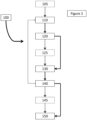
Figure 2 illustrates an example method for controlling a variable speed drive driving an electric motor. -
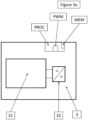
Figure 3a illustrates a first example of a processing unit adapted to implement the example method for controlling a variable speed drive driving an electric motor. -
Figure 3b illustrates a second example of a processing unit adapted to implement the example method for controlling a variable speed drive driving an electric motor. -
Figure 4a illustrates a first example of predetermined pattern. -
Figure 4b illustrates a second example of predetermined pattern. -
Figure 4c illustrates a third example of predetermined pattern. - The disclosure applies to a method for controlling a variable speed drive driving an electric motor. Variable speed drives comprise a passive direct voltage link, DC-link, which may induce undesired oscillations at a resonance frequency during the control of the electric motor. The resonance frequency depends, among others, on a topology of the variable speed drive and may appear at different operating points of the electric motor. Hence, the control of the electric motor by the variable speed drive may be disturbed due to oscillations at the resonance frequency. The method is to mitigate negative impacts of the undesired oscillations at the resonance frequency in the control of the electric motor. The proposed method therefore detects the resonance frequency and modifies control parameters of a control law of the electric motor and/or filter parameters of a digital filter applied on measured value of the DC-link depending on the detected resonance frequency. The modification of the parameters of the variable speed drive allows limiting the amplitude of the oscillations at the resonance frequency to stabilize the voltage in the DC-link while seeking to keep a good reaction time of the control law of the electric motor. The method can be used regardless of the topology of the variable speed drive and does not need to stop the electric motor to be implemented, i.e. the method can be implemented in real time for different operating points.
- An example of an architecture whereby the method could be applied is described below with reference to
figure 1 . - The circuit may comprise an
electric power source 2, avariable speed drive 3 and anelectric motor 4. - The
electric power source 2 may correspond to a battery supplying a direct voltage DC or to an electric network supplying either an alternating voltage AC or a direct voltage DC. The alternating voltage AC may for example comprise two or three phases. Thepower source 2 may, for example, be a three-phase electric network as illustrated infigure 1 . - An
electric motor 4 should be understood in this disclosure as any kind of electric motors which may be driven by a variable speed drive. The electric motor may be a motor controlled by an alternating voltage, for example, an induction motor. In some examples, the electric motor may be a synchronous electric motor or an asynchronous electric motor. In some examples, the electric motor may be a direct current motor. - A
variable speed drive 3 should be understood in this disclosure as an electronic, electrical, virtual or software implemented control unit for an electric motor. A variable speed drive may control anelectric motor 4 using an electric or electronic command and in particular may apply a determined voltage to the motor. - The variable speed drive may comprise a
passive input stage 31. The passive input stage connects theelectric power source 2 to aninverter stage 32 of thevariable speed drive 3. By passive input stage, it should be understood here an electronic or electrical stage connecting theelectric power source 2 to theinverter stage 32 whereby the electronic or electrical stage comprises passive electronic or electrical components, i.e. non-controlled electronic or electrical components. - The
passive input stage 31 comprises a passive DC-link 312. The DC-link may be defined as a circuit configured to stabilize the voltage of a direct power bus, DC bus, supplying theinverter stage 32. The DC-link can therefore comprise an electrolyte capacitor, a DC-choke or a small film capacitor. - An electrolyte capacitance, which the order of magnitude is 100 µF/kW, allows stabilizing the voltage of the power bus but may have a reduced total harmonic distortion, THDI.
- Adding a DC-choke, i.e. adding a choke inductor allows having a better THDI but increases the cost and the size of the DC-link while cooling means of the DC-link may have to be improved. A variable speed drive comprising a choke inductor comprises a DC-choke topology.
- Having a small film capacitor, the order of magnitude of which is 15 µF/kW, improves the THDI but decreases the voltage stabilization and therefore challenges the control of the electric motor by the variable speed drive. A variable speed drive comprising a small film capacitor comprises a C-less topology.
- In some examples, the
passive input stage 31 may comprise apassive rectifier 311, such rectifier being intended to convert an alternating voltage AC supplied by thepower source 2 into a direct voltage DC. As theelectric power source 2 may already supply a direct voltage DC, the passive rectifier is an option as represented by the dotted lines infigure 1 . In some examples, a passive rectifier may be a diode rectifier. - In examples wherein the electric power source is a single-phase alternating power source, a passive rectifier may comprise two arms, each arm having a top diode and a bottom diode, the passive rectifier therefore corresponding to a four-diode rectifier.
- In examples wherein the electric power source is a three-phase alternating power source, a passive rectifier may comprise three arms, each arm having a top diode and a bottom diode, the passive rectifier therefore corresponding to a six-diode rectifier.
- In some examples, the
passive input stage 31 may also comprise aninput filter 310. The input filter may be connected in one side to an alternatingpower source 2 and on the other side to the passive rectifier. The input filter may comprise an AC line choke or an LC filter (Inductor-Capacitor filter) for filtering harmonics. A variable speed drive comprising an input filter comprises an input filter topology. - The variable speed drive may also comprise electric measuring means (not shown) adapted to measure at least one of voltage and current values in the DC-link. Measuring means may for example correspond to an ammeter or a voltmeter.
- In some examples, a variable speed drive comprises a first controller PROC1 intended to implement a control law by taking into account, for example, an input speed set point, a voltage set point, a current set point or a torque set point to be applied to the electric motor during normal operation of the motor and control instructions to be applied to an
inverter stage 32 in order to obtain corresponding output voltages. The control law may be of a vector or of a scalar type. - The
inverter stage 32 is intended to cut off the voltage supplied by the DC-link into a variable voltage to control theelectric motor 4. The inverter stage may, for example, comprise multiple switching legs, each comprising controlled power transistors, for example of Insulated Gate Bipolar Transistors, IGBT, type, for applying the variable voltage to the electric motor. - In some examples, the
inverter stage 32 may comprise 3 legs, each leg comprising a top switch and a bottom switch, i.e. six switches. A switch comprises an IGBT and a freewheeling diode connected in parallel of the IGBT. A middle point of each leg, corresponding to a point between the bottom switch and the top switch, is connected to a respective phase of theelectric motor 4. - The inverter stage and in particular its controlled transistors may be controlled by the first controller PROC1, for example, by implementing a PWM (Pulse Width Modulation) function. The control law performed by the first controller PROC1 makes it possible to determine the voltage to be applied to the output phases intended to be connected to the electric motor to be controlled. The processor PROC1 may also be adapted to implement a digital filter (not shown) on the DC-link of the variable speed drive.
- The first controller PROC1 may for example correspond to a microcontroller or to a digital signal controller, DSC, the latter combining features of a microcontroller and of a digital signal processor, DSP.
- As illustrated for example on
Figure 3b , in some examples the first controller PROC1 may comprise a first communication unit CU1 adapted to communicate with a second communication unit CU2 of a second controller PROC2 remote from the variable speed drive. In such examples, the first controller PROC1 may be a microcontroller and the second controller PROC2 may be a DSP. In some other examples, the first and the second controller are a same controller and the variable speed drive comprises said same controller. The same controller may be a DSC. Both first CU1 and second CU2 communication units may for example corresponds to a receiving/transmitting equipment adapted to exchange radiofrequency waves. - The
variable speed drive 3 may also comprise a non-transitory machine-readable or computer readable storage medium, such as, for example, memory or storage unit MEM, whereby the non-transitory machine-readable storage medium is encoded with instructions executable by a processor such as the first controller PROC1, the machine-readable storage medium comprising instructions to operate the first controller PROC1 to perform at least part of the example methods hereby described. A computer readable storage according to this disclosure may be any electronic, magnetic, optical or other physical storage device that stores executable instructions. The computer readable storage may be, for example, Random Access Memory (RAM), an Electrically Erasable Programmable Read Only Memory (EEPROM), a storage drive, and optical disk, and the like. As described hereby, the computer readable storage may be encoded with executable instructions according to the methods hereby described. Storage or memory may include any electronic, magnetic, optical or other physical storage device that stores executable instructions as described hereby. - An
example method 100 for controlling thevariable speed drive 3 driving theelectric motor 4 is described below with reference tofigure 2 . Theexample method 100 may be implemented by a processing system comprising thevariable speed drive 3, the first controller PROC1 and the second controller PROC2. Examples of such processing systems are represented infigure 3a and3b . In the example illustrated infigure 3a , the first controller and the second controller are a same controller PROC comprised in thevariable speed drive 3. In the example illustrated infigure 3b , the first controller PROC1 comprises the first communication unit CU1 adapted to communicate with the second communication unit CU2 of the second controller PROC2, as illustrated by the bidirectional arrow, and the second controller PROC2 is remote from the variable speed drive. Hence, a distinction is made between first PROC1 and second PROC2 controllers in the present disclosure to indicate that at least a part of theexample method 100 can be remotely implemented by a controller. However, it should be understood that first and second controller could also correspond to a same controller PROC embedded in the variable speed drive as illustrated infigure 3a . - As illustrated in
bloc 110, themethod 100 comprises running, by the variable speed drive, theelectric motor 4 to reach a steady-state operating point. An operating point of theelectric motor 4 may comprise a speed and a torque of the electric motor. A speed of the electric motor may be expressed in rotations per minute (rpm) and may be comprised between 0 and 10000 rpm and preferably between 1000 and 3000 rpm. A torque of the electric motor may be expressed in Newton-metre (Nm) and may be comprised between 0 and 10 kNm and preferably between 0 and 1000 Nm. In some examples, the torque of the electric motor corresponds to an electromagnetic torque of the electric motor. In some examples, an operating point may be determined based on a data of a motor nameplate of the electric motor. Reaching a steady-state operating point of theelectric motor 4 means that the speed and the torque of theelectric motor 4 respectively reach a significantly constant value. This operation is performed by the variable speed drive, for example by applying an adapted duty cycle of a PWM or by applying adapted parameters of the control law. - In some examples and as represented in
bloc 105, themethod 100 may previously comprise receiving data corresponding to a specific operating point. The data corresponding to a specific operating point may for example be sent by a controller external to the variable speed drive, such as the second controller PROC2, or by a programmable logic controller (PLC), or be provided by an operator. In alternative or complementary examples, the variable speed drive may store data corresponding to default operating points for a commissioning sequence of the drive. In these examples, running the electric motor to reach a steady-state operating point may correspond to running the electric motor to reach a steady-state corresponding to the specific operating point or to a default operating point. - As illustrated in
bloc 120, themethod 100 comprises measuring, in response to reaching the steady state, a plurality of values of current or voltage of the passive DC-link. The plurality of values may for example comprise at least 5 values and preferably at least 100 values. Thebloc 120 is performed by the variable speed drive, for example using adapted measuring means depending on the measured physical quantity. - In some examples wherein the plurality of values concerns current values, the variable speed drive may perform the measurements using an ammeter. In some other examples wherein the plurality of values concerned voltage values, the variable speed drive may perform the measurements using a voltmeter.
- As illustrated in
bloc 130, themethod 100 comprises computing a frequency spectrum of the DC-link based on the plurality of values of current or voltage measured. The frequency spectrum may be determined based on a discrete Fourier transform (DFT) or based on a fast Fourier transform (FFT) using the plurality of measured values. - This bloc may be performed by the same controller PROC in
figure 3a or by the second controller PROC2, remote from the variable speed drive, infigure 3b . In the example wherein the second controller remote from the variable speed drive performs thebloc 130, the example method previously comprises sending, by the first communicating unit CU1 of the first controller PROC1, the plurality of measurements (voltage or current) to the second communicating unit CU2 of the second controller PROC2 as illustrated by thebloc 125 infigure 2 . Indeed, computations relating to signal processing may be heavy and therefore, may be executed by a dedicated controller like a DSP remote from the variable speed drive. This allows, among others, reducing an overall cost of the variable speed drive. - As illustrated in
bloc 140, themethod 100 comprises detecting a specific resonance frequency by comparing amplitudes of the frequency spectrum to a predetermined pattern. This bloc may be performed by the same controller PROC offigure 3a or by the second controller PROC2 offigure 3b . Since a resonance frequency leads to undesired oscillations of the DC-link, amplitudes of the frequency lines of the frequency spectrum will be increased in a case of resonance, and could be detected by a comparison to a predetermined pattern. - In some examples, comparing amplitudes of the frequency spectrum to a predetermined pattern comprises determining whether an amplitude of the frequency spectrum exceed a predetermined threshold. A predetermined pattern can therefore comprise several predetermined thresholds. In some examples, a predetermined threshold corresponds to a frequency or to a frequency range associated to a threshold amplitude. Frequencies or frequency ranges associated to threshold amplitudes may be limited by a Shannon criterion, i.e. be limited at a half of a sampling frequency fsampling. The sampling frequency fsampling corresponds to the number of current or voltage values measured during a period of one second.
- A threshold amplitude and its associated frequency or frequency range may be determined based on the electric power source. In particular, a threshold amplitude and its associated frequency or frequency range may be determined based on a voltage value U 0 of the DC bus and on a type of electric power source wherein the voltage value U 0 of the DC bus is determined based on a voltage applied by the
electric power source 2. A type of the electric power source may comprise a type of applied voltage (alternating or direct voltage) and a number of phases in applicable cases. - Indeed, when the type of the electric power source comprises an alternating power source, the passive input stage of the variable speed drive comprises a diode rectifier to rectify the voltage. In such case, the diode rectifier generates amplitudes in the frequency spectrum at multiples of a fundamental frequency fgrid of the alternating power source.
-
Figures 4 illustrates some examples of predetermined patterns. In thefigures 4 , an abscissa axis represents frequencies (expressed in Hz here) and an ordinate axis represents an amplitude (expressed in Volt here). An amplitude corresponding to the voltage value U 0 of the DC bus is illustrated in the ordinate axis offigures 4 . - In some examples and as illustrated in the
figures 4 , a predetermined pattern may comprise a cU 0 threshold amplitude associated to a range of frequency comprising a zero-frequency. Coefficient c is determined to be greater than 1 and may for example be comprised between 1 and 1,5. This allows avoiding detecting a resonance frequency at the zero-frequency due to perturbations in the electric power source. In some alternative examples, a lowest frequency associated to a threshold amplitude of a predetermined pattern may be greater than 0 Hz and preferably greater than 1 Hz. This means that a predetermined pattern does not comprise a threshold amplitude associated to the zero-frequency in order to avoid detecting a resonance frequency at the zero-frequency. - In some examples and as illustrated in
figures 4 , a predetermined pattern may comprise an error threshold amplitude eU 0 associated to a frequency range which may start from 0 Hz and end at the sampling frequency fsampling. The error threshold amplitude eU 0 may be determined in order to avoid detecting resonance frequency for weak amplitudes which do not induce significant alteration in the stability of the DC-link and in the control of the electric motor. In some examples, coefficient e may be smaller than 5% and preferably smaller than 2%. - In some examples as the ones illustrated in
figure 4a and4b , a predetermined pattern may comprise a threshold amplitude associated to a frequency range comprising a multiple of a fundamental frequency fgrid of an alternatingpower source 2. In such examples, a frequency range comprising a multiple of the fundamental frequency fgrid may be centered around such multiple of the fundamental frequency. A frequency range comprising a multiple of a fundamental frequency fgrid may for example correspond to a range of 20 Hz centered around such multiple of the fundamental frequency. - In some examples, when the type of electric power source corresponds to a single-phase alternating power source, a predetermined pattern may comprise threshold amplitudes associated to multiples of 2 of the fundamental frequency fgrid of the single-phase alternating power source.
- An example of a predetermined pattern whereby the type of electric power corresponds to a single-phase alternating power source is illustrated in
figure 4a . The predetermined pattern of the example offigure 4a comprises a cU 0 threshold amplitude associated to a range of frequency comprising a zero-frequency, an error threshold amplitude eU 0 associated to a frequency range which starts from 0 Hz and ends at the sampling frequency fsampling and threshold amplitudes associated to frequency ranges respectively comprising two and four times the fundamental frequency fgrid. Indeed, when the type of electric power corresponds to a single-phase alternating power source, the passive input stage of the variable speed drive comprises a four-diode rectifier. Such four-diode rectifier induces the presence of second order harmonics. The two first second order harmonics are illustrated in thefigure 4a but the predetermined pattern may comprise other second order harmonics. Amplitudes of second order harmonics decreases when frequency increases as illustrated for amplitude thresholds aU 0 and bU 0 . Hence, a coefficient a of a first second order harmonic is greater than a coefficient b of a second order harmonic as illustrated infigure 4a . Coefficients associated to frequency range of second order harmonics like a and b are comprised between 0 and 1 and decreases when the frequency increases. - In some examples, when the type of electric power source corresponds to a three-phase alternating power source, a predetermined pattern may comprise threshold amplitudes associated to multiples of 6 of the fundamental frequency fgrid of the three-phase alternating power source.
- An example of a predetermined pattern whereby the type of electric power corresponds to a three-phase alternating power source is illustrated in
figure 4b . The predetermined pattern of the example offigure 4b comprises a cU 0 threshold amplitude associated to a range of frequency comprising a zero-frequency, an error threshold amplitude eU 0 associated to a frequency range which starts from 0 Hz and end at the sampling frequency fsampling and threshold amplitudes associated to frequency ranges comprising six and twelve times the fundamental frequency fgrid . Indeed, when the type of electric power corresponds to a three-phase alternating power source, the passive input stage of the variable speed drive comprises a six-diode rectifier. Such six-diode rectifier induces the presence of sixth order harmonics. The two first sixth order harmonics are illustrated in thefigure 4b but the predetermined pattern may comprise other sixth order harmonics. Amplitudes of sixth order harmonics decreases when frequency increases as illustrated for amplitude thresholds a'U 0 and b'U 0 . Hence, a coefficient a' of a first sixth order harmonic is greater than a coefficient b' of a second sixth order harmonic as illustrated infigure 4b . Coefficients associated to frequency range of sixth order harmonics like a' and b' are comprised between 0 and 1 and decreases when the frequency increases. - An example of a predetermined pattern whereby the type of electric power corresponds to a DC power source, for example a battery, is illustrated in
figure 4c . The predetermined pattern of the example offigure 4c comprises a cU 0 threshold amplitude associated to a range of frequency comprising a zero-frequency, an error threshold amplitude eU 0 associated to a frequency range which starts from 0 Hz and end at the sampling frequency fsampling but does not comprise multiple of a fundamental frequency. - As illustrated in
bloc 150, the method comprises modifying filter parameters of a digital filter of the DC-link or control parameters of a control law of the electric motor based on the specific resonance frequency. This bloc may be performed by the same controller PROC or by the first controller PROC1, i.e. by the controller embedded in the variable speed drive. - When the
bloc 150 is performed by the first controller PROC1 in a processing system offigure 3b , the method may previously comprise sending, by the second communicating unit CU2 of the second controller PROC2, the resonance frequency or the parameters to be modified, to the first communicating unit CU1 of the first controller PROC1. This example is illustrated by thebloc 145 offigure 2 . - In some examples wherein control parameters of the control law of the electric motor are modified, control parameters comprise at least one of a bandwidth of a control feedback loop of the electric motor, and a duty cycle of a pulse width modulation function. A bandwidth of a control feedback loop of the electric motor may for example comprise at least one of a speed loop bandwidth, a current loop bandwidth or a position loop bandwidth of the electric motor depending on the control law applied to the electric motor by the variable speed drive. In some examples, modifying the bandwidth of a control feedback loop of the electric motor may comprise reducing the bandwidth of the control feedback law such that the detected resonance frequency is moved out of such bandwidth. In particular, when the detected resonance frequency corresponds to a bandwidth of the control law (magnitude order of 80Hz), for example in an input filter topology, applying a filter on the resonance frequency may disturb the functioning of the control law. In such cases, a good trade-off between stability of the DC-link and performance of the electric motor may consist to reduce the bandwidth of the control law to move the detected resonance frequency out as explained above.
- In some examples wherein filter parameters of the digital filter are modified, filter parameters of the digital filter comprise at least one of a cut-off frequency and a gain of the filter. In some examples, modifying the cut-off frequency or the gain respectively comprises modifying the cut-off frequency to filter the detected resonance frequency or increasing the attenuation of the filter to attenuate the resonance frequency. In particular, when the detected resonance frequency corresponds to several hundreds of Hertz or more, for example in a C-less topology, applying a filter on the resonance frequency will not significantly affect the performance of the motor. Hence, a good trade-off between stability of the DC-link and performance of the electric motor may consist in modifying the filter parameters of the digital filter to filter the resonance frequency.
- In some examples, both filter parameters of the digital filter and control parameters of the control law are modified. In some examples, the parameters are chosen to reduce the bandwidth of the control law and to modify the cut-off frequency of the digital filter to filter the resonance frequency while avoiding filtering a new bandwidth of the control law. In particular, when the detected resonance frequency corresponds to several tens of Hertz, for example in a DC-choke topology, the bandwidth of the control law may have the same order of magnitude. Filtering the resonance frequency alone may affect the control law while modifying the bandwidth of the control law alone may significantly slow the response of the electric motor. Hence, modifying both filter parameters of the digital filter and control parameters of the control law may optimize the performance of the system (drive and electric motor) by seeking a good compromise between the stability of the DC-link and the time response of the electric motor control.
- In some examples, the
method 100 may further comprise triggering an alert. The alert may be triggered after that a resonance frequency is detected. An alert may comprise at least one of advices to modify the filter parameters and the control parameters, sending an alert message, playing an alert song, and displaying an alert icon. Providing advices to modify the parameters of the variable speed drive may, for example, allow an operator to manually implement the modifications. Sending an alert message may, for example, allow warning operators, manufacturers or interested persons of the detection of a resonance frequency. Playing an alert song and displaying an alert icon may allow, for example, warning operators located close to the system. - In some examples, the
example method 100 may further comprise determining a line inductance based on the specific resonance frequency. In such examples, the line inductance may also be determined based on a value of passive DC-link components of the variable speed drive. Values of passive DC-link components comprises value of a capacitance of the DC-link and may comprise value of a choke inductor when the variable speed drive comprises such choke inductor. Indeed, the line inductance may be obtained from the following equation:

- Ls corresponds to the line inductance,
- Fr corresponds to the resonance frequency,
- C corresponds to the capacitance of the DC-link, and
- Ldch corresponds to the choke inductor.
- In examples wherein the variable speed drive does not comprise a choke inductor, a value of Ldch is null.
- In some examples, when a new operating point is detected, the
method 100 may comprise a further iteration. Hence, this allows optimizing the system by modifying parameters of the variable speed drive at each new operating point and for example at the specific operating point which can be determined by an operator. - Some blocs or examples of the
method 100 presented above may be implemented more or less frequently than other blocs or examples. In some examples,bloc 120 is implemented more frequently thanbloc 110. Some blocs or examples of themethod 100 may also have a different order that the order of presentation in the present disclosure. The sequential aspect given by thefigure 2 is not mandatory and depends on the blocs and on the examples. - The
example method 100 allows therefore reducing the amplitude of the oscillations of the DC-link at the resonance frequencies. Hence, the performance of the system may be improved or optimized by at least attenuating such oscillations. The improvement or optimization can be implemented independently of the nature of components forming the DC-link of the drive. The method can therefore be applied in variable speed drives comprising passive DC-link without knowledge of said drives with a similar efficiency.
Claims (14)
- A method for controlling a variable speed drive (3) driving an electric motor (4), the variable speed drive being connected to an electric power source (2), the variable speed drive (3) comprising a passive DC-link (312) and an inverter stage (32), the inverter stage (32) being controlled by a first controller of the variable speed drive (3), the passive DC-link (312) being connected to the inverter stage (32), the method comprising:running (110), by the variable speed drive (3), the electric motor (4) to reach a steady-state operating point;measuring (120), by the variable speed drive (3), in response to reaching the steady state, a plurality of values of current or voltage of the passive DC-link (312);computing (130), by a second controller, a frequency spectrum of the DC-link (312) based on the plurality of values of current or voltage measured;detecting (140), by the second controller, a specific resonance frequency by comparing amplitudes of the frequency spectrum to a predetermined pattern; andthe method is characterised bymodifying (150), by the first controller, filter parameters of a digital filter of the DC-link (312) and control parameters of a control law of the electric motor (4) based on the specific resonance frequency.
- The method according to the preceding claim, wherein the method further comprises determining a line inductance based on the specific resonance frequency.
- The method according to the preceding claim, wherein determining the line inductance is also based on a value of passive DC-link components.
- The method according to any one of the preceding claims, wherein detecting the specific resonance frequency by comparing amplitudes of the frequency spectrum to a predetermined pattern comprises determining whether an amplitude of the frequency spectrum exceed a predetermined threshold.
- The method according to any one of the preceding claims, wherein control parameters of the control law of the electric motor are modified, and wherein control parameters of the control law comprise at least one of a bandwidth of a control feedback loop of the electric motor, and a duty cycle of a pulse width modulation function.
- The method according to any one of the preceding claims, wherein filter parameters of the digital filter are modified, and wherein filter parameters of the digital filter comprise at least one of a cut-off frequency and a gain of the filter.
- The method according to any one of the preceding claims, wherein the method further comprises triggering an alert.
- The method according to the preceding claim, wherein the alert comprises at least one of providing advices to modify the filter parameters and the control parameters, sending an alert message, playing an alert song, and displaying an alert icon.
- The method according to any one of the preceding claims, wherein the method further comprises receiving a specific operating point and wherein running the electric motor to reach a steady-state operating point corresponds to running the electric motor to reach a steady-state of the specific operating point.
- The method according to any one of the preceding claims, wherein the method comprises a further iteration when a new operating point is detected.
- A computer-readable storage medium comprising instructions which, when executed by at least one controller, cause the at least one controller to carry out the method of any one of the above method claims.
- A processing system comprising a variable speed drive (3), a first controller and a second controller;wherein the variable speed drive (3) comprises a DC-link (312) and an inverter stage (32); andwherein the processing system is adapted to implement a method of any one of the above method claims.
- The processing system according to claim 12, wherein the variable speed drive comprises the first controller; and
wherein the second controller is remote from the variable speed drive, and wherein the first controller comprises a first communication unit adapted to communicate with a second communication unit of the second controller. - A processing system according to claim 12, wherein the first controller and the second controller are a same controller and wherein the variable speed drive comprises said same controller.
Priority Applications (4)
| Application Number | Priority Date | Filing Date | Title |
|---|---|---|---|
| ES21305899T ES3032938T3 (en) | 2021-06-30 | 2021-06-30 | Variable speed drive control |
| EP21305899.3A EP4113826B1 (en) | 2021-06-30 | 2021-06-30 | Variable speed drive control |
| US17/837,309 US11843338B2 (en) | 2021-06-30 | 2022-06-10 | Variable speed drive control |
| CN202210718653.8A CN115549554A (en) | 2021-06-30 | 2022-06-23 | Variable speed drive control |
Applications Claiming Priority (1)
| Application Number | Priority Date | Filing Date | Title |
|---|---|---|---|
| EP21305899.3A EP4113826B1 (en) | 2021-06-30 | 2021-06-30 | Variable speed drive control |
Publications (2)
| Publication Number | Publication Date |
|---|---|
| EP4113826A1 EP4113826A1 (en) | 2023-01-04 |
| EP4113826B1 true EP4113826B1 (en) | 2025-04-02 |
Family
ID=76845171
Family Applications (1)
| Application Number | Title | Priority Date | Filing Date |
|---|---|---|---|
| EP21305899.3A Active EP4113826B1 (en) | 2021-06-30 | 2021-06-30 | Variable speed drive control |
Country Status (4)
| Country | Link |
|---|---|
| US (1) | US11843338B2 (en) |
| EP (1) | EP4113826B1 (en) |
| CN (1) | CN115549554A (en) |
| ES (1) | ES3032938T3 (en) |
Family Cites Families (5)
| Publication number | Priority date | Publication date | Assignee | Title |
|---|---|---|---|---|
| US9257895B2 (en) * | 2004-06-17 | 2016-02-09 | Grant A. MacLennan | Distributed gap inductor filter apparatus and method of use thereof |
| US7932693B2 (en) * | 2005-07-07 | 2011-04-26 | Eaton Corporation | System and method of controlling power to a non-motor load |
| DE102012215152A1 (en) * | 2012-08-27 | 2014-03-20 | Siemens Aktiengesellschaft | Drive method with shift of the switching frequency and drive device |
| EP3255776A1 (en) * | 2016-06-07 | 2017-12-13 | ABB Technology AG | A method and device for determination of a torsional deflection of a rotation shaft in the electromechanical drivetrain |
| EP3832867B1 (en) * | 2019-12-02 | 2024-02-07 | ABB Schweiz AG | Stabilizing dc link voltage with adaptive gain |
-
2021
- 2021-06-30 ES ES21305899T patent/ES3032938T3/en active Active
- 2021-06-30 EP EP21305899.3A patent/EP4113826B1/en active Active
-
2022
- 2022-06-10 US US17/837,309 patent/US11843338B2/en active Active
- 2022-06-23 CN CN202210718653.8A patent/CN115549554A/en active Pending
Also Published As
| Publication number | Publication date |
|---|---|
| EP4113826A1 (en) | 2023-01-04 |
| CN115549554A (en) | 2022-12-30 |
| US11843338B2 (en) | 2023-12-12 |
| US20230006597A1 (en) | 2023-01-05 |
| ES3032938T3 (en) | 2025-07-29 |
Similar Documents
| Publication | Publication Date | Title |
|---|---|---|
| CN102315622B (en) | Electric power conversion system and electric power conversion device | |
| JP3486450B2 (en) | Identification method for obtaining N induction motor electrical parameters | |
| JP6138413B2 (en) | Motor drive device | |
| EP2966762A1 (en) | Lcl filter resonance mitigation technique for voltage source converters | |
| CN102223094A (en) | Power conversion system and LC circuit damping method | |
| US20170141712A1 (en) | Feedforward control of motor drives with output sinewave filter | |
| US6246209B1 (en) | Control device for alternating current motor | |
| Kim et al. | An analytical design strategy and implementation of a dv/dt filter for WBG devices based high speed machine drives | |
| EP3136586A1 (en) | Sensorless motor drive vector control with feedback compensation for filter capacitor current | |
| EP4113826B1 (en) | Variable speed drive control | |
| US11626821B2 (en) | Sensorless control of a motor by variable frequency signal injection | |
| CN103795319B (en) | A kind of rotating-speed tracking method of alternating current machine, speed regulating device and alternating current machine | |
| Feroura et al. | Sensorless field oriented control of current source inverter fed induction motor drive | |
| JPH05503831A (en) | Motor controller with control loop to neutralize rotor leakage and excite reactance | |
| Green et al. | Inverter AC-drive efficiency | |
| US20240258934A1 (en) | Extending capacitor lifetime in a power converter | |
| JP3490600B2 (en) | Pulse width modulation method for power converter | |
| Nied et al. | Single-phase induction motor indirect field oriented control under nominal load | |
| CN107359843B (en) | Power conversion control system | |
| Steckling et al. | Model-based synchronous optimal modulation for three-level inverters applied to electrical submersible pumps systems | |
| Feng et al. | Control study on starting of BDFM | |
| Muchande et al. | Design and implementation of a direct torque control space vector modulated three phase induction motor drive | |
| EP3641128B1 (en) | Method, computer program and control system of controlling a motor | |
| Dubravka et al. | Control techniques for torque ripple minimization in switched reluctance drives under faults | |
| Bech et al. | An automatic parameter identification method for a PMSM drive with LC-filter |
Legal Events
| Date | Code | Title | Description |
|---|---|---|---|
| PUAI | Public reference made under article 153(3) epc to a published international application that has entered the european phase |
Free format text: ORIGINAL CODE: 0009012 |
|
| STAA | Information on the status of an ep patent application or granted ep patent |
Free format text: STATUS: THE APPLICATION HAS BEEN PUBLISHED |
|
| AK | Designated contracting states |
Kind code of ref document: A1 Designated state(s): AL AT BE BG CH CY CZ DE DK EE ES FI FR GB GR HR HU IE IS IT LI LT LU LV MC MK MT NL NO PL PT RO RS SE SI SK SM TR |
|
| STAA | Information on the status of an ep patent application or granted ep patent |
Free format text: STATUS: REQUEST FOR EXAMINATION WAS MADE |
|
| 17P | Request for examination filed |
Effective date: 20230630 |
|
| RBV | Designated contracting states (corrected) |
Designated state(s): AL AT BE BG CH CY CZ DE DK EE ES FI FR GB GR HR HU IE IS IT LI LT LU LV MC MK MT NL NO PL PT RO RS SE SI SK SM TR |
|
| GRAP | Despatch of communication of intention to grant a patent |
Free format text: ORIGINAL CODE: EPIDOSNIGR1 |
|
| STAA | Information on the status of an ep patent application or granted ep patent |
Free format text: STATUS: GRANT OF PATENT IS INTENDED |
|
| INTG | Intention to grant announced |
Effective date: 20241118 |
|
| RIC1 | Information provided on ipc code assigned before grant |
Ipc: H02M 1/15 20060101ALI20241108BHEP Ipc: H02M 1/14 20060101ALI20241108BHEP Ipc: H02P 21/05 20060101ALI20241108BHEP Ipc: H02P 23/04 20060101ALI20241108BHEP Ipc: H02P 29/50 20160101AFI20241108BHEP |
|
| GRAS | Grant fee paid |
Free format text: ORIGINAL CODE: EPIDOSNIGR3 |
|
| GRAA | (expected) grant |
Free format text: ORIGINAL CODE: 0009210 |
|
| STAA | Information on the status of an ep patent application or granted ep patent |
Free format text: STATUS: THE PATENT HAS BEEN GRANTED |
|
| AK | Designated contracting states |
Kind code of ref document: B1 Designated state(s): AL AT BE BG CH CY CZ DE DK EE ES FI FR GB GR HR HU IE IS IT LI LT LU LV MC MK MT NL NO PL PT RO RS SE SI SK SM TR |
|
| REG | Reference to a national code |
Ref country code: GB Ref legal event code: FG4D |
|
| REG | Reference to a national code |
Ref country code: CH Ref legal event code: EP |
|
| REG | Reference to a national code |
Ref country code: IE Ref legal event code: FG4D |
|
| REG | Reference to a national code |
Ref country code: DE Ref legal event code: R096 Ref document number: 602021028471 Country of ref document: DE |
|
| PGFP | Annual fee paid to national office [announced via postgrant information from national office to epo] |
Ref country code: DE Payment date: 20250626 Year of fee payment: 5 |
|
| PGFP | Annual fee paid to national office [announced via postgrant information from national office to epo] |
Ref country code: GB Payment date: 20250617 Year of fee payment: 5 |
|
| PGFP | Annual fee paid to national office [announced via postgrant information from national office to epo] |
Ref country code: FR Payment date: 20250624 Year of fee payment: 5 |
|
| REG | Reference to a national code |
Ref country code: ES Ref legal event code: FG2A Ref document number: 3032938 Country of ref document: ES Kind code of ref document: T3 Effective date: 20250729 |
|
| REG | Reference to a national code |
Ref country code: NL Ref legal event code: MP Effective date: 20250402 |
|
| PG25 | Lapsed in a contracting state [announced via postgrant information from national office to epo] |
Ref country code: NL Free format text: LAPSE BECAUSE OF FAILURE TO SUBMIT A TRANSLATION OF THE DESCRIPTION OR TO PAY THE FEE WITHIN THE PRESCRIBED TIME-LIMIT Effective date: 20250402 |
|
| REG | Reference to a national code |
Ref country code: AT Ref legal event code: MK05 Ref document number: 1782311 Country of ref document: AT Kind code of ref document: T Effective date: 20250402 |
|
| PG25 | Lapsed in a contracting state [announced via postgrant information from national office to epo] |
Ref country code: FI Free format text: LAPSE BECAUSE OF FAILURE TO SUBMIT A TRANSLATION OF THE DESCRIPTION OR TO PAY THE FEE WITHIN THE PRESCRIBED TIME-LIMIT Effective date: 20250402 Ref country code: PT Free format text: LAPSE BECAUSE OF FAILURE TO SUBMIT A TRANSLATION OF THE DESCRIPTION OR TO PAY THE FEE WITHIN THE PRESCRIBED TIME-LIMIT Effective date: 20250804 |
|
| PGFP | Annual fee paid to national office [announced via postgrant information from national office to epo] |
Ref country code: ES Payment date: 20250710 Year of fee payment: 5 |
|
| REG | Reference to a national code |
Ref country code: LT Ref legal event code: MG9D |
|
| PG25 | Lapsed in a contracting state [announced via postgrant information from national office to epo] |
Ref country code: GR Free format text: LAPSE BECAUSE OF FAILURE TO SUBMIT A TRANSLATION OF THE DESCRIPTION OR TO PAY THE FEE WITHIN THE PRESCRIBED TIME-LIMIT Effective date: 20250703 Ref country code: NO Free format text: LAPSE BECAUSE OF FAILURE TO SUBMIT A TRANSLATION OF THE DESCRIPTION OR TO PAY THE FEE WITHIN THE PRESCRIBED TIME-LIMIT Effective date: 20250702 |
|
| PG25 | Lapsed in a contracting state [announced via postgrant information from national office to epo] |
Ref country code: PL Free format text: LAPSE BECAUSE OF FAILURE TO SUBMIT A TRANSLATION OF THE DESCRIPTION OR TO PAY THE FEE WITHIN THE PRESCRIBED TIME-LIMIT Effective date: 20250402 |
|
| PGFP | Annual fee paid to national office [announced via postgrant information from national office to epo] |
Ref country code: IT Payment date: 20250626 Year of fee payment: 5 |
|
| PG25 | Lapsed in a contracting state [announced via postgrant information from national office to epo] |
Ref country code: BG Free format text: LAPSE BECAUSE OF FAILURE TO SUBMIT A TRANSLATION OF THE DESCRIPTION OR TO PAY THE FEE WITHIN THE PRESCRIBED TIME-LIMIT Effective date: 20250402 |
|
| PG25 | Lapsed in a contracting state [announced via postgrant information from national office to epo] |
Ref country code: HR Free format text: LAPSE BECAUSE OF FAILURE TO SUBMIT A TRANSLATION OF THE DESCRIPTION OR TO PAY THE FEE WITHIN THE PRESCRIBED TIME-LIMIT Effective date: 20250402 |
|
| PG25 | Lapsed in a contracting state [announced via postgrant information from national office to epo] |
Ref country code: AT Free format text: LAPSE BECAUSE OF FAILURE TO SUBMIT A TRANSLATION OF THE DESCRIPTION OR TO PAY THE FEE WITHIN THE PRESCRIBED TIME-LIMIT Effective date: 20250402 |
|
| PG25 | Lapsed in a contracting state [announced via postgrant information from national office to epo] |
Ref country code: RS Free format text: LAPSE BECAUSE OF FAILURE TO SUBMIT A TRANSLATION OF THE DESCRIPTION OR TO PAY THE FEE WITHIN THE PRESCRIBED TIME-LIMIT Effective date: 20250702 |
|
| PG25 | Lapsed in a contracting state [announced via postgrant information from national office to epo] |
Ref country code: IS Free format text: LAPSE BECAUSE OF FAILURE TO SUBMIT A TRANSLATION OF THE DESCRIPTION OR TO PAY THE FEE WITHIN THE PRESCRIBED TIME-LIMIT Effective date: 20250802 |
|
| PG25 | Lapsed in a contracting state [announced via postgrant information from national office to epo] |
Ref country code: LV Free format text: LAPSE BECAUSE OF FAILURE TO SUBMIT A TRANSLATION OF THE DESCRIPTION OR TO PAY THE FEE WITHIN THE PRESCRIBED TIME-LIMIT Effective date: 20250402 |
|
| REG | Reference to a national code |
Ref country code: DE Ref legal event code: R097 Ref document number: 602021028471 Country of ref document: DE |
|
| PG25 | Lapsed in a contracting state [announced via postgrant information from national office to epo] |
Ref country code: SM Free format text: LAPSE BECAUSE OF FAILURE TO SUBMIT A TRANSLATION OF THE DESCRIPTION OR TO PAY THE FEE WITHIN THE PRESCRIBED TIME-LIMIT Effective date: 20250402 Ref country code: DK Free format text: LAPSE BECAUSE OF FAILURE TO SUBMIT A TRANSLATION OF THE DESCRIPTION OR TO PAY THE FEE WITHIN THE PRESCRIBED TIME-LIMIT Effective date: 20250402 |
|
| PG25 | Lapsed in a contracting state [announced via postgrant information from national office to epo] |
Ref country code: CZ Free format text: LAPSE BECAUSE OF FAILURE TO SUBMIT A TRANSLATION OF THE DESCRIPTION OR TO PAY THE FEE WITHIN THE PRESCRIBED TIME-LIMIT Effective date: 20250402 |
|
| PG25 | Lapsed in a contracting state [announced via postgrant information from national office to epo] |
Ref country code: EE Free format text: LAPSE BECAUSE OF FAILURE TO SUBMIT A TRANSLATION OF THE DESCRIPTION OR TO PAY THE FEE WITHIN THE PRESCRIBED TIME-LIMIT Effective date: 20250402 |
|
| PG25 | Lapsed in a contracting state [announced via postgrant information from national office to epo] |
Ref country code: SK Free format text: LAPSE BECAUSE OF FAILURE TO SUBMIT A TRANSLATION OF THE DESCRIPTION OR TO PAY THE FEE WITHIN THE PRESCRIBED TIME-LIMIT Effective date: 20250402 |
|
| REG | Reference to a national code |
Ref country code: CH Ref legal event code: H13 Free format text: ST27 STATUS EVENT CODE: U-0-0-H10-H13 (AS PROVIDED BY THE NATIONAL OFFICE) Effective date: 20260127 |
|
| PG25 | Lapsed in a contracting state [announced via postgrant information from national office to epo] |
Ref country code: MC Free format text: LAPSE BECAUSE OF FAILURE TO SUBMIT A TRANSLATION OF THE DESCRIPTION OR TO PAY THE FEE WITHIN THE PRESCRIBED TIME-LIMIT Effective date: 20250402 |
|
| PLBE | No opposition filed within time limit |
Free format text: ORIGINAL CODE: 0009261 |
|
| STAA | Information on the status of an ep patent application or granted ep patent |
Free format text: STATUS: NO OPPOSITION FILED WITHIN TIME LIMIT |
|
| PG25 | Lapsed in a contracting state [announced via postgrant information from national office to epo] |
Ref country code: RO Free format text: LAPSE BECAUSE OF FAILURE TO SUBMIT A TRANSLATION OF THE DESCRIPTION OR TO PAY THE FEE WITHIN THE PRESCRIBED TIME-LIMIT Effective date: 20250402 |
|
| REG | Reference to a national code |
Ref country code: CH Ref legal event code: L10 Free format text: ST27 STATUS EVENT CODE: U-0-0-L10-L00 (AS PROVIDED BY THE NATIONAL OFFICE) Effective date: 20260211 |
|
| PG25 | Lapsed in a contracting state [announced via postgrant information from national office to epo] |
Ref country code: LU Free format text: LAPSE BECAUSE OF NON-PAYMENT OF DUE FEES Effective date: 20250630 |
|
| REG | Reference to a national code |
Ref country code: BE Ref legal event code: MM Effective date: 20250630 |
|
| 26N | No opposition filed |
Effective date: 20260105 |
|
| PG25 | Lapsed in a contracting state [announced via postgrant information from national office to epo] |
Ref country code: IE Free format text: LAPSE BECAUSE OF NON-PAYMENT OF DUE FEES Effective date: 20250630 |
|
| PG25 | Lapsed in a contracting state [announced via postgrant information from national office to epo] |
Ref country code: BE Free format text: LAPSE BECAUSE OF NON-PAYMENT OF DUE FEES Effective date: 20250630 |
|
| PG25 | Lapsed in a contracting state [announced via postgrant information from national office to epo] |
Ref country code: CH Free format text: LAPSE BECAUSE OF NON-PAYMENT OF DUE FEES Effective date: 20250630 |