EP4113698B1 - An apparatus for the electrical interconnection of a plurality of electric battery cell units - Google Patents
An apparatus for the electrical interconnection of a plurality of electric battery cell units Download PDFInfo
- Publication number
- EP4113698B1 EP4113698B1 EP22179694.9A EP22179694A EP4113698B1 EP 4113698 B1 EP4113698 B1 EP 4113698B1 EP 22179694 A EP22179694 A EP 22179694A EP 4113698 B1 EP4113698 B1 EP 4113698B1
- Authority
- EP
- European Patent Office
- Prior art keywords
- electric battery
- battery cell
- electrical
- housing
- cell units
- Prior art date
- Legal status (The legal status is an assumption and is not a legal conclusion. Google has not performed a legal analysis and makes no representation as to the accuracy of the status listed.)
- Active
Links
Images








Classifications
-
- H—ELECTRICITY
- H01—ELECTRIC ELEMENTS
- H01M—PROCESSES OR MEANS, e.g. BATTERIES, FOR THE DIRECT CONVERSION OF CHEMICAL ENERGY INTO ELECTRICAL ENERGY
- H01M50/00—Constructional details or processes of manufacture of the non-active parts of electrochemical cells other than fuel cells, e.g. hybrid cells
- H01M50/50—Current conducting connections for cells or batteries
- H01M50/502—Interconnectors for connecting terminals of adjacent batteries; Interconnectors for connecting cells outside a battery casing
-
- H—ELECTRICITY
- H01—ELECTRIC ELEMENTS
- H01M—PROCESSES OR MEANS, e.g. BATTERIES, FOR THE DIRECT CONVERSION OF CHEMICAL ENERGY INTO ELECTRICAL ENERGY
- H01M10/00—Secondary cells; Manufacture thereof
- H01M10/42—Methods or arrangements for servicing or maintenance of secondary cells or secondary half-cells
- H01M10/425—Structural combination with electronic components, e.g. electronic circuits integrated to the outside of the casing
-
- H—ELECTRICITY
- H01—ELECTRIC ELEMENTS
- H01M—PROCESSES OR MEANS, e.g. BATTERIES, FOR THE DIRECT CONVERSION OF CHEMICAL ENERGY INTO ELECTRICAL ENERGY
- H01M50/00—Constructional details or processes of manufacture of the non-active parts of electrochemical cells other than fuel cells, e.g. hybrid cells
- H01M50/20—Mountings; Secondary casings or frames; Racks, modules or packs; Suspension devices; Shock absorbers; Transport or carrying devices; Holders
- H01M50/204—Racks, modules or packs for multiple batteries or multiple cells
-
- H—ELECTRICITY
- H01—ELECTRIC ELEMENTS
- H01M—PROCESSES OR MEANS, e.g. BATTERIES, FOR THE DIRECT CONVERSION OF CHEMICAL ENERGY INTO ELECTRICAL ENERGY
- H01M50/00—Constructional details or processes of manufacture of the non-active parts of electrochemical cells other than fuel cells, e.g. hybrid cells
- H01M50/20—Mountings; Secondary casings or frames; Racks, modules or packs; Suspension devices; Shock absorbers; Transport or carrying devices; Holders
- H01M50/233—Mountings; Secondary casings or frames; Racks, modules or packs; Suspension devices; Shock absorbers; Transport or carrying devices; Holders characterised by physical properties of casings or racks, e.g. dimensions
-
- H—ELECTRICITY
- H01—ELECTRIC ELEMENTS
- H01M—PROCESSES OR MEANS, e.g. BATTERIES, FOR THE DIRECT CONVERSION OF CHEMICAL ENERGY INTO ELECTRICAL ENERGY
- H01M50/00—Constructional details or processes of manufacture of the non-active parts of electrochemical cells other than fuel cells, e.g. hybrid cells
- H01M50/20—Mountings; Secondary casings or frames; Racks, modules or packs; Suspension devices; Shock absorbers; Transport or carrying devices; Holders
- H01M50/249—Mountings; Secondary casings or frames; Racks, modules or packs; Suspension devices; Shock absorbers; Transport or carrying devices; Holders specially adapted for aircraft or vehicles, e.g. cars or trains
-
- H—ELECTRICITY
- H01—ELECTRIC ELEMENTS
- H01M—PROCESSES OR MEANS, e.g. BATTERIES, FOR THE DIRECT CONVERSION OF CHEMICAL ENERGY INTO ELECTRICAL ENERGY
- H01M50/00—Constructional details or processes of manufacture of the non-active parts of electrochemical cells other than fuel cells, e.g. hybrid cells
- H01M50/50—Current conducting connections for cells or batteries
- H01M50/502—Interconnectors for connecting terminals of adjacent batteries; Interconnectors for connecting cells outside a battery casing
- H01M50/514—Methods for interconnecting adjacent batteries or cells
-
- H—ELECTRICITY
- H01—ELECTRIC ELEMENTS
- H01M—PROCESSES OR MEANS, e.g. BATTERIES, FOR THE DIRECT CONVERSION OF CHEMICAL ENERGY INTO ELECTRICAL ENERGY
- H01M50/00—Constructional details or processes of manufacture of the non-active parts of electrochemical cells other than fuel cells, e.g. hybrid cells
- H01M50/50—Current conducting connections for cells or batteries
- H01M50/531—Electrode connections inside a battery casing
- H01M50/54—Connection of several leads or tabs of plate-like electrode stacks, e.g. electrode pole straps or bridges
-
- B—PERFORMING OPERATIONS; TRANSPORTING
- B60—VEHICLES IN GENERAL
- B60L—PROPULSION OF ELECTRICALLY-PROPELLED VEHICLES; SUPPLYING ELECTRIC POWER FOR AUXILIARY EQUIPMENT OF ELECTRICALLY-PROPELLED VEHICLES; ELECTRODYNAMIC BRAKE SYSTEMS FOR VEHICLES IN GENERAL; MAGNETIC SUSPENSION OR LEVITATION FOR VEHICLES; MONITORING OPERATING VARIABLES OF ELECTRICALLY-PROPELLED VEHICLES; ELECTRIC SAFETY DEVICES FOR ELECTRICALLY-PROPELLED VEHICLES
- B60L50/00—Electric propulsion with power supplied within the vehicle
- B60L50/50—Electric propulsion with power supplied within the vehicle using propulsion power supplied by batteries or fuel cells
- B60L50/60—Electric propulsion with power supplied within the vehicle using propulsion power supplied by batteries or fuel cells using power supplied by batteries
- B60L50/64—Constructional details of batteries specially adapted for electric vehicles
-
- H—ELECTRICITY
- H01—ELECTRIC ELEMENTS
- H01M—PROCESSES OR MEANS, e.g. BATTERIES, FOR THE DIRECT CONVERSION OF CHEMICAL ENERGY INTO ELECTRICAL ENERGY
- H01M10/00—Secondary cells; Manufacture thereof
- H01M10/04—Construction or manufacture in general
- H01M10/0413—Large-sized flat cells or batteries for motive or stationary systems with plate-like electrodes
-
- H—ELECTRICITY
- H01—ELECTRIC ELEMENTS
- H01M—PROCESSES OR MEANS, e.g. BATTERIES, FOR THE DIRECT CONVERSION OF CHEMICAL ENERGY INTO ELECTRICAL ENERGY
- H01M10/00—Secondary cells; Manufacture thereof
- H01M10/04—Construction or manufacture in general
- H01M10/0486—Frames for plates or membranes
-
- H—ELECTRICITY
- H01—ELECTRIC ELEMENTS
- H01M—PROCESSES OR MEANS, e.g. BATTERIES, FOR THE DIRECT CONVERSION OF CHEMICAL ENERGY INTO ELECTRICAL ENERGY
- H01M2220/00—Batteries for particular applications
- H01M2220/20—Batteries in motive systems, e.g. vehicle, ship, plane
-
- H—ELECTRICITY
- H01—ELECTRIC ELEMENTS
- H01M—PROCESSES OR MEANS, e.g. BATTERIES, FOR THE DIRECT CONVERSION OF CHEMICAL ENERGY INTO ELECTRICAL ENERGY
- H01M50/00—Constructional details or processes of manufacture of the non-active parts of electrochemical cells other than fuel cells, e.g. hybrid cells
- H01M50/50—Current conducting connections for cells or batteries
- H01M50/543—Terminals
-
- Y—GENERAL TAGGING OF NEW TECHNOLOGICAL DEVELOPMENTS; GENERAL TAGGING OF CROSS-SECTIONAL TECHNOLOGIES SPANNING OVER SEVERAL SECTIONS OF THE IPC; TECHNICAL SUBJECTS COVERED BY FORMER USPC CROSS-REFERENCE ART COLLECTIONS [XRACs] AND DIGESTS
- Y02—TECHNOLOGIES OR APPLICATIONS FOR MITIGATION OR ADAPTATION AGAINST CLIMATE CHANGE
- Y02E—REDUCTION OF GREENHOUSE GAS [GHG] EMISSIONS, RELATED TO ENERGY GENERATION, TRANSMISSION OR DISTRIBUTION
- Y02E60/00—Enabling technologies; Technologies with a potential or indirect contribution to GHG emissions mitigation
- Y02E60/10—Energy storage using batteries
Definitions
- aspects of the present invention relate to an apparatus for the electrical interconnection of a plurality of electric battery cell units. Further, aspects of the present invention relate to a vehicle electrical system comprising an apparatus of the above-mentioned sort.
- An electric battery cell can be seen as a container chemically storing energy.
- the electric battery cells may come in various forms and shapes.
- the electric battery cells may be connected in series and in parallel, into an electric battery arrangement, which may be called an electric battery pack, in order to attain the desired voltage and energy capacity.
- a conventional electric battery pack may be the complete enclosure or entity that delivers electric power to a product or equipment, for example an electric vehicle, such as a battery electric vehicle or a hybrid electric vehicle.
- a conventional electric battery pack includes or contains electric battery cells, a control or management system, which may be called a battery management system (BMS) and may, for example, be implemented partly as software, and often also a cooling and/or heating system.
- BMS battery management system
- the electric battery cells of an electric battery pack may be arranged in modules to attained serviceable units.
- a conventional module may be a frame holding a plurality of electric battery cells, and a conventional electric battery pack is assembled by interconnecting the modules.
- the inventors of the present invention have found drawbacks in conventional solutions for arranging and mounting electric battery cells, electric battery modules and electric battery packs. For example, the inventors of the present invention have found that some conventional arrangements of conventional electric battery cells, modules and packs are complicated to install and/or too bulky.
- An object of the invention is to provide a solution which mitigates or solves the drawbacks and problems of conventional solutions.
- an advantage of the apparatus according to the first aspect is that the electrical performance, or capacity, of an electric battery arrangement, which includes several interconnected electric battery cells, is enhanced without increasing the overall size of the electric battery arrangement.
- An advantage of the apparatus according to the first aspect is that the efficiency of an electric battery arrangement, which includes several interconnected electric battery cells, is improved.
- An advantage of the apparatus according to the first aspect is that the components of the apparatus and the apparatus per se are uncomplicated to manufacture.
- the one or more electrical conductors may be configured for high voltage, such as a voltage above 60 V, for example above 400 V, such as above 650 V.
- the one or more electrical conductors may be configured for a voltage up to 1500 V, or a voltage above 1500 V.
- the one or more electrical conductors may be configured for direct current.
- the plurality of electric battery cell units may be configured for high voltage, such as a voltage above 60 V, for example above 400 V, such as above 650 V.
- the plurality of electric battery cell units may be configured for a voltage up to 1500 V, or a voltage above 1500 V.
- the plurality of electric battery cell units may be configured for the propulsion of a vehicle, for example a vehicle of any one of the sorts mentioned hereinbelow.
- the wall has an inner side, or inside, facing the room,
- the electrical conductor is configured for the electrical interconnection of electric battery cell units of the plurality of electric battery cell units which belong to different electric battery layers.
- An advantage of this embodiment is that a further improved electrical connection of electric battery cells is provided.
- electric battery layers which each includes a plurality of electric battery cells, may be assembled and interconnected separately, and subsequently, the electric battery layers may be electrically interconnected by way of this embodiment.
- An advantage of this embodiment is that a further improved electric battery arrangement, which includes several interconnected electric battery cells, with a compact design, or configuration, is provided.
- An advantage of this embodiment is that the flexibility in arranging and connecting electrical conductors between different electric battery layers is improved.
- each one of the electric battery layers comprises a plurality of electric battery cell units.
- the apparatus comprises two or more electrical conductors electrically connectable to one another,
- the two or more electrical conductors are configured for the electrical interconnection of electric battery cell units of the plurality of electric battery cell units which belong to different electric battery layers.
- An advantage of this embodiment is that the flexibility of the connection and assembly of electric battery cells is improved because of the modular concept of using two or more electrical conductors, since additional electric battery cells or additional electric battery layers can be added and connected when required or desired.
- the number of electrical conductors can be adapted to the number of electric battery cell units, or to the number of electric battery layers, to be connected in a modular manner.
- the modular manner in this context is to be understood as using a plurality of electrical conductors for flexibility instead of using only one electrical conductor.
- the two or more electrical conductors are attachable to one another.
- An advantage of this embodiment is that the electrical connection or connections between electric battery cells and/or electric battery layers is/are made further secure and robust.
- An advantage of this embodiment is that a further improved electrical interconnection of electric battery cells and/or electric battery layers is provided.
- An advantage of this embodiment is that a further improved electric battery arrangement, which includes several interconnected electric battery cells, is provided.
- the two or more electrical conductors are detachably attachable to one another.
- An advantage of this embodiment is that the flexibility of the connection and assembly of electric battery cells is further improved. For example, additional electric battery cells and/or additional electric battery layers may be easily added and connected, since two or more already used electrical conductors may be easily detached for the connection of one or more additional electrical conductors.
- the two or more electrical conductors are configured for adjoining one another.
- An advantage of this embodiment is that a further improved electrical interconnection of electric battery cells and/or electric battery layers is provided.
- An advantage of this embodiment is that a further improved electric battery arrangement, which includes several interconnected electric battery cells, is provided.
- "adjoining one another" implies a direct physical contact, for example without any intermediate member or intermediate electrically conductive member.
- the wall forms an opening for receiving an attachment member configured to attach two or more electrical conductors to one another.
- an attachment member configured to attach two or more electrical conductors to one another.
- the housing comprises two or more housing units,
- the flexibility of the connection and assembly of electric battery cells and/or electric battery layers is improved because of the modular concept of using two or more housing units, since, when required or desired, additional electric battery cells or additional electric battery layers can be added and housed by the housing, which may be built up by the two or more housing units.
- the number of housing units can be adapted to the number of electric battery cell units or electric battery layers to be connected.
- the modular manner in this context is to be understood as using a plurality of housing units for flexibility instead of using only one integrally formed housing.
- the two or more housing units are attachable to one another.
- An advantage of this embodiment is that the electrical connection or connections between electric battery cells and/or electric battery layers is/are made further secure and robust.
- An advantage of this embodiment is that a facilitated and/or further improved electrical interconnection of electric battery cells and/or electric battery layers is provided.
- An advantage of this embodiment is that a further improved electric battery arrangement, which includes several interconnected electric battery cells, is provided.
- the two or more housing units are detachably attachable to one another.
- An advantage of this embodiment is that the flexibility of the connection and assembly of electric battery cells and/or electric battery layers is further improved. For example, additional electric battery cells and/or electric battery layers may be easily added and housed by the overall housing, since two or more already used housing units may be easily detached for the connection of one or more additional housing units.
- the two or more housing units are configured for adjoining one another.
- An advantage of this embodiment is that a further improved electrical connection of electric battery cells and/or electric battery layers is provided.
- An advantage of this embodiment is that a further improved electric battery arrangement, which includes several interconnected electric battery cells, is provided.
- "adjoining one another" implies a direct physical contact, for example without any intermediate member or element.
- each one of the two or more housing units forms an opening for receiving an attachment member configured to attach two or more electrical conductors to one another.
- An advantage of this embodiment is that the flexibility of the connection and assembly of electric battery cells and/or electric battery layers is further improved because of the further developed modular concept of using two or more housing units each having an opening for receiving an attachment member configured to attach two or more electrical conductors to one another.
- An advantage of this embodiment is that a further facilitated and/or further improved electrical connection of electric battery cells and/or electric battery layers is provided when two or more housing units are involved.
- the attachment member is configured to secure physical contact between two or more electrical conductors.
- the seat forms a compartment for holding the electrical conductor.
- An advantage of this is that the process of arranging and mounting electric battery cells in order to construct an electric battery arrangement, for example an electric battery pack is further facilitated and further improved and made even more efficient.
- An advantage of this is that a further improved electric battery arrangement including several interconnected electric battery cells is provided.
- An advantage of this is that a further secure and further robust electrical connection between electric battery cells is provided since the one or more compartments efficiently holds the one or more electrical conductors in a secure position.
- An advantage of this is that an electric battery arrangement, which includes several interconnected electric battery cells, with a compact design, or configuration, but with a maintained or increased electric capacity is provided.
- an advantage of this is that the electrical performance or capacity of an electric battery arrangement, which includes several interconnected electric battery cells, is further enhanced without increasing the overall size of the electric battery arrangement.
- An advantage of this is that the efficiency of an electric battery arrangement, which includes several interconnected electric battery cells, is further improved.
- the electrical conductor comprises a first electrically conductive member and one or more second electrically conductive members
- An advantage of this embodiment is that the flexibility of the connection and assembly of electric battery cells is further improved.
- An advantage of this embodiment is that an improved electrical connection of electric battery cells and/or electric battery layers is provided.
- An advantage of this embodiment is that a further facilitated process of electrically connecting electric battery cells and/or electric battery layers is provided.
- An advantage of this embodiment is that a further improved electric battery arrangement, which includes several interconnected electric battery cells, with a compact design, or configuration, but with a maintained or increased electric capacity is provided.
- the first electrically conductive member has a longitudinal extension
- An advantage of this embodiment is that the flexibility of the connection and assembly of electric battery cells is further improved.
- An advantage of this embodiment is that an improved electrical interconnection of electric battery cells and/or electric battery layers is provided.
- An advantage of this embodiment is that a further facilitated process of electrically connecting electric battery cells and/or electric battery layers is provided.
- An advantage of this embodiment is that a further improved electric battery arrangement, which includes several interconnected electric battery cells, with a compact design, or configuration, but with a maintained or increased electric capacity is provided.
- the apparatus comprises one or more tubular members at least partially made of an electrically insulating material, wherein the tubular member at least partially surrounds the electrical conductor.
- An advantage of this embodiment is that a further secure and robust electrical connection of electric battery cells and/or electric battery layers is provided.
- An advantage of this embodiment is that the environment is safely protected from the one or more electrical conductors. For example, users or operators, for example involved in maintenance, are protected from the one or more electrical conductors.
- An advantage of this embodiment is that an improved electrical connection of electric battery cells and/or electric battery layers is provided.
- An advantage of this embodiment is that further improved electric battery arrangement including several interconnected electric battery cells is provided.
- the one or more electrical conductors is/are configured for the electrical interconnection of electric battery cell units, each one of the electric battery cell units including a plurality of electric battery cells.
- a vehicle electrical system comprising one or more apparatuses according to any one of the embodiments mentioned above or below.
- the vehicle electrical system comprises the plurality of electric battery cell units.
- the vehicle electrical system is a vehicle high voltage system.
- the vehicle electrical system may be configured for direct current.
- the vehicle electrical system may be configured for high voltage, such as a voltage above 60 V, for example above 400 V, such as above 650 V.
- the vehicle electrical system may be configured for a voltage up to 1500 V, or a voltage above 1500 V.
- a vehicle comprising one or more of the group of:
- Advantages of the vehicle according to the third aspect and its embodiments correspond to the above- or below-mentioned advantages of the apparatus according to the first aspect and its embodiments.
- the vehicle may be a wheeled vehicle, i.e. a vehicle having wheels.
- the vehicle may for example be a bus, a tractor vehicle, a heavy vehicle, a truck, or a car.
- the tractor vehicle, and/or the truck may, or may be configured to, haul, or pull, a trailer.
- the vehicle may be referred to as a motor vehicle.
- the vehicle may be an electric vehicle, EV, for example a hybrid vehicle or a hybrid electric vehicle, HEV, or a battery electric vehicle, BEV.
- a hybrid electric vehicle, HEV, and a battery electric vehicle, BEV are versions, or examples, of an electric vehicle, EV.
- the EV may comprise one or more electric machines or electrical motors.
- the vehicle may comprise a combustion engine.
- the vehicle may include only a combustion engine for the propulsion of the vehicle.
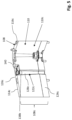
- a first embodiment of the apparatus 100 for the electrical interconnection of a plurality of electric battery cell units 102a, 102b, 102c (see figures 20 and 21 for the electric battery cell unit 102c), 102d, 102e, 102f according to the first aspect of the invention is schematically illustrated.
- the electric battery cell unit 102a, 102b, 102c, 102d, 102e, 102f may comprise or consist of one or more of the group of: an electric battery cell; an electric battery module 104a, 104b, 104c (see figure 25A for the electric battery module 104c), 104d, 104e, 104f; an electric battery layer 106a, 106b, 106c, 106d; and an electric battery pack.
- Each one of the electric battery module 104a, 104b, 104c, 104d, 104e, 104f, the electric battery layer 106a, 106b, 106c, 106d and the electric battery pack may be described to comprise a plurality of electric battery cells, i.e.
- the electric battery cells of the plurality of electric battery cells of each one of the electric battery module 104a, 104b, 104c, 104d, 104e, 104f, the electric battery layer 106a, 106b, 106c, 106d and the electric battery pack may be described to be electrically interconnected, or electrically connected to one another.
- a plurality of electric battery modules 104a, 104b, 104c, 104d, 104e, 104f may be located in, or may belong to, different electric battery layers 106a, 106b, 106c, 106d.
- electric battery cell units 102a, 102b, 102c, 102d, 102e, 102f of the plurality of electric battery cell units 102a, 102b, 102c, 102d, 102e, 102f may belong to different electric battery layers 106a, 106b, 106c, 106d.
- the plurality of electric battery cell units 102a, 102b, 102c, 102d, 102e, 102f may be configured for high voltage, such as a voltage above 60 V, for example above 400 V, such as above 650 V.
- the plurality of electric battery cell units 102a, 102b, 102c, 102d, 102e, 102f may be configured for a voltage up to 1500 V, or a voltage above 1500 V.
- the plurality of electric battery cell units 102a, 102b, 102c, 102d, 102e, 102f may be configured for the propulsion of a vehicle 900 (see figure 28 ), for example a vehicle 900 of any one of the sorts or embodiments mentioned above or hereinbelow in connection with figure 28 .
- the apparatus 100 includes a housing 108 forming, or defining, at least one room 110 for housing the plurality of electric battery cell units 102a, 102b, 102c, 102d, 102e, 102f.
- a housing 108 forming, or defining, at least one room 110 for housing the plurality of electric battery cell units 102a, 102b, 102c, 102d, 102e, 102f.
- the housing 108 and room 110 is/are configured to hold the plurality of electric battery cell units 102a, 102b, 102c, 102d, 102e, 102f.
- the apparatus 100 includes one or more electrical conductors 112a, 112b, 112c for the electrical connection of one electric battery cell unit 102a, 102b, 102c, 102d, 102e, 102f of the plurality of electric battery cell units 102a, 102b, 102c, 102d, 102e, 102f to another electric battery cell unit 102a, 102b, 102c, 102d, 102e, 102f of the plurality of electric battery cell units 102a, 102b, 102c, 102d, 102e, 102f.
- the housing 108 comprises one or more walls 114a-d, 116a-d, 118a-d, 120a-d.
- the at least one room 110 is defined by the one or more walls 114a-d, 116a-d, 118a-d, 120a-d.
- the wall 114c, 114d comprises, or forms, one or more seats 122c, 122d, for holding the electrical conductor 112a, 112b, 112c.
- the housing 108 comprises four walls 114a-d, 116a-d, 118a-d, 120a-d.
- the housing 108 has the shape of a parallelepiped, for example a rectangular parallelepiped or a rectangular cuboid.
- the housing 108 may be described to have a rectangular cross section.
- the housing may be circular cylindrical and comprise one wall.
- the cylinder of the housing may be oval.
- the housing 108 may include two or more housing units 108a-d.
- the housing 108 includes four housing units 108a-d.
- the housing 108 may include fewer or more housing units 108a-d than four.
- Each one 108a-d of the two or more housing units 108a-d forms, or defines, at least one room 110c, 110d for housing a plurality of electric battery cell units 102a, 102b, 102c, 102d, 102e, 102f.
- one or more of the housing unit 108a-d and room 110c, 110c of the housing unit 108a-d is/are configured to hold electric battery cell units 102a, 102b, 102c, 102d, 102e, 102f of the plurality of electric battery cell units 102a, 102b, 102c, 102d, 102e, 102f.
- Each one 108a-d of the two or more housing units 108a-d includes one or more walls 114a-d, 116a-d, 118a-d, 120a-d.
- the at least one room 110c, 110d of the housing unit 108a-d is defined by the one or more walls 114a-d, 116a-d, 118a-d, 120a-d of the housing unit 108a-d.
- the wall 114a-d, 116a-d, 118a-d, 120a-d of each one 108a-d of the two or more housing units 108a-d includes one or more seats 122c, 122d for holding the electrical conductor 112a, 112b, 112c.
- the two or more housing units 108a-d are attachable to one another.
- the two or more housing units 108a-d are detachably attachable to one another.
- the two or more housing units 108a-d are configured to adjoin one another, i.e. configured for direct physical contact with one another, for example without any intermediate structure or element.
- it may be defined that the two or more housing units 108a-d are configured for physical contact, for example direct physical contact, with one another. It may be defined that the two or more housing units 108a-d are configured to be joined.
- the wall 114c, 114d has an inner side 124c, 124d, or an inside, facing the room 110c, 110d.
- the wall 114c, 114d may have an outer side 126c, 126d, or an outside, facing away from the room 110c, 110d.
- the inner side 124c, 124d may include, or form, the one or more seats 122c, 122d.
- the seat 122c, 122d may form, or may comprise, a compartment 128c, 128d for holding the electrical conductor 112a, 112b, 112c.
- the seat 122c, 122d may comprise one or more of the group of: a part of the wall 114c, 114d; a portion of the wall 114c, 114d; a base of the wall 114c, 114d; and a surface of the wall 114c, 114d.
- the room 110 which is configured to house the plurality of electric battery cell units 102a, 102b, 102c, 102d, 102e, 102f, may be referred to as a second compartment, or an electric battery cell unit compartment.
- the room 110, which is configured to house the plurality of electric battery cell units 102a, 102b, 102c, 102d, 102e, 102f may be referred to as a space.
- first embodiments of the one or more electrical conductors 112a, 112b, 112c are schematically illustrated.
- the electrical conductors 112a, 112b, 112c are illustrated in an unassembled, or detached, state, while in figure 3 the electrical conductors 112a, 112b, 112c are illustrated in an assembled, or attached, state.
- the apparatus 100 may include two or more electrical conductors 112a, 112b, 112c electrically connectable to one another.
- the apparatus 100 includes three or more electrical conductors 112a, 112b, 112c.
- Each one of the one or more electrical conductors 112a, 112b, 112c may be made of, or may comprise, any suitable electrically conductive material, such as a material comprising or consisting of a metal or a metal alloy, for example copper, brass, or aluminum. However, other materials are possible.
- the one or more electrical conductors 112a, 112b, 112c may include a first electrically conductive member 130a configured to be held by the seat 122c, 122d.
- the first electrically conductive member 130a may be elongated.
- the first electrically conductive member 130a may be tubular, or hollow.
- the outer shape of the first electrically conductive member 130a may be cylindrical, for example circular cylindrical. However, other shapes of the first electrically conductive member 130a are possible.
- the one or more electrical conductors 112a, 112b, 112c may include one or more second electrically conductive members 130b, 130c.
- the second electrically conductive member 130b, 130c may comprise or consist of a busbar. In the embodiment illustrated in figures 2 and 3 , two second electrically conductive members 130b, 130c are provided, and each one of the two second electrically conductive members 130b, 130c are angled.
- the first electrically conductive member 130a may be described to have a longitudinal extension 131a.
- Each one 130b, 130c of the one or more second electrically conductive members 130b, 130c may be described to have a longitudinal extension 131b, 131c.
- the longitudinal extension 131a of the first electrically conductive member 130a may extend in a first direction 132 while the longitudinal extension 131b, 131c of the one or more second electrically conductive members 130b, 130c may extend in one or more second directions 134, 136 transverse, or substantially transverse, to the first direction 132.
- the apparatus 100 may include one or more tubular members 138a, 138b at least partially made, or entirely made, of an electrically insulating material.
- the electrically insulating material may comprise or consist of a polymer or a polymer composite. However, other electrically insulating materials are possible.
- the apparatus 100 includes the one or more tubular members 138a, 138b, the tubular member 138a, 138b at least partially surrounds the electrical conductor 112a.
- the apparatus 100 includes three tubular members 138a, 138b.
- a first tubular member 138a of the one or more tubular members 138a, 138b is elongated and surrounds substantially the entire first electrically conductive member 130a.
- One second tubular member 138b of the one or more tubular members 138a, 138b is configured to cover the electrical contact between the first electrically conductive member 130a and one 130b of the one or more second electrically conductive members 130b, 130c while another second tubular member 138b of the one or more tubular members 138a, 138b is configured to cover the electrical contact between the first electrically conductive member 130a and the other one 130c of the one or more second electrically conductive members 130b, 130c.
- each second tubular member 138b may comprise an arm 140 for positioning, and/or mounting, the second tubular member 138b in relation to the seat 122c, 122d and/or the wall 114a-d, 116a-d, 118a-d, 120a-d.
- the two or more electrical conductors 112a, 112b, 112c may be attachable to one another, for example by way of one or more attachments of one or more of the group of: a thread attachment; a friction attachment; a positive locking attachment; a bayonet attachment; a snap-on attachment; a snap-in attachment.
- the two or more electrical conductors 112a, 112b, 112c are attachable to one another via threads, or thread attachments, more specifically by way of a threaded attachment element 142, for example in the form of a rod, configured to engage and extend through the tubular first electrically conductive member 130a and extend through openings 144, 146 of, or formed by, the second electrically conductive members 130b, 130c.
- the threaded attachment element 142 may be configured for engagement with and attachment to a nut 148.
- other attachments, or means of attachment are possible.
- the two or more electrical conductors 112a, 112b, 112c may be detachably attachable to one another.
- the two or more electrical conductors 112a, 112b, 112c are configured to adjoin one another, i.e. configured for direct physical contact with one another, for example without any intermediate electrical conductor.
- each one 130b, 130c of the second electrically conductive members 130b, 130c may include an electrical contact 150, 152 and/or an attachment 150, 152 for the attachment to and/or the electrical contact with an electric battery cell unit 102a, 102b, 102c, 102d, 102e, 102f, for example an electrical contact, such as a terminal or a pole, of the electric battery cell unit 102a, 102b, 102c, 102d, 102e, 102f.
- embodiments of the apparatus 100 may include a plurality of sets 154 of electrical conductors 112a, 112b, 112c, wherein each set 154 of electrical conductors 112a, 112b, 112c includes the electrical conductors 112a, 112b, 112c illustrated in figures 2 and 3 .
- the first electrically conductive member 230a differs from the first electrically conductive member 130a of figures 2 and 3 in that the first electrically conductive member 230a is provided with threads and is configured for threaded attachment to the nut 148 and to a modified shorter threaded attachment element 242 for the attachment to the second electrically conductive members 130b, 130c, for example via the openings 144, 146 of the second electrically conductive members 130b, 130c.
- FIG 4 also a second tubular member 138b is illustrated in a detached state. Otherwise, features of the one or more electrical conductors 212a, 112b, 112c of figure 4 may correspond to features of the one or more electrical conductors 112a, 112b, 112c of figures 2 and 3 and are thus not repeated here.
- the one or more electrical conductors 112a, 212a, 112b, 112c may be configured for high voltage, such as a voltage above 60 V, for example above 400 V, such as above 650 V.
- the one or more electrical conductors 112a, 212a, 112b, 112c may be configured for a voltage up to 1500 V, or a voltage above 1500 V.
- the one or more electrical conductors 112a, 212a, 112b, 112c may be configured for direct current.
- the one or more electrical conductors 112a, 112b, 112c is/are configured for the electrical interconnection of electric battery cell units 102a, 102b, 102c, 102d, 102e, 102f of the plurality of electric battery cell units 102a, 102b, 102c, 102d, 102e, 102f which belong to different electric battery layers 106a, 106b, 106c, 106d.
- the two or more electrical conductors 112a, 112b, 112c may be configured for the electrical interconnection of electric battery cell units 102a, 102b, 102c, 102d, 102e, 102f of the plurality of electric battery cell units 102a, 102b, 102c, 102d, 102e, 102f which belong to different electric battery layers 106a, 106b, 106c, 106d.
- the first electrically conductive member 130a may be configured for the electrical interconnection of electric battery cell units 102a, 102b, 102c, 102d, 102e, 102f of the plurality of electric battery cell units 102a, 102b, 102c, 102d, 102e, 102f which belong to different electric battery layers 106a, 106b, 106c, 106d while the one or more second electrically conductive members 130b, 130c may be configured to electrically connect one electric battery cell unit 102a, 102b, 102c, 102d, 102e, 102f of the plurality of electric battery cell units 102a, 102b, 102c, 102d, 102e, 102f to the first electrically conductive member 130a.
- the one or more electrical conductors 112a, 112b, 112c may be configured for the electrical interconnection of electric battery cell units 102a, 102b, 102c, 102d, 102e, 102f, wherein each one 102a, 102b, 102d, 102c, 102e, 102f of the electric battery cell units 102a, 102b, 102c, 102d, 102e, 102f includes a plurality of electric battery cells 702 (see figure 26 ).
- the process of connecting the plurality of electric battery cell units 102a, 102b, 102c, 102d, 102e, 102f including steps of the electrical interconnection of the plurality of electric battery cell units 102a, 102b, 102c, 102d, 102e, 102f and steps of the mechanical connection, or mounting, of the plurality of electric battery cell units 102a, 102b, 102c, 102d, 102e, 102f by way of embodiments of the apparatus 100, will hereinbelow be described in more detail.
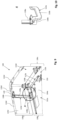
- FIG. 5 With reference to figure 5 , the inside and the room 110c of a housing unit 108c is partially illustrated. No electrical conductor and no electric battery cell unit are yet positioned or placed in the seat 122c or in the room 110c. However, a second tubular member 138b has been placed and positioned in the seat 122c.
- an electric battery layer 106c including three electric battery modules 104a, 104b, 104c (only two 104a, 104b of the three electric battery modules 104a, 104b, 104c are visible in figure 6 ) has been placed in the room 110c of the housing unit 108c, i.e. three electric battery modules 104a, 104b, 104c are now housed by the room 110c of the housing unit 108c.
- a second electrically conductive member 130b has been placed in the room 110c of the housing unit 108c and has been connected to the second tubular member 138b.
- the second electrically conductive member 130b has also been electrically connected to an electric battery cell unit 102a, for example to an electric battery module 104a, via the electrical contact 150 and/or the attachment 150 of the second electrically conductive member 130b, for example electrically connected to the terminal, or the pole, of the electric battery cell unit 102a, for example to the terminal, or the pole, of the electric battery module 104a.
- an additional housing unit 108d has been added and mounted to the previous housing unit 108c, on top of the previous housing unit 108c.
- the additional housing unit 108d forms a room 110d in a corresponding way as the previous housing unit 108c, wherein a wall 114d of the housing unit 108d has a seat 122d.
- a first tubular member 138a of the one or more tubular members 138a, 138b and an additional second tubular member 138b of the one or more tubular members 138a, 138b have been placed in the seat 122d.
- an enlargement of the region A of figure 9 is shown, wherein the connection of the second electrically conductive member 130b to the second tubular member 138b is shown in more detail.
- an electric battery layer 106d including three electric battery modules 104d, 104e, 104f (only two 104d, 104e of the three electric battery modules 104d, 104e, 104f are visible in figure 11 while all three electric battery modules 104d, 104e, 104f are shown in figure 1 ) has been placed in the room 110d of the housing unit 108d, i.e. three electric battery modules 104d, 104e, 104f are now housed by the room 110d of the housing unit 108d.
- the provision of the first electrically conductive member 130a is illustrated, but the first electrically conductive member 130a is not yet put in place for electrical connection.
- the first electrically conductive member 130a which may be referred to as an electrical conductor 112a, has now been inserted into the first tubular member 138a and is now held by the seat 122d.
- the plurality of electric battery cell units 102a, 102b, 102c, 102d, 102e, 102f such as the plurality of electric battery modules 104a, 104b, 104c, 104d, 104e, 104f, has been removed in relation to figures 15 and 16 for illustrative purposes.
- the mechanical connection and the electrical connection between the first electrically conductive member 130a and the two second electrically conductive members 130b, 130c are now illustrated in further detail.
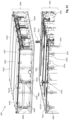
- FIG 18 a second embodiment of the apparatus 300 according to the first aspect and the inside and the room 310 of the housing 308 are partially and schematically illustrated, but with the plurality of electric battery cell units removed for illustrative purposes.
- Walls 314a-d, 316a-d, 318c-d, 320c-d of the housing 308 form seats 322a-d, 323a-d for holding the electrical conductors 312a, 312b, 312c, 312d, 312e, wherein each one 312a of the electrical conductors 312a having a longitudinal extension extending in a vertical direction in figure 18 is surrounded by a tubular member 138a.
- the housing 308 may be built up by housing units 308a-d.
- each one 322a-d, 323a-d of the seats 322a-d, 323a-d comprises, or forms, a compartment 328a-d, 329a-d.
- other features of the apparatus 300 of figure 18 may correspond to features of the apparatus 100 of figures 1 to 17 and are thus not described here in further detail again to avoid repetition.
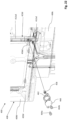
- FIG. 19 a third embodiment of the apparatus 400 according to the first aspect of the invention is schematically illustrated.
- FIG 19 only a part of a housing unit 408c of the housing 408 of the apparatus 400 is shown.
- the room 410c formed by the housing unit 408c houses a plurality of electric battery cell units 102a, 102b, 102c.
- the provision of electrical conductors 412a1, 412b is schematically illustrated.
- the electrical conductors 412a1, 412b of figures 19 to 22 comprise a first electrically conductive member 430a configured to be held by the seat 422c formed, or included, in one or more walls 416c of the walls 414c, 416c, 418c, 420c of the housing 408, or of housing unit 408c.
- the seat 422c may form a compartment 428c.
- the electrical conductors 412a1, 412b comprise a second electrically conductive member 430b, which may comprise or consist of a busbar.
- a longitudinal extension 431a of the first electrically conductive member 430a extends in a first direction 432 while a longitudinal extension 431b of the second electrically conductive member 430b extends in one or more second directions 434, 436 transverse to the first direction 432.
- the one or more electrical conductors 412a1, 412b is/are now put in place in the seat 422c. Further, an additional set of 454 of electrical conductors 412a2, 412b is put in place in an additional seat 423c, which also forms a compartment 429c, opposite to the seat 422c for the set of 454 of electrical conductors 412a1, 412b illustrated in figure 19 .
- one or more walls 420d of the one or more of the walls 414c-d, 416c-d, 418c-d, 420c-d of the housing 408 may form an opening 456d for receiving an attachment member 458, or a fastener, configured to attach two or more electrical conductors 412a2, 412a3 to one another.
- each one 408c-d of the two or more housing units 408c-d forms an opening 456d for receiving the attachment member 458 configured to attach two or more electrical conductors 412a2, 412a3 to one another.
- the attachment member 458 is configured to secure physical contact between two or more electrical conductors 412a2, 412a3.
- the apparatus 400 may comprise a cover 460 for covering the opening 456d.
- the apparatus 400 may comprise a sealing 462 for sealing the opening 456d, for example for sealing between the cover 460 and the wall 420d of the housing 408, or of housing unit 408d.
- the sealing 462 may be annular, for example an annular seal.
- the apparatus 400 may comprise cover attachments 464a-b for attaching the cover 460 to the housing 408, or to the housing unit 408d, and additionally and optionally for mounting the sealing 462.
- One or more of the cover attachments 464a-b and the attachment member 458 may include one or more thread attachments, or any other means of attachments, or attachments, for example any one of the sorts of attachment mentioned above. Otherwise, other features of the apparatus 400 of figures 19 to 22 may correspond to features of the apparatus 100 of figures 1 to 17 and are thus not described here in further detail again to avoid repetition.
- inventions of electrical conductors 512a1, 512a2, 512b, 512c of an embodiment of the apparatus according the first aspect of the invention are schematically illustrated.
- the electrical conductors 512a1, 512a2, 512b, 512c of figures 23 and 24 comprise two first electrically conductive members 530a1, 530a2 configured to be held by one or more seats formed, or included, in one or more walls of the walls of the housing, housing unit, or housing units.
- the electrical conductors 512a1, 512a2, 512b, 512c comprise two second electrically conductive member 530b, 530c which may comprise or consist of a busbar.
- longitudinal extensions 531a1, 531a2 of the first electrically conductive members 530a1, 530a2 extend in a first direction 532 while longitudinal extensions 531b, 531c of the second electrically conductive members 530b, 530c extend in one or more second directions 534, 536 transverse to the first direction 532.
- the first electrically conductive members 530a1, 530a2 are attached and coupled to one another by way of an attachment member 558.
- electrical conductors 512a1, 512a2 of figure 23 are provided with tubular members 538a, 538b at least partially made, or entirely made, of an electrically insulating material.
- the electrically insulating material may comprise or consist of a polymer or a polymer composite. However, other electrically insulating materials are possible.
- the tubular member 538a, 538b at least partially surrounds the electrical conductor 512a1, 512a2.
- each one 530a1, 530a2 the first electrically conductive members 530a1, 530a2 is at least partially surrounded by the tubular member 538a, 538b.
- the apparatus 100, 300, 400 may include additional electrical conductors 112a, 212a, 112b, 112c, 312b, 312c, 312d, 312e, 412a1, 412a2, 412a3, 412b, 512a1, 512a2, 512b, 512c for the electrical interconnection of a plurality of electric battery cell units 102a, 102b, 102c, 102d, 102e, 102f.
- FIGs 25A and 25B schematically illustrate two circuit diagrams illustrating an assembled and electrically interconnected embodiment of the apparatus 100, 300, 400.
- four electric battery layers 106a, 106b, 106c, 106d are illustrated, which may correspond to the electric battery layers 106a, 106b, 106c, 106d illustrated in figure 1 .
- Each one 106a, 106d of the third electric battery layer 106c and the fourth electric battery layer 106d from below includes three electric battery modules 104a, 104b, 104c, 104d, 104e, 104f.
- Each one 106a, 106b of the first electric battery layer 106a and the second electric battery layer 106b from below includes two electric battery modules 104g, 104h, 104i, 104j. However, it is to be understood that each one 106a, 106b, 106c, 106d of the electric battery layers 106a, 106b, 106c, 106d may include fewer or more electric battery modules.
- the first electric battery layer 106a from below comprises an electric battery junction device 602, or box.
- the electric battery junction device 602 may be connected and located elsewhere or may even be excluded.
- plus (+) and minus (-) indicate the terminals, or poles, of the electric battery modules 104a, 104b, 104c, 104d, 104e, 104f, 104g, 104h, 104i, 104j, and the lines therebetween indicate electrical lines, or electrical connections, provided by the one or more electrical conductors 112a, 112b, 112c of the apparatus 100 for the electrical connection of one electric battery modules 104a, 104b, 104c, 104d, 104e, 104f, 104g, 104h, 104i, 104j of the plurality of electric battery modules 104a, 104b, 104c, 104d, 104e, 104f, 104g, 104h,
- the interlayer connection of the electric battery modules 104a, 104b, 104c, 104d, 104e, 104f, 104g, 104h, 104i, 104j i.e. the electrical interconnection between electric battery modules 104a, 104b, 104c, 104d, 104e, 104f, 104g, 104h, 104i, 104j of different electric battery layers 106a, 106b, 106c, 106d, is illustrated by nodes, or points, provided with letters A, B, E, F, N and P, which are also indicated in figure 25B , wherein said interlayer connection is clearly illustrated in figure 25B .
- embodiments of the apparatus 100, 300, 400 provide for a modular concept for the electrical interconnection of a plurality of electric battery cell units 102a, 102b, 102c, 102d, 102e, 102f, for example for the electrical interconnection of a plurality of electric battery modules 104a, 104b, 104c, 104d, 104e, 104f, 104g, 104h, 104i, 104j.
- the number of electric battery modules 104a, 104b, 104c, 104d, 104e, 104f, 104g, 104h, 104i, 104j and the number of electric battery layers 106a, 106b, 106c, 106d may be adapted to the overall electric power requested and/or to the physical environment where the apparatus 100 is to be installed.
- the modular concept in this context is to be understood as using a plurality of electric battery modules 104a, 104b, 104c, 104d, 104e, 104f, 104g, 104h, 104i, 104j and a plurality of electric battery layers 106a, 106b, 106c, 106d including one or more electric battery modules 104a, 104b, 104c, 104d, 104e, 104f, 104g, 104h, 104i, 104j for flexibility, wherein electric battery modules 104a, 104b, 104c, 104d, 104e, 104f, 104g, 104h, 104i, 104j and electric battery layers 106a, 106b, 106c, 106d may be added and connected, or removed, when required.
- an example of an electric battery cell unit 102a, 102b,102c, 102d, 102e, 102f such as an electric battery module 104a, 104b, 104c, 104d, 104e, 104f, is schematically illustrated in the form of a schematic circuit diagram, wherein the electric battery cell unit 102a, or the electric battery module 104a, includes a plurality of electric battery cells 702, i.e. two or more electric battery cells 702.
- the illustrated electric battery cell unit 102a may be carried by, or included in, a vehicle 900 and/or included in a powertrain 904 of the vehicle 900 (see figure 28 ).
- each electric battery cell 702 can be seen as a container chemically storing energy and may be a rechargeable electric battery cell 702.
- the electric battery cells 702 may be electrically connected in series and/or in parallel, into the electric battery cell unit 102a, or into the electric battery module 104a, which may be included in an electric battery pack 800 (see figure 27 ), in order to attain the desired voltage and energy capacity.
- the electric battery cells 702 are electrically connected in series with one another.
- the electric battery cells 702 are part of a main power line 703.
- the main power line 703 may be excluded and the electric battery cells 702 may be electrically interconnected in other ways.
- the electric battery cell unit 102a may include a cell controller 704 which may be electrically connected in parallel with each electric battery cell 702 by way of a plurality of electrical lines 706, for example electrical wires.
- the cell controller 704 may be called a cell module controller (CMC).
- the electric battery cell 702 may include a cell fuse 708, for example, for short-circuit and/over voltage protection. However, for some embodiments, the cell fuse 708 may be excluded.
- the electric battery cell unit 102a, or the electric battery module 104a may have two terminals 710, 712 for connecting the electric battery cell unit 102a, or the electric battery module 104a, to an electrical system, for example to one or more electrical loads, for example via a vehicle electrical system 950 (see figure 28 ) and/or via electrical conductors.
- the two terminals 710, 712 may be referred to as electrical contacts.
- One 710, 712 of the two terminals 710, 712 may be a negative terminal having a negative pole while the other one 710, 712 of the two terminals 710, 712 may be a positive terminal having a positive pole.
- the electric battery cell unit 102a, or the electric battery module 104a may be configured for the propulsion of a vehicle 900 (see figure 28 ).
- One or more electric battery cell units 102a, 102b, 102c, or one or more electric battery modules 104a, 104b, 104c, may be included in, or form, an electric battery pack 800 schematically illustrated in figure 27 , for example suitable for a vehicle 900 (see figure 28 ). It may be defined that the electric battery pack 800 is configured for the propulsion of a vehicle 900 (see figure 28 ). With reference to figure 27 , the electric battery pack 800 may comprise two or more electric battery cell units 102a, 102b, 102c, or two or more electric battery modules 104a, 104b, 104c which may be electrically connected in series and have two common outputs 802, 804 (positive and negative) for electric power, or current, transfer.
- the electric battery pack 800 may have two terminals 814, 816 (DC positive and DC negative) for electric power, or current, transfer, to be connected to one or more electrical loads, for example via a vehicle electrical system 950 (see figure 28 ) and/or via electrical conductors.
- the above-mentioned two common outputs 802, 804 may be connected to the two terminals 814, 816 of the electric battery pack 800.
- the electric battery pack 800 may comprise one or more internal contactors 806 switchable between an open position, or a non-conducting state, and a closed position, or a conducting state.
- the electric battery pack 400 may include a battery management system 808, BMS.
- the battery management system 808, BMS may be described as a control system for controlling the electric battery pack 800.
- the one or more internal contactors 806 of the electric battery pack 800 may be controlled by the battery management system 808.
- the battery management system 808 may be connected to and communicate with the above-mentioned cell module controller, CMC, 704 of the electric battery cell unit 102a, 102b, 102c, or the electric battery module 104a, 104b, 104c, illustrated in figure 26 .
- the electric battery pack 800 may include a pre-charge contactor 810 switchable between an open position, or a non-conducting state, and a closed position, or a conducting state.
- a pre-charging of an electrical system such as a vehicle electrical system
- Pre-charging of a high voltage direct current system is known to the person skilled in the art and is thus not discussed in further detail.
- the electric battery pack 800 may comprises an electric battery pack fuse 812, which, for example, may be a melt fuse, or a pyrotechnic fuse (or pyro fuse), for protection. It is to be understood that the electric battery pack 800 may include additional electrical components or equipment, such as sensors, but these are left out for illustrative purposes.
- the vehicle 900 includes one or more of the group of: an apparatus 100, 300, 400 according to any one of the embodiments disclosed above or below; and an embodiment of the vehicle electrical system 950 according to the second aspect of the invention described hereinbelow.
- the vehicle 900 is illustrated as a tractor vehicle.
- the vehicle 900 may, for example, be a bus, a truck, a heavy truck, or a car.
- Other types of vehicles are also possible.
- the vehicle 900 may be an electric vehicle, EV, for example a hybrid vehicle or a hybrid electric vehicle, HEV, or a battery electric vehicle, BEV.
- the vehicle 900 may be a wheeled vehicle, i.e. a vehicle 900 having wheels 902. Only the wheels 902 on the left-hand side of the vehicle 900 are visible in figure 28 . It is to be understood that the vehicle 900 may have fewer or more wheels than what is shown in figure 28 .
- the vehicle 900 may comprise a powertrain 904, for example configured for one of an EV, HEV and BEV.
- the vehicle 900 may be configured to hold or carry, or may include, a plurality of electric battery cell units 102a, 102b, 102c, 102d, 102e, 102f, for example of any one of the sorts mentioned above.
- the room 110 of the housing 108 of any one of the embodiments of apparatus 100, 300, 400 may house the plurality of electric battery cell units 102a, 102b, 102c, 102d, 102e, 102f.
- the plurality of electric battery cell units 102a, 102b, 102c, 102d, 102e, 102f may be configured for the propulsion of the vehicle 900.
- the housing 108 of the apparatus 100 may be attachable to a chassis 908 of the vehicle 900.
- the vehicle 900 may include further units, components, such as electrical and/or mechanical components, one or more electric machines 910, a combustion engine 912 and other devices required for a vehicle 900, such as for an EV, HEV or BEV.
- the powertrain 904 and/or the one or more electric machines 910 is/are configured to propel, or drive, the vehicle 900. It may be defined that the powertrain 904 includes the plurality of electric battery cell units 102a, 102b, 102c, 102d, 102e, 102f.
- the vehicle electrical system 950 includes an apparatus 100, 300, 400 according to any one of the embodiments disclosed above.
- the vehicle electrical system 950 may be a vehicle high voltage system.
- the vehicle electrical system 950 includes the plurality of electric battery cell units 102a, 102b, 102c, 102d, 102e, 102f.
- the vehicle electrical system 950 is configured for direct current. It may be described that the vehicle electrical system 950 is configured to transfer direct current. It may be defined that the vehicle electrical system 950 is configured for a high voltage, such as a voltage above 60 V, for example above 400 V, or above 450 V, such as above 650 V. For example, the vehicle electrical system 950 may be configured for a voltage up to 1500 V and/or for a voltage above 1500 V. The electric power, or the electric current, for example the direct current, of the vehicle electrical system 950 may be transferred at a high voltage, for example at one or more of the voltages levels mentioned above. The vehicle electrical system 950 may be configured to transfer the electric power, or the electric current, at a high voltage, for example at one or more of the voltages levels mentioned above.
- the vehicle electrical system 950 may be electrically connected, or connectable, to the plurality of electric battery cell units 102a, 102b, 102c, 102d, 102e, 102f.
- the vehicle electrical system 950 may be configured to electrically connect the plurality of electric battery cell units 102a, 102b, 102c, 102d, 102e, 102f to the powertrain 904 of the vehicle 900.
- the vehicle electrical system 950 may be configured to electrically connect the plurality of electric battery cell units 102a, 102b, 102c, 102d, 102e, 102f to the one or more electric machines 910 of the vehicle 900.
- the vehicle electrical system 950 is configured to transfer the electric power, or the electric current, for example between the one or more electric machines 910 (and/or the powertrain 904) and the plurality of electric battery cell units 102a, 102b, 102c, 102d, 102e, 102f.
- the present invention is not limited to the above-described embodiments. Instead, the present invention relates to, and encompasses all different embodiments being included within the scope of the independent claim.
Landscapes
- Chemical & Material Sciences (AREA)
- Chemical Kinetics & Catalysis (AREA)
- Electrochemistry (AREA)
- General Chemical & Material Sciences (AREA)
- Engineering & Computer Science (AREA)
- Aviation & Aerospace Engineering (AREA)
- Microelectronics & Electronic Packaging (AREA)
- Manufacturing & Machinery (AREA)
- Battery Mounting, Suspending (AREA)
- Charge And Discharge Circuits For Batteries Or The Like (AREA)
- Secondary Cells (AREA)
Description
- Aspects of the present invention relate to an apparatus for the electrical interconnection of a plurality of electric battery cell units. Further, aspects of the present invention relate to a vehicle electrical system comprising an apparatus of the above-mentioned sort.
- An electric battery cell can be seen as a container chemically storing energy. The electric battery cells may come in various forms and shapes. The electric battery cells may be connected in series and in parallel, into an electric battery arrangement, which may be called an electric battery pack, in order to attain the desired voltage and energy capacity. A conventional electric battery pack may be the complete enclosure or entity that delivers electric power to a product or equipment, for example an electric vehicle, such as a battery electric vehicle or a hybrid electric vehicle. In general, a conventional electric battery pack includes or contains electric battery cells, a control or management system, which may be called a battery management system (BMS) and may, for example, be implemented partly as software, and often also a cooling and/or heating system. Conventionally, the electric battery cells of an electric battery pack may be arranged in modules to attained serviceable units. A conventional module may be a frame holding a plurality of electric battery cells, and a conventional electric battery pack is assembled by interconnecting the modules.
-
US 2015221912 describes a battery unit for a motor vehicle which has battery modules in a battery housing. The battery housing has an opening and an electrically conductive element can be inserted through the opening for electrically conductively connecting a first electrical connection of a battery module of the housing to a second electrical connection of a battery module of the housing. - The inventors of the present invention have found drawbacks in conventional solutions for arranging and mounting electric battery cells, electric battery modules and electric battery packs. For example, the inventors of the present invention have found that some conventional arrangements of conventional electric battery cells, modules and packs are complicated to install and/or too bulky.
- An object of the invention is to provide a solution which mitigates or solves the drawbacks and problems of conventional solutions.
- The above and further objects are solved by the subject matter of the independent claim. Further advantageous embodiments of the invention can be found in the dependent claims.
- According to a first aspect of the invention, the above mentioned and other objects are achieved with an apparatus for the electrical interconnection of a plurality of electric battery cell units,
- wherein the apparatus comprises inter alia a housing forming, or defining, at least one room for housing the plurality of electric battery cell units,
- wherein the apparatus comprises one or more electrical conductors for the electrical connection of one electric battery cell unit of the plurality of electric battery cell units to another electric battery cell unit of the plurality of electric battery cell units,
- wherein the housing comprises one or more walls,
- wherein the at least one room is defined by the one or more walls, and
- wherein the wall comprises, or forms, one or more seats for holding the electrical conductor.
- An advantage of the apparatus according to the first aspect is that the process of arranging and mounting electric battery cells in order to construct an electric battery arrangement, for example an electric battery pack is facilitated, improved and made more efficient. An advantage of the apparatus according to the first aspect is that a robust and improved electric battery arrangement including several connected electric battery cells is provided. An advantage of the apparatus according to the first aspect is that a secure and robust electrical connection between electric battery cells is provided since the one or more seats efficiently holds the electrical conductor in a secure position. An advantage of the apparatus according to the first aspect is that an electric battery arrangement, which includes several interconnected electric battery cells, with a compact design, or configuration, but with a maintained or increased electric capacity is provided. Thus, an advantage of the apparatus according to the first aspect is that the electrical performance, or capacity, of an electric battery arrangement, which includes several interconnected electric battery cells, is enhanced without increasing the overall size of the electric battery arrangement. An advantage of the apparatus according to the first aspect is that the efficiency of an electric battery arrangement, which includes several interconnected electric battery cells, is improved. An advantage of the apparatus according to the first aspect is that the components of the apparatus and the apparatus per se are uncomplicated to manufacture.
- The one or more electrical conductors may be configured for high voltage, such as a voltage above 60 V, for example above 400 V, such as above 650 V. For example, the one or more electrical conductors may be configured for a voltage up to 1500 V, or a voltage above 1500 V. The one or more electrical conductors may be configured for direct current. The plurality of electric battery cell units may be configured for high voltage, such as a voltage above 60 V, for example above 400 V, such as above 650 V. For example, the plurality of electric battery cell units may be configured for a voltage up to 1500 V, or a voltage above 1500 V. For some embodiments, the plurality of electric battery cell units may be configured for the propulsion of a vehicle, for example a vehicle of any one of the sorts mentioned hereinbelow.
- According to an advantageous embodiment of the apparatus according to the first aspect, the wall has an inner side, or inside, facing the room,
- wherein the wall has an outer side, or outside, facing away from the room, and
- wherein the inner side of the wall comprises, or forms, the one or more seats. An advantage of this embodiment is that the one or more electrical conductors are protected from the environment outside the housing, and the environment outside the housing is safely protected from the one or more electrical conductors. For example, users or operators, for example involved in maintenance, are protected from the one or more electrical conductors. An advantage of this embodiment is that a further improved electrical connection of electric battery cells is provided. An advantage of this embodiment is that a further improved electric battery arrangement, which includes several interconnected electric battery cells, with a compact design, or configuration, is provided. An advantage of this embodiments is that a robust and improved electric battery arrangement including several interconnected electric battery cells is provided. For some embodiments, it may be defined that the housing houses the one or more electrical conductors, or it may be defined that the room houses the one or more electrical conductors.
- According to a further advantageous embodiment of the apparatus according to the first aspect, the electrical conductor is configured for the electrical interconnection of electric battery cell units of the plurality of electric battery cell units which belong to different electric battery layers. An advantage of this embodiment is that a further improved electrical connection of electric battery cells is provided. By way of this embodiment, electric battery layers, which each includes a plurality of electric battery cells, may be assembled and interconnected separately, and subsequently, the electric battery layers may be electrically interconnected by way of this embodiment. An advantage of this embodiment is that a further improved electric battery arrangement, which includes several interconnected electric battery cells, with a compact design, or configuration, is provided. An advantage of this embodiment is that the flexibility in arranging and connecting electrical conductors between different electric battery layers is improved. For example, electrical conductors connected between different electric battery layers may be arranged such that the electrical conductors do not cross one another and/or are not positioned too close to one another, whereby the risk of short-circuit between electrical conductors is reduced, which increases safety and electrical performance. For some embodiments, it may be defined that each one of the electric battery layers comprises a plurality of electric battery cell units.
- According to another advantageous embodiment of the apparatus according to the first aspect, the apparatus comprises two or more electrical conductors electrically connectable to one another,
- wherein the two or more electrical conductors are configured for the electrical interconnection of electric battery cell units of the plurality of electric battery cell units which belong to different electric battery layers.
- An advantage of this embodiment is that the flexibility of the connection and assembly of electric battery cells is improved because of the modular concept of using two or more electrical conductors, since additional electric battery cells or additional electric battery layers can be added and connected when required or desired. Thus, the number of electrical conductors can be adapted to the number of electric battery cell units, or to the number of electric battery layers, to be connected in a modular manner. Thus, as a consequence, the overall cost for the electrical installation may be reduced. The modular manner in this context is to be understood as using a plurality of electrical conductors for flexibility instead of using only one electrical conductor.
- According to yet another advantageous embodiment of the apparatus according to the first aspect, the two or more electrical conductors are attachable to one another. An advantage of this embodiment is that the electrical connection or connections between electric battery cells and/or electric battery layers is/are made further secure and robust. An advantage of this embodiment is that a further improved electrical interconnection of electric battery cells and/or electric battery layers is provided. An advantage of this embodiment is that a further improved electric battery arrangement, which includes several interconnected electric battery cells, is provided.
- According to still another advantageous embodiment of the apparatus according to the first aspect, the two or more electrical conductors are detachably attachable to one another. An advantage of this embodiment is that the flexibility of the connection and assembly of electric battery cells is further improved. For example, additional electric battery cells and/or additional electric battery layers may be easily added and connected, since two or more already used electrical conductors may be easily detached for the connection of one or more additional electrical conductors.
- According to an advantageous embodiment of the apparatus according to the first aspect, the two or more electrical conductors are configured for adjoining one another. An advantage of this embodiment is that a further improved electrical interconnection of electric battery cells and/or electric battery layers is provided. An advantage of this embodiment is that a further improved electric battery arrangement, which includes several interconnected electric battery cells, is provided. In this context and for this embodiment, "adjoining one another" implies a direct physical contact, for example without any intermediate member or intermediate electrically conductive member.
- According to a further advantageous embodiment of the apparatus according to the first aspect, the wall forms an opening for receiving an attachment member configured to attach two or more electrical conductors to one another. An advantage of this embodiment is that, when the two or more electrical conductors are located on the inside of the housing or the housing houses the two or more electrical conductors, is that the two electrical conductors can be easily connected, electrically connected, and/or secured, to one another from the outside of the housing. An advantage of this embodiment is that a facilitated and/or further improved electrical interconnection of electric battery cells and/or electric battery layers is provided. An advantage of this embodiment is that a further improved electric battery arrangement, which includes several interconnected electric battery cells, is provided. For some embodiments it may be defined that the attachment member is configured to secure physical contact between two or more electrical conductors.
- The housing comprises two or more housing units,
- wherein each one of the two or more housing units forms, or defines, at least one room for housing a plurality of electric battery cell units,
- wherein each one of the two or more housing units comprises one or more walls,
- wherein the at least one room of the housing unit is defined by the one or more walls of the housing unit, and
- wherein the wall of each one of the two or more housing units comprises one or more seats for holding the electrical conductor.
- Thereby the flexibility of the connection and assembly of electric battery cells and/or electric battery layers is improved because of the modular concept of using two or more housing units, since, when required or desired, additional electric battery cells or additional electric battery layers can be added and housed by the housing, which may be built up by the two or more housing units. Thus, the number of housing units can be adapted to the number of electric battery cell units or electric battery layers to be connected. Thus, as a consequence, the overall cost for the electrical installation may be reduced. The modular manner in this context is to be understood as using a plurality of housing units for flexibility instead of using only one integrally formed housing. An advantage of this is that a facilitated and/or further improved electrical interconnection of electric battery cells and/or electric battery layers is provided.
- According to yet another advantageous embodiment of the apparatus according to the first aspect, the two or more housing units are attachable to one another. An advantage of this embodiment is that the electrical connection or connections between electric battery cells and/or electric battery layers is/are made further secure and robust. An advantage of this embodiment is that a facilitated and/or further improved electrical interconnection of electric battery cells and/or electric battery layers is provided. An advantage of this embodiment is that a further improved electric battery arrangement, which includes several interconnected electric battery cells, is provided.
- According to still another advantageous embodiment of the apparatus according to the first aspect, the two or more housing units are detachably attachable to one another. An advantage of this embodiment is that the flexibility of the connection and assembly of electric battery cells and/or electric battery layers is further improved. For example, additional electric battery cells and/or electric battery layers may be easily added and housed by the overall housing, since two or more already used housing units may be easily detached for the connection of one or more additional housing units.
- According to an advantageous embodiment of the apparatus according to the first aspect, the two or more housing units are configured for adjoining one another. An advantage of this embodiment is that a further improved electrical connection of electric battery cells and/or electric battery layers is provided. An advantage of this embodiment is that a further improved electric battery arrangement, which includes several interconnected electric battery cells, is provided. In this context and for this embodiment, "adjoining one another" implies a direct physical contact, for example without any intermediate member or element.
- According to a further advantageous embodiment of the apparatus according to the first aspect, each one of the two or more housing units forms an opening for receiving an attachment member configured to attach two or more electrical conductors to one another.
- An advantage of this embodiment is that the flexibility of the connection and assembly of electric battery cells and/or electric battery layers is further improved because of the further developed modular concept of using two or more housing units each having an opening for receiving an attachment member configured to attach two or more electrical conductors to one another. An advantage of this embodiment is that a further facilitated and/or further improved electrical connection of electric battery cells and/or electric battery layers is provided when two or more housing units are involved. For some embodiments it may be defined that the attachment member is configured to secure physical contact between two or more electrical conductors.
- The seat forms a compartment for holding the electrical conductor. An advantage of this is that the process of arranging and mounting electric battery cells in order to construct an electric battery arrangement, for example an electric battery pack is further facilitated and further improved and made even more efficient. An advantage of this is that a further improved electric battery arrangement including several interconnected electric battery cells is provided. An advantage of this is that a further secure and further robust electrical connection between electric battery cells is provided since the one or more compartments efficiently holds the one or more electrical conductors in a secure position. An advantage of this is that an electric battery arrangement, which includes several interconnected electric battery cells, with a compact design, or configuration, but with a maintained or increased electric capacity is provided. Thus, an advantage of this is that the electrical performance or capacity of an electric battery arrangement, which includes several interconnected electric battery cells, is further enhanced without increasing the overall size of the electric battery arrangement. An advantage of this is that the efficiency of an electric battery arrangement, which includes several interconnected electric battery cells, is further improved.
- According to yet another advantageous embodiment of the apparatus according to the first aspect, the electrical conductor comprises a first electrically conductive member and one or more second electrically conductive members,
- wherein the first electrically conductive member is configured for the electrical interconnection of electric battery cell units of the plurality of electric battery cell units which belong to different electric battery layers, and
- wherein the one or more second electrically conductive members is/are configured to electrically connect one electric battery cell unit of the plurality of electric battery cell units to the first electrically conductive member.
- An advantage of this embodiment is that the flexibility of the connection and assembly of electric battery cells is further improved. An advantage of this embodiment is that an improved electrical connection of electric battery cells and/or electric battery layers is provided. An advantage of this embodiment is that a further facilitated process of electrically connecting electric battery cells and/or electric battery layers is provided. An advantage of this embodiment is that a further improved electric battery arrangement, which includes several interconnected electric battery cells, with a compact design, or configuration, but with a maintained or increased electric capacity is provided.
- According to yet another advantageous embodiment of the apparatus according to the first aspect, the first electrically conductive member has a longitudinal extension,
- wherein each one of the one or more second electrically conductive members has a longitudinal extension,
- wherein the longitudinal extension of the first electrically conductive member extends in a first direction,
- wherein the longitudinal extension of the one or more second electrically conductive members extends in one or more second directions transverse to the first direction.
- An advantage of this embodiment is that the flexibility of the connection and assembly of electric battery cells is further improved. An advantage of this embodiment is that an improved electrical interconnection of electric battery cells and/or electric battery layers is provided. An advantage of this embodiment is that a further facilitated process of electrically connecting electric battery cells and/or electric battery layers is provided. An advantage of this embodiment is that a further improved electric battery arrangement, which includes several interconnected electric battery cells, with a compact design, or configuration, but with a maintained or increased electric capacity is provided.
- According to an advantageous embodiment of the apparatus according to the first aspect, the apparatus comprises one or more tubular members at least partially made of an electrically insulating material,
wherein the tubular member at least partially surrounds the electrical conductor. - An advantage of this embodiment is that a further secure and robust electrical connection of electric battery cells and/or electric battery layers is provided. An advantage of this embodiment is that the environment is safely protected from the one or more electrical conductors. For example, users or operators, for example involved in maintenance, are protected from the one or more electrical conductors. An advantage of this embodiment is that an improved electrical connection of electric battery cells and/or electric battery layers is provided. An advantage of this embodiment is that further improved electric battery arrangement including several interconnected electric battery cells is provided.
- According to an advantageous embodiment of the apparatus according to the first aspect, the one or more electrical conductors is/are configured for the electrical interconnection of electric battery cell units, each one of the electric battery cell units including a plurality of electric battery cells. An advantage of this embodiment is that a secure and robust electrical connection of electric battery cells, electric battery modules and/or electric battery layers is provided.
- According to a second aspect of the invention, the above mentioned and other objects are achieved with a vehicle electrical system comprising one or more apparatuses according to any one of the embodiments mentioned above or below.
- Advantages of the vehicle electrical system according to the second aspect and its embodiments correspond to the above- or below-mentioned advantages of apparatus according to the first aspect and its embodiments.
- According to an advantageous embodiment of the vehicle electrical system according to the second aspect, the vehicle electrical system comprises the plurality of electric battery cell units.
- According to a further advantageous embodiment of the vehicle electrical system according to the second aspect, the vehicle electrical system is a vehicle high voltage system. The vehicle electrical system may be configured for direct current. The vehicle electrical system may be configured for high voltage, such as a voltage above 60 V, for example above 400 V, such as above 650 V. For example, the vehicle electrical system may be configured for a voltage up to 1500 V, or a voltage above 1500 V.
- According to a third aspect of the invention, the above mentioned and other objects are achieved with a vehicle comprising one or more of the group of:
- An apparatus according to any one of the above- or below-mentioned embodiments; and
- a vehicle electrical system according to any one of the above- or below-mentioned embodiments.
- Advantages of the vehicle according to the third aspect and its embodiments correspond to the above- or below-mentioned advantages of the apparatus according to the first aspect and its embodiments.
- The vehicle may be a wheeled vehicle, i.e. a vehicle having wheels. The vehicle may for example be a bus, a tractor vehicle, a heavy vehicle, a truck, or a car. The tractor vehicle, and/or the truck, may, or may be configured to, haul, or pull, a trailer. However, other types of vehicles are possible. The vehicle may be referred to as a motor vehicle. The vehicle may be an electric vehicle, EV, for example a hybrid vehicle or a hybrid electric vehicle, HEV, or a battery electric vehicle, BEV. Thus, a hybrid electric vehicle, HEV, and a battery electric vehicle, BEV, are versions, or examples, of an electric vehicle, EV. The EV may comprise one or more electric machines or electrical motors. The vehicle may comprise a combustion engine. For some embodiments, the vehicle may include only a combustion engine for the propulsion of the vehicle.
- The vehicle may comprise a powertrain. The powertrain may be configured in accordance with any one of the embodiments disclosed above or below. The powertrain of the vehicle may comprise one or more of the group of: a combustion engine; one or more electric battery cells; an electric battery arrangement; and an electric battery pack.
- The above-mentioned features and embodiments of the apparatus, the vehicle electrical system and the vehicle, respectively, may be combined in various possible ways providing further advantageous embodiments.
- Further advantageous embodiments of the apparatus, the vehicle electrical system and the vehicle according to the present invention and further advantages with the embodiments of the present invention emerge from the detailed description of embodiments.
- Embodiments of the invention will now be illustrated, for exemplary purposes, in more detail by way of embodiments and with reference to the enclosed drawings, where similar references are used for similar parts, in which:
- Figure 1
- is a schematic perspective view of a first embodiment of the apparatus according to the first aspect of the invention;
- Figure 2
- is an exploded schematic perspective view of embodiments of the electrical conductors of the apparatus of
figure 1 ; - Figure 3
- is a schematic perspective view of the electrical conductors of
figure 2 in an assembled state provided with additional items; - Figure 4
- is an exploded schematic perspective view of other embodiments of the electrical conductors;
- Figure 5
- is a schematic partial perspective view of the inside of the housing of the apparatus of
figure 1 ; - Figure 6
- is a schematic partial perspective view of the inside of the housing of
figure 5 housing a plurality of electric battery cell units; - Figure 7
- is a schematic partial perspective view of the housing of
figure 6 provided with an embodiment of the electrical conductor and a schematic partial perspective view the first embodiment of the apparatus according to the first aspect; - Figure 8
- is a schematic partial perspective view of the housing of
figure 7 provided with an additional housing unit; - Figure 9
- is a schematic partial perspective view of the housing of
figure 8 provided with additional items; - Figure 10
- is an enlargement of a portion the electrical conductor of
figure 9 in the region A offigure 9 ; - Figure 11
- is a schematic partial perspective view of the inside of the housing of
figure 9 provided with an additional layer of electric battery cell units; - Figure 12
- is a schematic partial perspective view of the housing of
figure 11 , wherein the provision of an embodiment of the electrical conductor is schematically illustrated; - Figure 13
- is a schematic partial perspective view of the housing of
figure 11 , wherein the electrical conductor detached infigure 12 is put in place and a schematic partial perspective view the first embodiment of the apparatus according to the first aspect; - Figure 14
- is a schematic partial perspective view of the apparatus of
figure 13 supplemented with an additional electrical conductor; - Figure 15
- is a schematic partial perspective view of the apparatus of
figure 14 schematically illustrating the provision of an attachment element; - Figure 16
- is a schematic partial perspective view of the apparatus of
figure 15 , wherein the attachment element detached infigure 15 is put in place; - Figure 17
- is a schematic partial perspective view of the inside of the housing and of the first embodiment of the apparatus of
figures 1 and7 to 16 but with the plurality of electric battery cell units removed for illustrative purposes; - Figure 18
- is a schematic partial perspective view of a second embodiment of the apparatus according to the first aspect of the invention and of the inside of a housing of the apparatus but with the plurality of electric battery cell units removed for illustrative purposes;
- Figure 19
- is an exploded schematic partial perspective view of a third embodiment of the apparatus according to the first aspect of the invention;
- Figure 20
- is a schematic partial perspective view of the apparatus of
figure 19 with the electrical conductor detached infigure 19 put in place; - Figure 21
- is a schematic partial perspective view of the apparatus of
figure 20 in a partially transparent state for illustrative purposes, wherein the provision of an additional housing unit is schematically illustrated; - Figure 22
- is an exploded schematic partial perspective view of the apparatus of
figure 21 in a partially transparent state for illustrative purposes, wherein the provision, the receipt and the attachment of an attachment member via an opening of the wall of the housing are schematically illustrated; - Figure 23
- is a schematic partial perspective view of embodiments of electrical conductors of an embodiment of the apparatus according the first aspect of the invention in an assembled state;
- Figure 24
- is a schematic partial perspective view of the electrical conductors of
figure 23 provided with electrical insulators; - Figure 25A-B
- are schematic circuit diagrams illustrating an assembled and electrically interconnected embodiment of the apparatus according the first aspect of the invention;
- Figure 26
- is a schematic diagram illustrating an example of an electric battery cell unit;
- Figure 27
- is a schematic diagram illustrating an example of an electric battery pack of a vehicle; and
- Figure 28
- schematically illustrates an embodiment of the vehicle electrical system according to the second aspect of the invention and an embodiment of the vehicle according to the third aspect of the invention.
- With reference to
figures 1 to 17 , a first embodiment of theapparatus 100 for the electrical interconnection of a plurality of electricbattery cell units figures 20 and21 for the electricbattery cell unit 102c), 102d, 102e, 102f according to the first aspect of the invention is schematically illustrated. The electricbattery cell unit electric battery module figure 25A for theelectric battery module 104c), 104d, 104e, 104f; anelectric battery layer electric battery module electric battery layer electric battery module electric battery layer electric battery modules electric battery layers battery cell units battery cell units electric battery layers - With reference to
figures 1 to 17 , the plurality of electricbattery cell units battery cell units battery cell units figure 28 ), for example avehicle 900 of any one of the sorts or embodiments mentioned above or hereinbelow in connection withfigure 28 . - With reference to
figures 1 to 17 , theapparatus 100 includes ahousing 108 forming, or defining, at least oneroom 110 for housing the plurality of electricbattery cell units housing 108 androom 110 is/are configured to hold the plurality of electricbattery cell units apparatus 100 includes one or moreelectrical conductors battery cell unit battery cell units battery cell unit battery cell units housing 108 comprises one ormore walls 114a-d, 116a-d, 118a-d, 120a-d. The at least oneroom 110 is defined by the one ormore walls 114a-d, 116a-d, 118a-d, 120a-d. With reference tofigures 5 to 17 , thewall more seats electrical conductor housing 108 comprises fourwalls 114a-d, 116a-d, 118a-d, 120a-d. In the illustrated embodiment, thehousing 108 has the shape of a parallelepiped, for example a rectangular parallelepiped or a rectangular cuboid. In the illustrated embodiment, in general, thehousing 108 may be described to have a rectangular cross section. For alternative embodiments, the housing may be circular cylindrical and comprise one wall. For some embodiments, the cylinder of the housing may be oval. - With reference to
figures 1 to 17 , for some embodiments, it may be defined that thehousing 108 houses the one or moreelectrical conductors room 110 houses the one or moreelectrical conductors - With reference to
figures 1 and5 to 17 , for some embodiments, thehousing 108 may include two ormore housing units 108a-d. In the embodiment illustrated infigure 1 , thehousing 108 includes fourhousing units 108a-d. However, it is to be understood that thehousing 108 may include fewer ormore housing units 108a-d than four. Each one 108a-d of the two ormore housing units 108a-d forms, or defines, at least oneroom battery cell units housing unit 108a-d androom housing unit 108a-d is/are configured to hold electricbattery cell units battery cell units more housing units 108a-d includes one ormore walls 114a-d, 116a-d, 118a-d, 120a-d. The at least oneroom housing unit 108a-d is defined by the one ormore walls 114a-d, 116a-d, 118a-d, 120a-d of thehousing unit 108a-d. Thewall 114a-d, 116a-d, 118a-d, 120a-d of each one 108a-d of the two ormore housing units 108a-d includes one ormore seats electrical conductor - With reference to
figures 1 and5 to 17 , for some embodiments, the two ormore housing units 108a-d are attachable to one another. For some embodiments, the two ormore housing units 108a-d are detachably attachable to one another. For some embodiments, the two ormore housing units 108a-d are configured to adjoin one another, i.e. configured for direct physical contact with one another, for example without any intermediate structure or element. For some embodiments, it may be defined that the two ormore housing units 108a-d are configured for physical contact, for example direct physical contact, with one another. It may be defined that the two ormore housing units 108a-d are configured to be joined. - With reference to
figures 5 to 17 , for some embodiments, thewall inner side room wall outer side room inner side more seats seat compartment electrical conductor seat wall wall wall wall room 110, which is configured to house the plurality of electricbattery cell units room 110, which is configured to house the plurality of electricbattery cell units - With reference to
figures 2 and3 , first embodiments of the one or moreelectrical conductors figure 2 , theelectrical conductors figure 3 theelectrical conductors figure 2 , for some embodiments, theapparatus 100 may include two or moreelectrical conductors figures 2 and3 , theapparatus 100 includes three or moreelectrical conductors electrical conductors - With reference to
figure 2 , the one or moreelectrical conductors conductive member 130a configured to be held by theseat conductive member 130a may be elongated. The first electricallyconductive member 130a may be tubular, or hollow. The outer shape of the first electricallyconductive member 130a may be cylindrical, for example circular cylindrical. However, other shapes of the first electricallyconductive member 130a are possible. The one or moreelectrical conductors conductive members conductive member figures 2 and3 , two second electricallyconductive members conductive members - With reference to
figure 3 , the first electricallyconductive member 130a may be described to have alongitudinal extension 131a. Each one 130b, 130c of the one or more second electricallyconductive members longitudinal extension longitudinal extension 131a of the first electricallyconductive member 130a may extend in afirst direction 132 while thelongitudinal extension conductive members second directions first direction 132. For some embodiments, theapparatus 100 may include one or moretubular members apparatus 100 includes the one or moretubular members tubular member electrical conductor 112a. In the illustrated embodiment, theapparatus 100 includes threetubular members first tubular member 138a of the one or moretubular members conductive member 130a. One secondtubular member 138b of the one or moretubular members conductive member 130a and one 130b of the one or more second electricallyconductive members tubular member 138b of the one or moretubular members conductive member 130a and the other one 130c of the one or more second electricallyconductive members tubular member 138b may comprise anarm 140 for positioning, and/or mounting, the secondtubular member 138b in relation to theseat wall 114a-d, 116a-d, 118a-d, 120a-d. - With reference to
figures 2 and3 , for some embodiments, the two or moreelectrical conductors figures 2 and3 , the two or moreelectrical conductors attachment element 142, for example in the form of a rod, configured to engage and extend through the tubular first electricallyconductive member 130a and extend throughopenings conductive members attachment element 142 may be configured for engagement with and attachment to anut 148. However, it is to be understood that other attachments, or means of attachment, are possible. For some embodiments, the two or moreelectrical conductors electrical conductors electrical conductors electrical conductors - With reference to
figures 2 and3 , for some embodiments, each one 130b, 130c of the second electricallyconductive members electrical contact attachment battery cell unit battery cell unit - With reference to
figures 2 and3 , embodiments of theapparatus 100 may include a plurality ofsets 154 ofelectrical conductors electrical conductors electrical conductors figures 2 and3 . - With reference to
figure 4 , other embodiments of the one or moreelectrical conductors set 254 ofelectrical conductors figure 4 , the first electricallyconductive member 230a differs from the first electricallyconductive member 130a offigures 2 and3 in that the first electricallyconductive member 230a is provided with threads and is configured for threaded attachment to thenut 148 and to a modified shorter threadedattachment element 242 for the attachment to the second electricallyconductive members openings conductive members figure 4 , also a secondtubular member 138b is illustrated in a detached state. Otherwise, features of the one or moreelectrical conductors figure 4 may correspond to features of the one or moreelectrical conductors figures 2 and3 and are thus not repeated here. - With reference to
figures 2 to 4 , the one or moreelectrical conductors electrical conductors electrical conductors - With reference to
figures 1 to 17 , for some embodiments, the one or moreelectrical conductors battery cell units battery cell units electric battery layers electrical conductors battery cell units battery cell units electric battery layers - With reference to
figures 1 to 17 , for some embodiments, the first electricallyconductive member 130a may be configured for the electrical interconnection of electricbattery cell units battery cell units electric battery layers conductive members battery cell unit battery cell units conductive member 130a. - With reference to
figures 1 to 17 , for some embodiments, the one or moreelectrical conductors battery cell units battery cell units figure 26 ). - With reference to
figures 5 to 17 , the process of connecting the plurality of electricbattery cell units battery cell units battery cell units apparatus 100, will hereinbelow be described in more detail. - With reference to
figure 5 , the inside and theroom 110c of ahousing unit 108c is partially illustrated. No electrical conductor and no electric battery cell unit are yet positioned or placed in theseat 122c or in theroom 110c. However, a secondtubular member 138b has been placed and positioned in theseat 122c. - With reference to
figure 6 , anelectric battery layer 106c including threeelectric battery modules electric battery modules figure 6 ) has been placed in theroom 110c of thehousing unit 108c, i.e. threeelectric battery modules room 110c of thehousing unit 108c. - With reference to
figure 7 , a second electricallyconductive member 130b has been placed in theroom 110c of thehousing unit 108c and has been connected to the secondtubular member 138b. The second electricallyconductive member 130b has also been electrically connected to an electricbattery cell unit 102a, for example to anelectric battery module 104a, via theelectrical contact 150 and/or theattachment 150 of the second electricallyconductive member 130b, for example electrically connected to the terminal, or the pole, of the electricbattery cell unit 102a, for example to the terminal, or the pole, of theelectric battery module 104a. - With reference to
figure 8 , anadditional housing unit 108d has been added and mounted to theprevious housing unit 108c, on top of theprevious housing unit 108c. Theadditional housing unit 108d forms aroom 110d in a corresponding way as theprevious housing unit 108c, wherein awall 114d of thehousing unit 108d has aseat 122d. - With reference to
figure 8 , afirst tubular member 138a of the one or moretubular members tubular member 138b of the one or moretubular members seat 122d. With reference tofigure 9 , an enlargement of the region A offigure 9 is shown, wherein the connection of the second electricallyconductive member 130b to the secondtubular member 138b is shown in more detail. - With reference to
figure 11 , anelectric battery layer 106d including threeelectric battery modules electric battery modules figure 11 while all threeelectric battery modules figure 1 ) has been placed in theroom 110d of thehousing unit 108d, i.e. threeelectric battery modules room 110d of thehousing unit 108d. - With reference to
figure 12 , the provision of the first electricallyconductive member 130a is illustrated, but the first electricallyconductive member 130a is not yet put in place for electrical connection. With reference tofigure 13 , the first electricallyconductive member 130a, which may be referred to as anelectrical conductor 112a, has now been inserted into thefirst tubular member 138a and is now held by theseat 122d. - With reference to
figure 14 , an additional second electricallyconductive member 130c has been placed in theroom 110d of thehousing unit 108d and has been connected to the secondtubular member 138b. The second electricallyconductive member 130c has also been electrically connected to an electricbattery cell unit 102d, for example to anelectric battery module 104d, via theelectrical contact 152 and/or theattachment 152 of the second electricallyconductive member 130c, for example electrically connected to the terminal, or the pole, of the electricbattery cell unit 102d, for example to the terminal, or the pole, of theelectric battery module 104d. - With reference to
figure 15 , the provision of the threadedattachment element 142 is illustrated. With reference tofigure 16 , the threadedattachment element 142 has been inserted into the tubular and hollow first electricallyconductive member 130a and has engaged the nut 148 (not shown infigures 15 and 16 ). Herewith, a robust mechanical connection and a robust electrical connection between the first electricallyconductive member 130a and the two second electricallyconductive members - With reference to
figure 17 , the plurality of electricbattery cell units electric battery modules figures 15 and 16 for illustrative purposes. Herewith, the mechanical connection and the electrical connection between the first electricallyconductive member 130a and the two second electricallyconductive members - With reference to
figure 18 , a second embodiment of theapparatus 300 according to the first aspect and the inside and theroom 310 of thehousing 308 are partially and schematically illustrated, but with the plurality of electric battery cell units removed for illustrative purposes.Walls 314a-d, 316a-d, 318c-d, 320c-d of thehousing 308form seats 322a-d, 323a-d for holding theelectrical conductors electrical conductors 312a having a longitudinal extension extending in a vertical direction infigure 18 is surrounded by atubular member 138a. Thehousing 308 may be built up byhousing units 308a-d. In the embodiment illustrated infigure 18 , each one 322a-d, 323a-d of theseats 322a-d, 323a-d comprises, or forms, acompartment 328a-d, 329a-d. Otherwise, other features of theapparatus 300 offigure 18 may correspond to features of theapparatus 100 offigures 1 to 17 and are thus not described here in further detail again to avoid repetition. - With reference to
figures 19 to 22 , a third embodiment of theapparatus 400 according to the first aspect of the invention is schematically illustrated. Infigure 19 , only a part of ahousing unit 408c of thehousing 408 of theapparatus 400 is shown. Theroom 410c formed by thehousing unit 408c houses a plurality of electricbattery cell units figure 19 , the provision of electrical conductors 412a1, 412b is schematically illustrated. The electrical conductors 412a1, 412b offigures 19 to 22 comprise a first electricallyconductive member 430a configured to be held by theseat 422c formed, or included, in one ormore walls 416c of thewalls housing 408, or ofhousing unit 408c. Theseat 422c may form acompartment 428c. The electrical conductors 412a1, 412b comprise a second electricallyconductive member 430b, which may comprise or consist of a busbar. In the embodiment illustrated infigure 19 , alongitudinal extension 431a of the first electricallyconductive member 430a extends in afirst direction 432 while alongitudinal extension 431b of the second electricallyconductive member 430b extends in one or moresecond directions 434, 436 transverse to thefirst direction 432. - With reference to
figure 20 , the one or more electrical conductors 412a1, 412b is/are now put in place in theseat 422c. Further, an additional set of 454 of electrical conductors 412a2, 412b is put in place in anadditional seat 423c, which also forms acompartment 429c, opposite to theseat 422c for the set of 454 of electrical conductors 412a1, 412b illustrated infigure 19 . - With reference to
figure 21 , the provision of anadditional housing unit 408d of thehousing 408 is schematically illustrated, wherein the room formed by theadditional housing unit 408d (which is illustrated in a partly transparent state) houses a plurality of electricbattery cell units more walls 420d of thewalls additional housing unit 408d forms/form one ormore seats 423d. It is to be understood that theapparatus 400 may comprise one or more further additional housing units. It is to be understood that theapparatus 400 may comprise one or more further additional sets of 454 of electrical conductors 412a2, 412a3, 412b. For example, one or more further additional sets of 454 of electrical conductors 412a2, 412a3, 412b may be added with each further additional housing unit. - With reference to
figures 21 and22 , for some embodiments, one ormore walls 420d of the one or more of thewalls 414c-d, 416c-d, 418c-d, 420c-d of the housing 408 (which is illustrated in a partly transparent state), or of thehousing unit 408c-d, may form anopening 456d for receiving anattachment member 458, or a fastener, configured to attach two or more electrical conductors 412a2, 412a3 to one another. For some embodiments, it may be defined that each one 408c-d of the two ormore housing units 408c-d forms anopening 456d for receiving theattachment member 458 configured to attach two or more electrical conductors 412a2, 412a3 to one another. For some embodiments, it may be defined that that theattachment member 458 is configured to secure physical contact between two or more electrical conductors 412a2, 412a3. For some embodiments, theapparatus 400 may comprise acover 460 for covering theopening 456d. For some embodiments, theapparatus 400 may comprise a sealing 462 for sealing theopening 456d, for example for sealing between thecover 460 and thewall 420d of thehousing 408, or ofhousing unit 408d. The sealing 462 may be annular, for example an annular seal. For some embodiments, theapparatus 400 may comprisecover attachments 464a-b for attaching thecover 460 to thehousing 408, or to thehousing unit 408d, and additionally and optionally for mounting the sealing 462. One or more of thecover attachments 464a-b and theattachment member 458 may include one or more thread attachments, or any other means of attachments, or attachments, for example any one of the sorts of attachment mentioned above. Otherwise, other features of theapparatus 400 offigures 19 to 22 may correspond to features of theapparatus 100 offigures 1 to 17 and are thus not described here in further detail again to avoid repetition. - With reference to
figures 23 and24 , embodiments of electrical conductors 512a1, 512a2, 512b, 512c of an embodiment of the apparatus according the first aspect of the invention are schematically illustrated. The electrical conductors 512a1, 512a2, 512b, 512c offigures 23 and24 comprise two first electrically conductive members 530a1, 530a2 configured to be held by one or more seats formed, or included, in one or more walls of the walls of the housing, housing unit, or housing units. The electrical conductors 512a1, 512a2, 512b, 512c comprise two second electricallyconductive member figures 23 and24 , longitudinal extensions 531a1, 531a2 of the first electrically conductive members 530a1, 530a2 extend in afirst direction 532 whilelongitudinal extensions conductive members second directions first direction 532. In the embodiment illustrated infigures 22 and23 , the first electrically conductive members 530a1, 530a2 are attached and coupled to one another by way of anattachment member 558. Infigure 24 , electrical conductors 512a1, 512a2 offigure 23 are provided withtubular members tubular members tubular member figure 24 , each one 530a1, 530a2 the first electrically conductive members 530a1, 530a2 is at least partially surrounded by thetubular member - With reference to
figures 1 to 24 , it is to be understood that the design of the one or moreelectrical conductors apparatus electrical conductors figures 1 to 24 . For example, for some embodiments, theapparatus electrical conductors battery cell units -
Figures 25A and 25B schematically illustrate two circuit diagrams illustrating an assembled and electrically interconnected embodiment of theapparatus figure 25A , fourelectric battery layers electric battery layers figure 1 . Each one 106a, 106d of the thirdelectric battery layer 106c and the fourthelectric battery layer 106d from below includes threeelectric battery modules electric battery layer 106a and the secondelectric battery layer 106b from below includes twoelectric battery modules electric battery layers - With reference to
figure 25A , for the shown embodiment, the firstelectric battery layer 106a from below comprises an electricbattery junction device 602, or box. However, for alternative embodiments, the electricbattery junction device 602 may be connected and located elsewhere or may even be excluded. Infigure 25A , plus (+) and minus (-) indicate the terminals, or poles, of theelectric battery modules electrical conductors apparatus 100 for the electrical connection of oneelectric battery modules electric battery modules electric battery modules electric battery modules electric battery modules battery junction device 602. - With reference to
figure 25A , the interlayer connection of theelectric battery modules electric battery modules electric battery layers figure 25B , wherein said interlayer connection is clearly illustrated infigure 25B . It may be described that embodiments of theapparatus battery cell units electric battery modules electric battery modules electric battery layers apparatus 100 is to be installed. The modular concept in this context is to be understood as using a plurality ofelectric battery modules electric battery layers electric battery modules electric battery modules electric battery layers - With reference to
figure 26 , an example of an electricbattery cell unit electric battery module battery cell unit 102a, or theelectric battery module 104a, includes a plurality ofelectric battery cells 702, i.e. two or moreelectric battery cells 702. The illustrated electricbattery cell unit 102a may be carried by, or included in, avehicle 900 and/or included in apowertrain 904 of the vehicle 900 (seefigure 28 ). - With reference to
figure 26 , eachelectric battery cell 702 can be seen as a container chemically storing energy and may be a rechargeableelectric battery cell 702. Theelectric battery cells 702 may be electrically connected in series and/or in parallel, into the electricbattery cell unit 102a, or into theelectric battery module 104a, which may be included in an electric battery pack 800 (seefigure 27 ), in order to attain the desired voltage and energy capacity. In the shown example, theelectric battery cells 702 are electrically connected in series with one another. In shown example, theelectric battery cells 702 are part of amain power line 703. However, in other examples, themain power line 703 may be excluded and theelectric battery cells 702 may be electrically interconnected in other ways. - With reference to
figure 26 , the electricbattery cell unit 102a, or theelectric battery module 104a, may include acell controller 704 which may be electrically connected in parallel with eachelectric battery cell 702 by way of a plurality ofelectrical lines 706, for example electrical wires. Thecell controller 704 may be called a cell module controller (CMC). Theelectric battery cell 702 may include acell fuse 708, for example, for short-circuit and/over voltage protection. However, for some embodiments, thecell fuse 708 may be excluded. - With reference to
figure 26 , the electricbattery cell unit 102a, or theelectric battery module 104a, may have twoterminals battery cell unit 102a, or theelectric battery module 104a, to an electrical system, for example to one or more electrical loads, for example via a vehicle electrical system 950 (seefigure 28 ) and/or via electrical conductors. The twoterminals terminals other one terminals figure 26 , the electricbattery cell unit 102a, or theelectric battery module 104a, may be configured for the propulsion of a vehicle 900 (seefigure 28 ). - One or more electric
battery cell units electric battery modules electric battery pack 800 schematically illustrated infigure 27 , for example suitable for a vehicle 900 (seefigure 28 ). It may be defined that theelectric battery pack 800 is configured for the propulsion of a vehicle 900 (seefigure 28 ). With reference tofigure 27 , theelectric battery pack 800 may comprise two or more electricbattery cell units electric battery modules common outputs 802, 804 (positive and negative) for electric power, or current, transfer. Theelectric battery pack 800 may have twoterminals 814, 816 (DC positive and DC negative) for electric power, or current, transfer, to be connected to one or more electrical loads, for example via a vehicle electrical system 950 (seefigure 28 ) and/or via electrical conductors. The above-mentioned twocommon outputs terminals electric battery pack 800. - With reference to
figure 27 , theelectric battery pack 800 may comprise one or moreinternal contactors 806 switchable between an open position, or a non-conducting state, and a closed position, or a conducting state. Theelectric battery pack 400 may include abattery management system 808, BMS. Thebattery management system 808, BMS, may be described as a control system for controlling theelectric battery pack 800. The one or moreinternal contactors 806 of theelectric battery pack 800 may be controlled by thebattery management system 808. Thebattery management system 808 may be connected to and communicate with the above-mentioned cell module controller, CMC, 704 of the electricbattery cell unit electric battery module figure 26 . - With reference to
figure 27 , theelectric battery pack 800 may include apre-charge contactor 810 switchable between an open position, or a non-conducting state, and a closed position, or a conducting state. In general, when thebattery management system 808 is activated or active, a pre-charging of an electrical system (such as a vehicle electrical system) to which theelectric battery pack 800 is connected may be performed before all theinternal contactors 806 are closed, for example with the aid of thepre-charge contactor 810. Pre-charging of a high voltage direct current system is known to the person skilled in the art and is thus not discussed in further detail. - With reference to
figure 27 , theelectric battery pack 800 may comprises an electricbattery pack fuse 812, which, for example, may be a melt fuse, or a pyrotechnic fuse (or pyro fuse), for protection. It is to be understood that theelectric battery pack 800 may include additional electrical components or equipment, such as sensors, but these are left out for illustrative purposes. - With reference to
figure 28 , an embodiment of thevehicle 900 according to the third aspect of the invention is schematically illustrated. Thevehicle 900 includes one or more of the group of: anapparatus electrical system 950 according to the second aspect of the invention described hereinbelow. - With reference to
figure 28 , thevehicle 900 is illustrated as a tractor vehicle. However, for other embodiments, thevehicle 900 may, for example, be a bus, a truck, a heavy truck, or a car. Other types of vehicles are also possible. Thevehicle 900 may be an electric vehicle, EV, for example a hybrid vehicle or a hybrid electric vehicle, HEV, or a battery electric vehicle, BEV. - With reference to
figure 28 , thevehicle 900 may be a wheeled vehicle, i.e. avehicle 900 havingwheels 902. Only thewheels 902 on the left-hand side of thevehicle 900 are visible infigure 28 . It is to be understood that thevehicle 900 may have fewer or more wheels than what is shown infigure 28 . Thevehicle 900 may comprise apowertrain 904, for example configured for one of an EV, HEV and BEV. Thevehicle 900 may be configured to hold or carry, or may include, a plurality of electricbattery cell units room 110 of thehousing 108 of any one of the embodiments ofapparatus battery cell units battery cell units vehicle 900. Thehousing 108 of theapparatus 100 may be attachable to achassis 908 of thevehicle 900. It is to be understood that thevehicle 900 may include further units, components, such as electrical and/or mechanical components, one or moreelectric machines 910, acombustion engine 912 and other devices required for avehicle 900, such as for an EV, HEV or BEV. - With reference to
figure 28 , it may be defined that thepowertrain 904 and/or the one or moreelectric machines 910 is/are configured to propel, or drive, thevehicle 900. It may be defined that thepowertrain 904 includes the plurality of electricbattery cell units - With reference to
figure 28 , also an embodiment of the vehicleelectrical system 950 according to the second aspect of the invention is schematically illustrated. The vehicleelectrical system 950 includes anapparatus electrical system 950 may be a vehicle high voltage system. For some embodiments, the vehicleelectrical system 950 includes the plurality of electricbattery cell units - With reference to
figure 28 , it may be defined that the vehicleelectrical system 950 is configured for direct current. It may be described that the vehicleelectrical system 950 is configured to transfer direct current. It may be defined that the vehicleelectrical system 950 is configured for a high voltage, such as a voltage above 60 V, for example above 400 V, or above 450 V, such as above 650 V. For example, the vehicleelectrical system 950 may be configured for a voltage up to 1500 V and/or for a voltage above 1500 V. The electric power, or the electric current, for example the direct current, of the vehicleelectrical system 950 may be transferred at a high voltage, for example at one or more of the voltages levels mentioned above. The vehicleelectrical system 950 may be configured to transfer the electric power, or the electric current, at a high voltage, for example at one or more of the voltages levels mentioned above. - With reference to
Figure 28 , the vehicleelectrical system 950 may be electrically connected, or connectable, to the plurality of electricbattery cell units electrical system 950 may be configured to electrically connect the plurality of electricbattery cell units powertrain 904 of thevehicle 900. The vehicleelectrical system 950 may be configured to electrically connect the plurality of electricbattery cell units electric machines 910 of thevehicle 900. It may be defined that the vehicleelectrical system 950 is configured to transfer the electric power, or the electric current, for example between the one or more electric machines 910 (and/or the powertrain 904) and the plurality of electricbattery cell units - It is to be understood that other applications of the embodiments according to the above-mentioned aspects of the invention, in addition to an application to a
vehicle 900 and any other application mentioned above, are possible. - The present invention is not limited to the above-described embodiments. Instead, the present invention relates to, and encompasses all different embodiments being included within the scope of the independent claim.
Claims (15)
- An apparatus (100; 300; 400) for the electrical interconnection of a plurality of electric battery cell units (102a, 102b, 102c, 102d, 102e, 102f), wherein the apparatus (100) comprisesa housing (108) comprises two or more housing units (108a-d),wherein each one (108a-d) of the two or more housing units (108a-d) forms at least one room (110c, 110d) for housing a plurality of electric battery cell units (102a, 102b, 102c, 102d, 102e, 102f), andone or more electrical conductors (112a, 112b, 112c) for the electrical connection of one electric battery cell unit (102a, 102b, 102c, 102d, 102e, 102f) of the plurality of electric battery cell units (102a, 102b, 102c, 102d, 102e, 102f) to another electric battery cell unit (102a, 102b, 102c, 102d, 102e, 102f) of the plurality of electric battery cell units (102a, 102b, 102c, 102d, 102e, 102f),wherein each one of the two or more housing units (108a-d) comprises one or more walls (114a-d, 116a-d, 118a-d, 120a-d),wherein the at least one room (100c, 110c) of the housing unit (108a-d) is defined by the one or more walls (114a-d, 116a-d, 118a-d, 120a-d) of the housing unit (108a-d), wherein the wall (114a-d, 116a-d, 118a-d, 120a-d) of each one of the two or more housing units (108a-d) comprises one or more seats (122c, 122d) for holding the electrical conductor (112a, 112b, 112c), wherein the seat (122c, 122d) forms a compartment (128c, 128d) for holding the electrical conductor (112a, 112b, 112c).
- An apparatus (100; 300; 400) according to claim 1, wherein the wall (114a-d, 116a-d, 118a-d, 120a-d) has an inner side (124c, 124d) facing the room (110),wherein the wall (114a-d, 116a-d, 118a-d, 120a-d) has an outer side (126c, 126d) facing away from the room (110), andwherein the inner side (124c, 124d) of the wall (114a-d, 116a-d, 118a-d, 120a-d) comprises the one or more seats (122c, 122d).
- An apparatus (100; 300; 400) according to claim 1 or 2, wherein the electrical conductor (112a, 112b, 112c) is configured for the electrical interconnection of electric battery cell units (102a, 102b, 102c, 102d, 102e, 102f) of the plurality of electric battery cell units (102a, 102b, 102c, 102d, 102e, 102f) which belong to different electric battery layers (106a, 106b, 106c, 106d).
- An apparatus (100; 300; 400) according to claim 3, wherein the apparatus (100) comprises two or more electrical conductors (112a, 112b, 112c) electrically connectable to one another, and
wherein the two or more electrical conductors (112a, 112b, 112c) are configured for the electrical interconnection of electric battery cell units (102a, 102b, 102c, 102d, 102e, 102f) of the plurality of electric battery cell units (102a, 102b, 102c, 102d, 102e, 102f) which belong to different electric battery layers (106a, 106b, 106c, 106d). - An apparatus (100; 300; 400) according to claim 4, wherein the two or more electrical conductors (112a, 112b, 112c) are attachable to one another.
- An apparatus (100; 300; 400) according to claim 4 or 5, wherein the two or more electrical conductors (112a, 112b, 112c) are configured for adjoining one another.
- An apparatus (100; 300; 400) according to any one of the claims 4 to 6, wherein the wall (414a-d, 416a-d, 418a-d, 420a-d) forms an opening (456d) for receiving an attachment member (458) configured to attach two or more electrical conductors (112a, 112b, 112c) to one another.
- An apparatus (100; 300; 400) according to any one of the claims 1-7, wherein the two or more housing units (108a-d) are attachable to one another.
- An apparatus (100; 300; 400) according to any one of the claims 1-8, wherein each one of the two or more housing units (408c-d) forms an opening (456d) for receiving an attachment member (458) configured to attach two or more electrical conductors (112a, 112b, 112c) to one another.
- An apparatus (100; 300; 400) according to any one of the claims 1 to 9, wherein the electrical conductor (112a, 112b, 112c) comprises a first electrically conductive member (130a) and one or more second electrically conductive members (130b, 130c),wherein the first electrically conductive member (130a) is configured for the electrical interconnection of electric battery cell units (102a, 102b, 102c, 102d, 102e, 102f) of the plurality of electric battery cell units (102a, 102b, 102c, 102d, 102e, 102f) which belong to different electric battery layers (106a, 106b, 106c, 106d), andwherein the one or more second electrically conductive members (130b, 130c) is/are configured to electrically connect one electric battery cell unit (102a, 102b, 102c, 102d, 102e, 102f) of the plurality of electric battery cell units (102a, 102b, 102c, 102d, 102e, 102f) to the first electrically conductive member (130a).
- An apparatus (100; 300; 400) according to claim 10, wherein the first electrically conductive member (130a) has a longitudinal extension (131a),wherein each one (130b, 130c) of the one or more second electrically conductive members (130b, 130c) has a longitudinal extension (131b, 131c),wherein the longitudinal extension (131a) of the first electrically conductive member (130a) extends in a first direction (132), andwherein the longitudinal extension (131b, 131c) of the one or more second electrically conductive members (130b, 130c) extends in one or more second directions (134, 136) transverse to the first direction (132).
- An apparatus (100; 300; 400) according to any one of the claims 1 to 11, wherein the one or more electrical conductors (112a, 112b, 112c) is/are configured for the electrical interconnection of electric battery cell units (102a, 102b, 102c, 102d, 102e, 102f), each one (102a, 102b, 102c, 102d, 102e, 102f) of the electric battery cell units (102a, 102b, 102c, 102d, 102e, 102f) including a plurality of electric battery cells (702).
- A vehicle electrical system (950) comprising one or more apparatuses (100; 300; 400) according to any one of the claims 1 to 12.
- A vehicle electrical system (950) according to claim 13, wherein the vehicle electrical system (950) comprises the plurality of electric battery cell units (102a, 102b, 102c, 102d, 102e, 102f).
- A vehicle (900) comprising one or more of the group of:• an apparatus (100; 300; 400) according to any one of the claims 1 to 12; and• a vehicle electrical system (950) according to claim 13 or 14.
Applications Claiming Priority (1)
| Application Number | Priority Date | Filing Date | Title |
|---|---|---|---|
| SE2150844A SE545904C2 (en) | 2021-06-30 | 2021-06-30 | An apparatus for the electrical interconnection of a plurality of electric battery cell units |
Publications (2)
| Publication Number | Publication Date |
|---|---|
| EP4113698A1 EP4113698A1 (en) | 2023-01-04 |
| EP4113698B1 true EP4113698B1 (en) | 2025-05-28 |
Family
ID=82115514
Family Applications (1)
| Application Number | Title | Priority Date | Filing Date |
|---|---|---|---|
| EP22179694.9A Active EP4113698B1 (en) | 2021-06-30 | 2022-06-17 | An apparatus for the electrical interconnection of a plurality of electric battery cell units |
Country Status (2)
| Country | Link |
|---|---|
| EP (1) | EP4113698B1 (en) |
| SE (1) | SE545904C2 (en) |
Family Cites Families (7)
| Publication number | Priority date | Publication date | Assignee | Title |
|---|---|---|---|---|
| TWI524580B (en) * | 2014-01-27 | 2016-03-01 | 原瑞電池科技股份有限公司 | Battery device and battery unit |
| DE102014101335A1 (en) * | 2014-02-04 | 2015-08-06 | Dr. Ing. H.C. F. Porsche Aktiengesellschaft | Battery unit comprising at least a first battery module and at least a second battery module in a battery housing |
| US9620764B2 (en) * | 2015-01-05 | 2017-04-11 | Johnson Controls Technology Company | Battery module cooling fins and footings system and method |
| DE102016118977B4 (en) * | 2016-10-06 | 2022-01-20 | Clarios Advanced Solutions Gmbh | Energy storage module and method of assembly |
| JP6574814B2 (en) * | 2017-06-16 | 2019-09-11 | 矢崎総業株式会社 | Conductor module mounting structure |
| US10431803B2 (en) * | 2017-08-07 | 2019-10-01 | Ford Global Technologies, Llc | Traction battery assembly having multipiece busbar module |
| CN112868129B (en) * | 2018-09-25 | 2023-10-27 | 本田技研工业株式会社 | battery module |
-
2021
- 2021-06-30 SE SE2150844A patent/SE545904C2/en unknown
-
2022
- 2022-06-17 EP EP22179694.9A patent/EP4113698B1/en active Active
Also Published As
| Publication number | Publication date |
|---|---|
| SE2150844A1 (en) | 2022-12-31 |
| EP4113698A1 (en) | 2023-01-04 |
| SE545904C2 (en) | 2024-03-12 |
Similar Documents
| Publication | Publication Date | Title |
|---|---|---|
| US10862159B2 (en) | Free floating battery cell assembly techniques for lithium ion battery module | |
| US8235732B2 (en) | Battery system | |
| EP2612382B1 (en) | Electricity storage device and vehicle | |
| EP2591520B1 (en) | Thermal management of a battery system | |
| US8757304B2 (en) | Electric vehicle | |
| US10103367B2 (en) | Lithium ion battery module with free floating prismatic battery cells | |
| US20180201153A1 (en) | Connector-integrated endplate for battery electric vehicles | |
| WO2010148224A2 (en) | Battery module having a cell tray with thermal management features | |
| US20260121186A1 (en) | Battery module and bus bar having stress-relieving features | |
| KR101443833B1 (en) | External Input and Output Cable Assembly with Novel Structure, and Battery Module Assembly Employed with the Same | |
| EP3201975B1 (en) | Battery module bus bar connection assembly | |
| US20250192310A1 (en) | Traction battery pack structural cross-member assemblies with tensile and compression load carrying capability | |
| EP4113698B1 (en) | An apparatus for the electrical interconnection of a plurality of electric battery cell units | |
| CN117594894A (en) | Battery container vent with pressure burst cover using electrical interlock for detection of thermal events | |
| US10468659B2 (en) | Cell terminal seal system and method | |
| EP4302353B1 (en) | An electric battery cell unit and an electric battery arrangement | |
| US20240356147A1 (en) | Battery unit | |
| US20250385360A1 (en) | Prismatic battery cell including multilayer electrode stacks in a vertically stacked configuration | |
| US20250309428A1 (en) | High voltage manifold for multiple circuits with individual fuses | |
| CN119852582A (en) | Thermal barrier foam system for traction battery array | |
| CN119742880A (en) | Battery management system for converting high voltage battery back to low voltage output | |
| CN121097357A (en) | Bus bar module design for scalable traction battery system | |
| JP2023160164A (en) | electrical equipment | |
| CN121688365A (en) | Sealed inter-array bus bar assembly | |
| CN120914463A (en) | Battery cell tab with frangible region |
Legal Events
| Date | Code | Title | Description |
|---|---|---|---|
| PUAI | Public reference made under article 153(3) epc to a published international application that has entered the european phase |
Free format text: ORIGINAL CODE: 0009012 |
|
| STAA | Information on the status of an ep patent application or granted ep patent |
Free format text: STATUS: THE APPLICATION HAS BEEN PUBLISHED |
|
| AK | Designated contracting states |
Kind code of ref document: A1 Designated state(s): AL AT BE BG CH CY CZ DE DK EE ES FI FR GB GR HR HU IE IS IT LI LT LU LV MC MK MT NL NO PL PT RO RS SE SI SK SM TR |
|
| P01 | Opt-out of the competence of the unified patent court (upc) registered |
Effective date: 20230516 |
|
| STAA | Information on the status of an ep patent application or granted ep patent |
Free format text: STATUS: REQUEST FOR EXAMINATION WAS MADE |
|
| 17P | Request for examination filed |
Effective date: 20230704 |
|
| RBV | Designated contracting states (corrected) |
Designated state(s): AL AT BE BG CH CY CZ DE DK EE ES FI FR GB GR HR HU IE IS IT LI LT LU LV MC MK MT NL NO PL PT RO RS SE SI SK SM TR |
|
| STAA | Information on the status of an ep patent application or granted ep patent |
Free format text: STATUS: EXAMINATION IS IN PROGRESS |
|
| 17Q | First examination report despatched |
Effective date: 20240109 |
|
| GRAP | Despatch of communication of intention to grant a patent |
Free format text: ORIGINAL CODE: EPIDOSNIGR1 |
|
| STAA | Information on the status of an ep patent application or granted ep patent |
Free format text: STATUS: GRANT OF PATENT IS INTENDED |
|
| INTG | Intention to grant announced |
Effective date: 20250103 |
|
| GRAS | Grant fee paid |
Free format text: ORIGINAL CODE: EPIDOSNIGR3 |
|
| GRAA | (expected) grant |
Free format text: ORIGINAL CODE: 0009210 |
|
| STAA | Information on the status of an ep patent application or granted ep patent |
Free format text: STATUS: THE PATENT HAS BEEN GRANTED |
|
| AK | Designated contracting states |
Kind code of ref document: B1 Designated state(s): AL AT BE BG CH CY CZ DE DK EE ES FI FR GB GR HR HU IE IS IT LI LT LU LV MC MK MT NL NO PL PT RO RS SE SI SK SM TR |
|
| REG | Reference to a national code |
Ref country code: GB Ref legal event code: FG4D |
|
| REG | Reference to a national code |
Ref country code: CH Ref legal event code: EP |
|
| REG | Reference to a national code |
Ref country code: IE Ref legal event code: FG4D Ref country code: DE Ref legal event code: R096 Ref document number: 602022015131 Country of ref document: DE |
|
| PGFP | Annual fee paid to national office [announced via postgrant information from national office to epo] |
Ref country code: AT Payment date: 20250721 Year of fee payment: 4 |
|
| REG | Reference to a national code |
Ref country code: NL Ref legal event code: MP Effective date: 20250528 |
|
| PG25 | Lapsed in a contracting state [announced via postgrant information from national office to epo] |
Ref country code: ES Free format text: LAPSE BECAUSE OF FAILURE TO SUBMIT A TRANSLATION OF THE DESCRIPTION OR TO PAY THE FEE WITHIN THE PRESCRIBED TIME-LIMIT Effective date: 20250528 Ref country code: FI Free format text: LAPSE BECAUSE OF FAILURE TO SUBMIT A TRANSLATION OF THE DESCRIPTION OR TO PAY THE FEE WITHIN THE PRESCRIBED TIME-LIMIT Effective date: 20250528 |
|
| PGFP | Annual fee paid to national office [announced via postgrant information from national office to epo] |
Ref country code: DE Payment date: 20250702 Year of fee payment: 4 |
|
| REG | Reference to a national code |
Ref country code: LT Ref legal event code: MG9D |
|
| PG25 | Lapsed in a contracting state [announced via postgrant information from national office to epo] |
Ref country code: NO Free format text: LAPSE BECAUSE OF FAILURE TO SUBMIT A TRANSLATION OF THE DESCRIPTION OR TO PAY THE FEE WITHIN THE PRESCRIBED TIME-LIMIT Effective date: 20250828 Ref country code: GR Free format text: LAPSE BECAUSE OF FAILURE TO SUBMIT A TRANSLATION OF THE DESCRIPTION OR TO PAY THE FEE WITHIN THE PRESCRIBED TIME-LIMIT Effective date: 20250829 |
|
| PG25 | Lapsed in a contracting state [announced via postgrant information from national office to epo] |
Ref country code: NL Free format text: LAPSE BECAUSE OF FAILURE TO SUBMIT A TRANSLATION OF THE DESCRIPTION OR TO PAY THE FEE WITHIN THE PRESCRIBED TIME-LIMIT Effective date: 20250528 Ref country code: PL Free format text: LAPSE BECAUSE OF FAILURE TO SUBMIT A TRANSLATION OF THE DESCRIPTION OR TO PAY THE FEE WITHIN THE PRESCRIBED TIME-LIMIT Effective date: 20250528 |
|
| PG25 | Lapsed in a contracting state [announced via postgrant information from national office to epo] |
Ref country code: BG Free format text: LAPSE BECAUSE OF FAILURE TO SUBMIT A TRANSLATION OF THE DESCRIPTION OR TO PAY THE FEE WITHIN THE PRESCRIBED TIME-LIMIT Effective date: 20250528 |
|
| PGFP | Annual fee paid to national office [announced via postgrant information from national office to epo] |
Ref country code: BE Payment date: 20250703 Year of fee payment: 4 |
|
| PG25 | Lapsed in a contracting state [announced via postgrant information from national office to epo] |
Ref country code: HR Free format text: LAPSE BECAUSE OF FAILURE TO SUBMIT A TRANSLATION OF THE DESCRIPTION OR TO PAY THE FEE WITHIN THE PRESCRIBED TIME-LIMIT Effective date: 20250528 |
|
| PGFP | Annual fee paid to national office [announced via postgrant information from national office to epo] |
Ref country code: FR Payment date: 20250715 Year of fee payment: 4 |
|
| PG25 | Lapsed in a contracting state [announced via postgrant information from national office to epo] |
Ref country code: RS Free format text: LAPSE BECAUSE OF FAILURE TO SUBMIT A TRANSLATION OF THE DESCRIPTION OR TO PAY THE FEE WITHIN THE PRESCRIBED TIME-LIMIT Effective date: 20250828 |
|
| PG25 | Lapsed in a contracting state [announced via postgrant information from national office to epo] |
Ref country code: IS Free format text: LAPSE BECAUSE OF FAILURE TO SUBMIT A TRANSLATION OF THE DESCRIPTION OR TO PAY THE FEE WITHIN THE PRESCRIBED TIME-LIMIT Effective date: 20250928 |
|
| PG25 | Lapsed in a contracting state [announced via postgrant information from national office to epo] |
Ref country code: LV Free format text: LAPSE BECAUSE OF FAILURE TO SUBMIT A TRANSLATION OF THE DESCRIPTION OR TO PAY THE FEE WITHIN THE PRESCRIBED TIME-LIMIT Effective date: 20250528 |
|
| REG | Reference to a national code |
Ref country code: AT Ref legal event code: MK05 Ref document number: 1799182 Country of ref document: AT Kind code of ref document: T Effective date: 20250528 |
|
| PG25 | Lapsed in a contracting state [announced via postgrant information from national office to epo] |
Ref country code: SM Free format text: LAPSE BECAUSE OF FAILURE TO SUBMIT A TRANSLATION OF THE DESCRIPTION OR TO PAY THE FEE WITHIN THE PRESCRIBED TIME-LIMIT Effective date: 20250528 Ref country code: AT Free format text: LAPSE BECAUSE OF FAILURE TO SUBMIT A TRANSLATION OF THE DESCRIPTION OR TO PAY THE FEE WITHIN THE PRESCRIBED TIME-LIMIT Effective date: 20250528 Ref country code: DK Free format text: LAPSE BECAUSE OF FAILURE TO SUBMIT A TRANSLATION OF THE DESCRIPTION OR TO PAY THE FEE WITHIN THE PRESCRIBED TIME-LIMIT Effective date: 20250528 |
|
| PG25 | Lapsed in a contracting state [announced via postgrant information from national office to epo] |
Ref country code: CZ Free format text: LAPSE BECAUSE OF FAILURE TO SUBMIT A TRANSLATION OF THE DESCRIPTION OR TO PAY THE FEE WITHIN THE PRESCRIBED TIME-LIMIT Effective date: 20250528 |
|
| PG25 | Lapsed in a contracting state [announced via postgrant information from national office to epo] |
Ref country code: EE Free format text: LAPSE BECAUSE OF FAILURE TO SUBMIT A TRANSLATION OF THE DESCRIPTION OR TO PAY THE FEE WITHIN THE PRESCRIBED TIME-LIMIT Effective date: 20250528 |
|
| PG25 | Lapsed in a contracting state [announced via postgrant information from national office to epo] |
Ref country code: SK Free format text: LAPSE BECAUSE OF FAILURE TO SUBMIT A TRANSLATION OF THE DESCRIPTION OR TO PAY THE FEE WITHIN THE PRESCRIBED TIME-LIMIT Effective date: 20250528 |
|
| REG | Reference to a national code |
Ref country code: CH Ref legal event code: H13 Free format text: ST27 STATUS EVENT CODE: U-0-0-H10-H13 (AS PROVIDED BY THE NATIONAL OFFICE) Effective date: 20260127 |
|
| PG25 | Lapsed in a contracting state [announced via postgrant information from national office to epo] |
Ref country code: IT Free format text: LAPSE BECAUSE OF FAILURE TO SUBMIT A TRANSLATION OF THE DESCRIPTION OR TO PAY THE FEE WITHIN THE PRESCRIBED TIME-LIMIT Effective date: 20250528 |
|
| PG25 | Lapsed in a contracting state [announced via postgrant information from national office to epo] |
Ref country code: LU Free format text: LAPSE BECAUSE OF NON-PAYMENT OF DUE FEES Effective date: 20250617 |
|
| PG25 | Lapsed in a contracting state [announced via postgrant information from national office to epo] |
Ref country code: MC Free format text: LAPSE BECAUSE OF FAILURE TO SUBMIT A TRANSLATION OF THE DESCRIPTION OR TO PAY THE FEE WITHIN THE PRESCRIBED TIME-LIMIT Effective date: 20250528 |
|
| REG | Reference to a national code |
Ref country code: DE Ref legal event code: R097 Ref document number: 602022015131 Country of ref document: DE |
|
| PG25 | Lapsed in a contracting state [announced via postgrant information from national office to epo] |
Ref country code: RO Free format text: LAPSE BECAUSE OF FAILURE TO SUBMIT A TRANSLATION OF THE DESCRIPTION OR TO PAY THE FEE WITHIN THE PRESCRIBED TIME-LIMIT Effective date: 20250528 |
|
| PLBE | No opposition filed within time limit |
Free format text: ORIGINAL CODE: 0009261 |
|
| STAA | Information on the status of an ep patent application or granted ep patent |
Free format text: STATUS: NO OPPOSITION FILED WITHIN TIME LIMIT |
|
| REG | Reference to a national code |
Ref country code: CH Ref legal event code: L10 Free format text: ST27 STATUS EVENT CODE: U-0-0-L10-L00 (AS PROVIDED BY THE NATIONAL OFFICE) Effective date: 20260409 |
|
| PG25 | Lapsed in a contracting state [announced via postgrant information from national office to epo] |
Ref country code: IE Free format text: LAPSE BECAUSE OF NON-PAYMENT OF DUE FEES Effective date: 20250617 |
|
| PG25 | Lapsed in a contracting state [announced via postgrant information from national office to epo] |
Ref country code: CH Free format text: LAPSE BECAUSE OF NON-PAYMENT OF DUE FEES Effective date: 20250630 |