EP4113339A1 - Malware detection quality control - Google Patents
Malware detection quality control Download PDFInfo
- Publication number
- EP4113339A1 EP4113339A1 EP22020266.7A EP22020266A EP4113339A1 EP 4113339 A1 EP4113339 A1 EP 4113339A1 EP 22020266 A EP22020266 A EP 22020266A EP 4113339 A1 EP4113339 A1 EP 4113339A1
- Authority
- EP
- European Patent Office
- Prior art keywords
- objects
- internal
- scan results
- frequency
- external scan
- Prior art date
- Legal status (The legal status is an assumption and is not a legal conclusion. Google has not performed a legal analysis and makes no representation as to the accuracy of the status listed.)
- Granted
Links
Images



Classifications
-
- G—PHYSICS
- G06—COMPUTING OR CALCULATING; COUNTING
- G06F—ELECTRIC DIGITAL DATA PROCESSING
- G06F21/00—Security arrangements for protecting computers, components thereof, programs or data against unauthorised activity
- G06F21/50—Monitoring users, programs or devices to maintain the integrity of platforms, e.g. of processors, firmware or operating systems
- G06F21/55—Detecting local intrusion or implementing counter-measures
- G06F21/56—Computer malware detection or handling, e.g. anti-virus arrangements
-
- G—PHYSICS
- G06—COMPUTING OR CALCULATING; COUNTING
- G06F—ELECTRIC DIGITAL DATA PROCESSING
- G06F11/00—Error detection; Error correction; Monitoring
- G06F11/36—Prevention of errors by analysis, debugging or testing of software
- G06F11/3668—Testing of software
- G06F11/3672—Test management
- G06F11/3692—Test management for test results analysis
-
- G—PHYSICS
- G06—COMPUTING OR CALCULATING; COUNTING
- G06F—ELECTRIC DIGITAL DATA PROCESSING
- G06F21/00—Security arrangements for protecting computers, components thereof, programs or data against unauthorised activity
- G06F21/50—Monitoring users, programs or devices to maintain the integrity of platforms, e.g. of processors, firmware or operating systems
- G06F21/57—Certifying or maintaining trusted computer platforms, e.g. secure boots or power-downs, version controls, system software checks, secure updates or assessing vulnerabilities
- G06F21/577—Assessing vulnerabilities and evaluating computer system security
-
- G—PHYSICS
- G06—COMPUTING OR CALCULATING; COUNTING
- G06F—ELECTRIC DIGITAL DATA PROCESSING
- G06F2221/00—Indexing scheme relating to security arrangements for protecting computers, components thereof, programs or data against unauthorised activity
- G06F2221/03—Indexing scheme relating to G06F21/50, monitoring users, programs or devices to maintain the integrity of platforms
- G06F2221/033—Test or assess software
Definitions
- the invention pertains to computer security including quality control system and method for antivirus engines.
- a key indicator of a quality of a security product is the level of threat detection, which conventionally is evaluated using specific test collections of files and objects, such as hyperlinks, depending on the type of a detection engine.
- Testing is a part of a release cycle of a security application and is conducted at specific stages in the release of the application. After the release of applications, the product is tested either for benchmarking by test laboratories, or to check for errors when releasing new versions of detecting databases, such that there are no false positives or errors that affect the performance of the product.
- the quality of detection is also influenced by the sources of files, URLs, and other objects that are used to populate the database of threats and clean files.
- the quality of these collections i.e., confidence in the classification of objects in the collection, the size of the collection, and the number of new previously unknown files in the collection
- testing of the quality of detection of threats by engines are carried out without assessing dynamics of quality indicators in comparison with third-party solutions and services, which would not allow performing an in time relative assessment of the quality of detection and identifying areas for improvement.
- the level of trust in the sources of collections is determined, and the classes of objects that are detected by products and engines with a quality level lower than the supporter of services are allocated, and a task is created for adjusting the rules for detection engines and products. The process is repeated cyclically to achieve a specified quality of threat detection.
- the exemplary invention provides a method of continuous development of an internal threat scan engine based on an iterative quality assessment.
- the method includes iteratively performing a dynamic assessment of a quality of a threat detection with a frequency defined for each of objects in an object collection, wherein a result of the dynamic assessment includes internal and external scan results of the objects and a consistency verdict of the internal and external scan results of the objects, changing a frequency of scanning iteration of the objects based on the consistency verdict of the external and internal scan results of the objects, classifying the objects based on the result of the dynamic assessment, creating a development task including the internal and external scan results of the objects, meta-data of the objects, and automated test results to provide details for developing a software to fix inconsistency of the internal and external scan results of the objects, controlling the dynamic assessment in accordance with a dynamic of implementation of the development task, and maintaining the quality of the threat detection on a given level based on the controlled dynamic assessment and a priority of the development task.
- the exemplary invention also provides a system for continuous development of an internal threat scan engine based on an iterative quality assessment.
- the system includes a processor coupled to a memory storing instructions.
- the processor is configured to iteratively perform a dynamic assessment of a quality of a threat detection with a frequency defined for each of objects in an object collection, wherein a result of the dynamic assessment includes internal and external scan results of the objects and a consistency verdict of the internal and external scan results of the objects, change a frequency of scanning iteration of the objects based on the consistency verdict of the external and internal scan results of the objects, classify the objects based on the result of the dynamic assessment, create a development task including the internal and external scan results of the objects, meta-data of the objects, and automated test results to provide details for developing a software to fix inconsistency of the internal and external scan results of the objects, control the dynamic assessment in accordance with a dynamic of implementation of the development task, and maintain the quality of the threat detection on a given level based on the controlled dynamic assessment and a priority of the development task.
- the exemplary system is able to classify the objects that are detected with a worse quality and to speed and prioritize iteratively improving the quality. Further, it would be possible to test the detecting databases and the engine, taking into account the level of trust in collections of objects from individual sources and to individual classes of objects.
- the process 101 for the iteration of the detection quality assessment includes receiving an object from an object collection as shown in step 102.
- the object is scanned by an internal scan engine in step 104 and by an external scan engine in step 103.
- step 105 the external scan result and object metadata that include at least the time of the first time object detection are obtained, and in step 106, the internal scan result and object metadata are obtained.
- Metadata may, for example, be related to VirusTotal, which includes a full list of engines in use, a list of existing privileges, etc. Metadata can be used for object classification, since the metadata is included in a scan result fully or partly.
- step 107 a composite verdict including the results of internal and external scans and object meta-data from internal and external scan engines is obtained.
- Step 108 includes updating the object history information with the composite verdict of iteration, and the composite verdict is assessed at step 109.
- step 112 a task "A" is scheduled for the next iteration in step 112
- a list of object sources that provided the object is obtained in step 118
- the trust level of object source, based on the completed iteration is updated in step 119.
- the composite verdict is determined to be inconsistent when some pairs of verdict attributes are not equal. For example, scanning verdicts (e.g., malicious or black, suspicious, or grey and white) differ, or security rating (a number) also differ, or the class of threat is different (trojan or virus or ransomware), or meta-data contain additional data, etc.
- scanning verdicts e.g., malicious or black, suspicious, or grey and white
- security rating a number
- the class of threat is different (trojan or virus or ransomware), or meta-data contain additional data, etc.
- step 110 When the composite verdict is determined to be inconsistent in step 110, the object is classified with other objects within collection based on a composite verdict in step 111, automated tests to verify the inconsistency of result for the class of objects is conducted in step 113, and in step 114, the object history information with automated test results is updated.
- step 115 the process proceeds to step 112 to schedule the task "B" for the next iteration. Scheduled time, scope of external and internal engines and object collections are set for task "A" and "B" independently.
- step 115 a scan engine development task with a composite verdict and automated test results are created in step 116, and a task is scheduled for the next iteration in step 117 by obtaining a list of object sources that provided the object in step 118.
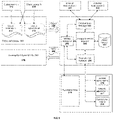
- Fig. 2 shows an exemplary system for the iteration of the detection quality assessment.
- the composite verdict analyzer 205 exchanges information with an iteration scheduler 206, an external scan manager 203, an internal scan manager 204, and object history 207, by receiving object 209 and generating task 208 that is provided to a development operation system 210.
- the iteration scheduler 206 interacts with the external scan manager 203, the internal scan manager 204, and the automated tests 219.
- the iteration scheduler 206 controls the flow of the scanning during the iteration and scheduling the next iteration based on the composite verdict.
- the internal scan manager 204 communicates with security applications 216 and 217, and internal scan engine 218 by sending commands or objects to internal scan engines or products to get current scan results, using API, command line, or other interfaces.
- the external scan manager 203 communicates with external scan engines 201 and 202 by sending commands or objects to third-party tools and engines to get current scan results, using API, command line, or other interfaces.
- the object 209 is provided from the object collections 211 that includes object collections 212 and 213 communicating with object sources 214 and 215.
- the object 209 may include files (e.g., scripts, exe files, documents, webpages etc.), URLs, IP addresses, domain names, etc.
- the system shown in Fig. 2 includes a processor of a computer coupled to a memory storing instructions.
- the processor is configured to iteratively perform a dynamic assessment of a quality of a threat detection with a frequency defined for each of objects 209 in object collections 211.
- a result of the dynamic assessment includes internal and external scan results of the objects, by internal scan engine 1 and external scan engine 2, respectively, and a consistency verdict of the internal and external scan results of the objects 209.
- the system changes a frequency of scanning iteration of the objects 209 based on the consistency verdict of the external and internal scan results of the objects assessed by the composite verdict analyzer 205.
- the system further classifies the objects 209 based on the result of the dynamic assessment, create a development task 208 including the internal and external scan results of the objects 209, meta-data of the objects, and automated test results to provide details for developing a software to fix inconsistency of the internal and external scan results of the objects.
- the system also controls the dynamic assessment in accordance with a dynamic of implementation of the development task 208 and maintains the quality of the threat detection on a given level based on the controlled dynamic assessment and a priority of the development task 208.
- Fig. 3 shows an exemplary entity relationship diagram for an exemplary malicious code detection quality control system for an antivirus engine.
- a system automatically receives information about malicious and clean files from various sources (e.g., VirusTotal feed, MalaShare, workstations, etc.).
- sources e.g., VirusTotal feed, MalaShare, workstations, etc.
- the system automatically classifies files into categories, for example, black, white, and gray, and allows to obtain a confusion matrix and its dependence on time for various verdict providers on different datasets.
- the data source includes a resource or an object that allows to receive information about malicious and clean files, which preferably include new files.
- the dataset is obtained from a specific data source, and the verdict provider includes an antivirus engine installed on VirusTotal, BitDefender, CleanSet, or another source that provides useful information about the file.
- the task includes a program that performs some work including receiving new files, scanning, receiving verdicts, storing results into a database, etc., and the detection quality includes a confusion matrix value.
- the entities shown in the exemplary Fig. 3 include data source, file, verdict provider, and verdict.
- the data source has 2 attributes of id and name. It can produce files (e.g., only hashes are used) and fills in all required fields. One data source produces many files. At the same time one file can be produced by different data sources (i.e., ids varies).
- File has properties. All required fields are filled in by data source, optional fields could be updated by verdicts. File could be scanned by different verdict providers.
- Verdict Provider has 2 attributes of id and name, it provides verdicts. The temporal dependence of verdicts are considered, one file can be scanned several times to get several verdicts.
- Verdict has 4 attributes that are filled by verdict provider, including id, file_id, scan_date, and result.
- Task controls all system. Firstly, new files are produced by data sources. Then, among all files, the interested files are selected (e.g., new files that were received recently). After that the selected files are rescanned by verdict providers and new verdicts are received.
- Fig. 4 shows existing tables and their fields, upon which the following aspects of the data sources, files, verdict providers, and verdicts can be presented.
- Name Data type Description id INTEGER Data source identifier, primary key, unique.
- name VARCHAR A required unique field - data source name.
- the table verdicts is created with 3 columns (id, file_id, and scan_date).
- a column in the verdicts table with the corresponding name is created.
- MDQCS includes the following components:
- Component name Responsibility Input Output Data- Sources Gets a list of new files from data source Valid authorization data (if required) List of received files - hashes and receiving time Verdict Providers Scans specified files and provides reports List of hashes Reports Detect DB Responsible for storing all information (files and reports) List of files or verdicts -- Tasks Launches other modules in the desired sequence and controls the entire workflow Instances of the above modules --
- the time of appearance can be considered as both the time of receipt by the system (i.e., first submission) and the time of appearance in VT system (i.e., first appearance).
- the detection quality is calculated on the day the file appears, the next day, and so on, up to the limit that is set.
- the averaging detection quality for 0 day files, for files the next day, and so on may be considered.
- Average detection quality for files is received in a specified period.
- the number of files from one source are known to another and how quickly do they appear depend on the following:
Landscapes
- Engineering & Computer Science (AREA)
- Computer Security & Cryptography (AREA)
- Theoretical Computer Science (AREA)
- Computer Hardware Design (AREA)
- General Engineering & Computer Science (AREA)
- Software Systems (AREA)
- Physics & Mathematics (AREA)
- General Physics & Mathematics (AREA)
- Virology (AREA)
- Health & Medical Sciences (AREA)
- General Health & Medical Sciences (AREA)
- Quality & Reliability (AREA)
- Computing Systems (AREA)
- Information Retrieval, Db Structures And Fs Structures Therefor (AREA)
- Stored Programmes (AREA)
- Debugging And Monitoring (AREA)
Abstract
Description
- 1. The invention pertains to computer security including quality control system and method for antivirus engines.
- 2. A key indicator of a quality of a security product is the level of threat detection, which conventionally is evaluated using specific test collections of files and objects, such as hyperlinks, depending on the type of a detection engine.
- 3. Testing is a part of a release cycle of a security application and is conducted at specific stages in the release of the application. After the release of applications, the product is tested either for benchmarking by test laboratories, or to check for errors when releasing new versions of detecting databases, such that there are no false positives or errors that affect the performance of the product.
- 4. This approach controls the quality of the product only at certain points in time and does not allow monitoring the quality of detection in real time.
- 5. In addition to the product testing procedure, the quality of detection is also influenced by the sources of files, URLs, and other objects that are used to populate the database of threats and clean files. The quality of these collections (i.e., confidence in the classification of objects in the collection, the size of the collection, and the number of new previously unknown files in the collection) directly determines the level of false positives, the level of detection, and the system performance by optimizing the work of filtering techniques of detectors, which can reduce time-consuming operations for dynamic analysis of objects on end machines of users.
- 6. In conventional methods and systems, testing of the quality of detection of threats by engines are carried out without assessing dynamics of quality indicators in comparison with third-party solutions and services, which would not allow performing an in time relative assessment of the quality of detection and identifying areas for improvement.
- 7. In such systems and methods, it is required to manually obtain various collections of objects and carry out tests on the objects, which would not necessarily provide an objective assessment and a result to allow moving on to improve the products without additional analysis.
- 8. Thus, it is necessary to solve the problem of dynamic analysis of detection metrics for various versions of products, decoding engines, and file collection sources, to manage the process of filling the detection databases and
to update products with fixes in the detection mechanisms. - 9. It is an exemplary feature of the present invention to provide iterative dynamic assessment of a quality of detection by periodically scanning objects from collections of various sources with each supported product and/or scanning engine and comparing verdicts with the verdicts of third-party scanning services.
- 10. Based on the results of the assessment, the level of trust in the sources of collections is determined, and the classes of objects that are detected by products and engines with a quality level lower than the supporter of services are allocated, and a task is created for adjusting the rules for detection engines and products. The process is repeated cyclically to achieve a specified quality of threat detection.
- 11. The exemplary invention provides a method of continuous development of an internal threat scan engine based on an iterative quality assessment.
- 12. The method includes iteratively performing a dynamic assessment of a quality of a threat detection with a frequency defined for each of objects in an object collection, wherein a result of the dynamic assessment includes internal and external scan results of the objects and a consistency verdict of the internal and external scan results of the objects, changing a frequency of scanning iteration of the objects based on the consistency verdict of the external and internal scan results of the objects, classifying the objects based on the result of the dynamic assessment, creating a development task including the internal and external scan results of the objects, meta-data of the objects, and automated test results to provide details for developing a software to fix inconsistency of the internal and external scan results of the objects, controlling the dynamic assessment in accordance with a dynamic of implementation of the development task, and maintaining the quality of the threat detection on a given level based on the controlled dynamic assessment and a priority of the development task.
- 13. The exemplary invention also provides a system for continuous development of an internal threat scan engine based on an iterative quality assessment.
- 14. The system includes a processor coupled to a memory storing instructions. The processor is configured to iteratively perform a dynamic assessment of a quality of a threat detection with a frequency defined for each of objects in an object collection, wherein a result of the dynamic assessment includes internal and external scan results of the objects and a consistency verdict of the internal and external scan results of the objects, change a frequency of scanning iteration of the objects based on the consistency verdict of the external and internal scan results of the objects, classify the objects based on the result of the dynamic assessment, create a development task including the internal and external scan results of the objects, meta-data of the objects, and automated test results to provide details for developing a software to fix inconsistency of the internal and external scan results of the objects, control the dynamic assessment in accordance with a dynamic of implementation of the development task, and maintain the quality of the threat detection on a given level based on the controlled dynamic assessment and a priority of the development task.
- 15. The exemplary system is able to classify the objects that are detected with a worse quality and to speed and prioritize iteratively improving the quality. Further, it would be possible to test the detecting databases and the engine, taking into account the level of trust in collections of objects from individual sources and to individual classes of objects.
- 16. The exemplary aspects of the invention will be better understood from the following detailed description of the exemplary embodiments of the invention with reference to the drawings:
- 17.
Fig. 1 is a flowchart showing an exemplary procedure for iteration of the detection quality assessment according to the exemplary embodiment; - 18.
Fig. 2 shows an exemplary system for iteration of the detection quality assessment according to the exemplary embodiment; - 19.
Fig. 3 shows an exemplary entity relationship diagram according to the exemplary embodiment; and - 20.
Fig. 4 shows an exemplary database schema according to the exemplary embodiment. - 21. Exemplary embodiments of the invention will now be described with reference to the drawings.
- 22. As shown exemplarily in
Fig. 1 , theprocess 101 for the iteration of the detection quality assessment includes receiving an object from an object collection as shown instep 102. The object is scanned by an internal scan engine instep 104 and by an external scan engine instep 103. - 23. In
step 105, the external scan result and object metadata that include at least the time of the first time object detection are obtained, and instep 106, the internal scan result and object metadata are obtained. - 24. Metadata may, for example, be related to VirusTotal, which includes a full list of engines in use, a list of existing privileges, etc. Metadata can be used for object classification, since the metadata is included in a scan result fully or partly.
- 25. In
step 107, a composite verdict including the results of internal and external scans and object meta-data from internal and external scan engines is obtained. - 26.
Step 108 includes updating the object history information with the composite verdict of iteration, and the composite verdict is assessed atstep 109. - 27. When the composite verdict is determined to be consistent in
step 110, a task "A" is scheduled for the next iteration instep 112, a list of object sources that provided the object is obtained instep 118, and the trust level of object source, based on the completed iteration, is updated in step 119. - 28. The composite verdict is determined to be inconsistent when some pairs of verdict attributes are not equal. For example, scanning verdicts (e.g., malicious or black, suspicious, or grey and white) differ, or security rating (a number) also differ, or the class of threat is different (trojan or virus or ransomware), or meta-data contain additional data, etc.
- 29. When the composite verdict is determined to be inconsistent in
step 110, the object is classified with other objects within collection based on a composite verdict instep 111, automated tests to verify the inconsistency of result for the class of objects is conducted instep 113, and instep 114, the object history information with automated test results is updated. - 30. When the internal verdict is determined to be correct in step 115, the process proceeds to step 112 to schedule the task "B" for the next iteration. Scheduled time, scope of external and internal engines and object collections are set for task "A" and "B" independently.
- 31. When the internal verdict is determined to be incorrect in step 115, a scan engine development task with a composite verdict and automated test results are created in
step 116, and a task is scheduled for the next iteration in step 117 by obtaining a list of object sources that provided the object instep 118. - 32.
Fig. 2 shows an exemplary system for the iteration of the detection quality assessment. - 33. As shown in
Fig. 2 , thecomposite verdict analyzer 205 exchanges information with aniteration scheduler 206, anexternal scan manager 203, an internal scan manager 204, andobject history 207, by receivingobject 209 and generatingtask 208 that is provided to adevelopment operation system 210. - 34. The
iteration scheduler 206 interacts with theexternal scan manager 203, the internal scan manager 204, and the automated tests 219. - 35. More specifically, the
iteration scheduler 206 controls the flow of the scanning during the iteration and scheduling the next iteration based on the composite verdict. - 36. The internal scan manager 204 communicates with
security applications internal scan engine 218 by sending commands or objects to internal scan engines or products to get current scan results, using API, command line, or other interfaces. - 37. The
external scan manager 203 communicates withexternal scan engines - 38. The
object 209 is provided from theobject collections 211 that includesobject collections object sources object 209 may include files (e.g., scripts, exe files, documents, webpages etc.), URLs, IP addresses, domain names, etc. - 39. In an exemplary aspect, the system shown in
Fig. 2 includes a processor of a computer coupled to a memory storing instructions. The processor is configured to iteratively perform a dynamic assessment of a quality of a threat detection with a frequency defined for each ofobjects 209 inobject collections 211. - 40. A result of the dynamic assessment includes internal and external scan results of the objects, by
internal scan engine 1 andexternal scan engine 2, respectively, and a consistency verdict of the internal and external scan results of theobjects 209. - 41. The system changes a frequency of scanning iteration of the
objects 209 based on the consistency verdict of the external and internal scan results of the objects assessed by thecomposite verdict analyzer 205. - 42. The system further classifies the
objects 209 based on the result of the dynamic assessment, create adevelopment task 208 including the internal and external scan results of theobjects 209, meta-data of the objects, and automated test results to provide details for developing a software to fix inconsistency of the internal and external scan results of the objects. - 43. The system also controls the dynamic assessment in accordance with a dynamic of implementation of the
development task 208 and maintains the quality of the threat detection on a given level based on the controlled dynamic assessment and a priority of thedevelopment task 208. - 44.
Fig. 3 shows an exemplary entity relationship diagram for an exemplary malicious code detection quality control system for an antivirus engine. - 45. In an exemplary aspect of the present invention, a system automatically receives information about malicious and clean files from various sources (e.g., VirusTotal feed, MalaShare, workstations, etc.). The system automatically classifies files into categories, for example, black, white, and gray, and allows to obtain a confusion matrix and its dependence on time for various verdict providers on different datasets.
- 46. Aggregation by file appearance and last scan dates, datasets and any combination of these parameters are available, and collection and storage of all historical information is provided (for example, as scan results). The system allows visualization of the metrics, and works in real time (i.e., behind by the time required for classification).
- 47. In the above-described process, as shown in the exemplary
Fig. 3 , the data source includes a resource or an object that allows to receive information about malicious and clean files, which preferably include new files. The dataset is obtained from a specific data source, and the verdict provider includes an antivirus engine installed on VirusTotal, BitDefender, CleanSet, or another source that provides useful information about the file. The task includes a program that performs some work including receiving new files, scanning, receiving verdicts, storing results into a database, etc., and the detection quality includes a confusion matrix value. - 48. The entities shown in the exemplary
Fig. 3 include data source, file, verdict provider, and verdict. - 49. The data source has 2 attributes of id and name. It can produce files (e.g., only hashes are used) and fills in all required fields. One data source produces many files. At the same time one file can be produced by different data sources (i.e., ids varies).
- 50. File has properties. All required fields are filled in by data source, optional fields could be updated by verdicts. File could be scanned by different verdict providers.
- 51. Verdict Provider has 2 attributes of id and name, it provides verdicts. The temporal dependence of verdicts are considered, one file can be scanned several times to get several verdicts.
- 52. Verdict has 4 attributes that are filled by verdict provider, including id, file_id, scan_date, and result.
- 53. Task controls all system. Firstly, new files are produced by data sources. Then, among all files, the interested files are selected (e.g., new files that were received recently). After that the selected files are rescanned by verdict providers and new verdicts are received.
- 54. The entity relationship diagram shown in
Fig. 3 are more clearly shown database schema ofFig. 4 . - 55.
Fig. 4 shows existing tables and their fields, upon which the following aspects of the data sources, files, verdict providers, and verdicts can be presented. - Contains attributes of data sources.
Name Data type Description id INTEGER Data source identifier, primary key, unique. name VARCHAR A required unique field - data source name. - Contains attributes of data sources.
Name Data type Description id INTEGER File identifier, primary key, unique. file_type VARCHAR A required field. Describes file type. source_id INTEGER A required field, source id, refers to the id field of the table data_sources. first_submission DATETIME A required field, file receive time, sets by the data source. The time we received the file. md5 VARCHAR A required field, files hashe, respectively. sha1 VARCHAR A required field, files hashe, respectively. sha256 VARCHAR A required field, files hashe, respectively. first_appearance DATETIME An optional field, first appearance of a file in the VirusTotal system. final_verdict INTEGER An optional field, the final verdict, based on the solution of the system. - Contains attributes of verdict providers.
Name Data type Description id INTEGER Verdict provider identifier, primary key, unique. name VARCHAR A required unique field - verdict provider name. - Contains attributes of verdicts.
Name Data type Description id INTEGER Verdict identifier, primary key, unique. file_id INTEGER A required field, file id, refers to the id field of the table files. scan_date DATETIME A required field, scan time. verdict_provider_na me INTEGER An optional field, containing verdict. Each verdict provider has its own column. - 60. In an exemplary aspect, when creating the database, 4 empty tables are created. The table verdicts is created with 3 columns (id, file_id, and scan_date). When adding a record to the verdict_providers table, a column in the verdicts table with the corresponding name is created.
- 61. With regard to the component model, MDQCS includes the following components:
- 1. DataSources
- 2. VerdictProviders
- 3. DetectDB
- 4. Tasks
- 62. The following tables describe the responsibility of each component:
Component name Responsibility Input Output Data- Sources Gets a list of new files from data source Valid authorization data (if required) List of received files - hashes and receiving time Verdict Providers Scans specified files and provides reports List of hashes Reports Detect DB Responsible for storing all information (files and reports) List of files or verdicts -- Tasks Launches other modules in the desired sequence and controls the entire workflow Instances of the above modules -- - Methods
.produse() Get a list of new files .get_error() Get errors - Attributes
name Data source name - Methods
.scan() Scans specified files and provides reports .get_errors() Get errors - Attributes
name Verdict provider name - Methods
.open() Open DB .commit() Commit changes .create_DB() Create DB if does not exist .add_new_data_source() Add new entry in data_sources table .add_new_verdict_provider () Add new entry in verdict_providers table .add_files() Add new entries in files table .add_verdicts() Add new entries in verdicts table .close() Close connection. - 66. With regard to the metrics, the time of appearance can be considered as both the time of receipt by the system (i.e., first submission) and the time of appearance in VT system (i.e., first appearance).
- 67. All metrics are calculated on:
on various datasets {dataset='dataset_name'} on average on all datasets {dataset='average'} weighted average for all datasets {dataset='weighted'} - 68. With regard to detection quality dependence on time, the detection quality is calculated on the day the file appears, the next day, and so on, up to the limit that is set.
- 69. Regarding averaging the previous metric over time for a specified period, the averaging detection quality for 0 day files, for files the next day, and so on may be considered.
- 70. Average detection quality for files is received in a specified period. The number of files from one source are known to another and how quickly do they appear depend on the following:
- Local (white) files and BD cleanset;
- MalShare and VT; and
- Local files and VT.
- 71. The descriptions of the various exemplary embodiments of the present invention have been presented for purposes of illustration but are not intended to be exhaustive or limited to the embodiments disclosed. Many modifications and variations will be apparent to those of ordinary skill in the art without departing from the scope and spirit of the described embodiments. The terminology used herein was chosen to best explain the principles of the embodiments, the practical application or technical improvement over technologies found in the marketplace, or to enable others of ordinary skill in the art to understand the embodiments disclosed herein.
- 72. Further, Applicant's intent is to encompass the equivalents of all claim elements, and no amendment to any claim of the present application should be construed as a disclaimer of any interest in or right to an equivalent of any element or feature of the amended claim.
Claims (20)
- A method of continuous development of an internal threat scan engine based on an iterative quality assessment, the method comprising:iteratively performing a dynamic assessment of a quality of a threat detection with a frequency defined for each of objects in an object collection, wherein a result of the dynamic assessment includes internal and external scan results of the objects and a consistency verdict of the internal and external scan results of the objects;changing a frequency of scanning iteration of the objects based on the consistency verdict of the external and internal scan results of the objects;classifying the objects based on the result of the dynamic assessment;creating a development task including the internal and external scan results of the objects, meta-data of the objects, and automated test results to provide details for developing a software to fix inconsistency of the internal and external scan results of the objects;controlling the dynamic assessment in accordance with a dynamic of implementation of the development task; andmaintaining the quality of the threat detection on a given level based on the controlled dynamic assessment and a priority of the development task.
- The method according to claim 1, wherein the frequency of scanning iteration of the objects changes when the objects include new files.
- The method according to claim 2, wherein the frequency of scanning iteration of the objects further changes when the internal and external scan results of the objects differ.
- The method according to claim 1, wherein, in the changing of the frequency of scanning iteration of the objects, when the objects are new files and internal and external scan results of the objects differ, the frequency of scanning iteration of the objects increases.
- The method according to claim 1, wherein, when the internal and external scan results of the objects differ, the frequency of scanning iteration of the objects is more than the frequency of scanning iteration of the objects when the internal and external scan results of the objects are consistent.
- The method according to claim 1, further comprising:
before the changing of the frequency of scanning iteration of the objects, receiving information on the objects about malicious and clean files from various sources. - The method according to claim 1, wherein the internal and external scan results of the objects include file appearances, last scan dates, datasets, and historical information.
- The method according to claim 1, wherein the objects are from collections of various sources with supported products and scanning engines.
- The method according to claim 1, wherein the classifying of the objects includes comparing verdicts of the internal and external scan results of the objects with information of third-party scanning services about the objects.
- The method according to claim 1, wherein the iteratively performing of the dynamic assessment continues by repetition to achieve a predetermined value for the quality of threat detection.
- A system for continuous development of an internal threat scan engine based on an iterative quality assessment, the system comprising:
a processor coupled to a memory storing instructions, the processor being configured to:iteratively perform a dynamic assessment of a quality of a threat detection with a frequency defined for each of objects in an object collection, wherein a result of the dynamic assessment includes internal and external scan results of the objects and a consistency verdict of the internal and external scan results of the objects;change a frequency of scanning iteration of the objects based on the consistency verdict of the external and internal scan results of the objects;classify the objects based on the result of the dynamic assessment;create a development task including the internal and external scan results of the objects, meta-data of the objects, and automated test results to provide details for developing a software to fix inconsistency of the internal and external scan results of the objects;control the dynamic assessment in accordance with a dynamic of implementation of the development task; andmaintain the quality of the threat detection on a given level based on the controlled dynamic assessment and a priority of the development task. - The system according to claim 11, wherein the processor changes the frequency of scanning iteration of the objects when the objects include new files.
- The system according to claim 12, wherein the processor further changes the frequency of scanning iteration of the objects when the internal and external scan results of the objects differ.
- The system according to claim 11, wherein, in the changing of the frequency of scanning iteration of the objects, when the objects are new files and internal and external scan results of the objects differ, the processor increases the frequency of scanning iteration of the objects.
- The system according to claim 11, wherein, when the internal and external scan results of the objects differ, the frequency of scanning iteration of the objects is more than the frequency of scanning iteration of the objects when the internal and external scan results of the objects are consistent.
- The system according to claim 11, wherein, before the changing of the frequency of scanning iteration of the objects, the processor receives information on the objects about malicious and clean files from various sources.
- The system according to claim 11, wherein the internal and external scan results of the objects include file appearances, last scan dates, datasets, and historical information.
- The system according to claim 11, wherein the objects are from collections of various sources with supported products and scanning engines.
- The system according to claim 11, wherein the classifying of the objects includes comparing verdicts of the internal and external scan results of the objects with information of third-party scanning services about the objects.
- The system according to claim 11, wherein the processor continues the iteratively performing of the dynamic assessment by repetition to achieve a predetermined value for the quality of threat detection.
Applications Claiming Priority (1)
| Application Number | Priority Date | Filing Date | Title |
|---|---|---|---|
| US17/304,943 US11921854B2 (en) | 2021-06-29 | 2021-06-29 | Malware detection quality control |
Publications (3)
| Publication Number | Publication Date |
|---|---|
| EP4113339A1 true EP4113339A1 (en) | 2023-01-04 |
| EP4113339B1 EP4113339B1 (en) | 2024-10-30 |
| EP4113339C0 EP4113339C0 (en) | 2024-10-30 |
Family
ID=82100332
Family Applications (1)
| Application Number | Title | Priority Date | Filing Date |
|---|---|---|---|
| EP22020266.7A Active EP4113339B1 (en) | 2021-06-29 | 2022-06-08 | Malware detection quality control |
Country Status (4)
| Country | Link |
|---|---|
| US (1) | US11921854B2 (en) |
| EP (1) | EP4113339B1 (en) |
| JP (1) | JP2023007478A (en) |
| CH (1) | CH718784B1 (en) |
Families Citing this family (2)
| Publication number | Priority date | Publication date | Assignee | Title |
|---|---|---|---|---|
| US20230297687A1 (en) * | 2022-03-21 | 2023-09-21 | Vmware, Inc. | Opportunistic hardening of files to remediate security threats posed by malicious applications |
| JP7566393B1 (en) * | 2024-08-21 | 2024-10-15 | Cloudbase株式会社 | Evaluation device, evaluation method, and program |
Citations (2)
| Publication number | Priority date | Publication date | Assignee | Title |
|---|---|---|---|---|
| US20150281260A1 (en) * | 2013-03-07 | 2015-10-01 | Inquest | Integrated network threat analysis |
| US20170293758A1 (en) * | 2014-10-25 | 2017-10-12 | Mcafee Inc. | Computing platform security methods and apparatus |
Family Cites Families (12)
| Publication number | Priority date | Publication date | Assignee | Title |
|---|---|---|---|---|
| US7290275B2 (en) | 2002-04-29 | 2007-10-30 | Schlumberger Omnes, Inc. | Security maturity assessment method |
| US7836499B1 (en) * | 2004-11-18 | 2010-11-16 | Symantec Corporation | Dynamic depth inspection |
| US8311794B2 (en) * | 2007-05-04 | 2012-11-13 | Sap Ag | Testing executable logic |
| US8533831B2 (en) * | 2010-07-02 | 2013-09-10 | Symantec Corporation | Systems and methods for alternating malware classifiers in an attempt to frustrate brute-force malware testing |
| US20160078365A1 (en) * | 2014-03-21 | 2016-03-17 | Philippe Baumard | Autonomous detection of incongruous behaviors |
| US9876635B2 (en) | 2014-07-17 | 2018-01-23 | Venafi, Inc. | Security reliance scoring for cryptographic material and processes |
| US9967264B2 (en) | 2014-09-14 | 2018-05-08 | Sophos Limited | Threat detection using a time-based cache of reputation information on an enterprise endpoint |
| US10616261B2 (en) | 2017-11-30 | 2020-04-07 | Bank Of America Corporation | System for information security threat assessment based on data history |
| CN110392024A (en) | 2018-04-20 | 2019-10-29 | 李娜 | A kind of page detection method is set with scanning engine |
| US10826919B2 (en) | 2018-10-29 | 2020-11-03 | Acronis International Gmbh | Methods and cloud-based systems for protecting devices from malwares |
| WO2020121078A1 (en) * | 2018-12-13 | 2020-06-18 | Xm Cyber Ltd. | Systems and methods for dynamic removal of agents from nodes of penetration testing systems |
| US11316861B2 (en) | 2019-06-27 | 2022-04-26 | AVAST Software s.r.o. | Automatic device selection for private network security |
-
2021
- 2021-06-29 US US17/304,943 patent/US11921854B2/en active Active
-
2022
- 2022-06-03 CH CH000688/2022A patent/CH718784B1/en unknown
- 2022-06-08 EP EP22020266.7A patent/EP4113339B1/en active Active
- 2022-06-24 JP JP2022102112A patent/JP2023007478A/en active Pending
Patent Citations (2)
| Publication number | Priority date | Publication date | Assignee | Title |
|---|---|---|---|---|
| US20150281260A1 (en) * | 2013-03-07 | 2015-10-01 | Inquest | Integrated network threat analysis |
| US20170293758A1 (en) * | 2014-10-25 | 2017-10-12 | Mcafee Inc. | Computing platform security methods and apparatus |
Non-Patent Citations (2)
| Title |
|---|
| ANONYMOUS: "4 things you should know about testing AV software with VirusTotal's free online multiscanner", 18 May 2021 (2021-05-18), pages 1 - 10, XP055981103, Retrieved from the Internet <URL:https://www.malwarebytes.com/blog/news/2021/05/4-things-you-should-know-about-testing-av-software-with-virustotal> [retrieved on 20221114] * |
| PENG PENG PENGP17@VT EDU ET AL: "Opening the Blackbox of VirusTotal Analyzing Online Phishing Scan Engines", PROCEEDINGS OF THE INTERNET MEASUREMENT CONFERENCE, ACMPUB27, NEW YORK, NY, USA, 21 October 2019 (2019-10-21), pages 478 - 485, XP058480730, ISBN: 978-1-4503-6948-0, DOI: 10.1145/3355369.3355585 * |
Also Published As
| Publication number | Publication date |
|---|---|
| EP4113339B1 (en) | 2024-10-30 |
| JP2023007478A (en) | 2023-01-18 |
| CH718784A2 (en) | 2022-12-30 |
| US20220414215A1 (en) | 2022-12-29 |
| EP4113339C0 (en) | 2024-10-30 |
| US11921854B2 (en) | 2024-03-05 |
| CH718784B1 (en) | 2025-12-30 |
Similar Documents
| Publication | Publication Date | Title |
|---|---|---|
| US8386419B2 (en) | Data extraction and testing method and system | |
| US9558230B2 (en) | Data quality assessment | |
| JP6723989B2 (en) | Data driven inspection framework | |
| US9483648B2 (en) | Security testing for software applications | |
| US8151247B2 (en) | Test data management | |
| US20170324803A1 (en) | Automated testing of perceptible web page elements | |
| US10831724B2 (en) | Method of reconciling resources in the metadata hierarchy | |
| US20080066049A1 (en) | Method for enforcing change policy based on project state | |
| CN112395042A (en) | Method and device for carrying out security scanning facing to business container mirror image | |
| US20080066050A1 (en) | Calculating defect density by file and source module | |
| US8311794B2 (en) | Testing executable logic | |
| US11036699B2 (en) | Method for computing distinct values in analytical databases | |
| EP4113339B1 (en) | Malware detection quality control | |
| US10043012B2 (en) | Method of correlating static and dynamic application security testing results for a web application | |
| US11500837B1 (en) | Automating optimizations for items in a hierarchical data store | |
| US20180150519A1 (en) | Extreme Value Estimation for Query Optimization in Analytical Databases | |
| US20200379961A1 (en) | Method and system for data quality delta analysis on a dataset | |
| US20240232019A1 (en) | Regression mitigation using multiple stored procedures | |
| CN112783867A (en) | Database optimization method for meeting real-time big data service requirements and cloud server | |
| US20070226691A1 (en) | Associating attribute tags with test cases | |
| US9806969B2 (en) | Infrastructure trending tool | |
| CN114371870B (en) | Code scanning and submitting method, code scanning server, client and server | |
| CN113849825B (en) | A testing method and device for multiple vulnerability scanners | |
| CN117527785A (en) | Method and system for supporting space engineering file data uploading and full link management | |
| US11755619B2 (en) | Techniques for selective copying of file data of a data source |
Legal Events
| Date | Code | Title | Description |
|---|---|---|---|
| PUAI | Public reference made under article 153(3) epc to a published international application that has entered the european phase |
Free format text: ORIGINAL CODE: 0009012 |
|
| STAA | Information on the status of an ep patent application or granted ep patent |
Free format text: STATUS: REQUEST FOR EXAMINATION WAS MADE |
|
| 17P | Request for examination filed |
Effective date: 20220616 |
|
| AK | Designated contracting states |
Kind code of ref document: A1 Designated state(s): AL AT BE BG CH CY CZ DE DK EE ES FI FR GB GR HR HU IE IS IT LI LT LU LV MC MK MT NL NO PL PT RO RS SE SI SK SM TR |
|
| GRAP | Despatch of communication of intention to grant a patent |
Free format text: ORIGINAL CODE: EPIDOSNIGR1 |
|
| STAA | Information on the status of an ep patent application or granted ep patent |
Free format text: STATUS: GRANT OF PATENT IS INTENDED |
|
| INTG | Intention to grant announced |
Effective date: 20240524 |
|
| GRAS | Grant fee paid |
Free format text: ORIGINAL CODE: EPIDOSNIGR3 |
|
| GRAA | (expected) grant |
Free format text: ORIGINAL CODE: 0009210 |
|
| STAA | Information on the status of an ep patent application or granted ep patent |
Free format text: STATUS: THE PATENT HAS BEEN GRANTED |
|
| AK | Designated contracting states |
Kind code of ref document: B1 Designated state(s): AL AT BE BG CH CY CZ DE DK EE ES FI FR GB GR HR HU IE IS IT LI LT LU LV MC MK MT NL NO PL PT RO RS SE SI SK SM TR |
|
| REG | Reference to a national code |
Ref country code: GB Ref legal event code: FG4D |
|
| REG | Reference to a national code |
Ref country code: CH Ref legal event code: EP |
|
| REG | Reference to a national code |
Ref country code: DE Ref legal event code: R096 Ref document number: 602022007112 Country of ref document: DE |
|
| REG | Reference to a national code |
Ref country code: IE Ref legal event code: FG4D |
|
| U01 | Request for unitary effect filed |
Effective date: 20241128 |
|
| U07 | Unitary effect registered |
Designated state(s): AT BE BG DE DK EE FI FR IT LT LU LV MT NL PT RO SE SI Effective date: 20241204 |
|
| PG25 | Lapsed in a contracting state [announced via postgrant information from national office to epo] |
Ref country code: HR Free format text: LAPSE BECAUSE OF FAILURE TO SUBMIT A TRANSLATION OF THE DESCRIPTION OR TO PAY THE FEE WITHIN THE PRESCRIBED TIME-LIMIT Effective date: 20241030 Ref country code: IS Free format text: LAPSE BECAUSE OF FAILURE TO SUBMIT A TRANSLATION OF THE DESCRIPTION OR TO PAY THE FEE WITHIN THE PRESCRIBED TIME-LIMIT Effective date: 20250228 |
|
| PG25 | Lapsed in a contracting state [announced via postgrant information from national office to epo] |
Ref country code: ES Free format text: LAPSE BECAUSE OF FAILURE TO SUBMIT A TRANSLATION OF THE DESCRIPTION OR TO PAY THE FEE WITHIN THE PRESCRIBED TIME-LIMIT Effective date: 20241030 |
|
| PG25 | Lapsed in a contracting state [announced via postgrant information from national office to epo] |
Ref country code: NO Free format text: LAPSE BECAUSE OF FAILURE TO SUBMIT A TRANSLATION OF THE DESCRIPTION OR TO PAY THE FEE WITHIN THE PRESCRIBED TIME-LIMIT Effective date: 20250130 |
|
| PG25 | Lapsed in a contracting state [announced via postgrant information from national office to epo] |
Ref country code: GR Free format text: LAPSE BECAUSE OF FAILURE TO SUBMIT A TRANSLATION OF THE DESCRIPTION OR TO PAY THE FEE WITHIN THE PRESCRIBED TIME-LIMIT Effective date: 20250131 |
|
| PG25 | Lapsed in a contracting state [announced via postgrant information from national office to epo] |
Ref country code: PL Free format text: LAPSE BECAUSE OF FAILURE TO SUBMIT A TRANSLATION OF THE DESCRIPTION OR TO PAY THE FEE WITHIN THE PRESCRIBED TIME-LIMIT Effective date: 20241030 |
|
| PG25 | Lapsed in a contracting state [announced via postgrant information from national office to epo] |
Ref country code: RS Free format text: LAPSE BECAUSE OF FAILURE TO SUBMIT A TRANSLATION OF THE DESCRIPTION OR TO PAY THE FEE WITHIN THE PRESCRIBED TIME-LIMIT Effective date: 20250130 |
|
| PG25 | Lapsed in a contracting state [announced via postgrant information from national office to epo] |
Ref country code: SM Free format text: LAPSE BECAUSE OF FAILURE TO SUBMIT A TRANSLATION OF THE DESCRIPTION OR TO PAY THE FEE WITHIN THE PRESCRIBED TIME-LIMIT Effective date: 20241030 |
|
| PG25 | Lapsed in a contracting state [announced via postgrant information from national office to epo] |
Ref country code: SK Free format text: LAPSE BECAUSE OF FAILURE TO SUBMIT A TRANSLATION OF THE DESCRIPTION OR TO PAY THE FEE WITHIN THE PRESCRIBED TIME-LIMIT Effective date: 20241030 |
|
| PG25 | Lapsed in a contracting state [announced via postgrant information from national office to epo] |
Ref country code: CZ Free format text: LAPSE BECAUSE OF FAILURE TO SUBMIT A TRANSLATION OF THE DESCRIPTION OR TO PAY THE FEE WITHIN THE PRESCRIBED TIME-LIMIT Effective date: 20241030 |
|
| PLBE | No opposition filed within time limit |
Free format text: ORIGINAL CODE: 0009261 |
|
| STAA | Information on the status of an ep patent application or granted ep patent |
Free format text: STATUS: NO OPPOSITION FILED WITHIN TIME LIMIT |
|
| 26N | No opposition filed |
Effective date: 20250731 |
|
| U21 | Renewal fee for the european patent with unitary effect paid with additional fee |
Year of fee payment: 4 Effective date: 20251008 |
|
| REG | Reference to a national code |
Ref country code: CH Ref legal event code: H13 Free format text: ST27 STATUS EVENT CODE: U-0-0-H10-H13 (AS PROVIDED BY THE NATIONAL OFFICE) Effective date: 20260127 |
|
| PG25 | Lapsed in a contracting state [announced via postgrant information from national office to epo] |
Ref country code: MC Free format text: LAPSE BECAUSE OF FAILURE TO SUBMIT A TRANSLATION OF THE DESCRIPTION OR TO PAY THE FEE WITHIN THE PRESCRIBED TIME-LIMIT Effective date: 20241030 |
|
| PG25 | Lapsed in a contracting state [announced via postgrant information from national office to epo] |
Ref country code: IE Free format text: LAPSE BECAUSE OF NON-PAYMENT OF DUE FEES Effective date: 20250608 |
|
| PG25 | Lapsed in a contracting state [announced via postgrant information from national office to epo] |
Ref country code: CH Free format text: LAPSE BECAUSE OF NON-PAYMENT OF DUE FEES Effective date: 20250630 |