EP4112610A1 - Synthesis method for synthesizing oxetane derivative by microreactor - Google Patents
Synthesis method for synthesizing oxetane derivative by microreactor Download PDFInfo
- Publication number
- EP4112610A1 EP4112610A1 EP21780711.4A EP21780711A EP4112610A1 EP 4112610 A1 EP4112610 A1 EP 4112610A1 EP 21780711 A EP21780711 A EP 21780711A EP 4112610 A1 EP4112610 A1 EP 4112610A1
- Authority
- EP
- European Patent Office
- Prior art keywords
- microreactor
- synthesizing
- oxetane
- catalyst
- oxetane derivative
- Prior art date
- Legal status (The legal status is an assumption and is not a legal conclusion. Google has not performed a legal analysis and makes no representation as to the accuracy of the status listed.)
- Granted
Links
Images
Classifications
-
- C—CHEMISTRY; METALLURGY
- C07—ORGANIC CHEMISTRY
- C07D—HETEROCYCLIC COMPOUNDS
- C07D305/00—Heterocyclic compounds containing four-membered rings having one oxygen atom as the only ring hetero atoms
- C07D305/02—Heterocyclic compounds containing four-membered rings having one oxygen atom as the only ring hetero atoms not condensed with other rings
- C07D305/04—Heterocyclic compounds containing four-membered rings having one oxygen atom as the only ring hetero atoms not condensed with other rings having no double bonds between ring members or between ring members and non-ring members
- C07D305/06—Heterocyclic compounds containing four-membered rings having one oxygen atom as the only ring hetero atoms not condensed with other rings having no double bonds between ring members or between ring members and non-ring members with only hydrogen atoms, hydrocarbon or substituted hydrocarbon radicals, directly attached to the ring atoms
-
- C—CHEMISTRY; METALLURGY
- C07—ORGANIC CHEMISTRY
- C07D—HETEROCYCLIC COMPOUNDS
- C07D407/00—Heterocyclic compounds containing two or more hetero rings, at least one ring having oxygen atoms as the only ring hetero atoms, not provided for by group C07D405/00
- C07D407/02—Heterocyclic compounds containing two or more hetero rings, at least one ring having oxygen atoms as the only ring hetero atoms, not provided for by group C07D405/00 containing two hetero rings
- C07D407/12—Heterocyclic compounds containing two or more hetero rings, at least one ring having oxygen atoms as the only ring hetero atoms, not provided for by group C07D405/00 containing two hetero rings linked by a chain containing hetero atoms as chain links
-
- B—PERFORMING OPERATIONS; TRANSPORTING
- B01—PHYSICAL OR CHEMICAL PROCESSES OR APPARATUS IN GENERAL
- B01J—CHEMICAL OR PHYSICAL PROCESSES, e.g. CATALYSIS OR COLLOID CHEMISTRY; THEIR RELEVANT APPARATUS
- B01J19/00—Chemical, physical or physico-chemical processes in general; Their relevant apparatus
- B01J19/0093—Microreactors, e.g. miniaturised or microfabricated reactors
Definitions
- the invention relates to the field of organic synthesis, in particular to a synthesis method for synthesizing an oxetane derivative by a microreactor.
- the etherification reaction with a halogenated organic compound under the action of a base can obtain a series of oxetane derivatives, which can be used as monomers in a photocurable cation system, and applied in the fields of photocurable inks, coatings, adhesives, and the like.
- the representative products are 3-ethyl-3-[(oxiranyl-2-methoxy)methyl]oxetane, bis[1-ethyl(3-oxetanyl)methyl]ether, and 3-benzyloxymethyl-3-ethyloxetane.
- a main object of the invention is to provide a method for synthesizing an oxetane derivative in a microreactor, so as to solve the problems present in the existing synthesis methods for oxetane derivatives such as long reaction time, cumbersome operations, and poor safety.
- the selectivity of etherification reaction is ensured while realizing the continuous production, and the product yield is improved.
- the invention provides a method for synthesizing an oxetane derivative in a microreactor, the oxetane derivative having the structure shown in Formula (I): wherein R is a C 2 to C 12 linear or branched alkyl, an alkyl containing ethylene oxide structure, an alkyl containing oxetane structure, phenyl, tolyl, benzyl, or biphenyl, and n is 1-4; the method for synthesizing an oxetane derivative by a microreactor as above comprising: feeding 3-ethyl-3-hydroxymethyloxetane, a raw material Ha, a catalyst, and a base into a microreactor for etherification reaction to obtain an etherification product, wherein the raw material Ha has a general formula of R-(X) n , and X is halogen; and submitting the etherification product to separation to obtain the oxetane derivative.
- R is a C
- the microreactor has a reaction channel having an inner diameter of 200 to 10,000 ⁇ m.
- the base is an alkali metal compound or an aqueous solution of alkali metal compound
- the alkali metal compound is selected from one or more of the group consisting of lithium hydroxide, sodium hydroxide, potassium hydroxide, and calcium hydroxide; preferably, the alkali metal compound is sodium hydroxide; the concentration of the aqueous solution of alkali metal compound is 10 % to 20 %; and the catalyst is selected from one or more of the group consisting of polyethers, cyclic polyethers, and quaternary ammonium salts.
- the catalyst is selected from one or more of the group consisting of polyethylene glycol, polyethylene glycol alkyl ether, 18-crown-6, 15-crown-5, tetraethylammonium bromide, tetrabutylammonium bromide, tetrabutylammonium chloride, trioctylmethylammonium chloride, dodecyltrimethylammonium chloride, and tetradecyltrimethylammonium chloride.
- the catalyst is selected from one or more of the group consisting of polyethylene glycol dimethyl ether, 18-crown-6, and tetrabutylammonium bromide.
- the catalyst is added in an amount of 0.1 % to 5 % by weight.
- the catalyst is added in an amount of 0.5 % to 2 % by weight.
- reaction temperature of the etherification reaction is 10 to 60°C
- residence time of materials is 2 to 5 min.
- the device used in the separation step comprises a secondary thin-film evaporation device or a rectification tower.
- the microreactor has a reaction channel having an inner diameter of 500 to 8,000 ⁇ m.
- the microreactor the advantages, such as high heat and mass transfer coefficient, good mixing performance, easy temperature control, and safe and controllable process as compared to conventional reactors.
- the advantages of the use of a microreactor in the preparation of oxetane derivative can greatly improve the mass and heat transfer performances of the reaction system, reduce the reaction time, improve the production efficiency, improve the product yield, realize the process continuity and automation, and improve the process safety.
- Limiting the aperture of the reaction channel of the microreactor within the above-mentioned range is beneficial to improving the selectivity of the etherification reaction, thereby contributing to improving the conversion rate of the oxetane derivative.
- the above synthesis process requires small size for reaction device, small floor space for production site, and less manpower, and has high safety.
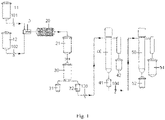
- FIG. 1 shows a schematic diagram for the structure of a device for preparing an oxetane derivative provided according to a typical embodiment of invention.
- the invention provides a method for synthesizing an oxetane derivative in a microreactor, the oxetane derivative having the structure shown in Formula (I): wherein R is a C 2 to C 12 linear or branched alkyl, an alkyl containing ethylene oxide structure, an alkyl containing oxetane structure, phenyl, tolyl, benzyl, or biphenyl, and n is 1-4; this method for synthesizing an oxetane derivative comprising: feeding 3-ethyl-3-hydroxymethyloxetane, a raw material Ha, a catalyst, and a base into a microreactor for etherification reaction to obtain an etherification product, wherein the raw material Ha has a general formula of R-(X) n
- the microreactor has advantages, such as high heat and mass transfer coefficient, good mixing performance, easy temperature control, and safe and controllable process as compared to conventional reactors.
- the advantages of the use of a microreactor in the preparation of oxetane derivative can greatly improve the mass and heat transfer performances of the reaction system, reduce the reaction time, improve the production efficiency, improve the product yield, realize the process continuity and automation, and improve the process safety.
- the above synthesis process requires small size for reaction device, small floor space for production site, and less manpower, and has high safety.
- the microreactor has a reaction channel having an inner diameter of 200 to 10,000 ⁇ m. Limiting the aperture of the reaction channel of the microreactor within the above-mentioned range is beneficial to improving the selectivity of the etherification reaction, and further improves the conversion rate of the oxetane derivative.
- the microreactor has a reaction channel having an inner diameter of 200 ⁇ m, 500 ⁇ m, 4,000 ⁇ m, 6,000 ⁇ m, 8,000 ⁇ m, or 10,000 ⁇ m, and more preferably, the microreactor has a reaction channel having an inner diameter of 500 to 8,000 ⁇ m.
- the base is an alkali metal compound or an aqueous solution of alkali metal compound.
- the alkali metal compound can be selected from those commonly used in the art.
- the alkali metal compound includes but is not limited to one or more of the group consisting of lithium hydroxide, sodium hydroxide, potassium hydroxide, and calcium hydroxide; more preferably, the alkali metal compound is sodium hydroxide; and the concentration of the aqueous solution of alkali metal compound is 10 % to 20 %.
- the catalyst can be selected from those commonly used in the art.
- the catalyst includes but is not limited to one or more of the group consisting of polyethers, cyclic polyethers, and quaternary ammonium salts.
- the catalyst includes but is not limited to one or more of the group consisting of polyethylene glycol, polyethylene glycol alkyl ether, 18-crown-6, 15-crown-5, tetraethylammonium bromide, tetrabutylammonium bromide, tetrabutylammonium chloride, trioctylmethylammonium chloride, dodecyltrimethylammonium chloride, and tetradecyltrimethylammonium chloride.
- the use of the above catalysts is beneficial to further improving the reaction rate of etherification reaction and shortening the reaction period.
- the catalyst includes but is not limited to one or more of the group consisting of polyethylene glycol dimethyl ether, 18-crown-6, and tetrabutylammonium bromide.
- the catalyst is added in an amount of 0.1 % to 5 % by weight.
- the amount of the catalyst includes but is not limited to the above-mentioned range, while limiting it within the above-mentioned range is beneficial to further improving the reaction rate of the etherification reaction.
- the catalyst is added in an amount of 0.1 %, 0.5 %, 1 %, 1.5 %, 2 %, 3 %, or 4 % by weight. More preferably, based on the weight of 3-ethyl-3-hydroxymethyloxetane, the catalyst is added in an amount of 0.5 % to 2 % by weight.
- the molar ratio of 3-ethyl-3-hydroxymethyloxetane to the halogen in the raw material Ha is 1: (1.0 to 1.2).
- the molar ratio of 3-ethyl-3-hydroxymethyloxetane to the halogen in the raw material Ha includes but is not limited to the above-mentioned range, while limiting it within the above-mentioned range is beneficial to improving the conversion rate of 3-ethyl-3-hydroxymethyloxetane.
- the reaction temperature of the etherification reaction is 10 to 60°C
- the residence time of materials is 2 to 5 min.
- the reaction temperature of the etherification reaction and the residence time of materials include but are not limited to the above-mentioned ranges, while limiting them within the above-mentioned ranges is beneficial to further improving the yield of the etherification product.
- the reaction temperature of the etherification reaction can be 10°C, 20°C, 30°C, 40°C, 50°C, or 60°C.
- the above separation step can be conducted using a device commonly used in the art.
- the device used in the separation step includes: a secondary thin-film evaporation device or a rectification tower.
- the device shown in FIG. 1 was used to prepare the oxetane derivative, and the synthesis method included the following steps:
- Example 2 It differed from Example 1 in that: the microreactor has a reaction channel having an inner diameter of 200 ⁇ m.
- Example 2 It differed from Example 1 in that: the microreactor has a reaction channel having a size of 10,000 ⁇ m.
- Example 2 It differed from Example 1 in that: the catalyst was added in an amount of 1.0 %, the catalyst was polyethylene glycol dimethyl ether, and the residence time of materials was 5 min.
- Example 2 It differed from Example 1 in that: the catalyst was added in an amount of 1.0 %, the catalyst was 18-crown-6, and the residence time of materials was 4 min.
- Example 2 It differed from Example 1 in that: the catalyst was added in an amount of 1.0 %, the catalyst was polyethylene glycol, and the residence time of materials was 4 min.
- Example 2 It differed from Example 1 in that: the catalyst was added in an amount of 1.0 %, the catalyst was tetradecyltrimethylammonium chloride, and the residence time of materials was 5 min.
- Example 2 It differed from Example 1 in that: the reaction temperature of the etherification reaction was 30°C.
- Example 2 It differed from Example 1 in that: the microreactor has a reaction channel having a size of 12,000 ⁇ m.
- Example 2 It differed from Example 1 in that: the stoichiometric amounts of 3-ethyl-3-hydroxymethyloxetane (MOX101), caustic soda flakes, and catalyst were mixed well and charged into the organic raw material storage tank 11, and epichlorohydrin was charged into the raw material storage tank 12, wherein the microreactor has a reaction channel having an inner diameter of 500 ⁇ m.
- MOX101 3-ethyl-3-hydroxymethyloxetane
- Cathlorohydrin was charged into the raw material storage tank 12, wherein the microreactor has a reaction channel having an inner diameter of 500 ⁇ m.
- Example 2 It differed from Example 1 in that: the stoichiometric amounts of 3-ethyl-3-hydroxymethyloxetane (MOX101), epichlorohydrin, and catalyst were mixed well and charged into the organic raw material storage tank 11, and the base solution was charged into the raw material storage tank 12, wherein the microreactor has a reaction channel having an inner diameter of 8,000 ⁇ m.
- MOX101 3-ethyl-3-hydroxymethyloxetane
- epichlorohydrin epichlorohydrin
- Example 2 It differed from Example 1 in that: the reaction temperature of the etherification reaction was 100°C.
- Example 2 It differed from Example 1 in that: the reaction temperature of the etherification reaction was 5°C.
- Example 2 It differed from Example 1 in that: the catalyst was added in an amount of 0.1 %, the catalyst was tetrabutylammonium bromide, and the residence time of materials was 5 min.
- Example 2 It differed from Example 1 in that: the stoichiometric amounts of 3-ethyl-3-hydroxymethyloxetane (MOX101) and caustic soda flakes were mixed well and charged into the organic raw material storage tank 11, and epichlorohydrin and catalyst were charged into the raw material storage tank 12, wherein the catalyst was added in an amount of 5 %, the catalyst was 18-crown-6, and the residence time of materials was 2 min.
- MOX101 3-ethyl-3-hydroxymethyloxetane
- caustic soda flakes were mixed well and charged into the organic raw material storage tank 11
- epichlorohydrin and catalyst were charged into the raw material storage tank 12 wherein the catalyst was added in an amount of 5 %, the catalyst was 18-crown-6, and the residence time of materials was 2 min.
- Example 2 It differed from Example 1 in that: the stoichiometric amounts of 3-ethyl-3-hydroxymethyloxetane (MOX101) and caustic soda flakes were mixed well and charged into the organic raw material storage tank 11, and epichlorohydrin and catalyst were charged into the raw material storage tank 12, wherein the catalyst was added in an amount of 4 %, the catalyst was tetrabutylammonium bromide, and the residence time of materials was 3 min.
- MOX101 3-ethyl-3-hydroxymethyloxetane
- caustic soda flakes were mixed well and charged into the organic raw material storage tank 11
- epichlorohydrin and catalyst were charged into the raw material storage tank 12 wherein the catalyst was added in an amount of 4 %, the catalyst was tetrabutylammonium bromide, and the residence time of materials was 3 min.
- Comparative Examples 1 to 5 a conventional reactor was used to prepare the oxetane derivative, and the specific process parameters were shown in Table 3.
- the synthesis method included the following steps: Into a four-necked flask 3-ethyl-3-hydroxymethyloxetane (MOX101) and raw material R-(X)n were added and stirred to mix well; the base solution and catalyst were mixed well and dropwise added into the above four-necked flask; after the dropwise addition was completed, the reaction was conducted under heat preservation; the organic phase was taken for detecting the conversion rate by GC, and the reaction was stopped after the conversion rate no longer changed; and the reaction product system was allowed to stand for phase separation, then subjected to rectification to obtain the finished product.
- MOX101 3-ethyl-3-hydroxymethyloxetane
- R-(X)n raw material
Landscapes
- Chemical & Material Sciences (AREA)
- Organic Chemistry (AREA)
- Epoxy Compounds (AREA)
- Low-Molecular Organic Synthesis Reactions Using Catalysts (AREA)
- Chemical Kinetics & Catalysis (AREA)
Abstract
Description
- The invention relates to the field of organic synthesis, in particular to a synthesis method for synthesizing an oxetane derivative by a microreactor.
- Using 3-ethyl-3-hydroxymethyloxetane as raw material, the etherification reaction with a halogenated organic compound under the action of a base can obtain a series of oxetane derivatives, which can be used as monomers in a photocurable cation system, and applied in the fields of photocurable inks, coatings, adhesives, and the like. The representative products are 3-ethyl-3-[(oxiranyl-2-methoxy)methyl]oxetane, bis[1-ethyl(3-oxetanyl)methyl]ether, and 3-benzyloxymethyl-3-ethyloxetane. These oxetane products have become one of the raw materials having the most promising market potentials in the field of cationic photocuring due to their low viscosity, good dilutability, fast crosslinking rate, and excellent performances after film-forming.
- Taking 3-ethyl-3-[(oxiranyl-2-methoxy)methyl]oxetane as an example, its industrial production is to use 3-ethyl-3-hydroxymethyloxetane and epichlorohydrin as raw materials for etherification reaction under the action of solid sodium hydroxide. Since the reaction system is a liquid-solid heterogeneous phase and the mass transfer is relatively difficult, there should be an excess of more than 50 % of epichlorohydrin and sodium hydroxide in order to ensure the conversion rate. The production is conducted in a 2 m3 reaction kettle, and the reaction process takes about 12 h. The post-treatments including filtration, rectification, and other processes take about 30 h. The operation of adding solid sodium hydroxide in batches during the reaction is cumbersome and has safety hazards such as temperature runaway.
- In view of the existence of the above problems, it is necessary to provide a method for synthesizing an oxetane derivative with short reaction time, high mass transfer efficiency, and good safety.
- A main object of the invention is to provide a method for synthesizing an oxetane derivative in a microreactor, so as to solve the problems present in the existing synthesis methods for oxetane derivatives such as long reaction time, cumbersome operations, and poor safety. The selectivity of etherification reaction is ensured while realizing the continuous production, and the product yield is improved.
- In order to achieve the above object, the invention provides a method for synthesizing an oxetane derivative in a microreactor, the oxetane derivative having the structure shown in Formula (I):

- Further, the microreactor has a reaction channel having an inner diameter of 200 to 10,000 µm.
- Further, the base is an alkali metal compound or an aqueous solution of alkali metal compound, and the alkali metal compound is selected from one or more of the group consisting of lithium hydroxide, sodium hydroxide, potassium hydroxide, and calcium hydroxide; preferably, the alkali metal compound is sodium hydroxide; the concentration of the aqueous solution of alkali metal compound is 10 % to 20 %; and the catalyst is selected from one or more of the group consisting of polyethers, cyclic polyethers, and quaternary ammonium salts.
- Further, the catalyst is selected from one or more of the group consisting of polyethylene glycol, polyethylene glycol alkyl ether, 18-crown-6, 15-crown-5, tetraethylammonium bromide, tetrabutylammonium bromide, tetrabutylammonium chloride, trioctylmethylammonium chloride, dodecyltrimethylammonium chloride, and tetradecyltrimethylammonium chloride.
- Further, the catalyst is selected from one or more of the group consisting of polyethylene glycol dimethyl ether, 18-crown-6, and tetrabutylammonium bromide.
- Further, based on the weight of 3-ethyl-3-hydroxymethyloxetane, the catalyst is added in an amount of 0.1 % to 5 % by weight.
- Further, based on the weight of 3-ethyl-3-hydroxymethyloxetane, the catalyst is added in an amount of 0.5 % to 2 % by weight.
- Further, the reaction temperature of the etherification reaction is 10 to 60°C, and the residence time of materials is 2 to 5 min.
- Further, the device used in the separation step comprises a secondary thin-film evaporation device or a rectification tower.
- Further, the microreactor has a reaction channel having an inner diameter of 500 to 8,000 µm.
- By applying the technical solution of the invention, the microreactor the advantages, such as high heat and mass transfer coefficient, good mixing performance, easy temperature control, and safe and controllable process as compared to conventional reactors. The advantages of the use of a microreactor in the preparation of oxetane derivative can greatly improve the mass and heat transfer performances of the reaction system, reduce the reaction time, improve the production efficiency, improve the product yield, realize the process continuity and automation, and improve the process safety. Limiting the aperture of the reaction channel of the microreactor within the above-mentioned range is beneficial to improving the selectivity of the etherification reaction, thereby contributing to improving the conversion rate of the oxetane derivative. In addition, the above synthesis process requires small size for reaction device, small floor space for production site, and less manpower, and has high safety.
- The accompanying drawing as a part of the subject application is used to provide further understandings on the invention. The exemplary embodiments and their descriptions in the invention are used to explain the invention and do not serve as improper limitations to the invention. In the accompanying drawing:
FIG. 1 shows a schematic diagram for the structure of a device for preparing an oxetane derivative provided according to a typical embodiment of invention. - Among others, the above drawing includes the following reference signs:
- 10. Micromixer; 11. Organic raw material storage tank; 12. Base solution storage tank; 20. Microreactor; 21. Buffer tank; 30. Phase separation tank; 31. Waste water storage tank; 32. Organic phase storage tank; 40. Primary thin-film evaporator; 41. Crude product storage tank; 42. Recovered raw material storage tank; 50. Secondary thin-film evaporator; 51. Finished product storage tank; 52. Reboiler storage tank;
- 101. Organic raw material feeding pump; 102. Raw material feeding pump; 103. Feeding pump for primary thin-film evaporator ; 104. Feeding pump for secondary thin-film evaporator.
- It should be noted that, in the case of no conflict, the embodiments in the subject application as well as the features therein can be combined with each other. The invention will be described in detail below with reference to the embodiments.
- As described in the background, the existing synthesis methods for oxetane derivatives have problems such as long reaction time, cumbersome operations, and poor safety. In order to solve the above technical problems, the invention provides a method for synthesizing an oxetane derivative in a microreactor, the oxetane derivative having the structure shown in Formula (I):

- The microreactor has advantages, such as high heat and mass transfer coefficient, good mixing performance, easy temperature control, and safe and controllable process as compared to conventional reactors. The advantages of the use of a microreactor in the preparation of oxetane derivative can greatly improve the mass and heat transfer performances of the reaction system, reduce the reaction time, improve the production efficiency, improve the product yield, realize the process continuity and automation, and improve the process safety. In addition, the above synthesis process requires small size for reaction device, small floor space for production site, and less manpower, and has high safety.
- Preferably, the microreactor has a reaction channel having an inner diameter of 200 to 10,000 µm. Limiting the aperture of the reaction channel of the microreactor within the above-mentioned range is beneficial to improving the selectivity of the etherification reaction, and further improves the conversion rate of the oxetane derivative. For example, the microreactor has a reaction channel having an inner diameter of 200 µm, 500 µm, 4,000 µm, 6,000 µm, 8,000 µm, or 10,000 µm, and more preferably, the microreactor has a reaction channel having an inner diameter of 500 to 8,000 µm.
- In the above synthesis method, the base is an alkali metal compound or an aqueous solution of alkali metal compound. The alkali metal compound can be selected from those commonly used in the art. Preferably, the alkali metal compound includes but is not limited to one or more of the group consisting of lithium hydroxide, sodium hydroxide, potassium hydroxide, and calcium hydroxide; more preferably, the alkali metal compound is sodium hydroxide; and the concentration of the aqueous solution of alkali metal compound is 10 % to 20 %.
- In the above synthesis method, the catalyst can be selected from those commonly used in the art. The catalyst includes but is not limited to one or more of the group consisting of polyethers, cyclic polyethers, and quaternary ammonium salts. Preferably, the catalyst includes but is not limited to one or more of the group consisting of polyethylene glycol, polyethylene glycol alkyl ether, 18-crown-6, 15-crown-5, tetraethylammonium bromide, tetrabutylammonium bromide, tetrabutylammonium chloride, trioctylmethylammonium chloride, dodecyltrimethylammonium chloride, and tetradecyltrimethylammonium chloride. Compared with other catalysts, the use of the above catalysts is beneficial to further improving the reaction rate of etherification reaction and shortening the reaction period. More preferably, the catalyst includes but is not limited to one or more of the group consisting of polyethylene glycol dimethyl ether, 18-crown-6, and tetrabutylammonium bromide.
- In a preferred embodiment, based on the weight of 3-ethyl-3-hydroxymethyloxetane, the catalyst is added in an amount of 0.1 % to 5 % by weight. The amount of the catalyst includes but is not limited to the above-mentioned range, while limiting it within the above-mentioned range is beneficial to further improving the reaction rate of the etherification reaction. For example, based on the weight of 3-ethyl-3-hydroxymethyloxetane, the catalyst is added in an amount of 0.1 %, 0.5 %, 1 %, 1.5 %, 2 %, 3 %, or 4 % by weight. More preferably, based on the weight of 3-ethyl-3-hydroxymethyloxetane, the catalyst is added in an amount of 0.5 % to 2 % by weight.
- In a preferred embodiment, the molar ratio of 3-ethyl-3-hydroxymethyloxetane to the halogen in the raw material Ha is 1: (1.0 to 1.2). The molar ratio of 3-ethyl-3-hydroxymethyloxetane to the halogen in the raw material Ha includes but is not limited to the above-mentioned range, while limiting it within the above-mentioned range is beneficial to improving the conversion rate of 3-ethyl-3-hydroxymethyloxetane.
- In a preferred embodiment, the reaction temperature of the etherification reaction is 10 to 60°C, and the residence time of materials is 2 to 5 min. The reaction temperature of the etherification reaction and the residence time of materials include but are not limited to the above-mentioned ranges, while limiting them within the above-mentioned ranges is beneficial to further improving the yield of the etherification product. For example, the reaction temperature of the etherification reaction can be 10°C, 20°C, 30°C, 40°C, 50°C, or 60°C.
- The above separation step can be conducted using a device commonly used in the art. Preferably, the device used in the separation step includes: a secondary thin-film evaporation device or a rectification tower.
- The subject application is further described in detail below with reference to specific examples, which cannot be understood as limiting the claimed scope in the subject application.
- In the examples, the device shown in
FIG. 1 was used to prepare the oxetane derivative, and the synthesis method included the following steps: - (1) The stoichiometric amounts of 3-ethyl-3-hydroxymethyloxetane (MOX101) and raw material R-(X)n were mixed well and charged into the organic raw
material storage tank 11, and the base solution and the catalyst were mixed well and charged into the basesolution storage tank 12. - (2) The
microreactor 20, the primary thin-film evaporator 40, and the secondary thin-film evaporator 50 were adjusted to the set temperatures; the organic rawmaterial feeding pump 101 and rawmaterial feeding pump 102 were turned on, such that the raw materials entered into themicromixer 10 and mixed, remained in themicroreactor 20 for a period, then entered into thebuffer tank 21; and the organic phase was taken for detecting the conversion rate by GC. - (3) After a certain amount of materials were accumulated in the
buffer tank 21, the materials entered into thephase separation tank 30, the organic phase and the aqueous phase were separated by standing, and the two phases entered into the wastewater storage tank 31 and the organicphase storage tank 32 respectively. - (4) The
feeding pump 103 for primary thin-film evaporator was turned on, and the organic phase was separated through the primary thin-film evaporator 40 to recover excess raw materials and obtain the crude product, wherein the recovered raw materials were stored in the recovered rawmaterial storage tank 42, and the crude product was stored in the crudeproduct storage tank 41; thefeeding pump 104 for secondary thin-film evaporator was turned out, and the crude product entered into the secondary thin-film evaporator 50 for purification to obtain the product, wherein the finished product was stored in the finishedproduct storage tank 51, and the reboiler was stored in thereboiler storage tank 52. The process parameters in Examples 1 to 9 were shown in Table 1 and Table 2. - It differed from Example 1 in that: the microreactor has a reaction channel having an inner diameter of 200 µm.
- The selectivity for 3-ethyl-3-[(oxiranyl-2-methoxy)methyl]oxetane was 90.5 %, with a yield of 74.6 %.
- It differed from Example 1 in that: the microreactor has a reaction channel having a size of 10,000 µm.
- The selectivity for 3-ethyl-3-[(oxiranyl-2-methoxy)methyl]oxetane was 95.2 %, with a yield of 76.7 wt %.
- It differed from Example 1 in that: the catalyst was added in an amount of 1.0 %, the catalyst was polyethylene glycol dimethyl ether, and the residence time of materials was 5 min.
- The selectivity for 3-ethyl-3-[(oxiranyl-2-methoxy)methyl]oxetane was 94.4 %, with a yield of 82.4 wt %.
- It differed from Example 1 in that: the catalyst was added in an amount of 1.0 %, the catalyst was 18-crown-6, and the residence time of materials was 4 min.
- The selectivity for 3-ethyl-3-[(oxiranyl-2-methoxy)methyl]oxetane was 95.2 %, with a yield of 81.9 wt %.
- It differed from Example 1 in that: the catalyst was added in an amount of 1.0 %, the catalyst was polyethylene glycol, and the residence time of materials was 4 min.
- The selectivity for 3-ethyl-3-[(oxiranyl-2-methoxy)methyl]oxetane was 96.2 %, with a yield of 80.5 wt %.
- It differed from Example 1 in that: the catalyst was added in an amount of 1.0 %, the catalyst was tetradecyltrimethylammonium chloride, and the residence time of materials was 5 min.
- The selectivity for 3-ethyl-3-[(oxiranyl-2-methoxy)methyl]oxetane was 95.4 %, with a yield of 82.4 wt %.
- It differed from Example 1 in that: the reaction temperature of the etherification reaction was 30°C.
- The selectivity for 3-ethyl-3-[(oxiranyl-2-methoxy)methyl]oxetane was 92.8 %, with a yield of 72.4 wt %.
- It differed from Example 1 in that: the microreactor has a reaction channel having a size of 12,000 µm.
- The selectivity for 3-ethyl-3-[(oxiranyl-2-methoxy)methyl]oxetane was 90.8 %, with a yield of 67.5 wt %.
- It differed from Example 1 in that: the stoichiometric amounts of 3-ethyl-3-hydroxymethyloxetane (MOX101), caustic soda flakes, and catalyst were mixed well and charged into the organic raw
material storage tank 11, and epichlorohydrin was charged into the rawmaterial storage tank 12, wherein the microreactor has a reaction channel having an inner diameter of 500 µm. - The selectivity for 3-ethyl-3-[(oxiranyl-2-methoxy)methyl]oxetane was 95.0 %, with a yield of 80.6 %.
- It differed from Example 1 in that: the stoichiometric amounts of 3-ethyl-3-hydroxymethyloxetane (MOX101), epichlorohydrin, and catalyst were mixed well and charged into the organic raw
material storage tank 11, and the base solution was charged into the rawmaterial storage tank 12, wherein the microreactor has a reaction channel having an inner diameter of 8,000 µm. - The selectivity for 3-ethyl-3-[(oxiranyl-2-methoxy)methyl]oxetane was 95.6 %, with a yield of 82.3 wt %.
- It differed from Example 1 in that: the reaction temperature of the etherification reaction was 100°C.
- The selectivity for 3-ethyl-3-[(oxiranyl-2-methoxy)methyl]oxetane was 94.6 %, with a yield of 76.1 wt %.
- It differed from Example 1 in that: the reaction temperature of the etherification reaction was 5°C.
- The selectivity for 3-ethyl-3-[(oxiranyl-2-methoxy)methyl]oxetane was 85.9 %, with a yield of 72.4 wt %.
- It differed from Example 1 in that: the catalyst was added in an amount of 0.1 %, the catalyst was tetrabutylammonium bromide, and the residence time of materials was 5 min.
- The selectivity for 3-ethyl-3-[(oxiranyl-2-methoxy)methyl]oxetane was 90.3 %, with a yield of 73.5 wt %.
- It differed from Example 1 in that: the stoichiometric amounts of 3-ethyl-3-hydroxymethyloxetane (MOX101) and caustic soda flakes were mixed well and charged into the organic raw
material storage tank 11, and epichlorohydrin and catalyst were charged into the rawmaterial storage tank 12, wherein the catalyst was added in an amount of 5 %, the catalyst was 18-crown-6, and the residence time of materials was 2 min. - The selectivity for 3-ethyl-3-[(oxiranyl-2-methoxy)methyl]oxetane was 92.1 %, with a yield of 78.3 wt %.
- It differed from Example 1 in that: the stoichiometric amounts of 3-ethyl-3-hydroxymethyloxetane (MOX101) and caustic soda flakes were mixed well and charged into the organic raw
material storage tank 11, and epichlorohydrin and catalyst were charged into the rawmaterial storage tank 12, wherein the catalyst was added in an amount of 4 %, the catalyst was tetrabutylammonium bromide, and the residence time of materials was 3 min. - The selectivity for 3-ethyl-3-[(oxiranyl-2-methoxy)methyl]oxetane was 91.7 %, with a yield of 75.3 wt %.
- In Comparative Examples 1 to 5, a conventional reactor was used to prepare the oxetane derivative, and the specific process parameters were shown in Table 3. The synthesis method included the following steps:
Into a four-necked flask 3-ethyl-3-hydroxymethyloxetane (MOX101) and raw material R-(X)n were added and stirred to mix well; the base solution and catalyst were mixed well and dropwise added into the above four-necked flask; after the dropwise addition was completed, the reaction was conducted under heat preservation; the organic phase was taken for detecting the conversion rate by GC, and the reaction was stopped after the conversion rate no longer changed; and the reaction product system was allowed to stand for phase separation, then subjected to rectification to obtain the finished product.Table 3 Parameter Comparative Example 1 Comparative Example 2 Comparative Example 3 Comparative Example 4 Comparative Example 5 Weight of MOX101 (g) 232.0 232.0 232.0 232.0 232.0 Type of R-(X)n a b c d e Weight of R-(X)n 222.0 g 322.8 g 303.6 g 152.4 g 210.0 g Type of base solution 20 % sodium hydroxide 20 % sodium hydroxide 20 % sodium hydroxide 20 % sodium hydroxide 20 % sodium hydroxide Weight of base solution 440.0 g 440.0 g 440.0 g 440.0 g 440.0 g n (MOX101):n (X):n (base) 1:1.2:1.1 1:1.2:1.1 1:1.2:1.1 1:1.2:1.1 1:1.2:1.1 Type of catalyst Polyethylene glycol dimethyl ether 18-Crown-6 Tetrabutylam monium bromide 18-Crown-6 Tetrabutylam monium bromide Amount of catalyst added 1.160 g (0.5 %) 2.784 g (1.2%) 4.640 g (2.0 %) 2.320 g (1.0%) 2.320 g (1.0%) Reaction temperature 40°C 50°C 60°C 60°C 60°C Reaction time 4 h 4 h 5 h 4.5 h 5 h Conversion rate for MOX101 84.5 % 81.6 % 83.3 % 80.7 % 78.8 % Type of target product A B C D E Selectivity for target product 80.2 % 81.5 % 78.2 % 74.1 % 73.2 % Weight of finished product 197.5 g 235.4 g 219.2 g 147.0 g 167.7 g Yield for finished product 57.4 % 55.0 % 53.2 % 51.4 % 50.2 % - From the above descriptions, it can be seen that the above embodiments of the invention achieve the following technical effects:
By comparing Examples 1 to 24 and Comparative Examples 1 to 5, it can be seen that adopting the method provided in the subject application is beneficial to the selectivity and yield of oxetane derivative. - By comparing Examples 1, 6, 10, 11, and 17 to 19, it can be seen that limiting the inner diameter of the reaction channel of the microreactor within the range of the subject application is beneficial to improving the selectivity and yield of oxetane derivative.
- By comparing Examples 1, 16, 20, and 21, it can be seen that limiting the reaction temperature of the etherification reaction within the range of the subject application is beneficial to improving the selectivity and yield of oxetane derivative.
- The above descriptions are merely preferred embodiments of the invention and are not intended to limit the invention. For those skilled in the art, the invention may have various modifications and changes. Any modification, equivalent replacement, and improvement made within the spirit and principle of the invention shall be included within the scope of the invention.
| Parameter | Example 1 | Example 2 | Example 3 | Example 4 | Example 5 | ||
| Microchannel device system | Shanghai Timo Fluid Technology Co., Ltd., TML/U/LL01, with an inner diameter of the microreactor channel of 4,000 µm | ||||||
| Weight of MOX101, g | 232.0 | 232.0 | 232.0 | 232.0 | 232.0 | ||
| Type of R-(X)n | a | b | c | d | e | ||
| Weight of R-(X)n, g | 222.0 | 322.8 | 303.6 | 152.4 | 210.0 | ||
| Type of base solution | 20 % sodium hydroxide | 20 % sodium hydroxide | 20 % sodium hydroxide | 20 % sodium hydroxide | 20 % sodium hydroxide | ||
| Weight of base solution, g | 440.0 | 440.0 | 440.0 | 440.0 | 440.0 | ||
| n (MOX101):n (X):n (base) | 1:1.2:1.1 | 1:1.2:1.1 | 1:1.2:1.1 | 1:1.2:1.1 | 1:1.2:1.1 | ||
| Type of catalyst | Polyethylene glycol dimethyl ether | 18-Crown-6 | Tetrabutylammonium bromide | 18-Crown-6 | Tetrabutylammonium bromide | ||
| Amount of catalyst added | 1.160 g (0.5 %) | 2.784 g (1.2%) | 4.640 g (2.0 %) | 2.320 g (1.0%) | 2.320 g (1.0%) | ||
| Flow rate for raw material feeding pump, mL/min | 17.3 | 20.8 | 20.1 | 16.8 | 17.1 | ||
| Flow rate for base solution feeding pump, mL/min | 15.0 | 15.0 | 15.0 | 15.0 | 15.0 | ||
| Reaction temperature, °C | 40 | 50 | 60 | 60 | 60 | ||
| Residence time, min | 2 | 2 | 2 | 3 | 3 | ||
| Conversion rate for MOX101, % | 96.6 | 94.3 | 95.1 | 95.6 | 92.8 | ||
| Type of target product | A | B | C | D | E | ||
| Selectivity for target product, % | 95.8 | 96.7 | 96.4 | 96.0 | 97.2 | ||
| Parameter | Example 1 | Example 2 | Example 3 | Example 4 | Example 5 | ||
| Heating temperature and pressure for primary thin-film evaporator | 100°C, 50 mmHg | 100°C, 10 mmHg | 120°C, 10 mmHg | 120°C, 10 mmHg | 120°C, 5 mmHg | ||
| Heating temperature and pressure for secondary thin-film evaporator | 100°C, 5 mmHg | 120°C, 5 mmHg | 130°C, 5 mmHg | 130°C, 5 mmHg | 130°C, 1 mmHg | ||
| Weight of finished product, g | 285.9 | 344.5 | 339.5 | 234.2 | 265.2 | ||
| Yield for finished product, wt % | 83.1 | 80.5 | 82.4 | 81.9 | 79.4 | ||
| Appendix: R-(X)n types and corresponding product types | |||||||
| a |  | A |  | ||||
| b |  | B |  | ||||
| c |  | C |  | ||||
| d |  | D |  | ||||
| e |  | E |  | ||||
| Parameter | Example 6 | Example 7 | Example 8 | Example 9 |
| Microchannel device system | Shanghai Timo Fluid Technology Co., Ltd., TML/U/LL01, with an inner diameter of the microreactor channel of 6,000 µm | |||
| Weight of MOX101, g | 232.0 | 232.0 | 232.0 | 232.0 |
| Type of R-(X)n | f | g | h | i |
| Weight of R-(X)n, g | 356.4 | 356.4 | 151.6 | 126.0 |
| Type of base solution | 20 % sodium hydroxide | 20 % sodium hydroxide | 20 % sodium hydroxide | 20 % sodium hydroxide |
| Weight of base solution, g | 440.0 | 440.0 | 440.0 | 440.0 |
| n (MOX101):n (X):n (base) | 1:1.2:1.1 | 1:1.2:1.1 | 1:1.2:1.1 | 1:1.2:1.1 |
| Type of catalyst | Tetrabutylammo nium bromide | 18-Crown-6 | Tetrabutylam monium bromide | 18-Crown-6 |
| Amount of catalyst added | 1.160 g (0.5 %) | 2.784 g (1.2%) | 4.640 g (2.0 %) | 2.320 g (1.0 %) |
| Flow rate for raw material feeding pump, mL/min | 22.0 | 22.0 | 14.5 | 13.5 |
| Flow rate for base solution feeding pump, mL/min | 15.0 | 15.0 | 15.0 | 15.0 |
| Reaction temperature, °C | 10 | 20 | 30 | 40 |
| Residence time, min | 2 | 2 | 2 | 3 |
| Conversion rate for MOX101, % | 92.7 | 93.0 | 94.1 | 95.4 |
| Type of target product | F | G | H | I |
| Selectivity for target product, % | 97.3 | 96.8 | 96.5 | 95.2 |
| Heating temperature and pressure for primary thin-film evaporator | 100°C, 10 mmHg | 100°C, 10 mmHg | 100°C, 10 mmHg | 130°C, 10 mmHg |
| Heating temperature and pressure for secondary thin-film evaporator | 120°C, 5 mmHg | 120°C, 5 mmHg | 120°C, 1 mmHg | 140°C, 1 mmHg |
| Weight of finished product, g | 372.6 | 378.1 | 238.0 | 213.6 |
| Yield for finished product, wt % | 81.5 | 82.7 | 83.3 | 81.1 |
| Appendix: R-(X)n types and corresponding product types | ||||
| f |  | F |  | |
| g | 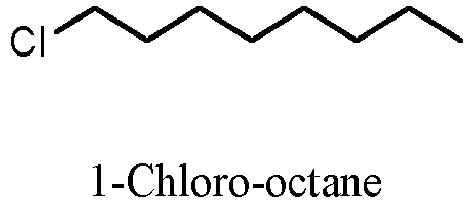 | G |  | |
| h |  | H |  | |
| i | 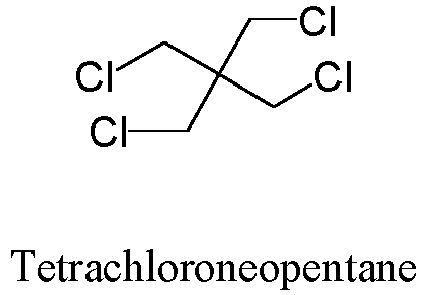 | I |  | |
Claims (10)
- A method for synthesizing an oxetane derivative in a microreactor, the oxetane derivative having the structure shown in Formula (I):
 feeding 3-ethyl-3-hydroxymethyloxetane, a raw material Ha, a catalyst, and a base into a microreactor for etherification reaction to obtain an etherification product, wherein the raw material Ha has a general formula of R-(X)n, and X is halogen; andsubmitting the etherification product to separation to obtain the oxetane derivative.
 - The method for synthesizing an oxetane derivative in a microreactor according to claim 1, characterized in that the microreactor has a reaction channel having an inner diameter of 200 to 10,000 µm.
- The method for synthesizing an oxetane derivative in a microreactor according to claim 1, characterized in that the base is an alkali metal compound or an aqueous solution of alkali metal compound, and the alkali metal compound is selected from one or more selected from the group consisting of lithium hydroxide, sodium hydroxide, potassium hydroxide, and calcium hydroxide; preferably, the alkali metal compound is sodium hydroxide; and the concentration of the aqueous solution of alkali metal compound is 10 % to 20 %; and
the catalyst is selected from one or more of the group consisting of polyethers, cyclic polyethers, and quaternary ammonium salts. - The method for synthesizing an oxetane derivative in a microreactor according to claim 1 or 2, characterized in that the catalyst is selected from one or more of the group consisting of polyethylene glycol, polyethylene glycol alkyl ether, 18-crown-6, 15-crown-5, tetraethylammonium bromide, tetrabutylammonium bromide, tetrabutylammonium chloride, trioctylmethylammonium chloride, dodecyltrimethylammonium chloride, and tetradecyltrimethylammonium chloride.
- The method for synthesizing an oxetane derivative in a microreactor according to claim 4, characterized in that the catalyst is selected from one or more of the group consisting of polyethylene glycol dimethyl ether, 18-crown-6, and tetrabutylammonium bromide.
- The method for synthesizing an oxetane derivative in a microreactor according to any of claims 1 to 5, characterized in that, based on the weight of 3-ethyl-3-hydroxymethyloxetane, the catalyst is added in an amount of 0.1 % to 5 % by weight.
- The method for synthesizing an oxetane derivative in a microreactor according to claim 6, characterized in that, based on the weight of 3-ethyl-3-hydroxymethyloxetane, the catalyst is added in an amount of 0.5 % to 2 % by weight.
- The method for synthesizing an oxetane derivative in a microreactor according to claim 1, characterized in that the reaction temperature of the etherification reaction is 10 to 60 °C, and the residence time of materials is 2 to 5 min.
- The method for synthesizing an oxetane derivative in a microreactor according to claim 8, characterized in that the device used in the separation step includes: a secondary thin-film evaporation device or a rectification tower.
- The method for synthesizing an oxetane derivative in a microreactor according to claim 1, characterized in that the microreactor has a reaction channel having an inner diameter of 500 to 8,000 µm.
Applications Claiming Priority (3)
| Application Number | Priority Date | Filing Date | Title |
|---|---|---|---|
| CN202010261424 | 2020-04-03 | ||
| CN202110184195.XA CN113493427B (en) | 2020-04-03 | 2021-02-10 | Synthesis method of oxetane derivatives by microreactor |
| PCT/CN2021/081185 WO2021197057A1 (en) | 2020-04-03 | 2021-03-16 | Synthesis method for synthesizing oxetane derivative by microreactor |
Publications (3)
| Publication Number | Publication Date |
|---|---|
| EP4112610A1 true EP4112610A1 (en) | 2023-01-04 |
| EP4112610A4 EP4112610A4 (en) | 2024-04-10 |
| EP4112610B1 EP4112610B1 (en) | 2025-07-30 |
Family
ID=77927690
Family Applications (1)
| Application Number | Title | Priority Date | Filing Date |
|---|---|---|---|
| EP21780711.4A Active EP4112610B1 (en) | 2020-04-03 | 2021-03-16 | Synthesis method for synthesizing oxetane derivative by microreactor |
Country Status (6)
| Country | Link |
|---|---|
| US (1) | US12583830B2 (en) |
| EP (1) | EP4112610B1 (en) |
| JP (1) | JP7599505B2 (en) |
| KR (1) | KR102755419B1 (en) |
| TW (1) | TWI807290B (en) |
| WO (1) | WO2021197057A1 (en) |
Families Citing this family (2)
| Publication number | Priority date | Publication date | Assignee | Title |
|---|---|---|---|---|
| CN114262310A (en) * | 2021-12-27 | 2022-04-01 | 山东广浦生物科技有限公司 | Process for producing bis (1-2 (3-oxetanyl) methyl) ether |
| CN114957168A (en) * | 2022-05-17 | 2022-08-30 | 大连天源基化学有限公司 | 3, 3' - (oxybis-methylene) bis (3-ethyl) oxetane and preparation method thereof |
Family Cites Families (16)
| Publication number | Priority date | Publication date | Assignee | Title |
|---|---|---|---|---|
| DE1021858B (en) * | 1956-12-14 | 1958-01-02 | Bayer Ag | Process for the preparation of aromatic oxacyclobutane derivatives |
| US5463084A (en) * | 1992-02-18 | 1995-10-31 | Rensselaer Polytechnic Institute | Photocurable silicone oxetanes |
| US5750590A (en) * | 1995-02-22 | 1998-05-12 | Heraeus Kulzer Gmbh | Polymerizable material |
| JP3508502B2 (en) * | 1997-09-30 | 2004-03-22 | 宇部興産株式会社 | Biphenyl derivative having oxetane ring |
| JP3931448B2 (en) | 1998-09-11 | 2007-06-13 | 東亞合成株式会社 | Process for producing bis (3-alkyloxetane-3-ylmethyl) ether |
| JP3882495B2 (en) | 2000-11-01 | 2007-02-14 | 東亞合成株式会社 | Method for producing ethers using 3-alkyl-3-hydroxymethyloxetane as a raw material |
| WO2004106314A1 (en) | 2003-05-28 | 2004-12-09 | Ube Industries, Ltd. | Process for producing oxetane ring-containing biphenyl compound |
| WO2005080364A1 (en) * | 2004-02-23 | 2005-09-01 | Nippon Steel Chemical Co., Ltd. | Process for producing alicyclic oxetane compound |
| JP2007217471A (en) | 2006-02-14 | 2007-08-30 | Fujifilm Corp | Cationic polymerizable composition, and image forming method and recorded matter using the same |
| US20110236269A1 (en) | 2008-09-20 | 2011-09-29 | National University Corporation Nagaoka University Of Technology | Microreactor |
| JP5683796B2 (en) * | 2009-07-13 | 2015-03-11 | 株式会社Kri | Microstructure manufacturing method and microreactor |
| JP5473699B2 (en) | 2010-03-18 | 2014-04-16 | 大阪瓦斯株式会社 | Transformer control device |
| CN104892549A (en) | 2015-04-20 | 2015-09-09 | 南昌大学 | Synthesis method of allyl oxetane compound for ultraviolet light curing |
| CN104876807A (en) | 2015-05-19 | 2015-09-02 | 安徽生源化工有限公司 | Synthesis process of hydroxybenzene ether (III) |
| JP2017133039A (en) * | 2017-05-10 | 2017-08-03 | Dic株式会社 | Manufacturing method of polymer |
| CN110845643A (en) | 2018-08-21 | 2020-02-28 | 常州强力电子新材料股份有限公司 | Energy-curable epoxy graft-modified chlorosulfonated polyethylene resin, energy-curable composition containing same, and application |
-
2021
- 2021-03-16 WO PCT/CN2021/081185 patent/WO2021197057A1/en not_active Ceased
- 2021-03-16 KR KR1020227037912A patent/KR102755419B1/en active Active
- 2021-03-16 EP EP21780711.4A patent/EP4112610B1/en active Active
- 2021-03-16 US US17/913,671 patent/US12583830B2/en active Active
- 2021-03-16 JP JP2022560041A patent/JP7599505B2/en active Active
- 2021-04-01 TW TW110112178A patent/TWI807290B/en active
Also Published As
| Publication number | Publication date |
|---|---|
| US20230116611A1 (en) | 2023-04-13 |
| WO2021197057A1 (en) | 2021-10-07 |
| JP2023520477A (en) | 2023-05-17 |
| JP7599505B2 (en) | 2024-12-13 |
| KR20220161446A (en) | 2022-12-06 |
| KR102755419B1 (en) | 2025-01-21 |
| TWI807290B (en) | 2023-07-01 |
| EP4112610B1 (en) | 2025-07-30 |
| TW202138358A (en) | 2021-10-16 |
| US12583830B2 (en) | 2026-03-24 |
| EP4112610A4 (en) | 2024-04-10 |
Similar Documents
| Publication | Publication Date | Title |
|---|---|---|
| EP3954678B1 (en) | Five-membered cyclic monothiocarbonates | |
| CN110655645B (en) | Application of strong-base anion exchange resin in preparation of hydroxyl-terminated polyether quaternary ammonium salt | |
| EP4112610B1 (en) | Synthesis method for synthesizing oxetane derivative by microreactor | |
| CN112250646A (en) | Process for preparing alkyl glycidyl ethers | |
| CN105330836A (en) | Method for compounding epoxy-terminated allyl alcohol polyoxyethylene ethers | |
| CN106243344A (en) | A kind of epoxy radicals end capped polyether continuous open loop production technology | |
| EP2412712A1 (en) | Method for producing epoxy compound | |
| CN113493427B (en) | Synthesis method of oxetane derivatives by microreactor | |
| CN101168493B (en) | Preparation method for fluorochlorobenzene | |
| WO2014077465A1 (en) | Method for preparing glycidol | |
| EP4129991B1 (en) | Method for synthesizing oxetane compound by microreactor | |
| CN113336655A (en) | Preparation method of (R) -3-aminobutanol | |
| JP5761775B2 (en) | Diβ-methylglycidyl ether of bisphenol A propylene oxide adduct and curable resin composition using the same | |
| CN117720484A (en) | A kind of preparation method of allyl glycidyl ether | |
| CN101668726A (en) | New branched chain alkoxylates | |
| CN110790642A (en) | Method for synthesizing ethylene glycol mono-tert-butyl ether in alkaline ionic liquid | |
| EP1341607B1 (en) | Novel antimony catalyst compositions | |
| CN103755666B (en) | A kind of process for catalytic synthesis of ether ring alkane | |
| US6734327B2 (en) | Alkoxylation process using antimony catalyst | |
| KR102730063B1 (en) | method for producing a diepoxide compounds | |
| WO2026035536A1 (en) | Synthesis of alkyl aryl ethers | |
| KR101006003B1 (en) | Method for producing polyoxyalkylene alkenyl ether using an ideal system reaction | |
| KR20230124192A (en) | Direct method for the preparation of glycols | |
| JP2022102229A (en) | Process for producing epoxy compound | |
| AU2001247096A1 (en) | Novel antimony catalyst compositions |
Legal Events
| Date | Code | Title | Description |
|---|---|---|---|
| STAA | Information on the status of an ep patent application or granted ep patent |
Free format text: STATUS: THE INTERNATIONAL PUBLICATION HAS BEEN MADE |
|
| PUAI | Public reference made under article 153(3) epc to a published international application that has entered the european phase |
Free format text: ORIGINAL CODE: 0009012 |
|
| STAA | Information on the status of an ep patent application or granted ep patent |
Free format text: STATUS: REQUEST FOR EXAMINATION WAS MADE |
|
| 17P | Request for examination filed |
Effective date: 20220923 |
|
| AK | Designated contracting states |
Kind code of ref document: A1 Designated state(s): AL AT BE BG CH CY CZ DE DK EE ES FI FR GB GR HR HU IE IS IT LI LT LU LV MC MK MT NL NO PL PT RO RS SE SI SK SM TR |
|
| DAV | Request for validation of the european patent (deleted) | ||
| DAX | Request for extension of the european patent (deleted) | ||
| A4 | Supplementary search report drawn up and despatched |
Effective date: 20240313 |
|
| RIC1 | Information provided on ipc code assigned before grant |
Ipc: C07D 407/12 20060101ALI20240306BHEP Ipc: C07D 305/06 20060101AFI20240306BHEP |
|
| GRAP | Despatch of communication of intention to grant a patent |
Free format text: ORIGINAL CODE: EPIDOSNIGR1 |
|
| STAA | Information on the status of an ep patent application or granted ep patent |
Free format text: STATUS: GRANT OF PATENT IS INTENDED |
|
| INTG | Intention to grant announced |
Effective date: 20250514 |
|
| GRAS | Grant fee paid |
Free format text: ORIGINAL CODE: EPIDOSNIGR3 |
|
| GRAA | (expected) grant |
Free format text: ORIGINAL CODE: 0009210 |
|
| STAA | Information on the status of an ep patent application or granted ep patent |
Free format text: STATUS: THE PATENT HAS BEEN GRANTED |
|
| AK | Designated contracting states |
Kind code of ref document: B1 Designated state(s): AL AT BE BG CH CY CZ DE DK EE ES FI FR GB GR HR HU IE IS IT LI LT LU LV MC MK MT NL NO PL PT RO RS SE SI SK SM TR |
|
| P01 | Opt-out of the competence of the unified patent court (upc) registered |
Free format text: CASE NUMBER: APP_30067/2025 Effective date: 20250624 |
|
| REG | Reference to a national code |
Ref country code: GB Ref legal event code: FG4D |
|
| REG | Reference to a national code |
Ref country code: CH Ref legal event code: EP |
|
| REG | Reference to a national code |
Ref country code: DE Ref legal event code: R096 Ref document number: 602021035193 Country of ref document: DE |
|
| REG | Reference to a national code |
Ref country code: IE Ref legal event code: FG4D |
|
| REG | Reference to a national code |
Ref country code: NL Ref legal event code: MP Effective date: 20250730 |
|
| REG | Reference to a national code |
Ref country code: AT Ref legal event code: MK05 Ref document number: 1818823 Country of ref document: AT Kind code of ref document: T Effective date: 20250730 |
|
| PG25 | Lapsed in a contracting state [announced via postgrant information from national office to epo] |
Ref country code: PT Free format text: LAPSE BECAUSE OF FAILURE TO SUBMIT A TRANSLATION OF THE DESCRIPTION OR TO PAY THE FEE WITHIN THE PRESCRIBED TIME-LIMIT Effective date: 20251202 |
|
| PG25 | Lapsed in a contracting state [announced via postgrant information from national office to epo] |
Ref country code: IS Free format text: LAPSE BECAUSE OF FAILURE TO SUBMIT A TRANSLATION OF THE DESCRIPTION OR TO PAY THE FEE WITHIN THE PRESCRIBED TIME-LIMIT Effective date: 20251130 |
|
| PG25 | Lapsed in a contracting state [announced via postgrant information from national office to epo] |
Ref country code: NO Free format text: LAPSE BECAUSE OF FAILURE TO SUBMIT A TRANSLATION OF THE DESCRIPTION OR TO PAY THE FEE WITHIN THE PRESCRIBED TIME-LIMIT Effective date: 20251030 |
|
| REG | Reference to a national code |
Ref country code: LT Ref legal event code: MG9D |
|
| PG25 | Lapsed in a contracting state [announced via postgrant information from national office to epo] |
Ref country code: AT Free format text: LAPSE BECAUSE OF FAILURE TO SUBMIT A TRANSLATION OF THE DESCRIPTION OR TO PAY THE FEE WITHIN THE PRESCRIBED TIME-LIMIT Effective date: 20250730 |
|
| PG25 | Lapsed in a contracting state [announced via postgrant information from national office to epo] |
Ref country code: FI Free format text: LAPSE BECAUSE OF FAILURE TO SUBMIT A TRANSLATION OF THE DESCRIPTION OR TO PAY THE FEE WITHIN THE PRESCRIBED TIME-LIMIT Effective date: 20250730 |
|
| PG25 | Lapsed in a contracting state [announced via postgrant information from national office to epo] |
Ref country code: NL Free format text: LAPSE BECAUSE OF FAILURE TO SUBMIT A TRANSLATION OF THE DESCRIPTION OR TO PAY THE FEE WITHIN THE PRESCRIBED TIME-LIMIT Effective date: 20250730 Ref country code: HR Free format text: LAPSE BECAUSE OF FAILURE TO SUBMIT A TRANSLATION OF THE DESCRIPTION OR TO PAY THE FEE WITHIN THE PRESCRIBED TIME-LIMIT Effective date: 20250730 |
|
| PG25 | Lapsed in a contracting state [announced via postgrant information from national office to epo] |
Ref country code: GR Free format text: LAPSE BECAUSE OF FAILURE TO SUBMIT A TRANSLATION OF THE DESCRIPTION OR TO PAY THE FEE WITHIN THE PRESCRIBED TIME-LIMIT Effective date: 20251031 |
|
| PG25 | Lapsed in a contracting state [announced via postgrant information from national office to epo] |
Ref country code: SE Free format text: LAPSE BECAUSE OF FAILURE TO SUBMIT A TRANSLATION OF THE DESCRIPTION OR TO PAY THE FEE WITHIN THE PRESCRIBED TIME-LIMIT Effective date: 20250730 |
|
| PG25 | Lapsed in a contracting state [announced via postgrant information from national office to epo] |
Ref country code: LV Free format text: LAPSE BECAUSE OF FAILURE TO SUBMIT A TRANSLATION OF THE DESCRIPTION OR TO PAY THE FEE WITHIN THE PRESCRIBED TIME-LIMIT Effective date: 20250730 |
|
| PG25 | Lapsed in a contracting state [announced via postgrant information from national office to epo] |
Ref country code: BG Free format text: LAPSE BECAUSE OF FAILURE TO SUBMIT A TRANSLATION OF THE DESCRIPTION OR TO PAY THE FEE WITHIN THE PRESCRIBED TIME-LIMIT Effective date: 20250730 Ref country code: PL Free format text: LAPSE BECAUSE OF FAILURE TO SUBMIT A TRANSLATION OF THE DESCRIPTION OR TO PAY THE FEE WITHIN THE PRESCRIBED TIME-LIMIT Effective date: 20250730 |
|
| PG25 | Lapsed in a contracting state [announced via postgrant information from national office to epo] |
Ref country code: RS Free format text: LAPSE BECAUSE OF FAILURE TO SUBMIT A TRANSLATION OF THE DESCRIPTION OR TO PAY THE FEE WITHIN THE PRESCRIBED TIME-LIMIT Effective date: 20251030 |
|
| PG25 | Lapsed in a contracting state [announced via postgrant information from national office to epo] |
Ref country code: ES Free format text: LAPSE BECAUSE OF FAILURE TO SUBMIT A TRANSLATION OF THE DESCRIPTION OR TO PAY THE FEE WITHIN THE PRESCRIBED TIME-LIMIT Effective date: 20250730 |
|
| PG25 | Lapsed in a contracting state [announced via postgrant information from national office to epo] |
Ref country code: SM Free format text: LAPSE BECAUSE OF FAILURE TO SUBMIT A TRANSLATION OF THE DESCRIPTION OR TO PAY THE FEE WITHIN THE PRESCRIBED TIME-LIMIT Effective date: 20250730 |
|
| PG25 | Lapsed in a contracting state [announced via postgrant information from national office to epo] |
Ref country code: DK Free format text: LAPSE BECAUSE OF FAILURE TO SUBMIT A TRANSLATION OF THE DESCRIPTION OR TO PAY THE FEE WITHIN THE PRESCRIBED TIME-LIMIT Effective date: 20250730 |
|
| PGFP | Annual fee paid to national office [announced via postgrant information from national office to epo] |
Ref country code: DE Payment date: 20260313 Year of fee payment: 6 |
|
| PG25 | Lapsed in a contracting state [announced via postgrant information from national office to epo] |
Ref country code: IT Free format text: LAPSE BECAUSE OF FAILURE TO SUBMIT A TRANSLATION OF THE DESCRIPTION OR TO PAY THE FEE WITHIN THE PRESCRIBED TIME-LIMIT Effective date: 20250730 |
|
| PGFP | Annual fee paid to national office [announced via postgrant information from national office to epo] |
Ref country code: FR Payment date: 20260330 Year of fee payment: 6 |
|
| PG25 | Lapsed in a contracting state [announced via postgrant information from national office to epo] |
Ref country code: CZ Free format text: LAPSE BECAUSE OF FAILURE TO SUBMIT A TRANSLATION OF THE DESCRIPTION OR TO PAY THE FEE WITHIN THE PRESCRIBED TIME-LIMIT Effective date: 20250730 |
|
| PG25 | Lapsed in a contracting state [announced via postgrant information from national office to epo] |
Ref country code: EE Free format text: LAPSE BECAUSE OF FAILURE TO SUBMIT A TRANSLATION OF THE DESCRIPTION OR TO PAY THE FEE WITHIN THE PRESCRIBED TIME-LIMIT Effective date: 20250730 Ref country code: SK Free format text: LAPSE BECAUSE OF FAILURE TO SUBMIT A TRANSLATION OF THE DESCRIPTION OR TO PAY THE FEE WITHIN THE PRESCRIBED TIME-LIMIT Effective date: 20250730 |
|
| REG | Reference to a national code |
Ref country code: DE Ref legal event code: R097 Ref document number: 602021035193 Country of ref document: DE |
|
| PLBE | No opposition filed within time limit |
Free format text: ORIGINAL CODE: 0009261 |
|
| STAA | Information on the status of an ep patent application or granted ep patent |
Free format text: STATUS: NO OPPOSITION FILED WITHIN TIME LIMIT |
|
| REG | Reference to a national code |
Ref country code: CH Ref legal event code: L10 Free format text: ST27 STATUS EVENT CODE: U-0-0-L10-L00 (AS PROVIDED BY THE NATIONAL OFFICE) Effective date: 20260611 |
|
| PG25 | Lapsed in a contracting state [announced via postgrant information from national office to epo] |
Ref country code: LT Free format text: LAPSE BECAUSE OF FAILURE TO SUBMIT A TRANSLATION OF THE DESCRIPTION OR TO PAY THE FEE WITHIN THE PRESCRIBED TIME-LIMIT Effective date: 20250730 |
|
| 26N | No opposition filed |
Effective date: 20260501 |