EP4112359B1 - Method for controlling electric vehicle, and electric vehicle - Google Patents
Method for controlling electric vehicle, and electric vehicle Download PDFInfo
- Publication number
- EP4112359B1 EP4112359B1 EP20921094.7A EP20921094A EP4112359B1 EP 4112359 B1 EP4112359 B1 EP 4112359B1 EP 20921094 A EP20921094 A EP 20921094A EP 4112359 B1 EP4112359 B1 EP 4112359B1
- Authority
- EP
- European Patent Office
- Prior art keywords
- cooling
- cooling system
- electric
- motor
- vehicle
- Prior art date
- Legal status (The legal status is an assumption and is not a legal conclusion. Google has not performed a legal analysis and makes no representation as to the accuracy of the status listed.)
- Active
Links
Images



Classifications
-
- B—PERFORMING OPERATIONS; TRANSPORTING
- B60—VEHICLES IN GENERAL
- B60L—PROPULSION OF ELECTRICALLY-PROPELLED VEHICLES; SUPPLYING ELECTRIC POWER FOR AUXILIARY EQUIPMENT OF ELECTRICALLY-PROPELLED VEHICLES; ELECTRODYNAMIC BRAKE SYSTEMS FOR VEHICLES IN GENERAL; MAGNETIC SUSPENSION OR LEVITATION FOR VEHICLES; MONITORING OPERATING VARIABLES OF ELECTRICALLY-PROPELLED VEHICLES; ELECTRIC SAFETY DEVICES FOR ELECTRICALLY-PROPELLED VEHICLES
- B60L15/00—Methods, circuits, or devices for controlling the traction-motor speed of electrically-propelled vehicles
- B60L15/20—Methods, circuits, or devices for controlling the traction-motor speed of electrically-propelled vehicles for control of the vehicle or its driving motor to achieve a desired performance, e.g. speed, torque, programmed variation of speed
-
- B—PERFORMING OPERATIONS; TRANSPORTING
- B60—VEHICLES IN GENERAL
- B60L—PROPULSION OF ELECTRICALLY-PROPELLED VEHICLES; SUPPLYING ELECTRIC POWER FOR AUXILIARY EQUIPMENT OF ELECTRICALLY-PROPELLED VEHICLES; ELECTRODYNAMIC BRAKE SYSTEMS FOR VEHICLES IN GENERAL; MAGNETIC SUSPENSION OR LEVITATION FOR VEHICLES; MONITORING OPERATING VARIABLES OF ELECTRICALLY-PROPELLED VEHICLES; ELECTRIC SAFETY DEVICES FOR ELECTRICALLY-PROPELLED VEHICLES
- B60L15/00—Methods, circuits, or devices for controlling the traction-motor speed of electrically-propelled vehicles
- B60L15/20—Methods, circuits, or devices for controlling the traction-motor speed of electrically-propelled vehicles for control of the vehicle or its driving motor to achieve a desired performance, e.g. speed, torque, programmed variation of speed
- B60L15/2045—Methods, circuits, or devices for controlling the traction-motor speed of electrically-propelled vehicles for control of the vehicle or its driving motor to achieve a desired performance, e.g. speed, torque, programmed variation of speed for optimising the use of energy
-
- B—PERFORMING OPERATIONS; TRANSPORTING
- B60—VEHICLES IN GENERAL
- B60L—PROPULSION OF ELECTRICALLY-PROPELLED VEHICLES; SUPPLYING ELECTRIC POWER FOR AUXILIARY EQUIPMENT OF ELECTRICALLY-PROPELLED VEHICLES; ELECTRODYNAMIC BRAKE SYSTEMS FOR VEHICLES IN GENERAL; MAGNETIC SUSPENSION OR LEVITATION FOR VEHICLES; MONITORING OPERATING VARIABLES OF ELECTRICALLY-PROPELLED VEHICLES; ELECTRIC SAFETY DEVICES FOR ELECTRICALLY-PROPELLED VEHICLES
- B60L1/00—Supplying electric power to auxiliary equipment of vehicles
- B60L1/003—Supplying electric power to auxiliary equipment of vehicles to auxiliary motors, e.g. for pumps, compressors
-
- B—PERFORMING OPERATIONS; TRANSPORTING
- B60—VEHICLES IN GENERAL
- B60L—PROPULSION OF ELECTRICALLY-PROPELLED VEHICLES; SUPPLYING ELECTRIC POWER FOR AUXILIARY EQUIPMENT OF ELECTRICALLY-PROPELLED VEHICLES; ELECTRODYNAMIC BRAKE SYSTEMS FOR VEHICLES IN GENERAL; MAGNETIC SUSPENSION OR LEVITATION FOR VEHICLES; MONITORING OPERATING VARIABLES OF ELECTRICALLY-PROPELLED VEHICLES; ELECTRIC SAFETY DEVICES FOR ELECTRICALLY-PROPELLED VEHICLES
- B60L1/00—Supplying electric power to auxiliary equipment of vehicles
- B60L1/02—Supplying electric power to auxiliary equipment of vehicles to electric heating circuits
-
- B—PERFORMING OPERATIONS; TRANSPORTING
- B60—VEHICLES IN GENERAL
- B60L—PROPULSION OF ELECTRICALLY-PROPELLED VEHICLES; SUPPLYING ELECTRIC POWER FOR AUXILIARY EQUIPMENT OF ELECTRICALLY-PROPELLED VEHICLES; ELECTRODYNAMIC BRAKE SYSTEMS FOR VEHICLES IN GENERAL; MAGNETIC SUSPENSION OR LEVITATION FOR VEHICLES; MONITORING OPERATING VARIABLES OF ELECTRICALLY-PROPELLED VEHICLES; ELECTRIC SAFETY DEVICES FOR ELECTRICALLY-PROPELLED VEHICLES
- B60L15/00—Methods, circuits, or devices for controlling the traction-motor speed of electrically-propelled vehicles
- B60L15/20—Methods, circuits, or devices for controlling the traction-motor speed of electrically-propelled vehicles for control of the vehicle or its driving motor to achieve a desired performance, e.g. speed, torque, programmed variation of speed
- B60L15/2054—Methods, circuits, or devices for controlling the traction-motor speed of electrically-propelled vehicles for control of the vehicle or its driving motor to achieve a desired performance, e.g. speed, torque, programmed variation of speed by controlling transmissions or clutches
-
- H—ELECTRICITY
- H02—GENERATION; CONVERSION OR DISTRIBUTION OF ELECTRIC POWER
- H02P—CONTROL OR REGULATION OF ELECTRIC MOTORS, ELECTRIC GENERATORS OR DYNAMO-ELECTRIC CONVERTERS; CONTROLLING TRANSFORMERS, REACTORS OR CHOKE COILS
- H02P5/00—Arrangements specially adapted for regulating or controlling the speed or torque of two or more electric motors
- H02P5/74—Arrangements specially adapted for regulating or controlling the speed or torque of two or more electric motors controlling two or more AC dynamo-electric motors
-
- B—PERFORMING OPERATIONS; TRANSPORTING
- B60—VEHICLES IN GENERAL
- B60K—ARRANGEMENT OR MOUNTING OF PROPULSION UNITS OR OF TRANSMISSIONS IN VEHICLES; ARRANGEMENT OR MOUNTING OF PLURAL DIVERSE PRIME-MOVERS IN VEHICLES; AUXILIARY DRIVES FOR VEHICLES; INSTRUMENTATION OR DASHBOARDS FOR VEHICLES; ARRANGEMENTS IN CONNECTION WITH COOLING, AIR INTAKE, GAS EXHAUST OR FUEL SUPPLY OF PROPULSION UNITS IN VEHICLES
- B60K1/00—Arrangement or mounting of electrical propulsion units
- B60K1/02—Arrangement or mounting of electrical propulsion units comprising more than one electric motor
-
- B—PERFORMING OPERATIONS; TRANSPORTING
- B60—VEHICLES IN GENERAL
- B60K—ARRANGEMENT OR MOUNTING OF PROPULSION UNITS OR OF TRANSMISSIONS IN VEHICLES; ARRANGEMENT OR MOUNTING OF PLURAL DIVERSE PRIME-MOVERS IN VEHICLES; AUXILIARY DRIVES FOR VEHICLES; INSTRUMENTATION OR DASHBOARDS FOR VEHICLES; ARRANGEMENTS IN CONNECTION WITH COOLING, AIR INTAKE, GAS EXHAUST OR FUEL SUPPLY OF PROPULSION UNITS IN VEHICLES
- B60K11/00—Arrangement in connection with cooling of propulsion units
- B60K11/02—Arrangement in connection with cooling of propulsion units with liquid cooling
-
- B—PERFORMING OPERATIONS; TRANSPORTING
- B60—VEHICLES IN GENERAL
- B60K—ARRANGEMENT OR MOUNTING OF PROPULSION UNITS OR OF TRANSMISSIONS IN VEHICLES; ARRANGEMENT OR MOUNTING OF PLURAL DIVERSE PRIME-MOVERS IN VEHICLES; AUXILIARY DRIVES FOR VEHICLES; INSTRUMENTATION OR DASHBOARDS FOR VEHICLES; ARRANGEMENTS IN CONNECTION WITH COOLING, AIR INTAKE, GAS EXHAUST OR FUEL SUPPLY OF PROPULSION UNITS IN VEHICLES
- B60K17/00—Arrangement or mounting of transmissions in vehicles
- B60K17/34—Arrangement or mounting of transmissions in vehicles for driving both front and rear wheels, e.g. four wheel drive vehicles
- B60K17/356—Arrangement or mounting of transmissions in vehicles for driving both front and rear wheels, e.g. four wheel drive vehicles having fluid or electric motor, for driving one or more wheels
-
- B—PERFORMING OPERATIONS; TRANSPORTING
- B60—VEHICLES IN GENERAL
- B60K—ARRANGEMENT OR MOUNTING OF PROPULSION UNITS OR OF TRANSMISSIONS IN VEHICLES; ARRANGEMENT OR MOUNTING OF PLURAL DIVERSE PRIME-MOVERS IN VEHICLES; AUXILIARY DRIVES FOR VEHICLES; INSTRUMENTATION OR DASHBOARDS FOR VEHICLES; ARRANGEMENTS IN CONNECTION WITH COOLING, AIR INTAKE, GAS EXHAUST OR FUEL SUPPLY OF PROPULSION UNITS IN VEHICLES
- B60K1/00—Arrangement or mounting of electrical propulsion units
- B60K2001/003—Arrangement or mounting of electrical propulsion units with means for cooling the electrical propulsion units
- B60K2001/006—Arrangement or mounting of electrical propulsion units with means for cooling the electrical propulsion units the electric motors
-
- B—PERFORMING OPERATIONS; TRANSPORTING
- B60—VEHICLES IN GENERAL
- B60K—ARRANGEMENT OR MOUNTING OF PROPULSION UNITS OR OF TRANSMISSIONS IN VEHICLES; ARRANGEMENT OR MOUNTING OF PLURAL DIVERSE PRIME-MOVERS IN VEHICLES; AUXILIARY DRIVES FOR VEHICLES; INSTRUMENTATION OR DASHBOARDS FOR VEHICLES; ARRANGEMENTS IN CONNECTION WITH COOLING, AIR INTAKE, GAS EXHAUST OR FUEL SUPPLY OF PROPULSION UNITS IN VEHICLES
- B60K23/00—Arrangement or mounting of control devices for vehicle transmissions, or parts thereof, not otherwise provided for
- B60K23/08—Arrangement or mounting of control devices for vehicle transmissions, or parts thereof, not otherwise provided for for changing number of driven wheels, for switching from driving one axle to driving two or more axles
- B60K23/0808—Arrangement or mounting of control devices for vehicle transmissions, or parts thereof, not otherwise provided for for changing number of driven wheels, for switching from driving one axle to driving two or more axles for varying torque distribution between driven axles, e.g. by transfer clutch
-
- B—PERFORMING OPERATIONS; TRANSPORTING
- B60—VEHICLES IN GENERAL
- B60L—PROPULSION OF ELECTRICALLY-PROPELLED VEHICLES; SUPPLYING ELECTRIC POWER FOR AUXILIARY EQUIPMENT OF ELECTRICALLY-PROPELLED VEHICLES; ELECTRODYNAMIC BRAKE SYSTEMS FOR VEHICLES IN GENERAL; MAGNETIC SUSPENSION OR LEVITATION FOR VEHICLES; MONITORING OPERATING VARIABLES OF ELECTRICALLY-PROPELLED VEHICLES; ELECTRIC SAFETY DEVICES FOR ELECTRICALLY-PROPELLED VEHICLES
- B60L2220/00—Electrical machine types; Structures or applications thereof
- B60L2220/40—Electrical machine applications
- B60L2220/42—Electrical machine applications with use of more than one motor
-
- B—PERFORMING OPERATIONS; TRANSPORTING
- B60—VEHICLES IN GENERAL
- B60L—PROPULSION OF ELECTRICALLY-PROPELLED VEHICLES; SUPPLYING ELECTRIC POWER FOR AUXILIARY EQUIPMENT OF ELECTRICALLY-PROPELLED VEHICLES; ELECTRODYNAMIC BRAKE SYSTEMS FOR VEHICLES IN GENERAL; MAGNETIC SUSPENSION OR LEVITATION FOR VEHICLES; MONITORING OPERATING VARIABLES OF ELECTRICALLY-PROPELLED VEHICLES; ELECTRIC SAFETY DEVICES FOR ELECTRICALLY-PROPELLED VEHICLES
- B60L2240/00—Control parameters of input or output; Target parameters
- B60L2240/10—Vehicle control parameters
- B60L2240/12—Speed
-
- B—PERFORMING OPERATIONS; TRANSPORTING
- B60—VEHICLES IN GENERAL
- B60L—PROPULSION OF ELECTRICALLY-PROPELLED VEHICLES; SUPPLYING ELECTRIC POWER FOR AUXILIARY EQUIPMENT OF ELECTRICALLY-PROPELLED VEHICLES; ELECTRODYNAMIC BRAKE SYSTEMS FOR VEHICLES IN GENERAL; MAGNETIC SUSPENSION OR LEVITATION FOR VEHICLES; MONITORING OPERATING VARIABLES OF ELECTRICALLY-PROPELLED VEHICLES; ELECTRIC SAFETY DEVICES FOR ELECTRICALLY-PROPELLED VEHICLES
- B60L2240/00—Control parameters of input or output; Target parameters
- B60L2240/40—Drive Train control parameters
- B60L2240/42—Drive Train control parameters related to electric machines
- B60L2240/421—Speed
-
- B—PERFORMING OPERATIONS; TRANSPORTING
- B60—VEHICLES IN GENERAL
- B60L—PROPULSION OF ELECTRICALLY-PROPELLED VEHICLES; SUPPLYING ELECTRIC POWER FOR AUXILIARY EQUIPMENT OF ELECTRICALLY-PROPELLED VEHICLES; ELECTRODYNAMIC BRAKE SYSTEMS FOR VEHICLES IN GENERAL; MAGNETIC SUSPENSION OR LEVITATION FOR VEHICLES; MONITORING OPERATING VARIABLES OF ELECTRICALLY-PROPELLED VEHICLES; ELECTRIC SAFETY DEVICES FOR ELECTRICALLY-PROPELLED VEHICLES
- B60L2240/00—Control parameters of input or output; Target parameters
- B60L2240/40—Drive Train control parameters
- B60L2240/42—Drive Train control parameters related to electric machines
- B60L2240/423—Torque
-
- B—PERFORMING OPERATIONS; TRANSPORTING
- B60—VEHICLES IN GENERAL
- B60L—PROPULSION OF ELECTRICALLY-PROPELLED VEHICLES; SUPPLYING ELECTRIC POWER FOR AUXILIARY EQUIPMENT OF ELECTRICALLY-PROPELLED VEHICLES; ELECTRODYNAMIC BRAKE SYSTEMS FOR VEHICLES IN GENERAL; MAGNETIC SUSPENSION OR LEVITATION FOR VEHICLES; MONITORING OPERATING VARIABLES OF ELECTRICALLY-PROPELLED VEHICLES; ELECTRIC SAFETY DEVICES FOR ELECTRICALLY-PROPELLED VEHICLES
- B60L2240/00—Control parameters of input or output; Target parameters
- B60L2240/40—Drive Train control parameters
- B60L2240/42—Drive Train control parameters related to electric machines
- B60L2240/425—Temperature
-
- B—PERFORMING OPERATIONS; TRANSPORTING
- B60—VEHICLES IN GENERAL
- B60L—PROPULSION OF ELECTRICALLY-PROPELLED VEHICLES; SUPPLYING ELECTRIC POWER FOR AUXILIARY EQUIPMENT OF ELECTRICALLY-PROPELLED VEHICLES; ELECTRODYNAMIC BRAKE SYSTEMS FOR VEHICLES IN GENERAL; MAGNETIC SUSPENSION OR LEVITATION FOR VEHICLES; MONITORING OPERATING VARIABLES OF ELECTRICALLY-PROPELLED VEHICLES; ELECTRIC SAFETY DEVICES FOR ELECTRICALLY-PROPELLED VEHICLES
- B60L2240/00—Control parameters of input or output; Target parameters
- B60L2240/40—Drive Train control parameters
- B60L2240/48—Drive Train control parameters related to transmissions
- B60L2240/485—Temperature
-
- B—PERFORMING OPERATIONS; TRANSPORTING
- B60—VEHICLES IN GENERAL
- B60L—PROPULSION OF ELECTRICALLY-PROPELLED VEHICLES; SUPPLYING ELECTRIC POWER FOR AUXILIARY EQUIPMENT OF ELECTRICALLY-PROPELLED VEHICLES; ELECTRODYNAMIC BRAKE SYSTEMS FOR VEHICLES IN GENERAL; MAGNETIC SUSPENSION OR LEVITATION FOR VEHICLES; MONITORING OPERATING VARIABLES OF ELECTRICALLY-PROPELLED VEHICLES; ELECTRIC SAFETY DEVICES FOR ELECTRICALLY-PROPELLED VEHICLES
- B60L2260/00—Operating Modes
- B60L2260/20—Drive modes; Transition between modes
- B60L2260/28—Four wheel or all wheel drive
-
- Y—GENERAL TAGGING OF NEW TECHNOLOGICAL DEVELOPMENTS; GENERAL TAGGING OF CROSS-SECTIONAL TECHNOLOGIES SPANNING OVER SEVERAL SECTIONS OF THE IPC; TECHNICAL SUBJECTS COVERED BY FORMER USPC CROSS-REFERENCE ART COLLECTIONS [XRACs] AND DIGESTS
- Y02—TECHNOLOGIES OR APPLICATIONS FOR MITIGATION OR ADAPTATION AGAINST CLIMATE CHANGE
- Y02T—CLIMATE CHANGE MITIGATION TECHNOLOGIES RELATED TO TRANSPORTATION
- Y02T10/00—Road transport of goods or passengers
- Y02T10/60—Other road transportation technologies with climate change mitigation effect
- Y02T10/64—Electric machine technologies in electromobility
-
- Y—GENERAL TAGGING OF NEW TECHNOLOGICAL DEVELOPMENTS; GENERAL TAGGING OF CROSS-SECTIONAL TECHNOLOGIES SPANNING OVER SEVERAL SECTIONS OF THE IPC; TECHNICAL SUBJECTS COVERED BY FORMER USPC CROSS-REFERENCE ART COLLECTIONS [XRACs] AND DIGESTS
- Y02—TECHNOLOGIES OR APPLICATIONS FOR MITIGATION OR ADAPTATION AGAINST CLIMATE CHANGE
- Y02T—CLIMATE CHANGE MITIGATION TECHNOLOGIES RELATED TO TRANSPORTATION
- Y02T10/00—Road transport of goods or passengers
- Y02T10/60—Other road transportation technologies with climate change mitigation effect
- Y02T10/72—Electric energy management in electromobility
Definitions
- the present invention relates to an electric vehicle having a plurality of electric motors and a control method thereof.
- JP 2015-136980A discloses a hybrid vehicle that determines torque distributions for a plurality of motor generators in a manner that the loss while driving in the 4WD mode becomes minimized.
- the torque distribution for each motor generator is set on the basis of the torque required by the vehicle in a manner that the electric power loss becomes minimized, and the drive of each motor generator is controlled on the basis of the set torque distribution.
- EP 2 610 526 A1 discloses a method for controlling an electric vehicle driven by a plurality of electric motors including a first electric motor, in which a lubricant, which is used for lubricating the electric motors and power transmission systems therefor, is used for cooling the electric motors; setting torque distributions for the plurality of electric motors on the basis of a driving force required by the electric vehicle; controlling the drive of the plurality of electric motors on the basis of the set torque distributions.
- JP 2002 078105 A discloses a method for controlling an electric vehicle driven by a plurality of electric motors, the method comprising setting torque distributions for the plurality of electric motors on the basis of a driving force required by the electric vehicle; and controlling the drive of the plurality of electric motors on the basis of the set torque distributions.
- US 5 372 213 A discloses method for controlling an electric vehicle, driven by an electric motor , in which a lubricant, which is used for lubricating the electric motor and power transmission system therefor, is used for cooling the electric motor.
- the torque distribution of one motor generator may be set to 0 in order to minimize power loss.
- the drive of the motor generator whose torque distribution is set to 0 is stopped.
- the lubrication might not be performed properly.
- the electric power consumption of the cooling system cannot be suppressed, the energy loss increases, and the electric power consumption of the vehicle might increase.
- An object of the present invention is to properly lubricate electric motors and power transmission systems therefor and to suppress the electric power consumption of the cooling system.
- a method for controlling an electric vehicle driven by a plurality of electric motors including a first electric motor, in which a lubricant, which is used for lubricating the electric motors and power transmission systems therefor, is used for cooling the electric motors; the electric vehicle includes a plurality of pumps that cool the electric motors by circulating the lubricant and that are provided for each of the plurality of electric motors.
- the method includes; setting torque distributions for the plurality of electric motors on the basis of a driving force required by the electric vehicle; controlling the drive of the plurality of electric motors on the basis of the set torque distributions; and circulating intermittently the lubricant used for cooling the first electric motor when the torque distribution set for the first electric motor is smaller than a predetermined value which is regarded as a reference value.
- FIG. 1 is a diagram showing a schematic configuration of a vehicle cooling system 1 according to a first embodiment of the present invention.
- the vehicle according to the first embodiment is an electric vehicle of a four-wheel drive vehicle (4WD vehicle) in which motors 33, 43 are provided as drive sources for the drive wheels of front wheels and rear wheels, respectively. That is, the vehicle according to the first embodiment is an electric vehicle in which the front wheels are driven by the motor 33 and the rear wheels are driven by the motor 43.
- 4WD vehicle four-wheel drive vehicle
- FIG. 1 shows a cooling system 1 in which a first cooling system 20 is realized by two pumps 22 and 23.
- the first cooling system 20 is a water cooling system that cools each unit of the vehicle using cooling water.
- the first cooling system 20 adjusts the flow rate of cooling water according to the temperature of the cooling water (water temperature).
- the first cooling system 20 uses one refrigerant (cooling water) is shown, but each unit may be cooled by the first cooling system 20 using a plurality of refrigerants.
- the cooling system 1 includes a controller 10, a cooler 21, pumps 22, 23, 34, 44, supply channels 24 to 26, 35, 36, 45, 46, inverters 31, 41, heat exchangers 32, 42, and motors 33, 43.
- the first cooling system 20 includes the cooler 21, the pumps 22, 23, and the supply channels 24 to 26.
- a second cooling system 30 of the front wheel motor 33 includes the heat exchanger 32, the pump 34, and the supply channels 35, 36.
- a second cooling system 40 of the rear wheel motor 43 includes the heat exchanger 42, the pump 44, and the supply channels 45, 46.
- the pumps 22 and 23 are circulation pumps for circulating (pumping) the refrigerant (cooling water) in the first cooling system 20.
- the pumps 34, 44 are circulation pumps for circulating (pumping) the refrigerant (cooling oil) in the second cooling systems 30, 40.
- the pumps 22, 23, 34, 44 can not only be driven or stopped but can also be operated intermittently under the control of the controller 10.
- the controller 10 includes a microprocessor, an input / output interface, a ROM (Read Only Memory), a RAM (Random Access Memory), etc., and controls each unit of the vehicle. In the example shown in FIG. 1 , the controller 10 controls pumps 22, 23, 34, 44, and inverters 31, 41.
- the controller 10 acquires vehicle information (e.g., accelerator pedal depression amount, the speed of the vehicle (vehicle speed)) from each unit of the vehicle, and calculates a driving force (torque command value for the entire vehicle, torque command request for the entire vehicle) required by the vehicle on the basis of the vehicle information. Then, the controller 10 sets torque distributions for the plurality of motors 33, 43 on the basis of the calculated driving force. That is, a driving force required for the front wheels (torque command value) and a driving force required for the rear wheels (torque command value) are set.
- vehicle information e.g., accelerator pedal depression amount, the speed of the vehicle (vehicle speed)
- the torque distributions for the plurality of motors 33, 43 are determined on the basis of the vehicle information (accelerator pedal depression amount, and the vehicle speed) acquired from each unit of the vehicle. In other words, the torque distributions (e.g., equal division, predetermined ratio) for the plurality of motors 33, 43 are determined in a manner that the behavior of the vehicle becomes desirably. Further, the controller 10 outputs torque command values corresponding to the set torque distributions to the inverters 31, 41. That is, the controller 10 controls the inverters 31, 41 to drive the front wheel motor 33 and the rear wheel motor 43 in a manner that torque distributions become the set torque distributions. In this way, the controller 10 controls the plurality of motors 33, 43 on the basis of the set torque distributions.
- the controller 10 controls the inverter 41 to stop driving the rear wheel motor 43. That is, when the torque distribution for the rear wheel motor 43 is set to 0, the controller 10 stops the switching operation of the inverter 41 that drives the rear wheel motor 43.
- the torque distribution for the rear wheels may be 0 in a state where the vehicle is travelling at a somewhat low vehicle speed and in a somewhat constant traffic flow. Further, for example, the torque distribution for the rear wheels may also be 0 when the vehicle speed is low and accelerator pedal depression amount is small. Further, for example, the torque distribution for the rear wheels may also be 0 when there are few torque command requests for the entire vehicle (when the torque command value is small).
- the vehicle according to the first embodiment has a function of driving only a part of the front wheels and the rear wheels (front wheels) and stopping the other (rear wheels) when the required torque is small.
- the cooler 21 is a radiator attached to the front portion of the vehicle, and is an apparatus for transferring the heat of cooling water to the air outside the vehicle. Further, the cooler 21 is connected to the supply channels 24 to 26 through which cooling water flows. Further, in the example shown in FIG. 1 , the supply channel 26 is provided with the pump 22 for circulating cooling water, and the supply channel 25 is provided with the pump 23 for circulating cooling water. Specifically, wind passes through the cooler 21 as the vehicle travels, and the wind cools cooling water inside the cooler 21. Further, the cooling water cooled in the cooler 21 is pumped by the pumps 22, 23 to circulate in the supply channels 24 to 26, thereby cooling the inverters 31, 41 and the heat exchangers 32, 42.
- the inverter 31 is a power converter that is connected to the motor 33 and a battery (not shown) and controls the exchange of electricity between the motor 33 and the battery according to an instruction from the controller 10.
- the inverter 41 is a power converter that is connected to the motor 43 and a battery (not shown) and controls the exchange of electricity between the motor 43 and the battery according to an instruction from the controller 10.
- the inverter 31 and the heat exchanger 32 are cooled by cooling water flowing through the supply channel 26, and the inverter41 and the heat exchanger 42 are cooled by cooling water flowing through the supply channel 25.
- the heat exchanger 32 is a heat exchanger that lowers the temperature of the front wheel motor 33 by using cooling water flowing through the supply channel 26 and cooling oil flowing through the supply channels 35, 36. Specifically, the heat exchanger 32 is cooled by the cooling water cooled inside the cooler 21 flowing through the supply channel 26. Further, the cooling oil cooled inside the heat exchanger 32 is pumped by the pump 34 to circulate in the supply channels 35, 36, thereby cooling the motor 33.
- the heat exchanger 42 is a heat exchanger that lowers the temperature of the rear wheel motor 43 by using cooling water flowing through the supply channel 25 and cooling oil flowing through the supply channels 45, 46. Specifically, the heat exchanger 42 is cooled by the cooling water cooled inside the cooler 21 flowing through the supply channel 25. Further, the cooling oil cooled inside the heat exchanger 42 is pumped by the pump 44 to circulate in the supply channels 45, 46, thereby cooling the motor 43.
- the first cooling system 20 also functions as a cooling system for cooling cooling oil in the second cooling systems 30, 40.
- the motor 33 is an electric motor for driving the front wheels of the vehicle and is connected to the battery via the inverter 31.
- the motor 43 is an electric motor for driving the rear wheels of the vehicle and is connected to the battery via the inverter 41.
- a winding field type synchronous electric motor EESM
- another electric motor e.g., an induction electric motor or a magnet synchronous electric motor
- an induction electric motor or a magnet synchronous electric motor capable of stopping the switching of the inverter when the required torque is small may be used.
- a passage through which cooling oil flows is provided inside or around the motors 33, 43.
- the cooling oil pumped by the pump 34 circulates in the heat exchanger 32, the motor 33, and the supply channels 35, 36, thereby cooling the motor 33.
- the cooling oil pumped by the pump 34 also functions as a lubricant for the motor 33 and the power transmission system therefor.
- the cooling oil pumped by the pump 44 circulates in the heat exchanger 42, the motor 43, and the supply channels 45, 46, thereby cooling the motor 43.
- the cooling oil pumped by the pump 44 also functions as a lubricant for the motor 43 and the power transmission system therefor.
- an oil temperature sensor is mounted on the motor 33, and the inverter 31 detects the oil temperature of the motor 33 on the basis of a signal output from the oil temperature sensor, and outputs the detected result to the controller 10.
- an oil temperature sensor is mounted on the motor 43, and the inverter 41 detects the oil temperature of the motor 43 on the basis of a signal output from the oil temperature sensor, and outputs the detected result to the controller 10.
- the cooling oil used in the second cooling system 30 is used for cooling the motor 33 and also functions as a lubricant (refrigerant lubricating oil) for the motor 33 and the power transmission system therefor.
- the cooling oil used in the second cooling system 40 is used for cooling the motor 43 and also functions as a lubricant (refrigerant lubricating oil) for the motor 43 and the power transmission system therefor.
- the second cooling systems 30, 40 are oil lubrication circuits for an electric motor including an apparatus such as a pump for pumping cooling oil and a supply channel for supplying the cooling oil.
- the second cooling systems 30, 40 by operating the apparatus such as a pump and the oil supply channel in a state where they are combined, the cooling oil is supplied to each unit to be lubricated.
- the action of the second cooling systems 30, 40 can prevent seizure of the lubricated part.
- the second cooling systems 30, 40 are provided with apparatuses for cooling the cooling oil (heat exchangers 32 and 42), and this apparatus can prevent the temperature of the cooling oil from rising.
- the second cooling systems 30, 40 use cooling oil, they can also be referred to as an oil cooling system.
- the second cooling systems 30, 40 can also be referred to as a lubrication cooling apparatus.
- the circulation of cooling oil in the second cooling system 30 is controlled on the basis of at least one of the vehicle speed of the electric vehicle, the rotation speed of the front wheel motor 33, and the cooling oil temperature (oil temperature) of the second cooling system 30.
- the circulation of cooling oil in the second cooling system 40 is controlled on the basis of at least one of the vehicle speed of the electric vehicle, the rotation speed of the rear wheel motor 43, and the cooling oil temperature (oil temperature) of the second cooling system 40.
- the drive of the rear wheel motor 43 is stopped.
- the cooling oil used for cooling the motor 43 is circulated as usual, the energy loss may increase due to the circulation of the cooling oil.
- the circulation of the cooling oil used for cooling the motor 43 is completely stopped.
- the cooling oil used for cooling the motor 43 is also used as a lubricant for the motor 43 and the power transmission system therefor, once the circulation of the cooling oil used for cooling the motor 43 is completely stopped, the lubrication of the motor 43 and the power transmission system therefor may be insufficient.
- the torque distribution for the rear wheel motor 43 is set to 0 and the switching operation of the inverter 41 is stopped, since the rear wheel motor 43 and the inverter 41 do not generate heat, there is often no problem in terms of heat.
- the motor 43 whose drive has been stopped may be rotated by the drive wheels as the vehicle travels. Therefore, since some sliding parts of the motor 43 need to be lubricated, it is necessary to supply cooling oil to the motor 43.
- the controller 10 performs control to stop driving the rear wheel motor 43 and to intermittently drive the pump 44 that circulates the cooling oil used for cooling the motor 43. This intermittent drive will be described in detail with reference to FIGS. 2A, 2B and 3 .
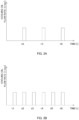
- FIGS. 2A and 2B are diagrams showing the relation between the pump flow rate (vertical axis) of cooling oil when the second cooling system 40 for the rear wheel motor 43 is driven intermittently and the elapsed time (horizontal axis) from the start of intermittent drive.
- FIGS. 2A, 2B show examples of cases where a threshold value (parameter) used when determining the intermittent drive has been changed. Note that FIGS. 2A and 2B will be described in detail with reference to FIG. 3 .
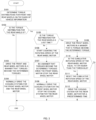
- FIG. 3 is a flowchart showing an example of a processing procedure of the drive control processing of the second cooling system 40 for the rear wheel motor 43, which is executed by the controller 10. Note that this processing procedure is a processing programmed in the controller 10 and is repeatedly executed at predetermined intervals (e.g., about several milliseconds).
- step S101 the controller 10 acquires vehicle information (accelerator pedal depression amount, vehicle speed) from each unit of the vehicle, and calculates a driving force (torque command value for the entire vehicle) required by the vehicle on the basis of the vehicle information. Then, the controller 10 sets torque distributions for the plurality of motors 33, 43 on the basis of the calculated driving force. That is, the controller 10 sets torque distributions for the plurality of motors 33, 43 on the basis of the driving force required by the electric vehicle.
- vehicle information acceleration pedal depression amount, vehicle speed
- a driving force torque command value for the entire vehicle
- step S102 the controller 10 determines whether or not the torque distribution for the rear wheels is 0.
- step S103 the controller 10 outputs torque command values corresponding to the set torque distributions to the inverters 31, 41. That is, the controller 10 controls the inverters 31, 41 to drive the front wheel motor 33 and the rear wheel motor 43 in a manner that torque distributions become the set torque distributions.
- step S104 the controller 10 normally drives the second cooling system 30 for the front wheel motor 33 and the second cooling system 40 for the rear wheel motor 43. That is, the controller 10 controls the drive of the pumps 34 and 44.
- step S105 the controller 10 determines whether or not the torque distribution for the rear wheels is also 0 in the last setting.
- step S106 the controller 10 starts counting the rotation speed of the rear wheel motor 43 on the basis of the information from the inverter 41.
- step S107 the controller 10 controls the inverter 31 to drive the front wheel motor 33 in a manner that a torque becomes the set torque in step S101. Also, the controller 10 controls the inverter 41 to stop driving the rear wheel motor 43.
- step S108 the controller 10 normally drives the second cooling system 30 for the front wheel motor 33 and stops the second cooling system 40 for the rear wheel motor 43. That is, the drive of the pump 44 of the second cooling system 40 is stopped.
- step S109 the controller 10 controls the inverter 31 to drive the front wheel motor 33 in a manner that a torque becomes the set torque in step S101. Also, the controller 10 controls the inverter 41 to continuously stop the drive of the rear wheel motor 43.
- step S110 the controller 10 determines whether or not a cumulative rotation speed of the rear wheel motor 43, which started counting in step S106, has become equal to or higher than the threshold value TH1.
- the cumulative rotation speed of the rear wheel motor 43 is less than the threshold value TH1, the operation of this processing procedure is ended.
- step 5111 the controller 10 resets the cumulative rotation speed of the rear wheel motor 43 and starts counting the rotation speed of the rear wheel motor 43.
- step S112 the controller 10 sets the second cooling system 40 for the rear wheel motor 43 to be driven for a predetermined time. That is, the pump 44 of the second cooling system 40 is driven for a predetermined time.
- a predetermined time a fixed value (e.g., several seconds) may be used, or a value determined from a plurality of values (e.g., 2 seconds, 4 seconds, 6 seconds) on the basis of some rules may be used.
- a predetermined value may be determined on the basis of the cooling oil temperature (oil temperature) of the second cooling system 40. For example, when the cooling oil temperature is low, it is assumed that the cooling oil stays on the slider for a long time because the viscosity of the cooling oil is high.
- a relatively short time can be set as a predetermined time.
- the cooling oil temperature is high, it is assumed that the cooling oil stays on the slider for a short time because the viscosity of the cooling oil is low. Therefore, when the cooling oil temperature is high, a relatively long time can be set as a predetermined time.
- FIGS. 2A and 2B the drive timing is periodically generated according to the vehicle speed, and the pump 44 of the second cooling system 40 is intermittently driven.
- FIG. 2A is an example of a case where the threshold value TH1 is set relatively high
- FIG. 2B is an example of a case where the threshold value TH1 is set relatively low.
- the second cooling system 40 is intermittently driven.
- the drive of the pump 44 is first stopped, and then, the pump 44 is sequentially driven at the timing when the cumulative rotation speed of the rear wheel motor 43 becomes the threshold value TH1.
- the above shows an example in which when the pump 44 is intermittently driven, the drive timing of the pump 44 is determined on the basis of the cumulative rotation speed of the rear wheel motor 43, but the drive timing of the pump 44 may be also determined on the basis of other conditions.
- the drive timing of the pump 44 may be determined on the basis of the vehicle speed.
- the vehicle speed and the rotation speed of the rear wheel motor 43 are in a proportional relation. Therefore, the rotation speed of the rear wheel motor 43 can be sequentially calculated on the basis of the vehicle speed, and the drive timing of the pump 44 can be determined on the basis of the cumulative value of the rotation speed.
- the drive timing of the pump 44 may be determined on the basis that whether or not the vehicle speed is equal to or higher than a predetermined value. In this case, since the arithmetic processing for calculating the rotation speed of the motor on the basis of the vehicle speed is not required, the processing load of the second cooling system drive control can be reduced.
- the pump 44 may be intermittently driven at preset intervals (e.g., at intervals of several seconds).
- a plurality of intermittent drive intervals and the cooling oil temperature (oil temperature) of the second cooling system 40 are registered in association with each other, and on the basis of the cooling oil temperature (oil temperature) of the second cooling system 40, one interval may be determined from the plurality of intermittent drive intervals to execute the intermittent drive of the pump 44.
- the frequency of intermittent drive increases when the oil temperature is higher than the reference threshold value (e.g., the frequency shown in FIG.
- the frequency of intermittent drive decreases when the oil temperature is lower than the reference threshold value (e.g., the frequency shown in FIG. 2A ).
- the reference threshold value e.g., the frequency shown in FIG. 2A
- the vehicle speed of the electric vehicle, the rotation speed of the rear wheel motor 43, and the cooling oil temperature (oil temperature) of the second cooling system 40 can be used as independent parameters. That is, a control is possible that the circulation of cooling oil in the second cooling system 40 is intermittently performed on the basis of at least one of the vehicle speed of the electric vehicle, the rotation speed of the rear wheel motor 43, and the cooling oil temperature (oil temperature) of the second cooling system 40.
- FIG. 3 shows an example in which the threshold value TH1 is set to a constant value
- the threshold value TH1 may be changed according to a predetermined rule.
- the threshold value TH1 may be changed on the basis of the cooling oil temperature (oil temperature) of the second cooling system 40.
- the frequency of intermittent drive decreases when the cooling oil temperature (oil temperature) of the second cooling system 40 is lower than the reference threshold TH2 (e.g., the threshold value TH2 ⁇ oil temperature)
- a relatively high value is set as the threshold TH1.
- the frequency of intermittent drive increases when the cooling oil temperature (oil temperature) of the second cooling system 40 is higher than the reference threshold value TH2 (e.g., the threshold value TH2 ⁇ oil temperature)
- a relatively low value is set as the threshold TH 1.
- FIG. 2A can be grasped as an example of a drive timing when the cooling oil temperature (oil temperature) of the second cooling system 40 is lower than the reference threshold TH2.
- FIG. 2B can be grasped as an example of a drive timing when the cooling oil temperature (oil temperature) of the second cooling system 40 is higher than the reference threshold value TH2.
- the threshold TH1 can be changed on the basis of the oil temperature. That is, the drive timing of the pump 44 can be changed on the basis of the oil temperature.
- two values are set as the threshold value TH1 on the basis of the oil temperature, but three or more values may be set.
- cooling oil as a refrigerant (lubricant, refrigerant lubricating oil) used for cooling and lubricating the motors 33, 43 is shown, but a fluid other than oil (e.g., an inert refrigerant) suitable for lubricating motors may be used. Further, the cooling oil used for cooling and lubricating the motors 33 and 43 may be shared as the oil used for lubricating other units.
- the circulation of cooling oil in the second cooling system 40 for the rear wheel motor 43 is temporarily stopped.
- the cooling oil is circulated at a timing satisfying a predetermined condition (e.g., an intermittent timing).
- the electric motors (motors 33 and 43) and the power transmission systems therefor can be properly lubricated, and the electric power consumption of the cooling system (second cooling system 40) can be suppressed.
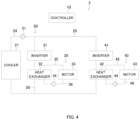
- FIG. 1 shows the cooling system 1 in which the first cooling system 20 is realized by two pumps 22 and 23, the first embodiment can also be applied to a case where the number of pumps is 1 or 3 or more. Therefore, FIG. 4 shows a cooling system 2 that realizes a first cooling system 50 with one pump 51. That is, FIG. 4 shows a schematic configuration of the cooling system 2 of the vehicle.
- the pump 51 is a circulation pump for circulating (pumping) the refrigerant (cooling water) in the first cooling system 50, and is provided in the supply channel 24.
- the cooling water cooled in the cooler 21 is pumped by the pump 51 to circulate in the supply channels 24 to 26, thereby cooling the inverters 31, 41 and the heat exchangers 32, 42.
- the pump 51 can not only be driven or stopped but can also be operated intermittently under the control of the controller 10. That is, in the example shown in FIG. 4 , the controller 10 controls the pumps 51, 34, 44, and the inverters 31, 41.
- the method for controlling the electric vehicle according to the first embodiment uses the lubricant, which is used for lubricating the electric motors (motors 33 and 43) and the power transmission systems therefor, for cooling the electric motors, and drives the electric vehicle by a plurality of electric motors including the first electric motor (motor 43).
- the torque distributions for the plurality of electric motors are set on the basis of the driving force required by the electric vehicle.
- steps S103, S107, S109 the drive of a plurality of electric motors is controlled on the basis of the torque distributions set in step S101.
- steps S108, S112 when the torque distribution set for the first electric motor is smaller than the predetermined value which is regarded as a reference value, the lubricant used for cooling the first electric motor is circulated intermittently.
- the electric power consumption of the vehicle cooling system can be suppressed and the electric power consumption of the vehicle can be reduced by intermittently circulating the lubricant used for cooling the first electric motor.
- the cooling oil is intermittently supplied to the first electric motor and the power transmission system therefor (e.g., at the timing when a predetermined condition is satisfied), it is possible to prevent seizure of each unit (sliding parts that require lubrication, etc.). That is, the electric motors (motors 33 and 43) and the power transmission systems therefor can be properly lubricated, and the electric power consumption of the cooling system (second cooling system 40) can be suppressed.
- the timing of circulating the lubricant used for the first electric motor is determined on the basis of at least one of the vehicle speed of the electric vehicle, the rotation speed of the first electric motor, and the temperature of the lubricant used for the first electric motor.
- the lubricant used for the first electric motor at a timing determined on the basis of at least one of the vehicle speed of the electric vehicle, the rotation speed of the first electric motor, and the temperature of the lubricant used for the first electric motor. Also, since it is possible to properly circulate the lubricant used for the first electric motor at an appropriate timing in consideration of these three factors, it is possible to prevent seizure of each unit (sliding parts that require lubrication, etc.).
- the electric power consumption of the vehicle cooling system can be suppressed and the electric power consumption of the vehicle can be reduced by intermittently circulating the lubricant used for cooling the first electric motor when the torque distribution set for the first electric motor (motor 43) is 0. As a result, the cruising distance of the vehicle can be extended.
- the electric vehicle according to the first embodiment includes a plurality of electric motors (motors 33, 43), a plurality of pumps (pumps 34, 44), and a controller 10.
- the plurality of electric motors (motor33, 43) drive the electric vehicle.
- the plurality of pumps (pumps 34, 44) are pumps for cooling the electric motors by circulating the lubricant used for lubricating the electric motors and the power transmission systems therefor and for cooling the electric motors, and are provided for each of the plurality of electric motors.
- the controller 10 controls in a manner of setting torque distributions for the plurality of electric motors on the basis of the driving force required by the electric vehicle, driving the plurality of electric motors on the basis of the set torque distributions, and intermittently driving the pump (pump 44) that cools the first electric motor when the torque distribution set for the first electric motor (motor 43) is smaller than the predetermined value which is regarded as the reference value.
- the electric power consumption of the vehicle cooling system can be suppressed and the electric power consumption of the vehicle can be reduced by intermittently circulating the lubricant used for cooling the first electric motor.
- the cooling oil is intermittently supplied to the first electric motor and the power transmission system therefor (e.g., at the timing when a predetermined condition is satisfied), it is possible to prevent seizure of each unit (sliding parts that require lubrication, etc.). That is, the electric motors (motors 33 and 43) and the power transmission systems therefor can be properly lubricated, and the electric power consumption of the cooling system (second cooling system 40) can be suppressed.
- the second cooling system 40 for the rear wheel motor 43 is temporarily stopped and then intermittently driven in order to reduce the electric power consumption.
- the electric power consumption is further reduced by temporarily stopping a part of cooling water in the first cooling system 20.
- the first cooling system 20 includes two pumps 22 and 23 (shown in FIG. 1 ) is shown.
- the second embodiment is an example in which a part of the first embodiment is modified, and the illustration and a part of the description thereof are omitted for the parts common to the first embodiment.
- FIG. 5 is a flowchart showing an example of a processing procedure of drive control process, which is executed by the controller 10, between the first cooling system 20 and the second cooling system 40 for the rear wheel motor 43.
- this processing procedure is a processing programmed in the controller 10 and is repeatedly executed at predetermined intervals (e.g., about several milliseconds). Further, this processing procedure is a modification of a part of the processing procedure shown in FIG. 3 , and the parts common to the processing procedure shown in FIG. 3 are designated by the same reference numerals, and a part of the description thereof is omitted.
- step S102 When it is determined in step S102 that the torque distribution for the rear wheels is not 0, in step S103, the front wheel motor 33 and the rear wheel motor 43 are driven. In step S104, the second cooling system 30 for the front wheel motor 33 and the second cooling system 40 for the rear wheel motor 43 are normally driven.
- step S201 the controller 10 normally drives the two pumps 22 and 23 of the first cooling system 20.
- step S106 When it is determined in step S102 that the torque distribution for the rear wheels is 0 and it is determined in step S105 that the torque distribution for the rear wheels is not 0 in the last setting, in step S106, the counting of the rotation speed of the rear wheel motor 43 is started. In step S107, the front wheel motor 33 is driven and the rear wheel motor 43 is stopped. In step S108, the second cooling system 30 for the front wheel motor 33 is normally driven, and the second cooling system 40 for the rear wheel motor 43 is temporarily stopped.
- step S202 the controller 10 normally drives the pump 22 on the front wheel side and stops the pump 23 on the rear wheel side of the first cooling system 20.
- the circulation of cooling oil in the second cooling system 40 for the rear wheel motor 43 is intermittently driven (temporarily stopped), and a part of circulation of cooling water in the first cooling system 20 is stopped.
- the electric power consumption of the vehicle cooling system can be suppressed and the electric power consumption of the vehicle can be further reduced by at least temporarily stopping the circulation of cooling oil in the second cooling system 40 and a part of circulation of cooling water in the first cooling system 20.
- the electric motors (motors 33 and 43) and the power transmission systems therefor can be properly lubricated, and the electric power consumption of the cooling systems (first cooling system 20 and second cooling system 40) can be suppressed.
- the circulation of the refrigerant in the cooling system that cools the lubricant used for the first electric motor is at least temporarily stopped (the pump 23 on the rear wheel side of the first cooling system 20 is stopped).
- the electric power consumption of the vehicle cooling system can be suppressed and the electric power consumption of the vehicle can be further reduced by at least temporarily stopping a part of circulation of cooling water in the first cooling system 20.
- the cruising distance of the vehicle can be further extended.
- FIG. 6A shows the relation between the pump flow rate (vertical axis) of cooling water in the first cooling system 20 when the first cooling system 20 is normally driven and the cooling oil temperature (oil temperature) (horizontal axis) of the second cooling system 40.
- the inverter particularly, a high-power conversion element (e.g., IGPT, power module)) temperature may rise sharply. For example, even when the water temperature is low because the inverter temperature is low, the inverter temperature may rise sharply thereafter.
- IGPT high-power conversion element
- the pump flow rate of cooling water in the first cooling system 20 is a constant value F1 until the cooling oil temperature (oil temperature) of the second cooling system 40 reaches the predetermined temperature 02.
- the value of the pump flow rate of cooling water in the first cooling system 20 changes from F1 to F2 as the oil temperature rises.
- the pump flow rate of cooling water in the first cooling system 20 is a constant value F2 (wherein, F1 ⁇ F2).
- FIG. 6B shows the relation between the pump flow rate (vertical axis) of cooling water in the first cooling system 20 when the first cooling system 20 is intermittently driven and the cooling oil temperature (oil temperature) (horizontal axis) of the second cooling system 40. That is, the pump flow rate of cooling water in the first cooling system 20 is stopped until the cooling oil temperature (oil temperature) of the second cooling system 40 reaches the predetermined temperature O1. Then, when the cooling oil temperature (oil temperature) of the second cooling system 40 is equal to or higher than the predetermined temperature O1 and lower than the predetermined temperature O3, the value of the pump flow rate of cooling water in the first cooling system 20 changes from 0 to F2 as the oil temperature rises. When the cooling oil temperature (oil temperature) of the second cooling system 40 is equal to or higher than the predetermined temperature O3, the pump flow rate of cooling water in the first cooling system 20 is a constant value F2 (wherein, F1 ⁇ F2).
- the normal and intermittent drives of the first cooling system 20 are different before the cooling oil temperature (oil temperature) of the second cooling system 40 reaches the predetermined temperature O2, and are common when the cooling oil temperature is equal to or higher than the predetermined value O2.
- FIG. 6C briefly shows an example of the relation between the pump flow rate of cooling water (vertical axis) in the first cooling system 20 when the first cooling system 20 is temporarily stopped, and the elapsed time from the temporary stop (horizontal axis).
- the pump flow rate of the cooling water is 0 when the cooling oil temperature (oil temperature) is less than the predetermined temperature O1 (the period up to t11 shown in FIG. 6C ).
- the predetermined temperature O1 the period up to t11 shown in FIG. 6C .
- the pump flow rate of the cooling water (wherein, 0 ⁇ pump flow rate ⁇ F2) is determined according to the relation shown in FIG. 6B .
- the cooling oil temperature oil temperature
- O1 the predetermined temperature
- the pump flow rate of the cooling water becomes 0.
- FIG. 6C briefly shows an example of the drive timing of the cooling water pump 23 in order to facilitate the explanation, and the drive timing is not limited to this.
- FIG. 7 is a flowchart showing an example of a processing procedure of drive control process, which is executed by the controller 10, between the first cooling system 20 and the second cooling system 40 for the rear wheel motor 43.
- This processing procedure is a processing programmed in the controller 10 and is repeatedly executed at predetermined intervals (e.g., about several milliseconds). Further, this processing procedure is a modification of a part of the processing procedure shown in FIG. 5 , and the parts common to the processing procedure shown in FIG. 5 are designated by the same reference numerals, and a part of the description thereof is omitted.
- the threshold value TH3 shown in this example corresponds to O1 shown in FIG. 6B .
- step S112 it is set to drive the second cooling system 40 for the rear wheel motor 43 for a predetermined time, and then in step S301, the controller 10 determines whether the cooling oil temperature (oil temperature) of the second cooling system 40 for the rear wheel motor 43 is equal to or higher than the threshold value TH3.
- step S301 When it is determined in step S301 that the oil temperature is less than the threshold value TH3, the process returns to step S202, and the controller 10 stops the pump 23 on the rear wheel side of the first cooling system 20. Note that during the stop of the pump 23 on the rear wheel side, the stop continues.
- step S301 when it is determined in step S301 that the oil temperature is equal to or higher than the threshold value TH3, in step 302, the controller 10 drives the pump 23 on the rear wheel side of the first cooling system 20. In this case, the drive of the pump 23 is controlled according to the relation shown in FIG. 6B . Note that during the drive of the pump 23 on the rear wheel side, the drive continues.
- FIG. 7 shows an example in which the pump 23 of the first cooling system 20 is driven on the basis that whether or not the cooling oil temperature (oil temperature) of the second cooling system 40 is equal to or higher than the threshold value TH3.
- the pump 23 of the first cooling system 20 may be driven on the basis of other conditions.
- the pump 23 of the first cooling system 20 may be driven on condition that the circulation of cooling oil in the second cooling system 40 for the rear wheel motor 43 is restarted.
- the pump 23 of the first cooling system 20 may be driven at a timing when the circulation of cooling oil in the second cooling system 40 for the rear wheel motor 43 is about to be restarted.
- the pump 23 of the first cooling system 20 may be driven on the basis of the timing of driving the circulation of cooling oil in the second cooling system 40 for the rear wheel motor 43 or before and after the driving.
- the pump 23 of the first cooling system 20 may be driven on the basis of the drive timing of the circulation of cooling oil in the second cooling system 40 for the rear wheel motor 43.
- the circulation of cooling oil in the second cooling system 40 for the rear wheel motor 43 is intermittently driven (temporarily stopped), and a part of circulation of cooling water in the first cooling system 20 is intermittently driven (temporarily stopped).
- the electric power consumption of the vehicle cooling system can be suppressed and the electric power consumption of the vehicle can be further reduced by temporarily stopping the circulation of cooling oil in the second cooling system 40 and a part of circulation of cooling water in the first cooling system 20.
- the cruising distance of the vehicle can be further extended.
- the cooling water is circulated at a timing satisfying a predetermined condition (oil temperature is equal to or higher than the threshold TH3).
- a predetermined condition oil temperature is equal to or higher than the threshold TH3
- the electric motors (motors 33 and 43) and the power transmission systems therefor can be properly lubricated, and the electric power consumption of the cooling systems (first cooling system 20 and second cooling system 40) can be suppressed.
- the refrigerant is intermittently circulated in the cooling system (first cooling system 20) for cooling the lubricant used for the first electric motor (the pump 23 on the rear wheel side of the first cooling system 20 is intermittently driven).
- the electric power consumption of the vehicle cooling system can be suppressed and the electric power consumption of the vehicle can be reduced. Further, since a part of circulation of cooling water in the first cooling system 20 is intermittently driven, proper cooling of the entire vehicle can be realized.
- the timing of circulating the refrigerant in the cooling system (first cooling system 20) that cools the lubricant used for the first electric motor is determined on the basis of the temperature (oil temperature) of the lubricant (cooling oil) used for the first electric motor (the timing of driving the pump 23 on the rear wheel side of the first cooling system 20 is determined).
- the present invention is not limited to this.
- the torque distribution for the rear wheels is smaller than the predetermined value (predetermined lower limit torque) which is regarded as the reference value (for example, when the torque distribution for the rear wheels is smaller than or equal to the predetermined value, when the torque distribution for the rear wheels is smaller than the predetermined value)
- the drive of the rear wheel motor 43 may be stopped.
- the pump 44 of the second cooling system 40 can be temporarily stopped and intermittently driven, and the pump 23 of the first cooling system 20 can be temporarily stopped and intermittently driven.
- ⁇ 0.5 Newton (N) can be used as the predetermined value shown here.
Landscapes
- Engineering & Computer Science (AREA)
- Power Engineering (AREA)
- Transportation (AREA)
- Mechanical Engineering (AREA)
- Electric Propulsion And Braking For Vehicles (AREA)
- Motor Or Generator Cooling System (AREA)
Description
- The present invention relates to an electric vehicle having a plurality of electric motors and a control method thereof.
- Conventionally, as an electric vehicle having a plurality of electric motors, there is an electric vehicle in which four wheels (front wheels and rear wheels) are rotationally driven using a plurality of electric motors. For example,
JP 2015-136980A EP 2 610 526 A1 discloses a method for controlling an electric vehicle driven by a plurality of electric motors including a first electric motor, in which a lubricant, which is used for lubricating the electric motors and power transmission systems therefor, is used for cooling the electric motors; setting torque distributions for the plurality of electric motors on the basis of a driving force required by the electric vehicle; controlling the drive of the plurality of electric motors on the basis of the set torque distributions.JP 2002 078105 A US 5 372 213 A discloses method for controlling an electric vehicle, driven by an electric motor , in which a lubricant, which is used for lubricating the electric motor and power transmission system therefor, is used for cooling the electric motor. - In the prior art described above, the torque distribution of one motor generator may be set to 0 in order to minimize power loss. In this case, the drive of the motor generator whose torque distribution is set to 0 is stopped. Here, in the electric vehicle in which a lubricant works for both lubrication and cooling of the motor generator, once the drive of the motor generator is stopped and the circulation of the lubricant is stopped, the lubrication might not be performed properly. On the other hand, when the lubricant continues to circulate as usual during the stop of the drive of the motor generator, the electric power consumption of the cooling system cannot be suppressed, the energy loss increases, and the electric power consumption of the vehicle might increase.
- An object of the present invention is to properly lubricate electric motors and power transmission systems therefor and to suppress the electric power consumption of the cooling system.
- According to an aspect of the present invention, a method for controlling an electric vehicle is provided. The method for controlling the electric vehicle driven by a plurality of electric motors including a first electric motor, in which a lubricant, which is used for lubricating the electric motors and power transmission systems therefor, is used for cooling the electric motors; the electric vehicle includes a plurality of pumps that cool the electric motors by circulating the lubricant and that are provided for each of the plurality of electric motors. The method includes; setting torque distributions for the plurality of electric motors on the basis of a driving force required by the electric vehicle; controlling the drive of the plurality of electric motors on the basis of the set torque distributions; and circulating intermittently the lubricant used for cooling the first electric motor when the torque distribution set for the first electric motor is smaller than a predetermined value which is regarded as a reference value.
-
-
FIG. 1 is a diagram showing a schematic configuration of a vehicle cooling system according to a first embodiment of the present invention. -
FIG. 2A is a diagram showing the relation between the pump flow rate of cooling oil when the second cooling system for the rear wheel motor is driven intermittently and the elapsed time from the start of intermittent drive. -
FIG. 2B is a diagram showing the relation between the pump flow rate of cooling oil when the second cooling system for the rear wheel motor is driven intermittently and the elapsed time from the start of intermittent drive. -
FIG. 3 is a flowchart showing an example of a processing procedure of drive control processing of the second cooling system for the rear wheel motor, which is executed by a controller. -
FIG. 4 is a diagram showing a schematic configuration of the vehicle cooling system according to the first embodiment of the present invention. -
FIG. 5 is a flowchart showing an example of a processing procedure of drive control processing, which is executed by the controller, between a first cooling system and the second cooling system for the rear wheel motor. -
FIG. 6A is a diagram showing the relation between the pump flow rate of cooling water in the first cooling system when the first cooling system is normally driven and the cooling oil temperature (oil temperature) of the second cooling system. -
FIG. 6B is a diagram showing the relation between the pump flow rate of cooling water in the first cooling system when the first cooling system is intermittently driven and the cooling oil temperature (oil temperature) of the second cooling system. -
FIG. 6C is a diagram briefly showing an example of the relation between the pump flow rate of cooling water in the first cooling system when the first cooling system is temporarily stopped and the elapsed time from the temporary stop. -
FIG. 7 is a flowchart showing an example of a processing procedure of drive control processing, which is executed by the controller, between the first cooling system and the second cooling system for the rear wheel motor. - Embodiments of the present disclosure will be described below with reference to the accompanying drawings.
-
FIG. 1 is a diagram showing a schematic configuration of avehicle cooling system 1 according to a first embodiment of the present invention. Notably, the vehicle according to the first embodiment is an electric vehicle of a four-wheel drive vehicle (4WD vehicle) in whichmotors 33, 43 are provided as drive sources for the drive wheels of front wheels and rear wheels, respectively. That is, the vehicle according to the first embodiment is an electric vehicle in which the front wheels are driven by the motor 33 and the rear wheels are driven by themotor 43. -
FIG. 1 shows acooling system 1 in which afirst cooling system 20 is realized by twopumps first cooling system 20 is a water cooling system that cools each unit of the vehicle using cooling water. For example, thefirst cooling system 20 adjusts the flow rate of cooling water according to the temperature of the cooling water (water temperature). Notably, in the first embodiment, an example in which thefirst cooling system 20 uses one refrigerant (cooling water) is shown, but each unit may be cooled by thefirst cooling system 20 using a plurality of refrigerants. - As shown in
FIG. 1 , thecooling system 1 includes acontroller 10, acooler 21,pumps supply channels 24 to 26, 35, 36, 45, 46,inverters heat exchangers motors 33, 43. Notably, thefirst cooling system 20 includes thecooler 21, thepumps supply channels 24 to 26. Asecond cooling system 30 of the front wheel motor 33 includes theheat exchanger 32, thepump 34, and thesupply channels second cooling system 40 of therear wheel motor 43 includes theheat exchanger 42, thepump 44, and thesupply channels pumps first cooling system 20. Thepumps second cooling systems pumps controller 10. - The
controller 10 includes a microprocessor, an input / output interface, a ROM (Read Only Memory), a RAM (Random Access Memory), etc., and controls each unit of the vehicle. In the example shown inFIG. 1 , thecontroller 10controls pumps inverters - Further, the
controller 10 acquires vehicle information (e.g., accelerator pedal depression amount, the speed of the vehicle (vehicle speed)) from each unit of the vehicle, and calculates a driving force (torque command value for the entire vehicle, torque command request for the entire vehicle) required by the vehicle on the basis of the vehicle information. Then, thecontroller 10 sets torque distributions for the plurality ofmotors 33, 43 on the basis of the calculated driving force. That is, a driving force required for the front wheels (torque command value) and a driving force required for the rear wheels (torque command value) are set. In this way, the torque distributions for the plurality ofmotors 33, 43 are determined on the basis of the vehicle information (accelerator pedal depression amount, and the vehicle speed) acquired from each unit of the vehicle. In other words, the torque distributions (e.g., equal division, predetermined ratio) for the plurality ofmotors 33, 43 are determined in a manner that the behavior of the vehicle becomes desirably. Further, thecontroller 10 outputs torque command values corresponding to the set torque distributions to theinverters controller 10 controls theinverters rear wheel motor 43 in a manner that torque distributions become the set torque distributions. In this way, thecontroller 10 controls the plurality ofmotors 33, 43 on the basis of the set torque distributions. - Notably, when the torque distribution for the
rear wheel motor 43 is set to 0, thecontroller 10 controls theinverter 41 to stop driving therear wheel motor 43. That is, when the torque distribution for therear wheel motor 43 is set to 0, thecontroller 10 stops the switching operation of theinverter 41 that drives therear wheel motor 43. For example, the torque distribution for the rear wheels may be 0 in a state where the vehicle is travelling at a somewhat low vehicle speed and in a somewhat constant traffic flow. Further, for example, the torque distribution for the rear wheels may also be 0 when the vehicle speed is low and accelerator pedal depression amount is small. Further, for example, the torque distribution for the rear wheels may also be 0 when there are few torque command requests for the entire vehicle (when the torque command value is small). As described above, the vehicle according to the first embodiment has a function of driving only a part of the front wheels and the rear wheels (front wheels) and stopping the other (rear wheels) when the required torque is small. - The cooler 21 is a radiator attached to the front portion of the vehicle, and is an apparatus for transferring the heat of cooling water to the air outside the vehicle. Further, the cooler 21 is connected to the
supply channels 24 to 26 through which cooling water flows. Further, in the example shown inFIG. 1 , thesupply channel 26 is provided with thepump 22 for circulating cooling water, and thesupply channel 25 is provided with thepump 23 for circulating cooling water. Specifically, wind passes through the cooler 21 as the vehicle travels, and the wind cools cooling water inside the cooler 21. Further, the cooling water cooled in the cooler 21 is pumped by thepumps supply channels 24 to 26, thereby cooling theinverters heat exchangers - The
inverter 31 is a power converter that is connected to the motor 33 and a battery (not shown) and controls the exchange of electricity between the motor 33 and the battery according to an instruction from thecontroller 10. Further, theinverter 41 is a power converter that is connected to themotor 43 and a battery (not shown) and controls the exchange of electricity between themotor 43 and the battery according to an instruction from thecontroller 10. Further, theinverter 31 and theheat exchanger 32 are cooled by cooling water flowing through thesupply channel 26, and the inverter41 and theheat exchanger 42 are cooled by cooling water flowing through thesupply channel 25. - The
heat exchanger 32 is a heat exchanger that lowers the temperature of the front wheel motor 33 by using cooling water flowing through thesupply channel 26 and cooling oil flowing through thesupply channels heat exchanger 32 is cooled by the cooling water cooled inside the cooler 21 flowing through thesupply channel 26. Further, the cooling oil cooled inside theheat exchanger 32 is pumped by thepump 34 to circulate in thesupply channels - Further, the
heat exchanger 42 is a heat exchanger that lowers the temperature of therear wheel motor 43 by using cooling water flowing through thesupply channel 25 and cooling oil flowing through thesupply channels heat exchanger 42 is cooled by the cooling water cooled inside the cooler 21 flowing through thesupply channel 25. Further, the cooling oil cooled inside theheat exchanger 42 is pumped by thepump 44 to circulate in thesupply channels motor 43. - As described above, the
first cooling system 20 also functions as a cooling system for cooling cooling oil in thesecond cooling systems - The motor 33 is an electric motor for driving the front wheels of the vehicle and is connected to the battery via the
inverter 31. Themotor 43 is an electric motor for driving the rear wheels of the vehicle and is connected to the battery via theinverter 41. Notably, as themotors 33, 43, for example, a winding field type synchronous electric motor (EESM) can be used. However, another electric motor (e.g., an induction electric motor or a magnet synchronous electric motor) capable of stopping the switching of the inverter when the required torque is small may be used. - Further, a passage through which cooling oil flows is provided inside or around the
motors 33, 43. Then, the cooling oil pumped by thepump 34 circulates in theheat exchanger 32, the motor 33, and thesupply channels pump 34 also functions as a lubricant for the motor 33 and the power transmission system therefor. Similarly, the cooling oil pumped by thepump 44 circulates in theheat exchanger 42, themotor 43, and thesupply channels motor 43. The cooling oil pumped by thepump 44 also functions as a lubricant for themotor 43 and the power transmission system therefor. - Notably, an oil temperature sensor is mounted on the motor 33, and the
inverter 31 detects the oil temperature of the motor 33 on the basis of a signal output from the oil temperature sensor, and outputs the detected result to thecontroller 10. Similarly, an oil temperature sensor is mounted on themotor 43, and theinverter 41 detects the oil temperature of themotor 43 on the basis of a signal output from the oil temperature sensor, and outputs the detected result to thecontroller 10. - As described above, the cooling oil used in the
second cooling system 30 is used for cooling the motor 33 and also functions as a lubricant (refrigerant lubricating oil) for the motor 33 and the power transmission system therefor. Similarly, the cooling oil used in thesecond cooling system 40 is used for cooling themotor 43 and also functions as a lubricant (refrigerant lubricating oil) for themotor 43 and the power transmission system therefor. As described above, thesecond cooling systems second cooling systems second cooling systems second cooling systems heat exchangers 32 and 42), and this apparatus can prevent the temperature of the cooling oil from rising. Notably, since thesecond cooling systems second cooling systems - Also, during normal operation, the circulation of cooling oil in the
second cooling system 30 is controlled on the basis of at least one of the vehicle speed of the electric vehicle, the rotation speed of the front wheel motor 33, and the cooling oil temperature (oil temperature) of thesecond cooling system 30. Similarly, during normal operation, the circulation of cooling oil in thesecond cooling system 40 is controlled on the basis of at least one of the vehicle speed of the electric vehicle, the rotation speed of therear wheel motor 43, and the cooling oil temperature (oil temperature) of thesecond cooling system 40. - As described above, in the first embodiment, when the torque distribution for the
rear wheel motor 43 is set to 0, the drive of therear wheel motor 43 is stopped. In this way, in a case where the drive of therear wheel motor 43 is stopped, once the cooling oil used for cooling themotor 43 is circulated as usual, the energy loss may increase due to the circulation of the cooling oil. On the other hand, it is conceivable that when the drive of therear wheel motor 43 is stopped, the circulation of the cooling oil used for cooling themotor 43 is completely stopped. However, since the cooling oil used for cooling themotor 43 is also used as a lubricant for themotor 43 and the power transmission system therefor, once the circulation of the cooling oil used for cooling themotor 43 is completely stopped, the lubrication of themotor 43 and the power transmission system therefor may be insufficient. In other words, in a case where the torque distribution for therear wheel motor 43 is set to 0 and the switching operation of theinverter 41 is stopped, since therear wheel motor 43 and theinverter 41 do not generate heat, there is often no problem in terms of heat. However, even the switching operation of theinverter 41 and the drive ofrear wheel motor 43 are stopped, themotor 43 whose drive has been stopped may be rotated by the drive wheels as the vehicle travels. Therefore, since some sliding parts of themotor 43 need to be lubricated, it is necessary to supply cooling oil to themotor 43. - Therefore, in the first embodiment, an example is shown in which when the torque distribution for the
rear wheel motor 43 is set to 0, the drive of therear wheel motor 43 is stopped and cooling oil used for cooling themotor 43 is intermittently circulated (at least temporarily stopped). Note that "intermittently" means performing at regular intervals, but in the present embodiment, the "intermittently" also means that the circulation is performed at a timing (regular timing, irregular timing) satisfying a predetermined condition after a temporarily stop. - That is, when the torque distribution for the
rear wheel motor 43 is set to 0, thecontroller 10 performs control to stop driving therear wheel motor 43 and to intermittently drive thepump 44 that circulates the cooling oil used for cooling themotor 43. This intermittent drive will be described in detail with reference toFIGS. 2A, 2B and3 . -
FIGS. 2A and 2B are diagrams showing the relation between the pump flow rate (vertical axis) of cooling oil when thesecond cooling system 40 for therear wheel motor 43 is driven intermittently and the elapsed time (horizontal axis) from the start of intermittent drive.FIGS. 2A, 2B show examples of cases where a threshold value (parameter) used when determining the intermittent drive has been changed. Note thatFIGS. 2A and 2B will be described in detail with reference toFIG. 3 . -
FIG. 3 is a flowchart showing an example of a processing procedure of the drive control processing of thesecond cooling system 40 for therear wheel motor 43, which is executed by thecontroller 10. Note that this processing procedure is a processing programmed in thecontroller 10 and is repeatedly executed at predetermined intervals (e.g., about several milliseconds). - In step S101, the
controller 10 acquires vehicle information (accelerator pedal depression amount, vehicle speed) from each unit of the vehicle, and calculates a driving force (torque command value for the entire vehicle) required by the vehicle on the basis of the vehicle information. Then, thecontroller 10 sets torque distributions for the plurality ofmotors 33, 43 on the basis of the calculated driving force. That is, thecontroller 10 sets torque distributions for the plurality ofmotors 33, 43 on the basis of the driving force required by the electric vehicle. - In step S102, the
controller 10 determines whether or not the torque distribution for the rear wheels is 0. When the torque distribution for the rear wheels is not 0, in step S103, thecontroller 10 outputs torque command values corresponding to the set torque distributions to theinverters controller 10 controls theinverters rear wheel motor 43 in a manner that torque distributions become the set torque distributions. - In step S104, the
controller 10 normally drives thesecond cooling system 30 for the front wheel motor 33 and thesecond cooling system 40 for therear wheel motor 43. That is, thecontroller 10 controls the drive of thepumps - Also, when it is determined in step S102 that the torque distribution for the rear wheels is 0, in step S105, the
controller 10 determines whether or not the torque distribution for the rear wheels is also 0 in the last setting. When the torque distribution for the rear wheels is not 0 in the last setting, in step S106, thecontroller 10 starts counting the rotation speed of therear wheel motor 43 on the basis of the information from theinverter 41. - In step S107, the
controller 10 controls theinverter 31 to drive the front wheel motor 33 in a manner that a torque becomes the set torque in step S101. Also, thecontroller 10 controls theinverter 41 to stop driving therear wheel motor 43. - In step S108, the
controller 10 normally drives thesecond cooling system 30 for the front wheel motor 33 and stops thesecond cooling system 40 for therear wheel motor 43. That is, the drive of thepump 44 of thesecond cooling system 40 is stopped. - When it is determined in step S105 that the torque distribution for the rear wheels is also 0 in the last setting, in step S109, the
controller 10 controls theinverter 31 to drive the front wheel motor 33 in a manner that a torque becomes the set torque in step S101. Also, thecontroller 10 controls theinverter 41 to continuously stop the drive of therear wheel motor 43. - In step S110, the
controller 10 determines whether or not a cumulative rotation speed of therear wheel motor 43, which started counting in step S106, has become equal to or higher than the threshold value TH1. When the cumulative rotation speed of therear wheel motor 43 is less than the threshold value TH1, the operation of this processing procedure is ended. - When the cumulative rotation speed of the
rear wheel motor 43 becomes equal to or higher than the threshold value TH1, in step 5111, thecontroller 10 resets the cumulative rotation speed of therear wheel motor 43 and starts counting the rotation speed of therear wheel motor 43. - In step S112, the
controller 10 sets thesecond cooling system 40 for therear wheel motor 43 to be driven for a predetermined time. That is, thepump 44 of thesecond cooling system 40 is driven for a predetermined time. Note that, as a predetermined time, a fixed value (e.g., several seconds) may be used, or a value determined from a plurality of values (e.g., 2 seconds, 4 seconds, 6 seconds) on the basis of some rules may be used. For example, a predetermined value may be determined on the basis of the cooling oil temperature (oil temperature) of thesecond cooling system 40. For example, when the cooling oil temperature is low, it is assumed that the cooling oil stays on the slider for a long time because the viscosity of the cooling oil is high. Therefore, when the cooling oil temperature is low, a relatively short time can be set as a predetermined time. On the other hand, when the cooling oil temperature is high, it is assumed that the cooling oil stays on the slider for a short time because the viscosity of the cooling oil is low. Therefore, when the cooling oil temperature is high, a relatively long time can be set as a predetermined time. - For example, when the vehicle speed is constant, the cumulative rotation speed of the
rear wheel motor 43 becomes equal to or higher than the threshold value TH1 at regular intervals. Therefore, as shown inFIGS. 2A and 2B , the drive timing is periodically generated according to the vehicle speed, and thepump 44 of thesecond cooling system 40 is intermittently driven. Note thatFIG. 2A is an example of a case where the threshold value TH1 is set relatively high, andFIG. 2B is an example of a case where the threshold value TH1 is set relatively low. - In this way, when the torque distribution for the rear wheels is 0, the
second cooling system 40 is intermittently driven. In this intermittent drive, the drive of thepump 44 is first stopped, and then, thepump 44 is sequentially driven at the timing when the cumulative rotation speed of therear wheel motor 43 becomes the threshold value TH1. - Notably, the above shows an example in which when the
pump 44 is intermittently driven, the drive timing of thepump 44 is determined on the basis of the cumulative rotation speed of therear wheel motor 43, but the drive timing of thepump 44 may be also determined on the basis of other conditions. For example, the drive timing of thepump 44 may be determined on the basis of the vehicle speed. As described above, the vehicle speed and the rotation speed of therear wheel motor 43 are in a proportional relation. Therefore, the rotation speed of therear wheel motor 43 can be sequentially calculated on the basis of the vehicle speed, and the drive timing of thepump 44 can be determined on the basis of the cumulative value of the rotation speed. Also, when thepump 44 is intermittently driven, the drive timing of thepump 44 may be determined on the basis that whether or not the vehicle speed is equal to or higher than a predetermined value. In this case, since the arithmetic processing for calculating the rotation speed of the motor on the basis of the vehicle speed is not required, the processing load of the second cooling system drive control can be reduced. - It is also assumed that the rotation speed of the
rear wheel motor 43 cannot be obtained for some reasons after the intermittent drive of thepump 44 is set. In this case, thepump 44 may be intermittently driven at preset intervals (e.g., at intervals of several seconds). Alternatively, a plurality of intermittent drive intervals and the cooling oil temperature (oil temperature) of thesecond cooling system 40 are registered in association with each other, and on the basis of the cooling oil temperature (oil temperature) of thesecond cooling system 40, one interval may be determined from the plurality of intermittent drive intervals to execute the intermittent drive of thepump 44. For example, a setting is possible that the frequency of intermittent drive increases when the oil temperature is higher than the reference threshold value (e.g., the frequency shown inFIG. 2B ) and the frequency of intermittent drive decreases when the oil temperature is lower than the reference threshold value (e.g., the frequency shown inFIG. 2A ). In this way, a control is possible that the circulation of cooling oil in thesecond cooling system 40 is intermittently performed on the basis of the oil temperature. - As shown above, the vehicle speed of the electric vehicle, the rotation speed of the
rear wheel motor 43, and the cooling oil temperature (oil temperature) of thesecond cooling system 40 can be used as independent parameters. That is, a control is possible that the circulation of cooling oil in thesecond cooling system 40 is intermittently performed on the basis of at least one of the vehicle speed of the electric vehicle, the rotation speed of therear wheel motor 43, and the cooling oil temperature (oil temperature) of thesecond cooling system 40. - Note that although
FIG. 3 shows an example in which the threshold value TH1 is set to a constant value, the threshold value TH1 may be changed according to a predetermined rule. For example, the threshold value TH1 may be changed on the basis of the cooling oil temperature (oil temperature) of thesecond cooling system 40. - As described above, when the oil temperature of cooling oil is low, it is assumed that the cooling oil stays on the slider for a long time because the viscosity of the cooling oil is high. Therefore, it is desirable to decrease the frequency of intermittent drive when the cooling oil temperature is low. On the other hand, when the cooling oil temperature is high, it is assumed that the cooling oil stays on the slider for a short time because the viscosity of the cooling oil is low. Therefore, it is desirable to increase the frequency of intermittent drive when the cooling oil temperature is high.
- Therefore, since the frequency of intermittent drive decreases when the cooling oil temperature (oil temperature) of the
second cooling system 40 is lower than the reference threshold TH2 (e.g., the threshold value TH2 ≥ oil temperature), a relatively high value is set as the threshold TH1. And, since the frequency of intermittent drive increases when the cooling oil temperature (oil temperature) of thesecond cooling system 40 is higher than the reference threshold value TH2 (e.g., the threshold value TH2 < oil temperature), a relatively low value is set as thethreshold TH 1. - With reference to
FIGS. 2A, 2B, FIG. 2A can be grasped as an example of a drive timing when the cooling oil temperature (oil temperature) of thesecond cooling system 40 is lower than the reference threshold TH2. On the other hand,FIG. 2B can be grasped as an example of a drive timing when the cooling oil temperature (oil temperature) of thesecond cooling system 40 is higher than the reference threshold value TH2. In this way, the threshold TH1 can be changed on the basis of the oil temperature. That is, the drive timing of thepump 44 can be changed on the basis of the oil temperature. In addition, in this example, two values are set as the threshold value TH1 on the basis of the oil temperature, but three or more values may be set. - Further, an example of using cooling oil as a refrigerant (lubricant, refrigerant lubricating oil) used for cooling and lubricating the
motors 33, 43 is shown, but a fluid other than oil (e.g., an inert refrigerant) suitable for lubricating motors may be used. Further, the cooling oil used for cooling and lubricating themotors 33 and 43 may be shared as the oil used for lubricating other units. - As described above, according to the first embodiment, when the torque distribution for the rear wheels is set to 0, the circulation of cooling oil in the
second cooling system 40 for therear wheel motor 43 is temporarily stopped. In this way, by temporarily stopping the circulation of cooling oil in thesecond cooling system 40, it is possible to suppress the electric power consumption of the cooling system of the vehicle and to reduce the electric power consumption of the vehicle. As a result, the cruising distance of the vehicle can be extended. After the torque distribution for the rear wheels is set to 0 and the circulation of cooling oil in thesecond cooling system 40 is temporarily stopped, the cooling oil is circulated at a timing satisfying a predetermined condition (e.g., an intermittent timing). As a result, even after the circulation of cooling oil in thesecond cooling system 40 is temporarily stopped, since the cooling oil is supplied to therear wheel motor 43 and the power transmission system therefor at a timing satisfying a predetermined condition, it is possible to prevent seizure of each unit (sliding parts that require lubrication, etc.). Thus, according to the first embodiment, the electric motors (motors 33 and 43) and the power transmission systems therefor can be properly lubricated, and the electric power consumption of the cooling system (second cooling system 40) can be suppressed. - Notably, although
FIG. 1 shows thecooling system 1 in which thefirst cooling system 20 is realized by twopumps FIG. 4 shows a cooling system 2 that realizes afirst cooling system 50 with onepump 51. That is,FIG. 4 shows a schematic configuration of the cooling system 2 of the vehicle. - Note that the configuration of the
first cooling system 50 is almost the same as that of thefirst cooling system 20 except that the number of pumps to be provided is different, and therefore the units common to thefirst cooling system 20 are designated by the same reference numerals and the description thereof is omitted. Further, thepump 51 is a circulation pump for circulating (pumping) the refrigerant (cooling water) in thefirst cooling system 50, and is provided in thesupply channel 24. The cooling water cooled in the cooler 21 is pumped by thepump 51 to circulate in thesupply channels 24 to 26, thereby cooling theinverters heat exchangers pump 51 can not only be driven or stopped but can also be operated intermittently under the control of thecontroller 10. That is, in the example shown inFIG. 4 , thecontroller 10 controls thepumps inverters - The method for controlling the electric vehicle according to the first embodiment uses the lubricant, which is used for lubricating the electric motors (motors 33 and 43) and the power transmission systems therefor, for cooling the electric motors, and drives the electric vehicle by a plurality of electric motors including the first electric motor (motor 43). According to this control method, in step S101, the torque distributions for the plurality of electric motors are set on the basis of the driving force required by the electric vehicle. Further, in steps S103, S107, S109, the drive of a plurality of electric motors is controlled on the basis of the torque distributions set in step S101. Further, in steps S108, S112, when the torque distribution set for the first electric motor is smaller than the predetermined value which is regarded as a reference value, the lubricant used for cooling the first electric motor is circulated intermittently.
- According to such a method for controlling the electric vehicle, the electric power consumption of the vehicle cooling system can be suppressed and the electric power consumption of the vehicle can be reduced by intermittently circulating the lubricant used for cooling the first electric motor. As a result, the cruising distance of the vehicle can be extended. Also, since the cooling oil is intermittently supplied to the first electric motor and the power transmission system therefor (e.g., at the timing when a predetermined condition is satisfied), it is possible to prevent seizure of each unit (sliding parts that require lubrication, etc.). That is, the electric motors (motors 33 and 43) and the power transmission systems therefor can be properly lubricated, and the electric power consumption of the cooling system (second cooling system 40) can be suppressed.
- In addition, according to the method for controlling the electric vehicle according to the first embodiment, when the state continues, in which the torque distribution set for the first electric motor (motor 43) is smaller than the predetermined value which is regarded as the reference value, the timing of circulating the lubricant used for the first electric motor is determined on the basis of at least one of the vehicle speed of the electric vehicle, the rotation speed of the first electric motor, and the temperature of the lubricant used for the first electric motor.
- According to such a method for controlling the electric vehicle, it is possible to properly circulate the lubricant used for the first electric motor at a timing determined on the basis of at least one of the vehicle speed of the electric vehicle, the rotation speed of the first electric motor, and the temperature of the lubricant used for the first electric motor. Also, since it is possible to properly circulate the lubricant used for the first electric motor at an appropriate timing in consideration of these three factors, it is possible to prevent seizure of each unit (sliding parts that require lubrication, etc.).
- In addition, in the method for controlling the electric vehicle according to the first embodiment, when the torque distribution set for the first electric motor (motor 43) is 0, the lubricant used for the first electric motor is circulated intermittently.
- According to such a method for controlling the electric vehicle, the electric power consumption of the vehicle cooling system can be suppressed and the electric power consumption of the vehicle can be reduced by intermittently circulating the lubricant used for cooling the first electric motor when the torque distribution set for the first electric motor (motor 43) is 0. As a result, the cruising distance of the vehicle can be extended.
- The electric vehicle according to the first embodiment includes a plurality of electric motors (motors 33, 43), a plurality of pumps (pumps 34, 44), and a
controller 10. The plurality of electric motors (motor33, 43) drive the electric vehicle. The plurality of pumps (pumps 34, 44) are pumps for cooling the electric motors by circulating the lubricant used for lubricating the electric motors and the power transmission systems therefor and for cooling the electric motors, and are provided for each of the plurality of electric motors. Thecontroller 10 controls in a manner of setting torque distributions for the plurality of electric motors on the basis of the driving force required by the electric vehicle, driving the plurality of electric motors on the basis of the set torque distributions, and intermittently driving the pump (pump 44) that cools the first electric motor when the torque distribution set for the first electric motor (motor 43) is smaller than the predetermined value which is regarded as the reference value. - According to such an electric vehicle, the electric power consumption of the vehicle cooling system can be suppressed and the electric power consumption of the vehicle can be reduced by intermittently circulating the lubricant used for cooling the first electric motor. As a result, the cruising distance of the vehicle can be extended. Also, since the cooling oil is intermittently supplied to the first electric motor and the power transmission system therefor (e.g., at the timing when a predetermined condition is satisfied), it is possible to prevent seizure of each unit (sliding parts that require lubrication, etc.). That is, the electric motors (motors 33 and 43) and the power transmission systems therefor can be properly lubricated, and the electric power consumption of the cooling system (second cooling system 40) can be suppressed.
- In the first embodiment, an example is shown in which the
second cooling system 40 for therear wheel motor 43 is temporarily stopped and then intermittently driven in order to reduce the electric power consumption. In the second embodiment, an example is shown in which the electric power consumption is further reduced by temporarily stopping a part of cooling water in thefirst cooling system 20. In addition, in the second embodiment, an example of a case where thefirst cooling system 20 includes twopumps 22 and 23 (shown inFIG. 1 ) is shown. The second embodiment is an example in which a part of the first embodiment is modified, and the illustration and a part of the description thereof are omitted for the parts common to the first embodiment. -
FIG. 5 is a flowchart showing an example of a processing procedure of drive control process, which is executed by thecontroller 10, between thefirst cooling system 20 and thesecond cooling system 40 for therear wheel motor 43. Note that this processing procedure is a processing programmed in thecontroller 10 and is repeatedly executed at predetermined intervals (e.g., about several milliseconds). Further, this processing procedure is a modification of a part of the processing procedure shown inFIG. 3 , and the parts common to the processing procedure shown inFIG. 3 are designated by the same reference numerals, and a part of the description thereof is omitted. - In this processing procedure, an example is shown in which the
pump 23 of thefirst cooling system 20 is stopped when the torque distribution for the rear wheels is 0. - When it is determined in step S102 that the torque distribution for the rear wheels is not 0, in step S103, the front wheel motor 33 and the
rear wheel motor 43 are driven. In step S104, thesecond cooling system 30 for the front wheel motor 33 and thesecond cooling system 40 for therear wheel motor 43 are normally driven. - In step S201, the
controller 10 normally drives the twopumps first cooling system 20. - When it is determined in step S102 that the torque distribution for the rear wheels is 0 and it is determined in step S105 that the torque distribution for the rear wheels is not 0 in the last setting, in step S106, the counting of the rotation speed of the
rear wheel motor 43 is started. In step S107, the front wheel motor 33 is driven and therear wheel motor 43 is stopped. In step S108, thesecond cooling system 30 for the front wheel motor 33 is normally driven, and thesecond cooling system 40 for therear wheel motor 43 is temporarily stopped. - In step S202, the
controller 10 normally drives thepump 22 on the front wheel side and stops thepump 23 on the rear wheel side of thefirst cooling system 20. - As described above, according to the second embodiment, when the torque distribution for the rear wheels is set to 0, the circulation of cooling oil in the
second cooling system 40 for therear wheel motor 43 is intermittently driven (temporarily stopped), and a part of circulation of cooling water in thefirst cooling system 20 is stopped. In this way, the electric power consumption of the vehicle cooling system can be suppressed and the electric power consumption of the vehicle can be further reduced by at least temporarily stopping the circulation of cooling oil in thesecond cooling system 40 and a part of circulation of cooling water in thefirst cooling system 20. As a result, the cruising distance of the vehicle can be further extended. As described above, according to the second embodiment, the electric motors (motors 33 and 43) and the power transmission systems therefor can be properly lubricated, and the electric power consumption of the cooling systems (first coolingsystem 20 and second cooling system 40) can be suppressed. - In the method for controlling the electric vehicle according to the second embodiment, when the torque distribution set for the first electric motor (motor 43) is smaller than the predetermined value which is regarded as the reference value, in the cooling system (first cooling system 20) that cools the lubricant (cooling oil) using a refrigerant (cooling water) different from the lubricant, the circulation of the refrigerant in the cooling system that cools the lubricant used for the first electric motor is at least temporarily stopped (the
pump 23 on the rear wheel side of thefirst cooling system 20 is stopped). - According to such a method for controlling the electric vehicle, the electric power consumption of the vehicle cooling system can be suppressed and the electric power consumption of the vehicle can be further reduced by at least temporarily stopping a part of circulation of cooling water in the
first cooling system 20. As a result, the cruising distance of the vehicle can be further extended. - In the above, an example is shown in which a part of the first cooling system (pump 23 on the rear wheel side) is stopped. Next, an example is shown in which a part of the first cooling system (pump 23 on the rear wheel side) is intermittently driven for the purpose of reducing the electric power consumption. Note that in the modified example of the second embodiment, an example is shown in which the
pump 23 on the rear wheel side is intermittently driven on the basis of the temperature of the cooling oil (oil temperature) for lowering the temperature of therear wheel motor 43. The drive timing will be described in detail with reference toFIGS. 6A to 6C andFIG. 7 . -
FIG. 6A shows the relation between the pump flow rate (vertical axis) of cooling water in thefirst cooling system 20 when thefirst cooling system 20 is normally driven and the cooling oil temperature (oil temperature) (horizontal axis) of thesecond cooling system 40. Here, the inverter (particularly, a high-power conversion element (e.g., IGPT, power module)) temperature may rise sharply. For example, even when the water temperature is low because the inverter temperature is low, the inverter temperature may rise sharply thereafter. Therefore, when the pump flow rate of cooling water is set to 0 under a state where the inverter temperature and the water temperature are low, once the inverter temperature rises sharply thereafter, there is a risk that the rate at which the cooling water temperature of thefirst cooling system 20 decreases cannot keep up with the rate at which the inverter temperature increases. Therefore, it is necessary to always supply cooling water when the inverter is driving. Specifically, the pump flow rate of cooling water in thefirst cooling system 20 is a constant value F1 until the cooling oil temperature (oil temperature) of thesecond cooling system 40 reaches the predeterminedtemperature 02. - Then, when the cooling oil temperature (oil temperature) of the
second cooling system 40 is equal to or higher than the predetermined temperature O2 and lower than the predetermined temperature O3, the value of the pump flow rate of cooling water in thefirst cooling system 20 changes from F1 to F2 as the oil temperature rises. When the cooling oil temperature (oil temperature) of thesecond cooling system 40 is equal to or higher than the predetermined temperature O3, the pump flow rate of cooling water in thefirst cooling system 20 is a constant value F2 (wherein, F1 <F2). -
FIG. 6B shows the relation between the pump flow rate (vertical axis) of cooling water in thefirst cooling system 20 when thefirst cooling system 20 is intermittently driven and the cooling oil temperature (oil temperature) (horizontal axis) of thesecond cooling system 40. That is, the pump flow rate of cooling water in thefirst cooling system 20 is stopped until the cooling oil temperature (oil temperature) of thesecond cooling system 40 reaches the predetermined temperature O1. Then, when the cooling oil temperature (oil temperature) of thesecond cooling system 40 is equal to or higher than the predetermined temperature O1 and lower than the predetermined temperature O3, the value of the pump flow rate of cooling water in thefirst cooling system 20 changes from 0 to F2 as the oil temperature rises. When the cooling oil temperature (oil temperature) of thesecond cooling system 40 is equal to or higher than the predetermined temperature O3, the pump flow rate of cooling water in thefirst cooling system 20 is a constant value F2 (wherein, F1 <F2). - Thus, the normal and intermittent drives of the
first cooling system 20 are different before the cooling oil temperature (oil temperature) of thesecond cooling system 40 reaches the predetermined temperature O2, and are common when the cooling oil temperature is equal to or higher than the predetermined value O2. -
FIG. 6C briefly shows an example of the relation between the pump flow rate of cooling water (vertical axis) in thefirst cooling system 20 when thefirst cooling system 20 is temporarily stopped, and the elapsed time from the temporary stop (horizontal axis). As shown inFIG. 6C , after temporarily stopping thefirst cooling system 20, the pump flow rate of the cooling water is 0 when the cooling oil temperature (oil temperature) is less than the predetermined temperature O1 (the period up to t11 shown inFIG. 6C ). In addition, once the cooling oil temperature (oil temperature) is equal to or higher than the predetermined temperature O1 (the period from t11 to t12 shown inFIG. 6C ), the pump flow rate of the cooling water (wherein, 0 <pump flow rate ≤ F2) is determined according to the relation shown inFIG. 6B . Once the cooling oil temperature (oil temperature) is less than the predetermined temperature O1 (the period after t12 shown inFIG. 6C ), the pump flow rate of the cooling water becomes 0. Note thatFIG. 6C briefly shows an example of the drive timing of the coolingwater pump 23 in order to facilitate the explanation, and the drive timing is not limited to this. -
FIG. 7 is a flowchart showing an example of a processing procedure of drive control process, which is executed by thecontroller 10, between thefirst cooling system 20 and thesecond cooling system 40 for therear wheel motor 43. This processing procedure is a processing programmed in thecontroller 10 and is repeatedly executed at predetermined intervals (e.g., about several milliseconds). Further, this processing procedure is a modification of a part of the processing procedure shown inFIG. 5 , and the parts common to the processing procedure shown inFIG. 5 are designated by the same reference numerals, and a part of the description thereof is omitted. Note that the threshold value TH3 shown in this example corresponds to O1 shown inFIG. 6B . - In step S112, it is set to drive the
second cooling system 40 for therear wheel motor 43 for a predetermined time, and then in step S301, thecontroller 10 determines whether the cooling oil temperature (oil temperature) of thesecond cooling system 40 for therear wheel motor 43 is equal to or higher than the threshold value TH3. - When it is determined in step S301 that the oil temperature is less than the threshold value TH3, the process returns to step S202, and the
controller 10 stops thepump 23 on the rear wheel side of thefirst cooling system 20. Note that during the stop of thepump 23 on the rear wheel side, the stop continues. On the other hand, when it is determined in step S301 that the oil temperature is equal to or higher than the threshold value TH3, in step 302, thecontroller 10 drives thepump 23 on the rear wheel side of thefirst cooling system 20. In this case, the drive of thepump 23 is controlled according to the relation shown inFIG. 6B . Note that during the drive of thepump 23 on the rear wheel side, the drive continues. - Note that
FIG. 7 shows an example in which thepump 23 of thefirst cooling system 20 is driven on the basis that whether or not the cooling oil temperature (oil temperature) of thesecond cooling system 40 is equal to or higher than the threshold value TH3. However, thepump 23 of thefirst cooling system 20 may be driven on the basis of other conditions. For example, thepump 23 of thefirst cooling system 20 may be driven on condition that the circulation of cooling oil in thesecond cooling system 40 for therear wheel motor 43 is restarted. Also, for example, thepump 23 of thefirst cooling system 20 may be driven at a timing when the circulation of cooling oil in thesecond cooling system 40 for therear wheel motor 43 is about to be restarted. That is, thepump 23 of thefirst cooling system 20 may be driven on the basis of the timing of driving the circulation of cooling oil in thesecond cooling system 40 for therear wheel motor 43 or before and after the driving. In other words, thepump 23 of thefirst cooling system 20 may be driven on the basis of the drive timing of the circulation of cooling oil in thesecond cooling system 40 for therear wheel motor 43. - Thus, according to the modified example of the second embodiment, when the torque distribution for the rear wheels is set to 0, the circulation of cooling oil in the
second cooling system 40 for therear wheel motor 43 is intermittently driven (temporarily stopped), and a part of circulation of cooling water in thefirst cooling system 20 is intermittently driven (temporarily stopped). In this way, the electric power consumption of the vehicle cooling system can be suppressed and the electric power consumption of the vehicle can be further reduced by temporarily stopping the circulation of cooling oil in thesecond cooling system 40 and a part of circulation of cooling water in thefirst cooling system 20. As a result, the cruising distance of the vehicle can be further extended. After the torque distribution for the rear wheels is set to 0 and a part of circulation of cooling water in thefirst cooling system 20 is temporarily stopped, the cooling water is circulated at a timing satisfying a predetermined condition (oil temperature is equal to or higher than the threshold TH3). As a result, even after a part of circulation of cooling water in thefirst cooling system 20 is temporarily stopped, the circulation of the cooling water is restarted at the timing when a predetermined condition is satisfied, so that proper cooling of the entire vehicle can be realized. As described above, according to the second embodiment, the electric motors (motors 33 and 43) and the power transmission systems therefor can be properly lubricated, and the electric power consumption of the cooling systems (first coolingsystem 20 and second cooling system 40) can be suppressed. - In the method for controlling the electric vehicle according to modified example of the second embodiment, when the state continues, in which the torque distribution set for the first electric motor (motor 43) is smaller than the predetermined value which is regarded as the reference value, the refrigerant is intermittently circulated in the cooling system (first cooling system 20) for cooling the lubricant used for the first electric motor (the
pump 23 on the rear wheel side of thefirst cooling system 20 is intermittently driven). - According to such a method for controlling the electric vehicle, by intermittently driving a part of circulation of cooling water in the
first cooling system 20, the electric power consumption of the vehicle cooling system can be suppressed and the electric power consumption of the vehicle can be reduced. Further, since a part of circulation of cooling water in thefirst cooling system 20 is intermittently driven, proper cooling of the entire vehicle can be realized. - In the method for controlling the electric vehicle according to modified example of the second embodiment, when the state continues, in which the torque distribution set for the first electric motor (motor 43) is smaller than the predetermined value which is regarded as the reference value, the timing of circulating the refrigerant in the cooling system (first cooling system 20) that cools the lubricant used for the first electric motor is determined on the basis of the temperature (oil temperature) of the lubricant (cooling oil) used for the first electric motor (the timing of driving the
pump 23 on the rear wheel side of thefirst cooling system 20 is determined). - According to such a method for controlling the electric vehicle, it is possible to properly circulate the refrigerant in the cooling system (first cooling system 20) at an appropriate timing in consideration of the temperature (oil temperature) of the lubricant (cooling oil) used for the first electric motor.
- In the first and second embodiments, in order to facilitate the explanation, an example is shown in which the drive of the
rear wheel motor 43 is stopped when the torque distribution for the rear wheels is set to 0. However, the present invention is not limited to this. For example, when the torque distribution for the rear wheels is smaller than the predetermined value (predetermined lower limit torque) which is regarded as the reference value (for example, when the torque distribution for the rear wheels is smaller than or equal to the predetermined value, when the torque distribution for the rear wheels is smaller than the predetermined value), the drive of therear wheel motor 43 may be stopped. In this way, when the drive of therear wheel motor 43 is stopped, as shown in the first and second embodiments, thepump 44 of thesecond cooling system 40 can be temporarily stopped and intermittently driven, and thepump 23 of thefirst cooling system 20 can be temporarily stopped and intermittently driven. As the predetermined value shown here, for example, ± 0.5 Newton (N) can be used. - While the embodiments of the present invention have been described above, the above-described embodiments only show a part of application examples of the present invention.
Claims (7)
- A method for controlling an electric vehicle, wherein:- the electric vehicle is driven by a plurality of electric motors (33, 43) including a first electric motor (43), in which a lubricant, which is used for lubricating the electric motors (33, 43) and power transmission systems therefor, is used for cooling the electric motors (33, 43),- the electric vehicle includes a plurality of pumps (34, 44) that cool the electric motors (33, 43) by circulating the lubricant and that are provided for each of the plurality of electric motors (33, 43), and- the method comprises:- setting torque distributions for the plurality of electric motors (33, 43) on the basis of a driving force required by the electric vehicle;- controlling the drive of the plurality of electric motors (33, 43) on the basis of the set torque distributions; and- circulating intermittently the lubricant used for cooling the first electric motor (43) when the torque distribution set for the first electric motor (43) is smaller than a predetermined value which is regarded as a reference value.
- The method according to claim 1, wherein when a state continues, in which the torque distribution set for the first electric motor (43) is smaller than the predetermined value which is regarded as the reference value, a timing of circulating the lubricant used for the first electric motor (43) is determined on the basis of at least one of the vehicle speed of the electric vehicle, the rotation speed of the first electric motor (43), and the temperature of the lubricant used for the first electric motor (43).
- The method according to claim 1 or 2, wherein when the torque distribution set for the first electric motor (43) is smaller than the predetermined value which is regarded as the reference value, in a cooling system (20) that cools the lubricant with a refrigerant different from the lubricant, the circulation of the refrigerant in the cooling system (20) that cools the lubricant used for the first electric motor (43) is stopped at least temporarily.
- The method according to claim 3, wherein when a state continues, in which the torque distribution set for the first electric motor (43) is smaller than the predetermined value which is regarded as the reference value, the refrigerant in the cooling system (20) that cools the lubricant used for the first electric motor (43) is intermittently circulated.
- The method according to claim 4, wherein:- when a state continues, in which the torque distribution set for the first electric motor (43) is smaller than the predetermined value which is regarded as the reference value, a timing of circulating the refrigerant in the cooling system (20) that cools the lubricant used for the first electric motor (43) is determined on the basis of the temperature of the lubricant used for the first electric motor (43).
- The method according to any one of claims 1 to 5, wherein, when the torque distribution set for the first electric motor (43) is 0, the lubricant used for the first electric motor (43) is intermittently circulated.
- An electric vehicle,comprising:- a plurality of electric motors (33, 43) that drive the electric vehicle;- a plurality of pumps (34, 44) that cool the electric motors (33, 43) by circulating the lubricant, which is used for lubricating the electric motors (33, 43) and power transmission systems therefor and for cooling the electric motors (33, 43), and that are provided for each of the plurality of electric motors (33, 43); and- a controller (10) that is configured to set the torque distributions for the plurality of electric motors (33, 43) on the basis of the driving force required by the electric vehicle and control the drive of the plurality of electric motors (33, 43) on the basis of the set torque distributions,wherein the controller (10) is configured to control in a manner of intermittently driving the pump (44) that cools the first electric motor (43) when the torque distribution set for the first electric motor (43) included in the plurality of electric motors (33, 43) is smaller than the predetermined value which is regarded as a reference value.
Applications Claiming Priority (1)
| Application Number | Priority Date | Filing Date | Title |
|---|---|---|---|
| PCT/IB2020/000139 WO2021171050A1 (en) | 2020-02-26 | 2020-02-26 | Method for controlling electric vehicle, and electric vehicle |
Publications (3)
| Publication Number | Publication Date |
|---|---|
| EP4112359A1 EP4112359A1 (en) | 2023-01-04 |
| EP4112359A4 EP4112359A4 (en) | 2023-04-19 |
| EP4112359B1 true EP4112359B1 (en) | 2024-11-27 |
Family
ID=77490960
Family Applications (1)
| Application Number | Title | Priority Date | Filing Date |
|---|---|---|---|
| EP20921094.7A Active EP4112359B1 (en) | 2020-02-26 | 2020-02-26 | Method for controlling electric vehicle, and electric vehicle |
Country Status (5)
| Country | Link |
|---|---|
| US (1) | US12291106B2 (en) |
| EP (1) | EP4112359B1 (en) |
| JP (1) | JP7318794B2 (en) |
| CN (1) | CN115175823B (en) |
| WO (1) | WO2021171050A1 (en) |
Families Citing this family (7)
| Publication number | Priority date | Publication date | Assignee | Title |
|---|---|---|---|---|
| CN114670669B (en) * | 2021-11-01 | 2024-06-18 | 北京新能源汽车股份有限公司 | Torque distribution method and device for four-wheel drive electric vehicle and electric vehicle |
| CN115122886B (en) * | 2022-06-29 | 2025-08-26 | 东风汽车集团股份有限公司 | Cooling and lubrication system, vehicle, and control method |
| WO2024110031A1 (en) * | 2022-11-23 | 2024-05-30 | Elaphe Propulsion Technologies, Ltd. | Method and apparatus for controlling an electric machine |
| JP2025012139A (en) * | 2023-07-12 | 2025-01-24 | トヨタ自動車株式会社 | Cooling control device for electric vehicles |
| JP7856080B2 (en) * | 2023-11-02 | 2026-05-11 | トヨタ自動車株式会社 | Cooling control system for electric vehicles |
| WO2026014120A1 (en) * | 2024-07-12 | 2026-01-15 | ジヤトコ株式会社 | Control device for unit, control method for unit, and program |
| CN119872221B (en) * | 2025-03-04 | 2025-11-04 | 奇瑞新能源汽车股份有限公司 | A method and related equipment for temperature protection of the electric drive system of a four-wheel drive electric vehicle |
Citations (2)
| Publication number | Priority date | Publication date | Assignee | Title |
|---|---|---|---|---|
| US5372213A (en) * | 1991-10-24 | 1994-12-13 | Aisin Aw Co., Ltd. | Oil circulating system for electric vehicle |
| JP2014151688A (en) * | 2013-02-06 | 2014-08-25 | Jatco Ltd | Lubrication device of hybrid vehicle |
Family Cites Families (17)
| Publication number | Priority date | Publication date | Assignee | Title |
|---|---|---|---|---|
| JP3604268B2 (en) * | 1997-12-26 | 2004-12-22 | Ntn株式会社 | Control method for 4WD vehicle |
| JP4211209B2 (en) * | 2000-08-25 | 2009-01-21 | トヨタ自動車株式会社 | Power output device and automobile equipped with the same |
| JP4442417B2 (en) * | 2004-12-24 | 2010-03-31 | トヨタ自動車株式会社 | Vehicle lubrication control device |
| JP2008048528A (en) | 2006-08-14 | 2008-02-28 | Nissan Motor Co Ltd | Vehicle drive device |
| WO2009016884A1 (en) * | 2007-07-30 | 2009-02-05 | Hitachi Construction Machinery Co., Ltd. | Running driver of working vehicle |
| JP5185846B2 (en) | 2009-01-28 | 2013-04-17 | 日立建機株式会社 | Travel drive device for work vehicle |
| JP5083371B2 (en) * | 2010-05-10 | 2012-11-28 | トヨタ自動車株式会社 | Four-wheel drive vehicle control system |
| CN103069196A (en) * | 2010-08-24 | 2013-04-24 | 本田技研工业株式会社 | Liquid flow path control device for drive device for vehicle |
| JP2012095378A (en) * | 2010-10-25 | 2012-05-17 | Mitsubishi Motors Corp | Motor control device of electric vehicle |
| JP5100819B2 (en) * | 2010-11-17 | 2012-12-19 | 本田技研工業株式会社 | Hybrid vehicle |
| US8958933B2 (en) * | 2012-01-19 | 2015-02-17 | Ford Global Technologies, Llc | Engine control system |
| US8783135B2 (en) * | 2012-08-09 | 2014-07-22 | GM Global Technology Operations LLC | Electro-mechanical drive-unit |
| JP5720664B2 (en) * | 2012-12-06 | 2015-05-20 | トヨタ自動車株式会社 | Electric vehicle and control method thereof |
| JP5984172B2 (en) * | 2013-04-11 | 2016-09-06 | 三菱電機株式会社 | Cooling control device and cooling control method for motor for electric vehicle |
| JP2015136980A (en) | 2014-01-21 | 2015-07-30 | トヨタ自動車株式会社 | Control device for hybrid vehicle |
| EP3332103B1 (en) * | 2015-08-07 | 2022-09-14 | Sikorsky Aircraft Corporation | Lubrication systems for transmissions |
| JP2017118773A (en) * | 2015-12-25 | 2017-06-29 | 三菱自動車工業株式会社 | Oil cooling system for vehicle driving motor |
-
2020
- 2020-02-26 CN CN202080097639.XA patent/CN115175823B/en active Active
- 2020-02-26 US US17/802,322 patent/US12291106B2/en active Active
- 2020-02-26 JP JP2022502326A patent/JP7318794B2/en active Active
- 2020-02-26 EP EP20921094.7A patent/EP4112359B1/en active Active
- 2020-02-26 WO PCT/IB2020/000139 patent/WO2021171050A1/en not_active Ceased
Patent Citations (2)
| Publication number | Priority date | Publication date | Assignee | Title |
|---|---|---|---|---|
| US5372213A (en) * | 1991-10-24 | 1994-12-13 | Aisin Aw Co., Ltd. | Oil circulating system for electric vehicle |
| JP2014151688A (en) * | 2013-02-06 | 2014-08-25 | Jatco Ltd | Lubrication device of hybrid vehicle |
Also Published As
| Publication number | Publication date |
|---|---|
| CN115175823B (en) | 2025-07-04 |
| US12291106B2 (en) | 2025-05-06 |
| JP7318794B2 (en) | 2023-08-01 |
| US20230087455A1 (en) | 2023-03-23 |
| EP4112359A1 (en) | 2023-01-04 |
| CN115175823A (en) | 2022-10-11 |
| JPWO2021171050A1 (en) | 2021-09-02 |
| WO2021171050A1 (en) | 2021-09-02 |
| EP4112359A4 (en) | 2023-04-19 |
Similar Documents
| Publication | Publication Date | Title |
|---|---|---|
| US12291106B2 (en) | Electric vehicle and control method thereof | |
| EP3517335B1 (en) | Electric vehicle | |
| RU2668384C2 (en) | Motor control device and method for motor control | |
| US11072224B2 (en) | Auxiliary heating system | |
| US20200136471A1 (en) | Cooling system | |
| CN104295476B (en) | Electronic apparatus for controlling pump | |
| JP7443718B2 (en) | In-vehicle cooling system control device, in-vehicle cooling system and program | |
| JP2015116872A (en) | Warming device for hybrid vehicle | |
| US20180099672A1 (en) | Integrated Control Method and System of Motor for Electric Vehicle | |
| JP2016107818A (en) | Warmup device of hybrid vehicle | |
| US20240300286A1 (en) | Heat management system and electrified vehicle | |
| JP2016047001A (en) | Electric vehicle | |
| JP2014121999A (en) | Electric automobile | |
| WO2018116712A1 (en) | Battery charging device | |
| JP7771616B2 (en) | Electric vehicle temperature control system | |
| EP4113704B1 (en) | A cooling system, and a method of controlling a cooling system | |
| KR101125005B1 (en) | Method for controlling electric water pump of hybrid vehicle | |
| CN119103094A (en) | Oil pump speed adaptive control method and system | |
| CN117621807A (en) | Vehicle thermal management method, device, equipment and storage medium | |
| JP6711290B2 (en) | Hybrid vehicle cooling system | |
| US12483182B2 (en) | Drive device, drive method, and storage medium | |
| US20250222783A1 (en) | Vehicle | |
| KR20130042137A (en) | Water pump control method of electric vehicle | |
| US20260012111A1 (en) | Method for Operating a Position Sensorless BLDC Motor of an Oil Pump, Computer Program, Computer Program Product, Heat-Transfer Medium System, and Vehicle | |
| US20250242661A1 (en) | Vehicle management system |
Legal Events
| Date | Code | Title | Description |
|---|---|---|---|
| STAA | Information on the status of an ep patent application or granted ep patent |
Free format text: STATUS: THE INTERNATIONAL PUBLICATION HAS BEEN MADE |
|
| PUAI | Public reference made under article 153(3) epc to a published international application that has entered the european phase |
Free format text: ORIGINAL CODE: 0009012 |
|
| STAA | Information on the status of an ep patent application or granted ep patent |
Free format text: STATUS: REQUEST FOR EXAMINATION WAS MADE |
|
| 17P | Request for examination filed |
Effective date: 20220818 |
|
| AK | Designated contracting states |
Kind code of ref document: A1 Designated state(s): AL AT BE BG CH CY CZ DE DK EE ES FI FR GB GR HR HU IE IS IT LI LT LU LV MC MK MT NL NO PL PT RO RS SE SI SK SM TR |
|
| A4 | Supplementary search report drawn up and despatched |
Effective date: 20230320 |
|
| RIC1 | Information provided on ipc code assigned before grant |
Ipc: H02K 9/19 20060101ALI20230314BHEP Ipc: B60K 23/08 20060101ALI20230314BHEP Ipc: B60K 17/356 20060101ALI20230314BHEP Ipc: B60L 1/02 20060101ALI20230314BHEP Ipc: B60L 1/00 20060101ALI20230314BHEP Ipc: B60L 3/00 20190101ALI20230314BHEP Ipc: B60L 15/20 20060101AFI20230314BHEP |
|
| DAV | Request for validation of the european patent (deleted) | ||
| DAX | Request for extension of the european patent (deleted) | ||
| STAA | Information on the status of an ep patent application or granted ep patent |
Free format text: STATUS: EXAMINATION IS IN PROGRESS |
|
| 17Q | First examination report despatched |
Effective date: 20240304 |
|
| GRAP | Despatch of communication of intention to grant a patent |
Free format text: ORIGINAL CODE: EPIDOSNIGR1 |
|
| STAA | Information on the status of an ep patent application or granted ep patent |
Free format text: STATUS: GRANT OF PATENT IS INTENDED |
|
| RIC1 | Information provided on ipc code assigned before grant |
Ipc: H02K 9/19 20060101ALI20240912BHEP Ipc: B60K 23/08 20060101ALI20240912BHEP Ipc: B60K 1/00 20060101ALI20240912BHEP Ipc: B60K 11/02 20060101ALI20240912BHEP Ipc: B60K 1/02 20060101ALI20240912BHEP Ipc: B60K 17/356 20060101ALI20240912BHEP Ipc: B60L 1/02 20060101ALI20240912BHEP Ipc: B60L 1/00 20060101ALI20240912BHEP Ipc: B60L 3/00 20190101ALI20240912BHEP Ipc: B60L 15/20 20060101AFI20240912BHEP |
|
| GRAS | Grant fee paid |
Free format text: ORIGINAL CODE: EPIDOSNIGR3 |
|
| GRAA | (expected) grant |
Free format text: ORIGINAL CODE: 0009210 |
|
| STAA | Information on the status of an ep patent application or granted ep patent |
Free format text: STATUS: THE PATENT HAS BEEN GRANTED |
|
| INTG | Intention to grant announced |
Effective date: 20240926 |
|
| AK | Designated contracting states |
Kind code of ref document: B1 Designated state(s): AL AT BE BG CH CY CZ DE DK EE ES FI FR GB GR HR HU IE IS IT LI LT LU LV MC MK MT NL NO PL PT RO RS SE SI SK SM TR |
|
| REG | Reference to a national code |
Ref country code: GB Ref legal event code: FG4D |
|
| RIN1 | Information on inventor provided before grant (corrected) |
Inventor name: TSUKAMOTO, YUKINORI Inventor name: MANABE, TOMOYUKI |
|
| REG | Reference to a national code |
Ref country code: CH Ref legal event code: EP |
|
| REG | Reference to a national code |
Ref country code: IE Ref legal event code: FG4D |
|
| REG | Reference to a national code |
Ref country code: DE Ref legal event code: R096 Ref document number: 602020042303 Country of ref document: DE |
|
| REG | Reference to a national code |
Ref country code: LT Ref legal event code: MG9D |
|
| REG | Reference to a national code |
Ref country code: NL Ref legal event code: MP Effective date: 20241127 |
|
| PG25 | Lapsed in a contracting state [announced via postgrant information from national office to epo] |
Ref country code: HR Free format text: LAPSE BECAUSE OF FAILURE TO SUBMIT A TRANSLATION OF THE DESCRIPTION OR TO PAY THE FEE WITHIN THE PRESCRIBED TIME-LIMIT Effective date: 20241127 Ref country code: IS Free format text: LAPSE BECAUSE OF FAILURE TO SUBMIT A TRANSLATION OF THE DESCRIPTION OR TO PAY THE FEE WITHIN THE PRESCRIBED TIME-LIMIT Effective date: 20250327 Ref country code: PT Free format text: LAPSE BECAUSE OF FAILURE TO SUBMIT A TRANSLATION OF THE DESCRIPTION OR TO PAY THE FEE WITHIN THE PRESCRIBED TIME-LIMIT Effective date: 20250327 |
|
| PG25 | Lapsed in a contracting state [announced via postgrant information from national office to epo] |
Ref country code: FI Free format text: LAPSE BECAUSE OF FAILURE TO SUBMIT A TRANSLATION OF THE DESCRIPTION OR TO PAY THE FEE WITHIN THE PRESCRIBED TIME-LIMIT Effective date: 20241127 Ref country code: NL Free format text: LAPSE BECAUSE OF FAILURE TO SUBMIT A TRANSLATION OF THE DESCRIPTION OR TO PAY THE FEE WITHIN THE PRESCRIBED TIME-LIMIT Effective date: 20241127 |
|
| REG | Reference to a national code |
Ref country code: AT Ref legal event code: MK05 Ref document number: 1745409 Country of ref document: AT Kind code of ref document: T Effective date: 20241127 |
|
| PG25 | Lapsed in a contracting state [announced via postgrant information from national office to epo] |
Ref country code: BG Free format text: LAPSE BECAUSE OF FAILURE TO SUBMIT A TRANSLATION OF THE DESCRIPTION OR TO PAY THE FEE WITHIN THE PRESCRIBED TIME-LIMIT Effective date: 20241127 |
|
| PG25 | Lapsed in a contracting state [announced via postgrant information from national office to epo] |
Ref country code: ES Free format text: LAPSE BECAUSE OF FAILURE TO SUBMIT A TRANSLATION OF THE DESCRIPTION OR TO PAY THE FEE WITHIN THE PRESCRIBED TIME-LIMIT Effective date: 20241127 |
|
| PG25 | Lapsed in a contracting state [announced via postgrant information from national office to epo] |
Ref country code: NO Free format text: LAPSE BECAUSE OF FAILURE TO SUBMIT A TRANSLATION OF THE DESCRIPTION OR TO PAY THE FEE WITHIN THE PRESCRIBED TIME-LIMIT Effective date: 20250227 |
|
| PG25 | Lapsed in a contracting state [announced via postgrant information from national office to epo] |
Ref country code: LV Free format text: LAPSE BECAUSE OF FAILURE TO SUBMIT A TRANSLATION OF THE DESCRIPTION OR TO PAY THE FEE WITHIN THE PRESCRIBED TIME-LIMIT Effective date: 20241127 Ref country code: GR Free format text: LAPSE BECAUSE OF FAILURE TO SUBMIT A TRANSLATION OF THE DESCRIPTION OR TO PAY THE FEE WITHIN THE PRESCRIBED TIME-LIMIT Effective date: 20250228 Ref country code: AT Free format text: LAPSE BECAUSE OF FAILURE TO SUBMIT A TRANSLATION OF THE DESCRIPTION OR TO PAY THE FEE WITHIN THE PRESCRIBED TIME-LIMIT Effective date: 20241127 |
|
| PG25 | Lapsed in a contracting state [announced via postgrant information from national office to epo] |
Ref country code: PL Free format text: LAPSE BECAUSE OF FAILURE TO SUBMIT A TRANSLATION OF THE DESCRIPTION OR TO PAY THE FEE WITHIN THE PRESCRIBED TIME-LIMIT Effective date: 20241127 |
|
| PG25 | Lapsed in a contracting state [announced via postgrant information from national office to epo] |
Ref country code: RS Free format text: LAPSE BECAUSE OF FAILURE TO SUBMIT A TRANSLATION OF THE DESCRIPTION OR TO PAY THE FEE WITHIN THE PRESCRIBED TIME-LIMIT Effective date: 20250227 |
|
| PG25 | Lapsed in a contracting state [announced via postgrant information from national office to epo] |
Ref country code: SM Free format text: LAPSE BECAUSE OF FAILURE TO SUBMIT A TRANSLATION OF THE DESCRIPTION OR TO PAY THE FEE WITHIN THE PRESCRIBED TIME-LIMIT Effective date: 20241127 |
|
| PG25 | Lapsed in a contracting state [announced via postgrant information from national office to epo] |
Ref country code: DK Free format text: LAPSE BECAUSE OF FAILURE TO SUBMIT A TRANSLATION OF THE DESCRIPTION OR TO PAY THE FEE WITHIN THE PRESCRIBED TIME-LIMIT Effective date: 20241127 |
|
| PG25 | Lapsed in a contracting state [announced via postgrant information from national office to epo] |
Ref country code: EE Free format text: LAPSE BECAUSE OF FAILURE TO SUBMIT A TRANSLATION OF THE DESCRIPTION OR TO PAY THE FEE WITHIN THE PRESCRIBED TIME-LIMIT Effective date: 20241127 |
|
| PG25 | Lapsed in a contracting state [announced via postgrant information from national office to epo] |
Ref country code: RO Free format text: LAPSE BECAUSE OF FAILURE TO SUBMIT A TRANSLATION OF THE DESCRIPTION OR TO PAY THE FEE WITHIN THE PRESCRIBED TIME-LIMIT Effective date: 20241127 |
|
| PG25 | Lapsed in a contracting state [announced via postgrant information from national office to epo] |
Ref country code: SK Free format text: LAPSE BECAUSE OF FAILURE TO SUBMIT A TRANSLATION OF THE DESCRIPTION OR TO PAY THE FEE WITHIN THE PRESCRIBED TIME-LIMIT Effective date: 20241127 |
|
| PG25 | Lapsed in a contracting state [announced via postgrant information from national office to epo] |
Ref country code: CZ Free format text: LAPSE BECAUSE OF FAILURE TO SUBMIT A TRANSLATION OF THE DESCRIPTION OR TO PAY THE FEE WITHIN THE PRESCRIBED TIME-LIMIT Effective date: 20241127 |
|
| PG25 | Lapsed in a contracting state [announced via postgrant information from national office to epo] |
Ref country code: IT Free format text: LAPSE BECAUSE OF FAILURE TO SUBMIT A TRANSLATION OF THE DESCRIPTION OR TO PAY THE FEE WITHIN THE PRESCRIBED TIME-LIMIT Effective date: 20241127 |
|
| REG | Reference to a national code |
Ref country code: DE Ref legal event code: R097 Ref document number: 602020042303 Country of ref document: DE |
|
| PG25 | Lapsed in a contracting state [announced via postgrant information from national office to epo] |
Ref country code: SE Free format text: LAPSE BECAUSE OF FAILURE TO SUBMIT A TRANSLATION OF THE DESCRIPTION OR TO PAY THE FEE WITHIN THE PRESCRIBED TIME-LIMIT Effective date: 20241127 |
|
| PG25 | Lapsed in a contracting state [announced via postgrant information from national office to epo] |
Ref country code: MC Free format text: LAPSE BECAUSE OF FAILURE TO SUBMIT A TRANSLATION OF THE DESCRIPTION OR TO PAY THE FEE WITHIN THE PRESCRIBED TIME-LIMIT Effective date: 20241127 |
|
| REG | Reference to a national code |
Ref country code: CH Ref legal event code: PL |
|
| PLBE | No opposition filed within time limit |
Free format text: ORIGINAL CODE: 0009261 |
|
| STAA | Information on the status of an ep patent application or granted ep patent |
Free format text: STATUS: NO OPPOSITION FILED WITHIN TIME LIMIT |
|
| PG25 | Lapsed in a contracting state [announced via postgrant information from national office to epo] |
Ref country code: LU Free format text: LAPSE BECAUSE OF NON-PAYMENT OF DUE FEES Effective date: 20250226 |
|
| PG25 | Lapsed in a contracting state [announced via postgrant information from national office to epo] |
Ref country code: CH Free format text: LAPSE BECAUSE OF NON-PAYMENT OF DUE FEES Effective date: 20250228 |
|
| 26N | No opposition filed |
Effective date: 20250828 |
|
| REG | Reference to a national code |
Ref country code: BE Ref legal event code: MM Effective date: 20250228 |
|
| PG25 | Lapsed in a contracting state [announced via postgrant information from national office to epo] |
Ref country code: BE Free format text: LAPSE BECAUSE OF NON-PAYMENT OF DUE FEES Effective date: 20250228 |
|
| PG25 | Lapsed in a contracting state [announced via postgrant information from national office to epo] |
Ref country code: IE Free format text: LAPSE BECAUSE OF NON-PAYMENT OF DUE FEES Effective date: 20250226 |
|
| PGFP | Annual fee paid to national office [announced via postgrant information from national office to epo] |
Ref country code: GB Payment date: 20260122 Year of fee payment: 7 |
|
| PGFP | Annual fee paid to national office [announced via postgrant information from national office to epo] |
Ref country code: DE Payment date: 20260121 Year of fee payment: 7 |
|
| PGFP | Annual fee paid to national office [announced via postgrant information from national office to epo] |
Ref country code: FR Payment date: 20260121 Year of fee payment: 7 |