EP4111955A2 - Device and method for calculating stroke volume using ai - Google Patents
Device and method for calculating stroke volume using ai Download PDFInfo
- Publication number
- EP4111955A2 EP4111955A2 EP21759740.0A EP21759740A EP4111955A2 EP 4111955 A2 EP4111955 A2 EP 4111955A2 EP 21759740 A EP21759740 A EP 21759740A EP 4111955 A2 EP4111955 A2 EP 4111955A2
- Authority
- EP
- European Patent Office
- Prior art keywords
- data
- stroke volume
- calculation model
- blood pressure
- arterial blood
- Prior art date
- Legal status (The legal status is an assumption and is not a legal conclusion. Google has not performed a legal analysis and makes no representation as to the accuracy of the status listed.)
- Granted
Links
Images



Classifications
-
- A—HUMAN NECESSITIES
- A61—MEDICAL OR VETERINARY SCIENCE; HYGIENE
- A61B—DIAGNOSIS; SURGERY; IDENTIFICATION
- A61B5/00—Measuring for diagnostic purposes; Identification of persons
- A61B5/02—Detecting, measuring or recording for evaluating the cardiovascular system, e.g. pulse, heart rate, blood pressure or blood flow
- A61B5/026—Measuring blood flow
- A61B5/029—Measuring blood output from the heart, e.g. minute volume
-
- G—PHYSICS
- G16—INFORMATION AND COMMUNICATION TECHNOLOGY [ICT] SPECIALLY ADAPTED FOR SPECIFIC APPLICATION FIELDS
- G16H—HEALTHCARE INFORMATICS, i.e. INFORMATION AND COMMUNICATION TECHNOLOGY [ICT] SPECIALLY ADAPTED FOR THE HANDLING OR PROCESSING OF MEDICAL OR HEALTHCARE DATA
- G16H50/00—ICT specially adapted for medical diagnosis, medical simulation or medical data mining; ICT specially adapted for detecting, monitoring or modelling epidemics or pandemics
- G16H50/20—ICT specially adapted for medical diagnosis, medical simulation or medical data mining; ICT specially adapted for detecting, monitoring or modelling epidemics or pandemics for computer-aided diagnosis, e.g. based on medical expert systems
-
- A—HUMAN NECESSITIES
- A61—MEDICAL OR VETERINARY SCIENCE; HYGIENE
- A61B—DIAGNOSIS; SURGERY; IDENTIFICATION
- A61B5/00—Measuring for diagnostic purposes; Identification of persons
- A61B5/02—Detecting, measuring or recording for evaluating the cardiovascular system, e.g. pulse, heart rate, blood pressure or blood flow
- A61B5/021—Measuring pressure in heart or blood vessels
-
- A—HUMAN NECESSITIES
- A61—MEDICAL OR VETERINARY SCIENCE; HYGIENE
- A61B—DIAGNOSIS; SURGERY; IDENTIFICATION
- A61B5/00—Measuring for diagnostic purposes; Identification of persons
- A61B5/02—Detecting, measuring or recording for evaluating the cardiovascular system, e.g. pulse, heart rate, blood pressure or blood flow
- A61B5/021—Measuring pressure in heart or blood vessels
- A61B5/0215—Measuring pressure in heart or blood vessels by means inserted into the body
-
- A—HUMAN NECESSITIES
- A61—MEDICAL OR VETERINARY SCIENCE; HYGIENE
- A61B—DIAGNOSIS; SURGERY; IDENTIFICATION
- A61B5/00—Measuring for diagnostic purposes; Identification of persons
- A61B5/02—Detecting, measuring or recording for evaluating the cardiovascular system, e.g. pulse, heart rate, blood pressure or blood flow
- A61B5/026—Measuring blood flow
- A61B5/0275—Measuring blood flow using tracers, e.g. dye dilution
- A61B5/028—Measuring blood flow using tracers, e.g. dye dilution by thermo-dilution
-
- A—HUMAN NECESSITIES
- A61—MEDICAL OR VETERINARY SCIENCE; HYGIENE
- A61B—DIAGNOSIS; SURGERY; IDENTIFICATION
- A61B5/00—Measuring for diagnostic purposes; Identification of persons
- A61B5/72—Signal processing specially adapted for physiological signals or for diagnostic purposes
- A61B5/7235—Details of waveform analysis
- A61B5/7264—Classification of physiological signals or data, e.g. using neural networks, statistical classifiers, expert systems or fuzzy systems
- A61B5/7267—Classification of physiological signals or data, e.g. using neural networks, statistical classifiers, expert systems or fuzzy systems involving training the classification device
-
- A—HUMAN NECESSITIES
- A61—MEDICAL OR VETERINARY SCIENCE; HYGIENE
- A61B—DIAGNOSIS; SURGERY; IDENTIFICATION
- A61B5/00—Measuring for diagnostic purposes; Identification of persons
- A61B5/72—Signal processing specially adapted for physiological signals or for diagnostic purposes
- A61B5/7271—Specific aspects of physiological measurement analysis
- A61B5/7275—Determining trends in physiological measurement data; Predicting development of a medical condition based on physiological measurements, e.g. determining a risk factor
-
- A—HUMAN NECESSITIES
- A61—MEDICAL OR VETERINARY SCIENCE; HYGIENE
- A61B—DIAGNOSIS; SURGERY; IDENTIFICATION
- A61B5/00—Measuring for diagnostic purposes; Identification of persons
- A61B5/72—Signal processing specially adapted for physiological signals or for diagnostic purposes
- A61B5/7271—Specific aspects of physiological measurement analysis
- A61B5/7278—Artificial waveform generation or derivation, e.g. synthesizing signals from measured signals
-
- G—PHYSICS
- G06—COMPUTING OR CALCULATING; COUNTING
- G06N—COMPUTING ARRANGEMENTS BASED ON SPECIFIC COMPUTATIONAL MODELS
- G06N20/00—Machine learning
-
- G—PHYSICS
- G06—COMPUTING OR CALCULATING; COUNTING
- G06N—COMPUTING ARRANGEMENTS BASED ON SPECIFIC COMPUTATIONAL MODELS
- G06N3/00—Computing arrangements based on biological models
- G06N3/02—Neural networks
- G06N3/04—Architecture, e.g. interconnection topology
- G06N3/042—Knowledge-based neural networks; Logical representations of neural networks
-
- G—PHYSICS
- G06—COMPUTING OR CALCULATING; COUNTING
- G06N—COMPUTING ARRANGEMENTS BASED ON SPECIFIC COMPUTATIONAL MODELS
- G06N3/00—Computing arrangements based on biological models
- G06N3/02—Neural networks
- G06N3/08—Learning methods
-
- G—PHYSICS
- G06—COMPUTING OR CALCULATING; COUNTING
- G06N—COMPUTING ARRANGEMENTS BASED ON SPECIFIC COMPUTATIONAL MODELS
- G06N3/00—Computing arrangements based on biological models
- G06N3/02—Neural networks
- G06N3/08—Learning methods
- G06N3/09—Supervised learning
-
- G—PHYSICS
- G06—COMPUTING OR CALCULATING; COUNTING
- G06N—COMPUTING ARRANGEMENTS BASED ON SPECIFIC COMPUTATIONAL MODELS
- G06N3/00—Computing arrangements based on biological models
- G06N3/02—Neural networks
- G06N3/08—Learning methods
- G06N3/096—Transfer learning
-
- G—PHYSICS
- G16—INFORMATION AND COMMUNICATION TECHNOLOGY [ICT] SPECIALLY ADAPTED FOR SPECIFIC APPLICATION FIELDS
- G16H—HEALTHCARE INFORMATICS, i.e. INFORMATION AND COMMUNICATION TECHNOLOGY [ICT] SPECIALLY ADAPTED FOR THE HANDLING OR PROCESSING OF MEDICAL OR HEALTHCARE DATA
- G16H40/00—ICT specially adapted for the management or administration of healthcare resources or facilities; ICT specially adapted for the management or operation of medical equipment or devices
- G16H40/60—ICT specially adapted for the management or administration of healthcare resources or facilities; ICT specially adapted for the management or operation of medical equipment or devices for the operation of medical equipment or devices
- G16H40/67—ICT specially adapted for the management or administration of healthcare resources or facilities; ICT specially adapted for the management or operation of medical equipment or devices for the operation of medical equipment or devices for remote operation
-
- G—PHYSICS
- G16—INFORMATION AND COMMUNICATION TECHNOLOGY [ICT] SPECIALLY ADAPTED FOR SPECIFIC APPLICATION FIELDS
- G16H—HEALTHCARE INFORMATICS, i.e. INFORMATION AND COMMUNICATION TECHNOLOGY [ICT] SPECIALLY ADAPTED FOR THE HANDLING OR PROCESSING OF MEDICAL OR HEALTHCARE DATA
- G16H50/00—ICT specially adapted for medical diagnosis, medical simulation or medical data mining; ICT specially adapted for detecting, monitoring or modelling epidemics or pandemics
- G16H50/30—ICT specially adapted for medical diagnosis, medical simulation or medical data mining; ICT specially adapted for detecting, monitoring or modelling epidemics or pandemics for calculating health indices; for individual health risk assessment
-
- G—PHYSICS
- G16—INFORMATION AND COMMUNICATION TECHNOLOGY [ICT] SPECIALLY ADAPTED FOR SPECIFIC APPLICATION FIELDS
- G16H—HEALTHCARE INFORMATICS, i.e. INFORMATION AND COMMUNICATION TECHNOLOGY [ICT] SPECIALLY ADAPTED FOR THE HANDLING OR PROCESSING OF MEDICAL OR HEALTHCARE DATA
- G16H50/00—ICT specially adapted for medical diagnosis, medical simulation or medical data mining; ICT specially adapted for detecting, monitoring or modelling epidemics or pandemics
- G16H50/70—ICT specially adapted for medical diagnosis, medical simulation or medical data mining; ICT specially adapted for detecting, monitoring or modelling epidemics or pandemics for mining of medical data, e.g. analysing previous cases of other patients
Definitions
- the present invention relates to a device and method for calculating stroke volume using artificial intelligence (AI), which calculate a stroke volume (i.e., cardiac output) using a stroke volume calculation model generated by AI to accurately calculate the stroke volume from an arterial blood pressure.
- AI artificial intelligence
- thermodilution method a method for determining a flow rate by injecting a fluid B (as a temperature indicator) having a known temperature into a certain fluid A at a constant rate, and measuring a temperature change at downstream therefrom. That is, a method for calculating a blood flow rate by measuring the temperature change by the injected indicator B, which is determined by the fluid A passing through the injected portion).
- the conventional method for calculating stroke volume using the APCO equipment is less invasive than the TDCO equipment which directly inserts the catheter into patient's body, but it is inaccurate compared to the TDCO equipment since the stroke volume is mathematically calculated using an average or standard deviation of pulse pressures per beat.
- the method for calculating stroke volume using the APCO equipment tends not to predict a high stroke volume.
- the method for calculating stroke volume using the TDCO equipment which is the current gold standard (a test to diagnose the progress of disease)
- the method for calculating stroke volume using the APCO equipment is more accurate than the method for calculating stroke volume using the APCO equipment, but it is more invasive and has a problem that causes complications such as infection, etc.
- a device for calculating stroke volume using AI including: a filtering unit configured to filter an arterial blood pressure value and a stroke volume which are in a preset range, among first data and second data including a plurality of arterial blood pressure values and stroke volumes corresponding to the arterial blood pressure values; a pre-training unit configured to pre-train a first stroke volume calculation model which calculates a stroke volume based on the arterial blood pressure value, by using third data filtered from the first data; a transfer learning unit configured to transfer learn the first stroke volume calculation model which calculates a stroke volume based on the arterial blood pressure value, by using fourth data filtered from the second data, thus to generate a second stroke volume calculation model; and a stroke volume calculation unit configured to calculate a stroke volume corresponding to the input arterial blood pressure of a specific patient by using the second stroke volume calculation model.
- a method for calculating stroke volume using AI which calculates a stroke volume from an arterial blood pressure of a specific patient by using a device for calculating stroke volume using AI, the method including: filtering an arterial blood pressure value and a stroke volume which are in a preset range, among first data and second data including a plurality of arterial blood pressure values and stroke volumes corresponding to the arterial blood pressure values; pre-training a first stroke volume calculation model which calculates a stroke volume based on the arterial blood pressure value, by using third data filtered from the first data; transfer-learning the first stroke volume calculation model which calculates a stroke volume based on the arterial blood pressure value, by using fourth data filtered from the second data, thus to generate a second stroke volume calculation model; and calculating a stroke volume corresponding to the input arterial blood pressure of a specific patient by using the second stroke volume calculation model.
- the catheter is not directly injected into patient's central vein or pulmonary artery, such that an accurate stroke volume may be easily calculated in a less invasive manner.
- FIG. 1 is a block diagram schematically illustrating a configuration of a system for calculating stroke volume using AI according to an embodiment of the present invention.
- the system for calculating stroke volume using AI includes a plurality of hospital servers (or servers of each doctor) 102, 104 and 106, a monitor unit 108 for displaying a stroke volume (or cardiac output) waveform, and a stroke volume calculation device 100 using AI.
- the stroke volume calculation device 100 using AI receives arterial blood pressures of a plurality of patients and stroke volume information calculated based on the arterial blood pressures, which are respectively stored in the servers, from the plurality of hospital servers 102, 104 and 106.
- the stroke volumes calculated based on the arterial blood pressures of the plurality of patients include stroke volume information calculated using APCO equipment and stroke volume information calculated using TDCO equipment.
- the stroke volume calculation device 100 using AI may receive 100 Hz arterial blood pressure waveform and stroke volume data from a public data set, for example, Vital DB instead of the plurality of hospital servers.
- the stroke volume calculated based on the arterial blood pressure measured using the APCO equipment and arterial blood pressure information corresponding thereto are referred to as first data.
- the stroke volume data calculated using the TDCO equipment is referred to as second data.
- the stroke volume calculation device 100 using AI receives patient's information corresponding to the first data and the second data from the plurality of hospital servers 102, 104 and 106 or the public data set, respectively.
- the patient's information may include a gender, age, weight, height, etc. of the patient. Further, the patient's information may further include information related to body or health condition of the patient.
- the stroke volume calculation device 100 using AI stores the received first data, second data, and patient's information respectively corresponding to the first data and the second data.
- the stroke volume calculation device 100 using AI uses the first data and the second data for training a stroke volume calculation model generated based on these data.
- the stroke volume calculation device 100 using AI extracts sample data based on the stored first data and the second data for use in the stroke volume calculation model.
- the stroke volume calculation device 100 using AI observes stroke volume waveforms in the first data and the second data, thus to extract arterial blood pressure values from before a preset time to a first time point at the first time point where a change slope at which the stroke volume waveform changes at an arbitrary point in time is a preset slope value or more.
- the device extracts stroke volumes corresponding to the extracted arterial blood pressure values.
- the preset time may be, for example, 20 seconds.
- the stroke volume calculation device 100 using AI performs data verification on the arterial blood pressure values extracted from the first data and the second data, respectively, and the stroke volumes corresponding to the extracted arterial blood pressure values.
- the stroke volume calculation device 100 using AI verifies the extracted sample data based on a predetermined reference.
- the stroke volume calculation device 100 using AI determines whether the arterial blood pressure value among the sample data extracted from the first data or the sample data extracted from the second data is within a first preset range.
- the stroke volume calculation device 100 using AI does not use a value in which the arterial blood pressure value among the extracted sample data is not within the first preset range in training of the stroke volume calculation model.
- the first preset range may be, for example, 25 or more and 250 or less.
- the stroke volume calculation device 100 using AI excludes it from the sample data.
- the case in which the arterial blood pressure value is less than 25 or more than 250 corresponds to a range where clinically appearing cases are very rare.
- By limiting the arterial blood pressure value to 25 or more and 250 or less it is possible to prevent data being recorded in a state in which the catheter is not inserted into the patient's artery or in which there are artifacts due to flushing of an arterial canal from being used as training data.
- the stroke volume calculation device 100 using AI determines whether the stroke volume among the sample data extracted from the first data or the sample data extracted from the second data is within a second preset range.
- the stroke volume calculation device 100 using AI does not use a value in which the stroke volume among the extracted sample data is not within the second preset range in training of the stroke volume calculation model.
- the second preset range may be, for example, 20 or more and 200 or less. That is, when the stroke volume among the extracted sample data is less than 20 or more than 200, the stroke volume calculation device 100 using AI excludes it from the sample data.
- the case in which the stroke volume is less than 20 or more than 200 corresponds to a range where clinically appearing cases are very rare. By limiting the stroke volume to 20 or more and 200 or less, it is possible to prevent a malfunction result of the stroke volume calculation model that may occur from being provided.
- the stroke volume calculation device 100 using AI also excludes data from the sample data, in which a standard deviation per bit calculated from an arterial blood pressure waveform is zero (0), among the sample data extracted from the first data or sample data extracted from the second data.
- the data verified by the stroke volume calculation device 100 using AI as described above are referred to as third data or fourth data, respectively. That is, data verified after data extraction among the first data is referred to as the third data, and data verified after data extraction among the second data is referred to as the fourth data.
- the stroke volume calculation device 100 using AI performs data processing in order to use the third data and the fourth data in training of the stroke volume calculation model, respectively.
- the stroke volume calculation device 100 using AI may smooth the stroke volume value through a method of performing preset smoothing on the stroke volume among the third data.
- the preset smoothing method may be, for example, Lowess smoothing. This is because the stroke volume calculated by the APCO equipment is calculated by an equation and is output discretely. Therefore, this operation may be performed so as to match the output stroke volume with the stroke volume calculated based on the TDCO equipment, which is output as continuous and smoothed data.
- the stroke volume calculation device 100 using AI may perform delay processing on the fourth data as much as a preset time period, for example, 2 minutes. This is because the TDCO equipment outputs data with a slight delay when actually outputting the same. Therefore, this operation is intended to use the value subjected to delay averaging ("delay-averaged value") in training so as to reflect it in the actual modeling.
- the stroke volume calculation device 100 using AI may use the fourth data as it is without performing the delay processing.
- the stroke volume calculation device 100 using AI trains the stroke volume calculation model, which is a deep learning model, by using the third data subjected to smoothing processing ("smooth-processed third data") and patient's information matching with the third data (first data).
- the stroke volume calculation model calculates a stroke volume for a specific patient when inputting information such as an arterial blood pressure, gender, age, height, weight, etc. of the specific patient.
- the stroke volume calculation device 100 using AI transfer learns the stroke volume calculation model subjected to training (“trained stroke volume calculation model”), by using the fourth data subjected to delay averaging ("delay-averaged fourth data") and information of the specific patient matching with the fourth data (second data).
- the fourth data which is not subjected to delay averaging may be used here.
- the device verifies accuracy of the stroke volume calculation model measured with a pulmonary artery catheter collected prospectively using the stroke volume calculation model subjected to transfer learning ("transfer-learned stroke volume calculation model”).
- the stroke volume calculation device 100 using AI calculates the stroke volume as a more accurate value using the arterial blood pressure of the specific patient measured by existing commercial equipment.
- FIG. 2A is a block diagram schematically illustrating a device for calculating stroke volume using AI according to an embodiment of the present invention.
- the stroke volume calculation device 100 using AI includes an input unit 200, a reception unit 202, a storage unit 204, a filtering unit 206, a model training unit 208, a stroke volume calculation unit 210, and a transmission unit 212.
- the stroke volume calculation device 100 using AI does not include the stroke volume calculation unit 210 and may transmit the trained stroke volume calculation model to an external device.
- the input unit 200 may be configured to input information of a specific patient, for example, information on the age, gender, height, and weight of the specific patient. In addition, the input unit 200 may be configured to input the stroke volumes for a plurality of patients and arterial blood pressure information corresponding thereto, which are calculated through the APCO equipment. In addition, the input unit 200 may be configured to input the stroke volumes for a plurality of patients and arterial blood pressure information corresponding thereto, which are calculated through the TDCO equipment.
- the reception unit 202 receives the arterial blood pressures of the plurality of patients and the stroke volume information calculated based on the arterial blood pressures, which are respectively stored in the servers, from the plurality of hospital servers 102, 104 and 106.
- the stroke volumes calculated based on the arterial blood pressures of the plurality of patients include stroke volume information calculated using the APCO equipment and stroke volume information calculated using the TDCO equipment.
- the reception unit 202 may receive 100 Hz arterial blood pressure waveform and stroke volume data from a public data set, for example, Vital DB instead of the plurality of hospital servers.
- the stroke volume calculated based on the arterial blood pressure measured using the APCO equipment and arterial blood pressure information corresponding thereto are referred to as first data.
- the stroke volume data calculated using the TDCO equipment is referred to as second data.
- the reception unit 202 receives patient's information respectively corresponding to the first data and the second data from the plurality of hospital servers 102, 104 and 106 or the public dataset.
- the patient's information may include the gender, age, weight, height, etc. of the patient.
- the patient's information may further include information related to the body or health condition of the patient.
- the storage unit 204 stores the arterial blood pressure information for the specific patient input from the input unit 200, and the stroke volume information corresponding thereto by matching with information such as the age, gender, height, and weight thereof.
- the storage unit 204 stores the stroke volume calculated based on the arterial blood pressures of the plurality of patients received from the reception unit 202 and the arterial blood pressure information corresponding thereto by matching with each patient's information (e.g., the gender, age, weight, height, etc. of the patient).
- the storage unit 204 also stores the third data and the fourth data extracted and verified by the filtering unit 206, respectively.
- the storage unit 204 stores an algorithm of the stroke volume calculation model subjected to training in the model training unit 208.
- the filtering unit 206 extracts and verifies specific data among the first data and the second data to generate third data and fourth data to be used in the model training unit 208.
- the filtering unit 206 observes stroke volume waveforms in the first data and the second data, thus to extract arterial blood pressure values from before a preset time to a first time point at the first time point where a change slope at which the stroke volume waveform changes at an arbitrary point in time is a preset slope value or more. In addition, the unit extracts stroke volumes corresponding to the extracted arterial blood pressure values.
- the preset time may be, for example, 20 seconds.
- the filtering unit 206 performs data verification on the arterial blood pressure values extracted from the first data and the second data, respectively, and the stroke volumes corresponding to the extracted arterial blood pressure values.
- the filtering unit 206 determines whether the arterial blood pressure value among the sample data extracted from the first data or the sample data extracted from the second data is within a first preset range.
- the filtering unit 206 does not use a value in which the arterial blood pressure value among the extracted sample data is not within the first preset range in training of the stroke volume calculation model.
- the first preset range may be, for example, 25 or more and 250 or less. That is, when the arterial blood pressure value among the extracted sample data is less than 25 or more than 250, the filtering unit 206 excludes it from the sample data.
- the filtering unit 206 determines whether the stroke volume among the sample data extracted from the first data or the sample data extracted from the second data is within a second preset range.
- the filtering unit 206 does not use a value in which the stroke volume among the extracted sample data is not within the second preset range in training of the stroke volume calculation model.
- the second preset range may be, for example, 20 or more and 200 or less. That is, when the stroke volume among the extracted sample data is less than 20 or more than 200, the filtering unit 206 excludes it from the sample data.
- the filtering unit 206 also excludes data from the sample data, in which the calculated standard deviation per bit is zero (0), among the sample data extracted from the first data or sample data extracted from the second data.
- third data or fourth data The data verified by the filtering unit 206 as described above are referred to as third data or fourth data, respectively. That is, data verified after data extraction among the first data is referred to as third data, and data verified after data extraction among the second data is referred to as fourth data.
- third data and the fourth data finally extracted and verified by the filtering unit 206 are stored in the storage unit 204 by matching with the respective patient's information.
- the model training unit 208 performs data processing on the third data and the fourth data filtered by the filtering unit 206 in order to use them in training of the stroke volume calculation model.
- the model training unit 208 may smooth the stroke volume value by performing Lowess smoothing processing on the stroke volume among the third data. This is because the stroke volume calculated by the APCO equipment is calculated by an equation and is output discretely. Therefore, this operation may be performed so as to match the output stroke volume with the stroke volume calculated based on the TDCO equipment, which is output as continuous and smoothed data.
- the model training unit 208 may perform delay processing on the fourth data as much as a preset time. This is because the TDCO equipment outputs data with a slight delay when actually outputting the same. Therefore, this operation is intended to use the delay-averaged value in training so as to reflect it in the actual modeling. However, when there is no delay in the fourth data itself, delay averaging may be omitted.
- the model training unit 208 trains the stroke volume calculation model, which is a deep learning model, by using the smooth-processed third data and patient's information matching with the third data (first data).
- the stroke volume calculation model calculates a stroke volume for a specific patient when inputting information such as an arterial blood pressure, gender, age, height, weight, etc. of the specific patient.
- the model training unit 208 transfer learns the trained stroke volume calculation model, by using the delay-averaged fourth data and information of the specific patient matching with the fourth data (second data). Finally, this unit verifies accuracy of the stroke volume calculation model measured with a pulmonary artery catheter collected prospectively using the transfer-learned stroke volume calculation model.
- the stroke volume calculation unit 210 calculates a stroke volume of a specific patient using the arterial blood pressure of the specific patient and patient's information input or received through the stroke volume calculation model that has been finally verified.
- the transmission unit 212 transmits the stroke volume of the specific patient calculated through the stroke volume calculation model to an external monitor or an external server in real time.
- the stroke volume calculation device 100 using AI may also include the monitor unit.
- FIG. 2B is a block diagram schematically illustrating a filtering unit of the device for calculating stroke volume using AI according to an embodiment of the present invention.
- the filtering unit 206 includes a data extraction unit 214 and a data verification unit 216.
- the data extraction unit 214 observes the stroke volume values in the first data and the second data, and when the stroke volume waveform changes 1 mL or more, extracts the arterial blood pressure values from before a preset time to a first time point at the first time point. In addition, a stroke volume corresponding to the extracted arterial blood pressure value is extracted.
- the preset time is, for example, 20 seconds.
- the data verification unit 216 performs data verification on the arterial blood pressure values extracted from the first data and the second data, respectively, and the stroke volumes corresponding to the extracted arterial blood pressure values.
- the data verification unit 216 determines whether the arterial blood pressure value among the sample data extracted from the first data or the sample data extracted from the second data is within a first preset range.
- the data verification unit 216 does not use a value in which the arterial blood pressure value among the extracted sample data is not within the first preset range in training of the stroke volume calculation model.
- the first preset range may be, for example, 25 or more and 250 or less.
- the data verification unit 216 determines whether the stroke volume among the sample data extracted from the first data or the sample data extracted from the second data is within a second preset range.
- the data verification unit 216 does not use a value in which the stroke volume among the extracted sample data is not within the second preset range in training of the stroke volume calculation model.
- the second preset range may be, for example, 20 or more and 200 or less.
- the data verification unit 216 also excludes data from the sample data, in which the calculated standard deviation per bit is zero (0), among the sample data extracted from the first data or sample data extracted from the second data.
- third data or fourth data The data verified by the data verification unit 216 as described above are referred to as third data or fourth data, respectively. That is, data verified after data extraction among the first data is referred to as third data, and data verified after data extraction among the second data is referred to as fourth data.
- FIG. 2C is a block diagram schematically illustrating a model training unit of the device for calculating stroke volume using AI according to an embodiment of the present invention.
- the model training unit 208 includes a data processing unit 218, a pre-training unit 220, a transfer learning unit 222, and a model verification unit 224.
- the data processing unit 218 performs data processing on the third data and the fourth data filtered by the filtering unit 206 in order to use them in training of the stroke volume calculation model.
- the data processing unit 218 may smooth the stroke volume value by performing smoothing processing on the stroke volume among the third data. This is because the stroke volume calculated by the APCO equipment is calculated by an equation and is output discretely. Therefore, this operation may be performed so as to match the output stroke volume with the stroke volume calculated based on the TDCO equipment, which is output as continuous and smoothed data.
- the data processing unit 218 may perform delay processing on the fourth data as much as 2 minutes, for example. This is because the TDCO equipment outputs data with a slight delay when actually outputting the same. Therefore, this operation is intended to use the delay-averaged value in training so as to reflect it in the actual modeling. However, when there is no delay in the fourth data itself, delay averaging may be omitted.
- the pre-training unit 220 trains the stroke volume calculation model, which is a deep learning model, by using the smooth-processed third data and patient's information matching with the third data (first data).
- the stroke volume calculation model calculates a stroke volume for a specific patient when inputting information such as an arterial blood pressure, gender, age, height, weight, etc. of the specific patient.
- the transfer learning unit 222 transfer learns the trained stroke volume calculation model, by using the delay-averaged fourth data and information of the specific patient matching with the fourth data (second data).
- the pre-training or transfer learning method is a well-known deep learning technique, and therefore will not be described in detail.
- the model verification unit 224 verifies the transfer-learned stroke volume calculation model using the fourth data. Then, this unit determines whether an error range of the stroke volume calculated through the transfer-learned stroke volume calculation model and the fourth data corresponding thereto is within a preset range, for example, 10%. If the error range is out of the preset range, the transfer learning unit 222 recalculates the stroke volume calculation model.
- the stroke volume of a specific patient is calculated using the arterial blood pressure of the specific patient and patient's information input or received through the stroke volume calculation model that has been finally verified.
- FIG. 4 is a flowchart illustrating a sequence of a method for calculating stroke volume using AI according to an embodiment of the present invention.
- the filtering unit 206 observes stroke volume waveforms in the first data and the second data, thus to extract arterial blood pressure values from before a preset time to a first time point at the first time point where a change slope at which the stroke volume waveform changes at an arbitrary point in time is a preset slope value or more (S400). In addition, a stroke volume corresponding to the extracted arterial blood pressure value is extracted.
- the preset time is, for example, 20 seconds.
- the filtering unit 206 performs data verification on the arterial blood pressure values extracted from the first data and the second data, respectively, and the stroke volumes corresponding to the extracted arterial blood pressure values (S402).
- the filtering unit 206 determines whether the arterial blood pressure value among the sample data extracted from the first data or the sample data extracted from the second data is within a first preset range.
- the filtering unit 206 does not use a value in which the arterial blood pressure value among the extracted sample data is not within the first preset range in training of the stroke volume calculation model.
- the first preset range may be, for example, 25 or more and 250 or less. That is, when the arterial blood pressure value among the extracted sample data is less than 25 or more than 250, the filtering unit 206 excludes it from the sample data.
- the filtering unit 206 determines whether the stroke volume among the sample data extracted from the first data or the sample data extracted from the second data is within a second preset range.
- the filtering unit 206 does not use a value in which the stroke volume among the extracted sample data is not within the second preset range in training of the stroke volume calculation model.
- the second preset range may be, for example, 20 or more and 200 or less. That is, when the stroke volume among the extracted sample data is less than 20 or more than 200, the filtering unit 206 excludes it from the sample data.
- the filtering unit 206 also excludes data from the sample data, in which the calculated standard deviation per bit is zero (0), among the sample data extracted from the first data or sample data extracted from the second data.
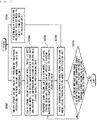
- FIG. 5 is a flowchart illustrating a sequence of the method for calculating stroke volume using AI according to an embodiment of the present invention.
- the data processing unit 218 performs data processing on the third data and the fourth data filtered by the filtering unit 206 in order to use them in training of the stroke volume calculation model.
- the data processing unit 218 may smooth the stroke volume value by performing smoothing processing on the stroke volume among the third data (S500). This is because the stroke volume calculated by the APCO equipment is calculated by an equation and is output discretely. Therefore, this operation may be performed so as to match the output stroke volume with the stroke volume calculated based on the TDCO equipment, which is output as continuous and smoothed data.
- the data processing unit 218 may perform delay processing on the fourth data as much as a preset time (S502). This is because the TDCO equipment outputs data with a slight delay when actually outputting the same. Therefore, this operation is intended to use the delay-averaged value in training so as to reflect it in the actual modeling. However, when there is no delay in the fourth data itself, delay averaging may be omitted.
- the pre-training unit 220 trains the stroke volume calculation model, which is a deep learning model, by using the Lowess smooth-processed third data and patient's information matching with the third data (first data) (S504).
- the stroke volume calculation model calculates a stroke volume for a specific patient when inputting information such as an arterial blood pressure, gender, age, height, weight, etc. of the specific patient.
- the transfer learning unit 222 transfer learns the trained stroke volume calculation model, by using the delay-averaged fourth data and information of the specific patient matching with the fourth data (second data) (S506).
- the model verification unit 224 verifies the transfer-learned stroke volume calculation model using the fourth data (S508). Then, this unit determines whether an error range of the stroke volume calculated through the transfer-learned stroke volume calculation model and the fourth data corresponding thereto is within a preset range, for example, 10%. If the error range is out of the preset range, the transfer learning unit 222 recalculates the stroke volume calculation model.
- this unit determines whether the error range is within the preset range by comparing the stroke volume of the specific patient calculated through the stroke volume calculation model with the fourth data (S510). If the error range is out of the preset range, the transfer learning unit 222 transfer relearns the stroke volume calculation model by using the fourth data.
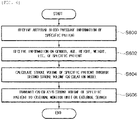
- FIG. 6 is a flowchart illustrating a sequence of the method for calculating stroke volume using AI according to an embodiment of the present invention.
- Arterial blood pressure information of a specific patient is input by the input unit 200 or received by the reception unit 202 (S600).
- information of a specific patient for example, information on the gender, age, height, weight, etc. of the specific patient is input by the input unit 200 or received by the reception unit 202 (S602).
- the stroke volume calculation unit 210 calculates a stroke volume of the specific patient using information such as the arterial blood pressure, gender, age, height, weight, etc. of the specific patient received through the finally calculated stroke volume calculation model (S604). However, the stroke volume calculation unit 210 may calculate the stroke volume of the specific patient using only the arterial blood pressure of the specific patient received through the finally calculated stroke volume calculation model.
- the transmission unit 212 transmits the calculated stroke volume of the specific patient to an external monitor unit or an external server (S606) .
- the stroke volume calculation device 100 using AI may include the monitor unit.
- FIG. 7 is a diagram illustrating an example of a sequence in which a stroke volume is calculated using the stroke volume calculation model according to an embodiment of the present invention.
- a first model is subjected to pre-training using large-scale APCO data. Thereafter, a tuning (transfer learning) process is performed on the data using relatively small TDCO data.
- time synchronization is performed on the data by shifting the processing time delay of the TDCO equipment (e.g., Vigilance II of Edward Lifesciences). The tuning process is performed using this data.
- a final test is also performed on the data extracted from the TDCO equipment and subjected to synchronization processing.
Landscapes
- Health & Medical Sciences (AREA)
- Engineering & Computer Science (AREA)
- Life Sciences & Earth Sciences (AREA)
- Biomedical Technology (AREA)
- Medical Informatics (AREA)
- Public Health (AREA)
- General Health & Medical Sciences (AREA)
- Physics & Mathematics (AREA)
- Pathology (AREA)
- Biophysics (AREA)
- Molecular Biology (AREA)
- Artificial Intelligence (AREA)
- Data Mining & Analysis (AREA)
- Veterinary Medicine (AREA)
- Animal Behavior & Ethology (AREA)
- Surgery (AREA)
- Heart & Thoracic Surgery (AREA)
- Physiology (AREA)
- Cardiology (AREA)
- Theoretical Computer Science (AREA)
- Primary Health Care (AREA)
- Epidemiology (AREA)
- Evolutionary Computation (AREA)
- Mathematical Physics (AREA)
- Hematology (AREA)
- Computer Vision & Pattern Recognition (AREA)
- Databases & Information Systems (AREA)
- Software Systems (AREA)
- Signal Processing (AREA)
- Psychiatry (AREA)
- General Engineering & Computer Science (AREA)
- Computing Systems (AREA)
- General Physics & Mathematics (AREA)
- Computational Linguistics (AREA)
- Vascular Medicine (AREA)
- Fuzzy Systems (AREA)
- Business, Economics & Management (AREA)
- General Business, Economics & Management (AREA)
- Measuring Pulse, Heart Rate, Blood Pressure Or Blood Flow (AREA)
- Instructional Devices (AREA)
Abstract
Description
- The present invention relates to a device and method for calculating stroke volume using artificial intelligence (AI), which calculate a stroke volume (i.e., cardiac output) using a stroke volume calculation model generated by AI to accurately calculate the stroke volume from an arterial blood pressure.
- Conventionally, as a method for calculating cardiac stroke volume in a patient, there are a method for calculating stroke volume using arterial pressure-based cardiac output (APCO) equipment which calculates an arterial blood pressure (ABP) waveform-based stroke volume, and a method for calculating stroke volume using thermodilution-based cardiac output (TDCO) equipment which calculates a stroke volume by directly inserting a catheter into a patient (A thermodilution method: a method for determining a flow rate by injecting a fluid B (as a temperature indicator) having a known temperature into a certain fluid A at a constant rate, and measuring a temperature change at downstream therefrom. That is, a method for calculating a blood flow rate by measuring the temperature change by the injected indicator B, which is determined by the fluid A passing through the injected portion).
- The conventional method for calculating stroke volume using the APCO equipment is less invasive than the TDCO equipment which directly inserts the catheter into patient's body, but it is inaccurate compared to the TDCO equipment since the stroke volume is mathematically calculated using an average or standard deviation of pulse pressures per beat. In addition, the method for calculating stroke volume using the APCO equipment tends not to predict a high stroke volume.
- In addition, the method for calculating stroke volume using the TDCO equipment, which is the current gold standard (a test to diagnose the progress of disease), is more accurate than the method for calculating stroke volume using the APCO equipment, but it is more invasive and has a problem that causes complications such as infection, etc.
- In consideration of the above-mentioned circumstances, it is an object of the present invention to implement a device and method for calculating stroke volume with high accuracy while being less invasive to a patient than conventional ones.
- To achieve the above object, according to an aspect of the present invention, there is provided a device for calculating stroke volume using AI including: a filtering unit configured to filter an arterial blood pressure value and a stroke volume which are in a preset range, among first data and second data including a plurality of arterial blood pressure values and stroke volumes corresponding to the arterial blood pressure values; a pre-training unit configured to pre-train a first stroke volume calculation model which calculates a stroke volume based on the arterial blood pressure value, by using third data filtered from the first data; a transfer learning unit configured to transfer learn the first stroke volume calculation model which calculates a stroke volume based on the arterial blood pressure value, by using fourth data filtered from the second data, thus to generate a second stroke volume calculation model; and a stroke volume calculation unit configured to calculate a stroke volume corresponding to the input arterial blood pressure of a specific patient by using the second stroke volume calculation model.
- According to another aspect of the present invention, there is provided a method for calculating stroke volume using AI which calculates a stroke volume from an arterial blood pressure of a specific patient by using a device for calculating stroke volume using AI, the method including: filtering an arterial blood pressure value and a stroke volume which are in a preset range, among first data and second data including a plurality of arterial blood pressure values and stroke volumes corresponding to the arterial blood pressure values; pre-training a first stroke volume calculation model which calculates a stroke volume based on the arterial blood pressure value, by using third data filtered from the first data; transfer-learning the first stroke volume calculation model which calculates a stroke volume based on the arterial blood pressure value, by using fourth data filtered from the second data, thus to generate a second stroke volume calculation model; and calculating a stroke volume corresponding to the input arterial blood pressure of a specific patient by using the second stroke volume calculation model.
- According to embodiments of the present invention, it is possible to predict a stroke volume without purchasing an expensive dedicated catheter by calculating a more accurate stroke volume using blood pressure waveform data output from a commercial patient monitor.
- According to embodiments of the present invention, the catheter is not directly injected into patient's central vein or pulmonary artery, such that an accurate stroke volume may be easily calculated in a less invasive manner.
-
-
FIG. 1 is a block diagram schematically illustrating a configuration of a system for calculating stroke volume using AI according to an embodiment of the present invention. -
FIG. 2A is a block diagram schematically illustrating a device for calculating stroke volume using AI according to an embodiment of the present invention. -
FIG. 2B is a block diagram schematically illustrating a filtering unit of the device for calculating stroke volume using AI according to an embodiment of the present invention. -
FIG. 2C is a block diagram schematically illustrating a model training unit of the device for calculating stroke volume using AI according to an embodiment of the present invention. -
FIG. 3 is a graph illustrating an arterial blood pressure in a specific patient and a stroke volume calculated therefrom. -
FIG. 4 is a flowchart illustrating a sequence of a method for calculating stroke volume using AI according to an embodiment of the present invention. -
FIG. 5 is a flowchart illustrating a sequence of the method for calculating stroke volume using AI according to an embodiment of the present invention. -
FIG. 6 is a flowchart illustrating a sequence of the method for calculating stroke volume using AI according to an embodiment of the present invention. -
FIG. 7 is a diagram illustrating an example of a sequence in which a stroke volume is calculated using a stroke volume calculation model according to an embodiment of the present invention. - Hereinafter, specific embodiments of the present invention will be described with reference to the accompanying drawings. The following detailed description is provided to contribute to a comprehensive understanding of a method, apparatus, and/or system described herein. However, these embodiments merely illustrative examples, and the present invention is not limited thereto.
- In descriptions of the embodiments of the present invention, publicly known techniques that are judged to be able to make the purport of the present invention unnecessarily obscure will not be described in detail. In addition, the terms as used herein are defined by taking functions of the present disclosure into account and can be changed according to the custom or intention of users or operators. Therefore, definition of the terms should be made according to the overall disclosure set forth herein. In addition, the terminology used herein is for the purpose of describing particular embodiments only and is not intended to limit the present invention thereto. As used herein, the singular forms "a," "an" and "the" are intended to include the plural forms as well, unless the context clearly indicates otherwise. It will be further understood that the terms "comprises," "comprising," "includes" and/or "including," when used herein, specify the presence of stated features, integers, steps, operations, elements, and a part or a combination thereof, but do not preclude the presence or addition of one or more other features, integers, steps, operations, elements, components, and a part or a combination thereof.
-
FIG. 1 is a block diagram schematically illustrating a configuration of a system for calculating stroke volume using AI according to an embodiment of the present invention. - The system for calculating stroke volume using AI includes a plurality of hospital servers (or servers of each doctor) 102, 104 and 106, a
monitor unit 108 for displaying a stroke volume (or cardiac output) waveform, and a strokevolume calculation device 100 using AI. - The stroke
volume calculation device 100 using AI receives arterial blood pressures of a plurality of patients and stroke volume information calculated based on the arterial blood pressures, which are respectively stored in the servers, from the plurality ofhospital servers volume calculation device 100 using AI may receive 100 Hz arterial blood pressure waveform and stroke volume data from a public data set, for example, Vital DB instead of the plurality of hospital servers. - The stroke volume calculated based on the arterial blood pressure measured using the APCO equipment and arterial blood pressure information corresponding thereto are referred to as first data. The stroke volume data calculated using the TDCO equipment is referred to as second data.
- In addition, the stroke
volume calculation device 100 using AI receives patient's information corresponding to the first data and the second data from the plurality ofhospital servers - The stroke
volume calculation device 100 using AI stores the received first data, second data, and patient's information respectively corresponding to the first data and the second data. - The stroke
volume calculation device 100 using AI uses the first data and the second data for training a stroke volume calculation model generated based on these data. The strokevolume calculation device 100 using AI extracts sample data based on the stored first data and the second data for use in the stroke volume calculation model. - Specifically, as seen from the graph shown in
FIG. 3 , the strokevolume calculation device 100 using AI observes stroke volume waveforms in the first data and the second data, thus to extract arterial blood pressure values from before a preset time to a first time point at the first time point where a change slope at which the stroke volume waveform changes at an arbitrary point in time is a preset slope value or more. In addition, the device extracts stroke volumes corresponding to the extracted arterial blood pressure values. The preset time may be, for example, 20 seconds. - The stroke
volume calculation device 100 using AI performs data verification on the arterial blood pressure values extracted from the first data and the second data, respectively, and the stroke volumes corresponding to the extracted arterial blood pressure values. The strokevolume calculation device 100 using AI verifies the extracted sample data based on a predetermined reference. The strokevolume calculation device 100 using AI determines whether the arterial blood pressure value among the sample data extracted from the first data or the sample data extracted from the second data is within a first preset range. The strokevolume calculation device 100 using AI does not use a value in which the arterial blood pressure value among the extracted sample data is not within the first preset range in training of the stroke volume calculation model. The first preset range may be, for example, 25 or more and 250 or less. That is, when the arterial blood pressure value among the extracted sample data is less than 25 or more than 250, the strokevolume calculation device 100 using AI excludes it from the sample data. The case in which the arterial blood pressure value is less than 25 or more than 250 corresponds to a range where clinically appearing cases are very rare. By limiting the arterial blood pressure value to 25 or more and 250 or less, it is possible to prevent data being recorded in a state in which the catheter is not inserted into the patient's artery or in which there are artifacts due to flushing of an arterial canal from being used as training data. - In addition, the stroke
volume calculation device 100 using AI determines whether the stroke volume among the sample data extracted from the first data or the sample data extracted from the second data is within a second preset range. The strokevolume calculation device 100 using AI does not use a value in which the stroke volume among the extracted sample data is not within the second preset range in training of the stroke volume calculation model. The second preset range may be, for example, 20 or more and 200 or less. That is, when the stroke volume among the extracted sample data is less than 20 or more than 200, the strokevolume calculation device 100 using AI excludes it from the sample data. The case in which the stroke volume is less than 20 or more than 200 corresponds to a range where clinically appearing cases are very rare. By limiting the stroke volume to 20 or more and 200 or less, it is possible to prevent a malfunction result of the stroke volume calculation model that may occur from being provided. - In addition, the stroke
volume calculation device 100 using AI also excludes data from the sample data, in which a standard deviation per bit calculated from an arterial blood pressure waveform is zero (0), among the sample data extracted from the first data or sample data extracted from the second data. - The data verified by the stroke
volume calculation device 100 using AI as described above are referred to as third data or fourth data, respectively. That is, data verified after data extraction among the first data is referred to as the third data, and data verified after data extraction among the second data is referred to as the fourth data. - The stroke
volume calculation device 100 using AI performs data processing in order to use the third data and the fourth data in training of the stroke volume calculation model, respectively. - The stroke
volume calculation device 100 using AI may smooth the stroke volume value through a method of performing preset smoothing on the stroke volume among the third data. The preset smoothing method may be, for example, Lowess smoothing. This is because the stroke volume calculated by the APCO equipment is calculated by an equation and is output discretely. Therefore, this operation may be performed so as to match the output stroke volume with the stroke volume calculated based on the TDCO equipment, which is output as continuous and smoothed data. - In addition, the stroke
volume calculation device 100 using AI may perform delay processing on the fourth data as much as a preset time period, for example, 2 minutes. This is because the TDCO equipment outputs data with a slight delay when actually outputting the same. Therefore, this operation is intended to use the value subjected to delay averaging ("delay-averaged value") in training so as to reflect it in the actual modeling. However, the strokevolume calculation device 100 using AI may use the fourth data as it is without performing the delay processing. - The stroke
volume calculation device 100 using AI trains the stroke volume calculation model, which is a deep learning model, by using the third data subjected to smoothing processing ("smooth-processed third data") and patient's information matching with the third data (first data). The stroke volume calculation model calculates a stroke volume for a specific patient when inputting information such as an arterial blood pressure, gender, age, height, weight, etc. of the specific patient. - Next, the stroke
volume calculation device 100 using AI transfer learns the stroke volume calculation model subjected to training ("trained stroke volume calculation model"), by using the fourth data subjected to delay averaging ("delay-averaged fourth data") and information of the specific patient matching with the fourth data (second data). However, the fourth data which is not subjected to delay averaging may be used here. Finally, the device verifies accuracy of the stroke volume calculation model measured with a pulmonary artery catheter collected prospectively using the stroke volume calculation model subjected to transfer learning ("transfer-learned stroke volume calculation model"). - When using the finally verified stroke volume calculation model, the stroke
volume calculation device 100 using AI calculates the stroke volume as a more accurate value using the arterial blood pressure of the specific patient measured by existing commercial equipment. -
FIG. 2A is a block diagram schematically illustrating a device for calculating stroke volume using AI according to an embodiment of the present invention. - The stroke
volume calculation device 100 using AI includes aninput unit 200, areception unit 202, astorage unit 204, afiltering unit 206, amodel training unit 208, a strokevolume calculation unit 210, and atransmission unit 212. - However, the stroke
volume calculation device 100 using AI does not include the strokevolume calculation unit 210 and may transmit the trained stroke volume calculation model to an external device. - The
input unit 200 may be configured to input information of a specific patient, for example, information on the age, gender, height, and weight of the specific patient. In addition, theinput unit 200 may be configured to input the stroke volumes for a plurality of patients and arterial blood pressure information corresponding thereto, which are calculated through the APCO equipment. In addition, theinput unit 200 may be configured to input the stroke volumes for a plurality of patients and arterial blood pressure information corresponding thereto, which are calculated through the TDCO equipment. - The
reception unit 202 receives the arterial blood pressures of the plurality of patients and the stroke volume information calculated based on the arterial blood pressures, which are respectively stored in the servers, from the plurality ofhospital servers reception unit 202 may receive 100 Hz arterial blood pressure waveform and stroke volume data from a public data set, for example, Vital DB instead of the plurality of hospital servers. - The stroke volume calculated based on the arterial blood pressure measured using the APCO equipment and arterial blood pressure information corresponding thereto are referred to as first data. The stroke volume data calculated using the TDCO equipment is referred to as second data.
- The
reception unit 202 receives patient's information respectively corresponding to the first data and the second data from the plurality ofhospital servers - The
storage unit 204 stores the arterial blood pressure information for the specific patient input from theinput unit 200, and the stroke volume information corresponding thereto by matching with information such as the age, gender, height, and weight thereof. In addition, thestorage unit 204 stores the stroke volume calculated based on the arterial blood pressures of the plurality of patients received from thereception unit 202 and the arterial blood pressure information corresponding thereto by matching with each patient's information (e.g., the gender, age, weight, height, etc. of the patient). - Further, the
storage unit 204 also stores the third data and the fourth data extracted and verified by thefiltering unit 206, respectively. In addition, thestorage unit 204 stores an algorithm of the stroke volume calculation model subjected to training in themodel training unit 208. - The
filtering unit 206 extracts and verifies specific data among the first data and the second data to generate third data and fourth data to be used in themodel training unit 208. - The
filtering unit 206 observes stroke volume waveforms in the first data and the second data, thus to extract arterial blood pressure values from before a preset time to a first time point at the first time point where a change slope at which the stroke volume waveform changes at an arbitrary point in time is a preset slope value or more. In addition, the unit extracts stroke volumes corresponding to the extracted arterial blood pressure values. The preset time may be, for example, 20 seconds. - Next, the
filtering unit 206 performs data verification on the arterial blood pressure values extracted from the first data and the second data, respectively, and the stroke volumes corresponding to the extracted arterial blood pressure values. Thefiltering unit 206 determines whether the arterial blood pressure value among the sample data extracted from the first data or the sample data extracted from the second data is within a first preset range. Thefiltering unit 206 does not use a value in which the arterial blood pressure value among the extracted sample data is not within the first preset range in training of the stroke volume calculation model. The first preset range may be, for example, 25 or more and 250 or less. That is, when the arterial blood pressure value among the extracted sample data is less than 25 or more than 250, thefiltering unit 206 excludes it from the sample data. - In addition, the
filtering unit 206 determines whether the stroke volume among the sample data extracted from the first data or the sample data extracted from the second data is within a second preset range. Thefiltering unit 206 does not use a value in which the stroke volume among the extracted sample data is not within the second preset range in training of the stroke volume calculation model. The second preset range may be, for example, 20 or more and 200 or less. That is, when the stroke volume among the extracted sample data is less than 20 or more than 200, thefiltering unit 206 excludes it from the sample data. - In addition, the
filtering unit 206 also excludes data from the sample data, in which the calculated standard deviation per bit is zero (0), among the sample data extracted from the first data or sample data extracted from the second data. - The data verified by the
filtering unit 206 as described above are referred to as third data or fourth data, respectively. That is, data verified after data extraction among the first data is referred to as third data, and data verified after data extraction among the second data is referred to as fourth data. The third data and the fourth data finally extracted and verified by thefiltering unit 206 are stored in thestorage unit 204 by matching with the respective patient's information. - The
model training unit 208 performs data processing on the third data and the fourth data filtered by thefiltering unit 206 in order to use them in training of the stroke volume calculation model. - The
model training unit 208 may smooth the stroke volume value by performing Lowess smoothing processing on the stroke volume among the third data. This is because the stroke volume calculated by the APCO equipment is calculated by an equation and is output discretely. Therefore, this operation may be performed so as to match the output stroke volume with the stroke volume calculated based on the TDCO equipment, which is output as continuous and smoothed data. - The
model training unit 208 may perform delay processing on the fourth data as much as a preset time. This is because the TDCO equipment outputs data with a slight delay when actually outputting the same. Therefore, this operation is intended to use the delay-averaged value in training so as to reflect it in the actual modeling. However, when there is no delay in the fourth data itself, delay averaging may be omitted. - The
model training unit 208 trains the stroke volume calculation model, which is a deep learning model, by using the smooth-processed third data and patient's information matching with the third data (first data). The stroke volume calculation model calculates a stroke volume for a specific patient when inputting information such as an arterial blood pressure, gender, age, height, weight, etc. of the specific patient. - The
model training unit 208 transfer learns the trained stroke volume calculation model, by using the delay-averaged fourth data and information of the specific patient matching with the fourth data (second data). Finally, this unit verifies accuracy of the stroke volume calculation model measured with a pulmonary artery catheter collected prospectively using the transfer-learned stroke volume calculation model. - The stroke
volume calculation unit 210 calculates a stroke volume of a specific patient using the arterial blood pressure of the specific patient and patient's information input or received through the stroke volume calculation model that has been finally verified. - The
transmission unit 212 transmits the stroke volume of the specific patient calculated through the stroke volume calculation model to an external monitor or an external server in real time. - However, the stroke
volume calculation device 100 using AI may also include the monitor unit. -
FIG. 2B is a block diagram schematically illustrating a filtering unit of the device for calculating stroke volume using AI according to an embodiment of the present invention. - The
filtering unit 206 includes adata extraction unit 214 and adata verification unit 216. - The
data extraction unit 214 observes the stroke volume values in the first data and the second data, and when the stroke volume waveform changes 1 mL or more, extracts the arterial blood pressure values from before a preset time to a first time point at the first time point. In addition, a stroke volume corresponding to the extracted arterial blood pressure value is extracted. The preset time is, for example, 20 seconds. - The
data verification unit 216 performs data verification on the arterial blood pressure values extracted from the first data and the second data, respectively, and the stroke volumes corresponding to the extracted arterial blood pressure values. Thedata verification unit 216 determines whether the arterial blood pressure value among the sample data extracted from the first data or the sample data extracted from the second data is within a first preset range. Thedata verification unit 216 does not use a value in which the arterial blood pressure value among the extracted sample data is not within the first preset range in training of the stroke volume calculation model. The first preset range may be, for example, 25 or more and 250 or less. - In addition, the
data verification unit 216 determines whether the stroke volume among the sample data extracted from the first data or the sample data extracted from the second data is within a second preset range. Thedata verification unit 216 does not use a value in which the stroke volume among the extracted sample data is not within the second preset range in training of the stroke volume calculation model. The second preset range may be, for example, 20 or more and 200 or less. - In addition, the
data verification unit 216 also excludes data from the sample data, in which the calculated standard deviation per bit is zero (0), among the sample data extracted from the first data or sample data extracted from the second data. - The data verified by the
data verification unit 216 as described above are referred to as third data or fourth data, respectively. That is, data verified after data extraction among the first data is referred to as third data, and data verified after data extraction among the second data is referred to as fourth data. -
FIG. 2C is a block diagram schematically illustrating a model training unit of the device for calculating stroke volume using AI according to an embodiment of the present invention. - The
model training unit 208 includes adata processing unit 218, apre-training unit 220, atransfer learning unit 222, and amodel verification unit 224. - The
data processing unit 218 performs data processing on the third data and the fourth data filtered by thefiltering unit 206 in order to use them in training of the stroke volume calculation model. - The
data processing unit 218 may smooth the stroke volume value by performing smoothing processing on the stroke volume among the third data. This is because the stroke volume calculated by the APCO equipment is calculated by an equation and is output discretely. Therefore, this operation may be performed so as to match the output stroke volume with the stroke volume calculated based on the TDCO equipment, which is output as continuous and smoothed data. - The
data processing unit 218 may perform delay processing on the fourth data as much as 2 minutes, for example. This is because the TDCO equipment outputs data with a slight delay when actually outputting the same. Therefore, this operation is intended to use the delay-averaged value in training so as to reflect it in the actual modeling. However, when there is no delay in the fourth data itself, delay averaging may be omitted. - The
pre-training unit 220 trains the stroke volume calculation model, which is a deep learning model, by using the smooth-processed third data and patient's information matching with the third data (first data). The stroke volume calculation model calculates a stroke volume for a specific patient when inputting information such as an arterial blood pressure, gender, age, height, weight, etc. of the specific patient. - The
transfer learning unit 222 transfer learns the trained stroke volume calculation model, by using the delay-averaged fourth data and information of the specific patient matching with the fourth data (second data). - The pre-training or transfer learning method is a well-known deep learning technique, and therefore will not be described in detail.
- The
model verification unit 224 verifies the transfer-learned stroke volume calculation model using the fourth data. Then, this unit determines whether an error range of the stroke volume calculated through the transfer-learned stroke volume calculation model and the fourth data corresponding thereto is within a preset range, for example, 10%. If the error range is out of the preset range, thetransfer learning unit 222 recalculates the stroke volume calculation model. - Then, the stroke volume of a specific patient is calculated using the arterial blood pressure of the specific patient and patient's information input or received through the stroke volume calculation model that has been finally verified.
-
FIG. 4 is a flowchart illustrating a sequence of a method for calculating stroke volume using AI according to an embodiment of the present invention. - The
filtering unit 206 observes stroke volume waveforms in the first data and the second data, thus to extract arterial blood pressure values from before a preset time to a first time point at the first time point where a change slope at which the stroke volume waveform changes at an arbitrary point in time is a preset slope value or more (S400). In addition, a stroke volume corresponding to the extracted arterial blood pressure value is extracted. The preset time is, for example, 20 seconds. - Next, the
filtering unit 206 performs data verification on the arterial blood pressure values extracted from the first data and the second data, respectively, and the stroke volumes corresponding to the extracted arterial blood pressure values (S402). Thefiltering unit 206 determines whether the arterial blood pressure value among the sample data extracted from the first data or the sample data extracted from the second data is within a first preset range. Thefiltering unit 206 does not use a value in which the arterial blood pressure value among the extracted sample data is not within the first preset range in training of the stroke volume calculation model. The first preset range may be, for example, 25 or more and 250 or less. That is, when the arterial blood pressure value among the extracted sample data is less than 25 or more than 250, thefiltering unit 206 excludes it from the sample data. - In addition, the
filtering unit 206 determines whether the stroke volume among the sample data extracted from the first data or the sample data extracted from the second data is within a second preset range. Thefiltering unit 206 does not use a value in which the stroke volume among the extracted sample data is not within the second preset range in training of the stroke volume calculation model. The second preset range may be, for example, 20 or more and 200 or less. That is, when the stroke volume among the extracted sample data is less than 20 or more than 200, thefiltering unit 206 excludes it from the sample data. - In addition, the
filtering unit 206 also excludes data from the sample data, in which the calculated standard deviation per bit is zero (0), among the sample data extracted from the first data or sample data extracted from the second data. -
FIG. 5 is a flowchart illustrating a sequence of the method for calculating stroke volume using AI according to an embodiment of the present invention. - The
data processing unit 218 performs data processing on the third data and the fourth data filtered by thefiltering unit 206 in order to use them in training of the stroke volume calculation model. - The
data processing unit 218 may smooth the stroke volume value by performing smoothing processing on the stroke volume among the third data (S500). This is because the stroke volume calculated by the APCO equipment is calculated by an equation and is output discretely. Therefore, this operation may be performed so as to match the output stroke volume with the stroke volume calculated based on the TDCO equipment, which is output as continuous and smoothed data. - The
data processing unit 218 may perform delay processing on the fourth data as much as a preset time (S502). This is because the TDCO equipment outputs data with a slight delay when actually outputting the same. Therefore, this operation is intended to use the delay-averaged value in training so as to reflect it in the actual modeling. However, when there is no delay in the fourth data itself, delay averaging may be omitted. - The
pre-training unit 220 trains the stroke volume calculation model, which is a deep learning model, by using the Lowess smooth-processed third data and patient's information matching with the third data (first data) (S504). The stroke volume calculation model calculates a stroke volume for a specific patient when inputting information such as an arterial blood pressure, gender, age, height, weight, etc. of the specific patient. - The
transfer learning unit 222 transfer learns the trained stroke volume calculation model, by using the delay-averaged fourth data and information of the specific patient matching with the fourth data (second data) (S506). - The
model verification unit 224 verifies the transfer-learned stroke volume calculation model using the fourth data (S508). Then, this unit determines whether an error range of the stroke volume calculated through the transfer-learned stroke volume calculation model and the fourth data corresponding thereto is within a preset range, for example, 10%. If the error range is out of the preset range, thetransfer learning unit 222 recalculates the stroke volume calculation model. - Then, this unit determines whether the error range is within the preset range by comparing the stroke volume of the specific patient calculated through the stroke volume calculation model with the fourth data (S510). If the error range is out of the preset range, the
transfer learning unit 222 transfer relearns the stroke volume calculation model by using the fourth data. -
FIG. 6 is a flowchart illustrating a sequence of the method for calculating stroke volume using AI according to an embodiment of the present invention. - Arterial blood pressure information of a specific patient is input by the
input unit 200 or received by the reception unit 202 (S600). In addition, information of a specific patient, for example, information on the gender, age, height, weight, etc. of the specific patient is input by theinput unit 200 or received by the reception unit 202 (S602). - The stroke
volume calculation unit 210 calculates a stroke volume of the specific patient using information such as the arterial blood pressure, gender, age, height, weight, etc. of the specific patient received through the finally calculated stroke volume calculation model (S604). However, the strokevolume calculation unit 210 may calculate the stroke volume of the specific patient using only the arterial blood pressure of the specific patient received through the finally calculated stroke volume calculation model. - The
transmission unit 212 transmits the calculated stroke volume of the specific patient to an external monitor unit or an external server (S606) . However, the strokevolume calculation device 100 using AI may include the monitor unit. -
FIG. 7 is a diagram illustrating an example of a sequence in which a stroke volume is calculated using the stroke volume calculation model according to an embodiment of the present invention. - In the stroke
volume calculation device 100 using AI, a first model is subjected to pre-training using large-scale APCO data. Thereafter, a tuning (transfer learning) process is performed on the data using relatively small TDCO data. In this case, in a process of acquiring TDCO data, time synchronization is performed on the data by shifting the processing time delay of the TDCO equipment (e.g., Vigilance II of Edward Lifesciences). The tuning process is performed using this data. A final test is also performed on the data extracted from the TDCO equipment and subjected to synchronization processing. - In the present specification, 'an embodiment' of the principles of the present invention and designation of various modifications of the expression denote that a specific feature, structure, and characteristic are included in at least one embodiment of the principle of the present invention. Therefore, the expression 'in an embodiment' and arbitrary other modification examples disclosed herein do not necessarily refer to the same embodiment.
- All embodiments and conditional embodiments disclosed through the present specification are described with an intention to help the persons who have a common knowledge in the technical field to which the invention pertains to understand the principles and concepts of the present invention, and it will be understood by those skilled in the art that the present invention may be implemented in a modified form without departing from the essential characteristics of the present invention. Therefore, the embodiments described in this disclosure should not be construed to limit the technical idea of the present invention, but should be construed to illustrate the technical idea of the present invention. The scope of the present invention should be interpreted according to the following appended claims not the above description, and the present invention should be construed to cover all modifications or variations induced from the meaning and scope of the appended claims and their equivalents.
Claims (16)
- A device for calculating stroke volume using AI comprising:a filtering unit configured to filter an arterial blood pressure value and a stroke volume which are in a preset range, among first data and second data comprising a plurality of arterial blood pressure values and stroke volumes corresponding to the arterial blood pressure values;a pre-training unit configured to pre-train a first stroke volume calculation model which calculates a stroke volume based on the arterial blood pressure value, by using third data filtered from the first data;a transfer learning unit configured to transfer learn the first stroke volume calculation model which calculates a stroke volume based on the arterial blood pressure value, by using fourth data filtered from the second data, thus to generate a second stroke volume calculation model; anda stroke volume calculation unit configured to calculate a stroke volume corresponding to the input arterial blood pressure of a specific patient by using the second stroke volume calculation model.
- The device for calculating stroke volume using AI according to claim 1, further comprising a storage unit configured to store the first data and the second data, and patient's information corresponding to the first data and the second data, respectively,wherein, when training the first stroke volume calculation model by the pre-training unit, the patient's information corresponding to the first data is used together,when generating the second stroke volume calculation model by the transfer learning unit, transfer learning is performed by using patient's information corresponding to the second data together, andthe patient's information includes at least one of gender, age, weight, and height of the patient.
- The device for calculating stroke volume using AI according to claim 1 or 2, wherein the filtering unit comprises:a data extraction unit configured to extract arterial blood pressure values and stroke volumes corresponding thereto from before a preset time to a first time point at a time corresponding to the first time point where a change slope of the stroke volume is a preset slope value or more, from the first data and the second data; anda data verification unit configured to extract a value within a first preset range from among the extracted arterial blood pressure values, and extract a value within a second preset range from among the extracted stroke volumes;wherein data extracted from the first data is referred to as third data, and data extracted from the second data is referred to as fourth data.
- The device for calculating stroke volume using AI according to claim 3, wherein the preset time is 20 seconds, the first preset range is 20 or more and 250 or less, and the second preset range is 20 or more and 200 or less.
- The device for calculating stroke volume using AI according to claim 4, wherein the data verification unit excludes a value, in which an average deviation per bit calculated from an arterial blood pressure waveform is zero (0), among the third data and the fourth data.
- The device for calculating stroke volume using AI according to claim 5,further comprising a data processing unit configured to perform smoothing processing on the stroke volume among the third data, and delay the fourth data as much as a preset time,wherein the first stroke volume calculation model is subjected to training using the data processed by the data processing unit to generate the second stroke volume calculation model.
- The device for calculating stroke volume using AI according to claim 6, further comprising a stroke volume calculation model verification unit configured to determine whether an error range of the stroke volume calculated through the second stroke volume calculation model and the fourth data is within a preset range to verify the second stroke volume calculation model,
wherein, if an error of the stroke volume calculated through the second stroke volume calculation model and the stroke volume of the fourth data corresponding thereto is out of a preset range, the transfer learning unit relearns the second stroke volume calculation model. - The device for calculating stroke volume using AI according to claim 1, wherein the first data is data calculated using arterial pressure-based cardiac output (APCO) equipment, and
the second data is data calculated using thermodilution-based cardiac output (TDCO) equipment. - A method for calculating stroke volume using AI which calculates a stroke volume from an arterial blood pressure of a specific patient by using a device for calculating stroke volume using AI, the method comprising:filtering an arterial blood pressure value and a stroke volume which are in a preset range, among first data and second data comprising a plurality of arterial blood pressure values and stroke volumes corresponding to the arterial blood pressure values;pre-training a first stroke volume calculation model which calculates a stroke volume based on the arterial blood pressure value, by using third data filtered from the first data;transfer-learning the first stroke volume calculation model which calculates a stroke volume based on the arterial blood pressure value, by using fourth data filtered from the second data, thus to generate a second stroke volume calculation model; andcalculating a stroke volume corresponding to the input arterial blood pressure of a specific patient by using the second stroke volume calculation model.
- The method according to claim 9, wherein, when training the first stroke volume calculation model, patient's information corresponding to the first data is used together,when generating the second stroke volume calculation model, transfer learning is performed by using patient's information corresponding to the second data together, andthe patient's information includes at least one of gender, age, weight, and height of the patient.
- The method according to claim 9 or 10, further comprising:extracting arterial blood pressure values and stroke volumes corresponding thereto from before a preset time to a first time point at a time corresponding to the first time point where a change slope of the stroke volume is a preset slope value or more, from the first data and the second data; andextracting a value within a first preset range from among the extracted arterial blood pressure values, and extracting a value within a second preset range from among the extracted stroke volumes;wherein data extracted from the first data is referred to as third data, and data extracted from the second data is referred to as fourth data.
- The method according to claim 11, wherein the preset time is 20 seconds, the first preset range is 20 or more and 250 or less, and the second preset range is 20 or more and 200 or less.
- The method according to claim 12, wherein in the step of extracting as sample data,
excluding a value, in which an average deviation per bit calculated from an arterial blood pressure waveform is zero (0), among the third data and the fourth data. - The method according to claim 13, further comprising:performing Lowess smoothing processing on the stroke volume among the third data, and delaying the fourth data as much as a preset time; andwherein the first stroke volume calculation model is subjected to training using the data processed by the data processing unit to generate the second stroke volume calculation model.
- The method according to claim 14, further comprising: determining whether an error range of the stroke volume calculated through the second stroke volume calculation model and the fourth data is within a preset range to verify the second stroke volume calculation model,
wherein, if an error of the stroke volume calculated through the second stroke volume calculation model and the stroke volume of the fourth data corresponding thereto is out of a preset range, relearning the second stroke volume calculation model. - The method according to claim 15, wherein the first data is data calculated using arterial pressure-based cardiac output (APCO) equipment, and
the second data is data calculated using thermodilution-based cardiac output (TDCO) equipment.
Applications Claiming Priority (2)
| Application Number | Priority Date | Filing Date | Title |
|---|---|---|---|
| KR1020200022914A KR102377609B1 (en) | 2020-02-25 | 2020-02-25 | Apparatus and method for calculating cardiac output using AI |
| PCT/KR2021/002274 WO2021172852A2 (en) | 2020-02-25 | 2021-02-24 | Device and method for calculating stroke volume using ai |
Publications (4)
| Publication Number | Publication Date |
|---|---|
| EP4111955A2 true EP4111955A2 (en) | 2023-01-04 |
| EP4111955A4 EP4111955A4 (en) | 2024-04-03 |
| EP4111955B1 EP4111955B1 (en) | 2025-10-08 |
| EP4111955C0 EP4111955C0 (en) | 2025-10-08 |
Family
ID=77491750
Family Applications (1)
| Application Number | Title | Priority Date | Filing Date |
|---|---|---|---|
| EP21759740.0A Active EP4111955B1 (en) | 2020-02-25 | 2021-02-24 | Device and method for calculating stroke volume using ai |
Country Status (4)
| Country | Link |
|---|---|
| US (1) | US20230355185A1 (en) |
| EP (1) | EP4111955B1 (en) |
| KR (1) | KR102377609B1 (en) |
| WO (1) | WO2021172852A2 (en) |
Cited By (1)
| Publication number | Priority date | Publication date | Assignee | Title |
|---|---|---|---|---|
| EP4480400A1 (en) * | 2023-06-23 | 2024-12-25 | Koninklijke Philips N.V. | System and method for estimating cardiac output |
Families Citing this family (2)
| Publication number | Priority date | Publication date | Assignee | Title |
|---|---|---|---|---|
| CN113782146B (en) * | 2021-09-16 | 2023-08-22 | 平安科技(深圳)有限公司 | General medicine recommendation method, device, equipment and medium based on artificial intelligence |
| KR102447962B1 (en) | 2021-12-22 | 2022-09-27 | 서울대학교병원 | Stroke Index Estimation System and Method for Pediatric Patients |
Family Cites Families (10)
| Publication number | Priority date | Publication date | Assignee | Title |
|---|---|---|---|---|
| DE602005027843D1 (en) * | 2004-07-14 | 2011-06-16 | Edwards Lifesciences Corp | REAL-TIME MEASUREMENT OF THE VARIATIONS OF THE VENTRICULAR IMPACT VOLUME BY CONTINUOUS ARTERIAL PULSE CONCEPTUAL ANALYSIS |
| US8968207B2 (en) * | 2008-04-15 | 2015-03-03 | Massachusetts Institute Of Technology | Methods and apparatus for visually representing a cardiac status of a patient |
| JP5330069B2 (en) * | 2009-04-17 | 2013-10-30 | 日本光電工業株式会社 | Blood volume measuring method, blood volume measuring apparatus and blood volume measuring program |
| KR101306553B1 (en) * | 2012-02-03 | 2013-09-09 | 강원대학교산학협력단 | Estimation Scheme of the Cardiac Output using Arterial Blood Pressure |
| US9259187B2 (en) * | 2013-01-30 | 2016-02-16 | Austin Health | System and method for monitoring cardiac output with substantially improved accuracy and precision |
| EP3297531B1 (en) * | 2015-05-20 | 2024-02-28 | Gravitas Medical, Inc. | Apparatus for guiding medical care based on sensor data from the gastrointestinal tract |
| KR20170073051A (en) * | 2015-12-18 | 2017-06-28 | 삼성전자주식회사 | Method and apparatus of calculating blood pressure |
| CN112292178A (en) * | 2018-06-14 | 2021-01-29 | 美敦力公司 | Delivery of cardiac pacing therapy for cardiac remodeling |
| EP3818541B1 (en) * | 2018-07-05 | 2025-04-09 | The Regents of the University of California | Computational simulations of anatomical structures and body surface electrode positioning |
| KR102098561B1 (en) * | 2018-07-10 | 2020-04-08 | 재단법인 아산사회복지재단 | Method and program for stroke volume acquisition using arterial pressure waveform |
-
2020
- 2020-02-25 KR KR1020200022914A patent/KR102377609B1/en active Active
-
2021
- 2021-02-24 WO PCT/KR2021/002274 patent/WO2021172852A2/en not_active Ceased
- 2021-02-24 EP EP21759740.0A patent/EP4111955B1/en active Active
- 2021-02-24 US US17/802,208 patent/US20230355185A1/en active Pending
Cited By (1)
| Publication number | Priority date | Publication date | Assignee | Title |
|---|---|---|---|---|
| EP4480400A1 (en) * | 2023-06-23 | 2024-12-25 | Koninklijke Philips N.V. | System and method for estimating cardiac output |
Also Published As
| Publication number | Publication date |
|---|---|
| EP4111955B1 (en) | 2025-10-08 |
| WO2021172852A2 (en) | 2021-09-02 |
| US20230355185A1 (en) | 2023-11-09 |
| EP4111955C0 (en) | 2025-10-08 |
| KR20210108105A (en) | 2021-09-02 |
| EP4111955A4 (en) | 2024-04-03 |
| WO2021172852A3 (en) | 2021-10-21 |
| KR102377609B1 (en) | 2022-03-23 |
Similar Documents
| Publication | Publication Date | Title |
|---|---|---|
| EP4111955B1 (en) | Device and method for calculating stroke volume using ai | |
| EP3226758B1 (en) | Method, apparatus and computer program for determining a blood pressure value | |
| JP2024149654A (en) | Apparatus, methods, and articles for four-dimensional (4D) flow magnetic resonance imaging - Patents.com | |
| EP2825091B1 (en) | A framework for personalization of coronary flow computations during rest and hyperemia | |
| CN113729648B (en) | Wearable pulse-taking bracelet system based on multiple pulse sensors | |
| BR112019027925A2 (en) | systems to methods to filter out noise and analyze venous waveform signals | |
| Bae et al. | New assessment model of pulse depth based on sensor displacement in pulse diagnostic devices | |
| CN106419893A (en) | Sleep state detection method and device | |
| CN104689402A (en) | Dialysis machine and device and method for signal processing | |
| AU2015330732A1 (en) | Method and system for predicting Continous Cardiac Output (CCO) of a patient based on physiological data | |
| CN115299898A (en) | Non-invasive arterial blood pressure waveform monitoring method, device and system | |
| WO2019213003A1 (en) | System and methods for model-based noninvasive estimation and tracking of intracranial pressure | |
| CN112951419A (en) | Hemodialysis dry weight intelligent assessment device | |
| EP3832662A1 (en) | Systems and methods for vascular assessment | |
| EP3678546A2 (en) | Registration and comparison of measured and simulated intracoronary pullback curves | |
| JP2025509373A (en) | HEART FAILURE DIAGNOSIS TOOL AND METHOD USING SIGNAL TRACE ANALYSIS - Patent application | |
| CN121015147A (en) | A non-invasive hemodynamic monitoring method and system based on deep learning | |
| Vazquez et al. | Assessment of the uncertainty associated with two consecutive blood pressure measurements using the auscultatory method | |
| Xiao et al. | Estimation of pulse transit time from radial pressure waveform alone by artificial neural network | |
| KR102149753B1 (en) | Method and apparatus for obtaining heart and lung sounds | |
| CN109009020A (en) | A kind of health monitoring systems and health monitor method | |
| Victor Júnior et al. | Parameter estimation of an artificial respiratory system under mechanical ventilation following a noisy regime | |
| US20260013749A1 (en) | Systems and methods for determining flow and cardiac output | |
| Imaduddin | A pseudo-Bayesian model-based approach for noninvasive intracranial pressure estimation | |
| CN108511069A (en) | Human physiological parameter detection method, device, storage medium and system |
Legal Events
| Date | Code | Title | Description |
|---|---|---|---|
| STAA | Information on the status of an ep patent application or granted ep patent |
Free format text: STATUS: THE INTERNATIONAL PUBLICATION HAS BEEN MADE |
|
| PUAI | Public reference made under article 153(3) epc to a published international application that has entered the european phase |
Free format text: ORIGINAL CODE: 0009012 |
|
| STAA | Information on the status of an ep patent application or granted ep patent |
Free format text: STATUS: REQUEST FOR EXAMINATION WAS MADE |
|
| 17P | Request for examination filed |
Effective date: 20220824 |
|
| AK | Designated contracting states |
Kind code of ref document: A2 Designated state(s): AL AT BE BG CH CY CZ DE DK EE ES FI FR GB GR HR HU IE IS IT LI LT LU LV MC MK MT NL NO PL PT RO RS SE SI SK SM TR |
|
| DAV | Request for validation of the european patent (deleted) | ||
| DAX | Request for extension of the european patent (deleted) | ||
| A4 | Supplementary search report drawn up and despatched |
Effective date: 20240229 |
|
| RIC1 | Information provided on ipc code assigned before grant |
Ipc: G06N 3/04 20060101ALI20240223BHEP Ipc: G06N 3/08 20060101ALI20240223BHEP Ipc: G16H 50/20 20180101ALI20240223BHEP Ipc: A61B 5/00 20060101ALI20240223BHEP Ipc: A61B 5/021 20060101ALI20240223BHEP Ipc: A61B 5/028 20060101ALI20240223BHEP Ipc: A61B 5/029 20060101AFI20240223BHEP |
|
| GRAP | Despatch of communication of intention to grant a patent |
Free format text: ORIGINAL CODE: EPIDOSNIGR1 |
|
| STAA | Information on the status of an ep patent application or granted ep patent |
Free format text: STATUS: GRANT OF PATENT IS INTENDED |
|
| INTG | Intention to grant announced |
Effective date: 20250429 |
|
| GRAS | Grant fee paid |
Free format text: ORIGINAL CODE: EPIDOSNIGR3 |
|
| GRAA | (expected) grant |
Free format text: ORIGINAL CODE: 0009210 |
|
| STAA | Information on the status of an ep patent application or granted ep patent |
Free format text: STATUS: THE PATENT HAS BEEN GRANTED |
|
| AK | Designated contracting states |
Kind code of ref document: B1 Designated state(s): AL AT BE BG CH CY CZ DE DK EE ES FI FR GB GR HR HU IE IS IT LI LT LU LV MC MK MT NL NO PL PT RO RS SE SI SK SM TR |
|
| REG | Reference to a national code |
Ref country code: GB Ref legal event code: FG4D Ref country code: CH Ref legal event code: F10 Free format text: ST27 STATUS EVENT CODE: U-0-0-F10-F00 (AS PROVIDED BY THE NATIONAL OFFICE) Effective date: 20251008 |
|
| REG | Reference to a national code |
Ref country code: DE Ref legal event code: R096 Ref document number: 602021040098 Country of ref document: DE |
|
| REG | Reference to a national code |
Ref country code: IE Ref legal event code: FG4D |
|
| U01 | Request for unitary effect filed |
Effective date: 20251029 |
|
| U07 | Unitary effect registered |
Designated state(s): AT BE BG DE DK EE FI FR IT LT LU LV MT NL PT RO SE SI Effective date: 20251105 |
|
| U20 | Renewal fee for the european patent with unitary effect paid |
Year of fee payment: 6 Effective date: 20260227 |
|
| PG25 | Lapsed in a contracting state [announced via postgrant information from national office to epo] |
Ref country code: ES Free format text: LAPSE BECAUSE OF FAILURE TO SUBMIT A TRANSLATION OF THE DESCRIPTION OR TO PAY THE FEE WITHIN THE PRESCRIBED TIME-LIMIT Effective date: 20251008 |
|
| PG25 | Lapsed in a contracting state [announced via postgrant information from national office to epo] |
Ref country code: NO Free format text: LAPSE BECAUSE OF FAILURE TO SUBMIT A TRANSLATION OF THE DESCRIPTION OR TO PAY THE FEE WITHIN THE PRESCRIBED TIME-LIMIT Effective date: 20260108 |
|
| PG25 | Lapsed in a contracting state [announced via postgrant information from national office to epo] |
Ref country code: HR Free format text: LAPSE BECAUSE OF FAILURE TO SUBMIT A TRANSLATION OF THE DESCRIPTION OR TO PAY THE FEE WITHIN THE PRESCRIBED TIME-LIMIT Effective date: 20251008 |
|
| PG25 | Lapsed in a contracting state [announced via postgrant information from national office to epo] |
Ref country code: RS Free format text: LAPSE BECAUSE OF FAILURE TO SUBMIT A TRANSLATION OF THE DESCRIPTION OR TO PAY THE FEE WITHIN THE PRESCRIBED TIME-LIMIT Effective date: 20260108 |
|
| PG25 | Lapsed in a contracting state [announced via postgrant information from national office to epo] |
Ref country code: IS Free format text: LAPSE BECAUSE OF FAILURE TO SUBMIT A TRANSLATION OF THE DESCRIPTION OR TO PAY THE FEE WITHIN THE PRESCRIBED TIME-LIMIT Effective date: 20260208 |
|
| PG25 | Lapsed in a contracting state [announced via postgrant information from national office to epo] |
Ref country code: PL Free format text: LAPSE BECAUSE OF FAILURE TO SUBMIT A TRANSLATION OF THE DESCRIPTION OR TO PAY THE FEE WITHIN THE PRESCRIBED TIME-LIMIT Effective date: 20251008 |