EP4109043B1 - Direct sun imaging star tracker - Google Patents
Direct sun imaging star tracker Download PDFInfo
- Publication number
- EP4109043B1 EP4109043B1 EP21188846.6A EP21188846A EP4109043B1 EP 4109043 B1 EP4109043 B1 EP 4109043B1 EP 21188846 A EP21188846 A EP 21188846A EP 4109043 B1 EP4109043 B1 EP 4109043B1
- Authority
- EP
- European Patent Office
- Prior art keywords
- sun
- port
- electromagnetic radiation
- viewing environment
- path
- Prior art date
- Legal status (The legal status is an assumption and is not a legal conclusion. Google has not performed a legal analysis and makes no representation as to the accuracy of the status listed.)
- Active
Links
Images





Classifications
-
- G—PHYSICS
- G05—CONTROLLING; REGULATING
- G05D—SYSTEMS FOR CONTROLLING OR REGULATING NON-ELECTRIC VARIABLES
- G05D1/00—Control of position, course, altitude or attitude of land, water, air or space vehicles, e.g. using automatic pilots
- G05D1/08—Control of attitude, i.e. control of roll, pitch, or yaw
- G05D1/0808—Control of attitude, i.e. control of roll, pitch, or yaw specially adapted for aircraft
- G05D1/0816—Control of attitude, i.e. control of roll, pitch, or yaw specially adapted for aircraft to ensure stability
- G05D1/0833—Control of attitude, i.e. control of roll, pitch, or yaw specially adapted for aircraft to ensure stability using limited authority control
-
- B—PERFORMING OPERATIONS; TRANSPORTING
- B64—AIRCRAFT; AVIATION; COSMONAUTICS
- B64G—COSMONAUTICS; VEHICLES OR EQUIPMENT THEREFOR
- B64G1/00—Cosmonautic vehicles
- B64G1/22—Parts of, or equipment specially adapted for fitting in or to, cosmonautic vehicles
- B64G1/24—Guiding or controlling apparatus, e.g. for attitude control
- B64G1/36—Guiding or controlling apparatus, e.g. for attitude control using sensors, e.g. sun-sensors, horizon sensors
- B64G1/361—Guiding or controlling apparatus, e.g. for attitude control using sensors, e.g. sun-sensors, horizon sensors using star sensors
-
- B—PERFORMING OPERATIONS; TRANSPORTING
- B64—AIRCRAFT; AVIATION; COSMONAUTICS
- B64G—COSMONAUTICS; VEHICLES OR EQUIPMENT THEREFOR
- B64G1/00—Cosmonautic vehicles
- B64G1/22—Parts of, or equipment specially adapted for fitting in or to, cosmonautic vehicles
- B64G1/24—Guiding or controlling apparatus, e.g. for attitude control
- B64G1/36—Guiding or controlling apparatus, e.g. for attitude control using sensors, e.g. sun-sensors, horizon sensors
- B64G1/363—Guiding or controlling apparatus, e.g. for attitude control using sensors, e.g. sun-sensors, horizon sensors using sun sensors
-
- G—PHYSICS
- G01—MEASURING; TESTING
- G01C—MEASURING DISTANCES, LEVELS OR BEARINGS; SURVEYING; NAVIGATION; GYROSCOPIC INSTRUMENTS; PHOTOGRAMMETRY OR VIDEOGRAMMETRY
- G01C21/00—Navigation; Navigational instruments not provided for in groups G01C1/00 - G01C19/00
- G01C21/02—Navigation; Navigational instruments not provided for in groups G01C1/00 - G01C19/00 by astronomical means
- G01C21/025—Navigation; Navigational instruments not provided for in groups G01C1/00 - G01C19/00 by astronomical means with the use of startrackers
-
- G—PHYSICS
- G01—MEASURING; TESTING
- G01S—RADIO DIRECTION-FINDING; RADIO NAVIGATION; DETERMINING DISTANCE OR VELOCITY BY USE OF RADIO WAVES; LOCATING OR PRESENCE-DETECTING BY USE OF THE REFLECTION OR RERADIATION OF RADIO WAVES; ANALOGOUS ARRANGEMENTS USING OTHER WAVES
- G01S3/00—Direction-finders for determining the direction from which infrasonic, sonic, ultrasonic or electromagnetic waves, or particle emission, not having a directional significance, are being received
- G01S3/78—Direction-finders for determining the direction from which infrasonic, sonic, ultrasonic or electromagnetic waves, or particle emission, not having a directional significance, are being received using electromagnetic waves other than radio waves
- G01S3/782—Systems for determining direction or deviation from predetermined direction
- G01S3/785—Systems for determining direction or deviation from predetermined direction using adjustment of orientation of directivity characteristics of a detector or detector system to give a desired condition of signal derived from that detector or detector system
- G01S3/786—Systems for determining direction or deviation from predetermined direction using adjustment of orientation of directivity characteristics of a detector or detector system to give a desired condition of signal derived from that detector or detector system the desired condition being maintained automatically
- G01S3/7867—Star trackers
Definitions
- Conventional star trackers are not configured to view the sun. Viewing the sun with a conventional star tracker washes out the view of the star tracker and leads to no useful data.
- Conventional star trackers are sometimes fitted with a filter wheel that allows the star tracker to view the sun in certain configurations. However, such a configuration requires a mechanism to move the filter wheel, increasing complication and weight, and the filter prevents viewing of stars, preventing simultaneous viewing of both the sun and the stars.
- WO01/49565 states a method and apparatus for autonomous navigation for deep space missions using the sun as the reference body and determining the spacecraft orbit based on observations made on the sun using onboard instruments.
- Two types of observation data the direction of the spacecraft relative to the sun as a function of time and the optical Doppler shift due to the motion of the spacecraft relative to the sun, can be used for the spacecraft orbit determination.
- a dual imaging system which functions as a sun imager taking images of the sun against star backgrounds during the cruise phase and as a regular optical imager taking pictures of the targeting planetary body during the approaching phase is also described.
- a star tracker comprising an imaging sensor, optionally a visual sensor, configured to receive electromagnetic radiation via a combined viewpath, and a baffle disposed proximate the imaging sensor and comprising a) a star port, configured to receive first electromagnetic radiation associated with a first viewing environment via a first path, b) a sun port disposed at between a 30-60 degree angle to the first path, configured to receive second electromagnetic radiation associated with a second viewing environment via a second path and configured to attenuate a magnitude of the second electromagnetic radiation, and c) a lens disposed within the sun port configured to act as a beam splitter, configured to receive the first electromagnetic radiation of the first path and the second electromagnetic radiation of the second path and configured to combine the first electromagnetic radiation and the second electromagnetic radiation into the combined viewpath.
- a method comprising a) positioning a star tracker such that a second viewing environment containing a sun is within view of a sun port of the star tracker and a first viewing environment different from the second viewing environment is within view of a star port of the star tracker, wherein the sun port is configured to attenuate a magnitude of the view of the second viewing environment, optionally using a filter, and b) imaging the first viewing environment and the second viewing environment with an imaging sensor of the star tracker.
- the star port is configured to receive first electromagnetic radiation associated with the first viewing environment via a first path.
- the sun port is disposed at between a 30-60 degree angle to the first path and is configured to receive second electromagnetic radiation associated with the second viewing environment via a second path and is configured to attenuate the magnitude of the view of the second viewing environment by attenuating the magnitude of the second electromagnetic radiation.
- the sun port and the star port are disposed within a baffle.
- the baffle further comprises a lens disposed within the sun port configured to act as a beam splitter, configured to receive the first electromagnetic radiation and the second electromagnetic radiation and configured to combine the first electromagnetic radiation and the second electromagnetic radiation into a combined viewpath.
- a direct sun imaging star tracker includes an imaging sensor, configured to receive electromagnetic radiation via a combined viewpath, and a baffle.
- the baffle is disposed proximate the imaging sensor and includes a star port, a sun port, and a beam splitter.
- the star port is configured to receive first electromagnetic radiation associated with a first viewing environment via a first path.
- the sun port is configured to receive second electromagnetic radiation associated with a second viewing environment via a second path and configured to attenuate a magnitude of the second electromagnetic radiation.
- the beam splitter is configured to receive the first electromagnetic radiation of the first path and the second electromagnetic radiation of the second path and is configured to combine the first electromagnetic radiation and the second electromagnetic radiation into the combined viewpath.
- the star tracker in certain examples, is coupled to a spacecraft structure.
- the systems and techniques described herein allow a star tracker to simultaneously view both the sun and the stars. Such systems and techniques allow for the star tracker to utilize the stars for navigational and other purposes while continuing to observe the sun at the same time.
- the star tracker is a portion of a spacecraft, but other examples include the star tracker as a portion of other vehicles or structures, such as terrestrial observatories, aircraft, ships, and others.
- FIG. 1 illustrates a satellite vehicle, in accordance with some examples.
- FIG. 1 illustrates spacecraft 100 that includes spacecraft structure 102.
- spacecraft structure 102 is the main structure of spacecraft 100.
- various systems of spacecraft 100 is disposed within or otherwise coupled to (e.g., directly or indirectly connected to) spacecraft structure 102.
- Spacecraft structure 102 is constructed from any metallic, composite, or other material appropriate for spacecraft construction. Spacecraft structure 102 may include one or more propulsion systems, electrical systems, navigation systems, instruments, power management systems, logic systems, and other such systems.
- spacecraft structure 102 includes star tracker 104, spacecraft instrument 106, and power system 108.
- Spacecraft instrument 106 in certain examples, is an instrument for use in operation of spacecraft 100.
- spacecraft instrument 106 is an observation instrument (e.g., a telescope), a data instrument (e.g., a global positioning system), and/or another such instrument.
- Power system 108 in certain examples, is a solar panel, batteries, fuel tanks, and/or other such system configured to generate and/or store power for spacecraft 100.
- star tracker 104 is configured to determine the position of one or more stars relative to spacecraft 100.
- Star tracker 104 allows for the position of the stars relative to spacecraft 100 to be determined to, for example, allow for navigation of spacecraft 100.
- star tracker 104 includes a baffle that allows for star tracker 104 to simultaneously image the stars as well as the sun.
- FIG. 2 illustrates a block diagram of a satellite vehicle, in accordance with some examples.
- FIG. 2 illustrates a block diagram of spacecraft structure 102.
- Star tracker 104 and spacecraft instrument 106 are coupled to and/or disposed within spacecraft structure 102.
- Spacecraft instrument 106 in certain examples, is as described herein and is used to perform operations for spacecraft 100.
- Star tracker 104 is configured to track stars (e.g., for navigation of spacecraft 100). In certain examples, star tracker 104 is configured to also image the sun while imaging the stars. Star tracker 104 includes imaging sensor 112 and baffle 114. Imaging sensor 112 is configured to receive electromagnetic radiation (e.g., electromagnetic radiation within the visual, ultraviolet, infrared, or other wavelengths) and provide an image from the electromagnetic radiation. In various examples, star tracker 104 may output imaging data based on the electromagnetic radiation detected by imaging sensor 112.
- electromagnetic radiation e.g., electromagnetic radiation within the visual, ultraviolet, infrared, or other wavelengths
- baffle 114 is disposed proximate to imaging sensor 112.
- Baffle 114 is configured to attenuate the electromagnetic radiation received by imaging sensor 112 (e.g., decrease the intensity of electromagnetic radiation received by imaging sensor 112).
- baffle 114 includes one or more filters or other components to attenuate (e.g., decrease the magnitude of) electromagnetic radiation received by imaging sensor 112.
- baffle 114 includes a plurality of ports.
- One or more first ports e.g., sun ports
- one or more second ports e.g., star ports
- the first ports include the one or more filters to attenuate the electromagnetic radiation of the sun.
- the second ports also include one or more filters, but it is appreciated that the attenuation of the first ports is, in certain examples, greater than the attenuation of the second ports.
- the first ports and the second ports are configured to image different portions of the sky and, thus, the first ports and the second ports are positioned to be aimed at different portions of the sky. The positioning of the first ports and the second ports allow for stars and the sun to be simultaneously imaged without electromagnetic radiation from the sun affecting (or substantially affecting) the imaging of the stars by the star port.
- the baffle 114 includes a beam splitter.
- the beam splitter is configured to receive the electromagnetic radiation from the first ports and the second ports and combine the various electromagnetic radiation into a combined viewpath.
- the beam splitter allows for imaging sensor 112 to simultaneously image data from the first ports and the second ports and, in certain examples, create a composite image.
- Star tracker 104 and spacecraft instrument 106 are communicatively coupled to controller 110 via communications network 116.
- communication network 116 is any type of wired and/or wireless network that communicates data and/or power to and from controller 110.
- Controller 110 includes, in various examples, a memory, a processor, and other logic device components. Controller 110 is configured to receive data, performs calculations, and provides outputs (e.g., control instructions) to various other systems of spacecraft 100. Thus, for example, controller 110 is configured to receive data from imaging sensor 112 and create an image from the data.
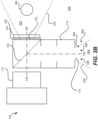
- FIG. 3A illustrates a side representation of a direct sun imaging star tracker, in accordance with some examples.
- FIG. 3A illustrates portions of star tracker 104.
- Star tracker 104 includes imaging sensor 112 and baffle 114 disposed proximate to imaging sensor 112.
- Imaging sensor 112 includes one or more sensors configured to sense electromagnetic radiation through one or more bandwidths (e.g., infrared, visual, ultraviolet, and/or other bandwidths).
- imaging sensor 112 is one sensor, while other examples include a plurality of sensors, such as an array of sensors, for imaging sensor 112.
- baffle 114 is positioned proximate to imaging sensor 112 (e.g., in front of imaging sensor 112).
- baffle 114 includes beam splitter 122, sun port 120, star port 118, and filter 124.
- One or more light paths are further included within baffle 114, including first path 128, second path 126, and combined viewpath 130.
- star port 118 is configured to view first viewing environment 304 through first view perspective 204. Star port 118 is thus configured to view objects within first view perspective 204.
- First view perspective 204 in the example of FIG. 3A , allows for star port 118 to view first viewing environment 304.
- first viewing environment 304 includes stars 308. Electromagnetic radiation generated by stars 308 are a part of first viewing environment 304. In certain examples, the electromagnetic radiation generated by stars 308 enters through star port 118 and reaches beam splitter 122 via first path 128. First path 128 is a pathway within baffle 114.
- Sun port 120 is configured to view second viewing environment 302 through second view perspective 202.
- second viewing environment 302 includes sun 306.
- Electromagnetic radiation generated by sun 306 is a part of second viewing environment 302 and is imaged through sun port 120.
- stars are also a part of second viewing environment 302. However, because the intensity of sun 306 is much greater than the intensity of the stars, electromagnetic radiation from sun 306 will wash out the view of the stars within images of second viewing environment 302. As such, in certain examples, when imaging sun 306 within second viewing environment 302, the stars within second viewing environment 302 are unable to be imaged.
- Filter 124 attenuates the intensity of electromagnetic radiation from second viewing environment 302 that passes through sun port 120. In certain examples, filter 124 attenuates up to 99%, up to 99.5%, up to 99.9%, or more than 99.9% of the electromagnetic radiation from second viewing environment 302. Filter 124 is, thus, configured to attenuate electromagnetic radiation from second viewing environment 302 to a magnitude that allows for simultaneous imaging of first viewing environment 304 by star port 118 and second viewing environment 302 by sun port 120 without washing out either view. In various examples, filter 124 is any type of filter that will attenuate electromagnetic radiation in any bandwidth. Though FIG. 3A illustrates filter 124 disposed in front of sun port 120, it is appreciated that filter 124, in other examples, is disposed along any portion of second path 126.
- Electromagnetic radiation from second viewing environment 302 enters through sun port 120 into baffle 114 and reaches beam splitter 122 via second path 126. As described herein, the electromagnetic radiation passes through filter 124. Filter 124 attenuates a portion of the electromagnetic radiation of second path 126, as described herein.
- first path 128 and/or second path 126 include one or a plurality of stages that includes various filters, reflectors, and/or other equipment for attenuating or enhancing the electromagnetic radiation.
- FIG. 3A illustrates baffle 114 with a star port portion that is longer than a sun port portion
- sun port portions that are just as long or longer than the star port portions.
- the field of views of sun port 120 and star port 118 are different. That is, for example, as sun port 120 is configured to be concentrated on sun 306 while star port 118 is configured to image stars 308, sun port 120 has a field of view that is smaller than the field of view of star port 118.
- the field of view of star port 118 is twice as large, three times as large, or multiple times that of sun port 120.
- combined viewpath 130 includes electromagnetic radiation that is a combination of the electromagnetic radiation of first path 128 and second path 126.
- imaging sensor 112 receives the combined electromagnetic radiation of combined viewpath 130
- the image output by imaging sensor 112 includes both sun 306 and stars 308 within one view.
- proper attenuation of the electromagnetic radiation of sun 306 prevents wash out of stars 308 from the image.
- the resulting image is useful for navigation through using stars 308 and for viewing of sun 306 as well as any objects in front of sun 306.
- beam splitter 122 is a flat piece of glass.
- the glass is, in certain examples, aluminized with a thickness that optimizes the amount of reflectivity or transmission between first path 128 and second path 126.
- Beam splitter 122 includes, in certain examples, a spectral dichroic filter for filtering light from one or more directions (e.g., beam splitter 122 includes the spectral dichroic filter on the portion where solar light passes through), such that the maximum amount of stellar light is passed through star port 118, while low sensitivity regions of imaging sensor 112 is used for sun port 120.
- a dichroic beam splitter is configured to pass only a very narrow band of blue light. In such a configuration, the solar image would be able to have higher spatial resolution while imaging sun 306, with no loss of signal for the stellar image. Such a configuration allows for superior imaging and prevents burn out of portions of imaging sensor 112.
- star port 118 and sun port 120 are configured to image different portions of the environment.
- first viewing environment 304 and second viewing environment 302 are different portions of the sky.
- first path 128 and second path 126 are non-parallel to each other and, thus, star port 118 and sun port 120 are disposed at angles to each other.
- star tracker 104 as described herein allows for imaging of both sun 306 and stars 308 with one star tracker and without a filter wheel or other mechanism. Such a configuration allows for a star tracker to image the sun with less parts, less weights, and improved reliability.
- FIG. 3B illustrates a side representation of a further example of the direct sun imaging star tracker of FIG. 3A , in accordance with some examples.
- FIG. 3B illustrates star tracker 104.
- star tracker 104 includes lens 340 disposed over filter 124 of sun port 120.
- lens 340 is an additional lens disposed over filter 124.
- FIG. 3B couples lens 340 to filter 124, other examples includes lens 340 disposed a relative distance away from filter 124.
- Lens 340 in certain examples, is added to sun port 120 to shorten and/or lengthen the effective focal length of sun port 120. Shortening the effective focal length allows for sun 306 to be detected over a wider field of view (e.g., sun 306 appears smaller on imaging sensor 112 and, thus, in the image, visible over a wider field of view). Lengthening the effective focal length allows for sun 306 to appear larger on imaging sensor 112 (e.g., for better imaging of targets in silhouette against sun 306).
- FIGs. 3A and 3B illustrate examples wherein the portion of baffle 114 that includes first path 128 and star port 118 is disposed at a 90 degree angle relative to the portion of baffle 114 that includes second path 126 and sun port 120
- FIG. 4A illustrates a side representation of another direct sun imaging star tracker, in accordance with some examples.
- the portion of baffle 114 that includes star port 418 and first path 428 is disposed at a non-right angle to the portion of baffle 114 that includes sun port 120 and second path 126.
- Beam splitter 422 is accordingly rearranged so that the electromagnetic radiation of first path 428 and second path 126 is combined into an appropriate combined viewpath 430 for imaging sensor 112.
- FIG. 4B illustrates a side representation of a further direct sun imaging star tracker, in accordance with some examples.
- FIG. 4B illustrates star tracker 104 that includes baffle 414 disposed over imaging sensor 112.
- Baffle 414 includes lens 440 disposed within second path 126 and lenses 442 and 444 disposed within different portions of first path 128. Thus, separate lenses are used for the different focal paths of first path 128 and second path 126.
- Lenses 440 and 442 are disposed within baffle 414 (e.g., behind sun port 120 and star port 118, respectively) while lens 444 is disposed at star port 118, similar to lens 340 of FIG. 3B .
- Lenses 440 and 442 and 444 allow for the focal length of the respective second path 126 and the first path 128 to be shortened or lengthened. As described herein, a shorter focal length for sun 306 would enable a wider field of view around the sun (e.g., allow for the sun to be observed over a larger field of view) while a longer focal length for sun 306 would allow for greater detail of the view of sun 306 and any objects in silhouette against sun 306. Additionally, a shorter focal length for first path 128 would allow for stars 308 to be positioned accordingly within the view (e.g., in combination with positioning of beam splitter 122). A shorter focal length for first path 128 allows for stars 308 to be seen over a wider field of view.
- FIG. 5 illustrates a flow chart of example direct sun imaging star tracker operation, in accordance with some examples.
- FIG. 5 illustrates a technique 500 of operating the star tracker described herein.
- the star tracker is initialized. As such, the star tracker becomes operational and is configured to image various portions of the environment proximate to the star tracker (e.g., the sky around the star tracker).
- the star tracker is positioned. Positioning of the star tracker includes, in certain examples, positioning the sun port so that the sun is visible within the image received through the sun port. The star port is accordingly positioned so that the sun is not visible within the image received through the star port.
- the solar panels (e.g., power systems 108) of the spacecraft are oriented in the same direction as that of the sun port.
- the sun port is configured to view the sun and the solar panels are most efficient when oriented towards the sun, orienting both in such a manner allows for efficient operation of the spacecraft.
- the plane of the solar panels is positioned to be normal to the rays of the sun in such a configuration.
- the 506 includes techniques for imaging the sun and stars around the environment of the star tracker.
- the first viewing environment is imaged in 508 and the second viewing environment is imaged in 510.
- Imaging of the first viewing environment and the second viewing environment is, in certain examples, performed around the same time or during overlapping time periods.
- the first viewing environment in certain examples, includes a sun.
- a baffle of the star tracker appropriately attenuates the electromagnetic radiation of the sun of the first viewing environment so that, in the combined image generated from imaging the first viewing environment and the second viewing environment, both the sun and the stars are visible.
- a combined image is generated in 512 (e.g., from the electromagnetic radiation of the combined viewpath).
- the image is a representation of both the first viewing environment and the second viewing environment and, thus, includes both the sun as well as any stars within the first viewing environment.
- washout from the intensity of the electromagnetic radiation generated by the sun within the second viewing environment results in the image not including any stars that are present within the second viewing environment.
- the image is analyzed in 514.
- analysis of the image is performed by one or more controllers as described herein.
- Analysis of the image includes one or more of, for example, analyzing the image of the sun (e.g., to confirm that the sun is depicted within the image via confirmation of its angular diameter and/or to determine sun spots or any other features of the sun), analyzing the image of the sun to determine the presence of objects in front of the sun, analyzing the stars within the image for navigational purposes (e.g., to determine the actual position of the spacecraft by determining the position of the stars), and/or other such analysis.
- the image is generated from the electromagnetic radiation of both the first viewing environment and the second viewing environment
- the image is a single image that combines (e.g., overlays) the first viewing environment and the second viewing environment.
- the first viewing environment and the second viewing environment are different portions of the environment, the image combines both into a single environment.
- the stars in the image are shown to be proximate to the sun even though they are actually in two different positions.
- a controller analyzing the image determines that, due to washout from the intensity of the electromagnetic radiation generated by the sun within the second viewing environment, any stars within the image are located within the first viewing environment. The controller is then able to navigate using the stars while observing the sun, all from the same image.
- FIGs. 6A-D illustrate example images obtained by a direct sun imaging star tracker, in accordance with some examples.
- FIG. 6A illustrates an example of image 600 created from electromagnetic radiation through a sun port of the baffle described herein.
- Image 600 represents the image created from the electromagnetic radiation of a second path as described herein.
- Image 600 includes sun 306 and satellite 610 disposed in front of sun 306.
- Image 600 has been sufficiently attenuated so that satellite 610 is viewable in front of sun 306.
- satellite 610 is, alternatively or additionally, space debris, or another object of interest.
- FIG. 6B illustrates an example of image 602 created from electromagnetic radiation through a star part of the baffle described herein.
- Image 602 represents the image created from the electromagnetic radiation of a first path as described herein.
- Image 602 includes stars 308 within the viewing environment of the star port.
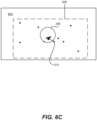
- FIG. 6C illustrates an example of image 604 that combines the electromagnetic radiation received through the sun port and the star port of the baffle described herein.
- image 604 represents the image created from the electromagnetic radiation of a combined viewpath after a beam splitter.
- image 604 includes both sun 306, satellite 610 in front of sun 306, and stars 308.
- stars 308 look to be within the same viewing environment as sun 306 and satellite 610 and sun 306 overlaps with some stars 308.
- the sun port and star port image different portions of the environment, the position of stars 308 in actuality do not overlap with the position of sun 306.
- the overlapping is due to the beam splitter combining the electromagnetic radiation of the different portions that are imaged by the sun port and the star port.
- analysis of image 604 is performed by identifying all stars 308 contained within image 604 as being imaged from the viewing environment of the star port.
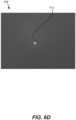
- FIG. 6D illustrates image 608 that includes a neutral density image of sun 612.
- Image 608 illustrates an alternative image of sun 612. Such an alternative image is used in certain examples in the imaging of portions of the viewing environment.
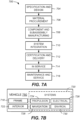
- FIG. 7A illustrates a flow chart of an example of a vehicle production and service methodology, in accordance with some examples.
- method 700 includes the specification and design 704 of vehicle 750 (e.g., a spacecraft as shown in FIG. 1 ) and material procurement 706.
- vehicle 750 e.g., a spacecraft as shown in FIG. 1
- material procurement 706 During production, component and subassembly manufacturing 708 and system integration 710 of vehicle 750 takes place. Thereafter, vehicle 750 goes through certification and delivery 712 in order to be placed in service 714. While in service, in certain examples, vehicle 750 is scheduled for maintenance and service 716 (e.g., modification, reconfiguration, refurbishment, and so on).
- maintenance and service 716 e.g., modification, reconfiguration, refurbishment, and so on.
- each of the processes of method 700 is performed or carried out by a system integrator, a third party, and/or an operator (e.g., a customer).
- a system integrator includes any number of aerospace manufacturers and major-system subcontractors;
- a third party includes any number of venders, subcontractors, and suppliers;
- an operator includes, in certain examples, an airline, leasing company, military entity, service organization, and so on.
- FIG. 7B illustrates a block diagram of an example of a vehicle, in accordance with some examples.
- the vehicle 750 e.g., a spacecraft
- the vehicle 750 e.g., a spacecraft
- the vehicle 750 includes frame 718 with plurality of systems 720, and interior 722.
- systems 720 include one or more of propulsion system 724, electrical system 726, navigation system 728, and environmental system 730.
- other systems are also included within vehicle 750.
- an aerospace example is shown, the described principles are applicable to other industries, such as the automotive industry.
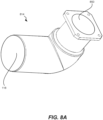
- FIGs. 8A and 8B are representations of a baffle of a direct sun imaging star tracker, in accordance with some examples.
- FIG. 8A illustrates baffle 814 that includes star port 118 and imaging sensor receiver 850. Imaging sensor receiver 850 is configured to receive imaging sensor 112.
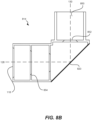
- FIG. 8B illustrates a side representation of baffle 814. As shown in FIG. 8B , baffle 814 includes star port 118 and imaging sensor receiver 850. Sensor port 852 is disposed on an end of imaging sensor receiver 850.
- baffle 814 includes one or more internal baffles 854 disposed within its view paths.
- internal baffles are included within first path 128, second path 126, and/or combined viewpath 130 to, for example, accommodate requirements on solar, lunar, and/or Earth pointing exclusion zones.
- internal baffles 854 allow for limiting of the viewpoint of its associated port.
- Baffle 814 further includes sun port 820.
- Sun port 820 includes one or more lenses and, in certain examples, one or more filters to attenuate the magnitude of sunlight.
- the sun port 820 is disposed at an angle to first path 128.
- the sun port 820 is disposed at between a 30-60 degree angle, such as a 45 degree angle as shown in FIG. 8B , to first path 128.
- sun port 820 attenuates the magnitude of sunlight through one or more filters, acts as a beam splitter due to its orientation, and, in certain examples, changes the focal length of sun port 820.
- a lens disposed within sun port 820 acts as the beam splitter.
- Sun port 820 thus combines first path 128 and a view of the sun into combined viewpath 130.
- sensor port 852 and/or sun port 820 includes a star reflective mirror or another such lens.
- sensor port 852 in certain examples includes a lens.
- the lens aids in focusing of images for imaging sensor 112.
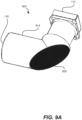
- FIGs. 9A and 9B are representations of a direct sun imaging star tracker, in accordance with some examples.
- star tracker 904 includes baffle 814 and imaging sensor 112 disposed within imaging sensor receiver 850.
- Baffle 814 includes star port 118 and sun port 820.
- combined viewpath 130 is directed into one or more sensors of imaging sensor 112.
Landscapes
- Engineering & Computer Science (AREA)
- Remote Sensing (AREA)
- Radar, Positioning & Navigation (AREA)
- Physics & Mathematics (AREA)
- Aviation & Aerospace Engineering (AREA)
- General Physics & Mathematics (AREA)
- Chemical & Material Sciences (AREA)
- Combustion & Propulsion (AREA)
- Automation & Control Theory (AREA)
- Electromagnetism (AREA)
- Astronomy & Astrophysics (AREA)
- Computer Security & Cryptography (AREA)
- Navigation (AREA)
Description
- Conventional star trackers are not configured to view the sun. Viewing the sun with a conventional star tracker washes out the view of the star tracker and leads to no useful data. Conventional star trackers are sometimes fitted with a filter wheel that allows the star tracker to view the sun in certain configurations. However, such a configuration requires a mechanism to move the filter wheel, increasing complication and weight, and the filter prevents viewing of stars, preventing simultaneous viewing of both the sun and the stars.
-
WO01/49565 - There is described herein a star tracker comprising an imaging sensor, optionally a visual sensor, configured to receive electromagnetic radiation via a combined viewpath, and a baffle disposed proximate the imaging sensor and comprising a) a star port, configured to receive first electromagnetic radiation associated with a first viewing environment via a first path, b) a sun port disposed at between a 30-60 degree angle to the first path, configured to receive second electromagnetic radiation associated with a second viewing environment via a second path and configured to attenuate a magnitude of the second electromagnetic radiation, and c) a lens disposed within the sun port configured to act as a beam splitter, configured to receive the first electromagnetic radiation of the first path and the second electromagnetic radiation of the second path and configured to combine the first electromagnetic radiation and the second electromagnetic radiation into the combined viewpath.
- There is also described herein a spacecraft structure and the star tracker described above, coupled to the spacecraft structure.
- There is also described herein a method comprising a) positioning a star tracker such that a second viewing environment containing a sun is within view of a sun port of the star tracker and a first viewing environment different from the second viewing environment is within view of a star port of the star tracker, wherein the sun port is configured to attenuate a magnitude of the view of the second viewing environment, optionally using a filter, and b) imaging the first viewing environment and the second viewing environment with an imaging sensor of the star tracker. The star port is configured to receive first electromagnetic radiation associated with the first viewing environment via a first path. The sun port is disposed at between a 30-60 degree angle to the first path and is configured to receive second electromagnetic radiation associated with the second viewing environment via a second path and is configured to attenuate the magnitude of the view of the second viewing environment by attenuating the magnitude of the second electromagnetic radiation. The sun port and the star port are disposed within a baffle. The baffle further comprises a lens disposed within the sun port configured to act as a beam splitter, configured to receive the first electromagnetic radiation and the second electromagnetic radiation and configured to combine the first electromagnetic radiation and the second electromagnetic radiation into a combined viewpath.
- Embodiments thereof are defined by the dependent claims.
- Illustrative, non-exclusive examples of features according to present disclosure are described herein. These and other examples are described further below with reference to figures.
- The disclosure may best be understood by reference to the following description taken in conjunction with the accompanying drawings, which illustrate various examples.
-
FIG. 1 illustrates a satellite vehicle. -
FIG. 2 illustrates a block diagram of a satellite vehicle. -
FIG. 3A illustrates a side representation of a non-claimed direct sun imaging star tracker. -
FIG. 3B illustrates a side representation of a further example of the direct sun imaging star tracker ofFIG. 3A . -
FIG. 4A illustrates a side representation of another non-claimed direct sun imaging star tracker. -
FIG. 4B illustrates a side representation of a further non-claimed direct sun imaging star tracker. -
FIG. 5 illustrates a flow chart of example direct sun imaging star tracker operation. -
FIGs. 6A-D illustrate example images obtained by a direct sun imaging star tracker. -
FIGs. 7A and 7B are flowcharts illustrating techniques for operating a direct sun imaging star tracker system. -
FIGs. 8A and8B are representations of a baffle of a direct sun imaging star tracker. -
FIGs. 9A and9B are representations of a direct sun imaging star tracker. - In the following description, numerous specific details are set forth in order to provide a thorough understanding of the presented concepts. The presented concepts may be practiced without some, or all, of these specific details. In other instances, well known process operations have not been described in detail to avoid unnecessarily obscuring the described concepts. While some concepts will be described with the specific examples, it will be understood that these examples are not intended to be limiting.
- Described herein is a direct sun imaging star tracker and techniques for operation thereof. In certain examples, a direct sun imaging star tracker is disclosed. The star tracker includes an imaging sensor, configured to receive electromagnetic radiation via a combined viewpath, and a baffle. The baffle is disposed proximate the imaging sensor and includes a star port, a sun port, and a beam splitter. The star port is configured to receive first electromagnetic radiation associated with a first viewing environment via a first path. The sun port is configured to receive second electromagnetic radiation associated with a second viewing environment via a second path and configured to attenuate a magnitude of the second electromagnetic radiation. The beam splitter is configured to receive the first electromagnetic radiation of the first path and the second electromagnetic radiation of the second path and is configured to combine the first electromagnetic radiation and the second electromagnetic radiation into the combined viewpath. The star tracker, in certain examples, is coupled to a spacecraft structure.
- In various examples, the systems and techniques described herein allow a star tracker to simultaneously view both the sun and the stars. Such systems and techniques allow for the star tracker to utilize the stars for navigational and other purposes while continuing to observe the sun at the same time. In certain examples, the star tracker is a portion of a spacecraft, but other examples include the star tracker as a portion of other vehicles or structures, such as terrestrial observatories, aircraft, ships, and others.
-
FIG. 1 illustrates a satellite vehicle, in accordance with some examples.FIG. 1 illustratesspacecraft 100 that includesspacecraft structure 102. In various examples,spacecraft structure 102 is the main structure ofspacecraft 100. Thus, various systems ofspacecraft 100 is disposed within or otherwise coupled to (e.g., directly or indirectly connected to)spacecraft structure 102. Spacecraftstructure 102 is constructed from any metallic, composite, or other material appropriate for spacecraft construction. Spacecraftstructure 102 may include one or more propulsion systems, electrical systems, navigation systems, instruments, power management systems, logic systems, and other such systems. - For example,
spacecraft structure 102 includesstar tracker 104,spacecraft instrument 106, andpower system 108.Spacecraft instrument 106, in certain examples, is an instrument for use in operation ofspacecraft 100. Thus, for example,spacecraft instrument 106 is an observation instrument (e.g., a telescope), a data instrument (e.g., a global positioning system), and/or another such instrument.Power system 108, in certain examples, is a solar panel, batteries, fuel tanks, and/or other such system configured to generate and/or store power forspacecraft 100. - In certain examples,
star tracker 104 is configured to determine the position of one or more stars relative tospacecraft 100.Star tracker 104 allows for the position of the stars relative tospacecraft 100 to be determined to, for example, allow for navigation ofspacecraft 100. In certain examples described herein,star tracker 104 includes a baffle that allows forstar tracker 104 to simultaneously image the stars as well as the sun. -
FIG. 2 illustrates a block diagram of a satellite vehicle, in accordance with some examples.FIG. 2 illustrates a block diagram ofspacecraft structure 102.Star tracker 104 andspacecraft instrument 106 are coupled to and/or disposed withinspacecraft structure 102.Spacecraft instrument 106, in certain examples, is as described herein and is used to perform operations forspacecraft 100. -
Star tracker 104 is configured to track stars (e.g., for navigation of spacecraft 100). In certain examples,star tracker 104 is configured to also image the sun while imaging the stars.Star tracker 104 includesimaging sensor 112 andbaffle 114.Imaging sensor 112 is configured to receive electromagnetic radiation (e.g., electromagnetic radiation within the visual, ultraviolet, infrared, or other wavelengths) and provide an image from the electromagnetic radiation. In various examples,star tracker 104 may output imaging data based on the electromagnetic radiation detected byimaging sensor 112. - In certain examples,
baffle 114 is disposed proximate toimaging sensor 112.Baffle 114 is configured to attenuate the electromagnetic radiation received by imaging sensor 112 (e.g., decrease the intensity of electromagnetic radiation received by imaging sensor 112). Thus, baffle 114 includes one or more filters or other components to attenuate (e.g., decrease the magnitude of) electromagnetic radiation received byimaging sensor 112. - In certain examples,
baffle 114 includes a plurality of ports. One or more first ports (e.g., sun ports) are configured to receive electromagnetic radiation from the sun and one or more second ports (e.g., star ports) are configured to receive electromagnetic radiation from the stars. The first ports include the one or more filters to attenuate the electromagnetic radiation of the sun. In certain examples, the second ports also include one or more filters, but it is appreciated that the attenuation of the first ports is, in certain examples, greater than the attenuation of the second ports. The first ports and the second ports are configured to image different portions of the sky and, thus, the first ports and the second ports are positioned to be aimed at different portions of the sky. The positioning of the first ports and the second ports allow for stars and the sun to be simultaneously imaged without electromagnetic radiation from the sun affecting (or substantially affecting) the imaging of the stars by the star port. - The
baffle 114 includes a beam splitter. The beam splitter is configured to receive the electromagnetic radiation from the first ports and the second ports and combine the various electromagnetic radiation into a combined viewpath. Thus, the beam splitter allows forimaging sensor 112 to simultaneously image data from the first ports and the second ports and, in certain examples, create a composite image. -
Star tracker 104 andspacecraft instrument 106 are communicatively coupled tocontroller 110 viacommunications network 116. In certain examples,communication network 116 is any type of wired and/or wireless network that communicates data and/or power to and fromcontroller 110.Controller 110 includes, in various examples, a memory, a processor, and other logic device components.Controller 110 is configured to receive data, performs calculations, and provides outputs (e.g., control instructions) to various other systems ofspacecraft 100. Thus, for example,controller 110 is configured to receive data fromimaging sensor 112 and create an image from the data. -
FIG. 3A illustrates a side representation of a direct sun imaging star tracker, in accordance with some examples.FIG. 3A illustrates portions ofstar tracker 104.Star tracker 104 includesimaging sensor 112 and baffle 114 disposed proximate toimaging sensor 112.Imaging sensor 112 includes one or more sensors configured to sense electromagnetic radiation through one or more bandwidths (e.g., infrared, visual, ultraviolet, and/or other bandwidths). In certain examples,imaging sensor 112 is one sensor, while other examples include a plurality of sensors, such as an array of sensors, forimaging sensor 112. - In various examples, some or all of the electromagnetic radiation that reaches
imaging sensor 112 will first pass throughbaffle 114.Baffle 114 is positioned proximate to imaging sensor 112 (e.g., in front of imaging sensor 112). In various examples,baffle 114 includesbeam splitter 122,sun port 120,star port 118, andfilter 124. One or more light paths are further included withinbaffle 114, includingfirst path 128,second path 126, and combinedviewpath 130. - In certain examples,
star port 118 is configured to viewfirst viewing environment 304 throughfirst view perspective 204.Star port 118 is thus configured to view objects withinfirst view perspective 204.First view perspective 204, in the example ofFIG. 3A , allows forstar port 118 to viewfirst viewing environment 304. In certain examples,first viewing environment 304 includesstars 308. Electromagnetic radiation generated bystars 308 are a part offirst viewing environment 304. In certain examples, the electromagnetic radiation generated bystars 308 enters throughstar port 118 and reachesbeam splitter 122 viafirst path 128.First path 128 is a pathway withinbaffle 114. -
Sun port 120 is configured to viewsecond viewing environment 302 throughsecond view perspective 202. In certain examples,second viewing environment 302 includessun 306. Electromagnetic radiation generated bysun 306 is a part ofsecond viewing environment 302 and is imaged throughsun port 120. In certain examples, stars are also a part ofsecond viewing environment 302. However, because the intensity ofsun 306 is much greater than the intensity of the stars, electromagnetic radiation fromsun 306 will wash out the view of the stars within images ofsecond viewing environment 302. As such, in certain examples, when imagingsun 306 withinsecond viewing environment 302, the stars withinsecond viewing environment 302 are unable to be imaged. -
Filter 124 attenuates the intensity of electromagnetic radiation fromsecond viewing environment 302 that passes throughsun port 120. In certain examples,filter 124 attenuates up to 99%, up to 99.5%, up to 99.9%, or more than 99.9% of the electromagnetic radiation fromsecond viewing environment 302.Filter 124 is, thus, configured to attenuate electromagnetic radiation fromsecond viewing environment 302 to a magnitude that allows for simultaneous imaging offirst viewing environment 304 bystar port 118 andsecond viewing environment 302 bysun port 120 without washing out either view. In various examples,filter 124 is any type of filter that will attenuate electromagnetic radiation in any bandwidth. ThoughFIG. 3A illustratesfilter 124 disposed in front ofsun port 120, it is appreciated thatfilter 124, in other examples, is disposed along any portion ofsecond path 126. - Electromagnetic radiation from
second viewing environment 302 enters throughsun port 120 intobaffle 114 and reachesbeam splitter 122 viasecond path 126. As described herein, the electromagnetic radiation passes throughfilter 124.Filter 124 attenuates a portion of the electromagnetic radiation ofsecond path 126, as described herein. Variously,first path 128 and/orsecond path 126 include one or a plurality of stages that includes various filters, reflectors, and/or other equipment for attenuating or enhancing the electromagnetic radiation. - While the example of
FIG. 3A illustratesbaffle 114 with a star port portion that is longer than a sun port portion, other examples include sun port portions that are just as long or longer than the star port portions. In certain examples, the field of views ofsun port 120 andstar port 118 are different. That is, for example, assun port 120 is configured to be concentrated onsun 306 whilestar port 118 is configured to imagestars 308,sun port 120 has a field of view that is smaller than the field of view ofstar port 118. For example, in certain such configurations, the field of view ofstar port 118 is twice as large, three times as large, or multiple times that ofsun port 120. - The electromagnetic radiation of
first path 128 andsecond path 126 are combined bybeam splitter 122 into combinedviewpath 130. The combined electromagnetic radiation then reachesimaging sensor 112 along combinedviewpath 130. Thus, combinedviewpath 130 includes electromagnetic radiation that is a combination of the electromagnetic radiation offirst path 128 andsecond path 126. Asimaging sensor 112 receives the combined electromagnetic radiation of combinedviewpath 130, the image output byimaging sensor 112 includes bothsun 306 andstars 308 within one view. In various examples, proper attenuation of the electromagnetic radiation ofsun 306 prevents wash out ofstars 308 from the image. As such, the resulting image is useful for navigation through usingstars 308 and for viewing ofsun 306 as well as any objects in front ofsun 306. - In various examples,
beam splitter 122 is a flat piece of glass. The glass is, in certain examples, aluminized with a thickness that optimizes the amount of reflectivity or transmission betweenfirst path 128 andsecond path 126.Beam splitter 122 includes, in certain examples, a spectral dichroic filter for filtering light from one or more directions (e.g.,beam splitter 122 includes the spectral dichroic filter on the portion where solar light passes through), such that the maximum amount of stellar light is passed throughstar port 118, while low sensitivity regions ofimaging sensor 112 is used forsun port 120. For example, a dichroic beam splitter is configured to pass only a very narrow band of blue light. In such a configuration, the solar image would be able to have higher spatial resolution while imagingsun 306, with no loss of signal for the stellar image. Such a configuration allows for superior imaging and prevents burn out of portions ofimaging sensor 112. - As shown,
star port 118 andsun port 120 are configured to image different portions of the environment. Thus,first viewing environment 304 andsecond viewing environment 302 are different portions of the sky. In certain examples,first path 128 andsecond path 126 are non-parallel to each other and, thus,star port 118 andsun port 120 are disposed at angles to each other. - As such,
star tracker 104 as described herein allows for imaging of bothsun 306 andstars 308 with one star tracker and without a filter wheel or other mechanism. Such a configuration allows for a star tracker to image the sun with less parts, less weights, and improved reliability. -
FIG. 3B illustrates a side representation of a further example of the direct sun imaging star tracker ofFIG. 3A , in accordance with some examples.FIG. 3B illustratesstar tracker 104. InFIG. 3B ,star tracker 104 includeslens 340 disposed overfilter 124 ofsun port 120. In certain examples,lens 340 is an additional lens disposed overfilter 124. Though the example shown inFIG. 3B coupleslens 340 to filter 124, other examples includeslens 340 disposed a relative distance away fromfilter 124. -
Lens 340, in certain examples, is added to sunport 120 to shorten and/or lengthen the effective focal length ofsun port 120. Shortening the effective focal length allows forsun 306 to be detected over a wider field of view (e.g.,sun 306 appears smaller onimaging sensor 112 and, thus, in the image, visible over a wider field of view). Lengthening the effective focal length allows forsun 306 to appear larger on imaging sensor 112 (e.g., for better imaging of targets in silhouette against sun 306). - While the examples in
FIGs. 3A and3B illustrate examples wherein the portion ofbaffle 114 that includesfirst path 128 andstar port 118 is disposed at a 90 degree angle relative to the portion ofbaffle 114 that includessecond path 126 andsun port 120, other examples, such as the example inFIG. 4A , disposes the various paths and ports in different configurations and/or at different angles.FIG. 4A illustrates a side representation of another direct sun imaging star tracker, in accordance with some examples. - In
FIG. 4A , the portion ofbaffle 114 that includesstar port 418 andfirst path 428 is disposed at a non-right angle to the portion ofbaffle 114 that includessun port 120 andsecond path 126.Beam splitter 422 is accordingly rearranged so that the electromagnetic radiation offirst path 428 andsecond path 126 is combined into an appropriate combinedviewpath 430 forimaging sensor 112. -
FIG. 4B illustrates a side representation of a further direct sun imaging star tracker, in accordance with some examples.FIG. 4B illustratesstar tracker 104 that includesbaffle 414 disposed overimaging sensor 112.Baffle 414 includeslens 440 disposed withinsecond path 126 andlenses first path 128. Thus, separate lenses are used for the different focal paths offirst path 128 andsecond path 126.Lenses sun port 120 andstar port 118, respectively) whilelens 444 is disposed atstar port 118, similar tolens 340 ofFIG. 3B . -
Lenses second path 126 and thefirst path 128 to be shortened or lengthened. As described herein, a shorter focal length forsun 306 would enable a wider field of view around the sun (e.g., allow for the sun to be observed over a larger field of view) while a longer focal length forsun 306 would allow for greater detail of the view ofsun 306 and any objects in silhouette againstsun 306. Additionally, a shorter focal length forfirst path 128 would allow forstars 308 to be positioned accordingly within the view (e.g., in combination with positioning of beam splitter 122). A shorter focal length forfirst path 128 allows forstars 308 to be seen over a wider field of view. -
FIG. 5 illustrates a flow chart of example direct sun imaging star tracker operation, in accordance with some examples.FIG. 5 illustrates atechnique 500 of operating the star tracker described herein. - In 502, the star tracker is initialized. As such, the star tracker becomes operational and is configured to image various portions of the environment proximate to the star tracker (e.g., the sky around the star tracker). In 504, the star tracker is positioned. Positioning of the star tracker includes, in certain examples, positioning the sun port so that the sun is visible within the image received through the sun port. The star port is accordingly positioned so that the sun is not visible within the image received through the star port. In certain examples, as part of positioning the star tracker, the solar panels (e.g., power systems 108) of the spacecraft are oriented in the same direction as that of the sun port. As the sun port is configured to view the sun and the solar panels are most efficient when oriented towards the sun, orienting both in such a manner allows for efficient operation of the spacecraft. Thus, the plane of the solar panels is positioned to be normal to the rays of the sun in such a configuration.
- 506 includes techniques for imaging the sun and stars around the environment of the star tracker. Thus, the first viewing environment is imaged in 508 and the second viewing environment is imaged in 510. Imaging of the first viewing environment and the second viewing environment is, in certain examples, performed around the same time or during overlapping time periods. The first viewing environment, in certain examples, includes a sun. Thus, a baffle of the star tracker appropriately attenuates the electromagnetic radiation of the sun of the first viewing environment so that, in the combined image generated from imaging the first viewing environment and the second viewing environment, both the sun and the stars are visible.
- Based on the imaging in 506, a combined image is generated in 512 (e.g., from the electromagnetic radiation of the combined viewpath). The image is a representation of both the first viewing environment and the second viewing environment and, thus, includes both the sun as well as any stars within the first viewing environment. In certain examples, washout from the intensity of the electromagnetic radiation generated by the sun within the second viewing environment results in the image not including any stars that are present within the second viewing environment.
- The image is analyzed in 514. In certain examples, analysis of the image is performed by one or more controllers as described herein. Analysis of the image includes one or more of, for example, analyzing the image of the sun (e.g., to confirm that the sun is depicted within the image via confirmation of its angular diameter and/or to determine sun spots or any other features of the sun), analyzing the image of the sun to determine the presence of objects in front of the sun, analyzing the stars within the image for navigational purposes (e.g., to determine the actual position of the spacecraft by determining the position of the stars), and/or other such analysis.
- In certain examples, though the image is generated from the electromagnetic radiation of both the first viewing environment and the second viewing environment, the image is a single image that combines (e.g., overlays) the first viewing environment and the second viewing environment. Thus, though the first viewing environment and the second viewing environment are different portions of the environment, the image combines both into a single environment. As such, the stars in the image are shown to be proximate to the sun even though they are actually in two different positions. Thus, in various examples, a controller analyzing the image determines that, due to washout from the intensity of the electromagnetic radiation generated by the sun within the second viewing environment, any stars within the image are located within the first viewing environment. The controller is then able to navigate using the stars while observing the sun, all from the same image.
- Examples of such images are described herein.
FIGs. 6A-D illustrate example images obtained by a direct sun imaging star tracker, in accordance with some examples.FIG. 6A illustrates an example ofimage 600 created from electromagnetic radiation through a sun port of the baffle described herein.Image 600 represents the image created from the electromagnetic radiation of a second path as described herein.Image 600 includessun 306 andsatellite 610 disposed in front ofsun 306.Image 600 has been sufficiently attenuated so thatsatellite 610 is viewable in front ofsun 306. In certain examples,satellite 610 is, alternatively or additionally, space debris, or another object of interest. -
FIG. 6B illustrates an example ofimage 602 created from electromagnetic radiation through a star part of the baffle described herein.Image 602 represents the image created from the electromagnetic radiation of a first path as described herein.Image 602 includesstars 308 within the viewing environment of the star port. -
FIG. 6C illustrates an example ofimage 604 that combines the electromagnetic radiation received through the sun port and the star port of the baffle described herein. Thus,image 604 represents the image created from the electromagnetic radiation of a combined viewpath after a beam splitter. As such,image 604 includes bothsun 306,satellite 610 in front ofsun 306, and stars 308. - As shown in
image 604,stars 308 look to be within the same viewing environment assun 306 andsatellite 610 and sun 306 overlaps with somestars 308. However, in certain examples, as the sun port and star port image different portions of the environment, the position ofstars 308 in actuality do not overlap with the position ofsun 306. The overlapping is due to the beam splitter combining the electromagnetic radiation of the different portions that are imaged by the sun port and the star port. In certain examples, analysis ofimage 604 is performed by identifying allstars 308 contained withinimage 604 as being imaged from the viewing environment of the star port. -
FIG. 6D illustratesimage 608 that includes a neutral density image ofsun 612.Image 608 illustrates an alternative image ofsun 612. Such an alternative image is used in certain examples in the imaging of portions of the viewing environment. - While the systems, apparatus, and methods disclosed above have been described with reference to spacecraft and the aerospace industry, it will be appreciated that the examples disclosed herein is applicable to other contexts as well, such as observatory, automotive, ship, aircraft, and other mechanical and vehicular contexts. For example, the systems and apparatus described herein is, in certain other examples, mounted on a gimbal of an aircraft. Accordingly, examples of the disclosure is described in the context of a spacecraft manufacturing and service method 700 as shown in
FIG. 7A andvehicle 750 as shown inFIG. 7B as applicable to such other contexts. -
FIG. 7A illustrates a flow chart of an example of a vehicle production and service methodology, in accordance with some examples. In some examples, during pre-production, method 700 includes the specification anddesign 704 of vehicle 750 (e.g., a spacecraft as shown inFIG. 1 ) andmaterial procurement 706. During production, component andsubassembly manufacturing 708 andsystem integration 710 ofvehicle 750 takes place. Thereafter,vehicle 750 goes through certification anddelivery 712 in order to be placed inservice 714. While in service, in certain examples,vehicle 750 is scheduled for maintenance and service 716 (e.g., modification, reconfiguration, refurbishment, and so on). - In certain examples, each of the processes of method 700 is performed or carried out by a system integrator, a third party, and/or an operator (e.g., a customer). For the purposes of this description, a system integrator includes any number of aerospace manufacturers and major-system subcontractors; a third party includes any number of venders, subcontractors, and suppliers; and an operator includes, in certain examples, an airline, leasing company, military entity, service organization, and so on.
-
FIG. 7B illustrates a block diagram of an example of a vehicle, in accordance with some examples. As shown inFIG. 7B , the vehicle 750 (e.g., a spacecraft) produced by method 700 includesframe 718 with plurality ofsystems 720, andinterior 722. Examples ofsystems 720 include one or more ofpropulsion system 724,electrical system 726,navigation system 728, andenvironmental system 730. In various examples, other systems are also included withinvehicle 750. Although an aerospace example is shown, the described principles are applicable to other industries, such as the automotive industry. -
FIGs. 8A and8B are representations of a baffle of a direct sun imaging star tracker, in accordance with some examples.FIG. 8A illustratesbaffle 814 that includesstar port 118 andimaging sensor receiver 850.Imaging sensor receiver 850 is configured to receiveimaging sensor 112.FIG. 8B illustrates a side representation ofbaffle 814. As shown inFIG. 8B ,baffle 814 includesstar port 118 andimaging sensor receiver 850.Sensor port 852 is disposed on an end ofimaging sensor receiver 850. - Furthermore, baffle 814 includes one or more
internal baffles 854 disposed within its view paths. In various examples, internal baffles are included withinfirst path 128,second path 126, and/or combinedviewpath 130 to, for example, accommodate requirements on solar, lunar, and/or Earth pointing exclusion zones. As such,internal baffles 854 allow for limiting of the viewpoint of its associated port. -
Baffle 814 further includessun port 820.Sun port 820 includes one or more lenses and, in certain examples, one or more filters to attenuate the magnitude of sunlight. Thesun port 820 is disposed at an angle tofirst path 128. Thesun port 820 is disposed at between a 30-60 degree angle, such as a 45 degree angle as shown inFIG. 8B , tofirst path 128. In certain such configurations,sun port 820 attenuates the magnitude of sunlight through one or more filters, acts as a beam splitter due to its orientation, and, in certain examples, changes the focal length ofsun port 820. A lens disposed withinsun port 820 acts as the beam splitter.Sun port 820 thus combinesfirst path 128 and a view of the sun into combinedviewpath 130. In additional examples,sensor port 852 and/orsun port 820 includes a star reflective mirror or another such lens. Thus, for example,sensor port 852 in certain examples includes a lens. The lens, in certain examples, aids in focusing of images forimaging sensor 112. -
FIGs. 9A and9B are representations of a direct sun imaging star tracker, in accordance with some examples. As shown inFIGs. 9A and9B ,star tracker 904 includesbaffle 814 andimaging sensor 112 disposed withinimaging sensor receiver 850.Baffle 814 includesstar port 118 andsun port 820. As shown inFIG. 9B , combinedviewpath 130 is directed into one or more sensors ofimaging sensor 112. - Although foregoing concepts have been described in some detail for purposes of clarity of understanding, it will be apparent that certain changes and modifications may be practiced within scope of appended claims. It should be noted that there are many alternative ways of implementing processes, systems, and apparatuses as long as they fall under the scope of the claims. Accordingly, present examples are to be considered as illustrative and not restrictive.
Claims (15)
- A star tracker (104), comprising:an imaging sensor (112), optionally a visual sensor, configured to receive electromagnetic radiation via a combined viewpath (130); anda baffle (814), disposed proximate the imaging sensor (112) and comprising:a star port (118), configured to receive first electromagnetic radiation associated with a first viewing environment (304) via a first path (128);a sun port (820) disposed at between a 30-60 degree angle to the first path (128), configured to receive second electromagnetic radiation associated with a second viewing environment (302) via a second path (126) and configured to attenuate a magnitude of the second electromagnetic radiation; anda lens disposed within the sun port (820) configured to act as a beam splitter (122), configured to receive the first electromagnetic radiation of the first path (128) and the second electromagnetic radiation of the second path (126) and configured to combine the first electromagnetic radiation and the second electromagnetic radiation into the combined viewpath (130).
- The star tracker (104) of claim 1, wherein the baffle (814) further comprises an imaging sensor receiver (850) configured to receive the imaging sensor (112) and, optionally, wherein a sensor port (852) is disposed on an end of the imaging sensor receiver (850).
- The star tracker (104) of claim 1 or claim 2, wherein the baffle (814) further comprises one or more internal baffles (854) included within the first path (128), the second path (126) and/or the combined path (130).
- The star tracker (104) of claim 1, wherein the sun port (820) further comprises a filter (124) configured to attenuate the magnitude of the second electromagnetic radiation received and, optionally, wherein the filter (124) is disposed along a portion of the second path (126).
- The star tracker (104) of claim 4, wherein the sun port (820) is configured to attenuate:the second electromagnetic radiation to a first level to allow for simultaneous imaging of one or more stars (308) with the star port (118) and a sun (306) with the sun port (820); and/or99% or more of the magnitude of the second electromagnetic radiation received.
- The star tracker (104) of any of claims 1-5, further comprising a controller (110), configured to:receive (506) imaging data from the imaging sensor (112); andoutput (512) an image (604) based on the imaging data, wherein the image (604) is associated with both the first viewing environment (304) and the second viewing environment (302).
- The star tracker (104) of claim 6, wherein the first viewing environment (304) is a first portion of a sky (300), wherein the second viewing environment (302) is a second portion of the sky (300), and wherein the image (604) combines both the first viewing environment (304) and the second viewing environment (302).
- The star tracker (104) of any of claims 1-7, wherein the star tracker (104) is configured to simultaneously image the one or more stars (308) and the sun (306) while in orbit around Earth.
- A spacecraft (100), comprising:a spacecraft structure (102); andthe star tracker (104) of any of claims 1-8, coupled to the spacecraft structure (102).
- A method comprising:positioning (504) a star tracker (104) such that a second viewing environment (302) containing a sun (306) is within view of a sun port (820) of the star tracker (104) and a first viewing environment (304) different from the second viewing environment (302) is within view of a star port (118) of the star tracker (104), wherein the sun port (820) is configured to attenuate a magnitude of the view of the second viewing environment (302), optionally using a filter (124); andimaging (506) the first viewing environment (304) and the second viewing environment (302) with an imaging sensor (112) of the star tracker (104), wherein:the star port (118) is configured to receive first electromagnetic radiation associated with the first viewing environment (304) via a first path (128);the sun port (820) is disposed at between a 30-60 degree angle to the first path (128) and is configured to receive second electromagnetic radiation associated with the second viewing environment (302) via a second path (126) and is configured to attenuate the magnitude of the view of the second viewing environment (302) by attenuating the magnitude of the second electromagnetic radiation; andthe sun port (820) and the star port (118) are disposed within a baffle (814), and the baffle (814) further comprises a lens disposed within the sun port (820) configured to act as a beam splitter (122), configured to receive the first electromagnetic radiation and the second electromagnetic radiation and configured to combine the first electromagnetic radiation and the second electromagnetic radiation into a combined viewpath (130).
- The method of claim 10, wherein the sun port (820) is further configured to attenuate a magnitude of the second electromagnetic radiation to a first level to allow for simultaneous imaging of one or more stars (308) with the star port (118) and the sun (306) with the sun port (820).
- The method of claim 10 or claim 11, wherein the baffle (814) further comprises an imaging sensor receiver (850) configured to receive the imaging sensor (112) and, optionally, wherein a sensor port (852) is disposed on an end of the imaging sensor receiver (850).
- The method of any of claims 10-12, wherein the baffle (814) further comprises one or more internal baffles (854) included within the first path (128), the second path (126) and/or the combined path (130).
- The method of any of claims 10-13, further comprising:generating (512) an image (604) associated with the first viewing environment (304) and the second viewing environment (302); anddetermining (514) navigation data for a spacecraft (100) based on the image (604).
- The method of any of claims 10-14, wherein the positioning (504) the star tracker (104) further comprises orienting a solar panel (108) of a spacecraft (100) in a same direction as that of the sun port (820).
Applications Claiming Priority (1)
| Application Number | Priority Date | Filing Date | Title |
|---|---|---|---|
| US17/355,846 US12020402B2 (en) | 2020-06-26 | 2021-06-23 | Direct sun imaging star tracker |
Publications (2)
| Publication Number | Publication Date |
|---|---|
| EP4109043A1 EP4109043A1 (en) | 2022-12-28 |
| EP4109043B1 true EP4109043B1 (en) | 2024-09-18 |
Family
ID=77155702
Family Applications (1)
| Application Number | Title | Priority Date | Filing Date |
|---|---|---|---|
| EP21188846.6A Active EP4109043B1 (en) | 2021-06-23 | 2021-07-30 | Direct sun imaging star tracker |
Country Status (2)
| Country | Link |
|---|---|
| EP (1) | EP4109043B1 (en) |
| CN (1) | CN115509244A (en) |
Family Cites Families (5)
| Publication number | Priority date | Publication date | Assignee | Title |
|---|---|---|---|---|
| DE3412046A1 (en) * | 1984-03-31 | 1985-10-03 | Messerschmitt-Bölkow-Blohm GmbH, 8012 Ottobrunn | STAR AND SUN SENSOR FOR A POSITION CONTROL SYSTEM |
| DE19846690B4 (en) * | 1998-10-09 | 2007-11-08 | Eads Astrium Gmbh | Combined earth-star sensor system and method for orbital and attitude determination of spacecraft |
| AU2927301A (en) * | 2000-01-04 | 2001-07-16 | Johns Hopkins University, The | Method and apparatus for autonomous solar navigation |
| US8169623B2 (en) * | 2009-09-01 | 2012-05-01 | Raytheon Company | Optical apparatus and method for measuring the attitude of an object in outer space |
| US12130141B2 (en) * | 2013-05-14 | 2024-10-29 | The Charles Stark Draper Laboratory, Inc. | Star tracker with adjustable light shield |
-
2021
- 2021-07-30 EP EP21188846.6A patent/EP4109043B1/en active Active
- 2021-07-30 CN CN202110871247.0A patent/CN115509244A/en active Pending
Also Published As
| Publication number | Publication date |
|---|---|
| EP4109043A1 (en) | 2022-12-28 |
| CN115509244A (en) | 2022-12-23 |
Similar Documents
| Publication | Publication Date | Title |
|---|---|---|
| Mushotzky et al. | The advanced X-ray imaging satellite | |
| Rieke et al. | Overview of James Webb Space Telescope and NIRCam's Role | |
| US10659159B2 (en) | Combined imaging and laser communication system | |
| US20120249775A1 (en) | Optical navigation attitude determination and communications system for space vehicles | |
| Postman et al. | Advanced Technology Large-Aperture Space Telescope (ATLAST): A technology roadmap for the next decade | |
| Bernard et al. | PILOT: a balloon-borne experiment to measure the polarized FIR emission of dust grains in the interstellar medium | |
| US8050568B2 (en) | Free-space sensor network | |
| Oegerle et al. | ATLAST-9.2 m: a large-aperture deployable space telescope | |
| US7657183B2 (en) | Method and apparatus for hemispherical retargeting | |
| Martin et al. | Next-generation active telescope for space astronomy | |
| EP4109043B1 (en) | Direct sun imaging star tracker | |
| US12020402B2 (en) | Direct sun imaging star tracker | |
| Pernechele et al. | Hyper hemispheric lens applications in small and micro satellites | |
| CN116002072B (en) | A wide-area infrared point target detection and tracking cooperative satellite system | |
| Karlsson et al. | The technology of DARWIN | |
| Simms et al. | Space-based telescopes for actionable refinement of ephemeris pathfinder mission | |
| US8044332B2 (en) | Hybrid architecture active wavefront sensing and control system, and method | |
| Schultz et al. | UMBRAS: a matched occulter and telescope for imaging extrasolar planets | |
| Pavlinsky et al. | Spectrum-RG/eROSITA/Lobster astrophysical mission | |
| Senior et al. | Can we use low cost small satellites to observe space debris missed by ground systems | |
| Kim et al. | Design of an Elliptical Orbit Constellation for High-Resolution Optical Observations over a Specific Area | |
| Glassman et al. | New worlds observer mission design | |
| Hart et al. | Imaging planets about other stars with UMBRAS: target acquisition and station keeping | |
| Kasturirangan | Science and technology of imaging from space | |
| Wallner et al. | X-Array aperture configuration in planar or non-planar spacecraft formation for DARWIN/TPF-I candidate architectures |
Legal Events
| Date | Code | Title | Description |
|---|---|---|---|
| PUAI | Public reference made under article 153(3) epc to a published international application that has entered the european phase |
Free format text: ORIGINAL CODE: 0009012 |
|
| STAA | Information on the status of an ep patent application or granted ep patent |
Free format text: STATUS: THE APPLICATION HAS BEEN PUBLISHED |
|
| AK | Designated contracting states |
Kind code of ref document: A1 Designated state(s): AL AT BE BG CH CY CZ DE DK EE ES FI FR GB GR HR HU IE IS IT LI LT LU LV MC MK MT NL NO PL PT RO RS SE SI SK SM TR |
|
| RAP3 | Party data changed (applicant data changed or rights of an application transferred) |
Owner name: THE BOEING COMPANY |
|
| STAA | Information on the status of an ep patent application or granted ep patent |
Free format text: STATUS: REQUEST FOR EXAMINATION WAS MADE |
|
| 17P | Request for examination filed |
Effective date: 20230626 |
|
| RBV | Designated contracting states (corrected) |
Designated state(s): AL AT BE BG CH CY CZ DE DK EE ES FI FR GB GR HR HU IE IS IT LI LT LU LV MC MK MT NL NO PL PT RO RS SE SI SK SM TR |
|
| GRAP | Despatch of communication of intention to grant a patent |
Free format text: ORIGINAL CODE: EPIDOSNIGR1 |
|
| STAA | Information on the status of an ep patent application or granted ep patent |
Free format text: STATUS: GRANT OF PATENT IS INTENDED |
|
| INTG | Intention to grant announced |
Effective date: 20240503 |
|
| P01 | Opt-out of the competence of the unified patent court (upc) registered |
Free format text: CASE NUMBER: APP_33113/2024 Effective date: 20240603 |
|
| GRAS | Grant fee paid |
Free format text: ORIGINAL CODE: EPIDOSNIGR3 |
|
| GRAA | (expected) grant |
Free format text: ORIGINAL CODE: 0009210 |
|
| STAA | Information on the status of an ep patent application or granted ep patent |
Free format text: STATUS: THE PATENT HAS BEEN GRANTED |
|
| AK | Designated contracting states |
Kind code of ref document: B1 Designated state(s): AL AT BE BG CH CY CZ DE DK EE ES FI FR GB GR HR HU IE IS IT LI LT LU LV MC MK MT NL NO PL PT RO RS SE SI SK SM TR |
|
| REG | Reference to a national code |
Ref country code: GB Ref legal event code: FG4D |
|
| REG | Reference to a national code |
Ref country code: CH Ref legal event code: EP |
|
| REG | Reference to a national code |
Ref country code: DE Ref legal event code: R096 Ref document number: 602021018877 Country of ref document: DE |
|
| REG | Reference to a national code |
Ref country code: IE Ref legal event code: FG4D |
|
| REG | Reference to a national code |
Ref country code: LT Ref legal event code: MG9D |
|
| PG25 | Lapsed in a contracting state [announced via postgrant information from national office to epo] |
Ref country code: NO Free format text: LAPSE BECAUSE OF FAILURE TO SUBMIT A TRANSLATION OF THE DESCRIPTION OR TO PAY THE FEE WITHIN THE PRESCRIBED TIME-LIMIT Effective date: 20241218 |
|
| PG25 | Lapsed in a contracting state [announced via postgrant information from national office to epo] |
Ref country code: GR Free format text: LAPSE BECAUSE OF FAILURE TO SUBMIT A TRANSLATION OF THE DESCRIPTION OR TO PAY THE FEE WITHIN THE PRESCRIBED TIME-LIMIT Effective date: 20241219 Ref country code: FI Free format text: LAPSE BECAUSE OF FAILURE TO SUBMIT A TRANSLATION OF THE DESCRIPTION OR TO PAY THE FEE WITHIN THE PRESCRIBED TIME-LIMIT Effective date: 20240918 |
|
| PG25 | Lapsed in a contracting state [announced via postgrant information from national office to epo] |
Ref country code: BG Free format text: LAPSE BECAUSE OF FAILURE TO SUBMIT A TRANSLATION OF THE DESCRIPTION OR TO PAY THE FEE WITHIN THE PRESCRIBED TIME-LIMIT Effective date: 20240918 |
|
| PG25 | Lapsed in a contracting state [announced via postgrant information from national office to epo] |
Ref country code: LV Free format text: LAPSE BECAUSE OF FAILURE TO SUBMIT A TRANSLATION OF THE DESCRIPTION OR TO PAY THE FEE WITHIN THE PRESCRIBED TIME-LIMIT Effective date: 20240918 |
|
| PG25 | Lapsed in a contracting state [announced via postgrant information from national office to epo] |
Ref country code: HR Free format text: LAPSE BECAUSE OF FAILURE TO SUBMIT A TRANSLATION OF THE DESCRIPTION OR TO PAY THE FEE WITHIN THE PRESCRIBED TIME-LIMIT Effective date: 20240918 |
|
| REG | Reference to a national code |
Ref country code: NL Ref legal event code: MP Effective date: 20240918 |
|
| PG25 | Lapsed in a contracting state [announced via postgrant information from national office to epo] |
Ref country code: RS Free format text: LAPSE BECAUSE OF FAILURE TO SUBMIT A TRANSLATION OF THE DESCRIPTION OR TO PAY THE FEE WITHIN THE PRESCRIBED TIME-LIMIT Effective date: 20241218 |
|
| PG25 | Lapsed in a contracting state [announced via postgrant information from national office to epo] |
Ref country code: RS Free format text: LAPSE BECAUSE OF FAILURE TO SUBMIT A TRANSLATION OF THE DESCRIPTION OR TO PAY THE FEE WITHIN THE PRESCRIBED TIME-LIMIT Effective date: 20241218 Ref country code: NO Free format text: LAPSE BECAUSE OF FAILURE TO SUBMIT A TRANSLATION OF THE DESCRIPTION OR TO PAY THE FEE WITHIN THE PRESCRIBED TIME-LIMIT Effective date: 20241218 Ref country code: LV Free format text: LAPSE BECAUSE OF FAILURE TO SUBMIT A TRANSLATION OF THE DESCRIPTION OR TO PAY THE FEE WITHIN THE PRESCRIBED TIME-LIMIT Effective date: 20240918 Ref country code: HR Free format text: LAPSE BECAUSE OF FAILURE TO SUBMIT A TRANSLATION OF THE DESCRIPTION OR TO PAY THE FEE WITHIN THE PRESCRIBED TIME-LIMIT Effective date: 20240918 Ref country code: GR Free format text: LAPSE BECAUSE OF FAILURE TO SUBMIT A TRANSLATION OF THE DESCRIPTION OR TO PAY THE FEE WITHIN THE PRESCRIBED TIME-LIMIT Effective date: 20241219 Ref country code: FI Free format text: LAPSE BECAUSE OF FAILURE TO SUBMIT A TRANSLATION OF THE DESCRIPTION OR TO PAY THE FEE WITHIN THE PRESCRIBED TIME-LIMIT Effective date: 20240918 Ref country code: BG Free format text: LAPSE BECAUSE OF FAILURE TO SUBMIT A TRANSLATION OF THE DESCRIPTION OR TO PAY THE FEE WITHIN THE PRESCRIBED TIME-LIMIT Effective date: 20240918 |
|
| REG | Reference to a national code |
Ref country code: AT Ref legal event code: MK05 Ref document number: 1725043 Country of ref document: AT Kind code of ref document: T Effective date: 20240918 |
|
| PG25 | Lapsed in a contracting state [announced via postgrant information from national office to epo] |
Ref country code: NL Free format text: LAPSE BECAUSE OF FAILURE TO SUBMIT A TRANSLATION OF THE DESCRIPTION OR TO PAY THE FEE WITHIN THE PRESCRIBED TIME-LIMIT Effective date: 20240918 |
|
| PG25 | Lapsed in a contracting state [announced via postgrant information from national office to epo] |
Ref country code: IS Free format text: LAPSE BECAUSE OF FAILURE TO SUBMIT A TRANSLATION OF THE DESCRIPTION OR TO PAY THE FEE WITHIN THE PRESCRIBED TIME-LIMIT Effective date: 20250118 Ref country code: PT Free format text: LAPSE BECAUSE OF FAILURE TO SUBMIT A TRANSLATION OF THE DESCRIPTION OR TO PAY THE FEE WITHIN THE PRESCRIBED TIME-LIMIT Effective date: 20250120 |
|
| PG25 | Lapsed in a contracting state [announced via postgrant information from national office to epo] |
Ref country code: SM Free format text: LAPSE BECAUSE OF FAILURE TO SUBMIT A TRANSLATION OF THE DESCRIPTION OR TO PAY THE FEE WITHIN THE PRESCRIBED TIME-LIMIT Effective date: 20240918 Ref country code: RO Free format text: LAPSE BECAUSE OF FAILURE TO SUBMIT A TRANSLATION OF THE DESCRIPTION OR TO PAY THE FEE WITHIN THE PRESCRIBED TIME-LIMIT Effective date: 20240918 |
|
| PG25 | Lapsed in a contracting state [announced via postgrant information from national office to epo] |
Ref country code: ES Free format text: LAPSE BECAUSE OF FAILURE TO SUBMIT A TRANSLATION OF THE DESCRIPTION OR TO PAY THE FEE WITHIN THE PRESCRIBED TIME-LIMIT Effective date: 20240918 |
|
| PG25 | Lapsed in a contracting state [announced via postgrant information from national office to epo] |
Ref country code: AT Free format text: LAPSE BECAUSE OF FAILURE TO SUBMIT A TRANSLATION OF THE DESCRIPTION OR TO PAY THE FEE WITHIN THE PRESCRIBED TIME-LIMIT Effective date: 20240918 Ref country code: EE Free format text: LAPSE BECAUSE OF FAILURE TO SUBMIT A TRANSLATION OF THE DESCRIPTION OR TO PAY THE FEE WITHIN THE PRESCRIBED TIME-LIMIT Effective date: 20240918 |
|
| PG25 | Lapsed in a contracting state [announced via postgrant information from national office to epo] |
Ref country code: PL Free format text: LAPSE BECAUSE OF FAILURE TO SUBMIT A TRANSLATION OF THE DESCRIPTION OR TO PAY THE FEE WITHIN THE PRESCRIBED TIME-LIMIT Effective date: 20240918 Ref country code: CZ Free format text: LAPSE BECAUSE OF FAILURE TO SUBMIT A TRANSLATION OF THE DESCRIPTION OR TO PAY THE FEE WITHIN THE PRESCRIBED TIME-LIMIT Effective date: 20240918 |
|
| PG25 | Lapsed in a contracting state [announced via postgrant information from national office to epo] |
Ref country code: IT Free format text: LAPSE BECAUSE OF FAILURE TO SUBMIT A TRANSLATION OF THE DESCRIPTION OR TO PAY THE FEE WITHIN THE PRESCRIBED TIME-LIMIT Effective date: 20240918 Ref country code: SK Free format text: LAPSE BECAUSE OF FAILURE TO SUBMIT A TRANSLATION OF THE DESCRIPTION OR TO PAY THE FEE WITHIN THE PRESCRIBED TIME-LIMIT Effective date: 20240918 |
|
| REG | Reference to a national code |
Ref country code: DE Ref legal event code: R097 Ref document number: 602021018877 Country of ref document: DE |
|
| PG25 | Lapsed in a contracting state [announced via postgrant information from national office to epo] |
Ref country code: DK Free format text: LAPSE BECAUSE OF FAILURE TO SUBMIT A TRANSLATION OF THE DESCRIPTION OR TO PAY THE FEE WITHIN THE PRESCRIBED TIME-LIMIT Effective date: 20240918 |
|
| PLBE | No opposition filed within time limit |
Free format text: ORIGINAL CODE: 0009261 |
|
| STAA | Information on the status of an ep patent application or granted ep patent |
Free format text: STATUS: NO OPPOSITION FILED WITHIN TIME LIMIT |
|
| 26N | No opposition filed |
Effective date: 20250619 |
|
| PG25 | Lapsed in a contracting state [announced via postgrant information from national office to epo] |
Ref country code: SE Free format text: LAPSE BECAUSE OF FAILURE TO SUBMIT A TRANSLATION OF THE DESCRIPTION OR TO PAY THE FEE WITHIN THE PRESCRIBED TIME-LIMIT Effective date: 20240918 |
|
| PGFP | Annual fee paid to national office [announced via postgrant information from national office to epo] |
Ref country code: DE Payment date: 20250729 Year of fee payment: 5 |
|
| PGFP | Annual fee paid to national office [announced via postgrant information from national office to epo] |
Ref country code: GB Payment date: 20250728 Year of fee payment: 5 |
|
| PGFP | Annual fee paid to national office [announced via postgrant information from national office to epo] |
Ref country code: FR Payment date: 20250728 Year of fee payment: 5 |
|
| REG | Reference to a national code |
Ref country code: CH Ref legal event code: H13 Free format text: ST27 STATUS EVENT CODE: U-0-0-H10-H13 (AS PROVIDED BY THE NATIONAL OFFICE) Effective date: 20260224 |
|
| PG25 | Lapsed in a contracting state [announced via postgrant information from national office to epo] |
Ref country code: LU Free format text: LAPSE BECAUSE OF NON-PAYMENT OF DUE FEES Effective date: 20250730 |
|
| REG | Reference to a national code |
Ref country code: BE Ref legal event code: MM Effective date: 20250731 |
|
| PG25 | Lapsed in a contracting state [announced via postgrant information from national office to epo] |
Ref country code: BE Free format text: LAPSE BECAUSE OF NON-PAYMENT OF DUE FEES Effective date: 20250731 |
|
| PG25 | Lapsed in a contracting state [announced via postgrant information from national office to epo] |
Ref country code: CH Free format text: LAPSE BECAUSE OF NON-PAYMENT OF DUE FEES Effective date: 20250731 |