EP4108746A1 - Deterioration measurement device, system, method, and lubricant oil composition - Google Patents
Deterioration measurement device, system, method, and lubricant oil composition Download PDFInfo
- Publication number
- EP4108746A1 EP4108746A1 EP20920513.7A EP20920513A EP4108746A1 EP 4108746 A1 EP4108746 A1 EP 4108746A1 EP 20920513 A EP20920513 A EP 20920513A EP 4108746 A1 EP4108746 A1 EP 4108746A1
- Authority
- EP
- European Patent Office
- Prior art keywords
- lubricating oil
- oil composition
- deterioration
- fluorescent
- compound
- Prior art date
- Legal status (The legal status is an assumption and is not a legal conclusion. Google has not performed a legal analysis and makes no representation as to the accuracy of the status listed.)
- Withdrawn
Links
Images


Classifications
-
- C—CHEMISTRY; METALLURGY
- C10—PETROLEUM, GAS OR COKE INDUSTRIES; TECHNICAL GASES CONTAINING CARBON MONOXIDE; FUELS; LUBRICANTS; PEAT
- C10M—LUBRICATING COMPOSITIONS; USE OF CHEMICAL SUBSTANCES EITHER ALONE OR AS LUBRICATING INGREDIENTS IN A LUBRICATING COMPOSITION
- C10M171/00—Lubricating compositions characterised by purely physical criteria, e.g. containing as base-material, thickener or additive, ingredients which are characterised exclusively by their numerically specified physical properties, i.e. containing ingredients which are physically well-defined but for which the chemical nature is either unspecified or only very vaguely indicated
- C10M171/007—Coloured or dyes-containing lubricant compositions
-
- C—CHEMISTRY; METALLURGY
- C10—PETROLEUM, GAS OR COKE INDUSTRIES; TECHNICAL GASES CONTAINING CARBON MONOXIDE; FUELS; LUBRICANTS; PEAT
- C10M—LUBRICATING COMPOSITIONS; USE OF CHEMICAL SUBSTANCES EITHER ALONE OR AS LUBRICATING INGREDIENTS IN A LUBRICATING COMPOSITION
- C10M171/00—Lubricating compositions characterised by purely physical criteria, e.g. containing as base-material, thickener or additive, ingredients which are characterised exclusively by their numerically specified physical properties, i.e. containing ingredients which are physically well-defined but for which the chemical nature is either unspecified or only very vaguely indicated
-
- C—CHEMISTRY; METALLURGY
- C10—PETROLEUM, GAS OR COKE INDUSTRIES; TECHNICAL GASES CONTAINING CARBON MONOXIDE; FUELS; LUBRICANTS; PEAT
- C10M—LUBRICATING COMPOSITIONS; USE OF CHEMICAL SUBSTANCES EITHER ALONE OR AS LUBRICATING INGREDIENTS IN A LUBRICATING COMPOSITION
- C10M127/00—Lubricating compositions characterised by the additive being a non- macromolecular hydrocarbon
- C10M127/04—Lubricating compositions characterised by the additive being a non- macromolecular hydrocarbon well-defined aromatic
-
- C—CHEMISTRY; METALLURGY
- C10—PETROLEUM, GAS OR COKE INDUSTRIES; TECHNICAL GASES CONTAINING CARBON MONOXIDE; FUELS; LUBRICANTS; PEAT
- C10M—LUBRICATING COMPOSITIONS; USE OF CHEMICAL SUBSTANCES EITHER ALONE OR AS LUBRICATING INGREDIENTS IN A LUBRICATING COMPOSITION
- C10M133/00—Lubricating compositions characterised by the additive being an organic non-macromolecular compound containing nitrogen
- C10M133/02—Lubricating compositions characterised by the additive being an organic non-macromolecular compound containing nitrogen having a carbon chain of less than 30 atoms
- C10M133/04—Amines, e.g. polyalkylene polyamines; Quaternary amines
- C10M133/12—Amines, e.g. polyalkylene polyamines; Quaternary amines having amino groups bound to a carbon atom of a six-membered aromatic ring
-
- G—PHYSICS
- G01—MEASURING; TESTING
- G01N—INVESTIGATING OR ANALYSING MATERIALS BY DETERMINING THEIR CHEMICAL OR PHYSICAL PROPERTIES
- G01N21/00—Investigating or analysing materials by the use of optical means, i.e. using sub-millimetre waves, infrared, visible or ultraviolet light
- G01N21/62—Systems in which the material investigated is excited whereby it emits light or causes a change in wavelength of the incident light
- G01N21/63—Systems in which the material investigated is excited whereby it emits light or causes a change in wavelength of the incident light optically excited
- G01N21/64—Fluorescence; Phosphorescence
-
- G—PHYSICS
- G01—MEASURING; TESTING
- G01N—INVESTIGATING OR ANALYSING MATERIALS BY DETERMINING THEIR CHEMICAL OR PHYSICAL PROPERTIES
- G01N21/00—Investigating or analysing materials by the use of optical means, i.e. using sub-millimetre waves, infrared, visible or ultraviolet light
- G01N21/62—Systems in which the material investigated is excited whereby it emits light or causes a change in wavelength of the incident light
- G01N21/63—Systems in which the material investigated is excited whereby it emits light or causes a change in wavelength of the incident light optically excited
- G01N21/64—Fluorescence; Phosphorescence
- G01N21/645—Specially adapted constructive features of fluorimeters
-
- G—PHYSICS
- G01—MEASURING; TESTING
- G01N—INVESTIGATING OR ANALYSING MATERIALS BY DETERMINING THEIR CHEMICAL OR PHYSICAL PROPERTIES
- G01N21/00—Investigating or analysing materials by the use of optical means, i.e. using sub-millimetre waves, infrared, visible or ultraviolet light
- G01N21/84—Systems specially adapted for particular applications
- G01N21/88—Investigating the presence of flaws or contamination
- G01N21/90—Investigating the presence of flaws or contamination in a container or its contents
-
- C—CHEMISTRY; METALLURGY
- C10—PETROLEUM, GAS OR COKE INDUSTRIES; TECHNICAL GASES CONTAINING CARBON MONOXIDE; FUELS; LUBRICANTS; PEAT
- C10M—LUBRICATING COMPOSITIONS; USE OF CHEMICAL SUBSTANCES EITHER ALONE OR AS LUBRICATING INGREDIENTS IN A LUBRICATING COMPOSITION
- C10M2203/00—Organic non-macromolecular hydrocarbon compounds and hydrocarbon fractions as ingredients in lubricant compositions
- C10M2203/06—Well-defined aromatic compounds
-
- C—CHEMISTRY; METALLURGY
- C10—PETROLEUM, GAS OR COKE INDUSTRIES; TECHNICAL GASES CONTAINING CARBON MONOXIDE; FUELS; LUBRICANTS; PEAT
- C10M—LUBRICATING COMPOSITIONS; USE OF CHEMICAL SUBSTANCES EITHER ALONE OR AS LUBRICATING INGREDIENTS IN A LUBRICATING COMPOSITION
- C10M2207/00—Organic non-macromolecular hydrocarbon compounds containing hydrogen, carbon and oxygen as ingredients in lubricant compositions
- C10M2207/04—Ethers; Acetals; Ortho-esters; Ortho-carbonates
- C10M2207/044—Cyclic ethers having four or more ring atoms, e.g. furans, dioxolanes
-
- C—CHEMISTRY; METALLURGY
- C10—PETROLEUM, GAS OR COKE INDUSTRIES; TECHNICAL GASES CONTAINING CARBON MONOXIDE; FUELS; LUBRICANTS; PEAT
- C10N—INDEXING SCHEME ASSOCIATED WITH SUBCLASS C10M RELATING TO LUBRICATING COMPOSITIONS
- C10N2030/00—Specified physical or chemical properties which is improved by the additive characterising the lubricating composition, e.g. multifunctional additives
- C10N2030/10—Inhibition of oxidation, e.g. anti-oxidants
-
- C—CHEMISTRY; METALLURGY
- C10—PETROLEUM, GAS OR COKE INDUSTRIES; TECHNICAL GASES CONTAINING CARBON MONOXIDE; FUELS; LUBRICANTS; PEAT
- C10N—INDEXING SCHEME ASSOCIATED WITH SUBCLASS C10M RELATING TO LUBRICATING COMPOSITIONS
- C10N2030/00—Specified physical or chemical properties which is improved by the additive characterising the lubricating composition, e.g. multifunctional additives
- C10N2030/20—Colour, e.g. dyes
-
- C—CHEMISTRY; METALLURGY
- C10—PETROLEUM, GAS OR COKE INDUSTRIES; TECHNICAL GASES CONTAINING CARBON MONOXIDE; FUELS; LUBRICANTS; PEAT
- C10N—INDEXING SCHEME ASSOCIATED WITH SUBCLASS C10M RELATING TO LUBRICATING COMPOSITIONS
- C10N2030/00—Specified physical or chemical properties which is improved by the additive characterising the lubricating composition, e.g. multifunctional additives
- C10N2030/40—Low content or no content compositions
- C10N2030/42—Phosphor free or low phosphor content compositions
-
- G—PHYSICS
- G01—MEASURING; TESTING
- G01N—INVESTIGATING OR ANALYSING MATERIALS BY DETERMINING THEIR CHEMICAL OR PHYSICAL PROPERTIES
- G01N21/00—Investigating or analysing materials by the use of optical means, i.e. using sub-millimetre waves, infrared, visible or ultraviolet light
- G01N21/62—Systems in which the material investigated is excited whereby it emits light or causes a change in wavelength of the incident light
- G01N21/63—Systems in which the material investigated is excited whereby it emits light or causes a change in wavelength of the incident light optically excited
- G01N21/64—Fluorescence; Phosphorescence
- G01N21/6428—Measuring fluorescence of fluorescent products of reactions or of fluorochrome labelled reactive substances, e.g. measuring quenching effects, using measuring "optrodes"
- G01N2021/6439—Measuring fluorescence of fluorescent products of reactions or of fluorochrome labelled reactive substances, e.g. measuring quenching effects, using measuring "optrodes" with indicators, stains, dyes, tags, labels, marks
Definitions
- the present invention relates to a device, a system, and a method for measuring deterioration of liquid, and a lubricating oil composition used for these.
- a lubricating oil deterioration sensor which causes detection light to transmit through a lubricating oil intruding into a predetermined gap, detects color information of the detection light having transmitted through the lubricating oil with a light-receiving element, and amplifies the detection value detected by the light-receiving element with a logarithmic function to grasp the deterioration state of the lubricating oil using the amplified value (Patent Literature 1).
- a detection value amplified with a logarithmic function is larger in its amount of change relative to the amount of change of a transmittance also in a region where the transmittance is low, the transmittance can be accurately grasped and detection accuracy of the deterioration state of the lubricating oil can be maintained even for the lubricating oil that is low in transmittance.
- Patent Literature 1 International Publication No. WO 2015/060457
- the intensity of detection light having caused to transmit through the lubricating oil is complexly affected by, in addition to the amount(s) of deterioration product(s) of the lubricating oil, the amount(s) of additive(s) remaining, and furthermore, metal powder, carbon, water, and the like as external factors. There is a possibility that due to these factors, the intensity of the detection light obtained does not necessarily coincide with the degree of deterioration of the lubricating oil. There are being required a device, a system, and a method capable of grasping deterioration of a lubricating oil composition even in such a circumstance, and a lubricating oil composition used for these.
- the present invention provides deterioration measurement device, system, and method, and a lubricating oil composition. Specific aspects of the present invention are presented as in [1] to [14] below.
- deterioration of a lubricating oil composition used for various uses can be grasped.
- the lubricating oil composition used for the present invention includes a fluorescent compound which emits fluorescent light.
- the fluorescent compound is a substance which emits light upon reception of electromagnetic waves such as light, ultraviolet rays, and X-rays or particle beams, and has a property of deteriorating with relevance to deterioration of the lubricating oil composition.
- the lubricating oil composition is characterized in that its deterioration state can be grasped by measuring the fluorescent light emitted by the fluorescent compound.
- the fluorescent compound used in an aspect of the present invention is preferably a heteroaromatic compound such as a coumarin-based compound, a rhodamine-based compound, or an auramine-based compound, or a carbon aromatic compound such as a terphenyl-based compound, and is still preferably the heteroaromatic compound.
- the fluorescent compound has a property of deteriorating due to the similar deterioration factor(s) to that(those) of the lubricating oil composition, such, for example, as pressure, heat, oxygen and/or mechanical shear, catalytic action with water and metal, and/or the like, and accordingly, lowering in its fluorescence intensity, and has a property of not being affected by the other component(s) included in the lubricating oil composition, such, for example, as additive(s).
- the wavelength of the fluorescent light emitted by the fluorescent compound is on the long wavelength side, and is preferably not less than 300 nm and not more than 800 nm, still preferably not less than 330 nm and not more than 750 nm, further preferably not less than 350 nm and not more than 700 nm.
- the ratio of the fluorescent compound in the lubricating oil composition is preferably not less than 0.1 mass ppm and not more than 100 mass ppm, still preferably not less than 0.5 mass ppm and not more than 50 mass ppm, further preferably not less than 1 mass ppm and not more than 50 mass ppm, with the total amount (100 mass%) of the lubricating oil composition being as a reference.
- the intensity of the fluorescent light emitted by the fluorescent compound correlates with deterioration of the lubricating oil composition.
- the fluorescent compound accordingly also deteriorates.
- the deterioration of the lubricating oil composition exhibits a rise of its acid number and/or a fall of its base number, and the deterioration of the fluorescent compound exhibits a fall of the fluorescence intensity.
- the acid number rises or the base number falls, the fluorescence intensity also falls. Therefore, relationship between the acid number or the base number and the fluorescence intensity is examined and recorded in advance. Then, the deterioration of the lubricating oil composition is predicted in accordance with the fluorescence intensity.
- RBOT remaining lifetime a remaining lifetime measured by the RBOT test (JIS K2514-3:2013) (hereinafter expressed as RBOT remaining lifetime) is proportional to the remaining amounts, for example, of various oxidation inhibitors, it correlates with the fluorescence intensity as with the rise of the acid number and the fall of the base number. In other words, the fluorescence intensity falls as the RBOT remaining lifetime decreases, as with the fluorescence intensity falling as the acid number rises or the base number falls. Therefore, the RBOT remaining lifetime can be used for determining the deterioration of the lubricating oil composition, by a technique similar to that for the acid number or the base number.
- the lubricating oil composition used in an aspect of the present invention to include a base oil and/or an additive for lubricating oil and to be prepared such that the content of the fluorescent compound is in the aforementioned range, and it can contain the base oil and the additive for lubricating oil that are properly selected depending on its use.
- the lubricating oil composition according to the present invention is used for uses such as lubrication, thermal processing, cooling, thermal media, and insulation for an internal combustion engine, a transmission, differentials, a gas engine, a motor, a gas turbine, hydraulics, a freezer, a rolling process, and/or a sliding surface.
- Internal combustion engines include a gasoline engine, a diesel engine, and the like.
- Examples of the base oil included in the lubricating oil composition used in an aspect of the present invention include one kind or more selected from mineral oils and synthetic oils.
- mineral oils examples include atmospheric residues obtained through atmospheric distillation of crude petroleum such as a paraffin-based crude petroleum, an intermediate group-based crude petroleum, and a naphthene-based crude petroleum; distillates obtained through reduced-pressure distillation of any of these atmospheric residues; refined oils each obtained through one or more of refining processes on any of the distillates, such as solvent deasphalting, solvent extraction, hydrocracking, solvent dewaxing, catalytic dewaxing, and hydrorefining; and the like.
- crude petroleum such as a paraffin-based crude petroleum, an intermediate group-based crude petroleum, and a naphthene-based crude petroleum
- distillates obtained through reduced-pressure distillation of any of these atmospheric residues
- refined oils each obtained through one or more of refining processes on any of the distillates, such as solvent deasphalting, solvent extraction, hydrocracking, solvent dewaxing, catalytic dewaxing, and hydrorefining; and the like.
- the synthetic oils include poly- ⁇ -olefins such as ⁇ -olefin homopolymers, or ⁇ -olefin copolymers (for example, copolymers of ⁇ -olefins with 8 to 14 of carbon numbers, such as an ethylene- ⁇ -olefin copolymer); isoparaffins; polyalkylene glycols; ester-based oils such as polyol esters, dibasic acid esters, and phosphoric acid esters; ether-based oils such as polyphenyl ether; alkylbenzenes; alkylnaphthalenes; synthetic oils (GTLs) each obtained through isomerization of wax produced by the Fischer-Tropsch method or the like from natural gas (GTL wax (Gas To Liquids WAX)); and the like.
- poly- ⁇ -olefins such as ⁇ -olefin homopolymers, or ⁇ -olefin copolymers (for example, copolymers of
- the base oil used in an aspect of the present invention preferably includes one kind or more selected from mineral oils that are categorized into Group 2 and Group 3 of the API (American Petroleum Institute) base oil categories and synthetic oils.
- the lubricating oil composition used in an aspect of the present invention may contain an additive for lubricating oil other than the aforementioned components depending on its use to such an extent that the effect(s) of the present invention is(are) not impaired.
- Examples of the additive for lubricating oil other than the aforementioned components include a pour point depressant, a viscosity index improver, an extreme-pressure agent, an oxidation inhibitor, a metal-based detergent, an ashless dispersant, an antiwear agent, a demulsifier, a friction modifier, a rust preventive agent, a metal deactivator, an antistatic agent, a defoaming agent, and the like.
- Each of these additives for lubricating oil may be solely used or two kinds or more of these may be used together.
- each additive for lubricating oil may be properly prepared to such an extent that the effect(s) of the present invention is(are) not impaired, that of each additive is independently typically 0.001 to 15 mass%, preferably 0.005 to 10 mass%, still preferably 0.01 to 5 mass%, with the total amount (100 mass%) of the lubricating oil composition being as a reference.
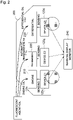
- the deterioration measurement system 100 mainly includes a lubricating oil composition 110 and the deterioration measurement device 120.
- the deterioration measurement device 120 mainly includes a light source 121 that constitutes a light emitter, a detector 123 that constitutes a light-receiving unit, a signal conversion device 125, a processing device 127 that constitutes a sensor, and a display device 129 that constitutes a reporter.
- the light source 121 includes an LED, for example, and emits irradiation light including an absorption wavelength of a fluorescent compound included in the lubricating oil composition 110.
- the irradiation light is emitted toward a measurement target object, that is, the lubricating oil composition.
- the light source 121 emits the irradiation light including 300 nm of wavelength.
- the light source is not limited to an LED but it only has to be able to emit the irradiation light including the absorption wavelength of the fluorescent compound, and may be a fluorescent tube, an HID lamp, a CDM lamp, or the like, for example.
- the detector 123 includes a photomultiplier, for example, and receives the fluorescent light emitted by the fluorescent compound to transmit, as an analog signal, an electric signal in accordance with its intensity to the signal conversion device 125. For example, when the fluorescent compound emits the fluorescent light with 400 nm of wavelength, the detector 123 receives the fluorescent light with 400 nm of wavelength to convert it into the electric signal.
- the detector 123 is not limited to a photomultiplier but it only has to be able to convert fluorescent light in a wavelength band including the wavelength emitted by the fluorescent compound into the electric signal, and may be a CMOS image sensor, an InGaAs image sensor, a photodiode, a phototransistor, a photoelectric tube, or the like, for example.
- the signal conversion device 125 converts the analog signal output by the detector 123 into a digital signal and outputs it.
- the processing device 127 is a personal computer or a portable electronic circuit device, for example, and receives the digital signal from the signal conversion device 125 to sense, on the basis of this digital signal, that is, the intensity of the fluorescent light emitted by the fluorescent compound, deterioration of the lubricating oil composition 110. A technique of sensing the deterioration is described more in detail below.
- the intensity of the fluorescent light emitted by the fluorescent compound correlates with the deterioration of the lubricating oil composition.
- the fluorescent compound also deteriorates.
- the deterioration of the lubricating oil composition exhibits a rise of the acid number, a fall of the base number, or a fall of the RBOT remaining lifetime, and the deterioration of the fluorescent compound exhibits a fall of the fluorescence intensity of the lubricating oil composition.
- the display device 129 receives a signal from the processing device 127 to display and report that externally.
- the deterioration of the lubricating oil composition may be determined.
- the deterioration may be determined by comparing a predetermined threshold with the obtained acid number, base number or RBOT remaining lifetime, or the deterioration may be determined in accordance with a change in acid number, base number or RBOT remaining lifetime. Otherwise, the deterioration of the lubricating oil composition may be determined in accordance with a change in fluorescence intensity.
- the automobile 200 mainly includes an engine 210, a transmission 220, a differential 230, deterioration measurement devices 120e, 120g, and 120d, and a warning display monitor (display device) 240.
- a lubricating oil composition 110e including a fluorescent compound is, as what is called an engine oil, put in the engine 210.
- a lubricating oil composition 110g including a fluorescent compound is, as what is called a transmission oil, put in the transmission 220.
- a lubricating oil composition 110d including a fluorescent compound is, as what is called a differential oil, put in the differential 230.
- the deterioration measurement device 120e senses deterioration of the lubricating oil composition 110e held in the engine 210.
- the deterioration measurement device 120g senses deterioration of the lubricating oil composition 110g held in the transmission 220.
- the deterioration measurement device 120d senses deterioration of the lubricating oil composition 110d held in the differential 230.
- the deterioration measurement devices 120e, 120g, and 120d monitor or sense the lubricating oil compositions at predetermined time intervals during the operations of the engine 210, the transmission 220, and the differential 230.
- Each predetermined time interval is properly defined as microsecond(s), millisecond(s), second(s), minute(s), hour(s), day(s), and/or the like in accordance with the purpose of monitoring, the performance of instruments, and/or the like.
- the warning display monitor 240 operates as the display device 129 connected to the deterioration measurement devices 120e, 120g, and 120d and, for example, is provided at a driver's seat.
- the warning display monitor 240 displays the kind of the deteriorated lubricating oil composition, for example, the kind of the engine oil, the transmission oil, or the differential oil, and in addition, that the oil has deteriorated.
- the instruments which the deterioration measurement devices are provided at are not limited to the above but may be instruments, including liquids, which can be targets to be monitored or sensed.
- one warning display monitor 240 may be provided for the deterioration measurement devices 120e, 120g, and 120d, or may be provided for each of the deterioration measurement devices 120e, 120g, and 120d.
- steps S301 to S303 a technique of examining relation between the acid number or the base number and the fluorescence intensity to create the threshold in advance. This technique is performed for each of combinations of the lubricating oil compositions and the fluorescent compounds.
- step S301 a lubricating oil composition is caused to undergo an oxidation deterioration test, and the acid number or the base number and the fluorescence intensity of the fluorescent compound with the deterioration are measured for every predetermined time interval.
- step S302 the conversion expression is obtained with the acid number or the base number as an independent variable and the fluorescence intensity as a dependent variable.
- step S303 there is obtained, using the conversion expression obtained in step S302, the fluorescence intensity corresponding to the acid number or the base number at the time when it is determined that the lubricating oil composition has deteriorated, and this is recorded in the processing device 127 as the threshold.
- steps S304 to S306 a technique of sensing the deterioration of the lubricating oil composition using the threshold.
- step S304 the irradiation light is emitted from the light source 121 toward the lubricating oil composition being used, and the fluorescent light emitted by the fluorescent compound is received by the detector 123. Then, the processing device 127 determines whether or not the intensity of the fluorescent light emitted by the fluorescent compound exceeds the threshold. Then, when the fluorescence intensity is below the threshold, the processing device 127 determines that the lubricating oil composition has deteriorated, the process being put forward to step S305. On the other hand, when the fluorescence intensity is not less than the threshold, the processing device 127 returns to step S304 to repeat the process in step S304.
- step S305 the processing device 127 transmits a signal indicating that the lubricating oil composition has deteriorated to the display device 129.
- step S306 the display device 129 receives the signal from the processing device 127 to display that the lubricating oil composition has deteriorated. Then, the process is ended.
- the deterioration measurement method according to the present invention only has to at least include steps S304 to S305, and may include any of steps S301 to S303 and S306.
- deterioration of a lubricating oil composition can be sensed.
- the deterioration measurement device 120 can also be used as a deterioration measurement system for lubricating oil compositions in various instruments and devices.
- the deterioration measurement device 120 for a lubricating oil can also sense and determine deterioration of the lubricating oil that is taken out from a vehicle, outside an instrument such as an engine without being integrated into the instrument such as an engine.
- the transmitted light is affected by the color of the lubricating oil composition and its transmittance is inherent depending on the lubricating oil composition, it is needed to measure, in advance, relation between the transmittance and the deterioration.
- using the fluorescent compound that emits fluorescent light on the long wavelength side for example, not less than 300 nm and not more than 800 nm can exclude the influence of the color of the lubricating oil composition.
- the deterioration of the lubricating oil composition can be accurately sensed since the fluorescent compound has a property of deteriorating due to the similar deterioration factor(s) to that(those) of the lubricating oil composition, such, for example, as pressure, heat, oxygen and/or mechanical shear, catalytic action with water and metal, and/or the like, and accordingly, lowering in its fluorescence intensity, and has a property of not being affected by the other component(s) included in the lubricating oil composition, such, for example, as additive(s).
- the fluorescent compound since the fluorescent compound and the lubricating oil composition deteriorate due to the similar deterioration factor(s), the fluorescent compound has a property of deteriorating as the lubricating oil composition is deteriorating.
- the fluorescent compound has a property of deteriorating as the lubricating oil composition is deteriorating and has a property of not being affected by the other component(s) included in the lubricating oil composition, such, for example, as additive(s).
- the property of deteriorating as the lubricating oil composition is deteriorating is a property of deteriorating due to a part of or all of deterioration factors that are common to it and the lubricating oil composition or similar to those thereof, such, for example, as pressure, heat, oxygen and mechanical shear, catalytic action with water and metal, and the like, and accordingly, lowering in its fluorescence intensity.
- a lubricating oil and a fluorescent compound of the type shown in Table 1 were added and mixed in the amounts of blending shown in Table 1 to prepare the respective lubricating oil compositions. Details of the components used for preparing the lubricating oil compositions are as follows.
- test oils lubricating oil compositions
- the test oils lubricating oil compositions
- the respective acid numbers were measured in conformity to the potentiometric method of JIS K2501:2003.
- the acid number thereof rises more.
- a fluorospectrophotometer including a light source and a detector
- the respective fluorescence peaks intensities of those were measured as the fluorescence intensities.
- the fluorospectrophotometer corresponds to the light source and the detector of the deterioration measurement device shown in Figure 1 .
- the measurement conditions for the fluorescence intensities are as follows.
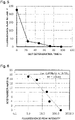
- Figures 4 and 5 show the values presented in Table 1 as graphs. From Table 1, Figure 4 and Figure 5 , for the lubricating oil compositions prepared in Examples 1 to 5, the acid number indicating the deterioration rises more as the test time in the ISOT test becomes longer, and simultaneously, the fluorescence peak intensity decreases more. In other words, there is found a certain correlation between the acid number and the fluorescence intensity, and it is found that the deterioration of the oil can be determined by measuring the fluorescence peak intensity.
- the R 2 value is 0.9461, and it is clear that expression 1 sufficiently approximates the data.
- the fluorescence intensity of the lubricating oil composition is measured using a fluorospectrophotometer and the obtained fluorescence intensity is assigned in expression 1, the acid number of the lubricating oil composition is obtained. Thereby, the deterioration of the lubricating oil composition can be determined.
- deterioration of a lubricating oil composition used for various uses can be grasped.
Landscapes
- Chemical & Material Sciences (AREA)
- Oil, Petroleum & Natural Gas (AREA)
- Health & Medical Sciences (AREA)
- Chemical Kinetics & Catalysis (AREA)
- General Chemical & Material Sciences (AREA)
- Organic Chemistry (AREA)
- Life Sciences & Earth Sciences (AREA)
- Physics & Mathematics (AREA)
- Analytical Chemistry (AREA)
- Biochemistry (AREA)
- General Health & Medical Sciences (AREA)
- General Physics & Mathematics (AREA)
- Immunology (AREA)
- Pathology (AREA)
- Nuclear Medicine, Radiotherapy & Molecular Imaging (AREA)
- Engineering & Computer Science (AREA)
- Investigating, Analyzing Materials By Fluorescence Or Luminescence (AREA)
- Lubricants (AREA)
Abstract
Description
- The present invention relates to a device, a system, and
a method for measuring deterioration of liquid, and a lubricating oil composition used for these. - There is conventionally known a lubricating oil deterioration sensor which causes detection light to transmit through a lubricating oil intruding into a predetermined gap, detects color information of the detection light having transmitted through the lubricating oil with a light-receiving element, and amplifies the detection value detected by the light-receiving element with a logarithmic function to grasp the deterioration state of the lubricating oil using the amplified value (Patent Literature 1). Since as compared with a detection value amplified with a linear function, a detection value amplified with a logarithmic function is larger in its amount of change relative to the amount of change of a transmittance also in a region where the transmittance is low, the transmittance can be accurately grasped and detection accuracy of the deterioration state of the lubricating oil can be maintained even for the lubricating oil that is low in transmittance.
- Patent Literature 1: International Publication No.
WO 2015/060457 - However, in a deterioration process of a lubricating oil, the intensity of detection light having caused to transmit through the lubricating oil is complexly affected by, in addition to the amount(s) of deterioration product(s) of the lubricating oil, the amount(s) of additive(s) remaining, and furthermore, metal powder, carbon, water, and the like as external factors. There is a possibility that due to these factors, the intensity of the detection light obtained does not necessarily coincide with the degree of deterioration of the lubricating oil. There are being required a device, a system, and a method capable of grasping deterioration of a lubricating oil composition even in such a circumstance, and a lubricating oil composition used for these.
- The present invention provides deterioration measurement device, system, and method, and a lubricating oil composition. Specific aspects of the present invention are presented as in [1] to [14] below.
- [1] A lubricating oil composition including a fluorescent compound that emits fluorescent light, wherein
the fluorescent compound has a property of deteriorating with relevance to deterioration of the lubricating oil composition. - [2] The lubricating oil composition according to [1] above, wherein the fluorescent compound is a heteroaromatic compound such as a coumarin-based compound, a rhodamine-based compound, or an auramine-based compound, or a carbon aromatic compound such as a terphenyl-based compound.
- [3] The lubricating oil composition according to [1] or [2] above, wherein a wavelength of the fluorescent light emitted by the fluorescent compound is not less than 300 nm and not more than 800 nm.
- [4] The lubricating oil composition according to according to any one of [1] to [3] above, wherein a ratio of the fluorescent compound in the lubricating oil composition is not less than 0.1 mass ppm and not more than 100 mass ppm relative to a total amount of the lubricating oil composition.
- [5] A deterioration measurement device including:
- a light emitter that emits irradiation light toward a measurement target object including a fluorescent compound that emits fluorescent light upon reception of the irradiation light;
- a light receiver that receives the fluorescent light emitted by the fluorescent compound and transmits a signal in accordance with the received fluorescent light; and
- a sensor that senses deterioration of the measurement target object on the basis of the signal transmitted by the light-receiving unit.
- [6] The deterioration measurement device according to [5] above, wherein the fluorescent compound is a coumarin-based compound, a rhodamine-based compound, an auramine-based compound, or a terphenyl-based compound.
- [7] The deterioration measurement device according to [5] or [6] above, wherein the light emitter includes an LED, a fluorescence tube, an HID lamp, or a CDM lamp.
- [8] The deterioration measurement device according to any one of [5] to [7] above, wherein the light receiver includes a photomultiplier, a CMOS image sensor, an InGaAs image sensor, a photodiode, a phototransistor, or a photoelectric tube.
- [9] The deterioration measurement device according to any one of [5] to [8] above, wherein the light receiver measures a fluorescence intensity of the fluorescent light emitted by the fluorescent compound.
- [10] The deterioration measurement device according to any one of [5] to [9] above, wherein the sensor senses that the lubricating oil composition has deteriorated, when a fluorescence intensity of the fluorescent light emitted by the fluorescent compound is less than a predetermined threshold.
- [11] The deterioration measurement device according to any one of [5] to [10] above, further including a reporter that externally reports that the lubricating oil composition has deteriorated, when the sensor determines that the lubricating oil composition has deteriorated.
- [12] A deterioration measurement system including: the lubricating oil composition according to any one of [1] to [4] above; and the deterioration measurement device according to any one of [5] to [11] above.
- [13] An automobile including the deterioration measurement device according to any one of [5] to [11] above.
- [14] A deterioration measurement method including:
- a step of emitting irradiation light toward a measurement target object including a fluorescent compound that emits fluorescent light in response to the irradiation light;
- a step of receiving the fluorescent light emitted by the fluorescent compound;
- a step of transmitting a signal in accordance with the received fluorescent light; and
- a step of sensing deterioration of the lubricating oil composition on the basis of the transmitted signal.
- According to deterioration measurement device, system, and method, and a lubricating oil composition for measuring deterioration of liquid according to a preferable aspect of the present invention, deterioration of a lubricating oil composition used for various uses can be grasped.
-
- [
Figure 1] Figure 1 is a schematic diagram showing an example of a deterioration measurement system according to the present invention. - [
Figure 2] Figure 2 is a schematic diagram showing an example of an automobile having the deterioration measurement system according to the present invention mounted. - [
Figure 3] Figure 3 is a flowchart including a deterioration measurement method according to the present invention. - [
Figure 4] Figure 4 is a graph showing change of the acid number of a lubricating oil composition. - [
Figure 5] Figure 5 is a graph showing change of the fluorescence intensity of a fluorescent compound. - [
Figure 6] Figure 6 is a graph showing relation between the acid number of the lubricating oil composition and the fluorescence intensity of the fluorescent compound. - First, a lubricating oil composition according to an embodiment of the present invention is described. The lubricating oil composition used for the present invention includes a fluorescent compound which emits fluorescent light. The fluorescent compound is a substance which emits light upon reception of electromagnetic waves such as light, ultraviolet rays, and X-rays or particle beams, and has a property of deteriorating with relevance to deterioration of the lubricating oil composition. The lubricating oil composition is characterized in that its deterioration state can be grasped by measuring the fluorescent light emitted by the fluorescent compound.
- The fluorescent compound used in an aspect of the present invention is preferably a heteroaromatic compound such as a coumarin-based compound, a rhodamine-based compound, or an auramine-based compound, or a carbon aromatic compound such as a terphenyl-based compound, and is still preferably the heteroaromatic compound.
- The fluorescent compound has a property of deteriorating due to the similar deterioration factor(s) to that(those) of the lubricating oil composition, such, for example, as pressure, heat, oxygen and/or mechanical shear, catalytic action with water and metal, and/or the like, and accordingly, lowering in its fluorescence intensity, and has a property of not being affected by the other component(s) included in the lubricating oil composition, such, for example, as additive(s).
- The wavelength of the fluorescent light emitted by the fluorescent compound is on the long wavelength side, and is preferably not less than 300 nm and not more than 800 nm, still preferably not less than 330 nm and not more than 750 nm, further preferably not less than 350 nm and not more than 700 nm.
- The ratio of the fluorescent compound in the lubricating oil composition is preferably not less than 0.1 mass ppm and not more than 100 mass ppm, still preferably not less than 0.5 mass ppm and not more than 50 mass ppm, further preferably not less than 1 mass ppm and not more than 50 mass ppm, with the total amount (100 mass%) of the lubricating oil composition being as a reference.
- The intensity of the fluorescent light emitted by the fluorescent compound correlates with deterioration of the lubricating oil composition. When the lubricating oil composition deteriorates, the fluorescent compound accordingly also deteriorates. The deterioration of the lubricating oil composition exhibits a rise of its acid number and/or a fall of its base number, and the deterioration of the fluorescent compound exhibits a fall of the fluorescence intensity. In other words, as the acid number rises or the base number falls, the fluorescence intensity also falls. Therefore, relationship between the acid number or the base number and the fluorescence intensity is examined and recorded in advance. Then, the deterioration of the lubricating oil composition is predicted in accordance with the fluorescence intensity. Moreover, since a remaining lifetime measured by the RBOT test (JIS K2514-3:2013) (hereinafter expressed as RBOT remaining lifetime) is proportional to the remaining amounts, for example, of various oxidation inhibitors, it correlates with the fluorescence intensity as with the rise of the acid number and the fall of the base number. In other words, the fluorescence intensity falls as the RBOT remaining lifetime decreases, as with the fluorescence intensity falling as the acid number rises or the base number falls. Therefore, the RBOT remaining lifetime can be used for determining the deterioration of the lubricating oil composition, by a technique similar to that for the acid number or the base number.
- It is sufficient for the lubricating oil composition used in an aspect of the present invention to include a base oil and/or an additive for lubricating oil and to be prepared such that the content of the fluorescent compound is in the aforementioned range, and it can contain the base oil and the additive for lubricating oil that are properly selected depending on its use.
- The lubricating oil composition according to the present invention is used for uses such as lubrication, thermal processing, cooling, thermal media, and insulation for an internal combustion engine, a transmission, differentials, a gas engine, a motor, a gas turbine, hydraulics, a freezer, a rolling process, and/or a sliding surface. Internal combustion engines include a gasoline engine, a diesel engine, and the like.
- Hereafter, the base oil and/or the additive for lubricating oil that can be included in the lubricating oil composition used in an aspect of the present invention will be described.
- Examples of the base oil included in the lubricating oil composition used in an aspect of the present invention include one kind or more selected from mineral oils and synthetic oils.
- Examples of the mineral oils include atmospheric residues obtained through atmospheric distillation of crude petroleum such as a paraffin-based crude petroleum, an intermediate group-based crude petroleum, and a naphthene-based crude petroleum; distillates obtained through reduced-pressure distillation of any of these atmospheric residues; refined oils each obtained through one or more of refining processes on any of the distillates, such as solvent deasphalting, solvent extraction, hydrocracking, solvent dewaxing, catalytic dewaxing, and hydrorefining; and the like.
- Examples of the synthetic oils include poly-α-olefins such as α-olefin homopolymers, or α-olefin copolymers (for example, copolymers of α-olefins with 8 to 14 of carbon numbers, such as an ethylene-α-olefin copolymer); isoparaffins; polyalkylene glycols; ester-based oils such as polyol esters, dibasic acid esters, and phosphoric acid esters; ether-based oils such as polyphenyl ether; alkylbenzenes; alkylnaphthalenes; synthetic oils (GTLs) each obtained through isomerization of wax produced by the Fischer-Tropsch method or the like from natural gas (GTL wax (Gas To Liquids WAX)); and the like.
- Among these, the base oil used in an aspect of the present invention preferably includes one kind or more selected from mineral oils that are categorized into Group 2 and Group 3 of the API (American Petroleum Institute) base oil categories and synthetic oils.
- The lubricating oil composition used in an aspect of the present invention may contain an additive for lubricating oil other than the aforementioned components depending on its use to such an extent that the effect(s) of the present invention is(are) not impaired.
- Examples of the additive for lubricating oil other than the aforementioned components include a pour point depressant, a viscosity index improver, an extreme-pressure agent, an oxidation inhibitor, a metal-based detergent, an ashless dispersant, an antiwear agent, a demulsifier, a friction modifier, a rust preventive agent, a metal deactivator, an antistatic agent, a defoaming agent, and the like. Each of these additives for lubricating oil may be solely used or two kinds or more of these may be used together.
- While the contents of these additives for lubricating oil may be properly prepared to such an extent that the effect(s) of the present invention is(are) not impaired, that of each additive is independently typically 0.001 to 15 mass%, preferably 0.005 to 10 mass%, still preferably 0.01 to 5 mass%, with the total amount (100 mass%) of the lubricating oil composition being as a reference.
- A
deterioration measurement system 100 and adeterioration measurement device 120 are described usingFigure 1 . Thedeterioration measurement system 100 mainly includes a lubricatingoil composition 110 and thedeterioration measurement device 120. Thedeterioration measurement device 120 mainly includes alight source 121 that constitutes a light emitter, adetector 123 that constitutes a light-receiving unit, asignal conversion device 125, aprocessing device 127 that constitutes a sensor, and adisplay device 129 that constitutes a reporter. - The
light source 121 includes an LED, for example, and emits irradiation light including an absorption wavelength of a fluorescent compound included in the lubricatingoil composition 110. The irradiation light is emitted toward a measurement target object, that is, the lubricating oil composition. For example, when the fluorescent compound absorbs light with 300 nm of wavelength and emits fluorescent light of 400 nm, thelight source 121 emits the irradiation light including 300 nm of wavelength. Notably, the light source is not limited to an LED but it only has to be able to emit the irradiation light including the absorption wavelength of the fluorescent compound, and may be a fluorescent tube, an HID lamp, a CDM lamp, or the like, for example. - The
detector 123 includes a photomultiplier, for example, and receives the fluorescent light emitted by the fluorescent compound to transmit, as an analog signal, an electric signal in accordance with its intensity to thesignal conversion device 125. For example, when the fluorescent compound emits the fluorescent light with 400 nm of wavelength, thedetector 123 receives the fluorescent light with 400 nm of wavelength to convert it into the electric signal. Notably, thedetector 123 is not limited to a photomultiplier but it only has to be able to convert fluorescent light in a wavelength band including the wavelength emitted by the fluorescent compound into the electric signal, and may be a CMOS image sensor, an InGaAs image sensor, a photodiode, a phototransistor, a photoelectric tube, or the like, for example. - The
signal conversion device 125 converts the analog signal output by thedetector 123 into a digital signal and outputs it. - The
processing device 127 is a personal computer or a portable electronic circuit device, for example, and receives the digital signal from thesignal conversion device 125 to sense, on the basis of this digital signal, that is, the intensity of the fluorescent light emitted by the fluorescent compound, deterioration of the lubricatingoil composition 110. A technique of sensing the deterioration is described more in detail below. - As mentioned above, the intensity of the fluorescent light emitted by the fluorescent compound correlates with the deterioration of the lubricating oil composition. When the lubricating oil composition deteriorates, the fluorescent compound also deteriorates. The deterioration of the lubricating oil composition exhibits a rise of the acid number, a fall of the base number, or a fall of the RBOT remaining lifetime, and the deterioration of the fluorescent compound exhibits a fall of the fluorescence intensity of the lubricating oil composition. Therefore, in advance, relationship between the acid number, the base number or the RBOT remaining lifetime and the fluorescence intensity is examined, and there is recorded in the
processing device 127 the fluorescence intensity corresponding to the acid number or the base number at the time when it is determined that the lubricating oil composition has deteriorated, as a threshold. Then, when the fluorescence intensity of the lubricating oil composition being used becomes less than the threshold, theprocessing device 127 determines that the lubricating oil composition has deteriorated. - When the
processing device 127 determines that the lubricating oil composition has deteriorated, thedisplay device 129 receives a signal from theprocessing device 127 to display and report that externally. - Notably, not with such a threshold, relation between the acid number, the base number or the RBOT remaining lifetime and the fluorescence intensity may be examined to create a conversion expression for obtaining the acid number, the base number or the RBOT remaining lifetime from the fluorescence intensity in advance, and on the basis of the acid number, the base number or the RBOT remaining lifetime obtained from this conversion expression, the deterioration of the lubricating oil composition may be determined. In this stage, the deterioration may be determined by comparing a predetermined threshold with the obtained acid number, base number or RBOT remaining lifetime, or the deterioration may be determined in accordance with a change in acid number, base number or RBOT remaining lifetime. Otherwise, the deterioration of the lubricating oil composition may be determined in accordance with a change in fluorescence intensity.
- Next, an
automobile 200 including a deterioration measurement system is described usingFigure 2 . - The
automobile 200 mainly includes anengine 210, atransmission 220, a differential 230,deterioration measurement devices - A lubricating
oil composition 110e including a fluorescent compound is, as what is called an engine oil, put in theengine 210. A lubricatingoil composition 110g including a fluorescent compound is, as what is called a transmission oil, put in thetransmission 220. A lubricatingoil composition 110d including a fluorescent compound is, as what is called a differential oil, put in the differential 230. Thedeterioration measurement device 120e senses deterioration of the lubricatingoil composition 110e held in theengine 210. Thedeterioration measurement device 120g senses deterioration of the lubricatingoil composition 110g held in thetransmission 220. Thedeterioration measurement device 120d senses deterioration of the lubricatingoil composition 110d held in the differential 230. Thedeterioration measurement devices engine 210, thetransmission 220, and the differential 230. Each predetermined time interval is properly defined as microsecond(s), millisecond(s), second(s), minute(s), hour(s), day(s), and/or the like in accordance with the purpose of monitoring, the performance of instruments, and/or the like. - The
warning display monitor 240 operates as thedisplay device 129 connected to thedeterioration measurement devices deterioration measurement devices oil composition - Notably, the instruments which the deterioration measurement devices are provided at are not limited to the above but may be instruments, including liquids, which can be targets to be monitored or sensed. Moreover, one warning display monitor 240 may be provided for the
deterioration measurement devices deterioration measurement devices - Next, a deterioration measurement method is described using
Figure 3 . - First, there is described using steps S301 to S303 a technique of examining relation between the acid number or the base number and the fluorescence intensity to create the threshold in advance. This technique is performed for each of combinations of the lubricating oil compositions and the fluorescent compounds.
- In step S301, a lubricating oil composition is caused to undergo an oxidation deterioration test, and the acid number or the base number and the fluorescence intensity of the fluorescent compound with the deterioration are measured for every predetermined time interval.
- In step S302, the conversion expression is obtained with the acid number or the base number as an independent variable and the fluorescence intensity as a dependent variable.
- In step S303, there is obtained, using the conversion expression obtained in step S302, the fluorescence intensity corresponding to the acid number or the base number at the time when it is determined that the lubricating oil composition has deteriorated, and this is recorded in the
processing device 127 as the threshold. - Next, there is described using steps S304 to S306 a technique of sensing the deterioration of the lubricating oil composition using the threshold.
- In step S304, the irradiation light is emitted from the
light source 121 toward the lubricating oil composition being used, and the fluorescent light emitted by the fluorescent compound is received by thedetector 123. Then, theprocessing device 127 determines whether or not the intensity of the fluorescent light emitted by the fluorescent compound exceeds the threshold. Then, when the fluorescence intensity is below the threshold, theprocessing device 127 determines that the lubricating oil composition has deteriorated, the process being put forward to step S305. On the other hand, when the fluorescence intensity is not less than the threshold, theprocessing device 127 returns to step S304 to repeat the process in step S304. - In step S305, the
processing device 127 transmits a signal indicating that the lubricating oil composition has deteriorated to thedisplay device 129. - In step S306, the
display device 129 receives the signal from theprocessing device 127 to display that the lubricating oil composition has deteriorated. Then, the process is ended. - Notably, the deterioration measurement method according to the present invention only has to at least include steps S304 to S305, and may include any of steps S301 to S303 and S306.
- According to the
deterioration measurement system 100 having thedeterioration measurement device 120 according to an aspect of the present invention, deterioration of a lubricating oil composition can be sensed. - Moreover, as to the
deterioration measurement system 100 anddevice 120 according to an aspect of the present invention, integrating any of them into a part of a driving monitoring system for an instrument or a device such as an engine enables the situation of progress of the deterioration of the lubricating oil composition to be monitored and evaluated continuously. Therefore, thedeterioration measurement device 120 according to an aspect of the present invention can also be used as a deterioration measurement system for lubricating oil compositions in various instruments and devices. Moreover, thedeterioration measurement device 120 for a lubricating oil can also sense and determine deterioration of the lubricating oil that is taken out from a vehicle, outside an instrument such as an engine without being integrated into the instrument such as an engine. - With a configuration of detecting deterioration of a lubricating oil composition with transmitted light, since the transmitted light is affected by the color of the lubricating oil composition and its transmittance is inherent depending on the lubricating oil composition, it is needed to measure, in advance, relation between the transmittance and the deterioration. On the contrary, according to the lubricating oil composition according to an embodiment of the present invention, using the fluorescent compound that emits fluorescent light on the long wavelength side, for example, not less than 300 nm and not more than 800 nm can exclude the influence of the color of the lubricating oil composition.
- Moreover, with a configuration of detecting deterioration of a lubricating oil composition with transmitted light, there is occasionally a case where the intensity of the transmitted light does not correlate with the deterioration of the lubricating oil composition. On the contrary, according to the lubricating oil composition according to an embodiment of the present invention, the deterioration of the lubricating oil composition can be accurately sensed since the fluorescent compound has a property of deteriorating due to the similar deterioration factor(s) to that(those) of the lubricating oil composition, such, for example, as pressure, heat, oxygen and/or mechanical shear, catalytic action with water and metal, and/or the like, and accordingly, lowering in its fluorescence intensity, and has a property of not being affected by the other component(s) included in the lubricating oil composition, such, for example, as additive(s).
- As above, since the fluorescent compound and the lubricating oil composition deteriorate due to the similar deterioration factor(s), the fluorescent compound has a property of deteriorating as the lubricating oil composition is deteriorating. In other words, the fluorescent compound has a property of deteriorating as the lubricating oil composition is deteriorating and has a property of not being affected by the other component(s) included in the lubricating oil composition, such, for example, as additive(s). The property of deteriorating as the lubricating oil composition is deteriorating is a property of deteriorating due to a part of or all of deterioration factors that are common to it and the lubricating oil composition or similar to those thereof, such, for example, as pressure, heat, oxygen and mechanical shear, catalytic action with water and metal, and the like, and accordingly, lowering in its fluorescence intensity.
- Next, the present invention is described more in detail with examples, the present invention not being limited by these examples at all.
- A lubricating oil and a fluorescent compound of the type shown in Table 1 were added and mixed in the amounts of blending shown in Table 1 to prepare the respective lubricating oil compositions. Details of the components used for preparing the lubricating oil compositions are as follows.
-
- "100N Mineral oil": Paraffin-based mineral oil categorized into Group III, 100°C kinematic viscosity=4.3 mm2/s, viscosity index=125
- For the prepared lubricating oil compositions, deteriorated oils were prepared referring to the ISOT test as below to measure the acid numbers and the fluorescence intensities. For the measurement of the acid numbers, they were measured in conformity to the potentiometric method of JIS K2501:2003. Table 1 presents the results.
- Referring to the ISOT test (150°C) in conformity to JIS K2514-1:2013, the test oils (lubricating oil compositions) as targets were forcibly caused to deteriorate without a catalyst, and for the deteriorated oils after 24 hours, after 48 hours, after 72 hours, and after 96 hours, the respective acid numbers were measured in conformity to the potentiometric method of JIS K2501:2003. As the deterioration of the lubricating oil composition progresses more, the acid number thereof rises more.
- Using a fluorospectrophotometer including a light source and a detector, for a new oil and the deteriorated oils which were forcibly caused to deteriorate for predetermined time periods according to the ISOT test above (24-hour deteriorated oil, 48-hour deteriorated oil, 72-hour deteriorated oil and 96-hour deteriorated oil), the respective fluorescence peaks intensities of those were measured as the fluorescence intensities. The fluorospectrophotometer corresponds to the light source and the detector of the deterioration measurement device shown in
Figure 1 . Notably, the measurement conditions for the fluorescence intensities are as follows. -
- Fluorospectrophotometer: Product number FP-8600, JASCO Corporation
- Fluorescent compound: Solvent yellow 43 (absorption wavelength: 410 nm, fluorescence wavelength: 456 nm)
-
Figures 4 and5 show the values presented in Table 1 as graphs. From Table 1,Figure 4 andFigure 5 , for the lubricating oil compositions prepared in Examples 1 to 5, the acid number indicating the deterioration rises more as the test time in the ISOT test becomes longer, and simultaneously, the fluorescence peak intensity decreases more. In other words, there is found a certain correlation between the acid number and the fluorescence intensity, and it is found that the deterioration of the oil can be determined by measuring the fluorescence peak intensity. - Using the data from the examples above, the following logarithmic approximation expression 1 was obtained by the least squares method.

- Referring to
Figure 6 , the R2 value is 0.9461, and it is clear that expression 1 sufficiently approximates the data. When the fluorescence intensity of the lubricating oil composition is measured using a fluorospectrophotometer and the obtained fluorescence intensity is assigned in expression 1, the acid number of the lubricating oil composition is obtained. Thereby, the deterioration of the lubricating oil composition can be determined. - According to the deterioration measurement device, system, and method, and a lubricating oil composition for measuring deterioration of oil according to a preferable aspect of the present invention, deterioration of a lubricating oil composition used for various uses can be grasped.
-
- 100
- Deterioration measurement system
- 110
- Lubricant oil composition
- 120
- Deterioration measurement device
- 121
- Light source
- 123
- Detector
- 125
- Signal conversion device
- 127
- Processing device
- 129
- Display device
- 200
- Automobile
- 210
- Engine
- 220
- Transmission
- 230
- Differential
- 120e
- Deterioration measurement device
- 120g
- Deterioration measurement device
- 120d
- Deterioration measurement device
- 240
- Warning display monitor (display device)
| Unit | Example 1 | Example 2 | Example 3 | Example 4 | Example 5 | ||
| Lubricant Oil | wt% | 99.9995 | 99.9995 | 99.9995 | 99.9995 | 99.9995 | |
| Fluorescent Compound | wt% | 0.0005 | 0.0005 | 0.0005 | 0.0005 | 0.0005 | |
| Total | wt% | 100.0000 | 100.0000 | 100.0000 | 100.0000 | 100.0000 | |
| |
|||||||
| 0 hours | Acid Number | mgKOH/g | 0.04 | ||||
| Fluorescence Peak Intensity | - | 227.0 | |||||
| 24 hours | Acid Number | mgKOH/g | 3.92 | ||||
| Fluorescence Peak Intensity | - | 33.93 | |||||
| 48 hours | Acid Number | mgKOH/g | 8.24 | ||||
| Fluorescence Peak Intensity | - | 21.94 | |||||
| 72 hours | Acid Number | mgKOH/g | 13.6 | ||||
| Fluorescence Peak Intensity | - | 4.05 | |||||
| 96 hours | Acid Number | mgKOH/g | 15.1 | ||||
| Fluorescence Peak Intensity | - | 0.95 | |||||
Claims (14)
- A lubricating oil composition comprising a fluorescent compound that emits fluorescent light, wherein
the fluorescent compound has a property of deteriorating with relevance to deterioration of the lubricating oil composition. - The lubricating oil composition according to Claim 1, wherein the fluorescent compound is a heteroaromatic compound such as a coumarin-based compound, a rhodamine-based compound, or an auramine-based compound, or a carbon aromatic compound such as a terphenyl-based compound.
- The lubricating oil composition according to Claim 1 or 2, wherein a wavelength of the fluorescent light emitted by the fluorescent compound is not less than 300 nm and not more than 800 nm.
- The lubricating oil composition according to any one of Claims 1 to 3, wherein a ratio of the fluorescent compound in the lubricating oil composition is not less than 0.1 mass ppm and not more than 100 mass ppm relative to a total amount of the lubricating oil composition.
- A deterioration measurement device comprising:a light emitter that emits irradiation light toward a measurement target object including a fluorescent compound that emits fluorescent light upon reception of the irradiation light;a light receiver that receives the fluorescent light emitted by the fluorescent compound and transmits a signal in accordance with the received fluorescent light; anda sensor that senses deterioration of the measurement target object on the basis of the signal transmitted by the light-receiving unit.
- The deterioration measurement device according to Claim 5, wherein the fluorescent compound is a coumarin-based compound, a rhodamine-based compound, an auramine-based compound, or a terphenyl-based compound.
- The deterioration measurement device according to Claim 5 or 6, wherein the light emitter includes an LED, a fluorescence tube, an HID lamp, or a CDM lamp.
- The deterioration measurement device according to any one of Claims 5 to 7, wherein the light receiver includes a photomultiplier, a CMOS image sensor, an InGaAs image sensor, a photodiode, a phototransistor, or a photoelectric tube.
- The deterioration measurement device according to any one of Claims 5 to 8, wherein the light receiver measures a fluorescence intensity of the fluorescent light emitted by the fluorescent compound.
- The deterioration measurement device according to any one of Claims 5 to 9, wherein the sensor senses that the lubricating oil composition has deteriorated, when a fluorescence intensity of the fluorescent light emitted by the fluorescent compound is less than a predetermined threshold.
- The deterioration measurement device according to any one of Claims 5 to 10, further comprising a reporter that externally reports that the lubricating oil composition has deteriorated, when the sensor determines that the lubricating oil composition has deteriorated.
- A deterioration measurement system comprising: the lubricating oil composition according to any one of Claims 1 to 4; and the deterioration measurement device according to any one of Claims 5 to 11.
- An automobile comprising the deterioration measurement device according to any one of Claims 5 to 11.
- A deterioration measurement method comprising:a step of emitting irradiation light toward a measurement target object including a fluorescent compound that emits fluorescent light in response to the irradiation light;a step of receiving the fluorescent light emitted by the fluorescent compound;a step of transmitting a signal in accordance with the received fluorescent light; anda step of sensing deterioration of the lubricating oil composition on the basis of the transmitted signal.
Applications Claiming Priority (2)
| Application Number | Priority Date | Filing Date | Title |
|---|---|---|---|
| JP2020028061A JP2021130793A (en) | 2020-02-21 | 2020-02-21 | Deterioration measuring devices, systems and methods, and lubricating oil compositions |
| PCT/JP2020/047346 WO2021166409A1 (en) | 2020-02-21 | 2020-12-18 | Deterioration measurement device, system, method, and lubricant oil composition |
Publications (1)
| Publication Number | Publication Date |
|---|---|
| EP4108746A1 true EP4108746A1 (en) | 2022-12-28 |
Family
ID=77391898
Family Applications (1)
| Application Number | Title | Priority Date | Filing Date |
|---|---|---|---|
| EP20920513.7A Withdrawn EP4108746A1 (en) | 2020-02-21 | 2020-12-18 | Deterioration measurement device, system, method, and lubricant oil composition |
Country Status (5)
| Country | Link |
|---|---|
| US (1) | US20230074611A1 (en) |
| EP (1) | EP4108746A1 (en) |
| JP (1) | JP2021130793A (en) |
| CN (1) | CN114945655A (en) |
| WO (1) | WO2021166409A1 (en) |
Families Citing this family (1)
| Publication number | Priority date | Publication date | Assignee | Title |
|---|---|---|---|---|
| TWI910900B (en) * | 2024-11-07 | 2026-01-01 | 中國鋼鐵股份有限公司 | Fluorescent tracer and method of detecting for real-time oil leakage detection using the same |
Family Cites Families (11)
| Publication number | Priority date | Publication date | Assignee | Title |
|---|---|---|---|---|
| US6327897B1 (en) * | 1997-01-24 | 2001-12-11 | Mainstream Engineering Corporation | Method of introducing an in situant into a vapor compression system, especially useful for leak detection, as well as an apparatus for leak detection and a composition useful for leak detection |
| JPH1197779A (en) * | 1997-09-22 | 1999-04-09 | Sony Corp | Multicolor light modulation amplifier and projection display device using the same |
| US6633043B2 (en) * | 2002-01-30 | 2003-10-14 | Ezzat M. Hegazi | Method for characterization of petroleum oils using normalized time-resolved fluorescence spectra |
| US7635596B2 (en) * | 2004-12-15 | 2009-12-22 | Rohm And Haas Company | Method for monitoring degradation of lubricating oils |
| JP2011117348A (en) * | 2009-12-02 | 2011-06-16 | Isuzu Motors Ltd | Oil supply timing determining device |
| JP5358426B2 (en) * | 2009-12-24 | 2013-12-04 | 株式会社堀場製作所 | Refined oil deterioration measuring device and refined oil deterioration measuring method |
| FR2968669B1 (en) * | 2010-12-13 | 2014-02-28 | Total Raffinage Marketing | FAT COMPOSITION |
| JP5972640B2 (en) * | 2012-03-30 | 2016-08-17 | 出光興産株式会社 | Lubricating oil composition for refrigerator |
| ES2855981T3 (en) | 2013-10-25 | 2021-09-27 | Nabtesco Corp | Lubricant deterioration sensor |
| US10281448B2 (en) * | 2016-01-19 | 2019-05-07 | Saudi Arabian Oil Company | Determining the deterioration of oils using fluorescence rise-time |
| US20200024544A1 (en) * | 2016-10-06 | 2020-01-23 | Idemitsu Kosan Co., Ltd. | Lubricant composition, composition for refrigerating machines, and method for detecting leakage point |
-
2020
- 2020-02-21 JP JP2020028061A patent/JP2021130793A/en active Pending
- 2020-12-18 WO PCT/JP2020/047346 patent/WO2021166409A1/en not_active Ceased
- 2020-12-18 CN CN202080092881.8A patent/CN114945655A/en active Pending
- 2020-12-18 EP EP20920513.7A patent/EP4108746A1/en not_active Withdrawn
- 2020-12-18 US US17/904,439 patent/US20230074611A1/en not_active Abandoned
Also Published As
| Publication number | Publication date |
|---|---|
| JP2021130793A (en) | 2021-09-09 |
| WO2021166409A1 (en) | 2021-08-26 |
| CN114945655A (en) | 2022-08-26 |
| US20230074611A1 (en) | 2023-03-09 |
Similar Documents
| Publication | Publication Date | Title |
|---|---|---|
| KR100995783B1 (en) | High TV / low phosphorus economic STB lubricant | |
| Singh | Tribological behavior as lubricant additive and physiochemical characterization of Jatropha oil blends | |
| US7482312B2 (en) | Engine oils for racing applications and method of making same | |
| US11220652B2 (en) | Method for inspecting lubricating oil composition and method for producing lubricating oil composition | |
| CA2207676A1 (en) | Engine oil with improved fuel economy properties | |
| JP2009500489A5 (en) | ||
| JP2010535275A (en) | Isomerized base oil metalworking fluid compositions with improved mist prevention properties and their preparation | |
| RU2576322C2 (en) | Lubricating composition | |
| CN108603838B (en) | Determination of Oil Deterioration Using Fluorescence Rise Time | |
| CN108699486A (en) | Lubricating oil composition, lubricating method, and transmission | |
| EP4108746A1 (en) | Deterioration measurement device, system, method, and lubricant oil composition | |
| EP3085756A1 (en) | Lubricating oil composition for internal combustion engines of passenger and commercial four-wheeled vehicles | |
| EP1458838B1 (en) | Lubricating oil having enhanced resistance to oxidation, nitration and viscosity increase | |
| US9783761B2 (en) | High viscosity lubricant compositions meeting low temperature performance requirements | |
| US9127231B2 (en) | High efficiency lubricating composition | |
| CN113748340B (en) | Method for inspecting lubricating oil composition and method for producing the same | |
| CN109477027A (en) | Lubricating oil composition, lubricating method, and transmission | |
| Krasodomski et al. | Thermal Oxidation Stability of Lubricating Greases | |
| Duran | Influence of gear transmission oils degradation on tribological performance and gearbox efficiency | |
| CN103221523A (en) | Lubricant for percussion equipment | |
| CN108699487A (en) | Lubricating oil composition, lubricating method, and transmission | |
| Wei et al. | A field test method to quantitatively determine oxidation stability of gasoline engine oil | |
| Müller | Laboratory methods for testing lubricants | |
| Soliman | Machinery Oil Analysis & Condition Monitoring: A Practical Guide to Sampling and Analyzing Oil to Improve Equipment Reliability | |
| JP2011529513A (en) | Lubricating composition |
Legal Events
| Date | Code | Title | Description |
|---|---|---|---|
| STAA | Information on the status of an ep patent application or granted ep patent |
Free format text: STATUS: THE INTERNATIONAL PUBLICATION HAS BEEN MADE |
|
| PUAI | Public reference made under article 153(3) epc to a published international application that has entered the european phase |
Free format text: ORIGINAL CODE: 0009012 |
|
| STAA | Information on the status of an ep patent application or granted ep patent |
Free format text: STATUS: REQUEST FOR EXAMINATION WAS MADE |
|
| 17P | Request for examination filed |
Effective date: 20220916 |
|
| AK | Designated contracting states |
Kind code of ref document: A1 Designated state(s): AL AT BE BG CH CY CZ DE DK EE ES FI FR GB GR HR HU IE IS IT LI LT LU LV MC MK MT NL NO PL PT RO RS SE SI SK SM TR |
|
| DAV | Request for validation of the european patent (deleted) | ||
| DAX | Request for extension of the european patent (deleted) | ||
| STAA | Information on the status of an ep patent application or granted ep patent |
Free format text: STATUS: THE APPLICATION HAS BEEN WITHDRAWN |
|
| 18W | Application withdrawn |
Effective date: 20231024 |