EP4107737B1 - Knowledge distillation and gradient pruning-based compression of artificial intelligence-based base caller - Google Patents
Knowledge distillation and gradient pruning-based compression of artificial intelligence-based base caller Download PDFInfo
- Publication number
- EP4107737B1 EP4107737B1 EP21710838.0A EP21710838A EP4107737B1 EP 4107737 B1 EP4107737 B1 EP 4107737B1 EP 21710838 A EP21710838 A EP 21710838A EP 4107737 B1 EP4107737 B1 EP 4107737B1
- Authority
- EP
- European Patent Office
- Prior art keywords
- base
- data
- neural network
- sequencing
- cluster
- Prior art date
- Legal status (The legal status is an assumption and is not a legal conclusion. Google has not performed a legal analysis and makes no representation as to the accuracy of the status listed.)
- Active
Links
Images
















Classifications
-
- G—PHYSICS
- G06—COMPUTING OR CALCULATING; COUNTING
- G06F—ELECTRIC DIGITAL DATA PROCESSING
- G06F18/00—Pattern recognition
- G06F18/20—Analysing
- G06F18/21—Design or setup of recognition systems or techniques; Extraction of features in feature space; Blind source separation
- G06F18/214—Generating training patterns; Bootstrap methods, e.g. bagging or boosting
-
- G—PHYSICS
- G06—COMPUTING OR CALCULATING; COUNTING
- G06N—COMPUTING ARRANGEMENTS BASED ON SPECIFIC COMPUTATIONAL MODELS
- G06N3/00—Computing arrangements based on biological models
- G06N3/02—Neural networks
- G06N3/04—Architecture, e.g. interconnection topology
- G06N3/044—Recurrent networks, e.g. Hopfield networks
-
- G—PHYSICS
- G06—COMPUTING OR CALCULATING; COUNTING
- G06N—COMPUTING ARRANGEMENTS BASED ON SPECIFIC COMPUTATIONAL MODELS
- G06N3/00—Computing arrangements based on biological models
- G06N3/02—Neural networks
- G06N3/04—Architecture, e.g. interconnection topology
- G06N3/044—Recurrent networks, e.g. Hopfield networks
- G06N3/0442—Recurrent networks, e.g. Hopfield networks characterised by memory or gating, e.g. long short-term memory [LSTM] or gated recurrent units [GRU]
-
- G—PHYSICS
- G06—COMPUTING OR CALCULATING; COUNTING
- G06N—COMPUTING ARRANGEMENTS BASED ON SPECIFIC COMPUTATIONAL MODELS
- G06N3/00—Computing arrangements based on biological models
- G06N3/02—Neural networks
- G06N3/04—Architecture, e.g. interconnection topology
- G06N3/045—Combinations of networks
-
- G—PHYSICS
- G06—COMPUTING OR CALCULATING; COUNTING
- G06N—COMPUTING ARRANGEMENTS BASED ON SPECIFIC COMPUTATIONAL MODELS
- G06N3/00—Computing arrangements based on biological models
- G06N3/02—Neural networks
- G06N3/04—Architecture, e.g. interconnection topology
- G06N3/0464—Convolutional networks [CNN, ConvNet]
-
- G—PHYSICS
- G06—COMPUTING OR CALCULATING; COUNTING
- G06N—COMPUTING ARRANGEMENTS BASED ON SPECIFIC COMPUTATIONAL MODELS
- G06N3/00—Computing arrangements based on biological models
- G06N3/02—Neural networks
- G06N3/04—Architecture, e.g. interconnection topology
- G06N3/0475—Generative networks
-
- G—PHYSICS
- G06—COMPUTING OR CALCULATING; COUNTING
- G06N—COMPUTING ARRANGEMENTS BASED ON SPECIFIC COMPUTATIONAL MODELS
- G06N3/00—Computing arrangements based on biological models
- G06N3/02—Neural networks
- G06N3/04—Architecture, e.g. interconnection topology
- G06N3/048—Activation functions
-
- G—PHYSICS
- G06—COMPUTING OR CALCULATING; COUNTING
- G06N—COMPUTING ARRANGEMENTS BASED ON SPECIFIC COMPUTATIONAL MODELS
- G06N3/00—Computing arrangements based on biological models
- G06N3/02—Neural networks
- G06N3/04—Architecture, e.g. interconnection topology
- G06N3/0495—Quantised networks; Sparse networks; Compressed networks
-
- G—PHYSICS
- G06—COMPUTING OR CALCULATING; COUNTING
- G06N—COMPUTING ARRANGEMENTS BASED ON SPECIFIC COMPUTATIONAL MODELS
- G06N3/00—Computing arrangements based on biological models
- G06N3/02—Neural networks
- G06N3/06—Physical realisation, i.e. hardware implementation of neural networks, neurons or parts of neurons
- G06N3/063—Physical realisation, i.e. hardware implementation of neural networks, neurons or parts of neurons using electronic means
-
- G—PHYSICS
- G06—COMPUTING OR CALCULATING; COUNTING
- G06N—COMPUTING ARRANGEMENTS BASED ON SPECIFIC COMPUTATIONAL MODELS
- G06N3/00—Computing arrangements based on biological models
- G06N3/02—Neural networks
- G06N3/08—Learning methods
-
- G—PHYSICS
- G06—COMPUTING OR CALCULATING; COUNTING
- G06N—COMPUTING ARRANGEMENTS BASED ON SPECIFIC COMPUTATIONAL MODELS
- G06N3/00—Computing arrangements based on biological models
- G06N3/02—Neural networks
- G06N3/08—Learning methods
- G06N3/082—Learning methods modifying the architecture, e.g. adding, deleting or silencing nodes or connections
-
- G—PHYSICS
- G06—COMPUTING OR CALCULATING; COUNTING
- G06N—COMPUTING ARRANGEMENTS BASED ON SPECIFIC COMPUTATIONAL MODELS
- G06N3/00—Computing arrangements based on biological models
- G06N3/02—Neural networks
- G06N3/08—Learning methods
- G06N3/084—Backpropagation, e.g. using gradient descent
-
- G—PHYSICS
- G06—COMPUTING OR CALCULATING; COUNTING
- G06N—COMPUTING ARRANGEMENTS BASED ON SPECIFIC COMPUTATIONAL MODELS
- G06N3/00—Computing arrangements based on biological models
- G06N3/02—Neural networks
- G06N3/08—Learning methods
- G06N3/09—Supervised learning
-
- G—PHYSICS
- G06—COMPUTING OR CALCULATING; COUNTING
- G06N—COMPUTING ARRANGEMENTS BASED ON SPECIFIC COMPUTATIONAL MODELS
- G06N5/00—Computing arrangements using knowledge-based models
- G06N5/04—Inference or reasoning models
-
- G—PHYSICS
- G06—COMPUTING OR CALCULATING; COUNTING
- G06V—IMAGE OR VIDEO RECOGNITION OR UNDERSTANDING
- G06V10/00—Arrangements for image or video recognition or understanding
- G06V10/40—Extraction of image or video features
- G06V10/44—Local feature extraction by analysis of parts of the pattern, e.g. by detecting edges, contours, loops, corners, strokes or intersections; Connectivity analysis, e.g. of connected components
- G06V10/443—Local feature extraction by analysis of parts of the pattern, e.g. by detecting edges, contours, loops, corners, strokes or intersections; Connectivity analysis, e.g. of connected components by matching or filtering
- G06V10/449—Biologically inspired filters, e.g. difference of Gaussians [DoG] or Gabor filters
- G06V10/451—Biologically inspired filters, e.g. difference of Gaussians [DoG] or Gabor filters with interaction between the filter responses, e.g. cortical complex cells
- G06V10/454—Integrating the filters into a hierarchical structure, e.g. convolutional neural networks [CNN]
-
- G—PHYSICS
- G06—COMPUTING OR CALCULATING; COUNTING
- G06V—IMAGE OR VIDEO RECOGNITION OR UNDERSTANDING
- G06V10/00—Arrangements for image or video recognition or understanding
- G06V10/70—Arrangements for image or video recognition or understanding using pattern recognition or machine learning
- G06V10/82—Arrangements for image or video recognition or understanding using pattern recognition or machine learning using neural networks
-
- G—PHYSICS
- G16—INFORMATION AND COMMUNICATION TECHNOLOGY [ICT] SPECIALLY ADAPTED FOR SPECIFIC APPLICATION FIELDS
- G16B—BIOINFORMATICS, i.e. INFORMATION AND COMMUNICATION TECHNOLOGY [ICT] SPECIALLY ADAPTED FOR GENETIC OR PROTEIN-RELATED DATA PROCESSING IN COMPUTATIONAL MOLECULAR BIOLOGY
- G16B30/00—ICT specially adapted for sequence analysis involving nucleotides or amino acids
-
- G—PHYSICS
- G16—INFORMATION AND COMMUNICATION TECHNOLOGY [ICT] SPECIALLY ADAPTED FOR SPECIFIC APPLICATION FIELDS
- G16B—BIOINFORMATICS, i.e. INFORMATION AND COMMUNICATION TECHNOLOGY [ICT] SPECIALLY ADAPTED FOR GENETIC OR PROTEIN-RELATED DATA PROCESSING IN COMPUTATIONAL MOLECULAR BIOLOGY
- G16B40/00—ICT specially adapted for biostatistics; ICT specially adapted for bioinformatics-related machine learning or data mining, e.g. knowledge discovery or pattern finding
- G16B40/10—Signal processing, e.g. from mass spectrometry [MS] or from PCR
-
- G—PHYSICS
- G16—INFORMATION AND COMMUNICATION TECHNOLOGY [ICT] SPECIALLY ADAPTED FOR SPECIFIC APPLICATION FIELDS
- G16B—BIOINFORMATICS, i.e. INFORMATION AND COMMUNICATION TECHNOLOGY [ICT] SPECIALLY ADAPTED FOR GENETIC OR PROTEIN-RELATED DATA PROCESSING IN COMPUTATIONAL MOLECULAR BIOLOGY
- G16B40/00—ICT specially adapted for biostatistics; ICT specially adapted for bioinformatics-related machine learning or data mining, e.g. knowledge discovery or pattern finding
- G16B40/20—Supervised data analysis
Definitions
- the technology disclosed relates to systems and methods for artificial intelligence-based base calling, in particular through the use of neural networks.
- the compression methods can be broadly classified into four categories: parameter sharing, network pruning, low-rank factorization, and knowledge distillation.
- knowledge distillation the knowledge embedded in the cumbersome model, known as the teacher model, is distilled to guide the training of a smaller model called the student model.
- the student model has a different architecture and fewer parameters but can achieve comparable performance by mimicking the behavior of the cumbersome model.
- Other compression methods like quantization and low-rank factorization are complementary to knowledge distillation and can also be used to further reduce the size of student models.
- an artificial intelligence-based method of base calling according to claim 1.
- the technology disclosed compresses a larger, teacher base caller into a smaller, distilled student base caller.
- the student base caller has fewer processing modules and parameters than the teacher base caller.
- the larger, teacher base caller can comprise an ensemble of larger, teacher base callers.
- the teacher base caller is trained using hard labels (e.g., one-hot encodings).
- the trained teacher base caller is used to generate soft labels as output probabilities during the inference phase.
- the soft labels are used to train the student base caller.
- a hard label is a one-hot vector where all entries are set to zero aside from a single entry, the one corresponding to the correct class, which is set to one.
- the soft labels form a probability distribution over the possible classes.
- the idea is that a cluster image contains information about more than one class (e.g., a cluster image of the base call "A” looks a lot like other cluster images of base call "A,” but it also looks like some cluster images of the base call "C”).
- Using soft labels allows us to convey more information about the associated cluster image, which is particularly useful in detecting boundaries between clusters in a cluster image.
- This application refers to the teacher base caller as the first base caller, the bigger engine, and the bigger model.
- This application refers to the student base caller as the second base caller, the smaller engine, and the smaller model.
- This application refers to the hard labels as discrete valued labels.
- This application refers to the soft labels as continuous valued weights.
- the student base caller can be used for executing the sequencing run in an online model where base calls are generated in real-time on a cycle-by-cycle basis such as that the student base caller processes incoming images for a current sequencing cycle, generates base calls for the current sequencing cycle, processes incoming images for a next sequencing cycle, generates base calls for the next sequencing cycle, and so on.
- base caller 730 is representative of both the teacher base caller 110 and the student base caller 124; however, the student base caller 124 has fewer processing modules and parameters than the teacher base caller 110.
- one of the processing modules is neural network layers.
- one of the parameters is interconnections between the neural network layers.
- one of the processing modules is neural network filters.
- one of the processing modules is neural network kernels.
- one of the parameters is multiplication and addition operations.
- Base calling is the process of determining the nucleotide composition of a sequence.
- Base calling involves analyzing image data, i.e ., sequencing images produced during the sequencing reaction carried out by a sequencing instrument such as Illumina's iSeq, HiSeqX, HiSeq 3000, HiSeq 4000, HiSeq 2500, NovaSeq 6000, NextSeq, NextSeqDx, MiSeq, and MiSeqDx.
- image data i.e ., sequencing images produced during the sequencing reaction carried out by a sequencing instrument such as Illumina's iSeq, HiSeqX, HiSeq 3000, HiSeq 4000, HiSeq 2500, NovaSeq 6000, NextSeq, NextSeqDx, MiSeq, and MiSeqDx.
- Base calling decodes the raw signal of the sequencing instrument, i.e ., intensity data extracted from the sequencing images, into nucleotide sequences.
- the Illumina platforms employ cyclic reversible termination (CRT) chemistry for base calling.
- CRT cyclic reversible termination
- the process relies on growing nascent strands complementary to template strands with fluorescently-labeled nucleotides, while tracking the emitted signal of each newly added nucleotide.
- the fluorescently-labeled nucleotides have a 3' removable block that anchors a fluorophore signal of the nucleotide type.
- Sequencing occurs in repetitive cycles, each comprising three steps: (a) extension of a nascent strand by adding the fluorescently-labeled nucleotide; (b) excitation of the fluorophore using one or more lasers of an optical system of the sequencing instrument and imaging through different filters of the optical system, yielding the sequencing images; and (c) cleavage of the fluorophore and removal of the 3' block in preparation for the next sequencing cycle. Incorporation and imaging cycles are repeated up to a designated number of sequencing cycles, defining the read length. Using this approach, each cycle interrogates a new position along the template strands.
- a cluster comprises approximately one thousand identical copies of a template strand, though clusters vary in size and shape.
- the clusters are grown from the template strand, prior to the sequencing run, by bridge amplification of the input library.
- the purpose of the amplification and cluster growth is to increase the intensity of the emitted signal since the imaging device cannot reliably sense fluorophore signal of a single strand.
- the physical distance of the strands within a cluster is small, so the imaging device perceives the cluster of strands as a single spot.
- Sequencing occurs in a flow cell - a small glass slide that holds the input strands.
- the flow cell is connected to the optical system, which comprises microscopic imaging, excitation lasers, and fluorescence filters.
- the flow cell comprises multiple chambers called lanes.
- the lanes are physically separated from each other and may contain different tagged sequencing libraries, distinguishable without sample cross contamination.
- the imaging device of the sequencing instrument e.g., a solid-state imager such as a charge-coupled device (CCD) or a complementary metal-oxide-semiconductor (CMOS) sensor
- CCD charge-coupled device
- CMOS complementary metal-oxide-semiconductor
- the output of the sequencing is the sequencing images, each depicting intensity emissions of the clusters and their surrounding background.
- the sequencing images depict intensity emissions generated as a result of nucleotide incorporation in the sequences during the sequencing.
- the intensity emissions are from associated analytes and their surrounding background.
- the following discussion is organized as follows. First, the input to the base caller 730 is described, in accordance with one implementation. Then, examples of the structure and form of the base caller 730 are provided. Finally, the output of the base caller 730 is described, in accordance with one implementation.
- image patches are extracted from the sequencing images.
- the extracted image patches are provided to the base caller 730 as "input image data" 726 for base calling.
- the image patches have dimensions w ⁇ h, where w (width) and h (height) are any numbers ranging from 1 and 10,000 ( e.g., 3 ⁇ 3, 5 ⁇ 5, 7 ⁇ 7, 10 ⁇ 10, 15 ⁇ 15, 25 ⁇ 25).
- w and h are the same. In other implementations, w and h are different.
- each image channel corresponds to one of a plurality of filter wavelength bands.
- each image channel corresponds to one of a plurality of imaging events at a sequencing cycle.
- each image channel corresponds to a combination of illumination with a specific laser and imaging through a specific optical filter.
- An image patch is extracted from each of the m image(s) to prepare the input image data 726 for a particular sequencing cycle.
- m is 4 or 2.
- m is 1, 3, or greater than 4.
- the input image data 726 is in the optical, pixel domain in some implementations, and in the upsampled, subpixel domain in other implementations.
- sequencing uses two different image channels: a red channel and a green channel. Then, at each sequencing cycle, sequencing produces a red image and a green image. This way, for a series of k sequencing cycle, a sequence with k pairs of red and green images is produced as output.
- the input image data 726 comprises a sequence of per-cycle image patches generated for a series of k sequencing cycles of a sequencing run.
- the per-cycle image patches contain intensity data for associated analytes and their surrounding background in one or more image channels (e.g., a red channel and a green channel).
- image channels e.g., a red channel and a green channel.
- the per-cycle image patches are centered at a center pixel that contains intensity data for a target associated analyte and non-center pixels in the per-cycle image patches contain intensity data for associated analytes adjacent to the target associated analyte.
- the input image data 726 comprises data for multiple sequencing cycles (e.g., a current sequencing cycle, one or more preceding sequencing cycles, and one or more successive sequencing cycles).
- the input image data 726 comprises data for three sequencing cycles, such that data for a current (time t ) sequencing cycle to be base called is accompanied with (i) data for a left flanking/context/previous/preceding/prior (time t -1) sequencing cycle and (ii) data for a right flanking/context/next/successive/subsequent (time t +1) sequencing cycle.
- the input image data 726 comprises data for a single sequencing cycle.
- the input image data 726 comprises data for 58, 75, 92, 130, 168, 175, 209, 225, 230, 275, 318, 325, 330, 525, or 625 sequencing cycles.
- the base caller 730 is a multilayer perceptron (MLP). In another implementation, the base caller 730 is a feedforward neural network. In yet another implementation, the base caller 730 is a fully-connected neural network. In a further implementation, the base caller 730 is a fully convolutional neural network. In yet further implementation, the base caller 730 is a semantic segmentation neural network. In yet another further implementation, the base caller 730 is a generative adversarial network (GAN).
- MLP multilayer perceptron
- GAN generative adversarial network
- the base caller 730 is a convolutional neural network (CNN) with a plurality of convolution layers.
- CNN convolutional neural network
- RNN recurrent neural network
- LSTM long short-term memory network
- Bi-LSTM bi-directional LSTM
- GRU gated recurrent unit
- it includes both a CNN and a RNN.
- the base caller 730 can use 1D convolutions, 2D convolutions, 3D convolutions, 4D convolutions, 5D convolutions, dilated or atrous convolutions, transpose convolutions, depthwise separable convolutions, pointwise convolutions, 1 ⁇ 1 convolutions, group convolutions, flattened convolutions, spatial and cross-channel convolutions, shuffled grouped convolutions, spatial separable convolutions, and deconvolutions. It can use one or more loss functions such as logistic regression/log loss, multi-class cross-entropy/softmax loss, binary cross-entropy loss, mean-squared error loss, L1 loss, L2 loss, smooth L1 loss, and Huber loss.
- loss functions such as logistic regression/log loss, multi-class cross-entropy/softmax loss, binary cross-entropy loss, mean-squared error loss, L1 loss, L2 loss, smooth L1 loss, and Huber loss.
- TFRecords compressed encoding (e.g., PNG), sharding, parallel calls for map transformation, batching, prefetching, model parallelism, data parallelism, and synchronous/asynchronous stochastic gradient descent (SGD).
- PNG compressed encoding
- SGD stochastic gradient descent
- It can include upsampling layers, downsampling layers, recurrent connections, gates and gated memory units (like an LSTM or GRU), residual blocks, residual connections, highway connections, skip connections, peephole connections, activation functions (e.g., non-linear transformation functions like rectifying linear unit (ReLU), leaky ReLU, exponential liner unit (ELU), sigmoid and hyperbolic tangent (tanh)), batch normalization layers, regularization layers, dropout, pooling layers (e.g., max or average pooling), global average pooling layers, and attention mechanisms.
- ReLU rectifying linear unit
- ELU exponential liner unit
- sigmoid and hyperbolic tangent sigmoid and hyperbolic tangent
- the base caller 730 outputs a base call for a single target analyte for a particular sequencing cycle. In another implementation, it outputs a base call for each target analyte in a plurality of target analytes for the particular sequencing cycle. In yet another implementation, it outputs a base call for each target analyte in a plurality of target analytes for each sequencing cycle in a plurality of sequencing cycles, thereby producing a base call sequence for each target analyte.
- the sequencing images 704, 714 from the current (time t ) sequencing cycle are accompanied with the sequencing images 702, 712 from the preceding (time t -1) sequencing cycle and the sequencing images 706, 716 from the succeeding (time t +1) sequencing cycle.
- the base caller 730 processes the sequencing images 702, 712, 704, 714, 706, and 716 through its convolution layers and produces an alternative representation, according to one implementation.
- the alternative representation is then used by an output layer (e.g., a softmax layer) for generating a base call for either just the current (time t ) sequencing cycle or each of the sequencing cycles, i.e., the current (time t ) sequencing cycle, the preceding (time t -1) sequencing cycle, and the succeeding (time t +1) sequencing cycle.
- the resulting base calls 732 form the sequencing reads.
- a patch extraction process 724 extracts patches from the sequencing images 702, 712, 704, 714, 706, and 716 and generates the input image data 726. Then, the extracted images patches in the input image data 726 are provided to the base caller 730 as input.
- the teacher base caller 110 and the student base caller 124 are trained using backpropagation-based gradient update techniques.
- Some types of gradient descent techniques that can be used for training the teacher base caller 110 and the student base caller 124 are stochastic gradient descent, batch gradient descent, and mini-batch gradient descent.
- Some examples of gradient descent optimization algorithms that can be used for training the teacher base caller 110 and the student base caller 124 are Momentum, Nesterov accelerated gradient, Adagrad, Adadelta, RMSprop, Adam, AdaMax, Nadam, and AMSGrad.
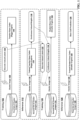
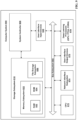
- Figure 1 illustrates various aspects of using the disclosed knowledge distillation for artificial intelligence-based base calling.
- the disclosed knowledge distillation comprises:
- the student base caller 124 has fewer processing modules and parameters than the teacher base caller 110.
- one of the processing modules is neural network layers.
- one of the parameters is interconnections between the neural network layers.
- one of the processing modules is neural network filters.
- one of the processing modules is neural network kernels.
- one of the parameters is multiplication and addition operations.
- the teacher base caller 110 is trained on training data comprising a first set of cluster images 104.
- the first set of cluster images 104 are annotated with ground truth data that uses discrete valued labels 108.
- a cluster image 106 is annotated with the discrete valued labels 108 that are one-hot encoded with a one-value for a correct base and zero-values for incorrect bases.
- the following is an example of one-hot encoding for the four nucleotide bases: A 1 C 0 T 0 G 0
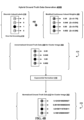
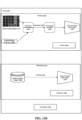
- Figure 2A depicts one implementation of training 200A the teacher base caller 110 by using the first set of cluster images 104 that are annotated with first ground truth data 214 which uses discrete valued labels 216 (one-hot encoding 218) to identify a correct base call.
- the input to the teacher base caller 110 is a cluster image 202 that depicts intensities of clusters 204A, 204B, 204C, and 204D and their surrounding background.
- the cluster image 202 is accompanied with supplemental data 224 such as a distance channel and a scaling channel. Additional details about the supplemental data 224 can be found in US Provisional Patent Application No. 62/821,766 , titled “ARTIFICIAL INTELLIGENCE-BASED SEQUENCING,"
- the teacher base caller 110 In response to processing the cluster image 202, the teacher base caller 110 produces an output 208. Based on the output 208, a base call prediction 210 is made that identifies confidence scores assigned by the teacher base caller 110 to each of the bases A, C, T, and G.
- an error 212 is computed between the base call prediction 210 and the discrete valued labels 216, e.g., one-hot encoding 218, i.e., [1, 0, 0, 0].
- Backward propagation 220 updates weights and parameters of the teacher base caller 110 based on the error 212.
- the training is operationalized (implemented) by a trainer 222 using backpropagation-based gradient update techniques (such as the ones discussed above).
- the cluster image 106 is annotated with the discrete valued labels 108 that have a near-one-value for the correct base and near-zero-values for the incorrect bases, referred to herein as "softened one-hot encoding.”
- softened one-hot encoding for the four nucleotide bases: A 0.95 C 0.02 T 0.017 G 0.013
- Figure 2B depicts another implementation of training 200B the teacher base caller 110 by using the first set of cluster images 104 that are annotated with the first ground truth data 226 which uses the discrete valued labels 216 (softened one-hot encoding 228) to identify the correct base call.
- the error 212 is computed between the base call prediction 210 and the softened one-hot encoding 228, i.e., [0.95, 0.02, 0.017, 0.013].
- the trained teacher base caller 110 is applied on inference data comprising a second set of cluster images 114.
- the trained teacher base caller 110 processes the second set of cluster images 114 and generates base call predictions as output.
- the base call predictions are represented by continuous valued weights 118 (soft labels) that identify a predicted base call.
- the continuous valued weights 118 are part of a probability distribution for a correct base being Adenine (A), Cytosine (C), Thymine (T), and Guanine (G).
- the continuous valued weights 118 are softmax scores, i.e., posterior probabilities.
- a cluster image 116 is fed as input to the trained teacher base caller 110.
- the trained teacher base caller 110 generates exponentially normalized likelihood of a base incorporated in a cluster depicted by the cluster image 116 at a current sequencing cycle being A, C, T, and G.
- Figure 3 shows one implementation of applying 300 the trained teacher base caller 110 on the second set of cluster images 114 and generating a base call prediction 312 that is represented by the continuous valued weights 310.
- the input to the trained teacher base caller 110 is a cluster image 302 that depicts intensities of clusters 304A, 304B, 304C, and 304D and their surrounding background.
- the cluster image 302 is accompanied with supplemental data 316 such as the distance channel and the scaling channel.
- the trained teacher base caller 110 In response to processing the cluster image 302, the trained teacher base caller 110 produces an output 308. Based on the output 308, the base call prediction 310 is generated that identifies confidence scores assigned by the trained teacher base caller 110 to each of the bases A (0.175), C (0.024), T (0.475), and G (0.326). These confidence scores are represented as continuous values, i.e ., the continuous valued weights 310.
- This process is iterated over numerous images in the second set of cluster images 114, such that a set of continuous valued weights is generated for each evaluated cluster image.
- the evaluation is operationalized (implemented) by a tester 314.
- Figures 4A and 4B illustrate one implementation of so-called “hybrid ground truth data" generation 400A and 400B using a combination of the discrete valued labels 216 and the continuous valued weights 310.
- the discrete valued labels 216 and the continuous valued weights 310 are accessed for a same cluster image 302 and combined to generate hybrid ground truth data for the cluster image 302. In some implementations, the discrete valued labels 216 are summed 402 with the continuous valued weights 310. In other implementations, the discrete valued labels 216 are multiplied with the continuous valued weights 310. In some other implementations, the discrete valued labels 216 are concatenated with the continuous valued weights 310.
- the discrete valued labels 216 and the continuous valued weights 310 are combined on class-wise basis. That is, discrete valued label for base call A is summed, multiplied, or concatenated with continuous valued weight for base call A, discrete valued label for base call C is summed, multiplied, or concatenated with continuous valued weight for base call C, discrete valued label for base call T is summed, multiplied, or concatenated with continuous valued weight for base call T, and discrete valued label for base call G is summed, multiplied, or concatenated with continuous valued weight for base call G.
- the continuous valued weights 310 are modified using a modification parameter ( ⁇ ) 404.
- the modification parameter ( ⁇ ) 404 is iteratively learned based on performance of the student base caller 124 over a validation dataset. After the modification parameter ( ⁇ ) 404 is applied on the continuous valued weights 310, what results is modified continuous valued weights 406.
- the discrete valued labels 216 are combined with the is modified continuous valued weights 406 to produce unnormalized ground truth data 408 for the cluster image 302.
- the unnormalized ground truth data 408 is then normalized to produce normalized ground truth data 412 for the cluster image 302.
- an exponential normalizer 410 e.g., softmax
- softmax is used to produce the normalized ground truth data 412.
- the unnormalized ground truth data 408 is considered the hybrid ground truth data 414 for the cluster image 302.
- the normalized ground truth data 412 is considered the hybrid ground truth data 416 for the cluster image 302.
- the student base caller 124 is trained on training data comprising the second set of cluster images 114.
- the second set of cluster images 114 are annotated with ground truth data 414/416 that identifies a correct base call based on (i) the discrete valued labels 122 and (ii) the continuous valued weights 118.
- Figure 5 is one implementation of training the student base caller 124 using the second set of cluster images 114 that are annotated with the hybrid ground truth data 414/416 which identifies a correct base call based on the discrete valued labels 216 and the continuous valued weights 310.
- the input to the student base caller 124 is the cluster image 302 that depicts intensities of clusters 304A, 304B, 304C, and 304D and their surrounding background.
- the cluster image 302 is accompanied with supplemental data 316 such as the distance channel and the scaling channel.
- the student base caller 124 In response to processing the cluster image 302, the student base caller 124 produces an output 508. Based on the output 508, a base call prediction 510 is made that identifies confidence scores assigned by the student base caller 124 to each of the bases A, C, T, and G.
- an error 512 is computed between the base call prediction 510 and the hybrid ground truth data 414/416.
- Backward propagation 514 updates weights and parameters of the student base caller 124 based on the error 512.
- the training is operationalized (implemented) by the trainer 222 using backpropagation-based gradient update techniques (such as the ones discussed above).
- the trained student base caller 124 is applied on inference data comprising a third set of cluster images 128.
- the trained student base caller 124 processes the third set of cluster images 128 and generates base call predictions 126 as output.
- a cluster image 130 is fed as input to the trained student base caller 124.
- the trained student base caller 124 generates exponentially normalized likelihood of a base incorporated in a cluster depicted by the cluster image 130 at a current sequencing cycle being A, C, T, and G.
- Figure 6 shows one implementation of applying 600 the trained student base caller 124 on the third set of cluster images 128 and generating a base call prediction 610.
- the input to the trained student base caller 124 is the cluster image 602 that depicts intensities of clusters 604A, 604B, and 604C and their surrounding background.
- the cluster image 602 is accompanied with supplemental data 612 such as the distance channel and the scaling channel.
- the trained student base caller 124 In response to processing the cluster image 602, the trained student base caller 124 produces an output 608. Based on the output 608, the base call prediction 610 is generated that identifies confidence scores assigned by the trained student base caller 124 to each of the bases A (0.1), C (0.1), T (0.2), and G (0.6).
- This process is iterated over numerous images in the third set of cluster images 128, such that the base call prediction is generated for each evaluated cluster image.
- the evaluation is operationalized (implemented) by the tester 314.
- the teacher and student approach to transporting an intensely trained model from a resource-rich platform to a compact platform confers substantial technical benefits.
- the technology disclosed effectively shrinks the model and, with it, the execution time and resources required to analyze a particular input.
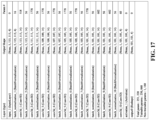
- Figures 16-17 show a reduction in filter depth from 64 filters to 14 filters.
- the shrunken model (the smaller, student base caller) has 21.9 percent as many filters as the large model (the larger, teacher base caller) for the resource-rich platform.
- the reduction in parameters is more dramatic, approximately quadratic with the reduction in filter depth.
- Figures 16-17 show a reduction in trainable parameter count form 250,060 to just 12,710.
- the shrunken model has 5.1 percent as many trainable parameters as the large model.
- the core calculations can be performed at the same time with compute resources reduced by 20-fold: computations scale about linearly with parameter count, so 5.1 percent as many parameters translates into 5.1 percent as many calculations required to process the same inputs. Memory usage also is reduced.
- Reducing resource requirements is enabling for application of at least some commercially available computation accelerators, such as Xilinx FPGAs.
- FPGAs have limited on-board memory and programmable footprint.
- the model in Figure 16 will not run on a commercial FPGA offering such as Xilinx Alveo U200, Xilinx Alveo U250, Xilinx Alveo U280, Intel/Altera Stratix GX2800, Intel/Altera Stratix GX2800, and Intel Stratix GX10M, but the model in Figure 17 will.
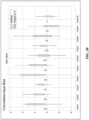
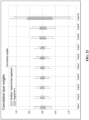
- Figure 18 graphs results accomplished running the shrunken model against the large model. For all models, the error rate increases measurably as errors accumulate over multiple cycles. At 120 cycles, the error rate for the large model has crept up to 0.2 percent (0.002 error rate).
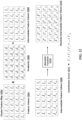
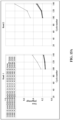
- Figure 16 shows one implementation of a larger, teacher base caller with 251,220 total parameters.
- the larger, teacher base caller has convolution layers that contain 64 filters per convolution layer.
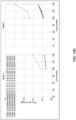
- Figure 17 shows one implementation of a smaller, student base caller with 12,970 total parameters that is distilled from the larger, teacher base caller of Figure 16 using the technology disclosed.
- the smaller, student base caller has convolution layers that contain 14 filters per convolution layer.
- the smaller, student base caller has about 5.1% of the total parameters as the larger, teacher base caller.
- the larger, teacher base caller comprises an ensemble of larger, teacher base callers
- the smaller, student base caller has about 1% to 3% of the total parameters as the ensemble of larger, teacher base callers in the larger, teacher base caller.
- Figure 18 shows the base calling performance of a smaller, student base caller against the base calling performance of a larger, teacher base caller.
- the y-axis represents the base calling error rate (Error %) and the x-axis represents the sequencing cycles of a sequencing run.
- the purple line represents the larger, teacher base caller comprising an ensemble of four larger, teacher base callers that have 64 convolution filters per convolution layer.
- the cyan line represents the smaller, student base caller comprising that has 14 convolution filters per convolution layer.
- the smaller, student base caller (cyan line) is distilled from the larger, teacher base caller (purple line) using the technology disclosed.
- the smaller, student base caller (cyan line) has a base calling error rate that is close to the base calling error rate (purple line) of the larger, teacher base caller comprising the ensemble of four larger, teacher base callers. Therefore, the technical advantage and technical effect of the technology disclosed is that the smaller, student base caller has much smaller compute footprint than the larger, teacher base caller, but similar/comparable base calling accuracy. This enables efficient execution of the smaller, student base caller during inference on on-chip processors like FPGAs, GPUs, ASICs, and CGRAs. This also improves the speed of base calling and reduces latency. This also leads to conservation of compute resources.
- the student model as a distilled version of the teacher model, outperforms another model with the same architecture whose coefficients are independently learned and not derived from a teacher model.
- FIGS 8A and 8B depict one implementation of a sequencing system 800A.
- the sequencing system 800A comprises a configurable processor 846.
- the configurable processor 846 implements the base calling techniques disclosed herein.
- the sequencing system is also referred to as a "sequencer.”
- the sequencing system 800A can operate to obtain any information or data that relates to at least one of a biological or chemical substance.
- the sequencing system 800A is a workstation that may be similar to a bench-top device or desktop computer.
- a majority (or all) of the systems and components for conducting the desired reactions can be within a common housing 802.
- the sequencing system 800A is a nucleic acid sequencing system configured for various applications, including but not limited to de novo sequencing, resequencing of whole genomes or target genomic regions, and metagenomics.
- the sequencer may also be used for DNA or RNA analysis.
- the sequencing system 800A may also be configured to generate reaction sites in a biosensor.
- the sequencing system 800A may be configured to receive a sample and generate surface attached clusters of clonally amplified nucleic acids derived from the sample. Each cluster may constitute or be part of a reaction site in the biosensor.
- the exemplary sequencing system 800A may include a system receptacle or interface 810 that is configured to interact with a biosensor 812 to perform desired reactions within the biosensor 812.
- the biosensor 812 is loaded into the system receptacle 810.
- a cartridge that includes the biosensor 812 may be inserted into the system receptacle 810 and in some states the cartridge can be removed temporarily or permanently.
- the cartridge may include, among other things, fluidic control and fluidic storage components.
- the sequencing system 800A is configured to perform a large number of parallel reactions within the biosensor 812.
- the biosensor 812 includes one or more reaction sites where desired reactions can occur.
- the reaction sites may be, for example, immobilized to a solid surface of the biosensor or immobilized to beads (or other movable substrates) that are located within corresponding reaction chambers of the biosensor.
- the reaction sites can include, for example, clusters of clonally amplified nucleic acids.
- the biosensor 812 may include a solid-state imaging device (e.g., CCD or CMOS imager) and a flow cell mounted thereto.
- the flow cell may include one or more flow channels that receive a solution from the sequencing system 800A and direct the solution toward the reaction sites.
- the biosensor 812 can be configured to engage a thermal element for transferring thermal energy into or out of the flow channel.
- the sequencing system 800A may include various components, assemblies, and systems (or sub-systems) that interact with each other to perform a predetermined method or assay protocol for biological or chemical analysis.
- the sequencing system 800A includes a system controller 806 that may communicate with the various components, assemblies, and sub-systems of the sequencing system 800A and also the biosensor 812.
- the sequencing system 800A may also include a fluidic control system 808 to control the flow of fluid throughout a fluid network of the sequencing system 800A and the biosensor 812; a fluid storage system 814 that is configured to hold all fluids (e.g., gas or liquids) that may be used by the bioassay system; a temperature control system 804 that may regulate the temperature of the fluid in the fluid network, the fluid storage system 814, and/or the biosensor 812; and an illumination system 816 that is configured to illuminate the biosensor 812.
- the cartridge may also include fluidic control and fluidic storage components.
- the sequencing system 800A may include a user interface 818 that interacts with the user.
- the user interface 818 may include a display 820 to display or request information from a user and a user input device 822 to receive user inputs.
- the display 820 and the user input device 822 are the same device.
- the user interface 818 may include a touch-sensitive display configured to detect the presence of an individual's touch and also identify a location of the touch on the display.
- other user input devices 822 may be used, such as a mouse, touchpad, keyboard, keypad, handheld scanner, voice-recognition system, motion-recognition system, and the like.
- the sequencing system 800A may communicate with various components, including the biosensor 812 (e.g., in the form of a cartridge), to perform the desired reactions.
- the sequencing system 800A may also be configured to analyze data obtained from the biosensor to provide a user with desired information.
- the system controller 806 may include any processor-based or microprocessor-based system, including systems using microcontrollers, reduced instruction set computers (RISC), application specific integrated circuits (ASICs), field programmable gate array (FPGAs), coarse-grained reconfigurable architectures (CGRAs), logic circuits, and any other circuit or processor capable of executing functions described herein.
- RISC reduced instruction set computers
- ASICs application specific integrated circuits
- FPGAs field programmable gate array
- CGRAs coarse-grained reconfigurable architectures
- logic circuits and any other circuit or processor capable of executing functions described herein.
- the system controller 806 executes a set of instructions that are stored in one or more storage elements, memories, or modules in order to at least one of obtain and analyze detection data.
- Detection data can include a plurality of sequences of pixel signals, such that a sequence of pixel signals from each of the millions of sensors (or pixels) can be detected over many base calling cycles.
- Storage elements may be in the form of information sources or physical memory elements within the sequencing system 800A.
- the set of instructions may include various commands that instruct the sequencing system 800A or biosensor 812 to perform specific operations such as the methods and processes of the various implementations described herein.
- the set of instructions may be in the form of a software program, which may form part of a tangible, non-transitory computer readable medium or media.
- the terms "software” and “firmware” are interchangeable and include any computer program stored in memory for execution by a computer, including RAM memory, ROM memory, EPROM memory, EEPROM memory, and non-volatile RAM (NVRAM) memory.
- RAM memory random access memory
- ROM memory read only memory
- EPROM memory electrically erasable programmable read-only memory
- EEPROM memory electrically erasable programmable read-only memory
- NVRAM non-volatile RAM
- the software may be in various forms such as system software or application software. Further, the software may be in the form of a collection of separate programs, or a program module within a larger program or a portion of a program module. The software also may include modular programming in the form of object-oriented programming. After obtaining the detection data, the detection data may be automatically processed by the sequencing system 800A, processed in response to user inputs, or processed in response to a request made by another processing machine ( e.g., a remote request through a communication link).
- the system controller 806 includes an analysis module 844. In other implementations, system controller 806 does not include the analysis module 844 and instead has access to the analysis module 844 ( e.g., the analysis module 844 may be separately hosted on cloud).
- the system controller 806 may be connected to the biosensor 812 and the other components of the sequencing system 800A via communication links.
- the system controller 806 may also be communicatively connected to off-site systems or servers.
- the communication links may be hardwired, corded, or wireless.
- the system controller 806 may receive user inputs or commands, from the user interface 818 and the user input device 822.
- the fluidic control system 808 includes a fluid network and is configured to direct and regulate the flow of one or more fluids through the fluid network.
- the fluid network may be in fluid communication with the biosensor 812 and the fluid storage system 814. For example, select fluids may be drawn from the fluid storage system 814 and directed to the biosensor 812 in a controlled manner, or the fluids may be drawn from the biosensor 812 and directed toward, for example, a waste reservoir in the fluid storage system 814.
- the fluidic control system 808 may include flow sensors that detect a flow rate or pressure of the fluids within the fluid network. The sensors may communicate with the system controller 806.
- the temperature control system 804 is configured to regulate the temperature of fluids at different regions of the fluid network, the fluid storage system 814, and/or the biosensor 812.
- the temperature control system 804 may include a thermocycler that interfaces with the biosensor 812 and controls the temperature of the fluid that flows along the reaction sites in the biosensor 812.
- the temperature control system 804 may also regulate the temperature of solid elements or components of the sequencing system 800A or the biosensor 812.
- the temperature control system 804 may include sensors to detect the temperature of the fluid or other components. The sensors may communicate with the system controller 806.
- the fluid storage system 814 is in fluid communication with the biosensor 812 and may store various reaction components or reactants that are used to conduct the desired reactions therein.
- the fluid storage system 814 may also store fluids for washing or cleaning the fluid network and biosensor 812 and for diluting the reactants.
- the fluid storage system 814 may include various reservoirs to store samples, reagents, enzymes, other biomolecules, buffer solutions, aqueous, and non-polar solutions, and the like.
- the fluid storage system 814 may also include waste reservoirs for receiving waste products from the biosensor 812.
- the cartridge may include one or more of a fluid storage system, fluidic control system or temperature control system.
- a cartridge can have various reservoirs to store samples, reagents, enzymes, other biomolecules, buffer solutions, aqueous, and non-polar solutions, waste, and the like.
- a fluid storage system, fluidic control system or temperature control system can be removably engaged with a bioassay system via a cartridge or other biosensor.
- the illumination system 816 may include a light source (e.g., one or more LEDs) and a plurality of optical components to illuminate the biosensor.
- light sources may include lasers, arc lamps, LEDs, or laser diodes.
- the optical components may be, for example, reflectors, dichroics, beam splitters, collimators, lenses, filters, wedges, prisms, mirrors, detectors, and the like.
- the illumination system 816 may be configured to direct an excitation light to reaction sites.
- fluorophores may be excited by green wavelengths of light, as such the wavelength of the excitation light may be approximately 532 nm.
- the illumination system 816 is configured to produce illumination that is parallel to a surface normal of a surface of the biosensor 812. In another implementation, the illumination system 816 is configured to produce illumination that is off-angle relative to the surface normal of the surface of the biosensor 812. In yet another implementation, the illumination system 816 is configured to produce illumination that has plural angles, including some parallel illumination and some off-angle illumination.
- the system receptacle or interface 810 is configured to engage the biosensor 812 in at least one of a mechanical, electrical, and fluidic manner.
- the system receptacle 810 may hold the biosensor 812 in a desired orientation to facilitate the flow of fluid through the biosensor 812.
- the system receptacle 810 may also include electrical contacts that are configured to engage the biosensor 812 so that the sequencing system 800A may communicate with the biosensor 812 and/or provide power to the biosensor 812.
- the system receptacle 810 may include fluidic ports (e.g., nozzles) that are configured to engage the biosensor 812.
- the biosensor 812 is removably coupled to the system receptacle 810 in a mechanical manner, in an electrical manner, and also in a fluidic manner.
- sequencing system 800A may communicate remotely with other systems or networks or with other bioassay systems 800A. Detection data obtained by the bioassay system(s) 800A may be stored in a remote database.
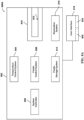
- FIG 8B is a block diagram of a system controller 806 that can be used in the system of Figure 8A .
- the system controller 806 includes one or more processors or modules that can communicate with one another.
- Each of the processors or modules may include an algorithm (e.g., instructions stored on a tangible and/or non-transitory computer readable storage medium) or sub-algorithms to perform particular processes.
- the system controller 806 is illustrated conceptually as a collection of modules, but may be implemented utilizing any combination of dedicated hardware boards, DSPs, processors, etc. Alternatively, the system controller 806 may be implemented utilizing an off-the-shelf PC with a single processor or multiple processors, with the functional operations distributed between the processors.
- modules described below may be implemented utilizing a hybrid configuration in which certain modular functions are performed utilizing dedicated hardware, while the remaining modular functions are performed utilizing an off-the-shelf PC and the like.
- the modules also may be implemented as software modules within a processing unit.
- a communication port 850 may transmit information (e.g., commands) to or receive information (e.g., data) from the biosensor 812 ( Figure 8A ) and/or the sub-systems 808, 814, 804 ( Figure 8A ).
- the communication port 850 may output a plurality of sequences of pixel signals.
- a communication link 834 may receive user input from the user interface 818 ( Figure 8A ) and transmit data or information to the user interface 818.
- Data from the biosensor 812 or sub-systems 808, 814, 804 may be processed by the system controller 806 in real-time during a bioassay session. Additionally or alternatively, data may be stored temporarily in a system memory during a bioassay session and processed in slower than real-time or off-line operation.
- the system controller 806 may include a plurality of modules 828-844 that communicate with a main control module 824, along with a central processing unit (CPU) 852.
- the main control module 824 may communicate with the user interface 818 ( Figure 8A ).
- the modules 828-844 are shown as communicating directly with the main control module 824, the modules 828-844 may also communicate directly with each other, the user interface 818, and the biosensor 812. Also, the modules 828-844 may communicate with the main control module 824 through the other modules.
- the plurality of modules 828-844 include system modules 828-832, 826 that communicate with the sub-systems 808, 814, 804, and 816, respectively.
- the fluidic control module 828 may communicate with the fluidic control system 808 to control the valves and flow sensors of the fluid network for controlling the flow of one or more fluids through the fluid network.
- the fluid storage module 830 may notify the user when fluids are low or when the waste reservoir is at or near capacity.
- the fluid storage module 830 may also communicate with the temperature control module 832 so that the fluids may be stored at a desired temperature.
- the illumination module 826 may communicate with the illumination system 816 to illuminate the reaction sites at designated times during a protocol, such as after the desired reactions ( e.g., binding events) have occurred. In some implementations, the illumination module 826 may communicate with the illumination system 816 to illuminate the reaction sites at designated angles.
- the plurality of modules 828-844 may also include a device module 836 that communicates with the biosensor 812 and an identification module 838 that determines identification information relating to the biosensor 812.
- the device module 836 may, for example, communicate with the system receptacle 810 to confirm that the biosensor has established an electrical and fluidic connection with the sequencing system 800A.
- the identification module 838 may receive signals that identify the biosensor 812.
- the identification module 838 may use the identity of the biosensor 812 to provide other information to the user. For example, the identification module 838 may determine and then display a lot number, a date of manufacture, or a protocol that is recommended to be run with the biosensor 812.
- the plurality of modules 828-844 also includes an analysis module 844 (also called signal processing module or signal processor) that receives and analyzes the signal data (e.g., image data) from the biosensor 812.
- Analysis module 844 includes memory (e.g., RAM or Flash) to store detection/image data.
- Detection data can include a plurality of sequences of pixel signals, such that a sequence of pixel signals from each of the millions of sensors (or pixels) can be detected over many base calling cycles.
- the signal data may be stored for subsequent analysis or may be transmitted to the user interface 818 to display desired information to the user.
- the signal data may be processed by the solid-state imager (e.g., CMOS image sensor) before the analysis module 844 receives the signal data.
- the solid-state imager e.g., CMOS image sensor
- the analysis module 844 is configured to obtain image data from the light detectors at each of a plurality of sequencing cycles.
- the image data is derived from the emission signals detected by the light detectors and process the image data for each of the plurality of sequencing cycles through the student base caller 124 and produce a base call for at least some of the analytes at each of the plurality of sequencing cycle.
- the light detectors can be part of one or more over-head cameras (e.g., Illumina's GAIIx's CCD camera taking images of the clusters on the biosensor 812 from the top), or can be part of the biosensor 812 itself ( e.g., Illumina's iSeq's CMOS image sensors underlying the clusters on the biosensor 812 and taking images of the clusters from the bottom).
- over-head cameras e.g., Illumina's GAIIx's CCD camera taking images of the clusters on the biosensor 812 from the top
- the biosensor 812 e.g., Illumina's iSeq's CMOS image sensors underlying the clusters on the biosensor 812 and taking images of the clusters from the bottom.
- the output of the light detectors is the sequencing images, each depicting intensity emissions of the clusters and their surrounding background.
- the sequencing images depict intensity emissions generated as a result of nucleotide incorporation in the sequences during the sequencing.
- the intensity emissions are from associated analytes and their surrounding background.
- the sequencing images are stored in memory 848.
- Protocol modules 840 and 842 communicate with the main control module 824 to control the operation of the sub-systems 808, 814, and 804 when conducting predetermined assay protocols.
- the protocol modules 840 and 842 may include sets of instructions for instructing the sequencing system 800A to perform specific operations pursuant to predetermined protocols.
- the protocol module may be a sequencing-by-synthesis (SBS) module 840 that is configured to issue various commands for performing sequencing-by-synthesis processes.
- SBS sequencing-by-synthesis
- extension of a nucleic acid primer along a nucleic acid template is monitored to determine the sequence of nucleotides in the template.
- the underlying chemical process can be polymerization (e.g., as catalyzed by a polymerase enzyme) or ligation (e.g., catalyzed by a ligase enzyme).
- fluorescently labeled nucleotides are added to a primer (thereby extending the primer) in a template dependent fashion such that detection of the order and type of nucleotides added to the primer can be used to determine the sequence of the template.
- commands can be given to deliver one or more labeled nucleotides, DNA polymerase, etc., into/through a flow cell that houses an array of nucleic acid templates.
- the nucleic acid templates may be located at corresponding reaction sites. Those reaction sites where primer extension causes a labeled nucleotide to be incorporated can be detected through an imaging event. During an imaging event, the illumination system 816 may provide an excitation light to the reaction sites.
- the nucleotides can further include a reversible termination property that terminates further primer extension once a nucleotide has been added to a primer. For example, a nucleotide analog having a reversible terminator moiety can be added to a primer such that subsequent extension cannot occur until a deblocking agent is delivered to remove the moiety.
- a command can be given to deliver a deblocking reagent to the flow cell (before or after detection occurs).
- One or more commands can be given to effect wash(es) between the various delivery steps.
- the cycle can then be repeated n times to extend the primer by n nucleotides, thereby detecting a sequence of length n.
- Exemplary sequencing techniques are described, for example, in Bentley et al., Nature 456:53-59 (2008 ); WO 04/018497 ; US 7,057,026 ; WO 91/06678 ; WO 07/123744 ; US 7,329,492 ; US 7,211,414 ; US 7,315,019 ; US 7,405,281 , and US 2008/014708082 ,
- nucleotide delivery step of an SBS cycle either a single type of nucleotide can be delivered at a time, or multiple different nucleotide types (e.g., A, C, T and G together) can be delivered.
- nucleotide delivery configuration where only a single type of nucleotide is present at a time, the different nucleotides need not have distinct labels since they can be distinguished based on temporal separation inherent in the individualized delivery. Accordingly, a sequencing method or apparatus can use single color detection. For example, an excitation source need only provide excitation at a single wavelength or in a single range of wavelengths.
- sites that incorporate different nucleotide types can be distinguished based on different fluorescent labels that are attached to respective nucleotide types in the mixture.
- four different nucleotides can be used, each having one of four different fluorophores.
- the four different fluorophores can be distinguished using excitation in four different regions of the spectrum.
- four different excitation radiation sources can be used.
- fewer than four different excitation sources can be used, but optical filtration of the excitation radiation from a single source can be used to produce different ranges of excitation radiation at the flow cell.
- fewer than four different colors can be detected in a mixture having four different nucleotides.
- pairs of nucleotides can be detected at the same wavelength, but distinguished based on a difference in intensity for one member of the pair compared to the other, or based on a change to one member of the pair ( e.g., via chemical modification, photochemical modification or physical modification) that causes apparent signal to appear or disappear compared to the signal detected for the other member of the pair.
- the plurality of protocol modules may also include a sample-preparation (or generation) module 842 that is configured to issue commands to the fluidic control system 808 and the temperature control system 804 for amplifying a product within the biosensor 812.
- the biosensor 812 may be engaged to the sequencing system 800A.
- the amplification module 842 may issue instructions to the fluidic control system 808 to deliver necessary amplification components to reaction chambers within the biosensor 812.
- the reaction sites may already contain some components for amplification, such as the template DNA and/or primers.
- the amplification module 842 may instruct the temperature control system 804 to cycle through different temperature stages according to known amplification protocols.
- the amplification and/or nucleotide incorporation is performed isothermally.
- the SBS module 840 may issue commands to perform bridge PCR where clusters of clonal amplicons are formed on localized areas within a channel of a flow cell. After generating the amplicons through bridge PCR, the amplicons may be "linearized" to make single stranded template DNA, or sstDNA, and a sequencing primer may be hybridized to a universal sequence that flanks a region of interest. For example, a reversible terminator-based sequencing by synthesis method can be used as set forth above or as follows.
- Each base calling or sequencing cycle can extend an sstDNA by a single base which can be accomplished for example by using a modified DNA polymerase and a mixture of four types of nucleotides.
- the different types of nucleotides can have unique fluorescent labels, and each nucleotide can further have a reversible terminator that allows only a single-base incorporation to occur in each cycle. After a single base is added to the sstDNA, excitation light may be incident upon the reaction sites and fluorescent emissions may be detected. After detection, the fluorescent label and the terminator may be chemically cleaved from the sstDNA. Another similar base calling or sequencing cycle may follow.
- the SBS module 840 may instruct the fluidic control system 808 to direct a flow of reagent and enzyme solutions through the biosensor 812.
- Exemplary reversible terminator-based SBS methods which can be utilized with the apparatus and methods set forth herein are described in US Patent Application Publication No. 2007/0166705 A1 , US Patent Application Publication No. 2006/0188901 A1 , US Patent No. 7,057,026 , US Patent Application Publication No. 2006/0240439 A1 , US Patent Application Publication No. 2006/02814714709 A1 , PCT Publication No. WO 05/065814 , US Patent Application Publication No. 2005/014700900 A1 , PCT Publication No.
- the amplification and SBS modules may operate in a single assay protocol where, for example, template nucleic acid is amplified and subsequently sequenced within the same cartridge.
- the sequencing system 800A may also allow the user to reconfigure an assay protocol.
- the sequencing system 800A may offer options to the user through the user interface 818 for modifying the determined protocol. For example, if it is determined that the biosensor 812 is to be used for amplification, the sequencing system 800A may request a temperature for the annealing cycle. Furthermore, the sequencing system 800A may issue warnings to a user if a user has provided user inputs that are generally not acceptable for the selected assay protocol.
- the biosensor 812 includes millions of sensors (or pixels), each of which generates a plurality of sequences of pixel signals over successive base calling cycles.
- the analysis module 844 detects the plurality of sequences of pixel signals and attributes them to corresponding sensors (or pixels) in accordance to the row-wise and/or column-wise location of the sensors on an array of sensors.
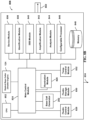
- Figure 8C is a simplified block diagram of a system for analysis of sensor data from the sequencing system 800A, such as base call sensor outputs.
- the system includes the configurable processor 846.
- the configurable processor 846 can execute a base caller (e.g., the student base caller 124) in coordination with a runtime program executed by the central processing unit (CPU) 852 ( i.e., a host processor).
- the sequencing system 800A comprises the biosensor 812 and flow cells.
- the flow cells can comprise one or more tiles in which clusters of genetic material are exposed to a sequence of analyte flows used to cause reactions in the clusters to identify the bases in the genetic material.
- the sensors sense the reactions for each cycle of the sequence in each tile of the flow cell to provide tile data.
- Genetic sequencing is a data intensive operation, which translates base call sensor data into sequences of base calls for each cluster of genetic material sensed in during a base call operation.
- the system in this example includes the CPU 852, which executes a runtime program to coordinate the base call operations, memory 848B to store sequences of arrays of tile data, base call reads produced by the base calling operation, and other information used in the base call operations. Also, in this illustration the system includes memory 848A to store a configuration file (or files), such as FPGA bit files, and model parameters for the neural networks used to configure and reconfigure the configurable processor 846, and execute the neural networks.
- the sequencing system 800A can include a program for configuring a configurable processor and in some embodiments a reconfigurable processor to execute the neural networks.
- the sequencing system 800A is coupled by a bus 854 to the configurable processor 846.
- the bus 854 can be implemented using a high throughput technology, such as in one example bus technology compatible with the PCIe standards (Peripheral Component Interconnect Express) currently maintained and developed by the PCI-SIG (PCI Special Interest Group).
- a memory 848A is coupled to the configurable processor 846 by bus 856.
- the memory 848A can be on-board memory, disposed on a circuit board with the configurable processor 846.
- the memory 848A is used for high speed access by the configurable processor 846 of working data used in the base call operation.
- the bus 856 can also be implemented using a high throughput technology, such as bus technology compatible with the PCIe standards.
- Configurable processors including field programmable gate arrays FPGAs, coarse grained reconfigurable arrays CGRAs, and other configurable and reconfigurable devices, can be configured to implement a variety of functions more efficiently or faster than might be achieved using a general purpose processor executing a computer program.
- Configuration of configurable processors involves compiling a functional description to produce a configuration file, referred to sometimes as a bitstream or bit file, and distributing the configuration file to the configurable elements on the processor.
- the configuration file defines the logic functions to be executed by the configurable processor, by configuring the circuit to set data flow patterns, use of distributed memory and other on-chip memory resources, lookup table contents, operations of configurable logic blocks and configurable execution units like multiply-and-accumulate units, configurable interconnects and other elements of the configurable array.
- a configurable processor is reconfigurable if the configuration file may be changed in the field, by changing the loaded configuration file.
- the configuration file may be stored in volatile SRAM elements, in non-volatile read-write memory elements, and in combinations of the same, distributed among the array of configurable elements on the configurable or reconfigurable processor.
- a variety of commercially available configurable processors are suitable for use in a base calling operation as described herein.
- Examples include Google's Tensor Processing Unit (TPU) TM , rackmount solutions like GX4 Rackmount Series TM , GX9 Rackmount Series TM , NVIDIA DGX-1 TM , Microsoft' Stratix V FPGA TM , Graphcore's Intelligent Processor Unit (IPU) TM , Qualcomm's Zeroth Platform TM with iOS processors TM , NVIDIA's Volta TM , NVIDIA's DRIVE PX TM , NVIDIA's JETSON TX1/TX2 MODULE TM , Intel's Nirvana TM , Movidius VPU TM , Fujitsu DPI TM , ARM's DynamicIQ TM , IBM TrueNorth TM , Lambda GPU Server with Testa V100s TM , Xilinx Alveo TM U200, Xilinx Alveo TM U250, Xilinx Alveo TM U280, Intel/Altera
- Embodiments described herein implement the student base caller 124 using the configurable processor 846.
- the configuration file for the configurable processor 846 can be implemented by specifying the logic functions to be executed using a high level description language HDL or a register transfer level RTL language specification.
- the specification can be compiled using the resources designed for the selected configurable processor to generate the configuration file.
- the same or similar specification can be compiled for the purposes of generating a design for an application-specific integrated circuit which may not be a configurable processor.
- configurable processor configurable processor 846 in all embodiments described herein, therefore include a configured processor comprising an application specific ASIC or special purpose integrated circuit or set of integrated circuits, or a system-on-a-chip SOC device, or a graphics processing unit (GPU) processor or a coarse-grained reconfigurable architecture (CGRA) processor, configured to execute a neural network based base call operation as described herein.
- a configured processor comprising an application specific ASIC or special purpose integrated circuit or set of integrated circuits, or a system-on-a-chip SOC device, or a graphics processing unit (GPU) processor or a coarse-grained reconfigurable architecture (CGRA) processor, configured to execute a neural network based base call operation as described herein.
- GPU graphics processing unit
- CGRA coarse-grained reconfigurable architecture
- neural network processors In general, configurable processors and configured processors described herein, as configured to execute runs of a neural network, are referred to herein as neural network processors.
- the configurable processor 846 is configured in this example by a configuration file loaded using a program executed by the CPU 852, or by other sources, which configures the array of configurable elements 866 (e.g., configuration logic blocks (CLB) such as look up tables (LUTs), flip-flops, compute processing units (PMUs), and compute memory units (CMUs), configurable I/O blocks, programmable interconnects), on the configurable processor to execute the base call function.
- the configuration includes data flow logic 862 which is coupled to the buses 854 and 856 and executes functions for distributing data and control parameters among the elements used in the base call operation.
- the configurable processor 846 is configured with base call execution logic 862 to execute the student base caller 124.
- the logic 862 comprises multi-cycle execution clusters (e.g., 864) which, in this example, includes execution cluster 1 through execution cluster X.
- the number of multi-cycle execution clusters can be selected according to a trade-off involving the desired throughput of the operation, and the available resources on the configurable processor 846.
- the multi-cycle execution clusters are coupled to the data flow logic 862 by data flow paths 858 implemented using configurable interconnect and memory resources on the configurable processor 846. Also, the multi-cycle execution clusters are coupled to the data flow logic 862 by control paths 860 implemented using configurable interconnect and memory resources for example on the configurable processor 846, which provide control signals indicating available execution clusters, readiness to provide input units for execution of a run of the student base caller 124 to the available execution clusters, readiness to provide trained parameters for the student base caller 124, readiness to provide output patches of base call classification data, and other control data used for execution of the student base caller 124.
- the configurable processor 846 is configured to execute runs of the student base caller 124 using trained parameters to produce classification data for the sensing cycles of the base calling operation.
- a run of the student base caller 124 is executed to produce classification data for a subject sensing cycle of the base calling operation.
- a run of the student base caller 124 operates on a sequence including a number N of arrays of tile data from respective sensing cycles of N sensing cycles, where the N sensing cycles provide sensor data for different base call operations for one base position per operation in time sequence in the examples described herein.
- some of the N sensing cycles can be out of sequence if needed according to a particular neural network model being executed.
- the number N can be any number greater than one.
- sensing cycles of the N sensing cycles represent a set of sensing cycles for at least one sensing cycle preceding the subject sensing cycle and at least one sensing cycle following the subject cycle in time sequence. Examples are described herein in which the number N is an integer equal to or greater than five.
- the data flow logic 862 is configured to move tile data and at least some trained parameters of the model parameters from the memory 848A to the configurable processor 846 for runs of the student base caller 124, using input units for a given run including tile data for spatially aligned patches of the N arrays.
- the input units can be moved by direct memory access operations in one DMA operation, or in smaller units moved during available time slots in coordination with the execution of the neural network deployed.
- Tile data for a sensing cycle as described herein can comprise an array of sensor data having one or more features.
- the sensor data can comprise two images which are analyzed to identify one of four bases at a base position in a genetic sequence of DNA, RNA, or other genetic material.
- the tile data can also include metadata about the images and the sensors.
- the tile data can comprise information about alignment of the images with the clusters such as distance from center information indicating the distance of each pixel in the array of sensor data from the center of a cluster of genetic material on the tile.
- tile data can also include data produced during execution of the student base caller 124, referred to as intermediate data, which can be reused rather than recomputed during a run of the student base caller 124.
- intermediate data data produced during execution of the student base caller 124
- the data flow logic 862 can write intermediate data to the memory 848A in place of the sensor data for a given patch of an array of tile data. Embodiments like this are described in more detail below.
- a system for analysis of base call sensor output, comprising memory (e.g., 848A) accessible by the runtime program storing tile data including sensor data for a tile from sensing cycles of a base calling operation.
- the system includes a neural network processor, such as configurable processor 846 having access to the memory.
- the neural network processor is configured to execute runs of a neural network using trained parameters to produce classification data for sensing cycles.
- a run of the neural network is operating on a sequence of N arrays of tile data from respective sensing cycles of N sensing cycles, including a subject cycle, to produce the classification data for the subject cycle.
- the data flow logic 862 is provided to move tile data and the trained parameters from the memory to the neural network processor for runs of the neural network using input units including data for spatially aligned patches of the N arrays from respective sensing cycles of N sensing cycles.
- the neural network processor has access to the memory, and includes a plurality of execution clusters, the execution clusters in the plurality of execution clusters configured to execute a neural network.
- the data flow logic 862 has access to the memory and to execution clusters in the plurality of execution clusters, to provide input units of tile data to available execution clusters in the plurality of execution clusters, the input units including a number N of spatially aligned patches of arrays of tile data from respective sensing cycles, including a subject sensing cycle, and to cause the execution clusters to apply the N spatially aligned patches to the neural network to produce output patches of classification data for the spatially aligned patch of the subject sensing cycle, where N is greater than 1.
- Figure 8D is a simplified diagram showing aspects of the base calling operation, including functions of a runtime program executed by a host processor.
- the output of image sensors from a flow cell are provided on lines 868 to image processing threads 869, which can perform processes on images such as alignment and arrangement in an array of sensor data for the individual tiles and resampling of images, and can be used by processes which calculate a tile cluster mask for each tile in the flow cell, which identifies pixels in the array of sensor data that correspond to clusters of genetic material on the corresponding tile of the flow cell.
- the outputs of the image processing threads 869 are provided on lines 870 to a dispatch logic 877 in the CPU which routes the arrays of tile data to a data cache 872 (e.g., SSD storage) on a high-speed bus 871, or on high-speed bus 873 to the neural network processor hardware 874, such as the configurable processor 846 of Figure 8C , according to the state of the base calling operation.
- a data cache 872 e.g., SSD storage
- the neural network processor hardware 874 such as the configurable processor 846 of Figure 8C , according to the state of the base calling operation.
- the processed and transformed images can be stored on the data cache 872 for sensing cycles that were previously used.
- the hardware 874 returns classification data output by the neural network to the dispatch logic 877, which passes the information to the data cache 872, or on lines 875 to threads 870 that perform base call and quality score computations using the classification data, and can arrange the data in standard formats for base call reads.
- the outputs of the threads 870 that perform base calling and quality score computations are provided on lines 876 to threads 871 that aggregate the base call reads, perform other operations such as data compression, and write the resulting base call outputs to specified destinations for utilization by the customers.
- the host can include threads (not shown) that perform final processing of the output of the hardware 874 in support of the neural network.
- the hardware 874 can provide outputs of classification data from a final layer of the multi-cluster neural network.
- the host processor can execute an output activation function, such as a softmax function, over the classification data to configure the data for use by the base call and quality score threads 870.
- the host processor can execute input operations (not shown), such as batch normalization of the tile data prior to input to the hardware 874.
- Figure 8E is a simplified diagram of a configuration of a configurable processor 846 such as that of Figure 8C .
- the configurable processor 846 comprises an FPGA with a plurality of high speed PCIe interfaces.
- the FPGA is configured with a wrapper 880 which comprises the data flow logic 862 described with reference to Figure 8C .
- the wrapper 880 manages the interface and coordination with a runtime program in the CPU across the CPU communication link 878 and manages communication with the on-board DRAM 879 (e.g., memory 848A) via DRAM communication link 881.
- DRAM 879 e.g., memory 848A
- the data flow logic 862 in the wrapper 880 provides patch data retrieved by traversing the arrays of tile data on the on-board DRAM 879 for the number N cycles to a cluster 884, and retrieves process data 882 from the cluster 884 for delivery back to the on-board DRAM 879.
- the wrapper 880 also manages transfer of data between the on-board DRAM 879 and host memory, for both the input arrays of tile data, and for the output patches of classification data.
- the wrapper transfers patch data on line 887 to the allocated cluster 884.
- the wrapper provides trained parameters, such as weights and biases on line 886 to the cluster 884 retrieved from the on-board DRAM 302.
- the wrapper provides configuration and control data on line 885 to the cluster 884 provided from, or generated in response to, the runtime program on the host via the CPU communication link 878.
- the cluster can also provide status signals on line 883 to the wrapper 880, which are used in cooperation with control signals from the host to manage traversal of the arrays of tile data to provide spatially aligned patch data, and to execute the multi-cycle neural network over the patch data using the resources of the cluster 884.
- each cluster can be configured to provide classification data for base calls in a subject sensing cycle using the tile data of multiple sensing cycles described herein.
- model data including kernel data like filter weights and biases can be sent from the host CPU to the configurable processor, so that the model can be updated as a function of cycle number.
- a base calling operation can comprise, for a representative example, on the order of hundreds of sensing cycles.
- Base calling operation can include paired end reads in some embodiments.
- the model trained parameters may be updated once every 20 cycles (or other number of cycles), or according to update patterns implemented for particular systems and neural network models.
- a sequence for a given string in a genetic cluster on a tile includes a first part extending from a first end down (or up) the string, and a second part extending from a second end up (or down) the string
- the trained parameters can be updated on the transition from the first part to the second part.
- image data for multiple cycles of sensing data for a tile can be sent from the CPU to the wrapper 880.
- the wrapper 880 can optionally do some pre-processing and transformation of the sensing data and write the information to the on-board DRAM 879.
- the input tile data for each sensing cycle can include arrays of sensor data including on the order of 4000 ⁇ 3000 pixels per sensing cycle per tile or more, with two features representing colors of two images of the tile, and one or two bytes per feature per pixel.
- the array of tile data for each run of the multi-cycle neural network can consume on the order of hundreds of megabytes per tile.
- the tile data also includes an array of DFC data, stored once per tile, or other type of metadata about the sensor data and the tiles.
- the wrapper allocates a patch to the cluster.
- the wrapper fetches a next patch of tile data in the traversal of the tile and sends it to the allocated cluster along with appropriate control and configuration information.
- the cluster can be configured with enough memory on the configurable processor to hold a patch of data including patches from multiple cycles in some systems, that is being worked on in place, and a patch of data that is to be worked on when the current patch of processing is finished using a ping-pong buffer technique or raster scanning technique in various embodiments.
- an allocated cluster When an allocated cluster completes its run of the neural network for the current patch and produces an output patch, it will signal the wrapper.
- the wrapper will read the output patch from the allocated cluster, or alternatively the allocated cluster will push the data out to the wrapper. Then the wrapper will assemble output patches for the processed tile in the DRAM 879.
- the wrapper sends the processed output array for the tile back to the host/CPU in a specified format.
- the on-board DRAM 879 is managed by memory management logic in the wrapper 880.
- the runtime program can control the sequencing operations to complete analysis of all the arrays of tile data for all the cycles in the run in a continuous flow to provide real time analysis.
- Logic e.g., data flow logic
- Logic can be implemented in the form of a computer product including a non-transitory computer readable storage medium with computer usable program code for performing the method steps described herein.
- the "logic” can be implemented in the form of an apparatus including a memory and at least one processor that is coupled to the memory and operative to perform exemplary method steps.
- the "logic” can be implemented in the form of means for carrying out one or more of the method steps described herein; the means can include (i) hardware module(s), (ii) software module(s) executing on one or more hardware processors, or (iii) a combination of hardware and software modules; any of (i)-(iii) implement the specific techniques set forth herein, and the software modules are stored in a computer readable storage medium (or multiple such media).
- the logic implements a data processing function.
- the logic can be a general purpose, single core or multicore, processor with a computer program specifying the function, a digital signal processor with a computer program, configurable logic such as an FPGA with a configuration file, a special purpose circuit such as a state machine, or any combination of these.
- a computer program product can embody the computer program and configuration file portions of the logic.
- Figure 9 is a computer system 900 that can be used by the sequencing system 800A to implement the base calling techniques disclosed herein.
- Computer system 900 includes at least one central processing unit (CPU) 972 that communicates with a number of peripheral devices via bus subsystem 955.
- peripheral devices can include a storage subsystem 858 including, for example, memory devices and a file storage subsystem 936, user interface input devices 938, user interface output devices 976, and a network interface subsystem 974.
- the input and output devices allow user interaction with computer system 900.
- Network interface subsystem 974 provides an interface to outside networks, including an interface to corresponding interface devices in other computer systems.
- system controller 806 is communicably linked to the storage subsystem 858 and the user interface input devices 938.
- User interface input devices 938 can include a keyboard; pointing devices such as a mouse, trackball, touchpad, or graphics tablet; a scanner; a touch screen incorporated into the display; audio input devices such as voice recognition systems and microphones; and other types of input devices.
- pointing devices such as a mouse, trackball, touchpad, or graphics tablet
- audio input devices such as voice recognition systems and microphones
- use of the term "input device” is intended to include all possible types of devices and ways to input information into computer system 900.
- User interface output devices 976 can include a display subsystem, a printer, a fax machine, or non-visual displays such as audio output devices.
- the display subsystem can include an LED display, a cathode ray tube (CRT), a flat-panel device such as a liquid crystal display (LCD), a projection device, or some other mechanism for creating a visible image.
- the display subsystem can also provide a non-visual display such as audio output devices.
- output device is intended to include all possible types of devices and ways to output information from computer system 900 to the user or to another machine or computer system.
- Storage subsystem 858 stores programming and data constructs that provide the functionality of some or all of the modules and methods described herein. These software modules are generally executed by deep learning processors 978.
- Deep learning processors 978 can be graphics processing units (GPUs), field-programmable gate arrays (FPGAs), application-specific integrated circuits (ASICs), and/or coarse-grained reconfigurable architectures (CGRAs). Deep learning processors 978 can be hosted by a deep learning cloud platform such as Google Cloud Platform TM , Xilinx TM , and Cirrascale TM .
- GPUs graphics processing units
- FPGAs field-programmable gate arrays
- ASICs application-specific integrated circuits
- CGRAs coarse-grained reconfigurable architectures
- Examples of deep learning processors 978 include Google's Tensor Processing Unit (TPU) TM , rackmount solutions like GX4 Rackmount Series TM , GX9 Rackmount Series TM , NVIDIA DGX-1 TM , Microsoft' Stratix V FPGA TM , Graphcore's Intelligent Processor Unit (IPU) TM , Qualcomm's Zeroth Platform TM with iOS processors TM , NVIDIA's Volta TM , NVIDIA's DRIVE PX TM , NVIDIA's JETSON TX1/TX2 MODULE TM , Intel's Nirvana TM , Movidius VPU TM , Fujitsu DPI TM , ARM's DynamicIQ TM , IBM TrueNorth TM , Lambda GPU Server with Testa V100s TM , and others.
- TPU Tensor Processing Unit
- rackmount solutions like GX4 Rackmount Series TM , GX9 Rackmount Series TM ,
- Memory subsystem 922 used in the storage subsystem 858 can include a number of memories including a main random access memory (RAM) 932 for storage of instructions and data during program execution and a read only memory (ROM) 934 in which fixed instructions are stored.
- a file storage subsystem 936 can provide persistent storage for program and data files, and can include a hard disk drive, a floppy disk drive along with associated removable media, a CD-ROM drive, an optical drive, or removable media cartridges.
- the modules implementing the functionality of certain implementations can be stored by file storage subsystem 936 in the storage subsystem 858, or in other machines accessible by the processor.
- Bus subsystem 955 provides a mechanism for letting the various components and subsystems of computer system 900 communicate with each other as intended. Although bus subsystem 955 is shown schematically as a single bus, alternative implementations of the bus subsystem can use multiple busses.
- Computer system 900 itself can be of varying types including a personal computer, a portable computer, a workstation, a computer terminal, a network computer, a television, a mainframe, a server farm, a widely-distributed set of loosely networked computers, or any other data processing system or user device. Due to the ever-changing nature of computers and networks, the description of computer system 900 depicted in Figure 9 is intended only as a specific example for purposes of illustrating the preferred implementations of the present invention. Many other configurations of computer system 900 are possible having more or less components than the computer system depicted in Figure 9 .
- Base calling includes incorporation or attachment of a fluorescently-labeled tag with an analyte.
- the analyte can be a nucleotide or an oligonucleotide
- the tag can be for a particular nucleotide type (A, C, T, or G).
- Excitation light is directed toward the analyte having the tag, and the tag emits a detectable fluorescent signal or intensity emission. The intensity emission is indicative of photons emitted by the excited tag that is chemically attached to the analyte.
- the intensity emissions of the attached tags are representative of or equivalent to the intensity emissions of the analytes to which the tags are attached, and are therefore used interchangeably.
- properties of the analytes refer to properties of the tags attached to the analytes or of the intensity emissions from the attached tags.
- a center of an analyte refers to the center of the intensity emissions emitted by a tag attached to the analyte.
- the surrounding background of an analyte refers to the surrounding background of the intensity emissions emitted by a tag attached to the analyte.
- the technology disclosed uses neural networks to improve the quality and quantity of nucleic acid sequence information that can be obtained from a nucleic acid sample such as a nucleic acid template or its complement, for instance, a DNA or RNA polynucleotide or other nucleic acid sample. Accordingly, certain implementations of the technology disclosed provide higher throughput polynucleotide sequencing, for instance, higher rates of collection of DNA or RNA sequence data, greater efficiency in sequence data collection, and/or lower costs of obtaining such sequence data, relative to previously available methodologies.
- the technology disclosed uses neural networks to identify the center of a solid-phase nucleic acid cluster and to analyze optical signals that are generated during sequencing of such clusters, to discriminate unambiguously between adjacent, abutting or overlapping clusters in order to assign a sequencing signal to a single, discrete source cluster.
- These and related implementations thus permit retrieval of meaningful information, such as sequence data, from regions of high-density cluster arrays where useful information could not previously be obtained from such regions due to confounding effects of overlapping or very closely spaced adjacent clusters, including the effects of overlapping signals (e.g., as used in nucleic acid sequencing) emanating therefrom.
- compositions that comprises a solid support having immobilized thereto one or a plurality of nucleic acid clusters as provided herein.
- Each cluster comprises a plurality of immobilized nucleic acids of the same sequence and has an identifiable center having a detectable center label as provided herein, by which the identifiable center is distinguishable from immobilized nucleic acids in a surrounding region in the cluster.
- Also described herein are methods for making and using such clusters that have identifiable centers.
- the presently disclosed implementations will find uses in numerous situations where advantages are obtained from the ability to identify, determine, annotate, record or otherwise assign the position of a substantially central location within a cluster, such as high-throughput nucleic acid sequencing, development of image analysis algorithms for assigning optical or other signals to discrete source clusters, and other applications where recognition of the center of an immobilized nucleic acid cluster is desirable and beneficial.
- the present invention contemplates methods that relate to high-throughput nucleic acid analysis such as nucleic acid sequence determination (e.g., "sequencing").
- high-throughput nucleic acid analyses include without limitation de novo sequencing, re-sequencing, whole genome sequencing, gene expression analysis, gene expression monitoring, epigenetic analysis, genome methylation analysis, allele specific primer extension (APSE), genetic diversity profiling, whole genome polymorphism discovery and analysis, single nucleotide polymorphism analysis, hybridization based sequence determination methods, and the like.
- APSE allele specific primer extension
- the implementations of the present invention are described in relation to nucleic acid sequencing, they are applicable in any field where image data acquired at different time points, spatial locations or other temporal or physical perspectives is analyzed.
- the methods and systems described herein are useful in the fields of molecular and cell biology where image data from microarrays, biological specimens, cells, organisms and the like is acquired and at different time points or perspectives and analyzed. Images can be obtained using any number of techniques known in the art including, but not limited to, fluorescence microscopy, light microscopy, confocal microscopy, optical imaging, magnetic resonance imaging, tomography scanning or the like.
- the methods and systems described herein can be applied where image data obtained by surveillance, aerial or satellite imaging technologies and the like is acquired at different time points or perspectives and analyzed.
- the methods and systems are particularly useful for analyzing images obtained for a field of view in which the analytes being viewed remain in the same locations relative to each other in the field of view.
- the analytes may however have characteristics that differ in separate images, for example, the analytes may appear different in separate images of the field of view.
- the analytes may appear different with regard to the color of a given analyte detected in different images, a change in the intensity of signal detected for a given analyte in different images, or even the appearance of a signal for a given analyte in one image and disappearance of the signal for the analyte in another image.
- Examples described herein may be used in various biological or chemical processes and systems for academic or commercial analysis. More specifically, examples described herein may be used in various processes and systems where it is desired to detect an event, property, quality, or characteristic that is indicative of a designated reaction.
- examples described herein include light detection devices, biosensors, and their components, as well as bioassay systems that operate with biosensors.
- the devices, biosensors and systems may include a flow cell and one or more light sensors that are coupled together (removably or fixedly) in a substantially unitary structure.
- the devices, biosensors and bioassay systems may be configured to perform a plurality of designated reactions that may be detected individually or collectively.
- the devices, biosensors and bioassay systems may be configured to perform numerous cycles in which the plurality of designated reactions occurs in parallel.
- the devices, biosensors and bioassay systems may be used to sequence a dense array of DNA features through iterative cycles of enzymatic manipulation and light or image detection/acquisition.
- the devices, biosensors and bioassay systems ( e.g., via one or more cartridges) may include one or more microfluidic channel that delivers reagents or other reaction components in a reaction solution to a reaction site of the devices, biosensors and bioassay systems.
- the reaction solution may be substantially acidic, such as comprising a pH of less than or equal to about 5, or less than or equal to about 4, or less than or equal to about 3.
- the reaction solution may be substantially alkaline/basic, such as comprising a pH of greater than or equal to about 8, or greater than or equal to about 9, or greater than or equal to about 10.
- acidity and grammatical variants thereof refer to a pH value of less than about 7
- basicity “alkalinity” and grammatical variants thereof refer to a pH value of greater than about 7.
- reaction sites are provided or spaced apart in a predetermined manner, such as in a uniform or repeating pattern. In some other examples, the reaction sites are randomly distributed. Each of the reaction sites may be associated with one or more light guides and one or more light sensors that detect light from the associated reaction site. In some examples, the reaction sites are located in reaction recesses or chambers, which may at least partially compartmentalize the designated reactions therein.
- a "designated reaction” includes a change in at least one of a chemical, electrical, physical, or optical property (or quality) of a chemical or biological substance of interest, such as an analyte-of-interest.
- a designated reaction is a positive binding event, such as incorporation of a fluorescently labeled biomolecule with an analyte-of-interest, for example.
- a designated reaction may be a chemical transformation, chemical change, or chemical interaction.
- a designated reaction may also be a change in electrical properties.
- a designated reaction includes the incorporation of a fluorescently-labeled molecule with an analyte.
- the analyte may be an oligonucleotide and the fluorescently-labeled molecule may be a nucleotide.
- a designated reaction may be detected when an excitation light is directed toward the oligonucleotide having the labeled nucleotide, and the fluorophore emits a detectable fluorescent signal.
- the detected fluorescence is a result of chemiluminescence or bioluminescence.
- a designated reaction may also increase fluorescence (or Förster) resonance energy transfer (FRET), for example, by bringing a donor fluorophore in proximity to an acceptor fluorophore, decrease FRET by separating donor and acceptor fluorophores, increase fluorescence by separating a quencher from a fluorophore, or decrease fluorescence by co-locating a quencher and fluorophore.
- FRET fluorescence resonance energy transfer
- reaction solution includes any substance that may be used to obtain at least one designated reaction.
- potential reaction components include reagents, enzymes, samples, other biomolecules, and buffer solutions, for example.
- the reaction components may be delivered to a reaction site in a solution and/or immobilized at a reaction site.
- the reaction components may interact directly or indirectly with another substance, such as an analyte-of-interest immobilized at a reaction site.
- the reaction solution may be substantially acidic (i.e., include a relatively high acidity) (e.g., comprising a pH of less than or equal to about 5, a pH less than or equal to about 4, or a pH less than or equal to about 3) or substantially alkaline/basic (i.e., include a relatively high alkalinity/basicity) (e.g., comprising a pH of greater than or equal to about 8, a pH of greater than or equal to about 9, or a pH of greater than or equal to about 10).
- a relatively high acidity e.g., comprising a pH of less than or equal to about 5, a pH less than or equal to about 4, or a pH less than or equal to about 3
- substantially alkaline/basic i.e., include a relatively high alkalinity/basicity
- reaction site is a localized region where at least one designated reaction may occur.
- a reaction site may include support surfaces of a reaction structure or substrate where a substance may be immobilized thereon.
- a reaction site may include a surface of a reaction structure (which may be positioned in a channel of a flow cell) that has a reaction component thereon, such as a colony of nucleic acids thereon.
- the nucleic acids in the colony have the same sequence, being for example, clonal copies of a single stranded or double stranded template.
- a reaction site may contain only a single nucleic acid molecule, for example, in a single stranded or double stranded form.
- a plurality of reaction sites may be randomly distributed along the reaction structure or arranged in a predetermined manner (e.g., side-by-side in a matrix, such as in microarrays).
- a reaction site can also include a reaction chamber or recess that at least partially defines a spatial region or volume configured to compartmentalize the designated reaction.
- reaction chamber or “reaction recess” includes a defined spatial region of the support structure (which is often in fluid communication with a flow channel).
- a reaction recess may be at least partially separated from the surrounding environment other or spatial regions. For example, a plurality of reaction recesses may be separated from each other by shared walls, such as a detection surface.
- reaction recesses may be nanowells comprising an indent, pit, well, groove, cavity or depression defined by interior surfaces of a detection surface and have an opening or aperture ( i.e., be open-sided) so that the nanowells can be in fluid communication with a flow channel.
- the reaction recesses of the reaction structure are sized and shaped relative to solids (including semi-solids) so that the solids may be inserted, fully or partially, therein.
- the reaction recesses may be sized and shaped to accommodate a capture bead.
- the capture bead may have clonally amplified DNA or other substances thereon.
- the reaction recesses may be sized and shaped to receive an approximate number of beads or solid substrates.
- the reaction recesses may be filled with a porous gel or substance that is configured to control diffusion or filter fluids or solutions that may flow into the reaction recesses.
- light sensors are associated with corresponding reaction sites.
- a light sensor that is associated with a reaction site is configured to detect light emissions from the associated reaction site via at least one light guide when a designated reaction has occurred at the associated reaction site.
- a plurality of light sensors e.g. several pixels of a light detection or camera device
- a single light sensor e.g. a single pixel
- the light sensor, the reaction site, and other features of the biosensor may be configured so that at least some of the light is directly detected by the light sensor without being reflected.
- a biological or chemical substance includes biomolecules, samples-of-interest, analytes-of-interest, and other chemical compound(s).
- a biological or chemical substance may be used to detect, identify, or analyze other chemical compound(s), or function as intermediaries to study or analyze other chemical compound(s).
- the biological or chemical substances include a biomolecule.
- a "biomolecule” includes at least one of a biopolymer, nucleoside, nucleic acid, polynucleotide, oligonucleotide, protein, enzyme, polypeptide, antibody, antigen, ligand, receptor, polysaccharide, carbohydrate, polyphosphate, cell, tissue, organism, or fragment thereof or any other biologically active chemical compound(s) such as analogs or mimetics of the aforementioned species.
- a biological or chemical substance or a biomolecule includes an enzyme or reagent used in a coupled reaction to detect the product of another reaction such as an enzyme or reagent, such as an enzyme or reagent used to detect pyrophosphate in a pyrosequencing reaction. Enzymes and reagents useful for pyrophosphate detection are described, for example, in U.S. Patent Publication No. 2005/0244870 A1
- Biomolecules, samples, and biological or chemical substances may be naturally occurring or synthetic and may be suspended in a solution or mixture within a reaction recess or region. Biomolecules, samples, and biological or chemical substances may also be bound to a solid phase or gel material. Biomolecules, samples, and biological or chemical substances may also include a pharmaceutical composition. In some cases, biomolecules, samples, and biological or chemical substances of interest may be referred to as targets, probes, or analytes.
- a “biosensor” includes a device that includes a reaction structure with a plurality of reaction sites that is configured to detect designated reactions that occur at or proximate to the reaction sites.
- a biosensor may include a solid-state light detection or “imaging” device (e.g., CCD or CMOS light detection device) and, optionally, a flow cell mounted thereto.
- the flow cell may include at least one flow channel that is in fluid communication with the reaction sites.
- the biosensor is configured to fluidically and electrically couple to a bioassay system.
- the bioassay system may deliver a reaction solution to the reaction sites according to a predetermined protocol (e.g., sequencing-by-synthesis) and perform a plurality of imaging events.
- the bioassay system may direct reaction solutions to flow along the reaction sites. At least one of the reaction solutions may include four types of nucleotides having the same or different fluorescent labels.
- the nucleotides may bind to the reaction sites, such as to corresponding oligonucleotides at the reaction sites.
- the bioassay system may then illuminate the reaction sites using an excitation light source (e.g., solid-state light sources, such as light-emitting diodes (LEDs)).
- the excitation light may have a predetermined wavelength or wavelengths, including a range of wavelengths.
- the fluorescent labels excited by the incident excitation light may provide emission signals (e.g., light of a wavelength or wavelengths that differ from the excitation light and, potentially, each other) that may be detected by the light sensors.
- the term "immobilized,” when used with respect to a biomolecule or biological or chemical substance, includes substantially attaching the biomolecule or biological or chemical substance at a molecular level to a surface, such as to a detection surface of a light detection device or reaction structure.
- a biomolecule or biological or chemical substance may be immobilized to a surface of the reaction structure using adsorption techniques including non-covalent interactions (e.g., electrostatic forces, van der Waals, and dehydration of hydrophobic interfaces) and covalent binding techniques where functional groups or linkers facilitate attaching the biomolecules to the surface.
- Immobilizing biomolecules or biological or chemical substances to the surface may be based upon the properties of the surface, the liquid medium carrying the biomolecule or biological or chemical substance, and the properties of the biomolecules or biological or chemical substances themselves.
- the surface may be functionalized ( e.g., chemically or physically modified) to facilitate immobilizing the biomolecules (or biological or chemical substances) to the surface.
- nucleic acids can be immobilized to the reaction structure, such as to surfaces of reaction recesses thereof.
- the devices, biosensors, bioassay systems and methods described herein may include the use of natural nucleotides and also enzymes that are configured to interact with the natural nucleotides.
- Natural nucleotides include, for example, ribonucleotides or deoxyribonucleotides. Natural nucleotides can be in the mono-, di-, or tri-phosphate form and can have a base selected from adenine (A), Thymine (T), uracil (U), guanine (G) or cytosine (C). It will be understood, however, that non-natural nucleotides, modified nucleotides or analogs of the aforementioned nucleotides can be used.
- a biomolecule or biological or chemical substance may be immobilized at a reaction site in a reaction recess of a reaction structure. Such a biomolecule or biological substance may be physically held or immobilized within the reaction recesses through an interference fit, adhesion, covalent bond, or entrapment.
- Examples of items or solids that may be disposed within the reaction recesses include polymer beads, pellets, agarose gel, powders, quantum dots, or other solids that may be compressed and/or held within the reaction chamber.
- the reaction recesses may be coated or filled with a hydrogel layer capable of covalently binding DNA oligonucleotides.
- a nucleic acid superstructure such as a DNA ball
- a DNA ball can be disposed in or at a reaction recess, for example, by attachment to an interior surface of the reaction recess or by residence in a liquid within the reaction recess.
- a DNA ball or other nucleic acid superstructure can be performed and then disposed in or at a reaction recess.
- a DNA ball can be synthesized in situ at a reaction recess.
- a substance that is immobilized in a reaction recess can be in a solid, liquid, or gaseous state.
- analyte is intended to mean a point or area in a pattern that can be distinguished from other points or areas according to relative location.
- An individual analyte can include one or more molecules of a particular type.
- an analyte can include a single target nucleic acid molecule having a particular sequence or an analyte can include several nucleic acid molecules having the same sequence (and/or complementary sequence, thereof).
- Different molecules that are at different analytes of a pattern can be differentiated from each other according to the locations of the analytes in the pattern.
- Example analytes include without limitation, wells in a substrate, beads (or other particles) in or on a substrate, projections from a substrate, ridges on a substrate, pads of gel material on a substrate, or channels in a substrate.
- target analytes include, but are not limited to, nucleic acids (e.g., DNA, RNA or analogs thereof), proteins, polysaccharides, cells, antibodies, epitopes, receptors, ligands, enzymes (e.g. kinases, phosphatases or polymerases), small molecule drug candidates, cells, viruses, organisms, or the like.
- nucleic acids e.g., DNA, RNA or analogs thereof
- proteins e.g., polysaccharides, cells, antibodies, epitopes, receptors, ligands
- enzymes e.g. kinases, phosphatases or polymerases
- nucleic acids may be used as templates as provided herein (e.g., a nucleic acid template, or a nucleic acid complement that is complementary to a nucleic acid nucleic acid template) for particular types of nucleic acid analysis, including but not limited to nucleic acid amplification, nucleic acid expression analysis, and/or nucleic acid sequence determination or suitable combinations thereof.
- Nucleic acids in certain implementations include, for instance, linear polymers of deoxyribonucleotides in 3'-5' phosphodiester or other linkages, such as deoxyribonucleic acids (DNA), for example, single- and double-stranded DNA, genomic DNA, copy DNA or complementary DNA (cDNA), recombinant DNA, or any form of synthetic or modified DNA.
- DNA deoxyribonucleic acids
- cDNA complementary DNA
- recombinant DNA or any form of synthetic or modified DNA.
- nucleic acids include for instance, linear polymers of ribonucleotides in 3'-5' phosphodiester or other linkages such as ribonucleic acids (RNA), for example, single- and double-stranded RNA, messenger (mRNA), copy RNA or complementary RNA (cRNA), alternatively spliced mRNA, ribosomal RNA, small nucleolar RNA (snoRNA), microRNAs (miRNA), small interfering RNAs (sRNA), piwi RNAs (piRNA), or any form of synthetic or modified RNA.
- RNA ribonucleic acids
- Nucleic acids used in the compositions and methods of the present invention may vary in length and may be intact or full-length molecules or fragments or smaller parts of larger nucleic acid molecules.
- a nucleic acid may have one or more detectable labels, as described elsewhere herein.
- nucleic acid cluster refers to a plurality of copies of a nucleic acid template and/or complements thereof attached to a solid support.
- the nucleic acid cluster comprises a plurality of copies of template nucleic acid and/or complements thereof, attached via their 5' termini to the solid support.
- the copies of nucleic acid strands making up the nucleic acid clusters may be in a single or double stranded form.
- Copies of a nucleic acid template that are present in a cluster can have nucleotides at corresponding positions that differ from each other, for example, due to presence of a label moiety.
- the corresponding positions can also contain analog structures having different chemical structure but similar Watson-Crick base-pairing properties, such as is the case for uracil and thymine.
- nucleic acid clusters can also be referred to as "nucleic acid clusters". Nucleic acid colonies can optionally be created by cluster amplification or bridge amplification techniques as set forth in further detail elsewhere herein. Multiple repeats of a target sequence can be present in a single nucleic acid molecule, such as a concatamer created using a rolling circle amplification procedure.
- the nucleic acid clusters of the invention can have different shapes, sizes and densities depending on the conditions used.
- clusters can have a shape that is substantially round, multi-sided, donut-shaped or ring-shaped.
- the diameter of a nucleic acid cluster can be designed to be from about 0.2 ⁇ m to about 6 ⁇ m, about 0.3 ⁇ m to about 4 ⁇ m, about 0.4 ⁇ m to about 3 ⁇ m, about 0.5 ⁇ m to about 2 ⁇ m, about 0.75 ⁇ m to about 1.5 ⁇ m, or any intervening diameter.
- the diameter of a nucleic acid cluster is about 0.5 ⁇ m, about 1 ⁇ m, about 1.5 ⁇ m, about 2 ⁇ m, about 2.5 ⁇ m, about 3 ⁇ m, about 4 ⁇ m, about 5 ⁇ m, or about 6 ⁇ m.
- the diameter of a nucleic acid cluster may be influenced by a number of parameters, including, but not limited to the number of amplification cycles performed in producing the cluster, the length of the nucleic acid template or the density of primers attached to the surface upon which clusters are formed.
- the density of nucleic acid clusters can be designed to typically be in the range of 0.1/mm 2 , 1/mm 2 , 10/mm 2 , 100/mm 2 , 1,000/mm 2 , 10,000/mm 2 to 100,000/mm 2 .
- the present invention further contemplates, in part, higher density nucleic acid clusters, for example, 100,000/mm 2 to 1,000,000/mm 2 and 1,000,000/mm 2 to 10,000,000/mm 2 .
- an "analyte” is an area of interest within a specimen or field of view.
- an analyte refers to the area occupied by similar or identical molecules.
- an analyte can be an amplified oligonucleotide or any other group of a polynucleotide or polypeptide with a same or similar sequence.
- an analyte can be any element or group of elements that occupy a physical area on a specimen.
- an analyte could be a parcel of land, a body of water or the like. When an analyte is imaged, each analyte will have some area. Thus, in many implementations, an analyte is not merely one pixel.
- the distances between analytes can be described in any number of ways. In some implementations, the distances between analytes can be described from the center of one analyte to the center of another analyte. In other implementations, the distances can be described from the edge of one analyte to the edge of another analyte, or between the outer-most identifiable points of each analyte. The edge of an analyte can be described as the theoretical or actual physical boundary on a chip, or some point inside the boundary of the analyte. In other implementations, the distances can be described in relation to a fixed point on the specimen or in the image of the specimen.
- this disclosure provides neural network-based template generation and base calling systems, wherein the systems can include a processor; a storage device; and a program for image analysis, the program including instructions for carrying out one or more of the methods set forth herein. Accordingly, the methods set forth herein can be carried out on a computer, for example, having components set forth herein or otherwise known in the art.
- the methods and systems set forth herein are useful for analyzing any of a variety of objects.
- Particularly useful objects are solid supports or solid-phase surfaces with attached analytes.
- the methods and systems set forth herein provide advantages when used with objects having a repeating pattern of analytes in an xy plane.
- An example is a microarray having an attached collection of cells, viruses, nucleic acids, proteins, antibodies, carbohydrates, small molecules (such as drug candidates), biologically active molecules or other analytes of interest.
- microarrays typically include deoxyribonucleic acid (DNA) or ribonucleic acid (RNA) probes. These are specific for nucleotide sequences present in humans and other organisms.
- DNA deoxyribonucleic acid
- RNA ribonucleic acid
- individual DNA or RNA probes can be attached at individual analytes of an array.
- a test sample such as from a known person or organism, can be exposed to the array, such that target nucleic acids (e.g., gene fragments, mRNA, or amplicons thereof) hybridize to complementary probes at respective analytes in the array.
- the probes can be labeled in a target specific process (e.g., due to labels present on the target nucleic acids or due to enzymatic labeling of the probes or targets that are present in hybridized form at the analytes).
- the array can then be examined by scanning specific frequencies of light over the analytes to identify which target nucleic acids are present in the sample.
- Bio microarrays may be used for genetic sequencing and similar applications.
- genetic sequencing comprises determining the order of nucleotides in a length of target nucleic acid, such as a fragment of DNA or RNA. Relatively short sequences are typically sequenced at each analyte, and the resulting sequence information may be used in various bioinformatics methods to logically fit the sequence fragments together so as to reliably determine the sequence of much more extensive lengths of genetic material from which the fragments were derived. Automated, computer-based algorithms for characteristic fragments have been developed, and have been used more recently in genome mapping, identification of genes and their function, and so forth. Microarrays are particularly useful for characterizing genomic content because a large number of variants are present and this supplants the alternative of performing many experiments on individual probes and targets. The microarray is an ideal format for performing such investigations in a practical manner.
- analyte arrays also referred to as "microarrays"
- a typical array contains analytes, each having an individual probe or a population of probes.
- the population of probes at each analyte is typically homogenous having a single species of probe.
- each analyte can have multiple nucleic acid molecules each having a common sequence.
- the populations at each analyte of an array can be heterogeneous.
- protein arrays can have analytes with a single protein or a population of proteins typically, but not always, having the same amino acid sequence.
- probes can be attached to the surface of an array for example, via covalent linkage of the probes to the surface or via non-covalent interaction(s) of the probes with the surface.
- probes such as nucleic acid molecules, can be attached to a surface via a gel layer
- Example arrays include, without limitation, a BeadChip Array available from Illumina, Inc. (San Diego, Calif.) or others such as those where probes are attached to beads that are present on a surface (e.g. beads in wells on a surface) such as those described in U.S. Pat. No. 6,266,459 ; 6,355,431 ; 6,770,441 ; 6,859,570 ; or 7,622,294 ; or PCT Publication No.
- microarrays that can be used include, for example, an Affymetrix ® GeneChip ® microarray or other microarray synthesized in accordance with techniques sometimes referred to as VLSIPS TM (Very Large Scale Immobilized Polymer Synthesis) technologies.
- a spotted microarray can also be used in a method or system according to some implementations of the present disclosure.
- An example spotted microarray is a CodeLink TM Array available from Amersham Biosciences.
- Another microarray that is useful is one that is manufactured using inkjet printing methods such as SurePrint TM Technology available from Agilent Technologies.
- arrays having amplicons of genomic fragments are particularly useful such as those described in Bentley et al., Nature 456:53-59 (2008 ), WO 04/018497 ; WO 91/06678 ; WO 07/123744 ; U.S. Pat. No. 7,329,492 ; 7,211,414 ; 7,315,019 ; 7,405,281 , or 7,057,026 ; or US Pat. App. Pub. No. 2008/0108082 A1
- Another type of array that is useful for nucleic acid sequencing is an array of particles produced from an emulsion PCR technique.
- Arrays used for nucleic acid sequencing often have random spatial patterns of nucleic acid analytes.
- HiSeq or MiSeq sequencing platforms available from Illumina Inc. utilize flow cells upon which nucleic acid arrays are formed by random seeding followed by bridge amplification.
- patterned arrays can also be used for nucleic acid sequencing or other analytical applications.
- Example patterned arrays, methods for their manufacture and methods for their use are set forth in U.S. Ser. No. 13/787,396 ; U.S. Ser. No. 13/783,043 ; U.S. Ser. No. 13/784,368 ; US Pat. App. Pub. No. 2013/0116153 A1 ; and US Pat. App. Pub.
- the analytes of such patterned arrays can be used to capture a single nucleic acid template molecule to seed subsequent formation of a homogenous colony, for example, via bridge amplification.
- Such patterned arrays are particularly useful for nucleic acid sequencing applications.
- an analyte on an array can be selected to suit a particular application.
- an analyte of an array can have a size that accommodates only a single nucleic acid molecule.
- a surface having a plurality of analytes in this size range is useful for constructing an array of molecules for detection at single molecule resolution.
- Analytes in this size range are also useful for use in arrays having analytes that each contain a colony of nucleic acid molecules.
- the analytes of an array can each have an area that is no larger than about 1 mm 2 , no larger than about 500 ⁇ m 2 , no larger than about 100 ⁇ m 2 , no larger than about 10 ⁇ m 2 , no larger than about 1 ⁇ m 2 , no larger than about 500 nm 2 , or no larger than about 100 nm 2 , no larger than about 10 nm 2 , no larger than about 5 nm 2 , or no larger than about 1 nm 2 .
- the analytes of an array will be no smaller than about 1 mm 2 , no smaller than about 500 ⁇ m 2 , no smaller than about 100 ⁇ m 2 , no smaller than about 10 ⁇ m 2 , no smaller than about 1 ⁇ m 2 , no smaller than about 500 nm 2 , no smaller than about 100 nm 2 , no smaller than about 10 nm 2 , no smaller than about 5 nm 2 , or no smaller than about 1 nm 2 .
- an analyte can have a size that is in a range between an upper and lower limit selected from those exemplified above.
- analytes in these size ranges can be used for applications that do not include nucleic acids. It will be further understood that the size of the analytes need not necessarily be confined to a scale used for nucleic acid applications.
- analytes can be discrete, being separated with spaces between each other.
- An array useful in the invention can have analytes that are separated by edge to edge distance of at most 100 ⁇ m, 50 ⁇ m, 10 ⁇ m, 5 ⁇ m, 1 ⁇ m, 0.5 ⁇ m, or less.
- an array can have analytes that are separated by an edge to edge distance of at least 0.5 ⁇ m, 1 ⁇ m, 5 ⁇ m, 10 ⁇ m, 50 ⁇ m, 100 ⁇ m, or more. These ranges can apply to the average edge to edge spacing for analytes as well as to the minimum or maximum spacing.
- the analytes of an array need not be discrete and instead neighboring analytes can abut each other. Whether or not the analytes are discrete, the size of the analytes and/or pitch of the analytes can vary such that arrays can have a desired density.
- the average analyte pitch in a regular pattern can be at most 100 ⁇ m, 50 ⁇ m, 10 ⁇ m, 5 ⁇ m, 1 ⁇ m, 0.5 ⁇ m, or less.
- the average analyte pitch in a regular pattern can be at least 0.5 ⁇ m, 1 ⁇ m, 5 ⁇ m, 10 ⁇ m, 50 ⁇ m, 100 ⁇ m, or more.
- the maximum analyte pitch for a regular pattern can be at most 100 ⁇ m, 50 ⁇ m, 10 ⁇ m, 5 ⁇ m, 1 ⁇ m, 0.5 ⁇ m, or less; and/or the minimum analyte pitch in a regular pattern can be at least 0.5 ⁇ m, 1 ⁇ m, 5 ⁇ m, 10 ⁇ m, 50 ⁇ m, 100 ⁇ m, or more.
- the density of analytes in an array can also be understood in terms of the number of analytes present per unit area.
- the average density of analytes for an array can be at least about 1 ⁇ 10 3 analytes/mm 2 , 1 ⁇ 10 4 analytes/mm 2 , 1 ⁇ 10 5 analytes/mm 2 , 1 ⁇ 10 6 analytes/mm 2 , 1 ⁇ 10 7 analytes/mm 2 , 1 ⁇ 10 8 analytes/mm 2 , or 1 ⁇ 10 9 analytes/mm 2 , or higher.
- the average density of analytes for an array can be at most about 1 ⁇ 10 9 analytes/mm 2 , 1 ⁇ 10 8 analytes/mm 2 , 1 ⁇ 10 7 analytes/mm 2 , 1 ⁇ 10 6 analytes/mm 2 , 1 ⁇ 10 5 analytes/mm 2 , 1 ⁇ 10 4 analytes/mm 2 , or 1 ⁇ 10 3 analytes/mm 2 , or less.
- the analytes in a pattern can have any of a variety of shapes. For example, when observed in a two dimensional plane, such as on the surface of an array, the analytes can appear rounded, circular, oval, rectangular, square, symmetric, asymmetric, triangular, polygonal, or the like.
- the analytes can be arranged in a regular repeating pattern including, for example, a hexagonal or rectilinear pattern.
- a pattern can be selected to achieve a desired level of packing. For example, round analytes are optimally packed in a hexagonal arrangement. Of course other packing arrangements can also be used for round analytes and vice versa.
- a pattern can be characterized in terms of the number of analytes that are present in a subset that forms the smallest geometric unit of the pattern.
- the subset can include, for example, at least about 2, 3, 4, 5, 6, 10 or more analytes.
- the geometric unit can occupy an area of less than 1 mm 2 , 500 ⁇ m 2 , 100 ⁇ m 2 , 50 ⁇ m 2 , 10 ⁇ m 2 , 1 ⁇ m 2 , 500 nm 2 , 100 nm 2 , 50 nm 2 , 10 nm 2 , or less.
- the geometric unit can occupy an area of greater than 10 nm 2 , 50 nm 2 , 100 nm 2 , 500 nm 2 , 1 ⁇ m 2 , 10 ⁇ m 2 , 50 ⁇ m 2 , 100 ⁇ m 2 , 500 ⁇ m 2 , 1 mm 2 , or more.
- Characteristics of the analytes in a geometric unit such as shape, size, pitch and the like, can be selected from those set forth herein more generally with regard to analytes in an array or pattern.
- An array having a regular pattern of analytes can be ordered with respect to the relative locations of the analytes but random with respect to one or more other characteristic of each analyte.
- the nuclei acid analytes can be ordered with respect to their relative locations but random with respect to one's knowledge of the sequence for the nucleic acid species present at any particular analyte.
- nucleic acid arrays formed by seeding a repeating pattern of analytes with template nucleic acids and amplifying the template at each analyte to form copies of the template at the analyte will have a regular pattern of nucleic acid analytes but will be random with regard to the distribution of sequences of the nucleic acids across the array.
- detection of the presence of nucleic acid material generally on the array can yield a repeating pattern of analytes, whereas sequence specific detection can yield non-repeating distribution of signals across the array.
- patterns, order, randomness and the like pertain not only to analytes on objects, such as analytes on arrays, but also to analytes in images.
- patterns, order, randomness and the like can be present in any of a variety of formats that are used to store, manipulate or communicate image data including, but not limited to, a computer readable medium or computer component such as a graphical user interface or other output device.
- an image is intended to mean a representation of all or part of an object.
- the representation can be an optically detected reproduction.
- an image can be obtained from fluorescent, luminescent, scatter, or absorption signals.
- the part of the object that is present in an image can be the surface or other xy plane of the object.
- an image is a 2 dimensional representation, but in some cases information in the image can be derived from 3 or more dimensions.
- An image need not include optically detected signals. Non-optical signals can be present instead.
- An image can be provided in a computer readable format or medium such as one or more of those set forth elsewhere herein.
- image refers to a reproduction or representation of at least a portion of a specimen or other object.
- the reproduction is an optical reproduction, for example, produced by a camera or other optical detector.
- the reproduction can be a non-optical reproduction, for example, a representation of electrical signals obtained from an array of nanopore analytes or a representation of electrical signals obtained from an ion-sensitive CMOS detector.
- non-optical reproductions can be excluded from a method or apparatus set forth herein.
- An image can have a resolution capable of distinguishing analytes of a specimen that are present at any of a variety of spacings including, for example, those that are separated by less than 100 ⁇ m, 50 ⁇ m, 10 ⁇ m, 5 ⁇ m, 1 ⁇ m or 0.5 ⁇ m.
- data acquisition can include generating an image of a specimen, looking for a signal in a specimen, instructing a detection device to look for or generate an image of a signal, giving instructions for further analysis or transformation of an image file, and any number of transformations or manipulations of an image file.
- a template refers to a representation of the location or relation between signals or analytes.
- a template is a physical grid with a representation of signals corresponding to analytes in a specimen.
- a template can be a chart, table, text file or other computer file indicative of locations corresponding to analytes.
- a template is generated in order to track the location of analytes of a specimen across a set of images of the specimen captured at different reference points.
- a template could be a set of x,y coordinates or a set of values that describe the direction and/or distance of one analyte with respect to another analyte.
- the term "specimen” can refer to an object or area of an object of which an image is captured.
- a parcel of land can be a specimen.
- the flow cell may be divided into any number of subdivisions, each of which may be a specimen.
- a flow cell may be divided into various flow channels or lanes, and each lane can be further divided into 2, 3, 4, 5, 6, 7, 8, 9, 10, 20, 30, 40, 50, 60 70, 80, 90, 100, 110, 120, 140, 160, 180, 200, 400, 600, 800, 1000 or more separate regions that are imaged.
- a flow cell has 8 lanes, with each lane divided into 120 specimens or tiles.
- a specimen may be made up of a plurality of tiles or even an entire flow cell.
- the image of each specimen can represent a region of a larger surface that is imaged.
- references to ranges and sequential number lists described herein include not only the enumerated number but all real numbers between the enumerated numbers.
- a "reference point” refers to any temporal or physical distinction between images.
- a reference point is a time point.
- a reference point is a time point or cycle during a sequencing reaction.
- the term "reference point” can include other aspects that distinguish or separate images, such as angle, rotational, temporal, or other aspects that can distinguish or separate images.
- a "subset of images” refers to a group of images within a set.
- a subset may contain 1, 2, 3, 4, 6, 8, 10, 12, 14, 16, 18, 20, 30, 40, 50, 60 or any number of images selected from a set of images.
- a subset may contain no more than 1, 2, 3, 4, 6, 8, 10, 12, 14, 16, 18, 20, 30, 40, 50, 60 or any number of images selected from a set of images.
- images are obtained from one or more sequencing cycles with four images correlated to each cycle.
- a subset could be a group of 16 images obtained through four cycles.
- a base refers to a nucleotide base or nucleotide, A (adenine), C (cytosine), T (thymine), or G (guanine).
- a base refers to a nucleotide base or nucleotide, A (adenine), C (cytosine), T (thymine), or G (guanine).
- base(s) and “nucleotide(s)” interchangeably.
- chromosome refers to the heredity-bearing gene carrier of a living cell, which is derived from chromatin strands comprising DNA and protein components (especially histones).
- chromatin strands comprising DNA and protein components (especially histones).
- the conventional internationally recognized individual human genome chromosome numbering system is employed herein.
- site refers to a unique position (e.g., chromosome ID, chromosome position and orientation) on a reference genome.
- a site may be a residue, a sequence tag, or a segment's position on a sequence.
- locus may be used to refer to the specific location of a nucleic acid sequence or polymorphism on a reference chromosome.
- sample herein refers to a sample, typically derived from a biological fluid, cell, tissue, organ, or organism containing a nucleic acid or a mixture of nucleic acids containing at least one nucleic acid sequence that is to be sequenced and/or phased.
- samples include, but are not limited to sputum/oral fluid, amniotic fluid, blood, a blood fraction, fine needle biopsy samples (e.g., surgical biopsy, fine needle biopsy, etc.), urine, peritoneal fluid, pleural fluid, tissue explant, organ culture and any other tissue or cell preparation, or fraction or derivative thereof or isolated therefrom.
- samples can be taken from any organism having chromosomes, including, but not limited to dogs, cats, horses, goats, sheep, cattle, pigs, etc.
- the sample may be used directly as obtained from the biological source or following a pretreatment to modify the character of the sample.
- pretreatment may include preparing plasma from blood, diluting viscous fluids and so forth.
- Methods of pretreatment may also involve, but are not limited to, filtration, precipitation, dilution, distillation, mixing, centrifugation, freezing, lyophilization, concentration, amplification, nucleic acid fragmentation, inactivation of interfering components, the addition of reagents, lysing, etc.
- sequence includes or represents a strand of nucleotides coupled to each other.
- the nucleotides may be based on DNA or RNA. It should be understood that one sequence may include multiple sub-sequences. For example, a single sequence ( e.g., of a PCR amplicon) may have 350 nucleotides.
- the sample read may include multiple sub-sequences within these 350 nucleotides. For instance, the sample read may include first and second flanking subsequences having, for example, 20-50 nucleotides.
- the first and second flanking sub-sequences may be located on either side of a repetitive segment having a corresponding sub-sequence (e.g., 40-100 nucleotides).
- Each of the flanking sub-sequences may include (or include portions of) a primer sub-sequence (e.g., 10-30 nucleotides).
- primer sub-sequence e.g. 10-30 nucleotides.
- sequences may be given different labels (e.g., target sequence, primer sequence, flanking sequence, reference sequence, and the like). Other terms, such as "allele,” may be given different labels to differentiate between like objects.
- the application uses “read(s)” and “sequence read(s)” interchangeably.
- paired-end sequencing refers to sequencing methods that sequence both ends of a target fragment. Paired-end sequencing may facilitate detection of genomic rearrangements and repetitive segments, as well as gene fusions and novel transcripts. Methodology for paired-end sequencing are described in PCT publication WO07010252 , PCT application Serial No.
- a series of operations may be performed as follows; (a) generate clusters of nucleic acids; (b) linearize the nucleic acids; (c) hybridize a first sequencing primer and carry out repeated cycles of extension, scanning and deblocking, as set forth above; (d) "invert" the target nucleic acids on the flow cell surface by synthesizing a complimentary copy; (e) linearize the resynthesized strand; and (f) hybridize a second sequencing primer and carry out repeated cycles of extension, scanning and deblocking, as set forth above.
- the inversion operation can be carried out be delivering reagents as set forth above for a single cycle of bridge amplification.
- reference genome refers to any particular known genome sequence, whether partial or complete, of any organism which may be used to reference identified sequences from a subject. For example, a reference genome used for human subjects as well as many other organisms is found at the National Center for Biotechnology Information at ncbi.nlm.nih.gov.
- a “genome” refers to the complete genetic information of an organism or virus, expressed in nucleic acid sequences. A genome includes both the genes and the noncoding sequences of the DNA. The reference sequence may be larger than the reads that are aligned to it.
- the reference genome sequence is that of a full length human genome.
- the reference genome sequence is limited to a specific human chromosome such as chromosome 13.
- a reference chromosome is a chromosome sequence from human genome version hg19. Such sequences may be referred to as chromosome reference sequences, although the term reference genome is intended to cover such sequences.
- reference sequences include genomes of other species, as well as chromosomes, sub-chromosomal regions (such as strands), etc., of any species.
- the reference genome is a consensus sequence or other combination derived from multiple individuals. However, in certain applications, the reference sequence may be taken from a particular individual.
- the "genome” also covers so-called "graph genomes", which use a particular storage format and representation of the genome sequence. In one implementation, graph genomes store data in a linear file. In another implementation, the graph genomes refer to a representation where alternative sequences (e.g., different copies of a chromosome with small differences) are stored as different paths in a graph. Additional information regarding graph genome implementations can be found in https://www.biorxiv.org/content/biorxiv/early/2018/03/20/194530.full.pdf,
- read refer to a collection of sequence data that describes a fragment of a nucleotide sample or reference.
- the term “read” may refer to a sample read and/or a reference read.
- a read represents a short sequence of contiguous base pairs in the sample or reference.
- the read may be represented symbolically by the base pair sequence (in ACTG) of the sample or reference fragment. It may be stored in a memory device and processed as appropriate to determine whether the read matches a reference sequence or meets other criteria.
- a read may be obtained directly from a sequencing apparatus or indirectly from stored sequence information concerning the sample.
- a read is a DNA sequence of sufficient length (e.g., at least about 25 bp) that can be used to identify a larger sequence or region, e.g., that can be aligned and specifically assigned to a chromosome or genomic region or gene.
- Next-generation sequencing methods include, for example, sequencing by synthesis technology (Illumina), pyrosequencing (454), ion semiconductor technology (Ion Torrent sequencing), single-molecule real-time sequencing and sequencing by ligation (SOLiD sequencing).
- the length of each read may vary from about 30 bp to more than 10,000 bp.
- the DNA sequencing method using SOLiD sequencer generates nucleic acid reads of about 50 bp.
- Ion Torrent Sequencing generates nucleic acid reads of up to 400 bp and 454 pyrosequencing generates nucleic acid reads of about 700 bp.
- single-molecule real-time sequencing methods may generate reads of 10,000 bp to 15,000 bp. Therefore, in certain implementations, the nucleic acid sequence reads have a length of 30-100 bp, 50-200 bp, or 50-400 bp.
- sample read refers to sequence data for a genomic sequence of interest from a sample.
- the sample read comprises sequence data from a PCR amplicon having a forward and reverse primer sequence.
- the sequence data can be obtained from any select sequence methodology.
- the sample read can be, for example, from a sequencing-by-synthesis (SBS) reaction, a sequencing-by-ligation reaction, or any other suitable sequencing methodology for which it is desired to determine the length and/or identity of a repetitive element.
- SBS sequencing-by-synthesis
- the sample read can be a consensus (e.g., averaged or weighted) sequence derived from multiple sample reads.
- providing a reference sequence comprises identifying a locus-of-interest based upon the primer sequence of the PCR amplicon.
- raw fragment refers to sequence data for a portion of a genomic sequence of interest that at least partially overlaps a designated position or secondary position of interest within a sample read or sample fragment.
- Non-limiting examples of raw fragments include a duplex stitched fragment, a simplex stitched fragment, a duplex un-stitched fragment and a simplex un-stitched fragment.
- the term "raw” is used to indicate that the raw fragment includes sequence data having some relation to the sequence data in a sample read, regardless of whether the raw fragment exhibits a supporting variant that corresponds to and authenticates or confirms a potential variant in a sample read.
- the term "raw fragment” does not indicate that the fragment necessarily includes a supporting variant that validates a variant call in a sample read. For example, when a sample read is determined by a variant call application to exhibit a first variant, the variant call application may determine that one or more raw fragments lack a corresponding type of "supporting" variant that may otherwise be expected to occur given the variant in the sample read.
- mapping refers to the process of comparing a read or tag to a reference sequence and thereby determining whether the reference sequence contains the read sequence. If the reference sequence contains the read, the read may be mapped to the reference sequence or, in certain implementations, to a particular location in the reference sequence. In some cases, alignment simply tells whether or not a read is a member of a particular reference sequence ( i . e ., whether the read is present or absent in the reference sequence). For example, the alignment of a read to the reference sequence for human chromosome 13 will tell whether the read is present in the reference sequence for chromosome 13. A tool that provides this information may be called a set membership tester.
- an alignment additionally indicates a location in the reference sequence where the read or tag maps to. For example, if the reference sequence is the whole human genome sequence, an alignment may indicate that a read is present on chromosome 13, and may further indicate that the read is on a particular strand and/or site of chromosome 13.
- micro-indel refers to the insertion and/or the deletion of bases in the DNA of an organism.
- a micro-indel represents an indel that results in a net change of 1 to 50 nucleotides. In coding regions of the genome, unless the length of an indel is a multiple of 3, it will produce a frameshift mutation.
- Indels can be contrasted with point mutations. An indel inserts and deletes nucleotides from a sequence, while a point mutation is a form of substitution that replaces one of the nucleotides without changing the overall number in the DNA. Indels can also be contrasted with a Tandem Base Mutation (TBM), which may be defined as substitution at adjacent nucleotides (primarily substitutions at two adjacent nucleotides, but substitutions at three adjacent nucleotides have been observed.
- TBM Tandem Base Mutation
- variant refers to a nucleic acid sequence that is different from a nucleic acid reference.
- Typical nucleic acid sequence variant includes without limitation single nucleotide polymorphism (SNP), short deletion and insertion polymorphisms (Indel), copy number variation (CNV), microsatellite markers or short tandem repeats and structural variation.
- Somatic variant calling is the effort to identify variants present at low frequency in the DNA sample. Somatic variant calling is of interest in the context of cancer treatment. Cancer is caused by an accumulation of mutations in DNA. A DNA sample from a tumor is generally heterogeneous, including some normal cells, some cells at an early stage of cancer progression (with fewer mutations), and some late-stage cells (with more mutations).
- variant under test A variant that is to be classified as somatic or germline by the variant classifier is also referred to herein as the "variant under test".
- noise refers to a mistaken variant call resulting from one or more errors in the sequencing process and/or in the variant call application.
- variable frequency represents the relative frequency of an allele (variant of a gene) at a particular locus in a population, expressed as a fraction or percentage.
- the fraction or percentage may be the fraction of all chromosomes in the population that carry that allele.
- sample variant frequency represents the relative frequency of an allele/variant at a particular locus/position along a genomic sequence of interest over a "population" corresponding to the number of reads and/or samples obtained for the genomic sequence of interest from an individual.
- a baseline variant frequency represents the relative frequency of an allele/variant at a particular locus/position along one or more baseline genomic sequences where the "population" corresponding to the number of reads and/or samples obtained for the one or more baseline genomic sequences from a population of normal individuals.
- VAF variant allele frequency
- position refers to a location or coordinate of one or more nucleotides within a sequence of nucleotides.
- position also refer to a location or coordinate of one or more base pairs in a sequence of nucleotides.
- haplotype refers to a combination of alleles at adjacent sites on a chromosome that are inherited together.
- a haplotype may be one locus, several loci, or an entire chromosome depending on the number of recombination events that have occurred between a given set of loci, if any occurred.
- threshold refers to a numeric or non-numeric value that is used as a cutoff to characterize a sample, a nucleic acid, or portion thereof ( e . g ., a read).
- a threshold may be varied based upon empirical analysis. The threshold may be compared to a measured or calculated value to determine whether the source giving rise to such value suggests should be classified in a particular manner. Threshold values can be identified empirically or analytically. The choice of a threshold is dependent on the level of confidence that the user wishes to have to make the classification. The threshold may be chosen for a particular purpose ( e . g ., to balance sensitivity and selectivity).
- threshold indicates a point at which a course of analysis may be changed and/or a point at which an action may be triggered.
- a threshold is not required to be a predetermined number. Instead, the threshold may be, for instance, a function that is based on a plurality of factors. The threshold may be adaptive to the circumstances. Moreover, a threshold may indicate an upper limit, a lower limit, or a range between limits.
- a metric or score that is based on sequencing data may be compared to the threshold.
- the terms "metric” or “score” may include values or results that were determined from the sequencing data or may include functions that are based on the values or results that were determined from the sequencing data.
- the metric or score may be adaptive to the circumstances. For instance, the metric or score may be a normalized value.
- one or more implementations may use count scores when analyzing the data. A count score may be based on number of sample reads. The sample reads may have undergone one or more filtering stages such that the sample reads have at least one common characteristic or quality.
- each of the sample reads that are used to determine a count score may have been aligned with a reference sequence or may be assigned as a potential allele.
- the number of sample reads having a common characteristic may be counted to determine a read count.
- Count scores may be based on the read count. In some implementations, the count score may be a value that is equal to the read count. In other implementations, the count score may be based on the read count and other information. For example, a count score may be based on the read count for a particular allele of a genetic locus and a total number of reads for the genetic locus. In some implementations, the count score may be based on the read count and previously-obtained data for the genetic locus.
- the count scores may be normalized scores between predetermined values.
- the count score may also be a function of read counts from other loci of a sample or a function of read counts from other samples that were concurrently run with the sample-of-interest.
- the count score may be a function of the read count of a particular allele and the read counts of other loci in the sample and/or the read counts from other samples.
- the read counts from other loci and/or the read counts from other samples may be used to normalize the count score for the particular allele.
- coverage refers to a count or other measure of a number of sample reads for the same fragment of a sequence.
- a read count may represent a count of the number of reads that cover a corresponding fragment.
- the coverage may be determined by multiplying the read count by a designated factor that is based on historical knowledge, knowledge of the sample, knowledge of the locus, etc.
- read depth refers to the number of sequenced reads with overlapping alignment at the target position. This is often expressed as an average or percentage exceeding a cutoff over a set of intervals (such as exons, genes, or panels). For example, a clinical report might say that a panel average coverage is 1,105 ⁇ with 98% of targeted bases covered >100x.
- base call quality score or "Q score” refer to a PHRED-scaled probability ranging from 0-50 inversely proportional to the probability that a single sequenced base is correct. For example, a T base call with Q of 20 is considered likely correct with a probability of 99.99%. Any base call with Q ⁇ 20 should be considered low quality, and any variant identified where a substantial proportion of sequenced reads supporting the variant are of low quality should be considered potentially false positive.
- variant reads or “variant read number” refer to the number of sequenced reads supporting the presence of the variant.
- DNA can be represented as a string of the letters A, G, C, and T. For example, 5' - AGGACA - 3'. Often, the sequence is written in the direction shown here, i . e ., with the 5' end to the left and the 3' end to the right. DNA may sometimes occur as single-stranded molecule (as in certain viruses), but normally we find DNA as a double-stranded unit. It has a double helical structure with two antiparallel strands. In this case, the word "antiparallel" means that the two strands run in parallel, but have opposite polarity.
- the double-stranded DNA is held together by pairing between bases and the pairing is always such that adenine (A) pairs with thymine (T) and cytosine (C) pairs with guanine (G).
- This pairing is referred to as complementarity, and one strand of DNA is said to be the complement of the other.
- the double-stranded DNA may thus be represented as two strings, like this: 5' - AGGACA - 3' and 3' - TCCTGT - 5'. Note that the two strands have opposite polarity. Accordingly, the strandedness of the two DNA strands can be referred to as the reference strand and its complement, forward and reverse strands, top and bottom strands, sense and antisense strands, or Watson and Crick strands.
- the reads alignment (also called reads mapping) is the process of figuring out where in the genome a sequence is from.
- the "mapping quality” or the “mapping quality score (MAPQ)" of a given read quantifies the probability that its position on the genome is correct.
- the mapping quality is encoded in the phred scale where P is the probability that the alignment is not correct.
- a mapping quality of 40 10 to the power of -4, meaning that there is a 0.01% chance that the read was aligned incorrectly.
- the mapping quality is therefore associated with several alignment factors, such as the base quality of the read, the complexity of the reference genome, and the paired-end information.
- the base quality of the read is low, it means that the observed sequence might be wrong and thus its alignment is wrong.
- the mappability refers to the complexity of the genome. Repeated regions are more difficult to map and reads falling in these regions usually get low mapping quality.
- the MAPQ reflects the fact that the reads are not uniquely aligned and that their real origin cannot be determined.
- the third in case of paired-end sequencing data, concordant pairs are more likely to be well aligned. The higher is the mapping quality, the better is the alignment.
- a read aligned with a good mapping quality usually means that the read sequence was good and was aligned with few mismatches in a high mappability region.
- the MAPQ value can be used as a quality control of the alignment results.
- the proportion of reads aligned with an MAPQ higher than 20 is usually for downstream analysis.
- a “signal” refers to a detectable event such as an emission, preferably light emission, for example, in an image.
- a signal can represent any detectable light emission that is captured in an image (i.e., a "spot").
- signal can refer to both an actual emission from an analyte of the specimen, and can refer to a spurious emission that does not correlate to an actual analyte.
- a signal could arise from noise and could be later discarded as not representative of an actual analyte of a specimen.
- clump refers to a group of signals.
- the signals are derived from different analytes.
- a signal clump is a group of signals that cluster together.
- a signal clump represents a physical region covered by one amplified oligonucleotide. Each signal clump should be ideally observed as several signals (one per template cycle, and possibly more due to cross-talk). Accordingly, duplicate signals are detected where two (or more) signals are included in a template from the same clump of signals.
- minimum can include values that are not the absolute maxima or minima.
- the values include near maximum and near minimum values.
- the values can include local maximum and/or local minimum values.
- the values include only absolute maximum or minimum values.
- cross-talk refers to the detection of signals in one image that are also detected in a separate image.
- cross-talk can occur when an emitted signal is detected in two separate detection channels. For example, where an emitted signal occurs in one color, the emission spectrum of that signal may overlap with another emitted signal in another color.
- fluorescent molecules used to indicate the presence of nucleotide bases A, C, G and T are detected in separate channels. However, because the emission spectra of A and C overlap, some of the C color signal may be detected during detection using the A color channel. Accordingly, cross-talk between the A and C signals allows signals from one color image to appear in the other color image. In some implementations, G and T cross-talk.
- the amount of cross-talk between channels is asymmetric. It will be appreciated that the amount of cross-talk between channels can be controlled by, among other things, the selection of signal molecules having an appropriate emission spectrum as well as selection of the size and wavelength range of the detection channel.
- register refers to any process to correlate signals in an image or data set from a first time point or perspective with signals in an image or data set from another time point or perspective.
- registration can be used to align signals from a set of images to form a template.
- registration can be used to align signals from other images to a template.
- One signal may be directly or indirectly registered to another signal.
- a signal from image "S” may be registered to image “G” directly.
- a signal from image "N” may be directly registered to image "G", or alternatively, the signal from image “N” may be registered to image "S", which has previously been registered to image "G”.
- the signal from image "N” is indirectly registered to image "G”.
- the term "fiducial" is intended to mean a distinguishable point of reference in or on an object.
- the point of reference can be, for example, a mark, second object, shape, edge, area, irregularity, channel, pit, post or the like.
- the point of reference can be present in an image of the object or in another data set derived from detecting the object.
- the point of reference can be specified by an x and/or y coordinate in a plane of the object. Alternatively or additionally, the point of reference can be specified by a z coordinate that is orthogonal to the xy plane, for example, being defined by the relative locations of the object and a detector.
- One or more coordinates for a point of reference can be specified relative to one or more other analytes of an object or of an image or other data set derived from the object.
- optical signal is intended to include, for example, fluorescent, luminescent, scatter, or absorption signals.
- Optical signals can be detected in the ultraviolet (UV) range (about 200 to 390 nm), visible (VIS) range (about 391 to 770 nm), infrared (IR) range (about 0.771 to 25 microns), or other range of the electromagnetic spectrum.
- UV ultraviolet
- VIS visible
- IR infrared
- Optical signals can be detected in a way that excludes all or part of one or more of these ranges.
- signal level is intended to mean an amount or quantity of detected energy or coded information that has a desired or predefined characteristic.
- an optical signal can be quantified by one or more of intensity, wavelength, energy, frequency, power, luminance or the like.
- Other signals can be quantified according to characteristics such as voltage, current, electric field strength, magnetic field strength, frequency, power, temperature, etc. Absence of signal is understood to be a signal level of zero or a signal level that is not meaningfully distinguished from noise.
- the term "simulate” is intended to mean creating a representation or model of a physical thing or action that predicts characteristics of the thing or action.
- the representation or model can in many cases be distinguishable from the thing or action.
- the representation or model can be distinguishable from a thing with respect to one or more characteristic such as color, intensity of signals detected from all or part of the thing, size, or shape.
- the representation or model can be idealized, exaggerated, muted, or incomplete when compared to the thing or action.
- a representation of model can be distinguishable from the thing or action that it represents, for example, with respect to at least one of the characteristics set forth above.
- the representation or model can be provided in a computer readable format or medium such as one or more of those set forth elsewhere herein.
- a specific signal is intended to mean detected energy or coded information that is selectively observed over other energy or information such as background energy or information.
- a specific signal can be an optical signal detected at a particular intensity, wavelength or color; an electrical signal detected at a particular frequency, power or field strength; or other signals known in the art pertaining to spectroscopy and analytical detection.
- the term "swath" is intended to mean a rectangular portion of an object.
- the swath can be an elongated strip that is scanned by relative movement between the object and a detector in a direction that is parallel to the longest dimension of the strip.
- the width of the rectangular portion or strip will be constant along its full length.
- Multiple swaths of an object can be parallel to each other.
- Multiple swaths of an object can be adjacent to each other, overlapping with each other, abutting each other, or separated from each other by an interstitial area.
- variance is intended to mean a difference between that which is expected and that which is observed or a difference between two or more observations.
- variance can be the discrepancy between an expected value and a measured value.
- Variance can be represented using statistical functions such as standard deviation, the square of standard deviation, coefficient of variation or the like.
- xy coordinates is intended to mean information that specifies location, size, shape, and/or orientation in an xy plane.
- the information can be, for example, numerical coordinates in a Cartesian system.
- the coordinates can be provided relative to one or both of the x and y axes or can be provided relative to another location in the xy plane.
- coordinates of a analyte of an object can specify the location of the analyte relative to location of a fiducial or other analyte of the object.
- xy plane is intended to mean a 2 dimensional area defined by straight line axes x and y.
- the area can be further specified as being orthogonal to the direction of observation between the detector and object being detected.
- z coordinate is intended to mean information that specifies the location of a point, line or area along an axes that is orthogonal to an xy plane.
- the z axis is orthogonal to an area of an object that is observed by a detector.
- the direction of focus for an optical system may be specified along the z axis.
- acquired signal data is transformed using an affine transformation.
- template generation makes use of the fact that the affine transforms between color channels are consistent between runs. Because of this consistency, a set of default offsets can be used when determining the coordinates of the analytes in a specimen.
- a default offsets file can contain the relative transformation (shift, scale, skew) for the different channels relative to one channel, such as the A channel.
- the offsets between color channels drift during a run and/or between runs, making offset-driven template generation difficult.
- the methods and systems provided herein can utilize offset-less template generation, which is described further below.
- the system can comprise a flow cell.
- the flow cell comprises lanes, or other configurations, of tiles, wherein at least some of the tiles comprise one or more arrays of analytes.
- the analytes comprise a plurality of molecules such as nucleic acids.
- the flow cell is configured to deliver a labeled nucleotide base to an array of nucleic acids, thereby extending a primer hybridized to a nucleic acid within a analyte so as to produce a signal corresponding to a analyte comprising the nucleic acid.
- the nucleic acids within a analyte are identical or substantially identical to each other.
- each image in the set of images includes color signals, wherein a different color corresponds to a different nucleotide base.
- each image of the set of images comprises signals having a single color selected from at least four different colors.
- each image in the set of images comprises signals having a single color selected from four different colors.
- nucleic acids can be sequenced by providing four different labeled nucleotide bases to the array of molecules so as to produce four different images, each image comprising signals having a single color, wherein the signal color is different for each of the four different images, thereby producing a cycle of four color images that corresponds to the four possible nucleotides present at a particular position in the nucleic acid.
- the system comprises a flow cell that is configured to deliver additional labeled nucleotide bases to the array of molecules, thereby producing a plurality of cycles of color images.
- the methods provided herein can include determining whether a processor is actively acquiring data or whether the processor is in a low activity state. Acquiring and storing large numbers of high-quality images typically requires massive amounts of storage capacity. Additionally, once acquired and stored, the analysis of image data can become resource intensive and can interfere with processing capacity of other functions, such as ongoing acquisition and storage of additional image data. Accordingly, as used herein, the term low activity state refers to the processing capacity of a processor at a given time. In some implementations, a low activity state occurs when a processor is not acquiring and/or storing data. In some implementations, a low activity state occurs when some data acquisition and/or storage is taking place, but additional processing capacity remains such that image analysis can occur at the same time without interfering with other functions.
- identifying a conflict refers to identifying a situation where multiple processes compete for resources. In some such implementations, one process is given priority over another process. In some implementations, a conflict may relate to the need to give priority for allocation of time, processing capacity, storage capacity or any other resource for which priority is given. Thus, in some implementations, where processing time or capacity is to be distributed between two processes such as either analyzing a data set and acquiring and/or storing the data set, a conflict between the two processes exists and can be resolved by giving priority to one of the processes.
- the systems can include a processor; a storage capacity; and a program for image analysis, the program comprising instructions for processing a first data set for storage and the second data set for analysis, wherein the processing comprises acquiring and/or storing the first data set on the storage device and analyzing the second data set when the processor is not acquiring the first data set.
- the program includes instructions for identifying at least one instance of a conflict between acquiring and/or storing the first data set and analyzing the second data set; and resolving the conflict in favor of acquiring and/or storing image data such that acquiring and/or storing the first data set is given priority.
- the first data set comprises image files obtained from an optical imaging device.
- the system further comprises an optical imaging device.
- the optical imaging device comprises a light source and a detection device.
- program refers to instructions or commands to perform a task or process.
- program can be used interchangeably with the term module.
- a program can be a compilation of various instructions executed under the same set of commands.
- a program can refer to a discrete batch or file.
- an important measure of a sequencing system's utility is its overall efficiency. For example, the amount of mappable data produced per day and the total cost of installing and running the instrument are important aspects of an economical sequencing solution.
- real-time base calling can be enabled on an instrument computer and can run in parallel with sequencing chemistry and imaging. This allows much of the data processing and analysis to be completed before the sequencing chemistry finishes. Additionally, it can reduce the storage required for intermediate data and limit the amount of data that needs to travel across the network.
- sequence output has increased, the data per run transferred from the systems provided herein to the network and to secondary analysis processing hardware has substantially decreased.
- network loads are dramatically reduced. Without these on-instrument, off-network data reduction techniques, the image output of a fleet of DNA sequencing instruments would cripple most networks.
- the methods and/or systems presented herein act as a state machine, keeping track of the individual state of each specimen, and when it detects that a specimen is ready to advance to the next state, it does the appropriate processing and advances the specimen to that state.
- a state machine monitors a file system to determine when a specimen is ready to advance to the next state according to a preferred implementation is set forth in Example 1 below.
- the methods and systems provided herein are multi-threaded and can work with a configurable number of threads.
- the methods and systems provided herein are capable of working in the background during a live sequencing run for real-time analysis, or it can be run using a pre-existing set of image data for off-line analysis.
- the methods and systems handle multi-threading by giving each thread its own subset of specimen for which it is responsible. This minimizes the possibility of thread contention.
- a method of the present disclosure can include a step of obtaining a target image of an object using a detection apparatus, wherein the image includes a repeating pattern of analytes on the object.
- Detection apparatus that are capable of high resolution imaging of surfaces are particularly useful. In particular implementations, the detection apparatus will have sufficient resolution to distinguish analytes at the densities, pitches, and/or analyte sizes set forth herein. Particularly useful are detection apparatus capable of obtaining images or image data from surfaces.
- Example detectors are those that are configured to maintain an object and detector in a static relationship while obtaining an area image. Scanning apparatus can also be used. For example, an apparatus that obtains sequential area images ( e . g ., so called 'step and shoot' detectors) can be used.
- Point scanning detectors can be configured to scan a point (i.e., a small detection area) over the surface of an object via a raster motion in the x-y plane of the surface.
- Line scanning detectors can be configured to scan a line along the y dimension of the surface of an object, the longest dimension of the line occurring along the x dimension. It will be understood that the detection device, object or both can be moved to achieve scanning detection. Detection apparatus that are particularly useful, for example in nucleic acid sequencing applications, are described in US Pat App. Pub. Nos.
- the implementations disclosed herein may be implemented as a method, apparatus, system, or article of manufacture using programming or engineering techniques to produce software, firmware, hardware, or any combination thereof.
- article of manufacture refers to code or logic implemented in hardware or computer readable media such as optical storage devices, and volatile or non-volatile memory devices.
- Such hardware may include, but is not limited to, field programmable gate arrays (FPGAs), coarse grained reconfigurable architectures (CGRAs), application-specific integrated circuits (ASICs), complex programmable logic devices (CPLDs), programmable logic arrays (PLAs), microprocessors, or other similar processing devices.
- FPGAs field programmable gate arrays
- CGRAs coarse grained reconfigurable architectures
- ASICs application-specific integrated circuits
- CPLDs complex programmable logic devices
- PDAs programmable logic arrays
- microprocessors or other similar processing devices.
- information or algorithms set forth herein are present in non-transient storage media.
- a computer implemented method set forth herein can occur in real time while multiple images of an object are being obtained.
- Such real time analysis is particularly useful for nucleic acid sequencing applications wherein an array of nucleic acids is subjected to repeated cycles of fluidic and detection steps.
- Analysis of the sequencing data can often be computationally intensive such that it can be beneficial to perform the methods set forth herein in real time or in the background while other data acquisition or analysis algorithms are in process.
- Example real time analysis methods that can be used with the present methods are those used for the MiSeq and HiSeq sequencing devices commercially available from Illumina, Inc. (San Diego, Calif.) and/or described in US Pat. App. Pub. No. 2012/0020537 A1 ,
- An example data analysis system formed by one or more programmed computers, with programming being stored on one or more machine readable media with code executed to carry out one or more steps of methods described herein.
- the system includes an interface designed to permit networking of the system to one or more detection systems (e . g ., optical imaging systems) that are configured to acquire data from target objects.
- the interface may receive and condition data, where appropriate.
- the detection system will output digital image data, for example, image data that is representative of individual picture elements or pixels that, together, form an image of an array or other object.
- a processor processes the received detection data in accordance with a one or more routines defined by processing code.
- the processing code may be stored in various types of memory circuitry.
- the processing code executed on the detection data includes a data analysis routine designed to analyze the detection data to determine the locations and metadata of individual analytes visible or encoded in the data, as well as locations at which no analyte is detected ( i . e ., where there is no analyte, or where no meaningful signal was detected from an existing analyte).
- a data analysis routine designed to analyze the detection data to determine the locations and metadata of individual analytes visible or encoded in the data, as well as locations at which no analyte is detected ( i . e ., where there is no analyte, or where no meaningful signal was detected from an existing analyte).
- analyte locations in an array will typically appear brighter than non-analyte locations due to the presence of fluorescing dyes attached to the imaged analytes.
- analytes need not appear brighter than their surrounding area, for example, when a target for the probe at the analyte is not present in an array being detected.
- the color at which individual analytes appear may be a function of the dye employed as well as of the wavelength of the light used by the imaging system for imaging purposes.
- Analytes to which targets are not bound or that are otherwise devoid of a particular label can be identified according to other characteristics, such as their expected location in the microarray.
- a value assignment may be carried out.
- the value assignment will assign a digital value to each analyte based upon characteristics of the data represented by detector components (e . g ., pixels) at the corresponding location. That is, for example when imaging data is processed, the value assignment routine may be designed to recognize that a specific color or wavelength of light was detected at a specific location, as indicated by a group or cluster of pixels at the location.
- the four common nucleotides will be represented by four separate and distinguishable colors. Each color, then, may be assigned a value corresponding to that nucleotide.
- module may include a hardware and/or software system and circuitry that operates to perform one or more functions.
- a module, system, or system controller may include a computer processor, controller, or other logic-based device that performs operations based on instructions stored on a tangible and non-transitory computer readable storage medium, such as a computer memory.
- a module, system, or system controller may include a hard-wired device that performs operations based on hard-wired logic and circuitry.
- the module, system, or system controller shown in the attached figures may represent the hardware and circuitry that operates based on software or hardwired instructions, the software that directs hardware to perform the operations, or a combination thereof.
- the module, system, or system controller can include or represent hardware circuits or circuitry that include and/or are connected with one or more processors, such as one or computer microprocessors.
- the terms "software” and “firmware” are interchangeable and include any computer program stored in memory for execution by a computer, including RAM memory, ROM memory, EPROM memory, EEPROM memory, and non-volatile RAM (NVRAM) memory.
- RAM memory random access memory
- ROM memory read-only memory
- EPROM memory erasable programmable read-only memory
- EEPROM memory electrically erasable programmable read-only memory
- NVRAM non-volatile RAM
- one of the processes for nucleic acid sequencing in use is sequencing-by-synthesis.
- the technique can be applied to massively parallel sequencing projects. For example, by using an automated platform, it is possible to carry out hundreds of thousands of sequencing reactions simultaneously.
- one of the implementations of the present invention relates to instruments and methods for acquiring, storing, and analyzing image data generated during nucleic acid sequencing.
- Enormous gains in the amount of data that can be acquired and stored make streamlined image analysis methods even more beneficial.
- the image analysis methods described herein permit both designers and end users to make efficient use of existing computer hardware.
- presented herein are methods and systems which reduce the computational burden of processing data in the face of rapidly increasing data output. For example, in the field of DNA sequencing, yields have scaled 15-fold over the course of a recent year and can now reach hundreds of gigabases in a single run of a DNA sequencing device. If computational infrastructure requirements grew proportionately, large genome-scale experiments would remain out of reach to most researchers. Thus, the generation of more raw sequence data will increase the need for secondary analysis and data storage, making optimization of data transport and storage extremely valuable. Some implementations of the methods and systems presented herein can reduce the time, hardware, networking, and laboratory infrastructure requirements needed to produce usable sequence data.
- steps described herein may be combined, steps may be performed simultaneously, steps may be performed concurrently, steps may be split into multiple sub-steps, steps may be performed in a different order, or steps (or a series of steps) may be re-performed in an iterative fashion.
- steps may be set forth herein, it should be understood that the different methods (or steps of the different methods) may be combined in other implementations.
- a processing unit, processor, module, or computing system that is "configured to" perform a task or operation may be understood as being particularly structured to perform the task or operation (e . g ., having one or more programs or instructions stored thereon or used in conjunction therewith tailored or intended to perform the task or operation, and/or having an arrangement of processing circuitry tailored or intended to perform the task or operation).
- a general purpose computer which may become “configured to” perform the task or operation if appropriately programmed) is not “configured to” perform a task or operation unless or until specifically programmed or structurally modified to perform the task or operation.
- the operations of the methods described herein can be sufficiently complex such that the operations cannot be mentally performed by an average human being or a person of ordinary skill in the art within a commercially reasonable time period.
- the methods may rely on relatively complex computations such that such a person cannot complete the methods within a commercially reasonable time.
- each when used in reference to a collection of items, is intended to identify an individual item in the collection but does not necessarily refer to every item in the collection. Exceptions can occur if explicit disclosure or context clearly dictates otherwise.
- modules in this application can be implemented in hardware or software and need not be divided up in precisely the same blocks as shown in the figures. Some can also be implemented on different processors or computers or spread among a number of different processors or computers. In addition, it will be appreciated that some of the modules can be combined, operated in parallel or in a different sequence than that shown in the figures without affecting the functions achieved. Also as used herein, the term "module” can include “sub-modules”, which themselves can be considered herein to constitute modules. The blocks in the figures designated as modules can also be thought of as flowchart steps in a method.
- the "identification" of an item of information does not necessarily require the direct specification of that item of information.
- Information can be “identified” in a field by simply referring to the actual information through one or more layers of indirection, or by identifying one or more items of different information which are together sufficient to determine the actual item of information.
- the term “specify” is used herein to mean the same as “identify”.
- a given signal, event or value is "in dependence upon” a predecessor signal, event or value of the predecessor signal, event or value influenced by the given signal, event, or value. If there is an intervening processing element, step or time period, the given signal, event, or value can still be “in dependence upon” the predecessor signal, event, or value. If the intervening processing element or step combines more than one signal, event or value, the signal output of the processing element or step is considered “in dependence upon” each of the signal, event, or value inputs.
- the method includes training a teacher (first, bigger) base caller by using a first set of cluster images as training data.
- the first set of cluster images are annotated with first ground truth data that uses discrete valued labels to identify a correct base call.
- the discrete valued labels are one-hot encoded with a one-value for a correct base and zero-values for incorrect bases.
- the discrete valued labels have a near-one-value for the correct base and near-zero-values for the incorrect bases.
- the method includes evaluating a second set of cluster images as inference data by applying the trained teacher (first, bigger) base caller on the second set of cluster images and generating base call predictions.
- the base call predictions are represented by continuous valued weights that identify a predicted base call.
- the continuous valued weights are part of a probability distribution for a correct base being Adenine (A), Cytosine (C), Thymine (T), and Guanine (G).
- the method includes training a student (second, smaller) base caller using the second set of cluster images as training data.
- the second set of cluster images are annotated with second ground truth data that identifies a correct base call based on (i) the discrete valued labels and (ii) the continuous valued weights.
- the student (second, smaller) base caller has fewer processing modules and parameters than the teacher (first, bigger) base caller.
- one of the processing modules is neural network layers.
- one of the parameters is interconnections between the neural network layers.
- one of the processing modules is neural network filters.
- one of the processing modules is neural network kernels.
- one of the parameters is multiplication and addition operations.
- the method includes evaluating a third set of cluster images as inference data by applying the trained student (second, smaller) base caller on the third set of cluster images and generating base call predictions.
- the method includes training the student (second, smaller) base caller using the second set of cluster images as training data.
- the second set of cluster images are annotated with the second ground truth data that identifies the correct base call based on the continuous valued weights.
- a cluster image depicts intensity emissions of clusters.
- the intensity emissions are captured during a sequencing cycle of a sequencing run.
- the cluster image further depicts intensity emissions of background surrounding the clusters.
- the first, second, and third sets of cluster images share one or more common cluster images.
- the method includes training an ensemble of the teacher (first, bigger) base caller by using the first set of cluster images as training data.
- the first set of cluster images are annotated with the first ground truth data that uses the discrete valued labels to identify the correct base call.
- the ensemble comprises two or more instances of the teacher (first, bigger) base caller.
- the method includes evaluating the second set of cluster images as inference data by applying the trained teacher (first, bigger) base caller on the second set of cluster images and generating the base call predictions.
- the base call predictions are represented by the continuous valued weights that identify the predicted base call.
- the method includes training the student (second, smaller) base caller using the second set of cluster images as training data.
- the second set of cluster images are annotated with the second ground truth data that identifies the correct base call based on (i) the discrete valued labels and (ii) the continuous valued weights.
- the student (second, smaller) base caller has fewer processing modules and parameters than the ensemble of the teacher (first, bigger) base caller.
- the method includes evaluating the third set of cluster images as inference data by applying the trained student (second, smaller) base caller on the third set of cluster images and generating the base call predictions.
- the method includes implementing the trained student (second, smaller) base caller on one or more parallel processors of a sequencing instrument for real-time base calling.
- implementations of the method described in this section can include a non-transitory computer readable storage medium storing instructions executable by a processor to perform any of the methods described above.
- implementations of the method described in this section can include a system including memory and one or more processors operable to execute instructions, stored in the memory, to perform any of the methods described above.
- a system for artificial intelligence-based base calling comprises a base caller (student, second, smaller base caller/engine) trained on cluster images that are annotated with ground truth data that identifies a correct base call based on (i) discrete valued labels of ground truth data used to train another base caller and (ii) continuous valued weights of base call predictions generated by the another base caller (teacher, first, bigger base caller/engine) for the cluster images during inference.
- a base caller (student, second, smaller base caller/engine) trained on cluster images that are annotated with ground truth data that identifies a correct base call based on (i) discrete valued labels of ground truth data used to train another base caller and (ii) continuous valued weights of base call predictions generated by the another base caller (teacher, first, bigger base caller/engine) for the cluster images during inference.
- the base caller (student, second, smaller base caller/engine) has fewer processing modules and parameters than the another base caller (teacher, first, bigger base caller/engine).
- one of the processing modules is neural network layers.
- one of the parameters is interconnections between the neural network layers.
- one of the processing modules is neural network filters.
- one of the processing modules is neural network kernels.
- one of the parameters is multiplication and addition operations.
- the base caller (student, second, smaller base caller/engine) is configured to evaluate additional cluster images and generate, for the additional cluster images, base call predictions.
- the discrete valued labels are one-hot encoded with a one-value for a correct base and zero-values for incorrect bases.
- the continuous valued weights are part of a probability distribution for a correct base being Adenine (A), Cytosine (C), Thymine (T), and Guanine (G).
- a system for artificial intelligence-based base calling comprises a teacher (first, bigger) base caller trained on cluster images that are annotated with ground truth data that identifies a correct base call based on base call predictions generated by a student (second, smaller) base caller.
- an artificial intelligence-based method of base calling includes training a teacher (first, bigger) base caller by using a first set of cluster images as training data.
- the first set of cluster images are annotated with first ground truth data that uses discrete valued labels to identify a correct base call.
- the discrete valued labels are one-hot encoded with a one-value for a correct base and zero-values for incorrect bases.
- the discrete valued labels have a near-one-value for the correct base and near-zero-values for the incorrect bases.
- the method includes evaluating a second set of cluster images as inference data by applying the trained teacher (first, bigger) base caller on the second set of cluster images and generating base call predictions.
- the base call predictions are represented by continuous valued weights that identify a predicted base call.
- the continuous valued weights are part of a probability distribution for a correct base being Adenine (A), Cytosine (C), Thymine (T), and Guanine (G).
- the method includes training a student (second, smaller) base caller using the second set of cluster images as training data.
- the second set of cluster images are annotated with second ground truth data that identifies a correct base call based on (i) the discrete valued labels and (ii) the continuous valued weights.
- the teacher base caller (first, bigger engine/model) is a neural network-based base caller.
- the teacher base caller (first, bigger engine/model) is a convolutional neural network (CNN) with a plurality of convolution layers.
- CNN convolutional neural network
- RNN recurrent neural network
- LSTM long short-term memory network
- Bi-LSTM bi-directional LSTM
- GRU gated recurrent unit
- it includes both a CNN and an RNN.
- the teacher base caller (first, bigger engine/model) can use 1D convolutions, 2D convolutions, 3D convolutions, 4D convolutions, 5D convolutions, dilated or atrous convolutions, transpose convolutions, depthwise separable convolutions, pointwise convolutions, 1 ⁇ 1 convolutions, group convolutions, flattened convolutions, spatial and cross-channel convolutions, shuffled grouped convolutions, spatial separable convolutions, and deconvolutions.
- It can use one or more loss functions such as logistic regression/log loss, multi-class cross-entropy/softmax loss, binary cross-entropy loss, mean-squared error loss, L1 loss, L2 loss, smooth L1 loss, and Huber loss. It can use any parallelism, efficiency, and compression schemes such TFRecords, compressed encoding ( e . g ., PNG), sharding, parallel calls for map transformation, batching, prefetching, model parallelism, data parallelism, and synchronous/asynchronous stochastic gradient descent (SGD).
- loss functions such as logistic regression/log loss, multi-class cross-entropy/softmax loss, binary cross-entropy loss, mean-squared error loss, L1 loss, L2 loss, smooth L1 loss, and Huber loss. It can use any parallelism, efficiency, and compression schemes such TFRecords, compressed encoding ( e . g ., PNG), sharding, parallel calls for map transformation, batching, pref
- It can include upsampling layers, downsampling layers, recurrent connections, gates and gated memory units (like an LSTM or GRU), residual blocks, residual connections, highway connections, skip connections, peephole connections, activation functions (e . g ., non-linear transformation functions like rectifying linear unit (ReLU), leaky ReLU, exponential liner unit (ELU), sigmoid and hyperbolic tangent (tanh)), batch normalization layers, regularization layers, dropout, pooling layers ( e . g ., max or average pooling), global average pooling layers, and attention mechanisms.
- ReLU rectifying linear unit
- ELU exponential liner unit
- the student base caller (second, smaller engine/model) is a neural network-based base caller.
- the student base caller (second, smaller engine/model) is a convolutional neural network (CNN) with a plurality of convolution layers.
- CNN convolutional neural network
- RNN recurrent neural network
- LSTM long short-term memory network
- Bi-LSTM bi-directional LSTM
- GRU gated recurrent unit
- it includes both a CNN and a RNN.
- the student base caller (second, smaller engine/model) can use 1D convolutions, 2D convolutions, 3D convolutions, 4D convolutions, 5D convolutions, dilated or atrous convolutions, transpose convolutions, depthwise separable convolutions, pointwise convolutions, 1 ⁇ 1 convolutions, group convolutions, flattened convolutions, spatial and cross-channel convolutions, shuffled grouped convolutions, spatial separable convolutions, and deconvolutions.
- It can use one or more loss functions such as logistic regression/log loss, multi-class cross-entropy/softmax loss, binary cross-entropy loss, mean-squared error loss, L1 loss, L2 loss, smooth L1 loss, and Huber loss. It can use any parallelism, efficiency, and compression schemes such TFRecords, compressed encoding ( e . g ., PNG), sharding, parallel calls for map transformation, batching, prefetching, model parallelism, data parallelism, and synchronous/asynchronous stochastic gradient descent (SGD).
- loss functions such as logistic regression/log loss, multi-class cross-entropy/softmax loss, binary cross-entropy loss, mean-squared error loss, L1 loss, L2 loss, smooth L1 loss, and Huber loss. It can use any parallelism, efficiency, and compression schemes such TFRecords, compressed encoding ( e . g ., PNG), sharding, parallel calls for map transformation, batching, pref
- It can include upsampling layers, downsampling layers, recurrent connections, gates and gated memory units (like an LSTM or GRU), residual blocks, residual connections, highway connections, skip connections, peephole connections, activation functions (e . g ., non-linear transformation functions like rectifying linear unit (ReLU), leaky ReLU, exponential liner unit (ELU), sigmoid and hyperbolic tangent (tanh)), batch normalization layers, regularization layers, dropout, pooling layers ( e . g ., max or average pooling), global average pooling layers, and attention mechanisms.
- ReLU rectifying linear unit
- ELU exponential liner unit
- implementations of the method described above can include a non-transitory computer readable storage medium storing instructions executable by a processor to perform any of the methods described above.
- implementations of the method described in this section can include a system including memory and one or more processors operable to execute instructions, stored in the memory, to perform any of the methods described above.
Landscapes
- Engineering & Computer Science (AREA)
- Physics & Mathematics (AREA)
- Theoretical Computer Science (AREA)
- Life Sciences & Earth Sciences (AREA)
- Health & Medical Sciences (AREA)
- Evolutionary Computation (AREA)
- Artificial Intelligence (AREA)
- Data Mining & Analysis (AREA)
- General Health & Medical Sciences (AREA)
- Software Systems (AREA)
- General Physics & Mathematics (AREA)
- Biophysics (AREA)
- Biomedical Technology (AREA)
- Computing Systems (AREA)
- Molecular Biology (AREA)
- General Engineering & Computer Science (AREA)
- Mathematical Physics (AREA)
- Computational Linguistics (AREA)
- Medical Informatics (AREA)
- Computer Vision & Pattern Recognition (AREA)
- Bioinformatics & Computational Biology (AREA)
- Evolutionary Biology (AREA)
- Bioinformatics & Cheminformatics (AREA)
- Spectroscopy & Molecular Physics (AREA)
- Databases & Information Systems (AREA)
- Biotechnology (AREA)
- Multimedia (AREA)
- Bioethics (AREA)
- Public Health (AREA)
- Epidemiology (AREA)
- Biodiversity & Conservation Biology (AREA)
- Neurology (AREA)
- Chemical & Material Sciences (AREA)
- Analytical Chemistry (AREA)
- Proteomics, Peptides & Aminoacids (AREA)
- Signal Processing (AREA)
- Image Analysis (AREA)
- Compression, Expansion, Code Conversion, And Decoders (AREA)
- Apparatus Associated With Microorganisms And Enzymes (AREA)
- Measuring Or Testing Involving Enzymes Or Micro-Organisms (AREA)
Applications Claiming Priority (3)
| Application Number | Priority Date | Filing Date | Title |
|---|---|---|---|
| US202062979385P | 2020-02-20 | 2020-02-20 | |
| US17/176,151 US12354008B2 (en) | 2020-02-20 | 2021-02-15 | Knowledge distillation and gradient pruning-based compression of artificial intelligence-based base caller |
| PCT/US2021/018422 WO2021168014A1 (en) | 2020-02-20 | 2021-02-17 | Knowledge distillation and gradient pruning-based compression of artificial intelligence-based base caller |
Publications (3)
| Publication Number | Publication Date |
|---|---|
| EP4107737A1 EP4107737A1 (en) | 2022-12-28 |
| EP4107737B1 true EP4107737B1 (en) | 2024-08-21 |
| EP4107737C0 EP4107737C0 (en) | 2024-08-21 |
Family
ID=77366220
Family Applications (1)
| Application Number | Title | Priority Date | Filing Date |
|---|---|---|---|
| EP21710838.0A Active EP4107737B1 (en) | 2020-02-20 | 2021-02-17 | Knowledge distillation and gradient pruning-based compression of artificial intelligence-based base caller |
Country Status (12)
| Country | Link |
|---|---|
| US (2) | US12354008B2 (https=) |
| EP (1) | EP4107737B1 (https=) |
| JP (1) | JP7754822B2 (https=) |
| KR (1) | KR20220144372A (https=) |
| CN (1) | CN115136245A (https=) |
| AU (1) | AU2021224592A1 (https=) |
| BR (1) | BR112022016409A2 (https=) |
| CA (1) | CA3168451A1 (https=) |
| IL (1) | IL295568B1 (https=) |
| MX (1) | MX2022010275A (https=) |
| MY (1) | MY209788A (https=) |
| WO (1) | WO2021168014A1 (https=) |
Families Citing this family (26)
| Publication number | Priority date | Publication date | Assignee | Title |
|---|---|---|---|---|
| US11210554B2 (en) | 2019-03-21 | 2021-12-28 | Illumina, Inc. | Artificial intelligence-based generation of sequencing metadata |
| CA3168435A1 (en) | 2020-02-20 | 2021-08-26 | Illumina Inc. | Artificial intelligence-based many-to-many base calling |
| WO2021255516A1 (en) * | 2020-06-15 | 2021-12-23 | Universidade Do Porto | Multi-convolutional two-dimensional attention unit for analysis of a multivariable time series three-dimensional input data |
| US12254062B2 (en) * | 2020-08-26 | 2025-03-18 | International Business Machines Corporation | Domain adaptation |
| KR102232138B1 (ko) * | 2020-11-17 | 2021-03-25 | (주)에이아이매틱스 | 지식 증류 기반 신경망 아키텍처 탐색 방법 |
| US20220301657A1 (en) | 2021-03-16 | 2022-09-22 | Illumina, Inc. | Tile location and/or cycle based weight set selection for base calling |
| CN113159173B (zh) * | 2021-04-20 | 2024-04-26 | 北京邮电大学 | 一种结合剪枝与知识蒸馏的卷积神经网络模型压缩方法 |
| US11620993B2 (en) * | 2021-06-09 | 2023-04-04 | Merlyn Mind, Inc. | Multimodal intent entity resolver |
| EP4125003A1 (en) * | 2021-07-16 | 2023-02-01 | Tata Consultancy Services Limited | System and method for learning disentangled representations for temporal causal inference |
| CN114140619B (zh) * | 2021-10-31 | 2024-09-06 | 浪潮电子信息产业股份有限公司 | 图像数据生成方法、模型训练方法、装置、设备及介质 |
| CN113987187B (zh) * | 2021-11-09 | 2024-06-28 | 重庆大学 | 基于多标签嵌入的舆情文本分类方法、系统、终端及介质 |
| CN114170599B (zh) * | 2021-12-14 | 2024-08-23 | 华中科技大学 | 一种基于蒸馏比较的异常物体分割方法 |
| CN114492731B (zh) * | 2021-12-23 | 2024-12-20 | 北京达佳互联信息技术有限公司 | 图像处理模型的训练方法及装置、电子设备 |
| CN114299993B (zh) * | 2021-12-24 | 2024-12-03 | 中北大学 | 一种基于数据蒸馏的多枪声混合智能分类识别系统及方法 |
| CN114780709B (zh) * | 2022-03-22 | 2023-04-07 | 北京三快在线科技有限公司 | 文本匹配方法、装置及电子设备 |
| CN114998648B (zh) * | 2022-05-16 | 2024-07-23 | 电子科技大学 | 一种基于梯度架构搜索的表现预测压缩方法 |
| CN119895436A (zh) * | 2022-08-29 | 2025-04-25 | 蒂普爱可斯有限公司 | 人工神经网络的分布式计算系统及方法 |
| CN116542320B (zh) * | 2023-05-06 | 2025-05-30 | 广东工业大学 | 一种基于持续学习的小样本事件检测方法和系统 |
| CN116451771B (zh) * | 2023-06-14 | 2023-09-15 | 中诚华隆计算机技术有限公司 | 图像分类卷积神经网络压缩方法及芯粒器件数据分配方法 |
| US20250021801A1 (en) * | 2023-07-12 | 2025-01-16 | Canon Medical Systems Corporation | Mapping method and apparatus |
| CN117095217A (zh) * | 2023-08-22 | 2023-11-21 | 电子科技大学 | 多阶段对比知识蒸馏方法 |
| CN117372785B (zh) * | 2023-12-04 | 2024-03-26 | 吉林大学 | 一种基于特征簇中心压缩的图像分类方法 |
| CN117393043B (zh) * | 2023-12-11 | 2024-02-13 | 浙江大学 | 一种甲状腺乳头状瘤braf基因突变检测装置 |
| CN118942549A (zh) * | 2024-04-30 | 2024-11-12 | 深圳市真迈生物科技有限公司 | 碱基识别方法、装置、设备及存储介质 |
| CN118570601B (zh) * | 2024-08-05 | 2024-10-29 | 广东海洋大学 | 一种联合高级视觉任务的红外与可见光图像融合方法 |
| CN120762420B (zh) * | 2025-09-09 | 2025-11-07 | 蜂巢智行(上海)技术有限公司 | 基于vla架构与蒸馏学习的无人物流车驾驶决策方法及系统 |
Family Cites Families (195)
| Publication number | Priority date | Publication date | Assignee | Title |
|---|---|---|---|---|
| CA2044616A1 (en) | 1989-10-26 | 1991-04-27 | Roger Y. Tsien | Dna sequencing |
| US5641658A (en) | 1994-08-03 | 1997-06-24 | Mosaic Technologies, Inc. | Method for performing amplification of nucleic acid with two primers bound to a single solid support |
| US6090592A (en) | 1994-08-03 | 2000-07-18 | Mosaic Technologies, Inc. | Method for performing amplification of nucleic acid on supports |
| EP0746865B1 (en) | 1994-12-08 | 2003-03-26 | Molecular Dynamics, Inc. | Fluorescence imaging system employing a macro scanning objective |
| US5528050A (en) | 1995-07-24 | 1996-06-18 | Molecular Dynamics, Inc. | Compact scan head with multiple scanning modalities |
| US6327410B1 (en) | 1997-03-14 | 2001-12-04 | The Trustees Of Tufts College | Target analyte sensors utilizing Microspheres |
| US6023540A (en) | 1997-03-14 | 2000-02-08 | Trustees Of Tufts College | Fiber optic sensor with encoded microspheres |
| US7622294B2 (en) | 1997-03-14 | 2009-11-24 | Trustees Of Tufts College | Methods for detecting target analytes and enzymatic reactions |
| US20020055100A1 (en) | 1997-04-01 | 2002-05-09 | Kawashima Eric H. | Method of nucleic acid sequencing |
| AR021833A1 (es) | 1998-09-30 | 2002-08-07 | Applied Research Systems | Metodos de amplificacion y secuenciacion de acido nucleico |
| EP1923471B1 (en) | 1999-04-20 | 2012-12-19 | Illumina, Inc. | Detection of nucleic acid reactions on bead arrays |
| US20050181440A1 (en) | 1999-04-20 | 2005-08-18 | Illumina, Inc. | Nucleic acid sequencing using microsphere arrays |
| US6355431B1 (en) | 1999-04-20 | 2002-03-12 | Illumina, Inc. | Detection of nucleic acid amplification reactions using bead arrays |
| US6770441B2 (en) | 2000-02-10 | 2004-08-03 | Illumina, Inc. | Array compositions and methods of making same |
| WO2002004680A2 (en) | 2000-07-07 | 2002-01-17 | Visigen Biotechnologies, Inc. | Real-time sequence determination |
| US7211414B2 (en) | 2000-12-01 | 2007-05-01 | Visigen Biotechnologies, Inc. | Enzymatic nucleic acid synthesis: compositions and methods for altering monomer incorporation fidelity |
| AR031640A1 (es) | 2000-12-08 | 2003-09-24 | Applied Research Systems | Amplificacion isotermica de acidos nucleicos en un soporte solido |
| EP1436596A2 (en) | 2001-09-28 | 2004-07-14 | Ciencia, Incorporated | Compact multiwavelength phase fluorometer |
| GB0127564D0 (en) | 2001-11-16 | 2002-01-09 | Medical Res Council | Emulsion compositions |
| US7057026B2 (en) | 2001-12-04 | 2006-06-06 | Solexa Limited | Labelled nucleotides |
| US20040002090A1 (en) | 2002-03-05 | 2004-01-01 | Pascal Mayer | Methods for detecting genome-wide sequence variations associated with a phenotype |
| EP3002289B1 (en) | 2002-08-23 | 2018-02-28 | Illumina Cambridge Limited | Modified nucleotides for polynucleotide sequencing |
| US7490085B2 (en) * | 2002-12-18 | 2009-02-10 | Ge Medical Systems Global Technology Company, Llc | Computer-assisted data processing system and method incorporating automated learning |
| AU2003290429A1 (en) | 2002-12-25 | 2004-07-22 | Casio Computer Co., Ltd. | Optical dna sensor, dna reading apparatus, identification method of dna and manufacturing method of optical dna sensor |
| WO2005003375A2 (en) | 2003-01-29 | 2005-01-13 | 454 Corporation | Methods of amplifying and sequencing nucleic acids |
| US7575865B2 (en) | 2003-01-29 | 2009-08-18 | 454 Life Sciences Corporation | Methods of amplifying and sequencing nucleic acids |
| EP1641809B2 (en) | 2003-07-05 | 2018-10-03 | The Johns Hopkins University | Method and compositions for detection and enumeration of genetic variations |
| GB0321306D0 (en) | 2003-09-11 | 2003-10-15 | Solexa Ltd | Modified polymerases for improved incorporation of nucleotide analogues |
| EP1701785A1 (en) | 2004-01-07 | 2006-09-20 | Solexa Ltd. | Modified molecular arrays |
| WO2006020627A1 (en) | 2004-08-11 | 2006-02-23 | Aureon Laboratories, Inc. | Systems and methods for automated diagnosis and grading of tissue images |
| US7315019B2 (en) | 2004-09-17 | 2008-01-01 | Pacific Biosciences Of California, Inc. | Arrays of optical confinements and uses thereof |
| WO2006064199A1 (en) | 2004-12-13 | 2006-06-22 | Solexa Limited | Improved method of nucleotide detection |
| JP4941990B2 (ja) | 2005-02-21 | 2012-05-30 | 味の素株式会社 | Nε−アシル−L−リジン特異的アミノアシラーゼ |
| US20090081775A1 (en) | 2005-05-25 | 2009-03-26 | Stiftesen Unversitetsforskning Bergen | Microscope system and screening method for drugs, physical therapies and biohazards |
| FR2886433B1 (fr) | 2005-05-30 | 2007-09-07 | Commissariat Energie Atomique | Methode de segmentation d'une sequence d'images tridimensionnelles, notamment en pharmaco-imagerie. |
| US8045998B2 (en) | 2005-06-08 | 2011-10-25 | Cisco Technology, Inc. | Method and system for communicating using position information |
| JP5331476B2 (ja) | 2005-06-15 | 2013-10-30 | カリダ・ジェノミックス・インコーポレイテッド | 遺伝子解析および化学解析用の単分子アレイ |
| GB0514910D0 (en) | 2005-07-20 | 2005-08-24 | Solexa Ltd | Method for sequencing a polynucleotide template |
| GB0514936D0 (en) | 2005-07-20 | 2005-08-24 | Solexa Ltd | Preparation of templates for nucleic acid sequencing |
| GB0517097D0 (en) | 2005-08-19 | 2005-09-28 | Solexa Ltd | Modified nucleosides and nucleotides and uses thereof |
| US7405281B2 (en) | 2005-09-29 | 2008-07-29 | Pacific Biosciences Of California, Inc. | Fluorescent nucleotide analogs and uses therefor |
| GB0522310D0 (en) | 2005-11-01 | 2005-12-07 | Solexa Ltd | Methods of preparing libraries of template polynucleotides |
| US7329860B2 (en) | 2005-11-23 | 2008-02-12 | Illumina, Inc. | Confocal imaging methods and apparatus |
| JP2007199397A (ja) | 2006-01-26 | 2007-08-09 | Nikon Corp | 顕微鏡装置 |
| WO2007107710A1 (en) | 2006-03-17 | 2007-09-27 | Solexa Limited | Isothermal methods for creating clonal single molecule arrays |
| EP3722409A1 (en) | 2006-03-31 | 2020-10-14 | Illumina, Inc. | Systems and devices for sequence by synthesis analysis |
| US7754429B2 (en) | 2006-10-06 | 2010-07-13 | Illumina Cambridge Limited | Method for pair-wise sequencing a plurity of target polynucleotides |
| US7414716B2 (en) | 2006-10-23 | 2008-08-19 | Emhart Glass S.A. | Machine for inspecting glass containers |
| US8343746B2 (en) | 2006-10-23 | 2013-01-01 | Pacific Biosciences Of California, Inc. | Polymerase enzymes and reagents for enhanced nucleic acid sequencing |
| US20080242560A1 (en) | 2006-11-21 | 2008-10-02 | Gunderson Kevin L | Methods for generating amplified nucleic acid arrays |
| US7835871B2 (en) | 2007-01-26 | 2010-11-16 | Illumina, Inc. | Nucleic acid sequencing system and method |
| US8401258B2 (en) | 2007-03-16 | 2013-03-19 | Sti Medical Systems, Llc | Method to provide automated quality feedback to imaging devices to achieve standardized imaging data |
| US8703422B2 (en) | 2007-06-06 | 2014-04-22 | Pacific Biosciences Of California, Inc. | Methods and processes for calling bases in sequence by incorporation methods |
| US8182993B2 (en) | 2007-06-06 | 2012-05-22 | Pacific Biosciences Of California, Inc. | Methods and processes for calling bases in sequence by incorporation methods |
| US8039817B2 (en) | 2008-05-05 | 2011-10-18 | Illumina, Inc. | Compensator for multiple surface imaging |
| US8407012B2 (en) | 2008-07-03 | 2013-03-26 | Cold Spring Harbor Laboratory | Methods and systems of DNA sequencing |
| WO2010019925A1 (en) | 2008-08-15 | 2010-02-18 | Brown Technology Partnerships | Method and apparatus for estimating body shape |
| US8175379B2 (en) | 2008-08-22 | 2012-05-08 | Adobe Systems Incorporated | Automatic video image segmentation |
| US8392126B2 (en) | 2008-10-03 | 2013-03-05 | Illumina, Inc. | Method and system for determining the accuracy of DNA base identifications |
| US20100157086A1 (en) | 2008-12-15 | 2010-06-24 | Illumina, Inc | Dynamic autofocus method and system for assay imager |
| WO2010138121A1 (en) | 2009-05-28 | 2010-12-02 | Hewlett-Packard Development Company, L.P. | Image processing |
| US9524369B2 (en) | 2009-06-15 | 2016-12-20 | Complete Genomics, Inc. | Processing and analysis of complex nucleic acid sequence data |
| US8182994B2 (en) | 2009-09-15 | 2012-05-22 | Illumina Cambridge Limited | Centroid markers for image analysis of high denisty clusters in complex polynucleotide sequencing |
| US20140152801A1 (en) | 2009-10-28 | 2014-06-05 | Alentic Microscience Inc. | Detecting and Using Light Representative of a Sample |
| US9023769B2 (en) | 2009-11-30 | 2015-05-05 | Complete Genomics, Inc. | cDNA library for nucleic acid sequencing |
| US8965076B2 (en) | 2010-01-13 | 2015-02-24 | Illumina, Inc. | Data processing system and methods |
| US10619195B2 (en) | 2010-04-06 | 2020-04-14 | Massachusetts Institute Of Technology | Gene-expression profiling with reduced numbers of transcript measurements |
| EP2569721A4 (en) | 2010-05-14 | 2013-11-27 | Datalogic Adc Inc | SYSTEMS AND METHODS FOR OBJECT DETECTION USING A LARGE DATABASE |
| US20110295902A1 (en) | 2010-05-26 | 2011-12-01 | Tata Consultancy Service Limited | Taxonomic classification of metagenomic sequences |
| US20120015825A1 (en) | 2010-07-06 | 2012-01-19 | Pacific Biosciences Of California, Inc. | Analytical systems and methods with software mask |
| EP2632593B1 (en) | 2010-10-27 | 2021-09-29 | Illumina, Inc. | Flow cells for biological or chemical analysis |
| DE102010062341B4 (de) | 2010-12-02 | 2023-05-17 | Carl Zeiss Microscopy Gmbh | Vorrichtung zur Erhöhung der Tiefendiskriminierung optisch abbildender Systeme |
| WO2012092515A2 (en) | 2010-12-30 | 2012-07-05 | Life Technologies Corporation | Methods, systems, and computer readable media for nucleic acid sequencing |
| US20130060482A1 (en) | 2010-12-30 | 2013-03-07 | Life Technologies Corporation | Methods, systems, and computer readable media for making base calls in nucleic acid sequencing |
| US8951781B2 (en) | 2011-01-10 | 2015-02-10 | Illumina, Inc. | Systems, methods, and apparatuses to image a sample for biological or chemical analysis |
| AU2012242525B2 (en) | 2011-04-14 | 2015-09-17 | Complete Genomics, Inc. | Processing and analysis of complex nucleic acid sequence data |
| EP2718465B1 (en) | 2011-06-09 | 2022-04-13 | Illumina, Inc. | Method of making an analyte array |
| CA2859660C (en) | 2011-09-23 | 2021-02-09 | Illumina, Inc. | Methods and compositions for nucleic acid sequencing |
| CA2856163C (en) | 2011-10-28 | 2019-05-07 | Illumina, Inc. | Microarray fabrication system and method |
| WO2013096692A1 (en) | 2011-12-21 | 2013-06-27 | Illumina, Inc. | Apparatus and methods for kinetic analysis and determination of nucleic acid sequences |
| US8660342B2 (en) | 2012-01-24 | 2014-02-25 | Telefonica, S.A. | Method to assess aesthetic quality of photographs |
| EP2834622B1 (en) | 2012-04-03 | 2023-04-12 | Illumina, Inc. | Integrated optoelectronic read head and fluidic cartridge useful for nucleic acid sequencing |
| US8906320B1 (en) | 2012-04-16 | 2014-12-09 | Illumina, Inc. | Biosensors for biological or chemical analysis and systems and methods for same |
| US10068054B2 (en) | 2013-01-17 | 2018-09-04 | Edico Genome, Corp. | Bioinformatics systems, apparatuses, and methods executed on an integrated circuit processing platform |
| AU2013382195B2 (en) | 2013-03-13 | 2019-09-19 | Illumina, Inc. | Methods and systems for aligning repetitive DNA elements |
| US10421996B2 (en) | 2013-03-14 | 2019-09-24 | Illumina, Inc. | Modified polymerases for improved incorporation of nucleotide analogues |
| ES2641480T3 (es) | 2013-03-15 | 2017-11-10 | Ventana Medical Systems, Inc. | Sistema de aprendizaje automático basado en objetos de tejido para puntuación automatizada de portaobjetos digitales completos |
| EP2994544B1 (en) | 2013-05-06 | 2019-10-02 | Pacific Biosciences Of California, Inc. | Real-time electronic sequencing |
| ES2875892T3 (es) | 2013-09-20 | 2021-11-11 | Spraying Systems Co | Boquilla de pulverización para craqueo catalítico fluidizado |
| US9299004B2 (en) | 2013-10-24 | 2016-03-29 | Adobe Systems Incorporated | Image foreground detection |
| RS60736B1 (sr) | 2013-12-03 | 2020-09-30 | Illumina Inc | Postupci i sistemi za analizu podataka sa slika |
| KR102102934B1 (ko) | 2013-12-10 | 2020-04-21 | 일루미나, 인코포레이티드 | 생물학적 또는 화학적 분석을 위한 바이오센서들 및 이를 제조하기 위한 방법 |
| EP3084002A4 (en) | 2013-12-16 | 2017-08-23 | Complete Genomics, Inc. | Basecaller for dna sequencing using machine learning |
| GB201408853D0 (en) | 2014-05-19 | 2014-07-02 | Diamond Light Source Ltd | Analysis of signals from pixellated detectors of ionizing radiation |
| US10127448B2 (en) | 2014-08-27 | 2018-11-13 | Bae Systems Information And Electronic Systems Integration Inc. | Method and system for dismount detection in low-resolution UAV imagery |
| US10699801B2 (en) | 2014-09-12 | 2020-06-30 | Illumina Cambridge Limited | Detecting repeat expansions with short read sequencing data |
| WO2016086744A1 (en) | 2014-12-02 | 2016-06-09 | Shanghai United Imaging Healthcare Co., Ltd. | A method and system for image processing |
| CN107735496B (zh) | 2014-12-26 | 2021-05-07 | 株式会社日立高新技术 | 核酸分析装置 |
| IL236598A0 (en) | 2015-01-05 | 2015-05-31 | Superfish Ltd | Image similarity as a function of image weighted image descriptors generated from neural networks |
| US10410118B2 (en) | 2015-03-13 | 2019-09-10 | Deep Genomics Incorporated | System and method for training neural networks |
| EP3286337A4 (en) | 2015-04-23 | 2018-12-12 | Cedars-Sinai Medical Center | Automated delineation of nuclei for three dimensional (3-d) high content screening |
| US9836839B2 (en) | 2015-05-28 | 2017-12-05 | Tokitae Llc | Image analysis systems and related methods |
| US10061972B2 (en) | 2015-05-28 | 2018-08-28 | Tokitae Llc | Image analysis systems and related methods |
| US10185803B2 (en) | 2015-06-15 | 2019-01-22 | Deep Genomics Incorporated | Systems and methods for classifying, prioritizing and interpreting genetic variants and therapies using a deep neural network |
| CA2894317C (en) | 2015-06-15 | 2023-08-15 | Deep Genomics Incorporated | Systems and methods for classifying, prioritizing and interpreting genetic variants and therapies using a deep neural network |
| WO2016209999A1 (en) | 2015-06-22 | 2016-12-29 | Counsyl, Inc. | Methods of predicting pathogenicity of genetic sequence variants |
| CN106434873B (zh) | 2015-08-13 | 2021-08-27 | 生捷科技控股公司 | 使核酸分子同步化的方法 |
| US10755810B2 (en) | 2015-08-14 | 2020-08-25 | Elucid Bioimaging Inc. | Methods and systems for representing, storing, and accessing computable medical imaging-derived quantities |
| US10176408B2 (en) | 2015-08-14 | 2019-01-08 | Elucid Bioimaging Inc. | Systems and methods for analyzing pathologies utilizing quantitative imaging |
| US11094058B2 (en) | 2015-08-14 | 2021-08-17 | Elucid Bioimaging Inc. | Systems and method for computer-aided phenotyping (CAP) using radiologic images |
| US11302416B2 (en) * | 2015-09-02 | 2022-04-12 | Guardant Health | Machine learning for somatic single nucleotide variant detection in cell-free tumor nucleic acid sequencing applications |
| EP3147650A1 (en) | 2015-09-22 | 2017-03-29 | MyCartis N.V. | Cross-talk correction in multiplexing analysis of biological sample |
| US10930372B2 (en) | 2015-10-02 | 2021-02-23 | Northrop Grumman Systems Corporation | Solution for drug discovery |
| US10474951B2 (en) | 2015-10-23 | 2019-11-12 | Nec Corporation | Memory efficient scalable deep learning with model parallelization |
| WO2017098015A1 (en) | 2015-12-10 | 2017-06-15 | Qiagen Gmbh | Background compensation |
| KR102592076B1 (ko) | 2015-12-14 | 2023-10-19 | 삼성전자주식회사 | 딥러닝 기반 영상 처리 장치 및 방법, 학습 장치 |
| GB2549554A (en) | 2016-04-21 | 2017-10-25 | Ramot At Tel-Aviv Univ Ltd | Method and system for detecting an object in an image |
| JP6953430B2 (ja) | 2016-04-22 | 2021-10-27 | イラミーナ インコーポレーテッド | ピクセル内における複数部位の発光性造影に使用するためのフォトニック構造をベースとしたデバイス及び組成物、並びにその使用方法 |
| WO2017189469A1 (en) | 2016-04-29 | 2017-11-02 | Microsoft Technology Licensing, Llc | Trace reconstruction from noisy polynucleotide sequencer reads |
| US10354747B1 (en) | 2016-05-06 | 2019-07-16 | Verily Life Sciences Llc | Deep learning analysis pipeline for next generation sequencing |
| MX2018014856A (es) | 2016-06-01 | 2019-03-07 | Quantum Si Inc | Llamador de pulso y llamador de base. |
| US20180107927A1 (en) | 2016-06-15 | 2018-04-19 | Deep Genomics Incorporated | Architectures for training neural networks using biological sequences, conservation, and molecular phenotypes |
| WO2018029108A1 (en) | 2016-08-08 | 2018-02-15 | F. Hoffmann-La Roche Ag | Basecalling for stochastic sequencing processes |
| CN106529424B (zh) | 2016-10-20 | 2019-01-04 | 中山大学 | 一种基于选择性搜索算法的车标检测识别方法及系统 |
| WO2018089783A1 (en) | 2016-11-11 | 2018-05-17 | University Of South Florida | Automated stereology for determining tissue characteristics |
| EP4567728A1 (en) | 2016-12-22 | 2025-06-11 | Ventana Medical Systems, Inc. | Computer scoring based on primary stain and immunohistochemistry images |
| CN110366596A (zh) | 2016-12-28 | 2019-10-22 | 埃斯库斯生物科技股份公司 | 用于对复杂异质群落中的完整微生物株系进行分析、确定其功能关系及相互作用以及基于此来识别和合成生物活性改性剂的方法、设备和系统 |
| CN116612818A (zh) | 2017-01-06 | 2023-08-18 | 伊鲁米那股份有限公司 | 移相校正 |
| US10740880B2 (en) | 2017-01-18 | 2020-08-11 | Elucid Bioimaging Inc. | Systems and methods for analyzing pathologies utilizing quantitative imaging |
| US10844429B2 (en) | 2017-01-18 | 2020-11-24 | Illumina, Inc. | Methods and systems for generation and error-correction of unique molecular index sets with heterogeneous molecular lengths |
| US10491239B1 (en) | 2017-02-02 | 2019-11-26 | Habana Labs Ltd. | Large-scale computations using an adaptive numerical format |
| NL2018852B1 (en) | 2017-05-05 | 2018-11-14 | Illumina Inc | Optical distortion correction for imaged samples |
| BR112019014683A2 (pt) | 2017-03-07 | 2020-02-18 | Illumina, Inc. | Sequenciamento com dois canais óticos, com fonte de luz única |
| US10713794B1 (en) | 2017-03-16 | 2020-07-14 | Facebook, Inc. | Method and system for using machine-learning for object instance segmentation |
| EP3872187B1 (en) | 2017-04-23 | 2022-09-21 | Illumina Cambridge Limited | Compositions and methods for improving sample identification in indexed nucleic acid libraries |
| US11028435B2 (en) | 2017-05-01 | 2021-06-08 | Illumina, Inc. | Optimal index sequences for multiplex massively parallel sequencing |
| US10552663B2 (en) | 2017-05-02 | 2020-02-04 | Techcyte, Inc. | Machine learning classification and training for digital microscopy cytology images |
| GB201707138D0 (en) | 2017-05-04 | 2017-06-21 | Oxford Nanopore Tech Ltd | Machine learning analysis of nanopore measurements |
| ES2989056T3 (es) | 2017-05-08 | 2024-11-25 | Illumina Inc | Método de secuenciación usando adaptadores cortos universales para la indexación de muestras de polinucleótidos |
| CN120636518A (zh) | 2017-05-12 | 2025-09-12 | 密歇根大学董事会 | 个体和队列药理学表型预测平台 |
| WO2018218103A1 (en) | 2017-05-26 | 2018-11-29 | Life Technologies Corporation | Methods and systems to detect large rearrangements in brca1/2 |
| US11587644B2 (en) | 2017-07-28 | 2023-02-21 | The Translational Genomics Research Institute | Methods of profiling mass spectral data using neural networks |
| WO2019027767A1 (en) | 2017-07-31 | 2019-02-07 | Illumina Inc. | SEQUENCING SYSTEM COMPRISING AGGREGATION OF MULTIPLEXED BIOLOGICAL SAMPLES |
| FI3662083T3 (fi) | 2017-08-01 | 2024-11-20 | Illumina Inc | Geneettisen materiaalin ja kirjastovalmisteen spatiaalinen indeksointi hydrogeelihelmiä ja virtauskennoja käyttämällä |
| CN107563150B (zh) | 2017-08-31 | 2021-03-19 | 深圳大学 | 蛋白质结合位点的预测方法、装置、设备及存储介质 |
| US10706535B2 (en) | 2017-09-08 | 2020-07-07 | International Business Machines Corporation | Tissue staining quality determination |
| US11507806B2 (en) | 2017-09-08 | 2022-11-22 | Rohit Seth | Parallel neural processor for Artificial Intelligence |
| CA3067230A1 (en) | 2017-09-15 | 2019-03-21 | Illumina, Inc. | Tuning and calibration features of a sequence-detection system |
| WO2019075250A1 (en) | 2017-10-11 | 2019-04-18 | Beyond Limits, Inc. | ENGINE OF RECOMMENDATIONS FOR A COGNITIVE TANK SYSTEM |
| US10540591B2 (en) | 2017-10-16 | 2020-01-21 | Illumina, Inc. | Deep learning-based techniques for pre-training deep convolutional neural networks |
| SG11201912745WA (en) | 2017-10-16 | 2020-01-30 | Illumina Inc | Deep learning-based splice site classification |
| WO2019079182A1 (en) | 2017-10-16 | 2019-04-25 | Illumina, Inc. | SEMI-SUPERVISED APPRENTICESHIP FOR THE LEARNING OF A SET OF NEURONAL NETWORKS WITH DEEP CONVOLUTION |
| US20200256856A1 (en) | 2017-10-26 | 2020-08-13 | Essenlix Corporation | System and methods of image-based assay using crof and machine learning |
| EP3700856A4 (en) | 2017-10-26 | 2021-12-15 | Ultima Genomics, Inc. | METHODS AND SYSTEMS FOR SEQUENCE CALL |
| US20200342955A1 (en) | 2017-10-27 | 2020-10-29 | Apostle, Inc. | Predicting cancer-related pathogenic impact of somatic mutations using deep learning-based methods |
| AU2018359670B2 (en) | 2017-11-06 | 2021-08-26 | Illumina, Inc. | Nucleic acid indexing techniques |
| US10803350B2 (en) | 2017-11-30 | 2020-10-13 | Kofax, Inc. | Object detection and image cropping using a multi-detector approach |
| WO2019108888A1 (en) | 2017-11-30 | 2019-06-06 | The Research Foundation For The State University Of New York | SYSTEM AND METHOD TO QUANTIFY TUMOR-INFILTRATING LYMPHOCYTES (TILs) FOR CLINICAL PATHOLOGY ANALYSIS |
| EP3721406B1 (en) | 2017-12-05 | 2024-01-24 | Ventana Medical Systems, Inc. | Method of computing tumor spatial and inter-marker heterogeneity |
| US11288576B2 (en) | 2018-01-05 | 2022-03-29 | Illumina, Inc. | Predicting quality of sequencing results using deep neural networks |
| US11378544B2 (en) | 2018-01-08 | 2022-07-05 | Illumina, Inc. | High-throughput sequencing with semiconductor-based detection |
| CN111699531A (zh) | 2018-01-12 | 2020-09-22 | 生命科技股份有限公司 | 通过神经网络进行流空间质量得分预测的方法 |
| IL283427B2 (en) | 2018-01-15 | 2023-10-01 | Illumina Inc | Identifying variants using Empiric ranking of variants |
| KR20200115590A (ko) * | 2018-01-26 | 2020-10-07 | 퀀텀-에스아이 인코포레이티드 | 서열화 디바이스들을 위한 머신 학습 가능형 펄스 및 염기 호출 |
| JP6992590B2 (ja) | 2018-02-23 | 2022-01-13 | 日本電信電話株式会社 | 特徴表現装置、特徴表現方法、およびプログラム |
| US20190318806A1 (en) | 2018-04-12 | 2019-10-17 | Illumina, Inc. | Variant Classifier Based on Deep Neural Networks |
| EP3776337B1 (en) | 2018-04-13 | 2024-09-11 | Ventana Medical Systems, Inc. | Systems for cell shape estimation |
| US10649459B2 (en) | 2018-04-26 | 2020-05-12 | Zoox, Inc. | Data segmentation using masks |
| US12073922B2 (en) | 2018-07-11 | 2024-08-27 | Illumina, Inc. | Deep learning-based framework for identifying sequence patterns that cause sequence-specific errors (SSEs) |
| US10635979B2 (en) | 2018-07-20 | 2020-04-28 | Google Llc | Category learning neural networks |
| US11741355B2 (en) * | 2018-07-27 | 2023-08-29 | International Business Machines Corporation | Training of student neural network with teacher neural networks |
| US11446008B2 (en) | 2018-08-17 | 2022-09-20 | Tokitae Llc | Automated ultrasound video interpretation of a body part with one or more convolutional neural networks |
| US11600360B2 (en) | 2018-08-20 | 2023-03-07 | Microsoft Technology Licensing, Llc | Trace reconstruction from reads with indeterminant errors |
| RU2706960C1 (ru) | 2019-01-25 | 2019-11-22 | Самсунг Электроникс Ко., Лтд. | Вычислительно эффективное многоклассовое распознавание изображений с использованием последовательного анализа нейросетевых признаков |
| EP3640837A1 (en) | 2018-10-15 | 2020-04-22 | Koninklijke Philips N.V. | System for co-registration of medical images using a classifier |
| KR102917770B1 (ko) | 2018-10-17 | 2026-01-23 | 삼성전자주식회사 | 뉴럴 네트워크의 파라미터를 양자화하는 방법 및 장치 |
| GB201819378D0 (en) | 2018-11-28 | 2019-01-09 | Oxford Nanopore Tech Ltd | Analysis of nanopore signal using a machine-learning technique |
| EP3895171B1 (en) | 2018-12-10 | 2025-07-23 | Life Technologies Corporation | Deep basecaller for sanger sequencing |
| US10783632B2 (en) | 2018-12-14 | 2020-09-22 | Spectral Md, Inc. | Machine learning systems and method for assessment, healing prediction, and treatment of wounds |
| US10789462B2 (en) | 2019-01-15 | 2020-09-29 | International Business Machines Corporation | Weakly and fully labeled mammogram classification and localization with a dual branch deep neural network |
| NL2023311B9 (en) | 2019-03-21 | 2021-03-12 | Illumina Inc | Artificial intelligence-based generation of sequencing metadata |
| NL2023310B1 (en) | 2019-03-21 | 2020-09-28 | Illumina Inc | Training data generation for artificial intelligence-based sequencing |
| US11783917B2 (en) | 2019-03-21 | 2023-10-10 | Illumina, Inc. | Artificial intelligence-based base calling |
| NL2023314B1 (en) | 2019-03-21 | 2020-09-28 | Illumina Inc | Artificial intelligence-based quality scoring |
| NL2023312B1 (en) | 2019-03-21 | 2020-09-28 | Illumina Inc | Artificial intelligence-based base calling |
| US11210554B2 (en) | 2019-03-21 | 2021-12-28 | Illumina, Inc. | Artificial intelligence-based generation of sequencing metadata |
| NL2023316B1 (en) | 2019-03-21 | 2020-09-28 | Illumina Inc | Artificial intelligence-based sequencing |
| SG10201902958PA (en) | 2019-04-02 | 2020-11-27 | Accenture Global Solutions Ltd | Artificial intelligence based plantable blank spot detection |
| CN110245685B (zh) | 2019-05-15 | 2022-03-25 | 清华大学 | 基因组单位点变异致病性的预测方法、系统及存储介质 |
| US11593649B2 (en) | 2019-05-16 | 2023-02-28 | Illumina, Inc. | Base calling using convolutions |
| AU2020276115A1 (en) | 2019-05-16 | 2021-01-07 | Illumina, Inc. | Systems and devices for characterization and performance analysis of pixel-based sequencing |
| CN110223281B (zh) * | 2019-06-06 | 2022-06-28 | 东北大学 | 一种数据集中含有不确定数据时的肺结节图像分类方法 |
| EP4018365A1 (en) | 2019-08-23 | 2022-06-29 | Memorial Sloan Kettering Cancer Center | Identifying regions of interest from whole slide images |
| US11327178B2 (en) | 2019-09-06 | 2022-05-10 | Volvo Car Corporation | Piece-wise network structure for long range environment perception |
| CN110674880B (zh) * | 2019-09-27 | 2022-11-11 | 北京迈格威科技有限公司 | 用于知识蒸馏的网络训练方法、装置、介质与电子设备 |
-
2021
- 2021-02-15 US US17/176,151 patent/US12354008B2/en active Active
- 2021-02-17 CN CN202180015568.9A patent/CN115136245A/zh active Pending
- 2021-02-17 JP JP2022550206A patent/JP7754822B2/ja active Active
- 2021-02-17 WO PCT/US2021/018422 patent/WO2021168014A1/en not_active Ceased
- 2021-02-17 KR KR1020227029022A patent/KR20220144372A/ko active Pending
- 2021-02-17 CA CA3168451A patent/CA3168451A1/en active Pending
- 2021-02-17 AU AU2021224592A patent/AU2021224592A1/en not_active Abandoned
- 2021-02-17 BR BR112022016409A patent/BR112022016409A2/pt not_active IP Right Cessation
- 2021-02-17 MX MX2022010275A patent/MX2022010275A/es unknown
- 2021-02-17 MY MYPI2022004288A patent/MY209788A/en unknown
- 2021-02-17 IL IL295568A patent/IL295568B1/en unknown
- 2021-02-17 EP EP21710838.0A patent/EP4107737B1/en active Active
-
2025
- 2025-06-06 US US19/231,036 patent/US20250371352A1/en active Pending
Also Published As
| Publication number | Publication date |
|---|---|
| CN115136245A (zh) | 2022-09-30 |
| US20210265018A1 (en) | 2021-08-26 |
| IL295568B1 (en) | 2026-01-01 |
| IL295568A (en) | 2022-10-01 |
| US20250371352A1 (en) | 2025-12-04 |
| US12354008B2 (en) | 2025-07-08 |
| EP4107737A1 (en) | 2022-12-28 |
| JP2023515110A (ja) | 2023-04-12 |
| JP7754822B2 (ja) | 2025-10-15 |
| MX2022010275A (es) | 2022-09-19 |
| KR20220144372A (ko) | 2022-10-26 |
| AU2021224592A1 (en) | 2022-09-08 |
| BR112022016409A2 (pt) | 2022-10-11 |
| CA3168451A1 (en) | 2021-08-26 |
| WO2021168014A1 (en) | 2021-08-26 |
| MY209788A (en) | 2025-08-04 |
| EP4107737C0 (en) | 2024-08-21 |
Similar Documents
| Publication | Publication Date | Title |
|---|---|---|
| EP4107737B1 (en) | Knowledge distillation and gradient pruning-based compression of artificial intelligence-based base caller | |
| EP3942072B1 (en) | Training data generation for artificial intelligence-based sequencing | |
| US11347965B2 (en) | Training data generation for artificial intelligence-based sequencing | |
| WO2020191389A1 (en) | Training data generation for artificial intelligence-based sequencing | |
| US20230343414A1 (en) | Sequence-to-sequence base calling | |
| NL2023311B9 (en) | Artificial intelligence-based generation of sequencing metadata | |
| NL2023310B1 (en) | Training data generation for artificial intelligence-based sequencing | |
| US12412387B2 (en) | State-based base calling | |
| US20230087698A1 (en) | Compressed state-based base calling | |
| HK40076748B (en) | Knowledge distillation and gradient pruning-based compression of artificial intelligence-based base caller | |
| HK40076748A (en) | Knowledge distillation and gradient pruning-based compression of artificial intelligence-based base caller | |
| HK40058973B (en) | Training data generation for artificial intelligence-based sequencing | |
| HK40058973A (en) | Training data generation for artificial intelligence-based sequencing | |
| WO2023049215A1 (en) | Compressed state-based base calling |
Legal Events
| Date | Code | Title | Description |
|---|---|---|---|
| STAA | Information on the status of an ep patent application or granted ep patent |
Free format text: STATUS: UNKNOWN |
|
| STAA | Information on the status of an ep patent application or granted ep patent |
Free format text: STATUS: THE INTERNATIONAL PUBLICATION HAS BEEN MADE |
|
| PUAI | Public reference made under article 153(3) epc to a published international application that has entered the european phase |
Free format text: ORIGINAL CODE: 0009012 |
|
| STAA | Information on the status of an ep patent application or granted ep patent |
Free format text: STATUS: REQUEST FOR EXAMINATION WAS MADE |
|
| 17P | Request for examination filed |
Effective date: 20220822 |
|
| AK | Designated contracting states |
Kind code of ref document: A1 Designated state(s): AL AT BE BG CH CY CZ DE DK EE ES FI FR GB GR HR HU IE IS IT LI LT LU LV MC MK MT NL NO PL PT RO RS SE SI SK SM TR |
|
| REG | Reference to a national code |
Ref country code: HK Ref legal event code: DE Ref document number: 40076748 Country of ref document: HK |
|
| DAV | Request for validation of the european patent (deleted) | ||
| DAX | Request for extension of the european patent (deleted) | ||
| STAA | Information on the status of an ep patent application or granted ep patent |
Free format text: STATUS: EXAMINATION IS IN PROGRESS |
|
| 17Q | First examination report despatched |
Effective date: 20230714 |
|
| GRAP | Despatch of communication of intention to grant a patent |
Free format text: ORIGINAL CODE: EPIDOSNIGR1 |
|
| STAA | Information on the status of an ep patent application or granted ep patent |
Free format text: STATUS: GRANT OF PATENT IS INTENDED |
|
| INTG | Intention to grant announced |
Effective date: 20240315 |
|
| GRAS | Grant fee paid |
Free format text: ORIGINAL CODE: EPIDOSNIGR3 |
|
| GRAA | (expected) grant |
Free format text: ORIGINAL CODE: 0009210 |
|
| STAA | Information on the status of an ep patent application or granted ep patent |
Free format text: STATUS: THE PATENT HAS BEEN GRANTED |
|
| AK | Designated contracting states |
Kind code of ref document: B1 Designated state(s): AL AT BE BG CH CY CZ DE DK EE ES FI FR GB GR HR HU IE IS IT LI LT LU LV MC MK MT NL NO PL PT RO RS SE SI SK SM TR |
|
| REG | Reference to a national code |
Ref country code: GB Ref legal event code: FG4D |
|
| REG | Reference to a national code |
Ref country code: CH Ref legal event code: EP |
|
| REG | Reference to a national code |
Ref country code: DE Ref legal event code: R096 Ref document number: 602021017512 Country of ref document: DE |
|
| REG | Reference to a national code |
Ref country code: IE Ref legal event code: FG4D |
|
| U01 | Request for unitary effect filed |
Effective date: 20240828 |
|
| U07 | Unitary effect registered |
Designated state(s): AT BE BG DE DK EE FI FR IT LT LU LV MT NL PT RO SE SI Effective date: 20240906 |
|
| PG25 | Lapsed in a contracting state [announced via postgrant information from national office to epo] |
Ref country code: NO Free format text: LAPSE BECAUSE OF FAILURE TO SUBMIT A TRANSLATION OF THE DESCRIPTION OR TO PAY THE FEE WITHIN THE PRESCRIBED TIME-LIMIT Effective date: 20241121 |
|
| PG25 | Lapsed in a contracting state [announced via postgrant information from national office to epo] |
Ref country code: PL Free format text: LAPSE BECAUSE OF FAILURE TO SUBMIT A TRANSLATION OF THE DESCRIPTION OR TO PAY THE FEE WITHIN THE PRESCRIBED TIME-LIMIT Effective date: 20240821 Ref country code: GR Free format text: LAPSE BECAUSE OF FAILURE TO SUBMIT A TRANSLATION OF THE DESCRIPTION OR TO PAY THE FEE WITHIN THE PRESCRIBED TIME-LIMIT Effective date: 20241122 |
|
| PG25 | Lapsed in a contracting state [announced via postgrant information from national office to epo] |
Ref country code: IS Free format text: LAPSE BECAUSE OF FAILURE TO SUBMIT A TRANSLATION OF THE DESCRIPTION OR TO PAY THE FEE WITHIN THE PRESCRIBED TIME-LIMIT Effective date: 20241221 |
|
| PG25 | Lapsed in a contracting state [announced via postgrant information from national office to epo] |
Ref country code: HR Free format text: LAPSE BECAUSE OF FAILURE TO SUBMIT A TRANSLATION OF THE DESCRIPTION OR TO PAY THE FEE WITHIN THE PRESCRIBED TIME-LIMIT Effective date: 20240821 |
|
| PG25 | Lapsed in a contracting state [announced via postgrant information from national office to epo] |
Ref country code: RS Free format text: LAPSE BECAUSE OF FAILURE TO SUBMIT A TRANSLATION OF THE DESCRIPTION OR TO PAY THE FEE WITHIN THE PRESCRIBED TIME-LIMIT Effective date: 20241121 Ref country code: ES Free format text: LAPSE BECAUSE OF FAILURE TO SUBMIT A TRANSLATION OF THE DESCRIPTION OR TO PAY THE FEE WITHIN THE PRESCRIBED TIME-LIMIT Effective date: 20240821 |
|
| PG25 | Lapsed in a contracting state [announced via postgrant information from national office to epo] |
Ref country code: RS Free format text: LAPSE BECAUSE OF FAILURE TO SUBMIT A TRANSLATION OF THE DESCRIPTION OR TO PAY THE FEE WITHIN THE PRESCRIBED TIME-LIMIT Effective date: 20241121 Ref country code: PL Free format text: LAPSE BECAUSE OF FAILURE TO SUBMIT A TRANSLATION OF THE DESCRIPTION OR TO PAY THE FEE WITHIN THE PRESCRIBED TIME-LIMIT Effective date: 20240821 Ref country code: NO Free format text: LAPSE BECAUSE OF FAILURE TO SUBMIT A TRANSLATION OF THE DESCRIPTION OR TO PAY THE FEE WITHIN THE PRESCRIBED TIME-LIMIT Effective date: 20241121 Ref country code: IS Free format text: LAPSE BECAUSE OF FAILURE TO SUBMIT A TRANSLATION OF THE DESCRIPTION OR TO PAY THE FEE WITHIN THE PRESCRIBED TIME-LIMIT Effective date: 20241221 Ref country code: HR Free format text: LAPSE BECAUSE OF FAILURE TO SUBMIT A TRANSLATION OF THE DESCRIPTION OR TO PAY THE FEE WITHIN THE PRESCRIBED TIME-LIMIT Effective date: 20240821 Ref country code: GR Free format text: LAPSE BECAUSE OF FAILURE TO SUBMIT A TRANSLATION OF THE DESCRIPTION OR TO PAY THE FEE WITHIN THE PRESCRIBED TIME-LIMIT Effective date: 20241122 Ref country code: ES Free format text: LAPSE BECAUSE OF FAILURE TO SUBMIT A TRANSLATION OF THE DESCRIPTION OR TO PAY THE FEE WITHIN THE PRESCRIBED TIME-LIMIT Effective date: 20240821 |
|
| U20 | Renewal fee for the european patent with unitary effect paid |
Year of fee payment: 5 Effective date: 20250224 |
|
| PG25 | Lapsed in a contracting state [announced via postgrant information from national office to epo] |
Ref country code: SM Free format text: LAPSE BECAUSE OF FAILURE TO SUBMIT A TRANSLATION OF THE DESCRIPTION OR TO PAY THE FEE WITHIN THE PRESCRIBED TIME-LIMIT Effective date: 20240821 |
|
| PG25 | Lapsed in a contracting state [announced via postgrant information from national office to epo] |
Ref country code: CZ Free format text: LAPSE BECAUSE OF FAILURE TO SUBMIT A TRANSLATION OF THE DESCRIPTION OR TO PAY THE FEE WITHIN THE PRESCRIBED TIME-LIMIT Effective date: 20240821 |
|
| PG25 | Lapsed in a contracting state [announced via postgrant information from national office to epo] |
Ref country code: SK Free format text: LAPSE BECAUSE OF FAILURE TO SUBMIT A TRANSLATION OF THE DESCRIPTION OR TO PAY THE FEE WITHIN THE PRESCRIBED TIME-LIMIT Effective date: 20240821 |
|
| PLBE | No opposition filed within time limit |
Free format text: ORIGINAL CODE: 0009261 |
|
| STAA | Information on the status of an ep patent application or granted ep patent |
Free format text: STATUS: NO OPPOSITION FILED WITHIN TIME LIMIT |
|
| 26N | No opposition filed |
Effective date: 20250522 |
|
| PG25 | Lapsed in a contracting state [announced via postgrant information from national office to epo] |
Ref country code: MC Free format text: LAPSE BECAUSE OF FAILURE TO SUBMIT A TRANSLATION OF THE DESCRIPTION OR TO PAY THE FEE WITHIN THE PRESCRIBED TIME-LIMIT Effective date: 20240821 |
|
| REG | Reference to a national code |
Ref country code: CH Ref legal event code: PL |
|
| PG25 | Lapsed in a contracting state [announced via postgrant information from national office to epo] |
Ref country code: CH Free format text: LAPSE BECAUSE OF NON-PAYMENT OF DUE FEES Effective date: 20250228 |
|
| GBPC | Gb: european patent ceased through non-payment of renewal fee |
Effective date: 20250217 |
|
| PG25 | Lapsed in a contracting state [announced via postgrant information from national office to epo] |
Ref country code: GB Free format text: LAPSE BECAUSE OF NON-PAYMENT OF DUE FEES Effective date: 20250217 |
|
| PG25 | Lapsed in a contracting state [announced via postgrant information from national office to epo] |
Ref country code: IE Free format text: LAPSE BECAUSE OF NON-PAYMENT OF DUE FEES Effective date: 20250217 |