EP4107041B1 - Spring brake actuators - Google Patents
Spring brake actuators Download PDFInfo
- Publication number
- EP4107041B1 EP4107041B1 EP21757293.2A EP21757293A EP4107041B1 EP 4107041 B1 EP4107041 B1 EP 4107041B1 EP 21757293 A EP21757293 A EP 21757293A EP 4107041 B1 EP4107041 B1 EP 4107041B1
- Authority
- EP
- European Patent Office
- Prior art keywords
- clutch
- chamber
- outer cylinder
- spring
- diaphragm
- Prior art date
- Legal status (The legal status is an assumption and is not a legal conclusion. Google has not performed a legal analysis and makes no representation as to the accuracy of the status listed.)
- Active
Links
Images






Classifications
-
- B—PERFORMING OPERATIONS; TRANSPORTING
- B60—VEHICLES IN GENERAL
- B60T—VEHICLE BRAKE CONTROL SYSTEMS OR PARTS THEREOF; BRAKE CONTROL SYSTEMS OR PARTS THEREOF, IN GENERAL; ARRANGEMENT OF BRAKING ELEMENTS ON VEHICLES IN GENERAL; PORTABLE DEVICES FOR PREVENTING UNWANTED MOVEMENT OF VEHICLES; VEHICLE MODIFICATIONS TO FACILITATE COOLING OF BRAKES
- B60T17/00—Component parts, details, or accessories of power brake systems not covered by groups B60T8/00, B60T13/00 or B60T15/00, or presenting other characteristic features
- B60T17/08—Brake cylinders other than ultimate actuators
- B60T17/083—Combination of service brake actuators with spring loaded brake actuators
-
- F—MECHANICAL ENGINEERING; LIGHTING; HEATING; WEAPONS; BLASTING
- F16—ENGINEERING ELEMENTS AND UNITS; GENERAL MEASURES FOR PRODUCING AND MAINTAINING EFFECTIVE FUNCTIONING OF MACHINES OR INSTALLATIONS; THERMAL INSULATION IN GENERAL
- F16D—COUPLINGS FOR TRANSMITTING ROTATION; CLUTCHES; BRAKES
- F16D25/00—Fluid-actuated clutches
- F16D25/08—Fluid-actuated clutches with fluid-actuated member not rotating with a clutching member
- F16D25/082—Fluid-actuated clutches with fluid-actuated member not rotating with a clutching member the line of action of the fluid-actuated members co-inciding with the axis of rotation
- F16D25/087—Fluid-actuated clutches with fluid-actuated member not rotating with a clutching member the line of action of the fluid-actuated members co-inciding with the axis of rotation the clutch being actuated by the fluid-actuated member via a diaphragm spring or an equivalent array of levers
-
- F—MECHANICAL ENGINEERING; LIGHTING; HEATING; WEAPONS; BLASTING
- F16—ENGINEERING ELEMENTS AND UNITS; GENERAL MEASURES FOR PRODUCING AND MAINTAINING EFFECTIVE FUNCTIONING OF MACHINES OR INSTALLATIONS; THERMAL INSULATION IN GENERAL
- F16D—COUPLINGS FOR TRANSMITTING ROTATION; CLUTCHES; BRAKES
- F16D65/00—Parts or details
- F16D65/14—Actuating mechanisms for brakes; Means for initiating operation at a predetermined position
- F16D65/28—Actuating mechanisms for brakes; Means for initiating operation at a predetermined position arranged apart from the brake
-
- F—MECHANICAL ENGINEERING; LIGHTING; HEATING; WEAPONS; BLASTING
- F16—ENGINEERING ELEMENTS AND UNITS; GENERAL MEASURES FOR PRODUCING AND MAINTAINING EFFECTIVE FUNCTIONING OF MACHINES OR INSTALLATIONS; THERMAL INSULATION IN GENERAL
- F16D—COUPLINGS FOR TRANSMITTING ROTATION; CLUTCHES; BRAKES
- F16D67/00—Combinations of couplings and brakes; Combinations of clutches and brakes
- F16D67/02—Clutch-brake combinations
- F16D67/04—Clutch-brake combinations fluid actuated
-
- F—MECHANICAL ENGINEERING; LIGHTING; HEATING; WEAPONS; BLASTING
- F16—ENGINEERING ELEMENTS AND UNITS; GENERAL MEASURES FOR PRODUCING AND MAINTAINING EFFECTIVE FUNCTIONING OF MACHINES OR INSTALLATIONS; THERMAL INSULATION IN GENERAL
- F16D—COUPLINGS FOR TRANSMITTING ROTATION; CLUTCHES; BRAKES
- F16D2121/00—Type of actuator operation force
- F16D2121/02—Fluid pressure
- F16D2121/04—Fluid pressure acting on a piston-type actuator, e.g. for liquid pressure
-
- F—MECHANICAL ENGINEERING; LIGHTING; HEATING; WEAPONS; BLASTING
- F16—ENGINEERING ELEMENTS AND UNITS; GENERAL MEASURES FOR PRODUCING AND MAINTAINING EFFECTIVE FUNCTIONING OF MACHINES OR INSTALLATIONS; THERMAL INSULATION IN GENERAL
- F16D—COUPLINGS FOR TRANSMITTING ROTATION; CLUTCHES; BRAKES
- F16D2121/00—Type of actuator operation force
- F16D2121/02—Fluid pressure
- F16D2121/08—Fluid pressure acting on a membrane-type actuator, e.g. for gas pressure
-
- F—MECHANICAL ENGINEERING; LIGHTING; HEATING; WEAPONS; BLASTING
- F16—ENGINEERING ELEMENTS AND UNITS; GENERAL MEASURES FOR PRODUCING AND MAINTAINING EFFECTIVE FUNCTIONING OF MACHINES OR INSTALLATIONS; THERMAL INSULATION IN GENERAL
- F16D—COUPLINGS FOR TRANSMITTING ROTATION; CLUTCHES; BRAKES
- F16D2121/00—Type of actuator operation force
- F16D2121/02—Fluid pressure
- F16D2121/08—Fluid pressure acting on a membrane-type actuator, e.g. for gas pressure
- F16D2121/10—Fluid pressure acting on a membrane-type actuator, e.g. for gas pressure for releasing a normally applied brake
-
- F—MECHANICAL ENGINEERING; LIGHTING; HEATING; WEAPONS; BLASTING
- F16—ENGINEERING ELEMENTS AND UNITS; GENERAL MEASURES FOR PRODUCING AND MAINTAINING EFFECTIVE FUNCTIONING OF MACHINES OR INSTALLATIONS; THERMAL INSULATION IN GENERAL
- F16D—COUPLINGS FOR TRANSMITTING ROTATION; CLUTCHES; BRAKES
- F16D2121/00—Type of actuator operation force
- F16D2121/14—Mechanical
- F16D2121/16—Mechanical for releasing a normally applied brake
-
- F—MECHANICAL ENGINEERING; LIGHTING; HEATING; WEAPONS; BLASTING
- F16—ENGINEERING ELEMENTS AND UNITS; GENERAL MEASURES FOR PRODUCING AND MAINTAINING EFFECTIVE FUNCTIONING OF MACHINES OR INSTALLATIONS; THERMAL INSULATION IN GENERAL
- F16D—COUPLINGS FOR TRANSMITTING ROTATION; CLUTCHES; BRAKES
- F16D2127/00—Auxiliary mechanisms
- F16D2127/06—Locking mechanisms, e.g. acting on actuators, on release mechanisms or on force transmission mechanisms
Definitions
- the present disclosure relates to vehicle braking systems, and in particular to spring brake actuators for actuating a wheel brake.
- U.S. Patent Publication No. 2018/0281767 discloses a spring brake actuator.
- the spring brake actuator has a push rod assembly with a base located in a service brake chamber and a push rod extending from a service brake chamber. Pneumatic activation of the spring brake actuator causes the push rod to further extend out of the service brake chamber to thereby engage a wheel brake with a wheel of the vehicle. Pneumatic deactivation of the spring brake actuator causes the push rod to retract back into the service brake chamber to thereby disengage the wheel brake from the wheel of the vehicle.
- U.S. Patents further describe the state of the art: U.S. Patent Nos.: 10,059,322 ; 9,297,392 ; 9,050,958 ; 8,522,666 ; 6,405,635 ; 6,394,462 ; 6,314,861 ; 5,791,232 ; and 5,285,716 .
- Prior art document EP0974506A2 discloses an actuating arrangement with an electric motor with a coupling element connected to a brake clamping mechanism and movable from a braking position to a released position by the stimulated electric motor, an electrically actuated blocking arrangement for blocking the coupling element, at least in the released position, and a spring storage device.
- the spring storage device is coupled to the coupling element so that it adopts an energy storage position with the coupling element in the released position and moves the coupling element to the braking position when the block is released.
- the blocking arrangement is mechanically held in the blocking position and is electrically and optionally mechanically actuated to remove the blocking action in the coupling element's release position.
- a parking brake system with an actuating arrangement is also described.
- a spring brake actuator for applying a brake of a vehicle includes a housing containing a diaphragm that separates the housing into first and second chambers.
- a push rod assembly has a push rod that extends out of the second chamber.
- the diaphragm is flexible in a first direction to retract the push rod inwardly relative to the second chamber and in an opposite second direction to extend the push rod outwardly from the second chamber.
- a compression spring is in the first chamber, and a return spring in the second chamber.
- a port is for conveying pressurized air to the first chamber.
- a clutch actuator device is for selectively compressing the compression spring.
- the spring brake actuator is operable in a plurality of states including a parking state, a driving state, and a braking state.
- the clutch actuator device permits extension of the compression spring, which flexes the diaphragm in the second direction, compresses the return spring, and extends the push rod further outwardly from the second chamber for applying the brake of the vehicle.
- the clutch actuator device compresses the compression spring, which permits the return spring to extend, which flexes the diaphragm in the first direction and retracts the push rod further inwardly relative to the second chamber for disengaging the brake of the vehicle.
- the clutch actuator device compresses the compression spring, and pressurized air is conveyed to the first chamber via the port, which flexes the diaphragm in the second direction, which compresses the return spring and extends the push rod further outwardly from the second chamber for applying the brake of the vehicle.
- the clutch actuator device is specially configured to selectively retain the compression spring of the spring brake actuator in a compressed position.
- the clutch actuator device includes a drive rod that extends into the spring brake actuator and operably engages the compression spring.
- An inner and outer cylinders are concentrically aligned on the drive rod. Relative rotation between the inner and outer cylinders causes the drive rod to move further out of the inner cylinder for decompressing the compression spring and alternately to move further into the inner cylinder for compressing the compression spring.
- a motor causes the relative rotation, and a pneumatically actuated clutch mechanism is movable into an engaged position preventing said relative rotation and a disengaged position permitting said relative rotation.
- Trucks, trailers and other vehicles often have pneumatically-operated spring brake actuators, which provide the braking force necessary to stop the vehicle.
- a brake pedal is positioned on the floor of the vehicle's cab and, upon activation, causes pressurized air from a reservoir to enter the spring brake actuator, which in turn causes a push rod to extend out of the spring brake actuator and activate a wheel brake.
- the wheel brake typically has brake shoes with a brake lining material that is pressed against a brake drum at the vehicle wheel-end to thereby brake the vehicle.
- the wheel brake often includes a slack adjuster which turns a cam roller via a camshaft to force the brake shoes to engage the brake drum and brake the vehicle.
- the spring brake actuator of the present disclosure can be used in conjunction with a variety of known brake assemblies, including both brake drum assemblies and brake disc assemblies.
- Figs. 1-2 depict a spring brake actuator 10 of the present disclosure for applying a wheel brake of a vehicle.
- the spring brake actuator 10 extends along a center axis 11 and has an axially elongated housing 12.
- the housing 12 includes opposing cup-shaped end portions, namely a first end portion 14 and a second end portion 15.
- the first and second end portions 14, 15 have perimeter flanges 16, 17 respectively, that engage each other in a sealing relationship.
- the housing 12 defines a first chamber 21 and a second chamber 22.
- the first chamber 21 is separated from the second chamber 22 by a diaphragm 25.
- the perimeter of the diaphragm 25 is held and compressed by the perimeter flanges 16, 17.
- a port 24 formed through the first end portion 14 is configured to admit and release compressed air to and from the first chamber 21.
- the pressurized air can be provided by a conventional source of pressurized air located on the vehicle.
- a novel clutch actuator device 60 is located on the end of the housing 12 adjacent the first chamber 21. The clutch actuator device 60 will be further described herein below.
- a bracket 28 is coupled to the first end portion 14.
- the bracket 28 has a stub portion 29 that axially extends through a hole 20 defined in the first end portion 14.
- the stub portion 29 has a bore 30 extending there through, and a pair of annular grooves 37 is defined in the stub portion 29 and encircles the bore 30.
- a flange 31 radially extends from the stub portion 29 along the outer end wall 19 of the first end portion 14.
- a compression spring 27 is in the first chamber 21 and has a first end compressed against the inner end wall 18 of the first end portion 14 and an opposite second end compressed against a pressure plate 32.
- the pressure plate 32 is located axially between the compression spring 27 and the diaphragm 25.
- the pressure plate 32 has a stub portion 33 with a bore 34 extending there through and a flange 35 that radially extends from the stub portion 33.
- the second end of the compression spring 27 encircles the stub portion 33 and engages the flange 35.
- a push rod assembly 40 has a first end portion 41 abutting the diaphragm 25 and an opposite, second end portion 42 extending out of second chamber 22.
- the second end portion 42 is pivotably coupled to a lever arm of a conventional slack adjuster or cam roller (not shown).
- the slack adjuster and/or cam roller is configured to translate reciprocal movement of the push rod assembly 40 to a wheel brake for the vehicle (refer to the above-incorporated references for further description of the slack adjuster and cam roller).
- the push rod assembly 40 has a push rod 43 located in the second chamber 22 and extending through a hole in the end wall 23 of the second end portion 15.
- the push rod assembly 40 also includes an end flange 44 that abuts the diaphragm 25 such that as the diaphragm 25 flexes back and forth in the housing 12, the push rod 43 reciprocates out of and back into the second chamber 22.
- a flexible bellows 48 is coupled to the end wall 23 of the second end portion 15 and the push rod 43 and is configured to prevent debris and moisture from entering the second chamber 22.
- a return spring 92 is located in the second chamber 22 and is compressed between the end wall 23 of the second end portion 15 and the end flange 44 to thereby bias the push rod 43 into the second chamber 22 and oppose movement of the push rod 43 out of the second chamber 22 via the hole in the end wall 23.
- the curved slots 65 are helical.
- the inner cylinder 63 has a surface 79 ( Fig. 7 ) along which pins 73 (described herein below) slide. Note that in some instances the surface 79 acts as ramps (described further herein below).
- the outer cylinder 66 is concentric with the inner cylinder 63 and is rotatable relative to the inner cylinder 63.
- the outer cylinder 66 has a sidewall 67 ( Fig. 3 ) with a diametrically opposed axial slots 68 defined therein (see Fig. 6 ), a first end 81 located near the bracket 28, and an opposite second end 82 with a plurality of saw teeth 83 ( Fig.
- Figs. 4-7 exclude the shroud 61 and the shroud cap 85 which are depicted in Fig. 3 .
- a drive rod 70 is in the hollow interior of the inner cylinder 63 and axially extends between a first end 71 and an opposite second end 72.
- the first end 71 has one or more radially extending pins 73.
- the pins 73 are at the ends of a bolt that extends through the first end 71 of the drive rod 70.
- the pins 73 are welded or otherwise fastened onto the outer surface of the drive rod 70.
- Each pin 73 is received in one of the curved slots 65 of the inner cylinder 63 and one of the axial slots 68 of the outer cylinder 66 (see Figs. 6-7 ).
- the number of pins 73 and curved and axial slots 65, 68 can vary.
- a unitary rod extends through the inner and outer cylinders 63, 66 and thus the ends of the rod are located in the curved and axial slots 65, 68 and are the pins 73 noted above.
- the second end 72 of the drive rod 70 is received in the bore 30 in the bracket 28 and the bore 34 of the pressure plate 32.
- the second end 72 has an enlarged head 74 that engages a contact surface or lip of the pressure plate 32. Accordingly, as the drive rod 70 is axially moved in a first direction (see arrow A) the pressure plate 32 is also axially moved in the first direction such that the compression spring 27 is compressed between the inner end wall 18 of the first end portion 14 and the pressure plate 32 (described herein).
- the annular grooves 37 in the bracket 28 contain O-rings (not shown) providing a fluid-tight seal between the drive rod 70 and the bracket 28 which prevents debris and/or moisture from entering the first chamber 21.
- the clutch actuator device 60 has a clutch mechanism 95, which is located at the second end 82 of the outer cylinder 66.
- the clutch mechanism 95 has a clutch cap 97 having a plurality of saw teeth 96 that extend in a second direction (see arrow B) for engagement with the saw teeth 83 on the top of the outer cylinder 66. Engagement between the teeth 83, 96 prevents rotation of the outer cylinder 66 relative to the clutch cap 97.
- the clutch cap 97 is normally biased upwardly out of engagement with the top of the outer cylinder 66 via a biasing element, such as a clutch spring 98 ( Fig. 3 ), such that the clutch mechanism 95 is normally in a disengaged position ( Fig. 4 ).
- the clutch mechanism 95 further includes a clutch diaphragm 86 coupled to the clutch cap 97 and the shroud cap 85.
- the clutch diaphragm 86 is flexible so as to move the saw teeth 96 of the clutch cap 97 into engagement the saw teeth 83 of the outer cylinder 66, thus preventing rotation of the outer cylinder 66 relative to the clutch cap 97.
- the clutch mechanism 95 is in an engaged position ( Fig. 5 ) when the saw teeth 96, 83 are engaged with each other.
- the clutch diaphragm 86 is fixed between the shroud cap 85 and the upper perimeter of the shroud 61.
- a clutch chamber 87 is defined between the shroud cap 85 and the clutch diaphragm 86.
- a port 88 located on the shroud cap 85 is configured to admit and release compressed air to and from the clutch chamber 87.
- an electric motor 90 (see Fig. 1 ) is operably connected to the outer cylinder 66 via the slot 56 and is for rotating the outer cylinder 66 relative to the inner cylinder 63 when the clutch mechanism 95 is in the engaged position ( Fig. 5 ).
- the motor 90 ( Fig. 1 ) is preferably a bidirectional motor capable of rotating the outer cylinder 66 in either a first rotational direction or an opposite second rotational direction (see arrows R1 and R2 on Fig. 2 ).
- the drive rod 70 is axially moved to thereby move the pressure plate 32 and compress the compression spring 27 and alternately decompress the compression spring 27.
- the motor 90 can be any suitable motor, such as a worm gear and a helical drive, and/or comprise mating gears, such as gear 99 ( Fig. 2 ), coupled to the outer cylinder 66.
- the drive rod 70 moves into and out of the first chamber 21 depending on the rotational direction of the outer cylinder 66 (e.g., rotation of the outer cylinder 66 relative to the inner cylinder 63 in a first rotation direction moves the drive rod 70 out of the first chamber 21 and rotation of the outer cylinder 66 relative to the inner cylinder 63 in an opposite, second rotation direction moves the drive rod 70 further into the first chamber 21).
- Fig. 8-10 depict the spring brake actuator 10 during various operational states.
- Fig. 8 depicts the spring brake actuator 10 in a parking state when the vehicle is off and/or a parking or emergency brake is activated.
- the compression spring 27 pushes against the pressure plate 32 in the second direction (arrow B) thereby pushing the diaphragm 25 and the push rod assembly 40 in the second direction (arrow B) such that the wheel brakes are applied.
- the motor 90 is off and the clutch mechanism 95 is in the disengaged position (see Figs. 4 and 8A ).
- the drive rod 70 is pulled in the second direction (arrow B) by the pressure plate 32 as the compression spring 27 decompresses and extends in the second direction (arrow B).
- the operator can change the operational state of the spring brake actuator 10 from the parking state (noted above) to a driving state ( Fig. 9 ), in which the vehicle may be driven, by releasing the parking brake (e.g., manually release a lever).
- Releasing the parking brake causes pressurized air to flow from the noted source of pressurized air on the vehicle to the spring brake actuator 10, into the clutch chamber 87 via the port 88 such that the clutch chamber 87 is pressurized, causing the clutch diaphragm 86 to flex in the second direction (arrow B). This moves the clutch mechanism 95 into the engaged position ( Figs. 5 and 9A ).
- the compression spring 27 is compressed between the inner end wall 18 of the first end portion 14 and the pressure plate 32 (e.g., the drive rod 70 and the pressure plate 32 move towards the inner end wall 18 in the direction of arrow A).
- the return spring 92 moves the diaphragm 25 and the end flange 44 of the push rod assembly 40 in the first direction (arrow A) such that the push rod 43 of the push rod assembly 40 retracts into the second chamber 22.
- no braking forces are applied to the wheels of the vehicle (e.g., the wheel brakes are not applied).
- the return spring 92 biases the diaphragm 25 and the push rod assembly 40 into the positions depicted in Fig. 9 .
- the pressure in the clutch chamber 87 causes the clutch diaphragm 86 to exert an axial force on the clutch cap 97 such that the teeth 96 engage with the teeth 83 on top of the outer cylinder 66. So long as the pressure in the clutch chamber 87 remains, the teeth 96 of the clutch cap 97 engage the teeth 83 on top of the outer cylinder 66 and prevent rotation of the outer cylinder 66 when the motor 90 is deactivated. As such, the outer cylinder 66 does not rotate due to the potential energy or force in the compressed compression spring 27 that acts on the outer cylinder 66 via the drive rod 70 and the pins 73. This potential energy or force would axially pull the drive rod 70 in the second direction (arrow B).
- the clutch mechanism 95 and the clutch cap 97 prevent rotation of the outer cylinder 66 when the motor 90 is deactivated and thereby hold the drive rod 70 in place and prevent the compression spring 27 from decompressing.
- the clutch cap 97 is coupled (e.g., mechanical fasteners such as nuts and bolts, adhesives such as glue) to the clutch diaphragm 86.
- the spring brake actuator 10 is depicted in a braking state in which the operator is depressing a brake pedal 301 ( Fig. 1 ) to thereby apply the wheel brake to slow or stop the vehicle.
- a brake pedal 301 Fig. 1
- pressurized air is provided via the port 24 to the first chamber 21 such that the diaphragm 25 is moved in the second direction (arrow B).
- the push rod 43 moves in the second direction (arrow B) further out of the second chamber 22, causing the wheel brakes to be applied.
- the pressurized air in the second chamber 22 is released or exhausted and the spring brake actuator 10 returns to the driving state ( Fig. 9 ) due to the forces exerted by the return spring 92 on the diaphragm 25 and the push rod assembly 40.
- the clutch mechanism 95 remains in the engaged position ( Figs. 5 and 9A ) and the compression spring 27 remains compressed because the pressurized clutch chamber 87 causes the clutch diaphragm 86 to act on the clutch mechanism 95, as noted above.
- the pressurized air in the clutch chamber 87 is released or exhausted and the clutch mechanism 95 moves into the disengaged position ( Figs. 4 and 8A ) due to the clutch spring 98.
- the clutch mechanism 95 moves from the engaged position ( Figs.
- the outer cylinder 66 begins to rotate and the teeth 83, 96 slide past each due to the compression spring 27 decompressing and extending in the second direction (arrow B). That is, as the compression spring 27 extends in the second direction (arrow B), the second end of the compression spring 27 applies force on the pressure plate 32 which causes the pressure plate 32 to move in the second direction (arrow B). Accordingly, the pressure plate 32 acts on and moves the diaphragm 25 and the push rod assembly 40 in the second direction (arrow B) such that the wheel brakes are applied.
- the movement of the pressure plate 32 in the second direction (arrow B) also causes the drive rod 70 to be pulled in the second direction (arrow B) and the pins 73 to slide along the curved and axial slots 65, 68.
- the drive rod 70 and the pins 73 are axially moved in the second direction (arrow B), and the curved slots 65 of the inner cylinder 63 (and the surface 79 along which the pins 73 slide) cause the pins 73 to act on the sidewall 67 of the outer cylinder 66 such that the outer cylinder 66 rotates.
- a controller 200 is schematically depicted.
- the controller 200 includes a memory 202 and a processor 204.
- the controller 200 is operably coupled to the motor 90, the brake pedal 301, an user input device 206, the vehicle air pressure system (not shown), and/or other vehicle systems (not shown).
- the motor 90 may be controlled by the controller 200 based on inputs received via the brake pedal 301, the user input device 206, and/or operational programs stored on the memory 202.
- the user input device 206 can include an indicator (not shown) for indicating the operational state of the spring brake actuator 10 and/or other information to the operator.
- the motor 90 can have a defined start and stop position that correlates to the position of the drive rod 70 when the spring brake actuator 10 is in the driving state ( Fig. 9 ) or the braking state ( Fig. 10 ) and the parking state ( Fig. 8 ).
- the position of the motor 90 can be controlled by the controller 200 and/or with inputs from limit switches, encoders, and other suitable devices.
- the controller 200 can be configured to determine the position of the motor 90 and/or the drive rod 70 at or between two position extents to thereby determine operational details of the spring brake actuator 10. For example, if the controller 200 determines that the motor 90 moved the drive rod 70 into a position past the position that corresponds to the parking state ( Fig. 8 ), the controller 200 can further determine the compression spring 27 has failed or is broken and thereby alert the operator via the user input device 206.
- the outer cylinder 66 is fixed relative to the flange 31 and the inner cylinder 63 is rotatable (see Fig. 2 ).
- the motor 90 rotates the inner cylinder 63, or the inner cylinder 63 is an integral part of the motor 90, such that the pins 73 are caused to slide along the slots 65 of the inner cylinder 63 and generally axially move in the first direction (arrow A).
- the pins 73 also slide in the axial slots 68 of the outer cylinder 66, and the drive rod 70 rotates as it is axially moved in the first direction (arrow A).
- a spring brake actuator 10 for applying a brake of a vehicle includes a housing 12 containing a diaphragm 25 that separates the housing 12 into first and second chambers 21, 22.
- a push rod assembly 40 having a push rod 43 extends out of the second chamber 22.
- the diaphragm 25 is flexible in a first direction to retract the push rod 43 inwardly relative to the second chamber 22 and in an opposite second direction to extend the push rod 43 outwardly from the second chamber 22.
- a compression spring 27 is in the first chamber 21, and a return spring 92 in the second chamber 22.
- a port 24 is for conveying pressurized air to the first chamber 21.
- a clutch actuator device 60 is for selectively compressing the compression spring 27.
- the spring brake actuator 10 is operable in a plurality of states including a parking state in which the clutch actuator device 60 permits extension of the compression spring 27, which flexes the diaphragm 25 in the second direction, compresses the return spring 92, and extends the push rod 43 further outwardly from the second chamber 22 for applying the brake of the vehicle.
- the clutch actuator device 60 comprises a drive rod 70 extending into the first chamber 21, wherein movement of the drive rod 70 further into the first chamber 21 permits extension of the compression spring 27 and wherein movement of the drive rod 70 out of the first chamber 21 compresses the compression spring 27.
- the clutch actuator device 60 includes inner and outer cylinders 63, 66 that are concentrically aligned on the drive rod 70, and wherein relative rotation between the inner and outer cylinders 63, 66 moves the drive rod 70 out of the first chamber 21 and wherein opposite relative rotation between the inner and outer cylinders 63, 66 moves the drive rod 70 into the first chamber 21.
- the clutch actuator device 60 further comprises a motor 90 for causing said relative rotation.
- the outer cylinder 66 is rotatable relative to the inner cylinder 63, and wherein rotation of the outer cylinder 66 relative to the inner cylinder 63 in a first rotation direction moves the drive rod 70 out of first chamber 21 and wherein rotation of the outer cylinder 66 relative to the inner cylinder 63 in an opposite, second rotation direction moves the drive rod 70 into the first chamber 21.
- the clutch actuator device 60 further comprises a motor 90 for causing rotation of the outer cylinder 66 relative to the inner cylinder 63.
- a pin 73 is on the drive rod 70.
- the pin 73 being engaged in curved slots 65 on the inner cylinder 63 and in axial slots 68 on the outer cylinder 66, and wherein rotation of the outer cylinder 66 relative to the inner cylinder 63 causes the outer cylinder 66 to apply camming forces on the pin 73, which causes the pin 73 to translate along the curved slot 65.
- translation of the pin 73 along the curved slot 65 moves the drive rod 70 into and alternately out of the first chamber 21.
- the clutch actuator device 60 includes a clutch mechanism 95 that is movable into a disengaged position preventing extension and retraction of the push rod 43 and into an engaged position permitting extension and retraction of the push rod 43.
- the clutch mechanism 95 is pneumatically actuated into the engaged position.
- the clutch mechanism 95 comprises a clutch cap 97 on the outer cylinder 66, a clutch spring 98 that normally biases the clutch cap 97 away from the outer cylinder 66, and a clutch diaphragm 86 coupled to the clutch cap 97.
- the clutch diaphragm 86 is flexible towards the outer cylinder 66 to engage the clutch cap 97 with the outer cylinder 66 in the engaged position and wherein the clutch diaphragm 86 is flexible away from the outer cylinder 66 to disengage the clutch cap 97 from the outer cylinder 66 in the disengaged position.
- the clutch actuator device 60 includes a shroud cap 85 and a port 88 through the shroud cap 85 for supplying pressurized air to a clutch chamber 87 defined between the shroud cap 85 and the clutch diaphragm 86, and wherein supplying pressurized air to the clutch chamber 87 flexes the clutch diaphragm 86 towards the outer cylinder 66, and wherein removing pressurized air from the clutch chamber 87 permits the clutch spring 98 to bias the clutch cap 97 away from the outer cylinder 66.
- a source of pressurized air supplies pressurized air to both the clutch chamber 87 and to the first chamber 21.
- the clutch actuator device 60 comprises a clutch mechanism 95 that is positionable in a disengaged position preventing extension and retraction of the push rod 43 and an engaged position permitting extension and retraction of the push rod 43.
- a clutch actuator device 60 is for selectively retaining a compression spring 27 of a spring brake actuator 10 in a compressed position.
- the clutch actuator device 60 includes a drive rod 70 for extending into the spring brake actuator 10 and operably engaging the compression spring 27.
- Inner and outer cylinders 63, 66 are concentrically aligned on the drive rod 70, wherein relative rotation between the inner and outer cylinders 63, 66 causes the drive rod 70 to move further out of the inner cylinder 63 for decompressing the compression spring 27 and alternately to move further into the inner cylinder 63 for compressing the compression spring 27.
- a motor 90 causes the relative rotation, and a pneumatically actuated clutch mechanism 95 is movable into an engaged position preventing said relative rotation and a disengaged position permitting said relative rotation.
- the outer cylinder 66 is rotatable relative to the inner cylinder 63, and wherein rotation of the outer cylinder 66 relative to the inner cylinder 63 in a first rotation direction moves the drive rod 70 out of the first chamber 21 and wherein rotation of the outer cylinder 66 relative to the inner cylinder 63 in an opposite, second rotation direction moves the drive rod 70 into the first chamber 21.
- a pin 73 is on the drive rod 70, and the pin 73 is engaged in curved slots 65 on the inner cylinder 63 and in axial slots 68 on the outer cylinder 66, wherein rotation of the outer cylinder 66 relative to the inner cylinder 63 causes the outer cylinder 66 to apply camming forces on the pin 73, which causes the pin 73 to translate along the curved slot 65, and wherein translation of the pin 73 along the curved slots 65 moves the drive rod 70 into and alternately out of the first chamber 21.
- the clutch mechanism 95 includes a clutch cap 97 on the outer cylinder 66, a clutch spring 98 that normally biases the clutch cap 97 away from the outer cylinder 66, and a clutch diaphragm 86 coupled to the clutch cap 97.
- the clutch diaphragm 86 is flexible towards the outer cylinder 66 to engage the clutch cap 97 with the outer cylinder 66 and the clutch diaphragm 86 is flexible away from the outer cylinder 66 to disengage the clutch cap 97 from the outer cylinder 66.
- the clutch actuator device 60 includes a shroud cap 85 and a port 88 through the shroud cap 85 for supplying pressurized air to a clutch chamber 87 defined between the shroud cap 85 and the clutch diaphragm 86. Supplying the pressurized air to the clutch chamber 87 flexes the clutch diaphragm 86 towards the outer cylinder 66, and wherein removing pressurized air from the clutch chamber 87 permits the clutch spring 98 to bias the clutch cap 97 away from the outer cylinder 66.
- the clutch mechanism 95 comprises a clutch cap 97 on the outer cylinder 66, a clutch spring 98 that normally biases the clutch cap 97 away from the outer cylinder 66, and a clutch diaphragm 86 coupled to the clutch cap 97.
- the clutch diaphragm 86 is flexible towards the outer cylinder 66 to engage the clutch cap 97 with the outer cylinder 66 and the clutch diaphragm 86 is flexible away from the outer cylinder 66 to disengage the clutch cap 97 from the outer cylinder 66.
Landscapes
- Engineering & Computer Science (AREA)
- General Engineering & Computer Science (AREA)
- Mechanical Engineering (AREA)
- Transportation (AREA)
- Braking Arrangements (AREA)
Description
- The present disclosure relates to vehicle braking systems, and in particular to spring brake actuators for actuating a wheel brake.
-
U.S. Patent Publication No. 2018/0281767 discloses a spring brake actuator. The spring brake actuator has a push rod assembly with a base located in a service brake chamber and a push rod extending from a service brake chamber. Pneumatic activation of the spring brake actuator causes the push rod to further extend out of the service brake chamber to thereby engage a wheel brake with a wheel of the vehicle. Pneumatic deactivation of the spring brake actuator causes the push rod to retract back into the service brake chamber to thereby disengage the wheel brake from the wheel of the vehicle. -
- Prior art document
EP0974506A2 discloses an actuating arrangement with an electric motor with a coupling element connected to a brake clamping mechanism and movable from a braking position to a released position by the stimulated electric motor, an electrically actuated blocking arrangement for blocking the coupling element, at least in the released position, and a spring storage device. The spring storage device is coupled to the coupling element so that it adopts an energy storage position with the coupling element in the released position and moves the coupling element to the braking position when the block is released. The blocking arrangement is mechanically held in the blocking position and is electrically and optionally mechanically actuated to remove the blocking action in the coupling element's release position. A parking brake system with an actuating arrangement is also described. - This Summary is provided to introduce a selection of concepts that are further described below in the Detailed Description. This Summary is not intended to identify key or essential features of the claimed subject matter, nor is it intended to be used as an aid in limiting the scope of the claimed subject matter.
- The invention is defined by the independent claims. The dependent claims define advantageous embodiments.
- In certain examples, a spring brake actuator for applying a brake of a vehicle includes a housing containing a diaphragm that separates the housing into first and second chambers. A push rod assembly has a push rod that extends out of the second chamber. The diaphragm is flexible in a first direction to retract the push rod inwardly relative to the second chamber and in an opposite second direction to extend the push rod outwardly from the second chamber. A compression spring is in the first chamber, and a return spring in the second chamber. A port is for conveying pressurized air to the first chamber. A clutch actuator device is for selectively compressing the compression spring. The spring brake actuator is operable in a plurality of states including a parking state, a driving state, and a braking state. In the parking state the clutch actuator device permits extension of the compression spring, which flexes the diaphragm in the second direction, compresses the return spring, and extends the push rod further outwardly from the second chamber for applying the brake of the vehicle. In the driving state the clutch actuator device compresses the compression spring, which permits the return spring to extend, which flexes the diaphragm in the first direction and retracts the push rod further inwardly relative to the second chamber for disengaging the brake of the vehicle. In the braking state the clutch actuator device compresses the compression spring, and pressurized air is conveyed to the first chamber via the port, which flexes the diaphragm in the second direction, which compresses the return spring and extends the push rod further outwardly from the second chamber for applying the brake of the vehicle.
- The clutch actuator device is specially configured to selectively retain the compression spring of the spring brake actuator in a compressed position. The clutch actuator device includes a drive rod that extends into the spring brake actuator and operably engages the compression spring. An inner and outer cylinders are concentrically aligned on the drive rod. Relative rotation between the inner and outer cylinders causes the drive rod to move further out of the inner cylinder for decompressing the compression spring and alternately to move further into the inner cylinder for compressing the compression spring. A motor causes the relative rotation, and a pneumatically actuated clutch mechanism is movable into an engaged position preventing said relative rotation and a disengaged position permitting said relative rotation.
- Various other features, objects, and advantages will be made apparent from the following description taken together with the drawings.
- The present disclosure includes reference to the following Figures. The same numbers are used throughout the Figures to reference like features and like components.
-
Fig. 1 is a perspective view of an example spring brake actuator having a clutch actuator device according to the present disclosure. -
Fig. 2 is a cross-sectional view of the spring brake actuator ofFig. 1 in a driving state. A clutch mechanism of the clutch actuator device is in an engaged position. -
Fig. 3 is an enlarged cross-sectional view of the spring brake actuator ofFig. 2 within line 3-3 onFig. 2 . The clutch mechanism is in a disengaged position. -
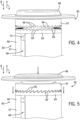
Fig. 4 is an enlarged partial view of the clutch mechanism in the disengaged position. -
Fig. 5 is an enlarged partial view of the clutch mechanism ofFig. 4 in the engaged position. -
Fig. 6 is a view likeFig. 4 depicting inner and outer cylinders of the clutch actuator device. The outer cylinder is depicted in dashed lines. -
Fig. 7 is a view likeFig. 4 with the outer cylinder removed and depicting the inner cylinder and a drive rod. The inner cylinder is depicted as transparent. -
Fig. 8 is a view likeFig. 2 with the spring brake actuator in a parking state. -
Fig. 8A is an enlarged view of the clutch actuator device withinline 8A-8A onFig. 8 . -
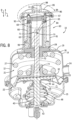
Fig. 9 is a view likeFig. 2 with the spring brake actuator in a driving state. -
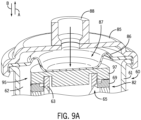
Fig. 9A is an enlarged view of the clutch actuator device withinline 9A-9A onFig. 9 . -
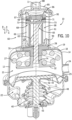
Fig. 10 is a view likeFig. 2 with the spring brake acatuator in a braking state. - Trucks, trailers and other vehicles often have pneumatically-operated spring brake actuators, which provide the braking force necessary to stop the vehicle. A brake pedal is positioned on the floor of the vehicle's cab and, upon activation, causes pressurized air from a reservoir to enter the spring brake actuator, which in turn causes a push rod to extend out of the spring brake actuator and activate a wheel brake. The wheel brake typically has brake shoes with a brake lining material that is pressed against a brake drum at the vehicle wheel-end to thereby brake the vehicle. The wheel brake often includes a slack adjuster which turns a cam roller via a camshaft to force the brake shoes to engage the brake drum and brake the vehicle. Releasing the brake pedal causes the pressurized air to be released from the air chamber such that a return spring within the air chamber retracts the push rod back to its original position. The spring brake actuator of the present disclosure can be used in conjunction with a variety of known brake assemblies, including both brake drum assemblies and brake disc assemblies.
- Whereas the prior art predominately consists of fully pneumatically-actuated spring brake actuators, during research and development, the present inventor has determined that it would be advantageous to provide improved spring brake actuators that are both pneumatically and electro-mechanically actuated. The present disclosure is a result of the inventor's efforts in this regard.
-
Figs. 1-2 depict aspring brake actuator 10 of the present disclosure for applying a wheel brake of a vehicle. Thespring brake actuator 10 extends along acenter axis 11 and has an axiallyelongated housing 12. Thehousing 12 includes opposing cup-shaped end portions, namely afirst end portion 14 and asecond end portion 15. The first andsecond end portions perimeter flanges housing 12 defines afirst chamber 21 and asecond chamber 22. Thefirst chamber 21 is separated from thesecond chamber 22 by adiaphragm 25. The perimeter of thediaphragm 25 is held and compressed by theperimeter flanges port 24 formed through thefirst end portion 14 is configured to admit and release compressed air to and from thefirst chamber 21. The pressurized air can be provided by a conventional source of pressurized air located on the vehicle. A novelclutch actuator device 60 is located on the end of thehousing 12 adjacent thefirst chamber 21. Theclutch actuator device 60 will be further described herein below. - A
bracket 28 is coupled to thefirst end portion 14. Thebracket 28 has astub portion 29 that axially extends through ahole 20 defined in thefirst end portion 14. Thestub portion 29 has abore 30 extending there through, and a pair ofannular grooves 37 is defined in thestub portion 29 and encircles thebore 30. Aflange 31 radially extends from thestub portion 29 along theouter end wall 19 of thefirst end portion 14. - A
compression spring 27 is in thefirst chamber 21 and has a first end compressed against theinner end wall 18 of thefirst end portion 14 and an opposite second end compressed against apressure plate 32. Thepressure plate 32 is located axially between thecompression spring 27 and thediaphragm 25. Thepressure plate 32 has astub portion 33 with abore 34 extending there through and aflange 35 that radially extends from thestub portion 33. The second end of thecompression spring 27 encircles thestub portion 33 and engages theflange 35. - A
push rod assembly 40 has afirst end portion 41 abutting thediaphragm 25 and an opposite,second end portion 42 extending out ofsecond chamber 22. Thesecond end portion 42 is pivotably coupled to a lever arm of a conventional slack adjuster or cam roller (not shown). The slack adjuster and/or cam roller is configured to translate reciprocal movement of thepush rod assembly 40 to a wheel brake for the vehicle (refer to the above-incorporated references for further description of the slack adjuster and cam roller). Thepush rod assembly 40 has apush rod 43 located in thesecond chamber 22 and extending through a hole in theend wall 23 of thesecond end portion 15. Thepush rod assembly 40 also includes anend flange 44 that abuts thediaphragm 25 such that as thediaphragm 25 flexes back and forth in thehousing 12, thepush rod 43 reciprocates out of and back into thesecond chamber 22. - A flexible bellows 48 is coupled to the
end wall 23 of thesecond end portion 15 and thepush rod 43 and is configured to prevent debris and moisture from entering thesecond chamber 22. In certain examples, areturn spring 92 is located in thesecond chamber 22 and is compressed between theend wall 23 of thesecond end portion 15 and theend flange 44 to thereby bias thepush rod 43 into thesecond chamber 22 and oppose movement of thepush rod 43 out of thesecond chamber 22 via the hole in theend wall 23. - The
clutch actuator device 60 is coupled to thefirst end portion 14 and is for selectively compressing thecompression spring 27. Theclutch actuator device 60 has ashroud 61 having ashroud cap 85. Theshroud 61 is coupled to theouter end wall 19 of thefirst end portion 14. Theshroud 61 has a slot 56 (seeFig. 1 ) and defines a cavity 62 (seeFig. 2 ) in which a hollowinner cylinder 63 and a hollowouter cylinder 66 are positioned. Theinner cylinder 63 is fixed to theflange 31 of thebracket 28 and has a sidewall 64 (Fig. 3 ) with a diametrically opposedcurved slots 65 defined therein (Fig. 7 ). In the illustrated embodiment, thecurved slots 65 are helical. Theinner cylinder 63 has a surface 79 (Fig. 7 ) along which pins 73 (described herein below) slide. Note that in some instances thesurface 79 acts as ramps (described further herein below). Theouter cylinder 66 is concentric with theinner cylinder 63 and is rotatable relative to theinner cylinder 63. Theouter cylinder 66 has a sidewall 67 (Fig. 3 ) with a diametrically opposedaxial slots 68 defined therein (seeFig. 6 ), afirst end 81 located near thebracket 28, and an oppositesecond end 82 with a plurality of saw teeth 83 (Fig. 3 ) that axially extend in a first direction (see arrow A onFig. 1 ). Note that thesaw teeth 83 are depicted as part of acollar 69 of theouter cylinder 66. In other examples, thecollar 69 is excluded and theteeth 83 axially extend from thesidewall 67. Note thatFigs. 4-7 exclude theshroud 61 and theshroud cap 85 which are depicted inFig. 3 . - A
drive rod 70 is in the hollow interior of theinner cylinder 63 and axially extends between afirst end 71 and an oppositesecond end 72. Thefirst end 71 has one or more radially extending pins 73. Note that in the example depicted inFig. 2 , thepins 73 are at the ends of a bolt that extends through thefirst end 71 of thedrive rod 70. In another example, thepins 73 are welded or otherwise fastened onto the outer surface of thedrive rod 70. Eachpin 73 is received in one of thecurved slots 65 of theinner cylinder 63 and one of theaxial slots 68 of the outer cylinder 66 (seeFigs. 6-7 ). The number ofpins 73 and curved andaxial slots Figs. 2-7 , there are twopins 73, twocurved slots 65, and twoaxial slots 68. Note that in other examples, a unitary rod extends through the inner andouter cylinders axial slots pins 73 noted above. - The
second end 72 of thedrive rod 70 is received in thebore 30 in thebracket 28 and thebore 34 of thepressure plate 32. Thesecond end 72 has anenlarged head 74 that engages a contact surface or lip of thepressure plate 32. Accordingly, as thedrive rod 70 is axially moved in a first direction (see arrow A) thepressure plate 32 is also axially moved in the first direction such that thecompression spring 27 is compressed between theinner end wall 18 of thefirst end portion 14 and the pressure plate 32 (described herein). Theannular grooves 37 in thebracket 28 contain O-rings (not shown) providing a fluid-tight seal between thedrive rod 70 and thebracket 28 which prevents debris and/or moisture from entering thefirst chamber 21. - Referring to
Fig. 3-7 , theclutch actuator device 60 has aclutch mechanism 95, which is located at thesecond end 82 of theouter cylinder 66. Theclutch mechanism 95 has aclutch cap 97 having a plurality ofsaw teeth 96 that extend in a second direction (see arrow B) for engagement with thesaw teeth 83 on the top of theouter cylinder 66. Engagement between theteeth outer cylinder 66 relative to theclutch cap 97. Theclutch cap 97 is normally biased upwardly out of engagement with the top of theouter cylinder 66 via a biasing element, such as a clutch spring 98 (Fig. 3 ), such that theclutch mechanism 95 is normally in a disengaged position (Fig. 4 ). Theclutch mechanism 95 further includes aclutch diaphragm 86 coupled to theclutch cap 97 and theshroud cap 85. Theclutch diaphragm 86 is flexible so as to move thesaw teeth 96 of theclutch cap 97 into engagement thesaw teeth 83 of theouter cylinder 66, thus preventing rotation of theouter cylinder 66 relative to theclutch cap 97. Theclutch mechanism 95 is in an engaged position (Fig. 5 ) when thesaw teeth clutch diaphragm 86 is fixed between theshroud cap 85 and the upper perimeter of theshroud 61. Aclutch chamber 87 is defined between theshroud cap 85 and theclutch diaphragm 86. Aport 88 located on theshroud cap 85 is configured to admit and release compressed air to and from theclutch chamber 87. - Referring to
Fig. 1 , an electric motor 90 (seeFig. 1 ) is operably connected to theouter cylinder 66 via theslot 56 and is for rotating theouter cylinder 66 relative to theinner cylinder 63 when theclutch mechanism 95 is in the engaged position (Fig. 5 ). The motor 90 (Fig. 1 ) is preferably a bidirectional motor capable of rotating theouter cylinder 66 in either a first rotational direction or an opposite second rotational direction (see arrows R1 and R2 onFig. 2 ). As will be described herein below, as themotor 90 rotates theouter cylinder 66, thedrive rod 70 is axially moved to thereby move thepressure plate 32 and compress thecompression spring 27 and alternately decompress thecompression spring 27. Themotor 90 can be any suitable motor, such as a worm gear and a helical drive, and/or comprise mating gears, such as gear 99 (Fig. 2 ), coupled to theouter cylinder 66. Note that thedrive rod 70 moves into and out of thefirst chamber 21 depending on the rotational direction of the outer cylinder 66 (e.g., rotation of theouter cylinder 66 relative to theinner cylinder 63 in a first rotation direction moves thedrive rod 70 out of thefirst chamber 21 and rotation of theouter cylinder 66 relative to theinner cylinder 63 in an opposite, second rotation direction moves thedrive rod 70 further into the first chamber 21). -
Fig. 8-10 depict thespring brake actuator 10 during various operational states.Fig. 8 depicts thespring brake actuator 10 in a parking state when the vehicle is off and/or a parking or emergency brake is activated. In the parking state, thecompression spring 27 pushes against thepressure plate 32 in the second direction (arrow B) thereby pushing thediaphragm 25 and thepush rod assembly 40 in the second direction (arrow B) such that the wheel brakes are applied. In the parking state, themotor 90 is off and theclutch mechanism 95 is in the disengaged position (seeFigs. 4 and8A ). When moving into the parking state, thedrive rod 70 is pulled in the second direction (arrow B) by thepressure plate 32 as thecompression spring 27 decompresses and extends in the second direction (arrow B). - The operator can change the operational state of the spring brake actuator 10 from the parking state (noted above) to a driving state (
Fig. 9 ), in which the vehicle may be driven, by releasing the parking brake (e.g., manually release a lever). Releasing the parking brake causes pressurized air to flow from the noted source of pressurized air on the vehicle to thespring brake actuator 10, into theclutch chamber 87 via theport 88 such that theclutch chamber 87 is pressurized, causing theclutch diaphragm 86 to flex in the second direction (arrow B). This moves theclutch mechanism 95 into the engaged position (Figs. 5 and9A ). Subsequent activation of themotor 90 rotates theouter cylinder 66 such that thesidewall 67 of theouter cylinder 66 engages and applies camming force on thepins 73. Accordingly, thepins 73 are caused to slide along thecurved slots 65 of theinner cylinder 63 and move generally axially in the first direction (arrow A). Thepins 73 slide along the surfaces 79 (Fig. 7 ) of theinner cylinder 63. Thepins 73 also axially slide in theaxial slots 68 of theouter cylinder 66, and thedrive rod 70 rotates as it is axially moved in the first direction (arrow A). In certain examples, a thrust bearing (not shown) is utilized between thepressure plate 32 and thedrive rod 70. As thedrive rod 70 is axially moved in the first direction (arrow A), thecompression spring 27 is compressed between theinner end wall 18 of thefirst end portion 14 and the pressure plate 32 (e.g., thedrive rod 70 and thepressure plate 32 move towards theinner end wall 18 in the direction of arrow A). Thereturn spring 92 moves thediaphragm 25 and theend flange 44 of thepush rod assembly 40 in the first direction (arrow A) such that thepush rod 43 of thepush rod assembly 40 retracts into thesecond chamber 22. Thus, no braking forces are applied to the wheels of the vehicle (e.g., the wheel brakes are not applied). Note that thereturn spring 92 biases thediaphragm 25 and thepush rod assembly 40 into the positions depicted inFig. 9 . Note that the pressure in theclutch chamber 87 causes theclutch diaphragm 86 to exert an axial force on theclutch cap 97 such that theteeth 96 engage with theteeth 83 on top of theouter cylinder 66. So long as the pressure in theclutch chamber 87 remains, theteeth 96 of theclutch cap 97 engage theteeth 83 on top of theouter cylinder 66 and prevent rotation of theouter cylinder 66 when themotor 90 is deactivated. As such, theouter cylinder 66 does not rotate due to the potential energy or force in thecompressed compression spring 27 that acts on theouter cylinder 66 via thedrive rod 70 and thepins 73. This potential energy or force would axially pull thedrive rod 70 in the second direction (arrow B). Thus, theclutch mechanism 95 and theclutch cap 97 prevent rotation of theouter cylinder 66 when themotor 90 is deactivated and thereby hold thedrive rod 70 in place and prevent thecompression spring 27 from decompressing. In certain examples, theclutch cap 97 is coupled (e.g., mechanical fasteners such as nuts and bolts, adhesives such as glue) to theclutch diaphragm 86. - Referring now to
Fig. 10 , thespring brake actuator 10 is depicted in a braking state in which the operator is depressing a brake pedal 301 (Fig. 1 ) to thereby apply the wheel brake to slow or stop the vehicle. When depressing thebrake pedal 301, pressurized air is provided via theport 24 to thefirst chamber 21 such that thediaphragm 25 is moved in the second direction (arrow B). Thepush rod 43 moves in the second direction (arrow B) further out of thesecond chamber 22, causing the wheel brakes to be applied. When the operator releases thebrake pedal 301, the pressurized air in thesecond chamber 22 is released or exhausted and thespring brake actuator 10 returns to the driving state (Fig. 9 ) due to the forces exerted by thereturn spring 92 on thediaphragm 25 and thepush rod assembly 40. - Note that during the driving state (
Fig. 9 ) and the braking state (Fig. 10 ), theclutch mechanism 95 remains in the engaged position (Figs. 5 and9A ) and thecompression spring 27 remains compressed because the pressurizedclutch chamber 87 causes theclutch diaphragm 86 to act on theclutch mechanism 95, as noted above. In the event that the parking brake is engaged by the operator and/or pressurized air in theclutch chamber 87 is lost (e.g., due to failure of the air system of the vehicle), the pressurized air in theclutch chamber 87 is released or exhausted and theclutch mechanism 95 moves into the disengaged position (Figs. 4 and8A ) due to theclutch spring 98. As theclutch mechanism 95 moves from the engaged position (Figs. 5 and9A ) to the disengaged position (Figs. 4 and8A ), theouter cylinder 66 begins to rotate and theteeth compression spring 27 decompressing and extending in the second direction (arrow B). That is, as thecompression spring 27 extends in the second direction (arrow B), the second end of thecompression spring 27 applies force on thepressure plate 32 which causes thepressure plate 32 to move in the second direction (arrow B). Accordingly, thepressure plate 32 acts on and moves thediaphragm 25 and thepush rod assembly 40 in the second direction (arrow B) such that the wheel brakes are applied. The movement of thepressure plate 32 in the second direction (arrow B) also causes thedrive rod 70 to be pulled in the second direction (arrow B) and thepins 73 to slide along the curved andaxial slots drive rod 70 and thepins 73 are axially moved in the second direction (arrow B), and thecurved slots 65 of the inner cylinder 63 (and thesurface 79 along which thepins 73 slide) cause thepins 73 to act on thesidewall 67 of theouter cylinder 66 such that theouter cylinder 66 rotates. - Referring to
Fig. 1 , acontroller 200 is schematically depicted. Thecontroller 200 includes amemory 202 and aprocessor 204. Thecontroller 200 is operably coupled to themotor 90, thebrake pedal 301, anuser input device 206, the vehicle air pressure system (not shown), and/or other vehicle systems (not shown). Themotor 90 may be controlled by thecontroller 200 based on inputs received via thebrake pedal 301, theuser input device 206, and/or operational programs stored on thememory 202. Theuser input device 206 can include an indicator (not shown) for indicating the operational state of thespring brake actuator 10 and/or other information to the operator. - The
motor 90 can have a defined start and stop position that correlates to the position of thedrive rod 70 when thespring brake actuator 10 is in the driving state (Fig. 9 ) or the braking state (Fig. 10 ) and the parking state (Fig. 8 ). The position of themotor 90 can be controlled by thecontroller 200 and/or with inputs from limit switches, encoders, and other suitable devices. Furthermore, thecontroller 200 can be configured to determine the position of themotor 90 and/or thedrive rod 70 at or between two position extents to thereby determine operational details of thespring brake actuator 10. For example, if thecontroller 200 determines that themotor 90 moved thedrive rod 70 into a position past the position that corresponds to the parking state (Fig. 8 ), thecontroller 200 can further determine thecompression spring 27 has failed or is broken and thereby alert the operator via theuser input device 206. - Note that in other examples, the
outer cylinder 66 is fixed relative to theflange 31 and theinner cylinder 63 is rotatable (seeFig. 2 ). In these examples, themotor 90 rotates theinner cylinder 63, or theinner cylinder 63 is an integral part of themotor 90, such that thepins 73 are caused to slide along theslots 65 of theinner cylinder 63 and generally axially move in the first direction (arrow A). Thepins 73 also slide in theaxial slots 68 of theouter cylinder 66, and thedrive rod 70 rotates as it is axially moved in the first direction (arrow A). - In certain examples, a
spring brake actuator 10 for applying a brake of a vehicle includes ahousing 12 containing adiaphragm 25 that separates thehousing 12 into first andsecond chambers push rod assembly 40 having apush rod 43 extends out of thesecond chamber 22. Thediaphragm 25 is flexible in a first direction to retract thepush rod 43 inwardly relative to thesecond chamber 22 and in an opposite second direction to extend thepush rod 43 outwardly from thesecond chamber 22. Acompression spring 27 is in thefirst chamber 21, and areturn spring 92 in thesecond chamber 22. Aport 24 is for conveying pressurized air to thefirst chamber 21. Aclutch actuator device 60 is for selectively compressing thecompression spring 27. Thespring brake actuator 10 is operable in a plurality of states including a parking state in which theclutch actuator device 60 permits extension of thecompression spring 27, which flexes thediaphragm 25 in the second direction, compresses thereturn spring 92, and extends thepush rod 43 further outwardly from thesecond chamber 22 for applying the brake of the vehicle. A driving state in which theclutch actuator device 60 compresses thecompression spring 27, which permits thereturn spring 92 to extend, which flexes thediaphragm 25 in the first direction and retracts thepush rod 43 further inwardly relative to thesecond chamber 22 for disengaging the brake of the vehicle. A braking state in which theclutch actuator device 60 compresses thecompression spring 27, and further in which pressurized air is conveyed to thefirst chamber 21 via theport 24, which flexes thediaphragm 25 in the second direction, which compresses thereturn spring 92 and extends thepush rod 43 further outwardly from thesecond chamber 22 for applying the brake of the vehicle. - In certain examples, the
clutch actuator device 60 comprises adrive rod 70 extending into thefirst chamber 21, wherein movement of thedrive rod 70 further into thefirst chamber 21 permits extension of thecompression spring 27 and wherein movement of thedrive rod 70 out of thefirst chamber 21 compresses thecompression spring 27. - In certain examples, the
clutch actuator device 60 includes inner andouter cylinders drive rod 70, and wherein relative rotation between the inner andouter cylinders drive rod 70 out of thefirst chamber 21 and wherein opposite relative rotation between the inner andouter cylinders drive rod 70 into thefirst chamber 21. - In certain examples, the
clutch actuator device 60 further comprises amotor 90 for causing said relative rotation. In certain examples, theouter cylinder 66 is rotatable relative to theinner cylinder 63, and wherein rotation of theouter cylinder 66 relative to theinner cylinder 63 in a first rotation direction moves thedrive rod 70 out offirst chamber 21 and wherein rotation of theouter cylinder 66 relative to theinner cylinder 63 in an opposite, second rotation direction moves thedrive rod 70 into thefirst chamber 21. - In certain examples, the
clutch actuator device 60 further comprises amotor 90 for causing rotation of theouter cylinder 66 relative to theinner cylinder 63. - In certain examples, a
pin 73 is on thedrive rod 70. Thepin 73 being engaged incurved slots 65 on theinner cylinder 63 and inaxial slots 68 on theouter cylinder 66, and wherein rotation of theouter cylinder 66 relative to theinner cylinder 63 causes theouter cylinder 66 to apply camming forces on thepin 73, which causes thepin 73 to translate along thecurved slot 65. - In certain examples, translation of the
pin 73 along thecurved slot 65 moves thedrive rod 70 into and alternately out of thefirst chamber 21. - In certain examples, the
clutch actuator device 60 includes aclutch mechanism 95 that is movable into a disengaged position preventing extension and retraction of thepush rod 43 and into an engaged position permitting extension and retraction of thepush rod 43. - In certain examples, the
clutch mechanism 95 is pneumatically actuated into the engaged position. - In certain examples, the
clutch mechanism 95 comprises aclutch cap 97 on theouter cylinder 66, aclutch spring 98 that normally biases theclutch cap 97 away from theouter cylinder 66, and aclutch diaphragm 86 coupled to theclutch cap 97. Theclutch diaphragm 86 is flexible towards theouter cylinder 66 to engage theclutch cap 97 with theouter cylinder 66 in the engaged position and wherein theclutch diaphragm 86 is flexible away from theouter cylinder 66 to disengage theclutch cap 97 from theouter cylinder 66 in the disengaged position. - In certain examples, the
clutch actuator device 60 includes ashroud cap 85 and aport 88 through theshroud cap 85 for supplying pressurized air to aclutch chamber 87 defined between theshroud cap 85 and theclutch diaphragm 86, and wherein supplying pressurized air to theclutch chamber 87 flexes theclutch diaphragm 86 towards theouter cylinder 66, and wherein removing pressurized air from theclutch chamber 87 permits theclutch spring 98 to bias theclutch cap 97 away from theouter cylinder 66. - In certain examples, a source of pressurized air supplies pressurized air to both the
clutch chamber 87 and to thefirst chamber 21. - In certain examples, the
clutch actuator device 60 comprises aclutch mechanism 95 that is positionable in a disengaged position preventing extension and retraction of thepush rod 43 and an engaged position permitting extension and retraction of thepush rod 43. - In certain examples, a
clutch actuator device 60 is for selectively retaining acompression spring 27 of aspring brake actuator 10 in a compressed position. Theclutch actuator device 60 includes adrive rod 70 for extending into thespring brake actuator 10 and operably engaging thecompression spring 27. Inner andouter cylinders drive rod 70, wherein relative rotation between the inner andouter cylinders drive rod 70 to move further out of theinner cylinder 63 for decompressing thecompression spring 27 and alternately to move further into theinner cylinder 63 for compressing thecompression spring 27. Amotor 90 causes the relative rotation, and a pneumatically actuatedclutch mechanism 95 is movable into an engaged position preventing said relative rotation and a disengaged position permitting said relative rotation. - In certain examples, the
outer cylinder 66 is rotatable relative to theinner cylinder 63, and wherein rotation of theouter cylinder 66 relative to theinner cylinder 63 in a first rotation direction moves thedrive rod 70 out of thefirst chamber 21 and wherein rotation of theouter cylinder 66 relative to theinner cylinder 63 in an opposite, second rotation direction moves thedrive rod 70 into thefirst chamber 21. - In certain examples, a
pin 73 is on thedrive rod 70, and thepin 73 is engaged incurved slots 65 on theinner cylinder 63 and inaxial slots 68 on theouter cylinder 66, wherein rotation of theouter cylinder 66 relative to theinner cylinder 63 causes theouter cylinder 66 to apply camming forces on thepin 73, which causes thepin 73 to translate along thecurved slot 65, and wherein translation of thepin 73 along thecurved slots 65 moves thedrive rod 70 into and alternately out of thefirst chamber 21. - In certain examples, the
clutch mechanism 95 includes aclutch cap 97 on theouter cylinder 66, aclutch spring 98 that normally biases theclutch cap 97 away from theouter cylinder 66, and aclutch diaphragm 86 coupled to theclutch cap 97. Theclutch diaphragm 86 is flexible towards theouter cylinder 66 to engage theclutch cap 97 with theouter cylinder 66 and theclutch diaphragm 86 is flexible away from theouter cylinder 66 to disengage theclutch cap 97 from theouter cylinder 66. - In certain examples, the
clutch actuator device 60 includes ashroud cap 85 and aport 88 through theshroud cap 85 for supplying pressurized air to aclutch chamber 87 defined between theshroud cap 85 and theclutch diaphragm 86. Supplying the pressurized air to theclutch chamber 87 flexes theclutch diaphragm 86 towards theouter cylinder 66, and wherein removing pressurized air from theclutch chamber 87 permits theclutch spring 98 to bias theclutch cap 97 away from theouter cylinder 66. - In certain examples, the
clutch mechanism 95 comprises aclutch cap 97 on theouter cylinder 66, aclutch spring 98 that normally biases theclutch cap 97 away from theouter cylinder 66, and aclutch diaphragm 86 coupled to theclutch cap 97. Theclutch diaphragm 86 is flexible towards theouter cylinder 66 to engage theclutch cap 97 with theouter cylinder 66 and theclutch diaphragm 86 is flexible away from theouter cylinder 66 to disengage theclutch cap 97 from theouter cylinder 66. - In the event that there is an inconsistency between a definition of a term in the specification as compared to a definition of the term in a cited reference, the term should be interpreted based on the definition in the specification.
Claims (15)
- A spring brake actuator (10) for applying a brake of a vehicle, the spring brake actuator (10) comprising:a housing (12) containing a diaphragm (25) that separates the housing (12) into first and second chambers (21, 22);a push rod assembly (40) having a push rod (43) extending out of the second chamber (22);wherein the diaphragm (25) is flexible in a first direction (A) to retract the push rod (43) inwardly relative to the second chamber (22) and in an opposite second direction (B) to extend the push rod (43) outwardly from the second chamber (22);a compression spring (27) in the first chamber (21);a return spring (92) in the second chamber (22);a port (24) for conveying pressurized air to the first chamber (21); anda clutch actuator device (60) for selectively compressing the compression spring (27),wherein the spring brake actuator (10) is operable in a plurality of states comprising:a parking state in which the clutch actuator device (60) permits extension of the compression spring (27), which flexes the diaphragm (25) in the second direction (B), compresses the return spring (92), and extends the push rod (43) further outwardly from the second chamber (22) for applying the brake of the vehicle;a driving state in which the clutch actuator device (60) compresses the compression spring (27), which permits the return spring (92) to extend, which flexes the diaphragm (25) in the first direction (A) and retracts the push rod (43) further inwardly relative to the second chamber (22) for disengaging the brake of the vehicle; anda braking state in which the clutch actuator device (60) compresses the compression spring (27), and further in which pressurized air is conveyed to the first chamber (21) via the port (24), which flexes the diaphragm (25) in the second direction (B), which compresses the return spring (92) and extends the push rod (43) further outwardly from the second chamber (22) for applying the brake of the vehicle.
- The spring brake actuator (10) according to claim 1, wherein the clutch actuator device (60) comprises a drive rod (70) extending into the first chamber (21), wherein movement of the drive rod (70) further into the first chamber (21) permits extension of the compression spring (27) and wherein movement of the drive rod (70) out of the first chamber (21) compresses the compression spring (27).
- The spring brake actuator (10) according to claim 2, wherein the clutch actuator device (60) further comprises inner and outer cylinders (63, 66) that are concentrically aligned on the drive rod (70), and wherein relative rotation between the inner and outer cylinders (63, 66) moves the drive rod (70) out of the first chamber (21) and wherein opposite relative rotation between the inner and outer cylinders (63, 66) moves the drive rod (70) into the first chamber (21).
- The spring brake actuator (10) according to claim 3, wherein the clutch actuator device (60) further comprises a motor (90) for causing said relative rotation.
- The spring brake actuator (10) according to claim any one of claim 3 or 4, further comprising a pin (73) on the drive rod (70), the pin (73) being engaged in a curved slot (65) on the inner cylinder (63) and in an axial slot (68) on the outer cylinder (66), and wherein rotation of the outer cylinder (66) relative to the inner cylinder (63) causes the outer cylinder (66) to apply forces on the pin (73), which causes the pin (73) to translate along the curved slot (65), optionally wherein translation of the pin (73) along the curved slot (65) moves the drive rod (70) into and alternately out of the first chamber (21).
- The spring brake actuator (10) according to any one of the preceding claims, wherein the clutch actuator device (60) comprises a clutch mechanism (95) that is movable into a disengaged position preventing extension and retraction of the push rod (43) and into an engaged position permitting extension and retraction of the push rod.
- The spring brake actuator (10) according to claim 6, wherein the clutch mechanism (95) is pneumatically actuated into the engaged position.
- The spring brake actuator (10) according to claim 6 or 7, wherein the clutch mechanism (95) comprises a clutch cap (97) on the outer cylinder (66), a clutch spring (98) that normally biases the clutch cap (97) away from the outer cylinder (66), and a clutch diaphragm (86) coupled to the clutch cap (97), and wherein the clutch diaphragm (86) is flexible towards the outer cylinder (66) to engage the clutch cap (97) with the outer cylinder (66) in the engaged position and wherein the clutch diaphragm (86) is flexible away from the outer cylinder (66) to disengage the clutch cap (97) from the outer cylinder (66) in the disengaged position.
- The spring brake actuator (10) according to claim 8, further comprising a shroud cap (85) and a port (88) through the shroud cap (85) for supplying pressurized air to a clutch chamber (87) defined between the shroud cap (85) and the clutch diaphragm (86), wherein supplying pressurized air to the clutch chamber (87) flexes the clutch diaphragm (86) towards the outer cylinder (66), and wherein removing pressurized air from the clutch chamber (87) permits the clutch spring (98) to bias the clutch cap (97) away from the outer cylinder (66), optionally wherein the spring brake actuator further comprises a source of pressurized air that supplies pressurized air to both the clutch chamber (87) and to the first chamber (21).
- The spring brake actuator (10) according to claim 2, wherein the clutch actuator device (60) comprises a clutch mechanism (95) that is positionable in a disengaged position preventing extension and retraction of the push rod (43) and an engaged position permitting extension and retraction of the drive rod (70).
- A clutch actuator device (60) for selectively retaining a compression spring (27) of a spring brake actuator (10) in a compressed position, the clutch actuator device (60) comprising:a drive rod (70) for extending into the spring brake actuator (10) and operably engaging the compression spring (27);inner and outer cylinders (63, 66) that are concentrically aligned on the drive rod (70), wherein relative rotation between the inner and outer cylinders (63, 66) causes the drive rod (70) to move further out of the inner cylinder (63) for decompressing the compression spring (27) and alternately to move further into the inner cylinder (63) for compressing the compression spring (27);a motor (90) for causing said relative rotation; anda pneumatically actuated clutch mechanism (95) that is movable into an engaged position preventing said relative rotation and a disengaged position permitting said relative rotation.
- The clutch actuator device (60) according to claim 11, wherein the outer cylinder (66) is rotatable relative to the inner cylinder (63), and wherein rotation of the outer cylinder (66) relative to the inner cylinder (63) in a first rotation direction moves the drive rod (70) out of the first chamber (21) and wherein rotation of the outer cylinder (66) relative to the inner cylinder (63) in an opposite, second rotation direction moves the drive rod (70) into the first chamber (21).
- The clutch actuator device (60) according to claim 11 or 12, further comprising a pin (73) on the drive rod (70), the pin (73) being engaged in a curved slot (65) on the inner cylinder (63) and in an axial slot (68) on the outer cylinder (66), wherein rotation of the outer cylinder (66) relative to the inner cylinder (63) causes the outer cylinder (66) to apply forces on the pin (73), which causes the pin (73) to translate along the curved slot (65), and wherein translation of the pin (73) along the curved slot (65) moves the drive rod (70) into and alternately out of the first chamber (21).
- The clutch actuator device (60) according to any one of claim 11 to 13, wherein the clutch mechanism comprises a clutch cap (97) on the outer cylinder (66), a clutch spring (98) that normally biases the clutch cap (97) away from the outer cylinder (66), and a clutch diaphragm (86) coupled to the clutch cap (97), and wherein the clutch diaphragm (86) is flexible towards the outer cylinder (66) to engage the clutch cap (97) with the outer cylinder (66) and wherein the clutch diaphragm (86) is flexible away from the outer cylinder (66) to disengage the clutch cap (97) from the outer cylinder (66).
- The clutch actuator device (60) according to claim 14, further comprising a shroud cap (85) and a port (88) through the shroud cap (85) for supplying pressurized air to a clutch chamber (87) defined between the shroud cap (85) and the clutch diaphragm (86), wherein supplying the pressurized air to the clutch chamber (87) flexes the clutch diaphragm (86) towards the outer cylinder (66), and wherein removing pressurized air from the clutch chamber (87) permits the clutch spring (98) to bias the clutch cap (97) away from the outer cylinder (66).
Applications Claiming Priority (3)
| Application Number | Priority Date | Filing Date | Title |
|---|---|---|---|
| US202062977502P | 2020-02-17 | 2020-02-17 | |
| US17/176,832 US11639166B2 (en) | 2020-02-17 | 2021-02-16 | Spring brake actuators |
| PCT/US2021/018315 WO2021167941A1 (en) | 2020-02-17 | 2021-02-17 | Spring brake actuators |
Publications (3)
| Publication Number | Publication Date |
|---|---|
| EP4107041A1 EP4107041A1 (en) | 2022-12-28 |
| EP4107041A4 EP4107041A4 (en) | 2024-02-28 |
| EP4107041B1 true EP4107041B1 (en) | 2025-04-30 |
Family
ID=77273379
Family Applications (1)
| Application Number | Title | Priority Date | Filing Date |
|---|---|---|---|
| EP21757293.2A Active EP4107041B1 (en) | 2020-02-17 | 2021-02-17 | Spring brake actuators |
Country Status (3)
| Country | Link |
|---|---|
| US (1) | US11639166B2 (en) |
| EP (1) | EP4107041B1 (en) |
| WO (1) | WO2021167941A1 (en) |
Families Citing this family (5)
| Publication number | Priority date | Publication date | Assignee | Title |
|---|---|---|---|---|
| EP4079589A1 (en) * | 2021-04-23 | 2022-10-26 | KNORR-BREMSE Systeme für Nutzfahrzeuge GmbH | Brake actuator |
| US20230382363A1 (en) | 2022-05-26 | 2023-11-30 | Tse Brakes, Inc. | Brake actuators and systems for monitoring stroke of brake actuators |
| EP4523984A1 (en) * | 2023-09-12 | 2025-03-19 | KNORR-BREMSE Systeme für Nutzfahrzeuge GmbH | Electromechanical brake actuator for a vehicle brake |
| US20250178578A1 (en) | 2023-11-30 | 2025-06-05 | Tse Brakes, Inc. | Spring brake actuators and apparatuses thereof |
| US20250381944A1 (en) | 2024-06-18 | 2025-12-18 | Tse Brakes, Inc. | Spring brake actuators |
Family Cites Families (39)
| Publication number | Priority date | Publication date | Assignee | Title |
|---|---|---|---|---|
| US3182566A (en) | 1962-08-06 | 1965-05-11 | Berg Mfg & Sales Co | Brake system and release |
| US4036111A (en) | 1973-10-25 | 1977-07-19 | Svenska Aktiebolaget Bromsregulator | Device for discontinuing and automatically restoring the operational function of a spring brake actuator |
| US5285716A (en) | 1992-09-22 | 1994-02-15 | Tse Brakes, Inc. | Spring brake assembly having tamper-resistant welded housing and method for making same |
| GB2290840A (en) * | 1994-06-01 | 1996-01-10 | Arthur Richard | Fail-safe brake actuation system |
| SE510583C2 (en) | 1994-10-24 | 1999-06-07 | Sab Wabco Ab | Safety brake arrangement in a brake actuator |
| US5791232A (en) | 1995-07-26 | 1998-08-11 | Tse Brakes, Inc. | Universal adapter pressure cap |
| US6405635B1 (en) | 1996-06-13 | 2002-06-18 | Tse Brakes, Inc. | Brake actuator |
| DE19833304A1 (en) | 1998-07-24 | 2000-02-10 | Daimler Chrysler Ag | Brake actuation device |
| DE19906227B4 (en) * | 1999-02-15 | 2004-05-13 | Knorr-Bremse Systeme für Nutzfahrzeuge GmbH | Disc brake for vehicles and control methods |
| US6314861B1 (en) | 1999-06-18 | 2001-11-13 | Tse Brakes, Inc. | High output spring brake actuator |
| FR2798105B1 (en) | 1999-09-03 | 2001-11-23 | Bosch Gmbh Robert | PNEUMATIC SERVOMOTOR WITH SELECTIVE SELF-ASSISTED AND EFFORT CONTROLLED FOR BRAKING A MOTOR VEHICLE |
| SE517122C2 (en) | 1999-10-18 | 2002-04-16 | Haldex Brake Prod Ab | Låsaktuator |
| US6394462B1 (en) | 2000-01-26 | 2002-05-28 | Tse Brakes, Inc. | Push rod seal for disc brake actuator |
| SE520546C2 (en) | 2000-12-20 | 2003-07-22 | Haldex Brake Prod Ab | A spring brake actuator |
| SE0100842D0 (en) | 2001-03-13 | 2001-03-13 | Haldex Brake Prod Ab | A Parking Lock |
| DE10148480A1 (en) | 2001-10-01 | 2003-04-17 | Knorr Bremse Systeme | Parking brake device and method for actuating the parking brake |
| SE523553C2 (en) * | 2002-07-04 | 2004-04-27 | Haldex Brake Prod Ab | Fluid-activated parking brake |
| DE102005001234A1 (en) | 2005-01-11 | 2006-07-20 | Wabco Gmbh & Co.Ohg | Brake cylinder with parking brake function |
| EP1889768B1 (en) | 2006-08-17 | 2012-11-07 | TSE Brakes, Inc. | Reduced profile brake actuator |
| SE530966C2 (en) | 2007-03-05 | 2008-11-04 | Haldex Brake Prod Ab | Disc brake and an additional brake actuator therefore |
| DE102007015209B3 (en) | 2007-03-27 | 2008-12-04 | Knorr-Bremse Systeme für Nutzfahrzeuge GmbH | Compact combination brake cylinder with pneumatically actuated locking mechanism |
| DE102007015211B3 (en) * | 2007-03-27 | 2008-12-04 | Knorr-Bremse Systeme für Nutzfahrzeuge GmbH | Compact combination cylinder for vehicle brakes with control device and method for controlling the brake cylinder |
| GB0817229D0 (en) | 2008-09-19 | 2008-10-29 | Meritor Heavy Vehicle Braking | A control system and method for a parking brake mechanism |
| GB2469090A (en) * | 2009-04-01 | 2010-10-06 | Haldex Brake Products Ltd | Brake actuator |
| DE102010019603A1 (en) * | 2010-05-05 | 2011-11-10 | Knorr-Bremse Systeme für Nutzfahrzeuge GmbH | Spring brake cylinder with disposed within the storage spring electric motor |
| GB201014181D0 (en) * | 2010-08-25 | 2010-10-06 | Meritor Heavy Vehicle Braking | A parking brake mechanism |
| US9140276B2 (en) * | 2011-04-11 | 2015-09-22 | Utah State University Research Foundation | Latching actuator |
| DE102012002638A1 (en) * | 2012-02-10 | 2013-08-14 | Knorr-Bremse Systeme für Nutzfahrzeuge GmbH | Combined service and parking brake cylinder controlled by the service brake pressure parking brake piston |
| DE102012002730A1 (en) * | 2012-02-10 | 2013-08-14 | Knorr-Bremse Systeme für Nutzfahrzeuge GmbH | Combined service and parking brake cylinder with lockable together with the parking brake piston diaphragm |
| US9050958B2 (en) | 2012-06-11 | 2015-06-09 | Tse Brakes, Inc. | Pneumatic brake actuator chamber with rotationally positionable housing |
| BR102013015209A2 (en) | 2012-06-15 | 2015-07-28 | Webb Wheel Products Inc | Pneumatic Deflection Spring Actuator |
| CN104755788B (en) * | 2012-11-05 | 2017-05-31 | 纳薄特斯克汽车零部件有限公司 | spring brake chamber |
| US9140243B2 (en) * | 2012-11-12 | 2015-09-22 | Toyota Motor Engineering & Manufacturing North America, Inc. | Shape memory alloy latch with stable on-off position |
| US9156458B2 (en) | 2013-08-07 | 2015-10-13 | Bendix Commercial Vehicle Systems Llc | Braking system with non-spring parking brake actuator |
| CN105813912B (en) * | 2013-12-19 | 2019-03-05 | 威伯科欧洲有限责任公司 | brake cylinder |
| US10059322B2 (en) | 2015-10-23 | 2018-08-28 | Tse Brakes, Inc. | Apparatuses, systems, and methods for detecting air brake spring failure on a vehicle |
| US10591009B2 (en) | 2017-02-16 | 2020-03-17 | Tse Brakes, Inc. | Vehicle spring brakes having reduced length |
| US10913439B2 (en) | 2017-03-28 | 2021-02-09 | Tse Brakes, Inc. | Vehicles and braking systems for vehicles having a spring brake actuator with replaceable push rod assembly |
| DE102018108337A1 (en) * | 2017-12-20 | 2019-06-27 | Schaeffler Technologies AG & Co. KG | Apparatus and method for synchronizing |
-
2021
- 2021-02-16 US US17/176,832 patent/US11639166B2/en active Active
- 2021-02-17 EP EP21757293.2A patent/EP4107041B1/en active Active
- 2021-02-17 WO PCT/US2021/018315 patent/WO2021167941A1/en not_active Ceased
Also Published As
| Publication number | Publication date |
|---|---|
| US11639166B2 (en) | 2023-05-02 |
| EP4107041A4 (en) | 2024-02-28 |
| EP4107041A1 (en) | 2022-12-28 |
| US20210253078A1 (en) | 2021-08-19 |
| WO2021167941A1 (en) | 2021-08-26 |
Similar Documents
| Publication | Publication Date | Title |
|---|---|---|
| EP4107041B1 (en) | Spring brake actuators | |
| EP0551397B1 (en) | Disk brake/parking brake | |
| US7434669B2 (en) | Hydraulic vehicle brake | |
| US7188710B2 (en) | Hydraulic brake actuator comprising electrically actuable lock for park brake | |
| KR20220165640A (en) | Brake system for a vehicle | |
| US7374026B2 (en) | Parking brake assembly | |
| EP0787086B1 (en) | A safety brake arrangement in a brake actuator | |
| KR102876539B1 (en) | Electro-mechanical brake | |
| JPH08244596A (en) | Parking brake and parking brake device for automobile | |
| US11649866B2 (en) | Friction brake system for a vehicle | |
| KR20210002010A (en) | Electro-mechanical brake system | |
| US3954160A (en) | Mechanically actuated disc brake assembly | |
| JPH0726584Y2 (en) | Disc brake | |
| US5345858A (en) | Spring brake actuator with a pressure plate bearing for a caging tool | |
| GB2329435A (en) | Apparatus for actuating a vehicle brake | |
| US20030051951A1 (en) | Hydraulic brake with electric parking brake | |
| US5601162A (en) | Spring applied automative parking brake system | |
| EP3831677B1 (en) | Spring brake actuator | |
| US20230091307A1 (en) | Brake device | |
| US4926980A (en) | Automatic brake adjusting mechanism | |
| USH748H (en) | Air brake with collet locked push rod and excessive force reducer | |
| EP0067287B1 (en) | Automatic brake adjusting mechanism | |
| US6325181B1 (en) | Piston assembly for use in a wheel cylinder of a drum brake assembly | |
| KR20110060254A (en) | Parking brake | |
| KR20230085467A (en) | Electric booster for vehicle |
Legal Events
| Date | Code | Title | Description |
|---|---|---|---|
| STAA | Information on the status of an ep patent application or granted ep patent |
Free format text: STATUS: THE INTERNATIONAL PUBLICATION HAS BEEN MADE |
|
| PUAI | Public reference made under article 153(3) epc to a published international application that has entered the european phase |
Free format text: ORIGINAL CODE: 0009012 |
|
| STAA | Information on the status of an ep patent application or granted ep patent |
Free format text: STATUS: REQUEST FOR EXAMINATION WAS MADE |
|
| 17P | Request for examination filed |
Effective date: 20220816 |
|
| AK | Designated contracting states |
Kind code of ref document: A1 Designated state(s): AL AT BE BG CH CY CZ DE DK EE ES FI FR GB GR HR HU IE IS IT LI LT LU LV MC MK MT NL NO PL PT RO RS SE SI SK SM TR |
|
| DAV | Request for validation of the european patent (deleted) | ||
| DAX | Request for extension of the european patent (deleted) | ||
| P01 | Opt-out of the competence of the unified patent court (upc) registered |
Effective date: 20230524 |
|
| A4 | Supplementary search report drawn up and despatched |
Effective date: 20240131 |
|
| RIC1 | Information provided on ipc code assigned before grant |
Ipc: F16D 127/06 20120101ALI20240125BHEP Ipc: F16D 121/16 20120101ALI20240125BHEP Ipc: F16D 121/08 20120101ALI20240125BHEP Ipc: F16D 65/28 20060101ALI20240125BHEP Ipc: B60T 17/08 20060101ALI20240125BHEP Ipc: B60T 13/38 20060101AFI20240125BHEP |
|
| GRAP | Despatch of communication of intention to grant a patent |
Free format text: ORIGINAL CODE: EPIDOSNIGR1 |
|
| STAA | Information on the status of an ep patent application or granted ep patent |
Free format text: STATUS: GRANT OF PATENT IS INTENDED |
|
| INTG | Intention to grant announced |
Effective date: 20250116 |
|
| GRAS | Grant fee paid |
Free format text: ORIGINAL CODE: EPIDOSNIGR3 |
|
| GRAA | (expected) grant |
Free format text: ORIGINAL CODE: 0009210 |
|
| STAA | Information on the status of an ep patent application or granted ep patent |
Free format text: STATUS: THE PATENT HAS BEEN GRANTED |
|
| AK | Designated contracting states |
Kind code of ref document: B1 Designated state(s): AL AT BE BG CH CY CZ DE DK EE ES FI FR GB GR HR HU IE IS IT LI LT LU LV MC MK MT NL NO PL PT RO RS SE SI SK SM TR |
|
| REG | Reference to a national code |
Ref country code: CH Ref legal event code: EP Ref country code: GB Ref legal event code: FG4D |
|
| REG | Reference to a national code |
Ref country code: DE Ref legal event code: R096 Ref document number: 602021030049 Country of ref document: DE |
|
| REG | Reference to a national code |
Ref country code: IE Ref legal event code: FG4D |
|
| REG | Reference to a national code |
Ref country code: NL Ref legal event code: MP Effective date: 20250430 |
|
| REG | Reference to a national code |
Ref country code: AT Ref legal event code: MK05 Ref document number: 1789787 Country of ref document: AT Kind code of ref document: T Effective date: 20250430 |
|
| PG25 | Lapsed in a contracting state [announced via postgrant information from national office to epo] |
Ref country code: FI Free format text: LAPSE BECAUSE OF FAILURE TO SUBMIT A TRANSLATION OF THE DESCRIPTION OR TO PAY THE FEE WITHIN THE PRESCRIBED TIME-LIMIT Effective date: 20250430 Ref country code: PT Free format text: LAPSE BECAUSE OF FAILURE TO SUBMIT A TRANSLATION OF THE DESCRIPTION OR TO PAY THE FEE WITHIN THE PRESCRIBED TIME-LIMIT Effective date: 20250901 Ref country code: ES Free format text: LAPSE BECAUSE OF FAILURE TO SUBMIT A TRANSLATION OF THE DESCRIPTION OR TO PAY THE FEE WITHIN THE PRESCRIBED TIME-LIMIT Effective date: 20250430 |
|
| REG | Reference to a national code |
Ref country code: LT Ref legal event code: MG9D |
|
| PG25 | Lapsed in a contracting state [announced via postgrant information from national office to epo] |
Ref country code: GR Free format text: LAPSE BECAUSE OF FAILURE TO SUBMIT A TRANSLATION OF THE DESCRIPTION OR TO PAY THE FEE WITHIN THE PRESCRIBED TIME-LIMIT Effective date: 20250731 Ref country code: NO Free format text: LAPSE BECAUSE OF FAILURE TO SUBMIT A TRANSLATION OF THE DESCRIPTION OR TO PAY THE FEE WITHIN THE PRESCRIBED TIME-LIMIT Effective date: 20250730 |
|
| PG25 | Lapsed in a contracting state [announced via postgrant information from national office to epo] |
Ref country code: NL Free format text: LAPSE BECAUSE OF FAILURE TO SUBMIT A TRANSLATION OF THE DESCRIPTION OR TO PAY THE FEE WITHIN THE PRESCRIBED TIME-LIMIT Effective date: 20250430 Ref country code: PL Free format text: LAPSE BECAUSE OF FAILURE TO SUBMIT A TRANSLATION OF THE DESCRIPTION OR TO PAY THE FEE WITHIN THE PRESCRIBED TIME-LIMIT Effective date: 20250430 |
|
| PG25 | Lapsed in a contracting state [announced via postgrant information from national office to epo] |
Ref country code: BG Free format text: LAPSE BECAUSE OF FAILURE TO SUBMIT A TRANSLATION OF THE DESCRIPTION OR TO PAY THE FEE WITHIN THE PRESCRIBED TIME-LIMIT Effective date: 20250430 |
|
| PG25 | Lapsed in a contracting state [announced via postgrant information from national office to epo] |
Ref country code: HR Free format text: LAPSE BECAUSE OF FAILURE TO SUBMIT A TRANSLATION OF THE DESCRIPTION OR TO PAY THE FEE WITHIN THE PRESCRIBED TIME-LIMIT Effective date: 20250430 |
|
| PG25 | Lapsed in a contracting state [announced via postgrant information from national office to epo] |
Ref country code: AT Free format text: LAPSE BECAUSE OF FAILURE TO SUBMIT A TRANSLATION OF THE DESCRIPTION OR TO PAY THE FEE WITHIN THE PRESCRIBED TIME-LIMIT Effective date: 20250430 |
|
| PG25 | Lapsed in a contracting state [announced via postgrant information from national office to epo] |
Ref country code: RS Free format text: LAPSE BECAUSE OF FAILURE TO SUBMIT A TRANSLATION OF THE DESCRIPTION OR TO PAY THE FEE WITHIN THE PRESCRIBED TIME-LIMIT Effective date: 20250731 |
|
| PG25 | Lapsed in a contracting state [announced via postgrant information from national office to epo] |
Ref country code: IS Free format text: LAPSE BECAUSE OF FAILURE TO SUBMIT A TRANSLATION OF THE DESCRIPTION OR TO PAY THE FEE WITHIN THE PRESCRIBED TIME-LIMIT Effective date: 20250830 |
|
| PG25 | Lapsed in a contracting state [announced via postgrant information from national office to epo] |
Ref country code: LV Free format text: LAPSE BECAUSE OF FAILURE TO SUBMIT A TRANSLATION OF THE DESCRIPTION OR TO PAY THE FEE WITHIN THE PRESCRIBED TIME-LIMIT Effective date: 20250430 |
|
| PG25 | Lapsed in a contracting state [announced via postgrant information from national office to epo] |
Ref country code: DK Free format text: LAPSE BECAUSE OF FAILURE TO SUBMIT A TRANSLATION OF THE DESCRIPTION OR TO PAY THE FEE WITHIN THE PRESCRIBED TIME-LIMIT Effective date: 20250430 Ref country code: SM Free format text: LAPSE BECAUSE OF FAILURE TO SUBMIT A TRANSLATION OF THE DESCRIPTION OR TO PAY THE FEE WITHIN THE PRESCRIBED TIME-LIMIT Effective date: 20250430 |
|
| PG25 | Lapsed in a contracting state [announced via postgrant information from national office to epo] |
Ref country code: CZ Free format text: LAPSE BECAUSE OF FAILURE TO SUBMIT A TRANSLATION OF THE DESCRIPTION OR TO PAY THE FEE WITHIN THE PRESCRIBED TIME-LIMIT Effective date: 20250430 |
|
| PG25 | Lapsed in a contracting state [announced via postgrant information from national office to epo] |
Ref country code: EE Free format text: LAPSE BECAUSE OF FAILURE TO SUBMIT A TRANSLATION OF THE DESCRIPTION OR TO PAY THE FEE WITHIN THE PRESCRIBED TIME-LIMIT Effective date: 20250430 |
|
| PG25 | Lapsed in a contracting state [announced via postgrant information from national office to epo] |
Ref country code: SK Free format text: LAPSE BECAUSE OF FAILURE TO SUBMIT A TRANSLATION OF THE DESCRIPTION OR TO PAY THE FEE WITHIN THE PRESCRIBED TIME-LIMIT Effective date: 20250430 |
|
| PG25 | Lapsed in a contracting state [announced via postgrant information from national office to epo] |
Ref country code: IT Free format text: LAPSE BECAUSE OF FAILURE TO SUBMIT A TRANSLATION OF THE DESCRIPTION OR TO PAY THE FEE WITHIN THE PRESCRIBED TIME-LIMIT Effective date: 20250430 |
|
| REG | Reference to a national code |
Ref country code: DE Ref legal event code: R097 Ref document number: 602021030049 Country of ref document: DE |
|
| PLBE | No opposition filed within time limit |
Free format text: ORIGINAL CODE: 0009261 |
|
| STAA | Information on the status of an ep patent application or granted ep patent |
Free format text: STATUS: NO OPPOSITION FILED WITHIN TIME LIMIT |
|
| REG | Reference to a national code |
Ref country code: CH Ref legal event code: L10 Free format text: ST27 STATUS EVENT CODE: U-0-0-L10-L00 (AS PROVIDED BY THE NATIONAL OFFICE) Effective date: 20260311 |
|
| 26N | No opposition filed |
Effective date: 20260202 |
|
| PGFP | Annual fee paid to national office [announced via postgrant information from national office to epo] |
Ref country code: GB Payment date: 20260122 Year of fee payment: 6 |
|
| PGFP | Annual fee paid to national office [announced via postgrant information from national office to epo] |
Ref country code: DE Payment date: 20260121 Year of fee payment: 6 |