EP4106267B1 - Communication system and communication method for reporting compromised state in one-way transmission - Google Patents
Communication system and communication method for reporting compromised state in one-way transmission Download PDFInfo
- Publication number
- EP4106267B1 EP4106267B1 EP21197841.6A EP21197841A EP4106267B1 EP 4106267 B1 EP4106267 B1 EP 4106267B1 EP 21197841 A EP21197841 A EP 21197841A EP 4106267 B1 EP4106267 B1 EP 4106267B1
- Authority
- EP
- European Patent Office
- Prior art keywords
- packet
- unidirectional coupler
- port
- data
- header
- Prior art date
- Legal status (The legal status is an assumption and is not a legal conclusion. Google has not performed a legal analysis and makes no representation as to the accuracy of the status listed.)
- Active
Links
Images


Classifications
-
- H—ELECTRICITY
- H04—ELECTRIC COMMUNICATION TECHNIQUE
- H04L—TRANSMISSION OF DIGITAL INFORMATION, e.g. TELEGRAPHIC COMMUNICATION
- H04L49/00—Packet switching elements
- H04L49/55—Prevention, detection or correction of errors
- H04L49/555—Error detection
-
- H—ELECTRICITY
- H04—ELECTRIC COMMUNICATION TECHNIQUE
- H04L—TRANSMISSION OF DIGITAL INFORMATION, e.g. TELEGRAPHIC COMMUNICATION
- H04L63/00—Network architectures or network communication protocols for network security
- H04L63/14—Network architectures or network communication protocols for network security for detecting or protecting against malicious traffic
- H04L63/1408—Network architectures or network communication protocols for network security for detecting or protecting against malicious traffic by monitoring network traffic
- H04L63/1416—Event detection, e.g. attack signature detection
-
- H—ELECTRICITY
- H04—ELECTRIC COMMUNICATION TECHNIQUE
- H04L—TRANSMISSION OF DIGITAL INFORMATION, e.g. TELEGRAPHIC COMMUNICATION
- H04L1/00—Arrangements for detecting or preventing errors in the information received
- H04L1/0078—Avoidance of errors by organising the transmitted data in a format specifically designed to deal with errors, e.g. location
- H04L1/0091—Avoidance of errors by organising the transmitted data in a format specifically designed to deal with errors, e.g. location arrangements specific to receivers, e.g. format detection
-
- H—ELECTRICITY
- H04—ELECTRIC COMMUNICATION TECHNIQUE
- H04L—TRANSMISSION OF DIGITAL INFORMATION, e.g. TELEGRAPHIC COMMUNICATION
- H04L1/00—Arrangements for detecting or preventing errors in the information received
- H04L1/004—Arrangements for detecting or preventing errors in the information received by using forward error control
-
- H—ELECTRICITY
- H04—ELECTRIC COMMUNICATION TECHNIQUE
- H04L—TRANSMISSION OF DIGITAL INFORMATION, e.g. TELEGRAPHIC COMMUNICATION
- H04L1/00—Arrangements for detecting or preventing errors in the information received
- H04L1/004—Arrangements for detecting or preventing errors in the information received by using forward error control
- H04L1/0072—Error control for data other than payload data, e.g. control data
-
- H—ELECTRICITY
- H04—ELECTRIC COMMUNICATION TECHNIQUE
- H04L—TRANSMISSION OF DIGITAL INFORMATION, e.g. TELEGRAPHIC COMMUNICATION
- H04L1/00—Arrangements for detecting or preventing errors in the information received
- H04L1/0078—Avoidance of errors by organising the transmitted data in a format specifically designed to deal with errors, e.g. location
- H04L1/0086—Unequal error protection
- H04L1/0089—Unequal error protection in payload
-
- H—ELECTRICITY
- H04—ELECTRIC COMMUNICATION TECHNIQUE
- H04L—TRANSMISSION OF DIGITAL INFORMATION, e.g. TELEGRAPHIC COMMUNICATION
- H04L43/00—Arrangements for monitoring or testing data switching networks
- H04L43/06—Generation of reports
-
- H—ELECTRICITY
- H04—ELECTRIC COMMUNICATION TECHNIQUE
- H04L—TRANSMISSION OF DIGITAL INFORMATION, e.g. TELEGRAPHIC COMMUNICATION
- H04L43/00—Arrangements for monitoring or testing data switching networks
- H04L43/08—Monitoring or testing based on specific metrics, e.g. QoS, energy consumption or environmental parameters
- H04L43/0823—Errors, e.g. transmission errors
-
- H—ELECTRICITY
- H04—ELECTRIC COMMUNICATION TECHNIQUE
- H04L—TRANSMISSION OF DIGITAL INFORMATION, e.g. TELEGRAPHIC COMMUNICATION
- H04L49/00—Packet switching elements
- H04L49/25—Routing or path finding in a switch fabric
- H04L49/251—Cut-through or wormhole routing
-
- H—ELECTRICITY
- H04—ELECTRIC COMMUNICATION TECHNIQUE
- H04L—TRANSMISSION OF DIGITAL INFORMATION, e.g. TELEGRAPHIC COMMUNICATION
- H04L63/00—Network architectures or network communication protocols for network security
- H04L63/02—Network architectures or network communication protocols for network security for separating internal from external traffic, e.g. firewalls
- H04L63/0227—Filtering policies
-
- H—ELECTRICITY
- H04—ELECTRIC COMMUNICATION TECHNIQUE
- H04L—TRANSMISSION OF DIGITAL INFORMATION, e.g. TELEGRAPHIC COMMUNICATION
- H04L63/00—Network architectures or network communication protocols for network security
- H04L63/04—Network architectures or network communication protocols for network security for providing a confidential data exchange among entities communicating through data packet networks
- H04L63/0428—Network architectures or network communication protocols for network security for providing a confidential data exchange among entities communicating through data packet networks wherein the data content is protected, e.g. by encrypting or encapsulating the payload
- H04L63/0435—Network architectures or network communication protocols for network security for providing a confidential data exchange among entities communicating through data packet networks wherein the data content is protected, e.g. by encrypting or encapsulating the payload wherein the sending and receiving network entities apply symmetric encryption, i.e. same key used for encryption and decryption
-
- H—ELECTRICITY
- H04—ELECTRIC COMMUNICATION TECHNIQUE
- H04L—TRANSMISSION OF DIGITAL INFORMATION, e.g. TELEGRAPHIC COMMUNICATION
- H04L63/00—Network architectures or network communication protocols for network security
- H04L63/14—Network architectures or network communication protocols for network security for detecting or protecting against malicious traffic
- H04L63/1441—Countermeasures against malicious traffic
-
- H—ELECTRICITY
- H04—ELECTRIC COMMUNICATION TECHNIQUE
- H04L—TRANSMISSION OF DIGITAL INFORMATION, e.g. TELEGRAPHIC COMMUNICATION
- H04L69/00—Network arrangements, protocols or services independent of the application payload and not provided for in the other groups of this subclass
- H04L69/22—Parsing or analysis of headers
Definitions
- the disclosure is directed to a communication system and a communication method for reporting a compromised state in one-way transmission.
- Such systems and methods are known e.g. from US 2006/005243 A1 .
- one-way link for securely transmitting data from a secure site (or OT site: operation technology site) to an insecure site (or IT site: information technology site) is a secured way to guarantee the protection of the secure site from any access via an insecure site.
- the "one-way" link is generally referred a communication link that is physically configured to transmit signals in one direction, wherein the communication link is incapable of transmitting signals in another direction.
- the secure site is not always safe. For example, a device in the secure site may be attacked during the maintenance period when the firmware of the device is upgraded. The transmitting server in secure site may also be attacked. In the traditional one-way mechanism, such as unidirectional fiber, the attack cannot be reported.
- the present disclosure is directed to a communication system and a communication method for reporting a compromised state in one-way transmission.
- the present disclosure may protect the transmitting side and the receiving side of the one-way transmission.
- the present invention is directed to a communication system for reporting a compromised state in one-way transmission.
- the communication system includes a receiving server and a communication device, wherein the communication device includes a first port, an error checking circuit, a data inspection circuit, a first unidirectional coupler, and a second unidirectional coupler.
- the first port receives a packet.
- the error checking circuit coupled to the first port, wherein the error checking circuit checks a header of the packet.
- the data inspection circuit coupled to the first port and the error checking circuit.
- the first unidirectional coupler coupled to the first port and the error checking circuit, wherein the first unidirectional coupler is enabled before the header being checked.
- the second unidirectional coupler coupled to the first port and the error checking circuit, wherein the error checking circuit disables the first unidirectional coupler and enables the second unidirectional coupler in response to an error being in the header such that the packet is transmitted from the first unidirectional coupler to the receiving server incompletely.
- the receiving server receives the packet from the first directional coupler and outputs the compromised state according to the received packet in response to determining the received packet incomplete, wherein the data inspection circuit inspects whether data of the packet is correct in response to the error not being in the header.
- the error checking circuit disables the second unidirectional coupler and the data inspection circuit and enables the first unidirectional coupler according to an indication in the header in response to the error not being in the header.
- the indication indicating that the packet is encrypted.
- the data inspection circuit inspects whether data of the packet is correct in response to the packet is not encrypted.
- the data inspection circuit is coupled to the first unidirectional coupler and the second unidirectional coupler, wherein the data inspection circuit disables the first unidirectional coupler and enables the second unidirectional coupler in response to the data is incorrect.
- the data inspection circuit enables the first unidirectional coupler and disables the second unidirectional coupler in response to the data is correct.
- the header is received earlier than the data.
- the error checking circuit checks whether the error is existed by performing a checksum for the header.
- the data inspection circuit inspects whether the data is correct according to inspection rules associated with at least one of the followings: an object number, a data type, a data value, a time interval, and an Internet protocol address.
- the data inspection circuit locates an address of the data in the packet according to the object number.
- the communication device further including a second port and a third port.
- the second port coupled to the first unidirectional coupler.
- the third port coupled to the second unidirectional coupler.
- the data is forwarded through one of the second port and the third port completely in a cut-through manner.
- the first unidirectional coupler and the second unidirectional coupler are enabled before the error checking circuit checks the header.
- the present invention is directed to a communication method for reporting a compromised state in one-way transmission, wherein the communication method is suitable for a communication device and a receiving server.
- the communication method includes: receiving a packet by a first port of the communication device; coupling an error checking circuit of the communication device to the first port, wherein the error checking circuit checks a header of the packet; coupling a data inspection circuit of the communication device to the first port and the error checking circuit, coupling a first unidirectional coupler of the communication device to the first port and the error checking circuit, and coupling a second unidirectional coupler of the communication device to the first port and the error checking circuit, wherein the first unidirectional coupler is enabled before the header being checked; in response to an error being in the header, disabling the first unidirectional coupler , and enabling the second unidirectional coupler by the error checking circuit such that the packet is transmitted from the first unidirectional coupler to the receiving server incompletely; in response to the error not being in the header, inspecting whether data of the packet is
- the communication system of the present invention may detect the compromised states in the sender site of the one-way transmission and report the compromised states from the communication device and the receiving server in a redundant way. If a one-way link is used for performing data transmission from a secure site to an unsecure site, the communication system may report the compromised state of the secure site to the unsecure site. If a one-way link is used for performing data transmission from an unsecure site to a secure site, the communication may report the compromised state of the unsecure site to the secure site.
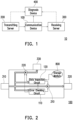
- FIG. 1 illustrates a schematic diagram of a communication system 10 for reporting a compromised state in one-way transmission according to an embodiment of the disclosure.
- the communication system 10 may include a communication device 100 and a receiving server 300.
- the communication system 10 may further include a transmitting server 200 and a diagnosis device 400.
- the communication device 100 may communicatively connect to the transmitting server 200, the receiving 300, or the diagnosis device 400 respectively.
- the communication device 100 may perform one-way transmission for the transmitting server 200 and the receiving server 300. That is, a packet from the transmitting server 200 may be forwarded to the receiving server 300 by the communication device 100. However, a packet from the receiving server 300 cannot be forwarded to the transmitting server 200 by the communication device 100.
- the communication device 100 may determine whether to forward the packet to the receiving server 300. If the communication device 100 determines to forward the packet to the receiving server 300, the receiving server 300 may receive the complete packet.
- the diagnosis device 400 may receive an incomplete packet. Only one of the receiving server 300 and the diagnosis device 400 may receive the complete packet transmitted by the transmitting server 200.
- the packet from the transmitting server 200 may be forwarded through one of the port 320 and the port 330 completely in "cut-through" manner.
- the "cut-through" manner may guarantee line speed of the one-way transmission without latency.
- the diagnosis device 400 may determine that the packet forwarded by the communication device 100 does not require further diagnostic since the received packet is incomplete.
- the receiving server 300 may receive an incomplete packet and the diagnosis device 400 may receive the complete packet.
- the receiving server 300 may determine that the packet forward by the communication device 100 is abnormal since the received packet is incomplete.
- the receiving server 300 may output a compromised state in response to determining the received packet is incomplete.
- the diagnosis device 400 may diagnose the received packet and may generate a diagnosis result accordingly. In one embodiment, the diagnosis device 400 may output a compromised state according to the diagnosis result.
- the diagnosis device 400 may be a security operation center (SOC) or may be communicatively connected to the SOC.
- the diagnosis device 400 may communicatively connect to the communication device 100, the transmitting server 200, and the receiving server 300. If one of the communication device 100, the transmitting server 200, and the receiving server 300 finds out that an error is existed in a packet, the one may notify the diagnosis device 400 by transmitting the compromised state to the diagnosis device 400. Accordingly, a redundant path to the SOC can be established, wherein the redundant path may be used for error notification. For example, if error counts in the receiving side are above a pre-defined threshold, the receiving server 300 may notify the diagnosis device 400 by transmitting the compromised state.
- the diagnosis device 400 may receive a packet from the communication device 100 and may store the received packet in a safe area so as to prevent the packet from being access by anyone.
- the transmitting server 200 may be, for example, an advanced mobile station (AMS), a desktop computer, a notebook computer, a network computer, a workstation, a personal digital assistant (PDA), a personal computer (PC), a tablet, or a phone device.
- AMS advanced mobile station
- PDA personal digital assistant
- PC personal computer
- the transmitting server 200 may include a processor, a storage medium, and a transceiver for performing functions of the transmitting server 200 (or receiving server 300, diagnosis device 400).
- the processor may be a central processing unit (CPU), a micro control unit (MCU), a microprocessor, a digital signal processor (DSP), a programmable logic controller (PLC), an application specific integrated circuit (ASIC), a graphics processing unit (GPU), an image signal processor (ISP), an image processing unit (IPU), an arithmetic logic unit (ALU), a complex programmable logic device (CPLD), a FPGA, or other similar components or a combination of the foregoing components.
- the processor may be coupled to the storage medium and the transceiver, and the processor may access and execute a plurality of modules or programs stored in the storage medium.
- the storage medium may be a random access memory (RAM), a read-only memory (ROM), a flash memory, a hard disk drive (HDD), a solid state drive (SSD), or similar components or a combination of the foregoing components.
- the storage medium may store a plurality of modules or programs for the processor to access, so that the processor can perform various functions of the transmitting server 200 (or receiving server 300, diagnosis device 400).
- the transceiver may transmit or receive signal for communication.
- Communication protocols supported by the transceiver may include Ethernet, Wi-Fi, Bluetooth, ZigBee, serial communication, Internet protocol (e.g., TCP/IP protocol), or a user datagram protocol (UDP), but the present invention is not limited thereto.
- FIG. 2 illustrates a schematic diagram of the communication device 100 for one-way transmission according to an embodiment of the disclosure.
- the communication device 100 may include an error checking circuit 110, a data inspection circuit 120, a unidirectional coupler 210 (also known as “first unidirectional coupler”), a unidirectional coupler 220 (also known as “second unidirectional coupler”), a port 310 (also known as “first port”), a port 320 (also known as “second port”), and a port 330 (also known as “third port”).
- the communication device 100 may communicatively connect to the transmitting server 200 through the port 310, may communicatively connect to the receiving server 300 through the port 320, and may communicatively connect to the diagnosis device 400 through the port 330.
- the port 310, the port 320, or the port 330 may be a physical layer (PHY) port.
- the communication device 100 may receive a packet from the transmitting server 200 through the port 310.
- the communication device 100 may forward the packet to the receiving server 300 through the port 320 and the unidirectional coupler 210 or the communication device 100 may forward the packet to the diagnosis device 400 through the port 330 and the unidirectional 220.
- the error checking circuit 110 may be coupled to the data inspection circuit 120, the unidirectional coupler 210, the unidirectional coupler 220, or the port 310.
- the data inspection circuit 120 may be coupled to the error checking circuit 110, the unidirectional coupler 210, the unidirectional coupler 220, or the port 310.
- the unidirectional coupler 210 may be coupled to the error checking circuit 110, the data inspection circuit 120, the port 310, or the port 320.
- the unidirectional coupler 220 may be coupled to the error checking circuit 110, the data inspection circuit 120, the port 310, or the port 330.
- the unidirectional coupler 210 or the unidirectional coupler 220 may be enabled or disabled by the error checking circuit 110 or the data inspection circuit 210.
- the unidirectional coupler e.g., unidirectional coupler 210 or 220
- a packet may be forwarded through the unidirectional coupler in one direction.
- the unidirectional coupler is disabled, no packet may be forwarded through the unidirectional coupler.
- the unidirectional coupler 210 or the unidirectional coupler 220 may be implemented by a diode, a switch, an optical coupler, or a transistor, the present invention is not limited thereto.
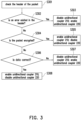
- FIG. 3 illustrates a flowchart of a communication method for one-way transmission according to an embodiment of the disclosure, wherein the communication method may be implemented by the communication device 100 as shown in FIG. 1 .
- the port 310 may receive a packet.
- the error checking circuit 110 may check the header of the packet, wherein the header may be the proprietary header as shown in FIG. 4 or may be the BB header as shown in FIG. 5 .
- the unidirectional coupler 210 and the unidirectional coupler 220 may be enabled before the error checking circuit 110 checks the header.
- the packet may be packed in packet format 4000 as shown in FIG. 4 or in packet format 5000 as shown in FIG. 5 . In the packet, similar data of different protocols may be mapped to adjacent address area in the packet.
- data of "Modbus function 1, 2 address” protocol, data of "DNP3 Group 1, variant 1” protocol, and data of "IEC 60870-5-104 data type M_SP_NA_1" protocol may be mapped to adjacent address area in the packet since all of those data are single bit data.
- the unidirectional coupler 210 and the unidirectional coupler 220 are enabled initially. Therefore, the packet from the port 310 may be outputted to the port 320 and the port 330 in "cut-through" manner.
- FIG. 4 illustrates a schematic diagram of a packet format 4000 of the packet according to an embodiment of the disclosure.
- the packet format 4000 may be corresponded to an Ethernet packet format such as UDP, wherein field “DA” may include a destination MAC address, field “SA” may include a source MAC address, field “Type” may include an Ether type (e.g., 0x0800 for IP packet or 0x8100 for IEEE 802.1Q), and field “CRC” may include a cyclic redundancy check (CRC) code.
- DA may include a destination MAC address
- SA may include a source MAC address
- field “Type” may include an Ether type (e.g., 0x0800 for IP packet or 0x8100 for IEEE 802.1Q)
- field “CRC” may include a cyclic redundancy check (CRC) code.
- CRC cyclic redundancy check
- a proprietary header may be configured in the payload of the packet format 4000, wherein the proprietary header may include an encryption method (e.g., AES encryption), an indication indicating whether the packet is encrypted or not, a Hash method, a system time stamp, a total size of data, a packet size, a starting sequence number, or a checksum code corresponding to the proprietary header.
- the type-length-value (TLV) frame in the packet may store a Hash value of data or a destination file name.
- the packet corresponding to the packet format 4000 may include device information such as IP address.
- FIG. 5 illustrates a schematic diagram of a packet format 5000 of the packet according to an embodiment of the disclosure.
- the packet format 5000 may be corresponded to an Ethernet packet format in data link layer, wherein field “DA” may include a destination MAC address, field “SA” may include a source MAC address, field “BB Type” may include an special Ether type (e.g., 0x0800 for IP packet or 0x8100 for IEEE 802.1Q), and field “CRC” may include a cyclic redundancy check (CRC) code.
- DA may include a destination MAC address
- SA may include a source MAC address
- field "BB Type” may include an special Ether type (e.g., 0x0800 for IP packet or 0x8100 for IEEE 802.1Q)
- field “CRC” may include a cyclic redundancy check (CRC) code.
- CRC cyclic redundancy check
- a BlackBear (BB) header may be configured in the payload of the packet format 5000, wherein the BB header may include an encryption method (e.g., AES encryption), an indication indicating whether the packet is encrypted or not, a Hash method, a system time stamp, a total size of data, a packet size, a starting sequence number, or a checksum code corresponding to the BB header.
- the TLV frame in the packet may store a Hash value of data or a destination file name.
- the packet corresponding to the packet format 5000 may include device information such as IP address.
- the packet format 4000 or the packet format 5000 may be configured to a device in off-line mode.
- the communication device 100 may receive a configuration of the packet format from the transmitting server 200.
- the receiving server 300 or the diagnosis device 400 may receive the configuration from of the packet format from the communication device 100.
- the error checking circuit 110 may determine whether an error is existed in the header of the packet. If an error is existed in the header, proceed to step S303. If no error is existed in the header, proceed to step S304. Specifically, the error checking circuit 110 may perform a checksum for the header so as to determine whether an error is existed in the header. The error checking circuit 110 may perform the checksum for the header according to a checksum code corresponding to the header (e.g., proprietary header or BB header).
- a checksum code corresponding to the header e.g., proprietary header or BB header.
- step S303 the error checking circuit 110 may disable the unidirectional coupler 210 and enable the unidirectional coupler 220. Accordingly, the port 320 may output an incomplete packet and the port 330 may output a complete packet.
- the diagnosis device 400 may receive the complete packet from the port 330. A diagnosis for the packet may be performed by the diagnosis device 400.
- the error checking circuit 110 may determine whether the packet is encrypted or not. If the packet is encrypted, proceed to step S305. If the packet is not encrypted, proceed to step S306. Specifically, the error checking circuit 110 may detect if an indication is in the header or not, wherein the indication indicating that the packet is encrypted. If the indication is in the header, the error checking circuit 110 may determine that the packet is encrypted. If the indication is not in the header, the error checking circuit 110 may determine that the packet is not encrypted.
- the error checking circuit 110 may enable the unidirectional coupler 210 and may disable the unidirectional coupler 220. Accordingly, the port 320 may output a complete packet and the port 330 may output an incomplete packet. In other words, if the packet is encrypted, the communication device 100 may output the complete packet via the port 320 without checking the whole packet. In one embodiment, the error checking circuit 110 may disable the data inspection circuit 120 so as to save power consumption.
- the data inspection circuit 120 may inspect whether the data of the packet is correct or not. If the data is correct, proceed to step S308. If the data is incorrect, proceed to step S307. In one embodiment, the data inspection circuit 120 may inspect whether the data is correct according to inspection rules.
- the communication device 100 may include a storage medium 800, wherein the storage medium 800 may be coupled to the data inspection circuit 120.
- the storage medium 800 may store the inspection rules.
- the inspection rules may include an object number, a data type, a data value, a time interval, or an IP address, the present invention is not limited thereto.
- the data inspection circuit 120 may locate an address of the data in the packet according to the object number.
- the storage medium 800 is, for example, a random access memory (RAM), a read-only memory (ROM), a flash memory, a hard disk drive (HDD), a hard disk drive (HDD), a solid state drive (SSD) or other similar elements in any stationary or movable form, or a combination of the above-mentioned elements.
- RAM random access memory
- ROM read-only memory
- flash memory flash memory
- HDD hard disk drive
- HDD hard disk drive
- SSD solid state drive
- the data inspection circuit 120 may disable the unidirectional coupler 210 and may enable the unidirectional coupler 220. Accordingly, the port 320 may output an incomplete packet and the port 330 may output a complete packet.
- step S308 the data inspection circuit 120 may enable the unidirectional coupler 210 and may disable the unidirectional coupler 220. Accordingly, the port 320 may output a complete packet and the port 330 may output an incomplete packet.
- FIG. 6 illustrates a flowchart of a communication method for reporting a compromised state in one-way transmission according to an embodiment of the disclosure, wherein the communication method may be implemented by the communication device 100 and the receiving server 200 as shown in FIG. 1 .
- step S601 receiving a packet by a first port of the communication device.
- step S602 coupling an error checking circuit of the communication device to the first port, wherein the error checking circuit checks a header of the packet.
- step S603 coupling a data inspection circuit of the communication device to the first port and the error checking circuit, coupling a first unidirectional coupler of the communication device to the first port and the error checking circuit, and coupling a second unidirectional coupler of the communication device to the first port and the error checking circuit.
- step S604 in response to an error being in the header, disabling the first unidirectional coupler and the data inspection circuit and enabling the second unidirectional coupler by the error checking circuit.
- step S605 receiving the packet from the first unidirectional coupler by the receiving server.
- step S606 in response to determining the received packet is incomplete by the receiving server, outputting the compromised state by the receiving server.
- the communication system of the present invention may report the compromised states in the transmitting side of the one-way transmission in a redundant way.
- the communication device may determine whether to forward the packet from the transmitting side to the receiving side according to the header of the packet. If an error in the packet is been discovered, the communication device may determine not to forward the complete packet to the receiving side. Otherwise, the communication device may determine to forward the complete packet to the receiving side. If the communication device determines not to forward the complete packet to the receiving side, the receiving side will receive an incomplete packet from the communication device. Since the received packet is incomplete, the receiving side may determine to discard the received packet and may report a compromised state according to the received packet.
- a diagnosis device may receive an incomplete packet from the communication device. Since the received packet is incomplete, the diagnosis device may determine that the one-way transmission is successful. Thus, an analysis for the packet is not required.
- the communication system may generalize all the data packets with similar protocols to have similar format according general rules which may easily applied by FPGA devices.
- the present invention proposes a method to inform the receiving site that some abnormal packets try to pass through the one-way link.
- the receiving side may determine whether to report the compromised states according to the error count corresponding to the compromised packets passing through the one-way link.
- the packets filtered by the communication device may be forwarded to the diagnosis device for further analysis.
- At least one of the diagnosis device and the receiving server may inform the SOC about the compromised states.
Landscapes
- Engineering & Computer Science (AREA)
- Computer Networks & Wireless Communication (AREA)
- Signal Processing (AREA)
- Computer Security & Cryptography (AREA)
- Computer Hardware Design (AREA)
- Computing Systems (AREA)
- General Engineering & Computer Science (AREA)
- Environmental & Geological Engineering (AREA)
- Data Exchanges In Wide-Area Networks (AREA)
- Maintenance And Management Of Digital Transmission (AREA)
- Detection And Prevention Of Errors In Transmission (AREA)
Description
- The disclosure is directed to a communication system and a communication method for reporting a compromised state in one-way transmission. Such systems and methods are known e.g. from
US 2006/005243 A1 . - Using one-way link for securely transmitting data from a secure site (or OT site: operation technology site) to an insecure site (or IT site: information technology site) is a secured way to guarantee the protection of the secure site from any access via an insecure site. The "one-way" link is generally referred a communication link that is physically configured to transmit signals in one direction, wherein the communication link is incapable of transmitting signals in another direction. However, the secure site is not always safe. For example, a device in the secure site may be attacked during the maintenance period when the firmware of the device is upgraded. The transmitting server in secure site may also be attacked. In the traditional one-way mechanism, such as unidirectional fiber, the attack cannot be reported. However, if a FPGA with content inspection rule is applied in the one-way link transmission, those data packets which are malicious or not supposed to be transmitted will be dropped. With content inspection checking, data should be implemented in transmitting server in software based. Once packets are dropped by FPGA rules, a compromised state may be generated in secure site or the dropped packet is required to be analyzed. Some prior arts propose a way to filter the data flow from the secure site to the insecure site, but the compromised state of the secure site cannot be informed to the insecure site or IT site.
- Accordingly, the present disclosure is directed to a communication system and a communication method for reporting a compromised state in one-way transmission. The present disclosure may protect the transmitting side and the receiving side of the one-way transmission.
- The present invention is directed to a communication system for reporting a compromised state in one-way transmission. The communication system includes a receiving server and a communication device, wherein the communication device includes a first port, an error checking circuit, a data inspection circuit, a first unidirectional coupler, and a second unidirectional coupler. The first port receives a packet. The error checking circuit coupled to the first port, wherein the error checking circuit checks a header of the packet. The data inspection circuit coupled to the first port and the error checking circuit. The first unidirectional coupler coupled to the first port and the error checking circuit, wherein the first unidirectional coupler is enabled before the header being checked. The second unidirectional coupler coupled to the first port and the error checking circuit, wherein the error checking circuit disables the first unidirectional coupler and enables the second unidirectional coupler in response to an error being in the header such that the packet is transmitted from the first unidirectional coupler to the receiving server incompletely. The receiving server receives the packet from the first directional coupler and outputs the compromised state according to the received packet in response to determining the received packet incomplete, wherein the data inspection circuit inspects whether data of the packet is correct in response to the error not being in the header.
- In one exemplary embodiment of the present invention, the error checking circuit disables the second unidirectional coupler and the data inspection circuit and enables the first unidirectional coupler according to an indication in the header in response to the error not being in the header.
- In one exemplary embodiment of the present invention, the indication indicating that the packet is encrypted.
- In one exemplary embodiment of the present invention, the data inspection circuit inspects whether data of the packet is correct in response to the packet is not encrypted.
- In one exemplary embodiment of the present invention, the data inspection circuit is coupled to the first unidirectional coupler and the second unidirectional coupler, wherein the data inspection circuit disables the first unidirectional coupler and enables the second unidirectional coupler in response to the data is incorrect.
- In one exemplary embodiment of the present invention, the data inspection circuit enables the first unidirectional coupler and disables the second unidirectional coupler in response to the data is correct.
- In one exemplary embodiment of the present invention, the header is received earlier than the data.
- In one exemplary embodiment of the present invention, the error checking circuit checks whether the error is existed by performing a checksum for the header.
- In one exemplary embodiment of the present invention, the data inspection circuit inspects whether the data is correct according to inspection rules associated with at least one of the followings: an object number, a data type, a data value, a time interval, and an Internet protocol address.
- In one exemplary embodiment of the present invention, the data inspection circuit locates an address of the data in the packet according to the object number.
- In one exemplary embodiment of the present invention, the communication device further including a second port and a third port. The second port coupled to the first unidirectional coupler. The third port coupled to the second unidirectional coupler.
- In one exemplary embodiment of the present invention, the data is forwarded through one of the second port and the third port completely in a cut-through manner.
- In one exemplary embodiment of the present invention, the first unidirectional coupler and the second unidirectional coupler are enabled before the error checking circuit checks the header.
- The present invention is directed to a communication method for reporting a compromised state in one-way transmission, wherein the communication method is suitable for a communication device and a receiving server. The communication method includes: receiving a packet by a first port of the communication device; coupling an error checking circuit of the communication device to the first port, wherein the error checking circuit checks a header of the packet; coupling a data inspection circuit of the communication device to the first port and the error checking circuit, coupling a first unidirectional coupler of the communication device to the first port and the error checking circuit, and coupling a second unidirectional coupler of the communication device to the first port and the error checking circuit, wherein the first unidirectional coupler is enabled before the header being checked; in response to an error being in the header, disabling the first unidirectional coupler , and enabling the second unidirectional coupler by the error checking circuit such that the packet is transmitted from the first unidirectional coupler to the receiving server incompletely; in response to the error not being in the header, inspecting whether data of the packet is correct by the data inspection circuit; receiving the packet from the first directional coupler by the receiving server; and in response to determining the received packet is incomplete by the receiving server, outputting the compromised state according to the received packet by the receiving server.
- In view of foregoing, the communication system of the present invention may detect the compromised states in the sender site of the one-way transmission and report the compromised states from the communication device and the receiving server in a redundant way. If a one-way link is used for performing data transmission from a secure site to an unsecure site, the communication system may report the compromised state of the secure site to the unsecure site. If a one-way link is used for performing data transmission from an unsecure site to a secure site, the communication may report the compromised state of the unsecure site to the secure site. To make the aforementioned more comprehensible, several embodiments accompanied with drawings are described in detail as follows.
- The accompanying drawings are included to provide a further understanding of the disclosure, and are incorporated in and constitute a part of this specification. The drawings illustrate exemplary embodiments of the disclosure and, together with the description, serve to explain the principles of the disclosure.
-
FIG. 1 illustrates a schematic diagram of a communication system for reporting a compromised state in one-way transmission according to an embodiment of the disclosure. -
FIG. 2 illustrates a schematic diagram of the communication device for one-way transmission according to an embodiment of the disclosure. -
FIG. 3 illustrates a flowchart of a communication method for one-way transmission according to an embodiment of the disclosure. -
FIG. 4 illustrates a schematic diagram of a packet format of the packet according to an embodiment of the disclosure. -
FIG. 5 illustrates a schematic diagram of a packet format of the packet according to an embodiment of the disclosure. -
FIG. 6 illustrates a flowchart of a communication method for reporting a compromised state in one-way transmission according to an embodiment of the disclosure. - In order to make the disclosure more comprehensible, several embodiments are described below as examples of implementation of the disclosure. Moreover, elements/components/steps with the same reference numerals are used to represent identical or similar parts in the figures and embodiments where appropriate.
-
FIG. 1 illustrates a schematic diagram of acommunication system 10 for reporting a compromised state in one-way transmission according to an embodiment of the disclosure. Thecommunication system 10 may include acommunication device 100 and a receivingserver 300. In one embodiment, thecommunication system 10 may further include a transmittingserver 200 and adiagnosis device 400. Thecommunication device 100 may communicatively connect to the transmittingserver 200, the receiving 300, or thediagnosis device 400 respectively. Thecommunication device 100 may perform one-way transmission for the transmittingserver 200 and the receivingserver 300. That is, a packet from the transmittingserver 200 may be forwarded to the receivingserver 300 by thecommunication device 100. However, a packet from the receivingserver 300 cannot be forwarded to the transmittingserver 200 by thecommunication device 100. - After receiving a packet from the transmitting
server 200, thecommunication device 100 may determine whether to forward the packet to the receivingserver 300. If thecommunication device 100 determines to forward the packet to the receivingserver 300, the receivingserver 300 may receive the complete packet. Thediagnosis device 400 may receive an incomplete packet. Only one of the receivingserver 300 and thediagnosis device 400 may receive the complete packet transmitted by the transmittingserver 200. The packet from the transmittingserver 200 may be forwarded through one of theport 320 and theport 330 completely in "cut-through" manner. The "cut-through" manner may guarantee line speed of the one-way transmission without latency. Thediagnosis device 400 may determine that the packet forwarded by thecommunication device 100 does not require further diagnostic since the received packet is incomplete. If thecommunication device 100 determines not to forward the packet to the receivingserver 300, the receivingserver 300 may receive an incomplete packet and thediagnosis device 400 may receive the complete packet. The receivingserver 300 may determine that the packet forward by thecommunication device 100 is abnormal since the received packet is incomplete. The receivingserver 300 may output a compromised state in response to determining the received packet is incomplete. On the other hand, thediagnosis device 400 may diagnose the received packet and may generate a diagnosis result accordingly. In one embodiment, thediagnosis device 400 may output a compromised state according to the diagnosis result. - The
diagnosis device 400 may be a security operation center (SOC) or may be communicatively connected to the SOC. Thediagnosis device 400 may communicatively connect to thecommunication device 100, the transmittingserver 200, and the receivingserver 300. If one of thecommunication device 100, the transmittingserver 200, and the receivingserver 300 finds out that an error is existed in a packet, the one may notify thediagnosis device 400 by transmitting the compromised state to thediagnosis device 400. Accordingly, a redundant path to the SOC can be established, wherein the redundant path may be used for error notification. For example, if error counts in the receiving side are above a pre-defined threshold, the receivingserver 300 may notify thediagnosis device 400 by transmitting the compromised state. Thediagnosis device 400 may receive a packet from thecommunication device 100 and may store the received packet in a safe area so as to prevent the packet from being access by anyone. - The transmitting server 200 (or receiving
server 300, diagnosis device 400) may be, for example, an advanced mobile station (AMS), a desktop computer, a notebook computer, a network computer, a workstation, a personal digital assistant (PDA), a personal computer (PC), a tablet, or a phone device. The transmitting server 200 (or receivingserver 300, diagnosis device 400) may include a processor, a storage medium, and a transceiver for performing functions of the transmitting server 200 (or receivingserver 300, diagnosis device 400). - The processor may be a central processing unit (CPU), a micro control unit (MCU), a microprocessor, a digital signal processor (DSP), a programmable logic controller (PLC), an application specific integrated circuit (ASIC), a graphics processing unit (GPU), an image signal processor (ISP), an image processing unit (IPU), an arithmetic logic unit (ALU), a complex programmable logic device (CPLD), a FPGA, or other similar components or a combination of the foregoing components. The processor may be coupled to the storage medium and the transceiver, and the processor may access and execute a plurality of modules or programs stored in the storage medium.
- The storage medium may be a random access memory (RAM), a read-only memory (ROM), a flash memory, a hard disk drive (HDD), a solid state drive (SSD), or similar components or a combination of the foregoing components. The storage medium may store a plurality of modules or programs for the processor to access, so that the processor can perform various functions of the transmitting server 200 (or receiving
server 300, diagnosis device 400). - The transceiver may transmit or receive signal for communication. Communication protocols supported by the transceiver may include Ethernet, Wi-Fi, Bluetooth, ZigBee, serial communication, Internet protocol (e.g., TCP/IP protocol), or a user datagram protocol (UDP), but the present invention is not limited thereto.
-
FIG. 2 illustrates a schematic diagram of thecommunication device 100 for one-way transmission according to an embodiment of the disclosure. Thecommunication device 100 may include anerror checking circuit 110, adata inspection circuit 120, a unidirectional coupler 210 (also known as "first unidirectional coupler"), a unidirectional coupler 220 (also known as "second unidirectional coupler"), a port 310 (also known as "first port"), a port 320 (also known as "second port"), and a port 330 (also known as "third port"). Thecommunication device 100 may communicatively connect to the transmittingserver 200 through theport 310, may communicatively connect to the receivingserver 300 through theport 320, and may communicatively connect to thediagnosis device 400 through theport 330. Theport 310, theport 320, or theport 330 may be a physical layer (PHY) port. Thecommunication device 100 may receive a packet from the transmittingserver 200 through theport 310. Thecommunication device 100 may forward the packet to the receivingserver 300 through theport 320 and theunidirectional coupler 210 or thecommunication device 100 may forward the packet to thediagnosis device 400 through theport 330 and the unidirectional 220. - The
error checking circuit 110 may be coupled to thedata inspection circuit 120, theunidirectional coupler 210, theunidirectional coupler 220, or theport 310. Thedata inspection circuit 120 may be coupled to theerror checking circuit 110, theunidirectional coupler 210, theunidirectional coupler 220, or theport 310. Theunidirectional coupler 210 may be coupled to theerror checking circuit 110, thedata inspection circuit 120, theport 310, or theport 320. Theunidirectional coupler 220 may be coupled to theerror checking circuit 110, thedata inspection circuit 120, theport 310, or theport 330. - The
unidirectional coupler 210 or theunidirectional coupler 220 may be enabled or disabled by theerror checking circuit 110 or thedata inspection circuit 210. When the unidirectional coupler (e.g.,unidirectional coupler 210 or 220) is enabled, a packet may be forwarded through the unidirectional coupler in one direction. When the unidirectional coupler is disabled, no packet may be forwarded through the unidirectional coupler. Theunidirectional coupler 210 or theunidirectional coupler 220 may be implemented by a diode, a switch, an optical coupler, or a transistor, the present invention is not limited thereto. -
FIG. 3 illustrates a flowchart of a communication method for one-way transmission according to an embodiment of the disclosure, wherein the communication method may be implemented by thecommunication device 100 as shown inFIG. 1 . - In step S301, the
port 310 may receive a packet. Theerror checking circuit 110 may check the header of the packet, wherein the header may be the proprietary header as shown inFIG. 4 or may be the BB header as shown inFIG. 5 . Theunidirectional coupler 210 and theunidirectional coupler 220 may be enabled before theerror checking circuit 110 checks the header. The packet may be packed inpacket format 4000 as shown inFIG. 4 or inpacket format 5000 as shown inFIG. 5 . In the packet, similar data of different protocols may be mapped to adjacent address area in the packet. For example, data of "Modbus function 1, 2 address" protocol, data of "DNP3 Group 1, variant 1" protocol, and data of "IEC 60870-5-104 data type M_SP_NA_1" protocol may be mapped to adjacent address area in the packet since all of those data are single bit data. It should be noted that theunidirectional coupler 210 and theunidirectional coupler 220 are enabled initially. Therefore, the packet from theport 310 may be outputted to theport 320 and theport 330 in "cut-through" manner. -
FIG. 4 illustrates a schematic diagram of apacket format 4000 of the packet according to an embodiment of the disclosure. Thepacket format 4000 may be corresponded to an Ethernet packet format such as UDP, wherein field "DA" may include a destination MAC address, field "SA" may include a source MAC address, field "Type" may include an Ether type (e.g., 0x0800 for IP packet or 0x8100 for IEEE 802.1Q), and field "CRC" may include a cyclic redundancy check (CRC) code. A proprietary header may be configured in the payload of thepacket format 4000, wherein the proprietary header may include an encryption method (e.g., AES encryption), an indication indicating whether the packet is encrypted or not, a Hash method, a system time stamp, a total size of data, a packet size, a starting sequence number, or a checksum code corresponding to the proprietary header. The type-length-value (TLV) frame in the packet may store a Hash value of data or a destination file name. In one embodiment, the packet corresponding to thepacket format 4000 may include device information such as IP address. When a packet of thepacket format 4000 is received by thecommunication device 100 in "cut-through" manner, the proprietary header of the packet would be received earlier than the data frame of the packet. -
FIG. 5 illustrates a schematic diagram of apacket format 5000 of the packet according to an embodiment of the disclosure. Thepacket format 5000 may be corresponded to an Ethernet packet format in data link layer, wherein field "DA" may include a destination MAC address, field "SA" may include a source MAC address, field "BB Type" may include an special Ether type (e.g., 0x0800 for IP packet or 0x8100 for IEEE 802.1Q), and field "CRC" may include a cyclic redundancy check (CRC) code. A BlackBear (BB) header may be configured in the payload of thepacket format 5000, wherein the BB header may include an encryption method (e.g., AES encryption), an indication indicating whether the packet is encrypted or not, a Hash method, a system time stamp, a total size of data, a packet size, a starting sequence number, or a checksum code corresponding to the BB header. The TLV frame in the packet may store a Hash value of data or a destination file name. In one embodiment, the packet corresponding to thepacket format 5000 may include device information such as IP address. When a packet of thepacket format 5000 is received by thecommunication device 100 in "cut-through" manner, the BB header of the packet would be received earlier than the data frame of the packet. - The
packet format 4000 or thepacket format 5000 may be configured to a device in off-line mode. For example, thecommunication device 100 may receive a configuration of the packet format from the transmittingserver 200. The receivingserver 300 or thediagnosis device 400 may receive the configuration from of the packet format from thecommunication device 100. - Referring back to
FIG. 3 , in step S302, theerror checking circuit 110 may determine whether an error is existed in the header of the packet. If an error is existed in the header, proceed to step S303. If no error is existed in the header, proceed to step S304. Specifically, theerror checking circuit 110 may perform a checksum for the header so as to determine whether an error is existed in the header. Theerror checking circuit 110 may perform the checksum for the header according to a checksum code corresponding to the header (e.g., proprietary header or BB header). - In step S303, the
error checking circuit 110 may disable theunidirectional coupler 210 and enable theunidirectional coupler 220. Accordingly, theport 320 may output an incomplete packet and theport 330 may output a complete packet. Thediagnosis device 400 may receive the complete packet from theport 330. A diagnosis for the packet may be performed by thediagnosis device 400. - In step S304, the
error checking circuit 110 may determine whether the packet is encrypted or not. If the packet is encrypted, proceed to step S305. If the packet is not encrypted, proceed to step S306. Specifically, theerror checking circuit 110 may detect if an indication is in the header or not, wherein the indication indicating that the packet is encrypted. If the indication is in the header, theerror checking circuit 110 may determine that the packet is encrypted. If the indication is not in the header, theerror checking circuit 110 may determine that the packet is not encrypted. - In step S305, the
error checking circuit 110 may enable theunidirectional coupler 210 and may disable theunidirectional coupler 220. Accordingly, theport 320 may output a complete packet and theport 330 may output an incomplete packet. In other words, if the packet is encrypted, thecommunication device 100 may output the complete packet via theport 320 without checking the whole packet. In one embodiment, theerror checking circuit 110 may disable thedata inspection circuit 120 so as to save power consumption. - In step S306, the
data inspection circuit 120 may inspect whether the data of the packet is correct or not. If the data is correct, proceed to step S308. If the data is incorrect, proceed to step S307. In one embodiment, thedata inspection circuit 120 may inspect whether the data is correct according to inspection rules. Specifically, thecommunication device 100 may include astorage medium 800, wherein thestorage medium 800 may be coupled to thedata inspection circuit 120. Thestorage medium 800 may store the inspection rules. The inspection rules may include an object number, a data type, a data value, a time interval, or an IP address, the present invention is not limited thereto. Thedata inspection circuit 120 may locate an address of the data in the packet according to the object number. - The
storage medium 800 is, for example, a random access memory (RAM), a read-only memory (ROM), a flash memory, a hard disk drive (HDD), a hard disk drive (HDD), a solid state drive (SSD) or other similar elements in any stationary or movable form, or a combination of the above-mentioned elements. - In step S307, the
data inspection circuit 120 may disable theunidirectional coupler 210 and may enable theunidirectional coupler 220. Accordingly, theport 320 may output an incomplete packet and theport 330 may output a complete packet. - In step S308, the
data inspection circuit 120 may enable theunidirectional coupler 210 and may disable theunidirectional coupler 220. Accordingly, theport 320 may output a complete packet and theport 330 may output an incomplete packet. -
FIG. 6 illustrates a flowchart of a communication method for reporting a compromised state in one-way transmission according to an embodiment of the disclosure, wherein the communication method may be implemented by thecommunication device 100 and the receivingserver 200 as shown inFIG. 1 . In step S601, receiving a packet by a first port of the communication device. In step S602, coupling an error checking circuit of the communication device to the first port, wherein the error checking circuit checks a header of the packet. In step S603, coupling a data inspection circuit of the communication device to the first port and the error checking circuit, coupling a first unidirectional coupler of the communication device to the first port and the error checking circuit, and coupling a second unidirectional coupler of the communication device to the first port and the error checking circuit. In step S604, in response to an error being in the header, disabling the first unidirectional coupler and the data inspection circuit and enabling the second unidirectional coupler by the error checking circuit. In step S605, receiving the packet from the first unidirectional coupler by the receiving server. In step S606, in response to determining the received packet is incomplete by the receiving server, outputting the compromised state by the receiving server. - In summary, the communication system of the present invention may report the compromised states in the transmitting side of the one-way transmission in a redundant way. The communication device may determine whether to forward the packet from the transmitting side to the receiving side according to the header of the packet. If an error in the packet is been discovered, the communication device may determine not to forward the complete packet to the receiving side. Otherwise, the communication device may determine to forward the complete packet to the receiving side. If the communication device determines not to forward the complete packet to the receiving side, the receiving side will receive an incomplete packet from the communication device. Since the received packet is incomplete, the receiving side may determine to discard the received packet and may report a compromised state according to the received packet. On the other hand, if the communication device determines to forward the complete packet to the receiving side, a diagnosis device may receive an incomplete packet from the communication device. Since the received packet is incomplete, the diagnosis device may determine that the one-way transmission is successful. Thus, an analysis for the packet is not required.
- Based on the present invention, the communication system may generalize all the data packets with similar protocols to have similar format according general rules which may easily applied by FPGA devices. The present invention proposes a method to inform the receiving site that some abnormal packets try to pass through the one-way link. The receiving side may determine whether to report the compromised states according to the error count corresponding to the compromised packets passing through the one-way link. At the same time, the packets filtered by the communication device may be forwarded to the diagnosis device for further analysis. At least one of the diagnosis device and the receiving server may inform the SOC about the compromised states.
- No element, act, or instruction used in the detailed description of disclosed embodiments of the present application should be construed as absolutely critical or essential to the present disclosure unless explicitly described as such. Also, as used herein, each of the indefinite articles "a" and "an" could include more than one item. If only one item is intended, the terms "a single" or similar languages would be used. Furthermore, the terms "any of" followed by a listing of a plurality of items and/or a plurality of categories of items, as used herein, are intended to include "any of", "any combination of', "any multiple of', and/or "any combination of multiples of the items and/or the categories of items, individually or in conjunction with other items and/or other categories of items. Further, as used herein, the term "set" is intended to include any number of items, including zero. Further, as used herein, the term "number" is intended to include any number, including zero.
Claims (14)
- A communication system (10) for reporting a compromised state in one-way transmission, comprising:a receiving server (300), anda communication device (100) communicatively connected to the receiving server (300), wherein the communication device (100) comprising:a first port (310), receives a packet;an error checking circuit (110) coupled to the first port (310), wherein the error checking circuit (110) checks a header of the packet;a data inspection circuit (120) coupled to the first port (310) and the error checking circuit (110);a first unidirectional coupler (210) coupled to the first port (310) and the error checking circuit (110), wherein the first unidirectional coupler (210) is enabled before the header being checked; anda second unidirectional coupler (220) coupled to the first port (310) and the error checking circuit (110), wherein the error checking circuit (110) disables the first unidirectional coupler (210) and enables the second unidirectional coupler (220) in response to an error being in the header such that the packet is transmitted from the first unidirectional coupler (210) to the receiving server (300) incompletely, whereinthe receiving server (300) receives the packet from the first unidirectional coupler (210) and outputs the compromised state according to the received packet in response to determining the received packet incomplete, whereinthe data inspection circuit (120) inspects whether data of the packet is correct in response to the error not being in the header.
- The communication system (10) according to claim 1, wherein the error checking circuit (110) disables the second unidirectional coupler (220) and the data inspection circuit (120) and enables the first unidirectional coupler (210) according to an indication in the header in response to the error not being in the header.
- The communication system (10) according to claim 2, wherein the indication indicating that the packet is encrypted.
- The communication system (10) according to claim 2, wherein the data inspection circuit (120) inspects whether data of the packet is correct in response to the packet is not encrypted.
- The communication system (10) according to claim 1, wherein the data inspection circuit (120) is coupled to the first unidirectional coupler (210) and the second unidirectional coupler (220), wherein the data inspection circuit (120) disables the first unidirectional coupler (210) and enables the second unidirectional coupler (220) in response to the data is incorrect.
- The communication system (10) according to claim 1, wherein the data inspection circuit (120) enables the first unidirectional coupler (210) and disables the second unidirectional coupler (220) in response to the data is correct.
- The communication system (10) according to claim 1, wherein the header is received earlier than the data.
- The communication system (10) according to claim 1, wherein the error checking circuit (110) checks whether the error is existed by performing a checksum for the header.
- The communication system (10) according to claim 1, wherein the data inspection circuit (120) inspects whether the data is correct according to inspection rules associated with at least one of the followings:
an object number, a data type, a data value, a time interval, and an Internet protocol address. - The communication system (10) according to claim 10, wherein the data inspection circuit (120) locates an address of the data in the packet according to the object number.
- The communication system (10) according to claim 1, wherein the communication device (100) further comprising:a second port (320) coupled to the first unidirectional coupler (210); anda third port (330) coupled to the second unidirectional coupler (220).
- The communication system (10) according to claim 11, wherein the data is forwarded through one of the second port (320) and the third port (330) completely in a cut-through manner.
- The communication system (10) according to claim 1, wherein the first unidirectional coupler (210) and the second unidirectional coupler (220) are enabled before the error checking circuit (110) checks the header.
- A communication method for reporting a compromised state in one-way transmission, suitable for a communication device and a receiving server, wherein the communication method comprising:receiving a packet by a first port of the communication device (S601);coupling an error checking circuit of the communication device to the first port, wherein the error checking circuit checks a header of the packet (S602);coupling a data inspection circuit of the communication device to the first port and the error checking circuit, coupling a first unidirectional coupler of the communication device to the first port and the error checking circuit, and coupling a second unidirectional coupler of the communication device to the first port and the error checking circuit (S603), wherein the first unidirectional coupler is enabled before the header being checked;in response to an error being in the header, disabling the first unidirectional coupler and enabling the second unidirectional coupler by the error checking circuit (S604) such that the packet is transmitted from the first unidirectional coupler to the receiving server incompletely;in response to the error not being in the header, inspecting whether data of the packet is correct by the data inspection circuit;receiving the packet from the first unidirectional coupler by the receiving server (S605); andin response to determining the received packet is incomplete by the receiving server, outputting the compromised state according to the received packet by the receiving server (S606).
Priority Applications (1)
| Application Number | Priority Date | Filing Date | Title |
|---|---|---|---|
| DE21197841.6T DE21197841T1 (en) | 2021-06-14 | 2021-09-20 | COMMUNICATION SYSTEM AND METHOD OF COMMUNICATION FOR REPORTING A DEGRADED CONDITION IN A ONE-WAY TRANSMISSION |
Applications Claiming Priority (2)
| Application Number | Priority Date | Filing Date | Title |
|---|---|---|---|
| US202163210480P | 2021-06-14 | 2021-06-14 | |
| US17/465,819 US11611409B2 (en) | 2021-06-14 | 2021-09-02 | Communication system and communication method for reporting compromised state in one-way transmission |
Publications (2)
| Publication Number | Publication Date |
|---|---|
| EP4106267A1 EP4106267A1 (en) | 2022-12-21 |
| EP4106267B1 true EP4106267B1 (en) | 2024-08-28 |
Family
ID=77864436
Family Applications (1)
| Application Number | Title | Priority Date | Filing Date |
|---|---|---|---|
| EP21197841.6A Active EP4106267B1 (en) | 2021-06-14 | 2021-09-20 | Communication system and communication method for reporting compromised state in one-way transmission |
Country Status (8)
| Country | Link |
|---|---|
| US (1) | US11611409B2 (en) |
| EP (1) | EP4106267B1 (en) |
| JP (1) | JP2022190651A (en) |
| KR (1) | KR20220167731A (en) |
| CA (1) | CA3135594A1 (en) |
| DE (1) | DE21197841T1 (en) |
| ES (1) | ES2932847T1 (en) |
| TW (1) | TWI763607B (en) |
Families Citing this family (3)
| Publication number | Priority date | Publication date | Assignee | Title |
|---|---|---|---|---|
| US11805099B2 (en) * | 2019-06-14 | 2023-10-31 | Siemens Mobility GmbH | Computing system and method for operating a computing system |
| WO2020249342A1 (en) * | 2019-06-14 | 2020-12-17 | Siemens Mobility GmbH | Computing system and method for operating a computing system |
| CN116366496B (en) * | 2023-05-26 | 2023-08-18 | 广东宏大欣电子科技有限公司 | 104 protocol data receiving processing uploading method and system |
Family Cites Families (37)
| Publication number | Priority date | Publication date | Assignee | Title |
|---|---|---|---|---|
| US5703562A (en) | 1996-11-20 | 1997-12-30 | Sandia Corporation | Method for transferring data from an unsecured computer to a secured computer |
| US7065326B2 (en) * | 2001-05-02 | 2006-06-20 | Trex Enterprises Corporation | Millimeter wave communications system with a high performance modulator circuit |
| WO2004105297A2 (en) | 2003-05-19 | 2004-12-02 | Network Security Technologies, Inc. | Method and system for providing secure one-way transfer of data |
| CN100589352C (en) * | 2004-02-04 | 2010-02-10 | 华为技术有限公司 | System overhead processing method and device |
| US7552325B2 (en) * | 2004-05-26 | 2009-06-23 | At&T Intellectual Property I, L.P. | Methods, systems, and products for intrusion detection |
| HUE030535T2 (en) | 2006-06-27 | 2017-05-29 | Waterfall Security Solutions Ltd | Unidirectional secure links from and to a security engine |
| US8352450B1 (en) | 2007-04-19 | 2013-01-08 | Owl Computing Technologies, Inc. | Database update through a one-way data link |
| US7649452B2 (en) * | 2007-06-29 | 2010-01-19 | Waterfall Solutions Ltd. | Protection of control networks using a one-way link |
| US7992209B1 (en) | 2007-07-19 | 2011-08-02 | Owl Computing Technologies, Inc. | Bilateral communication using multiple one-way data links |
| US8250358B2 (en) | 2009-04-01 | 2012-08-21 | Raytheon Company | Data diode system |
| US9521120B2 (en) | 2009-04-23 | 2016-12-13 | General Electric Technology Gmbh | Method for securely transmitting control data from a secure network |
| WO2011007210A1 (en) * | 2009-07-17 | 2011-01-20 | Freescale Semiconductor, Inc. | Diversity antenna system and transmission method |
| DE102010011022A1 (en) | 2010-03-11 | 2012-02-16 | Siemens Aktiengesellschaft | Method for secure unidirectional transmission of signals |
| GB2495018B (en) | 2010-07-19 | 2017-02-22 | Owl Computing Tech Inc | Secure acknowledgment device for one-way data transfer system |
| JP5688332B2 (en) * | 2011-06-20 | 2015-03-25 | 株式会社日立国際電気 | Wireless communication system |
| US8893253B2 (en) | 2011-11-29 | 2014-11-18 | Bayshore Networks, Inc. | Firewall apparatus, systems, and methods employing detection of application anomalies |
| US9736121B2 (en) | 2012-07-16 | 2017-08-15 | Owl Cyber Defense Solutions, Llc | File manifest filter for unidirectional transfer of files |
| US8776254B1 (en) | 2013-01-23 | 2014-07-08 | Owl Computing Technologies, Inc. | System and method for the secure unidirectional transfer of software and software updates |
| US9306953B2 (en) | 2013-02-19 | 2016-04-05 | Owl Computing Technologies, Inc. | System and method for secure unidirectional transfer of commands to control equipment |
| US9419975B2 (en) | 2013-04-22 | 2016-08-16 | Waterfall Security Solutions Ltd. | Bi-directional communication over a one-way link |
| US9088558B2 (en) | 2013-08-21 | 2015-07-21 | Owl Computing Technologies, Inc. | Secure one-way interface for OPC data transfer |
| US9531669B2 (en) | 2014-01-30 | 2016-12-27 | Sierra Nevada Corporation | Bi-directional data security for supervisor control and data acquisition networks |
| US8891546B1 (en) * | 2014-04-27 | 2014-11-18 | Waterfall Security Solutions Ltd. | Protocol splitter |
| GB201410089D0 (en) | 2014-06-06 | 2014-07-23 | Bae Systems Plc | Secured network bridge |
| KR101593168B1 (en) * | 2014-09-11 | 2016-02-18 | 한국전자통신연구원 | Physical one direction communication device and method thereof |
| CN107078970B (en) * | 2014-10-30 | 2020-04-17 | 三菱电机株式会社 | Data diode device |
| DE102014226398A1 (en) | 2014-12-18 | 2016-06-23 | Siemens Aktiengesellschaft | Method and device for the feedback-free acquisition of data |
| US9853918B2 (en) | 2015-03-24 | 2017-12-26 | Owl Cyber Defense Solutions, Llc | One-way network interface |
| JP2017098694A (en) * | 2015-11-20 | 2017-06-01 | 富士通株式会社 | Communication apparatus and time synchronizing method therefor |
| GB2559431B (en) * | 2017-06-01 | 2020-09-02 | Garrison Tech Ltd | Web server security |
| ES2778848T3 (en) | 2017-07-05 | 2020-08-12 | Siemens Mobility GmbH | Procedure and device for one-way transmission without data impact to a remote application server |
| US10284313B2 (en) * | 2017-08-09 | 2019-05-07 | Isco International, Llc | Method and apparatus for monitoring, detecting, testing, diagnosing and/or mitigating interference in a communication system |
| DE102017217432A1 (en) | 2017-09-29 | 2019-04-04 | Siemens Mobility GmbH | Concept for unidirectional transfer of data |
| IL268485B (en) | 2018-08-13 | 2022-04-01 | Waterfall Security Solutions Ltd | Automatic security response using one-way links |
| US11284458B2 (en) | 2019-02-18 | 2022-03-22 | Mediatek Inc. | Handling of mapped EPS bearer context with duplicate EPS bearer ID |
| US11445401B2 (en) * | 2019-02-22 | 2022-09-13 | Mediatek Inc. | Session management in wireless communication system |
| US10990737B2 (en) | 2019-04-23 | 2021-04-27 | Owl Cyber Defense Solutions, Llc | Secure one-way network gateway |
-
2021
- 2021-09-02 US US17/465,819 patent/US11611409B2/en active Active
- 2021-09-20 EP EP21197841.6A patent/EP4106267B1/en active Active
- 2021-09-20 DE DE21197841.6T patent/DE21197841T1/en active Pending
- 2021-09-20 ES ES21197841T patent/ES2932847T1/en active Pending
- 2021-10-14 KR KR1020210136479A patent/KR20220167731A/en not_active Withdrawn
- 2021-10-21 CA CA3135594A patent/CA3135594A1/en active Pending
- 2021-10-27 TW TW110139941A patent/TWI763607B/en active
- 2021-11-12 JP JP2021184772A patent/JP2022190651A/en active Pending
Also Published As
| Publication number | Publication date |
|---|---|
| US11611409B2 (en) | 2023-03-21 |
| US20220399957A1 (en) | 2022-12-15 |
| JP2022190651A (en) | 2022-12-26 |
| CA3135594A1 (en) | 2022-12-14 |
| TW202249450A (en) | 2022-12-16 |
| DE21197841T1 (en) | 2023-04-06 |
| EP4106267A1 (en) | 2022-12-21 |
| TWI763607B (en) | 2022-05-01 |
| KR20220167731A (en) | 2022-12-21 |
| ES2932847T1 (en) | 2023-01-27 |
Similar Documents
| Publication | Publication Date | Title |
|---|---|---|
| US11611409B2 (en) | Communication system and communication method for reporting compromised state in one-way transmission | |
| US9762429B2 (en) | Control protocol encapsulation | |
| US8732453B2 (en) | Secure acknowledgment device for one-way data transfer system | |
| CN103051557B (en) | Data flow processing method and system, controller, switching equipment | |
| CN102647406B (en) | Intelligent integrated network security device for high-availability applications | |
| US10966004B2 (en) | Hardware-enforced one-way information flow control device | |
| US20150163198A1 (en) | Methods and apparatus for providing controlled unidirectional flow of data | |
| CN111164923B (en) | Designed for one-way transfer of data | |
| CN110808873B (en) | Method and device for detecting link failure | |
| CN107395396A (en) | FPGA-based redundant dual network port configurable Ethernet IP core | |
| US9973515B1 (en) | Network security for avionics with ethernet connections system and related method | |
| Lim et al. | Attack induced common-mode failures on PLC-based safety system in a nuclear power plant: practical experience report | |
| CN107852415A (en) | The method and apparatus that data are transmitted for low-disturbance between networks | |
| US20090003226A1 (en) | Network intermediary device with connection test packets | |
| CN113660265B (en) | Network attack testing method and device, electronic equipment and storage medium | |
| EP3729773B1 (en) | One-way data transfer device with onboard system detection | |
| CN117997620A (en) | Unidirectional data transmission method and device, electronic equipment and storage medium | |
| US20100309908A1 (en) | Method and system for communicating with a network device | |
| US9323627B1 (en) | System, method, and apparatus for detecting fault conditions experienced by remote physical ports | |
| WO2025156588A1 (en) | Automatic detection method and apparatus for next-generation firewall | |
| CN118677892A (en) | Cross-network proxy server and cross-network proxy data exchange method, system and storage medium | |
| JP2015041958A (en) | Firewall device | |
| Balduzzi et al. | Lost in translation: when industrial protocol translation goes wrong | |
| US8331788B2 (en) | Encapsulation scheme for optical over Ethernet | |
| US20220200720A1 (en) | Communication system and communication method for one-way transmission |
Legal Events
| Date | Code | Title | Description |
|---|---|---|---|
| PUAI | Public reference made under article 153(3) epc to a published international application that has entered the european phase |
Free format text: ORIGINAL CODE: 0009012 |
|
| STAA | Information on the status of an ep patent application or granted ep patent |
Free format text: STATUS: REQUEST FOR EXAMINATION WAS MADE |
|
| 17P | Request for examination filed |
Effective date: 20220523 |
|
| AK | Designated contracting states |
Kind code of ref document: A1 Designated state(s): AL AT BE BG CH CY CZ DE DK EE ES FI FR GB GR HR HU IE IS IT LI LT LU LV MC MK MT NL NO PL PT RO RS SE SI SK SM TR |
|
| REG | Reference to a national code |
Ref country code: ES Ref legal event code: BA2A Ref document number: 2932847 Country of ref document: ES Kind code of ref document: T1 Effective date: 20230127 |
|
| REG | Reference to a national code |
Ref country code: DE Ref legal event code: R210 Ref document number: 602021017822 Country of ref document: DE |
|
| STAA | Information on the status of an ep patent application or granted ep patent |
Free format text: STATUS: EXAMINATION IS IN PROGRESS |
|
| 17Q | First examination report despatched |
Effective date: 20231005 |
|
| GRAP | Despatch of communication of intention to grant a patent |
Free format text: ORIGINAL CODE: EPIDOSNIGR1 |
|
| STAA | Information on the status of an ep patent application or granted ep patent |
Free format text: STATUS: GRANT OF PATENT IS INTENDED |
|
| RIC1 | Information provided on ipc code assigned before grant |
Ipc: H04L 69/22 20220101ALN20240430BHEP Ipc: H04L 9/40 20220101AFI20240430BHEP |
|
| INTG | Intention to grant announced |
Effective date: 20240605 |
|
| GRAS | Grant fee paid |
Free format text: ORIGINAL CODE: EPIDOSNIGR3 |
|
| GRAA | (expected) grant |
Free format text: ORIGINAL CODE: 0009210 |
|
| STAA | Information on the status of an ep patent application or granted ep patent |
Free format text: STATUS: THE PATENT HAS BEEN GRANTED |
|
| REG | Reference to a national code |
Ref country code: DE Ref legal event code: R081 Ref document number: 602021017822 Country of ref document: DE Owner name: BLACKBEAR (TAIWAN) INDUSTRIAL NETWORKING SECUR, TW Free format text: FORMER OWNER: BLACKBEAR (TAIWAN) INDUSTRIAL NETWORKING SECURITY LTD., JUBEI, HSINCHU, TW Ref country code: DE Ref legal event code: R082 Ref document number: 602021017822 Country of ref document: DE Representative=s name: 2K PATENTANWAELTE, EUROPEAN PATENT ATTORNEYS B, DE Ref country code: DE Ref legal event code: R082 Ref document number: 602021017822 Country of ref document: DE Representative=s name: 2K PATENT PARTNERSCHAFT MBB, DE |
|
| AK | Designated contracting states |
Kind code of ref document: B1 Designated state(s): AL AT BE BG CH CY CZ DE DK EE ES FI FR GB GR HR HU IE IS IT LI LT LU LV MC MK MT NL NO PL PT RO RS SE SI SK SM TR |
|
| REG | Reference to a national code |
Ref country code: CH Ref legal event code: EP |
|
| REG | Reference to a national code |
Ref country code: DE Ref legal event code: R096 Ref document number: 602021017822 Country of ref document: DE |
|
| REG | Reference to a national code |
Ref country code: DE Ref legal event code: R082 Ref document number: 602021017822 Country of ref document: DE Representative=s name: 2K PATENTANWAELTE, EUROPEAN PATENT ATTORNEYS B, DE Ref country code: DE Ref legal event code: R082 Ref document number: 602021017822 Country of ref document: DE Representative=s name: 2K PATENT PARTNERSCHAFT MBB, DE |
|
| REG | Reference to a national code |
Ref country code: IE Ref legal event code: FG4D |
|
| REG | Reference to a national code |
Ref country code: LT Ref legal event code: MG9D |
|
| PG25 | Lapsed in a contracting state [announced via postgrant information from national office to epo] |
Ref country code: NO Free format text: LAPSE BECAUSE OF FAILURE TO SUBMIT A TRANSLATION OF THE DESCRIPTION OR TO PAY THE FEE WITHIN THE PRESCRIBED TIME-LIMIT Effective date: 20241128 |
|
| REG | Reference to a national code |
Ref country code: AT Ref legal event code: MK05 Ref document number: 1719147 Country of ref document: AT Kind code of ref document: T Effective date: 20240828 |
|
| PG25 | Lapsed in a contracting state [announced via postgrant information from national office to epo] |
Ref country code: PT Free format text: LAPSE BECAUSE OF FAILURE TO SUBMIT A TRANSLATION OF THE DESCRIPTION OR TO PAY THE FEE WITHIN THE PRESCRIBED TIME-LIMIT Effective date: 20241230 Ref country code: NL Free format text: LAPSE BECAUSE OF FAILURE TO SUBMIT A TRANSLATION OF THE DESCRIPTION OR TO PAY THE FEE WITHIN THE PRESCRIBED TIME-LIMIT Effective date: 20240828 Ref country code: PL Free format text: LAPSE BECAUSE OF FAILURE TO SUBMIT A TRANSLATION OF THE DESCRIPTION OR TO PAY THE FEE WITHIN THE PRESCRIBED TIME-LIMIT Effective date: 20240828 Ref country code: FI Free format text: LAPSE BECAUSE OF FAILURE TO SUBMIT A TRANSLATION OF THE DESCRIPTION OR TO PAY THE FEE WITHIN THE PRESCRIBED TIME-LIMIT Effective date: 20240828 Ref country code: GR Free format text: LAPSE BECAUSE OF FAILURE TO SUBMIT A TRANSLATION OF THE DESCRIPTION OR TO PAY THE FEE WITHIN THE PRESCRIBED TIME-LIMIT Effective date: 20241129 |
|
| PG25 | Lapsed in a contracting state [announced via postgrant information from national office to epo] |
Ref country code: BG Free format text: LAPSE BECAUSE OF FAILURE TO SUBMIT A TRANSLATION OF THE DESCRIPTION OR TO PAY THE FEE WITHIN THE PRESCRIBED TIME-LIMIT Effective date: 20240828 |
|
| PG25 | Lapsed in a contracting state [announced via postgrant information from national office to epo] |
Ref country code: LV Free format text: LAPSE BECAUSE OF FAILURE TO SUBMIT A TRANSLATION OF THE DESCRIPTION OR TO PAY THE FEE WITHIN THE PRESCRIBED TIME-LIMIT Effective date: 20240828 |
|
| REG | Reference to a national code |
Ref country code: NL Ref legal event code: MP Effective date: 20240828 |
|
| PG25 | Lapsed in a contracting state [announced via postgrant information from national office to epo] |
Ref country code: AT Free format text: LAPSE BECAUSE OF FAILURE TO SUBMIT A TRANSLATION OF THE DESCRIPTION OR TO PAY THE FEE WITHIN THE PRESCRIBED TIME-LIMIT Effective date: 20240828 Ref country code: IS Free format text: LAPSE BECAUSE OF FAILURE TO SUBMIT A TRANSLATION OF THE DESCRIPTION OR TO PAY THE FEE WITHIN THE PRESCRIBED TIME-LIMIT Effective date: 20241228 |
|
| PG25 | Lapsed in a contracting state [announced via postgrant information from national office to epo] |
Ref country code: HR Free format text: LAPSE BECAUSE OF FAILURE TO SUBMIT A TRANSLATION OF THE DESCRIPTION OR TO PAY THE FEE WITHIN THE PRESCRIBED TIME-LIMIT Effective date: 20240828 |
|
| PG25 | Lapsed in a contracting state [announced via postgrant information from national office to epo] |
Ref country code: RS Free format text: LAPSE BECAUSE OF FAILURE TO SUBMIT A TRANSLATION OF THE DESCRIPTION OR TO PAY THE FEE WITHIN THE PRESCRIBED TIME-LIMIT Effective date: 20241128 Ref country code: ES Free format text: LAPSE BECAUSE OF FAILURE TO SUBMIT A TRANSLATION OF THE DESCRIPTION OR TO PAY THE FEE WITHIN THE PRESCRIBED TIME-LIMIT Effective date: 20240828 |
|
| PGFP | Annual fee paid to national office [announced via postgrant information from national office to epo] |
Ref country code: IT Payment date: 20240930 Year of fee payment: 4 |
|
| PG25 | Lapsed in a contracting state [announced via postgrant information from national office to epo] |
Ref country code: RS Free format text: LAPSE BECAUSE OF FAILURE TO SUBMIT A TRANSLATION OF THE DESCRIPTION OR TO PAY THE FEE WITHIN THE PRESCRIBED TIME-LIMIT Effective date: 20241128 Ref country code: PT Free format text: LAPSE BECAUSE OF FAILURE TO SUBMIT A TRANSLATION OF THE DESCRIPTION OR TO PAY THE FEE WITHIN THE PRESCRIBED TIME-LIMIT Effective date: 20241230 Ref country code: PL Free format text: LAPSE BECAUSE OF FAILURE TO SUBMIT A TRANSLATION OF THE DESCRIPTION OR TO PAY THE FEE WITHIN THE PRESCRIBED TIME-LIMIT Effective date: 20240828 Ref country code: NO Free format text: LAPSE BECAUSE OF FAILURE TO SUBMIT A TRANSLATION OF THE DESCRIPTION OR TO PAY THE FEE WITHIN THE PRESCRIBED TIME-LIMIT Effective date: 20241128 Ref country code: NL Free format text: LAPSE BECAUSE OF FAILURE TO SUBMIT A TRANSLATION OF THE DESCRIPTION OR TO PAY THE FEE WITHIN THE PRESCRIBED TIME-LIMIT Effective date: 20240828 Ref country code: LV Free format text: LAPSE BECAUSE OF FAILURE TO SUBMIT A TRANSLATION OF THE DESCRIPTION OR TO PAY THE FEE WITHIN THE PRESCRIBED TIME-LIMIT Effective date: 20240828 Ref country code: IS Free format text: LAPSE BECAUSE OF FAILURE TO SUBMIT A TRANSLATION OF THE DESCRIPTION OR TO PAY THE FEE WITHIN THE PRESCRIBED TIME-LIMIT Effective date: 20241228 Ref country code: HR Free format text: LAPSE BECAUSE OF FAILURE TO SUBMIT A TRANSLATION OF THE DESCRIPTION OR TO PAY THE FEE WITHIN THE PRESCRIBED TIME-LIMIT Effective date: 20240828 Ref country code: GR Free format text: LAPSE BECAUSE OF FAILURE TO SUBMIT A TRANSLATION OF THE DESCRIPTION OR TO PAY THE FEE WITHIN THE PRESCRIBED TIME-LIMIT Effective date: 20241129 Ref country code: FI Free format text: LAPSE BECAUSE OF FAILURE TO SUBMIT A TRANSLATION OF THE DESCRIPTION OR TO PAY THE FEE WITHIN THE PRESCRIBED TIME-LIMIT Effective date: 20240828 Ref country code: ES Free format text: LAPSE BECAUSE OF FAILURE TO SUBMIT A TRANSLATION OF THE DESCRIPTION OR TO PAY THE FEE WITHIN THE PRESCRIBED TIME-LIMIT Effective date: 20240828 Ref country code: BG Free format text: LAPSE BECAUSE OF FAILURE TO SUBMIT A TRANSLATION OF THE DESCRIPTION OR TO PAY THE FEE WITHIN THE PRESCRIBED TIME-LIMIT Effective date: 20240828 Ref country code: AT Free format text: LAPSE BECAUSE OF FAILURE TO SUBMIT A TRANSLATION OF THE DESCRIPTION OR TO PAY THE FEE WITHIN THE PRESCRIBED TIME-LIMIT Effective date: 20240828 |
|
| PG25 | Lapsed in a contracting state [announced via postgrant information from national office to epo] |
Ref country code: SM Free format text: LAPSE BECAUSE OF FAILURE TO SUBMIT A TRANSLATION OF THE DESCRIPTION OR TO PAY THE FEE WITHIN THE PRESCRIBED TIME-LIMIT Effective date: 20240828 Ref country code: DK Free format text: LAPSE BECAUSE OF FAILURE TO SUBMIT A TRANSLATION OF THE DESCRIPTION OR TO PAY THE FEE WITHIN THE PRESCRIBED TIME-LIMIT Effective date: 20240828 Ref country code: RO Free format text: LAPSE BECAUSE OF FAILURE TO SUBMIT A TRANSLATION OF THE DESCRIPTION OR TO PAY THE FEE WITHIN THE PRESCRIBED TIME-LIMIT Effective date: 20240828 |
|
| PG25 | Lapsed in a contracting state [announced via postgrant information from national office to epo] |
Ref country code: EE Free format text: LAPSE BECAUSE OF FAILURE TO SUBMIT A TRANSLATION OF THE DESCRIPTION OR TO PAY THE FEE WITHIN THE PRESCRIBED TIME-LIMIT Effective date: 20240828 |
|
| PG25 | Lapsed in a contracting state [announced via postgrant information from national office to epo] |
Ref country code: CZ Free format text: LAPSE BECAUSE OF FAILURE TO SUBMIT A TRANSLATION OF THE DESCRIPTION OR TO PAY THE FEE WITHIN THE PRESCRIBED TIME-LIMIT Effective date: 20240828 |
|
| PG25 | Lapsed in a contracting state [announced via postgrant information from national office to epo] |
Ref country code: SK Free format text: LAPSE BECAUSE OF FAILURE TO SUBMIT A TRANSLATION OF THE DESCRIPTION OR TO PAY THE FEE WITHIN THE PRESCRIBED TIME-LIMIT Effective date: 20240828 |
|
| REG | Reference to a national code |
Ref country code: CH Ref legal event code: PL |
|
| PG25 | Lapsed in a contracting state [announced via postgrant information from national office to epo] |
Ref country code: LU Free format text: LAPSE BECAUSE OF NON-PAYMENT OF DUE FEES Effective date: 20240920 |
|
| REG | Reference to a national code |
Ref country code: DE Ref legal event code: R097 Ref document number: 602021017822 Country of ref document: DE |
|
| PLBE | No opposition filed within time limit |
Free format text: ORIGINAL CODE: 0009261 |
|
| STAA | Information on the status of an ep patent application or granted ep patent |
Free format text: STATUS: NO OPPOSITION FILED WITHIN TIME LIMIT |
|
| PG25 | Lapsed in a contracting state [announced via postgrant information from national office to epo] |
Ref country code: MC Free format text: LAPSE BECAUSE OF FAILURE TO SUBMIT A TRANSLATION OF THE DESCRIPTION OR TO PAY THE FEE WITHIN THE PRESCRIBED TIME-LIMIT Effective date: 20240828 |
|
| REG | Reference to a national code |
Ref country code: BE Ref legal event code: MM Effective date: 20240930 |
|
| PG25 | Lapsed in a contracting state [announced via postgrant information from national office to epo] |
Ref country code: BE Free format text: LAPSE BECAUSE OF NON-PAYMENT OF DUE FEES Effective date: 20240930 |
|
| PG25 | Lapsed in a contracting state [announced via postgrant information from national office to epo] |
Ref country code: FR Free format text: LAPSE BECAUSE OF NON-PAYMENT OF DUE FEES Effective date: 20241028 |
|
| PG25 | Lapsed in a contracting state [announced via postgrant information from national office to epo] |
Ref country code: CH Free format text: LAPSE BECAUSE OF NON-PAYMENT OF DUE FEES Effective date: 20240930 |
|
| PG25 | Lapsed in a contracting state [announced via postgrant information from national office to epo] |
Ref country code: IE Free format text: LAPSE BECAUSE OF NON-PAYMENT OF DUE FEES Effective date: 20240920 |
|
| 26N | No opposition filed |
Effective date: 20250530 |
|
| PG25 | Lapsed in a contracting state [announced via postgrant information from national office to epo] |
Ref country code: SE Free format text: LAPSE BECAUSE OF FAILURE TO SUBMIT A TRANSLATION OF THE DESCRIPTION OR TO PAY THE FEE WITHIN THE PRESCRIBED TIME-LIMIT Effective date: 20240828 |
|
| PGFP | Annual fee paid to national office [announced via postgrant information from national office to epo] |
Ref country code: DE Payment date: 20250930 Year of fee payment: 5 |
|
| PG25 | Lapsed in a contracting state [announced via postgrant information from national office to epo] |
Ref country code: CY Free format text: LAPSE BECAUSE OF FAILURE TO SUBMIT A TRANSLATION OF THE DESCRIPTION OR TO PAY THE FEE WITHIN THE PRESCRIBED TIME-LIMIT; INVALID AB INITIO Effective date: 20210920 |
|
| PG25 | Lapsed in a contracting state [announced via postgrant information from national office to epo] |
Ref country code: HU Free format text: LAPSE BECAUSE OF FAILURE TO SUBMIT A TRANSLATION OF THE DESCRIPTION OR TO PAY THE FEE WITHIN THE PRESCRIBED TIME-LIMIT; INVALID AB INITIO Effective date: 20210920 |