EP4105780A1 - Data processing system, data processing method, and data processing program - Google Patents
Data processing system, data processing method, and data processing program Download PDFInfo
- Publication number
- EP4105780A1 EP4105780A1 EP22176405.3A EP22176405A EP4105780A1 EP 4105780 A1 EP4105780 A1 EP 4105780A1 EP 22176405 A EP22176405 A EP 22176405A EP 4105780 A1 EP4105780 A1 EP 4105780A1
- Authority
- EP
- European Patent Office
- Prior art keywords
- identifier
- request
- response
- execution result
- information processing
- Prior art date
- Legal status (The legal status is an assumption and is not a legal conclusion. Google has not performed a legal analysis and makes no representation as to the accuracy of the status listed.)
- Pending
Links
Images






















Classifications
-
- G—PHYSICS
- G06—COMPUTING OR CALCULATING; COUNTING
- G06F—ELECTRIC DIGITAL DATA PROCESSING
- G06F9/00—Arrangements for program control, e.g. control units
- G06F9/06—Arrangements for program control, e.g. control units using stored programs, i.e. using an internal store of processing equipment to receive or retain programs
- G06F9/46—Multiprogramming arrangements
- G06F9/461—Saving or restoring of program or task context
-
- G—PHYSICS
- G06—COMPUTING OR CALCULATING; COUNTING
- G06F—ELECTRIC DIGITAL DATA PROCESSING
- G06F9/00—Arrangements for program control, e.g. control units
- G06F9/06—Arrangements for program control, e.g. control units using stored programs, i.e. using an internal store of processing equipment to receive or retain programs
- G06F9/30—Arrangements for executing machine instructions, e.g. instruction decode
- G06F9/38—Concurrent instruction execution, e.g. pipeline or look ahead
- G06F9/3836—Instruction issuing, e.g. dynamic instruction scheduling or out of order instruction execution
- G06F9/3851—Instruction issuing, e.g. dynamic instruction scheduling or out of order instruction execution from multiple instruction streams, e.g. multistreaming
-
- G—PHYSICS
- G06—COMPUTING OR CALCULATING; COUNTING
- G06F—ELECTRIC DIGITAL DATA PROCESSING
- G06F11/00—Error detection; Error correction; Monitoring
- G06F11/07—Responding to the occurrence of a fault, e.g. fault tolerance
-
- G—PHYSICS
- G06—COMPUTING OR CALCULATING; COUNTING
- G06F—ELECTRIC DIGITAL DATA PROCESSING
- G06F11/00—Error detection; Error correction; Monitoring
- G06F11/07—Responding to the occurrence of a fault, e.g. fault tolerance
- G06F11/0703—Error or fault processing not based on redundancy, i.e. by taking additional measures to deal with the error or fault not making use of redundancy in operation, in hardware, or in data representation
- G06F11/0706—Error or fault processing not based on redundancy, i.e. by taking additional measures to deal with the error or fault not making use of redundancy in operation, in hardware, or in data representation the processing taking place on a specific hardware platform or in a specific software environment
- G06F11/0709—Error or fault processing not based on redundancy, i.e. by taking additional measures to deal with the error or fault not making use of redundancy in operation, in hardware, or in data representation the processing taking place on a specific hardware platform or in a specific software environment in a distributed system consisting of a plurality of standalone computer nodes, e.g. clusters, client-server systems
-
- G—PHYSICS
- G06—COMPUTING OR CALCULATING; COUNTING
- G06F—ELECTRIC DIGITAL DATA PROCESSING
- G06F11/00—Error detection; Error correction; Monitoring
- G06F11/07—Responding to the occurrence of a fault, e.g. fault tolerance
- G06F11/14—Error detection or correction of the data by redundancy in operations
- G06F11/1471—Error detection or correction of the data by redundancy in operations involving logging of persistent data for recovery
-
- G—PHYSICS
- G06—COMPUTING OR CALCULATING; COUNTING
- G06F—ELECTRIC DIGITAL DATA PROCESSING
- G06F9/00—Arrangements for program control, e.g. control units
- G06F9/06—Arrangements for program control, e.g. control units using stored programs, i.e. using an internal store of processing equipment to receive or retain programs
- G06F9/46—Multiprogramming arrangements
- G06F9/48—Program initiating; Program switching, e.g. by interrupt
- G06F9/4806—Task transfer initiation or dispatching
- G06F9/4843—Task transfer initiation or dispatching by program, e.g. task dispatcher, supervisor, operating system
- G06F9/485—Task life-cycle, e.g. stopping, restarting, resuming execution
- G06F9/4856—Task life-cycle, e.g. stopping, restarting, resuming execution resumption being on a different machine, e.g. task migration, virtual machine migration
- G06F9/4862—Task life-cycle, e.g. stopping, restarting, resuming execution resumption being on a different machine, e.g. task migration, virtual machine migration the task being a mobile agent, i.e. specifically designed to migrate
-
- G—PHYSICS
- G06—COMPUTING OR CALCULATING; COUNTING
- G06F—ELECTRIC DIGITAL DATA PROCESSING
- G06F9/00—Arrangements for program control, e.g. control units
- G06F9/06—Arrangements for program control, e.g. control units using stored programs, i.e. using an internal store of processing equipment to receive or retain programs
- G06F9/46—Multiprogramming arrangements
- G06F9/50—Allocation of resources, e.g. of the central processing unit [CPU]
- G06F9/5005—Allocation of resources, e.g. of the central processing unit [CPU] to service a request
- G06F9/5027—Allocation of resources, e.g. of the central processing unit [CPU] to service a request the resource being a machine, e.g. CPUs, Servers, Terminals
- G06F9/5038—Allocation of resources, e.g. of the central processing unit [CPU] to service a request the resource being a machine, e.g. CPUs, Servers, Terminals considering the execution order of a plurality of tasks, e.g. taking priority or time dependency constraints into consideration
-
- G—PHYSICS
- G06—COMPUTING OR CALCULATING; COUNTING
- G06F—ELECTRIC DIGITAL DATA PROCESSING
- G06F9/00—Arrangements for program control, e.g. control units
- G06F9/06—Arrangements for program control, e.g. control units using stored programs, i.e. using an internal store of processing equipment to receive or retain programs
- G06F9/46—Multiprogramming arrangements
- G06F9/54—Interprogram communication
- G06F9/542—Event management; Broadcasting; Multicasting; Notifications
-
- G—PHYSICS
- G06—COMPUTING OR CALCULATING; COUNTING
- G06F—ELECTRIC DIGITAL DATA PROCESSING
- G06F9/00—Arrangements for program control, e.g. control units
- G06F9/06—Arrangements for program control, e.g. control units using stored programs, i.e. using an internal store of processing equipment to receive or retain programs
- G06F9/46—Multiprogramming arrangements
- G06F9/54—Interprogram communication
- G06F9/545—Interprogram communication where tasks reside in different layers, e.g. user- and kernel-space
-
- G—PHYSICS
- G06—COMPUTING OR CALCULATING; COUNTING
- G06F—ELECTRIC DIGITAL DATA PROCESSING
- G06F11/00—Error detection; Error correction; Monitoring
- G06F11/07—Responding to the occurrence of a fault, e.g. fault tolerance
- G06F11/0703—Error or fault processing not based on redundancy, i.e. by taking additional measures to deal with the error or fault not making use of redundancy in operation, in hardware, or in data representation
- G06F11/0793—Remedial or corrective actions
-
- G—PHYSICS
- G06—COMPUTING OR CALCULATING; COUNTING
- G06F—ELECTRIC DIGITAL DATA PROCESSING
- G06F2201/00—Indexing scheme relating to error detection, to error correction, and to monitoring
- G06F2201/82—Solving problems relating to consistency
-
- G—PHYSICS
- G06—COMPUTING OR CALCULATING; COUNTING
- G06F—ELECTRIC DIGITAL DATA PROCESSING
- G06F2209/00—Indexing scheme relating to G06F9/00
- G06F2209/54—Indexing scheme relating to G06F9/54
- G06F2209/548—Queue
Definitions
- the present invention relates to a data processing system, a data processing method, and a data processing program.
- a processing request (hereinafter referred to as a request) is transmitted to another information processing system (hereinafter referred to as an external system or a specific information processing system).
- an external system in this case, a process corresponding to the received request is executed, and the process result (hereinafter referred to as a response) is transmitted to the stream processing system.
- the response received from the external system is processed in the task (for instance, refer to Japanese Translation of PCT Application No. 2019-535058 ).
- an object of the present invention is to provide a data processing system, a data processing method, and a data processing program through which it is possible to prevent occurrence of inconsistency in a response transmitted from an external system.
- a data processing system comprises: a first information processing device including: a first memory; and a first processor coupled to the first memory and the first processor configured to: execute, in response to receiving data to be processed, a task for the received data; and when a process of performing a first processing request for another information processing system is executed as the task for the data is executed, transmit the first processing request to a second information processing device, and the second information processing device including: a second memory; and a second processor coupled to the second memory and the second processor configured to: convert a first identifier included in the first processing request into a reversibly convertible first conversion identifier in response to receiving the first processing request; transmit the first processing request including the converted first conversion identifier to the other information processing system; reconvert, in response to receiving a first execution result of the process corresponding to the first processing request, the first conversion identifier included in the first execution result into the first identifier; and transmit the first execution result including the reconverted first identifier and the first conversion identifier to
- the internal states of the tasks are periodically saved.
- the internal states of the tasks are saved according to a distributed checkpoint method in which the internal states of the tasks are saved for each task.
- the saved internal state is used to restore the state before the failure occurs (hereinafter referred to as a recovery), and each task is executed again from the restored state.
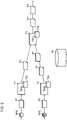
- FIG. 1 is a diagram illustrating the configuration of the information processing system 10.
- the information processing system 10 includes a queue 4a (hereinafter referred to as a storage device 4a) and a queue 4b (hereinafter referred to as a storage device 4b) which store sensor data DT transmitted from a plurality of sensors (not illustrated), and an information processing device 1 (hereinafter referred to as a stream processing device 1) which is one or more physical machines or virtual machines that execute tasks for each sensor data item DT stored in the queue 4a and the queue 4b.
- the sensor data DT is, for instance, data, e.g., a measurement value of a thermometer in a factory or a current position of a vehicle.
- the queue 4a and the queue 4b will be collectively simply referred to as a queue 4.
- the information processing device 1 performs a process of sequentially executing a task T1, a task T2, and a task T3 for each sensor data item DT (hereinafter referred to as a stream data process or data process).
- a task T the tasks including the task T1, the task T2 and the task T3 will be collectively simply referred to as a task T.
- the information processing device 1 may sequentially execute a number of tasks other than three.
- the information processing device 1 executes the task T1 for sensor data DT stored in the queue 4a and executes the task T2 for sensor data DT stored in the queue 4b. Then, the information processing device 1 executes the task T3, for instance, for the sensor data DT on which the task T1 has been executed (an execution result of the task T1) and the sensor data DT on which the task T2 has been executed (an execution result of the task T2). Then, the information processing device 1 outputs, for instance, the sensor data DT on which the task T3 has been executed (an execution result of the task T3) to a predesignated operation terminal (not illustrated) or the like.
- the stream data process may be performed in parallel in, for instance, a plurality of information processing devices 1. That is, in the plurality of information processing devices 1, for instance, a distributed stream data process for executing the task T1, the task T2, and the task T3 in parallel may be performed for each sensor data item DT.
- each of the task T1, the task T2 and the task T3 may be shared and executed by, for instance, the plurality of information processing devices 1.
- the information processing device 1 includes a storage device T1a that stores an internal state, e.g., an execution result of the task T1 (hereinafter referred to as an internal state of the task T1), a storage device T2a that stores an internal state, e.g., an execution result of the task T2 (hereinafter referred to as an internal state of the task T2), and a storage device T3a that stores an internal state, e.g., an execution result of the task T3 (hereinafter referred to as an internal state of the task T3).
- an internal state of the task T1 hereinafter referred to as an internal state of the task T1
- a storage device T2a that stores an internal state, e.g., an execution result of the task T2 (hereinafter referred to as an internal state of the task T2)
- a storage device T3a that stores an internal state, e.g., an execution result of the task T3 (hereinafter referred to as an internal state of the task T3)
- the information processing system 10 periodically saves the internal states of the tasks. Specifically, for instance, the information processing system 10 saves the internal states of the tasks according to a distributed checkpoint method in which the internal states of the tasks are saved for each task. Then, for instance, when a failure, e.g., network disconnection occurs, the information processing system 10 restores the state before the failure occurs using the saved internal state, and executes each task again from the restored state.
- a failure e.g., network disconnection
- FIG. 2 to FIG. 8 are diagrams illustrating a distributed checkpoint method.
- a barrier marker is transmitted and received between the tasks in order to notify each task of a timing at which the internal state is saved. Specifically, in each task, the internal state of each task is saved in response to receiving the barrier marker.
- the information processing device 1 periodically transmits and receives barrier markers including a barrier marker BM1 and a barrier marker BM2 together with the sensor data DT.
- the barrier marker BM1 is a barrier marker that is transmitted to the task T3 via the task T1
- the barrier marker BM2 is a barrier marker that is transmitted to the task T3 via the task T2.
- the barrier marker BM2 reaches the task T2
- the internal state stored in the storage device T2a is saved in a storage device T0 at the time at which the barrier marker BM2 is received.
- the task T3 waits until the barrier marker BM1 arrives.
- the task T3 is a task to be executed on the sensor data DT on which the task T1 has been executed (an execution result of the task T1) and the sensor data DT on which the task T2 has been executed (an execution result of the task T2). Therefore, the task T3 waits until the barrier marker arrives from all transmission sources (the task T1 and the task T2) of the sensor data DT for the task T3.
- the internal state stored in the storage device T1a is saved in the storage device T0 at the time at which the barrier marker BM1 is received.
- the barrier marker BM1 reaches the task T3, in the task T3, it is determined that the barrier marker has arrived from all transmission sources of the sensor data DT for the task T3, and as illustrated in FIG. 6 , the internal state stored in the storage device T3a is saved in the storage device T0 at the time at which the barrier marker BM1 is received.
- a barrier marker BM3 is transmitted to the next task T.
- the information processing device 1 can arrange sensor data DT to be processed until the internal state is saved between the tasks.
- the information processing device 1 returns the internal state transmitted from the storage device T1a according to the arrival of the barrier marker BM1 among the internal states stored in the storage device T0 to the storage device T1a.
- the information processing device 1 returns the internal state transmitted from the storage device T2a according to the arrival of the barrier marker BM2 among the internal states stored in the storage device T0 to the storage device T2a.
- the information processing device 1 returns the internal state transmitted from the storage device T3a according to the arrival of the barrier marker BM1 and the barrier marker BM2 among the internal states stored in the storage device T0 to the storage device T3a.
- the information processing device 1 restores the states of the task T1, the task T2 and the task T3 to the state before the failure occurs using the internal state saved according to the distributed checkpoint method.
- the information processing device 1 processes in order from the sensor data DT immediately after the barrier marker BM1 and the barrier marker BM2, and completes the recovery by catching up with a read position for the sensor data DT at the time at which the failure occurred.
- the information processing device 1 can prevent the occurrence of inconsistency between before and after the recovery.
- FIG. 9 to FIG. 11 are diagrams illustrating access to the external system 3.
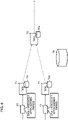
- FIG. 9 is a diagram illustrating a configuration of the information processing device 1, the access proxy execution device 2 and the external system 3.
- the access proxy execution device 2 (hereinafter referred to as an information processing device 2) is, for instance, one or more physical machines or virtual machines, and transmits a request to the external system 3 and receives (waits for) a response from the external system 3 on behalf of the information processing device 1. For instance, the access proxy execution device 2 performs the stream data process in the same manner as in the information processing device 1, and secures failure resistance according to a distributed checkpoint method.
- the external system 3 is a database system that manages various data items that are not stored in the information processing device 1 as the internal states of the tasks.
- the information processing device 1 transmits the request that needs to be transmitted to the access proxy execution device 2.
- the information processing device 1 stores a request for the external system 3 in a queue 5a.
- the access proxy execution device 2 acquires the request stored in the queue 5a and stores the request in a queue 6a. Then, the external system 3 executes, for instance, a process corresponding to the request stored in the queue 6a.
- the external system 3 stores a plurality of responses to the request in a queue 6b, for instance, in response to the end of execution of the process corresponding to the request.
- the access proxy execution device 2 acquires the plurality of responses stored in the queue 6b and stores the responses in a queue 5b.
- the information processing device 1 sequentially acquires the plurality of responses stored in the queue 5b and sequentially executes a task for each acquired response.
- the information processing device 1 transmits a request to the access proxy execution device 2.
- the information processing device 1 transmits and receives a request and a response between it and the access proxy execution device 2 via the queue 5a and the queue 5b.
- the access proxy execution device 2 transmits and receives a request and a response between it and the external system 3 via the queue 6a and the queue 6b.
- the information processing device 1 does not need to wait until the response from the access proxy execution device 2 is received, and can continuously execute tasks for the next and subsequent sensor data DT.
- the access proxy execution device 2 does not need to wait until the response from the external system 3 is received, and can continuously transmit the next and subsequent requests.
- the information processing device 1 can minimize a waiting time for the barrier marker generated according to access to the external system 3 (for instance, the waiting time for the barrier marker BM1 and the barrier marker BM2 in the task T3 illustrated in FIG. 2 and the like). Therefore, the information processing device 1 can minimize, for instance, a decrease in the processing speed in the tasks.
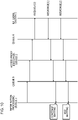
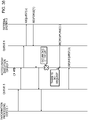
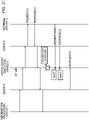
- FIG. 10 and FIG. 11 are sequence chart diagrams when access to the external system 3 is performed.
- the queue 5a and the queue 5b will be collectively simply referred to as a queue 5
- the queue 6a and the queue 6b will be collectively simply referred to as a queue 6.
- the information processing device 1 transmits a request (1) to the external system 3 via the queue 5, the access proxy execution device 2 and the queue 6. Then, when the external system 3 receives the request (1) transmitted from the information processing device 1, it executes a process corresponding to the received request (1).
- the external system 3 when the external system 3 generates a response (1) and a response (2) as the response corresponding to the request (1) transmitted from the information processing device 1, it transmits the response (1) to which information indicating that it is not the last response corresponding to the request (1) is added to the information processing device 1 via the queue 6, the access proxy execution device 2 and the queue 5. In addition, in this case, the external system 3 transmits the response (2) to which information indicating that it is the last response corresponding to the request (1) is added to the information processing device 1 via the queue 6, the access proxy execution device 2 and the queue 5.
- the information processing device 1 receives the response (1), it waits until an additional response corresponding to the request (1) is received according to the information added to the received response (1).
- the information processing device 1 receives the response (2), it ends waiting for the response corresponding to the request (1) according to the information added to the received response (2).
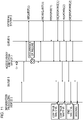
- the access proxy execution device 2 can acquire the request (1) acquired after the time CP from the queue 5 again, and transmit it to the external system 3 via the queue 6.
- the request (1) is transmitted to the external system 3 twice, and the external system 3 transmits a response (1) (hereinafter referred to as a (re) response (1)) and a response (2) (hereinafter referred to as a (re) response (2)) corresponding to a second request (1) (hereinafter referred to as a (re) request (1)) to the information processing device 1, in addition to the response (1) and the response (2) corresponding to the first request (1).
- a response (1) hereinafter referred to as a (re) response (1)
- a response (2) hereinafter referred to as a (re) response (2)
- the information processing device 1 receives the received responses (the response (1), the (re) response (1) and the response (2)) as responses corresponding to the request (1) until the response (2) to which information indicating that it is the last response corresponding to the request (1) is added is received.
- the information processing device 1 receives the response (1) and the (re) response (1) which are responses having the same content as the response corresponding to the request (1), and inconsistency occurs in the response corresponding to the request (1).
- the information processing device 1 executes, for instance, a task for the received sensor data DT in response to receiving the sensor data DT to be processed. Then, when a process of performing a request for the external system 3 (hereinafter referred to as another information processing system) is executed as the task is executed for the sensor data DT, the information processing device 1 transmits the request to the access proxy execution device 2.
- a process of performing a request for the external system 3 hereinafter referred to as another information processing system
- the access proxy execution device 2 converts the identifier included in the request into a reversibly convertible conversion identifier in response to receiving the request. Specifically, for instance, the access proxy execution device 2 generates a conversion identifier, which is a new identifier, by adding a time stamp (hereinafter referred to as an additional identifier) to the identifier included in the request (for instance, a request ID). Then, the access proxy execution device 2 transmits a request including the converted conversion identifier to the external system 3.
- a conversion identifier which is a new identifier, by adding a time stamp (hereinafter referred to as an additional identifier) to the identifier included in the request (for instance, a request ID).
- the access proxy execution device 2 reconverts the conversion identifier included in the response into an identifier in response to receiving the response corresponding to the request. Then, the access proxy execution device 2 transmits a response including the reconverted identifier and the conversion identifier to the information processing device 1.
- the access proxy execution device 2 converts the identifier included in the request into a conversion identifier, and therefore, even when the same request is transmitted a plurality of times as the recovery is executed, each request is transmitted to the external system 3 in a distinguishable manner. Then, when the access proxy execution device 2 receives the response from the external system 3, it transmits the received response to the information processing device 1 while the request corresponding to the response is distinguishable.
- the information processing device 1 can identify a response corresponding to each request as the response corresponding to different requests. Therefore, the information processing device 1 can specify the response that needs to be discarded (the same response as the response that has already been received) among the responses received from the access proxy execution device 2, and prevent the occurrence of inconsistency in the response.
- FIG. 12 is a diagram illustrating a hardware configuration of the information processing device 1.
- FIG. 13 is a diagram illustrating a hardware configuration of the access proxy execution device 2.
- the information processing device 1 includes a CPU 101, which is a processor, a memory 102, an I/O interface 103, and a storage medium 104. Respective units are connected to each other via a bus 105.
- the storage medium 104 has, for instance, a program storage area (not illustrated) in which a program 110 for performing the stream data process is stored.
- the storage medium 104 has, for instance, an information storage area 130 in which information used when the stream data process is performed is stored.
- the storage medium 104 may be, for instance, a hard disk drive (HDD) or a solid state drive (SSD).
- the CPU 101 executes the program 110 loaded from the storage medium 104 into the memory 102 and performs the stream data process.
- the I/O interface 103 is, for instance, an interface device, e.g., a network interface card, and can access the access proxy execution device 2 via a network, e.g., the Internet.
- a network e.g., the Internet.
- the access proxy execution device 2 includes a CPU 201, which is a processor, a memory 202, an I/O interface 203, and a storage medium 204. Respective units are connected to each other via a bus 205.
- the storage medium 204 has, for instance, a program storage area (not illustrated) in which a program 210 for performing the stream data process is stored.
- the storage medium 204 has, for instance, an information storage area 230 in which information used when the stream data process is performed is stored.
- the storage medium 204 may be, for instance, an HDD or an SSD.
- the CPU 201 executes the program 210 loaded from the storage medium 204 into the memory 202 and performs the stream data process.
- the I/O interface 203 is, for instance, an interface device, e.g., a network interface card, and can access the information processing device 1 and the external system 3 via a network, e.g., the Internet.
- a network e.g., the Internet.
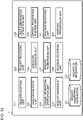
- FIG. 14 is a functional block diagram of the information processing device 1.
- FIG. 15 is a functional block diagram of the access proxy execution device 2.
- the information processing device 1 organically cooperates with hardware, e.g., the CPU 101 and the memory 102, and the program 110, and thus realizes various functions of a data reception unit 111, an application task execution unit 112 (hereinafter referred to as an app task execution unit 112), a request management unit 113, a request transmission unit 114, a response reception unit 115, a consistency determination unit 116, and a duplication determination unit 117.
- the information processing device 1 stores, for instance, request management information 131, runtime-specific information 132, and response-specific information 133 in the information storage area 130.
- the data reception unit 111 sequentially acquires, for instance, the sensor data DT stored in the queue 4. In addition, the data reception unit 111 receives, for instance, the sensor data DT transmitted from the previous stage task (the previous stage task that operates in the same information processing device 1 or another information processing device 1).
- the application task execution unit 112 executes, for instance, a task for the sensor data DT received by the data reception unit 111.
- the request management unit 113 when there is a need to transmit a request to the external system 3 as the task is executed by the application task execution unit 112, the request management unit 113 generates a request for the external system 3. Then, for instance, the request management unit 113 stores information relating to the generated request as the request management information 131 in the information storage area 130.
- the request transmission unit 114 transmits the request generated by the request management unit 113 to the access proxy execution device 2.
- the response reception unit 115 receives, for instance, the response transmitted from the access proxy execution device 2 (the response corresponding to the request transmitted from the request transmission unit 114). Specifically, the response reception unit 115 sequentially acquires, for instance, the responses stored in the queue 5.
- the consistency determination unit 116 determines whether the response received by the response reception unit 115 is a response to be discarded from the content included in the response received by the response reception unit 115. Then, for instance, when the consistency determination unit 116 determines that the response received by the response reception unit 115 is a response to be discarded, the response received by the response reception unit 115 is discarded.
- the duplication determination unit 117 determines whether the response received by the response reception unit 115 is the same response (hereinafter referred to as a duplication response) as the response received in the past from the content included in the response received by the response reception unit 115. Then, for instance, when the duplication determination unit 117 determines that the response received by the response reception unit 115 is a duplication response, the response received by the response reception unit 115 is discarded.
- the runtime-specific information 132 and the response-specific information 133 will be described below.
- the access proxy execution device 2 organically cooperates with hardware, e.g., the CPU 201 and the memory 202, and the program 210, and thus realizes various functions of a request reception unit 211, a duplication filter unit 212, a unique information generation unit 213, a request management unit 214, a request processing unit 215, an identifier conversion unit 216, a request transmission unit 217, a response reception unit 218, a unique information extraction unit 219, a specific information addition unit 220, a response processing unit 221, and a response transmission unit 222.
- hardware e.g., the CPU 201 and the memory 202, and the program 210, and thus realizes various functions of a request reception unit 211, a duplication filter unit 212, a unique information generation unit 213, a request management unit 214, a request processing unit 215, an identifier conversion unit 216, a request transmission unit 217, a response reception unit 218, a unique information extraction unit 219, a specific information addition unit 220,
- the access proxy execution device 2 stores, for instance, request management information 231 and request ID information 232 in the information storage area 230.
- the request reception unit 211 receives, for instance, the request transmitted from the information processing device 1. Specifically, the request reception unit 211 sequentially acquires, for instance, the request stored in the queue 5.
- the duplication filter unit 212 determines whether the request received by the request reception unit 211 is the same request (hereinafter referred to as a duplication request) as the request received in the past from the content of the request received by the request reception unit 211. Then, for instance, when the duplication filter unit 212 determines that the request received by the request reception unit 211 is a duplication request, the request received by the request reception unit 211 is discarded.
- the request reception unit 211 generates runtime-specific information corresponding to the request.
- the runtime-specific information is, for instance, a time stamp indicating the time when the request reception unit 211 receives the request.
- the request management unit 214 stores information corresponding to the request received by the request reception unit 211 as the request management information 231 in the information storage area 130.
- the request processing unit 215 converts the request received by the request reception unit 211 in response to the external system 3 which is a request transmission destination.
- the identifier conversion unit 216 converts the identifier included in the request received by the request reception unit 211 into a reversibly convertible conversion identifier.
- the identifier is, for instance, a request ID that can identify each request.
- the identifier conversion unit 216 generates a conversion identifier by adding runtime-specific information generated by the unique information generation unit 213 to the identifier included in the request received by the request reception unit 211.
- the request transmission unit 217 transmits the request including the conversion identifier converted by the identifier conversion unit 216 to the external system 3.
- the response reception unit 218 receives, for instance, the response transmitted from the external system 3 (the response corresponding to the request transmitted from the request transmission unit 217). Specifically, the response reception unit 218 sequentially acquires, for instance, the response stored in the queue 6.
- the unique information extraction unit 219 extracts, for instance, runtime-specific information from the response received by the response reception unit 218. Then, for instance, the unique information extraction unit 219 adds the extracted runtime-specific information to the response received by the response reception unit 218.
- the specific information addition unit 220 acquires, for instance, response-specific information corresponding to the response received by the response reception unit 218.
- the response-specific information is, for instance, a storage position (offset) in the queue 6 in which the response received by the response reception unit 218 is stored. Then, for instance, the specific information addition unit 220 adds the acquired response-specific information to the response received by the response reception unit 218.
- the response processing unit 221 converts, for instance, as needed, the response to which runtime-specific information is added by the unique information extraction unit 219 (the response to which response-specific information is added by the specific information addition unit 220).
- the response transmission unit 222 transmits, for instance, the response converted by the response processing unit 221 to the information processing device 1.
- the request ID information 232 will be described below.
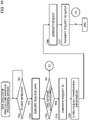
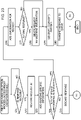
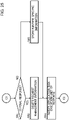
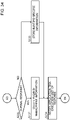
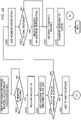
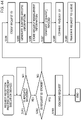
- FIG. 16 and FIG. 17 are flowcharts illustrating the outline of the stream data process according to the first embodiment.
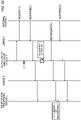
- FIG. 18 is a diagram illustrating the outline of the stream data process according to the first embodiment.
- the information processing device 1 waits until it receives the sensor data DT (NO in S11).
- the information processing device 1 starts, for instance, execution of a task for the sensor data DT (S12).
- the information processing device 1 transmits the request for the external system 3 to the access proxy execution device 2 (S14).
- the information processing device 1 when there is no need to transmit a request to the external system 3 (NO in S13), the information processing device 1 does not execute the process of S14.
- the access proxy execution device 2 waits until the request transmitted from the information processing device 1 is received (NO in S21).
- the access proxy execution device 2 converts the identifier included in the request into a reversibly convertible conversion identifier (S22).
- the access proxy execution device 2 transmits, for instance, the request including the conversion identifier to the external system 3 (S23).
- the access proxy execution device 2 waits until the response from the external system 3 is received (NO in S24).
- the access proxy execution device 2 reconverts, for instance, the conversion identifier included in the response into an identifier (S25).
- the access proxy execution device 2 transmits, for instance, the response including the reconverted identifier and the conversion identifier to the information processing device 1 (S26).
- the information processing device 1 can identify a response corresponding to each request as the response corresponding to different requests even when the same request is transmitted a plurality of times as the recovery is executed. Therefore, the information processing device 1 can specify the response that needs to be discarded among the responses received from the access proxy execution device 2 and prevent the occurrence of inconsistency in the response.
- the conversion identifier (hereinafter referred to as a first conversion identifier) generated from the identifier included in the request (1) is added to the request (1)
- another conversion identifier (hereinafter referred to as a second conversion identifier) generated from the identifier included in the (re) request (1) is added to the (re) request (1). That is, the first conversion identifier and the second conversion identifier that can distinguish and identify each request are added to the request (1) and the (re) request (1).
- each of the response (1) and the response (2) is, for instance, transmitted to the information processing device 1 while the first conversion identifier that can identify the request (1) corresponding to each response is held, and each of the (re) response (1) and the (re) response (2) is transmitted to the information processing device 1 while the second conversion identifier that can identify the (re) request (1) corresponding to each response is held.
- the information processing device 1 determines that the identifier of the response (1) and the identifier of the (re) response (1) are the same, but the first conversion identifier of the response (1) and the second conversion identifier of the (re) response (1) are different from each other, and discards the (re) response (1).
- the(re) response (2) is received after the response (1), it is determined that the identifier of the response (1) and the identifier of the (re) response (2) are the same, but the first conversion identifier of the response (1) and the second conversion identifier of the (re) response (2) are different from each other, and the (re) response (2) is discarded.
- the information processing device 1 determines that the (re) request (1), which is the same request as the request (1), has occurred, for instance, and discards the (re) response (1) and the (re) response (2).
- the information processing device 1 determines that the identifier of the response (1) and the identifier of the response (2) are the same and the first conversion identifier of the response (1) and the first conversion identifier of the response (2) are the same, and does not discard the response (2).
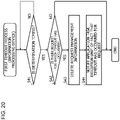
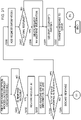
- FIG. 19 to FIG. 25 are flowcharts illustrating details of the stream data process according to the first embodiment.
- FIG. 26A, to FIG. 28B are diagrams illustrating details of the stream data process according to the first embodiment.
- a process of executing a task for sensor data DT (hereinafter referred to as a task execution process) will be described.
- the data reception unit 111 waits until the sensor data DT is received (NO in S31).
- the application task execution unit 112 starts, for instance, execution of the task for the received sensor data DT (S32).
- the request management unit 113 when there is a need to transmit a request to the external system 3 as the task for the sensor data DT is executed (YES in S33), the request management unit 113 generates a request ID for identifying the request for the external system 3 (S34). Then, the request management unit 113 stores, for instance, information including the request ID generated in the process of S34 as the request management information 131 in the information storage area 130 (S35).
- the request management information 131 will be described.
- FIG. 26A, FIG. 26B, FIG. 26C and FIG. 35 are diagrams illustrating specific examples of the request management information 131 and the request management information 231. Specifically, FIG. 26A, FIG. 26C and FIG. 35 are diagrams illustrating specific examples of the request management information 131. In addition, FIG. 26B is a diagram illustrating a specific example of the request management information 231.
- the request management information 131 illustrated in FIG. 26A and the like includes, as items, for instance, a "request ID” in which a request ID for identifying each request is set, a “time stamp” in which a generation time of the request management information 131 corresponding to each request is set, and a “timeout time” in which a timeout time corresponding to each request (a time at which waiting for the response corresponding to each request ends) is set.
- the request management unit 113 generates, for instance, a request for the external system 3 from information items included in the request management information 131 stored in the information storage area 130 (S36).
- S36 information storage area 130
- FIG. 27A and FIG. 27B illustrate diagrams explaining specific examples of requests.
- FIG. 27A is a diagram explaining a specific example of a request generated in the process of S36 (hereinafter referred to as a request RQ1).
- FIG. 27B is a diagram explaining a specific example of a request in which runtime-specific information is added to a request ID in the process of S55 to be described below (hereinafter referred to as a request RQ2).
- the request transmission unit 114 transmits, for instance, the request generated in the process of S36 to the queue 5 (S37).
- the request management unit 113 and the request transmission unit 114 do not perform the process after S34.
- a process performed when a request timeout occurs in the information processing device 1 (hereinafter referred to as a first timeout process) will be described.
- the request management unit 113 waits until the determination timing is reached (NO in S41).
- the determination timing may be, for instance, a periodic timing, e.g., an interval of 1 minute.
- the request management unit 113 refers to, for instance, the request management information 131 stored in the information storage area 130, and determines whether there is a request for which a timeout has occurred (S42).
- the request management unit 113 refers to, for instance, the request management information 131 illustrated in FIG. 26A , and determines whether there is a request for which the time set in "timeout" has already passed.
- the request management unit 113 deletes the request management information 131 corresponding to the request for which it is determined that a timeout has occurred, for instance, within the request management information 131 stored in the information storage area 130 (S43).
- the request management unit 113 notifies the application task execution unit 112 of information indicating that a timeout has occurred for the request determined to exist in the process of S42 (S44).
- the request management unit 113 does not perform the process after S43.
- a process performed when the access proxy execution device 2 receives the request transmitted from the information processing device 1 (hereinafter referred to as a request reception process) will be described.
- the unique information generation unit 213 waits until the request reception unit 211 receives the request transmitted from the information processing device 1 (NO in S51).
- the unique information generation unit 213 waits until the request reception unit 211 acquires a request from the queue 5.
- the request reception unit 211 may acquire a request at a periodic timing, e.g., an interval of 1 second.
- the unique information generation unit 213 generates, for instance, runtime-specific information corresponding to the received request (S52).
- the unique information generation unit 213 generates, for instance, a time stamp indicating the time when the request reception unit 211 receives the request as runtime-specific information.
- the request management unit 214 stores, for instance, each information item including the runtime-specific information generated in the process of S52 as the request management information 231 in the information storage area 230 (S53).
- the request management information 231 will be described.
- the request management information 231 illustrated in FIG. 26B includes, as items, for instance, a "request ID” in which a request ID for identifying each request is set, a “time stamp” in which a generation time of the request management information 231 corresponding to each request is set, and a “timeout time” in which a timeout time corresponding to each request (a time at which waiting for the response corresponding to each request ends) is set.
- the request processing unit 215 generates (converts) a payload of the request received in the process of S51 (S54).
- the request processing unit 215 converts, for instance, the request received in the process of S51 into a state in which the external system 3 that transmits the request can be identified.
- the identifier conversion unit 216 converts, for instance, the request ID included in the request received in the process of S51 (S55).
- the identifier conversion unit 216 adds, for instance, the runtime-specific information generated in the process of S52 to the request ID included in the request received in the process of S51.
- the runtime-specific information generated in the process of S52 to the request ID included in the request received in the process of S51.
- the request ID whose end is converted into a time stamp (for instance, a time stamp indicating the time when the request reception unit 211 receives the request) is set in "requestId. "
- the request transmission unit 217 transmits, for instance, the request whose request ID is converted in the process of S55 to the queue 6 (S56).
- a process performed when a request timeout occurs in the access proxy execution device 2 (hereinafter referred to as a second timeout process) will be described.
- the request management unit 214 waits until the determination timing is reached (NO in S61).
- the determination timing may be, for instance, a periodic timing, e.g., an interval of 1 minute.
- the request management unit 214 refers to, for instance, the request management information 231 stored in the information storage area 230, and determines whether there is a request for which a timeout has occurred (S62).
- the request management unit 214 refers to, for instance, the request management information 231 illustrated in FIG. 26B , and determines whether there is a request for which the time set in "timeout" has already passed.
- the request management unit 214 deletes the request management information 231 corresponding to the request for which it is determined that a timeout has occurred, for instance, within the request management information 231 stored in the information storage area 230 (S63).
- the request management unit 214 transmits information indicating that a timeout has occurred for the request determined to exist in the process of S62 to the response processing unit 221 (S64).
- the request management unit 214 does not perform the process after S63.
- a process performed when the access proxy execution device 2 receives the response transmitted from the external system 3 (hereinafter referred to as a first response reception process) will be described.
- the unique information extraction unit 219 waits until the response reception unit 218 receives the response transmitted from the external system 3 (NO in S71). Specifically, for instance, the unique information extraction unit 219 waits until the response reception unit 218 acquires the response from the queue 6.
- the response reception unit 218 may acquire, for instance, the response at a periodic timing, e.g., an interval of 1 second.
- FIG. 28A and FIG. 28B illustrate diagrams explaining specific examples of responses.
- FIG. 28A is a diagram explaining a specific example of a response received in the process of S71 (hereinafter referred to as a response RS1).
- FIG. 28B is a diagram explaining a specific example of a response after conversion in the process of S79 to be described below (hereinafter referred to as a response RS2).
- the request ID whose end is converted into a time stamp (a time stamp indicating the time when the request reception unit 211 receives the request) is set in "requestId.”
- “hasNext” indicating whether each response is a final response is set.
- the final response is the last response transmitted from the external system 3 among the responses corresponding to the requests.
- “hasNext” for instance, "false” indicating that each response is the final response or “true” indicating that each response is not the final response is set.
- the unique information extraction unit 219 restores the request ID included in the received response (S72).
- the unique information extraction unit 219 specifies, for instance, a part other than the runtime-specific information within the request ID included in the response received by the response reception unit 218 as the restored request ID.
- the unique information extraction unit 219 adds, for instance, the runtime-specific information included in the response received in the process of S71 to the response received in the process of S71 (S73).
- a unique information extraction unit 119 sets the runtime-specific information in items other than the request ID in the response received in the process of S71.
- the request management unit 214 refers to, for instance, the request management information 231 stored in the information storage area 230, and determines whether there is the request management information 231 corresponding to the request including the request ID restored in the process of S72 (S74).
- the request management unit 214 adds, for instance, information needed for the request corresponding to the response received in the process of S71 to the response received in the process of S71 (S76).
- the request management unit 214 adds, for instance, information needed for processing the response in the information processing device 1 (for instance, information for identifying the task that outputs the request) within the information included in the request corresponding to the response received in the process of S71 (request received in the process of S51) to the response received in the process of S71.
- the request management unit 214 determines, for instance, whether the response received in the process of S71 is the final response (S77).
- the request management unit 214 determines, for instance, whether the "hasNext" of the response received in the process of S71 is "false.”
- the request management unit 214 deletes the request management information 231 determined to exist in the process of S74, for instance, within the request management information 231 stored in the information storage area 230 (S78).
- the request management unit 214 does not perform the process of S78.
- the response processing unit 221 generates (converts) a payload of the response to which information is added in the process of S76 (S79).
- S76 information is added in the process of S76
- the request ID reconverted by resetting "0" at the end (the request ID restored in the process of S72) is set in "requestId.”
- the runtime-specific information is set in "acceptedTime.”
- the response transmission unit 222 transmits, for instance, the response converted in the process of S79 to the queue 5 (S80).
- the request management unit 214 discards the response received in the process of S71 (S75).
- a process performed when the information processing device 1 receives the response transmitted from the external system 3 (hereinafter referred to as a second response reception process) will be described.
- the consistency determination unit 116 waits until the response reception unit 115 receives the response transmitted from the access proxy execution device 2 (NO in S81).
- the consistency determination unit 116 waits until the response reception unit 115 acquires a response from the queue 5.
- the response reception unit 115 may acquire, for instance, the response at a periodic timing, e.g., an interval of 1 second.
- the consistency determination unit 116 refers to, for instance, the request management information 131 stored in the information storage area 130, and determines whether there is the request management information 131 corresponding to the request ID included in the received response (S82).
- the consistency determination unit 116 determines, for instance, whether the request management information 131 determined to exist includes the runtime-specific information 132 (S84).
- the runtime-specific information 132 is runtime-specific information stored in the information storage area 130 in the process of S93 to be described below.
- the consistency determination unit 116 determines whether the response received in the process of S81 is the final response (S91).
- the consistency determination unit 116 deletes the request management information 131 determined to exist in the process of S82, for instance, within the request management information 131 stored in the information storage area 130 (S92).
- the consistency determination unit 116 stores, for instance, the runtime-specific information included in the response received in the process of S81 as the runtime-specific information 132 in the information storage area 130 (S93).
- the consistency determination unit 116 stores the runtime-specific information 132 as a part of the request management information 131 determined to exist in the process of S82 in the information storage area 130.
- the consistency determination unit 116 notifies, for instance, the application task execution unit 112 of the response received in the process of S81 (S94).
- the consistency determination unit 116 determines whether the runtime-specific information included in the response received in the process of S81 matches the runtime-specific information 132 included in the request management information 131 determined to exist in the process of S82 (S85).
- the consistency determination unit 116 notifies, for instance, the application task execution unit 112 of the response received in the process of S81 (S86).
- the consistency determination unit 116 determines, for instance, whether the response received in the process of S81 is the final response (S87).
- the consistency determination unit 116 deletes, for instance, the request management information 131 determined to exist in the process of S82 within the request management information 131 stored in the information storage area 230 (S88).
- the request management unit 214 does not perform the process of S88.
- the consistency determination unit 116 discards, for instance, the response received in the process of S81 (S83).
- the consistency determination unit 116 determines that the same response as the received response has been transmitted again. Then, in this case, the consistency determination unit 116 discards the response received in the process of S81 without notifying the application task execution unit 112 of the received response.
- the information processing device 1 can prevent the occurrence of inconsistency in the response transmitted from the external system 3.
- the consistency determination unit 116 discards the response received in the process of S81 (S83).
- the information processing device 1 executes, for instance, a task for the received sensor data DT in response to receiving the sensor data DT to be processed. Then, when a process of performing a request for the external system 3 is executed as the task is executed for the sensor data DT, the information processing device 1 transmits the request to the access proxy execution device 2.
- the access proxy execution device 2 converts the identifier included in the request into a reversibly convertible conversion identifier in response to receiving the request. Then, the access proxy execution device 2 transmits the request including the converted conversion identifier to the external system 3.
- the access proxy execution device 2 reconverts the conversion identifier included in the response into an identifier in response to receiving the response corresponding to the request. Then, the access proxy execution device 2 transmits a response including the reconverted identifier and the conversion identifier to the information processing device 1.
- the access proxy execution device 2 converts the identifier included in the request into a conversion identifier, and therefore, even when the same request is transmitted a plurality of times as the recovery is executed, each request is transmitted to the external system 3 in a distinguishable manner. Then, when the access proxy execution device 2 receives the response from the external system 3, it transmits the received response to the information processing device 1 while the request corresponding to the response is distinguishable.
- the information processing device 1 can identify a response corresponding to each request as the response corresponding to different requests. Therefore, the information processing device 1 can specify the response that needs to be discarded among the responses received from the access proxy execution device 2, and can prevent the occurrence of inconsistency in the response.
- FIG. 29 is a diagram illustrating access to the external system 3.
- FIG. 30 is a diagram illustrating the outline of the stream data process according to the second embodiment.
- points different from those of the stream data process according to the first embodiment will be described.
- the access proxy execution device 2 may acquire again the response (1) acquired after the time CP from the queue 6 and transmit it to the information processing device 1 via the queue 5.
- the information processing device 1 receives the response (1) and the (re) response (1), which are responses having the same content, and inconsistency occurs in the response corresponding to the request (1).
- the access proxy execution device 2 adds information indicating the transmission order from the external system 3 (the arrival order in the queue 6) to the response received from the external system 3. Then, the access proxy execution device 2 transmits the response to which the information indicating the transmission order from the external system 3 is added to the information processing device 1.
- the information processing device 1 receives the response from the access proxy execution device 2, it determines whether the transmission order of the received response is later than the transmission order of other received responses. As a result, when it is determined that the transmission order of the received response is not later than the transmission order of other received responses, the information processing device 1 discards the received response.
- the information processing device 1 determines that the received response has been transmitted again from the access proxy execution device 2 and discards the received response without notifying the application task execution unit 112 of the received response.
- the information processing device 1 can further minimize the occurrence of inconsistency in the response transmitted from the external system 3.
- FIG. 31 to FIG. 34 are flowcharts illustrating details of the stream data process according to the second embodiment.
- FIG. 35 is a diagram illustrating details of the stream data process according to the second embodiment.
- the unique information extraction unit 219 waits until the response reception unit 218 receives the response transmitted from the external system 3 (NO in S101).
- the unique information extraction unit 219 restores, for instance, the request ID included in the received response (S102).
- the unique information extraction unit 219 and the specific information addition unit 220 add, for instance, the runtime-specific information and the response-specific information included in the response received in the process of S101 to the response received in the process of S101 (S103).
- the unique information extraction unit 119 sets, for instance, the runtime-specific information in the response received in the process of S101 (items other than the request ID of the response received in the process of S101).
- the specific information addition unit 220 specifies, for instance, a storage position (offset) in the queue 6 in which the response received in the process of S101 is stored as response-specific information. Then, the specific information addition unit 220 sets, for instance, the response-specific information in the response received in the process of S101.
- the specific information addition unit 220 adds, for instance, response-specific information, which is information indicating the transmission order (the arrival order in the queue 6) of the response received in the process of S101 from the external system 3, to the response received in the process of S101.
- the request management unit 214 refers to, for instance, the request management information 231 stored in the information storage area 230, and determines whether there is the request management information 231 corresponding to the request including the request ID restored in the process of S102 (S104).
- the request management unit 214 adds information needed for the request corresponding to the response received in the process of S101 to the response received in the process of S101 (S106).
- the request management unit 214 deletes the request management information 231 determined to exist in the process of S104, for instance, within the request management information 231 stored in the information storage area 230 (S108).
- the request management unit 214 does not perform the process of S108.
- the response processing unit 221 generates (converts) a payload of the response to which information is added in the process of S106 (S109).
- the response transmission unit 222 transmits, for instance, the response converted in the process of S109 to the queue 5 (S110).
- the request management unit 214 deletes the request management information 231 determined to exist in the process of S104 (S105).
- a process performed when the information processing device 1 receives the response transmitted from the external system 3, which is a process performed before the second response reception process (hereinafter referred to as a third response reception process) will be described.
- the duplication determination unit 117 waits until the response reception unit 115 receives the response transmitted from the access proxy execution device 2 (NO in S111).
- the duplication determination unit 117 refers to, for instance, the request management information 131 stored in the information storage area 130, and determines whether there is the request management information 131 corresponding to the request ID included in the received response (S112).
- the duplication determination unit 117 determines, for instance, whether the request management information 131 determined to exist includes the response-specific information 133 (S114).
- the response-specific information 133 is response-specific information stored in the information storage area 130 in the process of S133 to be described below.
- the duplication determination unit 117 determines whether the response received in the process of S111 is the final response (S131).
- the duplication determination unit 117 deletes, for instance, the request management information 131 determined to exist in the process of S112 within the request management information 131 stored in the information storage area 130 (S132).
- the duplication determination unit 117 stores, for instance, the response-specific information included in the response received in the process of S111 as the response-specific information 133 in the information storage area 130 (S133).
- the request management unit 113 stores the response-specific information 133 as a part of the request management information 131 determined to exist in the process of S112 in the information storage area 130.
- the duplication determination unit 117 notifies, for instance, the application task execution unit 112 of the response received in the process of S111 (S134).
- the request management unit 113 determines, for instance, whether the response-specific information included in the response received in the process of S111 is greater than the response-specific information 133 included in the request management information 131 determined to exist in the process of S112 (S115).
- the duplication determination unit 117 updates, for instance, the response-specific information 133 included in the request management information 131 determined to exist in the process of S112 with the response-specific information included in the response received in the process of S111 (S116).
- the duplication determination unit 117 notifies the application task execution unit 112 of the response received in the process of S111 (S121).
- the duplication determination unit 117 determines whether the response received in the process of S111 is the final response (S122).
- the duplication determination unit 117 deletes, for instance, the request management information 131 determined to exist in the process of S112 within the request management information 131 stored in the information storage area 130 (S123).
- the request management unit 214 does not perform the process of S123.
- the duplication determination unit 117 discards the request received in the process of S111 (S113).
- the information processing device 1 determines that the received response has been transmitted again from the access proxy execution device 2, and discards the response received in the process of Sill.
- the information processing device 1 can further minimize the occurrence of inconsistency in the response transmitted from the external system 3.
- the duplication determination unit 117 discards the request received in the process of S111 (S113).
- FIG. 36 is a diagram illustrating access to the external system 3.
- FIG. 37 is a diagram illustrating the outline of the stream data process according to the third embodiment.
- points different from those of the stream data process according to the first embodiment will be described.
- the access proxy execution device 2 may acquire again the request (1) acquired after the time CP from the queue 5 and transmit it to the external system 3 via the queue 6, and acquire again the response (1) acquired after the time CP from the queue 6 and transmit it to the information processing device 1 via the queue 5.
- the access proxy execution device 2 can acquire the (re) response (1) before the (re) request (1). Therefore, even when the access proxy execution device 2 receives the (re) response (1), since there is no request management information 231 corresponding to the (re) request (1), the received (re) response (1) may be discarded. Therefore, in this case, the information processing device 1 is not able to receive all the responses for the request (1), and inconsistency occurs in the response corresponding to the request (1).
- the access proxy execution device 2 when the access proxy execution device 2 according to the third embodiment receives the response transmitted from the external system 3 before the request transmitted from the information processing device 1, it waits until the request corresponding to the received response is received.
- the information processing device 1 can further minimize the occurrence of inconsistency in the response transmitted from the external system 3.
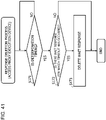
- FIG. 38 to FIG. 41 are flowcharts illustrating details of the stream data process according to the third embodiment.
- the response waiting until the request is received will be referred to as a wait response.
- the request management unit 214 waits until the request reception unit 211 receives the request transmitted from the information processing device 1 (NO in S141).
- the request management unit 214 refers to, for instance, the request management information 231 stored in the information storage area 230, and determines whether there is the request management information 231 corresponding to the request ID included in the request received in the process of S141 (S142).
- the request management unit 214 discards, for instance, the request received in the process of S141 (S143).
- the request management unit 214 determines, for instance, whether there is a wait response corresponding to the request ID included in the request received in the process of S141 in a wait response queue (not illustrated) (S144).
- the request management unit 214 acquires, for instance, one wait response determined to exist from the head (S145).
- the response transmission unit 222 transmits, for instance, the wait response acquired in the process of S145 to the queue 5 (S146).
- the response transmission unit 222 generates (converts) a payload of the wait response acquired in the process of S145 and transmits the converted response to the queue 5.
- the access proxy execution device 2 ends the request reception process.
- the request management unit 214 performs the process after S145 again.
- the unique information generation unit 213 when it is determined that there is no wait response corresponding to the request ID included in the request received in the process of S141 (NO in S144), as illustrated in FIG. 39 , the unique information generation unit 213 generates, for instance, runtime-specific information corresponding to the request received in the process of S141 (S151).
- the request management unit 214 stores, for instance, each information item including the runtime-specific information generated in the process of S151 as the request management information 231 in the information storage area 230 (S152).
- the request processing unit 215 generates (converts) a payload of the request received in the process of S152 (S153).
- the identifier conversion unit 216 converts, for instance, the request ID included in the request received in the process of S152 (S154).
- the request transmission unit 217 transmits, for instance, the request whose request ID is converted in the process of S154, to the queue 6 (S155).
- the unique information extraction unit 219 waits until the response reception unit 218 receives the response transmitted from the external system 3 (NO in S161).
- the unique information extraction unit 219 restores, for instance, the request ID included in the received response (S162).
- the unique information extraction unit 219 adds, for instance, the runtime-specific information included in the response received in the process of S161 to the response received in the process of S161 (S163).
- the request management unit 214 refers to, for instance, the request management information 231 stored in the information storage area 230, and determines whether there is the request management information 231 corresponding to the request including the request ID restored in the process of S162 (S164).
- the request management unit 214 adds, for instance, information needed for the request corresponding to the response received in the process of S161 to the response received in the process of S161 (S166).
- the request management unit 214 determines, for instance, whether the response received in the process of S161 is the final response (S167).
- the request management unit 214 deletes the request management information 231 determined to exist in the process of S164, for instance, within the request management information 231 stored in the information storage area 230 (S168).
- the request management unit 214 does not perform the process of S168.
- the response processing unit 221 generates (converts) a payload of the response to which information is added in the process of S166 (S169).
- the response transmission unit 222 transmits, for instance, the response converted in the process of S169 to the queue 5 (S170).
- the request management unit 214 adds, for instance, the response received in the process of S161 as a wait response to the wait response queue (S165).
- the request management unit 214 waits for the request corresponding to the response received in the process of S161 by setting the response received in the process of S161 as a wait response.
- the information processing device 1 can further minimize the occurrence of inconsistency in the response transmitted from the external system 3.
- a process of deleting a wait response stored in the wait response queue (hereinafter referred to as a response deletion process) will be described.
- the request management unit 214 waits until the determination timing is reached (NO in S171).
- the determination timing may be, for instance, a periodic timing, e.g., an interval of 1 minute.
- the request management unit 214 determines, for instance, whether there is a wait response in which the time elapsed since it is stored in the queue is a predetermined time or longer among wait responses stored in the wait response queue (S172).
- the request management unit 214 deletes, for instance, the wait response in which the time elapsed since it is stored in the queue is a predetermined time or longer among wait responses stored in the wait response queue (S173).
- the request management unit 214 does not perform the process of S173.
- FIG. 42 is a diagram illustrating access to the external system 3.
- FIG. 43 is a diagram illustrating the outline of the stream data process according to the fourth embodiment.
- points different from those of the stream data process according to the first embodiment will be described.
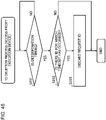
- the information processing device 1 transmits again the request transmitted after the time CP to the queue 5.
- the request (1) is transmitted to the external system 3 twice, and the external system 3 transmits the (re) response (1) corresponding to the (re) request (1) in addition to the response (1) corresponding to the request (1) to the information processing device 1. That is, in this case, the information processing device 1 receives the response (1) and the (re) response (1), which are responses having the same content, and inconsistency occurs in the response corresponding to the request (1).
- the access proxy execution device 2 when the request is received from the information processing device 1, the access proxy execution device 2 according to the fourth embodiment stores the request ID included in the received request. Then, when the access proxy execution device 2 receives another request having the stored request ID from the information processing device 1, it discards the received other request without transmitting the received other request to the queue 6.
- the access proxy execution device 2 when the access proxy execution device 2 receives a request having the same request ID as the request received in the past, it determines that the same request has been transmitted from the information processing device 1 and discards the received request.
- the information processing device 1 can further minimize the occurrence of inconsistency in the response transmitted from the external system 3.
- FIG. 44 and FIG. 45 are flowcharts illustrating details of the stream data process according to the fourth embodiment.
- FIG. 46 is a diagram illustrating details of the stream data process according to the fourth embodiment.
- the request management unit 214 waits until the request reception unit 211 receives the request transmitted from the information processing device 1 (NO in S181).
- the request management unit 214 refers to, for instance, the request ID information 232 stored in the information storage area 230, and determines whether there is the request management information 231 corresponding to the request ID included in the request received in the process of S181 (S182).
- the request management unit 214 discards, for instance, the request received in the process of S181 (S183).
- the request management unit 214 stores, for instance, the request ID included in the request received in the process of S181 as the request ID information 232 in the information storage area 230 (S184).
- the request ID information 232 will be described.
- FIG. 46 is a diagram illustrating a specific example of the request ID information 232.
- the unique information generation unit 213 generates, for instance, runtime-specific information corresponding to the request received in the process of S181 (S185).
- the request management unit 214 stores, for instance, each information item including the runtime-specific information generated in the process of S185 as the request management information 231 in the information storage area 230 (S186).
- the request processing unit 215 generates (converts) a payload of the request received in the process of S181 (S187).
- the identifier conversion unit 216 converts, for instance, the request ID included in the request received in the process of S181 (S188).
- the request transmission unit 217 transmits, for instance, the request whose request ID is converted in the process of S188 to the queue 6 (S189).
- an ID deletion process a process of deleting a request ID included in the request ID information 232 (hereinafter referred to as an ID deletion process) will be described.
- the request management unit 214 waits until the determination timing is reached (NO in S191).
- the determination timing may be, for instance, a periodic timing, e.g., an interval of 1 minute.
- the request management unit 214 determines, for instance, whether there is a request ID in which the time elapsed since it is stored as the request ID information 232 is a predetermined time or longer among request IDs included in the request ID information 232 stored in the information storage area 230 (S192).
- the request management unit 214 deletes, for instance, the request ID in which the time elapsed since it is stored as the request ID information 232 is a predetermined time or longer among request IDs included in the request ID information 232 stored in the information storage area 230 (S193).
- the request management unit 214 does not perform the process of S193.
Landscapes
- Engineering & Computer Science (AREA)
- Theoretical Computer Science (AREA)
- Software Systems (AREA)
- General Engineering & Computer Science (AREA)
- Physics & Mathematics (AREA)
- General Physics & Mathematics (AREA)
- Multimedia (AREA)
- Quality & Reliability (AREA)
- Computer Hardware Design (AREA)
- Information Retrieval, Db Structures And Fs Structures Therefor (AREA)
- Hardware Redundancy (AREA)
Abstract
Description
- The present invention relates to a data processing system, a data processing method, and a data processing program.
- In recent years, a stream processing system has been used in which a plurality of tasks (task programs) are sequentially executed and output for Internet of Things (IoT) data received from a plurality of sensors and the like.
- In such a stream processing system, for instance, when there is a need during execution of a task for IoT data (hereinafter simply referred to as data), a processing request (hereinafter referred to as a request) is transmitted to another information processing system (hereinafter referred to as an external system or a specific information processing system). Then, in an external system, in this case, a process corresponding to the received request is executed, and the process result (hereinafter referred to as a response) is transmitted to the stream processing system. Then, in the stream processing system, the response received from the external system is processed in the task (for instance, refer to
Japanese Translation of PCT Application No. 2019-535058 - In one aspect, an object of the present invention is to provide a data processing system, a data processing method, and a data processing program through which it is possible to prevent occurrence of inconsistency in a response transmitted from an external system.
- According to an aspect of the embodiments, a data processing system comprises: a first information processing device including: a first memory; and a first processor coupled to the first memory and the first processor configured to: execute, in response to receiving data to be processed, a task for the received data; and when a process of performing a first processing request for another information processing system is executed as the task for the data is executed, transmit the first processing request to a second information processing device, and the second information processing device including: a second memory; and a second processor coupled to the second memory and the second processor configured to: convert a first identifier included in the first processing request into a reversibly convertible first conversion identifier in response to receiving the first processing request; transmit the first processing request including the converted first conversion identifier to the other information processing system; reconvert, in response to receiving a first execution result of the process corresponding to the first processing request, the first conversion identifier included in the first execution result into the first identifier; and transmit the first execution result including the reconverted first identifier and the first conversion identifier to the first information processing device.
- According to one aspect, it is possible to prevent the occurrence of inconsistency in a response transmitted from an external system.
-
-
FIG. 1 is a diagram illustrating the configuration of theinformation processing system 10. -
FIG. 2 to FIG. 8 are diagrams illustrating a distributed checkpoint method. -
FIG. 9 to FIG. 11 are diagrams illustrating access to theexternal system 3. -
FIG. 12 is a diagram illustrating a hardware configuration of theinformation processing device 1. -
FIG. 13 is a diagram illustrating a hardware configuration of the accessproxy execution device 2. -
FIG. 14 is a functional block diagram of theinformation processing device 1. -
FIG. 15 is a functional block diagram of the accessproxy execution device 2. -
FIG. 16 andFIG. 17 are flowcharts illustrating the outline of the stream data process according to the first embodiment. -
FIG. 18 is a diagram illustrating the outline of the stream data process according to the first embodiment. -
FIG. 19 to FIG. 25 are flowcharts illustrating details of the stream data process according to the first embodiment. -
FIG. 26A, FIG. 26B and FIG. 26C are diagrams illustrating specific examples of therequest management information 131 and therequest management information 231. -
FIG. 27A and FIG. 27B illustrate diagrams explaining specific examples of requests. -
FIG. 28A and FIG. 28B illustrate diagrams explaining specific examples of responses. -
FIG. 29 is a diagram illustrating access to theexternal system 3. -
FIG. 30 is a diagram illustrating the outline of the stream data process according to the second embodiment. -
FIG. 31 to FIG. 34 are flowcharts illustrating details of the stream data process according to the second embodiment. -
FIG. 35 is a diagram illustrating specific examples of therequest management information 131. -
FIG. 36 is a diagram illustrating access to theexternal system 3. -
FIG. 37 is a diagram illustrating the outline of the stream data process according to the third embodiment. -
FIG. 38 to FIG. 41 are flowcharts illustrating details of the stream data process according to the third embodiment. -
FIG. 42 is a diagram illustrating access to theexternal system 3. -
FIG. 43 is a diagram illustrating the outline of the stream data process according to the fourth embodiment. -
FIG. 44 andFIG. 45 are flowcharts illustrating details of the stream data process according to the fourth embodiment. -
FIG. 46 is a diagram illustrating a specific example of therequest ID information 232. - In the above stream processing system, in order to secure failure resistance, for instance, the internal states of the tasks are periodically saved. Specifically, in the stream processing system, for instance, the internal states of the tasks are saved according to a distributed checkpoint method in which the internal states of the tasks are saved for each task. Then, in the stream processing system, for instance, when a failure, e.g., network disconnection occurs, the saved internal state is used to restore the state before the failure occurs (hereinafter referred to as a recovery), and each task is executed again from the restored state.
- However, for instance, when a request is transmitted to an external system when a failure occurs, a request and a response are transmitted and received again between the stream processing system and the external system as the above recovery is executed. Therefore, response inconsistency may occur in the stream processing system. Hereinafter, a configuration of an
information processing system 10 will be described. - Configuration of Information Processing System according to First Embodiment
-
FIG. 1 is a diagram illustrating the configuration of theinformation processing system 10. - For instance, the
information processing system 10 includes aqueue 4a (hereinafter referred to as astorage device 4a) and aqueue 4b (hereinafter referred to as astorage device 4b) which store sensor data DT transmitted from a plurality of sensors (not illustrated), and an information processing device 1 (hereinafter referred to as a stream processing device 1) which is one or more physical machines or virtual machines that execute tasks for each sensor data item DT stored in thequeue 4a and thequeue 4b. The sensor data DT is, for instance, data, e.g., a measurement value of a thermometer in a factory or a current position of a vehicle. Hereinafter, thequeue 4a and thequeue 4b will be collectively simply referred to as a queue 4. - Specifically, for instance, as illustrated in
FIG. 1 , theinformation processing device 1 performs a process of sequentially executing a task T1, a task T2, and a task T3 for each sensor data item DT (hereinafter referred to as a stream data process or data process). Hereinafter, the tasks including the task T1, the task T2 and the task T3 will be collectively simply referred to as a task T. Hereinafter, a case in which three tasks (the task T1, the task T2 and the task T3) are sequentially executed in theinformation processing device 1 will be described, but theinformation processing device 1 may sequentially execute a number of tasks other than three. - More specifically, for instance, as illustrated in
FIG. 1 , theinformation processing device 1 executes the task T1 for sensor data DT stored in thequeue 4a and executes the task T2 for sensor data DT stored in thequeue 4b. Then, theinformation processing device 1 executes the task T3, for instance, for the sensor data DT on which the task T1 has been executed (an execution result of the task T1) and the sensor data DT on which the task T2 has been executed (an execution result of the task T2). Then, theinformation processing device 1 outputs, for instance, the sensor data DT on which the task T3 has been executed (an execution result of the task T3) to a predesignated operation terminal (not illustrated) or the like. - Here, the stream data process may be performed in parallel in, for instance, a plurality of
information processing devices 1. That is, in the plurality ofinformation processing devices 1, for instance, a distributed stream data process for executing the task T1, the task T2, and the task T3 in parallel may be performed for each sensor data item DT. In addition, each of the task T1, the task T2 and the task T3 may be shared and executed by, for instance, the plurality ofinformation processing devices 1. - In addition, for instance, as illustrated in
FIG. 1 , theinformation processing device 1 includes a storage device T1a that stores an internal state, e.g., an execution result of the task T1 (hereinafter referred to as an internal state of the task T1), a storage device T2a that stores an internal state, e.g., an execution result of the task T2 (hereinafter referred to as an internal state of the task T2), and a storage device T3a that stores an internal state, e.g., an execution result of the task T3 (hereinafter referred to as an internal state of the task T3). - Here, for instance, in order to secure failure resistance, the
information processing system 10 periodically saves the internal states of the tasks. Specifically, for instance, theinformation processing system 10 saves the internal states of the tasks according to a distributed checkpoint method in which the internal states of the tasks are saved for each task. Then, for instance, when a failure, e.g., network disconnection occurs, theinformation processing system 10 restores the state before the failure occurs using the saved internal state, and executes each task again from the restored state. Hereinafter, the distributed checkpoint method will be described. -
FIG. 2 to FIG. 8 are diagrams illustrating a distributed checkpoint method. - In the
information processing device 1, a barrier marker is transmitted and received between the tasks in order to notify each task of a timing at which the internal state is saved. Specifically, in each task, the internal state of each task is saved in response to receiving the barrier marker. - More specifically, for instance, as illustrated in
FIG. 2 , theinformation processing device 1 periodically transmits and receives barrier markers including a barrier marker BM1 and a barrier marker BM2 together with the sensor data DT. The barrier marker BM1 is a barrier marker that is transmitted to the task T3 via the task T1, and the barrier marker BM2 is a barrier marker that is transmitted to the task T3 via the task T2. - Then, for instance, as illustrated in
FIG. 3 , when the barrier marker BM2 reaches the task T2, in the task T2, the internal state stored in the storage device T2a is saved in a storage device T0 at the time at which the barrier marker BM2 is received. - Subsequently, for instance, as illustrated in
FIG. 4 , when the barrier marker BM2 reaches the task T3, the task T3 waits until the barrier marker BM1 arrives. - That is, the task T3 is a task to be executed on the sensor data DT on which the task T1 has been executed (an execution result of the task T1) and the sensor data DT on which the task T2 has been executed (an execution result of the task T2). Therefore, the task T3 waits until the barrier marker arrives from all transmission sources (the task T1 and the task T2) of the sensor data DT for the task T3.
- Then, for instance, when the barrier marker BM1 reaches the task T1, in the task T1, the internal state stored in the storage device T1a is saved in the storage device T0 at the time at which the barrier marker BM1 is received.
- Then, for instance, as illustrated in
FIG. 5 , when the barrier marker BM1 reaches the task T3, in the task T3, it is determined that the barrier marker has arrived from all transmission sources of the sensor data DT for the task T3, and as illustrated inFIG. 6 , the internal state stored in the storage device T3a is saved in the storage device T0 at the time at which the barrier marker BM1 is received. In addition, in this case, in the task T3, for instance, a barrier marker BM3 is transmitted to the next task T. - Thereby, the
information processing device 1 can arrange sensor data DT to be processed until the internal state is saved between the tasks. - Here, for instance, when a checkpoint is completed by the arrival of the barrier marker BM3 to the terminal task in the
information processing device 1, and the checkpoint is the last checkpoint completed before the failure occurs, if recovery is performed according to the occurrence of the failure, as illustrated inFIG. 7 , theinformation processing device 1 returns the internal state transmitted from the storage device T1a according to the arrival of the barrier marker BM1 among the internal states stored in the storage device T0 to the storage device T1a. In addition, in this case, theinformation processing device 1 returns the internal state transmitted from the storage device T2a according to the arrival of the barrier marker BM2 among the internal states stored in the storage device T0 to the storage device T2a. In addition, in this case, theinformation processing device 1 returns the internal state transmitted from the storage device T3a according to the arrival of the barrier marker BM1 and the barrier marker BM2 among the internal states stored in the storage device T0 to the storage device T3a. - That is, when recovery is performed according to the occurrence of the failure, the
information processing device 1 restores the states of the task T1, the task T2 and the task T3 to the state before the failure occurs using the internal state saved according to the distributed checkpoint method. - Then, as illustrated in
FIG. 8 , theinformation processing device 1 processes in order from the sensor data DT immediately after the barrier marker BM1 and the barrier marker BM2, and completes the recovery by catching up with a read position for the sensor data DT at the time at which the failure occurred. - Thereby, even when recovery is executed according to the occurrence of the failure, the
information processing device 1 can prevent the occurrence of inconsistency between before and after the recovery. - Next, access to an
external system 3 will be described.FIG. 9 to FIG. 11 are diagrams illustrating access to theexternal system 3. - First, a configuration of the
information processing device 1, an accessproxy execution device 2 and theexternal system 3 will be described.FIG. 9 is a diagram illustrating a configuration of theinformation processing device 1, the accessproxy execution device 2 and theexternal system 3. - The access proxy execution device 2 (hereinafter referred to as an information processing device 2) is, for instance, one or more physical machines or virtual machines, and transmits a request to the
external system 3 and receives (waits for) a response from theexternal system 3 on behalf of theinformation processing device 1. For instance, the accessproxy execution device 2 performs the stream data process in the same manner as in theinformation processing device 1, and secures failure resistance according to a distributed checkpoint method. - In addition, for instance, the
external system 3 is a database system that manages various data items that are not stored in theinformation processing device 1 as the internal states of the tasks. - Then, for instance, when there is a need to transmit a request to the
external system 3 as the task is executed for the sensor data DT, theinformation processing device 1 transmits the request that needs to be transmitted to the accessproxy execution device 2. - Specifically, for instance, when there is a need during execution of a task for the sensor data DT, as illustrated in
FIG. 9 , theinformation processing device 1 stores a request for theexternal system 3 in aqueue 5a. - Subsequently, for instance, the access
proxy execution device 2 acquires the request stored in thequeue 5a and stores the request in aqueue 6a. Then, theexternal system 3 executes, for instance, a process corresponding to the request stored in thequeue 6a. - Then, the
external system 3 stores a plurality of responses to the request in aqueue 6b, for instance, in response to the end of execution of the process corresponding to the request. Then, for instance, the accessproxy execution device 2 acquires the plurality of responses stored in thequeue 6b and stores the responses in aqueue 5b. In addition, for instance, theinformation processing device 1 sequentially acquires the plurality of responses stored in thequeue 5b and sequentially executes a task for each acquired response. - That is, when there is a need to transmit a request to the
external system 3 as the task is executed the for the sensor data DT, theinformation processing device 1 transmits a request to the accessproxy execution device 2. In this case, theinformation processing device 1 transmits and receives a request and a response between it and the accessproxy execution device 2 via thequeue 5a and thequeue 5b. In addition, the accessproxy execution device 2 transmits and receives a request and a response between it and theexternal system 3 via thequeue 6a and thequeue 6b. - Thereby, even when there is a need to transmit a request to the
external system 3, theinformation processing device 1 does not need to wait until the response from the accessproxy execution device 2 is received, and can continuously execute tasks for the next and subsequent sensor data DT. In a same manner, even when there is a need to transmit a request to theexternal system 3, the accessproxy execution device 2 does not need to wait until the response from theexternal system 3 is received, and can continuously transmit the next and subsequent requests. - Therefore, for instance, the
information processing device 1 can minimize a waiting time for the barrier marker generated according to access to the external system 3 (for instance, the waiting time for the barrier marker BM1 and the barrier marker BM2 in the task T3 illustrated inFIG. 2 and the like). Therefore, theinformation processing device 1 can minimize, for instance, a decrease in the processing speed in the tasks. - Next, a sequence chart diagram when access to the
external system 3 is performed will be described.FIG. 10 andFIG. 11 are sequence chart diagrams when access to theexternal system 3 is performed. Hereinafter, thequeue 5a and thequeue 5b will be collectively simply referred to as aqueue 5, and thequeue 6a and thequeue 6b will be collectively simply referred to as aqueue 6. - As illustrated in
FIG. 10 , for instance, when there is a need during execution of a task for the sensor data DT, theinformation processing device 1 transmits a request (1) to theexternal system 3 via thequeue 5, the accessproxy execution device 2 and thequeue 6. Then, when theexternal system 3 receives the request (1) transmitted from theinformation processing device 1, it executes a process corresponding to the received request (1). - Then, for instance, when the
external system 3 generates a response (1) and a response (2) as the response corresponding to the request (1) transmitted from theinformation processing device 1, it transmits the response (1) to which information indicating that it is not the last response corresponding to the request (1) is added to theinformation processing device 1 via thequeue 6, the accessproxy execution device 2 and thequeue 5. In addition, in this case, theexternal system 3 transmits the response (2) to which information indicating that it is the last response corresponding to the request (1) is added to theinformation processing device 1 via thequeue 6, the accessproxy execution device 2 and thequeue 5. - Then, when the
information processing device 1 receives the response (1), it waits until an additional response corresponding to the request (1) is received according to the information added to the received response (1). In addition, when theinformation processing device 1 receives the response (2), it ends waiting for the response corresponding to the request (1) according to the information added to the received response (2). - Here, for instance, when a request is transmitted to the
external system 3 when the failure occurs, transmission of a request to theexternal system 3 and transmission of a response to theinformation processing device 1 may be performed again as the recovery is executed. Therefore, in theinformation processing device 1, for instance, inconsistency in the response to the request can occur. - Specifically, as illustrated in
FIG. 11 , for instance, when recovery is executed according to the occurrence of the failure in the accessproxy execution device 2, and the internal state of the accessproxy execution device 2 returns to a time CP, the accessproxy execution device 2 can acquire the request (1) acquired after the time CP from thequeue 5 again, and transmit it to theexternal system 3 via thequeue 6. - Therefore, in this case, the request (1) is transmitted to the
external system 3 twice, and theexternal system 3 transmits a response (1) (hereinafter referred to as a (re) response (1)) and a response (2) (hereinafter referred to as a (re) response (2)) corresponding to a second request (1) (hereinafter referred to as a (re) request (1)) to theinformation processing device 1, in addition to the response (1) and the response (2) corresponding to the first request (1). - Then, in this case, for instance, when the response (1), the (re) response (1), the response (2) and the (re) response (2) reach the
information processing device 1 in that order, theinformation processing device 1 receives the received responses (the response (1), the (re) response (1) and the response (2)) as responses corresponding to the request (1) until the response (2) to which information indicating that it is the last response corresponding to the request (1) is added is received. - That is, in this case, the
information processing device 1 receives the response (1) and the (re) response (1) which are responses having the same content as the response corresponding to the request (1), and inconsistency occurs in the response corresponding to the request (1). - Here, the
information processing device 1 according to the present embodiment executes, for instance, a task for the received sensor data DT in response to receiving the sensor data DT to be processed. Then, when a process of performing a request for the external system 3 (hereinafter referred to as another information processing system) is executed as the task is executed for the sensor data DT, theinformation processing device 1 transmits the request to the accessproxy execution device 2. - On the other hand, the access
proxy execution device 2 according to the present embodiment converts the identifier included in the request into a reversibly convertible conversion identifier in response to receiving the request. Specifically, for instance, the accessproxy execution device 2 generates a conversion identifier, which is a new identifier, by adding a time stamp (hereinafter referred to as an additional identifier) to the identifier included in the request (for instance, a request ID). Then, the accessproxy execution device 2 transmits a request including the converted conversion identifier to theexternal system 3. - In addition, the access
proxy execution device 2 reconverts the conversion identifier included in the response into an identifier in response to receiving the response corresponding to the request. Then, the accessproxy execution device 2 transmits a response including the reconverted identifier and the conversion identifier to theinformation processing device 1. - That is, the access
proxy execution device 2 according to the present embodiment converts the identifier included in the request into a conversion identifier, and therefore, even when the same request is transmitted a plurality of times as the recovery is executed, each request is transmitted to theexternal system 3 in a distinguishable manner. Then, when the accessproxy execution device 2 receives the response from theexternal system 3, it transmits the received response to theinformation processing device 1 while the request corresponding to the response is distinguishable. - Thereby, even when the same request is transmitted a plurality of times as the recovery is executed, the
information processing device 1 according to the present embodiment can identify a response corresponding to each request as the response corresponding to different requests. Therefore, theinformation processing device 1 can specify the response that needs to be discarded (the same response as the response that has already been received) among the responses received from the accessproxy execution device 2, and prevent the occurrence of inconsistency in the response. - Next, a hardware configuration of the
information processing system 10 will be described.FIG. 12 is a diagram illustrating a hardware configuration of theinformation processing device 1. In addition,FIG. 13 is a diagram illustrating a hardware configuration of the accessproxy execution device 2. - First, a hardware configuration of the
information processing device 1 will be described. - As illustrated in
FIG. 12 , theinformation processing device 1 includes aCPU 101, which is a processor, amemory 102, an I/O interface 103, and astorage medium 104. Respective units are connected to each other via abus 105. - The
storage medium 104 has, for instance, a program storage area (not illustrated) in which aprogram 110 for performing the stream data process is stored. In addition, thestorage medium 104 has, for instance, aninformation storage area 130 in which information used when the stream data process is performed is stored. Here, thestorage medium 104 may be, for instance, a hard disk drive (HDD) or a solid state drive (SSD). - The
CPU 101 executes theprogram 110 loaded from thestorage medium 104 into thememory 102 and performs the stream data process. - The I/
O interface 103 is, for instance, an interface device, e.g., a network interface card, and can access the accessproxy execution device 2 via a network, e.g., the Internet. - Next, a hardware configuration of the access
proxy execution device 2 will be described. - As illustrated in
FIG. 13 , the accessproxy execution device 2 includes aCPU 201, which is a processor, amemory 202, an I/O interface 203, and astorage medium 204. Respective units are connected to each other via abus 205. - The
storage medium 204 has, for instance, a program storage area (not illustrated) in which a program 210 for performing the stream data process is stored. In addition, thestorage medium 204 has, for instance, aninformation storage area 230 in which information used when the stream data process is performed is stored. Here, thestorage medium 204 may be, for instance, an HDD or an SSD. - The
CPU 201 executes the program 210 loaded from thestorage medium 204 into thememory 202 and performs the stream data process. - The I/
O interface 203 is, for instance, an interface device, e.g., a network interface card, and can access theinformation processing device 1 and theexternal system 3 via a network, e.g., the Internet. - Next, functions of the
information processing system 10 will be described.FIG. 14 is a functional block diagram of theinformation processing device 1. In addition,FIG. 15 is a functional block diagram of the accessproxy execution device 2. - First, the functional block diagram of the
information processing device 1 will be described. - As illustrated in
FIG. 14 , for instance, theinformation processing device 1 organically cooperates with hardware, e.g., theCPU 101 and thememory 102, and theprogram 110, and thus realizes various functions of adata reception unit 111, an application task execution unit 112 (hereinafter referred to as an app task execution unit 112), arequest management unit 113, arequest transmission unit 114, aresponse reception unit 115, aconsistency determination unit 116, and aduplication determination unit 117. - In addition, the
information processing device 1 stores, for instance,request management information 131, runtime-specific information 132, and response-specific information 133 in theinformation storage area 130. - The
data reception unit 111 sequentially acquires, for instance, the sensor data DT stored in the queue 4. In addition, thedata reception unit 111 receives, for instance, the sensor data DT transmitted from the previous stage task (the previous stage task that operates in the sameinformation processing device 1 or another information processing device 1). - The application
task execution unit 112 executes, for instance, a task for the sensor data DT received by thedata reception unit 111. - For instance, when there is a need to transmit a request to the
external system 3 as the task is executed by the applicationtask execution unit 112, therequest management unit 113 generates a request for theexternal system 3. Then, for instance, therequest management unit 113 stores information relating to the generated request as therequest management information 131 in theinformation storage area 130. - For instance, the
request transmission unit 114 transmits the request generated by therequest management unit 113 to the accessproxy execution device 2. - The
response reception unit 115 receives, for instance, the response transmitted from the access proxy execution device 2 (the response corresponding to the request transmitted from the request transmission unit 114). Specifically, theresponse reception unit 115 sequentially acquires, for instance, the responses stored in thequeue 5. - For instance, the
consistency determination unit 116 determines whether the response received by theresponse reception unit 115 is a response to be discarded from the content included in the response received by theresponse reception unit 115. Then, for instance, when theconsistency determination unit 116 determines that the response received by theresponse reception unit 115 is a response to be discarded, the response received by theresponse reception unit 115 is discarded. - For instance, the
duplication determination unit 117 determines whether the response received by theresponse reception unit 115 is the same response (hereinafter referred to as a duplication response) as the response received in the past from the content included in the response received by theresponse reception unit 115. Then, for instance, when theduplication determination unit 117 determines that the response received by theresponse reception unit 115 is a duplication response, the response received by theresponse reception unit 115 is discarded. The runtime-specific information 132 and the response-specific information 133 will be described below. - Next, a functional block diagram of the access
proxy execution device 2 will be described. - As illustrated in
FIG. 15 , for instance, the accessproxy execution device 2 organically cooperates with hardware, e.g., theCPU 201 and thememory 202, and the program 210, and thus realizes various functions of arequest reception unit 211, aduplication filter unit 212, a uniqueinformation generation unit 213, arequest management unit 214, arequest processing unit 215, anidentifier conversion unit 216, arequest transmission unit 217, aresponse reception unit 218, a uniqueinformation extraction unit 219, a specificinformation addition unit 220, aresponse processing unit 221, and aresponse transmission unit 222. - In addition, the access
proxy execution device 2 stores, for instance,request management information 231 andrequest ID information 232 in theinformation storage area 230. - The
request reception unit 211 receives, for instance, the request transmitted from theinformation processing device 1. Specifically, therequest reception unit 211 sequentially acquires, for instance, the request stored in thequeue 5. - For instance, the
duplication filter unit 212 determines whether the request received by therequest reception unit 211 is the same request (hereinafter referred to as a duplication request) as the request received in the past from the content of the request received by therequest reception unit 211. Then, for instance, when theduplication filter unit 212 determines that the request received by therequest reception unit 211 is a duplication request, the request received by therequest reception unit 211 is discarded. - For instance, in the unique
information generation unit 213, therequest reception unit 211 generates runtime-specific information corresponding to the request. The runtime-specific information is, for instance, a time stamp indicating the time when therequest reception unit 211 receives the request. - For instance, the
request management unit 214 stores information corresponding to the request received by therequest reception unit 211 as therequest management information 231 in theinformation storage area 130. - For instance, the
request processing unit 215 converts the request received by therequest reception unit 211 in response to theexternal system 3 which is a request transmission destination. - For instance, the
identifier conversion unit 216 converts the identifier included in the request received by therequest reception unit 211 into a reversibly convertible conversion identifier. The identifier is, for instance, a request ID that can identify each request. - Specifically, for instance, the
identifier conversion unit 216 generates a conversion identifier by adding runtime-specific information generated by the uniqueinformation generation unit 213 to the identifier included in the request received by therequest reception unit 211. - For instance, the
request transmission unit 217 transmits the request including the conversion identifier converted by theidentifier conversion unit 216 to theexternal system 3. - The
response reception unit 218 receives, for instance, the response transmitted from the external system 3 (the response corresponding to the request transmitted from the request transmission unit 217). Specifically, theresponse reception unit 218 sequentially acquires, for instance, the response stored in thequeue 6. - The unique
information extraction unit 219 extracts, for instance, runtime-specific information from the response received by theresponse reception unit 218. Then, for instance, the uniqueinformation extraction unit 219 adds the extracted runtime-specific information to the response received by theresponse reception unit 218. - The specific
information addition unit 220 acquires, for instance, response-specific information corresponding to the response received by theresponse reception unit 218. The response-specific information is, for instance, a storage position (offset) in thequeue 6 in which the response received by theresponse reception unit 218 is stored. Then, for instance, the specificinformation addition unit 220 adds the acquired response-specific information to the response received by theresponse reception unit 218. - The
response processing unit 221 converts, for instance, as needed, the response to which runtime-specific information is added by the unique information extraction unit 219 (the response to which response-specific information is added by the specific information addition unit 220). - The
response transmission unit 222 transmits, for instance, the response converted by theresponse processing unit 221 to theinformation processing device 1. Therequest ID information 232 will be described below. - Next, the outline of the first embodiment will be described.
FIG. 16 andFIG. 17 are flowcharts illustrating the outline of the stream data process according to the first embodiment. In addition,FIG. 18 is a diagram illustrating the outline of the stream data process according to the first embodiment. - As illustrated in
FIG. 16 , for instance, theinformation processing device 1 waits until it receives the sensor data DT (NO in S11). - Then, when the sensor data DT is received (YES in S11), the
information processing device 1 starts, for instance, execution of a task for the sensor data DT (S12). - Subsequently, for instance, when there is a need to transmit a request to the
external system 3 as the task is executed for the sensor data DT (YES in S13), theinformation processing device 1 transmits the request for theexternal system 3 to the access proxy execution device 2 (S14). - Here, when there is no need to transmit a request to the external system 3 (NO in S13), the
information processing device 1 does not execute the process of S14. - On the other hand, as illustrated in
FIG. 17 , for instance, the accessproxy execution device 2 waits until the request transmitted from theinformation processing device 1 is received (NO in S21). - Then, when the request transmitted from the
information processing device 1 is received (YES in S21), for instance, the accessproxy execution device 2 converts the identifier included in the request into a reversibly convertible conversion identifier (S22). - In addition, the access
proxy execution device 2 transmits, for instance, the request including the conversion identifier to the external system 3 (S23). - Then, for instance, the access
proxy execution device 2 waits until the response from theexternal system 3 is received (NO in S24). - Then, when the response from the
external system 3 is received (YES in S24), the accessproxy execution device 2 reconverts, for instance, the conversion identifier included in the response into an identifier (S25). - In addition, the access
proxy execution device 2 transmits, for instance, the response including the reconverted identifier and the conversion identifier to the information processing device 1 (S26). - Thereby, the
information processing device 1 according to the present embodiment can identify a response corresponding to each request as the response corresponding to different requests even when the same request is transmitted a plurality of times as the recovery is executed. Therefore, theinformation processing device 1 can specify the response that needs to be discarded among the responses received from the accessproxy execution device 2 and prevent the occurrence of inconsistency in the response. - Specifically, as illustrated in
FIG. 18 , for instance, when the request (1) and the (re) request (1), which are the same request, are generated as the recovery is executed, the conversion identifier (hereinafter referred to as a first conversion identifier) generated from the identifier included in the request (1) is added to the request (1), and another conversion identifier (hereinafter referred to as a second conversion identifier) generated from the identifier included in the (re) request (1) is added to the (re) request (1). That is, the first conversion identifier and the second conversion identifier that can distinguish and identify each request are added to the request (1) and the (re) request (1). - Then, each of the response (1) and the response (2) is, for instance, transmitted to the
information processing device 1 while the first conversion identifier that can identify the request (1) corresponding to each response is held, and each of the (re) response (1) and the (re) response (2) is transmitted to theinformation processing device 1 while the second conversion identifier that can identify the (re) request (1) corresponding to each response is held. - Then, for instance, when the (re) response (1) is received after the response (1), the
information processing device 1 determines that the identifier of the response (1) and the identifier of the (re) response (1) are the same, but the first conversion identifier of the response (1) and the second conversion identifier of the (re) response (1) are different from each other, and discards the (re) response (1). In addition, for instance, when the(re) response (2) is received after the response (1), it is determined that the identifier of the response (1) and the identifier of the (re) response (2) are the same, but the first conversion identifier of the response (1) and the second conversion identifier of the (re) response (2) are different from each other, and the (re) response (2) is discarded. - That is, in this case, the
information processing device 1 determines that the (re) request (1), which is the same request as the request (1), has occurred, for instance, and discards the (re) response (1) and the (re) response (2). - On the other hand, for instance, when the response (2) is received after the response (1), the
information processing device 1 determines that the identifier of the response (1) and the identifier of the response (2) are the same and the first conversion identifier of the response (1) and the first conversion identifier of the response (2) are the same, and does not discard the response (2). - Next, details of the first embodiment will be described.
FIG. 19 to FIG. 25 are flowcharts illustrating details of the stream data process according to the first embodiment. In addition,FIG. 26A, to FIG. 28B are diagrams illustrating details of the stream data process according to the first embodiment. - First, within the stream data process, a process of executing a task for sensor data DT (hereinafter referred to as a task execution process) will be described.
- As illustrated in
FIG. 19 , for instance, thedata reception unit 111 waits until the sensor data DT is received (NO in S31). - Then, when the sensor data DT is received (YES in S31), the application
task execution unit 112 starts, for instance, execution of the task for the received sensor data DT (S32). - Subsequently, for instance, when there is a need to transmit a request to the
external system 3 as the task for the sensor data DT is executed (YES in S33), therequest management unit 113 generates a request ID for identifying the request for the external system 3 (S34). Then, therequest management unit 113 stores, for instance, information including the request ID generated in the process of S34 as therequest management information 131 in the information storage area 130 (S35). Hereinafter, specific examples of therequest management information 131 will be described. -
FIG. 26A, FIG. 26B, FIG. 26C andFIG. 35 are diagrams illustrating specific examples of therequest management information 131 and therequest management information 231. Specifically,FIG. 26A, FIG. 26C andFIG. 35 are diagrams illustrating specific examples of therequest management information 131. In addition,FIG. 26B is a diagram illustrating a specific example of therequest management information 231. - The
request management information 131 illustrated inFIG. 26A and the like includes, as items, for instance, a "request ID" in which a request ID for identifying each request is set, a "time stamp" in which a generation time of therequest management information 131 corresponding to each request is set, and a "timeout time" in which a timeout time corresponding to each request (a time at which waiting for the response corresponding to each request ends) is set. - Specifically, in the
request management information 131 illustrated inFIG. 26A , "e4fde84d-eedc-3500-a9a0-000000000000" is set as the "request ID," "1614593910" is set as the "time stamp," and "1614594510" is set as the "timeout time." - Referring again to
FIG. 19 , therequest management unit 113 generates, for instance, a request for theexternal system 3 from information items included in therequest management information 131 stored in the information storage area 130 (S36). Hereinafter, specific examples of requests will be described. -
FIG. 27A and FIG. 27B illustrate diagrams explaining specific examples of requests. Specifically,FIG. 27A is a diagram explaining a specific example of a request generated in the process of S36 (hereinafter referred to as a request RQ1). In addition,FIG. 27B is a diagram explaining a specific example of a request in which runtime-specific information is added to a request ID in the process of S55 to be described below (hereinafter referred to as a request RQ2). - In the request RQ1 illustrated in
FIG. 27A , for instance, in "requestId," information of "request ID" included in therequest management information 131 described inFIG. 26A is set. In addition, in the request RQ1 illustrated inFIG. 27A , for instance, in "eventTime," a time corresponding to a time of "time stamp" included in therequest management information 131 described inFIG. 26A is set. - Specifically, in the request RQ1 illustrated in
FIG. 27A , for instance, "e4fde84d-eedc-3500-a9a0-000000000000" is set as "requestId," and "1614593910128" is set as "eventTime." - Referring again to
FIG. 19 , therequest transmission unit 114 transmits, for instance, the request generated in the process of S36 to the queue 5 (S37). - On the other hand, for instance, when there is no need to transmit a request to the
external system 3 as the task is executed for the sensor data DT (NO in S33), therequest management unit 113 and therequest transmission unit 114 do not perform the process after S34. - Next, within the stream data process, a process performed when a request timeout occurs in the information processing device 1 (hereinafter referred to as a first timeout process) will be described.
- As illustrated in
FIG. 20 , for instance, therequest management unit 113 waits until the determination timing is reached (NO in S41). The determination timing may be, for instance, a periodic timing, e.g., an interval of 1 minute. - Then, when the determination timing is reached (YES in S41), the
request management unit 113 refers to, for instance, therequest management information 131 stored in theinformation storage area 130, and determines whether there is a request for which a timeout has occurred (S42). - Specifically, the
request management unit 113 refers to, for instance, therequest management information 131 illustrated inFIG. 26A , and determines whether there is a request for which the time set in "timeout" has already passed. - As a result, when it is determined that there is a request for which a timeout has occurred (YES in S42), the
request management unit 113 deletes therequest management information 131 corresponding to the request for which it is determined that a timeout has occurred, for instance, within therequest management information 131 stored in the information storage area 130 (S43). - Then, the
request management unit 113 notifies the applicationtask execution unit 112 of information indicating that a timeout has occurred for the request determined to exist in the process of S42 (S44). - On the other hand, when it is determined that there is no request for which a timeout has occurred (NO in S42), the
request management unit 113 does not perform the process after S43. - Next, within the stream data process, a process performed when the access
proxy execution device 2 receives the request transmitted from the information processing device 1 (hereinafter referred to as a request reception process) will be described. - As illustrated in
FIG. 21 , for instance, the uniqueinformation generation unit 213 waits until therequest reception unit 211 receives the request transmitted from the information processing device 1 (NO in S51). - Specifically, for instance, the unique
information generation unit 213 waits until therequest reception unit 211 acquires a request from thequeue 5. Here, for instance, therequest reception unit 211 may acquire a request at a periodic timing, e.g., an interval of 1 second. - Then, when the
request reception unit 211 receives the request transmitted from the information processing device 1 (YES in S51), the uniqueinformation generation unit 213 generates, for instance, runtime-specific information corresponding to the received request (S52). - Specifically, the unique
information generation unit 213 generates, for instance, a time stamp indicating the time when therequest reception unit 211 receives the request as runtime-specific information. - Subsequently, the
request management unit 214 stores, for instance, each information item including the runtime-specific information generated in the process of S52 as therequest management information 231 in the information storage area 230 (S53). Hereinafter, specific examples of therequest management information 231 will be described. - The
request management information 231 illustrated inFIG. 26B includes, as items, for instance, a "request ID" in which a request ID for identifying each request is set, a "time stamp" in which a generation time of therequest management information 231 corresponding to each request is set, and a "timeout time" in which a timeout time corresponding to each request (a time at which waiting for the response corresponding to each request ends) is set. - Specifically, in the
request management information 231 illustrated inFIG. 26B , "e4fde84d-eedc-3500-a9a0-000000000000" is set as the "request ID," "1614593910" is set as the "time stamp," and "1614594510" is set as the "timeout time." - Referring again to
FIG. 21 , for instance, therequest processing unit 215 generates (converts) a payload of the request received in the process of S51 (S54). - Specifically, the
request processing unit 215 converts, for instance, the request received in the process of S51 into a state in which theexternal system 3 that transmits the request can be identified. - Then, the
identifier conversion unit 216 converts, for instance, the request ID included in the request received in the process of S51 (S55). - Specifically, the
identifier conversion unit 216 adds, for instance, the runtime-specific information generated in the process of S52 to the request ID included in the request received in the process of S51. Hereinafter, specific examples of requests after the process of S55 is performed will be described. - In the request RQ2 illustrated in
FIG. 27B , for instance, the request ID whose end is converted into a time stamp (for instance, a time stamp indicating the time when therequest reception unit 211 receives the request) is set in "requestId. " - Specifically, in the request RQ2 illustrated in
FIG. 27B , for instance, "e4fde84d-eedc-3500-a9a 1-614593910764" is set as "requestId." - Referring again to
FIG. 21 , therequest transmission unit 217 transmits, for instance, the request whose request ID is converted in the process of S55 to the queue 6 (S56). - Next, within the stream data process, a process performed when a request timeout occurs in the access proxy execution device 2 (hereinafter referred to as a second timeout process) will be described.
- As illustrated in
FIG. 22 , for instance, therequest management unit 214 waits until the determination timing is reached (NO in S61). The determination timing may be, for instance, a periodic timing, e.g., an interval of 1 minute. - Then, when the determination timing is reached (YES in S61), the
request management unit 214 refers to, for instance, therequest management information 231 stored in theinformation storage area 230, and determines whether there is a request for which a timeout has occurred (S62). - Specifically, the
request management unit 214 refers to, for instance, therequest management information 231 illustrated inFIG. 26B , and determines whether there is a request for which the time set in "timeout" has already passed. - As a result, when it is determined that there is a request for which a timeout has occurred (YES in S62), the
request management unit 214 deletes therequest management information 231 corresponding to the request for which it is determined that a timeout has occurred, for instance, within therequest management information 231 stored in the information storage area 230 (S63). - Then, the
request management unit 214 transmits information indicating that a timeout has occurred for the request determined to exist in the process of S62 to the response processing unit 221 (S64). - On the other hand, when it is determined that there is no request for which a timeout has occurred (NO in S62), the
request management unit 214 does not perform the process after S63. - Next, within the stream data process, a process performed when the access
proxy execution device 2 receives the response transmitted from the external system 3 (hereinafter referred to as a first response reception process) will be described. - As illustrated in
FIG. 23 , for instance, the uniqueinformation extraction unit 219 waits until theresponse reception unit 218 receives the response transmitted from the external system 3 (NO in S71). Specifically, for instance, the uniqueinformation extraction unit 219 waits until theresponse reception unit 218 acquires the response from thequeue 6. Here, theresponse reception unit 218 may acquire, for instance, the response at a periodic timing, e.g., an interval of 1 second. Hereinafter, specific examples of the response received in the process of S71 will be described. -
FIG. 28A and FIG. 28B illustrate diagrams explaining specific examples of responses. Specifically,FIG. 28A is a diagram explaining a specific example of a response received in the process of S71 (hereinafter referred to as a response RS1). In addition,FIG. 28B is a diagram explaining a specific example of a response after conversion in the process of S79 to be described below (hereinafter referred to as a response RS2). - In the response RS1 illustrated in
FIG. 28A , for instance, the request ID whose end is converted into a time stamp (a time stamp indicating the time when therequest reception unit 211 receives the request) is set in "requestId." In addition, in the response RS1 illustrated inFIG. 28A , for instance, "hasNext" indicating whether each response is a final response is set. The final response is the last response transmitted from theexternal system 3 among the responses corresponding to the requests. In addition, in "hasNext," for instance, "false" indicating that each response is the final response or "true" indicating that each response is not the final response is set. - Specifically, in the response RS1 illustrated in
FIG. 28A , for instance, "e4fde84d-eedc-3500-a9a1-614593910764" is set as "requestId" and "false" is set as "hasNext." - Referring again to
FIG. 23 , when the response transmitted from theexternal system 3 is received (YES in S71), the uniqueinformation extraction unit 219 restores the request ID included in the received response (S72). - Specifically, the unique
information extraction unit 219 specifies, for instance, a part other than the runtime-specific information within the request ID included in the response received by theresponse reception unit 218 as the restored request ID. - In addition, the unique
information extraction unit 219 adds, for instance, the runtime-specific information included in the response received in the process of S71 to the response received in the process of S71 (S73). - Specifically, a unique information extraction unit 119 sets the runtime-specific information in items other than the request ID in the response received in the process of S71.
- Then, the
request management unit 214 refers to, for instance, therequest management information 231 stored in theinformation storage area 230, and determines whether there is therequest management information 231 corresponding to the request including the request ID restored in the process of S72 (S74). - As a result, when it is determined that there is the
request management information 231 corresponding to the request including the request ID restored in the process of S72 (YES in S74), therequest management unit 214 adds, for instance, information needed for the request corresponding to the response received in the process of S71 to the response received in the process of S71 (S76). - Specifically, the
request management unit 214 adds, for instance, information needed for processing the response in the information processing device 1 (for instance, information for identifying the task that outputs the request) within the information included in the request corresponding to the response received in the process of S71 (request received in the process of S51) to the response received in the process of S71. - Subsequently, the
request management unit 214 determines, for instance, whether the response received in the process of S71 is the final response (S77). - Specifically, the
request management unit 214 determines, for instance, whether the "hasNext" of the response received in the process of S71 is "false." - As a result, when it is determined that the response received in the process of S71 is the final response (YES in S77), the
request management unit 214 deletes therequest management information 231 determined to exist in the process of S74, for instance, within therequest management information 231 stored in the information storage area 230 (S78). - On the other hand, when it is determined that the response received in the process of S71 is not the final response (NO in S77), the
request management unit 214 does not perform the process of S78. - Then, for instance, the
response processing unit 221 generates (converts) a payload of the response to which information is added in the process of S76 (S79). Hereinafter, specific examples of the response after conversion in the process of S79 will be described. - In the request RQ2 illustrated in
FIG. 28B , for instance, the request ID reconverted by resetting "0" at the end (the request ID restored in the process of S72) is set in "requestId." In addition, in the request RQ2 illustrated inFIG. 28B , for instance, the runtime-specific information is set in "acceptedTime." - Specifically, in the request RQ2 illustrated in
FIG. 28B , for instance, "e4fde84d-eedc-3500-a9a0-000000000000" is set as "requestId," "false" is set as "hasNext," and "1614593910764" is set as "acceptedTime." - Referring again to
FIG. 23 , theresponse transmission unit 222 transmits, for instance, the response converted in the process of S79 to the queue 5 (S80). - On the other hand, when it is determined that there is no
request management information 231 corresponding to the request including the request ID restored in the process of S72 (NO in S74), therequest management unit 214 discards the response received in the process of S71 (S75). - Next, within the stream data process, a process performed when the
information processing device 1 receives the response transmitted from the external system 3 (hereinafter referred to as a second response reception process) will be described. - As illustrated in
FIG. 24 , for instance, theconsistency determination unit 116 waits until theresponse reception unit 115 receives the response transmitted from the access proxy execution device 2 (NO in S81). - Specifically, for instance, the
consistency determination unit 116 waits until theresponse reception unit 115 acquires a response from thequeue 5. Here, theresponse reception unit 115 may acquire, for instance, the response at a periodic timing, e.g., an interval of 1 second. - Then, when the
response reception unit 115 receives the response transmitted from the access proxy execution device 2 (YES in S81), theconsistency determination unit 116 refers to, for instance, therequest management information 131 stored in theinformation storage area 130, and determines whether there is therequest management information 131 corresponding to the request ID included in the received response (S82). - As a result, when it is determined that there is the
request management information 131 corresponding to the request ID included in the response received in the process of S81 (YES in S82), theconsistency determination unit 116 determines, for instance, whether therequest management information 131 determined to exist includes the runtime-specific information 132 (S84). The runtime-specific information 132 is runtime-specific information stored in theinformation storage area 130 in the process of S93 to be described below. - Then, when it is determined that the
request management information 131 does not include the runtime-specific information 132 (NO in S84), as illustrated inFIG. 25 , for instance, theconsistency determination unit 116 determines whether the response received in the process of S81 is the final response (S91). - As a result, when it is determined that the response received in the process of S81 is the final response (YES in S91), the
consistency determination unit 116 deletes therequest management information 131 determined to exist in the process of S82, for instance, within therequest management information 131 stored in the information storage area 130 (S92). - On the other hand, when it is determined that the response received in the process of S81 is not the final response (NO in S91), the
consistency determination unit 116 stores, for instance, the runtime-specific information included in the response received in the process of S81 as the runtime-specific information 132 in the information storage area 130 (S93). - Specifically, as illustrated in
FIG. 26C , for instance, theconsistency determination unit 116 stores the runtime-specific information 132 as a part of therequest management information 131 determined to exist in the process of S82 in theinformation storage area 130. - Then, after the process of S92 or S93, the
consistency determination unit 116 notifies, for instance, the applicationtask execution unit 112 of the response received in the process of S81 (S94). - On the other hand, when it is determined that the
request management information 131 includes the runtime-specific information 132 (YES in S84), theconsistency determination unit 116 determines whether the runtime-specific information included in the response received in the process of S81 matches the runtime-specific information 132 included in therequest management information 131 determined to exist in the process of S82 (S85). - As a result, when it is determined that the runtime-specific information included in the response received in the process of S81 matches the runtime-
specific information 132 included in therequest management information 131 determined to exist in the process of S82 (YES in S85), theconsistency determination unit 116 notifies, for instance, the applicationtask execution unit 112 of the response received in the process of S81 (S86). - Then, the
consistency determination unit 116 determines, for instance, whether the response received in the process of S81 is the final response (S87). - As a result, when it is determined that the response received in the process of S81 is the final response (YES in S87), the
consistency determination unit 116 deletes, for instance, therequest management information 131 determined to exist in the process of S82 within therequest management information 131 stored in the information storage area 230 (S88). - On the other hand, when it is determined that the response received in the process of S81 is not the final response (NO in S87), the
request management unit 214 does not perform the process of S88. - In addition, when it is determined that the runtime-specific information included in the response received in the process of S81 does not match the runtime-
specific information 132 included in therequest management information 131 determined to exist in the process of S82 (NO in S85), theconsistency determination unit 116 discards, for instance, the response received in the process of S81 (S83). - That is, even when a response having the same request ID as the received response is received, if the runtime-specific information is different, the
consistency determination unit 116 determines that the same response as the received response has been transmitted again. Then, in this case, theconsistency determination unit 116 discards the response received in the process of S81 without notifying the applicationtask execution unit 112 of the received response. - Thereby, the
information processing device 1 can prevent the occurrence of inconsistency in the response transmitted from theexternal system 3. - Here, in a same manner, when it is determined that there is no
request management information 131 corresponding to the request ID included in the response received in the process of S81 (NO in S82), theconsistency determination unit 116 discards the response received in the process of S81 (S83). - In this manner, the
information processing device 1 according to the present embodiment executes, for instance, a task for the received sensor data DT in response to receiving the sensor data DT to be processed. Then, when a process of performing a request for theexternal system 3 is executed as the task is executed for the sensor data DT, theinformation processing device 1 transmits the request to the accessproxy execution device 2. - On the other hand, the access
proxy execution device 2 according to the present embodiment converts the identifier included in the request into a reversibly convertible conversion identifier in response to receiving the request. Then, the accessproxy execution device 2 transmits the request including the converted conversion identifier to theexternal system 3. - In addition, the access
proxy execution device 2 reconverts the conversion identifier included in the response into an identifier in response to receiving the response corresponding to the request. Then, the accessproxy execution device 2 transmits a response including the reconverted identifier and the conversion identifier to theinformation processing device 1. - That is, the access
proxy execution device 2 according to the present embodiment converts the identifier included in the request into a conversion identifier, and therefore, even when the same request is transmitted a plurality of times as the recovery is executed, each request is transmitted to theexternal system 3 in a distinguishable manner. Then, when the accessproxy execution device 2 receives the response from theexternal system 3, it transmits the received response to theinformation processing device 1 while the request corresponding to the response is distinguishable. - Thereby, even when the same request is transmitted a plurality of times as the recovery is executed, the
information processing device 1 according to the present embodiment can identify a response corresponding to each request as the response corresponding to different requests. Therefore, theinformation processing device 1 can specify the response that needs to be discarded among the responses received from the accessproxy execution device 2, and can prevent the occurrence of inconsistency in the response. - Next, the outline of the second embodiment will be described.
FIG. 29 is a diagram illustrating access to theexternal system 3. In addition,FIG. 30 is a diagram illustrating the outline of the stream data process according to the second embodiment. Hereinafter, points different from those of the stream data process according to the first embodiment will be described. - As illustrated in
FIG. 29 , for instance, when the internal state of the accessproxy execution device 2 returns to a time CP due to recovery according to the occurrence of the failure, the accessproxy execution device 2 may acquire again the response (1) acquired after the time CP from thequeue 6 and transmit it to theinformation processing device 1 via thequeue 5. - Therefore, in this case, the
information processing device 1 receives the response (1) and the (re) response (1), which are responses having the same content, and inconsistency occurs in the response corresponding to the request (1). - Therefore, as illustrated in
FIG. 30 , the accessproxy execution device 2 according to the second embodiment adds information indicating the transmission order from the external system 3 (the arrival order in the queue 6) to the response received from theexternal system 3. Then, the accessproxy execution device 2 transmits the response to which the information indicating the transmission order from theexternal system 3 is added to theinformation processing device 1. - Then, when the
information processing device 1 receives the response from the accessproxy execution device 2, it determines whether the transmission order of the received response is later than the transmission order of other received responses. As a result, when it is determined that the transmission order of the received response is not later than the transmission order of other received responses, theinformation processing device 1 discards the received response. - That is, when the transmission order of the received response is not later than the transmission order of other received responses, the
information processing device 1 determines that the received response has been transmitted again from the accessproxy execution device 2 and discards the received response without notifying the applicationtask execution unit 112 of the received response. - Thereby, the
information processing device 1 according to the present embodiment can further minimize the occurrence of inconsistency in the response transmitted from theexternal system 3. - Next, details of the second embodiment will be described.
FIG. 31 to FIG. 34 are flowcharts illustrating details of the stream data process according to the second embodiment. In addition,FIG. 35 is a diagram illustrating details of the stream data process according to the second embodiment. - First, the first response reception process according to the second embodiment will be described.
- As illustrated in
FIG. 31 , for instance, the uniqueinformation extraction unit 219 waits until theresponse reception unit 218 receives the response transmitted from the external system 3 (NO in S101). - Then, when the
response reception unit 218 receives the response transmitted from the external system 3 (YES in S101), the uniqueinformation extraction unit 219 restores, for instance, the request ID included in the received response (S102). - In addition, the unique
information extraction unit 219 and the specificinformation addition unit 220 add, for instance, the runtime-specific information and the response-specific information included in the response received in the process of S101 to the response received in the process of S101 (S103). - Specifically, the unique information extraction unit 119 sets, for instance, the runtime-specific information in the response received in the process of S101 (items other than the request ID of the response received in the process of S101).
- In addition, the specific
information addition unit 220 specifies, for instance, a storage position (offset) in thequeue 6 in which the response received in the process of S101 is stored as response-specific information. Then, the specificinformation addition unit 220 sets, for instance, the response-specific information in the response received in the process of S101. - That is, the specific
information addition unit 220 adds, for instance, response-specific information, which is information indicating the transmission order (the arrival order in the queue 6) of the response received in the process of S101 from theexternal system 3, to the response received in the process of S101. - Then, the
request management unit 214 refers to, for instance, therequest management information 231 stored in theinformation storage area 230, and determines whether there is therequest management information 231 corresponding to the request including the request ID restored in the process of S102 (S104). - As a result, when it is determined that there is the
request management information 231 corresponding to the request including the request ID restored in the process of S102 (YES in S104), therequest management unit 214 adds information needed for the request corresponding to the response received in the process of S101 to the response received in the process of S101 (S106). - Subsequently, it is determined whether the response received in the process of S101 is the final response (S107).
- As a result, when it is determined that the response received in the process of S101 is the final response (YES in S107), the
request management unit 214 deletes therequest management information 231 determined to exist in the process of S104, for instance, within therequest management information 231 stored in the information storage area 230 (S108). - On the other hand, when it is determined that the response received in the process of S101 is not the final response (NO in S107), the
request management unit 214 does not perform the process of S108. - Then, for instance, the
response processing unit 221 generates (converts) a payload of the response to which information is added in the process of S106 (S109). - Then, the
response transmission unit 222 transmits, for instance, the response converted in the process of S109 to the queue 5 (S110). - On the other hand, when it is determined that there is no
request management information 231 corresponding to the request including the request ID restored in the process of S102 (NO in S104), therequest management unit 214 deletes therequest management information 231 determined to exist in the process of S104 (S105). - Next, within the stream data process according to the second embodiment, a process performed when the
information processing device 1 receives the response transmitted from theexternal system 3, which is a process performed before the second response reception process (hereinafter referred to as a third response reception process) will be described. - As illustrated in
FIG. 32 , for instance, theduplication determination unit 117 waits until theresponse reception unit 115 receives the response transmitted from the access proxy execution device 2 (NO in S111). - Then, when the
response reception unit 115 receives the response transmitted from the access proxy execution device 2 (YES in S111), theduplication determination unit 117 refers to, for instance, therequest management information 131 stored in theinformation storage area 130, and determines whether there is therequest management information 131 corresponding to the request ID included in the received response (S112). - As a result, when it is determined that there is the
request management information 131 corresponding to the request ID included in the response received in the process of S111 (YES in S112), theduplication determination unit 117 determines, for instance, whether therequest management information 131 determined to exist includes the response-specific information 133 (S114). The response-specific information 133 is response-specific information stored in theinformation storage area 130 in the process of S133 to be described below. - Then, when it is determined that the
request management information 131 does not include the response-specific information 133 (NO in S114), as illustrated inFIG. 34 , theduplication determination unit 117 determines whether the response received in the process of S111 is the final response (S131). - As a result, when it is determined that the response received in the process of S111 is the final response (YES in S131), the
duplication determination unit 117 deletes, for instance, therequest management information 131 determined to exist in the process of S112 within therequest management information 131 stored in the information storage area 130 (S132). - On the other hand, when it is determined that the response received in the process of S111 is not the final response (NO in S131), the
duplication determination unit 117 stores, for instance, the response-specific information included in the response received in the process of S111 as the response-specific information 133 in the information storage area 130 (S133). - Specifically, as illustrated in
FIG. 35 , for instance, therequest management unit 113 stores the response-specific information 133 as a part of therequest management information 131 determined to exist in the process of S112 in theinformation storage area 130. - Then, after the process of S132 or S133, the
duplication determination unit 117 notifies, for instance, the applicationtask execution unit 112 of the response received in the process of S111 (S134). - On the other hand, when it is determined that the
request management information 131 includes the response-specific information 133 (YES in S114), therequest management unit 113 determines, for instance, whether the response-specific information included in the response received in the process of S111 is greater than the response-specific information 133 included in therequest management information 131 determined to exist in the process of S112 (S115). - As a result, when it is determined that the response-specific information included in the response received in the process of S111 is greater than the response-
specific information 133 included in therequest management information 131 determined to exist in the process of S112 (YES in S115), theduplication determination unit 117 updates, for instance, the response-specific information 133 included in therequest management information 131 determined to exist in the process of S112 with the response-specific information included in the response received in the process of S111 (S116). - Then, as illustrated in
FIG. 33 , theduplication determination unit 117 notifies the applicationtask execution unit 112 of the response received in the process of S111 (S121). - Then, the
duplication determination unit 117 determines whether the response received in the process of S111 is the final response (S122). - As a result, when it is determined that the response received in the process of S111 is the final response (YES in S122), the
duplication determination unit 117 deletes, for instance, therequest management information 131 determined to exist in the process of S112 within therequest management information 131 stored in the information storage area 130 (S123). - On the other hand, when it is determined that the response received in the process of S111 is not the final response (NO in S122), the
request management unit 214 does not perform the process of S123. - In addition, for instance, when it is determined that the response-specific information included in the response received in the process of S111 is not greater than the response-
specific information 133 included in therequest management information 131 determined to exist in the process of S112 (NO in S115), theduplication determination unit 117 discards the request received in the process of S111 (S113). - That is, when the response-specific information of the response received in the process of S111 is not greater than the response-
specific information 133 stored in theinformation storage area 130, theinformation processing device 1 determines that the received response has been transmitted again from the accessproxy execution device 2, and discards the response received in the process of Sill. - Thereby, the
information processing device 1 according to the present embodiment can further minimize the occurrence of inconsistency in the response transmitted from theexternal system 3. - Here, in a same manner, for instance, when it is determined that there is no
request management information 131 corresponding to the request ID included in the response received in the process of S111 (NO in S112), theduplication determination unit 117 discards the request received in the process of S111 (S113). - Next, the outline of the third embodiment will be described.
FIG. 36 is a diagram illustrating access to theexternal system 3. In addition,FIG. 37 is a diagram illustrating the outline of the stream data process according to the third embodiment. Hereinafter, points different from those of the stream data process according to the first embodiment will be described. - As illustrated in
FIG. 36 , for instance, when the internal state of the accessproxy execution device 2 returns to a time CP due to recovery according to the occurrence of the failure, the accessproxy execution device 2 may acquire again the request (1) acquired after the time CP from thequeue 5 and transmit it to theexternal system 3 via thequeue 6, and acquire again the response (1) acquired after the time CP from thequeue 6 and transmit it to theinformation processing device 1 via thequeue 5. - In this case, the access
proxy execution device 2 can acquire the (re) response (1) before the (re) request (1). Therefore, even when the accessproxy execution device 2 receives the (re) response (1), since there is norequest management information 231 corresponding to the (re) request (1), the received (re) response (1) may be discarded. Therefore, in this case, theinformation processing device 1 is not able to receive all the responses for the request (1), and inconsistency occurs in the response corresponding to the request (1). - Here, as illustrated in
FIG. 37 , when the accessproxy execution device 2 according to the third embodiment receives the response transmitted from theexternal system 3 before the request transmitted from theinformation processing device 1, it waits until the request corresponding to the received response is received. - Thereby, the
information processing device 1 according to the present embodiment can further minimize the occurrence of inconsistency in the response transmitted from theexternal system 3. - Next, details of the third embodiment will be described.
FIG. 38 to FIG. 41 are flowcharts illustrating details of the stream data process according to the third embodiment. Hereinafter, the response waiting until the request is received will be referred to as a wait response. - Next, the request reception process according to the third embodiment will be described.
- As illustrated in
FIG. 38 , for instance, therequest management unit 214 waits until therequest reception unit 211 receives the request transmitted from the information processing device 1 (NO in S141). - Then, when the
request reception unit 211 receives the request transmitted from the information processing device 1 (YES in S141), therequest management unit 214 refers to, for instance, therequest management information 231 stored in theinformation storage area 230, and determines whether there is therequest management information 231 corresponding to the request ID included in the request received in the process of S141 (S142). - As a result, when it is determined that there is the
request management information 231 corresponding to the request ID included in the request received in the process of S141 (YES in S142), therequest management unit 214 discards, for instance, the request received in the process of S141 (S143). - On the other hand, when it is determined that there is no
request management information 231 corresponding to the request ID included in the request received in the process of S141 (NO in S142), therequest management unit 214 determines, for instance, whether there is a wait response corresponding to the request ID included in the request received in the process of S141 in a wait response queue (not illustrated) (S144). - As a result, when it is determined that there is a wait response corresponding to the request ID included in the request received in the process of S141 (YES in S144), the
request management unit 214 acquires, for instance, one wait response determined to exist from the head (S145). - Subsequently, the
response transmission unit 222 transmits, for instance, the wait response acquired in the process of S145 to the queue 5 (S146). - Specifically, for instance, the
response transmission unit 222 generates (converts) a payload of the wait response acquired in the process of S145 and transmits the converted response to thequeue 5. - Then, when all the wait responses corresponding to the request ID included in the request received in the process of S141 are acquired (YES in S147), the access
proxy execution device 2 ends the request reception process. - On the other hand, when all the wait responses corresponding to the request ID included in the request received in the process of S141 are not acquired (NO in S147), the
request management unit 214 performs the process after S145 again. - In addition, when it is determined that there is no wait response corresponding to the request ID included in the request received in the process of S141 (NO in S144), as illustrated in
FIG. 39 , the uniqueinformation generation unit 213 generates, for instance, runtime-specific information corresponding to the request received in the process of S141 (S151). - Subsequently, the
request management unit 214 stores, for instance, each information item including the runtime-specific information generated in the process of S151 as therequest management information 231 in the information storage area 230 (S152). - Then, for instance, the
request processing unit 215 generates (converts) a payload of the request received in the process of S152 (S153). - In addition, the
identifier conversion unit 216 converts, for instance, the request ID included in the request received in the process of S152 (S154). - Then, the
request transmission unit 217 transmits, for instance, the request whose request ID is converted in the process of S154, to the queue 6 (S155). - Next, the first response reception process according to the third embodiment will be described.
- As illustrated in
FIG. 40 , for instance, the uniqueinformation extraction unit 219 waits until theresponse reception unit 218 receives the response transmitted from the external system 3 (NO in S161). - Then, when the
response reception unit 218 receives the response transmitted from the external system 3 (YES in S161), the uniqueinformation extraction unit 219 restores, for instance, the request ID included in the received response (S162). - In addition, the unique
information extraction unit 219 adds, for instance, the runtime-specific information included in the response received in the process of S161 to the response received in the process of S161 (S163). - Then, the
request management unit 214 refers to, for instance, therequest management information 231 stored in theinformation storage area 230, and determines whether there is therequest management information 231 corresponding to the request including the request ID restored in the process of S162 (S164). - As a result, when it is determined that there is the
request management information 231 corresponding to the request including the request ID restored in the process of S162 (YES in S164), therequest management unit 214 adds, for instance, information needed for the request corresponding to the response received in the process of S161 to the response received in the process of S161 (S166). - Subsequently, the
request management unit 214 determines, for instance, whether the response received in the process of S161 is the final response (S167). - As a result, when it is determined that the response received in the process of S161 is the final response (YES in S167), the
request management unit 214 deletes therequest management information 231 determined to exist in the process of S164, for instance, within therequest management information 231 stored in the information storage area 230 (S168). - On the other hand, when it is determined that the response received in the process of S161 is not the final response (NO in S167), the
request management unit 214 does not perform the process of S168. - Then, for instance, the
response processing unit 221 generates (converts) a payload of the response to which information is added in the process of S166 (S169). - Then, the
response transmission unit 222 transmits, for instance, the response converted in the process of S169 to the queue 5 (S170). - On the other hand, when it is determined that there is no
request management information 231 corresponding to the request including the request ID restored in the process of S162 (NO in S164), therequest management unit 214 adds, for instance, the response received in the process of S161 as a wait response to the wait response queue (S165). - That is, in this case, the
request management unit 214 waits for the request corresponding to the response received in the process of S161 by setting the response received in the process of S161 as a wait response. - Thereby, the
information processing device 1 according to the present embodiment can further minimize the occurrence of inconsistency in the response transmitted from theexternal system 3. - Next, within the stream data process according to the third embodiment, a process of deleting a wait response stored in the wait response queue (hereinafter referred to as a response deletion process) will be described.
- As illustrated in
FIG. 41 , for instance, therequest management unit 214 waits until the determination timing is reached (NO in S171). The determination timing may be, for instance, a periodic timing, e.g., an interval of 1 minute. - Then, when the determination timing is reached (YES in S171), the
request management unit 214 determines, for instance, whether there is a wait response in which the time elapsed since it is stored in the queue is a predetermined time or longer among wait responses stored in the wait response queue (S172). - As a result, when it is determined that there is a wait response in which the time elapsed since it is stored in the queue is a predetermined time or longer (YES in S172), the
request management unit 214 deletes, for instance, the wait response in which the time elapsed since it is stored in the queue is a predetermined time or longer among wait responses stored in the wait response queue (S173). - On the other hand, when it is determined that there is no wait response in which the time elapsed since it is stored in the queue is a predetermined time or longer (NO in S172), the
request management unit 214 does not perform the process of S173. - Next, the outline of the fourth embodiment will be described.
FIG. 42 is a diagram illustrating access to theexternal system 3. In addition,FIG. 43 is a diagram illustrating the outline of the stream data process according to the fourth embodiment. Hereinafter, points different from those of the stream data process according to the first embodiment will be described. - As illustrated in
FIG. 42 , for instance, when the internal state of theinformation processing device 1 returns to a time CP due to recovery according to the occurrence of the failure, theinformation processing device 1 transmits again the request transmitted after the time CP to thequeue 5. - Therefore, in this case, the request (1) is transmitted to the
external system 3 twice, and theexternal system 3 transmits the (re) response (1) corresponding to the (re) request (1) in addition to the response (1) corresponding to the request (1) to theinformation processing device 1. That is, in this case, theinformation processing device 1 receives the response (1) and the (re) response (1), which are responses having the same content, and inconsistency occurs in the response corresponding to the request (1). - Therefore, as illustrated in
FIG. 43 , when the request is received from theinformation processing device 1, the accessproxy execution device 2 according to the fourth embodiment stores the request ID included in the received request. Then, when the accessproxy execution device 2 receives another request having the stored request ID from theinformation processing device 1, it discards the received other request without transmitting the received other request to thequeue 6. - That is, when the access
proxy execution device 2 receives a request having the same request ID as the request received in the past, it determines that the same request has been transmitted from theinformation processing device 1 and discards the received request. - Thereby, the
information processing device 1 according to the present embodiment can further minimize the occurrence of inconsistency in the response transmitted from theexternal system 3. - Next, details of the fourth embodiment will be described.
FIG. 44 andFIG. 45 are flowcharts illustrating details of the stream data process according to the fourth embodiment. In addition,FIG. 46 is a diagram illustrating details of the stream data process according to the fourth embodiment. - Next, the request reception process according to the fourth embodiment will be described.
- As illustrated in
FIG. 44 , for instance, therequest management unit 214 waits until therequest reception unit 211 receives the request transmitted from the information processing device 1 (NO in S181). - Then, when the
request reception unit 211 receives the request transmitted from the information processing device 1 (YES in S181), therequest management unit 214 refers to, for instance, therequest ID information 232 stored in theinformation storage area 230, and determines whether there is therequest management information 231 corresponding to the request ID included in the request received in the process of S181 (S182). - As a result, when it is determined that there is the
request management information 231 corresponding to the request ID included in the request received in the process of S181 (YES in S182), therequest management unit 214 discards, for instance, the request received in the process of S181 (S183). - On the other hand, when it is determined that there is no
request management information 231 corresponding to the request ID included in the request received in the process of S181 (NO in S182), therequest management unit 214 stores, for instance, the request ID included in the request received in the process of S181 as therequest ID information 232 in the information storage area 230 (S184). Hereinafter, specific examples of therequest ID information 232 will be described. -
FIG. 46 is a diagram illustrating a specific example of therequest ID information 232. - In the request ID information illustrated in
FIG. 46 , "b0db6333-6196-4a76-ab0a-ced4d6dd9593" and "7fc986ee-49b4-4c31-b09b-2ca0ba1df969" are stored as the "request ID." - Referring again to
FIG. 44 , the uniqueinformation generation unit 213 generates, for instance, runtime-specific information corresponding to the request received in the process of S181 (S185). - Subsequently, the
request management unit 214 stores, for instance, each information item including the runtime-specific information generated in the process of S185 as therequest management information 231 in the information storage area 230 (S186). - Then, for instance, the
request processing unit 215 generates (converts) a payload of the request received in the process of S181 (S187). - In addition, the
identifier conversion unit 216 converts, for instance, the request ID included in the request received in the process of S181 (S188). - Then, the
request transmission unit 217 transmits, for instance, the request whose request ID is converted in the process of S188 to the queue 6 (S189). - Next, within the stream data process according to the fourth embodiment, a process of deleting a request ID included in the request ID information 232 (hereinafter referred to as an ID deletion process) will be described.
- As illustrated in
FIG. 45 , for instance, therequest management unit 214 waits until the determination timing is reached (NO in S191). The determination timing may be, for instance, a periodic timing, e.g., an interval of 1 minute. - Then, when the determination timing is reached (YES in S191), the
request management unit 214 determines, for instance, whether there is a request ID in which the time elapsed since it is stored as therequest ID information 232 is a predetermined time or longer among request IDs included in therequest ID information 232 stored in the information storage area 230 (S192). - As a result, when it is determined that there is a request ID in which the time elapsed since it is stored as the
request ID information 232 is a predetermined time or longer (YES in S192), therequest management unit 214 deletes, for instance, the request ID in which the time elapsed since it is stored as therequest ID information 232 is a predetermined time or longer among request IDs included in therequest ID information 232 stored in the information storage area 230 (S193). - On the other hand, when it is determined that there is no request ID in which the time elapsed since it is stored as the
request ID information 232 is a predetermined time or longer (NO in S192), therequest management unit 214 does not perform the process of S193.
Claims (12)
- A data processing system (10) comprising:a first information processing device (1) including:
a first memory (102); anda first processor (101) coupled to the first memory (102) and the first processor (101) configured to:execute, in response to receiving data to be processed, a task for the received data; andwhen a process of performing a first processing request for another information processing system is executed as the task for the data is executed, transmit the first processing request to a second information processing device, andthe second information processing device (2) including:
a second memory (202); anda second processor (201) coupled to the second memory (202) and the second processor (201) configured to:convert a first identifier included in the first processing request into a reversibly convertible first conversion identifier in response to receiving the first processing request;transmit the first processing request including the converted first conversion identifier to the other information processing system;reconvert, in response to receiving a first execution result of the process corresponding to the first processing request, the first conversion identifier included in the first execution result into the first identifier; andtransmit the first execution result including the reconverted first identifier and the first conversion identifier to the first information processing device (1). - The data processing system (10) according to claim 1,wherein the second processor (201) converts a second identifier included in a second processing request into a reversibly convertible second conversion identifier in response to receiving the second processing request executed for the other information processing system as the task for the data is executed, transmits the second processing request including the converted second conversion identifier to the other information processing system, reconverts, in response to receiving a second execution result of the process corresponding to the second processing request, the second conversion identifier included in the second execution result into the second identifier, and transmits the second execution result including the reconverted second identifier and the second conversion identifier to the first information processing device (1), andwherein the first processor (101) determines whether the first identifier and the second identifier are the same in response to receiving the first execution result and the second execution result, determines whether the first conversion identifier and the second conversion identifier are the same when determination is made that the first identifier and the second identifier are the same, and discards either the first execution result or the second execution result when determination is made that the first conversion identifier and the second conversion identifier are different from each other.
- The data processing system (10) according to claim 2,
wherein, when determination is made that the first conversion identifier and the second conversion identifier are different from each other, the first processor (101) discards, out of the first execution result and the second execution result, the execution result received later from the second information processing device (2). - The data processing system (10) according to claim 2,
wherein the second processor (201) generates the first conversion identifier by adding a first additional identifier indicating a generation timing of the first conversion identifier to the first identifier in response to receiving the first processing request, divides the first conversion identifier included in the first execution result into the first identifier and the first additional identifier in response to receiving the first execution result, and transmits the first execution result including the first identifier and the first additional identifier to the first information processing device (1). - The data processing system (10) according to claim 4,wherein the second processor (201) generates the second conversion identifier by adding a second additional identifier indicating a generation timing of the second conversion identifier to the second identifier in response to receiving the second processing request, and divides the second conversion identifier included in the second execution result into the second identifier and the second additional identifier in response to receiving the second execution result, and transmits the second execution result including the second identifier and the second additional identifier to the first information processing device (1), andwherein the first processor (101) determines whether the first identifier and the second identifier are the same in response to receiving the first execution result and the second execution result, determines whether the first additional identifier and the second additional identifier are the same when determination is made that the first identifier and the second identifier are the same, and discards either the first execution result or the second execution result when determination is made that the first additional identifier and the second additional identifier are different from each other.
- The data processing system (10) according to claim 4,wherein the first additional identifier is a time stamp indicating a time when the second processor (201) receives the first processing request, andwherein the second additional identifier is a time stamp indicating a time when the second processor (201) receives the second processing request.
- The data processing system (10) according to claim 2,
wherein the second processor (201) transmits to the first information processing device (1) the first execution result including the first identifier and a transmission order of the first execution result from the other information processing system. - The data processing system (10) according to claim 7,wherein the second processor (201) transmits to the first information processing device (1) the second execution result including the second identifier and a transmission order of the second execution result from the other information processing system, andwherein the first processor (101) determines whether the first identifier and the second identifier are the same in response to receiving the first execution result and the second execution result, compares the transmission order corresponding to the first execution result with the transmission order corresponding to the second execution result when determination is made that the first identifier and the second identifier are the same, and discards the second execution result when the second execution result is received after the first execution result and the transmission order corresponding to the second execution result is not after the transmission order corresponding to the first execution result.
- The data processing system (10) according to claim 1,
wherein, when the second processor (201) receives the first execution result before the first processing request, the second processor (201) waits until the first processing request is received. - The data processing system (10) according to claim 2,
wherein the second processor (201) stores the first identifier included in the first processing request in a storage in response to receiving the first processing request, determines whether the first identifier stored in the storage and the second identifier included in the second processing request are the same in response to receiving the second processing request, and discards the second processing request without transmitting the second processing request to the other information processing system when determination is made that the first identifier and the second identifier are the same. - A data processing program (110) that causes a computer to execute a process comprising:converting, in response to receiving a first processing request for a specific information processing system from another information processing device, a first identifier included in the first processing request into a reversibly convertible first conversion identifier;transmitting the first processing request including the converted first conversion identifier to the specific information processing system;reconverting, in response to receiving a first execution result of the process corresponding to the first processing request from the specific information processing system, the first conversion identifier included in the first execution result into the first identifier; andtransmitting the first execution result including the reconverted first identifier and the first conversion identifier to the other information processing device.
- A data processing program (210) that causes a computer to execute a process comprising:executing a task for the received data in response to receiving data to be processed;transmitting a first processing request to another information processing device when a process of performing the first processing request for a specific information processing system is executed as the task for the data is executed,transmitting a second processing request to the other information processing device when a process of performing a second processing request for the specific information processing system is executed as the task for the data is executed;determining whether a first identifier and a second identifier are the same in response to receiving, from the other information processing device, a first execution result of a process corresponding to the first processing request including the first identifier included in the first processing request and a first conversion identifier obtained by converting the first identifier into a reversibly convertible identifier by the other information processing device and a second execution result of a process corresponding to the second processing request including the second identifier included in the second processing request and a second conversion identifier obtained by converting the second identifier into a reversibly convertible identifier by the other information processing device;determining whether the first conversion identifier and the second conversion identifier are the same when determination is made that the first identifier and the second identifier are the same; anddiscarding either the first execution result or the second execution result when determination is made that the first conversion identifier and the second conversion identifier are different from each other.
Applications Claiming Priority (1)
| Application Number | Priority Date | Filing Date | Title |
|---|---|---|---|
| JP2021100356A JP7678290B2 (en) | 2021-06-16 | 2021-06-16 | Data processing system, data processing method and data processing program |
Publications (1)
| Publication Number | Publication Date |
|---|---|
| EP4105780A1 true EP4105780A1 (en) | 2022-12-21 |
Family
ID=81854733
Family Applications (1)
| Application Number | Title | Priority Date | Filing Date |
|---|---|---|---|
| EP22176405.3A Pending EP4105780A1 (en) | 2021-06-16 | 2022-05-31 | Data processing system, data processing method, and data processing program |
Country Status (3)
| Country | Link |
|---|---|
| US (1) | US12511126B2 (en) |
| EP (1) | EP4105780A1 (en) |
| JP (1) | JP7678290B2 (en) |
Citations (2)
| Publication number | Priority date | Publication date | Assignee | Title |
|---|---|---|---|---|
| US20160196188A1 (en) * | 2013-09-13 | 2016-07-07 | Hewlett Packard Enterprise Development, LP | Failure recovery of a task state in batch-based stream processing |
| US20180121298A1 (en) * | 2016-11-01 | 2018-05-03 | At&T Intellectual Property I, L.P. | Failure management for data streaming processing system |
Family Cites Families (9)
| Publication number | Priority date | Publication date | Assignee | Title |
|---|---|---|---|---|
| US20060059251A1 (en) * | 2002-05-01 | 2006-03-16 | Cunha Gary D | Method and system for request management processing |
| JP5729209B2 (en) * | 2011-08-12 | 2015-06-03 | 富士通株式会社 | Information processing apparatus, information processing system test method, and program |
| JP6115331B2 (en) * | 2013-06-06 | 2017-04-19 | 富士通株式会社 | Transaction resumption program, information processing apparatus, and transaction resumption method |
| CN107924362B (en) * | 2015-09-08 | 2022-02-15 | 株式会社东芝 | Database system, server device, computer-readable recording medium, and information processing method |
| CN109716322B (en) | 2016-09-15 | 2023-03-21 | 甲骨文国际公司 | Complex event handling for micro-batch streaming |
| JP6878068B2 (en) * | 2017-03-21 | 2021-05-26 | 株式会社エヌ・ティ・ティ・データ | Identification information giving system and identification information giving method |
| US20190230190A1 (en) * | 2018-01-23 | 2019-07-25 | Fuji Xerox Co., Ltd. | Information processing apparatus, data distribution system and computer readable medium |
| US11647095B1 (en) * | 2018-10-02 | 2023-05-09 | Intuit Inc. | Method and system for orchestrating communications between application services through a unified connector platform |
| JP7579640B2 (en) * | 2020-02-25 | 2024-11-08 | 東芝テック株式会社 | Information processing device, information processing system, information processing method, and program |
-
2021
- 2021-06-16 JP JP2021100356A patent/JP7678290B2/en active Active
-
2022
- 2022-05-31 US US17/828,785 patent/US12511126B2/en active Active
- 2022-05-31 EP EP22176405.3A patent/EP4105780A1/en active Pending
Patent Citations (2)
| Publication number | Priority date | Publication date | Assignee | Title |
|---|---|---|---|---|
| US20160196188A1 (en) * | 2013-09-13 | 2016-07-07 | Hewlett Packard Enterprise Development, LP | Failure recovery of a task state in batch-based stream processing |
| US20180121298A1 (en) * | 2016-11-01 | 2018-05-03 | At&T Intellectual Property I, L.P. | Failure management for data streaming processing system |
Non-Patent Citations (2)
| Title |
|---|
| SPARK COMMUNITY: "Spark Streaming - Programming Guide", 6 May 2021 (2021-05-06), pages 1 - 20, XP055966682, Retrieved from the Internet <URL:https://web.archive.org/web/20210506163335/http://spark.apache.org/docs/latest/streaming-programming-guide.html> [retrieved on 20220929] * |
| TO QUOC-CUONG ET AL: "A survey of state management in big data processing systems", VLDB JOURNAL, SPRINGER VERLAG, BERLIN, DE, vol. 27, no. 6, 2 August 2018 (2018-08-02), pages 847 - 872, XP036647457, ISSN: 1066-8888, [retrieved on 20180802], DOI: 10.1007/S00778-018-0514-9 * |
Also Published As
| Publication number | Publication date |
|---|---|
| JP7678290B2 (en) | 2025-05-16 |
| US20220405103A1 (en) | 2022-12-22 |
| US12511126B2 (en) | 2025-12-30 |
| JP2022191874A (en) | 2022-12-28 |
Similar Documents
| Publication | Publication Date | Title |
|---|---|---|
| CN114461503A (en) | Log collection method and device based on Kubernets cluster, electronic equipment and storage medium | |
| CN109522316B (en) | Log processing method, device, equipment and storage medium | |
| US12405929B2 (en) | Moving window data deduplication in distributed storage | |
| US20110010723A1 (en) | Information processing apparatus, information processing method and computer-readable storage medium | |
| KR101787470B1 (en) | Apparatus for analyzing malicious code based on external device connected usb and method using the same | |
| EP4105780A1 (en) | Data processing system, data processing method, and data processing program | |
| CN116738745B (en) | Communication method, device, equipment and medium of electromagnetic transient simulation system | |
| US10009151B2 (en) | Packet storage method, information processing apparatus, and non-transitory computer-readable storage medium | |
| CN116866422A (en) | Methods, devices, equipment and storage media for real-time push and desensitization of sensitive information | |
| US20220269520A1 (en) | Factor identification method and information processing device | |
| US11580006B2 (en) | Annotated deterministic trace abstraction for advanced dynamic program analysis | |
| JP2009237749A (en) | Failure information collection method | |
| CN118227160A (en) | Service updating method and related product | |
| CN114077630A (en) | ETL task execution method, system, device, server and storage medium | |
| CN118427834B (en) | Vulnerability detection optimization method, device and equipment for robot operating system | |
| CN119697173B (en) | A data transmission method, apparatus, device, and storage medium | |
| US11273371B2 (en) | Game machine for development, and program execution method | |
| CN115269055B (en) | Nginx requests data collection methods, devices, equipment, and storage media | |
| JP6287691B2 (en) | Information processing apparatus, information processing method, and information processing program | |
| JP6048555B1 (en) | Classification information creation device, classification information creation method, classification information creation program, search device, search method, and search program | |
| CN113127261A (en) | File processing method, device, equipment and storage medium | |
| US20200201996A1 (en) | Terminal device, method for control of report of operation information performed by terminal device, and recording medium storing therein program for control of report of operation information performed by terminal device | |
| CN118055170A (en) | Data sending method, device and electronic device | |
| US11153153B2 (en) | Information processing apparatus and information processing system | |
| CN118427834A (en) | Vulnerability detection optimization method, device and equipment for robot operating system |
Legal Events
| Date | Code | Title | Description |
|---|---|---|---|
| PUAI | Public reference made under article 153(3) epc to a published international application that has entered the european phase |
Free format text: ORIGINAL CODE: 0009012 |
|
| STAA | Information on the status of an ep patent application or granted ep patent |
Free format text: STATUS: THE APPLICATION HAS BEEN PUBLISHED |
|
| AK | Designated contracting states |
Kind code of ref document: A1 Designated state(s): AL AT BE BG CH CY CZ DE DK EE ES FI FR GB GR HR HU IE IS IT LI LT LU LV MC MK MT NL NO PL PT RO RS SE SI SK SM TR |
|
| STAA | Information on the status of an ep patent application or granted ep patent |
Free format text: STATUS: REQUEST FOR EXAMINATION WAS MADE |
|
| 17P | Request for examination filed |
Effective date: 20230523 |
|
| RBV | Designated contracting states (corrected) |
Designated state(s): AL AT BE BG CH CY CZ DE DK EE ES FI FR GB GR HR HU IE IS IT LI LT LU LV MC MK MT NL NO PL PT RO RS SE SI SK SM TR |
|
| STAA | Information on the status of an ep patent application or granted ep patent |
Free format text: STATUS: EXAMINATION IS IN PROGRESS |
|
| 17Q | First examination report despatched |
Effective date: 20260205 |