EP4105690B1 - Inertial coasting position and velocity solution separation - Google Patents
Inertial coasting position and velocity solution separation Download PDFInfo
- Publication number
- EP4105690B1 EP4105690B1 EP22167253.8A EP22167253A EP4105690B1 EP 4105690 B1 EP4105690 B1 EP 4105690B1 EP 22167253 A EP22167253 A EP 22167253A EP 4105690 B1 EP4105690 B1 EP 4105690B1
- Authority
- EP
- European Patent Office
- Prior art keywords
- inertial
- filter
- sub
- coast
- velocity
- Prior art date
- Legal status (The legal status is an assumption and is not a legal conclusion. Google has not performed a legal analysis and makes no representation as to the accuracy of the status listed.)
- Active
Links
Images


Classifications
-
- G—PHYSICS
- G01—MEASURING; TESTING
- G01S—RADIO DIRECTION-FINDING; RADIO NAVIGATION; DETERMINING DISTANCE OR VELOCITY BY USE OF RADIO WAVES; LOCATING OR PRESENCE-DETECTING BY USE OF THE REFLECTION OR RERADIATION OF RADIO WAVES; ANALOGOUS ARRANGEMENTS USING OTHER WAVES
- G01S19/00—Satellite radio beacon positioning systems; Determining position, velocity or attitude using signals transmitted by such systems
- G01S19/01—Satellite radio beacon positioning systems transmitting time-stamped messages, e.g. GPS [Global Positioning System], GLONASS [Global Orbiting Navigation Satellite System] or GALILEO
- G01S19/13—Receivers
- G01S19/20—Integrity monitoring, fault detection or fault isolation of space segment
-
- G—PHYSICS
- G01—MEASURING; TESTING
- G01S—RADIO DIRECTION-FINDING; RADIO NAVIGATION; DETERMINING DISTANCE OR VELOCITY BY USE OF RADIO WAVES; LOCATING OR PRESENCE-DETECTING BY USE OF THE REFLECTION OR RERADIATION OF RADIO WAVES; ANALOGOUS ARRANGEMENTS USING OTHER WAVES
- G01S19/00—Satellite radio beacon positioning systems; Determining position, velocity or attitude using signals transmitted by such systems
- G01S19/38—Determining a navigation solution using signals transmitted by a satellite radio beacon positioning system
- G01S19/39—Determining a navigation solution using signals transmitted by a satellite radio beacon positioning system the satellite radio beacon positioning system transmitting time-stamped messages, e.g. GPS [Global Positioning System], GLONASS [Global Orbiting Navigation Satellite System] or GALILEO
- G01S19/42—Determining position
- G01S19/48—Determining position by combining or switching between position solutions derived from the satellite radio beacon positioning system and position solutions derived from a further system
- G01S19/49—Determining position by combining or switching between position solutions derived from the satellite radio beacon positioning system and position solutions derived from a further system whereby the further system is an inertial position system, e.g. loosely-coupled
-
- G—PHYSICS
- G01—MEASURING; TESTING
- G01C—MEASURING DISTANCES, LEVELS OR BEARINGS; SURVEYING; NAVIGATION; GYROSCOPIC INSTRUMENTS; PHOTOGRAMMETRY OR VIDEOGRAMMETRY
- G01C21/00—Navigation; Navigational instruments not provided for in groups G01C1/00 - G01C19/00
- G01C21/10—Navigation; Navigational instruments not provided for in groups G01C1/00 - G01C19/00 by using measurements of speed or acceleration
- G01C21/12—Navigation; Navigational instruments not provided for in groups G01C1/00 - G01C19/00 by using measurements of speed or acceleration executed aboard the object being navigated; Dead reckoning
- G01C21/16—Navigation; Navigational instruments not provided for in groups G01C1/00 - G01C19/00 by using measurements of speed or acceleration executed aboard the object being navigated; Dead reckoning by integrating acceleration or speed, i.e. inertial navigation
- G01C21/183—Compensation of inertial measurements, e.g. for temperature effects
-
- G—PHYSICS
- G01—MEASURING; TESTING
- G01S—RADIO DIRECTION-FINDING; RADIO NAVIGATION; DETERMINING DISTANCE OR VELOCITY BY USE OF RADIO WAVES; LOCATING OR PRESENCE-DETECTING BY USE OF THE REFLECTION OR RERADIATION OF RADIO WAVES; ANALOGOUS ARRANGEMENTS USING OTHER WAVES
- G01S19/00—Satellite radio beacon positioning systems; Determining position, velocity or attitude using signals transmitted by such systems
- G01S19/01—Satellite radio beacon positioning systems transmitting time-stamped messages, e.g. GPS [Global Positioning System], GLONASS [Global Orbiting Navigation Satellite System] or GALILEO
- G01S19/13—Receivers
- G01S19/21—Interference related issues ; Issues related to cross-correlation, spoofing or other methods of denial of service
- G01S19/215—Interference related issues ; Issues related to cross-correlation, spoofing or other methods of denial of service issues related to spoofing
-
- G—PHYSICS
- G01—MEASURING; TESTING
- G01S—RADIO DIRECTION-FINDING; RADIO NAVIGATION; DETERMINING DISTANCE OR VELOCITY BY USE OF RADIO WAVES; LOCATING OR PRESENCE-DETECTING BY USE OF THE REFLECTION OR RERADIATION OF RADIO WAVES; ANALOGOUS ARRANGEMENTS USING OTHER WAVES
- G01S19/00—Satellite radio beacon positioning systems; Determining position, velocity or attitude using signals transmitted by such systems
- G01S19/38—Determining a navigation solution using signals transmitted by a satellite radio beacon positioning system
- G01S19/39—Determining a navigation solution using signals transmitted by a satellite radio beacon positioning system the satellite radio beacon positioning system transmitting time-stamped messages, e.g. GPS [Global Positioning System], GLONASS [Global Orbiting Navigation Satellite System] or GALILEO
- G01S19/396—Determining accuracy or reliability of position or pseudorange measurements
-
- G—PHYSICS
- G01—MEASURING; TESTING
- G01S—RADIO DIRECTION-FINDING; RADIO NAVIGATION; DETERMINING DISTANCE OR VELOCITY BY USE OF RADIO WAVES; LOCATING OR PRESENCE-DETECTING BY USE OF THE REFLECTION OR RERADIATION OF RADIO WAVES; ANALOGOUS ARRANGEMENTS USING OTHER WAVES
- G01S19/00—Satellite radio beacon positioning systems; Determining position, velocity or attitude using signals transmitted by such systems
- G01S19/38—Determining a navigation solution using signals transmitted by a satellite radio beacon positioning system
- G01S19/39—Determining a navigation solution using signals transmitted by a satellite radio beacon positioning system the satellite radio beacon positioning system transmitting time-stamped messages, e.g. GPS [Global Positioning System], GLONASS [Global Orbiting Navigation Satellite System] or GALILEO
- G01S19/42—Determining position
- G01S19/45—Determining position by combining measurements of signals from the satellite radio beacon positioning system with a supplementary measurement
- G01S19/47—Determining position by combining measurements of signals from the satellite radio beacon positioning system with a supplementary measurement the supplementary measurement being an inertial measurement, e.g. tightly coupled inertial
Definitions
- Inertial navigation systems can be aided by many reference systems.
- aiding systems include, but are not limited to, a Global Navigation Satellite System (GNSS) such as the Global Positioning System (GPS), Doppler systems, and position and velocity domain aiding sources. If the inertial system is of navigation grade quality, the inertial solution can be used to detect faults in the aiding source
- GNSS Global Navigation Satellite System
- GPS Global Positioning System
- Doppler systems Doppler systems
- position and velocity domain aiding sources position and velocity domain aiding sources. If the inertial system is of navigation grade quality, the inertial solution can be used to detect faults in the aiding source
- Measurement failure detection is a process of determining if measurements processed by a Kalman filter in the navigation system will corrupt or have corrupted an aided inertial navigation solution. Detecting measurements that will corrupt a navigation solution is generally performed by some type of residual measurement screening. Pre- and post-measurement processing residual tests can be used as instantaneous failure detection methods. While these methods are suitable for large and obvious failures such as step or spike errors, bias errors are not as easy to detect. The change in the error over one Kalman filter interval may not be large enough to be detected via residual screening. Once the biased measurements have been incorporated, the aided inertial navigation solution will be corrupted and tends to follow the error. This effect makes it more likely that additional biased measurements will be incorporated.
- Document US6271789 discloses a method for checking the reliability of nominal position findings on the basis of propagation time measurements
- Document US6317688 discloses a sole means global navigation apparatus adapted for use on an aircraft includes a GPS receiver to provide GPS measurement data and an inertial sensor system adapted to provide inertial translational and rotational data which during time periods is independent of the GPS position data.
- Document " Integrated GPS/Inertial Fault Detection Availability", Navigation: Journal of the Institute of Navigation Vol 43, No. 2, Summer 1996, by Brenner et al discusses the different inertial effects that contribute to enhanced integrity of the integrated GPS/inertial system, such as coasting or Schuler feedback.
- a Kalman filter-based integration scheme that preserves the integrity information in an optimal fashion is presented and used to quantify integrity performance.
- An inertial coasting monitoring system comprises a plurality of aiding sensors onboard a vehicle, the aiding sensors including a GNSS receiver, and at least one non-GNSS aiding sensor.
- An onboard inertial measurement unit (IMU) is operative to produce inertial measurements for the vehicle.
- An onboard navigation system is operatively coupled to the aiding sensors and the IMU, the navigation system comprising a main navigation filter and an inertial navigation system (INS) operatively coupled to the main navigation filter.
- the main navigation filter is operative to receive aiding data from the aiding sensors including GNSS aided data.
- the velocity detection process comprises: compute a velocity discriminator for each respective inertial coast sub-filter, with the velocity discriminator defined as a velocity error separation between the main navigation filter and each respective inertial coast sub-filter; compute a velocity threshold for each of the inertial coast sub-filters, with the velocity threshold defined as a velocity uncertainty separation between the main navigation filter and each inertial coast sub-filter; and compare the velocity discriminator to the velocity threshold, for each inertial coast sub-filter, to detect if there is a fault in the aiding data.
- navigation system 110 generally includes an inertial navigation system (INS) 112 that generates an inertial navigation solution, and an all measurement main filter 114 (main navigation filter), such as a Kalman filter, which is operatively coupled to INS 112 in a feedback loop.
- INS inertial navigation system
- main filter such as a Kalman filter
- Figures 1B and 1C are functional block diagrams illustrating additional details of the operation of position and velocity detection processes in an inertial coasting monitor, such as inertial coasting monitor 130 ( Fig. 1A ).
- Figure 1B shows a position detection process 150, which can be implemented by position detection unit 134 ( Fig. 1A ).
- the position detection process 150 comprises computing a position discriminator for each respective IC sub-filter, with the position discriminator defined as a position error separation between the main navigation filter and each respective IC sub-filter (block 152).
- the position detection process 150 then computes a position threshold for each of the IC sub-filters, with the position threshold defined as a position uncertainty separation between the main navigation filter and each IC sub-filter (block 154). Thereafter, position detection process 150 compares the position discriminator to the position threshold, for each IC sub-filter, to detect if there is a fault in the aiding data (block 156).
- the position discriminator comprises a horizontal position discriminator and a vertical position discriminator for each IC sub-filter.
- the horizontal position discriminator is defined as a horizontal position error separation between the main navigation filter and each IC sub-filter.
- the vertical position discriminator is defined as a vertical position error separation between the main navigation filter and each IC sub-filter.
- TWA Time Without Aiding
- a first IC sub-filter 210 will have not processed aiding for 10 seconds (i.e., 10 Kalman filter (KF) cycles).
- KF Kalman filter
- a second IC sub-filter 220 will have not processed aiding for 20 seconds (20 KF cycles).
- a third IC sub-filter 230 will have not processed aiding for 30 seconds (30 KF cycles).
- Additional IC sub-filters N will have not processed aiding for 10*N seconds (10*N KF cycles).
- N can be set to 30 to allow for five minutes of inertial coast. Because of this, the selected IC sub-filter will be the filter that gets promoted to replace the current blended solution.
- an all measurement filter such as an all measurement Kalman filter is employed.
- the all measurement Kalman filter organization contains the following information: 1) filter error state; 2) filter UD matrix.
- the all measurement Kalman filter can be either a primary blended navigation filter, or can be some type of alternate aiding source navigation sub-filter.
- the inertial coast sub-filter organization contains the following information: 1) inertial coast sub-filter error state; and 2) inertial coast sub-filter UD matrix.
- a general navigation solution provides various navigation states, such as position, velocity, and attitude, to a navigation system.
- error state There are three types of elements in an error state: dynamic errors that represent the position, velocity, and alignment errors of the navigation system; inertial sensor compensation errors; and aid compensation errors.
- dynamic errors that represent the position, velocity, and alignment errors of the navigation system
- inertial sensor compensation errors Because the only measurement processed by the inertial coast Kalman filters is pressure altitude, only the pressure altitude bias and scale factor states are modeled.
- the dynamic errors are governed by non-trivial equations, described below, and are coupled into each other.
- the inertial sensor compensation errors are governed by simple equations formulated to give them the appropriate statistical character.
- the inertial sensor compensation errors are not coupled into each other, but are coupled into the dynamic errors.
- the aid compensation errors also have simple governing equations, and are coupled into neither the dynamic errors nor the inertial sensor compensation errors.
- the pressure altitude observation states have no coupling either.
- the time base of the Kalman filter data needs to be propagated to the current time of the blended Kalman filter. This is accomplished by using the current value of the state transition matrix defined in equation (3.1) below, the current accumulation of state process noise defined in equation (4.3.2) below, and the current accumulation of state feedbacks defined in equation (4.2.2) below.
- m is the current count
- ⁇ j
- the blended Kalman filter also needs the current status of the fault detect flag. If the solution separation fault detect flag is set true, the flag for the blended Kalman filter is also set true. If solution separation has detected an aiding device failure, the blended Kalman filter needs to be set to the appropriate sub-filter. One approach is to set the solution to the filter with the largest test statistic.
- Equation (4.2.2) shows the formation of this feedback vector, which represents all of the feedback corrections that were applied to the blended navigation solution prior to the sample pass.
- the final feedback vector is the sum of all of the feedback vectors propagated forward to the time of the solution separation filter.
- the feedback corrections that were applied on the sample pass, ⁇ x k + n kf _ ss must be passed to the solution separation background processing.
- the process noise of the solution separation Kalman filters is formed from the process noise of the blended Kalman filter as follows.
- the process noise vector is formed from the blended Kalman filter for the error states that exist in the solution separation Kalman filters, expressed as: Q k + n kf _ ss ⁇ Q k + n kf
- the all measurement filter is set to the current value of the blended Kalman filter.
- the next logical step is to perform solution separation fault detection. This feature is described hereafter. If a fault is detected, the following step is to perform fault exclusion, which is also described hereafter.
- the fault detection methods implemented in the inertial coast solution separation includes horizontal position and velocity fault detection schemes, and vertical position and velocity fault detection schemes.
- the circular distribution assumption leads to a Rayleigh distribution assumption for horizontal position errors. This is based on the idea that the magnitude of the horizontal position difference is the result of taking the magnitude of two normally distributed terms. This results in a distribution that is no longer zero mean and has the shape consistent with the Rayleigh distribution.
Landscapes
- Engineering & Computer Science (AREA)
- Radar, Positioning & Navigation (AREA)
- Remote Sensing (AREA)
- Physics & Mathematics (AREA)
- General Physics & Mathematics (AREA)
- Computer Networks & Wireless Communication (AREA)
- Computer Security & Cryptography (AREA)
- Automation & Control Theory (AREA)
- Navigation (AREA)
Description
- This application claims the benefit of and priority to
U.S. Provisional Application No. 63/210,442, filed on June 14, 2021 - This invention was made with Government support under FA8576-20-C-0001 awarded by United States Airforce. The Government has certain rights in the invention.
- Inertial navigation systems can be aided by many reference systems. Examples of such aiding systems include, but are not limited to, a Global Navigation Satellite System (GNSS) such as the Global Positioning System (GPS), Doppler systems, and position and velocity domain aiding sources. If the inertial system is of navigation grade quality, the inertial solution can be used to detect faults in the aiding source
- Measurement failure detection is a process of determining if measurements processed by a Kalman filter in the navigation system will corrupt or have corrupted an aided inertial navigation solution. Detecting measurements that will corrupt a navigation solution is generally performed by some type of residual measurement screening. Pre- and post-measurement processing residual tests can be used as instantaneous failure detection methods. While these methods are suitable for large and obvious failures such as step or spike errors, bias errors are not as easy to detect. The change in the error over one Kalman filter interval may not be large enough to be detected via residual screening. Once the biased measurements have been incorporated, the aided inertial navigation solution will be corrupted and tends to follow the error. This effect makes it more likely that additional biased measurements will be incorporated.
DocumentUS6271789 discloses a method for checking the reliability of nominal position findings on the basis of propagation time measurements
DocumentUS6317688 discloses a sole means global navigation apparatus adapted for use on an aircraft includes a GPS receiver to provide GPS measurement data and an inertial sensor system adapted to provide inertial translational and rotational data which during time periods is independent of the GPS position data.
Document "Integrated GPS/Inertial Fault Detection Availability", Navigation: Journal of the Institute of Navigation Vol 43, No. 2, Summer 1996, by Brenner et al discusses the different inertial effects that contribute to enhanced integrity of the integrated GPS/inertial system, such as coasting or Schuler feedback. A Kalman filter-based integration scheme that preserves the integrity information in an optimal fashion is presented and used to quantify integrity performance. - The present invention discloses systems and methods for providing an inertial coasting monitor as set forth in the appended claims. An inertial coasting monitoring system comprises a plurality of aiding sensors onboard a vehicle, the aiding sensors including a GNSS receiver, and at least one non-GNSS aiding sensor. An onboard inertial measurement unit (IMU) is operative to produce inertial measurements for the vehicle. An onboard navigation system is operatively coupled to the aiding sensors and the IMU, the navigation system comprising a main navigation filter and an inertial navigation system (INS) operatively coupled to the main navigation filter. The main navigation filter is operative to receive aiding data from the aiding sensors including GNSS aided data. The INS is operative to receive inertial data from the IMU and generate an inertial navigation solution for the vehicle. An onboard inertial coasting monitor is in operative communication with the navigation system. The inertial coasting monitor is operative to receive inertial data from the IMU and aiding data from at least one non-GNSS aiding sensor. The inertial coasting monitor comprises a set of inertial coast sub-filters and is in operative communication with the main navigation filter. The inertial coasting monitor is operative to perform a position detection process and/or a velocity detection process.
- The position detection process comprises: compute a position discriminator for each respective inertial coast sub-filter, with the position discriminator defined as a position error separation between the main navigation filter and each respective inertial coast sub-filter; compute a position threshold for each of the inertial coast sub-filters, with the position threshold defined as a position uncertainty separation between the main navigation filter and each inertial coast sub-filter; and compare the position discriminator to the position threshold, for each inertial coast sub-filter, to detect if there is a fault in the aiding data. The velocity detection process comprises: compute a velocity discriminator for each respective inertial coast sub-filter, with the velocity discriminator defined as a velocity error separation between the main navigation filter and each respective inertial coast sub-filter; compute a velocity threshold for each of the inertial coast sub-filters, with the velocity threshold defined as a velocity uncertainty separation between the main navigation filter and each inertial coast sub-filter; and compare the velocity discriminator to the velocity threshold, for each inertial coast sub-filter, to detect if there is a fault in the aiding data.
- Features of the present invention will become apparent to those skilled in the art from the following description with reference to the drawings. Understanding that the drawings depict only typical embodiments and are not therefore to be considered limiting in scope, the invention will be described with additional specificity and detail through the use of the accompanying drawings, in which:
-
Figure 1A is a block diagram of an inertial coasting monitoring system, according to one embodiment; -
Figures 1B and1C are functional block diagrams of position and velocity detection processes in an inertial coasting monitor, which can be employed in the inertial coasting monitoring system ofFigure 1A ; and -
Figure 2 is a schematic representation of a plurality of sub-filters with a Time Without Aiding (TWA) indicated for each sub-filter, according to one implementation, which can be employed in the inertial coasting monitoring system ofFigure 1A . - In the following detailed description, embodiments are described in sufficient detail to enable those skilled in the art to practice the invention. It is to be understood that other embodiments may be utilized without departing from the scope of the invention as defined by the appended claims. The following detailed description is, therefore, not to be taken in a limiting sense.
- An aiding source fault detection system and method, using short term inertial coasting position and velocity solution separation, is described herein. The present system and method use solution separation techniques that employ a plurality of sub-filters operatively coupled to a main navigation filter of a vehicle, such as an aircraft. This allows the present approach to detect GNSS (e.g., GPS) failure scenarios that are not accounted for by prior failure detection systems. The present approach applies to any aiding source and is not limited to GPS failures.
- Further details of various embodiments are described hereafter with reference to the drawings.
-
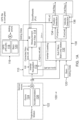
Figure 1A is a block diagram of an inertialcoasting monitoring system 100, according to one embodiment. The inertialcoasting monitoring system 100 is configured to detect GPS threat events such as spoofing, which have a systemic effect on GPS signals that enter a navigation system of a vehicle, such as anavigation system 110. When GPS measurements are corrupted, the navigation solution will start to diverge because of the erroneous GPS signals that are received. The inertialcoasting monitoring system 100 can be hosted in at least one processor onboard the vehicle. - As shown in
Figure 1A ,navigation system 110 generally includes an inertial navigation system (INS) 112 that generates an inertial navigation solution, and an all measurement main filter 114 (main navigation filter), such as a Kalman filter, which is operatively coupled to INS 112 in a feedback loop. - The
main filter 114 is configured to receive aiding data from anaiding source 116, such as GPS measurements from a GPS receiver 118 (i.e., pseudorange (PR) and delta-range (DR) measurements), barometric measurements from abarometric pressure sensor 120, or the like. The aiding data can include added aiding errors over time, which can occur when a GPS file is corrupted, for example. - The INS 112 is configured to receive inertial measurements from one or more
inertial sensors 122,such gyroscopes 124 andaccelerometers 126, which can be implemented in an inertial measurement unit (IMU). Thegyroscopes 124 andaccelerometers 126 respectively output data corresponding to changes in angle (Δθ) and changes in velocity (Δv) as a result of the trajectory motion of the vehicle and can include added sensor errors over time. - The inertial navigation solution from INS 112 includes estimated vehicle kinematic state statistics (e.g., position (pos), velocity (vel), and attitude (att) of the vehicle), which are corrected over time based on feedback from
main filter 114. The INS 112 is configured to generate the estimated vehicle kinematic state statistics based on integration of the inertial measurements frominertial sensors 122. However, errors can occur when the inertial measurements are integrated by INS 112, as theinertial sensors 122 can have measurement errors that, when integrated, grow over time. The aiding data are used bymain filter 114 to generate an error correction signal (Δx maink (pos, vel, att)) that is sent back to INS 112 to aid in correction of errors in the estimated vehicle kinematic state statistics. - An
inertial coasting monitor 130 is configured to protectnavigation system 110 from GPS threat events. Theinertial coasting monitor 130 is in operative communication with INS 112 andmain filter 114 ofnavigation system 110. Theinertial coasting monitor 130 is also operative to receive inertial measurements frominertial sensors 122, and aiding data from a non-GPS aiding source, such as any altitude aiding sensor (e.g., barometric pressure sensor 120). - The
inertial coasting monitor 130 employs a plurality of inertial coast (IC)sub-filters 132, which are not GPS aided (e.g., barometric only states), to determine the integrity of all GPS measurements. In this embodiment, since no aiding measurements are processed by the sub-filters other than pressure altitude, it is not necessary for the sub-filters to have aiding states other than pressure altitude states. In other embodiments, the sub-filters can be aided by other non-GPS aids, such as star trackers or Doppler velocity aiding. - Each sub-filter in the inertial coasting monitor provides a solution that has not processed aiding data for a given number of seconds. Because of this, these sub-filters are called "inertial coast" (IC) sub-filters. The IC sub-filters allow the highly accurate short term inertial coast capability of an embedded GPS/INS system for various "coast" times as a detection and recovery aid. Various numbers of IC sub-filters can be used in the present system, depending on the application. The criteria that drives the number of IC sub-filters depends on detection time, inertial drift, and available throughput.
- The comparison of filter data can take place in the position domain (P,xn(pos)) such as in a
position detection unit 134, and in the velocity domain (P,xn(vel)) such as in avelocity detection unit 136. Accordingly, the inertial coasting monitor 130 is operative to compute position and velocity discriminators for each of IC sub-filters 132, and position and velocity thresholds for each of IC sub-filters 132. The position or velocity discriminators are compared to respective position or velocity thresholds in each of IC sub-filters 132 to determine if there is a GPS threat event such as spoofing. - In the position domain, the comparison looks at the divergence of position errors between
main filter 114 and each of the sub-filters 132. A failure will be declared (fail flag 1) if any of the sub-filters detect a failure. As shown inFigure 1A ,position detection unit 134 is also in operative communication withmain filter 114. - In the velocity domain, the comparison looks at the divergence of velocities errors between
main filter 114 andsub-filters 132. A failure will be declared (fail flag 2) if any of the sub-filters detect a failure. As shown inFigure 1A ,velocity detection unit 136 is also in operative communication withmain filter 114. -
Figures 1B and1C are functional block diagrams illustrating additional details of the operation of position and velocity detection processes in an inertial coasting monitor, such as inertial coasting monitor 130 (Fig. 1A ).Figure 1B shows aposition detection process 150, which can be implemented by position detection unit 134 (Fig. 1A ). Theposition detection process 150 comprises computing a position discriminator for each respective IC sub-filter, with the position discriminator defined as a position error separation between the main navigation filter and each respective IC sub-filter (block 152). Theposition detection process 150 then computes a position threshold for each of the IC sub-filters, with the position threshold defined as a position uncertainty separation between the main navigation filter and each IC sub-filter (block 154). Thereafter,position detection process 150 compares the position discriminator to the position threshold, for each IC sub-filter, to detect if there is a fault in the aiding data (block 156). - In one implementation, the position discriminator comprises a horizontal position discriminator and a vertical position discriminator for each IC sub-filter. The horizontal position discriminator is defined as a horizontal position error separation between the main navigation filter and each IC sub-filter. The vertical position discriminator is defined as a vertical position error separation between the main navigation filter and each IC sub-filter.
-
Figure 1C shows avelocity detection process 160, which can be implemented by velocity detection unit 136 (Fig. 1A ). Thevelocity detection process 160 comprises computing a velocity discriminator for each respective IC sub-filter, with the velocity discriminator defined as a velocity error separation between the main navigation filter and each respective IC sub-filter (block 162). Thevelocity detection process 160 then computes a velocity threshold for each of the IC sub-filters, with the velocity threshold defined as a velocity uncertainty separation between the main navigation filter and each IC sub-filter (block 164). Thereafter, thevelocity detection process 160 compares the velocity discriminator to the velocity threshold, for each IC sub-filter, to detect if there is a fault in the aiding data (block 166). - In one implementation, the velocity discriminator comprises a horizontal velocity discriminator and vertical velocity discriminator for each IC coast sub-filter. The horizontal velocity discriminator is defined as the horizontal velocity error separation between the main navigation filter and each IC sub-filter. The vertical velocity discriminator is defined as a vertical velocity error separation between the main navigation filter and each IC sub-filter.
-
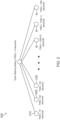
Figure 2 is aschematic representation 200 of N IC sub-filters with a Time Without Aiding (TWA) = 10*N indicated for each IC sub-filter, according to one implementation, which can be employed in inertialcoasting monitoring system 100 ofFigure 1A . For example, as shown inFigure 2 , afirst IC sub-filter 210 will have not processed aiding for 10 seconds (i.e., 10 Kalman filter (KF) cycles). Asecond IC sub-filter 220 will have not processed aiding for 20 seconds (20 KF cycles). Athird IC sub-filter 230 will have not processed aiding for 30 seconds (30 KF cycles). Additional IC sub-filters N will have not processed aiding for 10*N seconds (10*N KF cycles). A failure will be declared (fail flag) if any of the IC sub-filters detect a failure. Aiding exclusion involves reverting to the sub-filter least likely to be affected by the GPS threat event. This can be the TWA = 10*N IC sub-filter, or the IC sub-filter that detects the failure for the shortest period of time or sometime in-between. - In one example, N can be set to 30 to allow for five minutes of inertial coast. Because of this, the selected IC sub-filter will be the filter that gets promoted to replace the current blended solution.
- Further details of the inertial coasting monitoring system and method are described in the following sections.
- In the present inertial coasting implementation, an all measurement filter such as an all measurement Kalman filter is employed. The all measurement Kalman filter organization contains the following information: 1) filter error state; 2) filter UD matrix. The all measurement Kalman filter can be either a primary blended navigation filter, or can be some type of alternate aiding source navigation sub-filter. The inertial coast sub-filter organization contains the following information: 1) inertial coast sub-filter error state; and 2) inertial coast sub-filter UD matrix.
- A general navigation solution provides various navigation states, such as position, velocity, and attitude, to a navigation system. There are three types of elements in an error state: dynamic errors that represent the position, velocity, and alignment errors of the navigation system; inertial sensor compensation errors; and aid compensation errors. Because the only measurement processed by the inertial coast Kalman filters is pressure altitude, only the pressure altitude bias and scale factor states are modeled. The dynamic errors are governed by non-trivial equations, described below, and are coupled into each other. The inertial sensor compensation errors are governed by simple equations formulated to give them the appropriate statistical character. The inertial sensor compensation errors are not coupled into each other, but are coupled into the dynamic errors. The aid compensation errors also have simple governing equations, and are coupled into neither the dynamic errors nor the inertial sensor compensation errors. The pressure altitude observation states have no coupling either.
- The time base of the Kalman filter data needs to be propagated to the current time of the blended Kalman filter. This is accomplished by using the current value of the state transition matrix defined in equation (3.1) below, the current accumulation of state process noise defined in equation (4.3.2) below, and the current accumulation of state feedbacks defined in equation (4.2.2) below. The state propagation is defined as the following:

m is the current count,

- After the error free Kalman filter has been propagated to the current blended filter time, the error free Kalman filter must replace the blended Kalman filter. Since the solution separation Kalman filters maintain a subset of the states in the blended Kalman filter, the non-common states must be re-initialized. In essence, the inverse of the below equations (4.1.2) and (4.1.3) must be performed as well as mapping the state vectors. Integrated velocity states are examples of states that are not common. It is not necessary to re-initialize the integrated velocity states since they are always reset on every filter cycle. If the blended Kalman filter is configured to contain Doppler states, the Doppler states must be reset and their variances must be set to their initial condition.
- Initialization of the solution separation filters occurs when the blended Kalman filter transitions to the fine_init mode. When initialization occurs, the solution separation time is set to zero, the solution separation background feedback vector is set to zero, and the vector that controls clearing of states is set to false.
- The next step is to initialize the all measurement filter to the current contents of the blended Kalman filter. Since the all measurement filter is a sub-set of the blended Kalman filter, the all measurement UD matrix is set to the common elements of the blended Kalman filter UD matrix. The all measurement filter error state vector is set to the common elements of the blended Kalman filter error state vector.
- In addition, any debug variables (such as sum of chi's, chi square reject and accepts counters, etc.) are set to their appropriate initial conditions. Additional elements that will be initialized at this time include: the all measurement filter measurement residual vector; the current variances output of the all measurement filter; the count of
rank 1 errors; the variance vector; the sum of all chi's; and the accept and reject counters. After initialization of the all measurement filter is complete, the solution separation mode is set to init. - As part of solution separation foreground processing, the state transition matrix is formed. The generic equation for generating the state transition matrix for the solution separation filters from the blended Kalman filter is given by the following equation:

S is the index representing the current solution separation cycle,
n is the number of blended Kalman filter cycles in any solution separation cycle,
k is an index representing the initial blended Kalman cycle,
SS represents the solution separation filter,
kf represents the blended Kalman filter,


- The actual equation implemented is more complex than this because the state transition matrix is separated into two sections. The first section of the state transition matrix is a matrix of dimension N_Part_1 x N_States. N_States is the number of states in the blended Kalman filter. N_Part_1 is the number of states in the first partition of the blended Kalman filter. By definition, the state dynamics matrix of the states in the second partition of the Kalman filter can be represented by a diagonal matrix. This allows for some computational efficiency. In addition, since the states in the solution separation Kalman filters are a subset of the states in the blended Kalman filter, only the common states are used.
- The solution separation subset of the first partition of the state transition matrix is formed from the first partition of the blended Kalman filter state transition matrix:


- n_part2 = n_states - n_part1,
-
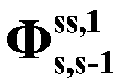
- 0 is a zero matrix of size n_part1 by n_part2, and
-

- The blended Kalman filter updates the navigation solution at the blended Kalman filter rate. The effect of the time varying application of these feedback corrections needs to be accounted for in the solution separation filter design. In addition, the sequence of the solution separation processing relative to the blended Kalman filter processing must be accounted for.
- At the end of a Kalman filter cycle, the feedback data available is the feedback that will be applied immediately after the next Kalman filter sample. The feedback vector from the previous Kalman filter cycle is the feedback that was applied after the current available sample data. The feedback vector from two cycles previous is the feedback vector that was applied prior to the start of the current cycles Kalman data.
- The solution separation processing must keep track of all of the Kalman filter feedback corrections that were applied both prior to the final sample pass and at the final sample pass. First, the solution separation error state vector that is a subset of the blended Kalman filter error state is obtained as shown in Equation (4.2.1). As stated previously, this vector represents the feedback that will be applied immediately after the next Kalman filter cycle.

- By correctly buffering the data from equation (4.2.1), the feedback corrections applied over the entire solution separation period can be formed. Equation (4.2.2) below shows the formation of this feedback vector, which represents all of the feedback corrections that were applied to the blended navigation solution prior to the sample pass. In equation (4.2.2), the final feedback vector is the sum of all of the feedback vectors propagated forward to the time of the solution separation filter.


- The process noise of the solution separation Kalman filters is formed from the process noise of the blended Kalman filter as follows. First, the process noise vector is formed from the blended Kalman filter for the error states that exist in the solution separation Kalman filters, expressed as:


- In the solution separation initialization, the all measurement filter is set to the current value of the blended Kalman filter.
- The following section describes the standard processing for each solution separation Kalman filter. This processing includes time propagation and measurement updates of the error states and covariance matrices. Prior to this processing, a filter reinitialization must occur if a GPS threat was detected.
- Now that each solution separation Kalman filter has been propagated to the current available sample time, it is appropriate to control the activity of all of the Kalman filters. This filter manager logic is described below. The only measurement processed by the IC solution separation filters is pressure altitude. After all measurements have been applied to a filter or sub-filter, the state feedback obtained from equation (4.2.2) is applied to all filters. The application of this state feedback allows each filter to follow the operation of the blended KF, expressed as:

- The next logical step is to perform solution separation fault detection. This feature is described hereafter. If a fault is detected, the following step is to perform fault exclusion, which is also described hereafter.
- The purpose of this section is to organize the Kalman filter structure and to initialize all the sub-filters. The general solution separation structure is described above and illustrated in
Figure 2 . All of the inertial coast solution separation Kalman filters are organized in a circular buffer. First, the oldest element in the circular buffer is updated with the most recent blended Kalman filter. This filter is labeled the all measurement Kalman filter and given the index of 0. Filter 1 (TWA = 10) is the previous element in the circular buffer. Filters 2 (TWA = 20) through N(TWA = N*10) are the next previous elements in the circular buffer. - The fault detection methods implemented in the inertial coast solution separation includes horizontal position and velocity fault detection schemes, and vertical position and velocity fault detection schemes.
- The horizontal position discriminator for each sub-filter is defined as the horizontal position solution separation between the primary filter and the sub-filter. That is:

- x 0 is the all measurement Kalman filter state vector,
- xn is the sub-filter that has not processed aiding data for nΔt rate8 seconds,
- Nsubfilt is the number of inertial coast sub-filters, and

dxn (ξ 1), dxn (ξ 2) are the differences in the horizontal position components of the error state vector. - The horizontal position separation uncertainty is formed assuming a circular distribution from the largest eigenvalue of the horizontal position covariance matrix, as defined below:

- The inverse of the error function is taken for the Rayleigh distribution. Because this distribution is one sided there is no need for the divide by 2 operation that would be present in the normal distribution case. The equation for the detection threshold becomes:

- pfa = probability of false alert per independent sample, and
- N is the number of tests per sample. For IC solution separation this is the number of active and independent sub-filters. The term


- The required false alert rate must be converted to the equivalent probability of false alert per independent sample. Each filter sample is considered independent if a measurement other than a pressure altitude measurement has been processed by the blended Kalman filter:


- The horizontal velocity discriminator for the sub-filter is defined as the horizontal velocity solution separation between the primary filter and the sub-filter. That is:

- x 0 is the all measurement Kalman filter state vector,
- xn is the sub-filter that has not processed aiding data,
- Nsubfilt is the number of sub-filters, and

dxn (ζ 1), dxn (ζ 2) are the differences in the horizontal velocity components of the error state vector. - The horizontal position and velocity separation uncertainty is formed assuming a circular distribution from the largest eigenvalue of the horizontal position and velocity covariance matrix, as defined below:

- The inverse of the error function is taken for the Rayleigh distribution. Because this distribution is one sided there is no need for the divide by 2 operation that would be present in the normal distribution case. The equation for the detection threshold becomes:

- pfa = probability of false alert per independent sample, and
- N is the number of tests per sample.
- The required false alert rate must be converted to the equivalent probability of false alert per independent sample. Each filter sample is considered independent if a measurement other than a pressure altitude measurement has been processed by the blended Kalman filter:


- The vertical position discriminator for each sub-filter is defined as the vertical position solution separation between the primary filter and the sub-filter. The vertical position separation covariance is obtained from the vertical position element of the separation covariance. Since a Kalman filter UD matrix is maintained instead of a covariance matrix, the 2x2 elements of the vertical position covariance matrix need to be obtained by the equation P = UDUT. Note that the full matrix multiply need not be formed, only the portion associated with forming the 2x2 vertical position covariance matrix. The cross covariance matrix has the vertical position covariance available directly:


erfcGaussian -1(pfa /2N) is the inverse compliment of the error function representing a Gaussian normal distribution.
The system will create a vertical test statistic for each active and independent sub-filter:
- The vertical velocity discriminator for the sub-filter is defined as the vertical velocity solution separation between the primary filter and the sub-filter. The vertical velocity separation covariance is obtained from the vertical velocity element of the separation covariance.
- Since a Kalman filter UD matrix is maintained instead of a covariance matrix, the 2x2 elements of the vertical position covariance matrix need to be obtained by the equation P=UDUT. Note that the full matrix multiply need not be formed, only the portion associated with forming the 2x2 vertical position covariance matrix. The cross covariance matrix has the vertical velocity covariance available directly:



erfcGaussian -1(pfa /2N) is the inverse compliment of the error function representing a Gaussian normal distribution.
The system will create two vertical (position and velocity) test statistics for each sub-filter:
- The solution separation implementation will declare a fault if either the horizontal test statistic or the vertical test statistic for any inertial coast sub-filter exceeds one. In other words, if:

- The assumption in fault exclusion is that at least one of the inertial coast sub-filters is fault free. Exclusion is accomplished by selecting the most probable inertial coast sub-filter with the minimum inertial coast time. As stated before, when a fault has been detected, the all measurement filter is replaced with the barometric only aided sub-filter that has not processed GPS measurements.
- The processing units and/or other computational devices used in the method and system described herein may be implemented using software, firmware, hardware, or appropriate combinations thereof. The processing unit and/or other computational devices may be supplemented by, or incorporated in, specially-designed application-specific integrated circuits (ASICs) or field programmable gate arrays (FPGAs). In some implementations, the processing unit and/or other computational devices may communicate through an additional transceiver with other computing devices outside of the navigation system, such as those associated with a management system or computing devices associated with other subsystems controlled by the management system. The processing unit and/or other computational devices can also include or function with software programs, firmware, or other computer readable instructions for carrying out various process tasks, calculations, and control functions used in the methods and systems described herein.
- The methods described herein may be implemented by computer executable instructions, such as program modules or components, which are executed by at least one processor or processing unit. Generally, program modules include routines, programs, objects, data components, data structures, algorithms, and the like, which perform particular tasks or implement particular abstract data types.
- Instructions for carrying out the various process tasks, calculations, and generation of other data used in the operation of the methods described herein can be implemented in software, firmware, or other computer readable instructions. These instructions are typically stored on appropriate computer program products that include computer readable media used for storage of computer readable instructions or data structures. Such a computer readable medium may be available media that can be accessed by a general purpose or special purpose computer or processor, or any programmable logic device.
- Suitable computer readable storage media may include, for example, nonvolatile memory devices including semi-conductor memory devices such as Random Access Memory (RAM), Read Only Memory (ROM), Electrically Erasable Programmable ROM (EEPROM), or flash memory devices; magnetic disks such as internal hard disks or removable disks; optical storage devices such as compact discs (CDs), digital versatile discs (DVDs), Blu-ray discs; or any other media that can be used to carry or store desired program code in the form of computer executable instructions or data structures.
- From the foregoing, it will be appreciated that, although specific embodiments have been described herein for purposes of illustration, various modifications may be made without deviating from the scope of the invention as defined by the appended claims. Thus, the described embodiments are to be considered in all respects only as illustrative and not restrictive.




Claims (10)
- A system comprising:a plurality of aiding sensors onboard a vehicle, the aiding sensors including a Global Navigation Satellite System (GNSS) receiver, and at least one non-GNSS aiding sensor;an onboard inertial measurement unit, IMU, operative to produce inertial measurements for the vehicle;a navigation system (110) onboard the vehicle, the navigation system (110) operatively coupled to the aiding sensors and the IMU, the navigation system (110) comprising a main navigation filter and an inertial navigation system (110), INS (112), operatively coupled to the main navigation filter, wherein the main navigation filter is operative to receive aiding data from the aiding sensors including GNSS aided data, and the INS (112) is operative to receive inertial data from the IMU and generate an inertial navigation solution for the vehicle; andan onboard inertial coasting monitor (130) in operative communication with the navigation system (110), the inertial coasting monitor (130) operative to receive inertial data from the IMU and aiding data from at least one non-GNSS aiding sensor, the inertial coasting monitor (130) comprising a set of inertial coast sub-filters, wherein the inertial coast sub-filters provide a solution that has not processed aiding data for varying given periods of time, the inertial coasting monitor (130) in operative communication with the main navigation filter, the inertial coasting monitor (130) operative to perform a position detection process (150) and/or a velocity detection process (160);wherein the position detection process (150) comprises:compute a position discriminator for each respective inertial coast sub-filter, with the position discriminator defined as a position error separation between the main navigation filter and each respective inertial coast sub-filter;compute a position threshold for each of the inertial coast sub-filters, with the position threshold defined as a position uncertainty separation between the main navigation filter and each inertial coast sub-filter; andcompare the position discriminator to the position threshold, for each inertial coast sub-filter, to detect if there is a fault in the aiding data;wherein the velocity detection process (160) comprises:compute a velocity discriminator for each respective inertial coast sub-filter, with the velocity discriminator defined as a velocity error separation between the main navigation filter and each respective inertial coast sub-filter;compute a velocity threshold for each of the inertial coast sub-filters, with the velocity threshold defined as a velocity uncertainty separation between the main navigation filter and each inertial coast sub-filter; andcompare the velocity discriminator to the velocity threshold, for each inertial coast sub-filter, to detect if there is a fault in the aiding data.
- The system of claim 1, wherein the position discriminator comprises:a horizontal position discriminator for each inertial coast sub-filter, the horizontal position discriminator defined as a horizontal position error separation between the main navigation filter and each inertial coast sub-filter; anda vertical position discriminator for each inertial coast sub-filter, the vertical position discriminator defined as the vertical position error separation between the main navigation filter and each inertial coast sub-filter.
- The system of claim 1, wherein the velocity discriminator comprises:a horizontal velocity discriminator for each inertial coast sub-filter, the horizontal velocity discriminator defined as the horizontal velocity error separation between the main navigation filter and each inertial coast sub-filter; anda vertical velocity discriminator for each inertial coast sub-filter, the vertical velocity discriminator defined as the vertical velocity error separation between the main navigation filter and each inertial coast sub-filter.
- The system of claim 1, wherein at least one non-GNSS aiding sensor comprises a barometric pressure altitude sensor.
- The system of claim 1, wherein:the main navigation filter comprises an extended Kalman filter (EKF); andthe INS (112) is configured to receive EKF state corrections from the main navigation filter.
- The system of claim 1, wherein the inertial coasting monitor (130) is operative to output an alert to the navigation system (110) if a fault is detected in the aiding data.
- The system of claim 1, wherein the inertial coasting monitor (130) is operative to protect the navigation system (110) from one or more GNSS threat events.
- The system of claim 1, wherein the vehicle is an aircraft.
- A method comprising:providing an inertial coasting monitor (130) in operative communication with a navigation system (110) onboard a vehicle, the navigation system (110) comprising a main navigation filter and an inertial navigation system (110) (INS) operatively coupled to the main navigation filter, wherein the main navigation filter is operative to receive aiding data from the aiding sensors including a Global Navigation Satellite System (GNSS) receiver, and the INS (112) is operative to receive inertial data from the IMU and generate an inertial navigation solution for the vehicle; andwherein the inertial coasting monitor (130) includes a plurality of inertial coast sub-filters operatively coupled to the main navigation filter, wherein the inertial coast sub-filters provide a navigation solution that has not processed aiding data for varying given periods of time;receiving inertial measurements for the vehicle, in the inertial coasting monitor (130), from an onboard inertial measurement unit, IMU;receiving aiding data, in the inertial coasting monitor (130), from at least one aiding sensor onboard the vehicle, wherein the aiding data comprises non-GNSS aided data;performing a position detection process (150) and/or a velocity detection process (160) in the inertial coasting monitor (130);wherein the position detection process (150) comprises:computing a position discriminator for each respective inertial coast sub-filter, with the position discriminator defined as a position error separation between the main navigation filter and each respective inertial coast sub-filter;computing a position threshold for each of the inertial coast sub-filters, with the position threshold defined as a position uncertainty separation between the main navigation filter and each inertial coast sub-filter; andcomparing the position discriminator to the position threshold, for each inertial coast sub-filter, to detect if there is a fault in the aiding data;wherein the velocity detection process (160) comprises:computing a velocity discriminator for each respective inertial coast sub-filter, with the velocity discriminator defined as a velocity error separation between the main navigation filter and each respective inertial coast sub-filter;computing a velocity threshold for each of the inertial coast sub-filters, with the velocity threshold defined as a velocity uncertainty separation between the main navigation filter and each inertial coast sub-filter; andcomparing the velocity discriminator to the velocity threshold, for each inertial coast sub-filter, to detect if there is a fault in the aiding data.
- The method of claim 9, wherein the vehicle is an aircraft, and the inertial coasting monitor (130) protects the navigation system (110) in the aircraft from one or more GNSS threat events.
Applications Claiming Priority (2)
| Application Number | Priority Date | Filing Date | Title |
|---|---|---|---|
| US202163210442P | 2021-06-14 | 2021-06-14 | |
| US17/575,250 US12442936B2 (en) | 2021-06-14 | 2022-01-13 | Inertial coasting position and velocity solution separation |
Publications (2)
| Publication Number | Publication Date |
|---|---|
| EP4105690A1 EP4105690A1 (en) | 2022-12-21 |
| EP4105690B1 true EP4105690B1 (en) | 2025-03-12 |
Family
ID=81306816
Family Applications (1)
| Application Number | Title | Priority Date | Filing Date |
|---|---|---|---|
| EP22167253.8A Active EP4105690B1 (en) | 2021-06-14 | 2022-04-07 | Inertial coasting position and velocity solution separation |
Country Status (2)
| Country | Link |
|---|---|
| US (1) | US12442936B2 (en) |
| EP (1) | EP4105690B1 (en) |
Families Citing this family (3)
| Publication number | Priority date | Publication date | Assignee | Title |
|---|---|---|---|---|
| FR3137459B1 (en) * | 2022-07-04 | 2024-06-28 | Thales Sa | Device and method for maintaining the integrity of a vehicle's positioning regardless of satellite data vulnerability |
| FR3137762B1 (en) * | 2022-07-08 | 2024-06-28 | Thales Sa | Navigation and positioning device |
| US20240272303A1 (en) * | 2023-02-14 | 2024-08-15 | Rockwell Collins, Inc. | System and method for gnss spoofer detection with high integrity error bounding using multiple coasting solutions |
Family Cites Families (21)
| Publication number | Priority date | Publication date | Assignee | Title |
|---|---|---|---|---|
| US5600329A (en) | 1995-06-30 | 1997-02-04 | Honeywell Inc. | Differential satellite positioning system ground station with integrity monitoring |
| US5760737A (en) | 1996-09-11 | 1998-06-02 | Honeywell Inc. | Navigation system with solution separation apparatus for detecting accuracy failures |
| DE19714985A1 (en) | 1997-04-10 | 1998-10-22 | Litef Gmbh | Procedure for checking the reliability of nominal position determinations |
| US5969672A (en) | 1998-07-17 | 1999-10-19 | Honeywell Inc. | GPS signal fault isolation monitor |
| US5926132A (en) | 1998-07-17 | 1999-07-20 | Honeywell, Inc | GPS satellite drift monitor |
| US6760663B2 (en) | 1999-09-14 | 2004-07-06 | Honeywell International Inc. | Solution separation method and apparatus for ground-augmented global positioning system |
| US6317688B1 (en) * | 2000-01-31 | 2001-11-13 | Rockwell Collins | Method and apparatus for achieving sole means navigation from global navigation satelite systems |
| US6639549B2 (en) | 2001-12-20 | 2003-10-28 | Honeywell International Inc. | Fault detection and exclusion for global position systems |
| US6847893B1 (en) | 2003-01-22 | 2005-01-25 | Trimble Navigation, Ltd | Horizontal/vertical exclusion level determination scheme for RAIM fault detection and exclusion implementation |
| US6845304B1 (en) | 2003-09-17 | 2005-01-18 | Rockwell Collins | Method of and system for deriving inertial-aided deviations for autoland systems during GPS signal interruptions |
| US7668655B2 (en) * | 2004-12-07 | 2010-02-23 | Honeywell International Inc. | Navigation component modeling system and method |
| US7579984B2 (en) * | 2005-11-23 | 2009-08-25 | The Boeing Company | Ultra-tightly coupled GPS and inertial navigation system for agile platforms |
| US7970503B2 (en) * | 2007-09-12 | 2011-06-28 | The Boeing Company | Method and apparatus for detecting anomalies in landing systems utilizing a global navigation satellite system |
| FR2949866B1 (en) * | 2009-09-10 | 2011-09-30 | Thales Sa | HYBRID SYSTEM AND DEVICE FOR CALCULATING A POSITION AND MONITORING ITS INTEGRITY. |
| FR2977314B1 (en) * | 2011-06-29 | 2013-07-12 | Ixblue | NAVIGATION DEVICE AND METHOD INTEGRATING MULTIPLE INERTIAL HYBRID NAVIGATION SYSTEMS |
| US8928527B2 (en) | 2013-03-19 | 2015-01-06 | Honeywell International Inc. | Systems and methods for reducing error detection latency in LPV approaches |
| US9476989B2 (en) * | 2014-04-16 | 2016-10-25 | Honeywell International Inc. | Vector tracking loop operability through oscillator micro-jump event |
| US9978285B2 (en) | 2015-06-10 | 2018-05-22 | Ecole Polytechnique Federale De Lausanne (Epfl) | Autonomous and non-autonomous dynamic model based navigation system for unmanned vehicles |
| US9791575B2 (en) * | 2016-01-27 | 2017-10-17 | Novatel Inc. | GNSS and inertial navigation system utilizing relative yaw as an observable for an ins filter |
| CN105509739B (en) * | 2016-02-04 | 2018-04-06 | 济南大学 | Using fixed interval CRTS smooth INS/UWB tight integrations navigation system and method |
| US11320540B2 (en) | 2019-04-10 | 2022-05-03 | Honeywell International Inc. | Integrity monitoring of primary and derived parameters |
-
2022
- 2022-01-13 US US17/575,250 patent/US12442936B2/en active Active
- 2022-04-07 EP EP22167253.8A patent/EP4105690B1/en active Active
Also Published As
| Publication number | Publication date |
|---|---|
| EP4105690A1 (en) | 2022-12-21 |
| US20240337762A1 (en) | 2024-10-10 |
| US12442936B2 (en) | 2025-10-14 |
Similar Documents
| Publication | Publication Date | Title |
|---|---|---|
| EP4105690B1 (en) | Inertial coasting position and velocity solution separation | |
| US12085654B2 (en) | System and method for computing positioning protection levels | |
| US10018729B2 (en) | Selected aspects of advanced receiver autonomous integrity monitoring application to kalman filter based navigation filter | |
| EP2887097B1 (en) | Architectures for high Navigation Satellite System integrity multi-constellation solution separation | |
| US9939532B2 (en) | Heading for a hybrid navigation solution based on magnetically calibrated measurements | |
| US9726499B2 (en) | Method of determining a radius of protection associated with a navigation parameter of a hybrid inertial navigation system, and associated system | |
| US8589072B2 (en) | Optimal combination of satellite navigation system data and inertial data | |
| US11662472B2 (en) | Integrity monitoring of odometry measurements within a navigation system | |
| JP4446604B2 (en) | GPS signal fault isolation monitor | |
| US9983314B2 (en) | System for excluding a failure of a satellite in a GNSS system | |
| EP3598070B1 (en) | Methods for monitoring the output performance of state estimators in navigation systems | |
| JP2005514597A (en) | Fault detection and elimination for satellite navigation systems | |
| CN111044051B (en) | A fault-tolerant integrated navigation method for composite wing UAV | |
| US12546901B2 (en) | GNSS multiple satellite failure detection using solution separation measurement monitoring | |
| US20240053485A1 (en) | Method and system to process and assure integrity of radar measurements and mitigate gnss jamming and spoofing events | |
| EP3882665B1 (en) | Implementing single differences within a solution separation framework | |
| EP3882572B1 (en) | Single-difference based pre-filter of measurements for use in solution separation framework | |
| EP3901650A1 (en) | Integrity monitoring of odometry measurements within a navigation system | |
| US20240027628A1 (en) | Systems and methods using kalman filter monitors to detect spoofed gnss signals | |
| US12455384B2 (en) | Systems, methods, and media for analyzing multiple filters in a solution domain to identify filter instability | |
| Cardone | RAIM Algorithm | |
| Li et al. | GPS receiver failure detection method in high dynamic environment | |
| Sendorek et al. | Improvements of GNSS/INS Localization's Integrity with Gaussian Mixture Filters in a Bayesian Framework |
Legal Events
| Date | Code | Title | Description |
|---|---|---|---|
| PUAI | Public reference made under article 153(3) epc to a published international application that has entered the european phase |
Free format text: ORIGINAL CODE: 0009012 |
|
| STAA | Information on the status of an ep patent application or granted ep patent |
Free format text: STATUS: THE APPLICATION HAS BEEN PUBLISHED |
|
| AK | Designated contracting states |
Kind code of ref document: A1 Designated state(s): AL AT BE BG CH CY CZ DE DK EE ES FI FR GB GR HR HU IE IS IT LI LT LU LV MC MK MT NL NO PL PT RO RS SE SI SK SM TR |
|
| STAA | Information on the status of an ep patent application or granted ep patent |
Free format text: STATUS: REQUEST FOR EXAMINATION WAS MADE |
|
| 17P | Request for examination filed |
Effective date: 20230103 |
|
| RBV | Designated contracting states (corrected) |
Designated state(s): AL AT BE BG CH CY CZ DE DK EE ES FI FR GB GR HR HU IE IS IT LI LT LU LV MC MK MT NL NO PL PT RO RS SE SI SK SM TR |
|
| P01 | Opt-out of the competence of the unified patent court (upc) registered |
Effective date: 20230421 |
|
| GRAP | Despatch of communication of intention to grant a patent |
Free format text: ORIGINAL CODE: EPIDOSNIGR1 |
|
| STAA | Information on the status of an ep patent application or granted ep patent |
Free format text: STATUS: GRANT OF PATENT IS INTENDED |
|
| INTG | Intention to grant announced |
Effective date: 20241029 |
|
| GRAS | Grant fee paid |
Free format text: ORIGINAL CODE: EPIDOSNIGR3 |
|
| GRAA | (expected) grant |
Free format text: ORIGINAL CODE: 0009210 |
|
| STAA | Information on the status of an ep patent application or granted ep patent |
Free format text: STATUS: THE PATENT HAS BEEN GRANTED |
|
| AK | Designated contracting states |
Kind code of ref document: B1 Designated state(s): AL AT BE BG CH CY CZ DE DK EE ES FI FR GB GR HR HU IE IS IT LI LT LU LV MC MK MT NL NO PL PT RO RS SE SI SK SM TR |
|
| REG | Reference to a national code |
Ref country code: GB Ref legal event code: FG4D |
|
| REG | Reference to a national code |
Ref country code: CH Ref legal event code: EP |
|
| REG | Reference to a national code |
Ref country code: DE Ref legal event code: R096 Ref document number: 602022011591 Country of ref document: DE |
|
| REG | Reference to a national code |
Ref country code: IE Ref legal event code: FG4D |
|
| PG25 | Lapsed in a contracting state [announced via postgrant information from national office to epo] |
Ref country code: RS Free format text: LAPSE BECAUSE OF FAILURE TO SUBMIT A TRANSLATION OF THE DESCRIPTION OR TO PAY THE FEE WITHIN THE PRESCRIBED TIME-LIMIT Effective date: 20250612 |
|
| PG25 | Lapsed in a contracting state [announced via postgrant information from national office to epo] |
Ref country code: FI Free format text: LAPSE BECAUSE OF FAILURE TO SUBMIT A TRANSLATION OF THE DESCRIPTION OR TO PAY THE FEE WITHIN THE PRESCRIBED TIME-LIMIT Effective date: 20250312 |
|
| PG25 | Lapsed in a contracting state [announced via postgrant information from national office to epo] |
Ref country code: ES Free format text: LAPSE BECAUSE OF FAILURE TO SUBMIT A TRANSLATION OF THE DESCRIPTION OR TO PAY THE FEE WITHIN THE PRESCRIBED TIME-LIMIT Effective date: 20250312 |
|
| REG | Reference to a national code |
Ref country code: LT Ref legal event code: MG9D |
|
| PG25 | Lapsed in a contracting state [announced via postgrant information from national office to epo] |
Ref country code: NO Free format text: LAPSE BECAUSE OF FAILURE TO SUBMIT A TRANSLATION OF THE DESCRIPTION OR TO PAY THE FEE WITHIN THE PRESCRIBED TIME-LIMIT Effective date: 20250612 |
|
| PG25 | Lapsed in a contracting state [announced via postgrant information from national office to epo] |
Ref country code: HR Free format text: LAPSE BECAUSE OF FAILURE TO SUBMIT A TRANSLATION OF THE DESCRIPTION OR TO PAY THE FEE WITHIN THE PRESCRIBED TIME-LIMIT Effective date: 20250312 |
|
| REG | Reference to a national code |
Ref country code: NL Ref legal event code: MP Effective date: 20250312 |
|
| PG25 | Lapsed in a contracting state [announced via postgrant information from national office to epo] |
Ref country code: LV Free format text: LAPSE BECAUSE OF FAILURE TO SUBMIT A TRANSLATION OF THE DESCRIPTION OR TO PAY THE FEE WITHIN THE PRESCRIBED TIME-LIMIT Effective date: 20250312 |
|
| PGFP | Annual fee paid to national office [announced via postgrant information from national office to epo] |
Ref country code: FR Payment date: 20250424 Year of fee payment: 4 |
|
| PG25 | Lapsed in a contracting state [announced via postgrant information from national office to epo] |
Ref country code: GR Free format text: LAPSE BECAUSE OF FAILURE TO SUBMIT A TRANSLATION OF THE DESCRIPTION OR TO PAY THE FEE WITHIN THE PRESCRIBED TIME-LIMIT Effective date: 20250613 Ref country code: BG Free format text: LAPSE BECAUSE OF FAILURE TO SUBMIT A TRANSLATION OF THE DESCRIPTION OR TO PAY THE FEE WITHIN THE PRESCRIBED TIME-LIMIT Effective date: 20250312 |
|
| REG | Reference to a national code |
Ref country code: AT Ref legal event code: MK05 Ref document number: 1775440 Country of ref document: AT Kind code of ref document: T Effective date: 20250312 |
|
| PG25 | Lapsed in a contracting state [announced via postgrant information from national office to epo] |
Ref country code: NL Free format text: LAPSE BECAUSE OF FAILURE TO SUBMIT A TRANSLATION OF THE DESCRIPTION OR TO PAY THE FEE WITHIN THE PRESCRIBED TIME-LIMIT Effective date: 20250312 |
|
| PG25 | Lapsed in a contracting state [announced via postgrant information from national office to epo] |
Ref country code: SE Free format text: LAPSE BECAUSE OF FAILURE TO SUBMIT A TRANSLATION OF THE DESCRIPTION OR TO PAY THE FEE WITHIN THE PRESCRIBED TIME-LIMIT Effective date: 20250312 |
|
| PG25 | Lapsed in a contracting state [announced via postgrant information from national office to epo] |
Ref country code: SM Free format text: LAPSE BECAUSE OF FAILURE TO SUBMIT A TRANSLATION OF THE DESCRIPTION OR TO PAY THE FEE WITHIN THE PRESCRIBED TIME-LIMIT Effective date: 20250312 |
|
| PG25 | Lapsed in a contracting state [announced via postgrant information from national office to epo] |
Ref country code: PT Free format text: LAPSE BECAUSE OF FAILURE TO SUBMIT A TRANSLATION OF THE DESCRIPTION OR TO PAY THE FEE WITHIN THE PRESCRIBED TIME-LIMIT Effective date: 20250714 |
|
| PG25 | Lapsed in a contracting state [announced via postgrant information from national office to epo] |
Ref country code: IT Free format text: LAPSE BECAUSE OF FAILURE TO SUBMIT A TRANSLATION OF THE DESCRIPTION OR TO PAY THE FEE WITHIN THE PRESCRIBED TIME-LIMIT Effective date: 20250312 Ref country code: PL Free format text: LAPSE BECAUSE OF FAILURE TO SUBMIT A TRANSLATION OF THE DESCRIPTION OR TO PAY THE FEE WITHIN THE PRESCRIBED TIME-LIMIT Effective date: 20250312 |
|
| PG25 | Lapsed in a contracting state [announced via postgrant information from national office to epo] |
Ref country code: AT Free format text: LAPSE BECAUSE OF FAILURE TO SUBMIT A TRANSLATION OF THE DESCRIPTION OR TO PAY THE FEE WITHIN THE PRESCRIBED TIME-LIMIT Effective date: 20250312 |
|
| PG25 | Lapsed in a contracting state [announced via postgrant information from national office to epo] |
Ref country code: CZ Free format text: LAPSE BECAUSE OF FAILURE TO SUBMIT A TRANSLATION OF THE DESCRIPTION OR TO PAY THE FEE WITHIN THE PRESCRIBED TIME-LIMIT Effective date: 20250312 Ref country code: EE Free format text: LAPSE BECAUSE OF FAILURE TO SUBMIT A TRANSLATION OF THE DESCRIPTION OR TO PAY THE FEE WITHIN THE PRESCRIBED TIME-LIMIT Effective date: 20250312 |
|
| PG25 | Lapsed in a contracting state [announced via postgrant information from national office to epo] |
Ref country code: RO Free format text: LAPSE BECAUSE OF FAILURE TO SUBMIT A TRANSLATION OF THE DESCRIPTION OR TO PAY THE FEE WITHIN THE PRESCRIBED TIME-LIMIT Effective date: 20250312 |
|
| PG25 | Lapsed in a contracting state [announced via postgrant information from national office to epo] |
Ref country code: SK Free format text: LAPSE BECAUSE OF FAILURE TO SUBMIT A TRANSLATION OF THE DESCRIPTION OR TO PAY THE FEE WITHIN THE PRESCRIBED TIME-LIMIT Effective date: 20250312 |
|
| PG25 | Lapsed in a contracting state [announced via postgrant information from national office to epo] |
Ref country code: IS Free format text: LAPSE BECAUSE OF FAILURE TO SUBMIT A TRANSLATION OF THE DESCRIPTION OR TO PAY THE FEE WITHIN THE PRESCRIBED TIME-LIMIT Effective date: 20250712 |
|
| REG | Reference to a national code |
Ref country code: DE Ref legal event code: R119 Ref document number: 602022011591 Country of ref document: DE |
|
| REG | Reference to a national code |
Ref country code: CH Ref legal event code: H13 Free format text: ST27 STATUS EVENT CODE: U-0-0-H10-H13 (AS PROVIDED BY THE NATIONAL OFFICE) Effective date: 20251125 |
|
| PG25 | Lapsed in a contracting state [announced via postgrant information from national office to epo] |
Ref country code: LU Free format text: LAPSE BECAUSE OF NON-PAYMENT OF DUE FEES Effective date: 20250407 |
|
| PG25 | Lapsed in a contracting state [announced via postgrant information from national office to epo] |
Ref country code: MC Free format text: LAPSE BECAUSE OF FAILURE TO SUBMIT A TRANSLATION OF THE DESCRIPTION OR TO PAY THE FEE WITHIN THE PRESCRIBED TIME-LIMIT Effective date: 20250312 |
|
| REG | Reference to a national code |
Ref country code: BE Ref legal event code: MM Effective date: 20250430 |
|
| PG25 | Lapsed in a contracting state [announced via postgrant information from national office to epo] |
Ref country code: DE Free format text: LAPSE BECAUSE OF NON-PAYMENT OF DUE FEES Effective date: 20251104 |
|
| PG25 | Lapsed in a contracting state [announced via postgrant information from national office to epo] |
Ref country code: DK Free format text: LAPSE BECAUSE OF FAILURE TO SUBMIT A TRANSLATION OF THE DESCRIPTION OR TO PAY THE FEE WITHIN THE PRESCRIBED TIME-LIMIT Effective date: 20250312 |
|
| PG25 | Lapsed in a contracting state [announced via postgrant information from national office to epo] |
Ref country code: BE Free format text: LAPSE BECAUSE OF NON-PAYMENT OF DUE FEES Effective date: 20250430 |
|
| PLBE | No opposition filed within time limit |
Free format text: ORIGINAL CODE: 0009261 |
|
| STAA | Information on the status of an ep patent application or granted ep patent |
Free format text: STATUS: NO OPPOSITION FILED WITHIN TIME LIMIT |
|
| PG25 | Lapsed in a contracting state [announced via postgrant information from national office to epo] |
Ref country code: CH Free format text: LAPSE BECAUSE OF NON-PAYMENT OF DUE FEES Effective date: 20250430 |
|
| REG | Reference to a national code |
Ref country code: CH Ref legal event code: L10 Free format text: ST27 STATUS EVENT CODE: U-0-0-L10-L00 (AS PROVIDED BY THE NATIONAL OFFICE) Effective date: 20260121 |
|
| 26N | No opposition filed |
Effective date: 20251215 |
|
| PG25 | Lapsed in a contracting state [announced via postgrant information from national office to epo] |
Ref country code: IE Free format text: LAPSE BECAUSE OF NON-PAYMENT OF DUE FEES Effective date: 20250407 |