EP4105447B1 - Secondary air supply system with feed pipes having sonic orifices - Google Patents
Secondary air supply system with feed pipes having sonic orifices Download PDFInfo
- Publication number
- EP4105447B1 EP4105447B1 EP22177364.1A EP22177364A EP4105447B1 EP 4105447 B1 EP4105447 B1 EP 4105447B1 EP 22177364 A EP22177364 A EP 22177364A EP 4105447 B1 EP4105447 B1 EP 4105447B1
- Authority
- EP
- European Patent Office
- Prior art keywords
- sas
- secondary air
- engine
- strut
- feed
- Prior art date
- Legal status (The legal status is an assumption and is not a legal conclusion. Google has not performed a legal analysis and makes no representation as to the accuracy of the status listed.)
- Active
Links
Images


Classifications
-
- F—MECHANICAL ENGINEERING; LIGHTING; HEATING; WEAPONS; BLASTING
- F02—COMBUSTION ENGINES; HOT-GAS OR COMBUSTION-PRODUCT ENGINE PLANTS
- F02C—GAS-TURBINE PLANTS; AIR INTAKES FOR JET-PROPULSION PLANTS; CONTROLLING FUEL SUPPLY IN AIR-BREATHING JET-PROPULSION PLANTS
- F02C6/00—Plural gas-turbine plants; Combinations of gas-turbine plants with other apparatus; Adaptations of gas-turbine plants for special use
- F02C6/04—Gas-turbine plants providing heated or pressurised working fluid for other apparatus, e.g. without mechanical power output
- F02C6/06—Gas-turbine plants providing heated or pressurised working fluid for other apparatus, e.g. without mechanical power output providing compressed gas
- F02C6/08—Gas-turbine plants providing heated or pressurised working fluid for other apparatus, e.g. without mechanical power output providing compressed gas the gas being bled from the gas-turbine compressor
-
- F—MECHANICAL ENGINEERING; LIGHTING; HEATING; WEAPONS; BLASTING
- F02—COMBUSTION ENGINES; HOT-GAS OR COMBUSTION-PRODUCT ENGINE PLANTS
- F02C—GAS-TURBINE PLANTS; AIR INTAKES FOR JET-PROPULSION PLANTS; CONTROLLING FUEL SUPPLY IN AIR-BREATHING JET-PROPULSION PLANTS
- F02C7/00—Features, components parts, details or accessories, not provided for in, or of interest apart form groups F02C1/00 - F02C6/00; Air intakes for jet-propulsion plants
- F02C7/04—Air intakes for gas-turbine plants or jet-propulsion plants
-
- F—MECHANICAL ENGINEERING; LIGHTING; HEATING; WEAPONS; BLASTING
- F01—MACHINES OR ENGINES IN GENERAL; ENGINE PLANTS IN GENERAL; STEAM ENGINES
- F01D—NON-POSITIVE DISPLACEMENT MACHINES OR ENGINES, e.g. STEAM TURBINES
- F01D9/00—Stators
- F01D9/06—Fluid supply conduits to nozzles or the like
- F01D9/065—Fluid supply or removal conduits traversing the working fluid flow, e.g. for lubrication-, cooling-, or sealing fluids
-
- F—MECHANICAL ENGINEERING; LIGHTING; HEATING; WEAPONS; BLASTING
- F02—COMBUSTION ENGINES; HOT-GAS OR COMBUSTION-PRODUCT ENGINE PLANTS
- F02C—GAS-TURBINE PLANTS; AIR INTAKES FOR JET-PROPULSION PLANTS; CONTROLLING FUEL SUPPLY IN AIR-BREATHING JET-PROPULSION PLANTS
- F02C7/00—Features, components parts, details or accessories, not provided for in, or of interest apart form groups F02C1/00 - F02C6/00; Air intakes for jet-propulsion plants
- F02C7/06—Arrangements of bearings; Lubricating
-
- F—MECHANICAL ENGINEERING; LIGHTING; HEATING; WEAPONS; BLASTING
- F02—COMBUSTION ENGINES; HOT-GAS OR COMBUSTION-PRODUCT ENGINE PLANTS
- F02C—GAS-TURBINE PLANTS; AIR INTAKES FOR JET-PROPULSION PLANTS; CONTROLLING FUEL SUPPLY IN AIR-BREATHING JET-PROPULSION PLANTS
- F02C7/00—Features, components parts, details or accessories, not provided for in, or of interest apart form groups F02C1/00 - F02C6/00; Air intakes for jet-propulsion plants
- F02C7/12—Cooling of plants
- F02C7/16—Cooling of plants characterised by cooling medium
- F02C7/18—Cooling of plants characterised by cooling medium the medium being gaseous, e.g. air
-
- F—MECHANICAL ENGINEERING; LIGHTING; HEATING; WEAPONS; BLASTING
- F02—COMBUSTION ENGINES; HOT-GAS OR COMBUSTION-PRODUCT ENGINE PLANTS
- F02C—GAS-TURBINE PLANTS; AIR INTAKES FOR JET-PROPULSION PLANTS; CONTROLLING FUEL SUPPLY IN AIR-BREATHING JET-PROPULSION PLANTS
- F02C7/00—Features, components parts, details or accessories, not provided for in, or of interest apart form groups F02C1/00 - F02C6/00; Air intakes for jet-propulsion plants
- F02C7/12—Cooling of plants
- F02C7/16—Cooling of plants characterised by cooling medium
- F02C7/18—Cooling of plants characterised by cooling medium the medium being gaseous, e.g. air
- F02C7/185—Cooling means for reducing the temperature of the cooling air or gas
-
- F—MECHANICAL ENGINEERING; LIGHTING; HEATING; WEAPONS; BLASTING
- F02—COMBUSTION ENGINES; HOT-GAS OR COMBUSTION-PRODUCT ENGINE PLANTS
- F02C—GAS-TURBINE PLANTS; AIR INTAKES FOR JET-PROPULSION PLANTS; CONTROLLING FUEL SUPPLY IN AIR-BREATHING JET-PROPULSION PLANTS
- F02C9/00—Controlling gas-turbine plants; Controlling fuel supply in air- breathing jet-propulsion plants
- F02C9/16—Control of working fluid flow
- F02C9/18—Control of working fluid flow by bleeding, bypassing or acting on variable working fluid interconnections between turbines or compressors or their stages
-
- F—MECHANICAL ENGINEERING; LIGHTING; HEATING; WEAPONS; BLASTING
- F02—COMBUSTION ENGINES; HOT-GAS OR COMBUSTION-PRODUCT ENGINE PLANTS
- F02K—JET-PROPULSION PLANTS
- F02K3/00—Plants including a gas turbine driving a compressor or a ducted fan
- F02K3/02—Plants including a gas turbine driving a compressor or a ducted fan in which part of the working fluid by-passes the turbine and combustion chamber
- F02K3/04—Plants including a gas turbine driving a compressor or a ducted fan in which part of the working fluid by-passes the turbine and combustion chamber the plant including ducted fans, i.e. fans with high volume, low pressure outputs, for augmenting the jet thrust, e.g. of double-flow type
- F02K3/06—Plants including a gas turbine driving a compressor or a ducted fan in which part of the working fluid by-passes the turbine and combustion chamber the plant including ducted fans, i.e. fans with high volume, low pressure outputs, for augmenting the jet thrust, e.g. of double-flow type with front fan
-
- F—MECHANICAL ENGINEERING; LIGHTING; HEATING; WEAPONS; BLASTING
- F05—INDEXING SCHEMES RELATING TO ENGINES OR PUMPS IN VARIOUS SUBCLASSES OF CLASSES F01-F04
- F05D—INDEXING SCHEME FOR ASPECTS RELATING TO NON-POSITIVE-DISPLACEMENT MACHINES OR ENGINES, GAS-TURBINES OR JET-PROPULSION PLANTS
- F05D2220/00—Application
- F05D2220/30—Application in turbines
- F05D2220/32—Application in turbines in gas turbines
- F05D2220/323—Application in turbines in gas turbines for aircraft propulsion, e.g. jet engines
-
- F—MECHANICAL ENGINEERING; LIGHTING; HEATING; WEAPONS; BLASTING
- F05—INDEXING SCHEMES RELATING TO ENGINES OR PUMPS IN VARIOUS SUBCLASSES OF CLASSES F01-F04
- F05D—INDEXING SCHEME FOR ASPECTS RELATING TO NON-POSITIVE-DISPLACEMENT MACHINES OR ENGINES, GAS-TURBINES OR JET-PROPULSION PLANTS
- F05D2250/00—Geometry
- F05D2250/30—Arrangement of components
- F05D2250/32—Arrangement of components according to their shape
- F05D2250/323—Arrangement of components according to their shape convergent
-
- F—MECHANICAL ENGINEERING; LIGHTING; HEATING; WEAPONS; BLASTING
- F05—INDEXING SCHEMES RELATING TO ENGINES OR PUMPS IN VARIOUS SUBCLASSES OF CLASSES F01-F04
- F05D—INDEXING SCHEME FOR ASPECTS RELATING TO NON-POSITIVE-DISPLACEMENT MACHINES OR ENGINES, GAS-TURBINES OR JET-PROPULSION PLANTS
- F05D2250/00—Geometry
- F05D2250/30—Arrangement of components
- F05D2250/32—Arrangement of components according to their shape
- F05D2250/324—Arrangement of components according to their shape divergent
Definitions
- the application relates generally to secondary air systems in aircraft gas turbine engines.
- Aircraft engines such as gas turbine engines, use secondary air systems to provide air to the engine for non-combustion purposes, for example for internal engine cooling, sealing bearing cavities, etc.
- This non-combustion air therefore needs to be fed across the main gas path to the engine shafts and bearing cavities within the inner core of the engine.
- a hollow strut is used as a conduit for the secondary airflow.
- This hollow strut is typically relatively large and airfoil shaped, and bridges from the outer casing of the main gas path to an inner surface of the main gas path, thereby providing support and also allowing the non-combustion secondary air to be routed through the interior of the strut to the inner core of the engine (and thus to bearing cavities, etc.).
- US 2016/265432 A1 discloses a prior art secondary air system of an aircraft gas turbine engine as set forth in the preamble of claim 1.
- US 2016/312615 A1 discloses prior art compressor rim thermal management.
- SAS secondary air system
- SAS secondary air system
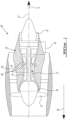
- Fig. 1 illustrates an aircraft engine 10 (or simply "engine” 10), which in this case is a gas turbine engine of a type preferably provided for use in subsonic flight, generally comprising in serial flow communication a fan 12 through which ambient air is propelled, a compressor section 14 for pressurizing the air, a combustor 16 in which the compressed air is mixed with fuel and ignited for generating an annular stream of hot combustion gases, and a turbine section 18 for extracting energy from the combustion gases.
- engine 10 has a longitudinal center axis 11.
- the engine 10 depicted in FIG. 1 is a turbofan engine, and therefore includes a bypass duct 20 that surrounds a core 15 of the engine, the engine core 15 including for example the compressor section 14, the combustor 16 and the turbine section 18.
- the fan 12 propels air through both the central engine core 15 and through the radially outer bypass duct 20.
- the present disclosure may also be applicable to other types of gas turbine engines, including turboshafts and turboprops for example.
- the present disclosure may also be applicable to other types of airborne aircraft engines which have a secondary air system, whether or not they are traditional gas turbine engines.
- the present SAS system may also be used in hybrid, alternate fuel and/or electric aircraft engines, provided that they include a secondary air system.
- the engine 10 defines a main gas path 13 of combustion gasses flowing through the engine core 15.
- the exemplified engine 10 shown is a "through-flow" type gas turbine engine, in which gases flow through the central core 15 of the engine from the air inlet 19 located at the forward end of the engine to the exhaust 21 located at the rearward (aft) end of the engine 10.
- this direction of airflow along the main gas path 13 and through the core 15 of the engine 10 is generally in a direction opposite to the direction of travel D of the aircraft, in that the thrust T produced by the engine 10 in the aft direction propels the aircraft forward in the direction D.
- the features of the secondary air system (SAS) 30 as described herein are similarly applicable to a "reverse-flow" turboprop or turboshaft engine, for example, wherein gases flow through the core of the engine from an inlet located at or near the rear (aft) end of the engine to the exhaust outlet located at a forward end (i.e. relative to the direction of travel of the aircraft) of the engine.
- a reverse flow engine configuration the direction of airflow through the core of the engine is therefore generally in the same direction as the direction of travel of the aircraft.
- the expressions “forward” and “aft” used herein refer to the relative disposition of components of the engine 10, in correspondence to the “forward” and “aft” directions of the engine 10 and an aircraft including the engine 10 as defined with respect to the direction of travel D of the aircraft.
- a component of the engine 10 that is "forward” of another component is arranged within the engine 10 such that it is located closer to the fan 12.
- a component of the engine 10 that is “aft” of another component is arranged within the engine 10 such that it is further away from the fan 12.
- the expressions “upstream” and “downstream” as used herein refer to similar relative axial dispositions of components of the engine relative to the direction of the main gas path 13 through the engine, from the air inlet 19 to the exhaust 21.
- the engine 10 includes a secondary air system (SAS) 30 to provide compressed air to the engine for non-combustion purposes, for example for example for internal engine cooling, sealing bearing cavities, feeding pneumatic systems, de-icing, meeting environmental control system requirements of the aircraft, etc.
- SAS secondary air system
- This compressed air used for non-combustion purposes will be referred to herein as "secondary airflow" or “secondary air”.
- the SAS 30 is accordingly operable to bleed, distribute, handle and/or regulate the secondary air flow to and/or for one or more of such non-combustive air flow systems.
- the source of this secondary air distributed by the SAS 30 may include air bled off from the compressor section 14 of the engine 10 or air bled off from the bypass airflow flowing through the bypass duct 20 of the engine 10 (in the case of a turbofan engine, as depicted).
- secondary air used for internal engine cooling and bearing cavity sealing may be bled from, for example, one or more locations near a high pressure compressor of the compressor section 14.
- compressor bleed air may be extracted from a location downstream from the outlet of the high pressure compressor (i.e. air from station 3 station of the engine, or "P3" air) and/or from a location upstream of the inlet of the high pressure compressor (i.e. air from station 2.5 of the engine, or "P2.5" air).
- the source of the secondary air for the SAS 30 may include bypass air which is withdrawn or bled from the outer bypass duct 20 of the engine 10. Any suitable port or take-off may be used to direct the bypass air into the SAS 30.
- the bypass air may be initially cooled by a bypass air cooler (BAC) 32, located for example in the bypass duct 20, before being directed into the SAS 30 and thus providing the secondary airflow.
- BAC bypass air cooler
- the compressor section 14 of the engine 10 may include an inter-compressor case (ICC) 22 within which certain elements of the SAS 30 as described herein may be integrated.
- ICC inter-compressor case
- the ICC 22 includes generally a radially outer casing 24 and a radially inner casing 26 that are radially spaced apart, relative to the longitudinal central axis 11 of the engine 10.
- at least two struts 28 extend radially between the radially inner and outer casings 24, 26 of the ICC 22.
- the struts 28 are hollow and therefore form conduits which define secondary air flow paths 34 radially through the struts.
- the secondary air flowing along the secondary air flow paths 34 flows radially inwardly through the struts 28, that is from a radially outer end to a radially inner end of each of the struts 28. From the radially inner end of each strut 28 (i.e. the outlet of the secondary air), the secondary airflow is direction along paths 34 to feed the secondary air to seals 23 and/or bearing cavities 25 within the inner core of the engine, proximate the main engine shafts.
- the secondary air may also and/or instead flow radially outwardly through the struts 28 of the ICC 22.
- the external surfaces of the struts 28 may be airfoil shaped, given that these struts 28 extend through the main gas path of the compressor section 14.
- the struts 28 may also provide structural support for bearing housings or bearing cavities 25 and/or other components located radially inward of the main gaspath 13 and/or for the outer casing 24 of the ICC 22 located radially outward of the main gaspath.
- the ICC 22 may also define a portion of the inner wall of the outer bypass duct 20, which is disposed radially outward from the ICC 22 and the engine core 15.
- a single, large, hollow strut is typically used as a conduit for the secondary airflow, wherein compressed air is directed through a single hollow strut that passes through the main gas path of the engine in order to feed compressed secondary air to the inner core of the engine.
- compressed air is directed through a single hollow strut that passes through the main gas path of the engine in order to feed compressed secondary air to the inner core of the engine.
- using a single strut to supply the secondary airflow may leave little margin for increasing the supply capacity of the secondary air, should the need arise.
- This can be alleviated, as per the present disclosure, by providing one or more flow paths, which may include using multiple struts instead of a single one, and limiting the flow within each of these flow paths using sonic orifices to control the flow therethrough.
- the SAS 30 of the present disclosure accordingly includes a SAS feed pipe configuration 40, which includes, in at least one particular embodiment, two or more separate SAS feed pipes, such as the two SAS feed pipes 42, 42' as will be explained below, for feeding the secondary air from the secondary air source into the inner core 15 of the engine 10, via a corresponding number of hollow struts 28.
- each of the SAS feed pipes 42 includes a sonic orifice 60 therein.
- SAS feed-pipe configuration 40 of the SAS 30 is a twin-pipe configuration, in that there are two SAS feed pipes 42, 42', it is to be understood that a single feed pipe 42 or more than two of the SAS feed pipes 42, 42' may also be provided. Regardless of the number of SAS feed pipes, however, each of the SAS feed pipes will include a sonic orifice 60 therein, as described below.
- any number of parallel flow paths 47, 47' may be provided, and can be selected depending on the flow demands of the particular engine 10 and/or the geometry and space envelope available.
- a single SAS feed pipe 42 it may feed either a single corresponding hollow strut 28 or alternately a single SAS feed pipe 42 may feed secondary air to multiple (two or more) hollow struts 28.
- incoming secondary air flow 45 received from the secondary air source which in this case is the BAC 32 in the outer bypass duct 20, is split into two separate streams by a Y-junction or flow splitter 44.
- the incoming secondary air flow 45 from the source is split into a first secondary air stream 47 and a second secondary air stream 47' by the flow splitter 44, such that downstream of the flow splitter 44 the first and second secondary air streams 47, 47' flow through separate conduits.
- the feed-pipe configuration 40 of the SAS 30 includes a first SAS feed pipe 42 and, in the present embodiment, at least a second SAS feed pipe 42'.
- the first SAS feed pipe 42 has an inlet 46 that is connected in fluid flow communication to a first outlet 48 of the flow splitter 44
- the second SAS feed pipe 42' has an inlet 46' that is connected in fluid flow communication to a second outlet 48' of the flow splitter 44.
- the first SAS feed pipe 42 contains and defines the first secondary air stream 47
- the second SAS feed pipe 42' contains and defines the second secondary air stream 47', both flowing through discrete conduits downstream of the flow splitter 44.
- the SAS may not include the flow splitter 44, and instead each of the SAS feed pipes 42, 42' may be fed directly from either the same pressurized air source or from separate pressurized air sources.
- each of the SAS feed pipes 42, 42' can be directly connected to the BAC 32 and/or the bypass duct 20, with each having its own bleed or take-off port feeding bypass duct air into the two SAS feed pipes 42, 42'.
- the first and second SAS feed pipes 42, 42' have outlets 50, 50' which are connected in fluid flow communication with different hollow struts 28 of the ICC 22. More particularly, the first SAS feed pipe 42 has an outlet 50 which is connected in fluid flow communication with an inlet 29 of a first strut conduit extending 33 through a first strut 28 and the second SAS feed pipe 42' has an outlet 50' that is connected in fluid flow communication with an inlet 29' of a second strut conduit 33' extending through a second strut 28', whereby the first secondary air stream 47 is fed into the first strut conduit 33 of the first strut 28 by the first SAS feed pipe 42 and the second secondary air stream 47' is fed into the second strut conduit 33' of the second strut 28' by the second SAS feed pipe 42.
- the inlets 29, 29' of the first and second struts 28, 28' are located at their radially outer ends, such that the first and second secondary air streams 47, 47' flow through the first and second strut conduits 33, 33' of the hollow struts 28, 28' in a radially inward direction toward the center core 15 of the engine 10.
- the hollow struts 28, 28' have respective outlets 31, 31' at their downstream ends (with respect to the direction of the secondary air flow through the struts).
- the downstream ends of the hollow struts 28, 28' which in the depicted embodiment are the radially inner ends of the struts, are connected in fluid flow communication with a single, common plenum in the form of a buffer cavity 52.
- the buffer cavity 52 is arcuate and extends partially circumferentially within the radially inner casing 26 of the ICC 22 such as to fluidly interconnect the two outlets 31, 31' of the inner conduits of the two hollow struts 28, 28'.
- This buffer cavity 52 is accordingly located under, that is radially inward of, the main gas path 13 through the engine core 15.
- the first and second secondary air streams 47, 47' which respectively flow through the first and second SAS feed pipes 42, 42' and the first and second hollow struts 28, 28', accordingly reunite at the buffer cavity 52.
- the re-united secondary air is fed downstream (relative to the flow of secondary air) to the bearing cavities 25 and/or seals 23 of the engine core 15 along secondary flow paths 34 as shown in Fig. 2 .
- each of the two SAS feed pipes 42, 42' includes a sonic orifice 60 therein, located between the inlets 46, 46' and the outlets 50, 50' of the pipes 42, 42'.
- the sonic orifices 60 are static and have no moving parts, but effectively provide a different flow restriction at various engine operating conditions, such that the secondary air flow through the SAS feed pipes 42, 42' can be more restricted at higher secondary air flow rates but less restricted at lower secondary air flow rates.
- the sonic orifices 60 are accordingly operable to create a flow restriction when the engine 10 is operating at high power and/or high engine speed, such as during take-off, flight cruise, etc. More particularly, at such high power engine regimes when flow rates of the secondary air flow through the SAS feed pipes 42, 42' is relatively high, the sonic orifices 60 lead to a compressibility-driven restriction at the throats 62 within the orifices 60. Thus, flow is limited due to choking of the flow.
- the secondary air flow through the SAS feed pipes 42, 42' is less restricted (in comparison with the degree or amount of restriction created at higher flow rates, as noted above).
- significantly reduced flow restriction is therefore provided by the sonic orifices 60 and, thus, the secondary airflow can be maximized at low engine power.
- the flow restrictions provided by the sonic orifices 60 at high engine power however help to constrain the secondary air flow at such high engine power regimes to prevent excessive quantities of secondary airflow or secondary airflow having too high a pressure to be fed to the engine core 15 for sealing and/or cooling purposes during high engine power regimes.
- the shape of the sonic orifices 60 maximizes secondary air flow at engine idle (e.g. low power) when bearing cavity pressurization needs it the most.
- the sonic orifices 60 offer reduced flow restriction penalty at low engine speeds (e.g. at engine idle), while still providing flow restriction at the throats of the sonic orifices 60 at high power (because the air flow is choked by the sonic orifice thereby causing a compressibility-driven restriction).
- the sonic orifices 60 can be tailored to have negligible flow restriction at low power (to promote greater air-supply) and to restrict the secondary air flow at higher engine power regimes, and this can be selected and/or tailored depending upon the secondary air requirements of the particular engine.
- the sonic orifices 60 are operable to limit the secondary airflow at high engine power, relative to what would otherwise be possible (i.e. if other components, such as struts, etc. were to act as flow restrictors). Stated differently, the sonic orifices 60 are selected such as to act as the dominant flow restriction/limitation within the secondary airflow path between the source and the buffer cavity.
- the quantity of parallel flow paths defined by the SAS feed pipes and their respective hollow struts downstream thereof is selected as required, and may be dependent upon a total SAS secondary airflow demand and/or restriction of existing passages either upstream of downstream of the SAS feed pipes. The quantity of parallel paths may thus increase with engine flow demand and may be reduced with available passage sizes.
- a single flow path - i.e. a single SAS feed pipe 42 - if it is sufficient to meet the secondary airflow demands of the engine when operating a low engine power.
- the sonic orifice 60 is the dominant restrictor at high power, while not unduly limiting secondary airflow at lower powers - when the mass flow and/or pressure of the secondary airflow is lower.
- the sonic orifices 60 are formed by converging-diverging nozzles. More particularly, in the embodiment depicted in Fig. 4 , the converging portion 64 the converging-diverging nozzle is shorter in axial length (i.e. in the direction of flow 47, 47') than the longer diverging portion 66 of the converging-diverging nozzle.
- the sonic orifices 60 may include and/or be replaced with flat plate orifices or other suitable and similar flow restrictors.
- flat plate orifices may offer less advantages, as there would be less flow supply at idle and therefore the flow restriction provided by such flat-plate orifices may be substantially uniform regardless of the flow rates. From a flow supply perspective, therefore, using sonic orifices 60 (comprising converging-diverging nozzles for example) offers a more optimal solution because the secondary airflow is restricted less at low power regimes (flow rates) and more at higher power regimes (flow rates)
- each of the two SAS feed pipes 42, 42' may, in one particular embodiment, include a first flexible hose portion 70 at an upstream end (relative to the flow of secondary air therethrough) of the SAS feed pipe 42, 42' and a second rigid pipe portion 72 at a downstream end ((relative to the flow of secondary air therethrough) of the SAS feed pipe 42, 42'.
- the sonic orifice 60 may, as shown in the depicted embodiment, be located within the second rigid pipe portion 72 of the SAS feed pipe 42, 42'.
- the sonic orifice 60 may be located at the most upstream end of the second rigid pipe portion 72, proximate the junction between the first flexible hose portion 70 and the second rigid pipe portion 72.
- the use of the first flexible hose portions 70 may enable the SAS feed pipes 42, 42' to be supported by, or routed-through, existing engine hardware.
- the secondary air system (SAS) 30 as described herein therefore uses a feed-pipe configuration 40 (which in a particular embodiment is a multi-pipe configuration composed of two or more SAS feed pipes) for feeding the SAS air into the engine core 15, with sonic orifices 60 provided between the inlets 46, 46' and the outlets 50, 50' of each of the SAS feed pipes 42, 42'.
- a feed-pipe configuration 40 which in a particular embodiment is a multi-pipe configuration composed of two or more SAS feed pipes
- twin pipe configuration 40 having the sonic orifices 60 therein may be extended and/or applied to other feeder pipes within the engine 10, including but not limited to other secondary air flow passages - for example those in the turbine section of the engine, or elsewhere.
- a method 100 of operating the gas turbine engine 10 having the SAS 30 as described herein may also include, generally, the steps of: receiving, at 110, secondary airflow from a source provided by the aircraft engine, the secondary airflow including one or more secondary air streams flowing downstream of the source; flowing, at 120, each of the secondary air streams through a respective SAS feed pipe, wherein an outlet of the SAS feed pipe is in fluid communication with a buffer cavity that receives therein the secondary air streams therein; and generating, at 130, a first flow restriction in each of the secondary air streams during a first (high) power regime of the engine, and generating a second flow restriction in the secondary air streams during a second (lower) power regime of the engine, the second power regime being lower than the first power regime, and the second flow restriction being less than the first flow restriction.
- the step 130 of generating may further comprise, in certain embodiments, using sonic orifices located in each of the SAS pipes to generate the first and second flow restrictions.
- the method 100 may also further comprises, downstream of the SAS feed pipes, flowing the secondary air streams through a respective hollow strut, wherein outlets of the hollow struts are in fluid communication with the buffer cavity.
- the described system and method can use any number of SAS feed pipes each feeding a respective air stream therethrough.
- bypass air as the source of the non-combustion air for the SAS
- the bypass air may be initially cooled by the BAC 32 and subsequently fed to the inner bearing cavities of the engine core
- alternate engine architectures may not require the air to pass through a BAC 32 or be bled from the bypass duct, and thus may enable other sources for the secondary air for the SAS 30.
- different slot clockings i.e. circumferential alignments
- different sonic orifice sizes can be used, depending on the particular engine.
- the secondary air may flows through the hollow struts in the opposite direction, i.e. from radially inner ends to radially outer ends thereof.
Landscapes
- Engineering & Computer Science (AREA)
- Chemical & Material Sciences (AREA)
- Combustion & Propulsion (AREA)
- Mechanical Engineering (AREA)
- General Engineering & Computer Science (AREA)
- Physics & Mathematics (AREA)
- Fluid Mechanics (AREA)
- Jet Pumps And Other Pumps (AREA)
Description
- The application relates generally to secondary air systems in aircraft gas turbine engines.
- Aircraft engines, such as gas turbine engines, use secondary air systems to provide air to the engine for non-combustion purposes, for example for internal engine cooling, sealing bearing cavities, etc. This non-combustion air therefore needs to be fed across the main gas path to the engine shafts and bearing cavities within the inner core of the engine. In certain engine configurations, a hollow strut is used as a conduit for the secondary airflow. This hollow strut is typically relatively large and airfoil shaped, and bridges from the outer casing of the main gas path to an inner surface of the main gas path, thereby providing support and also allowing the non-combustion secondary air to be routed through the interior of the strut to the inner core of the engine (and thus to bearing cavities, etc.).
- While such secondary air systems and their associated structures and/or architecture are suitable for their intended purposes, continuous improvement is always sought. Amongst other things, there is a desire to be able to increase the supply capacity of the secondary airflow, should the need arise, while limiting the secondary airflow at high power engine conditions.
-
US 2016/265432 A1 discloses a prior art secondary air system of an aircraft gas turbine engine as set forth in the preamble of claim 1. -
US 2016/312615 A1 discloses prior art compressor rim thermal management. - In one aspect, there is provided a secondary air system (SAS) of an aircraft gas turbine engine as recited in claim 1.
- In another aspect, there is provided a method of operating an aircraft gas turbine engine having a secondary air system (SAS) as recited in
claim 15. - Features of embodiments are set forth in the dependent claims.
- Reference is now made to the accompanying figures in which:
-
Fig. 1 is a schematic cross sectional view of an aircraft engine; -
Fig. 2 is a cross-sectional view of a compression section of the engine ofFig. 1 , partially showing secondary airflow of a secondary air system (SAS) of the engine; -
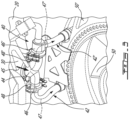
Fig. 3 is a perspective view of the SAS of the engine ofFigs. 1-2 , showing SAS feed pipes of the SAS; -
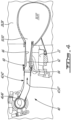
Fig. 4 is a cross-sectional view taken through one of the SAS feed pipes inFig. 3 ; -
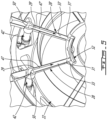
Fig. 5 is a partially sectioned rear perspective view of the secondary air system ofFigs. 3-4 , showing secondary airflow through the struts of the inter-compressor case; and -
Fig. 6 is a flow diagram illustrating steps of operating an aircraft engine ofFig. 1 having the SAS ofFigs. 2-5 . -
Fig. 1 illustrates an aircraft engine 10 (or simply "engine" 10), which in this case is a gas turbine engine of a type preferably provided for use in subsonic flight, generally comprising in serial flow communication afan 12 through which ambient air is propelled, acompressor section 14 for pressurizing the air, acombustor 16 in which the compressed air is mixed with fuel and ignited for generating an annular stream of hot combustion gases, and aturbine section 18 for extracting energy from the combustion gases.engine 10 has alongitudinal center axis 11. - The
engine 10 depicted inFIG. 1 is a turbofan engine, and therefore includes abypass duct 20 that surrounds acore 15 of the engine, theengine core 15 including for example thecompressor section 14, thecombustor 16 and theturbine section 18. Thefan 12 propels air through both thecentral engine core 15 and through the radiallyouter bypass duct 20. However, it is to be understood that the present disclosure may also be applicable to other types of gas turbine engines, including turboshafts and turboprops for example. Indeed, the present disclosure may also be applicable to other types of airborne aircraft engines which have a secondary air system, whether or not they are traditional gas turbine engines. For example, the present SAS system may also be used in hybrid, alternate fuel and/or electric aircraft engines, provided that they include a secondary air system. - The
engine 10 defines amain gas path 13 of combustion gasses flowing through theengine core 15. The exemplifiedengine 10 shown is a "through-flow" type gas turbine engine, in which gases flow through thecentral core 15 of the engine from theair inlet 19 located at the forward end of the engine to theexhaust 21 located at the rearward (aft) end of theengine 10. In the depicted embodiment, this direction of airflow along themain gas path 13 and through thecore 15 of theengine 10 is generally in a direction opposite to the direction of travel D of the aircraft, in that the thrust T produced by theengine 10 in the aft direction propels the aircraft forward in the direction D. - However, the features of the secondary air system (SAS) 30 as described herein are similarly applicable to a "reverse-flow" turboprop or turboshaft engine, for example, wherein gases flow through the core of the engine from an inlet located at or near the rear (aft) end of the engine to the exhaust outlet located at a forward end (i.e. relative to the direction of travel of the aircraft) of the engine. In such a reverse flow engine configuration, the direction of airflow through the core of the engine is therefore generally in the same direction as the direction of travel of the aircraft.
- It will be appreciated that the expressions "forward" and "aft" used herein refer to the relative disposition of components of the
engine 10, in correspondence to the "forward" and "aft" directions of theengine 10 and an aircraft including theengine 10 as defined with respect to the direction of travel D of the aircraft. In the embodiment shown inFIG. 1 , a component of theengine 10 that is "forward" of another component is arranged within theengine 10 such that it is located closer to thefan 12. Similarly, a component of theengine 10 that is "aft" of another component is arranged within theengine 10 such that it is further away from thefan 12. Similarly, unless indicated otherwise, the expressions "upstream" and "downstream" as used herein refer to similar relative axial dispositions of components of the engine relative to the direction of themain gas path 13 through the engine, from theair inlet 19 to theexhaust 21. - The
engine 10 includes a secondary air system (SAS) 30 to provide compressed air to the engine for non-combustion purposes, for example for example for internal engine cooling, sealing bearing cavities, feeding pneumatic systems, de-icing, meeting environmental control system requirements of the aircraft, etc. This compressed air used for non-combustion purposes will be referred to herein as "secondary airflow" or "secondary air". The SAS 30 is accordingly operable to bleed, distribute, handle and/or regulate the secondary air flow to and/or for one or more of such non-combustive air flow systems. - Depending on the engine configuration, the source of this secondary air distributed by the SAS 30 may include air bled off from the
compressor section 14 of theengine 10 or air bled off from the bypass airflow flowing through thebypass duct 20 of the engine 10 (in the case of a turbofan engine, as depicted). For air bled from the compressor section, secondary air used for internal engine cooling and bearing cavity sealing may be bled from, for example, one or more locations near a high pressure compressor of thecompressor section 14. For example, compressor bleed air may be extracted from a location downstream from the outlet of the high pressure compressor (i.e. air from station 3 station of the engine, or "P3" air) and/or from a location upstream of the inlet of the high pressure compressor (i.e. air from station 2.5 of the engine, or "P2.5" air). - In the case of the
turbofan engine 10 ofFig. 1 , the source of the secondary air for the SAS 30 may include bypass air which is withdrawn or bled from theouter bypass duct 20 of theengine 10. Any suitable port or take-off may be used to direct the bypass air into the SAS 30. In one particular embodiment, the bypass air may be initially cooled by a bypass air cooler (BAC) 32, located for example in thebypass duct 20, before being directed into theSAS 30 and thus providing the secondary airflow. - Referring to
Fig. 2 , thecompressor section 14 of theengine 10 may include an inter-compressor case (ICC) 22 within which certain elements of theSAS 30 as described herein may be integrated. Although the SAS 30 is described below in the context of thecompressor 14 of theengine 10, it is to be understood that thepresent SAS 30 can also be used elsewhere within theengine 10, for example within theturbine section 18. TheICC 22 includes generally a radiallyouter casing 24 and a radiallyinner casing 26 that are radially spaced apart, relative to the longitudinalcentral axis 11 of theengine 10. In the depicted embodiment, at least twostruts 28 extend radially between the radially inner andouter casings ICC 22. Thestruts 28 are hollow and therefore form conduits which define secondaryair flow paths 34 radially through the struts. In at least the depicted embodiment, the secondary air flowing along the secondaryair flow paths 34 flows radially inwardly through thestruts 28, that is from a radially outer end to a radially inner end of each of thestruts 28. From the radially inner end of each strut 28 (i.e. the outlet of the secondary air), the secondary airflow is direction alongpaths 34 to feed the secondary air toseals 23 and/or bearingcavities 25 within the inner core of the engine, proximate the main engine shafts. In alternate embodiments and engine configurations, however, it is understood that the secondary air may also and/or instead flow radially outwardly through thestruts 28 of theICC 22. The external surfaces of thestruts 28 may be airfoil shaped, given that thesestruts 28 extend through the main gas path of thecompressor section 14. Thestruts 28 may also provide structural support for bearing housings orbearing cavities 25 and/or other components located radially inward of themain gaspath 13 and/or for theouter casing 24 of theICC 22 located radially outward of the main gaspath. TheICC 22 may also define a portion of the inner wall of theouter bypass duct 20, which is disposed radially outward from theICC 22 and theengine core 15. - As mentioned above, in certain prior art engine configurations, a single, large, hollow strut is typically used as a conduit for the secondary airflow, wherein compressed air is directed through a single hollow strut that passes through the main gas path of the engine in order to feed compressed secondary air to the inner core of the engine. However, using a single strut to supply the secondary airflow may leave little margin for increasing the supply capacity of the secondary air, should the need arise. This can be alleviated, as per the present disclosure, by providing one or more flow paths, which may include using multiple struts instead of a single one, and limiting the flow within each of these flow paths using sonic orifices to control the flow therethrough. The need to limit the flow is driven by the air system supply requirements, particularly at high power operating regime when excess flow consumption may otherwise have detrimental effect on the performance of the engine. However, if other types of control orifices (i.e. not sonic orifices, as described herein) are used as means to limit the secondary flow, they could further decrease the amount of air supply available at low power regime, when typically the largest amount of flow possible is desired.
- Referring now to
Fig. 3 , theSAS 30 of the present disclosure accordingly includes a SASfeed pipe configuration 40, which includes, in at least one particular embodiment, two or more separate SAS feed pipes, such as the twoSAS feed pipes 42, 42' as will be explained below, for feeding the secondary air from the secondary air source into theinner core 15 of theengine 10, via a corresponding number ofhollow struts 28. Additionally, as will also be explained in more detail below with reference toFig. 4 , each of theSAS feed pipes 42 includes asonic orifice 60 therein. - Although the
SAS 30 will be described below with general reference to an embodiment wherein twoSAS feed pipes 42, 42' are provided, it is to be understood that in another possible embodiment, a singleSAS feed pipe 42 may be used, or alternately still more than two SAS feed pipes may be provided. Therefore, although in the depicted embodiment the SAS feed-pipe configuration 40 of theSAS 30 is a twin-pipe configuration, in that there are twoSAS feed pipes 42, 42', it is to be understood that asingle feed pipe 42 or more than two of theSAS feed pipes 42, 42' may also be provided. Regardless of the number of SAS feed pipes, however, each of the SAS feed pipes will include asonic orifice 60 therein, as described below. Accordingly, any number ofparallel flow paths 47, 47' (formed by theSAS feed pipes 42, 42' and their respective hollow struts 28) may be provided, and can be selected depending on the flow demands of theparticular engine 10 and/or the geometry and space envelope available. In the case of a singleSAS feed pipe 42, it may feed either a single correspondinghollow strut 28 or alternately a singleSAS feed pipe 42 may feed secondary air to multiple (two or more)hollow struts 28. - As seen in
Fig. 3 , in the depicted embodiment, incomingsecondary air flow 45 received from the secondary air source, which in this case is theBAC 32 in theouter bypass duct 20, is split into two separate streams by a Y-junction or flowsplitter 44. According the incomingsecondary air flow 45 from the source is split into a firstsecondary air stream 47 and a second secondary air stream 47' by theflow splitter 44, such that downstream of theflow splitter 44 the first and second secondary air streams 47, 47' flow through separate conduits. More particularly, as noted above, the feed-pipe configuration 40 of theSAS 30 includes a firstSAS feed pipe 42 and, in the present embodiment, at least a second SAS feed pipe 42'. The firstSAS feed pipe 42 has aninlet 46 that is connected in fluid flow communication to afirst outlet 48 of theflow splitter 44, and the second SAS feed pipe 42' has an inlet 46' that is connected in fluid flow communication to a second outlet 48' of theflow splitter 44. As such, the firstSAS feed pipe 42 contains and defines the firstsecondary air stream 47 and the second SAS feed pipe 42' contains and defines the second secondary air stream 47', both flowing through discrete conduits downstream of theflow splitter 44. - In an alternate embodiment, however, the SAS may not include the
flow splitter 44, and instead each of theSAS feed pipes 42, 42' may be fed directly from either the same pressurized air source or from separate pressurized air sources. For example, each of theSAS feed pipes 42, 42' can be directly connected to theBAC 32 and/or thebypass duct 20, with each having its own bleed or take-off port feeding bypass duct air into the twoSAS feed pipes 42, 42'. - As best seen in
Fig. 5 , the first and secondSAS feed pipes 42, 42' haveoutlets 50, 50' which are connected in fluid flow communication with differenthollow struts 28 of theICC 22. More particularly, the firstSAS feed pipe 42 has anoutlet 50 which is connected in fluid flow communication with aninlet 29 of a first strut conduit extending 33 through afirst strut 28 and the second SAS feed pipe 42' has an outlet 50' that is connected in fluid flow communication with an inlet 29' of a second strut conduit 33' extending through a second strut 28', whereby the firstsecondary air stream 47 is fed into thefirst strut conduit 33 of thefirst strut 28 by the firstSAS feed pipe 42 and the second secondary air stream 47' is fed into the second strut conduit 33' of the second strut 28' by the secondSAS feed pipe 42. In the depicted embodiment, theinlets 29, 29' of the first andsecond struts 28, 28' are located at their radially outer ends, such that the first and second secondary air streams 47, 47' flow through the first andsecond strut conduits 33, 33' of thehollow struts 28, 28' in a radially inward direction toward thecenter core 15 of theengine 10. - Referring still to
Fig. 5 , thehollow struts 28, 28' haverespective outlets 31, 31' at their downstream ends (with respect to the direction of the secondary air flow through the struts). The downstream ends of thehollow struts 28, 28', which in the depicted embodiment are the radially inner ends of the struts, are connected in fluid flow communication with a single, common plenum in the form of abuffer cavity 52. In the depicted embodiment, thebuffer cavity 52 is arcuate and extends partially circumferentially within the radiallyinner casing 26 of theICC 22 such as to fluidly interconnect the twooutlets 31, 31' of the inner conduits of the twohollow struts 28, 28'. Thisbuffer cavity 52 is accordingly located under, that is radially inward of, themain gas path 13 through theengine core 15. The first and second secondary air streams 47, 47' , which respectively flow through the first and secondSAS feed pipes 42, 42' and the first and secondhollow struts 28, 28', accordingly reunite at thebuffer cavity 52. - From the
buffer cavity 52, the re-united secondary air is fed downstream (relative to the flow of secondary air) to the bearingcavities 25 and/or seals 23 of theengine core 15 alongsecondary flow paths 34 as shown inFig. 2 . - Referring now back to
Fig. 4 , each of the twoSAS feed pipes 42, 42' includes asonic orifice 60 therein, located between theinlets 46, 46' and theoutlets 50, 50' of thepipes 42, 42'. Thesonic orifices 60 are static and have no moving parts, but effectively provide a different flow restriction at various engine operating conditions, such that the secondary air flow through theSAS feed pipes 42, 42' can be more restricted at higher secondary air flow rates but less restricted at lower secondary air flow rates. - The
sonic orifices 60 are accordingly operable to create a flow restriction when theengine 10 is operating at high power and/or high engine speed, such as during take-off, flight cruise, etc. More particularly, at such high power engine regimes when flow rates of the secondary air flow through theSAS feed pipes 42, 42' is relatively high, thesonic orifices 60 lead to a compressibility-driven restriction at thethroats 62 within theorifices 60. Thus, flow is limited due to choking of the flow. - However, when the
engine 10 is operating at lower power and/or speed, such as at engine idle for example, when the flow rates of the secondary air flow are relatively lower, the secondary air flow through theSAS feed pipes 42, 42' is less restricted (in comparison with the degree or amount of restriction created at higher flow rates, as noted above). At low secondary air flow rates, which may occur during engine idle for example, significantly reduced flow restriction is therefore provided by thesonic orifices 60 and, thus, the secondary airflow can be maximized at low engine power. The flow restrictions provided by thesonic orifices 60 at high engine power however help to constrain the secondary air flow at such high engine power regimes to prevent excessive quantities of secondary airflow or secondary airflow having too high a pressure to be fed to theengine core 15 for sealing and/or cooling purposes during high engine power regimes. Thus, for a given air flow supply or specific fuel consumption (SFC) of theengine 10 running at high power, the shape of thesonic orifices 60 maximizes secondary air flow at engine idle (e.g. low power) when bearing cavity pressurization needs it the most. Stated differently, thesonic orifices 60 offer reduced flow restriction penalty at low engine speeds (e.g. at engine idle), while still providing flow restriction at the throats of thesonic orifices 60 at high power (because the air flow is choked by the sonic orifice thereby causing a compressibility-driven restriction). - The
sonic orifices 60 can be tailored to have negligible flow restriction at low power (to promote greater air-supply) and to restrict the secondary air flow at higher engine power regimes, and this can be selected and/or tailored depending upon the secondary air requirements of the particular engine. - Accordingly, the
sonic orifices 60 are operable to limit the secondary airflow at high engine power, relative to what would otherwise be possible (i.e. if other components, such as struts, etc. were to act as flow restrictors). Stated differently, thesonic orifices 60 are selected such as to act as the dominant flow restriction/limitation within the secondary airflow path between the source and the buffer cavity. The quantity of parallel flow paths defined by the SAS feed pipes and their respective hollow struts downstream thereof is selected as required, and may be dependent upon a total SAS secondary airflow demand and/or restriction of existing passages either upstream of downstream of the SAS feed pipes. The quantity of parallel paths may thus increase with engine flow demand and may be reduced with available passage sizes. For example, in a particular embodiment, it may be possible to use a single flow path - i.e. a single SAS feed pipe 42 - if it is sufficient to meet the secondary airflow demands of the engine when operating a low engine power. In all cases, however, and in each parallel path, thesonic orifice 60 is the dominant restrictor at high power, while not unduly limiting secondary airflow at lower powers - when the mass flow and/or pressure of the secondary airflow is lower. - As seen in
Fig. 4 , thesonic orifices 60 are formed by converging-diverging nozzles. More particularly, in the embodiment depicted inFig. 4 , the converging portion 64 the converging-diverging nozzle is shorter in axial length (i.e. in the direction offlow 47, 47') than the longer divergingportion 66 of the converging-diverging nozzle. - In an alternate embodiment, the
sonic orifices 60 may include and/or be replaced with flat plate orifices or other suitable and similar flow restrictors. However, such flat plate orifices may offer less advantages, as there would be less flow supply at idle and therefore the flow restriction provided by such flat-plate orifices may be substantially uniform regardless of the flow rates. From a flow supply perspective, therefore, using sonic orifices 60 (comprising converging-diverging nozzles for example) offers a more optimal solution because the secondary airflow is restricted less at low power regimes (flow rates) and more at higher power regimes (flow rates) - As can be see in
Figs. 3-4 , each of the twoSAS feed pipes 42, 42' may, in one particular embodiment, include a first flexible hose portion 70 at an upstream end (relative to the flow of secondary air therethrough) of theSAS feed pipe 42, 42' and a second rigid pipe portion 72 at a downstream end ((relative to the flow of secondary air therethrough) of theSAS feed pipe 42, 42'. Thesonic orifice 60 may, as shown in the depicted embodiment, be located within the second rigid pipe portion 72 of theSAS feed pipe 42, 42'. More particularly still, thesonic orifice 60 may be located at the most upstream end of the second rigid pipe portion 72, proximate the junction between the first flexible hose portion 70 and the second rigid pipe portion 72. The use of the first flexible hose portions 70 may enable theSAS feed pipes 42, 42' to be supported by, or routed-through, existing engine hardware. - The secondary air system (SAS) 30 as described herein therefore uses a feed-pipe configuration 40 (which in a particular embodiment is a multi-pipe configuration composed of two or more SAS feed pipes) for feeding the SAS air into the
engine core 15, withsonic orifices 60 provided between theinlets 46, 46' and theoutlets 50, 50' of each of theSAS feed pipes 42, 42'. - Although the concepts described herein with respect to the
SAS feed pipes 42, 42' are done in the context of theSAS 30 in general, and the secondary air inlet feed to theengine core 15 in particular, it is to be understood thattwin pipe configuration 40 having thesonic orifices 60 therein may be extended and/or applied to other feeder pipes within theengine 10, including but not limited to other secondary air flow passages - for example those in the turbine section of the engine, or elsewhere. - With reference to
Fig. 6 and further to the embodiments described above, amethod 100 of operating thegas turbine engine 10 having theSAS 30 as described herein may also include, generally, the steps of: receiving, at 110, secondary airflow from a source provided by the aircraft engine, the secondary airflow including one or more secondary air streams flowing downstream of the source; flowing, at 120, each of the secondary air streams through a respective SAS feed pipe, wherein an outlet of the SAS feed pipe is in fluid communication with a buffer cavity that receives therein the secondary air streams therein; and generating, at 130, a first flow restriction in each of the secondary air streams during a first (high) power regime of the engine, and generating a second flow restriction in the secondary air streams during a second (lower) power regime of the engine, the second power regime being lower than the first power regime, and the second flow restriction being less than the first flow restriction. - The
step 130 of generating may further comprise, in certain embodiments, using sonic orifices located in each of the SAS pipes to generate the first and second flow restrictions. Themethod 100 may also further comprises, downstream of the SAS feed pipes, flowing the secondary air streams through a respective hollow strut, wherein outlets of the hollow struts are in fluid communication with the buffer cavity. - The embodiments described in this document provide non-limiting examples of possible implementations of the present technology. Upon review of the present disclosure, a person of ordinary skill in the art will recognize that changes may be made to the embodiments described herein without departing from the scope of the present technology, in addition to the various alternatives described herein above. For example, and as described above, the described system and method can use any number of SAS feed pipes each feeding a respective air stream therethrough. In the case of two or more SAS feed pipes, each feeds a parallel air stream therethrough and each may, in certain embodiments, feed a respective hollow strut downstream of each of the SAS feed pipes (relative to the secondary airflow). Additionally, although one embodiment described uses bypass air as the source of the non-combustion air for the SAS, wherein the bypass air may be initially cooled by the
BAC 32 and subsequently fed to the inner bearing cavities of theengine core 15, alternate engine architectures may not require the air to pass through aBAC 32 or be bled from the bypass duct, and thus may enable other sources for the secondary air for theSAS 30. Additionally, different slot clockings (i.e. circumferential alignments) and/or different sonic orifice sizes can be used, depending on the particular engine. In certain other alternate embodiments, the secondary air may flows through the hollow struts in the opposite direction, i.e. from radially inner ends to radially outer ends thereof. Yet further modifications could be implemented by a person of ordinary skill in the art in view of the present disclosure, which modifications would be within the scope of the present technology.
Claims (15)
- A secondary air system (SAS) (30) of an aircraft gas turbine engine (10) having a main gas path (13) extending through an engine core (15), the aircraft engine (10) producing secondary airflow (34; 45) from a source of secondary air (32), the SAS (30) comprising:a hollow strut (28; 28') configured to extend radially through the main gas path (13), the hollow strut (28; 28') defining therein a strut conduit (33; 33') extending between a strut inlet (29; 29') and a strut outlet (31; 31') at opposite ends of the hollow strut (28; 28'); anda buffer cavity (52), wherein the strut outlet (31; 31') is in fluid flow communication with the buffer cavity (52) for feeding the secondary airflow (34; 45) to the engine core (15);characterised in that the SAS comprises:
two or more SAS feed pipes (42; 42') each having an inlet (46; 46') receiving the secondary airflow (34; 45) from the source of secondary air (32) and respectively defining therein a secondary air stream (47, 47') flowing in parallel, and an outlet (50; 50') in fluid flow communication with the strut inlet (29; 29') to feed the secondary airflow (34; 45) into the strut conduit (33; 33'), wherein each of the SAS feed pipes (42; 42') has a sonic orifice (60) therein between the inlet (46; 46') and the outlet (50; 50') thereof, wherein the sonic orifice (60) is formed by a converging-diverging nozzle and is configured such that: at high power and/or high engine speed, the sonic orifice (60) forms a compressibility-driven restriction for to limit the secondary airflow (34; 45) due to choking; and at low power and/or low engine speed the sonic orifice (60) forms a significantly reduced flow restriction for maximizing the secondary airflow (34; 45). - The SAS (30) as defined in claim 1, wherein the hollow strut (28, 28') includes two or more hollow struts (28, 28'), the strut inlet (29, 29') of each of the two or more hollow struts (28, 28') being in fluid flow communication with the outlet (50; 50') of a respective one of the two or more SAS feed pipes (42; 42').
- The SAS (30) as defined in claim 1, wherein the hollow strut (28, 28') includes two or more hollow struts (28, 28'), the strut inlet (29, 29') of each of the two or more hollow struts (28, 28') being in fluid flow communication with the outlets (50, 50') of the two or more SAS feed pipes (42, 42').
- The SAS (30) as defined in any one of the preceding claims, wherein the sonic orifice (60) is shaped to create a first flow restriction in the SAS feed pipe (42; 42') when the aircraft engine (10) is operating at a first power running regime, and the sonic orifice (60) is shaped to create a second flow restriction in the SAS feed pipe (42; 42') when the aircraft engine (10) is operating at a second power running regime, the second power running regime being less than the first power running regime, and the second flow restriction being less than the first flow restriction.
- The SAS (30) as defined in any one of the preceding claims, wherein the converging-diverging nozzle includes a converging inlet portion (64), a diverging outlet portion (66) and a throat (62) between the converging inlet portion (64) and the diverging outlet portion (66), the converging inlet portion (64) having a shorter axial length than the diverging outlet portion (66).
- The SAS (30) as defined in any one of the preceding claims, wherein the buffer cavity (52) is located radially inwardly of the main gas path (13).
- The SAS (30) as defined in claim 6, wherein the outlet (50; 50') of the SAS feed pipe (42; 42') is located radially outwardly of the main gas path (13).
- The SAS (30) as defined in claim 7, wherein an inter-compressor case (22) of the aircraft engine (10) includes the hollow strut (28; 28').
- The SAS (30) as defined in any one of the preceding claims, wherein the SAS feed pipe (42; 42') includes a flexible hose portion (70) at an upstream end thereof and a rigid pipe portion (72) at a downstream end thereof, the sonic orifice (60) located in the rigid pipe portion (72).
- The SAS (30) as defined in any one of the preceding claims, wherein the buffer cavity (52) is in fluid communication with one or more bearing cavities (25) and/or seals (23) within the engine core (15), to feed secondary air (34; 45) from the buffer cavity (52) to the one or more bearing cavities (25) and/or seals (23) within the engine core (15).
- The SAS (30) as defined in any one of the preceding claims, wherein the aircraft engine (10) is a turbofan gas turbine engine (10), and the source of secondary air (32) includes bypass duct air from a bypass duct (20) of the turbofan gas turbine engine (10), and optionally, wherein a bypass air cooler (BAC) (32) is located within the bypass duct (20) and provides the source of secondary air (32) for the SAS (30).
- The SAS (30) as defined in any one of the preceding claims, further comprising a flow splitter (44) having an inlet in fluid flow communication with the source of secondary air (32) and at least two outlets (48, 48'), each of the two outlets (48, 48') being in fluid flow communication with a respective one of the inlets (46, 46') of the two or more SAS feed pipes (42, 42').
- The SAS (30) as defined in any of claims 1 to 11, wherein the inlet (46, 46') of each of the two or more SAS feed pipes (42, 42') is in fluid flow communication with the source of secondary air (32).
- The SAS (30) as defined in claim 13, wherein the source of secondary air (32) includes two or more sources of secondary air, the secondary air streams flowing in parallel through the two or more SAS feed pipes (42, 42') being respectively fed from different ones of the two or more sources of secondary air (32).
- A method of operating an aircraft gas turbine engine (10) having a secondary air system (SAS) (30), the method comprising:receiving a secondary airflow (34; 45) from a source (32) provided by the aircraft engine (10), the secondary airflow (34; 45) including two or more secondary air streams (47; 47') flowing downstream of the source (32);flowing each of the two or more secondary air streams (47; 47') through a respective SAS feed pipe (42; 42'), wherein an outlet (50; 50') of each SAS feed pipe (42; 42') is in fluid communication with a buffer cavity (52) that receives therein the two or more secondary air streams (47; 47') therein; andflowing, downstream of the SAS feed pipes (42; 42'), each of the two or more secondary air streams (47; 47') through a respective hollow strut (28; 28'), wherein outlets (31; 31') of the hollow struts (28; 28') are in fluid communication with the buffer cavity (52);characterised in that the method includes:
using sonic orifices (60) formed by converging-diverging nozzles and located in each said SAS feed pipe (42; 42') to generate a first flow restriction in each of the two or more secondary air streams (47; 47') during a first power regime of the aircraft gas turbine engine (10), and generating a second flow restriction in the two or more secondary air streams (47; 47') during a second power regime of the aircraft gas turbine engine (10), the second power regime being lower than the first power regime, and the second flow restriction being less than the first flow restriction for maximizing the airflow through the SAS feed pipes (42; 42').
Applications Claiming Priority (1)
| Application Number | Priority Date | Filing Date | Title |
|---|---|---|---|
| US17/350,705 US11885263B2 (en) | 2021-06-17 | 2021-06-17 | Secondary air supply system with feed pipe(s) having sonic orifice(s) |
Publications (2)
| Publication Number | Publication Date |
|---|---|
| EP4105447A1 EP4105447A1 (en) | 2022-12-21 |
| EP4105447B1 true EP4105447B1 (en) | 2025-03-12 |
Family
ID=81940698
Family Applications (1)
| Application Number | Title | Priority Date | Filing Date |
|---|---|---|---|
| EP22177364.1A Active EP4105447B1 (en) | 2021-06-17 | 2022-06-06 | Secondary air supply system with feed pipes having sonic orifices |
Country Status (3)
| Country | Link |
|---|---|
| US (1) | US11885263B2 (en) |
| EP (1) | EP4105447B1 (en) |
| CA (1) | CA3160284A1 (en) |
Families Citing this family (1)
| Publication number | Priority date | Publication date | Assignee | Title |
|---|---|---|---|---|
| EP4350138B1 (en) | 2020-09-30 | 2026-04-22 | Rolls-Royce plc | Complex cycle gas turbine engine |
Family Cites Families (14)
| Publication number | Priority date | Publication date | Assignee | Title |
|---|---|---|---|---|
| US2986231A (en) | 1957-02-11 | 1961-05-30 | United Aircraft Corp | Compressed air bleed and separation |
| GB0504272D0 (en) * | 2005-03-02 | 2005-04-06 | Rolls Royce Plc | A turbine engine and a method of operating a turbine engine |
| US8402784B2 (en) * | 2008-03-13 | 2013-03-26 | Machflow Energy, Inc. | Cylindrical Bernoulli heat pumps |
| US8307662B2 (en) * | 2009-10-15 | 2012-11-13 | General Electric Company | Gas turbine engine temperature modulated cooling flow |
| US20120156005A1 (en) * | 2010-12-16 | 2012-06-21 | Caterpillar Inc. | Buffer air for a labyrinth seal |
| US9279341B2 (en) | 2011-09-22 | 2016-03-08 | Pratt & Whitney Canada Corp. | Air system architecture for a mid-turbine frame module |
| EP2900998B1 (en) * | 2012-09-27 | 2019-06-26 | United Technologies Corporation | Buffer airflow to bearing compartment |
| US10132246B2 (en) * | 2013-03-14 | 2018-11-20 | United Technologies Corporation | Bleed valve assembly |
| GB201317924D0 (en) * | 2013-10-10 | 2013-11-27 | Rolls Royce Plc | Gas turbine engine |
| US10253632B2 (en) | 2013-12-30 | 2019-04-09 | United Technologies Corporation | Compressor rim thermal management |
| US10443498B2 (en) * | 2014-08-15 | 2019-10-15 | United Technologies Corporation | Gas turbine engine cooling fluid metering system |
| US9771865B2 (en) | 2014-10-28 | 2017-09-26 | General Electric Company | Inlet bleed heat manifold including acoustically treated feed pipe |
| US10100730B2 (en) | 2015-03-11 | 2018-10-16 | Pratt & Whitney Canada Corp. | Secondary air system with venturi |
| US10781705B2 (en) | 2018-11-27 | 2020-09-22 | Pratt & Whitney Canada Corp. | Inter-compressor flow divider profiling |
-
2021
- 2021-06-17 US US17/350,705 patent/US11885263B2/en active Active
-
2022
- 2022-05-17 CA CA3160284A patent/CA3160284A1/en active Pending
- 2022-06-06 EP EP22177364.1A patent/EP4105447B1/en active Active
Also Published As
| Publication number | Publication date |
|---|---|
| CA3160284A1 (en) | 2022-12-17 |
| EP4105447A1 (en) | 2022-12-21 |
| US20220403777A1 (en) | 2022-12-22 |
| US11885263B2 (en) | 2024-01-30 |
Similar Documents
| Publication | Publication Date | Title |
|---|---|---|
| US12516631B2 (en) | Gas turbine engine having a heat exchanger arrangement for heating or cooling a fuel | |
| KR100456491B1 (en) | Fixed vane assembly of a gas turbine engine | |
| US6216982B1 (en) | Suction device for boundary layer control in an aircraft | |
| US5452573A (en) | High pressure air source for aircraft and engine requirements | |
| US11236639B2 (en) | Gas turbine engine and an airflow control system | |
| US6672072B1 (en) | Pressure boosted compressor cooling system | |
| US7137245B2 (en) | High area-ratio inter-turbine duct with inlet blowing | |
| US7509797B2 (en) | Thrust vectoring missile turbojet | |
| EP2927426A1 (en) | Cooling system with a bearing compartment bypass | |
| CN110753783A (en) | Oil cooling system for gas turbine engine | |
| US3956887A (en) | Gas turbine engines | |
| EP3734053B1 (en) | Adaptive vertical lift engine (avle) fan | |
| EP1780381A2 (en) | Multi-slot inter-turbine duct assembly for use in a turbine engine | |
| US6513330B1 (en) | Diffuser for a gas turbine engine | |
| JP2017096256A (en) | Shroud assembly for gas turbine engine | |
| CN113123878B (en) | Variable area measurement with different α | |
| EP4105447B1 (en) | Secondary air supply system with feed pipes having sonic orifices | |
| CN115680891B (en) | Cooling air delivery assembly | |
| EP1698774B1 (en) | A turbine engine with an electric generator and its method of operation | |
| US20070134084A1 (en) | Flow redirector for compressor inlet | |
| GB2596433A (en) | Engine | |
| US12305569B2 (en) | Distributed propulsion with offset propulsion modules | |
| US20250092848A1 (en) | Supplemental thrust system with rotating detonation combustor | |
| US20260078716A1 (en) | Internally diffusing heat exchanger for a gas turbine engine | |
| EP3587765A1 (en) | Gas turbine engine having a dual pass heat exchanger for cooling cooling air |
Legal Events
| Date | Code | Title | Description |
|---|---|---|---|
| PUAI | Public reference made under article 153(3) epc to a published international application that has entered the european phase |
Free format text: ORIGINAL CODE: 0009012 |
|
| STAA | Information on the status of an ep patent application or granted ep patent |
Free format text: STATUS: THE APPLICATION HAS BEEN PUBLISHED |
|
| AK | Designated contracting states |
Kind code of ref document: A1 Designated state(s): AL AT BE BG CH CY CZ DE DK EE ES FI FR GB GR HR HU IE IS IT LI LT LU LV MC MK MT NL NO PL PT RO RS SE SI SK SM TR |
|
| STAA | Information on the status of an ep patent application or granted ep patent |
Free format text: STATUS: REQUEST FOR EXAMINATION WAS MADE |
|
| 17P | Request for examination filed |
Effective date: 20230620 |
|
| RBV | Designated contracting states (corrected) |
Designated state(s): AL AT BE BG CH CY CZ DE DK EE ES FI FR GB GR HR HU IE IS IT LI LT LU LV MC MK MT NL NO PL PT RO RS SE SI SK SM TR |
|
| GRAP | Despatch of communication of intention to grant a patent |
Free format text: ORIGINAL CODE: EPIDOSNIGR1 |
|
| STAA | Information on the status of an ep patent application or granted ep patent |
Free format text: STATUS: GRANT OF PATENT IS INTENDED |
|
| INTG | Intention to grant announced |
Effective date: 20241021 |
|
| GRAJ | Information related to disapproval of communication of intention to grant by the applicant or resumption of examination proceedings by the epo deleted |
Free format text: ORIGINAL CODE: EPIDOSDIGR1 |
|
| GRAS | Grant fee paid |
Free format text: ORIGINAL CODE: EPIDOSNIGR3 |
|
| GRAA | (expected) grant |
Free format text: ORIGINAL CODE: 0009210 |
|
| STAA | Information on the status of an ep patent application or granted ep patent |
Free format text: STATUS: THE PATENT HAS BEEN GRANTED |
|
| INTG | Intention to grant announced |
Effective date: 20241021 |
|
| AK | Designated contracting states |
Kind code of ref document: B1 Designated state(s): AL AT BE BG CH CY CZ DE DK EE ES FI FR GB GR HR HU IE IS IT LI LT LU LV MC MK MT NL NO PL PT RO RS SE SI SK SM TR |
|
| REG | Reference to a national code |
Ref country code: GB Ref legal event code: FG4D |
|
| REG | Reference to a national code |
Ref country code: CH Ref legal event code: EP |
|
| REG | Reference to a national code |
Ref country code: DE Ref legal event code: R096 Ref document number: 602022011614 Country of ref document: DE |
|
| REG | Reference to a national code |
Ref country code: IE Ref legal event code: FG4D |
|
| PG25 | Lapsed in a contracting state [announced via postgrant information from national office to epo] |
Ref country code: RS Free format text: LAPSE BECAUSE OF FAILURE TO SUBMIT A TRANSLATION OF THE DESCRIPTION OR TO PAY THE FEE WITHIN THE PRESCRIBED TIME-LIMIT Effective date: 20250612 |
|
| PG25 | Lapsed in a contracting state [announced via postgrant information from national office to epo] |
Ref country code: FI Free format text: LAPSE BECAUSE OF FAILURE TO SUBMIT A TRANSLATION OF THE DESCRIPTION OR TO PAY THE FEE WITHIN THE PRESCRIBED TIME-LIMIT Effective date: 20250312 |
|
| PGFP | Annual fee paid to national office [announced via postgrant information from national office to epo] |
Ref country code: DE Payment date: 20250520 Year of fee payment: 4 |
|
| PG25 | Lapsed in a contracting state [announced via postgrant information from national office to epo] |
Ref country code: ES Free format text: LAPSE BECAUSE OF FAILURE TO SUBMIT A TRANSLATION OF THE DESCRIPTION OR TO PAY THE FEE WITHIN THE PRESCRIBED TIME-LIMIT Effective date: 20250312 |
|
| REG | Reference to a national code |
Ref country code: LT Ref legal event code: MG9D |
|
| PG25 | Lapsed in a contracting state [announced via postgrant information from national office to epo] |
Ref country code: NO Free format text: LAPSE BECAUSE OF FAILURE TO SUBMIT A TRANSLATION OF THE DESCRIPTION OR TO PAY THE FEE WITHIN THE PRESCRIBED TIME-LIMIT Effective date: 20250612 |
|
| PG25 | Lapsed in a contracting state [announced via postgrant information from national office to epo] |
Ref country code: HR Free format text: LAPSE BECAUSE OF FAILURE TO SUBMIT A TRANSLATION OF THE DESCRIPTION OR TO PAY THE FEE WITHIN THE PRESCRIBED TIME-LIMIT Effective date: 20250312 |
|
| REG | Reference to a national code |
Ref country code: NL Ref legal event code: MP Effective date: 20250312 |
|
| PG25 | Lapsed in a contracting state [announced via postgrant information from national office to epo] |
Ref country code: LV Free format text: LAPSE BECAUSE OF FAILURE TO SUBMIT A TRANSLATION OF THE DESCRIPTION OR TO PAY THE FEE WITHIN THE PRESCRIBED TIME-LIMIT Effective date: 20250312 |
|
| PGFP | Annual fee paid to national office [announced via postgrant information from national office to epo] |
Ref country code: FR Payment date: 20250520 Year of fee payment: 4 |
|
| PG25 | Lapsed in a contracting state [announced via postgrant information from national office to epo] |
Ref country code: GR Free format text: LAPSE BECAUSE OF FAILURE TO SUBMIT A TRANSLATION OF THE DESCRIPTION OR TO PAY THE FEE WITHIN THE PRESCRIBED TIME-LIMIT Effective date: 20250613 Ref country code: BG Free format text: LAPSE BECAUSE OF FAILURE TO SUBMIT A TRANSLATION OF THE DESCRIPTION OR TO PAY THE FEE WITHIN THE PRESCRIBED TIME-LIMIT Effective date: 20250312 |
|
| REG | Reference to a national code |
Ref country code: AT Ref legal event code: MK05 Ref document number: 1775150 Country of ref document: AT Kind code of ref document: T Effective date: 20250312 |
|
| PG25 | Lapsed in a contracting state [announced via postgrant information from national office to epo] |
Ref country code: NL Free format text: LAPSE BECAUSE OF FAILURE TO SUBMIT A TRANSLATION OF THE DESCRIPTION OR TO PAY THE FEE WITHIN THE PRESCRIBED TIME-LIMIT Effective date: 20250312 |
|
| PG25 | Lapsed in a contracting state [announced via postgrant information from national office to epo] |
Ref country code: SE Free format text: LAPSE BECAUSE OF FAILURE TO SUBMIT A TRANSLATION OF THE DESCRIPTION OR TO PAY THE FEE WITHIN THE PRESCRIBED TIME-LIMIT Effective date: 20250312 |
|
| PG25 | Lapsed in a contracting state [announced via postgrant information from national office to epo] |
Ref country code: SM Free format text: LAPSE BECAUSE OF FAILURE TO SUBMIT A TRANSLATION OF THE DESCRIPTION OR TO PAY THE FEE WITHIN THE PRESCRIBED TIME-LIMIT Effective date: 20250312 |
|
| PG25 | Lapsed in a contracting state [announced via postgrant information from national office to epo] |
Ref country code: PT Free format text: LAPSE BECAUSE OF FAILURE TO SUBMIT A TRANSLATION OF THE DESCRIPTION OR TO PAY THE FEE WITHIN THE PRESCRIBED TIME-LIMIT Effective date: 20250714 |
|
| PG25 | Lapsed in a contracting state [announced via postgrant information from national office to epo] |
Ref country code: IT Free format text: LAPSE BECAUSE OF FAILURE TO SUBMIT A TRANSLATION OF THE DESCRIPTION OR TO PAY THE FEE WITHIN THE PRESCRIBED TIME-LIMIT Effective date: 20250312 Ref country code: PL Free format text: LAPSE BECAUSE OF FAILURE TO SUBMIT A TRANSLATION OF THE DESCRIPTION OR TO PAY THE FEE WITHIN THE PRESCRIBED TIME-LIMIT Effective date: 20250312 |
|
| PG25 | Lapsed in a contracting state [announced via postgrant information from national office to epo] |
Ref country code: AT Free format text: LAPSE BECAUSE OF FAILURE TO SUBMIT A TRANSLATION OF THE DESCRIPTION OR TO PAY THE FEE WITHIN THE PRESCRIBED TIME-LIMIT Effective date: 20250312 |
|
| PG25 | Lapsed in a contracting state [announced via postgrant information from national office to epo] |
Ref country code: CZ Free format text: LAPSE BECAUSE OF FAILURE TO SUBMIT A TRANSLATION OF THE DESCRIPTION OR TO PAY THE FEE WITHIN THE PRESCRIBED TIME-LIMIT Effective date: 20250312 Ref country code: EE Free format text: LAPSE BECAUSE OF FAILURE TO SUBMIT A TRANSLATION OF THE DESCRIPTION OR TO PAY THE FEE WITHIN THE PRESCRIBED TIME-LIMIT Effective date: 20250312 |
|
| PG25 | Lapsed in a contracting state [announced via postgrant information from national office to epo] |
Ref country code: RO Free format text: LAPSE BECAUSE OF FAILURE TO SUBMIT A TRANSLATION OF THE DESCRIPTION OR TO PAY THE FEE WITHIN THE PRESCRIBED TIME-LIMIT Effective date: 20250312 |
|
| PG25 | Lapsed in a contracting state [announced via postgrant information from national office to epo] |
Ref country code: SK Free format text: LAPSE BECAUSE OF FAILURE TO SUBMIT A TRANSLATION OF THE DESCRIPTION OR TO PAY THE FEE WITHIN THE PRESCRIBED TIME-LIMIT Effective date: 20250312 |
|
| PG25 | Lapsed in a contracting state [announced via postgrant information from national office to epo] |
Ref country code: IS Free format text: LAPSE BECAUSE OF FAILURE TO SUBMIT A TRANSLATION OF THE DESCRIPTION OR TO PAY THE FEE WITHIN THE PRESCRIBED TIME-LIMIT Effective date: 20250712 |
|
| REG | Reference to a national code |
Ref country code: DE Ref legal event code: R097 Ref document number: 602022011614 Country of ref document: DE |
|
| PG25 | Lapsed in a contracting state [announced via postgrant information from national office to epo] |
Ref country code: DK Free format text: LAPSE BECAUSE OF FAILURE TO SUBMIT A TRANSLATION OF THE DESCRIPTION OR TO PAY THE FEE WITHIN THE PRESCRIBED TIME-LIMIT Effective date: 20250312 |
|
| PLBE | No opposition filed within time limit |
Free format text: ORIGINAL CODE: 0009261 |
|
| STAA | Information on the status of an ep patent application or granted ep patent |
Free format text: STATUS: NO OPPOSITION FILED WITHIN TIME LIMIT |
|
| REG | Reference to a national code |
Ref country code: CH Ref legal event code: L10 Free format text: ST27 STATUS EVENT CODE: U-0-0-L10-L00 (AS PROVIDED BY THE NATIONAL OFFICE) Effective date: 20260121 |
|
| REG | Reference to a national code |
Ref country code: CH Ref legal event code: H13 Free format text: ST27 STATUS EVENT CODE: U-0-0-H10-H13 (AS PROVIDED BY THE NATIONAL OFFICE) Effective date: 20260127 |
|
| PG25 | Lapsed in a contracting state [announced via postgrant information from national office to epo] |
Ref country code: MC Free format text: LAPSE BECAUSE OF FAILURE TO SUBMIT A TRANSLATION OF THE DESCRIPTION OR TO PAY THE FEE WITHIN THE PRESCRIBED TIME-LIMIT Effective date: 20250312 |
|
| PG25 | Lapsed in a contracting state [announced via postgrant information from national office to epo] |
Ref country code: LU Free format text: LAPSE BECAUSE OF NON-PAYMENT OF DUE FEES Effective date: 20250606 |
|
| 26N | No opposition filed |
Effective date: 20251215 |
|
| REG | Reference to a national code |
Ref country code: BE Ref legal event code: MM Effective date: 20250630 |
|
| PG25 | Lapsed in a contracting state [announced via postgrant information from national office to epo] |
Ref country code: IE Free format text: LAPSE BECAUSE OF NON-PAYMENT OF DUE FEES Effective date: 20250606 |
|
| PG25 | Lapsed in a contracting state [announced via postgrant information from national office to epo] |
Ref country code: BE Free format text: LAPSE BECAUSE OF NON-PAYMENT OF DUE FEES Effective date: 20250630 |
|
| PG25 | Lapsed in a contracting state [announced via postgrant information from national office to epo] |
Ref country code: CH Free format text: LAPSE BECAUSE OF NON-PAYMENT OF DUE FEES Effective date: 20250630 |