EP4102356A1 - Systems and methods for selective path sensitive interval analysis - Google Patents

Systems and methods for selective path sensitive interval analysis Download PDF

Info

Publication number
EP4102356A1
EP4102356A1 EP21193901.2A EP21193901A EP4102356A1 EP 4102356 A1 EP4102356 A1 EP 4102356A1 EP 21193901 A EP21193901 A EP 21193901A EP 4102356 A1 EP4102356 A1 EP 4102356A1
Authority
EP
European Patent Office
Prior art keywords
paths
variables
read
value
program
Prior art date
Legal status (The legal status is an assumption and is not a legal conclusion. Google has not performed a legal analysis and makes no representation as to the accuracy of the status listed.)
Withdrawn
Application number
EP21193901.2A
Other languages
German (de)
French (fr)
Inventor
Bharti Chimdyalwar
Shrawan Kumar
Current Assignee (The listed assignees may be inaccurate. Google has not performed a legal analysis and makes no representation or warranty as to the accuracy of the list.)
Tata Consultancy Services Ltd
Original Assignee
Tata Consultancy Services Ltd
Priority date (The priority date is an assumption and is not a legal conclusion. Google has not performed a legal analysis and makes no representation as to the accuracy of the date listed.)
Filing date
Publication date
Application filed by Tata Consultancy Services Ltd filed Critical Tata Consultancy Services Ltd
Publication of EP4102356A1 publication Critical patent/EP4102356A1/en
Withdrawn legal-status Critical Current

Links

Images

Classifications

    • GPHYSICS
    • G06COMPUTING OR CALCULATING; COUNTING
    • G06FELECTRIC DIGITAL DATA PROCESSING
    • G06F8/00Arrangements for software engineering
    • G06F8/70Software maintenance or management
    • G06F8/75Structural analysis for program understanding
    • GPHYSICS
    • G06COMPUTING OR CALCULATING; COUNTING
    • G06FELECTRIC DIGITAL DATA PROCESSING
    • G06F11/00Error detection; Error correction; Monitoring
    • G06F11/36Prevention of errors by analysis, debugging or testing of software
    • G06F11/362Debugging of software
    • G06F11/3636Debugging of software by tracing the execution of the program
    • GPHYSICS
    • G06COMPUTING OR CALCULATING; COUNTING
    • G06FELECTRIC DIGITAL DATA PROCESSING
    • G06F11/00Error detection; Error correction; Monitoring
    • G06F11/30Monitoring
    • G06F11/3003Monitoring arrangements specially adapted to the computing system or computing system component being monitored
    • G06F11/302Monitoring arrangements specially adapted to the computing system or computing system component being monitored where the computing system component is a software system
    • GPHYSICS
    • G06COMPUTING OR CALCULATING; COUNTING
    • G06FELECTRIC DIGITAL DATA PROCESSING
    • G06F11/00Error detection; Error correction; Monitoring
    • G06F11/30Monitoring
    • G06F11/3065Monitoring arrangements determined by the means or processing involved in reporting the monitored data
    • G06F11/3072Monitoring arrangements determined by the means or processing involved in reporting the monitored data where the reporting involves data filtering, e.g. pattern matching, time or event triggered, adaptive or policy-based reporting
    • G06F11/3075Monitoring arrangements determined by the means or processing involved in reporting the monitored data where the reporting involves data filtering, e.g. pattern matching, time or event triggered, adaptive or policy-based reporting the data filtering being achieved in order to maintain consistency among the monitored data, e.g. ensuring that the monitored data belong to the same timeframe, to the same system or component
    • GPHYSICS
    • G06COMPUTING OR CALCULATING; COUNTING
    • G06FELECTRIC DIGITAL DATA PROCESSING
    • G06F11/00Error detection; Error correction; Monitoring
    • G06F11/36Prevention of errors by analysis, debugging or testing of software
    • G06F11/3604Analysis of software for verifying properties of programs
    • G06F11/3608Analysis of software for verifying properties of programs using formal methods, e.g. model checking, abstract interpretation
    • GPHYSICS
    • G06COMPUTING OR CALCULATING; COUNTING
    • G06FELECTRIC DIGITAL DATA PROCESSING
    • G06F11/00Error detection; Error correction; Monitoring
    • G06F11/36Prevention of errors by analysis, debugging or testing of software
    • G06F11/362Debugging of software
    • G06F11/3624Debugging of software by performing operations on the source code, e.g. via a compiler
    • GPHYSICS
    • G06COMPUTING OR CALCULATING; COUNTING
    • G06FELECTRIC DIGITAL DATA PROCESSING
    • G06F8/00Arrangements for software engineering
    • G06F8/40Transformation of program code
    • G06F8/41Compilation
    • G06F8/43Checking; Contextual analysis
    • G06F8/433Dependency analysis; Data or control flow analysis

Definitions

  • the disclosure herein generally relates to path sensitive analysis, and, more particularly, to systems and methods for selective path sensitive interval analysis.
  • Static code analysis based on abstract interpretation is widely used to detect bugs in large software systems. Analyses performed to detect potential bugs using relational abstract domains produce precise results as they track relations among variables by computing extra information, however, that limits their scalability while analyzing large software systems in practice. Whereas non-relational abstract domains such as interval domain scales on million lines of code but at the cost of precision. To combine the benefits of both the domains, conventional industrial static analysis tools either selectively apply both kinds of domains or design a new domain which is scalable and captures useful relationship among program variables showing effectiveness in practice.
  • the static analysis using K -limited path sensitive interval domain has shown precision with scalability on million lines of code.
  • the domain maintains path-wise information of variables in the form of intervals, along limited K subsets of paths. Maintaining path-wise interval information for variables implicitly provides co-relation among values of variables.
  • the set of paths are partitioned into K subsets, arbitrarily.
  • the arbitrary partitioning or merging of paths can lead to imprecise intervals of variables which are influencing (in)validity of program properties. This imprecision makes the analyzer unable to determine verification result of program properties. If the paths are merged in such a way that these variables can retain precise values, analyzer can determine verification results of more program properties.
  • a processor implemented for selective path sensitive interval analysis comprises obtaining, via one or more hardware processors, a program code comprising one or more program properties and a plurality of paths; reading, via the one or more hardware processors, one or more variables in the one or more program properties to obtain one or more read variables, each of the one or more read variables correspond to a value; computing, via the one or more hardware processors, one or more value impacting conditions ( VICs ) based the value being influenced in the one or more read variables; identifying, via the one or more hardware processors, one or more variables of interest ( Vols ) based on one of (i) one or more variables read by the one or more value impacting conditions ( VICs ) and have transitive data dependence on the one or more read variables in the one or more program properties, (ii) the one or more read variables
  • the two or more paths are selected and merged to maintain a select subset of paths at the join point.
  • each of the two or more selected paths comprise at least one VoI from the one or more identified VoIs, wherein the at least one VoI comprise a variable interval in each of the two or more selected paths.
  • the variable interval comprises an upper bound value and a lower bound value.
  • the step of selecting and merging two or more paths of the plurality of paths comprised in the program code is based on the upper bound value and the lower bound value comprised in the variable interval.
  • the step of selecting and merging two or more paths of the plurality of paths is based on one or more criteria, the one or more criteria being one of (i) the variable interval in the two or more paths are identical with each other, (ii) a union of the variable interval from the two or more paths forms a continual interval.
  • the step of selecting and merging two or more paths of the plurality of paths comprised in the program code is based on an order of the one or more identified VoIs comprised in the one or more program properties of the program code.
  • a system for selective path sensitive interval analysis comprises a memory storing instructions; one or more communication interfaces; and one or more hardware processors coupled to the memory via the one or more communication interfaces, wherein the one or more hardware processors are configured by the instructions to: obtain a program code comprising one or more program properties and a plurality of paths; read one or more variables in the one or more program properties to obtain one or more read variables, each of the one or more read variables correspond to a value; compute one or more value impacting conditions (VICs) based the value being influenced in the one or more read variables; identify one or more variables of interest ( VoIs ) based on one of (i) one or more variables read by the one or more value impacting conditions ( VICs ) and have transitive data dependence on the one or more read variables in the one or more program properties, (ii) the one or more variables read in the one or more program properties, or (iii) one or more reset variables read in the one or more program properties, and wherein
  • the two or more paths are selected and merged to maintain a select subset of paths at the join point.
  • each of the two or more selected paths comprise at least one VoI from the one or more identified VoIs, wherein the at least one VoI comprise a variable interval in each of the two or more selected paths.
  • the variable interval comprises an upper bound value and a lower bound value.
  • the two or more paths of the plurality of paths comprised in the program code are selected and merged based on the upper bound value and the lower bound value comprised in the variable interval.
  • the two or more paths of the plurality of paths comprised in the program code are selected and merged are based on one or more criteria, the one or more criteria being one of (i) the variable interval in the two or more paths are identical with each other, (ii) a union of the variable interval from the two or more paths forms a continual interval.
  • the two or more paths of the plurality of paths comprised in the program code are selected and merged based on an order of the one or more identified VoIs comprised in the one or more program properties of the program code.
  • one or more non-transitory machine-readable information storage mediums comprising one or more instructions which when executed by one or more hardware processors cause a method for selective path sensitive interval analysis.
  • the method comprises obtaining, via one or more hardware processors, a program code comprising one or more program properties and a plurality of paths; reading, via the one or more hardware processors, one or more variables in the one or more program properties to obtain one or more read variables, each of the one or more read variables correspond to a value; computing, via the one or more hardware processors, one or more value impacting conditions ( VICs ) based the value being influenced in the one or more read variables; identifying, via the one or more hardware processors, one or more variables of interest ( VoIs ) based on one of (i) one or more variables read by the one or more value impacting conditions ( VICs ) and have transitive data dependence on the one or more read variables in the one or more program properties, (ii) the one or more variables read in the one or more program
  • the two or more paths are selected and merged to maintain a select subset of paths at the join point.
  • each of the two or more selected paths comprise at least one Vol from the one or more identified VoIs, wherein the at least one VoI comprise a variable interval in each of the two or more selected paths.
  • the variable interval comprises an upper bound value and a lower bound value.
  • the step of selecting and merging two or more paths of the plurality of paths comprised in the program code is based on the upper bound value and the lower bound value comprised in the variable interval.
  • the step of selecting and merging two or more paths of the plurality of paths is based on one or more criteria, the one or more criteria being one of (i) the variable interval in the two or more paths are identical with each other, (ii) a union of the variable interval from the two or more paths forms a continual interval.
  • the step of selecting and merging two or more paths of the plurality of paths comprised in the program code is based on an order of the one or more identified VoIs comprised in the one or more program properties of the program code.
  • K -limited path-sensitive interval domain is an abstract domain that was conventionally proposed for analysis on industry strength programs. The domain maintains variables' intervals along a configurable K subsets of paths at each program point, which implicitly provides co-relation among variables. When the number of paths at the join point exceeds K , set of paths are partitioned into K subsets, arbitrarily, which results in loss of precision required to verify program properties.
  • embodiments of the present disclosure provide selective merging of paths in such a way that the intervals computed help verifying more properties.
  • the selective path-sensitive method of the present disclosure is based on the knowledge of variables whose values influence the verification outcome of program properties.
  • FIGS. 1 through 2 where similar reference characters denote corresponding features consistently throughout the figures, there are shown preferred embodiments and these embodiments are described in the context of the following exemplary system and/or method.
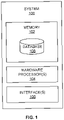
  • FIG. 1 illustrates an exemplary block diagram of a system for selective path sensitive interval analysis, in accordance with an embodiment of the present disclosure.
  • the system 100 includes one or more processors 104, communication interface device(s) or input/output (I/O) interface(s) 106, and one or more data storage devices or memory 102 operatively coupled to the one or more processors 104.
  • the one or more processors 104 may be one or more software processing modules and/or hardware processors.
  • the hardware processors can be implemented as one or more microprocessors, microcomputers, microcontrollers, digital signal processors, central processing units, state machines, logic circuitries, and/or any devices that manipulate signals based on operational instructions.
  • the processor(s) is configured to fetch and execute computer-readable instructions stored in the memory.
  • the device 100 can be implemented in a variety of computing systems, such as laptop computers, notebooks, hand-held devices, workstations, mainframe computers, servers, a network cloud and the like.
  • the I/O interface device(s) 106 can include a variety of software and hardware interfaces, for example, a web interface, a graphical user interface, and the like and can facilitate multiple communications within a wide variety of networks N/W and protocol types, including wired networks, for example, LAN, cable, etc., and wireless networks, such as WLAN, cellular, or satellite.
  • the I/O interface device(s) can include one or more ports for connecting a number of devices to one another or to another server.
  • the memory 102 may include any computer-readable medium known in the art including, for example, volatile memory, such as static random access memory (SRAM) and dynamic random access memory (DRAM), and/or non-volatile memory, such as read only memory (ROM), erasable programmable ROM, flash memories, hard disks, optical disks, and magnetic tapes.
  • volatile memory such as static random access memory (SRAM) and dynamic random access memory (DRAM)
  • non-volatile memory such as read only memory (ROM), erasable programmable ROM, flash memories, hard disks, optical disks, and magnetic tapes.
  • ROM read only memory
  • erasable programmable ROM erasable programmable ROM
  • flash memories hard disks
  • optical disks optical disks
  • magnetic tapes erasable programmable ROM
  • a database 108 can be stored in the memory 102, wherein the database 108 may comprise, but are not limited to program code, variables read in the program properties, variable intervals, value impacting
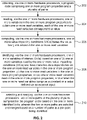
  • FIG. 2 illustrates an exemplary flow diagram of a method for selective path sensitive interval analysis using the system 100 of FIG. 1 , in accordance with an embodiment of the present disclosure.
  • the system(s) 100 comprises one or more data storage devices or the memory 102 operatively coupled to the one or more hardware processors 104 and is configured to store instructions for execution of steps of the method by the one or more processors 104.
  • the steps of the method of the present disclosure will now be explained with reference to the components of the system 100 as depicted in FIG. 1 , and the flow diagram of FIG. 2 .
  • the one or more hardware processors 104 obtain a program code comprising one or more program properties and a plurality of paths.
  • program code As shown below with a valid property encoded as an assertion at line 20.
  • VoIs Variables of Interest
  • the identified VoIs are used to make existing K -limited path sensitive interval analysis as selective path-sensitive interval analysis. Therefore, at step 204, the one or more hardware processors read one or more variables in the one or more program properties to obtain one or more read variables, each of the one or more read variables correspond to a value.
  • the one or more hardware processors 104 compute, via the one or more hardware processors, one or more value impacting conditions ( VICs ) based the value being influenced in the one or more read variables.
  • the one or more hardware processors 104 identify one or more variables of interest ( VoIs ) based on one of (i) one or more variables read by the one or more value impacting conditions and have transitive data dependence on the one or more read variables (or the one or more variables read) in the one or more program properties, (ii) the one or more variables read in the one or more program properties, or (iii) one or more reset variables read in the one or more program properties.
  • the one or more reset variables comprise a constant or a value defined via an external input (e.g., a user defined value).
  • statements 'one or more variables read by' 'the one or more variables read in the one or more program properties' and 'the one or more read variables in the one or more program properties' refer to variables read from/in the program properties and may be interchangeably used herein.
  • the steps 206 and 208 are better understood by way of following description.
  • V r be the variables read in ⁇ and DD ( ⁇ ) be the transitive data dependence of V r .
  • V ( DD ( ⁇ )) represents set of variables defined at each statement present in DD ( ⁇ ).
  • Value impacting conditions ( VICs ) are computed, which influence the values of variables in V r .
  • v read in some c ⁇ VICs ⁇ v is a reset variable if Vols ⁇ is empty then Vols ⁇ V r
  • the one or more hardware processors 104 select and merge two or more paths of the plurality of paths comprised in the program code based on the one or more identified VoIs .
  • the two or more paths are selected and merged based on a number of paths at a join point being identified. For instance, at a given join point, if the number of paths say ' n ' exceeds a pre-defined threshold ' K ' (e.g., wherein K is also referred predefined paths for a given join point), the two or more paths are selected and merged accordingly.
  • the selection and merging of paths are performed to maintain a select subset of paths at the join point, in one embodiment of the present disclosure.
  • the above step of 210 is better understood by way of following description:
  • the present disclosure uses the identified VoIs to select and merge subset of paths. For simplicity of presentation, consider there is VoI v, and interval for v is present in all n paths p 1 , p 2 ,...p K ..p n, where n > K , meeting at a join point.
  • each of the two or more selected paths comprise at least one VoI from the one or more identified VoI .
  • the at least one VoI comprise a variable interval in each of the two or more selected paths.
  • the variable interval comprises an upper bound value (e.g., u i , u j and the like) and a lower bound value (e.g., l i , l j , and the like). Therefore, the selection and merging of two or more paths is performed by the present disclosure when the step of selecting and merging two or more paths of the plurality of paths when one or more criteria are met.
  • the one or more criteria being one of (i) the variable interval in the two or more paths are identical with each other, (ii) a union of the variable interval from the two or more paths forms a continual interval.
  • path P 3 reaches at the property and with the intervals of a and b in this path, assert EVP can be proved as valid.
  • their order also plays an effective role in verification of properties.
  • SV-COMP 2021 repository e.g., refer '2021.
  • These selected industry applications and benchmarks are respectively shown as A 1-3 and SV in Table 1. More specifically, Table 1 depicts selective path sensitive interval analysis results.
  • the industrial application A 1 implements a smart-card functionality.
  • a 2 and A 3 implements a protocol stack and a CAN Driver application of a vehicle, respectively.
  • SV-COMP benchmarks the present disclosure selected all 36 programs contributed by predicate abstraction-based tool, BLAST (as known in the art tool). The selected programs have intensive control flow with size ranges from 1.6-1.8KLOC.
  • the SV-COMP benchmarks have conditional error reachability labels.
  • the present disclosure verified a total of 667 asserts by considering VoIs in both ways, directly read variables in assert (prior art) and method of the present disclosure as described in FIG. 2 .
  • the evaluation result presented in above Table 1 indicates that the selective path-sensitive interval analysis using VoIs identification of FIG. 2 results in verifying 268 (approximately 40%) more asserts as compared to arbitrarily merging of subset of paths. Also, VoIs identification of the present disclosure has led to verifying 147 (23%) more asserts as valid/invalid as compared to considering read variables as VoIs in an assert (prior art technique).
  • the method applied VoIs aware selective path-sensitive interval analysis to one property at a time.
  • it can be effectively applied to a group of related program properties which share common data and/or control dependence. Because due to common program dependence, identified VoIs tend to be common for each individual property in such a group of properties.
  • selective path sensitivity with effective VoIs has the practical advantage.
  • Embodiments of the present disclosure provide system and method for selective path-sensitive interval analysis for precise and scalable property verification in practice.
  • the analysis is selective using variables of interest ( VoIs ) with respect to program properties.
  • the method of the present disclosure included identification of these variables of interest with respect to a property which can help (in)validate that property.
  • the present disclosure further demonstrated the effectiveness of the approach by verifying 40% more properties as compared to analysis which do not use knowledge of VoIs over industrial automotive applications. This shows that the selective analysis is the need for effective property verification in practice and guided selection with respect to program properties is the key to achieve precision with scalability.
  • Such computer-readable storage means contain program-code means for implementation of one or more steps of the method, when the program runs on a server or mobile device or any suitable programmable device.
  • the hardware device can be any kind of device which can be programmed including e.g., any kind of computer like a server or a personal computer, or the like, or any combination thereof.
  • the device may also include means which could be e.g., hardware means like e.g., an application-specific integrated circuit (ASIC), a field-programmable gate array (FPGA), or a combination of hardware and software means, e.g., an ASIC and an FPGA, or at least one microprocessor and at least one memory with software processing components located therein.
  • the means can include both hardware means and software means.
  • the method embodiments described herein could be implemented in hardware and software.
  • the device may also include software means. Alternatively, the embodiments may be implemented on different hardware devices, e.g., using a plurality of CPUs.
  • the embodiments herein can comprise hardware and software elements.
  • the embodiments that are implemented in software include but are not limited to, firmware, resident software, microcode, etc.
  • the functions performed by various components described herein may be implemented in other components or combinations of other components.
  • a computer-usable or computer readable medium can be any apparatus that can comprise, store, communicate, propagate, or transport the program for use by or in connection with the instruction execution system, apparatus, or device.
  • a computer-readable storage medium refers to any type of physical memory on which information or data readable by a processor may be stored.
  • a computer-readable storage medium may store instructions for execution by one or more processors, including instructions for causing the processor(s) to perform steps or stages consistent with the embodiments described herein.
  • the term "computer-readable medium” should be understood to include tangible items and exclude carrier waves and transient signals, i.e., be non-transitory. Examples include random access memory (RAM), read-only memory (ROM), volatile memory, nonvolatile memory, hard drives, CD ROMs, DVDs, flash drives, disks, and any other known physical storage media.

Landscapes

  • Engineering & Computer Science (AREA)
  • Theoretical Computer Science (AREA)
  • General Engineering & Computer Science (AREA)
  • Physics & Mathematics (AREA)
  • General Physics & Mathematics (AREA)
  • Quality & Reliability (AREA)
  • Computer Hardware Design (AREA)
  • Software Systems (AREA)
  • Computing Systems (AREA)
  • Computer Vision & Pattern Recognition (AREA)
  • Mathematical Physics (AREA)
  • Stored Programmes (AREA)

Abstract

Abstract interpretation based static analysis tools use relational/non-relational abstract domains to verify program properties. Precision and scalability of analysis vary basis usage of abstract domains. K-limited path-sensitive interval domain is an abstract domain that was conventionally proposed for analysis on industry strength programs. The domain maintains variables' intervals along a configurable K subsets of paths at each program point, which implicitly provides co-relation among variables. When the number of paths at the join point exceeds K, set of paths are partitioned into K subsets, arbitrarily, which results in loss of precision required to verify program properties. To address the above problem, embodiments of the present disclosure provide selective merging of paths in such a way that the intervals computed help verifying more properties. The selective path-sensitive method of the present disclosure is based on the knowledge of variables whose values influence the verification outcome of program properties.

Description

    CROSS-REFERENCE TO RELATED APPLICATIONS AND PRIORITY
  • The present application claims priority to Indian application, Application No. 202121025701, filed in India on June 9, 2021 .
  • TECHNICAL FIELD
  • The disclosure herein generally relates to path sensitive analysis, and, more particularly, to systems and methods for selective path sensitive interval analysis.
  • BACKGROUND
  • Static code analysis based on abstract interpretation is widely used to detect bugs in large software systems. Analyses performed to detect potential bugs using relational abstract domains produce precise results as they track relations among variables by computing extra information, however, that limits their scalability while analyzing large software systems in practice. Whereas non-relational abstract domains such as interval domain scales on million lines of code but at the cost of precision. To combine the benefits of both the domains, conventional industrial static analysis tools either selectively apply both kinds of domains or design a new domain which is scalable and captures useful relationship among program variables showing effectiveness in practice.
  • The static analysis using K-limited path sensitive interval domain has shown precision with scalability on million lines of code. The domain maintains path-wise information of variables in the form of intervals, along limited K subsets of paths. Maintaining path-wise interval information for variables implicitly provides co-relation among values of variables. During the join operation at a program point, when the number of paths exceeds K, the set of paths are partitioned into K subsets, arbitrarily. The arbitrary partitioning or merging of paths can lead to imprecise intervals of variables which are influencing (in)validity of program properties. This imprecision makes the analyzer unable to determine verification result of program properties. If the paths are merged in such a way that these variables can retain precise values, analyzer can determine verification results of more program properties.
  • SUMMARY
  • Embodiments of the present disclosure present technological improvements as solutions to one or more of the above-mentioned technical problems recognized by the inventors in conventional systems. For example, in one aspect, there is provided a processor implemented for selective path sensitive interval analysis. The method comprises obtaining, via one or more hardware processors, a program code comprising one or more program properties and a plurality of paths; reading, via the one or more hardware processors, one or more variables in the one or more program properties to obtain one or more read variables, each of the one or more read variables correspond to a value; computing, via the one or more hardware processors, one or more value impacting conditions (VICs) based the value being influenced in the one or more read variables; identifying, via the one or more hardware processors, one or more variables of interest (Vols) based on one of (i) one or more variables read by the one or more value impacting conditions (VICs) and have transitive data dependence on the one or more read variables in the one or more program properties, (ii) the one or more read variables in the program properties, or (iii) one or more reset variables read in the one or more program properties, and wherein the one or more reset variables comprise a constant or a value defined via an external input; and selecting and merging, via the one or more hardware processors, two or more paths of the plurality of paths comprised in the program code based on the one or more identified VoIs, wherein the two or more paths are selected and merged based on a number of paths at a join point being identified.
  • In an embodiment, the two or more paths are selected and merged to maintain a select subset of paths at the join point.
  • In an embodiment, each of the two or more selected paths comprise at least one VoI from the one or more identified VoIs, wherein the at least one VoI comprise a variable interval in each of the two or more selected paths. The variable interval comprises an upper bound value and a lower bound value.
  • In an embodiment, the step of selecting and merging two or more paths of the plurality of paths comprised in the program code is based on the upper bound value and the lower bound value comprised in the variable interval.
  • In an embodiment, the step of selecting and merging two or more paths of the plurality of paths is based on one or more criteria, the one or more criteria being one of (i) the variable interval in the two or more paths are identical with each other, (ii) a union of the variable interval from the two or more paths forms a continual interval.
  • In an embodiment, the step of selecting and merging two or more paths of the plurality of paths comprised in the program code is based on an order of the one or more identified VoIs comprised in the one or more program properties of the program code.
  • In another aspect, there is provided a system for selective path sensitive interval analysis. The system comprises a memory storing instructions; one or more communication interfaces; and one or more hardware processors coupled to the memory via the one or more communication interfaces, wherein the one or more hardware processors are configured by the instructions to: obtain a program code comprising one or more program properties and a plurality of paths; read one or more variables in the one or more program properties to obtain one or more read variables, each of the one or more read variables correspond to a value; compute one or more value impacting conditions (VICs) based the value being influenced in the one or more read variables; identify one or more variables of interest (VoIs) based on one of (i) one or more variables read by the one or more value impacting conditions (VICs) and have transitive data dependence on the one or more read variables in the one or more program properties, (ii) the one or more variables read in the one or more program properties, or (iii) one or more reset variables read in the one or more program properties, and wherein the one or more reset variables comprise a constant or a value defined via an external input; and select and merge two or more paths of the plurality of paths comprised in the program code based on the one or more identified Vols, wherein the two or more paths are selected and merged based on a number of paths at a join point being identified.
  • In an embodiment, the two or more paths are selected and merged to maintain a select subset of paths at the join point.
  • In an embodiment, each of the two or more selected paths comprise at least one VoI from the one or more identified VoIs, wherein the at least one VoI comprise a variable interval in each of the two or more selected paths. The variable interval comprises an upper bound value and a lower bound value.
  • In an embodiment, the two or more paths of the plurality of paths comprised in the program code are selected and merged based on the upper bound value and the lower bound value comprised in the variable interval.
  • In an embodiment, the two or more paths of the plurality of paths comprised in the program code are selected and merged are based on one or more criteria, the one or more criteria being one of (i) the variable interval in the two or more paths are identical with each other, (ii) a union of the variable interval from the two or more paths forms a continual interval.
  • In an embodiment, the two or more paths of the plurality of paths comprised in the program code are selected and merged based on an order of the one or more identified VoIs comprised in the one or more program properties of the program code.
  • In yet another aspect, there are provided one or more non-transitory machine-readable information storage mediums comprising one or more instructions which when executed by one or more hardware processors cause a method for selective path sensitive interval analysis. The method comprises obtaining, via one or more hardware processors, a program code comprising one or more program properties and a plurality of paths; reading, via the one or more hardware processors, one or more variables in the one or more program properties to obtain one or more read variables, each of the one or more read variables correspond to a value; computing, via the one or more hardware processors, one or more value impacting conditions (VICs) based the value being influenced in the one or more read variables; identifying, via the one or more hardware processors, one or more variables of interest (VoIs) based on one of (i) one or more variables read by the one or more value impacting conditions (VICs) and have transitive data dependence on the one or more read variables in the one or more program properties, (ii) the one or more variables read in the one or more program properties, or (iii) one or more reset variables read in the one or more program properties, and wherein the one or more reset variables comprise a constant or a value defined via an external input; and selecting and merging, via the one or more hardware processors, two or more paths of the plurality of paths comprised in the program code based on the one or more identified VoIs, wherein the two or more paths are selected and merged based on a number of paths at a join point being identified.
  • In an embodiment, the two or more paths are selected and merged to maintain a select subset of paths at the join point.
  • In an embodiment, each of the two or more selected paths comprise at least one Vol from the one or more identified VoIs, wherein the at least one VoI comprise a variable interval in each of the two or more selected paths. The variable interval comprises an upper bound value and a lower bound value.
  • In an embodiment, the step of selecting and merging two or more paths of the plurality of paths comprised in the program code is based on the upper bound value and the lower bound value comprised in the variable interval.
  • In an embodiment, the step of selecting and merging two or more paths of the plurality of paths is based on one or more criteria, the one or more criteria being one of (i) the variable interval in the two or more paths are identical with each other, (ii) a union of the variable interval from the two or more paths forms a continual interval.
  • In an embodiment, the step of selecting and merging two or more paths of the plurality of paths comprised in the program code is based on an order of the one or more identified VoIs comprised in the one or more program properties of the program code.
  • It is to be understood that both the foregoing general description and the following detailed description are exemplary and explanatory only and are not restrictive of the invention, as claimed.
  • BRIEF DESCRIPTION OF THE DRAWINGS
  • The accompanying drawings, which are incorporated in and constitute a part of this disclosure, illustrate exemplary embodiments and, together with the description, serve to explain the disclosed principles:
    • FIG. 1 illustrates an exemplary block diagram of a system for selective path sensitive interval analysis, in accordance with an embodiment of the present disclosure.
    • FIG. 2 illustrates an exemplary flow diagram of a method for selective path sensitive interval analysis using the system of FIG. 1, in accordance with an embodiment of the present disclosure.
    DETAILED DESCRIPTION OF EMBODIMENTS
  • Exemplary embodiments are described with reference to the accompanying drawings. In the figures, the left-most digit(s) of a reference number identifies the figure in which the reference number first appears. Wherever convenient, the same reference numbers are used throughout the drawings to refer to the same or like parts. While examples and features of disclosed principles are described herein, modifications, adaptations, and other implementations are possible without departing from the scope of the disclosed embodiments.
  • Abstract interpretation based static analysis tools use relational/non-relational abstract domains to verify program properties. Precision and scalability of analysis vary basis usage of abstract domains. K-limited path-sensitive interval domain is an abstract domain that was conventionally proposed for analysis on industry strength programs. The domain maintains variables' intervals along a configurable K subsets of paths at each program point, which implicitly provides co-relation among variables. When the number of paths at the join point exceeds K, set of paths are partitioned into K subsets, arbitrarily, which results in loss of precision required to verify program properties. To address the above problem, embodiments of the present disclosure provide selective merging of paths in such a way that the intervals computed help verifying more properties. The selective path-sensitive method of the present disclosure is based on the knowledge of variables whose values influence the verification outcome of program properties.
  • Referring now to the drawings, and more particularly to FIGS. 1 through 2, where similar reference characters denote corresponding features consistently throughout the figures, there are shown preferred embodiments and these embodiments are described in the context of the following exemplary system and/or method.
  • FIG. 1 illustrates an exemplary block diagram of a system for selective path sensitive interval analysis, in accordance with an embodiment of the present disclosure. In an embodiment, the system 100 includes one or more processors 104, communication interface device(s) or input/output (I/O) interface(s) 106, and one or more data storage devices or memory 102 operatively coupled to the one or more processors 104. The one or more processors 104 may be one or more software processing modules and/or hardware processors. In an embodiment, the hardware processors can be implemented as one or more microprocessors, microcomputers, microcontrollers, digital signal processors, central processing units, state machines, logic circuitries, and/or any devices that manipulate signals based on operational instructions. Among other capabilities, the processor(s) is configured to fetch and execute computer-readable instructions stored in the memory. In an embodiment, the device 100 can be implemented in a variety of computing systems, such as laptop computers, notebooks, hand-held devices, workstations, mainframe computers, servers, a network cloud and the like.
  • The I/O interface device(s) 106 can include a variety of software and hardware interfaces, for example, a web interface, a graphical user interface, and the like and can facilitate multiple communications within a wide variety of networks N/W and protocol types, including wired networks, for example, LAN, cable, etc., and wireless networks, such as WLAN, cellular, or satellite. In an embodiment, the I/O interface device(s) can include one or more ports for connecting a number of devices to one another or to another server.
  • The memory 102 may include any computer-readable medium known in the art including, for example, volatile memory, such as static random access memory (SRAM) and dynamic random access memory (DRAM), and/or non-volatile memory, such as read only memory (ROM), erasable programmable ROM, flash memories, hard disks, optical disks, and magnetic tapes. In an embodiment a database 108 can be stored in the memory 102, wherein the database 108 may comprise, but are not limited to program code, variables read in the program properties, variable intervals, value impacting conditions, variables of interest, paths being selected and merged, and like. The memory 102 further comprises (or may further comprise) information pertaining to input(s)/output(s) of each step performed by the systems and methods of the present disclosure. In other words, input(s) fed at each step and output(s) generated at each step are comprised in the memory 102 and can be utilized in further processing and analysis.
  • FIG. 2, with reference to FIG. 1, illustrates an exemplary flow diagram of a method for selective path sensitive interval analysis using the system 100 of FIG. 1, in accordance with an embodiment of the present disclosure. In an embodiment, the system(s) 100 comprises one or more data storage devices or the memory 102 operatively coupled to the one or more hardware processors 104 and is configured to store instructions for execution of steps of the method by the one or more processors 104. The steps of the method of the present disclosure will now be explained with reference to the components of the system 100 as depicted in FIG. 1, and the flow diagram of FIG. 2. In an embodiment of the present disclosure, at step 202, the one or more hardware processors 104 obtain a program code comprising one or more program properties and a plurality of paths. Below considered is sample program code (C code) as shown below with a valid property encoded as an assertion at line 20.
    Sample C Code:
 1. ....
 2. unsigned int b=0,c=0, d=0, s=0, i=0;
 3. while(1) {
 4. if(s == 0){
 5. c = 2;
 6. b = c+6;
 7. s = 1;
 8. }
 9. else if(s == 1){
 10. c = 1;
 11. d = c+2;
 12. b = d;
 13. s = 2;
 14. }
 15. else if(s == 2){
 16. if(d > 1)
 17. b = d;
 18. else
 19. b = c;
 20. assert (b == 3);
 21. }
 22. }
 23. ....
  • In the present disclosure, a method is provided to identify variables which are influencing the verification outcome of program properties and termed them as Variables of Interest (VoIs). Obvious choice of such VoIs is variables read in program properties. However, this choice is useful when variables read in properties do not have any transitive data dependence on other variables, which is very uncommon in industrial applications. Therefore, to make K-limited path sensitive interval analysis more effective in industrial settings, more intelligent identification of VoIs is needed. Once VoIs are identified, the identified VoIs are used to make existing K-limited path sensitive interval analysis as selective path-sensitive interval analysis. Therefore, at step 204, the one or more hardware processors read one or more variables in the one or more program properties to obtain one or more read variables, each of the one or more read variables correspond to a value.
  • The above example of C code is to be analyzed with K=2. In this example, at the third iteration of the loop, three paths P0, P1, and P2 meets at loop node (line 3). These paths are given as follows: P 0 : s = 0 0 , d = 0 0 , c = 0 0 , b = 0 0 / / from top of the loop
    Figure imgb0001
    P 1 : s = 1 1 , d = 0 0 , c = 2 2 , b = 8 8 / / from first block of if statement
    Figure imgb0002
    P 2 : s = 2 2 , d = 3 3 , c = 1 1 , b = 3 3 / / from second block of if statement
    Figure imgb0003
  • To decide verification result of the property, path P2 should not be merged with other paths. Arbitrarily deciding which paths to merge may result into merging of P2 with P0 or P1. This leads to an imprecise interval [0,3] or [3,8] of variable b at the loop node, with which analysis cannot decide validity of the encoded program property. Moreover, just looking at a value of read variable b in the property, here, it cannot be decided which two paths to merge. However, if one tracks the value of a variable d, which is actually controlling value assigned to variable b, one can decide merging of paths P0, P1 in one and keeping P2 un-merged to retain K = 2 and precise interval for d. The resultant paths after this merging at loop node at the start of third iteration of loop will be as follows: P 0 + P 1 : s = 0 1 , d = 0 0 , c = 0 2 , b = 0 8
    Figure imgb0004
    P 2 : s = 2 2 , d = 3 3 , c = 1 1 , b = 3 3
    Figure imgb0005
  • This results only path P2 to enter in third else-if block and helps validate the property.
  • In an embodiment, at step 206, the one or more hardware processors 104 compute, via the one or more hardware processors, one or more value impacting conditions (VICs) based the value being influenced in the one or more read variables. In an embodiment, at step 208, the one or more hardware processors 104 identify one or more variables of interest (VoIs) based on one of (i) one or more variables read by the one or more value impacting conditions and have transitive data dependence on the one or more read variables (or the one or more variables read) in the one or more program properties, (ii) the one or more variables read in the one or more program properties, or (iii) one or more reset variables read in the one or more program properties. The one or more reset variables comprise a constant or a value defined via an external input (e.g., a user defined value). In an embodiment, statements 'one or more variables read by' 'the one or more variables read in the one or more program properties' and 'the one or more read variables in the one or more program properties' refer to variables read from/in the program properties and may be interchangeably used herein. The steps 206 and 208 are better understood by way of following description.
  • Variable of interest with respect to a property φ is denoted as VoIs(φ). Let Vr be the variables read in φ and DD(φ) be the transitive data dependence of Vr. V(DD(φ)) represents set of variables defined at each statement present in DD(φ). Value impacting conditions (VICs) are computed, which influence the values of variables in Vr . In the above program code, assert at line 20 represents a property φ, V(DD(φ)) = {b,c,d} and VICs = {4, 9, 16} (condition expressions at given line numbers). VoIs(φ) are those variables from V(DD(φ)) which are read by some VICs. Since, only variable d is being read in VIC at line 16, VoIs(φ) = {d}.
    In general, VoIs(φ) is given as follows: Vols ϕ = v V DD ϕ | v read in some c VICs v is a reset variable if Vols ϕ is empty then Vols ϕ = V r
    Figure imgb0006
  • Currently, computation of Vols is intra-procedural. Program dependence graph as known in the art (e.g., "Gianfranco Bilardi and Keshav Pingali. 1996. A Framework for Generalized Control Dependence. In Proceedings of the ACM SIGPLAN 1996 Conference on Programming Language Design and Implementation (Philadelphia, Pennsylvania, USA) (PLDI '96). ACM, New York, NY, USA, 291-300. https://doi.org/10.1145/231379.231435") is used for computing transitive data dependence and VICs is computed accordingly (e.g., refer "Shrawan Kumar, Amitabha Sanyal, and Uday Khedker. 2015. Value Slice: A New Slicing Concept for Scalable Property Checking. In International Conference on Tools and Algorithms for the Construction and Analysis of Systems. Springer, 101-115" for VICs computation).
  • Once the VoIs are identified, at step 210 of the present disclosure, the one or more hardware processors 104 select and merge two or more paths of the plurality of paths comprised in the program code based on the one or more identified VoIs. The two or more paths are selected and merged based on a number of paths at a join point being identified. For instance, at a given join point, if the number of paths say 'n' exceeds a pre-defined threshold 'K' (e.g., wherein K is also referred predefined paths for a given join point), the two or more paths are selected and merged accordingly. The selection and merging of paths are performed to maintain a select subset of paths at the join point, in one embodiment of the present disclosure. The above step of 210 is better understood by way of following description:
  • As described above, when the number of paths at a join point exceeds K, at least few (or subset of) paths are merged to maintain K subsets at the join point. The present disclosure uses the identified VoIs to select and merge subset of paths. For simplicity of presentation, consider there is VoI v, and interval for v is present in all n paths p 1 , p 2 ,...pK..pn, where n > K, meeting at a join point. Criteria applied on intervals of v to decide merging of n - (K - 1) paths is given as follows: Let v has interval v i = [li,ui ] and vj = [li ,uj ] in path pi and pj , respectively, where li , lj are lower bound of interval and ui , uj are upper bound.
  • Therefore, each of the two or more selected paths comprise at least one VoI from the one or more identified VoI. The at least one VoI comprise a variable interval in each of the two or more selected paths. Further, the variable interval comprises an upper bound value (e.g., ui , uj and the like) and a lower bound value (e.g., li , lj , and the like). Therefore, the selection and merging of two or more paths is performed by the present disclosure when the step of selecting and merging two or more paths of the plurality of paths when one or more criteria are met. For instance, the one or more criteria being one of (i) the variable interval in the two or more paths are identical with each other, (ii) a union of the variable interval from the two or more paths forms a continual interval. Thus, Paths pi and pj are merged if any one of the below criteria is met, wherein the one or more criteria are better understood by following expressions: l i = l j u i = u j
    Figure imgb0007
    vi vj results into continuous interval when any of the below conditions satisfy. l i < l j l j = u i l j = u i + 1 or
    Figure imgb0008
    or l j < l i l i = u j l i = u j + 1 or
    Figure imgb0009
    or l i = l j l i = l j + 1 l j = l i + 1
    Figure imgb0010
  • Union (U) over intervals is defined as per research work known in the art (e.g., refer "Patrick Cousot and Radhia Cousot. 1977. Abstract Interpretation: A Unified Lattice Model for Static Analysis of Programs by Construction or Approximation of Fixpoints. In Proceedings of the 4th ACM SIGACT-SIGPLAN Symposium on Principles of Programming Languages (Los Angeles, California) (POPL '77). ACM, New York, NY, USA, 238-252. https://doi.org/10.1145/512950.512973").
  • During a join (or merging of paths) operation, above checks are performed for one VoI at a time until total number of paths become K at that join point. In above program code example, for identified VoI d, very first criterion is satisfied for path P0 and P1, so, those two paths are merged. It is observed above, with this merging of paths, the program property at line 20 has correctly verified as valid. When above defined criteria do not match for any of the identified Vols (mostly, when set of n paths are disjoint), paths can be arbitrarily selected for merging.
  • However, there could be instances/scenarios, that for a given property, more than one Vols can be identified. In the experiments conducted by the present disclosure, it has been observed that up to four VoIs were identified for a given property, however, at most two were used to make n paths into K paths. It is to be further noted that when there are more than one Vols, order in which VoIs are picked to match defined criteria is also important. Consider below exemplary program code with encoded valid property (EVP) at line 16, to be analyze with K = 2 having two VoIs = {c, b}.
    Figure imgb0011
  • At the join point (end of line 14), three paths - P 1 : = a = 0 9 , b = 0 0 , c = 0 9 , f = 0 0
    Figure imgb0012
    P 2 : a = 0 0 , b = 0 0 , c = 10 Max , f = 0 0
    Figure imgb0013
    P 3 : a = 0 0 , b = 1 1 , c = 10 Max , f = 1 1
    Figure imgb0014
    meet at that program point. To retain K = 2, two paths need to be merged. Variable c as VoI results into merging of P2 and P3; resulting into paths - P1:{ a=[0,9], b=[0,0], c=[0,9], f=[0,0]}
    P2+P3:{ a=[0,0], b=[0,1], c=[10,Max], f=[0,1]1. With this, path P2+P3 reaches at property A1 and with the intervals of a and b in this path, verification result of the property cannot be decided (because property satisfy for b=1, but for b=0 it do not), and it will be unknown. Whereas variable b as VoI results into merging of P1 and P2, resulting into following paths - P1+P2: { a=[0,9], b=[0,0], c=[0,MAX], f=[0,0]} and P3: { a=[0,0], b=[1,1], c=[10,Max], f=[1,1]}. With this, path P3 reaches at the property and with the intervals of a and b in this path, assert EVP can be proved as valid. Thus, along with effective Vols, their order also plays an effective role in verification of properties.
  • Based on above observation, if list of identified VoIs contains variables read in given property, then those variables take precedence in Vols order while selecting paths (based on VoI) for merging at join point. In above example, read variable 'b' is present in identified VoIs list, so VoI 'b' has chosen first for selecting paths to be merged. In the present disclosure effective order of Vols is made use by the system and method, which help to (in)validate program properties. It is ensured in the present disclosure that, on an application, with same analysis setting, for given program properties, identified VoIs order is always same. This further ensures that re-execution of an application with same setting always yields same result for given program properties.
  • Experimentation:
  • To evaluate the effectiveness of identified Vols for selective path-sensitive interval analysis, the present disclosure has performed experiments on three industrial applications and academic benchmarks. The evaluation was focused on how many more properties could be (in)validated when the present disclosure the system and method perform the method of VoIs aware selective path-sensitive interval analysis as described herein.
  • Applications and benchmarks:
  • Present disclosure selected three industrial C applications and 36 benchmarks belonging to the control-flow sub-category of international software verification competition (SV-COMP) 2021 repository (e.g., refer '2021. SV-COMP 2021 - 10th International Competition on Software Verification. http://sv-comp.sosy-lab.org/2021/.'). These selected industry applications and benchmarks are respectively shown as A1-3 and SV in Table 1. More specifically, Table 1 depicts selective path sensitive interval analysis results. Table 1
    Application KLOC Number of asserts Number of (in)validated asserts using VoIs as
    Variables read in assert (prior art*) As per method of the present disclosure
    A1 7.7 196 11 50
    A2 8 94 30 54
    A3 18.3 341 56 140
    SV 62 36 24 24
    Total 96 667 121 268
    * refer - Mohammad Afzal et al. 2020. VeriAbs: Verification by Abstraction and Test Generation (Competition Contribution). In International Conference on Tools and Algorithms for the Construction and Analysis of Systems, TACAS 2020. Springer, 383-387. https://doi.org/10.1007/978-3-030-45237-7_25.
  • The industrial application A1 implements a smart-card functionality. A2 and A3 implements a protocol stack and a CAN Driver application of a vehicle, respectively. In SV-COMP benchmarks, the present disclosure selected all 36 programs contributed by predicate abstraction-based tool, BLAST (as known in the art tool). The selected programs have intensive control flow with size ranges from 1.6-1.8KLOC.
  • Analysis of applications and benchmarks:
  • The present disclosure analyzed all three industrial applications for invalid array indexing, division by zero, integer overflows and underflows. To verify these properties, first the method of the present disclosure applied K-limited path sensitive interval analysis with K = 10. The unresolved properties (which cannot be determined as valid/invalid) are flagged as warnings. These warnings are automatically encoded as assertions (assert function calls) under #ifdef labels. The present disclosure evaluated one assert at a time by defining appropriate #ifdef label. Vols with respect to an assert are computed and using these VoIs, selective path-sensitive interval analysis with same value of K is applied to verify the assert.
  • The SV-COMP benchmarks have conditional error reachability labels. The present disclosure considers error reachable condition as the program property. None of the 36 programs were validated using K-limited path sensitive interval analysis with K = 150. So, VoIs aware selective path-sensitive interval analysis with same value of K was applied by the present disclosure to these programs. All applications and benchmarks have been analyzed using 2.11 GHz Intel processor, 16 GB of RAM and a 64-bit Windows OS.
  • Evaluation Results:
  • To assess the benefits of VoIs computation as described by the method of the present disclosure, the present disclosure verified a total of 667 asserts by considering VoIs in both ways, directly read variables in assert (prior art) and method of the present disclosure as described in FIG. 2. The evaluation result presented in above Table 1 indicates that the selective path-sensitive interval analysis using VoIs identification of FIG. 2 results in verifying 268 (approximately 40%) more asserts as compared to arbitrarily merging of subset of paths. Also, VoIs identification of the present disclosure has led to verifying 147 (23%) more asserts as valid/invalid as compared to considering read variables as VoIs in an assert (prior art technique).
  • All (in)validated asserts in A1-3 and SV by considering VoIs as read variables in assert are also (in)validated using the VoIs identification of the present disclosure. Reason is, in A1, A3, and SV, 11, 56, and 24 (in)validated asserts, respectively, reads only reset variables. While 30 asserts in A2 fall in the scenario given in below sample code, whereby both approaches, identified VoI is {x}.
    Sample program code depicting scenario in A2:
    Figure imgb0015
    However, 12 non-verified programs from SV, where program property reads only reset variables have VICs which are controlling values assigned to these reset variables. Present disclosure does not consider VICs for reset variables; hence, these programs did not get benefit from present disclosure. The non-verified 387 properties on industrial applications (A1-A3) either had their computed Vols set as empty as per equation (1) (resulting Vr becomes VoIs) or identified VoIs did not satisfy the criteria defined for join operation. So, during join operation, in former case, path merging did not result into effective paths to help (in)validate properties; and in the later one path merging fell back to arbitrary selection and merging thus resulting into loss of precision required to verify properties.
  • In the experiments conducted by the present disclosure, the method applied VoIs aware selective path-sensitive interval analysis to one property at a time. However, in general, it can be effectively applied to a group of related program properties which share common data and/or control dependence. Because due to common program dependence, identified VoIs tend to be common for each individual property in such a group of properties. Overall, through experiments, it has been observed that selective path sensitivity with effective VoIs has the practical advantage.
  • Embodiments of the present disclosure provide system and method for selective path-sensitive interval analysis for precise and scalable property verification in practice. The analysis is selective using variables of interest (VoIs) with respect to program properties. The method of the present disclosure included identification of these variables of interest with respect to a property which can help (in)validate that property. The present disclosure further demonstrated the effectiveness of the approach by verifying 40% more properties as compared to analysis which do not use knowledge of VoIs over industrial automotive applications. This shows that the selective analysis is the need for effective property verification in practice and guided selection with respect to program properties is the key to achieve precision with scalability.
  • The written description describes the subject matter herein to enable any person skilled in the art to make and use the embodiments. The scope of the subject matter embodiments is defined by the claims and may include other modifications that occur to those skilled in the art. Such other modifications are intended to be within the scope of the claims if they have similar elements that do not differ from the literal language of the claims or if they include equivalent elements with insubstantial differences from the literal language of the claims.
  • It is to be understood that the scope of the protection is extended to such a program and in addition to a computer-readable means having a message therein; such computer-readable storage means contain program-code means for implementation of one or more steps of the method, when the program runs on a server or mobile device or any suitable programmable device. The hardware device can be any kind of device which can be programmed including e.g., any kind of computer like a server or a personal computer, or the like, or any combination thereof. The device may also include means which could be e.g., hardware means like e.g., an application-specific integrated circuit (ASIC), a field-programmable gate array (FPGA), or a combination of hardware and software means, e.g., an ASIC and an FPGA, or at least one microprocessor and at least one memory with software processing components located therein. Thus, the means can include both hardware means and software means. The method embodiments described herein could be implemented in hardware and software. The device may also include software means. Alternatively, the embodiments may be implemented on different hardware devices, e.g., using a plurality of CPUs.
  • The embodiments herein can comprise hardware and software elements. The embodiments that are implemented in software include but are not limited to, firmware, resident software, microcode, etc. The functions performed by various components described herein may be implemented in other components or combinations of other components. For the purposes of this description, a computer-usable or computer readable medium can be any apparatus that can comprise, store, communicate, propagate, or transport the program for use by or in connection with the instruction execution system, apparatus, or device.
  • The illustrated steps are set out to explain the exemplary embodiments shown, and it should be anticipated that ongoing technological development will change the manner in which particular functions are performed. These examples are presented herein for purposes of illustration, and not limitation. Further, the boundaries of the functional building blocks have been arbitrarily defined herein for the convenience of the description. Alternative boundaries can be defined so long as the specified functions and relationships thereof are appropriately performed. Alternatives (including equivalents, extensions, variations, deviations, etc., of those described herein) will be apparent to persons skilled in the relevant art(s) based on the teachings contained herein. Such alternatives fall within the scope of the disclosed embodiments. Also, the words "comprising," "having," "containing," and "including," and other similar forms are intended to be equivalent in meaning and be open ended in that an item or items following any one of these words is not meant to be an exhaustive listing of such item or items, or meant to be limited to only the listed item or items. It must also be noted that as used herein and in the appended claims, the singular forms "a," "an," and "the" include plural references unless the context clearly dictates otherwise.
  • Furthermore, one or more computer-readable storage media may be utilized in implementing embodiments consistent with the present disclosure. A computer-readable storage medium refers to any type of physical memory on which information or data readable by a processor may be stored. Thus, a computer-readable storage medium may store instructions for execution by one or more processors, including instructions for causing the processor(s) to perform steps or stages consistent with the embodiments described herein. The term "computer-readable medium" should be understood to include tangible items and exclude carrier waves and transient signals, i.e., be non-transitory. Examples include random access memory (RAM), read-only memory (ROM), volatile memory, nonvolatile memory, hard drives, CD ROMs, DVDs, flash drives, disks, and any other known physical storage media.
  • It is intended that the disclosure and examples be considered as exemplary only, with a true scope of disclosed embodiments being indicated by the following claims.
  • Claims (15)

    1. A processor implemented method, comprising:
      obtaining, via one or more hardware processors, a program code comprising one or more program properties and a plurality of paths (202);
      reading, via the one or more hardware processors, one or more variables in the one or more program properties to obtain one or more read variables, each of the one or more read variables correspond to a value (204);
      computing, via the one or more hardware processors, one or more value impacting conditions (VICs) based the value being influenced in the one or more read variables (206);
      identifying, via the one or more hardware processors, one or more variables of interest (VoIs) based on one of (i) one or more variables read by the one or more value impacting conditions (VICs) and have transitive data dependence on the one or more read variables in the one or more program properties, (ii) the one or more read variables in the one or more program properties, or (iii) one or more reset variables read in the one or more program properties, and wherein the one or more reset variables comprise a constant or a value defined via an external input (208); and
      selecting and merging, via the one or more hardware processors, two or more paths of the plurality of paths comprised in the program code based on the one or more identified VoIs, wherein the two or more paths are selected and merged based on a number of paths at a join point being identified (210).
    2. The processor implemented method of claim 1, wherein the two or more paths are selected and merged to maintain a select subset of paths at the join point.
    3. The processor implemented method of claim 1, wherein each of the two or more selected paths comprise at least one VoI from the one or more identified VoI, wherein the at least one VoI comprise a variable interval in each of the two or more selected paths, and wherein the variable interval comprises an upper bound value and a lower bound value.
    4. The processor implemented method of claim 3, wherein the step of selecting and merging two or more paths of the plurality of paths comprised in the program code is based on the upper bound value and the lower bound value comprised in the variable interval.
    5. The processor implemented method of claim 1, wherein the step of selecting and merging two or more paths of the plurality of paths is based on one or more criteria, the one or more criteria being one of (i) the variable interval in the two or more paths are identical with each other, (ii) a union of the variable interval from the two or more paths forms a continual interval.
    6. A system (100), comprising:
      a memory (102) storing instructions;
      one or more communication interfaces (106); and
      one or more hardware processors (104) coupled to the memory (102) via the one or more communication interfaces (106), wherein the one or more hardware processors (104) are configured by the instructions to:
      obtain a program code comprising one or more program properties and a plurality of paths;
      read one or more variables in the one or more program properties to obtain one or more read variables, each of the one or more read variables correspond to a value;
      compute one or more value impacting conditions (VICs) based the value being influenced in the one or more read variables;
      identify one or more variables of interest (VoIs) based on one of (i) one or more variables read by the one or more value impacting conditions (VICs) and have transitive data dependence on the one or more read variables in the one or more program properties, (ii) the one or more read variables in the one or more program properties, or (iii) one or more reset variables read in the one or more program properties, and wherein the one or more reset variables comprise a constant or a value defined via an external input; and
      select and merge two or more paths of the plurality of paths comprised in the program code based on the one or more identified VoIs, wherein the two or more paths are selected and merged based on a number of paths at a join point being identified.
    7. The system of claim 6, wherein the two or more paths are selected and merged to maintain a select subset of paths at the join point.
    8. The system of claim 6, wherein each of the two or more selected paths comprise at least one VoI from the one or more identified VoI, wherein the at least one VoI comprise a variable interval in each of the two or more selected paths, and wherein the variable interval comprises an upper bound value and a lower bound value.
    9. The system of claim 8, wherein the two or more paths of the plurality of paths comprised in the program code are selected and merged are based on the upper bound value and the lower bound value comprised in the variable interval.
    10. The system of claim 6, wherein the two or more paths of the plurality of paths are selected and merged based on one or more criteria, the one or more criteria being one of (i) the variable interval in the two or more paths are identical with each other, (ii) a union of the variable interval from the two or more paths forms a continual interval.
    11. One or more non-transitory machine-readable information storage mediums comprising one or more instructions which when executed by one or more hardware processors cause a method for selective path sensitive interval analysis by:
      obtaining, via one or more hardware processors, a program code comprising one or more program properties and a plurality of paths (202);
      reading, via the one or more hardware processors, one or more variables in the one or more program properties to obtain one or more read variables, each of the one or more read variables correspond to a value (204);
      computing, via the one or more hardware processors, one or more value impacting conditions (VICs) based the value being influenced in the one or more read variables (206);
      identifying, via the one or more hardware processors, one or more variables of interest (VoIs) based on one of (i) one or more variables read by the one or more value impacting conditions (VICs) and have transitive data dependence on the one or more read variables in the one or more program properties, (ii) the one or more read variables in the one or more program properties, or (iii) one or more reset variables read in the one or more program properties, and wherein the one or more reset variables comprise a constant or a value defined via an external input (208); and
      selecting and merging, via the one or more hardware processors, two or more paths of the plurality of paths comprised in the program code based on the one or more identified VoIs, wherein the two or more paths are selected and merged based on a number of paths at a join point being identified (210).
    12. The one or more non-transitory machine-readable information storage mediums of claim 11, wherein the two or more paths are selected and merged to maintain a select subset of paths at the join point.
    13. The one or more non-transitory machine-readable information storage mediums of claim 11, wherein each of the two or more selected paths comprise at least one VoI from the one or more identified VoI, wherein the at least one VoI comprise a variable interval in each of the two or more selected paths, and wherein the variable interval comprises an upper bound value and a lower bound value.
    14. The one or more non-transitory machine-readable information storage mediums of claim 13, wherein the step of selecting and merging two or more paths of the plurality of paths comprised in the program code is based on the upper bound value and the lower bound value comprised in the variable interval.
    15. The one or more non-transitory machine-readable information storage mediums of claim 11, wherein the step of selecting and merging two or more paths of the plurality of paths is based on one or more criteria, the one or more criteria being one of (i) the variable interval in the two or more paths are identical with each other, (ii) a union of the variable interval from the two or more paths forms a continual interval.
    EP21193901.2A 2021-06-09 2021-08-31 Systems and methods for selective path sensitive interval analysis Withdrawn EP4102356A1 (en)

    Applications Claiming Priority (1)

    Application Number Priority Date Filing Date Title
    IN202121025701 2021-06-09

    Publications (1)

    Publication Number Publication Date
    EP4102356A1 true EP4102356A1 (en) 2022-12-14

    Family

    ID=77626939

    Family Applications (1)

    Application Number Title Priority Date Filing Date
    EP21193901.2A Withdrawn EP4102356A1 (en) 2021-06-09 2021-08-31 Systems and methods for selective path sensitive interval analysis

    Country Status (2)

    Country Link
    US (1) US11650907B2 (en)
    EP (1) EP4102356A1 (en)

    Families Citing this family (1)

    * Cited by examiner, † Cited by third party
    Publication number Priority date Publication date Assignee Title
    EP4530829B1 (en) * 2023-09-29 2026-01-21 Tata Consultancy Services Limited Method and system for performing outer loop abstraction for efficient verification of reactive systems

    Citations (1)

    * Cited by examiner, † Cited by third party
    Publication number Priority date Publication date Assignee Title
    US20210141914A1 (en) * 2019-11-08 2021-05-13 Tata Consultancy Services Limited System and method for software verification

    Family Cites Families (16)

    * Cited by examiner, † Cited by third party
    Publication number Priority date Publication date Assignee Title
    US5999736A (en) * 1997-05-09 1999-12-07 Intel Corporation Optimizing code by exploiting speculation and predication with a cost-benefit data flow analysis based on path profiling information
    US7784003B2 (en) * 2007-02-26 2010-08-24 International Business Machines Corporation Estimation of process variation impact of slack in multi-corner path-based static timing analysis
    US8079020B2 (en) * 2007-03-05 2011-12-13 Microsoft Corporation Preferential path profiling
    US8365152B2 (en) * 2008-01-24 2013-01-29 Nec Laboratories America, Inc. Path-sensitive analysis through infeasible-path detection and syntactic language refinement
    CN101937388B (en) 2009-12-17 2013-03-13 High-expandability and maintainability source code defect detection method and device
    US8302086B2 (en) * 2009-12-18 2012-10-30 Oracle America, Inc. System and method for overflow detection using symbolic analysis
    US8671397B2 (en) * 2011-09-27 2014-03-11 International Business Machines Corporation Selective data flow analysis of bounded regions of computer software applications
    US8694971B2 (en) * 2011-10-05 2014-04-08 International Business Machines Corporation Scalable property-sensitive points-to analysis for program code
    US9275178B1 (en) * 2012-06-29 2016-03-01 Altera Corporation Method and apparatus for considering paths influenced by different power supply domains in timing analysis
    US10868665B1 (en) * 2015-05-18 2020-12-15 Amazon Technologies, Inc. Mitigating timing side-channel attacks by obscuring accesses to sensitive data
    US9690899B2 (en) * 2015-08-13 2017-06-27 International Business Machines Corporation Prioritized path tracing in statistical timing analysis of integrated circuits
    RU2747824C2 (en) * 2015-10-13 2021-05-14 Шнейдер Электрик Системз Юэсэй, Инк. Systems and methods of developing and optimizing applications for managing hierarchical intellectual assets
    US9767239B1 (en) * 2016-10-20 2017-09-19 International Business Machines Corporation Timing optimization driven by statistical sensitivites
    US10460108B1 (en) * 2017-08-16 2019-10-29 Trend Micro Incorporated Method and system to identify and rectify input dependency based evasion in dynamic analysis
    US10613842B2 (en) * 2018-04-30 2020-04-07 International Business Machines Corporation Simplifying a control flow graph based on profiling data
    US10949336B2 (en) * 2019-03-29 2021-03-16 Oracle International Corporation Path-sensitive static analysis

    Patent Citations (1)

    * Cited by examiner, † Cited by third party
    Publication number Priority date Publication date Assignee Title
    US20210141914A1 (en) * 2019-11-08 2021-05-13 Tata Consultancy Services Limited System and method for software verification

    Non-Patent Citations (6)

    * Cited by examiner, † Cited by third party
    Title
    AFZAL MOHAMMAD ET AL: "VeriAbs : Verification by Abstraction and Test Generation (Competition Contribution)", 17 April 2020, COMPUTER VISION - ECCV 2020 : 16TH EUROPEAN CONFERENCE, GLASGOW, UK, AUGUST 23-28, 2020 : PROCEEDINGS; PART OF THE LECTURE NOTES IN COMPUTER SCIENCE ; ISSN 0302-9743; [LECTURE NOTES IN COMPUTER SCIENCE; LECT.NOTES COMPUTER], SPRINGER INTERNATIONAL PU, ISBN: 978-3-030-58594-5, XP047561204 *
    GIANFRANCO BILARDIKESHAV PINGALI: "Proceedings of the ACM SIGPLAN 1996 Conference on Programming Language Design and Implementation (Philadelphia, Pennsylvania, USA", 1996, ACM, article "A Framework for Generalized Control Dependence", pages: 291 - 300
    KUMAR SHRAWAN ET AL: "Value Slice: A New Slicing Concept for Scalable Property Checking", 11 April 2015, ADVANCES IN DATABASES AND INFORMATION SYSTEMS; [LECTURE NOTES IN COMPUTER SCIENCE; LECT.NOTES COMPUTER], SPRINGER INTERNATIONAL PUBLISHING, CHAM, PAGE(S) 101 - 115, ISBN: 978-3-319-10403-4, XP047506244 *
    MARKUS KUSANO ET AL: "Flow-Sensitive Composition of Thread-Modular Abstract Interpretation", ARXIV.ORG, CORNELL UNIVERSITY LIBRARY, 201 OLIN LIBRARY CORNELL UNIVERSITY ITHACA, NY 14853, 28 September 2017 (2017-09-28), XP080824504 *
    PATRICK COUSOTRADHIA COUSOT: "Proceedings of the 4th ACM SIGACT-SIGPLAN Symposium on Principles of Programming Languages (Los Angeles, California", 1977, ACM, article "Abstract Interpretation: A Unified Lattice Model for Static Analysis of Programs by Construction or Approximation of Fixpoints", pages: 238 - 252
    SHRAWAN KUMARAMITABHA SANYALUDAY KHEDKER: "International Conference on Tools and Algorithms for the Construction and Analysis of Systems", 2015, SPRINGER, article "Value Slice: A New Slicing Concept for Scalable Property Checking", pages: 101 - 115

    Also Published As

    Publication number Publication date
    US20230004479A1 (en) 2023-01-05
    US11650907B2 (en) 2023-05-16

    Similar Documents

    Publication Publication Date Title
    US20230129536A1 (en) Method and system for identifying static analysis alarms based on semantics of changed source code
    US12007883B2 (en) Automated method and system for finding vulnerabilities in a program using fuzzing
    US10394687B2 (en) Method for classifying alarm types in detecting source code error and nontransitory computer readable recording medium therefor
    EP3819770B1 (en) System and method for software verification
    EP4044057B1 (en) Method and system for identifying security vulnerabilities
    CN103092761A (en) Method and device of recognizing and checking modifying code blocks based on difference information file
    US10534689B2 (en) Data structure abstraction for model checking
    US11115137B2 (en) Method and electronic testing device for determining optimal test case for testing user equipment
    US10782942B1 (en) Rapid onboarding of data from diverse data sources into standardized objects with parser and unit test generation
    Kwon et al. Cost-effective regression testing using bloom filters in continuous integration development environments
    EP4102356A1 (en) Systems and methods for selective path sensitive interval analysis
    US20230077115A1 (en) Method and system for recommending improvement opportunities in enterprise operations
    US10877870B2 (en) Method and system for verifying properties of source code
    US20140089738A1 (en) System and method for identifying source of run-time execution failure
    US20250307417A1 (en) System and method for mitigating vulnerabilities associated with open-source software components in source code
    EP4361820A1 (en) Method and system for incremental functional approach-based dataflow analysis
    AU2018204545B2 (en) System and method for analysis of information technology production service support metrics
    US12190131B2 (en) Method and system for function call and variable access based relaxed backward slicing
    US10877749B1 (en) Method and system for non-impacting control dependencies based repositioning of static analysis alarms
    EP3913487A1 (en) Method and system for identification and elimination of false positives from delta alarms
    US20260111224A1 (en) Method and system to perform interval analysis in source code using functional approach
    US11579851B2 (en) Method and system for identification of redundant function-level slicing calls
    US20230376880A1 (en) Method and system for user performance evaluation
    US20260067301A1 (en) Detecting covert channels in role based cloud access control policies using large language model (llm)
    US12619405B2 (en) Method and system for incremental functional approach-based dataflow analysis

    Legal Events

    Date Code Title Description
    PUAI Public reference made under article 153(3) epc to a published international application that has entered the european phase

    Free format text: ORIGINAL CODE: 0009012

    STAA Information on the status of an ep patent application or granted ep patent

    Free format text: STATUS: REQUEST FOR EXAMINATION WAS MADE

    17P Request for examination filed

    Effective date: 20220726

    AK Designated contracting states

    Kind code of ref document: A1

    Designated state(s): AL AT BE BG CH CY CZ DE DK EE ES FI FR GB GR HR HU IE IS IT LI LT LU LV MC MK MT NL NO PL PT RO RS SE SI SK SM TR

    STAA Information on the status of an ep patent application or granted ep patent

    Free format text: STATUS: EXAMINATION IS IN PROGRESS

    17Q First examination report despatched

    Effective date: 20230523

    STAA Information on the status of an ep patent application or granted ep patent

    Free format text: STATUS: THE APPLICATION HAS BEEN WITHDRAWN

    18W Application withdrawn

    Effective date: 20250131