EP4102175B1 - Position measurement device - Google Patents
Position measurement device Download PDFInfo
- Publication number
- EP4102175B1 EP4102175B1 EP20917842.5A EP20917842A EP4102175B1 EP 4102175 B1 EP4102175 B1 EP 4102175B1 EP 20917842 A EP20917842 A EP 20917842A EP 4102175 B1 EP4102175 B1 EP 4102175B1
- Authority
- EP
- European Patent Office
- Prior art keywords
- moving body
- stationary
- bias
- positioning device
- unit
- Prior art date
- Legal status (The legal status is an assumption and is not a legal conclusion. Google has not performed a legal analysis and makes no representation as to the accuracy of the status listed.)
- Active
Links
Images





Classifications
-
- G—PHYSICS
- G01—MEASURING; TESTING
- G01C—MEASURING DISTANCES, LEVELS OR BEARINGS; SURVEYING; NAVIGATION; GYROSCOPIC INSTRUMENTS; PHOTOGRAMMETRY OR VIDEOGRAMMETRY
- G01C21/00—Navigation; Navigational instruments not provided for in groups G01C1/00 - G01C19/00
- G01C21/005—Navigation; Navigational instruments not provided for in groups G01C1/00 - G01C19/00 with correlation of navigation data from several sources, e.g. map or contour matching
-
- G—PHYSICS
- G01—MEASURING; TESTING
- G01B—MEASURING LENGTH, THICKNESS OR SIMILAR LINEAR DIMENSIONS; MEASURING ANGLES; MEASURING AREAS; MEASURING IRREGULARITIES OF SURFACES OR CONTOURS
- G01B11/00—Measuring arrangements characterised by the use of optical techniques
- G01B11/002—Measuring arrangements characterised by the use of optical techniques for measuring two or more coordinates
-
- G—PHYSICS
- G01—MEASURING; TESTING
- G01C—MEASURING DISTANCES, LEVELS OR BEARINGS; SURVEYING; NAVIGATION; GYROSCOPIC INSTRUMENTS; PHOTOGRAMMETRY OR VIDEOGRAMMETRY
- G01C19/00—Gyroscopes; Turn-sensitive devices using vibrating masses; Turn-sensitive devices without moving masses; Measuring angular rate using gyroscopic effects
- G01C19/005—Measuring angular rate using gyroscopic effects
-
- G—PHYSICS
- G01—MEASURING; TESTING
- G01C—MEASURING DISTANCES, LEVELS OR BEARINGS; SURVEYING; NAVIGATION; GYROSCOPIC INSTRUMENTS; PHOTOGRAMMETRY OR VIDEOGRAMMETRY
- G01C21/00—Navigation; Navigational instruments not provided for in groups G01C1/00 - G01C19/00
- G01C21/26—Navigation; Navigational instruments not provided for in groups G01C1/00 - G01C19/00 specially adapted for navigation in a road network
- G01C21/28—Navigation; Navigational instruments not provided for in groups G01C1/00 - G01C19/00 specially adapted for navigation in a road network with correlation of data from several navigational instruments
-
- G—PHYSICS
- G06—COMPUTING OR CALCULATING; COUNTING
- G06T—IMAGE DATA PROCESSING OR GENERATION, IN GENERAL
- G06T7/00—Image analysis
- G06T7/20—Analysis of motion
- G06T7/246—Analysis of motion using feature-based methods, e.g. the tracking of corners or segments
-
- G—PHYSICS
- G06—COMPUTING OR CALCULATING; COUNTING
- G06T—IMAGE DATA PROCESSING OR GENERATION, IN GENERAL
- G06T7/00—Image analysis
- G06T7/70—Determining position or orientation of objects or cameras
- G06T7/73—Determining position or orientation of objects or cameras using feature-based methods
-
- G—PHYSICS
- G06—COMPUTING OR CALCULATING; COUNTING
- G06T—IMAGE DATA PROCESSING OR GENERATION, IN GENERAL
- G06T7/00—Image analysis
- G06T7/80—Analysis of captured images to determine intrinsic or extrinsic camera parameters, i.e. camera calibration
-
- G—PHYSICS
- G06—COMPUTING OR CALCULATING; COUNTING
- G06T—IMAGE DATA PROCESSING OR GENERATION, IN GENERAL
- G06T2207/00—Indexing scheme for image analysis or image enhancement
- G06T2207/30—Subject of image; Context of image processing
- G06T2207/30244—Camera pose
Definitions
- a positioning device performs a stationary determination using a position of a moving body measured by the own device, acquires a bias error at the time of being stationary, and executes bias update processing.
- the bias error included in the detection signal of the IMU can be accurately removed, and the position of the moving body can be accurately measured using the detection result of the IMU.
- unlike the conventional technique it is possible to obtain a positioning device in which it is not necessary to install an external apparatus such as an anchor in a movement path of a moving body in order to execute bias update processing.
- the attitude computation unit 424 operates based on the bias corrected detection signal obtained by processing the detection signal from the IMU 3 by the bias correction unit 421.
- the bias removal unit 422 performs processing of removing the bias error by subtracting the correction value of the bias error from the detection signal output by the IMU 3.
- the correction value of the bias error is set in advance as a signal value for offsetting the error included in the detection signal.
- the correction value of the bias error is also referred to as a zero point offset and a null offset.
- the bias update unit 423 performs bias update by setting a correction value of the bias error to the bias removal unit 422 in bias update processing described below.
- the bias error varies due to an external factor such as temperature. Therefore, only performing the bias correction immediately after the startup of the IMU 3 causes the bias error to fluctuate when the IMU 3 is continuously operated and the error included in the detection value of the IMU 3 to increase.
- the error included in the detection value of the IMU 3 increases, and when the detection result of the IMU 3 is used for computing the camera pose in the positioning device 100, the camera pose is erroneously computed.
- the controller 4 determines whether a predetermined cycle a has elapsed since the bias update processing was completed last (S1). If the predetermined cycle a has not elapsed (No in S1), the controller 4 ends the bias update processing in FIG. 4 without proceeding in and after step S2. If the predetermined cycle a has elapsed (Yes in S1), the controller 4 operating as the stationary determination unit 416 performs stationary determination processing of determining whether or not the moving body 1 is stationary (S2). For example, the predetermined cycle a is 1 (s).
- the stationary determination processing S2 of the present embodiment is performed by detecting a period in which the moving body 1 has a sufficiently small speed, that is, a stationary period, using the measurement result of the positioning unit 41 based on the Visual-SLAM technology.
- the controller 4 determines that the moving body 1 is stationary, the controller 4 turns on the stationary flag indicating the determination result, and when not determining that the moving body 1 is stationary, the controller 4 turns off the stationary flag. Details of the stationary determination processing S2 will be described below.
- the controller 4 operating as the bias update unit 423 determines whether or not the stationary flag is ON (S3). If the stationary flag is OFF, that is, if the stationary flag is not ON (No in S3), the controller 4 ends the bias update processing in FIG. 4 without 22 particularly correcting the bias error.
- the controller 4 operating as the bias update unit 423 acquires the detection signal output by the IMU 3 during the stationary period (S4), for example, and updates the bias error by setting the correction value of the bias error based on the signal value (S5).
- the correction value of the bias error is computed as, for example, an average value of the detection signal values of the IMU 3 acquired during several seconds at the time of stationary.
- the controller 4 acquires the detection signals output from the IMU 3 between the time point going back by a predetermined time S from the stationary determination time when the stationary flag is turned on and the stationary determination time, and sets the average value of the detection signal values as the correction value of the bias error.
- the bias error is updated by the bias update processing as described above.
- the bias removal unit 422 acquires the updated bias error from the bias update unit 423, and performs bias correction, for example, by subtracting the updated bias error from a subsequent measurement value.
- the output value (S4) of the detection signal of the IMU 3 obtained if it is determined that the moving body 1 is stationary (Yes in S3) corresponds to the bias error without being caused by the angular velocity of the moving body 1. Therefore, by detecting such timing, the bias error can be updated (S5) with high accuracy.
- the stationary determination processing S2 according to the present embodiment will be described.
- FIG. 8 is a flowchart showing a modified example of bias update processing executed by the positioning device according to the second embodiment of the present disclosure.
- the bias update processing in FIG. 8 includes step S202a instead of step S202, and includes step S203a instead of step S203.
- the controller 4 sets the threshold value vth to a normal level value v1.
- the normal level value v1 is, for example, an initial value set similarly to the value of the threshold value vth of the first embodiment.
- step S203a the controller 4 sets the threshold value vth to a high level value v2 higher than the normal level value v1.
Landscapes
- Engineering & Computer Science (AREA)
- Physics & Mathematics (AREA)
- General Physics & Mathematics (AREA)
- Radar, Positioning & Navigation (AREA)
- Remote Sensing (AREA)
- Computer Vision & Pattern Recognition (AREA)
- Theoretical Computer Science (AREA)
- Automation & Control Theory (AREA)
- Multimedia (AREA)
- Navigation (AREA)
- Control Of Position, Course, Altitude, Or Attitude Of Moving Bodies (AREA)
Description
- The present disclosure relates to a positioning device that measures a position of a moving body.
-
Patent Document 1 discloses a calibration method capable of computing a zero point offset of a gyro and calibrating the zero point offset. The calibration method ofPatent Document 1 uses dead reckoning using outputs of an acceleration sensor and an angular velocity sensor. In order to execute the calibration method described inPatent Document 1, it is necessary to install anchors being transmitters that transmit anchor IDs at the first point and the second point. -
Patent Document 2 discloses a positioning device for determining the position of a moving body using signals from a camera and an inertial measuring unit associated with a bias correction unit. -
- Patent Document 1:
JP 2012-215547 A - Patent Document 2:
US 2017/151674 A1 - The present disclosure provides a positioning device that can more easily remove a bias error included in a detection signal of a mounted detector than a conventional technique.
- A positioning device according to the present disclosure is a positioning device that measures a position of a moving body. The positioning device includes an imaging unit, a detector, a bias correction unit, a position computation unit, and a stationary determination unit. The imaging unit is mounted on a moving body, and captures an image of an environment around the moving body to acquire a captured image. The detector is mounted on the moving body, detects motion of the moving body, and outputs a detection signal indicating a detection result. The bias correction unit processes the detection signal using a correction value for correcting a bias error included in the detection signal without depending on the motion of the moving body. The position computation unit computes the position of the moving body based on the captured image acquired by the imaging unit and the detection signal processed by the bias correction unit. The stationary determination unit determines whether or not the moving body is stationary. If the stationary determination unit determines that the moving body is stationary, the bias correction unit updates the correction value of the bias error based on the detection signal output by the detector.
- According to the positioning device of the present disclosure, the bias error included in the detection signal of the mounted detector can be removed more easily than the conventional technique.
-
-
FIG. 1 is a schematic diagram illustrating a configuration of a moving body mounting a positioning device according to a first embodiment. -
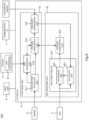
FIG. 2 is a block diagram showing a configuration of the positioning device according to the first embodiment. -
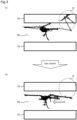
FIG. 3 is a schematic diagram illustrating position history data indicating a history of measurement results by the positioning device according to the first embodiment. -
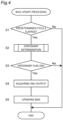
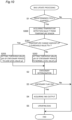
FIG. 4 is a flowchart showing an example of bias update processing executed by the positioning device according to the first embodiment. -
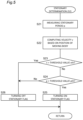
FIG. 5 is a flowchart showing an example of the stationary determination processing shown inFIG. 4 . -
FIG. 6 is a flowchart showing an example of bias update processing executed by a positioning device according to a second embodiment. -
FIG. 7 is a graph for illustrating the operation of the positioning device according to the second embodiment. -
FIG. 8 is a flowchart showing a modified example of bias update processing executed by the positioning device according to the second embodiment. -
FIG. 9 is a block diagram showing a configuration of a positioning device according to a third embodiment. -
FIG. 10 is a flowchart showing an example of bias update processing executed by the positioning device according to the third embodiment. -
FIG. 11 is a flowchart showing an example of bias update processing executed by a positioning device according to a fourth embodiment. -
FIG. 12 is a flowchart showing an example of bias update processing executed by a positioning device according to a fifth embodiment. -
FIG. 13 is a graph showing a temporal change in an angular velocity signal being an example of an output signal of an IMU of the positioning device according to the fifth embodiment. -
FIG. 14 is a flowchart showing an example of bias update processing executed by a positioning device according to a sixth embodiment. -
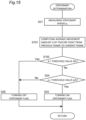
FIG. 15 is a flowchart illustrating stationary determination processing executed by a positioning device according to another embodiment. - For example, there is known a positioning device mounted on a moving body such as a manned cargo vehicle such as a forklift, an automated guided vehicle (AGV), and an autonomously movable load carrier robot, and measures a position of the moving body using a captured image captured by a camera. As a technique constituting such a positioning device, for example, a Visual-SLAM (Simultaneous Localization and Mapping) technique for measuring a self-position and generating map information based on sequentially captured images is known.
- The inventor of the present application has studied a technique for improving measurement accuracy of the position of a moving body by the Visual-SLAM technique, further using an inertial measurement unit (hereinafter referred to as "IMU"). Here, the detection value output by the IMU includes a bias error output without depending on the motion of the moving body. For example, a gyro sensor that detects an angular velocity, which is an example of the IMU, outputs a zero point without an input value, that is, a non-zero detection value even when the gyro sensor does not rotate. The non-zero detection value is an example of the bias error. The bias error is also referred to as, for example, a zero point bias error, a null bias error, a zero point offset, or a null offset.
-
Patent Document 1 discloses a calibration method for calibrating a zero point offset of a gyro. This calibration method includes: processing of specifying a difference between a position or an angle obtained at a second point by dead reckoning using outputs of the acceleration sensor and the angular velocity sensor, and a specific amount, when a moving body moves from a first point to the second point where an error of the position or the angle is the specific amount; and processing of computing a zero point offset being a sensor value output by the angular velocity sensor when the moving body is in a stationary state from the difference obtained as a specific result. However, anchors being transmitters that transmit anchor IDs need to be installed at the first point and the second point, and the moving body terminal needs to perform wireless communication with the anchors. Therefore, calibration cannot be executed in a case where no anchor is installed. When the anchor is installed, the cost for the installation is high, and the moving body needs to be provided with a device for wireless communication with the anchor, so that the configuration becomes complicated. - The inventor of the present application has intensively studied the influence of the bias error in the position measurement of the moving body including such problems of the conventional technique, and has devised the positioning device according to the present disclosure. A positioning device according to the present disclosure performs a stationary determination using a position of a moving body measured by the own device, acquires a bias error at the time of being stationary, and executes bias update processing. Thus, the bias error included in the detection signal of the IMU can be accurately removed, and the position of the moving body can be accurately measured using the detection result of the IMU. Furthermore, according to the present disclosure, unlike the conventional technique, it is possible to obtain a positioning device in which it is not necessary to install an external apparatus such as an anchor in a movement path of a moving body in order to execute bias update processing.
- Hereinafter, embodiments will be described in detail with reference to the drawings as appropriate. However, a detailed description more than necessary may be omitted. For example, a detailed description of already well-known matters and a redundant description for substantially the same configuration may be omitted. This is to avoid the unnecessary redundancy of the following description and to facilitate understanding by those skilled in the art.
- It should be noted that the applicant provides the accompanying drawings and the following description for a person skilled in the art to fully understand the present disclosure. Thus, the drawings and the description are not intended to limit the subject matter defined in the claims.
-
FIG. 1 is a schematic diagram illustrating a configuration of a movingbody 1. Apositioning device 100 according to the first embodiment of the present disclosure is mounted on a movingbody 1 such as a manned cargo vehicle such as a forklift, an AGV, and an autonomously movable load carrier robot, and measures a position of the movingbody 1. - The moving
body 1 includes, for example, acargo bed 1a for mounting a load. Thepositioning device 100 according to the present embodiment is mounted on the movingbody 1. Thepositioning device 100 includes acamera 2 that images surroundings of the movingbody 1, and anIMU 3. - For example, a Visual-SLAM technique for measuring the self-position and generating map information based on sequentially captured images can be applied to the
positioning device 100. Thepositioning device 100 accurately measures the position of the movingbody 1 using not only the captured image captured by thecamera 2 but also the angular velocity signal being the detection result of theIMU 3. -
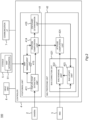
FIG. 2 is a block diagram showing a configuration of thepositioning device 100. Thepositioning device 100 includes acamera 2, anIMU 3, acontroller 4, astorage 5, a communication interface (I/F) 7, and adrive unit 8. - The
camera 2 is an example of an imaging unit according to the present disclosure. Thecamera 2 is installed on the movingbody 1, images the surroundings of the movingbody 1, and generates color image data and distance image data. Thecamera 2 may include a depth sensor such as an RGB-D camera or a stereo camera. In addition, thecamera 2 may include an RGB camera that captures a color image and a time of flight (ToF) sensor that captures a distance image. - The
IMU 3 is an example of a detector according to the present disclosure. TheIMU 3 is installed on the movingbody 1, detects, for example, an angular velocity of the movingbody 1 as motion information indicating motion of the movingbody 1, and outputs a detection signal indicating a detection result. - The
controller 4 includes a general-purpose processor such as a CPU or an MPU that cooperates with software to implement predetermined functions. Thecontroller 4 loads and executes a program stored in thestorage 5 to implement various functions of apositioning unit 41, aIMU processing unit 42, and the like, to control the overall operation of thepositioning device 100. Thepositioning unit 41 includes a featurepoint extraction unit 411, aposition computation unit 414, amap management unit 415, and astationary determination unit 416. TheIMU processing unit 42 includes abias correction unit 421 and anattitude computation unit 424. Thebias correction unit 421 includes abias removal unit 422 and abias update unit 423. - For example, the
controller 4 executes a program for implementing the positioning method according to the present embodiment or a program that implements the SLAM algorithm. Thecontroller 4 is not limited to a controller that implements predetermined functions through cooperation between hardware and software, and may be configured with a hardware circuit such as an FPGA, an ASIC, or a DSP designed as a dedicated circuit for implementing the predetermined functions. - The
storage 5 is a recording medium that stores various information including programs and data necessary for implementing the functions of thepositioning device 100. Thestorage 5 stores, for example, mapinformation 51 and image data. Thestorage 5 is implemented by any one or combination of storage devices, such as a semiconductor memory device such as a flash memory or an SSD, a magnetic storage device such as a hard disk, and a storage device of a different type. Thestorage 5 may include a volatile memory such as an SRAM or a DRAM capable of high-speed operation for temporarily storing various information. The volatile memory operates as, for example, a frame memory that temporarily stores a work area of thecontroller 4 and image data for each frame. - The communication I/F 7 is an interface circuit for enabling communication connection between the
positioning device 100 and an external apparatus such as an external server via a network. The communication I/F 7 performs communication in accordance with a standard such as IEEE 802.3 or IEEE 802.11. - The
drive unit 8 is a mechanism that moves the movingbody 1 in accordance with instructions from thecontroller 4. For example, thedrive unit 8 includes a drive circuit of an engine, a steering circuit, and a brake circuit, connected to a tire of the movingbody 1. - The operation of the
positioning device 100 configured as described above will be described below. - Referring to
FIG. 2 , an example of positioning processing will be described as a basic operation of thepositioning device 100. The positioning processing is executed by thecontroller 4 operating as thepositioning unit 41. - First, the
controller 4 acquires data on a plurality of captured images captured at a constant frame rate from thecamera 2. Here, the captured image is image data on the environment around the movingbody 1 captured by thecamera 2. - Next, the
controller 4 operating as the featurepoint extraction unit 411 analyzes the captured image and extracts a feature point. Thecontroller 4 extracts, as feature points, a pixel or a pixel group whose luminance value or color can be distinguished from surrounding pixels or pixel groups. In order to detect the feature point from the captured image, for example, a known FAST (Features from Accelerated Segment Test) technology may be used. - It should be noted that the
controller 4 performs not only computation processing of the position of the movingbody 1 but also creation processing of themap information 51. Themap information 51 includes information on a two-dimensional position, a three-dimensional position, or both, of the feature point. Thecontroller 4 operating as themap management unit 415 createsmap information 51 by converting the coordinates on the captured image of the feature point into world coordinates and registering the map point corresponding to the feature point on the captured image in the world coordinate space. In themap information 51, a camera frame indicating a captured image, and a position and an orientation of thecamera 2 when the captured image is captured (hereinafter, referred to as "camera pose") are recorded together with a map point corresponding to a feature point on the captured image. The createdmap information 51 is stored in thestorage 5. Thecontroller 4 can generate themap information 51 by, for example, acquiring captured images at predetermined time intervals to register feature points, during the motion of the movingbody 1. - The
controller 4 operating as theposition computation unit 414 computes the position of thecamera 2 and eventually the position of the movingbody 1 using the information on the feature points on the captured image extracted by the featurepoint extraction unit 411 and themap information 51 stored in thestorage 5. For example, thecontroller 4 operating as theposition computation unit 414 performs feature point matching processing of associating a feature point in the captured image with a map point in themap information 51, and computes a camera pose of thecamera 2 that has captured the captured image. Alternatively, as the feature point matching processing, thecontroller 4 may associate the feature point in the previous frame with the feature point in the current frame acquired next to the previous frame using, for example, a known Kanade-Lucas-Tomasi (KLT) tracker technology. - The feature point matching processing is, for example, processing of determining whether or not a feature point in a current frame corresponds to a map point in the
map information 51 or a feature point in a previous frame based on a feature amount of the feature point. Through the feature point matching processing, thecontroller 4 operating as theposition computation unit 414 can track the corresponding feature point between a plurality of captured images sequentially acquired by thecamera 2. The feature amount of the feature point is, for example, a speeded-up robust features (SURF) feature amount obtained by the SURF technology, a scale-invariant feature transform (SIFT) feature amount obtained by the SIFT technology, or an oriented FAST and rotated BRIEF (ORB) feature amount obtained by the ORB technology. The feature amount of the feature point is represented by, for example, a vector having one or more dimensions. For example, the SURF feature amount is represented by a 64 dimensional vector, and the SIFT feature amount is represented by a 128 dimensional vector. The similarity of the feature amounts is computed as, for example, a distance such as a Euclidean distance between feature amounts. - Next, the
controller 4 operating as theposition computation unit 414 computes a camera pose corresponding to the current frame. The camera pose corresponding to the current frame is computed, for example, based on a geometric positional relationship between a feature point in the previous frame and a feature point in the current frame. In order to improve the computation accuracy and/or computation efficiency of the camera pose corresponding to the current frame, for example, the attitude of the movingbody 1 computed by theattitude computation unit 424 of theIMU processing unit 42 may be used. Theattitude computation unit 424 can acquire the camera pose corresponding to the previous frame from theposition computation unit 414 and compute the estimated attitude of the movingbody 1 corresponding to the current frame based on the camera pose and the angular velocity detected by theIMU 3. Theposition computation unit 414 acquires the estimated attitude of the movingbody 1 corresponding to the current frame computed by theattitude computation unit 424 and converts the estimated attitude into a camera pose corresponding to the current frame. - As described above, using the angular velocity detected by the
IMU 3 for estimation of the attitude of the movingbody 1 allows thepositioning device 100 to efficiently perform feature point matching even when the movingbody 1 accelerates or rotates. - In the positioning processing of the present embodiment, in the
IMU processing unit 42, theattitude computation unit 424 operates based on the bias corrected detection signal obtained by processing the detection signal from theIMU 3 by thebias correction unit 421. In thebias correction unit 421, thebias removal unit 422 performs processing of removing the bias error by subtracting the correction value of the bias error from the detection signal output by theIMU 3. The correction value of the bias error is set in advance as a signal value for offsetting the error included in the detection signal. The correction value of the bias error is also referred to as a zero point offset and a null offset. Thebias update unit 423 performs bias update by setting a correction value of the bias error to thebias removal unit 422 in bias update processing described below. - The position data of the moving
body 1 obtained by the above positioning processing is accumulated in, for example, an external server or an internal memory of thepositioning device 100, and constitutes position history data indicating a history of the position of the movingbody 1. Such position history data can be adopted, for example, for various data management and data analysis related to a track in which the movingbody 1 moves in the environment (seeFIG. 3 ). When the position history data is obtained by thepositioning device 100 of the present embodiment so as to accurately measure the track of the movingbody 1, the above-described data management and analysis in the external server can be made highly accurate, for example. - The
positioning device 100 of the present embodiment repeats the bias update processing during the implementation of the positioning processing as described above to update the correction value of the bias error in real time. An overview of bias update processing will be described below with reference toFIG. 3 . - Movement history data obtained by a positioning device when the moving body mounting the positioning device moves only in a passage extending between two entry prohibited areas will be described with reference to
FIGS. 3(a) and 3(b). FIG. 3(a) is a schematic diagram illustrating position history data by the positioning device operated without performing bias update for a long time. The position history data is stored in, for example, an external server or the like.FIG. 3 shows two-dimensional map data in which two entry prohibitedareas 10 and apassage 20 extending between the entry prohibitedareas 10 are viewed from above. As shown inFIG. 3(a) , when the positioning device is operated without performing the bias update for a long time, the position history data includes a track of erroneous measurement as if the moving body erroneously travels into the region R surrounded by the broken line and enters the entry prohibitedarea 10. When such erroneous measurement is mixed in the position history data, the accuracy of data management and analysis in the external server described above is deteriorated, for example. - According to the energetic research of the inventor of the present application, it has been found that the above-described erroneous measurement is caused by fluctuation of a bias error of the
IMU 3 during position measurement over the track of the movingbody 1, for example. The bias error immediately after the startup of theIMU 3 can be acquired as, for example, an average value of sensor values in a stationary state acquired during several seconds from the startup. The bias correction can be performed by subtracting a bias error immediately after startup from a subsequent measurement value. - However, the bias error varies due to an external factor such as temperature. Therefore, only performing the bias correction immediately after the startup of the
IMU 3 causes the bias error to fluctuate when theIMU 3 is continuously operated and the error included in the detection value of theIMU 3 to increase. When the error included in the detection value of theIMU 3 increases, and when the detection result of theIMU 3 is used for computing the camera pose in thepositioning device 100, the camera pose is erroneously computed. - In response to such a problem, the inventor of the present application has conducted energetic studies, and has conceived bias update processing of not only acquiring a bias error immediately after startup but also updating a bias error to be removed from a detection signal at an appropriate timing even during subsequent operation continuation.
-
FIG. 3(b) is a schematic diagram showing a history of measurement results of the movingbody 1 by thepositioning device 100 when the bias update processing of the present embodiment is applied. As compared withFIG. 3(a) , the position history data onFIG. 3(b) indicates a track in which the movingbody 1 has moved in the correct direction along thepassage 20 indicated by the arrow without erroneously traveling into the region R surrounded by the broken line as a result of the bias update processing. Hereinafter, details of the bias update processing according to the present embodiment will be described. -
FIG. 4 is a flowchart showing an example of bias update processing executed by thepositioning device 100 according to the present embodiment. The bias update processing is repeatedly executed by thecontroller 4. - First, the
controller 4 determines whether a predetermined cycle a has elapsed since the bias update processing was completed last (S1). If the predetermined cycle a has not elapsed (No in S1), thecontroller 4 ends the bias update processing inFIG. 4 without proceeding in and after step S2. If the predetermined cycle a has elapsed (Yes in S1), thecontroller 4 operating as thestationary determination unit 416 performs stationary determination processing of determining whether or not the movingbody 1 is stationary (S2). For example, the predetermined cycle a is 1 (s). - The stationary determination processing S2 of the present embodiment is performed by detecting a period in which the moving
body 1 has a sufficiently small speed, that is, a stationary period, using the measurement result of thepositioning unit 41 based on the Visual-SLAM technology. When determining that the movingbody 1 is stationary, thecontroller 4 turns on the stationary flag indicating the determination result, and when not determining that the movingbody 1 is stationary, thecontroller 4 turns off the stationary flag. Details of the stationary determination processing S2 will be described below. - Next, the
controller 4 operating as thebias update unit 423 determines whether or not the stationary flag is ON (S3). If the stationary flag is OFF, that is, if the stationary flag is not ON (No in S3), thecontroller 4 ends the bias update processing inFIG. 4 without 22 particularly correcting the bias error. - On the other hand, if the stationary flag is ON (Yes in S3), the
controller 4 operating as thebias update unit 423 acquires the detection signal output by theIMU 3 during the stationary period (S4), for example, and updates the bias error by setting the correction value of the bias error based on the signal value (S5). The correction value of the bias error is computed as, for example, an average value of the detection signal values of theIMU 3 acquired during several seconds at the time of stationary. Alternatively, in step S4, thecontroller 4 acquires the detection signals output from theIMU 3 between the time point going back by a predetermined time S from the stationary determination time when the stationary flag is turned on and the stationary determination time, and sets the average value of the detection signal values as the correction value of the bias error. - The bias error is updated by the bias update processing as described above. The
bias removal unit 422 acquires the updated bias error from thebias update unit 423, and performs bias correction, for example, by subtracting the updated bias error from a subsequent measurement value. - As described above, the
positioning device 100 can perform the stationary determination processing S2 using the measurement result of the position of the movingbody 1 by thepositioning unit 41 and execute the bias update processing so as to update the bias error in real time (S5). Therefore, the bias correction can be performed not only by correcting the bias error immediately after startup but also by updating the bias even during the subsequent continuation of the operation. Therefore, with thepositioning device 100, the bias error included in the detection signal of theIMU 3 can be accurately removed. Thepositioning device 100 can accurately measure the position of the movingbody 1 using the detection result of theIMU 3. - According to the above stationary determination processing S2, it is considered that the output value (S4) of the detection signal of the
IMU 3 obtained if it is determined that the movingbody 1 is stationary (Yes in S3) corresponds to the bias error without being caused by the angular velocity of the movingbody 1. Therefore, by detecting such timing, the bias error can be updated (S5) with high accuracy. Hereinafter, details of the stationary determination processing S2 according to the present embodiment will be described. -
FIG. 5 is a flowchart showing an example of the stationary determination processing S2 shown inFIG. 4 . First, thecontroller 4 operating as thestationary determination unit 416 measures stationary period p (S21). At the start of measurement of the stationary period p, thestationary determination unit 416 starts counting up after resetting the stationary period p. In the example shown inFIG. 5 , the stationary period p is a period in which the velocity v of the movingbody 1 is equal to or less than a preset predetermined threshold value vth. For example, the threshold value vth is 0.075 (m/s). - For example, next to step S21, the
stationary determination unit 416 computes the velocity v of the movingbody 1 based on the position data of the movingbody 1 output from the position computation unit 414 (S22). For example, thestationary determination unit 416 acquires the position data on the movingbody 1 output from theposition computation unit 414 at fixed time intervals, and computes the velocity v as the magnitude of the change amount per unit time of the position of the movingbody 1. - Next, the
stationary determination unit 416 determines whether or not the computed velocity v of the movingbody 1 is larger than the threshold value vth (S23). The threshold value vth is set in advance so as to indicate, for example, a reference velocity at which the movingbody 1 can be regarded as moving. If the computed velocity v of the movingbody 1 is larger than the threshold value vth (Yes in S23), thestationary determination unit 416 turns off the stationary flag (S26) and terminates the stationary determination processing S2. In this case, it is considered that the movingbody 1 moves without being stationary, and since the process proceeds to NO in step S3 inFIG. 4 , the bias error is not updated (S5). In this case, the stationary period p is reset, for example, in step S21 in the next loop. - If the computed velocity v of the moving
body 1 is equal to or less than the threshold value vth (No in S23), thestationary determination unit 416 determines whether the stationary period p is longer than, for example, a predetermined threshold value pth (S24). The threshold value pth is set in advance so as to indicate, for example, a reference period during which the movingbody 1 is considered to be stably stationary. It should be noted that the measurement of the stationary period p (S21) may be performed when the process proceeds to No in step S23. - If determining that the stationary period p during measurement is equal to or less than the threshold value pth (No in S24), the
stationary determination unit 416 turns off the stationary flag (S26) and terminates the stationary determination processing S2, for example. In this case, unlike the case where the process proceeds to No in step S23, the stationary period p is not reset. On the other hand, if determining that the stationary period p is longer than the threshold value pth (Yes in S24), thestationary determination unit 416 turns on the stationary flag (S25) and terminates the stationary determination processing S2. In this case, it is considered that the movingbody 1 is stably stationary. Therefore, the process proceeds to YES in step S3 inFIG. 4 , and the bias error is updated using, for example, the detection signal of theIMU 3 in the stationary period p (S4, S5). For example, the threshold value pth is 5 (s). - As described above, the
stationary determination unit 416 computes the velocity v of the movingbody 1 based on the measurement result of the position computation unit 414 (S22), and determines that the movingbody 1 is stationary (S25) if the state in which the velocity v is equal to or less than the threshold value vth is continued for the set period of the threshold value pth (Yes in S24). The velocity v is computed as, for example, a change amount per unit time of the measurement result of theposition computation unit 414. - As described above, the
positioning device 100 according to the present embodiment measures the position of the movingbody 1. Thepositioning device 100 includes acamera 2, anIMU 3, abias correction unit 421, aposition computation unit 414, and astationary determination unit 416. Thecamera 2 is mounted on the movingbody 1, and captures an image of an environment around the movingbody 1 to acquire a captured image. TheIMU 3 is mounted on the movingbody 1, detects motion of the movingbody 1, and outputs a detection signal indicating a detection result. Thebias correction unit 421 processes the detection signal using a correction value for correcting a bias error included in the detection signal of theIMU 3 without depending on the motion of the movingbody 1. Theposition computation unit 414 computes the position of the movingbody 1 based on the captured image acquired by thecamera 2 and the detection signal processed by the bias correction unit. Thestationary determination unit 416 determines whether or not the movingbody 1 is stationary (S2). If thestationary determination unit 416 determines that the moving body is stationary (Yes in S3), thebias correction unit 421 updates the correction value of the bias error based on the detection signal output by the IMU 3 (S5). - Thus, the
positioning device 100 can not only correct the bias error immediately after startup, but also update the correction value of the bias error to accurately correct the bias error even during the subsequent continuation of the operation. Therefore, thepositioning device 100 can accurately measure the position of the movingbody 1 using the detection result of theIMU 3. - Furthermore, in the
positioning device 100, unlike the conventional technique, it is not necessary to install an external apparatus such as an anchor in a movement path of a movingbody 1 in order to execute bias update processing. Therefore, according to thepositioning device 100, the installation cost of an external apparatus such as an anchor can be reduced. In addition, since thepositioning device 100 is not needed to be provided with a device for wireless communication with an external apparatus such as an anchor, it is possible to prevent the configuration from becoming complicated. As described above, thepositioning device 100 can correct the bias error more easily than the conventional technique. - The
positioning device 100 may further include a featurepoint extraction unit 411 that extracts a feature point from the captured image acquired by thecamera 2. Theposition computation unit 414 may compute the position of the movingbody 1 by tracking the feature points extracted by the featurepoint extraction unit 411 among a plurality of captured images sequentially acquired by thecamera 2. - Tracking the features in this manner allows the
positioning device 100 to measure the position of the movingbody 1 with higher accuracy. - The
stationary determination unit 416 computes the velocity v of the movingbody 1 based on the computation result of theposition computation unit 414, and determines that the movingbody 1 is stationary (S25) if a state in which the velocity v is equal to or less than a preset threshold value vth (No in S23) continues for a predetermined period pth (Yes in S24). - Thus, it is possible to prevent determination that the moving
body 1 is stationary when the movingbody 1 stops for only a moment and resumes the movement immediately after the stop, and to determine that the movingbody 1 is stationary when the movingbody 1 actually stops. Therefore, it is possible to prevent the bias error from being computed assuming that the movingbody 1 is stationary when the movingbody 1 is not stationary, and it is possible to secure the accuracy of computing the bias error. - Hereinafter, a second embodiment will be described with reference to
FIGS. 6 to 8 . In the second embodiment, a positioning device that relaxes the determination criterion in the stationary determination processing S2 when the period in which the bias update is not performed becomes too long will be described. -
FIG. 6 is a flowchart showing an example of bias update processing executed by the positioning device according to the second embodiment of the present disclosure. The bias update processing inFIG. 6 further includes steps S201 to S203 in addition to the bias update processing executed by thepositioning device 100 according to the first embodiment shown inFIG. 4 . - As shown in
FIG. 6 , if determining in step S1 that the predetermined cycle a has elapsed (Yes in S1), thecontroller 4 determines whether the bias un-update period is longer than the predetermined period, for example (S201). The bias un-update period is a time elapsed since the bias error was updated last. The predetermined period in step S201 is a reference period in which the bias un-update period is regarded to be too long, and is set to, for example, a plurality of times the predetermined cycle a. - If determining that the bias un-update period is not long (No in S201), the
controller 4 sets the threshold value pth (see step S24 inFIG. 5 ) of the stationary period to a normal level value p1 (S202). The normal level value p1 is, for example, an initial value set similarly to the value of the threshold value pth of the first embodiment. Thereafter, stationary determination processing S2 is performed as in the first embodiment. On the other hand, if determining that the bias un-update period is long (Yes in S201), thecontroller 4 sets the threshold value pth of the stationary period to a low level value p2 smaller than the normal level value p1 (S203), and proceeds to the stationary determination processing S2. Since the subsequent steps are similar to those of the first embodiment, the description thereof will be omitted. -
FIG. 7 is a graph for illustrating the operation of the positioning device according to the present embodiment. The horizontal axis of the graph inFIG. 7 represents time. The vertical axis of the graph inFIG. 7 represents the velocity v of the movingbody 1 computed in step S22 by thestationary determination unit 416. - As described with reference to
FIG. 5 in the first embodiment, when the stationary period p in which the velocity v of the movingbody 1 is equal to or less than the threshold value vth is longer than the threshold value pth, thestationary determination unit 416 turns on the stationary flag (S23 to S25). Assuming that the threshold value pth of the stationary period is the normal level value p1, in the movingbody 1 that moves as shown in the graph inFIG. 7 , since the stationary period p is shorter than the normal level value p1, the stationary flag is not turned on, and the bias update step S5 is not executed (see step S3 inFIG. 4 ). When the bias update step S5 is not executed for a long period of time, the bias error fluctuates, and the error included in the detection signal output from theIMU 3 increases. - Thus, in the present embodiment, if determining that the bias un-update period is long (Yes in S201), the
controller 4 executes step S203 of setting the threshold value pth of the stationary period to the low level value p2 as described above. With this configuration, when the bias un-update period is too long, priority can be given to executing bias update step S5 as early as possible. Thus, with respect to the movingbody 1 that moves as shown in the graph inFIG. 7 , since the stationary period p is longer than the period indicated by the low level value p2, the stationary flag is turned on (see steps S24 and S25 inFIG. 5 ), and the bias update step S5 is executed (see steps S3 to S5 inFIG. 4 ). - It should be noted that in the above example, the threshold value pth of the stationary period can take only two values of the normal level value p1 and the low level value p2. However, the bias update processing in the present embodiment is not limited thereto, and the
controller 4 has only to be one that decreases the threshold value pth of the stationary period as the time elapsed from the last update of the bias error is longer. For example, the threshold value pth of the stationary period may be set to three or more different values according to the bias un-update period. Alternatively, the threshold value pth of the stationary period may be set to take a continuous value according to the bias un-update period. -
FIG. 8 is a flowchart showing a modified example of bias update processing executed by the positioning device according to the second embodiment of the present disclosure. As compared with the bias update processing inFIG. 6 , the bias update processing inFIG. 8 includes step S202a instead of step S202, and includes step S203a instead of step S203. In step S202a, thecontroller 4 sets the threshold value vth to a normal level value v1. The normal level value v1 is, for example, an initial value set similarly to the value of the threshold value vth of the first embodiment. In step S203a, thecontroller 4 sets the threshold value vth to a high level value v2 higher than the normal level value v1. - The bias update processing in the present embodiment is not limited thereto. For example, similarly to the above example of changing the threshold value pth of the stationary period, the
controller 4 has only to be one that increases the threshold value vth as the time elapsed since the bias error was updated last is longer, and the threshold value vth may take three or more different values or continuous values. - In addition, the bias update processing illustrated in
FIG. 6 and the bias update processing illustrated inFIG. 8 may be performed alone or in combination. For example, if determining that the bias un-update period is long (Yes in S201), thecontroller 4 may set the threshold value pth of the stationary period to the low level value p2 and set the threshold value vth to the high level value v2. In this case, if not determining that the bias un-update period is long (No in S201), thecontroller 4 may set the threshold value pth of the stationary period to the normal level value p1 and set the threshold value vth to the normal level value v1. - As described above, in the present embodiment, the
stationary determination unit 416 sets the threshold value pth of the stationary period to be shorter (S203) and/or sets the threshold value vth to be larger (S203a) as the time elapsed from the last update of the bias error is longer, and determines whether or not the moving body is stationary (S2). - Thus, at least one of the threshold value pth and the threshold value vth of the stationary period is changed so that the bias update is executed as early as possible when a long period has elapsed without execution of the bias update. Therefore, a situation in which the bias update is not executed even though the bias error fluctuates can be eliminated at an early stage.
- Hereinafter, a third embodiment will be described with reference to
FIGS. 9 to 10 . In the third embodiment, a positioning device using a temperature sensor will be described. -
FIG. 9 is a block diagram showing a configuration of apositioning device 300 according to the third embodiment of the present disclosure. As compared with thepositioning device 100 according to the first embodiment shown inFIG. 2 , thepositioning device 300 inFIG. 9 further includes a temperature sensor 9. - The temperature sensor 9 detects the temperature of the environment around the moving
body 1. The temperature sensor 9 may be one that detects the temperature of theIMU 3. The temperature sensor 9 may be mounted on the movingbody 1 and may be directly or indirectly connected to thecontroller 4. Alternatively, the temperature sensor 9 may be installed in an environment around the movingbody 1 without being mounted on the movingbody 1. In this case, the temperature detected by the temperature sensor 9 is transmitted to thecontroller 4 by wired or wireless communication. For example, the temperature detected by the temperature sensor 9 may be transmitted to thecontroller 4 via the network and the communication I/F 7 of thepositioning device 300. -
FIG. 10 is a flowchart illustrating an example of bias update processing executed by thepositioning device 300. As compared with the bias update processing inFIG. 6 , the bias update processing inFIG. 10 further includes step S300 of acquiring the temperature detection value T being the detection result from the temperature sensor 9, for example, next to step S1. Step S300 may be executed if it is determined in step S1 that the predetermined cycle a has elapsed (Yes in S1), or may be executed if it is determined that the predetermined cycle a has not elapsed (No in S1). In addition, as compared with the bias update processing inFIG. 6 , the bias update processing inFIG. 10 includes step S301 instead of step S201 of determining whether or not the bias un-update period is long. - In step S301, the
controller 4 determines whether or not a temperature change amount ΔT being a change amount of the temperature detection value T is larger than a predetermined threshold value Tth using the temperature detection value T acquired from the temperature sensor 9. The temperature change amount ΔT is defined as, for example, an amount by which the temperature detection value T changes per unit time. If determining that the temperature change amount ΔT is equal to or less than the predetermined threshold value Tth (No in S301), thecontroller 4 sets the threshold value pth of the stationary period to the normal level value p1 (S202). Thereafter, stationary determination processing S2 is performed as in the first embodiment and the second embodiment. If determining that the temperature change amount ΔT is larger than the predetermined threshold value Tth (Yes in S301), thecontroller 4 sets the threshold value pth of the stationary period to a low level value p2 smaller than the normal level value p1 (S203), and proceeds to step S2. Since the subsequent steps are similar to those of the first embodiment and the second embodiment, the description thereof will be omitted. - In the present embodiment, the bias update processing executed by the
positioning device 300 may include step S202a of setting the threshold value vth to the normal level value v1 and step S203a (seeFIG. 8 ) of setting the threshold value vth to a high level value v2 higher than the normal level value v1 instead of or in addition to steps S202 and S203. - The temperature change amount ΔT is computed by the
stationary determination unit 416, for example. However, the present embodiment is not limited thereto, and the temperature change amount ΔT may be computed by any functional block of thecontroller 4. - As described above, the
positioning device 300 further includes a temperature sensor 9 that detects the temperature of the environment around the movingbody 1. Thestationary determination unit 416 sets the threshold value pth of the stationary period to be shorter and/or sets the threshold value vth to be larger as the change in temperature detected by the temperature sensor 9 is larger, and determines whether or not the movingbody 1 is stationary. - One of the causes of the fact that the bias error fluctuates from the bias error immediately after startup is a temperature change in the surrounding environment. When the change in temperature detected by the temperature sensor 9 is large, there is a high possibility that the bias error fluctuates. Thus, when the change in the temperature detected by the temperature sensor 9 is large, the
positioning device 300 according to the present embodiment changes at least one of the threshold value pth and the threshold value vth of the stationary period so that the bias update is executed as early as possible. Therefore, a situation in which the bias update is not executed even though the bias error fluctuates can be eliminated at an early stage. - Hereinafter, a fourth embodiment will be described with reference to
FIG. 11 . In the second embodiment, the determination criterion of the stationary determination processing S2 is relaxed when the bias un-update period becomes too long. In the present embodiment, instead of the determination criterion of the stationary determination processing S2, a positioning device that shortens the cycle a of the bias update processing will be described. -
FIG. 11 is a flowchart showing an example of bias update processing executed by the positioning device according to the fourth embodiment of the present disclosure. The bias update processing inFIG. 11 further includes steps S401 to S403 in addition to the bias update processing executed by thepositioning device 100 according to the first embodiment shown inFIG. 4 . - Unlike
FIG. 4 , inFIG. 11 , if determining in step S3 that the stationary flag is OFF (No in S3), thecontroller 4 determines whether the bias un-update period is long, for example, as in step S201 of the second embodiment (S401). - If determining that the bias un-update period is not long (No in S401), the
controller 4 sets the cycle a to a normal value (S402). On the other hand, if determining that the bias un-update period is long (Yes in S401), thecontroller 4 sets the cycle a to a value shorter than the normal value (S403), and ends the processing inFIG. 11 . The bias update processing inFIG. 11 is repeatedly executed by thecontroller 4. Therefore, in step S1 in the next loop in which the cycle a is set to a short value in step S402, thecontroller 4 determines whether the reset and shortened cycle a has elapsed since the bias update processing was completed last. - Thus, for example, if the cycle a is 5 minutes in the initial setting and the stationary determination step S2 is executed once every 5 minutes but the bias is not updated for a long period of time (Yes in S401), the cycle a is reset to 1 minute to be shortened (S402), and thereafter, the stationary determination step S2 is executed at a pace of once per 1 minute.
- As described above, the
stationary determination unit 416 determines whether or not the movingbody 1 is stationary for each preset cycle a. The cycle a is set to be shorter as the time elapsed from the last update of the bias error is longer (S402). - Even in a state where it is determined to be stationary if the stationary determination is made, the stationary determination is not made and the stationary flag is not turned on as long as the cycle a has not elapsed since the last stationary determination. In the present embodiment, when the time elapsed since the bias error is last updated is long, the frequency of performing the stationary determination is increased by shortening the cycle a. Therefore, the opportunity of being determined to be stationary can be increased, and a situation in which the bias update is not executed even though the bias error fluctuates can be eliminated at an early stage.
- Hereinafter, a fifth embodiment will be described with reference to
FIGS. 12 to 13 . In the present embodiment, a positioning device using a variation of a detection signal of theIMU 3 for determining the presence or absence of bias update will be described. -
FIG. 12 is a flowchart showing an example of bias update processing executed by the positioning device according to the fifth embodiment of the present disclosure. The bias update processing inFIG. 12 further includes step S500 in addition to the bias update processing executed by thepositioning device 100 according to the first embodiment shown inFIG. 4 . - Step S500 is executed between step S4 and step S5 by, for example, the
controller 4 operating as thebias update unit 423 of thebias correction unit 421. In step S500, thecontroller 4 determines whether the variance V of the output signal of theIMU 3 is larger than, for example, a predetermined threshold value Vth. If determining that the variance V is larger (Yes in S500), thecontroller 4 operating as thebias update unit 423 ends the processing without executing the bias update step S5. If not determining that the variance V is larger (No in S500), thecontroller 4 operating as thebias update unit 423 executes the bias update step S5. -
FIG. 13 is a graph showing a temporal change in an angular velocity signal being an example of an output signal of theIMU 3. In the flow inFIG. 12 , if determining in step S3 that the stationary flag is ON, thecontroller 4 operating as thebias update unit 423 acquires the detection signal output by the IMU 3 (S4). Next, thecontroller 4 acquires the detection signals output from theIMU 3 between the time point going back by a predetermined time S from the stationary determination time when the stationary flag is turned on and the stationary determination time, and computes the variance V of the detection signal values. In step S500, thecontroller 4 determines, for example, whether the computed variance V is larger than the predetermined threshold value Vth. -
FIG. 13(a) shows that the variance of the angular velocity signals output from theIMU 3 between the static determination time and a time point going back by a predetermined time S from the static determination time is V1, andFIG. 13(b) shows that the variance is V2. Here, it is assumed that V1 < Vth, and V2 > Vth. When the variance V1 is smaller than the predetermined threshold value Vth as shown inFIG. 13(a) , the process proceeds to No in step S500, and thecontroller 4 operating as thebias update unit 423 executes the bias update step S5. On the other hand, when the variance V2 is larger than the predetermined threshold value Vth as shown inFIG. 13(b) , the process proceeds to Yes in step S500, and thecontroller 4 operating as thebias update unit 423 does not execute the bias update step S5. - As described above, the
bias correction unit 421 determines whether or not to update the bias error based on the variance V of the values of the detection signals output by the IMU 3 (S500). For example, when the variance V of the values of the detection signals output by theIMU 3 is larger than the predetermined threshold value Vth, thebias correction unit 421 determines not to update the bias error. - Thus, since the variance V is small and it is possible to compute the bias error using the reliable value of the detection signal of the
IMU 3 to perform the bias update, the bias error can be corrected more accurately. - Hereinafter, a sixth embodiment will be described with reference to
FIG. 14 . In the present embodiment, a positioning device that uses feature points in position computation to determine the presence or absence of bias update will be described. -
FIG. 14 is a flowchart showing an example of bias update processing executed by the positioning device according to the sixth embodiment of the present disclosure. The bias update processing inFIG. 14 further includes steps S601 and S602 between step S1 and step S2 in addition to the bias update processing executed by thepositioning device 100 according to the first embodiment shown inFIG. 4 . - In step S601, for example, the
stationary determination unit 416 acquires feature point data from the featurepoint extraction unit 411. The feature point data is, for example, data indicating coordinates of all feature points in the captured image. Thestationary determination unit 416 computes the number of feature points present in the captured image based on the feature point data. Alternatively, thestationary determination unit 416 may acquire the number of feature points from the featurepoint extraction unit 411 as the feature point data. - In step S602 next to step S601, the
stationary determination unit 416 determines whether the number of feature points in the captured image is sufficiently large. For example, if the number of feature points in the captured image is a predetermined threshold value or more, thestationary determination unit 416 determines that the number of feature points in the captured image is sufficiently large. If it is determined that the number of feature points is sufficiently large (Yes in S602), the process proceeds to stationary determination processing S2. If not determining that the number of feature points is sufficiently large (No in S602), thecontroller 4 ends the bias update processing inFIG. 14 and does not execute the bias update step S5. Since the subsequent steps are similar to those of the first embodiment, the description thereof will be omitted. - An example in which step S601 of acquiring the feature point data and step S602 of determining whether or not the number of feature points is sufficiently large are executed between step S1 and step S2 has been described, but the present embodiment is not limited thereto. For example, steps S601 and S602 may be executed immediately before the bias update step S5.
- As described above, the positioning device may further include a feature
point extraction unit 411 that extracts a feature point from the captured image acquired by thecamera 2. If the number of feature points extracted by the feature point extraction unit is less than the predetermined number (No in S602), thebias correction unit 421 does not update the bias error. - When the number of feature points is not sufficiently large, the accuracy of computation of the position of the moving
body 1 by theposition computation unit 414, the accuracy of the stationary determination by thestationary determination unit 416 based on the computed position of the movingbody 1, and the like are not high, and the reliability of these pieces of processing is not secured. In the present embodiment, when the reliability of the position computation processing, the stationary determination processing, and the like is not secured as described above, the bias update step S5 is not executed, and the bias error can be prevented from being updated to a value with lower reliability. - As described above, the first to sixth embodiments have been described as examples of the technique disclosed in the present application. However, the technique in the present disclosure is not limited to this, and can also be applied to embodiments in which changes, substitutions, additions, omissions, and the like are made as appropriate. In addition, it is also possible to combine each component described in the first to sixth embodiments to form a new embodiment.
- Thus, in the following, other embodiments will be exemplified. In the stationary determination processing (S2) of the first embodiment shown in
FIG. 5 , step S22 of computing the velocity v of the movingbody 1 based on the position of the movingbody 1 has been described, and processing of determining whether to turn on or off the stationary flag based on whether or not the computed velocity v is larger than the threshold value vth has been described. Thestationary determination unit 416 of the positioning device according to the present disclosure has only to be one that determines whether or not the movingbody 1 is stationary, and is not limited to one that computes the velocity v of the movingbody 1 based on the position of the movingbody 1. For example, thestationary determination unit 416 compares the position of the feature point in the previous frame with the position of the feature point in the current frame corresponding to the feature point in the previous frame to compute the movement amount of the feature point from the previous frame to the current frame, and determines that the movingbody 1 is stationary when the average movement amount d being the average value of the movement amounts for each feature point is equal to or less than a predetermined threshold value dth. That is, when the difference between the images of the previous frame and the current frame is small, it is determined that thecamera 2 and eventually the movingbody 1 is stationary. Thus, since the stationary determination can be performed without computing the velocity v of the movingbody 1, the processing load of thecontroller 4 can be reduced, and the stationary determination can be performed with high speed. -
FIG. 15 is a flowchart illustrating stationary determination processing executed by the positioning device according to such another embodiment. As compared with the stationary determination processing of the first embodiment shown inFIG. 5 , the stationary determination processing inFIG. 15 includes step S701 instead of step S22, and includes step S702 instead of step S23. - In step S701, the
stationary determination unit 416 computes the average movement amount d of the feature point from the previous frame to the current frame. Next, in step S702, thestationary determination unit 416 determines whether the average movement amount d is larger than a predetermined threshold value dth. If the average movement amount d is larger than the predetermined threshold value dth (Yes in S702), thestationary determination unit 416 turns off the stationary flag (S26) and terminates the stationary determination processing. If the average movement amount d is equal to or less than the predetermined threshold value dth (No in S702), the process proceeds to step S24. Since the subsequent steps are similar to those of the first embodiment, the description thereof will be omitted. - In the above embodiments, with respect to the
IMU 3 being an example of the detector, an example has been described in which theIMU 3 detects the angular velocity of the movingbody 1 and outputs a detection signal indicating the detection result. TheIMU 3 has only to be one that detects motion information indicating the motion of the movingbody 1, and may be, for example, an acceleration sensor. For example, thecontroller 4 operating as thebias update unit 423 acquires the detection signal (S4) output by the acceleration sensor if the stationary flag is ON (Yes in S3 inFIG. 4 ), and updates the bias error by setting the correction value of the bias error based on the signal value (S5). For example, the correction value of the bias error is computed assuming that gravitational acceleration of 1 g(m/s2) is applied to the acceleration sensor downward in the vertical direction (-z direction). In this case, thecontroller 4 may compute the difference between the detection signal output by the acceleration sensor and the acceleration of 1 g(m/s2) downward in the vertical direction, and may use the computation result as the correction value of the bias error. In addition, in this case, thecontroller 4 may compute the correction value of the bias error for the horizontal direction component on the assumption that the acceleration component in the horizontal direction (x direction and y direction) orthogonal to the vertical direction is zero. - In the above embodiments, an example in which the detection result of the IMU is used as an auxiliary means for improving the accuracy of the computation of the camera pose has been described. In the present embodiment, the method for using the detection result of the IMU is not limited thereto, and may be used, for example, to compute the camera pose only from the detection result of the IMU when a "lost" occurs. Here, the term "lost" means that the number of feature points successful in feature point matching is not equal to or larger than a predetermined threshold value, or that the positioning device cannot compute a camera pose based on a geometric positional relationship between a feature point in the previous frame and a feature point in the current frame.
- In the above embodiments, the application in which the
positioning device 100 is applied to the application in which the position history data on the movingbody 1 is accumulated has been described. In the present embodiment, the application of thepositioning device 100 is not limited to the above, and may be applied to, for example, driving control of the movingbody 1. In these applications, the accuracy of the driving control of the movingbody 1 can be improved by updating the bias error in real time as in the above-described embodiments, for example. - As described above, the embodiments are described as the exemplification of the technique in the present disclosure. To that end, the accompanying drawings and the detailed description are provided.
- Therefore, among the components described in the accompanying drawings and the detailed description, not only the component essential for solving the problem, but also the component not essential for solving the problem may be included in order to exemplify the above technique. Therefore, it should not be recognized that these non-essential components are essential immediately because these non-essential components are described in the accompanying drawings and the detailed description.
- In addition, since the above embodiment is for illustrating the technique in the present disclosure, various changes, substitutions, additions, omissions, and the like can be made within the scope of the claims or the equivalent thereof.
- The present disclosure is applicable to a positioning device that measures a position of the moving body.
-
- 1
- moving body
- 2
- camera
- 4
- controller
- 41
- positioning unit
- 411
- feature point extraction unit
- 414
- position computation unit
- 415
- map management unit
- 416
- stationary determination unit
- 42
- processing unit
- 421
- bias correction unit
- 422
- bias removal unit
- 423
- bias update unit
- 424
- attitude computation unit
- 5
- storage
- 51
- map information
- 7
- communication I/F
- 8
- drive unit
- 9
- temperature sensor
- 10
- entry prohibited area
- 20
- passage
- 100
- positioning device
Claims (10)
- A positioning device that determines a position of a moving body (1), the positioning device comprising:an imaging unit (2) that is configured to be mounted on the moving body and captures an image of surroundings of the moving body to acquire a captured image;a detector (3) that is configured to be mounted on the moving body and detects motion of the moving body to output a detection signal indicating a detection result;a bias correction unit (421) that processes the detection signal using a correction value for correcting a bias error included in the detection signal without depending on the motion of the moving body;a position computation unit (414) that computes the position of the moving body based on the captured image acquired by the imaging unit and a detection signal processed by the bias correction unit; anda stationary determination unit (416) that determines whether or not the moving body is stationary by detecting a period in which the moving body has a sufficiently small speed based on the results of the position computation unit,wherein the bias correction unit updates a correction value of the bias error based on a detection signal output by the detector when the stationary determination unit determines that the moving body is stationary, anddoes not update a correction value of the bias error based on a detection signal output by the detector when the stationary determination unit determines that the moving body is not stationary.
- The positioning device according to claim 1, further comprising a feature point extraction unit (411) that extracts a feature point from a captured image acquired by the imaging unit,
wherein the position computation unit computes a position of the moving body by tracking a feature point extracted by the feature point extraction unit among a plurality of captured images sequentially acquired by the imaging unit. - The positioning device according to claim 1 or 2, further comprising a feature point extraction unit (411) that extracts a feature point(s) from a captured image acquired by the imaging unit, and
wherein the bias correction unit does not update the bias error when the number of feature points extracted by the feature point extraction unit is less than a predetermined number. - The positioning device according to any one of claims 1 to 3, wherein the stationary determination unit computes velocity of the moving body based on a computation result of the position computation unit, and determines that the moving body is stationary when a state in which the velocity is equal to or less than a preset threshold value is continued for a predetermined period.
- The positioning device according to claim 4, wherein the stationary determination unit sets the predetermined period to be shorter and/or the threshold value to be larger as a time elapsed from last update of the bias error is longer to determine whether or not the moving body is stationary.
- The positioning device according to claim 4 or 5, further comprising a temperature sensor that detects a temperature of an environment around the moving body, and
wherein the stationary determination unit sets the predetermined period to be shorter and/or the threshold value to be larger as a change in temperature detected by the temperature sensor is larger to determine whether or not the moving body is stationary. - The positioning device according to any one of claims 1 to 6, whereinthe stationary determination unit determines whether or not the moving body is stationary for each preset cycle, andthe cycle is set to be shorter as a time elapsed from last update of the bias error is longer.
- The positioning device according to claim 7, further comprising a temperature sensor that detects a temperature of an environment around the moving body, and
wherein the stationary determination unit sets the cycle to be shorter as a change in temperature detected by the temperature sensor is larger to determine whether or not the moving body is stationary. - The positioning device according to any one of claims 1 to 8, wherein the bias correction unit determines whether or not to update the bias error based on variance of values of the detection signals output by the detector.
- The positioning device according to any one of claims 1 to 9, wherein the detector includes a gyro sensor that detects an angular velocity as motion of the moving body.
Applications Claiming Priority (2)
| Application Number | Priority Date | Filing Date | Title |
|---|---|---|---|
| JP2020019928 | 2020-02-07 | ||
| PCT/JP2020/034511 WO2021157116A1 (en) | 2020-02-07 | 2020-09-11 | Position measurement device |
Publications (3)
| Publication Number | Publication Date |
|---|---|
| EP4102175A1 EP4102175A1 (en) | 2022-12-14 |
| EP4102175A4 EP4102175A4 (en) | 2023-07-26 |
| EP4102175B1 true EP4102175B1 (en) | 2025-07-09 |
Family
ID=77199831
Family Applications (1)
| Application Number | Title | Priority Date | Filing Date |
|---|---|---|---|
| EP20917842.5A Active EP4102175B1 (en) | 2020-02-07 | 2020-09-11 | Position measurement device |
Country Status (4)
| Country | Link |
|---|---|
| US (2) | US12437440B2 (en) |
| EP (1) | EP4102175B1 (en) |
| JP (2) | JP7570038B2 (en) |
| WO (1) | WO2021157116A1 (en) |
Families Citing this family (4)
| Publication number | Priority date | Publication date | Assignee | Title |
|---|---|---|---|---|
| EP3904995A4 (en) * | 2018-12-28 | 2022-02-23 | Panasonic Intellectual Property Management Co., Ltd. | Localization device |
| SE544298C2 (en) * | 2020-04-14 | 2022-03-29 | Husqvarna Ab | Robotic work tool system and method for defining a working area |
| CN113959341B (en) * | 2021-10-14 | 2024-04-26 | 江苏科技大学 | Optical structure displacement measurement method, system and storage medium |
| JP7607618B2 (en) | 2022-08-05 | 2024-12-27 | 三菱ロジスネクスト株式会社 | Bias estimation device, forklift, bias estimation method and program |
Family Cites Families (17)
| Publication number | Priority date | Publication date | Assignee | Title |
|---|---|---|---|---|
| JP2007101526A (en) * | 2005-09-06 | 2007-04-19 | Sony Corp | Speed detection apparatus, speed detection method, speed detection program, position detection apparatus, position detection method, position detection program, and navigation apparatus |
| JP5434608B2 (en) | 2010-01-08 | 2014-03-05 | トヨタ自動車株式会社 | Positioning device and positioning method |
| JP5838758B2 (en) | 2011-03-31 | 2016-01-06 | 富士通株式会社 | Calibration method, information processing apparatus and calibration program |
| US9372070B1 (en) * | 2012-07-17 | 2016-06-21 | L-3 Communications Corporation | Target locating device and methods |
| US9957692B2 (en) * | 2013-03-15 | 2018-05-01 | Hexagon Technology Center Gmbh | System and method for heavy equipment navigation and working edge positioning using an image acquisition device that provides distance information |
| KR101725060B1 (en) * | 2014-06-17 | 2017-04-10 | 주식회사 유진로봇 | Apparatus for recognizing location mobile robot using key point based on gradient and method thereof |
| EP3159122A4 (en) * | 2014-06-17 | 2018-05-30 | Yujin Robot Co., Ltd. | Device and method for recognizing location of mobile robot by means of search-based correlation matching |
| WO2017094521A1 (en) * | 2015-11-30 | 2017-06-08 | アルプス電気株式会社 | Wearable device, and method and program for measuring attitude of same |
| JP6702543B2 (en) * | 2016-05-31 | 2020-06-03 | 株式会社東芝 | Information processing apparatus, method and program |
| JP6922208B2 (en) * | 2016-12-15 | 2021-08-18 | カシオ計算機株式会社 | Information processing equipment, information processing methods and programs |
| EP3447445A1 (en) * | 2017-08-21 | 2019-02-27 | Tata Consultancy Services Limited | Systems and methods for estimating errors in gyroscope sensors |
| WO2019186677A1 (en) * | 2018-03-27 | 2019-10-03 | 株式会社日立製作所 | Robot position/posture estimation and 3d measurement device |
| JPWO2019187816A1 (en) * | 2018-03-30 | 2021-04-01 | 日本電産シンポ株式会社 | Mobiles and mobile systems |
| US10740924B2 (en) * | 2018-04-16 | 2020-08-11 | Microsoft Technology Licensing, Llc | Tracking pose of handheld object |
| EP3805089B1 (en) | 2018-05-29 | 2023-04-19 | Yamaha Hatsudoki Kabushiki Kaisha | Ship docking assisting apparatus and ship docking assisting method |
| JP7063760B2 (en) * | 2018-07-27 | 2022-05-09 | 株式会社ダイヘン | Mobile |
| US20200050205A1 (en) * | 2018-08-07 | 2020-02-13 | Cnh Industrial America Llc | System and method for updating a mapped area |
-
2020
- 2020-09-11 EP EP20917842.5A patent/EP4102175B1/en active Active
- 2020-09-11 JP JP2021575599A patent/JP7570038B2/en active Active
- 2020-09-11 WO PCT/JP2020/034511 patent/WO2021157116A1/en not_active Ceased
-
2022
- 2022-07-27 US US17/874,561 patent/US12437440B2/en active Active
-
2024
- 2024-09-26 JP JP2024167769A patent/JP2024174077A/en active Pending
-
2025
- 2025-09-09 US US19/323,012 patent/US20260004452A1/en active Pending
Also Published As
| Publication number | Publication date |
|---|---|
| JP2024174077A (en) | 2024-12-13 |
| US20260004452A1 (en) | 2026-01-01 |
| EP4102175A4 (en) | 2023-07-26 |
| US12437440B2 (en) | 2025-10-07 |
| JPWO2021157116A1 (en) | 2021-08-12 |
| EP4102175A1 (en) | 2022-12-14 |
| JP7570038B2 (en) | 2024-10-21 |
| WO2021157116A1 (en) | 2021-08-12 |
| US20220358674A1 (en) | 2022-11-10 |
Similar Documents
| Publication | Publication Date | Title |
|---|---|---|
| US12437440B2 (en) | Positioning device | |
| US10907969B2 (en) | Inertia-based navigation apparatus and inertia-based navigation method based on relative preintegration | |
| US11181379B2 (en) | System and method for enhancing non-inertial tracking system with inertial constraints | |
| EP3905213B1 (en) | Positioning apparatus and moving body | |
| EP2952930B1 (en) | System and method for augmenting a gnss/ins navigation system in a cargo port environment | |
| JP7336223B2 (en) | Self-localization method | |
| US11814056B2 (en) | Travel amount estimation apparatus | |
| CN112762944B (en) | Zero-speed interval detection and zero-speed updating method | |
| US12462398B2 (en) | Information processing apparatus, control system for mobile object, information processing method, and storage medium | |
| EP3644293A1 (en) | Travel control method and travel control device | |
| US11715229B2 (en) | Moving body and system | |
| WO2022179047A1 (en) | State information estimation method and apparatus | |
| JP2021017073A (en) | Position estimation apparatus | |
| US11754403B2 (en) | Self-position correction method and self-position correction device | |
| US12249089B2 (en) | Self-position estimation apparatus, self-position estimation method, and program | |
| CN117067261B (en) | Robot monitoring method, device, equipment and storage medium | |
| CN111982179A (en) | Abnormality detection apparatus, abnormality detection method, and computer-readable medium | |
| CN110570680A (en) | Method and system for determining position of object using map information | |
| US20240167823A1 (en) | Autonomous traveling vehicle, and own-position estimating method for autonomous traveling vehicle | |
| JP7653941B2 (en) | Data processing device, data processing method and data processing program | |
| KR102703476B1 (en) | Mehtod for correcting error of dead reckoning and electronic device thereof | |
| US12492904B2 (en) | Self localization method, control apparatus, and non-transitory computer readable recording medium | |
| JP2022037260A (en) | Position measuring device | |
| US20250013242A1 (en) | Information processing apparatus, information processing method, and program | |
| EP4528417A1 (en) | Autonomous vehicle |
Legal Events
| Date | Code | Title | Description |
|---|---|---|---|
| STAA | Information on the status of an ep patent application or granted ep patent |
Free format text: STATUS: THE INTERNATIONAL PUBLICATION HAS BEEN MADE |
|
| PUAI | Public reference made under article 153(3) epc to a published international application that has entered the european phase |
Free format text: ORIGINAL CODE: 0009012 |
|
| STAA | Information on the status of an ep patent application or granted ep patent |
Free format text: STATUS: REQUEST FOR EXAMINATION WAS MADE |
|
| 17P | Request for examination filed |
Effective date: 20220725 |
|
| AK | Designated contracting states |
Kind code of ref document: A1 Designated state(s): AL AT BE BG CH CY CZ DE DK EE ES FI FR GB GR HR HU IE IS IT LI LT LU LV MC MK MT NL NO PL PT RO RS SE SI SK SM TR |
|
| DAV | Request for validation of the european patent (deleted) | ||
| DAX | Request for extension of the european patent (deleted) | ||
| A4 | Supplementary search report drawn up and despatched |
Effective date: 20230622 |
|
| RIC1 | Information provided on ipc code assigned before grant |
Ipc: G06T 7/73 20170101ALI20230616BHEP Ipc: G01C 21/28 20060101ALI20230616BHEP Ipc: G01B 11/00 20060101AFI20230616BHEP |
|
| GRAP | Despatch of communication of intention to grant a patent |
Free format text: ORIGINAL CODE: EPIDOSNIGR1 |
|
| STAA | Information on the status of an ep patent application or granted ep patent |
Free format text: STATUS: GRANT OF PATENT IS INTENDED |
|
| INTG | Intention to grant announced |
Effective date: 20250212 |
|
| GRAS | Grant fee paid |
Free format text: ORIGINAL CODE: EPIDOSNIGR3 |
|
| GRAA | (expected) grant |
Free format text: ORIGINAL CODE: 0009210 |
|
| STAA | Information on the status of an ep patent application or granted ep patent |
Free format text: STATUS: THE PATENT HAS BEEN GRANTED |
|
| AK | Designated contracting states |
Kind code of ref document: B1 Designated state(s): AL AT BE BG CH CY CZ DE DK EE ES FI FR GB GR HR HU IE IS IT LI LT LU LV MC MK MT NL NO PL PT RO RS SE SI SK SM TR |
|
| REG | Reference to a national code |
Ref country code: GB Ref legal event code: FG4D |
|
| REG | Reference to a national code |
Ref country code: CH Ref legal event code: EP |
|
| REG | Reference to a national code |
Ref country code: IE Ref legal event code: FG4D |
|
| REG | Reference to a national code |
Ref country code: DE Ref legal event code: R096 Ref document number: 602020054406 Country of ref document: DE |
|
| PGFP | Annual fee paid to national office [announced via postgrant information from national office to epo] |
Ref country code: DE Payment date: 20250919 Year of fee payment: 6 |
|
| REG | Reference to a national code |
Ref country code: NL Ref legal event code: MP Effective date: 20250709 |
|
| PG25 | Lapsed in a contracting state [announced via postgrant information from national office to epo] |
Ref country code: PT Free format text: LAPSE BECAUSE OF FAILURE TO SUBMIT A TRANSLATION OF THE DESCRIPTION OR TO PAY THE FEE WITHIN THE PRESCRIBED TIME-LIMIT Effective date: 20251110 |
|
| PG25 | Lapsed in a contracting state [announced via postgrant information from national office to epo] |
Ref country code: NL Free format text: LAPSE BECAUSE OF FAILURE TO SUBMIT A TRANSLATION OF THE DESCRIPTION OR TO PAY THE FEE WITHIN THE PRESCRIBED TIME-LIMIT Effective date: 20250709 |
|
| REG | Reference to a national code |
Ref country code: AT Ref legal event code: MK05 Ref document number: 1812152 Country of ref document: AT Kind code of ref document: T Effective date: 20250709 |
|
| PG25 | Lapsed in a contracting state [announced via postgrant information from national office to epo] |
Ref country code: IS Free format text: LAPSE BECAUSE OF FAILURE TO SUBMIT A TRANSLATION OF THE DESCRIPTION OR TO PAY THE FEE WITHIN THE PRESCRIBED TIME-LIMIT Effective date: 20251109 |
|
| PG25 | Lapsed in a contracting state [announced via postgrant information from national office to epo] |
Ref country code: NO Free format text: LAPSE BECAUSE OF FAILURE TO SUBMIT A TRANSLATION OF THE DESCRIPTION OR TO PAY THE FEE WITHIN THE PRESCRIBED TIME-LIMIT Effective date: 20251009 |
|
| REG | Reference to a national code |
Ref country code: LT Ref legal event code: MG9D |
|
| PG25 | Lapsed in a contracting state [announced via postgrant information from national office to epo] |
Ref country code: AT Free format text: LAPSE BECAUSE OF FAILURE TO SUBMIT A TRANSLATION OF THE DESCRIPTION OR TO PAY THE FEE WITHIN THE PRESCRIBED TIME-LIMIT Effective date: 20250709 |
|
| PG25 | Lapsed in a contracting state [announced via postgrant information from national office to epo] |
Ref country code: FI Free format text: LAPSE BECAUSE OF FAILURE TO SUBMIT A TRANSLATION OF THE DESCRIPTION OR TO PAY THE FEE WITHIN THE PRESCRIBED TIME-LIMIT Effective date: 20250709 |
|
| PG25 | Lapsed in a contracting state [announced via postgrant information from national office to epo] |
Ref country code: HR Free format text: LAPSE BECAUSE OF FAILURE TO SUBMIT A TRANSLATION OF THE DESCRIPTION OR TO PAY THE FEE WITHIN THE PRESCRIBED TIME-LIMIT Effective date: 20250709 |
|
| PG25 | Lapsed in a contracting state [announced via postgrant information from national office to epo] |
Ref country code: GR Free format text: LAPSE BECAUSE OF FAILURE TO SUBMIT A TRANSLATION OF THE DESCRIPTION OR TO PAY THE FEE WITHIN THE PRESCRIBED TIME-LIMIT Effective date: 20251010 |
|
| PG25 | Lapsed in a contracting state [announced via postgrant information from national office to epo] |
Ref country code: SE Free format text: LAPSE BECAUSE OF FAILURE TO SUBMIT A TRANSLATION OF THE DESCRIPTION OR TO PAY THE FEE WITHIN THE PRESCRIBED TIME-LIMIT Effective date: 20250709 |
|
| PG25 | Lapsed in a contracting state [announced via postgrant information from national office to epo] |
Ref country code: LV Free format text: LAPSE BECAUSE OF FAILURE TO SUBMIT A TRANSLATION OF THE DESCRIPTION OR TO PAY THE FEE WITHIN THE PRESCRIBED TIME-LIMIT Effective date: 20250709 |
|
| PG25 | Lapsed in a contracting state [announced via postgrant information from national office to epo] |
Ref country code: BG Free format text: LAPSE BECAUSE OF FAILURE TO SUBMIT A TRANSLATION OF THE DESCRIPTION OR TO PAY THE FEE WITHIN THE PRESCRIBED TIME-LIMIT Effective date: 20250709 Ref country code: PL Free format text: LAPSE BECAUSE OF FAILURE TO SUBMIT A TRANSLATION OF THE DESCRIPTION OR TO PAY THE FEE WITHIN THE PRESCRIBED TIME-LIMIT Effective date: 20250709 |
|
| PG25 | Lapsed in a contracting state [announced via postgrant information from national office to epo] |
Ref country code: RS Free format text: LAPSE BECAUSE OF FAILURE TO SUBMIT A TRANSLATION OF THE DESCRIPTION OR TO PAY THE FEE WITHIN THE PRESCRIBED TIME-LIMIT Effective date: 20251009 |
|
| PG25 | Lapsed in a contracting state [announced via postgrant information from national office to epo] |
Ref country code: ES Free format text: LAPSE BECAUSE OF FAILURE TO SUBMIT A TRANSLATION OF THE DESCRIPTION OR TO PAY THE FEE WITHIN THE PRESCRIBED TIME-LIMIT Effective date: 20250709 |
|
| PG25 | Lapsed in a contracting state [announced via postgrant information from national office to epo] |
Ref country code: RO Free format text: LAPSE BECAUSE OF FAILURE TO SUBMIT A TRANSLATION OF THE DESCRIPTION OR TO PAY THE FEE WITHIN THE PRESCRIBED TIME-LIMIT Effective date: 20250709 |
|
| PG25 | Lapsed in a contracting state [announced via postgrant information from national office to epo] |
Ref country code: SM Free format text: LAPSE BECAUSE OF FAILURE TO SUBMIT A TRANSLATION OF THE DESCRIPTION OR TO PAY THE FEE WITHIN THE PRESCRIBED TIME-LIMIT Effective date: 20250709 |
|
| PG25 | Lapsed in a contracting state [announced via postgrant information from national office to epo] |
Ref country code: DK Free format text: LAPSE BECAUSE OF FAILURE TO SUBMIT A TRANSLATION OF THE DESCRIPTION OR TO PAY THE FEE WITHIN THE PRESCRIBED TIME-LIMIT Effective date: 20250709 |
|
| PG25 | Lapsed in a contracting state [announced via postgrant information from national office to epo] |
Ref country code: IT Free format text: LAPSE BECAUSE OF FAILURE TO SUBMIT A TRANSLATION OF THE DESCRIPTION OR TO PAY THE FEE WITHIN THE PRESCRIBED TIME-LIMIT Effective date: 20250709 |
|
| PG25 | Lapsed in a contracting state [announced via postgrant information from national office to epo] |
Ref country code: CZ Free format text: LAPSE BECAUSE OF FAILURE TO SUBMIT A TRANSLATION OF THE DESCRIPTION OR TO PAY THE FEE WITHIN THE PRESCRIBED TIME-LIMIT Effective date: 20250709 |
|
| PG25 | Lapsed in a contracting state [announced via postgrant information from national office to epo] |
Ref country code: SK Free format text: LAPSE BECAUSE OF FAILURE TO SUBMIT A TRANSLATION OF THE DESCRIPTION OR TO PAY THE FEE WITHIN THE PRESCRIBED TIME-LIMIT Effective date: 20250709 Ref country code: EE Free format text: LAPSE BECAUSE OF FAILURE TO SUBMIT A TRANSLATION OF THE DESCRIPTION OR TO PAY THE FEE WITHIN THE PRESCRIBED TIME-LIMIT Effective date: 20250709 |
|
| REG | Reference to a national code |
Ref country code: CH Ref legal event code: H13 Free format text: ST27 STATUS EVENT CODE: U-0-0-H10-H13 (AS PROVIDED BY THE NATIONAL OFFICE) Effective date: 20260504 |
|
| PLBE | No opposition filed within time limit |
Free format text: ORIGINAL CODE: 0009261 |
|
| STAA | Information on the status of an ep patent application or granted ep patent |
Free format text: STATUS: NO OPPOSITION FILED WITHIN TIME LIMIT |