EP4101506A1 - Conjugate between antibody or peptide and phthalocyanine dye - Google Patents
Conjugate between antibody or peptide and phthalocyanine dye Download PDFInfo
- Publication number
- EP4101506A1 EP4101506A1 EP21750642.7A EP21750642A EP4101506A1 EP 4101506 A1 EP4101506 A1 EP 4101506A1 EP 21750642 A EP21750642 A EP 21750642A EP 4101506 A1 EP4101506 A1 EP 4101506A1
- Authority
- EP
- European Patent Office
- Prior art keywords
- compound
- carbon atoms
- group containing
- sub
- salt
- Prior art date
- Legal status (The legal status is an assumption and is not a legal conclusion. Google has not performed a legal analysis and makes no representation as to the accuracy of the status listed.)
- Pending
Links
Images



Classifications
-
- A—HUMAN NECESSITIES
- A61—MEDICAL OR VETERINARY SCIENCE; HYGIENE
- A61K—PREPARATIONS FOR MEDICAL, DENTAL OR TOILETRY PURPOSES
- A61K47/00—Medicinal preparations characterised by the non-active ingredients used, e.g. carriers or inert additives; Targeting or modifying agents chemically bound to the active ingredient
- A61K47/50—Medicinal preparations characterised by the non-active ingredients used, e.g. carriers or inert additives; Targeting or modifying agents chemically bound to the active ingredient the non-active ingredient being chemically bound to the active ingredient, e.g. polymer-drug conjugates
- A61K47/51—Medicinal preparations characterised by the non-active ingredients used, e.g. carriers or inert additives; Targeting or modifying agents chemically bound to the active ingredient the non-active ingredient being chemically bound to the active ingredient, e.g. polymer-drug conjugates the non-active ingredient being a modifying agent
- A61K47/68—Medicinal preparations characterised by the non-active ingredients used, e.g. carriers or inert additives; Targeting or modifying agents chemically bound to the active ingredient the non-active ingredient being chemically bound to the active ingredient, e.g. polymer-drug conjugates the non-active ingredient being a modifying agent the modifying agent being an antibody, an immunoglobulin or a fragment thereof, e.g. an Fc-fragment
- A61K47/6835—Medicinal preparations characterised by the non-active ingredients used, e.g. carriers or inert additives; Targeting or modifying agents chemically bound to the active ingredient the non-active ingredient being chemically bound to the active ingredient, e.g. polymer-drug conjugates the non-active ingredient being a modifying agent the modifying agent being an antibody, an immunoglobulin or a fragment thereof, e.g. an Fc-fragment the modifying agent being an antibody or an immunoglobulin bearing at least one antigen-binding site
- A61K47/6851—Medicinal preparations characterised by the non-active ingredients used, e.g. carriers or inert additives; Targeting or modifying agents chemically bound to the active ingredient the non-active ingredient being chemically bound to the active ingredient, e.g. polymer-drug conjugates the non-active ingredient being a modifying agent the modifying agent being an antibody, an immunoglobulin or a fragment thereof, e.g. an Fc-fragment the modifying agent being an antibody or an immunoglobulin bearing at least one antigen-binding site the antibody targeting a determinant of a tumour cell
-
- A—HUMAN NECESSITIES
- A61—MEDICAL OR VETERINARY SCIENCE; HYGIENE
- A61P—SPECIFIC THERAPEUTIC ACTIVITY OF CHEMICAL COMPOUNDS OR MEDICINAL PREPARATIONS
- A61P35/00—Antineoplastic agents
-
- A—HUMAN NECESSITIES
- A61—MEDICAL OR VETERINARY SCIENCE; HYGIENE
- A61K—PREPARATIONS FOR MEDICAL, DENTAL OR TOILETRY PURPOSES
- A61K41/00—Medicinal preparations obtained by treating materials with wave energy or particle radiation ; Therapies using these preparations
- A61K41/0057—Photodynamic therapy with a photosensitizer, i.e. agent able to produce reactive oxygen species upon exposure to light or radiation, e.g. UV or visible light; photocleavage of nucleic acids with an agent
- A61K41/0071—PDT with porphyrins having exactly 20 ring atoms, i.e. based on the non-expanded tetrapyrrolic ring system, e.g. bacteriochlorin, chlorin-e6, or phthalocyanines
-
- A—HUMAN NECESSITIES
- A61—MEDICAL OR VETERINARY SCIENCE; HYGIENE
- A61K—PREPARATIONS FOR MEDICAL, DENTAL OR TOILETRY PURPOSES
- A61K47/00—Medicinal preparations characterised by the non-active ingredients used, e.g. carriers or inert additives; Targeting or modifying agents chemically bound to the active ingredient
- A61K47/50—Medicinal preparations characterised by the non-active ingredients used, e.g. carriers or inert additives; Targeting or modifying agents chemically bound to the active ingredient the non-active ingredient being chemically bound to the active ingredient, e.g. polymer-drug conjugates
- A61K47/51—Medicinal preparations characterised by the non-active ingredients used, e.g. carriers or inert additives; Targeting or modifying agents chemically bound to the active ingredient the non-active ingredient being chemically bound to the active ingredient, e.g. polymer-drug conjugates the non-active ingredient being a modifying agent
- A61K47/54—Medicinal preparations characterised by the non-active ingredients used, e.g. carriers or inert additives; Targeting or modifying agents chemically bound to the active ingredient the non-active ingredient being chemically bound to the active ingredient, e.g. polymer-drug conjugates the non-active ingredient being a modifying agent the modifying agent being an organic compound
-
- A—HUMAN NECESSITIES
- A61—MEDICAL OR VETERINARY SCIENCE; HYGIENE
- A61K—PREPARATIONS FOR MEDICAL, DENTAL OR TOILETRY PURPOSES
- A61K47/00—Medicinal preparations characterised by the non-active ingredients used, e.g. carriers or inert additives; Targeting or modifying agents chemically bound to the active ingredient
- A61K47/50—Medicinal preparations characterised by the non-active ingredients used, e.g. carriers or inert additives; Targeting or modifying agents chemically bound to the active ingredient the non-active ingredient being chemically bound to the active ingredient, e.g. polymer-drug conjugates
- A61K47/51—Medicinal preparations characterised by the non-active ingredients used, e.g. carriers or inert additives; Targeting or modifying agents chemically bound to the active ingredient the non-active ingredient being chemically bound to the active ingredient, e.g. polymer-drug conjugates the non-active ingredient being a modifying agent
- A61K47/54—Medicinal preparations characterised by the non-active ingredients used, e.g. carriers or inert additives; Targeting or modifying agents chemically bound to the active ingredient the non-active ingredient being chemically bound to the active ingredient, e.g. polymer-drug conjugates the non-active ingredient being a modifying agent the modifying agent being an organic compound
- A61K47/55—Medicinal preparations characterised by the non-active ingredients used, e.g. carriers or inert additives; Targeting or modifying agents chemically bound to the active ingredient the non-active ingredient being chemically bound to the active ingredient, e.g. polymer-drug conjugates the non-active ingredient being a modifying agent the modifying agent being an organic compound the modifying agent being also a pharmacologically or therapeutically active agent, i.e. the entire conjugate being a codrug
-
- A—HUMAN NECESSITIES
- A61—MEDICAL OR VETERINARY SCIENCE; HYGIENE
- A61K—PREPARATIONS FOR MEDICAL, DENTAL OR TOILETRY PURPOSES
- A61K47/00—Medicinal preparations characterised by the non-active ingredients used, e.g. carriers or inert additives; Targeting or modifying agents chemically bound to the active ingredient
- A61K47/50—Medicinal preparations characterised by the non-active ingredients used, e.g. carriers or inert additives; Targeting or modifying agents chemically bound to the active ingredient the non-active ingredient being chemically bound to the active ingredient, e.g. polymer-drug conjugates
- A61K47/51—Medicinal preparations characterised by the non-active ingredients used, e.g. carriers or inert additives; Targeting or modifying agents chemically bound to the active ingredient the non-active ingredient being chemically bound to the active ingredient, e.g. polymer-drug conjugates the non-active ingredient being a modifying agent
- A61K47/68—Medicinal preparations characterised by the non-active ingredients used, e.g. carriers or inert additives; Targeting or modifying agents chemically bound to the active ingredient the non-active ingredient being chemically bound to the active ingredient, e.g. polymer-drug conjugates the non-active ingredient being a modifying agent the modifying agent being an antibody, an immunoglobulin or a fragment thereof, e.g. an Fc-fragment
- A61K47/6801—Drug-antibody or immunoglobulin conjugates defined by the pharmacologically or therapeutically active agent
- A61K47/6803—Drugs conjugated to an antibody or immunoglobulin, e.g. cisplatin-antibody conjugates
-
- A—HUMAN NECESSITIES
- A61—MEDICAL OR VETERINARY SCIENCE; HYGIENE
- A61K—PREPARATIONS FOR MEDICAL, DENTAL OR TOILETRY PURPOSES
- A61K47/00—Medicinal preparations characterised by the non-active ingredients used, e.g. carriers or inert additives; Targeting or modifying agents chemically bound to the active ingredient
- A61K47/50—Medicinal preparations characterised by the non-active ingredients used, e.g. carriers or inert additives; Targeting or modifying agents chemically bound to the active ingredient the non-active ingredient being chemically bound to the active ingredient, e.g. polymer-drug conjugates
- A61K47/51—Medicinal preparations characterised by the non-active ingredients used, e.g. carriers or inert additives; Targeting or modifying agents chemically bound to the active ingredient the non-active ingredient being chemically bound to the active ingredient, e.g. polymer-drug conjugates the non-active ingredient being a modifying agent
- A61K47/68—Medicinal preparations characterised by the non-active ingredients used, e.g. carriers or inert additives; Targeting or modifying agents chemically bound to the active ingredient the non-active ingredient being chemically bound to the active ingredient, e.g. polymer-drug conjugates the non-active ingredient being a modifying agent the modifying agent being an antibody, an immunoglobulin or a fragment thereof, e.g. an Fc-fragment
- A61K47/6835—Medicinal preparations characterised by the non-active ingredients used, e.g. carriers or inert additives; Targeting or modifying agents chemically bound to the active ingredient the non-active ingredient being chemically bound to the active ingredient, e.g. polymer-drug conjugates the non-active ingredient being a modifying agent the modifying agent being an antibody, an immunoglobulin or a fragment thereof, e.g. an Fc-fragment the modifying agent being an antibody or an immunoglobulin bearing at least one antigen-binding site
- A61K47/6851—Medicinal preparations characterised by the non-active ingredients used, e.g. carriers or inert additives; Targeting or modifying agents chemically bound to the active ingredient the non-active ingredient being chemically bound to the active ingredient, e.g. polymer-drug conjugates the non-active ingredient being a modifying agent the modifying agent being an antibody, an immunoglobulin or a fragment thereof, e.g. an Fc-fragment the modifying agent being an antibody or an immunoglobulin bearing at least one antigen-binding site the antibody targeting a determinant of a tumour cell
- A61K47/6855—Medicinal preparations characterised by the non-active ingredients used, e.g. carriers or inert additives; Targeting or modifying agents chemically bound to the active ingredient the non-active ingredient being chemically bound to the active ingredient, e.g. polymer-drug conjugates the non-active ingredient being a modifying agent the modifying agent being an antibody, an immunoglobulin or a fragment thereof, e.g. an Fc-fragment the modifying agent being an antibody or an immunoglobulin bearing at least one antigen-binding site the antibody targeting a determinant of a tumour cell the tumour determinant being from breast cancer cell
-
- C—CHEMISTRY; METALLURGY
- C07—ORGANIC CHEMISTRY
- C07D—HETEROCYCLIC COMPOUNDS
- C07D487/00—Heterocyclic compounds containing nitrogen atoms as the only ring hetero atoms in the condensed system, not provided for by groups C07D451/00 - C07D477/00
- C07D487/22—Heterocyclic compounds containing nitrogen atoms as the only ring hetero atoms in the condensed system, not provided for by groups C07D451/00 - C07D477/00 in which the condensed system contains four or more hetero rings
-
- C—CHEMISTRY; METALLURGY
- C07—ORGANIC CHEMISTRY
- C07F—ACYCLIC, CARBOCYCLIC OR HETEROCYCLIC COMPOUNDS CONTAINING ELEMENTS OTHER THAN CARBON, HYDROGEN, HALOGEN, OXYGEN, NITROGEN, SULFUR, SELENIUM OR TELLURIUM
- C07F7/00—Compounds containing elements of Groups 4 or 14 of the Periodic Table
- C07F7/02—Silicon compounds
- C07F7/08—Compounds having one or more C—Si linkages
- C07F7/10—Compounds having one or more C—Si linkages containing nitrogen having a Si-N linkage
-
- C—CHEMISTRY; METALLURGY
- C07—ORGANIC CHEMISTRY
- C07K—PEPTIDES
- C07K16/00—Immunoglobulins [IG], e.g. monoclonal or polyclonal antibodies
- C07K16/18—Immunoglobulins [IG], e.g. monoclonal or polyclonal antibodies against material from animals or humans
- C07K16/32—Immunoglobulins [IG], e.g. monoclonal or polyclonal antibodies against material from animals or humans against translation products of oncogenes
-
- C—CHEMISTRY; METALLURGY
- C07—ORGANIC CHEMISTRY
- C07K—PEPTIDES
- C07K5/00—Peptides containing up to four amino acids in a fully defined sequence; Derivatives thereof
- C07K5/04—Peptides containing up to four amino acids in a fully defined sequence; Derivatives thereof containing only normal peptide links
- C07K5/08—Tripeptides
- C07K5/0802—Tripeptides with the first amino acid being neutral
- C07K5/0804—Tripeptides with the first amino acid being neutral and aliphatic
- C07K5/0806—Tripeptides with the first amino acid being neutral and aliphatic the side chain containing 0 or 1 carbon atoms, i.e. Gly, Ala
-
- C—CHEMISTRY; METALLURGY
- C09—DYES; PAINTS; POLISHES; NATURAL RESINS; ADHESIVES; COMPOSITIONS NOT OTHERWISE PROVIDED FOR; APPLICATIONS OF MATERIALS NOT OTHERWISE PROVIDED FOR
- C09B—ORGANIC DYES OR CLOSELY-RELATED COMPOUNDS FOR PRODUCING DYES, e.g. PIGMENTS; MORDANTS; LAKES
- C09B47/00—Porphines; Azaporphines
- C09B47/04—Phthalocyanines abbreviation: Pc
- C09B47/08—Preparation from other phthalocyanine compounds, e.g. cobaltphthalocyanineamine complex
-
- C—CHEMISTRY; METALLURGY
- C09—DYES; PAINTS; POLISHES; NATURAL RESINS; ADHESIVES; COMPOSITIONS NOT OTHERWISE PROVIDED FOR; APPLICATIONS OF MATERIALS NOT OTHERWISE PROVIDED FOR
- C09B—ORGANIC DYES OR CLOSELY-RELATED COMPOUNDS FOR PRODUCING DYES, e.g. PIGMENTS; MORDANTS; LAKES
- C09B47/00—Porphines; Azaporphines
- C09B47/04—Phthalocyanines abbreviation: Pc
- C09B47/30—Metal-free phthalocyanines
-
- C—CHEMISTRY; METALLURGY
- C09—DYES; PAINTS; POLISHES; NATURAL RESINS; ADHESIVES; COMPOSITIONS NOT OTHERWISE PROVIDED FOR; APPLICATIONS OF MATERIALS NOT OTHERWISE PROVIDED FOR
- C09B—ORGANIC DYES OR CLOSELY-RELATED COMPOUNDS FOR PRODUCING DYES, e.g. PIGMENTS; MORDANTS; LAKES
- C09B69/00—Dyes not provided for by a single group of this subclass
- C09B69/008—Dyes containing a substituent, which contains a silicium atom
Definitions
- the present invention relates to a phthalocyanine dye, a conjugate of a phthalocyanine dye and an antibody or a peptide, and a method for producing them.
- Photoimmunotherapy is a therapeutic method of using a photosensitizer and an irradiation light to destroy specific cells in a body.
- a photosensitizer When a photosensitizer is exposed to a light with a specific wavelength, it generates cytotoxic reactive oxygen species capable of inducing apoptosis, necrosis, and/or autophagy to around cells.
- Patent Document 1 discloses a method of killing cells, comprising: a step of allowing cells comprising a cell surface protein to come into contact with a therapeutically effective amount of one or more antibody-IR700 molecules, wherein the antibody specifically binds to the cell surface protein; a step of irradiating the cells with a light at a wavelength of 660 to 740 nm and at a dose of at least 1 Jcm -2 ; and a step of allowing the cells to come into contact with one or more therapeutic agents at approximately 0 to 8 hours after the irradiation, thereby killing the cells.
- Patent Document 2 discloses a method of inducing cytotoxicity to a subject affected with a disease or a pathology, comprising: (a) administering to a subject, a therapeutically effective drug comprising a phthalocyanine dye such as IRDye (registered trademark) 700DX conjugated with a probe specifically binding to the cell of the subject; and (b) irradiating the cell with an appropriate excitation light in an amount effective for inducing cell death.
- a therapeutically effective drug comprising a phthalocyanine dye such as IRDye (registered trademark) 700DX conjugated with a probe specifically binding to the cell of the subject.
- the present inventor has found that the growth of cancer cells can be suppressed by photoimmunotherapy using a conjugate of a phthalocyanine dye and an antibody, thereby completing the present invention.
- the growth of cancer cells can be suppressed by photoimmunotherapy using the conjugate of a phthalocyanine dye and an antibody according to the present invention.
- the present invention relates to a phthalocyanine dye, and specifically relates to a compound represented by the following formula (1) or a salt thereof:
- X represents a substituent having a hydrophilic group at the terminus thereof.
- the hydrophilic group is preferably a sulfonic acid group, a phosphoric acid group, an ammonium group, or the like.
- X is preferably a substituent having a sulfonic acid group at the terminus thereof.
- X may be a group represented by the following formula:
- Me represents a methyl group.
- L 3 , L 4 , L 5 , and L 6 each independently represent a divalent linking group.
- L 3 is preferably the following: wherein m represents an integer of 1 to 5.
- L 4 is preferably m-[(CH 2 ) p -O)] q - (wherein p and q each independently represent an integer of 1 to 5), or -(CH 2 )r (wherein r represents an integer of 1 to 5).
- L 5 is preferably -CONH-, -NHCO-, -COO-, -OCO-, -CO-(Xaa)s-NH-, or -NH-(Xaa) t -CO-(wherein s and t each represent an integer of 1 to 10, and Xaa represents an amino acid residue having a hydrophilic group at the terminus of a side chain thereof).
- L 5 is more preferably -CONH-, or -CO-(Xaa) s -NH- (wherein s represents an integer of 1 to 10, and Xaa represents an amino acid residue having a hydrophilic group at the terminus of a side chain thereof). s is more preferably 1 or 2.
- the amino acid residue represented by Xaa is preferably a group represented by -NH-CH(R 10 )-CO-. Besides, -NH in the amino acid residue forms an amide bond together with -CO- adjacent to the amino acid residue, and CO- in the amino acid residue forms an amide bond together with -NH- adjacent to the amino acid residue.
- R 10 represents an amino acid having a hydrophilic group at the terminus of a side chain thereof.
- the hydrophilic group at the terminus of the side chain of the amino acid represented by R 10 is preferably a sulfonic acid group, a phosphoric acid group, an ammonium group or the like, and is particularly preferably a sulfonic acid group.
- R 10 may include -CH 2 -SO 3 - , and -(CH 2 ) u -NHCO-CH 2 -SO 3 - (wherein u represents an integer of 1 to 10, and preferably represents an integer of 2 to 6).
- L 6 is preferably -(CH 2 ) r -, -(CH 2 ) r -O-, or -(CH 2 ) r -Si(R 1 )(R 2 )-O- (wherein r represents an integer of 1 to 5, and R 1 and R 2 each independently represent an alkyl group containing 1 to 4 carbon atoms). R 1 and R 2 are particularly preferably methyl groups.
- Y represents a group capable of binding to an antibody or a peptide.
- Y is preferably an active ester of a carboxyl group, and is more preferably an succinimidyl ester of a carboxyl group.
- R 3 represents an alkyl group containing 1 to 6 carbon atoms, an alkoxy group containing 1 to 6 carbon atoms, a halogen atom, -SR 11 , -SOR 12 , an aryl group containing 6 to 10 carbon atoms, -N(R 13 )(R 14 ), or -NO 2 , or two adjacent R 3 s may together form an aryl group containing 6 to 10 carbon atoms.
- R 11 , R 12 , R 13 , and R 14 each independently represent an alkyl group containing 1 to 6 carbon atoms or an alkoxy group containing 1 to 6 carbon atoms.
- the aryl group may be optionally substituted with an alkyl group containing 1 to 6 carbon atoms or an alkoxy group containing 1 to 6 carbon atoms
- the alkyl group and the alkoxy group may be optionally substituted with a halogen atom.
- the plurality of R 3 s may be identical to or different from one another.
- s represents an integer of 0 to 4. s is preferably 0.
- the halogen atom may be any of fluorine, chlorine, bromine and iodine, and the halogen atom is preferably fluorine, chlorine, or bromine.
- the compound of the present invention can be synthesized in accordance with the methods described in Production Examples 1 to 5 in the after-mentioned Examples. That is to say, according to the present invention, a method for producing the compound of the present invention or a salt thereof, comprising the following steps (1) to (5), is provided:
- the compound represented by L 6 -NH 2 (for example, (3-aminopropyl)dimethylethoxysilane) and dry pyridine are added to Compound 1, and then, the obtained mixture is stirred and is heated to reflux. The solvent is distilled away from the reaction mixture under reduced pressure, and the residue is then purified by column chromatography, so that Compound 2 can be obtained.
- the mixed solution is stirred at room temperature, while shielding the light.
- the solvent is distilled away from the reaction mixture under reduced pressure, and the residue is then purified by column chromatography, so that Compound 4 can be obtained.
- the reagent for introduction of a hydrophilic group for example, 1,3-propanesultone
- diisopropylethylamine and methanol are added to Compound 4, and the obtained mixture is then stirred, while shielding the light.
- the reagent for introduction of a hydrophilic group for example, 1,3-propanesultone
- diisopropylethylamine are added to the reaction mixture.
- the solvent is distilled away from the reaction mixture under reduced pressure, and the residue diluted with water/acetonitrile (1 : 1) is then purified by reverse phase HPLC, so that Compound 5 can be obtained.
- CH ⁇ C-(CH 2 ) t -COONa (wherein t represents an integer of 1 to 5) (for example, 5-hexynoic acid sodium salt), copper sulfate pentahydrate, tris[(1-benzyl-1 H -1,2,3-triazol-4-yl)methyl]amine (0.15 mg, 0.28 ⁇ mol), L(+)-ascorbic acid sodium salt, t-butanol, water, and acetonitrile are added to Compound 5, and the obtained mixture is then stirred at room temperature, while shielding the light. The solvent is distilled away from the reaction mixture under reduced pressure, and the residue diluted with water/acetonitrile (1 : 1) is then purified by reverse phase HPLC, so that Compound 6 can be obtained.
- t represents an integer of 1 to 5
- copper sulfate pentahydrate tris[(1-benzyl-1 H -1,2,3-triazol-4-yl
- N , N '-disuccinimidyl carbonate (DSC), triethylamine (Et 3 N), and dry dimethyl sulfoxide were added to Compound 6, and the obtained mixture is then stirred at room temperature, while shielding the light.
- a precipitate is generated by adding diethyl ether to the reaction solution. After the removal of a supernatant liquid, the precipitate is washed with diethyl ether, so that a compound of interest can be obtained.
- the compound of the present invention can also be synthesized in accordance with the methods described in Production Examples 7 to 11 and Production Examples 13 to 17 in the after-mentioned Examples.
- Production Example 7 a mixed solution of dioxane/water (1 : 2), in which cysteic acid and NaHCO 3 are dissolved, is stirred, and then, a dioxane solution of Compound 3 is slowly added to the mixed solution, followed by stirring the obtained mixture at room temperature.
- the solvent is distilled away from the reaction mixture under reduced pressure, and the residue diluted with water/acetonitrile (1 : 1) is then purified by reverse phase HPLC, so that target Compound 8 can be obtained.
- Production Examples 8 to 11 can be carried out in accordance with Production Examples 2 to 5.
- a dimethylformamide solution of sulfoacetic acid, N , N '-diisopropylcarbodiimide, N -hydroxysuccinimide and triethylamine is stirred at room temperature, and is then mixed with the resin.
- the obtained mixture is reacted at room temperautre, and is then washed with dimethylformamide. Further, this operation is repeated twice.
- the resin is washed with dichloromethane and methanol, and is then dried under reduced pressure.
- a mixed solution of 95% trifluoroacetic acid/2.5% triisopropylsilane/2.5% water is added to the reaction mixure, and thereafter, the thus obtained mixture is stirred at room temperature and is then filtered.
- Production Examples 14 to 17 can be carried out in accordance with Production Examples 2 to 5.
- a conjugate of the above-described compound of the present invention or a salt thereof, and an antibody or a peptide is provided.
- a therapeutic agent comprising the above-described conjugate is provided.
- an antibody or a peptide which targets the following antigens specifically expressed in cancer, can be used:
- Epiregulin EREG
- ROBO 1, 2, 3 and 4, 1-40- ⁇ -amyloid 4-1BB, 5AC, 5T4, ACVR2B, adenocarcinoma antigen, ⁇ -fetoprotein, angiopoetin 2, anthrax toxin, AOC3 (VAP-1), B-lymphoma cells, B7-H3, BAFF, ⁇ amyloid, C242 antigen, C5, CA-125, carbonic anhydrase 9 (CA-IX), cardiac myosin, CCL11 (eotaxin-1), CCR4, CCR5, CD11, CD18, CD125, CD140a, CD147 (basigin), CD147 (basigin), CD15, CD152, CD154 (CD40L), CD154, CD19, CD2, CD20, CD200, CD22, CD221, CD23 (IgE receptor), CD25 (IL-2 receptor ⁇ chain), CD28, CD3, CD30 (TNFRSF8), CD33, CD37, CD38 (cyclic A
- coli Shiga toxin type 1 E. coli Shiga toxin type 2, EGFL7, EGFR, endotoxin, EpCAM, episialin, ERBB3, Escherichia coli, F protein of respiratory syncytial virus, FAP, fibrin II ⁇ chain, fibronectin extra domain-B, folate receptor 1, Frizzled receptor, GD2, GD3 ganglioside, GMCSF receptor ⁇ chain, GPNMB, hepatitis B surface antigen, hepatitis B virus, HER1, HER2/neu, HER3, HGF, HIV-1, HLA-DR ⁇ , HNGF, Hsp90, human ⁇ amyloid, human scatter factor receptor kinase, human TNF, ICAM-1 (CD54), IFN- ⁇ , IFN- ⁇ , IgE, IgE Fc region, IGF-1 receptor, IGF-I, IgG4, IGHE, IL-1 ⁇ , IL-12, IL-13, IL-17
- epiregulin EREG
- CEA CEA
- HER2 HER2 is particularly preferable.
- antibodies Either a polyclonal antibody or a monoclonal antibody may be used.
- the subclass of the antibody is not particularly limited.
- IgG and particularly preferably, IgG 1 is used.
- antibody includes all of modified antibodies and antibody fragments.
- Examples of such an antibody include, but are not limited to: a humanized antibody; a human type antibody; a human antibody; antibodies from various types of animals such as a mouse, a rabbit, a rat, a guinea pig and a monkey; a chimeric antibody between a human antibody and an antibody from a different type of animal; diabody; scFv; Fd; Fab; Fab'; and F(ab)' 2 .
- conjugate of the present invention it is preferable that 1 to 7 molecules of the compound of the present invention or a salt thereof bind to one molecule of the antibody.
- the phthalocyanine dye can be specifically accumulated in cancer cells by administering the conjugate of the present invention to a patient.
- the conjugate of the present invention is administered to a subject, and the cells are then irradiated with excitation light in an amount effective for suppression of cell growth or induction of cell death, so that the cell growth can be suppressed or the cell death can be induced, and thereby the subject can be treated.
- the subject includes humans and non-human animals. Examples of the subject may include humans and experimental animals such as mice.
- the subject is preferably affected with a disease regarding which suppression of cell growth or induction of cell death is desired. For example, the subject is affected with cancer or solid tumor.
- cancer may include carcinoma, lymphoma, blastoma, sarcoma, and leukemia or malignant lymphoma.
- Specific examples of cancer may include squamous cell carcinoma (e.g., epithelial squamous cell carcinoma), lung cancer including small cell lung cancer, non-small cell lung cancer ("NSCLC”), pulmonary adenocarcinoma and pulmonary squamous cell carcinoma, peritoneal cancer, hepatocarcinoma, corpus ventriculi or stomach cancer, including digestive cancer, pancreatic cancer, glioblastoma, cervical cancer, ovarian cancer, liver cancer, bladder cancer, hepatocellular cancer, breast cancer, colon cancer, rectal cancer, colorectal cancer, endometrial membrane cancer or endometrial carcinoma, salivary gland carcinoma, kidney or renal region cancer, prostate cancer, vulvar cancer, thyroid cancer, hepatocellular carcinoma, anal carcinoma, penile carcinoma, and head and neck cancer.
- squamous cell carcinoma e.
- the solid tumor means a benign or malignant, abnormal cell mass that generally does not contain a capsule.
- the solid tumor may include glioma, astrocytoma, medulloblastoma, craniopharyngioma, ependymoma, pineal gland tumor, hemangioblastoma, acoustic neuroma, oligodendrocyte, meningioma, melanoma, neuroblastoma, and retinoblastoma.
- the conjugate of the present invention is administered to a subject, and thereafter, the subject is irradiated with a light, so that the subject can be treated.
- Examples of the administration method to the subject may include, but are not limited to, a local route, an injection (a subcutaneous injection, an intramuscular injection, an intradermal injection, an intraperitoneal injection, an intratumoral injection, an intravenous injection, etc.), an oral route, an ocular route, a sublingual route, a rectal route, a percutaneous route, an intranasal route, a vaginal route, and an inhalation route.
- an injection a subcutaneous injection, an intramuscular injection, an intradermal injection, an intraperitoneal injection, an intratumoral injection, an intravenous injection, etc.
- an oral route a ocular route, a sublingual route, a rectal route, a percutaneous route, an intranasal route, a vaginal route, and an inhalation route.
- the conjugate of the present invention is preferably administered in a therapeutically effective amount.
- the therapeutically effective amount per 60 kg is at least 0.5 mg (mg/60 kg), at least 5 mg/60 kg, at least 10 mg/60 kg, at least 20 mg/60 kg, at least 30 mg/60 kg, or at least 50 mg/60 kg.
- the applied dose is 1 mg/60 kg, 2 mg/60 kg, 5 mg/60 kg, 20 mg/60 kg, or 50 mg/60 kg, and it is, for example, 0.5 to 50 mg/60 kg.
- the therapeutically effective amount is at least 100 ⁇ g/kg, at least 500 ⁇ g/kg or at least 500 ⁇ g/kg, and it is, for example, at least 10 ⁇ g/kg.
- the dose is 100 ⁇ g/kg, 250 ⁇ g/kg, approximately 500 ⁇ g/kg, 750 ⁇ g/kg, or 1000 ⁇ g/kg, and it is, for example, 10 ⁇ g/kg to 1000 ⁇ g/kg.
- the therapeutically effective amount is 10 ⁇ g/ml, 20 ⁇ g/ml, 30 ⁇ g/ml, 40 ⁇ g/ml, 50 ⁇ g/ml, 60 ⁇ g/ml, 70 ⁇ g/ml, 80 ⁇ g/ml, 90 ⁇ g/ml, 100 ⁇ g/ml or the like, or it is 20 ⁇ g/ml to 100 ⁇ g/ml, or it is at least 500 ⁇ g/ml, or at least 1 ⁇ g/ml.
- the above-described dose can be administered once or divided doses over several administrations (2, 3, or 4 times, etc.), or as a single preparation.
- the present conjugate can be administered alone, or can also be administered in the presence of a pharmaceutically acceptable carrier, or can also be administered in the presence of other therapeutic agents (other anticancer agents, etc.).
- the present conjugate can bind to target cells or target tissues, such as circulating tumor cells or solid tumor cells. Thereafter, the target cells or tissues are irradiated with a light, so that the above-described conjugate or complex can absorb the light and can damage or destroy the target cells or tissues.
- target cells or target tissues such as circulating tumor cells or solid tumor cells.
- the wavelength of the irradiation light is preferably 660 to 740 nm, and the irradiation light has a wavelength of, for example, 660 nm, 670 nm, 680 nm, 690 nm, 700 nm, 710 nm, 720 nm, 730 nm, or 740 nm.
- Light irradiation may be carried out using a device equipped with a near infrared (NIR) light emitting diode.
- NIR near infrared
- the light irradiation dose is at least 1 J/cm 2 , for example, at least 4 J/cm 2 , at least 10 J/cm 2 , at least 15 J/cm 2 , at least 20 J/cm 2 , at least 50 J/cm 2 , or at least 100 J/cm 2 . It is, for example, 1 to 500 J/cm 2 . Light irradiation may be carried out several times (e.g., 2, 3, 4, 5, 6, 7, 8, 9, or 10 times).
- 1,3-Propanesultone (86.2 mg, 707 ⁇ mol), diisopropylethylamine (DIPEA, 137 mg, 1.06 mmol), and methanol (3 mL) were added to Compound 4 (22.2 mg, 22.1 ⁇ mol), and the obtained mixture was then stirred at 50°C, while shielding the light with an aluminum foil.
- 1,3-propanesultone (86.2 mg, 707 ⁇ m ⁇ l) and DIPEA (137 mg, 1.06 mmol) were added to the reaction mixture.
- Herceptin (8.0 mg, Roche) was purified using a phosphate buffer solution (pH 8.0), employing PD Minitrap G-25, to obtain a 7.7 mg/mL Herceptin solution.
- the antibody concentration in a PBS solution of Her-SiPc was determined by a Bradford method (absorbance at 595 nm) (5.28 ⁇ M).
- a PBS solution of Her-SiPc that had been 8-fold diluted with DMSO was measured in terms of absorption intensity at 673 nm, and thereafter, the concentration of SiPc in the PBS solution of Her-SiPc was calculated (27.4 ⁇ M) from the absorbance coefficient at 673 nm of Compound 5 in a DMSO/PBS (7 : 1) solution. From the thus measured antibody concentration and SiPc concentration, DAR was calculated to be 5.19.
- Fig. 1 The results obtained by analyzing Herceptin and Her-SiPc according to SDS-PAGE are shown in Fig. 1 .
- HerSiPc-1 HerSiPc-2
- HerSiPc-3 HerSiPc-3 were produced in accordance with the method described in Production Example 6, in which the amount of Compound 7 used was regulated. By increasing the amount of Compound 7, HerSiPc having high DAR is obtained.
- HER2 high expression SK-BR-3 cells and HER2 low expression MCF7 cells were each seeded on a 96-well plate for cell culture, such that the number of cells became 5 ⁇ 10 3 cells/well and the culture solution became 100 ⁇ L/well, and thereafter, the cells were cultured overnight.
- the three types of ADC drugs using the culture solution as a solvent, and eight 5-fold dilution series were produced from 2.5E+01 ⁇ g/mL.
- the medium was discarded after completion of the cell culture performed overnight, and the cells were then rinsed with PBS.
- the prepared ADC drug was added to the resulting cells, and the obtained mixture was then cultured for 24 hours. Twenty-four hours after the culture, the medium was discarded and a new medium was added, and using LED emitting a light with a wavelength of 690 ⁇ 10 nm, the cells were irradiated with a light dose of 100 J/cm 2 . Thereafter, the cells were cultured for 24 hours, and the two types of cells were then compared in terms of the number of living cells, using Cell Counting Kit-8 (DOJINDO LABORATORIES).
- the dosage and administration were determined based on the instruction manual, and the cells were incubated at 37°C in a CO 2 incubator for 1.5 hours after addition of the reagent. Thereafter, the absorbance at 450 nm was measured, and a mean value was then calculated. After background correction, the cell growth percentage of the control was defined to be 100%, and the cell growth percentage of individual cells to the control under individual conditions was calculated.
- DIPEA(72.4 ⁇ L, 55.4 mg, 429 ⁇ mol), N -hydroxysuccinimide (14.8 mg, 129 ⁇ mol), and N,N'- diisopropylcarbodiimide (6.65 ⁇ L, 5.41 mg, 42.9 ⁇ mol) were added to a dimethylformamide (3 mL) solution of Compound 8 (15.9 mg, 42.9 ⁇ mol), and the obtained mixture was then stirred for 1 hour. Thereafter, the obtained solution was slowly added at 0°C to a dry dichloromethane (27 mL) solution, in which Compound 2 (34.5 mg, 42.9 ⁇ mol) had been dissolved, and the thus obtained mixture was then stirred at room temperature for 5 hours, while shielding the light with an aluminum foil.
- 1,3-Propanesultone (32.0 ⁇ L, 44.5 mg, 364 ⁇ mol), DIPEA(91.0 ⁇ L, 69.7 mg, 539 mmol), and methanol (10 mL) were added to roughly purified Compound 9 (12.0 mg), and the obtained mixture was then stirred at 70°C for 3 hours, using a microwave synthesizer (Biotage, Initiator+).
- 1,3-propanesultone (32.0 ⁇ L, 44.5 mg, 364 ⁇ mol) and DIPEA (91.0 ⁇ L, 69.7 mg, 539 mmol) were further added to the reaction mixture, and the thus obtained mixture was stirred at 70°C for 3 hours, using the microwave synthesizer (Biotage, Initiator+). Further, this operation was repeated 18 times.
- Herceptin (8.0 mg, Roche) was purified using a phosphate buffer solution (pH 8.0), employing PD Minitrap G-25, to obtain a 7.7 mg/mL Herceptin solution.
- a mixed solution of 95% trifluoroacetic acid/2.5% triisopropylsilane/2.5% water (2 mL) was added to the reaction mixture, and thereafter, the thus obtained mixture was stirred at room temperature for 1 hour, and was then filtered. The filtrate was distilled away under reduced pressure, and diethyl ether was then added to the resultant, so as to precipitate a product.
- 1,3-Propanesultone (14.6 ⁇ L, 20.3 mg, 166 ⁇ mol), DIPEA(42.1 ⁇ L, 32.2 mg, 250 ⁇ mol), and methanol (7 mL) were added to Compound 15 (4.1 mg, 2.6 ⁇ mol), followed by stirring. Every day after initiation of the reaction, 1,3-Propanesultone (14.6 ⁇ L, 20.3 mg, 166 ⁇ mol) and DIPEA (42.1 ⁇ L, 32.2 mg, 250 ⁇ mol) were added to the reaction mixture, and the thus obtained mixture was continuously stirred for 10 days.
- 1,3-propanesultone (96.0 ⁇ L, 134 mg, 1.09 ⁇ mol) and DIPEA (273 ⁇ L, 209 mg, 1.62 mmol) were further added to the reaction mixture, and then, using a microwave synthesizer (Biotage, Initiator+), the thus obtained mixture was stirred at 70°C for 5 hours.
- Herceptin (8.0 mg, Roche) was purified using a phosphate buffer solution (pH 8.0), employing PD Minitrap G-25, to obtain a 7.7 mg/mL Herceptin solution.
- the antibody concentrations in PBS solutions of Compound 13 and Compound 19 were determined by a Bradford method (absorbance at 595 nm) (13: 6.18 ⁇ M, 19: 6.29 ⁇ M).
- a PBS solution of Her-SiPc that had been 8-fold diluted with DMSO was measured in terms of absorption intensity at 673 nm, and thereafter, the concentration of SiPc in the PBS solution of Her-SiPc was calculated from the absorbance coefficient at 673 nm of each of Compound 13 and Compound 19 in a DMSO/PBS (7 : 1) solution ( 13: 18.3 ⁇ M, 19: 23.4 ⁇ M). From the thus measured antibody concentrations and SiPc concentrations, DAR was calculated. [Table 2] Name DAR Her_SiPc-4 (Compound 13 ) 2.96 Her_SiPc-5 (Compound 19 ) 3.72
- HER2 high expression SK-BR-3 cells and KPL-4 cells were seeded at a cell density of 1 ⁇ 10 4 cells/well, so that the culture solution became 100 ⁇ L/well, and the cells were then cultured overnight.
- Compound 13 (Her_SiPc4) and Compound 19 (Her_SiPc-5) were prepared, and were then added to the cells, resulting in final concentrations of 5E-05 ⁇ g/mL, 5E-04 ⁇ g/mL, 5E-03 ⁇ g/mL, 5E-02 ⁇ g/mL, 5E-01 ⁇ g/mL, and 5E+00 ⁇ g/mL.
- the medium was discarded, and a new medium was added.
- the cells were irradiated with a light dose of 100 J/cm 2 . Thereafter, the cells were cultured for 24 hours, and the two types of cells were then compared in terms of the number of living cells, using Cell Counting Kit-8 (DOJINDO LABORATORIES). The dosage and administration were determined based on the instruction manual, and the cells were incubated at 37°C in a CO 2 incubator for 1.5 hours after the addition of the reagent. Thereafter, the absorbance at 450 nm was measured, and a mean value was calculated. After background correction, the cell growth percentage of the control was defined to be 100%, and the cell growth percentage of individual cells in the control under individual conditions was calculated.
Landscapes
- Health & Medical Sciences (AREA)
- Chemical & Material Sciences (AREA)
- Life Sciences & Earth Sciences (AREA)
- Organic Chemistry (AREA)
- Bioinformatics & Cheminformatics (AREA)
- Engineering & Computer Science (AREA)
- Medicinal Chemistry (AREA)
- General Health & Medical Sciences (AREA)
- Animal Behavior & Ethology (AREA)
- Veterinary Medicine (AREA)
- Public Health (AREA)
- Pharmacology & Pharmacy (AREA)
- Epidemiology (AREA)
- Immunology (AREA)
- Cell Biology (AREA)
- Biochemistry (AREA)
- Molecular Biology (AREA)
- Genetics & Genomics (AREA)
- Biophysics (AREA)
- Oncology (AREA)
- Proteomics, Peptides & Aminoacids (AREA)
- Chemical Kinetics & Catalysis (AREA)
- General Chemical & Material Sciences (AREA)
- Nuclear Medicine, Radiotherapy & Molecular Imaging (AREA)
- Peptides Or Proteins (AREA)
- Medicinal Preparation (AREA)
- Pharmaceuticals Containing Other Organic And Inorganic Compounds (AREA)
Abstract
Description
- The present invention relates to a phthalocyanine dye, a conjugate of a phthalocyanine dye and an antibody or a peptide, and a method for producing them.
- Photoimmunotherapy is a therapeutic method of using a photosensitizer and an irradiation light to destroy specific cells in a body. When a photosensitizer is exposed to a light with a specific wavelength, it generates cytotoxic reactive oxygen species capable of inducing apoptosis, necrosis, and/or autophagy to around cells. For example, Patent Document 1 discloses a method of killing cells, comprising: a step of allowing cells comprising a cell surface protein to come into contact with a therapeutically effective amount of one or more antibody-IR700 molecules, wherein the antibody specifically binds to the cell surface protein; a step of irradiating the cells with a light at a wavelength of 660 to 740 nm and at a dose of at least 1 Jcm-2; and a step of allowing the cells to come into contact with one or more therapeutic agents at approximately 0 to 8 hours after the irradiation, thereby killing the cells. Patent Document 2 discloses a method of inducing cytotoxicity to a subject affected with a disease or a pathology, comprising: (a) administering to a subject, a therapeutically effective drug comprising a phthalocyanine dye such as IRDye (registered trademark) 700DX conjugated with a probe specifically binding to the cell of the subject; and (b) irradiating the cell with an appropriate excitation light in an amount effective for inducing cell death.
-
- Patent Document 1:
Japanese Patent No. 6127045 - Patent Document 2:
JP Patent Publication (Kohyo) No. 2017-524659 A - It is an object of the present invention to provide a novel phthalocyanine dye for use in photoimmunotherapy and a method for producing the same. It is another object of the present invention to provide a conjugate of the above-described phthalocyanine dye and an antibody or a peptide. It is a further object of the present invention to provide a therapeutic agent comprising the above-described conjugate.
- As a result of intensive studies directed towards achieving the above-described objects, the present inventor has found that the growth of cancer cells can be suppressed by photoimmunotherapy using a conjugate of a phthalocyanine dye and an antibody, thereby completing the present invention.
- Specifically, according to the present invention, the following inventions are provided.
- <1> A compound represented by the following formula (1) or a salt thereof:

- X represents a substituent having a hydrophilic group at the terminus thereof,
- L3, L4, L5, and L6 each independently represent a divalent linking group,
- Y represents a group capable of binding to an antibody or a peptide,
- R3 represents an alkyl group containing 1 to 6 carbon atoms, an alkoxy group containing 1 to 6 carbon atoms, a halogen atom, -SR11, -SOR12, an aryl group containing 6 to 10 carbon atoms, -N(R13)(R14), or -NO2, or two adjacent R3s may together form an aryl group containing 6 to 10 carbon atoms,
- R11, R12, R13, and R14 each independently represent an alkyl group containing 1 to 6 carbon atoms or an alkoxy group containing 1 to 6 carbon atoms, wherein
- the aryl group may be optionally substituted with an alkyl group containing 1 to 6 carbon atoms or an alkoxy group containing 1 to 6 carbon atoms, and wherein
- the alkyl group and the alkoxy group may be optionally substituted with a halogen atom, and
- when a plurality of R3s are present, the plurality of R3s may be identical to or different from one another, and
- s represents an integer of 0 to 4.
- <2> The compound or a salt thereof according to <1>, wherein X represents a substituent having a sulfonic acid group at the terminus thereof.
- <3> The compound or a salt thereof according to <1> or <2>, wherein X represents:

- <4> The compound or a salt thereof according to any one of <1> to <3>, wherein Y represents an active ester of a carboxyl group.
- <5> The compound or a salt thereof according to any one of <1> to <4>, wherein L3 represents:

- <6> The compound or a salt thereof according to any one of <1> to <5>, wherein L4 represents -[(CH2)p-O)]q- (wherein p and q each independently represent an integer of 1 to 5), or -(CH2)r- wherein r represents an integer of 1 to 5.
- <7> The compound or a salt thereof according to any one of <1> to <6>, wherein L5 represents -CONH-, -NHCO-, -COO-, -OCO-, -CO-(Xaa)s-NH-, or -NH-(Xaa)t-CO- wherein s and t represent an integer of 1 to 10, and Xaa represents an amino acid residue having a hydrophilic group at the terminus of a side chain thereof.
- <8> The compound or a salt thereof according to any one of <1> to <7>, wherein L6 represents -(CH2)r Si(R1)(R2)-O- wherein r represents an integer of 1 to 5, and R1 and R2 each independently represent an alkyl group containing 1 to 4 carbon atoms.
- <9> Any of the following compounds:


- <10> A conjugate formed by binding an antibody or a peptide to a group represented by Y in the compound or a salt thereof according to any one of <1> to <8>.
- <11> The conjugate according to <10>, wherein the antibody is an anti-HER2 antibody.
- <12> The conjugate according to <10> or <11>, wherein 1 to 7 molecules of the compound or a salt thereof according to any one of claims 1 to 8 bind to 1 molecule of the antibody.
- <13> A therapeutic agent comprising the conjugate according to any one of <10> to <12>.
- <14>] A method for producing the compound or a salt thereof according to any one of <1> to <9>, comprising the following steps (1) to (5):
- (1) a step of reacting the following Compound 1:

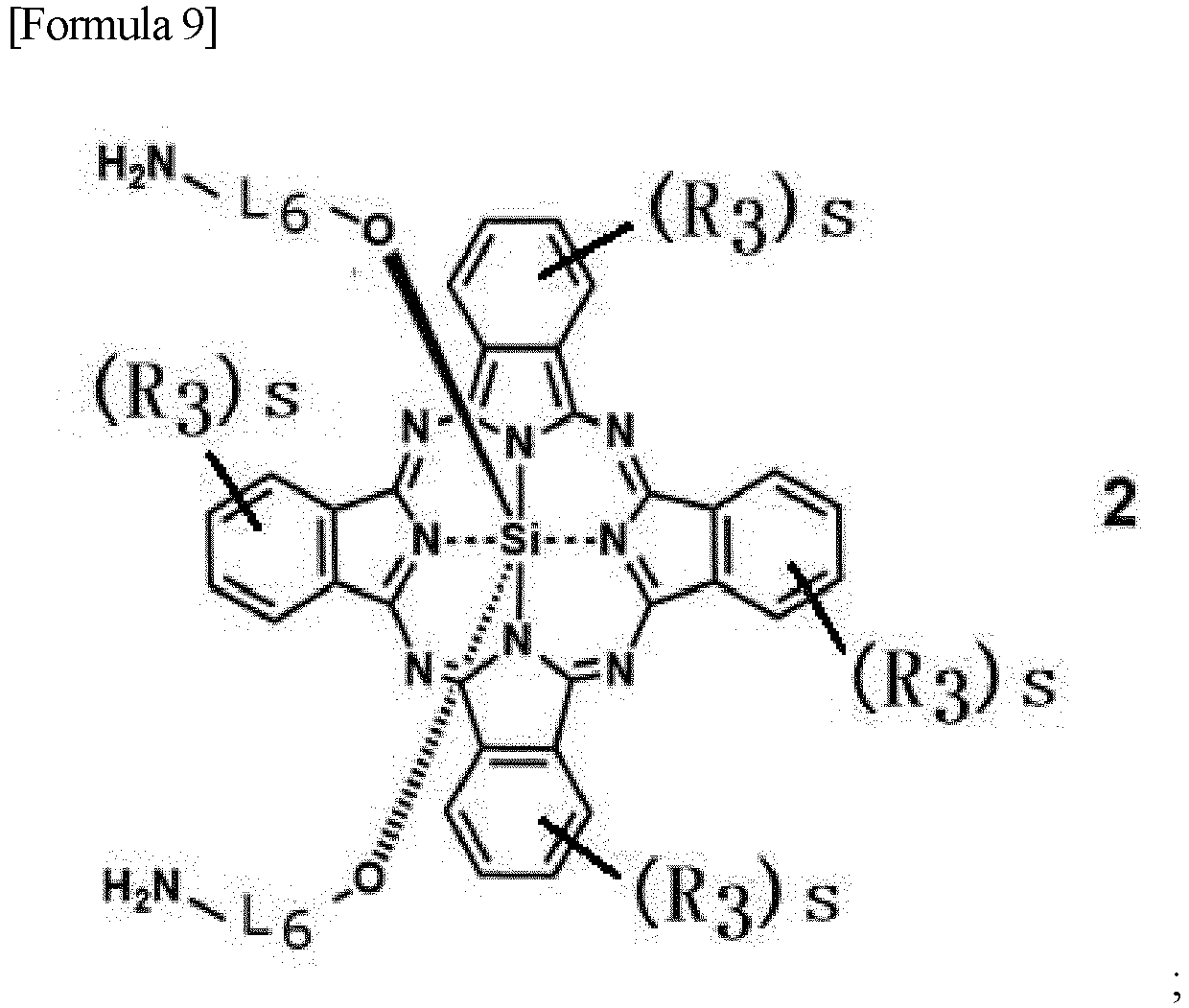
- (2) a step of reacting the above Compound 2 with a compound represented by Z1-L4-Z2 wherein Z1 represents an azide group, and Z2 represents an active ester of a carboxyl group, to produce the following Compound 4:


- (3) a step of reacting the
above Compound 4 with a reagent for introduction of a hydrophilic group to produce the following Compound 5:
- (4) a step of reacting the
above Compound 5 with CH≡C-(CH2)t-COONa wherein t represents an integer of 1 to 5, to produce the following Compound 6 or a salt thereof:

- R3 represents an alkyl group containing 1 to 6 carbon atoms, an alkoxy group containing 1 to 6 carbon atoms, a halogen atom, -SR11, -SOR12, an aryl group containing 6 to 10 carbon atoms, -N(R13)(R14), or -NO2, or two adjacent R3s may together form an aryl group containing 6 to 10 carbon atoms,
- R11, R12, R13, and R14 each independently represent an alkyl group containing 1 to 6 carbon atoms or an alkoxy group containing 1 to 6 carbon atoms, wherein
- the aryl group may be optionally substituted with an alkyl group containing 1 to 6 carbon atoms or an alkoxy group containing 1 to 6 carbon atoms, and wherein
- the alkyl group and the alkoxy group may be optionally substituted with a halogen atom, and
- when a plurality of R3s are present, the plurality of R3s may be identical to or different from one another, and
- s represents an integer of 0 to 4; and
- (5) a step of subjecting the carboxyl group that binds to L3 in the above Compound 6 to active esterification.
- (1) a step of reacting the following Compound 1:
- The growth of cancer cells can be suppressed by photoimmunotherapy using the conjugate of a phthalocyanine dye and an antibody according to the present invention.
-
- [
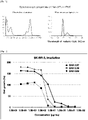
Fig. 1] Fig. 1 shows the results obtained by analyzing Herceptin and Her-SiPc according to SDS-PAGE. - [
Fig. 2] Fig. 2 shows the results obtained by analyzing Herceptin and Her-SiPc according to size exclusion HPLC under the after-mentioned measurement conditions. - [
Fig. 3] Fig. 3 shows the spectroscopic properties of Her-SiPc in PBS. - [
Fig. 4] Fig. 4 shows the results of an in vitro cytotoxicity test using Her-SiPc (SK-BR-3 cells, with light irradiation). - [
Fig. 5] Fig. 5 shows the results of an in vitro cytotoxicity test using Her-SiPc (SK-BR-3 cells, without light irradiation). - [
Fig. 6] Fig. 6 shows the results of an in vitro cytotoxicity test using Her-SiPc (MCF7 cells, with light irradiation). - [
Fig. 7] Fig. 7 shows the results of an in vitro cytotoxicity test using Her-SiPc (SK-BR-3 cells, with light irradiation). - [
Fig. 8] Fig. 8 shows the results of an in vitro cytotoxicity test using Her-SiPc (KPL-4 cells, with light irradiation). - Hereinafter, the present invention will be described in more detail.
- The present invention relates to a phthalocyanine dye, and specifically relates to a compound represented by the following formula (1) or a salt thereof:


- In the above formula (1), X represents a substituent having a hydrophilic group at the terminus thereof. The hydrophilic group is preferably a sulfonic acid group, a phosphoric acid group, an ammonium group, or the like.
- X is preferably a substituent having a sulfonic acid group at the terminus thereof.
- An example of X may be a group represented by the following formula:

- In the present description, Me represents a methyl group.
- L3, L4, L5, and L6 each independently represent a divalent linking group.
- L3 is preferably the following:

- L4 is preferably m-[(CH2)p-O)]q- (wherein p and q each independently represent an integer of 1 to 5), or -(CH2)r (wherein r represents an integer of 1 to 5).
- L5 is preferably -CONH-, -NHCO-, -COO-, -OCO-, -CO-(Xaa)s-NH-, or -NH-(Xaa)t-CO-(wherein s and t each represent an integer of 1 to 10, and Xaa represents an amino acid residue having a hydrophilic group at the terminus of a side chain thereof).
- L5 is more preferably -CONH-, or -CO-(Xaa)s-NH- (wherein s represents an integer of 1 to 10, and Xaa represents an amino acid residue having a hydrophilic group at the terminus of a side chain thereof). s is more preferably 1 or 2.
- The amino acid residue represented by Xaa is preferably a group represented by -NH-CH(R10)-CO-. Besides, -NH in the amino acid residue forms an amide bond together with -CO- adjacent to the amino acid residue, and CO- in the amino acid residue forms an amide bond together with -NH- adjacent to the amino acid residue. R10 represents an amino acid having a hydrophilic group at the terminus of a side chain thereof. The hydrophilic group at the terminus of the side chain of the amino acid represented by R10 is preferably a sulfonic acid group, a phosphoric acid group, an ammonium group or the like, and is particularly preferably a sulfonic acid group. Examples of R10 may include -CH2-SO3 -, and -(CH2)u-NHCO-CH2-SO3 - (wherein u represents an integer of 1 to 10, and preferably represents an integer of 2 to 6).
- L6 is preferably -(CH2)r-, -(CH2)r-O-, or -(CH2)r-Si(R1)(R2)-O- (wherein r represents an integer of 1 to 5, and R1 and R2 each independently represent an alkyl group containing 1 to 4 carbon atoms). R1 and R2 are particularly preferably methyl groups.
- Y represents a group capable of binding to an antibody or a peptide. Y is preferably an active ester of a carboxyl group, and is more preferably an succinimidyl ester of a carboxyl group.
- R3 represents an alkyl group containing 1 to 6 carbon atoms, an alkoxy group containing 1 to 6 carbon atoms, a halogen atom, -SR11, -SOR12, an aryl group containing 6 to 10 carbon atoms, -N(R13)(R14), or -NO2, or two adjacent R3s may together form an aryl group containing 6 to 10 carbon atoms. R11, R12, R13, and R14 each independently represent an alkyl group containing 1 to 6 carbon atoms or an alkoxy group containing 1 to 6 carbon atoms.
- Herein, the aryl group may be optionally substituted with an alkyl group containing 1 to 6 carbon atoms or an alkoxy group containing 1 to 6 carbon atoms
- Herein, the alkyl group and the alkoxy group may be optionally substituted with a halogen atom.
- When a plurality of R3s are present, the plurality of R3s may be identical to or different from one another.
- s represents an integer of 0 to 4. s is preferably 0.
- The halogen atom may be any of fluorine, chlorine, bromine and iodine, and the halogen atom is preferably fluorine, chlorine, or bromine.
- The compound of the present invention can be synthesized in accordance with the methods described in Production Examples 1 to 5 in the after-mentioned Examples. That is to say, according to the present invention, a method for producing the compound of the present invention or a salt thereof, comprising the following steps (1) to (5), is provided:
- (1) A step of reacting the following Compound 1:


- The compound represented by L6-NH2 (for example, (3-aminopropyl)dimethylethoxysilane) and dry pyridine are added to Compound 1, and then, the obtained mixture is stirred and is heated to reflux. The solvent is distilled away from the reaction mixture under reduced pressure, and the residue is then purified by column chromatography, so that Compound 2 can be obtained.
- (2) A step of reacting the above Compound 2 with a compound represented by Z1-L4-Z2 (wherein Z1 represents an azide group, and Z2 represents an active ester of a carboxyl group) to produce the following Compound 4:

- A dry dichloromethane solution, in which Compound 2 is dissolved, is cooled to 0°C, and thereafter, a dry dichloromethane solution of the compound represented by Z1-L4-Z2 (wherein Z1 represents an azide group, and Z2 represents an active ester of a carboxyl group) is added to the above-obtained solution, while stirring. The mixed solution is stirred at room temperature, while shielding the light. The solvent is distilled away from the reaction mixture under reduced pressure, and the residue is then purified by column chromatography, so that
Compound 4 can be obtained. - (3) A step of reacting the
above Compound 4 with a reagent for introduction of a hydrophilic group to produce the following Compound 5:
- The reagent for introduction of a hydrophilic group (for example, 1,3-propanesultone), diisopropylethylamine, and methanol are added to
Compound 4, and the obtained mixture is then stirred, while shielding the light. OnDays 7 and 10 after initiation of the reaction, the reagent for introduction of a hydrophilic group (for example, 1,3-propanesultone) and diisopropylethylamine are added to the reaction mixture. On Day 14 after initiation of the reaction, the solvent is distilled away from the reaction mixture under reduced pressure, and the residue diluted with water/acetonitrile (1 : 1) is then purified by reverse phase HPLC, so thatCompound 5 can be obtained. - (4) A step of reacting the
above Compound 5 with CH≡C-(CH2)t-COONa (wherein t represents an integer of 1 to 5) to produce the following Compound 6 or a salt thereof:
- CH≡C-(CH2)t-COONa (wherein t represents an integer of 1 to 5) (for example, 5-hexynoic acid sodium salt), copper sulfate pentahydrate, tris[(1-benzyl-1H-1,2,3-triazol-4-yl)methyl]amine (0.15 mg, 0.28 µmol), L(+)-ascorbic acid sodium salt, t-butanol, water, and acetonitrile are added to
Compound 5, and the obtained mixture is then stirred at room temperature, while shielding the light. The solvent is distilled away from the reaction mixture under reduced pressure, and the residue diluted with water/acetonitrile (1 : 1) is then purified by reverse phase HPLC, so that Compound 6 can be obtained. - (5) A step of subj ecting the carboxyl group that binds to L3 in the above Compound 6 to active esterification.
- N,N'-disuccinimidyl carbonate (DSC), triethylamine (Et3N), and dry dimethyl sulfoxide were added to Compound 6, and the obtained mixture is then stirred at room temperature, while shielding the light. A precipitate is generated by adding diethyl ether to the reaction solution. After the removal of a supernatant liquid, the precipitate is washed with diethyl ether, so that a compound of interest can be obtained.
- The compound of the present invention can also be synthesized in accordance with the methods described in Production Examples 7 to 11 and Production Examples 13 to 17 in the after-mentioned Examples.
- In Production Example 7, a mixed solution of dioxane/water (1 : 2), in which cysteic acid and NaHCO3 are dissolved, is stirred, and then, a dioxane solution of
Compound 3 is slowly added to the mixed solution, followed by stirring the obtained mixture at room temperature. The solvent is distilled away from the reaction mixture under reduced pressure, and the residue diluted with water/acetonitrile (1 : 1) is then purified by reverse phase HPLC, so that target Compound 8 can be obtained. Production Examples 8 to 11 can be carried out in accordance with Production Examples 2 to 5. - In Production Example 13, Fmoc-Lys(Mmt)-OH, Fmoc-Lys(Mmt)-OH, and azidoacetic acid are successively reated with Wang Resin according to a standard solid phase peptide synthesis method. Thereafter, the reaction mixture is washed with a dichloromethane solution of 1% trifluoroacetic acid/5% triisopropylsilane, and is then washed with dichloromethane. Further, this operation is repeated 19 times. A dimethylformamide solution of sulfoacetic acid, N,N'-diisopropylcarbodiimide, N-hydroxysuccinimide and triethylamine is stirred at room temperature, and is then mixed with the resin. The obtained mixture is reacted at room temperautre, and is then washed with dimethylformamide. Further, this operation is repeated twice. The resin is washed with dichloromethane and methanol, and is then dried under reduced pressure. A mixed solution of 95% trifluoroacetic acid/2.5% triisopropylsilane/2.5% water is added to the reaction mixure, and thereafter, the thus obtained mixture is stirred at room temperature and is then filtered. The filtrate is distilled away under reduced pressure, and diethyl ether is then added to the resultant, so as to precipitate a product. After the removal of a supernatant liquid, the residue is dissolved in water and is then purified by reverse phase HPLC, so that target Compound 14 can be obtained. Production Examples 14 to 17 can be carried out in accordance with Production Examples 2 to 5.
- According to the present invention, a conjugate of the above-described compound of the present invention or a salt thereof, and an antibody or a peptide, is provided. According to the present invention, a therapeutic agent comprising the above-described conjugate is provided.
- As an antibody or a peptide, specifically, an antibody or a peptide, which targets the following antigens specifically expressed in cancer, can be used:
- Epiregulin (EREG), ROBO 1, 2, 3 and 4, 1-40-β-amyloid, 4-1BB, 5AC, 5T4, ACVR2B, adenocarcinoma antigen, α-fetoprotein, angiopoetin 2, anthrax toxin, AOC3 (VAP-1), B-lymphoma cells, B7-H3, BAFF, β amyloid, C242 antigen, C5, CA-125, carbonic anhydrase 9 (CA-IX), cardiac myosin, CCL11 (eotaxin-1), CCR4, CCR5, CD11, CD18, CD125, CD140a, CD147 (basigin), CD147 (basigin), CD15, CD152, CD154 (CD40L), CD154, CD19, CD2, CD20, CD200, CD22, CD221, CD23 (IgE receptor), CD25 (IL-2 receptor α chain), CD28, CD3, CD30 (TNFRSF8), CD33, CD37, CD38 (cyclic ADP ribose hydrolase), CD4, CD40, CD41 (integrin α-IIb), CD44 v6, CD5, CD51, CD52, CD56, CD6, CD70, CD74, CD79B, CD80, CEA, CFD, ch4D5, CLDN18.2, Clostridium difficile, clumping factor A, CSF2, CTLA-4, cytomegalovirus, cytomegalovirus glycoprotein B, DLL4, DR5, E. coli Shiga toxin type 1, E. coli Shiga toxin type 2, EGFL7, EGFR, endotoxin, EpCAM, episialin, ERBB3, Escherichia coli, F protein of respiratory syncytial virus, FAP, fibrin II β chain, fibronectin extra domain-B, folate receptor 1, Frizzled receptor, GD2, GD3 ganglioside, GMCSF receptor α chain, GPNMB, hepatitis B surface antigen, hepatitis B virus, HER1, HER2/neu, HER3, HGF, HIV-1, HLA-DRβ, HNGF, Hsp90, human β amyloid, human scatter factor receptor kinase, human TNF, ICAM-1 (CD54), IFN-α, IFN-γ, IgE, IgE Fc region, IGF-1 receptor, IGF-I, IgG4, IGHE, IL-1β, IL-12, IL-13, IL-17, IL-17A, IL-22, IL-23, IL-4, IL-5, IL-6, IL-6 receptor, IL-9, ILGF2, influenza A hemagglutinin, insulin-like growth factor I receptor, integrin α4, integrin α4β7, integrin α5β1, integrin α7β7, integrin αIIbβ3, integrin αvβ3, integrin γ induced protein, interferon receptor, interferon α/β receptor, ITGA2, ITGB2 (CD18), KIR2D, L-selectin (CD62L), Lewis-Y antigen, LFA-1 (CD11a), lipoteichoic acid, LOXL2, LTA, MCP-1, mesothelin, MS4A1, MUC1, mucin CanAg, myostatin, N-glycolylneuraminic acid, NARP-1, NCA-90 (granulocyte antigen), NGF, NOGO-A, NRP1, Oryctolagus cuniculus, OX-40, oxLDL, PCSK9, PD-1, PDCD1, PDGF-R α, phosphatidylserine, prostate cancer cells, Pseudomonas aeruginosa, Rabies virus glycoprotein, RANKL, respiratory syncytial virus, RHD, Rh (Rhesus) factor, RON, RTN4, sclerostin, SDC1, selectin P, SLAMF7, SOST, sphingosine-1-phosphate, TAG-72, TEM1, tenascin C, TFPI, TGFβ1, TGFβ2, TGF-β, TNF-α, TRAIL-R1, TRAIL-R2, tumor antigen CTAA16.88, MUC1 tumor-specific glycosylation, TWEAK receptor, TYRP1 (glycoprotein 75), VEGF-A, VEGFR-1, VEGFR2, vimentin, and VWF
- Among the above-described antigens, epiregulin (EREG), CEA, and HER2 are preferable, and HER2 is particularly preferable.
- Various types of molecules can be used as antibodies. Either a polyclonal antibody or a monoclonal antibody may be used. The subclass of the antibody is not particularly limited. Preferably, IgG, and particularly preferably, IgG1 is used. Furthermore, the term "antibody" includes all of modified antibodies and antibody fragments. Examples of such an antibody include, but are not limited to: a humanized antibody; a human type antibody; a human antibody; antibodies from various types of animals such as a mouse, a rabbit, a rat, a guinea pig and a monkey; a chimeric antibody between a human antibody and an antibody from a different type of animal; diabody; scFv; Fd; Fab; Fab'; and F(ab)'2.
- In the conjugate of the present invention, it is preferable that 1 to 7 molecules of the compound of the present invention or a salt thereof bind to one molecule of the antibody.
- The phthalocyanine dye can be specifically accumulated in cancer cells by administering the conjugate of the present invention to a patient.
- The conjugate of the present invention is administered to a subject, and the cells are then irradiated with excitation light in an amount effective for suppression of cell growth or induction of cell death, so that the cell growth can be suppressed or the cell death can be induced, and thereby the subject can be treated.
- The subject includes humans and non-human animals. Examples of the subject may include humans and experimental animals such as mice. The subject is preferably affected with a disease regarding which suppression of cell growth or induction of cell death is desired. For example, the subject is affected with cancer or solid tumor.
- Examples of cancer may include carcinoma, lymphoma, blastoma, sarcoma, and leukemia or malignant lymphoma. Specific examples of cancer may include squamous cell carcinoma (e.g., epithelial squamous cell carcinoma), lung cancer including small cell lung cancer, non-small cell lung cancer ("NSCLC"), pulmonary adenocarcinoma and pulmonary squamous cell carcinoma, peritoneal cancer, hepatocarcinoma, corpus ventriculi or stomach cancer, including digestive cancer, pancreatic cancer, glioblastoma, cervical cancer, ovarian cancer, liver cancer, bladder cancer, hepatocellular cancer, breast cancer, colon cancer, rectal cancer, colorectal cancer, endometrial membrane cancer or endometrial carcinoma, salivary gland carcinoma, kidney or renal region cancer, prostate cancer, vulvar cancer, thyroid cancer, hepatocellular carcinoma, anal carcinoma, penile carcinoma, and head and neck cancer.
- The solid tumor means a benign or malignant, abnormal cell mass that generally does not contain a capsule. Examples of the solid tumor may include glioma, astrocytoma, medulloblastoma, craniopharyngioma, ependymoma, pineal gland tumor, hemangioblastoma, acoustic neuroma, oligodendrocyte, meningioma, melanoma, neuroblastoma, and retinoblastoma.
- In the photoimmunotherapy, the conjugate of the present invention is administered to a subject, and thereafter, the subject is irradiated with a light, so that the subject can be treated.
- Examples of the administration method to the subject may include, but are not limited to, a local route, an injection (a subcutaneous injection, an intramuscular injection, an intradermal injection, an intraperitoneal injection, an intratumoral injection, an intravenous injection, etc.), an oral route, an ocular route, a sublingual route, a rectal route, a percutaneous route, an intranasal route, a vaginal route, and an inhalation route.
- The conjugate of the present invention is preferably administered in a therapeutically effective amount. The therapeutically effective amount per 60 kg is at least 0.5 mg (mg/60 kg), at least 5 mg/60 kg, at least 10 mg/60 kg, at least 20 mg/60 kg, at least 30 mg/60 kg, or at least 50 mg/60 kg. For example, when it is intravenously administered, the applied dose is 1 mg/60 kg, 2 mg/60 kg, 5 mg/60 kg, 20 mg/60 kg, or 50 mg/60 kg, and it is, for example, 0.5 to 50 mg/60 kg. In another example, the therapeutically effective amount is at least 100 µg/kg, at least 500 µg/kg or at least 500 µg/kg, and it is, for example, at least 10 µg/kg. For example, when it is intratumorally or intraperitoneally administered, the dose is 100 µg/kg, 250 µg/kg, approximately 500 µg/kg, 750 µg/kg, or 1000 µg/kg, and it is, for example, 10 µg/kg to 1000 µg/kg. In one example, when it is administered in the form of a solution for local administration, the therapeutically effective amount is 10 µg/ml, 20 µg/ml, 30 µg/ml, 40 µg/ml, 50 µg/ml, 60 µg/ml, 70 µg/ml, 80 µg/ml, 90 µg/ml, 100 µg/ml or the like, or it is 20 µg/ml to 100 µg/ml, or it is at least 500 µg/ml, or at least 1 µg/ml.
- The above-described dose can be administered once or divided doses over several administrations (2, 3, or 4 times, etc.), or as a single preparation.
- The present conjugate can be administered alone, or can also be administered in the presence of a pharmaceutically acceptable carrier, or can also be administered in the presence of other therapeutic agents (other anticancer agents, etc.).
- The present conjugate can bind to target cells or target tissues, such as circulating tumor cells or solid tumor cells. Thereafter, the target cells or tissues are irradiated with a light, so that the above-described conjugate or complex can absorb the light and can damage or destroy the target cells or tissues.
- In the photoimmunotherapy, the wavelength of the irradiation light is preferably 660 to 740 nm, and the irradiation light has a wavelength of, for example, 660 nm, 670 nm, 680 nm, 690 nm, 700 nm, 710 nm, 720 nm, 730 nm, or 740 nm. Light irradiation may be carried out using a device equipped with a near infrared (NIR) light emitting diode.
- The light irradiation dose is at least 1 J/cm2, for example, at least 4 J/cm2, at least 10 J/cm2, at least 15 J/cm2, at least 20 J/cm2, at least 50 J/cm2, or at least 100 J/cm2. It is, for example, 1 to 500 J/cm2. Light irradiation may be carried out several times (e.g., 2, 3, 4, 5, 6, 7, 8, 9, or 10 times).
- The present invention will be more specifically described in the following examples. However, these examples are not intended to limit the scope of the present invention.
-


- (3-Aminopropyl)dimethylethoxysilane (113 mg, 700 µmol) and dry pyridine (30 mL) were added to Silicon phthalocyanine dihydroxide 1 (50 mg, 87 µmol), and the obtained mixture was stirred and heated to reflux for 5 hours. Thereafter, the solvent was distilled away from the reaction mixture under reduced pressure, and the residue was then purified by column chromatography (gradient: 1% for 3 min; 1-10% for 15min; 10-20% for 10 min CH3OH in CH2Cl2, Yamazen Corporation Universal™ Column Amino 40 µm 60Å 2.3 x 12.3 cm, 16 g, flow rate = 10 mL/min) to obtain target Compound 2 (62 mg, 77 µmol, 88%, dark blue).
- 1H NMR (500 MHz, CDCl3): δ 9.65 (dd, J = 2.8 Hz, 5.7 Hz, 8H), 8.34 (dd, J = 2.8 Hz, 5.7 Hz, 8H), 1.18 (t, J= 7.6 Hz, 4H), -1.23 (m, 4H), -2.30 (m, 4H), -2.86 (s, 12H).
- LRMS (ESI): m/z 805.30 [M+H]+
-

- A dry dichloromethane (27 mL) solution, in which Compound 2 (100 mg, 124 µmol) was dissolved, was cooled to 0°C. Thereafter, a dry dichloromethane (3 mL) solution of Compound 3 (39.2 mg, 124 µmol) was slowly added to the obtained solution, while stirring, and the obtained mixture was then stirred at room temperature for 30 minutes, while shielding the light with an aluminum foil. Thereafter, the solvent was distilled away from the reaction mixture under reduced pressure, and the residue was then purified by column chromatography (gradient: 1% for 3 min; 1-5% for 15 min CH3OH in CH2Cl2, Yamazen Corporation Universal™ Column Amino 40 µm 60Å 2.3 × 12.3 cm, 16 g, flow rate = 10 mL/min) to obtain target Compound 4 (52.3 mg, 51.9 µmol, 42%, dark blue).
- 1H NMR (500 MHz, CDCl3): δ 9.65 (dd, J= 2.8 Hz, 5.7 Hz, 8H), 8.35 (d, J= 2.8 Hz, 5.7 Hz, 8H), 4.08 (t, J = 4.8 Hz, 2H), 3.73-3.60 (m, 8H), 3.39 (t, J = 5.7 Hz, 2H), 1.76 (m, 2H), 1.18 (t, J = 6.7 Hz, 2H), - 1.23 (m, 4H), -2.30 (m, 4H), -2.86 (s, 12H).
- LRMS (ESI): m/z 1006.85 [M+H]+
-

- 1,3-Propanesultone (86.2 mg, 707 µmol), diisopropylethylamine (DIPEA, 137 mg, 1.06 mmol), and methanol (3 mL) were added to Compound 4 (22.2 mg, 22.1 µmol), and the obtained mixture was then stirred at 50°C, while shielding the light with an aluminum foil. On
Days 7 and 10 after initiation of the reaction, 1,3-propanesultone (86.2 mg, 707 µmοl) and DIPEA (137 mg, 1.06 mmol) were added to the reaction mixture. On Day 14 after initiation of the reaction, the solvent was distilled away from the reaction mixture under reduced pressure, and the residue diluted with water/acetonitrile (1 : 1) to 6000 µL was divided into two aliquots, which were then purified by reverse phase HPLC (gradient: 50% for 5 min; 50-80% for 25 min; 80-100% for 10 min CH3CN in 50 mM triethylammonium acetate aqueous solution (pH 7.0), retention time = 15.8 min, YMC-Actus Triart C18, flow rate = 10 mL/min), so as to obtain target Compound 5 (12.7 mg, 8.09 µmol, 37%, dark blue). - Compound 5: 1H NMR (500 MHz, CD3OD): δ 9.72 (dd, J = 2.8 Hz, 5.7 Hz, 8H), 8.46 (dd, J = 2.8 Hz, 5.7 Hz, 8H), 3.97 (t, J = 4.8 Hz, 2H), 3.63-3.58 (m, 8H), 3.32 (m, 2H), 2.80-2.70 (m, 12H), 1.99 (t, J = 6.7 Hz, 2H), 1.70 (m, 6H), 1.60 (t, J = 6.7 Hz, 2H), -1.07 (m, 2H), -1.14 (m, 2H), -2.12 (m, 2H), -2.28 (m, 2H), -2.82 (s, 6H), -2.89 (s, 6H).
- LRMS (ESI): m/z 1372.55 [M+H]+
-

- 5-Hexynoic acid sodium salt (0.19 mg, 1.4 µmol), copper sulfate pentahydrate (0.71 mg, 2.8 µmol), tris[(1-benzyl-1H-1,2,3-triazol-4-yl)methyl]amine (0.15 mg, 0.28 µmol), L(+)-ascorbic acid sodium salt (1.1 mg, 5.7 µmol), t-butanol (300 µL), water (300 µL), and acetonitrile (150 µL) were added to Compound 5 (1.3 mg, 0.95 µmol), and the obtained mixture was then stirred at room temperature for 14 hours, while shielding the light with an aluminum foil. Thereafter, the solvent was distilled away from the reaction mixture under reduced pressure, and the residue diluted with water/acetonitrile (1 : 1) to 3000 µL was then purified by reverse phase HPLC (gradient: 30% for 5 min; 30-80% for 40 min; 80-100 for 10 min CH3CN in 50 mM triethylammonium acetate aqueous solution (pH 7.0), retention time = 24.6 min, YMC-Triart C18, flow rate = 3.5 mL/min) to obtain target Compound 6 (1.6 mg, 0.90 µmοl, 95 %, dark blue).
- 1H NMR (500 MHz, CD3OD): δ 9.73 (dd, J = 2.8 Hz, 5.7 Hz, 8H), 8.46 (dd, J = 2.8 Hz, 5.7 Hz, 8H), 7.75 (s, 1H), 4.48 (t, J = 4.8 Hz, 2H), 3.95 (t, J = 3.8 Hz, 2H), 3.83 (t, J = 4.8 Hz, 2H), 3.60-3.50 (m, 6H), 2.80-2.70 (m, 12H), 2.67 (t, J = 7.6 Hz, 2H), 2.24 (brt, 2H), 2.00 (t, J = 8.6 Hz, 2H), 1.90 (t, J= 7.6 Hz, 2H), 1.71 (quin, J = 7.6 Hz, 6H), 1.61 (t, J = 6.7 Hz, 2H), -1.03 (brt, 2H), -1.11 (brt, 2H), -2.13 (t, J = 8.6 Hz, 2H), -2.27 (t, J= 8.6 Hz, 2H), -2.80 (s, 6H), -2.88 (s, 6H).
- LRMS (ESI): m/z 1485.15 [M+H]+
-

- N,N'-Disuccinimidyl carbonate (DSC, 1.7 mg, 6.8 µmol), Et3N (1.4 mg, 14 µmol), and dry dimethyl sulfoxide (500 µL) were added to Compound 6 (2.3 mg, 1.3 µmol), and the obtained mixture was then stirred at room temperature for 14 hours, while shielding the light with an aluminum foil. A precipitate was generated by adding diethyl ether (50 mL) to the reaction solution, and after the removal of a supernatant liquid, the precipitate was washed with diethyl ether (50 mL) to obtain Compound 7. This compound was directly used in the subsequent reaction, without being purified by column chromatography.
-

- Herceptin (8.0 mg, Roche) was purified using a phosphate buffer solution (pH 8.0), employing PD Minitrap G-25, to obtain a 7.7 mg/mL Herceptin solution. A dimethyl sulfoxide solution (20 µL) of Compound 7 (88 µg, 50 nmol) was added to 100 µL of the above-obtained solution, and the obtained mixture was then stirred in a dark place at room temperature for 12 hours. Thereafter, the reaction solution was purified with PBS twice, employing PD Minitrap G-25, to obtain a Her-SiPc solution.
- The antibody concentration in a PBS solution of Her-SiPc was determined by a Bradford method (absorbance at 595 nm) (5.28 µM). In addition, a PBS solution of Her-SiPc that had been 8-fold diluted with DMSO was measured in terms of absorption intensity at 673 nm, and thereafter, the concentration of SiPc in the PBS solution of Her-SiPc was calculated (27.4 µM) from the absorbance coefficient at 673 nm of
Compound 5 in a DMSO/PBS (7 : 1) solution. From the thus measured antibody concentration and SiPc concentration, DAR was calculated to be 5.19. - The results obtained by analyzing Herceptin and Her-SiPc according to SDS-PAGE are shown in
Fig. 1 . - The results obtained by analyzing Herceptin and Her-SiPc according to size exclusion HPLC under the following measurement conditions are shown in
Fig. 2 . -
- Column: Agilent AdvanceBio SEC, 300 Å, 2.7 µm, 7.8 x 300 mm
- Flow rate: 0.5 mL/min
- Mobile phase: 1 × PBS
- Temperature: room temperature
- Absorption wavelength: 220 nm
- Amount injected: 5 µL
- The spectroscopic properties of Her-SiPc in PBS are shown in
Fig. 3 . - A cytotoxicity test performed using three types of ADC drugs (HerSiPc-1, HerSiPc-2, and HerSiPc-3) shown in Table 1 is described below. As for HerSiPc-2, the HerSiPc-2 produced in Production Example 6 was used herein. HerSiPc-1 and HerSiPc-3 were produced in accordance with the method described in Production Example 6, in which the amount of Compound 7 used was regulated. By increasing the amount of Compound 7, HerSiPc having high DAR is obtained.
- HER2 high expression SK-BR-3 cells and HER2 low expression MCF7 cells were each seeded on a 96-well plate for cell culture, such that the number of cells became 5 × 10³ cells/well and the culture solution became 100 µL/well, and thereafter, the cells were cultured overnight. With regard to the three types of ADC drugs, using the culture solution as a solvent, and eight 5-fold dilution series were produced from 2.5E+01 µg/mL. Specifically, they were the eight dilution series, namely, 6.4E-05 µg/mL, 3.2E-04 µg/mL, 1.6E-03 µg/mL, 8.0E-03 µg/mL, 4.0E-02 µg/mL, 2.0E-01 µg/mL, 1.0E+00 µg/mL, and 5.0E+00 µg/mL, from 2.5E+01 µg/mL.
[Table 1] \Name DAR Her_SiPc-1 2.37 Her_SiPc-2 5.19 Her_SiPc-3 8.63 - Subsequently, the medium was discarded after completion of the cell culture performed overnight, and the cells were then rinsed with PBS. The prepared ADC drug was added to the resulting cells, and the obtained mixture was then cultured for 24 hours. Twenty-four hours after the culture, the medium was discarded and a new medium was added, and using LED emitting a light with a wavelength of 690 ± 10 nm, the cells were irradiated with a light dose of 100 J/cm2. Thereafter, the cells were cultured for 24 hours, and the two types of cells were then compared in terms of the number of living cells, using Cell Counting Kit-8 (DOJINDO LABORATORIES). The dosage and administration were determined based on the instruction manual, and the cells were incubated at 37°C in a CO2 incubator for 1.5 hours after addition of the reagent. Thereafter, the absorbance at 450 nm was measured, and a mean value was then calculated. After background correction, the cell growth percentage of the control was defined to be 100%, and the cell growth percentage of individual cells to the control under individual conditions was calculated.
- The results of the SK-BR-3 cells are shown in
Fig. 4 (with light irradiation) andFig. 5 (without light irradiation), whereas the results of the MCF7 cells are shown inFig. 6 (with light irradiation). As shown inFig. 4 (with light irradiation) andFig. 5 (without light irradiation), it was confirmed that Her_SiPc has cytotoxicity in a light-dependent, concentration-dependent, and DAR-dependent manner. Moreover, as shown inFig. 4 (with light irradiation) andFig. 6 (with light irradiation), it was confirmed that Her_SiPc has cytotoxicity in an antigen expression level-dependent manner. -

- A mixed solution of dioxane and water (1 : 2) (4.5 mL), in which cysteic acid (59.6 mg, 353 µmol) and NaHCO3 (297 mg, 3.53 mmol) had been dissolved, was stirred at 0°C, and thereafter, a dioxane (1.5 mL) solution of Compound 3 (112 mg, 353 µmol) was slowly added to the above-obtained solution, followed by stirring the obtained mixture at room temperature for 7 hours. Thereafter, the solvent was distilled away from the reaction mixture under reduced pressure, and the residue diluted with water/acetonitrile (1 : 1) to 3000 µL was then purified by reverse phase HPLC (gradient: 0% for 5 min; 0-100% for 30 min CH3CN in 0.1% trifluoroacetic acid aqueous solution, retention time = 16.6 min, YMC- Actus Triart C18, flow rate = 10.0 mL/min) to obtain target Compound 8 (126 mg, 340 µmol, 96 %, colorless).
- 1H NMR (500 MHz, D2O): δ 4.18 (dd, J= 4.6 Hz, 7.4 Hz, 1H), 3.81-3.78 (m, 2H), 3.31 (t, J= 4.0 Hz, 2H), 3.27-3.26 (m, 6H), 3.04 (t, J = 4.6 Hz, 2H), 2.99 (dd, J = 4.0 Hz, 14.3 Hz), 2.93 (dd, J = 7.4 Hz, 14.3 Hz).
- LRMS (ESI): m/z 369.05 [M-H]-
-


- DIPEA(72.4 µL, 55.4 mg, 429 µmol), N-hydroxysuccinimide (14.8 mg, 129 µmol), and N,N'-diisopropylcarbodiimide (6.65 µL, 5.41 mg, 42.9 µmol) were added to a dimethylformamide (3 mL) solution of Compound 8 (15.9 mg, 42.9 µmol), and the obtained mixture was then stirred for 1 hour. Thereafter, the obtained solution was slowly added at 0°C to a dry dichloromethane (27 mL) solution, in which Compound 2 (34.5 mg, 42.9 µmol) had been dissolved, and the thus obtained mixture was then stirred at room temperature for 5 hours, while shielding the light with an aluminum foil. Thereafter, the solvent was distilled away from the reaction mixture under reduced pressure, and the residue was then roughly purified by reverse phase HPLC (gradient: 50% for 5 min; 50-100% for 25 min CH3CN in 50 mM triethylammonium acetate aqueous solution (pH 7.0), retention time = 22.8 min, YMC-Actus Triart C18, flow rate = 10.0 mL/min) to obtain target Compound 9, which was directly used in the subsequent reaction.
-

- 1,3-Propanesultone (32.0 µL, 44.5 mg, 364 µmol), DIPEA(91.0 µL, 69.7 mg, 539 mmol), and methanol (10 mL) were added to roughly purified Compound 9 (12.0 mg), and the obtained mixture was then stirred at 70°C for 3 hours, using a microwave synthesizer (Biotage, Initiator+). Thereafter, 1,3-propanesultone (32.0 µL, 44.5 mg, 364 µmol) and DIPEA (91.0 µL, 69.7 mg, 539 mmol) were further added to the reaction mixture, and the thus obtained mixture was stirred at 70°C for 3 hours, using the microwave synthesizer (Biotage, Initiator+). Further, this operation was repeated 18 times. Thereafter, the solvent was distilled away from the reaction mixture under reduced pressure, and the residue diluted with water/acetonitrile (1 : 1) to 6000 µL was divided into two aliquots, which were then purified by reverse phase HPLC (gradient: 50% for 5 min; 50-80% for 25 min; 80-100% for 10 min CH3CN in 50 mM triethylammonium acetate aqueous solution (pH 7.0), retention time = 15.8 min, YMC-Actus Triart C18, flow rate = 10 mL/min), so as to obtain target Compound 10 (1.8 mg, 1.0 µmol, 2 step: 2%, dark blue).
- LRMS (ESI):m/z 760.80 [M-2H]2-
-

- 5-Hexynoic acid sodium salt (0.48 mg, 3.6 µmol), copper sulfate pentahydrate (0.45 mg, 1.8 µmol), tris[(1-benzyl-1H-1,2,3-triazol-4-yl)methyl]amine (0.29 mg, 0.54 µmol), L(+)-ascorbic acid sodium salt (2.2 mg, 11 µmol), t-butanol (300 µL), water (300 µL), and acetonitrile (150 µL) were added to Compound 10 (3.1 mg, 1.8 µmol), and the obtained mixture was then stirred at room temperature for 4.5 hours, while shielding the light with an aluminum foil. Thereafter, the solvent was distilled away from the reaction mixture under reduced pressure, and the residue diluted with water/acetonitrile (1 : 1) to 3000 µL was purified by reverse phase HPLC (gradient: 30% for 5 min; 30-100% for 40 min CH3CN in 50 mM triethylammonium acetate aqueous solution (pH 7.0), retention time = 16.4 min, YMC-Actus Triart C18, flow rate = 10 mL/min), so as to obtain target Compound 11 (2.0 mg, 1.1 µmol, 61 %, dark blue).
- LRMS (ESI): m/z 816.85 [M-2H]2-
-

- N,N'-Disuccinimidyl carbonate (DSC, 2.6 mg, 10 µmol), Et3N (4.0 mg, 40 µmol), and dry dimethyl sulfoxide (500 µL) were added to Compound 11 (1.9 mg, 1.0 µmol), and the obtained mixture was then stirred at room temperature overnight for 14 hours, while shielding the light with an aluminum foil. Thereafter, a precipitate was generated by adding diethyl ether (50 mL) to the reaction solution, and after the removal of a supernatant liquid, the precipitate was washed with diethyl ether (50 mL) to obtain Compound 12. This compound was directly used in the subsequent reaction, without being purified by column chromatography.
-

- Herceptin (8.0 mg, Roche) was purified using a phosphate buffer solution (pH 8.0), employing PD Minitrap G-25, to obtain a 7.7 mg/mL Herceptin solution. A dimethyl sulfoxide solution (20 µL) of Compound 12 (97 µg, 50 nmol) was added to 100 µL of the above-obtained solution, and the obtained mixture was then stirred in a dark place at room temperature for 12 hours. Thereafter, the reaction solution was purified with PBS twice, employing PD Minitrap G-25, to obtain a Her-
SiPc 13 solution. -

- Fmoc-Lys(Mmt)-OH (312 mg, 0.50 mmol), Fmoc-Lys(Mmt)-OH (312 mg, 0.50 mmol), and azidoacetic acid (50.5 mg, 0.50 mmol) were successively reacted with Wang Resin (97.0 mg, 0.100 mmol) according to a standard solid phase peptide synthesis method. Thereafter, the reaction mixture was washed with a dichloromethane solution (2 mL) of 1% trifluoroacetic acid/5% triisopropylsilane for 30 seconds, and was then washed with dichloromethane (2 mL) three times. Further, this operation was repeated 19 times. A dimethylformamide solution of sulfoacetic acid (140 mg, 1.0 mmol), N,N'-diisopropylcarbodiimide (126 mg, 1.0 mmol), N-hydroxysuccinimide (230 mg, 2.0 mmol), and Triethylamine (1.01 g, 10 mmol) was stirred at room temperature for 1 minute, and was then mixed with the resin. The obtained mixture was reacted at room temperautre for 1 hour, and was then washed with dimethylformamide (2 mL) three times. Further, this operation was repeated twice. The resin was washed with dichloromethane and methanol, and was then dried under reduced pressure. A mixed solution of 95% trifluoroacetic acid/2.5% triisopropylsilane/2.5% water (2 mL) was added to the reaction mixture, and thereafter, the thus obtained mixture was stirred at room temperature for 1 hour, and was then filtered. The filtrate was distilled away under reduced pressure, and diethyl ether was then added to the resultant, so as to precipitate a product. After the removal of a supernatant liquid, the residue was dissolved in water (3000 µL), and was then purified by reverse phase HPLC (gradient: 30% for 5 min; 30-80% for 40 min; 80-100 for 10 min CH3CN in 0.1% trifluoroacetic acid aqueous solution (pH 7.0), retention time = 24.6 min, YMC-Actus Triart C18, flow rate = 10 mL/min) to obtain target Compound 14 (27.9 mg, 46 µmol, 46 %, colorless).
- 1H NMR (400 MHz, D2O): δ 4.42-4.38 (m, 2H), 4.11 (s, 2H), 3.85 (s, 4H), 3.32-3.21 (m, 16H), 2.01-1.75 (m, 4H), 1.64-1.59 (m, 4H), 1.50-1.45 (m, 4H), 1.33 (t, J = 9.7 Hz, 18H)
- LRMS (ESI): m/z 599.95 [M-H]-
-

- DIPEA (34.8 µL, 26.6 mg, 206 µmol) and N,N,N',N'-tetramethyl-O-(N-succinimidyl)uronium tetrafluoroborate (TSTU, 6.20 mg, 20.6 µmοl) were added to a dry dimethylformamide (3 mL) solution of Compound 14 (16.6 mg, 20.6 µmol), and the obtained mixture was then stirred for 1 hour. Thereafter, the obtained solution was slowly added at 0°C to a dry dichloromethane (27 mL) solution, in which Compound 2 (16.6 mg, 20.6 µmοl) had been dissolved, and the thus obtained mixture was then stirred at room temperature for 10 hours, while shielding the light with an aluminum foil. Thereafter, the solvent was distilled away from the reaction mixture under reduced pressure, and the residue was then roughly purified by reverse phase HPLC (gradient: 50% for 5 min; 50-100% for 35 min CH3CN in 50 mM triethylammonium acetate aqueous solution (pH 7.0), retention time = 15.4 min, YMC-Actus Triart C18, flow rate =10 mL/min) to obtain
target Compound 15, which was directly used in the subsequent reaction. -

- 1,3-Propanesultone (14.6 µL, 20.3 mg, 166 µmol), DIPEA(42.1 µL, 32.2 mg, 250 µmol), and methanol (7 mL) were added to Compound 15 (4.1 mg, 2.6 µmol), followed by stirring. Every day after initiation of the reaction, 1,3-Propanesultone (14.6 µL, 20.3 mg, 166 µmol) and DIPEA (42.1 µL, 32.2 mg, 250 µmol) were added to the reaction mixture, and the thus obtained mixture was continuously stirred for 10 days. Thereafter, 1,3-propanesultone (96.0 µL, 134 mg, 1.09 µmol) and DIPEA (273 µL, 209 mg, 1.62 mmol) were further added to the reaction mixture, and then, using a microwave synthesizer (Biotage, Initiator+), the thus obtained mixture was stirred at 70°C for 5 hours. Thereafter, the solvent was distilled away from the reaction mixture under reduced pressure, and the residue diluted with water/acetonitrile (1 : 1) to 6000 µL was divided into two aliquots, which were then purified by reverse phase HPLC (gradient: 30% for 5 min; 30-80% for 30 min; 80-100% for 10 min CH3CN in 50 mM triethylammonium acetate aqueous solution (pH 7.0), retention time = 19.2 min, YMC-Actus Triart C18, flow rate = 10 mL/min), so as to obtain target Compound 16 (3.00 mg, 1.39 µmol, 7%, dark blue).
- LRMS (ESI): m/z 876.30 [M-2H]2-
-


- 5-Hexynoic acid sodium salt (0.39 mg, 2.9 µmol), copper sulfate pentahydrate (0.37 mg, 1.5 µmol), tris[(1-benzyl-1H-1,2,3-triazol-4-yl)methyl]amine (0.23 mg, 0.44 µmol), L(+)-ascorbic acid sodium salt (1.74 mg, 8.76 µmol), t-butanol (300 µL), water (300 µL), and acetonitrile (150 µL) were added to Compound 16 (3.00 mg, 1.46 µmol), and the obtained mixture was then stirred at room temperature for 12 hours, while shielding the light with an aluminum foil. Thereafter, the solvent was distilled away from the reaction mixture under reduced pressure, and the residue diluted with water/acetonitrile (1 : 1) to 3000 µL was purified by reverse phase HPLC (gradient: 30% for 5 min; 30-100% for 40 min CH3CN in 50 mM triethylammonium acetate aqueous solution (pH 7.0), retention time = 16.4 min, YMC-Actus Triart C18, flow rate = 10 mL/min) to obtain target Compound 17 (1.8 mg, 0.83 µmol, 57 %, dark blue).
- LRMS (ESI): m/z 932.50 [M-2H]2-
-


- N,N'-Disuccinimidyl carbonate (2.1 mg, 8.3 µmol), Et3N (3.3 mg, 33 µmol), and dry dimethyl sulfoxide (500 µL) were added to Compound 17 (1.8 mg, 0.83 µmol), and the obtained mixture was then stirred at room temperature for 12 hours, while shielding the light with an aluminum foil. Thereafter, a precipitate was generated by adding diethyl ether (50 mL) to the reaction solution, and after the removal of a supernatant liquid, the precipitate was washed with diethyl ether (50 mL) to obtain Compound 18. This compound was directly used in the subsequent reaction, without being purified by column chromatography.
-


- Herceptin (8.0 mg, Roche) was purified using a phosphate buffer solution (pH 8.0), employing PD Minitrap G-25, to obtain a 7.7 mg/mL Herceptin solution. A dimethyl sulfoxide solution (20 µL) of Compound 18 (113 µg, 50 nmol) was added to 100 µL of the above-obtained solution, and the thus obtained mixture was then stirred in a dark place at room temperature for 12 hours. Thereafter, the reaction solution was purified with PBS twice, employing PD Minitrap G-25, to obtain a Her-
SiPc 19 solution. - The antibody concentrations in PBS solutions of
Compound 13 andCompound 19 were determined by a Bradford method (absorbance at 595 nm) (13: 6.18 µM, 19: 6.29 µM). In addition, a PBS solution of Her-SiPc that had been 8-fold diluted with DMSO was measured in terms of absorption intensity at 673 nm, and thereafter, the concentration of SiPc in the PBS solution of Her-SiPc was calculated from the absorbance coefficient at 673 nm of each ofCompound 13 andCompound 19 in a DMSO/PBS (7 : 1) solution (13: 18.3 µM, 19: 23.4 µM). From the thus measured antibody concentrations and SiPc concentrations, DAR was calculated.[Table 2] Name DAR Her_SiPc-4 (Compound 13) 2.96 Her_SiPc-5 (Compound 19) 3.72 - A cytotoxicity test, which was performed on Compound 13 (Her_SiPc-4) and Compound 19 (Her_SiPc-5) using ADC drugs, will be described below. HER2 high expression SK-BR-3 cells and KPL-4 cells were seeded at a cell density of 1 × 10⁴ cells/well, so that the culture solution became 100 µL/well, and the cells were then cultured overnight.
- Subsequently, dilution series of Compound 13 (Her_SiPc4) and Compound 19 (Her_SiPc-5) were prepared, and were then added to the cells, resulting in final concentrations of 5E-05 µg/mL, 5E-04 µg/mL, 5E-03 µg/mL, 5E-02 µg/mL, 5E-01 µg/mL, and 5E+00 µg/mL.
- Twenty-four hours later, the medium was discarded, and a new medium was added. Using LED emitting light with a wavelength of 690 ± 10 nm, the cells were irradiated with a light dose of 100 J/cm2. Thereafter, the cells were cultured for 24 hours, and the two types of cells were then compared in terms of the number of living cells, using Cell Counting Kit-8 (DOJINDO LABORATORIES). The dosage and administration were determined based on the instruction manual, and the cells were incubated at 37°C in a CO2 incubator for 1.5 hours after the addition of the reagent. Thereafter, the absorbance at 450 nm was measured, and a mean value was calculated. After background correction, the cell growth percentage of the control was defined to be 100%, and the cell growth percentage of individual cells in the control under individual conditions was calculated.
- The results are shown in
Figs. 7 and8 . From the obtained results, it was confirmed that Compound 13 (Her SiPc-4) and Compound 19 (Her SiPc-5) concentration-dependently have cytotoxicity, when they are irradiated with light.

Claims (14)
- A compound represented by the following formula (1) or a salt thereof:
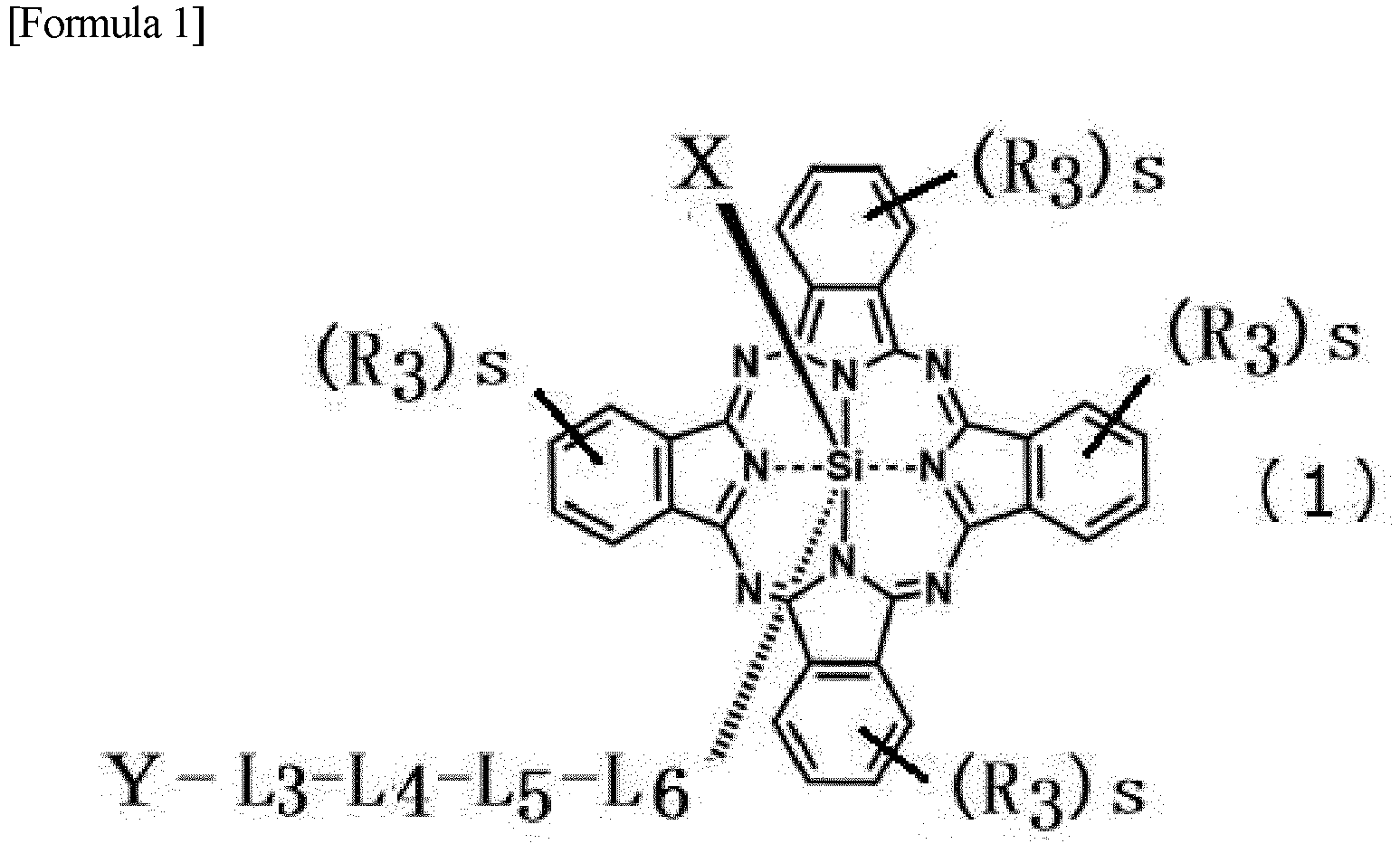 X represents a substituent having a hydrophilic group at the terminus thereof,L3, L4, L5, and L6 each independently represent a divalent linking group,Y represents a group capable of binding to an antibody or a peptide,R3 represents an alkyl group containing 1 to 6 carbon atoms, an alkoxy group containing 1 to 6 carbon atoms, a halogen atom, -SR11, -SOR12, an aryl group containing 6 to 10 carbon atoms, -N(R13)(R14), or -NO2, or two adjacent R3s may together form an aryl group containing 6 to 10 carbon atoms,R11, R12, R13, and R14 each independently represent an alkyl group containing 1 to 6 carbon atoms or an alkoxy group containing 1 to 6 carbon atoms, whereinthe aryl group may be optionally substituted with an alkyl group containing 1 to 6 carbon atoms or an alkoxy group containing 1 to 6 carbon atoms, and whereinthe alkyl group and the alkoxy group may be optionally substituted with a halogen atom, andwhen a plurality of R3s are present, the plurality of R3s may be identical to or different from one another, ands represents an integer of 0 to 4.
 - The compound or a salt thereof according to claim 1, wherein X represents a substituent having a sulfonic acid group at the terminus thereof.
- The compound or a salt thereof according to claim 1 or 2, wherein X represents:

- The compound or a salt thereof according to any one of claims 1 to 3, wherein Y represents an active ester of a carboxyl group.
- The compound or a salt thereof according to any one of claims 1 to 4, wherein L3 represents:

- The compound or a salt thereof according to any one of claims 1 to 5, wherein L4 represents - [(CH2)p-O)]q- (wherein p and q each independently represent an integer of 1 to 5), or -(CH2)r wherein r represents an integer of 1 to 5.
- The compound or a salt thereof according to any one of claims 1 to 6, wherein L5 represents - CONH-, -NHCO-, -COO-, -OCO-, -CO-(Xaa)s-NH-, or -NH-(Xaa)t-CO- wherein s and t represent an integer of 1 to 10, and Xaa represents an amino acid residue having a hydrophilic group at the terminus of a side chain thereof.
- The compound or a salt thereof according to any one of claims 1 to 7, wherein L6 represents - (CH2)rSi(R1)(R2)-O- wherein r represents an integer of 1 to 5, and R1 and R2 each independently represent an alkyl group containing 1 to 4 carbon atoms.
- Any of the following compounds:


- A conjugate formed by binding an antibody or a peptide to a group represented by Y in the compound or a salt thereof according to any one of claims 1 to 8.
- The conjugate according to claim 10, wherein the antibody is an anti-HER2 antibody.
- The conjugate according to claim 10 or 11, wherein 1 to 7 molecules of the compound or a salt thereof according to any one of claims 1 to 8 bind to 1 molecule of the antibody.
- A therapeutic agent comprising the conjugate according to any one of claims 10 to 12.
- A method for producing the compound or a salt thereof according to any one of claims 1 to 9, comprising the following steps (1) to (5):(1) a step of reacting the following Compound 1:


 (2) a step of reacting the above Compound 2 with a compound represented by Z1-L4-Z2 wherein Z1 represents an azide group, and Z2 represents an active ester of a carboxyl group, to produce the following Compound 4:
 (3) a step of reacting the above Compound 4 with a reagent for introduction of a hydrophilic group to produce the following Compound 5:
 (4) a step of reacting the above Compound 5 with CH≡C-(CH2)t-COONa wherein t represents an integer of 1 to 5, to produce the following Compound 6 or a salt thereof:
 R3 represents an alkyl group containing 1 to 6 carbon atoms, an alkoxy group containing 1 to 6 carbon atoms, a halogen atom, -SR11, -SOR12, an aryl group containing 6 to 10 carbon atoms, -N(R13)(R14), or -NO2, or two adjacent R3s may together form an aryl group containing 6 to 10 carbon atoms,R11, R12, R13, and R14 each independently represent an alkyl group containing 1 to 6 carbon atoms or an alkoxy group containing 1 to 6 carbon atoms, whereinthe aryl group may be optionally substituted with an alkyl group containing 1 to 6 carbon atoms or an alkoxy group containing 1 to 6 carbon atoms, and whereinthe alkyl group and the alkoxy group may be optionally substituted with a halogen atom, andwhen a plurality of R3s are present, the plurality of R3s may be identical to or different from one another, ands represents an integer of 0 to 4; and(5) a step of subjecting the carboxyl group that binds to L3 in the above Compound 6 to active esterification.
Applications Claiming Priority (2)
| Application Number | Priority Date | Filing Date | Title |
|---|---|---|---|
| JP2020017910 | 2020-02-05 | ||
| PCT/JP2021/004100 WO2021157655A1 (en) | 2020-02-05 | 2021-02-04 | Conjugate between antibody or peptide and phthalocyanine dye |
Publications (2)
| Publication Number | Publication Date |
|---|---|
| EP4101506A1 true EP4101506A1 (en) | 2022-12-14 |
| EP4101506A4 EP4101506A4 (en) | 2024-07-10 |
Family
ID=77199365
Family Applications (1)
| Application Number | Title | Priority Date | Filing Date |
|---|---|---|---|
| EP21750642.7A Pending EP4101506A4 (en) | 2020-02-05 | 2021-02-04 | Conjugate between antibody or peptide and phthalocyanine dye |
Country Status (5)
| Country | Link |
|---|---|
| US (1) | US20230125454A1 (en) |
| EP (1) | EP4101506A4 (en) |
| JP (1) | JP7760124B2 (en) |
| CN (1) | CN115003679A (en) |
| WO (1) | WO2021157655A1 (en) |
Families Citing this family (1)
| Publication number | Priority date | Publication date | Assignee | Title |
|---|---|---|---|---|
| BR112022020521A2 (en) | 2020-04-10 | 2023-03-07 | Rakuten Medical Inc | PHTHALOCIANINE COLOR COMPOUNDS, CONJUGATES AND METHODS OF USE THEREOF |
Family Cites Families (14)
| Publication number | Priority date | Publication date | Assignee | Title |
|---|---|---|---|---|
| US5824799A (en) * | 1993-09-24 | 1998-10-20 | Biosite Diagnostics Incorporated | Hybrid phthalocyanine derivatives and their uses |
| CA2215727C (en) * | 1995-03-23 | 2003-12-30 | Kenneth F. Buechler | Hybrid phthalocyanine derivatives and their uses |
| WO2013009475A1 (en) * | 2011-07-11 | 2013-01-17 | The United States Of America, As Represented By The Secretary, Department Of Health & Human Services | Photosensitizing antibody-phuorophore conjugates |
| US10207005B2 (en) * | 2013-02-15 | 2019-02-19 | Case Western Reserve University | Photodynamic therapy composition |
| CN103435639B (en) * | 2013-08-26 | 2016-01-27 | 福州大学 | Silicon phthalocyanine of the asymmetric modification of a kind of axial nucleosides and its preparation method and application |
| EP3148583B1 (en) * | 2014-06-02 | 2020-04-29 | Li-Cor, Inc. | Phthalocyanine probes and uses thereof |
| CN105669735B (en) * | 2016-03-10 | 2018-01-12 | 福州大学 | The silicon phthalocyanine compound and its adriamycin conjugate of a kind of axial substituted |
| CN106866721B (en) * | 2017-03-10 | 2019-03-26 | 江苏省原子医学研究所 | A kind of silicon phthalocyanine derivative and its application for preparing biotin acceptor targeting silicon phthalocyanine photosensitizer |
| CN107226839B (en) * | 2017-07-07 | 2021-04-09 | 康宏耀源(天津)科技有限公司 | Synthesis and application of RGD polypeptide coupled phthalocyanine silicon photosensitizer |
| WO2020060260A1 (en) * | 2018-09-20 | 2020-03-26 | 가톨릭대학교 산학협력단 | Polymer composite for helicobacter pylori recognition and composition for photodynamic therapy comprising same |
| CN111166882B (en) * | 2020-01-13 | 2021-09-07 | 山东大学 | Phthalocyanine-RGD polypeptide-graphene oxide composite nanomaterial and its preparation method and application |
| BR112022020521A2 (en) * | 2020-04-10 | 2023-03-07 | Rakuten Medical Inc | PHTHALOCIANINE COLOR COMPOUNDS, CONJUGATES AND METHODS OF USE THEREOF |
| WO2022182483A1 (en) * | 2021-02-02 | 2022-09-01 | Rakuten Medical, Inc. | Methods for local and systemic treatment of cancers, tumors and tumor cells |
| US12115223B2 (en) * | 2021-04-22 | 2024-10-15 | The University Of Tokyo | Conjugate of biotin-modified dimer and phthalocyanine dye |
-
2021
- 2021-02-04 CN CN202180013061.XA patent/CN115003679A/en active Pending
- 2021-02-04 US US17/795,719 patent/US20230125454A1/en active Pending
- 2021-02-04 WO PCT/JP2021/004100 patent/WO2021157655A1/en not_active Ceased
- 2021-02-04 EP EP21750642.7A patent/EP4101506A4/en active Pending
- 2021-02-04 JP JP2021575859A patent/JP7760124B2/en active Active
Also Published As
| Publication number | Publication date |
|---|---|
| WO2021157655A1 (en) | 2021-08-12 |
| JP7760124B2 (en) | 2025-10-27 |
| US20230125454A1 (en) | 2023-04-27 |
| EP4101506A4 (en) | 2024-07-10 |
| JPWO2021157655A1 (en) | 2021-08-12 |
| CN115003679A (en) | 2022-09-02 |
Similar Documents
| Publication | Publication Date | Title |
|---|---|---|
| JP7728821B2 (en) | Improved method for producing antibody-drug conjugates | |
| JP7401456B2 (en) | Anti-CDH6 antibody-pyrrolobenzodiazepine derivative conjugate | |
| EP3834845A1 (en) | Conjugate of biotin variant dimer with phthalocyanine pigment | |
| WO2022163846A1 (en) | Novel method for producing antibody-immunostimulator conjugate | |
| JPWO2022163846A5 (en) | ||
| TW202604573A (en) | Conjugates comprising a topoisomerase i inhibitor | |
| EP4692118A1 (en) | Adam9-targeting humanized antibody and antibody-drug conjugate comprising same and use thereof | |
| EP3805235A1 (en) | Halogenated biotin-modified dimer and use thereof | |
| JP7760124B2 (en) | Conjugates of phthalocyanine dyes with antibodies or peptides | |
| EP4141017A1 (en) | Duocarmycin derivative and use thereof | |
| JP7625188B2 (en) | Conjugates of biotin-modified dimers with phthalocyanine dyes | |
| WO2025214486A1 (en) | Anti-trop2 antibody and anti-5t4 antibody-natural killer cell conjugate and use thereof | |
| US12115223B2 (en) | Conjugate of biotin-modified dimer and phthalocyanine dye | |
| WO2024024935A1 (en) | Novel method for producing antibody-drug conjugate having antineoplastic effect | |
| ES2889775T3 (en) | Improved process for vc-dry drug-linker synthesis | |
| JP2024536382A (en) | Imidazo[4,5-c]quinolin-4-amine compounds and conjugates thereof, their preparation and therapeutic use thereof | |
| EP4321538A1 (en) | Fusion protein between antigen-binding molecule and streptavidin variant | |
| EP4548937A1 (en) | Antibody-drug complex | |
| KR20190143246A (en) | Novel linker compound and Site-Specific compounds of Antibody-Drug Conjugate Comprising the Same | |
| WO2025105486A1 (en) | Antibody-photosensitive substance conjugate | |
| HK40021868A (en) | Improved method for producing antibody-drug conjugate |
Legal Events
| Date | Code | Title | Description |
|---|---|---|---|
| STAA | Information on the status of an ep patent application or granted ep patent |
Free format text: STATUS: THE INTERNATIONAL PUBLICATION HAS BEEN MADE |
|
| PUAI | Public reference made under article 153(3) epc to a published international application that has entered the european phase |
Free format text: ORIGINAL CODE: 0009012 |
|
| STAA | Information on the status of an ep patent application or granted ep patent |
Free format text: STATUS: REQUEST FOR EXAMINATION WAS MADE |
|
| 17P | Request for examination filed |
Effective date: 20220727 |
|
| AK | Designated contracting states |
Kind code of ref document: A1 Designated state(s): AL AT BE BG CH CY CZ DE DK EE ES FI FR GB GR HR HU IE IS IT LI LT LU LV MC MK MT NL NO PL PT RO RS SE SI SK SM TR |
|
| DAV | Request for validation of the european patent (deleted) | ||
| DAX | Request for extension of the european patent (deleted) | ||
| REG | Reference to a national code |
Ref country code: DE Ref legal event code: R079 Free format text: PREVIOUS MAIN CLASS: A61P0035000000 Ipc: A61K0041000000 |
|
| A4 | Supplementary search report drawn up and despatched |
Effective date: 20240611 |
|
| RIC1 | Information provided on ipc code assigned before grant |
Ipc: A61K 31/695 20060101ALI20240605BHEP Ipc: A61K 47/64 20170101ALI20240605BHEP Ipc: A61K 47/55 20170101ALI20240605BHEP Ipc: C07D 487/22 20060101ALI20240605BHEP Ipc: C07F 7/10 20060101ALI20240605BHEP Ipc: C07K 16/28 20060101ALI20240605BHEP Ipc: C09B 47/30 20060101ALI20240605BHEP Ipc: A61P 35/00 20060101ALI20240605BHEP Ipc: A61K 47/68 20170101ALI20240605BHEP Ipc: A61K 41/00 20200101AFI20240605BHEP |
|
| RAP1 | Party data changed (applicant data changed or rights of an application transferred) |
Owner name: COMPLECURE, INC. Owner name: THE UNIVERSITY OF TOKYO |