EP4101049B1 - Electronic device for wirelessly transmitting or receiving power and method for operating the same - Google Patents
Electronic device for wirelessly transmitting or receiving power and method for operating the same Download PDFInfo
- Publication number
- EP4101049B1 EP4101049B1 EP21804776.9A EP21804776A EP4101049B1 EP 4101049 B1 EP4101049 B1 EP 4101049B1 EP 21804776 A EP21804776 A EP 21804776A EP 4101049 B1 EP4101049 B1 EP 4101049B1
- Authority
- EP
- European Patent Office
- Prior art keywords
- power
- electronic device
- factor
- packet
- circuit
- Prior art date
- Legal status (The legal status is an assumption and is not a legal conclusion. Google has not performed a legal analysis and makes no representation as to the accuracy of the status listed.)
- Active
Links
Images





Classifications
-
- H—ELECTRICITY
- H02—GENERATION; CONVERSION OR DISTRIBUTION OF ELECTRIC POWER
- H02J—ELECTRIC POWER NETWORKS; CIRCUIT ARRANGEMENTS OR SYSTEMS FOR SUPPLYING OR DISTRIBUTING ELECTRIC POWER; SYSTEMS FOR STORING ELECTRIC ENERGY
- H02J50/00—Circuit arrangements or systems for wireless supply or distribution of electric power
- H02J50/10—Circuit arrangements or systems for wireless supply or distribution of electric power using inductive coupling
- H02J50/12—Circuit arrangements or systems for wireless supply or distribution of electric power using inductive coupling of the resonant type
-
- H—ELECTRICITY
- H02—GENERATION; CONVERSION OR DISTRIBUTION OF ELECTRIC POWER
- H02J—ELECTRIC POWER NETWORKS; CIRCUIT ARRANGEMENTS OR SYSTEMS FOR SUPPLYING OR DISTRIBUTING ELECTRIC POWER; SYSTEMS FOR STORING ELECTRIC ENERGY
- H02J50/00—Circuit arrangements or systems for wireless supply or distribution of electric power
- H02J50/60—Circuit arrangements or systems for wireless supply or distribution of electric power responsive to the presence of foreign objects, e.g. detection of living beings
-
- H—ELECTRICITY
- H02—GENERATION; CONVERSION OR DISTRIBUTION OF ELECTRIC POWER
- H02J—ELECTRIC POWER NETWORKS; CIRCUIT ARRANGEMENTS OR SYSTEMS FOR SUPPLYING OR DISTRIBUTING ELECTRIC POWER; SYSTEMS FOR STORING ELECTRIC ENERGY
- H02J50/00—Circuit arrangements or systems for wireless supply or distribution of electric power
- H02J50/80—Circuit arrangements or systems for wireless supply or distribution of electric power involving the exchange of data, concerning supply or distribution of electric power, between transmitting devices and receiving devices
-
- H—ELECTRICITY
- H02—GENERATION; CONVERSION OR DISTRIBUTION OF ELECTRIC POWER
- H02J—ELECTRIC POWER NETWORKS; CIRCUIT ARRANGEMENTS OR SYSTEMS FOR SUPPLYING OR DISTRIBUTING ELECTRIC POWER; SYSTEMS FOR STORING ELECTRIC ENERGY
- H02J7/00—Circuit arrangements for charging or discharging batteries or for supplying loads from batteries
- H02J7/02—Circuit arrangements for charging or discharging batteries or for supplying loads from batteries for charging batteries from AC mains by converters
-
- H—ELECTRICITY
- H02—GENERATION; CONVERSION OR DISTRIBUTION OF ELECTRIC POWER
- H02J—ELECTRIC POWER NETWORKS; CIRCUIT ARRANGEMENTS OR SYSTEMS FOR SUPPLYING OR DISTRIBUTING ELECTRIC POWER; SYSTEMS FOR STORING ELECTRIC ENERGY
- H02J2105/00—Networks for supplying or distributing electric power characterised by their spatial reach or by the load
- H02J2105/40—Networks for supplying or distributing electric power characterised by their spatial reach or by the load characterised by the loads connecting to the networks or being supplied by the networks
- H02J2105/44—Portable electronic devices
Definitions
- the present disclosure relates generally to electronic devices for wirelessly transmitting power, and methods for operating the same.
- the Wireless Power Consortium (WPC) standard (or Qi standard) supports various foreign object detection (FOD) techniques.
- an electronic device that wirelessly transmits power may apply a ping signal to a coil and determine whether a wireless power receiver or a foreign object is placed in the charging area based on whether a change in characteristics (e.g., a frequency and/or quality factor (Q-factor)) occurs.
- an electronic device that wirelessly transmits power may receive (or demodulate) information about the level of received power from the wireless power receiver during a power transfer.
- the electronic device may identify the level of a power loss P loss based on information about the level of transmitted power P PT and the level of received power P PR and determine whether a foreign object is placed nearby during power transfer based on the level of power loss P loss .
- the power loss P loss when a foreign object is placed nearby may indicate the level of power dissipated in the foreign object from the magnetic field of the electronic device.
- the electronic device may identify the level of transmitted power P PT by subtracting the internal power loss P PTloss dissipated in the electronic device from the level of power P in provided to the input terminal.
- the internal power loss P PTloss in the electronic device may include at least one of the power loss in the inverter, the power loss in the primary coil, the power loss in the resonant capacitor, the power loss in the shielding of the primary coil assembly, or the power loss in any metal part of the electronic device.
- the received power P PR may be identified by adding the level of power P out at the output terminal and the internal power loss P prloss dissipated in the wireless power receiver by the wireless power receiver.
- the internal power loss P Prloss of the wireless power receiver may include at least one of the power loss in the rectifier, the power loss in the secondary coil, the power loss in the resonant capacitor, the power loss in the shielding of the secondary coil assembly, or the power loss in any metal part of the wireless power receiver.
- the electronic device and the wireless power receiver may calculate the above-described internal power losses P PTloss and P Prloss and, in this case, a systematic bias may occur. Such a bias may degrade the accuracy of foreign object detection.
- the electronic device and the wireless power receiver may perform calibration to remove an influence caused by the bias. During calibration, the electronic device and/or the wireless power receiver may identify parameters using the level (e.g., a magnitude) of the transmitted power P PT and the level of the received power P PR under a plurality of load conditions. The electronic device and the wireless power receiver may calibrate the transmitted power P PT and/or the received power P PR using the identified parameters and may thereby remove the influence caused by the bias, enhancing the accuracy of foreign object detection. However, if a foreign object is placed nearby during calibration, inaccurate parameters may be obtained. If an inaccurate parameter is used for foreign object detection, the accuracy of foreign object detection may be degraded.
- an electronic device for wirelessly transmitting power includes a power transmitting circuit and a control circuit configured to control the power transmitting circuit to apply a first power to a coil of the power transmitting circuit, control the power transmitting circuit to stop applying the first power and prevent power from being applied to the coil during a first period, identify a first Q-factor during the first period, control the power transmitting circuit to apply, to the coil, a second power during a calibration operation for identifying at least one parameter used for identifying a power loss during power transmission, control the power transmitting circuit to stop applying the second power and prevent power from being applied to the coil during a second period, identify a second Q-factor during the second period, and identify a validity of the at least one parameter based on at least one of the first Q-factor or the second Q-factor.
- an electronic device a wireless power receiver, and a method for operating the same, which may verify parameters obtained as a result of calibration, based on the Q-factor identified based on the start and/or end of the calibration.
- a method for operating the same may verify parameters obtained as a result of calibration, based on the Q-factor identified based on the start and/or end of the calibration.
- an electronic device, a wireless power receiver, and a method for operating the same may verify parameters obtained as a result of calibration, based on the Q-factor identified in accordance with the start and/or end of the calibration.
- the electronic device 101 may transmit the power 103 through a resonance scheme.
- the electronic device 101 may include a power source, a DC-AC converting circuit, an amplifying circuit, an impedance matching circuit, at least one capacitor, at least one coil, and an out-band communication circuit (e.g., a Bluetooth TM low energy (BLE) communication circuit).
- the at least one capacitor and the at least one coil may constitute a resonance circuit.
- the electronic device 101 may be implemented in a manner defined in the Alliance for Wireless Power (A4WP) standards (or Air Fuel Alliance (AFA) standards).
- the electronic device 101 may include a coil that is capable of produce a magnetic field when letting an electric current flow thereacross by a resonance or induction scheme.
- the electronic device 101 may communicate with the wireless power receiver 195 according to, for example, an in-band scheme.
- the electronic device 101 may modulate data to be transmitted according to a frequency shift keying (FSK) modulation scheme, and the wireless power receiver 195 may perform modulation according to an amplitude shift keying (ASK) modulation scheme.
- the electronic device 101 and/or the wireless power receiver 195 may determine the data transmitted from the counterpart device based on the frequency and/or amplitude of the current, voltage, or power of the coil.
- the operation of performing modulation based on the ASK modulation scheme and/or the FSK modulation scheme may be understood as an operation for transmitting data according to the in-band communication scheme.
- the operation of determining the data transmitted from the counterpart device by performing demodulation based on the frequency and/or amplitude of the current, voltage, or power of the coil may be understood as an operation for receiving data according to the in-band communication scheme.
- the electronic device 101 may communicate with the wireless power receiver 195 according to an out-of-band scheme.
- the electronic device 101 or the wireless power receiver 195 may transmit and receive data using a communication circuit (e.g., a BLE communication module) provided separately from the coil or patch antenna.
- a communication circuit e.g., a BLE communication module
- the electronic device 101 or the wireless power receiver 195 when the electronic device 101 or the wireless power receiver 195 performs a particular operation, this may mean that various hardware devices, e.g., a control circuit, such as a processor (e.g., a transmission integrated circuit (IC) or micro controlling unit (MCU)) or coil included in the electronic device 101 or the wireless power receiver 195, performs the particular operation.
- a control circuit such as a processor (e.g., a transmission integrated circuit (IC) or micro controlling unit (MCU)) or coil included in the electronic device 101 or the wireless power receiver 195, performs the particular operation.
- a control circuit such as a processor (e.g., a transmission integrated circuit (IC) or micro controlling unit (MCU)) or coil included in the electronic device 101 or the wireless power receiver 195, performs the particular operation.
- a control circuit such as a processor (e.g., a transmission integrated circuit (IC) or micro controlling unit (MCU)) or coil included in the electronic device 101 or
- this may mean that the processor or another hardware device triggers the particular operation as an instruction for performing the particular operation, which is stored in a storage circuit (e.g., a memory) of the electronic device 101 or the wireless power receiver 195, is executed.
- a storage circuit e.g., a memory
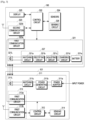
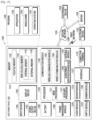
- FIG. 2 is a view schematically illustrating a wireless charging system, according to an embodiment.
- FIG. 3 is a block diagram illustrating a wireless charging system, according to an embodiment.
- the power transmitting circuit 311 may include at least one of a power adapter 311a, a power generating circuit 311b, a transmission coil 311L, or a matching circuit 311c to be able to transmit power to at least one wireless power receiver (e.g., a first wireless power receiver and a second wireless power receiver).
- a power adapter 311a e.g., a power adapter 311a, a power generating circuit 311b, a transmission coil 311L, or a matching circuit 311c to be able to transmit power to at least one wireless power receiver (e.g., a first wireless power receiver and a second wireless power receiver).
- the control circuit 312 may control the electronic device 101, generate various messages (e.g., instructions) required for wireless power transmission, and transmit the messages to the communication circuit 313.
- the control circuit 312 may calculate power (e.g., an amount of power) to be transmitted to the wireless power receiver 195 based on information received from the communication circuit 313.
- the control circuit 312 may control the power transmitting circuit 311 to transmit the power generated by the transmission coil 311L to the wireless power receiver 195.
- the communication circuit 313 may include at least one of a first communication circuit 313a or a second communication circuit 313b.
- the first communication circuit 313a may communicate with the first communication circuit 323a of the wireless power receiver 195 in an in-band (IB) communication scheme using a frequency equal to or adjacent to the frequency used for power transmission in the transmission coil 311L.
- IB in-band
- the sensing circuit 314 may include at least one of a temperature sensor, a motion sensor, a magnetic field sensor (e.g., a Hall sensor), or a current (or voltage) sensor.
- the sensing circuit 314 may detect the temperature state of the electronic device 101 using the temperature sensor, and the motion state of the electronic device 101 using the motion sensor.
- the sensing circuit 314 may detect whether the electronic device is coupled with the wireless power receiver 195 using the magnetic field sensor, and detect the state of the output signal (e.g., a current level, a voltage level, and/or a power level) of the electronic device 101 using the current (or voltage) sensor.
- the wireless power receiver 195 may include a power receiving circuit 321, a processor 322, a communication circuit 323, sensors 324, a display 325, or a sensing circuit 326.
- the sensors 324 may include the sensing circuit 326.
- the power receiving circuit 321 may include a reception coil 321L for wirelessly receiving power from the electronic device 101, an Rx integrated circuit (IC) 327, a charging circuit 321d (e.g., a power management integrated circuit (PMIC), a direct current / direct current (DC/DC) converter, a switched capacitor, or a voltage divider), and/or a battery 321e (e.g., the battery 189).
- the Rx IC 327 may include a matching circuit 321a connected to the reception coil 321L, a rectifying circuit 321b for rectifying the received AC power to DC power, or a power adjusting circuit (e.g., a low-dropout (LDO) circuit) 321c for adjusting the charging voltage.
- a power adjusting circuit e.g., a low-dropout (LDO) circuit
- the communication circuit 323 may include at least one of a first communication circuit 323a or a second communication circuit 323b.
- the first communication circuit 323a may communicate with the electronic device 101 through the reception coil 321L.
- the first communication circuit 323a may communicate with the first communication circuit 313a of the electronic device 101 using the reception coil 321L.
- the data (or communication signals) generated by the first communication circuit 323a may be transmitted using the reception coil 321L.
- the first communication circuit 323a may transmit data to the electronic device 101 using an ASK modulation scheme.
- the first communication circuit 323a may cause a change in the load of the electronic device 101 according to the modulation scheme. Accordingly, at least one of the magnitudes of voltage, current, or power measured at the transmission coil 311L may be changed.
- the first communication circuit 313a of the electronic device 101 may identify data by the wireless power receiver 195 by demodulating the change in magnitude.
- the second communication circuit 323b may communicate with the electronic device 101 using any one of various short-range communication schemes, such as Bluetooth TM , BLE, Wi-Fi, or NFC.
- the sensors 324 may include one or more of a current/voltage sensor, a temperature sensor, an illuminance sensor, or an acceleration sensor.
- the sensors 324 may be the same as or separate components from the sensor module 1376 of FIG. 13 .
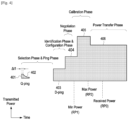
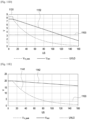
- FIG. 4 illustrates a comparative example of a level of power input to a transmission coil of an electronic device, according to an embodiment. It will be appreciated by one of ordinary skill in the art that the operation of the electronic device 101 according to the comparative example of FIG. 4 may also be performed by the electronic device 101 according to an embodiment of the disclosure.
- the electronic device 101 may periodically apply the ping signal 401 to the transmission coil 311L for the duration ⁇ t1.
- the power 402 of the transmission coil 311L of the electronic device 101 may be attenuated.
- the attenuation in the time domain of the envelope of the voltage V(t) for the power 402 may follow Math Figure (1 ), below.
- V t V 0 ⁇ exp ⁇ w ⁇ t 2 ⁇ q
- V(0) may be the initial voltage value
- w may be the angular frequency of the AC signal
- Q may be the Q-factor.
- the Q-factor may be calculated using Math Figure (2 ), based on the voltages V 1 and V 2 corresponding to two time points t 1 and t 2 constituting the envelope.
- T may be the period which is the reciprocal of the frequency.
- Q ⁇ ⁇ t 2 ⁇ t 1 T ⁇ ln V t 2 V t 1
- the electronic device 101 may perform Q-factor measurement based on the application of the ping signal 401.
- the electronic device 101 may store the Q-factor when no foreign object is disposed as a reference.
- the Q-factor may be changed (e.g., decreased).
- the electronic device 101 may identify that the wireless power receiver 195 or a foreign object is placed. Meanwhile, the electronic device 101 may detect the placement of the wireless power receiver 195 or a foreign object based on a change in the resonance frequency as well as the Q-factor.
- the electronic device 101 may apply a digital ping signal 403. While the digital ping signal 403 is applied, the electronic device 101 may perform at least one operation corresponding to the identification phase and configuration phase with the wireless power receiver 195, and the corresponding operation may follow the Qi standard.
- the electronic device 101 and the wireless power receiver 195 may perform in-band communication.
- the electronic device 101 fails to obtain data from the wireless power receiver 195 while the digital ping signal 403 is applied (e.g., failure to verify valid data as a result of demodulation)
- the electronic device 101 may determine that a foreign object is positioned nearby.
- the operations in the identification phase and configuration phase are successfully completed, the electronic device 101 may perform at least one operation corresponding to the negotiation phase while applying power 404, and the corresponding operation may follow (e.g., operations employing the Qi standard).
- the electronic device 101 may receive a first received power packet RP1 from the wireless power receiver 195. Based on the reception of the first received power packet RP1, the electronic device 101 may enter a calibration phase. However, depending on the implementation, the electronic device 101 may receive the first received power packet after entering the calibration phase. Further, although the calibration phase is shown as differing from the power transfer phase in FIG. 4 , this is merely an example, and the calibration phase may be understood as part of the power transfer phase.
- the wireless power receiver 195 may transmit the first received power packet PR1 including the received power level in a first load state.
- the wireless power receiver 195 may identify the received power level based on the level of the received power and transmit (e.g., modulate) a first received power packet PR1 including the power level.
- the received power level may be a value that is defined by the Qi standard, and may be a received power value or an estimated received power value.
- the received power level may be obtained as a result of processing (e.g., processing as defined by the Qi standard) the power level (e.g., in watts) measured (or estimated) by the wireless power receiver 195 but, without limitations thereto, the measured (or estimated) power level itself may be implemented.
- the first received power packet RP1 is for indicating a first calibration data point, and the received power level included in the first received power packet RP1 may not be more than 10% of the reference power level included in the power transfer contract.
- the first received power packet may have a type value of "1" (e.g., 001), and the electronic device 101 may identify that the first received power packet RP1 is received based on the type value of "1".
- the electronic device 101 may receive a second received power packet RP2 from the wireless power receiver 195 while the power 405 is applied.
- the wireless power receiver 195 may transmit the second received power packet RP2 including the received power level in a second load state.
- the second received power packet RP2 may be for indicating a second calibration data point (or its subsequent data point), and may be a value close to the reference power level included in the power transmission contract.
- the second received power packet may have a type value of "2" and the electronic device 101 may identify that the second received power packet RP2 is received based on the type value of "2" (e.g., 010).
- the electronic device 101 may enter a power transfer phase and apply power 406 for charging.
- the wireless power receiver 195 may identify the power P transmitted transmitted in the power transmission phase, and calibrate it into the power P calibrated , as defined by Math Figure (5 ), below.
- P calibrated a ⁇ P transmitted + b
- the electronic device 101 may identify the power loss P loss according to Math Figure (6 ), below.
- P loss P calibrated ⁇ P received
- P received in Math Figure (6 ) may be the received power level in the wireless power receiver 195 identified based on in-band communication from the power receiver 195.
- the electronic device 101 may determine whether a foreign object is placed while power transmission is underway based on whether the power loss P loss is greater than or equal to a preset reference value. Alternatively, the electronic device 101 may calculate the power loss using the result of performing calibration on the strength of the received power.
- the validity of the parameters e.g., a and b
- the parameters e.g., (a) and (b) may be required to be ensured for accurate detection of the placement of a foreign object. If a foreign object is placed before or while entering the calibration phase, the parameters (e.g., (a) and (b)) may be inaccurate values. Accordingly, verification of at least one parameter calculated according to calibration is required.
- the electronic device 101 may identify the calibration curve by processing (e.g., interpolating) a plurality of calibration data.
- the electronic device 101 may identify an effective foreign object detection (FOD) threshold from the calibration curve.
- the electronic device 101 may detect a foreign object based on whether the result of subtracting the received power level from the level of the transmitted power is greater than the effective FOD threshold.
- FOD foreign object detection
- the electronic device 101 may determine whether a foreign object is positioned nearby (e.g., placed in the vicinity of the electronic device 101) during the power transfer phase based on at least one parameter, the received power level included in the received power packet (e.g., RP0), and the power 406 for charging in the power transfer phase.
- the received power level included in the received power packet e.g., RP0
- the power 406 for charging in the power transfer phase e.g., RP0
- at least one parameter may be invalid, which may cause a decrease in the accuracy of detection of the placement of a foreign object.
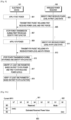
- FIG. 5A is a flowchart illustrating a method for operating an electronic device, according to an embodiment. The embodiment of FIG. 5A is described with reference to FIG. 5B.
- FIG. 5B is a graph illustrating a level of transmitted power of an electronic device, according to an embodiment.
- the electronic device 101 may determine whether the identified parameter is valid based on a result of a comparison between the first Q-factor and the second Q-factor. When the difference between the first Q-factor and the second Q-factor is greater than or equal to the threshold difference, the electronic device 101 may determine that the identified parameter is invalid. When the difference between the first Q-factor and the second Q-factor is less than the threshold difference, the electronic device 101 may determine that the identified parameter is valid. The electronic device 101 may determine whether the parameter is valid based on a result of comparing the first Q-factor and the second Q-factor with a reference.
- the electronic device 101 may detect the foreign object during the power transmission operation based on the identified parameter in step 609. For example, when the electronic device 101 identifies a parameter (e.g., (a) or (b)) for calibrating the level of the transmitted power or the level of the received power, the electronic device 101 may calibrate either the level of the transmitted power or the level of the received power based on the parameter. The electronic device 101 may determine whether a foreign object is placed (e.g., positioned nearby) based on a difference between the calibrated level and the remaining level.
- a parameter e.g., (a) or (b)
- the electronic device 101 may receive the second received power packet PR2.
- the electronic device 101 may identify and store the level of the power 708 and the data included in the second received power packet PR2 as a third calibration data point.
- the electronic device 101 may stop applying power 708 during the power application interruption period (e.g., ⁇ t4) included in the second received power packet PR2.
- the power 709 of the transmission coil 311L of the electronic device 101 may be attenuated. Based on the attenuation of the power 709, the electronic device 101 may identify the third Q-factor.
- the electronic device 101 may identify at least one parameter based on the first calibration data point, the second calibration data point, and the third calibration data point. The electronic device 101 may determine whether at least one parameter is valid based on the first Q-factor, the second Q-factor, and the third Q-factor. When it is determined that at least one parameter is valid, the electronic device 101 may perform a foreign object detection operation using at least one parameter while transmitting the power 710 for charging. The electronic device 101 may determine whether a foreign object is placed based on the at least one parameter and the level of the received power included in the identified data packet (e.g., RP0) via communication.
- the identified data packet e.g., RP0
- the electronic device 101 may transmit an ACK packet in the RP1 packet or the RP2 packet.
- the electronic device 101 may transmit a negative acknowledgment (NAK) packet.
- NAK negative acknowledgment
- the electronic device 101 may transmit an not defined (ND) response.
- FIG. 8 is a view illustrating operations of an electronic device and a wireless power receiver, according to an embodiment.
- the electronic device 101 may apply a first power to the transmission coil 311L in step 801.
- the wireless power receiver 195 e.g., the processor 322 may identify a first received power level in a first load state.
- the wireless power receiver 195 may transmit a first packet including the first received power level and a first period. It is merely an example that the received power level and the period for requesting power interruption are included in one data packet, and in another embodiment, the wireless power receiver 195 may individually include the pieces of information in two different packets and transmit them.
- the transmission operation in FIG. 8 may be to perform modulation corresponding to the first packet of the wireless power receiver 195.
- the electronic device 101 may stop transmitting power during the first period and analyze the attenuation at the transmission coil 311L during the first period, thereby identifying the first Q-factor.
- the electronic device 101 may apply Nth power to the transmission coil 311L in step 809.
- the Nth power may be different from or equal to the first power.
- the wireless power receiver 195 e.g., the processor 322
- the wireless power receiver 195 may identify an Nth received power level in an Nth load state.
- the wireless power receiver 195 may transmit an Nth packet including the Nth received power level and an Nth period.
- the electronic device 101 may stop transmitting power during the Nth period and analyze the attenuation at the transmission coil 311L during the Nth period, thereby identifying the Nth Q-factor.
- N may be a natural number of 2 or more.
- the electronic device 101 and the wireless power receiver 195 may further perform identification of the received power level, transmission of a packet, interruption of power transmission, and identification of a Q-factor N-2 times. Meanwhile, in the intermediate operations except for the first operation and the last operation, interruption of power transmission and identification of the Q-factor may be omitted.
- the electronic device 101 may identify at least one parameter based on the first to Nth power and the first to Nth received power levels. In step 819, the electronic device 101 may verify the validity of at least one parameter based on the first to Nth Q-factors.
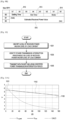
- FIG. 9A is a view illustrating a comparative example of a structure of a data packet, according to an embodiment.
- the wireless power receiver 195 may transmit an RP1 packet having the structure of FIG. 9A to the electronic device 101.
- the RP1 packet may be based on a 24-bit received power packet defined in the Qi standard.
- the RP1 packet may include a reserved field 901, a mode field 902, and an estimated received power value field 903.
- the estimated received power value field 903 or 915 may be referred to as a received power value according to the version of the standard.
- the bit string expressed in the mode field 902 or 914 may provide additional information about the received power value. For example, "1" (001) in the mode field 902 may indicate the first load state, and "2" (010) may indicate the second load state.
- the estimated received power value is a value obtained by processing the level of the received power measured by the wireless power receiver 195, and may be one of the above-described received power levels, and used as a calibration data point.
- the wireless power receiver 195 may include a settling time 912 in the data packet using part of the existing reserved field 901.
- the settling time 912 may mean an interval between power slots when a plurality of power slots (i.e., interruption of power application and Q-factor measurement) are consecutively used. After the voltage Vrect at the output terminal of the rectifier of the wireless power receiver 195 is dropped by the power slot, its recovery may take time. If the settling time 912 is not sufficient, the voltage Vrect at the output terminal of the rectifier may not recover and drop, and in-band communication may be cut off.
- the settling time 912 may have a value of 0 to 3, of which 0 may indicate that the settling time is 0. The values may be individually matched to settling times.
- 1 may represent 50 ms
- 2 may represent 100 ms
- 3 may represent 150 ms, but embodiments of the disclosure are not limited thereto.
- the electronic device 101 may wait for power application interruption for the corresponding period.
- the electronic device 101 may transmit a response (e.g., an ACK packet) after the included settling time 912.
- the wireless power receiver 195 may identify version information (e.g., ID packet version) for the electronic device 101. If the power slot function is not supported based on the version information for the electronic device 101, the electronic device 101 may set the settling time 912 and the slot time 913 to 0 and transmit a data packet.
- version information e.g., ID packet version
- FIG. 10 is a flowchart illustrating a method for operating a wireless power receiver, according to an embodiment.
- FIG. 10 is described with reference to FIGS. 11A to 11F .
- FIGS. 11A , 11B, 11C , 11D, 11E , and 11F are views illustrating a peak reception voltage and an output voltage of a rectifier, according to various embodiments.
- the wireless power receiver 195 may identify the level of the received power and/or the level of the load current in step 1001.
- the wireless power receiver 195 may identify the voltage Vrect at the output terminal of the rectifier as the level of the received power but the position where the level of the received power is defined may vary.
- the wireless power receiver 195 may identify the current input to a load (e.g., a charger or PMIC) as the load current, but the position where the load current is defined may vary.
- the wireless power receiver 195 may identify a power transmission interruption period based on the level of the received power and/or load current.
- the load current of the wireless power receiver 195 may be 200 milliamps (mA), and the initial value of the output voltage of the rectifier may be 5.5 volts (V).
- the output voltage 1102 of the rectifier may be greater than or equal to a threshold voltage (under voltage lock out (UVLO)) 1103 (e.g., 3.3 V) even after 160 ⁇ s.
- UVLO under voltage lock out
- the threshold voltage 1103 may be a value set to prevent in-band communication from being disconnected.
- the load current of the wireless power receiver 195 may be, e.g., 350 mA, and the initial value of the output voltage of the rectifier may be 5.2V.
- the reception peak voltage 1111 falls so that the output voltage 1112 of the rectifier drops as well.
- the output voltage 1112 of the rectifier drops below the threshold voltage 1103 (e.g., 3.3 V) at 120 ⁇ s.
- the wireless power receiver 195 may determine a power application interruption period based on the output voltage and/or the load current of the rectifier.
- the power application interruption period needs to be set so that the output voltage of the rectifier does not drop below the threshold voltage 1103.
- the wireless power receiver 195 may calculate the power application interruption period using the output voltage and/or the load current of the rectifier.
- the wireless power receiver 195 may identify the power application interruption period by referring to a pre-stored lookup table. In the case shown in FIG. 11B , the wireless power receiver 195 may determine that a period shorter than 120 ⁇ s is the power application interruption period.
- the load current of the wireless power receiver 195 may be 200 mA, and the initial value of the output voltage of the rectifier may be 8.0 V.
- the reception peak voltage 1121 may fall so that the output voltage 1122 of the rectifier drops as well.
- the output voltage 1122 of the rectifier may be greater than or equal to the threshold voltage 1103 (e.g., 3.3 V) even after 160 ⁇ s.
- the load current of the wireless power receiver 195 in the second load state, may be 700 mA, and the initial value of the output voltage of the rectifier may be 7.7 V.
- the reception peak voltage 1131 may fall so that the output voltage 1132 of the rectifier drops as well.
- the output voltage 1132 of the rectifier may drop below the threshold voltage 1103 (e.g., 3.3 V) at 120 ⁇ s.
- the wireless power receiver 195 may determine that a period shorter than 120 ⁇ s is the power application interruption period.
- the load current of the wireless power receiver 195 may be 200 mA, and the initial value of the output voltage of the rectifier may be 19.5 V.
- the reception peak voltage 1141 may fall so that the output voltage 1142 of the rectifier drops as well.
- the output voltage 1142 of the rectifier may be greater than or equal to the threshold voltage (e.g., 3.3 V) 1103 even after 160 ⁇ s.
Landscapes
- Engineering & Computer Science (AREA)
- Power Engineering (AREA)
- Computer Networks & Wireless Communication (AREA)
- Charge And Discharge Circuits For Batteries Or The Like (AREA)
Description
- The present disclosure relates generally to electronic devices for wirelessly transmitting power, and methods for operating the same.
- The Wireless Power Consortium (WPC) standard (or Qi standard) supports various foreign object detection (FOD) techniques. For example, an electronic device that wirelessly transmits power may apply a ping signal to a coil and determine whether a wireless power receiver or a foreign object is placed in the charging area based on whether a change in characteristics (e.g., a frequency and/or quality factor (Q-factor)) occurs. For example, an electronic device that wirelessly transmits power may receive (or demodulate) information about the level of received power from the wireless power receiver during a power transfer. The electronic device may identify the level of a power loss Ploss based on information about the level of transmitted power PPT and the level of received power PPR and determine whether a foreign object is placed nearby during power transfer based on the level of power loss Ploss.
- The power loss Ploss when a foreign object is placed nearby may indicate the level of power dissipated in the foreign object from the magnetic field of the electronic device. The electronic device may identify the level of transmitted power PPT by subtracting the internal power loss PPTloss dissipated in the electronic device from the level of power Pin provided to the input terminal. The internal power loss PPTloss in the electronic device may include at least one of the power loss in the inverter, the power loss in the primary coil, the power loss in the resonant capacitor, the power loss in the shielding of the primary coil assembly, or the power loss in any metal part of the electronic device. Further, the received power PPR may be identified by adding the level of power Pout at the output terminal and the internal power loss Pprloss dissipated in the wireless power receiver by the wireless power receiver. The internal power loss PPrloss of the wireless power receiver may include at least one of the power loss in the rectifier, the power loss in the secondary coil, the power loss in the resonant capacitor, the power loss in the shielding of the secondary coil assembly, or the power loss in any metal part of the wireless power receiver. Further, document (
US2021/273492A1 ) discloses conventional method for foreign object detection which uses Q-factors for determining a calibrated strength signal. - The electronic device and the wireless power receiver may calculate the above-described internal power losses PPTloss and PPrloss and, in this case, a systematic bias may occur. Such a bias may degrade the accuracy of foreign object detection. The electronic device and the wireless power receiver may perform calibration to remove an influence caused by the bias. During calibration, the electronic device and/or the wireless power receiver may identify parameters using the level (e.g., a magnitude) of the transmitted power PPT and the level of the received power PPR under a plurality of load conditions. The electronic device and the wireless power receiver may calibrate the transmitted power PPT and/or the received power PPR using the identified parameters and may thereby remove the influence caused by the bias, enhancing the accuracy of foreign object detection. However, if a foreign object is placed nearby during calibration, inaccurate parameters may be obtained. If an inaccurate parameter is used for foreign object detection, the accuracy of foreign object detection may be degraded.
- The present invention is defined by the appended set of claims. In accordance with an aspect of the present disclosure, an electronic device for wirelessly transmitting power includes a power transmitting circuit and a control circuit configured to control the power transmitting circuit to apply a first power to a coil of the power transmitting circuit, control the power transmitting circuit to stop applying the first power and prevent power from being applied to the coil during a first period, identify a first Q-factor during the first period, control the power transmitting circuit to apply, to the coil, a second power during a calibration operation for identifying at least one parameter used for identifying a power loss during power transmission, control the power transmitting circuit to stop applying the second power and prevent power from being applied to the coil during a second period, identify a second Q-factor during the second period, and identify a validity of the at least one parameter based on at least one of the first Q-factor or the second Q-factor.
- In accordance with another aspect of the present disclosure, a method for controlling an electronic device is provided as defined by the appended claims.
- According to various embodiments, there may be provided an electronic device, a wireless power receiver, and a method for operating the same, which may verify parameters obtained as a result of calibration, based on the Q-factor identified based on the start and/or end of the calibration. Thus, it is possible to secure the validity of the parameter calculated as a result of calibration and thus to enhance the accuracy of foreign object detection.
- Other various effects may be provided directly or indirectly in the disclosure.
- The above and other aspects, features, and advantages of certain embodiments of the present disclosure will be more apparent from the following description taken in conjunction with the accompanying drawings, in which:
-
FIG. 1 is a block diagram illustrating a wireless power receiver and an electronic device, according to an embodiment; -
FIG. 2 is a view schematically illustrating a wireless charging system, according to an embodiment; -
FIG. 3 is a block diagram illustrating a wireless charging system, according to an embodiment; -
FIG. 4 illustrates a comparative example of a level of power input to a transmission coil of an electronic device, according to an embodiment; -
FIG. 5A is a flowchart illustrating a method for operating an electronic device, according to an embodiment; -
FIG. 5B is a graph illustrating a level of transmitted power of an electronic device, according to an embodiment of the disclosure; -
FIG. 6 is a flowchart illustrating a method for operating an electronic device, according to an embodiment; -
FIG. 7 is a graph illustrating a level of transmitted power of an electronic device, according to an embodiment; -
FIG. 8 is a view illustrating operations of an electronic device and a wireless power receiver, according to an embodiment; -
FIG. 9A is a comparative example of a view illustrating a structure of a data packet, according to an embodiment; -
FIG. 9B is a view illustrating a structure of a packet RP1 of received power transmitted from a wireless power receiver, according to an embodiment; -
FIG. 10 is a flowchart illustrating a method for operating a wireless power receiver, according to an embodiment; -
FIG. 11A is a view illustrating a peak reception voltage and an output voltage of a rectifier, according to an embodiment; -
FIG. 11B is a view illustrating a peak reception voltage and an output voltage of a rectifier according to an embodiment; -
FIG. 11C is a view illustrating a peak reception voltage and an output voltage of a rectifier, according to an embodiment; -
FIG. 11D is a view illustrating a peak reception voltage and an output voltage of a rectifier, according to an embodiment; -
FIG. 11E is a view illustrating a peak reception voltage and an output voltage of a rectifier, according to an embodiment; -
FIG. 11F is a view illustrating a peak reception voltage and an output voltage of a rectifier, according to an embodiment; -
FIG. 12 is a flowchart illustrating a method for operating a wireless power receiver, according to an embodiment; and -
FIG. 13 is a block diagram illustrating an electronic device in a network environment, according to an embodiment. - Various embodiments of the present disclosure are described with reference to the accompanying drawings. However, various embodiments of the present disclosure are not limited to particular embodiments, and it should be understood that modifications, equivalents, and/or alternatives of the embodiments described herein can be variously made. With regard to description of drawings, similar components may be marked by similar reference numerals.
- According to various embodiments of the disclosure, an electronic device, a wireless power receiver, and a method for operating the same may verify parameters obtained as a result of calibration, based on the Q-factor identified in accordance with the start and/or end of the calibration.
- According to various embodiments of the disclosure, an electronic device, a wireless power receiver, and a method for operating the same may identify the validity of a parameter obtained as a result of calibration, based on the Q-factor identified at a designated time and enhance the accuracy of foreign object detection.
-
FIG. 1 is a block diagram illustrating a wireless power receiver and an electronic device, according to an embodiment. - Referring to
FIG. 1 , anelectronic device 101 may wirelessly transmitpower 103 to awireless power receiver 195 through, for example, an induction scheme. When theelectronic device 101 adopts the induction scheme, theelectronic device 101 may include a power source, a direct current (DC)-alternating current (AC) converting circuit, an amplifying circuit, an impedance matching circuit, at least one capacitor, at least one coil, and/or a communication modulation/demodulation circuit. The at least one capacitor together with the at least one coil may constitute a resonance circuit. Theelectronic device 101 may be implemented in a manner defined in the WPC standards (or Qi standards). - Alternatively, the
electronic device 101 may transmit thepower 103 through a resonance scheme. Adopting the resonance scheme, theelectronic device 101 may include a power source, a DC-AC converting circuit, an amplifying circuit, an impedance matching circuit, at least one capacitor, at least one coil, and an out-band communication circuit (e.g., a Bluetooth™ low energy (BLE) communication circuit). The at least one capacitor and the at least one coil may constitute a resonance circuit. Theelectronic device 101 may be implemented in a manner defined in the Alliance for Wireless Power (A4WP) standards (or Air Fuel Alliance (AFA) standards). Theelectronic device 101 may include a coil that is capable of produce a magnetic field when letting an electric current flow thereacross by a resonance or induction scheme. The process of generating an induced magnetic field by theelectronic device 101 may be referred to as the "electronic device 101 wirelessly transmits thepower 103." Further, thewireless power receiver 195 may include a coil that produces an induced electromotive force by the magnetic field generated around and varying in magnitude over time. The process of producing an induced electromotive force through the coil may be referred to as the "wireless power receiver 195 wirelessly receives thepower 103." For example, theelectronic device 101 may be implemented in the manner defined in wireless power transmission-related standards, such as the airfuel inductive (e.g., Power Matters Alliance (PMA)) standard, the airfuel resonant (e.g., rezence) standard, or a Qi standard. - The
electronic device 101 may communicate with thewireless power receiver 195 according to, for example, an in-band scheme. Theelectronic device 101 may modulate data to be transmitted according to a frequency shift keying (FSK) modulation scheme, and thewireless power receiver 195 may perform modulation according to an amplitude shift keying (ASK) modulation scheme. Theelectronic device 101 and/or thewireless power receiver 195 may determine the data transmitted from the counterpart device based on the frequency and/or amplitude of the current, voltage, or power of the coil. The operation of performing modulation based on the ASK modulation scheme and/or the FSK modulation scheme may be understood as an operation for transmitting data according to the in-band communication scheme. The operation of determining the data transmitted from the counterpart device by performing demodulation based on the frequency and/or amplitude of the current, voltage, or power of the coil may be understood as an operation for receiving data according to the in-band communication scheme. - Alternatively, the
electronic device 101 may communicate with thewireless power receiver 195 according to an out-of-band scheme. Theelectronic device 101 or thewireless power receiver 195 may transmit and receive data using a communication circuit (e.g., a BLE communication module) provided separately from the coil or patch antenna. - As set forth herein, when the
electronic device 101 or thewireless power receiver 195 performs a particular operation, this may mean that various hardware devices, e.g., a control circuit, such as a processor (e.g., a transmission integrated circuit (IC) or micro controlling unit (MCU)) or coil included in theelectronic device 101 or thewireless power receiver 195, performs the particular operation. When theelectronic device 101 or thewireless power receiver 195 performs a particular operation, this may also mean that the processor controls another hardware device to perform the particular operation. When theelectronic device 101 or thewireless power receiver 195 performs a particular operation, this may mean that the processor or another hardware device triggers the particular operation as an instruction for performing the particular operation, which is stored in a storage circuit (e.g., a memory) of theelectronic device 101 or thewireless power receiver 195, is executed. -
FIG. 2 is a view schematically illustrating a wireless charging system, according to an embodiment. - Referring to
FIG. 2 , a wireless charging system may include anelectronic device 101 and awireless power receiver 195. Theelectronic device 101 may be a charging pad that transmits wireless power based on the power supplied from a charger (e.g., a travel adapter (TA)). Theelectronic device 101, as a device including a wireless power transmission function, may be implemented as a smart phone, but is not limited thereto. Thewireless power receiver 195 may be an electronic device, such as a smart phone or a wearable device, but is not limited thereto. -
FIG. 3 is a block diagram illustrating a wireless charging system, according to an embodiment. - Referring to
FIG. 3 , a wireless charging system may include anelectronic device 101 or awireless power receiver 195. When thewireless power receiver 195 is mounted on theelectronic device 101, theelectronic device 101 may wirelessly supply power to thewireless power receiver 195. - The
electronic device 101 may include apower transmitting circuit 311, acontrol circuit 312, acommunication circuit 313, and/or asensing circuit 314. - The
power transmitting circuit 311 may include apower adapter 311a to receive power from the outside and to properly convert the received power, apower generating circuit 311b to generate power, and/or amatching circuit 311c to enhance the efficiency between atransmission coil 311L and areception coil 321L. - The
power transmitting circuit 311 may include at least one of apower adapter 311a, apower generating circuit 311b, atransmission coil 311L, or amatching circuit 311c to be able to transmit power to at least one wireless power receiver (e.g., a first wireless power receiver and a second wireless power receiver). - The
control circuit 312 may control theelectronic device 101, generate various messages (e.g., instructions) required for wireless power transmission, and transmit the messages to thecommunication circuit 313. Thecontrol circuit 312 may calculate power (e.g., an amount of power) to be transmitted to thewireless power receiver 195 based on information received from thecommunication circuit 313. Thecontrol circuit 312 may control thepower transmitting circuit 311 to transmit the power generated by thetransmission coil 311L to thewireless power receiver 195. - The
communication circuit 313 may include at least one of afirst communication circuit 313a or asecond communication circuit 313b. Thefirst communication circuit 313a may communicate with thefirst communication circuit 323a of thewireless power receiver 195 in an in-band (IB) communication scheme using a frequency equal to or adjacent to the frequency used for power transmission in thetransmission coil 311L. - The
first communication circuit 313a may communicate with thefirst communication circuit 323a of thewireless power receiver 195 using thetransmission coil 311L. The data (or communication signals) generated by thefirst communication circuit 313a may be transmitted using thetransmission coil 311L. Thefirst communication circuit 313a may transfer data to thewireless power receiver 195 using an FSK modulation scheme. Thefirst communication circuit 313a may communicate with thefirst communication circuit 323a of thewireless power receiver 195 by allowing the frequency of the power signal transmitted through thetransmission coil 311L to be varied. Alternatively, thefirst communication circuit 313a may communicate with thefirst communication circuit 323a of thewireless power receiver 195 by permitting data to be included in or with the power signal generated by thepower generating circuit 311b. For example, thefirst communication circuit 313a may perform modulation by raising or lowering the frequency of the power transmission signal. Thewireless power receiver 195 may identify the data from theelectronic device 101 by performing demodulation based on the frequency of the signal measured at thereception coil 321L. - The
second communication circuit 313b may communicate with thesecond communication circuit 323b of thewireless power receiver 195 in an out-of-band (OOB) communication scheme using a frequency different from the frequency used for power transmission in thetransmission coil 311L. For example, thesecond communication circuit 313b may obtain information (e.g., a voltage after the rectification, rectified voltage (Vrect) information, information about the current (lout) flowing through the rectifyingcircuit 321b, various packets, authentication information, and/or a message) related to the charging state from thesecond communication circuit 323b using any one of various short-range communication schemes, such as Bluetooth™, BLE, wireless-fidelity (Wi-Fi), or a near-field communication (NFC). - The
sensing circuit 314 may include one or more sensors and may detect at least one state of the power transmitter 301 using the one or more sensors. - The
sensing circuit 314 may include at least one of a temperature sensor, a motion sensor, a magnetic field sensor (e.g., a Hall sensor), or a current (or voltage) sensor. Thesensing circuit 314 may detect the temperature state of theelectronic device 101 using the temperature sensor, and the motion state of theelectronic device 101 using the motion sensor. In addition, thesensing circuit 314 may detect whether the electronic device is coupled with thewireless power receiver 195 using the magnetic field sensor, and detect the state of the output signal (e.g., a current level, a voltage level, and/or a power level) of theelectronic device 101 using the current (or voltage) sensor. - The current (or voltage) sensor may measure signals at the
power transmitting circuit 311. The current (or voltage) sensor may measure signals at, at least, part of thematching circuit 311c or thepower generating circuit 311b. For example, the current (voltage) sensor may include a circuit for measuring signals at a front end of thetransmission coil 311L. - The
sensing circuit 314 may be a circuit for foreign object detection (FOD). - The
wireless power receiver 195 may include apower receiving circuit 321, aprocessor 322, acommunication circuit 323,sensors 324, adisplay 325, or asensing circuit 326. Thesensors 324 may include thesensing circuit 326. - The
power receiving circuit 321 may include areception coil 321L for wirelessly receiving power from theelectronic device 101, an Rx integrated circuit (IC) 327, acharging circuit 321d (e.g., a power management integrated circuit (PMIC), a direct current / direct current (DC/DC) converter, a switched capacitor, or a voltage divider), and/or abattery 321e (e.g., the battery 189). TheRx IC 327 may include amatching circuit 321a connected to thereception coil 321L, arectifying circuit 321b for rectifying the received AC power to DC power, or a power adjusting circuit (e.g., a low-dropout (LDO) circuit) 321c for adjusting the charging voltage. - The
processor 322 may overall control thewireless power receiver 195, generate various messages required for wireless power reception, and transmit the generated messages to thecommunication circuit 323. - The
communication circuit 323 may include at least one of afirst communication circuit 323a or asecond communication circuit 323b. Thefirst communication circuit 323a may communicate with theelectronic device 101 through thereception coil 321L. - The
first communication circuit 323a may communicate with thefirst communication circuit 313a of theelectronic device 101 using thereception coil 321L. The data (or communication signals) generated by thefirst communication circuit 323a may be transmitted using thereception coil 321L. Thefirst communication circuit 323a may transmit data to theelectronic device 101 using an ASK modulation scheme. For example, thefirst communication circuit 323a may cause a change in the load of theelectronic device 101 according to the modulation scheme. Accordingly, at least one of the magnitudes of voltage, current, or power measured at thetransmission coil 311L may be changed. Thefirst communication circuit 313a of theelectronic device 101 may identify data by thewireless power receiver 195 by demodulating the change in magnitude. Thesecond communication circuit 323b may communicate with theelectronic device 101 using any one of various short-range communication schemes, such as Bluetooth™, BLE, Wi-Fi, or NFC. - Packets, information, or data transmitted and received by the
electronic device 101 and thewireless power receiver 195 may use at least one of thefirst communication circuit 323a or thesecond communication circuit 323b. - The
sensors 324 may include one or more of a current/voltage sensor, a temperature sensor, an illuminance sensor, or an acceleration sensor. Thesensors 324 may be the same as or separate components from thesensor module 1376 ofFIG. 13 . - The
display 325 may display various types of display information required for wireless power transmission/reception. - The
sensing circuit 326 may detect theelectronic device 101 by sensing the detection signal or power received from theelectronic device 101. Thesensing circuit 326 may detect a signal variation at the input/output terminals of therectifying circuit 321b, matchingcircuit 321, orcoil 321L, based on the signal at thecoil 321L generated by the signal output from theelectronic device 101. Thesensing circuit 326 may be included in the receivingcircuit 321. -
FIG. 4 illustrates a comparative example of a level of power input to a transmission coil of an electronic device, according to an embodiment. It will be appreciated by one of ordinary skill in the art that the operation of theelectronic device 101 according to the comparative example ofFIG. 4 may also be performed by theelectronic device 101 according to an embodiment of the disclosure. - Referring to
FIG. 4 , theelectronic device 101 may periodically apply theping signal 401 to thetransmission coil 311L for the duration Δt1. When the application of theping signal 401 is terminated, thepower 402 of thetransmission coil 311L of theelectronic device 101 may be attenuated. For example, the attenuation in the time domain of the envelope of the voltage V(t) for thepower 402 may follow MathFigure (1 ), below.
- V(0) may be the initial voltage value, w may be the angular frequency of the AC signal, and Q may be the Q-factor. Accordingly, the Q-factor may be calculated using Math
Figure (2 ), based on the voltages V1 and V2 corresponding to two time points t1 and t2 constituting the envelope. In MathFigure (2 ), shown below, T may be the period which is the reciprocal of the frequency.
- As described above, the
electronic device 101 may perform Q-factor measurement based on the application of theping signal 401. Theelectronic device 101 may store the Q-factor when no foreign object is disposed as a reference. When a foreign object is placed on theelectronic device 101, the Q-factor may be changed (e.g., decreased). When the Q-factor measured later has a difference outside the tolerance range as a result of comparison with the reference, theelectronic device 101 may identify that thewireless power receiver 195 or a foreign object is placed. Meanwhile, theelectronic device 101 may detect the placement of thewireless power receiver 195 or a foreign object based on a change in the resonance frequency as well as the Q-factor. - The operations using the Q-factor may be replaced with operations using a change in resonant frequency, or may be replaced with operations using both of the Q-factor and the change in resonant frequency. The application of a
ping signal 401 and the detection phase based on the Q factor and/or frequency may be referred to as a selection phase and a ping phase, and theping signal 401 may be referred to as a Q-ping. - If a difference occurs based on the result of a comparison, the
electronic device 101 may apply adigital ping signal 403. While thedigital ping signal 403 is applied, theelectronic device 101 may perform at least one operation corresponding to the identification phase and configuration phase with thewireless power receiver 195, and the corresponding operation may follow the Qi standard. - As described above, the
electronic device 101 and thewireless power receiver 195 may perform in-band communication. When theelectronic device 101 fails to obtain data from thewireless power receiver 195 while thedigital ping signal 403 is applied (e.g., failure to verify valid data as a result of demodulation), theelectronic device 101 may determine that a foreign object is positioned nearby. When the operations in the identification phase and configuration phase are successfully completed, theelectronic device 101 may perform at least one operation corresponding to the negotiation phase while applyingpower 404, and the corresponding operation may follow (e.g., operations employing the Qi standard). - The
electronic device 101 may receive a first received power packet RP1 from thewireless power receiver 195. Based on the reception of the first received power packet RP1, theelectronic device 101 may enter a calibration phase. However, depending on the implementation, theelectronic device 101 may receive the first received power packet after entering the calibration phase. Further, although the calibration phase is shown as differing from the power transfer phase inFIG. 4 , this is merely an example, and the calibration phase may be understood as part of the power transfer phase. - The
wireless power receiver 195 may provide a report for information about the strength of received power in a plurality of load states (e.g., a light load state and a heavy load state) in the calibration phase. Here, the load states may be classified based on the level of the current input to the load of the wireless power receiver 195 (or the level of the current output from the rectifier and/or the converter). A state in which the level of the current input to the load is relatively small may be referred to as a light state, and a state in which the level of the current input to the load is relatively large may be referred to as a heavy state. - The
wireless power receiver 195 may transmit the first received power packet PR1 including the received power level in a first load state. Thewireless power receiver 195 may identify the received power level based on the level of the received power and transmit (e.g., modulate) a first received power packet PR1 including the power level. Here, the received power level may be a value that is defined by the Qi standard, and may be a received power value or an estimated received power value. The received power level may be obtained as a result of processing (e.g., processing as defined by the Qi standard) the power level (e.g., in watts) measured (or estimated) by thewireless power receiver 195 but, without limitations thereto, the measured (or estimated) power level itself may be implemented. - The first received power packet RP1 is for indicating a first calibration data point, and the received power level included in the first received power packet RP1 may not be more than 10% of the reference power level included in the power transfer contract. The first received power packet may have a type value of "1" (e.g., 001), and the
electronic device 101 may identify that the first received power packet RP1 is received based on the type value of "1". - The
electronic device 101 may receive a second received power packet RP2 from thewireless power receiver 195 while thepower 405 is applied. Thewireless power receiver 195 may transmit the second received power packet RP2 including the received power level in a second load state. The second received power packet RP2 may be for indicating a second calibration data point (or its subsequent data point), and may be a value close to the reference power level included in the power transmission contract. The second received power packet may have a type value of "2" and theelectronic device 101 may identify that the second received power packet RP2 is received based on the type value of "2" (e.g., 010). - The
electronic device 101 may calculate a parameter based on the values of two (or more) calibration data points. For example, theelectronic device 101 may identify the transmitted power level (P 1 transmitted ) and received power level (P 1 received ) in the first load state and the transmitted power level (P 2 transmitted ) and received power level (P2 received ) in the second load state (e.g., a connected load state). Theelectronic device 101 may identify the slope (a) based on the interpolation defined by MathFigure (3 ), below, and may identify the intercept (b) defined by MathFigure (4 ), below.

- After identifying the parameters, the
electronic device 101 may enter a power transfer phase and applypower 406 for charging. Thewireless power receiver 195 may identify the power Ptransmitted transmitted in the power transmission phase, and calibrate it into the power Pcalibrated, as defined by MathFigure (5 ), below.
- Further, the
electronic device 101 may identify the power loss Ploss according to MathFigure (6 ), below.
- Preceived in Math
Figure (6 ) may be the received power level in thewireless power receiver 195 identified based on in-band communication from thepower receiver 195. Theelectronic device 101 may determine whether a foreign object is placed while power transmission is underway based on whether the power loss Ploss is greater than or equal to a preset reference value. Alternatively, theelectronic device 101 may calculate the power loss using the result of performing calibration on the strength of the received power. However, the validity of the parameters (e.g., a and b) may be required to be ensured for accurate detection of the placement of a foreign object. If a foreign object is placed before or while entering the calibration phase, the parameters (e.g., (a) and (b)) may be inaccurate values. Accordingly, verification of at least one parameter calculated according to calibration is required. - Meanwhile, the above-described method for obtaining parameters (e.g., (a) and (b)) for a linear model based on the two calibration data is merely an example. Alternatively, the
electronic device 101 may identify the calibration curve by processing (e.g., interpolating) a plurality of calibration data. Theelectronic device 101 may identify an effective foreign object detection (FOD) threshold from the calibration curve. Theelectronic device 101 may detect a foreign object based on whether the result of subtracting the received power level from the level of the transmitted power is greater than the effective FOD threshold. - The
electronic device 101 may determine whether a foreign object is positioned nearby (e.g., placed in the vicinity of the electronic device 101) during the power transfer phase based on at least one parameter, the received power level included in the received power packet (e.g., RP0), and thepower 406 for charging in the power transfer phase. However, when a foreign object is positioned nearby before or in the middle of the calibration phase, at least one parameter may be invalid, which may cause a decrease in the accuracy of detection of the placement of a foreign object. -
FIG. 5A is a flowchart illustrating a method for operating an electronic device, according to an embodiment. The embodiment ofFIG. 5A is described with reference toFIG. 5B. FIG. 5B is a graph illustrating a level of transmitted power of an electronic device, according to an embodiment. - In
step 501, the electronic device 101 (e.g., the control circuit 312) may control to apply first power (e.g., thepower 531 ofFIG. 5B ) to a coil (e.g., thetransmission coil 311L). For example, theelectronic device 101 may apply thefirst power 531 in the negotiation phase, but the time of application is not limited thereto. For example, theelectronic device 101 may perform operations to be described below even in a re-calibration phase, and in this case, theelectronic device 101 may apply the designatedfirst power 531 before the re-calibration phase. For example, thefirst power 531 may be power based on the negotiation phase, but may also be power based on other various phases. - In
step 503, theelectronic device 101 may stop the application of thefirst power 531 and control to apply no power to the coil (e.g., restricts power from being applied to the coil) during a first period (e.g., Δt1 ofFIG. 5B ). Theelectronic device 101 may control to apply no power to the coil during the first period Δt1 based on a request from thewireless power receiver 195. Thewireless power receiver 195 may determine the period Δt1 based on the state of the wireless power receiver 195 (e.g., the voltage and/or load current at the output terminal of the rectifier of the wireless power receiver 195), which is described below in greater detail. Thewireless power receiver 195 may transmit a data packet including the determined first period Δt1. Theelectronic device 101 may stop application of power during the first period Δt1 requested from thewireless power receiver 195. Stopping the application of power may be performed based on control of thepower adapter 311a and/or thepower generating circuit 311b. - Additionally or alternatively, the
electronic device 101 may determine the first period Δt1. Theelectronic device 101 may stop applying power for a predetermined first period Δt1. Theelectronic device 101 may determine the first period Δt1 based on the level of power received from thewireless power receiver 195 and/or the level of the load current, but determining the first period is not limited thereto or thereby. - In
step 505, theelectronic device 101 may identify a first Q-factor during the first period Δt1. As illustrated inFIG. 5B , as the application of thefirst power 531 is stopped, thepower 532 may have a waveform that is attenuated and may correspond to an envelope. Theelectronic device 101 may identify the first Q-factor during the first period Δt1 based on the attenuation of the envelope of thepower 532. Theelectronic device 101 may identify the first Q-factor based on a plurality of data (e.g., a plurality of voltages) during the first period Δt1 based on MathFigure (2 ), but identifying the first Q-factor is not limited thereto. Theelectronic device 101 may be configured to identify the first Q-factor based on the remaining lobes except for a designated number of first lobes among a plurality of lobes during the first period Δt1. In addition, other types of data for identifying the first Q-factor may be used. - After the first period Δt1, the
electronic device 101 may apply at least one power (e.g., 533 inFIG. 5B ) for a calibration operation instep 507. AlthoughFIG. 5B illustrates that at least onepower 533 has a constant level, this is merely an example, and the level of thepower 533 may be changed during calibration. Instep 509, theelectronic device 101 may stop the application of the power (e.g., stops the application of the last power of the at least one power) according to the calibration operation and prevents power from being applied to the coil during a second period (e.g., Δt2 inFIG. 5B ). AlthoughFIG. 5B illustrates that at least onepower 533 for the calibration operation has a constant level, if the level of thepower 533 is changed, theelectronic device 101 may stop the application of power during the second period Δt2 after the last power in order of time is applied. Similar to stopping the application of power in the first period Δt1, theelectronic device 101 may stop the application of power during the second period Δt2 based on the reception of a data packet including the second period Δt2. Alternatively, theelectronic device 101 itself may identify the second period Δt2. The second period Δt2 may be different from the first period Δt1, but may be set to be identical thereto. - The
electronic device 101 may identify a second Q-factor during the second period Δt2 instep 511. Identifying the second Q-factor may be performed in the same manner as identifying the first Q-factor. Instep 513, theelectronic device 101 may identify the validity of the parameter identified based on the calibration operation, based on the first Q-factor and the second Q-factor. For example, theelectronic device 101 may identify at least one parameter, such as parameters (e.g., (a) and (b)) for calibration, and/or an effective FOD threshold, based on the calibration operation. - The
electronic device 101 may determine the validity of the parameter based on a result of the comparison between the first Q-factor and the second Q-factor. If a foreign object is placed on theelectronic device 101 while calibration is performed, the difference between the first Q-factor and the second Q-factor may be identified as greater than or equal to a threshold difference. As described above, the placement of a foreign object may affect a Q-factor, and accordingly, the second Q-factor may be changed compared to the first Q-factor. Theelectronic device 101 may determine that the parameter is invalid based on the difference being greater than or equal to the threshold difference. Theelectronic device 101 may determine that a foreign object is additionally placed. When the difference is less than the threshold difference, theelectronic device 101 may determine that the parameter is valid. - When the
wireless power receiver 195 is first placed (e.g., positioned near the electronic device 101), theelectronic device 101 may store the Q-factor measured based on a Q-ping signal (e.g., the ping signal 401) as a reference. Theelectronic device 101 may identify the validity of the parameter based on a result of comparison between the reference and the first Q-factor and/or a result of comparison between the reference and the second Q-factor. If a foreign object is placed during a time period after theelectronic device 101 detects the placement of thewireless power receiver 195 and before the application of thefirst power 531 is stopped, the difference between the reference and the first Q-factor may be greater than or equal to the threshold difference. If a foreign object is placed while calibration is performed, the difference between the reference and the second Q-factor may be greater than or equal to the threshold difference. Theelectronic device 101 may determine that the parameter is invalid if it is determined that a foreign object is placed based on at least one comparison result. - Parameters for which the validity is not guaranteed may be discarded, and degradation of the accuracy of foreign object detection in the power transfer phase may be prevented.
-
FIG. 6 is a flowchart illustrating a method for operating an electronic device, according to an embodiment. For convenience of description, the operations previously described in detail will be briefly described below. - The electronic device 101 (e.g., the control circuit 312) may identify a first Q-factor in
step 601. For example, theelectronic device 101 may stop applying the power which is being applied and identify the first Q-factor. Instep 603, theelectronic device 101 may perform a calibration operation. Instep 605, theelectronic device 101 may identify the second Q-factor. For example, theelectronic device 101 may stop applying power (e.g., the last power of the at least one power) associated with the calibration operation and identify the second Q-factor. Instep 607, theelectronic device 101 may determine whether the parameter identified based on the calibration operation is valid based on the first Q-factor and the second Q-factor. For example, theelectronic device 101 may determine whether the identified parameter is valid based on a result of a comparison between the first Q-factor and the second Q-factor. When the difference between the first Q-factor and the second Q-factor is greater than or equal to the threshold difference, theelectronic device 101 may determine that the identified parameter is invalid. When the difference between the first Q-factor and the second Q-factor is less than the threshold difference, theelectronic device 101 may determine that the identified parameter is valid. Theelectronic device 101 may determine whether the parameter is valid based on a result of comparing the first Q-factor and the second Q-factor with a reference. - When it is determined that the parameter identified based on the calibration operation is valid (YES in step 607), the
electronic device 101 may detect the foreign object during the power transmission operation based on the identified parameter instep 609. For example, when theelectronic device 101 identifies a parameter (e.g., (a) or (b)) for calibrating the level of the transmitted power or the level of the received power, theelectronic device 101 may calibrate either the level of the transmitted power or the level of the received power based on the parameter. Theelectronic device 101 may determine whether a foreign object is placed (e.g., positioned nearby) based on a difference between the calibrated level and the remaining level. For example, when theelectronic device 101 identifies an effective FOD threshold as a result of the calibration, theelectronic device 101 may determine whether a foreign object is positioned nearby based on whether the difference between the level of the transmitted power and the level of the received power is greater than or equal to the effective FOD detection threshold. - When it is determined that the parameter identified based on the calibration operation is invalid (NO in step 607), the
electronic device 101 determines that a foreign object is detected instep 611. Theelectronic device 101 may perform an operation corresponding to detection of the foreign object. Further, theelectronic device 101 may discard the parameter identified based on the calibration operation and perform a calibration operation again later. For example, after it is determined that the foreign object has been taken away, theelectronic device 101 may perform a calibration operation again. -
FIG. 7 is a graph illustrating a level of transmitted power of an electronic device, according to an embodiment. - The electronic device 101 (e.g., the control circuit 312) may periodically apply a
ping signal 701 to thetransmission coil 311L for duration Δt1. The application of theping signal 701 and other powers may be performed based on the control of thepower adapter 311a and/or thepower generating circuit 311b. When the application of theping signal 701 is terminated, thepower 702 of thetransmission coil 311L of theelectronic device 101 may be attenuated. Based on the attenuation of thepower 702, theelectronic device 101 may identify the Q-factor. Theelectronic device 101 may determine the placement of thewireless power receiver 195 or a foreign object based on comparison between a reference, which is the Q-factor when no foreign object is placed, and the identified Q-factor. - If a difference occurs based on the result of comparison, the
electronic device 101 may apply adigital ping signal 703. While thedigital ping signal 703 is applied, theelectronic device 101 may perform at least one operation corresponding to the identification phase and configuration phase with thewireless power receiver 195. When the operations in the identification phase and configuration phase are successfully completed, theelectronic device 101 may perform at least one operation corresponding to the negotiation phase while applyingpower 704. - The
wireless power receiver 195 may enter (or maintain) a first load state (e.g., minimum load power). Thewireless power receiver 195 may identify the received power level in the first load state. Thewireless power receiver 195 may identify a power application interruption period (e.g., Δt2). The identification of the power application interruption period (e.g., Δt2) by thewireless power receiver 195 is described below. Thewireless power receiver 195 may transmit a first received power packet PR1 including the received power level and the power application interruption period (e.g., Δt2) to theelectronic device 101. - The
electronic device 101 may receive the first received power packet PR1. Theelectronic device 101 may identify and store the level of thepower 704 and the data included in the first received power packet PR1 as a first calibration data point. If the first calibration data point is accepted, theelectronic device 101 may transmit an acknowledgment (ACK) packet to theelectronic device 101. - The
electronic device 101 may stop applying power during the power application interruption period (e.g., Δt2) included in the first received power packet PR1. When the application of thepower 704 is terminated, thepower 705 of thetransmission coil 311L of theelectronic device 101 may be attenuated. Based on the attenuation of thepower 705, theelectronic device 101 may identify the first Q-factor. - The
wireless power receiver 195 may enter a second load state (e.g., medium load power). While thewireless power receiver 195 enters the second load state,power 706 may be applied to thetransmission coil 311L of theelectronic device 101. For example, as the load state of thewireless power receiver 195 changes, the level of thepower 706 applied to thetransmission coil 311L of theelectronic device 101 may be changed, and/or theelectronic device 101 may compare the level of thepower 706 with the existingpower 704 and change the same. Thewireless power receiver 195 may identify the received power level in the second load state. Thewireless power receiver 195 may identify a power application interruption period (e.g., Δt3). Thewireless power receiver 195 may transmit a first received power packet PR1 including the received power level and the power application interruption period (e.g., Δt3) to theelectronic device 101. Meanwhile, the type of the data packet is not limited and may be replaced by the second received power packet PR2. - The
electronic device 101 may receive the first received power packet PR1. Theelectronic device 101 may identify and store the level of thepower 706 and the data included in the first received power packet PR1 as a second calibration data point. - The
electronic device 101 may stop applyingpower 706 during the power application interruption period (e.g., Δt3) included in the first received power packet PR1. When the application of thepower 706 is terminated, thepower 707 of thetransmission coil 311L of theelectronic device 101 may be attenuated. Based on the attenuation of thepower 707, theelectronic device 101 may identify the second Q-factor. - Additionally or alternatively, identification of the Q-factor may be optional at the other points than the start point and the end point of the calibration. The
wireless power receiver 195 may refrain from requesting theelectronic device 101 to stop applying power. In this case, the data packet transmitted by thewireless power receiver 195 may include only the received power level, or the power application interruption period may be set to zero. - The
wireless power receiver 195 may enter a third load state (e.g., maximum load power). While thewireless power receiver 195 enters the third load state,power 708 may be applied to thetransmission coil 311L of theelectronic device 101. As the load state of thewireless power receiver 195 changes, the level of thepower 708 applied to thetransmission coil 311L of theelectronic device 101 may be changed, and/or theelectronic device 101 may compare the level of thepower 708 with the existingpower 706 and change the same. Thewireless power receiver 195 may identify the received power level in the third load state. Thewireless power receiver 195 may identify a power application interruption period (e.g., Δt4). Thewireless power receiver 195 may transmit a second received power packet PR2 including the received power level and the power application interruption period (e.g., Δt4) to theelectronic device 101. Meanwhile, the type of the data packet is not limited and may be replaced by the first received power packet PR1. - The
electronic device 101 may receive the second received power packet PR2. Theelectronic device 101 may identify and store the level of thepower 708 and the data included in the second received power packet PR2 as a third calibration data point. - The
electronic device 101 may stop applyingpower 708 during the power application interruption period (e.g., Δt4) included in the second received power packet PR2. When the application of thepower 708 is terminated, thepower 709 of thetransmission coil 311L of theelectronic device 101 may be attenuated. Based on the attenuation of thepower 709, theelectronic device 101 may identify the third Q-factor. - The
electronic device 101 may identify at least one parameter based on the first calibration data point, the second calibration data point, and the third calibration data point. Theelectronic device 101 may determine whether at least one parameter is valid based on the first Q-factor, the second Q-factor, and the third Q-factor. When it is determined that at least one parameter is valid, theelectronic device 101 may perform a foreign object detection operation using at least one parameter while transmitting thepower 710 for charging. Theelectronic device 101 may determine whether a foreign object is placed based on the at least one parameter and the level of the received power included in the identified data packet (e.g., RP0) via communication. - When it is determined that no foreign object is placed, the
electronic device 101 may transmit an ACK packet in the RP1 packet or the RP2 packet. When it is determined that a foreign object is placed, theelectronic device 101 may transmit a negative acknowledgment (NAK) packet. When it is determined that no foreign object is placed, theelectronic device 101 may transmit an not defined (ND) response. -
FIG. 8 is a view illustrating operations of an electronic device and a wireless power receiver, according to an embodiment. - The electronic device 101 (e.g., the control circuit 312) may apply a first power to the
transmission coil 311L instep 801. Instep 803, the wireless power receiver 195 (e.g., the processor 322) may identify a first received power level in a first load state. Instep 805, thewireless power receiver 195 may transmit a first packet including the first received power level and a first period. It is merely an example that the received power level and the period for requesting power interruption are included in one data packet, and in another embodiment, thewireless power receiver 195 may individually include the pieces of information in two different packets and transmit them. The transmission operation inFIG. 8 may be to perform modulation corresponding to the first packet of thewireless power receiver 195. Instep 807, theelectronic device 101 may stop transmitting power during the first period and analyze the attenuation at thetransmission coil 311L during the first period, thereby identifying the first Q-factor. - The electronic device 101 (e.g., the control circuit 312) may apply Nth power to the
transmission coil 311L instep 809. The Nth power may be different from or equal to the first power. Instep 811, the wireless power receiver 195 (e.g., the processor 322) may identify an Nth received power level in an Nth load state. Instep 813, thewireless power receiver 195 may transmit an Nth packet including the Nth received power level and an Nth period. Instep 815, theelectronic device 101 may stop transmitting power during the Nth period and analyze the attenuation at thetransmission coil 311L during the Nth period, thereby identifying the Nth Q-factor. Here, N may be a natural number of 2 or more. When N is 3 or more, theelectronic device 101 and thewireless power receiver 195 may further perform identification of the received power level, transmission of a packet, interruption of power transmission, and identification of a Q-factor N-2 times. Meanwhile, in the intermediate operations except for the first operation and the last operation, interruption of power transmission and identification of the Q-factor may be omitted. - In
step 817, theelectronic device 101 may identify at least one parameter based on the first to Nth power and the first to Nth received power levels. Instep 819, theelectronic device 101 may verify the validity of at least one parameter based on the first to Nth Q-factors. -
FIG. 9A is a view illustrating a comparative example of a structure of a data packet, according to an embodiment. - According to the comparative example, the
wireless power receiver 195 may transmit an RP1 packet having the structure ofFIG. 9A to theelectronic device 101. The RP1 packet may be based on a 24-bit received power packet defined in the Qi standard. The RP1 packet may include areserved field 901, amode field 902, and an estimated receivedpower value field 903. The estimated receivedpower value field mode field mode field 902 may indicate the first load state, and "2" (010) may indicate the second load state. The estimated received power value is a value obtained by processing the level of the received power measured by thewireless power receiver 195, and may be one of the above-described received power levels, and used as a calibration data point. -
FIG. 9B is a view illustrating a structure of a packet RP1 of received power transmitted from awireless power receiver 195, according to an embodiment. Thewireless power receiver 195 may include aslot time 913 in a data packet using part of the existing reservedfield 901. Theslot time 913 may have a value of 0 to 8, of which 0 may indicate that the power application interruption period is 0. When theslot time 913 is 0, theelectronic device 101 may skip power interruption and Q-factor measurement. The values may be individually matched to power application interruption periods. For example, 1 may represent 80 microseconds (µs), 2 may represent 100 µs, and 3 may represent 120 µs. When theslot time 913 is a non-zero value, theelectronic device 101 may skip power application interruption and Q-factor measurement during the corresponding period. - The
wireless power receiver 195 may include asettling time 912 in the data packet using part of the existing reservedfield 901. Thesettling time 912 may mean an interval between power slots when a plurality of power slots (i.e., interruption of power application and Q-factor measurement) are consecutively used. After the voltage Vrect at the output terminal of the rectifier of thewireless power receiver 195 is dropped by the power slot, its recovery may take time. If thesettling time 912 is not sufficient, the voltage Vrect at the output terminal of the rectifier may not recover and drop, and in-band communication may be cut off. For example, thesettling time 912 may have a value of 0 to 3, of which 0 may indicate that the settling time is 0. The values may be individually matched to settling times. For example, 1 may represent 50 ms, 2 may represent 100 ms, and 3 may represent 150 ms, but embodiments of the disclosure are not limited thereto. When thesettling time 912 is a non-zero value, theelectronic device 101 may wait for power application interruption for the corresponding period. In addition, after receiving an arbitrary PR/x packet (e.g.,RP 1 or RP 2), theelectronic device 101 may transmit a response (e.g., an ACK packet) after the includedsettling time 912. - The
wireless power receiver 195 may identify version information (e.g., ID packet version) for theelectronic device 101. If the power slot function is not supported based on the version information for theelectronic device 101, theelectronic device 101 may set thesettling time 912 and theslot time 913 to 0 and transmit a data packet. -
FIG. 10 is a flowchart illustrating a method for operating a wireless power receiver, according to an embodiment.FIG. 10 is described with reference toFIGS. 11A to 11F .FIGS. 11A ,11B, 11C ,11D, 11E , and11F are views illustrating a peak reception voltage and an output voltage of a rectifier, according to various embodiments. - The wireless power receiver 195 (e.g., the processor 322) may identify the level of the received power and/or the level of the load current in
step 1001. Thewireless power receiver 195 may identify the voltage Vrect at the output terminal of the rectifier as the level of the received power but the position where the level of the received power is defined may vary. Thewireless power receiver 195 may identify the current input to a load (e.g., a charger or PMIC) as the load current, but the position where the load current is defined may vary. - In
step 1003, thewireless power receiver 195 may identify a power transmission interruption period based on the level of the received power and/or load current. - Referring to
FIG. 11A , in the first load state, the load current of thewireless power receiver 195 may be 200 milliamps (mA), and the initial value of the output voltage of the rectifier may be 5.5 volts (V). When the supply of power is stopped in theelectronic device 101, it may be identified that thereception peak voltage 1101 falls so that theoutput voltage 1102 of the rectifier drops as well. However, theoutput voltage 1102 of the rectifier may be greater than or equal to a threshold voltage (under voltage lock out (UVLO)) 1103 (e.g., 3.3 V) even after 160 µs. Thethreshold voltage 1103 may be a value set to prevent in-band communication from being disconnected. - However, referring to
FIG. 11B , in the second load state, the load current of thewireless power receiver 195 may be, e.g., 350 mA, and the initial value of the output voltage of the rectifier may be 5.2V. When the supply of power is stopped in theelectronic device 101, it may be identified that thereception peak voltage 1111 falls so that theoutput voltage 1112 of the rectifier drops as well. In this case, it may be identified that theoutput voltage 1112 of the rectifier drops below the threshold voltage 1103 (e.g., 3.3 V) at 120 µs. - Referring to
FIGS. 11A and11B , in a load state in which the load current is large, the dropping speed of the output voltage of the rectifier may be relatively fast. Further, as the initial output voltage of the rectifier increases, the time to drop below thethreshold voltage 1103 may increase. Accordingly, thewireless power receiver 195 may determine a power application interruption period based on the output voltage and/or the load current of the rectifier. The power application interruption period needs to be set so that the output voltage of the rectifier does not drop below thethreshold voltage 1103. For example, thewireless power receiver 195 may calculate the power application interruption period using the output voltage and/or the load current of the rectifier. Alternatively, thewireless power receiver 195 may identify the power application interruption period by referring to a pre-stored lookup table. In the case shown inFIG. 11B , thewireless power receiver 195 may determine that a period shorter than 120 µs is the power application interruption period. - Referring to
FIG. 11C , in the first load state, the load current of thewireless power receiver 195 may be 200 mA, and the initial value of the output voltage of the rectifier may be 8.0 V. When the supply of power is stopped in theelectronic device 101, thereception peak voltage 1121 may fall so that theoutput voltage 1122 of the rectifier drops as well. However, theoutput voltage 1122 of the rectifier may be greater than or equal to the threshold voltage 1103 (e.g., 3.3 V) even after 160 µs. Referring toFIG. 11D , in the second load state, the load current of thewireless power receiver 195 may be 700 mA, and the initial value of the output voltage of the rectifier may be 7.7 V. When the supply of power is stopped in theelectronic device 101, thereception peak voltage 1131 may fall so that theoutput voltage 1132 of the rectifier drops as well. In this case, theoutput voltage 1132 of the rectifier may drop below the threshold voltage 1103 (e.g., 3.3 V) at 120 µs. - Referring to
FIG. 11D , thewireless power receiver 195 may determine that a period shorter than 120 µs is the power application interruption period. - Referring to
FIG. 11E , in the first load state, the load current of thewireless power receiver 195 may be 200 mA, and the initial value of the output voltage of the rectifier may be 19.5 V. When the supply of power is stopped in theelectronic device 101, thereception peak voltage 1141 may fall so that theoutput voltage 1142 of the rectifier drops as well. However, theoutput voltage 1142 of the rectifier may be greater than or equal to the threshold voltage (e.g., 3.3 V) 1103 even after 160 µs. - Referring to
FIG. 11F , in the second load state, the load current of thewireless power receiver 195 may be 1150 mA, and the initial value of the output voltage of the rectifier may be 19.2 V. When the supply of power is stopped in theelectronic device 101, thereception peak voltage 1151 may fall so that theoutput voltage 1152 of the rectifier drops as well. In this case, theoutput voltage 1152 of the rectifier may drop below the threshold voltage 1103 (e.g., 3.3 V) at 120 µs. In the embodiment shown inFIG. 11F , thewireless power receiver 195 may determine that a period shorter than 120 µs is the power application interruption period. - Referring again to
FIG. 10 , thewireless power receiver 195 may transmit a data packet including the identified power transmission interruption period instep 1005. As described above, the slot time included in the data packet may be set to differ for each load state. Accordingly, disconnection of the in-band communication due to Q-factor measurement based on interruption of power application may be prevented. - The
wireless power receiver 195 may determine the settling time based on the level of the received power and/or the level of the load current. As described above, thewireless power receiver 195 may estimate the output voltage of the rectifier after the power supply is stopped, based on the initial output voltage and load current of the rectifier. The increasing rate of the output voltage of the rectifier after power supply is resumed may also be estimated. Thewireless power receiver 195 may determine the settling time by estimating (or referring to) a time required for the output voltage of the rectifier to recover to a certain level. Thewireless power receiver 195 may include the identified settling time in the received power packet and transmit the same to theelectronic device 101. Theelectronic device 101 may identify the settling time included in the received power packet and transmit a response (e.g., an ACK packet) after the settling time passes from the time of reception of the received power packet (or the time of interruption of power application or the time of resuming application of power). -
FIG. 12 is a flowchart illustrating a method for operating a wireless power receiver, according to an embodiment. - The wireless power receiver 195 (e.g., the processor 322) may identify the level of the received power and/or the level of the load current in
step 1201. Instep 1203, thewireless power receiver 195 may identify a power transmission interruption period based on the level of the received power level and/or the level of the load current. Instep 1205, thewireless power receiver 195 may determine whether the level of the received power is in a stable state. When the level of the received power is not in the stable state (NO in step 1205), theelectronic device 101 may identify the level of the received power and/or the load current and identify the corresponding power transmission interruption period again. Alternatively, theelectronic device 101 may store the identified power transmission interruption period without further identifying the power transmission interruption period. Thewireless power receiver 195 may determine whether the level of the received power is in the stable state based on whether the level of the received power (e.g., the level of the output voltage of the rectifier) is greater than or equal to the threshold voltage. - As described above, when the
electronic device 101 stops applying power during the slot time, the output voltage of the rectifier in thewireless power receiver 195 may drop. Thereafter, when theelectronic device 101 resumes application of power, the output voltage of the rectifier in thewireless power receiver 195 may rise again. Theelectronic device 101 may wait until the output voltage of the rectifier rises above the threshold voltage. If theelectronic device 101 additionally stops applying power when the output voltage of the rectifier does not rise above the threshold voltage, and in-band communication may be cut off due to a drop in the output voltage of the rectifier. Accordingly, theelectronic device 101 may refrain from transmitting a data packet until the output voltage of the rectifier recovers above the threshold voltage. When the level of the received power is in the stable state (YES in step 1205), thewireless power receiver 195 may transmit a data packet including the identified power transmission interruption period to theelectronic device 101 instep 1207. Theelectronic device 101 may identify the power transmission interruption period from the received data packet, stop application of power during the identified power transmission interruption period, and identify the Q-factor. - When the
electronic device 101, which is the counterpart device, supports the functions of power application interruption and Q-factor measurement, thewireless power receiver 195 may transmit a data packet requesting the power application interruption. When theelectronic device 101 complies with at least one first version of the Qi standard (e.g., version 1.2.4 or lower versions), theelectronic device 101 may not support power application interruption and Q-factor measurement and, when theelectronic device 101 complies with at least one second version of the Qi standard (e.g., version 1.3 or higher versions), theelectronic device 101 may support interruption of power application and Q-factor measurement. Thewireless power receiver 195 may determine whether theelectronic device 101 supports the functions of power application interruption and Q-factor measurement based on the ID packet version. - The
wireless power receiver 195 may determine whether theelectronic device 101 supports the functions of power application interruption and Q-factor measurement based on the negotiation (NEG) field of the configuration packet (CFG packet). For example, when the value of the NEG field is 0, theelectronic device 101 may support the functions of power application interruption and Q-factor measurement. Thewireless power receiver 195 may determine whether theelectronic device 101 supports the functions of power application interruption and Q-factor measurement based on an ND response from theelectronic device 101. When an ND response is identified according to the general request(GRQ)/x packet, theelectronic device 101 may support the functions of power application interruption and Q-factor measurement. Theelectronic device 101, complying with Qi standard version 1.3 or higher and supporting the extended power profile (EPP) mode, may support the functions of power application interruption and Q-factor measurement, and identifying the corresponding information is not limited to a specific type of information. When it is determined that theelectronic device 101 does not support the functions of power application interruption and Q-factor measurement, theelectronic device 101 and thewireless power receiver 195 may be configured to enter a baseline power profile (BPP) mode, rather than the EPP mode. - The
wireless power receiver 195 complying with Qi standard version 1.3 and supporting the EPP mode may be configured to start the operation in the BPP mode at the start time by transmitting a CFG/baseline profile (bp) packet (e.g., the NEG bit is null, and the other fields are set by the value of the CFG/extended profile (ep)). For example, when receiving a precedent ID packet having a version field of Qi standard version 1.3 or higher and the CFG/bp packet from thewireless power receiver 195, theelectronic device 101 complying with Qi standard version 1.3 and supporting the EPP mode may transmit an ND response in response to the CFG/bp packet. Thewireless power receiver 195 complying with Qi standard version 1.3 and supporting the EPP mode may enter the EPP mode and transmit a GRQ/id packet based on reception of the ND response corresponding to the CFG/bp. - The
electronic device 101 complying with version 1.3 and supporting the EPP mode may enter the EPP mode based on reception of the GRQ/id and the precedent ID packet of the field of Qi standard version 1.3 or higher. Thereafter, theelectronic device 101 complying with Qi standard version 1.3 and supporting the EPP mode may transmit a TX ID data packet, power transmitter capabilities ('CAP') data packet, and an XCAP data packet of the slot length field for the power receiver (PRx) GRQ/id, /cap, and /xcap data packet. When thewireless power receiver 195 identifies that the value of the slot length field is 0, thewireless power receiver 195 may not transmit the RP1 packet and the RP2 packet while operating at 5 watts (W) or less. When thewireless power receiver 195 identifies a non-zero slot length field value, thewireless power receiver 195 may skip initial calibration and authenticate theelectronic device 101. Thewireless power receiver 195 may authenticate theelectronic device 101 and, if necessary, select a new operating voltage. Thereafter, thewireless power receiver 195 and theelectronic device 101 may perform calibration accompanied by Q-factor measurement. - An
electronic device 1301 that may be implemented as theelectronic device 101 and/or thewireless power receiver 195 is described below, according to an embodiment. -
FIG. 13 is a block diagram illustrating anelectronic device 1301 in anetwork environment 1300 according to an embodiment. Referring toFIG. 13 , theelectronic device 1301 in thenetwork environment 1300 may communicate with anelectronic device 1302 via a first network 1398 (e.g., a short-range wireless communication network), or anelectronic device 1304 or aserver 1308 via a second network 1399 (e.g., a long-range wireless communication network). According to an embodiment, theelectronic device 1301 may communicate with theelectronic device 1304 via theserver 1308. According to an embodiment, theelectronic device 1301 may include aprocessor 1320,memory 1330, aninput module 1350, asound output module 1355, adisplay module 1360, anaudio module 1370, asensor module 1376, aninterface 1377, a connecting terminal 1378, ahaptic module 1379, acamera module 1380, apower management module 1388, abattery 1389, acommunication module 1390, a subscriber identification module (SIM) 1396, or anantenna module 1397. In some embodiments, at least one (e.g., the connecting terminal 1378) of the components may be omitted from theelectronic device 1301, or one or more other components may be added in theelectronic device 1301. According to an embodiment, some (e.g., thesensor module 1376, thecamera module 1380, or the antenna module 1397) of the components may be integrated into a single component (e.g., the display module 1360). - The
processor 1320 may execute, e.g., software (e.g., a program 1340) to control at least one other component (e.g., a hardware or software component) of theelectronic device 1301 connected with theprocessor 1320 and may process or compute various data. According to one embodiment, as at least part of the data processing or computation, theprocessor 1320 may store a command or data received from another component (e.g., thesensor module 1376 or the communication module 1390) involatile memory 1332, process the command or the data stored in thevolatile memory 1332, and store resulting data innon-volatile memory 1334. According to an embodiment, theprocessor 1320 may include a main processor 1321 (e.g., a central processing unit (CPU) or an application processor (AP)), or an auxiliary processor 1323 (e.g., a graphics processing unit (GPU), a neural processing unit (NPU), an image signal processor (ISP), a sensor hub processor, or a communication processor (CP)) that is operable independently from, or in conjunction with, the main processor 121. For example, when theelectronic device 1301 includes themain processor 1321 and theauxiliary processor 1323, theauxiliary processor 1323 may be configured to use lower power than themain processor 1321 or to be specified for a designated function. Theauxiliary processor 1323 may be implemented as separate from, or as part of themain processor 1321. - The
auxiliary processor 1323 may control at least some of functions or states related to at least one (e.g., thedisplay module 1360, thesensor module 1376, or the communication module 1390) of the components of theelectronic device 1301, instead of themain processor 1321 while themain processor 1321 is in an inactive (e.g., sleep) state or along with themain processor 1321 while themain processor 1321 is an active state (e.g., executing an application). According to an embodiment, the auxiliary processor 1323 (e.g., an image signal processor or a communication processor) may be implemented as part of another component (e.g., thecamera module 1380 or the communication module 1390) functionally related to the auxiliary processor 123. According to an embodiment, the auxiliary processor 1323 (e.g., the neural processing unit) may include a hardware structure specified for artificial intelligence model processing. The artificial intelligence model may be generated via machine learning. Such learning may be performed, e.g., by theelectronic device 1301 where the artificial intelligence is performed or via a separate server (e.g., the server 1308). Learning algorithms may include, but are not limited to, e.g., supervised learning, unsupervised learning, semi-supervised learning, or reinforcement learning. The artificial intelligence model may include a plurality of artificial neural network layers. The artificial neural network may be a deep neural network (DNN), a convolutional neural network (CNN), a recurrent neural network (RNN), a restricted Boltzmann machine (RBM), a deep belief network (DBN), a bidirectional recurrent deep neural network (BRDNN), deep Q-network or a combination of two or more thereof but is not limited thereto. The artificial intelligence model may, additionally or alternatively, include a software structure other than the hardware structure. - The
memory 1330 may store various data used by at least one component (e.g., theprocessor 1320 or the sensor module 1376) of theelectronic device 1301. The various data may include, for example, software (e.g., the program 1340) and input data or output data for a command related thereto. Thememory 1330 may include thevolatile memory 1332 or thenon-volatile memory 1334. - The
program 1340 may be stored in thememory 1330 as software, and may include, for example, an operating system (OS) 1342,middleware 1344, or anapplication 1346. - The
input module 1350 may receive a command or data to be used by other component (e.g., the processor 1320) of theelectronic device 1301, from the outside (e.g., a user) of theelectronic device 1301. Theinput module 1350 may include, for example, a microphone, a mouse, a keyboard, keys (e.g., buttons), or a digital pen (e.g., a stylus pen). - The
sound output module 1355 may output sound signals to the outside of theelectronic device 1301. Thesound output module 1355 may include, for example, a speaker or a receiver. The speaker may be used for general purposes, such as playing multimedia or playing record. The receiver may be used for receiving incoming calls. According to an embodiment, the receiver may be implemented as separate from, or as part of the speaker. - The
display module 1360 may visually provide information to the outside (e.g., a user) of theelectronic device 1301. Thedisplay 1360 may include, for example, a display, a hologram device, or a projector and control circuitry to control a corresponding one of the display, hologram device, and projector. According to an embodiment, thedisplay 1360 may include a touch sensor configured to detect a touch, or a pressure sensor configured to measure the intensity of a force generated by the touch. - The
audio module 1370 may convert a sound into an electrical signal and vice versa. According to an embodiment, theaudio module 1370 may obtain a sound through theinput module 1350 or output a sound through thesound output module 1355 or an external electronic device (e.g., an electronic device 1302 (e.g., a speaker or a headphone) directly or wirelessly connected with theelectronic device 1301. - The
sensor module 1376 may detect an operational state (e.g., power or temperature) of theelectronic device 1301 or an environmental state (e.g., a state of a user) external to theelectronic device 101, and then generate an electrical signal or data value corresponding to the detected state. According to an embodiment, thesensor module 1376 may include, for example, a gesture sensor, a gyro sensor, an atmospheric pressure sensor, a magnetic sensor, an acceleration sensor, a grip sensor, a proximity sensor, a color sensor, an infrared (IR) sensor, a biometric sensor, a temperature sensor, a humidity sensor, or an illuminance sensor. - The
interface 1377 may support one or more specified protocols to be used for theelectronic device 1301 to be coupled with the external electronic device (e.g., the electronic device 1302) directly (e.g., wiredly) or wirelessly. According to an embodiment, theinterface 1377 may include, for example, a high definition multimedia interface (HDMI), a universal serial bus (USB) interface, a secure digital (SD) card interface, or an audio interface. - A connecting terminal 1378 may include a connector via which the
electronic device 1301 may be physically connected with the external electronic device (e.g., the electronic device 1302). According to an embodiment, the connecting terminal 1378 may include, for example, a HDMI connector, a USB connector, a SD card connector, or an audio connector (e.g., a headphone connector). - The
haptic module 1379 may convert an electrical signal into a mechanical stimulus (e.g., a vibration or motion) or electrical stimulus which may be recognized by a user via his tactile sensation or kinesthetic sensation. According to an embodiment, thehaptic module 1379 may include, for example, a motor, a piezoelectric element, or an electric stimulator. - The
camera module 1380 may capture a still image or moving images. According to an embodiment, thecamera module 1380 may include one or more lenses, image sensors, image signal processors, or flashes. - The
power management module 1388 may manage power supplied to theelectronic device 1301. According to one embodiment, thepower management module 1388 may be implemented as at least part of, for example, a power management integrated circuit (PMIC). - The
battery 1389 may supply power to at least one component of theelectronic device 1301. According to an embodiment, thebattery 1389 may include, for example, a primary cell which is not rechargeable, a secondary cell which is rechargeable, or a fuel cell. - The
communication module 1390 may support establishing a direct (e.g., wired) communication channel or wireless communication channel between theelectronic device 1301 and an external electronic device (e.g., theelectronic device 1302, theelectronic device 1304, or the server 1308) and performing communication through the established communication channel. Thecommunication module 1390 may include one or more communication processors that are operable independently from the processor 1320 (e.g., the AP) and supports a direct (e.g., wired) communication or a wireless communication. According to an embodiment, thecommunication module 1390 may include a wireless communication module 1392 (e.g., a cellular communication module, a short-range wireless communication module, or a global navigation satellite system (GNSS) communication module) or a wired communication module 1394 (e.g., a local area network (LAN) communication module or a power line communication (PLC) module). A corresponding one of these communication modules may communicate with the externalelectronic device 1304 via a first network 1398 (e.g., a short-range communication network, such as Bluetooth™, wireless-fidelity (Wi-Fi) direct, or infrared data association (IrDA)) or a second network 1399 (e.g., a long-range communication network, such as a legacy cellular network, a 5G network, a next-generation communication network, the Internet, or a computer network (e.g., local area network (LAN) or wide area network (WAN)). These various types of communication modules may be implemented as a single component (e.g., a single chip), or may be implemented as multi components (e.g., multi chips) separate from each other. Thewireless communication module 1392 may identify or authenticate theelectronic device 1301 in a communication network, such as thefirst network 1398 or thesecond network 1399, using subscriber information (e.g., international mobile subscriber identity (IMSI)) stored in thesubscriber identification module 1396. - The
wireless communication module 1392 may support a 5G network, after a 4G network, and next-generation communication technology, e.g., new radio (NR) access technology. The NR access technology may support enhanced mobile broadband (eMBB), massive machine type communications (mMTC), or ultra-reliable and low-latency communications (URLLC). Thewireless communication module 1392 may support a high-frequency band (e.g., the mmWave band) to achieve, e.g., a high data transmission rate. Thewireless communication module 1392 may support various technologies for securing performance on a high-frequency band, such as, e.g., beamforming, massive multiple-input and multiple-output (massive MIMO), full dimensional MIMO (FD-MIMO), array antenna, analog beam-forming, or large scale antenna. Thewireless communication module 1392 may support various requirements specified in theelectronic device 1301, an external electronic device (e.g., the electronic device 1304), or a network system (e.g., the second network 1399). According to an embodiment, thewireless communication module 1392 may support a peak data rate (e.g., 20Gbps or more) for implementing eMBB, loss coverage (e.g., 164dB or less) for implementing mMTC, or U-plane latency (e.g., 0.5ms or less for each of downlink (DL) and uplink (UL), or a round trip of 1ms or less) for implementing URLLC. - The
antenna module 1397 may transmit or receive a signal or power to or from the outside (e.g., the external electronic device). According to an embodiment, theantenna module 1397 may include one antenna including a radiator formed of a conductor or conductive pattern formed on a substrate (e.g., a printed circuit board (PCB)). According to an embodiment, theantenna module 1397 may include a plurality of antennas (e.g., an antenna array). In this case, at least one antenna appropriate for a communication scheme used in a communication network, such as thefirst network 1398 or thesecond network 1399, may be selected from the plurality of antennas by, e.g., thecommunication module 1390. The signal or the power may then be transmitted or received between thecommunication module 1390 and the external electronic device via the selected at least one antenna. According to an embodiment, other parts (e.g., radio frequency integrated circuit (RFIC)) than the radiator may be further formed as part of theantenna module 1397. - According to various embodiments, the
antenna module 1397 may form a mmWave antenna module. According to an embodiment, the mmWave antenna module may include a printed circuit board, a RFIC disposed on a first surface (e.g., the bottom surface) of the printed circuit board, or adjacent to the first surface and capable of supporting a designated high-frequency band (e.g., the mmWave band), and a plurality of antennas (e.g., array antennas) disposed on a second surface (e.g., the top or a side surface) of the printed circuit board, or adjacent to the second surface and capable of transmitting or receiving signals of the designated high-frequency band. - At least some of the above-described components may be coupled mutually and communicate signals (e.g., commands or data) therebetween via an inter-peripheral communication scheme (e.g., a bus, general purpose input and output (GPIO), serial peripheral interface (SPI), or mobile industry processor interface (MIPI)).
- According to an embodiment, commands or data may be transmitted or received between the
electronic device 1301 and the externalelectronic device 1304 via theserver 1308 coupled with thesecond network 1399. The externalelectronic devices 1302 or 1704 each may be a device of the same or a different type from theelectronic device 1301. According to an embodiment, all or some of operations to be executed at theelectronic device 1301 may be executed at one or more of the externalelectronic devices 1302, 1704, or 1708. For example, if theelectronic device 1301 should perform a function or a service automatically, or in response to a request from a user or another device, theelectronic device 1301, instead of, or in addition to, executing the function or the service, may request the one or more external electronic devices to perform at least part of the function or the service. The one or more external electronic devices receiving the request may perform the at least part of the function or the service requested, or an additional function or an additional service related to the request, and transfer an outcome of the performing to theelectronic device 1301. Theelectronic device 1301 may provide the outcome, with or without further processing of the outcome, as at least part of a reply to the request. To that end, a cloud computing, distributed computing, mobile edge computing (MEC), or client-server computing technology may be used, for example. Theelectronic device 1301 may provide ultra-low-latency services using, e.g., distributed computing or mobile edge computing. In another embodiment, the externalelectronic device 1304 may include an internet-of-things (IoT) device. Theserver 1308 may be an intelligent server using machine learning and/or a neural network. According to an embodiment, the externalelectronic device 1304 or theserver 1308 may be included in thesecond network 1399. Theelectronic device 1301 may be applied to intelligent services (e.g., smart home, smart city, smart car, or healthcare) based on 5G communication technology or loT-related technology. - According to an embodiment, an electronic device includes a power transmitting circuit configured to transmit power to a wireless power receiver, a communication circuit configured to perform communication with the wireless power receiver, and a control circuit configured to control the power transmitting circuit to apply first power to a coil of the power transmitting circuit, control the power transmitting circuit to stop applying the first power and prevent power from being applied (e.g., restrict power from being applied or allow no power to be applied) to the coil during a first period, identify a first Q-factor during the first period, control the power transmitting circuit to apply, to the coil, a second power based on a calibration operation for identifying at least one parameter used for identifying a power loss during power transmission, control the power transmitting circuit to stop applying the second power (e.g., a last power among at least one power based on the calibration operation) and prevent power from being applied to the coilduring a second period, identify a second Q-factor during the second period, and identify a validity of the at least one parameter based on at least one of the first Q-factor or the second Q-factor.
- The control circuit may further be configured to, when the at least one parameter is determined to be valid, control the power transmitting circuit to apply power for charging the wireless power receiver to the coil, receive a data packet including a received power level from the wireless power receiver, using the communication circuit, while applying the power for charging, identify whether the power loss meets a predetermined condition based on the at least one parameter, the received power level, and a magnitude of the power for charging, and based on the power loss meeting the predetermined condition, determine that a foreign object is placed on the electronic device.
- The control circuit may be configured to, as part of controlling the power transmitting circuit to stop applying the first power and prevent power from being applied to the coil 311Lduring the first period, identify a first received power packet from the wireless power receiver195, using the communication circuit, and control the power transmitting circuit to allow no power to be applied to the coil during the first period included in the first received power packet.
- The first received power packet may be an RP1 packet of a Qi standard. The first period may be identified based on a bit in a slot time field.
- The control circuit may further be configured to identify a first settling time included in the first received power packet, and control the communication circuit to transmit a response to the first received power packet based on the first settling time after receiving the first received power packet.
- The control circuit may be further configured to identify the at least one parameter using a level of first received power included in the first received power packet. The wireless power receiver may be configured to transmit the first received power packet including the level of the first received power to the electronic device in a first load state.
- The control circuit may further be configured to, as part of controlling the power transmitting circuit to stop applying the second power and prevent power from being applied to the coil during the second period, identify a second received power packet from the wireless power receiver, using the communication circuit, and control the power transmitting circuit to prevent power from being applied to the coil during the second period included in the second received power packet.
- The second received power packet may be an RP2 packet of a Qi standard. The second period may be identified based on a bit in a slot time field.
- The control circuit may further be configured to identify the at least one parameter using a magnitude of a second received power included in the second received power packet. The wireless power receiver may be configured to transmit the second received power packet including information indicating the magnitude of the second received power state to the electronic device in a second load.
- The control circuit may further be configured to, as part of identifying the validity of the at least one parameter based on at least one of the first Q-factor or the second Q-factor, determine that the at least one parameter is invalid when a difference between the first Q-factor and the second Q-factor is greater than or equal to a threshold difference, and determine that the at least one parameter is valid when the difference between the first Q-factor and the second Q-factor is less than the threshold difference.
- The control circuit may further be configured to, as part of identifying the validity of the at least one parameter based on at least one of the first Q-factor or the second Q-factor, determine that the at least one parameter is invalid when at least one of a first difference between the first Q-factor and a reference Q-factoror a second difference between the second Q-factor and the reference Q-factor is greater than or equal to a threshold difference, and determine that the at least one parameter is valid when at least one of the first difference or the second difference is less than the threshold difference.
- The control circuit may further be configured to perform a predetermined operation in a negotiation phase with the wireless power receiver while the first power is applied to the coil.
- The control circuit may further be configured to identify the at least one parameter based on a plurality of calibration data points obtained after the predetermined operation is performed in the negotiation phase. The plurality of calibration data points may include a plurality of received power levels corresponding to a plurality of load states of the wireless power receiver respectively and a plurality of transmitted power levels corresponding to the plurality of received power levels respectively.
- The control circuit may further be configured to control the power transmitting circuit to apply power for charging the wireless power receiver to the coil, based on the at least one parameter being valid.
- According to an embodiment, a wireless power receiver includes a coil configured to receive power from an electronic device, a rectifier configured to rectify AC power output from the coil into direct current DC power, a processor, and a communication circuit. The processor may be configured to control the communication circuit to transmit a first data packet for requesting that a first power is not applied during a first period, while the first power is received, and control the communication circuit to transmit a second data packet for requesting that a second power is not applied during a second period, while the second power is received, based on a calibration operation for identifying at least one parameter used for identifying power loss while transmitted power is received through the coil.
- The first received power packet may be an RP1 packet of a Qi standard. The first period may be set based on a bit in a slot time field. The second data packet may be an RP2 packet of the Qi standard. The second period may be set based on a bit in a slot time field.
- The first data packet may further include a first settling time, and the second data packet may further include a second settling time.
- The processor may further be configured to include a magnitude of a first received power measured in a first load state of the wireless power receiver in the first data packet, and include a magnitude of a second received power measured in a second load state of the wireless power receiver in the second data packet.
- The processor may further be configured to identify an output voltage of the rectifier, and identify at least one of the first period or the second period based on the output voltage of the rectifier.
- The processor may further be configured to identify a magnitude of current input to a load of the wireless power receiver, and identify at least one of the first period or the second period based on the magnitude of the current input to the load.
- The electronic device according to various embodiments may be one of various types of electronic devices. The electronic devices may include, for example, a portable communication device (e.g., a smart phone), a computer device, a portable multimedia device, a portable medical device, a camera, a wearable device, or a home appliance. According to an embodiment of the disclosure, the electronic device is not limited to the above-listed embodiments.
- It should be appreciated that various embodiments of the disclosure and the terms used therein are not intended to limit the technological features set forth herein to particular embodiments and include various changes, equivalents, or replacements for a corresponding embodiment. With regard to the description of the drawings, similar reference numerals may be used to refer to similar or related elements. It is to be understood that a singular form of a noun corresponding to an item may include one or more of the things, unless the relevant context clearly indicates otherwise. As used herein, each of such phrases as "A or B," "at least one of A and B," "at least one of A or B," "A, B, or C," "at least one of A, B, and C," and "at least one of A, B, or C," may include all possible combinations of the items enumerated together in a corresponding one of the phrases. As used herein, such terms as "1st" and "2nd," or "first" and "second" may be used to simply distinguish a corresponding component from another, and does not limit the components in other aspect (e.g., importance or order). It is to be understood that if an element (e.g., a first element) is referred to, with or without the term "operatively" or "communicatively", as "coupled with," "coupled to," "connected with," or "connected to" another element (e.g., a second element), it means that the element may be coupled with the other element directly (e.g., wiredly), wirelessly, or via a third element.
- As used herein, the term "module" may include a unit implemented in hardware, software, or firmware, and may interchangeably be used with other terms, for example, "logic," "logic block," "part," or "circuitry". A module may be a single integral component, or a minimum unit or part thereof, adapted to perform one or more functions. For example, according to an embodiment, the module may be implemented in a form of an application-specific integrated circuit (ASIC).
- Various embodiments as set forth herein may be implemented as software (e.g., the program) including one or more instructions that are stored in a storage medium (e.g., internal memory or external memory) that is readable by a machine (e.g., the
electronic device 101 and/or the wireless power receiver 195). For example, a processor of the machine (e.g., theelectronic device 101 and/or the wireless power receiver 195) may invoke at least one of the one or more instructions stored in the storage medium, and execute it, with or without using one or more other components under the control of the processor. This allows the machine to be operated to perform at least one function according to the at least one instruction invoked. The one or more instructions may include a code generated by a complier or a code executable by an interpreter. The machine-readable storage medium may be provided in the form of a non-transitory storage medium. Wherein, the term "non-transitory" simply means that the storage medium is a tangible device, and does not include a signal (e.g., an electromagnetic wave), but this term does not differentiate between where data is semi-permanently stored in the storage medium and where the data is temporarily stored in the storage medium. - According to an embodiment, a method may be included and provided in a computer program product. The computer program products may be traded as commodities between sellers and buyers. The computer program product may be distributed in the form of a machine-readable storage medium (e.g., compact disc read only memory (CD-ROM)), or be distributed (e.g., downloaded or uploaded) online via an application store (e.g., Play Store™), or between two user devices (e.g., smart phones) directly. If distributed online, at least part of the computer program product may be temporarily generated or at least temporarily stored in the machine-readable storage medium, such as memory of the manufacturer's server, a server of the application store, or a relay server.
- According to various embodiments, each component (e.g., a module or a program) of the above-described components may include a single entity or multiple entities. Some of the plurality of entities may be separately disposed in different components. According to various embodiments, one or more of the above-described components may be omitted, or one or more other components may be added. Alternatively or additionally, a plurality of components (e.g., modules or programs) may be integrated into a single component. In such a case, according to various embodiments, the integrated component may still perform one or more functions of each of the plurality of components in the same or similar manner as they are performed by a corresponding one of the plurality of components before the integration. According to various embodiments, operations performed by the module, the program, or another component may be carried out sequentially, in parallel, repeatedly, or heuristically, or one or more of the operations may be executed in a different order or omitted, or one or more other operations may be added.
- While the present disclosure has been particularly shown and described with reference to certain embodiments thereof, it will be understood by those of ordinary skill in the art that various changes in form and details may be made therein.
Claims (15)
- An electronic device, comprising:a power transmitting circuit (311) configured to transmit power to a wireless power receiver (195);a communication circuit (313) configured to perform communication with the wireless power receiver (195); anda control circuit (312) configured to:control the power transmitting circuit (311) to apply a first power (531) to a coil (311L) of the power transmitting circuit (311),control the power transmitting circuit (311) to stop applying the first power (531) and prevent power from being applied to the coil (311L) during a first period (Δt1),identify a first Q-factor during the first period,control the power transmitting circuit (311) to apply, to the coil (311L), a second power (533) during a calibration operation for identifying at least one parameter used for identifying a power loss during power transmission,control the power transmitting circuit (311) to stop applying the second power (533) and prevent power from being applied to the coil (311L) during a second period (Δt2),identify a second Q-factor during the second period, andidentify a validity of the at least one parameter based on the first Q-factor or the second Q-factor.
- The electronic device of claim 1, wherein the control circuit (312) is further configured to, when the at least one parameter is determined to be valid:control the power transmitting circuit (311) to apply power for charging the wireless power receiver (195) to the coil (311L),receive a data packet including a received power level from the wireless power receiver (195), using the communication circuit (313), while applying the power for charging,identify whether the power loss meets a predetermined condition based on the at least one parameter, the received power level, and a magnitude of the power for charging, andbased on the power loss meeting the predetermined condition, determine that a foreign object is placed on the electronic device.
- The electronic device of claim 1, wherein the control circuit (312) is configured to, as part of controlling the power transmitting circuit (311) to stop applying the first power and prevent power from being applied to the coil (311L) during the first period:identify a first received power packet from the wireless power receiver (195), using the communication circuit (313), andcontrol the power transmitting circuit (311) to prevent power from being applied to the coil (311L) during the first period included in the first received power packet.
- The electronic device of claim 3, wherein the first received power packet is an RP1 packet of a Qi standard, and wherein the first period is identified based on a bit in a slot time field (913).
- The electronic device of claim 3, wherein the control circuit (312) is further configured to:identify a first settling time (912) included in the first received power packet, andcontrol the communication circuit (313) to transmit a response to the first received power packet based on the first settling time (912).
- The electronic device of claim 3,wherein the control circuit (312) is further configured to identify the at least one parameter using a magnitude of a first received power included in the first received power packet, andwherein the wireless power receiver (195) is configured to transmit the first received power packet including information indicating the magnitude of the first received power to the electronic device in a first load state.
- The electronic device of claim 1, wherein the control circuit (312) is further configured to, as part of controlling the power transmitting circuit (311) to stop applying the second power and prevent power from being applied to the coil (311L) during the second period:identify a second received power packet from the wireless power receiver (195), using the communication circuit (313), andcontrol the power transmitting circuit (311) to prevent power from being be applied to the coil (311L) during the second period included in the second received power packet.
- The electronic device of claim 7, wherein the second received power packet is an RP2 packet of a Qi standard, and wherein the second period is identified based on a bit in a slot time field (913).
- The electronic device of claim 7,wherein the control circuit (312) is further configured to identify the at least one parameter using a magnitude of a second received power included in the second received power packet, andwherein the wireless power receiver (195) is configured to transmit the second received power packet including information indicating the magnitude of the second received power state to the electronic device in a second load state.
- The electronic device of claim 1, wherein the control circuit (312) is further configured to, as part of identifying the validity of the at least one parameter based on the first Q-factor and/or the second Q-factor:determine that the at least one parameter is invalid when a difference between the first Q-factor and the second Q-factor is greater than or equal to a threshold difference, anddetermine that the at least one parameter is valid when the difference between the first Q-factor and the second Q-factor is less than the threshold difference.
- The electronic device of claim 1, wherein the control circuit (312) is further configured to, as part of identifying the validity of the at least one parameter based on the first Q-factor or the second Q-factor:determine that the at least one parameter is invalid when a first difference between the first Q-factor and a reference Q-factor or a second difference between the second Q-factor and the reference Q-factor is greater than or equal to a threshold difference, anddetermine that the at least one parameter is valid when the first difference or the second difference is less than the threshold difference.
- The electronic device of claim 1, wherein the control circuit (312) is further configured to perform a predetermined operation in a negotiation phase with the wireless power receiver (195) while the first power is applied to the coil (311L).
- The electronic device of claim 12,wherein the control circuit (312) is further configured to identify the at least one parameter based on a plurality of calibration data points obtained after the predetermined operation is performed in the negotiation phase, andwherein the plurality of calibration data points include a plurality of received power levels individually corresponding to a plurality of load states of the wireless power receiver (195) and a plurality of transmitted power levels.
- The electronic device of claim 13, wherein the control circuit (312) is further configured to control the power transmitting circuit (311) to apply power for charging the wireless power receiver (195) to the coil (311L), based on the at least one parameter being valid.
- A method of controlling an electronic device, comprising:controlling (501) a power transmitting circuit (311) of the electronic device to apply a first power to a coil (311L) of the power transmitting circuit (311);controlling (503) the power transmitting circuit (311) to stop applying the first power (531) and prevent power from being applied to the coil (311L) during a first period;identifying (505) a first Q-factor during the first period;controlling (507) the power transmitting circuit (311) to apply, to the coil (311L), a second power during a calibration operation for identifying at least one parameter used for identifying a power loss during power transmission;controlling (509) the power transmitting circuit (311) to stop applying the second power and prevent power from being applied to the coil (311L) during a second period;identifying (511) a second Q-factor during the second period; andidentifying (513) a validity of the at least one parameter based on the first Q-factor or the second Q-factor.
Applications Claiming Priority (3)
| Application Number | Priority Date | Filing Date | Title |
|---|---|---|---|
| US202063022766P | 2020-05-11 | 2020-05-11 | |
| KR1020200152591A KR102873400B1 (en) | 2020-05-11 | 2020-11-16 | Electronic device for wirelessly transmitting power and wireless power receiving device and method for operating thereof |
| PCT/KR2021/005825 WO2021230598A1 (en) | 2020-05-11 | 2021-05-10 | Electronic device for wirelessly transmitting or receiving power and method for operating the same |
Publications (3)
| Publication Number | Publication Date |
|---|---|
| EP4101049A1 EP4101049A1 (en) | 2022-12-14 |
| EP4101049A4 EP4101049A4 (en) | 2023-08-09 |
| EP4101049B1 true EP4101049B1 (en) | 2025-07-02 |
Family
ID=78413254
Family Applications (1)
| Application Number | Title | Priority Date | Filing Date |
|---|---|---|---|
| EP21804776.9A Active EP4101049B1 (en) | 2020-05-11 | 2021-05-10 | Electronic device for wirelessly transmitting or receiving power and method for operating the same |
Country Status (3)
| Country | Link |
|---|---|
| US (1) | US11715981B2 (en) |
| EP (1) | EP4101049B1 (en) |
| WO (1) | WO2021230598A1 (en) |
Families Citing this family (13)
| Publication number | Priority date | Publication date | Assignee | Title |
|---|---|---|---|---|
| US20210167637A1 (en) * | 2019-12-03 | 2021-06-03 | Apple Inc. | Wireless Power Systems With Foreign Object Detection |
| US12348058B2 (en) * | 2020-01-22 | 2025-07-01 | Lg Electronics Inc. | Wireless power transmission apparatus, wireless power transmission method, wireless power reception apparatus, and wireless power reception method |
| US11303164B2 (en) | 2020-07-24 | 2022-04-12 | Nucurrent, Inc. | Low cost communications demodulation for wireless power transmission system |
| US11303165B2 (en) | 2020-07-24 | 2022-04-12 | Nucurrent, Inc. | Low cost communications demodulation for wireless power receiver system |
| US11811244B2 (en) | 2021-02-01 | 2023-11-07 | Nucurrent, Inc. | Automatic gain control for communications demodulation in wireless power transmitters |
| US11431205B2 (en) * | 2021-02-01 | 2022-08-30 | Nucurrent, Inc. | Systems and methods for receiver beaconing in wireless power systems |
| JP2022171137A (en) * | 2021-04-30 | 2022-11-11 | パナソニックホールディングス株式会社 | WIRELESS POWER TRANSMISSION SYSTEM AND WIRELESS POWER TRANSMISSION METHOD |
| US12614930B2 (en) * | 2021-05-25 | 2026-04-28 | Ge Intellectual Property Licensing, Llc | Dynamic control of wireless power for a variable load |
| CN114362387B (en) * | 2022-01-06 | 2024-12-17 | 中国矿业大学 | Multi-parameter online identification system and method for composite PWM control wireless power transmission system |
| JP7707088B2 (en) * | 2022-01-14 | 2025-07-14 | キヤノン株式会社 | Power receiving device and method |
| US11936207B2 (en) * | 2022-02-10 | 2024-03-19 | Cypress Semiconductor Corporation | Foreign object detection using decay counter for Q-estimation |
| WO2025054019A1 (en) * | 2023-09-08 | 2025-03-13 | Apple Inc. | Object detection for wireless power transfer |
| US12413104B1 (en) * | 2024-05-05 | 2025-09-09 | Microchip Technology Incorporated | Power loss accounting method for in-power foreign object detection |
Family Cites Families (21)
| Publication number | Priority date | Publication date | Assignee | Title |
|---|---|---|---|---|
| US7246751B2 (en) | 2004-10-26 | 2007-07-24 | Impinj, Inc. | RFID tags calibrating backscattering period also for non-integer divide ratios |
| US20090001941A1 (en) * | 2007-06-29 | 2009-01-01 | Microsoft Corporation | Inductive Powering Surface for Powering Portable Devices |
| JP5071574B1 (en) * | 2011-07-05 | 2012-11-14 | ソニー株式会社 | Sensing device, power receiving device, non-contact power transmission system, and sensing method |
| US9726518B2 (en) * | 2012-07-13 | 2017-08-08 | Qualcomm Incorporated | Systems, methods, and apparatus for detection of metal objects in a predetermined space |
| US10361566B2 (en) * | 2014-10-02 | 2019-07-23 | Powermat Technologies Ltd. | Wireless power transmitter and method of error detection during use thereof |
| JP6632299B2 (en) * | 2015-09-29 | 2020-01-22 | ローム株式会社 | Wireless power transmission device, control circuit thereof, charger, and method of calibrating foreign object detection by power loss method |
| WO2017070227A1 (en) * | 2015-10-19 | 2017-04-27 | Witricity Corporation | Foreign object detection in wireless energy transfer systems |
| US10530196B2 (en) * | 2016-02-05 | 2020-01-07 | Texas Instruments Incorporated | Methods and apparatus for power loss calibration in a wireless power system |
| KR20170118571A (en) * | 2016-04-15 | 2017-10-25 | 엘지이노텍 주식회사 | Foreign Object Detection Method and Apparatus and System therefor |
| KR20170135443A (en) * | 2016-05-31 | 2017-12-08 | 엘지이노텍 주식회사 | Wireless power transmission mode switching method and apparatus |
| US10291073B2 (en) * | 2016-06-13 | 2019-05-14 | Qualcomm Incorporated | Devices and methods for controlling transmitter power supply based on wireless receiver request |
| CN107994685B (en) * | 2016-10-26 | 2023-11-24 | 恩智浦美国有限公司 | Foreign object detection |
| JP7233424B2 (en) | 2017-11-02 | 2023-03-06 | エルジー イノテック カンパニー リミテッド | Wireless charging method and device therefor |
| CN109861408A (en) * | 2017-11-30 | 2019-06-07 | 恩智浦美国有限公司 | Foreign bodies detection circuit for wireless charger |
| WO2019203420A1 (en) * | 2018-04-18 | 2019-10-24 | 엘지전자 주식회사 | Apparatus and method for performing detection of foreign object in wireless power transmission system |
| US20190326782A1 (en) * | 2018-04-24 | 2019-10-24 | Apple Inc. | Wireless Charging System With Metallic Object Detection |
| EP3815265B1 (en) * | 2018-06-27 | 2024-04-03 | Powermat Technologies Ltd. | Enhanced method for foreign objects detection |
| WO2020040475A1 (en) * | 2018-08-21 | 2020-02-27 | 엘지전자 주식회사 | Apparatus and method for detecting foreign object in wireless power transmission system |
| US20200235612A1 (en) * | 2019-01-23 | 2020-07-23 | Mediatek Singapore Pte. Ltd. | Addressing borderline foreign object detection results |
| CN110103742B (en) * | 2019-05-29 | 2020-10-27 | 西安交通大学 | Current phase locking and pulse generating method for wireless charging of electric automobile |
| US20210167637A1 (en) * | 2019-12-03 | 2021-06-03 | Apple Inc. | Wireless Power Systems With Foreign Object Detection |
-
2021
- 2021-05-10 WO PCT/KR2021/005825 patent/WO2021230598A1/en not_active Ceased
- 2021-05-10 EP EP21804776.9A patent/EP4101049B1/en active Active
- 2021-05-11 US US17/317,142 patent/US11715981B2/en active Active
Also Published As
| Publication number | Publication date |
|---|---|
| EP4101049A1 (en) | 2022-12-14 |
| US20210351631A1 (en) | 2021-11-11 |
| US11715981B2 (en) | 2023-08-01 |
| WO2021230598A1 (en) | 2021-11-18 |
| EP4101049A4 (en) | 2023-08-09 |
Similar Documents
| Publication | Publication Date | Title |
|---|---|---|
| EP4101049B1 (en) | Electronic device for wirelessly transmitting or receiving power and method for operating the same | |
| US11862990B2 (en) | Wireless charging device and method for charging electronic device using the same | |
| EP4220895A1 (en) | Electronic apparatus for transmitting wireless power and wireless charging method using same | |
| US12206259B2 (en) | Electronic device wirelessly transmitting power, wireless power reception device wirelessly receiving power, and method for operating the same | |
| US20230268771A1 (en) | Electronic device and method for transmitting wireless power based on adaptive operating voltage in electronic device | |
| KR102873400B1 (en) | Electronic device for wirelessly transmitting power and wireless power receiving device and method for operating thereof | |
| US20240322598A1 (en) | Wireless charging method and electronic device supporting same | |
| US11309742B2 (en) | Wireless charging method and system for detecting foreign material during wireless charging | |
| KR102871008B1 (en) | Electronic device for wirelessly transmitting power and wireless power receiving device and method for operating thereof | |
| US12444984B2 (en) | Method for controlling wireless charging mode and device therefor | |
| US12074457B2 (en) | Electronic device for wirelessly transmitting power and method of operating the same | |
| US12341356B2 (en) | Electronic device and method for controlling wireless charging in electronic device | |
| EP4170866A1 (en) | Electronic device for wireless power transmission and operating method thereof | |
| EP3804084B1 (en) | Electronic device and power control method for wireless charging | |
| US20230104202A1 (en) | Power reception device and method for controlling charging of power reception device | |
| US12316154B2 (en) | Electronic device stabilizing output current of charging circuit and controlling method thereof | |
| US12334753B2 (en) | Method of detecting foreign object and electronic device | |
| EP4318863A1 (en) | Electronic device for charging battery on basis of internal temperature | |
| EP4701043A1 (en) | Electronic device for wireless power transmission and operating method thereof | |
| US12549037B2 (en) | Method for detecting foreign material of wireless power transmission apparatus | |
| US12620837B2 (en) | Method for detecting foreign object and electronic device | |
| EP4554050A1 (en) | Electronic device for wireless power transmission and reception and operation method of same | |
| KR102961467B1 (en) | method for detecting foreign object and electronic device | |
| EP4513717A1 (en) | Electronic device for wirelessly charging battery | |
| US20230062165A1 (en) | Electronic device and method of controlling wireless charging using the same |
Legal Events
| Date | Code | Title | Description |
|---|---|---|---|
| STAA | Information on the status of an ep patent application or granted ep patent |
Free format text: STATUS: THE INTERNATIONAL PUBLICATION HAS BEEN MADE |
|
| PUAI | Public reference made under article 153(3) epc to a published international application that has entered the european phase |
Free format text: ORIGINAL CODE: 0009012 |
|
| STAA | Information on the status of an ep patent application or granted ep patent |
Free format text: STATUS: REQUEST FOR EXAMINATION WAS MADE |
|
| 17P | Request for examination filed |
Effective date: 20220905 |
|
| AK | Designated contracting states |
Kind code of ref document: A1 Designated state(s): AL AT BE BG CH CY CZ DE DK EE ES FI FR GB GR HR HU IE IS IT LI LT LU LV MC MK MT NL NO PL PT RO RS SE SI SK SM TR |
|
| A4 | Supplementary search report drawn up and despatched |
Effective date: 20230710 |
|
| RIC1 | Information provided on ipc code assigned before grant |
Ipc: H04L 1/18 20060101ALI20230704BHEP Ipc: H04B 5/00 20060101ALI20230704BHEP Ipc: H02J 50/10 20160101ALI20230704BHEP Ipc: H02J 50/60 20160101ALI20230704BHEP Ipc: H02J 50/80 20160101AFI20230704BHEP |
|
| DAV | Request for validation of the european patent (deleted) | ||
| DAX | Request for extension of the european patent (deleted) | ||
| GRAP | Despatch of communication of intention to grant a patent |
Free format text: ORIGINAL CODE: EPIDOSNIGR1 |
|
| STAA | Information on the status of an ep patent application or granted ep patent |
Free format text: STATUS: GRANT OF PATENT IS INTENDED |
|
| INTG | Intention to grant announced |
Effective date: 20250117 |
|
| GRAS | Grant fee paid |
Free format text: ORIGINAL CODE: EPIDOSNIGR3 |
|
| GRAA | (expected) grant |
Free format text: ORIGINAL CODE: 0009210 |
|
| STAA | Information on the status of an ep patent application or granted ep patent |
Free format text: STATUS: THE PATENT HAS BEEN GRANTED |
|
| AK | Designated contracting states |
Kind code of ref document: B1 Designated state(s): AL AT BE BG CH CY CZ DE DK EE ES FI FR GB GR HR HU IE IS IT LI LT LU LV MC MK MT NL NO PL PT RO RS SE SI SK SM TR |
|
| REG | Reference to a national code |
Ref country code: GB Ref legal event code: FG4D |
|
| REG | Reference to a national code |
Ref country code: CH Ref legal event code: EP |
|
| REG | Reference to a national code |
Ref country code: DE Ref legal event code: R096 Ref document number: 602021033479 Country of ref document: DE |
|
| REG | Reference to a national code |
Ref country code: IE Ref legal event code: FG4D |
|
| REG | Reference to a national code |
Ref country code: NL Ref legal event code: MP Effective date: 20250702 |
|
| PG25 | Lapsed in a contracting state [announced via postgrant information from national office to epo] |
Ref country code: PT Free format text: LAPSE BECAUSE OF FAILURE TO SUBMIT A TRANSLATION OF THE DESCRIPTION OR TO PAY THE FEE WITHIN THE PRESCRIBED TIME-LIMIT Effective date: 20251103 |
|
| PG25 | Lapsed in a contracting state [announced via postgrant information from national office to epo] |
Ref country code: NL Free format text: LAPSE BECAUSE OF FAILURE TO SUBMIT A TRANSLATION OF THE DESCRIPTION OR TO PAY THE FEE WITHIN THE PRESCRIBED TIME-LIMIT Effective date: 20250702 |
|
| REG | Reference to a national code |
Ref country code: AT Ref legal event code: MK05 Ref document number: 1810406 Country of ref document: AT Kind code of ref document: T Effective date: 20250702 |
|
| PG25 | Lapsed in a contracting state [announced via postgrant information from national office to epo] |
Ref country code: IS Free format text: LAPSE BECAUSE OF FAILURE TO SUBMIT A TRANSLATION OF THE DESCRIPTION OR TO PAY THE FEE WITHIN THE PRESCRIBED TIME-LIMIT Effective date: 20251102 |
|
| PG25 | Lapsed in a contracting state [announced via postgrant information from national office to epo] |
Ref country code: NO Free format text: LAPSE BECAUSE OF FAILURE TO SUBMIT A TRANSLATION OF THE DESCRIPTION OR TO PAY THE FEE WITHIN THE PRESCRIBED TIME-LIMIT Effective date: 20251002 |
|
| REG | Reference to a national code |
Ref country code: LT Ref legal event code: MG9D |
|
| PG25 | Lapsed in a contracting state [announced via postgrant information from national office to epo] |
Ref country code: AT Free format text: LAPSE BECAUSE OF FAILURE TO SUBMIT A TRANSLATION OF THE DESCRIPTION OR TO PAY THE FEE WITHIN THE PRESCRIBED TIME-LIMIT Effective date: 20250702 |
|
| PG25 | Lapsed in a contracting state [announced via postgrant information from national office to epo] |
Ref country code: FI Free format text: LAPSE BECAUSE OF FAILURE TO SUBMIT A TRANSLATION OF THE DESCRIPTION OR TO PAY THE FEE WITHIN THE PRESCRIBED TIME-LIMIT Effective date: 20250702 |
|
| PG25 | Lapsed in a contracting state [announced via postgrant information from national office to epo] |
Ref country code: HR Free format text: LAPSE BECAUSE OF FAILURE TO SUBMIT A TRANSLATION OF THE DESCRIPTION OR TO PAY THE FEE WITHIN THE PRESCRIBED TIME-LIMIT Effective date: 20250702 |
|
| PG25 | Lapsed in a contracting state [announced via postgrant information from national office to epo] |
Ref country code: GR Free format text: LAPSE BECAUSE OF FAILURE TO SUBMIT A TRANSLATION OF THE DESCRIPTION OR TO PAY THE FEE WITHIN THE PRESCRIBED TIME-LIMIT Effective date: 20251003 |
|
| PG25 | Lapsed in a contracting state [announced via postgrant information from national office to epo] |
Ref country code: CZ Free format text: LAPSE BECAUSE OF FAILURE TO SUBMIT A TRANSLATION OF THE DESCRIPTION OR TO PAY THE FEE WITHIN THE PRESCRIBED TIME-LIMIT Effective date: 20250702 Ref country code: SE Free format text: LAPSE BECAUSE OF FAILURE TO SUBMIT A TRANSLATION OF THE DESCRIPTION OR TO PAY THE FEE WITHIN THE PRESCRIBED TIME-LIMIT Effective date: 20250702 |
|
| PG25 | Lapsed in a contracting state [announced via postgrant information from national office to epo] |
Ref country code: LV Free format text: LAPSE BECAUSE OF FAILURE TO SUBMIT A TRANSLATION OF THE DESCRIPTION OR TO PAY THE FEE WITHIN THE PRESCRIBED TIME-LIMIT Effective date: 20250702 |
|
| PG25 | Lapsed in a contracting state [announced via postgrant information from national office to epo] |
Ref country code: BG Free format text: LAPSE BECAUSE OF FAILURE TO SUBMIT A TRANSLATION OF THE DESCRIPTION OR TO PAY THE FEE WITHIN THE PRESCRIBED TIME-LIMIT Effective date: 20250702 Ref country code: PL Free format text: LAPSE BECAUSE OF FAILURE TO SUBMIT A TRANSLATION OF THE DESCRIPTION OR TO PAY THE FEE WITHIN THE PRESCRIBED TIME-LIMIT Effective date: 20250702 |
|
| PG25 | Lapsed in a contracting state [announced via postgrant information from national office to epo] |
Ref country code: RS Free format text: LAPSE BECAUSE OF FAILURE TO SUBMIT A TRANSLATION OF THE DESCRIPTION OR TO PAY THE FEE WITHIN THE PRESCRIBED TIME-LIMIT Effective date: 20251002 |
|
| PG25 | Lapsed in a contracting state [announced via postgrant information from national office to epo] |
Ref country code: ES Free format text: LAPSE BECAUSE OF FAILURE TO SUBMIT A TRANSLATION OF THE DESCRIPTION OR TO PAY THE FEE WITHIN THE PRESCRIBED TIME-LIMIT Effective date: 20250702 |
|
| PG25 | Lapsed in a contracting state [announced via postgrant information from national office to epo] |
Ref country code: SM Free format text: LAPSE BECAUSE OF FAILURE TO SUBMIT A TRANSLATION OF THE DESCRIPTION OR TO PAY THE FEE WITHIN THE PRESCRIBED TIME-LIMIT Effective date: 20250702 |
|
| PGFP | Annual fee paid to national office [announced via postgrant information from national office to epo] |
Ref country code: GB Payment date: 20260324 Year of fee payment: 6 |
|
| PG25 | Lapsed in a contracting state [announced via postgrant information from national office to epo] |
Ref country code: DK Free format text: LAPSE BECAUSE OF FAILURE TO SUBMIT A TRANSLATION OF THE DESCRIPTION OR TO PAY THE FEE WITHIN THE PRESCRIBED TIME-LIMIT Effective date: 20250702 |
|
| PG25 | Lapsed in a contracting state [announced via postgrant information from national office to epo] |
Ref country code: IT Free format text: LAPSE BECAUSE OF FAILURE TO SUBMIT A TRANSLATION OF THE DESCRIPTION OR TO PAY THE FEE WITHIN THE PRESCRIBED TIME-LIMIT Effective date: 20250702 |
|
| PG25 | Lapsed in a contracting state [announced via postgrant information from national office to epo] |
Ref country code: EE Free format text: LAPSE BECAUSE OF FAILURE TO SUBMIT A TRANSLATION OF THE DESCRIPTION OR TO PAY THE FEE WITHIN THE PRESCRIBED TIME-LIMIT Effective date: 20250702 Ref country code: SK Free format text: LAPSE BECAUSE OF FAILURE TO SUBMIT A TRANSLATION OF THE DESCRIPTION OR TO PAY THE FEE WITHIN THE PRESCRIBED TIME-LIMIT Effective date: 20250702 |