EP4099651A1 - Method and device for transmitting binary data - Google Patents
Method and device for transmitting binary data Download PDFInfo
- Publication number
- EP4099651A1 EP4099651A1 EP21305730.0A EP21305730A EP4099651A1 EP 4099651 A1 EP4099651 A1 EP 4099651A1 EP 21305730 A EP21305730 A EP 21305730A EP 4099651 A1 EP4099651 A1 EP 4099651A1
- Authority
- EP
- European Patent Office
- Prior art keywords
- binary
- bits
- source
- symbol
- sources
- Prior art date
- Legal status (The legal status is an assumption and is not a legal conclusion. Google has not performed a legal analysis and makes no representation as to the accuracy of the status listed.)
- Granted
Links
Images


Classifications
-
- H—ELECTRICITY
- H04—ELECTRIC COMMUNICATION TECHNIQUE
- H04L—TRANSMISSION OF DIGITAL INFORMATION, e.g. TELEGRAPHIC COMMUNICATION
- H04L27/00—Modulated-carrier systems
- H04L27/02—Amplitude-modulated carrier systems, e.g. using on-off keying; Single sideband or vestigial sideband modulation
- H04L27/04—Modulator circuits; Transmitter circuits
-
- H—ELECTRICITY
- H04—ELECTRIC COMMUNICATION TECHNIQUE
- H04L—TRANSMISSION OF DIGITAL INFORMATION, e.g. TELEGRAPHIC COMMUNICATION
- H04L1/00—Arrangements for detecting or preventing errors in the information received
- H04L1/004—Arrangements for detecting or preventing errors in the information received by using forward error control
- H04L1/0041—Arrangements at the transmitter end
- H04L1/0042—Encoding specially adapted to other signal generation operation, e.g. in order to reduce transmit distortions, jitter, or to improve signal shape
Definitions
- At least one of the present embodiments generally relates to a method for transmitting binary data using a M-ASK constellation (ASK being the English acronym of "Amplitude-Shift Keying"). At least one of the present embodiments also relates to a corresponding transmitter.
- ASK being the English acronym of "Amplitude-Shift Keying”
- a transmitter is coupled to a receiver by way of a communication channel (e.g. an optical fiber).
- the transmitter usually comprises an encoder configured to encode the input data, e.g. a bitstream, into symbols belonging to a finite set, called a constellation.
- ASK American acronym of "Amplitude-Shift Keying”
- QAM Two dimensional QAM
- one dimensional or two dimensional constellations mean that the symbols take value in R or in R 2 , respectively, R being the set of real numbers.
- the receiver comprises a decoder configured to decode the received symbols into output data.
- At least one of the present embodiments generally relates to a method, in a transmitter, for transmitting binary data using a M-ASK constellation divided into M/2 sets of two symbols, each set of index i comprising the i th and i th +M/2 symbols of the M-ASK constellation, where i ⁇ [1;M/2], and being associated with a probability p i of transmitting the first symbol and a probability 1-p i of transmitting the second symbol of the set and wherein each symbol of the M-ASK constellation is associated with a binary word defined using natural labelling, said method comprising :
- selecting a binary source in a plurality of binary sources responsive to said m-1 bits comprises :
- the plurality of binary sources comprises 2 m-1 binary sources.
- p i 1 ⁇ p M 2 ⁇ i + 1 , 1 ⁇ i ⁇ M 4 , the plurality of binary sources is reduced to 2 m-2 binary sources and wherein selecting a binary source responsive to said m-1 bits comprises :
- each binary source of index i in the plurality of binary sources is obtained from the equiprobable binary source by applying binary distribution matching on sequences of r Smax H p i bits, where S max is the number of sources in the plurality of binary sources, H ( p i ) denotes the binary entropy with parameter p i and r being an integer greater than or equal to 1.
- the method further comprises :
- the method further comprises obtaining the probabilities p i from a table and transmitting to said receiver at least one index entry indicating the obtained probabilities.
- the method further comprises estimating the probabilities p i from a predefined communication channel distribution and transmitting said estimated probabilities to said receiver.
- the method further comprises receiving the probabilities p i from the receiver.
- At least one of the present embodiments generally relates to a transmitter configured to transmit binary data using a M-ASK constellation divided into M/2 sets of two symbols is disclosed, each set of index i comprising the i th and i th +M/2 symbols of the M-ASK constellation, where i ⁇ [1;M/2], and being associated with a probability pi of transmitting the first symbol of the set and wherein each symbol of the M-ASK constellation is associated with a binary word defined using natural labelling.
- the transmitter comprising at least one processor configured to :
- a computer program product comprises program code instructions that can be loaded in a programmable device, the program code instructions causing implementation of the method according to anyone of the previous embodiments the program code instructions are run by the programmable device.
- a storage medium that stores a computer program comprising program code instructions, the program code instructions causing implementation of the method according to anyone of the previous embodiments when the program code instructions are read from the storage medium and run by the programmable device.
- Fig.1 illustrates schematically a communication system 1 in which the present embodiments may be implemented.
- the communication system 1 comprises a transmitter 10 and a receiver 14 that are coupled to one another by way of a communication channel 12.
- the transmitter 10 is fed with input data by at least one equiprobable binary source SO and outputs symbols selected in a given alphabet of symbols.
- the input data are for example bits of an audio/video bitstream.
- the quantity max E X 2 ⁇ P I X Y where the maximization is not only over the probability distribution but also over all possible inputs, is called the channel capacity. In the following, a discrete input is considered and optimization is only done over its distribution.
- the constellation (i.e., the set of positions of the elements of the discrete input) is not an optimization variable.
- p * ⁇ x is defined as the set of quasi- optimal distributions, i.e. p x ⁇ p * ⁇ x if I X Y ⁇ argmax p x , E X 2 ⁇ P I X Y ⁇ ⁇ , where ⁇ is a quantity whose magnitude depends on the requirements of the communication systems.
- the aim of probabilistic shaping is to process the input such that its probability distribution maximizes, or almost maximizes, the mutual information I ( X ; Y ). Said otherwise, the distribution of the input should be in p * ⁇ x .
- p ( x ) is often chosen as the MB distribution (English acronym of "Maxwell-Boltzmann distribution"). Indeed, in this case, the obtained performance is close to the one obtained with p* ( x ) (i.e. p MB x ⁇ p * ⁇ x for ⁇ small). However, implementing the MB distribution is complex.
- the M-ASK constellation is divided into M /2 sets, each set of index i containing the ith and i + M 2 symbols, 1 ⁇ i ⁇ M 2 .
- the sets of symbols are defined as in the table below.
- Sets Index of the sets Probability values ⁇ -7, 1 ⁇ 1 p 1 ⁇ -5, 3 ⁇ 2 p 2 ⁇ -3, 5 ⁇ 3 p 3 ⁇ -1, 7 ⁇ 4 p 4
- a shaping encoder is thus configured to select randomly one seti of the M /2 sets with equal probability (namely ⁇ ) and thus transmits the first symbol of seti with probability p i and the second one with probability 1 - p i .
- the selection of a set may involve an error-correcting code.
- the probabilities p i are known by both the transmitter and the receiver.
- the probability values p i are computed offline for a given channel distribution. For example, for a Gaussian distribution of the noise in the channel, the probability values p i are computed offline once and for all and are thus not modified afterwards.
- the probability values p i are computed offline for a given range of parameters of the communication channel, and stored in a table that is shared between the transmitter 10 and receiver 14.
- the parameter may be the SNR of said communication channel. Therefore, in the table, one predefined set of p i values is associated with each predefined range of SNR values. The transmitter 10 thus selects the predefined set of p i values from the table responsive to the current SNR value and informs the receiver 14 accordingly.
- the channel distribution is estimated by the receiver 14 after the reception of pilot symbols. Then, the receiver 14 optimizes the p i values and feeds them back to the transmitter 10 by using a signaling channel. Alternatively, the receiver 14 estimates the channel distribution and sends the estimated channel distribution to the transmitter 10 which optimizes the p i values and feeds them back to the receiver 14.
- the optimization step of the set of p i values may be a linear search, i.e. defining a subset of possible p i values and computing the mutual information associated with the estimated channel distribution. The chosen p i values are the one that maximizes the mutual information.
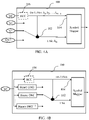
- a shaping encoder 100 can be implement as depicted on Figs. 4A and 4B .
- the shaping encoder 100 is part of the transmitter 10.
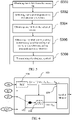
- the shaping encoder 100 comprises a switch 102 and a symbol mapper 104 and is configured to implement a shaping method such as the one whose flowchart is depicted on Fig. 5 .
- the shaping encoder 100 further comprises an ECC (English acronym of "Error-Correcting Code") module 106 also called channel coding module.
- ECC English acronym of "Error-Correcting Code
- the shaping encoder 100 is fed with bits by binary sources SO to S2 m -1 .
- Each source Si with i ⁇ [1; 2 m-1 ] is configured to output bits equal to 0 with a probability p i and thus bits equal to 1 with a probability (1- pi).
- the sources S1 to S2 m -1 are obtained from this single source SO for example by using binary DMs (English acronym of "Distribution Matcher”), namely one per source S1 to S2 m-1 .
- Binary DMs are for example disclosed in the document from Böhnke et al. entitled “Polar coded distribution matching" published in Electron. Lett., vol. 55, no.
- the output of each DMi is considered as a source S i outputting bits equal to 0 with a probability p i .
- (m-1) bits are obtained from the source S0.
- these (m-1) bits are denoted ( b 1 , b 2 ,..., b m -1 ).
- These (m-1) bits form the LSB bits of the symbol. Since, the M-ASK constellation is divided into M /2 sets of two symbols containing the i th and i + M 2 th symbols, 1 ⁇ i ⁇ M 2 , the two symbols that belong to the same set have identical LSB bits. For example with reference to Fig. 3 , the symbols -5 and 3 that belong to set 2 have "10" as LSB bits. Therefore, obtaining (m-1) bits from the source SO makes it possible to select one set among the M/2 sets and thus one source Si.
- one source Si is selected by the switch 102 among the 2 m-1 binary sources responsive to the (m-1) bits obtained from S0. Indeed, there is a one-to-one mapping between each possible binary sequence of (m-1) bits and the 2 m-1 sets (and thus the 2 m -1 sources).
- the index i of the selected set/source is equal to the decimal value D ( b 1 , b 2 , ..., b m -1 ) of the binary sequence ( b 1 , b 2 , ..., b m -1 ) of (m-1) bits incremented by 1, i.e. 1+ D ( b 1 , b 2 , ..., b m -1 ).
- Binary natural labelling is illustrated on Fig. 3 for the 8-ASK constellation.
- a bit b m is obtained from this selected source.
- the obtained bit is the MSB of the symbol.
- the (m-1) bits obtained at S300 control the switch to select one source from which the MSB is outputted.
- the symbol mapper 104 thus generates the symbol to be transmitted corresponding to the binary word formed by the (m-1) obtained at S300 bits as LSB and the selected bit obtained at S306 as MSB.
- the binary word is thus ( b 1 , b 2 , ..., b m -1 , b m ), the LSB being on the left.
- the obtained symbol is transmitted over the communication channel 12 to the receiver 14.
- the steps S300 to S308 may be repeated for a next set of (m-1) bits.
- the shaping encoder 100 of Fig. 4A comprises an ECC module 106 which outputs n sets of (m-1) bits
- each set of (m-1) bits is used independently to select one source Si at step S302 and thus one shaping bit b m .
- the steps S300 to S308 are repeated for each set of (m-1) bits outputted by the ECC module 106.
- the set of index 2 is selected and the switch 102 is thus positioned so as to select the source S2 at S302.
- the bit obtained from S2 at S304 is "1”
- the obtained binary word is "101” which is thus mapped at S306 onto symbol 3 of the constellation. Therefore, the symbol 3 is outputted by the symbol mapper 104 and transmitted at S308.
- the set of index 4 is selected at 302.
- the switch is positioned to the source S4. In the case where the bit obtained from S4 at S304 is "1", then the symbol mapper outputs at S306 the symbol 7 (corresponding to the binary word "111"). In the case where the bit obtained from S4 at S304 is "0", then the symbol mapper outputs at S306 the symbol "-1" (corresponding to the binary word "110").
- the switch selects at S302 the corresponding source as on Fig. 4 , i.e. selects the source of index D ( b 1 , b 2 , ..., b m -1 ) + 1 and the bit obtained at S304 from the selected source is not flipped.
- the switch selects at S302 the source of index M 2 ⁇ D ( b 1 , b 2 , ..., b m -1 ) and the bit obtained at S304 from the selected source is not flipped.
- the various sets are represented in the table below. In this case, only 3 binary sources (S0, S1 and S2) are needed instead of 5.
- the set of index 4 is selected.
- the switch 102 is thus positioned so as to select the source S1 at S302.
- the bit obtained at S304 from S1 is equal to "1”
- it is flip (i.e. changed to 0) by a flipping module 108.
- the symbol mapper outputs the symbol "-1" (corresponding to the binary word "110”).
- the bit obtained at S304 from S1 is equal to "0”
- it is flip (i.e. changed to 1) by the flipping module 108.
- the symbol mapper outputs the symbol "7" (corresponding to the binary word "111").
- the sources S1 to S2 m-2 are obtained from this single source SO by using binary DMs (English acronym of "Distribution Matcher"), one per source S1 to S2 m-2 in the same way as depicted on Fig. 4B .
- the number of distinct binary sources can be reduced by forcing adjacent symbols to have the same probability. For instance, for the 8-ASK p 2 is set equal to pi. Symbol assigned with the same pi selects bits from the same binary source. p x ⁇ p * ⁇ x even in the case where S max is small (e.g. equal to 2). In practice, two additional binary sources in addition to So are sufficient to get most of the shaping gain for the Gaussian channel. Thus, it is possible to achieve near-optimal performance with a low number of binary sources. Limiting the number of binary sources provides several advantages, such as:
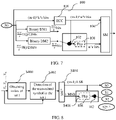
- Fig. 7 depicts a shaping encoder 100 according to a specific embodiment wherein two additional binary sources are obtained from the single binary source S0.
- S max 2 and bits have to be processed packet-wise (e.g. due to latency or system constraints).
- H ( p i ) denote the binary entropy with parameter p i .
- m ⁇ 1 ⁇ k ⁇ r + n ⁇ r 2 H p 1 + H p 2 bits are generated by the source S 0 .
- (m - 1) * k * r bits are obtained and encoded via an error-correcting code module 106.
- the error correcting code module 106 outputs ( m - 1) ⁇ n ⁇ r bits.
- n ⁇ r 2 H p 1 bits and n ⁇ r 2 H p 2 bits are processed by two binary distribution matcher DM1 and DM2.
- DM1 outputs a sequence of n ⁇ r 2 bits where each bit is equal to 0 with a probability p 1
- DM2 outputs a sequence of n ⁇ r 2 bits where each bit is equal to 0 with a probability p 2 .
- the method disclosed with respect to Fig. 5 is thus applied on each of the n sets of m - 1 bits.
- Bit flipping as disclosed on Fig.6 may further be applied depending on the selected source.
- the switch requests n ⁇ r 2 + ⁇ bits from the first DM and n ⁇ r 2 ⁇ ⁇ from the second DM, where ⁇ is a random quantity. In the case where one source has no more bits available, a bit is selected from the other source.
- the transmitter 10 transmits them through several dimensions such as polarization, time, frequency and space.
- the transmitter 10 may group two ASK symbols in a complex symbol, one being the real part and the other the imaginary part.
- the M-ASK modulation is also called QAM modulation.
- the shaping encoder 100 may optionally comprise an ECC module 106 that is used to encode the less significant bits.
- the ECC module is configured to encode these bits with multi-level polar coding.
- the principles of multi-level coding are disclosed below.
- I X Y I B 1 , B 2 , ... , B m ;
- One bit level refers to the channel described by I ( B i ; Y
- the coding rate should be chosen to match I ( B i ; Y
- a back-off which depends on the code used is applied.
- This communication channel can also be characterized by a log likelihood ratio (LLR).
- L y log p y
- x ⁇ S ⁇ ⁇ x ⁇ ⁇ S p y
- the shaping bit b m does not need to be encoded with a channel code.
- multi-level polar coding simply means that each bit level is coded with a polar code with rate I ( Y ; B i
- the block length refers to the size of the polar codes used.
- list decoding is used to decode the polar codes.
- List decoding is disclosed in the document from Tal et al entitled "List decoding of polar codes” published in 2013 in IEEE Transactions on Information Theory, vol. 61, n°5, pages 2213-2226 .
- the list decoder performs MAP decoding. Consequently, the decoders take the LLR as inputs (see Equation (2)), which requires the knowledge of the input distribution to be computed. In other words, the receiver needs to know the values of the p i for list decoding.
- Fig. 8 depicts a flowchart of a decoding method according to a specific embodiment.
- the index i of the set is first obtained. If the selection of the sets is made block-wise via an error-correcting code by the transmitter, then the index i is obtained by channel decoding (i.e. a block of indices of sets are decoded together).
- step S402 once the index i of the set is decoded, one of the two symbols of the set i is detected based on the received y.
- Most channel decoders perform maximum a posteriori (MAP) decoding.
- the detection of the transmitted symbol in the set i may also perform a MAP detection.
- MAP decoding requires knowing the input distribution. In other words, the receiver needs to know the values of the p i for efficient decoding.
- the knowledge of the p i may be used only by the channel decoder.
- step S404 inverse mapping is applied to recover the bits from the detected symbol.
- This step is the inverse of the step S306.
- step S406 the inverse of step 302 applies.
- a switch 102 is positioned to send the MSB bit to the appropriate source.
- inverse binary DMs apply in the case where binary DM where used on the transmitter side.
- bit flipping is applied on the transmitter side at step S406 by flipping module 108.
- the decoded bit is flipped if M 4 + 1 ⁇ D b 1 ⁇ , b 2 ⁇ , ... , b m ⁇ 1 ⁇ + 1 ⁇ M 2 , where b 1 ⁇ , b 2 ⁇ , ... , b m ⁇ 1 ⁇ represent the values of the decoded less significant bits.
- Fig. 9 illustrates schematically an example of hardware architecture of a transmitter 10 according to a specific embodiment.
- the transmitter 10 comprises, connected by a communication bus 110: a processor or CPU (acronym of "Central Processing Unit") 101; a random access memory RAM 112; a read only memory ROM 113; a storage unit 114 such as an hard disk or such as a storage medium reader, e.g. a SD (acronym of "Secure Digital”) card reader; and at least one set of communication interfaces COM 115 enabling the transmitter 10 to transmit and receive data.
- a processor or CPU ascronym of "Central Processing Unit”
- RAM 112 random access memory
- ROM ROM 113 read only memory
- storage unit 114 such as an hard disk or such as a storage medium reader, e.g. a SD (acronym of "Secure Digital") card reader
- at least one set of communication interfaces COM 115 enabling the transmitter 10 to transmit and receive data.
- the processor 111 is capable of executing instructions loaded into the RAM 112 from the ROM 113, from an external memory (such as an SD card), from a storage medium (such as the HDD), or from a communication network. When the transmitter 10 is powered up, the processor 111 is capable of reading instructions from the RAM 112 and executing them. These instructions form a computer program causing the implementation, by the processor 111, of the methods described in relation to Figs. 4A to 7 . The methods described in relation to Figs.
- the transmitter 10 includes electronic circuitry adapted and configured for implementing the methods described in relation to Figs. 4A to 7 .
- Fig. 10 illustrates schematically an example of hardware architecture of a receiver 14 according to a specific embodiment.
- the receiver 14 comprises, connected by a communication bus 210: a processor or CPU (acronym of "Central Processing Unit") 201; a random access memory RAM 202; a read only memory ROM 203; a storage unit 204 such as an hard disk or such as a storage medium reader, e.g. a SD (acronym of "Secure Digital”) card reader; and at least one set of communication interfaces COM 205 enabling the receiver 14 to transmit and receive data.
- a processor or CPU (acronym of "Central Processing Unit") 201
- a random access memory RAM 202 e.g. a hard disk or such as a storage medium reader, e.g. a SD (acronym of "Secure Digital") card reader
- SD Secure Digital
- the processor 201 is capable of executing instructions loaded into the RAM 202 from the ROM 203, from an external memory (such as an SD card), from a storage medium (such as the HDD), or from a communication network.
- the processor 201 is capable of reading instructions from the RAM 202 and executing them.
- These instructions form a computer program causing the implementation, by the processor 201, of the method described in relation to Fig. 8 .
- the receiver 14 includes electronic circuitry adapted and configured for implementing the method described in relation to Fig. 8 .
Landscapes
- Engineering & Computer Science (AREA)
- Computer Networks & Wireless Communication (AREA)
- Signal Processing (AREA)
- Error Detection And Correction (AREA)
- Digital Transmission Methods That Use Modulated Carrier Waves (AREA)
Abstract
Description
- At least one of the present embodiments generally relates to a method for transmitting binary data using a M-ASK constellation (ASK being the English acronym of "Amplitude-Shift Keying"). At least one of the present embodiments also relates to a corresponding transmitter.
- In a communication system, a transmitter is coupled to a receiver by way of a communication channel (e.g. an optical fiber). The transmitter usually comprises an encoder configured to encode the input data, e.g. a bitstream, into symbols belonging to a finite set, called a constellation. One dimensional ASK (English acronym of "Amplitude-Shift Keying") and two dimensional QAM (English acronym of "Quadrature-Amplitude Keying") are examples of such constellations. Here, one dimensional or two dimensional constellations mean that the symbols take value in R or in R2, respectively, R being the set of real numbers.
- These symbols are then transmitted over the communication channel to the receiver. The receiver comprises a decoder configured to decode the received symbols into output data.
- Communication systems in which uniformly distributed symbols are transmitted usually lead to a shaping loss. Therefore, in order to approach the channel capacity, it is known that the transmitter should process the input data to change the probability distribution of the transmitted symbols. More precisely, the input data are processed so that the transmitted symbols have a non-uniform probability distribution that is adapted to the communication channel. This operation, called probabilistic shaping, can provide energy savings also known as shaping gain. For a gaussian channel, it is known that the Maxwell-Boltzmann distribution yields quasi-optimal performance. However, processing input data to fit the Maxwell-Boltzmann distribution is complex to implement.
- It is thus desirable to find a method for transmitting binary data that is easy to implement while being performant and that is also adapted to non-Gaussian channel.
- At least one of the present embodiments generally relates to a method, in a transmitter, for transmitting binary data using a M-ASK constellation divided into M/2 sets of two symbols, each set of index i comprising the i th and i th+M/2 symbols of the M-ASK constellation, where i ∈[1;M/2], and being associated with a probability pi of transmitting the first symbol and a probability 1-pi of transmitting the second symbol of the set and wherein each symbol of the M-ASK constellation is associated with a binary word defined using natural labelling, said method comprising :
- a) obtaining m-1 bits from an equiprobable binary source where m = log2 M;
- b) selecting a binary source in a plurality of binary sources responsive to said m-1 bits, each binary source of index i being associated with a probability of outputting a bit zero equal to pi ;
- c) obtaining one bit from the selected source;
- d) obtaining a symbol of the M-ASK constellation associated with the binary word formed by the m-1 bits as less significant bits and the bit obtained from the selected source as most significant bit ;
- e) transmitting said obtained symbol to a receiver over a communication channel.
- In one embodiment, selecting a binary source in a plurality of binary sources responsive to said m-1 bits comprises :
- determining a decimal value of the binary sequence formed by the m-1 bits ; and
- selecting the binary source whose index equal said decimal value incremented by one.
- In one embodiment, the plurality of binary sources comprises 2m-1 binary sources.
- In one embodiment,
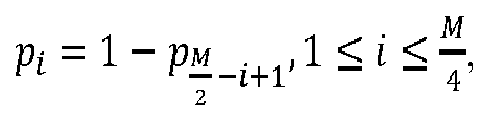
- determining a decimal value D of the binary sequence formed by the m-1 bits ; and
- selecting the binary source whose index equal M/2-D in the case where


- selecting the binary source whose index equal said decimal value incremented by one, otherwise;
- In one embodiment, each binary source of index i in the plurality of binary sources is obtained from the equiprobable binary source by applying binary distribution matching on sequences of

- In one embodiment, the method further comprises :
- encoding r times (m-1)∗k bits obtained from the equiprobable binary source using an error correcting code into (m-1)∗n bits, where n and k are integers ;
- obtaining each binary source of index i in the plurality of binary sources from the equiprobable binary source by applying binary distribution matching on sequences of

- applying a) to e) on each of the r∗n sets of (m-1) bits .
- In one embodiment, the method further comprises obtaining the probabilities pi from a table and transmitting to said receiver at least one index entry indicating the obtained probabilities.
- In one embodiment, the method further comprises estimating the probabilities pi from a predefined communication channel distribution and transmitting said estimated probabilities to said receiver.
- In one embodiment, the method further comprises receiving the probabilities pi from the receiver.
- At least one of the present embodiments generally relates to a transmitter configured to transmit binary data using a M-ASK constellation divided into M/2 sets of two symbols is disclosed, each set of index i comprising the i th and i th+M/2 symbols of the M-ASK constellation, where i ∈[1;M/2], and being associated with a probability pi of transmitting the first symbol of the set and wherein each symbol of the M-ASK constellation is associated with a binary word defined using natural labelling. The transmitter comprising at least one processor configured to :
- a) obtain m-1 bits from an equiprobable binary source where m = log2 M;
- b) select a binary source in a plurality of binary sources responsive to said m-1 bits, each binary source of index i being associated with a probability of outputting a bit zero equal to pi ;
- c) obtain one bit from the selected source;
- d) obtaining a symbol of the M-ASK constellation associated with the binary word formed by the m-1 bits as less significant bits and the bit obtained from the selected source as most significant bit ;
- e) transmit said obtained symbol to a receiver over a communication channel.
- A computer program product is disclosed that comprises program code instructions that can be loaded in a programmable device, the program code instructions causing implementation of the method according to anyone of the previous embodiments the program code instructions are run by the programmable device.
- A storage medium is disclosed that stores a computer program comprising program code instructions, the program code instructions causing implementation of the method according to anyone of the previous embodiments when the program code instructions are read from the storage medium and run by the programmable device.
- The characteristics of the invention will emerge more clearly from a reading of the following description of at least one example of embodiment, said description being produced with reference to the accompanying drawings, among which:
-
Fig. 1 illustrates schematically a communication system according to a specific embodiment; -
Fig. 2 depicts the symbols of an 8-ASK constellation ; -
Fig. 3 illustrates the principles of the division of an M-ASK constellation into M/2 sets of two symbols according to a specific embodiment ; -
Fig. 4A depicts a block diagram of a shaping encoder according to a specific embodiment; -
Fig. 4B depicts a block diagram of a shaping encoder according to another specific embodiment; -
Fig. 5 depicts a flowchart of a transmitting method according to a specific embodiment; -
Fig. 6 depicts a block diagram of a shaping encoder according to another specific embodiment; -
Fig. 7 depicts a block diagram of a shaping encoder according to another specific embodiment; -
Fig. 8 depicts a flowchart of a decoding method according to a specific embodiment; -
Fig. 9 illustrates schematically an example of hardware architecture of a shaping encoder according to a specific embodiment; and -
Fig. 10 illustrates schematically an example of hardware architecture of a decoding device according to a specific embodiment. -
Fig.1 illustrates schematically acommunication system 1 in which the present embodiments may be implemented. Thecommunication system 1 comprises atransmitter 10 and areceiver 14 that are coupled to one another by way of acommunication channel 12. Thetransmitter 10 is fed with input data by at least one equiprobable binary source SO and outputs symbols selected in a given alphabetof symbols. The input data are for example bits of an audio/video bitstream. In an exemplary embodiment, the alphabet is a M-ASK constellation, where M=2m with m being an integer. The symbols of a M-ASK constellations are defined as follows:

Fig. 2 depicts the symbols of an 8-ASK constellation wherein the first symbol is -7 and the last one is 7. In the following, the various embodiments are described with reference to the ASK modulation. It will be appreciated, however, that the present embodiments are not restricted to the ASK modulation. As an example, it may also be used with the QAM modulation. - With reference to
Fig. 1 , let X be a discrete random variable representing the symbols at the input of thecommunication channel 12 with probability distribution p(xi ) = p(Xi = xi ),


- The aim of probabilistic shaping is to process the input such that its probability distribution maximizes, or almost maximizes, the mutual information I(X; Y). Said otherwise, the distribution of the input should be in

- For the M-ASK constellation, p(x) is often chosen as the MB distribution (English acronym of "Maxwell-Boltzmann distribution"). Indeed, in this case, the obtained performance is close to the one obtained with p*(x) (i.e.

- According to a specific embodiment, in order to limit the complexity in the case of M-ASK, the set of possible distributions is limited to one that can be expressed as follows:




Sets Index of the sets Probability values {-7, 1} 1 p 1 {-5, 3} 2 p 2 {-3, 5} 3 p 3 {-1, 7} 4 p 4 - In a first embodiment, the probability values pi are computed offline for a given channel distribution. For example, for a Gaussian distribution of the noise in the channel, the probability values pi are computed offline once and for all and are thus not modified afterwards.
- In a second embodiment, the probability values pi are computed offline for a given range of parameters of the communication channel, and stored in a table that is shared between the
transmitter 10 andreceiver 14. For example, if the channel distribution is Gaussian, the parameter may be the SNR of said communication channel. Therefore, in the table, one predefined set of pi values is associated with each predefined range of SNR values. Thetransmitter 10 thus selects the predefined set of pi values from the table responsive to the current SNR value and informs thereceiver 14 accordingly. - In a third embodiment, the channel distribution is estimated by the
receiver 14 after the reception of pilot symbols. Then, thereceiver 14 optimizes the pi values and feeds them back to thetransmitter 10 by using a signaling channel. Alternatively, thereceiver 14 estimates the channel distribution and sends the estimated channel distribution to thetransmitter 10 which optimizes the pi values and feeds them back to thereceiver 14. The optimization step of the set of pi values may be a linear search, i.e. defining a subset of possible pi values and computing the mutual information associated with the estimated channel distribution. The chosen pi values are the one that maximizes the mutual information. In a variant, the set of pi values is obtained by solving an optimization problem, such as Equation (1), where the following constraints applies on the pi values : p i+M/2 = 1 - pi. - As depicted on
Fig. 3 , in the case of a M-ASK constellation wherein each symbol in the constellation is represented by a binary sequence using natural labelling where the less significant bits are on the left, a shapingencoder 100 can be implement as depicted onFigs. 4A and 4B . The shapingencoder 100 is part of thetransmitter 10. The shapingencoder 100 comprises aswitch 102 and asymbol mapper 104 and is configured to implement a shaping method such as the one whose flowchart is depicted onFig. 5 . Optionally, the shapingencoder 100 further comprises an ECC (English acronym of "Error-Correcting Code")module 106 also called channel coding module. TheECC module 106 usually takes as input k∗(m-1) bits and outputs n∗(m-1) bits where k and n are predefined integer values, e.g. k= 500 and n=1000. The higher n∗(m-1) (for a given ratio k/n), the better the performances. On the other hand, the latency increases with n∗(m-1).
OnFig. 4A , the shapingencoder 100 is fed with bits by binary sources SO to S2 m-1. Let Smax + 1 be the number of distinct binary sources (i.e. including S 0), i.e. Smax =2 m-1. The source SO outputs bits with equal probabilities p(0)=p(1)=1/2. Each source Si with i∈[1; 2m-1] is configured to output bits equal to 0 with a probability pi and thus bits equal to 1 with a probability (1- pi).
OnFig. 4B , the shapingencoder 100 is fed with bits by a single binary sources SO that outputs bits with equal probabilities p(0)=p(1)=1/2. In this case, the sources S1 to S2 m-1 are obtained from this single source SO for example by using binary DMs (English acronym of "Distribution Matcher"), namely one per source S1 to S2m-1. Binary DMs are for example disclosed in the document from Böhnke et al. entitled "Polar coded distribution matching" published in Electron. Lett., vol. 55, no. 9, pp. 537-539, 2019. It will be appreciated, however, that the present embodiments are not restricted to this specific method for obtaining the sources S1 to S2 m-1.
In the case where the shapingencoder 100 ofFig. 4B does not comprise an ECC module, for each given source Si, DMi takes as input

- In the case where the shaping
encoder 100 ofFig. 4B comprises anECC module 106 which encodes k∗(m-1) bits into n∗(m-1) bits, and repeats this operation r times, each DMi takes as input

- Back to
Fig. 5 , at step S300, (m-1) bits are obtained from the source S0. In the following these (m-1) bits are denoted (b 1,b 2,...,b m-1). These (m-1) bits form the LSB bits of the symbol. Since, the M-ASK constellation is divided into M/2 sets of two symbols containing the ith and

Fig. 3 , the symbols -5 and 3 that belong to set2 have "10" as LSB bits. Therefore, obtaining (m-1) bits from the source SO makes it possible to select one set among the M/2 sets and thus one source Si. - At step S302, one source Si is selected by the
switch 102 among the 2m-1 binary sources responsive to the (m-1) bits obtained from S0. Indeed, there is a one-to-one mapping between each possible binary sequence of (m-1) bits and the 2m-1 sets (and thus the 2 m-1 sources). The index i of the selected set/source is equal to the decimal value D(b 1, b 2, ..., b m-1) of the binary sequence (b 1, b 2, ..., b m-1) of (m-1) bits incremented by 1, i.e. 1+ D(b 1, b 2, ..., b m-1). Each symbol in the constellation being represented by a binary sequence using natural labelling with the less significant bits on the left, thevalue 
Fig. 3 for the 8-ASK constellation. - At step S304, a bit bm , called shaping bit, is obtained from this selected source. The obtained bit is the MSB of the symbol. Thus, the (m-1) bits obtained at S300 control the switch to select one source from which the MSB is outputted.
- At step S306, the
symbol mapper 104 thus generates the symbol to be transmitted corresponding to the binary word formed by the (m-1) obtained at S300 bits as LSB and the selected bit obtained at S306 as MSB. The binary word is thus (b 1, b 2, ..., b m-1, bm ), the LSB being on the left. - At step S308, the obtained symbol is transmitted over the
communication channel 12 to thereceiver 14. The steps S300 to S308 may be repeated for a next set of (m-1) bits.
In the case where the shapingencoder 100 ofFig. 4A comprises anECC module 106 which outputs n sets of (m-1) bits, each set of (m-1) bits is used independently to select one source Si at step S302 and thus one shaping bit bm. Said otherwise, the steps S300 to S308 are repeated for each set of (m-1) bits outputted by theECC module 106. - An example is provided below for M=8 and m=3. In this case the various sets are defined in the table below.
Sets Index of the sets (m-1) LSB bits Selected source {-7, 1} 1 00 S1 {-5, 3} 2 10 S2 {-3, 5} 3 01 S3 {-1, 7} 4 11 S4 - From two bits "10"obtained from S0 at S300, the set of
index 2 is selected and theswitch 102 is thus positioned so as to select the source S2 at S302. In the case where the bit obtained from S2 at S304 is "1", the obtained binary word is "101" which is thus mapped at S306 ontosymbol 3 of the constellation. Therefore, thesymbol 3 is outputted by thesymbol mapper 104 and transmitted at S308. - In another example, wherein the two bits obtained at S300 from S0 are "11", the set of index 4 is selected at 302. The switch is positioned to the source S4. In the case where the bit obtained from S4 at S304 is "1", then the symbol mapper outputs at S306 the symbol 7 (corresponding to the binary word "111"). In the case where the bit obtained from S4 at S304 is "0", then the symbol mapper outputs at S306 the symbol "-1" (corresponding to the binary word "110").
- For some channels, such as the Gaussian channel, p*(x) is symmetric. Consequently,

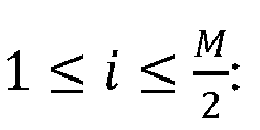
Fig. 3 , p3=1-p2 and p4=1-p1. Taking into account this symmetry, the shapingencoder 100 ofFig.4A may be further simplified as depicted onFig. 6 wherein the number of binary sources is divided by two and bit flipping is used when some sources are selected. In this case, Smax=2m-2. Let b 1, b 2, ..., b m-1 be the m - 1 bits obtained at S300 from the binary source S0. If
Fig. 4 , i.e. selects the source of index D(b 1, b 2, ..., b m-1) + 1 and the bit obtained at S304 from the selected source is not flipped. If

index 
An example is provided below for M=8 and m=3. In this case the various sets are represented in the table below. In this case, only 3 binary sources (S0, S1 and S2) are needed instead of 5.Sets Index of the sets (m-1) LSB bits Selected source {-7, 1} 1 00 S1 {-5, 3} 2 10 S2 {-3, 5} 3 01 S2 (followed by flipping) {-1, 7} 4 11 S1 (followed by flipping) index 2 is selected and theswitch 102 is thus positioned so as to select the source S2 at S302. In the case where the bit obtained from S2 at S304 is "1", the obtained binary word is "101" which is thus mapped at S306 ontosymbol 3 of the constellation. Therefore, thesymbol 3 is output by thesymbol mapper 104 and transmitted at S308. - In another example wherein the two bits obtained at S300 from S0 are "11", then the set of index 4 is selected. The
switch 102 is thus positioned so as to select the source S1 at S302. In the case where the bit obtained at S304 from S1 is equal to "1", it is flip (i.e. changed to 0) by a flippingmodule 108. Finally, the symbol mapper outputs the symbol "-1" (corresponding to the binary word "110"). In the case where the bit obtained at S304 from S1 is equal to "0", it is flip (i.e. changed to 1) by the flippingmodule 108. Finally, the symbol mapper outputs the symbol "7" (corresponding to the binary word "111"). Thus, bit flipping only applies when the sets ofindices 3 and 4 are selected.
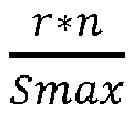
In a variant (not represented onFig.6 ), the shapingencoder 100 is fed with bits by a single binary sources SO that outputs bits with equal probabilities p(0)=p(1)=1/2. In this case, the sources S1 to S2m-2 are obtained from this single source SO by using binary DMs (English acronym of "Distribution Matcher"), one per source S1 to S2m-2 in the same way as depicted onFig. 4B . Thus, in the case where the shaping encoder does not comprise an ECC module, for each given source Si, DMi takes as input

- In the case where the shaping encoder comprises an ECC module which encodes k*(m-1) bits into n*(m-1) bits, and repeats this operation r times, each DMi takes as input

- For further complexity reduction, the number of distinct binary sources can be reduced by forcing adjacent symbols to have the same probability. For instance, for the 8-ASK p2 is set equal to pi. Symbol assigned with the same pi selects bits from the same binary source.

- reducing the complexity (in terms of number of operations required) of the shaping encoder and thus of the transmitter ;
- reducing the complexity for the optimization of the probabilities ;
- reducing the signaling between the transmitter and the receiver when the transmitter first signals the pi values ; and
- reducing the size of the table when both transmitter and receiver obtain the pi values from a table.
- In general, only a single equiprobable binary source SO is available. The additional binary sources are thus obtained from the single binary source S0 as depicted on
Fig. 4B .Fig. 7 depicts a shapingencoder 100 according to a specific embodiment wherein two additional binary sources are obtained from the single binary source S0. In this embodiment Smax=2 and bits have to be processed packet-wise (e.g. due to latency or system constraints). Let H(pi ) denote the binary entropy with parameter pi . First,
code module 106. The error correctingcode module 106 outputs (m - 1) ∗ n ∗ r bits. In parallel,


code module 106, controls theswitch 102 to select one shaping bit bm at the output of the corresponding DM. The method disclosed with respect toFig. 5 is thus applied on each of the n sets of m - 1 bits. Bit flipping as disclosed onFig.6 may further be applied depending on the selected source. - It is possible that the switch requests


- Once the M-ASK symbols are obtained using any of the previously described shaping encoder as described with respect to
Figs 4A to 7 , thetransmitter 10 transmits them through several dimensions such as polarization, time, frequency and space. For example, thetransmitter 10 may group two ASK symbols in a complex symbol, one being the real part and the other the imaginary part. In this case, the M-ASK modulation is also called QAM modulation. - In the various embodiments, the shaping
encoder 100 may optionally comprise anECC module 106 that is used to encode the less significant bits. In an example, the ECC module is configured to encode these bits with multi-level polar coding. The principles of multi-level coding are disclosed below.
Using a chain rule, the mutual information between the input X and the output Y of a communication channel can be expressed as follows :
- One bit level refers to the channel described by I(Bi ; Y|B 1, ..., B i-1 ). When a binary code is used to transmit information over this ith level the coding rate should be chosen to match I(Bi ; Y|B 1, ..., B i-1). In practice, a back-off which depends on the code used is applied. This communication channel can also be characterized by a log likelihood ratio (LLR).
- Letbe the set of symbols of the constellation obtained with Bi = 0 and
 with Bi = 1, given that B 1 = b 1, ..., B i-1 = b i-1. Given a received symbol y, the LLR is defined as follows:

- Since the bits on the first levels remain equiprobable, we have p(Bi = 1|B 1 = b 1, ..., B i-1 = b i-1) = p(Bi = 0|B 1 = b 1, ..., B i-1 = b i-1) = 0.5 and the mutual information is computed as follows:

p(Bm = 1|B 1 = b 1, ..., B m-1 = b m-1) = pi and
p(Bm = 0|B 1 = b 1, ..., B m-1 = b m-1) = 1 - pi and the mutual information is computed as follows :
- For the range of SNR considered, the shaping bit bm does not need to be encoded with a channel code. The mutual information I(Y; Bm |B 1, ... ..., B m-1) equals the entropy of the corresponding level, i.e. the communication channel is "clean". This is why the shaping bit bm is not encoded with a channel code in the embodiments previously disclosed. Consequently, the value of k on
Fig. 7 may be chosen as k =
- Then, multi-level polar coding simply means that each bit level is coded with a polar code with rate I(Y; Bi |B 1 , ..., B i-1). The block length refers to the size of the polar codes used.
- On the receiver side, list decoding is used to decode the polar codes. List decoding is disclosed in the document from Tal et al entitled "List decoding of polar codes" published in 2013 in IEEE Transactions on Information Theory, vol. 61, n°5, pages 2213-2226. The list decoder performs MAP decoding. Consequently, the decoders take the LLR as inputs (see Equation (2)), which requires the knowledge of the input distribution to be computed. In other words, the receiver needs to know the values of the pi for list decoding.
-
Fig. 8 depicts a flowchart of a decoding method according to a specific embodiment. - At a step S400, the index i of the set, thus of the source selected at step S302 on the transmitter side, is first obtained. If the selection of the sets is made block-wise via an error-correcting code by the transmitter, then the index i is obtained by channel decoding (i.e. a block of indices of sets are decoded together).
- At step S402, once the index i of the set is decoded, one of the two symbols of the set i is detected based on the received y. Most channel decoders perform maximum a posteriori (MAP) decoding. The detection of the transmitted symbol in the set i may also perform a MAP detection. MAP decoding requires knowing the input distribution. In other words, the receiver needs to know the values of the pi for efficient decoding.
- In some cases, it is sufficient to perform maximum likelihood (ML) detection in the set i (because the reliability is high enough such that taking into account the a priori probabilities is not needed). As a result, the knowledge of the pi may be used only by the channel decoder.
- At step S404, inverse mapping is applied to recover the bits from the detected symbol. This step is the inverse of the step S306. At step S406, the inverse of step 302 applies. Thus, a
switch 102 is positioned to send the MSB bit to the appropriate source. Possibly, inverse binary DMs apply in the case where binary DM where used on the transmitter side. - In the case where bit flipping is applied on the transmitter side, bit flipping is applied on the receiver side at step S406 by flipping
module 108. The decoded bit is flipped if

-
Fig. 9 illustrates schematically an example of hardware architecture of atransmitter 10 according to a specific embodiment.
Thetransmitter 10 comprises, connected by a communication bus 110: a processor or CPU (acronym of "Central Processing Unit") 101; a randomaccess memory RAM 112; a read onlymemory ROM 113; astorage unit 114 such as an hard disk or such as a storage medium reader, e.g. a SD (acronym of "Secure Digital") card reader; and at least one set ofcommunication interfaces COM 115 enabling thetransmitter 10 to transmit and receive data.
Theprocessor 111 is capable of executing instructions loaded into theRAM 112 from theROM 113, from an external memory (such as an SD card), from a storage medium (such as the HDD), or from a communication network. When thetransmitter 10 is powered up, theprocessor 111 is capable of reading instructions from theRAM 112 and executing them. These instructions form a computer program causing the implementation, by theprocessor 111, of the methods described in relation toFigs. 4A to 7 .
The methods described in relation toFigs. 4A to 7 may be implemented in software form by the execution of the set of instructions by a programmable machine, for example a DSP (acronym of "Digital Signal Processor"), a microcontroller or a GPU (acronym of "Graphics Processing Unit"), or be implemented in hardware form by a machine or a dedicated component (chip or chipset), for example an FPGA (acronym of "Field-Programmable Gate Array") or an ASIC (acronym of "Application-Specific Integrated Circuit"). In general, thetransmitter 10 includes electronic circuitry adapted and configured for implementing the methods described in relation toFigs. 4A to 7 . -
Fig. 10 illustrates schematically an example of hardware architecture of areceiver 14 according to a specific embodiment.
Thereceiver 14 comprises, connected by a communication bus 210: a processor or CPU (acronym of "Central Processing Unit") 201; a randomaccess memory RAM 202; a read onlymemory ROM 203; astorage unit 204 such as an hard disk or such as a storage medium reader, e.g. a SD (acronym of "Secure Digital") card reader; and at least one set ofcommunication interfaces COM 205 enabling thereceiver 14 to transmit and receive data.
Theprocessor 201 is capable of executing instructions loaded into theRAM 202 from theROM 203, from an external memory (such as an SD card), from a storage medium (such as the HDD), or from a communication network. When thereceiver 14 is powered up, theprocessor 201 is capable of reading instructions from theRAM 202 and executing them. These instructions form a computer program causing the implementation, by theprocessor 201, of the method described in relation toFig. 8 . The method described in relation toFig. 8 may be implemented in software form by the execution of the set of instructions by a programmable machine, for example a DSP (acronym of "Digital Signal Processor"), a microcontroller or a GPU (acronym of "Graphics Processing Unit"), or be implemented in hardware form by a machine or a dedicated component (chip or chipset), for example an FPGA (acronym of "Field-Programmable Gate Array") or an ASIC (acronym of "Application-Specific Integrated Circuit"). In general, thereceiver 14 includes electronic circuitry adapted and configured for implementing the method described in relation toFig. 8 .
Claims (12)
- A method, in a transmitter, for transmitting binary data using a M-ASK constellation divided into M/2 sets of two symbols, each set of index i comprising the i th and i th+M/2 symbols of the M-ASK constellation, where i ∈[1;M/2], and being associated with a probability pi of transmitting the first symbol of the set and a probability 1-pi of transmitting the second symbol of the set and wherein each symbol of the M-ASK constellation is associated with a binary word defined using natural labelling, said method comprising :a) obtaining (S300) m-1 bits from an equiprobable binary source where m = log2 M;b) selecting (S302) a binary source in a plurality of binary sources responsive to said m-1 bits, each binary source of index i being associated with a probability of outputting a bit zero equal to pi ;c) obtaining (S304) one bit from the selected source;d) obtaining (S306) a symbol of the M-ASK constellation associated with the binary word formed by the m-1 bits as less significant bits and the bit obtained from the selected source as most significant bit ;e) transmitting (S308) said obtained symbol to a receiver over a communication channel.
- The method according to claim 1, wherein selecting (S302) a binary source in a plurality of binary sources responsive to said m-1 bits comprises :- determining a decimal value of the binary sequence formed by the m-1 bits ; and- selecting the binary source whose index equal said decimal value incremented by one.
- The method according to claim 1 or 2 wherein the plurality of binary sources comprises 2m-1 binary sources.
- The method according to claim 3, wherein,
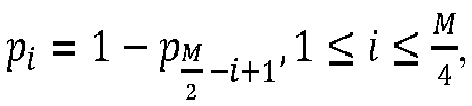 - determining a decimal value D of the binary sequence formed by the m-1 bits ; and- selecting the binary source whose index equal M/2-D in the case where
 - selecting the binary source whose index equal said decimal value incremented by one, otherwise;and wherein, in the case where the binary source whose index equal M/2-D is selected, the bit obtained from the selected source is flipped before obtaining (S306) a symbol of the M-ASK constellation.
 - The method according to any one of claims 1 to 4, wherein each binary source of index i in the plurality of binary sources is obtained from the equiprobable binary source by applying binary distribution matching on sequences of

- The method according to any one of claims 1 to 4, further comprising :- encoding r times (m-1)*k bits obtained from the equiprobable binary source using an error correcting code into (m-1)*n bits, where n and k are integers ;- obtaining each binary source of index i in the plurality of binary sources from the equiprobable binary source by applying binary distribution matching on sequences of
 - applying a) to e) on each of the n sets of (m-1) bits .
 - The method according to any one of claims 5 to 6, further comprising obtaining the probabilities pi from a table and transmitting to said receiver at least one index entry indicating the obtained probabilities.
- The method according to any one of claims 5 to 6, further comprising estimating the probabilities pi from a predefined communication channel distribution and transmitting said estimated probabilities to said receiver.
- The method according to any one of claims 5 to 6, further comprising receiving the probabilities pi from the receiver.
- A transmitter configured to transmit binary data using a M-ASK constellation divided into M/2 sets of two symbols, each set of index i comprising the i th and i th+M/2 symbols of the M-ASK constellation, where i ∈[1;M/2], and being associated with a probability pi of transmitting the first symbol of the set and wherein each symbol of the M-ASK constellation is associated with a binary word defined using natural labelling, said transmitter comprising at least one processor configured to :a) obtain (S300) m-1 bits from an equiprobable binary source where m = log2 M;b) select (S302) a binary source in a plurality of binary sources responsive to said m-1 bits, each binary source of index i being associated with a probability of outputting a bit zero equal to pi ;c) obtain (S304) one bit from the selected source;d) obtain (S306) a symbol of the M-ASK constellation associated with the binary word formed by the m-1 bits as less significant bits and the bit obtained from the selected source as most significant bit ;e) transmit (S308) said obtained symbol to a receiver over a communication channel.
- A computer program product comprising program code instructions that can be loaded in a programmable device, the program code instructions causing implementation of the method according to any one of claims 1 to 9 when the program code instructions are run by the programmable device.
- A storage medium storing a computer program comprising program code instructions, the program code instructions causing implementation of the method according to any one of claims 1 to 9 when the program code instructions are read from the storage medium and run by the programmable device.
Priority Applications (6)
| Application Number | Priority Date | Filing Date | Title |
|---|---|---|---|
| EP21305730.0A EP4099651B1 (en) | 2021-06-01 | 2021-06-01 | Method and device for transmitting binary data |
| US18/289,393 US12381765B2 (en) | 2021-06-01 | 2022-01-13 | Method and device for transmitting binary data |
| CN202280035827.9A CN117356077A (en) | 2021-06-01 | 2022-01-13 | Method and apparatus for sending binary data |
| JP2023574963A JP7618069B2 (en) | 2021-06-01 | 2022-01-13 | Method and device for transmitting binary data - Patents.com |
| PCT/JP2022/001872 WO2022254774A1 (en) | 2021-06-01 | 2022-01-13 | Method and device for transmitting binary data |
| EP22305530.2A EP4099652B1 (en) | 2021-06-01 | 2022-04-13 | Method and device for transmitting binary data |
Applications Claiming Priority (1)
| Application Number | Priority Date | Filing Date | Title |
|---|---|---|---|
| EP21305730.0A EP4099651B1 (en) | 2021-06-01 | 2021-06-01 | Method and device for transmitting binary data |
Publications (2)
| Publication Number | Publication Date |
|---|---|
| EP4099651A1 true EP4099651A1 (en) | 2022-12-07 |
| EP4099651B1 EP4099651B1 (en) | 2024-03-27 |
Family
ID=76375013
Family Applications (2)
| Application Number | Title | Priority Date | Filing Date |
|---|---|---|---|
| EP21305730.0A Active EP4099651B1 (en) | 2021-06-01 | 2021-06-01 | Method and device for transmitting binary data |
| EP22305530.2A Active EP4099652B1 (en) | 2021-06-01 | 2022-04-13 | Method and device for transmitting binary data |
Family Applications After (1)
| Application Number | Title | Priority Date | Filing Date |
|---|---|---|---|
| EP22305530.2A Active EP4099652B1 (en) | 2021-06-01 | 2022-04-13 | Method and device for transmitting binary data |
Country Status (5)
| Country | Link |
|---|---|
| US (1) | US12381765B2 (en) |
| EP (2) | EP4099651B1 (en) |
| JP (1) | JP7618069B2 (en) |
| CN (1) | CN117356077A (en) |
| WO (1) | WO2022254774A1 (en) |
Cited By (1)
| Publication number | Priority date | Publication date | Assignee | Title |
|---|---|---|---|---|
| WO2023199554A1 (en) * | 2022-04-13 | 2023-10-19 | Mitsubishi Electric Corporation | Method and device for transmitting binary data |
Citations (1)
| Publication number | Priority date | Publication date | Assignee | Title |
|---|---|---|---|---|
| WO2021078397A1 (en) * | 2019-10-25 | 2021-04-29 | Huawei Technologies Co., Ltd. | An apparatus for multi-level encoding |
Family Cites Families (10)
| Publication number | Priority date | Publication date | Assignee | Title |
|---|---|---|---|---|
| US20030227867A1 (en) * | 2002-06-07 | 2003-12-11 | Fuqin Xiong | M-ary ask OFDM |
| US11108471B2 (en) * | 2010-04-19 | 2021-08-31 | Ali Abdi | System and method for data transmission via acoustic channels |
| EP3352401B1 (en) * | 2017-01-18 | 2023-09-27 | Technische Universität München | Methods of converting or reconverting a data signal and method and system for data transmission and/or data reception |
| FR3076410B1 (en) * | 2017-12-29 | 2020-09-11 | Avantix | BLIND DEMODULATION OR RESEARCH SYSTEM OF THE CHARACTERISTICS OF DIGITAL TELECOMMUNICATION SIGNALS |
| US10355908B1 (en) * | 2018-03-06 | 2019-07-16 | Ibiquity Digital Corporation | CSI estimation and LLR approximation for QAM demodulation in FM HD radio receivers |
| KR20240059000A (en) * | 2018-07-02 | 2024-05-07 | 프라운호퍼 게젤샤프트 쭈르 푀르데룽 데어 안겐반텐 포르슝 에. 베. | Entropy coding of transform coefficients suitable for dependent scalar quantization |
| US10944504B2 (en) | 2018-08-02 | 2021-03-09 | Nokia Solutions And Networks Oy | Transmission of probabilistically shaped amplitudes using partially anti-symmetric amplitude labels |
| EP3767469A1 (en) * | 2019-07-15 | 2021-01-20 | Nokia Solutions and Networks Oy | Data communication |
| US11012187B1 (en) | 2020-03-04 | 2021-05-18 | Fujitsu Limited | Error correction in optical networks with probabilistic shaping and symbol rate optimization |
| US12047575B2 (en) * | 2020-12-03 | 2024-07-23 | Intel Corporation | Methods, apparatus, and articles of manufacture for multi-symbol equiprobable mode entropy coding |
-
2021
- 2021-06-01 EP EP21305730.0A patent/EP4099651B1/en active Active
-
2022
- 2022-01-13 WO PCT/JP2022/001872 patent/WO2022254774A1/en not_active Ceased
- 2022-01-13 CN CN202280035827.9A patent/CN117356077A/en active Pending
- 2022-01-13 JP JP2023574963A patent/JP7618069B2/en active Active
- 2022-01-13 US US18/289,393 patent/US12381765B2/en active Active
- 2022-04-13 EP EP22305530.2A patent/EP4099652B1/en active Active
Patent Citations (1)
| Publication number | Priority date | Publication date | Assignee | Title |
|---|---|---|---|---|
| WO2021078397A1 (en) * | 2019-10-25 | 2021-04-29 | Huawei Technologies Co., Ltd. | An apparatus for multi-level encoding |
Non-Patent Citations (5)
| Title |
|---|
| BOCHERER GEORG ET AL: "Bandwidth Efficient and Rate-Matched Low-Density Parity-Check Coded Modulation", IEEE TRANSACTIONS ON COMMUNICATIONS, IEEE SERVICE CENTER, PISCATAWAY, NJ. USA, vol. 63, no. 12, 1 December 2015 (2015-12-01), pages 4651 - 4665, XP011593618, ISSN: 0090-6778, [retrieved on 20151215], DOI: 10.1109/TCOMM.2015.2494016 * |
| BOCHERER GEORG ET AL: "Probabilistic Shaping and Forward Error Correction for Fiber-Optic Communication Systems", JOURNAL OF LIGHTWAVE TECHNOLOGY, IEEE, USA, vol. 37, no. 2, 15 January 2019 (2019-01-15), pages 230 - 244, XP011710942, ISSN: 0733-8724, [retrieved on 20190219], DOI: 10.1109/JLT.2019.2895770 * |
| BOHNKE ET AL.: "Polar coded distribution matching", ELECTRON. LETT., vol. 55, no. 9, 2019, pages 537 - 539, XP006075450, DOI: 10.1049/el.2019.0230 |
| ISCAN ONURCAN ET AL: "Probabilistically Shaped Multi-Level Coding with Polar Codes for Fading Channels", 2018 IEEE GLOBECOM WORKSHOPS (GC WKSHPS), IEEE, 9 December 2018 (2018-12-09), pages 1 - 5, XP033519091, DOI: 10.1109/GLOCOMW.2018.8644197 * |
| TAL ET AL.: "List decoding of polar codes", IEEE TRANSACTIONS ON INFORMATION THEORY, vol. 61, no. 5, 2013, pages 2213 - 2226, XP011578805, DOI: 10.1109/TIT.2015.2410251 |
Cited By (1)
| Publication number | Priority date | Publication date | Assignee | Title |
|---|---|---|---|---|
| WO2023199554A1 (en) * | 2022-04-13 | 2023-10-19 | Mitsubishi Electric Corporation | Method and device for transmitting binary data |
Also Published As
| Publication number | Publication date |
|---|---|
| US12381765B2 (en) | 2025-08-05 |
| JP2024507299A (en) | 2024-02-16 |
| US20240243953A1 (en) | 2024-07-18 |
| EP4099652A1 (en) | 2022-12-07 |
| CN117356077A (en) | 2024-01-05 |
| EP4099651B1 (en) | 2024-03-27 |
| WO2022254774A1 (en) | 2022-12-08 |
| JP7618069B2 (en) | 2025-01-20 |
| EP4099652B1 (en) | 2024-08-14 |
Similar Documents
| Publication | Publication Date | Title |
|---|---|---|
| US12081274B1 (en) | Probabilistic shaping techniques for high performance coherent optical transceivers | |
| KR102773949B1 (en) | Device for multi-level encoding | |
| EP2429083A1 (en) | Method and device for coded modulation | |
| EP4195546B1 (en) | Coding method and device | |
| US20190342138A1 (en) | Methods of converting or reconverting a data signal and method and system for data transmission and/or data reception | |
| US10892848B2 (en) | Devices and methods implementing polar codes | |
| US10742354B2 (en) | Optical receiver, optical transmission device, and method for optical receiver | |
| US7665008B2 (en) | Method and apparatus for implementing a low density parity check code in a wireless system | |
| EP4099652A1 (en) | Method and device for transmitting binary data | |
| US20250202743A1 (en) | Method and device for transmitting binary data | |
| US20220038117A1 (en) | Device and method for transmitting data by using multilevel coding, and communication system | |
| US20250167916A1 (en) | Method and transmitter for transmitting data using constellation | |
| US11770289B2 (en) | Communication device for transmitting data by using multilevel coding, and communication system | |
| JP7506795B1 (en) | Error correction method, error correction circuit, and communication system | |
| Elbaz et al. | Iterative decoding of product codes with a priori information over a Gaussian channel for still image transmission | |
| US20250023662A1 (en) | Modulation using variable-length bit mappings | |
| US8705662B2 (en) | Soft decision method and associated signal receiving system | |
| RU2801163C1 (en) | Device for multilevel coding | |
| KR20200025059A (en) | Decoder for multi-error-correction of sec-code and the decoding method thereof | |
| WO2024091727A1 (en) | Decoding correlated received multi-symbol data by guessing noise effect | |
| WO2026084865A1 (en) | Compression of soft metrics in ecc decoders | |
| CN120675671A (en) | Coding modulation probability shaping method and related device |
Legal Events
| Date | Code | Title | Description |
|---|---|---|---|
| PUAI | Public reference made under article 153(3) epc to a published international application that has entered the european phase |
Free format text: ORIGINAL CODE: 0009012 |
|
| STAA | Information on the status of an ep patent application or granted ep patent |
Free format text: STATUS: THE APPLICATION HAS BEEN PUBLISHED |
|
| AK | Designated contracting states |
Kind code of ref document: A1 Designated state(s): AL AT BE BG CH CY CZ DE DK EE ES FI FR GB GR HR HU IE IS IT LI LT LU LV MC MK MT NL NO PL PT RO RS SE SI SK SM TR |
|
| STAA | Information on the status of an ep patent application or granted ep patent |
Free format text: STATUS: REQUEST FOR EXAMINATION WAS MADE |
|
| 17P | Request for examination filed |
Effective date: 20230605 |
|
| RBV | Designated contracting states (corrected) |
Designated state(s): AL AT BE BG CH CY CZ DE DK EE ES FI FR GB GR HR HU IE IS IT LI LT LU LV MC MK MT NL NO PL PT RO RS SE SI SK SM TR |
|
| GRAP | Despatch of communication of intention to grant a patent |
Free format text: ORIGINAL CODE: EPIDOSNIGR1 |
|
| STAA | Information on the status of an ep patent application or granted ep patent |
Free format text: STATUS: GRANT OF PATENT IS INTENDED |
|
| INTG | Intention to grant announced |
Effective date: 20231115 |
|
| P01 | Opt-out of the competence of the unified patent court (upc) registered |
Effective date: 20231228 |
|
| GRAS | Grant fee paid |
Free format text: ORIGINAL CODE: EPIDOSNIGR3 |
|
| GRAA | (expected) grant |
Free format text: ORIGINAL CODE: 0009210 |
|
| STAA | Information on the status of an ep patent application or granted ep patent |
Free format text: STATUS: THE PATENT HAS BEEN GRANTED |
|
| AK | Designated contracting states |
Kind code of ref document: B1 Designated state(s): AL AT BE BG CH CY CZ DE DK EE ES FI FR GB GR HR HU IE IS IT LI LT LU LV MC MK MT NL NO PL PT RO RS SE SI SK SM TR |
|
| REG | Reference to a national code |
Ref country code: GB Ref legal event code: FG4D |
|
| REG | Reference to a national code |
Ref country code: CH Ref legal event code: EP |
|
| REG | Reference to a national code |
Ref country code: DE Ref legal event code: R096 Ref document number: 602021010925 Country of ref document: DE |
|
| REG | Reference to a national code |
Ref country code: IE Ref legal event code: FG4D |
|
| PG25 | Lapsed in a contracting state [announced via postgrant information from national office to epo] |
Ref country code: LT Free format text: LAPSE BECAUSE OF FAILURE TO SUBMIT A TRANSLATION OF THE DESCRIPTION OR TO PAY THE FEE WITHIN THE PRESCRIBED TIME-LIMIT Effective date: 20240327 |
|
| REG | Reference to a national code |
Ref country code: LT Ref legal event code: MG9D |
|
| PG25 | Lapsed in a contracting state [announced via postgrant information from national office to epo] |
Ref country code: GR Free format text: LAPSE BECAUSE OF FAILURE TO SUBMIT A TRANSLATION OF THE DESCRIPTION OR TO PAY THE FEE WITHIN THE PRESCRIBED TIME-LIMIT Effective date: 20240628 |
|
| PG25 | Lapsed in a contracting state [announced via postgrant information from national office to epo] |
Ref country code: HR Free format text: LAPSE BECAUSE OF FAILURE TO SUBMIT A TRANSLATION OF THE DESCRIPTION OR TO PAY THE FEE WITHIN THE PRESCRIBED TIME-LIMIT Effective date: 20240327 Ref country code: RS Free format text: LAPSE BECAUSE OF FAILURE TO SUBMIT A TRANSLATION OF THE DESCRIPTION OR TO PAY THE FEE WITHIN THE PRESCRIBED TIME-LIMIT Effective date: 20240627 |
|
| PG25 | Lapsed in a contracting state [announced via postgrant information from national office to epo] |
Ref country code: RS Free format text: LAPSE BECAUSE OF FAILURE TO SUBMIT A TRANSLATION OF THE DESCRIPTION OR TO PAY THE FEE WITHIN THE PRESCRIBED TIME-LIMIT Effective date: 20240627 Ref country code: NO Free format text: LAPSE BECAUSE OF FAILURE TO SUBMIT A TRANSLATION OF THE DESCRIPTION OR TO PAY THE FEE WITHIN THE PRESCRIBED TIME-LIMIT Effective date: 20240627 Ref country code: LT Free format text: LAPSE BECAUSE OF FAILURE TO SUBMIT A TRANSLATION OF THE DESCRIPTION OR TO PAY THE FEE WITHIN THE PRESCRIBED TIME-LIMIT Effective date: 20240327 Ref country code: HR Free format text: LAPSE BECAUSE OF FAILURE TO SUBMIT A TRANSLATION OF THE DESCRIPTION OR TO PAY THE FEE WITHIN THE PRESCRIBED TIME-LIMIT Effective date: 20240327 Ref country code: GR Free format text: LAPSE BECAUSE OF FAILURE TO SUBMIT A TRANSLATION OF THE DESCRIPTION OR TO PAY THE FEE WITHIN THE PRESCRIBED TIME-LIMIT Effective date: 20240628 Ref country code: FI Free format text: LAPSE BECAUSE OF FAILURE TO SUBMIT A TRANSLATION OF THE DESCRIPTION OR TO PAY THE FEE WITHIN THE PRESCRIBED TIME-LIMIT Effective date: 20240327 Ref country code: BG Free format text: LAPSE BECAUSE OF FAILURE TO SUBMIT A TRANSLATION OF THE DESCRIPTION OR TO PAY THE FEE WITHIN THE PRESCRIBED TIME-LIMIT Effective date: 20240327 |
|
| REG | Reference to a national code |
Ref country code: NL Ref legal event code: MP Effective date: 20240327 |
|
| PG25 | Lapsed in a contracting state [announced via postgrant information from national office to epo] |
Ref country code: SE Free format text: LAPSE BECAUSE OF FAILURE TO SUBMIT A TRANSLATION OF THE DESCRIPTION OR TO PAY THE FEE WITHIN THE PRESCRIBED TIME-LIMIT Effective date: 20240327 Ref country code: LV Free format text: LAPSE BECAUSE OF FAILURE TO SUBMIT A TRANSLATION OF THE DESCRIPTION OR TO PAY THE FEE WITHIN THE PRESCRIBED TIME-LIMIT Effective date: 20240327 |
|
| PG25 | Lapsed in a contracting state [announced via postgrant information from national office to epo] |
Ref country code: NL Free format text: LAPSE BECAUSE OF FAILURE TO SUBMIT A TRANSLATION OF THE DESCRIPTION OR TO PAY THE FEE WITHIN THE PRESCRIBED TIME-LIMIT Effective date: 20240327 |
|
| REG | Reference to a national code |
Ref country code: AT Ref legal event code: MK05 Ref document number: 1670967 Country of ref document: AT Kind code of ref document: T Effective date: 20240327 |
|
| PG25 | Lapsed in a contracting state [announced via postgrant information from national office to epo] |
Ref country code: NL Free format text: LAPSE BECAUSE OF FAILURE TO SUBMIT A TRANSLATION OF THE DESCRIPTION OR TO PAY THE FEE WITHIN THE PRESCRIBED TIME-LIMIT Effective date: 20240327 |
|
| PG25 | Lapsed in a contracting state [announced via postgrant information from national office to epo] |
Ref country code: IS Free format text: LAPSE BECAUSE OF FAILURE TO SUBMIT A TRANSLATION OF THE DESCRIPTION OR TO PAY THE FEE WITHIN THE PRESCRIBED TIME-LIMIT Effective date: 20240727 |
|
| PG25 | Lapsed in a contracting state [announced via postgrant information from national office to epo] |
Ref country code: PT Free format text: LAPSE BECAUSE OF FAILURE TO SUBMIT A TRANSLATION OF THE DESCRIPTION OR TO PAY THE FEE WITHIN THE PRESCRIBED TIME-LIMIT Effective date: 20240729 Ref country code: SM Free format text: LAPSE BECAUSE OF FAILURE TO SUBMIT A TRANSLATION OF THE DESCRIPTION OR TO PAY THE FEE WITHIN THE PRESCRIBED TIME-LIMIT Effective date: 20240327 |
|
| PG25 | Lapsed in a contracting state [announced via postgrant information from national office to epo] |
Ref country code: ES Free format text: LAPSE BECAUSE OF FAILURE TO SUBMIT A TRANSLATION OF THE DESCRIPTION OR TO PAY THE FEE WITHIN THE PRESCRIBED TIME-LIMIT Effective date: 20240327 |
|
| PG25 | Lapsed in a contracting state [announced via postgrant information from national office to epo] |
Ref country code: EE Free format text: LAPSE BECAUSE OF FAILURE TO SUBMIT A TRANSLATION OF THE DESCRIPTION OR TO PAY THE FEE WITHIN THE PRESCRIBED TIME-LIMIT Effective date: 20240327 Ref country code: CZ Free format text: LAPSE BECAUSE OF FAILURE TO SUBMIT A TRANSLATION OF THE DESCRIPTION OR TO PAY THE FEE WITHIN THE PRESCRIBED TIME-LIMIT Effective date: 20240327 |
|
| PG25 | Lapsed in a contracting state [announced via postgrant information from national office to epo] |
Ref country code: AT Free format text: LAPSE BECAUSE OF FAILURE TO SUBMIT A TRANSLATION OF THE DESCRIPTION OR TO PAY THE FEE WITHIN THE PRESCRIBED TIME-LIMIT Effective date: 20240327 |
|
| PG25 | Lapsed in a contracting state [announced via postgrant information from national office to epo] |
Ref country code: PL Free format text: LAPSE BECAUSE OF FAILURE TO SUBMIT A TRANSLATION OF THE DESCRIPTION OR TO PAY THE FEE WITHIN THE PRESCRIBED TIME-LIMIT Effective date: 20240327 |
|
| PG25 | Lapsed in a contracting state [announced via postgrant information from national office to epo] |
Ref country code: SK Free format text: LAPSE BECAUSE OF FAILURE TO SUBMIT A TRANSLATION OF THE DESCRIPTION OR TO PAY THE FEE WITHIN THE PRESCRIBED TIME-LIMIT Effective date: 20240327 |
|
| PG25 | Lapsed in a contracting state [announced via postgrant information from national office to epo] |
Ref country code: SM Free format text: LAPSE BECAUSE OF FAILURE TO SUBMIT A TRANSLATION OF THE DESCRIPTION OR TO PAY THE FEE WITHIN THE PRESCRIBED TIME-LIMIT Effective date: 20240327 Ref country code: SK Free format text: LAPSE BECAUSE OF FAILURE TO SUBMIT A TRANSLATION OF THE DESCRIPTION OR TO PAY THE FEE WITHIN THE PRESCRIBED TIME-LIMIT Effective date: 20240327 Ref country code: RO Free format text: LAPSE BECAUSE OF FAILURE TO SUBMIT A TRANSLATION OF THE DESCRIPTION OR TO PAY THE FEE WITHIN THE PRESCRIBED TIME-LIMIT Effective date: 20240327 Ref country code: PT Free format text: LAPSE BECAUSE OF FAILURE TO SUBMIT A TRANSLATION OF THE DESCRIPTION OR TO PAY THE FEE WITHIN THE PRESCRIBED TIME-LIMIT Effective date: 20240729 Ref country code: PL Free format text: LAPSE BECAUSE OF FAILURE TO SUBMIT A TRANSLATION OF THE DESCRIPTION OR TO PAY THE FEE WITHIN THE PRESCRIBED TIME-LIMIT Effective date: 20240327 Ref country code: IS Free format text: LAPSE BECAUSE OF FAILURE TO SUBMIT A TRANSLATION OF THE DESCRIPTION OR TO PAY THE FEE WITHIN THE PRESCRIBED TIME-LIMIT Effective date: 20240727 Ref country code: ES Free format text: LAPSE BECAUSE OF FAILURE TO SUBMIT A TRANSLATION OF THE DESCRIPTION OR TO PAY THE FEE WITHIN THE PRESCRIBED TIME-LIMIT Effective date: 20240327 Ref country code: EE Free format text: LAPSE BECAUSE OF FAILURE TO SUBMIT A TRANSLATION OF THE DESCRIPTION OR TO PAY THE FEE WITHIN THE PRESCRIBED TIME-LIMIT Effective date: 20240327 Ref country code: CZ Free format text: LAPSE BECAUSE OF FAILURE TO SUBMIT A TRANSLATION OF THE DESCRIPTION OR TO PAY THE FEE WITHIN THE PRESCRIBED TIME-LIMIT Effective date: 20240327 Ref country code: AT Free format text: LAPSE BECAUSE OF FAILURE TO SUBMIT A TRANSLATION OF THE DESCRIPTION OR TO PAY THE FEE WITHIN THE PRESCRIBED TIME-LIMIT Effective date: 20240327 |
|
| PG25 | Lapsed in a contracting state [announced via postgrant information from national office to epo] |
Ref country code: IT Free format text: LAPSE BECAUSE OF FAILURE TO SUBMIT A TRANSLATION OF THE DESCRIPTION OR TO PAY THE FEE WITHIN THE PRESCRIBED TIME-LIMIT Effective date: 20240327 |
|
| PG25 | Lapsed in a contracting state [announced via postgrant information from national office to epo] |
Ref country code: IT Free format text: LAPSE BECAUSE OF FAILURE TO SUBMIT A TRANSLATION OF THE DESCRIPTION OR TO PAY THE FEE WITHIN THE PRESCRIBED TIME-LIMIT Effective date: 20240327 |
|
| REG | Reference to a national code |
Ref country code: DE Ref legal event code: R097 Ref document number: 602021010925 Country of ref document: DE |
|
| PG25 | Lapsed in a contracting state [announced via postgrant information from national office to epo] |
Ref country code: DK Free format text: LAPSE BECAUSE OF FAILURE TO SUBMIT A TRANSLATION OF THE DESCRIPTION OR TO PAY THE FEE WITHIN THE PRESCRIBED TIME-LIMIT Effective date: 20240327 |
|
| PG25 | Lapsed in a contracting state [announced via postgrant information from national office to epo] |
Ref country code: DK Free format text: LAPSE BECAUSE OF FAILURE TO SUBMIT A TRANSLATION OF THE DESCRIPTION OR TO PAY THE FEE WITHIN THE PRESCRIBED TIME-LIMIT Effective date: 20240327 Ref country code: MC Free format text: LAPSE BECAUSE OF FAILURE TO SUBMIT A TRANSLATION OF THE DESCRIPTION OR TO PAY THE FEE WITHIN THE PRESCRIBED TIME-LIMIT Effective date: 20240327 |
|
| REG | Reference to a national code |
Ref country code: CH Ref legal event code: PL |
|
| PLBE | No opposition filed within time limit |
Free format text: ORIGINAL CODE: 0009261 |
|
| STAA | Information on the status of an ep patent application or granted ep patent |
Free format text: STATUS: NO OPPOSITION FILED WITHIN TIME LIMIT |
|
| PG25 | Lapsed in a contracting state [announced via postgrant information from national office to epo] |
Ref country code: LU Free format text: LAPSE BECAUSE OF NON-PAYMENT OF DUE FEES Effective date: 20240601 |
|
| 26N | No opposition filed |
Effective date: 20250103 |
|
| PG25 | Lapsed in a contracting state [announced via postgrant information from national office to epo] |
Ref country code: IE Free format text: LAPSE BECAUSE OF NON-PAYMENT OF DUE FEES Effective date: 20240601 |
|
| PG25 | Lapsed in a contracting state [announced via postgrant information from national office to epo] |
Ref country code: SI Free format text: LAPSE BECAUSE OF FAILURE TO SUBMIT A TRANSLATION OF THE DESCRIPTION OR TO PAY THE FEE WITHIN THE PRESCRIBED TIME-LIMIT Effective date: 20240327 Ref country code: BE Free format text: LAPSE BECAUSE OF NON-PAYMENT OF DUE FEES Effective date: 20240630 Ref country code: CH Free format text: LAPSE BECAUSE OF NON-PAYMENT OF DUE FEES Effective date: 20240630 |
|
| REG | Reference to a national code |
Ref country code: BE Ref legal event code: MM Effective date: 20240630 |
|
| PGFP | Annual fee paid to national office [announced via postgrant information from national office to epo] |
Ref country code: DE Payment date: 20250429 Year of fee payment: 5 |
|
| PGFP | Annual fee paid to national office [announced via postgrant information from national office to epo] |
Ref country code: GB Payment date: 20250501 Year of fee payment: 5 |
|
| PGFP | Annual fee paid to national office [announced via postgrant information from national office to epo] |
Ref country code: FR Payment date: 20250508 Year of fee payment: 5 |
|
| PG25 | Lapsed in a contracting state [announced via postgrant information from national office to epo] |
Ref country code: CY Free format text: LAPSE BECAUSE OF FAILURE TO SUBMIT A TRANSLATION OF THE DESCRIPTION OR TO PAY THE FEE WITHIN THE PRESCRIBED TIME-LIMIT; INVALID AB INITIO Effective date: 20210601 |
|
| PG25 | Lapsed in a contracting state [announced via postgrant information from national office to epo] |
Ref country code: HU Free format text: LAPSE BECAUSE OF FAILURE TO SUBMIT A TRANSLATION OF THE DESCRIPTION OR TO PAY THE FEE WITHIN THE PRESCRIBED TIME-LIMIT; INVALID AB INITIO Effective date: 20210601 |