EP4099625A1 - Network security system that detects a common attacker who attacks from different source addresses - Google Patents
Network security system that detects a common attacker who attacks from different source addresses Download PDFInfo
- Publication number
- EP4099625A1 EP4099625A1 EP22176287.5A EP22176287A EP4099625A1 EP 4099625 A1 EP4099625 A1 EP 4099625A1 EP 22176287 A EP22176287 A EP 22176287A EP 4099625 A1 EP4099625 A1 EP 4099625A1
- Authority
- EP
- European Patent Office
- Prior art keywords
- attacks
- attributes
- source
- attack
- destination port
- Prior art date
- Legal status (The legal status is an assumption and is not a legal conclusion. Google has not performed a legal analysis and makes no representation as to the accuracy of the status listed.)
- Pending
Links
Images


Classifications
-
- H—ELECTRICITY
- H04—ELECTRIC COMMUNICATION TECHNIQUE
- H04L—TRANSMISSION OF DIGITAL INFORMATION, e.g. TELEGRAPHIC COMMUNICATION
- H04L63/00—Network architectures or network communication protocols for network security
- H04L63/14—Network architectures or network communication protocols for network security for detecting or protecting against malicious traffic
- H04L63/1408—Network architectures or network communication protocols for network security for detecting or protecting against malicious traffic by monitoring network traffic
- H04L63/1416—Event detection, e.g. attack signature detection
-
- H—ELECTRICITY
- H04—ELECTRIC COMMUNICATION TECHNIQUE
- H04L—TRANSMISSION OF DIGITAL INFORMATION, e.g. TELEGRAPHIC COMMUNICATION
- H04L63/00—Network architectures or network communication protocols for network security
- H04L63/14—Network architectures or network communication protocols for network security for detecting or protecting against malicious traffic
- H04L63/1408—Network architectures or network communication protocols for network security for detecting or protecting against malicious traffic by monitoring network traffic
- H04L63/1425—Traffic logging, e.g. anomaly detection
-
- H—ELECTRICITY
- H04—ELECTRIC COMMUNICATION TECHNIQUE
- H04L—TRANSMISSION OF DIGITAL INFORMATION, e.g. TELEGRAPHIC COMMUNICATION
- H04L63/00—Network architectures or network communication protocols for network security
- H04L63/14—Network architectures or network communication protocols for network security for detecting or protecting against malicious traffic
- H04L63/1441—Countermeasures against malicious traffic
- H04L63/1458—Denial of Service
Definitions
- One or more embodiments of the invention are related to the field of network security systems. More particularly, but not by way of limitation, one or more embodiments of the invention enable a network security system that detects a common attacker who attacks from different source addresses.
- Multistage attacks involve various steps and sub attacks with progression of time, and by combining result of all such attacks attackers make compound attacks.
- an attacker first tries to obtain remote code execution capability by exploiting buffer overflow vulnerability of a secure socket layer (SSL) implementation of web server. Then the attacker can embed scripts in the website to infect a user machine with malware. The malware in turn infects users browsing the website including internal users of an enterprise with the compromised machine. The malware that infects the user desktop can steal data and send it out to the attacker system. It is difficult to capture such kind of attacks using just with one security device like Intruder detection system (IDS) or Web application firewall (WAF) or end point protection devices.
- IDS Intruder detection system
- WAF Web application firewall
- One or more embodiments described in the specification are related to a network security system that detects a common attacker who attacks from different source addresses.
- Embodiments of the invention may analyze attack data to discover patterns of attacker behavior that indicate which attacks come from the same attacker.
- One or more embodiments of the invention may include a database of attacks, and a processor that analyzes the data in this database to determine which attacks come from common attackers.
- the data for each attack in the database may include attributes such as the address and port of the destination system attacked, the address and port of the source from which the attack originated, the time of the attack, and the type of attack.
- the processor may add one or more derived attributes to the attack data to form augmented attack data; derived attributes may include source location attributes derived from the source address, and time group attributes derived from the time of the attack.
- the processor may execute a clustering algorithm to group the augmented attacks into multiple clusters, and it may identity each cluster with a corresponding attacker.
- the source location attributes may include the source country name, the source latitude, and the source longitude.
- the time group attributes may include the hour of day, the day of week, the week of year, an is-holiday flag, and an is-working-hours flag.
- the clustering algorithm may be a density-based clustering algorithm; it may be DBSCAN for example.
- the processor may also normalize the destination IP address to a numeric value, and normalize the destination port to a port categorical value.
- the port categorical value may be for example "small” when the destination port is between 0 and 1000, “medium” when the destination port is between 1001 and 10000, “large 1” when the destination port is between 10001 and 30000, “large 2" when the destination port is between 30001 and 50000, and “large 3" when the destination port is larger than 50000.
- the processor may encode selected attributes of the augmented attacks to form encoded attack data, and may execute the clustering algorithm on this encoded attack data.
- the selected attributes may be for example the destination address, the destination port, the attack type, the source country name, the source latitude, the source longitude, the hour of day, the day of week, the week of year, the is-holiday and the is-working-hours. Encoding of selected attributes may for example use one-hot encoding for categorical attributes.
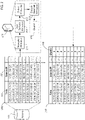
- FIG. 1 illustrates a problem that is addressed by embodiments of the invention.
- a computer system (or collection of systems or other resources) 101 is subject to attacks via a network or networks 102.
- the system logs information about the attacks or attempted attacks in a database 103.
- Database 103 may be organized as any type or types of data structures, and may be stored on any type or types of storage or memory.
- database 103 may be a file, a collection of files, in-memory data structures, or a SQL or non-SQL database stored on disk, in memory, or in the cloud.
- This database 103 may for example include alerts from Intrusion Detection Systems (IDS) or firewalls, or authentication events from a service like Azure ® Active Directory.
- IDS Intrusion Detection Systems
- Azure Azure ® Active Directory
- Database 103 may record attributes 130 for each attack; illustrative attributes may include a timestamp 131 when the attack occurred, the IP address 132 and port 133 of the source from which the attack originated (or appeared to originate), the destination IP address 134 and port 135 of the attacked system, and the type of attack 136, such as Denial of Service or ARP Spoofing. Other attributes or different attributes may be recorded in one or more embodiments.
- the system may receive many attacks over a period of time. Potentially unknown to the system, in this example these attacks come from three different illustrative attackers (or syndicates of attackers) 111, 112, and 113. Each of these attackers attempts to disguise its source by attacking from several different source IP addresses. In addition, each attacker distributes its attacks over time.
- attacker 113 launches a first attack from source IP address 121; at subsequent later times, which may be separated by minutes, hours, days, weeks, or years, it launches attacks from different IP addresses 122, 123, and 124. Attackers 111 and 112 similarly launch attacks at different times from different IP addresses.
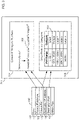
- Attacks database 103 may contain for example table or similar data structure 202, with illustrative attributes 130 for each attack such as the time 131 the attack occurred, the source IP 132 from which the attack was launched, and potentially many additional attributes.
- An attack analysis processor or processors 201 which may or may not be the same as the system or systems 101 that were attacked, analyzes this data 202 to determine which attacks are from the same attackers.
- This analysis process may include any or all of normalization 211 of attributes 104, addition 212 of derived attributes to table 202, selection 213 of attributes to be used for attacker grouping, encoding 214 of the selected attributes, and then clustering 215 the data to group attacks that appear to come from the same attacker.
- the resulting extended table 230 includes a cluster number (or similar identifier) 220 that maps each attack to the group of attacks that appear to be from a common attacker.
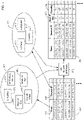
- FIG. 3 illustrates step 211, normalization of the recorded attributes 130.
- Normalization 211 may transform some or all of the attributes to a different form that is more useful for the attacker analysis.
- source IP address 132 and destination IP address 134 may be recorded in attack records as strings (such as "202.93.145.133").
- Conversion 301 may transform these strings to numbers, using formula 302; this formula recovers a numeric representation of an IP address from the string format.
- Source port 133 and destination port 135 may be grouped in step 303 into categories that represent ranges of port numbers; illustrative categories that may be used are shown in table 304.
- These normalization steps are illustrative; one or more embodiments may normalize data using any types of transformations, groupings, or format changes.
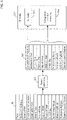
- Figure 4 illustrates the step 212 of adding derived attributes to the attack data 202, to form augmented attacks 420 that may be used for clustering (as described below).
- a general approach that may be used in one or more embodiments is to use demographic and behavioral information along with the recorded attack data to group attackers.
- Profiling users based on behavioral and demographic characteristics has been studied by various researchers. Illustrative references describing user profiling include for example P. Burge, J. Shawe-Taylor, C. Cooke, Y. Moreau, B. Preneel, C. Stoermann, Fraud Detection and Management in Mobile Telecommunications Networks, Proceedings of the 2nd European Conference on Security and Detection, 1997, pp. 91-96 ; T. Fawcett, F.
- User profiles are used for various application areas like e-commerce, banking, advertising, fraud detection, personalization etc. Even though researchers have not used behavioral profiling techniques for the particular problem we are trying to solve, it is promising and proven in various other application areas.
- the recurring nature of attacker's behavior can potentially be used to assist in attacker identification, as described for example Yinghui (Catherine) Yang, Web user behavioral profiling for user identification, Decision Support Systems 49 (2010) 261-271 .
- a behavioral profile can represent the repeating elements in users' activity.
- the inventors have discovered that the behavior of an attacker can be effectively characterized by classifying attacks based on the time groups during which they occur. For example, some attackers may typically attack on the same day of the week, or at the same hour of the day; therefore adding derived attributes to an attack record that capture the day of week and hour of day (which are derived from the timestamp of the attack) assists in grouping attacks by attacker.
- useful demographic data can be associated with an attack by mapping the source IP address of an attack into location data. For example, attackers may use multiple source IP addresses, but all of these addresses may be registered in a common country or in nearby locations.
- Figure 4 shows derived attributes from the attack time 131 and attack source IP address 132 that the inventors have found effective in clustering attacks.
- These derived attributes include time-based attributes 401, which may for example be derived from the time 131 of the attack, and location-based attributes 411, which may for example be derived from the source IP address 132 of the attack.
- time-based attributes 401 which may for example be derived from the time 131 of the attack
- location-based attributes 411 which may for example be derived from the source IP address 132 of the attack.
- These attributes are illustrative; one or more embodiments may use other derived attributes or a subset of the attributes shown in Figure 4 .
- the illustrative time-based attributes include:
- Hour-of-Day 402 represents in which hour event has taken place. It may be for example in the range of 0hr to 23 hr.
- the attribute Day-of-Week 403 represents which day of week the particular event happened. This may be for example an integer between 1 and 7, where 1 represents “Sunday", 2 represents “Monday”, 3 represents “Tuesday”, 4 represents "Wednesday”, 5 represents “Thursday”, 6 represents “Friday” and 7 represents “Saturday”.
- Week-of-Year 404 represents the week number (in a year) when particular event taken place. This may be for example an integer between 1 and 52, with 1 for 1st week in the year and 52 for last week of year.
- the Boolean attribute Is-Holiday 405 indicates whether the time when the attack happened is a "holiday" or not.
- One simplifying assumption that may be made in one or more embodiments is that Saturday and Sunday are considered as a holiday and other days are not holidays.
- One or more embodiments may use any calendars of holidays to determine whether an event occurred on an official or unofficial holiday.
- the Boolean attribute Is-Working-Hours 406 indicates whether the event has taken place during what is considered to be in "office time” or not.
- An illustrative formula that may be used in one or more embodiments to calculate Is-Working-Hours is to treat hours between 8 AM to 6 PM as office time.
- Location based derived attributes 411 may include for example the latitude 413 and longitude 414 of the source IP address, and the country 412 for this location. This information may be obtained from many web services that provide geographic information on any public IP address. Geographic information may not be available for some IP addresses such as private IP addresses.
- Additional aspects of attacker behavior that the inventors have discovered are valuable in grouping attacks are the destination IP address and destination port attacked, and the type of attack. Attackers may repeatedly launch attacks against the same destination address and port, or against the same range of ports at multiple IP addresses. They may also repeatedly launch the same or similar types of attacks (such as a buffer overflow attack, or a denial of service attack). These attributes - destination IP address, destination port, and attack type - are generally available in the attack database 103.
- the augmented attack data 420 includes both the original attributes 130 (which may be normalized as described for example with respect to Figure 3 ) and the derived attributes 401 and 411, such as day-of-week 403 derived from time 131, and country 412 derived from the source IP 132.
- Figure 5 illustrates the selection step 213 that may select a subset of the attributes 501 (which include the original normalized attributes and the derived attributes) to use for clustering.
- the inventors have discovered that using the derived time and source location attributes is more effective than using the original attack timestamp and source IP address and port directly. Therefore the selected attributes 502 in one or more embodiments may use these derived time and source location attributes, as well as original attributes for destination IP address and port, and attack type.
- the selected attributes 502 may then be encoded in step 214 into a form that may be used by a clustering algorithm.
- An illustrative encoding partitions the attributes 502 into those that are treated directly as numeric values 503, and those that are treated as categorical data 504, and are encoded for example using one-hot encoding to convert each category into a binary vector with a single 1 bit.
- the destination IP address may be treated as numeric (using its normalized value), and the other selected attributes may be treated as categorical.
- DBSCAN clustering is the most effective technique for grouping attacks by attacker.
- the DBSCAN algorithm is described in " A Density-Based Algorithm for Discovering Clusters in Large Spatial Databases with Noise", KDD-96 Proceedings, Martin Ester, Hans-Peter Kriegel, Jiirg Sander, Xiaowei Xu . The following provides an overview of the DBSCAN clustering procedure.
- DBSCAN starts with some random starting point "P” that has not been assigned cluster label. For this point "P” it retrieves neighborhoods within ⁇ distance. If number of neighborhoods are more than minPts specified then these will form a cluster, otherwise, the point "P” is labelled as outlier. Note that this point might later be found in a sufficiently sized ⁇ -environment of a different point and hence be made part of a cluster.
- FIG 6 shows illustrative results of applying clustering 215 to encoded data 601 that results from applying selection step 213 and encoding step 214 to augmented attack information 420.
- Clustering 215 may use DBSCAN, as described above, or any other clustering algorithms.
- the clustered data 230 includes a cluster identifier 220 that corresponds to the group assigned to the attack by the clustering algorithm.
- Graph 602 shows an illustrative result of clustering selected data points. This graph plots attacks on two attributes only for ease of depiction: the is-working-hours binary attribute 406, and the destination port category 135. (Similar plots may be made for any combinations of attributes).
- region 611 corresponds approximately to cluster 1
- region 612 corresponds to cluster 2
- region 613 corresponds to cluster 3.
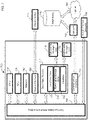
- Figure 7 shows an embodiment of exemplary computer 700 that may be utilized in, by, or as any component in the system.
- computer 700 or any of its components may correspond with or be incorporated into system or systems 101, or system or systems 201.
- computer 700 may be a network of computers, each of which may have any or all of the components shown in Figure 3 .
- computer or computers 700 may also be utilized to implement any function in the system, i.e., any step or act or function that executes in any computer or server or engine in the system.
- Computer 700 may include processor CPU 707 that executes software instructions specifically tailored to the respective functions of embodiments of the invention.
- the software instructions otherwise known as computer program instructions, may reside within memory 706.
- Computer 700 may include processor GPU 705, which may execute graphics instructions or other instructions for highly parallel operations, for example. GPU program instructions may also reside within memory 706.
- Computer 700 may include display interface 708, which may drive display unit or units 710 of any computer in the system as desired. Some computers 700 may or may not utilize a display.
- Computer 700 may include communication interface 724, which may include wireless or wired communications hardware protocol chips. In one or more embodiments of the invention communication interface 724 may include telephonic and/or data communications hardware. In one or more embodiments communication interface 724 may include a Wi-Fi TM and/or BLUETOOTH TM wireless communications interface. Any wireless network protocol or type may be utilized in embodiments of the invention.
- CPU 707, GPU 705, memory 706, display interface 708, communication interface 724, human interface devices 730, secondary memory 712, such as hard disk 714, removable storage 716, secondary memory interface 720 and removable storage units 718 and 722 may communicate with one another over communication infrastructure 702, which is commonly known as a "bus".
- Communications interface 724 may communicate over any wired or wireless medium that allows for communication with other wired or wireless devices over network 740.
- Network 740 may communicate with Internet 760 and/or database or databases 750.
- Database 750 may be utilized to implement any database described herein, such as attacks database 103 for example.
Landscapes
- Engineering & Computer Science (AREA)
- Computer Security & Cryptography (AREA)
- Computer Hardware Design (AREA)
- Computing Systems (AREA)
- General Engineering & Computer Science (AREA)
- Computer Networks & Wireless Communication (AREA)
- Signal Processing (AREA)
- Data Exchanges In Wide-Area Networks (AREA)
- Computer And Data Communications (AREA)
Abstract
Description
- One or more embodiments of the invention are related to the field of network security systems. More particularly, but not by way of limitation, one or more embodiments of the invention enable a network security system that detects a common attacker who attacks from different source addresses.
- Multiple techniques have been developed for detecting malicious activities and threats in a network. However, attacks have shifted from simple one-man attacks meant to deface or make systems unavailable to advanced targeted attacks by hacker syndicates with the objective of economic gain. State sponsored attacks have also become common with the result that advanced malware and attack techniques have emerged in the last five years. Attacks have also migrated from noisy DDOS type of attacks to stealth Advanced Persistent Threat (APT) type of attacks. APT is an example of complex multistage attacks that has different attack stages before successful compromise of the target.
- Multistage attacks involve various steps and sub attacks with progression of time, and by combining result of all such attacks attackers make compound attacks. For example an attacker first tries to obtain remote code execution capability by exploiting buffer overflow vulnerability of a secure socket layer (SSL) implementation of web server. Then the attacker can embed scripts in the website to infect a user machine with malware. The malware in turn infects users browsing the website including internal users of an enterprise with the compromised machine. The malware that infects the user desktop can steal data and send it out to the attacker system. It is difficult to capture such kind of attacks using just with one security device like Intruder detection system (IDS) or Web application firewall (WAF) or end point protection devices.
- Similar to the advances in type of attacks, security technologies have also evolved from detection of simple attacks. Recently the focus shifted from detecting simple attacks to detection of complex multistage attacks. For example, the research paper "Intelligence-Driven Computer Network Defense Informed by Analysis of Adversary Campaigns and Intrusion Kill Chains" (Eric M. Hutchins, Michael J. Cloppert, Rohan M. Amin) describes the multiple stages in an APT, and outlines a methodology to detect these multistage attacks. However, this methodology mail fail to identify attacker's original identity if an attacker uses different IP address for multiple attacks that are part of an advanced attack scenario. So, in case of advanced attacks, identifying and correlating multiple IP addresses to the same attacker is important and makes detection easier.
- For at least the limitations described above there is a need for a network security system that detects a common attacker who attacks from different source addresses.
- One or more embodiments described in the specification are related to a network security system that detects a common attacker who attacks from different source addresses. Embodiments of the invention may analyze attack data to discover patterns of attacker behavior that indicate which attacks come from the same attacker.
- One or more embodiments of the invention may include a database of attacks, and a processor that analyzes the data in this database to determine which attacks come from common attackers. The data for each attack in the database may include attributes such as the address and port of the destination system attacked, the address and port of the source from which the attack originated, the time of the attack, and the type of attack. The processor may add one or more derived attributes to the attack data to form augmented attack data; derived attributes may include source location attributes derived from the source address, and time group attributes derived from the time of the attack. The processor may execute a clustering algorithm to group the augmented attacks into multiple clusters, and it may identity each cluster with a corresponding attacker.
- In one or more embodiments, the source location attributes may include the source country name, the source latitude, and the source longitude.
- In one or more embodiments the time group attributes may include the hour of day, the day of week, the week of year, an is-holiday flag, and an is-working-hours flag.
- In one or more embodiments, the clustering algorithm may be a density-based clustering algorithm; it may be DBSCAN for example.
- In one or more embodiments, the processor may also normalize the destination IP address to a numeric value, and normalize the destination port to a port categorical value. The port categorical value may be for example "small" when the destination port is between 0 and 1000, "medium" when the destination port is between 1001 and 10000, "large 1" when the destination port is between 10001 and 30000, "large 2" when the destination port is between 30001 and 50000, and "large 3" when the destination port is larger than 50000.
- In one or more embodiments, the processor may encode selected attributes of the augmented attacks to form encoded attack data, and may execute the clustering algorithm on this encoded attack data. The selected attributes may be for example the destination address, the destination port, the attack type, the source country name, the source latitude, the source longitude, the hour of day, the day of week, the week of year, the is-holiday and the is-working-hours. Encoding of selected attributes may for example use one-hot encoding for categorical attributes.
- The above and other aspects, features and advantages of the invention will be more apparent from the following more particular description thereof, presented in conjunction with the following drawings wherein:
-
Figure 1 illustrates a problem addressed by one or more embodiments of the invention: network attackers may be difficult to identify because they spread out attacks over time and attack from multiple IP addresses. -
Figure 2 shows an architectural overview of one or more embodiments of the invention. -
Figure 3 illustrates normalization of attributes logged for each attack. -
Figure 4 illustrates addition of derived attributes to the attack data to capture behavioral patterns. -
Figure 5 shows specific attributes, including derived data, that may be selected to group attacks using clustering. -
Figure 6 shows illustrative results of applying clustering to the data described inFigure 5 in order to identify attackers. -
Figure 7 shows illustrative computer hardware that may be used in one or more embodiments to implement any of the processing, storage, or communication functions of the network security system. - A network security system that detects a common attacker who attacks from different source addresses will now be described. In the following exemplary description, numerous specific details are set forth in order to provide a more thorough understanding of embodiments of the invention. It will be apparent, however, to an artisan of ordinary skill that the present invention may be practiced without incorporating all aspects of the specific details described herein. In other instances, specific features, quantities, or measurements well known to those of ordinary skill in the art have not been described in detail so as not to obscure the invention. Readers should note that although examples of the invention are set forth herein, the claims, and the full scope of any equivalents, are what define the metes and bounds of the invention.
-
Figure 1 illustrates a problem that is addressed by embodiments of the invention. A computer system (or collection of systems or other resources) 101 is subject to attacks via a network ornetworks 102. The system logs information about the attacks or attempted attacks in adatabase 103.Database 103 may be organized as any type or types of data structures, and may be stored on any type or types of storage or memory. For example, without limitation,database 103 may be a file, a collection of files, in-memory data structures, or a SQL or non-SQL database stored on disk, in memory, or in the cloud. Thisdatabase 103 may for example include alerts from Intrusion Detection Systems (IDS) or firewalls, or authentication events from a service like Azure® Active Directory.Database 103 may recordattributes 130 for each attack; illustrative attributes may include atimestamp 131 when the attack occurred, theIP address 132 andport 133 of the source from which the attack originated (or appeared to originate), thedestination IP address 134 andport 135 of the attacked system, and the type ofattack 136, such as Denial of Service or ARP Spoofing. Other attributes or different attributes may be recorded in one or more embodiments. The system may receive many attacks over a period of time. Potentially unknown to the system, in this example these attacks come from three different illustrative attackers (or syndicates of attackers) 111, 112, and 113. Each of these attackers attempts to disguise its source by attacking from several different source IP addresses. In addition, each attacker distributes its attacks over time. For example,attacker 113 launches a first attack fromsource IP address 121; at subsequent later times, which may be separated by minutes, hours, days, weeks, or years, it launches attacks fromdifferent IP addresses Attackers - The challenge faced by the security systems monitoring attacks on system(s) 101 is to attempt to identify which attacks come from which attackers, even when these attacks come from multiple IP addresses at multiple times. The inventors have discovered that a combination of augmenting the attack data in
database 103 with additional attributes and clustering attack records based on a carefully selected set of original and extended attributes can effectively group attacks that originate from the same attacker. This approach is illustrated inFigure 2 .Attacks database 103 may contain for example table orsimilar data structure 202, withillustrative attributes 130 for each attack such as thetime 131 the attack occurred, thesource IP 132 from which the attack was launched, and potentially many additional attributes. An attack analysis processor orprocessors 201, which may or may not be the same as the system orsystems 101 that were attacked, analyzes thisdata 202 to determine which attacks are from the same attackers. This analysis process, described in detail below, may include any or all ofnormalization 211 of attributes 104,addition 212 of derived attributes to table 202,selection 213 of attributes to be used for attacker grouping, encoding 214 of the selected attributes, and thenclustering 215 the data to group attacks that appear to come from the same attacker. The resulting extended table 230 includes a cluster number (or similar identifier) 220 that maps each attack to the group of attacks that appear to be from a common attacker. - We now describe details of
steps 211 through 215 that may be used in one or more embodiments.Figure 3 illustratesstep 211, normalization of the recorded attributes 130.Normalization 211 may transform some or all of the attributes to a different form that is more useful for the attacker analysis. For example,source IP address 132 anddestination IP address 134 may be recorded in attack records as strings (such as "202.93.145.133").Conversion 301 may transform these strings to numbers, usingformula 302; this formula recovers a numeric representation of an IP address from the string format.Source port 133 anddestination port 135 may be grouped instep 303 into categories that represent ranges of port numbers; illustrative categories that may be used are shown in table 304. These normalization steps are illustrative; one or more embodiments may normalize data using any types of transformations, groupings, or format changes. -
Figure 4 illustrates thestep 212 of adding derived attributes to theattack data 202, to formaugmented attacks 420 that may be used for clustering (as described below). A general approach that may be used in one or more embodiments is to use demographic and behavioral information along with the recorded attack data to group attackers. Profiling users based on behavioral and demographic characteristics has been studied by various researchers. Illustrative references describing user profiling include for example P. Burge, J. Shawe-Taylor, C. Cooke, Y. Moreau, B. Preneel, C. Stoermann, Fraud Detection and Management in Mobile Telecommunications Networks, Proceedings of the 2nd European Conference on Security and Detection, 1997, pp. 91-96; T. Fawcett, F. Provost, Combining Data Mining and Machine Learning for Effective User Profiling, Proceedings of the Second International Conference on Knowledge Discovery and Data Mining (KDD), 1996, pp. 8-13; C.S. Hilas, J.N. Sahalos, Testing the Fraud Detection Ability of Different User Profiles by Means of FF-NN Classifiers, Proceedings of the 16th International Conference on Artificial Neural Networks, Part II, Lecture Notes in Computer Science, 4132, 2006, pp. 872-883; and J. Hollmen, User profiling and Classification for Fraud Detection in Mobile Communications Networks, PhD dissertation, Helsinki University of Technology, Department of Computer Science and Engineering, 2000. - User profiles are used for various application areas like e-commerce, banking, advertising, fraud detection, personalization etc. Even though researchers have not used behavioral profiling techniques for the particular problem we are trying to solve, it is promising and proven in various other application areas. The recurring nature of attacker's behavior can potentially be used to assist in attacker identification, as described for example Yinghui (Catherine) Yang, Web user behavioral profiling for user identification, Decision Support Systems 49 (2010) 261-271. A behavioral profile can represent the repeating elements in users' activity.
- By experimenting with different attributes that can be associated with an attack, the inventors have discovered that the behavior of an attacker can be effectively characterized by classifying attacks based on the time groups during which they occur. For example, some attackers may typically attack on the same day of the week, or at the same hour of the day; therefore adding derived attributes to an attack record that capture the day of week and hour of day (which are derived from the timestamp of the attack) assists in grouping attacks by attacker. Using similar experimentation the inventors have discovered that useful demographic data can be associated with an attack by mapping the source IP address of an attack into location data. For example, attackers may use multiple source IP addresses, but all of these addresses may be registered in a common country or in nearby locations.
-
Figure 4 shows derived attributes from theattack time 131 and attacksource IP address 132 that the inventors have found effective in clustering attacks. These derived attributes include time-basedattributes 401, which may for example be derived from thetime 131 of the attack, and location-basedattributes 411, which may for example be derived from thesource IP address 132 of the attack. These attributes are illustrative; one or more embodiments may use other derived attributes or a subset of the attributes shown inFigure 4 . - The illustrative time-based attributes include:
- The attribute Hour-of-
Day 402 represents in which hour event has taken place. It may be for example in the range of 0hr to 23 hr. An illustrative formula that may be used to calculate the hour-of-day in Microsoft Excel™ or similar programming environments is hour-of-day = HOUR([Event Time]). For example, HOUR(31 May 2014 07:29:22 CDT ) = 07. - The attribute Day-of-
Week 403 represents which day of week the particular event happened. This may be for example an integer between 1 and 7, where 1 represents "Sunday", 2 represents "Monday", 3 represents "Tuesday", 4 represents "Wednesday", 5 represents "Thursday", 6 represents "Friday" and 7 represents "Saturday". An illustrative formula that may be used to calculate the day-of-week in Microsoft Excel™ or similar programming environments is day-of-week = WEEKDAY([Event Time]). For example, WEEKDAY(31 May 2014 07:29:22 CDT) = 7. - The attribute Week-of-
Year 404 represents the week number (in a year) when particular event taken place. This may be for example an integer between 1 and 52, with 1 for 1st week in the year and 52 for last week of year. An illustrative formula that may be used to calculate the week-of-year in Microsoft Excel™ or similar programming environments is week-of-year = WEEKNUM([Event Time For example, WEEKNUM(31 May 2014 07:29:22 CDT) = 22. - The Boolean attribute Is-
Holiday 405 indicates whether the time when the attack happened is a "holiday" or not. One simplifying assumption that may be made in one or more embodiments is that Saturday and Sunday are considered as a holiday and other days are not holidays. One or more embodiments may use any calendars of holidays to determine whether an event occurred on an official or unofficial holiday. An illustrative formula that may be used to calculate the is-holiday attribute in Microsoft Excel™ or similar programming environments is is-holiday = 1 if WEEKDAY([Event Time]) = 1 or 7 ELSE is-holiday = 0. For example, since WEEKDAY(31 May 2014 07:29:22 CDT)= 7, this date is considered a holiday. - The Boolean attribute Is-Working-
Hours 406 indicates whether the event has taken place during what is considered to be in "office time" or not. An illustrative formula that may be used in one or more embodiments to calculate Is-Working-Hours is to treat hours between 8 AM to 6 PM as office time. One or more embodiments may define working hours in any desired manner. For example, IsWorkingHours(31 May 2014 07:29:22 CDT) = 0 because HOUR(31 May 2014 07:29:22 CDT)= 7 - Location based derived
attributes 411 may include for example thelatitude 413 andlongitude 414 of the source IP address, and thecountry 412 for this location. This information may be obtained from many web services that provide geographic information on any public IP address. Geographic information may not be available for some IP addresses such as private IP addresses. - Additional aspects of attacker behavior that the inventors have discovered are valuable in grouping attacks are the destination IP address and destination port attacked, and the type of attack. Attackers may repeatedly launch attacks against the same destination address and port, or against the same range of ports at multiple IP addresses. They may also repeatedly launch the same or similar types of attacks (such as a buffer overflow attack, or a denial of service attack). These attributes - destination IP address, destination port, and attack type - are generally available in the
attack database 103. - The
augmented attack data 420 includes both the original attributes 130 (which may be normalized as described for example with respect toFigure 3 ) and the derived attributes 401 and 411, such as day-of-week 403 derived fromtime 131, andcountry 412 derived from thesource IP 132. -
Figure 5 illustrates theselection step 213 that may select a subset of the attributes 501 (which include the original normalized attributes and the derived attributes) to use for clustering. The inventors have discovered that using the derived time and source location attributes is more effective than using the original attack timestamp and source IP address and port directly. Therefore the selected attributes 502 in one or more embodiments may use these derived time and source location attributes, as well as original attributes for destination IP address and port, and attack type. - The selected attributes 502 may then be encoded in
step 214 into a form that may be used by a clustering algorithm. An illustrative encoding partitions theattributes 502 into those that are treated directly asnumeric values 503, and those that are treated ascategorical data 504, and are encoded for example using one-hot encoding to convert each category into a binary vector with a single 1 bit. For example, the destination IP address may be treated as numeric (using its normalized value), and the other selected attributes may be treated as categorical. - Turning now to the
clustering step 215, the inventors have experimented with many different well-known clustering techniques, including for example k-means, expectation maximization, k-medoids, top down clustering, and DBSCAN ("density-based spatial clustering of applications with noise"). The inventors have found that DBSCAN clustering is the most effective technique for grouping attacks by attacker. The DBSCAN algorithm is described in "A Density-Based Algorithm for Discovering Clusters in Large Spatial Databases with Noise", KDD-96 Proceedings, Martin Ester, Hans-Peter Kriegel, Jiirg Sander, Xiaowei Xu. The following provides an overview of the DBSCAN clustering procedure. - DBSCAN requires two parameters: minPts: the number of points within a specified radius (Eps) and ε (eps): radius for the neighborhood of point. It uses a distance function d(p,q) that gives the distance between two points p and q, which are each collections of the encoded, selected attributes. For example, an illustrative distance function is the Euclidean distance between two points:

- DBSCAN starts with some random starting point "P" that has not been assigned cluster label. For this point "P" it retrieves neighborhoods within ε distance. If number of neighborhoods are more than minPts specified then these will form a cluster, otherwise, the point "P" is labelled as outlier. Note that this point might later be found in a sufficiently sized ε-environment of a different point and hence be made part of a cluster.
- If a point is found to be a dense part of a cluster, its ε-neighborhood is also part of that cluster. Hence, all points that are found within the ε-neighborhood are added, as is their own ε-neighborhood when they are also dense. This process continues until the density-connected cluster is completely found. Then, a new unvisited point is retrieved and processed, leading to the discovery of a further cluster or noise.
- Illustrative pseudocode to implement DBSCAN is shown below in Table 1:
Table 1: DBSCAN Pseudocode
 initialize eps, MinPts
 for each un-visited point "P" in D
 {
   mark P as processed
   NeighborhoodPoints = Points within region eps
   if sizeof(NeighborhoodPoints) < MinPts
        mark P as Outlier
   else
    mark all NeighborhoodPoints as processed
    Assign cluster identity "C" for "P" and NeighborhoodPoints
} Claims (11)
- A network security system that detects a common attacker who attacks from different source addresses, comprisinga database of attacks, wherein each attack in said database of attacks comprisesa destination address;a destination port;a source address;a time; andan attack type; and,a processor coupled to said database of attacks and configured toadd one or more derived attributes to each attack of said attacks to form augmented
attacks, wherein said one or more derived attributes compriseone or more source location attributes derived from said source address; andone or more time group attributes derived from said time;execute a clustering algorithm to group said augmented attacks into multiple clusters; and,identify each cluster of said multiple clusters with a corresponding attacker. - The system of claim 1, wherein said one or more source location attributes comprisea source country name;a source latitude; and,a source longitude.
- The system of claim 1, wherein said one or more time group attributes comprisean hour-of-day;a day-of-week;a week-of-year;an is-holiday; and,an is-working-hours.
- The system of claim 1, wherein said clustering algorithm comprises a density-based clustering algorithm.
- The system of claim 4, wherein said density-based clustering algorithm comprises DBSCAN.
- The system of claim 1, wherein said processor is further configured tonormalize said destination IP address to a numeric value; and,normalize said destination port to a port categorical value.
- The system of claim 6, wherein said port categorical value comprisesa small value when said destination port is between 0 and 1000;a medium value when said destination port is between 1001 and 10000;a first large value when said destination port is between 10001 and 30000;a second large value when said destination port is between 30001 and 50000; and,a third large value when said destination port is larger than 50000.
- The system of claim 1, wherein said processor is further configured to encode selected attributes of said augmented attacks, to form encoded attack data; and, execute said clustering algorithm on said encoded attack data.
- The system of claim 8, wherein said selected attributes consist ofsaid destination address;said destination port;said attack type;a source country name;a source latitude; and,a source longitude.an hour-of-day;a day-of-week;a week-of-year;an is-holiday; and,an is-working-hours.
- The system of claim 8, wherein said encode selected attributes comprises encode categorical attributes of said selected attributes using one-hot encoding.
- A network security system that detects a common attacker who attacks from different source addresses, comprisinga database of attacks, wherein each attack in said database of attacks comprisesa destination address;a destination port;a source address;a time; andan attack type; and,a processor coupled to said database of attacks and configured tonormalize said destination IP address to a numeric value;normalize said destination port to a port categorical value comprisinga small value when said destination port is between 0 and 1000;a medium value when said destination port is between 1001 and 10000;a first large value when said destination port is between 10001 and 30000;a second large value when said destination port is between 30001 and 50000; and,a third large value when said destination port is larger than 50000.add one or more derived attributes to each attack of said attacks to form augmentedattacks, wherein said one or more derived attributes compriseone or more source location attributes derived from said source address, said one
or more source location attributes comprisinga source country name;a source latitude; anda source longitude; andone or more time group attributes derived from said time, said one or more time
group attributes comprisingan hour-of-day;a day-of-week;a week-of-year;an is-holiday; andan is-working-hours;encode selected attributes of said augmented attacks, to form encoded attack data, whereinsaid selected attributes consist ofsaid destination address;said destination port;said attack type;said source country name;said source latitude;said source longitude;said hour-of-day;said day-of-week;said week-of-year; andsaid is-holiday; andsaid encode selected attributes comprises encode categorical attributes of said selected attributes using one-hot encoding;execute a DBSCAN clustering algorithm on said encoded attack data to group said augmented attacks into multiple clusters; and,identify each cluster of said multiple clusters with a corresponding attacker.
Applications Claiming Priority (1)
| Application Number | Priority Date | Filing Date | Title |
|---|---|---|---|
| US17/336,482 US11770394B2 (en) | 2021-06-02 | 2021-06-02 | Network security system that detects a common attacker who attacks from different source addresses |
Publications (1)
| Publication Number | Publication Date |
|---|---|
| EP4099625A1 true EP4099625A1 (en) | 2022-12-07 |
Family
ID=81877692
Family Applications (1)
| Application Number | Title | Priority Date | Filing Date |
|---|---|---|---|
| EP22176287.5A Pending EP4099625A1 (en) | 2021-06-02 | 2022-05-31 | Network security system that detects a common attacker who attacks from different source addresses |
Country Status (2)
| Country | Link |
|---|---|
| US (1) | US11770394B2 (en) |
| EP (1) | EP4099625A1 (en) |
Families Citing this family (1)
| Publication number | Priority date | Publication date | Assignee | Title |
|---|---|---|---|---|
| CN119922095B (en) * | 2025-04-02 | 2025-07-22 | 北京时代新威信息技术有限公司 | Method and device for constructing dynamic edge and super-node heterogeneous graph based on large model |
Citations (1)
| Publication number | Priority date | Publication date | Assignee | Title |
|---|---|---|---|---|
| US20160352765A1 (en) * | 2015-05-27 | 2016-12-01 | Cisco Technology, Inc. | Fingerprint merging and risk level evaluation for network anomaly detection |
Family Cites Families (5)
| Publication number | Priority date | Publication date | Assignee | Title |
|---|---|---|---|---|
| US7688761B2 (en) * | 2006-08-09 | 2010-03-30 | Cisco Technology, Inc. | Method and system for classifying packets in a network based on meta rules |
| JP5011234B2 (en) * | 2008-08-25 | 2012-08-29 | 株式会社日立情報システムズ | Attack node group determination device and method, information processing device, attack countermeasure method, and program |
| US20180365696A1 (en) * | 2017-06-19 | 2018-12-20 | Nec Laboratories America, Inc. | Financial fraud detection using user group behavior analysis |
| US20210099612A1 (en) * | 2019-09-27 | 2021-04-01 | Konica Minolta Business Solutions U.S.A., Inc. | Method and system for secure scan and copy |
| US11356472B1 (en) * | 2019-12-16 | 2022-06-07 | Wells Fargo Bank, N.A. | Systems and methods for using machine learning for geographic analysis of access attempts |
-
2021
- 2021-06-02 US US17/336,482 patent/US11770394B2/en active Active
-
2022
- 2022-05-31 EP EP22176287.5A patent/EP4099625A1/en active Pending
Patent Citations (1)
| Publication number | Priority date | Publication date | Assignee | Title |
|---|---|---|---|---|
| US20160352765A1 (en) * | 2015-05-27 | 2016-12-01 | Cisco Technology, Inc. | Fingerprint merging and risk level evaluation for network anomaly detection |
Non-Patent Citations (5)
Also Published As
| Publication number | Publication date |
|---|---|
| US11770394B2 (en) | 2023-09-26 |
| US20220394048A1 (en) | 2022-12-08 |
Similar Documents
| Publication | Publication Date | Title |
|---|---|---|
| Potluri et al. | Detection and prevention mechanisms for DDoS attack in cloud computing environment | |
| US10038704B2 (en) | Systems and methods for correlating and distributing intrusion alert information among collaborating computer systems | |
| US9338180B2 (en) | System and method for identification and blocking of unwanted network traffic | |
| CN101052934B (en) | Method, system and computer program for detecting unauthorised scanning on a network | |
| US8667588B2 (en) | Systems and methods for correlating and distributing intrusion alert information among collaborating computer systems | |
| US20250280024A1 (en) | Device and method of determining malicious packet in encrypted traffic based on artificial intelligence | |
| Niksefat et al. | Privacy issues in intrusion detection systems: A taxonomy, survey and future directions | |
| US20060069912A1 (en) | Systems and methods for enhanced network security | |
| US7500266B1 (en) | Systems and methods for detecting network intrusions | |
| US20060294588A1 (en) | System, method and program for identifying and preventing malicious intrusions | |
| Damghani et al. | Classification of attacks on IoT | |
| Khan et al. | Applying data mining techniques in cyber crimes | |
| CN1252555C (en) | Cooperative invading testing system based on distributed data dig | |
| CN102906756A (en) | Security Threat Detection Associated with Security Event and Actor Classification Models | |
| Bock et al. | Application of routine activity theory to cyber intrusion location and time | |
| US20060206715A1 (en) | Media analysis method and system for locating and reporting the presence of steganographic activity | |
| Teng et al. | A cooperative intrusion detection model for cloud computing networks | |
| US11770394B2 (en) | Network security system that detects a common attacker who attacks from different source addresses | |
| Rahman et al. | Wifi miner: An online apriori-infrequent based wireless intrusion system | |
| Varma et al. | A review of DDoS attacks and its countermeasures in cloud computing | |
| Kotenko et al. | Detection of stego-insiders in corporate networks based on a hybrid NoSQL database model | |
| Bhavnani et al. | An extensive review of data security infrastructure and legislature | |
| Raich et al. | Overview of passive attacks in cloud environment | |
| Wu et al. | Poster: Mining threat intelligence from billion-scale ssh brute-force attacks | |
| Vaarandi et al. | NetFlow Based Framework for Identifying Anomalous End User Nodes |
Legal Events
| Date | Code | Title | Description |
|---|---|---|---|
| PUAI | Public reference made under article 153(3) epc to a published international application that has entered the european phase |
Free format text: ORIGINAL CODE: 0009012 |
|
| STAA | Information on the status of an ep patent application or granted ep patent |
Free format text: STATUS: THE APPLICATION HAS BEEN PUBLISHED |
|
| AK | Designated contracting states |
Kind code of ref document: A1 Designated state(s): AL AT BE BG CH CY CZ DE DK EE ES FI FR GB GR HR HU IE IS IT LI LT LU LV MC MK MT NL NO PL PT RO RS SE SI SK SM TR |
|
| STAA | Information on the status of an ep patent application or granted ep patent |
Free format text: STATUS: REQUEST FOR EXAMINATION WAS MADE |
|
| P01 | Opt-out of the competence of the unified patent court (upc) registered |
Effective date: 20230330 |
|
| 17P | Request for examination filed |
Effective date: 20230523 |
|
| RBV | Designated contracting states (corrected) |
Designated state(s): AL AT BE BG CH CY CZ DE DK EE ES FI FR GB GR HR HU IE IS IT LI LT LU LV MC MK MT NL NO PL PT RO RS SE SI SK SM TR |