EP4098736A1 - Dna extraction method and nail processor - Google Patents
Dna extraction method and nail processor Download PDFInfo
- Publication number
- EP4098736A1 EP4098736A1 EP20917095.0A EP20917095A EP4098736A1 EP 4098736 A1 EP4098736 A1 EP 4098736A1 EP 20917095 A EP20917095 A EP 20917095A EP 4098736 A1 EP4098736 A1 EP 4098736A1
- Authority
- EP
- European Patent Office
- Prior art keywords
- nail
- dna extraction
- dna
- extraction method
- processed
- Prior art date
- Legal status (The legal status is an assumption and is not a legal conclusion. Google has not performed a legal analysis and makes no representation as to the accuracy of the status listed.)
- Withdrawn
Links
- 238000007400 DNA extraction Methods 0.000 title claims abstract description 65
- 238000000034 method Methods 0.000 title claims abstract description 43
- 239000003153 chemical reaction reagent Substances 0.000 claims abstract description 23
- 238000012545 processing Methods 0.000 claims abstract description 23
- 238000005516 engineering process Methods 0.000 abstract description 3
- 230000007246 mechanism Effects 0.000 description 10
- 239000000463 material Substances 0.000 description 7
- 239000011230 binding agent Substances 0.000 description 5
- 238000003825 pressing Methods 0.000 description 4
- 238000004458 analytical method Methods 0.000 description 3
- 239000000843 powder Substances 0.000 description 3
- 229920000742 Cotton Polymers 0.000 description 2
- XEEYBQQBJWHFJM-UHFFFAOYSA-N Iron Chemical compound [Fe] XEEYBQQBJWHFJM-UHFFFAOYSA-N 0.000 description 2
- 238000010009 beating Methods 0.000 description 2
- 210000000988 bone and bone Anatomy 0.000 description 2
- 238000011109 contamination Methods 0.000 description 2
- 230000003247 decreasing effect Effects 0.000 description 2
- 238000003780 insertion Methods 0.000 description 2
- 230000037431 insertion Effects 0.000 description 2
- 238000012423 maintenance Methods 0.000 description 2
- 241000238366 Cephalopoda Species 0.000 description 1
- 238000007796 conventional method Methods 0.000 description 1
- 238000012937 correction Methods 0.000 description 1
- 230000000694 effects Effects 0.000 description 1
- 238000007667 floating Methods 0.000 description 1
- 238000003384 imaging method Methods 0.000 description 1
- 229910052742 iron Inorganic materials 0.000 description 1
- 238000012986 modification Methods 0.000 description 1
- 230000004048 modification Effects 0.000 description 1
- 239000005445 natural material Substances 0.000 description 1
- 239000008188 pellet Substances 0.000 description 1
- 239000004033 plastic Substances 0.000 description 1
- 229920003023 plastic Polymers 0.000 description 1
- 239000000088 plastic resin Substances 0.000 description 1
- 238000001556 precipitation Methods 0.000 description 1
- 238000010298 pulverizing process Methods 0.000 description 1
- 230000001105 regulatory effect Effects 0.000 description 1
- 235000011888 snacks Nutrition 0.000 description 1
- 229910001220 stainless steel Inorganic materials 0.000 description 1
- 239000010935 stainless steel Substances 0.000 description 1
- 238000003756 stirring Methods 0.000 description 1
- 239000002562 thickening agent Substances 0.000 description 1
- 238000005406 washing Methods 0.000 description 1
Images




Classifications
-
- C—CHEMISTRY; METALLURGY
- C12—BIOCHEMISTRY; BEER; SPIRITS; WINE; VINEGAR; MICROBIOLOGY; ENZYMOLOGY; MUTATION OR GENETIC ENGINEERING
- C12N—MICROORGANISMS OR ENZYMES; COMPOSITIONS THEREOF; PROPAGATING, PRESERVING, OR MAINTAINING MICROORGANISMS; MUTATION OR GENETIC ENGINEERING; CULTURE MEDIA
- C12N15/00—Mutation or genetic engineering; DNA or RNA concerning genetic engineering, vectors, e.g. plasmids, or their isolation, preparation or purification; Use of hosts therefor
- C12N15/09—Recombinant DNA-technology
- C12N15/10—Processes for the isolation, preparation or purification of DNA or RNA
- C12N15/1003—Extracting or separating nucleic acids from biological samples, e.g. pure separation or isolation methods; Conditions, buffers or apparatuses therefor
Definitions
- the present invention relates to a DNA extraction method and a nail processor.
- Patent Literature 1 There is a technology in which a nail is dissolved with a reagent and then DNA is extracted from the nail (see, for example, Patent Literature 1).
- a process is performed in order to improve dissolving efficiency, such as a process of pulverizing a nail into a powder with a beater beating the nail with an iron ball, etc., a process of cutting a nail with scissors finely (for example, into one-millimeter blocks), and the like.
- DNA extraction from a nail has a higher difficulty when compared with other samples (for example, oral cells), such as a process using a stronger reagent or a higher temperature processing is required and the like, thus it is likely that the DNA extraction from a nail is performed in a case where it is impossible to obtain DNA from other samples. Therefore, it can be said that a nail as a sample is valuable, thus a serious problem may occur even by a little amount of loss. That is, a conventional method of DNA extraction from a nail involves a point which should be improved in an aspect of DNA extraction efficiency.
- a DNA extraction method comprising:
- a nail processor which processes a nail as a sample for DNA extraction while maintaining a state of one block so as to increase a surface area of the nail to be exposed to a DNA extraction reagent.
- a DNA extraction method and a nail processor which contribute to improvement in efficiency of DNA extraction from a nail.
- a DNA extraction method of the present invention comprises a processing step for processing a nail as a sample for DNA extraction while maintaining a state of one block (integrated piece) so as to increase a surface area of the nail to be exposed to a DNA extraction reagent (step S01).
- the DNA extraction method of the present invention comprises an extracting step for exposing a processed nail to the DNA extraction reagent so as to extract DNA (step S02).
- the nail as a sample for DNA extraction is pressed and stretched into a flat shape by a nail processor.
- a nail processor it has been found that the nail is possible to maintain a state of one block even being pressed and stretched into the flat shape, since the nail naturally has an adequate stickiness. That is, a surface area of the nail may be increased while maintaining a state of one block when the nail is processed into a flat shape.
- the nail processed into the flat shape is transferred into a DNA extraction container (for example, a microtube) and then exposed to a DNA extraction reagent so as to extract DNA.
- a DNA extraction container for example, a microtube
- the nail transferred into the container is provided with a friction force [sic. surface tension] against an inner wall of the DNA extraction container, thus the nail is prevented from floating on DNA extraction reagent.
- the nail may be very easily immersed in the DNA extraction reagent as compared to pulverized nails, for example, the nail is pushed into DNA extraction reagent with a stick-like tool.
- the DNA extraction method of the present invention efficiency of DNA extraction from a nail may be improved. That is, since the nail is processed while maintaining a state of one block (integrated piece), the processed nail may be easily taken out from a processing apparatus without any loss. In other words, washing operation of the processing apparatus is performed more easily and a risk of carrying over/contamination into a next sample is reduced. In addition, since the nail still maintains a state of one block, the nail may be immersed in the DNA extraction reagent more easily.
- the nail processor has a basic property of processing a nail as a sample for DNA extraction while maintaining a state of one block so as to increase a surface area of the nail to be exposed to a DNA extraction reagent.
- the nail processor may be adopted if it is possible to process a nail while maintaining a state of one block so as to increase a surface area.
- the nail processor is exemplified by a press machine that sandwiches a nail with a pair of dies and applies a pressure so that the nail is pressed and stretched into a flat shape.
- the pressure applied to the nail is of approximately 200 to 2000kgf (approximately 2000 to 20000N (newton)), but may be of 200kgf or less or 2000kgf or more. That is, if the pressure applied to the nail is increased, the surface area of the flat pressed nail will be increased whereas the thickness of the flat pressed nail will be decreased, resulting in that a demerit would occur in a point that maintenance of the one block state becomes more difficult.
- the pressure applied to the nail may be selected depending on a variety of factors, such as operator's skill, a purpose of DNA extraction, and the like.
- a mechanism for applying a pressure to a nail may be selected from various mechanisms, such as a manual mechanism (for example, a mechanism using a hydraulic jack), a mechanical mechanism, and the like.
- Material, configuration of the dies and the like, may be also changed as far as it is possible to process the nail while maintaining the one block state so as to increase surface area.
- a die made of a stainless steel and having a flat pressing surface is exemplified.
- the pressing surface may be uneven, that is intended to further increase the nail surface area.
- an additional operation may be also added, such as a pair of dies is moved or rotated relative to one another, so that the nail is pressedly stretched.
- a press surface of the die may be inclined.
- application of the pressure to the nail, movement and/or rotation of the die(s) may be performed simultaneously or independently of one another.
- the mechanism (way) for applying pressure to the nail may be selected from various mechanisms. Simply applying uniform pressure to an entire nail would result in a process of nail while maintaining a state of one block so as to increase a surface area of the nail. However, an area on the nail to which the pressure is applied may be gradually changed. For example, initially the pressure is applied to a center area of the nail, and then the area of the nail to which the pressure is applied is gradually shifted to the outside. In such case, the nail is gradually stretched from the center area toward the outside, thus more efficient stretch of the nail can be achieved.
- the nail processor is also exemplified by a roller mechanism which sandwiches with a pair of rollers so as to roll (stretch) the nail into a flat shape.
- spike lines along a circumference of a roller surface may be provided.
- stretch direction of the nail is regulated to a rotational direction of the roller (insertion direction into a gap between rollers), thus stretch of the nail in roller axis direction is restricted.
- the nail is processed into a sheet configured by moderately connected-multiple strips, and thus the state of one block may be maintained more easily (for example, imaging "noshi-ika (snacks of dried squid)").
- the spike lines may be oblique to a roller circumference, not only along the roller circumference.
- the nail processor is also exemplified by a hammer mechanism, which stretches a nail by beating the nail with a hammer.
- Example embodiment 3 a concrete example of a DNA extraction method and a nail processor of the present invention is explained as Example embodiment 3.
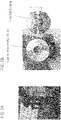
- Figure 2A shows an example of the press machine as the nail processor (a hydraulic experimental pellet press of Specac Ltd.). Dies used have a planar press surface. At that time, when pressure of about 2000 kgf is applied to the nail, the nail is processed into an ellipse sheet having about 7 mm of major axis and about 5 mm of short axis, as shown in Figure 2B .
- the processed nail is detached from the die with a spatula.
- the nail has a hardness of an extent that makes the nail to be picked up with tweezers and has a softness of an extent that makes the nail to be bent, thus the nail can be easily detached from the die.
- the nail detached from the die is inserted in a cartridge for DNA analysis (for example, RapidHIT of Thermo Fisher Scientific K.K.).
- a cartridge for DNA analysis for example, RapidHIT of Thermo Fisher Scientific K.K.
- the cartridge is originally so designed that a swab to which oral cells are attached may be inserted therein. Therefore, a process, such as that the nail is wound on a stick tool or the nail is cut into multiple strips, may be performed upon insertion into the cartridge. Or, the nail may be inserted forcibly.
- Example embodiment 4 an application mode relating to a DNA extraction method and a nail processor of the present invention is explained as Example embodiment 4.
- a jig with a handle part may be provided so that a nail is processed integrally with the jig.
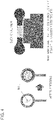
- the jig with the handle part comprises a frame part having a configuration along circumference of a press surface as illustrated in, for example, Figure 3 .
- the processed nail can be detached from the nail processor together with the jig.
- a part of the frame part may be pressed by the press process as illustrated in, for example, Figure 4 .
- the press process as illustrated in, for example, Figure 4 .
- a barb (beard) part may be provided, which inwardly extends form the frame part and to be pressed together with the nail, as illustrated in, for example, Figures 5A and 5B .
- Such barb part may have a spiral shape as illustrated in Figure 5A , or have a radial shape as illustrated in Figure 5B .
- a binder material may be additionally provided as illustrated in Figure 6 so that a jig and a nail are integrally processed with the interposed binder material.
- the binder material preferably has a cotton shape or a mesh shape taken into account exposure of a nail to a DNA extraction reagent.
- the material of the binder material may comprise a natural material, such as cotton, plastic resin, plastics and the like.
- a sample is not limited to a nail, and a bone or a teeth may be applied thereto.
- a bone or a teeth may be applied thereto.
- a DNA extraction method comprising:
- a nail processor which processes a nail as a sample for DNA extraction while maintaining a state of one block so as to increase a surface area of the nail to be exposed to a DNA extraction reagent.
Landscapes
- Health & Medical Sciences (AREA)
- Chemical & Material Sciences (AREA)
- Engineering & Computer Science (AREA)
- Biomedical Technology (AREA)
- Life Sciences & Earth Sciences (AREA)
- Genetics & Genomics (AREA)
- Organic Chemistry (AREA)
- Zoology (AREA)
- Wood Science & Technology (AREA)
- Bioinformatics & Cheminformatics (AREA)
- Biotechnology (AREA)
- General Engineering & Computer Science (AREA)
- Molecular Biology (AREA)
- Plant Pathology (AREA)
- Biophysics (AREA)
- Microbiology (AREA)
- Physics & Mathematics (AREA)
- Crystallography & Structural Chemistry (AREA)
- Biochemistry (AREA)
- General Health & Medical Sciences (AREA)
- Analytical Chemistry (AREA)
- Measuring Or Testing Involving Enzymes Or Micro-Organisms (AREA)
- Apparatus Associated With Microorganisms And Enzymes (AREA)
- Sampling And Sample Adjustment (AREA)
Abstract
Description
- The present invention relates to a DNA extraction method and a nail processor.
- There is a technology in which a nail is dissolved with a reagent and then DNA is extracted from the nail (see, for example, Patent Literature 1). In such technology, a process is performed in order to improve dissolving efficiency, such as a process of pulverizing a nail into a powder with a beater beating the nail with an iron ball, etc., a process of cutting a nail with scissors finely (for example, into one-millimeter blocks), and the like.
- PTL 1: Tokkai
JP 2009-11210A - The following analysis is made from an aspect of the present invention. Herein, disclosure of the document cited in the Citation List is incorporated into the present application by reference thereto.
- As described above, in a case where a nail is pulverized/cut and then DNA is extracted, there are various problems. For example, in a case where a nail is milled into a powder by the beater, it is required to wash the beater carefully so as to prevent carrying over/contamination into a next sample. Further, since nails pulverized into a powder would float on a DNA extraction reagent, an operation for precipitation and stirring is required. In addition, in a case where a nail is pulverized or cut, there is a problem that the nails pulverized or cut have a higher possibility of being lost. Particularly, DNA extraction from a nail has a higher difficulty when compared with other samples (for example, oral cells), such as a process using a stronger reagent or a higher temperature processing is required and the like, thus it is likely that the DNA extraction from a nail is performed in a case where it is impossible to obtain DNA from other samples. Therefore, it can be said that a nail as a sample is valuable, thus a serious problem may occur even by a little amount of loss. That is, a conventional method of DNA extraction from a nail involves a point which should be improved in an aspect of DNA extraction efficiency.
- Accordingly, it is a purpose of the present invention to provide a DNA extraction method and a nail processor which contribute to improvement in efficiency of DNA extraction from a nail.
- According to a first aspect of the present invention, there is provided a DNA extraction method, comprising:
- a processing step for processing a nail as a sample for DNA extraction while maintaining a state of one block so as to increase a surface area of the nail to be exposed to DNA extraction reagent, and
- an extracting step for exposing the processed nail to the DNA extraction reagent so as to extract DNA.
- According to a second aspect of the present invention, there is provided a nail processor, which processes a nail as a sample for DNA extraction while maintaining a state of one block so as to increase a surface area of the nail to be exposed to a DNA extraction reagent.
- According to each of the aspects of the present invention, there are provided a DNA extraction method and a nail processor which contribute to improvement in efficiency of DNA extraction from a nail.
-
-
Figure 1 is a flowchart indicating a flow of processes in a DNA extraction method of the present invention. -
Figures 2A and 2B are figures (photographs) of an example of a nail processing. -
Figure 3 is an illustration of an example of a jig. -
Figure 4 is an illustration of an example of the jig. -
Figures 5A and 5B are illustrations of an example of the jig. -
Figure 6 is an illustration of an example of the jig and a binder material. - A possible preferable example embodiment in the present invention is explained in detail while referring to drawings. Herein, symbols in the following description are expediently attached to each element as an explanatory aid for understanding, but not for limitation of the present invention to an illustrated configuration.
- First, an outline of an example embodiment of the present invention is explained.
- First, a basic mode of a DNA extraction method of the present invention is explained as Example embodiment 1. As shown in
Figure 1 , a DNA extraction method of the present invention comprises a processing step for processing a nail as a sample for DNA extraction while maintaining a state of one block (integrated piece) so as to increase a surface area of the nail to be exposed to a DNA extraction reagent (step S01). In addition, the DNA extraction method of the present invention comprises an extracting step for exposing a processed nail to the DNA extraction reagent so as to extract DNA (step S02). - A concrete example is explained. In the processing step, the nail as a sample for DNA extraction is pressed and stretched into a flat shape by a nail processor. Herein, it has been found that the nail is possible to maintain a state of one block even being pressed and stretched into the flat shape, since the nail naturally has an adequate stickiness. That is, a surface area of the nail may be increased while maintaining a state of one block when the nail is processed into a flat shape.
- Next, in the extracting step, the nail processed into the flat shape is transferred into a DNA extraction container (for example, a microtube) and then exposed to a DNA extraction reagent so as to extract DNA. Herein, the nail transferred into the container is provided with a friction force [sic. surface tension] against an inner wall of the DNA extraction container, thus the nail is prevented from floating on DNA extraction reagent. In addition, even if the nail would float, the nail may be very easily immersed in the DNA extraction reagent as compared to pulverized nails, for example, the nail is pushed into DNA extraction reagent with a stick-like tool.
- As described above, according to the DNA extraction method of the present invention, efficiency of DNA extraction from a nail may be improved. That is, since the nail is processed while maintaining a state of one block (integrated piece), the processed nail may be easily taken out from a processing apparatus without any loss. In other words, washing operation of the processing apparatus is performed more easily and a risk of carrying over/contamination into a next sample is reduced. In addition, since the nail still maintains a state of one block, the nail may be immersed in the DNA extraction reagent more easily.
- Next, a basic mode of a nail processor of the present invention is explained as Example embodiment 2. The nail processor has a basic property of processing a nail as a sample for DNA extraction while maintaining a state of one block so as to increase a surface area of the nail to be exposed to a DNA extraction reagent. In other words, the nail processor may be adopted if it is possible to process a nail while maintaining a state of one block so as to increase a surface area.
- For example, the nail processor is exemplified by a press machine that sandwiches a nail with a pair of dies and applies a pressure so that the nail is pressed and stretched into a flat shape. It is preferable that the pressure applied to the nail is of approximately 200 to 2000kgf (approximately 2000 to 20000N (newton)), but may be of 200kgf or less or 2000kgf or more. That is, if the pressure applied to the nail is increased, the surface area of the flat pressed nail will be increased whereas the thickness of the flat pressed nail will be decreased, resulting in that a demerit would occur in a point that maintenance of the one block state becomes more difficult. On the other hand, if the pressure applied to the nail will be decreased, the maintenance of the one block state becomes easier whereas a demerit would occur in a point of the increase in the nail surface area (i.e., suppressed increase). Therefore, the pressure applied to the nail may be selected depending on a variety of factors, such as operator's skill, a purpose of DNA extraction, and the like. A mechanism for applying a pressure to a nail may be selected from various mechanisms, such as a manual mechanism (for example, a mechanism using a hydraulic jack), a mechanical mechanism, and the like.
- Material, configuration of the dies and the like, may be also changed as far as it is possible to process the nail while maintaining the one block state so as to increase surface area. As one example, a die made of a stainless steel and having a flat pressing surface is exemplified. Herein, the pressing surface may be uneven, that is intended to further increase the nail surface area.
- Further, not only simply pressing the nail, an additional operation may be also added, such as a pair of dies is moved or rotated relative to one another, so that the nail is pressedly stretched. Here, a press surface of the die may be inclined. Here, application of the pressure to the nail, movement and/or rotation of the die(s) may be performed simultaneously or independently of one another.
- Further, the mechanism (way) for applying pressure to the nail may be selected from various mechanisms. Simply applying uniform pressure to an entire nail would result in a process of nail while maintaining a state of one block so as to increase a surface area of the nail. However, an area on the nail to which the pressure is applied may be gradually changed. For example, initially the pressure is applied to a center area of the nail, and then the area of the nail to which the pressure is applied is gradually shifted to the outside. In such case, the nail is gradually stretched from the center area toward the outside, thus more efficient stretch of the nail can be achieved.
- Further, the nail processor is also exemplified by a roller mechanism which sandwiches with a pair of rollers so as to roll (stretch) the nail into a flat shape. Here, spike lines along a circumference of a roller surface may be provided. For example, in a case where a sheet-shaped nail derived from a dead body is rolled (stretched) with a roller mechanism having the spike lines, stretch direction of the nail is regulated to a rotational direction of the roller (insertion direction into a gap between rollers), thus stretch of the nail in roller axis direction is restricted. Thereby, the nail is processed into a sheet configured by moderately connected-multiple strips, and thus the state of one block may be maintained more easily (for example, imaging "noshi-ika (snacks of dried squid)"). Herein, the spike lines may be oblique to a roller circumference, not only along the roller circumference.
- In addition, the nail processor is also exemplified by a hammer mechanism, which stretches a nail by beating the nail with a hammer.
- Next, a concrete example of a DNA extraction method and a nail processor of the present invention is explained as Example embodiment 3.
- First, a nail having 1 mm of width, which has been obtained from a subject, is stretched with a press machine as a nail processor.
Figure 2A shows an example of the press machine as the nail processor (a hydraulic experimental pellet press of Specac Ltd.). Dies used have a planar press surface. At that time, when pressure of about 2000 kgf is applied to the nail, the nail is processed into an ellipse sheet having about 7 mm of major axis and about 5 mm of short axis, as shown inFigure 2B . - The processed nail is detached from the die with a spatula. At that time, the nail has a hardness of an extent that makes the nail to be picked up with tweezers and has a softness of an extent that makes the nail to be bent, thus the nail can be easily detached from the die.
- The nail detached from the die is inserted in a cartridge for DNA analysis (for example, RapidHIT of Thermo Fisher Scientific K.K.). The cartridge is originally so designed that a swab to which oral cells are attached may be inserted therein. Therefore, a process, such as that the nail is wound on a stick tool or the nail is cut into multiple strips, may be performed upon insertion into the cartridge. Or, the nail may be inserted forcibly.
- With respect to a subsequent process of dissolving the nail and the like, since such process has been established as an ordinary experimentation method, explanation thereof is omitted. That is, in the present invention, processes until applying processed nail in place of oral cells attached to a swab are technological differences from an ordinary DNA analysis method.
- Next, an application mode relating to a DNA extraction method and a nail processor of the present invention is explained as Example embodiment 4.
- For example, in a processing step for the DNA extraction method of the present invention, a jig with a handle part may be provided so that a nail is processed integrally with the jig. Concretely, the jig with the handle part comprises a frame part having a configuration along circumference of a press surface as illustrated in, for example,
Figure 3 . When a nail is pressed by a press process and the nail reaches the frame part, the processed nail can be detached from the nail processor together with the jig. - In addition, a part of the frame part may be pressed by the press process as illustrated in, for example,
Figure 4 . Herein, when the frame part is so designed that the pressed frame part is stretched inwardly, the nail easily contacts to the frame part. - In addition, a barb (beard) part may be provided, which inwardly extends form the frame part and to be pressed together with the nail, as illustrated in, for example,
Figures 5A and 5B . Such barb part may have a spiral shape as illustrated inFigure 5A , or have a radial shape as illustrated inFigure 5B . - In addition, a binder material may be additionally provided as illustrated in
Figure 6 so that a jig and a nail are integrally processed with the interposed binder material. The binder material preferably has a cotton shape or a mesh shape taken into account exposure of a nail to a DNA extraction reagent. In addition, the material of the binder material may comprise a natural material, such as cotton, plastic resin, plastics and the like. - In addition, in the DNA extraction method of the present invention, a sample is not limited to a nail, and a bone or a teeth may be applied thereto. Herein, since the bone and a teeth are easily crushed by a press process, it is preferable to perform the press process together with a thickener for maintaining a state of one block.
- A part or entire of the above example embodiments may be described as following modes, but not limited thereto.
- A DNA extraction method, comprising:
- a processing step for processing a nail as a sample for DNA extraction while maintaining a state of one block so as to increase a surface area of the nail to be exposed to a DNA extraction reagent, and
- an extracting step for exposing the processed nail to the DNA extraction reagent so as to extract DNA.
- The DNA extraction method according to Mode 1, wherein the nail is processed into a flat shape in the processing step.
- The DNA extraction method according to Mode 2, wherein the nail is processed by press in the processing step.
- The DNA extraction method according to Mode 3, wherein a jig with a handle is used in the processing step so that the nail is processed into an integrated shape together with the jig.
- A nail processor, which processes a nail as a sample for DNA extraction while maintaining a state of one block so as to increase a surface area of the nail to be exposed to a DNA extraction reagent.
- Herein, disclosure of the above Patent Literature is incorporated in the present application. The exemplary embodiment(s) or example(s) may be modified or adjusted within the scope of the entire disclosure of the present invention, inclusive of claims, based on the basic technical concept of the invention. In addition, a variety of combinations or selections (including partial selection or non-selection) of disclosed variety elements (each element in each claim, each element in each example embodiment or each example, etc.) may be made within the claims of the present invention. That is, the present invention, of course, may cover a variety of modifications or corrections that may be made by those skilled in the art in accordance with the entire disclosure of the present invention, inclusive of claims, and the technical concept of the present invention. Note, it is regarded as being included in matters disclosed in the present application to combine a part or entire of the cited Patent Literature(s) with the description of the present application.
Claims (5)
- A DNA extraction method, comprising:a processing step for processing a nail as a sample for DNA extraction while maintaining a state of one block so as to increase a surface area of the nail to be exposed to a DNA extraction reagent, andan extracting step for exposing the processed nail to the DNA extraction reagent so as to extract DNA.
- The DNA extraction method according to Claim 1, wherein the nail is processed into a flat shape in the processing step.
- The DNA extraction method according to Claim 2, wherein the nail is processed by press in the processing step.
- The DNA extraction method according to Claim 3, wherein a jig with a handle is used in the processing step so that the nail is processed into an integrated shape together with the jig.
- A nail processor, which processes a nail as a sample for DNA extraction while maintaining a state of one block so as to increase a surface area of the nail to be exposed to a DNA extraction reagent.
Applications Claiming Priority (1)
| Application Number | Priority Date | Filing Date | Title |
|---|---|---|---|
| PCT/JP2020/003466 WO2021152780A1 (en) | 2020-01-30 | 2020-01-30 | Dna extraction method and nail processor |
Publications (1)
| Publication Number | Publication Date |
|---|---|
| EP4098736A1 true EP4098736A1 (en) | 2022-12-07 |
Family
ID=77078106
Family Applications (1)
| Application Number | Title | Priority Date | Filing Date |
|---|---|---|---|
| EP20917095.0A Withdrawn EP4098736A1 (en) | 2020-01-30 | 2020-01-30 | Dna extraction method and nail processor |
Country Status (4)
| Country | Link |
|---|---|
| US (1) | US20230133438A1 (en) |
| EP (1) | EP4098736A1 (en) |
| JP (1) | JPWO2021152780A1 (en) |
| WO (1) | WO2021152780A1 (en) |
Families Citing this family (1)
| Publication number | Priority date | Publication date | Assignee | Title |
|---|---|---|---|---|
| TWI862371B (en) * | 2023-12-29 | 2024-11-11 | 致茂電子股份有限公司 | Stirring rod for extracting biological samples |
Family Cites Families (6)
| Publication number | Priority date | Publication date | Assignee | Title |
|---|---|---|---|---|
| JP4228688B2 (en) * | 2002-12-25 | 2009-02-25 | 和光純薬工業株式会社 | DNA release method |
| JP5083759B2 (en) | 2007-07-03 | 2012-11-28 | 学校法人慶應義塾 | DNA extraction method and kit therefor |
| JP5799007B2 (en) * | 2012-12-07 | 2015-10-21 | 株式会社Lsiメディエンス | Highly accurate detection method for ringworm |
| US10429279B2 (en) * | 2013-07-28 | 2019-10-01 | Xmd, Llc | Devices and cartridges for extracting bio-sample regions and molecules of interest |
| WO2015184360A1 (en) * | 2014-05-30 | 2015-12-03 | Pressure Biosciences, Inc. | Sample preparation devices and methods |
| US10346671B2 (en) * | 2014-08-15 | 2019-07-09 | Diomics Corporation | Films for biologic analyte collection and analysis and methods of production and use thereof |
-
2020
- 2020-01-30 EP EP20917095.0A patent/EP4098736A1/en not_active Withdrawn
- 2020-01-30 US US17/794,027 patent/US20230133438A1/en not_active Abandoned
- 2020-01-30 WO PCT/JP2020/003466 patent/WO2021152780A1/en not_active Ceased
- 2020-01-30 JP JP2021574370A patent/JPWO2021152780A1/ja active Pending
Also Published As
| Publication number | Publication date |
|---|---|
| JPWO2021152780A1 (en) | 2021-08-05 |
| WO2021152780A1 (en) | 2021-08-05 |
| US20230133438A1 (en) | 2023-05-04 |
Similar Documents
| Publication | Publication Date | Title |
|---|---|---|
| EP4098736A1 (en) | Dna extraction method and nail processor | |
| US8122804B2 (en) | Slicing guide device for preparing texture slices, texture slices preparing device, and method for preparing texture slices | |
| Darque-Ceretti et al. | Foil and leaf gilding on cultural artifacts: forming and adhesion | |
| US6319474B1 (en) | Microfabricated instrument for tissue biopsy and analysis | |
| CN107530868B (en) | Cutting edge with micro-channels for enhanced cutting performance | |
| CN102203580A (en) | Rotating pulverizer for mechanical disintegration by gentle controlled compression | |
| Huang et al. | Microstructure and texture evolution in a magnesium alloy during processing by high-pressure torsion | |
| Bebber et al. | Controlled experiments support the role of function in the evolution of the North American copper tool repertoire | |
| US9023614B2 (en) | Method for collecting cells for macromolecular analysis | |
| Rolander | A method for sharpening FIM-specimens | |
| CN102028338B (en) | Manufacture method, manufacture apparatus for half-moon-shaped core and half-moon-shaped core manufactured via method and apparatus | |
| PT1186674E (en) | PROCESS FOR TRANSFORMING STONE WASTE UNDER TREATMENT WITHOUT CRUSHING AND PRODUCTS OBTAINED | |
| Bahadirov et al. | Study of working mechanisms of a technological machine for mechanical processing of viscous-elastic materials | |
| EP1611981A1 (en) | Cutting device for thin metallic plate | |
| Makhotkina et al. | Improvement of technical purpose materials performance characteristics with the radio frequency low pressure plasma | |
| DE202009012359U1 (en) | Destruction device for data carriers and their peripheral devices | |
| EP4231941A1 (en) | Apparatus and method for mechanically disintegrating tissue into micrografts, and feeder piece used in connection with the disintegration of tissue | |
| Biezjazycznyj et al. | Application of the methods of similarity theory in the wear analysis of cutting tools | |
| DE102021104967B4 (en) | Nail clippers for removing a nail portion of a toenail or fingernail with an abrasive surface for grinding removal | |
| CN223879744U (en) | An integrated dual-frequency non-contact interruption device | |
| Blicharski et al. | Development of the orientation relationship between ferritic and austenitic phases during long time annealing of duplex stainless steel | |
| Manjunatha et al. | Processing and Characterization of Tribological Properties of Al6061-TiB2 Composite by Taguchi Technique | |
| Tan et al. | Experimental work on friction riveting process of Ti6Al4V in a CNC machine | |
| JP2004322258A (en) | Shearing method of bar material and its die | |
| EP4070686A1 (en) | Cosmetic powder container provided with pumping structure |
Legal Events
| Date | Code | Title | Description |
|---|---|---|---|
| STAA | Information on the status of an ep patent application or granted ep patent |
Free format text: STATUS: THE INTERNATIONAL PUBLICATION HAS BEEN MADE |
|
| PUAI | Public reference made under article 153(3) epc to a published international application that has entered the european phase |
Free format text: ORIGINAL CODE: 0009012 |
|
| STAA | Information on the status of an ep patent application or granted ep patent |
Free format text: STATUS: REQUEST FOR EXAMINATION WAS MADE |
|
| 17P | Request for examination filed |
Effective date: 20220829 |
|
| AK | Designated contracting states |
Kind code of ref document: A1 Designated state(s): AL AT BE BG CH CY CZ DE DK EE ES FI FR GB GR HR HU IE IS IT LI LT LU LV MC MK MT NL NO PL PT RO RS SE SI SK SM TR |
|
| STAA | Information on the status of an ep patent application or granted ep patent |
Free format text: STATUS: THE APPLICATION HAS BEEN WITHDRAWN |
|
| 18W | Application withdrawn |
Effective date: 20230126 |