EP4098629A1 - A white coating material, an intelligent thermochromic coating material and a coating layer - Google Patents
A white coating material, an intelligent thermochromic coating material and a coating layer Download PDFInfo
- Publication number
- EP4098629A1 EP4098629A1 EP21205408.4A EP21205408A EP4098629A1 EP 4098629 A1 EP4098629 A1 EP 4098629A1 EP 21205408 A EP21205408 A EP 21205408A EP 4098629 A1 EP4098629 A1 EP 4098629A1
- Authority
- EP
- European Patent Office
- Prior art keywords
- coating material
- resin
- intelligent
- coating layer
- thermochromic
- Prior art date
- Legal status (The legal status is an assumption and is not a legal conclusion. Google has not performed a legal analysis and makes no representation as to the accuracy of the status listed.)
- Withdrawn
Links
Images



Classifications
-
- C—CHEMISTRY; METALLURGY
- C03—GLASS; MINERAL OR SLAG WOOL
- C03C—CHEMICAL COMPOSITION OF GLASSES, GLAZES OR VITREOUS ENAMELS; SURFACE TREATMENT OF GLASS; SURFACE TREATMENT OF FIBRES OR FILAMENTS MADE FROM GLASS, MINERALS OR SLAGS; JOINING GLASS TO GLASS OR OTHER MATERIALS
- C03C3/00—Glass compositions
- C03C3/04—Glass compositions containing silica
- C03C3/076—Glass compositions containing silica with 40% to 90% silica, by weight
- C03C3/089—Glass compositions containing silica with 40% to 90% silica, by weight containing boron
-
- C—CHEMISTRY; METALLURGY
- C03—GLASS; MINERAL OR SLAG WOOL
- C03C—CHEMICAL COMPOSITION OF GLASSES, GLAZES OR VITREOUS ENAMELS; SURFACE TREATMENT OF GLASS; SURFACE TREATMENT OF FIBRES OR FILAMENTS MADE FROM GLASS, MINERALS OR SLAGS; JOINING GLASS TO GLASS OR OTHER MATERIALS
- C03C11/00—Multi-cellular glass ; Porous or hollow glass or glass particles
- C03C11/002—Hollow glass particles
-
- C—CHEMISTRY; METALLURGY
- C03—GLASS; MINERAL OR SLAG WOOL
- C03C—CHEMICAL COMPOSITION OF GLASSES, GLAZES OR VITREOUS ENAMELS; SURFACE TREATMENT OF GLASS; SURFACE TREATMENT OF FIBRES OR FILAMENTS MADE FROM GLASS, MINERALS OR SLAGS; JOINING GLASS TO GLASS OR OTHER MATERIALS
- C03C12/00—Powdered glass; Bead compositions
- C03C12/02—Reflective beads
-
- C—CHEMISTRY; METALLURGY
- C03—GLASS; MINERAL OR SLAG WOOL
- C03C—CHEMICAL COMPOSITION OF GLASSES, GLAZES OR VITREOUS ENAMELS; SURFACE TREATMENT OF GLASS; SURFACE TREATMENT OF FIBRES OR FILAMENTS MADE FROM GLASS, MINERALS OR SLAGS; JOINING GLASS TO GLASS OR OTHER MATERIALS
- C03C17/00—Surface treatment of glass, not in the form of fibres or filaments, by coating
- C03C17/006—Surface treatment of glass, not in the form of fibres or filaments, by coating with materials of composite character
- C03C17/008—Surface treatment of glass, not in the form of fibres or filaments, by coating with materials of composite character comprising a mixture of materials covered by two or more of the groups C03C17/02, C03C17/06, C03C17/22 and C03C17/28
- C03C17/009—Mixtures of organic and inorganic materials, e.g. ormosils and ormocers
-
- C—CHEMISTRY; METALLURGY
- C03—GLASS; MINERAL OR SLAG WOOL
- C03C—CHEMICAL COMPOSITION OF GLASSES, GLAZES OR VITREOUS ENAMELS; SURFACE TREATMENT OF GLASS; SURFACE TREATMENT OF FIBRES OR FILAMENTS MADE FROM GLASS, MINERALS OR SLAGS; JOINING GLASS TO GLASS OR OTHER MATERIALS
- C03C17/00—Surface treatment of glass, not in the form of fibres or filaments, by coating
- C03C17/02—Surface treatment of glass, not in the form of fibres or filaments, by coating with glass
-
- C—CHEMISTRY; METALLURGY
- C03—GLASS; MINERAL OR SLAG WOOL
- C03C—CHEMICAL COMPOSITION OF GLASSES, GLAZES OR VITREOUS ENAMELS; SURFACE TREATMENT OF GLASS; SURFACE TREATMENT OF FIBRES OR FILAMENTS MADE FROM GLASS, MINERALS OR SLAGS; JOINING GLASS TO GLASS OR OTHER MATERIALS
- C03C17/00—Surface treatment of glass, not in the form of fibres or filaments, by coating
- C03C17/28—Surface treatment of glass, not in the form of fibres or filaments, by coating with organic material
- C03C17/32—Surface treatment of glass, not in the form of fibres or filaments, by coating with organic material with synthetic or natural resins
-
- C—CHEMISTRY; METALLURGY
- C03—GLASS; MINERAL OR SLAG WOOL
- C03C—CHEMICAL COMPOSITION OF GLASSES, GLAZES OR VITREOUS ENAMELS; SURFACE TREATMENT OF GLASS; SURFACE TREATMENT OF FIBRES OR FILAMENTS MADE FROM GLASS, MINERALS OR SLAGS; JOINING GLASS TO GLASS OR OTHER MATERIALS
- C03C25/00—Surface treatment of fibres or filaments made from glass, minerals or slags
- C03C25/10—Coating
- C03C25/24—Coatings containing organic materials
- C03C25/26—Macromolecular compounds or prepolymers
-
- C—CHEMISTRY; METALLURGY
- C03—GLASS; MINERAL OR SLAG WOOL
- C03C—CHEMICAL COMPOSITION OF GLASSES, GLAZES OR VITREOUS ENAMELS; SURFACE TREATMENT OF GLASS; SURFACE TREATMENT OF FIBRES OR FILAMENTS MADE FROM GLASS, MINERALS OR SLAGS; JOINING GLASS TO GLASS OR OTHER MATERIALS
- C03C25/00—Surface treatment of fibres or filaments made from glass, minerals or slags
- C03C25/10—Coating
- C03C25/24—Coatings containing organic materials
- C03C25/26—Macromolecular compounds or prepolymers
- C03C25/28—Macromolecular compounds or prepolymers obtained by reactions involving only carbon-to-carbon unsaturated bonds
- C03C25/285—Acrylic resins
-
- C—CHEMISTRY; METALLURGY
- C03—GLASS; MINERAL OR SLAG WOOL
- C03C—CHEMICAL COMPOSITION OF GLASSES, GLAZES OR VITREOUS ENAMELS; SURFACE TREATMENT OF GLASS; SURFACE TREATMENT OF FIBRES OR FILAMENTS MADE FROM GLASS, MINERALS OR SLAGS; JOINING GLASS TO GLASS OR OTHER MATERIALS
- C03C25/00—Surface treatment of fibres or filaments made from glass, minerals or slags
- C03C25/10—Coating
- C03C25/24—Coatings containing organic materials
- C03C25/26—Macromolecular compounds or prepolymers
- C03C25/28—Macromolecular compounds or prepolymers obtained by reactions involving only carbon-to-carbon unsaturated bonds
- C03C25/30—Polyolefins
- C03C25/305—Polyfluoroolefins
-
- C—CHEMISTRY; METALLURGY
- C03—GLASS; MINERAL OR SLAG WOOL
- C03C—CHEMICAL COMPOSITION OF GLASSES, GLAZES OR VITREOUS ENAMELS; SURFACE TREATMENT OF GLASS; SURFACE TREATMENT OF FIBRES OR FILAMENTS MADE FROM GLASS, MINERALS OR SLAGS; JOINING GLASS TO GLASS OR OTHER MATERIALS
- C03C25/00—Surface treatment of fibres or filaments made from glass, minerals or slags
- C03C25/10—Coating
- C03C25/24—Coatings containing organic materials
- C03C25/26—Macromolecular compounds or prepolymers
- C03C25/32—Macromolecular compounds or prepolymers obtained otherwise than by reactions involving only carbon-to-carbon unsaturated bonds
- C03C25/323—Polyesters, e.g. alkyd resins
-
- C—CHEMISTRY; METALLURGY
- C03—GLASS; MINERAL OR SLAG WOOL
- C03C—CHEMICAL COMPOSITION OF GLASSES, GLAZES OR VITREOUS ENAMELS; SURFACE TREATMENT OF GLASS; SURFACE TREATMENT OF FIBRES OR FILAMENTS MADE FROM GLASS, MINERALS OR SLAGS; JOINING GLASS TO GLASS OR OTHER MATERIALS
- C03C25/00—Surface treatment of fibres or filaments made from glass, minerals or slags
- C03C25/10—Coating
- C03C25/24—Coatings containing organic materials
- C03C25/26—Macromolecular compounds or prepolymers
- C03C25/32—Macromolecular compounds or prepolymers obtained otherwise than by reactions involving only carbon-to-carbon unsaturated bonds
- C03C25/326—Polyureas; Polyurethanes
-
- C—CHEMISTRY; METALLURGY
- C03—GLASS; MINERAL OR SLAG WOOL
- C03C—CHEMICAL COMPOSITION OF GLASSES, GLAZES OR VITREOUS ENAMELS; SURFACE TREATMENT OF GLASS; SURFACE TREATMENT OF FIBRES OR FILAMENTS MADE FROM GLASS, MINERALS OR SLAGS; JOINING GLASS TO GLASS OR OTHER MATERIALS
- C03C25/00—Surface treatment of fibres or filaments made from glass, minerals or slags
- C03C25/10—Coating
- C03C25/24—Coatings containing organic materials
- C03C25/26—Macromolecular compounds or prepolymers
- C03C25/32—Macromolecular compounds or prepolymers obtained otherwise than by reactions involving only carbon-to-carbon unsaturated bonds
- C03C25/36—Epoxy resins
-
- C—CHEMISTRY; METALLURGY
- C09—DYES; PAINTS; POLISHES; NATURAL RESINS; ADHESIVES; COMPOSITIONS NOT OTHERWISE PROVIDED FOR; APPLICATIONS OF MATERIALS NOT OTHERWISE PROVIDED FOR
- C09D—COATING COMPOSITIONS, e.g. PAINTS, VARNISHES OR LACQUERS; FILLING PASTES; CHEMICAL PAINT OR INK REMOVERS; INKS; CORRECTING FLUIDS; WOODSTAINS; PASTES OR SOLIDS FOR COLOURING OR PRINTING; USE OF MATERIALS THEREFOR
- C09D5/00—Coating compositions, e.g. paints, varnishes or lacquers, characterised by their physical nature or the effects produced; Filling pastes
- C09D5/004—Reflecting paints; Signal paints
-
- C—CHEMISTRY; METALLURGY
- C09—DYES; PAINTS; POLISHES; NATURAL RESINS; ADHESIVES; COMPOSITIONS NOT OTHERWISE PROVIDED FOR; APPLICATIONS OF MATERIALS NOT OTHERWISE PROVIDED FOR
- C09D—COATING COMPOSITIONS, e.g. PAINTS, VARNISHES OR LACQUERS; FILLING PASTES; CHEMICAL PAINT OR INK REMOVERS; INKS; CORRECTING FLUIDS; WOODSTAINS; PASTES OR SOLIDS FOR COLOURING OR PRINTING; USE OF MATERIALS THEREFOR
- C09D5/00—Coating compositions, e.g. paints, varnishes or lacquers, characterised by their physical nature or the effects produced; Filling pastes
- C09D5/26—Thermosensitive paints
-
- C—CHEMISTRY; METALLURGY
- C09—DYES; PAINTS; POLISHES; NATURAL RESINS; ADHESIVES; COMPOSITIONS NOT OTHERWISE PROVIDED FOR; APPLICATIONS OF MATERIALS NOT OTHERWISE PROVIDED FOR
- C09D—COATING COMPOSITIONS, e.g. PAINTS, VARNISHES OR LACQUERS; FILLING PASTES; CHEMICAL PAINT OR INK REMOVERS; INKS; CORRECTING FLUIDS; WOODSTAINS; PASTES OR SOLIDS FOR COLOURING OR PRINTING; USE OF MATERIALS THEREFOR
- C09D7/00—Features of coating compositions, not provided for in group C09D5/00; Processes for incorporating ingredients in coating compositions
- C09D7/40—Additives
- C09D7/60—Additives non-macromolecular
- C09D7/61—Additives non-macromolecular inorganic
-
- C—CHEMISTRY; METALLURGY
- C09—DYES; PAINTS; POLISHES; NATURAL RESINS; ADHESIVES; COMPOSITIONS NOT OTHERWISE PROVIDED FOR; APPLICATIONS OF MATERIALS NOT OTHERWISE PROVIDED FOR
- C09D—COATING COMPOSITIONS, e.g. PAINTS, VARNISHES OR LACQUERS; FILLING PASTES; CHEMICAL PAINT OR INK REMOVERS; INKS; CORRECTING FLUIDS; WOODSTAINS; PASTES OR SOLIDS FOR COLOURING OR PRINTING; USE OF MATERIALS THEREFOR
- C09D7/00—Features of coating compositions, not provided for in group C09D5/00; Processes for incorporating ingredients in coating compositions
- C09D7/40—Additives
- C09D7/70—Additives characterised by shape, e.g. fibres, flakes or microspheres
-
- C—CHEMISTRY; METALLURGY
- C08—ORGANIC MACROMOLECULAR COMPOUNDS; THEIR PREPARATION OR CHEMICAL WORKING-UP; COMPOSITIONS BASED THEREON
- C08K—Use of inorganic or non-macromolecular organic substances as compounding ingredients
- C08K7/00—Use of ingredients characterised by shape
- C08K7/22—Expanded, porous or hollow particles
- C08K7/24—Expanded, porous or hollow particles inorganic
- C08K7/28—Glass
Definitions
- Titanium dioxide (TiO 2 ) has very important application value in industries such as coating layers, plastics, paper, ink, chemical fiber, rubber, ceramics, cosmetics and etc. because of its high refractive index, good whiteness and brightness, and excellent hiding power and tinting power.
- problems (1) the price of titanium dioxide is relatively high and has been rising successively in recent years. The supply chain is continuously under tension due to the exuberant downstream demand. (2) The production process of titanium dioxide often causes a lot of environmental pollution. (3) Titanium dioxide's inherent absorption of ultraviolet light and violet light makes the overall solar reflectance low, which hinders its application in building cooling.
- PDRC daytime passive radiant cooling
- the present invention was made to solve the above technical problems.
- the objective of the present invention is to provide a white coating material, an intelligent thermochromic coating material and a coating layer.
- the white coating material is characterized by that: wherein the resin is any one or more of polydimethylsiloxane, polyurethane, polyacrylate, polymethylmethacrylate, epoxy resin, polyvinylidene fluoride, polytetrafluoroethylene and silicone resin.
- the present invention also provides a coating layer, characterized by that: the white coating material is coated on the surface of a substrate material to form the coating layer, wherein the average solar reflectance of the coating layer ⁇ 0.90, the longwave infrared emissivity ⁇ 0.90, its own temperature is 3°C ⁇ 8°C lower than the ambient temperature at night, and its own temperature is 2°C ⁇ 7°C lower than the ambient temperature at noon.
- the present invention also provides an intelligent thermochromic coating material, characterized by that: comprising 10 - 70 parts by weight of hollow glass beads; 30 ⁇ 90 parts by weight of resin; and 0.5 ⁇ 5 parts by weight of reversible thermochromic microcapsules.
- the intelligent thermochromic coating material is characterized by that: wherein the diameter of the hollow glass beads ranges in 2 ⁇ m ⁇ 30 ⁇ m, the main component of the hollow glass beads is soda-lime borosilicate glass.
- the intelligent thermochromic coating material is characterized by that: wherein the resin is water-soluble resin or solvent-based resin.
- the intelligent thermochromic coating material is characterized by that: wherein the intelligent thermochromic coating material further comprises other fillers, the fillers are any one or more of barium sulfate, calcium carbonate, lithopone, talcum powder or titanium dioxide.
- the present invention also provides a coating layer, characterized by that: the intelligent thermochromic coating material is coated on the surface of a substrate material to form the coating layer, wherein the coating layer switches between ultra-white and color as the ambient temperature changes to realize intelligent cooling/heating.
- the hollow glass beads are mixed with the resin, and the resin is used as a binder. And the hollow glass beads are uniformly dispersed in the resin.
- Hollow glass beads can effectively scatter sunlight and increase the heat emissivity because of their rich multi-level cavity structure. Their optical properties, whiteness, hiding power, etc. are better than traditional white coating materials based on titanium dioxide.
- the ideal inherent characteristics of the polymer itself such as almost no absorption of sunlight, various functional groups and their vibration modes will cause a large number of infrared absorption/emission peaks, which can enhance the material's emissivity at long-wave infrared.
- the prepared polymer-based HGBs film (i.e., coating layer) has an average reflectivity of about 0.96 in the solar spectrum, and a long wave infrared emissivity of about 0.95. It is superior to commercial white coating materials based on titanium dioxide in terms of optical performance, whiteness, hiding power, etc. Not only is it non-toxic, environmentally friendly, and low in cost, but the film also has an obvious cooling effect. At night, its own temperature can be 3 °C ⁇ 8 °C lower than the ambient temperature. At noon, it can still cool down by 2 °C ⁇ 7 °C under direct sunlight.
- the coating layer prepared by adding the reversible thermochromic microcapsules can switch between ultra-white and color freely with the change of ambient temperature. It not only gives the traditional radiant cooling material a more ornamental appearance, but also realizes the intelligent adjustment of the dual modes, which is solar heating and passive radiant cooling.
- the coating layer presents a colorful appearance and selectively absorbs visible light of a specific wavelength, thereby heating itself.
- the coating layer presents an ultra-white appearance, highly reflects the entire wavelength of sunlight, and radiates infrared heat, thereby cooling itself.
- the invention adopts a simple blending method to blend environmentally-friendly and inexpensive hollow glass beads with resin to obtain a coating layer dispersion system, which is coated on plastic, glass, wood, metal, concrete and other substrate materials to prepare a film.
- the preparation process is simple, the raw materials are environmentally friendly and low in price, the production cost is low, and it can be prepared on a large scale. It is suitable for all kinds of common water-based and solvent-based resin systems.
- the prepared film has excellent passive radiation cooling performance. As a new type of refrigeration technology, it is expected to reduce or replace traditional electric cooling systems.
- the present invention provides a white coating material comprising 10 wt% ⁇ 70 wt% hollow glass beads; and 30 wt% - 90 wt% resin.
- the intelligent thermochromic coating material of the present invention can be obtained by adding reversible thermochromic microcapsules into the white coating material.
- the intelligent thermochromic coating material comprises the following components in parts by weight: 10 - 70 parts by weight of hollow glass beads; 30 - 90 parts by weight of resin; 0.5 - 5 parts by weight of reversible thermochromic microcapsules.
- the preparation method of the coating layer and the film provided by the invention can also comprise the following steps:
- the prepared coating layer is an ultra-white coating layer
- the stripped film is an ultra-white film.
- the average solar reflectance of the ultra-white coating layer ⁇ 0.90, the longwave infrared emissivity of the coating layer ⁇ 0.90, its own temperature is 3°C ⁇ 8°C lower than the ambient temperature at night, and its own temperature is 2°C ⁇ 7°C lower than the ambient temperature at noon.
- thermochromic coating layer that switches between ultra-white and color as the ambient temperature changes is obtained.
- the peeled film is a thermochromic film.
- the mixing method is any one of magnetic stirring, mechanical stirring, homogenization, and ultrasound.
- the coating method is any of pouring, spraying, roll coating or spin coating.
- the material of the substrate sheet is any of plastic, glass, wood, metal, concrete, paper, etc.
- the above hollow glass beads have a diameter of 2 ⁇ m ⁇ 30 ⁇ m, and the main component is soda-lime borosilicate glass.
- the critical color-change temperature of the reversible thermochromic microcapsules is 15°C ⁇ 30°C.
- Fig. 1 shows the scanning electron micrograph of HGBs and PDMS/HGBs composite films in embodiment 1, wherein Fig. 1(a) and Fig. 1(b) are scanning electron micrographs of HGBs at different magnifications, and Fig. 1(c) is a scanning electron micrograph of PDMS/HGBs composite film.
- HGBs have a regular spherical appearance and obvious cavity structure, with an average particle size of about 10 ⁇ m, which can be evenly dispersed in the PDMS matrix.
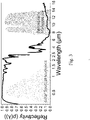
- Fig. 3 shows the reflectance spectrum of PDMS/HGBs composite film at 0.3-16 ⁇ m wavelength in embodiment 1.
- the average solar reflectance of the composite film is as high as ⁇ 0.96, and the long-wave infrared emissivity can reach ⁇ 0.95, which indicates that the prepared PDMS/HGBs composite film hardly absorbs sunlight, and can greatly dissipate its own heat to the cold outer space, satisfying the basic optical requirements for passive radiant cooling during the day.
- Fig. 4 shows the solar reflectance spectra of PDMS/HGBs/CMs composite film under cooling and heating conditions in embodiment 1, wherein Fig. 4(a) shows the solar reflectance spectrum of the composite coating film containing different concentrations of CMs in the cooling state; Fig. 4(b) shows the solar reflectance spectrum of the composite coating film containing different concentrations of CMs in the heating state.
- Fig. 5 compares the temperature tracking curves of PDMS/HGBs and PDMS/HGBs/CMs composite films at different ambient temperatures. It can be seen that when the ambient temperature is - 14.9 °C and when the critical color-change temperature of CMs is 25 °C, the PDMS/HGBs and PDMS/HGBs/CMs composite films are cooled by - 5.2 °C and heated by - 2.4 °C respectively. At this time, PDMS/HGBs/ CMs composite film presents a colorful appearance.
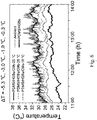
- Fig. 6 shows the temperature tracking curve of environment, PDMS/HGBs and PDMS/HGBs/CMs composite film in embodiment 3, wherein the ambient temperature is about 30.8 °C, and the critical color-change temperatures of CMs are 18, 25, and 28 °C, respectively.
- said intelligent thermochromic coating material further comprises other fillers, said fillers are any one or more of barium sulfate, calcium carbonate, lithopone, talcum powder or titanium dioxide.
Landscapes
- Chemical & Material Sciences (AREA)
- Life Sciences & Earth Sciences (AREA)
- Organic Chemistry (AREA)
- Engineering & Computer Science (AREA)
- Materials Engineering (AREA)
- Geochemistry & Mineralogy (AREA)
- General Chemical & Material Sciences (AREA)
- Chemical Kinetics & Catalysis (AREA)
- Wood Science & Technology (AREA)
- General Life Sciences & Earth Sciences (AREA)
- Inorganic Chemistry (AREA)
- Composite Materials (AREA)
- Paints Or Removers (AREA)
- Laminated Bodies (AREA)
Abstract
The present invention belongs to the technical field of functional coatings and thin films, and provides a white coating material, an intelligent thermochromic coating material and a coating layer. The white coating material comprises 10 wt% ∼ 70 wt% hollow glass beads and 30 wt% ∼ 90 wt% resin; The intelligent thermochromic coating material comprises 10 ∼ 70 parts by weight of hollow glass beads, 30 ∼ 90 parts by weight of resin and 0.5 ∼ 5 parts by weight of reversible thermochromic microcapsules. Due to the rich multi-level cavity structure of HGBs and the ideal inherent characteristics of the polymer, the average reflectivity of the coating layer in the solar spectrum range is as high as ∼0.96, and the long-wave infrared emissivity can be as high as ∼0.95. The optical properties, whiteness, hiding power, etc. are better than traditional white coating materials based on titanium dioxide. Not only is it non-toxic, environmentally friendly, and low in cost, but the film also has an obvious cooling effect. The coating layer added with a small amount of reversible thermochromic microcapsules can switch freely between ultra-white and color as the ambient temperature changes. Therefore, intelligent adjustment of solar heating and passive radiative cooling is achieved.
Description
- The present invention belongs to the technical field of functional coating layers and thin films, and specifically relates to a white coating material, an intelligent thermochromic coating material and a coating layer.
- Titanium dioxide (TiO2) has very important application value in industries such as coating layers, plastics, paper, ink, chemical fiber, rubber, ceramics, cosmetics and etc. because of its high refractive index, good whiteness and brightness, and excellent hiding power and tinting power. However, there are also a series of problems: (1) the price of titanium dioxide is relatively high and has been rising successively in recent years. The supply chain is continuously under tension due to the exuberant downstream demand. (2) The production process of titanium dioxide often causes a lot of environmental pollution. (3) Titanium dioxide's inherent absorption of ultraviolet light and violet light makes the overall solar reflectance low, which hinders its application in building cooling. (4) On February 18th, 2020, the European Union officially issued an official authorization regulation (CLP Regulation (EC) No. 1272/2008), classifying TiO2 as a
category 2 suspected carcinogen (by inhalation), which will have a huge impact on titanium dioxide and its upstream and downstream industries. Therefore, it is urgent to find a cheap, environmentally friendly substitute with good optical performance for titanium dioxide. - In recent years, daytime passive radiant cooling (PDRC) technology has attracted widespread attention from researchers because of its potential to reduce or replace traditional electric refrigeration systems. Some advanced PDRC designs show excellent cooling performance, but they often require the use of complex and expensive processing equipment in the production process, which is not suitable for large-scale promotion. Therefore, research and development of PDRC materials that are simple, economical, efficient, and can be produced on a large scale are currently a major challenge.
- The present invention was made to solve the above technical problems. The objective of the present invention is to provide a white coating material, an intelligent thermochromic coating material and a coating layer.
- The present invention provides a white coating material, characterized by comprising 10 wt% ∼ 70 wt% hollow glass beads; and 30 wt% ∼ 90 wt% resin.
- Further, the white coating material is characterized by that: wherein the diameter of the hollow glass beads ranges in 2 µm ∼ 30 µm, the main component of the hollow glass beads is soda-lime borosilicate glass.
- Further, the white coating material is characterized by that: wherein the resin is water-soluble resin or solvent-based resin.
- Further, the white coating material is characterized by that: wherein the resin is any one or more of polydimethylsiloxane, polyurethane, polyacrylate, polymethylmethacrylate, epoxy resin, polyvinylidene fluoride, polytetrafluoroethylene and silicone resin.
- The present invention also provides a coating layer, characterized by that: the white coating material is coated on the surface of a substrate material to form the coating layer, wherein the average solar reflectance of the coating layer ≥ 0.90, the longwave infrared emissivity ≥ 0.90, its own temperature is 3°C∼8°C lower than the ambient temperature at night, and its own temperature is 2°C∼7°C lower than the ambient temperature at noon.
- The present invention also provides an intelligent thermochromic coating material, characterized by that: comprising 10 - 70 parts by weight of hollow glass beads; 30 ∼ 90 parts by weight of resin; and 0.5 ∼ 5 parts by weight of reversible thermochromic microcapsules.
- Further, the intelligent thermochromic coating material is characterized by that: wherein the diameter of the hollow glass beads ranges in 2 µm ∼ 30 µm, the main component of the hollow glass beads is soda-lime borosilicate glass.
- Further, the intelligent thermochromic coating material is characterized by that: wherein the resin is water-soluble resin or solvent-based resin.
- Further, the intelligent thermochromic coating material is characterized by that: wherein the intelligent thermochromic coating material further comprises other fillers, the fillers are any one or more of barium sulfate, calcium carbonate, lithopone, talcum powder or titanium dioxide.
- The present invention also provides a coating layer, characterized by that: the intelligent thermochromic coating material is coated on the surface of a substrate material to form the coating layer, wherein the coating layer switches between ultra-white and color as the ambient temperature changes to realize intelligent cooling/heating.
- According to the white coating material, the intelligent thermochromic coating material and the coating layer provided by the present invention, the hollow glass beads are mixed with the resin, and the resin is used as a binder. And the hollow glass beads are uniformly dispersed in the resin. Hollow glass beads (HGBs) can effectively scatter sunlight and increase the heat emissivity because of their rich multi-level cavity structure. Their optical properties, whiteness, hiding power, etc. are better than traditional white coating materials based on titanium dioxide. Besides, the ideal inherent characteristics of the polymer itself, such as almost no absorption of sunlight, various functional groups and their vibration modes will cause a large number of infrared absorption/emission peaks, which can enhance the material's emissivity at long-wave infrared. Therefore, the prepared polymer-based HGBs film (i.e., coating layer) has an average reflectivity of about 0.96 in the solar spectrum, and a long wave infrared emissivity of about 0.95. It is superior to commercial white coating materials based on titanium dioxide in terms of optical performance, whiteness, hiding power, etc. Not only is it non-toxic, environmentally friendly, and low in cost, but the film also has an obvious cooling effect. At night, its own temperature can be 3 °C ∼ 8 °C lower than the ambient temperature. At noon, it can still cool down by 2 °C ∼ 7 °C under direct sunlight.
- Besides, due to the temperature-sensitive properties of the reversible thermochromic microcapsules, the coating layer prepared by adding the reversible thermochromic microcapsules (i.e., thermochromic coating layer) can switch between ultra-white and color freely with the change of ambient temperature. It not only gives the traditional radiant cooling material a more ornamental appearance, but also realizes the intelligent adjustment of the dual modes, which is solar heating and passive radiant cooling. When the ambient temperature is lower than the critical color-change temperature of the thermochromic microcapsules, the coating layer presents a colorful appearance and selectively absorbs visible light of a specific wavelength, thereby heating itself. When the ambient temperature is higher than the critical color-change temperature of the thermochromic microcapsules, the coating layer presents an ultra-white appearance, highly reflects the entire wavelength of sunlight, and radiates infrared heat, thereby cooling itself.
- The invention adopts a simple blending method to blend environmentally-friendly and inexpensive hollow glass beads with resin to obtain a coating layer dispersion system, which is coated on plastic, glass, wood, metal, concrete and other substrate materials to prepare a film. The preparation process is simple, the raw materials are environmentally friendly and low in price, the production cost is low, and it can be prepared on a large scale. It is suitable for all kinds of common water-based and solvent-based resin systems. The prepared film has excellent passive radiation cooling performance. As a new type of refrigeration technology, it is expected to reduce or replace traditional electric cooling systems.
-
-
Fig. 1 shows the scanning electron micrograph of HGBs and PDMS/HGBs composite films inembodiment 1. -
Fig. 2 shows the macro photo of PDMS/HGBs composite film inembodiment 1. -
Fig. 3 shows the reflectance spectrum of PDMS/HGBs composite film at 0.3-16 µm wavelength inembodiment 1. -
Fig. 4 shows the solar reflectance spectra of PDMS/HGBs/CMs composite film under cooling and heating conditions inembodiment 1. -
Fig. 5 shows the temperature tracking curve of environment, PDMS/HGBs and PDMS/HGBs/CMs composite film inembodiment 1. -
Fig. 6 shows the temperature tracking curve of environment, PDMS/HGBs and PDMS/HGBs/CMs composite film in embodiment 3. - In order to make the technical means, creative features, objectives and effects of the present invention easy to understand, a white coating material, an intelligent thermochromic coating material, a coating layer and their preparation methods of the present invention are further described in the following embodiments.
- Meanwhile, all the procedures in the following embodiments are normal methods and all raw materials are from commercial access unless otherwise specified.
- The present invention provides a white coating material comprising 10 wt% ∼ 70 wt% hollow glass beads; and 30 wt% - 90 wt% resin.
- The intelligent thermochromic coating material of the present invention can be obtained by adding reversible thermochromic microcapsules into the white coating material. The intelligent thermochromic coating material comprises the following components in parts by weight: 10 - 70 parts by weight of hollow glass beads; 30 - 90 parts by weight of resin; 0.5 - 5 parts by weight of reversible thermochromic microcapsules.
- Other fillers can be added to the white coating material and the intelligent thermochromic coating material with reversible thermochromic microcapsules provided by the present invention.
- The present invention also provides a coating layer, a film, and a preparation method thereof, and the preparation method specifically comprises: the white coating material or the intelligent thermochromic coating material is coated on the surface of a substrate material to form the coating layer. And if the coating layer is peeled off the surface of the substrate material, a corresponding film can be obtained.
- The preparation method of the coating layer and the film provided by the invention can also comprise the following steps:
-
step 1. mixing 10 - 70 wt% of hollow glass micro-beads and 30 - 90 wt% of resin into dispersion liquid; -
step 2. coating the dispersion liquid on a substrate sheet to obtain a coating layer, if the composite coating layer is peeled off the substrate sheet after drying, a thin film can be obtained. -
step 1. mixing 10 ∼ 70 parts of hollow glass beads, 30 ∼ 90 parts of resin and 0.5 ∼ 5 parts of reversible thermochromic microcapsules into dispersion liquid; -
step 2. coating the dispersion liquid on a substrate sheet to obtain a coating layer, if the composite coating layer is peeled off the substrate sheet after drying, a thin film can be obtained. - When 10 wt% ∼ 70 wt% hollow glass beads are mixed with 30 wt% ∼ 90 wt% resin in
step 1 to form a dispersion liquid, the prepared coating layer is an ultra-white coating layer, and the stripped film is an ultra-white film. The average solar reflectance of the ultra-white coating layer ≥ 0.90, the longwave infrared emissivity of the coating layer ≥ 0.90, its own temperature is 3°C∼8°C lower than the ambient temperature at night, and its own temperature is 2°C∼7°C lower than the ambient temperature at noon. - When the reversible thermochromic microcapsules with cold-activated thermochromic function are added in
step 1, a thermochromic coating layer that switches between ultra-white and color as the ambient temperature changes is obtained. Correspondingly, the peeled film is a thermochromic film. - In
step 1, the mixing method is any one of magnetic stirring, mechanical stirring, homogenization, and ultrasound. Instep 2, the coating method is any of pouring, spraying, roll coating or spin coating. Instep 2, the material of the substrate sheet is any of plastic, glass, wood, metal, concrete, paper, etc. - In the above preparation method, a suitable solvent is selected according to the viscosity of the resin. If the resin is a water-soluble resin, use water as the solvent, and if the resin is a solvent resin, select the corresponding organic solvent that can dissolve the resin as the solvent. The amount of solvent added is related to the viscosity of the resin, and the amount of addition needs to be such that the viscosity of the dispersion liquid is determined.
- In the above preparation method of the white coating material and the intelligent thermochromic coating material, other fillers are any one or more of barium sulfate, calcium carbonate, lithopone, talc or titanium dioxide for blending and doping. In the present invention, other fillers are not limited to the above-mentioned examples, and fillers that do not affect the performance of the intelligent thermochromic coating material and coating layer may be used.
- The above hollow glass beads have a diameter of 2 µm ∼ 30 µm, and the main component is soda-lime borosilicate glass. The critical color-change temperature of the reversible thermochromic microcapsules is 15°C ∼ 30°C.
- The resin is a water-soluble resin or a solvent-based resin, specifically, it can be any one or more of polydimethylsiloxane (PDMS), polyurethane (PU), polyacrylate (PA), polymethylmethacrylate (PMMA), epoxy resin (EP), polyvinylidene fluoride (PVDF), polytetrafluoroethylene (PTFE) and silicone resin.
- First weigh 5g polydimethylsiloxane prepolymer (PDMS, SYLGARD 184), 0.5g curing agent (SYLGARD 184) and 5g HGBs, put them in 10g of toluene solvent, and stir magnetically for 2h at room temperature to obtain a dispersion liquid of PDMS/HGBs/toluene; Then, apply the above dispersion liquid to the aluminum plate or glass plate by roll coating. After the solution is leveled, place it in an oven at 100 °C for drying, and take it out after 2 hours to obtain a PDMS/HGBs composite coating layer; Finally, peel off the PDMS/HGBs composite coating layer from the substrate sheet to obtain the PDMS/HGBs composite film. For the preparation of PDMS/HGBs/CMs composite film, only need to add 0.2g of CMs ((critical color-change temperature is 25 °C, color is sky blue)) to the dispersion liquid of PDMS/HGBs/toluene, and the other steps are the same.
- The incubator device for the cooling temperature test is built using insulated medium-density polystyrene foam and highly reflective aluminum foil. Place a composite film sample with a length and width of ∼ 100 mm and a thickness of ∼ 800 µm in the middle of the incubator. Then, put a sticky thermometer probe close to the back of the sample to test the temperature of the film sample. Another probe is placed on the outside of the incubator to test the ambient temperature. Record a data point every 10s.
-
Fig. 1 shows the scanning electron micrograph of HGBs and PDMS/HGBs composite films inembodiment 1, whereinFig. 1(a) and Fig. 1(b) are scanning electron micrographs of HGBs at different magnifications, andFig. 1(c) is a scanning electron micrograph of PDMS/HGBs composite film. - As shown in
Fig. 1 , HGBs have a regular spherical appearance and obvious cavity structure, with an average particle size of about 10 µm, which can be evenly dispersed in the PDMS matrix. -
Fig. 2 shows the macro photo of PDMS/HGBs composite film inembodiment 1, whereinFig. 2(a) shows the photo of PDMS/HGBs composite film under various deformations,Fig. 2(b) shows the photo of PDMS/HGBs composite coating layer film on aluminum plate, andFig. 2(c) shows the photo of PDMS/HGBs composite coating film on glass plate. The illustration shows the water contact angle on the surface of the coated film. -
Fig. 2 shows that the prepared PDMS/HGBs composite film has a matt, ultra-white appearance, excellent hiding power and good flexibility, and can be coated on aluminum or glass plates. Moreover, due to the low surface energy of PDMS and the multi-level structure of the coating layer surface, the prepared PDMS/HGBs composite film has good hydrophobicity. -
Fig. 3 shows the reflectance spectrum of PDMS/HGBs composite film at 0.3-16 µm wavelength inembodiment 1. The average solar reflectance of the composite film is as high as ∼ 0.96, and the long-wave infrared emissivity can reach ∼ 0.95, which indicates that the prepared PDMS/HGBs composite film hardly absorbs sunlight, and can greatly dissipate its own heat to the cold outer space, satisfying the basic optical requirements for passive radiant cooling during the day. -
Fig. 4 shows the solar reflectance spectra of PDMS/HGBs/CMs composite film under cooling and heating conditions inembodiment 1, whereinFig. 4(a) shows the solar reflectance spectrum of the composite coating film containing different concentrations of CMs in the cooling state;Fig. 4(b) shows the solar reflectance spectrum of the composite coating film containing different concentrations of CMs in the heating state. -
Fig. 4 shows the solar reflectance spectra of PDMS/HGBs/CMs composite film under cooling and heating conditions. The dosage of HGBs is 50 wt%, the test temperature is 20 °C, and the critical color-change temperature of CMs is 25 °C. The results show that the average solar reflectance of the composite films with CMs content of 1 wt%, 2 wt%, and 5 wt% in the cooling state are 92.1%, 89.9%, and 87.9%, respectively, and the average solar reflectance in the heating state were 95.7%, 95.1% and 94.7%, respectively. It can be seen that for this type of PDMS/HGBs/CMs composite film/coating layer, the difference in average solar reflectance before and after the temperature change is 3.6-6.8%. It means that when the solar radiation intensity is ∼ 800 W/m2, 54.4 W/m2 of the solar radiation absorption can be reduced at the maximum, which is of great significance to realize the intelligent regulation of radiation cooling. -
Fig. 5 shows the temperature tracking curve of environment, PDMS/HGBs and PDMS/HGBs/CMs composite film inembodiment 1, wherein the ambient temperature inFig. 5(a) is about 14.9 °C, and the critical color-change temperature of CMs is 25 °C; the ambient temperature inFig. 5(b) is about 39.5 °C, and the critical color-change temperature of CMs is 25 °C. -
Fig. 5 compares the temperature tracking curves of PDMS/HGBs and PDMS/HGBs/CMs composite films at different ambient temperatures. It can be seen that when the ambient temperature is - 14.9 °C and when the critical color-change temperature of CMs is 25 °C, the PDMS/HGBs and PDMS/HGBs/CMs composite films are cooled by - 5.2 °C and heated by - 2.4 °C respectively. At this time, PDMS/HGBs/ CMs composite film presents a colorful appearance. When the ambient temperature is - 39.5 °C and the critical color-change temperature of CMs is 25 °C, the PDMS/HGBs and PDMS/HGBs/CMs composite films are cooled by ∼6.9 °C and ∼ 4.5 °C respectively, and the PDMS/HGBs/CMs composite film presents an ultra-white appearance. It shows that the PDMS/HGBs/CMs composite film can freely switch between ultra-white and color as the ambient temperature changes, and independently and reversibly adjust its own cooling and heating mode, which is expected to truly achieve warmth in winter and coolness in summer. - The experimental device and operation are the same as in
embodiment 1. First weigh 10g water-based polyurethane (WPU) emulsion with a solid content of 48% and 5g HGBs, put them in 5g deionized water, and stir mechanically for 2h at room temperature to obtain a dispersion liquid of WPU/HGBs/water; Then, coat the above dispersion liquid on wood by pouring, after the solution is leveled, place it to dry overnight at room temperature to obtain WPU/HGBs composite film. The test methods of sample temperature and ambient temperature are the same as inembodiment 1. - First weigh 5g PDMS prepolymer, 0.5g curing agent (SYLGARD 184), 5g HGBs and 0.2g CMs (critical color-change temperature is 18 °C, 25 °C and 28 °C, respectively, and the color is pink), put them in 10g toluene solvent, and disperse with a homogenizer for 10min at room temperature to obtain a dispersion liquid of PDMS/HGBs/CMs/toluene; Then, coat the above dispersion liquid on a plastic plate by spin coating. After the solution is leveled, place it in an oven at 100°C for drying, take it out after 2 hours, and obtain a PDMS/HGBs/CMs composite coating layer; Finally, peel the PDMS/HGBs/CMs composite coating layer from the plastic plate to obtain the PDMS/HGBs/CMs composite film. At the same time, the PDMS/HGBs composite film without CMs is prepared by the above method as a reference. The test methods of sample temperature and ambient temperature are the same as in
embodiment 1. -
Fig. 6 shows the temperature tracking curve of environment, PDMS/HGBs and PDMS/HGBs/CMs composite film in embodiment 3, wherein the ambient temperature is about 30.8 °C, and the critical color-change temperatures of CMs are 18, 25, and 28 °C, respectively. -
Fig. 6 compares the temperature tracing curves of the PDMS/HGBs composite coating film and the PDMS/HGBs/CMs composite coating film with different critical color-change temperatures. It can be seen that when the ambient temperature is - 30.8 °C, which is higher than the critical color-change temperature of CMs, PDMS/HGBs, PDMS/HGBs/CMs (18°C), PDMS/HGBs/CMs (25°C) and PDMS/HGBs /CMs (28°C) composite coating films all present an ultra-white appearance and have excellent passive radiation cooling performance during the day, respectively cooling down by ∼5.3 °C, ∼3.0 °C, ∼1.9 °C and ∼0.3 °C. The results show that the greater the difference between the ambient temperature and the critical color-change temperature of CMs are, the more obvious the cooling effect is. - First weigh 5g PDMS prepolymer, 0.5g curing agent (SYLGARD 184), 4g HGBs and 1g barium sulfate nanoparticles (BaSO4, 400 nm), put them in 10g toluene solvent, and stir magnetically for 2h at room temperature to obtain a dispersion liquid of PDMS/HGBs/ BaSO4/toluene. Then, coat the above dispersion liquid on paper by spin coating. After the solution is leveled, place it in an oven at 100 °C for drying, take it out after 2 hours, and obtain a PDMS/HGBs/BaSO4 composite coating layer. Finally, peel the PDMS/HGBs/BaSO4 composite coating layer from the paper to obtain the PDMS/HGBs/BaSO4 composite film. The test methods of sample temperature and ambient temperature are the same as in
embodiment 1. - The experimental device and operation are the same as in
embodiment 1. First weigh 5g polymethyl methacrylate (PMMA) plastic particles and 4g HGBs, put them in 10g acetone solvent, and stir magnetically at 50 °C for 2h to obtain a dispersion liquid of PMMA/HGBs/acetone; Then, spray the above dispersion liquid on the concrete surface and dried at room temperature to obtain the PMMA/HGBs composite film. The test methods of sample temperature and ambient temperature are the same as inembodiment 1. - According to the white coating material, the intelligent thermochromic coating material and the coating layer provided by the embodiments of the present invention, due to the abundant multi-level cavity structure of the hollow glass beads, the intelligent thermochromic coating material and the coating layer can effectively scatter sunlight and increase thermal emissivity. Their optical properties, whiteness, hiding power, etc. are better than traditional white coating layers based on titanium dioxide. In addition, the ideal inherent properties of the polymer itself, such as almost no absorption of sunlight, various functional groups and a large number of infrared absorption/emission peaks caused by their vibration modes, can enhance the emissivity of the material in the long-wave infrared. Therefore, the prepared polymer-based HGBs film (that is, the coating layer) has an average reflectivity of up to about 0.96 in the solar spectrum, and a long-wave infrared emissivity of about 0.95, which is excellent in optical properties, whiteness, and coverage. In terms of strength, it is superior to commercial white coating materials based on titanium dioxide. It is not only non-toxic, environmentally friendly and low in cost, but the coating film also has an obvious cooling effect. At night, its own temperature can be 3 °C ∼ 8 °C lower than the ambient temperature, and it can still cool down by 2 °C ∼ 7 °C under direct sunlight at noon.
- In addition, due to the temperature-sensitive properties of the reversible thermochromic microcapsules, the coating layer prepared by adding the reversible thermochromic microcapsules (i.e., the thermochromic coating layer) can switch freely between ultra-white and color as the ambient temperature changes. The free switching between colors not only gives the traditional radiant cooling material a more ornamental appearance, but also realizes the intelligent adjustment of the dual modes of solar heating and passive radiant cooling. As shown in
Fig. 5 andFig. 6 , when the ambient temperature is lower than the critical color-change temperature of the thermochromic microcapsules, the coating layer presents a colorful appearance and selectively absorbs visible light of a specific wavelength to heat itself; when the ambient temperature is higher than the critical color-change temperature of the thermochromic microcapsules, the coating layer presents an ultra-white appearance, highly reflects the entire wavelength of sunlight, and radiates infrared heat, thereby cooling itself. - The embodiments of the present invention provide a simple, cheap, and universal film preparation method. A simple mechanical stirring blending method is adopted to blend environmentally friendly and cheap hollow glass beads with resin to obtain a coating layer dispersion system. Methods such as spraying, roll coating and spin coating are used on plastic, glass, wood, metal, concrete and other substrate materials to prepare films. The method has the advantages of simple preparation process, environment-friendly and cheap raw materials, and low production cost. Thus, it is suitable for large-scale preparation; it is suitable for all kinds of common water-based and solvent-based resin systems; the prepared film has excellent passive radiation cooling performance and environmental temperature responsiveness, and can realize two-way adjustment of cooling and heating. As a new type of refrigeration technology, it is expected to reduce or replace traditional electric cooling/heating systems, and truly realize energy-free warming in winter and cooling in summer.
- According to an aspect, there is provided a white coating material without titanium dioxide, characterized by comprising 10 wt% ∼ 70 wt% hollow glass beads; and 30 wt% ∼ 90 wt% resin.
- In some embodiments, the diameter of said hollow glass beads ranges in 2 µm ∼ 30 µm, and the main component of said hollow glass beads is soda-lime borosilicate glass.
- In some embodiments, said resin is water-soluble resin or solvent-based resin.
- In some embodiments, said resin is any one or more of polydimethylsiloxane, polyurethane, polyacrylate, polymethylmethacrylate, epoxy resin, polyvinylidene fluoride, polytetrafluoroethylene and silicone resin.
- In some embodiments, the white coating material without titanium dioxide is coated on the surface of a substrate material to form said coating layer, wherein the average solar reflectance of said coating layer ≥ 0.90, the longwave infrared emissivity ≥ 0.90, its own temperature is 3 °C∼8 °C lower than the ambient temperature at night, and its own temperature is 2°C∼7°C lower than the ambient temperature at noon.
- According to an aspect, there is provided an intelligent thermochromic coating material, characterized by: comprising 10 ∼ 70 parts by weight of hollow glass beads; 30 - 90 parts by weight of resin; and 0.5 - 5 parts by weight of reversible thermochromic microcapsules.
- In some embodiments, the diameter of said hollow glass beads ranges in 2 µm ∼ 30 µm, and the main component of said hollow glass beads is soda-lime borosilicate glass.
- In some embodiments, said resin is water-soluble resin or solvent-based resin.
- In some embodiments, said intelligent thermochromic coating material further comprises other fillers, said fillers are any one or more of barium sulfate, calcium carbonate, lithopone, talcum powder or titanium dioxide.
- According to an aspect, there is provided a cotating layer in whcih the intelligent thermochromic coating material is coated on the surface of a substrate material to form said coating layer, wherein said coating layer switches between ultra-white and color as the ambient temperature changes to realize intelligent cooling/heating.
- The foregoing embodiments are preferred cases of the present invention, and are not used to limit the protection scope of the present invention.
Claims (10)
- A white coating material, characterized by comprising 10 wt% ∼ 70 wt% hollow glass beads; and 30 wt% ∼ 90 wt% resin.
- The white coating material according to claim 1, characterized by that:wherein the diameter of said hollow glass beads ranges in 2 µm ∼ 30 µm, the main component of said hollow glass beads is soda-lime borosilicate glass.
- The white coating material according to claim 1, characterized by that:wherein said resin is water-soluble resin or solvent-based resin.
- The white coating material according to claim 1, characterized by that:wherein said resin is any one or more of polydimethylsiloxane, polyurethane, polyacrylate, polymethylmethacrylate, epoxy resin, polyvinylidene fluoride, polytetrafluoroethylene and silicone resin.
- A coating layer, characterized by that: the white coating material according to any one of claims 1-4 is coated on the surface of a substrate material to form said coating layer,
wherein the average solar reflectance of said coating layer ≥ 0.90, the longwave infrared emissivity ≥ 0.90, its own temperature is 3°C∼8°C lower than the ambient temperature at night, and its own temperature is 2°C∼7°C lower than the ambient temperature at noon. - An intelligent thermochromic coating material, characterized by that:comprising 10 ∼ 70 parts by weight of hollow glass beads; 30 ∼ 90 parts by weight of resin; and 0.5 ∼ 5 parts by weight of reversible thermochromic microcapsules.
- The intelligent thermochromic coating material according to claim 6, characterized by that:wherein the diameter of said hollow glass beads ranges in 2 µm ∼ 30 µm, the main component of said hollow glass beads is soda-lime borosilicate glass.
- The intelligent thermochromic coating material according to claim 7, characterized by that:wherein said resin is water-soluble resin or solvent-based resin.
- The intelligent thermochromic coating material according to claim 6, characterized by that:wherein said intelligent thermochromic coating material further comprises other fillers, said fillers are any one or more of barium sulfate, calcium carbonate, lithopone, talcum powder or titanium dioxide.
- A coating layer, characterized by that: the intelligent thermochromic coating material according to any one of claims 6-9 is coated on the surface of a substrate material to form said coating layer,
wherein said coating layer switches between ultra-white and color as the ambient temperature changes to realize intelligent cooling/heating.
Applications Claiming Priority (2)
| Application Number | Priority Date | Filing Date | Title |
|---|---|---|---|
| CN202110613415.6A CN115433516A (en) | 2021-06-02 | 2021-06-02 | A white paint without titanium dioxide, an intelligent temperature-changing paint and a coating |
| PCT/CN2021/099682 WO2022252281A1 (en) | 2021-06-02 | 2021-06-11 | White paint that does not contain titanium dioxide, intelligent temperature-change paint, and coating |
Publications (1)
| Publication Number | Publication Date |
|---|---|
| EP4098629A1 true EP4098629A1 (en) | 2022-12-07 |
Family
ID=78414433
Family Applications (1)
| Application Number | Title | Priority Date | Filing Date |
|---|---|---|---|
| EP21205408.4A Withdrawn EP4098629A1 (en) | 2021-06-02 | 2021-10-28 | A white coating material, an intelligent thermochromic coating material and a coating layer |
Country Status (3)
| Country | Link |
|---|---|
| US (1) | US20240026170A1 (en) |
| EP (1) | EP4098629A1 (en) |
| JP (1) | JP2023531836A (en) |
Families Citing this family (1)
| Publication number | Priority date | Publication date | Assignee | Title |
|---|---|---|---|---|
| CN119121483B (en) * | 2024-09-14 | 2026-02-13 | 浙江理工大学 | A stretch-sensitive color-changing negative Poisson's ratio fabric, its preparation method and application |
Citations (1)
| Publication number | Priority date | Publication date | Assignee | Title |
|---|---|---|---|---|
| CN110776817A (en) * | 2019-10-29 | 2020-02-11 | 河北晨阳工贸集团有限公司 | Water-based color-changing heat-insulating glass paint and preparation method thereof |
Family Cites Families (19)
| Publication number | Priority date | Publication date | Assignee | Title |
|---|---|---|---|---|
| US3136733A (en) * | 1960-02-08 | 1964-06-09 | Prismo Safety Corp | Highway marking composition |
| JPH0637746B2 (en) * | 1985-02-05 | 1994-05-18 | パイロツトインキ株式会社 | Thermochromic cloth |
| JPH0670882B2 (en) * | 1988-08-23 | 1994-09-07 | 株式会社明拓システム | Edge light panel using single plate |
| US5296285A (en) * | 1992-05-26 | 1994-03-22 | Mcdonnell Douglas Corporation | High emittance low absorptance coatings |
| JP3727747B2 (en) * | 1997-02-07 | 2005-12-14 | パイロットインキ株式会社 | Reversible thermochromic pressure-sensitive transfer tape and transfer tool incorporating the same |
| JPH1180599A (en) * | 1997-09-12 | 1999-03-26 | Micron Tec:Kk | Heat insulating coating film and heat insulating coating material |
| JP2001288698A (en) * | 2000-04-04 | 2001-10-19 | Tokushu Paper Mfg Co Ltd | Functional particles with self-other discrimination ability and products with self-other discrimination ability |
| DE10040321A1 (en) * | 2000-08-17 | 2002-04-11 | Schott Glas | Temperature indicator |
| JP2005097462A (en) * | 2003-09-26 | 2005-04-14 | Kansai Paint Co Ltd | Coloring paint having heat blocking property and method of forming coating film |
| MY155463A (en) * | 2008-09-30 | 2015-10-15 | Hitachi Chemical Co Ltd | Coating agent, substrate for mounting optical semiconductor element using same, and optical semiconductor device |
| US11142654B2 (en) * | 2010-11-03 | 2021-10-12 | Chemetall Gmbh | Composition and process for the generation of a clear or translucent emissive coating |
| JP6008685B2 (en) * | 2012-10-12 | 2016-10-19 | イー インク コーポレイション | Display particle dispersion, display medium, and display device |
| CN103214905B (en) * | 2013-04-17 | 2016-02-10 | 浙江大学 | A kind of temperature sensing color changing thermal insulating coating and preparation method thereof |
| EP2860037B1 (en) * | 2013-10-08 | 2015-12-23 | Flooring Technologies Ltd. | Method for adapting decorative prints and device for carrying out said method |
| CN105130353A (en) * | 2015-07-10 | 2015-12-09 | 贵州大学 | Infrared high-emissivity coating filling material and preparation method of same |
| CN106675179A (en) * | 2016-12-29 | 2017-05-17 | 广东壮丽彩印股份有限公司 | Thermosensitive color-changing microcapsule UV (Ultraviolet) photo-cured printing ink and preparation method thereof |
| CN109705723A (en) * | 2018-11-30 | 2019-05-03 | 成都展辰涂料有限公司 | A kind of solvent-free white fluorescent effect UV coating material and preparation method thereof |
| CN112341847B (en) * | 2020-10-29 | 2022-04-26 | 雅士利涂料(苏州)有限公司 | Brightening energy-saving slurry, preparation method thereof and interior wall latex paint |
| CN112662250B (en) * | 2020-12-18 | 2022-07-15 | 中国建筑西南设计研究院有限公司 | White radiation refrigeration coating with single-layer microporous structure and preparation method and application thereof |
-
2021
- 2021-06-11 US US17/439,337 patent/US20240026170A1/en not_active Abandoned
- 2021-06-11 JP JP2021556664A patent/JP2023531836A/en active Pending
- 2021-10-28 EP EP21205408.4A patent/EP4098629A1/en not_active Withdrawn
Patent Citations (1)
| Publication number | Priority date | Publication date | Assignee | Title |
|---|---|---|---|---|
| CN110776817A (en) * | 2019-10-29 | 2020-02-11 | 河北晨阳工贸集团有限公司 | Water-based color-changing heat-insulating glass paint and preparation method thereof |
Non-Patent Citations (3)
| Title |
|---|
| DOMBROVSKY ET AL: "Infrared radiative properties of polymer coatings containing hollow microspheres", INTERNATIONAL JOURNAL OF HEAT AND MASS TRANSFER, ELSEVIER, AMSTERDAM, NL, vol. 50, no. 7-8, 14 February 2007 (2007-02-14), pages 1516 - 1527, XP005891572, ISSN: 0017-9310, DOI: 10.1016/J.IJHEATMASSTRANSFER.2006.08.034 * |
| JING YUAN ET AL: "Facile aqueous synthesis and thermal insulating properties of low-density glass/TiOcore/shell composite hollow spheres", PARTICUOLOGY, ELSEVIER, AMSTERDAM, NL, vol. 10, no. 4, 30 August 2011 (2011-08-30), pages 475 - 479, XP028411281, ISSN: 1674-2001, [retrieved on 20120124], DOI: 10.1016/J.PARTIC.2011.08.005 * |
| LI RUI ET AL: "Surface modification of hollow glass microsphere and its marine-adaptive composites with epoxy resin", ADVANCED COMPOSITES LETTERS, vol. 29, 1 January 2020 (2020-01-01), XP055906223, ISSN: 2633-366X, Retrieved from the Internet <URL:http://journals.sagepub.com/doi/full-xml/10.1177/2633366X20974682> DOI: 10.1177/2633366X20974682 * |
Also Published As
| Publication number | Publication date |
|---|---|
| JP2023531836A (en) | 2023-07-26 |
| US20240026170A1 (en) | 2024-01-25 |
Similar Documents
| Publication | Publication Date | Title |
|---|---|---|
| Luo et al. | Enhanced passive radiative cooling coating with Y2O3 for thermal management of building | |
| CN111690301B (en) | Radiation refrigeration coating with gradient structure and preparation method and application thereof | |
| CN114736566B (en) | Super-hydrophobic self-cleaning temperature self-adaptive radiation cooling coating and preparation method thereof | |
| CN117164939A (en) | A micro-nano porous-granular composite radiation refrigeration film coating and its preparation method | |
| CN113185140A (en) | Vanadium dioxide-based thermochromic composite film and preparation method thereof | |
| Xu et al. | Superhydrophobic polytetrafluoroethylene/polyvinylidene fluoride coating for passive daytime radiative refrigeration | |
| CN114892417A (en) | Textile containing daytime radiation refrigeration porous coating and preparation method and application thereof | |
| Ju et al. | Daytime radiative cooling performance and building energy consumption simulation of superhydrophobic calcined kaolin/poly (vinylidene fluoride-co-hexafluoropropylene) coatings | |
| Dai et al. | Durable and robust broadband radiative cooling coatings for multi-temperature scenarios | |
| EP4098629A1 (en) | A white coating material, an intelligent thermochromic coating material and a coating layer | |
| Yang et al. | A comprehensive investigation of zeolite/polyurea cooling coating on concrete for building energy conservation | |
| WO2022252281A1 (en) | White paint that does not contain titanium dioxide, intelligent temperature-change paint, and coating | |
| CN108517181A (en) | A kind of aqueous polyurethane building waterproof heat-insulating coating | |
| CN104589751A (en) | Outdoor fluorescent film and preparation method thereof | |
| Lv et al. | Porous composite film embedded with garnet for daytime subambient radiative cooling | |
| CN117247705B (en) | Preparation method of ultra-thin radiation refrigeration paint and coating for enhancing heat dissipation | |
| CN116875188B (en) | Ultrathin high-heat-conductivity weather-resistant daytime radiation refrigeration coating and preparation method thereof | |
| KR102868726B1 (en) | Thermosensitive radiative cooling material | |
| Shen et al. | A smart material built upon the photo-thermochromic effect and its use for managing indoor temperature | |
| CN107556845A (en) | A kind of heat-insulated texture coating of colour reflective and preparation method thereof | |
| CN118994711A (en) | Super-hydrophobic porous radiation refrigeration film and preparation method and application thereof | |
| CN115490809B (en) | A temperature-responsive gel, a temperature-controlled membrane, and corresponding preparation methods and applications | |
| CN118342856A (en) | A multilayer phase-change year-round energy-saving material and preparation method thereof | |
| CN115895150A (en) | Self-cleaning adjustable thermal management film | |
| CN117382272A (en) | A radiation refrigeration flexible film and its preparation method and application |
Legal Events
| Date | Code | Title | Description |
|---|---|---|---|
| PUAI | Public reference made under article 153(3) epc to a published international application that has entered the european phase |
Free format text: ORIGINAL CODE: 0009012 |
|
| STAA | Information on the status of an ep patent application or granted ep patent |
Free format text: STATUS: REQUEST FOR EXAMINATION WAS MADE |
|
| 17P | Request for examination filed |
Effective date: 20220818 |
|
| AK | Designated contracting states |
Kind code of ref document: A1 Designated state(s): AL AT BE BG CH CY CZ DE DK EE ES FI FR GB GR HR HU IE IS IT LI LT LU LV MC MK MT NL NO PL PT RO RS SE SI SK SM TR |
|
| STAA | Information on the status of an ep patent application or granted ep patent |
Free format text: STATUS: THE APPLICATION IS DEEMED TO BE WITHDRAWN |
|
| 18D | Application deemed to be withdrawn |
Effective date: 20250501 |