EP4098485B1 - Headlamp unit and leaning vehicle - Google Patents
Headlamp unit and leaning vehicle Download PDFInfo
- Publication number
- EP4098485B1 EP4098485B1 EP22176200.8A EP22176200A EP4098485B1 EP 4098485 B1 EP4098485 B1 EP 4098485B1 EP 22176200 A EP22176200 A EP 22176200A EP 4098485 B1 EP4098485 B1 EP 4098485B1
- Authority
- EP
- European Patent Office
- Prior art keywords
- module
- headlamp
- lamp
- sub
- cover
- Prior art date
- Legal status (The legal status is an assumption and is not a legal conclusion. Google has not performed a legal analysis and makes no representation as to the accuracy of the status listed.)
- Active
Links
Images




Classifications
-
- B—PERFORMING OPERATIONS; TRANSPORTING
- B60—VEHICLES IN GENERAL
- B60Q—ARRANGEMENT OF SIGNALLING OR LIGHTING DEVICES, THE MOUNTING OR SUPPORTING THEREOF OR CIRCUITS THEREFOR, FOR VEHICLES IN GENERAL
- B60Q1/00—Arrangement of optical signalling or lighting devices, the mounting or supporting thereof or circuits therefor
- B60Q1/0029—Spatial arrangement
- B60Q1/0041—Spatial arrangement of several lamps in relation to each other
- B60Q1/0047—Signalling unit mounted on a headlamp unit
-
- B—PERFORMING OPERATIONS; TRANSPORTING
- B60—VEHICLES IN GENERAL
- B60Q—ARRANGEMENT OF SIGNALLING OR LIGHTING DEVICES, THE MOUNTING OR SUPPORTING THEREOF OR CIRCUITS THEREFOR, FOR VEHICLES IN GENERAL
- B60Q1/00—Arrangement of optical signalling or lighting devices, the mounting or supporting thereof or circuits therefor
- B60Q1/0029—Spatial arrangement
- B60Q1/0041—Spatial arrangement of several lamps in relation to each other
- B60Q1/0052—Spatial arrangement of several lamps in relation to each other concentric
-
- B—PERFORMING OPERATIONS; TRANSPORTING
- B60—VEHICLES IN GENERAL
- B60Q—ARRANGEMENT OF SIGNALLING OR LIGHTING DEVICES, THE MOUNTING OR SUPPORTING THEREOF OR CIRCUITS THEREFOR, FOR VEHICLES IN GENERAL
- B60Q1/00—Arrangement of optical signalling or lighting devices, the mounting or supporting thereof or circuits therefor
- B60Q1/02—Arrangement of optical signalling or lighting devices, the mounting or supporting thereof or circuits therefor the devices being primarily intended to illuminate the way ahead or to illuminate other areas of way or environments
- B60Q1/04—Arrangement of optical signalling or lighting devices, the mounting or supporting thereof or circuits therefor the devices being primarily intended to illuminate the way ahead or to illuminate other areas of way or environments the devices being headlights
- B60Q1/0408—Arrangement of optical signalling or lighting devices, the mounting or supporting thereof or circuits therefor the devices being primarily intended to illuminate the way ahead or to illuminate other areas of way or environments the devices being headlights built into the vehicle body, e.g. details concerning the mounting of the headlamps on the vehicle body
-
- B—PERFORMING OPERATIONS; TRANSPORTING
- B62—LAND VEHICLES FOR TRAVELLING OTHERWISE THAN ON RAILS
- B62J—CYCLE SADDLES OR SEATS; AUXILIARY DEVICES OR ACCESSORIES SPECIALLY ADAPTED TO CYCLES AND NOT OTHERWISE PROVIDED FOR, e.g. ARTICLE CARRIERS OR CYCLE PROTECTORS
- B62J6/00—Arrangement of optical signalling or lighting devices on cycles; Mounting or supporting thereof; Circuits therefor
- B62J6/02—Headlights
- B62J6/022—Headlights specially adapted for motorcycles or the like
- B62J6/026—Headlights specially adapted for motorcycles or the like characterised by the structure, e.g. casings
-
- F—MECHANICAL ENGINEERING; LIGHTING; HEATING; WEAPONS; BLASTING
- F21—LIGHTING
- F21S—NON-PORTABLE LIGHTING DEVICES; SYSTEMS THEREOF; VEHICLE LIGHTING DEVICES SPECIALLY ADAPTED FOR VEHICLE EXTERIORS
- F21S41/00—Illuminating devices specially adapted for vehicle exteriors, e.g. headlamps
- F21S41/10—Illuminating devices specially adapted for vehicle exteriors, e.g. headlamps characterised by the light source
- F21S41/14—Illuminating devices specially adapted for vehicle exteriors, e.g. headlamps characterised by the light source characterised by the type of light source
- F21S41/141—Light emitting diodes [LED]
- F21S41/143—Light emitting diodes [LED] the main emission direction of the LED being parallel to the optical axis of the illuminating device
-
- F—MECHANICAL ENGINEERING; LIGHTING; HEATING; WEAPONS; BLASTING
- F21—LIGHTING
- F21S—NON-PORTABLE LIGHTING DEVICES; SYSTEMS THEREOF; VEHICLE LIGHTING DEVICES SPECIALLY ADAPTED FOR VEHICLE EXTERIORS
- F21S41/00—Illuminating devices specially adapted for vehicle exteriors, e.g. headlamps
- F21S41/20—Illuminating devices specially adapted for vehicle exteriors, e.g. headlamps characterised by refractors, transparent cover plates, light guides or filters
- F21S41/25—Projection lenses
- F21S41/255—Lenses with a front view of circular or truncated circular outline
-
- F—MECHANICAL ENGINEERING; LIGHTING; HEATING; WEAPONS; BLASTING
- F21—LIGHTING
- F21S—NON-PORTABLE LIGHTING DEVICES; SYSTEMS THEREOF; VEHICLE LIGHTING DEVICES SPECIALLY ADAPTED FOR VEHICLE EXTERIORS
- F21S41/00—Illuminating devices specially adapted for vehicle exteriors, e.g. headlamps
- F21S41/50—Illuminating devices specially adapted for vehicle exteriors, e.g. headlamps characterised by aesthetic components not otherwise provided for, e.g. decorative trim, partition walls or covers
-
- F—MECHANICAL ENGINEERING; LIGHTING; HEATING; WEAPONS; BLASTING
- F21—LIGHTING
- F21S—NON-PORTABLE LIGHTING DEVICES; SYSTEMS THEREOF; VEHICLE LIGHTING DEVICES SPECIALLY ADAPTED FOR VEHICLE EXTERIORS
- F21S43/00—Signalling devices specially adapted for vehicle exteriors, e.g. brake lamps, direction indicator lights or reversing lights
- F21S43/10—Signalling devices specially adapted for vehicle exteriors, e.g. brake lamps, direction indicator lights or reversing lights characterised by the light source
- F21S43/13—Signalling devices specially adapted for vehicle exteriors, e.g. brake lamps, direction indicator lights or reversing lights characterised by the light source characterised by the type of light source
- F21S43/14—Light emitting diodes [LED]
-
- F—MECHANICAL ENGINEERING; LIGHTING; HEATING; WEAPONS; BLASTING
- F21—LIGHTING
- F21S—NON-PORTABLE LIGHTING DEVICES; SYSTEMS THEREOF; VEHICLE LIGHTING DEVICES SPECIALLY ADAPTED FOR VEHICLE EXTERIORS
- F21S43/00—Signalling devices specially adapted for vehicle exteriors, e.g. brake lamps, direction indicator lights or reversing lights
- F21S43/20—Signalling devices specially adapted for vehicle exteriors, e.g. brake lamps, direction indicator lights or reversing lights characterised by refractors, transparent cover plates, light guides or filters
- F21S43/26—Refractors, transparent cover plates, light guides or filters not provided in groups F21S43/235 - F21S43/255
-
- F—MECHANICAL ENGINEERING; LIGHTING; HEATING; WEAPONS; BLASTING
- F21—LIGHTING
- F21S—NON-PORTABLE LIGHTING DEVICES; SYSTEMS THEREOF; VEHICLE LIGHTING DEVICES SPECIALLY ADAPTED FOR VEHICLE EXTERIORS
- F21S45/00—Arrangements within vehicle lighting devices specially adapted for vehicle exteriors, for purposes other than emission or distribution of light
-
- F—MECHANICAL ENGINEERING; LIGHTING; HEATING; WEAPONS; BLASTING
- F21—LIGHTING
- F21W—INDEXING SCHEME ASSOCIATED WITH SUBCLASSES F21K, F21L, F21S and F21V, RELATING TO USES OR APPLICATIONS OF LIGHTING DEVICES OR SYSTEMS
- F21W2107/00—Use or application of lighting devices on or in particular types of vehicles
- F21W2107/10—Use or application of lighting devices on or in particular types of vehicles for land vehicles
- F21W2107/13—Use or application of lighting devices on or in particular types of vehicles for land vehicles for cycles
- F21W2107/17—Use or application of lighting devices on or in particular types of vehicles for land vehicles for cycles for motorcycles
Definitions
- the present invention relates to a headlamp unit and a leaning vehicle including the headlamp unit.
- Leaning vehicles which are typified by motorcycles, each include a headlamp unit that illuminates an area ahead of the leaning vehicle. Some leaning vehicles have, around the headlamp, another lamp for a different purpose than the headlamp.
- Patent Literature (PTL) 1 discloses a leaning vehicle including a headlamp module and position lamp modules.
- the headlamp module in this leaning vehicle has a main function of providing better visibility of an area ahead for a rider.
- the headlamp module is disposed around the center of the vehicle in a front view.
- the position lamp modules have a main function of providing better visibility of the leaning vehicle to others.
- the position lamp modules are disposed above the headlamp in a front view.
- the position lamp modules are attached to the vehicle body separately from the headlamp.
- Patent Literature (PTL) 2 discloses a rear cover member which is provided forwardly of a front fork unit. A lamp holder that holds a headlamp is attached to the rear cover member.
- a front cover member is provided forwardly of the rear cover member.
- a driver for the headlamp is stored in a front cover having the front cover member and the rear cover member. The driver is located at a position farther upward than the headlamp and farther rearward than first and second virtual lines in a side view of a vehicle.
- the first virtual line extends in a top-and-bottom direction through the rear end of the headlamp in the side view of the vehicle.
- the second virtual line extends along an axis of the front fork unit in the side view of the vehicle.
- Patent Literature (PLT) 3 discloses a headlight structure of saddled vehicle.
- a headlight includes a housing, a low-beam light source and a high-beam light source, a board, and an upper inner lens and a lower inner lens.
- the low-beam light source and the high-beam light source are each formed of an LED that is housed in the housing and radiates light.
- the board controls light beams emitted from the low-beam light source and the high-beam light source.
- the upper inner lens and the lower inner lens are provided in the housing and allow each of the light beams emitted from the low-beam light source and the high-beam light source to be transmitted through the upper inner lens and the lower inner lens toward the vehicle front side. At least part of the board is disposed to overlap with the rear side of the upper inner lens for the low-beam light source.
- the present inventor conducted studies about arrangement of a headlamp module and a position lamp module in a leaning vehicle, and came to recognize the above-described aim. In the studies, for example, the following was found.
- the headlamp module In the leaning vehicle disclosed in PTL 1, the headlamp module is spaced apart from the position lamp modules in a front view. If the headlamp module and the position lamp modules are taken as a single headlamp unit, therefore, the headlamp unit is large in size. Upsizing of the headlamp unit makes it difficult to dispose the headlamp unit in a desired location. That is, the degree of freedom in the attachment of the headlamp unit to a vehicle body is restricted.
- the headlamp module and the position lamp modules are separately disposed in different locations.
- the headlamp unit in this leaning vehicle is entirely replaced, it is necessary to detach and attach the headlamp module and the position lamp modules separately.
- the replacement of the headlamp unit requires a great amount of labor and time.
- the replacement of the headlamp module and the position lamp modules tends to involve complicated work.
- the present inventor further conducted studies to accomplish the above-described aim and found the following.
- the headlamp unit as a whole in the leaning vehicle disclosed in PTL 1 tends to be large in size because the headlamp module and the position lamp modules are separately provided.
- the present inventor therefore thought that upsizing of the headlamp unit would be suppressed by adopting a configuration in which a headlamp and another lamp are assembled into a single unit.
- attachment and detachment of the headlamp unit to and from a vehicle body would be easier, and replacement of the entire headlamp unit would be easier.
- the above mentioned problem is solved by the headlamp unit according to claim 1 and by the leaning vehicle according to claim 4.
- the headlamp unit includes a support member, a headlamp module, a sub-lamp module, and a cover module.
- the support member has an attachment part configured to be attached to the vehicle body.
- the headlamp module includes a headlamp LED.
- the sub-lamp module includes a sub-lamp LED, which is different from the headlamp LED.
- the cover module covers, in a state in which the headlamp unit is provided to the leaning vehicle, at least a portion of the support member, at least a portion of a non-light emission part of the headlamp module, and at least a portion of a non-light emission part of the sub-lamp module while allowing at least a portion of a light emission part of the headlamp module and at least a portion of a light emission part of the sub-lamp module to be visible from a location in front of the leaning vehicle.
- the cover module covers the other modules that form the headlamp unit.
- the modules that form the headlamp unit are attached to a single member referred to as a support member. As such, the modules are not individually attached to the leaning vehicle, but are attached to the leaning vehicle as a single unit. Thus, upsizing of the headlamp unit is suppressed.
- This configuration allows the headlamp unit to be handled as a single unit, and thus reduces labor and time for attachment and detachment of the entire headlamp unit. Furthermore, all of the modules are attached to the support member, and each of the modules is detachable from the support member. Thus, when a certain module is replaced, the replacement is performed through easier work.
- the headlamp unit is subjected to various forces such as wind pressure, its own weight, and inertial force. It is therefore required that the headlamp unit has a certain level of strength.
- each of a plurality of modules is attached to a different member, each of such members is required to have a strength for supporting the corresponding module attached thereto.
- each of the members has, for example, an increased thickness or a reinforcing member attached thereto, and thus tends to be larger in size.
- the modules are concentratively attached to the support member.
- the support member is mainly responsible for the strength of the headlamp unit. As long as the support member has a desired level of strength, the strength of the headlamp unit can be maintained or increased even if each of the modules is not reinforced. Thus, upsizing of each module can be suppressed, and as a result, upsizing of the headlamp unit can be further suppressed.
- the headlamp unit described in (1) may further include an electric power supply module configured to supply electric power to the headlamp module and/or the sub-lamp module.
- the support member is configured to individually support the electric power supply module.
- the electric power supply module is included in the headlamp unit.
- the electric power supply module like the other modules, is attached to the support member.
- upsizing of the headlamp unit can be suppressed.
- attachment and detachment of the headlamp unit to and from the vehicle body, and replacement of the modules can be facilitated.
- the cover module may include a front cover and a back cover.
- the front cover covers at least a portion of the non-light emission part of the headlamp module and at least a portion of the non-light emission part of the sub-lamp module while allowing at least a portion of the light emission part of the headlamp module and at least a portion of the light emission part of the sub-lamp module to be visible from a location in front of the leaning vehicle.
- the back cover is disposed in back of the front cover.
- the back cover covers at least a portion of the non-light emission part of the headlamp module and at least a portion of the non-light emission part of the sub-lamp module.
- the support member is configured to support the front cover and the back cover.
- the cover module includes a front cover and a back cover
- the front cover and the back cover are attached to respective adjacent modules.
- the front cover is attached to the headlamp module.
- the front cover and the back cover are attached to the support member.
- a leaning vehicle according to the present invention includes the headlamp unit described in any one of (1) to (3).
- the leaning vehicle is a machine for transport.
- the leaning vehicle is manned or unmanned.
- the leaning vehicle is, for example, a straddled vehicle.
- the straddled vehicle refers to a vehicle whose driver straddles a saddle thereof when seated.
- the leaning vehicle is, for example, a motorcycle or a motor tricycle. No particular limitations are placed on the motorcycle, and examples thereof include scooters, mopeds, off-road motorcycles, and on-road motorcycles.
- the straddled vehicle is not limited to motorcycles, and may be, for example, any vehicle such as an ATV (All-Terrain Vehicle).
- the leaning vehicle is configured to turn with a vehicle body thereof leaning.
- the leaning vehicle is configured to turn along a curve with a posture thereof leaning toward the inside of the curve in order to counter centrifugal force exerted on the leaning vehicle during the turn.
- the leaning vehicle may have, for example, two front wheels as steerable wheels.
- the leaning vehicle may have, for example, one or two rear wheels as drive wheels.
- the leaning vehicle has, for example, a handlebar.
- the leaning vehicle is, for example, configured to turn through posture control involving weight shifting of a rider thereon. With respect to the leaning vehicle, there is a strong demand for downsizing of the vehicle. It is therefore preferable to suppress upsizing of a headlamp unit that is mounted to the leaning vehicle.
- the "headlamp unit” is attached to a front portion of a leaning vehicle. At least a portion of the headlamp unit is exposed to the outside of the leaning vehicle.
- the headlamp unit is an assembly of a plurality of modules. No particular limitations are placed on the number of headlamp units provided to one leaning vehicle; the leaning vehicle may be provided with one headlamp unit or a plurality of headlamp units. In a case where the leaning vehicle is provided with a headlamp of two-lamp type, the leaning vehicle may have two headlamp units. The two headlamp units each include one headlamp module.
- the leaning vehicle may have a single headlamp unit that includes two headlamp modules.
- the "headlamp module” has a function of illuminating an area ahead of the leaning vehicle to increase frontward visibility for the rider.
- One headlamp unit may include one headlamp module or a plurality of headlamp modules.
- the sub-lamp module may function as, for example, an auxiliary headlamp.
- the auxiliary headlamp illuminates an area ahead of the leaning vehicle, and thus functions as a complement to the headlamp.
- auxiliary headlamps include a fog lamp and a cornering lamp.
- the fog lamp plays a role as a complement to the headlamp when, for example, the visual range is reduced.
- the cornering lamp is turned on when the leaning vehicle turns, to illuminate an area in a direction of the turn.
- One headlamp unit may have one sub-lamp module or a plurality of sub-lamp modules.
- the plurality of sub-lamp modules may be of the same type or of different types.
- the outer circumferential annular portion is, for example, configured to support both the headlamp module and the sub-lamp module on an inner side of the outer circumferential annular portion, and to support the cover module on a front side and/or a back side of the outer circumferential annular portion.
- the outer circumferential annular portion has an attachment part.
- the attachment part is, for example, located further outward than the outer circumferential annular portion.
- the outer circumferential annular portion supports the front cover so that the front cover is located in front of the outer circumferential annular portion, and supports the back cover so that the back cover is located in back of the outer circumferential annular portion.
- front view refers to a front view of the leaning vehicle having the headlamp unit provided thereto.
- side view refers to a side view of the leaning vehicle having the headlamp unit provided thereto.
- FIGS. 1(a) to 1(c) the following schematically describes a leaning vehicle and a headlamp unit according to an embodiment of the present invention.
- FIG. 1(c) is an exploded perspective view of the headlamp unit according to the present embodiment.
- the headlamp unit 1 includes a headlamp module 11, a sub-lamp module 12, a cover module 13, a support member 14, an electric power supply module 15, and a connector module 16.
- the support member 14 has an attachment part 141 to be attached to the vehicle body 2.
- the support member 14 has an outer circumferential annular portion 1431.
- the outer circumferential annular portion 1431 has the attachment part 141.
- the outer circumferential annular portion 1431 is configured to allow the headlamp module 11 and the sub-lamp module 12 to be located within the outer periphery of the outer circumferential annular portion 1431 in a front view.
- the support member 14 is configured to expose at least a portion of the attachment part 141 to the outside of the cover module 13 for the attachment of the attachment part 141 to the vehicle body 2.
- the support member 14 individually supports all of the headlamp module 11, the sub-lamp module 12, the cover module 13, and the electric power supply module 15.
- the housing 113 has a substantially box-like shape having an opening part 1131 in a front face thereof. More specifically, the housing 113 has a substantially hat-like shape in a cross-sectional view along the up-down direction UD and the front-back direction FB.
- the housing 113 is an example of the non-light emission part 112 of the headlamp module 11.
- the inner lens 116 is disposed between the headlamp LED 115 and the outer lens 114.
- the inner lens 116 is, for example, a plano-convex lens.
- the inner lens 116 is disposed with a convex surface thereof facing in the front direction F.
- the inner lens 116 together with the outer lens 114, collects light emitted from the headlamp LED 115 to form a desired illumination area.
- the sub-lamp module 12 is disposed to surround the headlamp module 11.
- the sub-lamp module 12 has a cavity part 120 around the center thereof.
- the headlamp module 11 is disposed in the cavity part 120. More specifically, the sub-lamp module 12 surrounds, for example, the outer lens 114 of the headlamp module 11.
- the sub-lamp module 12 and the headlamp module 11 have a space SP therebetween. The space SP spans the entire perimeter of the headlamp module 11 in a front view.
- the sub-lamp module 12 functions as a daytime running lamp and a position lamp.
- a selector switch which is not shown, controls switching of the sub-lamp module 12 between functioning as a daytime running lamp and functioning as a position lamp.
- the selector switch is, for example, provided on a steering of the leaning vehicle 100.
- the electric power supply module 15 is disposed in back of the headlamp module 11 in the back direction B.
- the electric power supply module 15 includes a front case 151, a back case 152, and a control board 153.
- the back case 152 together with the front case 151, forms a casing.
- the interior of this casing is substantially sealed, so that the casing has a waterproof structure.
- the control board 153 is contained inside the casing.
- FIG. 5 is an exploded perspective view of the headlamp unit according to the present embodiment as seen in a different direction from FIG. 1(c) .
- the control board 153 is connected to a power source device such as a battery, which is not shown, and supplies electric power to the headlamp module 11.
- An insertion port 1531 is provided in a lower portion of the control board 153.
- the insertion port 1531 protrudes from the inside to the outside of the casing formed by the front case 151 and the back case 152.
- the connector module 16 is connected to the insertion port 1531.
- the connector module 16 includes two connector bodies 161 and 162, and a wire 163.
- An area of connection between the connector body 161 and the insertion port 1531 is covered with, for example, a silicone material.
- the area of connection may be covered with a waterproof covering material such as vinyl chloride. That is, the connector module 16 has a waterproof structure for preventing effects on energization.
- the headlamp module 11, the sub-lamp module 12, the electric power supply module 15, and the cover module 13 described above are each attached to the support member 14.
- the support member 14 is disposed in the back of the sub-lamp module 12 in the back direction B and in front of the back cover 132 in the front direction F.
- the support member 14 directly supports the headlamp module 11, the sub-lamp module 12, the electric power supply module 15, and the cover module 13.
- the support member 14 includes a cylindrical part 142 and a disk part 143.
- the cylindrical part 142 has a substantially hollow cylindrical shape. At least a portion of the headlamp module 11 is disposed inside the cylindrical part 142.
- the disk part 143 has a substantially disk-like shape having a hole in a central portion thereof. An inner circumferential surface of the disk part 143 is connected to an outer circumferential surface of the cylindrical part 142. That is, the support member 14 has a shape in which the cylindrical part 142 is fitted into the hole of the disk part 143.
- the disk part 143 is integral with the cylindrical part 142.
- FIG. 6 is a perspective view of the support member.
- the outer circumferential annular portion 1431 of the disk part 143 is thicker than any other portions thereof in the front-back direction FB.
- a circumferential surface of the outer circumferential annular portion 1431 which in other words is an outer circumferential surface 1432 of the disk part 143, is provided with a plurality of attachment parts 141.
- FIG. 6 shows only one attachment part 141 provided in a right end region 143R of the outer circumferential surface 1432. However, another attachment part 141 is also provided in a left end region, which is not shown, of the outer circumferential surface 1432.
- the left end region is symmetrical to the right end region 143R with respect to the up-down direction UD passing through the center of the disk part 143.
- the plurality of attachment parts 141 protrude from the outer circumferential surface 1432.
- the plurality of attachment parts 141 are, for example, solid cylindrical bosses.
- the attachment parts 141 are, for example, each attached to the vehicle body 2 with a bracket therebetween.
- FIG. 7 is a back view of the support member, the headlamp module, and the connector module.
- the support member 14 further includes a plurality of cover module attachment parts 144 and 145, a plurality of electric power supply module attachment parts 146, a plurality of sub-lamp module attachment parts 147, and a plurality of headlamp module attachment parts 148.
- the cover module 13 is attached to the plurality of cover module attachment parts 144 and 145. More specifically, the front cover 131 is attached to the plurality of cover module attachment parts 144.
- the plurality of cover module attachment parts 144 are, for example, provided on the inner circumferential surface of the disk part 143. In the back view, the plurality of cover module attachment parts 144 are, for example, provided symmetrically to each other with respect to the up-down direction UD passing through the center of the disk part 143.
- the back cover 132 is attached to the plurality of cover module attachment parts 145.
- the plurality of cover module attachment parts 145 are, for example, provided on the outer circumferential annular portion 1431 of the disk part 143. In the back view, the plurality of cover module attachment parts 145 are, for example, arranged at regular intervals in a circumferential direction of the disk part 143.
- the sub-lamp module 12 is attached to the plurality of sub-lamp module attachment parts 147.
- the plurality of sub-lamp module attachment parts 147 are, for example, provided on the back surface of the disk part 143. In the back view, the plurality of sub-lamp module attachment parts 147 are, for example, arranged at regular intervals in the circumferential direction of the disk part 143.
- FIG. 8 is an oblique bottom-side view of the support member and the headlamp module in FIG. 7 .
- the headlamp module 11 is attached to the plurality of headlamp module attachment parts 148.
- the plurality of headlamp module attachment parts 148 are, for example, provided in a lower end region of the disk part 143.
- the plurality of headlamp module attachment parts 148 are, for example, arranged in a triangle in a bottom view.
- the headlamp unit 1 can be handled as a single unit, the entire headlamp unit 1 can be attached to or detached from the leaning vehicle 100 at once. Thus, this configuration reduces labor and time for replacement of the entire headlamp unit 1. Furthermore, all of the modules are detachable from the support member 14. Thus, when a certain module is replaced, the replacement is performed through easier work.
Landscapes
- Engineering & Computer Science (AREA)
- General Engineering & Computer Science (AREA)
- Mechanical Engineering (AREA)
- Physics & Mathematics (AREA)
- Microelectronics & Electronic Packaging (AREA)
- Optics & Photonics (AREA)
- Non-Portable Lighting Devices Or Systems Thereof (AREA)
- Lighting Device Outwards From Vehicle And Optical Signal (AREA)
- Fastening Of Light Sources Or Lamp Holders (AREA)
- Arrangement Of Elements, Cooling, Sealing, Or The Like Of Lighting Devices (AREA)
Description
- The present invention relates to a headlamp unit and a leaning vehicle including the headlamp unit.
- Leaning vehicles, which are typified by motorcycles, each include a headlamp unit that illuminates an area ahead of the leaning vehicle. Some leaning vehicles have, around the headlamp, another lamp for a different purpose than the headlamp.
- For example, Patent Literature (PTL) 1 discloses a leaning vehicle including a headlamp module and position lamp modules. The headlamp module in this leaning vehicle has a main function of providing better visibility of an area ahead for a rider. The headlamp module is disposed around the center of the vehicle in a front view. The position lamp modules have a main function of providing better visibility of the leaning vehicle to others. The position lamp modules are disposed above the headlamp in a front view. The position lamp modules are attached to the vehicle body separately from the headlamp. In addition, Patent Literature (PTL) 2 discloses a rear cover member which is provided forwardly of a front fork unit. A lamp holder that holds a headlamp is attached to the rear cover member. A front cover member is provided forwardly of the rear cover member. A driver for the headlamp is stored in a front cover having the front cover member and the rear cover member. The driver is located at a position farther upward than the headlamp and farther rearward than first and second virtual lines in a side view of a vehicle. The first virtual line extends in a top-and-bottom direction through the rear end of the headlamp in the side view of the vehicle. The second virtual line extends along an axis of the front fork unit in the side view of the vehicle. Further, Patent Literature (PLT) 3 discloses a headlight structure of saddled vehicle. A headlight includes a housing, a low-beam light source and a high-beam light source, a board, and an upper inner lens and a lower inner lens. The low-beam light source and the high-beam light source are each formed of an LED that is housed in the housing and radiates light. The board controls light beams emitted from the low-beam light source and the high-beam light source. The upper inner lens and the lower inner lens are provided in the housing and allow each of the light beams emitted from the low-beam light source and the high-beam light source to be transmitted through the upper inner lens and the lower inner lens toward the vehicle front side. At least part of the board is disposed to overlap with the rear side of the upper inner lens for the low-beam light source.
-
- PTL 1:
Japanese Patent Application Laid-Open Publication No. 2019-189012 - PTL 2:
European Patent Application Laid-Open Publication No. 3 782 884 A1 - PTL 3:
European Patent Application Laid-Open Publication No. 3 378 745 A1 - The present invention aims to provide a headlamp unit that allows for easy attachment to and detachment from a vehicle body, and easy replacement of modules therein, while suppressing upsizing.
- The present inventor conducted studies about arrangement of a headlamp module and a position lamp module in a leaning vehicle, and came to recognize the above-described aim. In the studies, for example, the following was found. In the leaning vehicle disclosed in
PTL 1, the headlamp module is spaced apart from the position lamp modules in a front view. If the headlamp module and the position lamp modules are taken as a single headlamp unit, therefore, the headlamp unit is large in size. Upsizing of the headlamp unit makes it difficult to dispose the headlamp unit in a desired location. That is, the degree of freedom in the attachment of the headlamp unit to a vehicle body is restricted. - In the leaning vehicle disclosed in
PTL 1, the headlamp module and the position lamp modules are separately disposed in different locations. When the headlamp unit in this leaning vehicle is entirely replaced, it is necessary to detach and attach the headlamp module and the position lamp modules separately. Thus, the replacement of the headlamp unit requires a great amount of labor and time. In addition, the replacement of the headlamp module and the position lamp modules tends to involve complicated work. - The present inventor further conducted studies to accomplish the above-described aim and found the following. The headlamp unit as a whole in the leaning vehicle disclosed in
PTL 1 tends to be large in size because the headlamp module and the position lamp modules are separately provided. The present inventor therefore thought that upsizing of the headlamp unit would be suppressed by adopting a configuration in which a headlamp and another lamp are assembled into a single unit. As long as a headlamp unit can be handled as a single unit, attachment and detachment of the headlamp unit to and from a vehicle body would be easier, and replacement of the entire headlamp unit would be easier. The present inventor also thought that replacement of parts would be made easier while benefits of the suppressed upsizing and easier attachment and detachment of the entire headlamp unit to and from a vehicle body are achieved, by attaching a plurality of lamp modules and other modules included in the headlamp unit to a single member. The present teaching was completed based on such a finding. - The above mentioned problem is solved by the headlamp unit according to
claim 1 and by the leaning vehicle according to claim 4. (1) The headlamp unit includes a support member, a headlamp module, a sub-lamp module, and a cover module. The support member has an attachment part configured to be attached to the vehicle body. The headlamp module includes a headlamp LED. The sub-lamp module includes a sub-lamp LED, which is different from the headlamp LED. The cover module covers, in a state in which the headlamp unit is provided to the leaning vehicle, at least a portion of the support member, at least a portion of a non-light emission part of the headlamp module, and at least a portion of a non-light emission part of the sub-lamp module while allowing at least a portion of a light emission part of the headlamp module and at least a portion of a light emission part of the sub-lamp module to be visible from a location in front of the leaning vehicle. The support member is configured to individually support all of the headlamp module, the sub-lamp module, and the cover module so that the support member and each module have no other modules interposed therebetween, wherein the other modules are the headlamp module, the sub damp module, and the cover module, with at least a portion of the attachment part exposed to the outside of the cover module for the attachment of the attachment part of the support member to the vehicle body. Said at least a portion of the light emission part of the headlamp module and said at least a portion of the light emission part of the sub-lamp module are not covered by the cover module and are exposed to the outside of the headlamp unit so that the exposed portions are visible from the location in front of the leaning vehicle. - In the headlamp unit described in (1), the cover module covers the other modules that form the headlamp unit. The modules that form the headlamp unit are attached to a single member referred to as a support member. As such, the modules are not individually attached to the leaning vehicle, but are attached to the leaning vehicle as a single unit. Thus, upsizing of the headlamp unit is suppressed.
- This configuration allows the headlamp unit to be handled as a single unit, and thus reduces labor and time for attachment and detachment of the entire headlamp unit. Furthermore, all of the modules are attached to the support member, and each of the modules is detachable from the support member. Thus, when a certain module is replaced, the replacement is performed through easier work.
- The headlamp unit is subjected to various forces such as wind pressure, its own weight, and inertial force. It is therefore required that the headlamp unit has a certain level of strength. In a case where each of a plurality of modules is attached to a different member, each of such members is required to have a strength for supporting the corresponding module attached thereto. In this case, each of the members has, for example, an increased thickness or a reinforcing member attached thereto, and thus tends to be larger in size.
- By contrast, in the headlamp unit described in (1), the modules are concentratively attached to the support member. In this configuration, the support member is mainly responsible for the strength of the headlamp unit. As long as the support member has a desired level of strength, the strength of the headlamp unit can be maintained or increased even if each of the modules is not reinforced. Thus, upsizing of each module can be suppressed, and as a result, upsizing of the headlamp unit can be further suppressed.
- (2) The headlamp unit described in (1) may further include an electric power supply module configured to supply electric power to the headlamp module and/or the sub-lamp module. In this headlamp unit, the support member is configured to individually support the electric power supply module.
- In some types of leaning vehicles, the electric power supply module is included in the headlamp unit. In the headlamp unit described in (2), the electric power supply module, like the other modules, is attached to the support member. Thus, even in the case of the headlamp unit including the electric power supply module, upsizing of the headlamp unit can be suppressed. At the same time, attachment and detachment of the headlamp unit to and from the vehicle body, and replacement of the modules can be facilitated.
- (3) In the headlamp unit described in (1) or (2), the cover module may include a front cover and a back cover. The front cover covers at least a portion of the non-light emission part of the headlamp module and at least a portion of the non-light emission part of the sub-lamp module while allowing at least a portion of the light emission part of the headlamp module and at least a portion of the light emission part of the sub-lamp module to be visible from a location in front of the leaning vehicle. The back cover is disposed in back of the front cover. The back cover covers at least a portion of the non-light emission part of the headlamp module and at least a portion of the non-light emission part of the sub-lamp module. The support member is configured to support the front cover and the back cover.
- In many cases of conventional technology in which the cover module includes a front cover and a back cover, the front cover and the back cover are attached to respective adjacent modules. In some cases, for example, the front cover is attached to the headlamp module. By contrast, in the headlamp unit described in (3), the front cover and the back cover are attached to the support member. Thus, even in the case of the headlamp unit including the front cover and the back cover, upsizing of the headlamp unit can be suppressed. At the same time, attachment and detachment of the headlamp unit to and from the vehicle body, and replacement of the modules can be facilitated.
- (4) A leaning vehicle according to the present invention includes the headlamp unit described in any one of (1) to (3).
- The "leaning vehicle" is a machine for transport. The leaning vehicle is manned or unmanned. The leaning vehicle is, for example, a straddled vehicle. The straddled vehicle refers to a vehicle whose driver straddles a saddle thereof when seated. The leaning vehicle is, for example, a motorcycle or a motor tricycle. No particular limitations are placed on the motorcycle, and examples thereof include scooters, mopeds, off-road motorcycles, and on-road motorcycles. The straddled vehicle is not limited to motorcycles, and may be, for example, any vehicle such as an ATV (All-Terrain Vehicle). The leaning vehicle is not limited to straddled vehicles, and may be, for example, a three-wheel vehicle or a four-wheel vehicle having a cabin. The leaning vehicle having a cabin may include, for example, a seat for a driver to sit on without straddling the vehicle.
- The leaning vehicle is configured to turn with a vehicle body thereof leaning. The leaning vehicle is configured to turn along a curve with a posture thereof leaning toward the inside of the curve in order to counter centrifugal force exerted on the leaning vehicle during the turn. The leaning vehicle may have, for example, two front wheels as steerable wheels. The leaning vehicle may have, for example, one or two rear wheels as drive wheels. The leaning vehicle has, for example, a handlebar. The leaning vehicle is, for example, configured to turn through posture control involving weight shifting of a rider thereon. With respect to the leaning vehicle, there is a strong demand for downsizing of the vehicle. It is therefore preferable to suppress upsizing of a headlamp unit that is mounted to the leaning vehicle.
- The "headlamp unit" is attached to a front portion of a leaning vehicle. At least a portion of the headlamp unit is exposed to the outside of the leaning vehicle. The headlamp unit is an assembly of a plurality of modules. No particular limitations are placed on the number of headlamp units provided to one leaning vehicle; the leaning vehicle may be provided with one headlamp unit or a plurality of headlamp units. In a case where the leaning vehicle is provided with a headlamp of two-lamp type, the leaning vehicle may have two headlamp units. The two headlamp units each include one headlamp module. The leaning vehicle may have a single headlamp unit that includes two headlamp modules.
- The "headlamp module" has a function of illuminating an area ahead of the leaning vehicle to increase frontward visibility for the rider. One headlamp unit may include one headlamp module or a plurality of headlamp modules.
- The "light emission part of the headlamp module" refers to a part through which light from the headlamp LED passes to be emitted to the outside. The light emission part of the headlamp module is, for example, in a front-most location in the headlamp module. The light emission part of the headlamp module is, for example, an outer lens. The light emission part of the headlamp module has, for example, a transparent color. The light emission part of the headlamp module is, for example, disposed on an optical axis of the headlamp LED. At least a portion of the light emission part of the headlamp module is not covered by the cover module and is exposed to the outside of the headlamp unit so that the exposed portion is visible from a location in front of the leaning vehicle.
- The "non-light emission part of the headlamp module" refers to a part other than the light emission part described above. The non-light emission part of the headlamp module is completely or substantially uninvolved in the emission of light from the headlamp LED to the outside.
- The "headlamp LED" is a light source of a headlamp. The headlamp LED emits, for example, white light. The headlamp LED has, for example, a color temperature of 5,000 to 6,000 K (Kelvin). The headlamp LED has, for example, a luminous intensity of greater than or equal to 15,000 cd (candela).
- The "sub-lamp module" may function as, for example, a vehicle visibility lamp. The vehicle visibility lamp has a function of increasing the visibility of the leaning vehicle to others by illuminating at least one of a front region, a left region, or a right region of the leaning vehicle. Examples of vehicle visibility lamps include a daytime running lamp and a position lamp. The vehicle visibility lamp may function either as a daytime running lamp or as a position lamp. The vehicle visibility lamp may function both as a daytime running lamp and as a position lamp. In this case, the leaning vehicle is provided with a switch for switching between the daytime running lamp and the position lamp. The daytime running lamp and the position lamp are examples of the vehicle visibility lamp.
- Alternatively, the sub-lamp module may function as, for example, an auxiliary headlamp. The auxiliary headlamp illuminates an area ahead of the leaning vehicle, and thus functions as a complement to the headlamp. Examples of auxiliary headlamps include a fog lamp and a cornering lamp. The fog lamp plays a role as a complement to the headlamp when, for example, the visual range is reduced. The cornering lamp is turned on when the leaning vehicle turns, to illuminate an area in a direction of the turn. One headlamp unit may have one sub-lamp module or a plurality of sub-lamp modules. The plurality of sub-lamp modules may be of the same type or of different types.
- The "light emission part of the sub-lamp module" refers to a part through which light from the sub-lamp LED passes to be emitted to the outside. The light emission part of the sub-lamp module is, for example, in a front-most location in the sub-lamp module. The light emission part of the sub-lamp module is, for example, an outer lens. The light emission part of the sub-lamp module has, for example, a transparent color. The light emission part of the sub-lamp module is, for example, disposed on an optical axis of the sub-lamp LED. At least a portion of the light emission part of the sub-lamp module is not covered by the cover module and is exposed to the outside of the headlamp unit so that the exposed portion is visible from a location in front of the leaning vehicle.
- The "non-light emission part of the sub-lamp module" refers to a part other than the light emission part described above. The non-light emission part of the sub-lamp module is completely or substantially uninvolved in the emission of light from the sub-lamp LED to the outside.
- The "sub-lamp LED" is a light source of a sub-lamp. The sub-lamp LED emits, for example, white light. The sub-lamp LED may emit light other than white light, such as yellow light, depending on the intended use. The sub-lamp LED has, for example, a color temperature of 5,000 to 6,000 K in the case of white light and a color temperature of 2,700 to 3,000 K in the case of yellow light. The sub-lamp LED has, for example, a luminous intensity of less than or equal to 1,200 cd in the case of the daytime running lamp, the fog lamp, or the cornering lamp, and a luminous intensity of less than or equal to 40 cd in the case of the position lamp. The luminous intensity of the sub-lamp LED is lower than the luminous intensity of the headlamp LED.
- The "cover module" is a member that covers substantially the entire headlamp module and substantially the entire sub-lamp module. The cover module is, for example, completely or substantially uninvolved in the illumination by the headlamp and the sub-lamp at least in terms of transmission or reflection. The cover module has neither a lens function nor a reflector function. The cover module may be, for example, capable of partially blocking light emitted by the headlamp or the sub-lamp. The headlamp unit can, for example, form a desired illumination area without the cover module. The cover module is made from, for example, a resin. The cover module is, for example, colored and is not transparent.
- The "support member" directly supports the headlamp module, the sub-lamp module, and the cover module individually. The support member supports the headlamp module, the sub-lamp module, and the cover module so that the support member and each module have no other modules interposed therebetween. The other modules in this context refer to the headlamp module, the sub-lamp module, and the cover module. For example, the headlamp module is supported on the support member without the interposition of the sub-lamp module or the cover module. The support member is joined to the headlamp module, the sub-lamp module, and the cover module individually, using, for example, screws or adhesives. Other members, such as washers, may be provided between each module and the support member. The support member has, for example, a higher strength than the cover module.
- The support member has, for example, an outer circumferential annular portion. The outer circumferential annular portion refers to, for example, a portion that forms an annular shape along the outer circumference of the support member in a front view. The outer circumferential annular portion is, for example, located further outward than outer edges of the headlamp module and the sub-lamp module in a front view. The annular shape is not necessarily limited to a circular ring shape. At least the outer circumferential annular portion of the support member has, for example, a higher strength than the cover module. The outer circumferential annular portion overlaps the headlamp module in a side view, for example. The outer circumferential annular portion is, for example, configured to support both the headlamp module and the sub-lamp module on an inner side of the outer circumferential annular portion, and to support the cover module on a front side and/or a back side of the outer circumferential annular portion. The outer circumferential annular portion has an attachment part. The attachment part is, for example, located further outward than the outer circumferential annular portion. In a configuration in which the cover module includes a front cover and a back cover, the outer circumferential annular portion supports the front cover so that the front cover is located in front of the outer circumferential annular portion, and supports the back cover so that the back cover is located in back of the outer circumferential annular portion. Note that the term "front view" refers to a front view of the leaning vehicle having the headlamp unit provided thereto. Note that the term "side view" refers to a side view of the leaning vehicle having the headlamp unit provided thereto.
- The above and other aims, features, aspects, and advantages of the present invention will become more apparent from the following detailed description of some embodiments of the present invention given with reference to the accompanying drawings.
- As used herein, the term "and/or" includes any and all combinations of one or more of the associated listed items. As used herein, the terms "including", "comprising", or "having", and variations thereof specify the presence of stated features, steps, operations, elements, components, and/or equivalents thereof, and can include one or more of steps, operations, elements, components, and/or their groups.
- In the description given below, for the purposes of explanation, numerous specific details are set forth in order to provide a thorough understanding of the present invention. It will be apparent, however, that those skilled in the art may practice the present invention without these specific details.
- The present invention is limited only by the appended claims.
- The present invention allows for easy attachment and detachment of a headlamp to and from a vehicle body, and easy replacement of modules, while suppressing upsizing of the headlamp.
-
- [
FIG. 1(a) ] A side view of a leaning vehicle according to an embodiment. - [
FIG. 1(b) ] A perspective view of a headlamp unit according to the embodiment. - [
FIG. 1(c) ] An exploded perspective view of the headlamp unit according to the embodiment. - [
FIG. 2 ] A cross-sectional view of the headlamp unit according to the embodiment as taken through a plane along an up-down direction and a front-back direction. - [
FIG. 3 ] An exploded view of a sub-lamp module. - [
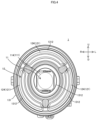
FIG. 4 ] A front view of the headlamp unit according to the embodiment. - [
FIG. 5 ] An exploded perspective view of the headlamp unit according to the embodiment as seen in a different direction fromFIG. 1(c) . - [
FIG. 6 ] A perspective view of a support member. - [
FIG. 7 ] Aback view of the support member, a headlamp module, and a connector module. - [
FIG. 8 ] An oblique bottom-side view of the support member and the headlamp module inFIG. 7 . - Referring to
FIGS. 1(a) to 1(c) , the following schematically describes a leaning vehicle and a headlamp unit according to an embodiment of the present invention. -
FIG. 1(a) is a side view of the leaning vehicle according to the present embodiment. A leaningvehicle 100 is, for example, a motorcycle. The leaningvehicle 100 includes aheadlamp unit 1 and avehicle body 2. Theheadlamp unit 1 is attached to a front portion of the leaningvehicle 100. Theheadlamp unit 1 is, for example, attached to thevehicle body 2 with a bracket therebetween. At least a portion of theheadlamp unit 1 is exposed to the outside of the leaningvehicle 100. -
FIG. 1(b) is a perspective view of the headlamp unit according to the present embodiment. Theheadlamp unit 1 has, for example, a substantially cannonball-like shape. Theheadlamp unit 1 is a single unit composed of a combination of a plurality of modules. Theheadlamp unit 1 is attachable to and detachable from the leaningvehicle 100 as a single unit without the need to remove any of the modules. -
FIG. 1(c) is an exploded perspective view of the headlamp unit according to the present embodiment. Theheadlamp unit 1 includes aheadlamp module 11, asub-lamp module 12, acover module 13, asupport member 14, an electricpower supply module 15, and aconnector module 16. - The
headlamp module 11 has a substantially box-like shape. Theheadlamp module 11 includes alight emission part 111, anon-light emission part 112, and a headlamp LED. - The
light emission part 111 forms a front face of theheadlamp module 11. Thelight emission part 111 emits light from the headlamp LED in a front direction F of the leaningvehicle 100. Thenon-light emission part 112 is a part of theheadlamp module 11 other than thelight emission part 111. Thenon-light emission part 112 forms top, bottom, left, right, and back faces of theheadlamp module 11. - The headlamp LED is contained in a casing, and the interior of the casing is substantially sealed. That is, the
headlamp module 11 has a waterproof structure. The waterproof structure refers to a structure that protects an object from liquid, such as water, entering so that no function of the object is compromised. By contrast, a non-waterproof structure, which is described below, refers to any structure other than the waterproof structure described above. - The
sub-lamp module 12 has a substantially annular shape in a front view. Thesub-lamp module 12 includes alight emission part 121, anon-light emission part 122, and a sub-lamp LED, which is different from the headlamp LED. - The
light emission part 121 forms a front face of thesub-lamp module 12. Thelight emission part 121 emits light from the sub-lamp LED in the front direction F and/or a radial direction of the leaningvehicle 100. Thenon-light emission part 122 is a part of thesub-lamp module 12 other than thelight emission part 121. Thenon-light emission part 122 forms inner and outer circumferential surfaces and a back face of thesub-lamp module 12. - The sub-lamp LED is contained in a casing, and the interior of the casing is substantially sealed. That is, the
sub-lamp module 12 has a waterproof structure. - The
cover module 13 has a substantially circular cylindrical box-like shape. Thecover module 13 covers at least a portion of thesupport member 14, at least a portion of thenon-light emission part 112 of theheadlamp module 11, and at least a portion of thenon-light emission part 122 of thesub-lamp module 12. In such a state, at least a portion of thelight emission part 111 of theheadlamp module 11 and at least a portion of thelight emission part 121 of thesub-lamp module 12 are visible from a location in front of the leaningvehicle 100. Thecover module 13 has a non-waterproof structure. - The
support member 14 has anattachment part 141 to be attached to thevehicle body 2. Thesupport member 14 has an outer circumferentialannular portion 1431. The outer circumferentialannular portion 1431 has theattachment part 141. The outer circumferentialannular portion 1431 is configured to allow theheadlamp module 11 and thesub-lamp module 12 to be located within the outer periphery of the outer circumferentialannular portion 1431 in a front view. Thesupport member 14 is configured to expose at least a portion of theattachment part 141 to the outside of thecover module 13 for the attachment of theattachment part 141 to thevehicle body 2. Thesupport member 14 individually supports all of theheadlamp module 11, thesub-lamp module 12, thecover module 13, and the electricpower supply module 15. - The following describes the
headlamp unit 1 according to the present embodiment in more detail.FIG. 2 is a cross-sectional view of the headlamp unit as taken through a plane along an up-down direction UD and a front-back direction FB. Note that the up-down direction UD, the front-back direction FB, and a left-right direction LR are defined with reference to the leaningvehicle 100 in an upright state with theheadlamp unit 1 mounted thereto. - The
headlamp module 11 includes ahousing 113, anouter lens 114, aheadlamp LED 115, and aninner lens 116. - The
housing 113 has a substantially box-like shape having anopening part 1131 in a front face thereof. More specifically, thehousing 113 has a substantially hat-like shape in a cross-sectional view along the up-down direction UD and the front-back direction FB. Thehousing 113 is an example of thenon-light emission part 112 of theheadlamp module 11. - The
outer lens 114 is disposed in front of thehousing 113 in the front direction F. Theouter lens 114 has a substantially dome-like shape. Theouter lens 114 is, for example, a plano-convex lens. Theouter lens 114 is disposed with a convex surface thereof facing in the front direction F. Theouter lens 114 is an example of thelight emission part 111 of theheadlamp module 11. Theouter lens 114 is attached to thehousing 113 using, for example, screws or adhesives. Theouter lens 114, together with thehousing 113, forms the casing. The interior of this casing is substantially sealed, so that the casing has a waterproof structure. Theheadlamp LED 115 and theinner lens 116 are contained inside the casing. - The
headlamp LED 115 is attached to a substrate, which is not shown. Theheadlamp LED 115 is disposed with an emission surface thereof facing in the front direction F. Theheadlamp LED 115 emits, for example, white light in the front direction F. Theheadlamp LED 115 has, for example, a color temperature of 5,000 K. Theheadlamp LED 115 has, for example, a luminous intensity of 20,000 cd. - The
inner lens 116 is disposed between theheadlamp LED 115 and theouter lens 114. Theinner lens 116 is, for example, a plano-convex lens. Theinner lens 116 is disposed with a convex surface thereof facing in the front direction F. Theinner lens 116, together with theouter lens 114, collects light emitted from theheadlamp LED 115 to form a desired illumination area. - The
sub-lamp module 12 is disposed to surround theheadlamp module 11. Thesub-lamp module 12 has acavity part 120 around the center thereof. Theheadlamp module 11 is disposed in thecavity part 120. More specifically, thesub-lamp module 12 surrounds, for example, theouter lens 114 of theheadlamp module 11. Thesub-lamp module 12 and theheadlamp module 11 have a space SP therebetween. The space SP spans the entire perimeter of theheadlamp module 11 in a front view. - According to the present embodiment, the
sub-lamp module 12 functions as a daytime running lamp and a position lamp. A selector switch, which is not shown, controls switching of thesub-lamp module 12 between functioning as a daytime running lamp and functioning as a position lamp. The selector switch is, for example, provided on a steering of the leaningvehicle 100. -
FIG. 3 is an exploded view of the sub-lamp module. Thesub-lamp module 12 includes ahousing 123, anouter lens 124,sub-lamp LEDs 125, aninner lens 126, acontrol board 127, and anLED substrate 128. - The
housing 123 has a substantially annular shape having anopening part 1231 in a front face thereof. The annular shape of thehousing 123 is a substantially hat-like shape in a cross-sectional view along the up-down direction UD and the front-back direction FB. Thehousing 123 is an example of thenon-light emission part 122 of thesub-lamp module 12. - The
outer lens 124 is disposed in front of thehousing 123 in the front direction F. Theouter lens 124 has a substantially hollow cylindrical shape having an opening part (not shown) in a back face thereof. Theouter lens 124 has a transparent color as a whole. Theouter lens 124 is an example of thelight emission part 121 of thesub-lamp module 12. Theouter lens 124 includes a plurality oflens parts 1241 at a front face thereof. The plurality oflens parts 1241 are arranged at regular intervals and project in the front direction F. The plurality oflens parts 1241 are, for example, plano-convex lenses. The plurality oflens parts 1241 are each disposed with a convex surface thereof facing in the front direction F. Theouter lens 124 is attached to thehousing 123 using, for example, screws or adhesives. Theouter lens 124, together with thehousing 123, forms the casing. The interior of this casing is substantially sealed, so that the casing has a waterproof structure. Thecontrol board 127, thesub-lamp LEDs 125, theinner lens 126, and theLED substrate 128 are contained inside the casing. - The
control board 127 is attached to thehousing 123. Thecontrol board 127 is electrically connected to a power source device such as a battery, which is not shown, and connected to theLED substrate 128. Thecontrol board 127 supplies electric power to thesub-lamp LEDs 125. Thecontrol board 127 adjusts the luminous intensity of thesub-lamp LEDs 125 in response to a signal from the selector switch, which is not shown. TheLED substrate 128 and thesub-lamp LEDs 125 are disposed in front of thecontrol board 127 in the front direction F. - The
sub-lamp LEDs 125 are attached to theLED substrate 128. Thesub-lamp LEDs 125 are each disposed with an emission surface thereof facing in the front direction F. Thesub-lamp LEDs 125 emit, for example, white light in the front direction F. Thesub-lamp LEDs 125 have, for example, a color temperature of 5,000 K. Thesub-lamp LEDs 125 have, for example, a luminous intensity of 1,000 cd in the case of the daytime running lamp and a luminous intensity of 30 cd in the case of the position lamp. - The
inner lens 126 is disposed between thesub-lamp LEDs 125 and theouter lens 124. Theinner lens 126 has a substantially hollow cylindrical shape. Theinner lens 126 has, for example, the same shape as a substantially plano-convex lens. - Referring to
FIG. 2 , theinner lens 126 is disposed with a convex surface thereof facing in the back direction B. That is, the convex surface is a light receiving surface that receives light from thesub-lamp LEDs 125. A front surface of theinner lens 126 is an emission surface. The front surface of theinner lens 126 has a staircase shape having a height that decreases toward a central axis of thesub-lamp module 12. In theinner lens 126, the area of the light receiving surface is larger than the area of the emission surface. That is, theinner lens 126 has a tapered shape having a thickness that decreases in the front direction F. Theinner lens 126, together with theouter lens 124, collects light emitted from thesub-lamp LEDs 125 to form a desired illumination area. - The
cover module 13 includes afront cover 131 and aback cover 132. - The
front cover 131 has a substantially cylindrical box-like shape having anopening part 1311 in a back face thereof. Thefront cover 131 covers at least a portion of thenon-light emission part 112 of theheadlamp module 11 and at least a portion of thenon-light emission part 122 of thesub-lamp module 12. More specifically, thefront cover 131 covers the left, right, top, bottom, and front faces of theheadlamp module 11, but does not cover the back face of theheadlamp module 11. Thefront cover 131 covers the circumferential surfaces and the front face of thesub-lamp module 12, but does not cover the back face of thesub-lamp module 12. -
FIG. 4 is a front view of the headlamp unit according to the present embodiment. Thefront cover 131 has a plurality of openingparts 1312 in a front face thereof. In a front view of theheadlamp unit 1, theouter lens 114 of theheadlamp module 11 and theouter lens 124 of thesub-lamp module 12 are disposed in the plurality of openingparts 1312. That is, thefront cover 131 does not cover at least a portion of thelight emission part 111 of theheadlamp module 11 or at least a portion of thelight emission part 121 of thesub-lamp module 12. Thus, at least a portion of thelight emission part 111 of theheadlamp module 11 and at least a portion of thelight emission part 121 of thesub-lamp module 12 are visible from a location in front of the leaningvehicle 100. - Referring to
FIG. 2 , theback cover 132 is disposed in back of thefront cover 131 in the back direction B. Theback cover 132 has a substantially cylindrical box-like shape having anopening part 1321 in a front face thereof. Theback cover 132, together with thefront cover 131, covers at least a portion of thenon-light emission part 112 of theheadlamp module 11 and at least a portion of thenon-light emission part 122 of thesub-lamp module 12. More specifically, theback cover 132 and thefront cover 131 cover a portion other than the front face of theheadlamp module 11 and a portion other than the front face of thesub-lamp module 12. - The electric
power supply module 15 is disposed in back of theheadlamp module 11 in the back direction B. The electricpower supply module 15 includes afront case 151, aback case 152, and acontrol board 153. - The
front case 151 has a substantially box-like shape having anopening part 1511 in a back face thereof. More specifically, thefront case 151 has a substantially hat-like shape in a cross-sectional view along the up-down direction UD and the front-back direction FB. - The
back case 152 is disposed in back of thefront case 151 in the back direction B. Theback case 152 has a substantially box-like shape having anopening part 1521 in a front face thereof. More specifically, theback case 152 has a substantially hat-like shape in a cross-sectional view along the up-down direction UD and the front-back direction FB. Theback case 152 is attached to thefront case 151 using, for example, screws or adhesives. - The
back case 152, together with thefront case 151, forms a casing. The interior of this casing is substantially sealed, so that the casing has a waterproof structure. Thecontrol board 153 is contained inside the casing. -
FIG. 5 is an exploded perspective view of the headlamp unit according to the present embodiment as seen in a different direction fromFIG. 1(c) . Thecontrol board 153 is connected to a power source device such as a battery, which is not shown, and supplies electric power to theheadlamp module 11. Aninsertion port 1531 is provided in a lower portion of thecontrol board 153. Theinsertion port 1531 protrudes from the inside to the outside of the casing formed by thefront case 151 and theback case 152. Theconnector module 16 is connected to theinsertion port 1531. - The
connector module 16 includes twoconnector bodies wire 163. - The
connector body 161 is inserted into theinsertion port 1531 of thecontrol board 153. Theconnector body 162 is connected to a power source device, which is not shown, of the leaningvehicle 100 or to a relay device, which is not shown, connected to the power source device. Thewire 163 connects theconnector body 161 and theconnector body 162 together. Thewire 163 is covered with a covering material such as vinyl chloride. - An area of connection between the
connector body 161 and theinsertion port 1531 is covered with, for example, a silicone material. The area of connection may be covered with a waterproof covering material such as vinyl chloride. That is, theconnector module 16 has a waterproof structure for preventing effects on energization. - The
headlamp module 11, thesub-lamp module 12, the electricpower supply module 15, and thecover module 13 described above are each attached to thesupport member 14. - Referring to
FIG. 2 , thesupport member 14 is disposed in the back of thesub-lamp module 12 in the back direction B and in front of theback cover 132 in the front direction F. Thesupport member 14 directly supports theheadlamp module 11, thesub-lamp module 12, the electricpower supply module 15, and thecover module 13. Thesupport member 14 includes acylindrical part 142 and adisk part 143. - The
cylindrical part 142 has a substantially hollow cylindrical shape. At least a portion of theheadlamp module 11 is disposed inside thecylindrical part 142. - The
disk part 143 has a substantially disk-like shape having a hole in a central portion thereof. An inner circumferential surface of thedisk part 143 is connected to an outer circumferential surface of thecylindrical part 142. That is, thesupport member 14 has a shape in which thecylindrical part 142 is fitted into the hole of thedisk part 143. Thedisk part 143 is integral with thecylindrical part 142. -
FIG. 6 is a perspective view of the support member. The outer circumferentialannular portion 1431 of thedisk part 143 is thicker than any other portions thereof in the front-back direction FB. A circumferential surface of the outer circumferentialannular portion 1431, which in other words is an outercircumferential surface 1432 of thedisk part 143, is provided with a plurality ofattachment parts 141.FIG. 6 shows only oneattachment part 141 provided in aright end region 143R of the outercircumferential surface 1432. However, anotherattachment part 141 is also provided in a left end region, which is not shown, of the outercircumferential surface 1432. The left end region is symmetrical to theright end region 143R with respect to the up-down direction UD passing through the center of thedisk part 143. The plurality ofattachment parts 141 protrude from the outercircumferential surface 1432. The plurality ofattachment parts 141 are, for example, solid cylindrical bosses. Theattachment parts 141 are, for example, each attached to thevehicle body 2 with a bracket therebetween. -
FIG. 7 is a back view of the support member, the headlamp module, and the connector module. Thesupport member 14 further includes a plurality of covermodule attachment parts module attachment parts 146, a plurality of sub-lampmodule attachment parts 147, and a plurality of headlampmodule attachment parts 148. - The
cover module 13 is attached to the plurality of covermodule attachment parts front cover 131 is attached to the plurality of covermodule attachment parts 144. The plurality of covermodule attachment parts 144 are, for example, provided on the inner circumferential surface of thedisk part 143. In the back view, the plurality of covermodule attachment parts 144 are, for example, provided symmetrically to each other with respect to the up-down direction UD passing through the center of thedisk part 143. Theback cover 132 is attached to the plurality of covermodule attachment parts 145. The plurality of covermodule attachment parts 145 are, for example, provided on the outer circumferentialannular portion 1431 of thedisk part 143. In the back view, the plurality of covermodule attachment parts 145 are, for example, arranged at regular intervals in a circumferential direction of thedisk part 143. - The electric
power supply module 15 is attached to the plurality of electric power supplymodule attachment parts 146. The plurality of electric power supplymodule attachment parts 146 are, for example, provided on a back surface of thedisk part 143. In the back view, the plurality of electric power supplymodule attachment parts 146 are, for example, provided symmetrically to each other with respect to the up-down direction UD passing through the center of thedisk part 143. - The
sub-lamp module 12 is attached to the plurality of sub-lampmodule attachment parts 147. The plurality of sub-lampmodule attachment parts 147 are, for example, provided on the back surface of thedisk part 143. In the back view, the plurality of sub-lampmodule attachment parts 147 are, for example, arranged at regular intervals in the circumferential direction of thedisk part 143. -
FIG. 8 is an oblique bottom-side view of the support member and the headlamp module inFIG. 7 . Theheadlamp module 11 is attached to the plurality of headlampmodule attachment parts 148. The plurality of headlampmodule attachment parts 148 are, for example, provided in a lower end region of thedisk part 143. The plurality of headlampmodule attachment parts 148 are, for example, arranged in a triangle in a bottom view. - In one example, the cover
module attachment parts module attachment parts 146, the sub-lampmodule attachment parts 147, and the headlampmodule attachment parts 148 are each a screw hole. Each attachment part receives fastening of a member of the corresponding module with a screw. - In the
headlamp unit 1 according to the present embodiment, thefront cover 131 and theback cover 132 cover theheadlamp module 11, thesub-lamp module 12, the electricpower supply module 15, and thesupport member 14. The modules that form theheadlamp unit 1 are centrally attached to thesupport member 14. Theheadlamp unit 1 can be handled as a single unit. This configuration allows the modules to be disposed in close proximity to each other, suppressing upsizing of theheadlamp unit 1. - Since the
headlamp unit 1 can be handled as a single unit, theentire headlamp unit 1 can be attached to or detached from the leaningvehicle 100 at once. Thus, this configuration reduces labor and time for replacement of theentire headlamp unit 1. Furthermore, all of the modules are detachable from thesupport member 14. Thus, when a certain module is replaced, the replacement is performed through easier work. - In a case where a member A is attached to a member C with a member B therebetween, the positional accuracy of the member C relative to the member A tends to decrease due to tolerances for attachment stacking up. By contrast, in the
headlamp unit 1, all of the modules are directly attached to thesupport member 14. Thus, this configuration prevents the attachment tolerance stack-up, allowing for high positional accuracy of each module in theheadlamp unit 1. - In the case of the embodiment described above, the
headlamp unit 1 includes the electricpower supply module 15. However, theheadlamp unit 1 does not have to include the electricpower supply module 15. In this case, the electricpower supply module 15 is, for example, attached to thevehicle body 2. - In the case of the embodiment described above, the
headlamp unit 1 includes asingle sub-lamp module 12. However, theheadlamp unit 1 may include a plurality ofsub-lamp modules 12. In this case, for example, the plurality ofsub-lamp modules 12 are arranged at regular intervals to surround theheadlamp module 11 in a front view. -
- 100
- leaning vehicle
- 1
- headlamp unit
- 11
- headlamp module
- 111
- light emission part
- 112
- non-light emission part
- 113
- housing
- 1131
- opening part
- 114
- outer lens
- 115
- LED
- 116
- inner lens
- 12
- sub-lamp module
- 120
- cavity part
- 121
- light emission part
- 122
- non-light emission part
- 123
- housing
- 1231
- opening part
- 124
- outer lens
- 1241
- lens part
- 125
- LED
- 126
- inner lens
- 127
- control board
- 128
- LED substrate
- 13
- cover module
- 131
- front cover
- 1311
- opening part
- 1312
- opening part
- 132
- back cover
- 1321
- opening part
- 14
- support member
- 141
- attachment part
- 142
- cylindrical part
- 143
- disk part
- 1431
- outer circumferential annular portion
- 1432
- outer circumferential surface
- 143R
- right end region
- 144
- cover module attachment part
- 145
- cover module attachment part
- 146
- electric power supply module attachment part
- 147
- sub-lamp module attachment part
- 148
- headlamp module attachment part
- 15
- electric power supply module
- 151
- front case
- 1511
- opening part
- 152
- back case
- 1521
- opening part
- 153
- control board
- 1531
- insertion port
- 16
- connector module
- 161
- connector body
- 162
- connector body
- 163
- wire
- 2
- vehicle body
- SP
- space
Claims (4)
- A headlamp unit (1) for attachment to a vehicle body (2) of a leaning vehicle (100), the headlamp unit (1) comprising:a support member (14) having an attachment part (141) configured to be attached to the vehicle body (2);a headlamp module (11) including a headlamp LED (115);a sub-lamp module (12) including a sub-lamp LED (125), which is different from the headlamp LED (115); anda cover module (13) configured to cover, in a state in which the headlamp unit (1) is provided to the leaning vehicle (100), at least a portion of the support member (14), at least a portion of a non-light emission part (112) of the headlamp module (11), and at least a portion of a non-light emission part (122) of the sub-lamp module (12) while allowing at least a portion of a light emission part (111) of the headlamp module (11) and at least a portion of a light emission part (121) of the sub-lamp module (12) to be visible from a location in front of the leaning vehicle (100), whereinthe support member (14) is configured to individually support all of the headlamp module (11), the sub-lamp module (12), and the cover module (13) so that the support member (14) and each module have no other modules interposed therebetween, wherein the other modules are the headlamp module (11), the sub-lamp module (12), and the cover module (13), with at least a portion of the attachment part (141) exposed to the outside of the cover module (13) for the attachment of the attachment part (141) of the support member (14) to the vehicle body (2),characterized in thatsaid at least a portion of the light emission part (111) of the headlamp module (11) and said at least a portion of the light emission part (121) of the sub-lamp module (12) are not covered by the cover module (13) and are exposed to the outside of the headlamp unit (1) so that the exposed portions are visible from the location in front of the leaning vehicle (100).
- The headlamp unit (1) according to claim 1, further comprisingan electric power supply module (15) configured to supply electric power to the headlamp module (11) and/or the sub-lamp module (12), whereinthe support member (14) is configured to individually support the electric power supply module (15).
- The headlamp unit (1) according to claim 1 or 2, whereinthe cover module (13) includesa front cover (131) configured to cover at least a portion of the non-light emission part (112) of the headlamp module (11) and at least a portion of the non-light emission part (122) of the sub-lamp module (12) while allowing at least a portion of the light emission part (111) of the headlamp module (11) and at least a portion of the light emission part (121) of the sub-lamp module (12) to be visible from a location in front of the leaning vehicle (100), anda back cover (132) disposed in back of the front cover (131) and configured to, together with the front cover (131), cover at least a portion of the non-light emission part (112) of the headlamp module (11) and at least a portion of the non-light emission part (122) of the sub-lamp module (12), andthe support member (14) is configured to support the front cover (131) and the back cover (132).
- A leaning vehicle (100) comprising the headlamp unit (1) according to any one of claims 1 to 3.
Applications Claiming Priority (1)
| Application Number | Priority Date | Filing Date | Title |
|---|---|---|---|
| JP2021090873A JP7342063B2 (en) | 2021-05-31 | 2021-05-31 | Headlight units and tilting vehicles |
Publications (2)
| Publication Number | Publication Date |
|---|---|
| EP4098485A1 EP4098485A1 (en) | 2022-12-07 |
| EP4098485B1 true EP4098485B1 (en) | 2024-07-03 |
Family
ID=81975044
Family Applications (1)
| Application Number | Title | Priority Date | Filing Date |
|---|---|---|---|
| EP22176200.8A Active EP4098485B1 (en) | 2021-05-31 | 2022-05-30 | Headlamp unit and leaning vehicle |
Country Status (3)
| Country | Link |
|---|---|
| EP (1) | EP4098485B1 (en) |
| JP (1) | JP7342063B2 (en) |
| TW (1) | TWI827070B (en) |
Family Cites Families (13)
| Publication number | Priority date | Publication date | Assignee | Title |
|---|---|---|---|---|
| JP4385851B2 (en) | 2004-05-14 | 2009-12-16 | スズキ株式会社 | Mounting structure of motorcycle headlamp and instrument panel |
| JP2011014300A (en) * | 2009-06-30 | 2011-01-20 | Honda Motor Co Ltd | Lamp |
| JP5969218B2 (en) * | 2012-02-28 | 2016-08-17 | 本田技研工業株式会社 | Motorcycle headlight structure |
| JP5999344B2 (en) * | 2012-10-22 | 2016-09-28 | スタンレー電気株式会社 | Vehicle lighting |
| JP5888792B2 (en) * | 2014-03-18 | 2016-03-22 | 本田技研工業株式会社 | Motorcycle headlights |
| EP3277563B1 (en) | 2015-04-03 | 2020-09-16 | Honda Motor Co., Ltd. | Lighting device structure including auxiliary illumination |
| JP6501412B2 (en) | 2016-11-11 | 2019-04-17 | 本田技研工業株式会社 | Headlight |
| JP6490728B2 (en) * | 2017-03-15 | 2019-03-27 | 本田技研工業株式会社 | Headlight structure of saddle-ride type vehicle |
| TWI675773B (en) * | 2017-05-31 | 2019-11-01 | 日商山葉發動機股份有限公司 | Vehicle lighting and straddle type vehicle with the same |
| WO2019187427A1 (en) | 2018-03-27 | 2019-10-03 | 本田技研工業株式会社 | Cornering light for saddle-type vehicle |
| JP2019189012A (en) | 2018-04-25 | 2019-10-31 | ヤマハ発動機株式会社 | Saddle-riding type vehicle |
| JP7223607B2 (en) * | 2019-03-14 | 2023-02-16 | 本田技研工業株式会社 | Front structure of saddle type vehicle |
| JP2021030883A (en) * | 2019-08-23 | 2021-03-01 | ヤマハ発動機株式会社 | Saddle-riding type vehicle |
-
2021
- 2021-05-31 JP JP2021090873A patent/JP7342063B2/en active Active
-
2022
- 2022-05-26 TW TW111119658A patent/TWI827070B/en active
- 2022-05-30 EP EP22176200.8A patent/EP4098485B1/en active Active
Also Published As
| Publication number | Publication date |
|---|---|
| EP4098485A1 (en) | 2022-12-07 |
| JP7342063B2 (en) | 2023-09-11 |
| TW202302403A (en) | 2023-01-16 |
| JP2022183514A (en) | 2022-12-13 |
| TWI827070B (en) | 2023-12-21 |
Similar Documents
| Publication | Publication Date | Title |
|---|---|---|
| EP2693104B1 (en) | Lighting device for vehicle | |
| EP2269900B1 (en) | Lighting system | |
| US10391925B2 (en) | Vehicle headlight with a plurality of inner non spherical lenses transmitting light from a high beam and a low beam light source | |
| JP6489595B2 (en) | Light fixture structure with auxiliary lighting | |
| US7048420B2 (en) | Rear view mirror assembly | |
| WO2019187427A1 (en) | Cornering light for saddle-type vehicle | |
| EP3689722B1 (en) | Combination light | |
| EP4098485A1 (en) | Headlamp unit and leaning vehicle | |
| EP4098484B1 (en) | Headlamp unit and leaning vehicle | |
| CN115335278A (en) | Cowl assembly for saddle-ride type vehicle | |
| EP4098935B1 (en) | Lamp unit and leaning vehicle | |
| CN1975243B (en) | lighting device | |
| JP7515735B2 (en) | Light unit support structure | |
| TW202408863A (en) | scooter type vehicle | |
| EP4566926A1 (en) | Straddled vehicle position light | |
| EP3888974B1 (en) | Headlamp device | |
| EP3575195B1 (en) | Straddled vehicle | |
| CN119705684A (en) | Vehicle body rear structure | |
| JP2008168888A (en) | Motorcycle | |
| WO2021186464A1 (en) | Headlamp assembly | |
| WO2023175470A1 (en) | Three wheeled motorcycle with rear light assembly | |
| JP2024085545A (en) | head lamp | |
| JP2025042723A (en) | Saddle-type vehicle | |
| JP2024000666A (en) | Cornering light structure for saddle-type vehicles |
Legal Events
| Date | Code | Title | Description |
|---|---|---|---|
| PUAI | Public reference made under article 153(3) epc to a published international application that has entered the european phase |
Free format text: ORIGINAL CODE: 0009012 |
|
| STAA | Information on the status of an ep patent application or granted ep patent |
Free format text: STATUS: REQUEST FOR EXAMINATION WAS MADE |
|
| 17P | Request for examination filed |
Effective date: 20220530 |
|
| AK | Designated contracting states |
Kind code of ref document: A1 Designated state(s): AL AT BE BG CH CY CZ DE DK EE ES FI FR GB GR HR HU IE IS IT LI LT LU LV MC MK MT NL NO PL PT RO RS SE SI SK SM TR |
|
| P01 | Opt-out of the competence of the unified patent court (upc) registered |
Effective date: 20230527 |
|
| STAA | Information on the status of an ep patent application or granted ep patent |
Free format text: STATUS: EXAMINATION IS IN PROGRESS |
|
| 17Q | First examination report despatched |
Effective date: 20230728 |
|
| GRAP | Despatch of communication of intention to grant a patent |
Free format text: ORIGINAL CODE: EPIDOSNIGR1 |
|
| STAA | Information on the status of an ep patent application or granted ep patent |
Free format text: STATUS: GRANT OF PATENT IS INTENDED |
|
| RIC1 | Information provided on ipc code assigned before grant |
Ipc: F21W 107/17 20180101ALN20240109BHEP Ipc: F21S 43/20 20180101ALI20240109BHEP Ipc: F21S 43/14 20180101ALI20240109BHEP Ipc: F21S 41/255 20180101ALI20240109BHEP Ipc: F21S 41/143 20180101ALI20240109BHEP Ipc: B62J 6/027 20200101ALI20240109BHEP Ipc: B62J 6/026 20200101ALI20240109BHEP Ipc: F21S 45/00 20180101ALI20240109BHEP Ipc: F21S 41/50 20180101ALI20240109BHEP Ipc: B60Q 1/04 20060101ALI20240109BHEP Ipc: B60Q 1/00 20060101AFI20240109BHEP |
|
| INTG | Intention to grant announced |
Effective date: 20240202 |
|
| GRAS | Grant fee paid |
Free format text: ORIGINAL CODE: EPIDOSNIGR3 |
|
| GRAA | (expected) grant |
Free format text: ORIGINAL CODE: 0009210 |
|
| STAA | Information on the status of an ep patent application or granted ep patent |
Free format text: STATUS: THE PATENT HAS BEEN GRANTED |
|
| AK | Designated contracting states |
Kind code of ref document: B1 Designated state(s): AL AT BE BG CH CY CZ DE DK EE ES FI FR GB GR HR HU IE IS IT LI LT LU LV MC MK MT NL NO PL PT RO RS SE SI SK SM TR |
|
| REG | Reference to a national code |
Ref country code: CH Ref legal event code: EP |
|
| REG | Reference to a national code |
Ref country code: DE Ref legal event code: R096 Ref document number: 602022004259 Country of ref document: DE |
|
| REG | Reference to a national code |
Ref country code: LT Ref legal event code: MG9D |
|
| REG | Reference to a national code |
Ref country code: NL Ref legal event code: MP Effective date: 20240703 |
|
| PG25 | Lapsed in a contracting state [announced via postgrant information from national office to epo] |
Ref country code: PT Free format text: LAPSE BECAUSE OF FAILURE TO SUBMIT A TRANSLATION OF THE DESCRIPTION OR TO PAY THE FEE WITHIN THE PRESCRIBED TIME-LIMIT Effective date: 20241104 |
|
| PG25 | Lapsed in a contracting state [announced via postgrant information from national office to epo] |
Ref country code: NL Free format text: LAPSE BECAUSE OF FAILURE TO SUBMIT A TRANSLATION OF THE DESCRIPTION OR TO PAY THE FEE WITHIN THE PRESCRIBED TIME-LIMIT Effective date: 20240703 |
|
| PG25 | Lapsed in a contracting state [announced via postgrant information from national office to epo] |
Ref country code: PT Free format text: LAPSE BECAUSE OF FAILURE TO SUBMIT A TRANSLATION OF THE DESCRIPTION OR TO PAY THE FEE WITHIN THE PRESCRIBED TIME-LIMIT Effective date: 20241104 Ref country code: NL Free format text: LAPSE BECAUSE OF FAILURE TO SUBMIT A TRANSLATION OF THE DESCRIPTION OR TO PAY THE FEE WITHIN THE PRESCRIBED TIME-LIMIT Effective date: 20240703 |
|
| PG25 | Lapsed in a contracting state [announced via postgrant information from national office to epo] |
Ref country code: NO Free format text: LAPSE BECAUSE OF FAILURE TO SUBMIT A TRANSLATION OF THE DESCRIPTION OR TO PAY THE FEE WITHIN THE PRESCRIBED TIME-LIMIT Effective date: 20241003 |
|
| PG25 | Lapsed in a contracting state [announced via postgrant information from national office to epo] |
Ref country code: GR Free format text: LAPSE BECAUSE OF FAILURE TO SUBMIT A TRANSLATION OF THE DESCRIPTION OR TO PAY THE FEE WITHIN THE PRESCRIBED TIME-LIMIT Effective date: 20241004 Ref country code: FI Free format text: LAPSE BECAUSE OF FAILURE TO SUBMIT A TRANSLATION OF THE DESCRIPTION OR TO PAY THE FEE WITHIN THE PRESCRIBED TIME-LIMIT Effective date: 20240703 Ref country code: PL Free format text: LAPSE BECAUSE OF FAILURE TO SUBMIT A TRANSLATION OF THE DESCRIPTION OR TO PAY THE FEE WITHIN THE PRESCRIBED TIME-LIMIT Effective date: 20240703 |
|
| PG25 | Lapsed in a contracting state [announced via postgrant information from national office to epo] |
Ref country code: BG Free format text: LAPSE BECAUSE OF FAILURE TO SUBMIT A TRANSLATION OF THE DESCRIPTION OR TO PAY THE FEE WITHIN THE PRESCRIBED TIME-LIMIT Effective date: 20240703 |
|
| PG25 | Lapsed in a contracting state [announced via postgrant information from national office to epo] |
Ref country code: LV Free format text: LAPSE BECAUSE OF FAILURE TO SUBMIT A TRANSLATION OF THE DESCRIPTION OR TO PAY THE FEE WITHIN THE PRESCRIBED TIME-LIMIT Effective date: 20240703 |
|
| PG25 | Lapsed in a contracting state [announced via postgrant information from national office to epo] |
Ref country code: IS Free format text: LAPSE BECAUSE OF FAILURE TO SUBMIT A TRANSLATION OF THE DESCRIPTION OR TO PAY THE FEE WITHIN THE PRESCRIBED TIME-LIMIT Effective date: 20241103 |
|
| PG25 | Lapsed in a contracting state [announced via postgrant information from national office to epo] |
Ref country code: CZ Free format text: LAPSE BECAUSE OF FAILURE TO SUBMIT A TRANSLATION OF THE DESCRIPTION OR TO PAY THE FEE WITHIN THE PRESCRIBED TIME-LIMIT Effective date: 20240703 Ref country code: HR Free format text: LAPSE BECAUSE OF FAILURE TO SUBMIT A TRANSLATION OF THE DESCRIPTION OR TO PAY THE FEE WITHIN THE PRESCRIBED TIME-LIMIT Effective date: 20240703 |
|
| PG25 | Lapsed in a contracting state [announced via postgrant information from national office to epo] |
Ref country code: ES Free format text: LAPSE BECAUSE OF FAILURE TO SUBMIT A TRANSLATION OF THE DESCRIPTION OR TO PAY THE FEE WITHIN THE PRESCRIBED TIME-LIMIT Effective date: 20240703 Ref country code: RS Free format text: LAPSE BECAUSE OF FAILURE TO SUBMIT A TRANSLATION OF THE DESCRIPTION OR TO PAY THE FEE WITHIN THE PRESCRIBED TIME-LIMIT Effective date: 20241003 |
|
| PG25 | Lapsed in a contracting state [announced via postgrant information from national office to epo] |
Ref country code: RS Free format text: LAPSE BECAUSE OF FAILURE TO SUBMIT A TRANSLATION OF THE DESCRIPTION OR TO PAY THE FEE WITHIN THE PRESCRIBED TIME-LIMIT Effective date: 20241003 Ref country code: PL Free format text: LAPSE BECAUSE OF FAILURE TO SUBMIT A TRANSLATION OF THE DESCRIPTION OR TO PAY THE FEE WITHIN THE PRESCRIBED TIME-LIMIT Effective date: 20240703 Ref country code: NO Free format text: LAPSE BECAUSE OF FAILURE TO SUBMIT A TRANSLATION OF THE DESCRIPTION OR TO PAY THE FEE WITHIN THE PRESCRIBED TIME-LIMIT Effective date: 20241003 Ref country code: LV Free format text: LAPSE BECAUSE OF FAILURE TO SUBMIT A TRANSLATION OF THE DESCRIPTION OR TO PAY THE FEE WITHIN THE PRESCRIBED TIME-LIMIT Effective date: 20240703 Ref country code: IS Free format text: LAPSE BECAUSE OF FAILURE TO SUBMIT A TRANSLATION OF THE DESCRIPTION OR TO PAY THE FEE WITHIN THE PRESCRIBED TIME-LIMIT Effective date: 20241103 Ref country code: HR Free format text: LAPSE BECAUSE OF FAILURE TO SUBMIT A TRANSLATION OF THE DESCRIPTION OR TO PAY THE FEE WITHIN THE PRESCRIBED TIME-LIMIT Effective date: 20240703 Ref country code: GR Free format text: LAPSE BECAUSE OF FAILURE TO SUBMIT A TRANSLATION OF THE DESCRIPTION OR TO PAY THE FEE WITHIN THE PRESCRIBED TIME-LIMIT Effective date: 20241004 Ref country code: FI Free format text: LAPSE BECAUSE OF FAILURE TO SUBMIT A TRANSLATION OF THE DESCRIPTION OR TO PAY THE FEE WITHIN THE PRESCRIBED TIME-LIMIT Effective date: 20240703 Ref country code: ES Free format text: LAPSE BECAUSE OF FAILURE TO SUBMIT A TRANSLATION OF THE DESCRIPTION OR TO PAY THE FEE WITHIN THE PRESCRIBED TIME-LIMIT Effective date: 20240703 Ref country code: CZ Free format text: LAPSE BECAUSE OF FAILURE TO SUBMIT A TRANSLATION OF THE DESCRIPTION OR TO PAY THE FEE WITHIN THE PRESCRIBED TIME-LIMIT Effective date: 20240703 Ref country code: BG Free format text: LAPSE BECAUSE OF FAILURE TO SUBMIT A TRANSLATION OF THE DESCRIPTION OR TO PAY THE FEE WITHIN THE PRESCRIBED TIME-LIMIT Effective date: 20240703 |
|
| REG | Reference to a national code |
Ref country code: DE Ref legal event code: R097 Ref document number: 602022004259 Country of ref document: DE |
|
| PG25 | Lapsed in a contracting state [announced via postgrant information from national office to epo] |
Ref country code: DK Free format text: LAPSE BECAUSE OF FAILURE TO SUBMIT A TRANSLATION OF THE DESCRIPTION OR TO PAY THE FEE WITHIN THE PRESCRIBED TIME-LIMIT Effective date: 20240703 Ref country code: SM Free format text: LAPSE BECAUSE OF FAILURE TO SUBMIT A TRANSLATION OF THE DESCRIPTION OR TO PAY THE FEE WITHIN THE PRESCRIBED TIME-LIMIT Effective date: 20240703 Ref country code: RO Free format text: LAPSE BECAUSE OF FAILURE TO SUBMIT A TRANSLATION OF THE DESCRIPTION OR TO PAY THE FEE WITHIN THE PRESCRIBED TIME-LIMIT Effective date: 20240703 |
|
| PG25 | Lapsed in a contracting state [announced via postgrant information from national office to epo] |
Ref country code: EE Free format text: LAPSE BECAUSE OF FAILURE TO SUBMIT A TRANSLATION OF THE DESCRIPTION OR TO PAY THE FEE WITHIN THE PRESCRIBED TIME-LIMIT Effective date: 20240703 |
|
| PG25 | Lapsed in a contracting state [announced via postgrant information from national office to epo] |
Ref country code: SK Free format text: LAPSE BECAUSE OF FAILURE TO SUBMIT A TRANSLATION OF THE DESCRIPTION OR TO PAY THE FEE WITHIN THE PRESCRIBED TIME-LIMIT Effective date: 20240703 |
|
| PLBE | No opposition filed within time limit |
Free format text: ORIGINAL CODE: 0009261 |
|
| STAA | Information on the status of an ep patent application or granted ep patent |
Free format text: STATUS: NO OPPOSITION FILED WITHIN TIME LIMIT |
|
| 26N | No opposition filed |
Effective date: 20250404 |
|
| PGFP | Annual fee paid to national office [announced via postgrant information from national office to epo] |
Ref country code: DE Payment date: 20250521 Year of fee payment: 4 |
|
| PGFP | Annual fee paid to national office [announced via postgrant information from national office to epo] |
Ref country code: IT Payment date: 20250531 Year of fee payment: 4 |
|
| PGFP | Annual fee paid to national office [announced via postgrant information from national office to epo] |
Ref country code: AT Payment date: 20250721 Year of fee payment: 4 |
|
| PG25 | Lapsed in a contracting state [announced via postgrant information from national office to epo] |
Ref country code: SE Free format text: LAPSE BECAUSE OF FAILURE TO SUBMIT A TRANSLATION OF THE DESCRIPTION OR TO PAY THE FEE WITHIN THE PRESCRIBED TIME-LIMIT Effective date: 20240703 |
|
| REG | Reference to a national code |
Ref country code: CH Ref legal event code: H13 Free format text: ST27 STATUS EVENT CODE: U-0-0-H10-H13 (AS PROVIDED BY THE NATIONAL OFFICE) Effective date: 20251223 |
|
| PG25 | Lapsed in a contracting state [announced via postgrant information from national office to epo] |
Ref country code: LU Free format text: LAPSE BECAUSE OF NON-PAYMENT OF DUE FEES Effective date: 20250530 |
|
| PG25 | Lapsed in a contracting state [announced via postgrant information from national office to epo] |
Ref country code: CH Free format text: LAPSE BECAUSE OF NON-PAYMENT OF DUE FEES Effective date: 20250531 |
|
| REG | Reference to a national code |
Ref country code: BE Ref legal event code: MM Effective date: 20250531 |
|
| PG25 | Lapsed in a contracting state [announced via postgrant information from national office to epo] |
Ref country code: MC Free format text: LAPSE BECAUSE OF FAILURE TO SUBMIT A TRANSLATION OF THE DESCRIPTION OR TO PAY THE FEE WITHIN THE PRESCRIBED TIME-LIMIT Effective date: 20240703 |
|
| PG25 | Lapsed in a contracting state [announced via postgrant information from national office to epo] |
Ref country code: IE Free format text: LAPSE BECAUSE OF NON-PAYMENT OF DUE FEES Effective date: 20250530 |
|
| PG25 | Lapsed in a contracting state [announced via postgrant information from national office to epo] |
Ref country code: BE Free format text: LAPSE BECAUSE OF NON-PAYMENT OF DUE FEES Effective date: 20250531 |
|
| PG25 | Lapsed in a contracting state [announced via postgrant information from national office to epo] |
Ref country code: FR Free format text: LAPSE BECAUSE OF NON-PAYMENT OF DUE FEES Effective date: 20250531 |