EP4098352A1 - Filtration filter, and method for producing same - Google Patents
Filtration filter, and method for producing same Download PDFInfo
- Publication number
- EP4098352A1 EP4098352A1 EP21746322.3A EP21746322A EP4098352A1 EP 4098352 A1 EP4098352 A1 EP 4098352A1 EP 21746322 A EP21746322 A EP 21746322A EP 4098352 A1 EP4098352 A1 EP 4098352A1
- Authority
- EP
- European Patent Office
- Prior art keywords
- filtration filter
- support
- filtration
- resin
- membrane
- Prior art date
- Legal status (The legal status is an assumption and is not a legal conclusion. Google has not performed a legal analysis and makes no representation as to the accuracy of the status listed.)
- Withdrawn
Links
Images



Classifications
-
- B—PERFORMING OPERATIONS; TRANSPORTING
- B01—PHYSICAL OR CHEMICAL PROCESSES OR APPARATUS IN GENERAL
- B01D—SEPARATION
- B01D69/00—Semi-permeable membranes for separation processes or apparatus characterised by their form, structure or properties; Manufacturing processes specially adapted therefor
- B01D69/10—Supported membranes; Membrane supports
-
- B—PERFORMING OPERATIONS; TRANSPORTING
- B01—PHYSICAL OR CHEMICAL PROCESSES OR APPARATUS IN GENERAL
- B01D—SEPARATION
- B01D69/00—Semi-permeable membranes for separation processes or apparatus characterised by their form, structure or properties; Manufacturing processes specially adapted therefor
-
- B—PERFORMING OPERATIONS; TRANSPORTING
- B01—PHYSICAL OR CHEMICAL PROCESSES OR APPARATUS IN GENERAL
- B01D—SEPARATION
- B01D61/00—Processes of separation using semi-permeable membranes, e.g. dialysis, osmosis or ultrafiltration; Apparatus, accessories or auxiliary operations specially adapted therefor
- B01D61/14—Ultrafiltration; Microfiltration
-
- B—PERFORMING OPERATIONS; TRANSPORTING
- B01—PHYSICAL OR CHEMICAL PROCESSES OR APPARATUS IN GENERAL
- B01D—SEPARATION
- B01D67/00—Processes specially adapted for manufacturing semi-permeable membranes for separation processes or apparatus
- B01D67/0002—Organic membrane manufacture
- B01D67/0009—Organic membrane manufacture by phase separation, sol-gel transition, evaporation or solvent quenching
- B01D67/0016—Coagulation
-
- B—PERFORMING OPERATIONS; TRANSPORTING
- B01—PHYSICAL OR CHEMICAL PROCESSES OR APPARATUS IN GENERAL
- B01D—SEPARATION
- B01D69/00—Semi-permeable membranes for separation processes or apparatus characterised by their form, structure or properties; Manufacturing processes specially adapted therefor
- B01D69/02—Semi-permeable membranes for separation processes or apparatus characterised by their form, structure or properties; Manufacturing processes specially adapted therefor characterised by their properties
-
- B—PERFORMING OPERATIONS; TRANSPORTING
- B01—PHYSICAL OR CHEMICAL PROCESSES OR APPARATUS IN GENERAL
- B01D—SEPARATION
- B01D69/00—Semi-permeable membranes for separation processes or apparatus characterised by their form, structure or properties; Manufacturing processes specially adapted therefor
- B01D69/10—Supported membranes; Membrane supports
- B01D69/106—Membranes in the pores of a support, e.g. polymerized in the pores or voids
-
- B—PERFORMING OPERATIONS; TRANSPORTING
- B01—PHYSICAL OR CHEMICAL PROCESSES OR APPARATUS IN GENERAL
- B01D—SEPARATION
- B01D69/00—Semi-permeable membranes for separation processes or apparatus characterised by their form, structure or properties; Manufacturing processes specially adapted therefor
- B01D69/10—Supported membranes; Membrane supports
- B01D69/107—Organic support material
- B01D69/1071—Woven, non-woven or net mesh
-
- B—PERFORMING OPERATIONS; TRANSPORTING
- B01—PHYSICAL OR CHEMICAL PROCESSES OR APPARATUS IN GENERAL
- B01D—SEPARATION
- B01D69/00—Semi-permeable membranes for separation processes or apparatus characterised by their form, structure or properties; Manufacturing processes specially adapted therefor
- B01D69/10—Supported membranes; Membrane supports
- B01D69/108—Inorganic support material
-
- B—PERFORMING OPERATIONS; TRANSPORTING
- B01—PHYSICAL OR CHEMICAL PROCESSES OR APPARATUS IN GENERAL
- B01D—SEPARATION
- B01D71/00—Semi-permeable membranes for separation processes or apparatus characterised by the material; Manufacturing processes specially adapted therefor
- B01D71/06—Organic material
- B01D71/08—Polysaccharides
- B01D71/12—Cellulose derivatives
- B01D71/14—Esters of organic acids
- B01D71/16—Cellulose acetate
-
- B—PERFORMING OPERATIONS; TRANSPORTING
- B01—PHYSICAL OR CHEMICAL PROCESSES OR APPARATUS IN GENERAL
- B01D—SEPARATION
- B01D71/00—Semi-permeable membranes for separation processes or apparatus characterised by the material; Manufacturing processes specially adapted therefor
- B01D71/06—Organic material
- B01D71/30—Polyalkenyl halides
- B01D71/301—Polyvinylchloride
-
- B—PERFORMING OPERATIONS; TRANSPORTING
- B01—PHYSICAL OR CHEMICAL PROCESSES OR APPARATUS IN GENERAL
- B01D—SEPARATION
- B01D71/00—Semi-permeable membranes for separation processes or apparatus characterised by the material; Manufacturing processes specially adapted therefor
- B01D71/06—Organic material
- B01D71/30—Polyalkenyl halides
- B01D71/32—Polyalkenyl halides containing fluorine atoms
- B01D71/34—Polyvinylidene fluoride
-
- B—PERFORMING OPERATIONS; TRANSPORTING
- B01—PHYSICAL OR CHEMICAL PROCESSES OR APPARATUS IN GENERAL
- B01D—SEPARATION
- B01D71/00—Semi-permeable membranes for separation processes or apparatus characterised by the material; Manufacturing processes specially adapted therefor
- B01D71/06—Organic material
- B01D71/58—Other polymers having nitrogen in the main chain, with or without oxygen or carbon only
- B01D71/62—Polycondensates having nitrogen-containing heterocyclic rings in the main chain
- B01D71/64—Polyimides; Polyamide-imides; Polyester-imides; Polyamide acids or similar polyimide precursors
-
- B—PERFORMING OPERATIONS; TRANSPORTING
- B01—PHYSICAL OR CHEMICAL PROCESSES OR APPARATUS IN GENERAL
- B01D—SEPARATION
- B01D71/00—Semi-permeable membranes for separation processes or apparatus characterised by the material; Manufacturing processes specially adapted therefor
- B01D71/06—Organic material
- B01D71/66—Polymers having sulfur in the main chain, with or without nitrogen, oxygen or carbon only
- B01D71/68—Polysulfones; Polyethersulfones
-
- D—TEXTILES; PAPER
- D06—TREATMENT OF TEXTILES OR THE LIKE; LAUNDERING; FLEXIBLE MATERIALS NOT OTHERWISE PROVIDED FOR
- D06M—TREATMENT, NOT PROVIDED FOR ELSEWHERE IN CLASS D06, OF FIBRES, THREADS, YARNS, FABRICS, FEATHERS OR FIBROUS GOODS MADE FROM SUCH MATERIALS
- D06M15/00—Treating fibres, threads, yarns, fabrics, or fibrous goods made from such materials, with macromolecular compounds; Such treatment combined with mechanical treatment
- D06M15/01—Treating fibres, threads, yarns, fabrics, or fibrous goods made from such materials, with macromolecular compounds; Such treatment combined with mechanical treatment with natural macromolecular compounds or derivatives thereof
- D06M15/03—Polysaccharides or derivatives thereof
- D06M15/05—Cellulose or derivatives thereof
- D06M15/07—Cellulose esters
-
- D—TEXTILES; PAPER
- D06—TREATMENT OF TEXTILES OR THE LIKE; LAUNDERING; FLEXIBLE MATERIALS NOT OTHERWISE PROVIDED FOR
- D06M—TREATMENT, NOT PROVIDED FOR ELSEWHERE IN CLASS D06, OF FIBRES, THREADS, YARNS, FABRICS, FEATHERS OR FIBROUS GOODS MADE FROM SUCH MATERIALS
- D06M15/00—Treating fibres, threads, yarns, fabrics, or fibrous goods made from such materials, with macromolecular compounds; Such treatment combined with mechanical treatment
- D06M15/19—Treating fibres, threads, yarns, fabrics, or fibrous goods made from such materials, with macromolecular compounds; Such treatment combined with mechanical treatment with synthetic macromolecular compounds
- D06M15/21—Macromolecular compounds obtained by reactions only involving carbon-to-carbon unsaturated bonds
- D06M15/244—Macromolecular compounds obtained by reactions only involving carbon-to-carbon unsaturated bonds of halogenated hydrocarbons
- D06M15/248—Macromolecular compounds obtained by reactions only involving carbon-to-carbon unsaturated bonds of halogenated hydrocarbons containing chlorine
-
- D—TEXTILES; PAPER
- D06—TREATMENT OF TEXTILES OR THE LIKE; LAUNDERING; FLEXIBLE MATERIALS NOT OTHERWISE PROVIDED FOR
- D06M—TREATMENT, NOT PROVIDED FOR ELSEWHERE IN CLASS D06, OF FIBRES, THREADS, YARNS, FABRICS, FEATHERS OR FIBROUS GOODS MADE FROM SUCH MATERIALS
- D06M15/00—Treating fibres, threads, yarns, fabrics, or fibrous goods made from such materials, with macromolecular compounds; Such treatment combined with mechanical treatment
- D06M15/19—Treating fibres, threads, yarns, fabrics, or fibrous goods made from such materials, with macromolecular compounds; Such treatment combined with mechanical treatment with synthetic macromolecular compounds
- D06M15/21—Macromolecular compounds obtained by reactions only involving carbon-to-carbon unsaturated bonds
- D06M15/244—Macromolecular compounds obtained by reactions only involving carbon-to-carbon unsaturated bonds of halogenated hydrocarbons
- D06M15/256—Macromolecular compounds obtained by reactions only involving carbon-to-carbon unsaturated bonds of halogenated hydrocarbons containing fluorine
-
- D—TEXTILES; PAPER
- D06—TREATMENT OF TEXTILES OR THE LIKE; LAUNDERING; FLEXIBLE MATERIALS NOT OTHERWISE PROVIDED FOR
- D06M—TREATMENT, NOT PROVIDED FOR ELSEWHERE IN CLASS D06, OF FIBRES, THREADS, YARNS, FABRICS, FEATHERS OR FIBROUS GOODS MADE FROM SUCH MATERIALS
- D06M15/00—Treating fibres, threads, yarns, fabrics, or fibrous goods made from such materials, with macromolecular compounds; Such treatment combined with mechanical treatment
- D06M15/19—Treating fibres, threads, yarns, fabrics, or fibrous goods made from such materials, with macromolecular compounds; Such treatment combined with mechanical treatment with synthetic macromolecular compounds
- D06M15/37—Macromolecular compounds obtained otherwise than by reactions only involving carbon-to-carbon unsaturated bonds
- D06M15/63—Macromolecular compounds obtained otherwise than by reactions only involving carbon-to-carbon unsaturated bonds containing sulfur in the main chain, e.g. polysulfones
-
- B—PERFORMING OPERATIONS; TRANSPORTING
- B01—PHYSICAL OR CHEMICAL PROCESSES OR APPARATUS IN GENERAL
- B01D—SEPARATION
- B01D2325/00—Details relating to properties of membranes
- B01D2325/02—Details relating to pores or porosity of the membranes
- B01D2325/0283—Pore size
- B01D2325/02833—Pore size more than 10 and up to 100 nm
-
- B—PERFORMING OPERATIONS; TRANSPORTING
- B01—PHYSICAL OR CHEMICAL PROCESSES OR APPARATUS IN GENERAL
- B01D—SEPARATION
- B01D2325/00—Details relating to properties of membranes
- B01D2325/04—Characteristic thickness
-
- B—PERFORMING OPERATIONS; TRANSPORTING
- B01—PHYSICAL OR CHEMICAL PROCESSES OR APPARATUS IN GENERAL
- B01D—SEPARATION
- B01D2325/00—Details relating to properties of membranes
- B01D2325/20—Specific permeability or cut-off range
-
- B—PERFORMING OPERATIONS; TRANSPORTING
- B01—PHYSICAL OR CHEMICAL PROCESSES OR APPARATUS IN GENERAL
- B01D—SEPARATION
- B01D61/00—Processes of separation using semi-permeable membranes, e.g. dialysis, osmosis or ultrafiltration; Apparatus, accessories or auxiliary operations specially adapted therefor
- B01D61/14—Ultrafiltration; Microfiltration
- B01D61/145—Ultrafiltration
-
- B—PERFORMING OPERATIONS; TRANSPORTING
- B01—PHYSICAL OR CHEMICAL PROCESSES OR APPARATUS IN GENERAL
- B01D—SEPARATION
- B01D61/00—Processes of separation using semi-permeable membranes, e.g. dialysis, osmosis or ultrafiltration; Apparatus, accessories or auxiliary operations specially adapted therefor
- B01D61/14—Ultrafiltration; Microfiltration
- B01D61/147—Microfiltration
-
- D—TEXTILES; PAPER
- D06—TREATMENT OF TEXTILES OR THE LIKE; LAUNDERING; FLEXIBLE MATERIALS NOT OTHERWISE PROVIDED FOR
- D06M—TREATMENT, NOT PROVIDED FOR ELSEWHERE IN CLASS D06, OF FIBRES, THREADS, YARNS, FABRICS, FEATHERS OR FIBROUS GOODS MADE FROM SUCH MATERIALS
- D06M2101/00—Chemical constitution of the fibres, threads, yarns, fabrics or fibrous goods made from such materials, to be treated
- D06M2101/16—Synthetic fibres, other than mineral fibres
- D06M2101/30—Synthetic polymers consisting of macromolecular compounds obtained otherwise than by reactions only involving carbon-to-carbon unsaturated bonds
- D06M2101/32—Polyesters
-
- D—TEXTILES; PAPER
- D06—TREATMENT OF TEXTILES OR THE LIKE; LAUNDERING; FLEXIBLE MATERIALS NOT OTHERWISE PROVIDED FOR
- D06M—TREATMENT, NOT PROVIDED FOR ELSEWHERE IN CLASS D06, OF FIBRES, THREADS, YARNS, FABRICS, FEATHERS OR FIBROUS GOODS MADE FROM SUCH MATERIALS
- D06M2101/00—Chemical constitution of the fibres, threads, yarns, fabrics or fibrous goods made from such materials, to be treated
- D06M2101/16—Synthetic fibres, other than mineral fibres
- D06M2101/30—Synthetic polymers consisting of macromolecular compounds obtained otherwise than by reactions only involving carbon-to-carbon unsaturated bonds
- D06M2101/34—Polyamides
- D06M2101/36—Aromatic polyamides
-
- Y—GENERAL TAGGING OF NEW TECHNOLOGICAL DEVELOPMENTS; GENERAL TAGGING OF CROSS-SECTIONAL TECHNOLOGIES SPANNING OVER SEVERAL SECTIONS OF THE IPC; TECHNICAL SUBJECTS COVERED BY FORMER USPC CROSS-REFERENCE ART COLLECTIONS [XRACs] AND DIGESTS
- Y02—TECHNOLOGIES OR APPLICATIONS FOR MITIGATION OR ADAPTATION AGAINST CLIMATE CHANGE
- Y02A—TECHNOLOGIES FOR ADAPTATION TO CLIMATE CHANGE
- Y02A20/00—Water conservation; Efficient water supply; Efficient water use
- Y02A20/124—Water desalination
- Y02A20/131—Reverse-osmosis
Definitions
- the present invention relates to a filtration filter capable of filtering out impurities and a method for producing the filtration filter.
- a microfiltration membrane, an ultrafiltration membrane, and the like are used for the water treatments performed in water purification plants, and a reverse osmosis membrane and the like are used in the water treatments for seawater desalination.
- a filtration filter that includes a microfiltration membrane or an ultrafiltration membrane include a filtration filter produced by uniformly applying a resin solution onto the surface of a support composed of PET nonwoven fabric or the like with a bar coater or the like and immersing the support in a nonsolvent liquid, such as water, in order to replace the solvent of the resin solution with the nonsolvent liquid by phase separation (NIPS process) and thereby form a porous resin on the surface of the support.
- An ultrafiltration membrane that includes a support and a porous resin (dense porous skin layer portion) disposed on the surface of the support is disclosed in, for example, PTL 1.
- the present invention was made in light of the above circumstances.
- the present invention provides a filtration filter that enables the porous resin to be firmly and consistently held on the support and that increases the amount of permeate while maintaining impurity rejection rate and a method for producing the filtration filter.
- the invention described in Claim 1 is a filtration filter capable of filtering out impurities, the filtration filter including: a support composed of a fibrous structure; and a filtration membrane integrally formed inside the support, the filtration membrane including a porous resin and being capable of filtering out impurities.
- the invention described in Claim 2 is based on the filtration filter described in Claim 1, wherein the filtration membrane includes a porous resin membrane having an opening ratio of 6% to 30%.
- the invention described in Claim 3 is based on the filtration filter described in Claim 1 or 2, wherein the support includes a structure having a thickness of 0.03 to 0.5 mm.
- the invention described in Claim 4 is based on the filtration filter described in any one of Claims 1 to 3, wherein the filtration membrane includes a porous resin having a thickness of 10 to 500 ⁇ m.
- the invention described in Claim 5 is based on the filtration filter described in any one of Claims 1 to 4, wherein the support includes a structure including chemical fibers.
- the invention described in Claim 6 is based on the filtration filter described in Claim 5, wherein the support includes an aramid resin or a polyethylene terephthalate resin.
- the invention described in Claim 7 is based on the filtration filter described in any one of Claims 1 to 6, wherein the filtration membrane includes polysulfone (PSF), polyvinylidene fluoride (PVDF), polyethersulfone (PES), polyimide (PI), polyvinyl chloride (PVC), or cellulose acetate (CA).
- PSF polysulfone
- PVDF polyvinylidene fluoride
- PES polyethersulfone
- PI polyimide
- PVC polyvinyl chloride
- CA cellulose acetate
- the invention described in Claim 8 is a method for producing a filtration filter capable of filtering out impurities, the method including impregnating a support composed of a fibrous structure with a resin solution prepared by dissolving a predetermined resin in a predetermined solvent, and immersing the support in a nonsolvent liquid in order to replace the solvent included in the resin solution with the nonsolvent liquid and thereby integrally form a filtration membrane inside the support, the filtration membrane including a porous resin and being capable of filtering out impurities.
- the invention described in Claim 9 is based on the method for producing a filtration filter described in Claim 8, wherein the filtration membrane includes a porous resin membrane having an opening ratio of 6% to 30%.
- the invention described in Claim 10 is based on the method for producing a filtration filter described in Claim 8 or 9, wherein the support includes a structure having a thickness of 0.03 to 0.5 mm.
- the invention described in Claim 11 is based on the method for producing a filtration filter described in any one of Claims 8 to 10, wherein the filtration membrane includes a porous resin having a thickness of 10 to 500 ⁇ m.
- the invention described in Claim 12 is based on the method for producing a filtration filter described in any one of Claims 8 to 11, wherein the support includes a structure including chemical fibers.
- the invention described in Claim 13 is based on the method for producing a filtration filter described in Claim 12, wherein the support includes an aramid resin or a polyethylene terephthalate resin.
- the invention described in Claim 14 is based on the method for producing a filtration filter described in any one of Claims 8 to 13, wherein the filtration membrane includes polysulfone (PSF), polyvinylidene fluoride (PVDF), polyethersulfone (PES), polyimide (PI), polyvinyl chloride (PVC), or cellulose acetate (CA).
- PSF polysulfone
- PVDF polyvinylidene fluoride
- PES polyethersulfone
- PI polyimide
- PVC polyvinyl chloride
- CA cellulose acetate
- the porous resin can be firmly and consistently held on the support. Furthermore, the amount of permeate can be increased while impurity rejection rate is maintained.
- a filtration filter according to this embodiment is capable of separating and filtering out impurities from water and is a "UF membrane (or MF membrane)" capable of rejecting proteins, viruses, germs, and the like.
- the filtration filter 5 includes, as illustrated in Fig. 5 , a support 1 the inside of which is a fibrous structure and a filtration membrane M integrally formed inside the support 1, which is composed of a porous resin and capable of filtering out impurities.
- the support 1 according to this embodiment is composed of nonwoven fabric or the like which is formed in the shape of a sheet (paper sheet) by a paper-making method (sheet-making method).
- the inside thereof is a fibrous (net-like) structure.
- the inside of the fibrous structure is impregnated with a porous resin such that they form a single piece.
- the support 1 according to this embodiment is composed of an aramid resin that has openings having a maximum pore size of about 270 ⁇ m. In this embodiment, in particular, the opening ratio is set to 6% to 30%.
- An aramid resin (aromatic polyamide) is composed of a plastic that has excellent heat resistance and a high mechanical strength.
- the porous resin is composed of polysulfone (PSF)
- hydrogen bonds are formed and is hydrophobic, which provides increased adherence (affinity).
- the support 1 is composed of a PET resin (polyethylene terephthalate resin), pulp, or the like
- hydrogen bonds are not formed between the support 1 and the porous resin, which is composed of polysulfone (PSF).
- the filtration filter 5 preferably includes a filtration membrane M that is composed of a porous resin and has an opening ratio of 6% to 30% and/or a thickness of 10 to 500 ⁇ m and a support 1 that has a thickness of 0.03 to 0.5 mm and/or is composed of a structure including chemical fibers.
- the support 1 according to this embodiment be composed of an aramid resin or a polyethylene terephthalate resin and the filtration membrane M be composed of polysulfone (PSF), polyvinylidene fluoride (PVDF), polyethersulfone (PES), polyimide (PI), polyvinyl chloride (PVC), or cellulose acetate (CA).
- a resin solution 2 (polymer solution)(S1).
- a support 1 prepared by forming aramid fiber pulp in the shape of a paper sheet by a paper-making method is impregnated with the resin solution 2 to prepare a resin-impregnated body 3.
- a filtration filter 5 that includes a filtration membrane M integrally formed inside the support 1 which is composed of a porous resin and capable of filtering out impurities can be formed as illustrated in Figs. 5 and 8 .
- the above-described membrane production method in which a phase separation phenomenon is used is referred to as "NIPS process”.
- the resin portion forms a filtration membrane M and the solvent portions replaced with water serve as pores (openings) of the filtration membrane M.
- the filtration filter 5 produced in the above-described manner includes a support 1 composed of aramid fibers and a filtration membrane M composed of polysulfone and is used as an ultrafiltration membrane (UF membrane).
- the support 1 had a thickness of 0.15 mm.
- the filtration filter 5 had a total thickness of 0.30 mm, an average pore size of 0.026 ⁇ m, and an opening ratio of 9.0%.
- the term "opening ratio” used herein refers to the proportion of the area of the pore portions per unit area. The higher the opening ratio, the larger the amount of permeate.
- the term “amount of permeate” used herein refers to the amount of water that passes through the membrane per unit area, pressure, and time.
- Comparative Example was a filtration filter that included a support 6 composed of PET (polyethylene terephthalate) fibers and a resin membrane 7 that was integrally formed on the surface of the support 6 and composed of polysulfone as illustrated in Fig. 6 .
- the support 6 had a thickness of 0.1 mm.
- This filtration filter had a total thickness of 0.15 mm, an average pore size of 0.025 ⁇ m, and an opening ratio of 3.4%.
- Example had a larger number of openings than Comparative Example, that is, Example had a higher opening ratio than Comparative Example.
- Comparative Example had a smaller number of openings than Example, that is, Comparative Example had a lower opening ratio than Example.
- Fig. 7 illustrates the test results of comparisons in impurity rejection rate (%) and the amount of permeate (L/(hour ⁇ m 2 ⁇ MPa) between Example and Comparative Example.
- the impurity rejection rate is determined by passing water containing PEG (reference material) having a predetermined molecular weight (100,000, 300,000, or 500,000) through the filtration membrane (resin membrane) and making a calculation using the following arithmetic expression: (Carbon content in raw water - Carbon content in permeate)/Carbon content in raw water.
- concentration of the reference material PEG concentration
- pressure MPa
- circulation time min
- the test results show that, while the impurity rejection rate does not change greatly in either case where water containing PEG having a molecular weight of 100,000, 300,000, or 500,000 is used, the amount of permeate measured in Example is about two or more times that measured in Comparative Example and is markedly large. This is presumably because the opening ratio (9.0%) of Example is higher than the opening ratio (3.4%) of Comparative Example.
- the opening ratio can be determined by capturing an SEM image of the surface of the filtration filter at, for example, a 5,000 to 20,000-fold magnification and analyzing the image with image-processing software. The opening ratio may be determined by, for example, separating the opening portions from the other portions by binarization as illustrated in Figs. 9(b) and 10(b) .
- the opening ratio of the filtration membrane varies depending on the proportion of the resin portion and can be readily adjusted by changing the resin concentration.
- the pore size of the openings varies depending on the rate of phase separation and the rate at which the solvent is replaced with the nonsolvent and can be readily adjusted by changing the viscosity of the resin and the type and purity of the nonsolvent. Therefore, setting the above factors and conditions appropriately enables a filtration membrane having a high opening ratio to be produced while maintaining (without increasing) the pore size of the openings as in Example.
- the porous resin can be firmly and consistently held on the support 1.
- the amount of permeate can be increased while the impurity rejection rate is maintained.
- a fibrous structure such as an aramid resin
- this support is impregnated with a resin solution and then immersed in a nonsolvent liquid in order to perform the phase replacement
- the surface roughness of the fibrous structure is high and the surface tension thereof increases the area of contact between the solvent of the resin solution and the nonsolvent liquid.
- the rate at which the solvent is replaced with the nonsolvent can be increased.
- Example 2 since a structure (porous structure) composed of an aramid resin or the like is used as a support and the filtration membrane is composed of polysulfone (PSF), adhesion to the filtration membrane is good and the occurrence of cracking and the like is reduced compared with the case where PET fibers, pulp, or the like is used as a support. Note that PET fibers or pulp may be used as a support when the occurrence of cracking and the like can be reduced.
- PSF polysulfone
- Comparative Example if wrinkles are present in the support before the filtration membrane is formed on the support, the thickness of the filtration membrane is reduced at the protruded portions of the wrinkles and the thickness of the filtration membrane is increased at the recessed portions of the wrinkles, which results in unevenness in the thickness of the membrane. Furthermore, if large wrinkles are present, the support may be exposed and, consequently, the impurity filtration effect may become degraded. Therefore, in Comparative Example, it is necessary to cut both ends of the support, at which wrinkles are likely to occur. In contrast, in Example, even when wrinkles are present in the support, the filtration membrane can be formed inside the support in a suitable manner. Moreover, the structure can be flexibly changed.
- a tape (No. 3800K) produced by Nitto Denko CS System Corporation was put on the surface (membrane surface) of each of Example and Comparative Example. Each tape was rubbed three times by finger. Subsequently, while an end of the tape was held, the end of the tape was slowly pulled such that the tape was bent 180°. The region 25 mm behind the tape was considered as an effective area and the detachment of the filtration membrane (resin membrane) was observed. While detachment occurred at 100% in Comparative Example, detachment occurred at less than 100% (about 50%) in Example.
- the support or the filtration membrane may be composed of another material.
- the thickness of the above members and the total thickness may be set appropriately.
- the inside of the support is entirely impregnated with the filtration membrane such that they are formed as a single piece in the filtration filter according to this embodiment, only a part of the support may be impregnated with the filtration membrane such that they are formed as a single piece.
- the filtration filter is applied to an ultrafiltration membrane (UF membrane)
- the filtration filter may be applied to another filtration membrane, such as an MF membrane.
- the filtration membrane is formed by the NIPS process, in which the solvent of the resin solution is replaced with a nonsolvent, in the method for producing the filtration filter according to this embodiment, the filtration membrane may be formed by another method.
- the present invention is also applicable to those having another structure or that are produced by another production method, as long as it is a filtration filter composed of a support including a fibrous structure and a filtration membrane integrally formed inside the support, the filtration membrane including a porous resin and being capable of filtering out impurities, and a method for producing the filtration filter.
Landscapes
- Chemical & Material Sciences (AREA)
- Chemical Kinetics & Catalysis (AREA)
- Engineering & Computer Science (AREA)
- Textile Engineering (AREA)
- Water Supply & Treatment (AREA)
- Dispersion Chemistry (AREA)
- Manufacturing & Machinery (AREA)
- Inorganic Chemistry (AREA)
- Separation Using Semi-Permeable Membranes (AREA)
- Filtering Materials (AREA)
- Treatments For Attaching Organic Compounds To Fibrous Goods (AREA)
- Transition And Organic Metals Composition Catalysts For Addition Polymerization (AREA)
Abstract
Description
- The present invention relates to a filtration filter capable of filtering out impurities and a method for producing the filtration filter.
- For example, a microfiltration membrane, an ultrafiltration membrane, and the like are used for the water treatments performed in water purification plants, and a reverse osmosis membrane and the like are used in the water treatments for seawater desalination. Examples of a filtration filter that includes a microfiltration membrane or an ultrafiltration membrane include a filtration filter produced by uniformly applying a resin solution onto the surface of a support composed of PET nonwoven fabric or the like with a bar coater or the like and immersing the support in a nonsolvent liquid, such as water, in order to replace the solvent of the resin solution with the nonsolvent liquid by phase separation (NIPS process) and thereby form a porous resin on the surface of the support. An ultrafiltration membrane that includes a support and a porous resin (dense porous skin layer portion) disposed on the surface of the support is disclosed in, for example,
PTL 1. - PTL 1:
Japanese Unexamined Patent Application Publication No. H9-299772 - In the above related art, since a porous resin is formed on the surface of a support, it may be difficult to firmly and consistently hold the porous resin on the support. Furthermore, in the filtration filter known in the related art, since it is difficult to increase the number of openings (opening ratio) of the porous resin while maintaining the size of the openings, it is difficult to increase the amount of permeate while maintaining impurity rejection rate.
- The present invention was made in light of the above circumstances. The present invention provides a filtration filter that enables the porous resin to be firmly and consistently held on the support and that increases the amount of permeate while maintaining impurity rejection rate and a method for producing the filtration filter. Solution to Problem
- The invention described in
Claim 1 is a filtration filter capable of filtering out impurities, the filtration filter including: a support composed of a fibrous structure; and a filtration membrane integrally formed inside the support, the filtration membrane including a porous resin and being capable of filtering out impurities. - The invention described in
Claim 2 is based on the filtration filter described inClaim 1, wherein the filtration membrane includes a porous resin membrane having an opening ratio of 6% to 30%. - The invention described in
Claim 3 is based on the filtration filter described inClaim - The invention described in
Claim 4 is based on the filtration filter described in any one ofClaims 1 to 3, wherein the filtration membrane includes a porous resin having a thickness of 10 to 500 µm. - The invention described in
Claim 5 is based on the filtration filter described in any one ofClaims 1 to 4, wherein the support includes a structure including chemical fibers. - The invention described in
Claim 6 is based on the filtration filter described inClaim 5, wherein the support includes an aramid resin or a polyethylene terephthalate resin. - The invention described in
Claim 7 is based on the filtration filter described in any one ofClaims 1 to 6, wherein the filtration membrane includes polysulfone (PSF), polyvinylidene fluoride (PVDF), polyethersulfone (PES), polyimide (PI), polyvinyl chloride (PVC), or cellulose acetate (CA). - The invention described in Claim 8 is a method for producing a filtration filter capable of filtering out impurities, the method including impregnating a support composed of a fibrous structure with a resin solution prepared by dissolving a predetermined resin in a predetermined solvent, and immersing the support in a nonsolvent liquid in order to replace the solvent included in the resin solution with the nonsolvent liquid and thereby integrally form a filtration membrane inside the support, the filtration membrane including a porous resin and being capable of filtering out impurities.
- The invention described in Claim 9 is based on the method for producing a filtration filter described in Claim 8, wherein the filtration membrane includes a porous resin membrane having an opening ratio of 6% to 30%.
- The invention described in Claim 10 is based on the method for producing a filtration filter described in Claim 8 or 9, wherein the support includes a structure having a thickness of 0.03 to 0.5 mm.
- The invention described in Claim 11 is based on the method for producing a filtration filter described in any one of Claims 8 to 10, wherein the filtration membrane includes a porous resin having a thickness of 10 to 500 µm.
- The invention described in Claim 12 is based on the method for producing a filtration filter described in any one of Claims 8 to 11, wherein the support includes a structure including chemical fibers.
- The invention described in Claim 13 is based on the method for producing a filtration filter described in Claim 12, wherein the support includes an aramid resin or a polyethylene terephthalate resin.
- The invention described in Claim 14 is based on the method for producing a filtration filter described in any one of Claims 8 to 13, wherein the filtration membrane includes polysulfone (PSF), polyvinylidene fluoride (PVDF), polyethersulfone (PES), polyimide (PI), polyvinyl chloride (PVC), or cellulose acetate (CA).
- According to the present invention, the porous resin can be firmly and consistently held on the support. Furthermore, the amount of permeate can be increased while impurity rejection rate is maintained.
-
- [
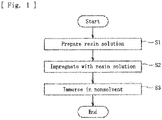
Fig. 1] Fig. 1 is a flowchart illustrating a method for producing a filtration filter according to an embodiment of the present invention. - [
Fig. 2] Fig. 2 is a schematic diagram illustrating a step for producing the filtration filter. - [
Fig. 3] Fig. 3 is a schematic diagram illustrating a step for producing the filtration filter. - [
Fig. 4] Fig. 4 is a schematic diagram illustrating a step for producing the filtration filter. - [
Fig. 5] Fig. 5 is a schematic diagram illustrating a filtration filter of Example which is produced by the production method according to the embodiment. - [
Fig. 6] Fig. 6 is a schematic diagram illustrating a filtration filter of Comparative Example which is produced by a production method known in the related art. - [
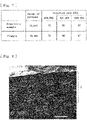
Fig. 7] Fig. 7 is a table that lists the amount of permeate and rejection rate measured in each of Example and Comparative Example. - [
Fig. 8] Fig. 8 is a micrograph of the inside structure of the filtration filter according to the embodiment of the present invention. - [
Fig. 9] Fig. 9 includes (a) a micrograph of openings formed in the filtration filter and (b) a binary diagram of the micrograph. - [
Fig. 10] Fig. 10 includes (a) a micrograph of openings formed in the filtration filter known in the related art and (b) a binary diagram of the micrograph. Description of Embodiments - An embodiment of the present invention is specifically described with reference to the drawings below.
- A filtration filter according to this embodiment is capable of separating and filtering out impurities from water and is a "UF membrane (or MF membrane)" capable of rejecting proteins, viruses, germs, and the like. The
filtration filter 5 includes, as illustrated inFig. 5 , asupport 1 the inside of which is a fibrous structure and a filtration membrane M integrally formed inside thesupport 1, which is composed of a porous resin and capable of filtering out impurities. - Specifically, the
support 1 according to this embodiment is composed of nonwoven fabric or the like which is formed in the shape of a sheet (paper sheet) by a paper-making method (sheet-making method). The inside thereof is a fibrous (net-like) structure. The inside of the fibrous structure is impregnated with a porous resin such that they form a single piece. Thesupport 1 according to this embodiment is composed of an aramid resin that has openings having a maximum pore size of about 270 µm. In this embodiment, in particular, the opening ratio is set to 6% to 30%. - An aramid resin (aromatic polyamide) is composed of a plastic that has excellent heat resistance and a high mechanical strength. For example, in the case where the porous resin is composed of polysulfone (PSF), hydrogen bonds are formed and is hydrophobic, which provides increased adherence (affinity). In contrast, in the case where the
support 1 is composed of a PET resin (polyethylene terephthalate resin), pulp, or the like, hydrogen bonds are not formed between thesupport 1 and the porous resin, which is composed of polysulfone (PSF). - The
filtration filter 5 according to this embodiment preferably includes a filtration membrane M that is composed of a porous resin and has an opening ratio of 6% to 30% and/or a thickness of 10 to 500 µm and asupport 1 that has a thickness of 0.03 to 0.5 mm and/or is composed of a structure including chemical fibers. It is preferable that thesupport 1 according to this embodiment be composed of an aramid resin or a polyethylene terephthalate resin and the filtration membrane M be composed of polysulfone (PSF), polyvinylidene fluoride (PVDF), polyethersulfone (PES), polyimide (PI), polyvinyl chloride (PVC), or cellulose acetate (CA). - A method for producing the filtration filter according to this embodiment is described on the basis of the flowchart illustrated in
Fig. 1 below. - Polysulfone is dissolved in methyl formamide to prepare a resin solution 2 (polymer solution)(S1). As illustrated in
Figs. 2 and 3 , asupport 1 prepared by forming aramid fiber pulp in the shape of a paper sheet by a paper-making method is impregnated with theresin solution 2 to prepare a resin-impregnatedbody 3. - After the excess solution that remains on the surface has been removed with a bar coater, the resin-impregnated
body 3 is immersed in a nonsolvent 4 (in this embodiment, water) as illustrated inFig. 4 (S3). This causes a phase separation phenomenon in which the solvent of theresin solution 2 is replaced with the nonsolvent 4 (water). Consequently, afiltration filter 5 that includes a filtration membrane M integrally formed inside thesupport 1 which is composed of a porous resin and capable of filtering out impurities can be formed as illustrated inFigs. 5 and8 . - Specifically, the above-described membrane production method in which a phase separation phenomenon is used is referred to as "NIPS process". As a result of the solvent of the
resin solution 2 being replaced with the nonsolvent 4 (water) by a phase separation phenomenon and the resin being solidified, the resin portion forms a filtration membrane M and the solvent portions replaced with water serve as pores (openings) of the filtration membrane M. Thefiltration filter 5 produced in the above-described manner includes asupport 1 composed of aramid fibers and a filtration membrane M composed of polysulfone and is used as an ultrafiltration membrane (UF membrane). - In a
filtration filter 5 produced in the above-described manner, thesupport 1 had a thickness of 0.15 mm. Thefiltration filter 5 had a total thickness of 0.30 mm, an average pore size of 0.026 µm, and an opening ratio of 9.0%. The term "opening ratio" used herein refers to the proportion of the area of the pore portions per unit area. The higher the opening ratio, the larger the amount of permeate. The term "amount of permeate" used herein refers to the amount of water that passes through the membrane per unit area, pressure, and time. - The
filtration filter 5 produced in the above-described manner was used as Example and compared with Comparative Example. Comparative Example was a filtration filter that included asupport 6 composed of PET (polyethylene terephthalate) fibers and aresin membrane 7 that was integrally formed on the surface of thesupport 6 and composed of polysulfone as illustrated inFig. 6 . Thesupport 6 had a thickness of 0.1 mm. This filtration filter had a total thickness of 0.15 mm, an average pore size of 0.025 µm, and an opening ratio of 3.4%. - Specifically, although the average pore sizes of Example and Comparative Example were substantially the same, as illustrated in
Fig. 9 , Example had a larger number of openings than Comparative Example, that is, Example had a higher opening ratio than Comparative Example. On the other hand, as illustrated inFig. 10 , Comparative Example had a smaller number of openings than Example, that is, Comparative Example had a lower opening ratio than Example.Fig. 7 illustrates the test results of comparisons in impurity rejection rate (%) and the amount of permeate (L/(hour·m2·MPa) between Example and Comparative Example. - Note that the impurity rejection rate is determined by passing water containing PEG (reference material) having a predetermined molecular weight (100,000, 300,000, or 500,000) through the filtration membrane (resin membrane) and making a calculation using the following arithmetic expression: (Carbon content in raw water - Carbon content in permeate)/Carbon content in raw water. In this test, the concentration of the reference material (PEG concentration) is set to 2,000 ppm, the pressure (MPa) is set to 0.2, and the circulation time (min) is set to 10.
- The test results show that, while the impurity rejection rate does not change greatly in either case where water containing PEG having a molecular weight of 100,000, 300,000, or 500,000 is used, the amount of permeate measured in Example is about two or more times that measured in Comparative Example and is markedly large. This is presumably because the opening ratio (9.0%) of Example is higher than the opening ratio (3.4%) of Comparative Example. The opening ratio can be determined by capturing an SEM image of the surface of the filtration filter at, for example, a 5,000 to 20,000-fold magnification and analyzing the image with image-processing software. The opening ratio may be determined by, for example, separating the opening portions from the other portions by binarization as illustrated in
Figs. 9(b) and10(b) . - That is, the opening ratio of the filtration membrane (resin membrane) varies depending on the proportion of the resin portion and can be readily adjusted by changing the resin concentration. The pore size of the openings varies depending on the rate of phase separation and the rate at which the solvent is replaced with the nonsolvent and can be readily adjusted by changing the viscosity of the resin and the type and purity of the nonsolvent. Therefore, setting the above factors and conditions appropriately enables a filtration membrane having a high opening ratio to be produced while maintaining (without increasing) the pore size of the openings as in Example.
- Thus, according to this embodiment, the porous resin can be firmly and consistently held on the
support 1. In addition, the amount of permeate can be increased while the impurity rejection rate is maintained. Furthermore, in Example, since a fibrous structure (porous structure), such as an aramid resin, is used as a support and this support is impregnated with a resin solution and then immersed in a nonsolvent liquid in order to perform the phase replacement, the surface roughness of the fibrous structure is high and the surface tension thereof increases the area of contact between the solvent of the resin solution and the nonsolvent liquid. As a result, the rate at which the solvent is replaced with the nonsolvent can be increased. - Moreover, in Example, since a structure (porous structure) composed of an aramid resin or the like is used as a support and the filtration membrane is composed of polysulfone (PSF), adhesion to the filtration membrane is good and the occurrence of cracking and the like is reduced compared with the case where PET fibers, pulp, or the like is used as a support. Note that PET fibers or pulp may be used as a support when the occurrence of cracking and the like can be reduced.
- In addition, in Comparative Example, if wrinkles are present in the support before the filtration membrane is formed on the support, the thickness of the filtration membrane is reduced at the protruded portions of the wrinkles and the thickness of the filtration membrane is increased at the recessed portions of the wrinkles, which results in unevenness in the thickness of the membrane. Furthermore, if large wrinkles are present, the support may be exposed and, consequently, the impurity filtration effect may become degraded. Therefore, in Comparative Example, it is necessary to cut both ends of the support, at which wrinkles are likely to occur. In contrast, in Example, even when wrinkles are present in the support, the filtration membrane can be formed inside the support in a suitable manner. Moreover, the structure can be flexibly changed.
- The test results of ease of detachment of Example and Comparative Example are described below.
- A tape (No. 3800K) produced by Nitto Denko CS System Corporation was put on the surface (membrane surface) of each of Example and Comparative Example. Each tape was rubbed three times by finger. Subsequently, while an end of the tape was held, the end of the tape was slowly pulled such that the tape was bent 180°. The region 25 mm behind the tape was considered as an effective area and the detachment of the filtration membrane (resin membrane) was observed. While detachment occurred at 100% in Comparative Example, detachment occurred at less than 100% (about 50%) in Example.
- The above is the description of this embodiment. The present invention is not limited to this. For example, the support or the filtration membrane may be composed of another material. The thickness of the above members and the total thickness may be set appropriately. Although the inside of the support is entirely impregnated with the filtration membrane such that they are formed as a single piece in the filtration filter according to this embodiment, only a part of the support may be impregnated with the filtration membrane such that they are formed as a single piece.
- Although, in this embodiment, the filtration filter is applied to an ultrafiltration membrane (UF membrane), the filtration filter may be applied to another filtration membrane, such as an MF membrane. Although the filtration membrane is formed by the NIPS process, in which the solvent of the resin solution is replaced with a nonsolvent, in the method for producing the filtration filter according to this embodiment, the filtration membrane may be formed by another method.
- The present invention is also applicable to those having another structure or that are produced by another production method, as long as it is a filtration filter composed of a support including a fibrous structure and a filtration membrane integrally formed inside the support, the filtration membrane including a porous resin and being capable of filtering out impurities, and a method for producing the filtration filter.
-
- 1 SUPPORT
- 2 RESIN SOLUTION
- 3 RESIN-IMPREGNATED BODY
- 4 NONSOLVENT
- 5 FILTRATION FILTER
- 6 SUPPORT
- 7 RESIN MEMBRANE
Claims (14)
- A filtration filter capable of filtering out impurities, the filtration filter comprising:a support composed of a fibrous structure; anda filtration membrane integrally formed inside the support, the filtration membrane including a porous resin and being capable of filtering out impurities.
- The filtration filter according to Claim 1, wherein the filtration membrane includes a porous resin membrane having an opening ratio of 6% to 30%.
- The filtration filter according to Claim 1 or 2, wherein the support includes a structure having a thickness of 0.03 to 0.5 mm.
- The filtration filter according to any one of Claims 1 to 3, wherein the filtration membrane includes a porous resin having a thickness of 10 to 500 µm.
- The filtration filter according to any one of Claims 1 to 4, wherein the support includes a structure including chemical fibers.
- The filtration filter according to Claim 5, wherein the support includes an aramid resin or a polyethylene terephthalate resin.
- The filtration filter according to any one of Claims 1 to 6, wherein the filtration membrane includes polysulfone (PSF), polyvinylidene fluoride (PVDF), polyethersulfone (PES), polyimide (PI), polyvinyl chloride (PVC), or cellulose acetate (CA).
- A method for producing a filtration filter capable of filtering out impurities, the method comprising:impregnating a support composed of a fibrous structure with a resin solution prepared by dissolving a predetermined resin in a predetermined solvent, andimmersing the support in a nonsolvent liquid in order to replace the solvent included in the resin solution with the nonsolvent liquid and thereby integrally form a filtration membrane inside the support, the filtration membrane including a porous resin and being capable of filtering out impurities.
- The method for producing a filtration filter according to Claim 8, wherein the filtration membrane includes a porous resin membrane having an opening ratio of 6% to 30%.
- The method for producing a filtration filter according to Claim 8 or 9, wherein the support includes a structure having a thickness of 0.03 to 0.5 mm.
- The method for producing a filtration filter according to any one of Claims 8 to 10, wherein the filtration membrane includes a porous resin having a thickness of 10 to 500 µm.
- The method for producing a filtration filter according to any one of Claims 8 to 11, wherein the support includes a structure including chemical fibers.
- The method for producing a filtration filter according to Claim 12, wherein the support includes an aramid resin or a polyethylene terephthalate resin.
- The method for producing a filtration filter according to any one of Claims 8 to 13, wherein the filtration membrane includes polysulfone (PSF), polyvinylidene fluoride (PVDF), polyethersulfone (PES), polyimide (PI), polyvinyl chloride (PVC), or cellulose acetate (CA).
Applications Claiming Priority (2)
| Application Number | Priority Date | Filing Date | Title |
|---|---|---|---|
| JP2020011393A JP7032460B2 (en) | 2020-01-28 | 2020-01-28 | How to manufacture a filtration filter |
| PCT/JP2021/001099 WO2021153255A1 (en) | 2020-01-28 | 2021-01-14 | Filtration filter, and method for producing same |
Publications (2)
| Publication Number | Publication Date |
|---|---|
| EP4098352A1 true EP4098352A1 (en) | 2022-12-07 |
| EP4098352A4 EP4098352A4 (en) | 2024-02-28 |
Family
ID=77078848
Family Applications (1)
| Application Number | Title | Priority Date | Filing Date |
|---|---|---|---|
| EP21746322.3A Withdrawn EP4098352A4 (en) | 2020-01-28 | 2021-01-14 | FILTRATION FILTER AND PRODUCTION PROCESS THEREOF |
Country Status (8)
| Country | Link |
|---|---|
| US (1) | US20220362719A1 (en) |
| EP (1) | EP4098352A4 (en) |
| JP (1) | JP7032460B2 (en) |
| KR (1) | KR20220128635A (en) |
| CN (1) | CN114786798A (en) |
| IL (1) | IL294256A (en) |
| TW (1) | TW202142311A (en) |
| WO (1) | WO2021153255A1 (en) |
Family Cites Families (21)
| Publication number | Priority date | Publication date | Assignee | Title |
|---|---|---|---|---|
| JPS61118106A (en) * | 1984-11-14 | 1986-06-05 | Kurabo Ind Ltd | Production of anisotropic filtering membrane |
| JPH09299772A (en) | 1996-05-13 | 1997-11-25 | Nitto Denko Corp | Polysulfone ultrafiltration membrane and method for producing the same |
| DE19729456C1 (en) * | 1997-07-10 | 1998-10-22 | Sartorius Gmbh | Porous organic polymer membrane used for micro-filtration and ultrafiltration |
| JP2005081226A (en) * | 2003-09-08 | 2005-03-31 | Institute Of Physical & Chemical Research | Nanofiltration membrane and method for producing the same |
| JP4565944B2 (en) * | 2004-09-16 | 2010-10-20 | ダイセル化学工業株式会社 | Filter material and manufacturing method thereof |
| JP5552289B2 (en) * | 2009-09-04 | 2014-07-16 | 株式会社クレハ | Method for producing vinylidene fluoride resin porous membrane |
| EP2559478A4 (en) * | 2010-04-16 | 2013-02-27 | Asahi Kasei Chemicals Corp | HETEROMORPHIC POROUS HOLLOW FIBER MEMBRANE, PROCESS FOR PRODUCING THE SAME, MODULE USING THE SAME, FILTRATION DEVICE, AND WATER TREATMENT METHOD |
| JP5110227B2 (en) * | 2011-01-31 | 2012-12-26 | 東レ株式会社 | Separation membrane for water treatment and method for producing the same |
| JP5978998B2 (en) * | 2011-04-01 | 2016-08-24 | 東レ株式会社 | Composite semipermeable membrane, composite semipermeable membrane element, and method for producing composite semipermeable membrane |
| CN102299284B (en) * | 2011-06-28 | 2013-12-04 | 浙江大学 | Active composite porous membrane for lithium ion battery, and preparation method thereof |
| KR102019806B1 (en) * | 2012-01-16 | 2019-09-09 | 도레이 카부시키가이샤 | Composite semipermeable membrane and method for manufacturing same |
| US9022229B2 (en) * | 2012-03-09 | 2015-05-05 | General Electric Company | Composite membrane with compatible support filaments |
| JP6105875B2 (en) * | 2012-08-20 | 2017-03-29 | ユニチカ株式会社 | Polyamide ultrafiltration membrane having organic solvent resistance and method for producing the same |
| CN203043857U (en) * | 2012-11-21 | 2013-07-10 | 北京碧水源膜科技有限公司 | Enhanced hollow fiber film with flocculent fibers |
| JP5569832B1 (en) * | 2013-06-11 | 2014-08-13 | 東洋紡株式会社 | Polymer porous flat membrane sheet for MBR |
| WO2015133364A1 (en) * | 2014-03-03 | 2015-09-11 | Jnc株式会社 | Composite fine porous membrane and filter using same |
| CN103933873B (en) * | 2014-04-23 | 2016-03-09 | 湖州森蓝环境工程有限公司 | A kind of self-supporting PVDF homogeneous porous tubular film and preparation method thereof |
| JP6359431B2 (en) * | 2014-11-21 | 2018-07-18 | 旭化成株式会社 | Porous hollow fiber membrane, method for producing porous hollow fiber membrane, and water purification method |
| WO2017104570A1 (en) * | 2015-12-14 | 2017-06-22 | 日東電工株式会社 | Support for forming hydrogen discharge film, and laminated hydrogen discharge film |
| JP6599818B2 (en) | 2016-05-31 | 2019-10-30 | 株式会社クラレ | Method for producing porous membrane |
| CN106110907B (en) * | 2016-06-24 | 2019-04-05 | 盐城海普润膜科技有限公司 | A kind of production method of inner support hollow-fibre membrane |
-
2020
- 2020-01-28 JP JP2020011393A patent/JP7032460B2/en active Active
-
2021
- 2021-01-14 WO PCT/JP2021/001099 patent/WO2021153255A1/en not_active Ceased
- 2021-01-14 EP EP21746322.3A patent/EP4098352A4/en not_active Withdrawn
- 2021-01-14 CN CN202180006955.6A patent/CN114786798A/en active Pending
- 2021-01-14 KR KR1020227026875A patent/KR20220128635A/en not_active Withdrawn
- 2021-01-14 IL IL294256A patent/IL294256A/en unknown
- 2021-01-27 TW TW110103023A patent/TW202142311A/en unknown
-
2022
- 2022-06-18 US US17/843,988 patent/US20220362719A1/en not_active Abandoned
Also Published As
| Publication number | Publication date |
|---|---|
| WO2021153255A1 (en) | 2021-08-05 |
| KR20220128635A (en) | 2022-09-21 |
| TW202142311A (en) | 2021-11-16 |
| EP4098352A4 (en) | 2024-02-28 |
| JP2021115537A (en) | 2021-08-10 |
| US20220362719A1 (en) | 2022-11-17 |
| IL294256A (en) | 2022-08-01 |
| JP7032460B2 (en) | 2022-03-08 |
| CN114786798A (en) | 2022-07-22 |
Similar Documents
| Publication | Publication Date | Title |
|---|---|---|
| Kwon et al. | Highly permeable and mechanically durable forward osmosis membranes prepared using polyethylene lithium ion battery separators | |
| JP6155347B2 (en) | Forward osmosis membrane | |
| US6770202B1 (en) | Porous membrane | |
| KR102031395B1 (en) | Composite hollow fibre membrane with compatible braided support filaments | |
| Fan et al. | Preparation and performance of homogeneous braid reinforced cellulose acetate hollow fiber membranes | |
| KR101810708B1 (en) | Separation membrane and method for producing same | |
| KR101755197B1 (en) | Positive Pressure Type Hollow Fiber Membrane Module | |
| CN101316646B (en) | A braid-reinforced composite hollow fiber membrane | |
| KR101572660B1 (en) | Reverse osmosis membrane with nanofiber-web layer and method for manufacturing thereof | |
| WO2015032786A1 (en) | Permselective asymmetric membranes | |
| JP2011025110A (en) | Separation membrane, and method of producing the same | |
| Tsai et al. | Study of the separation properties of chitosan/polysulfone composite hollow-fiber membranes | |
| US5849195A (en) | Composite membrane, process of manufacturing it and process of using it | |
| US20220362719A1 (en) | Filtration Filter And Method For Producing The Same | |
| KR102375568B1 (en) | Coating composition having selective removal of divalent cation and filtration membrane using the same | |
| WO2014208602A1 (en) | Separation membrane element | |
| CN113564809A (en) | Nonwoven fabric and liquid separation membrane | |
| JP2002540928A (en) | Porous membrane | |
| JP3999367B2 (en) | Manufacturing method of sheet-like separation membrane | |
| JP3151817B2 (en) | Composite porous membrane | |
| JPS5814904A (en) | Support sheet for liquid separation membrane and continuous preparation thereof | |
| JP6863333B2 (en) | Manufacturing method of water treatment membrane element | |
| Zoka et al. | Effect of surface modification with electrospun nanofibers on the performance of an ultrafiltration membrane | |
| WO2016182015A1 (en) | Porous hollow fiber membrane and manufacturing method therefor | |
| KR101178653B1 (en) | Tubular braid and Composite Hollow Fiber Membrane Using The Same |
Legal Events
| Date | Code | Title | Description |
|---|---|---|---|
| STAA | Information on the status of an ep patent application or granted ep patent |
Free format text: STATUS: THE INTERNATIONAL PUBLICATION HAS BEEN MADE |
|
| PUAI | Public reference made under article 153(3) epc to a published international application that has entered the european phase |
Free format text: ORIGINAL CODE: 0009012 |
|
| STAA | Information on the status of an ep patent application or granted ep patent |
Free format text: STATUS: REQUEST FOR EXAMINATION WAS MADE |
|
| 17P | Request for examination filed |
Effective date: 20220706 |
|
| AK | Designated contracting states |
Kind code of ref document: A1 Designated state(s): AL AT BE BG CH CY CZ DE DK EE ES FI FR GB GR HR HU IE IS IT LI LT LU LV MC MK MT NL NO PL PT RO RS SE SI SK SM TR |
|
| DAV | Request for validation of the european patent (deleted) | ||
| DAX | Request for extension of the european patent (deleted) | ||
| A4 | Supplementary search report drawn up and despatched |
Effective date: 20240129 |
|
| RIC1 | Information provided on ipc code assigned before grant |
Ipc: B01D 61/14 20060101ALI20240123BHEP Ipc: D06M 101/36 20060101ALI20240123BHEP Ipc: D06M 101/32 20060101ALI20240123BHEP Ipc: D06M 15/256 20060101ALI20240123BHEP Ipc: D06M 15/248 20060101ALI20240123BHEP Ipc: D06M 15/07 20060101ALI20240123BHEP Ipc: B01D 71/16 20060101ALI20240123BHEP Ipc: B01D 67/00 20060101ALI20240123BHEP Ipc: D06M 15/63 20060101ALI20240123BHEP Ipc: B01D 71/68 20060101ALI20240123BHEP Ipc: B01D 71/64 20060101ALI20240123BHEP Ipc: B01D 71/34 20060101ALI20240123BHEP Ipc: B01D 71/30 20060101ALI20240123BHEP Ipc: B01D 69/12 20060101ALI20240123BHEP Ipc: B01D 69/10 20060101ALI20240123BHEP Ipc: B01D 69/00 20060101AFI20240123BHEP |
|
| STAA | Information on the status of an ep patent application or granted ep patent |
Free format text: STATUS: THE APPLICATION IS DEEMED TO BE WITHDRAWN |
|
| 18D | Application deemed to be withdrawn |
Effective date: 20240817 |