EP4096799B1 - Restraint system for an amusement park attraction - Google Patents
Restraint system for an amusement park attraction Download PDFInfo
- Publication number
- EP4096799B1 EP4096799B1 EP21704366.0A EP21704366A EP4096799B1 EP 4096799 B1 EP4096799 B1 EP 4096799B1 EP 21704366 A EP21704366 A EP 21704366A EP 4096799 B1 EP4096799 B1 EP 4096799B1
- Authority
- EP
- European Patent Office
- Prior art keywords
- teeth
- gear
- cap
- restraint
- pivot
- Prior art date
- Legal status (The legal status is an assumption and is not a legal conclusion. Google has not performed a legal analysis and makes no representation as to the accuracy of the status listed.)
- Active
Links
Images




Classifications
-
- A—HUMAN NECESSITIES
- A63—SPORTS; GAMES; AMUSEMENTS
- A63G—MERRY-GO-ROUNDS; SWINGS; ROCKING-HORSES; CHUTES; SWITCHBACKS; SIMILAR DEVICES FOR PUBLIC AMUSEMENT
- A63G31/00—Amusement arrangements
-
- B—PERFORMING OPERATIONS; TRANSPORTING
- B60—VEHICLES IN GENERAL
- B60R—VEHICLES, VEHICLE FITTINGS, OR VEHICLE PARTS, NOT OTHERWISE PROVIDED FOR
- B60R21/00—Arrangements or fittings on vehicles for protecting or preventing injuries to occupants or pedestrians in case of accidents or other traffic risks
-
- B—PERFORMING OPERATIONS; TRANSPORTING
- B60—VEHICLES IN GENERAL
- B60R—VEHICLES, VEHICLE FITTINGS, OR VEHICLE PARTS, NOT OTHERWISE PROVIDED FOR
- B60R21/00—Arrangements or fittings on vehicles for protecting or preventing injuries to occupants or pedestrians in case of accidents or other traffic risks
- B60R21/02—Occupant safety arrangements or fittings, e.g. crash pads
-
- F—MECHANICAL ENGINEERING; LIGHTING; HEATING; WEAPONS; BLASTING
- F16—ENGINEERING ELEMENTS AND UNITS; GENERAL MEASURES FOR PRODUCING AND MAINTAINING EFFECTIVE FUNCTIONING OF MACHINES OR INSTALLATIONS; THERMAL INSULATION IN GENERAL
- F16C—SHAFTS; FLEXIBLE SHAFTS; ELEMENTS OR CRANKSHAFT MECHANISMS; ROTARY BODIES OTHER THAN GEARING ELEMENTS; BEARINGS
- F16C11/00—Pivots; Pivotal connections
- F16C11/04—Pivotal connections
- F16C11/10—Arrangements for locking
-
- A—HUMAN NECESSITIES
- A63—SPORTS; GAMES; AMUSEMENTS
- A63G—MERRY-GO-ROUNDS; SWINGS; ROCKING-HORSES; CHUTES; SWITCHBACKS; SIMILAR DEVICES FOR PUBLIC AMUSEMENT
- A63G31/00—Amusement arrangements
- A63G2031/002—Free-fall
-
- A—HUMAN NECESSITIES
- A63—SPORTS; GAMES; AMUSEMENTS
- A63G—MERRY-GO-ROUNDS; SWINGS; ROCKING-HORSES; CHUTES; SWITCHBACKS; SIMILAR DEVICES FOR PUBLIC AMUSEMENT
- A63G31/00—Amusement arrangements
- A63G31/02—Amusement arrangements with moving substructures
-
- A—HUMAN NECESSITIES
- A63—SPORTS; GAMES; AMUSEMENTS
- A63G—MERRY-GO-ROUNDS; SWINGS; ROCKING-HORSES; CHUTES; SWITCHBACKS; SIMILAR DEVICES FOR PUBLIC AMUSEMENT
- A63G31/00—Amusement arrangements
- A63G31/16—Amusement arrangements creating illusions of travel
-
- A—HUMAN NECESSITIES
- A63—SPORTS; GAMES; AMUSEMENTS
- A63G—MERRY-GO-ROUNDS; SWINGS; ROCKING-HORSES; CHUTES; SWITCHBACKS; SIMILAR DEVICES FOR PUBLIC AMUSEMENT
- A63G4/00—Accessories for roundabouts not restricted to one of groups A63G1/00 or A63G3/00
-
- A—HUMAN NECESSITIES
- A63—SPORTS; GAMES; AMUSEMENTS
- A63G—MERRY-GO-ROUNDS; SWINGS; ROCKING-HORSES; CHUTES; SWITCHBACKS; SIMILAR DEVICES FOR PUBLIC AMUSEMENT
- A63G7/00—Up-and-down hill tracks; Switchbacks
-
- B—PERFORMING OPERATIONS; TRANSPORTING
- B60—VEHICLES IN GENERAL
- B60R—VEHICLES, VEHICLE FITTINGS, OR VEHICLE PARTS, NOT OTHERWISE PROVIDED FOR
- B60R21/00—Arrangements or fittings on vehicles for protecting or preventing injuries to occupants or pedestrians in case of accidents or other traffic risks
- B60R2021/0065—Type of vehicles
- B60R2021/0097—Amusement vehicles
-
- B—PERFORMING OPERATIONS; TRANSPORTING
- B60—VEHICLES IN GENERAL
- B60R—VEHICLES, VEHICLE FITTINGS, OR VEHICLE PARTS, NOT OTHERWISE PROVIDED FOR
- B60R21/00—Arrangements or fittings on vehicles for protecting or preventing injuries to occupants or pedestrians in case of accidents or other traffic risks
- B60R21/02—Occupant safety arrangements or fittings, e.g. crash pads
- B60R2021/0273—Occupant safety arrangements or fittings, e.g. crash pads automatically movable to an operative position, e.g. in case of collision or impending collision
-
- B—PERFORMING OPERATIONS; TRANSPORTING
- B60—VEHICLES IN GENERAL
- B60R—VEHICLES, VEHICLE FITTINGS, OR VEHICLE PARTS, NOT OTHERWISE PROVIDED FOR
- B60R21/00—Arrangements or fittings on vehicles for protecting or preventing injuries to occupants or pedestrians in case of accidents or other traffic risks
- B60R21/02—Occupant safety arrangements or fittings, e.g. crash pads
- B60R2021/028—Means preventing passenger from falling out of vehicles
Definitions
- the present disclosure relates generally to amusement park attractions and, specifically, to a restraint control system for an amusement park attraction.
- Amusement parks include various features that entertain guests.
- an amusement park may have rides, shows, and/or effects to provide a desirable experience to different guests.
- Some of these features may include a ride vehicle in which guests may be situated during operation of the attraction.
- the ride vehicle may have seats that the guests occupy, and restraints may be used to contain and secure the guests within the ride vehicle. It is now recognized that there is a need for improved restraints.
- Document US 2005/275175 A1 discloses a ride vehicle with a ride seat which describes a U-like retaining part provided in the pelvic region of a person.
- the retaining system comprises a recess having a detent that complements a rack with teeth attached to a bail and having a pivot leer, such that the teeth of the rack may fit into the detent in the recess.
- a ride vehicle for an attraction of an amusement park is defined by claim 1.
- a restraint system for a ride vehicle of an amusement park is defined by claim 9.
- the attraction system may include a ride vehicle having seats and restraints for each seat.
- the restraint is configured to rotate between an open position and a closed position. In the open position, the restraint may enable a guest to enter the ride vehicle to occupy the seat and/or to leave the seat to exit the ride vehicle. Accordingly, the restraint may be in the open position at a station or loading platform of the attraction system so as to load guests onto and unload guests from the ride vehicle. In the closed position, such as when the ride vehicle is in motion, the restraint may contain (e.g., fasten) the guests within the ride vehicle.
- the closed position refers to a position of the restraint that effectively secures the guest within the ride vehicle. Since each guest may have a different characteristic, such as a different body size, weight, body shape, and so forth, different restraints that secure different guests may also have dissimilar positions that may be considered closed positions. Indeed, the same restraint may have various suitable closed positions at different times of operation of the attraction system based on the guest to be secured by the restraint at a particular time of operation.
- the restraint may be maintained in the closed position to secure the guests within the ride vehicle.
- the restraint may have a locking mechanism.
- the locking mechanism may include a linkage system that has components, such as one or more gears, one or more shafts, one or more hinges, and so forth, that may effectively block movement of the restraint and lock the restraint in the second position.
- the linkage system may be designed to have sufficient strength and withstand movement of the ride vehicle so as to provide enough force for blocking movement of the restraint during operation of the attraction system.
- such a design of the locking system may substantially increase a weight of the ride vehicle and/or be difficult to install within a confined space or volume of the ride vehicle.
- an improved system that blocks movement of the restraint may facilitate efficient operation and/or manufacture of the attraction system.
- embodiments of the present disclosure are directed to a system that may directly block rotation of a restraint.
- the restraint may be configured to rotate about a pivot.
- the restraint may have a gear
- the attraction system may include a cap coupled to an actuator and configured to engage the gear.
- the actuator is configured to move the cap to engage with the gear to block rotation of the restraint about the pivot, and the actuator is configured to move the cap to disengage with the gear to enable rotation of the restraint about the pivot.
- the gear has a first set of teeth and the cap has a second set of teeth.
- the second set of teeth may engage with the first set of teeth to block movement of the first set of teeth relative to the second set of teeth, thereby blocking the gear and the restraint from rotating about the pivot to secure the position of the restraint (e.g., in the closed position).
- the second set of teeth are not engaged with the first set of teeth, and the restraint may rotate about the pivot (e.g., to rotate between the closed position and the open position).
- the actuator may enable and block rotation of the restraint.
- a linkage system includes components that enable an actuator or other movable feature to indirectly couple to a component configured to engage with the gear. Accordingly, the linkage system may transfer movement of the actuator to cause movement of the component (i.e., movement of the actuator does not cause direct movement of the component) to engage or disengage with the gear.
- the linkage system may include one or more additional gears, one or more additional actuators, one or more bars or levers, one or more pivots or hinges, and the like, that indirectly couples the actuator to the component.
- the restraint system may not substantially increase the weight of the ride vehicle and/or may be implemented within a limited space of the ride vehicle. Accordingly, the restraint system may improve the efficiency of operation and/or manufacture of attraction systems.
- FIG. 1 is a schematic diagram of an embodiment of an attraction system 50, which may be a roller coaster, a dark ride, a drop tower, or any other suitable attraction system 50.
- the attraction system 50 may have a ride vehicle 52 in which guests may be situated during operation of the attraction system 50.
- the ride vehicle 52 may have one or more ride seats 54 that guests may occupy within the ride vehicle 52.
- the ride seat 54 may further include a restraint system 56 having features described herein.
- the restraint system 56 is configured to secure one or more guests within the ride vehicle 52.
- the ride vehicle 52 may be configured to move along a ride path or track 58 of the attraction system 50, and the guests may be contained within the ride vehicle 52 by the restraint system 56 during movement of the ride vehicle 52.
- the attraction system 50 may also include show effects 60 that further enhance the experience of the guests.
- the show effects 60 may include lighting, sounds, animated figures, and the like, that provide additional features to entertain the guests.
- the attraction system 50 may also include a guest path 62 that guests may use to navigate within the attraction system 50, such as from an entrance of the attraction system 50 to the ride vehicle 52 and/or from the ride vehicle 52 to an exit of the attraction system 50.
- the guest path 62 may include a footpath (e.g., a queue line), a staircase, an escalator, an elevator, and so forth.
- the show effects 60 may provide entertainment for the guests as they navigate the guest path 62 in the attraction system 50 such that the guests may also be entertained while waiting within the attraction system 50 (e.g., when not in the ride vehicle 52).
- FIG. 2 is a side perspective view of an embodiment of the attraction system 50.
- the attraction system 50 includes multiple ride vehicles 52 coupled together (e.g., via a link) and configured to travel along the ride path 58.
- the ride path 58 may be a track that guides the movement (e.g., direction, speed, and/or orientation) of the ride vehicle 52 through the attraction system 50.
- the ride path 58 may be an open surface through which the ride vehicle 52 may generally travel (e.g., be guided based on a user input).
- Each ride vehicle 52 also includes one or more ride seats 54 that each may hold one or more passengers 80.
- the illustrated attraction system 50 shows five ride vehicles 52 that each accommodate two passengers 80, but the attraction system 50 may include any suitable number of ride vehicles 52, such as one, two, four, ten, twenty, or any number of ride vehicles 52, and each ride vehicle 52 may accommodate any number of passengers 80, such as one passenger 80, three passengers 80, four passengers 80, or five or more passengers 80. Indeed, there may be any suitable number of ride vehicles and/or passengers in each of the ride vehicles 52.
- Each ride vehicle 52 may include the restraint system 56.
- the illustrated restraint system 56 is configured to be positioned above the lap of each passenger 80.
- an additional or alternative restraint system 56 may have any configuration of restraint system 56, such as a restraint system 56 configured to be positioned over a shoulder of each passenger 80, across a torso of each passenger 80, and so forth.
- the illustrated attraction system 50 includes a single restraint system 56 implemented within each ride vehicle 52.
- each ride vehicle 52 may have any suitable number of restraint systems 56, such as one for each passenger 80 or multiple for each passenger 80 (e.g., restraints for each of a passenger's legs, torso, lap and so forth).
- each restraint system 56 may be adjustable, such as to move between a first position and a second position.
- the first position may enable passengers 80 to enter and/or exit the ride vehicle 52.
- the second position may secure the passengers 80 within the ride vehicle 52.
- the restraint system 56 may be secured in the second position, such as via a locking system, in order to hold the passengers 80 within the ride vehicle 52 (e.g., while the ride vehicle 52 is moving along the ride path 58).
- FIG. 3 is a side perspective view of an embodiment of the ride vehicle 52 having multiple restraint systems 56 configured to secure passengers in respective ride seats 54, such as onto seating portions 98 on which each passenger is seated.
- the restraint system 56 includes a restraint piece 100, which may include tubing and/or bars, in a closed position, in which the restraint piece 100 (e.g., an over the shoulder restraint) extends over the shoulders of one of the passengers 80 and/or across the torso (e.g., the waist) of the passenger 80 to contain the passenger 80 within the ride vehicle 52.
- the restraint system 56 also includes a pivot 102 and a pivot adapter 104 coupling the restraint piece 100 to the pivot 102.
- the pivot adapter 104 may be fixably coupled to the restraint piece 100, and the pivot adapter 104 may be rotatably coupled to the pivot 102.
- the pivot adapter 104 may be configured to rotate about the pivot 102, thereby rotating the restraint piece 100 about the pivot 102.
- the pivot adapter 104 may enable the restraint piece 100 to rotate between the closed position and the open position.
- the restraint system 56 further includes a restraint control assembly 106 configured to block movement of the pivot adapter 104 about the pivot 102. Therefore, the restraint control assembly 106 may also block movement (e.g., rotational movement) of the restraint piece 100 relative to the pivot 102 and relative to the ride seat 54 (e.g., relative to the seating portions 98). Accordingly, the restraint control assembly 106 may secure the restraint piece 100 in the closed position and secure the passenger in the ride seat 54.
- the restraint control assembly 106 is also adjustable to enable movement of the pivot adapter 104 about the pivot 102. Thus, the restraint control assembly 106 may also enable the restraint piece 100 to move between the closed position and the open position.
- the restraint control assembly 106 may be adjustable between a first configuration and a second configuration.
- the restraint control assembly 106 may enable movement of the pivot adapter 104 about the pivot 102.
- the restraint piece 100 may be movable to enable the passenger to enter or exit the ride seat 54.
- the restraint control assembly 106 may block movement of the pivot adapter 104 about the pivot 102.
- the restraint control assembly 106 may engage part of the pivot adapter 104 to block rotational movement of the pivot adapter 104 relative to the pivot 102. Accordingly, the position of the restraint control assembly 106 may be substantially fixed about the pivot 102 and the ride seat 54 (e.g., to secure the passenger in the ride seat 54).
- the ride vehicle 52 may include or may be communicatively coupled to a control system 108.
- the control system 108 may have a memory 110 and a processor 112.
- the memory 110 may include volatile memory, such as random access memory (RAM), and/or non-volatile memory, such as read-only memory (ROM), optical drives, hard disc drives, solid-state drives, or any other non-transitory computer-readable medium that includes instructions to operate the ride vehicle 52, such as the restraint control assembly 106.
- the processor 112 may include one or more application specific integrated circuits (ASICs), one or more field programmable gate arrays (FPGAs), one or more general purpose processors, or any combination thereof.
- ASICs application specific integrated circuits
- FPGAs field programmable gate arrays
- general purpose processors or any combination thereof.
- control system 108 may also include a user interface, such as a touch screen, a trackpad, a button, a switch, another suitable component, or any combination thereof, with which a user (e.g., an operator of the ride vehicle 52) may interact, and the control system 108 may operate the ride vehicle 52 based on the interaction.
- a user e.g., an operator of the ride vehicle 52
- the control system 108 may operate the ride vehicle 52 based on the interaction.
- the control system 108 may operate the restraint control assembly 106 to enable or block movement of the pivot adapter 104 about the pivot 102.
- the control system 108 may also enable or block rotation of the restraint piece 100 about the pivot 102.
- the control system 108 may adjust the restraint control assembly 106 between the first configuration and the second configuration.
- the control system 108 may be configured to set the configuration of the restraint control assembly 106 based on a time of operation of the ride vehicle 52 or of the attraction system that includes the ride vehicle 52.
- the control system 108 may set the restraint control assembly 106 in the first configuration to enable the restraint piece 100 to move and enable passengers to enter and/or exit the ride vehicle 52.
- the control system 108 may set the restraint control assembly 106 in the second configuration to block movement of the restraint piece 100 (e.g., in the closed position) to secure the passenger within the ride vehicle 52.
- control system 108 may set the configuration of the restraint control assembly 106 based on a detected operating parameter of the ride vehicle 52.
- the control system 108 may be communicatively coupled to one or more sensors 114, which may be part of the ride vehicle 52, the ride path, or another part of the attraction system.
- the sensor(s) 114 may be configured to monitor the operating parameter of the ride vehicle 52 and to transmit feedback indicative of the operating parameter.
- the operating parameter includes a position of the ride vehicle 52 along the ride path.
- the control system 108 may set the restraint control assembly 106 in the first configuration when the operating parameter indicates the ride vehicle 52 is at the station (e.g., a loading and/or unloading platform).
- the control system 108 may then set the restraint control assembly 106 in the second configuration when the operating parameter indicates the ride vehicle 52 is moving and/or is not at the station.
- the operating parameter may include a position of each passenger in the ride vehicle 52 (e.g., whether the passengers are situated in the ride seats 54 and/or on the seating portions 98), an operating mode of the ride vehicle 52, another suitable operating parameter, or any combination thereof.
- control system 108 may set the configuration of the restraint control assembly 106 based on user input. Therefore, in response to a user input indicative that the restraint piece 100 is to be movable relative to the pivot 102 and to the ride seat 54, the control system 108 may set the restraint control assembly 106 in the first configuration. However, in response to another user input indicative that the position of the restraint piece 100 is to be fixed relative to the pivot 102 and to the ride seat 54, the control system 108 may set the restraint control assembly 106 in the second configuration. Therefore, the control system 108 enables the user to select whether the restraint piece 100 is movable about the pivot 102 or fixed relative to the pivot 102.
- the user may be a ride operator and/or a passenger. If the user is only a ride operator, access to an input device (e.g., a button or switch) for controlling the restraint control assembly 106 may be located in a position that is accessible to the rider operator but not the passenger.
- an input device e.g., a button or switch
- the illustrated restraint control assembly 106 is positioned adjacent to the pivot 102 and the pivot adapter 104 such that the restraint control assembly 106 may directly engage with the pivot 102 and/or the pivot adapter 104 without the implementation of additional components (e.g., a linkage system).
- the restraint control assembly 106 is positioned behind a head support 116 of the ride seat 54, such as onto an upper portion of a support 118 that is behind the ride seat 54.
- the restraint control assembly 106 may be positioned in another suitable location in the ride vehicle 52.
- the restraint control assembly 106 may be positioned in front of the corresponding ride seat 54. Indeed, the restraint control assembly 106 may be at any suitable position in the ride vehicle 52 to engage with the pivot 102 and/or the pivot adapter 104 directly.
- the ride vehicle 52 is for a roller coaster type ride in FIGS. 2 and 3
- the ride vehicle 52 may be for any suitable attraction system.
- the ride vehicle 52 may be for a dark ride, a motion simulator, a scrambler, or any other suitable ride, and the ride vehicle 52 may have the restraint piece 100 for securing passengers in the ride vehicle 52.
- the restraint control assembly 106 may also be implemented into such embodiments of the ride vehicle 52 to set the position of the restraint piece 100.
- FIG. 4 is a partial side perspective view of an embodiment of the restraint system 56 that may be implemented into the ride vehicle 52, such as into one of the ride seats 54.
- the restraint system 56 includes the restraint piece 100, the pivot 102, the pivot adapter 104, and the restraint control assembly 106.
- the pivot 102 may be a shaft, pin, or rod, and a portion of the pivot adapter 104 may be concentrically coupled to the pivot 102 such that the pivot adapter 104 may rotate about a rotational axis 134 around the pivot 102.
- the pivot adapter 104 may include a gear 132 through which the pivot 102 may be inserted, and the gear 132 may rotate about the rotational axis 134 to enable the pivot adapter 104 and the restraint piece 100 to rotate about the rotational axis 134.
- the restraint control assembly 106 may include a cap 136 configured to fit over the gear 132 in order to block rotation of the gear 132 about the pivot 102.
- the gear 132 may have a first set of teeth 138, and the cap 136 may be configured to engage the first set of teeth 138 to block rotation of the gear 132 about the pivot 102.
- the cap 136 is not engaged with the gear 132 (e.g., the restraint control assembly 106 is in the first configuration) and therefore, the gear 132 and the pivot adapter 104 may rotate about the pivot 102.
- the restraint control assembly 106 may also include an actuator 140 configured to move the cap 136 relative to the gear 132.
- the actuator 140 may be a linear actuator configured to translate (e.g., linearly translate) the cap 136 along the rotational axis 134 or along another axis that is substantially parallel to the rotational axis 134 to move the cap 136 relative to the gear 132.
- the actuator 140 may include a solenoid that is actuated upon receiving an electrical signal, such as from the control system. The actuator 140 may move the cap 136 based on whether the electrical signal is received.
- the actuator 140 may move the cap 136 toward the gear 132 to cover the gear 132 (e.g., in the second configuration of the restraint control assembly 106), thereby blocking movement of the gear 132 relative to the pivot 102.
- the actuator 140 may move the cap 136 away from the gear 132 such that the cap 136 does not cover the gear 132 (e.g., in the first configuration of the restraint control assembly 106), thereby enabling movement of the gear 132 relative to the pivot 102.
- the actuator 140 may move to disengage the cap 136 with the gear 132, and in the de-energized state, the actuator 140 may move to engage the cap 136 with the gear 132.
- the actuator 140 may be any suitable type of actuator (e.g., hydraulic actuator, pneumatic actuator) that may move the cap 136 in any suitable manner to engage with or disengage with the gear 132 so as to enable or block movement of the gear 132 about the pivot 102.
- the pivot adapter 104 includes a single gear 132 located at a particular side (e.g., an interior side) of the pivot adapter 104, and the restraint control assembly 106 includes a single actuator 140 configured to engage and disengage the cap 136 with the gear 132.
- the pivot adapter 104 may include another gear 132 located at another side (e.g., an exterior side) of the pivot adapter 104, and the restraint control assembly 106 may be positioned accordingly to engage and disengage the cap 136 with the gear 132.
- the pivot adapter 104 may include multiple gears 132 (e.g., at different sides of the pivot adapter 104), and multiple actuator 140 may be implemented to engage and disengage a respective cap 136 with each gear 132.
- FIG. 5 is a schematic section view of an embodiment of the restraint control assembly 106 in the first configuration to enable movement of the pivot adapter 104 about the pivot 102.
- the pivot adapter 104 includes two gears 132 positioned on the support 118 at opposite sides of the pivot adapter 104, and the restraint control assembly 106 therefore includes two actuators 140 that are each configured to move a respective cap 136 to engage and disengage with one of the gears 132.
- Each actuator 140 may include one or more extensions 158 (e.g., springs) coupled to a respective cap 136 and translatable along the rotational axis 134 to move the caps 136 along the rotational axis 134.
- extensions 158 e.g., springs
- the actuators 140 may move the respective extensions 158 relative to the gears 132, thereby moving the caps 136 relative to the gears 132.
- the actuators 140 may move the extensions 158 toward one of the gears 132 to move a corresponding cap 136 along the support 118 to engage the cap 136 with one of the gears 132.
- the extensions 158 may move away from the associated gear 132, thereby moving the corresponding cap 136 along the support to disengage the cap 136 with the associated gear 132.
- each actuator 140 may include multiple extensions 158 (e.g., each positioned about and connected to the cap 136 along a circumference or edge of the cap 136) to secure the position of the cap 136 and therefore the position of the gear 132 during operation of the attraction system 50 and/or movement of the ride vehicle.
- both actuators 140 may move the caps 136 to engage the respective gears 132. Accordingly, both gears 132 engage with one of the caps 136. Alternatively, it may be sufficient to engage only one of the caps 136 with the corresponding gear 132.
- one of the gears 132 may be engaged with one of the caps 136, while the other gear 132 may not be engaged with the other cap 136 in order to block movement of the pivot adapter 104 about the pivot.
- the control system 108 may operate each actuator 140 independently from one another.
- each cap 136 may also have a second set of teeth 160.
- the second set of teeth 160 in the respective caps 136 may engage with the first set of teeth 138 of the gear 132.
- the second set of teeth 160 may be substantially fixed (e.g., does not rotate), and the first set of teeth 138 may abut the second set of teeth 160 such that the first set of teeth 138 also remains substantially fixed.
- engagement between the first set of teeth 138 and the second set of teeth 160 may substantially block movement of the pivot adapter 104 about the pivot.
- the caps 136 may be moved to engage the second set of teeth 160 with the first set of teeth 138 without covering the gears 132.
- the extensions 158 may be directly coupled to individual teeth of the second set of teeth 160, and the actuator 140 may move the second set of teeth 160 to engage or disengage with the first set of teeth 138 without covering the gears 132.
- FIG. 6 is a detailed schematic cross-sectional view of an engagement between an embodiment of the cap 136 and the gear 132, such as in the second configuration of the restraint control assembly 106.
- the second set of teeth 160 of the cap 136 is engaged with the first set of teeth 138 of the gear 132.
- the second set of teeth 160 includes enough teeth to abut each tooth of the first set of teeth 138.
- the second set of teeth 160 may have any suitable number of teeth, including one tooth, three teeth, five teeth, and so forth, to block movement of the gear 132 about the pivot 102.
- each tooth of the first set of teeth 138 and each tooth of the second set of teeth 160 may be particularly shaped to block rotational movement of the gear 132 in a particular manner.
- the gear 132 may be a ratchet, and each tooth of the first set of teeth 138 may be angled, sloped, or bent.
- each tooth of the second set of teeth 160 may also be angled, sloped, or bent, such as in a manner similar to a pawl.
- Such geometries of the first set of teeth 138 and the second set of teeth 160 may enable the gear 132 to rotate in one rotational direction but not another rotational direction about the pivot 102 when the cap 136 is engaged with the gear 132.
- the illustrated gear 132 may be able to rotate in a first rotational direction 180 about the pivot 102.
- rotation of the gear 132 in the first rotational direction 180 may cause the restraint piece 100 to move toward the ride seat (e.g., toward the seating portion) and the passenger, thereby providing greater securement of the passenger within the ride vehicle.
- the geometries of the first set of teeth 138 and the second set of teeth 160 may block the gear 132 from rotating in a second rotational direction 182 about the pivot 102.
- rotation of the gear 132 in the second rotational direction 182 may cause the restraint piece 100 to move away from the ride seat (e.g., away from the seating portion) and the passenger to move the restraint piece 100 toward the open position.
- the engagement between the gear 132 and the cap 136 may block movement of the restraint piece 100 toward the open position. Accordingly, the engagement between the gear 132 and the cap 136 may only enable the restraint piece 100 to rotate to provide securement and not release of the passenger.
- moving the cap 136 along the rotational axis 134 and/or along an axis that is substantially parallel to the rotational axis 134 may enable the second set of teeth 160 to provide sufficient torque that blocks rotation of the gear 132 about the pivot 102.
- the cap 136 that moves along the rotational axis 134 may provide greater torque in comparison with a single tooth (e.g., a single pawl) that moves in a direction that is perpendicular to the rotational axis 134, such in a radial direction of the gear 132.
- such movement of the cap 136 may enable the restraint control assembly 106 to be positioned more proximate to the gear 132 and to engage the cap 136 with the gear 132 without the use of additional components. That is, the actuator 140 may be directly coupled to the cap 136, and the actuator 140 may enable the cap 136 to be directly engaged with the gear 132 (e.g., the first set of teeth 138 are directly engaged with the second set of teeth 160). Positioning the restraint control assembly 106 proximate to the gear 132 may also improve certain operating parameters associated with the restraint control assembly 106, such as the center of gravity, the moment of inertia, and the like, and further improve the design of the ride vehicle. For example, utilizing the cap 136 may reduce a complexity, an amount, and/or a weight of components used for blocking movement of the gear 132 about the pivot 102.
- FIG. 7 is a perspective view of an embodiment of the restraint control assembly 106 implemented to control movement of a feature 200 (e.g., a moveable element).
- the feature 200 is representative of a gate.
- the feature 200 may be implemented at the guest path of the attraction system to enable and block navigation through a portion of the guest path.
- the feature 200 may include a leg 202 that is rotatable about a rotational axis 204 extending along the leg 202.
- the feature 200 may rotate between a first position, which may enable guests to navigate the portion of the guest path, and a second position, which may block guests from navigating the portion of the guest path.
- the restraint control assembly 106 may be used for enabling and blocking rotation of the feature 200 about the rotational axis 204, such as to set the feature 200 in the first position or in the second position.
- the feature 200 may have another gear
- the restraint control assembly 106 may include similar components as described above to enable or block movement of the gear of the feature 200 about the rotational axis 204. That is, the restraint control assembly 106 may have another actuator configured to move a corresponding cap to engage or disengage the cap with the gear of the feature 200.
- the actuator of the restraint control assembly 106 may disengage the cap with the gear of the feature 200.
- the actuator may engage the cap with the gear of the feature 200.
- the restraint control assembly 106 may enable rotational movement of the feature 200 and/or to set the position of the feature 200.
- the restraint control assembly 106 may additionally or alternatively be used in any suitable application in which it is desirable to change rotational adjustability of a component.
- the restraint control assembly 106 may be used in a show effect (e.g., to move an animated character), in a doorknob or door hinge (e.g., for locking or unlocking a door), in a turntable, and the like.
- Each of these features may be represented by feature 200, which while illustrated as a gate in FIG. 7 , could also represent a portion of an animated character, a doorknob, or the like.
- the restraint control assembly 106 may be implemented in any suitable component to adjust between enabling rotational movement of the component and blocking rotational movement of the component, such as to move and set a position of the component relative to a rotational axis.
Landscapes
- Engineering & Computer Science (AREA)
- Mechanical Engineering (AREA)
- General Engineering & Computer Science (AREA)
- Seats For Vehicles (AREA)
- Chairs For Special Purposes, Such As Reclining Chairs (AREA)
- Orthopedics, Nursing, And Contraception (AREA)
- Gear Transmission (AREA)
Description
- This application claims priority from and the benefit of
U.S. Provisional Application Serial No. 62/966,432, entitled "RESTRAINT SYSTEM FOR AN AMUSEMENT PARK ATTRACTION" and filed January 27, 2020 - The present disclosure relates generally to amusement park attractions and, specifically, to a restraint control system for an amusement park attraction.
- This section is intended to introduce the reader to various aspects of art that may be related to various aspects of the present disclosure. This discussion is believed to be helpful in providing the reader with background information to facilitate a better understanding of the various aspects of the present disclosure. Accordingly, it should be noted that these statements are to be read in this light and not as admissions of prior art.
- Amusement parks include various features that entertain guests. For example, an amusement park may have rides, shows, and/or effects to provide a desirable experience to different guests. Some of these features may include a ride vehicle in which guests may be situated during operation of the attraction. For instance, the ride vehicle may have seats that the guests occupy, and restraints may be used to contain and secure the guests within the ride vehicle. It is now recognized that there is a need for improved restraints. Document
US 2005/275175 A1 discloses a ride vehicle with a ride seat which describes a U-like retaining part provided in the pelvic region of a person. The retaining system comprises a recess having a detent that complements a rack with teeth attached to a bail and having a pivot leer, such that the teeth of the rack may fit into the detent in the recess. - According to a first aspect of the invention, a ride vehicle for an attraction of an amusement park is defined by claim 1.
- According to a second aspect of the invention, a restraint system for a ride vehicle of an amusement park is defined by claim 9.
- These and other features, aspects, and advantages of the present disclosure will become better understood when the following detailed description is read with reference to the accompanying drawings in which like characters represent like parts throughout the drawings, in which:
-
FIG. 1 is a schematic diagram of an embodiment of an attraction system having a ride vehicle and a ride seat with a restraint system, in accordance with an aspect of the present disclosure; -
FIG. 2 is a side perspective view of an embodiment of an attraction system having a ride vehicle and a ride seat with a restraint system, in accordance with an aspect of the present disclosure; -
FIG. 3 is a side perspective view of an embodiment of a ride vehicle having multiple restraint systems that are each configured to secure passengers in a respective ride seat, in accordance with an aspect of the present disclosure; -
FIG. 4 is a partial side perspective view of an embodiment of a restraint system configured to control movement of a restraint tubing of a ride vehicle, in accordance with an aspect of the present disclosure; -
FIG. 5 is a schematic section view of an embodiment of a restraint control assembly in a configuration to enable movement of a restraint tubing about a pivot, in accordance with an aspect of the present disclosure; -
FIG. 6 is a detailed schematic cross-sectional view of an engagement between an embodiment of a cap and a gear in a restraint system, in accordance with an aspect of the present disclosure; and -
FIG. 7 is a perspective view of an embodiment of a restraint control assembly implemented to control movement of a feature, in accordance with an aspect of the present disclosure. - One or more specific embodiments will be described below. In an effort to provide a concise description of these embodiments, not all features of an actual implementation are described in the specification. It should be noted that in the development of any such actual implementation, as in any engineering or design project, numerous implementation-specific decisions must be made to achieve the developers' specific goals, such as compliance with system-related and business-related constraints, which may vary from one implementation to another. Moreover, it should be noted that such a development effort might be complex and time consuming, but would nevertheless be a routine undertaking of design, fabrication, and manufacture for those of ordinary skill having the benefit of this disclosure.
- When introducing elements of various embodiments of the present disclosure, the articles "a," "an," "the," and "said" are intended to mean that there are one or more of the elements. The terms "comprising," "including," and "having" are intended to be inclusive and mean that there may be additional elements other than the listed elements. One or more specific embodiments of the present embodiments described herein will be described below. In an effort to provide a concise description of these embodiments, all features of an actual implementation may not be described in the specification. It should be noted that in the development of any such actual implementation, as in any engineering or design project, numerous implementation-specific decisions must be made to achieve the developers' specific goals, such as compliance with system-related and business-related constraints, which may vary from one implementation to another. Moreover, it should be noted that such a development effort might be complex and time consuming, but would nevertheless be a routine undertaking of design, fabrication, and manufacture for those of ordinary skill having the benefit of this disclosure.
- The present disclosure relates to an attraction system having a restraint control system used for selectively blocking rotation of a component of the attraction system. For instance, the attraction system may include a ride vehicle having seats and restraints for each seat. In an embodiment, the restraint is configured to rotate between an open position and a closed position. In the open position, the restraint may enable a guest to enter the ride vehicle to occupy the seat and/or to leave the seat to exit the ride vehicle. Accordingly, the restraint may be in the open position at a station or loading platform of the attraction system so as to load guests onto and unload guests from the ride vehicle. In the closed position, such as when the ride vehicle is in motion, the restraint may contain (e.g., fasten) the guests within the ride vehicle. As used herein, the closed position refers to a position of the restraint that effectively secures the guest within the ride vehicle. Since each guest may have a different characteristic, such as a different body size, weight, body shape, and so forth, different restraints that secure different guests may also have dissimilar positions that may be considered closed positions. Indeed, the same restraint may have various suitable closed positions at different times of operation of the attraction system based on the guest to be secured by the restraint at a particular time of operation.
- During operation of the attraction system, such as when the ride vehicle is in motion, the restraint may be maintained in the closed position to secure the guests within the ride vehicle. To this end, the restraint may have a locking mechanism. However, it may be difficult to implement a locking mechanism in the ride vehicle. For example, the locking mechanism may include a linkage system that has components, such as one or more gears, one or more shafts, one or more hinges, and so forth, that may effectively block movement of the restraint and lock the restraint in the second position. The linkage system may be designed to have sufficient strength and withstand movement of the ride vehicle so as to provide enough force for blocking movement of the restraint during operation of the attraction system. However, such a design of the locking system may substantially increase a weight of the ride vehicle and/or be difficult to install within a confined space or volume of the ride vehicle.
- Thus, it is presently recognized that an improved system that blocks movement of the restraint may facilitate efficient operation and/or manufacture of the attraction system. Accordingly, embodiments of the present disclosure are directed to a system that may directly block rotation of a restraint. In one embodiment, the restraint may be configured to rotate about a pivot. The restraint may have a gear, and the attraction system may include a cap coupled to an actuator and configured to engage the gear. The actuator is configured to move the cap to engage with the gear to block rotation of the restraint about the pivot, and the actuator is configured to move the cap to disengage with the gear to enable rotation of the restraint about the pivot. By way of example, the gear has a first set of teeth and the cap has a second set of teeth. In an engaged position, the second set of teeth may engage with the first set of teeth to block movement of the first set of teeth relative to the second set of teeth, thereby blocking the gear and the restraint from rotating about the pivot to secure the position of the restraint (e.g., in the closed position). In a disengaged position, the second set of teeth are not engaged with the first set of teeth, and the restraint may rotate about the pivot (e.g., to rotate between the closed position and the open position). Thus, the actuator may enable and block rotation of the restraint.
- Engagement between the cap and the gear, as described herein, may sufficiently provide enough force or resistance to block rotation of the gear about the pivot. Furthermore, the actuator may be used to move the cap to engage with or disengage with the gear without the use of a linkage system or other components. As used herein, a linkage system includes components that enable an actuator or other movable feature to indirectly couple to a component configured to engage with the gear. Accordingly, the linkage system may transfer movement of the actuator to cause movement of the component (i.e., movement of the actuator does not cause direct movement of the component) to engage or disengage with the gear. For example, the linkage system may include one or more additional gears, one or more additional actuators, one or more bars or levers, one or more pivots or hinges, and the like, that indirectly couples the actuator to the component. By directly coupling the actuator with the cap without the use of a linkage system, the restraint system may not substantially increase the weight of the ride vehicle and/or may be implemented within a limited space of the ride vehicle. Accordingly, the restraint system may improve the efficiency of operation and/or manufacture of attraction systems.
- Turning now to the drawings,
FIG. 1 is a schematic diagram of an embodiment of anattraction system 50, which may be a roller coaster, a dark ride, a drop tower, or any othersuitable attraction system 50. Theattraction system 50 may have aride vehicle 52 in which guests may be situated during operation of theattraction system 50. For example, theride vehicle 52 may have one ormore ride seats 54 that guests may occupy within theride vehicle 52. In an embodiment, theride seat 54 may further include arestraint system 56 having features described herein. Therestraint system 56 is configured to secure one or more guests within theride vehicle 52. By way of example, theride vehicle 52 may be configured to move along a ride path or track 58 of theattraction system 50, and the guests may be contained within theride vehicle 52 by therestraint system 56 during movement of theride vehicle 52. - The
attraction system 50 may also includeshow effects 60 that further enhance the experience of the guests. The show effects 60 may include lighting, sounds, animated figures, and the like, that provide additional features to entertain the guests. In an embodiment, theattraction system 50 may also include aguest path 62 that guests may use to navigate within theattraction system 50, such as from an entrance of theattraction system 50 to theride vehicle 52 and/or from theride vehicle 52 to an exit of theattraction system 50. As an example, theguest path 62 may include a footpath (e.g., a queue line), a staircase, an escalator, an elevator, and so forth. The show effects 60 may provide entertainment for the guests as they navigate theguest path 62 in theattraction system 50 such that the guests may also be entertained while waiting within the attraction system 50 (e.g., when not in the ride vehicle 52). -
FIG. 2 is a side perspective view of an embodiment of theattraction system 50. In the illustrated embodiment, theattraction system 50 includesmultiple ride vehicles 52 coupled together (e.g., via a link) and configured to travel along theride path 58. For instance, theride path 58 may be a track that guides the movement (e.g., direction, speed, and/or orientation) of theride vehicle 52 through theattraction system 50. In an additional or an alternative embodiment, theride path 58 may be an open surface through which theride vehicle 52 may generally travel (e.g., be guided based on a user input). - Each
ride vehicle 52 also includes one ormore ride seats 54 that each may hold one ormore passengers 80. For example, the illustratedattraction system 50 shows fiveride vehicles 52 that each accommodate twopassengers 80, but theattraction system 50 may include any suitable number ofride vehicles 52, such as one, two, four, ten, twenty, or any number ofride vehicles 52, and eachride vehicle 52 may accommodate any number ofpassengers 80, such as onepassenger 80, threepassengers 80, fourpassengers 80, or five ormore passengers 80. Indeed, there may be any suitable number of ride vehicles and/or passengers in each of theride vehicles 52. - Each
ride vehicle 52 may include therestraint system 56. The illustratedrestraint system 56 is configured to be positioned above the lap of eachpassenger 80. However, an additional oralternative restraint system 56 may have any configuration ofrestraint system 56, such as arestraint system 56 configured to be positioned over a shoulder of eachpassenger 80, across a torso of eachpassenger 80, and so forth. Furthermore, the illustratedattraction system 50 includes asingle restraint system 56 implemented within eachride vehicle 52. Additionally or alternatively, eachride vehicle 52 may have any suitable number ofrestraint systems 56, such as one for eachpassenger 80 or multiple for each passenger 80 (e.g., restraints for each of a passenger's legs, torso, lap and so forth). - Moreover, each
restraint system 56 may be adjustable, such as to move between a first position and a second position. The first position may enablepassengers 80 to enter and/or exit theride vehicle 52. Furthermore, the second position may secure thepassengers 80 within theride vehicle 52. As described herein, therestraint system 56 may be secured in the second position, such as via a locking system, in order to hold thepassengers 80 within the ride vehicle 52 (e.g., while theride vehicle 52 is moving along the ride path 58). -
FIG. 3 is a side perspective view of an embodiment of theride vehicle 52 havingmultiple restraint systems 56 configured to secure passengers inrespective ride seats 54, such as onto seating portions 98 on which each passenger is seated. In the illustrated embodiment, therestraint system 56 includes arestraint piece 100, which may include tubing and/or bars, in a closed position, in which the restraint piece 100 (e.g., an over the shoulder restraint) extends over the shoulders of one of thepassengers 80 and/or across the torso (e.g., the waist) of thepassenger 80 to contain thepassenger 80 within theride vehicle 52. Therestraint system 56 also includes apivot 102 and apivot adapter 104 coupling therestraint piece 100 to thepivot 102. Thepivot adapter 104 may be fixably coupled to therestraint piece 100, and thepivot adapter 104 may be rotatably coupled to thepivot 102. Thus, thepivot adapter 104 may be configured to rotate about thepivot 102, thereby rotating therestraint piece 100 about thepivot 102. For example, thepivot adapter 104 may enable therestraint piece 100 to rotate between the closed position and the open position. - The
restraint system 56 further includes arestraint control assembly 106 configured to block movement of thepivot adapter 104 about thepivot 102. Therefore, therestraint control assembly 106 may also block movement (e.g., rotational movement) of therestraint piece 100 relative to thepivot 102 and relative to the ride seat 54 (e.g., relative to the seating portions 98). Accordingly, therestraint control assembly 106 may secure therestraint piece 100 in the closed position and secure the passenger in theride seat 54. Therestraint control assembly 106 is also adjustable to enable movement of thepivot adapter 104 about thepivot 102. Thus, therestraint control assembly 106 may also enable therestraint piece 100 to move between the closed position and the open position. For example, therestraint control assembly 106 may be adjustable between a first configuration and a second configuration. In the first configuration, therestraint control assembly 106 may enable movement of thepivot adapter 104 about thepivot 102. As such, therestraint piece 100 may be movable to enable the passenger to enter or exit theride seat 54. In the second configuration, therestraint control assembly 106 may block movement of thepivot adapter 104 about thepivot 102. By way of example, therestraint control assembly 106 may engage part of thepivot adapter 104 to block rotational movement of thepivot adapter 104 relative to thepivot 102. Accordingly, the position of therestraint control assembly 106 may be substantially fixed about thepivot 102 and the ride seat 54 (e.g., to secure the passenger in the ride seat 54). - To this end, the
ride vehicle 52 may include or may be communicatively coupled to acontrol system 108. Thecontrol system 108 may have amemory 110 and aprocessor 112. Thememory 110 may include volatile memory, such as random access memory (RAM), and/or non-volatile memory, such as read-only memory (ROM), optical drives, hard disc drives, solid-state drives, or any other non-transitory computer-readable medium that includes instructions to operate theride vehicle 52, such as therestraint control assembly 106. Theprocessor 112 may include one or more application specific integrated circuits (ASICs), one or more field programmable gate arrays (FPGAs), one or more general purpose processors, or any combination thereof. In an embodiment, thecontrol system 108 may also include a user interface, such as a touch screen, a trackpad, a button, a switch, another suitable component, or any combination thereof, with which a user (e.g., an operator of the ride vehicle 52) may interact, and thecontrol system 108 may operate theride vehicle 52 based on the interaction. - The
control system 108 may operate therestraint control assembly 106 to enable or block movement of thepivot adapter 104 about thepivot 102. Thus, thecontrol system 108 may also enable or block rotation of therestraint piece 100 about thepivot 102. For instance, thecontrol system 108 may adjust therestraint control assembly 106 between the first configuration and the second configuration. In one embodiment, thecontrol system 108 may be configured to set the configuration of therestraint control assembly 106 based on a time of operation of theride vehicle 52 or of the attraction system that includes theride vehicle 52. As an example, at certain times of operation (e.g., when theride vehicle 52 is at a station), thecontrol system 108 may set therestraint control assembly 106 in the first configuration to enable therestraint piece 100 to move and enable passengers to enter and/or exit theride vehicle 52. At other times of operation (e.g., when theride vehicle 52 is in motion), thecontrol system 108 may set therestraint control assembly 106 in the second configuration to block movement of the restraint piece 100 (e.g., in the closed position) to secure the passenger within theride vehicle 52. - In an additional or an alternative embodiment, the
control system 108 may set the configuration of therestraint control assembly 106 based on a detected operating parameter of theride vehicle 52. To this end, thecontrol system 108 may be communicatively coupled to one or more sensors 114, which may be part of theride vehicle 52, the ride path, or another part of the attraction system. The sensor(s) 114 may be configured to monitor the operating parameter of theride vehicle 52 and to transmit feedback indicative of the operating parameter. In an example, the operating parameter includes a position of theride vehicle 52 along the ride path. For instance, thecontrol system 108 may set therestraint control assembly 106 in the first configuration when the operating parameter indicates theride vehicle 52 is at the station (e.g., a loading and/or unloading platform). Thecontrol system 108 may then set therestraint control assembly 106 in the second configuration when the operating parameter indicates theride vehicle 52 is moving and/or is not at the station. In other examples, the operating parameter may include a position of each passenger in the ride vehicle 52 (e.g., whether the passengers are situated in the ride seats 54 and/or on the seating portions 98), an operating mode of theride vehicle 52, another suitable operating parameter, or any combination thereof. - In a further embodiment, the
control system 108 may set the configuration of therestraint control assembly 106 based on user input. Therefore, in response to a user input indicative that therestraint piece 100 is to be movable relative to thepivot 102 and to theride seat 54, thecontrol system 108 may set therestraint control assembly 106 in the first configuration. However, in response to another user input indicative that the position of therestraint piece 100 is to be fixed relative to thepivot 102 and to theride seat 54, thecontrol system 108 may set therestraint control assembly 106 in the second configuration. Therefore, thecontrol system 108 enables the user to select whether therestraint piece 100 is movable about thepivot 102 or fixed relative to thepivot 102. The user may be a ride operator and/or a passenger. If the user is only a ride operator, access to an input device (e.g., a button or switch) for controlling therestraint control assembly 106 may be located in a position that is accessible to the rider operator but not the passenger. - It should be noted that the illustrated
restraint control assembly 106 is positioned adjacent to thepivot 102 and thepivot adapter 104 such that therestraint control assembly 106 may directly engage with thepivot 102 and/or thepivot adapter 104 without the implementation of additional components (e.g., a linkage system). To this end, therestraint control assembly 106 is positioned behind a head support 116 of theride seat 54, such as onto an upper portion of asupport 118 that is behind theride seat 54. However, in an additional or an alternative embodiment, therestraint control assembly 106 may be positioned in another suitable location in theride vehicle 52. In an example, for an embodiment in which thepivot 102 is located near the feet of the passengers (e.g., for a lap bar type restraint), therestraint control assembly 106 may be positioned in front of thecorresponding ride seat 54. Indeed, therestraint control assembly 106 may be at any suitable position in theride vehicle 52 to engage with thepivot 102 and/or thepivot adapter 104 directly. - Furthermore, although the illustrated
ride vehicle 52 is for a roller coaster type ride inFIGS. 2 and3 , theride vehicle 52 may be for any suitable attraction system. For example, theride vehicle 52 may be for a dark ride, a motion simulator, a scrambler, or any other suitable ride, and theride vehicle 52 may have therestraint piece 100 for securing passengers in theride vehicle 52. Therestraint control assembly 106 may also be implemented into such embodiments of theride vehicle 52 to set the position of therestraint piece 100. -
FIG. 4 is a partial side perspective view of an embodiment of therestraint system 56 that may be implemented into theride vehicle 52, such as into one of the ride seats 54. Therestraint system 56 includes therestraint piece 100, thepivot 102, thepivot adapter 104, and therestraint control assembly 106. As illustrated, thepivot 102 may be a shaft, pin, or rod, and a portion of thepivot adapter 104 may be concentrically coupled to thepivot 102 such that thepivot adapter 104 may rotate about arotational axis 134 around thepivot 102. For instance, thepivot adapter 104 may include agear 132 through which thepivot 102 may be inserted, and thegear 132 may rotate about therotational axis 134 to enable thepivot adapter 104 and therestraint piece 100 to rotate about therotational axis 134. - The
restraint control assembly 106 may include acap 136 configured to fit over thegear 132 in order to block rotation of thegear 132 about thepivot 102. As an example, thegear 132 may have a first set ofteeth 138, and thecap 136 may be configured to engage the first set ofteeth 138 to block rotation of thegear 132 about thepivot 102. However, in the illustrated embodiment, thecap 136 is not engaged with the gear 132 (e.g., therestraint control assembly 106 is in the first configuration) and therefore, thegear 132 and thepivot adapter 104 may rotate about thepivot 102. In an embodiment, therestraint control assembly 106 may also include anactuator 140 configured to move thecap 136 relative to thegear 132. For example, theactuator 140 may be a linear actuator configured to translate (e.g., linearly translate) thecap 136 along therotational axis 134 or along another axis that is substantially parallel to therotational axis 134 to move thecap 136 relative to thegear 132. In one embodiment, theactuator 140 may include a solenoid that is actuated upon receiving an electrical signal, such as from the control system. Theactuator 140 may move thecap 136 based on whether the electrical signal is received. For instance, in an energized state in which theactuator 140 is receiving the electrical signal, theactuator 140 may move thecap 136 toward thegear 132 to cover the gear 132 (e.g., in the second configuration of the restraint control assembly 106), thereby blocking movement of thegear 132 relative to thepivot 102. However, in a de-energized state in which theactuator 140 is not receiving the electrical signal, theactuator 140 may move thecap 136 away from thegear 132 such that thecap 136 does not cover the gear 132 (e.g., in the first configuration of the restraint control assembly 106), thereby enabling movement of thegear 132 relative to thepivot 102. Alternatively, in the energized state, theactuator 140 may move to disengage thecap 136 with thegear 132, and in the de-energized state, theactuator 140 may move to engage thecap 136 with thegear 132. Moreover, theactuator 140 may be any suitable type of actuator (e.g., hydraulic actuator, pneumatic actuator) that may move thecap 136 in any suitable manner to engage with or disengage with thegear 132 so as to enable or block movement of thegear 132 about thepivot 102. - In the illustrated embodiment, the
pivot adapter 104 includes asingle gear 132 located at a particular side (e.g., an interior side) of thepivot adapter 104, and therestraint control assembly 106 includes asingle actuator 140 configured to engage and disengage thecap 136 with thegear 132. In an additional or an alternative embodiment, thepivot adapter 104 may include anothergear 132 located at another side (e.g., an exterior side) of thepivot adapter 104, and therestraint control assembly 106 may be positioned accordingly to engage and disengage thecap 136 with thegear 132. In a further embodiment, thepivot adapter 104 may include multiple gears 132 (e.g., at different sides of the pivot adapter 104), andmultiple actuator 140 may be implemented to engage and disengage arespective cap 136 with eachgear 132. -
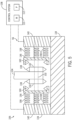
FIG. 5 is a schematic section view of an embodiment of therestraint control assembly 106 in the first configuration to enable movement of thepivot adapter 104 about thepivot 102. In the illustrated embodiment, thepivot adapter 104 includes twogears 132 positioned on thesupport 118 at opposite sides of thepivot adapter 104, and therestraint control assembly 106 therefore includes twoactuators 140 that are each configured to move arespective cap 136 to engage and disengage with one of thegears 132. Eachactuator 140 may include one or more extensions 158 (e.g., springs) coupled to arespective cap 136 and translatable along therotational axis 134 to move thecaps 136 along therotational axis 134. For instance, theactuators 140 may move therespective extensions 158 relative to thegears 132, thereby moving thecaps 136 relative to thegears 132. As an example, upon receiving a signal from thecontrol system 108, theactuators 140 may move theextensions 158 toward one of thegears 132 to move acorresponding cap 136 along thesupport 118 to engage thecap 136 with one of thegears 132. When the signal is not received from thecontrol system 108, theextensions 158 may move away from the associatedgear 132, thereby moving thecorresponding cap 136 along the support to disengage thecap 136 with the associatedgear 132. - In the illustrated embodiment, in order to block movement (e.g., rotational movement) of the
cap 136 relative to theactuator 140 and maintain the position of thegears 132, each actuator 140 may include multiple extensions 158 (e.g., each positioned about and connected to thecap 136 along a circumference or edge of the cap 136) to secure the position of thecap 136 and therefore the position of thegear 132 during operation of theattraction system 50 and/or movement of the ride vehicle. Further, in order to block movement of thepivot adapter 104 about the pivot, bothactuators 140 may move thecaps 136 to engage the respective gears 132. Accordingly, bothgears 132 engage with one of thecaps 136. Alternatively, it may be sufficient to engage only one of thecaps 136 with thecorresponding gear 132. Thus, one of thegears 132 may be engaged with one of thecaps 136, while theother gear 132 may not be engaged with theother cap 136 in order to block movement of thepivot adapter 104 about the pivot. In this way, thecontrol system 108 may operate each actuator 140 independently from one another. - As illustrated in
FIG. 5 , eachcap 136 may also have a second set ofteeth 160. When thecaps 136 cover the correspondinggears 132, the second set ofteeth 160 in therespective caps 136 may engage with the first set ofteeth 138 of thegear 132. In particular, the second set ofteeth 160 may be substantially fixed (e.g., does not rotate), and the first set ofteeth 138 may abut the second set ofteeth 160 such that the first set ofteeth 138 also remains substantially fixed. As such, engagement between the first set ofteeth 138 and the second set ofteeth 160 may substantially block movement of thepivot adapter 104 about the pivot. Although this disclosure primarily discusses thecaps 136 as covering (e.g., enclosing) thegears 132 when engaged with thegears 132, in additional or alternative embodiments, thecaps 136 may be moved to engage the second set ofteeth 160 with the first set ofteeth 138 without covering thegears 132. By way of example, theextensions 158 may be directly coupled to individual teeth of the second set ofteeth 160, and theactuator 140 may move the second set ofteeth 160 to engage or disengage with the first set ofteeth 138 without covering thegears 132. -
FIG. 6 is a detailed schematic cross-sectional view of an engagement between an embodiment of thecap 136 and thegear 132, such as in the second configuration of therestraint control assembly 106. Thus, the second set ofteeth 160 of thecap 136 is engaged with the first set ofteeth 138 of thegear 132. In the illustrated embodiment, the second set ofteeth 160 includes enough teeth to abut each tooth of the first set ofteeth 138. However, in an additional or an alternative embodiment, the second set ofteeth 160 may have any suitable number of teeth, including one tooth, three teeth, five teeth, and so forth, to block movement of thegear 132 about thepivot 102. - Further, in the illustrated embodiment, each tooth of the first set of
teeth 138 and each tooth of the second set ofteeth 160 may be particularly shaped to block rotational movement of thegear 132 in a particular manner. For instance, thegear 132 may be a ratchet, and each tooth of the first set ofteeth 138 may be angled, sloped, or bent. Additionally, each tooth of the second set ofteeth 160 may also be angled, sloped, or bent, such as in a manner similar to a pawl. Such geometries of the first set ofteeth 138 and the second set ofteeth 160 may enable thegear 132 to rotate in one rotational direction but not another rotational direction about thepivot 102 when thecap 136 is engaged with thegear 132. Particularly, the illustratedgear 132 may be able to rotate in a firstrotational direction 180 about thepivot 102. For example, rotation of thegear 132 in the firstrotational direction 180 may cause therestraint piece 100 to move toward the ride seat (e.g., toward the seating portion) and the passenger, thereby providing greater securement of the passenger within the ride vehicle. However, the geometries of the first set ofteeth 138 and the second set ofteeth 160 may block thegear 132 from rotating in a secondrotational direction 182 about thepivot 102. As an example, rotation of thegear 132 in the secondrotational direction 182 may cause therestraint piece 100 to move away from the ride seat (e.g., away from the seating portion) and the passenger to move therestraint piece 100 toward the open position. Thus, the engagement between thegear 132 and thecap 136 may block movement of therestraint piece 100 toward the open position. Accordingly, the engagement between thegear 132 and thecap 136 may only enable therestraint piece 100 to rotate to provide securement and not release of the passenger. - It should be noted that moving the
cap 136 along therotational axis 134 and/or along an axis that is substantially parallel to therotational axis 134 may enable the second set ofteeth 160 to provide sufficient torque that blocks rotation of thegear 132 about thepivot 102. For example, thecap 136 that moves along therotational axis 134 may provide greater torque in comparison with a single tooth (e.g., a single pawl) that moves in a direction that is perpendicular to therotational axis 134, such in a radial direction of thegear 132. Moreover, such movement of thecap 136 may enable therestraint control assembly 106 to be positioned more proximate to thegear 132 and to engage thecap 136 with thegear 132 without the use of additional components. That is, theactuator 140 may be directly coupled to thecap 136, and theactuator 140 may enable thecap 136 to be directly engaged with the gear 132 (e.g., the first set ofteeth 138 are directly engaged with the second set of teeth 160). Positioning therestraint control assembly 106 proximate to thegear 132 may also improve certain operating parameters associated with therestraint control assembly 106, such as the center of gravity, the moment of inertia, and the like, and further improve the design of the ride vehicle. For example, utilizing thecap 136 may reduce a complexity, an amount, and/or a weight of components used for blocking movement of thegear 132 about thepivot 102. -
FIG. 7 is a perspective view of an embodiment of therestraint control assembly 106 implemented to control movement of a feature 200 (e.g., a moveable element). InFIG. 7 , thefeature 200 is representative of a gate. In one embodiment, thefeature 200 may be implemented at the guest path of the attraction system to enable and block navigation through a portion of the guest path. For instance, thefeature 200 may include aleg 202 that is rotatable about arotational axis 204 extending along theleg 202. Thefeature 200 may rotate between a first position, which may enable guests to navigate the portion of the guest path, and a second position, which may block guests from navigating the portion of the guest path. Therestraint control assembly 106 may be used for enabling and blocking rotation of thefeature 200 about therotational axis 204, such as to set thefeature 200 in the first position or in the second position. - As an example, the
feature 200 may have another gear, and therestraint control assembly 106 may include similar components as described above to enable or block movement of the gear of thefeature 200 about therotational axis 204. That is, therestraint control assembly 106 may have another actuator configured to move a corresponding cap to engage or disengage the cap with the gear of thefeature 200. By way of example, if rotation of thefeature 200 is desirable, such as to rotate thefeature 200 from the first position to the second position or vice versa, the actuator of therestraint control assembly 106 may disengage the cap with the gear of thefeature 200. However, if rotation of thefeature 200 is not desirable, such as to maintain thefeature 200 in the first position or the second position, the actuator may engage the cap with the gear of thefeature 200. As such, therestraint control assembly 106 may enable rotational movement of thefeature 200 and/or to set the position of thefeature 200. - The
restraint control assembly 106 may additionally or alternatively be used in any suitable application in which it is desirable to change rotational adjustability of a component. By way of example, therestraint control assembly 106 may be used in a show effect (e.g., to move an animated character), in a doorknob or door hinge (e.g., for locking or unlocking a door), in a turntable, and the like. Each of these features may be represented byfeature 200, which while illustrated as a gate inFIG. 7 , could also represent a portion of an animated character, a doorknob, or the like. Indeed, therestraint control assembly 106 may be implemented in any suitable component to adjust between enabling rotational movement of the component and blocking rotational movement of the component, such as to move and set a position of the component relative to a rotational axis.
Claims (13)
- A ride vehicle (52) for an attraction of an amusement park, the ride vehicle comprising:a ride seat (54);a pivot adapter (104) configured to rotate relative to the ride seat about a rotational axis (134);a gear (132) of the pivot adapter (104), the gear (132) being configured to rotate about the rotational axis, the gear (132) comprising a first set of teeth (138) and the rotational axis extending through the pivot adapter (104) and the gear (132);a passenger restraint piece (100) coupled to the pivot adapter (104) and configured to rotate with the pivot adapter (104) about the rotational axis between a closed position and an open position;a cap (136) comprising a second set of teeth (160), wherein the cap (136) is configured to be positioned to engage with the gear (132) of the pivot adapter (104) via relative movement between the cap (136) and the gear of the pivot adapter along the rotational axis such that the second set of teeth (160) of the cap (136) engages with the first set of teeth (138) of the gear (132), and wherein engagement between the second set of teeth (138) and the first set of teeth (132) substantially blocks movement of the pivot adapter (104) relative to the ride seat (52) in a rotational direction about the rotational axis.
- The ride vehicle (52) of claim 1, comprising an actuator (140) configured to move the cap (136) along the rotational axis relative to the gear (132) to engage and disengage the second set of teeth (160) with the first set of teeth (138).
- The ride vehicle (52) of claim 2, wherein the actuator (140) is a linear actuator configured to move the cap (136) along the rotational axis relative to the gear (132) to engage the second set of teeth (160) with the first set of teeth (138) and to move the cap (136) along the rotational axis relative to the gear (132) to disengage the second set of teeth (160) with the first set of teeth (138).
- The ride vehicle (52) of claim 2, comprising a control system (108) communicatively coupled to the actuator (140), wherein the control system is configured to output a signal to cause the cap (136) to move along the rotational axis relative to the gear (132).
- The ride vehicle (52) of claim 4, wherein the control system (108) is configured to output the signal based on a time of operation of the attraction.
- The ride vehicle (52) of claim 2, wherein the passenger restraint piece (100) is an over-the-shoulder restraint, wherein the ride seat comprises a head support (116), and wherein the actuator (140) is positioned behind the head support (116).
- The ride vehicle (52) of claim 1, wherein the rotational direction is a first rotational direction, and wherein each tooth of the first set of teeth (138) is angled and each tooth of the second set of teeth (160) is angled such that the engagement between the second set of teeth (160) and the first set of teeth (138) enables movement of the pivot adapter (104) relative to the ride seat (54) in a second rotational direction opposite the first rotational direction about the rotational axis.
- The ride vehicle of claim 7, wherein movement of the pivot adapter (104) relative to the ride seat (54) in the first rotational direction moves the passenger restraint piece (100) away from a seating portion of the ride seat (54), and wherein movement of the pivot adapter (104) relative to the ride seat (54) in the second rotational direction moves the passenger restraint piece (100) toward the seating portion of the ride seat (54).
- A restraint system (56) for a ride vehicle (52) of an amusement park, the restraint system comprising:a gear (152) rotatably coupled to a pivot (102) of the restraint system (56), wherein the gear comprises a first set of teeth (138) and the gear (152) is configured to rotate about a rotational axis (134) extending through the pivot (102) and the gear (152);a cap (136) comprising a second set of teeth (160); andan actuator (140) configured to move the cap (136) along the rotational axis relative to the gear (152), wherein the actuator is configured to move the cap (136) along the rotational axis to engage the second set of teeth (160) of the cap with the first set of teeth (138) of the gear (152), wherein the actuator (140) is configured to move the cap (136) along the rotational axis to disengage the second set of teeth (160) with the first set of teeth (138), and wherein the cap (136) is coupled to the ride vehicle (52) such that engagement between the second set of teeth (160) and the first set of teeth (138) substantially blocks rotation of the gear (152) relative to the pivot (102) in a rotational direction about the rotational axis.
- The restraint system (56) of claim 9, wherein the actuator (140) is configured to linearly translate the cap (136) along the rotational axis to move the cap (136) relative to the gear (152).
- The restraint system (56) of claim 9, wherein the actuator (140) is directly coupled to the cap (136), and the actuator is configured to move the cap along the rotational axis such that the second set of teeth (160) is directly engaged with the first set of teeth (138).
- The restraint system (56) of claim 9, wherein the actuator (140) is a solenoid actuator, wherein the actuator (140) is configured to be in an energized state to move the cap (136) toward the gear (152) in response to receiving a signal, and the actuator (140) is configured to be in a de-energized state to move the cap (136) along the rotational axis away from the gear (152) when not receiving the signal.
- The restraint system (56) of claim 9, comprising a restraint piece (100) and a pivot adapter (104) coupling the restraint piece (100) with the gear such that rotation of the gear (152) about the pivot (102) and the rotational axis causes rotation of the restraint piece (100) about the pivot (102) and the rotational axis to facilitate securement and release of a passenger in the ride vehicle (52).
Applications Claiming Priority (3)
| Application Number | Priority Date | Filing Date | Title |
|---|---|---|---|
| US202062966432P | 2020-01-27 | 2020-01-27 | |
| US16/787,768 US11529919B2 (en) | 2020-01-27 | 2020-02-11 | Restraint system for an amusement park attraction |
| PCT/US2021/013674 WO2021154518A1 (en) | 2020-01-27 | 2021-01-15 | Restraint system for an amusement park attraction |
Publications (2)
| Publication Number | Publication Date |
|---|---|
| EP4096799A1 EP4096799A1 (en) | 2022-12-07 |
| EP4096799B1 true EP4096799B1 (en) | 2025-03-05 |
Family
ID=76969748
Family Applications (1)
| Application Number | Title | Priority Date | Filing Date |
|---|---|---|---|
| EP21704366.0A Active EP4096799B1 (en) | 2020-01-27 | 2021-01-15 | Restraint system for an amusement park attraction |
Country Status (8)
| Country | Link |
|---|---|
| US (1) | US11529919B2 (en) |
| EP (1) | EP4096799B1 (en) |
| JP (1) | JP7646686B2 (en) |
| KR (1) | KR102916388B1 (en) |
| CN (1) | CN114980986A (en) |
| CA (1) | CA3163918A1 (en) |
| ES (1) | ES3025466T3 (en) |
| WO (1) | WO2021154518A1 (en) |
Families Citing this family (7)
| Publication number | Priority date | Publication date | Assignee | Title |
|---|---|---|---|---|
| DE102017120645A1 (en) * | 2017-09-07 | 2019-03-07 | Mack Rides Gmbh & Co. Kg | Passenger seat and vehicle with at least one such passenger seat for a ride, method for operating a vehicle and ride with at least one such vehicle |
| DE102021121045A1 (en) * | 2021-08-12 | 2023-02-16 | Mack Rides Ip Gmbh & Co. Kg | Amusement ride and method of operating an amusement ride |
| WO2023220033A1 (en) * | 2022-05-10 | 2023-11-16 | Universal City Studios Llc | Seat restraint system and method for ride vehicle |
| US11958426B2 (en) | 2022-05-10 | 2024-04-16 | Universal City Studios Llc | Seat restraint system and method for ride vehicle |
| US12365307B2 (en) * | 2023-05-09 | 2025-07-22 | Ford Global Technologies, Llc | Restraint frame for vehicle seat |
| US20240409373A1 (en) * | 2023-06-09 | 2024-12-12 | Universal City Studios Llc | Horizontal revolving gate |
| KR20260018166A (en) * | 2023-06-09 | 2026-02-06 | 유니버셜 시티 스튜디오스 엘엘씨 | horizontal rotating gate |
Family Cites Families (22)
| Publication number | Priority date | Publication date | Assignee | Title |
|---|---|---|---|---|
| US3848827A (en) | 1973-10-03 | 1974-11-19 | B Tamarin | Magnetic rotary locking and release mechanism |
| JPS5737416A (en) * | 1980-08-18 | 1982-03-01 | Tachikawa Spring Co | Reclining apparatus in seat of vehicle |
| US4509798A (en) * | 1982-08-23 | 1985-04-09 | John Strothers | Vehicle seat harness |
| US4770468A (en) * | 1986-12-31 | 1988-09-13 | Shubin Steven A | Child safety car seat |
| US5286091A (en) * | 1992-05-01 | 1994-02-15 | Trw Vehicle Safety Systems Inc. | Passive seat belt system integrated with a seat |
| US5476309A (en) * | 1994-11-29 | 1995-12-19 | Chen; K. C. | Safety harness for a vehicle seat |
| EP1145919B1 (en) * | 2000-04-14 | 2005-06-29 | Hans Sauermann | Safety device for a driver of a handling vehicle, in particular |
| US6648260B2 (en) | 2001-07-25 | 2003-11-18 | Delphi Technologies, Inc. | Selectable load limiting seat restraint retractor |
| US6817458B1 (en) | 2002-01-16 | 2004-11-16 | Michael T. Gauthier | Ratcheting mechanism |
| US7695070B2 (en) | 2002-08-29 | 2010-04-13 | Maurer Sohne Gmbh & Co. Kg | Retaining system |
| US7210317B2 (en) | 2003-04-05 | 2007-05-01 | Beane Shawn F | Controllably extendible restraint interconnections |
| US20090107819A1 (en) | 2007-10-25 | 2009-04-30 | Chandrasekhar Samudrikam | Secondary Handle Assembly and Method for Actuating a Circuit Breaker |
| US8141955B1 (en) * | 2010-11-15 | 2012-03-27 | Sami Maassarani | Seat back headrest |
| JP2013151984A (en) | 2012-01-25 | 2013-08-08 | Toyota Motor Corp | Engagement device |
| US9340180B2 (en) * | 2013-09-16 | 2016-05-17 | Matthew J. Planer | Supplemental restraint system for police vehicles |
| US9216676B1 (en) * | 2014-07-11 | 2015-12-22 | Ford Global Technologies, Llc | Seat assembly with displaceable neckrest and neck support |
| US9994180B2 (en) * | 2015-09-17 | 2018-06-12 | Pratt & Miller Engineering and Fabrication, Inc. | Restraint system, optionally hands free |
| KR101826311B1 (en) * | 2016-06-20 | 2018-02-06 | 도파니 주식회사 | A improved safety bar device for playground equipment |
| CA2977834A1 (en) | 2016-09-02 | 2018-03-02 | Inteva Products, Llc | Restraint system |
| US11040731B2 (en) | 2017-04-29 | 2021-06-22 | Universal Studios LLC | Passenger restraint with integrated lighting |
| US10513206B2 (en) * | 2017-11-21 | 2019-12-24 | Ford Global Technologies, Llc | Vehicle seat |
| CN209348096U (en) | 2018-12-17 | 2019-09-06 | 郑州市神童游乐设备有限公司 | A kind of passion rotating disc |
-
2020
- 2020-02-11 US US16/787,768 patent/US11529919B2/en active Active
-
2021
- 2021-01-15 CA CA3163918A patent/CA3163918A1/en active Pending
- 2021-01-15 WO PCT/US2021/013674 patent/WO2021154518A1/en not_active Ceased
- 2021-01-15 ES ES21704366T patent/ES3025466T3/en active Active
- 2021-01-15 EP EP21704366.0A patent/EP4096799B1/en active Active
- 2021-01-15 KR KR1020227029288A patent/KR102916388B1/en active Active
- 2021-01-15 CN CN202180011388.3A patent/CN114980986A/en active Pending
- 2021-01-15 JP JP2022544158A patent/JP7646686B2/en active Active
Also Published As
| Publication number | Publication date |
|---|---|
| EP4096799A1 (en) | 2022-12-07 |
| CA3163918A1 (en) | 2021-08-05 |
| JP2023513421A (en) | 2023-03-31 |
| JP7646686B2 (en) | 2025-03-17 |
| US20210229613A1 (en) | 2021-07-29 |
| US11529919B2 (en) | 2022-12-20 |
| ES3025466T3 (en) | 2025-06-09 |
| WO2021154518A1 (en) | 2021-08-05 |
| CN114980986A (en) | 2022-08-30 |
| KR102916388B1 (en) | 2026-01-21 |
| KR20220130780A (en) | 2022-09-27 |
Similar Documents
| Publication | Publication Date | Title |
|---|---|---|
| EP4096799B1 (en) | Restraint system for an amusement park attraction | |
| CN102905934B (en) | Easy-entry seating system with individual position memory and hold-open features | |
| CA1045178A (en) | Vehicle passenger restraint mechanism | |
| EP3773957B1 (en) | Ride restraint system and method | |
| CN103707783A (en) | Child seat, particularly a child safety seat for vehicles | |
| US20050248198A1 (en) | Seat assembly with folding head restraint and method for folding same | |
| JP6868713B2 (en) | Passenger restraints for entertainment vehicles | |
| JP2023513421A5 (en) | ||
| EP2815915B1 (en) | Vehicle seat apparatus with middle return slide walk in | |
| US4669751A (en) | Tension eliminator for a vehicle safety belt retractor | |
| JP6463791B2 (en) | Child seat device | |
| HK40078629A (en) | Restraint system for an amusement park attraction | |
| CN107848544A (en) | Seat for chair lift | |
| US20030151220A1 (en) | Handle position indication device | |
| JP4074211B2 (en) | Rotating seat device for vehicle | |
| KR20250006996A (en) | Seat restraint system and method for a ride vehicle | |
| EP4163151A2 (en) | Child car seat | |
| US20250187504A1 (en) | Multifunctional Child Carrier with Safety Prompt Function | |
| JP7618920B2 (en) | Vehicle seat device | |
| JP6318439B2 (en) | Vehicle seat device | |
| JP2002000957A (en) | Device for holding body in chair | |
| CA3093559C (en) | Ride restraint system and method | |
| JPH0154213B2 (en) | ||
| KR200269160Y1 (en) | A revolution apparatus for a car | |
| JPH011638A (en) | child seat |
Legal Events
| Date | Code | Title | Description |
|---|---|---|---|
| STAA | Information on the status of an ep patent application or granted ep patent |
Free format text: STATUS: UNKNOWN |
|
| STAA | Information on the status of an ep patent application or granted ep patent |
Free format text: STATUS: THE INTERNATIONAL PUBLICATION HAS BEEN MADE |
|
| PUAI | Public reference made under article 153(3) epc to a published international application that has entered the european phase |
Free format text: ORIGINAL CODE: 0009012 |
|
| STAA | Information on the status of an ep patent application or granted ep patent |
Free format text: STATUS: REQUEST FOR EXAMINATION WAS MADE |
|
| 17P | Request for examination filed |
Effective date: 20220825 |
|
| AK | Designated contracting states |
Kind code of ref document: A1 Designated state(s): AL AT BE BG CH CY CZ DE DK EE ES FI FR GB GR HR HU IE IS IT LI LT LU LV MC MK MT NL NO PL PT RO RS SE SI SK SM TR |
|
| DAV | Request for validation of the european patent (deleted) | ||
| DAX | Request for extension of the european patent (deleted) | ||
| GRAP | Despatch of communication of intention to grant a patent |
Free format text: ORIGINAL CODE: EPIDOSNIGR1 |
|
| STAA | Information on the status of an ep patent application or granted ep patent |
Free format text: STATUS: GRANT OF PATENT IS INTENDED |
|
| INTG | Intention to grant announced |
Effective date: 20240924 |
|
| GRAS | Grant fee paid |
Free format text: ORIGINAL CODE: EPIDOSNIGR3 |
|
| GRAA | (expected) grant |
Free format text: ORIGINAL CODE: 0009210 |
|
| STAA | Information on the status of an ep patent application or granted ep patent |
Free format text: STATUS: THE PATENT HAS BEEN GRANTED |
|
| AK | Designated contracting states |
Kind code of ref document: B1 Designated state(s): AL AT BE BG CH CY CZ DE DK EE ES FI FR GB GR HR HU IE IS IT LI LT LU LV MC MK MT NL NO PL PT RO RS SE SI SK SM TR |
|
| REG | Reference to a national code |
Ref country code: GB Ref legal event code: FG4D |
|
| REG | Reference to a national code |
Ref country code: CH Ref legal event code: EP |
|
| REG | Reference to a national code |
Ref country code: IE Ref legal event code: FG4D |
|
| REG | Reference to a national code |
Ref country code: DE Ref legal event code: R096 Ref document number: 602021027123 Country of ref document: DE |
|
| P01 | Opt-out of the competence of the unified patent court (upc) registered |
Free format text: CASE NUMBER: APP_13540/2025 Effective date: 20250319 |
|
| REG | Reference to a national code |
Ref country code: ES Ref legal event code: FG2A Ref document number: 3025466 Country of ref document: ES Kind code of ref document: T3 Effective date: 20250609 |
|
| PG25 | Lapsed in a contracting state [announced via postgrant information from national office to epo] |
Ref country code: RS Free format text: LAPSE BECAUSE OF FAILURE TO SUBMIT A TRANSLATION OF THE DESCRIPTION OR TO PAY THE FEE WITHIN THE PRESCRIBED TIME-LIMIT Effective date: 20250605 |
|
| PG25 | Lapsed in a contracting state [announced via postgrant information from national office to epo] |
Ref country code: FI Free format text: LAPSE BECAUSE OF FAILURE TO SUBMIT A TRANSLATION OF THE DESCRIPTION OR TO PAY THE FEE WITHIN THE PRESCRIBED TIME-LIMIT Effective date: 20250305 |
|
| REG | Reference to a national code |
Ref country code: NL Ref legal event code: MP Effective date: 20250305 |
|
| REG | Reference to a national code |
Ref country code: LT Ref legal event code: MG9D |
|
| PG25 | Lapsed in a contracting state [announced via postgrant information from national office to epo] |
Ref country code: NO Free format text: LAPSE BECAUSE OF FAILURE TO SUBMIT A TRANSLATION OF THE DESCRIPTION OR TO PAY THE FEE WITHIN THE PRESCRIBED TIME-LIMIT Effective date: 20250605 |
|
| PG25 | Lapsed in a contracting state [announced via postgrant information from national office to epo] |
Ref country code: HR Free format text: LAPSE BECAUSE OF FAILURE TO SUBMIT A TRANSLATION OF THE DESCRIPTION OR TO PAY THE FEE WITHIN THE PRESCRIBED TIME-LIMIT Effective date: 20250305 |
|
| PG25 | Lapsed in a contracting state [announced via postgrant information from national office to epo] |
Ref country code: LV Free format text: LAPSE BECAUSE OF FAILURE TO SUBMIT A TRANSLATION OF THE DESCRIPTION OR TO PAY THE FEE WITHIN THE PRESCRIBED TIME-LIMIT Effective date: 20250305 |
|
| PG25 | Lapsed in a contracting state [announced via postgrant information from national office to epo] |
Ref country code: BG Free format text: LAPSE BECAUSE OF FAILURE TO SUBMIT A TRANSLATION OF THE DESCRIPTION OR TO PAY THE FEE WITHIN THE PRESCRIBED TIME-LIMIT Effective date: 20250305 Ref country code: GR Free format text: LAPSE BECAUSE OF FAILURE TO SUBMIT A TRANSLATION OF THE DESCRIPTION OR TO PAY THE FEE WITHIN THE PRESCRIBED TIME-LIMIT Effective date: 20250606 |
|
| PG25 | Lapsed in a contracting state [announced via postgrant information from national office to epo] |
Ref country code: NL Free format text: LAPSE BECAUSE OF FAILURE TO SUBMIT A TRANSLATION OF THE DESCRIPTION OR TO PAY THE FEE WITHIN THE PRESCRIBED TIME-LIMIT Effective date: 20250305 |
|
| PG25 | Lapsed in a contracting state [announced via postgrant information from national office to epo] |
Ref country code: SE Free format text: LAPSE BECAUSE OF FAILURE TO SUBMIT A TRANSLATION OF THE DESCRIPTION OR TO PAY THE FEE WITHIN THE PRESCRIBED TIME-LIMIT Effective date: 20250305 |
|
| PG25 | Lapsed in a contracting state [announced via postgrant information from national office to epo] |
Ref country code: SM Free format text: LAPSE BECAUSE OF FAILURE TO SUBMIT A TRANSLATION OF THE DESCRIPTION OR TO PAY THE FEE WITHIN THE PRESCRIBED TIME-LIMIT Effective date: 20250305 |
|
| PG25 | Lapsed in a contracting state [announced via postgrant information from national office to epo] |
Ref country code: PT Free format text: LAPSE BECAUSE OF FAILURE TO SUBMIT A TRANSLATION OF THE DESCRIPTION OR TO PAY THE FEE WITHIN THE PRESCRIBED TIME-LIMIT Effective date: 20250707 |
|
| PG25 | Lapsed in a contracting state [announced via postgrant information from national office to epo] |
Ref country code: PL Free format text: LAPSE BECAUSE OF FAILURE TO SUBMIT A TRANSLATION OF THE DESCRIPTION OR TO PAY THE FEE WITHIN THE PRESCRIBED TIME-LIMIT Effective date: 20250305 |
|
| PG25 | Lapsed in a contracting state [announced via postgrant information from national office to epo] |
Ref country code: EE Free format text: LAPSE BECAUSE OF FAILURE TO SUBMIT A TRANSLATION OF THE DESCRIPTION OR TO PAY THE FEE WITHIN THE PRESCRIBED TIME-LIMIT Effective date: 20250305 Ref country code: CZ Free format text: LAPSE BECAUSE OF FAILURE TO SUBMIT A TRANSLATION OF THE DESCRIPTION OR TO PAY THE FEE WITHIN THE PRESCRIBED TIME-LIMIT Effective date: 20250305 |
|
| PG25 | Lapsed in a contracting state [announced via postgrant information from national office to epo] |
Ref country code: RO Free format text: LAPSE BECAUSE OF FAILURE TO SUBMIT A TRANSLATION OF THE DESCRIPTION OR TO PAY THE FEE WITHIN THE PRESCRIBED TIME-LIMIT Effective date: 20250305 |
|
| PG25 | Lapsed in a contracting state [announced via postgrant information from national office to epo] |
Ref country code: SK Free format text: LAPSE BECAUSE OF FAILURE TO SUBMIT A TRANSLATION OF THE DESCRIPTION OR TO PAY THE FEE WITHIN THE PRESCRIBED TIME-LIMIT Effective date: 20250305 |
|
| PG25 | Lapsed in a contracting state [announced via postgrant information from national office to epo] |
Ref country code: IS Free format text: LAPSE BECAUSE OF FAILURE TO SUBMIT A TRANSLATION OF THE DESCRIPTION OR TO PAY THE FEE WITHIN THE PRESCRIBED TIME-LIMIT Effective date: 20250705 |
|
| REG | Reference to a national code |
Ref country code: DE Ref legal event code: R097 Ref document number: 602021027123 Country of ref document: DE |
|
| PLBE | No opposition filed within time limit |
Free format text: ORIGINAL CODE: 0009261 |
|
| STAA | Information on the status of an ep patent application or granted ep patent |
Free format text: STATUS: NO OPPOSITION FILED WITHIN TIME LIMIT |
|
| PG25 | Lapsed in a contracting state [announced via postgrant information from national office to epo] |
Ref country code: DK Free format text: LAPSE BECAUSE OF FAILURE TO SUBMIT A TRANSLATION OF THE DESCRIPTION OR TO PAY THE FEE WITHIN THE PRESCRIBED TIME-LIMIT Effective date: 20250305 |
|
| REG | Reference to a national code |
Ref country code: CH Ref legal event code: L10 Free format text: ST27 STATUS EVENT CODE: U-0-0-L10-L00 (AS PROVIDED BY THE NATIONAL OFFICE) Effective date: 20260114 |
|
| REG | Reference to a national code |
Ref country code: CH Ref legal event code: U11 Free format text: ST27 STATUS EVENT CODE: U-0-0-U10-U11 (AS PROVIDED BY THE NATIONAL OFFICE) Effective date: 20260201 |
|
| 26N | No opposition filed |
Effective date: 20251208 |
|
| PGFP | Annual fee paid to national office [announced via postgrant information from national office to epo] |
Ref country code: GB Payment date: 20260127 Year of fee payment: 6 |
|
| PGFP | Annual fee paid to national office [announced via postgrant information from national office to epo] |
Ref country code: ES Payment date: 20260202 Year of fee payment: 6 |
|
| PGFP | Annual fee paid to national office [announced via postgrant information from national office to epo] |
Ref country code: DE Payment date: 20260128 Year of fee payment: 6 |
|
| PGFP | Annual fee paid to national office [announced via postgrant information from national office to epo] |
Ref country code: AT Payment date: 20260128 Year of fee payment: 6 |
|
| PGFP | Annual fee paid to national office [announced via postgrant information from national office to epo] |
Ref country code: IT Payment date: 20260121 Year of fee payment: 6 |
|
| PGFP | Annual fee paid to national office [announced via postgrant information from national office to epo] |
Ref country code: FR Payment date: 20260126 Year of fee payment: 6 |
|
| PGFP | Annual fee paid to national office [announced via postgrant information from national office to epo] |
Ref country code: CH Payment date: 20260201 Year of fee payment: 6 |