EP4096253A1 - Method and system for wireless communication between a driver and any one of a plurality of transport refrigeration units - Google Patents
Method and system for wireless communication between a driver and any one of a plurality of transport refrigeration units Download PDFInfo
- Publication number
- EP4096253A1 EP4096253A1 EP21175558.2A EP21175558A EP4096253A1 EP 4096253 A1 EP4096253 A1 EP 4096253A1 EP 21175558 A EP21175558 A EP 21175558A EP 4096253 A1 EP4096253 A1 EP 4096253A1
- Authority
- EP
- European Patent Office
- Prior art keywords
- driver
- control unit
- portable
- transport refrigeration
- status information
- Prior art date
- Legal status (The legal status is an assumption and is not a legal conclusion. Google has not performed a legal analysis and makes no representation as to the accuracy of the status listed.)
- Granted
Links
Images
Classifications
-
- H—ELECTRICITY
- H04—ELECTRIC COMMUNICATION TECHNIQUE
- H04W—WIRELESS COMMUNICATION NETWORKS
- H04W4/00—Services specially adapted for wireless communication networks; Facilities therefor
- H04W4/30—Services specially adapted for particular environments, situations or purposes
- H04W4/40—Services specially adapted for particular environments, situations or purposes for vehicles, e.g. vehicle-to-pedestrians [V2P]
-
- H—ELECTRICITY
- H04—ELECTRIC COMMUNICATION TECHNIQUE
- H04W—WIRELESS COMMUNICATION NETWORKS
- H04W12/00—Security arrangements; Authentication; Protecting privacy or anonymity
- H04W12/06—Authentication
-
- B—PERFORMING OPERATIONS; TRANSPORTING
- B60—VEHICLES IN GENERAL
- B60H—ARRANGEMENTS OF HEATING, COOLING, VENTILATING OR OTHER AIR-TREATING DEVICES SPECIALLY ADAPTED FOR PASSENGER OR GOODS SPACES OF VEHICLES
- B60H1/00—Heating, cooling or ventilating devices
- B60H1/00642—Control systems or circuits; Control members or indication devices for heating, cooling or ventilating devices
- B60H1/0065—Control members, e.g. levers or knobs
- B60H1/00657—Remote control devices
-
- G—PHYSICS
- G08—SIGNALLING
- G08C—TRANSMISSION SYSTEMS FOR MEASURED VALUES, CONTROL OR SIMILAR SIGNALS
- G08C17/00—Arrangements for transmitting signals characterised by the use of a wireless electrical link
- G08C17/02—Arrangements for transmitting signals characterised by the use of a wireless electrical link using a radio link
-
- H—ELECTRICITY
- H04—ELECTRIC COMMUNICATION TECHNIQUE
- H04L—TRANSMISSION OF DIGITAL INFORMATION, e.g. TELEGRAPHIC COMMUNICATION
- H04L67/00—Network arrangements or protocols for supporting network services or applications
- H04L67/01—Protocols
- H04L67/12—Protocols specially adapted for proprietary or special-purpose networking environments, e.g. medical networks, sensor networks, networks in vehicles or remote metering networks
-
- H—ELECTRICITY
- H04—ELECTRIC COMMUNICATION TECHNIQUE
- H04M—TELEPHONIC COMMUNICATION
- H04M1/00—Substation equipment, e.g. for use by subscribers
- H04M1/72—Mobile telephones; Cordless telephones, i.e. devices for establishing wireless links to base stations without route selection
- H04M1/724—User interfaces specially adapted for cordless or mobile telephones
- H04M1/72403—User interfaces specially adapted for cordless or mobile telephones with means for local support of applications that increase the functionality
-
- H—ELECTRICITY
- H04—ELECTRIC COMMUNICATION TECHNIQUE
- H04W—WIRELESS COMMUNICATION NETWORKS
- H04W4/00—Services specially adapted for wireless communication networks; Facilities therefor
- H04W4/12—Messaging; Mailboxes; Announcements
- H04W4/14—Short messaging services, e.g. short message services [SMS] or unstructured supplementary service data [USSD]
-
- H—ELECTRICITY
- H04—ELECTRIC COMMUNICATION TECHNIQUE
- H04W—WIRELESS COMMUNICATION NETWORKS
- H04W4/00—Services specially adapted for wireless communication networks; Facilities therefor
- H04W4/02—Services making use of location information
- H04W4/029—Location-based management or tracking services
Definitions
- the present disclosure relates to a method for wireless communication between a driver and any one of a plurality of transport refrigeration units, and to corresponding systems for implementing the method.
- Transport refrigeration units transport perishable or temperature-sensitive goods and consumables within logistics networks.
- TRUs generally regulate a monitored environment within a storage area, such as a container or trailer, where the goods are to be stored during transit.
- the monitored environment is regulated using a refrigeration system or the like, which in turn is powered by an energy source such as a combustion engine and/or a battery.
- TRUs are implemented or integrated within a storage container, trailer or the like.
- the trailer or container is then coupled with or loaded onto a truck/tractor, train or other vehicle, which transports the goods to their intended destination.
- Control of a TRU is often performed by the driver of the vehicle and so, in order to ensure correct operation, the driver requires up to date information regarding the status of the TRU (e.g. the temperature inside of the TRU). Based on this information, the driver can then send commands to the TRU, for example on/off commands or commands to regulate the temperature.
- the driver requires up to date information regarding the status of the TRU (e.g. the temperature inside of the TRU). Based on this information, the driver can then send commands to the TRU, for example on/off commands or commands to regulate the temperature.
- One known solution for providing the driver with status information of the TRU is to send a short message to the driver's mobile phone via a cell network.
- this relies on having an accurate, up to date log/database of driver locations, associated TRUs (which the relevant driver is responsible for) and mobile phone numbers in order to ensure the correct driver (the driver responsible for the TRU in question) receives the status information.
- a trailer can be driven by several people in the same day and the responsibly of drivers can change at very short notice.
- a fleet can comprise hundreds of drivers, trucks, and trailers, resulting in a large number of possible combinations of driver, truck and trailer at any one time.
- the present invention provides a method for wireless communication between a driver and any one of a plurality of transport refrigeration units, the method comprising: receiving a driver identification signal at a control unit of one of the transport refrigeration units, the driver identification signal being a wireless signal sent by a portable identification device in the possession of the driver and uniquely identifying the driver, wirelessly transmitting status information of the transport refrigeration unit from the control unit to the driver, via a portable interface device in the possession of the driver, and/or wirelessly receiving commands for operating the transport refrigeration unit from the driver at the control unit, via the portable interface device in the possession of the driver.
- a driver identification signal from a portable identification device in the possession of the driver, that uniquely identifies the driver, it can be ensured that the correct driver is receiving status information about the TRU and/or the commands sent by the driver are received by the correct the TRU.
- the status information of the transport refrigeration unit may comprise the temperature of the TRU and/or a set point temperature of the TRU.
- the TRU may comprise a battery.
- the status information of the transport refrigeration unit may comprise information regarding the battery.
- Information regarding the battery may include one or more of a temperature of the battery, power delivered from the battery and/or a state of charge of the battery.
- Information regarding the battery may include an indication of power supplied to the battery (i.e. for charging) and/or an indication of power supplied by the battery.
- Information regarding the battery may also include a comparison of battery power with power consumption of a vehicle, such as a truck.
- the status information of the transport refrigeration unit may comprise an alarm or alert.
- the alarm or alert may warn the driver that the temperature of the TRU is inappropriate.
- the alarm or alert may warn the driver that the battery needs to be charged.
- journey information may also be wirelessly transmitted to the driver, and this may be via the portable interface device in the possession of the driver.
- Such journey information may include a start point, an end point, via points, associated timings and/or a journey route.
- the journey information may be transmitted from a remote server.
- the commands for operating the transport refrigeration unit may comprise one or more of the following:
- a mode setting may be associated with a particular type of transport, for example one mode setting may be associated with long-haul distribution whilst another may be associated with city/urban distribution.
- the portable identification device and the portable interface device may be the same device.
- One or each of devices may be a smartphone, which may comprise an app.
- the portable identification device may be an RFID tag, key fob or dongle. To uniquely identify the driver these may be associated with an ID number for the driver.
- the driver identification signal may be sent when the portable identification device is within a predetermined range of the control unit. This may occur automatically, and may occur via Bluetooth or Wi-Fi.
- the predetermined range may be 25m, 15m, 5m, 2m, or 1m, or even 10cm (e.g. in the case of an RFID tag).
- the status information may be wirelessly transmitted directly from the control unit to the portable interface device. This may be communicated via a Bluetooth or Wi-Fi connection between the control unit and the portable interface device.
- the status information may be transmitted from the control unit to the portable interface device via a remote server. This may be performed via a cellular network.
- the cellular network may comprise a 3G, 4G or 5G connection, or the status information may be transmitted as an SMS message.
- the method may comprise determining a location of the driver based on the driver identification signal.
- the driver and/or location may be associated with a particular truck, trailer and/or TRU.
- the method may comprise recording said location in a database on a remote server. This can provide an up to date log of driver locations and associated trucks, trailers and/or TRUs.
- the driver identification signal may be communicated to the remote server where the driver is then identified based on a database comprising a list of drivers and their uniquely identifying devices.
- the method may comprise transmitting the status information to a remote server and recording the status information in a database on the remote sever. This can provide a log of historic status information.
- a plurality of drivers may each have a portable identification device and a portable interface device in their possession, each portable identification device uniquely identifying the respective driver, and wherein each portable identification device and each portable interface device is capable of wireless communication with any one of the plurality of transport refrigeration units.
- This wireless communication may be in line with the first aspect, including any of the optional features outlined above.
- the method may comprise a step of authenticating the driver. This ensures correct driver is operating the TRU by sending commands, and the correct driver is receiving the status information.
- the authenticating may comprise at least one of:
- the present invention provides a control unit for a transport refrigeration unit, the control unit configured to: receive a driver identification signal, the driver identification signal being a wireless signal sent by a portable device in the possession of a driver and uniquely identifying the driver, wirelessly transmit status information of the transport refrigeration unit to the driver, via a portable interface device in the possession of the driver, and/or wirelessly receive commands for operating the transport refrigeration unit from the driver, via the portable interface device in the possession of the driver.
- a driver identification signal being a wireless signal sent by a portable device in the possession of a driver and uniquely identifying the driver
- wirelessly transmit status information of the transport refrigeration unit to the driver via a portable interface device in the possession of the driver
- wirelessly receive commands for operating the transport refrigeration unit from the driver via the portable interface device in the possession of the driver.
- control unit may be configured for use with the method according to the first aspect, including any of the optional features discussed above.
- the present invention provides a system comprising a control unit according to the second aspect and a remote server, the remote server being configured to: receive the status information from the control unit, and transmit the status information to the portable interface device, and/or receive the commands from the driver, and transmit the commands to the control unit.
- the remote server may contain a real-time database of status information.
- the remote server may be configured to receive driver information from the control unit and may contain a real-time database of driver information.
- the driver information may comprise one or more of a driver ID, a driver location, an associated truck, an associated trailer and/or an associated TRU.
- the present invention provides a trailer comprising a transport refrigeration unit and a control unit according to the third aspect, the trailer being configured to attach and detach from any one of a plurality of trucks. It will be appreciated that the present invention can be applied to a fleet of trucks and trailers.
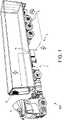
- FIG. 1 shows a trailer 1 comprising a power management system 2 and a transport refrigeration unit (TRU) 3.
- the trailer 1 is part of a truck-trailer system 100.
- the truck-trailer system 100 comprises a truck 4, which drives the trailer 1.
- the trailer 1 in the illustrated embodiment does not have a means for providing a driving force itself.
- the truck 4 comprises an engine, such as a petrol or diesel engine. The engine produces a driving force via the combustion of fuel, which in turn drives the tractor-trailer system 100.
- the tractor-trailer system 100 comprises a number of wheels, each connected to an axle. At least one of the axles is actively driven by the engine of the truck 4. The remaining axles are driven passively by the rotation of the wheels with the driving surface. Additionally, at least one of the passive axles of the trailer 1 is selectively coupled to an electrical axle generator 5.
- the generator 5 is coupled to a shaft of the axle via a gearbox.
- the axle is configured to drive the generator 5 when the generator 5 is coupled to the axle, such that electricity can be regenerated via the rotation of the axle. Accordingly, the tractor-trailer system 100 can regenerate electricity during driving of the tractor-trailer system 100.
- the TRU 3 is powered by the power management system 2.
- the power management system 2 is arranged to supply electrical power to the TRU 3, such that the energy demand of the TRU 3 is met.
- the power management system 2 comprises the generator 5 and additionally comprises an energy storage device in the form of a rechargeable battery 6.
- the power management system 2 supplies electrical power to the TRU 3 via the generator 5 and/or the battery 6, depending on the demand of the TRU 3, and the battery 6 can be recharged by the generator 5.
- the TRU 3 and the power management system 2 can be wirelessly controlled by the driver of the truck 4, as discussed in more detail below. Furthermore, the driver can receive status information about the TRU 3 and power management system 2.
- the techniques disclosed herein are applicable to any power management system 3.
- the generator 5 may be driven by a separate combustion engine mounted within the trailer 1.
- the known system of sending messages via a cell network provides no solution for complications in the fleet, such as last minute changes in driver, truck or trailer.
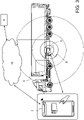
- Figure 3 shows a schematic of a system for wireless communication between a driver and a transport refrigeration unit 3.
- a smartphone 7 that is capable of wireless communication, for example via Bluetooth.
- the smartphone 7 also comprises an app for communication with the TRU 3.
- the engine management system comprises a wireless control unit 8, which in this embodiment is integrated into the battery 6, and this is in communication (either wired or wirelessly) with the TRU 3. It is beneficial to utilise a wireless control unit 8 integrated into the battery for this purpose as some known battery systems already comprise wireless communication units and so minimal physical adaption of the existing system is required.
- the smartphone 7 wirelessly and automatically sends a driver identification signal to the control unit 8, such as via Bluetooth.
- a driver identification signal to the control unit 8, such as via Bluetooth.
- the driver is then invited, via the app, to confirm their authorisation to operate the TRU 3 by entering a password associated with the TRU 3.
- a two-way wireless communication channel is then established between the smartphone 7 and the control unit 8.
- the driver is then also authorised to receive status information of the transport refrigeration unit 3 from the control unit 8 and to send commands for operating the transport refrigeration unit 3 to the control unit 8, via the app of the smartphone 7.
- driver authentication may verify their identity within the app, such as by entering a personal password or presenting a biometric identifier, and an authority of the driver may then be verified from a database containing driver authority information (this database could be stored on the remote server discussed below).
- a further alternative method of driver authentication may presume authorisation of the driver based on their presence within a cab of the tractor 4. For example, the driver may press or other interact with a button or the like within the cab, or may input a code only obtainable from with the cab. This works because the driver must be authorised to drive the truck in order to have access to the cab (e.g. by having the keys to the cab).
- the TRU 3 may transmits status information to the control unit 8 periodically, and the control unit 8 may update the app on the smartphone 7 accordingly.
- Status information is collected and displayed in the app and includes the temperature of the TRU 3 and a set point temperature of the TRU (e.g. a target temperature set by the driver).
- Information about the battery 6 may also be collected by the control unit 8 and so the status information displayed in the app may also comprise information regarding the battery 6; such as including one or more of a temperature of the battery 6, power delivered from the battery 6 to the TRU 3 and a state of charge of the battery 6.
- the app may also generate an alarm or alert, if this is necessary, such as a visible or audible alarm or alert. This may be determined either by the TRU 3 or by the app, such as when a monitored property reaches a predetermined threshold.
- the alarm or alert may, for example, warn the driver that the temperature of the TRU 3 is inappropriate or that the battery 6 needs to be charged.
- This status information enables the driver to make informed decisions in relation to the operation of the TRU 3 and battery 6. For example, if the temperature of the TRU 3 is well below a minimum set point, or goods have been offloaded so there is no longer a need for refrigeration, and the state of charge of the battery 6 is low, the driver may decide that it is best to reduce the power supplied by the battery 6 to the TRU 3 or even turn off the TRU altogether in order to conserve the charge of the battery 6.
- the driver can then send suitable commands to the control unit 8 for the operation of the battery 6 and TRU 3 via the app on the smartphone 7.
- the commands may comprise any one or more of the following:
- control unit 8 In addition to being in communication with the driver's smartphone 7, the control unit 8 is also in wireless communication with a remote server 9. The control unit 8 transmits the same status information to the remote server 9 so that a detailed log of status information can be stored and kept on a database of the server. In addition the control unit 8 sends driver information to the server.
- This driver information includes a driver ID and location so that an up to date log of all of the drivers and trucks in the fleet can be kept - thus keeping a correct log that includes any last minute changes in drivers or trucks.
- a remote server 9 in the status information can be sent to the driver via the remote server 9 rather than directly from the control unit 8.
- a cellular network 10 e.g. a 3G/4G/5G network, or even an SMS messaging network.
- this may permit simpler integration with existing systems that operate in this way. It may also avoid the need for an application to be running continuously on the driver's smartphone 7.
- the up to date log of drivers can be utilised in this case to ensure that the correct driver (i.e. the correct mobile number) receives the status information.
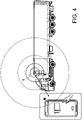
- FIG 4 shows a schematic of an alternative system that operates in a similar to that of Figure 3 .
- the control unit 8 is integrated into the TRU 3 rather than being integrated into the battery. It will be appreciated that the exact positioning of the control unit is not limited. In fact, the control unit could even be located in the truck, provided wireless communication with the driver's smartphone is enabled as discussed above.
- a similar mode of control could be achieved by sending the driver identification to the wireless control unit 8 by a different kind device in the driver's possession (e.g. an RFID tag or dongle).
- the status information could be sent to a separate device such as the driver's phone, e.g. via a cellular network as discussed above, and similarly commands received from the driver's phone, e.g. via a cellular network, could be sent to the TRU 3 by the remote server 10.
- the status information does not necessarily need to be sent to the same device that sends the driver identification signal and/or commands.
Landscapes
- Engineering & Computer Science (AREA)
- Computer Networks & Wireless Communication (AREA)
- Signal Processing (AREA)
- Physics & Mathematics (AREA)
- Mechanical Engineering (AREA)
- Thermal Sciences (AREA)
- Computer Security & Cryptography (AREA)
- Computing Systems (AREA)
- General Health & Medical Sciences (AREA)
- Medical Informatics (AREA)
- Health & Medical Sciences (AREA)
- General Physics & Mathematics (AREA)
- Human Computer Interaction (AREA)
- Mobile Radio Communication Systems (AREA)
Abstract
Description
- The present disclosure relates to a method for wireless communication between a driver and any one of a plurality of transport refrigeration units, and to corresponding systems for implementing the method.
- Transport refrigeration units (TRUs) transport perishable or temperature-sensitive goods and consumables within logistics networks. TRUs generally regulate a monitored environment within a storage area, such as a container or trailer, where the goods are to be stored during transit. The monitored environment is regulated using a refrigeration system or the like, which in turn is powered by an energy source such as a combustion engine and/or a battery.
- TRUs are implemented or integrated within a storage container, trailer or the like. The trailer or container is then coupled with or loaded onto a truck/tractor, train or other vehicle, which transports the goods to their intended destination.
- Control of a TRU is often performed by the driver of the vehicle and so, in order to ensure correct operation, the driver requires up to date information regarding the status of the TRU (e.g. the temperature inside of the TRU). Based on this information, the driver can then send commands to the TRU, for example on/off commands or commands to regulate the temperature.
- One known solution for providing the driver with status information of the TRU is to send a short message to the driver's mobile phone via a cell network. However, this relies on having an accurate, up to date log/database of driver locations, associated TRUs (which the relevant driver is responsible for) and mobile phone numbers in order to ensure the correct driver (the driver responsible for the TRU in question) receives the status information. In practice, a trailer can be driven by several people in the same day and the responsibly of drivers can change at very short notice. A fleet can comprise hundreds of drivers, trucks, and trailers, resulting in a large number of possible combinations of driver, truck and trailer at any one time.
- The known system of sending messages via a cell network provides no solution for such complications and last-minute changes and so is only feasible when a specific, planned driver is using the trailer in question. Therefore, there is a need for an improved system that can ensure information and/or commands are sent to/from the correct driver.
- According to one aspect, the present invention provides a method for wireless communication between a driver and any one of a plurality of transport refrigeration units, the method comprising: receiving a driver identification signal at a control unit of one of the transport refrigeration units, the driver identification signal being a wireless signal sent by a portable identification device in the possession of the driver and uniquely identifying the driver, wirelessly transmitting status information of the transport refrigeration unit from the control unit to the driver, via a portable interface device in the possession of the driver, and/or wirelessly receiving commands for operating the transport refrigeration unit from the driver at the control unit, via the portable interface device in the possession of the driver.
- By sending a driver identification signal from a portable identification device in the possession of the driver, that uniquely identifies the driver, it can be ensured that the correct driver is receiving status information about the TRU and/or the commands sent by the driver are received by the correct the TRU.
- The status information of the transport refrigeration unit may comprise the temperature of the TRU and/or a set point temperature of the TRU.
- The TRU may comprise a battery.
- The status information of the transport refrigeration unit may comprise information regarding the battery. Information regarding the battery may include one or more of a temperature of the battery, power delivered from the battery and/or a state of charge of the battery. Information regarding the battery may include an indication of power supplied to the battery (i.e. for charging) and/or an indication of power supplied by the battery. Information regarding the battery may also include a comparison of battery power with power consumption of a vehicle, such as a truck.
- The status information of the transport refrigeration unit may comprise an alarm or alert. The alarm or alert may warn the driver that the temperature of the TRU is inappropriate. The alarm or alert may warn the driver that the battery needs to be charged.
- Journey information may also be wirelessly transmitted to the driver, and this may be via the portable interface device in the possession of the driver. Such journey information may include a start point, an end point, via points, associated timings and/or a journey route. The journey information may be transmitted from a remote server.
- The commands for operating the transport refrigeration unit may comprise one or more of the following:
- on/off commands for the TRU;
- temperature set point or mode setting for the TRU;
- on/off commands for the battery;
- battery power or mode setting and
- charging commands for the battery.
- A mode setting may be associated with a particular type of transport, for example one mode setting may be associated with long-haul distribution whilst another may be associated with city/urban distribution.
- The portable identification device and the portable interface device may be the same device. One or each of devices may be a smartphone, which may comprise an app.
- Alternatively the portable identification device may be an RFID tag, key fob or dongle. To uniquely identify the driver these may be associated with an ID number for the driver.
- The driver identification signal may be sent when the portable identification device is within a predetermined range of the control unit. This may occur automatically, and may occur via Bluetooth or Wi-Fi. The predetermined range may be 25m, 15m, 5m, 2m, or 1m, or even 10cm (e.g. in the case of an RFID tag).
- The status information may be wirelessly transmitted directly from the control unit to the portable interface device. This may be communicated via a Bluetooth or Wi-Fi connection between the control unit and the portable interface device.
- The status information may be transmitted from the control unit to the portable interface device via a remote server. This may be performed via a cellular network. The cellular network may comprise a 3G, 4G or 5G connection, or the status information may be transmitted as an SMS message.
- The method may comprise determining a location of the driver based on the driver identification signal. The driver and/or location may be associated with a particular truck, trailer and/or TRU.
- The method may comprise recording said location in a database on a remote server. This can provide an up to date log of driver locations and associated trucks, trailers and/or TRUs. The driver identification signal may be communicated to the remote server where the driver is then identified based on a database comprising a list of drivers and their uniquely identifying devices.
- The method may comprise transmitting the status information to a remote server and recording the status information in a database on the remote sever. This can provide a log of historic status information.
- A plurality of drivers may each have a portable identification device and a portable interface device in their possession, each portable identification device uniquely identifying the respective driver, and wherein each portable identification device and each portable interface device is capable of wireless communication with any one of the plurality of transport refrigeration units. This wireless communication may be in line with the first aspect, including any of the optional features outlined above.
- The method may comprise a step of authenticating the driver. This ensures correct driver is operating the TRU by sending commands, and the correct driver is receiving the status information. The authenticating may comprise at least one of:
- verification of a password entered by the driver into the portable identification device or the portable interface device;
- verifying an authority of the driver from a database containing driver authority information; or
- actuation by the driver of a button within the cab of a truck associated with the transport refrigeration unit.
- According to a second aspect, the present invention provides a control unit for a transport refrigeration unit, the control unit configured to: receive a driver identification signal, the driver identification signal being a wireless signal sent by a portable device in the possession of a driver and uniquely identifying the driver, wirelessly transmit status information of the transport refrigeration unit to the driver, via a portable interface device in the possession of the driver, and/or wirelessly receive commands for operating the transport refrigeration unit from the driver, via the portable interface device in the possession of the driver.
- The control unit may be configured for use with the method according to the first aspect, including any of the optional features discussed above.
- According to a third aspect, the present invention provides a system comprising a control unit according to the second aspect and a remote server, the remote server being configured to: receive the status information from the control unit, and transmit the status information to the portable interface device, and/or receive the commands from the driver, and transmit the commands to the control unit.
- The remote server may contain a real-time database of status information. The remote server may be configured to receive driver information from the control unit and may contain a real-time database of driver information. The driver information may comprise one or more of a driver ID, a driver location, an associated truck, an associated trailer and/or an associated TRU.
- According to a fourth aspect the present invention provides a trailer comprising a transport refrigeration unit and a control unit according to the third aspect, the trailer being configured to attach and detach from any one of a plurality of trucks. It will be appreciated that the present invention can be applied to a fleet of trucks and trailers.
- Certain example embodiments will now be described by way of example only and with reference to the accompanying drawings in which:
-
Figure 1 shows a truck-trailer system comprising a power management system; -
Figure 2 illustrates a number of trucks that can be attached to an individual trailer; -
Figure 3 shows a schematic of a first system for wireless communication between a driver and a transport refrigeration unit; and -
Figure 4 shows a schematic of a second system for wireless communication between a driver and a transport refrigeration unit. -
Figure 1 shows a trailer 1 comprising apower management system 2 and a transport refrigeration unit (TRU) 3. The trailer 1 is part of a truck-trailer system 100. The truck-trailer system 100 comprises atruck 4, which drives the trailer 1. The trailer 1 in the illustrated embodiment does not have a means for providing a driving force itself. Thetruck 4 comprises an engine, such as a petrol or diesel engine. The engine produces a driving force via the combustion of fuel, which in turn drives the tractor-trailer system 100. - The tractor-
trailer system 100 comprises a number of wheels, each connected to an axle. At least one of the axles is actively driven by the engine of thetruck 4. The remaining axles are driven passively by the rotation of the wheels with the driving surface. Additionally, at least one of the passive axles of the trailer 1 is selectively coupled to anelectrical axle generator 5. - The
generator 5 is coupled to a shaft of the axle via a gearbox. The axle is configured to drive thegenerator 5 when thegenerator 5 is coupled to the axle, such that electricity can be regenerated via the rotation of the axle. Accordingly, the tractor-trailer system 100 can regenerate electricity during driving of the tractor-trailer system 100. - The
TRU 3 is powered by thepower management system 2. Thepower management system 2 is arranged to supply electrical power to theTRU 3, such that the energy demand of theTRU 3 is met. Thepower management system 2 comprises thegenerator 5 and additionally comprises an energy storage device in the form of arechargeable battery 6. Thepower management system 2 supplies electrical power to theTRU 3 via thegenerator 5 and/or thebattery 6, depending on the demand of theTRU 3, and thebattery 6 can be recharged by thegenerator 5. TheTRU 3 and thepower management system 2 can be wirelessly controlled by the driver of thetruck 4, as discussed in more detail below. Furthermore, the driver can receive status information about theTRU 3 andpower management system 2. - Whilst the
power management system 3 disclosed utilises regenerative power generation, the techniques disclosed herein are applicable to anypower management system 3. For example, thegenerator 5 may be driven by a separate combustion engine mounted within the trailer 1. - As previously discussed, one known solution for providing the driver with status information of the TRU is to send a short message to the driver's mobile phone via a cell network. However, this relies on an accurate, up to date log/database of driver locations, their responsibilities for specific TRUs and mobile phone numbers in order to ensure the correct driver (the driver responsible for the TRU in question) receives the status information. In practice, a trailer can be driven by several people in the same day and the responsibly of drivers can change at very short notice. In fact, a fleet can comprise hundreds of drivers, trucks, and trailers, resulting in a very large number of possible combinations of driver, truck and trailer at any one time.
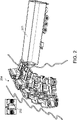
Figure 2 illustrates this complexity, showing how anytruck 204 in the fleet could be attached to atrailer 201, and then anydriver 202 could be responsible for the combined truck-trailer. - The known system of sending messages via a cell network provides no solution for complications in the fleet, such as last minute changes in driver, truck or trailer.
-
Figure 3 shows a schematic of a system for wireless communication between a driver and atransport refrigeration unit 3. - In the possession of the driver is a
smartphone 7 that is capable of wireless communication, for example via Bluetooth. Thesmartphone 7 also comprises an app for communication with theTRU 3. The engine management system comprises awireless control unit 8, which in this embodiment is integrated into thebattery 6, and this is in communication (either wired or wirelessly) with theTRU 3. It is beneficial to utilise awireless control unit 8 integrated into the battery for this purpose as some known battery systems already comprise wireless communication units and so minimal physical adaption of the existing system is required. - In operation, when the driver approaches the trailer and comes within a predetermined range of the wireless control unit 8 (typically around 20m), the
smartphone 7 wirelessly and automatically sends a driver identification signal to thecontrol unit 8, such as via Bluetooth. This uniquely identifies the driver to theTRU 3. The driver is then invited, via the app, to confirm their authorisation to operate theTRU 3 by entering a password associated with theTRU 3. Provided the correct password is entered, a two-way wireless communication channel is then established between thesmartphone 7 and thecontrol unit 8. The driver is then also authorised to receive status information of thetransport refrigeration unit 3 from thecontrol unit 8 and to send commands for operating thetransport refrigeration unit 3 to thecontrol unit 8, via the app of thesmartphone 7. - By simply requiring the app and a password for authentication, last minute changes in driver can be accommodated by providing the new driver with the correct password.
- Alternative methods of driver authentication can be employed, for example the driver may verify their identity within the app, such as by entering a personal password or presenting a biometric identifier, and an authority of the driver may then be verified from a database containing driver authority information (this database could be stored on the remote server discussed below).
- A further alternative method of driver authentication may presume authorisation of the driver based on their presence within a cab of the
tractor 4. For example, the driver may press or other interact with a button or the like within the cab, or may input a code only obtainable from with the cab. This works because the driver must be authorised to drive the truck in order to have access to the cab (e.g. by having the keys to the cab). - The
TRU 3 may transmits status information to thecontrol unit 8 periodically, and thecontrol unit 8 may update the app on thesmartphone 7 accordingly. Status information is collected and displayed in the app and includes the temperature of theTRU 3 and a set point temperature of the TRU (e.g. a target temperature set by the driver). Information about thebattery 6 may also be collected by thecontrol unit 8 and so the status information displayed in the app may also comprise information regarding thebattery 6; such as including one or more of a temperature of thebattery 6, power delivered from thebattery 6 to theTRU 3 and a state of charge of thebattery 6. - The app may also generate an alarm or alert, if this is necessary, such as a visible or audible alarm or alert. This may be determined either by the
TRU 3 or by the app, such as when a monitored property reaches a predetermined threshold. The alarm or alert may, for example, warn the driver that the temperature of theTRU 3 is inappropriate or that thebattery 6 needs to be charged. - This status information enables the driver to make informed decisions in relation to the operation of the
TRU 3 andbattery 6. For example, if the temperature of theTRU 3 is well below a minimum set point, or goods have been offloaded so there is no longer a need for refrigeration, and the state of charge of thebattery 6 is low, the driver may decide that it is best to reduce the power supplied by thebattery 6 to theTRU 3 or even turn off the TRU altogether in order to conserve the charge of thebattery 6. - The driver can then send suitable commands to the
control unit 8 for the operation of thebattery 6 andTRU 3 via the app on thesmartphone 7. - The commands may comprise any one or more of the following:
- on/off commands for the
TRU 3; - temperature set point or mode setting for the
TRU 3; - on/off commands for the
battery 6; - battery power or mode setting and
- charging commands for the
battery 6. - In addition to being in communication with the driver's
smartphone 7, thecontrol unit 8 is also in wireless communication with aremote server 9. Thecontrol unit 8 transmits the same status information to theremote server 9 so that a detailed log of status information can be stored and kept on a database of the server. In addition thecontrol unit 8 sends driver information to the server. This driver information includes a driver ID and location so that an up to date log of all of the drivers and trucks in the fleet can be kept - thus keeping a correct log that includes any last minute changes in drivers or trucks. - It will be appreciated that, with such a
remote server 9, in the status information can be sent to the driver via theremote server 9 rather than directly from thecontrol unit 8. This can be realised through the use of a cellular network 10 (e.g. a 3G/4G/5G network, or even an SMS messaging network). Advantageously, this may permit simpler integration with existing systems that operate in this way. It may also avoid the need for an application to be running continuously on the driver'ssmartphone 7. The up to date log of drivers can be utilised in this case to ensure that the correct driver (i.e. the correct mobile number) receives the status information. -
Figure 4 shows a schematic of an alternative system that operates in a similar to that ofFigure 3 . However, here thecontrol unit 8 is integrated into theTRU 3 rather than being integrated into the battery. It will be appreciated that the exact positioning of the control unit is not limited. In fact, the control unit could even be located in the truck, provided wireless communication with the driver's smartphone is enabled as discussed above. - In a further alternative to the use of an app employing two way wireless communication as described above, a similar mode of control could be achieved by sending the driver identification to the
wireless control unit 8 by a different kind device in the driver's possession (e.g. an RFID tag or dongle). The status information could be sent to a separate device such as the driver's phone, e.g. via a cellular network as discussed above, and similarly commands received from the driver's phone, e.g. via a cellular network, could be sent to theTRU 3 by theremote server 10. Thus, the status information does not necessarily need to be sent to the same device that sends the driver identification signal and/or commands.
Claims (14)
- A method for wireless communication between a driver and any one of a plurality of transport refrigeration units, the method comprising:receiving a driver identification signal at a control unit of one of the transport refrigeration units, the driver identification signal being a wireless signal sent by a portable identification device in the possession of the driver and uniquely identifying the driver,wirelessly transmitting status information of the transport refrigeration unit from the control unit to the driver, via a portable interface device in the possession of the driver, and/orwirelessly receiving commands for operating the transport refrigeration unit from the driver at the control unit, via the portable interface device in the possession of the driver.
- A method as claimed in claim 1, wherein the portable identification device and the portable interface device are the same device.
- A method as claimed in claim 1 or 2, wherein the portable identification device is a smartphone.
- A method as claimed in claim 1 or 2, wherein the driver identification signal is sent when the portable identification device is within a predetermined range of the control unit.
- A method as claimed in any preceding claim, wherein the status information is transmitted directly from the control unit to the portable interface device.
- A method as claimed in any of claim claims 1 to 4, wherein the status information is transmitted from the control unit to the portable interface device via a remote server.
- A method as claimed in claim 6, wherein the status information is transmitted to the portable interface device via a cellular network.
- A method as claimed in any preceding claim, comprising determining a location of the driver based on the driver identification signal and recording said location in a database on a remote server.
- A method as claimed in any preceding claim, wherein a plurality of drivers each have a portable identification device and a portable interface device in their possession, each portable identification device uniquely identifying the respective driver, and wherein each portable identification device and each portable interface device is capable of wireless communication with any one of the plurality of transport refrigeration units.
- A method as claimed in any preceding claim, comprising a step of authenticating the driver prior to wirelessly transmitting the status information or wirelessly receiving the commands, wherein the authenticating comprises at least one of:verification of a password entered by the driver into the portable identification device or the portable interface device;verifying an authority of the driver from a database containing driver authority information; andactuation by the driver of a button within a cab of a truck associated with the transport refrigeration unit.
- A control unit for a transport refrigeration unit, the control unit being configured to:receive a driver identification signal, the driver identification signal being a wireless signal sent by a portable device in the possession of a driver and uniquely identifying the driver,wirelessly transmit status information of the transport refrigeration unit to the driver, via a portable interface device in the possession of the driver, and/orwirelessly receive commands for operating the transport refrigeration unit from the driver, via the portable interface device in the possession of the driver.
- A system comprising a control unit as claimed in claim 11 and a remote server, the remote server being configured to:receive the status information from the control unit, and transmit the status information to the portable interface device, and/orreceive the commands from the driver, and transmit the commands to the control unit.
- A system as claimed in claim 12, wherein the remote server contains a real-time database of status information, and/or the remote server is configured to receive driver information from the control unit and contains a real-time database of driver information, wherein the driver information comprises a driver ID and/or driver location.
- A trailer comprising a transport refrigeration unit and the control unit as claimed in claim 11, the trailer being configured to attach and detach from any one of a plurality of trucks.
Priority Applications (3)
| Application Number | Priority Date | Filing Date | Title |
|---|---|---|---|
| EP21175558.2A EP4096253B1 (en) | 2021-05-24 | 2021-05-24 | Method and system for wireless communication between a driver and any one of a plurality of transport refrigeration units |
| US17/751,034 US12356183B2 (en) | 2021-05-24 | 2022-05-23 | Wireless communication method and system for communication between a driver and any one of a plurality of transport refrigeration units |
| CN202210568507.1A CN115396814A (en) | 2021-05-24 | 2022-05-24 | Wireless communication method and system |
Applications Claiming Priority (1)
| Application Number | Priority Date | Filing Date | Title |
|---|---|---|---|
| EP21175558.2A EP4096253B1 (en) | 2021-05-24 | 2021-05-24 | Method and system for wireless communication between a driver and any one of a plurality of transport refrigeration units |
Publications (2)
| Publication Number | Publication Date |
|---|---|
| EP4096253A1 true EP4096253A1 (en) | 2022-11-30 |
| EP4096253B1 EP4096253B1 (en) | 2025-11-26 |
Family
ID=76098799
Family Applications (1)
| Application Number | Title | Priority Date | Filing Date |
|---|---|---|---|
| EP21175558.2A Active EP4096253B1 (en) | 2021-05-24 | 2021-05-24 | Method and system for wireless communication between a driver and any one of a plurality of transport refrigeration units |
Country Status (3)
| Country | Link |
|---|---|
| US (1) | US12356183B2 (en) |
| EP (1) | EP4096253B1 (en) |
| CN (1) | CN115396814A (en) |
Families Citing this family (1)
| Publication number | Priority date | Publication date | Assignee | Title |
|---|---|---|---|---|
| EP4046896B1 (en) * | 2021-02-18 | 2023-12-27 | Volvo Truck Corporation | System and method for adjusting an air deflector |
Citations (2)
| Publication number | Priority date | Publication date | Assignee | Title |
|---|---|---|---|---|
| US20140097937A1 (en) * | 2007-04-10 | 2014-04-10 | Marvell Word Trade Ltd. | Apparatus, systems, software and methods for wireless interaction with vehicle control systems |
| US20190130351A1 (en) * | 2017-05-15 | 2019-05-02 | David Arena | System and method for using a monitoring device to efficiently manage and assure the safety, quality and security of goods stored within a truck, tractor or trailer transported via a roadway |
Family Cites Families (22)
| Publication number | Priority date | Publication date | Assignee | Title |
|---|---|---|---|---|
| US7091821B2 (en) * | 2000-05-30 | 2006-08-15 | Kolombo Technologies Ltee | Vehicle anti-theft system and method |
| CA2553023C (en) | 2004-01-09 | 2013-03-19 | United Parcel Service Of America, Inc. | System, method and apparatus for capturing telematics data with an active rfid tag |
| GB201008710D0 (en) * | 2010-05-25 | 2010-07-07 | Jaguar Cars | Vehicle communications |
| US10475258B1 (en) | 2016-06-19 | 2019-11-12 | Platform Science, Inc. | Method and system for utilizing vehicle odometer values and dynamic compliance |
| US9953468B2 (en) | 2011-03-31 | 2018-04-24 | United Parcel Service Of America, Inc. | Segmenting operational data |
| US8731627B2 (en) | 2011-04-04 | 2014-05-20 | General Motors Llc | Method of using a smart phone as a telematics device interface |
| US8626144B2 (en) | 2011-07-13 | 2014-01-07 | GM Global Technology Operations LLC | Bluetooth low energy approach detections through vehicle paired capable devices |
| US9612797B2 (en) * | 2011-08-25 | 2017-04-04 | Ford Global Technologies, Llc | Method and apparatus for a near field communication system to exchange occupant information |
| US9131376B2 (en) | 2012-04-20 | 2015-09-08 | Bank Of America Corporation | Proximity-based dynamic vehicle navigation |
| KR101601397B1 (en) | 2014-03-13 | 2016-03-08 | 현대자동차주식회사 | Telematics system for wifi direct communicating using near field communication |
| US10299129B2 (en) | 2014-03-22 | 2019-05-21 | Wabco Gmbh | Method for authorization in a wireless vehicle network |
| DE102014010752A1 (en) | 2014-07-21 | 2016-01-21 | Wabco Gmbh | Method for establishing a wireless connection |
| DE102014015394A1 (en) | 2014-10-17 | 2016-04-21 | Wabco Gmbh | Method for setting up and operating a wireless vehicle network |
| DE102015002618A1 (en) | 2015-03-03 | 2016-09-08 | Man Truck & Bus Ag | Method and device for assisting a driver of a vehicle, in particular a utility vehicle |
| US9767626B2 (en) | 2015-07-09 | 2017-09-19 | Ford Global Technologies, Llc | Connected services for vehicle diagnostics and repairs |
| US10142420B2 (en) | 2015-08-25 | 2018-11-27 | Ford Global Technologies, Llc | On-board web server telematics systems and methods |
| US10654339B2 (en) | 2016-06-24 | 2020-05-19 | Thermo King Corporation | Method of pairing a sensor node for a transport refrigeration system using an assisting device, an assisting device for pairing a sensor node and a pairing system for a transport refrigeration system |
| US10108967B1 (en) | 2017-04-11 | 2018-10-23 | J. J. Keller & Associates, Inc. | Method and system for authenticating a driver for driver compliance |
| JP7157313B2 (en) * | 2018-08-03 | 2022-10-20 | ダイキン工業株式会社 | Refrigerator management system, Refrigerator management method, and program for terminal unit |
| US10694488B2 (en) | 2018-09-14 | 2020-06-23 | GM Global Technology Operations LLC | Device location detection for enhanced device connection for vehicles |
| KR102201667B1 (en) | 2018-11-26 | 2021-01-12 | 주식회사 아이오티플렉스 | Integrated Control System for Reefer Containers and Container-mounted Special Vehicles |
| US20200233410A1 (en) * | 2019-01-22 | 2020-07-23 | Proensis Llc | Electric freight trailer, system and method |
-
2021
- 2021-05-24 EP EP21175558.2A patent/EP4096253B1/en active Active
-
2022
- 2022-05-23 US US17/751,034 patent/US12356183B2/en active Active
- 2022-05-24 CN CN202210568507.1A patent/CN115396814A/en active Pending
Patent Citations (2)
| Publication number | Priority date | Publication date | Assignee | Title |
|---|---|---|---|---|
| US20140097937A1 (en) * | 2007-04-10 | 2014-04-10 | Marvell Word Trade Ltd. | Apparatus, systems, software and methods for wireless interaction with vehicle control systems |
| US20190130351A1 (en) * | 2017-05-15 | 2019-05-02 | David Arena | System and method for using a monitoring device to efficiently manage and assure the safety, quality and security of goods stored within a truck, tractor or trailer transported via a roadway |
Also Published As
| Publication number | Publication date |
|---|---|
| CN115396814A (en) | 2022-11-25 |
| US12356183B2 (en) | 2025-07-08 |
| EP4096253B1 (en) | 2025-11-26 |
| US20220377544A1 (en) | 2022-11-24 |
Similar Documents
| Publication | Publication Date | Title |
|---|---|---|
| US10850630B2 (en) | On-board unit and electric vehicle management system | |
| US11173801B2 (en) | Electric vehicle with remote adaptive charge programming using override of on-board charge programming | |
| US8532842B2 (en) | System and method for remotely controlling rail vehicles | |
| US12157379B2 (en) | Autonomous vehicle for temporarily powering electric vehicles (EVS) on the road | |
| CN109900288A (en) | The optimal charging route estimation based on cloud of electric vehicle | |
| US11125493B2 (en) | Method and system for controlling use of a portable cooling container | |
| US12115880B2 (en) | Battery electric vehicle monitoring systems and methods for track usage and off-roading | |
| CN103794079A (en) | Method and system for providing information about parking space through communication between vehicles | |
| CN105206083A (en) | Designated driving monitoring early warning device, system and method | |
| US20240010089A1 (en) | Recharge system for electric vehicle (ev) without immediate access to permanent charging station | |
| CN106054685B (en) | Off highway vehicle management system based on short-distance wireless communication | |
| US12612062B2 (en) | Vehicle driver assistance system using vehicle level data, environmental data, and user related data | |
| US12356183B2 (en) | Wireless communication method and system for communication between a driver and any one of a plurality of transport refrigeration units | |
| US9776601B2 (en) | Charging station and method for operating same | |
| CN109417565B (en) | Method for reducing vehicle energy requirements | |
| US20180162356A1 (en) | Driver Break Preparation System for a Hybrid Vehicle | |
| WO2020116572A1 (en) | Operation management system for electric vehicle | |
| US11192468B2 (en) | Electric vehicle pre-conditioning | |
| CN120171600B (en) | An automatic shunting system and method for EMU depots/train stations | |
| US11961025B2 (en) | Automated driving vehicle, and method for controlling the vehicle | |
| US11332038B1 (en) | System and method for quantifying battery usage | |
| WO2016132353A1 (en) | Self-learning remote control system for charging and using rechargeable batteries in transport vehicles | |
| CN223166148U (en) | A park navigation system | |
| HK40041980A (en) | Method for controlling vehicle formation driving and related device | |
| JP2023504830A (en) | Induction, power supply, communication system and method for vehicles |
Legal Events
| Date | Code | Title | Description |
|---|---|---|---|
| PUAI | Public reference made under article 153(3) epc to a published international application that has entered the european phase |
Free format text: ORIGINAL CODE: 0009012 |
|
| STAA | Information on the status of an ep patent application or granted ep patent |
Free format text: STATUS: THE APPLICATION HAS BEEN PUBLISHED |
|
| AK | Designated contracting states |
Kind code of ref document: A1 Designated state(s): AL AT BE BG CH CY CZ DE DK EE ES FI FR GB GR HR HU IE IS IT LI LT LU LV MC MK MT NL NO PL PT RO RS SE SI SK SM TR |
|
| STAA | Information on the status of an ep patent application or granted ep patent |
Free format text: STATUS: REQUEST FOR EXAMINATION WAS MADE |
|
| 17P | Request for examination filed |
Effective date: 20230329 |
|
| RBV | Designated contracting states (corrected) |
Designated state(s): AL AT BE BG CH CY CZ DE DK EE ES FI FR GB GR HR HU IE IS IT LI LT LU LV MC MK MT NL NO PL PT RO RS SE SI SK SM TR |
|
| STAA | Information on the status of an ep patent application or granted ep patent |
Free format text: STATUS: EXAMINATION IS IN PROGRESS |
|
| 17Q | First examination report despatched |
Effective date: 20231102 |
|
| GRAP | Despatch of communication of intention to grant a patent |
Free format text: ORIGINAL CODE: EPIDOSNIGR1 |
|
| STAA | Information on the status of an ep patent application or granted ep patent |
Free format text: STATUS: GRANT OF PATENT IS INTENDED |
|
| INTG | Intention to grant announced |
Effective date: 20250707 |
|
| GRAS | Grant fee paid |
Free format text: ORIGINAL CODE: EPIDOSNIGR3 |
|
| GRAA | (expected) grant |
Free format text: ORIGINAL CODE: 0009210 |
|
| STAA | Information on the status of an ep patent application or granted ep patent |
Free format text: STATUS: THE PATENT HAS BEEN GRANTED |
|
| AK | Designated contracting states |
Kind code of ref document: B1 Designated state(s): AL AT BE BG CH CY CZ DE DK EE ES FI FR GB GR HR HU IE IS IT LI LT LU LV MC MK MT NL NO PL PT RO RS SE SI SK SM TR |
|
| REG | Reference to a national code |
Ref country code: CH Ref legal event code: F10 Free format text: ST27 STATUS EVENT CODE: U-0-0-F10-F00 (AS PROVIDED BY THE NATIONAL OFFICE) Effective date: 20251126 Ref country code: GB Ref legal event code: FG4D |
|
| REG | Reference to a national code |
Ref country code: IE Ref legal event code: FG4D |
|
| REG | Reference to a national code |
Ref country code: DE Ref legal event code: R096 Ref document number: 602021042918 Country of ref document: DE |
|
| REG | Reference to a national code |
Ref country code: NL Ref legal event code: FP |
|
| PG25 | Lapsed in a contracting state [announced via postgrant information from national office to epo] |
Ref country code: ES Free format text: LAPSE BECAUSE OF FAILURE TO SUBMIT A TRANSLATION OF THE DESCRIPTION OR TO PAY THE FEE WITHIN THE PRESCRIBED TIME-LIMIT Effective date: 20251126 |
|
| REG | Reference to a national code |
Ref country code: LT Ref legal event code: MG9D |
|
| PG25 | Lapsed in a contracting state [announced via postgrant information from national office to epo] |
Ref country code: NO Free format text: LAPSE BECAUSE OF FAILURE TO SUBMIT A TRANSLATION OF THE DESCRIPTION OR TO PAY THE FEE WITHIN THE PRESCRIBED TIME-LIMIT Effective date: 20260226 |
|
| PG25 | Lapsed in a contracting state [announced via postgrant information from national office to epo] |
Ref country code: FI Free format text: LAPSE BECAUSE OF FAILURE TO SUBMIT A TRANSLATION OF THE DESCRIPTION OR TO PAY THE FEE WITHIN THE PRESCRIBED TIME-LIMIT Effective date: 20251126 Ref country code: AT Free format text: LAPSE BECAUSE OF FAILURE TO SUBMIT A TRANSLATION OF THE DESCRIPTION OR TO PAY THE FEE WITHIN THE PRESCRIBED TIME-LIMIT Effective date: 20251126 Ref country code: HR Free format text: LAPSE BECAUSE OF FAILURE TO SUBMIT A TRANSLATION OF THE DESCRIPTION OR TO PAY THE FEE WITHIN THE PRESCRIBED TIME-LIMIT Effective date: 20251126 |
|
| REG | Reference to a national code |
Ref country code: AT Ref legal event code: MK05 Ref document number: 1862386 Country of ref document: AT Kind code of ref document: T Effective date: 20251126 |
|
| PG25 | Lapsed in a contracting state [announced via postgrant information from national office to epo] |
Ref country code: RS Free format text: LAPSE BECAUSE OF FAILURE TO SUBMIT A TRANSLATION OF THE DESCRIPTION OR TO PAY THE FEE WITHIN THE PRESCRIBED TIME-LIMIT Effective date: 20260226 |
|
| PG25 | Lapsed in a contracting state [announced via postgrant information from national office to epo] |
Ref country code: IS Free format text: LAPSE BECAUSE OF FAILURE TO SUBMIT A TRANSLATION OF THE DESCRIPTION OR TO PAY THE FEE WITHIN THE PRESCRIBED TIME-LIMIT Effective date: 20260326 |
|
| PG25 | Lapsed in a contracting state [announced via postgrant information from national office to epo] |
Ref country code: PT Free format text: LAPSE BECAUSE OF FAILURE TO SUBMIT A TRANSLATION OF THE DESCRIPTION OR TO PAY THE FEE WITHIN THE PRESCRIBED TIME-LIMIT Effective date: 20260326 |
|
| PG25 | Lapsed in a contracting state [announced via postgrant information from national office to epo] |
Ref country code: PL Free format text: LAPSE BECAUSE OF FAILURE TO SUBMIT A TRANSLATION OF THE DESCRIPTION OR TO PAY THE FEE WITHIN THE PRESCRIBED TIME-LIMIT Effective date: 20251126 |
|
| PG25 | Lapsed in a contracting state [announced via postgrant information from national office to epo] |
Ref country code: LV Free format text: LAPSE BECAUSE OF FAILURE TO SUBMIT A TRANSLATION OF THE DESCRIPTION OR TO PAY THE FEE WITHIN THE PRESCRIBED TIME-LIMIT Effective date: 20251126 |