EP4096007B1 - Battery and power consumption device - Google Patents
Battery and power consumption device Download PDFInfo
- Publication number
- EP4096007B1 EP4096007B1 EP21755670.3A EP21755670A EP4096007B1 EP 4096007 B1 EP4096007 B1 EP 4096007B1 EP 21755670 A EP21755670 A EP 21755670A EP 4096007 B1 EP4096007 B1 EP 4096007B1
- Authority
- EP
- European Patent Office
- Prior art keywords
- pressure relief
- thermal management
- management component
- battery
- baffle
- Prior art date
- Legal status (The legal status is an assumption and is not a legal conclusion. Google has not performed a legal analysis and makes no representation as to the accuracy of the status listed.)
- Active
Links
Images



Classifications
-
- H—ELECTRICITY
- H01—ELECTRIC ELEMENTS
- H01M—PROCESSES OR MEANS, e.g. BATTERIES, FOR THE DIRECT CONVERSION OF CHEMICAL ENERGY INTO ELECTRICAL ENERGY
- H01M10/00—Secondary cells; Manufacture thereof
- H01M10/60—Heating or cooling; Temperature control
- H01M10/61—Types of temperature control
- H01M10/613—Cooling or keeping cold
-
- H—ELECTRICITY
- H01—ELECTRIC ELEMENTS
- H01M—PROCESSES OR MEANS, e.g. BATTERIES, FOR THE DIRECT CONVERSION OF CHEMICAL ENERGY INTO ELECTRICAL ENERGY
- H01M10/00—Secondary cells; Manufacture thereof
- H01M10/60—Heating or cooling; Temperature control
- H01M10/62—Heating or cooling; Temperature control specially adapted for specific applications
- H01M10/625—Vehicles
-
- H—ELECTRICITY
- H01—ELECTRIC ELEMENTS
- H01M—PROCESSES OR MEANS, e.g. BATTERIES, FOR THE DIRECT CONVERSION OF CHEMICAL ENERGY INTO ELECTRICAL ENERGY
- H01M10/00—Secondary cells; Manufacture thereof
- H01M10/60—Heating or cooling; Temperature control
- H01M10/64—Heating or cooling; Temperature control characterised by the shape of the cells
- H01M10/647—Prismatic or flat cells, e.g. pouch cells
-
- H—ELECTRICITY
- H01—ELECTRIC ELEMENTS
- H01M—PROCESSES OR MEANS, e.g. BATTERIES, FOR THE DIRECT CONVERSION OF CHEMICAL ENERGY INTO ELECTRICAL ENERGY
- H01M10/00—Secondary cells; Manufacture thereof
- H01M10/60—Heating or cooling; Temperature control
- H01M10/65—Means for temperature control structurally associated with the cells
- H01M10/653—Means for temperature control structurally associated with the cells characterised by electrically insulating or thermally conductive materials
-
- H—ELECTRICITY
- H01—ELECTRIC ELEMENTS
- H01M—PROCESSES OR MEANS, e.g. BATTERIES, FOR THE DIRECT CONVERSION OF CHEMICAL ENERGY INTO ELECTRICAL ENERGY
- H01M10/00—Secondary cells; Manufacture thereof
- H01M10/60—Heating or cooling; Temperature control
- H01M10/65—Means for temperature control structurally associated with the cells
- H01M10/655—Solid structures for heat exchange or heat conduction
- H01M10/6556—Solid parts with flow channel passages or pipes for heat exchange
-
- H—ELECTRICITY
- H01—ELECTRIC ELEMENTS
- H01M—PROCESSES OR MEANS, e.g. BATTERIES, FOR THE DIRECT CONVERSION OF CHEMICAL ENERGY INTO ELECTRICAL ENERGY
- H01M50/00—Constructional details or processes of manufacture of the non-active parts of electrochemical cells other than fuel cells, e.g. hybrid cells
- H01M50/20—Mountings; Secondary casings or frames; Racks, modules or packs; Suspension devices; Shock absorbers; Transport or carrying devices; Holders
- H01M50/204—Racks, modules or packs for multiple batteries or multiple cells
- H01M50/207—Racks, modules or packs for multiple batteries or multiple cells characterised by their shape
- H01M50/209—Racks, modules or packs for multiple batteries or multiple cells characterised by their shape adapted for prismatic or rectangular cells
-
- H—ELECTRICITY
- H01—ELECTRIC ELEMENTS
- H01M—PROCESSES OR MEANS, e.g. BATTERIES, FOR THE DIRECT CONVERSION OF CHEMICAL ENERGY INTO ELECTRICAL ENERGY
- H01M50/00—Constructional details or processes of manufacture of the non-active parts of electrochemical cells other than fuel cells, e.g. hybrid cells
- H01M50/20—Mountings; Secondary casings or frames; Racks, modules or packs; Suspension devices; Shock absorbers; Transport or carrying devices; Holders
- H01M50/249—Mountings; Secondary casings or frames; Racks, modules or packs; Suspension devices; Shock absorbers; Transport or carrying devices; Holders specially adapted for aircraft or vehicles, e.g. cars or trains
-
- H—ELECTRICITY
- H01—ELECTRIC ELEMENTS
- H01M—PROCESSES OR MEANS, e.g. BATTERIES, FOR THE DIRECT CONVERSION OF CHEMICAL ENERGY INTO ELECTRICAL ENERGY
- H01M50/00—Constructional details or processes of manufacture of the non-active parts of electrochemical cells other than fuel cells, e.g. hybrid cells
- H01M50/30—Arrangements for facilitating escape of gases
- H01M50/342—Non-re-sealable arrangements
- H01M50/3425—Non-re-sealable arrangements in the form of rupturable membranes or weakened parts, e.g. pierced with the aid of a sharp member
-
- H—ELECTRICITY
- H01—ELECTRIC ELEMENTS
- H01M—PROCESSES OR MEANS, e.g. BATTERIES, FOR THE DIRECT CONVERSION OF CHEMICAL ENERGY INTO ELECTRICAL ENERGY
- H01M50/00—Constructional details or processes of manufacture of the non-active parts of electrochemical cells other than fuel cells, e.g. hybrid cells
- H01M50/30—Arrangements for facilitating escape of gases
- H01M50/375—Vent means sensitive to or responsive to temperature
-
- H—ELECTRICITY
- H01—ELECTRIC ELEMENTS
- H01M—PROCESSES OR MEANS, e.g. BATTERIES, FOR THE DIRECT CONVERSION OF CHEMICAL ENERGY INTO ELECTRICAL ENERGY
- H01M50/00—Constructional details or processes of manufacture of the non-active parts of electrochemical cells other than fuel cells, e.g. hybrid cells
- H01M50/30—Arrangements for facilitating escape of gases
- H01M50/383—Flame arresting or ignition-preventing means
-
- H—ELECTRICITY
- H01—ELECTRIC ELEMENTS
- H01M—PROCESSES OR MEANS, e.g. BATTERIES, FOR THE DIRECT CONVERSION OF CHEMICAL ENERGY INTO ELECTRICAL ENERGY
- H01M50/00—Constructional details or processes of manufacture of the non-active parts of electrochemical cells other than fuel cells, e.g. hybrid cells
- H01M50/50—Current conducting connections for cells or batteries
- H01M50/543—Terminals
- H01M50/547—Terminals characterised by the disposition of the terminals on the cells
- H01M50/55—Terminals characterised by the disposition of the terminals on the cells on the same side of the cell
-
- H—ELECTRICITY
- H01—ELECTRIC ELEMENTS
- H01M—PROCESSES OR MEANS, e.g. BATTERIES, FOR THE DIRECT CONVERSION OF CHEMICAL ENERGY INTO ELECTRICAL ENERGY
- H01M50/00—Constructional details or processes of manufacture of the non-active parts of electrochemical cells other than fuel cells, e.g. hybrid cells
- H01M50/60—Arrangements or processes for filling or topping-up with liquids; Arrangements or processes for draining liquids from casings
- H01M50/673—Containers for storing liquids; Delivery conduits therefor
- H01M50/682—Containers for storing liquids; Delivery conduits therefor accommodated in battery or cell casings
-
- H—ELECTRICITY
- H01—ELECTRIC ELEMENTS
- H01M—PROCESSES OR MEANS, e.g. BATTERIES, FOR THE DIRECT CONVERSION OF CHEMICAL ENERGY INTO ELECTRICAL ENERGY
- H01M10/00—Secondary cells; Manufacture thereof
- H01M10/60—Heating or cooling; Temperature control
- H01M10/62—Heating or cooling; Temperature control specially adapted for specific applications
- H01M10/623—Portable devices, e.g. mobile telephones, cameras or pacemakers
-
- H—ELECTRICITY
- H01—ELECTRIC ELEMENTS
- H01M—PROCESSES OR MEANS, e.g. BATTERIES, FOR THE DIRECT CONVERSION OF CHEMICAL ENERGY INTO ELECTRICAL ENERGY
- H01M2200/00—Safety devices for primary or secondary batteries
- H01M2200/10—Temperature sensitive devices
-
- H—ELECTRICITY
- H01—ELECTRIC ELEMENTS
- H01M—PROCESSES OR MEANS, e.g. BATTERIES, FOR THE DIRECT CONVERSION OF CHEMICAL ENERGY INTO ELECTRICAL ENERGY
- H01M2200/00—Safety devices for primary or secondary batteries
- H01M2200/20—Pressure-sensitive devices
-
- H—ELECTRICITY
- H01—ELECTRIC ELEMENTS
- H01M—PROCESSES OR MEANS, e.g. BATTERIES, FOR THE DIRECT CONVERSION OF CHEMICAL ENERGY INTO ELECTRICAL ENERGY
- H01M2220/00—Batteries for particular applications
- H01M2220/20—Batteries in motive systems, e.g. vehicle, ship, plane
-
- H—ELECTRICITY
- H01—ELECTRIC ELEMENTS
- H01M—PROCESSES OR MEANS, e.g. BATTERIES, FOR THE DIRECT CONVERSION OF CHEMICAL ENERGY INTO ELECTRICAL ENERGY
- H01M50/00—Constructional details or processes of manufacture of the non-active parts of electrochemical cells other than fuel cells, e.g. hybrid cells
- H01M50/20—Mountings; Secondary casings or frames; Racks, modules or packs; Suspension devices; Shock absorbers; Transport or carrying devices; Holders
- H01M50/247—Mountings; Secondary casings or frames; Racks, modules or packs; Suspension devices; Shock absorbers; Transport or carrying devices; Holders specially adapted for portable devices, e.g. mobile phones, computers, hand tools or pacemakers
-
- Y—GENERAL TAGGING OF NEW TECHNOLOGICAL DEVELOPMENTS; GENERAL TAGGING OF CROSS-SECTIONAL TECHNOLOGIES SPANNING OVER SEVERAL SECTIONS OF THE IPC; TECHNICAL SUBJECTS COVERED BY FORMER USPC CROSS-REFERENCE ART COLLECTIONS [XRACs] AND DIGESTS
- Y02—TECHNOLOGIES OR APPLICATIONS FOR MITIGATION OR ADAPTATION AGAINST CLIMATE CHANGE
- Y02E—REDUCTION OF GREENHOUSE GAS [GHG] EMISSIONS, RELATED TO ENERGY GENERATION, TRANSMISSION OR DISTRIBUTION
- Y02E60/00—Enabling technologies; Technologies with a potential or indirect contribution to GHG emissions mitigation
- Y02E60/10—Energy storage using batteries
Definitions
- the present invention relates to a field of battery technologies, and in particular, to a battery and a power consumption device.
- a battery according to claim 1 is provided.
- the baffle is disposed on the thermal management component to cover a part of the pressure relief hole, when the pressure relief mechanism is actuated and the emissions discharged from the battery cell enter the pressure relief hole, the emissions may directly contact the baffle and reflect on a surface of the baffle before passing through the pressure relief hole or after passing through the pressure relief hole, thereby changing an original discharge direction of the emissions, so that more high temperature emissions could contact the thermal management components to achieve a better cooling effect. This avoids, as far as possible, a case where the high temperature emissions flowed too smoothly through the pressure relief hole and could not fully contact the thermal management component.
- a maximum distance between the baffle and the first wall is greater than a minimum distance from the first surface to the first wall.
- the fluid is accommodated in the thermal management component, and the baffle is further away from the wall provided with the pressure relief mechanism than the thermal management component, so that the emissions passing through the pressure relief hole are reflected after contacting the baffle, in order to ensure that more emissions contact the thermal management component to achieve the better cooling effect.
- a value of an angle between the baffle and the axis of the pressure relief hole ranges from 20° to 40°.
- the angle is set too large, an area of the baffle covering the pressure relief hole will be too large and the pressure relief hole will be blocked, affecting the passage of the emissions discharged from the battery cell when the pressure relief mechanism is actuated, which may result in poor exhaust and further cause the battery cell to explode.
- the angle is set too small, a reflection effect of the emissions on the surface of the baffle will be affected. Therefore, the value of the angle is usually set to be from 20° to 40° to achieve an optimal effect.
- the pressure relief hole is surrounded by two baffles arranged opposite to each other.
- a ratio of an area of the baffle covering the pressure relief hole to an area of the pressure relief mechanism is not less than 0.5 and not more than 0.8, so that it could not hinder the discharge of the emissions, but also enable the emissions to contact the thermal management component in a large area after being reflected on the surface of the baffle.
- a surface roughness of the baffle is less than or equal to 0.1 ⁇ m
- the surface of the baffle should usually be set as a relatively smooth surface.
- the battery further includes: a protective member, the protective member is configured to protect the thermal management component, and the protective member and the thermal management component form the collection chamber.
- the protective member includes a bottom wall and a plurality of side walls to form a hollow structure with an opening at one end, and the thermal management component covers the opening to form the collection chamber.
- an end of the baffle away from the first wall abuts against the bottom wall of the protective member along an axis of the pressure relief hole.
- the thermal management component is provided with a temperature-sensitive material, the temperature-sensitive material is configured to be melted by the emissions when the pressure relief mechanism is actuated, so that the fluid is discharged from the interior of the thermal management component.
- a power consumption device including: the battery in the first aspect configured to provide electrical energy.
- the power consumption device is a vehicle, a ship or a spacecraft.
- a method for producing a battery including: providing a battery cell, where in the battery cell includes a pressure relief mechanism, the pressure relief mechanism is disposed on a first wall of the battery cell, and the pressure relief mechanism is configured to be actuated when an internal pressure or temperature of the battery cell reaches a threshold, to relieve the internal pressure; providing a thermal management component, where in the thermal management part is configure to accommodate a fluid to adjust a temperature of the battery cell, a first surface of the thermal management component is attached to the first wall, and the thermal management component is provided with a pressure relief hole opposite to the pressure relief mechanism, so that when the pressure relief mechanism is actuated, emissions discharged from the battery cell can pass through the pressure relief hole by the pressure relief hole to be discharged; and providing a baffle, the baffle being configured to block a part of the pressure relief hole, so that when the pressure relief mechanism is actuated, a discharge direction of the emissions entering the pressure relief hole is changed.
- a device for producing a battery including a module for carrying out the method of the third aspect described above.
- a battery cell may include a primary battery and a secondary battery, such as a lithium-ion battery, a lithium-sulfur battery, a sodium/lithium-ion battery, a sodium-ion battery or a magnesium-ion battery, etc., which are not limited by the embodiments of the present disclosure.
- a secondary battery such as a lithium-ion battery, a lithium-sulfur battery, a sodium/lithium-ion battery, a sodium-ion battery or a magnesium-ion battery, etc.
- the battery cell may be cylindrical, flat, cuboid or in another shape, which are not limited by the embodiments of the present disclosure.
- the battery cell is generally divided into three types according to the way of packaging: a cylindrical battery cell, a prismatic battery cell and a pouch battery cell, which are not limited by the embodiments of the present disclosure.
- the battery mentioned in the embodiments of the present invention refers to a single physical module that includes one or more battery cells to provide a higher voltage and capacity.
- the battery mentioned in the present disclosure may include a battery module, a battery pack or the like.
- the battery pack generally includes a box for encapsulating one or more battery cells. The box can prevent liquid or other foreign matters from affecting the charging or discharging of the battery cell.
- the battery cell includes an electrode assembly and an electrolytic solution, and the electrode assembly includes a positive electrode sheet, a negative electrode sheet and a separator.
- the operation of the battery cell mainly relies on the movement of metal ions between the positive electrode sheet and the negative electrode sheet.
- the positive electrode sheet includes a positive electrode current collector and a positive electrode active material layer.
- the positive electrode active material layer is coated on a surface of the positive electrode current collector, the current collector not coated with the positive electrode active material layer protrudes from the current collector coated with the positive electrode active material layer, and the current collector not coated with the positive electrode active material layer is used as a positive tab.
- a material of the positive electrode current collector may be aluminum, and the positive electrode active material may be lithium cobalt oxides, lithium iron phosphate, ternary lithium, lithium manganate, or the like.
- the negative electrode sheet includes a negative electrode current collector and a negative electrode active material layer. The negative electrode active material layer is coated on a surface of the negative electrode current collector, the current collector not coated with the negative electrode active material layer protrudes from the current collector coated with the negative electrode active material layer, and the current collector not coated with the negative electrode active material layer is used as the negative tab.
- a material of the negative electrode current collector may be copper, and the negative electrode active material may be carbon, silicon, or the like.
- a material of the separator may be PP, PE, or the like.
- the electrode assembly may have a winding structure or a laminated structure, and the embodiments of the present disclosure are not limited thereto.
- the battery cell is generally provided with a pressure relief mechanism.
- the pressure relief mechanism refers to an element or component that is actuated when an internal pressure or temperature of the battery cell reaches a predetermined threshold, to relieve the internal pressure or temperature.
- the predetermined threshold may be adjusted according to different design requirements. The predetermined threshold may depend on the material of one or more of the positive electrode sheet, the negative electrode sheet, the electrolytic solution and the separator in the battery cell.
- the pressure relief mechanism may adopt such as a pressure-sensitive or temperature-sensitive element or component, that is, when the internal pressure or temperature of the battery cell reaches the predetermined threshold, the pressure relief mechanism is actuated, thereby forming a channel for internal pressure or temperature relief.
- the "actuation" mentioned in the present application means that the pressure relief mechanism acts, so that the internal pressure and temperature of the battery cell can be relieved.
- the action generated by the pressure relief mechanism may include but be not limited to: at least a portion of the pressure relief mechanism being fractured, torn or melted, and so on.
- the main concern is to release the high pressure and high heat inside the battery cell, that is, to discharge the emissions to the outside of the battery cell.
- a plurality of battery cells are often required and electrically connected to each other via a bus component.
- the emissions discharged from the interior of the battery cell may cause short circuit of the other battery cells. For example, when discharged metal scraps electrically connect two bus components, the battery is short-circuited, thereby posing a potential safety hazard.
- the high-temperature and high-pressure emissions are discharged in a direction in which a pressure relief mechanism of the battery cell is provided, and more specifically, may be discharged in a direction of a region where the pressure relief mechanism is actuated.
- the strength and destructive power of such emissions may be great, or may even be enough to break through one or more structures in this direction, causing further safety problems.
- a thermal management component is arranged in the battery, the surface of the thermal management component is attached to the surface of the battery cell provided with the pressure relief mechanism, and a pressure relief area is disposed on the thermal management component, more in detail, the pressure relief area is a pressure relief hole.
- the thermal management component is configured to accommodate a fluid to adjust temperature of a plurality of battery cells.
- the fluid here may be liquid or gas, and temperature adjustment means heating or cooling the plurality of battery cells.
- the thermal management component is configured to accommodate a cooling fluid to lower the temperature of the plurality of battery cells.
- the thermal management component may also be called a cooling component, a cooling system or a cooling plate, etc.
- the fluid accommodated by the thermal management component may also be called a cooling medium or a cooling fluid, and more specifically, may be called a cooling liquid or a cooling gas.
- the second portion 112 is a hollow cuboid and has only one face as an opening face and the first portion 111 is a plate shape, then the first portion 111 covers at the opening of the second portion 112 to form a box with a closed chamber, and the chamber may be configured to accommodate the plurality of battery cells 20.
- the plurality of battery cells 20 are combined in parallel connection or series connection or series-parallel connection and are then placed in the box formed by fastening the first portion 111 to the second portion 112.
- a pressure relief mechanism 213 is disposed on one wall of the battery cell 20, for example, the pressure relief mechanism 213 may be disposed on a first wall 21a of the battery cell 20.
- the first wall 21a in FIG. 4 is separated from the housing 211, that is, a bottom side of the housing 211 has an opening, and the first wall 21a covers the opening of the bottom side and is connected to the housing 211.
- a connection mode can be welding or bonding, or the like.
- the first wall 21a and the housing 211 may also be an integral structure.
- the pressure relief mechanism 213 is configured to be actuated when an internal pressure or temperature of the battery cell 20 reaches a threshold to relieve the internal pressure or temperature.
- the pressure relief mechanism 213 may be a portion of the first wall 21a or may be a separate structure from the first wall 21a and fixed to the first wall 21a by means of welding, for example.
- the pressure relief mechanism 213 can be formed by providing an indentation on the first wall 21a, and a thickness of the first wall 21a corresponding to the indentation is smaller than that of other regions of the pressure relief mechanism 213 except the indentation.
- the indentation is the weakest position of the pressure relief mechanism 213.
- the pressure relief mechanism 213 can be fractured at the indentation, resulting in a communication between the inside and outside of the housing 211.
- the gas pressure and temperature are released outward through the cracking of the pressure relief mechanism 213, thereby preventing the battery cell 20 from exploding.
- the second wall is arranged opposite to the first wall 21a.
- the first wall 21a may be a bottom wall of the battery cell 20, and the second wall may be a cover plate 212 of the battery cell 20.
- the pressure relief mechanism 213 and the electrode terminals 214 are disposed on different walls of the battery cell 20, so that when the pressure relief mechanism 213 is actuated, the emissions from the battery cell 20 can be farther away from the electrode terminals 214, thereby reducing an impact of the emissions on the electrode terminals 214 and the bus component, thus enhancing the safety of the battery.
- the pressure relief mechanism 213 is disposed on the bottom wall of the battery cell 20, so that when the pressure relief mechanism 213 is actuated, the emissions from the battery cell 20 are discharged toward the bottom of the battery 10.
- a risk resulting from the emissions can be reduced by using the thermal management component at the bottom of the battery 10
- the harm to passengers can be reduced because the bottom of the battery 10 is usually far away from the passengers.
- the pressure relief mechanism 213 may be various possible pressure relief structures, which is not limited by the embodiments of the present application.
- the pressure relief mechanism 213 may be a temperature-sensitive pressure relief mechanism, the temperature-sensitive pressure relief mechanism is configured to be capable of being melted when internal temperature of the battery cell 20 provided with the pressure relief mechanism 213 reaches a threshold; and/or the pressure relief mechanism 213 may be a pressure-sensitive pressure relief mechanism, and the pressure-sensitive pressure relief mechanism is configured to be capable of being fractured when an internal gas pressure of the battery cell 20 provided with the pressure relief mechanism 213 reaches a threshold.
- the thermal management component may be arranged under the battery cell 20.
- the thermal management component is configured to accommodate the fluid to adjust the temperature of the battery cell 20, when the pressure relief mechanism 213 is actuated, the thermal management component can cool the emissions from the battery cell 20 provided with the pressure relief mechanism 213.
- the pressure relief area is disposed on the thermal management component, more in detail, the pressure relief area is the pressure relief hole.
- the pressure relief mechanism 213 is actuated, the pressure relief mechanism 213 is opened to discharge the emissions from the battery cell 20, and the emissions can pass through the thermal management component by the pressure relief hole to be discharged.
- the embodiments of the present application provide a battery, which can solve the problem mentioned above.
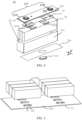
- FIG. 5 shows a partial exploded view of the battery 10 according to the embodiments of the present invention.
- the battery 10 includes: at least one battery cell 20, and the following battery cell 20 takes any battery cell 20 included in the battery 10 as an example, that is, the battery cell 20 may be the battery cell 20 in FIGS. 1-4 , which is applicable to the related description of the battery cell 20 in the above FIGS. 1-4 , and for the sake of brevity, it will not be redundantly described herein.
- the battery cell 20 includes a pressure relief mechanism 213, the pressure relief mechanism 213 is disposed on a first wall 21a of the battery cell 20, and the pressure relief mechanism 213 is configured to be actuated when an internal pressure or temperature of the battery cell 20 reaches a threshold, to relieve the internal pressure.
- the battery 10 further includes: a thermal management component 13, the thermal management component 13 is configured to accommodate a fluid to adjust the temperature of the battery cell 20.
- the thermal management component 13 is applicable to the related description of the thermal management component in the above, and for the sake of brevity, it will not be redundantly described herein.
- a first surface 1321 of the thermal management component 13 is attached to the first wall 21a of the battery cell 20, and the thermal management component 13 is provided with a pressure relief hole 131 opposite to the pressure relief mechanism 213, so that when the pressure relief mechanism 213 is actuated, the emissions discharged from the battery cell 20 can pass through the thermal management component 13 by the pressure relief hole 131 to be discharged.
- the battery 10 further includes a baffle 14, the baffle 14 is configured to cover a part of the pressure relief hole 131, so that when the pressure relief mechanism 213 is actuated, a discharge direction of the emissions entering the pressure relief hole 131 is changed.
- the thermal management component 13 is provided with the baffle 14 for covering a part of the pressure relief hole 131.
- the thermal management component 13 cools more emissions.
- the thermal management component 13 is configured to accommodate the fluid to adjust the temperature of the plurality of battery cells 20.
- the thermal management component 13 accommodates a cooling medium to adjust the temperature of the plurality of battery cells 20.
- the thermal management component 13 may also be called a cooling component, a cooling system or a cooling plate, etc.
- the thermal management component 13 may also be configured to heat, which is not limited by the embodiments of the present application.
- the fluid can flow in a circulating manner to achieve a better temperature adjustment effect.
- FIG. 7 is a top view of the thermal management component 13 according to the embodiments of the present disclosure
- FIG. 8 is a bottom view of the thermal management component 13 according to the embodiments of the present disclosure.
- the thermal management component 13 may include a first thermal conductive plate 132 and a second thermal conductive plate 133.
- the first thermal conductive plate 132 is arranged between the second heat conduction plate 133 and the first wall 21a of the battery cell 20, the first thermal conductive plate 132 is attached to the first wall 21a, and the first thermal conductive plate 132 is connected to the second heat conduction plate 133, where an upper surface of the first thermal conductive plate 132 is the first surface 1321 of the thermal management component 13, the first surface 1321 is attached to the first wall 21a of the battery cell 20.
- the first surface 1321 is attached to the first wall 21a of the battery cell 20, which may be that the first surface 1321 directly contacts the first wall 21a, or the first surface 1321 contacts the first wall 21a through a thermal glue or other substances, so as to implement a heat exchange between the first surface 1321 and the first wall 21a of the battery cell 20.
- through holes corresponding to each other may be disposed on the first thermal conductive plate 132 and the second thermal conductive plate 133 respectively, so as to form the pressure relief hole 131, that is, the pressure relief hole 131 penetrates the first thermal conductive plate 132 and the second thermal conductive plate 133 respectively.
- the first thermal conductive plate 132 may further include a second groove 1322 with an opening facing away from a direction of the second thermal conductive plate 133.
- a through hole is disposed on a bottom wall of the second groove 1322 to form the pressure relief hole 131 on the first thermal conductive plate 132.
- An aperture of the second groove 1322 may gradually increase along a direction away from the second thermal conductive plate 133, that is, a wall of the second groove 1322 is inclined with respect to the axis of the pressure relief hole 131, so that when a thermal runaway occurs in the battery cell 20, the emissions discharged through the pressure relief mechanism 213 can more contact a side wall of the second groove 1322, and more emissions can be cooled by the thermal management component 13.
- the side wall of the second groove 1322 can be set as a wall of the flow channel 134, so when the emissions contact the side wall of the second groove 1322, liquids in the flow channel 134 may cool the emissions, furthermore, the emissions may also melt the side wall of the second groove 1322, so that the fluid in the flow channel 134 flows out, thereby cooling the emissions.
- the flow channel 134 disposed on the thermal management component 13 may be implemented by arranging a groove on the second thermal conductive plate 133 or the first thermal conductive plate 132. Specifically, taking the groove disposed on the second thermal conductive plate 133 as an example, as shown in FIGS. 6-8 , the second thermal conductive plate 133 is provided with a first groove 1331 with an opening facing the first thermal conductive plate 132. When the first thermal conductive plate 132 is adhered to the second thermal conductive 133, the first thermal conductive plate 132 covers an opening of the first groove 1331 to form a hollow structure, and the hollow structure is the flow channel 134.
- the flow channel 134 on the thermal management component 13 is usually arranged around the pressure relief hole 131, so that the emissions passing through the pressure relief hole 131 can directly contact the flow channel 134, so as to be cooled by the fluid in the flow channel 134. Furthermore, the flow channel 134 can be damaged in a large area when the emissions contact the flow channel 134, so that more fluid in the flow channel 134 can be smoothly discharged.
- the temperature-sensitive material can be disposed on an area of the thermal management component 13 facing the emissions from the battery cell 20.
- the temperature-sensitive material may arranged around the pressure relief hole 131 on the first surface 1321 of the thermal management component 13.
- the temperature-sensitive material may also be disposed on the hole wall of the pressure relief hole 131, and an area on which the temperature-sensitive material is arranged may be the wall of the flow channel 134, so that the emissions discharged from the battery cell 20 directly contact the temperature-sensitive material and melt the temperature-sensitive material, so as to enable the thermal management component 13 to be damaged, for example, the flow channel 134 of the thermal management component 13 is damaged, and the internal fluid thereof flows out to cooling the emissions.
- FIGS. 6-8 all take each pressure relief hole 131 corresponding to two baffles 14 arranged as an example.
- more or fewer baffles may also be arranged, and the embodiments of the present disclosure are not limited thereto.
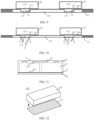
- FIG. 9 shows a cross-sectional view of a battery cell 20 and a thermal management component 13 along an A-A' direction shown in FIG. 7 .
- FIG. 9 takes only one baffle arranged in each pressure relief hole 131 as an example.
- FIG. 10 shows a cross-sectional view of another battery cell 20 and thermal management component 13 along the A-A' direction shown in FIG. 7
- FIG. 10 takes only two baffles 14 arranged in the each pressure relief hole 131 as an example.
- the baffle 14 according to the embodiments of the present application may be located on the second surface of the thermal management component 13, and the second surface may be any surface of the thermal management component 13, that is, the baffle 14 may be arranged inside or outside the pressure relief hole 131.
- a maximum distance between the baffle 14 and the first wall 21a of the battery cell 20 is greater than a minimum distance from the flow channel 134 to the first wall 21a, so as to ensure that the emissions can reflect on the surface of the baffle 14 to change the discharge direction thereof, so that the reflected emissions can face the thermal management component 13, and more emissions can contact the thermal management component 13 in order to achieve an effect of cooling more emissions by the thermal management component 13. Furthermore, the discharge direction of the emissions is changed by the baffle 14 to enable more emissions to impact the thermal management component 13, which may cause the flow channel 134 on the thermal management component 13 is damaged, so that the fluid in the flow channel 134 flows out to cool the emissions.
- the baffle 14 is generally arranged in an inclined way with respect to an axis 1311 of the pressure relief hole 131. As shown in FIG. 9 and FIG. 10 , the baffle 14 is inclined with respect to the axis 1311 of the pressure relief hole 131. In a direction away from the first wall 21a, the baffle 14 gradually approaches the axis 1311 of the pressure relief hole 131, so that when the pressure relief mechanism 213 is actuated, the emissions can be reflected by the baffle 14 and impact toward the hole wall of the pressure relief hole 131, which enable more emissions to impact the thermal management component 13. Furthermore, the emissions more fully contact the thermal management component 13, which is more conducive to cooling.
- an angle ⁇ between the baffle 14 and the axis 1311 of the pressure relief hole 131 can be set according to actual applications. However, if the angle ⁇ is set too large, an area of the baffle 14 covering the pressure relief hole 131 will be too large and the pressure relief hole 131 will be blocked, affecting the passage of the emissions discharged from the battery cell 20 when the pressure relief mechanism 213 is actuated, which may result in poor exhaust and further cause the battery cell 20 to explode. On the contrary, if the angle ⁇ is set too small, a reflection effect of the emissions on the surface of the baffle 14 will be affected. Therefore, a value of the angle ⁇ is usually set to be from 20° to 40° to achieve an optimal effect.
- a material of the baffle 14 can be flexibly set according to actual applications.
- the baffle 14 can be made of the same material as the thermal management component 13, for example, both can be made of aluminum alloy materials, and the baffle 14 and the thermal management component 13 can be fixed by means of welding.
- the surface of the baffle 14 should be set to a relatively smooth surface, an excessively rough surface may allow high temperature particles in the emissions to accumulate on the surface of the baffle 14 and not to rebound, thereby affecting the effect of the baffle 14.
- a surface roughness of the baffle 14 may be set to be less than or equal to 0.1 ⁇ m, and the surface roughness may be the contour arithmetic mean deviation (Ra), but the embodiments of the present disclosure are not limited thereto.
- the battery 10 further includes an electrical chamber 11a and a collection chamber 11b.
- the battery 10 provided with the electrical chamber 11a, the collection chamber 11b and the thermal management component 13 will be described in detail in the following with reference to the accompanying drawings.
- FIG. 11 is a schematic structural diagram of a box 11 of the battery 10 according to an embodiment of the present disclosure.
- the box 11 includes the electrical chamber 11a, the collection chamber 11b, and the thermal management component 13.
- the thermal management component 13 is configured to isolate the electrical chamber 11a from the collection chamber 11b.
- isolation here refers to separation, which may not be sealed.
- the collection chamber 11b formed by the protective member 115 and the thermal management component 13 does not occupy a space that may accommodate the battery cell. Therefore, the collection chamber 11b with a larger space therein can be arranged, which may effectively collect and buffer the emissions and reduce the risk resulting therefrom.
- the collection chamber 11b may not be a sealed chamber.
- the collection chamber 11b may be in communication with external air, so that part of the emissions can be further discharged to the outside of the box 11.
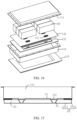
- an end of the baffle 14 away from the thermal management component 13 may abut against the protective member 115.
- FIG. 18 shows a schematic flowchart of a method 300 for producing a battery according to an embodiment of the present disclosure.
- FIG. 19 shows a schematic block diagram of a device 400 for producing a battery according to an embodiment of the present disclosure.
Landscapes
- Chemical & Material Sciences (AREA)
- Chemical Kinetics & Catalysis (AREA)
- Electrochemistry (AREA)
- General Chemical & Material Sciences (AREA)
- Engineering & Computer Science (AREA)
- Manufacturing & Machinery (AREA)
- Aviation & Aerospace Engineering (AREA)
- Battery Mounting, Suspending (AREA)
- Secondary Cells (AREA)
- Gas Exhaust Devices For Batteries (AREA)
Description
- The present invention relates to a field of battery technologies, and in particular, to a battery and a power consumption device.
- Energy saving and emission reduction are the key to a sustainable development of automotive industry. In this case, electric vehicles have become an important part of the sustainable development of the automotive industry due to their advantages of energy saving and environmental protection. For the electric vehicles, battery technology is an important factor for their development.
- In the development of the battery technology, in addition to improving performance of batteries, safety is also an issue that cannot be ignored. If the safety of the batteries cannot be ensured, the batteries cannot be used. Therefore, how to enhance the safety of the batteries is an urgent technical problem to be solved in the battery technology.
-
US2019229384A1 discloses a cooling system for cooling battery cells including a plate assembly defining a chamber. The chamber is configured to receive a fluid therein. A plurality of apertures extend through the plate assembly. Each of the plurality of apertures is configured to align with a cell vent of one of the battery cells. -
CN209401662U discloses a battery pack. The battery pack comprises a battery module, the battery module comprises a plurality of single batteries, each single battery comprises an explosion-proof valve, the explosion-proof valves are arranged on the bottom surfaces of one sides of the single batteries in the height direction, and the explosion-proof valves protrude out of the bottom surfaces; wherein a cavity structure is arranged at the bottom of the box body; the bonding layer is used for bonding the bottom surfaces of the single batteries to the bottom of the box body; wherein a weak area is arranged at the bottom of the box body towards the structural layer of the explosion-proof valve; the explosion-proof valve corresponds to the weak area in position; gas exhausted by the explosion-proof valve can be collected into the cavity structure through the weak area and exhausted. -
US2018316071A1 discloses a power source module comprising one or more power cells. Each power cell can comprise a pressure vent on a side of the power cell. The pressure vent can be adapted to relieve an internal pressure of the cell when the internal pressure exceeds a threshold. A cooling plate can be disposed adjacent and substantially parallel to a side of the one or more power cells having the pressure vent. One or more spacers can be disposed between each of the one or more power cells and the cooling plate and substantially surrounding the pressure vent of one of the one or more power cells. A thermally conductive potting material can be disposed between the one or more power cells and the cooling plate. Each spacer prevents the potting material from intruding into an area around the vent of one of the one or more power cells. -
CN112490578A discloses a power battery module, and the battery module comprises a top ventilation pipeline and a plurality of single batteries, wherein the top of each single battery is provided with a top pressure release valve, the upper end of each top pressure release valve is connected with a safety valve, the top ventilation pipeline is arranged above the safety valve, and the upper end of the safety valve is communicated with a pipe cavity of the top ventilation pipeline; a sensing device and a cooling liquid spraying device are arranged in the top ventilation pipeline, the sensing device is connected with a control device, and the control device controls the cooling liquid spraying device to act. -
WO 2017/150051 A1 discloses a battery according to the preamble ofclaim 1, as well as a baffle to change the direction of the emissions when the pressure relief mechanism is actuated. - The scope of the invention is defined by the appended set of claims.
- The present invention provides a battery and a power consumption device, with enhanced safety of batteries.
- In a first aspect, a battery according to
claim 1 is provided. - Because the baffle is disposed on the thermal management component to cover a part of the pressure relief hole, when the pressure relief mechanism is actuated and the emissions discharged from the battery cell enter the pressure relief hole, the emissions may directly contact the baffle and reflect on a surface of the baffle before passing through the pressure relief hole or after passing through the pressure relief hole, thereby changing an original discharge direction of the emissions, so that more high temperature emissions could contact the thermal management components to achieve a better cooling effect. This avoids, as far as possible, a case where the high temperature emissions flowed too smoothly through the pressure relief hole and could not fully contact the thermal management component.
- In some embodiments, a maximum distance between the baffle and the first wall is greater than a minimum distance from the first surface to the first wall.
- The fluid is accommodated in the thermal management component, and the baffle is further away from the wall provided with the pressure relief mechanism than the thermal management component, so that the emissions passing through the pressure relief hole are reflected after contacting the baffle, in order to ensure that more emissions contact the thermal management component to achieve the better cooling effect.
- In some embodiments, a value of an angle between the baffle and the axis of the pressure relief hole ranges from 20° to 40°.
- If the angle is set too large, an area of the baffle covering the pressure relief hole will be too large and the pressure relief hole will be blocked, affecting the passage of the emissions discharged from the battery cell when the pressure relief mechanism is actuated, which may result in poor exhaust and further cause the battery cell to explode. On the contrary, if the angle is set too small, a reflection effect of the emissions on the surface of the baffle will be affected. Therefore, the value of the angle is usually set to be from 20° to 40° to achieve an optimal effect.
- In some embodiments, the pressure relief hole is surrounded by two baffles arranged opposite to each other.
- In some embodiments, a ratio of an area of the baffle covering the pressure relief hole to an area of the pressure relief mechanism is not less than 0.5 and not more than 0.8, so that it could not hinder the discharge of the emissions, but also enable the emissions to contact the thermal management component in a large area after being reflected on the surface of the baffle.
- In some embodiments, a surface roughness of the baffle is less than or equal to 0.1µm
- Considering that if the surface of the baffle is too rough, high temperature particles in the emissions may accumulate on the surface of the baffle and cannot rebound, thereby affecting an effect of the baffle, so that the surface of the baffle should usually be set as a relatively smooth surface.
- In some embodiments, the baffle is disposed on a second surface of the thermal management component, the second surface is opposite to the first surface, or the second surface is the hole wall of the pressure relief hole.
- In some embodiments, the battery further includes: a protective member, the protective member is configured to protect the thermal management component, and the protective member and the thermal management component form the collection chamber.
- In some embodiments, the protective member includes a bottom wall and a plurality of side walls to form a hollow structure with an opening at one end, and the thermal management component covers the opening to form the collection chamber.
- In some embodiments, an end of the baffle away from the first wall abuts against the bottom wall of the protective member along an axis of the pressure relief hole.
- At least one battery cell is disposed on a surface of the thermal management component. By abutting one end of the baffle against the bottom wall of the protective member, the thermal management component could be supported to ensure a distance between the thermal management component and the protective member, that is, ensure a space of the collection chamber, thereby avoiding an explosion in the collection chamber.
- In addition, in the case where two baffles are arranged opposite to each other in each pressure relief hole, if a lower end of the baffle abuts against the bottom wall of the protective member, the high temperature emissions may be divided into two opposite channels for discharge under an action of the baffle after passing through the pressure relief hole. In particular, high temperature gas in the high temperature emissions may be centrally divided into two channels by the baffle after entering the collection chamber, which further increases a possibility of the high temperature gas melting a lower surface of the thermal management component, so that the thermal management component could be damaged in a large area and an internal fluid thereof flows out in large quantities, improving a cooling effect.
- In some embodiments, the thermal management component is provided with a temperature-sensitive material, the temperature-sensitive material is configured to be melted by the emissions when the pressure relief mechanism is actuated, so that the fluid is discharged from the interior of the thermal management component.
- In some embodiments, the temperature-sensitive material is disposed on an area of the thermal management component facing the emissions from the battery cell.
- For example, the temperature-sensitive material may be disposed on the hole wall of the pressure relief hole, or may be disposed around the pressure relief hole on the first surface of the thermal management component, so that when the emissions from the battery cell pass through the pressure relief hole, the temperature-sensitive material can be melted to smoothly discharge the fluid in the thermal management component, thereby better cooling.
- In a second aspect, a power consumption device is provided, including: the battery in the first aspect configured to provide electrical energy.
- In some embodiments, the power consumption device is a vehicle, a ship or a spacecraft.
- In a third aspect not part of the claimed invention, a method for producing a battery is provided, including: providing a battery cell, where in the battery cell includes a pressure relief mechanism, the pressure relief mechanism is disposed on a first wall of the battery cell, and the pressure relief mechanism is configured to be actuated when an internal pressure or temperature of the battery cell reaches a threshold, to relieve the internal pressure; providing a thermal management component, where in the thermal management part is configure to accommodate a fluid to adjust a temperature of the battery cell, a first surface of the thermal management component is attached to the first wall, and the thermal management component is provided with a pressure relief hole opposite to the pressure relief mechanism, so that when the pressure relief mechanism is actuated, emissions discharged from the battery cell can pass through the pressure relief hole by the pressure relief hole to be discharged; and providing a baffle, the baffle being configured to block a part of the pressure relief hole, so that when the pressure relief mechanism is actuated, a discharge direction of the emissions entering the pressure relief hole is changed.
- In a fourth aspect not part of the claimed invention, a device for producing a battery is provided, including a module for carrying out the method of the third aspect described above.
-
-
FIG. 1 is a schematic structural diagram of a vehicle according to an embodiment of the present invention; -
FIG. 2 is a schematic structural diagram of a battery according to an embodiment of the present invention; -
FIG. 3 is a schematic structural diagram of a battery module according to an embodiment of the present invention; -
FIG. 4 is an exploded view of a battery cell according to an embodiment of the present invention; -
FIG. 5 is an exploded view of a battery cell and a thermal management component according to an embodiment of the present invention; -
FIG. 6 is an exploded view of a thermal management component and a baffle according to an embodiment of the present invention; -
FIG. 7 is a top view of a thermal management component provided with a baffle according to an embodiment of the present invention; -
FIG. 8 is a bottom view of a thermal management component provided with a baffle according to an embodiment of the present invention; -
FIG. 9 is a cross-sectional view of a battery cell, a thermal management component and a baffle according to an embodiment of the present invention; -
FIG. 10 is a cross-sectional view of another battery cell, thermal management component and baffle according to an embodiment of the present invention; -
FIG. 11 is a schematic structural diagram of a battery according to an embodiment of the present invention; -
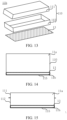
FIG. 12 is an exploded view of an electrical chamber according to an embodiment of the present invention; -
FIG. 13 is an exploded view of another electrical chamber according to an embodiment of the present invention; -
FIG. 14 is a schematic structural diagram of a box of the battery according to an embodiment of the present invention; -
FIG. 15 is a schematic structural diagram of another box of the battery according to an embodiment of the present invention; -
FIG. 16 is an exploded view of a battery according to an embodiment of the present invention; -
FIG. 17 is a cross-sectional view of a thermal management component, a baffle and a protective member according to an embodiment of the present invention; -
FIG. 18 is a schematic flowchart of a method for producing a battery according to an embodiment of the present disclosure; -
FIG. 19 is a schematic block diagram of a device for producing a battery according to an embodiment of the present disclosure. - In the accompanying drawings, the drawings are not drawn to actual scale.
- Implementations of the present invention will be further described below in detail with reference to drawings and embodiments. The detailed description and drawings of the following embodiments are configured to exemplarily illustrate principles of the present invention, but cannot be used to limit the scope of it, that is, the present invention is not limited to the described embodiments.
- In the present disclosure, a battery cell may include a primary battery and a secondary battery, such as a lithium-ion battery, a lithium-sulfur battery, a sodium/lithium-ion battery, a sodium-ion battery or a magnesium-ion battery, etc., which are not limited by the embodiments of the present disclosure.
- The battery cell may be cylindrical, flat, cuboid or in another shape, which are not limited by the embodiments of the present disclosure.
- The battery cell is generally divided into three types according to the way of packaging: a cylindrical battery cell, a prismatic battery cell and a pouch battery cell, which are not limited by the embodiments of the present disclosure.
- The battery mentioned in the embodiments of the present invention refers to a single physical module that includes one or more battery cells to provide a higher voltage and capacity. For example, the battery mentioned in the present disclosure may include a battery module, a battery pack or the like. The battery pack generally includes a box for encapsulating one or more battery cells. The box can prevent liquid or other foreign matters from affecting the charging or discharging of the battery cell.
- The battery cell includes an electrode assembly and an electrolytic solution, and the electrode assembly includes a positive electrode sheet, a negative electrode sheet and a separator. The operation of the battery cell mainly relies on the movement of metal ions between the positive electrode sheet and the negative electrode sheet. The positive electrode sheet includes a positive electrode current collector and a positive electrode active material layer. The positive electrode active material layer is coated on a surface of the positive electrode current collector, the current collector not coated with the positive electrode active material layer protrudes from the current collector coated with the positive electrode active material layer, and the current collector not coated with the positive electrode active material layer is used as a positive tab. In an example of a lithium-ion battery, a material of the positive electrode current collector may be aluminum, and the positive electrode active material may be lithium cobalt oxides, lithium iron phosphate, ternary lithium, lithium manganate, or the like. The negative electrode sheet includes a negative electrode current collector and a negative electrode active material layer. The negative electrode active material layer is coated on a surface of the negative electrode current collector, the current collector not coated with the negative electrode active material layer protrudes from the current collector coated with the negative electrode active material layer, and the current collector not coated with the negative electrode active material layer is used as the negative tab. A material of the negative electrode current collector may be copper, and the negative electrode active material may be carbon, silicon, or the like. In order to ensure that no fusing occurs when a large current passes, there are a plurality of positive tabs which are stacked together, and there are a plurality of negative tabs which are stacked together. A material of the separator may be PP, PE, or the like. In addition, the electrode assembly may have a winding structure or a laminated structure, and the embodiments of the present disclosure are not limited thereto. With the development of the battery technology, it is necessary to consider design factors in multiple aspects simultaneously, such as energy density, cycle life, discharge capacity, C-rate and other performance parameters. In addition, safety of battery should also be considered.
- With respect to the battery, the main safety hazard comes from the charging and discharging process, and in order to improve the safety performance of the battery, the battery cell is generally provided with a pressure relief mechanism. The pressure relief mechanism refers to an element or component that is actuated when an internal pressure or temperature of the battery cell reaches a predetermined threshold, to relieve the internal pressure or temperature. The predetermined threshold may be adjusted according to different design requirements. The predetermined threshold may depend on the material of one or more of the positive electrode sheet, the negative electrode sheet, the electrolytic solution and the separator in the battery cell. The pressure relief mechanism may adopt such as a pressure-sensitive or temperature-sensitive element or component, that is, when the internal pressure or temperature of the battery cell reaches the predetermined threshold, the pressure relief mechanism is actuated, thereby forming a channel for internal pressure or temperature relief.
- The "actuation" mentioned in the present application means that the pressure relief mechanism acts, so that the internal pressure and temperature of the battery cell can be relieved. The action generated by the pressure relief mechanism may include but be not limited to: at least a portion of the pressure relief mechanism being fractured, torn or melted, and so on. After the pressure relief mechanism is actuated, high-temperature and high-pressure substances inside the battery cell are discharged as emissions from the pressure relief mechanism. In this way, the pressure of the battery cell can be relieved at a controllable pressure or temperature, thereby avoiding potentially more serious accidents.
- The emissions from the battery cell mentioned in the present application include but are not limited to: the electrolytic solution, the dissolved or split positive and negative electrode sheets, fragments of the separator, high-temperature and high-pressure gas generated by reaction, flame, etc.
- The pressure relief mechanism on the battery cell has an important impact on the safety of the battery. For example, when short circuit, overcharge and other phenomena occur in the battery cell, it may lead to thermal runaway inside the battery cell, resulting in a sudden increase in pressure or temperature. In this case, the internal pressure and temperature can be released outward through the actuation of the pressure relief mechanism, to prevent the battery cell from exploding and catching fire.
- In the current design solutions of the pressure relief mechanism, the main concern is to release the high pressure and high heat inside the battery cell, that is, to discharge the emissions to the outside of the battery cell. However, in order to ensure an output voltage or current of the battery, a plurality of battery cells are often required and electrically connected to each other via a bus component. The emissions discharged from the interior of the battery cell may cause short circuit of the other battery cells. For example, when discharged metal scraps electrically connect two bus components, the battery is short-circuited, thereby posing a potential safety hazard. Moreover, the high-temperature and high-pressure emissions are discharged in a direction in which a pressure relief mechanism of the battery cell is provided, and more specifically, may be discharged in a direction of a region where the pressure relief mechanism is actuated. The strength and destructive power of such emissions may be great, or may even be enough to break through one or more structures in this direction, causing further safety problems.
- In view of this, according to the embodiments of the present invention, a thermal management component is arranged in the battery, the surface of the thermal management component is attached to the surface of the battery cell provided with the pressure relief mechanism, and a pressure relief area is disposed on the thermal management component, more in detail, the pressure relief area is a pressure relief hole.
- On the one hand, the thermal management component is configured to accommodate a fluid to adjust temperature of a plurality of battery cells. The fluid here may be liquid or gas, and temperature adjustment means heating or cooling the plurality of battery cells. In a case of cooling or lowering the temperature of the battery cells, the thermal management component is configured to accommodate a cooling fluid to lower the temperature of the plurality of battery cells. In this case, the thermal management component may also be called a cooling component, a cooling system or a cooling plate, etc. The fluid accommodated by the thermal management component may also be called a cooling medium or a cooling fluid, and more specifically, may be called a cooling liquid or a cooling gas. In addition, the thermal management component can also be configured to heat to raise the temperature of the plurality of battery cells, which is not limited by the embodiments of the present application. Optionally, the fluid can flow in a circulating manner to achieve better temperature adjustment effect. Optionally, the fluid may be water, a mixture of water and ethylene glycol, or air, etc.
- On the other hand, when the pressure relief mechanism is actuated, the emissions discharged from the battery cell are discharged through the pressure relief hole of the thermal management component, and the thermal management component can also cool the battery cell to avoid an explosion in the battery cell.
- The bus component is configured to implement an electric connection between the plurality of battery cells, such as parallel connection, series connection or series-parallel connection. The bus component may implement an electrical connection between the battery cells by connecting electrode terminals of the battery cells. In some embodiments, the bus component may be fixed to the electrode terminals of the battery cells by means of welding. Corresponding to the "high-voltage chamber", an electrical connection formed by the bus component may also be called "high-voltage connection".
- The technical solutions described in the embodiments of the present disclosure are all applicable to various devices using batteries, such as mobile phones, portable apparatuses, notebook computers, electromobiles, electronic toys, electric tools, electric vehicles, ships and spacecrafts. For example, the spacecrafts include airplanes, rockets, space shuttles, spaceships, etc.
- It should be understood that the technical solutions described in the embodiments of the present disclosure are not only applicable to the foregoing apparatuses, but also applicable to all apparatuses using batteries. However, for the sake of brevity, the following embodiments take electric vehicles as an example for description.
- For example,
FIG. 1 is a schematic structural diagram of avehicle 1 according to an embodiment of the present disclosure. - The
vehicle 1 may be a fuel-powered vehicle, a gas-powered vehicle or a new-energy vehicle. The new-energy vehicle may be a battery electric vehicle, a hybrid vehicle or an extended-range vehicle, or the like. Amotor 40, acontroller 30 and abattery 10 may be arranged inside thevehicle 1, and thecontroller 30 is configured to control thebattery 10 to supply power to themotor 40. For example, thebattery 10 may be disposed at the bottom or the head or the tail of thevehicle 1. Thebattery 10 may be configured to supply power to thevehicle 1. For example, thebattery 10 may be used as an operation power source of thevehicle 1 for a circuit system of thevehicle 1, for example, for a working power demand of thevehicle 1 during startup, navigation and running. In another embodiment of the present disclosure, thebattery 10 may be used not only as an operating power source of thevehicle 1 but also as a driving power source of thevehicle 1, replacing or partially replacing fuel or natural gas to provide driving power for thevehicle 1. - In order to meet different power requirements, the battery may include a plurality of battery cells, where the plurality of battery cells may be in series connection, parallel connection or series-parallel connection. The series-parallel connection refers to a combination of series connection and parallel connection. The battery may also be called a battery pack. Optionally, the plurality of battery cells may be first connected in series, in parallel or in series and parallel to form a battery modules, and then a plurality of battery modules are connected in series, in parallel or in series and parallel to form a battery. That is, the plurality of battery cells may directly form the battery, or may first form battery modules, and then the battery modules form a battery.
- For example,
FIG. 2 is a schematic structural diagram of abattery 10 according to an embodiment of the present disclosure, thebattery 10 may include at least onebattery module 200. Thebattery module 200 includes a plurality ofbattery cells 20. Thebattery 10 may further include a box, the interior of the box is a hollow structure, and the plurality ofbattery cells 20 are accommodated in the box. As shown inFIG. 2 , the box may include two portions, which are referred to as afirst portion 111 and asecond portion 112, respectively, and thefirst portion 111 and thesecond portion 112 are fastened together. The shapes of thefirst portion 111 and thesecond portion 112 may be determined according to the shape of thebattery module 200, and at least one of thefirst portion 111 and thesecond portion 112 has an opening. For example, as shown inFIG. 2 , thefirst portion 111 and thesecond portion 112 each may be a hollow cuboid and each have only one face as an opening face, and an opening of thefirst portion 111 is arranged opposite to an opening of thesecond portion 112. Thefirst portion 111 and thesecond portion 112 are fastened to each other to form a box with a closed chamber. For another example, different from that shown inFIG. 2 , only one of thefirst portion 111 and thesecond portion 112 may be a hollow cuboid with an opening, while the other may be a plate shape, so as to cover the opening. For example, thesecond portion 112 is a hollow cuboid and has only one face as an opening face and thefirst portion 111 is a plate shape, then thefirst portion 111 covers at the opening of thesecond portion 112 to form a box with a closed chamber, and the chamber may be configured to accommodate the plurality ofbattery cells 20. The plurality ofbattery cells 20 are combined in parallel connection or series connection or series-parallel connection and are then placed in the box formed by fastening thefirst portion 111 to thesecond portion 112. - Optionally, the
battery 10 may also include other structures, which will not be described in detail herein. For example, thebattery 10 may also include a bus component. The bus component is configured to implement an electrical connection between the plurality ofbattery cells 20, such as parallel connection, series connection or series-parallel connection. Specifically, the bus component may implement an electrical connection between thebattery cells 20 by connecting electrode terminals of thebattery cells 20. Furthermore, the bus component may be fixed to the electrode terminals of thebattery cells 20 by means of welding. Electrical energy of the plurality ofbattery cells 20 can be further led out through an electrically conductive mechanism passing through the box. - According to different power requirements, the number of the
battery cells 20 in thebattery module 200 may be set to any value. The plurality ofbattery cells 20 can be connected in series, in parallel or in series and parallel to implement larger capacity or power. Since there may bemany battery cells 20 included in eachbattery 10, thebattery cells 20 may be arranged in groups for convenience of installation, and each group of thebattery cells 20 constitutes thebattery module 200. The number of thebattery cells 20 included in thebattery module 200 is not limited and may be set as required. For example,FIG. 3 shows an example of abattery module 200. The battery may include a plurality ofbattery modules 200, and thesebattery modules 200 may be connected in series, in parallel or in series and parallel. -
FIG. 4 is a schematic structural diagram of abattery cell 20 according to an embodiment of the present invention. - The
battery cell 20 includes one ormore electrode assemblies 22, ahousing 211 and acover plate 212. Thehousing 211 and thecover plate 212 form ashell 21. A wall of thehousing 211 and thecover plate 212 are each referred to as a wall of thebattery cell 20. Thehousing 211 is shaped according to the shape of one ormore electrode assemblies 22 after combination. For example, thehousing 211 may be a hollow cuboid or cube or cylinder, and one face of thehousing 211 has an opening so that one ormore electrode assemblies 22 can be placed in thehousing 211. For example, when thehousing 211 is a hollow cuboid or cube, one plane of thehousing 211 is an opening face, that is, the plane does not have a wall, so that the inside and outside of thehousing 211 are in communication with each other. When thehousing 211 is a hollow cylinder, an end face of thehousing 211 is an opening face, that is, the end face does not have a wall, so that the inside and outside of thehousing 211 are in communication with each other. Thecover plate 212 covers the opening and is connected to thehousing 211 to form a closed chamber in which theelectrode assembly 22 is placed. Thehousing 211 is filled with an electrolyte, such as an electrolytic solution. - The
battery cell 20 may further include twoelectrode terminals 214, and the twoelectrode terminals 214 may be disposed on thecover plate 212. Thecover plate 212 is generally in the shape of a flat plate, and the twoelectrode terminals 214 are fixed on a flat plate face of thecover plate 212. The twoelectrode terminals 214 are afirst electrode terminal 214a and asecond electrode terminal 214b respectively. Polarities of the twoelectrode terminals 214 are opposite. For example, when thefirst electrode terminal 214a is a positive electrode terminal, the second electrode terminal 222a is a negative electrode terminal. Eachelectrode terminal 214 is correspondingly provided with a connectingmember 23, which is located between thecover plate 212 and theelectrode assembly 22 and configured to electrically connect theelectrode assembly 22 to theelectrode terminal 214. - As shown in
FIG. 4 , eachelectrode assembly 22 has afirst tab 221a and a second tab 222a. Thefirst tab 221a and the second tab 222a have opposite polarities. For example, when thefirst tab 221a is a positive tab, the second tab 222a is a negative tab. Thefirst tab 221a of the one ormore electrode assemblies 22 is connected to one electrode terminal through one connectingmember 23, and the second tab 222a of the one ormore electrode assemblies 22 is connected to the other electrode terminal through the other connectingmember 23. For example, thepositive electrode terminal 214a is connected to the positive tab through one connectingmember 23, and thenegative electrode terminal 214b is connected to the negative tab through the other connectingmember 23. - In this
battery cell 20, according to actual use requirements,electrode assembly 22 may be set to be single or multiple in number. As shown inFIG. 4 , fourseparate electrode assemblies 22 are disposed in thebattery cell 20. - As shown in
FIG. 4 , apressure relief mechanism 213 is disposed on one wall of thebattery cell 20, for example, thepressure relief mechanism 213 may be disposed on afirst wall 21a of thebattery cell 20. Thefirst wall 21a inFIG. 4 is separated from thehousing 211, that is, a bottom side of thehousing 211 has an opening, and thefirst wall 21a covers the opening of the bottom side and is connected to thehousing 211. A connection mode can be welding or bonding, or the like. Alternatively, thefirst wall 21a and thehousing 211 may also be an integral structure. Thepressure relief mechanism 213 is configured to be actuated when an internal pressure or temperature of thebattery cell 20 reaches a threshold to relieve the internal pressure or temperature. - The
pressure relief mechanism 213 may be a portion of thefirst wall 21a or may be a separate structure from thefirst wall 21a and fixed to thefirst wall 21a by means of welding, for example. When thepressure relief mechanism 213 is a portion of thefirst wall 21a, for example, thepressure relief mechanism 213 can be formed by providing an indentation on thefirst wall 21a, and a thickness of thefirst wall 21a corresponding to the indentation is smaller than that of other regions of thepressure relief mechanism 213 except the indentation. The indentation is the weakest position of thepressure relief mechanism 213. When excessive gas generated by thebattery cell 20 causes an internal pressure of thehousing 211 to rise and reach a threshold, or heat generated by an internal reaction of thebattery cell 20 causes an internal temperature of thebattery cell 20 to rise and reach a threshold, thepressure relief mechanism 213 can be fractured at the indentation, resulting in a communication between the inside and outside of thehousing 211. The gas pressure and temperature are released outward through the cracking of thepressure relief mechanism 213, thereby preventing thebattery cell 20 from exploding. - Optionally, in an embodiment of the present disclosure, as shown in
FIG. 4 , in the case where thepressure relief mechanism 213 is disposed on thefirst wall 21a of thebattery cell 20, a second wall of thebattery cell 20 is provided withelectrode terminals 214 and is different from thefirst wall 21a. - Optionally, the second wall is arranged opposite to the
first wall 21a. For example, thefirst wall 21a may be a bottom wall of thebattery cell 20, and the second wall may be acover plate 212 of thebattery cell 20. - The
pressure relief mechanism 213 and theelectrode terminals 214 are disposed on different walls of thebattery cell 20, so that when thepressure relief mechanism 213 is actuated, the emissions from thebattery cell 20 can be farther away from theelectrode terminals 214, thereby reducing an impact of the emissions on theelectrode terminals 214 and the bus component, thus enhancing the safety of the battery. - Furthermore, when the
electrode terminals 214 are disposed on thecover plate 212 of thebattery cell 20, thepressure relief mechanism 213 is disposed on the bottom wall of thebattery cell 20, so that when thepressure relief mechanism 213 is actuated, the emissions from thebattery cell 20 are discharged toward the bottom of thebattery 10. In this way, on one hand, a risk resulting from the emissions can be reduced by using the thermal management component at the bottom of thebattery 10, and on the other hand, when thebattery 10 is arranged in the vehicle, the harm to passengers can be reduced because the bottom of thebattery 10 is usually far away from the passengers. - The
pressure relief mechanism 213 may be various possible pressure relief structures, which is not limited by the embodiments of the present application. For example, thepressure relief mechanism 213 may be a temperature-sensitive pressure relief mechanism, the temperature-sensitive pressure relief mechanism is configured to be capable of being melted when internal temperature of thebattery cell 20 provided with thepressure relief mechanism 213 reaches a threshold; and/or thepressure relief mechanism 213 may be a pressure-sensitive pressure relief mechanism, and the pressure-sensitive pressure relief mechanism is configured to be capable of being fractured when an internal gas pressure of thebattery cell 20 provided with thepressure relief mechanism 213 reaches a threshold. - In order to adjust the temperature of the
battery cell 20, the thermal management component may be arranged under thebattery cell 20. Specifically, the thermal management component is configured to accommodate the fluid to adjust the temperature of thebattery cell 20, when thepressure relief mechanism 213 is actuated, the thermal management component can cool the emissions from thebattery cell 20 provided with thepressure relief mechanism 213. - According to the present invention, the pressure relief area is disposed on the thermal management component, more in detail, the pressure relief area is the pressure relief hole. In this way, when the
pressure relief mechanism 213 is actuated, thepressure relief mechanism 213 is opened to discharge the emissions from thebattery cell 20, and the emissions can pass through the thermal management component by the pressure relief hole to be discharged. - However, when the
pressure relief mechanism 213 is actuated and the discharged emissions are discharged through the pressure relief hole of the thermal management component, discharge speed is too fast, which may cause the fluid accommodated in the thermal management component to be unable to effectively cool the emissions. Therefore, how to effectively discharge the emissions and quickly cool the emissions at the same time is a problem that is difficult to solve with a design of thecurrent battery cell 20. - Therefore, the embodiments of the present application provide a battery, which can solve the problem mentioned above.
-
FIG. 5 shows a partial exploded view of thebattery 10 according to the embodiments of the present invention. - As shown in
FIG. 5 , thebattery 10 includes: at least onebattery cell 20, and the followingbattery cell 20 takes anybattery cell 20 included in thebattery 10 as an example, that is, thebattery cell 20 may be thebattery cell 20 inFIGS. 1-4 , which is applicable to the related description of thebattery cell 20 in the aboveFIGS. 1-4 , and for the sake of brevity, it will not be redundantly described herein. Specifically, thebattery cell 20 includes apressure relief mechanism 213, thepressure relief mechanism 213 is disposed on afirst wall 21a of thebattery cell 20, and thepressure relief mechanism 213 is configured to be actuated when an internal pressure or temperature of thebattery cell 20 reaches a threshold, to relieve the internal pressure. - As shown in
FIG. 5 , thebattery 10 further includes: athermal management component 13, thethermal management component 13 is configured to accommodate a fluid to adjust the temperature of thebattery cell 20. Thethermal management component 13 is applicable to the related description of the thermal management component in the above, and for the sake of brevity, it will not be redundantly described herein. Specifically, afirst surface 1321 of thethermal management component 13 is attached to thefirst wall 21a of thebattery cell 20, and thethermal management component 13 is provided with apressure relief hole 131 opposite to thepressure relief mechanism 213, so that when thepressure relief mechanism 213 is actuated, the emissions discharged from thebattery cell 20 can pass through thethermal management component 13 by thepressure relief hole 131 to be discharged. - In the embodiments of the present disclosure, as shown in
FIG. 5 , thebattery 10 further includes abaffle 14, thebaffle 14 is configured to cover a part of thepressure relief hole 131, so that when thepressure relief mechanism 213 is actuated, a discharge direction of the emissions entering thepressure relief hole 131 is changed. - Therefore, for the
battery 10 according to the embodiments of the present disclosure, thethermal management component 13 is provided with thebaffle 14 for covering a part of thepressure relief hole 131. In this way, when thepressure relief mechanism 213 is actuated and the emissions discharged from thebattery cell 20 enter thepressure relief hole 131, the emissions directly contact thebaffle 14 and reflect on the surface of thebaffle 14 before passing through thepressure relief hole 131 or after passing through thepressure relief hole 131, thereby changing an original discharge direction of the emissions, so that more high temperature emissions impact thethermal management component 13. In this way, thethermal management component 13 cools more emissions. In addition, more high temperature emissions also widen an area of thethermal management component 13 melted by the high temperature emissions, and thethermal management component 13 is more fully damaged by the high temperature emissions, which ensures that sufficient fluid in thethermal management component 13 smoothly flows out, so as to achieve a better cooling effect, this avoids, as far as possible, a case where the high temperature emissions directly pass through thepressure relief hole 131 and could not impact or melt thethermal management component 13. - It should be understood that the
thermal management component 13 according to the embodiments of the present disclosure is configured to accommodate the fluid to adjust the temperature of the plurality ofbattery cells 20. In the case of lowering the temperature of thebattery cells 20, thethermal management component 13 accommodates a cooling medium to adjust the temperature of the plurality ofbattery cells 20. In this case, thethermal management component 13 may also be called a cooling component, a cooling system or a cooling plate, etc. In addition, thethermal management component 13 may also be configured to heat, which is not limited by the embodiments of the present application. Optionally, the fluid can flow in a circulating manner to achieve a better temperature adjustment effect. -
FIG. 6 is an exploded view of thethermal management component 13 according to the embodiments of the present disclosure, -
FIG. 7 is a top view of thethermal management component 13 according to the embodiments of the present disclosure, andFIG. 8 is a bottom view of thethermal management component 13 according to the embodiments of the present disclosure. - . As shown in
FIGS. 6-8 , thethermal management component 13 according to the embodiments of the present disclosure may be provided with aflow channel 134, theflow channel 134 is configured to accommodate the fluid. In this way, when thepressure relief mechanism 213 is actuated, the emissions discharged frombattery cell 20 by thepressure relief mechanism 213 may damage theflow channel 134, so that the fluid in theflow channel 134 flows out, thereby cooling the emissions. - Specifically, as shown in
FIGS. 6-8 , thethermal management component 13 may include a first thermalconductive plate 132 and a second thermalconductive plate 133. The first thermalconductive plate 132 is arranged between the secondheat conduction plate 133 and thefirst wall 21a of thebattery cell 20, the first thermalconductive plate 132 is attached to thefirst wall 21a, and the first thermalconductive plate 132 is connected to the secondheat conduction plate 133, where an upper surface of the first thermalconductive plate 132 is thefirst surface 1321 of thethermal management component 13, thefirst surface 1321 is attached to thefirst wall 21a of thebattery cell 20. - It should be understood that in the embodiments of the present disclosure, the
first surface 1321 is attached to thefirst wall 21a of thebattery cell 20, which may be that thefirst surface 1321 directly contacts thefirst wall 21a, or thefirst surface 1321 contacts thefirst wall 21a through a thermal glue or other substances, so as to implement a heat exchange between thefirst surface 1321 and thefirst wall 21a of thebattery cell 20. - For the
pressure relief hole 131 disposed on thethermal management component 13, as shown inFIGS. 6-8 , through holes corresponding to each other may be disposed on the first thermalconductive plate 132 and the second thermalconductive plate 133 respectively, so as to form thepressure relief hole 131, that is, thepressure relief hole 131 penetrates the first thermalconductive plate 132 and the second thermalconductive plate 133 respectively. - Optionally, as shown in
FIG. 6 , the first thermalconductive plate 132 may further include asecond groove 1322 with an opening facing away from a direction of the second thermalconductive plate 133. A through hole is disposed on a bottom wall of thesecond groove 1322 to form thepressure relief hole 131 on the first thermalconductive plate 132. An aperture of thesecond groove 1322 may gradually increase along a direction away from the second thermalconductive plate 133, that is, a wall of thesecond groove 1322 is inclined with respect to the axis of thepressure relief hole 131, so that when a thermal runaway occurs in thebattery cell 20, the emissions discharged through thepressure relief mechanism 213 can more contact a side wall of thesecond groove 1322, and more emissions can be cooled by thethermal management component 13. For example, the side wall of thesecond groove 1322 can be set as a wall of theflow channel 134, so when the emissions contact the side wall of thesecond groove 1322, liquids in theflow channel 134 may cool the emissions, furthermore, the emissions may also melt the side wall of thesecond groove 1322, so that the fluid in theflow channel 134 flows out, thereby cooling the emissions. - The
flow channel 134 disposed on thethermal management component 13 may be implemented by arranging a groove on the second thermalconductive plate 133 or the first thermalconductive plate 132. Specifically, taking the groove disposed on the second thermalconductive plate 133 as an example, as shown inFIGS. 6-8 , the second thermalconductive plate 133 is provided with a first groove 1331 with an opening facing the first thermalconductive plate 132. When the first thermalconductive plate 132 is adhered to the second thermal conductive 133, the first thermalconductive plate 132 covers an opening of the first groove 1331 to form a hollow structure, and the hollow structure is theflow channel 134. - Optionally, a shape, a size and a position of the
flow channel 134 in the embodiments of the present application may be flexibly set according to actual applications. For example, theflow channels 134 inFIG.6 and FIG. 8 are set to strip, but the size of theflow channels 134 at different positions inFIG.6 and FIG. 8 may be different. The embodiments of the present application is not limited thereto. - Considering that the emissions passing through the
pressure relief mechanism 213 are discharged through thepressure relief hole 131 on thethermal management component 13, in order to enable the fluid in thethermal management component 13 to better cool the emissions, or furthermore, in order to enable thethermal management component 13 to be damaged by the emissions to allow an internal fluid to be smoothly discharged, theflow channel 134 on thethermal management component 13 is usually arranged around thepressure relief hole 131, so that the emissions passing through thepressure relief hole 131 can directly contact theflow channel 134, so as to be cooled by the fluid in theflow channel 134. Furthermore, theflow channel 134 can be damaged in a large area when the emissions contact theflow channel 134, so that more fluid in theflow channel 134 can be smoothly discharged. - In addition, in order to enable the
thermal management component 13 to be easily damaged, thethermal management component 13 may also be provided with a temperature-sensitive material, the temperature-sensitive material can be melted by the emissions from thebattery cell 20 when thepressure relief mechanism 213 is actuated, so that the internal fluid is discharged from the interior of thethermal management component 13. - Optionally, the temperature-sensitive material can be disposed on an area of the
thermal management component 13 facing the emissions from thebattery cell 20. For example, the temperature-sensitive material may arranged around thepressure relief hole 131 on thefirst surface 1321 of thethermal management component 13. For another example, the temperature-sensitive material may also be disposed on the hole wall of thepressure relief hole 131, and an area on which the temperature-sensitive material is arranged may be the wall of theflow channel 134, so that the emissions discharged from thebattery cell 20 directly contact the temperature-sensitive material and melt the temperature-sensitive material, so as to enable thethermal management component 13 to be damaged, for example, theflow channel 134 of thethermal management component 13 is damaged, and the internal fluid thereof flows out to cooling the emissions. - In order to ensure that when the
pressure relief mechanism 213 is actuated, the emissions from thebattery cell 20 may contact and damage an area of the flow channel as large as possible, thebattery 10 according to the embodiments of the present application further includes abaffle 14 to change the discharge direction of the emissions entering thepressure relief hole 131. - Specifically, as shown in
FIGS. 6-8 , thebaffle 14 may be arranged at any position around thepressure relief hole 131, so that thebaffle 14 covers a part of thepressure relief hole 131. For example, a ratio of an area of thebaffle 14 covering thepressure relief hole 131 to a total area of thepressure relief hole 131 usually ranges from 0.5 to 0.8, but the embodiments of the present application are not limited thereto. For example, taking the arrangedbaffle 14 as shown inFIG. 7 as an example, a width D1 of thebaffle 14 may be equal to or less than or greater than a width D2 of thepressure relief hole 131, - In addition, the number and position of the
baffle 14 according to the embodiments of the present disclosure may be flexibly set according to actual applications, for example,FIGS. 6-8 all take eachpressure relief hole 131 corresponding to twobaffles 14 arranged as an example. However, more or fewer baffles may also be arranged, and the embodiments of the present disclosure are not limited thereto. - The following describes an arrangement of the
baffle 14 with reference to the accompanying drawings. -
FIG. 9 shows a cross-sectional view of abattery cell 20 and athermal management component 13 along an A-A' direction shown inFIG. 7 .FIG. 9 takes only one baffle arranged in eachpressure relief hole 131 as an example.FIG. 10 shows a cross-sectional view of anotherbattery cell 20 andthermal management component 13 along the A-A' direction shown inFIG. 7 , andFIG. 10 takes only twobaffles 14 arranged in the eachpressure relief hole 131 as an example. As shown inFIG. 9 and FIG. 10 , thebaffle 14 according to the embodiments of the present application may be located on the second surface of thethermal management component 13, and the second surface may be any surface of thethermal management component 13, that is, thebaffle 14 may be arranged inside or outside thepressure relief hole 131. For example, thebaffle 14 inFIG. 9 is arranged inside thepressure relief hole 131, and thebaffle 14 is connected to the first thermalconductive plate 132 of thethermal management component 13, that is, thebaffle 14 is arranged on the hole wall of thepressure relief hole 131; while thebaffle 14 inFIG. 10 is arranged outside thepressure relief hole 131, and thebaffle 14 is connected to the second thermalconductive plate 133 of thethermal management 13. The embodiments of the present application are not limited thereto. - In some embodiments, a maximum distance between the
baffle 14 and thefirst wall 21a of thebattery cell 20 is greater than a minimum distance from theflow channel 134 to thefirst wall 21a, so as to ensure that the emissions can reflect on the surface of thebaffle 14 to change the discharge direction thereof, so that the reflected emissions can face thethermal management component 13, and more emissions can contact thethermal management component 13 in order to achieve an effect of cooling more emissions by thethermal management component 13. Furthermore, the discharge direction of the emissions is changed by thebaffle 14 to enable more emissions to impact thethermal management component 13, which may cause theflow channel 134 on thethermal management component 13 is damaged, so that the fluid in theflow channel 134 flows out to cool the emissions. - Specifically, the
baffle 14 according to the present invention is generally arranged in an inclined way with respect to anaxis 1311 of thepressure relief hole 131. As shown inFIG. 9 and FIG. 10 , thebaffle 14 is inclined with respect to theaxis 1311 of thepressure relief hole 131. In a direction away from thefirst wall 21a, thebaffle 14 gradually approaches theaxis 1311 of thepressure relief hole 131, so that when thepressure relief mechanism 213 is actuated, the emissions can be reflected by thebaffle 14 and impact toward the hole wall of thepressure relief hole 131, which enable more emissions to impact thethermal management component 13. Furthermore, the emissions more fully contact thethermal management component 13, which is more conducive to cooling. - The
baffle 14 according to the present invention being arranged in the inclined way with respect to theaxis 1311 of thepressure relief hole 131, an angle θ between thebaffle 14 and theaxis 1311 of thepressure relief hole 131 can be set according to actual applications. However, if the angle θ is set too large, an area of thebaffle 14 covering thepressure relief hole 131 will be too large and thepressure relief hole 131 will be blocked, affecting the passage of the emissions discharged from thebattery cell 20 when thepressure relief mechanism 213 is actuated, which may result in poor exhaust and further cause thebattery cell 20 to explode. On the contrary, if the angle θ is set too small, a reflection effect of the emissions on the surface of thebaffle 14 will be affected. Therefore, a value of the angle θ is usually set to be from 20° to 40° to achieve an optimal effect. - A material of the
baffle 14 can be flexibly set according to actual applications. For example, thebaffle 14 can be made of the same material as thethermal management component 13, for example, both can be made of aluminum alloy materials, and thebaffle 14 and thethermal management component 13 can be fixed by means of welding. - In addition, the surface of the
baffle 14 should be set to a relatively smooth surface, an excessively rough surface may allow high temperature particles in the emissions to accumulate on the surface of thebaffle 14 and not to rebound, thereby affecting the effect of thebaffle 14. For example, a surface roughness of thebaffle 14 may be set to be less than or equal to 0.1µm, and the surface roughness may be the contour arithmetic mean deviation (Ra), but the embodiments of the present disclosure are not limited thereto. - According to the invention, the
battery 10 further includes anelectrical chamber 11a and acollection chamber 11b. Thebattery 10 provided with theelectrical chamber 11a, thecollection chamber 11b and thethermal management component 13 will be described in detail in the following with reference to the accompanying drawings. -
FIG. 11 is a schematic structural diagram of abox 11 of thebattery 10 according to an embodiment of the present disclosure. - As shown in
FIG. 11 , thebox 11 includes theelectrical chamber 11a, thecollection chamber 11b, and thethermal management component 13. Thethermal management component 13 is configured to isolate theelectrical chamber 11a from thecollection chamber 11b. The so-called "isolation" here refers to separation, which may not be sealed. - The
electrical chamber 11a is configured to accommodate the plurality ofbattery cells 20 and abus component 12. Theelectrical chamber 11a provides an accommodation space for thebattery cells 20 and thebus component 12, and a shape of theelectrical chamber 11a may be determined according to the plurality ofbattery cells 20 and thebus component 12. - The
bus component 12 is configured to implement the electrical connection between the plurality ofbattery cells 20. Thebus component 12 may implement an electrical connection between thebattery cells 20 by connectingelectrode terminals 214 of thebattery cells 20. - At least one
battery cell 20 of the plurality ofbattery cells 20 includes apressure relief mechanism 213. Thepressure relief mechanism 213 is configured to be actuated when an internal pressure or temperature of thebattery cell 20 provided with thepressure relief mechanism 213 reaches a threshold, to relieve the internal pressure or temperature. - For convenience of description, the
battery cell 20 involved in the following description of thepressure relief mechanism 213 refers to thebattery cell 20 provided with thepressure relief mechanism 213. For example, thebattery cell 20 may be thebattery cell 20 inFIG. 4 . - The
collection chamber 11b is configured to collect the emissions from thebattery cell 20 provided with thepressure relief mechanism 213 when thepressure relief mechanism 213 is actuated. - According to the invention, the
thermal management component 13 is configured to isolate theelectrical chamber 11a from thecollection chamber 11b. That is, theelectrical chamber 11a for accommodating the plurality ofbattery cells 20 and thebus component 12 is separated from thecollection chamber 11b for collecting the emissions. In this way, when thepressure relief mechanism 213 is actuated, the emissions from thebattery cells 20 enter thecollection chamber 11b, and do not enter theelectrical chamber 11a, or enter theelectrical chamber 11a in a small amount, so that the electrical connection in theelectrical chamber 11a is not affected, thereby enhancing the safety of the batteries. - Optionally, in an embodiment of the present disclosure, the
thermal management component 13 has a wall shared by theelectrical chamber 11a and thecollection chamber 11b. As shown inFIG. 11 , thethermal management component 13 may be both a wall of theelectrical chamber 11a and a wall of thecollection chamber 11b. That is, the thermal management component 13 (or a portion thereof) can be directly used as a wall shared by theelectrical chamber 11a and thecollection chamber 11b. In this way, the emissions from thebattery cells 20 may enter thecollection chamber 11b through thethermal management component 13. Besides, due to the existence of thethermal management component 13, the emissions may be isolated from theelectrical chamber 11a as far as possible, thereby reducing the risk of the emissions and enhancing the safety of the batteries. - Optionally, in an embodiment of the present disclosure, the
electrical chamber 11a may be composed of a covering having an opening, and thethermal management component 13. For example,FIG. 12 shows an exploded view of anelectrical chamber 11a according to the embodiments of the present disclosure. - As shown in
FIG. 12 , thebox 11 may include a covering 110 with an opening (for example, the lower opening inFIG. 12 ). The covering 110 with the opening is a semi-closed chamber with an opening in communication with the outside, and thethermal management component 13 covers the opening to form a chamber, that is, theelectrical chamber 11a. - Optionally, the covering 110 may also be composed of multiple portions, for example,
FIG. 13 shows another exploded view of anelectrical chamber 11a according to the embodiments of the present disclosure, and the covering 110 may include afirst portion 111 and asecond portion 112. Two sides of thesecond portion 112 have openings respectively, that is, thesecond portion 112 only has surrounding walls. Thefirst portion 111 covers the opening on one side of thesecond portion 112, and thethermal management component 13 covers the opening on the other side of thesecond portion 112, thus forming theelectrical chamber 11a. - The embodiments of
FIG. 13 may be obtained through improvements on the basis ofFIG. 2 . Specifically, a bottom wall of thesecond portion 112 inFIG. 2 may be replaced with thethermal management component 13, and thethermal management component 13 acts as a wall of theelectrical chamber 11a, thus forming theelectrical chamber 11a inFIG. 13 . In other words, the bottom wall of thesecond portion 112 inFIG. 2 may be removed. That is, an annular wall with openings on both sides is formed, and thefirst portion 111 and thethermal management component 13 cover the openings on the two sides of thesecond portion 112 respectively to form a chamber, namely theelectrical chamber 11a. - Optionally, in an embodiment of the present disclosure, the
collection chamber 11b may be composed of thethermal management component 13 and the protective member. For example,FIG. 14 shows a schematic diagram of abox 11 according to the embodiments of the present disclosure, where theelectrical chamber 11b shown inFIG. 14 is theelectrical chamber 11b shown inFIG. 12 .FIG. 15 shows another schematic diagram of abox 11 according to the embodiments of the present disclosure, where theelectrical chamber 11b shown inFIG. 15 is theelectrical chamber 11b shown inFIG. 13 As shown inFIG. 14 and FIG. 15 , thebox 11 further includes aprotective member 115. Theprotective member 115 is configured to protect thethermal management component 13, and theprotective member 115 and thethermal management component 13 form thecollection chamber 11b. - The
collection chamber 11b formed by theprotective member 115 and thethermal management component 13 does not occupy a space that may accommodate the battery cell. Therefore, thecollection chamber 11b with a larger space therein can be arranged, which may effectively collect and buffer the emissions and reduce the risk resulting therefrom. - Optionally, in an embodiment of the present disclosure, a fluid, such as a cooling medium, or a component for accommodating the fluid may be further arranged in the
collection chamber 11b to further cool the emissions entering thecollection chamber 11b. - Optionally, in an embodiment of the present disclosure, the
collection chamber 11b may be a sealed chamber. For example, the connection between theprotective member 115 and thethermal management component 13 may be sealed by a sealing member. - Optionally, in an embodiment of the present disclosure, the
collection chamber 11b may not be a sealed chamber. For example, thecollection chamber 11b may be in communication with external air, so that part of the emissions can be further discharged to the outside of thebox 11. - In the foregoing embodiment, the
thermal management component 13 covers the opening of the covering 110 to form anelectrical chamber 11a, and thethermal management component 13 and theprotective member 115 form thecollection chamber 11b. Optionally, thethermal management component 13 may also directly separate theclosed box 11 into theelectrical chamber 11a and thecollection chamber 11b, without arranging an additionalprotective member 115. - For example, in an embodiment of the present disclosure, taking
FIG. 13 as an example, the covering 110 may include thefirst portion 111 and thesecond portion 112, where thefirst portion 111 and thesecond portion 112 both are cavity structures with an opening on one side and can respectively form a semi-closed structure. Thethermal management component 13 can be arranged inside thesecond portion 112, and thefirst portion 111 covers the opening of thesecond portion 112. In other words, thethermal management component 13 can be first arranged in the semi-closedsecond portion 112 to isolate thecollection chamber 11b, and then thefirst portion 111 covers the opening of thesecond portion 112 to form theelectrical chamber 11a. In this way, with respect toFIG. 15 , it can be seen that the bottom wall of thesecond part 112 can replace theprotective member 115 to form thecollection chamber 11b. - Hereinafter, for convenience of explanation, a case where the
collection chamber 11b is formed by theprotective member 115 is taken as an example for description. - Optionally, when the
baffle 14 is arranged in a manner shown inFIG. 10 , an end of thebaffle 14 away from thethermal management component 13 may abut against theprotective member 115. -
FIG. 16 shows an exploded view of abattery 10 having aprotective member 115 according to the embodiments of the present disclosure, andFIG. 17 shows a cross-sectional view of aprotective member 115 and athermal management component 13. As shown inFIG. 16 and FIG. 17 , theprotective member 115 and thethermal management component 13 form thecollection chamber 11b, where theprotective member 115 includes abottom wall 1511 and a plurality ofside walls 1512 to form a hollow structure with an opening at one end, and thethermal management component 13 covers the opening to form thecollection chamber 11b. - When the
baffle 14 extends at least partially outside thepressure relief hole 131, an end of thebaffle 14 away from thefirst wall 21a abuts against thebottom wall 1511 of theprotective member 115 in a direction along theaxis 1311 of thepressure relief hole 131. For example, as shown inFIG. 17 , thebaffle 14 may extend from thethermal management component 13 to theprotection member 115, and an end of thebaffle 14 away from thethermal management component 13 abuts against thebottom wall 1511 of theprotection member 115. - The
baffle 14 abuts against the bottom wall of theprotective member 115 to support thethermal management component 13 and maintain a distance between thethermal management component 13 and theprotective member 115, so that a space of thecollection chamber 11b is not being squeezed and deformed, thus decreasing a possibility of explosion of thebattery 10 caused by compression of the space of thecollection chamber 11b. In addition, in a case where twobaffles 14 are arranged opposite to each other in eachpressure relief hole 131, if a lower end of thebaffle 14 abuts against thebottom wall 1511 of theprotective member 115, after the high temperature emissions pass through thepressure relief hole 131, the emissions may be divided into two opposite channels for discharge under an action of thebaffle 14. In particular, high temperature gas in the high temperature emission may be centrally divided into two channels by thebaffle 14 after entering thecollection chamber 11b, which further increases a possibility of the high temperature gas melting the second thermalconductive plate 133 of thethermal management component 13, so that thethermal management component 13 can be damaged in a large area and an internal fluid thereof flows out in large quantities, improving a cooling effect. - A battery and a power consumption device according to the embodiments of the present invention are described above, a method and a device for producing the battery according to the embodiments of the present disclosure will be described below. For the parts that are not described in detail, reference is made to the foregoing embodiments.
-
FIG. 18 shows a schematic flowchart of amethod 300 for producing a battery according to an embodiment of the present disclosure. - As shown in
FIG. 18 , themethod 300 may include the following steps: S310, providing a battery cell, where in the battery cell includes a pressure relief mechanism, the pressure relief mechanism is disposed on a first wall of the battery cell and the pressure relief mechanism is configured to be actuated when an internal pressure or temperature of the battery cell reaches a threshold, to relieve the internal pressure; S320, providing a thermal management component, where in the thermal management component is configured to accommodate a fluid to adjust a temperature of the battery cell, a first surface of the thermal management component is attached to the first wall, and the thermal management component is provided with a pressure relief hole opposite to the pressure relief mechanism, so that when the pressure relief mechanism is actuated, emissions discharged from the battery cell can pass through the thermal management component by the pressure relief hole to be discharged; and S330, providing a baffle, the baffle being configured to cover a part of the pressure relief hole, so that when the pressure relief mechanism is actuated, a discharge direction of the emissions entering the pressure relief hole is changed. -
FIG. 19 shows a schematic block diagram of adevice 400 for producing a battery according to an embodiment of the present disclosure. - As shown in
FIG. 19 , thedevice 400 may include: a provision module 410. The provision module 410 is configured to: provide a battery cell, where in the battery cell includes a pressure relief mechanism, the pressure relief mechanism is disposed on a first wall of the battery cell, and the pressure relief mechanism is configured to be actuated when an internal pressure or temperature of the battery cell reaches a threshold, to relieve the internal pressure; provide a thermal management component, where in the thermal management component is configured to accommodate a fluid to adjust a temperature of the battery cell, a first surface of the thermal management component is attached to the first wall, and the thermal management component is provided with a pressure relief hole opposite to the pressure relief mechanism, so that when the pressure relief mechanism is actuated, emissions discharged from the battery cell can pass through the thermal management component by the pressure relief hole to be discharged; and provide a baffle, the baffle being configured to cover a part of the pressure relief hole, so that when the pressure relief mechanism is actuated, a discharge direction of the emissions entering the pressure relief hole is changed. - Although the present invention has been described with reference to the preferred embodiments thereof, various modifications can be made thereto. The present invention is not limited to the specific embodiments disclosed herein, but includes all technical solutions falling within the scope of the appended claims.
Claims (12)
- A battery, having:a battery cell (20) comprising a pressure relief mechanism (213), wherein the pressure relief mechanism (213) is disposed on a first wall (21a) of the battery cell (20), and the pressure relief mechanism (213) is configured to be actuated when an internal pressure or temperature of the battery cell (20) reaches a threshold, to relieve the internal pressure;a thermal management component (13) configured to accommodate a fluid to adjust a temperature of the battery cell (20), wherein a first surface (1321) of the thermal management component (13) is attached to the first wall (21a), and the thermal management component (13) is provided with a pressure relief hole (131) opposite to the pressure relief mechanism (213), so that when the pressure relief mechanism (213) is actuated, emissions discharged from the battery cell (20) can pass through the thermal management component (13) by the pressure relief hole (131) to be discharged;characterised in that the battery further comprises:a baffle (14) configured to cover a part of the pressure relief hole (131), wherein the baffle (14) is inclined with respect to an axis (1311) of the pressure relief hole (131), and the baffe (14) gradually approaches the axis (1311) of the pressure relief hole (313) along a direction away from the first wall (21a), so that when the pressure relief mechanism (213) is actuated, a discharge direction of the emissions that have entered the pressure relief hole (131) is changed, wherein the baffle (14) is inclined with respect to an axis (1311) of the pressure relief hole (131), and the baffle (14) gradually approaches the axis (1311) of the pressure relief hole (131) along a direction away from the first wall (21a), so that the emission impact toward a hole wall of the pressure relief hole (131);an electrical chamber (11a) configured to accommodate a plurality of battery cells (20);a collection chamber (11b) configured to collect the emissions discharged from the battery cell (20) and emissions from the thermal management component (13) when the pressure relief mechanism (213) is actuated;wherein the thermal management component (13) is configured to isolate the electrical chamber (11a) from the collection chamber (11b);the thermal management component (13) is configured to be damaged, when the pressure relief mechanism (213) is actuated, by the emissions whose discharge direction has been changed, so that the fluid is discharged from an interior of the thermal management component (13).
- The battery according to claim 1, characterized in that a maximum distance between the baffle (14) and the first wall (21a) is greater than a minimum distance from the first surface (1321) to the first wall (21a).
- The battery according to claim 1 or 2, characterized in that a value of an angle between the baffle (14) and the axis (1311) of the pressure relief hole (131) ranges from 20° to 40°.
- The battery according to any one of claims 1 to 3, characterized in that the pressure relief hole (131) is surrounded by two baffles (14) arranged opposite to each other.
- The battery according to any one of claims 1 to 4, characterized in that a ratio of an area of the baffle (14) covering the pressure relief hole (131) to an area of the pressure relief hole (131) is not less than 0.5 and not more than 0.8.
- The battery according to any one of claims 1 to 5, characterized in that the baffle (14) is disposed on a second surface of the thermal management component (13), and the second surface is opposite to the first surface (1321) or the second surface is a hole wall of the pressure relief hole (131).
- The battery according to any one of claims 1 to 6, characterized in that the battery further comprises:
a protective member (115) configured to protect the thermal management component (13), wherein the protective member (115) and the thermal management component (13) form the collection chamber (11b). - The battery according to claim 7, characterized in that the protective member (115) comprises a bottom wall (1511) and a plurality of side walls (1512) to form a hollow structure with an opening at one end, and the thermal management component (13) covers the opening to form the collection chamber (11b).
- The battery according to claim 8, characterized in that an end of the baffle (14) away from the first wall (21a) abuts against the bottom wall (1511) of the protective member (115) along an axis (1311) of the pressure relief hole (131).
- The battery according to any one of claims 1 to 9, characterized in that the thermal management component (13) is configured to be damaged, by being provided with a temperature-sensitive material, said temperature-sensitive material being configured to be melted by the emissions when the pressure relief mechanism (213) is actuated, so that the fluid is discharged from the interior of the thermal management component (13).
- The battery according to claim 10, characterized in that the temperature-sensitive material is disposed on an area of the thermal management component (13) facing the emissions from the battery cell (20).
- A power consumption device, characterized in that: the battery according to any one of claims 1 to 11, and the battery is configured to supply electrical energy to the power consumption device.
Priority Applications (1)
| Application Number | Priority Date | Filing Date | Title |
|---|---|---|---|
| HUE21755670A HUE071795T2 (en) | 2021-03-31 | 2021-03-31 | Battery and power consumption device |
Applications Claiming Priority (1)
| Application Number | Priority Date | Filing Date | Title |
|---|---|---|---|
| PCT/CN2021/084441 WO2022205080A1 (en) | 2021-03-31 | 2021-03-31 | Battery, electric apparatus, and method and apparatus for preparing battery |
Publications (3)
| Publication Number | Publication Date |
|---|---|
| EP4096007A1 EP4096007A1 (en) | 2022-11-30 |
| EP4096007A4 EP4096007A4 (en) | 2022-11-30 |
| EP4096007B1 true EP4096007B1 (en) | 2025-04-02 |
Family
ID=83448380
Family Applications (1)
| Application Number | Title | Priority Date | Filing Date |
|---|---|---|---|
| EP21755670.3A Active EP4096007B1 (en) | 2021-03-31 | 2021-03-31 | Battery and power consumption device |
Country Status (8)
| Country | Link |
|---|---|
| US (2) | US11489231B2 (en) |
| EP (1) | EP4096007B1 (en) |
| JP (1) | JP7490085B2 (en) |
| KR (1) | KR102681019B1 (en) |
| CN (1) | CN115485894B (en) |
| CA (1) | CA3177761A1 (en) |
| HU (1) | HUE071795T2 (en) |
| WO (1) | WO2022205080A1 (en) |
Families Citing this family (9)
| Publication number | Priority date | Publication date | Assignee | Title |
|---|---|---|---|---|
| CN116325329B (en) * | 2021-07-29 | 2025-08-01 | 宁德时代新能源科技股份有限公司 | Battery cell, manufacturing method and manufacturing system thereof, battery and electricity utilization device |
| CN118556325A (en) * | 2022-10-31 | 2024-08-27 | 宁德时代新能源科技股份有限公司 | Batteries and electrical equipment |
| CN220021297U (en) * | 2023-03-31 | 2023-11-14 | 比亚迪股份有限公司 | Battery pack and battery pack |
| CN116598727B (en) * | 2023-07-18 | 2023-11-03 | 宁德时代新能源科技股份有限公司 | Battery monomer, battery and electric equipment |
| WO2025060391A1 (en) * | 2023-09-18 | 2025-03-27 | 惠州亿纬锂能股份有限公司 | Battery pack and vehicle |
| CN221327920U (en) * | 2023-09-19 | 2024-07-12 | 欣旺达动力科技股份有限公司 | Battery pack and power utilization device |
| DE102023004397A1 (en) * | 2023-11-02 | 2025-05-08 | Mercedes-Benz Group AG | Cooling structure for a battery cell for an electrical energy storage device of an at least partially electrically operated motor vehicle, and arrangement for an electrical energy storage device |
| IT202300024312A1 (en) * | 2023-11-16 | 2025-05-16 | Ferrari Spa | BATTERY PACK FOR AN ELECTRIC-POWERED ROAD VEHICLE AND RELATED CONTROL METHOD |
| CN120109411B (en) * | 2025-04-29 | 2025-09-05 | 江苏正力新能电池技术股份有限公司 | Battery boxes and battery packs |
Citations (3)
| Publication number | Priority date | Publication date | Assignee | Title |
|---|---|---|---|---|
| US20090075158A1 (en) * | 2006-04-19 | 2009-03-19 | Temic Automotive Electric Motors Gmbh | Heat Exchanger for an Energy Storage Device |
| WO2017150051A1 (en) * | 2016-03-01 | 2017-09-08 | 日立オートモティブシステムズ株式会社 | Secondary battery module |
| WO2020188949A1 (en) * | 2019-03-19 | 2020-09-24 | 三洋電機株式会社 | Battery module |
Family Cites Families (18)
| Publication number | Priority date | Publication date | Assignee | Title |
|---|---|---|---|---|
| DE102009046385A1 (en) | 2009-11-04 | 2011-05-05 | SB LiMotive Company Ltd., Suwon | Battery with degassing system and method for discharging spills |
| US9032741B2 (en) * | 2009-11-09 | 2015-05-19 | Sumitomo Heavy Industries, Ltd. | Cryopump and vacuum pumping method |
| JP2018538655A (en) * | 2015-10-02 | 2018-12-27 | アーコニック インコーポレイテッドArconic Inc. | Energy storage device and related method |
| CN105390655A (en) | 2015-12-11 | 2016-03-09 | 庄新国 | Li-ion battery pack guide plate |
| JP2017147128A (en) | 2016-02-17 | 2017-08-24 | 三菱重工業株式会社 | Battery module and battery system |
| WO2018023050A1 (en) * | 2016-07-29 | 2018-02-01 | Crynamt Management Llc | High-density battery pack |
| US20180255744A1 (en) * | 2017-03-10 | 2018-09-13 | Nevin Wagner | Variable Slot Length Adjustment Vent |
| US10601090B2 (en) * | 2017-04-28 | 2020-03-24 | Nio Usa, Inc. | Using a spacer to block path of thermally conductive structural adhesive in lithium ion cells |
| US11024901B2 (en) * | 2018-01-19 | 2021-06-01 | Hanon Systems | Battery cooling plate with integrated air vents |
| JP2019207769A (en) * | 2018-05-28 | 2019-12-05 | 株式会社豊田自動織機 | Power storage device |
| CN108598326B (en) * | 2018-06-11 | 2023-11-28 | 超威电源集团有限公司 | Lithium ion battery and battery pack |
| CN111106277B (en) * | 2018-12-29 | 2021-05-07 | 宁德时代新能源科技股份有限公司 | Battery pack |
| JP7306843B2 (en) | 2019-03-14 | 2023-07-11 | 株式会社Subaru | vehicle power supply |
| CN209401662U (en) * | 2019-03-28 | 2019-09-17 | 宁德时代新能源科技股份有限公司 | battery pack |
| CN112018320B (en) * | 2020-10-19 | 2021-01-19 | 江苏时代新能源科技有限公司 | Box for battery, electric device, method and equipment for preparing battery |
| CN112072046B (en) * | 2020-10-19 | 2022-12-27 | 江苏时代新能源科技有限公司 | Battery, electric device, method and equipment for preparing battery |
| CN112018302B (en) * | 2020-10-19 | 2021-05-04 | 江苏时代新能源科技有限公司 | Battery, electric device, method and equipment for preparing battery |
| CN112490578B (en) * | 2020-11-11 | 2021-11-23 | 华南理工大学 | Power battery module |
-
2021
- 2021-03-31 CN CN202180000886.8A patent/CN115485894B/en active Active
- 2021-03-31 JP JP2022571298A patent/JP7490085B2/en active Active
- 2021-03-31 EP EP21755670.3A patent/EP4096007B1/en active Active
- 2021-03-31 CA CA3177761A patent/CA3177761A1/en active Pending
- 2021-03-31 HU HUE21755670A patent/HUE071795T2/en unknown
- 2021-03-31 WO PCT/CN2021/084441 patent/WO2022205080A1/en not_active Ceased
- 2021-03-31 KR KR1020227040129A patent/KR102681019B1/en active Active
- 2021-12-14 US US17/550,011 patent/US11489231B2/en active Active
-
2022
- 2022-09-27 US US17/953,734 patent/US11817601B2/en active Active
Patent Citations (3)
| Publication number | Priority date | Publication date | Assignee | Title |
|---|---|---|---|---|
| US20090075158A1 (en) * | 2006-04-19 | 2009-03-19 | Temic Automotive Electric Motors Gmbh | Heat Exchanger for an Energy Storage Device |
| WO2017150051A1 (en) * | 2016-03-01 | 2017-09-08 | 日立オートモティブシステムズ株式会社 | Secondary battery module |
| WO2020188949A1 (en) * | 2019-03-19 | 2020-09-24 | 三洋電機株式会社 | Battery module |
Also Published As
| Publication number | Publication date |
|---|---|
| US20220320679A1 (en) | 2022-10-06 |
| HUE071795T2 (en) | 2025-09-28 |
| US11489231B2 (en) | 2022-11-01 |
| CN115485894A (en) | 2022-12-16 |
| US11817601B2 (en) | 2023-11-14 |
| KR20230008110A (en) | 2023-01-13 |
| JP7490085B2 (en) | 2024-05-24 |
| EP4096007A1 (en) | 2022-11-30 |
| WO2022205080A1 (en) | 2022-10-06 |
| KR102681019B1 (en) | 2024-07-03 |
| CN115485894B (en) | 2025-04-04 |
| JP2023528296A (en) | 2023-07-04 |
| EP4096007A4 (en) | 2022-11-30 |
| CA3177761A1 (en) | 2022-10-06 |
| US20230025270A1 (en) | 2023-01-26 |
Similar Documents
| Publication | Publication Date | Title |
|---|---|---|
| US11764437B2 (en) | Battery, power consumption apparatus, and method and apparatus for producing battery | |
| EP4096007B1 (en) | Battery and power consumption device | |
| EP4092818B1 (en) | Battery box body, battery, electric device, and method for preparing box body | |
| US11967725B2 (en) | Case of battery, battery, power consumption device, and method and device for preparing battery | |
| US12407060B2 (en) | Battery, power consumption device, method and device for preparing a battery | |
| EP3958388B1 (en) | Battery and electric device | |
| US20230223641A1 (en) | Box of battery, battery, power consumption apparatus, and method and apparatus for producing battery | |
| US12394859B2 (en) | Battery, power consumption device, method and device for producing battery | |
| US20230216136A1 (en) | Box body of battery, battery, power consumption device, and method and device for producing battery | |
| US12170382B2 (en) | Battery, power consumption apparatus, method and apparatus for producing battery |
Legal Events
| Date | Code | Title | Description |
|---|---|---|---|
| STAA | Information on the status of an ep patent application or granted ep patent |
Free format text: STATUS: UNKNOWN |
|
| STAA | Information on the status of an ep patent application or granted ep patent |
Free format text: STATUS: THE INTERNATIONAL PUBLICATION HAS BEEN MADE |
|
| PUAI | Public reference made under article 153(3) epc to a published international application that has entered the european phase |
Free format text: ORIGINAL CODE: 0009012 |
|
| STAA | Information on the status of an ep patent application or granted ep patent |
Free format text: STATUS: REQUEST FOR EXAMINATION WAS MADE |
|
| 17P | Request for examination filed |
Effective date: 20210826 |
|
| A4 | Supplementary search report drawn up and despatched |
Effective date: 20220926 |
|
| AK | Designated contracting states |
Kind code of ref document: A1 Designated state(s): AL AT BE BG CH CY CZ DE DK EE ES FI FR GB GR HR HU IE IS IT LI LT LU LV MC MK MT NL NO PL PT RO RS SE SI SK SM TR |
|
| DAV | Request for validation of the european patent (deleted) | ||
| DAX | Request for extension of the european patent (deleted) | ||
| STAA | Information on the status of an ep patent application or granted ep patent |
Free format text: STATUS: EXAMINATION IS IN PROGRESS |
|
| 17Q | First examination report despatched |
Effective date: 20240717 |
|
| RAP1 | Party data changed (applicant data changed or rights of an application transferred) |
Owner name: CONTEMPORARY AMPEREX TECHNOLOGY(HONG KONG) LIMITED |
|
| GRAP | Despatch of communication of intention to grant a patent |
Free format text: ORIGINAL CODE: EPIDOSNIGR1 |
|
| STAA | Information on the status of an ep patent application or granted ep patent |
Free format text: STATUS: GRANT OF PATENT IS INTENDED |
|
| GRAS | Grant fee paid |
Free format text: ORIGINAL CODE: EPIDOSNIGR3 |
|
| GRAA | (expected) grant |
Free format text: ORIGINAL CODE: 0009210 |
|
| STAA | Information on the status of an ep patent application or granted ep patent |
Free format text: STATUS: THE PATENT HAS BEEN GRANTED |
|
| INTG | Intention to grant announced |
Effective date: 20250130 |
|
| AK | Designated contracting states |
Kind code of ref document: B1 Designated state(s): AL AT BE BG CH CY CZ DE DK EE ES FI FR GB GR HR HU IE IS IT LI LT LU LV MC MK MT NL NO PL PT RO RS SE SI SK SM TR |
|
| REG | Reference to a national code |
Ref country code: GB Ref legal event code: FG4D |
|
| REG | Reference to a national code |
Ref country code: CH Ref legal event code: EP |
|
| REG | Reference to a national code |
Ref country code: DE Ref legal event code: R096 Ref document number: 602021028574 Country of ref document: DE |
|
| REG | Reference to a national code |
Ref country code: IE Ref legal event code: FG4D |
|
| P01 | Opt-out of the competence of the unified patent court (upc) registered |
Free format text: CASE NUMBER: APP_19243/2025 Effective date: 20250422 |
|
| REG | Reference to a national code |
Ref country code: NL Ref legal event code: MP Effective date: 20250402 |
|
| PG25 | Lapsed in a contracting state [announced via postgrant information from national office to epo] |
Ref country code: NL Free format text: LAPSE BECAUSE OF FAILURE TO SUBMIT A TRANSLATION OF THE DESCRIPTION OR TO PAY THE FEE WITHIN THE PRESCRIBED TIME-LIMIT Effective date: 20250402 |
|
| REG | Reference to a national code |
Ref country code: AT Ref legal event code: MK05 Ref document number: 1782238 Country of ref document: AT Kind code of ref document: T Effective date: 20250402 |
|
| REG | Reference to a national code |
Ref country code: HU Ref legal event code: AG4A Ref document number: E071795 Country of ref document: HU |
|
| PG25 | Lapsed in a contracting state [announced via postgrant information from national office to epo] |
Ref country code: FI Free format text: LAPSE BECAUSE OF FAILURE TO SUBMIT A TRANSLATION OF THE DESCRIPTION OR TO PAY THE FEE WITHIN THE PRESCRIBED TIME-LIMIT Effective date: 20250402 Ref country code: ES Free format text: LAPSE BECAUSE OF FAILURE TO SUBMIT A TRANSLATION OF THE DESCRIPTION OR TO PAY THE FEE WITHIN THE PRESCRIBED TIME-LIMIT Effective date: 20250402 Ref country code: PT Free format text: LAPSE BECAUSE OF FAILURE TO SUBMIT A TRANSLATION OF THE DESCRIPTION OR TO PAY THE FEE WITHIN THE PRESCRIBED TIME-LIMIT Effective date: 20250804 |
|
| REG | Reference to a national code |
Ref country code: LT Ref legal event code: MG9D |
|
| PG25 | Lapsed in a contracting state [announced via postgrant information from national office to epo] |
Ref country code: NO Free format text: LAPSE BECAUSE OF FAILURE TO SUBMIT A TRANSLATION OF THE DESCRIPTION OR TO PAY THE FEE WITHIN THE PRESCRIBED TIME-LIMIT Effective date: 20250702 Ref country code: GR Free format text: LAPSE BECAUSE OF FAILURE TO SUBMIT A TRANSLATION OF THE DESCRIPTION OR TO PAY THE FEE WITHIN THE PRESCRIBED TIME-LIMIT Effective date: 20250703 |
|
| PG25 | Lapsed in a contracting state [announced via postgrant information from national office to epo] |
Ref country code: PL Free format text: LAPSE BECAUSE OF FAILURE TO SUBMIT A TRANSLATION OF THE DESCRIPTION OR TO PAY THE FEE WITHIN THE PRESCRIBED TIME-LIMIT Effective date: 20250402 |
|
| PG25 | Lapsed in a contracting state [announced via postgrant information from national office to epo] |
Ref country code: BG Free format text: LAPSE BECAUSE OF FAILURE TO SUBMIT A TRANSLATION OF THE DESCRIPTION OR TO PAY THE FEE WITHIN THE PRESCRIBED TIME-LIMIT Effective date: 20250402 |
|
| PG25 | Lapsed in a contracting state [announced via postgrant information from national office to epo] |
Ref country code: HR Free format text: LAPSE BECAUSE OF FAILURE TO SUBMIT A TRANSLATION OF THE DESCRIPTION OR TO PAY THE FEE WITHIN THE PRESCRIBED TIME-LIMIT Effective date: 20250402 |
|
| PG25 | Lapsed in a contracting state [announced via postgrant information from national office to epo] |
Ref country code: AT Free format text: LAPSE BECAUSE OF FAILURE TO SUBMIT A TRANSLATION OF THE DESCRIPTION OR TO PAY THE FEE WITHIN THE PRESCRIBED TIME-LIMIT Effective date: 20250402 |
|
| PG25 | Lapsed in a contracting state [announced via postgrant information from national office to epo] |
Ref country code: RS Free format text: LAPSE BECAUSE OF FAILURE TO SUBMIT A TRANSLATION OF THE DESCRIPTION OR TO PAY THE FEE WITHIN THE PRESCRIBED TIME-LIMIT Effective date: 20250702 |
|
| PG25 | Lapsed in a contracting state [announced via postgrant information from national office to epo] |
Ref country code: IS Free format text: LAPSE BECAUSE OF FAILURE TO SUBMIT A TRANSLATION OF THE DESCRIPTION OR TO PAY THE FEE WITHIN THE PRESCRIBED TIME-LIMIT Effective date: 20250802 |
|
| PG25 | Lapsed in a contracting state [announced via postgrant information from national office to epo] |
Ref country code: LV Free format text: LAPSE BECAUSE OF FAILURE TO SUBMIT A TRANSLATION OF THE DESCRIPTION OR TO PAY THE FEE WITHIN THE PRESCRIBED TIME-LIMIT Effective date: 20250402 |
|
| REG | Reference to a national code |
Ref country code: DE Ref legal event code: R097 Ref document number: 602021028574 Country of ref document: DE |
|
| PG25 | Lapsed in a contracting state [announced via postgrant information from national office to epo] |
Ref country code: DK Free format text: LAPSE BECAUSE OF FAILURE TO SUBMIT A TRANSLATION OF THE DESCRIPTION OR TO PAY THE FEE WITHIN THE PRESCRIBED TIME-LIMIT Effective date: 20250402 Ref country code: SM Free format text: LAPSE BECAUSE OF FAILURE TO SUBMIT A TRANSLATION OF THE DESCRIPTION OR TO PAY THE FEE WITHIN THE PRESCRIBED TIME-LIMIT Effective date: 20250402 |
|
| PG25 | Lapsed in a contracting state [announced via postgrant information from national office to epo] |
Ref country code: CZ Free format text: LAPSE BECAUSE OF FAILURE TO SUBMIT A TRANSLATION OF THE DESCRIPTION OR TO PAY THE FEE WITHIN THE PRESCRIBED TIME-LIMIT Effective date: 20250402 |
|
| PG25 | Lapsed in a contracting state [announced via postgrant information from national office to epo] |
Ref country code: EE Free format text: LAPSE BECAUSE OF FAILURE TO SUBMIT A TRANSLATION OF THE DESCRIPTION OR TO PAY THE FEE WITHIN THE PRESCRIBED TIME-LIMIT Effective date: 20250402 |
|
| PG25 | Lapsed in a contracting state [announced via postgrant information from national office to epo] |
Ref country code: SK Free format text: LAPSE BECAUSE OF FAILURE TO SUBMIT A TRANSLATION OF THE DESCRIPTION OR TO PAY THE FEE WITHIN THE PRESCRIBED TIME-LIMIT Effective date: 20250402 |
|
| PG25 | Lapsed in a contracting state [announced via postgrant information from national office to epo] |
Ref country code: IT Free format text: LAPSE BECAUSE OF FAILURE TO SUBMIT A TRANSLATION OF THE DESCRIPTION OR TO PAY THE FEE WITHIN THE PRESCRIBED TIME-LIMIT Effective date: 20250402 |
|
| PLBE | No opposition filed within time limit |
Free format text: ORIGINAL CODE: 0009261 |
|
| STAA | Information on the status of an ep patent application or granted ep patent |
Free format text: STATUS: NO OPPOSITION FILED WITHIN TIME LIMIT |
|
| REG | Reference to a national code |
Ref country code: CH Ref legal event code: L10 Free format text: ST27 STATUS EVENT CODE: U-0-0-L10-L00 (AS PROVIDED BY THE NATIONAL OFFICE) Effective date: 20260211 |
|
| 26N | No opposition filed |
Effective date: 20260105 |
|
| PGFP | Annual fee paid to national office [announced via postgrant information from national office to epo] |
Ref country code: GB Payment date: 20260325 Year of fee payment: 6 |
|
| PGFP | Annual fee paid to national office [announced via postgrant information from national office to epo] |
Ref country code: DE Payment date: 20260324 Year of fee payment: 6 |
|
| PGFP | Annual fee paid to national office [announced via postgrant information from national office to epo] |
Ref country code: HU Payment date: 20260316 Year of fee payment: 6 |
|
| PGFP | Annual fee paid to national office [announced via postgrant information from national office to epo] |
Ref country code: FR Payment date: 20260330 Year of fee payment: 6 |