EP4095967B1 - Unit plate position fixation method and lamination machine - Google Patents
Unit plate position fixation method and lamination machine Download PDFInfo
- Publication number
- EP4095967B1 EP4095967B1 EP22172410.7A EP22172410A EP4095967B1 EP 4095967 B1 EP4095967 B1 EP 4095967B1 EP 22172410 A EP22172410 A EP 22172410A EP 4095967 B1 EP4095967 B1 EP 4095967B1
- Authority
- EP
- European Patent Office
- Prior art keywords
- separators
- layers
- unit plates
- position information
- hot
- Prior art date
- Legal status (The legal status is an assumption and is not a legal conclusion. Google has not performed a legal analysis and makes no representation as to the accuracy of the status listed.)
- Active
Links
Images


Classifications
-
- B—PERFORMING OPERATIONS; TRANSPORTING
- B32—LAYERED PRODUCTS
- B32B—LAYERED PRODUCTS, i.e. PRODUCTS BUILT-UP OF STRATA OF FLAT OR NON-FLAT, e.g. CELLULAR OR HONEYCOMB, FORM
- B32B41/00—Arrangements for controlling or monitoring lamination processes; Safety arrangements
-
- H—ELECTRICITY
- H01—ELECTRIC ELEMENTS
- H01M—PROCESSES OR MEANS, e.g. BATTERIES, FOR THE DIRECT CONVERSION OF CHEMICAL ENERGY INTO ELECTRICAL ENERGY
- H01M10/00—Secondary cells; Manufacture thereof
- H01M10/04—Construction or manufacture in general
- H01M10/0404—Machines for assembling batteries
-
- G—PHYSICS
- G06—COMPUTING OR CALCULATING; COUNTING
- G06T—IMAGE DATA PROCESSING OR GENERATION, IN GENERAL
- G06T7/00—Image analysis
- G06T7/0002—Inspection of images, e.g. flaw detection
- G06T7/0004—Industrial image inspection
- G06T7/001—Industrial image inspection using an image reference approach
-
- H—ELECTRICITY
- H01—ELECTRIC ELEMENTS
- H01M—PROCESSES OR MEANS, e.g. BATTERIES, FOR THE DIRECT CONVERSION OF CHEMICAL ENERGY INTO ELECTRICAL ENERGY
- H01M10/00—Secondary cells; Manufacture thereof
- H01M10/04—Construction or manufacture in general
- H01M10/0413—Large-sized flat cells or batteries for motive or stationary systems with plate-like electrodes
-
- H—ELECTRICITY
- H01—ELECTRIC ELEMENTS
- H01M—PROCESSES OR MEANS, e.g. BATTERIES, FOR THE DIRECT CONVERSION OF CHEMICAL ENERGY INTO ELECTRICAL ENERGY
- H01M10/00—Secondary cells; Manufacture thereof
- H01M10/04—Construction or manufacture in general
- H01M10/0436—Small-sized flat cells or batteries for portable equipment
-
- H—ELECTRICITY
- H01—ELECTRIC ELEMENTS
- H01M—PROCESSES OR MEANS, e.g. BATTERIES, FOR THE DIRECT CONVERSION OF CHEMICAL ENERGY INTO ELECTRICAL ENERGY
- H01M6/00—Primary cells; Manufacture thereof
- H01M6/005—Devices for making primary cells
-
- B—PERFORMING OPERATIONS; TRANSPORTING
- B32—LAYERED PRODUCTS
- B32B—LAYERED PRODUCTS, i.e. PRODUCTS BUILT-UP OF STRATA OF FLAT OR NON-FLAT, e.g. CELLULAR OR HONEYCOMB, FORM
- B32B41/00—Arrangements for controlling or monitoring lamination processes; Safety arrangements
- B32B2041/04—Detecting wrong registration, misalignment, deviation, failure
-
- B—PERFORMING OPERATIONS; TRANSPORTING
- B32—LAYERED PRODUCTS
- B32B—LAYERED PRODUCTS, i.e. PRODUCTS BUILT-UP OF STRATA OF FLAT OR NON-FLAT, e.g. CELLULAR OR HONEYCOMB, FORM
- B32B2309/00—Parameters for the laminating or treatment process; Apparatus details
- B32B2309/70—Automated, e.g. using a computer or microcomputer
- B32B2309/72—For measuring or regulating, e.g. systems with feedback loops
-
- B—PERFORMING OPERATIONS; TRANSPORTING
- B32—LAYERED PRODUCTS
- B32B—LAYERED PRODUCTS, i.e. PRODUCTS BUILT-UP OF STRATA OF FLAT OR NON-FLAT, e.g. CELLULAR OR HONEYCOMB, FORM
- B32B2457/00—Electrical equipment
-
- B—PERFORMING OPERATIONS; TRANSPORTING
- B32—LAYERED PRODUCTS
- B32B—LAYERED PRODUCTS, i.e. PRODUCTS BUILT-UP OF STRATA OF FLAT OR NON-FLAT, e.g. CELLULAR OR HONEYCOMB, FORM
- B32B38/00—Ancillary operations in connection with laminating processes
- B32B38/18—Handling of layers or the laminate
- B32B38/1825—Handling of layers or the laminate characterised by the control or constructional features of devices for tensioning, stretching or registration
- B32B38/1833—Positioning, e.g. registration or centering
- B32B38/1841—Positioning, e.g. registration or centering during laying up
-
- G—PHYSICS
- G06—COMPUTING OR CALCULATING; COUNTING
- G06T—IMAGE DATA PROCESSING OR GENERATION, IN GENERAL
- G06T2207/00—Indexing scheme for image analysis or image enhancement
- G06T2207/10—Image acquisition modality
- G06T2207/10004—Still image; Photographic image
-
- G—PHYSICS
- G06—COMPUTING OR CALCULATING; COUNTING
- G06T—IMAGE DATA PROCESSING OR GENERATION, IN GENERAL
- G06T2207/00—Indexing scheme for image analysis or image enhancement
- G06T2207/30—Subject of image; Context of image processing
- G06T2207/30108—Industrial image inspection
- G06T2207/30164—Workpiece; Machine component
-
- Y—GENERAL TAGGING OF NEW TECHNOLOGICAL DEVELOPMENTS; GENERAL TAGGING OF CROSS-SECTIONAL TECHNOLOGIES SPANNING OVER SEVERAL SECTIONS OF THE IPC; TECHNICAL SUBJECTS COVERED BY FORMER USPC CROSS-REFERENCE ART COLLECTIONS [XRACs] AND DIGESTS
- Y02—TECHNOLOGIES OR APPLICATIONS FOR MITIGATION OR ADAPTATION AGAINST CLIMATE CHANGE
- Y02E—REDUCTION OF GREENHOUSE GAS [GHG] EMISSIONS, RELATED TO ENERGY GENERATION, TRANSMISSION OR DISTRIBUTION
- Y02E60/00—Enabling technologies; Technologies with a potential or indirect contribution to GHG emissions mitigation
- Y02E60/10—Energy storage using batteries
-
- Y—GENERAL TAGGING OF NEW TECHNOLOGICAL DEVELOPMENTS; GENERAL TAGGING OF CROSS-SECTIONAL TECHNOLOGIES SPANNING OVER SEVERAL SECTIONS OF THE IPC; TECHNICAL SUBJECTS COVERED BY FORMER USPC CROSS-REFERENCE ART COLLECTIONS [XRACs] AND DIGESTS
- Y02—TECHNOLOGIES OR APPLICATIONS FOR MITIGATION OR ADAPTATION AGAINST CLIMATE CHANGE
- Y02P—CLIMATE CHANGE MITIGATION TECHNOLOGIES IN THE PRODUCTION OR PROCESSING OF GOODS
- Y02P70/00—Climate change mitigation technologies in the production process for final industrial or consumer products
- Y02P70/50—Manufacturing or production processes characterised by the final manufactured product
Definitions
- the present disclosure relates to the technical field of jellyroll preparation, in particular to a unit plate position fixation method, device and lamination machine (stacking machine).
- a laminated jellyroll which consists of an anode piece, a cathode piece and two-separator pieces, is produced by folding method under pressure and thermal atmosphere.
- the unit plates may shift relative to the separators. It is difficult to detect the occurrence of the shift of the unit plates arranged between the two layers of separators, resulting in that it is hard to make timely adjustment, thus affecting the lamination precision and consequently leading to unqualified prepared laminated jellyrolls.
- CN 212 412 108 U discloses a battery pole piece thermal compounding device and battery lamination equipment.
- US 10 985 408 B2 discloses a manufacturing apparatus for electrode laminate.
- CN 110 588 068 A discloses a lithium battery pole piece bag manufacturing equipment and bag manufacturing method.
- the objective of the present invention is to provide a unit plate position fixation method, which can prevent the unit plates arranged between two layers of separators from shifting during lamination process, ensuring the lamination precision and increasing the yield rate of the jellyroll.
- Another objective of the present disclosure is to provide a unit plate position fixation device capable of preventing the unit plates arranged between two layers of separators from shifting during lamination process, ensuring the lamination precision and increasing the yield rate of the jellyroll.
- the present disclosure provides a technical solution.
- a method for unit plate position fixation includes steps of:
- the step of obtaining peripheral position information of the unit plates between the two layers of separators includes steps of:
- the detection device is a CCD camera
- the step of controlling a detection device according to the position information of the unit plates to detect the unit plates and receiving a detection signal sent from the detection device includes:
- the step of controlling a hot-pressing device to perform hot pressing on the two layers of separators according to the peripheral position information so that the two layers of separators are adhered at peripheral positions of the unit plates includes: controlling the hot-pressing device according to the peripheral position information to sequentially hot press, for predetermined time, portions of the two layers of separators corresponding to a plurality of edges of the unit plates.
- the steps of controlling a hot-pressing device to perform hot pressing on the two layers of separators according to the peripheral position information so that the two layers of separators are adhered at the peripheral positions of the unit plates includes: controlling the hot-pressing device according to the peripheral position information to simultaneously hot press, for predetermined time, portions of the two layers of separators corresponding to a plurality of edges of the unit plates.
- the present disclosure provides further a unit plate position fixation device, including:
- the obtaining module includes:
- the detection device is a CCD camera and the controlling sub-module includes:
- the present disclosure further provides a lamination machine according to claim 4.
- the unit plate position fixation method provided by the present disclosure controls the hot-pressing device to perform hot pressing on the two layers of separators, by obtaining the peripheral position information of the unit plates located between the two layers of separators, so that the two layers of separators are adhered at the peripheral positions of the unit plates, forming a space closed along the peripheries of the unit plates to achieve the fixation of the unit plates located between the two layers of separators, thereby avoiding the unit plates from shifting relative to the separators. Therefore, the advantageous effects of the unit plate position fixation method provided by the present disclosure includes: being able to prevent the unit plates arranged between the two layers of separators from shifting during lamination process, ensuring the lamination precision and increasing the yield rate of the jellyrolls.
- orientation or positional relationship indicated by terms such as “upper”, “lower”, “inside”, “outside”, “left”, “right”, are based on the orientation or positional relationship shown in the drawings, or the orientation or positional relationship in which the product of the disclosure is customarily placed in use, or the orientation or positional relationship as customarily understood by those skilled in the art, are intended only to facilitate and simplify the description of the present disclosure, instead to indicate or imply that the device or element referred to must have a particular orientation, be constructed and operated in a particular orientation, and therefore are not to be construed as limit to the present disclosure.
- connect can be a fixed connection, a detachable connection, or an integral connection; can be a mechanical connection or an electrical connection; can be a direct connection or an indirect connection through an intermediate medium, or internal communication between two components.
- connect can be a fixed connection, a detachable connection, or an integral connection; can be a mechanical connection or an electrical connection; can be a direct connection or an indirect connection through an intermediate medium, or internal communication between two components.
- the unit plate refers to an electrode, a plate, a piece, a cathode, or an anode.
- FIG. 1 shows a structural block diagram of a lamination machine 100 provided by the present embodiment.
- the lamination machine 100 includes a body 100, a controller 120, a detection device 130, a hot-pressing device 140 and a position sensor 150, wherein the controller 120, the detection device 130, the hot-pressing device 140 and the position sensor 150 are all arranged on the body 110; the controller 120 is electrically connected to the detection device 130, the hot-pressing device 140 and the position sensor 150, respectively.
- the position sensor 150 is used to detect the positions of the unit plates during their movement with the two layers of separators and to send the detection results to the controller 120, the controller 120 is used to obtain the position information of the unit plates according to the detection results of the position sensor 150, and to control the detection device 130 according to the position information to detect the unit plates, and to obtain the peripheral position information of the unit plates according to the detection results of the detection device 130.
- the detection device 130 is a CCD camera, wherein the controller 120 controls, after obtaining the position information of the unit plates, the CCD camera to photograph the compound lamination consisting of the unit plates and the two layers of separators, and receives the image signal sent from the CCD camera.
- the CCD camera controls, after obtaining the position information of the unit plates, the CCD camera to photograph the compound lamination consisting of the unit plates and the two layers of separators, and receives the image signal sent from the CCD camera.
- other devices such as a sensor may also be used as the detection device 130.
- the controller 120 After the controller 120 obtains the peripheral position information of the unit plates, the controller 120 is also used to control according to the peripheral position information the hot-pressing device 140 to perform hot pressing on the two layers of separators, so that the two layers of separators are adhered at the peripheral positions of the unit plates, forming a closed holding room, which holds the unit plates inside.
- the shape of the hot-pressing end of the hot-pressing device 140 is identical to the shape of the peripheries of the unit plates.
- the controller 120 controls the hot-pressing device 140 to perform hot pressing on portions of the two layers of separators corresponding to the peripheries of the unit plates for a predetermined time.
- other hot-pressing device 140 with straight hot-pressing end may also be used, and the controller 120 controls such hot-pressing device 140 to sequentially hot press a plurality of edges of the separators corresponding to the peripheries of the unit plates for predetermined time.
- the lamination machine 100 achieves position fixation of the unit plates and prevents the unit plates arranged between the two layers of separators from shifting during lamination process, by obtaining the peripheral position information of the unit plates located between the two layers of separators and controlling the hot-pressing device 140 to perform the hot pressing on the portions of the two layers of separators corresponding to the peripheries of the unit plates, to make them adhered, ensuring the lamination precision and increasing the yield rate of the jellyrolls.
- FIG. 2 shows a flow block diagram of the unit plate position fixation method provided by the present embodiment, which is applied to the lamination machine 100 provided by First embodiment.
- the unit plate position fixation method provided by the present embodiment includes: Step S101, obtaining peripheral position information of unit plates located between two layers of separators.
- FIG. 3 shows a flow block diagram of the sub-steps of the step S101.
- the step S101 may include: Sub-step S1011, obtaining the position information of the unit plates during their movement with the two layers of separators.
- a position sensor 150 is arranged on the transport path of the separators, a controller 120 is electrically connected to the position sensor 150, receives the detection results of the position sensor 150 continuously and obtains position information of the unit plates according to the detection result of the position sensor 150.
- Sub-step S1012 controlling a detection device 130 according to the position information to detect the unit plates and receiving the detection signal sent from the detection device 130.
- FIG. 4 shows a flow block diagram of the sub-steps of the sub-step S1012.
- the detection device 130 is a CCD camera and the sub-step S1012 includes: Sub-step S1012a, comparing the position information with predetermined reference information.
- the position information obtained by the controller 120 is compared with the predetermined reference information to obtain the first comparison result; when the gap between the two unit plates passes the detection point of the position sensor 150, the position information obtained by the controller 120 is compared with the predetermined reference information to obtain the second comparison result.
- Sub-step S1012c receiving the image signal sent from the CCD camera.
- the CCD camera obtains the image signal after photographing and transmits the image signal to the controller 120.
- the step S101 may also include: Sub-step S1013, processing the detection signal to obtain the peripheral position information.
- the controller 120 After the controller 120 receives the image signal, the image signal is analyzed and processed to obtain the peripheral position information of the corresponding unit plate.
- hot-pressing device 140 with straight hot-pressing end may also be used, and the controller 120 controls such hot-pressing device 140 to sequentially hot press a plurality of edges on the two layers of separators corresponding to the peripheries of the unit plates for predetermined period, to achieve the same effect.
- the unit plate position fixation method achieves the position fixation of the unit plates and prevents the unit plates arranged between the two layers of separators from shifting during lamination process, by obtaining the peripheral position information of the unit plates located between the two layers of separators and controlling the hot-pressing device 140 to perform hot pressing on the portions of the two layers of separators corresponding to the peripheries of the unit plates, ensuring the lamination precision and increasing the yield rate of the jellyrolls.
- FIG. 5 shows a connection block diagram of the unit plate position fixation device 200 provided by the present embodiment
- the unit plate position fixation device 200 provided by the present embodiment includes an obtaining module 210 and a controlling module 220.
- the obtaining module 210 is used to obtain peripheral position information of unit plates located between two layers of separators, and the obtaining module 210 is used to implement the step 5101 of the unit plate position fixation method provided by Second embodiment.
- the controlling module 220 is used to control according to the peripheral position information a hot-pressing device 140 to perform hot pressing on the two layers of separators, so that the two layers of separators are adhered at the peripheral positions of the unit plates, and the controlling module 220 is used to implement the step S102 of the unit plate position fixation method provided by Second embodiment.
- FIG. 6 shows a structural block diagram of the obtaining module 210, the obtaining module includes:
- the unit plate position fixation device 200 provided by the present embodiment can implement the unit plate position fixation method provided by Second embodiment, to achieve position fixation of the unit plates and prevent the unit plates arranged between the two layers of separators from shifting during lamination process, which ensures the lamination precision and increases the yield rate of the jellyrolls.
Landscapes
- Engineering & Computer Science (AREA)
- Manufacturing & Machinery (AREA)
- Chemical & Material Sciences (AREA)
- Chemical Kinetics & Catalysis (AREA)
- Electrochemistry (AREA)
- General Chemical & Material Sciences (AREA)
- Physics & Mathematics (AREA)
- Computer Vision & Pattern Recognition (AREA)
- Quality & Reliability (AREA)
- General Physics & Mathematics (AREA)
- Theoretical Computer Science (AREA)
- Secondary Cells (AREA)
- Lining Or Joining Of Plastics Or The Like (AREA)
- Laminated Bodies (AREA)
- Fuel Cell (AREA)
- Casting Or Compression Moulding Of Plastics Or The Like (AREA)
Description
- The present disclosure relates to the technical field of jellyroll preparation, in particular to a unit plate position fixation method, device and lamination machine (stacking machine).
- A laminated jellyroll, which consists of an anode piece, a cathode piece and two-separator pieces, is produced by folding method under pressure and thermal atmosphere.
- In the folding process of the compound lamination, in the case of poor thermal compounding, the unit plates may shift relative to the separators. It is difficult to detect the occurrence of the shift of the unit plates arranged between the two layers of separators, resulting in that it is hard to make timely adjustment, thus affecting the lamination precision and consequently leading to unqualified prepared laminated jellyrolls.
-
CN 212 412 108 UUS 10 985 408 B2 CN 110 588 068 A - The objective of the present invention is to provide a unit plate position fixation method, which can prevent the unit plates arranged between two layers of separators from shifting during lamination process, ensuring the lamination precision and increasing the yield rate of the jellyroll.
- Another objective of the present disclosure, however not according to the claimed invention, is to provide a unit plate position fixation device capable of preventing the unit plates arranged between two layers of separators from shifting during lamination process, ensuring the lamination precision and increasing the yield rate of the jellyroll.
- The present disclosure provides a technical solution.
- A method for unit plate position fixation, includes steps of:
- obtaining peripheral position information of unit plates located between two layers of separators;
- controlling a hot-pressing device to perform hot pressing on the two layers of separators according to the peripheral position information, so that the two layers of separators are adhered at peripheral positions of the unit plates.
- According to the invention, the step of obtaining peripheral position information of the unit plates between the two layers of separators includes steps of:
- obtaining position information of the unit plates during their movement with the two layers of separators;
- controlling a detection device according to the position information of the unit plates, to detect the unit plates, and receiving a detection signal sent from the detection device;
- processing the detection signal to obtain the peripheral position information.
- According to the invention, the detection device is a CCD camera, the step of controlling a detection device according to the position information of the unit plates to detect the unit plates and receiving a detection signal sent from the detection device includes:
- comparing the position information with predetermined reference information;
- controlling, if a first comparison result is obtained, the CCD camera to photograph the compound lamination consisting of the unit plates and the two layers of separators; and
- receiving an image signal from the CCD camera.
- In optional embodiments, the step of controlling a hot-pressing device to perform hot pressing on the two layers of separators according to the peripheral position information so that the two layers of separators are adhered at peripheral positions of the unit plates includes:
controlling the hot-pressing device according to the peripheral position information to sequentially hot press, for predetermined time, portions of the two layers of separators corresponding to a plurality of edges of the unit plates. - In optional embodiments, the steps of controlling a hot-pressing device to perform hot pressing on the two layers of separators according to the peripheral position information so that the two layers of separators are adhered at the peripheral positions of the unit plates includes:
controlling the hot-pressing device according to the peripheral position information to simultaneously hot press, for predetermined time, portions of the two layers of separators corresponding to a plurality of edges of the unit plates. - The present disclosure provides further a unit plate position fixation device, including:
- an obtaining module, used to obtain peripheral position information of unit plates located between two layers of separators; and
- a controlling module, used to control a hot-pressing device according to the peripheral position information to perform hot pressing on the two layers of separators, so that the two layers of separators are adhered at peripheral positions of the unit plates.
- According to the invention, the obtaining module includes:
- an obtaining sub-module, used to obtain position information of the unit plates during their movement with the two layers of separators;
- a controlling sub-module, used to control the detection device according to the position information to detect the unit plates, and to receive the detection signal from the detection device; and
- a processing sub-module, used to process the detection signal for obtaining the peripheral position information.
- According to the invention, the detection device is a CCD camera and the controlling sub-module includes:
- a comparing sub-module, used to compare the position information with predetermined reference information;
- a photographing control sub-module, used to control, in the case of obtaining a first comparison result, the CCD camera to photograph the compound lamination consisting of the unit plates and the two layers of separators; and
- a receiving sub-module, used to receive the image signal sent from the CCD camera.
- The present disclosure further provides a lamination machine according to claim 4.
- Compared with the prior art, the unit plate position fixation method provided by the present disclosure controls the hot-pressing device to perform hot pressing on the two layers of separators, by obtaining the peripheral position information of the unit plates located between the two layers of separators, so that the two layers of separators are adhered at the peripheral positions of the unit plates, forming a space closed along the peripheries of the unit plates to achieve the fixation of the unit plates located between the two layers of separators, thereby avoiding the unit plates from shifting relative to the separators. Therefore, the advantageous effects of the unit plate position fixation method provided by the present disclosure includes: being able to prevent the unit plates arranged between the two layers of separators from shifting during lamination process, ensuring the lamination precision and increasing the yield rate of the jellyrolls.
- In order to illustrate the technical solution of the embodiments in the present disclosure, the drawings which are necessary to be used in embodiments shall be briefly introduced below. It should be appreciated that the following drawings only show some certain embodiments of this application and thus should not be regarded as limiting in scope. For a skilled person in the art, other related drawings can be obtained from these drawings without inventive effort.
-
FIG. 1 is a structural block diagram of a lamination machine provided by the first embodiment of the disclosure; -
FIG. 2 is a flow block diagram of a unit plate position fixation method provided by the second embodiment of the disclosure; -
FIG. 3 is a flow block diagram of the sub-steps ofstep 5101 inFIG. 2 ; -
FIG. 4 is a flow block diagram of the sub-steps of sub-step S1012 inFIG. 3 ; -
FIG. 5 is a structural block diagram of the unit plate position fixation device provided by the third embodiment of the disclosure; -
FIG. 6 is a structural block diagram of the obtaining module inFIG. 5 ; -
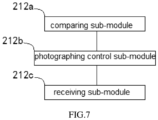
FIG. 7 is a structural block diagram of the controlling sub-module inFIG. 6 . - Reference signs: 100-lamination machine; 110-body; 120-controller; 130-detection device; 140-hot-pressing device; 150-position sensor; 200-unit plate position fixation device; 210-obtaining module; 211-obtaining sub-module; 212-controlling sub-module; 212a-comparing sub-module; 212b-photographing control sub-module; 212c-receiving sub-module; 213-processing sub-module; 220-controlling module.
- In order to further clarify the objectives, the technical solutions and the advantages of embodiments of the present disclosure, technical solutions in embodiments of the present disclosure will be described clearly and completely below in combination with the drawings in the embodiments of this disclosure. Obviously, the described embodiments are some embodiments of the present disclosure, and not all of them. The components of the embodiments of the present disclosure generally described and illustrated in the accompanying drawings herein may be arranged and designed in a variety of different configurations.
- Therefore, the following detailed description of embodiments of the present disclosure provided in the drawings is not intended to limit the scope of the claimed disclosure but merely indicates selected embodiments of the present disclosure. Based on the embodiments in the present disclosure, all other embodiments obtained by a skilled person in the art without creative labor fall within the scope of the present disclosure.
- It should be noted that similar reference signs and letters indicate similar items in the accompanying drawings below, so that once an item is defined in a drawing, it does not require further definition and explanation in subsequent drawings.
- It should be understood that in the description of the present disclosure, orientation or positional relationship indicated by terms such as "upper", "lower", "inside", "outside", "left", "right", are based on the orientation or positional relationship shown in the drawings, or the orientation or positional relationship in which the product of the disclosure is customarily placed in use, or the orientation or positional relationship as customarily understood by those skilled in the art, are intended only to facilitate and simplify the description of the present disclosure, instead to indicate or imply that the device or element referred to must have a particular orientation, be constructed and operated in a particular orientation, and therefore are not to be construed as limit to the present disclosure.
- Moreover, terms such as "first", "second", etc. are merely used for description and cannot be construed as an indication or implication of importance in relativity.
- In the description of the present disclosure, it should also be noted that, unless otherwise expressly specified and limited, terms such as "provide" and "connect" should be understood in a broad sense, for example, "connect" can be a fixed connection, a detachable connection, or an integral connection; can be a mechanical connection or an electrical connection; can be a direct connection or an indirect connection through an intermediate medium, or internal communication between two components. For those skilled in the art, the specific meaning of the above terms in the present disclosure can be understood according to the specific circumstances.
- Embodiments of the present disclosure are described in detail below in combination with the drawings.
- In the present application, the unit plate refers to an electrode, a plate, a piece, a cathode, or an anode.
- Referring to
FIG. 1, FIG. 1 shows a structural block diagram of alamination machine 100 provided by the present embodiment. Thelamination machine 100 includes abody 100, acontroller 120, adetection device 130, a hot-pressingdevice 140 and aposition sensor 150, wherein thecontroller 120, thedetection device 130, the hot-pressingdevice 140 and theposition sensor 150 are all arranged on thebody 110; thecontroller 120 is electrically connected to thedetection device 130, the hot-pressingdevice 140 and theposition sensor 150, respectively. - The
position sensor 150 is used to detect the positions of the unit plates during their movement with the two layers of separators and to send the detection results to thecontroller 120, thecontroller 120 is used to obtain the position information of the unit plates according to the detection results of theposition sensor 150, and to control thedetection device 130 according to the position information to detect the unit plates, and to obtain the peripheral position information of the unit plates according to the detection results of thedetection device 130. - In the present embodiment, the
detection device 130 is a CCD camera, wherein thecontroller 120 controls, after obtaining the position information of the unit plates, the CCD camera to photograph the compound lamination consisting of the unit plates and the two layers of separators, and receives the image signal sent from the CCD camera. In other embodiments, other devices such as a sensor may also be used as thedetection device 130. - After the
controller 120 obtains the peripheral position information of the unit plates, thecontroller 120 is also used to control according to the peripheral position information the hot-pressingdevice 140 to perform hot pressing on the two layers of separators, so that the two layers of separators are adhered at the peripheral positions of the unit plates, forming a closed holding room, which holds the unit plates inside. - In the present embodiment, the shape of the hot-pressing end of the hot-pressing
device 140 is identical to the shape of the peripheries of the unit plates. After obtaining the peripheral position information of the unit plates, thecontroller 120 controls the hot-pressingdevice 140 to perform hot pressing on portions of the two layers of separators corresponding to the peripheries of the unit plates for a predetermined time. In other embodiments, other hot-pressingdevice 140 with straight hot-pressing end may also be used, and thecontroller 120 controls such hot-pressingdevice 140 to sequentially hot press a plurality of edges of the separators corresponding to the peripheries of the unit plates for predetermined time. - The
lamination machine 100 provided by the present embodiment achieves position fixation of the unit plates and prevents the unit plates arranged between the two layers of separators from shifting during lamination process, by obtaining the peripheral position information of the unit plates located between the two layers of separators and controlling the hot-pressingdevice 140 to perform the hot pressing on the portions of the two layers of separators corresponding to the peripheries of the unit plates, to make them adhered, ensuring the lamination precision and increasing the yield rate of the jellyrolls. - Referring to
FIG. 2, FIG. 2 shows a flow block diagram of the unit plate position fixation method provided by the present embodiment, which is applied to thelamination machine 100 provided by First embodiment. - The unit plate position fixation method provided by the present embodiment includes:
Step S101, obtaining peripheral position information of unit plates located between two layers of separators. - Referring to
FIG. 3, FIG. 3 shows a flow block diagram of the sub-steps of the step S101. The step S101 may include:
Sub-step S1011, obtaining the position information of the unit plates during their movement with the two layers of separators. - In the present embodiment, a
position sensor 150 is arranged on the transport path of the separators, acontroller 120 is electrically connected to theposition sensor 150, receives the detection results of theposition sensor 150 continuously and obtains position information of the unit plates according to the detection result of theposition sensor 150. - Sub-step S1012, controlling a
detection device 130 according to the position information to detect the unit plates and receiving the detection signal sent from thedetection device 130. - Referring to
FIG. 4, FIG. 4 shows a flow block diagram of the sub-steps of the sub-step S1012. In the present embodiment, thedetection device 130 is a CCD camera and the sub-step S1012 includes:
Sub-step S1012a, comparing the position information with predetermined reference information. - In the separator transport process, when the unit plates pass the detection point of the
position sensor 150, the position information obtained by thecontroller 120 is compared with the predetermined reference information to obtain the first comparison result; when the gap between the two unit plates passes the detection point of theposition sensor 150, the position information obtained by thecontroller 120 is compared with the predetermined reference information to obtain the second comparison result. - Sub-step S1012b, if the first comparison result is obtained, the CCD camera is controlled to photograph the compound lamination consisting of the unit plates and the two layers of separators.
- By presetting the position of the CCD camera, when the first comparison result is obtained, the characterizing unit plate just reaches the photographing area of the CCD camera. At this time, the
controller 120 controls the CCD camera to perform photographing. - Sub-step S1012c, receiving the image signal sent from the CCD camera.
- The CCD camera obtains the image signal after photographing and transmits the image signal to the
controller 120. - Continuing to refer to
FIG. 3 , the step S101 may also include:
Sub-step S1013, processing the detection signal to obtain the peripheral position information. - After the
controller 120 receives the image signal, the image signal is analyzed and processed to obtain the peripheral position information of the corresponding unit plate. - Continuing to refer to
FIG. 2 , the unit plate position fixation method may further include:
Step S102, controlling the hot-pressingdevice 140 according to the peripheral position information to perform hot pressing on the two layers of separators, so that the two layers of separators are adhered at the peripheral positions of the unit plates. - In the present embodiment, the shape of the hot-pressing end of the hot-pressing
device 140 is identical to the shapes of the peripheries of the unit plates. After obtaining the peripheral position information of the unit plates, thecontroller 120 controls the hot-pressingdevice 140 to perform hot pressing on portions of the two layers of separators corresponding to the peripheries of the unit plates for predetermined time. - In other embodiments, other hot-pressing
device 140 with straight hot-pressing end may also be used, and thecontroller 120 controls such hot-pressingdevice 140 to sequentially hot press a plurality of edges on the two layers of separators corresponding to the peripheries of the unit plates for predetermined period, to achieve the same effect. - In summary, the unit plate position fixation method provided by the present embodiment achieves the position fixation of the unit plates and prevents the unit plates arranged between the two layers of separators from shifting during lamination process, by obtaining the peripheral position information of the unit plates located between the two layers of separators and controlling the hot-pressing
device 140 to perform hot pressing on the portions of the two layers of separators corresponding to the peripheries of the unit plates, ensuring the lamination precision and increasing the yield rate of the jellyrolls. - For a better implementation of the unit plate position fixation method provided by the second embodiment, a unit plate
position fixation device 200 is provided by the present embodiment. Referring toFIG. 5, FIG. 5 shows a connection block diagram of the unit plateposition fixation device 200 provided by the present embodiment, the unit plateposition fixation device 200 provided by the present embodiment includes an obtainingmodule 210 and a controllingmodule 220. - The obtaining
module 210 is used to obtain peripheral position information of unit plates located between two layers of separators, and the obtainingmodule 210 is used to implement thestep 5101 of the unit plate position fixation method provided by Second embodiment. - The controlling
module 220 is used to control according to the peripheral position information a hot-pressingdevice 140 to perform hot pressing on the two layers of separators, so that the two layers of separators are adhered at the peripheral positions of the unit plates, and the controllingmodule 220 is used to implement the step S102 of the unit plate position fixation method provided by Second embodiment. - Referring to
FIG. 6, FIG. 6 shows a structural block diagram of the obtainingmodule 210, the obtaining module includes: - an obtaining sub-module 211, used to obtain the position information of the unit plates during their movement with the two layers of separators, wherein the obtaining sub-module 211 is used to implement the sub-step S1011 of the unit plate position fixation method provided by Second embodiment;
- a controlling sub-module 212, used to control the
detection device 130 according to the position information to detect the unit plates and to receive the detection signal sent from thedetection device 130, wherein the controlling sub-module 212 is used to implement the sub-step S1012 of the unit plate position fixation method provided by Second embodiment; and - a
processing sub-module 213, used to process the detection signal to obtain the peripheral position information, wherein theprocessing sub-module 213 is used to implement the sub-step S1013 of the unit plate position fixation method provided by Second embodiment. - Referring to
FIG. 7, FIG. 7 shows a structural block diagram of the controllingsub-module 212. In the present embodiment, thedetection device 130 is a CCD camera and the controlling sub-module 212 includes: - a comparing sub-module 212a, used to compare the position information with predetermined reference information, wherein the comparing sub-module 212a is used to implement the sub-step S1012a of the unit plate position fixation method provided by Second embodiment;
- a photographing control sub-module 212b, used to control, in the case of obtaining the first comparison result, the CCD camera to photograph the compound lamination consisting of the unit plates and the two layers of separators, wherein the photographing control sub-module 212b is used to implement the sub-step S1012b of the unit plate position fixation method provided by Second embodiment; and
- a receiving sub-module 212c, used to receive the image signal sent from the CCD camera, wherein the receiving sub-module 212c is used to implement the sub-step S1012c of the unit plate position fixation method provided by Second embodiment.
- Therefore, the unit plate
position fixation device 200 provided by the present embodiment can implement the unit plate position fixation method provided by Second embodiment, to achieve position fixation of the unit plates and prevent the unit plates arranged between the two layers of separators from shifting during lamination process, which ensures the lamination precision and increases the yield rate of the jellyrolls. - The above are merely preferred embodiments of the present disclosure and not intended to limit the present disclosure. For those skilled in the art, the present disclosure may have various changes and variations, wherein the scope of protection of the present invention is solely defined by the appended claims.
Claims (4)
- A unit plate position fixation method, comprising steps of:obtaining peripheral position information of unit plates located between two layers of separators (S101); andcontrolling a hot-pressing device according to the peripheral position information to perform hot pressing on the two layers of separators, so that the two layers of separators are adhered at peripheral positions of the unit plates (S102);wherein the step of obtaining peripheral position information of unit plates located between two layers of separators comprises steps of:obtaining position information of the unit plates during their movement with the two layers of separators (S1011);controlling a detection device according to the position information to detect the unit plates, and receiving a detection signal sent from the detection device (S1012); andprocessing the detection signal to obtain the peripheral position information (S1013);wherein the detection device is a CCD camera, and the step of controlling a detection device according to the position information to detect the unit plates and receiving a detection signal from the detection device comprises:comparing the position information with predetermined reference information (S1012a);controlling, if a first comparison result is obtained, the CCD camera to photograph a compound lamination consisting of the unit plates and the two layers of separators (S1012b); andreceiving an image signal sent from the CCD camera (S1012c).
- The unit plate position fixation method according to claim 1, wherein the step of controlling a hot-pressing device to perform hot pressing on the two layers of separators so that the two layers of separators are adhered at peripheral positions of the unit plates comprises:
controlling the hot-pressing device according to the peripheral position information to sequentially hot press, for predetermined time, portions of the two layers of separators corresponding to a plurality of edges of the unit plates. - The unit plate position fixation method according to claim 1 or 2, wherein the step of controlling a hot-pressing device to perform hot pressing on the two layers of separators so that the two layers of separators are adhered at the peripheral positions of the unit plates comprises:
controlling the hot-pressing device according to the peripheral position information to simultaneously hot press, for predetermined time, portions of the two layers of separators corresponding to a plurality of edges of the unit plates. - A lamination machine (100), configured for implementing the unit plate position fixation method according to any one of claims 1 to 3, comprising a body (110), a controller (120), a detection device (130), a hot-pressing device (140) and a position sensor (150), wherein the detection device (130), the hot-pressing device (140) and the position sensor (150) are arranged on the body (110); the controller (120) is electrically connected to the detection device (130), the hot-pressing device (140) and the position sensor (150), respectively; the position sensor (150) is configured to detect positions of the unit plates during their movement with the two layers of separators, the controller is configured to obtain position information according to detection results of the position sensor (150),wherein the detection device is a CCD camera, and the controller is further configured to compare the position information with predetermined reference information (S1012a), control, if a first comparison result is obtained, the CCD camera to photograph a compound lamination consisting of the unit plates and the two layers of separators (S1012b), and obtain peripheral position information of unit plates according to an image signal sent from the CCD camera (S1012c);wherein, the controller is further configured to control the hot-pressing device (140) according to the peripheral position information to perform hot pressing on the two layers of separators, so that the two layers of separators are adhered at the peripheral positions of the unit plates.
Applications Claiming Priority (1)
| Application Number | Priority Date | Filing Date | Title |
|---|---|---|---|
| CN202110568143.2A CN113299969A (en) | 2021-05-24 | 2021-05-24 | Method and device for positioning unit piece and laminating machine |
Publications (3)
| Publication Number | Publication Date |
|---|---|
| EP4095967A1 EP4095967A1 (en) | 2022-11-30 |
| EP4095967B1 true EP4095967B1 (en) | 2024-12-25 |
| EP4095967C0 EP4095967C0 (en) | 2024-12-25 |
Family
ID=77324471
Family Applications (1)
| Application Number | Title | Priority Date | Filing Date |
|---|---|---|---|
| EP22172410.7A Active EP4095967B1 (en) | 2021-05-24 | 2022-05-09 | Unit plate position fixation method and lamination machine |
Country Status (7)
| Country | Link |
|---|---|
| US (1) | US11872795B2 (en) |
| EP (1) | EP4095967B1 (en) |
| JP (1) | JP7392036B2 (en) |
| KR (1) | KR102798086B1 (en) |
| CN (1) | CN113299969A (en) |
| ES (1) | ES3015085T3 (en) |
| HU (1) | HUE070554T2 (en) |
Family Cites Families (20)
| Publication number | Priority date | Publication date | Assignee | Title |
|---|---|---|---|---|
| JP5048404B2 (en) | 2007-06-29 | 2012-10-17 | 東レエンジニアリング株式会社 | Secondary battery manufacturing method and manufacturing apparatus |
| CN101783420A (en) * | 2009-05-05 | 2010-07-21 | 深圳市雄韬电源科技有限公司 | Method for manufacturing lithium ion battery lamination |
| JP5521861B2 (en) * | 2010-07-28 | 2014-06-18 | 株式会社Ihi | Electrode laminator |
| CN102672948B (en) * | 2012-04-24 | 2014-06-18 | 华中科技大学 | Hot pressing equipment for manufacturing composite lamination layer of sheet and flexible thin film |
| JP6524841B2 (en) * | 2014-07-31 | 2019-06-05 | 株式会社村田製作所 | Device for manufacturing electrode plate package |
| CN105336976A (en) * | 2015-11-02 | 2016-02-17 | 多氟多(焦作)新能源科技有限公司 | Lithium ion battery lamination unit, battery cell, battery cell preparing method and lithium ion battery |
| JP6607027B2 (en) | 2015-12-22 | 2019-11-20 | 株式会社豊田自動織機 | Separator electrode manufacturing apparatus and separator electrode manufacturing method |
| CN105703016B (en) * | 2016-04-14 | 2018-07-17 | 合肥国轩高科动力能源有限公司 | A thermal lamination equipment for bonding battery pole pieces and separators |
| CN106252732A (en) * | 2016-08-17 | 2016-12-21 | 吉安市优特利科技有限公司 | The manufacture method of lithium-ion-power cell |
| JP6635203B2 (en) | 2016-12-21 | 2020-01-22 | 株式会社村田製作所 | Electrode laminate manufacturing equipment |
| JP6635204B2 (en) | 2016-12-21 | 2020-01-22 | 株式会社村田製作所 | Electrode laminate manufacturing equipment |
| KR101844852B1 (en) | 2016-12-30 | 2018-04-03 | 주식회사 유라코퍼레이션 | Fpcb fixing structure of battery cell module |
| CN207800785U (en) * | 2017-02-22 | 2018-08-31 | 深圳市格瑞普电池有限公司 | Laminated lithium ion battery |
| KR102345220B1 (en) * | 2017-02-27 | 2021-12-30 | 가부시키가이샤 인비젼 에이이에스씨 재팬 | Method for manufacturing mono cells |
| CN109365307B (en) * | 2018-09-19 | 2020-07-24 | 东莞泓宇智能装备有限公司 | Electricity core detection device of winder |
| CN210403945U (en) * | 2019-08-06 | 2020-04-24 | 重庆市维都利新能源有限公司 | Laminated lithium ion battery |
| CN110588068A (en) * | 2019-08-26 | 2019-12-20 | 广州超音速自动化科技股份有限公司 | Lithium battery pole piece bag making equipment and method |
| CN110994039B (en) * | 2019-12-25 | 2025-04-25 | 东莞市超业精密设备有限公司 | Composite lamination production line and composite lamination method |
| CN211829068U (en) * | 2020-03-26 | 2020-10-30 | 广州中国科学院工业技术研究院 | Battery core lamination device capable of achieving accurate positioning |
| CN212412108U (en) * | 2020-06-30 | 2021-01-26 | 蜂巢能源科技有限公司 | Battery pole piece thermal recombination device and battery lamination equipment |
-
2021
- 2021-05-24 CN CN202110568143.2A patent/CN113299969A/en active Pending
-
2022
- 2022-05-09 HU HUE22172410A patent/HUE070554T2/en unknown
- 2022-05-09 ES ES22172410T patent/ES3015085T3/en active Active
- 2022-05-09 EP EP22172410.7A patent/EP4095967B1/en active Active
- 2022-05-10 US US17/740,602 patent/US11872795B2/en active Active
- 2022-05-11 KR KR1020220057763A patent/KR102798086B1/en active Active
- 2022-05-12 JP JP2022078667A patent/JP7392036B2/en active Active
Also Published As
| Publication number | Publication date |
|---|---|
| JP2022180310A (en) | 2022-12-06 |
| US20220371316A1 (en) | 2022-11-24 |
| JP7392036B2 (en) | 2023-12-05 |
| KR20220158617A (en) | 2022-12-01 |
| KR102798086B1 (en) | 2025-04-17 |
| ES3015085T3 (en) | 2025-04-29 |
| HUE070554T2 (en) | 2025-06-28 |
| US11872795B2 (en) | 2024-01-16 |
| CN113299969A (en) | 2021-08-24 |
| EP4095967C0 (en) | 2024-12-25 |
| EP4095967A1 (en) | 2022-11-30 |
Similar Documents
| Publication | Publication Date | Title |
|---|---|---|
| US10003203B2 (en) | All-solid-state secondary battery system | |
| JP6929443B2 (en) | Battery stack forming device and battery stack forming method | |
| EP3686969A1 (en) | Battery electrode piece thermal compounding apparatus and method for using same to carry out thermo-compression bonding on battery electrode piece assembly | |
| KR102177841B1 (en) | Apparatus for Monitoring Electrode Film Stacking of Secondary Battery Using Lighting | |
| US12586808B2 (en) | Apparatus and method for manufacturing unit cells | |
| KR20190113022A (en) | Method and apparatus for manufacturing of secondary battery | |
| KR101471473B1 (en) | Punching method and system for sheet type material with seams section | |
| EP4095967B1 (en) | Unit plate position fixation method and lamination machine | |
| JP2015037047A (en) | Method for pressurizing film exterior battery | |
| WO2023130338A1 (en) | Electrode plate stacking method and apparatus, and stacking machine | |
| CN109494414A (en) | A kind of lamination device | |
| CN115041562B (en) | Multi-roller system, battery can forming apparatus and forming method | |
| CN219947579U (en) | Screen printing system and solar cell production system | |
| CN120095231A (en) | Pole cutting system and method | |
| KR20170093377A (en) | Device for Welding Electrode Tabs Comprising Vision Inspection Part | |
| JP2006269295A (en) | Thin battery and manufacturing method thereof | |
| KR101746790B1 (en) | Battery Pack Comprising Curved-shaped Protection Circuit Module | |
| WO2024000491A1 (en) | Detection method and system for battery production, and battery production method and system | |
| KR0167328B1 (en) | Cathode tab positioning device and the control method | |
| KR102722265B1 (en) | Secondary Battery Pouch Manufacturing Apparatus and Control Method Thereof | |
| EP4700971A1 (en) | Method for manufacturing electrode assembly, battery cell manufactured using same, and system for manufacturing electrode assembly | |
| KR102598671B1 (en) | Device of manufacturing a secondary battery | |
| JP4322755B2 (en) | Information notification system and communication apparatus | |
| CN115359058B (en) | Battery diaphragm turnover detection method, device, equipment and medium | |
| JP2006278141A (en) | Thin battery |
Legal Events
| Date | Code | Title | Description |
|---|---|---|---|
| PUAI | Public reference made under article 153(3) epc to a published international application that has entered the european phase |
Free format text: ORIGINAL CODE: 0009012 |
|
| STAA | Information on the status of an ep patent application or granted ep patent |
Free format text: STATUS: REQUEST FOR EXAMINATION WAS MADE |
|
| STAA | Information on the status of an ep patent application or granted ep patent |
Free format text: STATUS: EXAMINATION IS IN PROGRESS |
|
| 17P | Request for examination filed |
Effective date: 20220509 |
|
| AK | Designated contracting states |
Kind code of ref document: A1 Designated state(s): AL AT BE BG CH CY CZ DE DK EE ES FI FR GB GR HR HU IE IS IT LI LT LU LV MC MK MT NL NO PL PT RO RS SE SI SK SM TR |
|
| 17Q | First examination report despatched |
Effective date: 20221103 |
|
| REG | Reference to a national code |
Ref country code: DE Ref legal event code: R079 Free format text: PREVIOUS MAIN CLASS: H01M0010040000 Ipc: H01M0006000000 Ref country code: DE Ref legal event code: R079 Ref document number: 602022008995 Country of ref document: DE Free format text: PREVIOUS MAIN CLASS: H01M0010040000 Ipc: H01M0006000000 |
|
| GRAP | Despatch of communication of intention to grant a patent |
Free format text: ORIGINAL CODE: EPIDOSNIGR1 |
|
| STAA | Information on the status of an ep patent application or granted ep patent |
Free format text: STATUS: GRANT OF PATENT IS INTENDED |
|
| RIC1 | Information provided on ipc code assigned before grant |
Ipc: B32B 38/18 20060101ALN20240809BHEP Ipc: H01M 10/04 20060101ALI20240809BHEP Ipc: H01M 6/00 20060101AFI20240809BHEP |
|
| INTG | Intention to grant announced |
Effective date: 20240827 |
|
| GRAS | Grant fee paid |
Free format text: ORIGINAL CODE: EPIDOSNIGR3 |
|
| GRAA | (expected) grant |
Free format text: ORIGINAL CODE: 0009210 |
|
| STAA | Information on the status of an ep patent application or granted ep patent |
Free format text: STATUS: THE PATENT HAS BEEN GRANTED |
|
| AK | Designated contracting states |
Kind code of ref document: B1 Designated state(s): AL AT BE BG CH CY CZ DE DK EE ES FI FR GB GR HR HU IE IS IT LI LT LU LV MC MK MT NL NO PL PT RO RS SE SI SK SM TR |
|
| REG | Reference to a national code |
Ref country code: GB Ref legal event code: FG4D |
|
| REG | Reference to a national code |
Ref country code: CH Ref legal event code: EP |
|
| REG | Reference to a national code |
Ref country code: DE Ref legal event code: R096 Ref document number: 602022008995 Country of ref document: DE |
|
| REG | Reference to a national code |
Ref country code: IE Ref legal event code: FG4D |
|
| U01 | Request for unitary effect filed |
Effective date: 20250116 |
|
| U07 | Unitary effect registered |
Designated state(s): AT BE BG DE DK EE FI FR IT LT LU LV MT NL PT RO SE SI Effective date: 20250122 |
|
| PG25 | Lapsed in a contracting state [announced via postgrant information from national office to epo] |
Ref country code: HR Free format text: LAPSE BECAUSE OF FAILURE TO SUBMIT A TRANSLATION OF THE DESCRIPTION OR TO PAY THE FEE WITHIN THE PRESCRIBED TIME-LIMIT Effective date: 20241225 |
|
| PG25 | Lapsed in a contracting state [announced via postgrant information from national office to epo] |
Ref country code: NO Free format text: LAPSE BECAUSE OF FAILURE TO SUBMIT A TRANSLATION OF THE DESCRIPTION OR TO PAY THE FEE WITHIN THE PRESCRIBED TIME-LIMIT Effective date: 20250325 |
|
| PG25 | Lapsed in a contracting state [announced via postgrant information from national office to epo] |
Ref country code: GR Free format text: LAPSE BECAUSE OF FAILURE TO SUBMIT A TRANSLATION OF THE DESCRIPTION OR TO PAY THE FEE WITHIN THE PRESCRIBED TIME-LIMIT Effective date: 20250326 |
|
| PG25 | Lapsed in a contracting state [announced via postgrant information from national office to epo] |
Ref country code: RS Free format text: LAPSE BECAUSE OF FAILURE TO SUBMIT A TRANSLATION OF THE DESCRIPTION OR TO PAY THE FEE WITHIN THE PRESCRIBED TIME-LIMIT Effective date: 20250325 |
|
| REG | Reference to a national code |
Ref country code: ES Ref legal event code: FG2A Ref document number: 3015085 Country of ref document: ES Kind code of ref document: T3 Effective date: 20250429 |
|
| U20 | Renewal fee for the european patent with unitary effect paid |
Year of fee payment: 4 Effective date: 20250425 |
|
| REG | Reference to a national code |
Ref country code: HU Ref legal event code: AG4A Ref document number: E070554 Country of ref document: HU |
|
| PG25 | Lapsed in a contracting state [announced via postgrant information from national office to epo] |
Ref country code: SM Free format text: LAPSE BECAUSE OF FAILURE TO SUBMIT A TRANSLATION OF THE DESCRIPTION OR TO PAY THE FEE WITHIN THE PRESCRIBED TIME-LIMIT Effective date: 20241225 |
|
| PG25 | Lapsed in a contracting state [announced via postgrant information from national office to epo] |
Ref country code: PL Free format text: LAPSE BECAUSE OF FAILURE TO SUBMIT A TRANSLATION OF THE DESCRIPTION OR TO PAY THE FEE WITHIN THE PRESCRIBED TIME-LIMIT Effective date: 20241225 |
|
| PGFP | Annual fee paid to national office [announced via postgrant information from national office to epo] |
Ref country code: ES Payment date: 20250616 Year of fee payment: 4 |
|
| PG25 | Lapsed in a contracting state [announced via postgrant information from national office to epo] |
Ref country code: IS Free format text: LAPSE BECAUSE OF FAILURE TO SUBMIT A TRANSLATION OF THE DESCRIPTION OR TO PAY THE FEE WITHIN THE PRESCRIBED TIME-LIMIT Effective date: 20250425 |
|
| PGFP | Annual fee paid to national office [announced via postgrant information from national office to epo] |
Ref country code: HU Payment date: 20250505 Year of fee payment: 4 |
|
| PG25 | Lapsed in a contracting state [announced via postgrant information from national office to epo] |
Ref country code: SK Free format text: LAPSE BECAUSE OF FAILURE TO SUBMIT A TRANSLATION OF THE DESCRIPTION OR TO PAY THE FEE WITHIN THE PRESCRIBED TIME-LIMIT Effective date: 20241225 |
|
| PG25 | Lapsed in a contracting state [announced via postgrant information from national office to epo] |
Ref country code: CZ Free format text: LAPSE BECAUSE OF FAILURE TO SUBMIT A TRANSLATION OF THE DESCRIPTION OR TO PAY THE FEE WITHIN THE PRESCRIBED TIME-LIMIT Effective date: 20241225 |
|
| PLBE | No opposition filed within time limit |
Free format text: ORIGINAL CODE: 0009261 |
|
| STAA | Information on the status of an ep patent application or granted ep patent |
Free format text: STATUS: NO OPPOSITION FILED WITHIN TIME LIMIT |
|
| REG | Reference to a national code |
Ref country code: CH Ref legal event code: L10 Free format text: ST27 STATUS EVENT CODE: U-0-0-L10-L00 (AS PROVIDED BY THE NATIONAL OFFICE) Effective date: 20251105 |
|
| 26N | No opposition filed |
Effective date: 20250926 |
|
| REG | Reference to a national code |
Ref country code: CH Ref legal event code: H13 Free format text: ST27 STATUS EVENT CODE: U-0-0-H10-H13 (AS PROVIDED BY THE NATIONAL OFFICE) Effective date: 20251223 |
|
| PG25 | Lapsed in a contracting state [announced via postgrant information from national office to epo] |
Ref country code: CH Free format text: LAPSE BECAUSE OF NON-PAYMENT OF DUE FEES Effective date: 20250531 |
|
| PG25 | Lapsed in a contracting state [announced via postgrant information from national office to epo] |
Ref country code: MC Free format text: LAPSE BECAUSE OF FAILURE TO SUBMIT A TRANSLATION OF THE DESCRIPTION OR TO PAY THE FEE WITHIN THE PRESCRIBED TIME-LIMIT Effective date: 20241225 |
|
| PG25 | Lapsed in a contracting state [announced via postgrant information from national office to epo] |
Ref country code: IE Free format text: LAPSE BECAUSE OF NON-PAYMENT OF DUE FEES Effective date: 20250509 |