EP4095830A1 - Secure computation device, secure computation method, and program - Google Patents
Secure computation device, secure computation method, and program Download PDFInfo
- Publication number
- EP4095830A1 EP4095830A1 EP20915629.8A EP20915629A EP4095830A1 EP 4095830 A1 EP4095830 A1 EP 4095830A1 EP 20915629 A EP20915629 A EP 20915629A EP 4095830 A1 EP4095830 A1 EP 4095830A1
- Authority
- EP
- European Patent Office
- Prior art keywords
- secure computation
- value
- secret share
- public
- program
- Prior art date
- Legal status (The legal status is an assumption and is not a legal conclusion. Google has not performed a legal analysis and makes no representation as to the accuracy of the status listed.)
- Granted
Links
Images
Classifications
-
- H—ELECTRICITY
- H04—ELECTRIC COMMUNICATION TECHNIQUE
- H04L—TRANSMISSION OF DIGITAL INFORMATION, e.g. TELEGRAPHIC COMMUNICATION
- H04L9/00—Cryptographic mechanisms or cryptographic arrangements for secret or secure communications; Network security protocols
- H04L9/08—Key distribution or management, e.g. generation, sharing or updating, of cryptographic keys or passwords
- H04L9/0816—Key establishment, i.e. cryptographic processes or cryptographic protocols whereby a shared secret becomes available to two or more parties, for subsequent use
- H04L9/085—Secret sharing or secret splitting, e.g. threshold schemes
-
- G—PHYSICS
- G09—EDUCATION; CRYPTOGRAPHY; DISPLAY; ADVERTISING; SEALS
- G09C—CIPHERING OR DECIPHERING APPARATUS FOR CRYPTOGRAPHIC OR OTHER PURPOSES INVOLVING THE NEED FOR SECRECY
- G09C1/00—Apparatus or methods whereby a given sequence of signs, e.g. an intelligible text, is transformed into an unintelligible sequence of signs by transposing the signs or groups of signs or by replacing them by others according to a predetermined system
-
- H—ELECTRICITY
- H04—ELECTRIC COMMUNICATION TECHNIQUE
- H04L—TRANSMISSION OF DIGITAL INFORMATION, e.g. TELEGRAPHIC COMMUNICATION
- H04L9/00—Cryptographic mechanisms or cryptographic arrangements for secret or secure communications; Network security protocols
- H04L9/30—Public key, i.e. encryption algorithm being computationally infeasible to invert or user's encryption keys not requiring secrecy
- H04L9/3006—Public key, i.e. encryption algorithm being computationally infeasible to invert or user's encryption keys not requiring secrecy underlying computational problems or public-key parameters
-
- H—ELECTRICITY
- H04—ELECTRIC COMMUNICATION TECHNIQUE
- H04L—TRANSMISSION OF DIGITAL INFORMATION, e.g. TELEGRAPHIC COMMUNICATION
- H04L2209/00—Additional information or applications relating to cryptographic mechanisms or cryptographic arrangements for secret or secure communication H04L9/00
- H04L2209/46—Secure multiparty computation, e.g. millionaire problem
Definitions
- the present disclosure relates to a technology for performing multiplication by a real number value in secure computation.
- NPL 1 discloses a secure computation method for multiplying a secret share value by a public real number value.
- NPL 1 Dai Ikarashi, "Secure Real Number Operations for Secure AI -O(
- the secure computation method of NPL 1 has a problem that right shifting is performed in secure computation in addition to multiplication each time the multiplication is performed in order to prevent overflow, and a calculation cost is high.
- the present disclosure has been made in view of such a point, and an object of the present disclosure is to reduce a calculation cost of secure computation for multiplying a secret share value by a public real number value.
- x is a real number
- [•] is a secret share value of •
- ⁇ is a positive integer that is the number of bits indicating a right shifting amount
- m is a real number
- secure computation of public value division [x]/(2°/m) using a secret share value [x] and the obtained public value 2 ⁇ /m is performed, so that a secret share value [mx] r of a value obtained by right-shifting mx by ⁇ bits is obtained and output.
- a secure computation device receives a secret share value [x] of a real number x, a real number m which is a multiplier, and a positive integer ⁇ which is the number of bits indicating a right shifting amount as inputs, and obtains and outputs a secret share value [mx] r of a value obtained by right-shifting mx by ⁇ bits.
- a secret sharing scheme for a secret share value is not limited, and examples thereof include an additive secret sharing scheme and a Shamir's secret sharing scheme.
- An example of [•] is a secret share value obtained by performing linear secret sharing on an element • on a quotient ring.
- a public decimal point position is defined for an integer on the ring so that this can be regarded as a fixed-point real number. In the embodiment, the fixed-point real number indicated on the ring in this way is simply expressed as a real number.
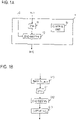
- a secure computation device 1 of the embodiment includes a public value calculation unit 11, a secure computation unit 12, and a control unit 19.
- the secure computation device 1 executes processing under the control of the control unit 19.
- a secret share value [x], a real number m, and a positive integer ⁇ are input to the secure computation device 1 (step S10).
- the secret share value [x] is sent to the secure computation unit 12, and the real number m and the positive integer ⁇ are sent to the public value calculation unit 11.
- the real number m and the positive integer ⁇ are input to the public value calculation unit 11.
- the public value calculation unit 11 calculates and outputs a public value of 2 ⁇ /m (step S11).
- the secret share value [x] and the public value 2 ⁇ /m which is output from the public value calculation unit 11 are input to the secure computation unit 12.
- the secure computation unit 12 performs secure computation of public value division [x]/(2°/m) using the secret share value [x] and the public value 2 ⁇ /m which is obtained by the public value calculation unit 11 to obtain and output a secret share value [mx] r of a value obtained by right-shifting mx by ⁇ bits (step S12).
- the secure computation device 1 outputs the secret share value [mx] r (step S13).
- the value obtained by this secure computation is equivalent to the secret share value [mx] r of the value obtained by right-shifting the multiplication result mx by ⁇ bits.
- the multiplication and the right shifting are achieved at the same time through the secure computation of public value division with a low calculation cost. As a result, the calculation cost can be greatly reduced.
- Those skilled in the art of secure computation recognize that division is processing having a higher calculation cost than multiplication, and do not have an idea of using the division for processing of multiplication.
- a public value 2 ⁇ /m is calculated focusing on the fact that right shifting is equivalent to division, and secure computation of public value division [x]/(2 ⁇ /m) is performed, and thus, it is possible to obtain unpredictable remarkable effects that a calculation cost can be reduced as compared with a case in which the multiplication and the right shifting are performed separately.
- Overflow is a problem based on performance of a processor in which secure computation has been implemented, and the present scheme provides a scheme for solving a problem based on this hardware constraint.
- the present scheme does not solve a pure mathematics problem, but solves a hardware implementation problem, and thus has technical characteristics.
- a value of ⁇ indicating a right shifting amount is determined according to the number of bits that can be handled by the processor. That is, a public value 2 ⁇ /m is a value determined from requirements on hardware.
- Example 1 the secret share value [x] of the real number x is multiplied by one of two public values m 0 and m 1 depending on a condition c ⁇ ⁇ 0, 1 ⁇ .
- the public values m 0 and m 1 are large, the effective number of bits of a value after multiplication (the number of bits required to express that number in binary) increases to a number that cannot be multiplied any more, and thus, right shifting may be performed. In example 1, efficiency of processing in such a case is improved.
- the secure computation device obtains and outputs secret share values [m 0 x] and [m 1 x] through secure computation using the secret share value [x], the multipliers m 0 and m 1 , and the modulus p (step S21).
- a specific example of processing of step S21 will be described below.
- step S21 A specific example of processing of step S21 will be described.
- p is a modulus of a positive integer
- q is a quotient of positive integers.
- the secure computation device obtains and outputs a secret share value [q] of the quotient q of x/p through secure computation using the secret share value [x] and the modulus p (step S211).
- a specific example of processing of step S212 will be described hereinafter.
- the public value calculation unit 212a obtains and outputs public values 2 ⁇ 0 /m 0 and 2 ⁇ 1 /m 1 using the multipliers m 0 and m 1 and positive integers ⁇ 0 and ⁇ 1.
- ⁇ 0 and ⁇ 1 are positive integers that are the number of bits indicating a right shifting amount performed when the multipliers m 0 and m 1 are large, respectively (step S212a).
- the secure computation device performs secure computation of public value division [x + qp]/(2 ⁇ 0 /m 0 ) and secure computation of public value division [x + qp]/(2 ⁇ 1 /m 1 ) using the secret share values [x] and [q], the modulus p, and the public values 2 ⁇ 0 /m 0 and 2 ⁇ 1 /m 1 which are obtained by the public value calculation unit 212a to obtain and output a secret share value [(x + qp)mo] of a value obtained by right-shifting (x + qp)mo by ⁇ 0 bits and a secret share value [(x + qp)m 1 ] of a value obtained by right-shifting (x + qp)m 1 by ⁇ 1 bits (step S212b).
- any function (for example, an elementary function) is approximated by the polynomial function f t (x), and further, a secret share value [f t (x) - f t (x)] of a difference f t (x) - f' t (x) between a function f t (x) before right shift and an approximation function f' u (x) of the function f t (x) is calculated, a secret share value [f t (x) - f' t (x)] r of (f t (x) - f' t (x)) r obtained by right-shifting f t (x) - f t (x) is obtained, and a secret share value [f t (x)] of the function f t (x) obtained by adding f t (x) to f t (x) - f t (x) is obtained through secure computation of the secret share value [f t (x)
- x is a real number
- [•] is a secret share value of •
- n is an integer equal to or greater than 1 (for example, n is an integer equal to or greater than 2)
- f t (x) is a function of a real number x
- f' t (x) is an approximation function of the function f t (x)
- a secret sharing scheme is not limited, and examples thereof include an additive secret sharing scheme and a Shamir's secret sharing scheme.
- the overflow is a problem based on performance of a processor in which the secure computation is implemented, and the present scheme provides a scheme for solving a problem based on constraints on this hardware.
- the present scheme does not solve a pure mathematics problem, but solves a hardware implementation problem, and thus has technical characteristics. For example, technical characteristics of the processor that overflows when the secret share value [ft(x)] is calculated but does not overflow when the secret share value [f t (x) - f' t (x)] is calculated are remarkable.
- the secure computation device receives the secret share value [x] ⁇ [L, R) of the real number x as an input and performs the following secure computation to output a secret share value [f n - 1 (x)] of a target function f n - 1 (x).
- L and R are real numbers satisfying L ⁇ R, and [L, R) indicates a left-closed, right-open interval of L or more and smaller than R.
- f' 0 (x) ix + j
- f' 1 (x) ky + sx + m
- f' 2 (x) nz + oy + px + q
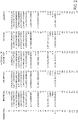
- Fig. 2 illustrates calculated parameters in a case in which an elementary function is a reciprocal function, a square root function, a reciprocal function of a square root, an exponential function, and a logarithmic function.
- ex, ey, and ez indicate decimal point positions of x, y, and z, respectively.
- e'x, e'y, and e'z indicate decimal point positions of x', y', and z' before right shift, respectively.
- These decimal point positions indicate bit positions of the decimal point positions counted from the lower bits. A value indicating this bit position starts from 0, and when an e1-st bit counted from a lower bit indicates 1, a decimal point position is represented as e1.
- the secure computation device 1 in the embodiment is, for example, a device configured by a general-purpose or dedicated computer including a processor (a hardware processor) such as a central processing unit (CPU), a memory such as a random-access memory (RAM) and a read-only memory (ROM), and the like executing a predetermined program.
- This computer may include one processor and memory or may include a plurality of processors and memories.
- This program may be installed in a computer or may be recorded in a ROM or the like in advance.
- a part or all of processing units may be configured by using an electronic circuit that implements a processing function alone, instead of an electronic circuit (circuitry) that implements a functional configuration by a program being read, like a CPU.
- an electronic circuit constituting one device may include a plurality of CPUs.
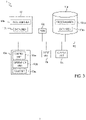
- Fig. 3 is a block diagram illustrating a hardware configuration of the secure computation device 1 in the embodiment.
- the secure computation device 1 of this example includes a central processing unit (CPU) 10a, an input unit 10b, an output unit 10c, a random access memory (RAM) 10d, a read only memory (ROM) 10e, an auxiliary storage device 10f, and a bus 10g.
- the CPU 10a of this example includes a control unit 10aa, an operation unit 10ab, and a register 10ac, and executes various pieces of operation processing according to various programs read into the register 10ac.
- the output unit 10c is an output terminal, a display, or the like on which data is output.
- the output unit 10c is a LAN card or the like controlled by the CPU 10a that has read a predetermined program.
- the RAM 10d is a static random access memory (SRAM), a dynamic random access memory (DRAM), or the like, and has a program area 10da in which a predetermined program is stored and a data area 10db in which various types of data is stored.
- the auxiliary storage device 10f is, for example, a hard disk, a magneto-optical disc (MO), a semiconductor memory, or the like, and has a program area 10fa in which a predetermined program is stored and a data area 10fb in which various types of data is stored.
- the bus 10g connects the CPU 10a, the input unit 10b, the output unit 10c, the RAM 10d, the ROM 10e, and the auxiliary storage device 10f so that information can be exchanged.
- the CPU 10a writes the program stored in the program area 10fa of the auxiliary storage device 10f to the program area 10da of the RAM 10d according to a read operating system (OS) program.
- OS operating system
- the CPU 10a writes various types of data stored in the data area 10fb of the auxiliary storage device 10f to the data area 10db of the RAM 10d.
- An address on the RAM 10d in which this program or data is written is stored in the register 10ac of the CPU 10a.
- the control unit 10ab of the CPU 10a sequentially reads out these addresses stored in the register 10ac, reads a program or data from the area on the RAM 10d indicated by the read address, causes the operation unit 10ab to sequentially execute operations indicated by the program, and stores operation results in the register 10ac.
- the functional configuration of the secure computation device 1 illustrated in Fig. 1A is implemented.
- the above-described program can be recorded on a computer-readable recording medium.
- An example of the computer-readable recording medium is a non-transitory recording medium. Examples of such a recording medium are a magnetic recording device, an optical disc, a photomagnetic recording medium, and a semiconductor memory.
- Distribution of this program is performed, for example, by selling, transferring, or renting a portable recording medium such as a DVD or CD-ROM on which the program has been recorded. Further, this program may be distributed by being stored in a storage device of a server computer and transferred from the server computer to another computer via a network. As described above, the computer that executes such a program first temporarily stores, for example, the program recorded on the portable recording medium or the program transferred from the server computer in a storage device of the computer. When the computer executes the processing, the computer reads the program stored in the storage device of the computer and executes processing according to the read program.
- the computer may directly read the program from the portable recording medium and execute the processing according to the program, and further, the processing according to the received program may be sequentially executed each time the program is transferred from the server computer to the computer.
- a configuration in which the above-described processing may be executed by a so-called application service provider (ASP) type service that implements a processing function only by an execution instruction and result acquisition without transferring the program from the server computer to the computer.
- ASP application service provider
- the program in the present embodiment includes information provided for processing of an electronic calculator and being pursuant to the program (such as data that is not a direct command to the computer, but has properties defining processing of the computer).
- the present device is configured by a predetermined program being executed on the computer, at least a part of processing content of thereof may be implemented by hardware.
- the present disclosure can be used, for example, for machine learning performed in secure computation while concealing data or for multiplication of real number values in data mining.
Landscapes
- Engineering & Computer Science (AREA)
- Computer Security & Cryptography (AREA)
- Computer Networks & Wireless Communication (AREA)
- Signal Processing (AREA)
- Theoretical Computer Science (AREA)
- Computing Systems (AREA)
- Physics & Mathematics (AREA)
- General Physics & Mathematics (AREA)
- Complex Calculations (AREA)
- Storage Device Security (AREA)
- Hardware Redundancy (AREA)
- Devices For Executing Special Programs (AREA)
- Pharmaceuticals Containing Other Organic And Inorganic Compounds (AREA)
Abstract
Description
- The present disclosure relates to a technology for performing multiplication by a real number value in secure computation.
- NPL 1 discloses a secure computation method for multiplying a secret share value by a public real number value.
- NPL 1: Dai Ikarashi, "Secure Real Number Operations for Secure AI -O(|p|)-Bit Communication and O(1)-Round Right Shift Protocol-", CSS2019, 2019.
- However, the secure computation method of
NPL 1 has a problem that right shifting is performed in secure computation in addition to multiplication each time the multiplication is performed in order to prevent overflow, and a calculation cost is high. - The present disclosure has been made in view of such a point, and an object of the present disclosure is to reduce a calculation cost of secure computation for multiplying a secret share value by a public real number value.
- x is a real number, [•] is a secret share value of •, σ is a positive integer that is the number of bits indicating a right shifting amount, m is a real number, a
public value 2σ/m is obtained, and secure computation of public value division [x]/(2°/m) using a secret share value [x] and the obtainedpublic value 2σ/m is performed, so that a secret share value [mx]r of a value obtained by right-shifting mx by σ bits is obtained and output. - Thus, in the present disclosure, because multiplication by a real number m and right shifting by σ bits are executed at the same time, a calculation cost can be reduced.
-
-
Fig. 1A is a block diagram illustrating a secure computation device of an embodiment.Fig. 1B is a flow diagram illustrating a secure computation method of the embodiment. -
Fig. 2 is a table illustrating calculated parameters regarding each of elementary functions. -
Fig. 3 is a block diagram illustrating a hardware configuration. - Hereinafter, embodiments of the present disclosure will be described with reference to the drawings.
- In the embodiment, a secure computation device receives a secret share value [x] of a real number x, a real number m which is a multiplier, and a positive integer σ which is the number of bits indicating a right shifting amount as inputs, and obtains and outputs a secret share value [mx]r of a value obtained by right-shifting mx by σ bits. A secret sharing scheme for a secret share value is not limited, and examples thereof include an additive secret sharing scheme and a Shamir's secret sharing scheme. An example of [•] is a secret share value obtained by performing linear secret sharing on an element • on a quotient ring. Further, a public decimal point position is defined for an integer on the ring so that this can be regarded as a fixed-point real number. In the embodiment, the fixed-point real number indicated on the ring in this way is simply expressed as a real number.
- As illustrated in
Fig. 1A , asecure computation device 1 of the embodiment includes a publicvalue calculation unit 11, asecure computation unit 12, and acontrol unit 19. Thesecure computation device 1 executes processing under the control of thecontrol unit 19. - As illustrated in
Fig. 1B , first, a secret share value [x], a real number m, and a positive integer σ are input to the secure computation device 1 (step S10). The secret share value [x] is sent to thesecure computation unit 12, and the real number m and the positive integer σ are sent to the publicvalue calculation unit 11. - The real number m and the positive integer σ are input to the public
value calculation unit 11. The publicvalue calculation unit 11 calculates and outputs a public value of 2σ/m (step S11). - The secret share value [x] and the
public value 2σ/m which is output from the publicvalue calculation unit 11 are input to thesecure computation unit 12. Thesecure computation unit 12 performs secure computation of public value division [x]/(2°/m) using the secret share value [x] and thepublic value 2σ/m which is obtained by the publicvalue calculation unit 11 to obtain and output a secret share value [mx]r of a value obtained by right-shifting mx by σ bits (step S12). - The
secure computation device 1 outputs the secret share value [mx]r (step S13). - Normally, in secure computation, when the multiplication of the secret share value [x] by the public real number m and the right shifting of the secret share value [x] by the σ bits are performed, the multiplication is performed and then the right shifting is performed or the right shifting is performed and then the multiplication is performed. In this case, a calculation cost for performing the multiplication and a calculation cost for performing the right shifting are incurred. On the other hand, in the present embodiment, the fact that the right shifting is equivalent to division is focused on, the
public value 2σ/m is first calculated, and secure computation of public value division [x]/(2σ/m) using the secret share value [x] and the obtainedpublic value 2σ/m is performed. The value obtained by this secure computation is equivalent to the secret share value [mx]r of the value obtained by right-shifting the multiplication result mx by σ bits. However, the multiplication and the right shifting are achieved at the same time through the secure computation of public value division with a low calculation cost. As a result, the calculation cost can be greatly reduced. Those skilled in the art of secure computation recognize that division is processing having a higher calculation cost than multiplication, and do not have an idea of using the division for processing of multiplication. Nevertheless, in the present embodiment, apublic value 2σ/m is calculated focusing on the fact that right shifting is equivalent to division, and secure computation of public value division [x]/(2σ/m) is performed, and thus, it is possible to obtain unpredictable remarkable effects that a calculation cost can be reduced as compared with a case in which the multiplication and the right shifting are performed separately. Overflow is a problem based on performance of a processor in which secure computation has been implemented, and the present scheme provides a scheme for solving a problem based on this hardware constraint. Thus, the present scheme does not solve a pure mathematics problem, but solves a hardware implementation problem, and thus has technical characteristics. A value of σ indicating a right shifting amount is determined according to the number of bits that can be handled by the processor. That is, apublic value 2σ/m is a value determined from requirements on hardware. - Hereinafter, an algorithm capable of implementing the above-described scheme will be illustrated.
- In Example 1, the secret share value [x] of the real number x is multiplied by one of two public values m0 and m1 depending on a condition c ∈ {0, 1}. When the public values m0 and m1 are large, the effective number of bits of a value after multiplication (the number of bits required to express that number in binary) increases to a number that cannot be multiplied any more, and thus, right shifting may be performed. In example 1, efficiency of processing in such a case is improved.
- Input: [x], multipliers m0 and m1, secret share value [c] of condition c ∈ {0, 1} Output: [m0x] if c = 0 and [m1x] if c = 1
- The secure computation device obtains and outputs secret share values [m0x] and [m1x] through secure computation using the secret share value [x], the multipliers m0 and m1, and the modulus p (step S21). A specific example of processing of step S21 will be described below.
- The secure computation device obtains and outputs a secret share value [c?m0x:m1x] of mcx through secure computation using the secret share values [c], [mox], and [m1x]. That is, the secure computation unit 22 obtains and outputs [m0x] when c = 0 and obtains and outputs [m1x] when c = 1 (step S22).
- A specific example of processing of step S21 will be described. Here, it is assumed that do = 1/m0 and d1 = 1/m1 are divisors, p is a modulus of a positive integer, and q is a quotient of positive integers.
- The secure computation device obtains and outputs a secret share value [q] of the quotient q of x/p through secure computation using the secret share value [x] and the modulus p (step S211).
- The secure computation device obtains and outputs [m0x] = [x/do] = [(x + qp)/do] - [q]p/do and [m1x] = [x/d1] = [(x + qp)/d1] - [q]p/d1 through secure computation using the secret share values [x] and [q], divisors d0, ..., dn - 1 and the modulus p (step S212). A specific example of processing of step S212 will be described hereinafter.
- In the secure computation device, the public value calculation unit 212a obtains and outputs
public values 2σ0/m0 and 2σ1/m1 using the multipliers m0 and m1 and positive integers σ0 and σ1. Here, σ0 and σ1 are positive integers that are the number of bits indicating a right shifting amount performed when the multipliers m0 and m1 are large, respectively (step S212a). - The secure computation device performs secure computation of public value division [x + qp]/(2σ0/m0) and secure computation of public value division [x + qp]/(2σ1/m1) using the secret share values [x] and [q], the modulus p, and the
public values 2σ0/m0 and 2σ1/m1 which are obtained by the public value calculation unit 212a to obtain and output a secret share value [(x + qp)mo] of a value obtained by right-shifting (x + qp)mo by σ0 bits and a secret share value [(x + qp)m1] of a value obtained by right-shifting (x + qp)m1 by σ1 bits (step S212b). - The secure computation device obtains and outputs [m0x] = [(x + qp)mo] - [q]pmo and [m1x] = [(x + qp)m1] - [q]pm1 through secure computation using the secret share values [(x + qp)m0], [(x + qp)m1], and [q], the modulus p, and the multipliers m0 and m1 (step S212c).
- In Example 2, any function (for example, an elementary function) is approximated by the polynomial function ft(x), and further, a secret share value [ft(x) - ft(x)] of a difference ft(x) - f't(x) between a function ft(x) before right shift and an approximation function f'u(x) of the function ft(x) is calculated, a secret share value [ft(x) - f't(x)]r of (ft(x) - f't(x))r obtained by right-shifting ft(x) - ft(x) is obtained, and a secret share value [ft(x)] of the function ft(x) obtained by adding ft(x) to ft(x) - ft(x) is obtained through secure computation of the secret share value [ft(x) - f't(x)]r and the secret share value [f't(x)]. Here, x is a real number, [•] is a secret share value of •, n is an integer equal to or greater than 1 (for example, n is an integer equal to or greater than 2), t = 0, ..., n - 1, u = 1, ..., n - 1, ft(x) is a function of a real number x, f't(x) is an approximation function of the function ft(x), a secret share value [f'0(x)] of the approximation function f'0(x) is [f'0(x)] = c0, 0 + c0, 1[x], a secret share value [f'u(x)] of an approximation function f'u(x) is [f'u(x)] = cu, 0 + cu, 1[x] + cu, 2[f0(x)] + ... + [fu - 1(x)], ct, 0 is a public value, and ct, 1, ..., ct, n + 1 are coefficients. Here, ct, 1, ..., ct, n + 1 are values with small effective numbers of bits and are values that do not require a shift due to overflow even when ct, 1, ..., ct, n + 1 is multiplied. ft(x) - f't(x) is positive. A secret sharing scheme is not limited, and examples thereof include an additive secret sharing scheme and a Shamir's secret sharing scheme. Here, because a magnitude of ft(x) - f't(x) is smaller than a magnitude of ft(x), it is possible to curb an overflow of the secret share value [ft(x) - f't(x)]. Further, because the secret share value [ft(x) - f't(x)] of the difference ft(x) - f't(x) between the function ft(x) before right shift and the approximation function f'u(x) of the function ft(x) is calculated, it is possible to maintain high precision. The overflow is a problem based on performance of a processor in which the secure computation is implemented, and the present scheme provides a scheme for solving a problem based on constraints on this hardware. Thus, the present scheme does not solve a pure mathematics problem, but solves a hardware implementation problem, and thus has technical characteristics. For example, technical characteristics of the processor that overflows when the secret share value [ft(x)] is calculated but does not overflow when the secret share value [ft(x) - f't(x)] is calculated are remarkable.
- The secure computation device receives the secret share value [x] ∈ [L, R) of the real number x as an input and performs the following secure computation to output a secret share value [fn - 1(x)] of a target function fn - 1(x). L and R are real numbers satisfying L < R, and [L, R) indicates a left-closed, right-open interval of L or more and smaller than R. Here, an example in which n = 3, a, b, c, d, f, g, h, i, j, k, s, m, n, o, p, q, α, β, γ, δ, and ζ are real numbers, f0(x) = y = δx2 + ax, f1(x) = z = y(ζy + b) + cx, f2(x) = w = γ(z(αz + d) + y(βx + f) + gx), f'0(x) = ix + j, f'1(x) = ky + sx + m, and f'2(x) = nz + oy + px + q will be described.
- Input: [x] ∈ [L, R)
- Set parameters: a, b, c, d, f, g, H, i, j, k, s, m, n, o, p, q, α, β, γ, δ, and ζ
- Output: Secret share value [fn - 1(x)] corresponding to a target function (for example, an elementary function) fn - 1(x)
-
- 1: The secure computation device obtains [y'] = [x(δx + a - i) -j] through secure computation of a sum of products and obtains a secret share value [y']r of y'r of which a decimal point position is lowered through secure computation of right shift.
- 2: The secure computation device obtains [y] = [y' + (ix + j)] through secure computation using the secret share value [y']r.
- 3: The secure computation device obtains [z'] = [y(ζy + b - k) + (c - s)x - m] through secure computation of a sum of products, and obtains a secret share value [z']r of z'r of which a decimal point position is lowered through right shift.
- 4: The secure computation device obtains [z] = [z' + (ky + sx + m)] through secure computation using the secret share value [z']r.
- 5: The secure computation device obtains [w'/γ] = [z(αz + d - n/γ) + (βx + f - o/γ)y + (g - p)x + (H - q)/γ] through secure computation of a sum of products, performs processing operations of steps S10 to S13 in which [x] = [w'/y] and m = γ, and performs multiplication by γ and lowering of the decimal point position at the same time to obtain [w'].
- 6: The secure computation device obtains and outputs [w] = [w' + (nz + oy + px + q)] through secure computation.
- In example 3, a secret share value of an exponential function value exp(x) of the secret share value [x] of the real number x is obtained. Because the exponential function has additivity to an input, the input is decomposed into the following three parts.
- I. Minimum expected input µ
- II. u higher bits xo, ..., xu - 1 equal to or higher than t bits after a decimal point of x - µ
- III. Number xρ indicated by all lower bits than x0 of x - µ
- Input: [x]
- Output: [exp(x)]
- Set parameters: t = -1
- 1: The secure computation device obtains [x'] = [x] - µ through secure computation. Here, µ is a minimum value of x that is assumed.
- 2: The secure computation device extracts bits higher than t bits after a decimal point through bit decomposition in secure computation and performs mod p conversion to obtain [x'o], ..., [x'u - 1].
- 3: The secure computation device sets fi and εi as a mantissa part and an exponential part of exp(2i - t), where 0 ≤ i < u, through secure computation.
- 4: The secure computation device obtains

- 5: The secure computation device calculates [ε'i] := if [x'i] then 2εi else 1 through if-then-else gate of option disclosure with 0 ≤ i < u through secure computation.
- 6: The secure computation device obtains a product [ε'] of [ε'i] regarding each i through secure computation (ε' = ε'0...ε'u - 1). This is a power of 2 in an exponential part of a high-order bit part of exp(x').
- 7: The secure computation device obtains

- 8: The secure computation device obtains [w] from [x'ρ] through secure computation. Here, w is a polynomial for approximating an exponential function exp xρ of x'p. The secure computation device uses, for example, the method of Example 2 in which x = x'ρ to obtain [w].
- 9: The secure computation device obtains and outputs [w][f'][ε']exp(µ) through secure computation. Here, the secure computation device performs processing operations of steps S10 to S13 in which [x] = [w][f'][ε'] and m = exp(µ) in multiplication of exp(µ), and performs multiplication by exp(µ) and lowering of the decimal point position at the same time to obtain [w][f'][ε']exp(µ).
-
Fig. 2 illustrates calculated parameters in a case in which an elementary function is a reciprocal function, a square root function, a reciprocal function of a square root, an exponential function, and a logarithmic function. ex, ey, and ez indicate decimal point positions of x, y, and z, respectively. Further, e'x, e'y, and e'z indicate decimal point positions of x', y', and z' before right shift, respectively. These decimal point positions indicate bit positions of the decimal point positions counted from the lower bits. A value indicating this bit position starts from 0, and when an e1-st bit counted from a lower bit indicates 1, a decimal point position is represented as e1. - The
secure computation device 1 in the embodiment is, for example, a device configured by a general-purpose or dedicated computer including a processor (a hardware processor) such as a central processing unit (CPU), a memory such as a random-access memory (RAM) and a read-only memory (ROM), and the like executing a predetermined program. This computer may include one processor and memory or may include a plurality of processors and memories. This program may be installed in a computer or may be recorded in a ROM or the like in advance. Further, a part or all of processing units may be configured by using an electronic circuit that implements a processing function alone, instead of an electronic circuit (circuitry) that implements a functional configuration by a program being read, like a CPU. Further, an electronic circuit constituting one device may include a plurality of CPUs. -
Fig. 3 is a block diagram illustrating a hardware configuration of thesecure computation device 1 in the embodiment. As illustrated inFig. 3 , thesecure computation device 1 of this example includes a central processing unit (CPU) 10a, aninput unit 10b, anoutput unit 10c, a random access memory (RAM) 10d, a read only memory (ROM) 10e, anauxiliary storage device 10f, and abus 10g. TheCPU 10a of this example includes a control unit 10aa, an operation unit 10ab, and a register 10ac, and executes various pieces of operation processing according to various programs read into the register 10ac. Further, theoutput unit 10c is an output terminal, a display, or the like on which data is output. Further, theoutput unit 10c is a LAN card or the like controlled by theCPU 10a that has read a predetermined program. Further, theRAM 10d is a static random access memory (SRAM), a dynamic random access memory (DRAM), or the like, and has a program area 10da in which a predetermined program is stored and a data area 10db in which various types of data is stored. Further, theauxiliary storage device 10f is, for example, a hard disk, a magneto-optical disc (MO), a semiconductor memory, or the like, and has a program area 10fa in which a predetermined program is stored and a data area 10fb in which various types of data is stored. Further, thebus 10g connects theCPU 10a, theinput unit 10b, theoutput unit 10c, theRAM 10d, theROM 10e, and theauxiliary storage device 10f so that information can be exchanged. TheCPU 10a writes the program stored in the program area 10fa of theauxiliary storage device 10f to the program area 10da of theRAM 10d according to a read operating system (OS) program. Similarly, theCPU 10a writes various types of data stored in the data area 10fb of theauxiliary storage device 10f to the data area 10db of theRAM 10d. An address on theRAM 10d in which this program or data is written is stored in the register 10ac of theCPU 10a. The control unit 10ab of theCPU 10a sequentially reads out these addresses stored in the register 10ac, reads a program or data from the area on theRAM 10d indicated by the read address, causes the operation unit 10ab to sequentially execute operations indicated by the program, and stores operation results in the register 10ac. With such a configuration, the functional configuration of thesecure computation device 1 illustrated inFig. 1A is implemented. - The above-described program can be recorded on a computer-readable recording medium. An example of the computer-readable recording medium is a non-transitory recording medium. Examples of such a recording medium are a magnetic recording device, an optical disc, a photomagnetic recording medium, and a semiconductor memory.
- Distribution of this program is performed, for example, by selling, transferring, or renting a portable recording medium such as a DVD or CD-ROM on which the program has been recorded. Further, this program may be distributed by being stored in a storage device of a server computer and transferred from the server computer to another computer via a network. As described above, the computer that executes such a program first temporarily stores, for example, the program recorded on the portable recording medium or the program transferred from the server computer in a storage device of the computer. When the computer executes the processing, the computer reads the program stored in the storage device of the computer and executes processing according to the read program. Further, as another form of execution of the program, the computer may directly read the program from the portable recording medium and execute the processing according to the program, and further, the processing according to the received program may be sequentially executed each time the program is transferred from the server computer to the computer. Further, a configuration in which the above-described processing may be executed by a so-called application service provider (ASP) type service that implements a processing function only by an execution instruction and result acquisition without transferring the program from the server computer to the computer. It is assumed that the program in the present embodiment includes information provided for processing of an electronic calculator and being pursuant to the program (such as data that is not a direct command to the computer, but has properties defining processing of the computer).
- In each embodiment, although the present device is configured by a predetermined program being executed on the computer, at least a part of processing content of thereof may be implemented by hardware.
- The present disclosure is not limited to the above-described embodiment. For example, the various processing operations described above may be executed not only in chronological order as described but also in parallel or on an individual basis as necessary or depending on the processing capabilities of the apparatuses that execute the processing operations. In addition, it is obvious that change can be made appropriately without departing from the spirit of the present disclosure.
- The present disclosure can be used, for example, for machine learning performed in secure computation while concealing data or for multiplication of real number values in data mining.
- 1 Secure computation device
Claims (3)
- A secure computation device,
wherein x is a real number, [•] is a secret share value of •, σ is a positive integer that is the number of bits indicating a right shifting amount, and m is a real number, the secure computation device comprising:a public value calculation unit configured to obtain a public value 2σ/m; anda secure computation unit configured to perform secure computation of public value division [x]/(2σ/m) using a secret share value [x] and the public value 2σ/m obtained by the public value calculation unit to obtain and output a secret share value [mx]r of a value obtained by right-shifting mx by σ bits. - A secure computation method,
wherein x is a real number, [•] is a secret share value of •, σ is a positive integer that is the number of bits indicating a right shifting amount, and m is a real number, the secure computation method comprising:obtaining, by a public value calculation unit, a public value 2σ/m; andperforming, by a secure computation unit, secure computation of public value division [x]/(2σ/m) using a secret share value [x] and the public value 2σ/m obtained by the public value calculation unit to obtain and output a secret share value [mx]r of a value obtained by right-shifting mx by σ bits. - A program for causing a computer to operate as the secure computation device according to claim 1.
Applications Claiming Priority (1)
| Application Number | Priority Date | Filing Date | Title |
|---|---|---|---|
| PCT/JP2020/001683 WO2021149106A1 (en) | 2020-01-20 | 2020-01-20 | Secure computation device, secure computation method, and program |
Publications (3)
| Publication Number | Publication Date |
|---|---|
| EP4095830A1 true EP4095830A1 (en) | 2022-11-30 |
| EP4095830A4 EP4095830A4 (en) | 2023-10-18 |
| EP4095830B1 EP4095830B1 (en) | 2024-10-30 |
Family
ID=76992097
Family Applications (1)
| Application Number | Title | Priority Date | Filing Date |
|---|---|---|---|
| EP20915629.8A Active EP4095830B1 (en) | 2020-01-20 | 2020-01-20 | Secure computation device, secure computation method, and program |
Country Status (6)
| Country | Link |
|---|---|
| US (1) | US12166864B2 (en) |
| EP (1) | EP4095830B1 (en) |
| JP (1) | JP7290178B2 (en) |
| CN (1) | CN114981860B (en) |
| AU (1) | AU2020423806B2 (en) |
| WO (1) | WO2021149106A1 (en) |
Family Cites Families (9)
| Publication number | Priority date | Publication date | Assignee | Title |
|---|---|---|---|---|
| KR20050088506A (en) * | 2004-03-02 | 2005-09-07 | 삼성전자주식회사 | Scalable montgomery modular multiplier supporting multiple precision |
| JP4685621B2 (en) * | 2005-12-20 | 2011-05-18 | 日本電信電話株式会社 | Key generation apparatus, encryption apparatus, decryption apparatus, multiplicative knapsack cryptosystem, multiplicative knapsack cipher decryption method and program |
| RU2009106061A (en) * | 2006-07-21 | 2010-08-27 | Нек Корпорейшн (Jp) | DEVICE, PROGRAM AND ENCRYPTION METHOD |
| JP2008252299A (en) * | 2007-03-29 | 2008-10-16 | Hitachi Ltd | Cryptographic processing system and cryptographic processing method |
| JP2010008883A (en) * | 2008-06-30 | 2010-01-14 | Toshiba Corp | Arithmetic device for cipher, arithmetic method for cipher, and program |
| JP5961571B2 (en) * | 2013-02-26 | 2016-08-02 | 日本電信電話株式会社 | Secret table division apparatus and method |
| JP5957126B1 (en) * | 2015-06-24 | 2016-07-27 | 日本電信電話株式会社 | Secret calculation device, secret calculation method, and program |
| CN107566121B (en) * | 2016-11-18 | 2020-03-10 | 上海扈民区块链科技有限公司 | Efficient secret consensus method |
| CN107196764A (en) * | 2017-07-19 | 2017-09-22 | 龙迅半导体(合肥)股份有限公司 | A kind of RSA encrypting and deciphering processing methods and device |
-
2020
- 2020-01-20 US US17/792,148 patent/US12166864B2/en active Active
- 2020-01-20 WO PCT/JP2020/001683 patent/WO2021149106A1/en not_active Ceased
- 2020-01-20 JP JP2021572128A patent/JP7290178B2/en active Active
- 2020-01-20 CN CN202080093276.2A patent/CN114981860B/en active Active
- 2020-01-20 EP EP20915629.8A patent/EP4095830B1/en active Active
- 2020-01-20 AU AU2020423806A patent/AU2020423806B2/en active Active
Also Published As
| Publication number | Publication date |
|---|---|
| EP4095830B1 (en) | 2024-10-30 |
| JP7290178B2 (en) | 2023-06-13 |
| CN114981860B (en) | 2025-06-27 |
| US20230102267A1 (en) | 2023-03-30 |
| JPWO2021149106A1 (en) | 2021-07-29 |
| EP4095830A4 (en) | 2023-10-18 |
| WO2021149106A1 (en) | 2021-07-29 |
| AU2020423806A1 (en) | 2022-07-14 |
| CN114981860A (en) | 2022-08-30 |
| US12166864B2 (en) | 2024-12-10 |
| AU2020423806B2 (en) | 2023-06-08 |
Similar Documents
| Publication | Publication Date | Title |
|---|---|---|
| JP6766182B2 (en) | Secret calculation system, secret calculation device, secret calculation method, program | |
| WO2016208437A1 (en) | Secret calculation device, secret calculation method, and program | |
| EP4095832B1 (en) | Secure computation device, secure computation method, and program | |
| EP4095830B1 (en) | Secure computation device, secure computation method, and program | |
| US12192339B2 (en) | Secure computation apparatus, secure computation method, and program | |
| EP4095829A1 (en) | Secure computation device, secure computation method, and program | |
| JP7205623B2 (en) | Secret conjugate gradient method calculation system, secret calculation device, conjugate gradient method calculation device, secret conjugate gradient method calculation method, conjugate gradient method calculation method, and program | |
| JP7331951B2 (en) | Secret Square Root Calculation System, Secret Normalization System, Their Methods, Secure Calculation Apparatus, and Program | |
| EP4535336A1 (en) | Secret computing device, secret computing method, and program | |
| EP4095834B1 (en) | Secure selective product computation system, secure selective product computation method, secure computation apparatus, and program | |
| US20220357919A1 (en) | Numeric Operations on Logarithmically Encoded Data Values | |
| WO2021149102A1 (en) | Secure reciprocal computation system, secure normalization system, methods for same, secure computation device, and program |
Legal Events
| Date | Code | Title | Description |
|---|---|---|---|
| STAA | Information on the status of an ep patent application or granted ep patent |
Free format text: STATUS: THE INTERNATIONAL PUBLICATION HAS BEEN MADE |
|
| PUAI | Public reference made under article 153(3) epc to a published international application that has entered the european phase |
Free format text: ORIGINAL CODE: 0009012 |
|
| STAA | Information on the status of an ep patent application or granted ep patent |
Free format text: STATUS: REQUEST FOR EXAMINATION WAS MADE |
|
| 17P | Request for examination filed |
Effective date: 20220822 |
|
| AK | Designated contracting states |
Kind code of ref document: A1 Designated state(s): AL AT BE BG CH CY CZ DE DK EE ES FI FR GB GR HR HU IE IS IT LI LT LU LV MC MK MT NL NO PL PT RO RS SE SI SK SM TR |
|
| DAV | Request for validation of the european patent (deleted) | ||
| DAX | Request for extension of the european patent (deleted) | ||
| A4 | Supplementary search report drawn up and despatched |
Effective date: 20230915 |
|
| RIC1 | Information provided on ipc code assigned before grant |
Ipc: G09C 1/00 20060101AFI20230911BHEP |
|
| GRAP | Despatch of communication of intention to grant a patent |
Free format text: ORIGINAL CODE: EPIDOSNIGR1 |
|
| STAA | Information on the status of an ep patent application or granted ep patent |
Free format text: STATUS: GRANT OF PATENT IS INTENDED |
|
| INTG | Intention to grant announced |
Effective date: 20240613 |
|
| GRAS | Grant fee paid |
Free format text: ORIGINAL CODE: EPIDOSNIGR3 |
|
| GRAA | (expected) grant |
Free format text: ORIGINAL CODE: 0009210 |
|
| STAA | Information on the status of an ep patent application or granted ep patent |
Free format text: STATUS: THE PATENT HAS BEEN GRANTED |
|
| AK | Designated contracting states |
Kind code of ref document: B1 Designated state(s): AL AT BE BG CH CY CZ DE DK EE ES FI FR GB GR HR HU IE IS IT LI LT LU LV MC MK MT NL NO PL PT RO RS SE SI SK SM TR |
|
| REG | Reference to a national code |
Ref country code: GB Ref legal event code: FG4D |
|
| REG | Reference to a national code |
Ref country code: CH Ref legal event code: EP |
|
| REG | Reference to a national code |
Ref country code: IE Ref legal event code: FG4D |
|
| REG | Reference to a national code |
Ref country code: DE Ref legal event code: R096 Ref document number: 602020040590 Country of ref document: DE |
|
| REG | Reference to a national code |
Ref country code: LT Ref legal event code: MG9D |
|
| REG | Reference to a national code |
Ref country code: NL Ref legal event code: MP Effective date: 20241030 |
|
| PG25 | Lapsed in a contracting state [announced via postgrant information from national office to epo] |
Ref country code: HR Free format text: LAPSE BECAUSE OF FAILURE TO SUBMIT A TRANSLATION OF THE DESCRIPTION OR TO PAY THE FEE WITHIN THE PRESCRIBED TIME-LIMIT Effective date: 20241030 Ref country code: PT Free format text: LAPSE BECAUSE OF FAILURE TO SUBMIT A TRANSLATION OF THE DESCRIPTION OR TO PAY THE FEE WITHIN THE PRESCRIBED TIME-LIMIT Effective date: 20250228 Ref country code: IS Free format text: LAPSE BECAUSE OF FAILURE TO SUBMIT A TRANSLATION OF THE DESCRIPTION OR TO PAY THE FEE WITHIN THE PRESCRIBED TIME-LIMIT Effective date: 20250228 |
|
| PG25 | Lapsed in a contracting state [announced via postgrant information from national office to epo] |
Ref country code: FI Free format text: LAPSE BECAUSE OF FAILURE TO SUBMIT A TRANSLATION OF THE DESCRIPTION OR TO PAY THE FEE WITHIN THE PRESCRIBED TIME-LIMIT Effective date: 20241030 Ref country code: NL Free format text: LAPSE BECAUSE OF FAILURE TO SUBMIT A TRANSLATION OF THE DESCRIPTION OR TO PAY THE FEE WITHIN THE PRESCRIBED TIME-LIMIT Effective date: 20241030 |
|
| REG | Reference to a national code |
Ref country code: AT Ref legal event code: MK05 Ref document number: 1737738 Country of ref document: AT Kind code of ref document: T Effective date: 20241030 |
|
| PG25 | Lapsed in a contracting state [announced via postgrant information from national office to epo] |
Ref country code: BG Free format text: LAPSE BECAUSE OF FAILURE TO SUBMIT A TRANSLATION OF THE DESCRIPTION OR TO PAY THE FEE WITHIN THE PRESCRIBED TIME-LIMIT Effective date: 20241030 |
|
| PG25 | Lapsed in a contracting state [announced via postgrant information from national office to epo] |
Ref country code: ES Free format text: LAPSE BECAUSE OF FAILURE TO SUBMIT A TRANSLATION OF THE DESCRIPTION OR TO PAY THE FEE WITHIN THE PRESCRIBED TIME-LIMIT Effective date: 20241030 |
|
| PG25 | Lapsed in a contracting state [announced via postgrant information from national office to epo] |
Ref country code: NO Free format text: LAPSE BECAUSE OF FAILURE TO SUBMIT A TRANSLATION OF THE DESCRIPTION OR TO PAY THE FEE WITHIN THE PRESCRIBED TIME-LIMIT Effective date: 20250130 |
|
| PG25 | Lapsed in a contracting state [announced via postgrant information from national office to epo] |
Ref country code: LV Free format text: LAPSE BECAUSE OF FAILURE TO SUBMIT A TRANSLATION OF THE DESCRIPTION OR TO PAY THE FEE WITHIN THE PRESCRIBED TIME-LIMIT Effective date: 20241030 Ref country code: GR Free format text: LAPSE BECAUSE OF FAILURE TO SUBMIT A TRANSLATION OF THE DESCRIPTION OR TO PAY THE FEE WITHIN THE PRESCRIBED TIME-LIMIT Effective date: 20250131 Ref country code: AT Free format text: LAPSE BECAUSE OF FAILURE TO SUBMIT A TRANSLATION OF THE DESCRIPTION OR TO PAY THE FEE WITHIN THE PRESCRIBED TIME-LIMIT Effective date: 20241030 |
|
| PG25 | Lapsed in a contracting state [announced via postgrant information from national office to epo] |
Ref country code: PL Free format text: LAPSE BECAUSE OF FAILURE TO SUBMIT A TRANSLATION OF THE DESCRIPTION OR TO PAY THE FEE WITHIN THE PRESCRIBED TIME-LIMIT Effective date: 20241030 |
|
| PG25 | Lapsed in a contracting state [announced via postgrant information from national office to epo] |
Ref country code: RS Free format text: LAPSE BECAUSE OF FAILURE TO SUBMIT A TRANSLATION OF THE DESCRIPTION OR TO PAY THE FEE WITHIN THE PRESCRIBED TIME-LIMIT Effective date: 20250130 |
|
| PG25 | Lapsed in a contracting state [announced via postgrant information from national office to epo] |
Ref country code: SM Free format text: LAPSE BECAUSE OF FAILURE TO SUBMIT A TRANSLATION OF THE DESCRIPTION OR TO PAY THE FEE WITHIN THE PRESCRIBED TIME-LIMIT Effective date: 20241030 |
|
| PG25 | Lapsed in a contracting state [announced via postgrant information from national office to epo] |
Ref country code: DK Free format text: LAPSE BECAUSE OF FAILURE TO SUBMIT A TRANSLATION OF THE DESCRIPTION OR TO PAY THE FEE WITHIN THE PRESCRIBED TIME-LIMIT Effective date: 20241030 |
|
| PG25 | Lapsed in a contracting state [announced via postgrant information from national office to epo] |
Ref country code: EE Free format text: LAPSE BECAUSE OF FAILURE TO SUBMIT A TRANSLATION OF THE DESCRIPTION OR TO PAY THE FEE WITHIN THE PRESCRIBED TIME-LIMIT Effective date: 20241030 |
|
| PG25 | Lapsed in a contracting state [announced via postgrant information from national office to epo] |
Ref country code: RO Free format text: LAPSE BECAUSE OF FAILURE TO SUBMIT A TRANSLATION OF THE DESCRIPTION OR TO PAY THE FEE WITHIN THE PRESCRIBED TIME-LIMIT Effective date: 20241030 |
|
| PG25 | Lapsed in a contracting state [announced via postgrant information from national office to epo] |
Ref country code: SK Free format text: LAPSE BECAUSE OF FAILURE TO SUBMIT A TRANSLATION OF THE DESCRIPTION OR TO PAY THE FEE WITHIN THE PRESCRIBED TIME-LIMIT Effective date: 20241030 |
|
| PG25 | Lapsed in a contracting state [announced via postgrant information from national office to epo] |
Ref country code: CZ Free format text: LAPSE BECAUSE OF FAILURE TO SUBMIT A TRANSLATION OF THE DESCRIPTION OR TO PAY THE FEE WITHIN THE PRESCRIBED TIME-LIMIT Effective date: 20241030 |
|
| REG | Reference to a national code |
Ref country code: DE Ref legal event code: R097 Ref document number: 602020040590 Country of ref document: DE |
|
| REG | Reference to a national code |
Ref country code: CH Ref legal event code: PL |
|
| PLBE | No opposition filed within time limit |
Free format text: ORIGINAL CODE: 0009261 |
|
| STAA | Information on the status of an ep patent application or granted ep patent |
Free format text: STATUS: NO OPPOSITION FILED WITHIN TIME LIMIT |
|
| PG25 | Lapsed in a contracting state [announced via postgrant information from national office to epo] |
Ref country code: SE Free format text: LAPSE BECAUSE OF FAILURE TO SUBMIT A TRANSLATION OF THE DESCRIPTION OR TO PAY THE FEE WITHIN THE PRESCRIBED TIME-LIMIT Effective date: 20241030 |
|
| PG25 | Lapsed in a contracting state [announced via postgrant information from national office to epo] |
Ref country code: LU Free format text: LAPSE BECAUSE OF NON-PAYMENT OF DUE FEES Effective date: 20250120 Ref country code: MC Free format text: LAPSE BECAUSE OF FAILURE TO SUBMIT A TRANSLATION OF THE DESCRIPTION OR TO PAY THE FEE WITHIN THE PRESCRIBED TIME-LIMIT Effective date: 20241030 |
|
| RAP4 | Party data changed (patent owner data changed or rights of a patent transferred) |
Owner name: NTT, INC. |
|
| 26N | No opposition filed |
Effective date: 20250731 |
|
| PG25 | Lapsed in a contracting state [announced via postgrant information from national office to epo] |
Ref country code: BE Free format text: LAPSE BECAUSE OF NON-PAYMENT OF DUE FEES Effective date: 20250131 |
|
| PG25 | Lapsed in a contracting state [announced via postgrant information from national office to epo] |
Ref country code: CH Free format text: LAPSE BECAUSE OF NON-PAYMENT OF DUE FEES Effective date: 20250131 |
|
| REG | Reference to a national code |
Ref country code: BE Ref legal event code: MM Effective date: 20250131 |
|
| PG25 | Lapsed in a contracting state [announced via postgrant information from national office to epo] |
Ref country code: IE Free format text: LAPSE BECAUSE OF NON-PAYMENT OF DUE FEES Effective date: 20250120 |
|
| REG | Reference to a national code |
Ref country code: DE Ref legal event code: R081 Ref document number: 602020040590 Country of ref document: DE Owner name: NTT, INC., JP Free format text: FORMER OWNER: NIPPON TELEGRAPH AND TELEPHONE CORPORATION, TOKYO, JP Ref country code: DE Ref legal event code: R082 Ref document number: 602020040590 Country of ref document: DE Representative=s name: DENNEMEYER & ASSOCIATES RECHTSANWALTSGESELLSCH, DE |
|
| PGFP | Annual fee paid to national office [announced via postgrant information from national office to epo] |
Ref country code: GB Payment date: 20260123 Year of fee payment: 7 |
|
| PGFP | Annual fee paid to national office [announced via postgrant information from national office to epo] |
Ref country code: DE Payment date: 20260121 Year of fee payment: 7 |
|
| PGFP | Annual fee paid to national office [announced via postgrant information from national office to epo] |
Ref country code: IT Payment date: 20260126 Year of fee payment: 7 |
|
| PGFP | Annual fee paid to national office [announced via postgrant information from national office to epo] |
Ref country code: FR Payment date: 20260123 Year of fee payment: 7 |