EP4095805A1 - Frame interpolation for rendered content - Google Patents
Frame interpolation for rendered content Download PDFInfo
- Publication number
- EP4095805A1 EP4095805A1 EP22170631.0A EP22170631A EP4095805A1 EP 4095805 A1 EP4095805 A1 EP 4095805A1 EP 22170631 A EP22170631 A EP 22170631A EP 4095805 A1 EP4095805 A1 EP 4095805A1
- Authority
- EP
- European Patent Office
- Prior art keywords
- feature maps
- frame
- feature
- target frame
- features
- Prior art date
- Legal status (The legal status is an assumption and is not a legal conclusion. Google has not performed a legal analysis and makes no representation as to the accuracy of the status listed.)
- Pending
Links
Images



Classifications
-
- G—PHYSICS
- G06—COMPUTING OR CALCULATING; COUNTING
- G06T—IMAGE DATA PROCESSING OR GENERATION, IN GENERAL
- G06T13/00—Animation
- G06T13/80—Two-dimensional [2D] animation, e.g. using sprites
-
- G—PHYSICS
- G06—COMPUTING OR CALCULATING; COUNTING
- G06T—IMAGE DATA PROCESSING OR GENERATION, IN GENERAL
- G06T13/00—Animation
-
- G—PHYSICS
- G06—COMPUTING OR CALCULATING; COUNTING
- G06T—IMAGE DATA PROCESSING OR GENERATION, IN GENERAL
- G06T3/00—Geometric image transformations in the plane of the image
- G06T3/18—Image warping, e.g. rearranging pixels individually
-
- G—PHYSICS
- G06—COMPUTING OR CALCULATING; COUNTING
- G06T—IMAGE DATA PROCESSING OR GENERATION, IN GENERAL
- G06T7/00—Image analysis
- G06T7/20—Analysis of motion
-
- G—PHYSICS
- G06—COMPUTING OR CALCULATING; COUNTING
- G06T—IMAGE DATA PROCESSING OR GENERATION, IN GENERAL
- G06T7/00—Image analysis
- G06T7/20—Analysis of motion
- G06T7/246—Analysis of motion using feature-based methods, e.g. the tracking of corners or segments
- G06T7/248—Analysis of motion using feature-based methods, e.g. the tracking of corners or segments involving reference images or patches
-
- G—PHYSICS
- G06—COMPUTING OR CALCULATING; COUNTING
- G06T—IMAGE DATA PROCESSING OR GENERATION, IN GENERAL
- G06T2207/00—Indexing scheme for image analysis or image enhancement
- G06T2207/10—Image acquisition modality
- G06T2207/10016—Video; Image sequence
-
- G—PHYSICS
- G06—COMPUTING OR CALCULATING; COUNTING
- G06T—IMAGE DATA PROCESSING OR GENERATION, IN GENERAL
- G06T2207/00—Indexing scheme for image analysis or image enhancement
- G06T2207/20—Special algorithmic details
- G06T2207/20081—Training; Learning
-
- G—PHYSICS
- G06—COMPUTING OR CALCULATING; COUNTING
- G06T—IMAGE DATA PROCESSING OR GENERATION, IN GENERAL
- G06T2207/00—Indexing scheme for image analysis or image enhancement
- G06T2207/20—Special algorithmic details
- G06T2207/20084—Artificial neural networks [ANN]
-
- G—PHYSICS
- G06—COMPUTING OR CALCULATING; COUNTING
- G06T—IMAGE DATA PROCESSING OR GENERATION, IN GENERAL
- G06T2207/00—Indexing scheme for image analysis or image enhancement
- G06T2207/20—Special algorithmic details
- G06T2207/20212—Image combination
- G06T2207/20221—Image fusion; Image merging
-
- G—PHYSICS
- G06—COMPUTING OR CALCULATING; COUNTING
- G06T—IMAGE DATA PROCESSING OR GENERATION, IN GENERAL
- G06T2210/00—Indexing scheme for image generation or computer graphics
- G06T2210/44—Morphing
Definitions
- the present disclosure relates generally to frame interpolation and, more specifically, to frame interpolation for rendered content.
- Computer-animated video content is commonly created via a multi-stage process that involves generating models of characters, objects, and settings; applying textures, lighting, shading, and other effects to the models; animating the models; and rendering individual frames based on the animated models.
- the rendering stage typically incurs significantly more computational overhead than earlier stages.
- This computational overhead has also increased over time, as more complex and sophisticated rendering techniques are developed to improve the realism and detail in the rendered frames. For example, a single frame of computer-animated video content could require multiple hours to multiple days to render on a single processor. A feature-length film with over 100,000 frames would thus consume hundreds of years of processor hours.
- a subset of "key frames" in the computer-animated video content can be rendered, and remaining frames between pairs of consecutive key frames can be generated via less computationally expensive frame interpolation techniques.
- an interpolated frame is not created using the same amount of information (e.g. , models, texture, lighting, shading, effects, etc.) as the corresponding key frames. Instead, the interpolated frame is typically generated by estimating optical flow between the key frames, using the estimated optical flow to warp pixels from the key frames, and blending the warped pixels.
- the interpolated frame can include noticeable artifacts, blurriness, missing details, and/or other indicators of reduced visual quality. The reduced visual quality of interpolated frames further prevents frame interpolation from being widely used in generating computer-animated video content.
- One technical advantage of the disclosed techniques relative to the prior art is a reduction in computational overhead associated with rendering frames in computer-animated video content.
- the disclosed techniques can be used to efficiently interpolate a subset of frames in the computer-generated video content from a different subset of rendered frames instead of rendering all frames in the computer-generated video content.
- Another technical advantage is a more detailed, sharp, or accurate interpolated target frame than interpolated frames generated by existing approaches.
- FIG. 1 illustrates a computing device 100 configured to implement one or more aspects of various embodiments.
- computing device 100 may be a desktop computer, a laptop computer, a smart phone, a personal digital assistant (PDA), tablet computer, or any other type of computing device configured to receive input, process data, and optionally display images, and is suitable for practicing one or more embodiments.
- Computing device 100 is configured to run a training engine 122 and estimation engine 124 that reside in a memory 116. It is noted that the computing device described herein is illustrative and that any other technically feasible configurations fall within the scope of the present disclosure. For example, multiple instances of training engine 122 and estimation engine 124 may execute on a set of nodes in a distributed system to implement the functionality of computing device 100.
- computing device 100 includes, without limitation, an interconnect (bus) 112 that connects one or more processor(s) 102, an input/output (I/O) device interface 104 coupled to one or more input/output (I/O) devices 108, memory 116, a storage 114, and a network interface 106.
- Processor(s) 102 may be any suitable processor implemented as a central processing unit (CPU), a graphics processing unit (GPU), an application-specific integrated circuit (ASIC), a field programmable gate array (FPGA), an artificial intelligence (Al) accelerator, any other type of processing unit, or a combination of different processing units, such as a CPU configured to operate in conjunction with a GPU.
- CPU central processing unit
- GPU graphics processing unit
- ASIC application-specific integrated circuit
- FPGA field programmable gate array
- Al artificial intelligence
- any other type of processing unit such as a CPU configured to operate in conjunction with a GPU.
- processor(s) 102 may be any technically feasible hardware unit capable of processing data and/or executing software applications.
- the computing elements shown in computing device 100 may correspond to a physical computing system (e.g., a system in a data center) or may be a virtual computing instance executing within a computing cloud.
- I/O devices 108 include devices capable of providing input, such as a keyboard, a mouse, a touch-sensitive screen, and so forth, as well as devices capable of providing output, such as a display device. Additionally, I/O devices 108 may include devices capable of both receiving input and providing output, such as a touchscreen, a universal serial bus (USB) port, and so forth. I/O devices 108 may be configured to receive various types of input from an end-user (e.g. , a designer) of computing device 100, and to also provide various types of output to the end-user of computing device 100, such as displayed digital images or digital videos or text. In some embodiments, one or more of I/O devices 108 are configured to couple computing device 100 to a network 110.
- I/O devices 108 are configured to couple computing device 100 to a network 110.
- network 110 is any technically feasible type of communications network that allows data to be exchanged between computing device 100 and external entities or devices, such as a web server or another networked computing device.
- network 110 may include a wide area network (WAN), a local area network (LAN), a wireless (WiFi) network, and/or the Internet, among others.
- WAN wide area network
- LAN local area network
- WiFi wireless
- storage 114 includes non-volatile storage for applications and data, and may include fixed or removable disk drives, flash memory devices, and CD-ROM, DVD-ROM, Blu-Ray, HD-DVD, or other magnetic, optical, or solid state storage devices.
- Training engine 122 and estimation engine 124 may be stored in storage 114 and loaded into memory 116 when executed.
- memory 116 includes a random access memory (RAM) module, a flash memory unit, or any other type of memory unit or combination thereof.
- RAM random access memory
- Processor(s) 102, I/O device interface 104, and network interface 106 are configured to read data from and write data to memory 116.
- Memory 116 includes various software programs that can be executed by processor(s) 102 and application data associated with said software programs, including training engine 122 and estimation engine 124.
- Training engine 122 includes functionality to train a deep learning model to interpolate target frames between pairs of key frames in rendered video content
- estimation engine 124 includes functionality to use the deep learning model to interpolate additional target frames between new pairs of key frames.
- the deep learning model utilizes feature maps generated from "rendering features" for the key frames and target frames. These rendering features include additional attributes that are typically used to render the corresponding frames. By incorporating these additional attributes into various stages in the interpolation of a target frame from one or more key frames, the deep learning model improves the quality and accuracy of the target frame over existing frame interpolation techniques that do not utilize these additional attributes.
- FIG 2 is a more detailed illustration of training engine 122 and estimation engine 124 of Figure 1 , according to various embodiments.
- training engine 122 and estimation engine 124 operate to train and execute a deep learning model that interpolates a target frame 238 that lies between two key frames 240 and 242 of video content.
- the deep learning model includes one or more context encoders 206, a flow estimation network 208, a warping module 210, a weighting network 212, and/or a synthesis network 214. Each of these components is described in further detail below.
- data-generation component 202 generates frame groupings 256 from sequences of frames in one or more videos.
- Each frame grouping includes a pair of key frames and one or more target frames that temporally lie in between the key frames and serve as ground truth data for the frame interpolation task.
- data-generation component 202 may divide a given video into frame groupings 256 of three frames each. Within each frame grouping, the first and last frames act as key frames, and an intermediate frame 250 that lies at the temporal midpoint between the preceding frame and the succeeding frame is used as the ground truth for a frame to be interpolated using the two key frames.
- data-generation component 202 may divide a video into frame groupings 256 of four or more frames each.
- Update component 204 uses frame groupings 256, primary rendering features 216, and secondary rendering features 218 to update context encoder parameters 220 of context encoders 206, flow estimation parameters 222 of flow estimation network 208, weighting parameters 226 of weighting network 212, and/or synthesis parameters 228 of synthesis network 214.
- update component 204 performs unsupervised training that updates context encoder parameters 220, flow estimation parameters 222, weighting parameters 226, and/or synthesis parameters 228 based on an interpolation loss 252 that is calculated between intermediate frames 250 in frame groupings 256 and the corresponding target frame predictions 254 outputted by synthesis network 214.
- Update component 204 may also, or instead, train various components of the deep learning model at different times and/or using different techniques. For example, update component 204 could initially perform supervised training of flow estimation parameters 222 in flow estimation network 208 (and optionally one or more context encoders 206 that generate feature maps 232 used by flow estimation network 208) using a separate dataset of ground truth motion vectors (not shown) from key frames to intermediate frames 250 in frame groupings 256. After training of flow estimation network 208 is complete, update component 204 could train remaining components of the deep learning model (e.g. , warping module 210, weighting network 212, synthesis network 214, etc.) in an unsupervised fashion using interpolation loss 252. This separate supervised training of flow estimation network 208 allows flow estimation network 208 to learn nonlinear motion among key frames and/or intermediate frames 250 in frame groupings 256.
- This separate supervised training of flow estimation network 208 allows flow estimation network 208 to learn nonlinear motion among key frames and/or intermediate frames 250 in frame groupings 256
- Update component 204 may continue training some or all components of the deep learning model over a series of training iterations and/or epochs until a condition indicating a completion of training is met. This condition may include, but is not limited to, convergence in parameters of the deep learning model, the lowering of interpolation loss 252 and/or other losses associated with the training to below a threshold, and/or the execution of a certain number of training steps, iterations, batches, and/or epochs. After training of the deep learning model is complete, the deep learning model may be used to interpolate target frames from pairs (or other combinations) of key frames 240 and 242, as discussed above.
- feature maps 232 can be generated and/or used with flow estimation network 208, warping module 210, weighting network 212, and/or synthesis network 214 in a variety of ways.
- different context encoders 206 may be created to generate feature maps 232 for different neural networks or components of the deep learning model (e.g. , flow estimation network 208, warping module 210, weighting network 212, synthesis network 214, etc.), or the same context encoder or set of context encoders 206 may be used to generate features maps 232 that are used by multiple neural networks or components of the deep learning model.
- training engine 122, estimation engine 124, context encoders 206, flow estimation network 208, warping module 210, weighting network 212, and/or synthesis network 214 may be omitted from the deep learning model, replaced with a component that performs a similar function, and/or combined with one or more other components in the deep learning model.
- Figure 3A is an example architecture associated with flow estimation network 208 of Figure 2 , according to various embodiments.
- input into flow estimation network 208 includes two different types of feature pyramids 302 and 304.
- Feature pyramid 302 includes feature maps generated at multiple scales from two sets of features 312 and 314, and feature pyramid 304 includes feature maps generated at multiple scales from one set of features 314.
- feature pyramid 302 may be produced by a context encoder (e.g. , context encoders 206) from primary rendering features that include features 314 available for both target frames and key frames in an interpolation task and additional features 312 available only to the key frames in the interpolation task.
- Feature pyramid 304 may be produced by a different context encoder from secondary rendering features, which include some or all features 314 available for both target frames and key frames in the interpolation task.
- flow estimation network 208 includes a flow update module 306, a flow refinement module 308, and a flow upsampling module 310 that operate on feature maps 322, 324, 326, and 328 from both types of feature pyramids 302 and 304.
- Feature map 322 may be found in a first feature pyramid generated from primary features 312 and 314 associated with a key frame ( e.g. , key frame 242) that succeeds a target frame and is represented by lb
- feature map 324 may be found in a second feature pyramid generated from secondary features 314 associated with a target frame (e.g.
- feature map 326 may be found in a third feature pyramid generated from secondary features 314 associated with a key frame ( e.g. , key frame 240) that precedes the target frame and represented by I a
- feature map 328 may be found in a fourth feature pyramid generated from primary features 312 and 314 associated with the key frame I a .
- Figure 3A shows four feature maps 322, 324, 326, and 328 as input into flow estimation network 208, those skilled in the art will appreciate that flow estimation network 208 can be applied to various types, numbers, and/or combinations of feature maps produced from one or more sets of features associated with the preceding key frame, target frame, and/or succeeding key frame.
- flow upsampling module 310 For a set of feature maps 322, 324, 326, and 328 at a given scale, flow upsampling module 310 generates an upsampled flow 332 by spatially upsampling a flow 330 at the next lowest scale in feature pyramids 302 and 304. For example, flow upsampling module 310 may generate upsampled flow 332 by performing a bilinear flow upsampling of flow 330 and rescaling by the corresponding upsample factor.
- flow upsampling module 310 may generate upsampled flow 332 by selecting a flow value in upsampled flow 332 from a neighbor in flow 330 that is associated with the lowest difference in feature map values across the scales associated with flow 330 and upsampled flow 332.
- flow upsampling module 310 may use joint bilateral upsampling to estimate a sampling kernel for each pixel in upsampled flow 332 based on a corresponding feature map at the same resolution as upsampled flow 332.
- flow upsampling module 310 may include a neural network that processes upsampled flow values produced by another upsampling technique and a feature map at the same resolution to produced sharpened flow values.
- flow upsampling module 310 may set upsampled flow 332 to 0 (because no lower resolution flow 330 exists).
- flow update module 306 and flow refinement module 308 use similar inputs and/or components to iteratively update and refine upsampled flow 332 across multiple scales associated with feature maps 322, 324, 326, and 328. More specifically, flow update module 306 generates a residual update 334 from each upsampled flow 332. The generated residual update 334 is applied to upsampled flow 332 to produce an updated flow 340, and the result is inputted into flow refinement module 308 to produce kernels 336 that are convolved with updated flow 340 to produce a flow refinement 338. The process is then repeated until flow refinement 338 is generated at the highest scale associated with feature maps 322, 324, 326, and 328. Flow refinement 338 at the highest scale is then used as the output of flow estimation network 208.
- FIG. 3B is a more detailed illustration of flow update module 306 of Figure 3A , according to various embodiments.
- input into flow update module 306 includes feature maps 322, 324, 326, and 328 at a given scale ( e.g. , resolution).
- a first component 348 in flow update module 306 performs warping and correlation associated with feature maps 324 and 326.
- component 348 may warp feature map 326 based on upsampled flow 332 and construct a cost volume that stores matching costs for associating the warped feature map 326 with feature map 324. Within the cost volume, a matching cost is calculated based on the correlation between a feature in feature map 324 and a corresponding warped feature in the warped feature map 326.
- a second component 350 in flow update module 306 performs a similar warping and correlation associated with feature maps 322 and 328 based on upsampled flow 332.
- flow 356 may be represented by f c , and the smaller cost volumes may be added as corr 3 sp a i , sp mid i , ⁇ c ⁇ t and/or corr 4 pp a i , pp b i , f ⁇ ⁇ c to the inputs of D in Equation 1b.
- Figure 4 is an example architecture associated with warping module 210 and synthesis network 214 of Figure 2 , according to various embodiments.
- the architecture includes two instances of a primary context encoder 402(1)-(2), each of which is referred to herein as primary context encoder 402.
- the partial architecture also includes three instances of a secondary context encoder 404(1)-(3), each of which is referred to herein as secondary context encoder 404.
- the partial architecture further includes two instances of warping module 210(1)-(2), each of which is referred to herein as warping module 210.
- primary context encoder 402 generates a set of feature maps from a given set of primary features
- secondary context encoder 404 generates a set of feature maps from a given set of secondary features.
- a set of secondary features may include a subset of features found in a set of primary features.
- the secondary features may be available for a target frame I mid to be interpolated, while the primary features may include the secondary features and additional features that are available only for key frames I a and I a from which the target frame is to be interpolated.
- These additional features may include color values for the rendered key frames and/or other data generated during the rendering process.
- secondary context encoder 404(3) converts a set of secondary features 424 from the target frame I mid to be interpolated into a first set of feature maps
- secondary context encoder 404(1) converts a set of secondary features 420 from the key frame I a that precedes the target frame into a second set of feature maps
- secondary context encoder 404(2) converts a set of secondary features 422 from the key frame I b that succeeds the target frame into a third set of feature maps.
- Feature maps produced by primary context encoder 402 and secondary context encoder 404 may optionally be used as input into other components of the deep learning model of Figure 2 , such as flow estimation network 208, weighting network 212, and/or synthesis network 214.
- feature maps inputted into each of flow estimation network 208, warping module 210, weighting network 212, and/or synthesis network 214 may be generated by different primary and secondary context encoder that are adapted to the task performed by the corresponding network.
- Feature maps generated by primary context encoder 402(1) and secondary context encoder 404(1) and a forward flow 410 from the preceding key frame to the succeeding key frame are inputted into warping module 210(1), and feature maps generated by primary context encoder 402(2) and secondary context encoder 404(2) and a backward flow 412 from the succeeding key frame to the preceding key frame are inputted into warping module 210(2).
- Forward flow 410 and backward flow 412 may be generated by flow estimation network 208 using the techniques described above. Forward flow 410 and/or backward flow 412 may also, or instead, be provided by another source and/or generated using other flow estimation techniques.
- warping module 210 generates warped feature maps from weights 230 from weighting network 212 and motion vectors 234 in the respective flow 410 or 412 by adding each pixel in a source key frame I a or I b from which the flow originates to the target frame I mid via a displacement vector F a ⁇ mid or F b ⁇ mid . After one or more pixels are warped from the source key frame onto the target frame, warping module 210 scales and normalizes the warped pixels using a set of weights.
- S j c is the value of channel c at the location ( x j , y j ) for the source key frame
- T i c is the value of channel c at the location ( x i , y i ) for the target frame I mid .
- C is the number of channels in each frame
- N and M represent the dimensions of each frame.
- F i u and F i v are the horizontal and vertical flow values of the displacement vector at location ( x i , y i )
- W i,j is an overall weight that is associated with the mapping of the source pixel at location ( x j , y j ) to the target pixel at location ( x i , y i )
- k ( d ) is a chosen bilinear kernel function.
- w j is a weight representing the relative importance of a source pixel at location ( x i , y i ) . This weight can be produced by weighting network 212, as described in further detail below with respect to Figure 5B ,
- synthesis network 214 includes a GridNet architecture with three rows, six columns, and transposed convolutions replaced by bilinear upsampling layers.
- the GridNet processes features in a grid of rows and columns, so that the layers in each row form a stream in which the feature resolution is kept constant and each stream processes information at a different scale.
- the columns in the grid connect the streams to exchange information via downsampling and upsampling layers.
- the warped key frames may be manually merged with respect to a time step parameter t to improve interpolation of target frame 238 when target frame 238 is temporally close to one of the key frames. This may be performed using a warp-mask-aware linear interpolation of the warped feature maps, as represented by (1 - t ) ⁇ I a + t ⁇ I b .
- a separate preprocessing network may be used to merge the warped and unwarped feature maps and corresponding weights 230 to generate a merged representation that is used as input into synthesis network 214, as described in further detail below with respect to Figure 6 .
- the temporal positions of the key frames may be kept separate, and the GridNet architecture in synthesis network 214 may be replaced with a GridNet3D architecture that uses three-dimensional (3D) convolutions to estimate target frame 238.
- synthesis network 214 may be configured to predict merging kernels that are applied to warped color inputs to produce target frame 238.
- the merging kernels can also be independently applied to other feature channels (e.g. , alpha channel, per-light renders, etc.).
- Figure 5A is an example architecture associated with context encoders 206 of Figure 2 , according to various embodiments. More specifically, Figure 5A shows a primary context encoder 502 and a secondary context encoder 504 that generate respective feature maps 510 and 512. These feature maps 510 and 512 can be inputted into weighting network 212, as described in further detail below with respect to Figure 5B . Primary context encoder 502 and secondary context encoder 504 may optionally be used to generate feature maps that are inputted into other components, such as (but not limited to) flow estimation network 208, warping module 210, and/or synthesis network 214.
- input into secondary context encoder 504 includes a set of secondary features 508, and input into primary context encoder 502 includes a primary set of features that includes secondary features 508 as well as additional features 506.
- features 508 may be available for one or more key frames and a target frame to be interpolated using the key frame(s), and features 506 may be available only for the key frame(s).
- Primary context encoder 502 includes four layers 534, 536, 538, and 540.
- Layer 534 is a 3x3 two-dimensional (2D) convolution with 10 input channels and 16 output channels
- layer 536 is a parametric rectified linear unit (PReLU) activation function
- layer 536 is a 3x3 2D convolution with 16 input channels and 16 output channels
- layer 540 is another PReLU activation function.
- PReLU parametric rectified linear unit
- Figure 5B is an example architecture associated with weighting network 212 of Figure 2 , according to various embodiments.
- initial input associated with weighting network 212 includes a first feature map 510(1) generated by primary context encoder 502 from primary features for a first key frame I a that precedes a target frame I mid , a second feature map 512(1) generated by secondary context encoder 504 from secondary features for the first key frame, a third feature map 510(2) generated by primary context encoder 502 from primary features for a second key frame I b that succeeds the target frame, and a fourth feature map 512(2) generated by secondary context encoder 504 from secondary features for the target frame.
- Feature map 510(2) associated with I b is backward warped onto the time step associated with I a
- feature map 512(2) associated with I mid is backward warped onto the same time step.
- This backward warping may be performed using one or more flows generated by flow estimation network 208 and/or another component.
- An absolute value of the difference between the backward-warped feature map 510(2) and the corresponding feature map 510(1) is calculated, and an absolute value of the difference between the backward-warped feature map 512(2) and the corresponding feature map 512(1) is also calculated.
- Neural network 562 uses the inputs to generate output representing weights 230, and a mapping 564 is applied to convert the output into weights 230.
- additional input 560 may include a feature map and/or another representation of primary features for I a , a forward flow from I a to I b , and/or a backward warp mask associated with backward warping of I b onto I a and/or backward warping of I mid onto I a .
- the preprocessing network additionally includes a layer 626 that applies a softmax activation function to two outputs generated by two instances of component 624. Each of two outputs of layer 626 is used to scale the sum of the output of a corresponding instance of component 620 and a corresponding instance of component 622. Two copies of scaled output generated by combining the outputs of layer 626, component 620, and component 622 are then summed to produce representation 608.
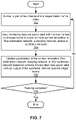
- Figure 7 is a flow diagram of method steps for training a deep learning model to perform frame interpolation, according to various embodiments. Although the method steps are described in conjunction with the systems of Figures 1-6 , persons skilled in the art will understand that any system configured to perform the method steps in any order falls within the scope of the present disclosure.
- training engine 122 extracts a pair of key frames and a target frame from a video.
- training engine 122 may extract three consecutive frames from the same sequence of video.
- the first and last frames may be key frames
- the second frame may be a ground truth frame for a target frame to be interpolated using the key frames.
- training engine 122 inputs rendering features associated with the key frames and target frame into one or more context encoders, a flow estimation network, a warping module, and/or a synthesis network.
- the rendering features may include primary features associated with the key frames and secondary features associated with the key frames and the target frame.
- the secondary features may include an albedo, a surface normal vector, a depth, a motion vector, an alpha channel, an object identifier, a texture coordinate.
- the primary features may include the secondary features and additional features that are not available until a corresponding frame is rendered, such as color values, per-light outputs, and/or light-path-dependent decompositions.
- training engine 122 updates parameters of the context encoders, flow estimation network, warping module, and/or synthesis network based on a frame interpolation loss associated with an output of the synthesis network and the target frame. For example, training engine 122 may calculate the frame interpolation loss based on a difference between the output of the synthesis network and the target frame. Training engine 122 my then use gradient descent and backpropagation to update parameters of the context encoders, flow estimation network, warping module, and/or synthesis network in a way that reduces the frame interpolation loss. Alternatively, training engine 122 and/or another component may train the flow estimation network separately ( e.g. , in a supervised manner using ground truth motion vectors and a different loss function) and use the frame interpolation loss to update the parameters of the context encoders, warping module, and/or synthesis network.
- training engine 122 may train the flow estimation network separately (e.g. , in a supervised manner using ground truth motion vectors and a different loss function) and use
- training engine 122 After operations 702, 704, and 706 are complete, training engine 122 performs operation 708, in which training engine 122 evaluates a condition indicating whether or not training of the deep learning model is complete.
- the condition may include, but is not limited to, convergence in parameters of the deep learning model, the lowering of the frame interpolation loss to below a threshold, and/or the execution of a certain number of training steps, iterations, batches, and/or epochs.
- training engine 122 may continue extracting key frames and an associated target frame from the same video or a different video (operation 702), inputting rendering features associated with the key frames and target frame into some or all components of the deep learning model (operation 704), and updating parameters of the component(s) based on the frame interpolation loss (operation 706). If the condition is met, training engine 122 ends the process of training the deep learning model.
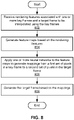
- Figure 8 is a flow diagram of method steps for performing frame interpolation, according to various embodiments. Although the method steps are described in conjunction with the systems of Figures 1-6 , persons skilled in the art will understand that any system configured to perform the method steps in any order falls within the scope of the present disclosure.
- estimation engine 124 receives rendering features associated with one or more key frames and a target frame to be interpolated using the key frames.
- the rendering features may include attributes that are used to render each of the key frames and the target frame.
- estimation engine 124 generates the target frame based on the mappings.
- estimation engine 124 may input the motion vectors and the same feature maps or different feature maps into a weighting network to generate weights that represent relative importances of pixels in a key frame that are mapped to the same location in the target frame.
- Estimation engine 124 may also input the motion vectors, the same feature maps or different feature maps, and/or weights produced by the weighting network into a warping module to warp feature maps associated with one or more key frames onto the target frame.
- Estimation engine 124 may then input the warped feature maps and/or one or more unwarped feature maps associated with the target frame into a preprocessing network and/or a synthesis network to produce an estimate of the target frame.
- the disclosed techniques utilize feature maps generated from attributes that are used to render video content to interpolate a target frame based on one or more key frames.
- the feature maps are generated by a number of context encoders from primary features for the key frame(s) and secondary features for the key frame(s) and the target frame.
- the secondary features include some or all features that are available for the target frame, and the primary features include some or all secondary features and one or more additional features that are available after a frame is rendered.
- the feature maps are included as input into one or more components of a deep learning model.
- the components include a flow estimation network that generates motion vectors representing optical flow between two key frames and/or between a key frame and the target frame.
- the components also, or instead, include a weighting network that calculates weights representing the relative importances of pixels in a key frame with motion vectors that map to the same pixel location in the target frame.
- the components also, or instead, include a warping module that uses the motion vectors and weights to warp feature maps associated with each key frame onto the target frame.
- the components also, or instead, include a synthesis network that generates the target frame based on the warped feature maps and unwarped feature maps associated with the target frame.
- each block in the flowchart or block diagrams may represent a module, segment, or portion of code, which comprises one or more executable instructions for implementing the specified logical function(s).
- the functions noted in the block may occur out of the order noted in the figures. For example, two blocks shown in succession may, in fact, be executed substantially concurrently, or the blocks may sometimes be executed in the reverse order, depending upon the functionality involved.
Landscapes
- Engineering & Computer Science (AREA)
- Physics & Mathematics (AREA)
- General Physics & Mathematics (AREA)
- Theoretical Computer Science (AREA)
- Multimedia (AREA)
- Computer Vision & Pattern Recognition (AREA)
- Image Analysis (AREA)
Abstract
Description
- The present disclosure relates generally to frame interpolation and, more specifically, to frame interpolation for rendered content.
- Computer-animated video content is commonly created via a multi-stage process that involves generating models of characters, objects, and settings; applying textures, lighting, shading, and other effects to the models; animating the models; and rendering individual frames based on the animated models. During this process, the rendering stage typically incurs significantly more computational overhead than earlier stages. This computational overhead has also increased over time, as more complex and sophisticated rendering techniques are developed to improve the realism and detail in the rendered frames. For example, a single frame of computer-animated video content could require multiple hours to multiple days to render on a single processor. A feature-length film with over 100,000 frames would thus consume hundreds of years of processor hours.
- To reduce rendering overhead associated with computer-animated video content, a subset of "key frames" in the computer-animated video content can be rendered, and remaining frames between pairs of consecutive key frames can be generated via less computationally expensive frame interpolation techniques. However, an interpolated frame is not created using the same amount of information (e.g., models, texture, lighting, shading, effects, etc.) as the corresponding key frames. Instead, the interpolated frame is typically generated by estimating optical flow between the key frames, using the estimated optical flow to warp pixels from the key frames, and blending the warped pixels. When the optical flow is estimated inaccurately or involves occlusions, the interpolated frame can include noticeable artifacts, blurriness, missing details, and/or other indicators of reduced visual quality. The reduced visual quality of interpolated frames further prevents frame interpolation from being widely used in generating computer-animated video content.
- As the foregoing illustrates, what is needed in the art are techniques for improving the interpolation of frames associated with computer-animated video content.
- The present disclosure sets forth a technique for performing frame interpolation. The technique includes generating (i) a first set of feature maps based on a first set of rendering features associated with a first key frame, (ii) a second set of feature maps based on a second set of rendering features associated with a second key frame, and (iii) a third set of feature maps based on a third set of rendering features associated with a target frame to be interpolated based on the first key frame and the second key frame. The technique also includes applying one or more neural networks to the first set of feature maps, the second set of feature maps, and the third set of feature maps to generate a set of mappings from a first set of pixels in the first key frame to a second set of pixels in the target frame. The technique further includes generating the target frame based on the set of mappings.
- One technical advantage of the disclosed techniques relative to the prior art is a reduction in computational overhead associated with rendering frames in computer-animated video content. In this regard, the disclosed techniques can be used to efficiently interpolate a subset of frames in the computer-generated video content from a different subset of rendered frames instead of rendering all frames in the computer-generated video content. Another technical advantage is a more detailed, sharp, or accurate interpolated target frame than interpolated frames generated by existing approaches. These technical advantages provide one or more technological improvements over prior art approaches.
- So that the manner in which the above recited features of the various embodiments can be understood in detail, a more particular description of the inventive concepts, briefly summarized above, may be had by reference to various embodiments, some of which are illustrated in the appended drawings. It is to be noted, however, that the appended drawings illustrate only typical embodiments of the inventive concepts and are therefore not to be considered limiting of scope in any way, and that there are other equally effective embodiments.
-
Figure 1 illustrates a system configured to implement one or more aspects of various embodiments. -
Figure 2 is a more detailed illustration of the training engine and estimation engine ofFigure 1 , according to various embodiments. -
Figure 3A is an example architecture associated with the flow estimation network ofFigure 2 , according to various embodiments. -
Figure 3B is a more detailed illustration of the flow update module ofFigure 3A , according to various embodiments. -
Figure 3C is a more detailed illustration of the flow update module ofFigure 3A , according to other various embodiments. -
Figure 4 is an example architecture associated with the warping module and synthesis network ofFigure 2 , according to various embodiments. -
Figure 5A is an example architecture associated with the context encoders ofFigure 2 , according to various embodiments. -
Figure 5B is an example architecture associated with the weighting network ofFigure 2 , according to various embodiments. -
Figure 6 is an example architecture for a preprocessing network associated with the synthesis network ofFigure 2 , according to various embodiments. -
Figure 7 is a flow diagram of method steps for training a deep learning model to perform frame interpolation, according to various embodiments. -
Figure 8 is a flow diagram of method steps for performing frame interpolation, according to various embodiments. - In the following description, numerous specific details are set forth to provide a more thorough understanding of the various embodiments. However, it will be apparent to one of skill in the art that the inventive concepts may be practiced without one or more of these specific details.
-
Figure 1 illustrates acomputing device 100 configured to implement one or more aspects of various embodiments. In one embodiment,computing device 100 may be a desktop computer, a laptop computer, a smart phone, a personal digital assistant (PDA), tablet computer, or any other type of computing device configured to receive input, process data, and optionally display images, and is suitable for practicing one or more embodiments.Computing device 100 is configured to run atraining engine 122 andestimation engine 124 that reside in amemory 116. It is noted that the computing device described herein is illustrative and that any other technically feasible configurations fall within the scope of the present disclosure. For example, multiple instances oftraining engine 122 andestimation engine 124 may execute on a set of nodes in a distributed system to implement the functionality ofcomputing device 100. - In one embodiment,
computing device 100 includes, without limitation, an interconnect (bus) 112 that connects one or more processor(s) 102, an input/output (I/O)device interface 104 coupled to one or more input/output (I/O)devices 108,memory 116, astorage 114, and anetwork interface 106. Processor(s) 102 may be any suitable processor implemented as a central processing unit (CPU), a graphics processing unit (GPU), an application-specific integrated circuit (ASIC), a field programmable gate array (FPGA), an artificial intelligence (Al) accelerator, any other type of processing unit, or a combination of different processing units, such as a CPU configured to operate in conjunction with a GPU. In general, processor(s) 102 may be any technically feasible hardware unit capable of processing data and/or executing software applications. Further, in the context of this disclosure, the computing elements shown incomputing device 100 may correspond to a physical computing system (e.g., a system in a data center) or may be a virtual computing instance executing within a computing cloud. - In one embodiment, I/
O devices 108 include devices capable of providing input, such as a keyboard, a mouse, a touch-sensitive screen, and so forth, as well as devices capable of providing output, such as a display device. Additionally, I/O devices 108 may include devices capable of both receiving input and providing output, such as a touchscreen, a universal serial bus (USB) port, and so forth. I/O devices 108 may be configured to receive various types of input from an end-user (e.g., a designer) ofcomputing device 100, and to also provide various types of output to the end-user ofcomputing device 100, such as displayed digital images or digital videos or text. In some embodiments, one or more of I/O devices 108 are configured tocouple computing device 100 to anetwork 110. - In one embodiment,
network 110 is any technically feasible type of communications network that allows data to be exchanged betweencomputing device 100 and external entities or devices, such as a web server or another networked computing device. For example,network 110 may include a wide area network (WAN), a local area network (LAN), a wireless (WiFi) network, and/or the Internet, among others. - In one embodiment,
storage 114 includes non-volatile storage for applications and data, and may include fixed or removable disk drives, flash memory devices, and CD-ROM, DVD-ROM, Blu-Ray, HD-DVD, or other magnetic, optical, or solid state storage devices.Training engine 122 andestimation engine 124 may be stored instorage 114 and loaded intomemory 116 when executed. - In one embodiment,
memory 116 includes a random access memory (RAM) module, a flash memory unit, or any other type of memory unit or combination thereof. Processor(s) 102, I/O device interface 104, andnetwork interface 106 are configured to read data from and write data tomemory 116.Memory 116 includes various software programs that can be executed by processor(s) 102 and application data associated with said software programs, includingtraining engine 122 andestimation engine 124. -
Training engine 122 includes functionality to train a deep learning model to interpolate target frames between pairs of key frames in rendered video content, andestimation engine 124 includes functionality to use the deep learning model to interpolate additional target frames between new pairs of key frames. As described in further detail below, the deep learning model utilizes feature maps generated from "rendering features" for the key frames and target frames. These rendering features include additional attributes that are typically used to render the corresponding frames. By incorporating these additional attributes into various stages in the interpolation of a target frame from one or more key frames, the deep learning model improves the quality and accuracy of the target frame over existing frame interpolation techniques that do not utilize these additional attributes. -
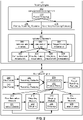
Figure 2 is a more detailed illustration oftraining engine 122 andestimation engine 124 ofFigure 1 , according to various embodiments. As shown inFigure 2 ,training engine 122 andestimation engine 124 operate to train and execute a deep learning model that interpolates atarget frame 238 that lies between twokey frames more context encoders 206, aflow estimation network 208, awarping module 210, aweighting network 212, and/or asynthesis network 214. Each of these components is described in further detail below. - In one or more embodiments, the deep learning model performs interpolation of
target frame 238 using rendering features 244 and 246 associated withkey frames target frame 238. During execution of the deep learning model,estimation engine 124 inputs rendering features 244 and 246 and target rendering features 248 into one ormore context encoders 206, andcontext encoders 206produce feature maps 232 from each set of inputted features. - In some embodiments, rendering features 244 and 246 include a set of available features involved in the rendering of
key frames key frames - For example, rendering features 244 and 246 and target rendering features 248 may be defined for individual pixels in the corresponding frames, regions in the corresponding frames, and/or at one or more resolutions associated with the corresponding frames. Rendering features 244 and 246 that are available for rendered
key frames target frame 238 may include albedos, surface normal vectors, depths, motion vectors, alpha channels, object identifiers, and texture coordinates and exclude colors, per-light outputs, and light path dependent decompositions. Thus, target rendering features 248 include all rendering features 244 and 246 except those that are generated during or after rendering of a frame. In turn, secondary rendering features 218 associated withkey frames target frame 238 include albedos, surface normal vectors, depths, motion vectors, alpha channels, object identifiers, and texture coordinates, while primary rendering features 216 associated with onlykey frames - In some embodiments, context encoders 206 include one or more primary context encoders that generate primary feature maps from primary rendering features 216, and one or more secondary context encoders that generate secondary feature maps from secondary rendering features 218. Each context encoder extracts, from a corresponding set of rendering features, a set of feature maps at multiple resolutions. For example, each context encoder may generate a "feature pyramid" that includes
multiple feature maps 232 from a corresponding set of primary or secondary rendering features. The feature pyramid may include a feature map at the resolution of the corresponding frame and one or more feature maps at different resolutions. For example, the feature pyramid may include a feature map at the resolution of the corresponding frame, a feature map at half the resolution of the corresponding frame, a feature map at a quarter the resolution of the corresponding frame, and/or one or more feature maps at additional resolutions. - Feature maps 232 produced by
context encoders 206 are used byflow estimation network 208, warpingmodule 210,weighting network 212, and/orsynthesis network 214 to generatetarget frame 238. First, flowestimation network 208 usesfeature maps 232 associated withkey frames target frame 238 to generatemotion vectors 234 that represent optical flow amongkey frames target frame 238. As described in further detail below with respect toFigures 3A-3C , flowestimation network 208 may improve the accuracy ofmotion vectors 234 via iterative residual refinement of previous optical flow estimates using the same weights and/or estimation of nonlinear motion between a key frame (e.g.,key frame 240 or key frame 242) andtarget frame 238. - Next, the same feature maps 232 and/or
different feature maps 232 andmotion vectors 234 produced byflow estimation network 208 are inputted into warpingmodule 210 to generatewarpings 236 from pixels in one or morekey frames 240 and/or 242 to pixel locations intarget frame 238. As described in further detail below with respect toFigure 4 ,warpings 236 may include forward warping of pixel locations and corresponding feature maps 232 from a first key frame (e.g., key frame 240) that temporally precedestarget frame 238 ontotarget frame 238 using a first set ofmotion vectors 234 that represent forward flow from the first key frame to a second key frame (e.g., key frame 242) that temporally succeedstarget frame 238.Warpings 236 may additionally include forward warping of pixel locations and corresponding feature maps 232 from the second key frame ontotarget frame 238 using a second set ofmotion vectors 234 that represent backward flow from the second key frame to the first key frame. - Feature maps 232 are also inputted into
weighting network 212 to generateweights 230 that indicate the relative importances of pixels inkey frames 240 and/or 242 withmotion vectors 234 that point to the same pixel locations intarget frame 238.Weights 230 can then be provided to warpingmodule 210 to produce and/or revisewarpings 236 from pixels inkey frames 240 and/or 242 to pixels intarget frame 238.Weighting network 212 is described in further detail below with respect toFigures 5A and 5B . - Feature maps 232,
warpings 236,weights 230, and/or other output associated withcontext encoders 206, warpingmodule 210, and/orweighting network 212 are then inputted intosynthesis network 214 to producetarget frame 238. For example,warpings 236 of pixels and/or feature maps associated withkey frames 240 and/or 242 ontotarget frame 238 may be merged by a preprocessing network (not shown) and/or another component into a "candidate" frame representingtarget frame 238, and the candidate frame may be refined by one or more additional portions ofsynthesis network 214 to produce a final interpolatedtarget frame 238. An example preprocessing network is described in further detail below with respect toFigure 6 . - In operation,
training engine 122trains context encoders 206, flowestimation network 208, warpingmodule 210,weighting network 212,synthesis network 214, and/or other components of the deep learning model to adapt each component to the frame interpolation task. A data-generation component 202 intraining engine 122 produces training data for the deep learning model, and anupdate component 204 intraining engine 122 uses the training data to update parameters of the deep learning model. - More specifically, data-
generation component 202 generatesframe groupings 256 from sequences of frames in one or more videos. Each frame grouping includes a pair of key frames and one or more target frames that temporally lie in between the key frames and serve as ground truth data for the frame interpolation task. For example, data-generation component 202 may divide a given video intoframe groupings 256 of three frames each. Within each frame grouping, the first and last frames act as key frames, and anintermediate frame 250 that lies at the temporal midpoint between the preceding frame and the succeeding frame is used as the ground truth for a frame to be interpolated using the two key frames. In another example, data-generation component 202 may divide a video intoframe groupings 256 of four or more frames each. Within each frame grouping, the first and last frames act as key frames, and one or moreintermediate frames 250 that lie between the first and last frames (e.g., at the midpoint between the two key frames or closer to one key frame than another) are used as ground truth frames for an interpolation task that involves interpolating multiple target frames between two key frames and/or interpolating a target frame that temporally lies closer to one key frame than another. - Data-
generation component 202 also retrieves and/or produces primary rendering features 216 and secondary rendering features 218 associated with frames inframe groupings 256. As mentioned above, secondary rendering features 218 may include all features that are common to both key frames and target frames, and primary rendering features 216 may include all rendering features that are available for rendered key frames. For example, secondary rendering features 218 may include attributes that assist in rendering of the corresponding target frames, such as albedos, surface normal vectors, depths, motion vectors, alpha channels, object identifiers, texture coordinates. Primary rendering features 216 may include some or all secondary rendering features 218, as well as additional attributes that are available only after a frame is rendered, such as (but not limited to) pixel colors, per-light outputs, and/or light path dependent decompositions. Thus, data-generation component 202 may generate secondary rendering features 218 as a set of features available for each target frame and a corresponding subset of features available for each key frame. Data-generation component 202 may also generate primary rendering features 216 as a set of features available for each key frame. -
Update component 204 usesframe groupings 256, primary rendering features 216, and secondary rendering features 218 to updatecontext encoder parameters 220 ofcontext encoders 206, flowestimation parameters 222 offlow estimation network 208,weighting parameters 226 ofweighting network 212, and/orsynthesis parameters 228 ofsynthesis network 214. In one or more embodiments,update component 204 performs unsupervised training that updatescontext encoder parameters 220, flowestimation parameters 222,weighting parameters 226, and/orsynthesis parameters 228 based on aninterpolation loss 252 that is calculated betweenintermediate frames 250 inframe groupings 256 and the correspondingtarget frame predictions 254 outputted bysynthesis network 214. - For example,
update component 204 may applycontext encoders 206, flowestimation network 208, warpingmodule 210,weighting network 212, andsynthesis network 214 to primary rendering features 216, secondary rendering features 218, and/or other features or output associated with each frame grouping to produce one or moretarget frame predictions 254 representing estimates by the deep learning model of one or moreintermediate frames 250 in between the key frames in the frame grouping.Update component 204 may calculateinterpolation loss 252 based on one or more differences (e.g., color-based differences, feature-based differences, etc.) betweentarget frame predictions 254 and the corresponding ground truth intermediate frames 250.Interpolation loss 252 may additionally be calculated at multiple scales associated withfeature maps 232.Update component 204 may then use a training technique (e.g., gradient descent and backpropagation) and/or one or more hyperparameters to iteratively updatecontext encoder parameters 220, flowestimation parameters 222,weighting parameters 226, and/orsynthesis parameters 228 in a way that reducessubsequent interpolation loss 252 associated withframe groupings 256 in the training data. - In some embodiments, hyperparameters include attributes that define or control "higher-level" properties of the deep learning model. These hyperparameters are distinguished from internal parameters (e.g.,
context encoder parameters 220, flowestimation parameters 222,weighting parameters 226,synthesis parameters 228, etc.) used by the deep learning model to generate output from a given set of input. For example, the hyperparameters include, but are not limited to, a learning rate that controls the rate at which the internal parameters of a given model are updated during training; a configuration hyperparameter that specifies the number of blocks, layers, connections, and/or other components in the architecture of a corresponding neural network; and/or one or more thresholds for removing links with low weights in a neural network. -
Update component 204 may also, or instead, train various components of the deep learning model at different times and/or using different techniques. For example,update component 204 could initially perform supervised training offlow estimation parameters 222 in flow estimation network 208 (and optionally one ormore context encoders 206 that generatefeature maps 232 used by flow estimation network 208) using a separate dataset of ground truth motion vectors (not shown) from key frames tointermediate frames 250 inframe groupings 256. After training offlow estimation network 208 is complete,update component 204 could train remaining components of the deep learning model (e.g., warpingmodule 210,weighting network 212,synthesis network 214, etc.) in an unsupervised fashion usinginterpolation loss 252. This separate supervised training offlow estimation network 208 allowsflow estimation network 208 to learn nonlinear motion among key frames and/orintermediate frames 250 inframe groupings 256. -
Update component 204 may continue training some or all components of the deep learning model over a series of training iterations and/or epochs until a condition indicating a completion of training is met. This condition may include, but is not limited to, convergence in parameters of the deep learning model, the lowering ofinterpolation loss 252 and/or other losses associated with the training to below a threshold, and/or the execution of a certain number of training steps, iterations, batches, and/or epochs. After training of the deep learning model is complete, the deep learning model may be used to interpolate target frames from pairs (or other combinations) ofkey frames - Those skilled in the art will appreciate that feature maps 232 can be generated and/or used with
flow estimation network 208, warpingmodule 210,weighting network 212, and/orsynthesis network 214 in a variety of ways. First,different context encoders 206 may be created to generatefeature maps 232 for different neural networks or components of the deep learning model (e.g., flowestimation network 208, warpingmodule 210,weighting network 212,synthesis network 214, etc.), or the same context encoder or set ofcontext encoders 206 may be used to generatefeatures maps 232 that are used by multiple neural networks or components of the deep learning model. Second, one ormore context encoders 206 may be incorporated as layers or blocks intoflow estimation network 208,weighting network 212,synthesis network 214, and/or other components of the deep learning model. Third, feature maps 232 may be generated from additional groupings of rendering features that are different from the groupings associated with primary rendering features 216 and secondary rendering features 218. Fourth, feature maps 232 may be selectively used or omitted from use withflow estimation network 208, warpingmodule 210,weighting network 212, and/orsynthesis network 214 to accommodate requirements or limitations associated with the processing demands, performance, speed, or scalability of the associated interpolation task. - Those skilled in the art will also appreciate that
training engine 122,estimation engine 124, and/or the deep learning model may be adapted to perform frame interpolation in other ways. First,training engine 122,estimation engine 124, context encoders 206, flowestimation network 208, warpingmodule 210,weighting network 212,synthesis network 214, and/or other components may be configured to predicttarget frame 238 using features associated with a single key frame and/or more than two key frames. Second, these components may be configured to predict multiple target frames in between two key frames. Third,training engine 122,estimation engine 124, context encoders 206, flowestimation network 208, warpingmodule 210,weighting network 212, and/orsynthesis network 214 may be omitted from the deep learning model, replaced with a component that performs a similar function, and/or combined with one or more other components in the deep learning model. -
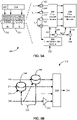
Figure 3A is an example architecture associated withflow estimation network 208 ofFigure 2 , according to various embodiments. As shown inFigure 3A , input intoflow estimation network 208 includes two different types offeature pyramids Feature pyramid 302 includes feature maps generated at multiple scales from two sets offeatures feature pyramid 304 includes feature maps generated at multiple scales from one set offeatures 314. For example,feature pyramid 302 may be produced by a context encoder (e.g., context encoders 206) from primary rendering features that include features 314 available for both target frames and key frames in an interpolation task andadditional features 312 available only to the key frames in the interpolation task.Feature pyramid 304 may be produced by a different context encoder from secondary rendering features, which include some or allfeatures 314 available for both target frames and key frames in the interpolation task. - More specifically, flow
estimation network 208 includes aflow update module 306, aflow refinement module 308, and aflow upsampling module 310 that operate onfeature maps feature pyramids Feature map 322 may be found in a first feature pyramid generated fromprimary features feature map 324 may be found in a second feature pyramid generated fromsecondary features 314 associated with a target frame (e.g., target frame 238) represented by Imid, featuremap 326 may be found in a third feature pyramid generated fromsecondary features 314 associated with a key frame (e.g., key frame 240) that precedes the target frame and represented by Ia, andfeature map 328 may be found in a fourth feature pyramid generated fromprimary features Figure 3A shows fourfeature maps flow estimation network 208, those skilled in the art will appreciate thatflow estimation network 208 can be applied to various types, numbers, and/or combinations of feature maps produced from one or more sets of features associated with the preceding key frame, target frame, and/or succeeding key frame. - For a set of feature maps 322, 324, 326, and 328 at a given scale,
flow upsampling module 310 generates anupsampled flow 332 by spatially upsampling aflow 330 at the next lowest scale infeature pyramids upsampling module 310 may generateupsampled flow 332 by performing a bilinear flow upsampling offlow 330 and rescaling by the corresponding upsample factor. In another example, flowupsampling module 310 may generateupsampled flow 332 by selecting a flow value inupsampled flow 332 from a neighbor inflow 330 that is associated with the lowest difference in feature map values across the scales associated withflow 330 andupsampled flow 332. In a third example, flowupsampling module 310 may use joint bilateral upsampling to estimate a sampling kernel for each pixel inupsampled flow 332 based on a corresponding feature map at the same resolution asupsampled flow 332. In a fourth example, flowupsampling module 310 may include a neural network that processes upsampled flow values produced by another upsampling technique and a feature map at the same resolution to produced sharpened flow values. In some or all examples, if feature maps 322, 324, 326, and 328 are at the lowest scale associated withfeature pyramids flow upsampling module 310 may setupsampled flow 332 to 0 (because nolower resolution flow 330 exists). - In some embodiments,
flow update module 306 and flowrefinement module 308 use similar inputs and/or components to iteratively update and refineupsampled flow 332 across multiple scales associated withfeature maps flow update module 306 generates aresidual update 334 from eachupsampled flow 332. The generatedresidual update 334 is applied toupsampled flow 332 to produce an updatedflow 340, and the result is inputted intoflow refinement module 308 to producekernels 336 that are convolved with updatedflow 340 to produce aflow refinement 338. The process is then repeated untilflow refinement 338 is generated at the highest scale associated withfeature maps Flow refinement 338 at the highest scale is then used as the output offlow estimation network 208. -
Figure 3B is a more detailed illustration offlow update module 306 ofFigure 3A , according to various embodiments. As shown inFigure 3B , input intoflow update module 306 includes feature maps 322, 324, 326, and 328 at a given scale (e.g., resolution). Afirst component 348 inflow update module 306 performs warping and correlation associated withfeature maps component 348 may warpfeature map 326 based onupsampled flow 332 and construct a cost volume that stores matching costs for associating thewarped feature map 326 withfeature map 324. Within the cost volume, a matching cost is calculated based on the correlation between a feature infeature map 324 and a corresponding warped feature in thewarped feature map 326. Asecond component 350 inflow update module 306 performs a similar warping and correlation associated withfeature maps upsampled flow 332. - A
third component 352 in flow update module 306 (or flow refinement module 308) performs feature reduction offeature map 328. The output ofcomponents neural network 354 that generatesresidual update 334. - As mentioned above,
flow update module 306 and flowrefinement module 308 may use similar inputs and/or components to update and refineupsampled flow 332. Thus,Figure 3B can also be adapted to illustrate the operation offlow refinement module 308 ofFigure 3A . In particular,upsampled flow 332 may be replaced with updatedflow 340 to illustrate the use ofcomponents flow refinement module 308.Components flow refinement module 308 may also use different correlation sizes to compute the corresponding cost volumes than the corresponding components inflow update module 306. Further,neural network 354 inflow update module 306 may be replaced with a differentneural network 354 that generates one ormore kernels 336 as output instead ofresidual update 334. - In one or more embodiments,
neural network 354 inflow refinement module 308 includes a sequential neural network that estimates spatially varying 3x3flow filtering kernels 336 based on a set of input. This input includes, but is not limited to, updatedflow 340, one or more feature maps 326 or 328 associated with the first key frame, a correlation between the two key frames, and/or a correlation between the first key frame and the target frame. - In one or more embodiments, the operation of
flow estimation network 208 can be represented by the following equations:



- In the above equations, Fi is the ith
level flow refinement 338, Ri is the ith levelresidual update 334, and f̂ i is the ithlevel upsampled flow 332 generated from flow 330 f i-1. In addition, D is the residual updateneural network 354 inflow update module 306, K is the filtering kernel predictionneural network 354 inflow refinement module 308, and Qi is thefeature reduction component 352 for a given level or scale associated withfeature pyramids corresponding component W is backward warping. - In some embodiments, the inputs to and components of
flow estimation network 208 described with respect toFigures 3A-3B allowflow estimation network 208 to estimate nonlinear motion across the key frames and the target frame. More specifically, input intoneural network 354 offlow update module 306 and/or flowrefinement module 308 may include cost volumes between feature maps of secondary features of the target frame and one or more key frames; feature maps 322, 324, 326, and 328; cost volumes between a first key frame and a backward warped second key frame; andupsampled flow 332 or updatedflow 340. The cost volumes computed between the feature maps of the target frame and key frame(s) allowneural network 354 to identify any "shift" in the motion associated with the target frame toward one key frame. - An additional variation to the operation of
flow estimation network 208 includes inputting external estimates or values of optical flow into one or more components offlow estimation network 208. These external estimates or values can then be combined with existing processing performed byflow estimation network 208 to guide or improve the flow estimates produced byflow estimation network 208, as described in further detail below with respect toFigure 3C . -
Figure 3C is a more detailed illustration offlow update module 306 ofFigure 3A , according to other various embodiments. As with the illustration offlow update module 306 ofFigure 3B , the illustration ofFigure 3C includes a number ofcomponents neural network 354.Neural network 354 than generatesresidual update 334 from the additional inputs. - As shown in
Figure 3C , anadditional flow 356 is inputted intocomponents components flow 356 to generate smaller cost volumes between the corresponding feature maps, and the smaller cost volumes may be added to the inputs ofneural network 354. Referring to the operation offlow estimation network 208 as represented by Equations 1a-1e, flow 356 may be represented by fc , and the smaller cost volumes may be added as

-
Figure 4 is an example architecture associated with warpingmodule 210 andsynthesis network 214 ofFigure 2 , according to various embodiments. As shown inFigure 4 , the architecture includes two instances of a primary context encoder 402(1)-(2), each of which is referred to herein asprimary context encoder 402. The partial architecture also includes three instances of a secondary context encoder 404(1)-(3), each of which is referred to herein assecondary context encoder 404. The partial architecture further includes two instances of warping module 210(1)-(2), each of which is referred to herein as warpingmodule 210. - In one or more embodiments,
primary context encoder 402 generates a set of feature maps from a given set of primary features, andsecondary context encoder 404 generates a set of feature maps from a given set of secondary features. As discussed above, a set of secondary features may include a subset of features found in a set of primary features. Further, the secondary features may be available for a target frame Imid to be interpolated, while the primary features may include the secondary features and additional features that are available only for key frames Ia and Ia from which the target frame is to be interpolated. These additional features may include color values for the rendered key frames and/or other data generated during the rendering process. - More specifically, secondary context encoder 404(3) converts a set of
secondary features 424 from the target frame Imid to be interpolated into a first set of feature maps, secondary context encoder 404(1) converts a set ofsecondary features 420 from the key frame Ia that precedes the target frame into a second set of feature maps, and secondary context encoder 404(2) converts a set ofsecondary features 422 from the key frame Ib that succeeds the target frame into a third set of feature maps. Primary context encoder 402(1) converts a set of primary features that includessecondary features 420 andadditional features 416 for Ia into a fourth set of feature maps, and primary context encoder 402(2) converts another set of primary features that includessecondary features 422 andadditional features 418 for Ib into a fifth set of feature maps. - Feature maps produced by
primary context encoder 402 andsecondary context encoder 404 may optionally be used as input into other components of the deep learning model ofFigure 2 , such asflow estimation network 208,weighting network 212, and/orsynthesis network 214. Alternatively, feature maps inputted into each offlow estimation network 208, warpingmodule 210,weighting network 212, and/orsynthesis network 214 may be generated by different primary and secondary context encoder that are adapted to the task performed by the corresponding network. - Feature maps generated by primary context encoder 402(1) and secondary context encoder 404(1) and a
forward flow 410 from the preceding key frame to the succeeding key frame are inputted into warping module 210(1), and feature maps generated by primary context encoder 402(2) and secondary context encoder 404(2) and abackward flow 412 from the succeeding key frame to the preceding key frame are inputted into warping module 210(2).Forward flow 410 andbackward flow 412 may be generated byflow estimation network 208 using the techniques described above.Forward flow 410 and/orbackward flow 412 may also, or instead, be provided by another source and/or generated using other flow estimation techniques. - Warping module 210(1) uses forward flow 410 to perform forward warping of feature maps generated by primary context encoder 402(1) and secondary context encoder 404(1) onto locations in the target frame Imid. Warping module 210(2) uses
backward flow 412 to perform forward warping of feature maps generated by primary context encoder 402(2) and secondary context encoder 404(2) onto locations in the target frame Imid. Thus, the output of warping module 210(1) includes warped feature maps associated with Ia, and the output of warping module 210(2) includes warped feature maps associated with Ib. - In one or more embodiments, warping
module 210 generates warped feature maps fromweights 230 fromweighting network 212 andmotion vectors 234 in therespective flow module 210 scales and normalizes the warped pixels using a set of weights. The operation of warpingmodule 210 can be represented by the following equations:


weighting network 212, as described in further detail below with respect toFigure 5B , - The warped feature maps produced by warping
module 210 and the feature maps produced by secondary context encoder 404(3) are inputted intosynthesis network 214 to generatetarget frame 238. In some embodiments,synthesis network 214 includes a GridNet architecture with three rows, six columns, and transposed convolutions replaced by bilinear upsampling layers. The GridNet processes features in a grid of rows and columns, so that the layers in each row form a stream in which the feature resolution is kept constant and each stream processes information at a different scale. The columns in the grid connect the streams to exchange information via downsampling and upsampling layers. Because the GridNet generatestarget frame 238 from a combination of warped key frames in the warped feature maps produced by warpingmodule 210 and additional contextual information in the warped feature maps and unwarped feature maps produced by secondary encoder 404(3),synthesis network 214 is able to mitigate reductions in visual quality caused by occlusions and errors associated withforward flow 410 and/orbackward flow 412. - In some embodiments, additional processing of warped and unwarped feature maps outputted by warping
module 210 and secondary context encoder 404(3), respectively, may be performed before or after inputting the feature maps intosynthesis network 214. This additional processing includes multiple variations listed below. Each variation can be used alone or optionally combined with one or more other variations. First, the warped feature maps for both key frames may be added to the unwarped feature map fortarget frame 238, and the resulting sum may be inputted intosynthesis network 214. Second,weights 230 generated byweighting network 212 may be included in the input intosynthesis network 214 to improve the evaluation of the warped feature maps bysynthesis network 214. Third, instead of concatenating input channels into a single tensor on each level and applying a convolutional neural network to the result, the warped key frames may be manually merged with respect to a time step parameter t to improve interpolation oftarget frame 238 whentarget frame 238 is temporally close to one of the key frames. This may be performed using a warp-mask-aware linear interpolation of the warped feature maps, as represented by (1 - t) ∗ Ia + t ∗ Ib. Fourth, a separate preprocessing network may be used to merge the warped and unwarped feature maps andcorresponding weights 230 to generate a merged representation that is used as input intosynthesis network 214, as described in further detail below with respect toFigure 6 . Fifth, instead of merging the warped input key frames, the temporal positions of the key frames may be kept separate, and the GridNet architecture insynthesis network 214 may be replaced with a GridNet3D architecture that uses three-dimensional (3D) convolutions to estimatetarget frame 238. Sixth,synthesis network 214 may be configured to predict merging kernels that are applied to warped color inputs to producetarget frame 238. The merging kernels can also be independently applied to other feature channels (e.g., alpha channel, per-light renders, etc.). -
Figure 5A is an example architecture associated withcontext encoders 206 ofFigure 2 , according to various embodiments. More specifically,Figure 5A shows aprimary context encoder 502 and asecondary context encoder 504 that generate respective feature maps 510 and 512. These feature maps 510 and 512 can be inputted intoweighting network 212, as described in further detail below with respect toFigure 5B .Primary context encoder 502 andsecondary context encoder 504 may optionally be used to generate feature maps that are inputted into other components, such as (but not limited to) flowestimation network 208, warpingmodule 210, and/orsynthesis network 214. - As shown in
Figure 5A , input intosecondary context encoder 504 includes a set ofsecondary features 508, and input intoprimary context encoder 502 includes a primary set of features that includessecondary features 508 as well asadditional features 506. As mentioned above, features 508 may be available for one or more key frames and a target frame to be interpolated using the key frame(s), and features 506 may be available only for the key frame(s). -
Primary context encoder 502 includes fourlayers Layer 534 is a 3x3 two-dimensional (2D) convolution with 10 input channels and 16 output channels,layer 536 is a parametric rectified linear unit (PReLU) activation function,layer 536 is a 3x3 2D convolution with 16 input channels and 16 output channels, andlayer 540 is another PReLU activation function. -
Secondary context encoder 504 also includes fourlayers Layer 544 is a 3x3 two-dimensional (2D) convolution with seven input channels and 16 output channels,layer 536 is a parametric rectified linear unit (PReLU) activation function,layer 536 is a 3x3 2D convolution with 16 input channels and 16 output channels, andlayer 540 is another PReLU activation function. Differences in the numbers of input channels forlayers primary features secondary features 508 inputted intoprimary context encoder 502 andsecondary context encoder 504, respectively. -
Figure 5B is an example architecture associated withweighting network 212 ofFigure 2 , according to various embodiments. As shown inFigure 5B , initial input associated withweighting network 212 includes a first feature map 510(1) generated byprimary context encoder 502 from primary features for a first key frame Ia that precedes a target frame Imid, a second feature map 512(1) generated bysecondary context encoder 504 from secondary features for the first key frame, a third feature map 510(2) generated byprimary context encoder 502 from primary features for a second key frame Ib that succeeds the target frame, and a fourth feature map 512(2) generated bysecondary context encoder 504 from secondary features for the target frame. - Feature map 510(2) associated with Ib is backward warped onto the time step associated with Ia, and feature map 512(2) associated with Imid is backward warped onto the same time step. This backward warping may be performed using one or more flows generated by
flow estimation network 208 and/or another component. An absolute value of the difference between the backward-warped feature map 510(2) and the corresponding feature map 510(1) is calculated, and an absolute value of the difference between the backward-warped feature map 512(2) and the corresponding feature map 512(1) is also calculated. - These absolute values are inputted into a
neural network 562, along withadditional input 560 related to the key frames and/or target frame.Neural network 562 then uses the inputs to generateoutput representing weights 230, and amapping 564 is applied to convert the output intoweights 230. For example,additional input 560 may include a feature map and/or another representation of primary features for Ia, a forward flow from Ia to Ib, and/or a backward warp mask associated with backward warping of Ib onto Ia and/or backward warping of Imid onto Ia. Neural network 562 may include a three-level UNet with skip connections that generates output ranging from negative infinity to positive infinity. To convert this output into a range between 0 and 1, the followingmapping 564 may be applied to the output x to generate weights 230:
-
Figure 6 is an example architecture for a preprocessing network associated withsynthesis network 214 ofFigure 2 , according to various embodiments. More specifically,Figure 6 illustrates a network that mergesfeatures 602 for a first key frame, features 604 for a second key frame, and features 606 for a target frame into arepresentation 608 that is then inputted intosynthesis network 214. - In one or more embodiments, features 602 for the first key frame include warped feature maps and
weights 230 for the first key frame, and features 604 for the second key frame include warped feature maps andweights 230 for the second key frame.Features 606 for the target frame include unwarped feature maps for the target frame. - As shown in
Figure 6 , the preprocessing network includes a number ofcomponents Figure 6 indicates that the same set of weights is used at each location in which the component appears.Components components - The preprocessing network additionally includes a
layer 626 that applies a softmax activation function to two outputs generated by two instances ofcomponent 624. Each of two outputs oflayer 626 is used to scale the sum of the output of a corresponding instance ofcomponent 620 and a corresponding instance ofcomponent 622. Two copies of scaled output generated by combining the outputs oflayer 626,component 620, andcomponent 622 are then summed to producerepresentation 608. -
Figure 7 is a flow diagram of method steps for training a deep learning model to perform frame interpolation, according to various embodiments. Although the method steps are described in conjunction with the systems ofFigures 1-6 , persons skilled in the art will understand that any system configured to perform the method steps in any order falls within the scope of the present disclosure. - As shown, in
operation 702,training engine 122 extracts a pair of key frames and a target frame from a video. For example,training engine 122 may extract three consecutive frames from the same sequence of video. The first and last frames may be key frames, and the second frame may be a ground truth frame for a target frame to be interpolated using the key frames. - Next, in
operation 704,training engine 122 inputs rendering features associated with the key frames and target frame into one or more context encoders, a flow estimation network, a warping module, and/or a synthesis network. For example, the rendering features may include primary features associated with the key frames and secondary features associated with the key frames and the target frame. The secondary features may include an albedo, a surface normal vector, a depth, a motion vector, an alpha channel, an object identifier, a texture coordinate. The primary features may include the secondary features and additional features that are not available until a corresponding frame is rendered, such as color values, per-light outputs, and/or light-path-dependent decompositions. - In
operation 706,training engine 122 updates parameters of the context encoders, flow estimation network, warping module, and/or synthesis network based on a frame interpolation loss associated with an output of the synthesis network and the target frame. For example,training engine 122 may calculate the frame interpolation loss based on a difference between the output of the synthesis network and the target frame.Training engine 122 my then use gradient descent and backpropagation to update parameters of the context encoders, flow estimation network, warping module, and/or synthesis network in a way that reduces the frame interpolation loss. Alternatively,training engine 122 and/or another component may train the flow estimation network separately (e.g., in a supervised manner using ground truth motion vectors and a different loss function) and use the frame interpolation loss to update the parameters of the context encoders, warping module, and/or synthesis network. - After
operations training engine 122 performsoperation 708, in whichtraining engine 122 evaluates a condition indicating whether or not training of the deep learning model is complete. For example, the condition may include, but is not limited to, convergence in parameters of the deep learning model, the lowering of the frame interpolation loss to below a threshold, and/or the execution of a certain number of training steps, iterations, batches, and/or epochs. If the condition is not met,training engine 122 may continue extracting key frames and an associated target frame from the same video or a different video (operation 702), inputting rendering features associated with the key frames and target frame into some or all components of the deep learning model (operation 704), and updating parameters of the component(s) based on the frame interpolation loss (operation 706). If the condition is met,training engine 122 ends the process of training the deep learning model. -
Figure 8 is a flow diagram of method steps for performing frame interpolation, according to various embodiments. Although the method steps are described in conjunction with the systems ofFigures 1-6 , persons skilled in the art will understand that any system configured to perform the method steps in any order falls within the scope of the present disclosure. - As shown in
Figure 8 , in operation 802,estimation engine 124 receives rendering features associated with one or more key frames and a target frame to be interpolated using the key frames. The rendering features may include attributes that are used to render each of the key frames and the target frame. - Next, in
operation 804,estimation engine 124 generates feature maps based on the rendering features. For example,estimation engine 124 may input a set of primary rendering features associated with each key frame into one or more primary context encoders to generate one or more corresponding feature pyramids.Estimation engine 124 may also input a set of secondary rendering features associated with each of the key frame(s) and the target frame into one or more secondary context encoders to generate one or more corresponding feature pyramids. Each feature pyramid may include multiple feature maps at different scales or resolutions. - In
operation 806,estimation engine 124 applies one or more neural networks to the feature maps to generate mappings from a first set of pixels in a key frame to a second set of pixels in the target frame. For example,estimation engine 124 may input feature maps generated inoperation 804 into a flow estimation network to generate motion vectors representing estimated optical flow associated with the key frame(s) and target frame. Each motion vector includes a mapping from a pixel location in a key frame to a corresponding pixel location in the target frame. - Finally, in
operation 808,estimation engine 124 generates the target frame based on the mappings. Continuing with the above example,estimation engine 124 may input the motion vectors and the same feature maps or different feature maps into a weighting network to generate weights that represent relative importances of pixels in a key frame that are mapped to the same location in the target frame.Estimation engine 124 may also input the motion vectors, the same feature maps or different feature maps, and/or weights produced by the weighting network into a warping module to warp feature maps associated with one or more key frames onto the target frame.Estimation engine 124 may then input the warped feature maps and/or one or more unwarped feature maps associated with the target frame into a preprocessing network and/or a synthesis network to produce an estimate of the target frame. - In sum, the disclosed techniques utilize feature maps generated from attributes that are used to render video content to interpolate a target frame based on one or more key frames. The feature maps are generated by a number of context encoders from primary features for the key frame(s) and secondary features for the key frame(s) and the target frame. The secondary features include some or all features that are available for the target frame, and the primary features include some or all secondary features and one or more additional features that are available after a frame is rendered.
- The feature maps are included as input into one or more components of a deep learning model. The components include a flow estimation network that generates motion vectors representing optical flow between two key frames and/or between a key frame and the target frame. The components also, or instead, include a weighting network that calculates weights representing the relative importances of pixels in a key frame with motion vectors that map to the same pixel location in the target frame. The components also, or instead, include a warping module that uses the motion vectors and weights to warp feature maps associated with each key frame onto the target frame. The components also, or instead, include a synthesis network that generates the target frame based on the warped feature maps and unwarped feature maps associated with the target frame.
- One technical advantage of the disclosed techniques relative to the prior art is a reduction in computational overhead associated with rendering frames in computer-generated video content. In this regard, the disclosed techniques can be used to efficiently interpolate a subset of frames in the computer-generated video content from a different subset of rendered frames instead of rendering all frames in the computer-generated video content. Another technical advantage is a more detailed, sharp, or accurate interpolated target frame than interpolated frames generated by existing approaches. A third technical advantage is accurate estimation of nonlinear motion between or across frames in the computer-generated video content, unlike conventional approaches that assume linear motion between key frames. These technical advantages provide one or more technological improvements over prior art approaches.
- 1. In some embodiments, a computer-implemented method for performing frame interpolation comprises generating (i) a first set of feature maps based on a first set of rendering features associated with a first key frame, (ii) a second set of feature maps based on a second set of rendering features associated with a second key frame, and (iii) a third set of feature maps based on a third set of rendering features associated with a target frame to be interpolated based on the first key frame and the second key frame, applying one or more neural networks to the first set of feature maps, the second set of feature maps, and the third set of feature maps to generate a set of mappings from a first set of pixels in the first key frame to a second set of pixels in the target frame, and generating the target frame based on the set of mappings.
- 2. The computer-implemented method of
clause 1, further comprising training the one or more neural networks based on a frame interpolation loss associated with the target frame and a ground truth frame. - 3. The computer-implemented method of
clauses - 4. The computer-implemented method of any of clauses 1-3, wherein each of the first set of feature maps, the second set of feature maps, and the third set of feature maps is generated by generating a first feature map at a first resolution, and generating a second feature map at a second resolution that is higher than the first resolution.
- 5. The computer-implemented method of any of clauses 1-4, wherein generating the first set of feature maps, the second set of feature maps, and the third set of feature maps comprises applying a first context encoder to the first set of rendering features to generate a first subset of feature maps included in the first set of feature maps, applying the first context encoder to the second set of rendering features to generate a second subset of feature maps included in the second set of feature maps, and applying a second context encoder to the third set of rendering features to generate the third set of feature maps.
- 6. The computer-implemented method of any of clauses 1-5, wherein generating the first set of feature maps, the second set of feature maps, and the third set of feature maps further comprises applying the second context encoder to a first subset of rendering features included in the first set of rendering features to generate a third subset of feature maps included in the first set of feature maps, and applying the second context encoder to a second subset of rendering features included in the second set of rendering features to generate a fourth subset of feature maps included in the second set of feature maps.
- 7. The computer-implemented method of any of clauses 1-6, wherein applying the one or more neural networks to the first set of feature maps, the second set of feature maps, and the third set of feature maps comprises generating a first cost volume associated with the third set of feature maps and at least one of the first set of feature maps and the second set of feature maps, and estimating an optical flow between the target frame and at least one of the first key frame or the second key frame based on the first cost volume, the first set of feature maps, the second set of feature maps, and the third set of feature maps.
- 8. The computer-implemented method of any of clauses 1-7, wherein applying the one or more neural networks to the first set of feature maps, the second set of feature maps, and the third set of feature maps further comprises estimating the optical flow based on a second cost volume associated with the first set of feature maps and the second set of feature maps.
- 9. The computer-implemented method of any of clauses 1-8, wherein applying the one or more neural networks to the first set of feature maps, the second set of feature maps, and the third set of feature maps comprises generating a set of weights representing relative importances of a subset of pixels included in the first set of pixels to a pixel location in the target frame to which the subset of pixels is mapped.
- 10. The computer-implemented method of any of clauses 1-9, wherein generating the target frame comprises generating a first set of warped feature maps based on the first set of feature maps and the set of mappings, and applying a synthesis network to the first set of warped feature maps and the third set of feature maps to produce the target frame.
- 11. The computer-implemented method of any of clauses 1-10, wherein the first set of rendering features or the second set of rendering features comprises at least one of a color, an albedo, a surface normal vector, a depth, a motion vector, an alpha channel, an object identifier, a texture coordinate, a per-light output, or a light-path-dependent decomposition.
- 12. The computer-implemented method of any of clauses 1-11, wherein the third set of rendering features comprises at least one of an albedo, a surface normal vector, a depth, a motion vector, an alpha channel, an object identifier, or a texture coordinate.
- 13. In some embodiments, one or more non-transitory computer readable media store instructions that, when executed by one or more processors, cause the one or more processors to perform the steps of generating (i) a first set of feature maps based on a first set of rendering features associated with a first key frame, (ii) a second set of feature maps based on a second set of rendering features associated with a second key frame, and (iii) a third set of feature maps based on a third set of rendering features associated with a target frame to be interpolated based on the first key frame and the second key frame, applying one or more neural networks to the first set of feature maps, the second set of feature maps, and the third set of feature maps to generate a set of mappings from a first set of pixels in the first key frame to a second set of pixels in the target frame, and generating the target frame based on the set of mappings.
- 14. The one or more non-transitory computer readable media of clause 13, wherein generating the first set of feature maps, the second set of feature maps, and the third set of feature maps comprises applying a first context encoder to the first set of rendering features to generate a first subset of feature maps included in the first set of feature maps, applying the first context encoder to the second set of rendering features to generate the second set of feature maps, applying a second context encoder to the third set of rendering features to generate the third set of feature maps, and applying the second context encoder to a first subset of rendering features included in the first set of rendering features to generate a second subset of feature maps included in the first set of feature maps.
- 15. The one or more non-transitory computer readable media of clauses 13 or 14, wherein the first context encoder or the second context encoder comprise a two-dimensional convolution associated with a parametric rectified linear unit activation function.
- 16. The one or more non-transitory computer readable media of any of clauses 13-15, wherein applying the one or more neural networks to the first set of feature maps, the second set of feature maps, and the third set of feature maps comprises generating a first cost volume associated with the third set of feature maps and at least one of the first set of feature maps or the second set of feature maps, generating a second cost volume associated with the first set of feature maps and the second set of feature maps, and estimating an optical flow between the target frame and at least one of the first key frame or the second key frame based on the first cost volume, the second cost volume, the first set of feature maps, the second set of feature maps, and the third set of feature maps.
- 17. The one or more non-transitory computer readable media of any of clauses 13-16, wherein applying the one or more neural networks to the first set of feature maps, the second set of feature maps, and the third set of feature maps comprises generating one or more combinations of the first set of feature maps, the second set of feature maps, and the third set of feature maps based on one or more backward warping operations, and generating a set of weights representing relative importances of a subset of pixels included in the first set of pixels to a pixel location in the target frame to which the subset of pixels is mapped based on the one or more combinations.
- 18. The one or more non-transitory computer readable media of any of clauses 13-17, wherein generating the target frame comprises applying the set of mappings and the set of weights to the first set of feature maps to generate a first set of warped feature maps, inputting the first set of warped feature maps and the third set of feature maps into a preprocessing network to produce a merged representation associated with the first set of feature maps and the third set of feature maps, and applying a synthesis network to the merged representation to produce the target frame.
- 19. The one or more non-transitory computer readable media of any of clauses 13-18, wherein generating the target frame comprises generating a first set of warped feature maps based on the first set of feature maps and the set of mappings, generating a second set of warped feature maps based on the second set of feature maps and an additional set of mappings from a third set of pixels in the second key frame to the second set of pixels in the target frame, and generating the target frame based on the first set of warped feature maps, the second set of warped feature maps, and the third set of feature maps to produce the target frame.
- 20. In some embodiments, a system comprises a memory that stores instructions, and a processor that is coupled to the memory and, when executing the instructions, is configured to generating (i) a first set of feature maps based on a first set of rendering features associated with a first key frame, (ii) a second set of feature maps based on a second set of rendering features associated with a second key frame, and (iii) a third set of feature maps based on a third set of rendering features associated with a target frame to be interpolated based on the first key frame and the second key frame, applying one or more neural networks to the first set of feature maps, the second set of feature maps, and the third set of feature maps to generate a set of mappings from a first set of pixels in the first key frame to a second set of pixels in the target frame, and generating the target frame based on the set of mappings.
- Any and all combinations of any of the claim elements recited in any of the claims and/or any elements described in this application, in any fashion, fall within the contemplated scope of the present invention and protection.
- The descriptions of the various embodiments have been presented for purposes of illustration, but are not intended to be exhaustive or limited to the embodiments disclosed. Many modifications and variations will be apparent to those of ordinary skill in the art without departing from the scope of the described embodiments.
- Aspects of the present embodiments may be embodied as a system, method or computer program product. Accordingly, aspects of the present disclosure may take the form of an entirely hardware embodiment, an entirely software embodiment (including firmware, resident software, micro-code, etc.) or an embodiment combining software and hardware aspects that may all generally be referred to herein as a "module," a "system," or a "computer." In addition, any hardware and/or software technique, process, function, component, engine, module, or system described in the present disclosure may be implemented as a circuit or set of circuits. Furthermore, aspects of the present disclosure may take the form of a computer program product embodied in one or more computer readable medium(s) having computer readable program code embodied thereon.
- Any combination of one or more computer readable medium(s) may be utilized. The computer readable medium may be a computer readable signal medium or a computer readable storage medium. A computer readable storage medium may be, for example, but not limited to, an electronic, magnetic, optical, electromagnetic, infrared, or semiconductor system, apparatus, or device, or any suitable combination of the foregoing. More specific examples (a non-exhaustive list) of the computer readable storage medium would include the following: an electrical connection having one or more wires, a portable computer diskette, a hard disk, a random access memory (RAM), a read-only memory (ROM), an erasable programmable read-only memory (EPROM or Flash memory), an optical fiber, a portable compact disc read-only memory (CD-ROM), an optical storage device, a magnetic storage device, or any suitable combination of the foregoing. In the context of this document, a computer readable storage medium may be any tangible medium that can contain, or store a program for use by or in connection with an instruction execution system, apparatus, or device.
- Aspects of the present disclosure are described above with reference to flowchart illustrations and/or block diagrams of methods, apparatus (systems) and computer program products according to embodiments of the disclosure. It will be understood that each block of the flowchart illustrations and/or block diagrams, and combinations of blocks in the flowchart illustrations and/or block diagrams, can be implemented by computer program instructions. These computer program instructions may be provided to a processor of a general purpose computer, special purpose computer, or other programmable data processing apparatus to produce a machine. The instructions, when executed via the processor of the computer or other programmable data processing apparatus, enable the implementation of the functions/acts specified in the flowchart and/or block diagram block or blocks. Such processors may be, without limitation, general purpose processors, special-purpose processors, application-specific processors, or field-programmable gate arrays.
- The flowchart and block diagrams in the figures illustrate the architecture, functionality, and operation of possible implementations of systems, methods and computer program products according to various embodiments of the present disclosure. In this regard, each block in the flowchart or block diagrams may represent a module, segment, or portion of code, which comprises one or more executable instructions for implementing the specified logical function(s). It should also be noted that, in some alternative implementations, the functions noted in the block may occur out of the order noted in the figures. For example, two blocks shown in succession may, in fact, be executed substantially concurrently, or the blocks may sometimes be executed in the reverse order, depending upon the functionality involved. It will also be noted that each block of the block diagrams and/or flowchart illustration, and combinations of blocks in the block diagrams and/or flowchart illustration, can be implemented by special purpose hardware-based systems that perform the specified functions or acts, or combinations of special purpose hardware and computer instructions.
- While the preceding is directed to embodiments of the present disclosure, other and further embodiments of the disclosure may be devised without departing from the basic scope thereof, and the scope thereof is determined by the claims that follow.
Claims (15)
- A computer-implemented method for performing frame interpolation, the method comprising:generating (i) a first set of feature maps based on a first set of rendering features associated with a first key frame, (ii) a second set of feature maps based on a second set of rendering features associated with a second key frame, and (iii) a third set of feature maps based on a third set of rendering features associated with a target frame to be interpolated based on the first key frame and the second key frame;applying one or more neural networks to the first set of feature maps, the second set of feature maps, and the third set of feature maps to generate a set of mappings from a first set of pixels in the first key frame to a second set of pixels in the target frame; andgenerating the target frame based on the set of mappings.
- The computer-implemented method of claim 1, further comprising training the one or more neural networks based on a frame interpolation loss associated with the target frame and a ground truth frame.
- The computer-implemented method of claim 2, wherein training the one or more neural networks comprises applying the frame interpolation loss at a plurality of resolutions associated with at least one of the first set of feature maps, the second set of feature maps, or the third set of feature maps.
- The computer-implemented method of any preceding claim, wherein each of the first set of feature maps, the second set of feature maps, and the third set of feature maps is generated by:generating a first feature map at a first resolution; andgenerating a second feature map at a second resolution that is higher than the first resolution.
- The computer-implemented method of any preceding claim, wherein generating the first set of feature maps, the second set of feature maps, and the third set of feature maps comprises:applying a first context encoder to the first set of rendering features to generate a first subset of feature maps included in the first set of feature maps;applying the first context encoder to the second set of rendering features to generate a second subset of feature maps included in the second set of feature maps; andapplying a second context encoder to the third set of rendering features to generate the third set of feature maps.
- The computer-implemented method of claim 5, wherein generating the first set of feature maps, the second set of feature maps, and the third set of feature maps further comprises:applying the second context encoder to a first subset of rendering features included in the first set of rendering features to generate a third subset of feature maps included in the first set of feature maps; andapplying the second context encoder to a second subset of rendering features included in the second set of rendering features to generate a fourth subset of feature maps included in the second set of feature maps.
- The computer-implemented method of any preceding claim, wherein applying the one or more neural networks to the first set of feature maps, the second set of feature maps, and the third set of feature maps comprises:generating a first cost volume associated with the third set of feature maps and at least one of the first set of feature maps and the second set of feature maps; andestimating an optical flow between the target frame and at least one of the first key frame or the second key frame based on the first cost volume, the first set of feature maps, the second set of feature maps, and the third set of feature maps.
- The computer-implemented method of claim 7, wherein applying the one or more neural networks to the first set of feature maps, the second set of feature maps, and the third set of feature maps further comprises estimating the optical flow based on a second cost volume associated with the first set of feature maps and the second set of feature maps.
- The computer-implemented method of any preceding claim, wherein applying the one or more neural networks to the first set of feature maps, the second set of feature maps, and the third set of feature maps comprises generating a set of weights representing relative importances of a subset of pixels included in the first set of pixels to a pixel location in the target frame to which the subset of pixels is mapped.
- The computer-implemented method of any preceding claim, wherein generating the target frame comprises:generating a first set of warped feature maps based on the first set of feature maps and the set of mappings; andapplying a synthesis network to the first set of warped feature maps and the third set of feature maps to produce the target frame.
- The computer-implemented method of any preceding claim, wherein the first set of rendering features or the second set of rendering features comprises at least one of a color, an albedo, a surface normal vector, a depth, a motion vector, an alpha channel, an object identifier, a texture coordinate, a per-light output, or a light-path-dependent decomposition.
- The computer-implemented method of any preceding claim, wherein the third set of rendering features comprises at least one of an albedo, a surface normal vector, a depth, a motion vector, an alpha channel, an object identifier, or a texture coordinate.
- A system, comprising:a memory that stores instructions, anda processor that is coupled to the memory and, when executing the instructions, is configured to:generating (i) a first set of feature maps based on a first set of rendering features associated with a first key frame, (ii) a second set of feature maps based on a second set of rendering features associated with a second key frame, and (iii) a third set of feature maps based on a third set of rendering features associated with a target frame to be interpolated based on the first key frame and the second key frame;applying one or more neural networks to the first set of feature maps, the second set of feature maps, and the third set of feature maps to generate a set of mappings from a first set of pixels in the first key frame to a second set of pixels in the target frame; andgenerating the target frame based on the set of mappings.
- The system of claim 13, wherein each of the first set of feature maps, the second set of feature maps, and the third set of feature maps is generated by:generating a first feature map at a first resolution; andgenerating a second feature map at a second resolution that is higher than the first resolution.
- The system of claim 13 or claim 14, wherein generating the first set of feature maps, the second set of feature maps, and the third set of feature maps comprises:applying a first context encoder to the first set of rendering features to generate a first subset of feature maps included in the first set of feature maps;applying the first context encoder to the second set of rendering features to generate a second subset of feature maps included in the second set of feature maps; andapplying a second context encoder to the third set of rendering features to generate the third set of feature maps.
Applications Claiming Priority (1)
| Application Number | Priority Date | Filing Date | Title |
|---|---|---|---|
| US17/325,026 US12288281B2 (en) | 2021-05-19 | 2021-05-19 | Frame interpolation for rendered content |
Publications (1)
| Publication Number | Publication Date |
|---|---|
| EP4095805A1 true EP4095805A1 (en) | 2022-11-30 |
Family
ID=81392656
Family Applications (1)
| Application Number | Title | Priority Date | Filing Date |
|---|---|---|---|
| EP22170631.0A Pending EP4095805A1 (en) | 2021-05-19 | 2022-04-28 | Frame interpolation for rendered content |
Country Status (2)
| Country | Link |
|---|---|
| US (1) | US12288281B2 (en) |
| EP (1) | EP4095805A1 (en) |
Families Citing this family (4)
| Publication number | Priority date | Publication date | Assignee | Title |
|---|---|---|---|---|
| US12579425B2 (en) * | 2021-08-19 | 2026-03-17 | Qualcomm Incorporated | Parameterized activation functions to adjust model linearity |
| US12367544B2 (en) | 2022-05-18 | 2025-07-22 | Disney Enterprises, Inc. | Kernel-based frame interpolation for spatio-temporally adaptive rendering |
| US12548165B2 (en) * | 2022-11-29 | 2026-02-10 | Samsung Electronics Co., Ltd | Temporal semantic boundary loss for video semantic segmentation networks |
| CN116708796B (en) | 2023-06-21 | 2026-04-24 | 三星电子(中国)研发中心 | Method and apparatus for generating intermediate frames of video |
Citations (2)
| Publication number | Priority date | Publication date | Assignee | Title |
|---|---|---|---|---|
| US20190138889A1 (en) * | 2017-11-06 | 2019-05-09 | Nvidia Corporation | Multi-frame video interpolation using optical flow |
| US20200356827A1 (en) * | 2019-05-10 | 2020-11-12 | Samsung Electronics Co., Ltd. | Efficient cnn-based solution for video frame interpolation |
Family Cites Families (9)
| Publication number | Priority date | Publication date | Assignee | Title |
|---|---|---|---|---|
| US10521086B1 (en) * | 2013-12-17 | 2019-12-31 | Amazon Technologies, Inc. | Frame interpolation for media streaming |
| US10522134B1 (en) * | 2016-12-22 | 2019-12-31 | Amazon Technologies, Inc. | Speech based user recognition |
| CN107146199B (en) * | 2017-05-02 | 2020-01-17 | 厦门美图之家科技有限公司 | Fusion method and device of face images and computing equipment |
| CN107590453B (en) * | 2017-09-04 | 2019-01-11 | 腾讯科技(深圳)有限公司 | Processing method, device and equipment, the computer storage medium of augmented reality scene |
| KR102545172B1 (en) * | 2017-12-28 | 2023-06-19 | 삼성전자주식회사 | Graphic processor performing sampling-based rendering and Operating method thereof |
| US10523246B1 (en) * | 2018-02-13 | 2019-12-31 | Marvell International Ltd. | Apparatus and methods for a configurable wireless communication chip |
| US10523914B1 (en) * | 2018-07-26 | 2019-12-31 | Telefonaktiebolaget Lm Ericsson (Publ) | System and method for providing multiple 360° immersive video sessions in a network |
| US11657497B2 (en) * | 2019-03-26 | 2023-05-23 | The Johns Hopkins University | Method and apparatus for registration of different mammography image views |
| US11468680B2 (en) * | 2019-08-27 | 2022-10-11 | Nec Corporation | Shuffle, attend, and adapt: video domain adaptation by clip order prediction and clip attention alignment |
-
2021
- 2021-05-19 US US17/325,026 patent/US12288281B2/en active Active
-
2022
- 2022-04-28 EP EP22170631.0A patent/EP4095805A1/en active Pending
Patent Citations (2)
| Publication number | Priority date | Publication date | Assignee | Title |
|---|---|---|---|---|
| US20190138889A1 (en) * | 2017-11-06 | 2019-05-09 | Nvidia Corporation | Multi-frame video interpolation using optical flow |
| US20200356827A1 (en) * | 2019-05-10 | 2020-11-12 | Samsung Electronics Co., Ltd. | Efficient cnn-based solution for video frame interpolation |
Also Published As
| Publication number | Publication date |
|---|---|
| US12288281B2 (en) | 2025-04-29 |
| US20220383573A1 (en) | 2022-12-01 |
Similar Documents
| Publication | Publication Date | Title |
|---|---|---|
| US12288281B2 (en) | Frame interpolation for rendered content | |
| Chen et al. | Spatial information guided convolution for real-time RGBD semantic segmentation | |
| US20220262073A1 (en) | Fast and deep facial deformations | |
| CN116563682B (en) | An attention scheme based on deep Hough networks and a method for detecting semantic lines via strip convolution. | |
| EP3540637B1 (en) | Neural network model training method, device and storage medium for image processing | |
| CN109754417B (en) | System and method for unsupervised learning of geometry from images | |
| EP3539078B1 (en) | Video frame synthesis with deep learning | |
| WO2024054621A1 (en) | Video generation with latent diffusion probabilistic models | |
| JP5645842B2 (en) | Image processing apparatus and method using scale space | |
| CN110443842A (en) | Depth map prediction technique based on visual angle fusion | |
| JP7129529B2 (en) | UV mapping to 3D objects using artificial intelligence | |
| AU2017324923A1 (en) | Predicting depth from image data using a statistical model | |
| US20230104702A1 (en) | Transformer-based shape models | |
| CN111382759A (en) | Pixel level classification method, device, equipment and storage medium | |
| EP4350631A2 (en) | Device and method with two-dimensional scene reconstruction for dynamic three-dimensional space | |
| CN118037989B (en) | A multi-view neural implicit surface reconstruction method based on prior-driven | |
| Liu et al. | ASFlow: Unsupervised optical flow learning with adaptive pyramid sampling | |
| EP4773086A1 (en) | Scene model generation method and related apparatus | |
| US20230377093A1 (en) | Techniques for resampling images | |
| US12657748B2 (en) | Techniques for generating depth maps from videos | |
| EP4812915A1 (en) | 3d scene content generation using 2d inpainting diffusion | |
| Chen et al. | Deep learning framework-based 3D shape reconstruction of tanks from a single RGB image | |
| US20260011032A1 (en) | Method and system for providing spatio-temporal preservation transformer for three-dimensional human pose and shape estimation | |
| CN120510285A (en) | Gesture-free Gaussian sputtering method for single-view 3D photography | |
| CN119359545A (en) | Method and device for enhancing depth map of two-dimensional image |
Legal Events
| Date | Code | Title | Description |
|---|---|---|---|
| PUAI | Public reference made under article 153(3) epc to a published international application that has entered the european phase |
Free format text: ORIGINAL CODE: 0009012 |
|
| STAA | Information on the status of an ep patent application or granted ep patent |
Free format text: STATUS: REQUEST FOR EXAMINATION WAS MADE |
|
| 17P | Request for examination filed |
Effective date: 20220428 |
|
| AK | Designated contracting states |
Kind code of ref document: A1 Designated state(s): AL AT BE BG CH CY CZ DE DK EE ES FI FR GB GR HR HU IE IS IT LI LT LU LV MC MK MT NL NO PL PT RO RS SE SI SK SM TR |
|
| P01 | Opt-out of the competence of the unified patent court (upc) registered |
Effective date: 20230509 |
|
| RBV | Designated contracting states (corrected) |
Designated state(s): AL AT BE BG CH CY CZ DE DK EE ES FI FR GB GR HR HU IE IS IT LI LT LU LV MC MK MT NL NO PL PT RO RS SE SI SK SM TR |
|
| GRAP | Despatch of communication of intention to grant a patent |
Free format text: ORIGINAL CODE: EPIDOSNIGR1 |
|
| STAA | Information on the status of an ep patent application or granted ep patent |
Free format text: STATUS: GRANT OF PATENT IS INTENDED |
|
| RIC1 | Information provided on ipc code assigned before grant |
Ipc: G06T 13/80 20110101AFI20260722BHEP Ipc: G06T 7/20 20170101ALI20260722BHEP |
|
| INTG | Intention to grant announced |
Effective date: 20260804 |