EP4095536B1 - System and method for high voltage battery pack measurement - Google Patents
System and method for high voltage battery pack measurement Download PDFInfo
- Publication number
- EP4095536B1 EP4095536B1 EP22173825.5A EP22173825A EP4095536B1 EP 4095536 B1 EP4095536 B1 EP 4095536B1 EP 22173825 A EP22173825 A EP 22173825A EP 4095536 B1 EP4095536 B1 EP 4095536B1
- Authority
- EP
- European Patent Office
- Prior art keywords
- high voltage
- input signal
- reference voltage
- hvdc
- voltage
- Prior art date
- Legal status (The legal status is an assumption and is not a legal conclusion. Google has not performed a legal analysis and makes no representation as to the accuracy of the status listed.)
- Active
Links
Images




Classifications
-
- B—PERFORMING OPERATIONS; TRANSPORTING
- B60—VEHICLES IN GENERAL
- B60L—PROPULSION OF ELECTRICALLY-PROPELLED VEHICLES; SUPPLYING ELECTRIC POWER FOR AUXILIARY EQUIPMENT OF ELECTRICALLY-PROPELLED VEHICLES; ELECTRODYNAMIC BRAKE SYSTEMS FOR VEHICLES IN GENERAL; MAGNETIC SUSPENSION OR LEVITATION FOR VEHICLES; MONITORING OPERATING VARIABLES OF ELECTRICALLY-PROPELLED VEHICLES; ELECTRIC SAFETY DEVICES FOR ELECTRICALLY-PROPELLED VEHICLES
- B60L58/00—Methods or circuit arrangements for monitoring or controlling batteries or fuel cells, specially adapted for electric vehicles
- B60L58/10—Methods or circuit arrangements for monitoring or controlling batteries or fuel cells, specially adapted for electric vehicles for monitoring or controlling batteries
- B60L58/12—Methods or circuit arrangements for monitoring or controlling batteries or fuel cells, specially adapted for electric vehicles for monitoring or controlling batteries responding to state of charge [SoC]
-
- G—PHYSICS
- G01—MEASURING; TESTING
- G01R—MEASURING ELECTRIC VARIABLES; MEASURING MAGNETIC VARIABLES
- G01R31/00—Arrangements for testing electric properties; Arrangements for locating electric faults; Arrangements for electrical testing characterised by what is being tested not provided for elsewhere
- G01R31/36—Arrangements for testing, measuring or monitoring the electrical condition of accumulators or electric batteries, e.g. capacity or state of charge [SoC]
- G01R31/367—Software therefor, e.g. for battery testing using modelling or look-up tables
-
- G—PHYSICS
- G01—MEASURING; TESTING
- G01R—MEASURING ELECTRIC VARIABLES; MEASURING MAGNETIC VARIABLES
- G01R19/00—Arrangements for measuring currents or voltages or for indicating presence or sign thereof
- G01R19/25—Arrangements for measuring currents or voltages or for indicating presence or sign thereof using digital measurement techniques
- G01R19/2503—Arrangements for measuring currents or voltages or for indicating presence or sign thereof using digital measurement techniques for measuring voltage only, e.g. digital volt meters (DVM's)
-
- B—PERFORMING OPERATIONS; TRANSPORTING
- B60—VEHICLES IN GENERAL
- B60L—PROPULSION OF ELECTRICALLY-PROPELLED VEHICLES; SUPPLYING ELECTRIC POWER FOR AUXILIARY EQUIPMENT OF ELECTRICALLY-PROPELLED VEHICLES; ELECTRODYNAMIC BRAKE SYSTEMS FOR VEHICLES IN GENERAL; MAGNETIC SUSPENSION OR LEVITATION FOR VEHICLES; MONITORING OPERATING VARIABLES OF ELECTRICALLY-PROPELLED VEHICLES; ELECTRIC SAFETY DEVICES FOR ELECTRICALLY-PROPELLED VEHICLES
- B60L58/00—Methods or circuit arrangements for monitoring or controlling batteries or fuel cells, specially adapted for electric vehicles
- B60L58/10—Methods or circuit arrangements for monitoring or controlling batteries or fuel cells, specially adapted for electric vehicles for monitoring or controlling batteries
-
- G—PHYSICS
- G01—MEASURING; TESTING
- G01R—MEASURING ELECTRIC VARIABLES; MEASURING MAGNETIC VARIABLES
- G01R1/00—Details of instruments or arrangements of the types included in groups G01R5/00 - G01R13/00 and G01R31/00
- G01R1/28—Provision in measuring instruments for reference values, e.g. standard voltage, standard waveform
-
- G—PHYSICS
- G01—MEASURING; TESTING
- G01R—MEASURING ELECTRIC VARIABLES; MEASURING MAGNETIC VARIABLES
- G01R15/00—Details of measuring arrangements of the types provided for in groups G01R17/00 - G01R29/00, G01R33/00 - G01R33/26 or G01R35/00
- G01R15/04—Voltage dividers
-
- G—PHYSICS
- G01—MEASURING; TESTING
- G01R—MEASURING ELECTRIC VARIABLES; MEASURING MAGNETIC VARIABLES
- G01R19/00—Arrangements for measuring currents or voltages or for indicating presence or sign thereof
- G01R19/165—Indicating that current or voltage is either above or below a predetermined value or within or outside a predetermined range of values
- G01R19/16528—Indicating that current or voltage is either above or below a predetermined value or within or outside a predetermined range of values using digital techniques or performing arithmetic operations
-
- G—PHYSICS
- G01—MEASURING; TESTING
- G01R—MEASURING ELECTRIC VARIABLES; MEASURING MAGNETIC VARIABLES
- G01R19/00—Arrangements for measuring currents or voltages or for indicating presence or sign thereof
- G01R19/25—Arrangements for measuring currents or voltages or for indicating presence or sign thereof using digital measurement techniques
-
- G—PHYSICS
- G01—MEASURING; TESTING
- G01R—MEASURING ELECTRIC VARIABLES; MEASURING MAGNETIC VARIABLES
- G01R19/00—Arrangements for measuring currents or voltages or for indicating presence or sign thereof
- G01R19/25—Arrangements for measuring currents or voltages or for indicating presence or sign thereof using digital measurement techniques
- G01R19/2506—Arrangements for conditioning or analysing measured signals, e.g. for indicating peak values ; Details concerning sampling, digitizing or waveform capturing
- G01R19/2509—Details concerning sampling, digitizing or waveform capturing
-
- G—PHYSICS
- G01—MEASURING; TESTING
- G01R—MEASURING ELECTRIC VARIABLES; MEASURING MAGNETIC VARIABLES
- G01R27/00—Arrangements for measuring resistance, reactance, impedance, or electric characteristics derived therefrom
- G01R27/02—Measuring real or complex resistance, reactance, impedance, or other two-pole characteristics derived therefrom, e.g. time constant
- G01R27/025—Measuring very high resistances, e.g. isolation resistances, i.e. megohm-meters
-
- G—PHYSICS
- G01—MEASURING; TESTING
- G01R—MEASURING ELECTRIC VARIABLES; MEASURING MAGNETIC VARIABLES
- G01R31/00—Arrangements for testing electric properties; Arrangements for locating electric faults; Arrangements for electrical testing characterised by what is being tested not provided for elsewhere
- G01R31/36—Arrangements for testing, measuring or monitoring the electrical condition of accumulators or electric batteries, e.g. capacity or state of charge [SoC]
- G01R31/3644—Constructional arrangements
- G01R31/3648—Constructional arrangements comprising digital calculation means, e.g. for performing an algorithm
-
- G—PHYSICS
- G01—MEASURING; TESTING
- G01R—MEASURING ELECTRIC VARIABLES; MEASURING MAGNETIC VARIABLES
- G01R31/00—Arrangements for testing electric properties; Arrangements for locating electric faults; Arrangements for electrical testing characterised by what is being tested not provided for elsewhere
- G01R31/36—Arrangements for testing, measuring or monitoring the electrical condition of accumulators or electric batteries, e.g. capacity or state of charge [SoC]
- G01R31/382—Arrangements for monitoring battery or accumulator variables, e.g. SoC
- G01R31/3835—Arrangements for monitoring battery or accumulator variables, e.g. SoC involving only voltage measurements
-
- G—PHYSICS
- G01—MEASURING; TESTING
- G01R—MEASURING ELECTRIC VARIABLES; MEASURING MAGNETIC VARIABLES
- G01R31/00—Arrangements for testing electric properties; Arrangements for locating electric faults; Arrangements for electrical testing characterised by what is being tested not provided for elsewhere
- G01R31/36—Arrangements for testing, measuring or monitoring the electrical condition of accumulators or electric batteries, e.g. capacity or state of charge [SoC]
- G01R31/385—Arrangements for measuring battery or accumulator variables
- G01R31/387—Determining ampere-hour charge capacity or SoC
- G01R31/388—Determining ampere-hour charge capacity or SoC involving voltage measurements
-
- G—PHYSICS
- G01—MEASURING; TESTING
- G01R—MEASURING ELECTRIC VARIABLES; MEASURING MAGNETIC VARIABLES
- G01R31/00—Arrangements for testing electric properties; Arrangements for locating electric faults; Arrangements for electrical testing characterised by what is being tested not provided for elsewhere
- G01R31/36—Arrangements for testing, measuring or monitoring the electrical condition of accumulators or electric batteries, e.g. capacity or state of charge [SoC]
- G01R31/389—Measuring internal impedance, internal conductance or related variables
-
- G—PHYSICS
- G01—MEASURING; TESTING
- G01R—MEASURING ELECTRIC VARIABLES; MEASURING MAGNETIC VARIABLES
- G01R31/00—Arrangements for testing electric properties; Arrangements for locating electric faults; Arrangements for electrical testing characterised by what is being tested not provided for elsewhere
- G01R31/36—Arrangements for testing, measuring or monitoring the electrical condition of accumulators or electric batteries, e.g. capacity or state of charge [SoC]
- G01R31/396—Acquisition or processing of data for testing or for monitoring individual cells or groups of cells within a battery
-
- Y—GENERAL TAGGING OF NEW TECHNOLOGICAL DEVELOPMENTS; GENERAL TAGGING OF CROSS-SECTIONAL TECHNOLOGIES SPANNING OVER SEVERAL SECTIONS OF THE IPC; TECHNICAL SUBJECTS COVERED BY FORMER USPC CROSS-REFERENCE ART COLLECTIONS [XRACs] AND DIGESTS
- Y02—TECHNOLOGIES OR APPLICATIONS FOR MITIGATION OR ADAPTATION AGAINST CLIMATE CHANGE
- Y02T—CLIMATE CHANGE MITIGATION TECHNOLOGIES RELATED TO TRANSPORTATION
- Y02T10/00—Road transport of goods or passengers
- Y02T10/60—Other road transportation technologies with climate change mitigation effect
- Y02T10/70—Energy storage systems for electromobility, e.g. batteries
Definitions
- This disclosure relates to vehicle battery packs, and in particular, to systems and methods for high voltage battery pack measurement.
- Vehicles such as cars, trucks, sport utility vehicles, cross-overs, mini-vans, or other suitable vehicles, are increasingly including one or more battery packs configured to assist in vehicle propulsion and/or other aspects of vehicle operation.
- battery packs configured to assist in vehicle propulsion and/or other aspects of vehicle operation.
- high energy prices and the growing concerns over carbon emissions have directed vehicle manufacturers toward the development of electric and hybrid electric vehicles.
- Li-ion battery packs are the key components of such vehicles.
- such vehicles include a high voltage battery pack to provide power to multiple high-voltage powertrain subsystems, such as traction inverter and motor control systems for driving 3-phase traction motor (e.g., by converting a high voltage direct current (DC) battery to multi-phase alternating current (AC) signal, an on-board charger (e.g., which charges the high voltage DC battery by converting an AC line voltage to DC), battery management systems (e.g., that monitor, control, and protect the charging and discharging of the high voltage DC battery), and the like.
- traction inverter and motor control systems for driving 3-phase traction motor
- 3-phase traction motor e.g., by converting a high voltage direct current (DC) battery to multi-phase alternating current (AC) signal
- an on-board charger e.g., which charges the high voltage DC battery by converting an AC line voltage to DC
- battery management systems e.g., that monitor, control, and protect the charging and discharging of the high voltage DC battery
- US2007090804A1 discloses techniques for determining an amount of charge in a battery based on voltage and portable device having the same.
- US2013151175A1 discloses an architecture and method to determine leakage impedance and leakage voltage node.
- US2014035594A1 discloses an electric leakage detecting apparatus.
- US2003030440A1 discloses a circuit for detecting leakage in power supply.
- This disclosure relates generally to high voltage battery pack measurement systems and methods.
- An aspect of the disclosed embodiments includes a method according to claim 1 of the appended claims.
- Another aspect of the disclosed embodiments includes a system according to claim 7 of the appended claims.
- vehicles such as cars, trucks, sport utility vehicles, cross-overs, mini-vans, or other suitable vehicles, are increasingly including one or more battery packs configured to assist in vehicle propulsion and/or other aspects of vehicle operation.
- battery packs configured to assist in vehicle propulsion and/or other aspects of vehicle operation.
- high energy prices and the growing concerns over carbon emissions have directed vehicle manufacturers toward the development of electric and hybrid electric vehicles.
- Li-ion battery packs are the key components of such vehicles.
- such vehicles include a high voltage battery pack to provide power to multiple high-voltage powertrain subsystems, such as traction inverter and motor control systems for driving 3-phase traction motor (e.g., by converting a high voltage direct current (DC) battery to multi-phase alternating current (AC) signal, an on-board charger (e.g., which charges the high voltage DC battery by converting an AC line voltage to DC), battery management systems (e.g., that monitor, control, and protect the charging and discharging of the high voltage DC battery), and the like.
- Accurate knowledge of the high voltage battery pack is essential to safely operating (e.g., achieving most energy output for the longest possible lifetime) of the high voltage battery pack.
- FIGS. 3A and 3B Typical solutions for providing high voltage battery pack voltage measurement are generally illustrated in FIGS. 3A and 3B .
- a positive high voltage DC terminal e.g., which may be referred to herein as a positive high voltage DC input signal
- HVDC+ and a negative high voltage DC terminal e.g., which may be referred to herein as a negative high voltage DC input signal
- HVDC-are terminals of a high-voltage battery pack e.g., 1000 volts or other suitable value.
- HVDC+ and HVDC- signals are first voltage buffered before feeding into a differential-to-single-ended conversion circuit, an output voltage of which is provided to a micro-processor unit.
- Output voltages V op and V om represent the positive-to-chassis and the negative-to-chassis voltages, respectively. Output voltage V out represents the difference between the battery terminal voltages.
- the stability e.g., having negligible voltage coefficient, temperature coefficient, value drift due to the ageing, and sensitivity to mechanical stress affecting the resistance values
- matching precision of both resistors is critical for an accurate voltage measurement of the battery pack voltages.
- well-matched and stable high-voltage resistors and two analog buffer circuits account for a significant cost of this high voltage measurement systems.
- FIG. 3B Another typical solution for a high-voltage battery pack measurement circuit is generally illustrate din FIG. 3B .
- HVDC+ and HVDC- battery terminal voltages
- a precision attenuator circuit having outputs that are provided as inputs into a precision high-voltage signal isolator block.
- the differential outputs, V op and V om , of the high voltage signal isolator are converted into a single out, V out , using a precision differential-to-single ended converter circuit.
- a precision attenuation and precision differential-to-single ended converter circuit e.g., or circuits
- such a system may also require a relatively high-cost precision high-voltage voltage isolator block. Long-term performance stability of all these circuit blocks are essential to accurately measure the high voltage battery voltage (e.g., including each terminal voltage of the battery pack) during the full operating life of the system, which translates to a higher overall system cost.
- systems and methods such as those described herein, that provide accurate high voltage battery pack measurement, may be desirable.
- the systems and the methods described herein may be configured to provide high voltage measurement having relatively high immunity to the shortcomings of measurement inaccuracy/errors of the prior art.
- the systems and methods described herein may be configured to provide a calibration step, which may occur during the system power-up period, a system wake-up period, or any other suitable time, including immediately or substantially immediately prior to measuring the high voltage battery pack terminal voltages.
- the systems and methods described herein may be configured to precisely measure resistor ratios of R x2 /R x1 and R x4 /R x3 , regardless of the values of the high voltage battery pack terminal (e.g., the resistor ratios are measured for any static, slowly varying, and/or reasonably fast varying high voltage battery pack terminal voltages).
- the systems and methods described herein may be configured to provide a measurement step to measure the high voltage battery pack terminal voltages using information generated during the calibration step (e.g., the determined resistor ratios).
- the systems and methods described herein may be configured to provide precision measurements of the high voltage battery pack terminal voltages having measured values that are not corrupted by any possible instability of component values due to the environmental effects, drifts, and/or ageing.
- the systems and methods described herein may be configured to measure voltages of a high voltage battery pack.
- the high voltage battery pack may be associated with operation of a vehicle, such as vehicle propulsion and the like.
- the high voltage battery pack may be associated with any suitable application other than operation of a vehicle.
- the systems and methods described herein may be configured to include a first integrated circuit configured to receive a first reference voltage and a second reference voltage associated with a positive high voltage direct current input signal.
- the systems and methods described herein may be configured to include a second integrated circuit configured to receive a third reference voltage and a fourth reference voltage associated with a negative high voltage direct current input signal.
- the systems and methods described herein may be configured to include a first analog-to-digital converter in communication with the first integrated circuit.
- the first analog-to-digital converter may be configured to measure, during one of a system power up period and a system wake-up period, the first reference voltage and the third reference voltage for a predetermined number of iterations.
- the predetermined number of iterations may include four iterations or any suitable number of iterations.
- Measuring, for the predetermined number of iterations, the first reference voltage may include closing a switch corresponding to the positive high voltage direct current input signal and a switch corresponding to the first reference voltage.
- the third reference voltage may include closing a switch corresponding to the negative high voltage direct current input signal and a switch corresponding to the third reference voltage.
- the systems and methods described herein may be configured to include a second analog-to-digital converter in communication with the second integrated circuit.
- the second analog-to-digital converter may be configured to measure, during the one of the system power up period and the system wake-up period, the second reference voltage and the fourth reference voltage for the predetermined number of iterations.
- the second reference voltage may include closing a switch corresponding to the positive high voltage direct current input signal and a switch corresponding to the second reference voltage.
- the fourth reference voltage may include closing a switch corresponding to the negative high voltage direct current input signal and a switch corresponding to the fourth reference voltage.
- a controller may be configured to calculate a first resistance ratio based, at least in part, on voltage measurements for each of the predetermined number of iterations of the first reference voltage and the third reference voltage.
- the first resistance ratio may include a ratio of a resistance of the first integrated circuit and an external resistance of the first integrated circuit.
- the controller may be further configured to calculate a second resistance ratio based, at least in part, on voltage measurements for each of the predetermined number of iterations of the second reference voltage and the fourth reference voltage.
- the second resistance ratio includes a ratio of a resistance of the second integrated circuit and an external resistance of the second integrated circuit.
- FIG. 1 generally illustrates a vehicle 10 according to the principles of the present disclosure.
- the vehicle 10 may include any suitable vehicle, such as a car, a truck, a sport utility vehicle, a mini-van, a cross-over, any other passenger vehicle, any suitable commercial vehicle, or any other suitable vehicle. While the vehicle 10 is illustrated as a passenger vehicle having wheels and for use on roads, the principles of the present disclosure may apply to other vehicles, such as planes, boats, trains, drones, or other suitable vehicles.
- the vehicle 10 includes a vehicle body 12 and a hood 14. A portion of the vehicle body 12 defines a passenger compartment 18. Another portion of the vehicle body 12 defines the engine compartment 20.
- the hood 14 may be moveably attached to a portion of the vehicle body 12, such that the hood 14 provides access to the engine compartment 20 when the hood 14 is in a first or open position and the hood 14 covers the engine compartment 20 when the hood 14 is in a second or closed position.
- the passenger compartment 18 is disposed rearward of the engine compartment 20.
- the vehicle 10 may include any suitable propulsion system including an internal combustion engine, one or more electric motors (e.g., an electric vehicle), one or more fuel cells, a hybrid (e.g., a hybrid vehicle) propulsion system comprising a combination of an internal combustion engine, one or more electric motors, and/or any other suitable propulsion system.
- the vehicle 10 may include a petrol or gasoline fuel engine, such as a spark ignition engine.
- the vehicle 10 may include a diesel fuel engine, such as a compression ignition engine.
- the engine compartment 20 houses and/or encloses at least some components of the propulsion system of the vehicle 10.
- propulsion controls such as an accelerator actuator (e.g., an accelerator pedal), a brake actuator (e.g., a brake pedal), a steering wheel, and other such components are disposed in the passenger compartment 18 of the vehicle 10.
- the propulsion controls may be actuated or controlled by a driver of the vehicle 10 and may be directly connected to corresponding components of the propulsion system, such as a throttle, a brake, a vehicle axle, a vehicle transmission, and the like, respectively.
- the propulsion controls may communicate signals to a vehicle computer (e.g., drive by wire) which in turn may control the corresponding propulsion component of the propulsion system.
- the vehicle 10 includes a transmission in communication with a crankshaft via a flywheel or clutch or fluid coupling.
- the transmission includes a manual transmission.
- the transmission includes an automatic transmission.
- the vehicle 10 may include one or more pistons, in the case of an internal combustion engine or a hybrid vehicle, which cooperatively operate with the crankshaft to generate force which is translated through the transmission to one or more axles which turns wheels 22.
- a vehicle battery and/or fuel cell provides energy to the electric motors to turn the wheels 22.
- the vehicle 10 may be connected to an electric grid (e.g., using a wall socket) to recharge the battery cells. Additionally, or alternatively, the vehicle 10 may employ regenerative braking which uses the one or more electric motors of the vehicle 10 as a generator to convert kinetic energy lost due to decelerating back into stored energy in the battery.
- the vehicle 10 may include automatic vehicle propulsion systems, such as a cruise control, an adaptive cruise control, automatic braking control, other automatic vehicle propulsion systems, or a combination thereof.
- the vehicle 10 may be an autonomous or semi-autonomous vehicle, or other suitable type of vehicle.
- the vehicle 10 may include additional or fewer features than those generally illustrated and/or disclosed herein.
- the vehicle 10 may include a controller, such as controller 100, as is generally illustrated in FIG. 2 .
- the controller 100 may include any suitable controller, such as an electronic control unit or other suitable controller.
- the controller 100 may be configured to control, for example, the various functions of the steering system and/or various functions of the vehicle 10.
- the controller 100 may include a processor 102 and a memory 104.
- the processor 102 may include any suitable processor, such as those described herein. Additionally, or alternatively, the controller 100 may include any suitable number of processors, in addition to or other than the processor 102.
- the memory 104 may comprise a single disk or a plurality of disks (e.g., hard drives), and includes a storage management module that manages one or more partitions within the memory 104.
- memory 104 may include flash memory, semiconductor (solid state) memory or the like.
- the memory 104 may include Random Access Memory (RAM), a Read-Only Memory (ROM), or a combination thereof.
- RAM Random Access Memory
- ROM Read-Only Memory
- the memory 104 may include instructions that, when executed by the processor 102, cause the processor 102 to, at least, control various aspects of the vehicle 10.
- the controller 100 may be configured to measure high voltage battery pack terminal voltages of the high voltage battery pack.
- the high voltage battery pack may include any suitable battery pack.
- the high voltage battery pack may be configured to provide electric power to one or more components of the vehicle 10, such as one or more propulsion components or other suitable components. Additionally, or alternatively, the high voltage battery pack may be associated with any suitable application other than the vehicle 10.
- a high voltage battery pack measurement system includes a first integrated circuit 402 and a second integrated circuit 404.
- the first integrated circuit 402 and the second integrated circuit 404 may include any suitable circuit or electronic component, such as those described herein.
- the first integrated circuit 402 may receive an HVDC+ signal, a first reference voltage (V M1 ), a second reference voltage, (V M2 ), and a relatively low voltage signal (V HS ) (e.g., half of the HVDC+ signal or other suitable voltage).
- the second integrated circuit 404 may receive an HVDC- signal, a third reference voltage (V M3 ), a fourth reference voltage, (V M4 ), and a relatively voltage signal (V HS ) (e.g., half of the HVDC-).
- the first reference voltage, the second reference voltage, the third reference voltage, the relatively low voltage signal associated with the first integrated circuit 402, and the relatively low voltage signal associated with the second integrated circuit 404 may be generated using any suitable technique and may correspond to any suitable power supply, including, but not limited to, the high voltage battery pack.
- the controller 100 may perform a calibration step.
- a first analog-to-digital convertor (ADC1) may measure V M1 and V M2 and a second analog-to-digital converter (ADC2) may measure V M3 and V M4 .
- ADC1 analog-to-digital convertor
- ADC2 analog-to-digital converter
- V M3 and V M4 This is accomplished by closing ⁇ 2 and opening ⁇ 1 switches.
- switches ⁇ x and ⁇ 2 are closed while the remaining switches are kept open.
- switches ⁇ y and ⁇ 2 are closed while the remaining switches are kept open.
- V op 1 V M 1 ⁇ 1 + R x 2 / R x 1 ⁇ HVDC + 1 ⁇ R x 2 / R x 1
- V op 2 V M 1 ⁇ 1 + R x 2 / R x 1 ⁇ HVDC + 2 ⁇ R x 2 / R x 1
- V om 1 V M 3 ⁇ 1 + R x 4 / R x 3 ⁇ HVDC ⁇ 1 ⁇ R x 4 / R x 3
- V om 2 V M 3 ⁇ 1 + R x 4 / R x 3 ⁇ HVDC ⁇ 2 ⁇ R x 4 / R x 3
- V op 3 V M 2 ⁇ 1 + R x 2 / R x 1 ⁇ HVDC + 3 ⁇ R x 2 / R x 1
- V op 4 V M 2 ⁇ 1 + R x 2 / R x 1 ⁇ HVDC + 4 ⁇ R x 2 / R x 1
- V om 3 V M 4 ⁇ 1 + R x 4 / R x 3 ⁇ HVDC ⁇ 3 ⁇ R x 4 / R x 3
- V om 4 V M 4 ⁇ 1 + R x 4 / R x 3 ⁇ HVDC ⁇ 4 ⁇ R x 4 / R x 3
- 128 (4x32) samples are used, but it should be understood that any suitable number of iterative samples may be used, with each set of samples including four iterative measurements (e.g., which may allow the number of samples to be more or less than described herein).
- controller 100 may amplify the signals V op1 through V opN and V om1 through V omN in order to preserve high signal processing accuracy.
- the high voltage battery pack voltage measurement system 400 is to be integrated into an integrated circuit device, which may include one of many integrated circuits manufactured at once in a batch processing.
- the resistors R x2 and R x4 may reside on the first integrated circuit 402 and each integrated circuit may be used in a unique system having its own particular values for the external R x1 and R x2 resistors.
- the terms “V M1 - V M2 ", “V M3 - V M4 “, and “ ⁇ ” introduce an error gain term, which may allow the dependency of R x2 /R x1 and R x4 /R x3 on "V M1 - V M2 ", "V M3 - V M4 ", and " ⁇ ” terms to be eliminated. This is achieved during the time of integrated circuit testing.
- this gain error term is measured and stored into the memory to be used when performing the high voltage battery pack measurement.
- the gain error term may be measured during the integrated circuit test to determine and store the values of R x2 and R x4 using precisely known values of external R x1 and R x2 , which are connected during the integrated circuit testing. Furthermore, using the measured resistor ratios, normalized values for the resistor ratios are computed and stored into each integrated circuit to account and/or correct for the gain error term.
- R x1 and R x2 resistor values e.g., with the range value of the external resistors, R x1 and R x2 may be determined such that the limited voltage dynamic range of the first integrated circuit 402 is carefully considered
- a determination of the calibration step may be performed during the system power-up period (e.g., or on a command).
- the calibration step uses the stored normalized resistor ratios from the memory to account for the gain error term to subsequently compute R x2 /R x1 and R x4 /R x3 values that are totally independent of any lump value of this gain error term.
- the controller 100 uses the computed resistor ratios to perform a high voltage battery pack voltage measurement step (e.g., which may result in precise measurements of the high voltage battery pack terminal voltages throughout the life of the system 400).
- a high voltage battery pack voltage measurement step e.g., which may result in precise measurements of the high voltage battery pack terminal voltages throughout the life of the system 400.
- the system 400 may be configured such that V op and V om are directly connected to the input of the ADC1 and the ADC2 in order to perform the battery voltage measurement.
- the controller 100 may achieve the measurement configuration by closing switches ⁇ z and ⁇ 1 (e.g., of FIG. 4A ) while the other switches are left in an open state.
- V op V HS 1 + R x 2 / R x 1 ⁇ HVDC p ⁇ R x 2 / R x 1
- V om V HS 1 + R x 4 / R x 3 ⁇ HVDC m ⁇ R x 4 / R x 3
- system 400 may perform the methods described herein.
- the methods described herein as performed by the system 400 are not meant to be limiting, and any type of software executed on a controller or processor can perform the methods described herein without departing from the scope of this disclosure.
- a controller such as a processor executing software within a computing device, can perform the methods described herein.
- FIG. 5 is a flow diagram generally illustrating a high voltage battery pack voltage measurement method 500 according to the principles of the present disclosure.
- the method 500 during one of a system power up period and a system wake-up period: generates, for an electronic circuit associated with the high voltage battery pack, a first reference voltage associated with a positive high voltage direct current input signal and a second reference voltage associated with the positive high voltage direct current input signal and a third reference voltage associated with a negative high voltage direct current input signal and a fourth reference voltage associated with the negative high voltage direct current input signal.
- the method 500 measures, for a predetermined number of iterations, the first reference voltage and the third reference voltage.
- the method 500 also measures, for the predetermined number of iterations, the second reference voltage and the fourth reference voltage.
- the method 500 calculates, for the electronic circuit associated with the high voltage battery pack, a first resistance ratio based, at least in part, on voltage measurements for each of the predetermined number of iterations of the first reference voltage and the third reference voltage.
- the method 500 also calculates, for the electronic circuit associated with the high voltage battery, a second resistance ratio based, at least in part, on voltage measurements for each of the predetermined number of iterations of the second reference voltage and the fourth reference voltage.
- the method 500 after the one of the system power up period and the system wake-up period, determines a positive high voltage associated with the positive high voltage direct current input signal based, at least in part, on the first resistance ratio.
- the method 500 also determines a negative high voltage associated with the negative high voltage direct current input signal based, at least in part, on the second resistance ratio.
- example is used herein to mean serving as an example, instance, or illustration. Any aspect or design described herein as “example” is not necessarily to be construed as preferred or advantageous over other aspects or designs. Rather, use of the word “example” is intended to present concepts in a concrete fashion.
- the term “or” is intended to mean an inclusive “or” rather than an exclusive “or.” That is, unless specified otherwise, or clear from context, "X includes A or B” is intended to mean any of the natural inclusive permutations. That is, if X includes A; X includes B; or X includes both A and B, then "X includes A or B" is satisfied under any of the foregoing instances.
- Implementations of the systems, algorithms, methods, instructions, etc., described herein can be realized in hardware, software, or any combination thereof.
- the hardware can include, for example, computers, intellectual property (IP) cores, application-specific integrated circuits (ASICs), programmable logic arrays, optical processors, programmable logic controllers, microcode, microcontrollers, servers, microprocessors, digital signal processors, or any other suitable circuit.
- IP intellectual property
- ASICs application-specific integrated circuits
- programmable logic arrays optical processors
- programmable logic controllers microcode, microcontrollers
- servers microprocessors, digital signal processors, or any other suitable circuit.
- signal processors digital signal processors, or any other suitable circuit.
- module can include a packaged functional hardware unit designed for use with other components, a set of instructions executable by a controller (e.g., a processor executing software or firmware), processing circuitry configured to perform a particular function, and a self-contained hardware or software component that interfaces with a larger system.
- a module can include an application specific integrated circuit (ASIC), a Field Programmable Gate Array (FPGA), a circuit, digital logic circuit, an analog circuit, a combination of discrete circuits, gates, and other types of hardware or combination thereof.
- a module can include memory that stores instructions executable by a controller to implement a feature of the module.
- systems described herein can be implemented using a general-purpose computer or general-purpose processor with a computer program that, when executed, carries out any of the respective methods, algorithms, and/or instructions described herein.
- a special purpose computer/processor can be utilized which can contain other hardware for carrying out any of the methods, algorithms, or instructions described herein.
- implementations of the present disclosure can take the form of a computer program product accessible from, for example, a computer-usable or computer-readable medium.
- a computer-usable or computer-readable medium can be any device that can, for example, tangibly contain, store, communicate, or transport the program for use by or in connection with any processor.
- the medium can be, for example, an electronic, magnetic, optical, electromagnetic, or a semiconductor device. Other suitable mediums are also available.
Landscapes
- Physics & Mathematics (AREA)
- General Physics & Mathematics (AREA)
- Engineering & Computer Science (AREA)
- Life Sciences & Earth Sciences (AREA)
- Sustainable Development (AREA)
- Sustainable Energy (AREA)
- Power Engineering (AREA)
- Transportation (AREA)
- Mechanical Engineering (AREA)
- Secondary Cells (AREA)
- Measurement Of Current Or Voltage (AREA)
Description
- This disclosure relates to vehicle battery packs, and in particular, to systems and methods for high voltage battery pack measurement.
- Vehicles, such as cars, trucks, sport utility vehicles, cross-overs, mini-vans, or other suitable vehicles, are increasingly including one or more battery packs configured to assist in vehicle propulsion and/or other aspects of vehicle operation. For example, high energy prices and the growing concerns over carbon emissions have directed vehicle manufacturers toward the development of electric and hybrid electric vehicles. Li-ion battery packs are the key components of such vehicles.
- Typically, such vehicles include a high voltage battery pack to provide power to multiple high-voltage powertrain subsystems, such as traction inverter and motor control systems for driving 3-phase traction motor (e.g., by converting a high voltage direct current (DC) battery to multi-phase alternating current (AC) signal, an on-board charger (e.g., which charges the high voltage DC battery by converting an AC line voltage to DC), battery management systems (e.g., that monitor, control, and protect the charging and discharging of the high voltage DC battery), and the like. Accordingly, accurate knowledge of the high voltage battery pack is essential to safely operating (e.g., achieving most energy output for the longest possible lifetime) of the high voltage battery pack.
-
US2007090804A1 discloses techniques for determining an amount of charge in a battery based on voltage and portable device having the same.US2013151175A1 discloses an architecture and method to determine leakage impedance and leakage voltage node.US2014035594A1 discloses an electric leakage detecting apparatus.US2003030440A1 discloses a circuit for detecting leakage in power supply. - This disclosure relates generally to high voltage battery pack measurement systems and methods.
- An aspect of the disclosed embodiments includes a method according to
claim 1 of the appended claims. - Another aspect of the disclosed embodiments includes a system according to claim 7 of the appended claims.
- These and other aspects of the present disclosure are provided in the following detailed description of the embodiments, the appended claims, and the accompanying figures.
- The disclosure is best understood from the following detailed description when read in conjunction with the accompanying drawings. It is emphasized that, according to common practice, the various features of the drawings are not to-scale. On the contrary, the dimensions of the various features are arbitrarily expanded or reduced for clarity.
-
FIG. 1 generally illustrates a vehicle according to the principles of the present disclosure. -
FIG. 2 generally illustrates a controller according to the principles of the present disclosure. -
FIGS. 3A and3B generally illustrate a high voltage battery pack voltage measurement system according to the prior art. -
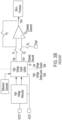
FIGS. 4A-4C generally illustrate a high voltage battery pack voltage measurement system according to the principles of the present disclosure. -
FIG. 5 is a flow diagram generally illustrating high voltage battery pack voltage measurement method according to the principles of the present disclosure. - The following discussion is directed to various embodiments of the present disclosure. Although one or more of these embodiments may be preferred, the embodiments disclosed should not be interpreted, or otherwise used, as limiting the scope of the disclosure as defined in the claims. In addition, one skilled in the art will understand that the following description has broad application, and the discussion of any embodiment is meant only to be exemplary of that embodiment, and not intended to intimate that the scope of the disclosure, including the claims, is limited to that embodiment.
- As described, vehicles, such as cars, trucks, sport utility vehicles, cross-overs, mini-vans, or other suitable vehicles, are increasingly including one or more battery packs configured to assist in vehicle propulsion and/or other aspects of vehicle operation. For example, high energy prices and the growing concerns over carbon emissions have directed vehicle manufacturers toward the development of electric and hybrid electric vehicles. Li-ion battery packs are the key components of such vehicles.
- Typically, such vehicles include a high voltage battery pack to provide power to multiple high-voltage powertrain subsystems, such as traction inverter and motor control systems for driving 3-phase traction motor (e.g., by converting a high voltage direct current (DC) battery to multi-phase alternating current (AC) signal, an on-board charger (e.g., which charges the high voltage DC battery by converting an AC line voltage to DC), battery management systems (e.g., that monitor, control, and protect the charging and discharging of the high voltage DC battery), and the like. Accurate knowledge of the high voltage battery pack is essential to safely operating (e.g., achieving most energy output for the longest possible lifetime) of the high voltage battery pack.
- Typical solutions for providing high voltage battery pack voltage measurement are generally illustrated in
FIGS. 3A and3B . InFIG. 3A , a positive high voltage DC terminal (e.g., which may be referred to herein as a positive high voltage DC input signal) HVDC+ and a negative high voltage DC terminal (e.g., which may be referred to herein as a negative high voltage DC input signal) HVDC-are terminals of a high-voltage battery pack. A difference voltage between the HVDC+ and the HVDC- terminals may be relatively high (e.g., 1000 volts or other suitable value). - Typically, to measure the voltage of the high voltage battery pack, two groups of high voltage matched, precision resistors Rx1-Rx2 and Rx3-Rx4 are used in respective high voltage dividers (e.g.,
high voltage divider 1 and high voltage divider 2). Such resistors must remain stable throughout the life of the typical battery voltage measurement systems. An attenuated version of HVDC+ and HVDC- signals are first voltage buffered before feeding into a differential-to-single-ended conversion circuit, an output voltage of which is provided to a micro-processor unit. - Output voltages Vop and Vom represent the positive-to-chassis and the negative-to-chassis voltages, respectively. Output voltage Vout represents the difference between the battery terminal voltages. In such systems, the stability (e.g., having negligible voltage coefficient, temperature coefficient, value drift due to the ageing, and sensitivity to mechanical stress affecting the resistance values) and matching precision of both resistors is critical for an accurate voltage measurement of the battery pack voltages. However, well-matched and stable high-voltage resistors and two analog buffer circuits account for a significant cost of this high voltage measurement systems.
- Another typical solution for a high-voltage battery pack measurement circuit is generally illustrate din
FIG. 3B . For example, HVDC+ and HVDC-, battery terminal voltages, are first attenuated by a precision attenuator circuit having outputs that are provided as inputs into a precision high-voltage signal isolator block. The differential outputs, Vop and Vom, of the high voltage signal isolator are converted into a single out, Vout, using a precision differential-to-single ended converter circuit. In addition to requiring a precision attenuation and precision differential-to-single ended converter circuit (e.g., or circuits), such a system may also require a relatively high-cost precision high-voltage voltage isolator block. Long-term performance stability of all these circuit blocks are essential to accurately measure the high voltage battery voltage (e.g., including each terminal voltage of the battery pack) during the full operating life of the system, which translates to a higher overall system cost. - Accurate measurement of the battery pack voltage can be only guaranteed when the measurement process is not affected by drift or shift of the components, which normally occurs to some degrees, by the environmental effects and the aging of the components (e.g., of the measurements circuits).
- Accordingly, systems and methods, such as those described herein, that provide accurate high voltage battery pack measurement, may be desirable. In some embodiments, the systems and the methods described herein may be configured to provide high voltage measurement having relatively high immunity to the shortcomings of measurement inaccuracy/errors of the prior art.
- In some embodiments, and as is generally illustrated in
FIGS. 4A-4C , the systems and methods described herein may be configured to provide a calibration step, which may occur during the system power-up period, a system wake-up period, or any other suitable time, including immediately or substantially immediately prior to measuring the high voltage battery pack terminal voltages. The systems and methods described herein may be configured to precisely measure resistor ratios of Rx2/Rx1 and Rx4/Rx3, regardless of the values of the high voltage battery pack terminal (e.g., the resistor ratios are measured for any static, slowly varying, and/or reasonably fast varying high voltage battery pack terminal voltages). - The systems and methods described herein may be configured to provide a measurement step to measure the high voltage battery pack terminal voltages using information generated during the calibration step (e.g., the determined resistor ratios). The systems and methods described herein may be configured to provide precision measurements of the high voltage battery pack terminal voltages having measured values that are not corrupted by any possible instability of component values due to the environmental effects, drifts, and/or ageing.
- In some embodiments, the systems and methods described herein may be configured to measure voltages of a high voltage battery pack. The high voltage battery pack may be associated with operation of a vehicle, such as vehicle propulsion and the like. Alternatively, the high voltage battery pack may be associated with any suitable application other than operation of a vehicle. The systems and methods described herein may be configured to include a first integrated circuit configured to receive a first reference voltage and a second reference voltage associated with a positive high voltage direct current input signal. The systems and methods described herein may be configured to include a second integrated circuit configured to receive a third reference voltage and a fourth reference voltage associated with a negative high voltage direct current input signal.
- The systems and methods described herein may be configured to include a first analog-to-digital converter in communication with the first integrated circuit. The first analog-to-digital converter may be configured to measure, during one of a system power up period and a system wake-up period, the first reference voltage and the third reference voltage for a predetermined number of iterations. The predetermined number of iterations may include four iterations or any suitable number of iterations. Measuring, for the predetermined number of iterations, the first reference voltage may include closing a switch corresponding to the positive high voltage direct current input signal and a switch corresponding to the first reference voltage. Measuring, for the predetermined number of iterations, the third reference voltage may include closing a switch corresponding to the negative high voltage direct current input signal and a switch corresponding to the third reference voltage.
- The systems and methods described herein may be configured to include a second analog-to-digital converter in communication with the second integrated circuit. The second analog-to-digital converter may be configured to measure, during the one of the system power up period and the system wake-up period, the second reference voltage and the fourth reference voltage for the predetermined number of iterations. Measuring, for the predetermined number of iterations, the second reference voltage may include closing a switch corresponding to the positive high voltage direct current input signal and a switch corresponding to the second reference voltage. Measuring, for the predetermined number of iterations, the fourth reference voltage may include closing a switch corresponding to the negative high voltage direct current input signal and a switch corresponding to the fourth reference voltage.
- In some embodiments, a controller may be configured to calculate a first resistance ratio based, at least in part, on voltage measurements for each of the predetermined number of iterations of the first reference voltage and the third reference voltage. The first resistance ratio may include a ratio of a resistance of the first integrated circuit and an external resistance of the first integrated circuit.
- The controller may, after the one of the system power up period and the system wake-up period, determine a positive high voltage associated with the positive high voltage direct current input signal based, at least in part, on the first resistance ratio. Determining the positive high voltage associated with the positive high voltage direct current input signal may include closing a switch corresponding to the positive high voltage direct current input signal and a switch corresponding to a low voltage signal reference voltage associated with the positive high voltage direct current input signal.
- In some embodiments, the controller may be further configured to calculate a second resistance ratio based, at least in part, on voltage measurements for each of the predetermined number of iterations of the second reference voltage and the fourth reference voltage. The second resistance ratio includes a ratio of a resistance of the second integrated circuit and an external resistance of the second integrated circuit.
- The controller may, after one of the system power up period and the system wake-up period, determine a negative high voltage associated with the negative high voltage direct current input signal based, at least in part, on the second resistance ratio. Determining the negative high voltage associated with the negative high voltage direct current input signal may include closing a switch corresponding to the negative high voltage direct current input signal and a switch corresponding to a low voltage signal reference voltage associated with the negative high voltage direct current input signal.
-
FIG. 1 generally illustrates avehicle 10 according to the principles of the present disclosure. Thevehicle 10 may include any suitable vehicle, such as a car, a truck, a sport utility vehicle, a mini-van, a cross-over, any other passenger vehicle, any suitable commercial vehicle, or any other suitable vehicle. While thevehicle 10 is illustrated as a passenger vehicle having wheels and for use on roads, the principles of the present disclosure may apply to other vehicles, such as planes, boats, trains, drones, or other suitable vehicles. Thevehicle 10 includes avehicle body 12 and ahood 14. A portion of thevehicle body 12 defines apassenger compartment 18. Another portion of thevehicle body 12 defines the engine compartment 20. Thehood 14 may be moveably attached to a portion of thevehicle body 12, such that thehood 14 provides access to the engine compartment 20 when thehood 14 is in a first or open position and thehood 14 covers the engine compartment 20 when thehood 14 is in a second or closed position. - The
passenger compartment 18 is disposed rearward of the engine compartment 20. Thevehicle 10 may include any suitable propulsion system including an internal combustion engine, one or more electric motors (e.g., an electric vehicle), one or more fuel cells, a hybrid (e.g., a hybrid vehicle) propulsion system comprising a combination of an internal combustion engine, one or more electric motors, and/or any other suitable propulsion system. In some embodiments, thevehicle 10 may include a petrol or gasoline fuel engine, such as a spark ignition engine. In some embodiments, thevehicle 10 may include a diesel fuel engine, such as a compression ignition engine. The engine compartment 20 houses and/or encloses at least some components of the propulsion system of thevehicle 10. Additionally, or alternatively, propulsion controls, such as an accelerator actuator (e.g., an accelerator pedal), a brake actuator (e.g., a brake pedal), a steering wheel, and other such components are disposed in thepassenger compartment 18 of thevehicle 10. The propulsion controls may be actuated or controlled by a driver of thevehicle 10 and may be directly connected to corresponding components of the propulsion system, such as a throttle, a brake, a vehicle axle, a vehicle transmission, and the like, respectively. In some embodiments, the propulsion controls may communicate signals to a vehicle computer (e.g., drive by wire) which in turn may control the corresponding propulsion component of the propulsion system. - In some embodiments, the
vehicle 10 includes a transmission in communication with a crankshaft via a flywheel or clutch or fluid coupling. In some embodiments, the transmission includes a manual transmission. In some embodiments, the transmission includes an automatic transmission. Thevehicle 10 may include one or more pistons, in the case of an internal combustion engine or a hybrid vehicle, which cooperatively operate with the crankshaft to generate force which is translated through the transmission to one or more axles which turnswheels 22. When thevehicle 10 includes one or more electric motors, a vehicle battery and/or fuel cell provides energy to the electric motors to turn thewheels 22. In cases where thevehicle 10 includes a vehicle battery to provide energy to the one or more electric motors, when the battery is depleted, it may be connected to an electric grid (e.g., using a wall socket) to recharge the battery cells. Additionally, or alternatively, thevehicle 10 may employ regenerative braking which uses the one or more electric motors of thevehicle 10 as a generator to convert kinetic energy lost due to decelerating back into stored energy in the battery. - The
vehicle 10 may include automatic vehicle propulsion systems, such as a cruise control, an adaptive cruise control, automatic braking control, other automatic vehicle propulsion systems, or a combination thereof. Thevehicle 10 may be an autonomous or semi-autonomous vehicle, or other suitable type of vehicle. Thevehicle 10 may include additional or fewer features than those generally illustrated and/or disclosed herein. - In some embodiments, the
vehicle 10 may include a controller, such ascontroller 100, as is generally illustrated inFIG. 2 . Thecontroller 100 may include any suitable controller, such as an electronic control unit or other suitable controller. Thecontroller 100 may be configured to control, for example, the various functions of the steering system and/or various functions of thevehicle 10. Thecontroller 100 may include aprocessor 102 and amemory 104. Theprocessor 102 may include any suitable processor, such as those described herein. Additionally, or alternatively, thecontroller 100 may include any suitable number of processors, in addition to or other than theprocessor 102. Thememory 104 may comprise a single disk or a plurality of disks (e.g., hard drives), and includes a storage management module that manages one or more partitions within thememory 104. In some embodiments,memory 104 may include flash memory, semiconductor (solid state) memory or the like. Thememory 104 may include Random Access Memory (RAM), a Read-Only Memory (ROM), or a combination thereof. Thememory 104 may include instructions that, when executed by theprocessor 102, cause theprocessor 102 to, at least, control various aspects of thevehicle 10. - In some embodiments, the
controller 100 may be configured to measure high voltage battery pack terminal voltages of the high voltage battery pack. The high voltage battery pack may include any suitable battery pack. The high voltage battery pack may be configured to provide electric power to one or more components of thevehicle 10, such as one or more propulsion components or other suitable components. Additionally, or alternatively, the high voltage battery pack may be associated with any suitable application other than thevehicle 10. - As is generally illustrated in
FIGS. 4A-4C , a high voltage battery pack measurement system includes a firstintegrated circuit 402 and a secondintegrated circuit 404. The firstintegrated circuit 402 and the secondintegrated circuit 404 may include any suitable circuit or electronic component, such as those described herein. - The first
integrated circuit 402 may receive an HVDC+ signal, a first reference voltage (VM1), a second reference voltage, (VM2), and a relatively low voltage signal (VHS) (e.g., half of the HVDC+ signal or other suitable voltage). The secondintegrated circuit 404 may receive an HVDC- signal, a third reference voltage (VM3), a fourth reference voltage, (VM4), and a relatively voltage signal (VHS) (e.g., half of the HVDC-). The first reference voltage, the second reference voltage, the third reference voltage, the relatively low voltage signal associated with the firstintegrated circuit 402, and the relatively low voltage signal associated with the secondintegrated circuit 404 may be generated using any suitable technique and may correspond to any suitable power supply, including, but not limited to, the high voltage battery pack. - The
controller 100 may perform a calibration step. For example, a first analog-to-digital convertor (ADC1) may measure VM1 and VM2 and a second analog-to-digital converter (ADC2) may measure VM3 and VM4. This is accomplished by closing Φ2 and opening Φ1 switches. To measure VM1 and VM3, switches Φx and Φ2 are closed while the remaining switches are kept open. To measure VM2 and VM4, switches Φy and Φ2 are closed while the remaining switches are kept open. It should be understood that the exact absolute values and the stability of the generated reference voltages have no bearing on the accuracy of the high voltage battery pack measurement. - In some embodiments, four consecutive measurements are made by the ADC1 and the ADC2 while switches Φx and Φ1 are closed and the remaining switched are open. The equations describing these measurements may be described as:


- In some embodiments, another four consecutive measurements are made by the ADC1 and the ADC2 while switches Φy and Φ1 are closed and the remaining switched are open. The equations describing these measurements may be described as:


- The digital signal processing unit computes the following equations (Voutp1, Voutp2 and ΔVoutp1, and the code for ΔVoutp1 is stored in the memory, such as the
memory 104, for subsequent computations:

ΔVoutp1 = (Voutp1 - Voutp2)/2 = (1 + Rx2/Rx1)(VM1 - VM2) - [(HVDC 1 - HVDC 2 - HVDC 3 + HVDC+ 4)/2] · Rx2/Rx1 - The above process is repeated for another four subsequent signal samples, and the following expression is further computed and the code for ΔVoutp2 is also stored:


- After an additional four signal samples, the following expression is also computed and stored in memory:

- Depending on the noise nature/statistics riding on the signals HVDC+ 1 through HVDC+ n, a determined (e.g., by a user of the system 400) number of sets of sampled signals may be used, such that the following expression become accurate or substantially accurate:
HVDC+ 1 - HVDC+ 2 - HVDC+ 3 + HVDC+ 4 + HVDC+ 5 - HVDC+ 6 - HVDC+ 7 + HVDC+ 8 + HVDC+ 9 - HVDC+ 10 - HVDC+ 11 + HVDC+ 12 +......... + HVDC+ 29 - HVDC+ 30 - HVDC+ 31 + HVDC+ 32 + .................... HVDC+ 125 - HVDC+ 126- HVDC+ 127+ HVDC+ 128 ~ 0 - In this example, 128 (4x32) samples are used, but it should be understood that any suitable number of iterative samples may be used, with each set of samples including four iterative measurements (e.g., which may allow the number of samples to be more or less than described herein).
- In some embodiments, the controller 100 (e.g., which may be referred to herein as the digital signal processing unit) may computes the following output expression:

- It should be noted that other sequence signs of the sampled signals can also be used (e.g., or other sign sequences as long as the samples include two plus signs and two minus signs appearing in every four-sample summation), as shown below:
HVDC+ 1 - HVDC+ 2 + HVDC + 3 - HVDC+ 4 + HVDC+ 5 - HVDC+ 6+ HVDC+ 7 - HVDC+ 8 + HVDC+ 9 -HVDC+ 10 + HVDC+ 11 - HVDC+ 12 +......... + HVDC+ 29 - HVDC+ 30 + HVDC+ 31 - HVDC+ 32 + .................... HVDC+ 125 - HVDC+ 126 + HVDC+ 127 - HVDC+ 128 ~0 - Assuming that the processing times of the Vop1 through VopN and Vom1 through VomN (where N=1....32) signals, by the ADC1 and corresponding ones by the
controller 100, are appreciably shorter than that the change in the HVDC+ 1 through HVDC+ 132 signals, then the following equations become accurate or substantially accurate:


- After measurement of another four subsequent signal samples, the following expression is computed and stored in memory for further use:

- The
controller 100 may compute the following output expression:

- The
controller 100 may then compute:
- When the value of the resistors are determined such that the ratios of Rx1/Rx2 and Rx3/Rx4 are relatively large (e.g., greater than 50 or other suitable value), then
controller 100 may amplify the signals Vop1 through VopN and Vom1 through VomN in order to preserve high signal processing accuracy. - As is generally illustrated in
FIG. 4B , the expressions for the resistor ratios, which include a gain of "α" for corresponding amplifiers, are:

- It should be noted that the high voltage battery pack
voltage measurement system 400 is to be integrated into an integrated circuit device, which may include one of many integrated circuits manufactured at once in a batch processing. - In some embodiments, the resistors Rx2 and Rx4 may reside on the first
integrated circuit 402 and each integrated circuit may be used in a unique system having its own particular values for the external Rx1 and Rx2 resistors. The terms "VM1 - VM2", "VM3 - VM4", and "α" introduce an error gain term, which may allow the dependency of Rx2/Rx1 and Rx4/Rx3 on "VM1 - VM2", "VM3 - VM4", and "α" terms to be eliminated. This is achieved during the time of integrated circuit testing. - During the integrated circuit testing, this gain error term is measured and stored into the memory to be used when performing the high voltage battery pack measurement. The gain error term may be measured during the integrated circuit test to determine and store the values of Rx2 and Rx4 using precisely known values of external Rx1 and Rx2, which are connected during the integrated circuit testing. Furthermore, using the measured resistor ratios, normalized values for the resistor ratios are computed and stored into each integrated circuit to account and/or correct for the gain error term.
- When the first
integrated circuit 402 is used with certain Rx1 and Rx2 resistor values (e.g., with the range value of the external resistors, Rx1 and Rx2 may be determined such that the limited voltage dynamic range of the firstintegrated circuit 402 is carefully considered), during the system power-up period (e.g., or on a command) a determination of the calibration step may be performed. The calibration step uses the stored normalized resistor ratios from the memory to account for the gain error term to subsequently compute Rx2/Rx1 and Rx4/Rx3 values that are totally independent of any lump value of this gain error term. This may allow for the terms α · (VM1 - VM2) and α · (VM3 - VM4) to be accurately determined (e.g., since corresponding errors are accounted for each of the firstintegrated circuit 402 and the second integrated circuit 404) the above equations for Rx2/Rx1 and Rx4/Rx3 values are now free from any gain error. - After the completion of the calibration step, the
controller 100 uses the computed resistor ratios to perform a high voltage battery pack voltage measurement step (e.g., which may result in precise measurements of the high voltage battery pack terminal voltages throughout the life of the system 400). - As is generally illustrated in
FIG. 4C , thesystem 400 may be configured such that Vop and Vom are directly connected to the input of the ADC1 and the ADC2 in order to perform the battery voltage measurement. Thecontroller 100 may achieve the measurement configuration by closing switches Φz and Φ1 (e.g., ofFIG. 4A ) while the other switches are left in an open state. The expressions for Vop and Vom during the measurement step are:

- Assuming that VHS is already a known and/or measured quantity with high accuracy, then the first term in the equations for Vop and Vom is subtracted out. After rearranging the resultant equations, then the following equations are subsequently derived:


- This illustrates that digital codes for Vop and Vom, are output by the ADC1 and the ADC2, and these codes are further sent to the
controller 100, which thecontroller 100 has previously computed the resistor ratios Rx1/Rx2 and Rx3/Rx4, from the calibration step, to further compute HVDCp and HVDCm and the difference of the high voltage battery pack terminal voltage values.
- In some embodiments, the
system 400 may perform the methods described herein. However, the methods described herein as performed by thesystem 400 are not meant to be limiting, and any type of software executed on a controller or processor can perform the methods described herein without departing from the scope of this disclosure. For example, a controller, such as a processor executing software within a computing device, can perform the methods described herein. -
FIG. 5 is a flow diagram generally illustrating a high voltage battery packvoltage measurement method 500 according to the principles of the present disclosure. At 502, themethod 500, during one of a system power up period and a system wake-up period: generates, for an electronic circuit associated with the high voltage battery pack, a first reference voltage associated with a positive high voltage direct current input signal and a second reference voltage associated with the positive high voltage direct current input signal and a third reference voltage associated with a negative high voltage direct current input signal and a fourth reference voltage associated with the negative high voltage direct current input signal. - At 504, the
method 500, during the one of the system power up period and the system wake-up period, measures, for a predetermined number of iterations, the first reference voltage and the third reference voltage. Themethod 500 also measures, for the predetermined number of iterations, the second reference voltage and the fourth reference voltage. - At 506, the
method 500, during the one of the system power up period and the system wake-up period, calculates, for the electronic circuit associated with the high voltage battery pack, a first resistance ratio based, at least in part, on voltage measurements for each of the predetermined number of iterations of the first reference voltage and the third reference voltage. Themethod 500 also calculates, for the electronic circuit associated with the high voltage battery, a second resistance ratio based, at least in part, on voltage measurements for each of the predetermined number of iterations of the second reference voltage and the fourth reference voltage. - At 508, the
method 500, after the one of the system power up period and the system wake-up period, determines a positive high voltage associated with the positive high voltage direct current input signal based, at least in part, on the first resistance ratio. Themethod 500 also determines a negative high voltage associated with the negative high voltage direct current input signal based, at least in part, on the second resistance ratio. - The above discussion is meant to be illustrative of various embodiments of the present invention, as defined by the appended claims. Numerous variations and modifications will become apparent to those skilled in the art once the above disclosure is fully appreciated. In this regard, the scope of the invention is defined by the appended claims.
- The word "example" is used herein to mean serving as an example, instance, or illustration. Any aspect or design described herein as "example" is not necessarily to be construed as preferred or advantageous over other aspects or designs. Rather, use of the word "example" is intended to present concepts in a concrete fashion. As used in this application, the term "or" is intended to mean an inclusive "or" rather than an exclusive "or." That is, unless specified otherwise, or clear from context, "X includes A or B" is intended to mean any of the natural inclusive permutations. That is, if X includes A; X includes B; or X includes both A and B, then "X includes A or B" is satisfied under any of the foregoing instances. In addition, the articles "a" and "an" as used in this application and the appended claims should generally be construed to mean "one or more" unless specified otherwise or clear from context to be directed to a singular form. Moreover, use of the term "an implementation" or "one implementation" throughout is not intended to mean the same embodiment or implementation unless described as such.
- Implementations of the systems, algorithms, methods, instructions, etc., described herein can be realized in hardware, software, or any combination thereof. The hardware can include, for example, computers, intellectual property (IP) cores, application-specific integrated circuits (ASICs), programmable logic arrays, optical processors, programmable logic controllers, microcode, microcontrollers, servers, microprocessors, digital signal processors, or any other suitable circuit. In the claims, the term "processor" should be understood as encompassing any of the foregoing hardware, either singly or in combination. The terms "signal" and "data" are used interchangeably.
- As used herein, the term module can include a packaged functional hardware unit designed for use with other components, a set of instructions executable by a controller (e.g., a processor executing software or firmware), processing circuitry configured to perform a particular function, and a self-contained hardware or software component that interfaces with a larger system. For example, a module can include an application specific integrated circuit (ASIC), a Field Programmable Gate Array (FPGA), a circuit, digital logic circuit, an analog circuit, a combination of discrete circuits, gates, and other types of hardware or combination thereof. In other embodiments, a module can include memory that stores instructions executable by a controller to implement a feature of the module.
- Further, in one aspect, for example, systems described herein can be implemented using a general-purpose computer or general-purpose processor with a computer program that, when executed, carries out any of the respective methods, algorithms, and/or instructions described herein. In addition, or alternatively, for example, a special purpose computer/processor can be utilized which can contain other hardware for carrying out any of the methods, algorithms, or instructions described herein.
- Further, all or a portion of implementations of the present disclosure can take the form of a computer program product accessible from, for example, a computer-usable or computer-readable medium. A computer-usable or computer-readable medium can be any device that can, for example, tangibly contain, store, communicate, or transport the program for use by or in connection with any processor. The medium can be, for example, an electronic, magnetic, optical, electromagnetic, or a semiconductor device. Other suitable mediums are also available.
- The above-described embodiments, implementations, and aspects have been described in order to allow easy understanding of the present disclosure and do not limit the present invention, as defined by the appended claims. In this respect, the scope of the invention is defined by the appended claims.
Claims (14)
- A method, carried out in a system (400), for measuring voltage of a high voltage battery pack, the system (400) being configured to receive a positive high voltage direct current (DC) input signal from a positive high voltage DC terminal (HVDC+) of the battery pack and a negative high voltage DC input signal from a negative high voltage DC terminal (HVDC-) of the battery pack, the method comprising:during one of a system power up period and a system wake-up period of the system (400):generating (502), for a first electronic circuit (402) associated with the high voltage battery pack, a first reference voltage (VM1) and a second reference voltage (VM2) each associated with the positive high voltage DC input signal;generating (502), for a second electronic circuit (404) associated with the high voltage battery pack, a third reference voltage (VM3) and a fourth reference voltage (VM4) each associated with the negative high voltage DC input signal, wherein the first, second, third and fourth reference voltages are generated using the high voltage battery pack or other power supply;measuring (504), for a predetermined number of iterations, respective output voltages (Vop1-Vop2) of the first electronic circuit (402) when the first reference voltage (VM1) is received thereby and respective output voltages (Vom1-Vom2) of the second electronic circuit (404) when the third reference voltage (VM3) is received thereby;measuring (504), for the predetermined number of iterations, respective output voltages (Vop3-Vop4) of the first electronic circuit (402) when the second reference voltage (VM2) is received thereby and respective output voltages (Vom3-Vom4) of the second electronic circuit (404) when the fourth reference voltage (VM4) is received thereby;calculating (506), for the first electronic circuit, a first resistance ratio (Rx1/Rx2) based, at least in part, on the measured output voltages (Vop1-Vop4) of the first electronic circuit (402); andcalculating (506), for the second electronic circuit, a second resistance ratio (Rx4/Rx3) based, at least in part, on the measured output voltages (Vom1-Vom4) of the second electronic circuit (404); andafter the one of the system power up period and the system wake-up period:determining (508) the current positive high voltage DC input signal (HVDCp) of the battery pack based, at least in part, on the first resistance ratio (Rx1/Rx2); anddetermining (508) the current negative high voltage DC input signal (HVDCm) of the battery pack based, at least in part, on the second resistance ratio (Rx4/Rx3).
- The method of claim 1, wherein:measuring (504), for the predetermined number of iterations, respective output voltages (Vop1-Vop2) of the first electronic circuit (402) when the first reference voltage (VM1) is received thereby includes closing a switch (Φ2) corresponding to the positive high voltage direct current input signal and a switch (Φx) corresponding to the first reference voltage (VM1); andmeasuring (504), for the predetermined number of iterations, respective output voltages (Vom1-Vom2) of the second electronic circuit (404) when the third reference voltage (VM3) is received thereby includes closing a switch (Φ2) corresponding to the negative high voltage direct current input signal and a switch (Φx) corresponding to the third reference voltage (VM3).
- The method of claim 1 or 2, wherein:measuring (504), for the predetermined number of iterations, respective output voltages (Vop3-Vop4) of the first electronic circuit (402) when the second reference voltage (VM2) is received thereby includes closing a switch (Φ2) corresponding to the positive high voltage direct current input signal and a switch (ΦY) corresponding to the second reference voltage (VM2); andmeasuring (504), for the predetermined number of iterations, respective output voltages (Vom3-Vom4) of the second electronic circuit (404) when the fourth reference voltage (VM4) is received thereby includes closing a switch (Φ2) corresponding to the negative high voltage direct current input signal and a switch (ΦY) corresponding to the fourth reference voltage (VM4).
- The method of any one of claims 1 to 3, wherein the first resistance ratio (Rx1/Rx2) includes a ratio of a resistance (Rx2) of a first integrated circuit of the first electronic circuit and an external resistance (Rx1) of the first integrated circuit and/or wherein the second resistance ratio (Rx4/Rx3) includes a ratio of a resistance (Rx4) of a second integrated circuit of the second electronic circuit and an external resistance (Rx3) of the second integrated circuit.
- The method of any one of claims 1 to 4, wherein:determining the current positive high voltage DC input signal (HVDCp) includes closing a switch (Φ1) corresponding to the positive high voltage DC input signal and a switch (Φz) corresponding to a low voltage signal reference voltage associated with the positive high voltage DC input signal; anddetermining the current negative high voltage DC input signal (HVDCm) includes closing a switch (Φ1) corresponding to the negative high voltage DC input signal and a switch (Φz) corresponding to a low voltage signal reference voltage associated with the negative high voltage DC input signal.
- The method of any one of claims 1 to 5, further comprising computing the difference ΔHVDC of the high voltage battery pack terminal voltage values as:

- A system (400) for measuring voltage of a high voltage battery pack, the system (400) the system (400) being configured to receive a positive high voltage direct current (DC) input signal from a positive high voltage DC terminal (HVDC+) of the battery pack and a negative high voltage DC input signal from a negative high voltage DC terminal (HVDC-) of the battery pack, the system (400) comprising:a first integrated circuit (402) configured to receive a first reference voltage (VM1) and a second reference voltage (VM2) associated with the positive high voltage direct current input signal, wherein the first and second reference voltages are generated using the high voltage battery pack or other power supply;a second integrated circuit (404) configured to receive a third reference voltage (VM3) and a fourth reference voltage (VM4) associated with the negative high voltage direct current input signal, wherein the third and fourth reference voltage are generated using the high voltage battery pack or other power supply;a first analog-to-digital converter (ADC1) in communication with the first integrated circuit (402) and with a controller (100);a second analog-to-digital converter (ADC2) in communication with the second integrated circuit (404) and with the controller (100); andwherein the controller (100) is configured to:
during one of a system power up period and a system wake-up period of the system (400):receive (504), from the first analog-to-digital converter (ADC1) for a predetermined number of iterations, digital codes corresponding to respective output voltages (Vop1-Vop2) of the first integrated circuit (402) when the first reference voltage (VM1) is received thereby and respective output voltages (Vom1-Vom2) of the second integrated circuit (404) when the third reference voltage (VM3) is received thereby;receive (504), from the second analog-to-digital converter (ADC2) for a predetermined number of iterations, digital codes corresponding to respective output voltages (Vop3-Vop4) of the first integrated circuit (402) when the second reference voltage (VM2) is received thereby and respective output voltages (Vom3-Vom4) of the second integrated circuit (404) when the fourth reference voltage (VM4) is received thereby;calculate, for the first integrated circuit (402), a first resistance ratio (Rx1/Rx2) based, at least in part, on the measured output voltages (Vop1-Vop4) of the first integrated circuit (402);calculate, for the second integrated circuit (404), a second resistance ratio (Rx4/Rx3) based, at least in part, on the measured output voltages (Vom1-Vom4) of the second integrated circuit (404);after the one of the system power up period and the system wake-up period:determine (508) a current positive high voltage DC input signal (HVDCp) of the battery pack based, at least in part, on the first resistance ratio (Rx1/Rx2); anddetermine (508) a current negative high voltage DC input signal (HVDCm) of the battery pack based, at least in part, on the second resistance ratio. - The system of claim 7, wherein:receiving (504), for the predetermined number of iterations, digital codes corresponding to respective output voltages (Vop1-Vop2) of the first integrated circuit (402) when the first reference voltage (VM1) is received thereby includes closing a switch (Φ2) corresponding to the positive high voltage DC input signal and a switch (Φx) corresponding to the first reference voltage (VM1), the switch (Φ2) corresponding to the positive high voltage DC input signal and the switch (Φx) corresponding to the first reference voltage (VM1) being connected to the first integrated circuit (402); andreceiving (504), for the predetermined number of iterations, digital codes corresponding to respective output voltages (Vom1-Vom2) of the second integrated circuit (404) when the third reference voltage is received thereby includes closing a switch (Φ2) corresponding to the negative high voltage DC input signal and a switch (Φx) corresponding to the third reference voltage (VM3), the switch corresponding to the negative high voltage DC input signal and the switch corresponding to the third reference voltage (VM3)being connected to the second integrated circuit.
- The system of claim 7 or 8, wherein:receiving (504), for the predetermined number of iterations, digital codes corresponding to respective output voltages (Vop3-Vop4) of the first integrated circuit (402) when the second reference voltage (VM2) is received thereby includes closing a switch (Φ2) corresponding to the positive high voltage DC input signal and a switch (ΦY) corresponding to the second reference voltage (VM2), the switch (Φ2) corresponding to the positive high voltage direct current input signal and the switch (ΦY) corresponding to the second reference voltage (VM2) being connected to the first integrated circuit (402); andreceiving (504), for the predetermined number of iterations, the fourth reference voltage (VM4) includes closing a switch (Φ2) corresponding to the negative high voltage DC input signal and a switch (ΦY) corresponding to the fourth reference voltage (VM4), the switch (Φ2) corresponding to the negative high voltage direct current input signal and the switch (ΦY) corresponding to the fourth reference voltage (VM4) being connected to the second integrated circuit (404).
- The system of any one of claims 7 to 9, wherein the first resistance ratio (Rx1/Rx2) includes a ratio of a resistance (Rx2) of the first integrated circuit (402) and an external resistance (Rx1) of the first integrated circuit (402) and/or wherein the second resistance ratio (Rx4/Rx3) includes a ratio of a resistance (Rx4) of the second integrated circuit (404) and an external resistance (Rx3) of the second integrated circuit (404).
- The system of any one of claims 7 to 10, wherein:determining the current positive high voltage associated with the positive high voltage DC input signal (HVDCp) includes closing a switch (Φ1) corresponding to the positive high voltage DC input signal and a switch (Φz) corresponding to a low voltage signal reference voltage (VHS) associated with the positive high voltage DC input signal; anddetermining the current negative high voltage DC input signal (HVDCm) includes closing a switch (Φ1) corresponding to the negative high voltage DC input signal and a switch (Φz) corresponding to a low voltage signal reference voltage (VHS) associated with the negative high voltage DC input signal.
- The system of any one of claims 7 to 11, wherein the controller (100) is further configured to compute the difference ΔHVDC of the high voltage battery pack terminal voltage values as:

- The method of any one of claims 1 to 6, or the system according to any one of claims 7 to 12, wherein the predetermined number of iterations includes four iterations.
- The method of any one of claims 1 to 6, or the system according to any one of claims 7 to 12, wherein the high voltage battery pack is a high voltage battery pack for a vehicle.
Priority Applications (1)
| Application Number | Priority Date | Filing Date | Title |
|---|---|---|---|
| EP25152708.1A EP4521124A3 (en) | 2021-05-28 | 2022-05-17 | System and method for high voltage battery pack measurement |
Applications Claiming Priority (1)
| Application Number | Priority Date | Filing Date | Title |
|---|---|---|---|
| US17/333,854 US12054073B2 (en) | 2021-05-28 | 2021-05-28 | System and method for high voltage battery pack measurement |
Related Child Applications (3)
| Application Number | Title | Priority Date | Filing Date |
|---|---|---|---|
| EP25152708.1A Division EP4521124A3 (en) | 2021-05-28 | 2022-05-17 | System and method for high voltage battery pack measurement |
| EP25152708.1A Previously-Filed-Application EP4521124A3 (en) | 2021-05-28 | 2022-05-17 | System and method for high voltage battery pack measurement |
| EP25152708.1A Division-Into EP4521124A3 (en) | 2021-05-28 | 2022-05-17 | System and method for high voltage battery pack measurement |
Publications (2)
| Publication Number | Publication Date |
|---|---|
| EP4095536A1 EP4095536A1 (en) | 2022-11-30 |
| EP4095536B1 true EP4095536B1 (en) | 2025-04-30 |
Family
ID=81748734
Family Applications (2)
| Application Number | Title | Priority Date | Filing Date |
|---|---|---|---|
| EP25152708.1A Pending EP4521124A3 (en) | 2021-05-28 | 2022-05-17 | System and method for high voltage battery pack measurement |
| EP22173825.5A Active EP4095536B1 (en) | 2021-05-28 | 2022-05-17 | System and method for high voltage battery pack measurement |
Family Applications Before (1)
| Application Number | Title | Priority Date | Filing Date |
|---|---|---|---|
| EP25152708.1A Pending EP4521124A3 (en) | 2021-05-28 | 2022-05-17 | System and method for high voltage battery pack measurement |
Country Status (4)
| Country | Link |
|---|---|
| US (2) | US12054073B2 (en) |
| EP (2) | EP4521124A3 (en) |
| KR (1) | KR102747000B1 (en) |
| CN (1) | CN115407120B (en) |
Families Citing this family (1)
| Publication number | Priority date | Publication date | Assignee | Title |
|---|---|---|---|---|
| US12054073B2 (en) * | 2021-05-28 | 2024-08-06 | Delphi Technologies Ip Limited | System and method for high voltage battery pack measurement |
Family Cites Families (15)
| Publication number | Priority date | Publication date | Assignee | Title |
|---|---|---|---|---|
| JP3600211B2 (en) | 2000-02-22 | 2004-12-15 | 三洋電機株式会社 | Power supply leakage detection circuit |
| US7723993B2 (en) | 2002-09-05 | 2010-05-25 | Midtronics, Inc. | Electronic battery tester configured to predict a load test result based on open circuit voltage, temperature, cranking size rating, and a dynamic parameter |
| US7710074B2 (en) | 2005-10-14 | 2010-05-04 | Lg Electronics Inc. | Determining an amount of charge in a battery based on voltage and portable device having the same |
| US9523730B2 (en) | 2009-04-08 | 2016-12-20 | Analog Devices, Inc. | Architecture and method to determine leakage impedance and leakage voltage node |
| US9568555B2 (en) * | 2010-12-06 | 2017-02-14 | Peter Fredrick Nortman | Electrochemical cell monitoring and balancing circuit with self-diagnostic feature |
| KR20120127802A (en) | 2011-05-16 | 2012-11-26 | 현대모비스 주식회사 | Circuit and method for sensing voltage of battery pack |
| JP6014404B2 (en) | 2012-07-31 | 2016-10-25 | 株式会社ケーヒン | Earth leakage detector |
| DE102013204877A1 (en) * | 2013-03-20 | 2014-09-25 | Continental Teves Ag & Co. Ohg | Method and electronic circuit arrangement for controlling a load current in a motor vehicle control unit |
| CN105556323B (en) * | 2013-10-29 | 2019-01-04 | 松下知识产权经营株式会社 | Battery status estimation device |
| KR102206734B1 (en) * | 2014-04-30 | 2021-01-25 | 삼성전자주식회사 | Method and apparatus for measuring voltage of battery pack |
| US10371758B2 (en) | 2015-09-15 | 2019-08-06 | Lg Chem, Ltd. | Test system and method for testing a battery pack |
| RU2635340C2 (en) * | 2016-04-13 | 2017-11-10 | Михаил Александрович Власов | Method and device for measuring high-voltage |
| CN108089142B (en) * | 2017-12-29 | 2024-02-09 | 深圳市锐能微科技有限公司 | Detection circuit and method for voltage dividing circuit parameters and electric energy metering chip |
| CN110907691B (en) * | 2019-12-05 | 2022-02-25 | 中国人民解放军92942部队 | A wide-range DC voltage measurement device based on resistance division and time division sampling and self-calibration |
| US12054073B2 (en) * | 2021-05-28 | 2024-08-06 | Delphi Technologies Ip Limited | System and method for high voltage battery pack measurement |
-
2021
- 2021-05-28 US US17/333,854 patent/US12054073B2/en active Active
-
2022
- 2022-04-13 CN CN202210384513.1A patent/CN115407120B/en active Active
- 2022-05-17 EP EP25152708.1A patent/EP4521124A3/en active Pending
- 2022-05-17 EP EP22173825.5A patent/EP4095536B1/en active Active
- 2022-05-20 KR KR1020220062023A patent/KR102747000B1/en active Active
-
2024
- 2024-07-05 US US18/764,564 patent/US12330527B2/en active Active
Also Published As
| Publication number | Publication date |
|---|---|
| CN115407120A (en) | 2022-11-29 |
| CN115407120B (en) | 2025-10-24 |
| US20220379771A1 (en) | 2022-12-01 |
| US12054073B2 (en) | 2024-08-06 |
| US20240359589A1 (en) | 2024-10-31 |
| KR20220161186A (en) | 2022-12-06 |
| EP4095536A1 (en) | 2022-11-30 |
| EP4521124A3 (en) | 2025-06-18 |
| KR102747000B1 (en) | 2024-12-27 |
| US12330527B2 (en) | 2025-06-17 |
| EP4521124A2 (en) | 2025-03-12 |
Similar Documents
| Publication | Publication Date | Title |
|---|---|---|
| US9527389B2 (en) | System and method for estimating allowable regenerative braking of vehicle | |
| US10124696B2 (en) | Estimation and compensation of battery measurement and asynchronization biases | |
| US8796986B2 (en) | Battery management system and driving method thereof | |
| CN115243928B (en) | Method for determining the state of charge of a battery used in an electric vehicle | |
| EP3245096B1 (en) | Method and arrangement for determining a value of the state of energy of a battery in a vehicle | |
| US9472977B2 (en) | Battery cell state of charge estimation | |
| US9484851B2 (en) | Technique for correcting resolver offset | |
| EP2889633B1 (en) | Battery deterioration determining apparatus for electric vehicle and method thereof | |
| US12030387B2 (en) | Electrified vehicle control using battery electrochemical equilibrium based state of charge and power capability estimates | |
| KR102238209B1 (en) | Secondary battery system and method of estimating an internal state of secondary battery | |
| CN102368091A (en) | Adaptive battery parameter extraction and SOC estimation for lithium-ion battery | |
| JP2009250970A (en) | Estimation method of remaining capacity of battery | |
| CN104422892A (en) | Degradation estimation method and system for high voltage battery | |
| CN110901399A (en) | Secondary battery system and method for estimating internal state of secondary battery | |
| US12330527B2 (en) | System and method for high voltage battery pack measurement | |
| US20230236256A1 (en) | Power storage system | |
| CN105699736B (en) | Current sensor for vehicle | |
| Mineeshma et al. | Component sizing of electric vehicle/hybrid electric vehicle subsystems using backward modelling approach | |
| CN102897051B (en) | For to the system and method for vehicle battery charging | |
| US20210066953A1 (en) | Systems and methods for smooth start up of vehicle onboard battery charger | |
| CN111661033B (en) | Apparatus and method for controlling driving mode of hybrid electric vehicle | |
| Bucknor et al. | Design and testing of a 1 MW 800V truck testbed for high performance applications | |
| Osman et al. | Evaluation of Electric Vehicle Performance Based on High-Fidelity Modeling and Experimental Testing | |
| CN119764627A (en) | Lithium ion battery state of charge estimator using hysteresis model | |
| McCleery | Mechanical and Aerospace Engineering |
Legal Events
| Date | Code | Title | Description |
|---|---|---|---|
| PUAI | Public reference made under article 153(3) epc to a published international application that has entered the european phase |
Free format text: ORIGINAL CODE: 0009012 |
|
| STAA | Information on the status of an ep patent application or granted ep patent |
Free format text: STATUS: THE APPLICATION HAS BEEN PUBLISHED |
|
| AK | Designated contracting states |
Kind code of ref document: A1 Designated state(s): AL AT BE BG CH CY CZ DE DK EE ES FI FR GB GR HR HU IE IS IT LI LT LU LV MC MK MT NL NO PL PT RO RS SE SI SK SM TR |
|
| STAA | Information on the status of an ep patent application or granted ep patent |
Free format text: STATUS: REQUEST FOR EXAMINATION WAS MADE |
|
| 17P | Request for examination filed |
Effective date: 20230327 |
|
| RBV | Designated contracting states (corrected) |
Designated state(s): AL AT BE BG CH CY CZ DE DK EE ES FI FR GB GR HR HU IE IS IT LI LT LU LV MC MK MT NL NO PL PT RO RS SE SI SK SM TR |
|
| P01 | Opt-out of the competence of the unified patent court (upc) registered |
Effective date: 20230327 |
|
| GRAP | Despatch of communication of intention to grant a patent |
Free format text: ORIGINAL CODE: EPIDOSNIGR1 |
|
| STAA | Information on the status of an ep patent application or granted ep patent |
Free format text: STATUS: GRANT OF PATENT IS INTENDED |
|
| RAP1 | Party data changed (applicant data changed or rights of an application transferred) |
Owner name: BORGWARNER US TECHNOLOGIES LLC |
|
| INTG | Intention to grant announced |
Effective date: 20241126 |
|
| GRAJ | Information related to disapproval of communication of intention to grant by the applicant or resumption of examination proceedings by the epo deleted |
Free format text: ORIGINAL CODE: EPIDOSDIGR1 |
|
| STAA | Information on the status of an ep patent application or granted ep patent |
Free format text: STATUS: REQUEST FOR EXAMINATION WAS MADE |
|
| GRAP | Despatch of communication of intention to grant a patent |
Free format text: ORIGINAL CODE: EPIDOSNIGR1 |
|
| STAA | Information on the status of an ep patent application or granted ep patent |
Free format text: STATUS: GRANT OF PATENT IS INTENDED |
|
| INTC | Intention to grant announced (deleted) | ||
| GRAS | Grant fee paid |
Free format text: ORIGINAL CODE: EPIDOSNIGR3 |
|
| GRAA | (expected) grant |
Free format text: ORIGINAL CODE: 0009210 |
|
| STAA | Information on the status of an ep patent application or granted ep patent |
Free format text: STATUS: THE PATENT HAS BEEN GRANTED |
|
| INTG | Intention to grant announced |
Effective date: 20250319 |
|
| AK | Designated contracting states |
Kind code of ref document: B1 Designated state(s): AL AT BE BG CH CY CZ DE DK EE ES FI FR GB GR HR HU IE IS IT LI LT LU LV MC MK MT NL NO PL PT RO RS SE SI SK SM TR |
|
| REG | Reference to a national code |
Ref country code: CH Ref legal event code: EP Ref country code: GB Ref legal event code: FG4D |
|
| REG | Reference to a national code |
Ref country code: DE Ref legal event code: R096 Ref document number: 602022013776 Country of ref document: DE |
|
| REG | Reference to a national code |
Ref country code: IE Ref legal event code: FG4D |
|
| PGFP | Annual fee paid to national office [announced via postgrant information from national office to epo] |
Ref country code: DE Payment date: 20250527 Year of fee payment: 4 |
|
| PGFP | Annual fee paid to national office [announced via postgrant information from national office to epo] |
Ref country code: FR Payment date: 20250526 Year of fee payment: 4 |
|
| PGFP | Annual fee paid to national office [announced via postgrant information from national office to epo] |
Ref country code: AT Payment date: 20250721 Year of fee payment: 4 |
|
| REG | Reference to a national code |
Ref country code: NL Ref legal event code: MP Effective date: 20250430 |
|
| REG | Reference to a national code |
Ref country code: AT Ref legal event code: MK05 Ref document number: 1790482 Country of ref document: AT Kind code of ref document: T Effective date: 20250430 |
|
| PG25 | Lapsed in a contracting state [announced via postgrant information from national office to epo] |
Ref country code: FI Free format text: LAPSE BECAUSE OF FAILURE TO SUBMIT A TRANSLATION OF THE DESCRIPTION OR TO PAY THE FEE WITHIN THE PRESCRIBED TIME-LIMIT Effective date: 20250430 Ref country code: PT Free format text: LAPSE BECAUSE OF FAILURE TO SUBMIT A TRANSLATION OF THE DESCRIPTION OR TO PAY THE FEE WITHIN THE PRESCRIBED TIME-LIMIT Effective date: 20250901 Ref country code: ES Free format text: LAPSE BECAUSE OF FAILURE TO SUBMIT A TRANSLATION OF THE DESCRIPTION OR TO PAY THE FEE WITHIN THE PRESCRIBED TIME-LIMIT Effective date: 20250430 |
|
| REG | Reference to a national code |
Ref country code: LT Ref legal event code: MG9D |
|
| PG25 | Lapsed in a contracting state [announced via postgrant information from national office to epo] |
Ref country code: GR Free format text: LAPSE BECAUSE OF FAILURE TO SUBMIT A TRANSLATION OF THE DESCRIPTION OR TO PAY THE FEE WITHIN THE PRESCRIBED TIME-LIMIT Effective date: 20250731 Ref country code: NO Free format text: LAPSE BECAUSE OF FAILURE TO SUBMIT A TRANSLATION OF THE DESCRIPTION OR TO PAY THE FEE WITHIN THE PRESCRIBED TIME-LIMIT Effective date: 20250730 |
|
| PG25 | Lapsed in a contracting state [announced via postgrant information from national office to epo] |
Ref country code: NL Free format text: LAPSE BECAUSE OF FAILURE TO SUBMIT A TRANSLATION OF THE DESCRIPTION OR TO PAY THE FEE WITHIN THE PRESCRIBED TIME-LIMIT Effective date: 20250430 Ref country code: PL Free format text: LAPSE BECAUSE OF FAILURE TO SUBMIT A TRANSLATION OF THE DESCRIPTION OR TO PAY THE FEE WITHIN THE PRESCRIBED TIME-LIMIT Effective date: 20250430 |
|
| PGFP | Annual fee paid to national office [announced via postgrant information from national office to epo] |
Ref country code: IT Payment date: 20250531 Year of fee payment: 4 |
|
| PG25 | Lapsed in a contracting state [announced via postgrant information from national office to epo] |
Ref country code: BG Free format text: LAPSE BECAUSE OF FAILURE TO SUBMIT A TRANSLATION OF THE DESCRIPTION OR TO PAY THE FEE WITHIN THE PRESCRIBED TIME-LIMIT Effective date: 20250430 |
|
| PG25 | Lapsed in a contracting state [announced via postgrant information from national office to epo] |
Ref country code: AT Free format text: LAPSE BECAUSE OF FAILURE TO SUBMIT A TRANSLATION OF THE DESCRIPTION OR TO PAY THE FEE WITHIN THE PRESCRIBED TIME-LIMIT Effective date: 20250430 Ref country code: HR Free format text: LAPSE BECAUSE OF FAILURE TO SUBMIT A TRANSLATION OF THE DESCRIPTION OR TO PAY THE FEE WITHIN THE PRESCRIBED TIME-LIMIT Effective date: 20250430 |
|
| PG25 | Lapsed in a contracting state [announced via postgrant information from national office to epo] |
Ref country code: RS Free format text: LAPSE BECAUSE OF FAILURE TO SUBMIT A TRANSLATION OF THE DESCRIPTION OR TO PAY THE FEE WITHIN THE PRESCRIBED TIME-LIMIT Effective date: 20250731 |
|
| PG25 | Lapsed in a contracting state [announced via postgrant information from national office to epo] |
Ref country code: IS Free format text: LAPSE BECAUSE OF FAILURE TO SUBMIT A TRANSLATION OF THE DESCRIPTION OR TO PAY THE FEE WITHIN THE PRESCRIBED TIME-LIMIT Effective date: 20250830 |
|
| PG25 | Lapsed in a contracting state [announced via postgrant information from national office to epo] |
Ref country code: LV Free format text: LAPSE BECAUSE OF FAILURE TO SUBMIT A TRANSLATION OF THE DESCRIPTION OR TO PAY THE FEE WITHIN THE PRESCRIBED TIME-LIMIT Effective date: 20250430 |
|
| REG | Reference to a national code |
Ref country code: CH Ref legal event code: H13 Free format text: ST27 STATUS EVENT CODE: U-0-0-H10-H13 (AS PROVIDED BY THE NATIONAL OFFICE) Effective date: 20251223 |
|
| PG25 | Lapsed in a contracting state [announced via postgrant information from national office to epo] |
Ref country code: SM Free format text: LAPSE BECAUSE OF FAILURE TO SUBMIT A TRANSLATION OF THE DESCRIPTION OR TO PAY THE FEE WITHIN THE PRESCRIBED TIME-LIMIT Effective date: 20250430 Ref country code: DK Free format text: LAPSE BECAUSE OF FAILURE TO SUBMIT A TRANSLATION OF THE DESCRIPTION OR TO PAY THE FEE WITHIN THE PRESCRIBED TIME-LIMIT Effective date: 20250430 |
|
| PG25 | Lapsed in a contracting state [announced via postgrant information from national office to epo] |
Ref country code: LU Free format text: LAPSE BECAUSE OF NON-PAYMENT OF DUE FEES Effective date: 20250517 |
|
| PG25 | Lapsed in a contracting state [announced via postgrant information from national office to epo] |
Ref country code: CH Free format text: LAPSE BECAUSE OF NON-PAYMENT OF DUE FEES Effective date: 20250531 |
|
| PG25 | Lapsed in a contracting state [announced via postgrant information from national office to epo] |
Ref country code: CZ Free format text: LAPSE BECAUSE OF FAILURE TO SUBMIT A TRANSLATION OF THE DESCRIPTION OR TO PAY THE FEE WITHIN THE PRESCRIBED TIME-LIMIT Effective date: 20250430 |
|
| PG25 | Lapsed in a contracting state [announced via postgrant information from national office to epo] |
Ref country code: EE Free format text: LAPSE BECAUSE OF FAILURE TO SUBMIT A TRANSLATION OF THE DESCRIPTION OR TO PAY THE FEE WITHIN THE PRESCRIBED TIME-LIMIT Effective date: 20250430 |
|
| PG25 | Lapsed in a contracting state [announced via postgrant information from national office to epo] |
Ref country code: SK Free format text: LAPSE BECAUSE OF FAILURE TO SUBMIT A TRANSLATION OF THE DESCRIPTION OR TO PAY THE FEE WITHIN THE PRESCRIBED TIME-LIMIT Effective date: 20250430 |
|
| REG | Reference to a national code |
Ref country code: BE Ref legal event code: MM Effective date: 20250531 |
|
| PG25 | Lapsed in a contracting state [announced via postgrant information from national office to epo] |
Ref country code: MC Free format text: LAPSE BECAUSE OF FAILURE TO SUBMIT A TRANSLATION OF THE DESCRIPTION OR TO PAY THE FEE WITHIN THE PRESCRIBED TIME-LIMIT Effective date: 20250430 |
|
| REG | Reference to a national code |
Ref country code: DE Ref legal event code: R097 Ref document number: 602022013776 Country of ref document: DE |
|
| PG25 | Lapsed in a contracting state [announced via postgrant information from national office to epo] |
Ref country code: RO Free format text: LAPSE BECAUSE OF FAILURE TO SUBMIT A TRANSLATION OF THE DESCRIPTION OR TO PAY THE FEE WITHIN THE PRESCRIBED TIME-LIMIT Effective date: 20250430 |
|
| PLBE | No opposition filed within time limit |
Free format text: ORIGINAL CODE: 0009261 |
|
| STAA | Information on the status of an ep patent application or granted ep patent |
Free format text: STATUS: NO OPPOSITION FILED WITHIN TIME LIMIT |
|
| REG | Reference to a national code |
Ref country code: CH Ref legal event code: L10 Free format text: ST27 STATUS EVENT CODE: U-0-0-L10-L00 (AS PROVIDED BY THE NATIONAL OFFICE) Effective date: 20260311 |
|
| 26N | No opposition filed |
Effective date: 20260202 |
|
| PG25 | Lapsed in a contracting state [announced via postgrant information from national office to epo] |
Ref country code: IE Free format text: LAPSE BECAUSE OF NON-PAYMENT OF DUE FEES Effective date: 20250517 |
|
| PG25 | Lapsed in a contracting state [announced via postgrant information from national office to epo] |
Ref country code: BE Free format text: LAPSE BECAUSE OF NON-PAYMENT OF DUE FEES Effective date: 20250531 |