EP4095169A1 - Substituted aluminum chlorides in the production of unsaturated isoolefin copolymers - Google Patents
Substituted aluminum chlorides in the production of unsaturated isoolefin copolymers Download PDFInfo
- Publication number
- EP4095169A1 EP4095169A1 EP21176044.2A EP21176044A EP4095169A1 EP 4095169 A1 EP4095169 A1 EP 4095169A1 EP 21176044 A EP21176044 A EP 21176044A EP 4095169 A1 EP4095169 A1 EP 4095169A1
- Authority
- EP
- European Patent Office
- Prior art keywords
- unsaturated
- initiator system
- catalyst
- isoolefin
- monomer
- Prior art date
- Legal status (The legal status is an assumption and is not a legal conclusion. Google has not performed a legal analysis and makes no representation as to the accuracy of the status listed.)
- Withdrawn
Links
- 229920001577 copolymer Polymers 0.000 title claims abstract description 33
- VSCWAEJMTAWNJL-UHFFFAOYSA-K aluminium trichloride Chemical class Cl[Al](Cl)Cl VSCWAEJMTAWNJL-UHFFFAOYSA-K 0.000 title description 61
- 238000004519 manufacturing process Methods 0.000 title description 7
- 239000000178 monomer Substances 0.000 claims abstract description 56
- 239000003054 catalyst Substances 0.000 claims abstract description 52
- 238000000034 method Methods 0.000 claims abstract description 35
- 239000003999 initiator Substances 0.000 claims abstract description 30
- 239000000203 mixture Substances 0.000 claims abstract description 25
- 239000011541 reaction mixture Substances 0.000 claims abstract description 11
- 239000003085 diluting agent Substances 0.000 claims abstract description 10
- 125000000538 pentafluorophenyl group Chemical group FC1=C(F)C(F)=C(*)C(F)=C1F 0.000 claims description 28
- POHPFVPVRKJHCR-UHFFFAOYSA-N tris(2,3,4,5,6-pentafluorophenyl)alumane Chemical compound FC1=C(F)C(F)=C(F)C(F)=C1[Al](C=1C(=C(F)C(F)=C(F)C=1F)F)C1=C(F)C(F)=C(F)C(F)=C1F POHPFVPVRKJHCR-UHFFFAOYSA-N 0.000 claims description 26
- NEHMKBQYUWJMIP-UHFFFAOYSA-N chloromethane Chemical compound ClC NEHMKBQYUWJMIP-UHFFFAOYSA-N 0.000 claims description 18
- VLKZOEOYAKHREP-UHFFFAOYSA-N n-Hexane Chemical compound CCCCCC VLKZOEOYAKHREP-UHFFFAOYSA-N 0.000 claims description 15
- RRHGJUQNOFWUDK-UHFFFAOYSA-N Isoprene Chemical compound CC(=C)C=C RRHGJUQNOFWUDK-UHFFFAOYSA-N 0.000 claims description 13
- VQTUBCCKSQIDNK-UHFFFAOYSA-N Isobutene Chemical compound CC(C)=C VQTUBCCKSQIDNK-UHFFFAOYSA-N 0.000 claims description 11
- 229940050176 methyl chloride Drugs 0.000 claims description 9
- AFABGHUZZDYHJO-UHFFFAOYSA-N dimethyl butane Natural products CCCC(C)C AFABGHUZZDYHJO-UHFFFAOYSA-N 0.000 claims description 8
- XLYOFNOQVPJJNP-UHFFFAOYSA-N water Substances O XLYOFNOQVPJJNP-UHFFFAOYSA-N 0.000 claims description 7
- PFEOZHBOMNWTJB-UHFFFAOYSA-N 3-methylpentane Chemical compound CCC(C)CC PFEOZHBOMNWTJB-UHFFFAOYSA-N 0.000 claims description 6
- YMWUJEATGCHHMB-UHFFFAOYSA-N Dichloromethane Chemical compound ClCCl YMWUJEATGCHHMB-UHFFFAOYSA-N 0.000 claims description 6
- HNRMPXKDFBEGFZ-UHFFFAOYSA-N 2,2-dimethylbutane Chemical compound CCC(C)(C)C HNRMPXKDFBEGFZ-UHFFFAOYSA-N 0.000 claims description 4
- CXOWYJMDMMMMJO-UHFFFAOYSA-N 2,2-dimethylpentane Chemical compound CCCC(C)(C)C CXOWYJMDMMMMJO-UHFFFAOYSA-N 0.000 claims description 4
- ZFFMLCVRJBZUDZ-UHFFFAOYSA-N 2,3-dimethylbutane Chemical compound CC(C)C(C)C ZFFMLCVRJBZUDZ-UHFFFAOYSA-N 0.000 claims description 4
- RGSFGYAAUTVSQA-UHFFFAOYSA-N Cyclopentane Chemical compound C1CCCC1 RGSFGYAAUTVSQA-UHFFFAOYSA-N 0.000 claims description 4
- QWTDNUCVQCZILF-UHFFFAOYSA-N isopentane Chemical compound CCC(C)C QWTDNUCVQCZILF-UHFFFAOYSA-N 0.000 claims description 4
- GDOPTJXRTPNYNR-UHFFFAOYSA-N methylcyclopentane Chemical compound CC1CCCC1 GDOPTJXRTPNYNR-UHFFFAOYSA-N 0.000 claims description 4
- 239000002002 slurry Substances 0.000 claims description 4
- 238000010924 continuous production Methods 0.000 claims description 3
- 150000001298 alcohols Chemical class 0.000 claims description 2
- 150000001735 carboxylic acids Chemical class 0.000 claims description 2
- NEHMKBQYUWJMIP-NJFSPNSNSA-N chloro(114C)methane Chemical compound [14CH3]Cl NEHMKBQYUWJMIP-NJFSPNSNSA-N 0.000 claims description 2
- DMEGYFMYUHOHGS-UHFFFAOYSA-N heptamethylene Natural products C1CCCCCC1 DMEGYFMYUHOHGS-UHFFFAOYSA-N 0.000 claims description 2
- 150000002989 phenols Chemical class 0.000 claims description 2
- 150000003573 thiols Chemical class 0.000 claims description 2
- 229920005549 butyl rubber Polymers 0.000 description 24
- 150000002430 hydrocarbons Chemical group 0.000 description 19
- 238000006116 polymerization reaction Methods 0.000 description 16
- -1 anthracyl Chemical group 0.000 description 13
- 229920000642 polymer Polymers 0.000 description 13
- 125000004122 cyclic group Chemical group 0.000 description 9
- 229910052736 halogen Inorganic materials 0.000 description 6
- LFQSCWFLJHTTHZ-UHFFFAOYSA-N Ethanol Chemical compound CCO LFQSCWFLJHTTHZ-UHFFFAOYSA-N 0.000 description 5
- 239000003960 organic solvent Substances 0.000 description 5
- WSSSPWUEQFSQQG-UHFFFAOYSA-N 4-methyl-1-pentene Chemical compound CC(C)CC=C WSSSPWUEQFSQQG-UHFFFAOYSA-N 0.000 description 4
- OFBQJSOFQDEBGM-UHFFFAOYSA-N Pentane Chemical compound CCCCC OFBQJSOFQDEBGM-UHFFFAOYSA-N 0.000 description 4
- 125000002029 aromatic hydrocarbon group Chemical group 0.000 description 4
- 125000003118 aryl group Chemical group 0.000 description 4
- ZSWFCLXCOIISFI-UHFFFAOYSA-N cyclopentadiene Chemical compound C1C=CC=C1 ZSWFCLXCOIISFI-UHFFFAOYSA-N 0.000 description 4
- 229910052731 fluorine Inorganic materials 0.000 description 4
- 125000001153 fluoro group Chemical group F* 0.000 description 4
- 150000002367 halogens Chemical class 0.000 description 4
- JLBJTVDPSNHSKJ-UHFFFAOYSA-N 4-Methylstyrene Chemical compound CC1=CC=C(C=C)C=C1 JLBJTVDPSNHSKJ-UHFFFAOYSA-N 0.000 description 3
- HEMHJVSKTPXQMS-UHFFFAOYSA-M Sodium hydroxide Chemical compound [OH-].[Na+] HEMHJVSKTPXQMS-UHFFFAOYSA-M 0.000 description 3
- 150000001335 aliphatic alkanes Chemical class 0.000 description 3
- 125000000217 alkyl group Chemical group 0.000 description 3
- 229910052794 bromium Inorganic materials 0.000 description 3
- 125000004432 carbon atom Chemical group C* 0.000 description 3
- 238000006243 chemical reaction Methods 0.000 description 3
- 229910052801 chlorine Inorganic materials 0.000 description 3
- 150000001924 cycloalkanes Chemical class 0.000 description 3
- 125000005843 halogen group Chemical group 0.000 description 3
- 125000001997 phenyl group Chemical group [H]C1=C([H])C([H])=C(*)C([H])=C1[H] 0.000 description 3
- 125000004178 (C1-C4) alkyl group Chemical group 0.000 description 2
- 125000004209 (C1-C8) alkyl group Chemical group 0.000 description 2
- YBYIRNPNPLQARY-UHFFFAOYSA-N 1H-indene Chemical compound C1=CC=C2CC=CC2=C1 YBYIRNPNPLQARY-UHFFFAOYSA-N 0.000 description 2
- BKOOMYPCSUNDGP-UHFFFAOYSA-N 2-methylbut-2-ene Chemical compound CC=C(C)C BKOOMYPCSUNDGP-UHFFFAOYSA-N 0.000 description 2
- RCJMVGJKROQDCB-UHFFFAOYSA-N 2-methylpenta-1,3-diene Chemical compound CC=CC(C)=C RCJMVGJKROQDCB-UHFFFAOYSA-N 0.000 description 2
- IJGRMHOSHXDMSA-UHFFFAOYSA-N Atomic nitrogen Chemical compound N#N IJGRMHOSHXDMSA-UHFFFAOYSA-N 0.000 description 2
- KAKZBPTYRLMSJV-UHFFFAOYSA-N Butadiene Chemical compound C=CC=C KAKZBPTYRLMSJV-UHFFFAOYSA-N 0.000 description 2
- 239000004215 Carbon black (E152) Substances 0.000 description 2
- ISWSIDIOOBJBQZ-UHFFFAOYSA-N Phenol Chemical compound OC1=CC=CC=C1 ISWSIDIOOBJBQZ-UHFFFAOYSA-N 0.000 description 2
- 125000001931 aliphatic group Chemical group 0.000 description 2
- 125000003342 alkenyl group Chemical group 0.000 description 2
- 150000001348 alkyl chlorides Chemical class 0.000 description 2
- 125000000304 alkynyl group Chemical group 0.000 description 2
- 239000004568 cement Substances 0.000 description 2
- 150000001875 compounds Chemical class 0.000 description 2
- 238000007334 copolymerization reaction Methods 0.000 description 2
- 239000003431 cross linking reagent Substances 0.000 description 2
- MGNZXYYWBUKAII-UHFFFAOYSA-N cyclohexa-1,3-diene Chemical compound C1CC=CC=C1 MGNZXYYWBUKAII-UHFFFAOYSA-N 0.000 description 2
- 150000001993 dienes Chemical class 0.000 description 2
- ZUOUZKKEUPVFJK-UHFFFAOYSA-N diphenyl Chemical compound C1=CC=CC=C1C1=CC=CC=C1 ZUOUZKKEUPVFJK-UHFFFAOYSA-N 0.000 description 2
- 229930195733 hydrocarbon Natural products 0.000 description 2
- 229910052740 iodine Inorganic materials 0.000 description 2
- NFWSQSCIDYBUOU-UHFFFAOYSA-N methylcyclopentadiene Chemical compound CC1=CC=CC1 NFWSQSCIDYBUOU-UHFFFAOYSA-N 0.000 description 2
- 239000000047 product Substances 0.000 description 2
- 150000003440 styrenes Chemical class 0.000 description 2
- 125000001424 substituent group Chemical group 0.000 description 2
- 150000003505 terpenes Chemical class 0.000 description 2
- WTARULDDTDQWMU-RKDXNWHRSA-N (+)-β-pinene Chemical compound C1[C@H]2C(C)(C)[C@@H]1CCC2=C WTARULDDTDQWMU-RKDXNWHRSA-N 0.000 description 1
- WTARULDDTDQWMU-IUCAKERBSA-N (-)-Nopinene Natural products C1[C@@H]2C(C)(C)[C@H]1CCC2=C WTARULDDTDQWMU-IUCAKERBSA-N 0.000 description 1
- APPOKADJQUIAHP-GGWOSOGESA-N (2e,4e)-hexa-2,4-diene Chemical compound C\C=C\C=C\C APPOKADJQUIAHP-GGWOSOGESA-N 0.000 description 1
- PCCCQOGUVCNYOI-FNORWQNLSA-N (3e)-2,3-dimethylpenta-1,3-diene Chemical compound C\C=C(/C)C(C)=C PCCCQOGUVCNYOI-FNORWQNLSA-N 0.000 description 1
- BOGRNZQRTNVZCZ-AATRIKPKSA-N (3e)-3-methylpenta-1,3-diene Chemical compound C\C=C(/C)C=C BOGRNZQRTNVZCZ-AATRIKPKSA-N 0.000 description 1
- PMJHHCWVYXUKFD-SNAWJCMRSA-N (E)-1,3-pentadiene Chemical group C\C=C\C=C PMJHHCWVYXUKFD-SNAWJCMRSA-N 0.000 description 1
- BOGRNZQRTNVZCZ-UHFFFAOYSA-N 1,2-dimethyl-butadiene Natural products CC=C(C)C=C BOGRNZQRTNVZCZ-UHFFFAOYSA-N 0.000 description 1
- JLSUFZZPRVNDIW-UHFFFAOYSA-N 1-ethenylcyclohexa-1,3-diene Chemical compound C=CC1=CC=CCC1 JLSUFZZPRVNDIW-UHFFFAOYSA-N 0.000 description 1
- 238000005160 1H NMR spectroscopy Methods 0.000 description 1
- 125000004215 2,4-difluorophenyl group Chemical group [H]C1=C([H])C(*)=C(F)C([H])=C1F 0.000 description 1
- DZPCYXCBXGQBRN-UHFFFAOYSA-N 2,5-Dimethyl-2,4-hexadiene Chemical compound CC(C)=CC=C(C)C DZPCYXCBXGQBRN-UHFFFAOYSA-N 0.000 description 1
- SBYMUDUGTIKLCR-UHFFFAOYSA-N 2-chloroethenylbenzene Chemical compound ClC=CC1=CC=CC=C1 SBYMUDUGTIKLCR-UHFFFAOYSA-N 0.000 description 1
- 125000004198 2-fluorophenyl group Chemical group [H]C1=C([H])C(F)=C(*)C([H])=C1[H] 0.000 description 1
- MHNNAWXXUZQSNM-UHFFFAOYSA-N 2-methylbut-1-ene Chemical compound CCC(C)=C MHNNAWXXUZQSNM-UHFFFAOYSA-N 0.000 description 1
- XNUNYHQZMMREQD-UHFFFAOYSA-N 2-methylhepta-1,6-diene Chemical compound CC(=C)CCCC=C XNUNYHQZMMREQD-UHFFFAOYSA-N 0.000 description 1
- SLQMKNPIYMOEGB-UHFFFAOYSA-N 2-methylhexa-1,5-diene Chemical compound CC(=C)CCC=C SLQMKNPIYMOEGB-UHFFFAOYSA-N 0.000 description 1
- DRWYRROCDFQZQF-UHFFFAOYSA-N 2-methylpenta-1,4-diene Chemical compound CC(=C)CC=C DRWYRROCDFQZQF-UHFFFAOYSA-N 0.000 description 1
- 125000004361 3,4,5-trifluorophenyl group Chemical group [H]C1=C(F)C(F)=C(F)C([H])=C1* 0.000 description 1
- 125000004211 3,5-difluorophenyl group Chemical group [H]C1=C(F)C([H])=C(*)C([H])=C1F 0.000 description 1
- 125000004180 3-fluorophenyl group Chemical group [H]C1=C([H])C(*)=C([H])C(F)=C1[H] 0.000 description 1
- YHQXBTXEYZIYOV-UHFFFAOYSA-N 3-methylbut-1-ene Chemical compound CC(C)C=C YHQXBTXEYZIYOV-UHFFFAOYSA-N 0.000 description 1
- IGLWCQMNTGCUBB-UHFFFAOYSA-N 3-methylidenepent-1-ene Chemical compound CCC(=C)C=C IGLWCQMNTGCUBB-UHFFFAOYSA-N 0.000 description 1
- 125000001255 4-fluorophenyl group Chemical group [H]C1=C([H])C(*)=C([H])C([H])=C1F 0.000 description 1
- ZSNRMRKAYAJYRZ-UHFFFAOYSA-N 4-methylidenehex-2-ene Chemical compound CCC(=C)C=CC ZSNRMRKAYAJYRZ-UHFFFAOYSA-N 0.000 description 1
- YBPXZRWAVVJHBP-UHFFFAOYSA-N 4-methylocta-1,3-diene Chemical compound CCCCC(C)=CC=C YBPXZRWAVVJHBP-UHFFFAOYSA-N 0.000 description 1
- AQYKIROTAGYYQK-UHFFFAOYSA-N 5,5-dimethyl-3-methylidenehex-1-ene Chemical compound CC(C)(C)CC(=C)C=C AQYKIROTAGYYQK-UHFFFAOYSA-N 0.000 description 1
- YGQQJSWILPTCPE-UHFFFAOYSA-N 5-ethylidene-6-methylidenedecane Chemical compound CCCCC(=C)C(=CC)CCCC YGQQJSWILPTCPE-UHFFFAOYSA-N 0.000 description 1
- ZOXJGFHDIHLPTG-UHFFFAOYSA-N Boron Chemical compound [B] ZOXJGFHDIHLPTG-UHFFFAOYSA-N 0.000 description 1
- 125000004648 C2-C8 alkenyl group Chemical group 0.000 description 1
- 125000004649 C2-C8 alkynyl group Chemical group 0.000 description 1
- XDTMQSROBMDMFD-UHFFFAOYSA-N Cyclohexane Chemical compound C1CCCCC1 XDTMQSROBMDMFD-UHFFFAOYSA-N 0.000 description 1
- 239000004793 Polystyrene Substances 0.000 description 1
- WTARULDDTDQWMU-UHFFFAOYSA-N Pseudopinene Natural products C1C2C(C)(C)C1CCC2=C WTARULDDTDQWMU-UHFFFAOYSA-N 0.000 description 1
- PPBRXRYQALVLMV-UHFFFAOYSA-N Styrene Natural products C=CC1=CC=CC=C1 PPBRXRYQALVLMV-UHFFFAOYSA-N 0.000 description 1
- 125000002252 acyl group Chemical group 0.000 description 1
- 150000001338 aliphatic hydrocarbons Chemical group 0.000 description 1
- 125000003545 alkoxy group Chemical group 0.000 description 1
- XCPQUQHBVVXMRQ-UHFFFAOYSA-N alpha-Fenchene Natural products C1CC2C(=C)CC1C2(C)C XCPQUQHBVVXMRQ-UHFFFAOYSA-N 0.000 description 1
- XYLMUPLGERFSHI-UHFFFAOYSA-N alpha-Methylstyrene Chemical compound CC(=C)C1=CC=CC=C1 XYLMUPLGERFSHI-UHFFFAOYSA-N 0.000 description 1
- XAGFODPZIPBFFR-UHFFFAOYSA-N aluminium Chemical compound [Al] XAGFODPZIPBFFR-UHFFFAOYSA-N 0.000 description 1
- 229910052782 aluminium Inorganic materials 0.000 description 1
- 125000003368 amide group Chemical group 0.000 description 1
- 125000004104 aryloxy group Chemical group 0.000 description 1
- 238000010923 batch production Methods 0.000 description 1
- 229930006722 beta-pinene Natural products 0.000 description 1
- 235000010290 biphenyl Nutrition 0.000 description 1
- 239000004305 biphenyl Substances 0.000 description 1
- 229910052796 boron Inorganic materials 0.000 description 1
- 125000000484 butyl group Chemical group [H]C([*])([H])C([H])([H])C([H])([H])C([H])([H])[H] 0.000 description 1
- 239000006227 byproduct Substances 0.000 description 1
- 125000003178 carboxy group Chemical group [H]OC(*)=O 0.000 description 1
- 238000004587 chromatography analysis Methods 0.000 description 1
- 238000005345 coagulation Methods 0.000 description 1
- 230000015271 coagulation Effects 0.000 description 1
- 125000006165 cyclic alkyl group Chemical group 0.000 description 1
- 125000001559 cyclopropyl group Chemical group [H]C1([H])C([H])([H])C1([H])* 0.000 description 1
- 229920001971 elastomer Polymers 0.000 description 1
- 125000001495 ethyl group Chemical group [H]C([H])([H])C([H])([H])* 0.000 description 1
- 238000010528 free radical solution polymerization reaction Methods 0.000 description 1
- LCWMKIHBLJLORW-UHFFFAOYSA-N gamma-carene Natural products C1CC(=C)CC2C(C)(C)C21 LCWMKIHBLJLORW-UHFFFAOYSA-N 0.000 description 1
- 239000007789 gas Substances 0.000 description 1
- 238000000769 gas chromatography-flame ionisation detection Methods 0.000 description 1
- 229920006158 high molecular weight polymer Polymers 0.000 description 1
- 125000002887 hydroxy group Chemical group [H]O* 0.000 description 1
- 239000012535 impurity Substances 0.000 description 1
- 230000000977 initiatory effect Effects 0.000 description 1
- 125000000959 isobutyl group Chemical group [H]C([H])([H])C([H])(C([H])([H])[H])C([H])([H])* 0.000 description 1
- 125000001449 isopropyl group Chemical group [H]C([H])([H])C([H])(*)C([H])([H])[H] 0.000 description 1
- 239000007788 liquid Substances 0.000 description 1
- 239000000463 material Substances 0.000 description 1
- 125000006431 methyl cyclopropyl group Chemical group 0.000 description 1
- 125000002496 methyl group Chemical group [H]C([H])([H])* 0.000 description 1
- 125000004108 n-butyl group Chemical group [H]C([H])([H])C([H])([H])C([H])([H])C([H])([H])* 0.000 description 1
- 125000004123 n-propyl group Chemical group [H]C([H])([H])C([H])([H])C([H])([H])* 0.000 description 1
- 125000001624 naphthyl group Chemical group 0.000 description 1
- 125000000449 nitro group Chemical group [O-][N+](*)=O 0.000 description 1
- 229910052757 nitrogen Inorganic materials 0.000 description 1
- PMJHHCWVYXUKFD-UHFFFAOYSA-N piperylene Natural products CC=CC=C PMJHHCWVYXUKFD-UHFFFAOYSA-N 0.000 description 1
- 239000003495 polar organic solvent Substances 0.000 description 1
- 230000000379 polymerizing effect Effects 0.000 description 1
- 229920002223 polystyrene Polymers 0.000 description 1
- 125000002924 primary amino group Chemical group [H]N([H])* 0.000 description 1
- 229920005604 random copolymer Polymers 0.000 description 1
- 239000005060 rubber Substances 0.000 description 1
- 238000010092 rubber production Methods 0.000 description 1
- 125000000467 secondary amino group Chemical group [H]N([*:1])[*:2] 0.000 description 1
- 238000000926 separation method Methods 0.000 description 1
- 239000002904 solvent Substances 0.000 description 1
- 239000011877 solvent mixture Substances 0.000 description 1
- 229910001220 stainless steel Inorganic materials 0.000 description 1
- 239000010935 stainless steel Substances 0.000 description 1
- 238000003756 stirring Methods 0.000 description 1
- 238000003860 storage Methods 0.000 description 1
- 125000000999 tert-butyl group Chemical group [H]C([H])([H])C(*)(C([H])([H])[H])C([H])([H])[H] 0.000 description 1
- 125000001302 tertiary amino group Chemical group 0.000 description 1
- OBAJXDYVZBHCGT-UHFFFAOYSA-N tris(pentafluorophenyl)borane Chemical compound FC1=C(F)C(F)=C(F)C(F)=C1B(C=1C(=C(F)C(F)=C(F)C=1F)F)C1=C(F)C(F)=C(F)C(F)=C1F OBAJXDYVZBHCGT-UHFFFAOYSA-N 0.000 description 1
- 229920002554 vinyl polymer Polymers 0.000 description 1
Images


Classifications
-
- C—CHEMISTRY; METALLURGY
- C08—ORGANIC MACROMOLECULAR COMPOUNDS; THEIR PREPARATION OR CHEMICAL WORKING-UP; COMPOSITIONS BASED THEREON
- C08F—MACROMOLECULAR COMPOUNDS OBTAINED BY REACTIONS ONLY INVOLVING CARBON-TO-CARBON UNSATURATED BONDS
- C08F210/00—Copolymers of unsaturated aliphatic hydrocarbons having only one carbon-to-carbon double bond
- C08F210/04—Monomers containing three or four carbon atoms
- C08F210/08—Butenes
- C08F210/10—Isobutene
- C08F210/12—Isobutene with conjugated diolefins, e.g. butyl rubber
-
- C—CHEMISTRY; METALLURGY
- C08—ORGANIC MACROMOLECULAR COMPOUNDS; THEIR PREPARATION OR CHEMICAL WORKING-UP; COMPOSITIONS BASED THEREON
- C08F—MACROMOLECULAR COMPOUNDS OBTAINED BY REACTIONS ONLY INVOLVING CARBON-TO-CARBON UNSATURATED BONDS
- C08F210/00—Copolymers of unsaturated aliphatic hydrocarbons having only one carbon-to-carbon double bond
- C08F210/04—Monomers containing three or four carbon atoms
- C08F210/08—Butenes
- C08F210/10—Isobutene
Definitions
- This application relates to the production of unsaturated isoolefin copolymers, for example butyl rubbers.
- butyl rubber production is the need for very cold temperatures, which are required to achieve high molecular weight polymer and high yields.
- Polymerizations on the production scale are performed at -98°C to -93°C and model batch polymerizations performed in the lab are performed at -93°C to -91°C.
- Performing polymerizations at warmer temperatures normally reduces molecular weight and increases the amount of reactor fouling.
- a process for producing an unsaturated isoolefin copolymer comprising contacting an initiator system comprising a catalyst of Formula (I): AlR 1 R 2 R 3 (I), with a reaction mixture of at least one isoolefin monomer and at least one copolymerizable unsaturated monomer in an organic diluent to produce the unsaturated isoolefin copolymer, where R 1 , R 2 and R 3 are the same or different and are each halogen or a hydrocarbon moiety, with the proviso that at least one of R 1 , R 2 and R 3 is a fluorinated hydrocarbon moiety.
- Production of the unsaturated isoolefin copolymer involves polymerizing at least one isoolefin monomer and at least one copolymerizable unsaturated monomer in an organic diluent in the presence of the initiator system, which is capable of initiating the polymerization process.
- Polymerization occurs in a polymerization reactor. Suitable polymerization reactors include, for example, flow-through polymerization reactors, plug flow reactor, moving belt or drum reactors, and the like.
- the process may be a continuous or batch process. In a preferred embodiment, the process is a continuous polymerization process.
- the process may comprise slurry or solution polymerization of the monomers. In a preferred embodiment, the process is a slurry polymerization process.
- the unsaturated isoolefin copolymer comprises repeating units derived from at least one isoolefin monomer and repeating units derived from at least one copolymerizable unsaturated monomer, and optionally repeating units derived from one or more further copolymerizable monomers.
- Suitable isoolefin monomers include hydrocarbon monomers having 4 to 16 carbon atoms. In one embodiment, the isoolefin monomers have from 4 to 7 carbon atoms. Examples of suitable isoolefins include isobutene (isobutylene), 2-methyl-1-butene, 3-methyl-1-butene, 2-methyl-2-butene, 4-methyl-1-pentene, 4-methyl-1-pentene and mixtures thereof. A preferred isoolefin monomer is isobutene (isobutylene).
- Suitable copolymerizable unsaturated monomers include multiolefins, p-methyl styrene, ⁇ -pinene or mixtures thereof.
- Multiolefin monomers include hydrocarbon monomers having 4 to 14 carbon atoms. In some embodiments, the multiolefin monomers are conjugated dienes.
- conjugated diene monomers examples include isoprene, butadiene, 2-methylbutadiene, 2,4-dimethylbutadiene, piperylene, 3-methyl-1,3-pentadiene, 2,4-hexadiene, 2-neopentylbutadiene, 2-methyl-1,5-hexadiene, 2,5-dimethyl-2,4-hexadiene, 2-methyl-1,4-pentadiene, 4-butyl-1,3-pentadiene, 2,3-dimethyl-1,3-pentadiene, 2,3-dibutyl-1,3-pentadiene, 2-ethyl-1,3-pentadiene, 2-ethyl-1,3-butadiene, 2-methyl-1,6-heptadiene, cyclopentadiene, methylcyclopentadiene, cyclohexadiene, 1-vinyl-cyclohexadiene and mixtures thereof.
- the unsaturated isoolefin copolymer may optionally include one or more additional copolymerizable monomers.
- additional copolymerizable monomers include, for example, styrenic monomers, such as alkyl-substituted vinyl aromatic co-monomers, including but not limited to a C 1 -C 4 alkyl substituted styrene.
- Specific examples of additional copolymerizable monomers include, for example, ⁇ -methyl styrene, p-methyl styrene, chlorostyrene, cyclopentadiene and methylcyclopentadiene. Indene and other styrene derivatives may also be used.
- the halogenatable isoolefin copolymer may comprise random copolymers of isobutene, isoprene and p-methyl styrene.
- the unsaturated isoolefin copolymer is formed by copolymerization of a monomer mixture.
- the monomer mixture comprises about 80-99.9 mol% of at least one isoolefin monomer and about 0.1-20 mol% of at least one copolymerizable unsaturated monomer, based on the monomers in the monomer mixture. More preferably, the monomer mixture comprises about 90-99.9 mol% of at least one isoolefin monomer and about 0.1-10 mol% of at least one copolymerizable unsaturated monomer.
- the monomer mixture comprises about 92.5-97.5 mol% of at least one isoolefin monomer and about 2.5-7.5 mol% of at least one copolymerizable unsaturated monomer. In another embodiment, the monomer mixture comprises about 97.4-95 mol% of at least one isoolefin monomer and about 2-5 mol% of at least one copolymerizable unsaturated monomer.
- the additional copolymerizable monomer preferably replaces a portion of the copolymerizable unsaturated monomer.
- the monomer mixture may also comprise from 0.01% to 1% by weight of at least one multiolefin cross-linking agent, and when the multiolefin cross-linking agent is present, the amount of multiolefin monomer is reduced correspondingly.
- Suitable organic diluents may include, for example, alkanes, chloroalkanes, cycloalkanes, aromatics, hydrofluorocarbons (HFC) or any mixture thereof.
- Chloroalkanes may include, for example methyl chloride, dichloromethane or any mixture thereof. Methyl chloride is particularly preferred.
- Alkanes and cycloalkanes may include, for example, isopentane, cyclopentane, 2,2-dimethylbutane, 2,3-dimethylbutane, 2-methylpentane, 3-methylpentane, n-hexane, methylcyclopentane, 2,2-dimethylpentane or any mixture thereof.
- Alkanes and cycloalkanes are preferably C6 solvents, which include n-hexane or hexane isomers, such as 2-methyl pentane or 3-methyl pentane, or mixtures of n-hexane and such isomers as well as cyclohexane.
- the monomers are generally polymerized cationically in the diluent at temperatures in a range of from -120°C to +20°C.
- the temperature may be in a range of -100°C to -50°C, or -95°C to -60°C, or -95°C to -70°C, or -90°C to -70°C, or -85°C to -60°C, or -85°C to -70°C.
- the initiator system comprises the catalyst, and preferably a proton source.
- a mixture of different catalysts may be used.
- the catalyst is a compound having Formula (I): AlR 1 R 2 R 3 (I), where R 1 , R 2 and R 3 are the same or different and are each a halogen or a hydrocarbon moiety, with the proviso that at least one of R 1 , R 2 and R 3 is a fluorinated hydrocarbon moiety that contains at least one fluorine atom.
- the halogen may be F, Cl, Br or I, preferably Cl or Br, more preferably Cl.
- the hydrocarbon moiety may be aliphatic or aromatic.
- the hydrocarbon moiety be substituted or unsubstituted with one or more substituents.
- An aliphatic hydrocarbon moiety may be a straight chain, branched chain or cyclic alkyl, alkenyl or alkynyl group.
- Alkyl groups are preferably a C 1-8 alkyl groups, more preferably C 1-4 alkyl groups, for example methyl, ethyl, n -propyl, i -propyl, cyclopropyl, n -butyl, i -butyl, t -butyl and methyl cyclopropyl.
- Alkenyl groups are preferably C 2-8 alkenyl group.
- Alkynyl groups are preferably C 2-8 alkynyl groups.
- An aromatic hydrocarbon moiety may be single or multiple rings.
- the aromatic hydrocarbon moiety is preferably a C 6 -C 18 aromatic hydrocarbon moiety.
- Some examples of aromatic hydrocarbon moieties include phenyl, naphthyl, anthracyl and biphenyl.
- Substituents on the hydrocarbon moieties may include, for example, one or more of hydroxy, alkoxy, aryloxy, nitro, primary amino, secondary amino, tertiary amino, halo (e.g., F, Br, Cl, I), acyl, carboxy, amido, estero, an alkyl group when the hydrocarbon moiety is aromatic, an aryl group when the hydrocarbon moiety is aliphatic and the like.
- halo e.g., F, Br, Cl, I
- At least one of R 1 , R 2 and R 3 is a fluorinated hydrocarbon moiety that contains at least one fluorine atom.
- the fluorinated hydrocarbon moiety contains a plurality of fluorine atoms, for example, 2, 3, 4 or 5 fluorine atoms.
- the fluorinated hydrocarbon moiety may be, for example, a fluorinated alkyl group, in particular a fluorinated C 1-8 alkyl group, or a fluorinated aryl group, in particular a fluorinated phenyl group.
- Fluorinated phenyl groups are particularly preferred, for example, 2-fluorophenyl, 3-fluorophenyl, 4-fluorophenyl, 2,3-difluorophenyl, 2,4-difluorophenyl, 2,5-difluorophenyl, 2,6-difluorophenyl, 3,4-difluorophenyl, 3,5-difluorophenyl, 2,3,4-trifluorophenyl, 2,3,5-trifluorophenyl, 2,3,6-trifluorophenyl, 2,4,5-trifluorophenyl, 3,4,5-trifluorophenyl, 2,4,6-trifluorophenyl, 2,3,4,5-tetrafluorophenyl, 2,3,4,6-tetrafluorophenyl, 2,3,5,6-tetrafluorophenyl and pentafluorophenyl. Pentafluorophenyl is particularly preferred.
- R 1 , R 2 and R 3 are the same or different and are fluorinated hydrocarbon moieties. In some embodiments, R 1 , R 2 and R 3 are the same and are fluorinated hydrocarbon moieties. In some embodiments, one of R 1 , R 2 and R 3 is a halogen, preferably Cl, and two are the same or different and are fluorinated hydrocarbon moieties. In some embodiments, one of R 1 , R 2 and R 3 is a halogen, preferably Cl, and two are the same and are fluorinated hydrocarbon moieties, preferably pentafluorophenyl. In some embodiments, two of R 1 , R 2 and R 3 are halogens, preferably Cl, and one is a fluorinated hydrocarbon moiety, preferably pentafluorophenyl.
- the catalyst is most preferably ClAl(C 6 F 5 ) 2 , Cl 2 Al(C 6 F 5 ), Al(C 6 F 5 ) 3 or any mixture thereof.
- the proton source includes any compound that will produce a proton when added to the catalyst or a composition containing the catalyst.
- Protons are generated from the reaction of the catalyst with proton sources to produce the proton and a corresponding byproduct.
- Proton sources include, for example, water (H 2 O), alcohols, phenols, thiols, carboxylic acids, and the like or any mixture thereof. Water, alcohol, phenol or any mixture thereof is preferred.
- the most preferred proton source is water.
- a preferred ratio of catalyst to proton source is from 5:1 to 150:1, or from 5:1 to 100:1 by weight, or from 5:1 to 50:1 by weight.
- the initiator system is preferably present in the reaction mixture in an amount providing 0.0007-0.05 wt% of the catalyst, more preferably 0.0007-0.02 wt% of the catalyst or 0.001-0.008 wt% of the catalyst, based on total weight of the reaction mixture.
- the initiator system is dissolved in an organic solvent to produce an initiator solution, which is then contacted with the reaction mixture to initiate polymerization of the monomers.
- the organic solvent may comprise any of the organic diluents described above.
- the organic solvent comprises a polar organic solvent.
- Methyl chloride is particularly preferred.
- the catalyst is preferably present in the initiator solution at a concentration of 0.0007 wt% to 1 wt%, based on total weight of the initiator solution, more preferably 0.01 wt% to 0.9 wt%, 0.05 wt% to 0.6 wt%, 0.075 wt% to 0.5 wt% or 0.1 wt% to 0.4 wt%.
- the initiator system is preferably soluble in the reaction mixture.
- the unsaturated isoolefin copolymer may be recovered from the reaction mixture by known methods.
- the organic diluent, organic solvent and residual monomers may be separated from the unsaturated isoolefin copolymer by flash separation using a heated organic solvent or steam.
- the unsaturated isoolefin copolymer may then be dried and processed into cements, crumbs, bales or the like for further use, storage or shipping.
- an initiator system comprising a catalyst of Formula (I) in the copolymerization of an isoolefin and a copolymerizable unsaturated monomer generates an unsaturated isoolefin copolymer with higher molecular weight, lower residual oligomer content and reduced branched microstructure (reduced branched isoprenoid content) when compared to an unsaturated isoolefin copolymer having the same repeating monomer units but prepared at the same temperature using an initiator system comprising AlCl 3 .
- an initiator system comprising the catalyst of Formula (I)
- the ability to generate target molecular weight unsaturated isoolefin copolymer materials at higher temperatures e.g., as high as about -70°C
- equivalent or lower amounts of branched isoprene microstructure and residual C13 and C21 oligomers to current commercially produced unsaturated isoolefin copolymers is possible using the initiator system described herein.
- the unsaturated isoolefin copolymers have significantly higher molecular weights, lower branched isoprenoid microstructure and/or oligomer production than unsaturated isoolefin copolymer using AlCl 3 in the initiator system.
- the M n of unsaturated isoolefin copolymers produced using the fluorinated catalysts is preferably 15% or more, more preferably 50% or more, greater than unsaturated isoolefin copolymers produced using AlCl 3 catalyst at the same temperature at -70°C or lower.
- M w of unsaturated isoolefin copolymers produced using the fluorinated catalysts is preferably 10% or more, more preferably 50% or more, greater than unsaturated isoolefin copolymers produced using AlCl 3 catalyst at the same temperature at -70°C or lower.
- Total cyclic oligomer content produced using the fluorinated catalysts is preferably 15% or more, more preferably 45% or more, yet more preferably 60% or more, less than unsaturated isoolefin copolymers produced using AlCl 3 catalyst at the same temperature at -70°C or lower.
- An initiator solution of AlCl 3 was prepared by dissolving 0.3 g in 100 mL of methyl chloride at -30°C and stirring for 30 mins, after which point the bath was cooled to -95°C.
- the pentane bath was initially cooled to -95°C.
- a specific volume of methyl chloride (40-120 mL) was dispensed and collected in a 600 mL stainless steel beaker.
- the catalyst (Cl 2 Al(C 6 F 5 ), ClAl(C 6 F 5 ) 2 or Al(C 6 F 5 ) 3 ), contained in a 20 mL vial, was placed horizontally in the beaker.
- the vial was then opened using tweezers, allowing the methyl chloride to contact and dissolve the initiator without exposing it to the glovebox atmosphere.
- the initiator solution was transferred to a 125 mL Erlenmeyer flask.
- Methyl chloride contains sufficient water as an impurity to act as the proton source in the initiator solutions.
- the initiator solutions were then used in butyl polymerizations by adding the initiator solutions to mixtures of isobutylene (20 mL) and isoprene (0.7 ml) in methyl chloride (180 mL) at a desired temperature (-90°C, -80°C, -70°C or -60°C).
- the initiator solutions were added in a volume that contained 6.75 x 10 -5 mol of AlCl 3 , or 6.75 x 10 -5 mol of Cl 2 Al(C 6 F 5 ), or 6.75 x 10 -5 mol of ClAl(C 6 F 5 ) 2 , or 6.78 x 10 -5 mol of Al(C 6 F 5 ) 3 , which were essentially equimolar amounts of each catalyst.
- the reactions were stopped with 1 mL of a 1 wt% NaOH in ethanol solution.
- the reactors were removed from the glovebox, hexane was added and the methyl chloride was allowed to evaporate overnight. The rubber was then coagulated from the hexane cement using ethanol, and dried at 60°C under vacuum.
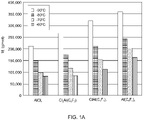
- Fig. 1A compares the number average molecular weight (M n ) of the butyl rubber polymer prepared using the four catalysts at the four temperatures.
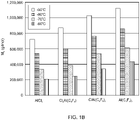
- Fig. 1B compares the weight average molecular weight (M w ) of the butyl rubber polymer prepared using the four catalysts at the four temperatures.
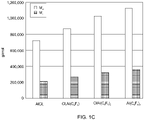
- Fig. 1C compares the number average molecular weight (M n ) to the weight average molecular weight (M w ) of the butyl rubber polymer prepared using the four catalysts at -90°C.
- cyclic oligomer content the produced copolymer was coagulated and cyclic oligomers were quantified from the remaining solvent mixture after coagulation using GC-FID.
- Total cyclic oligomer content as well as individual content for C13 and C21 cyclic oligomers are provided in Table 1 for the butyl rubber samples prepared as described above at the various temperatures indicated above. The results are determined from the average of at least two replicates for each catalyst at each temperature.
- the fluorinated catalysts (ClAl(C 6 F 5 ) 2 , Cl 2 Al(C e F 5 ) or Al(C 6 F 5 ) 3 ) consistently provide butyl rubber polymer having lower total cyclic oligomer content at least up to -70°C reaction temperature than the butyl rubber provided using AlCl 3 as the catalyst at -90°C.
- Branched microstructure content and 1,4-isoprene (1,4 IP) content were calculated using 1 H NMR from peak areas.
- the content of branched unsaturation as well as the 1,4-isoprene (1,4 IP) content and total unsaturation content are provided in Table 1 for the butyl rubber samples prepared as described above at the various temperatures indicated above. The results are determined from the average of at least two replicates for each catalyst at each temperature.
Landscapes
- Chemical & Material Sciences (AREA)
- Health & Medical Sciences (AREA)
- Chemical Kinetics & Catalysis (AREA)
- Medicinal Chemistry (AREA)
- Polymers & Plastics (AREA)
- Organic Chemistry (AREA)
- Addition Polymer Or Copolymer, Post-Treatments, Or Chemical Modifications (AREA)
Abstract
Description
- This application relates to the production of unsaturated isoolefin copolymers, for example butyl rubbers.
- One of the limitations of butyl rubber production is the need for very cold temperatures, which are required to achieve high molecular weight polymer and high yields. Polymerizations on the production scale are performed at -98°C to -93°C and model batch polymerizations performed in the lab are performed at -93°C to -91°C. Performing polymerizations at warmer temperatures normally reduces molecular weight and increases the amount of reactor fouling.
- There remains a need for a process for producing an unsaturated isoolefin copolymer having one or more of higher molecular weight, lower residual oligomer content and reduced branched microstructure. There also remains a need for a process that can be performed at higher temperature than current commercial polymerization processes while producing an unsaturated isoolefin copolymer having molecular weight, residual oligomer content and/or branched microstructure at least as good as the molecular weight, residual oligomer content and/or branched microstructure of currently commercially produced unsaturated isoolefin copolymer.
- A process for producing an unsaturated isoolefin copolymer, the process comprising contacting an initiator system comprising a catalyst of Formula (I):
AlR1R2R3 (I),
with a reaction mixture of at least one isoolefin monomer and at least one copolymerizable unsaturated monomer in an organic diluent to produce the unsaturated isoolefin copolymer, where R1, R2 and R3 are the same or different and are each halogen or a hydrocarbon moiety, with the proviso that at least one of R1, R2 and R3 is a fluorinated hydrocarbon moiety. - Further features will be described or will become apparent in the course of the following detailed description. It should be understood that each feature described herein may be utilized in any combination with any one or more of the other described features, and that each feature does not necessarily rely on the presence of another feature except where evident to one of skill in the art.
- For clearer understanding, preferred embodiments will now be described in detail by way of example, with reference to the accompanying drawings, in which:
-
Fig. 1A is a graph of number average molecular weight (Mn) of butyl rubber polymer prepared using four different catalysts (AlCl3, Cl2Al(C6F5), ClAl(C6F5)2 and Al(C6F5)3) at four different temperatures (-90°C, -80°C, -70°C or -60°C). -
Fig. 1B is a graph of weight average molecular weight (Mw) of butyl rubber polymer prepared using four different catalysts (AlCl3, Cl2Al(C6F5) ClAl(C6F5)2 and Al(C6F5)3) at four different temperatures (-90°C, -80°C, -70°C or -60°C). -
Fig. 1C is a graph comparing number average molecular weight (Mn) to weight average molecular weight (Mw) of butyl rubber polymer prepared using four different catalysts (AlCl3, Cl2Al(C6F5), ClAl(C6F5)2 and Al(C6F5)3) at -90°C. -
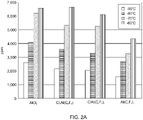
Fig. 2A is a graph of C13 cyclic oligomer content (ppm) in butyl rubber polymer prepared using four different catalysts (AlCl3, Cl2Al(C6F5), ClAl(C6F5)2 and Al(C6F5)3) at four different temperatures (-90°C, -80°C, -70°C or -60°C). -
Fig. 2B is a graph of C21 cyclic oligomer content (ppm) in butyl rubber polymer prepared using four different catalysts (AlCl3, Cl2Al(C6F5), ClAl(C6F5)2 and Al(C6F5)3) at four different temperatures (-90°C, -80°C, -70°C or -60°C). -
Fig. 2C is a graph of total cyclic oligomer content (C13+C21) in butyl rubber polymer prepared using four different catalysts (AlCl3, Cl2Al(C6F5), ClAl(C6F5)2 and Al(C6F5)3) at - 90°C. -
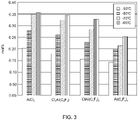
Fig. 3 is a graph of branched unsaturated content (mol%) in butyl rubber polymer prepared using four different catalysts (AlCl3, Cl2Al(C6F5), ClAl(C6F5)2, and Al(C6F5)3) at four different temperatures (-90°C, -80°C, -70°C or -60°C). - Production of the unsaturated isoolefin copolymer involves polymerizing at least one isoolefin monomer and at least one copolymerizable unsaturated monomer in an organic diluent in the presence of the initiator system, which is capable of initiating the polymerization process. Polymerization occurs in a polymerization reactor. Suitable polymerization reactors include, for example, flow-through polymerization reactors, plug flow reactor, moving belt or drum reactors, and the like. The process may be a continuous or batch process. In a preferred embodiment, the process is a continuous polymerization process. The process may comprise slurry or solution polymerization of the monomers. In a preferred embodiment, the process is a slurry polymerization process.
- The unsaturated isoolefin copolymer comprises repeating units derived from at least one isoolefin monomer and repeating units derived from at least one copolymerizable unsaturated monomer, and optionally repeating units derived from one or more further copolymerizable monomers.
- Suitable isoolefin monomers include hydrocarbon monomers having 4 to 16 carbon atoms. In one embodiment, the isoolefin monomers have from 4 to 7 carbon atoms. Examples of suitable isoolefins include isobutene (isobutylene), 2-methyl-1-butene, 3-methyl-1-butene, 2-methyl-2-butene, 4-methyl-1-pentene, 4-methyl-1-pentene and mixtures thereof. A preferred isoolefin monomer is isobutene (isobutylene).
- Suitable copolymerizable unsaturated monomers include multiolefins, p-methyl styrene, β-pinene or mixtures thereof. Multiolefin monomers include hydrocarbon monomers having 4 to 14 carbon atoms. In some embodiments, the multiolefin monomers are conjugated dienes. Examples of suitable conjugated diene monomers include isoprene, butadiene, 2-methylbutadiene, 2,4-dimethylbutadiene, piperylene, 3-methyl-1,3-pentadiene, 2,4-hexadiene, 2-neopentylbutadiene, 2-methyl-1,5-hexadiene, 2,5-dimethyl-2,4-hexadiene, 2-methyl-1,4-pentadiene, 4-butyl-1,3-pentadiene, 2,3-dimethyl-1,3-pentadiene, 2,3-dibutyl-1,3-pentadiene, 2-ethyl-1,3-pentadiene, 2-ethyl-1,3-butadiene, 2-methyl-1,6-heptadiene, cyclopentadiene, methylcyclopentadiene, cyclohexadiene, 1-vinyl-cyclohexadiene and mixtures thereof. A preferred copolymerizable unsaturated monomer is isoprene.
- The unsaturated isoolefin copolymer may optionally include one or more additional copolymerizable monomers. Suitable additional copolymerizable monomers include, for example, styrenic monomers, such as alkyl-substituted vinyl aromatic co-monomers, including but not limited to a C1-C4 alkyl substituted styrene. Specific examples of additional copolymerizable monomers include, for example, α-methyl styrene, p-methyl styrene, chlorostyrene, cyclopentadiene and methylcyclopentadiene. Indene and other styrene derivatives may also be used. In one embodiment, the halogenatable isoolefin copolymer may comprise random copolymers of isobutene, isoprene and p-methyl styrene.
- The unsaturated isoolefin copolymer is formed by copolymerization of a monomer mixture. Preferably, the monomer mixture comprises about 80-99.9 mol% of at least one isoolefin monomer and about 0.1-20 mol% of at least one copolymerizable unsaturated monomer, based on the monomers in the monomer mixture. More preferably, the monomer mixture comprises about 90-99.9 mol% of at least one isoolefin monomer and about 0.1-10 mol% of at least one copolymerizable unsaturated monomer. In one embodiment, the monomer mixture comprises about 92.5-97.5 mol% of at least one isoolefin monomer and about 2.5-7.5 mol% of at least one copolymerizable unsaturated monomer. In another embodiment, the monomer mixture comprises about 97.4-95 mol% of at least one isoolefin monomer and about 2-5 mol% of at least one copolymerizable unsaturated monomer.
- If the monomer mixture comprises the additional copolymerizable with the isoolefins and/or copolymerizable unsaturated monomers, the additional copolymerizable monomer preferably replaces a portion of the copolymerizable unsaturated monomer. When a multiolefin monomer is used, the monomer mixture may also comprise from 0.01% to 1% by weight of at least one multiolefin cross-linking agent, and when the multiolefin cross-linking agent is present, the amount of multiolefin monomer is reduced correspondingly.
- Suitable organic diluents may include, for example, alkanes, chloroalkanes, cycloalkanes, aromatics, hydrofluorocarbons (HFC) or any mixture thereof. Chloroalkanes may include, for example methyl chloride, dichloromethane or any mixture thereof. Methyl chloride is particularly preferred. Alkanes and cycloalkanes may include, for example, isopentane, cyclopentane, 2,2-dimethylbutane, 2,3-dimethylbutane, 2-methylpentane, 3-methylpentane, n-hexane, methylcyclopentane, 2,2-dimethylpentane or any mixture thereof. Alkanes and cycloalkanes are preferably C6 solvents, which include n-hexane or hexane isomers, such as 2-methyl pentane or 3-methyl pentane, or mixtures of n-hexane and such isomers as well as cyclohexane.
- The monomers are generally polymerized cationically in the diluent at temperatures in a range of from -120°C to +20°C. In some embodiments, the temperature may be in a range of -100°C to -50°C, or -95°C to -60°C, or -95°C to -70°C, or -90°C to -70°C, or -85°C to -60°C, or -85°C to -70°C.
- The initiator system comprises the catalyst, and preferably a proton source. A mixture of different catalysts may be used. The catalyst is a compound having Formula (I):
AlR1R2R3 (I),
where R1, R2 and R3 are the same or different and are each a halogen or a hydrocarbon moiety, with the proviso that at least one of R1, R2 and R3 is a fluorinated hydrocarbon moiety that contains at least one fluorine atom. - The halogen may be F, Cl, Br or I, preferably Cl or Br, more preferably Cl.
- The hydrocarbon moiety may be aliphatic or aromatic. The hydrocarbon moiety be substituted or unsubstituted with one or more substituents. An aliphatic hydrocarbon moiety may be a straight chain, branched chain or cyclic alkyl, alkenyl or alkynyl group. Alkyl groups are preferably a C1-8 alkyl groups, more preferably C1-4 alkyl groups, for example methyl, ethyl, n-propyl, i-propyl, cyclopropyl, n-butyl, i-butyl, t-butyl and methyl cyclopropyl. Alkenyl groups are preferably C2-8 alkenyl group. Alkynyl groups are preferably C2-8 alkynyl groups. An aromatic hydrocarbon moiety may be single or multiple rings. The aromatic hydrocarbon moiety is preferably a C6-C18 aromatic hydrocarbon moiety. Some examples of aromatic hydrocarbon moieties include phenyl, naphthyl, anthracyl and biphenyl. Substituents on the hydrocarbon moieties may include, for example, one or more of hydroxy, alkoxy, aryloxy, nitro, primary amino, secondary amino, tertiary amino, halo (e.g., F, Br, Cl, I), acyl, carboxy, amido, estero, an alkyl group when the hydrocarbon moiety is aromatic, an aryl group when the hydrocarbon moiety is aliphatic and the like.
- At least one of R1, R2 and R3 is a fluorinated hydrocarbon moiety that contains at least one fluorine atom. Preferably, the fluorinated hydrocarbon moiety contains a plurality of fluorine atoms, for example, 2, 3, 4 or 5 fluorine atoms. The fluorinated hydrocarbon moiety may be, for example, a fluorinated alkyl group, in particular a fluorinated C1-8 alkyl group, or a fluorinated aryl group, in particular a fluorinated phenyl group. Fluorinated phenyl groups are particularly preferred, for example, 2-fluorophenyl, 3-fluorophenyl, 4-fluorophenyl, 2,3-difluorophenyl, 2,4-difluorophenyl, 2,5-difluorophenyl, 2,6-difluorophenyl, 3,4-difluorophenyl, 3,5-difluorophenyl, 2,3,4-trifluorophenyl, 2,3,5-trifluorophenyl, 2,3,6-trifluorophenyl, 2,4,5-trifluorophenyl, 3,4,5-trifluorophenyl, 2,4,6-trifluorophenyl, 2,3,4,5-tetrafluorophenyl, 2,3,4,6-tetrafluorophenyl, 2,3,5,6-tetrafluorophenyl and pentafluorophenyl. Pentafluorophenyl is particularly preferred.
- In some embodiments, R1, R2 and R3 are the same or different and are fluorinated hydrocarbon moieties. In some embodiments, R1, R2 and R3 are the same and are fluorinated hydrocarbon moieties. In some embodiments, one of R1, R2 and R3 is a halogen, preferably Cl, and two are the same or different and are fluorinated hydrocarbon moieties. In some embodiments, one of R1, R2 and R3 is a halogen, preferably Cl, and two are the same and are fluorinated hydrocarbon moieties, preferably pentafluorophenyl. In some embodiments, two of R1, R2 and R3 are halogens, preferably Cl, and one is a fluorinated hydrocarbon moiety, preferably pentafluorophenyl.
- The catalyst is most preferably ClAl(C6F5)2, Cl2Al(C6F5), Al(C6F5)3 or any mixture thereof.
- The proton source includes any compound that will produce a proton when added to the catalyst or a composition containing the catalyst. Protons are generated from the reaction of the catalyst with proton sources to produce the proton and a corresponding byproduct. Proton sources include, for example, water (H2O), alcohols, phenols, thiols, carboxylic acids, and the like or any mixture thereof. Water, alcohol, phenol or any mixture thereof is preferred. The most preferred proton source is water. A preferred ratio of catalyst to proton source is from 5:1 to 150:1, or from 5:1 to 100:1 by weight, or from 5:1 to 50:1 by weight. The initiator system is preferably present in the reaction mixture in an amount providing 0.0007-0.05 wt% of the catalyst, more preferably 0.0007-0.02 wt% of the catalyst or 0.001-0.008 wt% of the catalyst, based on total weight of the reaction mixture.
- The initiator system is dissolved in an organic solvent to produce an initiator solution, which is then contacted with the reaction mixture to initiate polymerization of the monomers. The organic solvent may comprise any of the organic diluents described above. Preferably, the organic solvent comprises a polar organic solvent. Methyl chloride is particularly preferred. The catalyst is preferably present in the initiator solution at a concentration of 0.0007 wt% to 1 wt%, based on total weight of the initiator solution, more preferably 0.01 wt% to 0.9 wt%, 0.05 wt% to 0.6 wt%, 0.075 wt% to 0.5 wt% or 0.1 wt% to 0.4 wt%. The initiator system is preferably soluble in the reaction mixture.
- After the polymerization is complete, the unsaturated isoolefin copolymer may be recovered from the reaction mixture by known methods. For example, the organic diluent, organic solvent and residual monomers may be separated from the unsaturated isoolefin copolymer by flash separation using a heated organic solvent or steam. The unsaturated isoolefin copolymer may then be dried and processed into cements, crumbs, bales or the like for further use, storage or shipping.
- Use of an initiator system comprising a catalyst of Formula (I) in the copolymerization of an isoolefin and a copolymerizable unsaturated monomer generates an unsaturated isoolefin copolymer with higher molecular weight, lower residual oligomer content and reduced branched microstructure (reduced branched isoprenoid content) when compared to an unsaturated isoolefin copolymer having the same repeating monomer units but prepared at the same temperature using an initiator system comprising AlCl3. Thus, by using an initiator system comprising the catalyst of Formula (I), it is possible to perform the polymerization reaction at higher temperatures (at least as high as about -70°C) while obtaining an unsaturated isoolefin copolymer with comparable or better properties to unsaturated isoolefin copolymers produced using AlCl3 at lower temperatures (less than about -90°C).
- The ability to generate target molecular weight unsaturated isoolefin copolymer materials at higher temperatures (e.g., as high as about -70°C) with equivalent or lower amounts of branched isoprene microstructure and residual C13 and C21 oligomers to current commercially produced unsaturated isoolefin copolymers is possible using the initiator system described herein. At equivalent temperatures, the unsaturated isoolefin copolymers have significantly higher molecular weights, lower branched isoprenoid microstructure and/or oligomer production than unsaturated isoolefin copolymer using AlCl3 in the initiator system.
- The Mn of unsaturated isoolefin copolymers produced using the fluorinated catalysts is preferably 15% or more, more preferably 50% or more, greater than unsaturated isoolefin copolymers produced using AlCl3 catalyst at the same temperature at -70°C or lower. Mw of unsaturated isoolefin copolymers produced using the fluorinated catalysts is preferably 10% or more, more preferably 50% or more, greater than unsaturated isoolefin copolymers produced using AlCl3 catalyst at the same temperature at -70°C or lower. Total cyclic oligomer content produced using the fluorinated catalysts is preferably 15% or more, more preferably 45% or more, yet more preferably 60% or more, less than unsaturated isoolefin copolymers produced using AlCl3 catalyst at the same temperature at -70°C or lower.
- All manipulations were performed in an MBraun™ glovebox filled with nitrogen and equipped with liquid nitrogen-cooled pentane baths.
- An initiator solution of AlCl3 was prepared by dissolving 0.3 g in 100 mL of methyl chloride at -30°C and stirring for 30 mins, after which point the bath was cooled to -95°C.
- For all other initiator solutions, the pentane bath was initially cooled to -95°C. A specific volume of methyl chloride (40-120 mL) was dispensed and collected in a 600 mL stainless steel beaker. The catalyst (Cl2Al(C6F5), ClAl(C6F5)2 or Al(C6F5)3), contained in a 20 mL vial, was placed horizontally in the beaker. The vial was then opened using tweezers, allowing the methyl chloride to contact and dissolve the initiator without exposing it to the glovebox atmosphere. The initiator solution was transferred to a 125 mL Erlenmeyer flask. Methyl chloride contains sufficient water as an impurity to act as the proton source in the initiator solutions.
- The initiator solutions were then used in butyl polymerizations by adding the initiator solutions to mixtures of isobutylene (20 mL) and isoprene (0.7 ml) in methyl chloride (180 mL) at a desired temperature (-90°C, -80°C, -70°C or -60°C). The initiator solutions were added in a volume that contained 6.75 x 10⁻⁵ mol of AlCl3, or 6.75 x 10⁻⁵ mol of Cl2Al(C6F5), or 6.75 x 10⁻⁵ mol of ClAl(C6F5)2, or 6.78 x 10⁻⁵ mol of Al(C6F5)3, which were essentially equimolar amounts of each catalyst. After polymerizations were complete, the reactions were stopped with 1 mL of a 1 wt% NaOH in ethanol solution. The reactors were removed from the glovebox, hexane was added and the methyl chloride was allowed to evaporate overnight. The rubber was then coagulated from the hexane cement using ethanol, and dried at 60°C under vacuum.
- Processes similar to Example 1 were attempted using B(C6F5)3 as the catalyst in the presence of advantageous water or in the presence of phenol as the proton source. The attempts were not successful and very little polymeric product of any kind was produced. Any product that was formed was not butyl rubber.
- Molecular weights were determined using gas phase chromatography (GPC) run at 35°C on an instrument calibrated using polystyrene standards.
- Yield, number average molecular weight (Mn), weight average molecular weight (Mw) and polydispersity index (PDI) are provided in Table 1 for the butyl rubber samples prepared as described above at the various temperatures indicated above. The results are determined from the average of at least two replicates for each catalyst at each temperature.
-
Fig. 1A compares the number average molecular weight (Mn) of the butyl rubber polymer prepared using the four catalysts at the four temperatures.Fig. 1B compares the weight average molecular weight (Mw) of the butyl rubber polymer prepared using the four catalysts at the four temperatures.Fig. 1C compares the number average molecular weight (Mn) to the weight average molecular weight (Mw) of the butyl rubber polymer prepared using the four catalysts at -90°C. - It is apparent from Table 1 and
Fig. 1A to Fig. 1C that the fluorinated catalysts (Cl2Al(C6F5), ClAl(C6F5)2 or Al(C6F5)3) consistently provide butyl rubber polymer of higher molecular weight at all temperatures than the butyl rubber provided using AlCl3 as the catalyst, while generally providing comparable yields.Table 1 T (°C) Catalyst Yield (wt%) Mn (g/mol) Mw (g/mol) PDI -90°C AlCl3 85 212,708 720,779 3.39 Cl2Al(C6F5) 81 267,361 868,996 3.25 ClAl(C6F5)2 83 320,120 1,026,072 3.21 Al(C6F5)3 79 359,411 1,121,256 3.12 -80°C AlCl3 83 148,810 537,680 3.61 Cl2Al(C6F5) 78 174,617 600,399 3.44 ClAl(C6F5)2 80 211,019 763,957 3.62 Al(C6F5)3 79 242,757 854,903 3.53 -70°C AlCl3 82 98,423 333,262 3.39 Cl2Al(C6F5) 77 117,555 387,627 3.29 ClAl(C6F5)2 76 152,684 536,731 3.52 Al(C6F5)3 50 202,580 607,026 3.00 -60°C AlCl3 61 82,621 208,933 2.56 Cl2Al(C6F5) 74 85,401 245,222 2.87 ClAl(C6F5)2 67 112,996 341,512 3.03 Al(C6F5)3 53 163,375 434,463 2.67 - For cyclic oligomer content, the produced copolymer was coagulated and cyclic oligomers were quantified from the remaining solvent mixture after coagulation using GC-FID. Total cyclic oligomer content as well as individual content for C13 and C21 cyclic oligomers are provided in Table 1 for the butyl rubber samples prepared as described above at the various temperatures indicated above. The results are determined from the average of at least two replicates for each catalyst at each temperature.
- It is apparent from Table 2 and
Fig. 2A to Fig. 2C that the fluorinated catalysts (ClAl(C6F5)2, Cl2Al(CeF5) or Al(C6F5)3) consistently provide butyl rubber polymer having lower total cyclic oligomer content at least up to -70°C reaction temperature than the butyl rubber provided using AlCl3 as the catalyst at -90°C.Table 2 T(°C) Catalyst C13 (ppm) C21 (ppm) Total (ppm) -90°C AlCl3 2,620 2,234 4,857 Cl2Al(C6F5) 2,159 1,630 3,789 ClAl(C6F5)2 2,054 1,340 3,395 Al(C6F5)3 1,595 904 2,499 -80°C AlCl3 4,092 4,757 8,846 Cl2Al(C6F5) 3,568 3,543 7,111 ClAl(C6F5)2 3,275 2,897 6,172 Al(C6F5)3 2,696 2,067 4,763 -70°C AlCl3 6,213 10,110 16,354 Cl2Al(C6F5) 5,320 7,816 13,136 ClAl(C6F5)2 5,235 6,019 11,254 Al(C6F5)3 3,289 2,948 6,236 -60°C AlCl3 6,556 12,403 18,959 Cl2Al(C6F5) 6,638 13,337 19,974 ClAl(C6F5)2 6,096 9,095 15,191 Al(C6F5)3 4,335 4,450 8,785 - Branched microstructure content and 1,4-isoprene (1,4 IP) content were calculated using 1H NMR from peak areas. The content of branched unsaturation as well as the 1,4-isoprene (1,4 IP) content and total unsaturation content are provided in Table 1 for the butyl rubber samples prepared as described above at the various temperatures indicated above. The results are determined from the average of at least two replicates for each catalyst at each temperature.
- It is apparent from Table 3 and
Fig. 3 that the fluorinated catalysts (ClAl(C6F5)2, Cl2Al(CeF5) or Al(C6F5)3) consistently provide butyl rubber polymer having lower branched unsaturation content at all temperatures than the butyl rubber provided using AlCl3 as the catalyst, while having comparable or higher 1,4-IP content.Table 3 T(°C) Catalyst 1,4-IP (mol%) Branched Unsat. (mol%) Total Unsat. (mol%) -90°C AlCl3 1.58 0.20 1.78 Cl2Al(C6F5) 1.63 0.18 1.81 ClAl(C6F5)2 1.59 0.16 1.75 Al(C6F5)3 1.58 0.14 1.72 -80°C AlCl3 1.45 0.28 1.73 Cl2Al(C6F5) 1.58 0.26 1.84 ClAl(C6F5)2 1.56 0.23 1.79 Al(C6F5)3 1.57 0.20 1.77 -70°C AlCl3 1.27 0.35 1.62 Cl2Al(C6F5) 1.33 0.33 1.66 ClAl(C6F5)2 1.45 0.29 1.73 Al(C6F5)3 1.38 0.22 1.60 -60°C AlCl3 1.11 0.36 1.47 Cl2Al(C6F5) 1.01 0.35 1.36 ClAl(C6F5)2 1.26 0.33 1.59 Al(C6F5)3 1.33 0.25 1.58 - The novel features will become apparent to those of skill in the art upon examination of the description. It should be understood, however, that the scope of the claims should not be limited by the embodiments, but should be given the broadest interpretation consistent with the wording of the claims and the specification as a whole.
Claims (15)
- A process for producing an unsaturated isoolefin copolymer, the process comprising contacting an initiator system comprising a catalyst selected from the group consisting of Cl2Al(C6F5), ClAl(C6F5)2, Al(C6F5)3 and any mixture thereof with a reaction mixture of at least one isoolefin monomer and at least one copolymerizable unsaturated monomer in an organic diluent to produce the unsaturated isoolefin copolymer.
- The process of claim 1, wherein the initiator system further comprises a proton source.
- The process of claim 2, wherein the proton source comprises water, alcohols, phenols, thiols, carboxylic acids, and the like or any mixture thereof.
- The process of claim 2, wherein the proton source comprises water.
- The process of any one of claims 1 to 4, wherein the initiator system is soluble in the reaction mixture.
- The process of any one of claims 1 to 5, wherein the catalyst is present in the initiator system at a concentration of 0.0007 wt% to 1 wt%, based on total weight of the initiator system.
- The process of any one of claims 1 to 6, wherein the initiator system is present in the reaction mixture in an amount of 0.0007 wt% to 0.05 wt%, based on total weight of the reaction mixture.
- The process of any one of claims 1 to 7, wherein the catalyst and the proton source are present in the initiator system in a ratio of from 5:1 to 150:1 by weight.
- The process of any one of claims 1 to 8, wherein process is conducted at a temperature in a range of -100°C to -50°C.
- The process of any one of claims 1 to 8, wherein process is conducted at a temperature in a range of -90°C to -70°C.
- The process of any one of claims 1 to 10, wherein the organic diluent comprises methyl chloride, dichloromethane, isopentane, cyclopentane, 2,2-dimethylbutane, 2,3-dimethylbutane, 2-methylpentane, 3-methylpentane, n-hexane, methylcyclopentane, 2,2-dimethylpentane or any mixture thereof.
- The process of any one of claims 1 to 10, wherein the organic diluent comprises methyl chloride.
- The process of any one of claims 1 to 12, wherein the at least one isoolefin monomer comprises isobutene.
- The process of any one of claims 1 to 13, wherein the at least one copolymerizable unsaturated monomer comprises isoprene.
- The process of any one of claims 1 to 14, wherein the process is a slurry process, the process is a continuous process or the process is both a slurry process and a continuous process.
Priority Applications (1)
| Application Number | Priority Date | Filing Date | Title |
|---|---|---|---|
| EP21176044.2A EP4095169A1 (en) | 2021-05-26 | 2021-05-26 | Substituted aluminum chlorides in the production of unsaturated isoolefin copolymers |
Applications Claiming Priority (1)
| Application Number | Priority Date | Filing Date | Title |
|---|---|---|---|
| EP21176044.2A EP4095169A1 (en) | 2021-05-26 | 2021-05-26 | Substituted aluminum chlorides in the production of unsaturated isoolefin copolymers |
Publications (1)
| Publication Number | Publication Date |
|---|---|
| EP4095169A1 true EP4095169A1 (en) | 2022-11-30 |
Family
ID=76482981
Family Applications (1)
| Application Number | Title | Priority Date | Filing Date |
|---|---|---|---|
| EP21176044.2A Withdrawn EP4095169A1 (en) | 2021-05-26 | 2021-05-26 | Substituted aluminum chlorides in the production of unsaturated isoolefin copolymers |
Country Status (1)
| Country | Link |
|---|---|
| EP (1) | EP4095169A1 (en) |
Citations (2)
| Publication number | Priority date | Publication date | Assignee | Title |
|---|---|---|---|---|
| WO2003037940A1 (en) * | 2001-10-30 | 2003-05-08 | Bayer Inc. | Transition metal-free initiator for the preparation of isobutylene-based polymers |
| CN108822240A (en) * | 2018-06-05 | 2018-11-16 | 北京石油化工学院 | A kind of preparation method of isobutene and p-methylstyrene copolymer |
-
2021
- 2021-05-26 EP EP21176044.2A patent/EP4095169A1/en not_active Withdrawn
Patent Citations (2)
| Publication number | Priority date | Publication date | Assignee | Title |
|---|---|---|---|---|
| WO2003037940A1 (en) * | 2001-10-30 | 2003-05-08 | Bayer Inc. | Transition metal-free initiator for the preparation of isobutylene-based polymers |
| CN108822240A (en) * | 2018-06-05 | 2018-11-16 | 北京石油化工学院 | A kind of preparation method of isobutene and p-methylstyrene copolymer |
Similar Documents
| Publication | Publication Date | Title |
|---|---|---|
| EP2132239B1 (en) | Polydispersity-controlled isoolefin polymerization with polymorphogenates | |
| CA2418884C (en) | Process for production of high-isoprene butyl rubber | |
| US11629206B2 (en) | Process for preparing high-reactivity isobutene homo- or copolymers | |
| CA2571340C (en) | Polymerization processes using hydrofluorocarbons | |
| JP3500152B2 (en) | Method for producing isobutene-based polymer | |
| US9850331B2 (en) | Copolymer having low isoprenoid content | |
| EP3137512B1 (en) | Diluent for the production of butyl rubber | |
| US9714304B2 (en) | Hydrofluorinated olefins (HFO's) as diluents for butyl rubber production | |
| EP3137517B1 (en) | Copolymer having low cyclic oligomer content | |
| JPH1060029A (en) | New vanadium-containing initiator system for (co) polymerization of isoolefin | |
| CA2155497A1 (en) | Process for the production of polyisoolefins | |
| US20240101736A1 (en) | Sonication of catalyst in the production of an unsaturated isoolefin copolymer | |
| CN109844013B (en) | Multimodal polyisoolefin compositions and methods | |
| WO2023240332A1 (en) | Process for the production of isoolefin copolymers with improved catalyst performance | |
| US2977347A (en) | Polymerization of olefins with molybdenum pentachloride catalyst | |
| WO2026002741A1 (en) | Process for preparing high-reactivity isobutene homo- or copolymers | |
| US20170121435A1 (en) | Copolymer having high multiolefin content | |
| EP3444283A1 (en) | Process for preparing high-reactivity isobutene homo- or copolymers |
Legal Events
| Date | Code | Title | Description |
|---|---|---|---|
| PUAI | Public reference made under article 153(3) epc to a published international application that has entered the european phase |
Free format text: ORIGINAL CODE: 0009012 |
|
| STAA | Information on the status of an ep patent application or granted ep patent |
Free format text: STATUS: THE APPLICATION HAS BEEN PUBLISHED |
|
| AK | Designated contracting states |
Kind code of ref document: A1 Designated state(s): AL AT BE BG CH CY CZ DE DK EE ES FI FR GB GR HR HU IE IS IT LI LT LU LV MC MK MT NL NO PL PT RO RS SE SI SK SM TR |
|
| RIN1 | Information on inventor provided before grant (corrected) |
Inventor name: BENTLEY, JORDAN N. Inventor name: BOURQUE, JEREMY Inventor name: CAPUTO, CHRISTOPHER B. |
|
| STAA | Information on the status of an ep patent application or granted ep patent |
Free format text: STATUS: THE APPLICATION IS DEEMED TO BE WITHDRAWN |
|
| 18D | Application deemed to be withdrawn |
Effective date: 20230531 |